NORTHCREST REHAB AND NURSING CENTER
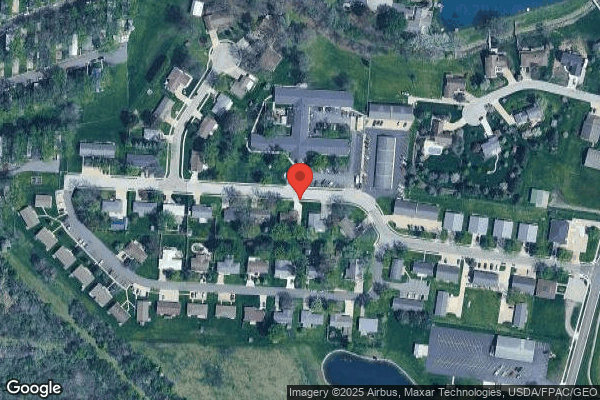
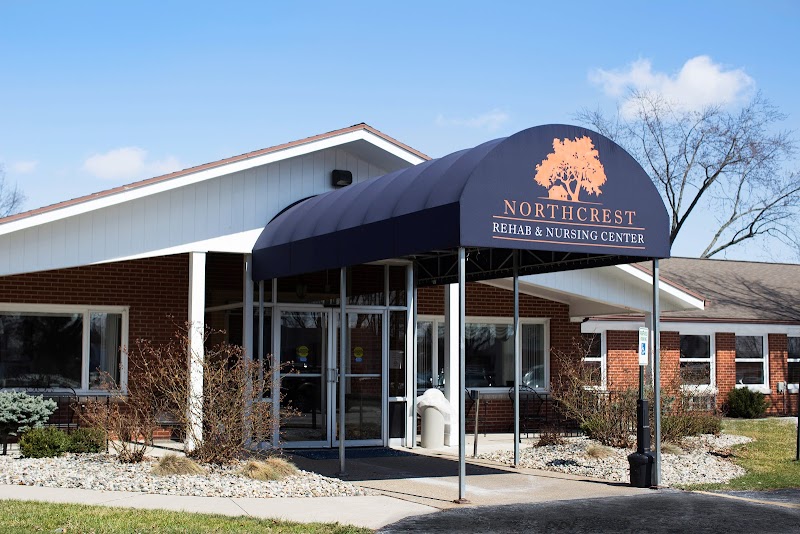
240 NORTHCREST DRIVE, NAPOLEON, OH 43545 (419) 599-4070
For profit - Limited Liability company 87 Beds CCH HEALTHCARE Data: November 2025
Trust Grade
50/100
#515 of 913 in OH
Last Inspection: January 2025

Within standard 12-15 month inspection cycle. Federal law requires annual inspections.

Overview

Northcrest Rehab and Nursing Center has a Trust Grade of C, indicating it is average-neither particularly good nor bad compared to other facilities. It ranks #515 out of 913 in Ohio, placing it in the bottom half of nursing homes in the state, and #3 out of 3 in Henry County, meaning there are no better local options available. The facility is improving, with issues decreasing from 6 in 2024 to 5 in 2025, but staffing is a concern; it received a 2/5 star rating for staffing, with a turnover rate of 67%, significantly higher than the state average of 49%. Although there are no fines on record, which is a positive sign, recent inspections revealed serious concerns, such as improper infection control practices that could affect multiple residents and issues with food storage that could compromise resident safety. Overall, while there are some strengths, such as the lack of fines, the high staff turnover and specific incidents raise red flags for families considering this facility for their loved ones.

Trust Score
C
50/100
In Ohio
#515/913
Bottom 44%
Safety Record
Moderate
Needs review
Inspections
Getting Better
6 → 5 violations
Staff Stability
⚠ Watch
67% turnover. Above average. Higher turnover means staff may not know residents' routines.
Penalties
✓ Good
No fines on record. Clean compliance history, better than most Ohio facilities.
Skilled Nurses
○ Average
Each resident gets 34 minutes of Registered Nurse (RN) attention daily — about average for Ohio. RNs are the most trained staff who monitor for health changes.
Violations
⚠ Watch
37 deficiencies on record. Higher than average. Multiple issues found across inspections.
★★★☆☆
3.0
Overall Rating
★★☆☆☆
2.0
Staff Levels
★★★★☆
4.0
Care Quality
★★★☆☆
3.0
Inspection Score
Stable
2024: 6 issues
2025: 5 issues

The Good

  • 4-Star Quality Measures · Strong clinical quality outcomes
  • Full Sprinkler Coverage · Fire safety systems throughout facility
  • No fines on record

Facility shows strength in quality measures, fire safety.

The Bad

3-Star Overall Rating

Near Ohio average (3.2)

Meets federal standards, typical of most facilities

Staff Turnover: 67%

20pts above Ohio avg (46%)

Frequent staff changes - ask about care continuity

Chain: CCH HEALTHCARE

Part of a multi-facility chain

Ask about local staffing decisions and management

Staff turnover is elevated (67%)

19 points above Ohio average of 48%

The Ugly 37 deficiencies on record

1 actual harm
Jan 2025 5 deficiencies
CONCERN (D)

Potential for Harm - no one hurt, but risky conditions existed

ADL Care (Tag F0677)

Could have caused harm · This affected 1 resident

**NOTE- TERMS IN BRACKETS HAVE BEEN EDITED TO PROTECT CONFIDENTIALITY** Based on observation, staff interview, and review of facility policy, the facility failed to ensure fingernails were kept cleane...

Read full inspector narrative →
**NOTE- TERMS IN BRACKETS HAVE BEEN EDITED TO PROTECT CONFIDENTIALITY** Based on observation, staff interview, and review of facility policy, the facility failed to ensure fingernails were kept cleaned and trimmed on a dependent resident. This affected one resident (#2) of one resident reviewed for clean and trimmed nails. The facility census was 62. Findings include: Review of the medical record for Resident #2 revealed he was admitted on [DATE] with diagnoses of cerebral vascular accident (CVA - stroke) with left sided hemiplegia and hemiparesis (weakness and paralysis). Review of the annual Minimum Data Set (MDS) dated [DATE] for Resident #2 revealed he had moderate cognitive impairment and was dependent on staff for personal hygiene. Review of the care plan revised 01/25 for Resident #2 revealed the resident is care planned for self-care deficit due to CVA with left sided hemiplegia and was dependent on staff for personal hygiene. Review of the shower sheets dated 01/02/25 for Resident #2 revealed he had a bed bath per his preference and his fingernails were cleaned and trimmed. Further review of the shower sheets dated 01/09/25 and 01/16/25 for Resident #2 revealed he had his bed bath and his fingernails were cleaned but not trimmed. Review of the Certified Nursing Assistant (CNA) documentation for the past 30 days for Resident #2 revealed he did not have any rejection of care. Observation on 01/21/25 at 11:03 A.M. of Resident #2 revealed his fingernails were long and approximately one quarter to one half inch in length beyond the tip of his finger and under the nail was dirty with black and yellow caked under the nails especially under the right thumb nail. Observation on 01/22/25 at 9:05 A.M. of Resident #2 revealed his fingernails remained long and dirty. Interview on 01/22/25 at 11:07 A.M. with Certified Nurse Aide (CNA) #634 verified the long and dirty fingernails on Resident #2. Review of the facility policy titled, Care of Fingernails/Toenails, dated 10/10, revealed the purpose of the procedure are to clean the nail bed, to keep nails trimmed, and to prevent infections. Nail care includes daily cleaning and regular trimming.
CONCERN (D)

Potential for Harm - no one hurt, but risky conditions existed

Deficiency F0688 (Tag F0688)

Could have caused harm · This affected 1 resident

**NOTE- TERMS IN BRACKETS HAVE BEEN EDITED TO PROTECT CONFIDENTIALITY** Based on record review, observation, interview, and policy review, the facility failed to apply brace/splint per physician order...

Read full inspector narrative →
**NOTE- TERMS IN BRACKETS HAVE BEEN EDITED TO PROTECT CONFIDENTIALITY** Based on record review, observation, interview, and policy review, the facility failed to apply brace/splint per physician order. This affected one (#55) of one resident reviewed for position and mobility. The facility census was 62. Findings include: Review of the medical record for Resident #55 revealed an admission date of 08/12/24 with diagnoses including but not limited to traumatic subdural hemorrhage with loss of consciousness, gastrostomy status, displaced fracture of second cervical vertebra, tracheostomy status, presence of other vascular implants and grafts, and anemia. Review of the Minimum Data Set (MDS) assessment dated [DATE] revealed Resident #55 had severe cognitive impairment and was dependent on staff for activities of daily living. Review of current physician orders revealed left lower extremity PRAFO brace on in the morning and off at bedtime, passive range of motion to upper and lower extremities, rolled up wash cloth in right and left hand, remove every six hours and check skin integrity. Review of care plan dated 01/09/25 revealed Resident #55 had an activities of daily living self-care performance deficit related to disease process. Interventions included left lower extremity brace, ensure resident has sock on prior to placing brace, put on in the morning and remove at bedtime and check skin integrity with application and removal. Review of the Treatment Administration Record (TAR) for January 2025 revealed wash cloth to right hand, wash cloth to left hand, and PRAFO boot were signed off as completed on 01/21/25 and 01/22/25. Observation on 01/21/25 at 1:52 P.M. of Resident #55 in bed revealed no splints or braces on at this time. Bilateral soft heel boots observed on resident. No wash cloths or splints observed in bilateral hands. Observation on 01/22/25 at 9:00 A.M. of Resident #55 in bed revealed bilateral soft heel protector boots in place. No splint or wash clothes in bilateral hands. No PRAFO boot on left lower extremity. Interview on 01/22/25 at 9:26 A.M. with Certified Nursing Assistant (CNA) #642 verified Resident #55 did not have on a splint or any wash clothes in either hand. CNA #642 stated the resident did not have any splints. CNA #642 stated the resident only had a boot that she wears at night and a belly band that she is aware of. CNA #642 pulled the boot from the chair under a pillow to show the surveyor and placed the boot back on the chair. Follow-up observation on 01/22/25 at 10:04 A.M. of Resident #55 revealed PRAFO boot now on left foot and wash rag observed in left hand. No wash cloth observed in the right hand. Further observation on 01/23/25 at 9:13 A.M. of Resident #55 revealed PRAFO boot on left foot, towel in left hand and nothing in right hand at this time. Review of policy titled, Rehabilitative/Functional Maintenance Nursing Care, not dated, revealed rehabilitative nursing care is performed daily for those residents who require such service. Such program includes, but is not limited to assisting residents to adjust to their disabilities, to use their prosthetic devices, and to redirect their interests and others as prescribed by the resident's attending physician.
CONCERN (D)

Potential for Harm - no one hurt, but risky conditions existed

Accident Prevention (Tag F0689)

Could have caused harm · This affected 1 resident

**NOTE- TERMS IN BRACKETS HAVE BEEN EDITED TO PROTECT CONFIDENTIALITY** Based on observation, record review, staff interview, and review of facility policy, the facility failed to ensure fall interven...

Read full inspector narrative →
**NOTE- TERMS IN BRACKETS HAVE BEEN EDITED TO PROTECT CONFIDENTIALITY** Based on observation, record review, staff interview, and review of facility policy, the facility failed to ensure fall interventions were implemented. This affected two residents (#15 and #48) of two residents reviewed for falls. The facility census was 62. Findings include: 1. Review of Resident #15's medical record revealed an admission date of 02/15/16. Diagnoses included hemiplegia and hemiparesis, osteoarthritis, cerebral infarction, and convulsions. Review of Resident #15's Minimum Data Set (MDS) 12/27/24 revealed a Brief Interview for Mental Status (BIMS) score of 10 indicting Resident #15 was moderately cognitively impaired. Resident #15 was dependent on staff for toilet use, parts of dressing, bed mobility, and transfer. Resident #15 required maximal assistance with bathing. Resident #15 displayed verbal behavioral symptoms directed towards others one to three days during the review period. Review of Resident #15's care plan revised 12/27/24 revealed supports and interventions in place for risk for falls. Fall interventions included providing safe environment including personal items in reach, two assist with transfer, nonskid strips applied by bed, in-front of the recliner, and next to the recliner, call light in reach, Dycem on wheelchair, encourage hipsters and nonskid socks. Additionally, on 03/03/16 an intervention was noted for Resident #15's bed to be in the lowest position and the wheels locked. Observation on 01/21/25 at 9:41 A.M. found Resident #15 lying in bed with her head and her right arm partially hanging over the side of the bed. Resident #15's bed was not in a low position and skid strips were not observed to be in front or on the floor to the right side of the recliner. Observation on 01/22/25 at 9:03 A.M. of Resident #15 found her lying in bed with her head and right arm hanging over the right side of the bed. Resident #15's bed was not in a low position and skid strips were not observed to be in front or on the floor to the right side of the recliner. Interview on 01/22/25 at 9:15 A.M. with Certified Nursing Assistant (CNA) #668 reported Resident #15 was at risk for falls and one of her interventions was to be in a low bed. An observation of Resident #15 was made with CNA #668 and CNA #668 verified Resident #15's bed was not in the lowest position. CNA #668 was observed asking Resident #15 if she would allow her to adjust her in the bed and Resident #15 declined. CNA #668 then proceeded to lower Resident #15's bed to the lowest position. Interview on 01/22/25 at 11:53 A.M. with CNA #772 verified there were no skid strips next to or in front of the recliner. Follow up observation and interview on 01/22/25 at 1:35 P.M. with Assistant Director of Nursing (ADON) #718 found clear nonskid strips had been applied to the floor next to Resident #15's bed and verified there were none in front of or next to the recliner. ADON #718 reported Resident #15's room had been rearranged when a bed was added. 2. Review of the medical record for Resident #48 revealed she was admitted on [DATE] with diagnoses of history of falling and dementia. Review of the annual MDS dated [DATE] for Resident #48 revealed she was cognitively impaired and has had falls since her admission. Review of the care plan revised 10/24 for Resident #48 revealed she was at risk for falls and had the following interventions: touch pad call light, non-skid strips applied to the end of the roommate's bed and non-skid strips applied to the left side of the bed. Observation on 01/22/25 at 11:15 A.M. of Resident #48's room revealed the call light was a regular push button type call light and not a touch pad style call light, there were no non-skid strips at the foot of the roommate's bed or to the left side of Resident #48's bed. Interview on 01/22/25 at 11:19 A.M. with Licensed Practical Nurse (LPN) #770 verified the call light for Resident #48 was a regular push button type of call light and not a touch pad type of call light, and there were not any non-skid strips to either the foot of the roommate's bed or to the left side of the bed for Resident #48. LPN #770 further stated Resident #48 had recently changed rooms. Observation of the previously occupied room for Resident #48 revealed there were no non-skid strips to the floor in the old room. Review of the facility policy titled, Managing Falls and Fall Risk, revised December 2007, revealed based on evaluations and current data the staff would identify interventions related to the resident's specific risks and causes to try and prevent the resident from falling.
CONCERN (D)

Potential for Harm - no one hurt, but risky conditions existed

Deficiency F0761 (Tag F0761)

Could have caused harm · This affected 1 resident

**NOTE- TERMS IN BRACKETS HAVE BEEN EDITED TO PROTECT CONFIDENTIALITY** Based on observation, medical record review, staff interview, resident interview, and review of facility policy, the facility fa...

Read full inspector narrative →
**NOTE- TERMS IN BRACKETS HAVE BEEN EDITED TO PROTECT CONFIDENTIALITY** Based on observation, medical record review, staff interview, resident interview, and review of facility policy, the facility failed to ensure medications were stored in a proper manner. This affected two (Residents #22 and #16) of two residents observed for medication storage. The facility census was 62. 1. Review of the medical record for Resident #22 revealed an admission date of 01/05/23 and a readmission date of 09/04/24 with diagnoses of chronic obstructive pulmonary disease and dementia. Review of the quarterly MDS assessment dated [DATE] revealed Resident #22 had impaired cognition. Review of the Self-Medication Assessment, completed 12/04/24, revealed Resident #22 was unable to self-administer medications. Observation on 01/21/25 at 9:20 A.M. revealed a bottle of aspirin, dose 325 milligrams (mg), lying on top of Resident #22's bedside cabinet. Resident #22 was not in the room during the observation. Interview and observation on 01/21/25 at 9:24 A.M. with Unit Manager (UM) #700 confirmed bottle of 325 mg aspirin was on Resident #22's bedside cabinet. UM #700 stated Resident #22 was not able to self-administer medications and removed the bottle of aspirin from Resident #22's room. Interview on 01/23/25 at 7:36 A.M. with Resident #22 revealed she purchased the aspirin at a local store. Resident #22 stated she was aware she was not allowed to have medication in her room. Resident #22 stated she planned to crush up the aspirin and apply it to her face to help with acne. Interview on 01/23/25 at 11:14 A.M. with UM #700 revealed Resident #22's bottle of aspirin was unopened, and was labeled and stored in the medication room. UM #700 stated she spoke with Resident #22 who wished to use the aspirin as a skin treatment for acne. UM #700 stated she had not yet spoken with the physician regarding Resident #22's request to use aspirin for a skin treatment. Review of the policy titled Administering Medications, revised 04/19, revealed medications are administered in a safe manner. Review of the policy titled Storage of Medications, revised 04/19, revealed the facility stores all drugs and biological's in a safe, secure, and orderly manner. 2. Review of the medical record Resident #16 revealed she was admitted on [DATE] with diagnoses of ovarian and breast cancer. Review of the quarterly MDS dated [DATE] for Resident #16 revealed she had mild cognitive impairment. Review of the Self-Medication assessment dated [DATE] for Resident #16 revealed she is not able to self-administer medication. Observation on 01/21/25 at 9:37 A.M. of Resident #16 revealed she was sitting on her bed and her overbed table was in front of her, on the overbed table was a medication cup containing four unidentified medications, one round red pill, one white oblong pill, and two small round white pills. Interview on 01/21/25 at 9:43 A.M. with Registered Nurse (RN) #648 verified the medication cup was left unattended at the bedside with four unidentified pills in the medication cup. RN #648 further stated Resident #16 stated she didn't want to take them all and so she left them for her to take and she would check back to make sure she took the medication.
CONCERN (E)

Potential for Harm - no one hurt, but risky conditions existed

Infection Control (Tag F0880)

Could have caused harm · This affected multiple residents

**NOTE- TERMS IN BRACKETS HAVE BEEN EDITED TO PROTECT CONFIDENTIALITY** Based on observation, staff interview, record review, and review of the facility policies, the facility failed to ensure proper ...

Read full inspector narrative →
**NOTE- TERMS IN BRACKETS HAVE BEEN EDITED TO PROTECT CONFIDENTIALITY** Based on observation, staff interview, record review, and review of the facility policies, the facility failed to ensure proper infection control practices were implemented related to COVID-19 droplet isolation and contact isolation. This affected four (#37, #28, #56 and #12) residents and had the potential to affect all 29 residents on the 300 and 400 halls (#1, #2, #3, #4, #7, #9, #10, #13, #16, #18, #20, #22, #26, #27, #30, #34, #36, #40, #41, #42, #44, #45, #46, #47, #48, #49, #51, #58, and #163). The facility census was 62. Findings include: 1. Review of the medical record for Resident #37 revealed an admission date of 12/20/24 with diagnoses of vascular dementia and COVID-19 (initiated 01/13/25). Review of the comprehensive Minimum Data Set (MDS) assessment dated [DATE] revealed Resident #37 had intact cognition. Review of a current physician order dated 01/13/25 revealed Resident #37 was in droplet isolation for COVID-19 with all services to be provided in the room. Review of the medical record for Resident #28 revealed an admission date of 09/29/20 with diagnoses of spinal cord cancer and chronic respiratory failure. Review of the quarterly MDS assessment dated [DATE] revealed Resident #28 had impaired cognition. Observation on 01/21/25 at 11:28 A.M. revealed signage posted outside Resident #37's room indicating he was in droplet precautions and staff should wear an N95 mask, a gown, and disposable gloves prior to entering the room. Additional signage revealed staff should remove all PPE before exiting the room, perform hand hygiene, and use a new N95 upon exiting the room. Observation on 01/21/25 at 11:30 A.M. revealed CNA #771 wearing an N95 mask and carrying a meal tray toward Resident #37's room. CNA #771 stopped outside the room and put on a disposable gown, did not put on gloves, and entered Resident #37's room. Continued observation from the open doorway revealed CNA #771 set the meal tray on Resident #37's overbed table, uncovered the plate, spoke with Resident #37, covered the plate and began to exit the room. CNA #771 removed the gown and disposed of it in a trash bag that was resting on the floor by holding the bag open with one ungloved hand and putting the soiled gown into the bag. CNA #771 exited Resident #37's room without removing or changing his N95 mask. CNA #771 did not perform hand hygiene before he observed Resident #28's call light was on and proceeded across the hall to provide care to Resident #28. Observation from the hall revealed CNA #771 rubbing Resident #28's legs and providing reassurance. CNA #771 then covered Resident #28 with a blanket and left the room. Interview on 01/21/25 at 11:34 A.M. with CNA #771 confirmed he did not wear gloves upon entering Resident #37's room with the meal tray and did not perform hand hygiene upon exiting the room before entering Resident #28's room. CNA #771 stated he was not aware he needed to wear gloves when providing meal trays. CNA #771 further confirmed he did not change his N95 mask upon exiting Resident #37's room and before entering Resident #28's room and providing care. CNA #771 was unaware Resident #37 was in droplet precautions for COVID-19. 2. Review of the medical record for Resident #56 revealed an admission date of 11/09/24 with diagnoses of COVID-19 (01/20/25), and Alzheimer's dementia. Review of the quarterly MDS assessment dated [DATE] revealed Resident #56 had severely impaired cognition and required supervision or touching assistance with eating. Review of the current physician order dated 01/20/25 revealed Resident #56 was in droplet isolation for COVID-19. Observation on 01/21/25 at 11:40 A.M. revealed a sign posted outside Resident #56's room indicating he was in droplet precautions and staff should wear an N95 mask, a gown, and disposable gloves prior to entering the room. Additional signage revealed staff should remove all PPE before exiting the room, perform hand hygiene, and use a new N95 upon exiting the room. Observation on 01/21/25 at 11:44 A.M. revealed CNA #771 entering Resident #56's room without donning PPE and pulling the curtain closed around Resident #56's bed. Observation and interview on 01/21/25 at approximately 11:45 A.M. with Licensed Practical Nurse (LPN) #664, who donned a disposable glove and pulled back the curtain around Resident #56's bed, revealed CNA #771 sitting next to Resident #56's bed wearing an N95 but no gloves or gown. CNA #771 was preparing to assist Resident #56 with eating his meal. LPN #664 directed CNA #771 to don a gown and gloves before continuing to assist Resident #56. 3. Review of the medical record for Resident #12 revealed an admission date of 07/30/24 with diagnoses of type 2 diabetes mellitus, local infection of the skin and subcutaneous tissue, and morbid obesity. Review of the quarterly MDS assessment dated [DATE] revealed Resident #12 had intact cognition. Review of a the current physician order dated 11/27/24 revealed Resident #12 was on contact isolation for MRSA (methicillin-resistant Staphylococcus aureus). Review of nursing progress notes dated 11/19/24 through 01/22/25 revealed Resident #12 had a MRSA infection to his right lower extremity. Observation on 01/21/25 at 9:05 A.M. revealed a sign posted outside Resident #12's room stating he was in contact precautions. Further review of the sign revealed providers and staff must don gloves and gown before entry. Observation on 01/21/25 at 9:15 A.M. revealed Certified Nursing Assistant (CNA) #604 entering Resident #12's room without donning PPE. Observation on 01/21/25 at 9:16 A.M. from the open doorway of Resident #12's room, revealed CNA #604 standing next to Resident #12 wearing disposable gloves. CNA #604 was not wearing a disposable gown. Concurrent interview with CNA #604 confirmed she was not wearing a disposable gown and planned to assist Resident #12 to the toilet. CNA #604 stated she only was required to wear a disposable gown if she planned to come into contact with his legs. Interview on 01/21/25 at 9:24 A.M. with Unit Manager (UM) #700 revealed she planned to assist CNA #604 with Resident #12's care and confirmed CNA #604 should be wearing a disposable gown and gloves while providing any care to Resident #12 because he was in contact isolation. Interview on 01/21/25 at 5:40 P.M. with the Infection Preventionist, Registered Nurse (RN) #718, confirmed staff entering a resident's room with droplet precautions should wear a gown, gloves, and an N95. Further interview confirmed staff should remove all PPE prior to exiting the room, perform hand hygiene, and don a new N95 mask upon exit from the room. Continued interview with RN #718 confirmed staff should wear a gown and gloves prior to entering a resident's room in contact precautions, regardless of the type of care to be provided. Additionally, RN #718 confirmed Resident #12 was in contact precautions. Review of the staff schedule dated 01/21/25 revealed CNA #604 and CNA #771 were assigned to the 300 and 400 halls. Review of the undated policy, Infection Control Guidelines for All Nursing Procedures, revealed staff should use alcohol-based hand rub before and after direct contact with residents. Review of the policy, COVID-19 - Identification and Management of Ill Residents, revised May 2023, revealed staff entering the room of a resident diagnosed with COVID-19 shall wear an N95 mask, a gown, and gloves. Review of the policy, PPE - Using N95 Face Masks, dated 11/29/21, revealed staff should use a mask only once and discard it.
Oct 2024 3 deficiencies
CONCERN (D) 📢 Someone Reported This

A family member, employee, or ombudsman was alarmed enough to file a formal complaint

Potential for Harm - no one hurt, but risky conditions existed

Quality of Care (Tag F0684)

Could have caused harm · This affected 1 resident

Based on observation, medical record review, and staff interview, the facility failed to obtain blood glucose levels as ordered. This affected one (#11) of three residents observed during medication a...

Read full inspector narrative →
Based on observation, medical record review, and staff interview, the facility failed to obtain blood glucose levels as ordered. This affected one (#11) of three residents observed during medication administration. The facility census was 59. Findings include: Observation on 10/01/24 at 10:51 A.M. noted Licensed Practical Nurse (LPN) #300 obtained Resident #11's medications from the medication cart. Medications included the administration of Novolog insulin determined by sliding scale blood glucose levels. At the time of the observation, LPN #300 stated she was unable to locate Resident #11 when the resident's insulin coverage was due at 7:00 A.M. and confirmed the 7:00 A.M. blood glucose lever was not obtained at that time. LPN #300 proceeded to Resident #11's room and obtained a blood sugar reading of 204 milligrams per deciliter (mg/dL). LPN #300 returned to the medication cart and obtained four (4) units of insulin via syringe, returned to the resident's room, and injected the dose of insulin into the resident. Review of Resident #11's medical record noted a physician order dated 09/24/24 for the administration of Novolog insulin via sliding scale as follows: for blood glucose levels between 150 mg/dL and 199 mg/dL, give two units; between 200 mg/dL and 249 mg/dL, give 4 units; between 250 mg/dL and 299 mg/dL, give six units; between 300 mg/dL and 349 mg/dL, give eight units; and between 350 mg/dL and 399 mg/dL, give 10 units subcutaneously (SQ) before meals and at bedtime related to type II diabetes mellitus with hyperglycemia. The physician prescribed administration times were set for 7:00 A.M., 11:00 A.M., 4:30 P.M., and 8:00 P.M. Review of Resident #11's October 2024 medication administration record revealed no documented blood glucose level was obtained on 10/01/24 at 7:00 A.M. On 10/01/24 at 11:00 A.M. interview with LPN #300 verified Resident #11's blood glucose level was not obtained as ordered at 7:00 A.M. and was not obtained until the next scheduled time. This deficiency represents an incidental finding discovered during the complaint investigation.
CONCERN (D) 📢 Someone Reported This

A family member, employee, or ombudsman was alarmed enough to file a formal complaint

Potential for Harm - no one hurt, but risky conditions existed

Incontinence Care (Tag F0690)

Could have caused harm · This affected 1 resident

**NOTE- TERMS IN BRACKETS HAVE BEEN EDITED TO PROTECT CONFIDENTIALITY** Based on observation, medical record review, and staff interview, the facility failed to maintain resident indwelling urinary ca...

Read full inspector narrative →
**NOTE- TERMS IN BRACKETS HAVE BEEN EDITED TO PROTECT CONFIDENTIALITY** Based on observation, medical record review, and staff interview, the facility failed to maintain resident indwelling urinary catheters in an effective and sanitary manner. This affected one (#3) of one residents reviewed for urinary catheter care and function. The facility census was 59. Findings include: Review of the medical record for Resident #3 revealed the resident was admitted to the facility on [DATE] with the diagnoses including type II diabetes mellitus, neuropathy, xerosis cutis, neurofunction dysfunction of bladder, urinary retention, morbid obesity, acquired buried penis, chronic respiratory failure, chronic obstructive pulmonary disease, erythema intertrigo, congestive heart failure, hypertension, lymphedema, adult failure to thrive, and major depression. Review of the most current Minimum Data Set (MDS) assessment dated [DATE] assessed Resident #3 with intact cognition, was dependent on staff for the provision of activities of daily living, utilized a indwelling urinary catheter, was incontinent of bowel, experienced hallucinations and delusions, had no behaviors regarding refusal of care, and was at risk for pressure ulcer development with no skin breakdown. Review of Resident #3's medical record revealed on 11/06/23 the physician ordered the placement of an indwelling (Foley) urinary catheter 16 French (Fr) with a 10 cubic centimeter (cc) balloon. In addition, and order was given for catheter care to be completed every shift on day and night shift. On 11/10/23 the facility physician ordered the resident to have the Foley catheter changed monthly as indicated by the resident's urologist. On 02/25/24 a physician order was acquired for the Foley catheter change every month to be completed by the Director of Nursing (DON) on day shift every month starting on the 25th. There was no documentation contained in the medical record indicating the urologist was informed of the resident's Foley catheter function. Review of a nursing plan of care dated 11/06/23 revealed the care plan was initiated to address Resident #3's risk for bladder incontinence related to urinary retention, neuromuscular dysfunction of bladder, acute renal failure, acquired buried penis, and admitted with urinary tract infection (UTI) from a catheter. On 08/06/24 the plan of care was revised with interventions to provide catheter care as ordered; clean the peri-area with each incontinence episode; monitor/document for signs and symptoms of UTI including pain, burning, blood tinged urine, cloudiness, no output, deepening of urine color, increased pulse, increased temperature, urinary frequency, foul smelling urine, fever, chills, altered mental status, change in behavior, and change in eating patterns; monitor, document, and report as needed any possible causes of incontinence including bladder infection, constipation, loss of bladder tone, weakening of control muscles, decreased bladder capacity, diabetes, stroke, medication side effects; and urology/DON to change the catheter monthly. Review of the treatment administration record (TAR) noted Resident #3's Foley catheter was changed on 08/25/24. On 09/25/24 an entry on the TAR indicated a progress note was placed into the medical record regarding the changing of the Foley catheter. Review of the medical record was silent to an entry or evidence the Foley catheter was changed in September 2024. Review of the nurses notes on 08/08/24 at 11:00 P.M. revealed Resident #3 was started on the antibiotic Bactrim double strength (DS) for UTI. On 09/18/24 at 6:07 P.M. Resident #3's bedding visibly soiled and there was concern that the catheter may not be draining as it should after seeing soiling to bed. Resident #3 refused to allow the bedding to be changed, and refused to allow an assessment of catheter. The physician was provided with an update and no new orders were obtained. On 10/01/24 at 4:03 P.M. Resident #3 was seen by the physician and received new orders for treatment of cellulitis due to redness, warmth, and drainage noted to the left side of the abdomen. No interventions to address the leaking catheter were initiated. On 10/02/24 at 8:00 P.M. Resident #3's linens were soiled with drainage and the resident refused to allow staff to change linens which was attempted several times. No documentation indicating the physician was notified of the leaking Foley catheter. On 10/03/24 at 6:25 A.M. interview with State Tested Nurse Aide (STNA) #400 revealed she assumed Resident #3's care at 6:00 P.M. the previous night with the shift ending at 6:00 A.M. on 10/03/24. STNA #400 stated Resident #3 required catheter care during the shift and refused. The resident had soiled the bed with a leaking indwelling urinary catheter and would not allow the bed linen or catheter care to be provided the entire shift. STNA #400 stated the urinary catheter had been leaking for an undetermined amount of time and the resident refused care. STNA #400 reported the resident condition and refusal to Licensed Practical Nurse (LPN) #301. Observation on 10/03/24 at 6:35 A.M. discovered Resident #3 in bed soiled with a yellowish-brown stain under the right leg leading to the foot of the bed. Interview with Resident #3 at that time stated refusal of staff to change the linens due to leaking of catheter occurring frequently for an undetermined time and did not want to be bothered during the night. Resident #3 stated the DON changed the catheter yesterday and was still having drainage. On 10/03/24 at 6:42 A.M. interview with LPN #301 confirmed assuming Resident #3's care on 10/02/24 at 7:00 P.M. until 10/03/24 at 7:00 A.M. LPN #301 stated staff made attempts during the night to change the resident's bed linen and he refused to be disturbed. LPN #301 confirmed the indwelling urinary catheter has been leaking for an undetermined amount of time. Interview with LPN Unit Manager #302 on 10/03/24 at 7:40 A.M. confirmed ongoing concerns with Resident #3's indwelling urinary catheter and verified Resident #3 was heavily soiled in bed with urine draining under him. On 10/03/24 at 7:50 A.M. interview with the DON revealed Resident #3's indwelling catheter was changed on 10/01/24 and confirmed the catheter was still leaking. Due to the resident's anatomical condition the placement of the catheter was difficult. Further interview with the DON during review of the medical record confirmed no current documentation related to Resident #3's catheter being changed on 10/01/24. Additional interview verified no additional interventions had been implemented to address the leaking catheter other than attempting to change the catheter. The DON also verified no documentation indicated the catheter was changed as ordered during the month of September 2024 and the TAR on 09/25/24 indicated a progress note was placed into the record and the medical record was silent to an entry on 09/25/24. The DON confirmed no attempts to contact the urologist have occurred since the resident was admitted to the facility. This deficiency represents non-compliance investigated under Complaint Number OH00157794.
CONCERN (D) 📢 Someone Reported This

A family member, employee, or ombudsman was alarmed enough to file a formal complaint

Potential for Harm - no one hurt, but risky conditions existed

Unnecessary Medications (Tag F0759)

Could have caused harm · This affected 1 resident

Based on observation, medical record review, staff interview, and facility policy review, the facility failed to ensure medications were administered as ordered by the physician, and within prescribed...

Read full inspector narrative →
Based on observation, medical record review, staff interview, and facility policy review, the facility failed to ensure medications were administered as ordered by the physician, and within prescribed time frames, resulting in a medication error rate above five (5) percent (%). This affected two (#9 and #10) of three residents observed during medication administration. A total of two medications errors were observed out of 29 opportunities for a medication administration error rate of 6.9%. The facility census was 59. Findings include: 1. Observation on 10/01/24 at 10:13 A.M. noted Licensed Practical Nurse (LPN) #300 preparing Resident #9's medications for administration. At 10:22 A.M., LPN #300 proceeded into Resident #9's room and provided the resident's medications contained inside a medication cup. One medication included the antidepressant Cymbalta 30 milligram tablet. Resident #9 consumed the medications and LPN #300 exited the room. Review of Resident #9's medical record revealed a physician order dated 07/17/24 for the administration of Cymbalta oral capsule delayed release particles 30 mg by mouth every morning and at bedtime for depression related to major depressive disorder. The physician prescribed administration times were designated for 7:00 A.M. and 8:00 P.M. and listed on the 10/01/24 medication administration record (MAR). 2. On 10/01/24 at 10:24 P.M. LPN #300 obtained Resident #10's medications from the medication cart. The medications included budesonide-formoterol fumarate inhalation aerosol 160-4.5 micrograms per actuation (mcg/act). At 10:36 A.M., LPN #300 proceeded into Resident #10's room and the resident took two inhalations (puffs) from the inhaler. LPN #300 then exited the resident room. Review of the medical record discovered a physician order for the administration of budesonide-formoterol fumarate inhalation aerosol 160-4.5 mcg/act two puffs inhaled orally two times a day related to pulmonary fibrosis and chronic obstructive pulmonary disease (COPD). The physician prescribed administration times were documented as 8:00 A.M. and 8:00 P.M. and indicated on the 10/01/24 MAR. On 10/01/24 at 11:00 A.M. interview with LPN #300 verified Resident #9's Cymbalta and Resident #10's budesonide-formoterol fumarate inhaled medication were not administered within prescribed times. Review of facility administering medications policy, revised April 2019, revealed medications including insulin and any oral or subcutaneous hypoglycemic, are administered in accordance with prescriber orders, including any required time frame and medications are administered within one hour of their prescribed time, unless otherwise specified. This deficiency represents an incidental finding discovered during the complaint investigation.
Sept 2024 3 deficiencies
CONCERN (D) 📢 Someone Reported This

A family member, employee, or ombudsman was alarmed enough to file a formal complaint

Potential for Harm - no one hurt, but risky conditions existed

Pressure Ulcer Prevention (Tag F0686)

Could have caused harm · This affected 1 resident

**NOTE- TERMS IN BRACKETS HAVE BEEN EDITED TO PROTECT CONFIDENTIALITY** Based on observation, medical record review, staff interview and review of facility policy, the facility failed to ensure pressu...

Read full inspector narrative →
**NOTE- TERMS IN BRACKETS HAVE BEEN EDITED TO PROTECT CONFIDENTIALITY** Based on observation, medical record review, staff interview and review of facility policy, the facility failed to ensure pressure ulcer treatments were completed in accordance with physician orders. This affected one (#1) of three residents reviewed for wound care. The facility census was 61. Findings include: Review of Resident #1's medical record revealed an admission date of 04/30/24. Diagnoses included chronic obstructive pulmonary disease, intellectual disabilities, stage III pressure ulcer to the upper right back, localized swelling mass and lump to trunk, cerebral infarction affecting right side with hemiplegia and hemiparesis, hypertension, scoliosis, chronic pain syndrome, neuromuscular dysfunction of the bladder, severe protein calorie malnutrition and muscle wasting and atrophy. Review of the Minimum Data Set (MDS) assessment, dated 08/04/24, revealed Resident #1 was moderately cognitively impaired, had bilateral range of motion impairment to the upper and lower extremities, was dependent on staff for the completion of activities of daily living (ADLs), required substantial to maximal assistance with bed mobility, utilized an indwelling urinary catheter, was incontinent of bowel, was at risk for pressure ulcer development and admitted with a stage IV pressure ulcer. Review of the plan of care, revised on 07/15/24, revealed Resident #1 had a pressure ulcer to the right flank area. Interventions included to administer treatments as ordered and monitor for effectiveness and to follow facility policies/protocols for the prevention/treatment of skin breakdown. Review of wound specialist certified nurse practitioner (WSCNP) wound assessment report, dated 08/26/24, revealed a right flank stage IV pressure ulcer wound was present upon admission on [DATE]. Wound descriptions included measurements with length 10.50 centimeters (cm) by (x) width 6.20 cm x depth 0.60 cm with a moderate amount of serosanguineous, tan/green drainage. Review of a physician order, dated 08/30/24, revealed an order to cleanse the right posterior chest wall and back pressure ulcer with normal saline (NS), pat dry, apply adaptic (non-adhering dressing) over the bone, pack wound with Calcium Alginate and cover with foam dressing every three days and as needed (PRN) if soiled or saturated. Review of a WSCNP wound assessment, dated 09/09/24, revealed Resident #1's right flank stage IV pressure ulcer wound as stable, measuring 10.50 cm long x 4.00 cm wide x 0.40 cm deep with a moderate amount of serosanguineous, tan/ green drainage. Observation on 09/10/24 at 12:35 P.M. revealed State Tested Nurse Aide (STNA) #600 in Resident #1's room, attempting to reposition the resident. Continued observation revealed Resident #1 had an undated abdominal (ABD)gauze dressing applied to the right back. The dressing was saturated with drainage, which was draining onto the bed linen. A large area of green and tan drainage was noted on the linen. Concurrent interview with STNA #600 verified the findings. Observation on 09/10/24 at 12:48 P.M. with Registered Nurse (RN) #400 and RN #401 revealed Resident #1 was positioned in bed to the left side. The resident's right back dressing was exposed and noted to be draining a copious amount of drainage through the ABD dressing. RN #400 proceeded to remove the dressing, cleanse the wound with NS and pat dry. RN #400 then applied adaptic over the bone, packed wound with Calcium Alginate and covered with a foam dressing with initials and date applied on the dressing surface. Concurrent interview with RN #400 and RN #401 confirmed the dressing was saturated with a tan and green drainage, which drained onto the resident's bed linen. Further interview with RN #401 revealed Resident #1's wound was evaluated by the WSCNP on 09/09/24 and the dressing was applied at that time. RN #401 confirmed the dressing order was to change every three days and PRN and the resident's bed was heavily soiled with a tan/green drainage from the wound. RN #401 further verified the dressing removed from Resident #1's wound did not include a foam border dressing as indicated in physician orders and no attempts were made to change the saturated ABD dressing before the drainage penetrated the ABD and caused drainage to saturate the residents bed linen. Review of the facility policy titled Wound Care, revised October 2010, revealed to verify there is a physician order for the procedure, wound procedure/treatments shall be completed per physician order and, when applying dressing, place tape with initials, time and date onto the dressing. This deficiency represents non-compliance investigated under Master Complaint Number OH00157138.
CONCERN (D) 📢 Someone Reported This

A family member, employee, or ombudsman was alarmed enough to file a formal complaint

Potential for Harm - no one hurt, but risky conditions existed

Deficiency F0692 (Tag F0692)

Could have caused harm · This affected 1 resident

Based on observation, medical record review and staff interview, the facility failed to ensure resident nutritional supplements were administered and monitored in accordance with physician orders. Thi...

Read full inspector narrative →
Based on observation, medical record review and staff interview, the facility failed to ensure resident nutritional supplements were administered and monitored in accordance with physician orders. This affected one (#1) of three residents reviewed for nutritional support interventions. The facility census was 61. Findings include: Review of Resident #1's medical record revealed an admission date of 04/30/24. Diagnoses included chronic obstructive pulmonary disease, intellectual disabilities, stage III pressure ulcer to the upper right back, localized swelling mass and lump to trunk, cerebral infarction affecting right side with hemiplegia and hemiparesis, hypertension, scoliosis, chronic pain syndrome, neuromuscular dysfunction of bladder, severe protein calorie malnutrition and muscle wasting and atrophy. Review of the Minimum Data Set (MDS) assessment, dated 08/04/24, revealed Resident #1 was moderately cognitively impaired, had bilateral range of motion impairment to upper and lower extremities, was dependent on staff for the completion of activities of daily living (ADLs), required substantial to maximal assistance with bed mobility, utilized an indwelling urinary catheter, was incontinent of bowel, had no identified weight loss, received a mechanically altered diet, was at risk for pressure ulcer development and admitted with a stage 4 pressure ulcer. Review of the dietitian nutrition/hydration status documentation, dated 08/01/24, revealed Resident #1 weighed 111.4 pounds (lbs), with no planned weight loss. Further review revealed current supplement orders included fortified pudding once daily, Thrive (nutritional supplement) with meals and Proheal (protein supplement) three times daily. Resident #1's supplement intake was between 75-100% and increased nutritional demands was evidenced by wounds and protein-calorie malnutrition. Additional comments included to honor resident food and beverage preferences. Review of current physician orders revealed on 08/05/24, a physician order was implemented for the nutritional supplement Boost Breeze to be given three times a day for oral intake/nutritional status. Instructions included to record the amount consumed. Review of the medication administration records (MAR) from August 2024 and September 2024 revealed the physician order dated 08/05/24 to administer Boost Breeze three times a day for oral intake/nutritional status and in all capital letters to RECORD AMOUNT CONSUMED. Further review of the MAR revealed staff initials for the administration of Boost Breeze; however, the MAR did not include documentation of the amount consumed. Observation on 09/10/24 at 12:01 P.M. of the lunch meal revealed Resident #1 was provided with his lunch meal and received assistance with eating from State Tested Nurse Aide (STNA) #600. No Boost Breeze supplement was observed with the resident's meal. A vanilla flavored Thrive was on the meal tray. Continued observation revealed Resident #1 finished the lunch meal. The Thrive container remained unopened and no Boost Breeze supplement was provided. Further observation on 09/11/24 at 8:20 A.M. of the breakfast meal revealed Resident #1 was served hot cereal (oatmeal) and a container of vanilla Thrive, which was opened but none consumed. No Boost Breeze was provided. Concurrent interview with Registered Nurse (RN) #400 verified Resident #1 did not receive the fortified beverage (Boost Breeze) during breakfast and she had not observed Boost Breeze provided to Resident #1 during the lunch meal on 09/10/24. RN #400 stated dietary provided supplements and Resident #1 preferred to consume the chocolate Boost Breeze. Interview on 09/11/24 at 8:24 A.M. with Dietary Manager (DM) #2 and [NAME] #500, during a review of Resident #1's diet/tray card, revealed Boost Breeze was not listed on the card. DM #2 verified Resident #1 was not being provided with a Boost supplement during meals. Interview on 09/11/24 at 8:30 A.M. with RN #401 verified Resident #1 had a physician order for Boost Breeze to be provided three times daily and to document the amount consumed. RN #401 confirmed there was no documentation of how much Resident #1 consumed of the the supplement. Interview on 09/11/24 at 8:45 A.M. with STNA #600 verified Resident #1 was not provided with the Boost Breeze supplement during the breakfast and lunch meal on 09/10/24 or during the breakfast meal on 09/11/24. STNA #600 stated Resident #1 preferred chocolate beverages and reported to the nurse the resident was not consuming the vanilla Thrive; however, no action was taken and no additional supplement was provided by the nurse. Interview on 09/11/24 at 10:35 A.M. with the Director of Nursing (DON) and Diet Technician (DT) #4 revealed Resident #1 was last evaluated by the dietitian on 08/01/24 due to weight loss. DT #4 confirmed staff were not documenting the percent of supplements taken as ordered for further monitoring and assessment of Resident #1's weights. This deficiency represents non-compliance investigated under Master Complaint Number OH00157138.
CONCERN (E) 📢 Someone Reported This

A family member, employee, or ombudsman was alarmed enough to file a formal complaint

Potential for Harm - no one hurt, but risky conditions existed

Safe Environment (Tag F0584)

Could have caused harm · This affected multiple residents

Based on observation and staff interview the facility failed to maintain resident common showers in a sanitary manner. This affected all 27 residents (#1, #2, #3, #4, #5, #6, #7, #8, #9, #10, #11, #12...

Read full inspector narrative →
Based on observation and staff interview the facility failed to maintain resident common showers in a sanitary manner. This affected all 27 residents (#1, #2, #3, #4, #5, #6, #7, #8, #9, #10, #11, #12, #13, #14, #15, #16, #17, #18, #19, #20, #21, #22, #24, #24, #25, #26, #27) residing on the 100 and 200 halls. The facility census was 61. Findings include: Observation 09/10/24 at 9:48 A.M. with Environmental Services Director (ESD) #1 revealed the front 200-A common shower room had a black substance clinging to the ceiling and the corner of the wall above the shower stall. A black and orange colored substance and residue was observed on the shower stall baseboard. Continued observation on 09/10/24 at 9:50 A.M. of the 200-B common shower with ESD #1 revealed an orange and black substance clinging to the baseboard of the common shower stall. Interview on 09/10/24 at 9:51 A.M. with ESD #1 verified the above findings. ESD #1 stated he was unaware of the black and orange substances located in the 200-A and 200-B common shower rooms. Interview on 09/10/24 at 10:03 A.M. with State Tested Nurse Aide (STNA) #300 and STNA #301 verified residents residing on the 100 and 200 halls used the front common showers known as 200-A and 200-B. A follow-up interview on 09/10/24 at 2:52 P.M. with ESD #1 revealed during evaluation of the two shower rooms, it was discovered the exhaust fans were not operable and may have contributed to the increased moisture in the shower rooms. This deficiency represents non-compliance investigated under Complaint Number OH00156623.
Dec 2023 2 deficiencies
CONCERN (D) 📢 Someone Reported This

A family member, employee, or ombudsman was alarmed enough to file a formal complaint

Potential for Harm - no one hurt, but risky conditions existed

Safe Environment (Tag F0584)

Could have caused harm · This affected 1 resident

**NOTE- TERMS IN BRACKETS HAVE BEEN EDITED TO PROTECT CONFIDENTIALITY** Based on observation, medical record review, and staff interview, the facility failed to ensure clean bed linens were provided t...

Read full inspector narrative →
**NOTE- TERMS IN BRACKETS HAVE BEEN EDITED TO PROTECT CONFIDENTIALITY** Based on observation, medical record review, and staff interview, the facility failed to ensure clean bed linens were provided to the residents. This affected one (#4) of three residents reviewed for clean and sanitary bed linens. The facility census was 61. Findings include: Review of Resident #4's medical record revealed the resident was admitted to the facility on [DATE]. Diagnoses included chronic obstructive pulmonary disease (COPD), peripheral vascular disease, contracture left and right knee, and anxiety disorder. Review of the Minimum Data Set (MDS) assessment dated [DATE] revealed Resident #4 had moderate cognitive impairment, dependent on staff with activities of daily living, continent of bladder, and incontinent of bowel. Review of the nursing plan of care dated 09/07/23 revealed Resident #4 had an activity of daily living self care performance deficit related to impaired cognition, weakness, and pain. Interventions included toileting assistance with perineal hygiene, required substantial/maximal assistance with hygiene, and bathing/showering. Observation and interview on 12/27/23 at 8:37 A.M. revealed Resident #4 was in bed. Interview with State Tested Nurse Aide (STNA) #200 at the time revealed Resident #4 was last checked and repositioned at the beginning of the shift at approximately 6:00 A.M. During the observation, STNA #200 provided Resident #4 with a bed bath and discovered the resident's bed linen to be soiled with dried urine. The stain soaked through a folded bath blanket onto the fitted sheet under the resident. The top sheet was also discovered with dried urine stains. STNA #200 indicated she was unaware of the stains until the 8:37 A.M. bed check. This deficiency represents non-compliance investigated under Complaint Number OH00149103.
CONCERN (D) 📢 Someone Reported This

A family member, employee, or ombudsman was alarmed enough to file a formal complaint

Potential for Harm - no one hurt, but risky conditions existed

Quality of Care (Tag F0684)

Could have caused harm · This affected 1 resident

**NOTE- TERMS IN BRACKETS HAVE BEEN EDITED TO PROTECT CONFIDENTIALITY** Based on observation, medical record review, staff interview, and review of the facility protocol, the facility failed to ensure...

Read full inspector narrative →
**NOTE- TERMS IN BRACKETS HAVE BEEN EDITED TO PROTECT CONFIDENTIALITY** Based on observation, medical record review, staff interview, and review of the facility protocol, the facility failed to ensure wound treatments were administered in accordance with physician orders. This affected one (#4) of four residents reviewed for skin integrity. The facility census was 61. Findings include: Review of Resident #4's medical record revealed the resident was admitted to the facility on [DATE]. Diagnoses included chronic obstructive pulmonary disease, peripheral vascular disease, contracture left and right knee, malnutrition, and chronic pain. Review of the Minimum Data Set (MDS) assessment dated [DATE] revealed Resident #4 had moderate cognitive impairment, dependent on staff with activities of daily living, and had a skin tear. Review of the nursing plan of care dated 09/11/23 revealed Resident #4 was at risk of developing complications to skin integrity related to right knee inflammation and skin tear. Intervention included to follow facility protocols for treatment of injury. Review of the physician orders dated 12/19/23 revealed an order for a dressing application to Resident #4's right anterior knee. The treatment included cleansing with normal saline and pat dry. Apply adapt then silver alginate. Cover with ABD (abdominal dressing) and rolled gauze to be completed every day shift. Observation on 12/27/23 at 8:37 A.M. with State Tested Nurse Aide (STNA) #200 noted Resident #4 was in bed with a roll gauze dressing dislodged and around Resident #4's right ankle. The dressing was dated 12/24/23. Covering the resident's right anterior knee was an ABD. STNA #200 confirmed the dressing was dated 12/24/23. STNA #200 proceeded to cut the roll gauze dressing off, leaving the ABD in place. On 12/27/23 at 9:55 A.M., Registered Nurse (RN) #300 was observed to obtain dressing supplies and proceed to Resident #4's room. RN #300 attempted to remove the ABD from Resident #4's wound and the dressing was observed to cling to the wound. RN #300 proceeded to place normal saline to the soiled wound and the dressing became dislodged. RN #300 proceeded to cleanse the wound and obtained a measurement of 3.0 centimeters (cm) long by 3.5 cm wide. RN #300 then applied the dressing as ordered and placed the date on the dressing (12/27/23). Interview with RN #300 confirmed the dressing was dated 12/24/23 and confirmed the physician orders were for the dressing to be to be changed daily. No documentation contained in the medical record indicated Resident #4 refused the dressing change the previous days. Review of the facility's pressure ulcer and skin breakdown clinical protocol revealed the physician will authorize pertinent orders related to wound treatments, including wound cleansing, debridement approaches, dressings, and application of topical agents if indicated for type of skin alteration. This deficiency represents non-compliance investigated under Complaint Number OH00149103.
Oct 2023 1 deficiency
CONCERN (D) 📢 Someone Reported This

A family member, employee, or ombudsman was alarmed enough to file a formal complaint

Potential for Harm - no one hurt, but risky conditions existed

Pressure Ulcer Prevention (Tag F0686)

Could have caused harm · This affected 1 resident

**NOTE- TERMS IN BRACKETS HAVE BEEN EDITED TO PROTECT CONFIDENTIALITY** Based on medical record review, staff interview, and review of facility policy, the facility failed to ensure provide an assessm...

Read full inspector narrative →
**NOTE- TERMS IN BRACKETS HAVE BEEN EDITED TO PROTECT CONFIDENTIALITY** Based on medical record review, staff interview, and review of facility policy, the facility failed to ensure provide an assessment, including measurements and staging, of a pressure ulcer identified upon admission, and failed to initiate treatments timely when pressure ulcers were identified. This affected one (#63) of three residents reviewed for pressure ulcers. The facility census was 61. Findings include: Review of the medical record revealed Resident #63 had an admission date of 09/01/23 and a discharge date of 09/16/23. Diagnoses included cellulitis of right and left upper limbs, depressive disorder, lymphedema, chronic obstructive pulmonary disease, chronic pain, morbid obesity, generalized anxiety disorder, hypertension, and stage three chronic kidney disease. Diagnoses added on 09/08/23 included an unstageable pressure ulcer to the right buttock, an unstageable pressure ulcer to the left buttock, a stage three pressure ulcer of other site, and a pressure-induced deep tissue damage of other site. Review of hospital documentation dated 08/28/23 and 08/29/23 revealed the resident's skin was red and excoriated with sloughing of skin noted to the right buttocks area. The resident was treated with triad paste (skin protectant) twice a day and as needed. The resident was also noted with lymphedema to the bilateral lower extremities with chronic recurrent venous leg ulcers. The resident was also noted with cellulitis of the lower back and buttocks region as well as the middle thigh region. There was no documentation of pressure ulcers to the bilateral buttocks or posterior thighs. Review of the admission physician orders, dated 09/01/23, revealed the resident had orders to apply triad paste to the bilateral posterior thighs with each incontinence episode every day and night shift and an order to apply triad paste to the bilateral buttocks with each incontinent episode every night shift for wound care. Review of the admission skin assessment, dated 09/01/23, revealed the resident's skin was normal, warm, and dry. The resident had a pressure ulcer to the coccyx and a skin tear to the right buttock. There was no documentation the pressure ulcer had been assessed, measured or staged at the time of the assessment. No other wounds were documented. Review of the physician orders revealed no new orders for treatment of the pressure ulcer on the coccyx. Review of the plan of care, initiated on 09/01/23, revealed the resident was at increased risk for pressure ulcer development related to the disease process, decreased mobility, and moisture exposure due to lymphedema. Interventions included to administer treatments as ordered and monitor for effectiveness, encourage small frequent position changes, float heels while in bed, follow facility policies/protocols for prevention/treatment of skin breakdown, monitor nutritional status and obtain/monitor/report laboratory/diagnostic work as ordered, a pressure reduction cushion to wheelchair at all times, and a pressure reducing mattress to bed. Review of the treatment administration record (TAR) from 09/01/23 through 09/08/23 revealed the triad paste treatments were completed as ordered to the bilateral posterior thighs and the bilateral buttocks until discontinued on 09/08/23. There was no documentation of treatment or assessment for the coccyx pressure ulcer. Review of Nurse Practitioner's (NP) #300's wound assessment dated [DATE] revealed the resident had a stage three pressure ulcer to the posterior distal right thigh. The wound measured 2.7 centimeters (cm) in length, 1.2 cm in width, with a depth of 0.20 cm with exposed subcutaneous tissue. The wound had 100% granulation tissue, with intact surrounding skin, moderate serosanguineous exudate and no odor. A treatment was ordered to cleanse wound with wound cleanser, calcium alginate and hydrocolloid, change three times per week. The resident also had a deep tissue injury to the right proximal posterior thigh measuring 4.5 cm length by 4.5 cm in width and zero depth with 100% epithelial tissue, attached wound edges, no exudate and no odor. A treatment was ordered to cleanse with wound cleanser, zinc oxide paste twice a day and leave open to air. The resident had an unstageable pressure ulcer to the right buttock measuring 1 cm in length by 2 cm in width by 0.20 cm depth with 1-24% granulation tissue and 75% to 99% slough, no eschar, exposed subcutaneous tissue, unattached wound edges, intact surrounding skin and moderate serosanguineous drainage with no odor. A treatment was ordered to cleanse with wound cleanser, calcium alginate and hydrocolloid three times per week. The resident also had an unstageable pressure ulcer to the left buttock measuring 0.7 cm in length by 1 cm in width by 0.10 cm in depth. The wound had exposed subcutaneous tissue, unattached wound edges, moderate serosanguineous drainage with no odor and the surrounding skin was intact. A treatment was ordered to cleanse with wound cleanser, treat with calcium alginate and hydrocolloid three times per week. There was no evidence these orders were written on the date of the assessment. Review of a physician order dated 09/08/23 at 7:00 P.M. revealed to cleanse the right posterior thigh-proximal with normal saline, pat dry, apply zinc oxide paste twice a day and as needed every day and night shift. An order to cleanse with normal saline, pat dry, apply zinc oxide paste twice daily and as needed was also initiated and completed but there was no documentation where the treatment was to be applied. Review of the TAR revealed the treatment was completed once on 09/08/23 and twice daily from 09/09/23 through 09/15/23. Review of physician order dated 09/09/23 revealed to cleanse the right and left buttock with normal saline, pat dry, apply calcium alginate and cover with hydrocolloid, change three times per week and as needed on Tuesdays, Thursdays and Saturdays. Also orders to cleanse the right posterior distal thigh with normal saline, pat dry, apply calcium alginate and cover with hydrocolloid change three times per week and as needed on Tuesdays, Thursdays and Saturdays. Review of the TAR revealed the treatments were completed on 09/09/23, 09/12/23 and 09/14/23. Interview on 10/12/23 at 11:35 A.M. the Director of Nursing (DON) verified upon admission a complete wound assessment including wound measurements and wound staging was not completed for the resident. The DON verified there were no physician orders for wound treatments for the pressure ulcer to the coccyx other than triad paste cream to the bilateral buttocks and thighs initiated upon admission. Further interview with the DON revealed WNP #300 saw the resident on 09/07/23, however no orders for wound treatments were received until 09/08/23. The DON verified the wound to right posterior thigh pressure ulcer was not treated until after 7:00 P.M. on 09/08/23. The DON revealed the treatments for the pressures ulcers on the left and right buttocks and right distal thigh were not initiated until first shift on 09/09/23. Review of the facility policy titled Pressure Ulcers/Skin Breakdown-Clinical Protocol, revised 03/2014, revealed the nurse would describe, document and report a full assessment of pressure sore including location, stage, length, width, depth and presence of exudate or necrotic tissue, pain assessment, resident's mobility status, current treatments, including support surfaces; and all active diagnoses. This deficiency represents non-compliance investigated under Complaint Number OH00146689.
Jun 2023 3 deficiencies
CONCERN (D) 📢 Someone Reported This

A family member, employee, or ombudsman was alarmed enough to file a formal complaint

Potential for Harm - no one hurt, but risky conditions existed

Quality of Care (Tag F0684)

Could have caused harm · This affected 1 resident

Based on staff interview, record review, review of the fall investigations, review of the neurological assessments, and review of the facility policy, the facility failed to ensure neurological checks...

Read full inspector narrative →
Based on staff interview, record review, review of the fall investigations, review of the neurological assessments, and review of the facility policy, the facility failed to ensure neurological checks were completed for residents after a fall. This affected two (#12 and #61) of three residents reviewed for falls. The facility census was 57. Findings include: 1. Review of the medical record for Resident #12 revealed an admission date of 03/14/23 with a diagnosis of repeated falls. Review of the fall investigations with the Director of Nursing (DON) and MDS Coordinator #503 on 06/07/23 at 3:43 P.M. and on 06/08/23 at 9:35 A.M. revealed Resident #12 had an unwitnessed falls on 03/27/23 and neurological checks were not completed. Interview at the time of the review on 06/07/23 at 3:43 P.M. and on 06/08/23 at 9:35 A.M. verified the findings. 2. Review of the medical record for Resident #61 revealed a readmission date of 03/21/21 with diagnoses of Parkinson's disease, urgency of urination, repeated falls, and dementia. Review of the fall investigations during an interview on 06/08/23 at 9:35 A.M. with the DON and MDS Coordinator #503 revealed Resident #61 had falls on 03/04/23, 03/05/23, 03/07/23, 03/25/23, 04/05/23, 04/25/23, and 05/22/23. Review of the neurological checks for Resident #61 revealed the forms were not completed for the falls on 03/04/23, 03/05/23, 03/07/23, 03/25/23, 04/05/23, 04/25/23, and 05/22/23. interview on 06/08/23 at 9:35 A.M. with the DON confirmed neurological checks were indicated for the falls on 03/04/23, 03/05/23, 03/07/23, 03/25/23, 04/05/23, 04/25/23, and 05/22/23 and were not completed. Review of the facility policy titled Neurological Assessment, revised October 2010, revealed neurological assessments should be completed following an unwitnessed fall or following a fall involving head trauma. Further review revealed neurological checks would be performed with the frequency as ordered or per falls protocol. Review of the facility policy Falls - Clinical Protocol, revised September 2012 revealed no guidance regarding the frequency or duration of neurological assessments after a fall. This deficiency represents non-compliance investigated under Complaint Number OH00143359.
CONCERN (D) 📢 Someone Reported This

A family member, employee, or ombudsman was alarmed enough to file a formal complaint

Potential for Harm - no one hurt, but risky conditions existed

Accident Prevention (Tag F0689)

Could have caused harm · This affected 1 resident

**NOTE- TERMS IN BRACKETS HAVE BEEN EDITED TO PROTECT CONFIDENTIALITY** Based on observation, staff interview, review of the medical record, review of the fall investigations, and review of the facili...

Read full inspector narrative →
**NOTE- TERMS IN BRACKETS HAVE BEEN EDITED TO PROTECT CONFIDENTIALITY** Based on observation, staff interview, review of the medical record, review of the fall investigations, and review of the facility policy, the facility failed to ensure fall prevention interventions were in place for two (#12 and #61) of three residents reviewed for fall risk. Further, the facility failed to document and monitor residents' response to interventions intended to reduce falling and failed to identify and address trends in falls. This affected two (#12 and #61) of three residents reviewed for falls. Findings include: 1. Review of the medical record for Resident #12 revealed an admission date of 03/14/23 with a diagnosis of repeated falls. Review of the comprehensive Minimum Data Set (MDS) assessment, dated 03/20/23, revealed Resident #12 had impaired cognition and required extensive assistance of two people for bed mobility, transfers, and toileting. Further review revealed Resident #12 had one fall in the month prior to admission. Review of the progress notes for Resident #12 revealed she fell 13 times between 03/17/23 and 05/24/23. Review of the current care plan for Resident #12 revealed she was at risk for falls due to deconditioning. Interventions included non-skid strips in front of the toilet, low bed, fall mat, call light within reach, a defined perimeter mattress, and non-skid socks at all times. Observation on 06/07/23 at 9:03 A.M. of Resident #12's room revealed no non-skid strips in the bathroom. Concurrent interview with the Administrator confirmed there were no non-skid strips in Resident #12's bathroom. Review of the fall investigations with the Director of Nursing (DON) and MDS Coordinator #503 on 06/07/23 at 3:43 P.M. and on 06/08/23 at 9:35 A.M. with the staff reading the facility investigation to the surveyor, revealed the investigations into eight falls occurring on 03/23/23, 03/27/23, 04/01/23, 04/13/23, 04/19/23, 05/02/23, 05/06/23, and 05/08/23 did not identify if previously implemented fall interventions were in place at the time of the fall, including non-skid socks and a floor mat beside the bed. Further review revealed the root cause identified for nine falls occurring on 03/22/23, 03/23/23, 03/25/23, 03/27/23, 04/01/23, 04/19/23, 05/02/23, 05/06/23, and 05/08/23 were identified as either ambulating without assistance or self-transferring without assistance with no attempt to identify the reason the resident attempted self mobility. The interdisciplinary team (IDT) developed interventions in response to the nine falls included a low bed, a floor mat, non-skid socks, non-skid strips, resident education on call light use, and medication reviews. The investigations for the falls on 03/22/23 at 6:30 P.M., 03/23/23 at 7:00 A.M., 03/25/23 at 7:00 P.M., 03/27/23 at 7:30 A.M., 05/06/23 at 10:30 P.M., 05/08/23 at 8:20 P.M., and 05/24/23 at 5:10 A.M. identify the use of the bathroom, or desire to use the bathroom as a contributing factor to the fall. An intervention was developed after the fall on 03/23/23 to offer toileting prior to meals. An intervention was developed after the fifth bathroom related fall on 05/06/23 to assist Resident #12 to the bathroom upon rising, before bed, and after meals. Interviews with the DON and MDS Coordinator #503 at the time of the fall reviews confirmed the findings. Continued interview on 06/07/23 at 3:43 P.M. and on 06/08/23 at 9:35 A.M., the DON confirmed non-skid strips in the bathroom were developed as an intervention after Resident #12's third fall in the bathroom on 03/25/23. 2. Review of the medical record for Resident #61 revealed a readmission date of 03/21/21. Diagnoses included Parkinson's disease, urgency of urination, repeated falls, and dementia. Review of the quarterly MDS assessment dated [DATE] revealed Resident #61 had impaired cognition and required extensive assistance of two people for bed mobility, transfers, and toileting. Further review revealed Resident #61 had two or more falls without injury and one fall without major injury since the previous assessment completed 01/03/23. Review of a physician order dated 08/31/22 revealed Resident #61 should have a pressure reducing perimeter mattress. Review of the current care plan revealed Resident #61 was at risk for falls related to impaired safety awareness and a desire to reach to the floor to look for something. Interventions included a call light within reach, a perimeter mattress, keeping Resident #61 in the lobby area during waking hours, encouraging Resident #61 to stay in the common area for supervision, encouraging Resident #61 to stay in the common area in line of sight of staff when awake, and encouraging Resident #61 to toilet every two hours as accepted/tolerated. Review of the Fall Risk Assessments completed on 03/06/23, 03/07/23, 04/05/23, 04/26/23, 04/29/23, 05/08/23, 05/24/23, 05/25/23, and 05/27/23 revealed Resident #61 was at high risk for falls. Observation on 06/07/23 at 8:52 A.M. revealed Resident #61 lying in bed in his room asleep. The call light was not within reach and his bed was a standard mattress. Interview and observation on 06/07/23 at 8:54 A.M. with Administrator in Training (AIT) #505 confirmed Resident #61's call light was on the floor beyond the foot of the bed and not within reach of Resident #61. Interview and observation on 06/07/23 at 8:59 A.M. with the Director of Nursing (DON) confirmed Resident #61 did not have a perimeter mattress as ordered and care planned. Observation on 06/07/23 at 9:30 A.M. revealed Maintenance Director (MD) #501 carrying a perimeter mattress through the facility toward Resident #61's room. Interview at the time with MD #501 confirmed the mattress was for Resident #61. Review of the fall investigations with the DON and MDS Coordinator #503 on 06/07/23 at 3:43 P.M. and on 06/08/23 at 9:35 A.M. with the staff reading the facility investigation to the surveyor, revealed Resident #61 had 14 falls between 03/04/23 and 05/26/23. Of the 14 falls, 13 occurred between 4:52 P.M. and 10:16 P.M. Five falls occurred in the lounge and six falls occurred in or near the bathroom. Further interview revealed the root cause for 11 of the falls occurring on 03/05/23, 03/07/23, 03/25/23, 04/25/23, 05/07/23, 05/08/23, 05/22/23, 05/24/23, twice on 05/25/23, and 05/26/23 was Resident #61's attempts to self-transfer. Interventions developed by the interdisciplinary team included keeping resident in common areas when he was awake, reminders to call for assistance, evaluation by therapy, medication reviews, non-skid strips in bathroom, keeping the television on the sports channel, offering to sit in recliner, and increased staffing assistance in the bathroom. The fall investigations did not always include an assessment of the effectiveness of prior interventions, did not include the presence or absence of staff with Resident #61 for falls occurring in the bathroom, and did not always address the actions of staff during witnessed falls. Resident #61 did not remain in the common area or within the line of sight of staff while he was awake as evidenced by six falls in or near the bathroom and three unwitnessed falls in the common area. The facility did not identify or develop interventions to address the repeated falls from approximately 5:00 P.M. until approximately 10:00 P.M. Interviews with the DON and MDS Coordinator #503 at the time of the fall reviews confirmed the findings. Review of the facility policy titled Falls - Clinical Protocol, revised September 2012, revealed the staff and physician would monitor and document the individual's response to interventions intended to reduce falling or the consequences of falling. If an individual continues to fall, the staff and physician would re-evaluate the situation and consider other possible reasons for the resident's falling and would re-evaluate the continued relevance of current interventions. This deficiency represents non-compliance investigated under Complaint Number OH00143359.
CONCERN (D) 📢 Someone Reported This

A family member, employee, or ombudsman was alarmed enough to file a formal complaint

Potential for Harm - no one hurt, but risky conditions existed

Deficiency F0805 (Tag F0805)

Could have caused harm · This affected 1 resident

Based on observation, staff interview, review of the medical record, and review of the facility policy, the facility failed to ensure residents received thickened water as ordered by the physician. Th...

Read full inspector narrative →
Based on observation, staff interview, review of the medical record, and review of the facility policy, the facility failed to ensure residents received thickened water as ordered by the physician. This affected one (Resident #30) of three residents reviewed for thickened beverages. The facility census was 57. Findings include: Review of the medical record for Resident #30 revealed an admission date of 05/16/23 with a readmission date of 06/02/23 and a medical diagnosis of dysphagia. Review of the physician order dated 06/02/23 revealed Resident #30 was on a regular diet with regular textured foods and nectar thickened liquids. Observation on 06/06/23 at 7:17 A.M. revealed Resident #30 lying in bed with her call light on waiting for assistance. Resident #30 had a thermos mug on her overbed table. Interview with Resident #30 at that time revealed she was able to reach the water in the thermos mug. Observation on 06/06/23 at 7:23 A.M. with Registered Nurse (RN) #206 revealed the thermos mug within reach of Resident #30 was filled almost full with un-thickened water. Interview at that time with RN #206 confirmed Resident #30 had thin liquids in the thermos mug at bedside. Interview on 06/06/23 at 8:06 A.M. in the dining room with Speech Language Pathologist (SLP) #500, who was providing therapy treatment to Resident #30 during the meal, confirmed she recommended Resident #30 receive thickened liquids and consume liquids while sitting up. SLP #500 further stated she determined Resident #30's likelihood for aspiration with fluids was positional (such as reclining or slouching), rather than a mechanical (muscle-based) swallowing difficulty. Interview on 06/06/23 at approximately 9:41 A.M. with SLP #500 revealed the facility did not use the Frazier Water Protocol (a protocol that allows residents on thickened beverages to consume un-thickened water). Review of the facility policy titled Therapeutic Diets, revised November 2015, revealed a therapeutic diet must be prescribed by the resident's Attending Physician and staff will ensure each resident receives his or her diet as ordered. This deficiency represents non-compliance investigated under Complaint Number OH00143359.
Mar 2023 2 deficiencies
CONCERN (D) 📢 Someone Reported This

A family member, employee, or ombudsman was alarmed enough to file a formal complaint

Potential for Harm - no one hurt, but risky conditions existed

Incontinence Care (Tag F0690)

Could have caused harm · This affected 1 resident

**NOTE- TERMS IN BRACKETS HAVE BEEN EDITED TO PROTECT CONFIDENTIALITY** Based on observation, medical record review, staff interview, and review of facility policy, the facility failed to provide indw...

Read full inspector narrative →
**NOTE- TERMS IN BRACKETS HAVE BEEN EDITED TO PROTECT CONFIDENTIALITY** Based on observation, medical record review, staff interview, and review of facility policy, the facility failed to provide indwelling urinary catheter care to prevent cross contamination. This affected one (#1) of three residents identified with indwelling urinary catheters in a facility census of 74. Findings include: Review of the medical record revealed Resident #1 admitted to the facility on [DATE]. Diagnoses included extrarenal uremia, chronic pain syndrome, urogenital implants, urinary incontinence, diverticulum of bladder, metabolic encephalopathy, morbid obesity, bacteremia, neuromuscular dysfunction of bladder, hydronephrosis, right sided nephrostomy, ureteral stent, sepsis, extended spectrum beta lactamase resistance at nephrostomy tube site, methicillin resistant staph aureus, and urinary tract infection. Review of the Minimum Data Set assessment, dated 12/30/22, revealed the resident had moderately impaired cognition, was dependent on staff for activities of daily living, and had an indwelling urinary catheter. Review of hospital community referral form (CRF), dated 12/20/22, noted physician orders for a urinary indwelling catheter. Review of the care plan, revised on 02/23/23, revealed a nursing plan of care was implemented to address Resident #1's risk for bladder incontinence related to the diagnosis of uremia, bladder diverticulum, urinary-stents, urinary incontinence, surgical aftercare for right ureteral stone cystoscopy with ureteroscopy laser lithotripsy with infection, erectile dysfunction, and indwelling urinary (Foley) catheter. Interventions included catheter care as ordered, clean perineal area with each incontinence episode, follow up appointments as ordered, and medications as ordered. Monitor/document for signs and symptoms of urinary tract infection (UTI): pain, burning, blood tinged urine, cloudiness, no output, deepening of urine color, increased pulse,increased temp, urinary frequency, foul smelling urine, fever, chills, altered mental status, change in behavior, change in eating patterns. Physician consult as needed (prn) and treatments as ordered. Observation on 03/02/23 at 10:40 A.M. revealed Registered Nurse (RN) #200 and State Tested Nurse Aide (STNA) #300 to position Resident #1 to his back in bed. RN #200 removed the front of the resident's adult brief exposing his genitalia and indwelling urinary catheter tubing. Observation of the residents perineal area, penis and urinary indwelling catheter insertion site noted a moderate amount of dried and moist tan drainage. STNA #300 obtained a washcloth with soap, washcloth with clean water, and a clean towel. STNA #300 proceeded to use the washcloth containing soap to cleanse the dried drainage from the resident's penis glans and without changing the area of the washcloth. STNA #300 then cleansed the insertion site of the indwelling urinary catheter. STNA #300 went on to use the washcloth to remove the dried and moist drainage from the residents perineal area coming in contact with the catheter tubing and the soiled portion of the wash cloth. STNA #300 rinsed and dried the resident's perineal area and indwelling catheter site with the same technique. Interview on 03/02/23 at 10:50 A.M., STNA #300 and RN#200 verified while STNA #300 conducted indwelling catheter care cross-contamination occurred by touching soiled areas of the washcloth to areas being cleansed. Review of the facility policy titled Urinary Catheter Care Policy, revised September 2014, revealed steps for catheter care included filling a basin half full of water. Wash residents genitalia and perineum thoroughly with soap and water. Rinse area well and towel dry. Discard water and place soiled linen into designated container. Put on clean gloves, with non-dominant hand retract the foreskin and maintain the position throughout the procedure. Use a washcloth with warm water and soap to cleanse around the meatus. Cleanse the glans using circular strokes from the meatus outward. Change position of the washcloth with each cleansing stroke. With a clean washcloth, rinse with warm water using the above technique. Return foreskin to normal position. Use a clean washcloth with warm water and soap to cleanse and rinse the catheter from insertion site to approximately four inches outward. This deficiency represents non-compliance investigated under Complaint Number OH00140374.
CONCERN (D) 📢 Someone Reported This

A family member, employee, or ombudsman was alarmed enough to file a formal complaint

Potential for Harm - no one hurt, but risky conditions existed

Deficiency F0691 (Tag F0691)

Could have caused harm · This affected 1 resident

**NOTE- TERMS IN BRACKETS HAVE BEEN EDITED TO PROTECT CONFIDENTIALITY** Based on observation, medical record review, staff interview, and review of facility policy, the facility failed to follow the p...

Read full inspector narrative →
**NOTE- TERMS IN BRACKETS HAVE BEEN EDITED TO PROTECT CONFIDENTIALITY** Based on observation, medical record review, staff interview, and review of facility policy, the facility failed to follow the policy to provide nephrostomy care and failed to obtain a physician order for the care of a nephrostomy. This affected one (#1) of one resident identified by the facility with a nephrostomy in a facility census of 74. Findings include: Review of the medical record revealed Resident #1 admitted to the facility on [DATE]. Diagnoses included extrarenal uremia, chronic pain syndrome, urogenital implants, urinary incontinence, diverticulum of bladder, metabolic encephalopathy, morbid obesity, bacteremia, neuromuscular dysfunction of bladder, hydronephrosis, right sided nephrostomy, ureteral stent, sepsis, extended spectrum beta lactamase resistance at nephrostomy tube site, methicillin resistant staph aureus, and urinary tract infection. Review of the Minimum Data Set assessment, dated 12/30/22, revealed the resident had moderately impaired cognition, was dependent on staff for activities of daily living, and had an indwelling urinary catheter. The medical record revealed on 01/12/23 the resident was sent out to the hospital for evaluation and returned on 01/18/23. Hospital discharge orders included leave urinary catheter in place, flush nephrostomy tube every twelve hours with ten milliliters (ml) of normal saline, and change dressing daily and as needed. Review of the medical record revealed on 02/17/23 the resident was admitted to the hospital and returned on 02/23/23. Hospital documentation revealed the resident underwent a procedure to exchange nephrostomy catheter. There were no admission orders for nephrostomy care. There were no orders for the placement of an indwelling urinary catheter and associated care. On 02/28/23 the resident was evaluated in the hospital emergency room and returned the same day with no new physician orders. Review of the nursing care plan, dated 12/20/22 and revised on 02/23/23, revealed Resident #1 was at risk for bladder incontinence related to the diagnoses of uremia, bladder diverticulum, urinary-stents, urinary incontinence, surgical aftercare for right ureteral stone cystoscopy with ureteroscopy laser lithotripsy with infection, erectile dysfunction. and indwelling urinary (Foley) catheter. The care plan stated the resident readmitted [DATE] with diagnoses of hydronephrosis of right kidney, neuromuscular dysfunction of bladder, and right nephrostomy tube replaced on 02/17/23. On 01/30/23 nephrostomy care as ordered was added. Interventions included catheter care as ordered. On 01/30/23 additional interventions included nephrostomy care as ordered and monitor/document/report as needed (PRN) any possible causes of incontinence, bladder infection, constipation, loss of bladder tone, weakening of control muscles, decreased bladder capacity, and medication side effects. Monitor/document for signs and symptoms of UTI such as pain, burning, blood tinged urine, cloudiness, no output, deepening of urine color, increased pulse, increased temp, urinary frequency, foul smelling urine, fever, chills, altered mental status, change in behavior, and change in eating patterns. Physician consult as needed (prn) and treatments as ordered. There was no documentation in the medical record identifying the nephrostomy tube was flushed, a dressing change was implemented daily or related assessments with nephrostomy tube care since return from the hospital on [DATE]. Interview on 03/02/23 at 9:05 A.M. with the Director of Nursing (DON) verified there were no current orders regarding nephrostomy care or treatment, no consistent documentation indicated the nephrostomy was assessed, and no evidence nephrostomy care was completed. Observation on 03/02/23 at 10:30 A.M. noted Resident #1 in bed with a nephrostomy collection bag draining amber clear urine, urinary indwelling catheter draining yellow urine with sediment. Registered Nurse (RN) #200 and State Tested Nurse Aide (STNA) #300 positioned the resident to the left side exposing the right nephrostomy site. A dressing was in place with a small amount of serosanguinous (red tinge) drainage. No date was on the dressing to determine when the dressing was placed. Interview at this time with RN #200 revealed the dressing appeared to be a hospital type dressing. RN #200 removed and disposed of the dressing. Observation of the nephrostomy site noted intact tissue to the stoma. RN #200 washed hands, obtained an indwelling urinary catheter kit, opened the kit and applied sterile gloves. RN#200 placed a sterile drape to the nephrostomy site, opened a package of iodine swabs and proceeded to swipe around the site, discarding the swab after each swipe. RN #200 placed normal saline to a clean 4 x 4 (non-sterile) gauze and wiped the site. RN #200 then placed a gauze drainage sponge around the nephrostomy tube, securing it in place with paper tape and dating the tape. Review of the facility policy titled Nephrostomy Tube Care, revised October 2010, revealed in preparation of the procedure verify there is a physicians order for the procedure. Use sterile technique during dressing changes. Dressing change instructions included carefully remove the wet or soiled dressing and discard and observe the dressing site for signs of skin breakdown, infection, or drainage. Remove gloves, wash hands and put on sterile gloves. With iodine swab cleanse the nephrostomy tube site in outward circles from the insertion site. Use a new swab with each circle. Cleanse outward to approximately three (3) inches in diameter from the insertion site. Allow iodine to dry. Place one to two (1-2) sterile drain dressings on the nephrostomy tube site and secure with adhesive tape. Document the following information in the residents medical record: the date and time the procedure was performed, name and title of person who performed procedure, assessment including drainage characteristics, signs and symptoms of infections, signs of tube obstruction, signs of skin breakdown, and any problems or resident complaints during the procedure. Interview on 03/02/23 at 11:25 A.M., RN #200 confirmed he/she did not follow the policy and allow the iodine to dry and wiped the iodine from the nephrostomy insertion site with the non-sterile 4 x 4 gauze. RN #200 verified there were no orders from the physician for the frequency of nephrostomy care or the type of dressing change to be completed. RN #200 confirmed there was no evidence of nephrostomy care was being completed since Resident #1 returned from the hospital on [DATE]. This deficiency represents non-compliance investigated under Complaint Number OH00140374.
Feb 2023 1 deficiency
CONCERN (E) 📢 Someone Reported This

A family member, employee, or ombudsman was alarmed enough to file a formal complaint

Potential for Harm - no one hurt, but risky conditions existed

Investigate Abuse (Tag F0610)

Could have caused harm · This affected multiple residents

**NOTE- TERMS IN BRACKETS HAVE BEEN EDITED TO PROTECT CONFIDENTIALITY** Based on medical record review, review of a facility Self-Reported Incident (SRI), staff interview, and review of the facility p...

Read full inspector narrative →
**NOTE- TERMS IN BRACKETS HAVE BEEN EDITED TO PROTECT CONFIDENTIALITY** Based on medical record review, review of a facility Self-Reported Incident (SRI), staff interview, and review of the facility policy, the facility failed to remove an alleged perpetrator from the facility following allegations of physical abuse and failed to ensure the alleged perpetrator remained off work pending an investigation. This affected one (Resident #10) of three residents reviewed for abuse and had the potential to affect 10 additional (Residents #1, #2, #3, #4, #5, #6, #7, #8, #9, and #11) residing on the 400-hall. The facility's census was 68. Findings include: Review of Resident #10's medical record revealed an admission date of 03/21/21. Diagnoses included Parkinson's disease, dementia, psychotic disturbance, mood disturbance, anxiety, visual hallucinations, schizoaffective disorder, and cognitive communication deficit. Review of Resident #10's Minimum Data Set (MDS) assessment dated [DATE] revealed a Brief Interview for Mental Status (BIMS) score of six, indicating Resident #10 was moderately cognitively impaired. Resident #10 required extensive assistance with bed mobility, transfers, dressing, toilet use, and personal hygiene. Resident #10 displayed no behaviors during the review period. Review of Resident #10's care plan revised 01/03/23 revealed supports and interventions in place for Parkinson's disease, self-care deficit, impaired cognitive function, risk for falls, and mood problem. Review of the Self-Reported Incident (SRI) #231452 dated 01/26/23 revealed on 01/25/23 at 10:00 P.M. State Tested Nursing Assistant (STNA) #281 accused STNA #284 of slapping a resident. STNA #281 stated he heard a slap in the hallway as he walked by the room. The Director of Nursing (DON) received a call from the Unit Manager stating STNA #284 was still there from night shift. The DON and Unit Manager assessed the resident and found no redden, swollen areas and no bruising noted. It was noted both STNA #284 and STNA #283 were suspended during the investigation. It was noted the facility completed an investigation concluding no abuse occurred. The facility would continue to educate and re-educate staff on abuse upon hire and as needed with next review scheduled 01/31/23. Review of the facility's investigation revealed on 01/25/23 Resident #10 was assessed by Licensed Practical Nurse (LPN) #209 and no injuries were found. STNA #284 notified the Assistant Director of Nursing (ADON) on 01/26/23 at the end of her shift at approximately 6:30 A.M. of the allegation made against her. The documented time of notification to the DON was 8:30 A.M. The investigation was initiated and a self-reported incident was created on 01/26/23 at 11:34 A.M. All residents on the 400 hallway where STNA #284 was assigned, were interviewed and skin sweeps were completed on 01/26/23. Statements were taken from the alleged perpetrator (STNA #284), and witnesses, including STNA #281 who made the initial allegation. STNA #281 reported hearing a slap as he walked by Resident #10's room. STNA #284 and STNA #283 were interviewed and denied slapping Resident #10. LPN #209 was interviewed and verified completing a skin assessment on Resident #10 on 10/25/23 and no injuries were found. An interview was held with Resident #10 on 01/26/23 who showed no signs of negative impact. Resident #10 stated he wanted a snack. The facility identified STNA #281 and LPN #209's failed to report the allegation of abuse to the DON or Administrator, and disciplinary action was taken. The SRI was completed on 01/30/23 at 2:55 P.M. and abuse was unable to be verified due to the fact there were not witnesses who saw Resident #10 being slapped. STNA #281 reported only hearing a slapping sound, but did not witness any slapping. STNA #284 and #283 denied Resident #10 was slapped, and all staff were educated on abuse and reporting abuse by 01/31/23. Audits for on-going monitoring of staff knowledge were initiated and ongoing. Review of the Staffing Schedule from 01/25/23 through 02/01/23 revealed the Specified Perpetrator, STNA #284, worked on 01/25/23 from 2:00 P.M. to 10:00 P.M. and continued to work the 10:00 P.M. (01/25/23) to 6:00 A.M. (01/26/23) shift. STNA #284 worked again on 01/27/23 from 6:00 A.M. to 6:00 P.M. and on 01/29/23 from 2:00 P.M. to 10:00 P.M. and continued to work the 10:00 P.M. (01/29/23) to 6:00 A.M. (01/30/23) shift. STNA #284 worked again on 01/30/23 from 2:00 P.M. to 6:00 A.M. on 01/31/23. Review of STNA #284's timecard revealed on 01/26/23 STNA #284 punched out at 6:50 A.M. Interview on 02/03/23 at 12:33 P.M. with STNA #284 verified she and STNA #283 were in Resident #10's room providing care on 01/25/23 when STNA #281 entered the room unannounced and accused her of slapping Resident #10. STNA #284 reported STNA #281 got LPN #209 and Resident #10 was assessed and found to have no injuries. STNA #284 reported she was working a double shift that day and worked from 2:00 P.M. to 10:00 P.M. and also from 10:00 P.M. to 6:00 A.M. STNA #284 verified she worked her entire shift and was not taken off the floor once the allegation was made. STNA #284 reported she protected herself from additional false allegations from STNA #281 by not working with any resident alone for the rest of her shift. STNA #284 reported at the end of her shift at approximately 6:30 A.M. on 01/26/23, she reported to the Assistant Director of Nursing (ADON) that STNA #281 had accused her the night before of slapping Resident #10. Interview on 02/03/23 at 2:11 P.M. with STNA #283 verified she was the other STNA in Resident #10's room when STNA #281 accused STNA #284 of slapping Resident #10. STNA #283 reported she was closing the door with her back toward STNA #284 and did not physically see STNA #284 slap Resident #10. STNA #283 reported she was getting off shift at 10:00 P.M. and clocked out after Resident #10's care was finished. STNA #283 verified STNA #284 was still working on the floor when she left for the night. Interview on 02/03/23 at 3:59 P.M. with the Director of Nursing (DON) verified the alleged abuse incident took place around 10:00 P.M. on 01/25/23. The Assistant Director of Nursing (ADON) was made aware of the allegation by STNA #284, who was the staff being accused, in the morning on 01/26/23. The DON verified STNA #284 was not removed from the floor and continued to work her full shift. The DON reported the investigation was completed on 01/30/23 and STNA #284 was able to return to work. Interview on 02/04/23 at 9:58 A.M. with STNA #284 verified she worked 01/25/23, 01/27/23, 01/29/23 and 01/30/23 and was taken off the schedule during the investigation. Review of the facility policy titled, Abuse Prevention Program, revised December 2016 revealed the the facility was to protect residents during abuse investigations. Review of the facility policy titled, Abuse and Neglect Protocol, revised 06/13/21 revealed employees who were accused of resident abuse should be suspended from duty until the results of the investigation have been reviewed by the Director of Nursing/Designee, or Administrator. This deficiency represents non-compliance investigated under Complaint Number OH00139869.
Dec 2022 1 deficiency
CONCERN (D) 📢 Someone Reported This

A family member, employee, or ombudsman was alarmed enough to file a formal complaint

Potential for Harm - no one hurt, but risky conditions existed

ADL Care (Tag F0677)

Could have caused harm · This affected 1 resident

**NOTE- TERMS IN BRACKETS HAVE BEEN EDITED TO PROTECT CONFIDENTIALITY** Based on observations, medical record review, staff and resident interview, and review of the facility policy, the facility fail...

Read full inspector narrative →
**NOTE- TERMS IN BRACKETS HAVE BEEN EDITED TO PROTECT CONFIDENTIALITY** Based on observations, medical record review, staff and resident interview, and review of the facility policy, the facility failed to ensure incontinence care was provided timely to a resident. This affected one (Resident #1) of three residents reviewed for incontinence care. The facility identified all 66 residents residing in the facility required assistance from staff with toilet use. The facility census was 66. Findings include: Review of the medical record of Resident #1 revealed an admission date of 11/24/17 and a readmission date of 01/26/18. Diagnoses include stage IV chronic kidney disease, diabetes mellitus type II, and mild cognitive impairment of uncertain or unknown etiology. Review of the annual Minimum Data Set (MDS) assessment dated [DATE] revealed Resident #1 had moderate cognition deficit and could not recall the day of the week or the year. Resident #1 required extensive assistance of two staff for toilet use. Resident #1 was frequently incontinent of both bowel and bladder. Review of the care plan, last updated 09/20/22, revealed Resident #1 was frequently incontinent of urine and was at risk for skin breakdown, Interventions included to assist with toileting as tolerated, Resident #1 used disposable briefs and they were to be changed as needed and check her as needed or incontinence and provide care. Observation on 12/01/22 at 8:15 A.M. revealed Resident #1 seated in a wheelchair at a table in the resident's lounge area. An observation at 9:39 A.M. revealed Resident #1 seated in a television area in the front of the building watching staff decorate a Christmas tree. At 10:46 A.M., Resident #1 was in the dining room listening to a trivia talk and Christmas music. At 11:55 A.M., Resident #1 was eating lunch. Resident #1's room was within direct eyesight of the State Surveyor throughout the day. At no time was Resident #1 observed to be taken to her room for perineal care. Interview on 12/01/22 at 12:55 P.M. with Resident #1 revealed she cannot always tell staff when she needs to urinate or have a bowel movement. Resident #1 stated the staff had not provided assistance to the toilet throughout the day. Observation and interviews on 12/01/22 at 1:00 P.M. revealed State Tested Nursing Aide (STNA) #105 and #107 assist Resident #1 to stand, using a mechanical lift, while in the 100 hallway. Resident #1's brown slacks were wet. She was assisted to sit on the chair scale and then assisted back to her wheelchair. STNAs #105 and #107 took Resident #1 to her room and again used the mechanical lift to assist her to the bed. Her pants were removed, and perineal care was provided, and dry clothing and incontinence brief were placed. Interview on 12/01/22 at 1:20 P.M. revealed STNA #107 stated she had been pulled from Resident #1's hallway at 10:00 A.M. and had not checked or toileted Resident #1. STNA #105 stated she began work at 10:00 A.M. and also had not checked or toileted Resident #1. Review of the facility's policy titled Perineal Care, dated 2001, revealed the purposes of the this procedure are to provide cleanliness and comfort to the residents. This deficiency represents non-compliance investigated under Complaint Number OH00137735.
Aug 2022 11 deficiencies 1 Harm
SERIOUS (G)

Actual Harm - a resident was hurt due to facility failures

Pressure Ulcer Prevention (Tag F0686)

A resident was harmed · This affected 1 resident

**NOTE- TERMS IN BRACKETS HAVE BEEN EDITED TO PROTECT CONFIDENTIALITY** 2. Medical record review for Resident #60 revealed an admission date of 05/12/22. Diagnoses included end stage renal disease, mi...

Read full inspector narrative →
**NOTE- TERMS IN BRACKETS HAVE BEEN EDITED TO PROTECT CONFIDENTIALITY** 2. Medical record review for Resident #60 revealed an admission date of 05/12/22. Diagnoses included end stage renal disease, mixed incontinence, chronic atrial fibrillation, sciatica, Type II diabetes mellitus with diabetic polyneuropathy, peripheral vascular disease, and unspecified abnormalities of gait and mobility. Review of Resident #60's MDS assessment dated [DATE] revealed the resident was moderately cognitively impaired. Resident #60 was at risk for pressure ulcers with a pressure reducing device for the bed. According to the assessment, Resident #60 had no pressure ulcers. Review of the Pressure Sore Development Risk Assessments dated 05/12/22 and 06/29/22 revealed Resident #60 was at moderate risk for developing pressure ulcers. Review of the Pressure Sore Development Risk Assessments dated 06/01/22, 07/30/22, and 08/06/22 revealed Resident #60 was at high risk for developing pressure ulcers. Review of the Skin Assessments dated 07/17/22 and 07/24/22 revealed Resident #60 had no new skin abnormalities noted. Review of the physician order dated 07/17/22 and updated 07/21/22 revealed an order to cleanse the left heel (originally ordered for right heel) with normal saline, pat dry, apply skin prep every day and night shift. Review of the physician order dated 07/26/22 revealed an order to elevate heels on a pillow when in bed every shift. Review of Resident #60's Treatment Administration Record (TAR) for July 2022 revealed wound treatments were completed as ordered. Review of the Interdisciplinary Team (IDT) progress note revealed a late entry from 07/18/22 at 10:00 A.M. documented on 07/24/22 at 2:48 P.M. indicating Resident #60 was found with an area to the left heel. Interventions included heel boot protector and treatment to cleanse with normal saline, pat dry, and apply skin prep to area twice a day. Review of the Wound Evaluation Flowsheets dated 07/20/22, 07/27/22, and 08/03/22 revealed an in-house acquired suspected DTI was acquired on 07/17/22 measuring 1 cm x 1 cm. Treatment included skin prep twice a day with current treatment initiated 07/20/22. Prevention interventions included wearing a heel boot while in bed. The physician was notified on 07/18/22 at 12:00 A.M. Review of the change in condition progress note dated 07/21/22 revealed RN #262 and an unidentified nurse were providing care for Resident #60 and found a DTI on the left foot. The resident had a history of decreased bed mobility. The physician was aware, and a recommendation was received to turn and reposition the resident and for the resident to wear the heel boot while in bed. Review of the physician order dated 07/26/22 revealed an order to elevate the resident's heels with a pillow when in bed, every shift. Review of the care plan initiated on 05/29/22 revealed Resident #60 was at increased risk for pressure ulcer development due to decreased bed mobility, bladder incontinence, diabetes mellitus, and pain. The care plan was updated on 07/27/22 to include off-loading of heels while in bed. Observation on 08/09/22 at 12:40 P.M. revealed Resident #60 was lying in bed and moved the blankets slightly to show heel boots were applied. No pillow was observed to be in place to off load the heels as ordered. Interview on 08/09/22 at 12:45 P.M. with Licensed Practical Nurse (LPN) #276 verified there was no pillow under Resident #60's heels as ordered. Observation and interview on 08/10/22 at 1:15 P.M. revealed Resident #60 was in bed and reported the heel was causing less pain than the previous day. Resident #60 was observed to be wearing heel boots with a pillow under the knees rather than under the heels as ordered. RN #262 verified the pillow was not placed correctly and was not offloading the heels. RN #262 evaluated Resident #60's left heel wound and reported the wound appeared to be a DTI and measured approximately 1 cm by 0.9 cm. Interview on 08/11/22 at 8:57 A.M. with the Director of Nursing (DON) verified Resident #60's DTI was discovered on 07/17/22 and verified the skin assessment dated [DATE] at 11:45 P.M. and 07/24/22 documented no new skin abnormalities. The DON reported the interdisciplinary team progress note dated 07/18/22 was a late entry documented on 07/24/22. The DON further verified Resident #60's wound was not evaluated until 07/20/22. Review of the facility policy titled, Pressure Ulcers/Skin Breakdown, revised March 2014, revealed the physician will help identify medical interventions related to wound management and will assist with staff review and modify the care plan as appropriate. Based on medical record review, observation, staff interview, and review of facility policy, the facility failed to monitor Resident #19's skin underneath a heel protector boot. This resulted in actual harm when Resident #19 developed two Deep Tissue Injuries (DTI) on the right foot, consistent with the strap of the heel protector boot being too tight. Additionally, the facility failed to complete accurate skin assessments and failed to ensure recommended interventions were in place for Resident #60. This resulted in actual harm when Resident #60 was discovered with an in-house acquired DTI to the foot. This affected two (Residents #19 and #60) of three residents reviewed for skin breakdown. The facility's census was 64. Findings include: 1. Medical record review for Resident #19 revealed the resident admitted to the facility on [DATE]. Diagnoses included traumatic subarachnoid hemorrhage, pressure induced Deep Tissue Injury (DTI) deep tissue damage to right heel, Type II diabetes mellitus, hypertension, myocardial infarction, coronary artery disease, chronic embolism, thrombosis of right femoral vein, acute respiratory failure with hypoxia, Stage III pressure ulcer of sacral region, and coronary angioplasty implant and graft. Review of the Minimum Data Set (MDS) assessment dated [DATE] revealed Resident #19 was severely cognitively impaired and was dependent upon staff for Activities of Daily Living (ADLs) including bed mobility and transfers. Resident #19 was incontinent of urine and admitted to the facility with a DTI. Review of the Pressure Sore Development Risk assessment dated [DATE] revealed the resident was at high risk for developing pressure ulcers. Review of Resident #19's care plan developed on 06/20/22 and revised on 07/13/22 revealed the resident was at risk for skin breakdown related to decreased mobility, occasional bowel incontinence, admitted with pressure ulcers, and often refuses to turn/reposition. Interventions included alternating air mattress to bed initiated on 06/20/22, assist/encourage resident to turn/reposition every two hours and as needed initiated on 06/20/22, bilateral heel boots as ordered initiated 07/22/22, monitor skin with daily care, report any new or worsening abnormalities added on 06/20/22, and monitor/document location, size and treatment of skin injuries, report abnormalities, failure to heal, signs and symptoms of infection, maceration etc. to physician initiated on 06/20/22. Review of Resident #19's physician orders dated 07/11/22 revealed an order was obtained for heel boots to be worn at all times. There was no documentation indicating the resident's skin integrity was assessed under the heel boots each shift. Continued review of Resident #19's physician orders revealed an order dated 07/21/22 for heel boots to be worn at all times. MAKE SURE STRAP IS EXTREMELY LOOSE TO R (right) FOOT!!! every shift for protection. Review of Resident #19's Treatment Administration Records from 07/11/22 to 08/04/22 revealed the heel boots were documented as applied on each shift. Further review of the medical record revealed no documentation the skin integrity to Resident #19's right foot was assessed each shift. Review of the change in condition progress note dated 07/23/22 at 7:16 A.M. revealed Resident #19 was noted to have a purple area to the top and side of the right foot. The area to the top of the foot measured 10 centimeters (cm) long by (x) 3 cm wide x 0 cm deep and the area to the side of the foot measured 1 cm long x 1 cm wide x 0 cm deep. The resident had heel boots on, but the strap laid across the top of his foot. Recommendations included wrap foot with kerlix gauze wrap instead of ace bandage and keep the strap loose to the heel boot. No further wound assessment was documented until 07/27/22 when the wound nurse, Registered Nurse (RN) #262, evaluated the wounds to the right foot. The wound located on the top of the right food was documented as in-house acquired and described as a suspected DTI measuring 8 cm long x 3 cm wide x 0 cm deep and purple in color. The right outer (lateral) foot wound was documented as in-house acquired and described as a suspected DTI measuring 2 cm long x 2 cm wide x 0 cm deep and purple in color. On 08/04/22 a physician order was initiated, DO NOT UTILIZE HEEL BOOTS! Float bilateral heels with pillows, AT ALL TIMES! Interview on 08/11/22 at 9:00 A.M., RN #262 verified Resident #19 developed two unstageable areas to the right food, resulting from the application of a heel protector. RN #262 confirmed there was no documentation contained in the resident's medical record indicating the skin under the heel protector was assessed or monitored daily as described in the plan of care. Observation on 08/11/22 at 10:55 A.M. of RN #262 providing wound care to Resident #19 revealed the wound to the right top foot was noted to be described as unstageable, measuring 8.0 cm long x 3.0 cm wide x 0.0 cm deep and lateral right foot was noted to be described as unstageable, measuring 2.0 cm long x 2.0 cm wide x 0.0 cm deep.
CONCERN (D)

Potential for Harm - no one hurt, but risky conditions existed

Deficiency F0583 (Tag F0583)

Could have caused harm · This affected 1 resident

**NOTE- TERMS IN BRACKETS HAVE BEEN EDITED TO PROTECT CONFIDENTIALITY** Based on staff interview and observation, the facility failed to ensure residents had privacy curtains. This affected one reside...

Read full inspector narrative →
**NOTE- TERMS IN BRACKETS HAVE BEEN EDITED TO PROTECT CONFIDENTIALITY** Based on staff interview and observation, the facility failed to ensure residents had privacy curtains. This affected one resident (Resident #3) of 64 reviewed for privacy. The facility census was 64. Findings include: Review of the medical record for Resident #3 revealed an admission date of 11/14/16 and diagnoses of schizoaffective disorder, obsessive-compulsive disorder, and hoarding disorder. Review of the comprehensive Minimum Data Set (MDS) assessment dated [DATE] revealed Resident #3 had impaired cognition and required supervision with no assistance for transfers and toileting, and was able to dress himself independently. Observation on 08/08/22 at 2:05 P.M. revealed Resident #3 shared a room with another resident. Resident #3 used the half of the room furthest from the entrance door. Further observation revealed Resident #3 did not have a privacy curtain. A privacy curtain was in place for Resident #3's roommate, but there was no privacy curtain between the residents. Observation on 08/09/22 at approximately 10:30 A.M. revealed Resident #3 standing near the head of his bed with his back to the door, without any clothes on. No privacy curtain was available for Resident #3 to use. Observation and interview on 08/09/22 at 3:44 P.M. with Maintenance Director #201 confirmed Resident #3 did not have a privacy curtain on his side of the room, and confirmed all residents should have a privacy curtain.
CONCERN (D)

Potential for Harm - no one hurt, but risky conditions existed

Report Alleged Abuse (Tag F0609)

Could have caused harm · This affected 1 resident

**NOTE- TERMS IN BRACKETS HAVE BEEN EDITED TO PROTECT CONFIDENTIALITY** Based on staff interview, record review, and review of the facility's abuse policy, the facility failed to report an allegation ...

Read full inspector narrative →
**NOTE- TERMS IN BRACKETS HAVE BEEN EDITED TO PROTECT CONFIDENTIALITY** Based on staff interview, record review, and review of the facility's abuse policy, the facility failed to report an allegation of resident to resident verbal abuse. This affected two (Residents #17 and #6) of three residents reviewed for abuse. The facility census was 64. Findings include: Review of the medical record for Resident #17 revealed a readmission date of 11/19/21 with medical diagnoses of unspecified dementia, anxiety disorder, and renal sclerosis. Review of the quarterly Minimum Data Set (MDS) assessment dated [DATE] revealed Resident #17 had impaired cognition, required limited assistance of one person for transfers and supervision with setup only for walking. Further review revealed the resident had behavioral symptoms, not directed toward others, one to three days during the review period. Review of the medical record for Resident #6 revealed an admission date of 07/16/21 with medical diagnoses of cellulitis of the left lower limb and internal derangements of an unspecified knee. Review of the comprehensive MDS dated [DATE] revealed Resident #6 had impaired cognition. Review of Resident #6's progress notes revealed on 06/17/22, Resident #6 was verbally aggressive toward Resident #17 by swearing at the other resident, as witnessed by facility staff. Further review of a progress note dated 06/20/22 revealed Resident #6 was sitting at a different table than Resident #17, they were not near each other, and Resident #17 did not realize Resident #6 was yelling at him. Interview on 08/09/22 at 4:41 P.M. with the Director of Nursing (DON) #261 revealed she was aware of the incident and confirmed the incident was not documented on the facility's incident log. Review of the facility's investigation into the incident included witness statements and an overview of the incident, further indicating Resident #17 was unaware Resident #6's anger was directed at him. Interview on 08/11/22 at 10:20 A.M. with the DON #261 revealed she and the Administrator determined abuse did not occur to Resident #6 after their investigation was completed. However, the DON #261 was unable to provide a timeframe to outline the time lapse between the occurrence of the incident and the conclusion of the investigation. The incident was not reported to the state agency. Review of the facility's self-reported incidents on 08/11/22 revealed the facility did not report the incident between Resident #17 and Resident #6. Review of the facility's abuse policy titled, Abuse and Neglect Protocol, revised 06/13/21 revealed the, facility shall report immediately, but not later than 24 hours if the events that cause the suspicion do not result in serious bodily injury to designated state agency.
CONCERN (D)

Potential for Harm - no one hurt, but risky conditions existed

Comprehensive Care Plan (Tag F0656)

Could have caused harm · This affected 1 resident

**NOTE- TERMS IN BRACKETS HAVE BEEN EDITED TO PROTECT CONFIDENTIALITY** Based on medical record review, observation, staff interview, and review of facility policy the facility failed to ensure a comp...

Read full inspector narrative →
**NOTE- TERMS IN BRACKETS HAVE BEEN EDITED TO PROTECT CONFIDENTIALITY** Based on medical record review, observation, staff interview, and review of facility policy the facility failed to ensure a comprehensive care plan was developed to address safe smoking for one (Resident #53) of three residents reviewed for smoking. The facility census was 64. Findings include: Review of the medical record revealed Resident #53 was admitted on [DATE]. Diagnoses included chronic obstructive pulmonary disease, dependence on supplemental oxygen, essential (primary) hypertension, type two diabetes mellitus without complications, and anemia. Review of the Minimum Data Set (MDS) assessment dated [DATE] revealed the resident was cognitively intact. Review of Resident #53's care plan revealed goals or interventions in place for safe smoking. Review of the smoking assessments dated 07/03/22 and 07/10/22 revealed Resident #53 was safe to smoke with supervision and no apron was required. Observation on 08/09/22 at 12:30 P.M. revealed Resident #53 smoking outside in the designated smoking area with supervision. Interview on 08/09/22 at 4:34 P.M. with the Director of Nursing (DON) verified Resident #53's care plan did not address a plan for safe smoking. Review of the facility policy titled, Smoking, updated 04/14/22 revealed smoking privileges will be addressed in a care plan.
CONCERN (D)

Potential for Harm - no one hurt, but risky conditions existed

ADL Care (Tag F0677)

Could have caused harm · This affected 1 resident

**NOTE- TERMS IN BRACKETS HAVE BEEN EDITED TO PROTECT CONFIDENTIALITY** Based on medical record review, observation, and staff interview, the facility failed to ensure nail care and grooming services ...

Read full inspector narrative →
**NOTE- TERMS IN BRACKETS HAVE BEEN EDITED TO PROTECT CONFIDENTIALITY** Based on medical record review, observation, and staff interview, the facility failed to ensure nail care and grooming services was provided to a dependent resident. This affected one (Resident #43) of three residents reviewed for receiving assistance with Activities of Daily Living (ADLs). The facility census was 64. Findings include: Review of the medical record revealed Resident #43 admitted to the facility on [DATE] with diagnoses including, type 2 diabetes mellitus, coronavirus 2019, neuromuscular urinary bladder, hypertension, major depression, multiple sclerosis, polyneuropathy, legal blindness, coronary artery disease, disorder of arteries and arterioles, atrial fibrillation, congestive heart failure, transient ischemic attack, ulcerative colitis, chronic obstructive pulmonary disease, and benign prostatic hyperplasia. Review of the Minimum Data Set (MDS) assessment dated [DATE] revealed Resident #43 had mild cognitive impairment and was dependent on two staff for the completion of ADLs, including dressing and hygiene. The resident utilized an indwelling urinary catheter and was incontinent of bowel. Review of the care plan dated 04/20/22 revealed Resident #43 had a self-performance deficit related to impaired cognition, weakness, pain, obesity, multiple sclerosis, and at times shortness of breath. The resident often refused care and instructed staff to leave him the alone. Interventions included the following, encourage to get up in chair daily and self propel, utilize mechanical lift and two staff assistance for transfers using green sling, one staff assist to propel wheelchair (w/c) for locomotion, call light within accessible reach, praise all efforts at self care, requires two staff to use toilet, requires one to two staff to reposition and turn in bed, encourage resident to participate to the fullest extent possible with each interaction, monitor/document/report to physician as needed, any changes, any potential for improvement, reasons for self-care deficit, expected course, declines in function, requires one staff with bathing, requires one assist with personal hygiene/oral care, and requires one staff participation to dress. Further review of the care plan revealed no specific interventions in place to encourage Resident #43 to participate in ADL care. There were also no specific interventions in place to address Resident #43's refusal of care. Observation on 08/08/22 at 9:47 A.M. revealed Resident #43 in bed wearing a hospital gown, with heavy beard growth, unkept hair, and black/brown substance underneath fingernails of both hands. Observation on 08/09/22 at 9:15 A.M. noted Resident #43 in bed wearing a hospital gown, with heavy beard growth, unkept hair, and black/brown substance underneath fingernails of both hands. Continued observations on at 10:46 A.M., and 11:53 A.M. revealed Resident #43 still in bed wearing a hospital gown, with heavy beard growth, unkept hair, and black/brown substance underneath fingernails of both hands. Interview on 08/09/22 at 12:19 P.M. with State Tested Nurse Aide (STNA) #275 revealed she cared for Resident #43 frequently. Resident #43 was asked to get cleaned up this morning and refused. STNA #275 indicated this behavior occurs often. STNA #275 was unaware if a care plan or interventions had been developed to assist with Resident #43 complying with ADL care. STNA #275 verified the resident's fingernails were heavily soiled with a black/brown substance and the resident had heavy beard growth and unkept hair. Observations on 08/10/22 at 7:16 A.M. and 9:10 A.M. revealed Resident #43 remained in bed wearing a hospital gown with unkept hair, heavy beard growth, and black build-up underneath fingernails of both hands. Interview on 08/10/22 at 9:10 A.M. with STNA #256 revealed Resident #43 was going out to appointment at 10:00 A.M. STNA #256 confirmed the resident was dressed in a hospital gown, not shaven, with unkept hair, and had heavy build-up of black substance underneath his fingernails on both hands. STNA #256 stated the resident refused getting bathed and other ADL care. STNA #256 stated she would re-approach the resident at a later time. At 9:45 A.M. STNA #256 stated when she re-approached Resident #43 he indicated he was unaware his grooming was unkept and agreed to having ADL care completed.
CONCERN (D)

Potential for Harm - no one hurt, but risky conditions existed

Deficiency F0688 (Tag F0688)

Could have caused harm · This affected 1 resident

**NOTE- TERMS IN BRACKETS HAVE BEEN EDITED TO PROTECT CONFIDENTIALITY** Based on medical record review, resident interview, staff interview, and review of facility policy, the facility failed to provi...

Read full inspector narrative →
**NOTE- TERMS IN BRACKETS HAVE BEEN EDITED TO PROTECT CONFIDENTIALITY** Based on medical record review, resident interview, staff interview, and review of facility policy, the facility failed to provide restorative care as ordered. This affected one (#35) resident reviewed for range of motion. The facility census was 64. Findings include: Review of the medical record revealed Resident #35 was admitted on [DATE]. Diagnosis included quadriplegia, other retention of urine, muscle weakness, abnormal posture, chronic pain due to trauma, overactive bladder, cervicalgia, cramp and spasm, anxiety disorder, major depressive disorder, and chronic obstructive pulmonary disease. Review of the Minimum Data Set (MDS) assessment dated [DATE] revealed the resident was cognitively intact. Review of the physician order dated 12/05/21 revealed an order for passive range of motion (PROM) to Bilateral lower extremities (BLE) to bilateral hips, knees, and ankles for 10 to 15 reps during A.M. and P.M. care up to seven days per week as tolerated/accepted. Review of the care plan revised on 05/19/22 revealed a focus area for activities of daily living self-performance deficit due to quadriplegia. An intervention included passive PROM to BLE to bilateral hips, knees, and ankles for 10 to 15 reps during A.M. and P.M. care up to seven days per week as tolerated/accepted. Review of the passive range of motion (PROM) documentation dated 07/12/22 through 08/10/22 revealed Resident #35 received restorative care 24 out of a possible 60 times as ordered and care planned. There was only one event marked as refused. Interview on 08/09/22 at 3:55 P.M. with Resident #35 revealed range of motion services were not being offered regularly. Resident #35 stated range of motion services were not offered most days and he did not refuse the service. Interview on 08/10/22 at 8:06 A.M. with State Tested Nursing Assistant (STNA) #258 verified providing care for Resident #35 on 08/09/22. STNA #258 stated she was not aware Resident #35 had a restorative care program and did not provide range of motion services on 08/09/22. Interview on 08/10/22 at 5:50 P.M. with the Director of Nursing (DON) verified range of motion documentation was not completed as ordered. Review of the undated facility policy titled, Restorative/Functional Maintenance Nursing Services, verified residents will receive restorative/functional nursing care as needed to help promote optimal safety and independence.
CONCERN (D)

Potential for Harm - no one hurt, but risky conditions existed

Accident Prevention (Tag F0689)

Could have caused harm · This affected 1 resident

**NOTE- TERMS IN BRACKETS HAVE BEEN EDITED TO PROTECT CONFIDENTIALITY** Based on observation, medical record review, staff interview, and review of facility smoking policy, the facility failed to ensu...

Read full inspector narrative →
**NOTE- TERMS IN BRACKETS HAVE BEEN EDITED TO PROTECT CONFIDENTIALITY** Based on observation, medical record review, staff interview, and review of facility smoking policy, the facility failed to ensure supervision was provided to a resident assessed as requiring supervision during smoking. This affected one (Resident #20) of two residents reviewed for smoking. The facility census was 64. Findings include: Review of the medical record revealed Resident #20 admitted to the facility on [DATE] with the diagnosis including, atrial fibrillation, major depression, insomnia, cognitive communication deficit, muscle weakness, nicotine dependence, hypertension, mitral/aortic valve stenosis, congestive heart failure, occlusion and stenosis of carotid artery, peripheral vascular disease, chronic obstructive pulmonary disease, benign prostatic hyperplasia, and tremor. On 06/04/22 a smoking assessment was completed and determined Resident #20 required supervision when smoking. Review of the late entry physician progress note dated 06/07/22 revealed Resident #20 was only able to smoke with supervision in a wheelchair. Review of the care plan dated 06/22/22 revealed Resident #20 smoked with interventions including the resident will not smoke without supervision, instruct resident about smoking risks and hazards and about smoking cessation aids that are available, instruct resident about the facility policy on smoking: locations, times, safety concerns, notify charge nurse immediately if it is suspected resident has violated facility smoking policy, observe clothing and skin for signs of cigarette burns, smoking assessment per protocol, resident requires a smoking apron while smoking, resident requires supervision while smoking, and resident's smoking supplies are stored at the nurses station. Observation on 08/08/22 at 12:35 P.M. noted Resident #20 outside smoking with five additional residents. Resident #20 lit his own cigarette and was wearing a smoking apron. There were no staff members present outside to supervise the smoking residents, including Resident #20 (who required supervision when smoking). The closest staff member was Recreation Therapy Director (RTD) #243, who was located inside the building conducting an activity with additional residents. Interview on 08/09/22 at 3:29 P.M. with RTD #243 revealed RTD #243 was assigned to monitor residents while smoking on 08/08/22 at 12:30 P.M. RTD #243 verified residents were not supervised by staff when smoking on 08/08/22 at 12:30 P.M. Interview on 08/10/22 at 7:30 A.M. Unit Manager Registered Nurse (RN) #262 verified Resident #20 required supervision of staff when smoking. Review of the facility smoking policy updated 04/14/22 revealed smoking restrictions will be noted in the residents record, smoking privileges will be addressed in a care plan, and a smoking assessment will determine level of supervision needed for resident to be allowed to smoke.
CONCERN (D)

Potential for Harm - no one hurt, but risky conditions existed

Deficiency F0692 (Tag F0692)

Could have caused harm · This affected 1 resident

**NOTE- TERMS IN BRACKETS HAVE BEEN EDITED TO PROTECT CONFIDENTIALITY** Based on observation, medical record review, and staff interview, the facility failed to implement specific dietary intervention...

Read full inspector narrative →
**NOTE- TERMS IN BRACKETS HAVE BEEN EDITED TO PROTECT CONFIDENTIALITY** Based on observation, medical record review, and staff interview, the facility failed to implement specific dietary interventions to potentially prevent weight loss. This affected one (Resident #20) of four residents reviewed for nutritional management. The facility's census was 64. Findings include: Review of the medical record revealed Resident #20 admitted to the facility on [DATE] with the diagnosis including atrial fibrillation, major depression, insomnia, cognitive communication deficit, muscle weakness, nicotine dependence, hypertension, mitral/aortic valve stenosis, congestive heart failure, occlusion and stenosis of carotid artery, peripheral vascular disease, chronic obstructive pulmonary disease, benign prostatic hyperplasia, and tremor. Review of the care plan dated 06/08/22 revealed Resident #20 had goals and interventions in place to address the resident's nutrition. Goals included the resident will maintain weight without significant weight changes, the resident will maintain adequate nutritional status as evidenced by maintaining weight within five percent (%) of 158 pounds (lbs.), the resident will have no signs or symptoms of malnutrition, and consume at least 76% of at least two meals daily through review date. Interventions included honor/update dietary preferences as necessary, provide and serve Regular Thin Liquid Diet as ordered, monitor intake and record each meal. On 06/14/22 a dietary assessment was completed, which revealed Resident #22's ideal body weight was 160 lbs. give or take ten pounds. The resident was noted with good meal intakes and consumed a regular diet. Recommendations included to monitor weekly weight and meal intakes. Review of Resident #20's weight record revealed upon admission on [DATE], the resident weighed 152.3 lbs. On 06/17/22, the resident weighed 162.4 lbs. and on 08/10/22, the resident weight 146.6 lbs., indicating a 8.99% weight loss. Review of Resident #20's meal intakes between 07/12/22 and 08/09/22 revealed meal intakes were not being monitored daily and/or for each meal. On 08/01/22 and 08/07/22 no meals intakes were documented. One meal intake was recorded on 07/17/22 at 9:14 P.M. with 51-75 % intake. One meal intake was recorded on 07/20/22 at 6:00 P.M. with 75-100 % intake. One meal intake was recorded on 07/28/22 at 6:00 P.M. with 51-75% intake. One meal intake was recorded on 08/02/22 at 8:24 P.M. with 51-75% intake. One meal intake was recorded on 08/09/22 at 9:39 P.M. with 26-50% intake. Two meals were recorded on 07/12/22, 07/16/22, 07/18/22, 07/21/22, 07/22/22, 07/24/22, 07/27/22, 07/29/22, 07/31/22, 08/04/22, 08/05/22, 08/06/22. Review of laboratory (lab) blood test results dated 08/05/22 revealed the following: a total protein of 5.0 grams (g) per (/) deciliter (dl) (normal 6.3-8.2 g/dl) and albumin 2.4 g/dl (normal 3.5-5.0 g/dl). On 08/10/22 it was noted the resident had a low albumin level of 2.5 g/dl (normal 3.5-5.0 g/dl), hemoglobin (hgb) low at 9.1 (normal 13.8-17.8) and hematocrit (hct) 31.1 % (normal 42.9-52.0 %). Observation on 08/08/22 at 9:16 A.M. noted Resident #20 in his room seated in a wheelchair at bedside. The resident was sleeping with a meal tray untouched, and fork on the floor. Interview on 08/08/22 at 11:13 A.M. Resident #20's family member stated the resident had lost weight and no interventions to promote weight gain had been implemented. Observation on 08/09/22 at 9:19 A.M. revealed Resident #22 was in his room with a breakfast tray on the bed, untouched. The beverages remained unopened, a banana was unopened, the dry cereal was covered with plastic wrap. Observation on 08/10/22 at 8:40 A.M. revealed Resident #22 was in his room with a breakfast tray. The resident consumed less than 25% of the meal. Interview on 08/10/22 at 11:45 A.M. with Diet Technician (DT) #1 verified Resident #20 was at risk for weight loss with no specific interventions to support his nutritional intake. DT #1 was unaware if the resident was taking in a sufficient amount of food during meals. DT #1 verified Resident #20's meal intakes were not documented three times per day, every day. DT #1 further reported it was difficult to determine the amount a resident eats at each meal. Interview on 08/10/22 at 8:50 A.M. with State Tested Nurse Aide (STNA) #258 revealed she attempted to assist Resident #20 with eating more food and the resident refused. STNA #258 verified no additional nutritional supplements were provided to Resident #20. Interview on 08/10/22 at 11:58 A.M. with Unit Manager Registered Nurse (RN) #262 verified Resident #20's albumin level was below normal ranged on 08/10/22. RN #262 verified no additional interventions were put in place to address the resident's nutrition. Additionally, RN #262 verified Resident #20's meal intakes were not being documented consistently, day to day or meal to meal. RN #262 reported the resident frequently refused to eat, however no interventions had been initiated to promote Resident #20's specific food interests nor were nutritional supplements added to assist with maintaining an adequate nutritional status for the resident.
CONCERN (D)

Potential for Harm - no one hurt, but risky conditions existed

Deficiency F0712 (Tag F0712)

Could have caused harm · This affected 1 resident

**NOTE- TERMS IN BRACKETS HAVE BEEN EDITED TO PROTECT CONFIDENTIALITY** Based on medical record review, resident interview, and staff interviews, the facility failed to ensure a resident was seen by a...

Read full inspector narrative →
**NOTE- TERMS IN BRACKETS HAVE BEEN EDITED TO PROTECT CONFIDENTIALITY** Based on medical record review, resident interview, and staff interviews, the facility failed to ensure a resident was seen by a physician as required. This affected one (Resident #35) of one resident reviewed for physician visits. The facility census was 64. Findings include: Review of the medical record revealed Resident #35 was admitted on [DATE]. Diagnoses included quadriplegia, other retention of urine, muscle weakness, abnormal posture, chronic pain due to trauma, overactive bladder, cervicalgia, cramp and spasm, major depressive disorder, anxiety disorder, major depressive disorder, and chronic obstructive pulmonary disease. Review of the Minimum Data Set (MDS) assessment dated [DATE] revealed the resident was cognitively intact. Interview on 08/08/22 at 3:27 P.M. with Resident #35 revealed he believes only meeting with the physician three times since admission. Review of the physician visits revealed Resident #35 met with a physician on the following dates: 06/15/21, 08/10/21, 11/02/21, 11/16/21, 12/21/21, 02/08/22, 04/05/22, 06/07/22, and 06/21/22. There were no physician visits documented for July or September 2021. Interview on 08/09/22 at approximately 5:00 P.M. with the Director of Nursing (DON) verified Resident #35's physician notes did not show evidence of physician visits as required, specifically once every thirty days for the first 90 days of admission. Interview on 08/11/22 at 12:10 P.M. the DON reported Physician #500 verified all physician visits with Resident #35 were documented correctly.
CONCERN (D)

Potential for Harm - no one hurt, but risky conditions existed

Deficiency F0919 (Tag F0919)

Could have caused harm · This affected 1 resident

**NOTE- TERMS IN BRACKETS HAVE BEEN EDITED TO PROTECT CONFIDENTIALITY** Based on medical record review, observation, staff interview, and resident interview, the facility failed to ensure call lights ...

Read full inspector narrative →
**NOTE- TERMS IN BRACKETS HAVE BEEN EDITED TO PROTECT CONFIDENTIALITY** Based on medical record review, observation, staff interview, and resident interview, the facility failed to ensure call lights functioned properly in resident rooms. This affected two residents (#14 and #40) of 64 residents reviewed for call light functioning. The facility census was 64. Findings include: Review of the medical record for Resident #14 revealed an admission date of 11/30/21 with medical diagnoses of congestive heart failure, peripheral vascular disease, and gastroesophageal reflux disease. Review of the quarterly Minimum Data Set (MDS) assessment dated [DATE] revealed Resident #14 had impaired cognition and required supervision with setup help only for transfers, walking, and toileting. Review of the medical record for Resident #40 revealed an admission date of 01/07/21 with medical diagnoses of Parkinson's disease, long term use of anticoagulants, and cognitive communication deficit. Review of the quarterly MDS assessment dated [DATE] revealed Resident #40 had intact cognition and required extensive assistance of one person for transfers, dressing and hygiene, and extensive assistance of two people for toileting. Observation on 08/08/22 at approximately 10:10 A.M. revealed Resident #14 and Resident #40 shared a room. During the observation, Resident #40 requested the surveyor to, push in his call light because it was not working. The surveyor pressed his call light button, and his roommate's (Resident #14) call light button and determined they did not function. Resident #40 indicated the box needed to be pushed into the wall. At the surveyor's request, Housekeeping Aide #220 entered the residents' room and adjusted the call light box on the wall. At that time, the call light buttons for Resident #14 and Resident #40 became functional. Observation and interview on 08/08/22 at approximately 3:30 P.M. revealed Resident #14 walking into his room. Resident #14 reported his call light was not functioning again and he had to walk to the nurse's station to get his pain medication. Interview and observation on 08/09/22 at 3:44 P.M. with Maintenance Director (MD) #201 confirmed Resident #14 and Resident #40's shared call light system was not functioning. MD #201 repositioned the call light box on the wall and the call light system resumed normal function. MD #201 stated he had not been told about the non-functioning call light. Further interview revealed staff could report maintenance needs through the TELS system (the facility's electronic maintenance tracking software) and all staff had access to the TELS system. Interview on 08/10/22 at 11:18 A.M. with Housekeeping Aide #220 revealed she had access to the TELS system and knew how to report broken items to the maintenance department. Further interview revealed she had not reported the broken call light in Resident #14 and Resident #40's room.
CONCERN (E)

Potential for Harm - no one hurt, but risky conditions existed

Safe Environment (Tag F0584)

Could have caused harm · This affected multiple residents

Based on observation, staff interview, and review of facility policy, the facility failed to ensure a clean and sanitary environment when fecal matter was observed in a resident hallway. This had the ...

Read full inspector narrative →
Based on observation, staff interview, and review of facility policy, the facility failed to ensure a clean and sanitary environment when fecal matter was observed in a resident hallway. This had the potential to affect all 18 (#3, #4, #6, #12, #14, #17, #26, #27, #28, #32, #33, #39, #40, #42, #45, #48, #51, and #54) residents who resided on the hall. The facility census was 64. Findings include: Observation on 08/09/22 at 9:15 A.M. revealed a think pudding-like, brown substance, appearing as fecal matter, measuring approximately one inch by three inches in a hall. Observation on 08/09/22 at 9:17 A.M. revealed State Tested Nursing Assistance (STNA) #275 walked by the fecal looking matter in the hall without addressing it. Observation on 08/09/22 at 9:40 P.M. revealed Housekeeper #220 in the hall approximately four rooms away from the fecal matter. Observation on 08/09/22 at 9:41 A.M. revealed the fecal looking matter in the hall was still in the same location. Interview on 08/09/22 at 9:42 A.M. with Maintenance Assistant #245 verified the suspected fecal matter was in fact, fecal matter. Interview on 08/09/22 at 9:47 A.M. Housekeeper #220 reported she did not observe the fecal matter in the hall. Interview on 08/09/22 at 10:07 A.M. with STNA #275 denied observing the fecal matter in the hall. Review of facility policy titled, Quality of Life- Homelike Environment, revised May 2017, revealed the facility will offer a clean, sanitary, and orderly environment. The deficiency substantiates Complaint Number OH00134214.
Aug 2019 5 deficiencies
CONCERN (D)

Potential for Harm - no one hurt, but risky conditions existed

ADL Care (Tag F0677)

Could have caused harm · This affected 1 resident

**NOTE- TERMS IN BRACKETS HAVE BEEN EDITED TO PROTECT CONFIDENTIALITY** Based on medical record review, observation, resident and staff interview and policy review, the facility failed to provide groo...

Read full inspector narrative →
**NOTE- TERMS IN BRACKETS HAVE BEEN EDITED TO PROTECT CONFIDENTIALITY** Based on medical record review, observation, resident and staff interview and policy review, the facility failed to provide grooming care to a resident who was unable to carry out activities of daily living (ADL) independently. This affected one (Resident #29) of 21 sampled residents reviewed for ADLs. The facility identified 82 of 85 residents required assistance with grooming. The facility census was 84. Findings include: Review of the medical record for Resident #29 revealed the resident was admitted to the facility on [DATE]. Diagnoses included acute on chronic diastolic heart failure, chronic atrial fibrillation, rheumatoid arthritis of multiple sites with involvement of other organs and systems, dementia without behavioral disturbance and osteoarthritis. Review of the care plan, dated 11/21/18, revealed Resident #29 has an ADL self-care deficit related to impaired cognition, impaired mobility related to history of falls, arthritis, diabetes mellitus, and pain. Resident #29 required staff assistance to complete ADL tasks daily. Review of the Minimum Data Set (MDS) 3.0 assessment, dated 05/15/19, revealed Resident #29 was cognitively intact. Resident #23 required extensive assistance from staff with personal hygiene. Observation and interview on 07/29/19 at 10:51 A.M. revealed Resident #29 had a lot of long facial hair on her chin. Resident #29 stated she would like the chin hairs removed. Observation on 07/30/10 at 8:07 A.M. revealed Resident #29 was sitting up in her wheelchair dressed, eating breakfast and had long facial hairs on her chin. Observation and interview on 07/31/19 at 11:16 A.M. revealed Resident #29 sitting up in her wheelchair with wet hair and still had the long hair on her chin. Resident #29 verified she had a shower this morning and she had asked the aide to take the facial hair off her chin, but the aide could not find a razor. Interview on 07/31/19 at 1:49 P.M. with State Tested Nurse Aide (STNA) #204 verified Resident #29 asked her to shave her chin hairs during her shower this morning, but she couldn't find a razor. STNA #204 verified she did not remove the chin hairs on Resident #29. Review of the policy titled Shaving the Resident, revised 10/2010, revealed to review the resident's care plan to assess for any special needs of the resident.
CONCERN (D)

Potential for Harm - no one hurt, but risky conditions existed

Quality of Care (Tag F0684)

Could have caused harm · This affected 1 resident

**NOTE- TERMS IN BRACKETS HAVE BEEN EDITED TO PROTECT CONFIDENTIALITY** Based on medical record review, observation, resident and staff interview and facility policy review, the facility failed to ass...

Read full inspector narrative →
**NOTE- TERMS IN BRACKETS HAVE BEEN EDITED TO PROTECT CONFIDENTIALITY** Based on medical record review, observation, resident and staff interview and facility policy review, the facility failed to assess, document and properly treat non-pressure wounds for Resident #132. This affected one (Resident #132) of two residents reviewed for non-pressure related wounds. The facility identified five residents identified by the facility with non-pressure wound treatments. The facility census was 84. Findings include: Review of the medical record for Resident #132 revealed he was admitted to the facility on [DATE]. Diagnoses included diabetes mellitus, hypertension, obesity, peripheral vascular disease, lymphedema, chronic kidney disease and non-pressure chronic ulcer of unspecified part of the left lower leg. Review of the hospital discharge instructions, dated [DATE], revealed wound care included Resident #132 had two wounds at his LLE. The discharge treatment was to cleanse wounds with normal saline, pat dry, apply hydrogel (silver), cover with and abdominal dressing then with Unna boot (a special gauze bandage, which can be used to treat venous ulcers) twice weekly. Review of the Nursing Admission/re-admission Assessment, dated 07/20/19, revealed his skin assessment did not have any documentation of any chronic ulcers on Resident #132's left leg. A Unna boot was observed on Resident #132's left lower leg and was noted to be applied on 07/19/19. Review of the physician orders revealed two discontinued treatments. Resident #132's admission treatment order, dated 07/20/19, was to cleanse wounds at the left lower extremity (LLE) with normal saline and pat dry. Apply hydrogel (silver), apply abdominal dressing, then apply Unna boot over top from base of toes to just below the knee. Change twice weekly. The order indicated wounds for more than one wound, was discontinued on 07/28/19. The next order, dated 07/28/19, was to cleanse wounds at the LLE with normal saline, pat dry. Apply hydrogel (silver), apply an abdominal dressing then secure with coban from base of toes to just below the knee. Change twice weekly. The order indicated wounds for more than one wound, and was discontinued on 07/29/19. The current treatment ordered on 07/29/19 was to cleanse LLE with normal saline and pat dry. Apply Sorbion Sachet (a hydroactive wound dressing to absorb and bind large quantities of fluid even under compression) to ulcer bed and overlap edges by one to two centimeters (cm.). Cover with Unna boot. Change three times a week and as needed. Review of Resident #132's wound assessments revealed the first assessment was completed for Resident #132 on 07/24/19 for one wound at his left lower leg, rear, measuring seven cm. in length by seven cm. in width with no depth and was described to have thin bright red drainage. Review of the nursing progress notes from 07/19/19 to 07/28/19 revealed there was no documentation of more than one wound to Resident #132's LLE. Review of the wound care clinic report, dated 07/29/19, revealed Resident #132 had LLE edema and ulcers. The ulcer located on the left medial leg has been present for approximately four months and measures 6.2 cm. by 8.0 cm. by 0.2 cm. and has a moderate amount of drainage. The ulcer located on the left lateral leg had been present for approximately four months and measures 3.4 cm. by 3.0 cm. by 0.1 cm. and had a moderate amount of drainage. On 07/30/19, the next nursing wound assessment was completed for the other wound at his left lower leg, rear, measuring 6.2 cm. by 8.0 cm. with 0.2 cm. depth and with thin bright red drainage. There were no other wound assessments in the medical record. Interview with Resident #132 on 07/29/19 at 9:52 A.M. he stated he had three wounds on his left leg. He has had problems with leg wounds for 12 years. Observation at the time of the interview revealed the left leg was wrapped from his toes to beyond the bottom of his pants and no wounds could be visualized. Observation of wound care on 07/31/19 at 10:47 A.M. was conducted with Registered Nurse (RN) #105 and Licensed Practical Nurse (LPN) #110. Prior to removing the old dressing both RN #105 and LPN #110 stated Resident #132 had only one wound. RN #105 removed the old dressing from Resident #132's left lower leg. Observation revealed three wounds on Resident #132's left lower leg. The first area noted was a wound at the posterior calf just above the ankle, approximately 7.0 cm. with around with no depth, which had been surgically treated with a skin graft and had drainage. The second wound noted was observed at Resident #132's anterior left shin approximately 5.0 cm. by 0.5 cm. by less than 0.1 cm. with scabs and no drainage noted. The third wound was observed at Resident #132's left lateral calf, open, with moderate drainage and approximately 5.0 cm. by 5.0 cm. by 0.2 cm. The nurses did not measure the wounds. Interview at the time of the observation revealed RN #105 and LPN #110 denied knowledge of the second and third wounds. Both verified Resident #132 had been seen by wound clinic on 07/29/19. RN #105 stated she had received the wound clinic progress notes. LPN #110 verified she had seen the treatment order from the wound clinic but had not seen the wound clinic progress notes. Interview with LPN #110 on 07/31/19 at 5:05 P.M. verified the wound clinic note on 07/29/19 and the hospital note on 07/20/19 identified two open wounds at Resident #132's LLE. LPN #110 verified there was no documentation of the second or third wound in the wound assessments or anywhere in the medical record. Review of the facility policy titled Wound Care, revised October 2010, revealed all assessment data including wound bed color, size, drainage, etc. should be documented in the residents' medical record.
CONCERN (D)

Potential for Harm - no one hurt, but risky conditions existed

Medication Errors (Tag F0758)

Could have caused harm · This affected 1 resident

Based on medical record review, staff interview, and review of facility policy, the facility failed to attempt non-pharmacological interventions prior to the administration of as needed (PRN) anti-anx...

Read full inspector narrative →
Based on medical record review, staff interview, and review of facility policy, the facility failed to attempt non-pharmacological interventions prior to the administration of as needed (PRN) anti-anxiety medications. This affected one resident (Resident #12) of five residents reviewed for unnecessary medications. The facility identified ten residents who received anti-anxiety medications. The facility census was 84. Findings include: Review of Resident #12's medical record revealed an admission date of 01/30/19. Diagnoses included dementia, abnormal posture, hallucinations, symbolic dysfunction, altered mental status, Alzheimer's disease and restlessness and agitation. Review of the Minimum Data Set (MDS) assessment, dated 04/22/19, revealed Resident #12 was rarely or never understood. A staff assessment for mental status was completed and revealed Resident #12 had short and long term memory problems. Resident #12 displayed no behaviors during the review period. Review of Resident #12's physician's orders revealed an order, dated 02/07/19, for Alprazolam 0.25 milligrams (mg.) to give one tablet by mouth every eight hours as needed. The order was for six months due to Resident #12's need of intermittent treatment for anxiety beyond routine medications. An order, dated 07/18/19, for Alprazolam 0.25 mg. to give one tablet by mouth every eight hours as needed. The order was for six months due to the physician decreasing Resident #12's scheduled Alprazolam and wanting the PRN available for intermittent anxiety. Review of the Medication Administration Record (MAR) for June 2019 and July 2019 revealed Resident #12 received as needed (PRN) Alprazolam tablet 0.25 milligram (mg.) on 06/16/19, 06/22/19, 06/29/19, 07/01/19, and 07/20/19. Effectiveness of the administration was noted and no non-pharmacological interventions were noted as being attempted prior to administration. Review of Resident #12's progress notes revealed Resident #12 was administered PRN Alprazolam 0.25 mg. on 06/18/19 and 06/20/19 and no non-pharmacological interventions were noted prior to any of the above listed administrations. Attempted interview on 07/29/19 at 11:48 A.M. with Resident #12 found Resident #12 was confused and unable to understand or respond to questions. Interview on 07/30/19 at 7:12 A.M. with State Tested Nursing Assistant (STNA) #202 revealed Resident #12 was very confused, dependent on staff for care, and was not able to make his needs known. STNA #202 reported Resident #12 was not often cooperative with care, was anxious and restless. STNA #202 reported Resident #12 would get anxious and would grab at people and things. STNA #202 was not aware of non-pharmacological used with Resident #12. STNA #12 stated they would get assistance if they were not able to get Resident #12 to let go. Interview on 07/30/19 at 8:23 A.M. with Licensed Practical Nurse (LPN) #200 revealed Resident #12 was very restless and anxious. Resident #12 received scheduled and PRN anti-anxiety medications to address his restlessness and anxiety. LPN #200 reported Resident #12's scheduled anti-anxiety medication was decreased from 0.5 mg. to 0.25 mg, but Resident #12's PRN anti-anxiety medication had remained the same. Interview on 07/31/19 at 9:28 A.M. with the Director of Nursing (DON) verified non-pharmacological interventions were not documented prior to the administration of PRN antianxiety medications for Resident #12 on seven instances during the months of June and July 2019. Review of the facility policy titled, Psychotropic Medication Use, revised December 2016, revealed pertinent non-pharmacological interventions must be attempted, unless contraindicated. Psychoactive medications will not be used unless behavioral symptoms are no sufficiently relieved by non-pharmacological interventions.
CONCERN (D)

Potential for Harm - no one hurt, but risky conditions existed

Infection Control (Tag F0880)

Could have caused harm · This affected 1 resident

**NOTE- TERMS IN BRACKETS HAVE BEEN EDITED TO PROTECT CONFIDENTIALITY** 2. Review of Resident #19's medical record revealed an admission date of 01/11/17. Diagnoses included peripheral vascular diseas...

Read full inspector narrative →
**NOTE- TERMS IN BRACKETS HAVE BEEN EDITED TO PROTECT CONFIDENTIALITY** 2. Review of Resident #19's medical record revealed an admission date of 01/11/17. Diagnoses included peripheral vascular disease and obesity. Review of the Minimum Data Set (MDS) assessment, dated 05/03/19, revealed Resident #19 was cognitively intact and had no skin issues at the time of the review. Review of Resident #19's physician orders revealed an order dated 07/17/19 for Resident #19's abdomen area to the right of suprapubic insertion site to be cleansed with normal saline, apply calcium alginate and cover with foam dressing and change once daily and as needed. Observation on 07/30/19 at 2:09 P.M. of Licensed Practical Nurse (LPN) #200 perform a wound treatment to Resident #19's suprapubic ostomy site. LPN #200 washed her hands, put gloves on, removed the old dressing, took off her gloves and then washed her hands. LPN #200 then put on new gloves, dated the new foam dressing, took normal saline soaked gauze and cleaned around supra pubic catheter site in a circular, outward motion and then removed her gloves. LPN #200 washed her hands, put on new gloves, cut calcium alginate with bandage scissors from LPN #200's pocket and placed the calcium alginate in crease of a fold around supra pubic catheter and covered catheter with foam dressing, removed her gloves and washed her hands. Interview on 07/30/19 at 2:21 P.M. with LPN #200 verified she took scissors from her shirt pocket to cut the calcium alginate without first cleaning the scissors. Review of the policy titled Wound Care, revised 10/2010, indicates to assemble the equipment and supplies as needed. Date and initial all bottles and jars upon opening. Wipe nozzles, foil packets, bottle tops, ecetera with alcohol pledget before opening, as necessary. After completion of wound care, wipe reusable supplies with alcohol as indicated, for example, outsides of containers that were touched by unclean hands, scissor blades, ecetera. Return reusable supplies to resident's drawer in treatment cart. Based on medical record review, observation, staff interview and facility policy review, the facility failed to ensure infection control practices were maintained. This affected one (#48) of two residents reviewed for indwelling urinary catheters. The facility identified three residents with indwelling urinary catheters. Additionally, the facility failed to provide infection control measures when providing wound treatments. This affected one (Resident #19) of two residents observed for wound treatments of non-pressure related skin issues. The facility identified five residents with non-pressure related wound treatments. The facility census was 84. Findings include: 1. Review of the medical record for Resident #48 revealed he was admitted to the facility on [DATE]. Diagnoses included benign prostatic hyperplasia (BPH), retention of urine, and kidney and ureter disorder. Review of the quarterly Minimum Data Set (MDS) assessment, dated 06/20/19, revealed Resident #48 was cognitively intact and used an indwelling urinary catheter. Review of the physician orders revealed an indwelling urinary catheter (#16 size French with a 5-10 milliliter (ml.) balloon to continuous drainage ordered on 12/22/19. Interview with Resident #48 on 07/29/19 at 1:44 P.M. verified he used a catheter but was not sure why. Observation during the time of the interview revealed the catheter tubing was hooked to the left side of his bed on the bed rail. The catheter drainage bag was not in a dignity bag, was not covered and was laying on the floor beside the bed. Observation and interview on 07/29/19 at 1:54 P.M. with Registered Nurse (RN) #101 verified the catheter drainage bag was not in a dignity bag, was not covered and was laying on the floor beside the bed. RN #101 verified the drainage bag should not be on the floor. The drainage bag should have been maintained off the floor for infection control prevention. After inspecting the catheter bag, tubing and hook and clamp, RN #101 verified the clamp on the tubing was not attached to the drainage bag in any way. RN #101 stated it appeared the tubing slid through the clamp and the drainage bag slid to the floor. Observations conducted with the Director of Nursing (DON) on 07/29/19 at 2:55 P.M. revealed one other facility resident had the same style of catheter bag, tubing and hook and clamp system which was properly connected. The drainage bag could not slip through the clamp. DON verified the proper attachment of the hook and clamp prevented the drainage bag from sliding to the floor. Review of the facility policy titled Catheter Care, Urinary, revised September 2014, revealed the purpose was to prevent catheter-associated urinary tract infections. Be sure the catheter tubing and drainage are kept off the floor.
CONCERN (F)

Potential for Harm - no one hurt, but risky conditions existed

Food Safety (Tag F0812)

Could have caused harm · This affected most or all residents

Based on observation, staff interview and facility policy review, the facility failed to properly store foods for resident use. This failed practice affected 82 of 84 resident identified by the facili...

Read full inspector narrative →
Based on observation, staff interview and facility policy review, the facility failed to properly store foods for resident use. This failed practice affected 82 of 84 resident identified by the facility who received meals from the facility. Residents #43 and #44 did not receive meals from the kitchen. The facility census was 84. Findings include: Observation of food storage in the facility kitchen on 07/29/19 at 9:08 A.M. was conducted with [NAME] #100. In the reach-in refrigerator, there was one large bag of shredded parmesan cheese, opened and undated and one large bag of shredded mozzarella cheese, opened and undated. Observed in the reach-in freezer there was one large bag of mixed vegetables and one large bag of tater tots, both opened and undated. Observed in the dry storage area there was an opened bag of buttermilk pancake mix and an opened bag of chocolate chips, both undated. [NAME] #100 verified the identified food items were opened and not dated per the facility policy. Review of the facility's list of resident who didn't receive food from the kitchen revealed Resident #43 and #44 did not receive food from the kitchen. Review of the facility policy titled Food Receiving and Storage, revised October 2017, revealed foods shall be received and stored in a manner that complies with safe food handling practices. All foods stored in the refrigerator or freezer will be dated with a use by date. Other opened containers must be dated during storage.
Understanding Severity Codes (click to expand)
Life-Threatening (Immediate Jeopardy)
J - Isolated K - Pattern L - Widespread
Actual Harm
G - Isolated H - Pattern I - Widespread
Potential for Harm
D - Isolated E - Pattern F - Widespread
No Harm (Minor)
A - Isolated B - Pattern C - Widespread

Questions to Ask on Your Visit

  • "Why is there high staff turnover? How do you retain staff?"
  • "Can I speak with families of current residents?"
  • "What's your RN coverage like on weekends and overnight?"

Our Honest Assessment

Strengths
  • • No fines on record. Clean compliance history, better than most Ohio facilities.
Concerns
  • • 37 deficiencies on record, including 1 serious (caused harm) violation. Ask about corrective actions taken.
  • • Grade C (50/100). Below average facility with significant concerns.
  • • 67% turnover. Above average. Higher turnover means staff may not know residents' routines.
Bottom line: Mixed indicators with Trust Score of 50/100. Visit in person and ask pointed questions.

About This Facility

What is Northcrest Rehab And Nursing Center's CMS Rating?

CMS assigns NORTHCREST REHAB AND NURSING CENTER an overall rating of 3 out of 5 stars, which is considered average nationally. Within Ohio, this rating places the facility higher than 0% of the state's 100 nursing homes. This mid-range rating indicates the facility meets federal standards but may have areas for improvement.
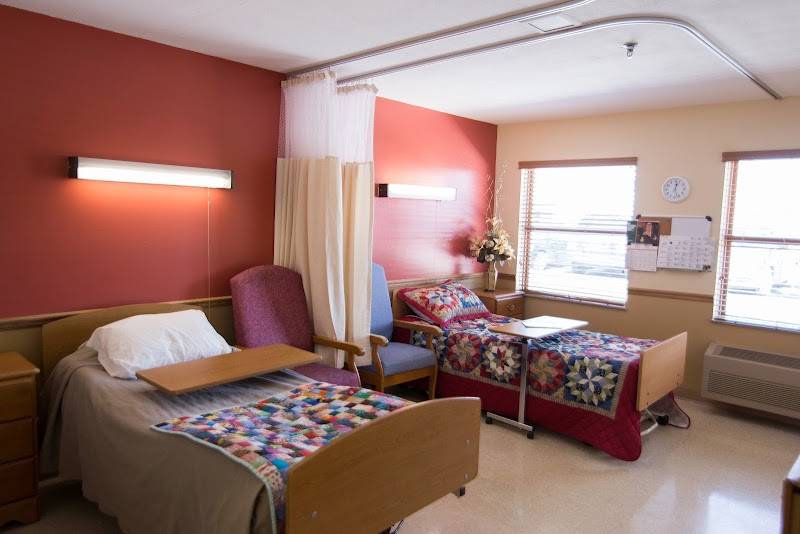
How is Northcrest Rehab And Nursing Center Staffed?

CMS rates NORTHCREST REHAB AND NURSING CENTER's staffing level at 2 out of 5 stars, which is below average compared to other nursing homes. Staff turnover is 67%, which is 20 percentage points above the Ohio average of 46%. High turnover can affect care consistency as new staff learn residents' individual needs.

What Have Inspectors Found at Northcrest Rehab And Nursing Center?

State health inspectors documented 37 deficiencies at NORTHCREST REHAB AND NURSING CENTER during 2019 to 2025. These included: 1 that caused actual resident harm and 36 with potential for harm. Deficiencies causing actual harm indicate documented cases where residents experienced negative health consequences.
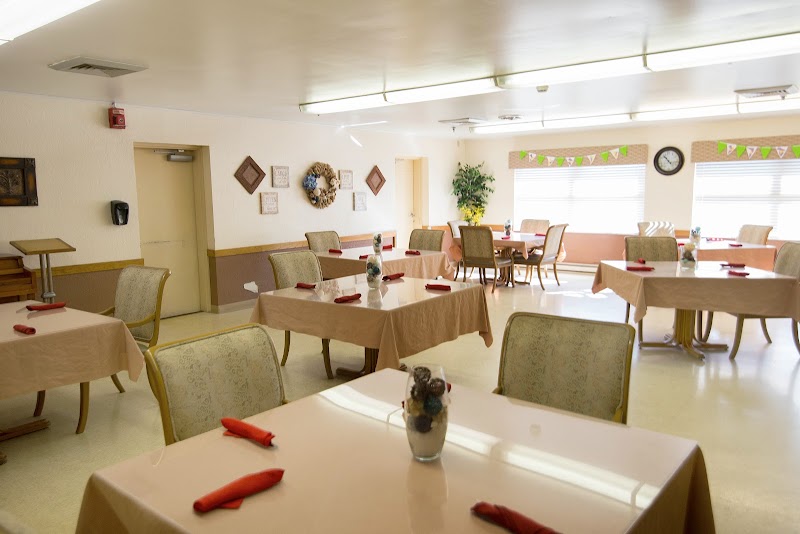
Who Owns and Operates Northcrest Rehab And Nursing Center?

NORTHCREST REHAB AND NURSING CENTER is owned by a for-profit company. For-profit facilities operate as businesses with obligations to shareholders or private owners. The facility is operated by CCH HEALTHCARE, a chain that manages multiple nursing homes. With 87 certified beds and approximately 60 residents (about 69% occupancy), it is a smaller facility located in NAPOLEON, Ohio.
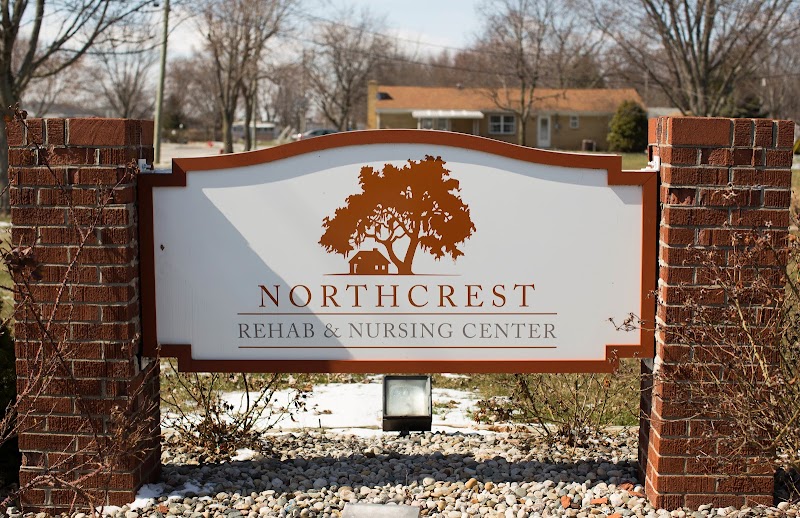
How Does Northcrest Rehab And Nursing Center Compare to Other Ohio Nursing Homes?

Compared to the 100 nursing homes in Ohio, NORTHCREST REHAB AND NURSING CENTER's overall rating (3 stars) is below the state average of 3.2, staff turnover (67%) is significantly higher than the state average of 46%, and health inspection rating (3 stars) is at the national benchmark.

What Should Families Ask When Visiting Northcrest Rehab And Nursing Center?

Based on this facility's data, families visiting should ask: "How do you ensure continuity of care given staff turnover, and what is your staff retention strategy?" "Can you walk me through typical staffing levels on day, evening, and night shifts?" "Can I visit during a mealtime to observe dining assistance and food quality?" "How do you handle medical emergencies, and what is your hospital transfer rate?" These questions are particularly relevant given the facility's high staff turnover rate and the below-average staffing rating.

Is Northcrest Rehab And Nursing Center Safe?

Based on CMS inspection data, NORTHCREST REHAB AND NURSING CENTER has a clean safety record: no substantiated abuse findings (meaning no confirmed cases of resident harm), no Immediate Jeopardy citations (the most serious violation level indicating risk of serious injury or death), and is not on the Special Focus Facility watch list (a federal program monitoring the lowest-performing 1% of nursing homes). The facility has a 3-star overall rating and ranks #100 of 100 nursing homes in Ohio. While no facility is perfect, families should still ask about staff-to-resident ratios and recent inspection results during their visit.

Do Nurses at Northcrest Rehab And Nursing Center Stick Around?

Staff turnover at NORTHCREST REHAB AND NURSING CENTER is high. At 67%, the facility is 20 percentage points above the Ohio average of 46%. High turnover means new staff may not know residents' individual needs, medications, or preferences. It can also be disorienting for residents, especially those with dementia who rely on familiar faces. Families should ask: What is causing the turnover? What retention programs are in place? How do you ensure care continuity during staff transitions?

Was Northcrest Rehab And Nursing Center Ever Fined?

NORTHCREST REHAB AND NURSING CENTER has no federal fines on record. CMS issues fines when nursing homes fail to meet care standards or don't correct problems found during inspections. The absence of fines suggests the facility has either maintained compliance or corrected any issues before penalties were assessed. This is a positive indicator, though families should still review recent inspection reports for the full picture.

Is Northcrest Rehab And Nursing Center on Any Federal Watch List?

NORTHCREST REHAB AND NURSING CENTER is not on any federal watch list. The most significant is the Special Focus Facility (SFF) program, which identifies the bottom 1% of nursing homes nationally based on persistent, serious quality problems. Not being on this list means the facility has avoided the pattern of deficiencies that triggers enhanced federal oversight. This is a positive indicator, though families should still review the facility's inspection history directly.