AVENTURA AT ASSUMPTION VILLAGE
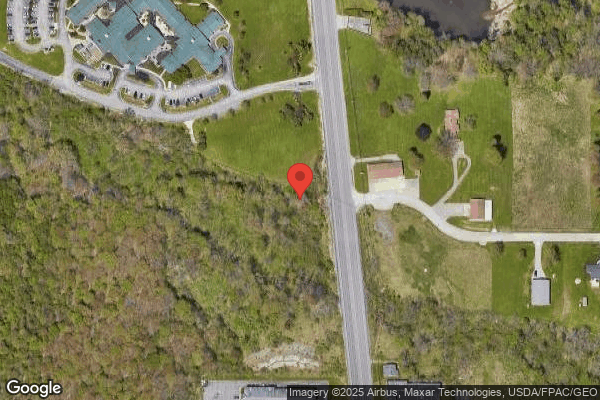
9800 MARKET STREET, NORTH LIMA, OH 44452 (330) 549-0740
For profit - Corporation 150 Beds AVENTURA HEALTH GROUP Data: November 2025
Trust Grade
38/100
#607 of 913 in OH
Last Inspection: December 2024

Within standard 12-15 month inspection cycle. Federal law requires annual inspections.

Overview

Aventura at Assumption Village has received a Trust Grade of F, indicating significant concerns about the quality of care provided at the facility. Ranking #607 out of 913 in Ohio places it in the bottom half of nursing homes in the state, and #20 out of 29 in Mahoning County suggests that there are only a few local options that are better. While the facility is showing signs of improvement, reducing issues from 13 in 2024 to 3 in 2025, the staffing situation is troubling with a high turnover rate of 64%, which is above the state average. Additionally, the facility has incurred $14,680 in fines, which is concerning but average compared to other facilities. Although the RN coverage is average, there was a serious incident where a resident was injured during a transfer because proper assistance was not provided, and there were also concerns about food safety and inadequate meal timing for residents. These issues highlight both strengths, like improving trends, and significant weaknesses that families should consider when researching this nursing home.

Trust Score
F
38/100
In Ohio
#607/913
Bottom 34%
Safety Record
Moderate
Needs review
Inspections
Getting Better
13 → 3 violations
Staff Stability
⚠ Watch
64% turnover. Above average. Higher turnover means staff may not know residents' routines.
Penalties
✓ Good
$14,680 in fines. Lower than most Ohio facilities. Relatively clean record.
Skilled Nurses
○ Average
Each resident gets 30 minutes of Registered Nurse (RN) attention daily — about average for Ohio. RNs are the most trained staff who monitor for health changes.
Violations
⚠ Watch
43 deficiencies on record. Higher than average. Multiple issues found across inspections.
★★☆☆☆
2.0
Overall Rating
★★☆☆☆
2.0
Staff Levels
★★★★☆
4.0
Care Quality
★★☆☆☆
2.0
Inspection Score
Stable
2024: 13 issues
2025: 3 issues

The Good

  • 4-Star Quality Measures · Strong clinical quality outcomes
  • Full Sprinkler Coverage · Fire safety systems throughout facility
  • No fines on record

Facility shows strength in quality measures, fire safety.

The Bad

2-Star Overall Rating

Below Ohio average (3.2)

Below average - review inspection findings carefully

Staff Turnover: 64%

18pts above Ohio avg (46%)

Frequent staff changes - ask about care continuity

Federal Fines: $14,680

Below median ($33,413)

Minor penalties assessed

Chain: AVENTURA HEALTH GROUP

Part of a multi-facility chain

Ask about local staffing decisions and management

Staff turnover is elevated (64%)

16 points above Ohio average of 48%

The Ugly 43 deficiencies on record

1 actual harm
Jul 2025 3 deficiencies
CONCERN (D) 📢 Someone Reported This

A family member, employee, or ombudsman was alarmed enough to file a formal complaint

Potential for Harm - no one hurt, but risky conditions existed

Deficiency F0697 (Tag F0697)

Could have caused harm · This affected 1 resident

Based on review of the medical record, interview, and review of facility policy, the facility failed to ensure Resident #24 received pain management medication as ordered to ensure an effective pain m...

Read full inspector narrative →
Based on review of the medical record, interview, and review of facility policy, the facility failed to ensure Resident #24 received pain management medication as ordered to ensure an effective pain management program was in place. This affected one resident (Resident #24) of three residents reviewed for pain management. The facility census was 106.Findings include:Review of the medical record for Resident #24 revealed an admission date of 01/10/25 with diagnoses including multiple sclerosis (MS), type two diabetes mellitus, essential hypertension, protein-calorie malnutrition, major depressive disorder, anxiety disorder, paraplegia, colostomy status, chronic kidney disease, long-term use of aspirin, and chronic pain.Review of the care plan last completed 04/25/25 revealed Resident #24 received pain medication therapy secondary to chronic pain, MS, and wounds. Interventions included administration of routine and as indicated pain medications as ordered. Review of the quarterly Minimum Data Set (MDS) assessment completed on 07/18/25 revealed Resident #24 had intact cognition and no behaviors or rejection of care. Further review of the MDS revealed Resident #24 was on a scheduled pain regimen, had taken analgesics (pain medications) on an as-needed basis, received non-pharmacological pain interventions, and reported pain that occurred almost constantly which occasionally affected sleep and participation in therapy, and frequently interfered with day-to-day activities pain was rated a six (on a numerical rating scale from 00 - 10) at the time of the assessment.Review of the physician orders for Resident #24 revealed the pain management regimen included the following pain management related orders:an order dated 01/14/25 to assess for pain every shiftan order dated 01/10/25 for Voltaren Arthritis Pain External Gel one percent (1%), apply to bilateral knees topically every 12 hours as needed for painan order dated 01/14/25 for Methocarbamol oral tablet 750 milligrams (mg), one tablet by mouth four times a day for pain related to multiple sclerosisan order dated 03/29/25 for Hydrocodone-Acetaminophen tablet 7.5-325 mg, one tablet by mouth every four hours as needed for painan order dated 01/10/25 for Lyrica oral capsule 100 mg (pregabalin), give one capsule by mouth two times a day for painan order dated 01/14/25 for Acetaminophen extra strength oral tablet, give 1,000 mg by mouth every eight hours as needed for headache with special instructions not to exceed 4,000mg in 24 hoursan order dated 01/14/25 for Acetaminophen 325 mg tablet, give 650 mg by mouth every four hours as needed for pain with special direction not to exceed 4,000mg per 24 hoursReview of the medication administration record (MAR) revealed Resident #24 did not receive the ordered doses of Lyrica, 100 mg twice daily by mouth for pain the evening of 07/19/25, the morning and evening of 07/20/25, the morning and evening of 07/21/25, and the morning of 07/22/25, for a total of six missed doses. Review of the electronic MAR (eMAR) progress notes from 07/19/25 through 07/22/25 revealed documentation the scheduled doses of Lyrica were held on 07/19/25 at 7:47 P.M. and 07/21/25 at 7:20 P.M. with no reason given. Further review of the progress notes revealed the scheduled doses of Lyrica were held on 07/20/25 at 8:47 A.M., 07/21/25 at 8:35 A.M., and 07/22/25 A.M. because the medication was on order. Review of the progress note dated 07/20/25 and timed 8:10 P.M. revealed the Lyrica was held because the facility was waiting for the prescription from the Nurse Practitioner (NP).Interview at 11:05 A.M. with Resident #24 confirmed there were several days the ordered Lyrica was not received, stating they ran out and revealing the pain over those few days was worse than her typically experienced discomfort. During the interview, Resident #24 confirmed she continued to receive other pain medication as needed. During the interview, Resident #24 also revealed an increase in the frequency and severity of headaches on the days Lyrica was not administered. Interview on 07/24/25 at 11:15 A.M. with Registered Nurse (RN) #379 confirmed facility nurses were to ensure orders were prepared for NP #477 to sign when nurses noted a resident's controlled substance medication was running low so that the medication could be ordered timely and the resident did not miss any doses. Interview on 07/24/25 at 11:30 A.M. with the Assistant Director of Nursing (ADON) confirmed the facility was aware Resident #24 had not received a total of six ordered doses of Lyrica and that although facility nursing staff had prepared the prescription order for signature, there had been a miscommunication, and the prescription renewal was not signed timely to prevent the missed doses. During the interview, the ADON further acknowledged that controlled substances should not be stopped abruptly. Review of the policy titled Pain Assessment and Management 03/24/25 revealed the facility was to manage resident pain consistent with the plan of care, professional standards of practice, and were to collaborate with physicians or prescribing practitioners and implement non-pharmacological and pharmacological intervention as ordered. This deficiency represents non-compliance investigated under Complaint Number 1263104.
CONCERN (D) 📢 Someone Reported This

A family member, employee, or ombudsman was alarmed enough to file a formal complaint

Potential for Harm - no one hurt, but risky conditions existed

Pharmacy Services (Tag F0755)

Could have caused harm · This affected 1 resident

Based on observation, interview, and record review, the facility failed to ensure Resident #60's insulin was administered properly. This affected one resident (Resident #60) of three residents observe...

Read full inspector narrative →
Based on observation, interview, and record review, the facility failed to ensure Resident #60's insulin was administered properly. This affected one resident (Resident #60) of three residents observed for medication administration.Findings include:Review of the medical record for Resident #60 revealed an admission date of 04/18/25 with diagnoses including mixed hyperlipidemia, muscle weakness, primary hypertension, acquired absence of the left leg below the knee, primary open-angle glaucoma of the left eye, peripheral vascular disease, and type two diabetes mellitus.Review of the care plan dated 04/22/25 revealed Resident #60 had diabetes mellitus and used insulin to control blood sugar levels. Interventions included checking blood sugars and administering diabetes medications as ordered. Review of the admission Minimum Data Set (MDS) 3.0 assessment completed on 04/25/25 revealed Resident #60 had intact cognition and received insulin injections and hypoglycemic medications.Review of the orders revealed an order dated 04/21/25 for Humalog Injection Solution (Insulin Lispro) 100 units per milliliter (units/ml) to be administered per sliding scale subcutaneously before meals as follows: if finger-stick blood sugar (FSBS) is zero to 200, no insulin coverage is needed; if FSBS is 201 to 250, inject three units; if FSBS is 251 to 300, inject five units; if FSBS is 301 to 350, inject nine units; if FSBS is 351 to 400, inject 12 units; if FSBS is 401 to 450, inject 15 units; if FSBS is greater than 450, call the physician. Observation on 07/23/25 from 11:35 A.M. to 11:40 A.M. revealed Registered Nurse (RN) #460 460 checked Resident #60's blood sugar, which was 238. RN #460 was then observed preparing and administering the insulin by placing a new needle onto Resident #60's Insulin Lispro KwikPen(R), dialing the dose knob to three (the ordered dose per sliding scale), then administering the insulin into the left upper arm of Resident #60 after cleansing the injection site. During the procedure, RN #460 did not prime the insulin pen prior to dialing the knob to three units (dose required per sliding scale) and administering the insulin to Resident #60. Interview on 07/23/25 after observation with RN #460 confirmed the insulin pen needle was not primed prior to dialing to the ordered dose and that the needle should have been primed until insulin was observed leaving the tip of the needle prior to administration. During the interview, RN #406 reported dialing the pen to one unit and depressing the knob may have been sufficient for priming but was uncertain whether there were specific directions for priming the pen. Review of the policy titled, Administering Medications last revised August 2022 revealed medications were to be administered in accordance with physician orders and appropriate vital signs were to be checked prior to medication administration as necessary per the order instructions. Review of the Insulin Lispro KwikPen(R) manufacturer instructions for use revealed the insulin pen was to be primed with two units prior to administration by turning the dose knob to two units, holding the pen upright so that air bubbles collected on top, and pushing the dose knob in slowly until it stopped at 0 (viewed in the dose window), so that insulin could be seen at the tip of the needle. The instructions further revealed failure to prime the insulin pen needle may cause the resident to receive the wrong dose of insulin. This deficiency represents non-compliance investigated under Complaint Number 1263104.
CONCERN (D) 📢 Someone Reported This

A family member, employee, or ombudsman was alarmed enough to file a formal complaint

Potential for Harm - no one hurt, but risky conditions existed

Medical Records (Tag F0842)

Could have caused harm · This affected 1 resident

**NOTE- TERMS IN BRACKETS HAVE BEEN EDITED TO PROTECT CONFIDENTIALITY** Based on review of the medical record, interview and review of facility policy, the facility failed to ensure the medical record...

Read full inspector narrative →
**NOTE- TERMS IN BRACKETS HAVE BEEN EDITED TO PROTECT CONFIDENTIALITY** Based on review of the medical record, interview and review of facility policy, the facility failed to ensure the medical record for Resident #60 contained complete and accurate documentation of specified assessment criteria to safely administer ordered medications. This affected one resident (Resident #60) of three residents observed for medication administration. The facility census was 106. Findings include:Review of the medical record for Resident #60 revealed an admission date of 04/18/25 with diagnoses including mixed hyperlipidemia, muscle weakness, primary hypertension, acquired absence of the left leg below the knee, primary open-angle glaucoma of the left eye, peripheral vascular disease (PVD), and type two diabetes mellitus.Review of the care plan dated 04/22/25 revealed Resident #60 had an altered cardiovascular status related to hyperlipidemia, hypertension, and PVD. Interventions included administering medications as ordered and monitoring, reporting, and documenting signs of coronary artery disease and malignant hypertension, which included Resident #60's blood pressure. Review of the admission Minimum Data Set (MDS) 3.0 assessment completed on 04/25/25 revealed Resident #60 had intact cognition and no behaviors or rejection of care. Review of the orders revealed an order dated 05/15/25 for Carvedilol tablet 6.25 milligrams (mg), give one tablet by mouth two times a day related to essential (primary) hypertension and hold for systolic blood pressure (SBP) less than 130.Observation on 07/22/25 at 8:33 P.M. revealed Resident #60 was given the Carvedilol 6.25 mg tablet by Licensed Practical Nurse (LPN) #346 but the blood pressure was not observed being taken during the medication administration observation. Interview with LPN #346 at the time of the observation revealed the blood pressure (BP) was taken prior to the medications being prepared and administered, and the BP result was within the ordered parameters. There was no documentation to support the BP was checked prior to medication administration.Review of the vital signs and weight monitoring documentation revealed the last recorded blood pressure for Resident #60 was recorded on 7/18/2025 at 6:41 P.M. as 124/78 millimeters of mercury (mmHg). Further review of the vital sign documentation revealed the only other blood pressures recorded in the medical record since the date of admission [DATE]) were on 05/05/25 at 10:11 A.M. (140/77), 05/18/25 at 9:32 A.M. (132/64), and 06/18/25 at 10:24 A.M. (152/84). Review of the medication administration record (MAR) revealed the evening dose of Carvedilol was signed off as given on 07/18/25 (order to hold for SBP less than 130) and there were no progress notes indicating the physician or the Nurse Practitioner were notified that the SBP was less than 130 or nursing staff were given orders to administer the medication despite the blood pressure result outside the ordered parameter. There was no evidence in the medical record that Resident #60 had a blood pressure re-check which resulted in the blood pressure reading meeting ordered carvedilol dose parameters on the evening of 07/18/25. Further review of the MAR revealed no prompt for the nurse to enter blood pressures in the Carvedilol row, or elsewhere on the MAR, other than once a month vital signs to be recorded once daily on the 18th of each month (time unspecified). Further review revealed the blood pressure was prompted on the MAR to be taken with vital signs monthly on the 18th of each month, not twice daily before administering the Carvedilol. Interview on 07/23/25 at 11:45 A.M. with Registered Nurse (RN) #460 confirmed there was no order to check blood pressure twice a day but since the medication order specified BP parameters, it was typical to check the Resident #60's BP before giving the medication but there was nowhere to chart the results on the MAR and it only got charted if it pops up to chart it. During the interview, RN #460 confirmed the BP was taken prior to administering the Carvedilol to Resident #60 but could not produce written or documented evidence. Instead, RN #460 picked up an electronic wrist BP cuff and presented the last BP reading of 124/97, and stated the last BP checked with that cuff was most likely for Resident #60 (the SBP was not in the ordered parameter) but then stated the blood pressure taken on Resident #60 was within the ordered parameters. Follow-up interview on 07/24/25 at 5:30 P.M. with LPN #346 confirmed Resident #60 should have blood pressure checks twice daily before giving the Carvedilol and that Resident #60's BPs were within the ordered parameters, but the results were not documented in the electronic medical record (EMR) and if and when they were written on report sheets, the sheets went into the shredder, leaving no record of blood pressure results. Interview on 07/24/25 at 12:15 P.M. with the Assistant Director of Nursing (ADON) confirmed the MAR did not prompt recording of the BP and none of the nurses had informed nursing administrative staff of the missing documentation prior to the survey.Review of the policy titled Charting and Documentation dated August 2022 revealed documentation of services, treatments and/or procedures, including objective observations, were to be documented in the resident medical record.
Dec 2024 11 deficiencies
CONCERN (D)

Potential for Harm - no one hurt, but risky conditions existed

Notification of Changes (Tag F0580)

Could have caused harm · This affected 1 resident

**NOTE- TERMS IN BRACKETS HAVE BEEN EDITED TO PROTECT CONFIDENTIALITY** Based on medical record review, interviews and review of the facility policy, the facility failed to notify the physician/nurse ...

Read full inspector narrative →
**NOTE- TERMS IN BRACKETS HAVE BEEN EDITED TO PROTECT CONFIDENTIALITY** Based on medical record review, interviews and review of the facility policy, the facility failed to notify the physician/nurse practitioner and resident representative of a significant weight change. This affected one resident (Resident #70) out of three residents reviewed for nutrition. The facility census was 94. Findings include: Review of the medical record for Resident #70 revealed an admission date of 06/07/24. Pertinent diagnoses included hemiplegia and hemiparesis following nontraumatic intracerebral hemorrhage affecting left non-dominant side, dysphagia following cerebral infarction, vascular dementia, lymphedema, and obesity. Review of Resident #70's quarterly Minimum Data Set (MDS) 3.0 assessment, dated 12/12/24, revealed the resident was severely impaired cognitively, had no behaviors or rejection of care, had a significant unplanned weight loss, was on a therapeutic diet, and was receiving 51 percent (%) or more of proportion of calories from a feeding tube, and 501 cubic centimeters (cc) or more of average fluid intake from intravenously or from a tube feeding. Review of Resident #70's weights from 06/07/24 to 12/06/24 revealed on 10/09/24 the resident weighed 235.8 pounds and on 11/11/24 weighed 213.8 pounds, which was a significant weight loss of 9.3 % weight loss between 10/09/24 and 11/11/24. Review of the nutritional risk assessment dated [DATE] and authored by Dietitian #500 confirmed Resident #70 had an unplanned weight loss of 9.3% weight loss between 10/09/24 and 11/11/24. Further review of Resident #70's medical record revealed there was no documented evidence the physician/nurse practitioner or resident representative were notified of the significant weight loss. Interviews on 12/18/24 at 9:57 A.M. and at 11:31 A.M. with Dietitian #500 confirmed the significant weight loss for Resident #70 and stated she had not gotten a hold of Resident #70's resident representatives about the significant loss because they worked during the day, and she thought she verbally told the nurse practitioner of the weight loss but confirmed there was no documented evidence in the medical record that the nurse practitioner was notified of the significant weight loss. Interview on 12/19/24 at 12:12 P.M. with Nurse Practitioner #506 stated if she had been made aware of the weight loss there would have been a written notification of the weight loss in the chart, or she would have put it in her notes. Review of the facility policy Weight Assessment and Intervention, revised August 2022, revealed residents would be monitored for undesirable weight loss or gain, and the dietitian would notify the physician and resident representative of any weight change of five percent or more.
CONCERN (D)

Potential for Harm - no one hurt, but risky conditions existed

ADL Care (Tag F0677)

Could have caused harm · This affected 1 resident

**NOTE- TERMS IN BRACKETS HAVE BEEN EDITED TO PROTECT CONFIDENTIALITY** Based on observation, interview, review of the medical record and review of the facility policy, the facility failed to ensure r...

Read full inspector narrative →
**NOTE- TERMS IN BRACKETS HAVE BEEN EDITED TO PROTECT CONFIDENTIALITY** Based on observation, interview, review of the medical record and review of the facility policy, the facility failed to ensure residents received the required level of assistance for meals. This affected one resident (Resident #36) of two residents reviewed for activities of daily living (ADL). The facility census was 94. Findings include: Review of the medical record revealed Resident #36 was admitted to the facility on [DATE] with diagnoses including cerebral ischemia, dementia, hemiplegia or hemiparesis following cerebral infarction affecting the left non-dominant side, difficulty in walking, major depressive disorder, osteoporosis, anxiety, glaucoma, hearing loss, dysphagia, psychophysical visual disturbances, atrial fibrillation, and muscle weakness. Review of the care plan dated 08/23/24 revealed Resident #36 had an ADL self-care deficit related to decreased mobility, difficulty walking, generalized muscle weakness, left-sided weakness, and glaucoma. Interventions included staff setup and cleanup for eating. Review of the quarterly Minimum Data Set (MDS) 3.0 assessment completed on 10/01/24 revealed Resident #36 had intact cognition and an upper extremity range of motion impairment on one side. Further review of the MDS revealed Resident #36 required setup assistance for eating. Interview on 12/16/24 at 9:24 A.M. with the daughter of Resident #36 revealed concern that staff were not assisting her mother with setting up her meals, removing lids from cups and bowls, or cutting her food for her. Observation and interview on 12/16/24 from 10:05 A.M. to 10:15 A.M. revealed a meal tray on Resident #36's bedside table with lids/covers intact. When family lifted the dome lid to check to see what was on the plate, it revealed a sausage patty, a piece of French toast, and dry toast cut in half. The sausage and French toast were not cut up and there was a lid on the bowl of dry rice Krispies with unopened milk. Interview with Resident #36 confirmed she was unable to see what was on the plate when staff brought it to her room earlier that morning and if she had been shown what was on the plate and had assistance cutting her food, she would have liked to have at least eaten the sausage patty with cereal. Observation on 12/17/24 at 4:28 P.M. revealed the light was not on in Resident #36's side of room, a meal tray was left on bedside table (a wheelchair was partially situated between the chair where Resident #36 was seated and the bedside table), all foods were covered, and Resident #36 stated she was unable to see well and did not know what food was there. Resident #36 confirmed the girl just left it and did not turn on the light, tell her what was for dinner, or ask if she needed help. When informed what foods were listed on her meal ticket, Resident #36 stated she would need help opening packages and cutting chicken if she was going to be able to eat. Interview on 12/17/24 at 4:33 P.M. with Licensed Practical Nurse (LPN) #445 confirmed Resident #36 required assistance with setup for all meals. Interview on 12/17/24 at 4:36 P.M. with Certified Nurse Aide (CNA) #426 stated no, we usually just leave the tray in here when asked if Resident #36 received any type of meal support from staff. CNA #426 then entered the resident's room and confirmed Resident #36 needed assistance cutting up her chicken to eat it. Observation on 12/19/24 at 8:16 A.M. revealed Resident #36 had dry cereal spilled on her floor on the right side of her bed as she struggled to open a carton of milk. At the time of this observation, Resident #36 stated she could not open the milk herself and asked for assistance. Review of the Point of Care aide documentation in the electronic medical record from the past thirty days revealed staff marked no setup or physical help from staff was provided to Resident #36 for eating support on 11/26/24 for lunch, 11/29/24 for breakfast or lunch, 12/06/24 for breakfast, 12/10/24 for breakfast and lunch, and 12/13/24 for lunch. There was no documentation regarding the level of eating support provided to Resident #36 on 11/20/24 through 11/24/24, 11/30/24, 12/02/24, 12/04/24, 12/05/24, 12/07/24/ through 12/09/24, 12/12/24, and 12/14/24 through breakfast on 12/19/24. Interview on 12/19/24 at 8:19 A.M. with CNA #446 confirmed the carton of milk should have been opened for Resident #36 because it was part of tray set-up, which she also confirmed Resident #36 needed. Interview on 12/19/24 at 9:59 A.M. with LPN #322 confirmed Resident #36 required setup level of assistance for eating. Further interview with LPN #322 confirmed setup consisted of opening all the foods, removing lids, cutting up foods, and making sure plates, bowls, and silverware were accessible to the resident. Review of the policy titled Activities of Daily Living (ADL), Supporting revised August 2022, revealed appropriate care and services would be provided for residents who were unable to carry out their own ADL independently, including appropriate support and assistance with meals and snacks.
CONCERN (D)

Potential for Harm - no one hurt, but risky conditions existed

Deficiency F0692 (Tag F0692)

Could have caused harm · This affected 1 resident

**NOTE- TERMS IN BRACKETS HAVE BEEN EDITED TO PROTECT CONFIDENTIALITY** Based on observation, interview, medical record review and facility policy review, the facility failed to ensure Resident #70's ...

Read full inspector narrative →
**NOTE- TERMS IN BRACKETS HAVE BEEN EDITED TO PROTECT CONFIDENTIALITY** Based on observation, interview, medical record review and facility policy review, the facility failed to ensure Resident #70's weekly weights were obtained as ordered and failed to monitor and follow Resident #57's fluid restriction. This affected two residents (#57 and #70) out of three residents reviewed for nutrition. The facility census was 94. Findings include: 1. Review of the medical record for Resident #70 revealed an admission date of 06/07/24. Pertinent diagnoses included hemiplegia (total or nearly complete paralysis on one side of the body) and hemiparesis (weakness of one entire side of the body) following nontraumatic intracerebral hemorrhage (bleeding in the brain) affecting left non-dominant side, dysphagia (difficulty swallowing) following cerebral infarction (stroke), vascular dementia, lymphedema (swelling in various areas of the body), and obesity. Review of the care plan dated 06/15/24 revealed Resident #70 had a nutritional problem related to advanced age, receiving nothing by mouth with the need for a tube feeding, lymphedema, and significant weight loss related to illness. Interventions included providing enteral feedings as ordered, dietitian to evaluate and make enteral feeding change recommendations as needed, and monitor/document/report to physician any signs or symptoms of dehydration which included sudden weight loss. Review of the dietary progress note, dated 09/18/24 and authored by Dietitian #500, revealed Resident #70 had a history of weight variations; however, how clothing fit and visualization of the resident had not changed and there had been no change in her tube feeding product or rate, which was meeting her needs. It was determined the resident would be weighed weekly to follow trends. Review of Resident #70's physician orders revealed an order dated 09/25/24 for a weekly weight one time every seven days for weight maintenance. Review of Resident #70's quarterly Minimum Data Set (MDS) assessment, dated 12/12/24, revealed the resident was severely impaired cognitively, had no behaviors or rejection of care, had a significant unplanned weight loss, was on a therapeutic diet, and was receiving 51 percent (%) or more of proportion of calories from a feeding tube, and 501 cubic centimeters (cc) or more of average fluid intake from intravenously or from a tube feeding. Review of Resident #70's October and November 2024 Treatment Administration Records (TARs) where the facility was recording the weekly weights revealed a weekly weight was to be obtained on Wednesdays. On 10/02/24 there was no weekly weight obtained. On 10/09/24, the resident's weight was 235.8 pounds. On 10/16/24, 10/23/24, and 10/30/24 there were no weekly weights obtained. On 11/06/24 a weight was not obtained since the resident was in the hospital. On 11/13/24 there was no weight obtained. On 11/20/24 the resident's weekly weight was 217 pounds, and on 11/27/24 the resident's weekly weight was 220 pounds. Interview on 12/18/24 at 9:38 A.M. with Licensed Practical Nurse (LPN) Manager #312 revealed for weekly weights, the weekly weights are scheduled and put in the TAR for the nurses to type in the weights. The dietitian was to follow up to make sure the weekly weights were being done and if a weight was not obtained, the dietitian would either send an email or tell her of the missing weight and a weight would then be obtained that day. LPN #312, after reviewing Resident #70's weights in the medical record, confirmed weekly weights had been missed and could not give an explanation as to why. Interview on 12/18/24 at 9:57 A.M. with Dietitian #500 revealed she was the one who monitored if weekly weights were being done. If she saw a weekly weight had not been obtained, she would either email the Director of Nursing (DON) or the Unit Managers, give a handwritten note to nursing staff on the respected units, or would verbally tell staff on the units or during morning meeting if a weekly weight needed to be obtained. After looking at the weekly weights for Resident #70, Dietitian #500 confirmed the missing weekly weights and stated she didn't know why those weekly weights were missed. Dietitian #500 stated she was not sure of the reason for the weight variance for Resident #70 but was questioning the accuracy of the weights. Interview on 12/19/24 at 12:12 P.M. with Nurse Practitioner (NP) #506 revealed after reviewing her notes, Resident #70 had been sick for a while, and there were no concerns with her labs. She went on to state that Resident #70 looked the same and was questioning the accuracy of the weights. Review of the facility policy Weight Assessment and Intervention, revised August 2022, revealed residents would be monitored for undesirable weight loss or gain. Residents would be weighed upon admission and at intervals established by the interdisciplinary team and weights would be recorded in the individual's medical record. 2. Review of the medical record for Resident #57 revealed an admission date of 03/08/24. Pertinent diagnoses included end stage renal disease (ESRD), hyperkalemia (high levels of potassium in the blood), hypertensive chronic kidney disease with stage one through stage four chronic kidney disease, congestive heart failure (CHF), anemia in chronic kidney disease, and dependence on renal dialysis. Review of the care plan, dated 03/14/24, revealed Resident #57 had a nutritional problem related to ESRD with dialysis and being on a fluid restriction. Interventions included continue education and encouragement offered of the importance of fluid restriction, provide diet as ordered, monitor intake and record every meal, monitor fluid intake, and provide the resident with personal preferences. Review of Resident #57's physician's orders revealed an order dated 05/21/24 for a regular diet, regular texture, 1000 milliliter (ml) fluid restriction. Review of the quarterly Minimum Data Set (MDS), dated [DATE], revealed Resident #57 was cognitively intact, had no behaviors or rejection of care, required set up or clean-up assistance for eating, supervision or touch assistance for walking up to 150 feet, was on a therapeutic diet, and received dialysis. Review of Resident #57's November and December 2024 TARs revealed the resident was on a 1000 ml fluid restriction with dietary providing 640 ml and nursing 360 ml (120 ml an eight-hour shift). Nursing was marking a checkmark that they were aware of the fluid restriction, but there was no place to document how much fluids were provided. Review of facility document Fluid Restriction Worksheet, undated, for Resident #57 revealed he was on a 1000 milliliter (ml) fluid restriction and dietary would provide 640 ml, and nursing would provide 360 ml (120 each 8-hour shift) amount provided for each meal: • breakfast 120 ml or half a cup beverage of choice • lunch 120 ml or half a cup of beverage of choice 120 ml or half a cup of beverage of choice For a total of 240 ml for lunch • dinner 120 ml or half a cup of beverage of choice 120 ml or half cup of beverage of choice For a total of 240 ml at dinner Interview on 12/16/24 at 4:52 P.M. with Resident #57 revealed he knew he was on a fluid restriction but was unaware of how much he was allowed to drink or what was considered a fluid. Observation of Resident #57's breakfast tray on 12/18/24 at 7:41 A.M. revealed there was one eight-ounce (240 ml) carton of two percent milk sitting on the tray. On the tray was a dietary ticket which had a water mark on it indicating the resident was on a fluid restriction, and the ticket indicated the resident should receive four ounces of two percent milk. Certified Nursing Assistant (CNA) #340 at the time of observation confirmed the eight-ounce carton of milk on the resident's tray (according to the fluid restriction worksheet, the resident should have been provided four ounces of fluid). Interview on 12/18/24 at 11:16 A.M. LPN #422 revealed Resident #57 was on a fluid restriction, and she gave him about 300 ml of fluids with his pills throughout her 12-hour day shift (according to the fluid restriction worksheet, nursing for a 12-hour shift was allowed 180 ml). She stated they do not record how much they give him and went on to state, nursing just places a checkmark in the TAR indicating he was on a fluid restriction. She stated the facility really didn't know how much fluids he was consuming. She stated he ate in the main dining room for lunch and dinner, and no one was tracking how much he was consuming there. Observation on 12/18/24 at 11:25 A.M. revealed Resident #57 was in the main dining room with one eight-ounce (240 ml) glass of iced tea and one six-ounce bowl (180ml) bowl of soup. At the time of observation, Dietary Aide #508 confirmed the resident had an eight-ounce glass of iced tea and one six-ounce bowl of soup (according to the fluid restriction worksheet, the resident should have been provided eight ounces of fluid). Interview on 12/18/24 at 11:35 A.M. with Dietitian #500 stated Resident #57 was on a 1000 ml fluid restriction, and dietary was providing 640 ml, and nursing was to provide 360 ml (120 ml each eight-hour shift). She confirmed the resident was to receive 120 ml at breakfast and two 120 ml beverages at both lunch and dinner from dietary. Dietitian #500 stated she didn't think the resident understood what a fluid restriction was and how it was divided. She stated she had never broken the fluid restriction down step-by-step for the resident, and the facility was responsible for following the fluid restriction. Interview on 12/18/24 at 2:16 P.M. with Dietary Manager #327 revealed when there was a person on a fluid restriction, the dietitian would give her a fluid restriction worksheet which she would use to identify on the dietary slips how much fluids dietary would provide for each meal. She stated the dietary tickets have a water mark on them indicating if a resident was on a fluid restriction, which was how the staff knew if a person was on a fluid restriction. Observation on 12/18/24 at 5:00 P.M. revealed Resident #57 had one eight glass of cranberry juice (240 ml) and one four-ounce container of sherbet (120 ml) in front of him. At the time of observation, Dietary Aide #501 confirmed the eight-ounce beverage and four-ounce orange sherbet (according to the fluid restriction worksheet the resident should have been provided eight ounces of fluid). Review of the undated facility policy Food and Nutrition and Dietary Services Policy and Procedure revealed each resident of the facility would be provided with a nourishing, palatable, well-balanced diet that met his/her daily nutritional and special dietary needs taking into consideration the preferences of each resident.
CONCERN (D)

Potential for Harm - no one hurt, but risky conditions existed

Deficiency F0698 (Tag F0698)

Could have caused harm · This affected 1 resident

Based on medical record review, staff interviews and review of communication forms from dialysis center, the facility failed to ensure ongoing communication and collaboration with the dialysis facilit...

Read full inspector narrative →
Based on medical record review, staff interviews and review of communication forms from dialysis center, the facility failed to ensure ongoing communication and collaboration with the dialysis facility regarding dialysis care and services for Resident #57. This affected one resident (#57) of one resident reviewed for dialysis but had the potential to affect two additional residents (#15 and #77) identified by the facility as receiving dialysis. The facility census was 94. Findings include: Review of the medical record for Resident #57 revealed an admission date of 03/8/24. Pertinent diagnoses included end stage renal disease, hypertensive chronic kidney disease with stage one through four chronic kidney disease or unspecified chronic kidney disease, anemia in chronic kidney disease, and dependence on renal dialysis. Review of Resident #57's physician's orders revealed an order dated 09/09/24 for dialysis every Tuesday, Thursday, and Saturday with a chair time of 11:15 A.M. Review of the quarterly Minimum Data Set (MDS) assessment, dated 12/16/24, revealed Resident #57 was cognitively intact, exhibited no behaviors or rejection of care, and received dialysis. Further review of Resident #57's medical record revealed communication sheets from the dialysis center dated 08/01/24, 09/26/24, 10/01/24, 10/10/24, 10/26/24, 10/29/24, 12/14/24, and 12/17/24. There were no communication sheets from the dialysis facility between 08/03/24 to 09/24/24, 10/03/24 to 10/08/24, 10/12/24 to 10/24/24, and 10/31/24 to 12/12/24, and there was no documented evidence the facility had been communicating with the dialysis center on dialysis days. Interview on 12/18/24 at 11:10 A.M. with Resident #57 revealed he does not take any paperwork with him to dialysis from the facility, but he does bring back paperwork from the dialysis facility and gives it to a facility nurse when he returns. Interview on 12/18/24 at 11:16 A.M. with Licensed Practical Nurse (LPN) #422 revealed she would take vital signs prior to Resident #57 leaving for dialysis, would call dialysis if there were concerns, and confirmed the dialysis facility was sending forms back with the resident. Interview on 12/18/24 at 4:27 P.M. with LPN Manager #312 confirmed the facility did not send communication forms with the resident, but the resident did bring back communication forms from the dialysis facility, which should be put in the medical chart. LPN #312 confirmed there were missing communication forms and if the nurse doesn't have communication from dialysis, they should be calling the dialysis center. Interview on 12/19/24 at 8:37 A.M. with Renal Registered Nurse (RN) #505 from the dialysis facility stated she had never seen the facility send forms with Resident #57, but the staff at the dialysis center filled out a form while he was at dialysis and would send it back with him every time.
CONCERN (D)

Potential for Harm - no one hurt, but risky conditions existed

Deficiency F0761 (Tag F0761)

Could have caused harm · This affected 1 resident

**NOTE- TERMS IN BRACKETS HAVE BEEN EDITED TO PROTECT CONFIDENTIALITY** Based on observation, resident and staff interviews, medical record review and review of the facility policy, the facility faile...

Read full inspector narrative →
**NOTE- TERMS IN BRACKETS HAVE BEEN EDITED TO PROTECT CONFIDENTIALITY** Based on observation, resident and staff interviews, medical record review and review of the facility policy, the facility failed to ensure medications were not left unattended. This affected two of four residents (#4 and Resident #27) who were observed with medications at the bedside and had the potential to affect 20 additional residents (#2, #6, #8, #9, #16, #19, #31, #32, #33, #38, #39, #40, #41, #43, #50, #54, #78, #80, #81 and #88) who received medications in the 1400 and 1600B hall. The facility census was 94. Findings include: 1. Review of the medical record for Resident #27 revealed an admission date of 01/13/24 with diagnoses including non-traumatic intracerebral intraventricular hemorrhage, congestive heart failure (CHF), repeated falls, altered mental status, unspecified dementia, hypertension, hyperlipidemia, muscle weakness, major depressive disorder, muscle weakness, and the need for assistance with personal care. Review of the quarterly Minimum Data Set (MDS) 3.0 assessment completed on 12 04/24 revealed Resident #27 had moderate cognitive impairment. The MDS further revealed Resident #27 required moderate assistance with bathing and toileting hygiene, setup assistance for personal hygiene, and supervision or touching assistance with transfers. Review of the care plan last reviewed on 12/11/24 revealed Resident #27 had an alteration in cognitive function, neurological status, and was at risk for impaired thought processes secondary to dementia, altered mental status, and an intracerebral hemorrhage. Interventions included administration of medications as ordered, allowing him sufficient time to respond, and cueing and supervision as needed. There were no care plan interventions or assessments in the medical record indicating Resident #27 could self-administer his medications. Review of the physician orders and order scheduling details revealed the following medication orders: • 01/15/24 - cyanocobalamin (Vitamin B12) 500 micrograms (mcg) by mouth daily as a supplement to be administered by a clinician. • 01/18/24 - ferrous sulfate (iron) 325 milligrams (mg) by mouth daily to be administered by a clinician. • 02/22/24 - folic acid 400 mg daily by mouth as a supplement to be administered by a clinician. • Norvasc 5 mg by mouth once daily for hypertension to be administered by a clinician. • Cetirizine hydrochloride (Zyrtec) 10 mg by mouth once daily for allergies to be administered by a clinician. Observation on 12/16/24 at 10:53 A.M. of Resident #27 in his room revealed he was lying in bed and visible on his bedside table, which was located on the other side of the foot of his bed, was a medicine cup containing five pills sitting next to a cup of water. The pills included one black tablet, one pink tablet, one off-white tablet, one round white tablet, and one oblong tablet. An interview with Resident #27 at the time of the observation confirmed the nurse always left the medication cup on his table if he was asleep and he took them on his own when he woke up. Resident #27 further confirmed he had been unaware the pills were sitting there and would need to transfer himself to his wheelchair to get the medication since they were not within his reach. Interview at on 12/16/24 at 10:57 A.M. with Registered Nurse (RN) #343 confirmed the five tablets left at Resident #27's bedside included vitamin B12, iron, folic acid, Norvasc, and Zyrtec and that she had left them on his table during the morning medication pass. Interview on 12/16/24 at 4:20 P.M. with the Director of Nursing (DON) confirmed nurses were to remain with the resident while took take their medicine. Review of the policy titled Administering Medications, revised in August 2022, revealed residents were allowed to self-administer medications only if the prescriber or attending physician, in coordination with the interdisciplinary care planning team, had determined the resident could do so safely. Review of the policy further revealed medications were to be administered as prescribed and in a safe manner. 2. Review of the medical record revealed Resident #4 was admitted to the facility on [DATE] with diagnoses including mononeuropathies of bilateral lower limbs, obstructive sleep apnea, atrial fibrillation, atherosclerotic heart disease, pulmonary hypertension, heart failure, cardiomyopathy, major depressive disorder, iron deficiency anemia, chronic pain, urinary retention, vitamin deficiency, and dependence on supplemental oxygen. Review of the medication orders revealed an order dated 06/13/23 for 40 milliequivalents (mEq) of potassium chloride extended release by mouth once daily for low potassium related to heart failure. Further review of the orders revealed an order dated 05/26/24 for Resident #4 to have a mechanical soft textured diet. Review of the care plan last reviewed on 12 06/24 revealed Resident #4 had a self-deficit in the performance of activities of daily living (ADL), demonstrated problematic behavior, such as resistance to care or treatment, and was at risk for impaired cognitive function. Interventions included administration of medication as ordered, supervise as needed, and providing cues during tasks to ensure completion. There were no care plan interventions and no assessments indicating Resident #4 was safe to self-administer medications. Review of the annual MDS 3.0 assessment completed on 12/09/24 revealed Resident #4 had intact cognition and was on a drug regimen that included antidepressant, anticoagulant, diuretic, opioid, and anticonvulsant medications. Further review of the MDS revealed Resident #4 was on a mechanically altered diet. Observation on 12/16/24 at 11:00 A.M. revealed a medication cup was at Resident #4's bedside containing two potassium tablets, which was confirmed by RN #343 at 11:03 A.M. Further interview with RN #343 confirmed she had left a medicine cup with pills, including the two potassium pills, at Resident #4's bedside when she passed medications earlier that morning. RN #343 then left the room, broke the tablets in half, and returned to the resident's room where she supervised Resident #4 take the medication with vanilla pudding. Interview on 12/16/24 at 11:04 A.M. with Resident #4 confirmed RN #343 gave her a medicine cup containing her morning pills at approximately 8:30 A.M. that morning and left the room before Resident #4 took all her medication. Resident #4 further revealed she did not take the potassium because she was unable to swallow them, so she put them aside until someone came back to check on her and then she had planned to request some applesauce or some pudding to help her swallow the medication. During the interview, Resident #4 confirmed the facility nurses typically entered her room in the mornings, woke her up for morning medication administration, left the medication in her room, and then exited the room before she took the medication. Interview on 12/16/24 at 4:20 P.M. with the DON confirmed nurses should stay with the residents until they finish taking their medication. Review of the policy titled Administering Medications, revised August 2022, revealed residents were allowed to self-administer medications only if the prescriber or attending physician, in coordination with the interdisciplinary care planning team, had determined the resident could do so safely. Review of the policy further revealed medications were to be administered as prescribed and in a safe manner.
CONCERN (D)

Potential for Harm - no one hurt, but risky conditions existed

Deficiency F0805 (Tag F0805)

Could have caused harm · This affected 1 resident

Based on observation, interview, record review and review of facility policy the facility failed to ensure residents on mechanical soft diets received appropriate meal consistency. This affected one r...

Read full inspector narrative →
Based on observation, interview, record review and review of facility policy the facility failed to ensure residents on mechanical soft diets received appropriate meal consistency. This affected one resident (Resident #6) of eight residents reviewed for food and nutrition. The facility identified 13 residents (#4, #6, #8, #11, #14, #30, #40, #46, #69, #73, #76 #86, and #146) who received a mechanical soft diet. The facility census was 94. Findings include: Review of the medical record for Resident #6 revealed an admission date of 01/21/20. Diagnoses included quadriplegia, dysphagia,, unspecified dementia, and macular degeneration. Review of Resident #6's annual Minimum Data Set (MDS) 3.0 assessment, dated 11/29/24, revealed the resident was cognitively intact, required setup and clean up assistance from staff for eating, and was on a mechanically altered diet. Review of Resident #6's physician orders revealed an order dated 11/13/24 for regular diet, mechanical soft texture, thin consistency. Review of Resident #6's care plan, dated 08/30/24, revealed the resident may be nutritionally at risk related to quadriplegia, dementia, and altered chewing ability. Interventions included provide diet as ordered. Review of the facility spread sheet Assumption Village Menu Extension for dinner week three (12/18/24) revealed the mechanical soft diets were to receive one number eight scoop (four ounces) of green beans instead of one number eight scoop (four ounces) of creamy coleslaw. Observation of Resident #6's meal tray on 12/18/24 at 4:55 P.M. revealed he had received coleslaw which consisted of shredded pieces of cabbage which were approximately ¾ inch long. Review of the diet ticket on the meal tray revealed the resident was on a mechanical soft diet and was to receive green beans instead of coleslaw. At the time of observation Certified Nursing Assistant (CNA) #394 confirmed the resident had received coleslaw with shredded cabbage and had not received green beans. CNA #394 removed the coleslaw from the tray. Interview on 12/19/24 at 7:50 A.M. with Speech Therapy #361 revealed coleslaw was not appropriate for a mechanical soft diet. Review of the facility policy Food, Nutrition and Dietary Services Policy and Procedure, undated, revealed menus must be followed, and the facility must serve the food in a form designed to meet individual needs.
CONCERN (D)

Potential for Harm - no one hurt, but risky conditions existed

Infection Control (Tag F0880)

Could have caused harm · This affected 1 resident

**NOTE- TERMS IN BRACKETS HAVE BEEN EDITED TO PROTECT CONFIDENTIALITY** Based on observation, interview, and record review, the facility failed to maintain proper infection control procedures to preve...

Read full inspector narrative →
**NOTE- TERMS IN BRACKETS HAVE BEEN EDITED TO PROTECT CONFIDENTIALITY** Based on observation, interview, and record review, the facility failed to maintain proper infection control procedures to prevent the spread of infection. This affected three residents (#68, #148 and #151) of three observed for isolation precautions. This had the potential to affect nineteen residents (#10, #15, #47, #51, #56, #60, #68, #71, #82, #83, #87, #89, #144, #145,#146 #147, #148, #150 and #151) residents residing on the 1100, 1200 and 1300 halls. The facility census was 94. Findings include: 1. Review of Resident #68's medical records revealed an admission date of 07/13/23. Diagnoses included stroke with right sided weakness and dementia. Review of the care plan dated 09/02/24 revealed Resident #68 required staff assistance for activities of daily living (ADL) care. Interventions included maintain isolation precautions during care. Review of the Minimum Data Set (MDS) 3.0 assessment dated [DATE] revealed Resident #68 had impaired cognition. Resident #68 was dependent for toileting, bathing and personal hygiene. Resident #68 was incontinent of bowel and had a urinary catheter. Review of physician orders for December 2024 revealed Resident #68 was on enhanced barrier precautions (EBP) for catheter care related to extended-spectrum beta-lactamases (ESBL) (antibiotic resistant infection). Observation on 12/16/24 at 9:17 A.M. revealed Resident #68 was in bed yelling out for help. Resident #68 had a sign posted on his door that indicated Resident #68 was on EBP precautions and gown and gloves were required for high contact activities that included hygiene and catheter care. Further observation revealed Certified Nursing Assistant (CNA) #318 and CNA #326 had entered Resident #68's room without donning personal protective equipment (PPE). CNA #318 and CNA #326 had proceeded to provide Resident #68 with incontinence and catheter care and had not donned PPE during care. Interviews with CNA #318 and #326 at time of observation revealed they were not aware Resident #68 was on EBP and were required to wear PPE during care. 2. Review of Resident #148's medical records revealed an admission date of 12/10/24. Diagnoses included left femur fracture, muscle weakness, need for personal care assistance and urinary retention. Review of the care plan dated 12/10/24 revealed Resident #68 was at risk for infection related to a urinary catheter. Interventions included maintain EBP. Review of the MDS 3.0 assessment dated [DATE] revealed Resident #148 had intact cognition. Resident #148 was dependent with toileting and required maximum assistance with bathing and personal hygiene. Resident #148 was incontinent of bowel and had a urinary catheter. Review of physician orders for December 2024 revealed Resident #148 was on EBP related to indwelling urinary catheter. Observation on 12/16/24 at 9:48 A.M. revealed Resident #148's door had a sign posted that indicated EBP and gown and gloves were required for high contact activities that included hygiene and catheter care. Further observation revealed CNA #318 entered Resident #148's room and had not donned PPE. CNA #318 proceeded to provide Resident #148 with incontinence care without wearing PPE. Interview with CNA #318 after completion of care revealed she was not aware Resident #148 was on EBP and she was required to wear PPE during care. 3. Review of Resident #151's medical record revealed an admission date of 12/13/24. Diagnoses included Covid-19 and dementia. Review of care plan dated 12/16/24 revealed Resident #151 had an infection related to covid-19. Interventions included maintain droplet precautions. Review of physician orders for December 2024 revealed Resident #151 was on droplet precautions. Observation on 12/16/24 at 11:22 A.M. revealed a sign posted on Resident #151's door that indicated droplet precautions and N95, gown, gloves and facesheild were to be worn upon entry and PPE should not be worn in common areas. Observation on 12/16/24 revealed CNA #318 had exited Resident #151's room and was wearing an N95 mask, gown and gloves. CNA #318 had proceeded to walk to the nurses station and asked Registered Nurse (RN) #313 for a drinking straw. CNA #318 had obtained the straw from RN #313 and had returned to Resident #151's room while still wearing the same PPE. Interview with RN #313 at time of observation confirmed Resident #151 was covid positive and RN #313 stated CNA #318 should have doffed the PPE prior to exiting Resident #151's room. Review of facility policy titled Enhanced Barrier Precautions updated 03/28/24 revealed PPE including gloves and gowns were to be worn during high contact activities that included hygiene and catheter care. Review of Coronavirus (Covid-19) revised 09/24 revealed staff were to wear an N95 mask, gown, gloves and facesheild prior to entering.
CONCERN (E)

Potential for Harm - no one hurt, but risky conditions existed

Menu Adequacy (Tag F0803)

Could have caused harm · This affected multiple residents

Based on observation, interview, record review and review of facility policy, the facility failed to ensure weekly and always available menus were followed. This affected seven residents (#2, #18, #40...

Read full inspector narrative →
Based on observation, interview, record review and review of facility policy, the facility failed to ensure weekly and always available menus were followed. This affected seven residents (#2, #18, #40, #50, #58, #66, #76) of 92 residents receiving meals from the kitchen, and had the potential to affect all residents except for two residents (#70 and #86) the facility identified as receiving nothing by mouth (NPO). The facility census was 94. Findings include: Review of the facility always available menu, dated 12/17/24, revealed deli sandwich, chef salad, pasta, peanut butter and jelly sandwich, baked lemon pepper fish, cottage cheese and fresh fruit plate, hot dog on bun, grilled cheese sandwich, house garden salad, oven baked chicken, cottage cheese, chicken noodle soup, and mashed potatoes were always available. Review of the facility menu for week three Tuesday dinner (12/17/24) revealed roasted chicken, bread stuffing, peas and carrots, and fruit cobbler was to be served. Review of monthly Dietary Meeting minutes held with residents revealed on 10/02/24 the residents indicated they would like to see meal items served match the menu without having to substitute items. Review of the facility menu substitution logs for October 2024 through December 2024 revealed on 10/26/24 cake was substituted for smore's bake because the food delivery truck was late, on 10/31/24 a variety of pudding was substituted for the butterscotch pudding since there were not enough cans of butterscotch pudding, on 11/06/24 chicken tenders were substituted for meatballs and Italian blend vegetables for oriental blend vegetables since the food vendor truck didn't come in on time, on 12/01/24 toast was substituted for a donut and four way mixed vegetable was substituted for cauliflower since the facility was out of both items, and on 12/14/24 turkey gumbo was substituted for chicken gumbo since the facility was out of chicken. Interview on 12/17/24 at 8:52 A.M. with Ombudsman #507 revealed he had seven open cases at the facility related to food concerns and systemically he felt there was a concern with food quality, food choices, and food temperatures. Interview on 12/17/24 at 10:45 A.M. with Dietary Manager (DM) #327 revealed she had a hard budget, and it was hard for her to get all the needed items she needed for the menu and the always available menu. She stated sometimes on Sunday (day before the order was to come in) they would run out of items, and there were times she couldn't order items since she couldn't fit it into her budget. Observation on 12/17/24 from 12:59 P.M. to 1:08 P.M. of supply of items in the facility for the always available menu with DM #327 revealed there was no lemon pepper fish, chicken noodle soup, or fresh fruit for the cottage cheese. At the time of the observation DM #327 confirmed the missing items and stated she couldn't fit the items into the food budget, and if a resident asked for those items, she would ask if they wanted something else. Observation on 12/17/24 at 3:50 P.M. with Dietary Aide (DA) #317 of items on the steamtable revealed there was chicken, stuffing, green peas with no carrots, and fruit cobbler. On 12/17/24 at 4:10 P.M. DA #317 confirmed green peas, not green peas and carrots, were being served as the vegetable for dinner which did not match the menu. Interviews conducted with seven residents (#2, #18, #40, #50, #58, #66, and #76) who attended the resident council meeting held on 12/18/24 at 9:06 A.M. revealed the residents stated what was being served for meals didn't match the menu. When residents asked for something on the always available menu, items were not always available and as a result, they would be just be given whatever. When residents asked why those items were not available, they were told the truck has not come in. Interview on 12/18/24 at 11:25 A.M. with DA #508 confirmed there were times when the facility didn't have items on the always available menu. DA #508 revealed if a resident asked for one of the always available items the kitchen did not have, the resident would have to take something else. Interview on 12/18/24 at 2:26 P.M. with DM #327 revealed the food delivery for Monday morning was for Monday night dinner through Wednesday's dinner and the food delivery for Wednesday morning was for Thursday breakfast through Monday's lunch. She stated if the truck was late or if items came in frozen and couldn't be defrosted in time for the dinner meal, they would have to substitute items for the meal. She confirmed peas instead of peas and carrots had been served for dinner on 12/17/24 since she couldn't fit the peas and carrots into her budget. Review of facility policy Menu Substitutions, undated, revealed a substitute would only be provided when there was an uncontrollable situation, like an inventory emergency which made the item unavailable.
CONCERN (E)

Potential for Harm - no one hurt, but risky conditions existed

Deficiency F0804 (Tag F0804)

Could have caused harm · This affected multiple residents

Based on observation, interview, record review and review of facility policy, the facility failed to ensure palatable food was served to all residents. This affected eight residents (#2, #4, #18, #40,...

Read full inspector narrative →
Based on observation, interview, record review and review of facility policy, the facility failed to ensure palatable food was served to all residents. This affected eight residents (#2, #4, #18, #40, #50, #58, #66 and #76) of 92 residents receiving meals from the kitchen, and had the potential to affect all 92 residents excluding two residents (# 70 and #86) who the facility identified as receiving nothing by mouth (NPO). The facility census was 94. Findings include: Review of the monthly Residents' Dietary Meeting minutes, dated 10/02/24, revealed the residents voiced they would like the food to be seasoned more and hotter. Interview on 12/16/24 at 11:05 A.M. with Resident #4 revealed the food was terrible, all of it' and stated she had people bring her food from the outside. Interview on 12/17/24 at 8:52 A.M. with Ombudsman #507 revealed he had seven open cases and systemically he felt there was a concern with food quality, food choices, and food temperatures. Observation on 12/17/24 at 5:05 P.M. to 5:25 P.M. of the dinner tray line and a test tray revealed at 5:08 P.M. the test tray was plated and placed on the food cart. At 5:11 P.M. the food cart was taken to the skilled unit. At 5:14 P.M. the food cart arrived on the skilled unit. At 5:15 P.M. the first tray was taken off the food cart to be passed. Three staff members were observed passing the meal trays. At 5:25 P.M. the last meal tray was taken off the food cart and Dietitian #500 took the test tray off the food cart and took the tray to an empty table in the unit dining room. Using the facility's digital thermometer, Dietitian #500 took the temperature of the food and beverage items which consisted of milk, cranberry juice, cobbler, chicken and peas. A concern was noted with the temperature of the peas being 109.5 degrees Fahrenheit (F). The peas tasted cold and had no flavor. Dietitian #500 also tasted the peas and confirmed they were cold and had no flavor. The other food items were found to be at acceptable temperature and flavor. Interviews conducted on 12/18/24 at 9:06 A.M. with Resident #2, #18, #40, #50, #58, #66 and #76 at the resident council meeting revealed all seven residents voiced the meals were terrible, had no good taste, and most of the time the hot foods were not hot but were cold. Review of the facility policy Food, Nutrition and Dietary Services Policy, undated, revealed menus would be followed and food would be palatable.
CONCERN (F)

Potential for Harm - no one hurt, but risky conditions existed

Deficiency F0809 (Tag F0809)

Could have caused harm · This affected most or all residents

Based on observation, record review, interview and review of facility policy, the facility did not ensure residents were offered a substantial snack in the evening when the time between dinner and bre...

Read full inspector narrative →
Based on observation, record review, interview and review of facility policy, the facility did not ensure residents were offered a substantial snack in the evening when the time between dinner and breakfast exceeded 14 hours. This had potential to affect all 92 residents receiving meals from the kitchen except for two residents (#70 and #86) the facility identified as receiving nothing by mouth (NPO). The facility census was 94. Findings include: Observation on 12/17/24 from 4:00 P.M. to 5:11 P.M. of dinner meal delivery and on 12/18/24 from 7:18 A.M. to 8:14 A.M. of breakfast meal delivery revealed the following delivery times: • Intermediate cart one dinner was delivered at 4:08 P.M. on 12/17/24 and breakfast on 12/18/24 was delivered at 7:18 A.M. (15 hours 10 minutes from dinner to breakfast) • Intermediate cart two dinner was delivered at 4:17 P.M. on 12/17/24 and breakfast on 12/18/24 was delivered at 7:20 A.M. (15 hours three minutes from dinner to breakfast) • Special Care cart one dinner was delivered at 4:30 P.M. on 12/17/24 and breakfast on 12/18/24 was delivered at 8:02 A.M. (15 hours 30 minutes from dinner to breakfast) • Special Care cart two dinner was delivered at 4:55 P.M. on 12/17/24 and breakfast on 12/18/24 was delivered at 8:14 A.M. (15 hours 20 minutes from dinner to breakfast) • Skilled unit cart dinner was delivered at 5:11 P.M. on 12/17/24 and breakfast on 12/18/24 was delivered at 7:53 A.M. (14 hours 42 minutes from dinner to breakfast) Review of the facility document Assumption Village Delivery Times, updated 02/13/24, revealed the following delivery times: • Intermediate cart one dinner 4:10 P.M. and breakfast 7:10 A.M. (15 hours between dinner and breakfast) • Intermediate cart two 4:20 P.M. and breakfast 7:20 A.M. (15 hours between dinner and breakfast) • Special Care unit cart one dinner 4:35 P.M. and breakfast 8:15 A.M. (15 hours and 40 minutes between dinner and breakfast) • Special Care unit cart two dinner 4:50 P.M. and breakfast 8:30 A.M. (15 hours and 40 minutes between dinner and breakfast ) • Skilled unit dinner 5:10 P.M. and 8:00 breakfast (14 hours and 50 minutes between dinner and breakfast). Interviews conducted during the Resident Council meeting on 12/18/24 at 9:06 A.M. with seven residents (#2, #18, #40, #50, #58, #66, #76) revealed the residents felt there was a long time between dinner and breakfast which was why the facility should be offering snacks. They stated staff don't come around to offer snacks in the evening. The residents stated some of them had snacks in their room that the family provided but other residents stated they didn't have family or money to purchase snacks. They stated they had never been asked if they agreed with the meal delivery times. Interview on 12/18/24 at 2:16 P.M. with Dietary Manager #327 revealed the meal times had been changed since the Special Care unit was complaining they were getting their trays last for dinner. She confirmed there were great than 14 hours between dinner and breakfast and a substantial snack was not being offered to everyone. Review of facility policy Food, Nutrition and Dietary Services Policy and Procedure, undated, revealed there must be no more than 14 hours between a substantial evening meal and breakfast except when a nourishing snack was served at bedtime, up to 16 hours may elapse between a substantial evening meal and breakfast the following day if a resident group agreed to this meal plan.
CONCERN (F)

Potential for Harm - no one hurt, but risky conditions existed

Food Safety (Tag F0812)

Could have caused harm · This affected most or all residents

Based on observation, interview, record review and review of facility policy, the facility failed to ensure food was stored, prepared and served under sanitary conditions. This had the potential to af...

Read full inspector narrative →
Based on observation, interview, record review and review of facility policy, the facility failed to ensure food was stored, prepared and served under sanitary conditions. This had the potential to affect all 92 residents who received food from the kitchen. The facility identified two residents (#70 and #86) as receiving nothing by mouth (NPO). The facility census was 94. Findings include: 1. Observations on 12/16/24 from 8:05 A.M. to 8:35 A.M. with Dietitian #500 and Dietary Supervisor (DS) #351 revealed the following concerns: • In the dry storage area across from the walk-in coolers, there was one open and resealed half-full package of gluten-free dried macaroni not dated when opened, one open and resealed three fourth full package of gluten-free oats not dated when opened, and one package of gluten-free cookies half full open to air and not dated when opened. • In the walk-in cooler, which was connected to the walk in freezer, there was one extra-large roll of sandwich bologna which had been opened and resealed with plastic wrap but was not dated when opened, five four-ounce clear plastic containers with lids of chocolate pudding dated 12/09/24, five four-ounce clear plastic containers with lids of lemon pudding dated 12/05/24, one half of a loaf of lunchmeat turkey opened and resealed with plastic wrap which had a large hole in it (which left the product exposed to air) and was undated. • In the walk-in freezer, there was one box with a factory bag of three vegan burgers open to air and one box three-fourth full of vegan sausage patties open to air. • The electric soup kettle sitting on a food service cart revealed on the outside of the unit there was an open area with evidence of corrosion related to rust. • The meat slicer revealed it was uncovered and the blade of the slicer had dried food debris on its surface. • Inside the single-door, reach-in cooler located to the left of the exhaust hood there were ten four-ounce clear plastic containers with lids of yogurt dated 12/10/24, three four-ounce clear containers with lids of applesauce dated 12/09/24, three four-ounce clear plastic containers with lids of applesauce dated 12/02/24, and one four-ounce clear container with a lid of vanilla pudding dated 12/09/24. • The mixer revealed it was not covered, and there was an accumulation of food splatter marks on the base and underside of the unit. • The vents of the hood had a visible buildup of grease and dirt and the pipes of the fire suppression system had a heavy accumulation of visible dust. • In the single-door reach-in cooler to the right of the hood on the second shelf there was an opened container of liquid eggs which was sitting above the third shelf which had 3 slices of tomatoes wrapped in plastic wrap and a square clear container with approximately ten slices of ham sealed with plastic wrap. The container of ham had a date of 12/09/24. Sitting on the top shelf, there was one half of a one pound stick of butter which was loosely wrapped in the factory paper with portions left to open air. • In the dry storage area located by the ice machine, there was a build-up of debris around the perimeter of the room which included approximately 10 plastic lids on the floor, plastic tape from a box, and a small dried dark unidentifiable substance on the floor. • The single-door reach-in beverage cooler located near the steam table contained three four-ounce plastic cups full of tea with lids dated 12/09/24 • On the floor near the three compartment sink area there was a fan, which was running and pointed toward the tray line, with a buildup of dirt and dust on the blades. At the time of observation, Dietitian #500 and DS #351 confirmed areas of concern and stated items should be dated when opened and resealed, items should be thrown out after three days, and areas should be clean. 2. Observation on 12/16/24 from 11:47 A.M. to 12:17 P.M. of the Skilled and Intermediate unit refrigerators with Dietitian #500 revealed the following concerns: in the freezer compartment on the skilled unit there was a fast food bag containing a hot dog, a small oreo blizzard and chocolate pecan icecream with no name or date. In the refrigerator sections on both units there was a pitcher of red juice without a label or date, one large pitcher of thickened water without a date, boiled eggs, yogurt, fresh fruit in a container, chicken and rolls and a container of chicken and pasta with an offensive smell all without names or dates and multiple expired foods including sour cream with a use-by date of 11/24/24, pepperoni and cheese sandwiches dated 12/08/24, applesauce dated 11/24/24, chocolate pudding dated 11/29/24, 11/20/24 and 12/07/24, blue cheese crumbles with a use-by date of 09/26/24, string cheese with a use-by date of 08/12/24, and a bag of shredded cheddar cheese with a best by date of 09/19/24. At the time of observation Dietitian #500 confirmed all unit refrigerators needed cleaned and all items should have a name and date and should be thrown out after three days or use by date. 3. Observation of tray line on 12/17/24 from 4:00 P.M. to 5:11 P.M. revealed throughout the tray line process Dietary Aide (DA) #414 was wiping off wet areas of dietary trays with a blue towel as they were placed on tray line and would then place the towel on the top of the three tier cart at the start of tray line which had a buildup of dirt and debris on each tier. DA #501 was observed wiping the wet areas of the dome lids off with a blue towel that was soiled with gravy on parts of the towel. Interview on 12/17/24 at 5:05 P.M. with DA #414 and DA #501 confirmed they were using their blue towels throughout the tray line to dry the trays and dome lids. Interview on 12/17/24 at 5:05 P.M. with Dietitian #500 confirmed the dirty towel and towels should not be used to dry off items in the kitchen and the three tier cart was dirty and needed cleaned. Review of the facility's county health inspection report, dated 07/18/24, revealed the facility's kitchen was not in compliance for food in good condition, safe and unadulterated and food contact surfaces, cleaned and sanitized. Review of the facility policy Food Storage, reviewed 07/17/24, revealed left over food would be stored in covered containers or wrapped carefully and securely. Each item would be clearly labeled and dated and left over food would be used within three days or discarded. Raw animal products would be stored below raw fruits and vegetables and cooked items. All foods would be covered labeled and dated. Review of the facility policy Sanitation, dated 07/17/24, revealed all kitchen areas shall be kept clean. All equipment shall be kept clean and maintained in good repair, free of corrosion and open seams that may affect their use or proper cleaning. Kitchen surfaces shall be cleaned regularly and frequently enough to prevent an accumulation of grime. Review of the facility document Food Safety For Your Loved One, dated 10/11/17, revealed all food and beverages should be labeled with the resident's name and dated to monitor for food safety. Food in the original containers marked with manufacturer expiration dates and unopened did not need to be dated until opened. Once opened it needed to be thrown away after three days. Food and beverage items without a manufacturer's expiration date should be dated upon arrival and thrown away three days after the dated marked.
Jul 2024 1 deficiency
CONCERN (D) 📢 Someone Reported This

A family member, employee, or ombudsman was alarmed enough to file a formal complaint

Potential for Harm - no one hurt, but risky conditions existed

Comprehensive Care Plan (Tag F0656)

Could have caused harm · This affected 1 resident

**NOTE- TERMS IN BRACKETS HAVE BEEN EDITED TO PROTECT CONFIDENTIALITY** Based on record review, observation and interview the facility failed to develop and implement a comprehensive, person-centered ...

Read full inspector narrative →
**NOTE- TERMS IN BRACKETS HAVE BEEN EDITED TO PROTECT CONFIDENTIALITY** Based on record review, observation and interview the facility failed to develop and implement a comprehensive, person-centered care plan to meet the needs of Resident #65 for his highest practicable well-being regarding leave of absence (LOA) from the facility. This affected one resident (#65) of three residents reviewed for care plans. The facility census was 104. Findings include: Record review for Resident #65 revealed an admission date of 03/17/23 with diagnoses including multiple sclerosis, paraplegia, type two diabetes, severe protein calorie malnutrition, pressure ulcer sacral region stage four, neuromuscular dysfunction on bladder, anemia, hypertension, acute kidney failure, major depressive disorder, absence of left toes, absence of right toes, absence of fingers, colostomy, chronic ulcer of foot. Record review of the Minimum Data Set (MDS) 3.0 assessment dated [DATE] revealed Resident #65 was cognitively intact, used a wheelchair for mobility, did not attempt to walk and was dependent on staff for transfers from bed to chair. Resident #65 had an indwelling urinary catheter, received pressure ulcer care by application of nonsurgical dressings, ointments and dressings to feet. Review of a physician order dated 02/02/24 revealed Resident #65 may go on a LOA with medications. Review of a nurse progress note dated 07/06/24 at 5:32 P.M. written by LPN # 463 revealed the facility protocol was not followed when Resident #65 did not sign out on LOA. He ended up getting stuck at the bus station due to his wheelchair not working where he was picked up by the local EMS (emergency medical services) and taken to the local hospital for examination before returning to the facility. Review of the EMS run report dated 07/06/24 revealed Resident #65 was found sitting in his motorized wheelchair at the bus station and he complained of foot pain and said he had missed the bus to go back to the facility because his wheelchair died. EMS took him to the hospital for an evaluation due to the foot pain. His assessment was normal besides the foot pain. Review of the hospital documents dated 07/06/24 revealed Resident #65 presented to the hospital complaining of right ankle pain. He was diagnosed and treated for right lower extremity cellulitis associated with diabetes, and discharged back to the facility in stable condition on 07/10/24. Review of a nurse progress note dated 07/10/24 at 3:50 P.M. written by Registered Nurse #329 revealed resident #65 returned to the facility from the hospital in stable condition. Further review of the medical record revealed a nurse progress note dated 07/21/24 at 4:07 A.M. that Resident #65 was not in the facility. On 07/21/24 at 9:46 A.M. a note revealed Resident #65 returned to the facility via Physician's ambulance. There was nothing in the record to explain when Resident #65 had left the facility prior to his return. Review of the Youngstown Police Department Master Call Table document dated 07/21/24 revealed the police found Resident #65 sitting at the bus station in his wheelchair and he had been there for several hours. Review of the Medication Administration Record (MAR) for July 2024 revealed on 07/06/24 and 07/20/24 Resident #65 was on an LOA for the evening medication pass between 7:00 P.M. and 10:00 P.M. Review of the facility LOA book revealed Resident #65 had not signed out on 07/06/24 or 07/20/24. Review of Resident #65's plan of care dated 07/23/24 revealed the resident had an activity of daily living (ADL) self-care deficit related to paraplegia, pressure ulcers, finger and toe amputations, colostomy and foley (indwelling urinary catheter) use and required maximum assistance with self -care and mobility due to paraplegia and weakness requiring a mechanical lift for transfers. The resident had a motorized wheelchair. Interventions included assist with mobility, transfers and care as needed, provided necessary items with set up for self care, and use mechanical lift for transfers. In addition, the care plan identified Resident #65 had diabetes mellitus with insulin use placing him at risk for low and high blood glucose levels. Interventions included avoiding exposure to heat and cold and give diabetes medications as ordered by the doctor. There was nothing in the care plan to indicate Resident #65 preferred to go on LOA from the facility nor did it identify any of his needs when on a LOA including but not limited to taking his medications with him when on LOA per physician order. There was no mention of the incidents on 07/06/24 and 07/20/24 regarding the problem of his wheelchair battery losing charge and preventing him from returning to the facility and not having a way to communicate with the facility such as with his cell phone. Interview and observation was conducted on 07/25/24 at 8:56 A.M. with Resident #65 and revealed he was alert and able to answer questions. Resident #65 said he liked to leave the facility on the public bus to go eat at the mall and used his power wheelchair to get around. Resident #65 said he did not tell any staff nor sign out in the LOA book when he would leave. Resident #65 showed the surveyor receipts from the dates 07/06/24 and 07/20/24 when he was at the mall and had bought himself food. Resident #65 verified he used the public bus stop on the Market Street entrance to the facility to go on LOAs in his power wheelchair because the bus was able to transport him in the wheelchair. Resident #65 offered no complaints regarding his LOAs besides the battery in his power wheelchair had died and left him stranded. Interview on 07/25/24 at 11:00 A.M. with LPN # 463 who was Resident #65's nurse the night of 7/20/24 stated they were not sure how long Resident #65 was out of the facility because he did not sign out in the LOA book or notify the nurse he needed medication for LOA. LPN #463 verified Resident #65's MAR indicated he was on LOA for the evening medication pass on 07/06/24 and 07/20/24. Interview on 07/25/24 at 11:45 A.M. with unit manager Registered Nurse (RN) #358 and unit manager Licensed Practical Nurse (LPN) #331 revealed they were aware Resident #65 liked to leave the facility on the public bus to go buy lunch in the community. Both verified Resident #65 did not sign out when he left on 07/06/24 and 07/20/24 and the plan of care did not address his LOA preference and had not been updated when Resident #65 returned to the facility on [DATE] and 07/21/24 to identify his preference and needs for LOA. Interview on 07/25/24 at 4:21 P.M. with LPN # 417 who worked on 07/20/24 revealed LPN #417 called the Director of Nursing ( DON) when she was concerned Resident #65 was not back from an LOA . The DON gave the direction to call the Administrator. LPN #417 stated when the Administrator was notified, she stated there was nothing the facility could do because he was on a LOA. After the emergency contact was notified the emergency contact called the police to find Resident #65. Interview on 07/25/24 at 4:22 P.M. with the Administrator revealed she knew Resident #65 very well from another facility he had been at where she had worked and she knew he had a tendency to be impulsive and was a poor planner even though he was alert and oriented. The Administrator revealed Resident #65 liked to go on LOA on Saturdays and he had a cell phone but would either forget to charge it or forget to take the charger with him so he could communicate with the facility while on LOA. The Administrator verified Resident #65 got stranded at the bus station twice in July and could not get back to the facility because his wheelchair battery had died so he could not get back onto the bus. The Administrator said after the 07/06/24 incident she had educated residents including Resident #65 at the resident council meeting on the LOA policy and that they had to sign out and a let a staff person know when they left the facility. The Administrator verified the care plan did not address Resident #65's preference to go LOA, his need to have his power wheelchair fully charged, have his cell phone and cell phone charger with him on LOA and be reminded to sign out in the LOA book since the facility knew his preference of going LOA on Saturdays. The Administrator verified the staff knew he liked to go LOA on Saturdays, and both of the incidents of him getting stranded at the bus station occurred on Saturday. The Administrator said Resident #65 was not good at planning things out, so the staff needed to be more proactive to ensure he had what he needed to go on LOA safely. The Administrator said she would ensure the care plan was updated and would speak to Resident #65 about putting a wanderguard bracelet (a device that emits a noise when near facility exit doors) on his wheelchair so it would alert staff when he was leaving the facility, as he might not remember to tell the staff he was leaving. Interview on 07/30/24 at 5:32 P.M. with Resident #65's emergency contact revealed the facility notified her on 07/20/24 at 11:00 P.M. that Resident #65 had not returned to the facility so the emergency contact decided to call the police to report him missing. Review of facility policy titled Resident LOA, dated August 2022, revealed all residents leaving the premises must be signed out. Medications must be administered while the resident was out would be given to the resident/person who signed the resident out. Written and oral instructions on how to administer medication will be given. Any restrictions to leave of absence would be noted in physician order. There was nothing in the policy to include adding LOA preferences to the care plan. The facility did not provide any policy regarding plan of care.
Jul 2024 1 deficiency
CONCERN (D) 📢 Someone Reported This

A family member, employee, or ombudsman was alarmed enough to file a formal complaint

Potential for Harm - no one hurt, but risky conditions existed

Deficiency F0569 (Tag F0569)

Could have caused harm · This affected 1 resident

**NOTE- TERMS IN BRACKETS HAVE BEEN EDITED TO PROTECT CONFIDENTIALITY** Based on record review, interview, and admission contract review, the facility failed to convey a final accounting of overpaymen...

Read full inspector narrative →
**NOTE- TERMS IN BRACKETS HAVE BEEN EDITED TO PROTECT CONFIDENTIALITY** Based on record review, interview, and admission contract review, the facility failed to convey a final accounting of overpayment to Resident #102's spouse within thirty days of discharge. This affected one resident (#102) of three residents who were discharged as private pay residents. The facility census was 101. Findings include: Review of the closed medical record for Resident #102 revealed a date of admission as [DATE] with diagnoses including dislocation of an unspecified cervical vertebrae and respiratory failure. The resident had severe cognitive impairment and expired in the facility on [DATE]. A review of the document titled; Resident admission Agreement, dated [DATE], revealed Resident #102 was admitted on [DATE]. The document was signed by Resident #102's spouse. Also included in the admission pack was an addendum page signed by Resident #102's spouse verifying Resident #102 was in the facility as private pay. The addendum was dated [DATE]. A review of the document titled; Assumption Village AR Ledger, printed on [DATE] revealed a check was received by the facility in the amount of $3825.00. The ledger also revealed the total cost for Resident #102 for the duration of stay was $1020.00. A $2805.00 refund was due to Resident #102's family. On [DATE] at 11:40 A.M. an interview with the Administrator and the Business Office Manager (BOM) #287 revealed they had received a call sometime in September of 2023 from the spouse of Resident #102 questioning the refund. BOM #287 stated she called their corporate office to process the refund. BOM #287 and the Administrator stated that all refunds go through their corporate office. There is no accounting of refunds for services done in the facility. BOM #287 and the Administrator verified the no check for a refund was issued to the spouse of Resident #102. A review of the Resident admission Agreement revealed on page three, subsection H, that refunds will be made within 30 days of a resident's transfer and discharge. This deficiency represents non-compliance investigated under Complaint Number OH00154001.
Dec 2023 1 deficiency
CONCERN (D) 📢 Someone Reported This

A family member, employee, or ombudsman was alarmed enough to file a formal complaint

Potential for Harm - no one hurt, but risky conditions existed

Accident Prevention (Tag F0689)

Could have caused harm · This affected 1 resident

**NOTE- TERMS IN BRACKETS HAVE BEEN EDITED TO PROTECT CONFIDENTIALITY** Based on record review and interview, the facility failed to ensure Resident #9 received proper assistance with activities of da...

Read full inspector narrative →
**NOTE- TERMS IN BRACKETS HAVE BEEN EDITED TO PROTECT CONFIDENTIALITY** Based on record review and interview, the facility failed to ensure Resident #9 received proper assistance with activities of daily living to prevent a fall. This affected one resident (Resident #9) out of three residents reviewed for falls. Findings include: Review of Resident #9's medical records revealed an admission date of 09/06/17. Diagnoses included vascular dementia, neoplasm of endometrium, atrial fibrillation, cerebrovascular disease, obesity, hemiplegia and hemiparesis following cerebral infarction affecting left non-dominant side, depressive disorder, anxiety disorder, and diastolic congestive heart failure. Review of Minimum Data Set (MDS) dated [DATE] revealed resident required extensive two plus assistance for bed mobility, transfers, toileting and extensive one person assistance with dressing and personal hygiene. Review of care plan dated 09/21/23 revealed resident was at risk for falls related to dependence on staff for transfers using lift equipment, balance deficits, obesity, use of psychoactive medication, pain, diuretic medications, history of fall, history of left ankle fracture, impaired mobility, left weakness and neglect related to history of TIA with residual effects, debility, malaise, cognitive declines, impaired safety awareness, seizure disorder. Interventions included assist with mobility as needed, do not leave alone/unsupervised in bathroom, keep frequently used items in reach, offer to lay resident down after dinner, provide and encourage use of adaptive equipment, mobility devices as ordered, therapies as ordered and transfers per orders. Review of undated [NAME] revealed resident was assist of two staff for all hands-on care. Review of progress note dated 11/16/23 at 6:49 A.M. authored by Licensed Practical Nurse (LPN) #242 revealed she was alerted by state tested nursing assistant (STNA) that Resident #9 rolled out of bed while being changed. Upon inspection, the patient was sitting on her bottom, on the left side of her bed. Vital signs completed as followed blood pressure 110/62, heart rate 74, temperature 98.3, respirations 20 and pulse oxygenation 94 % on room air. Patient had no injuries noted at this time. LPN #242 and STNA's assisted patient back into bed via Hoyer lift. Notification to Director of Nursing (DON), Unit Manager, and Nurse Practitioner (NP). NP to see the resident and evaluate. Family was notified. Interview on 11/29/23 at 2:12 P.M. with DON verified Resident #9 was to be two persons assist for all hands-on care. DON reported STNA #324 was providing incontinence care with only one assist when resident rolled out of bed. DON reported no negative outcomes or injuries noted. Interview on 11/30/23 at 2:41 P.M. via phone with Resident #9's family revealed she received a phone call from the facility that indicated the resident was receiving care from an aide and had rolled out of bed. Resident #9's family reported the resident is a two assist for all care related to her not being able to move herself around due to a Stroke she had in 2017. Resident #9's family reported the facility nurse told her Resident #9 was to be a two person assist and the STNA provided care by herself. Interview on 12/04/23 at 1:11 P.M. via phone with STNA #324 revealed she provided incontinence care to Resident #9 with only one assist and Resident #9 rolled out of bed. Interview on 12/04/23 at 2:19 P.M. via phone with LPN #242 revealed STNA #324 notified her that Resident #9 had fallen out of bed. LPN #242 reported she immediately went to Resident #9's room to find here sitting on the floor. LPN #242 assessed the resident with no injuries, and she was hoyered back to bed with four assists. LPN #242 reported all shift she reminded STNA #324 (agency STNA) that SR #9 was a two person assist for all care and she didn't come to get her when providing incontinence care. LPN #242 notified physician, family, DON and on call unit manager. Daughter called back at 7:00 A.M. and was notified of the fall. LPN #242 reported SR #9's family did not seem to understand how it happened. Review of facility investigation dated 11/16/23 revealed the LPN #242 was alerted by STNA #324 that Resident #9 had rolled out of bed during incontinence care and landed on her bottom. Assessment completed by nurse and Resident #9 hoyered back into bed with four assists. All notifications completed to NP, DON, Unit Manager, and family. NP reported she would be in soon and evaluated Resident #9 at that time. Witness statements were included. X-rays were taken later that day of left forearm, left elbow, left Shoulder, left Scapula, and left Wrist which were all negative. Review of facility policy, Falls and Fall Risk, managing, revised 08/2022, revealed staff with the input of the attending physician, will implement a resident-centered fall prevention plan to reduce the specific risk factor(s) of falls for each resident at risk or with a history of falls. This deficiency represents non-compliance investigated under Complaint Numbers OH00148746.
Nov 2023 1 deficiency
CONCERN (D) 📢 Someone Reported This

A family member, employee, or ombudsman was alarmed enough to file a formal complaint

Potential for Harm - no one hurt, but risky conditions existed

Accident Prevention (Tag F0689)

Could have caused harm · This affected 1 resident

**NOTE- TERMS IN BRACKETS HAVE BEEN EDITED TO PROTECT CONFIDENTIALITY** Based on record review, observation and staff interview, the facility failed to provide adequate supervision and assistance by s...

Read full inspector narrative →
**NOTE- TERMS IN BRACKETS HAVE BEEN EDITED TO PROTECT CONFIDENTIALITY** Based on record review, observation and staff interview, the facility failed to provide adequate supervision and assistance by staff when rolling Resident #75 in bed to provide incontinence care which resulted in Resident #75 falling out of the bed sustaining injuries to his face and upper extremities. This affected one resident (#75) of three residents reviewed for falls. The facility census was 70. Findings include: 1. Record review was conducted for Resident #75 who was admitted to the facility on [DATE] with diagnoses including monoplegia of upper limb following a stroke affecting right dominant side, aphasia, dysphagia, dysarthria, unspecified dementia, malignant neoplasm of bronchus and lung, secondary malignant neoplasm of bladder, obesity, need for assistance of personal care and gastrostomy. Review of Resident #75's quarterly Minimum Data Set (MDS) 3.0 assessment, dated 07/14/23, revealed the resident had unclear speech and never made himself understood by others. Resident #75 had short-term and long-term memory impairment, severely impaired cognition, no known display of any behaviors nor known to reject care. Resident #75 required the extensive assistance of two staff for bed mobility and toilet use, required limited assistance of one staff for locomotion on unit in wheelchair and dressing. A review of Resident #75's care plans, dated initiated 04/13/23, revealed he was at risk for falls due to cognitive impairment, stroke, debility and required maximum assistance by staff for mobility and transfers. A fall intervention dated 04/13/23 indicated to assist with with mobility as needed. On 10/09/23 a fall intervention was added for two-person assistance with ADL care and mobility. On 10/09/23 an intervention was added for a perimeter defined mattress. A review a progress note written on 10/08/23 by Registered Nurse Supervisor (RNS) # 393 about Resident #75 revealed she was notified by the State Tested Nurse Aid ( STNA) #454 that while STNA #454 was turning Resident #75 to change him, Resident #75 had fallen out of bed. Resident #75 was lying on his side/stomach between the bed and wall. Resident #75 was lifted with a maxi ( Hoyer) lift and placed back in bed. Resident #75 had a hematoma and bruising to the left eyebrow, hematoma to the left hand, abrasion to the upper lip, and scrapes to the bilateral elbows. Vial signs were taken, neurological checks were initiated and the family and physician were made aware. Resident #75 was ordered an intervention of two staff with all hands-on care. Further review of the medical record revealed Resident #75 did not require hospitalization after the fall. Review of a progress note by the Nurse Practitioner (NP) dated 10/09/23 revealed he was seen and examined in his room with his wife at the bedside. There was noted ecchymosis (skin discoloration) and small laceration to the left eyebrow after a fall. The NP noted baseline mental status was disoriented and he required total care for all ADLs. Review of the facility investigation revealed a witness statement given to the Director of Nursing (DON) via telephone dated 10/12/23 and provided by STNA #454. STNA #454 stated she went into the room of Resident #75 on 10/08/23, moved the bed away from the wall, stood on the side of the bed and rolled him onto his left side with her left hand holding his shoulder while she used her right hand to wipe his buttocks. Resident #75's feet began to move towards the edge of the bed and he began falling off the bed. STNA #454 tried to catch him but he fell and landed on his left side. STNA #454 moved the bed to roll him onto his back, went and got the nurse who completed an assessment then they both put him back into bed using hoyer lift. The witness statement noted STNA #454 was from a staffing agency. An observation was conducted on 11/01/23 at 10:54 A.M. of Resident #75 sitting in his wheelchair in a common area with Licensed Practical Nurse (LPN) #380 present in the area. Resident #75 was alert, nonverbal and unable to communicate any wants or needs to the surveyor when asked simple questions. LPN #380 verified Resident #75 had healing bruises on the left side of his face. An interview was conducted on 11/01/23 at 10:55 A.M. with LPN #302 who revealed Resident #75 prior to the fall on 10/08/23 was a two person assist for all care and bed mobility for checking and changing incontinence care. LPN #302 stated the STNA should have had another STNA help with Resident #75's care. LPN #380 was also interviewed at this time and revealed no STNA should work with Resident #75 alone because Resident #75 needed two people to assist with checking and changing briefs. An interview was conducted on 11/01/23 at 2:47 P.M. with the DON and Administrator who revealed the STNA rolled Resident #75 by herself to check and change the resident's brief. The DON explained most residents will reach out to assist staff by grabbing the bed bar and for any agency staff or new STNA's care needs were communicated via a document labeled Transfer Bed Mobility Instruction sheet kept in all resident's closets for reference by staff. The DON stated not all Transfer Bed Mobility Instruction sheets are automatically updated when the care plan is updated. The DON and Administrator verified the Transfer Bed Mobility Instruction Sheet for Resident #75, dated 07/11/23, was in Resident #75's room on 10/08/23. The DON and Administrator also verified bed mobility status for Resident #75 was not checked off on the document for communication to new staff, and the form did indicate Resident #75 required a two people transfer with the Maxi (mechanical lift). Interview on 11/01/23 at 3:00 P.M. with RNS #393 revealed she was the nurse who assessed Resident #75 on 10/08/23 after the fall out of bed. RNS #393 stated she did not witness the fall but did witness Resident #75 on the floor between the bed and the wall and verified his injuries sustained from the fall. RNS #393 stated the bed was pulled away from the wall. RNS #393 stated Resident #75 required full care because he needed everything done for him. Interview on 11/01/23 at 4:09 P.M. with Physical Therapist ( PT) #350 revealed it was possible for one STNA to roll a resident for bed mobility if the resident had adequate trunk control, but Resident #75 did not have adequate trunk control. PT #350 verified the last PT assessment dated [DATE] revealed Resident #75 was a total dependence for care and Resident #75 did not attempt or initiate trunk control. Interview on 11/01/23 at 4:41 P.M. with STNA #324 revealed Resident #75 was a two person assist to roll because Resident #75 did not understand to grab the bar on the bed and would not have been able to help or stabilize himself when the STNA rolled him in the bed for incontinence care on 10/08/23. Interview on 11/01/23 at 4:43 P.M. revealed STNA #340 used two person assist to check and change Resident #75 because he was a bigger man, and Resident #75 could not move from side to side or understand to grip the grab bar for safe rolling. STNA #340 verified Resident #75 had healing bruising on his face caused by a fall. Interview on 11/01/23 at 5:25 P.M. with LPN #452 revealed two staff members were needed to change Resident #75's brief because of Resident #75's weight and Resident #75 had no trunk control. Review of facility education titled Mastering Bedside Care revealed staff were to verify if a resident was a two person assist, if so, be sure to have a second staff member present. This deficiency represents non-compliance investigated under Complaint Number OH00147407
Sept 2023 3 deficiencies
CONCERN (D)

Potential for Harm - no one hurt, but risky conditions existed

Incontinence Care (Tag F0690)

Could have caused harm · This affected 1 resident

**NOTE- TERMS IN BRACKETS HAVE BEEN EDITED TO PROTECT CONFIDENTIALITY** Based on observation, record review, facility policy and procedure review and interview the facility failed to ensure Resident #...

Read full inspector narrative →
**NOTE- TERMS IN BRACKETS HAVE BEEN EDITED TO PROTECT CONFIDENTIALITY** Based on observation, record review, facility policy and procedure review and interview the facility failed to ensure Resident #20 received timely treatment for a urinary tract infection. This affected one resident (#20) of three residents viewed for medications. The facility census was 96. Findings include: Review of Resident #20's medical record revealed an admission date of 04/04/23 and diagnoses included monoplegia (paralysis restricted to one limb) of upper limb following cerebral infarction affecting right dominant side, aphasia following unspecified cerebrovascular disease, and dementia. Review of Resident #20's progress notes dated 04/08/23 at 6:08 P.M. included Resident #20 had dark, blood tinged urine draining from his catheter. CNP (certified nurse practitioner) was notified and labs were sent. At 6:18 P.M. Resident #20 had a urinalysis and a culture and sensitivity ordered. Review of Resident #20's progress notes dated 04/09/23 at 3:45 A.M. included the CNP was updated regarding increasing hematuria (blood in urine) and pallor (pale appearance). New orders received for a CBC (complete blood count) and a CMP (comprehensive metabolic panel) for 04/10/23. Review of Resident #20's urinalysis and urine culture and sensitivity lab report revealed the urine was received 04/09/23 at 11:37 A.M. and the final report was completed on 04/11/23 at 7:55 A.M. The report stated there were greater than 100,00 CFU (colony forming units) per milliliter of proteus mirabilis (gram negative bacterium). Review of Resident #20's progress notes dated 04/10/23 at 3:16 A.M. revealed Resident #20's urine was brownish in color. Review of Resident #20's progress notes on 04/11/23 at 1:50 P.M. included urine culture and sensitivity results were sent to the physician. Orders were given to start Augmentin (antibiotic medication) 250 milligrams (mg) concentrate, give twice a day for five days. Resident #20's wife was notified. Review of Resident #20's physician orders dated 04/11/23 at 1:26 P.M. revealed Augmentin oral suspension, reconstituted (Amoxicillin and Potassium Clavulanate), 250-62.5 mg per five milliliters (ml) give 10 ml via PEG tube two times a day for uti (urinary tract infection) for five days. Review of Resident #20's Pharmacy Manifest dated 04/11/23 revealed amox/k clav [NAME] (Amoxicillin/Potassium Clavulanate suspension) (Augmentin) 250 mg per five ml was filled and delivered to the facility on [DATE]. The Manifest was signed it was received on 04/11/23 but the delivery time was not documented. The medical record did not indicate the time the medication was delivered. Review of Resident #20's Medication Administration Audit Report revealed Resident #20's Augmentin oral suspension was administered for the first time on 04/12/23 at 9:09 AM. This was approximately 19 hours after it was ordered. The medical record did not contain evidence the physician was notified Resident #20's medication arrived on 04/11/23 but was not administered until 04/12/23 at 9:09 A.M. Review of Resident #20's quarterly Minimum Data Set (MDS) 3.0 assessment dated [DATE] revealed a Brief Interview for Mental Status and Mood Interview were not completed due to Resident #20 was rarely or never understood. Resident #20 required extensive assistance of two staff members for bed mobility, was total dependence of two staff for transfers and toilet use. Resident #20 was always incontinent of urine and bowel. Review of Resident #20's care plan revised 07/25/23 included Resident #20 had a urinary tract infection which resolved with treatment after his admission. On 05/12/23 Resident #20's indwelling catheter remained in place and antibiotics were started for a urinary tract infection. Resident #20 had an appointment with a urologist, his catheter was removed on 05/22/23 and Resident #20 voided without difficulty. On 07/2023 Resident #20 continued to void without difficulty, had incontinence of bladder, and was dependent for hygiene and toileting. Resident #20's urinary tract infection would resolve without complications by the review date. Interventions included to give antibiotic therapy as ordered, monitor and document for side effects and effectiveness. Interview on 09/27/23 at 11:44 A.M. of Wife #252 revealed Resident #20 was unable to speak and while he resided on another nursing unit in the facility he did not get the care he needed. Wife #252 stated a couple weeks before Resident #20 was moved to the secured nursing unit she could tell he was in pain and she insisted a nurse evaluate him. It took 20 minutes for the aide to tell a nurse Resident #20 needed looked at, and the nurse said she could not call the physician because it was night time. Wife #252 started crying and stated she went home, knowing Resident #20 was in pain and she was so upset. Wife #252 stated she came in the next morning at 6:00 A.M. and waited for the physician to arrive and insisted he evaluate Resident #20 before he saw any other resident. Wife #252 stated the physician diagnosed Resident #20 with a urinary tract infection and muscle spasms, and he was given something for pain and antibiotics. Wife #252 stated she felt like no one cared and Resident #20 was just a number. Wife #252 stated Resident #20 had an indwelling catheter when this happened, but the catheter was since discontinued. Interview on 09/28/23 at 8:29 A.M. of Physician #251 revealed antibiotics for a urinary tract infection should be started as soon as the urine culture was reported. Physician #251 stated if the bacteria count was greater than 100,000 a urine culture and sensitivity would be completed. As soon as the culture report was received the antibiotics would be initiated. Observation on 09/28/23 at 8:41 A.M. of Resident #20 revealed he was sitting in a wheelchair in his room and was yelling out loudly and continuously. Resident #20 was unable to be interviewed. Interview on 09/28/23 at 10:29 A.M. of Licensed Practical Nurse (LPN) #254 revealed she took care of Resident #20 when he resided on the nursing unit she was assigned to. LPN #254 stated Resident #20 had a catheter, it often needed flushed, and she remembered he had a urinary tract infection. Interview on 09/28/23 at 11:12 A.M. with the Director of Nursing (DON) and Regional Nurse #266 revealed Resident #20 had a PEG tube. Regional Nurse #266 stated when the urine culture and sensitivity results came back on 04/11/23 the physician was notified, an antibiotic order was placed for Augmentin, and it was administered the next morning (04/12/23) when it arrived from pharmacy. Regional Nurse #266 indicated she could not answer the question as to why the Augmentin was not started earlier. Interview on 09/28/23 at 1:13 P.M. with Pharmacist #255 revealed Resident #20's order for Augmentin suspension was ordered on 04/11/23 at 2:00 P.M. Pharmacist #255 stated Resident #20's Augmentin suspension left the pharmacy on the second delivery of the day, the facility was the second stop and Resident #20's Augmentin arrived to the facility on [DATE] between 8:00 P.M. and 9:00 P.M. Interview on 09/29/23 at 1:04 P.M. with DON and Regional Nurse #266, Director of Assisted Living, and Administrator present, confirmed Resident #20 was ordered Augmentin on the 04/11/23 and revealed the facility received the medication at 9:58 P.M. on 04/11/23 as pharmacy entered the building at 9:58 A.M. on 04/11/23. The medication was not given at this time because it would have been a medication error. Facility staff confirmed Augmentin was not started until 04/12/23 at 9:09 A.M. Facility staff revealed unless ordered as an emergency medication or a specified as a stat medication by the physician or available in the contingency starter supply all orders are presumed to be administered on the first scheduled medication time following the normal delivery of the pharmacy. Augmentin suspension was not available in the starter kit. Review of the facility policy titled Administering Medications revised 08/2022 included medications were administered in a safe and timely manner, and as prescribed.
CONCERN (D) 📢 Someone Reported This

A family member, employee, or ombudsman was alarmed enough to file a formal complaint

Potential for Harm - no one hurt, but risky conditions existed

Deficiency F0740 (Tag F0740)

Could have caused harm · This affected 1 resident

**NOTE- TERMS IN BRACKETS HAVE BEEN EDITED TO PROTECT CONFIDENTIALITY** Based on observation, interview and record review the facility failed to ensure Resident #20's behavior, including frequent epis...

Read full inspector narrative →
**NOTE- TERMS IN BRACKETS HAVE BEEN EDITED TO PROTECT CONFIDENTIALITY** Based on observation, interview and record review the facility failed to ensure Resident #20's behavior, including frequent episodes of loud and continuous yelling out was monitored and addressed timely. This affected one resident (#20) of three residents reviewed for behavioral health treatment. Findings include: Review of Resident #20's medical record revealed an admission date of 04/04/23 and diagnoses included monoplegia (paralysis restricted to one limb) of upper limb following cerebral infarction affecting right dominant side, aphasia following unspecified cerebrovascular disease, and dementia. Review of Resident #20's physician orders dated 05/23/23 revealed orders to monitor behaviors: 1 equaled no behavior, 2 equaled aggressive; 3 equaled verbally abusive, 4 equaled physically aggressive, 5 equaled withdrawn, 6 equaled tearful, 7 equaled accusatory, 8 equaled wandering, 9 equaled resisted care. Interventions included 1 equaled one to one supervision, 2 equaled redirection, 3 equaled engage in activities, 4 equaled give time to calm, 5 equaled talk with resident. Outcome: S equaled same, I equaled improved, W equaled worse, three times a day. If behaviors were noted, non-pharmacological interventions must be attempted prior to medication use. Yelling out was not identified as a behavior to track. Review of Resident #20's quarterly Minimum Data Set (MDS) 3.0 assessment dated [DATE] revealed a Brief Interview for Mental Status and Mood Interview were not completed due to Resident #20 was rarely or never understood. Resident #20 required extensive assistance of two staff members for bed mobility, was total dependence of two staff for transfers and toilet use. Resident #20 was always incontinent of urine and bowel. Resident #20 was total dependence of one staff member for locomotion on the unit. Review of Resident #20's care plan revised 07/25/23 included Resident #20 had a mood problem related to disease process CVA (cerebrovascular accident), need for adjustment to placement. Resident #20 would have improved mood state, calmer appearance, no signs and symptoms of depression, anxiety, or sadness through the review dated. Resident #20 would have improved sleep pattern by reporting, displaying adequate rest or documented episodes of insomnia less than weekly through the review date. Interventions included to administer medications as ordered and monitor, document for side effects and effectiveness; behavioral health consults as needed; monitor, record, report to the physician as needed mood patterns, signs and symptoms of depression, mood as per facility behavior monitoring protocols. Further review included Resident #20 had a problematic manner in which Resident #20's acts were characterized by ineffective coping. Resident #20 had agitation, yelled out during care or when alone in his room. Resident #20 was aphasic (a language disorder that affected a person's ability to communicate) and unable to communicate his needs. Resident #20 at times had muscle spasms and medication ordered. Resident #20 would continue to be monitored, received pain treatment and per the physician might be behavioral or pain related. On 06/28/23 Resident #20's pain management was made routine and would monitor for effectiveness. Resident #20 would still at times be agitated frustrated if unable to voice needs. Resident #20 would have reduced incidents of agitated behavior through next review. Interventions included to be careful of not invading residents' personal space; elicit family input for best approach to Resident #20; give medication as prescribed by the physician and monitor effectiveness; initiate a behavior management consult; keep schedules routine and predictable. Review of Resident #20's nursing progress notes dated 07/29/23 through 09/27/23 revealed documentation on 07/31/23, 08/01/23, 08/02/23 (three times), 08/04/23, 08/07/23, 08/10/23, 08/17/23, 09/08/23, and 09/19/23 which stated yes to was a behavior observed for Resident #20. Further review revealed no evidence of the behavior exhibited or what interventions were provided related to the behaviors. Review of Resident #20's psychiatric progress notes dated 09/06/23 included Resident #20 was seen for a psychiatric follow up. The notes included no issues were reported by the nursing staff. Resident #20 had non existent eye contact, had appropriate affective expression, sensorium and cognition was unable to be assessed. Resident #20 had unspecified dementia without behavioral disturbance. There was no documentation regarding Resident #20 often loudly and continuously yelling out. Review of Resident #20's physician progress note dated 09/08/23 and written by Physician #251 did not reveal documentation addressing Resident #20 often loudly and continuously yelling out. Review of Resident #20's Medication Administration Record (MAR) dated 09/02/23, 09/18/23 and 09/20/23 from 5:00 A.M. to 6:00 A.M. revealed Resident #20 had one behavior documented on each of those days. Further review revealed not applicable was documented for behaviors, interventions and no was documented for behavior outcomes. Not applicable was documented for same, improved, worse and not applicable was documented for medication administration and effectiveness. Review of Resident #20's MAR dated 09/08/23 from 5:00 A.M. to 6:00 A.M. revealed two behaviors were documented. Resident #20 was tearful, and interventions included redirection and talking with resident. Yes, was documented for behavior outcomes and Resident #20 was the same for same, improved, worse. No medications were administered and not applicable to medication effectiveness. Review of Resident #20's MAR dated 09/19/23 from 5:00 A.M. to 6:00 A.M. revealed four behaviors were documented. Resident #20 was tearful, and interventions were redirection, give time to calm and talk with resident. Behavior outcomes were documented as yes and Resident #20 was same for same, improved, worse. Resident #20 was not administered medications and not applicable for medication effectiveness. Review of Resident #20's MAR dated 09/06/23 and 09/07/23 from 5:00 A.M. to 6:00 A.M did not reveal documentation related to Resident #20's behavior charting. Review of Resident #20's MAR dated 09/05/23 from 1:00 P.M. to 2:00 P.M. revealed two behaviors were documented. Resident #20 was tearful, and interventions were one to one supervision and give time to calm. No, was documented for behavior outcomes and same was documented for same, improved, worse. No medications were administered, and a one was coded for medication effectiveness, but the key asked for yes or no. On 09/07/23 from 1:00 P.M. to 2:00 P.M. one behavior was documented. Not applicable was marked for behaviors, but an intervention of one-to-one supervision was initiated. No, was documented for behavior outcomes, not applicable was documented for same, improved, worse and for medications administered and medication effectiveness. Review of Resident #20's MAR on 09/01/23, 09/03/23, 09/05/23 and 09/17/23 from 8:00 P.M. to 9:00 P.M. revealed one behavior was documented. Not applicable was marked for behaviors and interventions, no to behavior outcomes, not applicable to same, improved, worse and not applicable for medications administered and effectiveness. On 09/07/23 from 8:00 P.M. to 9:00 P.M. two behaviors were documented. Resident #20 was tearful and interventions were redirection and talk with resident. No was documented for behavior outcomes, same was documented for same, improved, worse. No was documented for medications administered and not applicable for medication effectiveness. Review of Resident #20's MAR on 09/19/23 from 8:00 P.M. to 9:00 P.M. revealed no documentation related to behavior charting. Observation on 09/27/23 at 11:20 A.M. of Resident #20 revealed he was sitting in a padded wheelchair in the common area of the secured nursing unit and Wife #252 was standing next to the wheelchair. Resident #20 was yelling out continuously. Interview on 09/27/23 at 11:24 A.M. with State Tested Nursing Assistant (STNA) #253 and Licensed Practical Nurse (LPN) #273 confirmed Resident #20 was yelling out continuously. STNA #253 stated Resident #20 called out like that often. LPN #273 stated Resident #20 did not like to be alone, and would stop yelling if someone was in his room or nearby in the common area. LPN #273 stated Resident #20 used to be on Tramadol (pain), but it was discontinued. LPN #273 stated Resident #20 received Tylenol (acetaminophen) three times a day. Interview on 09/27/23 at 11:44 A.M. with Wife #252 revealed Resident #20 used his middle name and not his first name which the staff used to address him. Wife #252 stated she repeatedly told the nurses he used his middle name, but the nurses continued to call him by his first name and that confused him. Wife #252 stated Resident #20 had a feeding tube (PEG percutaneous gastrostomy tube) and he could not swallow or talk and would get frustrated due to his inability to speak. Wife #252 stated Resident #20 yelled out due to his frustration. Wife #252 stated Resident #20 was not in pain and she could tell when he was in pain. Wife #252 stated some days Resident #20 was quieter than others. Interview on 09/27/23 at 12:10 P.M. with STNA #239 revealed when Resident #20 was screaming, if she did not think he was in pain she would turn one light off in his room and leave the other light on and that seemed to calm him. STNA #239 stated adjusting the lights worked about fifty percent of the time. STNA #239 stated if Resident #20 was in his room yelling she would go in the room and talk to him. STNA #239 indicated when Resident #20's wife visited he was quiet about seventy five percent of the time. STNA #239 revealed at one point Resident #20 was receiving Tramadol for pain, but it was discontinued and she did not know why. STNA #239 stated Resident #20 had muscle spasms on his bad side. Interview on 09/27/23 at 1:23 P.M. of Speech Therapist (ST) #240 revealed Resident #20 was discharged from Speech Therapy on 08/21/23. ST #240 stated Resident #20 was initially evaluated because he had a PEG tube, was not making progress, was at risk for aspiration. ST #240 stated Resident #20 was not safe to trial eating. ST #240 indicated Resident #20 could answer yes and no questions, they tried strategies to help him communicate his wants and needs, and had twenty five percent accuracy with one step commands. ST #240 stated she was hopeful Resident #20 could have a communication board, but he was not able to make a choice between two items. ST #240 revealed she tried so hard to help him communicate either verbal or non verbal but was not successful. Interview on 09/27/23 at 2:42 P.M. with the Director of Nursing (DON) revealed she did not consider Resident #20's yelling out a behavior, and he always yelled out. The DON stated Resident #20's wife told her Resident #20 yelled out even before he was admitted to the facility. Interview on 09/28/23 at 7:37 P.M. with Physician #251 and Licensed Practical Nurse/Unit Manager (LPN/UM) #313 revealed Physician #251 stated it was not reported to him that Resident #20 yelled out a lot. Physician #251 revealed if Resident #20 was in discomfort he should be aware. LPN/UM #313 stated it was very common for Resident #20 to call out, and he received Tylenol three times a day. Physician #251 stated Resident #20 could be evaluated by psychiatry services, and he did not see any indications to put him on anything. LPN/UM #313 stated Resident #20 yelling out was not reported to Physician #251 because he always called out. Observation on 09/28/23 at 8:41 A.M. of Resident #20 revealed he was sitting in a padded wheelchair in his room facing away from the door. Resident #20's television was turned on, and Resident #20 was continuously and loudly yelling out. Interview on 09/28/23 at 8:41 A.M. with LPN #254 confirmed Resident #20 was loudly yelling out and stated sometimes she would go in his room and talk to him to calm him down. Interview on 09/28/23 at 10:29 A.M. with LPN #254 revealed Resident #20 used to reside on the nursing unit she usually was assigned to. LPN #254 stated Resident #20 had a stroke and all Resident #20 did was scream. LPN #254 stated Resident #20 was non verbal. Interview on 09/28/23 at 11:34 A.M. with LPN #273 revealed she did not always write yes to the question did Resident #20 have behaviors when completing the behavior monitoring tool located in Resident #20's Medication Administration Record (MAR). LPN #273 stated she marked no frequently because she did not consider Resident #20's yelling a behavior, and he yelled out a lot from frustration due to inability to speak. LPN #273 stated sometimes she tried redirection, and sometimes she felt like Resident #20 was in pain and documented a reason his pain medication was administered. LPN #273 would yell out when he needed his incontinence brief changed. LPN #273 stated she asked Physician #251 about Resident #20's yelling, but nothing was done. Observation on 09/28/23 at 2:50 P.M. of Resident #20 revealed the door to his room was closed and Resident #20 could be heard loudly yelling in his room even with the door to his room closed. When Resident #20's door to his room was opened Resident #20 was observed sitting in his wheelchair facing away from the door, music was playing and the television was on. STNA #239 confirmed Resident #20's door to his room was closed, he was in his room loudly yelling, and the yelling could be heard in the hall even though the door to his room was closed. STNA #239 stated Resident #42 did not like to hear Resident #20 yelling and closed the door to his room. Observation on 09/28/23 at 3:46 P.M. of Resident #20 revealed the door to his room was open, and he was sitting in a padded wheelchair, facing away from the door, the television was on and Resident #20 was loudly and continuously yelling. This deficiency represents non-compliance investigated under Master Complaint Number OH00146420.
CONCERN (E)

Potential for Harm - no one hurt, but risky conditions existed

Medication Errors (Tag F0758)

Could have caused harm · This affected multiple residents

Based on medical record review, review of facility policy and interview, the facility failed to ensure antipsychotic medications were only used to treat appropriate diagnoses with clinical rationale. ...

Read full inspector narrative →
Based on medical record review, review of facility policy and interview, the facility failed to ensure antipsychotic medications were only used to treat appropriate diagnoses with clinical rationale. This affected four residents (#24, #32, #78, and #341) of five residents reviewed for unnecessary medications. The census was 96. Findings include: 1. Review of the medical record for Resident #24 revealed an admission date of 05/23/21. Diagnoses included dementia with behavioral disturbance, cerebrovascular disease, recurrent depressive disorders, neonatal cerebral leukomalacia, anxiety disorder, and altered mental status. Review of the care plan, dated 05/24/21, revealed Resident #24 received psychoactive medications including antipsychotics and antidepressants to manage mood and behaviors related to anxiety disorder, depression, cerebral leukomalacia, and vascular dementia with behaviors. Interventions included administer medications per orders, monitor for adverse effects of medications, monitor for changes in levels of behavior and mood, monthly medication review completed monthly by physician and pharmacy, and monitor for orthostatic hypotension, change in level of care, increased confusion, lethargy, sensitivity to light, slurred speech, chewing and swallowing problems, and change in cognition. Review of the quarterly Minimum Data Set (MDS) Assessment, dated 08/04/23, revealed Resident #24 had moderate cognitive impairment. Resident #24 had no behaviors or indicators of psychosis during the look back period. The assessment indicated Resident #24 did not have a diagnosis of bipolar disorder, psychotic disorder (other than schizophrenia), schizophrenia, or post-traumatic stress disorder. The assessment indicated Resident #24 received antipsychotic medications for seven days during the look back period. Review of the assessment titled CHP-Psychopharmacologic Medication Review 3, dated 08/17/23, revealed Resident #24 received Zyprexa (classified as an antipsychotic), Seroquel (classified as an antipsychotic), and Cymbalta (classified as an antidepressant). The diagnoses indicated for use of the medications were vascular dementia with behaviors, altered mental status, depression, anxiety, and cerebral leukomalacia. The assessment indicated the medications were appropriate to treat the specific conditions. Review of the physician's orders for September 2023 for Resident #24 identified orders for Zyprexa (an antipsychotic medication) 5 milligrams (mg) orally at bedtime for dementia with behavioral disturbance, and Seroquel (an antipsychotic medication) 12.5 mg by mouth one time daily for dementia with behavioral disturbance. Review of the black box warnings for both Zyprexa and Seroquel revealed they were not approved for the treatment of patients with dementia-related psychosis. On 09/28/23 at 1:15 P.M., interview with the Director of Nursing (DON) verified dementia was not an appropriate diagnosis for the use of antipsychotic medications. On 09/29/23 at 4:40 P.M., interview with the DON verified Resident #24 received antipsychotic medications for the treatment of dementia with behaviors. She stated the physician was aware and had signed off on the medication orders, which indicated approval for use. Review of facility policy titled Psychotropic Drug Use, dated 03/2020, revealed antipsychotic drugs should not be used unless the clinical record documented that the resident had one or more of the following specific conditions: schizophrenia, schizo-affective disorder, delusional disorder, psychotic mood disorder, acute psychotic episodes, brief reactive psychosis, schizophreniform disorder, atypical psychosis, Tourette's disorder, Huntington's disease, or organic mental syndromes with associated psychotic behaviors which have been quantitatively and objectively documented. Antipsychotics should not be used if one or more of the following were the only indication: wandering, poor self-care, restlessness, impaired memory, anxiety, depression without psychotic features, insomnia, unsociability, indifference to surroundings, fidgeting, nervousness, uncooperativeness, or agitated behaviors which did not represent a danger to the resident or others. 2. Review of the medical record for Resident #78 revealed an admission date of 06/09/23. Diagnoses included Alzheimer's disease, dementia with behavioral disturbance, major depressive disorder, and anxiety disorder. Review of the physician's note dated 06/20/23 revealed Resident #78 suffered from behavioral disturbance secondary to dementia, which was treated with Risperdal (an antipsychotic medication). Review of the physician's orders for September 2023 for Resident #78 identified orders for Risperdal 0.25 milligrams (mg) two times daily for dementia with behavioral disturbances. Review of the black box warning for Risperdal revealed it was not approved for the treatment of patients with dementia-related psychosis. Review of the quarterly Minimum Data Set (MDS) Assessment, dated 09/14/23, revealed Resident #78 had severe cognitive impairment. Resident #78 had no behaviors or indicators of psychosis during the look back period. The assessment indicated Resident #78 did not have a diagnosis of bipolar disorder, psychotic disorder (other than schizophrenia), schizophrenia, or post-traumatic stress disorder. The assessment indicated Resident #78 received antipsychotic medications for seven days during the look back period. Review of the care plan, dated 09/17/23, revealed Resident #78 used drugs having an altering effect on the mind related to depression, anxiety, and dementia with behaviors. Interventions included monitor resident's mood and behaviors, monitor resident's mental status, observe for movement side effects of antipsychotic medications (stooped posture, muscle spasms, stiffness, motor restlessness, tremors, involuntary movements, gait, increased agitation, and loss of balance), observe for non-movement side effects of antipsychotic medications (sore throat, upper respiratory infection, color change of skin, dry mouth, nasal congestion, constipation, blurred vision, weight gain, confusion, difficult urination, dark urine, hypotension, drooling, loss of muscle, and nausea or vomiting), and psychiatry to follow up as needed. Review of the assessment titled CHP-Psychopharmacologic Medication Review 3, dated 09/27/23, revealed Resident #78 received Risperdal (classified as an antipsychotic), Zoloft (classified as an antidepressant), Ativan (classified as an antianxiety), Depakote (an anticonvulsant), and Vistaril (an antihistamine). The diagnoses indicated for use of the medications were depression, dementia with behaviors, Alzheimer's disease, and anxiety. The assessment indicated the medications were appropriate to treat the specific conditions. On 09/28/23 at 1:15 P.M., interview with the DON verified Resident #78 received antipsychotic medications for the treatment of dementia. She also verified dementia was not an appropriate diagnosis for the use of antipsychotic medications. On 09/28/23 at 1:53 P.M., interview with the DON stated Resident #78 admitted with the orders for Risperdal to treat dementia. She stated Resident #78 had behavioral disturbances related to dementia and that was the reason for the use of Risperdal. Review of facility policy titled Psychotropic Drug Use, dated 03/2020, revealed antipsychotic drugs should not be used unless the clinical record documented that the resident had one or more of the following specific conditions: schizophrenia, schizo-affective disorder, delusional disorder, psychotic mood disorder, acute psychotic episodes, brief reactive psychosis, schizophreniform disorder, atypical psychosis, Tourette's disorder, Huntington's disease, or organic mental syndromes with associated psychotic behaviors which have been quantitatively and objectively documented. Antipsychotics should not be used if one or more of the following were the only indication: wandering, poor self-care, restlessness, impaired memory, anxiety, depression without psychotic features, insomnia, unsociability, indifference to surroundings, fidgeting, nervousness, uncooperativeness, or agitated behaviors which did not represent a danger to the resident or others. 3. Review of the medical record for Resident #341 revealed an admission date of 09/13/23. Diagnoses included dementia without behavioral disturbance/psychotic disturbance/mood disturbance, major depressive disorder, and muscle weakness. Review of the physician's orders for September 2023 for Resident #341 identified orders for Seroquel (an antipsychotic medication) 25 milligrams (mg) by mouth one time daily for mental/mood conditions. Review of the black box warning for Seroquel revealed it was not approved for the treatment of patients with dementia-related psychosis. Review of the admission Minimum Data Set (MDS) Assessment, dated 09/18/23, revealed Resident #341 had severe cognitive impairment. Resident #341 had no behaviors or indicators of psychosis during the look back period. The assessment indicated Resident #341 did not have a diagnosis of bipolar disorder, psychotic disorder (other than schizophrenia), schizophrenia, or post-traumatic stress disorder. The assessment indicated Resident #341 received antipsychotic medications for five days during look back period. Review of the care plan, dated 09/20/23, revealed Resident #341 was at-risk for adverse effects due to the use of psychotropic medications to manage mood and behavior related to agitation, anxiety disorder, and dementia. Interventions included administer medications per orders, attempt non-pharmacological interventions prior to administration of as needed (PRN) medications, inform the resident and family of risks and benefits of medications, monitor for adverse effects of antipsychotic medications (unsteady gait, weight loss, loss of appetite, fatigue, nausea or vomiting, tardive dyskinesia, shuffling gait, shaking, rigidity, inability to sit still, and pill rolling of thumb and finger), notify the physician promptly of adverse effects, pharmacist to review the medications per facility protocol, physician to review use of medications per facility protocol, and psychiatry consult as needed. Review of the assessment titled CHP-Psychopharmacologic Medication Review 3, dated 09/26/23, revealed Resident #341 received Seroquel (classified as an antipsychotic) and Buspar (classified as an antianxiety). The diagnoses indicated for use of the medications were dementia with behaviors and depression. The assessment indicated the medications were appropriate to treat the specific conditions. On 09/28/23 at 1:15 P.M., interview with DON verified dementia was not an appropriate diagnosis for the use of antipsychotic medications. On 09/28/23 at 4:30 P.M., interview with the DON verified Resident #341 received antipsychotic medications for the treatment of dementia. She stated Resident #341 admitted with the orders for Seroquel to treat dementia with behaviors. Review of facility policy titled Psychotropic Drug Use, dated 03/2020, revealed antipsychotic drugs should not be used unless the clinical record documented that the resident had one or more of the following specific conditions: schizophrenia, schizo-affective disorder, delusional disorder, psychotic mood disorder, acute psychotic episodes, brief reactive psychosis, schizophreniform disorder, atypical psychosis, Tourette's disorder, Huntington's disease, or organic mental syndromes with associated psychotic behaviors which have been quantitatively and objectively documented. Antipsychotics should not be used if one or more of the following were the only indication: wandering, poor self-care, restlessness, impaired memory, anxiety, depression without psychotic features, insomnia, unsociability, indifference to surroundings, fidgeting, nervousness, uncooperativeness, or agitated behaviors which did not represent a danger to the resident or others.4. Review of the medical record for Resident #32 revealed an admission date of 02/26/22. Diagnoses included vascular dementia with behavioral disturbance, type two diabetes, major depressive disorder, chronic obstructive pulmonary disease, anxiety disorder, and severe chronic kidney disorder, stage four. Review of the care plan, dated 02/27/22, revealed Resident #32 received psychoactive medications including antipsychotics and antidepressants to manage mood and behaviors related to anxiety disorder, depression, and vascular dementia with behaviors. Interventions included administer medications per orders, monitor for adverse effects of medications, monitor for changes in levels of behavior and mood, monthly medication review completed monthly by physician and pharmacy, and monitor for orthostatic hypotension, change in level of care, increased confusion, lethargy, slurred speech, chewing and swallowing problems, and change in cognition. Review of the quarterly Minimum Data Set (MDS) Assessment, dated 07/17/23, revealed Resident #32 had moderate cognitive impairment. Resident #32 had no behaviors or indicators of psychosis during the look back period. The assessment indicated Resident #32 did not have a diagnosis of bipolar disorder, psychotic disorder, schizophrenia, or post-traumatic stress disorder. The assessment indicated Resident #32 received antipsychotic medications for seven days during the look back period. Review of the assessment titled CHP-Psychopharmacologic Medication Review 3, dated 03/23/23, revealed Resident #32 received Seroquel (classified as an antipsychotic), and Zoloft (classified as an antidepressant). The assessment indicated the medications were appropriate to treat the specific conditions. Review of the physician's orders for September 2023 for Resident #32 identified orders for Seroquel (an antipsychotic medication) 75 milligrams (mg) orally one time daily for major depressive disorder and Zoloft (an antidepressant ) 50 mg by mouth one time daily for depression. Review of the black box warnings for Seroquel revealed it was not approved for the treatment of patients with dementia-related psychosis or major depressive disorder. On 09/28/23 at 1:15 P.M., an interview with the Director of Nursing (DON) verified dementia or major depression were not an appropriate diagnosis for the use of antipsychotic medications. Review of facility policy titled Psychotropic Drug Use, dated 03/2020, revealed antipsychotic drugs should not be used unless the clinical record documented that the resident had one or more of the following specific conditions: schizophrenia, schizo-affective disorder, delusional disorder, psychotic mood disorder, acute psychotic episodes, brief reactive psychosis, schizophreniform disorder, atypical psychosis, Tourette's disorder, Huntington's disease, or organic mental syndromes with associated psychotic behaviors which have been quantitatively and objectively documented. Antipsychotics should not be used if one or more of the following were the only indication: wandering, poor self-care, restlessness, impaired memory, anxiety, depression without psychotic features, insomnia, unsociability, indifference to surroundings, fidgeting, nervousness, uncooperativeness, or agitated behaviors which did not represent a danger to the resident or others.
Sept 2023 1 deficiency 1 Harm
SERIOUS (G) 📢 Someone Reported This

A family member, employee, or ombudsman was alarmed enough to file a formal complaint

Actual Harm - a resident was hurt due to facility failures

Accident Prevention (Tag F0689)

A resident was harmed · This affected 1 resident

**NOTE- TERMS IN BRACKETS HAVE BEEN EDITED TO PROTECT CONFIDENTIALITY** THE FOLLOWING DEFICIENCY REPRESENTS AN INCIDENT OF PAST NONCOMPLIANCE THAT WAS SUBSEQUENTLY CORRECTED PRIOR TO THIS SURVEY. Base...

Read full inspector narrative →
**NOTE- TERMS IN BRACKETS HAVE BEEN EDITED TO PROTECT CONFIDENTIALITY** THE FOLLOWING DEFICIENCY REPRESENTS AN INCIDENT OF PAST NONCOMPLIANCE THAT WAS SUBSEQUENTLY CORRECTED PRIOR TO THIS SURVEY. Based on closed medical record review, review of an incident investigation, and interview, the facility failed to ensure Resident #100 received adequate and proper assistance during a transfer to prevent an injury. Actual harm occurred to Resident #100 on 07/11/23 when State Tested Nursing Assistant (STNA) #185 transferred the resident without the assistance of a second staff person and mechanical lift (as required/ordered) resulting in pain and fractures to the resident's tibia and fibula. This affected one resident (#100) of four residents reviewed for quality of care. The census was 97. Findings include: Review of Resident #100's closed medical record revealed diagnoses including malignant neoplasm of connective and soft tissue, benign neoplasm of the pancreas, and cerebral infarction with left side weakness and paralysis. Review of Resident #100's care plan initiated 01/08/21 indicated Resident #100 was at risk for falls and had a history of fractures and osteoporosis. The care plan was updated 07/11/23 to indicate Resident #100 had pain related to an injury from an improper transfer by a STNA. Review of a physician's order dated 02/19/21 revealed Resident #100 was to be transferred with a mechanical lift with two (staff) assists. Review of a quarterly Minimum Data Set (MDS) 3.0 assessment dated [DATE] revealed Resident #100 was assessed to be moderately cognitively impaired but able to make herself understood and was able to understand others. The MDS revealed Resident #100 was totally dependent on two or more staff for transfers. Review of a nursing note dated 07/11/23 at 5:30 A.M. indicated when administering Resident #100's morning medication she stated her ankle was hurting and the aide broke it. Upon assessing Resident #100's left ankle, a large lump was noted. Resident #100 was yelling she was in pain. The nurse and aide used the hoyer lift to place Resident #100 back into bed where the nurse further evaluated the left leg and agreed with Resident #100 that it was broken. The physician, supervisor and Administrator were all notified. A stat x-ray was ordered. Review of an incident report revealed on 07/11/23 at 5:30 A.M., STNA #185 transferred Resident #100 into the wheelchair by herself. Resident #100 had contractures to her lower extremities and it was believed when STNA #185 transferred her, Resident #100's legs did not pivot with her body causing the leg fractures. Review of a nursing note dated 07/11/23 at 9:30 A.M. indicated Resident #100 complained of left lower leg pain after getting out of bed. The ankle appeared swollen and red. The physician was notified and a stat x-ray was ordered. Upon the x-ray tech leaving the facility, she showed nursing the x-ray and stated Resident #100's tibia and fibula were fractured. The physician ordered to send Resident #100 to the emergency room (ER). Transportation was there to transport Resident #100. Review of a nursing note dated 07/11/23 at 12:12 P.M. indicated the official x-ray report was available and the physician was notified. The x-ray showed a left tibia and fibula fracture. Resident #100 was in the hospital. On 09/01/23 at 6:17 P.M., the Administrator verified Resident #100's fracture occurred as a result of an improper transfer. Resident #100 had an order for transfers using a mechanical lift. However, STNA #185 transferred Resident #100 independently without a lift. The deficiency was corrected on 07/13/23 when the facility implemented the following corrective actions: *On 07/11/23 at 5:30 A.M., the physician, was notified of Resident #100's injury by Licensed Practical Nurse (LPN) #190 and a stat x-ray was ordered. *On 07/11/23 at 5:30 A.M., the Administrator was notified of Resident #100's injury by LPN #190. STNA #185 was immediately suspended pending results of the investigation and subsequently terminated on 07/18/23. *On 07/11/23 at 8:46 A.M., Resident #100 was sent to the hospital for treatment. *On 07/11/23 staff were interviewed regarding knowledge of any staff incorrectly transferring residents by the LPN #190 and the DON. *On 07/12/23 all aides and nurses were tested for knowledge of where to locate residents' transfer status by the DON. Staff education was ongoing due to use of agency staff. *By 07/13/23 at 11:00 A.M. all residents who had orders for transfers by mechanical lifts were interviewed regarding if staff were transferring them correctly by the Director of Nursing (DON). *Beginning 07/13/23, audits were initiated to ensure staff were knowledgeable regarding location of transfer status. The audits were scheduled three days a week for four weeks. This plan was reviewed in the last Quality Assurance Performance Improvement (QAPI) meeting on 08/21/23 with the decision made to continue audits and education. This would be reviewed again in the facility's next QAPI meeting on 09/18/23. *Beginning 07/13/23, audits were initiated to observe transfers of residents via mechanical lift three times a week for four weeks. This plan was reviewed in the last Quality Assurance Performance Improvement (QAPI) meeting on 08/21/23 with the decision made to continue audits and education. This would be reviewed again in the facility's next QAPI meeting on 09/18/23.
Jul 2023 1 deficiency
CONCERN (D) 📢 Someone Reported This

A family member, employee, or ombudsman was alarmed enough to file a formal complaint

Potential for Harm - no one hurt, but risky conditions existed

Accident Prevention (Tag F0689)

Could have caused harm · This affected 1 resident

**NOTE- TERMS IN BRACKETS HAVE BEEN EDITED TO PROTECT CONFIDENTIALITY** Based on record review and interview the facility failed to eliminate safety hazards during a mechanical lift transfer resulting...

Read full inspector narrative →
**NOTE- TERMS IN BRACKETS HAVE BEEN EDITED TO PROTECT CONFIDENTIALITY** Based on record review and interview the facility failed to eliminate safety hazards during a mechanical lift transfer resulting in Resident #89 falling to the floor during a mechanical lift transfer due to recalled parts breaking during the transfer. This affected one Resident (Resident #89) of seven residents reviewed for mechanical left transfers. The facility census was 90. Findings include: Review of the medical record for Resident #89 revealed an admission date of 05/23/21. Diagnoses included dementia, type two diabetes mellitus, adult failure to thrive, fibromyalgia, morbid obesity, anxiety disorder, hypertension, chronic kidney disease stage three, rheumatoid arthritis, and spinal stenosis. Review of Resident #89's Minimum Data Set (MDS) 3.0 assessment dated [DATE] revealed she had impaired cognition, she required an extensive assist by two staff members for bed mobility, transfers using a mechanical lift, wheelchair mobility, toileting, and bathing. Review of Resident #89's physician orders dated July 2023 revealed an order to transfer the resident using the maxi lift with assistance from two staff members using the blue sling. Review of the facility investigation, date initiated 06/27/23, revealed Resident #89 fell during a mechanical lift transfer because the plastic clips which attached to the blue sling cracked while bearing the weight of Resident #89. The investigation contained pictures of the clips that cracked apart during the transfer of Resident #89 resulting in her falling three feet to the ground in the middle of her transfer from her bed to the wheelchair. Resident #89 was sent out the the hospital for an evaluation and was determined to sustain no physical injuries from the fall. Interview on 07/14/23 at 10:53 A.M. with the Administrator revealed on 06/27/23 Resident #89 was being lifted from her bed to her wheelchair using the mechanical lift with the blue sling with the assistance of two staff. During the transfer from her bed to her wheelchair, the staff heard a snap and Resident #89 fell approximately three feet to the ground. It was witnessed at the time of the fall that the top and bottom of the clip holding the sling which supported the resident cracked down the middle causing the sling to give away. Resident #89 landed on the ground on her left side, back and neck. Staff left the resident in the position she fell and called for emergency services. Resident #89 was sent to the hospital and had X-rays, a CT (computerized tomography) scan from her head to toes, and there were no injuries noted. The Administrator stated after doing research because of this incident, they found out the clips were recalled, and all were taken out of use. The facility notified the company who supplied the mechanical lift and blue slings, and they were to be at the facility on 07/14/23 to pick up the recalled clips. The Administrator stated the Maintenance Director did audits on all mechanical lift slings and had not identified any problems prior to this incident with Resident #89. There were no disciplinary actions taken against the State Tested Nursing Assistant (STNA's) present in the room for the transfer because the accident happened due to the clips breaking. The Administrator said she was unaware of the recall because she was new to the facility and any recalls would have been communicated with the former administration. Interview on 07/14/23 at 11:10 A.M. the Maintenance Director revealed he had worked in the maintenance department for just under three years and had not been notified the plastic clips had been recalled. After the incident he went around the facility, removed all the slings with the recalled clips, packaged them up and replaced them with new ones. Interview on 07/14/23 at 12:10 P.M. with the mechanical lift Sales Representative (SR) #900 revealed there had been a recall on the plastic clips on the blue slings five and a half years ago. SR #900 reported messages were left with return call information and emails were sent to administrative staff at all facilities who used these blue slings with the recalled clips. There were also letters sent to facilities the company had on file at the time of the recall. SR #900 clarified if the facility had placed orders for the recalled product, then they would have been on the list of notifications when the product was recalled. Interview on 07/14/23 at 12:36 P.M. with STNA #801 revealed she was present and helped with the transfers when Resident #89 fell from the mechanical lift due to the clips breaking. STNA #801 stated they were approximately three feet in the air, there was a cracking sound, the clips broke, and Resident #89 fell backwards onto the floor. This deficiency resulted from non-compliance identified during the investigation of Complaint Number OH00144316.
Dec 2022 6 deficiencies
CONCERN (D) 📢 Someone Reported This

A family member, employee, or ombudsman was alarmed enough to file a formal complaint

Potential for Harm - no one hurt, but risky conditions existed

ADL Care (Tag F0677)

Could have caused harm · This affected 1 resident

**NOTE- TERMS IN BRACKETS HAVE BEEN EDITED TO PROTECT CONFIDENTIALITY** Based record review and staff interview, the facility failed to ensure showers and bed baths were completed as scheduled. This a...

Read full inspector narrative →
**NOTE- TERMS IN BRACKETS HAVE BEEN EDITED TO PROTECT CONFIDENTIALITY** Based record review and staff interview, the facility failed to ensure showers and bed baths were completed as scheduled. This affected one (Resident #57) of five residents (#17, #21, #57, #70, and #74) reviewed for activities of daily living. The facility census was 98. Findings include: Review of the medical record for Resident #57 revealed an admission date of 04/14/17. Diagnoses included vascular dementia without behavioral disturbance, COVID-19, hemiplegia, and hemiparesis left non-dominant side, and hypertension (HTN). Review of the annual Minimum Data Set (MDS) assessment dated [DATE] revealed the Resident #57 had impaired cognition and required extensive assistance of one staff for personal hygiene and physical assistance of one staff for bathing. Review of the shower sheets and the bathing task in Resident #57's electronic health record for November 2022 revealed no documentation of Resident #57 receiving a shower or bed bath during the week of 11/13/22. Review of the nursing progress notes revealed no documented refusals of showers or bed baths during this time frame. Interviews on 11/30/22 at 9:34 A.M. and at 3:30 P.M. with Unit Manager (UM) #601 revealed they had staffing issues and often had to prioritize care especially on weekends. UM #601 stated she was not aware of any care concerns related to Resident #57. UM #601 stated at least once per week each resident received a shower or bed bath. When reviewing shower sheets for Resident #57 with UM #601 for the week of 11/13/22, UM #601 confirmed there was no documented evidence Resident #57 received a shower or bed bath. UM #601 stated during the time frame of the scheduled shower staffing was very bad, and she was unable to say if Resident #57 received a shower or bathing as scheduled on 11/19/22. Interview on 11/30/22 at 12:00 P.M. and at 12:28 P.M. with UM #566 revealed she was the unit manager for the unit Resident #57 resided on and was not sure why there was no documentation for Resident #57's showers or bed baths for the week of 11/13/22. UM #566 stated there was an agency aide that was assigned to provide care to Resident #57 but there was no documentation that a shower or bed bath was completed. UM #566 stated that agency aide was recently listed as do not return due to showing up late and not performing her job duties. UM #566 state she could not verify Resident #57 received a shower or bath the week of 11/13/22. Review of a policy titled, Activities of Daily Living (ADL), Supporting, revised August 2022, revealed residents who were unable to carry out activities of daily living independently would receive the services necessary to maintain good nutrition, grooming, and personal and oral hygiene. This deficiency represents non-compliance investigated under Complaint Numbers OH00137770, OH00137755, OH00137592, and OH00137413 and is an example of continued noncompliance from the survey dated 11/03/22.
CONCERN (D) 📢 Someone Reported This

A family member, employee, or ombudsman was alarmed enough to file a formal complaint

Potential for Harm - no one hurt, but risky conditions existed

Pharmacy Services (Tag F0755)

Could have caused harm · This affected 1 resident

**NOTE- TERMS IN BRACKETS HAVE BEEN EDITED TO PROTECT CONFIDENTIALITY** Based on record review and interview, the facility failed to provide medication as ordered by the physician to meet the needs of...

Read full inspector narrative →
**NOTE- TERMS IN BRACKETS HAVE BEEN EDITED TO PROTECT CONFIDENTIALITY** Based on record review and interview, the facility failed to provide medication as ordered by the physician to meet the needs of Resident #63. This affected one (Resident #63) of seven residents reviewed for medication administration. The facility census was 98. Findings include: Review of the medical record revealed Resident #63 was admitted on [DATE] with diagnoses including traumatic subarachnoid hemorrhage with loss of consciousness (bleeding in the brain), Alzheimer's disease, adult failure to thrive, depression and anxiety. Review of the care plan dated 10/21/22 for Resident #63 revealed Resident #63 required hospice services due to end stage malnutrition with discontinuation of tube feeding, end stage Alzheimer's dementia, traumatic hemorrhage and failure to thrive. Interventions included to administer comfort medications as ordered. Review of the physician's order dated 11/11/22 revealed Resident #63 had an order for lorazepam 0.5 milligrams (mg) via peg-tube every six hours for anxiety. She also had an order dated 11/07/22 for Ativan (lorazepam) 0.5 mg every four hours as needed for anxiety. Review of the Medication Administration Record (MAR) for November 2022 revealed Resident #63 did not receive the scheduled lorazepam 0.5 mg on 11/26/22 at 12:00 A.M., 6:00 A.M. and 12:00 P.M. Review of the nursing progress notes for Resident #63 revealed on 11/25/22 at 11:39 P.M. the nurse was unable to give lorazepam 0.5 mg due to the medication being on order; on 11/26/22 at 5:57 A.M. the lorazepam 0.5 mg was not available and on order; and on 11/26/22 at 11:49 A.M. the lorazepam 0.5 mg was still on order. On 11/26/22 at 3:14 P.M. nursing documented the as needed dose of Ativan 0.5 mg was needed because Resident #63 was anxious and family was requesting. Interview on 11/29/22 at 2:25 P.M. with Resident #63's daughter revealed Resident #63 did not get her scheduled lorazepam 0.5 mg for three doses on 11/26/22. She stated that when her mother did not have the medication, she was uncomfortable. Interview on 11/29/22 at 3:07 P.M. with Registered Nurse (RN) #523 verified Resident #63 did not receive the scheduled lorazepam 0.5 mg on 11/26/22 at 12:00 A.M., 6:00 A.M. and 12:00 P.M. due to the medication being unavailable to administer. Review of the facility policy titled, Administering Medications, revised August 2022, revealed medications were to be administered in accordance with prescriber orders, including any required time frame. This deficiency represents non-compliance investigated under Complaint Number OH00137906.
CONCERN (D) 📢 Someone Reported This

A family member, employee, or ombudsman was alarmed enough to file a formal complaint

Potential for Harm - no one hurt, but risky conditions existed

Deficiency F0760 (Tag F0760)

Could have caused harm · This affected 1 resident

**NOTE- TERMS IN BRACKETS HAVE BEEN EDITED TO PROTECT CONFIDENTIALITY** Based on record review and interviews, the facility failed to ensure Resident #63 was free of significant medication errors. Thi...

Read full inspector narrative →
**NOTE- TERMS IN BRACKETS HAVE BEEN EDITED TO PROTECT CONFIDENTIALITY** Based on record review and interviews, the facility failed to ensure Resident #63 was free of significant medication errors. This affected one (Resident #63) of seven residents reviewed for medication administration. The facility census was 98. Findings include: Review of the medical record revealed Resident #63 was admitted on [DATE] with diagnoses including traumatic subarachnoid hemorrhage with loss of consciousness (bleeding in the brain), Alzheimer's disease, adult failure to thrive, depression and anxiety. Review of the care plan dated 10/21/22 for Resident #63 revealed Resident #63 required hospice services due to end stage malnutrition with discontinuation of tube feeding, end stage Alzheimer's dementia, traumatic hemorrhage and failure to thrive. Interventions included to administer comfort medications as ordered. Review of the physician's order dated 11/11/22 revealed Resident #63 had an order for lorazepam 0.5 milligrams (mg) via peg-tube every six hours for anxiety. She also had an order dated 11/07/22 for Ativan (lorazepam) 0.5 mg every four hours as needed for anxiety. Review of the Medication Administration Record (MAR) for November 2022 revealed Resident #63 did not receive the scheduled lorazepam 0.5 mg on 11/26/22 at 12:00 A.M., 6:00 A.M. and 12:00 P.M. Review of the nursing progress notes for Resident #63 revealed on 11/25/22 at 11:39 P.M. the nurse was unable to give lorazepam 0.5 mg due to the medication being on order; on 11/26/22 at 5:57 A.M. the lorazepam 0.5 mg was not available and on order; and on 11/26/22 at 11:49 A.M. the lorazepam 0.5 mg was still on order. On 11/26/22 at 3:14 P.M. nursing documented the as needed dose of Ativan 0.5 mg was needed because Resident #63 was anxious and family was requesting. Interview on 11/29/22 at 2:25 P.M. with Resident #63's daughter revealed Resident #63 did not get her scheduled Lorazepam 0.5 mg for three doses on 11/26/22. She stated that when her mother did not have the medication, she was uncomfortable. Interview on 11/29/22 at 3:07 P.M. with Registered Nurse (RN) #523 verified Resident #63 did not receive the scheduled lorazepam 0.5 mg on 11/26/22 at 12:00 A.M., 6:00 A.M. and 12:00 P.M. due to the medication being unavailable to administer. Review of the facility policy titled, Administering Medications, revised August 2022, revealed medications were to be administered in accordance with prescriber orders, including any required time frame. This deficiency represents non-compliance investigated under Complaint Number OH00137906.
CONCERN (E) 📢 Someone Reported This

A family member, employee, or ombudsman was alarmed enough to file a formal complaint

Potential for Harm - no one hurt, but risky conditions existed

Deficiency F0725 (Tag F0725)

Could have caused harm · This affected multiple residents

**NOTE- TERMS IN BRACKETS HAVE BEEN EDITED TO PROTECT CONFIDENTIALITY** Based on record review and interview, the facility failed to ensure adequate staff to complete showers as scheduled, obtain week...

Read full inspector narrative →
**NOTE- TERMS IN BRACKETS HAVE BEEN EDITED TO PROTECT CONFIDENTIALITY** Based on record review and interview, the facility failed to ensure adequate staff to complete showers as scheduled, obtain weekly weights per physician orders, and complete restorative services as scheduled. This affected six residents (#21, #57, #58, #70, #74 and # 97) of seven residents (#17, #21, #57, #58, #70, #74 and # 97) sampled. The facility census was 98. Findings include: 1. Review of the medical record for Resident #57 revealed an admission date of 04/14/17. Diagnoses included vascular dementia without behavioral disturbance, COVID-19, hemiplegia, and hemiparesis left non-dominant side, and hypertension (HTN). Review of the annual Minimum Data Set (MDS) assessment dated [DATE] revealed the Resident #57 had impaired cognition and required extensive assistance of one staff for personal hygiene and physical assistance of one staff for bathing. Review of the shower sheets and the bathing task in Resident #57's electronic health record for November 2022 revealed no documentation of Resident #57 receiving a shower or bed bath during the week of 11/13/22. Review of the nursing progress notes revealed no documented refusals of showers or bed baths during this time frame. Interviews on 11/30/22 at 9:34 A.M. and at 3:30 P.M. with Unit Manager (UM) #601 revealed they had staffing issues and often had to prioritize care especially on weekends. When reviewing shower sheets for Resident #57 with UM #601 for the week of 11/13/22, UM #601 confirmed there was no documented evidence Resident #57 received a shower or bed bath. UM #601 stated during the time frame of the scheduled shower staffing was very bad, and she was unable to say if Resident #57 received a shower or bathing as scheduled on 11/19/22. Review of a policy titled, Activities of Daily Living (ADL), Supporting, revised August 2022, revealed residents who were unable to carry out activities of daily living independently would receive the services necessary to maintain good nutrition, grooming, and personal and oral hygiene. 2. Review of the medical record for Resident #70 revealed an admission date of 04/01/20. Diagnoses included hemiplegia and hemiparesis following a stroke affecting left non-dominant side, morbid (severe) obesity due to excess calories, hypertension, anxiety disorder, major depressive disorder, obstructive hydrocephalus with ventriculoperitoneal (VP) shunt placement, and peripheral vascular disease. Review of the comprehensive Minimum Data Set (MDS) 3.0 assessment for Resident #70, dated 11/02/22, revealed intact cognition. The assessment indicated the resident required extensive assistance of two staff for bed mobility, transfers, toilet use, extensive assistance of one staff for dressing and personal hygiene and required physical help in part of bathing of one staff. The assessment also indicated the resident required supervision with set up help only for eating. Review of the physician orders for November 2022 revealed orders for weekly weights one time a day every Sunday with start date of 10/23/22. Review of the weight summary for November 2022 revealed no weekly weights for 11/20/22 and 11/27/22. Review of progress notes revealed an electronic medical record (eMAR) medication administration note dated 11/20/22 at 2:46 P.M. indicating weekly weight one time a day every Sunday, no adequate staff available to assist. Review of the medical record for the Resident #21 revealed an admission date of 02/27/19. Diagnoses included Alzheimer's disease with dementia, COVID-19 (11/17/22), unspecified severe protein-calorie malnutrition, heart failure, hypertension, and depression. Review of the physician's orders for Resident #21 revealed she had orders for weekly weights on Sunday's dayshift dated 05/08/22. Review of the weekly weights for Resident #21 for November 2022 revealed she was noted to have two missed weekly weights for 11/20/22 and 11/27/22. Review of the medical record for Resident #74 revealed an admission date of 05/03/21. Diagnoses included diastolic (congestive) heart failure, atherosclerotic heart disease of native coronary artery without angina pectoris, hypertension, gastro-esophageal reflux disease without esophagitis, major depressive disorder, muscle weakness, and need for assistance with personal care. Review of the quarterly MDS assessment dated [DATE] revealed Resident #74 had intact cognition and required extensive assistance of one staff for bed mobility, transfers, dressing, toilet use, supervision with set up help only for eating, limited assistance of one staff for personal hygiene, and physical assistance of one staff for bathing. Review of the physician orders for November 2022 revealed orders for weekly weights one time a day every Sunday with start date of 10/23/22. Review of the weight summary for Resident #74 for November 20222 revealed the resident was not weighed three times per physician orders on 11/06/22, 11/13/22, 11/20/22, and 11/27/22 but was weighed on 11/22/22. Interview on 11/28/22 at 11:58 A.M. with Registered Dietitian (RD) #646 revealed that weekly weights were not being obtained due to staffing. RD #646 stated staff had informed her that they had to prioritize tasks that included showers and meals. RD #646 verified Residents #21, #70, and #74 had an order for weekly weights which were not consistently being obtained. Interview on 11/29/22 at 2:54 P.M. with Licensed Practical Nurse #642 revealed staffing on the weekends was bad and the weekend of 11/27/22 there was only one STNA working so weekly weights were not completed. LPN #642 stated there were two daily weights she was able to obtain. LPN #642 stated staff from other areas were often pulled to complete direct care including the restorative aides. LPN #642 stated when staffing was bad, they had to prioritize and for the nurses that meant treatments, medication pass, and helping to complete STNA duties. 3. Review of the medical record for Resident #74 revealed an admission date of 05/03/21. Diagnoses included diastolic (congestive) heart failure, atherosclerotic heart disease of native coronary artery without angina pectoris, hypertension, gastro-esophageal reflux disease without esophagitis, major depressive disorder, muscle weakness, and need for assistance with personal care. Review of the quarterly Minimum Data Set (MDS) assessment dated [DATE] revealed Resident #74 had intact cognition and required extensive assistance of one staff for bed mobility, transfers, dressing, toilet use, supervision with set up help only for eating, limited assistance of one staff for personal hygiene, and physical assistance of one staff for bathing. Review of the physician orders for November 2022 revealed orders for restorative ambulation and range of motion (ROM) programs per plan of care with start date of 09/02/22. Review of the task for ambulation revealed ambulation therapy to be delivered five to seven days a week for 15 minutes/day. Encourage and assist resident to walk up to 100-200 feet (ft) using her own front wheeled walker, one staff assist, wheelchair follow, gait belt to maintain therapy goals and to improve ambulatory function. Review of the 30 day look back period revealed Resident #74 received 15 minutes of the restorative therapy on 11/02/22, 11/10/22, 11/15/22, 11/22/22, 11/23/22, 11/24/22, and 11/29/22. Review of the medical record for Resident #58 revealed an admission date of 04/08/21. Diagnoses included hemiplegia and hemiparesis following cerebral infarction affecting left non-dominant side, chronic obstructive pulmonary disease, heart failure, malignant neoplasm of bladder, personal history of transient ischemic attack (TIA), and cerebral infarction. Review of the physician orders for November 2022 revealed orders for restorative ambulation and ROM programs per plan of care with a start date of 10/04/22. Review of the task for restorative revealed ambulation to be delivered five to seven days a week for 15 minutes/day. Encourage and assist resident to safely ambulate up to 500 ft using gait belt, own front wheeled walker, one staff assist to maintain goals attained in therapy and improve walking performance. May require rest breaks. Review of the 30 day look back dated 11/02/22 through 11/29/22 revealed Resident #58 received 15 minutes of the restorative therapy on 11/02/22, 11/10/22, 11/22/22, and 11/29/22. Review of the medical record for Resident #97 revealed an admission date of 10/12/21. Diagnoses included intervertebral disc degeneration in the lumbar region, spinal stenosis, lumbar, type 2 diabetes mellitus, hypertension, and peripheral vascular disease. Review of the physician orders for November 2022 revealed orders for restorative ambulation and ROM programs per plan of care with start date of 08/23/22. Review of the task for restorative revealed ambulation to be delivered five to seven days a week for 10-15 minutes/day. Encourage and assist resident to safely ambulate up 100-200 ft. using front wheeled walker, gait belt, one staff assist, wheelchair follow/allow breaks as needed to maintain any therapy goals and improve strength and function of ambulation. Walk on flat, smooth floor, no carpet. Review of the last 30 days of documentation dated 11/02/22-11/29/22 revealed Resident #97 received 15 minutes on 11/02/22, 11/08/22, 11/10/22, 11/22/22, 11/23/22, 11/24/22, 11/29/22. Interview on 11/29/22 at 2:59 P.M. with State Tested Nurse Aide (STNA) #599 revealed she was a restorative aide and was often pulled to work as a floor aide. STNA #599 stated there were three restorative aides, but one had been out on leave. STNA #599 stated either one of both restorative aides, including her were pulled and due to that residents were not consistently receiving restorative services. STNA #599 stated residents complained about not receiving restorative services and stated Residents #58, #74, and #97 did not receive restorative services consistently. Interview on 11/30/22 at 9:19 A.M. with Resident #97 stated there was not enough staff and that he did not receive his restorative services consistently because the restorative aides were often pulled to work as regular aides. Interview on 11/30/22 at 2:17 P.M. with Registered Nurse (RN) #538 revealed there were three restorative aides but one was out on leave. RN #538 stated often the restorative aides were pulled from restorative to work on the floor as regular aides. RN #538 stated restorative services were not being done due to staffing and she had heard resident complaints. Review of the November 2022 documentation of restorative services provided to Resident #58, #74, and #97 with RN #538 verified they were not receiving restorative as scheduled. Interviews on 11/30/22 at 2:32 P.M. and 2:49 P.M. with family members of Residents #42 and #94 revealed they felt there was not enough staff and at times when they visited there was only one aide working on the unit. Review of Resident Council meeting minutes for 08/30/22, 09/29/22, and 10/27/22 revealed concerns related to staffing not being adequate. Review of facility policy titled Staffing, revised November 2022, revealed the staffing levels were to adequately and timely meet the care needs of resident. This was to include but was not limited to, residents receiving assistance with feeding as needed; meals being served with hot food hot and cold food cold; call lights answered promptly, and bathing, dressing, and other personal hygiene needs, and activities of daily living (ADL) provided based upon each resident's preference. This deficiency represents non-compliance investigated under Complaint Numbers OH00137755, OH00137770, OH00137702, and OH00137592 and is an example of continued noncompliance from the survey dated 11/03/22.
CONCERN (E) 📢 Someone Reported This

A family member, employee, or ombudsman was alarmed enough to file a formal complaint

Potential for Harm - no one hurt, but risky conditions existed

Deficiency F0804 (Tag F0804)

Could have caused harm · This affected multiple residents

Based on observation and interview, the facility failed to ensure meals were served at palatable temperatures. This had the potential to affect all residents except three residents (#12, #20, and #89)...

Read full inspector narrative →
Based on observation and interview, the facility failed to ensure meals were served at palatable temperatures. This had the potential to affect all residents except three residents (#12, #20, and #89) who received nothing by mouth. The facility census was 98. Findings include: Completion of a test tray on 11/29/22 at 12:22 P.M. after the last tray was served, with Dietary Manager (DM) #510 revealed the cooked ham was 109.5 degrees Fahrenheit (F), potatoes 110.4 degrees F, broccoli 117 degrees F, and the was milk 36 degrees F. The broccoli was lukewarm, and the ham and potatoes tasted cold, however the meal looked appetizing and was well seasoned and flavorful. DM #510 did not taste the test tray with the surveyor. Interview with DM #510 on 11/19/22, at the time the test tray was completed, verified the temperatures could be warmer and agreed they were at most lukewarm. DM #510 stated the plate warmer was not working and that the lids did not always fit well on the plates due to the plates were slightly larger which could had contributed to the temperature. This deficiency represents non-compliance investigated under Complaint Number OH00137755 and is an example of continued noncompliance from the survey dated 11/03/22.
CONCERN (E) 📢 Someone Reported This

A family member, employee, or ombudsman was alarmed enough to file a formal complaint

Potential for Harm - no one hurt, but risky conditions existed

Infection Control (Tag F0880)

Could have caused harm · This affected multiple residents

**NOTE- TERMS IN BRACKETS HAVE BEEN EDITED TO PROTECT CONFIDENTIALITY** Based on observations, interviews and record review, the facility failed to ensure staff followed infection control standards to...

Read full inspector narrative →
**NOTE- TERMS IN BRACKETS HAVE BEEN EDITED TO PROTECT CONFIDENTIALITY** Based on observations, interviews and record review, the facility failed to ensure staff followed infection control standards to prevent cross contamination in regard to use of a glucometer. This affected one (Resident #14) out of one resident reviewed for blood sugar checks with a glucometer. The facility also failed to ensure staff followed infection control standards to prevent cross contamination during medication administration. This affected one (Resident #62) out of six residents reviewed for medication administration and had the potential to affect all residents residing on the 1600 and 1700 halls (Residents #1, #2, #9, #17, #20, #23, #26, #28, #29, #30, #42, #55, #58, #60, #62, #70, #71, #78, #84, #92, #99). The facility census was 98. Findings include: 1. Review of the medical record revealed Resident #14 was admitted on [DATE] with diagnoses including dementia and diabetes mellitus. Review of the physician's order dated 04/25/22 revealed staff were to check Resident #14's blood glucose two times a day. Observation of Resident #14's blood sugar check on 11/29/22 at 7:30 A.M. with Licensed Practical Nurse (LPN) #642 revealed LPN #642 placing the glucometer on the dining room table while Resident #14 was eating. LPN #642 obtained the blood sugar and went back to her medication cart where she placed the glucometer on the top of the cart. LPN #642 then took a wipe out of the Super Sani-Clothes container and wiped off the glucometer for 10 seconds and then placed the glucometer into the cloth case and zipped the case shut. Interview with LPN #642 at the time of the observation revealed she did not know the instructions for the use of Super Sani-Clothes to disinfect the glucometer. LPN #642 verified she did not place a barrier on the dining room table where residents from the 1400, 1500, 1600 and 1700 halls ate their meals and did not place a barrier on the medication cart for the 1400 unit. Review of the Super Sani-Cloth Germicidal Disposable Wipes label indicated to disinfect and deodorize, thoroughly wet the surface, allow treated surface to remain wet for two minutes and then air dry. Review of the facility policy titled, Cleaning and Disinfection of Resident-Care Items and Equipment, revised 09/22 revealed resident-care equipment, including reusable items and durable medical equipment, would be cleaned and disinfected according to current Centers for Disease Control and Prevention (CDC) recommendations for disinfection and the Occupational Safety and Health Administration (OSHA) bloodborne pathogens standard. Reusable items were to be cleaned and disinfected or sterilized between residents. 2. Review of the medical record revealed Resident #62 was admitted on [DATE] with diagnoses including hemiplegia (paralysis) to the right side, hypertension and diabetes mellitus. Observation on 11/29/22 at 7:48 A.M. of the medication administration to Resident #62 revealed Licensed Practical Nurse (LPN) #560 take Resident #62's medications to her room. LPN #560 carried the medications, a clipboard and a box of blue disposable gloves and upon entering Resident #62's room, LPN #560 placed the box of gloves on the resident's bed. LPN #560 verified she placed the bos of gloves on the bed and stated she was taking the box of disposable gloves to resident rooms in the 1600 and 1700 halls because she was allergic to the disposable gloves that were in the resident rooms. LPN #560 indicated she had been carrying the box of disposable gloves from room to room during while administering medications. Review of the facility policy titled, Infection Prevention and Control Program, dated May 2017, stated it was the policy of the facility to establish and maintain an infection prevention and control program designed to provide a safe, sanitary and comfortable environment and to help prevent the development and transmission of communicable diseases and infections. This deficiency represents non-compliance investigated under Complaint Number OH00137702 and is an example of continued noncompliance from the survey dated 11/03/22.
Nov 2022 7 deficiencies
CONCERN (D) 📢 Someone Reported This

A family member, employee, or ombudsman was alarmed enough to file a formal complaint

Potential for Harm - no one hurt, but risky conditions existed

Deficiency F0553 (Tag F0553)

Could have caused harm · This affected 1 resident

**NOTE- TERMS IN BRACKETS HAVE BEEN EDITED TO PROTECT CONFIDENTIALITY** Based on record review and interview the facility failed to ensure Resident #94 participated in a plan of care meeting to discus...

Read full inspector narrative →
**NOTE- TERMS IN BRACKETS HAVE BEEN EDITED TO PROTECT CONFIDENTIALITY** Based on record review and interview the facility failed to ensure Resident #94 participated in a plan of care meeting to discuss expected goals and outcomes of his care. This affected one out of three residents reviewed for participation in their plan of care. The facility census was 99. Findings include: Clinical record review revealed Resident #94 was admitted on [DATE] with diagnoses including dementia, heart disease with a history of cardiac arrest, peripheral vascular disease, senile ectropion of left lower eyelid (condition in which the eyelid turns outward) with dry eye syndrome, deep vein thrombosis and rhabdomyolysis (destruction of striated muscle cells.). Further review of Resident #94's electronic clinical record and hard copy of his clinical record indicated there was no plan of care (POC) meeting conducted with Resident #94 or his son who was his power of attorney (POA) for healthcare since 03/23/22. The most recent POC meeting was conducted on 03/23/22 with Resident #94's son in attendance. The POC meeting note indicated no documentation Resident #94 was invited to the meeting. Resident #94's Minimum Data Set (MDS) assessment dated [DATE] indicated he was minimally cognitively impaired with a Brief Interview for Mental Status (BIMS) score of 14. An interview with Resident #94 on 10/25/22 at 11:20 A.M. revealed he was alert and oriented and discussed his concerns including his current plan of care. Resident #94 stated he had not participated in a plan of care meeting with the staff or his son over the past several months. Resident #94 indicated his son handled all his financial needs and wasn't sure if he had a resident account and had other questions regarding his current care needs. Resident #94 indicated he had not been invited to a plan of care meeting and had several questions regarding his care in the facility. An interview with Social Service Designee (SSD) #100 on 10/27/22 at 12:40 P.M. revealed the facility conducted a POC meeting with residents and their POA once every three months. SSD #100 verified Resident #94 was not invited to his POC meeting conducted on 03/23/22 and had failed to conduct a POC meeting since 03/23/22. An interview on 10/27/22 at 1:00 P.M. with Licensed Practical Nurse (LPN) #101 verified there was no documentation in Resident #94's hard copy of his clinical record of a POC meeting since 03/23/22. This deficiency represents non-compliance investigated under Complaint Number OH00136600.
CONCERN (D) 📢 Someone Reported This

A family member, employee, or ombudsman was alarmed enough to file a formal complaint

Potential for Harm - no one hurt, but risky conditions existed

Grievances (Tag F0585)

Could have caused harm · This affected 1 resident

**NOTE- TERMS IN BRACKETS HAVE BEEN EDITED TO PROTECT CONFIDENTIALITY** Based on record review and interview the facility failed to ensure resident concerns were addressed by facility and failed to fo...

Read full inspector narrative →
**NOTE- TERMS IN BRACKETS HAVE BEEN EDITED TO PROTECT CONFIDENTIALITY** Based on record review and interview the facility failed to ensure resident concerns were addressed by facility and failed to follow up on concerns voiced by residents and their family. This affected two residents (Resident #43, Resident #94) out of six residents reviewed for concerns. The facility census was 99. Findings include: Clinical record review revealed Resident #43 was re-admitted on [DATE] with diagnoses including cervicothoracic spine fusion, dementia with behavioral disturbance, quadriplegia, urinary retention, macular degeneration, major depressive disorder, peripheral vascular disease, right foot drop and eyelid disease. An interview with Resident #43 on 10/26/22 indicated he was alert and oriented and able to answer questions appropriately. Resident #43 indicated his family had voiced several complaints during the Plan of Care (POC) meeting to the Administrator and staff with no resolution to the care concerns. Resident #43 indicated he had not attended a POC meeting for several months and wanted the facility staff to follow-up with his family and himself regarding his ongoing concerns regarding his care in the facility. There was no documentation in the clinical record of the care concerns or how the facility responded to the care concerns. A review of Resident #43's physical chart and electronic clinical record indicated the last POC meeting was conducted on 06/23/22 with Resident #43 and Resident #43's daughter (POA) in attendance. Resident #43's son was included in the meeting via phone conference. The POC meeting note indicated Resident #43 and Resident #43's daughter had concerns (not specified) and the note indicated the Director of Nursing (DON) would be informed to follow-up on their concerns. On 10/25/22 at 9:50 A.M. an interview with Resident #43's daughter indicated she had voiced concerns to the facility staff (unspecified) about the staffing level in the facility and during the most recent plan of care meeting with no follow-up or resolution to her concerns. On 10/31/22 at 9:37 A.M. an interview with Social Service Director (SSD) #113 indicated she could not recall Resident #43 or his daughter voicing concerns during the POC meeting conducted on 06/23/22 and 09/15/22. SSD #113 stated there was no documentation of the concerns on the POC care meeting notes dated 09/15/22 and verified there was documentation on the POC care meeting notes dated 06/23/22 regarding unspecified concerns. Clinical record review revealed Resident #94 was admitted on [DATE] with diagnoses including dementia, heart disease with a history of cardiac arrest, peripheral vascular disease, senile ectropion of left lower eyelid (condition in which the eyelid turns outward) with dry eye syndrome, deep vein thrombosis and rhabdomyolysis (destruction of striated muscle cells.). A review of Resident #94's electronic clinical record and hard copy of his clinical record indicated there was no plan of care (POC) meeting conducted with Resident #94 or his son who was his power of attorney (POA) for healthcare since 03/23/22. The most recent POC meeting was conducted on 03/23/22 with Resident #94's son in attendance. The POC meeting note indicated no documentation Resident #94 was invited to the meeting. Resident #94's Minimum Data Set (MDS) dated [DATE] indicated he was minimally cognitively impaired with a Brief Interview for Mental Status (MDS) score of 14. An interview with Resident #94 on 10/25/22 at 11:20 A.M. revealed he was alert and oriented and discussed his concerns including his current plan of care. Resident #94 stated he had not participated in a plan of care meeting with the staff or his son over the past several months. Resident #94 indicated his son handled all his financial needs and wasn't sure if he had a resident account and had other questions regarding his current care needs. Resident #94 indicated he had not been invited to a plan of care meeting and had several questions regarding his care in the facility. An interview with Ombudsman on 10/25/22 at 1:21 P.M. indicated he had many open cases at the facility and had personally met with several residents and their families with the facility staff. The problems had been ongoing since the facility changed ownership in the Spring of 2022. The Ombudsman indicated the administrative staff did not seem concerned when he informed her about some of the concerns the residents had and was not taking the concerns seriously. The Ombudsman felt the facility investigation of the concerns was not handled appropriately. An interview on 10/25/22 at 1:15 P.M. with Administrator indicated the facility had received no concerns to investigate from 07/01/22 to 09/30/22. An interview with the Corporate Director of Operations (CDO) on 10/25/22 at 2:43 P.M. revealed she had talked to three Ombudsman in the area and had implemented some actions in response to the conversations with the Ombudsman and the results of the last complaint survey. The CDO indicated she was revamping the process for investigation of the concerns in the building and verified the concerns the residents/family voiced to the staff should have been documented on the monthly concern log. The CDO indicated all concerns must be documented and documentation should include how the facility investigated the concern. The CDO stated she was aware of the family and resident concerns regarding the staffing level in the facility. The CDO stated she had informed the residents, families, and staff the facility needed to make a profit and the previous owners of the facility was a nonprofit company and the staff, residents and families would need to get used the current staffing levels. An interview on 10/26/22 at 1:44 P.M. with the Human Resources Director (HRD) indicated that many staff had voiced concerns regarding the staffing level in the facility. HRD indicated the previous owners had staffed the facility at a much higher rate and current staff had to adjust to the change. HRD stated the staff complained on numerous occasions regarding the failure of the agency staff to show up for work, frequently calling off and being unreliable. HRD stated that approximately three to four days a week the restorative state tested nursing assistant (STNA) would have an assignment on the nursing unit to fill in for staff who called off for their shift. HRD indicated the number of staff scheduled was based on the number of residents according to the ppd (nursing hours allotted per day per resident) calculated by the corporate office. An interview with SSD #113 on 10/27/22 at 12:40 P.M. revealed the facility conducted a POC meeting with residents and their POA once every three months. SSD #100 verified Resident #94 was not invited to his POC meeting conducted on 03/23/22 and had failed to conduct a POC meeting since 03/23/22. SSD #113 stated she was unaware of Resident #94's concerns. An interview on 10/27/22 at 1:00 P.M. with Licensed Practical Nurse (LPN) #101 verified there was no documentation in Resident #94's hard copy of his clinical record of a POC meeting since 03/23/22. A review of the Concern Logs dated 07/2022 to 09/2022 revealed no documentation of any concerns. The Concern Logs did not document several of the concerns voiced by the Ombudsman who was in the facility during the month of September to advocate for Resident #43's and Resident #24's concerns. The Concern Logs were blank and the only documentation on the logs indicated the month and year. The facility policy and procedure titled Resident and Family Concerns and Grievance Policy and Procedure dated 2022 indicated the facility was committed to providing the residents with exceptional care and services. The procedure indicated a resident, family member, guardian or representative may voice a grievance to a facility staff member in person, via phone, or via written communication. The facility would provide an a Grievance Report Form to facilitate the voicing of a grievance if requested by a resident or family member. The facility compliance and ethics officer or designated associate would document and keep a log of all grievances expressed either orally or in writing on the day the grievance was received. Grievances would be investigated, and follow-up with the resident or family member, guardian or representative with in 72 hours of filing the grievance. The facility would make reasonable efforts to ensure all grievances were adequately resolved with in 30 days from the day the grievance was received. The facility would provide the resident with a written grievance decision which would include the date the grievance was received, a summary of the grievance, the steps of the investigation, a summary of the findings and any corrective action implemented as a result of the grievance. The facility would document all steps of the grievance resolution in the facility's record. This deficiency represents non-compliance investigated under Complaint Number OH00136600.
CONCERN (D) 📢 Someone Reported This

A family member, employee, or ombudsman was alarmed enough to file a formal complaint

Potential for Harm - no one hurt, but risky conditions existed

ADL Care (Tag F0677)

Could have caused harm · This affected 1 resident

**NOTE- TERMS IN BRACKETS HAVE BEEN EDITED TO PROTECT CONFIDENTIALITY** Based on observation, record review and interview the facility failed to ensure Resident #94 routinely received assistance with ...

Read full inspector narrative →
**NOTE- TERMS IN BRACKETS HAVE BEEN EDITED TO PROTECT CONFIDENTIALITY** Based on observation, record review and interview the facility failed to ensure Resident #94 routinely received assistance with activity of daily living needs including showers, dressing, personal hygiene, assistance with getting out of bed and failed to ensure Resident #92's shower/bathing needs were met. This affected two out of six residents reviewed for activity of daily living needs. The facility census was 99. Findings include: Clinical record review revealed Resident #94 was admitted on [DATE] with diagnoses including dementia, heart disease with a history of cardiac arrest, peripheral vascular disease, senile ectropion of left lower eyelid (condition in which the eyelid turns outward) with dry eye syndrome, deep vein thrombosis and rhabdomyolysis (destruction of striated muscle cells.). Review of Resident #94's plan of care initiated on 12/28/21 indicated an activity of daily living self care deficit related to his cognitive loss, impaired mobility, chronic pain, rhabdomyolysis, acute kidney injury, heart disease, need for assistance with mobility and routine self care with poor endurance, weakness and malaise debility. Interventions on the plan of care included to maintain a set routine on a daily basis, provide bathing as scheduled, provide activity of daily living support according to the resident's care card, provide cueing during tasks and praise resident's efforts. Further review of Resident #94's electronic clinical record and hard copy of his clinical record indicated there was no plan of care (POC) meeting conducted with Resident #94 or his son who was his power of attorney (POA) for healthcare since 03/23/22. The most recent POC meeting was conducted on 03/23/22 with Resident #94's son in attendance. The POC meeting note indicated no documentation Resident #94 was invited to the meeting. Review of Resident #94's Minimum Data Set (MDS) assessment dated [DATE] indicated he was minimally cognitively impaired with a Brief Interview for Mental Status (MDS) score of 14. The MDS assessment dated [DATE] indicated Resident #94 needed extensive assistance of one staff member for dressing and toilet use, limited assistance of one staff member for personal hygiene and the assistance of one staff member for bathing. A review of Resident #94's state tested nursing assistant (STNA) documentation indicated he had refused a shower on 09/19/22 and 10/10/22 and the documentation for the past 30 days from 09/25/22 to 10/25/22 revealed Resident #94 was provided assistance with bathing on 10/06/22 and 10/13/22. There was no licensed nursing documentation of why Resident #94 had refused a shower on 09/19/22 and 10/10/22 or of Resident #94's reason for refusing to allow staff to assist him with his shower. An interview and observation with Resident #94 on 10/25/22 at 11:20 A.M. revealed he was alert and oriented and discussed his concerns including his current plan of care. Resident #94 stated he had not participated in a plan of care meeting with the staff or his son over the past several months. At the time of the interview Resident #94 was dressed in a gown lying in bed attempting to eat his meal from the over-the-bed table beside his bed. Resident #94's nails were long and he had a full beard, his hair was long and greasy and mucus was covering part of his left eye. Resident #94 indicated he was not offered assistance with his morning care needs due to the staff were busy. Resident #94 indicated he needed assistance with dressing, showering, trimming his nails and shaving his beard. Resident #94 indicated his nails had not been trimmed in a long time and did not like to have a beard. Resident #94 stated he wasn't provided a shower twice a week and the staff didn't assist him with washing his hair. Resident #94 indicated he preferred to be shaved daily but the staff were too busy and never offered to shave him. Resident #94 stated he would like his hair cut but didn't know what the process was for obtaining a hair cut. Resident #94 indicated he attempted to voice his concerns with several staff members (unnamed) but they usually didn't have time to listen to him. Resident #94 felt there might be a communication problem between the state tested nursing assistants and the licensed nursing staff. Resident #94 indicated he was unsure if his concerns were communicated to the appropriate staff to resolve his concerns. Review of the resident shower schedule indicated Resident #94 was scheduled to receive his shower twice a week on Mondays and Thursdays during the 7:00 P.M. to 11:00 P.M. time frame. An observation of Resident #94 on 10/26/22 at 10:20 A.M. revealed he was in bed and wearing the same street clothing as 10/25/22. Resident #94 indicated the staff had not offered to assist him with his morning care yet. On 10/26/22 at 1:00 P.M. an observation and interview with Resident #94 indicated the staff had not assisted him with his morning care. Resident #94 stated he would make do for now due to the staff were too busy to assist him. An interview with Licensed Practical Nurse Manager (LPNM) #102 on 10/27/22 at 1:20 P.M. stated she was unaware of Resident #94's care concerns about the assistance he needed bathing, showers, nail care, hair care, incontinence care and transfers. LPNM #102 agreed the staff should offer to assist him with all his activity needs. LPNM #102 reviewed the STNA shower documentation and verified he had not had a shower in 30 days and had refused on two days and was bathed on two days during the 30 day review period. 2. Clinical Record review revealed Resident #92 was admitted on [DATE] with diagnoses including Alzheimer's Disease, vascular dementia with behaviors, depression, anxiety, central nervous system disorder, seizures, heart disease, osteoarthritis, cerebrovascular disease, fracture of the right femur and syncope with collapse. Resident #92's Minimum Data Set (MDS) assessment dated [DATE] indicated she needed extensive assistance with bathing, dressing and personal hygiene. A review of resident shower scheduled revealed Resident #92 was scheduled to receive her shower on Wednesdays and Saturdays during the 7:00 A.M. to 3:00 P.M. timeframe. A review of Resident #92's STNA documentation of showers indicated she did not receive a shower/bath on 10/05/22 and 10/08/22 as scheduled. A review of the paper shower sheets dated 10/01/22 to 10/31/22 indicated no documentation Resident #92 was assisted with her shower on 10/05/22 and 10/08/22. There was no documentation in Resident #92's clinical record of Resident #92 refusing to allow the staff to assist her with her shower/bath. STNA documentation dated 10/01/22 to 10/31/22 indicated Resident #92 needed the assistance of one staff member for bathing/showers. An interview with Resident #92's daughter on 10/25/22 at 2:35 P.M. indicated the staff were too busy to provide adequate hygiene for her mother. Resident #92's daughter indicated she had complained to the staff regarding cleaning under her mother's breasts. Resident #92's daughter indicated the skin under Resident #92's breasts was weeping, red and excoriated. An interview with Resident #92 on 10/26/22 at 7:45 A.M. indicated she was unable to remember when she was scheduled to receive her shower or if the staff assisted her according to her preference with her shower/bath. Review of the facility policy and procedure titled Shower/Bath Policy & Procedure (undated) indicated the policy was to promote cleanliness, provide comfort to the resident and to observe resident for skin issues. The procedure included to provide nail care during the shower and bath and the shower or bath should be completed at least once a week or according to the resident's preference. Documentation should include the date/time of the shower/bath was completed, the name and title of the individual providing the bath/shower and an assessment of the resident's skin with documentation of any reddened areas, sores or other signs of skin breakdown. The documentation should include how the resident tolerated the shower/tub bath. Documentation of the resident refusal of the shower/tub bath or nail care and the licensed nurse's documentation of the reason why the resident refused shower and provide education to resident on the importance of a shower/tub bath. The physician should be notified of any skin areas in need of treatment. This deficiency represents non-compliance investigated under Complaint Number OH00136854, OH00136781, OH00136674, OH00136600, and OH00136580.
CONCERN (D) 📢 Someone Reported This

A family member, employee, or ombudsman was alarmed enough to file a formal complaint

Potential for Harm - no one hurt, but risky conditions existed

Medical Records (Tag F0842)

Could have caused harm · This affected 1 resident

**NOTE- TERMS IN BRACKETS HAVE BEEN EDITED TO PROTECT CONFIDENTIALITY** Based on record review and interview the facility failed to ensure accurate documentation on Resident #43's medication administr...

Read full inspector narrative →
**NOTE- TERMS IN BRACKETS HAVE BEEN EDITED TO PROTECT CONFIDENTIALITY** Based on record review and interview the facility failed to ensure accurate documentation on Resident #43's medication administration record. This affected one out of six residents reviewed for medication administration. Findings include: Clinical record review revealed Resident #43 was re-admitted on [DATE] with diagnoses including cervicothoracic spine fusion, dementia with behavioral disturbance, quadriplegia, urinary retention, macular degeneration, major depressive disorder, peripheral vascular disease, right foot drop and eyelid disease. Review of Resident #43's Minimum Data Set (MDS) assessment dated [DATE] indicated his cognition was intact. A review of Resident #43's Medication Administration Record (MAR) dated 09/01/22 to 09/30/22 indicated on 09/11/22 medications and treatment scheduled from 7:00 P.M. to 10:00 P.M. were not administered. The MAR indicated the following medications and treatment were not administered on 09/11/22: a. Melatonin tablet 10 milligrams (mg) administer orally one time of day for insomnia. b. Apply foam dressing to right heel for padding and protection and change daily and as needed once a day. c. Senekot S tablet (8.6 mg of sennosenide/50 mg of docusate sodium) administer two tablets orally at bedtime for constipation and hold for loose stool. d. Systane gel (polyethylene glycol-propyl-glycol) to instill one drop in both eyes at bedtime for dry eyes. c. Administer gabapentin capsule 300 mg orally two times a day related to a diagnosis of spinal stenosis, cervical region. Resident #43's nursing progress notes revealed no documentation of Resident #43 refusing medications on 09/11/22. An interview with Resident #43 on 10/26/22 at 3:00 P.M. indicated he was unable to remember what day the nurse didn't administer him his medications. Resident #43 stated his daughter usually handled all concerns and informed the Administrator during his plan of care meetings. An interview with Resident #43's daughter on 10/25/22 at 9:50 A.M. indicated Resident #43 did not receive his pills two days in a row on around 09/09/22 to 09/11/22 because of staffing issues. Staff were too busy to complete their assigned tasks in a timely manner including medication administration. An interview with Social Service Designee (SSD) #113 on 10/31/22 at 9:37 A.M. revealed the most recent plan of care conference was held on 09/15/22. SSD #113 stated Resident #43's daughter voiced no concerns regarding failure of staff to administer medications to Resident #43. SSD #113 indicated she had no knowledge of Resident #43's daughter's concerns since the plan of care meeting. An interview with Licensed Practical Nurse (LPN) #115 on 11/01/22 at 10:35 A.M. and LPN #114 on 11/01/22 at 1:00 P.M. indicated they worked the the evening during the hours from 7:00 P.M. and 11:00 P.M. on 09/11/22 and had no memory or knowlege of Resident #43's medication administration. Both LPNs stated they gave the medications to the residents they were assigned and documented the medication administration on the resident's MAR and had no memory of failing to administer medications or failure to document medications administered to Resident #43 or any other resident in the facility. The facility policy and procedure titled Administering Medications revised on 08/2022 indicated medications were administered in a safe and timely manner, as prescribed. Medications were administered in accordance with the prescriber's order, including any required time frame. Medications administered by the licensed nurse would be initialed in the resident's MAR on the appropriate line after administering each medication and before administering the next medication. As required or indicated for a medication, the individual administering the medication would record the medication administration in the resident's medical record. If a drug, medication was withheld, refused by the resident, or administered at another time, the individual administering the medication was to document in the resident's MAR. This deficiency represents non-compliance investigated under Complaint Number OH00136781.
CONCERN (D) 📢 Someone Reported This

A family member, employee, or ombudsman was alarmed enough to file a formal complaint

Potential for Harm - no one hurt, but risky conditions existed

Infection Control (Tag F0880)

Could have caused harm · This affected 1 resident

**NOTE- TERMS IN BRACKETS HAVE BEEN EDITED TO PROTECT CONFIDENTIALITY** Based on observation and interview the facility failed to ensure staff followed infection control standards to prevent cross con...

Read full inspector narrative →
**NOTE- TERMS IN BRACKETS HAVE BEEN EDITED TO PROTECT CONFIDENTIALITY** Based on observation and interview the facility failed to ensure staff followed infection control standards to prevent cross contamination of germs during Resident #43's incontinence care and Resident #91's wound treatment. This affected two out of three residents reviewed for incontinence care and wound care respectively. The facility census was 99. Findings include: 1. Clinical record review revealed Resident #43 was re-admitted on [DATE] with diagnoses including cervicothoracic spine fusion, dementia with behavioral disturbance, quadriplegia, urinary retention, macular degeneration, major depressive disorder, peripheral vascular disease, right foot drop and eyelid disease. A review of Resident #43's plan of care initiated on 12/11/19 indicated he had bowel and bladder incontinence related to quadriplegia with impaired mobility, urgency, urinary retention and nocturia. The care plan included individualized interventions. Review of Resident #43's Minimum Data Set (MDS) assessment dated [DATE] indicated he had frequent urinary incontinence and occasional bowel incontinence. An observation of State Tested Nursing Assistant (STNA) #107 on 10/27/22 at 9:07 A.M. revealed a concern with handwashing. STNA #107 applied a pair of disposable gloves and removed Resident #43's soiled incontinence brief. STNA #107 proceeded to clean the perineal area with a skin care spray product and applied moisture barrier cream to the perineal area. STNA #107 then removed her gloves and did not wash her hands touched various surfaces in Resident #43's room while looking for linens and exited the room to obtain linen from the clean linen cart. STNA #107 donned a second pair of gloves and proceeded to complete Resident #43's bathing needs without washing her hands prior to applying the second pair of gloves. During Resident #43's bath, STNA #107 removed his gown and placed it on the floor. The soiled linens used during incontinence care fell to the floor from the bed where she had placed them during the incontinence care. STNA #107 left the soiled linens and gown on the floor until she completed Resident #43's bath. An interview with STNA #107 upon completion of the task on 10/27/22 at 9:30 A.M. verified she failed to wash her hands after removing her gloves and before donning the second pair of gloves. STNA #107 verified she placed Resident #43's gown on the floor and did not place the soiled linens used during incontinence care in a plastic bag and verified the soiled linens had fallen off the bed to the floor. 2. Clinical record review revealed Resident #91 was admitted on [DATE] with diagnoses including heart, kidney and lung disease, peripheral vascular disease, venous thrombosis, pulmonary embolism, a non-pressure chronic ulcer of the right lower leg, adult failure to thrive, history of transient ischemic attack (TIA) and stroke without residual deficits. A review of Resident #91's plan of care initiated on 01/20/22 indicated he was at risk for the development of a pressure ulcer, skin impairment, skin injuries related to history of pressure ulcer, impaired mobility, need for assistance with ambulation, impaired cognition, debility, weakness, fragile skin. The plan of care indicated on 06/03/22 Resident #43 developed open lesions on his lower extremities due to venous stasis and had developed a wound infection on 06/15/22 which required antibiotic administration. Interventions on Resident #43's plan of care indicated to administer wound treatments as ordered by the physician. An observation on 10/27/22 at 12:15 P.M. of Licensed Practical Nurse (LPN) #101 perform Resident #91's wound treatment revealed a concern with maintaining infection control standards during the task. LPN #101 gathered the supplies needed to perform the wound treatment. LPN #101 placed all the supplies directly on Resident #91's bed without placing a clean barrier between the supplies and the bed linens. LPN #101 washed her hands and donned a pair of gloves prior to removing Resident #91's soiled wound treatments from both of his lower legs. Resident #91's lower legs and feet were dark red and scaly with three dime sized open lesions on the right leg and one dime sized open are on the posterior left leg. LPN #101 removed the soiled dressings from the right and left leg and didn't wash her hands after removing her gloves and donning a second pair of gloves before cleansing the wound. LPN #101 proceeded to apply the calcium alginate wound treatment, abdominal padding, gauze wrap and secured the wound treatment with an elastic wrap. An interview with LPN #101 upon completion of the wound treatment on 10/27/22 at 12:45 P.M. verified the above findings and confirmed she did not wash her hands after removal of the soiled gloves prior to donning a second pair of gloves and did not provide a sanitized surface or a protective barrier for the supplies used during the wound treatment task. Review of the facility policy and procedure titled Handwashing/Hand Hygiene revised on 09/2022 indicated the policy statement was the facility considered hand hygiene the primary means to prevent the spread of infections. All personnel were to follow the handwashing/hand hygiene procedures to help prevent the spread of infections to other personnel, residents, and visitors. Hands should be washed with soap and water or sanitized with an alcohol based hand rub before moving from a contaminated body site to a clean body site during resident care, after contact with blood or bodily fluids, after handling used dressings or contaminated equipment and after removing gloves. The use of gloves did not replace hand washing/hand hygiene. Integration of glove use along with routine hand hygiene was recognized as the best practice for preventing healthcare-associated infections. Review of the facility policy and procedure titled Infection Prevention and Control Program revised 07/2022 indicated the facility would establish and maintain an infection prevention and control program designed to provide a safe, sanitary, and comfortable environment and to help prevent the development and transmission of communicable diseases and infections. Guidelines for infection control included soiled linen would be collected at the bedside and placed in a linen bag. When the task was complete, the bag would be closed securely and placed in the soiled utility room. Soiled linen was not to be kept in the resident's room or bathroom. This deficiency represents non-compliance investigated under Complaint Number OH00136580.
CONCERN (E) 📢 Someone Reported This

A family member, employee, or ombudsman was alarmed enough to file a formal complaint

Potential for Harm - no one hurt, but risky conditions existed

Deficiency F0804 (Tag F0804)

Could have caused harm · This affected multiple residents

**NOTE- TERMS IN BRACKETS HAVE BEEN EDITED TO PROTECT CONFIDENTIALITY** Based on observation and interview the facility failed to ensure food was served at an appetizing temperature. This affected Res...

Read full inspector narrative →
**NOTE- TERMS IN BRACKETS HAVE BEEN EDITED TO PROTECT CONFIDENTIALITY** Based on observation and interview the facility failed to ensure food was served at an appetizing temperature. This affected Residents #60, #84 and #94 and had the potential to affect all the residents in the facility. The facility census was 99. Findings include: Resident #84 was admitted on [DATE] with diagnoses including stoke with hemiplegia and hemiparesis, dysphagia and amyotrophic lateral sclerosis (ALS) (A nervous system disease that weakens muscles and impacts physical function.). The most recent Minimum Data Set (MDS) quarterly assessment dated [DATE] indicated Resident #84 needed extensive assistance with eating meals. A review of the state tested nursing documentation dated 10/26/22 indicated Resident #84 was dependent of staff to feed her meals. Interviews with Resident #94, on 10/25/22 at 11:20 A.M. and Resident #60 on 10/27/22 at 8:45 A.M. indicated the food served in the facility was often cold by the time the trays were delivered to them in their rooms. Interviews with Licensed Practical Nurse (LPN) # 103 and LPN #104 on 10/25/22 at 9:20 A.M. indicated the staffing level was poor leading to extended amount of time needed to serve meals and not enough staff to feed the residents in a timely manner resulting in cold food. The staff indicated they worked on the dementia unit and the residents couldn't complain about the food temperature and were often fed cold food. Both staff agreed many of the alert and oriented residents complained of cold food. An observation on 10/26/22 at 10:55 A.M. of the kitchen staff plate the residents' food on the tray line in the kitchen revealed the food temperature was measured prior to plating the food for the residents. The food temperature for all hot food items was greater than 185 degrees Fahrenheit. The food was plated and placed on a tray and then the tray was placed inside the metal meal cart and pushed out to the nursing units for staff to serve the food. A test tray was placed on the last meal cart leaving the kitchen for the meals served in the resident's rooms prior to serving the residents in the main dining room. The cart was delivered to the intermediate nursing unit at 11:00 A.M. on 10/26/22. Residents seated in the intermediate nursing unit dining area were served their meal by 11:40 A.M. At 11:45 A.M. on 10/26/22 the Unit Manager LPN #105 assisted with passing the last tray on the intermediate care unit meal cart and proceeded to feed Resident #84 her food. On 10/26/22 at 11:45 A.M. the test tray food temperature was measured. The test tray food items measured between 123 degrees Fahrenheit and 125 degrees Fahrenheit using the facility's thermometer. LPN #106 verified the food temperature on 10/26/22 at 11:45 A.M. A taste test of the food revealed the food was lukewarm. Review of the Food Safety and Inspection Service, United States Department of Agriculture's safe minimum internal temperature dated 05/20/22 when serving hot foods should be kept at an internal temperature of 140 degrees Fahrenheit or warmer. Use a food thermometer to check. Managing food temperature was one of the most important aspects of controlling disease-causing germs in food. When temperatures were low, bacteria and other pathogens multiplied at a higher pace. At mid-range temperatures, their rate of multiplication increased, driving up food safety hazards. Microorganisms could not withstand high cooking temperatures. A review of the Resident Council Minutes dated 07/26/22 indicated residents complained the need for additional staff to assist in passing meal trays. The residents indicated the food often sat on the cart and was cold once they received their meal. This deficiency represents non-compliance investigated under Complaint Number OH00136600 and OH00136580.
CONCERN (F) 📢 Someone Reported This

A family member, employee, or ombudsman was alarmed enough to file a formal complaint

Potential for Harm - no one hurt, but risky conditions existed

Deficiency F0725 (Tag F0725)

Could have caused harm · This affected most or all residents

**NOTE- TERMS IN BRACKETS HAVE BEEN EDITED TO PROTECT CONFIDENTIALITY** Based on observation, record review and interview, the facility failed to maintain a staffing level to ensure food was served at...

Read full inspector narrative →
**NOTE- TERMS IN BRACKETS HAVE BEEN EDITED TO PROTECT CONFIDENTIALITY** Based on observation, record review and interview, the facility failed to maintain a staffing level to ensure food was served at an appetizing temperature and to provide activity of living care to the residents in a timely manner. This affected all the residents in the facility. The facility census was 99. Findings include: 1. Interview with Licensed Practical Nurse (LPN) #101 on 10/25/22 at 8:40 A.M. indicated the staffing in the facility was terrible with many call offs by agency staff and the scheduling department not confirming the agency staff agreed to work prior to placing them on the schedule. Interview with LPN #108 on 10/25/22 at 9:10 A.M. stated many staff called off for their shift and caused a shortage of staff to care for the residents. LPN #108 stated she stayed over her shift two to three times a week to finish her work so the next shift did not have to complete her work and to complete her charting. The workload for the state tested nursing assistants was too high and they could not complete their work in a timely manner. LPN #108 also indicated the schedule provided did not accurately reflect the staff who were scheduled to work for each day. Interviews with LPN # 103 and LPN #104 on 10/25/22 at 9:20 A.M. indicated the staffing level was poor leading to extended amount of time needed to serve meals and not enough staff to feed the residents in a timely manner resulting in cold food. The staff indicated they worked on the dementia unit and the residents couldn't complain about the food temperature and were often fed cold food. Both staff agreed many of the alert and oriented residents complained of cold food. Interview with Resident #24's daughter on 10/25/22 at 10:07 A.M. indicated she had voiced concerns regarding the staffing level in the facility and had notified the Ombudsman. Resident #24's daughter indicated there had been no resolution to the staffing problem in the facility. Interview with Resident #94 on 10/25/22 at 11:20 A.M. stated he had resided in the facility for over one year and felt the staffing level was not adequate to meet his needs. Resident #94 stated he had not been assisted with his personal hygiene needs and dressing for the day. Resident #94 stated he needed to be ready for the restorative staff to assist him with ambulation at 2:00 P.M. and would not be able to participate with the ambulation program until the staff had time to assist him with his care needs. Resident #94 also indicated the food served in the facility was often cold by the time the trays were delivered to their rooms. Interview with the Ombudsman on 10/25/22 at 1:21 P.M. indicated he had many open cases at the facility which started earlier this year. The Ombudsman indicated the majority of the concerns involved the staffing level in the facility. The Ombudsman had contacted the facility and had meetings with the Administrator and Director of Nursing (DON) regarding the residents' concerns about the staffing level in the facility with no resolution. Interview with State Tested Nursing Assistant (STNA) #109 on 10/25/22 at 2:00 P.M. stated staff called off every day she worked and the administration pulled the restorative STNA to provide direct care and the STNAs were supposed to pick up the restorative programs. STNA #109 indicated the STNAs did not have time to complete their assignments in a timely manner and worked short staffed approximately two to three days out of the five eight hour shifts she worked each week. Interview with STNA #110 on 10/25/22 at 2:11 P.M. indicated she arrived late for her shift today and had the scheduling coordinator's phone number to contact as needed for calling off for her shift and other needs. STNA #110 stated she did not involve the staffing agency who provided her employment because the agency had poor communication with the facility and she wanted to ensure the facility was aware of her scheduling needs. Interview with Resident #92's daughter on 10/25/22 at 2:35 P.M. indicated the staffing in the facility was concerning due to there was not enough staff to provide supervision to prevent falls and meet the care needs of the residents in the facility. Resident #92's daughter indicated without intervention from the state, she feared what could happen to the residents. Interview with the Corporate Director of Operations (CDO) on 10/25/22 at 2:43 P.M. revealed she had talked to three Ombudsmans in the area and implemented some actions in response to the conversations with the Ombudsman and the results of the last complaint survey. The CDO stated she was aware of the family and resident concerns regarding the staffing level in the facility. The CDO stated she had informed the residents, families and staff the facility needed to make a profit and the previous owner of the facility was a nonprofit company and the staff, residents and families would need to get used to the current staffing levels. Interview with Resident #75 on 10/26/22 at 9:15 A.M. indicated the facility was short staffed. The STNAs ran from task to task and were not able to keep up with the workload and number of residents they were assigned to provide care. Resident #75 indicated she needed assistance with her shower and only received a shower if she asked the staff to assist her. Resident #75 stated the corporation who now owned the facility would not provide additional staff to the facility to ensure the residents care needs were met. Interview with STNA #111 on 10/26/22 at 10:00 A.M. indicated the facility used a staffing agency to provide extra staff to the facility on a daily basis. STNA #111 indicated the STNAs from the agency came and went as they pleased. The agency STNAs often arrived late, left early, and called off for their shift frequently. STNA #111 stated the agency controlled the staffing in the facility and the administrative staff were not addressing the problems she personally had communicated to them. STNA #111 stated many families had complained to her and she had informed the licensed nurse assigned to the resident of the family complaints and the administrative staff of the complaints regarding the staffing level in the facility. STNA #111 stated the staff the facility hired did not stay and usually resigned during their orientation to the facility. STNA #111 stated she did not get breaks and rarely took a lunch break during her shift to complete her work. STNA #111 indicated during the five eight hour shifts she worked each week the facility worked with less staff than needed two to three days a week. An observation on 10/26/22 at 10:55 A.M. of the kitchen staff plate the residents' food on the tray line in the kitchen revealed the food temperature was measured prior to plating the food for the residents. The food temperature for all hot food items was greater than 185 degrees Fahrenheit. The food was plated and placed on a tray and then the tray was placed inside the metal meal cart and pushed out to the nursing units for staff to serve the food. A test tray was placed on the last meal cart leaving the kitchen for the meals served in the resident's rooms prior to serving the residents in the main dining room. The cart was delivered to the intermediate nursing unit at 11:00 A.M. on 10/26/22. Residents seated in the intermediate nursing unit dining area were served their meal by 11:40 A.M. At 11:45 A.M. on 10/26/22 Unit Manager LPN #105 assisted with passing Resident #84's meal tray at 11:45 A.M. on the intermediate care unit meal cart and proceeded to feed Resident #84 her food. On 10/26/22 at 11:45 A.M. the test tray food temperature was measured. The test tray food items measured between 123 degrees Fahrenheit and 125 degrees Fahrenheit using the facility's thermometer. LPN #106 verified the food temperature on 10/26/22 at 11:45 A.M. A taste test of the food revealed the food was lukewarm. Interview with Resident #91 on 10/26/22 at 12:50 P.M. indicated he wanted to get up for the day early in the morning so he could be dressed and ready for breakfast in the dining room. Resident #91 stated the staff told him to stay in bed because they did not have time to get him out of bed and ready for the day. Resident #91 indicated he was frustrated with the lack of staff to ensure the residents were assisted according to their preference. Interview on 10/26/22 at 1:44 P.M. with the Human Resources Director (HRD) indicated that many staff had voiced concerns regarding the staffing level in the facility. The HRD indicated the previous owners had staffed the facility at a much higher rate and current staff had to adjust to the change. The HRD stated the staff complained on numerous occasions regarding the failure of the agency staff to show up for work and frequent call offs. The HRD stated that approximately three to four days a week the restorative STNA would have an assignment on the nursing unit to fill in for staff who called off for their shift. The number staff scheduled was based on the number of residents according to the ppd (nursing hours allotted per day per resident) calculated by the corporate office. Interview with Resident #43 on 10/26/22 at 3:00 P.M. indicated the facility did not have enough staff to assist the residents when needed. Resident #43 stated he had a bowel movement in his wheelchair after having to wait an extended period of time for staff to answer his call light. Resident #43 indicated he routinely waited more than 15 minutes for staff to respond to his call light. Resident #43 stated his family had complained to the administration with no resolution to their concerns. Interview with STNA #112 on 10/27/22 at 7:25 A.M. indicated she was presently working longer to complete her assigned tasks. STNA #112 indicated she was running behind in her work due to the acuity of the residents and all the staff working on the nursing unit during the night shift were from an agency staffing company. Interview with Resident #60 on 10/27/22 at 8:45 A.M. indicated the food served in the facility was often cold by the time the trays were delivered to them in their rooms. Review of the Food Safety and Inspection Service, United States Department of Agriculture's safe minimum internal temperature dated 05/20/22 when serving hot foods should be kept at an internal temperature of 140 degrees Fahrenheit or warmer. Use a food thermometer to check. Managing food temperature was one of the most important aspects of controlling disease-causing germs in food. When temperatures were low, bacteria and other pathogens multiplied at a higher pace. At mid-range temperatures, their rate of multiplication increased, driving up food safety hazards. Microorganisms could not withstand high cooking temperatures. Review of Resident Council Minutes dated 07/26/22 indicated residents complained of the need for additional staff to assist in passing meal trays. The residents indicated the food often sat on the cart and was cold once they receive their meal. Review of Resident Council Minutes dated 08/30/22 indicated the staffing level in the facility was not adequate and the licensed nursing staff were not assisting the STNAs with answering the call lights. 2. Review of Resident #92's Minimum Data Set (MDS) assessment dated [DATE] indicated she needed extensive assistance with bathing, dressing and personal hygiene. Resident #92 was scheduled to receive her shower on Wednesdays and Saturdays during the 7:00 A.M. to 3:00 P.M. timeframe. A review of Resident #92's STNA documentation of showers indicated she did not receive a shower/bath on 10/05/22 and 10/08/22 as scheduled. A review of the paper shower sheets dated 10/01/22 to 10/31/22 indicated no documentation Resident #92 was assisted with her shower on 10/05/22 and 10/08/22. There was no documentation in Resident #92's clinical record of Resident #92 refusing to allow the staff to assist her with her shower/bath. STNA documentation dated 10/01/22 to 10/31/22 indicated Resident #92 needed the assistance of one staff member for bathing/showers. An interview with Resident #92 on 10/26/22 at 7:45 A.M. indicated she was unable to remember when she was scheduled to receive her shower or if the staff assisted her according to her preference with her shower/bath. 3. Review of the clinical record of Resident #43 revealed the resident was re-admitted on [DATE] with diagnoses including cervicothoracic spine fusion, dementia with behavioral disturbance, quadriplegia, urinary retention, macular degeneration, major depressive disorder, peripheral vascular disease, right foot drop and eyelid disease. Resident #43's plan of care initiated on 12/17/19 indicated he had a self care deficit and was at risk for further decline related to severe spinal stenosis with quadriplegia, spinal fusion, right foot drop, bilateral hand contractures, muscle atrophy and weakness and was dependent for most activities if daily living. The plan of care indicated an intervention dated 12/17/19 to refer to care card for assistance with activity of daily living needs and mobility. Review of Resident #43' Minimum Data Set (MDS) assessment dated [DATE] indicated his cognition was intact and he required extensive assistance of one person for all his activities of daily living needs. A review of Resident #43's shower schedule indicated he was scheduled to receive his shower on Tuesdays and Fridays during the afternoon shift from 7:00 P.M. to 11:00 P.M. A review of Resident #43's shower documentation dated 09/27/22 to 10/27/22 indicated he received four showers/baths on 10/04/22, 10/15/22, 10/18/22 and 10/25/22 during the 30 day period. The shower documentation on the paper shower sheets indicated he refused his shower on 10/11/22. A nursing progress note dated 10/12/22 indicated Resident #43 continued to refuse his shower, however he did receive a shower on 10/04/22. No nursing progress note or other documentation in Resident #43's clinical record indicated he had refused his shower from 10/13/22 to 10/27/22. An interview with the DON on 10/26/22 at 3:45 P.M. verified the above findings for Resident #43 and Resident #92. 4. Clinical record review for Resident #94 revealed the resident was admitted on [DATE] with diagnoses including dementia, heart disease with a history of cardiac arrest, peripheral vascular disease, senile ectropion of left lower eyelid (condition in which the eyelid turns outward) with dry eye syndrome, deep vein thrombosis and rhabdomyolysis (destruction of striated muscle cells.). Review of Resident #94's plan of care initiated on 12/28/21 indicated an activity of daily living self care deficit related to his cognitive loss, impaired mobility, chronic pain, rhabdomyolysis, acute kidney injury, heart disease, need for assistance with mobility and routine self care with poor endurance, weakness and malaise debility. Interventions on the plan of care included to maintain a set routine on a daily basis, provide bathing as scheduled, provide activity of daily living support according to the resident's care card, provide cueing during tasks and praise resident's efforts. A review of Resident #94's Minimum Data Set (MDS) assessment dated [DATE] indicated he was minimally cognitively impaired with a Brief Interview for Mental Status (MDS) score of 14. The MDS assessment dated [DATE] indicated Resident #94 needed extensive assistance of one staff member for dressing and toilet use, limited assistance of one staff member for personal hygiene, and assistance of one staff member for bathing. A review of Resident #94's STNA documentation indicated he had refused a shower on 09/19/22 and 10/10/22 and the documentation for the past 30 days from 09/25/22 to 10/25/22 revealed Resident #94 was provided assistance with bathing on 10/06/22 and 10/13/22. There was no licensed nursing documentation of why Resident #94 had refused a shower on 09/19/22 and 10/10/22 or of Resident #94's reason for refusing to allow staff to assist him with his shower. An interview and observation with Resident #94 on 10/25/22 at 11:20 A.M. revealed he was alert and oriented and discussed his concerns including his current plan of care. At the time of the interview Resident #94 was dressed in a gown lying in bed attempting to eat his meal from the over-the-bed table beside his bed. Resident #94's nails were long and he had a full beard, his hair was long and greasy and mucus was covering part of his left eye. Resident #94 indicated he was not offered assistance with his morning care needs due to the staff were busy. Resident #94 indicated he needed assistance with dressing, showering, trimming his nails and shaving his beard. Resident #94 indicated his nails had not been trimmed in a long time and did not like to have a beard. Resident #94 stated he wasn't provided a shower twice a week and the staff didn't assist him with washing his hair. Resident #94 indicated he preferred to be shaved daily but the staff were too busy and never offered to shave him. Resident #94 stated he would like his hair cut but didn't know what the process was for obtaining a hair cut. Resident #94 indicated he attempted to voice his concerns with several staff members (unnamed) but they usually didn't have time to listen to him. Review of the resident shower schedule indicated Resident #94 was scheduled to receive his shower twice a week on Mondays and Thursdays during the 7:00 P.M. to 11:00 P.M. time frame. An observation of Resident #94 on 10/26/22 at 10:20 A.M. revealed he was in bed and wearing the same street clothing as 10/25/22. Resident #94 indicated the staff had not offered to assist him with his morning care yet. On 10/26/22 at 1:00 P.M. an observation and interview with Resident #94 indicated the staff had not assisted him with his morning care. Resident #94 stated he would make do for now due to the staff were too busy to assist him. An interview with Licensed Practical Nurse Manager (LPNM) #102 on 10/27/22 at 1:20 P.M. revealed staff should offer to assist Resident #94 with all his activity needs. LPNM #102 reviewed the STNA shower documentation and verified he had not had a shower in 30 days and had refused on two days and was bathed on two days during the 30 day review period. Review of the facility policy and procedure titled Shower/Bath Policy & Procedure (undated) indicated the policy was to promote cleanliness, provide comfort to the resident and to observe resident for skin issues. The procedure included to provide nail care during the shower and bath and the shower or bath should be completed at least once a week or according to the resident's preference. Documentation should include the date/time of the shower/bath was completed, the name and title of the individual providing the bath/shower and an assessment of the resident's skin with documentation of any reddened areas, sores or other signs of skin breakdown. The documentation should include how the resident tolerated the shower/tub bath. Documentation of the resident refusal of the shower/tub bath or nail care and the licensed nurse's documentation of the reason why the resident refused shower and provide education to resident on the importance of a shower/tub bath. The physician should be notified of any skin areas in need of treatment. This deficiency represents non-compliance investigated under Complaint Number OH00136854, OH00136781, OH00136674, OH00136600, and OH00136580.
Nov 2021 7 deficiencies
CONCERN (D)

Potential for Harm - no one hurt, but risky conditions existed

Safe Environment (Tag F0584)

Could have caused harm · This affected 1 resident

**NOTE- TERMS IN BRACKETS HAVE BEEN EDITED TO PROTECT CONFIDENTIALITY** Based on record review, observation and interview the facility did not maintain a clean reclining chair for Resident #40. This a...

Read full inspector narrative →
**NOTE- TERMS IN BRACKETS HAVE BEEN EDITED TO PROTECT CONFIDENTIALITY** Based on record review, observation and interview the facility did not maintain a clean reclining chair for Resident #40. This affected one of two residents reviewed for physical environment. The facility census was 106. Findings include: Record review was conducted for Resident #40 who was admitted to the facility on [DATE] with diagnoses including vascular dementia without behavioral disturbance. A physician order dated 09/20/19 indicated he could sit in his recliner for comfort and when fatigued. The Minimum Data Set assessment dated [DATE] revealed he had severely impaired cognition and required extensive assistance by one staff person for bed mobility, transfers, dressing, toileting and hygiene. The Plan of Care with a date initiated of 12/08/20 indicated he preferred to sleep in his recliner. Observation was conducted on 11/01/21 at 3:30 P.M. of Resident #40 in his room with his wife. He presented as alert with confusion and unable to carry on a reciprocal conversation. He was sitting in his reclining chair which was a grayish blue in color, well worn and looked like it had not been cleaned in a long time. Each arm had a circular hole lined in silver metal for a cup holder. All over the arms and inside the cup holders was a heavy build up of dried and caked yellowish white residue, crumbs and staining of the upholstered area of the arm rests. Behind his head was staining on the chair and multiple areas of staining on the leg rest portion of the chair. Observation was conducted on 11/08/21 at 2:35 P.M. with Housekeeper #515 of the the grayish-blue reclining chair in Resident #40's room. Resident #40 was sitting on his bed. Both cup holes on the arms of the recliner were unclean, as the left cup hole on the arm rest had an thick, off white wet substance coating the bottom and dried crumbs and residue surrounding it. The right cup hole was heavily crusted with white and yellow residue. Both arms were heavily stained, the head rest and seat around the incontinence pad on the chair was heavily soiled. Between the bed side lamp table and the chair was a large puddle of clear fluid which neither the surveyor nor Housekeeper #515 could identify. Housekeeper #515 verified the above findings and said she would tell her supervisor about the condition of the chair.
CONCERN (D)

Potential for Harm - no one hurt, but risky conditions existed

ADL Care (Tag F0677)

Could have caused harm · This affected 1 resident

**NOTE- TERMS IN BRACKETS HAVE BEEN EDITED TO PROTECT CONFIDENTIALITY** Based on observation, medical record review, and interview the facility failed to provide nail care to one (Resident #3) of two ...

Read full inspector narrative →
**NOTE- TERMS IN BRACKETS HAVE BEEN EDITED TO PROTECT CONFIDENTIALITY** Based on observation, medical record review, and interview the facility failed to provide nail care to one (Resident #3) of two residents reviewed for activities of daily living. Thirty two residents were observed and/or interviewed regarding assistance with activities of daily living. The facility census was 106. Findings include: Review of Resident #3's medical record revealed diagnoses including Parkinson's disease, psychotic disorder with hallucinations, congestive heart failure, dementia, osteoarthritis, and age-related nuclear cataracts. A quarterly Minimum Data Set (MDS) assessment dated [DATE] indicated Resident #3 was moderately cognitively impaired and required extensive assistance with personal hygiene. Observations on 11/01/21 at 2:06 P.M. revealed Resident #3's fingernails were approximately 1/8 inch long and had a dark brownish discoloration under them. Additional observations on 11/02/21 at 12:34 P.M. and on 11/03/21 at 12:02 P.M. revealed Resident #3's fingernails remained dirty. On 11/03/21 at 12:02 P.M. State Tested Nursing Assistant (STNA) #501 verified Resident #3's fingernails were dirty. STNA #501 stated she believed nurses were responsible for trimming and cleaning nails. On 11/04/21 at 11:40 A.M. Resident #3 was observed with dirty fingernails as he used his hands to handle his sandwich. On 11/08/21 at 10:50 A.M. observation revealed Resident #3's fingernails were dirty. At 10:57 A.M. Registered Nurse (RN) #513 verified Resident #3's fingernails were not clean and Resident #3 sometimes used his hands to eat. RN #513 stated nursing assistants were responsible for trimming residents' fingernails.
CONCERN (D)

Potential for Harm - no one hurt, but risky conditions existed

Quality of Care (Tag F0684)

Could have caused harm · This affected 1 resident

**NOTE- TERMS IN BRACKETS HAVE BEEN EDITED TO PROTECT CONFIDENTIALITY** Based on medical record review and interview the facility failed to transcribe and implement orders to treat skin impairment. Th...

Read full inspector narrative →
**NOTE- TERMS IN BRACKETS HAVE BEEN EDITED TO PROTECT CONFIDENTIALITY** Based on medical record review and interview the facility failed to transcribe and implement orders to treat skin impairment. This affected one (Resident #26) of two residents reviewed for non-pressure skin conditions. Thirty two residents were observed for non-pressure skin conditions. The facility census was 106. Findings include: Review of Resident #26's medical record revealed diagnoses including spinal stenosis, fusion of the spine, type 2 diabetes mellitus, and peripheral vascular disease. A skin grid revealed Resident #26 had an arterial ulcer (ulcer due to the inadequate blood supply to the affected area) to the right great toe which was present on admission. According to skin grids another arterial ulcer was discovered to the second toe of the right foot on 10/04/21. A nutritional risk assessment dated [DATE] indicated Resident #26 had lost 2% of his body weight in one month. Meal intakes were recorded as 76-100%. The assessment indicated Resident #26 had venous stasis wounds. The dietitian indicated estimated intakes met estimated needs. No dietary recommendations were deemed appropriate at the time. Review of meal intake records from 10/13/21 to 10/17/21 revealed six meals were recorded with 51-75% and six were recorded with 75-100%. Discharge instructions from a Wound Care Center dated 10/25/21 indicated orders to follow a nutritious diet high in protein and vitamin C and administration of a multivitamin every day to promote wound healing. Review of physician orders on 11/04/21 revealed orders for a no concentrated sweets diet with no orders specifying protein or vitamin C requirements and no order for a multivitamin. On 11/04/21 at 1:15 P.M. Registered Nurse (RN) #513 indicated the appointment at the wound center on 10/25/21 was made to address Resident #26's vascular ulcers by a vascular physician. RN #513 verified orders for the multivitamin were not transcribed and there was no documentation regarding the need for a diet high in protein and vitamin C with no notes from the dietitian since the order was received. On 11/04/21 at 2:07 P.M. Registered Dietitian (RD) #504 stated she did not receive any notification of the wound clinic orders on 10/25/21 so she had not reassessed Resident #26. RD #504 stated Resident #26 was already getting a diet high in vitamin C because he was getting orange juice and a banana at breakfast. However, RD #504 verified she was unsure if Resident #26 was routinely consuming the orange juice or banana. RD #504 stated when she evaluated Resident #26 on 10/18/21 she believed he was getting sufficient protein offered with his meals. However, RD #504 revealed when she looked at Resident #26's intakes after being notified of the orders, his meals varied from 50-100% which was lower than the average meal intake she used during the assessment. RD #504 verified she was uncertain if Resident #26 was consuming items high in protein. RD #26 indicated she would speak with Resident #26. On 11/04/21 at 2:30 P.M. State Tested Nursing Assistant (STNA) #501 indicated the orange juice and banana were usually consumed well at breakfast. However, intakes of meat and other high protein items varied as Resident #26 could be very picky. On 11/04/21 at 2:35 P.M., STNA #600 stated Resident #26's appetite varied and sometimes would only pick at the side dishes offered. Review of a dietary note dated 11/04/21 at 2:43 P.M. indicated Resident #26 was educated regarding maintaining a diet high in protein and vitamin C to aid with the healing of his ulcers. Resident #26 reported he always drank his orange juice and almost always ate his banana. Resident #26 reported he ate his entree and asked for extras if he liked it. Resident #26 was using weekly selective menus and he was provided another copy of the always available menu he could choose from. Resident #26 stated he would love a fried egg in the morning which would provide some additional protein so the information would be added to his tray card. Resident #26 also agreed to add a vitamin C juice at dinner. Resident #26 reported he was open to a juice like supplement and would drink one supplement a day which would provide an additional eight grams of protein and would meet 30% of the daily value for vitamin C.
CONCERN (D)

Potential for Harm - no one hurt, but risky conditions existed

Accident Prevention (Tag F0689)

Could have caused harm · This affected 1 resident

Based on observation, medical record review and staff interview, the facility failed to ensure fall interventions were implemented for one (Resident #3) of seven residents reviewed for falls. The faci...

Read full inspector narrative →
Based on observation, medical record review and staff interview, the facility failed to ensure fall interventions were implemented for one (Resident #3) of seven residents reviewed for falls. The facility census was 106. Findings include: Review of Resident #3's medical record revealed diagnoses including Parkinson's disease, psychotic disorder with hallucinations, overactive bladder, dementia, atrial fibrillation, osteoarthritis of the right knee, repeated falls, and age related nuclear cataracts. A physician's order dated 08/06/21 indicated knee pads were to be applied every morning and removed at bedtime. A care plan (initiated 08/27/21) addressing fall risk indicated Resident #3 attempted self transfers at times which had resulted in numerous falls. One of the interventions listed was to encourage Resident #3 to wear knee pads while out of bed. Observations of Resident #3 on 11/02/21 at 12:34 P.M., 12:38 P.M., 12:45 P.M., 12:50 P.M., and 1:19 P.M. and on 11/03/21 at 11:34 A.M. through 11:45 A.M. revealed Resident #3 was sitting in a Broda chair with no knee pads observed. On 11/03/21 at 11:45 A.M., Resident #3 was observed being assisted with toilet use. On 11/03/21 at 11:45 A.M. State Tested Nursing Assistant (STNA) #501's attention was brought to Resident #3 not having been observed wearing knee pads on 11/02/21 and 11/03/21. STNA #501 verified Resident #3 had not been wearing knee pads and stated if Resident #26 needed the knee pads she would have to get some. STNA #501 indicated Resident #26 was compliant with care for her. During subsequent observations on 11/03/21 at 12:05 P.M., 1:00 P.M., 2:10 P.M. and 2:15 P.M., on 11/04/21 at 11:15 A.M., 11:24 A.M. and 11:40 A.M., and on 11/08/21 at 10:50 A.M. Resident #3 was observed in his Broda chair and no knee pads were noted. On 11/08/21 at 10:57 A.M., Registered Nurse (RN) #513 verified Resident #3 was not wearing knee pads.
CONCERN (D)

Potential for Harm - no one hurt, but risky conditions existed

Incontinence Care (Tag F0690)

Could have caused harm · This affected 1 resident

**NOTE- TERMS IN BRACKETS HAVE BEEN EDITED TO PROTECT CONFIDENTIALITY** Based on observation, interview and record review the facility failed to ensure Resident #44's urine collection bag was maintain...

Read full inspector narrative →
**NOTE- TERMS IN BRACKETS HAVE BEEN EDITED TO PROTECT CONFIDENTIALITY** Based on observation, interview and record review the facility failed to ensure Resident #44's urine collection bag was maintained in a manner consistent with appropriate infection control measures. This affected one (Resident #44) of three residents reviewed for indwelling urinary catheter use. The facility identified five residents with urinary catheters in the facility. The facility census was 106. Findings include: Medical record review for Resident #44 revealed an admission date of 08/31/21. The diagnoses listed included hemiplegia and hemiparesis following a cerebral infarction affecting the left dominate side, acute kidney failure, type two diabetes mellitus, obesity, hypertension, dementia, depression, and anxiety. Review of the comprehensive assessment dated [DATE] revealed a brief interview for mental status (BIMS) score of 13 which indicated an intact cognition. The section titled bladder and bowel revealed Resident #44 was admitted to the facility with an indwelling urinary catheter. Observation on 11/01/21 at 11:56 A.M. of Resident #44 revealed he was in bed and the urine collection bag was laying directly on the floor at the right side of Resident #44's bed. Subsequent observations on 11/01/21 at 1:06 P.M., 1:15 P.M., 2:20 P.M., and at 2:48 P.M. of Resident #44 revealed the urine collection bag remained directly on the floor next to the bed. Observation on 11/01/21 at 3:20 P.M. with State Tested Nursing Assistant (STNA) #500 revealed Resident #44's urine collection bag remained directly on the floor. STNA #500 verified the urine collection bag was laying on the floor and policy was to ensure the the bag was elevated off the floor to decrease risk of infection due to cross contamination. Interview was completed on 11/02/21 at 1:30 P.M. with the Director of Nursing who verified the findings. Interview was completed on 11/04/21 at 2:30 P.M. with STNA #501 who confirmed the best practice for proper maintenance of urine drainage bags was to have them suspended from the floor as this would help decrease chance of infection. Review of the policy titled Catheter Care last revised 12/27/19 and the document did not address the positioning of the urine collection bag. Review of the web based site www.mskcc.org/cancer-care/patient-education/caring-your-urinary-Foley-catheter titled Caring for Your Urinary (Foley) Catheter revealed under the section Preventing Infections it was best to follow the guidelines to prevent getting infections while the urinary catheter was in place and this included instructions to keep the drainage bag off the floor at all times.
CONCERN (D)

Potential for Harm - no one hurt, but risky conditions existed

Medication Errors (Tag F0758)

Could have caused harm · This affected 1 resident

Based on medical record review and staff interview the facility failed to ensure psychotropic medication (a chemical substance that changes nervous system function and results in alterations in percep...

Read full inspector narrative →
Based on medical record review and staff interview the facility failed to ensure psychotropic medication (a chemical substance that changes nervous system function and results in alterations in perception, mood, consciousness, cognition, or behavior) ordered on an as necessary basis was ordered for a limited time frame prior to re-evaluation of it's use and failed to ensure residents using a psychotropic medication on an as necessary basis were provided non-pharmacological interventions prior to administration of the medication. This affected one (Resident #3) of five residents reviewed for medication use. The facility identified 67 residents receiving psychoactive medication. The facility census was 106. Findings include: Review of Resident #3's medical record revealed diagnoses including Parkinson's disease, psychotic disorder with hallucinations, and depression. Physician orders included Vistaril (anti-anxiety medication) 25 milligrams (mg) every eight hours as needed for agitation (08/18/21), Vistaril 25 mg every eight hours as needed for anxiety (10/19/21) and Vistaril 25 mg every day for restlessness and agitation. There was no time limit documented for the use of the Vistaril ordered on an as necessary basis. Review of Medication Administration Records (MARs) and progress notes for September 2021 to November 2021 revealed inconsistent documentation of non-pharmacological interventions being attempted prior to the administration of the Vistaril ordered on an as necessary basis. On 11/09/21 at 10:06 A.M. the Director of Nursing (DON) verified there was no time limit written for the Vistaril ordered on an as necessary basis. The DON confirmed she was unable to find any documentation by the physician or psychiatrist as to why they believed the Vistaril was appropriate to be extended beyond 14 days before the order was re-evaluated. On 11/09/21 between 12:05 P.M. and 12:22 P.M. MARs and progress notes were reviewed with Registered Nurse (RN) #513 who verified she was unable to locate any documentation of non-pharmacological interventions being attempted prior to the Vistaril ordered on an as necessary basis being administered on 09/05/21 at 8:57 P.M., 09/13/21 at 3:23 P.M., 09/18/21 at 5:10 A.M., 09/21/21 at 6:51 P.M., 10/02/21 at 7:44 P.M., 10/03/21 at 8:50 P.M., 10/21/21 at 7:06 P.M., 10/22/21 at 9:29 P.M., 10/25/21 at 7:16 P.M. or 11/07/21 at 6:58 P.M.
CONCERN (E)

Potential for Harm - no one hurt, but risky conditions existed

Deficiency F0804 (Tag F0804)

Could have caused harm · This affected multiple residents

Based on record review, observation and interview the facility failed to prepare pureed foods using a standardized recipe to maintain the nutritional adequacy of the pureed foods. This affected four r...

Read full inspector narrative →
Based on record review, observation and interview the facility failed to prepare pureed foods using a standardized recipe to maintain the nutritional adequacy of the pureed foods. This affected four residents (#41, #46, #60 and #75) who had been ordered pureed diets. The facility census was 106. Findings include: Record review was conducted of the facility document titled Wednesday Lunch Week 2 Therapeutic Spread Report. The report indicated a serving of stuffed, pureed cabbage was a #10 ivory scoop. The report was signed by Registered Dietitian (RD) #504 on 09/10/2021. Observation was conducted with the Dietary Services Manager (DSM) #600 on 11/03/21 at 9:46 A.M. of [NAME] #700 who identified herself as a cook in the kitchen for three years and would be preparing five servings of pureed stuffed cabbage. [NAME] #700 began the demonstration by placing five whole stuffed cabbage into the food blender saying she had four pureed diets and would make one extra serving just in case it was needed for someone. She then added 32 ounces of beef broth to the blender, five ounces of red sauce, five slices of white bread and an unmeasured amount of food thickener which was poured into the blender bowl spilling out at a minimum a one half cup of food thickener. The surveyor asked [NAME] #700 what portion she would serve on tray line to each resident needing pureed texture and she replied the ivory scoop (#10 size). After she was finished blending to the proper pureed consistency she was asked to count out the number of #10 ivory scoop servings she produced from the items added to the bowl. She proceeded to scoop out fifteen #10 ivory scoops from the pan. At no time did she follow a recipe for the pureed stuffed cabbages. When asked why she did not follow a recipe she replied that was how she usually made the pureed foods was to add some liquid, thickener and the bread was added to get it to the right consistency. An interview was conducted on 11/03/21 at 10:21 A.M. with DSM #600 who verified the kitchen did not have a standardized recipe to follow for pureed foods. She explained they followed the Preparation of Pureed Food policy and she did not know why [NAME] #700 added bread to the recipe because the policy did not say to add bread to the pureed foods. She said the policy did not indicate how much broth or thickener to add to the foods. Review was conducted of the facility policy titled Preparation Pureed Foods, dated 01/09/2021. The policy stated to prepare food items per recipe and liquids could be added to the consistency of applesauce or mashed potato. Pureed meats could be moistened with sauces or gravies and milk, butter, gravy, broth, juice or applesauce could be added to increase calories. There was no standardized recipe attached to the policy.
Understanding Severity Codes (click to expand)
Life-Threatening (Immediate Jeopardy)
J - Isolated K - Pattern L - Widespread
Actual Harm
G - Isolated H - Pattern I - Widespread
Potential for Harm
D - Isolated E - Pattern F - Widespread
No Harm (Minor)
A - Isolated B - Pattern C - Widespread

Questions to Ask on Your Visit

  • "Why is there high staff turnover? How do you retain staff?"
  • "Can I speak with families of current residents?"
  • "What's your RN coverage like on weekends and overnight?"

Our Honest Assessment

Strengths
  • • Licensed and certified facility. Meets minimum state requirements.
Concerns
  • • 43 deficiencies on record, including 1 serious (caused harm) violation. Ask about corrective actions taken.
  • • $14,680 in fines. Above average for Ohio. Some compliance problems on record.
  • • Grade F (38/100). Below average facility with significant concerns.
  • • 64% turnover. Above average. Higher turnover means staff may not know residents' routines.
Bottom line: Trust Score of 38/100 indicates significant concerns. Thoroughly evaluate alternatives.

About This Facility

What is Aventura At Assumption Village's CMS Rating?

CMS assigns AVENTURA AT ASSUMPTION VILLAGE an overall rating of 2 out of 5 stars, which is considered below average nationally. Within Ohio, this rating places the facility higher than 0% of the state's 100 nursing homes. A rating at this level reflects concerns identified through health inspections, staffing assessments, or quality measures that families should carefully consider.
How is Aventura At Assumption Village Staffed?

CMS rates AVENTURA AT ASSUMPTION VILLAGE's staffing level at 2 out of 5 stars, which is below average compared to other nursing homes. Staff turnover is 64%, which is 18 percentage points above the Ohio average of 46%. High turnover can affect care consistency as new staff learn residents' individual needs.

What Have Inspectors Found at Aventura At Assumption Village?

State health inspectors documented 43 deficiencies at AVENTURA AT ASSUMPTION VILLAGE during 2021 to 2025. These included: 1 that caused actual resident harm and 42 with potential for harm. Deficiencies causing actual harm indicate documented cases where residents experienced negative health consequences.
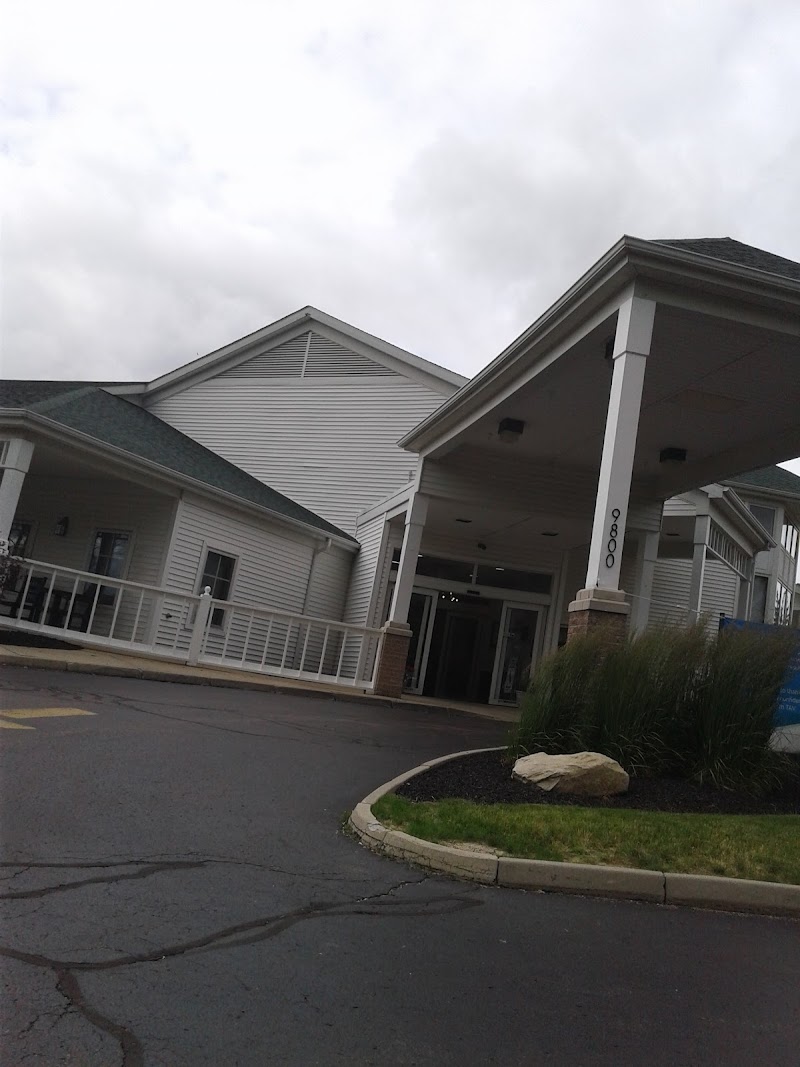
Who Owns and Operates Aventura At Assumption Village?

AVENTURA AT ASSUMPTION VILLAGE is owned by a for-profit company. For-profit facilities operate as businesses with obligations to shareholders or private owners. The facility is operated by AVENTURA HEALTH GROUP, a chain that manages multiple nursing homes. With 150 certified beds and approximately 102 residents (about 68% occupancy), it is a mid-sized facility located in NORTH LIMA, Ohio.
How Does Aventura At Assumption Village Compare to Other Ohio Nursing Homes?

Compared to the 100 nursing homes in Ohio, AVENTURA AT ASSUMPTION VILLAGE's overall rating (2 stars) is below the state average of 3.2, staff turnover (64%) is significantly higher than the state average of 46%, and health inspection rating (2 stars) is below the national benchmark.

What Should Families Ask When Visiting Aventura At Assumption Village?

Based on this facility's data, families visiting should ask: "How do you ensure continuity of care given staff turnover, and what is your staff retention strategy?" "Can you walk me through typical staffing levels on day, evening, and night shifts?" "Can I visit during a mealtime to observe dining assistance and food quality?" "How do you handle medical emergencies, and what is your hospital transfer rate?" These questions are particularly relevant given the facility's high staff turnover rate and the below-average staffing rating.

Is Aventura At Assumption Village Safe?

Based on CMS inspection data, AVENTURA AT ASSUMPTION VILLAGE has a clean safety record: no substantiated abuse findings (meaning no confirmed cases of resident harm), no Immediate Jeopardy citations (the most serious violation level indicating risk of serious injury or death), and is not on the Special Focus Facility watch list (a federal program monitoring the lowest-performing 1% of nursing homes). The facility has a 2-star overall rating and ranks #100 of 100 nursing homes in Ohio. While no facility is perfect, families should still ask about staff-to-resident ratios and recent inspection results during their visit.

Do Nurses at Aventura At Assumption Village Stick Around?

Staff turnover at AVENTURA AT ASSUMPTION VILLAGE is high. At 64%, the facility is 18 percentage points above the Ohio average of 46%. High turnover means new staff may not know residents' individual needs, medications, or preferences. It can also be disorienting for residents, especially those with dementia who rely on familiar faces. Families should ask: What is causing the turnover? What retention programs are in place? How do you ensure care continuity during staff transitions?

Was Aventura At Assumption Village Ever Fined?

AVENTURA AT ASSUMPTION VILLAGE has been fined $14,680 across 1 penalty action. This is below the Ohio average of $33,226. While any fine indicates a compliance issue, fines under $50,000 are relatively common and typically reflect isolated problems that were subsequently corrected. Families should ask what specific issues led to these fines and confirm they've been resolved.

Is Aventura At Assumption Village on Any Federal Watch List?

AVENTURA AT ASSUMPTION VILLAGE is not on any federal watch list. The most significant is the Special Focus Facility (SFF) program, which identifies the bottom 1% of nursing homes nationally based on persistent, serious quality problems. Not being on this list means the facility has avoided the pattern of deficiencies that triggers enhanced federal oversight. This is a positive indicator, though families should still review the facility's inspection history directly.