COLONIAL NURSING CENTER OF ROCKFORD

201 BUCKEYE STREET, ROCKFORD, OH 45882 (419) 363-2193
For profit - Corporation 34 Beds HILLSTONE HEALTHCARE Data: November 2025
Trust Grade
38/100
#849 of 913 in OH
Last Inspection: March 2023

Over 2 years since last inspection. Current conditions may differ from available data.

Overview

The Colonial Nursing Center of Rockford has received a Trust Grade of F, indicating significant concerns about the quality of care provided. With a state ranking of #849 out of 913 in Ohio, they are in the bottom half of facilities, and they rank last in Mercer County at #6 out of 6. While the facility is showing some signs of improvement, reducing issues from 2 in 2024 to 1 in 2025, they still have numerous concerns. Staffing ratings are poor at 1 out of 5 stars, but the turnover rate is slightly better than the state average at 46%. The facility has incurred $13,000 in fines, which is higher than 80% of Ohio facilities, highlighting potential compliance problems. Specific incidents include unsanitary kitchen conditions, such as food debris and uncovered trash near clean utensils, and a lack of privacy in the resident shower room, which could affect all residents. Overall, while there are areas of improvement, families should weigh these serious concerns when considering this nursing home.

Trust Score
F
38/100
In Ohio
#849/913
Bottom 8%
Safety Record
Low Risk
No red flags
Inspections
Getting Better
2 → 1 violations
Staff Stability
⚠ Watch
46% turnover. Above average. Higher turnover means staff may not know residents' routines.
Penalties
⚠ Watch
$13,000 in fines. Higher than 75% of Ohio facilities, suggesting repeated compliance issues.
Skilled Nurses
○ Average
RN staffing data not reported for this facility.
Violations
⚠ Watch
27 deficiencies on record. Higher than average. Multiple issues found across inspections.
★☆☆☆☆
1.0
Overall Rating
★☆☆☆☆
1.0
Staff Levels
★★★★☆
4.0
Care Quality
★★☆☆☆
2.0
Inspection Score
Stable
2024: 2 issues
2025: 1 issues

The Good

  • 4-Star Quality Measures · Strong clinical quality outcomes
  • Full Sprinkler Coverage · Fire safety systems throughout facility
  • No fines on record

Facility shows strength in quality measures, fire safety.

The Bad

1-Star Overall Rating

Below Ohio average (3.2)

Significant quality concerns identified by CMS

Staff Turnover: 46%

Near Ohio avg (46%)

Higher turnover may affect care consistency

Federal Fines: $13,000

Below median ($33,413)

Minor penalties assessed

Chain: HILLSTONE HEALTHCARE

Part of a multi-facility chain

Ask about local staffing decisions and management

The Ugly 27 deficiencies on record

Apr 2025 1 deficiency
CONCERN (F) 📢 Someone Reported This

A family member, employee, or ombudsman was alarmed enough to file a formal complaint

Potential for Harm - no one hurt, but risky conditions existed

Food Safety (Tag F0812)

Could have caused harm · This affected most or all residents

**NOTE- TERMS IN BRACKETS HAVE BEEN EDITED TO PROTECT CONFIDENTIALITY** Based on observation, staff interview, policy review and review of local health department documentation the facility failed to ...

Read full inspector narrative →
**NOTE- TERMS IN BRACKETS HAVE BEEN EDITED TO PROTECT CONFIDENTIALITY** Based on observation, staff interview, policy review and review of local health department documentation the facility failed to ensure the kitchen was maintained in a safe and sanitary manner. This had the potential to affect all residents residing at the facility. The facility census was 27. Findings include: Observation on 04/17/25 at 7:58 A.M. of the kitchen revealed an uncovered trash can placed to the right side of the steel clean utensil cart. Food was observed splattered along the side of the cart. Food debris was noted encircling the clean utensil holders. A two layered steel cart was noted to have three open soda cans, with food debris and an uncovered plastic container of butter. A hooded sweatshirt was observed wadded up in the corner of the bottom shelf. The food service prep area had a pan of scrambled eggs and a second pan with bacon and seven over easy eggs. Food particles were observed on the steel cart where the clean plates were held encircling the clean plates. This was verified with [NAME] #25 at the time of the observation. Further observation of the kitchen on 04/17/25 at 8:07 A.M. revealed the following: a. The two-compartment sink had an approximate eight inch by 12 inch area coated with a cream colored powder b. Wired storage shelves had clean pans stored upside down on grease caked wire shelves. c. Food debris caked onto the glass plate of the microwave, with food splattered on all sides inside the microwave, including the inside of the door. d. The mixer on the microwave stand had dried food on both inside and on the outside of the bowl, as well as the mixing tool. e. Food debris was scattered on the floor throughout the kitchen as was a faint black unknown coating. f. The stove had burnt food pieces on each of the burners. g. The standing refrigerator had four pieces of cake uncovered and undated in styrofaom containers. h. Food was caked on the metal racks of the refrigerator as well as the bottom of the refrigerator. i. The [NAME] refrigerator contained a hard plastic container of an undated, unlabeled breaded product. j. An opened five pound hamburger roll was stored in a large steel container. The use/freeze by date was 04/02/25. The saran wrap was dated 04/12/25. The burger was observed to be a light grey color. k. A box containing a sealed plastic bag of apple slices had a best by date of 04/06/25. l. An open plastic bag of roast beef and turkey lunch meat was undated. m. An opened unlabeled, undated package of lunch meat. n. An open box of undated bacon in an open package. o. One open cardboard box containing unpasteurized eggs. p. The freezer had frozen hamburger patty's in an open plastic bag inside a cardboard box. Interview and observation on 04/17/25 at 8:47 A.M. with Dietary Manager #26 revealed the powder observed on the two-compartment sink was likely pancake mix, he acknowledged the wired shelf which stored clean pans had a sticky layer of grease, the microwave and mixer were unclean, and food particles were on the stand. Dietary Manager #26 acknowledged the floor of the kitchen was dirty, the stove top had burnt food, the refrigerator was not clean and contained undated, uncovered cake in styrofoam containers. The undated, unlabeled breaded meat was fish from a few days ago. He stated the opened lunch meat was an ongoing issue from nursing staff on the off shift making sandwiches and not properly labeling the meat when they were finished. He was unsure what one of the packages of meat was. Dietary manager #26 verbalized the hamburger and apple slices were outdated and the bacon and hamburger patty's had not been sealed properly. Further observation of the three-compartment sink revealed a brown/black substance was consolidated around the garbage disposal and a soiled dishtowel was tossed under the disposal. This was verified at the time of the observation. Interview on 04/17/25 at 1:17 P.M. with [NAME] #25 revealed she had used the unpasteurized eggs for the sunny side-up eggs she had cooked for breakfast. Review of the 03/19/25 Food Inspection Report completed by the local health department revealed the facility was marked as out of compliance with food contact surfaces cleaned and sanitized. Review of the facility policy, Food Safety Requirements last revised 01/01/25 documented food would be stored, prepared, distributes and served in accordance with professional standard of food service safety. Labeling, dating and monitoring of refrigerated food, including left overs, so its used by its use by date, or frozen by date. This deficiency represents non-compliance investigated under Complaint Number OH00164754.
Sept 2024 1 deficiency
CONCERN (D) 📢 Someone Reported This

A family member, employee, or ombudsman was alarmed enough to file a formal complaint

Potential for Harm - no one hurt, but risky conditions existed

Pharmacy Services (Tag F0755)

Could have caused harm · This affected 1 resident

Based on medical record review, review of facility investigation report, resident and staff interviews, and policy review, the facility failed to ensure medications were consumed at the time of admini...

Read full inspector narrative →
Based on medical record review, review of facility investigation report, resident and staff interviews, and policy review, the facility failed to ensure medications were consumed at the time of administration. This affected one (#08) out of three residents reviewed for medication administration. The facility census was 25. Findings include: Review of the medical record for Resident #08 revealed an admission date of 07/24/24 with medical diagnoses of acquired left below the knee amputation (BKA), chronic obstructive pulmonary disease, congestive heart failure, obsessive-compulsive disorder (OCD), major depression, and peripheral vascular disease. Review of the medical record for Resident #08 revealed an admission Minimum Data Set (MDS) assessment, dated 07/29/24, which indicated Resident #08 was cognitively intact and required substantial/maximum staff assistance with toilet hygiene and bathing, supervision with transfers and set-up assistance with eating and bed mobility. The MDS indicated Resident #08 received antidepressant, anticoagulant, antibiotic, and opioid medications. Review of the medical record for Resident #08 revealed physician orders dated 07/24/24 for acetaminophen 650 milligram (mg) one tablet by mouth every four hours as needed, 07/25/24 for cholecalciferol (vitamin D3) 1000 units one tablet by mouth daily and oxycodone-acetaminophen (Percocet) 5-325 mg one tablet by mouth every four hours as needed, 07/26/24 for Colace (stool softener)100 mg one tablet by mouth two times per day, and 08/15/24 for gabapentin 100 mg one tablet by mouth every evening. Review of Resident #08's medical record revealed there was no physician order, assessment or care plan allowing the resident to self administer medications. Review of the medical record for Resident #08 revealed a nurse progress note dated 08/24/24 at 4:41 A.M. written by Licensed Practical Nurse (LPN) #75 which stated the nurse gave Resident #08 his morning medications, watched the resident take medications and left the room. The note stated a State Tested Nursing Assistant (STNA) went into Resident #08's room to empty his catheter and saw Resident #08 putting medications into his pillowcase. The note stated LPN #75 and Director of Nursing (DON) went to into Resident #08's room and asked where he placed his medications. Resident #08 denied having the medications. The note stated LPN #75 checked in Resident #75's pillowcase and found a medication cup in a glove with two gabapentin tablets, one acetaminophen tablet, two stool softener tablets, four Vitamin D3 tablets, and ten Percocet tablets. The note continued to state the LPN educated Resident #08 on severe misuse of medications and how important it was to have his medications on him and to take them with compliance. Review of the facility investigation report, dated 08/24/24, stated Resident #08 was noted to hoard medications. The report stated Resident #08 was removed from the room by the floor nurse and DON. The report stated medications found were counted and destroyed. The investigation report stated Resident #08 was educated and the confirmed he took the medications but stated he didn't know why and wouldn't do it again. The report stated the facility notified the Administrator, Assisted Living waiver program representative, Resident #08's physician and representative of the incident. The report continued to state Resident #08 was alert and oriented to person, place, time, and situation and have no negative effects of the incident. Interview on 09/25/24 at 8:50 A.M. with Resident #08 confirmed he had previously kept medications in his mouth and would put in his pillowcase. Resident #08 stated he no longer kept his medications after the staff spoke to him about it. Interview on 09/25/24 at 8:57 A.M. with LPN #75 confirmed she was the nurse who administered medications to Resident #08 on 08/24/24. LPN #75 stated she observed Resident #08 consume his medications and left the room. LPN #75 stated she was notified by the STNA that Resident #08 had medications in his pillowcase. LPN #75 confirmed Resident #08 had medication in his pillowcase, and some were half dissolved. LPN #75 confirmed Resident #08 informed her he would pocket the medication in his cheek and then put in his pillowcase. Interview on 09/25/24 at 9:31 A.M. with DON confirmed Resident #08 had medications found in his pillowcase on 08/24/24. DON confirmed Resident #08 was educated on not keeping medications in his cheeks. DON stated Resident #08 has not had an incident of pocketing medications in his cheek since 08/24/24. Review of the facility policy titled, Medication Administration, revised 07/01/24, stated medications are administered by licensed nurse, or other staff who are legally authorized to do so in this state as ordered by the physician and in accordance with professional standards of practice, in a manner to prevent contamination or infection. The policy stated the nurse was to observe resident consumption of medication. This deficiency represents non-compliance investigated under Complaint Number OH00157430.
Feb 2024 1 deficiency
CONCERN (D) 📢 Someone Reported This

A family member, employee, or ombudsman was alarmed enough to file a formal complaint

Potential for Harm - no one hurt, but risky conditions existed

Deficiency F0569 (Tag F0569)

Could have caused harm · This affected 1 resident

**NOTE- TERMS IN BRACKETS HAVE BEEN EDITED TO PROTECT CONFIDENTIALITY** Based on record review, staff interview, and review of the facility policy the facility failed to ensure resident funds were con...

Read full inspector narrative →
**NOTE- TERMS IN BRACKETS HAVE BEEN EDITED TO PROTECT CONFIDENTIALITY** Based on record review, staff interview, and review of the facility policy the facility failed to ensure resident funds were conveyed in a timely manner. This affected two residents (#20 and #23) of three reviewed for personal funds. The facility census was 19. Findings include: 1. Review of the medical record of Resident #20 revealed an admission date of [DATE] and a date of death on [DATE]. Diagnoses included acute and chronic respiratory failure with hypercapnia and hypoxia, hypotension, chronic obstructive pulmonary disease, anxiety disorder, emphysema, and quadriplegia C5-C7 incomplete. Review of the facility form titled, Transaction Report, dated [DATE] to [DATE] revealed Resident #20's account had a payment applied on [DATE] in the amount of $25,000.00. A second payment was applied on [DATE] in the amount of $7,000.00, and a third on [DATE] in the amount of $7,000.00. A refund of $7,500.00 was issued on [DATE]. There was a balance of $7,500. Interview on [DATE] at 10:30 A.M. with Business Office Manager (BOM) #150 and Director of Accounts Receivable (DAR) #151 revealed Resident #20 admitted under Medicare Part A with Michigan Blue Cross/Blue Shield as secondary payment. His insurance changed to Medicaid pending on [DATE], at which time he owed $1500.00 per day. Resident #20 expired on [DATE] for a total of $31,500.00 owed for the 21 days. The facility received a payment of $25,000.00 on [DATE], a payment of $7000.00 on [DATE], and $7000.00 on [DATE] totaling $39,000.00. At the time of his death Resident #20 had an outstanding balance of $6,000.00 as the facility was waiting on the co-insurance check to cover the $6,000.00 from [DATE] to [DATE]. This would leave a balance in the account of $1,500. A follow-up interview on [DATE] at 11:20 A.M. with BOM #150 and DAR #151 revealed Resident #20's estate should have received the $1,500.00 within the 30 days following his death. 2. Review of the medical record of Resident #23 revealed an admission date of [DATE] and a discharge date of [DATE]. Diagnoses include wedge compression fracture of T11-T12 vertebra and unspecified intellectual disabilities. Review of the payor sources revealed Resident #23 was private pay beginning [DATE] until discharged . Review of the, Transaction Report, dated [DATE] to [DATE] revealed Resident #23 had a positive balance of $226.00. The form revealed a refund check for the amount of $226.00 was issued on [DATE]. Interview on [DATE] at 1:07 P.M. BOM #150 verified Resident #23's refund check was not issued until [DATE]. Review of the facility policy titled, Resident Personal Funds, dated [DATE] revealed upon the death of a resident the facility will convey, within 30 days, the resident's funds to the resident's estate, in accordance with state law. This deficiency represents non-compliance investigated under Complaint Number OH00149946.
Mar 2023 12 deficiencies
CONCERN (D) 📢 Someone Reported This

A family member, employee, or ombudsman was alarmed enough to file a formal complaint

Potential for Harm - no one hurt, but risky conditions existed

Safe Environment (Tag F0584)

Could have caused harm · This affected 1 resident

Based on observation and staff interview, the facility failed to ensure residents had access to a clean bathroom. This affected two (Residents #02 and #12) of three residents reviewed for physical env...

Read full inspector narrative →
Based on observation and staff interview, the facility failed to ensure residents had access to a clean bathroom. This affected two (Residents #02 and #12) of three residents reviewed for physical environment. The facility census was 19. Findings include: Observation on 03/06/23 at 9:43 A.M. of the bathroom shared by Resident #02 and #12, revealed three large light green stains to the bathroom floor around the toilet. The bathroom was noted to have a strong odor of urine. Interview on 03/07/23 at 7:35 A.M. with Housekeeper #108 stated the facility was aware of the stains to the floor and the strong urine odor to Resident #02 and #12's bathroom. Housekeeper #108 stated housekeeping had been cleaning the floor frequently and the stains had improved but they were unable to get rid of the urine odor or stains to the floor. Interview on 03/07/23 at 8:45 A.M. with Maintenance #128 confirmed the floor to Residents #02 and #12's bathroom had large green stains and the bathroom had a strong urine odor. Maintenance #128 stated the housekeeping staff have been working to remove the stains but were unable to remove the green stains. Maintenance #128 stated the facility planned to replace the tiles in the bathroom floor to Resident #02 and #12's room but a date had not been set to replace the tiles. This deficiency represents non-compliance for Complaint Number OH00137461.
CONCERN (D)

Potential for Harm - no one hurt, but risky conditions existed

Deficiency F0657 (Tag F0657)

Could have caused harm · This affected 1 resident

**NOTE- TERMS IN BRACKETS HAVE BEEN EDITED TO PROTECT CONFIDENTIALITY** Based on medical record review, staff and resident interviews, and policy review, the facility failed to conduct quarterly care ...

Read full inspector narrative →
**NOTE- TERMS IN BRACKETS HAVE BEEN EDITED TO PROTECT CONFIDENTIALITY** Based on medical record review, staff and resident interviews, and policy review, the facility failed to conduct quarterly care conferences. This affected three (Residents #10, #11, and #18) of three residents reviewed for care conferences. The census was 19. Findings include: 1. Review of the medical record revealed Resident #11 was admitted on [DATE]. Diagnoses included heart failure, high blood pressure, and chronic kidney disease. Review of the Minimum Data Set (MDS) assessment dated [DATE] revealed the resident was cognitively intact. Review of the social service progress notes dated 06/30/22 revealed a care conference was held for the resident. Further review of the medical record, including progress notes, revealed no other care conferences taking place, indicating care conferences were not completed quarterly. Interview on 03/08/23 at 11:37 A.M. with Social Services #115 verified Resident #11 had not had any care conferences since 06/30/22. 2. Review of the medical record revealed Resident #18 was initially admitted on [DATE]. Diagnoses included gastrointestinal hemorrhage, anemia, severe protein-calorie malnutrition, acute respiratory failure with hypoxia, anxiety disorder, and high blood pressure. Review of the MDS assessment dated [DATE] revealed the resident was cognitively intact. Interview on 03/06/23 at 12:10 P.M. with Resident #18 revealed she did not recall having care conferences. Review of social service progress notes dated 08/24/22 and 02/07/23 care conferences were held for the resident on those dates. Further review of the medical record revealed there were no other care conferences held, including one for November, three months after the 08/24/22 care conference, indicating care conferences were not completed quarterly. Interview on 03/08/23 at 10:55 A.M. with Social Services #115 verified care conferences for Resident #18 were only completed in August 2022 and February 2023. 3. Review of the medical record of Resident #10 revealed an admission date of 06/29/22. Diagnoses include heart failure, anxiety disorder, major depressive disorder, bipolar type schizoaffective disorder, and type II diabetes mellitus. Review of the MDS assessment dated [DATE] revealed Resident #10 was cognitively intact. Interview on 03/06/23 at 12:43 P.M. with Resident #10 revealed she had never been included in a care conference. Further review of the medical record revealed no indication a care conference for Resident #10 had been held since admission. Interview on 03/09/23 at 9:30 A.M. with Social Services #115 revealed no care conference had been held with Resident #10. Review of the facility policy, Care Planning- Resident Participation, undated, verified the facility will discuss the plan of care with the residents and/or representatives at regularly scheduled care plan conferences, and allow them to see the care plan, initially, at routine intervals, and after significant changes. The facility will make an effort to schedule the conference at the best time of the day for the resident/resident's representative. The facility will obtain a signature from the resident and/or resident representative after discussion or viewing of the care plan.
CONCERN (D)

Potential for Harm - no one hurt, but risky conditions existed

Drug Regimen Review (Tag F0756)

Could have caused harm · This affected 1 resident

**NOTE- TERMS IN BRACKETS HAVE BEEN EDITED TO PROTECT CONFIDENTIALITY** Based on record review, staff interview, and policy review, the facility failed to complete monthly medication regimen reviews. ...

Read full inspector narrative →
**NOTE- TERMS IN BRACKETS HAVE BEEN EDITED TO PROTECT CONFIDENTIALITY** Based on record review, staff interview, and policy review, the facility failed to complete monthly medication regimen reviews. This affected three (Residents #02 #05, and #10) of five residents reviewed for medication regimen reviews. The facility census was 19. Findings include: 1. Review of the medical record for Resident #02 revealed an admission date of 03/11/20 with medical diagnoses of schizoaffective disorder, paranoid schizophrenia, and extrapyramidal and movement disorder. Review of the Minimum Data Set (MDS) dated [DATE] indicated Resident #02 was cognitively intact. Resident #02 required supervision with bed mobility, transfers, eating, and ambulation. Resident #02 required limited assistance with toileting and extensive assistance with bathing. Further review of the medical record revealed no documentation to support the pharmacy completed a monthly medication regimen review for 05/2022, 06/2022, 07/2022, and 08/2022. 2. Review of the medical record for Resident #05 revealed an admission date of 04/29/21 with medical diagnoses of left sided hemiplegia, schizophrenia, unspecified, history of cerebral infarction due to thrombosis, bipolar disorder, major Depression, diabetes mellitus (DM), and morbid obesity. Review of the Minimum Data Set (MDS) dated [DATE] indicated Resident #05 had moderate cognitive impairment. Resident #05 required extensive assistance with bed mobility, dressing, toileting, and personal hygiene. Resident #05 was dependent upon staff for transfers and bathing and was non-ambulatory. Further review of the medical record revealed no documentation to support the pharmacy completed a monthly medication regimen review for 05/2022, 06/2022, and 07/2022. Interview on 03/08//21 at 3:31 P.M. with the Director of Nursing (DON) confirmed the facility did not have documentation to support pharmacy medication regimen reviews were completed for Residents #02 and #05 monthly. 3. Review of the medical record of Resident #10 revealed an admission date of 06/29/22. Diagnoses included heart failure, anxiety disorder, major depressive disorder, bipolar type schizoaffective disorder, and type II diabetes mellitus. Review of the MDS assessment dated [DATE] revealed Resident #10 was cognitively intact. Further review of the medical record revealed no documentation to support the pharmacy completed a monthly medication regimen review for July 2022 and August 2022. Interview on 03/07/23 at 2:37 P.M. with the DON revealed the facility had no pharmacy reviews for the months of July 2022 and August 2022. Review of the facility policy titled, Medication Regimen Review, undated, revealed the drug regimen of each resident is reviewed at least once a month by a licensed pharmacist and includes a review of the resident's medical chart.
CONCERN (D)

Potential for Harm - no one hurt, but risky conditions existed

Deficiency F0761 (Tag F0761)

Could have caused harm · This affected 1 resident

**NOTE- TERMS IN BRACKETS HAVE BEEN EDITED TO PROTECT CONFIDENTIALITY** Based on observation, resident interview, staff interview, and review of facility policy, the facility failed to ensure medicati...

Read full inspector narrative →
**NOTE- TERMS IN BRACKETS HAVE BEEN EDITED TO PROTECT CONFIDENTIALITY** Based on observation, resident interview, staff interview, and review of facility policy, the facility failed to ensure medications were stored properly. This affected one (Resident #19) of one resident reviewed for medications left at bedside. The facility's census was 19. Findings include: Review of the medical record for Resident #19 revealed an admission date of 12/12/22 with medication diagnoses of chronic obstructive pulmonary disease (COPD), pneumonia, anemia, and hypertension. Review of the Minimum Data Set (MDS) dated [DATE] indicated Resident #19 was cognitively intact. Resident #19 required supervision with bed mobility, transfers, ambulation, and toileting. Review of Resident #19's physician orders revealed an order dated 12/30/22 for guaifensin (Mucinex) extended release 600 milligram (mg) tablet one tablet daily by mouth and an order dated 01/07/23 for acetaminophen (Tylenol) 500 mg two tablets by mouth three times per day. Review of the medication self-administration safety screen dated 12/12/22 revealed Resident #19 was not safe to self-administer medications. Observation and interview on 03/06/23 at 9:00 A.M. with Resident #19 revealed three medications sitting on his bedside table, with no nurse present in the room. Resident #19 stated the medications on the table was his Mucinex, that the nurse left for him to take after he goes out to smoke, and he believed the other two medications was his Tylenol, but he was not sure. Interview on 03/06/23 at 9:19 A.M. with Licensed Practical Nurse (LPN) #124 confirmed Resident #19 had one guaifenesin medication and two acetaminophen pills sitting on his bedside table. LPN #124 stated Resident #19 preferred to take the guaifenesin medication after he smoked, so LPN #124 left the medication with Resident #19. LPN #124 stated she did not leave the acetaminophen with Resident #19 during the morning medication pass and was not sure how long the acetaminophen was on the bedside table. Review of the policy titled, Medication Administration, stated medications are to be administered by licensed nursing, or other staff who are legally authorized to do so in the state, as ordered by the physician and in accordance with professional standards of practice, in a manner to prevent contamination or infection. The policy stated the licensed nurse is to observe the consumption of medications.
CONCERN (D)

Potential for Harm - no one hurt, but risky conditions existed

Deficiency F0919 (Tag F0919)

Could have caused harm · This affected 1 resident

**NOTE- TERMS IN BRACKETS HAVE BEEN EDITED TO PROTECT CONFIDENTIALITY** Based on observation, staff and resident interviews, and policy review, the facility failed to provide a resident with a functio...

Read full inspector narrative →
**NOTE- TERMS IN BRACKETS HAVE BEEN EDITED TO PROTECT CONFIDENTIALITY** Based on observation, staff and resident interviews, and policy review, the facility failed to provide a resident with a functioning call light. This affected one (Resident #05) resident of 19 residents reviewed for functioning call lights. The facility census was 19. Findings include: Review of the medical record for Resident #05 revealed an admission date of 04/29/21 with medical diagnoses of left sided hemiplegia, schizophrenia, unspecified, history of cerebral infarction due to thrombosis, bipolar disorder, major Depression, diabetes mellitus (DM), and morbid obesity. Review of the quarterly Minimum Data Set (MDS) assessment dated [DATE] indicated Resident #05 had moderate cognitive impairment. Resident #05 required extensive assistance with bed mobility, dressing, toileting, and personal hygiene, and was dependent upon staff for transfers and bathing and was non-ambulatory. Observation on 03/06/23 at 9:00 A.M. revealed Resident #05 lying in bed with no call light within reach. Further observation revealed the call light box, located on the wall in the center of the room behind of resident's bed, did not have a call light cord or string attached to the call light box for the resident to use to turn on the call light system. Interview on 03/06/23 at 9:05 A.M. with Resident #05 confirmed she did not have access to a call light. Resident #05 stated she would have to yell out from her bed if she needed assistance or her roommate would get a staff member for her. Resident #05 stated she was unsure of how long she had gone without access to a call light when she was in bed or in her wheelchair. Interview on 03/06/23 at 9:45 A.M. with State Tested Nursing Assistant (STNA) #136 confirmed Resident #05 did not have a string or cord attached to the call light box to allow Resident #05 to call for assistance when in bed or in her wheelchair. Interview on 03/07/23 at 8:45 A.M. with Maintenance Staff #128 confirmed Resident #05 did not have access to the call light system in her room. Maintenance Staff #128 confirmed there was no cord or string attached to the call light box for the resident to use in order to turn on the call light system. Review of the policy titled, Call Lights: Accessibility and Timely Response, stated the facility is to adequately be equipped with a call light at each residents' bedside, toilet, and bathing facility to allow residents to call for assistance. The policy continued to state the staff would ensure the call light was within reach of resident and secured, as needed.
CONCERN (E)

Potential for Harm - no one hurt, but risky conditions existed

Deficiency F0645 (Tag F0645)

Could have caused harm · This affected multiple residents

**NOTE- TERMS IN BRACKETS HAVE BEEN EDITED TO PROTECT CONFIDENTIALITY** Based on record review, staff interview, and policy review, the facility failed to ensure an accurate Preadmission Screen and Re...

Read full inspector narrative →
**NOTE- TERMS IN BRACKETS HAVE BEEN EDITED TO PROTECT CONFIDENTIALITY** Based on record review, staff interview, and policy review, the facility failed to ensure an accurate Preadmission Screen and Resident Review (PASRR) was completed and failed to ensure the PASRR Review Results were obtained timely. This affected five (Residents #01, #05, #20, #08, and #10) of five residents reviewed for PASRRs. The facility census was 19. Findings include: 1. Review of the medical record for Resident #01 revealed an admission date of 07/02/21 with diagnoses of residual schizophrenia, major depression, and unspecified psychosis. Review of the quarterly Minimum Data Set (MDS) assessment dated [DATE], indicated Resident #01 was cognitively intact. Resident #1 required supervision with bed mobility, transfers, locomotion, and eating. Resident #01 required limited assistance with toileting and extensive staff assistance with bathing. Further review of the medical record revealed a PASRR screen was completed on 05/11/18. The Review Results indicated Resident #01 had no indications of serious mental illness nor a developmental disability. Continued review of the PASRR screen revealed the form did not indicate the mental health diagnoses of psychosis and did not state that due to the mental disorder the individual experienced a limitation in maintaining personal hygiene. 2. Review of the medical record for Resident #05 revealed an admission date of 04/29/21 with diagnoses of schizophrenia, bipolar disorder, and major depression. Review of the MDS assessment dated [DATE], indicated Resident #05 had moderate cognitive impairment. Resident #05 required extensive assist with bed mobility, dressing, toileting, and personal hygiene. Resident #05 was dependent upon staff for transfers and bathing and was non-ambulatory. Further review of the medical record revealed a PASRR screen completed on 05/10/19 revealed the form did not include the mental health diagnoses of schizophrenia or major depression. Further review of the medical record revealed no documentation to support the facility received the PASRR Review Results prior to Resident #05 admitting to the facility on [DATE]. 3. Review of the medical record for Resident #20 revealed an admission date of 12/13/22 with diagnoses of post-traumatic stress disorder (PTSD), anxiety, hallucinations, major depression, schizoaffective disorder, and insomnia. Review of the MDS assessment dated [DATE], indicated Resident #20 was cognitively intact. Resident #20 required supervision with bed mobility, transfers, eating, and toileting. Resident #20 required extensive assistance with bathing. Further review of the medical record revealed a PASRR screen, dated 12/02/22, which did not indicate Resident #20 had schizoaffective disorder or post-traumatic stress disorder (PTSD). Further review of the medical record revealed no documentation to support the facility received the PASRR Review Results form prior to Resident #20's admission date of 12/13/22. 4. Review of the medical record of Resident #08 revealed an admission date of 07/30/21. Diagnoses included major depressive disorder, anxiety disorder, psychotic disorder with hallucinations due to known physiological condition, other hallucinations, schizoaffective disorder, and psychotic disorder with delusions due to known physiological condition. Review of the MDS assessment dated [DATE] revealed Resident #08 had severe cognitive impairment. Review of the PASRR Identification Screen dated 08/02/21, signed by Social Service #115, revealed the form lacked documentation of Resident #08's mental health diagnoses. Further review of the medical record revealed no documentation to support the facility received the PASRR Review Results prior to Resident #08 admitting on 07/30/21. 5. Review of the medical record of Resident #10 revealed an admission date of 06/29/22. Diagnoses included anxiety disorder, major depressive disorder, and bipolar type schizoaffective disorder. Review of the MDS assessment dated [DATE] revealed Resident #10 was cognitively intact. Review of the PASRR Identification Screen dated 06/28/22 revealed the form lacked documentation of Resident #10's mental health diagnoses. Further review of the medical record revealed no documentation to support the facility received the PASRR Review Results prior to Resident #10 admitting to the facility on [DATE]. Interview on 03/08/23 at 4:13 P.M. with Social Service #115 verified the lack of accuracy of the PASRR Identification Screen forms for Residents #01, #05, #08, #10, and #20. She further confirmed no PASRR review results had been received for Residents #05, #08, #10, and #20 prior to their admission to the facility. Review of the policy titled, Resident Assessment-Coordination with PASRR Program, revised 10/01/22, stated all applicants to the facility would be screened with the PASARR program under Medicaid to ensure the individuals with a mental disorder, intellectual disability, or a related condition receives care and services in the most integrated setting appropriate to their needs.
CONCERN (E)

Potential for Harm - no one hurt, but risky conditions existed

Deficiency F0741 (Tag F0741)

Could have caused harm · This affected multiple residents

Based on medical record review, employee file review, and staff interview, the facility failed to complete Behavioral Health training upon hire for new employees. This affected two State Tested Nurse ...

Read full inspector narrative →
Based on medical record review, employee file review, and staff interview, the facility failed to complete Behavioral Health training upon hire for new employees. This affected two State Tested Nurse Aides (STNAs #106 and #117) of four STNAs review for Behavioral Health training. Additionally, this affected four (Residents #2, #5, #20, and #1) of four residents reviewed for mental health diagnoses. The facility identified 16 residents with mental health diagnoses (Residents #1, #6, #2, #5, #12, #123, #18, #15, #7, #174, #3, #11, #20, #175, #8, and #10). The facility's census was 19. Findings include: Review of the medical record for Resident #2 revealed an admission date of 03/11/2020 with medical diagnoses of schizoaffective disorder and paranoid schizophrenia. Review of the medical record for Resident #5 revealed an admission date of 04/29/21 with medical diagnoses of schizophrenia, bipolar disorder, and depression. Review of the medical record for Resident #20 revealed an admission date of 12/13/22 with medical diagnoses of post traumatic stress disorder (PTSD), anxiety, hallucinations, depression, schizoaffective disorder, and insomnia. Review of the medical record for Resident #1 revealed an admission date of 07/02/21 with medication diagnoses of schizophrenia, depression, and psychosis. Review of the employee file for STNA #106 revealed a hire date of 11/23/22. Further review revealed no did not documentation to support STNA #106 received specialty care training for residents with mental health. Review of the employee file for STNA #117 revealed a hire date of 12/07/22. Further review revealed no did not documentation to support STNA #117 received specialty care training for residents with mental health. Interview on 03/09/23 at 11:30 A.M. with Business Office Assistant #146 confirmed STNAs #106 and #117) did not receive specialty care training for residents with mental health. Interview on 03/09/23 at 3:30 P.M. with the Director of Nursing (DON) confirmed all but three (Residents #4, #14, and #19) out of the 19 residents in the facility had psychiatric diagnoses. Review of the policy titled, Behavioral Health Services, stated all facility staff, including contracted staff and volunteers, shall receive education to ensure appropriate competencies and skill sets for meeting the behavioral health needs of the residents.
CONCERN (E)

Potential for Harm - no one hurt, but risky conditions existed

Deficiency F0838 (Tag F0838)

Could have caused harm · This affected multiple residents

**NOTE- TERMS IN BRACKETS HAVE BEEN EDITED TO PROTECT CONFIDENTIALITY** Based on review of a facility list of residents identified as smokers, review of the facility assessment, staff interview, and r...

Read full inspector narrative →
**NOTE- TERMS IN BRACKETS HAVE BEEN EDITED TO PROTECT CONFIDENTIALITY** Based on review of a facility list of residents identified as smokers, review of the facility assessment, staff interview, and review of facility policy, the facility failed to identify smoking residents. Additionally, the facility assessment failed to address the facility's smoking population's needs. This had the potential to affect eight (Residents #2, #3, #6, #10, #11, #12, #14, and #19) identified by the facility as smoking residents. The facility's census was 19. Findings include: Review of a facility provided list of residents identified as smokers, revealed eight residents (#2, #3, #6, #10, #11, #12, #14, and #19) smoked out of the 19 residents residing in the facility, equaling 42 percent (%) of the facility population. Review of the facility assessment dated [DATE] revealed the assessment did not identify the facility's resident smoking population, nor did it identify needed services and care for smoking residents. Further review revealed the assessment indicated the facility would provide person-centered, directed care for psycho, social or spiritual support. The specific care or practices listed included to support helpful coping mechanisms. Interview on 03/08/23 at 3:00 P.M. the Administrator and Director of Nursing (DON) claimed the facility assessment covered smokers under the, Support helpful coping mechanisms, section. However, further review of the assessment revealed the smoking population was not addressed anywhere in the assessment. Interview on 03/09/23 at 3:30 P.M. with the DON revealed 42% of the facility's population were identified as smoking residents, which was a high amount. Review of the facility policy titled, Facility Assessment, reviewed 10/21/22 revealed the facility would conduct a facility-wide assessment to determine what resources are necessary to care for residents. The facility assessment will include the care required by the resident population considering the types of diseases, conditions, physical and cognitive disabilities, overall acuity and other pertinent facts that are present within the population.
CONCERN (E)

Potential for Harm - no one hurt, but risky conditions existed

Deficiency F0887 (Tag F0887)

Could have caused harm · This affected multiple residents

**NOTE- TERMS IN BRACKETS HAVE BEEN EDITED TO PROTECT CONFIDENTIALITY** Based on medical record review, staff interview, and review of the Centers for Disease Control and Prevention (CDC) guidance for...

Read full inspector narrative →
**NOTE- TERMS IN BRACKETS HAVE BEEN EDITED TO PROTECT CONFIDENTIALITY** Based on medical record review, staff interview, and review of the Centers for Disease Control and Prevention (CDC) guidance for Coronavirus 2019 (COVID-19) vaccination and boosters, the facility failed to ensure residents were offered COVID-19 vaccines in a timely manner. This affected five (Residents #3, #6, #5, #8, and #11) of five residents reviewed for COVID-19 vaccination. This also had the potential to affect all residents residing in the facility. The facility census was 19. Findings include: 1. Review of the medical record revealed Resident #3 was admitted on [DATE]. Diagnoses included type two diabetes mellitus, borderline personality disorder, schizophrenia, hyperlipidemia, essential (primary) hypertension, nicotine dependence, major depressive disorder, and chronic obstructive pulmonary disease. Review of the Minimum Data Set (MDS) assessment dated [DATE] revealed the resident was cognitively intact. Review of COVID-19 vaccine documentation dated 11/04/21 revealed Resident #3's responsible party declined the COVID-19 vaccine on 11/04/21. Further review of the medical record revealed there was no additional documentation showing the resident was offered the COVID-19 vaccine since 11/03/21. 2. Review of the medical record revealed Resident #6 was admitted on [DATE] and readmitted on [DATE]. Diagnoses included unspecified convulsions, nicotine dependence, schizophrenia, cerebral cysts, benign neoplasm of brain, dementia, bipolar, and epilepsy. Review of the MDS assessment dated [DATE] revealed the resident was moderately cognitively impaired. Review of COVID-19 vaccine documentation, dated 11/04/21, revealed Resident #6's responsible party declined the COVID-19 vaccine on 11/04/21. Further review of the medical record revealed there was no additional documentation showing the resident was offered the COVID-19 vaccine since 11/04/21. 3. Review of the medical record revealed Resident #5 was admitted on [DATE]. Diagnoses included schizophrenia, cerebral infarction, cerebrovascular disease, bipolar disorder, hyperlipidemia, type two diabetes mellitus, and essential primary hypertension. Review of the MDS assessment dated [DATE] revealed the resident was moderately cognitively impaired. Review of the immunization record revealed Resident #5 last received the COVID-19 vaccine booster Moderna 07/14/22. Further review of the medical record revealed no additional documentation showing the resident was offered an updated COVID-19 booster from 07/14/22 to March 2023. 4. Review of the medical record revealed Resident #8 was initially admitted on [DATE] with re-entry on 10/21/21. Diagnoses included Parkinson's, major depressive disorder, essential primary hypertension, restless leg syndrome, psychotic disorder with hallucinations, and schizoaffective disorder. Review of the MDS assessment dated [DATE] revealed the resident was moderately cognitively impaired. Review of the immunization record revealed Resident #5 last received the COVID-19 vaccine booster Moderna 07/14/22. Further review of the medical record revealed no additional documentation showing the resident was offered an updated COVID-19 booster from 07/14/22 to March 2023. 5. Review of the medical record revealed Resident #11 was admitted on [DATE]. Diagnoses included heart failure, high blood pressure, and chronic kidney disease. Review of the MDS assessment dated [DATE] revealed the resident was cognitively intact. Review of the immunization record revealed Resident #5 last received the COVID-19 vaccine booster Moderna 07/14/22. Further review of the medical record revealed no additional documentation showing the resident was offered an updated COVID-19 booster from 07/14/22 to March 2023. Interview on 03/08/23 at 1:50 P.M. with the Director of Nursing (DON) verified the facility had not offered COVID-19 booster vaccines to current residents. Interview on 03/09/23 at 9:05 A.M. with the DON verified Resident #3 and #6 had not been re-offered the COVID-19 vaccine since 11/04/21. Review of the CDC guidance titled, Stay Up to Date with COVID-19 Vaccines Including Boosters, dated 03/02/23 revealed the CDC recommended people stay up to date with the COVID-19 vaccine for their age group. The CDC recommends one updated vaccine for everyone 5 years and older. Updated boosters are called updated because they protect against both the original virus that causes COVID-19 and the Omicron variant. Two COVID-19 vaccine manufacturers, Pfizer and Moderna, have developed updated COVID-19 boosters. Updated COVID-19 boosters became available on 09/22/22 for people aged 12 years and older. Review of the facility policy, COVID-19 Vaccination, dated 09/28/22 verified it is the policy of the facility, in collaboration with the medical director, to have an immunization program against COVID-19 disease in accordance with national standards of practice.
CONCERN (F)

Potential for Harm - no one hurt, but risky conditions existed

Deficiency F0583 (Tag F0583)

Could have caused harm · This affected most or all residents

Based on observation, staff interview, and review of facility policy, the facility failed to ensure the resident shower room provided adequate privacy. This had the potential to affect all 19 resident...

Read full inspector narrative →
Based on observation, staff interview, and review of facility policy, the facility failed to ensure the resident shower room provided adequate privacy. This had the potential to affect all 19 residents residing in the facility. The facility's census was 19. Findings include: Observation on 03/07/23 at 2:20 P.M. of the resident shower room revealed two separate shower suites for residents, with an open doorway to each suite. There were no doors or privacy curtains in place for resident privacy for either suite or near the shower itself. If a resident were to be receiving a shower, and a second resident or staff member entered, the first resident would be easily observed by the second resident and/or staff entering the shower room. Interview on 03/07/23 at 2:27 P.M. with State Tested Nursing Assistant (STNA) #136 verified there were no doors or privacy curtains in place in the resident shower room. Interview on 03/07/23 at approximately 3:45 P.M. with the Director of Nursing (DON) verified all 19 residents utilized the resident shower room. Review of facility policy, Resident Rights, dated 02/01/23, verified the resident has a right to personal privacy and confidentiality of his or her personal and medical records. Personal privacy includes accommodations, medical treatment, written and telephone communication, personal care, visits, and meetings of family and resident groups, but his does not require the facility to provide a private room for each resident.
CONCERN (F)

Potential for Harm - no one hurt, but risky conditions existed

Accident Prevention (Tag F0689)

Could have caused harm · This affected most or all residents

**NOTE- TERMS IN BRACKETS HAVE BEEN EDITED TO PROTECT CONFIDENTIALITY** 2. Review of the medical record revealed Resident #11 was admitted on [DATE]. Diagnoses included heart failure, high blood press...

Read full inspector narrative →
**NOTE- TERMS IN BRACKETS HAVE BEEN EDITED TO PROTECT CONFIDENTIALITY** 2. Review of the medical record revealed Resident #11 was admitted on [DATE]. Diagnoses included heart failure, high blood pressure, and chronic kidney disease. Review of the Minimum Data Set (MDS) assessment dated [DATE] revealed the resident was cognitively intact. Review of the physician order dated 11/17/22, revealed Resident #11 may have one alcoholic beverage, daily every 24 hours as needed. Review of the care plan updated 11/17/22 revealed Resident #11 was care planned to have one alcoholic beverage per day. Observation on 03/06/23 at 11:17 A.M. revealed a liquor bottle of Kahlua on the floor by the resident's bedside. Interview on 03/07/23 at 1:25 P.M. with Licensed Practical Nurse (LPN) #110 verified a 750 milliliter (ml) bottle of Kahlua on the floor by Resident #11's bedside. The liquor bottle was open but mostly full with about 2.5 to 3 inches missing from the top. Based on observation, staff interview, and review of facility smoking contract, the facility failed to ensure cigarettes were lit outside the facility. Furthermore, the facility failed to ensure the resident smoking area was free from cigarette butts. This had the potential to affect all 19 residents residing in the facility. Additionally, the facility failed to ensure alcohol was stored properly. This affected one (Resident #11) of one resident reviewed for alcohol storage. The facility census was 19. Findings include: 1. Observation on 03/06/23 at 3:43 P.M. revealed State Tested Nursing Assistant (STNA) #117 lighting the cigarettes of two male residents while they were inside the building, prior to them exiting to the courtyard patio. Observations of the courtyard revealed the presence of a large amount of cigarette butts on the ground, in the mulch, in the grass, and on the cement. STNA #117 verified the large amounts of cigarette butts throughout the courtyard. Interview on 03/06/23 at 3:45 P.M. with STNA #117 verified she lit cigarettes for residents inside the facility, prior to the resident exiting the facility. She added, all staff do this. Interview on 03/09/23 at 10:11 A.M. with the Administrator revealed he conducted walking observations numerous times throughout the day when at the facility, twice a week. The Administrator stated he was unaware staff were lighting cigarettes inside the building. He stated a resident knocked over a receptacle and spilled the cigarette butts and indicated staff cleaned the area yesterday. Observation on 03/09/23 at 10:20 A.M. of the patio courtyard area where the residents smoke, revealed cigarette butts lying in the mulch, in the grass, and on the cement area. Some of the butts appeared to be falling apart and discolored from excess moisture. Review of the, Tranquility of [NAME] Smoking Contract, revealed smoking was not permitted inside the facility.
CONCERN (F)

Potential for Harm - no one hurt, but risky conditions existed

Infection Control (Tag F0880)

Could have caused harm · This affected most or all residents

Based on the facility's water management program information, staff interview, review of the Centers for Disease Control (CDC) guidance, and review of facility policy, the facility failed to have an a...

Read full inspector narrative →
Based on the facility's water management program information, staff interview, review of the Centers for Disease Control (CDC) guidance, and review of facility policy, the facility failed to have an appropriate Legionella water management program in place. This had the potential to affect all 19 residents in the facility. Findings include: Review of the facility's Legionella environmental assessment form dated 05/26/22 revealed the assessment was not fully completed and did not include all the required components. Further review revealed the facility did not complete a map/flow diagram of the facility and/or water temperature monitoring. Interview on 03/09/23 at approximately 1:50 P.M. with Maintenance Staff #128 revealed she had been working in the maintenance position since the end of November 2022. Maintenance Staff #128 admitted she was unaware what the requirements were for the water management program and verified she had yet to do anything regarding water management related to Legionella, including monitoring of water temperatures. Review of the undated CDC guidance titled, Overview of Water Management Programs, revealed water management programs identify hazardous conditions and take steps to minimize the growth and transmission of Legionella and other waterborne pathogens in building water systems. Developing and maintaining a water management program is a multi-step process that requires continuous review. Seven key elements of a Legionella water management program are to: • Establish a water management program team • Describe the building water systems using text and flow diagrams • Burden of Waterborne Disease • Read about various illnesses, including Legionnaires' disease, in CDC's first estimates of the impact of waterborne disease in the United States. • Identify areas where Legionella could grow and spread • Decide where control measures should be applied and how to monitor them • Establish ways to intervene when control limits are not met • Make sure the program is running as designed (verification) and is effective (validation) • Document and communicate all the activities Review of the facility's policy, Legionella Surveillance, undated, verified Legionella surveillance is one component of the facility's water management plans for reducing the risk of Legionella and other opportunistic pathogens in the facility's water systems.
Jul 2019 8 deficiencies
CONCERN (D)

Potential for Harm - no one hurt, but risky conditions existed

Deficiency F0582 (Tag F0582)

Could have caused harm · This affected 1 resident

**NOTE- TERMS IN BRACKETS HAVE BEEN EDITED TO PROTECT CONFIDENTIALITY** Based on medical record review and staff interview; the facility failed to provide a skilled nursing facility advanced beneficia...

Read full inspector narrative →
**NOTE- TERMS IN BRACKETS HAVE BEEN EDITED TO PROTECT CONFIDENTIALITY** Based on medical record review and staff interview; the facility failed to provide a skilled nursing facility advanced beneficiary notice (SNF ABN) (form CMS-10055) to a resident who was discharged from Medicare A services when benefit days were not exhausted and the resident remained at the facility. Additionally, the facility failed to provide a notice of medicare non coverage (NOMNC) (form CMS 10123) to a resident who had was discharged from Medicare A services when benefit days where not exhausted and the resident immediately discharged from the facility following the last covered skilled day. This affected two (#21 and #76) of two residents reviewed for liability notice. The census was 24. Findings include: 1. Review of the medical record for Resident #21 revealed the resident was admitted to the facility on [DATE]. Diagnoses include schizoaffective disorder, psychosis, alcoholism, cocaine abuse, hypertension, major depressive disorder, anxiety disorder, psychoactive substance abuse, bipolar disorder, constipation,and centrilobular emphysema. Review of a skilled nursing facility protection notification review revealed the facility initiated a discharge from Medicare part A services when benefit days were not exhausted. Resident #21's last covered day of part A service was 05/08/19. Documentation revealed the resident was not given a SNF ABN because the resident remained at the facility. Review of Resident #21's NOMNC revealed the resident skilled therapy services ended 05/08/19. Documentation revealed the resident was given a copy of the form and acknowledged the document on 05/05/19. Review of the medical record for Resident #21 revealed no evidence of the resident/resident representative being given a SNF ABN. Interview on 07/03/19 at 11:36 A.M. with the Director of Nursing (DON) revealed Resident #21 was given notice on 05/05/19 that skilled therapy services ended 05/08/19. Continued interview with the DON revealed Resident #21 remained at the facility after being cut from Medicare A skilled services. The Administrator verified Resident #21 was not given a SNF ABN. 2. Review of the medical record for Resident #76 revealed the resident was admitted to the facility on [DATE]. Diagnoses include presence of right artificial knee joint, hypertension, and anxiety. Review of a nursing note dated 02/18/19 at 12:59 P.M. revealed an order was received for Resident #76 to discharge home with orders for outpatient therapy. Continued review of a nurse progress note dated 02/19/19 at 11:39 A.M. revealed the resident discharge home. Review of a skilled nursing facility protection notification review revealed the facility initiated a discharge from Medicare part A services when benefit days were not exhausted. Resident # 76's last covered day of part A service was 02/19/19. Documentation revealed the resident was not given a NOMNC. Interview on 07/03/19 at 11:36 A.M. with the DON revealed Resident #76 was discharge home when skilled benefit days remained. The DON reported the residents physician gave discharge orders for the resident to discharge from the facility and continue therapy at home. The DON verified a NOMNC was not given to Resident #76 or the residents representative. The DON revealed the NOMNC was not provided to Resident #76 because the discharge order was given by the orthopedic doctor.
CONCERN (D)

Potential for Harm - no one hurt, but risky conditions existed

Deficiency F0655 (Tag F0655)

Could have caused harm · This affected 1 resident

**NOTE- TERMS IN BRACKETS HAVE BEEN EDITED TO PROTECT CONFIDENTIALITY** Based on resident record review and staff interview; the facility failed to provide the resident/resident representative a writt...

Read full inspector narrative →
**NOTE- TERMS IN BRACKETS HAVE BEEN EDITED TO PROTECT CONFIDENTIALITY** Based on resident record review and staff interview; the facility failed to provide the resident/resident representative a written summary of the baseline care plan. This affected two (#12, #73, and #13) of three residents reviewed for baseline care plans. The census was 24. Findings include: 1. Review of the medical record for Resident #12 revealed the resident was admitted to the facility on [DATE]. Diagnoses include congestive heart failure, chronic obstructive pulmonary disease, major depressive disorder, anxiety disorder, post traumatic stress disorder, and diabetes mellitus type one. Review of the admission minimum data set (MDS) assessment dated [DATE], revealed Resident #12 had intact cognition. Review of the medical record for Resident #12 revealed no evidence of a written summary of the baseline care plan being given to the resident. Interview on 07/02/19 at 1:30 P.M. with the Director of Nursing (DON) verified there was no written summary of the baseline care plan given to Resident #12. The DON revealed he/she was not aware of the requirement. 2. Review of the medical record for Resident #73 revealed the resident was admitted to the facility on [DATE]. Diagnoses include insomnia, chronic pain, anxiety, major depressive disorder, muscle spasms, chronic fatigue, multiple spasms, and multiple sclerosis. Review of the admission MDS assessment dated [DATE], revealed Resident #73 had intact cognition. Review of the medical record for Resident # 73 revealed no evidence of a written summary of the baseline care plan being given to the resident. Interview on 07/02/19 at 1:31 P.M. with the DON verified there was no written summary of the baseline care plan given to Resident #73. 3. Review of the the medical record for Resident #13 revealed the resident was admitted to the facility on [DATE]. Diagnoses include cerebral palsy, anxiety, major depressive disorder, diabetes mellitus type two, spastic hemiplegia, bipolar disorder, and hydronephrosis. Review of the quarterly MDS assessment dated [DATE], revealed the resident had intact cognition. Review of the medical record for Resident # 13 revealed no evidence of a written summary of the baseline care plan being given to the resident. Interview on 07/02/19 at 1:32 P.M. with the DON verified there was no written summary of the baseline care plan given to Resident #13.
CONCERN (D)

Potential for Harm - no one hurt, but risky conditions existed

Comprehensive Care Plan (Tag F0656)

Could have caused harm · This affected 1 resident

**NOTE- TERMS IN BRACKETS HAVE BEEN EDITED TO PROTECT CONFIDENTIALITY** Based on resident record review and staff interview; the facility failed to develop and implement a person-centered comprehensiv...

Read full inspector narrative →
**NOTE- TERMS IN BRACKETS HAVE BEEN EDITED TO PROTECT CONFIDENTIALITY** Based on resident record review and staff interview; the facility failed to develop and implement a person-centered comprehensive care plan for the use of psychoactive, anticoagulant, and diuretic medications. This affected one (#12) of five residents reviewed for unnecessary medication. The census was 24. Findings include: Review of the medical record for Resident #12 revealed the resident was admitted to the facility on [DATE]. Diagnoses include congestive heart failure, chronic obstructive pulmonary disease, major depressive disorder, anxiety disorder, post traumatic stress disorder, and diabetes mellitus type one. Review of the admission minimum data set (MDS) assessment dated [DATE], revealed Resident #12 was administered antianxiety, anticoagulant, and diuretic medication on seven days during the seven day reference period. Review of the medication administration record dated 06/19 and 07/19 revealed Resident #12 was administered xanax (antianxiety medication) one milligram (mg), one tablet by mouth twice a day, buspirone (antianxiety medication) 10 mg, one tablet by mouth three times a day, eliquis (anticoagulant medication) five mg, one tablet by mouth twice a day, and lasix (diuretic medication) 80 mg, one tablet by mouth daily. Review of Resident #12's comprehensive care plan revision date 06/19/19, revealed there was no care plan to address the use of and potential for drug related complications associated with the use of psychoactive, anticoagulant, and diuretic medication. Interview on 07/03/19 at 9:05 A.M. with the Director of Nursing (DON) verified there was no comprehensive care plan to address psychoactive, anticoagulant, and diuretic medications ordered and administered to Resident #12.
CONCERN (D)

Potential for Harm - no one hurt, but risky conditions existed

Accident Prevention (Tag F0689)

Could have caused harm · This affected 1 resident

**NOTE- TERMS IN BRACKETS HAVE BEEN EDITED TO PROTECT CONFIDENTIALITY** Based on observations, medical record review and resident and staff interviews, the facility failed to ensure a resident was ade...

Read full inspector narrative →
**NOTE- TERMS IN BRACKETS HAVE BEEN EDITED TO PROTECT CONFIDENTIALITY** Based on observations, medical record review and resident and staff interviews, the facility failed to ensure a resident was adequately secured on the facilities transportation bus. This affected one (#73) of one resident reviewed for accident/hazards. The census was 24. Findings include: Review of the medical record for Resident #73 revealed the resident was admitted to the facility on [DATE]. Diagnoses include insomnia, chronic pain, anxiety, major depressive disorder, muscle spasms, chronic fatigue, multiple spasms, and multiple sclerosis. Review of the admission minimum data set (MDS) assessment dated [DATE], revealed Resident #73 had intact cognition. The resident required limited assistance of one staff for transfers. Documentation revealed the resident's mobility devices was a wheel chair (manual or electric). Review of the nurse progress notes dated 06/20/19 at 3:15 A.M. revealed Resident #73 complained of nausea and headache. Vital signs were systolic blood pressure 130 millimeters of mercury (mmHg) and diastolic blood pressure 75 mmHg, pulse 94, temperature 98 degrees Fahrenheit, and oxygen saturation 95 percent on room air. Documentation revealed the resident request to be sent to hospital for evaluation and treatment. Resident #73 returned to the facility on [DATE] at 9:02 A.M. Review of hospital documentation dated 06/20/19, revealed the Resident #73 presented to the hospital with complaints of headache and nausea. Resident #73 reported his/her wheel chair tipped over causing the resident to hit her/his head in the process. Documentation revealed the physical exam of the head was normocephalic and atraumatic, the residents pupils were equal round and reactive to light, and the assessment of the neck revealed range of motion (ROM) within normal limits (WNL). Continued review of the documentation revealed Resident #73 was oriented to person, place, and time. There were no cranial nerve deficits. A computerized tomography (CT) scan of Resident #73's head was completed Findings were no acute intracranial hemorrhage, mass effect or midline shift. No abnormal extra axial fluid collection and the graywhite matter differentiation is maintained without evidence of acute infarct. There was no evidence of hydrocephalus. Visual portion of the orbits demonstrate no acute abnormalities. Visualization of paranasal sinuses and mastoid air cells demonstrate no acute abnormalities. Visualization of the soft tissue/skull documented no acute abnormalities. Interview on 07/01/19 at 1:58 P.M. with Resident #73 revealed the resident's electric wheel chair tipped over in facilities bus when returning from an appointment on 06/19/19. Resident #73 reported striking his/her head when the chair tipped. Resident #73 revealed the chair did not completely tip over, but slightly tipped because the electric wheel chairs four point anchor system was not used correctly. The resident revealed the wheel chair had four areas located at the base of the chair used to anchor the chair in place while being transported. Resident #73 revealed three of the anchors were secured using the buses tether strap system. The resident revealed the fourth anchor and tether strap were not secured, allowing the chair to tip over far enough that the resident struck his/her head. Interview on 07/01/19 at 5:55 P.M. with Director of Maintenance (DOM) #418 revealed the DOM #418 transported Resident #73 to an appointment approximately two weeks ago. DOM #418 revealed on the way back to the facility, while taking a turn, the DOM heard a noise in the back of the bus. The DOM #418 then looked in the rearview mirror and observed the resident chair slightly tipped over. The DOM revealed the bus seat next to the resident prevented the chair from tipping over completely. DOM #418 reported he/she immediately stopped the bus and went to assess the situation. The DOM #418 reported Resident #73 denied hitting his/her head and reported no injury or other complaints. DOM #418 revealed this employee then put the electronic wheel chair back into place and continued the drive back to the facility. DOM #418 confirmed Resident #73's wheel chair contained four anchors located at the base of the chair. DOM #418 further verified three of the four anchors were secured to the bus using the buses tether strap system. The DOM #418 confirmed the fourth anchor was not secured because DOM #418 was not aware of the four tether strap located on the bus to secure the wheel chair. Observation on 07/01/19 at 6:15 P.M. with DOM #418, of the facilities transportation bus, verified the cargo area of the bus contained four tether straps that were to be used to secure wheel chairs for residents who were transported to appointments in wheel chairs.
CONCERN (D)

Potential for Harm - no one hurt, but risky conditions existed

Incontinence Care (Tag F0690)

Could have caused harm · This affected 1 resident

**NOTE- TERMS IN BRACKETS HAVE BEEN EDITED TO PROTECT CONFIDENTIALITY** Based on medical record review and staff interview; the facility failed to treat an urinary tract infection to maintain bladder ...

Read full inspector narrative →
**NOTE- TERMS IN BRACKETS HAVE BEEN EDITED TO PROTECT CONFIDENTIALITY** Based on medical record review and staff interview; the facility failed to treat an urinary tract infection to maintain bladder function for a resident who utilizes an indwelling urinary catheter. This affected one (#13) of one resident reviewed for urinary catheter. The census was 24. Findings include: Review of the the medical record for Resident #13 revealed the resident was admitted to the facility on [DATE]. Diagnoses include cerebral palsy, anxiety, major depressive disorder, diabetes mellitus type two, spastic hemiplegia, bipolar disorder, and hydronephrosis. Review of the quarterly minimum data set (MDS) assessment dated [DATE], revealed Resident #13 had intact cognition. The resident was totally dependent upon staff for bed mobility, transfers, toilet use, and personal hygiene. The resident utilized an indwelling urinary catheter. Review of a physician order dated 06/21/19, revealed Resident #13 was ordered the antibiotic medication ciprofloxacin 500 milligram (mg), take one tablet by mouth two times a day for 10 days. Review of a microbiology report collection date 06/21/19 revealed Resident #13 had abnormal urinalysis results. A culture and sensitivity was to follow. Continued review of the microbiology report revealed on 06/25/19 the final urine culture was completed. The urine culture identified the organisms staphylococcus aureus, colony count greater than 100,000 and pseudomonas aeruginosa, colony count greater than 100,000. Continued review of the microbiology report revealed the identified organisms were resistant to the antibiotic ciprofloxacin. Review of the medication administration record dated 06/19 and 07/19, revealed Resident #13 was administered ciprofloxacin 500 mg tablet per the physicians order for a urinary tract infection on 06/27/19, 06/28/19, 06/29/19, 06/30/19, 07/01/19, 07/02/19, and 07/03/19. Interview on 07/02/19 at 3:30 P.M. with the Director of Nursing (DON) revealed the ciprofloxacin medication was ordered for Resident #13 while at the hospital for evaluation and treatment, to treat a urinary tract infection. Continued interview with the DON verified the microbiology report collection date 06/25/19, identified the organisms were resistant to ciprofloxacin. The DON further verified the resident began receiving the inappropriate antibiotic on 06/27/19, six days after the order. The DON also verified the physician was not notified of Resident #13's current orders for ciprofloxacin or the laboratory results.
CONCERN (D)

Potential for Harm - no one hurt, but risky conditions existed

Antibiotic Stewardship (Tag F0881)

Could have caused harm · This affected 1 resident

**NOTE- TERMS IN BRACKETS HAVE BEEN EDITED TO PROTECT CONFIDENTIALITY** Based on resident record review and staff interview; the facility failed to implement antibiotic stewardship protocol to ensure ...

Read full inspector narrative →
**NOTE- TERMS IN BRACKETS HAVE BEEN EDITED TO PROTECT CONFIDENTIALITY** Based on resident record review and staff interview; the facility failed to implement antibiotic stewardship protocol to ensure appropriate antibiotic use. This affected one (#13) of one resident review of a urinary tract infection. The census was 24. Findings include: Review of the the medical record for Resident #13 revealed the resident was admitted to the facility on [DATE]. Diagnoses include cerebral palsy, anxiety, major depressive disorder, diabetes mellitus type two, spastic hemiplegia, bipolar disorder, and hydronephrosis. Review of the quarterly minimum data set (MDS) assessment dated [DATE], revealed Resident #13 had intact cognition. The resident was totally dependent upon staff for bed mobility, transfers, toilet use, and personal hygiene. The resident utilized an indwelling urinary catheter. Review of a physician order dated 06/21/19, revealed Resident #13 was ordered the antibiotic medication ciprofloxacin 500 milligram (mg), take one tablet by mouth two times a day for 10 days. Review of a microbiology report collection date 06/21/19 revealed Resident #13 had abnormal urinalysis results. A culture and sensitivity was to follow. Continued review of the microbiology report revealed on 06/25/19 the final urine culture was completed. The urine culture identified the organisms staphylococcus aureus, colony count greater than 100,000 and pseudomonas aeruginosa, colony count greater than 100,000. Continued review of the microbiology report revealed the identified organisms were resistant to the antibiotic ciprofloxacin. Review of the medication administration record dated 06/19 and 07/19, revealed Resident #13 was administered ciprofloxacin 500 mg tablet per the physicians order for a urinary tract infection on 06/27/19, 06/28/19, 06/29/19, 06/30/19, 07/01/19, 07/02/19, and 07/03/19. Interview on 07/02/19 at 3:30 P.M., with the Director of Nursing (DON) revealed the ciprofloxacin medication was ordered for Resident #13 while at the hospital for evaluation and treatment. The DON reported the ciprofloxacin was ordered to treat a urinary tract infection. Continued interview with the DON verified the microbiology report collection date 06/21/19, identified the organisms were resistant to ciprofloxacin. The DON further verified the facility failed to identify Resident #13's urinary tract infection organism was resistant to the prescribed antibiotic. The DON further verified the physician was not notified of Resident #13's current orders for Ciprofloxacin and it was started on 06/27/19, six days after the order. Review of the policy titled Stewardship Policy dated 10/17, revealed widespread use of antibiotics has resulted in an alarming increase in antibiotic resistant infections and a subsequent need to rely on board spectrum antibiotics that might be more toxic and expensive. Antibiotic stewardship consists of coordinated interventions aimed at treating infections while promoting appropriate use. The policy revealed the facility will provide regular feed back on antibiotic use to clinicians about appropriate antibiotic use.
CONCERN (F)

Potential for Harm - no one hurt, but risky conditions existed

Infection Control (Tag F0880)

Could have caused harm · This affected most or all residents

**NOTE- TERMS IN BRACKETS HAVE BEEN EDITED TO PROTECT CONFIDENTIALITY** Based on observation, resident record review, staff interviews, and policy review; the facility failed to implement standard pre...

Read full inspector narrative →
**NOTE- TERMS IN BRACKETS HAVE BEEN EDITED TO PROTECT CONFIDENTIALITY** Based on observation, resident record review, staff interviews, and policy review; the facility failed to implement standard precautions when a resident's used/dirty urinary catheter bag was placed in another resident's storage basin which contained personal hygiene products. This affected one (#13) of 16 resident reviewed during the initial pool process for infection control. Additionally, the facility failed to implement a water management program for the prevention and spread of Legionella. This had the potential to affect 24 of 24 residents who reside at the facility. The census was 24. Findings include: 1. Observation on 07/01/19 at 10:12 A.M. of Resident #13's shared bathroom revealed a storage basin was sitting on the counter next to the sink. The storage basin was noted to contain multiple denture cleaner tablets, a tube of tooth paste, body wash, and other bottles of hygiene products. Laying directly on top of the denture cleaner tablets, tube of tooth paste, body wash, and other hygiene products was a used/dirty catheter bag. Review of the the medical record for Resident #13 revealed the resident was admitted to the facility on [DATE]. Diagnoses include cerebral palsy, anxiety, major depressive disorder, diabetes mellitus type two, spastic hemiplegia, bipolar disorder, and hydronephrosis. Review of the quarterly minimum data set (MDS) assessment dated [DATE], revealed Resident #13 had intact cognition. The resident was totally dependent upon staff for bed mobility, transfers, toilet use, and personal hygiene. The resident utilized an indwelling urinary catheter. Review of Resident #13's plan of care revealed the resident had an alteration in elimination related to supra pubic catheter. Review of a microbiology report collection date 06/21/19 revealed Resident #13 had abnormal urinalysis results. A culture and sensitivity was to follow. Continued review of the microbiology report revealed on 06/25/19 the final urine culture was completed. The urine culture identified the organisms staphylococcus aureus, colony count greater than 100,000 and pseudomonas aeruginosa, colony count greater than 100,000. Review of the medication administration record dated 06/19 and 07/19, revealed Resident #13 was administered ciprofloxacin 500 mg tablet per the physicians order for a urinary tract infection. Interview on 07/01/19 at 10:14 P.M. with Resident #13 revealed the resident had his/her own teeth and did not use a partial or dentures. Resident #13 verified the storage basin containing hygiene products located in the residents shared bathroom belonged to Resident #13's roommate, Resident #12. Resident #13 revealed this resident did not use the shared bathroom except when staff would go into the bathroom to empty the residents urinary catheter bag into the toilet. The resident further revealed this residents hygiene products where kept in the night stand and chest of drawers. Resident #13 did not know how the used catheter bag got into Resident #12's basin of hygiene products and reported staff should have placed the used bag into the trash. Interview on 07/01/19 at 10:17 A.M. with state tested nurse aid (STNA) #425 verified the storage basin, located in shared bathroom of Resident #13 and Resident #12, contained multiple denture cleaner tablets, a tube of tooth paste, body wash, other bottles of hygiene products and a used/dirty catheter bag. STNA #425 verified the basin of hygiene products belonged Resident #12 and the dirty catheter bag belonged to Resident #13. The STNA verified Resident #12 did not have a urinary catheter. 2. Review of the Legionella Policy dated 07/01/18 revealed the facility was to complete weekly flushes of little used outlets, monthly hot and cold water temperature monitoring and quarterly shower head descaling and disinfection. Review of the submitted documentation was silent for flushing or checking of water temperatures . Review of the Legionella Risk Assessment revealed the facility should have a water management program in place to reduce the growth and spread of Legionella. Interview with the Corporate Maintenance Director on 07/03/19 at 3:50 P.M., verified the facility had not completed flushes nor checking or monitoring of water temperatures. This deficiency is a recite to the complaint survey completed 05/21/19.
MINOR (C)

Minor Issue - procedural, no safety impact

Deficiency F0730 (Tag F0730)

Minor procedural issue · This affected most or all residents

Based on personnel record review and staff interview, the facility failed to complete annual performance evaluations for two State Tested Nurse Aides (STNA) #402 and #426 reviewed. This had the potent...

Read full inspector narrative →
Based on personnel record review and staff interview, the facility failed to complete annual performance evaluations for two State Tested Nurse Aides (STNA) #402 and #426 reviewed. This had the potential to affect 24 of 24 residents residing in the facility. The facility census was 24. Findings include: Review of the personnel records for two State Tested Nurse Aides (STNA #402 and #426) were silent for annual performance evaluations. During an interview with the Director of Nursing (DON) on 07/03/19 at 3:05 P.M., she verified annual performance evaluations were not completed.
Jun 2018 4 deficiencies
CONCERN (D)

Potential for Harm - no one hurt, but risky conditions existed

Deficiency F0569 (Tag F0569)

Could have caused harm · This affected 1 resident

Based on review of personal funds, staff interview and review of the facility policy, the facility failed to notify a resident of the need to spend down their Medicaid funds affecting one (#22) out of...

Read full inspector narrative →
Based on review of personal funds, staff interview and review of the facility policy, the facility failed to notify a resident of the need to spend down their Medicaid funds affecting one (#22) out of six residents reviewed for personal funds. In addition, the facility failed to convey funds within 30 days of a residents death affecting two (#131 and #132) out of two former residents reviewed for conveyance of funds. Facility census was 28. Findings include: 1. Review of the personal funds of Resident #22 revealed a current balance of $18,703.00 and the resident was a Medicaid payor source. No notification of spend down was located. 2. Review of the personal funds of Former Resident #131 revealed a balance of $8.03. Former Resident #131 passed away on 03/10/18. 3. Review of the personal funds of Former Resident #132 revealed a balance of $205.15. Former Resident #132 passed away on 04/25/18. Interview on 06/07/18 at 2:05 P.M. with the Administrator provided verification of the lack of notification of spend down having been given to Residents #22. She further verified the facility continued to manage funds for Former Residents #131 and #132 and the funds were no conveyed within 30 days. Review of the facility policy titled Management of Personal Funds undated, revealed Medicaid residents will be notified by the Business Office Manager when the account balance is within $200.00 of the resource limit. Personal funds will be returned to the appropriate source within 30 days of discharge.
CONCERN (D)

Potential for Harm - no one hurt, but risky conditions existed

Comprehensive Care Plan (Tag F0656)

Could have caused harm · This affected 1 resident

**NOTE- TERMS IN BRACKETS HAVE BEEN EDITED TO PROTECT CONFIDENTIALITY** Based on record review and staff interview, the facility failed to develop comprehensive person-centered care plans for a reside...

Read full inspector narrative →
**NOTE- TERMS IN BRACKETS HAVE BEEN EDITED TO PROTECT CONFIDENTIALITY** Based on record review and staff interview, the facility failed to develop comprehensive person-centered care plans for a resident. This affected one resident (#8), out of seven residents reviewed for care plans. The current census is 28. Findings include: Review of record for Resident #8 revealed the resident was admitted to the facility on [DATE]. Diagnoses for Resident #8 included atrial fibrillation dementia, Parkinson's disease, Alzheimer's disease, anxiety, depression, and bipolar disorder. Review of Resident #8's comprehensive Minimum Data Set, (MDS) dated [DATE] revealed the resident had impaired cognition. Per the MDS assessment the resident had behaviors including yelling out, delusions, and physical behaviors towards others. Review of Resident #8's Treatment Administration Records, (TAR) dated 03/2018, 04/2018, 05/2018, and 06/2018 revealed the resident was being monitored for anxiety, depression, and 'yelling out'. Further review of the TAR's revealed the resident had no patterns of behaviors and was being monitored twice a day. Review of Resident #8's physician orders revealed on 02/17/18 the resident had physician orders to receive Klonopin, clonazepam, 0.5 milligrams, (mg), twice a day for bipolar disorder; Aricept 10 mg a day for dementia with behavioral disturbances and Neurontin 100 mg at night for bipolar disorder. Further review of the physician orders dated 04/18/18 revealed orders for Abilify (aripriprazole), an anti-psychotic medication, 7.5 mg a day for depression; Fluoxetine 40 mg daily for depression and Valporic Acid 250 mg in 5.0 milliliters, (ml) twice a day for dementia with behavioral disturbances. Review of Resident #8's medication administration record dated June 2018 revealed the resident was receiving Klonopin; Aricept; Neurontin; Ability; Fluoxetine and Valporic Acid at the time of the survey. Review of Resident #8's care plans dated 03/05/18 revealed no comprehensive care plan was developed for Resident #8's dementia care, anti-psychotic medication use, mood or behaviors, dementia care, anxiety, and depression. Interview on 06/07/18 at 10:50 A.M. with the Director of Nursing, (DON), verified Resident #8's care plans did not include assessments for dementia care, anti-psychotic medication use, mood or behaviors, dementia care, anxiety, and depression. Per the DON the resident's care plans were 'in progress'. The DON verified the resident had resided at the facility since 02/16/18 and it had been over 14 days since the resident's admission. The DON stated she was the staff responsible for creating and implementing the comprehensive care plans for residents at the facility and she had not completed Resident #8's care plans.
CONCERN (E)

Potential for Harm - no one hurt, but risky conditions existed

Safe Environment (Tag F0584)

Could have caused harm · This affected multiple residents

**NOTE- TERMS IN BRACKETS HAVE BEEN EDITED TO PROTECT CONFIDENTIALITY** Based on observation, staff and resident interview, and review of the Resident Council Minutes, the facility failed to provide a...

Read full inspector narrative →
**NOTE- TERMS IN BRACKETS HAVE BEEN EDITED TO PROTECT CONFIDENTIALITY** Based on observation, staff and resident interview, and review of the Resident Council Minutes, the facility failed to provide a homelike environment for residents. This affected three (#129, #4, and #10) out of nine residents interviewed regarding the environment. This had the potential to affect six (#129, #9, #10, #130, #13 and #6) additional residents there were in attendance at a Resident Council Meeting that voiced concerns with the environment. The facility census is 28. Findings include: Observation on 06/06/18 at 10:00 A.M. revealed a closed outside courtyard located in the center of the facility. The courtyard contained two seating areas, a sidewalk throughout the courtyard, and a gazebo in the center. The grass areas of the courtyard appeared unkempt with long grass and long weeds. Observation on 06/06/18 at 3:00 P.M. of the courtyard revealed at the resident exit door into the courtyard a pile of sticks with dried leaves was laying on the grass near the concrete patio smoking area. The pile of leaves appeared to be four feet by six feet and two feet high. The grass throughout the courtyard appeared to be over six inches tall, in some areas the weeds had exceeded 12 inches tall. Observation on 06/07/18 at 11:20 A.M. revealed the courtyard grass and weeds had not been cut as of the time of the observation. Interviews on 06/06/18 at 1:30 P.M. to 2:00 P.M. with Resident #129, Resident #4, and Resident #10 during a Resident Council Meeting revealed all three residents complained the courtyard was not receiving the maintenance it needed. Resident #10 stated the weeds were 'out of hand'. Resident #4 stated the whole yard 'needed to be mowed'. Resident #129 complained about the look of the courtyard and the grass. Interview on 06/06/18 at 2:35 P.M. with Staff #10 revealed the residents and other staff members have complained about the condition of the yard. Per Aide #10 the facility has not mowed the grass or tended to the weeds for over a month. The aided verified the pile of leaves and the high grass and weeds in the courtyard. Interview on 06/07/18 at 8:10 A.M. with the Director of Nursing (DON) and Maintenance Director #13 revealed the grass at the facility had not been mowed or the landscaping had not been completed. Per the DON the company hired to [NAME] the grass had not shown up to the facility per their contract due to rain on Tuesday. The DON verified the residents complaints regarding the courtyard was in the Resident Council Minutes dated 05/18/18. Per the Maintenance Director #13 and the DON the facility does not own the equipment to care for the landscaping of the facility. Review of the Resident Council Minutes dated 05/18/18 revealed under the resident complaint section of the minutes the residents stated, need to [NAME] yard more. There were six (#129, #9, #10, #130, #13 and #6) residents in attendance at this Resident Council Meeting that voiced concerns with the environment.
CONCERN (F)

Potential for Harm - no one hurt, but risky conditions existed

Infection Control (Tag F0880)

Could have caused harm · This affected most or all residents

Based on observation, staff interview, review of the facility policy and review of a facility assessment form, the facility failed to ensure resident's personal clothing were kept free of possible con...

Read full inspector narrative →
Based on observation, staff interview, review of the facility policy and review of a facility assessment form, the facility failed to ensure resident's personal clothing were kept free of possible contamination while being distributed to the resident and failed to store clothing and linens in a manner to avoid possible contamination in the laundry room. Additionally the facility failed to implement the Legionella Prevention Policy. This had the potential to affect all resident residing in the facility. The facility census was 28. Findings include: 1. Observation on 06/07/18 at 10:27 A.M. revealed personal clothing items being returned to the residents. Housekeeping Aid (HA) #12 was pushing a blue mesh covered rolling cart down the B hallway. The cart had personal clothing on hangers as well as folded personal clothing on the bottom shelf. The top of the cart, outside of the blue mesh covering, contained piles of personal clothing. HA #12 confirmed the clothing on the top of the cart were not covered and further stated she was never told the clothing had to be covered while in the hallway. HA #12 proceeded to distribute the clothing and dropped a set of pajamas and a pair of non-skid socks onto the floor of the hallway and picked them up and placed them back onto the bottom shelf of the clean cart and continued down the hallway. HA #12 confirmed the action of dropping the clothes onto the floor and then proceeded to place them onto the clean cart. 2. Observation at 10:45 A.M. of the laundry room with HA #36 revealed a pile of personal clothing lying in a pile on the floor near the door. When questioned as to why that clothes were there, HA #36 stated I think they were donated. Further observations revealed five piles of bath blankets piled on the floor under the folding table. HA #36 stated those are used only to mop up large water or fluid spills and not on any residents. Also noted was a large amount of dust and lint on the floor around and under the table. Review of the undated facility policy titled Laundry stated laundry must be stored and transported in a manner to maintain the cleanliness. If an item becomes soiled while being stored or transported, it must be rewashed. 3. Review of the Legionella Environmental Assessment Form completed on 11/15/17 revealed the facility emergency water system had not been regularly tested. The facility has a water safety plan but the facility could not produce any documentation. The facility did not monitor incoming water parameters. A note that indicated the water processes which include but are not limited to heating, storage, filtration, ultraviolet irradiation and addition of secondary disinfectant. The policy documented to include a completed diagram of the water flow throughout the building; however, there was no description of the recirculation system being documented/completed. The allowable maximum hot water temperature at the point of delivery, the hot and cold water temperature logs were not documented. Interview with the Maintenance Director #13 on 06/07/18 at 1:35 P.M. verified the facility did not have a water management program in place to monitor for Legionella. He verified the facility did not have a flow sheet to identify potential areas of concern and the facility was not completing any water testing protocols. He further verified the Legionella Environmental Assessment Form was not completed in its entirety. The facility identified this had the potential to affect all the residents residing in the facility.
Understanding Severity Codes (click to expand)
Life-Threatening (Immediate Jeopardy)
J - Isolated K - Pattern L - Widespread
Actual Harm
G - Isolated H - Pattern I - Widespread
Potential for Harm
D - Isolated E - Pattern F - Widespread
No Harm (Minor)
A - Isolated B - Pattern C - Widespread

Questions to Ask on Your Visit

  • "Can I speak with families of current residents?"
  • "What's your RN coverage like on weekends and overnight?"

Our Honest Assessment

Strengths
  • • Licensed and certified facility. Meets minimum state requirements.
Concerns
  • • 27 deficiencies on record. Higher than average. Multiple issues found across inspections.
  • • $13,000 in fines. Above average for Ohio. Some compliance problems on record.
  • • Grade F (38/100). Below average facility with significant concerns.
Bottom line: Trust Score of 38/100 indicates significant concerns. Thoroughly evaluate alternatives.

About This Facility

What is Colonial Nursing Center Of Rockford's CMS Rating?

CMS assigns COLONIAL NURSING CENTER OF ROCKFORD an overall rating of 1 out of 5 stars, which is considered much below average nationally. Within Ohio, this rating places the facility higher than 0% of the state's 100 nursing homes. A rating at this level reflects concerns identified through health inspections, staffing assessments, or quality measures that families should carefully consider.
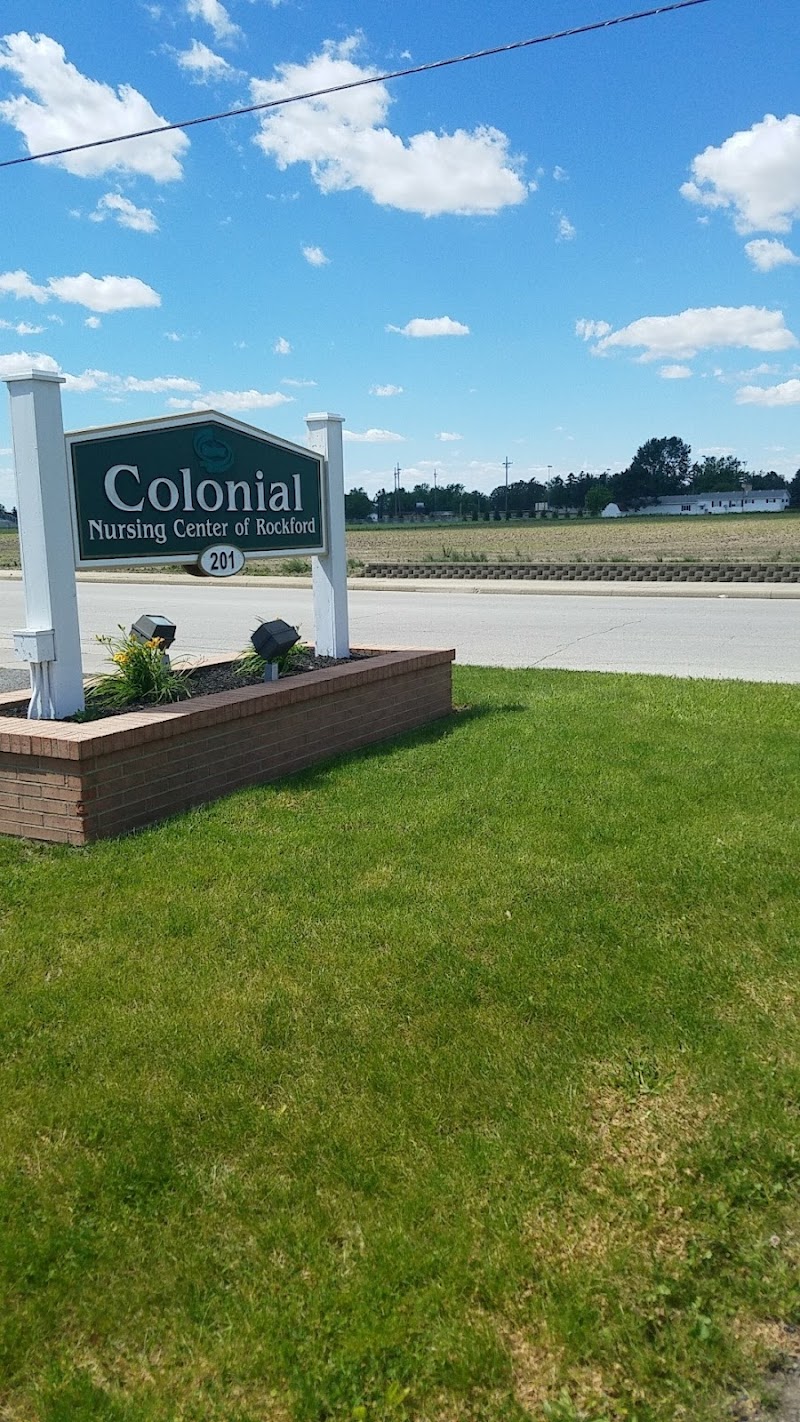
How is Colonial Nursing Center Of Rockford Staffed?

CMS rates COLONIAL NURSING CENTER OF ROCKFORD's staffing level at 1 out of 5 stars, which is much below average compared to other nursing homes. Staff turnover is 46%, compared to the Ohio average of 46%. This relatively stable workforce can support continuity of care.

What Have Inspectors Found at Colonial Nursing Center Of Rockford?

State health inspectors documented 27 deficiencies at COLONIAL NURSING CENTER OF ROCKFORD during 2018 to 2025. These included: 26 with potential for harm and 1 minor or isolated issues.

Who Owns and Operates Colonial Nursing Center Of Rockford?

COLONIAL NURSING CENTER OF ROCKFORD is owned by a for-profit company. For-profit facilities operate as businesses with obligations to shareholders or private owners. The facility is operated by HILLSTONE HEALTHCARE, a chain that manages multiple nursing homes. With 34 certified beds and approximately 28 residents (about 82% occupancy), it is a smaller facility located in ROCKFORD, Ohio.
How Does Colonial Nursing Center Of Rockford Compare to Other Ohio Nursing Homes?

Compared to the 100 nursing homes in Ohio, COLONIAL NURSING CENTER OF ROCKFORD's overall rating (1 stars) is below the state average of 3.2, staff turnover (46%) is near the state average of 46%, and health inspection rating (2 stars) is below the national benchmark.

What Should Families Ask When Visiting Colonial Nursing Center Of Rockford?

Based on this facility's data, families visiting should ask: "Can you walk me through typical staffing levels on day, evening, and night shifts?" "Can I visit during a mealtime to observe dining assistance and food quality?" "How do you handle medical emergencies, and what is your hospital transfer rate?" "Can I speak with family members of current residents about their experience?" These questions are particularly relevant given the below-average staffing rating.

Is Colonial Nursing Center Of Rockford Safe?

Based on CMS inspection data, COLONIAL NURSING CENTER OF ROCKFORD has a clean safety record: no substantiated abuse findings (meaning no confirmed cases of resident harm), no Immediate Jeopardy citations (the most serious violation level indicating risk of serious injury or death), and is not on the Special Focus Facility watch list (a federal program monitoring the lowest-performing 1% of nursing homes). The facility has a 1-star overall rating and ranks #100 of 100 nursing homes in Ohio. While no facility is perfect, families should still ask about staff-to-resident ratios and recent inspection results during their visit.

Do Nurses at Colonial Nursing Center Of Rockford Stick Around?

COLONIAL NURSING CENTER OF ROCKFORD has a staff turnover rate of 46%, which is about average for Ohio nursing homes (state average: 46%). Moderate turnover is common in nursing homes, but families should still ask about staff tenure and how the facility maintains care continuity when employees leave.

Was Colonial Nursing Center Of Rockford Ever Fined?

COLONIAL NURSING CENTER OF ROCKFORD has been fined $13,000 across 1 penalty action. This is below the Ohio average of $33,209. While any fine indicates a compliance issue, fines under $50,000 are relatively common and typically reflect isolated problems that were subsequently corrected. Families should ask what specific issues led to these fines and confirm they've been resolved.

Is Colonial Nursing Center Of Rockford on Any Federal Watch List?

COLONIAL NURSING CENTER OF ROCKFORD is not on any federal watch list. The most significant is the Special Focus Facility (SFF) program, which identifies the bottom 1% of nursing homes nationally based on persistent, serious quality problems. Not being on this list means the facility has avoided the pattern of deficiencies that triggers enhanced federal oversight. This is a positive indicator, though families should still review the facility's inspection history directly.