TRANSITIONAL CARE UNIT
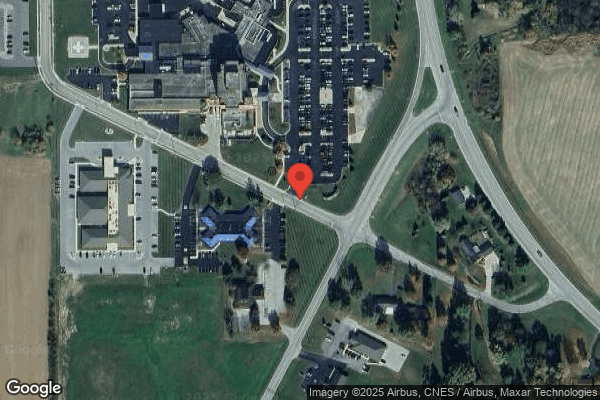
200 ST CLAIR STREET, SAINT MARYS, OH 45885 (419) 394-3335
Non profit - Corporation 15 Beds Independent Data: November 2025
Trust Grade
90/100
#178 of 913 in OH
Last Inspection: August 2023

Over 2 years since last inspection. Current conditions may differ from available data.

Overview

The Transitional Care Unit in Saint Marys, Ohio, has received an excellent Trust Grade of A, indicating it is highly recommended among nursing homes. It ranks #178 out of 913 facilities in the state, placing it comfortably in the top half, and is the top-rated facility among the eight options in Auglaize County. The facility's performance has remained stable, with only one issue reported in both 2020 and 2023, but it does have some weaknesses, particularly in staffing, which has a poor rating of 0 out of 5 stars. Although the turnover rate is exceptionally low at 0%, indicating that staff stay, there have been some concerning incidents noted, such as expired food items being stored improperly and a failure to monitor the dishwasher's sanitation cycles, which could pose risks to residents. Overall, while the facility has strengths like a strong trust score and good safety records (with no fines), the issues with food safety and staffing ratings should be carefully considered.

Trust Score
A
90/100
In Ohio
#178/913
Top 19%
Safety Record
Low Risk
No red flags
Inspections
Holding Steady
1 → 1 violations
Staff Stability
○ Average
Turnover data not reported for this facility.
Penalties
✓ Good
No fines on record. Clean compliance history, better than most Ohio facilities.
Skilled Nurses
○ Average
RN staffing data not reported for this facility.
Violations
✓ Good
Only 4 deficiencies on record. Cleaner than most facilities. Minor issues only.
★★★★★
5.0
Overall Rating
☆☆☆☆☆
0.0
Staff Levels
★★★☆☆
3.0
Care Quality
★★★★★
5.0
Inspection Score
Stable
2020: 1 issues
2023: 1 issues

The Good

  • Full Sprinkler Coverage · Fire safety systems throughout facility
  • No fines on record

Facility shows strength in fire safety.

The Bad

No Significant Concerns Identified

This facility shows no red flags. Among Ohio's 100 nursing homes, only 0% achieve this.

The Ugly 4 deficiencies on record

Aug 2023 1 deficiency
CONCERN (D)

Potential for Harm - no one hurt, but risky conditions existed

Food Safety (Tag F0812)

Could have caused harm · This affected 1 resident

Based on observation, staff interview, and operational requirement review, the facility failed to ensure routine monitoring and record keeping of the wash and rinse cycle requirements for the dishwash...

Read full inspector narrative →
Based on observation, staff interview, and operational requirement review, the facility failed to ensure routine monitoring and record keeping of the wash and rinse cycle requirements for the dishwasher to ensure the dishes were properly sanitized and disinfected. This had the potential to affect the one resident residing in the facility at the time of the survey. The facility census was one. Findings include: Observation on 07/31/23 at 9:05 A.M. of the dishwasher operation revealed the wash cycle was 122 degrees Fahrenheit (F), the rinse cycle was 128 degrees F, and the test strip results were 100 parts per million. Observation on 07/31/23 at 9:09 A.M. of the temperature/sanitizer log revealed there was an area to document the wash temperature, rinse temperature and strip parts per million (PPM) and initials. There was no temperatures logged for the wash or rinse cycles for April, May, June or July 2023. This was verified with Kitchen Coordinator #10. Interview on 08/01/23 at 7:29 A.M. with Dietary Manager #14 revealed he was unaware the temperatures needed to be monitored and recorded for the dishwasher. He stated staff education would be provided to ensure temperatures were taken and recorded moving forward. Review of the dishwasher operational requirements revealed the wash and rinse cycle each required 120 degrees F temperature minimum.
Feb 2020 1 deficiency
CONCERN (D)

Potential for Harm - no one hurt, but risky conditions existed

Deficiency F0710 (Tag F0710)

Could have caused harm · This affected 1 resident

Based on observation, resident and staff interview, and medical record review, the facility failed to follow up on recommendations from the physician. This affected one (#56) of four reviewed. The cen...

Read full inspector narrative →
Based on observation, resident and staff interview, and medical record review, the facility failed to follow up on recommendations from the physician. This affected one (#56) of four reviewed. The census was four. Findings include: Review of Resident #56's medical record revealed an admission date of 02/07/20. Diagnoses included depression, peripheral artery disease, vitamin D deficiency, chronic kidney disease, insomnia, and chronic diastolic heart failure. Review of a physician order dated 02/09/20 revealed Resident #56 was ordered a basic metabolic panel (BMP) blood test. Review of results of the BMP revealed Resident #56's blood glucose was elevated measuring 126 milligrams per deciliter (mg/dL). The facility laboratory set a normal range for blood glucose levels between 74 and 99 mg/dL. Review of a physician visit progress note dated 02/09/20 revealed the physician identified Resident #56 with a focused problem area of type two diabetes mellitus with peripheral neuropathy and documented Resident #56 would be placed on rapid blood glucose finger checks (Accu-Cheks) with insulin coverage. The progress note was signed by the physician on 02/09/20 at 11:54 A.M. Review of Resident #56's medical record between 02/10/20 and 02/12/20 revealed no further blood glucose laboratory values and no finger stick blood glucose levels were obtained, no physician orders were initiated for Accu-Cheks or insulin, and no additional progress notes were documented related to the physician's recommendation for Accu-Cheks with insulin coverage. Review of a progress note dated 02/12/20, written by Registered Nurse (RN) Clinical Coordinator #100, revealed the physician was contacted for clarification of his recommendation on 02/09/20 for Resident #56 to have Accu-Cheks and insulin, and the physician verified he wanted Resident #56 on a medium dose sliding scale insulin with Accu-Cheks before meals and at bedtime. Observations on 02/10/20 at 7:52 A.M., at 10:49 A.M., at 2:21 P.M.; on 02/11/20 at 1:03 P.M., 2:39 P.M., and at 3:52 P.M.; and on 02/12/20 at 8:24 A.M. revealed Resident #56 was calm and free from distress. Resident #56 did not display any lethargy or signs of an altered mental state, and her overall health condition remained unchanged. Interview on 02/11/20 at 4:02 P.M. with Resident #56 stated she had no concerns about the current status of her health and verified she had not experienced any significant changes with her health since she was admitted to the facility. Interview on 02/12/20 at 9:49 A.M. with RN Clinical Coordinator #100 verified the physician intended to start Resident #56 on Accu-Cheks with insulin coverage, but forgot to initiate an order for it. RN Clinical Coordinator #100 stated the physician wanted to monitor Resident #56's blood glucose levels to make sure they were not going too high.
Dec 2018 2 deficiencies
CONCERN (F)

Potential for Harm - no one hurt, but risky conditions existed

Food Safety (Tag F0812)

Could have caused harm · This affected most or all residents

Based on observations, staff interview, and review of the manufacturer's recommendations/facility policy, the facility failed to ensure food was properly labeled and stored, and dishes were sanitized ...

Read full inspector narrative →
Based on observations, staff interview, and review of the manufacturer's recommendations/facility policy, the facility failed to ensure food was properly labeled and stored, and dishes were sanitized in a manner to prevent contamination. This had the potential to affect two (#107 and #108) of two residents who reside in the facility. Findings include: Observations on 12/26/18 at 8:52 A.M. with Food Service Director (FSD) #300, revealed the walk-in freezer contained multiple food items that were expired. The food were as follows: diced chicken (two packs) opened and repackaged in gallon size zip lock bags dated 08/12/18; corn beef wrapped in aluminum foil dated 05/08/18; pastrami (two packs) wrapped in aluminum foil dated 06/07/18; one unidentified food item wrapped in aluminum foil, unlabeled and undated; apple corn bread stuffing opened and repackaged in gallon size zip lock bags dated 01/24/18, ham wrapped in aluminum foil and undated; and one bag of frozen peas, opened and undated. In the reach in freezer there was an opened and undated package of English muffins, and toast was repacked in a zip lock bag dated 12/10/18. In the walk-in refrigerator there were multiple opened and repackaged containers including: chili sauce dated 12/11/18; two opened and repackaged containers of tomato paste dated 12/16/18; pesto sauce opened, repackaged and undated; ketchup opened and repackaged dated 12/15/18; and oyster sauce opened and repackaged dated 12/11/18. In the service area reach-in refrigerators there were three opened and undated packages of cheese. Interview with FSD #300 during the time of the observations, verified all the items noted above were opened and expired or undated. FSD #300 stated he needs to work on dating food. FSD #300 stated the facility practice was to discard opened food after seven days in the refrigerator. Regarding foods in the freezer, FSD #300 stated he discards foods after three or four months but was unsure of the facility policy for the length of time things can be stored in the freezer. FSD #300 further verified the frozen foods noted above should have been discarded. FSD #300 stated the items in the walk-in refrigerator should have been labeled with the manufacturer's expiration date. He also verified both Resident #107 and Resident #108, were served meals from the kitchen. Continued observations revealed the kitchen three-sink dishwashing system was in use. FSD #300 obtained a test strip to check the sanitizer. He dipped the strip in the third sink and held it in the water for the manufacturer's recommended ten seconds. He removed the strip from the water and compared the strip to the package. The strip did not change color. The sanitizer was not at the recommended 200 parts per million (ppm) for effective sanitizing. Interview at the time of the observation revealed FSD #300 verified the dietary staff were currently washing dishes in the three sinks dish system. FSD #300 stated the three sink dish system used Quaternary solution for dish sanitizing. FSD #300 verified the Quaternary solution did not meet the minimum of 200 ppm for effective dish sanitation. Further interview with FSD #300 on 12/26/18 at 10:02 A.M., stated the facility policy does not address dating opened food. Review of the facility policy titled, Food Storage, revised 07/16, revealed foods must be protected from contamination, spoilage and other damage during storage. Foods stored in refrigerators should be covered, labeled and dated. All frozen foods should be labeled and dated. Review of the manufacturer's instructions revealed the Quaternary solution must be 200 ppm concentration for effective dish sanitizing. Review of the Quaternary test strip instructions, revealed the proper testing method was to dip a test strip in the water and hold it for ten seconds. Remove the strip from the water and immediately compare the color.
MINOR (C)

Minor Issue - procedural, no safety impact

Safe Environment (Tag F0584)

Minor procedural issue · This affected most or all residents

Based on observations, staff interview, review of the coded announcement sheet and review of facility policy and procedures, it was determined the facility failed to ensure overhead paging was utilize...

Read full inspector narrative →
Based on observations, staff interview, review of the coded announcement sheet and review of facility policy and procedures, it was determined the facility failed to ensure overhead paging was utilized for emergency situations only to maintain a homelike environment for the residents. This affected two (#107 and #108) of two residents who reside in the facility Findings include: On 12/26/18 at 8:23 A.M., during entrance/initial tour to the facility, a coded announcement was heard over the intercom system throughout the facility/unit where residents were residing. The code was announced as follows: Attention code agency is now in affect at the facility. We would like to welcome the Ohio Department of Health. This code was repeated five times over the intercom system. On 12/26/17 at 9:12 A.M., interview with the Administrator verified the intercom system was only to be used for emergency situations. She verified the operator at the front was the person who made the announcement. On 12/27/18 at 11:56 A.M., interview with Operator #35 verified she made the coded agency announcement as described above on 12/26/18. She verified it was repeated five times throughout the facility utilizing the intercom system. She further verified paging announcements were usually for emergency situations only. Review of the code announcement instruction sheet revised 03/21/18, documented a Code Agency was among other codes for various emergency situations. Further review documented instructions to have surveyor have a seat in the lobby, contact the Administrator and other facility staff at an extension provided, and then to announce Attention. code agency is now in affect at facility. We would like to welcome the (agency name) to our facility. Further instruction documented to repeat twice at 10 second intervals three times. Review of the policy and procedures with a subject matter of unnecessary noise reduction dated July 2015, documented the facility will reduce noise levels by limiting overhead paging for matters of urgent public safety or urgent clinical operations. The overhead paging will not be used as a convenience or unnecessarily.
Understanding Severity Codes (click to expand)
Life-Threatening (Immediate Jeopardy)
J - Isolated K - Pattern L - Widespread
Actual Harm
G - Isolated H - Pattern I - Widespread
Potential for Harm
D - Isolated E - Pattern F - Widespread
No Harm (Minor)
A - Isolated B - Pattern C - Widespread

Questions to Ask on Your Visit

  • "Can I speak with families of current residents?"
  • "What's your RN coverage like on weekends and overnight?"

Our Honest Assessment

Strengths
  • • Grade A (90/100). Above average facility, better than most options in Ohio.
  • • No major safety red flags. No abuse findings, life-threatening violations, or SFF status.
  • • No fines on record. Clean compliance history, better than most Ohio facilities.
  • • Only 4 deficiencies on record. Cleaner than most facilities. Minor issues only.
Concerns
  • • No significant concerns identified. This facility shows no red flags across CMS ratings, staff turnover, or federal penalties.
Bottom line: Generally positive indicators. Standard due diligence and a personal visit recommended.

About This Facility

What is Transitional Care Unit's CMS Rating?

CMS assigns TRANSITIONAL CARE UNIT an overall rating of 5 out of 5 stars, which is considered much above average nationally. Within Ohio, this rating places the facility higher than 99% of the state's 100 nursing homes. This rating reflects solid performance across the metrics CMS uses to evaluate nursing home quality.

How is Transitional Care Unit Staffed?

Detailed staffing data for TRANSITIONAL CARE UNIT is not available in the current CMS dataset.

What Have Inspectors Found at Transitional Care Unit?

State health inspectors documented 4 deficiencies at TRANSITIONAL CARE UNIT during 2018 to 2023. These included: 3 with potential for harm and 1 minor or isolated issues.

Who Owns and Operates Transitional Care Unit?

TRANSITIONAL CARE UNIT is owned by a non-profit organization. Non-profit facilities reinvest revenue into operations rather than distributing to shareholders. The facility operates independently rather than as part of a larger chain. With 15 certified beds and approximately 3 residents (about 20% occupancy), it is a smaller facility located in SAINT MARYS, Ohio.

How Does Transitional Care Unit Compare to Other Ohio Nursing Homes?

Compared to the 100 nursing homes in Ohio, TRANSITIONAL CARE UNIT's overall rating (5 stars) is above the state average of 3.2 and health inspection rating (5 stars) is much above the national benchmark.

What Should Families Ask When Visiting Transitional Care Unit?

Based on this facility's data, families visiting should ask: "Can I visit during a mealtime to observe dining assistance and food quality?" "How do you handle medical emergencies, and what is your hospital transfer rate?" "Can I speak with family members of current residents about their experience?"

Is Transitional Care Unit Safe?

Based on CMS inspection data, TRANSITIONAL CARE UNIT has a clean safety record: no substantiated abuse findings (meaning no confirmed cases of resident harm), no Immediate Jeopardy citations (the most serious violation level indicating risk of serious injury or death), and is not on the Special Focus Facility watch list (a federal program monitoring the lowest-performing 1% of nursing homes). The facility has a 5-star overall rating and ranks #1 of 100 nursing homes in Ohio. While no facility is perfect, families should still ask about staff-to-resident ratios and recent inspection results during their visit.

Do Nurses at Transitional Care Unit Stick Around?

TRANSITIONAL CARE UNIT has not reported staff turnover data to CMS. Staff turnover matters because consistent caregivers learn residents' individual needs, medications, and preferences. When staff frequently change, this institutional knowledge is lost. Families should ask the facility directly about their staff retention rates and average employee tenure.

Was Transitional Care Unit Ever Fined?

TRANSITIONAL CARE UNIT has no federal fines on record. CMS issues fines when nursing homes fail to meet care standards or don't correct problems found during inspections. The absence of fines suggests the facility has either maintained compliance or corrected any issues before penalties were assessed. This is a positive indicator, though families should still review recent inspection reports for the full picture.

Is Transitional Care Unit on Any Federal Watch List?

TRANSITIONAL CARE UNIT is not on any federal watch list. The most significant is the Special Focus Facility (SFF) program, which identifies the bottom 1% of nursing homes nationally based on persistent, serious quality problems. Not being on this list means the facility has avoided the pattern of deficiencies that triggers enhanced federal oversight. This is a positive indicator, though families should still review the facility's inspection history directly.