MONARCH MEADOWS NURSING AND REHABILITATION
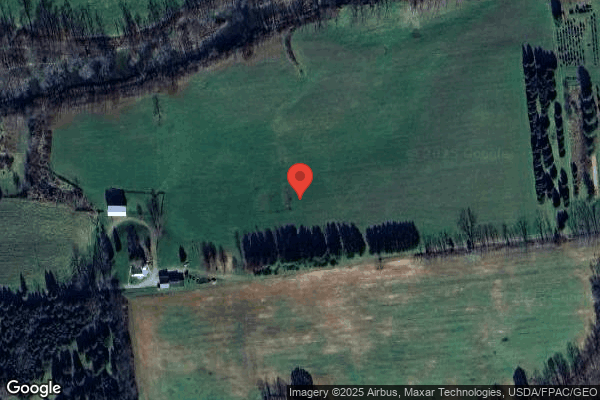
299 COMMERCE DR, SEAMAN, OH 45679 (937) 386-6375
For profit - Corporation 50 Beds CONTINUING HEALTHCARE SOLUTIONS Data: November 2025
Trust Grade
70/100
#299 of 913 in OH
Last Inspection: November 2023

Within standard 12-15 month inspection cycle. Federal law requires annual inspections.

Overview

Monarch Meadows Nursing and Rehabilitation has a Trust Grade of B, indicating it is a good choice, though not without its issues. It ranks #299 out of 913 facilities in Ohio, placing it in the top half, and #2 out of 3 in Adams County, meaning only one local option is better. The facility is improving, with the number of issues decreasing from three in 2023 to one in 2025. Staffing is average with a 3/5 star rating and a turnover rate of 58%, which is close to the state average. While there have been no fines reported, which is a positive sign, there have been serious concerns such as a resident choking while unsupervised during a meal, requiring the Heimlich Maneuver, and issues with food storage practices that could potentially affect all residents. Additionally, there was a failure to maintain proper Do Not Resuscitate paperwork for a resident, leading to emergency interventions that may have been unnecessary. Overall, while there are some strengths, families should be aware of these significant weaknesses when considering this facility.

Trust Score
B
70/100
In Ohio
#299/913
Top 32%
Safety Record
Moderate
Needs review
Inspections
Getting Better
3 → 1 violations
Staff Stability
⚠ Watch
58% turnover. Above average. Higher turnover means staff may not know residents' routines.
Penalties
✓ Good
No fines on record. Clean compliance history, better than most Ohio facilities.
Skilled Nurses
✓ Good
Each resident gets 49 minutes of Registered Nurse (RN) attention daily — more than average for Ohio. RNs are trained to catch health problems early.
Violations
○ Average
10 deficiencies on record. Average for a facility this size. Mostly minor or procedural issues.
★★★★☆
4.0
Overall Rating
★★★☆☆
3.0
Staff Levels
★★★☆☆
3.0
Care Quality
★★★★☆
4.0
Inspection Score
Stable
2023: 3 issues
2025: 1 issues

The Good

  • Full Sprinkler Coverage · Fire safety systems throughout facility
  • No fines on record

Facility shows strength in fire safety.

The Bad

Staff Turnover: 58%

12pts above Ohio avg (46%)

Frequent staff changes - ask about care continuity

Chain: CONTINUING HEALTHCARE SOLUTIONS

Part of a multi-facility chain

Ask about local staffing decisions and management

Staff turnover is elevated (58%)

10 points above Ohio average of 48%

The Ugly 10 deficiencies on record

1 actual harm
Sept 2025 1 deficiency
CONCERN (D) 📢 Someone Reported This

A family member, employee, or ombudsman was alarmed enough to file a formal complaint

Potential for Harm - no one hurt, but risky conditions existed

Deficiency F0578 (Tag F0578)

Could have caused harm · This affected 1 resident

**NOTE- TERMS IN BRACKETS HAVE BEEN EDITED TO PROTECT CONFIDENTIALITY** Based on record review and staff interviews, the facility failed to ensure signed Do Not Resuscitate (DNR) paperwork was present...

Read full inspector narrative →
**NOTE- TERMS IN BRACKETS HAVE BEEN EDITED TO PROTECT CONFIDENTIALITY** Based on record review and staff interviews, the facility failed to ensure signed Do Not Resuscitate (DNR) paperwork was present in the chart for a resident who requested DNR code status. This affected one (#52) of 19 residents reviewed for advance directives. The facility census was 47. Findings include:Closed record review for Resident #51 revealed the resident was admitted to the facility on [DATE]. Diagnoses included metabolic encephalopathy, diabetes mellitus, Alzheimer's disease, and seizures. Review of the physician's order, dated [DATE], revealed an order for the resident to be Do Not Resuscitate - Comfort Care Arrest (DNRCCA) code status. There was no DNR paperwork found in Resident #51's medical record. The nursing progress note, dated [DATE], revealed Resident #51 became unresponsive. Writer unable to find a pulse and began chest compressions. Certified Nursing Assistant (CNA) bagged resident until Registered Nurse (RN) took over. Emergency Medical Services (EMS) arrived. Telephone interview on [DATE] at 12:30 P.M. with Licensed Practical Nurse (LPN) #150 confirmed the nurse was passing morning medications when she was notified Resident #52 was on the floor in the bathroom. LPN #150 responded immediately and while providing care to Resident #52 the resident ceased breathing and was without a pulse. LPN #150 confirmed Cardiopulmonary Resuscitation (CPR) which included chest compressions and providing oxygen by bagging the resident was initiated until EMS personnel arrived. LPN #150 confirmed a pulse check was performed and the resident had regained a pulse and was transported to the hospital. LPN #150 confirmed CPR was initiated due to the resident not having signed DNR paperwork in the medical record. Interview on [DATE] at 1:50 P.M. with the Director of Nursing (DON) confirmed Resident #52 had a physician's order for DNRCCA code status but the facility had not ensured signed DNR paperwork was present in the medical record to prevent CPR from being initiated. This deficiency represents non-compliance investigated under Complaint Number 2602027.
Nov 2023 2 deficiencies
CONCERN (D)

Potential for Harm - no one hurt, but risky conditions existed

Deficiency F0567 (Tag F0567)

Could have caused harm · This affected 1 resident

**NOTE- TERMS IN BRACKETS HAVE BEEN EDITED TO PROTECT CONFIDENTIALITY** Based on medical record review, resident and staff interviews, and review of facility policy, the facility failed to ensure resi...

Read full inspector narrative →
**NOTE- TERMS IN BRACKETS HAVE BEEN EDITED TO PROTECT CONFIDENTIALITY** Based on medical record review, resident and staff interviews, and review of facility policy, the facility failed to ensure residents had access to personal funds on the weekends. This affected one resident (#38) out of the five residents reviewed for personal funds during the annual survey. The facility census was 47. Findings include: Record review for Resident #38 revealed the resident was admitted to the facility on [DATE] and had diagnoses including Parkinson's disease, moderate persistent asthma, and acute respiratory failure. Review of the quarterly Minimum Data Set (MDS) assessment, dated 09/22/23, revealed the resident had intact cognition evidenced by a Brief Interview for Mental Status (BIMS) assessment score of 15. The resident was assessed to require supervision for bed mobility, transfers, toileting, and eating. Interview with Resident #38 on 11/05/23 at 9:41 A.M. confirmed the resident did not have access to personal funds on the weekends. Interview with Registered Nurse (RN) #145 on 11/05/23 at 3:20 P.M. confirmed resident funds were not typically available on the weekends unless staff knew in advance so they could leave the money in an envelope for the resident. Interview with Business Office Manager #147 on 11/05/23 at 3:25 P.M. confirmed a lock box containing money was put in the activities office for residents to access their money on the weekends. Interview with Activity Director #130 on 11/05/23 at 3:28 P.M.confirmed the employee had no knowledge of a lock box with money being left in activities office for residents to have access to their funds on the weekends. Telephone interview with Activity Assistant #105 on 11/05/23 at 3:34 P.M. confirmed the employee had no knowledge of a lock box with money being left in the activities office for residents to have access to their funds on the weekends. Review of the facility policy titled Resident Personal Funds revised on 09/2017 revealed residents must have ready and reasonable access to any funds the facility holds. Residents would have access to petty cash on an ongoing basis and would be able to arrange for access to larger fund amounts. Requests for less than 100 dollars would be honored within the same day. Although the facility did not need to maintain a minimum amount on its premises, it was expected to maintain amounts of petty cash on hand that might be required by the residents.
CONCERN (D)

Potential for Harm - no one hurt, but risky conditions existed

Deficiency F0578 (Tag F0578)

Could have caused harm · This affected 1 resident

Based on medical record review and staff interview the facility failed to ensure accurate advance directives were included in the residents' medical records. This affected one (Resident #21) of one re...

Read full inspector narrative →
Based on medical record review and staff interview the facility failed to ensure accurate advance directives were included in the residents' medical records. This affected one (Resident #21) of one residents reviewed for advanced directives. The facility census was 47. Findings include: Record review of Resident #21 revealed an admission date of 01/19/23 with pertinent diagnoses including the following: multiple sclerosis, chronic obstructive pulmonary disease, neuromuscular dysfunction of bladder, asthma, type two diabetes mellitus, muscle wasting and atrophy, anemia, hypertension, hypothyroidism, idiopathic peripheral autonomic neuropathy, and benign prostatic hyperplasia. Review of the quarterly Minimum Data Set (MDS) assessment for Resident #21 dated 09/25/23 revealed the resident was cognitively intact and required assistance with activities of daily living (ADLs.) Review of paper chart for Resident #21 on 11/05/23 at 1:35 P.M. revealed resident's code status was listed as full code. Review of the electronic medical record (EMR) on 11/05/23 at 1:40 P.M. revealed there was a physician order dated 10/19/23 for the resident to be do not resuscitate comfort care (DNR-CC.) Interview with the Director of Nursing (DON) on 11/07/23 at 8:31 A.M. confirmed Resident #21's paper chart indicated he was to be full code, but the EMR included an order for resident to be DNR-CC. Interview with Registered Nurse (RN) #142 on 11/07/23 at 9:32 A.M. confirmed she had spoken with Resident #21, and he wanted to be a full code. RN #142 was not sure why there was a DNRCC order in the EMR for Resident #21. RN #142 confirmed Resident #21's paper chart did not include a signed DNR-CC form.
Aug 2023 1 deficiency
CONCERN (D) 📢 Someone Reported This

A family member, employee, or ombudsman was alarmed enough to file a formal complaint

Potential for Harm - no one hurt, but risky conditions existed

Medication Errors (Tag F0758)

Could have caused harm · This affected 1 resident

**NOTE- TERMS IN BRACKETS HAVE BEEN EDITED TO PROTECT CONFIDENTIALITY** Based on record review, staff interview, and review of the Food and Drug Administration (FDA) black box warning, the facility fa...

Read full inspector narrative →
**NOTE- TERMS IN BRACKETS HAVE BEEN EDITED TO PROTECT CONFIDENTIALITY** Based on record review, staff interview, and review of the Food and Drug Administration (FDA) black box warning, the facility failed to ensure the anti-psychotic medication Seroquel was administered for an appropriate indication. This affected one (Resident #41) of three residents reviewed for unnecessary medications during the complaint survey. The facility census was 40. Findings include: Closed record review for Resident #41 revealed the resident was admitted to the facility on [DATE] and had diagnoses including dementia, depression, and chronic obstructive pulmonary disorder. Review of the admission Minimum Data Set (MDS) assessment, dated 01/17/23, revealed Resident #41 was assessed to have severely impaired cognition. Review of the physician's order, dated 01/12/23, revealed Resident #41 was ordered to be administered 50 milligrams (mg) of Seroquel (an anti-psychotic medication) twice a day for anxiety/agitation. The physicians order, dated 01/31/23, revealed Resident #41 was ordered to be administered 75 mg of Seroquel in the morning and 50 mg of Seroquel at night for dementia without behavioral disturbance, psychotic disturbance, mood disturbance, and anxiety. The physician's order, dated 02/10/23, revealed Resident #41 was ordered to be administered 25 mg of Seroquel in the morning and 50 mg of Seroquel at night for dementia without behavioral disturbance, psychotic disturbance, mood disturbance, and anxiety. Interview with the Director of Nursing (DON) on 08/29/23 at 2:45 P.M. verified Resident #41 had been administered the anti-psychotic medication Seroquel for diagnoses of anxiety/agitation and dementia without behavioral disturbance, psychotic disturbance, mood disturbance, and anxiety. Review of the FDA Black Box Warning for the medication Seroquel revealed elderly patients with dementia-related psychosis treated with antipsychotic drugs are at an increased risk for death. Seroquel is not approved for the treatment of patients with dementia-related psychosis. This deficiency represents non-compliance investigated under Complaint Number OH00145539.
Jul 2021 3 deficiencies 1 Harm
SERIOUS (G)

Actual Harm - a resident was hurt due to facility failures

Accident Prevention (Tag F0689)

A resident was harmed · This affected 1 resident

Based on observation, record review, and staff interviews, the facility failed to provide appropriate supervision to a resident while eating that was at high risk for choking. This resulted in actual ...

Read full inspector narrative →
Based on observation, record review, and staff interviews, the facility failed to provide appropriate supervision to a resident while eating that was at high risk for choking. This resulted in actual harm when Resident #11 was left unsupervised alone, in the room to eat and the resident choked on food, requiring the Heimlich Maneuver to be performed. Subsequently the resident developed aspiration pneumonia requiring treatment. The facility failed to provide supervision again for the resident during a meal observation of the resident eating alone in the room. This affected one (#11) of the three residents sampled for assistance with Activities of Daily Living (ADL). The facility census was 48. Findings include: Record review for Resident #11 revealed an admission date of 12/01/16, with the following diagnoses: abnormal posture, kyphosis of the cervicothoracic region (abnormal curvature of the spine at the neck), dysphagia, and muscle wasting and atrophy. This resident had no known allergies. Review of the quarterly Minimum Data Set (MDS) assessment, dated 03/24/21, revealed this resident was rarely/never understood. This resident was assessed to require extensive assistance from two staff members for bed mobility and toileting, extensive assistance from one staff member for eating, and was dependent on two staff members for transfers. This resident was assessed to have limited range of motion to both upper extremities. Review of the care plan, dated 12/15/16, revealed this resident had impaired self-feeding related to cerebral palsy. Interventions included all drinks in sippy cups per family request, assure positioned correctly and up to table, dining program daily as tolerated twice a day, encourage/cue/assist resident with meals/eating, feed the resident the first few bites of each meal, and provide physical assist as needed to complete at least 50 percent of the meal. Review of the Speech Therapy Discharge note, dated 07/20/17, revealed this resident should receive supervision during all meals to reduce risk for choking and ensure the resident receives appropriate nutrition. Review of the monthly physician orders for June 2021 revealed the resident was to receive a regular diet. Review of the nurse's progress note, dated 06/11/21 and timed 12:30 P.M., revealed Licensed Practical Nurse (LPN) #149 was walking down the hallway and heard Resident #11 choking. LPN #149 responded immediately and yelled for the aide to come quickly. Upon entering the room Resident #11 was turning purple and was choking. LPN #149 began the Heimlich maneuver and Resident #11 let out a big cry with no food observed to come out of the resident's mouth at the time. Resident #11 was assisted back into her chair, vital signs were obtained, and the physician was notified of the incident. Review of the nurse's progress note, dated 06/11/21 and timed 1:00 P.M., revealed the physician was aware of the choking episode and gave orders for an x-ray to be completed. Review of the results of the chest x-ray for Resident #11, dated 06/11/21, revealed right lung opacities (numerous abnormal white spots of uncertain substance) consistent with aspiration pneumonia. Review of the nurses progress notes, dated 06/12/21 and time 3:55 P.M., revealed new orders were received for Resident #11 to begin treatment with Augmentin 500 milligrams (mg) twice a day for ten days and to repeat the two view chest x-ray after completion of antibiotic therapy. Review of the facility General Investigation of Incident, signed by the Director of Nursing (DON) and dated 06/11/21, revealed Resident #11 was eating lunch and the nurse heard her coughing/choking. Upon entering the room, Resident #11 appeared to be choking, Licensed Practical Nurse (LPN) #149 and State Tested Nursing Assistant (STNA) #142 performed the Heimlich maneuver. No food was dislodged from the airway and it appeared to only be liquids. Observation on 07/06/21 at 12:20 P.M., revealed STNA #172 delivered the lunch meal tray to Resident #11 in her room, set up the lunch meal for Resident #11, then left the room to continue delivering lunch meal trays to other residents. Interview with STNA #172 on 07/06/21 at 12:35 P.M., verified Resident #11 was eating her lunch meal in her room without staff members present to supervise. Observation on 07/08/21 at 8:17 A.M., revealed STNA #114 delivered the breakfast meal tray to Resident #11 who was seated at a tray table in the hallway, set up the tray, then left to deliver remaining meal trays without attempting to provide the first few bites of the meal to Resident #11. Interview with STNA #114 on 07/08/21 at 8:25 A.M., verified she had set up the breakfast meal for Resident #11 and had not attempted to feed Resident #11 the first few bites of her meal. STNA #114 stated Resident #11 was to be in the hallway for all meals so she could be supervised by staff since she experienced a choking episode. STNA #114 stated staff did not attempt to feed Resident #11 since she could feed herself. Interview with the Director of Nursing (DON) on 07/08/21 at 10:40 A.M., verified Resident #11 had a care plan in place which included to feed the resident the first few bites of her food. She stated sometimes Resident #11 would not allow staff to do so. The DON verified Resident #11 required supervision during meals prior to the incidence of choking on 06/11/21. The DON stated the nurse was outside the room of Resident #11 with her medication cart when she heard Resident #11 choking.
CONCERN (D)

Potential for Harm - no one hurt, but risky conditions existed

Comprehensive Assessments (Tag F0636)

Could have caused harm · This affected 1 resident

**NOTE- TERMS IN BRACKETS HAVE BEEN EDITED TO PROTECT CONFIDENTIALITY** Based on observation, medical record review and staff interview, the facility failed to accurately assess a residents teeth. Thi...

Read full inspector narrative →
**NOTE- TERMS IN BRACKETS HAVE BEEN EDITED TO PROTECT CONFIDENTIALITY** Based on observation, medical record review and staff interview, the facility failed to accurately assess a residents teeth. This affected one (#19) of one residents reviewed for dental. The faciltiy census was 48. Findings Include: Review of the Resident #19's medical record revealed an admission date of 01/18/21, with the admitting diagnoses of diabetes mellitus, right below the knee amputation, malignant neoplasm of prostate, hypertension, major depressive disorder and congestive heart failure. Review of the resident's admission assessment dated [DATE] revealed the the assessment failed to identify if the resident had natural teeth, dentures or was edentulous. Review of the resident's comprehensive minimum data set (MDS) assessment dated [DATE], revealed the resident had clear speech, understood others, made himself understood and had a moderate cognitive deficit. The assessment indicated the resident had no issues with his teeth. Review of the resident's plan of care revealed no care plan addressing the resident's caried teeth. Observations on 07/08/21 at 11:05 A.M., revealed Resident #19 was missing teeth and obviously caried teeth that were gray in color. Interview on 07/08/21 at 1:35 P.M., with the Director of Nursing (DON) verified the lack of assessment and intervention for the caried teeth.
CONCERN (F)

Potential for Harm - no one hurt, but risky conditions existed

Food Safety (Tag F0812)

Could have caused harm · This affected most or all residents

Based on observation, recipe review, policy reviews and staff interviews, the facility failed to appropriately store and prepare food items. This had the potential to affect 48 of 48 residents who res...

Read full inspector narrative →
Based on observation, recipe review, policy reviews and staff interviews, the facility failed to appropriately store and prepare food items. This had the potential to affect 48 of 48 residents who resided in the facility and received their meals from the kitchen. Findings include: 1. Observation on 07/06/21 at 11:30 A.M., of Dietary Manager (DM) #135 pureeing the lunch meal revealed ham was placed in the robot coupe canister, water was added to the ham, and the ham and water were blended together. DM #135 then added more water to the mixture and blended them together. DM #135 added powdered thickener to the ham and water mixture and blended it again then poured the mixture into a pan on the steam table. The robot coupe canister was placed in the dishwasher and ran through a cycle but was not allowed to dry before DM #135 added broccoli and water to the canister and began blending them together. The pureed broccoli was placed in a pan on the steam table and DM #135 placed the robot coupe canister in the dishwasher. DM #135 removed the canister from the dishwasher and did not allow it to dry before adding scalloped potatoes to the canister. DM #135 added water to the scalloped potatoes, blended them together, then placed the pureed scalloped potatoes in a pan on the steam table. Interview with DM #135 on 07/06/21 at 11:55 A.M., verified only water and thickener had been added to the foods during preparation of the pureed lunch meal. DM #135 stated recipes were available for the pureed lunch meal although they had not been out to view during preparation of the pureed lunch meal. DM #135 stated the robot coupe canister used to puree the foods for the lunch meal had not been allowed to dry between preparation of different foods due to there only being one canister and not having enough time to allow it to dry completely. Review of the facility recipe for pureed broccoli revealed melted butter should have been added to the broccoli prior to blending. Review of the facility recipe for pureed scalloped potatoes revealed low-sodium chicken base should have been added to the scalloped potatoes while processing them. Review of the facility recipe for pureed ham revealed pineapple juice should be added to the ham and then the ham should be processed. Review of the facility policy titled Mechanical Soft Diets, not dated, revealed it was the responsibility of the Dietary Manager to assure recipes for the pureed diets were available and followed by staff. 2. On 07/06/21 at 9:25 A.M, observation of the walk in freezer revealed no thermometer inside the freezer. On 07/06/21 at 9:30 A.M., observation of the walk in freezer revealed an opened and undated bag of omelets to the air, opened and undated, pirogues and opened and undated bag of opened cinnamon rolls. O Interview with Dietary Manager #135 at the time of the observation verified the food opened, not dated and the freezer had no thermometer. 3. On 07/06/21 at 9:45 A.M., observation of reach in refrigerator #2 revealed no thermometer to monitor the temperature. Interview with Dietary Manager #135, at the time of the observation verified the lack of thermometer. 4. Observation on 07/08/21 at 8:13 A.M., revealed State Tested Nursing Assistant (STNA) #118 removed the breakfast tray for Resident #29 from the dining cart and took the tray into the residents room where she assisted Resident #29 to consume her breakfast meal. Observation on 07/08/21 at 8:20 A.M., revealed STNA #118 brought the dirty breakfast tray out of the room of Resident #29 and placed it on the top shelf of the dining cart with clean breakfast trays remaining on the cart underneath it. STNA #118 and STNA #114 then proceeded to distribute the remaining clean trays containing the breakfast meal to residents on the hallway. Interview with STNA #118 on 07/08/21 at 8:22 A.M., verified the breakfast tray for Resident #29 was dirty and the tray had been placed back on the dining cart with clean trays underneath it. Review of the facility policy titled Room Meal Tray Service, not dated, revealed soiled trays shall be returned to the cart only when cart is emptied of all undelivered trays.
Mar 2019 3 deficiencies
CONCERN (D)

Potential for Harm - no one hurt, but risky conditions existed

Assessment Accuracy (Tag F0641)

Could have caused harm · This affected 1 resident

**NOTE- TERMS IN BRACKETS HAVE BEEN EDITED TO PROTECT CONFIDENTIALITY** Based on record review and staff interview, the facility failed to accurately complete a Minimum Data Assessment (MDS) for one r...

Read full inspector narrative →
**NOTE- TERMS IN BRACKETS HAVE BEEN EDITED TO PROTECT CONFIDENTIALITY** Based on record review and staff interview, the facility failed to accurately complete a Minimum Data Assessment (MDS) for one resident. This affected one (#34) of 16 residents reviewed for accurate assessments. The facility census was 46. Findings include: Review of the medical record revealed Resident #34 was admitted on [DATE]. Diagnoses included depression, muscle weakness, difficulty in walking, Type 2 diabetes mellitus, dementia, anemia, congestive heart failure and chronic kidney disease. Review of the quarterly MDS assessment revealed the resident's cognition was moderately impaired and required extensive assistance with activities of daily living (ADL's) except eating which was noted as independent. Review of the MDS for medications revealed Resident #34 received an antipsychotic for seven days. Further review of the MDS for antipsychotic medication indicated, indicated the resident did not receive antipsychotic medication. Interview on 03/20/19 at 3:12 P.M. with Licensed Practical Nurse (LPN) #22, verified she coded the MDS incorrectly when it said no, the resident didn't receive the antipsychotic medications. She stated she did a modification MDS on 12/20/18, but had not completed it. She further stated she would do a correction on the March 2019 MDS.
CONCERN (D)

Potential for Harm - no one hurt, but risky conditions existed

Quality of Care (Tag F0684)

Could have caused harm · This affected 1 resident

**NOTE- TERMS IN BRACKETS HAVE BEEN EDITED TO PROTECT CONFIDENTIALITY** Based on observations, record review, and staff interview, the facility failed to ensure physicians orders and parameters were i...

Read full inspector narrative →
**NOTE- TERMS IN BRACKETS HAVE BEEN EDITED TO PROTECT CONFIDENTIALITY** Based on observations, record review, and staff interview, the facility failed to ensure physicians orders and parameters were in place for the use of a left wrist brace for one resident. This affected one (#149) of two residents reviewed for pain and activities of daily living. The facility census was 46. Findings include: Review of the medical record for Resident #149 revealed an admission date of 03/01/19. Diagnoses included arthropathy, muscle weakness, and cerebral infarction. Review of admission Minimum Data Set (MDS) assessment dated [DATE], revealed Resident #149 had no cognitive deficits, no limitation in range of motion, no splint use, had frequent pain, and received pain medication. Review of the hospital paperwork dated 02/14/19, revealed X-rays were taken of Resident #149's left hand and no acute fractures or dislocation were noted. Review of the hospital Discharge summary dated [DATE], revealed Resident #149 had left wrist pain with suspected [NAME] arthritis and a new brace was applied. Review of the Occupational Therapy (OT) evaluation dated 03/01/19, revealed Resident #149's goal was to get stronger and get her hand working again due to a sprain to the left hand. However, there was no documentation in the medical record regarding the left wrist and hand being impaired. Review of the orthopedic note dated 03/08/19, revealed Resident #149 was complaining of left wrist pain and swelling and the physician noted to use heat, brace, and OT. Review of OT note dated 03/15/19, revealed Resident #149 was unable to use her left hand due to increased pain. Review of the physician orders dated March 2019, revealed no orders for a left hand brace or splint and no parameters or instruction were indicated when Resident #149 was to wear the left hand brace. Review of the Medication Administration Record (MAR) dated March 2019, revealed Resident #149 received Tylenol for pain. On 03/03/19, a splint was listed as an intervention and on 03/08/19, a brace was listed as an intervention. Further review of the March 2019 MAR and Treatment Administration Record, revealed there was no physician orders for a brace or splint. Review of the care plan for Resident #149, revealed alteration in comfort related to gastrointestinal hemorrhage, however, no mention of the left wrist pain but to use left wrist splint. On 03/20/19, the care plan included left wrist pain and to use left wrist splint as needed for comfort. Observation on 03/18/19 at 3:32 P.M., revealed Resident #149 had s soft brace in place to the left wrist. Observation and interview on 03/19/19 at 8:56 A.M. with Resident #149, revealed the resident was sitting in a bedside chair rubbing her left hand with her right hand and the soft brace was off her left wrist. She stated she took it off because her left hand was going to sleep and was hurting. She stated she was supposed to wear it all the time. Observation and interview on 03/20/19 at 9:42 A.M., revealed she was sitting in the bedside chair and her left wrist brace was off. She was rubbing her left wrist with her right hand and stated it hurt badly. She stated she had just taken Tylenol for pain and stated it does relieve pain. Interview on 03/20/19 at 12:43 P.M. with the Director of Nursing (DON) and verified Resident #149 does have a left wrist brace and stated it was as needed for comfort. She verified she had arthritis and there were no parameters in place for when Resident #149 was to wear the brace. She also indicated there was no documentation in place for when she is wearing the brace. She verified her careplan was updated on 03/20/19, to reflect left wrist pain and to wear left brace as needed for comfort only.
CONCERN (D)

Potential for Harm - no one hurt, but risky conditions existed

Infection Control (Tag F0880)

Could have caused harm · This affected 1 resident

Based on observations, record review, staff interview, and review of facility policy, the facility failed to maintain infection control and prevention when one resident's mucous fistula drainage bag a...

Read full inspector narrative →
Based on observations, record review, staff interview, and review of facility policy, the facility failed to maintain infection control and prevention when one resident's mucous fistula drainage bag and G- tube drainage bag were resting on the floor. This affected one (#152) of three residents reviewed for infection control practices. The facility census was 46. Findings include: Review of the medical record for Resident #152 revealed an admission date of 02/22/19. Diagnoses included diaphragmatic hernia with obstruction, gastroesophageal reflux disease, and need for assistance for personal care. Review of surgeon history and physical dated 02/20/19, revealed Resident #152 had a gastrectomy on 12/10/18 with the presence of a gastrostomy-jejunostomy (G-J) tube), G to gravity, and J for tube feedings. G to gravity draining bile tinged effluent. On 02/14/19, he underwent a split fistula placement to drainage bag. Review of the hospital discharge note dated 02/22/19, revealed Resident #152 had a mucous fistula/split fistula to the left neck and the site must have a thin tube in place at all times to stent open as there was risk for closure if removed. The tube was secured in place and connected to a gravity bag and was to remain to the gravity bag. Review of physician orders dated March 2019, revealed orders for G-tube to gravity drainage and mucous fistula to left neck and tube to remain to gravity bag. Review of the careplan revealed Resident #152 was at risk for infection related to history of infections, mucous fistula, J tube, and G tube. Observation on 03/18/19 at 12:36 P.M. of Resident #152, revealed he was sitting up in the chair at the bedside and the mucous drainage bag was laying on the floor and his G-tube drainage bag was hooked to the walker. Interview was on 03/18/19 at 12:40 P.M. with Licensed Practical Nurse #101, verified Resident #152's mucous drainage bag was resting on the floor with no barrier and she stated it was supposed to drain to gravity and they placed it on the floor. Observation on 03/18/19 at 2:15 P.M. of Resident #152, revealed he was resting in bed and his G-tube drainage bag and mucous drainage bag were both resting on the floor next to the G-tube drainage bag. Neither bag were not in any dignity bag not were there any barrier between the bags and the floor. Interview on 03/18/19 at 2:19 P.M. with Registered Nurse #110, verified Resident #152's G-tube and mucous drainage bags were not covered and were resting on the floor. She indicated they should not be on the floor and placed them off the floor and hooked them to the bed frame and in dignity bags that were affixed to the bed frame. Review of the Infection Control Policy dated 11/23/16, revealed the facility was to maintain an infection control program to provide a safe, sanitary, and comfortable environment and to help prevent the development and transmission of diseases and infections.
Understanding Severity Codes (click to expand)
Life-Threatening (Immediate Jeopardy)
J - Isolated K - Pattern L - Widespread
Actual Harm
G - Isolated H - Pattern I - Widespread
Potential for Harm
D - Isolated E - Pattern F - Widespread
No Harm (Minor)
A - Isolated B - Pattern C - Widespread

Questions to Ask on Your Visit

  • "Why is there high staff turnover? How do you retain staff?"
  • "Can I speak with families of current residents?"
  • "What's your RN coverage like on weekends and overnight?"

Our Honest Assessment

Strengths
  • • No fines on record. Clean compliance history, better than most Ohio facilities.
Concerns
  • • 10 deficiencies on record, including 1 serious (caused harm) violation. Ask about corrective actions taken.
  • • 58% turnover. Above average. Higher turnover means staff may not know residents' routines.
Bottom line: Mixed indicators with Trust Score of 70/100. Visit in person and ask pointed questions.

About This Facility

What is Monarch Meadows Nursing And Rehabilitation's CMS Rating?

CMS assigns MONARCH MEADOWS NURSING AND REHABILITATION an overall rating of 4 out of 5 stars, which is considered above average nationally. Within Ohio, this rating places the facility higher than 99% of the state's 100 nursing homes. This rating reflects solid performance across the metrics CMS uses to evaluate nursing home quality.
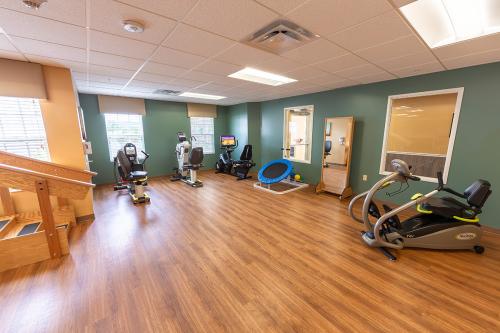
How is Monarch Meadows Nursing And Rehabilitation Staffed?

CMS rates MONARCH MEADOWS NURSING AND REHABILITATION's staffing level at 3 out of 5 stars, which is average compared to other nursing homes. Staff turnover is 58%, which is 12 percentage points above the Ohio average of 46%. High turnover can affect care consistency as new staff learn residents' individual needs.

What Have Inspectors Found at Monarch Meadows Nursing And Rehabilitation?

State health inspectors documented 10 deficiencies at MONARCH MEADOWS NURSING AND REHABILITATION during 2019 to 2025. These included: 1 that caused actual resident harm and 9 with potential for harm. Deficiencies causing actual harm indicate documented cases where residents experienced negative health consequences.
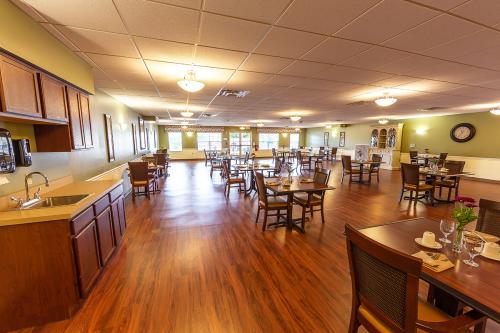
Who Owns and Operates Monarch Meadows Nursing And Rehabilitation?

MONARCH MEADOWS NURSING AND REHABILITATION is owned by a for-profit company. For-profit facilities operate as businesses with obligations to shareholders or private owners. The facility is operated by CONTINUING HEALTHCARE SOLUTIONS, a chain that manages multiple nursing homes. With 50 certified beds and approximately 46 residents (about 92% occupancy), it is a smaller facility located in SEAMAN, Ohio.

How Does Monarch Meadows Nursing And Rehabilitation Compare to Other Ohio Nursing Homes?

Compared to the 100 nursing homes in Ohio, MONARCH MEADOWS NURSING AND REHABILITATION's overall rating (4 stars) is above the state average of 3.2, staff turnover (58%) is significantly higher than the state average of 46%, and health inspection rating (4 stars) is above the national benchmark.

What Should Families Ask When Visiting Monarch Meadows Nursing And Rehabilitation?

Based on this facility's data, families visiting should ask: "How do you ensure continuity of care given staff turnover, and what is your staff retention strategy?" "Can I visit during a mealtime to observe dining assistance and food quality?" "How do you handle medical emergencies, and what is your hospital transfer rate?" "Can I speak with family members of current residents about their experience?" These questions are particularly relevant given the facility's high staff turnover rate.

Is Monarch Meadows Nursing And Rehabilitation Safe?

Based on CMS inspection data, MONARCH MEADOWS NURSING AND REHABILITATION has a clean safety record: no substantiated abuse findings (meaning no confirmed cases of resident harm), no Immediate Jeopardy citations (the most serious violation level indicating risk of serious injury or death), and is not on the Special Focus Facility watch list (a federal program monitoring the lowest-performing 1% of nursing homes). The facility has a 4-star overall rating and ranks #1 of 100 nursing homes in Ohio. While no facility is perfect, families should still ask about staff-to-resident ratios and recent inspection results during their visit.

Do Nurses at Monarch Meadows Nursing And Rehabilitation Stick Around?

Staff turnover at MONARCH MEADOWS NURSING AND REHABILITATION is high. At 58%, the facility is 12 percentage points above the Ohio average of 46%. High turnover means new staff may not know residents' individual needs, medications, or preferences. It can also be disorienting for residents, especially those with dementia who rely on familiar faces. Families should ask: What is causing the turnover? What retention programs are in place? How do you ensure care continuity during staff transitions?

Was Monarch Meadows Nursing And Rehabilitation Ever Fined?

MONARCH MEADOWS NURSING AND REHABILITATION has no federal fines on record. CMS issues fines when nursing homes fail to meet care standards or don't correct problems found during inspections. The absence of fines suggests the facility has either maintained compliance or corrected any issues before penalties were assessed. This is a positive indicator, though families should still review recent inspection reports for the full picture.

Is Monarch Meadows Nursing And Rehabilitation on Any Federal Watch List?

MONARCH MEADOWS NURSING AND REHABILITATION is not on any federal watch list. The most significant is the Special Focus Facility (SFF) program, which identifies the bottom 1% of nursing homes nationally based on persistent, serious quality problems. Not being on this list means the facility has avoided the pattern of deficiencies that triggers enhanced federal oversight. This is a positive indicator, though families should still review the facility's inspection history directly.