VERSAILLES REHABILITATION AND HEALTH CARE CENTER
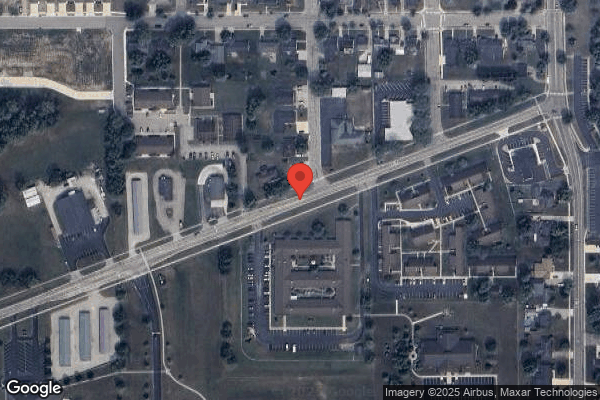
200 MARKER ROAD, VERSAILLES, OH 45380 (937) 526-5570
For profit - Corporation 112 Beds CROWN HEALTHCARE GROUP Data: November 2025
Trust Grade
60/100
#363 of 913 in OH
Last Inspection: May 2025

Inspected within the last 6 months. Data reflects current conditions.

Overview

Versailles Rehabilitation and Health Care Center has a Trust Grade of C+, indicating it is slightly above average but still has room for improvement. It ranks #363 out of 913 facilities in Ohio, placing it in the top half of the state, while being #4 of 6 in Darke County, meaning there are just a few local options that are better. The facility is currently worsening, with the number of issues increasing from 5 in 2024 to 7 in 2025. Staffing is a concern, rated at 2 out of 5 stars with a high turnover rate of 67%, significantly above the state average. Although there have been no fines, which is positive, there have been serious incidents, such as a cognitively impaired resident suffering burns from hot liquids due to lack of supervision and another resident being transferred without a gait belt, leading to a fall risk. Overall, while the facility has some strengths, including no record of fines, the issues with staffing and care incidents are notable weaknesses to consider.

Trust Score
C+
60/100
In Ohio
#363/913
Top 39%
Safety Record
Moderate
Needs review
Inspections
Getting Worse
5 → 7 violations
Staff Stability
⚠ Watch
67% turnover. Above average. Higher turnover means staff may not know residents' routines.
Penalties
✓ Good
No fines on record. Clean compliance history, better than most Ohio facilities.
Skilled Nurses
○ Average
Each resident gets 32 minutes of Registered Nurse (RN) attention daily — about average for Ohio. RNs are the most trained staff who monitor for health changes.
Violations
⚠ Watch
24 deficiencies on record. Higher than average. Multiple issues found across inspections.
★★★★☆
4.0
Overall Rating
★★☆☆☆
2.0
Staff Levels
★★★★☆
4.0
Care Quality
★★★★☆
4.0
Inspection Score
Stable
2024: 5 issues
2025: 7 issues

The Good

  • 4-Star Quality Measures · Strong clinical quality outcomes
  • Full Sprinkler Coverage · Fire safety systems throughout facility
  • No fines on record

Facility shows strength in quality measures, fire safety.

The Bad

Staff Turnover: 67%

20pts above Ohio avg (46%)

Frequent staff changes - ask about care continuity

Chain: CROWN HEALTHCARE GROUP

Part of a multi-facility chain

Ask about local staffing decisions and management

Staff turnover is elevated (67%)

19 points above Ohio average of 48%

The Ugly 24 deficiencies on record

1 actual harm
Aug 2025 1 deficiency
CONCERN (D) 📢 Someone Reported This

A family member, employee, or ombudsman was alarmed enough to file a formal complaint

Potential for Harm - no one hurt, but risky conditions existed

Free from Abuse/Neglect (Tag F0600)

Could have caused harm · This affected 1 resident

**NOTE- TERMS IN BRACKETS HAVE BEEN EDITED TO PROTECT CONFIDENTIALITY** Based on medical record reviews, staff interviews, review of a facility self reported incident (SRI), and policy review, the fac...

Read full inspector narrative →
**NOTE- TERMS IN BRACKETS HAVE BEEN EDITED TO PROTECT CONFIDENTIALITY** Based on medical record reviews, staff interviews, review of a facility self reported incident (SRI), and policy review, the facility failed to ensure residents were free from sexual abuse. This affected two (#26 and #90) out of three residents reviewed for abuse. The facility census was 75. Findings include: Review of the medical record for Resident #26 revealed an admission date of 06/27/25 with medical diagnoses of dementia with psychotic disturbances, chronic obstructive pulmonary disease (COPD), and mood disorder. Review of an admission Minimum Data Set (MDS) assessment, dated 07/03/25, which indicated Resident #26 had severely impaired cognition and required supervision with toilet hygiene and was independent with bed mobility, transfers, and bed mobility. Review of a physician order dated 06/27/25 stated Resident #26 had a mental disorder with diagnosis of behavioral disturbances and met the criteria for placement on the Mental Health Unit (MHU) and would benefit from the structure and activity-based philosophy. Review of Resident #26's progress notes revealed a note dated 08/13/25 at 11:01 P.M. which stated Resident #26 was immediately separated from the other resident related to incident and resident assessment completed with no new skin impairments. Further review of the note revealed Resident #26 denied any pain and the physician, Administrator and Director of Nursing (DON) were notified. 2. Review of the medical record for Resident #90 revealed an admission date of 02/20/25 with medical diagnoses of dementia with agitation, Alzheimer's disease early onset, post traumatic stress disorder, and history of physical and sexual abuse. Review of the medical record revealed Resident #90 discharged from the facility to another facility on 08/15/25. Review of a quarterly MDS assessment, dated 05/29/25, indicated Resident #90 had severe cognitive impairment and required partial/moderate assistance with bathing and toilet hygiene and was independent with transfers and bed mobility. Review of a physician order dated 05/06/25 stated Resident #90 had a mental health disorder with diagnosis of behavioral disturbances and met the criteria for placement on the MHU and wound benefit from the structure and activity-based care philosophy. Review of Resident #90's progress notes revealed a note dated 08/13/25 at 11:01 P.M. which stated Resident #90 was immediately separated from the other resident related to the incident. The note stated Resident #90 was assessed and no new skin impairments were noted, and Resident #90 did not complain of pain. The note stated the Administrator and DON were noted and a message was left for family. Further review of progress note dated 08/13/25 at 11:45 P.M stated the police department was at the facility to investigate the incident. Review of a facility SRI, dated 08/13/25, stated Residents #90 and #26 were both residents on the MHU and were observed in a sexual encounter. Review of the FRI revealed State Tested Nursing Assistant (STNA) #210 observed Resident #26 and #90 sitting in a common area and Resident #90 was observed to be sitting on the couch with Resident #26 standing in front of her and his penis was in her mouth. The SRI indicated the residents were immediately separated and Resident #90 was put on one-on-one supervision. The SRI stated both resident families, the physician, and police department were notified. Interview on 08/28/25 at 11:12 A.M. with Administrator and DON confirmed they were notified on 08/13/25 around 11:00 P.M. of an allegation of sexual abuse involving Resident #26 and #90. DON stated she arrived at the facility and initiated an investigation which included staff and resident interviews, notifying the police department, families, and physician. Administrator stated neither Resident #26 nor Resident #90 had ever shown sexually aggressive behavior prior to the incident. Administrator stated Resident #90 remained on one-on-one supervision until her discharge on [DATE]. The Administrator and DON confirmed Resident #26 and #90 had cognitive impairment, resided on a secured/locked unit and were unable to provide consent to the sexual encounter. Interview on 08/28/25 at 2:44 P.M. with STNA #210 confirmed she was walking in the hallway and observed Resident #90 sitting on the couch in the common area with Resident #26 standing in front of her and his penis was in her mouth. STNA #210 stated she immediately separated the residents and called for help. STNA #210 stated she never left the residents alone at any time after her observation. STNA #210 confirmed both Resident #26 and #90 had severely impaired cognition and could not consent to sexual encounter. Review of the facility policy titled, Abuse Prevention, dated September 2021, stated the residents have the right to be free from abuse, neglect, misappropriation of resident property, and exploitation. This included but was not limited to freedom from corporal punishment, involuntary seclusion, verbal, mental, sexual, or physical abuse, and physical or chemical restraint not required to treat the resident's symptoms. The policy stated as part of the abuse prevention, the administration would protect residents from abuse by anyone including but not necessarily limited to facility staff, other residents, consultants, volunteers, staff from agencies, family members, legal representatives, friends, visitors, or any other individual. This deficiency represents non-compliance investigated under Complaint Number 2597903.
May 2025 5 deficiencies
CONCERN (D)

Potential for Harm - no one hurt, but risky conditions existed

Deficiency F0711 (Tag F0711)

Could have caused harm · This affected 1 resident

**NOTE- TERMS IN BRACKETS HAVE BEEN EDITED TO PROTECT CONFIDENTIALITY** Based on record review, staff and physician interviews, the facility failed to ensure a resident's physician progress notes accu...

Read full inspector narrative →
**NOTE- TERMS IN BRACKETS HAVE BEEN EDITED TO PROTECT CONFIDENTIALITY** Based on record review, staff and physician interviews, the facility failed to ensure a resident's physician progress notes accurately reflected an evaluation of the resident's condition and program of care. This affected one (#43) of three residents reviewed for physician services. The facility census was 76. Findings include: Review of medical record for Resident #43 revealed admission date of 09/19/25. The resident was admitted with diagnoses including neurocognitive disorder with Lewy bodies, type two diabetes with unspecified complications, anxiety and hypertension. The resident was admitted to Hospice on 02/06/25 and remained at the facility. The quarterly Minimum Data Set (MDS) dated [DATE] revealed she had severely impaired cognition. She was dependent for eating, toileting hygiene, bed mobility and transfers. A plan of care revealed Resident #43 had a terminal illness care plan which included interventions to notify hospice with any changes, if pain medications were ineffective, and to provide care based on resident/family preferences related to end of life comfort measures. Review of the physician progress notes revealed Resident #43 was seen by a physician on 03/23/25, 04/02/25, 04/10/25, 04/14/25 and 04/21/25 for blood sugar. The notes documented all labs were reviewed and the plan was to continue the current treatment plan. Further record review of the medical record for Resident #43 revealed no glucose/blood sugar ordered or documented for 2025, the resident had no diabetic labs ordered and the resident was not receiving any diabetic medications. Interview on 05/07/25 with Director of Nursing (DON) #43 verified Resident #43 had not had her blood glucose ordered or checked in 2025, the resident had no diabetic labs ordered and was not receiving any diabetic medications. DON #43 shared Physician #550 had been contacted and would be in to document an addendum to the physician notes. Interview on 05/07/25 at 2:02 P.M. with Physician #550 verified he had been unaware Resident #43 had been receiving hospice services. Physician #550 shared the progress notes were a blanket statement for diabetic residents. Physician #550 acknowledged the nursing staff had not informed him of a concern for Resident #43's blood sugars. Physician #550 stated he overlooked the note on the resident list noting Resident #43 had been a hospice resident and if staff did not have a concern he would not have seen her had he known. Physician #550 further confirmed Resident #43 had not had her blood glucose ordered or checked in 2025, had no diabetic labs ordered and was not receiving any diabetic medications.
CONCERN (D)

Potential for Harm - no one hurt, but risky conditions existed

Deficiency F0847 (Tag F0847)

Could have caused harm · This affected 1 resident

**NOTE- TERMS IN BRACKETS HAVE BEEN EDITED TO PROTECT CONFIDENTIALITY** 3. Review of Resident #60's medical record revealed an admission date of 01/26/24. Diagnoses listed included epilepsy, hypertens...

Read full inspector narrative →
**NOTE- TERMS IN BRACKETS HAVE BEEN EDITED TO PROTECT CONFIDENTIALITY** 3. Review of Resident #60's medical record revealed an admission date of 01/26/24. Diagnoses listed included epilepsy, hypertension, anxiety, paranoid schizophrenia, and depression. Review of a quarterly MDS dated [DATE] and significant change MDS dated [DATE] revealed Resident #60 had severely impaired cognition and was receiving Hospice services. Resident #60 resided in the secure mental health unit (MHU). Review of an admission agreement revealed Resident #60 signed and accepted the alternate dispute resolution agreement section on 05/14/24. Resident #60 was unable to be interviewed about the alternate dispute resolutions during the survey from 05/05/25 through 05/08/25 due to her impaired cognitive status. Interview with the Administrator and Admissions Coordinator (AC) #364 on 05/07/25 at 2:20 P.M. confirmed Resident #60 had severe cognitive impairment and would not be able to understand an arbitration agreement. AC #364 confirmed Resident #60 had signed an arbitration agreement. AC #364 stated that that when a resident signs the admission agreement on an electronic device the signature populates to all signature sections of the agreement, including the alternate dispute resolution agreement section. Based on medical record review, review of arbitration agreements and staff and resident interviews, the facility failed to ensure facility staff knew a residents' cognitive status and ability to understand before having the resident sign an arbitration agreement. This affected three (#29, #60, and #66) of three residents reviewed for arbitration agreements. The census was 76. Findings include: 1. Review of the medical record for Resident #29 revealed an admission date of 10/28/24 with diagnoses of pathological fracture, left ankle, subsequent encounter for fracture with routine healing, other fracture of unspecified lower leg, subsequent encounter for closed fracture with routine healing, Alzheimer's disease, and dementia in other diseases classified elsewhere, moderate, without behavioral disturbance, psychotic disturbance, mood disturbance, and anxiety. Review of the Quarterly Minimum Data Set (MDS) dated [DATE] revealed resident was cognitively intact. Resident was independent with bed mobility and wheelchair mobility, resident required set-up assistance with eating, oral hygiene, and personal hygiene, resident required supervision assistance with toileting hygiene, dressing, transfers, and ambulating, and resident required partial assistance with bathing. Review of the Arbitration agreement revealed the resident signed the agreement on 10/29/24. Interview on 05/07/25 at 2:02 P.M. with Resident #29 revealed the resident voiced confusion about signing an arbitration agreement and he doesn't remember signing the document. Interview on 05/08/25 at 1:21 P.M. with the Administrator confirmed Resident #29 has Alzheimer's disease and has periods of confusion, was moved to the memory care unit the day after signing the agreement and should not have signed the arbitration agreement. Interview with the Administrator also confirmed the facility does not have an arbitration agreement policy. 2. Review of the medical record for Resident #66 revealed an admission date of 04/19/24 with diagnoses of Alzheimer's disease, dementia in other diseases classified elsewhere, unspecified severity, without behavioral disturbance, psychotic disturbance, mood disturbance, and anxiety. Review of the admission MDS dated [DATE], revealed Resident #66 had severe cognitive impairment. Review of the Arbitration Agreement revealed Resident #66 signed the agreement on 05/15/24. Interview on 05/08/25 at 1:21 P.M. with the Administrator confirmed Resident #66 has Alzheimer's disease, has severe cognitive impairment and should not have signed the arbitration agreement.
CONCERN (D)

Potential for Harm - no one hurt, but risky conditions existed

Deficiency F0849 (Tag F0849)

Could have caused harm · This affected 1 resident

**NOTE- TERMS IN BRACKETS HAVE BEEN EDITED TO PROTECT CONFIDENTIALITY** Based on medical record review, staff interview, and review of facility policy, the facility failed ensure Hospice provider cont...

Read full inspector narrative →
**NOTE- TERMS IN BRACKETS HAVE BEEN EDITED TO PROTECT CONFIDENTIALITY** Based on medical record review, staff interview, and review of facility policy, the facility failed ensure Hospice provider contracts, plans of care, and/or communication binders were available at the facility. This affected (#60) of one reviewed for Hospice. The census was 76. Findings include: Review of Resident #60's medical record revealed an admission date of 01/26/24. Diagnoses listed included epilepsy, hypertension, anxiety, paranoid schizophrenia, and depression. Review of a significant change Minimum Data Set (MDS) dated [DATE] and a revealed Resident #60 had severely impaired cognition and was receiving Hospice services. Review of physician orders revealed an order dated 03/22/25 for Hospice services for intracranial hemorrhage. Further review of Resident #60's medical record revealed no documentation of the Hospice provider agreement or plan of care. Resident #60 was unable to be interviewed during the survey from 05/05/25 through 05/08/25 due to her impaired cognitive status. Interview with Registered Nurse (RN) #410 on 05/07/25 at 2:07 P.M. revealed a Hospice communication binder was not present in the facility for Resident #60. There was no sign in sheet for any Hospice staff that would visit Resident #60. There was no copy of Resident #60's Hospice provider agreement or Hospice provider plan of care in the facility. The Hospice provider had been called and they will be bringing one to the facility. RN #410 would be unable to determine when and what Hospice staff had seen Resident #60. Interview with the Director of Nursing (DON) on 05/07/25 at 3:07 P.M. confirmed Resident #60's Hospice provider agreement or Hospice provider plan of care was not available in the facility until obtained on 05/07/25. The DON confirmed there was not any Hospice provider staff signature logs or communication binder. Review of the facility's policy titled, Hospice Program September dated 2021 revealed the agreement with the Hospice provider will be signed by the facility representative and a representative from the Hospice agency before hospice services are furnished to any resident. A copy of the agreement is available through the facility business office and the hospice agency. Coordinated care plans for residents receiving Hospice services will include the most recent Hospice plan of care as well as the care and services provided by our facility to maintain the resident's highest practicable physical, mental, and psychosocial well-being.
CONCERN (E)

Potential for Harm - no one hurt, but risky conditions existed

Deficiency F0603 (Tag F0603)

Could have caused harm · This affected multiple residents

Based on medical record review, staff and resident interviews, observation, and review of policy, the facility failed to ensure residents had orders and were assessed for secured units resulting in in...

Read full inspector narrative →
Based on medical record review, staff and resident interviews, observation, and review of policy, the facility failed to ensure residents had orders and were assessed for secured units resulting in involuntary seclusion. This affected two (#60 and #180) of two residents reviewed for involuntary seclusion and had the potential to affect 13 additional residents (#3, #4, #5, #7, #17, #26, #32, #34, #35, #62, #68, #73, and #76) residing in the secured mental health unit (MHU) that did not orders for and were not assessed for admission to the secured MHU. The census was 76. Findings include: 1. Review of Resident #60's medical record revealed an admission date of 01/26/24. Diagnoses listed included epilepsy, hypertension, anxiety, paranoid schizophrenia, and depression. Review of a significant change Minimum Data Set (MDS) revealed Resident #60 had severely impaired cognition and was receiving Hospice services. Further review of Resident #60's medical record revealed no order for admission to secured MHU. There was no documentation of any assessments being completed to ensure Resident #60 was appropriate for the secured MHU. Observations during the survey form 05/05/25 through 05/08/25 revealed Resident #60 resided in the MHU. Resident #60 was unable to be interviewed due to poor cognition. 2. Review of Resident #180's medical record revealed an admission date of 05/01/25. Diagnoses listed included alcohol dependence, post-traumatic stress disorder, anxiety disorder, major depressive disorder, hypertension, and obstructive sleep apnea. A MDS had not yet been completed for Resident #180. Review of progress notes revealed on 05/06/25 at 6:31 P.M. Resident #180 was assessed with a brief interview for mental status (BIMS) score of 15 (cognitively intact). Further review of Resident #180's medical record revealed no order for admission to secured MHU. There was no documentation of any assessments being completed to ensure Resident #60 was appropriate for the secured MHU. During an interview on 05/05/25 at 9:57 A.M. Resident #180 stated he was transferred from another facility into this facilities MHU because he had been caught drinking at the other facility. Resident #180 felt he was rushed out of the other facility and had to sign to agree to come to this facility. Resident #180 stated he did not belong in secured MHU. Resident #180 thought it was vengeance from the previous facility. During an interview on 05/06/25 at 11:04 A.M. the Director of Social Services (DSS) #372 stated she was unsure why Resident #180 was admitted to the MHU, but believed he had threatened to blow up his previous facility. DSS #372 stated Resident #180 did not have an appointed guardian. During an interview on 05/06/25 at 11:08 A.M. Resident #180 stated he was getting depressed being the the MHU. Resident #180 stated facility staff had told him they were working on getting him out of the facility. Interview with the Director of Nursing (DON) and the Administrator on 05/06/25 at 2:04 P.M. confirmed Residents #60 and #180 did not have orders to be in the MHU. Assessments had not completed for Residents #60 or #180 to ensure they were appropriate for the MHU. The DON and Administrator confirmed none of the other 13 current residents (#3, #4, #5, #7, #17, #26, #32, #34, #35, #62, #68, #73, and #76) had orders to be in the secured MHU or had assessments completed to ensure they were appropriate for the secured MHU. Review of the facility's policy titled. Behavioral Assessment, Intervention and Monitoring dated September 2021 revealed the admissions team must screen residents referred to the behavioral unit to ensure caregivers are capable of providing the appropriate care for the resident. The admission team should identify and consider several factors prior to accepting the resident. It is not the intent that the presence of any one or combination of these factors necessarily precludes admission, but the overall presentation of the resident's status must be appropriate. Review of the Abuse Prevention Program policy, dated 09/2021 revealed it is the policy that the resident will be free from abuse, this includes freedom from involuntary seclusion.
MINOR (C)

Minor Issue - procedural, no safety impact

Employment Screening (Tag F0606)

Minor procedural issue · This affected most or all residents

Based on review of personnel files, staff interview, and review of facility policy, the facility failed to ensure new employees were screened against the state nurse aide registry for potential concer...

Read full inspector narrative →
Based on review of personnel files, staff interview, and review of facility policy, the facility failed to ensure new employees were screened against the state nurse aide registry for potential concerns with abuse, neglect, exploitation, mistreatment of residents or misappropriation of resident property. This affected three (#381, #384 and #396) of six personnel records reviewed. This had the potential to affect all 76 residents residing in the facility. The census was 76. Findings include: 1. Review of Licensed Practical Nurse (LPN) #381's personnel file revealed a hire date of 09/24/24. Further review revealed LPN #381 was not screened against the state nurse aide registry upon hire. 2. Review of LPN #384's personnel file revealed a hire date of 09/01/23. Further review revealed LPN #384 was not screened against the state nurse aide registry upon hire. 3. Review of Business Office Manager (BOM) #396's personnel file revealed a hire date of 04/10/25. Further review revealed BOM #396 was not screened against the state nurse aide registry. Interview with Human Resources (HR) #400 on 05/08/25 at 1:52 P.M. confirmed LPN #381, LPN #384, and BOM #396 were not screened against the state nurse aide registry upon hire for potential concerns with abuse, neglect, exploitation, mistreatment of residents or misappropriation of resident property Interview with Administrator on 05/08/25 at 2:45 P.M. confirmed LPN #381, LPN #384, and BOM #396 were not screened against the state nurse aide registry upon hire for potential concerns with abuse, neglect, exploitation, mistreatment of residents or misappropriation of resident property. During the survey LPN #381, LPN #384, and BOM #396 were screened against the nurse aide registry and there were no abuse concerns found. Review of the facility's policy titled, Abuse Prevention Program dated September 2021 revealed he facility will conduct employee background checks and will not knowingly employ or otherwise engage any individual who has have been found guilty of abuse, neglect, exploitation, misappropriation of property, or mistreatment by a court of law, have had a finding entered into the state nurse aide registry concerning abuse, neglect, exploitation, mistreatment of residents or misappropriation of their property, or have a disciplinary action in effect against his or her professional license by a state licensure body as a result of a finding of abuse, neglect, exploitation, mistreatment of residents or misappropriation of resident property.
Feb 2025 1 deficiency
CONCERN (D) 📢 Someone Reported This

A family member, employee, or ombudsman was alarmed enough to file a formal complaint

Potential for Harm - no one hurt, but risky conditions existed

Unnecessary Medications (Tag F0759)

Could have caused harm · This affected 1 resident

Based on record review, observations and staff interviews, the facility failed to ensure a medications were administered as ordered resulting in two medication errors out of 31 opportunities or a 6.45...

Read full inspector narrative →
Based on record review, observations and staff interviews, the facility failed to ensure a medications were administered as ordered resulting in two medication errors out of 31 opportunities or a 6.45 percent (%) medication error rate. This affected one (#13) of three residents observed for medication administration. Facility census was 93. Findings include: Review of medical record for Resident #13 revealed admission date of 02/13/25. Diagnoses include fracture of the ninth and tenth thoracic (T-9, T-10) vertebrae, spinal fusion, and surgical aftercare following surgery on the nervous system. Review of Resident #13's admission Minimum Data Set (MDS) revealed the assessment was not completed at the time of the survey. Review of Resident #13's care plan revealed a care plan for impaired skin integrity as evidenced by surgical incision to midline spine, left and right midline spine with interventions which included wound evaluation, dietician consult and medications as ordered. Review of Resident #13's physician orders revealed an order for Magnesium 250 milligrams (mg) give two capsules one time daily with a start date of 02/14/25 status was listed as on hand. Further review revealed an order for Hibiclens external four % solution apply to incision on back topically two times daily with a start date of 02/13/25 status was listed as on order. Review of Resident #13's February 2025 Medication Administration (MAR) revealed an order for Hibeclens external solution four % twice daily which was scheduled at 7:00 A.M. and again between 7:00 P.M. to 11:00 P.M. Further review of the MAR revealed there was a 9 documented at 7:00 A.M. on 02/14/25, 02/15/25, 02/18/25 and 7:00 P.M. to 11:00 P.M. on 02/13/25, 02/14/25, and on 02/15/25. Review of the chart code revealed a 9 was other/ see progress notes. Review of Resident #13's progress notes on 02/14/25, 02/15/25, 02/16/25 and 02/18/25 revealed Hibeclens external solution four % was not available. There was no note for 02/13/25 or 02/14/25. Observation on 02/18/25 at 10:28 A.M. of the medication pass for Resident #13 by Licensed Practical Nurse (LPN) #10 revealed Magnesium (supplement) 250 milligrams (mg) and Hibiclens (topical antiseptic/antibacterial agent) four % was not available for administration. LPN #10 verified the medications (Magnesium and Hibiclens) were not available at the time of the observation. Interview with the Director of Nursing (DON) on 02/18/25 at 4:12 P.M. revealed Magnesium 250 mg tablets were not available at the facility for Resident #13 but they did have 400 mg dose available. The physician was contacted and a dose change order was received. Interview on 02/19/25 at 3:17 P.M. with the DON revealed the Hibiclens solution for Resident #13 had been in the treatment cart and they also obtained two additional bottles. The DON verified staff were unaware of the location of the Hibiclens solution and as a result the medication had not been administered. This deficiency represents non-compliance investigated under Complaint Number OH00161905.
Oct 2024 2 deficiencies
CONCERN (D) 📢 Someone Reported This

A family member, employee, or ombudsman was alarmed enough to file a formal complaint

Potential for Harm - no one hurt, but risky conditions existed

Safe Environment (Tag F0584)

Could have caused harm · This affected 1 resident

**NOTE- TERMS IN BRACKETS HAVE BEEN EDITED TO PROTECT CONFIDENTIALITY** Based on observations, resident and staff interviews, and policy review, the facility failed to ensure the facility was free fro...

Read full inspector narrative →
**NOTE- TERMS IN BRACKETS HAVE BEEN EDITED TO PROTECT CONFIDENTIALITY** Based on observations, resident and staff interviews, and policy review, the facility failed to ensure the facility was free from foul odors. This affected two (Resident #43 and #44) of two residents reviewed for concerns with foul odors. The facility census was 87. Findings include: Interview on 10/03/24 at 9:38 A.M. with Resident #44 revealed concerns with odor in the hall. Resident #44 stated all the time this guy has the hallways smelling like pot [cannabis]. It's ridiculous. Interview on 10/03/24 at 9:53 A.M. with Resident #43 stated she has a concern with the strong odor of cannabis coming into her room from next door. When she exits the room, she has to smell it in the hallway as well. I do not like being around drugs, I'm afraid I will get it into my lungs and my system. Interview on 10/03/24 at 11:21 A.M. with Registered Nurse (RN) #272 confirmed Resident #19 frequently has a strong odor coming from his room and stated room [ROOM NUMBER] does not smell like someone has smoked in the room, it just has a strong odor in the room and in the hallway outside of the room. RN #272 also confirmed the odor smells like cannabis and she was unsure if Resident #19 keeps any in his room. Observations on 10/03/24 at 11:40 A.M. and 1:05 P.M. revealed a strong pungent odor in hallway between Residents #4's room, #19's room, and #43's room. Interview on 10/03/24 at 1:06 P.M. with State Tested Nursing Assistant (STNA) #212 stated the foul odor was from Resident #19's room. STNA #212 confirmed Resident #19 frequently has a strong cannabis type odor coming from the room. Licensed Practical Nurse (LPN) #247 confirmed the odor smells like cannabis and she was not sure if Resident #19 has any in his room or not. The odor coming from Resident #19's room was a frequent complaint received by multiple residents in the rooms around the area. Interview on 10/03/24 at 1:15 P.M. with Environmental Services #253 confirmed the hall outside of Resident #19's room smells of cannabis often and residents voice their concerns. When residents voice their complaints, environmental services will spray the hallways well with air freshener. This was an incidental finding discovered during the course of the complaint investigation.
CONCERN (D) 📢 Someone Reported This

A family member, employee, or ombudsman was alarmed enough to file a formal complaint

Potential for Harm - no one hurt, but risky conditions existed

Investigate Abuse (Tag F0610)

Could have caused harm · This affected 1 resident

**NOTE- TERMS IN BRACKETS HAVE BEEN EDITED TO PROTECT CONFIDENTIALITY** Based on resident and staff interviews, record review, and policy review, the facility failed to protect the residents and preve...

Read full inspector narrative →
**NOTE- TERMS IN BRACKETS HAVE BEEN EDITED TO PROTECT CONFIDENTIALITY** Based on resident and staff interviews, record review, and policy review, the facility failed to protect the residents and prevent further potential sexual abuse while the investigation was in process. This affected two (Residents #19 and #76) of two residents reviewed for abuse. The facility census was 87. Findings include: Review of the medical record for Resident #19 revealed an admission date of 08/28/24. Diagnoses included type II diabetes mellitus without complications, bipolar disorder, and current episode hypomanic. Review of the admission Minimum Data Set (MDS) assessment dated [DATE] revealed Resident #19 was cognitively intact. Resident #19 was independent with wheelchair mobility and required supervision from staff for bed mobility and transfers. Review of the care plan dated 08/30/24 revealed Resident #19 has behaviors related to refuses medications, resistant care, verbally aggressive toward others, will refuse therapy, and will make false allegations. Review of the medical record for Resident #76 revealed an admission date of 09/14/24 with diagnoses including Alzheimer's disease with late onset, dementia without behavioral disturbance, psychotic disturbance, mood disturbance, and anxiety. Review of the admission MDS assessment dated [DATE] revealed Resident #76 had severe cognitive impairment. Resident #76 required set-up assistance from staff with bed mobility and required supervision assistance with ambulating. Review of the care plan dated 09/16/24 revealed Resident #76 has impaired cognitive function related to Alzheimer's disease and dementia with a goal of to cope with their cognitive impairment evidenced by having no episodes of anxiety or frustrations through the next review. Review of the progress notes for Resident #76 revealed a progress note dated 09/28/24 at 4:16 A.M. by the Director of Nursing (DON). The DON was contacted around 11:30 P.M. on 09/27/24. Resident #76 and another resident (Resident #19) were found to be engaged in a sexual act. The two residents were separated, and police were notified due to Resident #76 having a Brief Interview of Mental Status (BIMS) score of five (indicating severe cognitive impairment). Floor nurse contacted on-call physician and received order to send to the emergency room (ER) for evaluation and treatment. Resident #76 was sent to the hospital around 12:35 A.M. on 09/28/24. Once Resident #76 was at the hospital for possible SANE (Sexual Assessment Nurse Examiner) exam, Resident #76 told the physician she consented to the sexual act. The ER physician stated he approached her on several occasions and Resident #76 proceeded to tell him the same story. She was asked if she needed to be evaluated, and Resident #76 told the physician no. The physician stated there was not a reason to continue with the SANE examination due to Resident #76 giving consent and stating she wanted to do this. Resident #76 returned to the facility at 3:52 A.M. No signs or symptoms of distress or discomfort noted upon arrival to the facility. Resident was moved to another room temporarily until all evaluations were complete. The Social Worker will be notified in the morning to complete a new BIMS for this resident. Review of the ER notes dated 09/28/24 at 1:34 A.M. revealed Resident #76 seen in the emergency room with chief complaint of sexual assault exam referral. Resident #76 was found to be having intercourse with another resident (#19) at the nursing home. The nursing home sent her over here for a SANE evaluation but the resident at this time stated she was not quite sure why she was at the hospital and there was no big deal with what occurred. Resident #76, after multiple attempts of speaking with her, stated this was consensual and he (Resident #19) did not force himself on her. Resident #76 has been interviewed on different occasions by the nurse alone and also by physician several times and she has stated the same response that they were making a bigger deal out of this then needs to be made. The final impression was history of consensual sexual intercourse. Interview on 10/02/24 at 2:03 P.M. with the DON confirmed she received a call from Licensed Practical Nurse (LPN) #219, that State Tested Nursing Aide (STNA) #223 entered the room and saw Resident #19 and Resident #76 having sexual intercourse. The DON confirmed STNA #223 left the room and went and got LPN #220, who went and got LPN #219, and the nurses went into the room together. LPN #220 did not go into Resident #19's room without someone else with her. Upon entering the room of Resident #19, LPN #219 tells the residents to stop having sexual intercourse. Resident #19 said to LPN #219 that Resident #76 came on to him. Interview on 10/02/24 at 2:37 P.M. with the DON and the Regional Licensed Nursing Home Administrator (RLNHA) #500 confirmed not all staff interviews have been completed at this time and also confirmed the facility did not initiate one-on-one observations of Resident #19 or Resident #76 after the incident and before the investigation was complete to determine if sexual abuse occurred. RLNHA #500 felt residents should be able to have sex even though the resident's BIMS score was five, the resident wanted to have sex. The DON and RLNHA #500 confirmed STNA #223 observed the residents having sex, did not stop it, walked away to get a nurse, and did not know if it was consensual or not. Interview on 10/02/24 at 3:43 P.M. with Resident #19 stated he was outside smoking with Resident #76 when he decided to go to his room. Resident #76 came into the room and sat on the edge of his bed. Resident #76 went into the bathroom, and when she came out of the bathroom, she walked to the edge of the bed and dropped her pants to the floor and said oops, my pants fell down. Resident #76 then kissed him. Resident #19 asked her what she was doing, and Resident #76 said she wanted to have sex. Resident #19 stated I'm a man, and I was not going to say no. I didn't know anything about her health or her Alzheimer's disease. Telephone interview on 10/03/24 at 8:56 A.M. with Police Officer #600 stated he responded to an allegation of rape between two residents in the facility. He remained in the facility for one and a half hours on 09/27/24 and interviewed Resident #19. LPN #220 informed him Resident #76 could not consent due to her current BIMS score of 5. Resident #19 did not know Resident #76 had Alzheimer's disease and wasn't able to make sound decisions and stated he would not have sex with her again. Telephone interview on 10/04/24 at 9:27 A.M. with STNA #223 confirmed on 09/27/24 around 11:30 P.M., she heard noise coming from Resident #19's room, knocked and entered. When she entered, she confirmed she seen Resident #19 on top of Resident #76, with his arms on hers, like he was holding her down. STNA #223 closed the door, did not attempt to stop the potential sexual abuse, and got the charge nurse because she didn't know what to do. The charge nurse also voiced she did not know what to do either, so they had another nurse come over. Both nurses entered the room and stopped the potential sexual abuse. Review of the facility's Abuse Prevention, Intervention, Investigation & Crime Reporting dated 10/2022 revealed the purpose was to protect the psychosocial physical well- being and personal possessions of resident(s). The expectations were for the facility to take immediate steps to protect the resident(s) and staff. Steps will be documents and communicated via current facility process(es). The facility will complete a review and enact step(s) necessary to prevent future occurrence(s) which included protection. The facility will take prompt action to remove resident from immediate harm and take reasonable measures to separate residents involved in resident : resident altercation(s). This was an incidental finding discovered during the course of the complaint investigation.
May 2024 1 deficiency
CONCERN (D) 📢 Someone Reported This

A family member, employee, or ombudsman was alarmed enough to file a formal complaint

Potential for Harm - no one hurt, but risky conditions existed

Deficiency F0697 (Tag F0697)

Could have caused harm · This affected 1 resident

**NOTE- TERMS IN BRACKETS HAVE BEEN EDITED TO PROTECT CONFIDENTIALITY** Based on record review, family member interview, and staff interview, the facility failed to assess for pain, administer medicat...

Read full inspector narrative →
**NOTE- TERMS IN BRACKETS HAVE BEEN EDITED TO PROTECT CONFIDENTIALITY** Based on record review, family member interview, and staff interview, the facility failed to assess for pain, administer medication for pain, and document effectiveness of the pain control interventions for one resident. This affected one (#1) of three residents reviewed for pain management. The current census is 81. Findings include: Review of Resident #1's medical record revealed an admission date of 04/10/24, transferred to the hospital on [DATE], returned to the facility on [DATE], and passed at the facility with hospice services on 05/06/24. Diagnoses for Resident #1 included: urinary tract infection, alcoholic cirrhosis of liver, obesity, cellulitis, and altered mental status. Review of the comprehensive Minimum Data Set (MDS) assessment dated [DATE] revealed the resident had impaired cognition and was a two-person assist for Activities of Daily (ADL). Review of Resident #1's physician ordered medications revealed on 04/10/24, the resident was ordered to receive Acetaminophen 500 milligrams (mg) every 8 hours for pain and Hydrocodone 5/325 milligrams (mg) 1 tablet every 12 hours as needed for pain. On 04/29/24, the physician ordered Morphine Sulfate oral solution 100 mg/milliliter (ml), 0.25 ml, 0.5 ml, and 1 ml every 1 hour as needed for pain. Review of Resident #1's Medication Administration Record (MAR) dated April 2024 revealed on 04/16/24 Resident #1 was not administered any as needed pain medication. Per the MAR the resident did receive the Acetaminophen 500 mg as prescribed. The pain level was documented on the MAR as an '8' at 8:00 A.M. On 04/16/24, at 4:00 P.M. the pain level was still present at a '5'. On 04/29/24, the resident was not administered any scheduled or as needed pain medications. Further review of the April 2024 MAR revealed on 04/28/24, the nurse documented the pain level as a '7' pain level on the nightshift and on 04/29/24 the nurse documented a '7' pain level on the dayshift. No as needed pain medication was administered per the MAR for the 04/28/24 and 04/29/24 recorded pain assessments. Review of the nursing assessments dated 04/28/24 and 04/29/24 revealed the nurse documented the pain levels as '0'. Review of the hospice progress notes dated 04/28/24 and 04/29/24 revealed no pain level was addressed in the notes. Review of the nursing assessments dated 05/03/24 revealed the nurse documented the pain level as '0'. Review of Resident #1's MAR dated May 2024 revealed one dose of Hydrocodone 5/325 mg orally was administered on 05/05/24. No other as needed pain medication was documented as administered. Review of Resident #1's narcotic records revealed on 05/05/24, the resident received Morphine Sulfate 0.25 one time, 0.5 ml 3 times, and 1 ml one time for pain. On 05/06/24, the resident received Morphine Sulfate 1 ml one time for pain. No correlating documentation in the MAR, nursing assessments or progress notes were noted as the pain level or assessment of the pain. Interview on 05/29/24 at 2:50 P.M., with family member of Resident #1 revealed the family member observed the resident being agitated and due to his medical condition could not verbalize his pain levels. Per the family member the facility nurses did not provide appropriate pain control by administering the as needed pain medication to Resident #1 prior to his passing. The family member stated the family did request the as needed pain medication but the facility stated the resident has to ask for it and he could not. Interview on 05/29/24 at 2:00 P.M. and 3:00 P.M., with the Director of Nursing (DON) verified the nurses were documenting Resident #1's pain levels but not documenting administering as needed pain medications on 04/28/2024 and 04/29/204. Per the DON, the nurses were providing non-pharmacological interventions, however, not charting the outcomes. The DON verified the resident was receiving the Morphine Sulfate for pain per the hospice orders on 05/05/24 and 05/06/24 prior to his passing. The DON verified the facility nurses were not documenting the effectiveness of the pain medications. Per the DON, the family had requested the last dose of Morphine for the resident and the hospice nurse and primary physician approved the last request for the Morphine. The DON verified the lack of documentation regarding the pain levels and effectiveness of the interventions for Resident #1. This deficiency represents non-compliance found during the investigation for Complaint Number OH00153769.
Jan 2024 1 deficiency
CONCERN (D) 📢 Someone Reported This

A family member, employee, or ombudsman was alarmed enough to file a formal complaint

Potential for Harm - no one hurt, but risky conditions existed

Incontinence Care (Tag F0690)

Could have caused harm · This affected 1 resident

**NOTE- TERMS IN BRACKETS HAVE BEEN EDITED TO PROTECT CONFIDENTIALITY** Based on medical record review, observations and staff and resident interviews, the facility failed to ensure suprapubic cathete...

Read full inspector narrative →
**NOTE- TERMS IN BRACKETS HAVE BEEN EDITED TO PROTECT CONFIDENTIALITY** Based on medical record review, observations and staff and resident interviews, the facility failed to ensure suprapubic catheter care was completed and documented in the medical record. This affected three (#9, #14, #45) of three residents reviewed for catheter care. The facility census was 83. Findings include: 1. Medical record review for Resident #45 revealed an admission on [DATE] with diagnoses including but not limited to bipolar disorder, suicidal ideation's, neuromuscular dysfunction of bladder, anxiety, major depression, history of mental and behavioral disorders, and history of urinary tract infections. Review of the admission Minimum Data Set (MDS) assessment for Resident #45 revealed an intact cognition. Resident #45 is independently ambulatory, and requires set up assistance for eating, toileting, and transfers. Resident #45 has an indwelling urinary catheter. Review of the plan of care for Resident #45 revealed resident has a need for supra-pubic catheter. Interventions include monitor for signs and symptoms of urinary tract infections and report to physician, report signs of perineal redness, irritation skin excoriation to physician, change catheter and drainage system as indicated, keep tubing free of kinks and twists, maintain drainage bag below the bladder, privacy cover to drainage bag and catheter care as needed. Review of the physicians' orders for Resident #45 for the month of December 2023 were silent for catheter care. Review of the physicians' orders for Resident #45 for the month of January 2024 revealed an order dated 01/25/24 for suprapubic catheter care: wash with soap and water, pat dry every day as needed, may apply a T-sponge if needed and every day-on-day shift. Interview on 01/25/24 at 12:20 P.M. with Licensed Practical Nurse (LPN) #2 verified she added the order for the catheter care today at the direction of the corporate nurse. LPN #2 verified Resident #45 did not have physician orders for catheter care until 01/25/24. Interview on 01/25/24 at 12:50 P.M. with LPN #5 assigned to Resident #45 verified she did not complete catheter care for Resident #45 on 01/24/24 as there were not any orders for the task. Interview on 01/25/24 at 1:17 P.M. with State Tested Nursing Assistant (STNA) #3 assigned to Resident #45 verified she did not complete any catheter care for Resident #45 as it was not on the facility [NAME] (care card) for them to complete and the nurses did all the application of dressing for the residents. Interview on 01/25/24 at 1:39 P.M. with STNA #6 stated she was not given any information regarding a catheter for Resident #45 in report and had no idea she even had a catheter. Observation of catheter care for Resident #45 on 01/25/24 at 3:04 P.M. with Registered Nurse (RN) #26 revealed Resident #45 did not have a dressing to the insertion site of the supra-pubic catheter. Resident #45 was utilizing a leg bag drainage system and verified she empties it herself. Interview on 01/25/24 at 3:15 P.M. with Resident #45 stated facility staff have not cleaned her catheter site for a long time, additionally stated she tries to keep it clean herself. Review of the [NAME] report for Resident #45 with an admission dated 12/14/23 was silent for any instructions for STNA to clean catheter insertion site. 2. Medical record review for Resident #14 revealed an admission date on 09/01/21 with diagnoses including but not limited to hypertension, cerebral infarction, multiple sclerosis and neuromuscular dysfunction of the bladder. Review of the quarterly MDS for Resident #14 dated 12/28/23 revealed an impaired cognition. Resident #14 required maximum assistance for toileting, transfers, bed mobility. Resident #14 was coded supervision for eating. Resident #14 was coded with an indwelling urinary catheter during the assessment period. Review of the plan of care for Resident #14 dated 09/14/23 revealed the resident had a suprapubic urinary catheter related to neuromuscular dysfunction of the bladder with obstruction. Intervention includes monitoring for signs and symptoms of infection, catheter bag to be emptied each shift, and provide catheter care every shift and as needed. Review of the physicians' orders for Resident #14 for the month of December 2023 were silent for catheter care. Review of the physicians' orders for Resident #14 for the month of January 2024 revealed an order dated 01/25/24 for suprapubic catheter care: wash with soap and water, pat dry every day as needed, may apply a T-sponge if needed and every day-on-day shift. Interview on 01/25/24 at 12:55 P.M. with Resident #14 states some of the nurses do urinary catheter care and use a dressing and others do not. Further Resident #14 states urinary catheter care is not always daily. Interview on 01/25/24 at 12:20 P.M. with LPN #2 verified she added the order for the catheter care today at the direction of the corporate nurse. LPN #2 verified there were not any orders previously for catheter care for Resident #14 until 01/25/24. 3. Medical record review for Resident #9 revealed an admission date on 01/08/22 with diagnoses including but not limited to urinary tract infection, anxiety disorder, cerebral ischemic, spinal stenosis, bladder neck obstruction and kidney failure. Review of the plan of care for Resident #9 dated 12/06/23 revealed the resident had a suprapubic urinary catheter related to neuromuscular dysfunction of the bladder with obstruction. Intervention includes monitoring for signs and symptoms of infection, catheter bag to be emptied each shift, and provide catheter care every shift and as needed. Review of the comprehensive MDS dated [DATE] for Resident #9 revealed an impaired cognition. Resident #9 required limited assistance with activities of daily living. Resident #9 was coded with an indwelling urinary catheter during the assessment period. Review of the physicians' orders for Resident #9 for the month of December 2023 were silent for catheter care. Review of the physicians' orders for Resident # 9 for the month of January 2024 revealed an order dated 01/25/24 for suprapubic catheter care: wash with soap and water, pat dry every day as needed, may apply a T-sponge if needed and every day-on-day shift. Interview on 01/25/24 at 12:20 P.M. with LPN #2 verified she added the order for the catheter care on 01/25/23 at the direction of the corporate nurse. LPN #2 verified Resident #9 did not have physician orders previously for catheter care until 01/25/24. Interview on 01/25/23 at 3:00 P.M. with Corporate RN #101 verified the facility did not have orders for catheter care for Resident #9, #14 or #45 on the treatment records and was unable to provide any documentation catheter care was provided for residents. Request for facility policy related to catheter care was not provided for review during the survey. This deficiency represents non-compliance investigated under Complaint Number OH00149824.
Jan 2024 1 deficiency
CONCERN (D) 📢 Someone Reported This

A family member, employee, or ombudsman was alarmed enough to file a formal complaint

Potential for Harm - no one hurt, but risky conditions existed

Pharmacy Services (Tag F0755)

Could have caused harm · This affected 1 resident

**NOTE- TERMS IN BRACKETS HAVE BEEN EDITED TO PROTECT CONFIDENTIALITY** Based on medical record review, policy review and staff interview, the facility failed to ensure medications were administered p...

Read full inspector narrative →
**NOTE- TERMS IN BRACKETS HAVE BEEN EDITED TO PROTECT CONFIDENTIALITY** Based on medical record review, policy review and staff interview, the facility failed to ensure medications were administered per physician orders. This affected one (#2) of 3 residents reviewed for medication administration. The current census is 76. Findings include: Review of Resident #2's medical record revealed an admission date of 12/01/23 and discharged home on [DATE]. Diagnoses for Resident #2 included: aftercare for orthopedic surgery, fracture of femur, hemiplegia, dysphagia, and weakness. Review of the comprehensive Minimum Data Set (MDS) assessment dated [DATE] revealed the resident had impaired cognition, pain, and was a one-person assist for Activities of Daily (ADL). Review of Resident #2's care plans dated 12/04/23 revealed a focus for risk of pain. Interventions include administering medications per physician order, monitoring for pain symptoms, offer non-pharmacological interventions, and therapy as needed. Review of Resident #2's physician orders dated 12/01/23 revealed Resident #2 was prescribed Ferrous Sulfate 325 milligrams (mg) one time a day, Hydrocodone- Acetaminophen 5-325 mg every 6 hours for pain, Spironolactone 25 mg daily for hypertension, Aspirin 81 mg every 12 hours for post op blood thinner, and Docusate Sodium 100 mg twice a day for constipation. Review of Resident #2's Medication Administration Record (MAR) dated December 2023 revealed on 12/02/24, Resident #2 did not receive the ordered Ferrous Sulfate, Spironolactone, Aspirin, and Docusate Sodium for the scheduled morning doses. Further review of Resident #2's MAR revealed the resident received the first dose of Hydrocodone pain medication on 12/02/23 at 8:48 P.M. Review of Resident #2's Narcotic records dated December 2023 revealed one dose of Hydrocodone had been removed from the emergency supply under Resident #2's name. On the narcotic sheet the nurse documented the resident had been given one dose of Hydrocodone on 12/02/23 at 12:20 A.M. No further documentation of the 12/02/23 at 12:20 A.M. administration was noted in the resident's records. Interview on 01/05/24 at 2:45 P.M., with the Administrator verified there was no documentation of Resident #2 receiving her ordered Ferrous Sulfate, Spironolactone, Aspirin, and Docusate Sodium for the scheduled morning doses. Per the Administrator there was one Hydrocodone dose removed from the emergency supply and administered to Resident #2 per the narcotic records. The Administrator verified there was no documentation in the resident's records regarding the administration of the 12/02/24 at 12:20 A.M. dose and its effectiveness. Review of the undated policy titled, Administering Medications, revealed per policy all medications are to be administered in a timely manner as prescribed. This deficiency represents non-compliance discovered during investigation of Master Complaint Number OH00149236 and Complaint Number OH00148941.
Oct 2023 1 deficiency
CONCERN (D) 📢 Someone Reported This

A family member, employee, or ombudsman was alarmed enough to file a formal complaint

Potential for Harm - no one hurt, but risky conditions existed

Deficiency F0698 (Tag F0698)

Could have caused harm · This affected 1 resident

**NOTE- TERMS IN BRACKETS HAVE BEEN EDITED TO PROTECT CONFIDENTIALITY** Based on record review, policy review and staff interview, the facility failed to keep accurate records regarding peritoneal dia...

Read full inspector narrative →
**NOTE- TERMS IN BRACKETS HAVE BEEN EDITED TO PROTECT CONFIDENTIALITY** Based on record review, policy review and staff interview, the facility failed to keep accurate records regarding peritoneal dialysis treatments. This affected one (#79) of three residents reviewed for dialysis. The facility census was 70. Findings include: Review of the medical record for Resident #79 revealed admission [DATE] with diagnoses including but not limited to breakdown (mechanical) of intraperitoneal dialysis catheter, morbid obesity, chronic kidney disease stage five, hyperkalemia, bilateral osteoarthritis of hip, depression, hyperlipidemia, coronary artery disease, fibromyalgia, anxiety, end stage renal disease, atrial fibrillation, hypertension, and dependence on renal dialysis. Review of Quarterly Minimum Data Set (MDS) assessment for Resident #79 dated 08/16/23 revealed a Brief Interview for Mental Status (BIMS) score of 11 which indicated moderate cognitive impairment. No behaviors noted. Resident #79 required limited to supervision of one for Activities of Daily Living (ADL's). Review of care plan for Resident #79 dated 08/25/23 revealed resident had impaired genitourinary status related to end stage renal disease and dialysis dependence. Peritoneal dialysis in house. Interventions included but not limited to consult with urologist/nephrologist as needed, dialysis orders as indicated, call if systolic blood pressure is greater than 170, weight greater than five pounds over target weight of 216 pounds, diet as ordered, elevate feet when sitting up in chair to help prevent dependent edema, encourage fluids as tolerated unless contraindicated, monitor for signs and symptoms of dehydration, labs/diagnostic testing as ordered, medications per physician orders, monitor and report changes in mental status, monitor and report signs or symptoms of urinary tract infection, monitor and report signs and symptoms of acute renal failure, monitor dialysis catheter to right abdomen for length, signs and symptoms of infection, or clogged with fibrin, administer heparin as ordered, gentamycin cream to catheter site, periodically check vital signs and lung sounds, report any significant abnormal findings, report signs and symptoms of urinary retention/insufficiency to physician, treatments as ordered, weights as ordered, and monitor dialysis access site and report to physician signs and symptoms of bleeding, infection, redness, swelling, local warmth, or tenderness. Review of monthly physician orders for Resident #79 revealed call dialysis if weight is five pounds over target weight (TW) of 212 pounds and/or elevated blood pressure for new orders for peritoneal dialysis (PD). Sliding scale: monitor signs and symptoms fluid overload/dehydration systolic blood pressure (SBP) 90-100 and weight two pounds below TW equals (=) two one and a half percent (1.5%) dextrose and dwell bag (purple) SBP 110-140 and weight at TW = one 1.5% and one two and a half percent (2.5%) dextrose and dwell bag (purple) SBP 141-170 and weight two pounds above TW = two 2.5% dextrose SBP greater than 170 and/or weight greater than five pounds above TW call dialysis center for use of four and a half percent (4.5%) dextrose. Fax weekly dialysis sheets to dialysis center, for dialysis use 1.5%, 1.5%, and seven and a quarter percent (7.25%) for evening treatment, Heparin 30 milliliters (ml)/30,000 units, inject one ml/1000 ml dialysate bag daily and as needed daily to prevent fibrin, peritoneal dialysis one time daily. Review of the Home Treatment Record-CCPD for Resident #79 revealed no data for 10/03/23 and 10/19/23. Home treatment record also revealed several dates with duplicate entries, wrong solutions being marked on sheet that do not match what was given in the Treatment Administration Record (TAR). Review of the Treatment Administration Record (TAR) for October 2023 for Resident #79 revealed no signatures for 10/02/23, 10/03/23, 10/05/23, 10/10/23, 10/12/23, 10/16/23, and 10/17/23. Also revealed no place to record dwell and drain times. Interview on 10/24/23 at 12:22 P.M., with the Director of Nursing (DON) stated the facility is to fax over Resident #79's dialysis logs every Monday to the dialysis center. Stated if the dialysis center does not receive them, the facility will receive a call from the center or resident's daughter. Stated the facility does sometimes forget to send Resident #79's binder with her on appointments to the dialysis center. Interview on 10/24/23 at 2:02 P.M., with DON verified no information noted on the dialysis home treatment record for 10/03/23 and 10/19/23. Verified missing dialysis information on the TAR on 10/02/23, 10/03/23, 10/05/23, 10/10/23, 10/12/23, 10/16/23, and 10/17/23. Verified information was present on the home dialysis log on those days. Interview on 10/24/23 at 3:40 P.M., with DON verified staff are documenting incorrectly as far as percentage of dialysate bags are concerned on the home dialysis log. DON stated staff are going by the color of bag or box tape. DON stated she would put out education in the resident's room and dialysis binder regarding how to fill out the home dialysis logs, and documenting in the TAR starting today. Interview on 10/25/23 at 9:18 A.M., with Administrator of dialysis center #900 stated that the facility did not include on the home dialysis log when heparin was administered. Stated there is a section for medication added to the dialysate solution. The administrator stated they are unsure if it is being completed as it is not included on the form. Stated that they do not know how to do prescriptions due to poor documentation. Interview on 10/25/23 at 11:49 A.M., with DON stated the dialysis center will adjust the cycler machine without the facility knowing at times. Verified the missing information on the dialysis log and TAR's. Interview on 10/25/23 at 4:10 P.M., with Administrator and DON stated the dialysis machine is hooked up to the internet and all the information is sent to the dialysis center. Administrator stated that the home dialysis logs are not a part of the medical record as the nurses do not sign off on them. Review of undated policy titled Peritoneal Dialysis revealed the purpose of this procedure is to provide continuous ambulatory peritoneal dialysis that is safe and consistent with physician orders and instructions from the contracted dialysis facility. Guidelines: This procedure must be performed by a nurse who has been specifically trained in peritoneal dialysis. Follow all existing orders and instructions for care pertaining to the resident's dialysis. Verify the following: dialysate solution/concentration, medications to be added, number of exchanges and infusion, dwell, and drain times, monitoring parameters; and lab orders. This deficiency represents non-compliance investigated under Master Complaint Number OH00147659.
Jan 2023 1 deficiency
CONCERN (D) 📢 Someone Reported This

A family member, employee, or ombudsman was alarmed enough to file a formal complaint

Potential for Harm - no one hurt, but risky conditions existed

Report Alleged Abuse (Tag F0609)

Could have caused harm · This affected 1 resident

**NOTE- TERMS IN BRACKETS HAVE BEEN EDITED TO PROTECT CONFIDENTIALITY** Based on medical record review, review of facility self-reported incidents (SRI's), staff interviews, review of a facility in-se...

Read full inspector narrative →
**NOTE- TERMS IN BRACKETS HAVE BEEN EDITED TO PROTECT CONFIDENTIALITY** Based on medical record review, review of facility self-reported incidents (SRI's), staff interviews, review of a facility in-service and review of a facility policy, the facility failed to timely report an allegation of physical abuse. This affected one (#03) out of three residents reviewed for abuse. The facility census was 86. Findings include: Review of the medical record of Resident #03 revealed an admission date of 08/08/22. Diagnoses include unspecified dementia without behavioral disturbance, psychotic disturbance, mood disturbance and anxiety. Review of the quarterly minimum data set assessment dated [DATE] revealed Resident #03 was severely cognitively impaired. Resident #03 was assessed as requiring extensive assistance of two staff for bed mobility, transfers, and personal hygiene. Review of the current care plan revealed Resident #03 had behaviors related to physically aggressive towards others and refusing personal care, swatting and kicking at staff. Review of a facility SRI dated 12/29/22 revealed an allegation of physical abuse had allegedly occurred on 12/21/22 involving Resident #03 and State Tested Nursing Assistant (STNA) #105. Interview on 01/30/23 at 9:30 A.M. with Administrator revealed she had been made aware of an allegation of physical abuse to Resident #03 on 12/29/22 when Resident #03's son inquired about what was being done regarding the allegation. The Administrator stated she immediately began the investigation and discovered STNA #105 had been providing care to Resident #03 and Resident #03's daughter reported having concerns over her mother's condition (reddened face and scratch marks) to Licensed Practical Nurse (LPN) #115. LPN #115 stated she had reported the concerns to the former Assistant Director of Nursing (ADON) #9. Interview on 01/30/23 at 11:50 A.M. with LPN #115 revealed she had been the nurse on duty the day in question regarding the physical abuse allegation involving Resident #03. LPN #115 stated she had been talking with Resident #03's daughter outside of the room and heard STNA #105 say to Resident #03 I need to get you cleaned up. Please stop hitting me, in a calm voice. LPN #115 stated Resident #03's daughter did not appear alarmed with hearing the commotion in the room and did not immediately enter the room. STNA #105 exited the room, and her hair was disheveled, eyeglasses askew and red scratch marks down left side of face and neck. LPN #115 instructed her to report to ADON #9. LPN #115 stated she examined Resident #03 and noted only a dry appearing skin to the left side of the face. LPN #115 stated Resident #03 had no blood or scratches were noted. Resident #03 was visually upset but has gotten so in the past when care was being performed. LPN #115 stated she had never observed STNA #105 being anything but kind to the residents. LPN #115 stated Resident #03's daughter had voiced concerns after seeing her mother and LPN #115 reported the concerns to the former ADON #9. Interview on 01/30/23 at 12:17 P.M. with STNA #105 revealed she had been reassigned to the memory care unit for the week. On 12/19/22 and 12/20/22 Resident #3 had not displayed any aggressive behaviors during care. On 12/21/22 she was notified in report Resident #3 had not received her antianxiety medications. She entered Resident #3's room to assist her with morning care and noted heavy amount of urine incontinence. When attempting to assist Resident with care, Resident became resistive to care. STNA #105 sustained scratches to face, her eyeglasses knocked off five times and pinched, kicked at, and spit upon. STNA #105 denied having struck Resident #03 or even raising her voice. STNA #105 was alone on the unit, unaware LPN #115 had entered the unit, and did not leave Resident #03 until she had her in the wheelchair, for safety. STNA #105 stated she had been unaware Resident #03's daughter had felt she had been abusive towards her mother until 12/29/22 when she was suspended. Attempts to contact the former ADON #9 via telephone on 01/30/23 at 3:40 P.M. and 4:10 P.M. were unsuccessful. Review of the facility power point training tool titled Abuse, Neglect, Misappropriation, and Exploitation undated revealed any allegation or interpretation of possible abuse is to be reported immediately to your supervisor and or state agency. Review of a facility policy titled Abuse Investigation and Reporting dated September 2021 revealed all reports of resident abuse, neglect, exploitation, misappropriation of resident property, mistreatment and/or injuries of unknown source (abuse) will be reported by the facility Administrator, or his/her designee, to the following persons or agencies: the State licensing/certification agency responsible for surveying/licensing the facility; the local/State Ombudsman; the Resident's Representative (Sponsor) of Record; Adult Protective Services (where state law provides jurisdiction in long-term care; Law enforcement officials; the resident's Attending Physician; and the facility Medical Director. The allegations will be reported immediately, but not later than two hours if the alleged violation involves abuse or has resulted in serious bodily injury; or 24 hours if the alleged violations does not involve abuse and has not resulted in serious bodily injury. Allegations will be thoroughly investigated by facility management. Findings of abuse investigations will also be reported. This deficiency represents non-compliance investigated under Complaint Number OH00139146.
May 2022 6 deficiencies
CONCERN (D)

Potential for Harm - no one hurt, but risky conditions existed

Assessment Accuracy (Tag F0641)

Could have caused harm · This affected 1 resident

**NOTE- TERMS IN BRACKETS HAVE BEEN EDITED TO PROTECT CONFIDENTIALITY** Based on record review and staff interview, the facility failed to ensure a significant change assessment was completed in a tim...

Read full inspector narrative →
**NOTE- TERMS IN BRACKETS HAVE BEEN EDITED TO PROTECT CONFIDENTIALITY** Based on record review and staff interview, the facility failed to ensure a significant change assessment was completed in a timely manner for a resident. This affected one resident (#16) out of 18 residents reviewed for assessments. The facility census was 72. Findings include: Medical record review for Resident #16 revealed the resident was admitted to the facility on [DATE]. Diagnoses included Parkinson's disease, dysphagia, muscle weakness and psychotic disorder. Review of the comprehensive Minimum Data Set (MDS) assessment dated [DATE], revealed Resident #16 was not receiving hospice services. No significant change or updated MDS assessment was noted in the resident's record after 03/09/22. Review of Resident #16's physician orders revealed on 03/22/22 the resident was ordered to receive hospice services. Review of Resident #16's care plan dated 03/22/22, revealed a focus for terminal prognosis hospice care related to malignant neoplasm of left breast. Interventions included provide care based on end of life plan, administer medications per order, and resident to remain in facility with no hospitalizations. Interview on 05/18/22 at 10:20 A.M. with MDS Registered Nurse, (RN) #403 verified there was no significant change MDS assessment completed within the 14 day timeframe of Resident #16 receiving end of life hospice services. MDS RN #403 verified a new assessment had been initiated on 05/18/22.
CONCERN (D)

Potential for Harm - no one hurt, but risky conditions existed

Pressure Ulcer Prevention (Tag F0686)

Could have caused harm · This affected 1 resident

**NOTE- TERMS IN BRACKETS HAVE BEEN EDITED TO PROTECT CONFIDENTIALITY** Based on medical record review, resident interview, staff interviews, and review of facility policy, the facility failed to ensu...

Read full inspector narrative →
**NOTE- TERMS IN BRACKETS HAVE BEEN EDITED TO PROTECT CONFIDENTIALITY** Based on medical record review, resident interview, staff interviews, and review of facility policy, the facility failed to ensure wound dressings were applied and completed according to physician orders. This affected two residents (#9 and #56) out of ten residents reviewed for wound care. The facility census was 72. Findings include: 1. Review of the medical record revealed Resident #56 was admitted on [DATE]. Diagnosis included sepsis, emphysema, unspecified protein-calorie malnutrition, chronic obstructive pulmonary disease, panlobular emphysema, acute respiratory failure with hypoxia, muscle weakness, nonrheumatic mitral (valve) insufficiency, supraventricular tachycardia, unspecified atrial fibrillation, malignant neoplasm of bladder, essential (primary) hypertension. Review of the Minimum Data Set (MDS) assessment dated [DATE], revealed Resident #56 was moderately cognitively impaired. Review of the wound evaluation dated 05/11/22, revealed Resident #56 had a stage three pressure wound to the coccyx measuring 2 centimeters (cm) by 0.5 cm by 0.3 cm. Review of physician order dated 05/12/22 revealed prescribed wound care to coccyx; cleanse with wound cleanser and pat dry; apply triad cream and a foam dressing every day shift every Monday, Wednesday, Friday, and as needed. Review of the Treatment Administrative Record (TAR) for May 2022, revealed Resident #56's coccyx wound dressing was last applied on Friday, 05/13/22, as ordered. The treatment was not completed on Monday, 05/16/22. Interview on 05/16/22 at 11:45 A.M. Resident #56 verified he had a coccyx wound and reported there was no dressing applied. Interview on 05/16/22 at 12:33 P.M. with Licensed Practical Nurse (LPN) #392 verified Resident #56 had a wound treatment order for a coccyx wound. LPN #392 reported she had not yet done Resident #56's wound treatment on 05/16/22. LPN #392 and surveyor entered Resident #56's room. LPN #392 checked Resident #56's coccyx wound and verified no wound treatment was applied. LPN #392 reported she was unaware of when Resident #56's coccyx wound treatment was removed and/or fell off. Further review of Resident #56's medical record revealed no documentation providing rationale as to why Resident #56's wound treatment was removed and/or if the wound treatment fell off. Review of wound evaluation dated 05/17/22 revealed the wound was resolved. 2. Medical record review for Resident #9 revealed the resident was admitted to the facility on [DATE]. Diagnoses for Resident #9 include neurofibromatosis, obesity, muscle weakness, dysphagia, depression, and disorder of the bone. Review of Resident #9's Minimum Data Set (MDS) comprehensive assessment dated [DATE] revealed the resident had impaired cognition. Per the assessment the resident had one unstageable unhealed pressure ulcer during the assessment period. Review of wound documentation dated 05/10/22 revealed the left heel was staged as unstageable with measurements of 2.4 cm by 3.5 by undetermined depth. Review of Resident #9's wound documentation dated 05/17/22 revealed the resident has a stage three pressure ulcer on the left heel measuring 25 cm by 2.9 cm by 0.3 cm. Review of Resident #9's physician orders revealed an order dated 03/01/22 to cleanse heel with wound cleaner, pat dry. Apply silver alginate and cover with an ABD and wrap with kerlix every day shift. Review of the TAR for March 2022 revealed the resident did not receive the dressing change to her left heel on 03/03/22, 03/18/22, 03/22/22, and 03/31/22. Review of Resident #9's physician orders revealed an order dated 04/18/22 for wound care to the left heel; cleanse with wound cleaner, pat dry. Apply medihoney and calcium alginate and cover with an ABD and wrap with kerlix on Mondays, Wednesday, and Fridays and as needed. Review of Resident #9's TAR for April 2022 revealed the resident's dressing change was not documented as completed on 04/19/22, 04/24/22 and 04/25/22. Review of Resident #9's physician orders revealed an order dated 05/15/22 for wound care to the left heel; cleanse with wound cleaner, pat dry. Apply silver alginate and cover with an ABD and wrap with kerlix on Mondays, Wednesday, and Fridays and as needed. Review of Resident #9's TAR for May 2022 revealed the resident's dressing change was not documented as completed on 05/13/22 and 05/18/22. Further review of Resident #9's medical record revealed no documentation for rational of missing dressing changes. Interview on 05/18/22 at 11:00 A.M. with Resident #9 revealed the resident was alert and oriented during the interview. Resident #9 stated knowledgeable of when her wound care was supposed to be completed. Resident #9 reported there were many times the wound care did not get completed. Resident #9 stated the wound physician had changed her dressing on 05/16/22 but the dressing had not been changed since the previous Wednesday (05/11/22). Interview on 05/18/22 at 11:45 A.M. with Licensed Practical Nurse, (LPN) #392 revealed missing documentation on the TARs indicated the care had not been provided. Per LPN #392, all care was to be documented at the time of completion in the medical record. Review of facility undated policy titled, Pressure Ulcers/Skin Breakdown- Clinical Protocol, revealed the physician will authorize pertinent orders related to wound treatments including wound cleaning and debridement approaches, dressings, and application of topical agents if indicated for type of skin alteration.
CONCERN (D)

Potential for Harm - no one hurt, but risky conditions existed

Respiratory Care (Tag F0695)

Could have caused harm · This affected 1 resident

**NOTE- TERMS IN BRACKETS HAVE BEEN EDITED TO PROTECT CONFIDENTIALITY** Based on medical record review, observation, and staff interview, the facility failed to change/date oxygen supplies. This affec...

Read full inspector narrative →
**NOTE- TERMS IN BRACKETS HAVE BEEN EDITED TO PROTECT CONFIDENTIALITY** Based on medical record review, observation, and staff interview, the facility failed to change/date oxygen supplies. This affected two residents (#1 and #56) out of two residents reviewed for respiratory care. The facility identified five additional residents (#2, #19, #14, #264, and #266) receiving supplemental oxygen. The facility census was 72. Findings include: 1. Review of the medical record revealed Resident #56 was admitted on [DATE]. Diagnosis includes sepsis, emphysema,chronic obstructive pulmonary disease, acute respiratory failure, and essential (primary) hypertension. Review of the Minimum Data Set (MDS) assessment dated [DATE], revealed Resident #56 was moderately cognitively impaired. Review of physician order dated 05/12/22, revealed an order to change oxygen tubing every Wednesday during night shift. Observation on 05/16/22 at 11:31 A.M. revealed Resident #56 had oxygen applied and the oxygen tubing was not dated. Interview on 05/16/22 at 12:32 P.M. Licensed Practical Nurse (LPN) #392 verified Resident #56's oxygen tubing was not dated and did not know when it was last changed. 2. Review of the medical record revealed Resident #1 was admitted on [DATE]. Diagnosis included acute on chronic diastolic (congestive) heart failure, anemia, chronic atrial fibrillation, chronic ischemic heart disease, chronic obstructive pulmonary disease, essential (primary) hypertension, acute kidney failure, obstructive sleep apnea, presence of cardiac pacemaker, shortness of breath, and chronic respiratory failure with hypoxia. Review of the MDS assessment dated [DATE], revealed the resident was moderately cognitively impaired. Review of the physician order dated 05/03/22, revealed an order to change oxygen tubing every Tuesday during night shift. Observation on 05/16/22 at 9:16 A.M. revealed Resident #1 had oxygen applied and the oxygen tubing was not dated. Interview on 05/16/22 at 12:32 P.M. LPN #392 verified Resident #1's oxygen tubing was not dated and did not know when it was last changed.
CONCERN (D)

Potential for Harm - no one hurt, but risky conditions existed

Deficiency F0760 (Tag F0760)

Could have caused harm · This affected 1 resident

**NOTE- TERMS IN BRACKETS HAVE BEEN EDITED TO PROTECT CONFIDENTIALITY** Based on medical record review, observation, staff interview, and review of facility policy, the facility failed to administer m...

Read full inspector narrative →
**NOTE- TERMS IN BRACKETS HAVE BEEN EDITED TO PROTECT CONFIDENTIALITY** Based on medical record review, observation, staff interview, and review of facility policy, the facility failed to administer medications in a timely manner and prevent significant medication errors. This affected two residents (#24 and #262) out of seven residents reviewed for medications. The facility census was 72. Findings include: 1. Review of the medical record revealed Resident #24 was admitted on [DATE]. Diagnosis included fracture of second lumbar vertebra, neuromuscular dysfunction of bladder, depression, type two diabetes mellitus, chronic obstructive pulmonary disease, paroxysmal atrial fibrillation, chronic pain, anxiety disorder, osteoarthritis, essential (primary) hypertension, and irritable bowel syndrome without diarrhea. Interview on 05/16/22 at 2:33 P.M. Resident #25 reported she had not received her morning medications on 05/16/22. Resident #25 reported she was up for breakfast and had therapy that morning. Resident #25 reported she did take a nap at some point, but did not recall any staff attempting to wake her up or administer medications. Interview on 05/16/22 at 2:35 P.M. Licensed Practical Nurse (LPN) #392 verified Resident #25 had not yet received her morning medication and she was just preparing the medication. Review of the Medication Administration Record (MAR), for May 2022, revealed 8:00 A.M. medications included: Incruse Ellipta Aerosol Powder Breath Activated 62.5 micrograms (MCG), Losartan Potassium Tablet 50 milligram (MG), Multivitamin Tablet, Omeprazole Tablet Delayed Release 20 MG, Tamsulosin HCI Capsule 0.4 MG, Vitamin B + C Complex Tablet, Ensure, Lorazepam Tablet 0.5 MG, Metoprolol Tartrate Tablet 25 MG, Gabapentin Capsule 100 MG, Hydralazine HCI tablet 25 MG, Sodium Chloride Tablet 1 gram, and Tylenol Extra Strength 500 MG. Review of the progress note dated 05/16/22 at 2:44 P.M. revealed the physician was aware Resident #24 did not receive 8:00 A.M. medications timely. The nurse attempted to arouse the resident earlier in the shift, but was unsuccessful. The physician approved for 8:00 A.M. medications to be administered at 2:30 P.M. and to not administer 12:00 P.M. medications due to repeat medications. Ultimately, Resident #24 missed 12:00 P.M. medications. Review of therapy times on 05/16/22, revealed Resident #24 received occupational therapy from 10:20 A.M. to 10:55 A.M., indicating Resident #24 was awake. Review of meal documentation, dated 05/16/22, revealed Resident #25 ate approximately 26-50% of breakfast at 8:00 A.M. and 51%-75% of lunch at 12:00 P.M., indicating Resident #25 was awake. Interview on 05/17/22 at 1:48 P.M. LPN #392 verified she had only tried twice on 05/16/22 to wake Resident #25 for her morning medications. LPN #392 reported it was a very busy day and she could not get morning medication passed on time. 2. Review of the medical record revealed Resident #262 was admitted on [DATE]. Diagnosis included COVID-19, muscle weakness, Parkinson's disease, unspecified fall, essential (primary) hypertension, and atelectasis. Review of the progress note dated 05/16/22, revealed Resident #262's family reported concerns regarding the resident's medication, Sinemet (Parkinson's medication). If the medication was not provided between 7:00 A.M. and 8:00 A.M. in the morning, the resident's toes would curl under and her feet would begin to shake. Review of the MAR dated 05/2022, revealed 8:00 A.M. medications included, Cozaar Tablet 25 MG, Carbidopa-Levodopa tablet 25-100 mg, Famotidine Tablet 10 MG, and Ropinirole HCI Tablet 0.25 MG. Interview on 05/17/22 at 10:56 A.M. Resident #262 reported she had not received morning medications prescribed at 8:00 A.M. until 10:30 A.M. on 05/16/22. Interview on 05/17/22 at 1:53 P.M. with LPN #392 revealed Resident #262's family called 05/16/22 at approximately 10:30 A.M. upset because Resident #262 had not yet received morning medications. LPN #392 reported she had a busy day on 05/16/22 and could not get medications passed timely. Review of the facility undated policy, Administrating Medications, revealed medications must be administered within one hour of their prescribed time, unless otherwise specified.
CONCERN (D)

Potential for Harm - no one hurt, but risky conditions existed

Infection Control (Tag F0880)

Could have caused harm · This affected 1 resident

**NOTE- TERMS IN BRACKETS HAVE BEEN EDITED TO PROTECT CONFIDENTIALITY** Based on medical record review, observation, staff interview, review of facility policy, and review of Centers for Disease Contr...

Read full inspector narrative →
**NOTE- TERMS IN BRACKETS HAVE BEEN EDITED TO PROTECT CONFIDENTIALITY** Based on medical record review, observation, staff interview, review of facility policy, and review of Centers for Disease Control and Prevention (CDC) guidelines, the facility failed to ensure proper personal protective equipment (PPE) was worn when providing care to new admission residents who were unvaccinated for Coronavirus 2019 (COVID-19). This affected two residents (#264 and #265) of four residents reviewed for COVID-19 isolation precautions. The census was 72. Findings include: 1. Review of the medical record revealed Resident #265 was initially admitted on [DATE] and readmitted on [DATE]. Diagnosis included sepsis, anemia, acute kidney failure, type two diabetes mellitus without complications, essential (primary) hypertension, hypotension, and major depressive disorder. Review of Resident #265's vaccination history revealed the resident refused the COVID-19 vaccination and had no documentation of ever receiving a COVID-19 vaccine. Observation on 05/18/22 at 2:33 P.M. revealed Licensed Practical Nurse (LPN) #380 entering Resident #265's room wearing a surgical mask, gown, and face shield. LPN #380 was not wearing an N95 mask. Resident #265 was on quarantine due to readmitting to the facility and was unvaccinated for COVID-19. Interview on 05/18/22 at 4:52 P.M. LPN #380 verified she did not wear an N95 mask when entering Resident #265's resident room. 2. Review of the medical record revealed Resident #264 was admitted on [DATE]. Diagnosis included end stage renal disease, chronic obstructive pulmonary disease, acute and chronic respiratory failure, acute pulmonary edema, essential (primary) hypertension, hyperlipidemia, heart failure, hypothyroidism, and anemia. Review of Resident #264's vaccination history revealed the resident refused the COVID-19 vaccination and had no documentation of ever receiving a COVID-19 vaccine. Observation on 5/18/22 at 3:37 P.M. revealed LPN #391 donned (put on) a gown, gloves, surgical mask, an N95 mask over the surgical mask, and face shield to administer Resident #264's medications. Resident #264 was on quarantine due to recently admitting to the facility and was unvaccinated for COVID-19. Interview on 05/18/22 at 3:38 P.M. LPN #391 verified she placed an N95 mask over her surgical mask when entering Resident #264's room. Review of facility undated policy titled, COVID-19 Use of Personal Protective Equipment, revealed health care professionals providing care for residents confirmed or suspected of SARS-CoV-2 (COVID-19) should wear full personal protective equipment including a N95 or equivalent or high level respirator, eye protection, gown, and gloves. Review of CDC guidance titled, Interim Infection Prevention and Control Recommendations to Prevent SARS-CoV-2 Spread in Nursing Homes, updated 02/02/22, revealed residents who were not up to date with recommended COVID-19 vaccine doses and are new admissions and readmissions should be placed in quarantine, even if they have a negative test upon admission.
CONCERN (E)

Potential for Harm - no one hurt, but risky conditions existed

Food Safety (Tag F0812)

Could have caused harm · This affected multiple residents

Based on observations, staff interviews, and review of facility policy, the facility failed to ensure food was stored in a safe and sanitary manner. This had the potential to affect 70 residents who r...

Read full inspector narrative →
Based on observations, staff interviews, and review of facility policy, the facility failed to ensure food was stored in a safe and sanitary manner. This had the potential to affect 70 residents who received food from the kitchen. The facility census was 72. Observations on 05/16/22 from 8:07 A.M. to 8:20 A.M. of the kitchen, with Dietary Manager #394 present, revealed the following food items located in the refrigerator were not dated: a bowl of salsa, a bag of lettuce, a bin of chopped onions, one large tub of sliced cheese, zip locked bag with 10 cooked hamburger patties, a zip locked back with one pound of deli ham, a bin of chopped pears, and a zip lock back of 12 hard boiled eggs. Dietary Manager #394 verified undated food items. Review of facility undated policy titled, Receiving and Storage Policy and Procedure, revealed food would be stored in its original packaging as long as the packaging was clean, dry, and intact. Food that was repackaged would be placed in a leak-proof, pest-proof, non-absorbent, sanitary container with a tight-fitting lid. The container would be labeled with name of the contents and dated with the date it was transferred to the new container.
Apr 2019 4 deficiencies 1 Harm
SERIOUS (G)

Actual Harm - a resident was hurt due to facility failures

Accident Prevention (Tag F0689)

A resident was harmed · This affected 1 resident

**NOTE- TERMS IN BRACKETS HAVE BEEN EDITED TO PROTECT CONFIDENTIALITY** Based on medical record review, review of a dietary communication form and staff interview, the facility failed to ensure a cogn...

Read full inspector narrative →
**NOTE- TERMS IN BRACKETS HAVE BEEN EDITED TO PROTECT CONFIDENTIALITY** Based on medical record review, review of a dietary communication form and staff interview, the facility failed to ensure a cognitively impaired resident was supervised during meal service when being provided with hot liquids. This resulted in actual harm for one resident (#49) when she suffered burns from being served hot liquids on two separate occasions. In addition, the facility failed to ensure a staff member used a gait belt while transferring a second resident (#25) resulting in an avoidable fall that did not result in injury. This affected two (#49 and #25) of three residents reviewed for accidents. The census was 72. Findings include: 1. Review of the medical record for Resident #49 revealed an admission date of 01/13/17. Diagnoses included cerebrovascular disease, transient cerebral ischemic attack, weakness, major depressive disorder, dementia, anxiety disorder, anxiety and adult failure to thrive. Review of the Minimum Data Set (MDS) assessment dated [DATE] revealed Resident #49 was moderately cognitively impaired with the need for supervision of one-person physical assistance for eating. Review of the physician's orders for Resident #49 revealed an order dated 01/03/19 documenting the resident was on a regular diet with thin consistency, with a two-handled lidded cup for all meals. Review of the plan of care for Resident #49 revealed the resident has actual impairment to skin integrity of the left hip related to a burn with risk factors which included dementia and assisted activity of daily living. Interventions included use ice cubes to be placed in coffee and serve in a cup with handle dated 03/14/19. Review of the nurse's progress notes for Resident #49 revealed on 01/08/19 at 1:30 P.M., the State Tested Nurse Aide (STNA) informed this nurse the resident had a blister to the left hip from coffee being spilled. Upon observation, there was a blister to the left hip measuring 11.8 centimeters (cm) by 2.1 cm. This nurse asked the resident what happened, and the resident stated she dropped the coffee. The coffee was in a two-handled cup. The physician was notified, and a new order was received to cleanse area, apply Bacitracin and apply dry dressing three times daily. The resident's daughter was notified. This nurse entered the room [ROOM NUMBER] minutes later to check on the resident after the incident and the resident stated that the coffee fell off the table. The resident was currently resting in the recliner with the call light in reach. Review of the first physician's note for Resident #49's wound dated 01/23/19 revealed the resident spilled coffee on her hip on 01/08/19. The wound measured 14 cm by 8 cm which is a second degree burn. Review of the medical record revealed there was no other documentation of the wound assessment. Review of the initial wound evaluation and management summary by the wound physician, dated 01/28/19, revealed Resident #49 presents with a wound on her left hip, and a thorough wound care assessment and evaluation was performed. The focused wound examination for the burn on the left hip was greater than one day in duration, the objective is healing, the wound size is 4 cm by 12 cm by 0.1 cm with exudate of light serous, thick adherent devitalized necrotic tissue being 40 percent (%), slough was 10%, granulated tissue was 10%, and skin was 40%. The treatment plan was to apply Mupirocin twice daily, and Telfa pad to apply twice daily, for 30 days. Surgical excisional debridement procedure to remove infected tissue. Review of the nurse's progress notes for Resident #49 on 02/13/19 at 5:45 P.M. revealed a skin wound note documenting that at approximately 4:30 P.M., the nurse was in the dining room when another resident signaled the nurse that Resident #49 needed assistance. Resident #49 was trying to leave the dining room table, so the nurse assisted the resident back to the room. The nurse and STNA #746 were in the room with the resident. When this nurse took the blanket off the resident, the blanket was wet and smelled like coffee and then observed redness to the right inner thigh where coffee had spilled. This area measured 7.2 cm x 13 cm (redness). Immediately this nurse applied a cold wet wash cloth to the site, and while doing so, this nurse asked the resident what happened, and the resident stated the coffee fell off the side of the table. Resident #49 was tearful about the incident. The coffee was in a two handled cup. The daughter and the doctor were notified. After applying the cold wet wash cloth, the area to the right inner thigh is reddened currently measuring 2.5 cm x 2 cm. No blisters are apparent. Resident denies pain. There were no signs or symptoms of acute distress observed. Further review of the treatment administration record for the burn on the inner thigh revealed the treatment was completed in two days due to the area being healed. Review of the nurse's progress notes for Resident #49 revealed on 04/12/19 at 1:57 P.M. there was an interdisciplinary team review for the wound and the burn to the left hip was resolved. Review of the Dietary Communication Book for Resident #49 revealed on 02/20/19, staff were to add ice to her beverage. Interview with STNA #746 on 04/25/19 at 8:20 A.M. verified she was on duty the day Resident #49 received the burn to her hip. Resident #49 was in her room for lunch and was given her lunch tray which was left with her. When she came in to pick up her tray, the resident indicated her left hip was hurting but she was not able to tell STNA #746 why. STNA #746 observed the resident had coffee spilled on her and took her to the bathroom to change her. STNA #746 stated that is when she noticed the blister on her hip and told the nurse. She did not remember when the facility started putting ice in her coffee. Interview on 04/25/19 at 2:00 P.M. with the Dietary Manager verified the intervention of putting ice in Resident #49's hot liquids did not occur until after the resident received the second burn. On 04/25/19 at 2:15 P.M., MDS Nurse #491 confirmed the intervention for adding ice to Resident #49's handled cup was not added to the care plan on the date it was implemented, and it was not updated until 03/14/19 which was after the second burn occurred. MDS Nurse #491 also confirmed the two-handed lidded cup was added to Resident #49's orders on 01/03/19 because the resident was shaky and on 01/08/19 the resident sustained a burn. 2. Review of Resident #25's medical record indicated the resident was admitted to the facility 06/02/14 with a readmission [DATE]. Diagnoses included displace fracture shoulder, muscle weakness, osteoarthritis, major depressive disorder, venous insufficiency, dilated cardiomyopathy, hypertensive heart and chronic kidney disease, type two diabetes mellitus, morbid obesity and hypothyroidism. The resident's minimum data set assessment (MDS) dated [DATE] indicated the resident had mild cognitive impairment and required limited assistance of one with bed mobility, ambulation, locomotion and extensive assistance of two for transferring and toileting. The resident's weight on 03/08/19 was 309 pounds. Review of Resident # 25's plan of care dated 11/16/18 indicated the resident had right shoulder fracture, had a history of falls and continued to be at risk for falls. Review of a fall report dated 03/18/19 indicated on 03/18/19 at approximately 10:30 P.M. the resident had a witnessed fall in the resident's bathroom when the aide was helping the resident to sit on the toilet. The resident had her left arm holding onto the bathroom rail and her arm gave out. The resident was complaining of right arm, right knee, and right foot pain. The doctor was called and new order was received to send the out for evaluation. The fall report indicated possible contributing factors included gait belt not in use. Review of the resident's pain scale indicated the resident pain on 03/18/19 was a 10 out of 10. The resident's plan of care revised 04/24/19 indicated the resident was non compliant with gait belt use. During interview on 04/22/19 at 1:19 PM Resident #25 stated on 03/18/19 she fell in the bathroom when staff was toileting her and hurt her broken arm. The resident stated it was very painful and she was sent to the emergency and later returned to the facility. Resident stated she did not remember if the aide was using a gait belt and stated sometimes they use it and sometimes they don't use it. The resident stated she does not mind when the staff use a gait belt on her. During interview on 04/24/19 at 2:25 P.M. Assistant Director Nursing (ADON) #412 stated after the resident's fall on 03/18/19 a new intervention was put in place to have the resident remind the staff to use a gait belt. During interview on 04/25/19 at 9:48 AM ADON #412 verified the care plan was updated on 04/24/19 to include the resident's noncompliance with gait belt because interviews with staff found that the resident was noncompliant with it. During interview on 04/25/19 at 9:53 A.M. STNA #428 stated the resident is compliant with everything, including the gait belt and resident has never refused to allow him to use it. During interview on 04/25/19 at 12:47 P.M. STNA # 433 stated on 03/18/19 Resident #25 fell in the bathroom while trying to use the toilet. STNA #433 stated she did not use a gait belt because the resident did not want her to. STNA #433 stated she guided the resident by holding onto the resident's left arm, her good arm, and grabbing on to the resident's pants. During interview on 04/25/19 at 2:57 P.M. the Director of Nursing (DON) confirmed it is the facility policy to use a gait belt when transferring a resident and STNA #433 did not use a gait belt when Resident # 25 fell on [DATE]. Review of the facility policy, Transfer Activities, dated 2006 indicated that transfer (gait) belts should be used with transfers. This deficiency substantiates Complaint Number OH00103933.
CONCERN (D)

Potential for Harm - no one hurt, but risky conditions existed

Deficiency F0561 (Tag F0561)

Could have caused harm · This affected 1 resident

**NOTE- TERMS IN BRACKETS HAVE BEEN EDITED TO PROTECT CONFIDENTIALITY** Based on medical record review and resident and staff interview, the facility failed to ensure routine showers were completed as...

Read full inspector narrative →
**NOTE- TERMS IN BRACKETS HAVE BEEN EDITED TO PROTECT CONFIDENTIALITY** Based on medical record review and resident and staff interview, the facility failed to ensure routine showers were completed as per the resident's schedule/choice. This affected one (#6) of one residents reviewed for showers. The census was 72. Findings include: Review of the medical record for Resident #6 revealed an admission date of 09/17/16 with a re-entry date of 06/06/17. Diagnoses of difficulty in walking, obesity, chronic obstructive pulmonary disease (COPD), diabetes Mellitus (DM) and chronic kidney disease, stage three (CKD). Review of the Minimum Data Set, dated [DATE] revealed Resident #6 was cognitively intact with the need for total dependence with bathing. Review of the plan of care dated 06/07/17 for Resident #6 revealed the resident had a self care deficit due to generalized weakness and decreased endurance related to arthritis to left knee, CKD stage three, obesity, DM, and COPD. Activity of Daily Living assistance varies from one to two staff members. Resident prefers to sleep in his recliner. Staff to assist resident with positioning in recliner at times with an intervention to bath or shower per schedule. Review of the shower schedule for 04/19 revealed the resident is to receive showers on Wednesday and Saturday. He did not receive a shower on 04/10/19, 04/13/19, 04/17/19 and 04/20/19. The resident has only received showers twice during the month with only one nurses notes which revealed he did receive a shower on 04/23/19 but did not want to change clothes. Interview on 04/22/19 at 1:25 P.M. with Resident #6 revealed he was supposed to have shower last night and on Saturday but did not get either of them. Interview on 04/24/19 at 1:04 P.M. with the Director of Nursing (DON) #471 verified Resident #6 came to her requesting he get a shower on 04/23/19 and also verified he did not receive a shower for the days of 04/10/19, 04/13/19, 04/17/19 and 04/20/19 which was absent of documentation of completion of this task. Interview with State Tested Nurse Assistant (STNA) #451 on 04/24/19 at 2:00 P.M. revealed she did not give Resident #6 his showers as care planned due to not having the time to complete this task for him. STNA #451 stated Resident #6 never refuses and will always take his shower.
CONCERN (D)

Potential for Harm - no one hurt, but risky conditions existed

Deficiency F0569 (Tag F0569)

Could have caused harm · This affected 1 resident

**NOTE- TERMS IN BRACKETS HAVE BEEN EDITED TO PROTECT CONFIDENTIALITY** Based on medical record review, review of resident funds and staff interview, the facility failed to ensure one resident's funds...

Read full inspector narrative →
**NOTE- TERMS IN BRACKETS HAVE BEEN EDITED TO PROTECT CONFIDENTIALITY** Based on medical record review, review of resident funds and staff interview, the facility failed to ensure one resident's funds were sent back to the state within 30 days of the resident's death. This affected one (#134) of six residents reviewed. The facility held funds for 45 residents. The census was 72. Findings include: Review of Resident #134's medical record indicated the resident was admitted to the facility on [DATE] and expired on [DATE]. Review of the resident's trust with Business Office Manager (BOM) #413 indicated the facility managed her funds and at the time of her death, Resident #134 had $173.68 in her account. The facility did not send the balance back to the state until [DATE]. Interview on [DATE] at 10:22 A.M. with BOM #413 verified the funds had not been sent back to state until [DATE]. BOM # 431 stated she did know the money had to be sent back within 30 days.
CONCERN (D)

Potential for Harm - no one hurt, but risky conditions existed

Deficiency F0578 (Tag F0578)

Could have caused harm · This affected 1 resident

**NOTE- TERMS IN BRACKETS HAVE BEEN EDITED TO PROTECT CONFIDENTIALITY** Based on medical record review and staff interview, the facility failed to ensure the resident had a valid code status on file. ...

Read full inspector narrative →
**NOTE- TERMS IN BRACKETS HAVE BEEN EDITED TO PROTECT CONFIDENTIALITY** Based on medical record review and staff interview, the facility failed to ensure the resident had a valid code status on file. This affected one (#28) of 24 residents reviewed for code status during the annual survey. The census was 72. Findings include: Review of the medical record for Resident #28 revealed an admission date of 02/27/19. Diagnoses included acute kidney failure, psychosis, abnormalities of gait, cognitive communication deficit, repeated falls, Dementia and adult failure to thrive. The record review revealed there was not an order for the resident's code status and there was no code status indicated on the Medication Administration Record (MAR). Review of the Minimum Data Set, dated [DATE] revealed Resident #6 was assessed a being severely cognitively impaired with the need for limited assistance of one person physical assistance in the area of Activities of Daily Living Further review of the Ohio Do Not Resuscitate Comfort Care (DNRCC) identification form for Resident #28 revealed the top portion the DNRCC form was filled out for the resident to be a DNRCC-Arrest which was signed by the Power of Attorney (POA). The portion located at the bottom of the paper was for the physician to sign was absent of signature. Interview with Licensed Practical Nurse (LPN) #487 on 04/24/19 at 3:46 P.M. verified Resident #28's code status was not on the MAR where it usually is. During the interview LPN #487 found an Ohio DNRCC form signed by the POA indicating the resident wised to be a DNRCC-Arrest but the form does not have a doctor's signature which means she would have to be a full code. Interview on 04/24/19 at 3:54 P.M. with Director of Nursing (DON) #471 verified Resident #28 did not have a valid DNR form filled out due to lack of signature by the physician. The DON confirmed the POA signed the the form indicating the residents wishes to be a DNRCC-Arrest. However, the DON confirmed the physician has not signed the form; therefore, at this point the facility would have to treat the resident as a full code.
Understanding Severity Codes (click to expand)
Life-Threatening (Immediate Jeopardy)
J - Isolated K - Pattern L - Widespread
Actual Harm
G - Isolated H - Pattern I - Widespread
Potential for Harm
D - Isolated E - Pattern F - Widespread
No Harm (Minor)
A - Isolated B - Pattern C - Widespread

Questions to Ask on Your Visit

  • "Why is there high staff turnover? How do you retain staff?"
  • "Can I speak with families of current residents?"
  • "What's your RN coverage like on weekends and overnight?"

Our Honest Assessment

Strengths
  • • No fines on record. Clean compliance history, better than most Ohio facilities.
Concerns
  • • 24 deficiencies on record, including 1 serious (caused harm) violation. Ask about corrective actions taken.
  • • 67% turnover. Above average. Higher turnover means staff may not know residents' routines.
Bottom line: Mixed indicators with Trust Score of 60/100. Visit in person and ask pointed questions.

About This Facility

What is Versailles Rehabilitation And Health's CMS Rating?

CMS assigns VERSAILLES REHABILITATION AND HEALTH CARE CENTER an overall rating of 4 out of 5 stars, which is considered above average nationally. Within Ohio, this rating places the facility higher than 99% of the state's 100 nursing homes. This rating reflects solid performance across the metrics CMS uses to evaluate nursing home quality.

How is Versailles Rehabilitation And Health Staffed?

CMS rates VERSAILLES REHABILITATION AND HEALTH CARE CENTER's staffing level at 2 out of 5 stars, which is below average compared to other nursing homes. Staff turnover is 67%, which is 20 percentage points above the Ohio average of 46%. High turnover can affect care consistency as new staff learn residents' individual needs. RN turnover specifically is 58%, which is notably high. RNs provide skilled clinical oversight, so turnover in this role can affect medical care quality.

What Have Inspectors Found at Versailles Rehabilitation And Health?

State health inspectors documented 24 deficiencies at VERSAILLES REHABILITATION AND HEALTH CARE CENTER during 2019 to 2025. These included: 1 that caused actual resident harm, 22 with potential for harm, and 1 minor or isolated issues. Deficiencies causing actual harm indicate documented cases where residents experienced negative health consequences.

Who Owns and Operates Versailles Rehabilitation And Health?

VERSAILLES REHABILITATION AND HEALTH CARE CENTER is owned by a for-profit company. For-profit facilities operate as businesses with obligations to shareholders or private owners. The facility is operated by CROWN HEALTHCARE GROUP, a chain that manages multiple nursing homes. With 112 certified beds and approximately 79 residents (about 71% occupancy), it is a mid-sized facility located in VERSAILLES, Ohio.
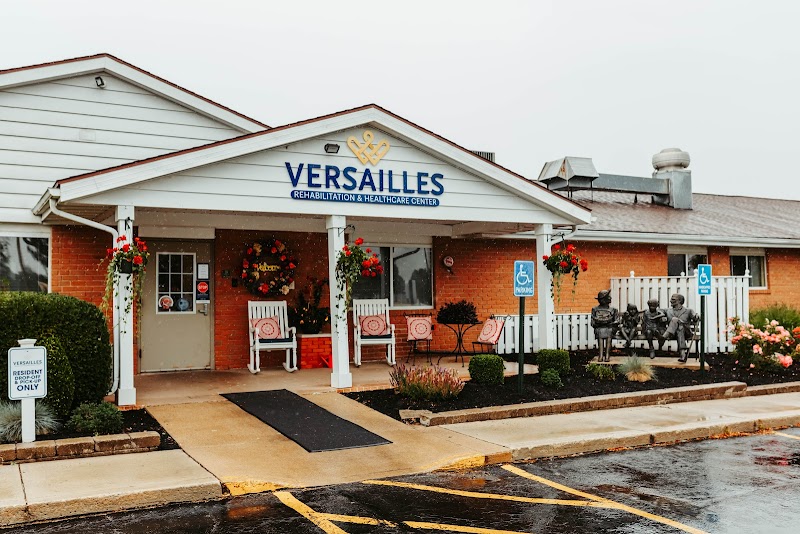
How Does Versailles Rehabilitation And Health Compare to Other Ohio Nursing Homes?

Compared to the 100 nursing homes in Ohio, VERSAILLES REHABILITATION AND HEALTH CARE CENTER's overall rating (4 stars) is above the state average of 3.2, staff turnover (67%) is significantly higher than the state average of 46%, and health inspection rating (4 stars) is above the national benchmark.

What Should Families Ask When Visiting Versailles Rehabilitation And Health?

Based on this facility's data, families visiting should ask: "How do you ensure continuity of care given staff turnover, and what is your staff retention strategy?" "Can you walk me through typical staffing levels on day, evening, and night shifts?" "Can I visit during a mealtime to observe dining assistance and food quality?" "How do you handle medical emergencies, and what is your hospital transfer rate?" These questions are particularly relevant given the facility's high staff turnover rate and the below-average staffing rating.

Is Versailles Rehabilitation And Health Safe?

Based on CMS inspection data, VERSAILLES REHABILITATION AND HEALTH CARE CENTER has a clean safety record: no substantiated abuse findings (meaning no confirmed cases of resident harm), no Immediate Jeopardy citations (the most serious violation level indicating risk of serious injury or death), and is not on the Special Focus Facility watch list (a federal program monitoring the lowest-performing 1% of nursing homes). The facility has a 4-star overall rating and ranks #1 of 100 nursing homes in Ohio. While no facility is perfect, families should still ask about staff-to-resident ratios and recent inspection results during their visit.

Do Nurses at Versailles Rehabilitation And Health Stick Around?

Staff turnover at VERSAILLES REHABILITATION AND HEALTH CARE CENTER is high. At 67%, the facility is 20 percentage points above the Ohio average of 46%. Registered Nurse turnover is particularly concerning at 58%. RNs handle complex medical decisions and coordinate care — frequent RN changes can directly impact care quality. High turnover means new staff may not know residents' individual needs, medications, or preferences. It can also be disorienting for residents, especially those with dementia who rely on familiar faces. Families should ask: What is causing the turnover? What retention programs are in place? How do you ensure care continuity during staff transitions?

Was Versailles Rehabilitation And Health Ever Fined?

VERSAILLES REHABILITATION AND HEALTH CARE CENTER has no federal fines on record. CMS issues fines when nursing homes fail to meet care standards or don't correct problems found during inspections. The absence of fines suggests the facility has either maintained compliance or corrected any issues before penalties were assessed. This is a positive indicator, though families should still review recent inspection reports for the full picture.

Is Versailles Rehabilitation And Health on Any Federal Watch List?

VERSAILLES REHABILITATION AND HEALTH CARE CENTER is not on any federal watch list. The most significant is the Special Focus Facility (SFF) program, which identifies the bottom 1% of nursing homes nationally based on persistent, serious quality problems. Not being on this list means the facility has avoided the pattern of deficiencies that triggers enhanced federal oversight. This is a positive indicator, though families should still review the facility's inspection history directly.