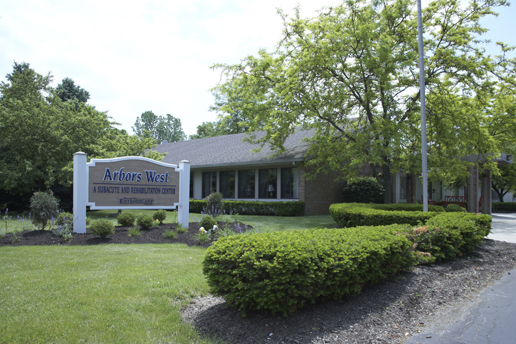

ARBORS WEST

375 WEST MAIN STREET, WEST JEFFERSON, OH 43162 (614) 879-7661
For profit - Corporation 94 Beds ARBORS AT OHIO Data: November 2025
Trust Grade
55/100
#399 of 913 in OH
Last Inspection: March 2025

Within standard 12-15 month inspection cycle. Federal law requires annual inspections.

Overview

Arbors West in West Jefferson, Ohio has a Trust Grade of C, which means it is average and sits in the middle of the pack compared to other facilities. It ranks #399 out of 913 in Ohio, placing it in the top half, and is #1 of 2 in Madison County, indicating it is the best option locally. Unfortunately, the facility is worsening, with issues increasing from 4 in 2024 to 16 in 2025. Staffing received a below-average rating of 2 out of 5 stars, with a turnover rate of 58%, which is close to the state average but suggests instability. While the facility has no fines on record, indicating compliance with regulations, there have been concerning incidents, such as staff not maintaining proper hand hygiene during food service, which risked the spread of infection, and failure to keep the grounds clean, as cigarette butts were littered around the facility.

Trust Score
C
55/100
In Ohio
#399/913
Top 43%
Safety Record
Low Risk
No red flags
Inspections
Getting Worse
4 → 16 violations
Staff Stability
⚠ Watch
58% turnover. Above average. Higher turnover means staff may not know residents' routines.
Penalties
✓ Good
No fines on record. Clean compliance history, better than most Ohio facilities.
Skilled Nurses
○ Average
Each resident gets 33 minutes of Registered Nurse (RN) attention daily — about average for Ohio. RNs are the most trained staff who monitor for health changes.
Violations
⚠ Watch
39 deficiencies on record. Higher than average. Multiple issues found across inspections.
★★★☆☆
3.0
Overall Rating
★★☆☆☆
2.0
Staff Levels
★★★★★
5.0
Care Quality
★★☆☆☆
2.0
Inspection Score
Stable
2024: 4 issues
2025: 16 issues

The Good

  • 5-Star Quality Measures · Strong clinical quality outcomes
  • Full Sprinkler Coverage · Fire safety systems throughout facility
  • No fines on record

Facility shows strength in quality measures, fire safety.

The Bad

3-Star Overall Rating

Near Ohio average (3.2)

Meets federal standards, typical of most facilities

Staff Turnover: 58%

11pts above Ohio avg (46%)

Frequent staff changes - ask about care continuity

Chain: ARBORS AT OHIO

Part of a multi-facility chain

Ask about local staffing decisions and management

Staff turnover is elevated (58%)

10 points above Ohio average of 48%

The Ugly 39 deficiencies on record

Mar 2025 15 deficiencies
CONCERN (D)

Potential for Harm - no one hurt, but risky conditions existed

Deficiency F0567 (Tag F0567)

Could have caused harm · This affected 1 resident

**NOTE- TERMS IN BRACKETS HAVE BEEN EDITED TO PROTECT CONFIDENTIALITY** Based on record review and staff interview, the facility failed to ensure residents authorizations were signed with witnesses as...

Read full inspector narrative →
**NOTE- TERMS IN BRACKETS HAVE BEEN EDITED TO PROTECT CONFIDENTIALITY** Based on record review and staff interview, the facility failed to ensure residents authorizations were signed with witnesses as required. This affected two Residents (#12, and #36) of seven authorizations reviewed. The facility identified 41 Residents (#1, #2, #4, #5, #6, #7, #10, #11, #12, #13, #15, #17, #18, #19, #21, #22, #24, #27, #28, #29, #30, #31, #33, #36, #41, #43, #44, #45, #46, #47, 49, #50, #53, #54, #55, #58, #62, #64, #66, #137, and #232) with resident fund accounts. Facility census was 82. Findings include 1. Review of the medical record for Resident #12 revealed an admission date of 02/29/24. Diagnoses included heart and kidney disease, respiratory failure with hypoxia, and lymphedema, non-traumatic intracranial hemorrhage, aphasia, hemiplegia and hemiparesis, and respiratory failure. Review of the Minimum Data Set (MDS) assessment dated [DATE] revealed Resident #12 was cognitively impaired with a Brief Interview for Mental Status (BIMS) Score of six. Review of the fund authorization form dated 04/24/24 revealed an illegible signature from the resident. The form also contained no witness signatures. 2. Review of the medical record for Resident #36 revealed an admission date of 02/22/23. Diagnoses included chronic heart failure, ulcerative colitis, unspecified dementia, spinal stenosis, and dysphagia. Review of the Minimum Data Set (MDS) assessment dated [DATE] revealed Resident #36 was cognitively intact with a BIMS of 12. Review of the fund authorization form dated 04/20/23 revealed an legible signature from the resident. The form also contained no witness signatures. Interview on 03/25/25 at 5:20 P.M. with Business Office Manager (BOM) #110 confirmed authorizations were not signed by any witnesses for Resident #12, and #36. She revealed she was unaware funds authorizations needed to be witnessed and stated she thought that was only if they were unable to sign. Review of facility policy titled, Resident trust Fund Policies and Procedures, dated 02/01/18, revealed the authorization form must be signed by resident or responsible party and when required by the state the signature must be witnessed by an individual not associated with the facility
CONCERN (D)

Potential for Harm - no one hurt, but risky conditions existed

Deficiency F0569 (Tag F0569)

Could have caused harm · This affected 1 resident

**NOTE- TERMS IN BRACKETS HAVE BEEN EDITED TO PROTECT CONFIDENTIALITY** Based on record review, staff interview, and facility policy review, the facility failed to ensure residents were provided spend...

Read full inspector narrative →
**NOTE- TERMS IN BRACKETS HAVE BEEN EDITED TO PROTECT CONFIDENTIALITY** Based on record review, staff interview, and facility policy review, the facility failed to ensure residents were provided spenddown notifications when their accounts balances exceeded $1800.00. This affected two Residents (#17 and #43) of two reviewed with account balances over $1800.00. Facility identified 41 Residents (#1, #2, #4, #5, #6, #7, #10, #11, #12, #13, #15, #17, #18, #19, #21, #22, #24, #27, #28, #29, #30, #31, #33, #36, #41, #43, #44, #45, #46, #47, 49, #50, #53, #54, #55, #58, #62, #64, #66, #137, and #232) with Resident fund accounts. Facility census was 82. Findings include 1. Review of the medical record for Resident #17 revealed an admission date of 02/14/23. Diagnoses included respiratory failure, dementia, vascular disease, and dysphagia. Review of the Minimum Data Set (MDS) assessment dated [DATE] revealed Resident #17 was cognitively impaired with a Brief Interview of Mental Status (BIMS) score of 4. Review of Resident #17's personal fund balance statements dated 01/02/24 revealed a balance of $2263.55. Review of Resident #17's personal fund balance statements dated 02/01/24 revealed a balance of $2260.32. Review of Resident #17's personal fund balance statements dated 03/01/24 revealed a balance of $2197.20. Review of Resident #17's personal fund balance statements dated 04/01/24 revealed a balance of $2198.11. Review of Resident #17's personal fund balance statements dated 05/01/24 revealed a balance of $2115.88. Review of Resident #17's personal fund balance statements dated 06/03/24 revealed a balance of $2143.77. Review of Resident #17's personal fund balance statements dated 07/01/24 revealed a balance of $2124.63. Review of Resident #17's personal fund balance statements dated 08/01/24 revealed a balance of $2075.49. Review of Resident #17's personal fund balance statements dated 09/03/24 revealed a balance of $2086.32. Review of spend-down letter for Resident #17 dated 09/17/24 revealed resident was within $200 or over the allowable limit under Medical Assistance. The letter instructed resident to contact Social Services with one week to discuss. Review of Resident #17's personal fund balance statements dated 10/01/24 revealed a balance of $2102.01. Review of spend-down letter for Resident #17 dated 10/22/24 revealed resident was within $200 or over the allowable limit under Medical Assistance. The letter instructed resident to contact Social Services with one week to discuss. Review of Resident #17's personal fund balance statements dated 11/01/24 revealed a balance of $1991.82. Review of spend-down letter for Resident #17 dated 11/11/24 revealed resident was within $200 or over the allowable limit under Medical Assistance. The letter instructed resident to contact Social Services with one week to discuss. Review of Resident #17's personal fund balance statements dated 12/02/24 revealed a balance of $1799.57. Review of Resident #17's personal fund balance statements dated 01/02/25 revealed a balance of $3604.52. Review of Resident #17's personal fund balance statements dated 02/03/25 revealed a balance of $3655.99. Review of Resident #17's personal fund balance statements dated 03/03/25 revealed a balance of $3707.29. 2. Review of the medical record for Resident #43 revealed an admission date of 03/22/22. Diagnoses included Wernicke Encephalopathy, alcohol abuse, asperger's syndrome, psychotic disorder, cognitive communication deficit, and depression. Review of the Minimum Data Set (MDS) assessment dated [DATE] revealed Resident #43 was cognitively impaired with a BIMS of 00 for resident was rarely if ever understood. Review of Resident #43's personal fund balance statements dated 01/02/24 revealed a balance of $19,150.55. Review of Resident #43's personal fund balance statements dated 02/01/24 revealed a balance of $19,207.06. Review of Resident #43's personal fund balance statements dated 03/01/24 revealed a balance of $19,114.34. Review of Resident #43's personal fund balance statements dated 04/01/24 revealed a balance of $19,076.27. Review of Resident #43's personal fund balance statements dated 05/01/24 revealed a balance of $19,083.12. Review of Resident #43's personal fund balance statements dated 06/03/24 revealed a balance of $19,141.09. Review of Resident #43's personal fund balance statements dated 07/01/24 revealed a balance of $19,088.78. Review of Resident #43's personal fund balance statements dated 08/01/24 revealed a balance of $18,296.36. Review of Resident #43's personal fund balance statements dated 09/03/24 revealed a balance of $1906.46. Review of Resident #43's personal fund balance statements dated 10/01/24 revealed a balance of $1926.46. Review of Resident #43's personal fund balance statements dated 11/01/24 revealed a balance of $1872.84. Review of spend-down letter for Resident #43 dated 11/11/24 revealed resident was within $200 or over the allowable limit under Medical Assistance. The letter instructed resident to contact Social Services with one week to discuss. Review of Resident #43's personal fund balance statements dated 12/02/24 revealed a balance of $1923.61. Review of Resident #43's personal fund balance statements dated 01/02/25 revealed a balance of $1813.83. Review of spend-down letter for Resident #43 dated 01/18/25 revealed resident was within $200 or over the allowable limit under Medical Assistance. The letter instructed resident to contact Social Services with one week to discuss. Review of Resident #43's personal fund balance statements dated 02/03/25 revealed a balance of $1864.58. Review of Resident #43's personal fund balance statements dated 03/03/25 revealed a balance of $1875.24. Review of spend-down letter for Resident #43 dated 03/24/25 revealed resident was within $200 or over the allowable limit under Medical Assistance. The letter instructed resident to contact Social Services with one week to discuss. Interview on 03/25/25 at 5:20 P.M. with Business Office Manager (BOM) #110 confirmed spenddown letters were not provided monthly for residents who were over resourced and confirmed the facility had no additional spend down letters to provide. Review of facility policy titled, Resident trust Fund Policies and Procedures, dated 02/01/18, revealed the facility would identify account balances each month at or exceeding the state asset limit. For Ohio the limit was $2000 and Residents shall be notified when the account balance reaches $1800. Resident/Representatives shall be sent a asset limit notification letter when they have reached the $200 threshold.
CONCERN (D)

Potential for Harm - no one hurt, but risky conditions existed

Comprehensive Care Plan (Tag F0656)

Could have caused harm · This affected 1 resident

**NOTE- TERMS IN BRACKETS HAVE BEEN EDITED TO PROTECT CONFIDENTIALITY** Based on record review, facility staff interview, and facility policy review, the facility failed to develop an accurate and com...

Read full inspector narrative →
**NOTE- TERMS IN BRACKETS HAVE BEEN EDITED TO PROTECT CONFIDENTIALITY** Based on record review, facility staff interview, and facility policy review, the facility failed to develop an accurate and comprehensive care plan for one (Resident #55) with Post Traumatic Stress Disorder (PTSD), of one reviewed for PTSD. The facility census was 82. Findings include: Resident #55 was admitted on [DATE] with diagnoses that included cerebral infarction, hemiplegia and hemiparesis affecting left non-dominant side, type two diabetes mellitus, fibromyalgia, dementia, depression, and PTSD. Review of the annual minimum data set (MDS) 3.0 dated 01/10/25 revealed Resident #55 was severely cognitively impaired with a brief interview for mental status (BIMS) score of 05/15. Resident #55 was noted to have delusions but no behaviors. Resident #55 had psychiatric/mood disorders of depression and post-traumatic stress disorder (PTSD) noted. Resident #55 received antidepressants and anticonvulsant medications with indication present. Review of the care plan for Resident #55 revealed no documentation of monitoring or interventions for post-traumatic stress disorder (PTSD) or potential triggers. Interview on 03/27/25 at 8:10 A.M. with the Director of Nursing (DON) revealed the DON was not aware there was no care plan for Resident #55's diagnoses of PTSD. Interview on 03/27/25 at 9:12 A.M. with Social Worker #106 confirmed the facility did not complete a care plan for PTSD. The residents with PTSD are referred to psychiatric services. Review of the facility's policy titled Comprehensive Care Plans dated 06/30/22 revealed it is the policy of the facility to develop and implement a comprehensive person-centered care plan for each resident, consistent with resident rights, that includes measurable objectives and timeframes to meet a resident's medical, nursing, and mental and psychosocial needs that are identified in the resident's comprehensive assessment (MDS).
CONCERN (D)

Potential for Harm - no one hurt, but risky conditions existed

Deficiency F0698 (Tag F0698)

Could have caused harm · This affected 1 resident

**NOTE- TERMS IN BRACKETS HAVE BEEN EDITED TO PROTECT CONFIDENTIALITY** Based on record review and staff interviews, the facility failed to ensure they communicated with the dialysis center. This affe...

Read full inspector narrative →
**NOTE- TERMS IN BRACKETS HAVE BEEN EDITED TO PROTECT CONFIDENTIALITY** Based on record review and staff interviews, the facility failed to ensure they communicated with the dialysis center. This affected one Resident (#69) of one reviewed for dialysis. The facility identified two residents receiving care from dialysis centers (#69 and #132). Facility census was 82. Findings include Review of the medical record for Resident #69 revealed an admission date of 09/26/24. Diagnoses included end stage renal disease, diabetes, heart failure, and cognitive communication deficit. Review of pre dialysis communication assessment dated [DATE] revealed The following vital signs which were obtained on the morning of 03/21/25: Blood pressure of 131/68, Pulse of 61, Respirations of 16, Temperature of 97.9. The resident weight was 166.2 from 03/20/25 at 10:43 A.M. Review of post dialysis communication assessment dated [DATE] revealed: Blood pressure of 128/64 and Pulse of 62 obtained on 03/21/25 at 9:29 P.M. Respirations of 16 obtained on 03/21/25 at 8:31 A.M., Temperature of 97.9 obtained on 03/21/25 at 8:32 A.M. and Weight of 166.2 lbs from 03/20/25 at 10:43 A.M. Interview on 03/26/25 at 5:10 P.M. with Licensed Practical Nurse #137 revealed the facility did not have a dialysis communication binder and all documentation was located in the electronic medical record. LPN #137 revealed the facility did not send any documentation to dialysis and did not believe they had access to the facility medical record. Interview on 03/26/25 at 5:40 P.M. with Director of Nursing confirmed the facility had no evidence of communication with dialysis center from the medical team and nursing. DON revealed the dialysis center would never complete their part of the form so they stopped sending it a few years ago. DON confirmed the vitals on the electronic form titled pre and post dialysis assessment were just flowing from the last vitals taken and not specific to dialysis as they were done every 12 hours and not shortly before and after his four-hour dialysis sessions. Review of facility policy titled, Care Planning Special Needs - Dialysis, dated 12/28/23, revealed facility shall provide the necessary care and treatment consistent with professional standards of practice. The care plan will reflect the coordination between the facility and the dialysis provider. Nursing staff shall provide a report to dialysis provider regarding residents condition and treatment provided each dialysis treatment day. If no report is received back from dialysis provider facility staff shall call to receive a report.
CONCERN (D)

Potential for Harm - no one hurt, but risky conditions existed

Deficiency F0699 (Tag F0699)

Could have caused harm · This affected 1 resident

**NOTE- TERMS IN BRACKETS HAVE BEEN EDITED TO PROTECT CONFIDENTIALITY** Based on record review and facility staff interviews the facility failed to ensure individualized trauma informed care was imple...

Read full inspector narrative →
**NOTE- TERMS IN BRACKETS HAVE BEEN EDITED TO PROTECT CONFIDENTIALITY** Based on record review and facility staff interviews the facility failed to ensure individualized trauma informed care was implemented for one resident (Resident #55) of one reviewed for Post Traumatic Stress Disorder (PTSD). The facility census was 82. Findings include: Resident #55 was admitted on [DATE] with diagnoses that included cerebral infarction, hemiplegia and hemiparesis affecting left non-dominant side, type two diabetes mellitus, fibromyalgia, dementia, depression, and post-traumatic stress disorder. Review of the annual minimum data set (MDS) 3.0 assessment dated [DATE] revealed Resident #55 was severely cognitively impaired with a brief interview for mental status (BIMS) score of five out of a possible 15. Resident #55 was noted to have delusions but no behaviors. Resident #55 had psychiatric/mood disorders of depression and post-traumatic stress disorder (PTSD) noted. Resident #55 received antidepressants and anticonvulsant medications with indication present. Review of the medical record for Resident #55 revealed there were no documented preferences, trauma triggers or interventions staff should take to minimize re-traumatization of the resident. Review of consult notes for Resident #55 revealed psychiatric services evaluated and saw Resident #55 on 04/24/24, 05/22/24, 08/26/24, 09/24/24, 10/22/24, 11/26/24, 01/07/25, 02/11/25 and 03/18/25. Interview on 03/27/25 at 8:10 A.M. with the Director of Nursing (DON) revealed the DON was not aware there was no assessment for Resident #55's diagnoses of PTSD. Interview on 03/27/25 at 9:12 A.M. with Social Worker #106 confirmed the facility did not do an independent assessment for PTSD. The residents with PTSD are referred to psychiatric services.
CONCERN (D)

Potential for Harm - no one hurt, but risky conditions existed

Deficiency F0757 (Tag F0757)

Could have caused harm · This affected 1 resident

Based on medication administration observations, staff interview, record review, and facility policy review, the facility failed to follow ordered parameters for blood pressure medication administrati...

Read full inspector narrative →
Based on medication administration observations, staff interview, record review, and facility policy review, the facility failed to follow ordered parameters for blood pressure medication administration for one (Resident #240) of three residents observed for medication administration. The facility census was 82. Findings include: Observation on 03/26/25 at 8:17 A.M. revealed Registered nurse (RN) #136 prepared seven medications for Resident #240 including Lisinopril (used to decrease blood pressure) 5 milligram (mg) tablet and Propranolol (used to decrease blood pressure) 10 mg tablet. After preparing the medications RN #136 entered the resident's room and obtained a blood pressure and pulse for Resident #240. Blood pressure was 105/69 and pulse was 80 beats per minutes. RN #136 continued to administer medications. Review of medication orders for Resident #240 revealed the orders read Lisinopril 5 mg once a day hold for a systolic blood pressure less than 110 millimeters of mercury (mmHg) and Propranolol 10 mg once a day hold for a systolic blood pressure less than 110 mmHg. Interview on 03/26/25 at 8:36 A.M. with RN #136 confirmed Lisinopril and Propranolol were given this morning. Blood pressure was 105/69 and the order reads to hold Lisinopril and Propranolol for systolic blood pressure less than 110 mmHg. Nurse #136 stated she was not aware of the parameters to hold the medication. Review of the policy Medication Administration last date reviewed 01/17/23 confirmed the person administering medications is to obtain and record vital signs, when applicable per physician's order, when applicable, hold medication for those vital signs outside the physician's prescribed parameters.
CONCERN (D)

Potential for Harm - no one hurt, but risky conditions existed

Medication Errors (Tag F0758)

Could have caused harm · This affected 1 resident

**NOTE- TERMS IN BRACKETS HAVE BEEN EDITED TO PROTECT CONFIDENTIALITY** Based on medical record review, staff interview, and review of facility policy, the facility failed to ensure a resident had an ...

Read full inspector narrative →
**NOTE- TERMS IN BRACKETS HAVE BEEN EDITED TO PROTECT CONFIDENTIALITY** Based on medical record review, staff interview, and review of facility policy, the facility failed to ensure a resident had an appropriate diagnosis for the use on an antipsychotic medication. This affected one (#32) of five reviewed for unnecessary medications. The census was 82. Findings include: Review of Resident #32's medical record revealed an admission date of 01/21/25. Diagnoses listed included malnutrition, Alzheimer's disease, heart failure, muscle weakness, and atrial fibrillation. Review of an admission Minimum Data Set (MDS) dated [DATE] revealed Resident #4 had severe cognitive impairment and did not have a psychotic disorder. Review of physician orders revealed an order dated 03/10/25 for Quetiapine Fumarate (antipsychotic medication Seroquel) 25 milligrams (mg) give one tablet by mouth at bedtime. Further review of physician orders revealed Seroquel 25 mg at bedtime for insomnia was originally ordered on 01/21/25 and continued with orders dated 02/02/25, and 03/08/25. Seroquel was discontinued on 03/25/25. Review of a medication regime review (MRR) dated 02/05/25 revealed a pharmacist had communicated that Seroquel was being used for sleep per hospital discharge and recommended to please evaluate change in diagnosis and consider discontinuing Seroquel in the [AGE] year old patient with dementia. The physician signed to agree discontinue Seroquel on 03/18/25. Review of a MRR dated 03/09/25 revealed a pharmacist had communicated Seroquel 25 mg at bedtime instructions were antipsychotics must be evaluated by the prescriber upon admission or soon after to assess if reduction or discontinuation is appropriate and antipsychotics are not approved for sleep, also receiving Melatonin. Please evaluate Seroquel for discontinuation. The MMR was dated with a verbal order from a nurse practitioner (NP) on 03/26/25. Review of medication administration records (MAR) revealed Resident #32 was administered Seroquel from 01/21/25 until a last dose documented as being given on 03/24/25. Interview with the Director of Nursing (DON) on 03/26/25 at 7:50 A.M. confirmed Resident #32 received Seroquel until 03/24/25. The DON confirmed Resident #32 MRR dated 02/05/25 had a physician order to discontinue Seroquel on 03/18/25. The DON confirmed the MMR for Resident #32 was not acted on and reviewed timely. The DON confirmed Resident #32 did not have a diagnosis that would warrant the use of the ordered antipsychotic medication. Review of the facility's policy titled Medication - Psychotropic dated 10/30/23 revealed residents are not given psychotropic drugs unless the medication is necessary to treat a specific condition, as diagnosed and documented in the clinical record, and the medication is beneficial to the resident, as demonstrated by monitoring and documentation of the resident's response to the medication(s). A psychotropic drug is any drug that affects brain activities associated with mental processes and behavior. Psychotropic drugs include, but are not limited to the following categories: antipsychotics, antidepressants, anti-anxiety, and hypnotics. For new admissions the facility shall identify the indication for use, as possible, using pre-admission screening and other pre-admission data. The physician in collaboration with the consultant pharmacist shall re-evaluate the use of the medication and consider whether or not the medication can be reduced or discontinued upon admission or soon after admission.
CONCERN (D)

Potential for Harm - no one hurt, but risky conditions existed

Unnecessary Medications (Tag F0759)

Could have caused harm · This affected 1 resident

Based on medication administration observations, staff interview, record review, and facility policy review, the facility failed to ensure medications were administered as ordered resulting in a medic...

Read full inspector narrative →
Based on medication administration observations, staff interview, record review, and facility policy review, the facility failed to ensure medications were administered as ordered resulting in a medication errors rate of 6.45 percent (%). This affected one resident (Resident #240) out of three residents observed for medication administration. The facility census was 82. Findings include: Observation on 03/26/25 at 8:17 A.M. revealed Registered nurse (RN) #136 prepared seven medications for Resident #240 including Lisinopril (used to decrease blood pressure) 5 milligram (mg) tablet and Propranolol (used to decrease blood pressure) 10 mg tablet. After preparing the medications RN #136 entered the resident's room and obtained a blood pressure and pulse for Resident #240. Blood pressure was 105/69 and pulse was 80 beats per minutes. RN #136 continued to administer medications. Review of medication orders for Resident #240 revealed the orders read Lisinopril 5mg once a day hold for a systolic blood pressure less than 110 millimeters of mercury (mmHg) and Propranolol 10 mg once a day hold for a systolic blood pressure less than 110 mmHg. Interview on 03/26/25 at 8:36 A.M. with RN #136 confirmed Lisinopril and Propranolol were given this morning. Blood pressure was 105/69 and the order reads to hold Lisinopril and Propranolol for systolic blood pressure less than 110 mmHg. Nurse #136 stated she was not aware of the parameters to hold the medication. Review of the policy Medication Administration last date reviewed 01/17/23 confirmed the person administering medications is to obtain and record vital signs, when applicable per physician's order, when applicable, hold medication for those vital signs outside the physician's prescribed parameters.
CONCERN (D)

Potential for Harm - no one hurt, but risky conditions existed

Medical Records (Tag F0842)

Could have caused harm · This affected 1 resident

**NOTE- TERMS IN BRACKETS HAVE BEEN EDITED TO PROTECT CONFIDENTIALITY** Based on record review and facility staff interview the facility failed to maintain an accurate and complete record for one (Res...

Read full inspector narrative →
**NOTE- TERMS IN BRACKETS HAVE BEEN EDITED TO PROTECT CONFIDENTIALITY** Based on record review and facility staff interview the facility failed to maintain an accurate and complete record for one (Resident #53) who received hospice services. This affected one of one reviewed for hospice services. The facility census was 82. Findings include: Resident #53 was admitted on [DATE] with diagnoses that included non-traumatic chronic subdural hemorrhage, type two diabetes mellitus, anxiety, dementia, hypertension, polyosteoarthritis, atherosclerotic heart disease, peripheral vascular disease, chronic kidney disease stage III, mood disorder, neurocognitive disorder with lewy bodies, and aneurysm of carotid artery. Review of the annual minimum data set (MDS) 3.0 assessment dated [DATE] revealed the resident was unable to be interviewed because her responses were rarely understood. The staff reported Resident #53 had short-term and long-term memory problems. Resident #53 was also receiving hospice care. Review of the electronic medical record revealed the last hospice note scanned into the record was the hospice interdisciplinary team meeting dated 02/26/25 at 9:30 A.M. Review of the hospice communication notebook at the nurses' station revealed no visit documentation was present for Resident #53. The notebook contained an admission face sheet for Resident #53 and sections for the hospice team to document visit communication information but all sections were blank. Interview on 03/26/25 at 4:20 P.M. with Registered Nurse (RN) #138 confirmed there was no communication notes from the hospice provider in the hospice binder for Resident #53. Interview on 03/26/25 at 4:34 P.M. with the Director of Nursing (DON) confirmed there were no hospice notes in the hospice binder. The DON also confirmed the nursing staff would look for communication from the hospice team in the binder. The DON explained hospice notes are uploaded in the electronic medical record and verified the last note in the chart was the care team meeting on 02/26/25.
CONCERN (D)

Potential for Harm - no one hurt, but risky conditions existed

Infection Control (Tag F0880)

Could have caused harm · This affected 1 resident

Based on medication administration observations, staff interview, and facility policy review, the facility failed to ensure medications were administered in a manner to prevent contamination or infect...

Read full inspector narrative →
Based on medication administration observations, staff interview, and facility policy review, the facility failed to ensure medications were administered in a manner to prevent contamination or infection. This affected one resident (Resident #240) out of three residents observed during medication administration observations. The facility census was 82. Findings include: Observation on 03/26/25 at 8:17 A.M. revealed Registered Nurse (RN) #136 prepared seven medications for Resident #240. The individual medications were stored in a unit dose dispensing system. Each individual medication was removed from the package and placed in the medication cup. RN #136 removed each medication from the package into her ungloved hand. Then dropped the medication into the medicine cup. Interview on 03/26/25 at 8:22 A.M. with RN #136 confirmed medications were removed from pharmacy unit dose packs into her bare hand. RN #136 stated she was not aware she should not touch the pills and should either place the pills directly into the cup or wear gloves. Review of the policy Medication Administration last reviewed 01/17/23 confirmed medications are to be administered as prescribed by the physician and in accordance with professional standards of practice, in a manner to prevent contamination or infection.
CONCERN (E)

Potential for Harm - no one hurt, but risky conditions existed

Deficiency F0657 (Tag F0657)

Could have caused harm · This affected multiple residents

**NOTE- TERMS IN BRACKETS HAVE BEEN EDITED TO PROTECT CONFIDENTIALITY** 4. Review of Resident #51's closed medical record revealed an admission date of 11/02/24. Diagnoses listed included atrial fibri...

Read full inspector narrative →
**NOTE- TERMS IN BRACKETS HAVE BEEN EDITED TO PROTECT CONFIDENTIALITY** 4. Review of Resident #51's closed medical record revealed an admission date of 11/02/24. Diagnoses listed included atrial fibrillation, obstructive sleep apnea, hypertension, prosthetic heart valve, embolism and thrombosis of thoracic aorta, and major depressive disorder. Resident #51 was discharged from the facility on 02/26/25 and did not return. Review of a quarterly Minimum Data Set (MDS) dated [DATE] revealed Resident #51 was not understood by staff, was assessed as having severe cognitive impairment, and was receiving an anticoagulant medication. Review of physician orders revealed an order dated 01/07/25 for Eliquis (anticoagulant) five milligrams (mg) tablet, give 10 mg by mouth two times daily related to embolism and thrombosis of thoracic aorta. Eliquis was changed to five mg tablet, give one tablet by mouth two times daily related to embolism and thrombosis of thoracic aorta on 01/14/25. Review of Resident #51's care plan dated initiated 11/02/24 and last revised on 03/08/25 revealed no focus, goals, or interventions for the use of an anticoagulant medication. Interview with the Director of Nursing (DON) confirmed Resident #51 had received an anticoagulant medication. The DON confirmed Resident #51's care plan did not include focus, goals, or interventions for the use of an anticoagulant medication. Review of the facility's policy titled Comprehensive Care Plans dated 06/30/22 revealed it is the policy of the facility to develop and implement a comprehensive person-centered care plan for each resident, consistent with resident rights, that includes measurable objectives and timeframes to meet a resident's medical, nursing, and mental and psychosocial needs that are identified in the resident's comprehensive assessment (MDS). The comprehensive care plan will be reviewed and revised by the interdisciplinary team after each comprehensive and quarterly MDS assessment. Based on record review, resident and family interview, facility staff interviews, and facility policy review, the facility failed to ensure interdispinary quarterly care conferences were completed for Residents #7, #9 and #36. This affected three residents of six reviewed for care conferences. The facility also failed to update a care plan for an anticoagulant for former Resident #51. This affected one resident of 18 resident care plans reviewed. Facility census was 82. Findings include 1. Review of the medical record for Resident #7 revealed an admission date of 10/05/23. Diagnoses included cerebral infarction, cerebellar stroke, diabetes mellitus, and seizures. Review of the Minimum Data Set (MDS) assessment dated [DATE] revealed Resident #7 was cognitively intact with a Brief Interview of Mental Status (BIMS) score of 14. Review of the medical record found an interdisciplinary care conferences form dated 05/30/24 revealed a quarterly care conference was held and staff discussed care with resident. Interview on 03/24/25 at 4:17 P.M. with Resident #7 revealed she had not been invited to any care conferences in the previous year. 2. Review of the medical record for Resident #9 revealed an admission date of 02/16/21. Diagnoses included Parkinson's disease, cerebral infarct, vascular disease and vascular dementia. Review of the Minimum Data Set (MDS) assessment dated [DATE] revealed Resident #9 was cognitively impaired with a BIMS of 4. Review of the medical record found an interdisciplinary(IDT) care conferences form dated 04/22/24 revealed a quarterly care conference was held and staff discussed care with resident representative. Interview on 03/24/25 at 6:01 P.M. with Resident #9's family revealed they had only been invited to a care conference about once in the last year. The family revealed she would like to be invited and attend care conferences to ensure good communication and care. Interview on 03/25/25 at 5:58 P.M. with Regional Staff #300 and Regional Staff #400 confirmed the facility identified care conferences were not being completed and confirmed facility had no additional evidence of IDT care conferences for Resident #7 and #9. 3. Resident #36 was admitted on [DATE] with diagnoses that included congestive heart failure, ulcerative colitis, atrial fibrillation, dementia, dysphagia, cognitive communication deficit, major depressive disorder, psychoactive substance abuse, anxiety disorder, and arthritis. Review of the annual minimum data set (MDS) 3.0 assessment dated [DATE] revealed Resident #36 was moderately cognitively impaired with a brief interview for mental status (BIMS) score of 12 out of 15. Resident #36 had no indications of psychosis or behaviors noted and received antianxiety and antidepressant medications with indications present. Review of the medical record for Resident #36 revealed there was no care conference summary documentation, only documentation of a quarterly mood evaluation by the social worker. The documentation reflected the resident participated in care discussions with no summary of the discussions or who was present to participate. Interview on 03/24/25 at 10:57 A.M. with Resident #36 revealed Resident #36 has had no care conferences with the facility staff but would like to have one. Resident #36 stated I am just now coming out of my shell and would like to be more involved in my care. Interview on 03/27/25 at 12:00 PM with Social Worker #106 confirmed there were no quarterly care plan meetings documented for Resident #36. Resident #36 does not get out of bed so each discipline the resident wishes to speak with goes in and discusses her concerns when requested. Review of facility policy titled, Comprehensive Care Plans, dated 06/30/22, revealed facility shall create a comprehensive care plan quarterly and shall include members of the team including resident and representative, attending Physician, registered nurse and nurse aide and other appropriate staff.
CONCERN (E)

Potential for Harm - no one hurt, but risky conditions existed

Drug Regimen Review (Tag F0756)

Could have caused harm · This affected multiple residents

**NOTE- TERMS IN BRACKETS HAVE BEEN EDITED TO PROTECT CONFIDENTIALITY** 4. Review of Resident #32's medical record revealed an admission date of 01/21/25. Diagnoses listed included malnutrition, Alzhe...

Read full inspector narrative →
**NOTE- TERMS IN BRACKETS HAVE BEEN EDITED TO PROTECT CONFIDENTIALITY** 4. Review of Resident #32's medical record revealed an admission date of 01/21/25. Diagnoses listed included malnutrition, Alzheimer's disease, heart failure, muscle weakness, and atrial fibrillation. Review of an admission Minimum Data Set (MDS) 3.0 assessment dated [DATE] revealed Resident #4 had severe cognitive impairment and did not have a psychotic disorder. Review of physician orders revealed an order dated 03/10/25 for Quetiapine Fumarate (antipsychotic medication Seroquel) 25 milligrams (mg) give one tablet by mouth at bedtime. Further review of physician orders revealed Seroquel 25 mg at bedtime for insomnia was originally ordered on 01/21/25 and continued with orders dated 02/02/25, and 03/08/25. Seroquel was discontinued on 03/25/25. Review of a medication regime review (MRR) dated 02/05/25 revealed a pharmacist had communicated that Seroquel was being used for sleep per hospital discharge and recommended to please evaluate change in diagnosis and consider discontinuing Seroquel in the [AGE] year old patient with dementia. The physician signed to agree discontinue Seroquel on 03/18/25. Review of a MRR dated 03/09/25 revealed a pharmacist had communicated Seroquel 25 mg at bedtime instructions were antipsychotics must be evaluated by the prescriber upon admission or soon after to assess if reduction or discontinuation is appropriate and antipsychotics are not approved for sleep, also receiving Melatonin. Please evaluate Seroquel for discontinuation. The MMR was dated with a verbal order from a nurse practitioner (NP) on 03/26/25. Review of medication administration records (MAR) revealed Resident #32 was administered Seroquel from 01/21/25 until a last dose documented as being given on 03/24/25. Interview with the Director of Nursing (DON) on 03/26/25 at 7:50 A.M. confirmed Resident #32 received Seroquel until 03/24/25. The DON confirmed Resident #32's MRR dated 02/05/25 had a physician order to discontinue Seroquel on 03/18/25. The DON confirmed the MMR for Resident #32 was not acted on and reviewed timely. Review of the facility's policy titled Addressing Medication Regimen Review Irregularities dated 12/28/23 revealed it is the policy of this facility to provide a MRR for each resident to identify irregularities and respond in a timely manner to prevent the occurrence of an adverse drug event. The pharmacist must report any irregularities to the attending physician, the facility's medical director, and DON, and the reports must be acted upon. The report should be submitted to the DON within 10 working days of the review. Based on record review, interviews, and facility policy review, the facility failed to timely respond to monthly medication regimen reviews (MRR) for four residents (Resident #32, #53, #62, and #73) out of five residents reviewed for unnecessary medications. The facility census was 82. Findings include: 1. Resident #53 was admitted on [DATE] with diagnoses that included non-traumatic chronic subdural hemorrhage, type two diabetes mellitus, anxiety, dementia, hypertension, polyosteoarthritis, atherosclerotic heart disease, peripheral vascular disease, chronic kidney disease stage three, mood disorder, neurocognitive disorder with lewy bodies, and aneurysm of carotid artery. Review of the annual minimum data set (MDS) 3.0 assessment dated [DATE] revealed the resident was unable to be interviewed because her responses were rarely understood. The staff reported Resident #53 had short-term and long-term memory problems. Resident #53 received scheduled pain medications. Resident #53 also received antipsychotic and antianxiety medications with indications present. Review of the medication administration record (MAR) for March 2025 revealed pain was monitored every shift. Side effects of pain medications, side effects of antipsychotic and antidepressant medications were also monitored every shift. Medications were administered as ordered. Review of the Monthly Medication Regimen Reviews conducted revealed on 02/05/25 the pharmacists documented please consider obtaining a thyroid stimulating hormone (TSH) level and on 03/18/25 the provider documented check TSH. A TSH level was ordered 03/25/25. Interview on 03/26/25 at 7:58 A.M. with the Director of Nursing confirmed the pharmacy recommendations dated 02/05/25 were addressed by the provider 03/18/25. The DON also confirmed the expectation is the recommendations are addressed by the provider on the next provider visit and a provider visits at least once a week. 2. Resident #62 was admitted on [DATE] with diagnoses that included cerebral infarction, hemiplegia and hemiparesis affecting the left non-dominant side, dysphagia, type two diabetes mellitus, chronic obstructive pulmonary disease (COPD), cerebral edema, mood disorder, opioid dependence, anxiety disorder, depression, abscess of liver, and heart disease. Review of the quarterly minimum data set (MDS) 3.0 assessment dated [DATE] revealed Resident #62 was cognitively intact with a brief interview for mental status (BIMS) score of 13 with no signs of psychosis or behaviors noted. Resident #62 received insulin, antianxiety, antidepressant, anticoagulant, opioid, anticonvulsant, and hypoglycemic medications with indications present. Review of the monthly medication regimen reviews revealed recommendations on 02/05/25 included a recommendation to discontinue Lorazepam (antianxiety) 0.5 mg every eight hours as needed. On 02/05/25 currently receiving Zoloft (antidepressant) 100 mg and Trazodone (antidepressant) 100 mg and recommended a gradual dose reduction be attempted. On 03/18/25 the practitioner agreed to discontinue the Lorazepam 0.5 mg every eight hours as needed. The provider also agreed Resident #62's condition was stable and recommended a dose reduction of Zoloft to 50 mg daily and Trazodone to 50 mg at bedtime. Review of the progress notes revealed the interdisciplinary team did not meet until 03/25/25 at 3:28 P.M. to review pharmacy recommendations. The order to reduce the Zoloft 50 mg daily and Trazodone 50 mg at once a day at bedtime was not entered into Resident #62's record until 03/25/25 at 3:30 P.M. Interview on 03/26/25 at 7:58 A.M. with the Director of Nursing confirmed the pharmacy recommendations dated 02/05/25 were addressed by the provider 03/18/25. The DON confirmed the expectation is the recommendations are addressed by the provider on the next provider visit and a provider visits at least once a week. The DON also confirmed the orders were not acted upon until 03/25/25. 3. Resident #73 was admitted on [DATE], hospitalized on [DATE] and readmitted to the facility on [DATE] with diagnoses that included a fractured right femur, laceration of the scalp, chronic obstructive pulmonary disease, intrarenal abdominal aortic aneurysm, depression, acute embolism and thrombosis of deep veins of the right lower extremity, atherosclerotic heart disease, fibromyalgia, and osteoporosis. Review of the admission minimum data set (MDS) 3.0 assessment dated [DATE] revealed Resident #73 was significantly cognitively impaired with a brief interview for mental status (BIMS) score of six. Resident #72 received antidepressant, anticoagulant, and antibiotic medications with indications present. Review of the monthly medication regimen reviews revealed recommendations on 02/05/25 to discontinue Megace (megestrol acetate) 40 mg given orally before meals for appetite stimulation because this is not an appetite stimulation dose, Resident #73's weight is above the minimum ideal weight, and Megace is known to increase the risk of a deep vein thrombosis and Resident #73 is known to have a history of deep vein thrombosis. The provider responded on 03/18/25 to discontinue the Megace 40 mg before meals. The medication was not discontinued until 03/25/25. Interview on 03/26/25 at 7:58 A.M. with the Director of Nursing confirmed the pharmacy recommendations dated 02/05/25 were addressed by the provider 03/18/25. The DON confirmed the expectation is the recommendations are addressed by the provider on the next provider visit and a provider visits at least once a week. The DON also confirmed the orders were not acted upon until 03/25/25.
CONCERN (E)

Potential for Harm - no one hurt, but risky conditions existed

Deficiency F0805 (Tag F0805)

Could have caused harm · This affected multiple residents

Based on observations, record review, and staff interviews, facility failed to ensure puree was made to the proper consistency. This had potential to affect 11 Residents (#7, #16, #17, 31, #32, #39, #...

Read full inspector narrative →
Based on observations, record review, and staff interviews, facility failed to ensure puree was made to the proper consistency. This had potential to affect 11 Residents (#7, #16, #17, 31, #32, #39, #43, #45, #59, #77, and #236) identified by facility to have orders for puree food. Facility census was 82. Findings include Observation on 03/26/25 at 11:12 A.M. revealed [NAME] #177 made puree peas by placing eight heaping scoops with a slotted spoon into the roboku. Then one after another added eight teaspoons of broth into the mixture. Then Regional Dietary Contractor #220 tasted and instructed [NAME] #177 to add more broth 1/4 cup. [NAME] added the broth and continued to mix and added another 1/8 cup of broth. About every 30 seconds the blending was stopped and [NAME] #177 tried the mixture to test for consistency. [NAME] scraped the sides of the roboku but left significant amounts of food on the sides including visible lumps and pieces of peas. Interview and observation on 03/26/25 at 11:20 A.M. revealed [NAME] #177 reported she had finished making the pureed peas and was starting to put them in a dish for the warmer and tray line. The mixture was tasted and several chunks and full skins of peas was tasted and verified by Regional Dietary Contractor #220. The peas were placed back in the roboku blender and mixed to a full puree consistency after surveyor intervention. Review of facility policy titled, Dysphagia Puree How To, undated, revealed facility shall ensure puree foods are made to a pudding mousse-like consistency.
CONCERN (F)

Potential for Harm - no one hurt, but risky conditions existed

Food Safety (Tag F0812)

Could have caused harm · This affected most or all residents

Based on observations, record review, and staff interviews, facility failed to maintain proper hand hygiene during food service. This had potential to affect all facility residents. Facility census wa...

Read full inspector narrative →
Based on observations, record review, and staff interviews, facility failed to maintain proper hand hygiene during food service. This had potential to affect all facility residents. Facility census was 82. Findings include 1. Observation and interview on 03/26/25 at 12:04 P.M. revealed [NAME] #177 was taking temperatures of the food items. [NAME] placed thermometer in the mashed potatoes getting a quarter size piece of potato on her thumb and pointer finger. The thermometer was wiped off and was then placed in the gravy by submerging [NAME] #177's thumb and pointer finger into the gravy while their hand was also still covered in mashed potato pieces. [NAME] #177 verified she put her soiled/dirty glove in the gravy mixture. 2. Interview and observation on 03/26/25 from 12:15 P.M. to 12:24 P.M. revealed [NAME] #177 was scooping augratin potatoes on tray line when the scooper fell into the pan and became soiled with cheesy augratin potato residue. Regional Dietary Contractor #222 picked up the soiled scoop and continued tray line service while grabbing all other food items scoops. [NAME] #177 revealed if a scoop or service item falls into the food, it should be placed in the dish area and a clean scoop should be put in its place. Review of facility policy titled, Meal distribution: infection control, dated 02/2023, revealed facility shall ensure meal service and ware washing for residents/patients with infectious conditions will follow federal guidelines or as directed by state or local officials.
CONCERN (F)

Potential for Harm - no one hurt, but risky conditions existed

Safe Environment (Tag F0921)

Could have caused harm · This affected most or all residents

Based on observations, record review, and resident and staff interviews, facility failed to maintain the grounds in a clean and safe manner regarding cigarette butts on the property. This had potentia...

Read full inspector narrative →
Based on observations, record review, and resident and staff interviews, facility failed to maintain the grounds in a clean and safe manner regarding cigarette butts on the property. This had potential to affect all facility residents. Facility census was 82. Findings include Observation on 03/25/25 at 8:48 A.M. revealed the sidewalk from the east hall exit of the facility to the designated smoking area had significant litter of cigarette butts along the fence and walkway. A second observation at 4:00 P.M. found hundreds of visualized cigarette butts. Interviews and observation on 03/26/25 at 1:40 P.M. with Residents #18 and #52 confirmed smoking area, sidewalk and grass area on the outside of the fence had tons of cigarette butts as people do not pick up after themselves. Residents reported they were supposed to use the dispensing devices and residents just tossed their cigarette butts anywhere. Observation and interview on 03/26/25 at 1:45 P.M. with Licensed Practical Nurse (LPN) #137 confirmed the sidewalk and back of fence were littered with hundred of cigarette butts. He confirmed it was better than it used to be and the yard company was responsible for picking up trash and cigarette butts. LPN confirmed dinner size piles of dead plant debris leaves, pine needles and dead grass with dozens of cigarette butts could become kindling and create a fire hazard next to the wooden fence. LPN confirmed facility was responsible to maintain clean and safe facility and grounds. Review of facility policy titled, Preventative Maintenance, dated 03/12/22, revealed maintenance was responsible for maintaining a schedule of services to ensure building and grounds were maintained in a safe and operable manner.
Jan 2025 1 deficiency
CONCERN (D) 📢 Someone Reported This

A family member, employee, or ombudsman was alarmed enough to file a formal complaint

Potential for Harm - no one hurt, but risky conditions existed

Free from Abuse/Neglect (Tag F0600)

Could have caused harm · This affected 1 resident

THE FOLLOWING DEFICIENCY REPRESENTS AN INCIDENT OF PAST NON-COMPLIANCE THAT WAS SUBSEQUENTLY CORRECTED PRIOR TO THIS SURVEY. Based on medical record review, review of facility surveillance footage, re...

Read full inspector narrative →
THE FOLLOWING DEFICIENCY REPRESENTS AN INCIDENT OF PAST NON-COMPLIANCE THAT WAS SUBSEQUENTLY CORRECTED PRIOR TO THIS SURVEY. Based on medical record review, review of facility surveillance footage, review of facility self-reported investigation, staff interviews, and review of facility policy, the facility failed to protect three residents (Resident #46, #74, and #75) from misappropriation when Former Licensed Practical Nurse (LPN) #200 misappropriated their pain medications. This had the potential to affect fifteen residents on the east unit under the care of Former LPN #200. The facility census at the time of the incident was 77 residents. Findings include: Review of medical record for Resident #46 revealed an admission date of 08/15/12. Diagnoses included multiple sclerosis, peripheral vascular disease, chronic pain, and osteoarthritis. The care plan dated 07/28/23 revealed Resident #46 was at risk for pain related to past medical history and diagnoses, with the goal to not experience a decline in overall function related to pain or have an interruption in normal activities due to pain. One of the care planned interventions included for nursing to administer medications per orders and observe for effectiveness. Review of the medication orders reveled Resident #46 was prescribed Gabapentin 800 mg, one (1) tablet three times daily. Review of the Medication Administrative Record (MAR) revealed Resident #46 received the pain medication as ordered. Review of the pain vital records revealed that nursing staff assessed pain levels on each shift and documented the results. The medical record for Resident #46 was silent for concerns related to excessive or uncontrolled pain. Review of medical record for Resident #74 revealed an admission date of 12/15/23. Diagnoses included chronic obstructive pulmonary disease and chronic pain syndrome. The care plan dated 12/17/23 revealed Resident #74 was at risk of pain related to diagnoses. Goals included for Resident #74 not to experience a decline in overall function related to pain or have an interruption in normal activities related to pain through next review. One of the interventions for Resident #74 included nursing to administer medications per orders and observe for effectiveness. Review of the medication orders revealed Resident #74 was prescribed Gabapentin 600 mg one (1) tablet three times daily. Review of the MAR revealed the resident received the medication as ordered. Review of the pain vital records revealed Resident #74 vacillated between a 0 (no pain) and 6 (moderate pain) prior to taking his pain medications, on a 0 (no pain) to 10 (severe pain) scale. The medical record was silent for concerns related to excessive or uncontrolled pain. Review of medical record for Resident #75 revealed an admission date of 05/16/24. Diagnoses included paraplegia from an injury to the thoracic vertebra. Medication orders included Gabapentin 300 mg three times daily. The care plan dated 05/16/24 revealed Resident #75 was at risk for pain related to muscle spasms and verbal complaints of pain, goals included for Resident #75 not to experience a decline in overall function related to pain and to not have an interruption in normal activities due to pain. One of the care planned interventions was for nursing to administer medications per orders and observe for effectiveness. Review of the pain vitals revealed that on 01/02/25, Resident #75 had some changes to the Gabapentin order with the timing of the medication to help control pain more effectively. Review of his MAR revealed that Resident #75 received the pain medication as ordered. Review of Facility Self- Reported Incident, Number 254643 revealed on 12/02/24, it was brought to the Director of Nursing's attention the medication counts for Residents #46, #74 and #75 were not accurate. The Director of Nursing started to investigate and found the facility had received three cards of Gabapentin 600 milligrams (mg), totaling 81 tablets, for Resident #75. One of the cards received was unaccounted for, and 3 additional doses were unaccounted for. The facility had received three cards of Gabapentin 600 mg for a total of 66 tablets for Resident #74. One of the cards, 30 tablets, was unaccounted for. For Resident #46, one card, 30 tablets of Gabapentin 800 mg was received by the facility and four tablets were missing. Review on 01/06/25 of two minutes of facility video surveillance taken on 11/30/24 starting at 3:13 P.M. revealed Former Licensed Practical Nurse #200 diverted an entire row of a resident's blister pill package by popping the pills into a generic medication container. Former LPN #200 was then observed on the video to walk down the hallway away from the medication cart with the excessive number of pills in the generic container along with a personal water bottle. Interview with the Administrator on 01/06/25 at 9:37 A.M. revealed as soon as she was notified of the misappropriation, the Administrator contacted Former LPN #200 on 12/02/24 to ask her if LPN #200 had any knowledge of the missing Gabapentin. Former LPN #200 admitted to the Administrator the Gabapentin did go missing under her watch. The Administrator stated that the police and the Board of Nursing were notified about the allegations. Review of Former LPN #200's employee file revealed the employee had been educated on the abuse and misappropriation policy and resident rights on 11/21/23. LPN #200 is no longer employed at the facility. Review of the facility policy titled Controlled Substance Administration and Accountability revised on 10/26/23 revealed that nursing staff must count controlled drugs at the end of each shift. The nurse coming on duty and the nurse going off duty must make the count together. They must document and report any discrepancies to the Director of Nursing immediately. As a result of the facility's plan of correction, all witnesses were interviewed, three witnesses made voluntary statements to the police department, which is an open investigation. All residents that were under the care of Former LPN #200 were interviewed for pain levels and medication accuracy. The facility was audited with the assistance of the pharmacy and the medication carts were fully audited. The facility made account adjustments and paid for the pain medications that were misappropriated for Residents #46, #74, and #75. On 12/02/24, a medication diversion education was provided by the Director of Nursing (DON) to the nurses, med technicians and certified nursing aides. On 12/02/24, an abuse neglect and misappropriation education was completed by the DON to the managers and nursing staff. On 12/05/24, the abuse, neglect and misappropriation education was completed by the DON to all staff members. On 12/05/24, Former LPN #200 was reported to the Ohio Nursing Board. The deficient practice was corrected on 12/05/24 when the facility implemented the following corrective actions: As a result of the facility's plan of correction, started on 12/02/24: The facility filed a self-reported incident was opened with the state agency at 2:47 P.M. All witnesses were interviewed, the police department was notified and three witnesses made voluntary statements to the police department. All residents that were under the care of Former LPN #200 were interviewed for pain levels and medication accuracy. A full audit of the facility medication carts was conducted. With pharmacy assistance all medications were reconciled and the facility made account adjustments and paid for the misappropriated pain medications for Residents #46, #74, and #75. Medication diversion education was provided by the Director of Nursing to nurses, medication technicians and certified nursing aides. Abuse neglect and misappropriation education was started by the DON to managers and nursing staff. On 12/05/24, the abuse, neglect and misappropriation education was completed by the DON to all staff members. On 12/05/24, Former LPN #200 was reported to the Ohio Nursing Board. Interview with Certified Med Technician #104 on 01/06/25 at 9:07 A.M. revealed knowledge of the misappropriation of resident medications occurring and now resolved. Interview with LPN #125 on 01/06/25 at 9:23 A.M. revealed knowledge of the misappropriation of resident medications and stated as part of the facility's plan of correction, LPN #125 had participated in auditing the facility medication carts and conducted medication reconciliation. Interviews on 01/06/25 from 2:58 P.M. to 3:04 P.M. with Certified Nursing Aide (CNA) # 101, #184, #167 and Activities Aide #156 verified staff was able to verbalize knowledge of the abuse neglect and misappropriation policies with appropriate responses. This violation represents non-compliance investigated under Master Complaint Number OH00160674 and Complaint Number OH00160576.
Oct 2024 4 deficiencies
CONCERN (D) 📢 Someone Reported This

A family member, employee, or ombudsman was alarmed enough to file a formal complaint

Potential for Harm - no one hurt, but risky conditions existed

Deficiency F0558 (Tag F0558)

Could have caused harm · This affected 1 resident

**NOTE- TERMS IN BRACKETS HAVE BEEN EDITED TO PROTECT CONFIDENTIALITY** Based on observation, staff interview, resident interview, and record review, the facility failed to respond to call lights in a...

Read full inspector narrative →
**NOTE- TERMS IN BRACKETS HAVE BEEN EDITED TO PROTECT CONFIDENTIALITY** Based on observation, staff interview, resident interview, and record review, the facility failed to respond to call lights in a timely manner. This affected two residents (#35 and #49) of three reviewed for call light response. Facility census was 73. Findings include: 1. Review of the medical record for Resident #35 revealed an admission date of 07/19/24. Diagnoses included diabetes, spinal muscular atrophy, chronic myeloid leukemia, respiratory failure with hypoxia, pulmonary fibrosis, and bipolar disorder. Review of the Minimum Data Set (MDS) assessment dated [DATE] revealed Resident #35 was cognitively intact and required set up assist for eating, and was dependent with toileting, oral hygiene, showering, and personal hygiene. Review of the plan of care dated 10/07/24 revealed the resident require two person assistance for bed mobility and toileting. Observation and interview on 10/09/24 at 9:25 AM with Resident #35 revealed her call light had been on since about 8:00 A.M. for incontinence care. Interview on 10/09/24 at 9:27 A.M. Certified Nurse Aide (CNA) #63 confirmed the resident's call light had been activated for a long time, but she had been busy and did not have a chance to answer it. CNA revealed call lights take a long time to answer. CNA confirmed being unsure exactly how long the call light had been going off for, but revealed it was possible it was about an hour. Interview on 10/09/24 at 2:45 P.M. with Resident #35 revealed she would ask for showers or to get cleaned up after going to the bathroom. Resident #35 reported the response she would get from staff was they do not have time or they would say yes but then not come back or take one to two hours to return for incontinence care or answer the request. Interview on 10/09/24 at 3:00 P.M. with CNAs #69 and #88 revealed it was typical for long wait times for call lights. They revealed the hospitality aides were unable to help with care. 2. Review of the medical record for Resident #49 revealed an admission date of 09/06/24. Diagnoses included malignant neoplasm of the larynx, adult failure to thrive, chronic obstructive pulmonary disease, dysphasia and tracheostomy status. Review of the Minimum Data Set (MDS) assessment dated [DATE] revealed Resident #49 was cognitively intact and had a feeding tube. Review of physician orders revealed an order dated 09/19/24 revealed Resident #49 received nutrition through tube feeding and an order dated 10/09/24 revealed the resident was NPO (no oral intake). Observation and interview on 10/09/24 at 9:40 A.M. with Resident #49 revealed the call light had been activated. Interview with resident revealed it had been on for a while (estimated to be about 20 minutes) and he thought the tube feeding was not working properly. Observations on 10/09/24 from 9:40 A.M. to 10:05 A.M. revealed several staff walking by the room with the call light left on including nursing, CNAs, the Director of Nursing (DON), and Unit Manager without response to the call light. Observation and interview on 10/09/24 at 10:05 A.M. with Licensed Practical Nurse (LPN) #55 revealed Resident #49's call light was activated and had been for a long time. She acknowledged all staff were responsible for answering call lights and revealed the expectation was for call lights to be answered within about five minutes. Review of facility policy titled, Call light policy and procedure education, undated revealed it was the facility's responsibility to take care of residents. If a call light is answered and you say you will return and do not it was a form of neglect. If you cannot assist in the services the resident requested, leave the light on and go get the appropriate help. Review of facility call light protocol, undated, revealed call lights shall be answered immediately, every second seems like an eternity. Everyone was responsible to answer call lights. This deficiency represents non-compliance investigated under Complaint Number OH00158116.
CONCERN (D) 📢 Someone Reported This

A family member, employee, or ombudsman was alarmed enough to file a formal complaint

Potential for Harm - no one hurt, but risky conditions existed

Safe Environment (Tag F0584)

Could have caused harm · This affected 1 resident

**NOTE- TERMS IN BRACKETS HAVE BEEN EDITED TO PROTECT CONFIDENTIALITY** Based on observation, staff interviews, and resident interviews, the facility failed to ensure residents had linens placed on th...

Read full inspector narrative →
**NOTE- TERMS IN BRACKETS HAVE BEEN EDITED TO PROTECT CONFIDENTIALITY** Based on observation, staff interviews, and resident interviews, the facility failed to ensure residents had linens placed on their beds to ensure a comfortable homelike environment. This affected one resident (#35) of three reviewed for environment. Facility census was 73. Findings include Review of the medical record for Resident #35 revealed an admission date of 07/19/24. Diagnoses included diabetes, spinal muscular atrophy, chronic myeloid leukemia, respiratory failure with hypoxia, pulmonary fibrosis, and bipolar disorder. Review of the Minimum Data Set (MDS) assessment dated [DATE] revealed Resident #35 was cognitively intact and required set up assist for eating, and was dependent with toileting, oral hygiene, showering, and personal hygiene. Review of the plan of care dated 12/10/23 revealed Resident #35 required two person assistance for bed mobility. Observations on 10/07/24 at 10:40 A.M., 11:10 A.M., and again at 3:30 P.M. of Resident #35's room revealed Resident #35 had no sheet on her mattress. Resident #35 had one sheet/blanket covering her while she slept. Observations on 10/08/24 at 1:45 P.M., 2:22 P.M., and again at 6:04 P.M. of Resident #35's room revealed the resident had no sheet on her mattress. Resident #35 had one sheet/blanket covering her while she slept. Observations on 10/09/24 at 9:26 A.M., 12:46 P.M., and again at 2:25 P.M. of Resident #35's room revealed the resident had no sheet on her mattress. Resident #35 had one sheet/blanket covering her while she slept. Interview on 10/09/24 at 2:25 P.M. with Resident #35 and Licensed Practical Nurse (LPN) #74 confirmed the resident had no sheets on her bed. Resident #35 informed LPN #74 she had asked for a sheet to be put on her bed and was told no. LPN #74 verified the type of bed and mattress resident used should have a sheet on it. He verified staff would place a sheet on the mattress. Interview on 10/09/24 at 3:00 P.M. with Certified Nursing Aides (CNAs) #69 and #88 revealed Resident #35 had recently moved rooms. When the resident was in her previous room, she had a sheet on her bed, but since moving a few weeks ago they had seen a mattress on resident's bed without sheets.
CONCERN (D) 📢 Someone Reported This

A family member, employee, or ombudsman was alarmed enough to file a formal complaint

Potential for Harm - no one hurt, but risky conditions existed

ADL Care (Tag F0677)

Could have caused harm · This affected 1 resident

**NOTE- TERMS IN BRACKETS HAVE BEEN EDITED TO PROTECT CONFIDENTIALITY** Based on observation, staff and resident interviews, and record review, the facility failed to ensure residents received showers...

Read full inspector narrative →
**NOTE- TERMS IN BRACKETS HAVE BEEN EDITED TO PROTECT CONFIDENTIALITY** Based on observation, staff and resident interviews, and record review, the facility failed to ensure residents received showers as scheduled. This affected one resident (#35) of three reviewed for Activities of Daily Living (ADLs). Facility census was 73. Findings include Review of the medical record for Resident #35 revealed an admission date of 07/19/24. Diagnoses included diabetes, spinal muscular atrophy, chronic myeloid leukemia, respiratory failure with hypoxia, pulmonary fibrosis, and bipolar disorder. Review of the Minimum Data Set (MDS) assessment dated [DATE] revealed Resident #35 was cognitively intact and required set up assist for eating, and was dependent with toileting, oral hygiene, showering, and personal hygiene. Review of the shower sheet dated 08/14/24 revealed a shower was provided. Review of the shower sheet dated 09/02/24 revealed no mention of a shower being provided. The form stated no skin issues were found. Review of the shower sheet dated 09/05/24 revealed no mention of a shower being provided. The form stated no areas (skin) were found. Review of the shower sheet dated 09/09/24 revealed no mention of a shower being provided. The form stated no skin issues were found. Review of the physician order dated 09/18/24 revealed shower days were Wednesdays and Saturdays (11:00 P.M. to 7:00 A.M.). Review of the shower sheet dated 09/18/24 revealed a bed bath was provided. Hair and nail care was refused. Review of the shower sheet dated 10/02/24 revealed shower/bed bath was refused. Further review of the medical record revealed no additional refusals of showers/bed baths refused. Review of the plan of care dated 10/07/24 revealed Resident #35 had an ADL self-care performance deficit from obesity and functional quadriplegia with interventions for bed mobility of two staff, hoyer transfers, and encourage resident to use call light when assistance was needed. Review of the shower schedule revealed Resident #35 was marked on the scheduled for Monday/Thursday third shift, Tuesday/Friday third shift, and Wednesday/Saturday third shift. The schedule had instructions stating shower sheets were to be completed and return to the binder daily and management shall check for completion periodically. Observations on 10/07/24 at 10:40 A.M. revealed Resident #35 appeared to be unkempt. Resident #35's hair was greasy and clumped together in stringy sections. The resident's nails were dirty with brown material underneath. Additional observations found the same cleanliness/condition at 11:10 A.M., and again at 3:30 P.M. Observations on 10/08/24 at 1:45 P.M., 2:22 P.M., and again at 6:04 P.M. of Resident #35 revealed she appeared in the same condition. Observation and interview on 10/09/24 at 2:25 P.M. with Resident #35 revealed she preferred bed baths and revealed she had asked staff and they said they did not have enough help to give her a bath. Resident #35 revealed she should get two showers/baths per week and revealed and she gets one every couple weeks. Resident stated her showers were Monday/Thursday day shift. Interview on 10/09/24 at 3:00 P.M. with Certified Nursing Aides (CNAs) #69 and #88 confirmed Resident #35 looked disheveled and had greasy stringy hair and dirty nails. They reported the resident refused often. They revealed a shower sheet should be filled out each time a shower/bed bath was given and refused. They revealed the resident's shower schedule was Monday/Thursday. Interview on 10/09/24 at 4:50 P.M. with the Director of Nursing (DON) revealed the resident's shower orders did not switch when she moved rooms and the orders stated the resident was to receive showers on Wednesday and Saturday. She was unaware the resident's schedule was marked on the binders and differed from the orders by stating the resident was scheduled Monday/Thursday, Tuesday/Friday, and Wednesday/Saturday. The DON revealed Resident #35 refused ADL care frequently. The DON also revealed the expectation was staff complete shower sheets for all showers/bed baths provided or refused and acknowledged several were missing including five missing the last half of 08/2024, four missed in 09/2024, and two missed in the first two weeks in 10/2024. This deficiency represents non-compliance investigated under Complaint Number OH00158116, OH00158136, and OH00157590.
CONCERN (D) 📢 Someone Reported This

A family member, employee, or ombudsman was alarmed enough to file a formal complaint

Potential for Harm - no one hurt, but risky conditions existed

Deficiency F0800 (Tag F0800)

Could have caused harm · This affected 1 resident

**NOTE- TERMS IN BRACKETS HAVE BEEN EDITED TO PROTECT CONFIDENTIALITY** Based on observation, staff interview, and record review, facility failed to ensure residents received a full and nutritious mea...

Read full inspector narrative →
**NOTE- TERMS IN BRACKETS HAVE BEEN EDITED TO PROTECT CONFIDENTIALITY** Based on observation, staff interview, and record review, facility failed to ensure residents received a full and nutritious meal. This effected one resident (#35) of three reviewed for nutritious meals. Facility census was 73. Findings Review of the medical record for Resident #35 revealed an admission date of 07/19/24. Diagnoses included diabetes, spinal muscular atrophy, chronic myeloid leukemia, respiratory failure with hypoxia, pulmonary fibrosis, and bipolar disorder. Review of the Minimum Data Set (MDS) assessment dated [DATE] revealed Resident #35 was cognitively intact and required set up assist for eating. Review of the plan of care dated 12/10/23 revealed resident was at risk for altered nutritional status with interventions to provide meals based on food preferences and as ordered update preferences on the tray ticket. Review of physician orders for 08/26/24 revealed an order for carb controlled diet. Review of the menu spread sheet for dinner meal on 10/08/24 revealed carb controlled diet should be provided 3/4 cup of lentil soup, two whole wheat crackers, two oz of tuna salad on one slice of wheat bread, marinated tomato salad, 1/2 of a slice of dessert. Review of the menu ticket dated 10/08/24 for dinner revealed no mention of Resident #35 not liking soup or the resident should not receive soup. Observation on 10/08/24 at 6:04 P.M. revealed staff passed dinner tray to Resident #35. Resident #35 asked what was served for dinner and was told it was shredded lettuce with tomato and onion salad and two slices of lunch meat on the plate. Resident was heard stating, That's all they sent? I will just order food on door dash. Interview on 10/08/24 at 6:06 P.M. with Certified Nurse Aide (CNA) #118 confirmed Resident #35 received lettuce, lunch meat, and tomato salad with no bread or soup and crackers. CNA #118 revealed the resident did not like bread and would get sandwiches as open face style. Interview on 10/08/24 at 6:25 P.M. with Director of Nursing revealed no knowledge of why Resident #35 was missing several food items including half of her meal (soup). Interview on 10/09/24 at 10:10 A.M. with Kitchen Manager (KM) #57 revealed Resident #35 had a lot of preferences and revealed she did not like bread or tuna. KM #57 revealed he had spoken with the resident and she liked soups. KM #57 confirmed the resident was not given half of her meal and stated the resident typically called door dash. KM #57 acknowledged that Resident #35 could be ordering door dash because she is getting partial meals. Interview on 10/09/24 at 2:45 P.M. with Resident #35 revealed she liked fish/tuna and liked soups. She revealed she would prefer sandwiches made into wraps instead of a pile of food on a plate. Resident #35 reported when she was told what the meal was for dinner 10/09/24 she knew it wasn't much to eat and revealed she ended up ordering door dash so she had a full meal. Review of facility policy titled, Menus and Adequate Nutrition, dated 01/01/22 revealed menus shall be developed to meet resident nutritional needs using established guidelines. Menus shall be followed as as posted. This deficiency represents non-compliance investigated under Complaint Number OH00157590.
Dec 2023 1 deficiency
CONCERN (D) 📢 Someone Reported This

A family member, employee, or ombudsman was alarmed enough to file a formal complaint

Potential for Harm - no one hurt, but risky conditions existed

Deficiency F0760 (Tag F0760)

Could have caused harm · This affected 1 resident

**NOTE- TERMS IN BRACKETS HAVE BEEN EDITED TO PROTECT CONFIDENTIALITY** Based on medical record review, review of hospital discharge orders, staff interview and review of medication information from M...

Read full inspector narrative →
**NOTE- TERMS IN BRACKETS HAVE BEEN EDITED TO PROTECT CONFIDENTIALITY** Based on medical record review, review of hospital discharge orders, staff interview and review of medication information from Medscape, the facility failed to ensure a resident received anticoagulant medications as physician ordered resulting in significant medication errors. This affected one (#10) of three residents reviewed for medication administration. Facility census was 65. Findings include: Review of medical record for Resident #10 revealed admission date of 10/30/23. Diagnoses include atherosclerosis of native arteries of extremities with intermittent claudication in bilateral legs, peripheral vascular disease (PVD), chronic obstructive pulmonary disease (COPD) and diabetes mellitus (DM). Resident #10 was discharged on 11/02/23 to the emergency room, and then discharged home. Review of Resident #10's five-day Minimum Data Set (MDS) dated [DATE] revealed the resident had a Brief Interview Mental Status (BIMS) score of 13 out of 15 indicating intact cognition. He was independent for eating, bed mobility, clean up assistance for toileting, partial to moderate assistance for transfers. Review of the hospital admitting orders revealed an order for Enoxaparin Sodium (anticoagulant) inject 0.7 milliliters (ml) under the skin every 12 hours. Warfarin (anticoagulant) five mg tablet, take one and a half tablets on Monday, Wednesday and Friday. Warfarin five mg tablet, take one tablet on Sunday, Tuesday, Thursday and Saturday. Review of the physician orders revealed no order for Enoxaparin. An order with a start date of 11/01/23 for Warfarin five mg one and half tablets every Monday, Wednesday and Friday. An order 11/02/23 on for Warfarin five mg in the evening of Tuesday, Thursday, Saturday and Sunday. Review of the November 2023 Medication Administration Record (MAR) revealed no documentation Warfarin had been given. Additionally, there was no documentation regarding the administration of Enoxaparin. Interview on 12/05/23 at 1:51 P.M. with the Director of Nursing (DON) revealed it was reported to her Resident #10 had been upset with staff regarding his medications. The DON stated upon review it was discovered Resident #10's medications had not been ordered properly upon his admission. The DON verified Resident #10's admission medications were not initiated upon as prescribed, and he did not receive Enoxaparin Sodium or Warfarin as ordered. Review of medication information from Medscape (at https://reference.medscape.com/drug/lovenox-enoxaparin-342174 and https://reference.medscape.com/drug/coumadin-jantoven-warfarin-342182) revealed Enoxaparin (Leovenox) is an injectable anticoagulant and can be used to treat or prevent deep vein thrombosis, unstable angina (chest paint) or acute coronary syndrome. Warfarin (Coumadin) is an oral anticoagulant and can be used to treat conditions such as venous thrombosis, stroke, cardiac valve replacement, post-myocardial infarction. According the Medscape anticoagulants should not be increased or stopped unless directed by a doctor. This deficiency represents non-compliance investigated under Complaint Number OH00148132.
Apr 2023 1 deficiency
CONCERN (D) 📢 Someone Reported This

A family member, employee, or ombudsman was alarmed enough to file a formal complaint

Potential for Harm - no one hurt, but risky conditions existed

Unnecessary Medications (Tag F0759)

Could have caused harm · This affected 1 resident

Based on medical record reviews, observations, staff interviews, and policy and procedure review, the facility failed to ensure a medication error rate of less than five percent (%). After 32 opportun...

Read full inspector narrative →
Based on medical record reviews, observations, staff interviews, and policy and procedure review, the facility failed to ensure a medication error rate of less than five percent (%). After 32 opportunities, three errors were identified to equal an error rate of 9.3%. This affected two residents (#30 and #32) of four residents observed during the medication pass observation. The census was 58. Findings include: 1. Review of the medical record for Resident #30 revealed an admission date of 02/22/23 and the diagnoses of congestive heart failure, atrial fibrillation, dysphagia, urine retention, high blood pressure, and obesity. Review of Resident #30's physician orders revealed an order for Potassium Chloride Crys Extended Release (ER) tablet 20 milliequivalent (mEq) daily for hypokalemia. Observation on 04/10/23 at 9:21 A.M., with Registered Nurse (RN) #108 and Resident #30 revealed the resident didn't want the Potassium unless it was crushed as she had a hard time swallowing it. RN #108 then crushed and administered Resident #30's Potassium ER 20 mEq. Interview on 04/10/23 at 9:33 A.M., with RN #108 confirmed that specific Potassium was an extended-release tablet and should not have been crushed. She stated she was not sure if the physician had been notified that the resident only liked that Potassium crushed in an attempt to obtain an order for a different kind of Potassium supplement. 2. Review of the medical record for Resident #32 revealed an admission date of 07/15/22 and the diagnoses of cerebral palsy, parkinson's disease, high blood pressure, depression, post-traumatic stress disorder, and schizophrenia. Review of Resident #32's physician orders revealed she was to receive Xifaxan 550 milligrams (mg) twice daily (due at 9:00 A.M. and 9:00 P.M.) and Depakote Extended Release (ER) 24 hour tablet 500 mg daily for behaviors. Observation and interview on 04/10/23 at 9:34 A.M., with Registered Nurse (RN) #108 revealed she prepared Resident #32's medications including Depakote ER 500 mg which she crushed, along with her other medications. RN #108 also did not have the resident's Xifaxan 550 mg medication. She confirmed the shipment for the Xifaxan medication was received on 04/08/23 and it was supposedly on hand, but she didn't have it on hand. The resident's medications were administered on 04/10/23 at 9:48 A.M. Interview on 04/10/23 at 9:48 A.M., with RN #108 confirmed she crushed the Depakote ER medication and that it shouldn't be crushed as it was an extended-release tablet. Review of facility policy titled Medication Administration, dated 01/01/22, revealed staff should compare the mediation source with the medication administration record to verify the residents name, medication name, form, dose, route, and time of administration. It stated to refer to the drug reference material if unfamiliar with the medication, including its mechanism of action or common side effects. This deficiency represents non-compliance investigated under Complaint Number OH00141459.
Apr 2022 10 deficiencies
CONCERN (D)

Potential for Harm - no one hurt, but risky conditions existed

Deficiency F0553 (Tag F0553)

Could have caused harm · This affected 1 resident

**NOTE- TERMS IN BRACKETS HAVE BEEN EDITED TO PROTECT CONFIDENTIALITY** Based on record review, resident and staff interviews, and facility policy review, the facility failed to conduct or invite the ...

Read full inspector narrative →
**NOTE- TERMS IN BRACKETS HAVE BEEN EDITED TO PROTECT CONFIDENTIALITY** Based on record review, resident and staff interviews, and facility policy review, the facility failed to conduct or invite the resident to attend care conferences. This affected two (Residents #45 and #57) of three residents reviewed for care planning. The facility census was 61. Findings include: 1. Review of Resident #45's medical record revealed an admission date of 06/19/18. Diagnoses included cerebral vascular infarction (stroke), epilepsy, chronic obstructive pulmonary disease (COPD), and depression. Review of the Minimum Data Set (MDS) assessment dated [DATE] revealed Resident #45 was cognitively intact, able to make decisions, and able to communicate without limitations. Review of the Interdisciplinary and Social Work notes revealed Resident #45 had not attended a care conference since 10/16/20. There was no evidence Resident #45 refused to attend or declined an invitation to any additional care conferences. Interviews on 04/05/22 at 10:15 A.M. and 04/06/22 at 1:20 P.M. with Resident #45 revealed he had not been invited or attended any care conferences. Interview on 04/07/22 at 9:58 A.M. with the Administrator confirmed the facility had not been inviting residents to care conference meetings. The Administrator stated the staff would be educated to invite residents to care conferences. 2. Review of Resident #57's medical record revealed an admission date of 01/05/19. Diagnoses included paraplegia, diabetes, chronic sacral pressure ulcer, chronic obstructive pulmonary disease (COPD), and chronic pain. Review of the Minimum Data Set (MDS) assessment dated [DATE] for Resident #57 revealed he was cognitively intact, able to make decisions, and able to communicate without limitations. Review of Interdisciplinary and Social Work notes for Resident #57 revealed Resident #57 had not attended any care conferences since 06/09/20. Interview on 04/04/22 at 8:02 P.M. with Resident #57 revealed he had not attended any care conference meetings and had not received an invitation for a care conference meeting in at least one year. Interview on 04/06/22 at 11:20 A.M. with Social Worker (SW) #38 confirmed there was no evidence of care conference meetings being held for Resident #57. Interview with the Administrator on 04//07/22 at 9:58 A.M. confirmed the facility had not been inviting residents to care conference meetings. The Administrator stated an education to the staff would be provided about inviting residents to care conference meetings. Review of the facility's policy titled Comprehensive Care Plans, dated 10/19/20, revealed every effort will be made to schedule care plan meetings at the best time of day for the resident and family and a summary of the comprehensive care plan would be provided to the resident and resident rep/family.
CONCERN (D)

Potential for Harm - no one hurt, but risky conditions existed

Assessment Accuracy (Tag F0641)

Could have caused harm · This affected 1 resident

**NOTE- TERMS IN BRACKETS HAVE BEEN EDITED TO PROTECT CONFIDENTIALITY** 2. Review of the medical record for Resident #8 revealed an admission date of 04/25/19. Diagnoses included dementia. Review of ...

Read full inspector narrative →
**NOTE- TERMS IN BRACKETS HAVE BEEN EDITED TO PROTECT CONFIDENTIALITY** 2. Review of the medical record for Resident #8 revealed an admission date of 04/25/19. Diagnoses included dementia. Review of the therapy notes revealed on 10/25/19, Occupational Therapy (OT) began treatment to Resident #8's right and left hand contractures. The record further revealed that a restorative program was implemented on 11/07/19. Resident #8 required full assistance with all aspects of daily care and mobility. Review of section G0400A of the Minimum Data Set (MDS) assessment dated [DATE] for Resident #8 indicated he had no impairment to right or left upper extremities. Further reviews of section G0400A of the subsequent Minimum Data Set (MDS) assessments dated 02/05/20 through 01/06/22 for Resident #8 indicated that he had no impairment to right or left upper extremities. Review of the plan of care dated 03/16/20 for Resident #8 revealed no goals or interventions addressing the decline in range of motion or the addition of a restorative program. On 04/07/22 at 10:21 A.M., an interview with the MDS Nurse #31 was conducted. MDS Nurse #31 confirmed all prior MDS assessments were incorrectly coded and G0400A should reflect that Resident #8 has limited range of motion to both hands. MDS Nurse #31 also confirmed there was no care plan in place for Resident #8 addressing his decline in range of motion, the implementation of his restorative program, and the use of splints. Based on medical record review and staff interview, the facility failed to ensure the resident's Minimum Data Set (MDS) assessments were accurately completed. This affected two (Residents #8 and #30) of 20 residents reviewed for MDS assessments. The facility census was 61. Findings include: 1. Review of Resident #30's medical record revealed an admission date of 09/19/19. Diagnoses included muscle weakness. Review of the quarterly MDS assessment dated [DATE] revealed Resident #30 was coded as having a wound infection. Further review of Resident #30's medical record from 10/01/21 through 04/07/22 revealed no documentation of any wound infections. Interview on 04/07/22 11:15 A.M. with Licensed Practical Nurse (LPN) #31 confirmed Resident #30's quarterly MDS assessment dated [DATE] was coded incorrectly for wound infection. LPN #31 confirmed there was no documentation of Resident #30 having a wound infection from 10/01/22 through 04/07/22.
CONCERN (D)

Potential for Harm - no one hurt, but risky conditions existed

Accident Prevention (Tag F0689)

Could have caused harm · This affected 1 resident

**NOTE- TERMS IN BRACKETS HAVE BEEN EDITED TO PROTECT CONFIDENTIALITY** 2. Review of Resident #34's medical record revealed an admission date of admission date of 05/20/21. Diagnoses included ataxia, ...

Read full inspector narrative →
**NOTE- TERMS IN BRACKETS HAVE BEEN EDITED TO PROTECT CONFIDENTIALITY** 2. Review of Resident #34's medical record revealed an admission date of admission date of 05/20/21. Diagnoses included ataxia, dementia without behavioral disturbance, and functional incontinence. Review of Resident #34's progress notes dated 10/03/21 at 1:43 P.M. revealed Resident #34 was found on the floor in front of her wheelchair with wheel locks not engaged. Further review of Resident #34's progress notes dated 12/17/21 at 3:26 P.M. revealed Resident #34 was found on floor in front of her wheelchair and Resident #34 stated she had slid out of her wheelchair. Further review of Resident #34's progress notes dated 03/26/22 at 11:41 P.M. revealed Resident #34 was found on the floor in front of her wheelchair and Resident #34 stated she had fallen from her wheelchair. A hospice nurse had visited Resident #34 after the fall and recommended dycem to wheelchair as fall intervention. Review of the Incident Report dated 03/26/22 revealed a note stating a dycem was recommended by the hospice nurse. Another notation on the report noted a new intervention of dycem (non-slip mat) to wheelchair. Observations of Resident #34 on 04/04/22 at 7:12 P.M. and 04/05/22 at 10:22 A.M. revealed Resident #34 transferring herself from her bed to her wheelchair without the wheelchair wheels being locked. The dycem was absent from wheelchair seat during the observations. Subsequent observation of Resident #34 on 04/05/22 at 3:14 P.M. in hallway in wheelchair and the dycem was absent from wheelchair seat. Interview with State Tested Nursing Aide (STNA) #57 on 04/06/22 at 9:39 A.M. confirmed the dycem was absent from wheelchair seat. Interview with Licensed Practical Nurse (LPN) #35 on 04/06/22 at 1:13 P.M. confirmed the dycem was absent from the wheelchair seat. Review of the facility's policy titled Falls-Clinical Protocol, dated 01/01/21, revealed the policy stated interventions should be developed and implemented per the assessed needs. Based on observation, medical record review, resident and staff interviews, review of fall reports, and review of facility policy, the facility failed to implement the appropriate fall procedure following Resident #40's fall and failed to implement fall interventions for Resident #34 who had a history of multiple falls. This affected two (Residents #34 and #40) of four residents reviewed for falls. The facility census was 61. Findings include: 1. Review of the medical record for Resident #40 revealed an original admission date on 03/16/18. Diagnoses included congestive heart failure, infarction (stroke), chronic pain, generalized muscle weakness, difficulty in walking, and seizures. Review of the physician orders dated 12/20/21 revealed Resident #40 had an order for a low bed when sleeping for fall precautions. Review of the quarterly Minimum Data Set (MDS) 3.0 assessment dated [DATE] revealed Resident #40 had intact cognition. The resident required limited assistance to extensive assistance from one to two staff to complete Activities of Daily Living (ADLs). Resident #40 had two or more falls without injury since admission or readmission. Review of the Fall Risk assessment dated [DATE] revealed Resident #40 had one to two falls in the last 90 days. The resident most recent fall occurred on 02/22/22. The resident scored 24 on the assessment to show Resident #40 was at high risk for falling. Review of the progress notes dated 02/22/22 revealed Resident #40's fall was not documented in the medical record. Review of the Situation Background Assessment and Recommendation (SBAR) Communication Form dated 02/23/22 revealed Resident #40 had an unreported fall. Resident #40 was noted to have dry blood and an abrasion on his right eyebrow. Notes on the form stated walked into resident's room and found resident to have dry blood on right eyebrow. Resident #40 stated his bed broke last night causing him to fall and hit his head. Resident #40 denies any pain from fall and no other areas of concern from fall. Physician, hospice, Director of Nursing (DON), and resident's representative were notiifed. No report or documentation was provided from the previous nurse. Review of the progress note dated 02/23/22 at 10:39 A.M. revealed a nurse went into Resident #40's room to give morning medication and noticed dry blood on right eyebrow with some swelling. Resident #40 stated he fell last night and a nurse helped him to get up. The resident denied pain from the fall or bruised area. As needed pain medication was administered. The nurse attempted to clean the dry blood off but Resident #40 refused and stated, just leave me alone. Resident #40's blood pressure was elevated to 202/58. The resident's Nurse Practitioner, hospice, and resident's representative were notified. The nurse would continue to monitor Resident #44. Review of the progress note dated 02/23/22 at 7:22 P.M. revealed the date of Resident #40's fall was 02/22/22. Details included the resident had an abrasion to his right eyebrow with dried blood. Assessments included neurological checks and a skin assessment. Environmental factors included Resident #40's bed was broken. Interventions included a new bed was ordered for Resident #40. The Nurse Practitioner, hospice provider, and resident representative were notified. Additional comments included Resident #40 had dried blood on his right eyebrow. Resident #40's bed broke causing him to fall last night and hit his head. Resident #40 denied any other pain from the fall. Pain medication was administered. Assessments were completed. Review of the Falls Investigation Worksheet dated 02/23/22 revealed the date of Resident #40's fall was 02/22/22 at an unknown time. The fall occurred in the resident's room and the resident was laying in bed when the fall occurred. Resident #40's bed was found to be broken. The fall was unwitnessed. Resident #40 sustained an abrasion to his right eyebrow. Review of the Neurological Evaluation Flow Sheet revealed neurological checks on Resident #40 were not completed until 02/23/22 at 10:05 A.M. The neurological checks scheduled for 2:40 P.M. and 3:40 P.M. were not completed. Interview on 04/07/22 at 1:21 P.M. with Resident #40 revealed he recalled the fall that occurred on 02/22/22. Resident #40 stated his bed broke causing him to fall out of bed during the night. Resident #40 stated Licensed Practical Nurse (LPN) #36 found him on the floor and was not able to assist him up without additional assistance from another staff person. Resident #40 denied having any major injuries from the fall and stated he did not experience any pain that he recalled. Resident #40 stated his bed was replaced immediately and was currently working at the time of the interview. Interview on 04/07/22 at 1:28 P.M. with LPN #34 revealed he was not working on 02/22/22 when Resident #40 fell. However, LPN #34 stated Resident #40 had a history of falls and did work on 02/23/22. LPN #34 recalled Resident #40 did have dried blood on his eyebrow. LPN #34 confirmed there was no documentation completed regarding the fall on 02/22/22 when the fall occurred. Interview via telephone on 04/07/22 at 2:03 P.M. with LPN #34 revealed he was working on night shift on 02/22/22 with another nurse, LPN #501. LPN #34 stated LPN #501 found Resident #40 on the floor on 02/22/22. LPN #34 stated the procedure following a resident fall included an immediate assessment and skin check of the resident before the resident was moved, as long as the assessment was within normal limits, the resident could be moved, a fall report should be completed and neurological checks should be started. LPN #34 confirmed LPN #501 did not complete the fall report or neurological checks for Resident #40's fall on 02/22/22 per the facility's protocol. Interview on 04/07/22 at 3:48 P.M. with the Director of Nursing (DON) confirmed LPN #501 did not complete a fall report, document neurological checks, or provide notifications to Resident #40's physician, hospice provider, or resident representative per facility protocol. The DON stated LPN #501 was a new nurse at the time of the incident and was orienting to the facility with LPN #34. DON stated education was provided to LPN #501 following the incident on the facility's fall procedures. Review of the facility's policy titled Falls-Clinical Protocol, dated 01/01/21, revealed the policy stated for a resident who has fallen, staff should define possible causes within 24 hours of the fall. Resident who have fallen and have been witnessed to hit head, suspected to have hit head, and all unwitnessed falls regardless of cognitive status should have neurochecks per physician orders or protocol. The physician and responsible party should be notified as soon as the resident is stabilized. Document findings in the resident's medical record or electronic health record (EHR) per protocol.
CONCERN (D)

Potential for Harm - no one hurt, but risky conditions existed

Tube Feeding (Tag F0693)

Could have caused harm · This affected 1 resident

Based on medical record review, staff interview, observation, and review of the facility's policy, the facility failed to ensure a resident's enteral nutrition (tube feeding) was being administered as...

Read full inspector narrative →
Based on medical record review, staff interview, observation, and review of the facility's policy, the facility failed to ensure a resident's enteral nutrition (tube feeding) was being administered as ordered. This affected one (Resident #30) of two residents reviewed for tube feeding. The facility identified two residents residing in the facility currently receiving tube feeding. The facility census was 61. Findings include: Review of Resident #30's medical record revealed an admission date of 09/19/19. Diagnoses listed included aphasia, dysphagia, muscle weakness. Resident #30 was assessed as being severely cognitively impaired, requiring extensive assistance with activities of daily living (ADLs), and had a feeding tube. Review of the physician orders dated 03/08/22 revealed an order for Jevity 1.5 (enteral nutrition) 75 milliliters per hour (ml/hr) times 18 hours from 4:00 P.M. until 10:00 A.M. This totaled to be 1,340 ml for the 18 hours. Provide an alternative when necessary. Observation of Resident #30's tube feeding on 04/04/22 at 8:23 P.M. revealed a tube feeding bottle of Jevity 1.5 running on a pump at 75 ml/hr. The bottle was marked as being hung on 04/04/22 at 4:00 P.M. A follow-up observation of Resident #30's tube feeding on 04/05/22 at 8:05 A.M. revealed Resident #30's Jevity 1.5 was not running. The same bottle marked as dated 04/04//2 at 4:00 P.M. was still hanging. The amount left in the bottle was approximately 450 ml. The bottle was 1,000 ml. Interview with Licensed Practical Nurse (LPN) #35 on 04/05/22 at 8:05 A.M. confirmed Resident #30's tube feeding was not running. LPN #35 confirmed the bottle was marked as dated 04/04/22 at 4:00 P.M. LPN #35 also confirmed that Resident #30's tube feeding bottle should have ran out during the night and new bottle should have been hung. Review of the facility's policy titled Feeding Tubes, dated 01/01/22, revealed the staff will ensure that the administration of enteral is consistent with and follows the practitioner's orders.
CONCERN (D)

Potential for Harm - no one hurt, but risky conditions existed

Medical Records (Tag F0842)

Could have caused harm · This affected 1 resident

**NOTE- TERMS IN BRACKETS HAVE BEEN EDITED TO PROTECT CONFIDENTIALITY** Based on medical record review, staff interview, review of a hospice contract, and facility policy review, the facility failed t...

Read full inspector narrative →
**NOTE- TERMS IN BRACKETS HAVE BEEN EDITED TO PROTECT CONFIDENTIALITY** Based on medical record review, staff interview, review of a hospice contract, and facility policy review, the facility failed to ensure a hospice communication notes were kept on-site and were available to the facility staff for one resident (Resident #44). This affected one (Residents #44) of 20 residents reviewed for medical records. The facility census was 61. Findings include: Review of the medical record for Resident #44 revealed an admission date on 01/29/20. Diagnoses included Alzheimer's Disease, cerebral infarction (stroke), congestive heart failure, schizophrenia, and stage IV chronic kidney disease. Review of the care plan dated 01/29/20 revealed Resident #44 received hospice services and needed coordination of care related to end of life care. Interventions included the hospice provider to provide a schedule to the facility of their visits and care to be provided during visits and will notify facility of changes in the schedule or care to be provided. Review of the significant change Minimum Data Set (MDS) 3.0 assessment dated [DATE] revealed Resident #44 had severely impaired cognition. Resident #44 was rarely/never understood. Resident #44 required extensive assistance from one staff to complete Activities of Daily Living (ADLs). Resident #44 received hospice care. Review of the physician orders dated 02/22/22 revealed Resident #44 had an order to admit to hospice services. There was no evidence of any hospice communication notes in the resident's medical record. Review of the hospice contract on 04/05/22 at 4:22 P.M. revealed the facility shall allow access to medical records and shall allow hospice care plans and notes to be a part of the resident record. Interview on 04/06/22 at 10:18 A.M. with the Administrator confirmed hospice notes for Resident #44 were not kept on-site or in the resident's medical record. The Administrator stated the hospice provider was contacted and the notes requested were emailed to the facility. Review of the facility's policy titled Hospice, dated 01/01/21, revealed the policy stated the facility will communicate with hospice and identify, communicate, follow, and document all interventions put into place by hospice and the facility. When a resident chooses to receive hospice care and services, the facility will coordinate and provide care in cooperation with hospice staff in order to promote the resident's highest practicable physical, mental and psychosocial well-being.
CONCERN (D)

Potential for Harm - no one hurt, but risky conditions existed

Deficiency F0883 (Tag F0883)

Could have caused harm · This affected 1 resident

Based on record review, staff interview, and policy review, the facility failed to offer residents pneumococcal immunization. This affected two (Resident #14 and #32) of five residents reviewed for im...

Read full inspector narrative →
Based on record review, staff interview, and policy review, the facility failed to offer residents pneumococcal immunization. This affected two (Resident #14 and #32) of five residents reviewed for immunizations. The facility census was 61. Findings include: 1. Review of Resident #14's medical record revealed an admission date of 01/21/22. Diagnoses included type two diabetes mellitus, and heart failure. Further review of Resident #14's medical record revealed no evidence the resident received or was ever offered the pneumococcal vaccine. 2. Review of Resident #32's medical record revealed an admission date of 01/25/22. Diagnoses included malignant neoplasm of prostate and anxiety. Further review of Resident #32's medical record revealed no evidence the resident received or was ever offered the pneumococcal vaccine. Telephone interview with Director of Nursing on 04/14/22 at 3:55 P.M. confirmed Resident #14 and #32 did not receive the pneumonia vaccine and there was no documentation of the vaccine offered or refused in the resident's medical records. Review of the facilities Pneumococcal Vaccine policy, dated 01/01/21, revealed each resident will be assessed upon admission for immunization status and will be offered the pneumococcal immunization if it is not contraindicated. The policy also states the Residents' medical records shall include documentation of the pneumococcal immunization, contraindication, or refusal.
CONCERN (E)

Potential for Harm - no one hurt, but risky conditions existed

Deficiency F0688 (Tag F0688)

Could have caused harm · This affected multiple residents

**NOTE- TERMS IN BRACKETS HAVE BEEN EDITED TO PROTECT CONFIDENTIALITY** Based on observations, medical record review, staff and resident interviews, and facility policy review, the facility failed to ...

Read full inspector narrative →
**NOTE- TERMS IN BRACKETS HAVE BEEN EDITED TO PROTECT CONFIDENTIALITY** Based on observations, medical record review, staff and resident interviews, and facility policy review, the facility failed to implement physician order for half grab bars for Residents #33 and #34, failed to implement physician order for a restorative program for Resident #8, and failed to implement physician order for a Blue Hand and Extension Splint for Resident #56. This affected four (Residents #8, #33, #34, and #56) of five residents reviewed for positioning/mobility. The facility identified 29 residents with contractures. The facility census was 61. Findings include: 1. Review of the medical record for Resident #8 revealed an admission date of 04/25/19. Diagnoses included dementia, depression, and left above the knee amputation. Review of the Minimum Data Set (MDS) assessment dated [DATE] revealed Resident #8 had severe cognitive impairments. Review of Resident #8's therapy notes revealed on 10/25/19, Occupational Therapy (OT) began treatment to Resident #8's right and left hand contractures. The record further revealed a restorative program was implemented on 11/07/19. The restorative program was to include range of motion (ROM) treatment and splints to both hands four hours per shift daily. Resident #8 required full assistance with all aspects of daily care and mobility. Review of the physician's orders for Resident #8 revealed an order dated 10/23/19 for participation in restorative programs as needed. Review of the restorative task documentation for March 2022 revealed Resident #8 did not receive restorative ROM or splint treatment 17 times on the following dates: 03/01/22, 03/06/22, 03/07/22, 03/09/22, 03/10/22, 03/11/22, 03/12/22, 03/13/22, 03/14/22, 03/15/22, 03/16/22, 03/17/22, 03/18/22, 03/20/22, 03/22/22, 03/25/22, and 03/27/22. Review of the plan of care for Resident #8 revealed the plan of care did not address or include the resident's need for a restorative ROM program. Observation on 04/04/22 at 8:08 A.M. revealed Resident #8 had contractures of both hands. Interview on 04/06/22 at 11:30 A.M with Occupational Therapist (OT) #85 revealed Resident #8's restorative ROM program was implemented on 11/07/19. OT #85 stated she was not aware Resident #8 refused to participate in wearing the splint or the restorative ROM program. Interview on 04/07/22 at 10:36 A.M. with the Director of Nursing (DON) confirmed there was no evidence Resident #8 received restorative ROM as ordered. The DON confirmed there was no documentation of the restorative ROM program for Resident #8 since 2019. The DON confirmed a restorative ROM program was not included in Resident #8's plan of care. The DON confirmed there was not a completed evaluation of the program for Resident #8. Interview on 04/07/22 at 10:40 A.M. with Restorative Aide (RA) #62 confirmed Resident #8 did not receive restorative ROM consistently due to being the only RA in the facility. RA #62 stated the restorative ROM program was not completed when she was unavailable. RA #62 denied Resident #8 refused to wear hand splints or participate in the restorative ROM program. Subsequent interview on 04/07/22 at 10:43 A.M. with the DON confirmed RA #62 was the only restorative aide for the facility. The DON stated there was not a plan for ensuring the restorative program was implemented on the days RA #62 was not available. Review of the facility policy, Restorative Programs, dated 01/01/2, revealed a restorative program would be led by the DON or designee, would have an established monitoring program to assure resident success, would document participation and refusals, determine resident goals, and review the program during the plan of care meeting with the resident. 3. Review of Resident #33's medical record revealed an admission date of 02/06/22. Diagnoses included liver cell carcinoma and nonalcoholic steatohepatitis. Review of Resident #33's physician orders dated 02/06/22 revealed an active order for a half grab bar for bed mobility. Review of Resident #33's Minimum Data Set (MDS) assessment dated [DATE] revealed the resident had impaired cognition and required extensive assistance with one person physical assistance with bed mobility. Observations of Resident #33 on 04/04/22 at 7:02 P.M., 04/05/22 at 7:16 A.M., 8:18 A.M., and 10:24 A.M., and 04/06/22 at 8:42 A.M. revealed Resident #33 lying in her bed without a half grab bar in place. Interview on 04/06/22 at 9:25 A.M. with State Tested Nursing Aide (STNA) #57 revealed Resident #33 pulled on the mattress in order to turn herself. STNA #57 confirmed absence of a half grab bar on Resident #33's bed. Interview on 04/06/22 at 1:46 P.M. with Licensed Practical Nurse (LPN) #35 confirmed the absence of a half grab bar on Resident #33's bed. 4. Review of Resident #34's medical record revealed an admission date of 05/20/21. Diagnoses included dementia without behavioral disturbance and functional incontinence. Review of Resident #34's physician orders dated 05/20/21 revealed an active order for a half grab bar for bed mobility. Review of Resident #34's Minimum Data Set (MDS) assessment dated [DATE] revealed the resident had impaired cognition and required extensive assistance with one person physical assistance with bed mobility. Observations of Resident #34 on 04/04/22 at 7:00 P.M., 04/05/22 at 7:16 A.M., and 04/06/22 at 9:38 A.M. revealed Resident #34 in her bed without a half grab bar in place. Interview on 04/06/22 at 9:39 A.M. with STNA #57 confirmed the absence of a half grab bar on Resident #34's bed. Interview on 04/06/22 at 1:13 P.M. with LPN #35 confirmed the absence of a half grab bar on Resident #34's bed. 2. Review of the medical record for Resident #56 was admitted to the facility on [DATE]. Diagnoses included hemiplegia and hemiparesis following cerebral infarction affecting left non-dominant side, left hand contracture, cerebral infarction, major depressive disorder, unspecified abnormalities of gait and mobility, contracture, left ankle, personal history of other mental and behavioral disorders. Review of the Minimum Data Set (MDS) assessment dated [DATE] revealed Resident #56 had no cognitive impairment. His functional status was listed as extensive one to two-person assist for all activities of daily living. Review of the care plan dated 09/20/21 revealed Resident #56 was at risk related to the resident has hemiplegia/hemiparesis related to stroke. Interventions included to assist with activities of daily living/Mobility as needed. Give medications as ordered. Monitor/document for side effects and effectiveness. Obtain and monitor lab/diagnostic work as ordered. Report results to physician and follow up as indicated. Pain management as needed. See physician orders. Provide alternative comfort measures as needed. Physical and Occupational Therapies to evaluate and treat as ordered. Review of the physician orders dated 09/02/20 revealed a Blue Hand and Extension Splint to be worn in the A.M. and off at bed time, may be removed for hygiene, one time a day for hand placement. Elevate left hand on pillow at bed time, every evening shift for left hand edema. Subsequent review of the medical record revealed there was no evidence the physician's order for a Blue Hand and Extension Split was implemented. Observation and interview on 04/07/22 at 10:30 A.M. revealed Resident #56 was not wearing a Blue Hand and Extension Splint. Interview with Resident #56 stated he was unaware of a splint being ordered for his hand. Interview with the Physical Therapist #200 on 04/07/22 at 11:15 A.M. revealed she was unaware of the physician's order for a Blue Hand and Extension splint for Resident #56. Interview with the Director of Nursing on 04/07/22 at 12:30 P.M. confirmed the Blue Hand and Extension Splint was never ordered for Resident #56. Review of the facility's policy titled, Restorative Nursing Programs dated 01/01/21 revealed the following types of residents could benefit from a restorative program but limited to contracture prevention and or management.
CONCERN (E)

Potential for Harm - no one hurt, but risky conditions existed

Drug Regimen Review (Tag F0756)

Could have caused harm · This affected multiple residents

**NOTE- TERMS IN BRACKETS HAVE BEEN EDITED TO PROTECT CONFIDENTIALITY** 4. Review of Resident #33's medical record revealed an admission date of 02/06/22. Diagnoses included liver cell carcinoma, nona...

Read full inspector narrative →
**NOTE- TERMS IN BRACKETS HAVE BEEN EDITED TO PROTECT CONFIDENTIALITY** 4. Review of Resident #33's medical record revealed an admission date of 02/06/22. Diagnoses included liver cell carcinoma, nonalcoholic steatohepatitis, history of healed physical injury and trauma, esophageal varices, insomnia, hypertension, and type two diabetes mellitus. Review of Resident #33's Medication Regimen Reviews dated 02/08/22 and 03/17/22 revealed Resident #33 was receiving Remeron 7.5 milligrams, two tablets by mouth daily at bedtime as needed for sleep. A recommendation was made to consider discontinuation due to as needed antipsychotic orders cannot exceed 14 days and require evaluation for continuation. The pharmacy recommendation was not signed by a physician. There was no documentation of the pharmacy recommendations being addressed by a physician. Review of Resident #33's Medication Regimen Review for 03/17/22 revealed a recommendation for changing the following medications to crushable medications: Tylenol Extended Release 500 milligrams, Metoprolol Extended Release 25 milligrams, and Klor-Con M20 20 milliequivalents. The pharmacy recommendation was not signed by a physician. There was no documentation of the pharmacy recommendations being addressed by a physician. Interview on 04/07/22 at 8:53 A.M. with the Director of Nursing (DON) confirmed the pharmacy recommendations for Resident #33 were not addressed timely or signed by a physician. 5. Review of Resident #34's medical record revealed an admission date of 05/20/21. Diagnoses included ataxia, dementia without behavioral disturbance, anxiety, major depressive disorder, hypertension, and functional incontinence. Review of Resident #34's Medication Regimen Reviews dated 06/07/21, 01/18/22, 02/15/22, and 03/17/22 revealed Resident #34 was prescribed a medication with a black box warning, Montelukast 10 milligrams by mouth every day. Recommendation to evaluate resident to determine if therapy can be continued, should be discontinued, or changed to different medication. The pharmacy recommendation was not signed by a physician. There was no documentation of the pharmacy recommendations being addressed by a physician. Review of Resident #34's Medication Regimen Reviews dated 06/07/21, 01/18/22, 02/15/22, and 03/17/22 revealed Resident #34 was receiving Metoprolol 50 milligrams by mouth every day. Recommendation to consider changing to improve efficacy and reduce potential adverse effects. The pharmacy recommendation was not signed by a physician. There was no documentation of the pharmacy recommendations being addressed by a physician. Review of Resident #34's Medication Regimen Reviews dated 06/07/21, 01/18/22, 02/15/22, and 03/17/22 revealed Resident #34 was receiving Prochlorperazine Suppository 25 milligrams by rectum every 12 hours as needed for nausea and vomiting. A recommendation was made to consider discontinuation due to as needed antipsychotic orders cannot exceed 14 days and require evaluation for continuation. The pharmacy recommendation was not signed by a physician. There was no documentation of the pharmacy recommendations being addressed by a physician. Review of Resident #34's Medication Regimen Reviews dated 01/18/22, 02/15/22, and 03/17/22 revealed Resident # 34 was receiving Trazodone 50 milligrams by mouth daily at bedtime, Buspar 10 milligrams by mouth three times daily, Cymbalta 90 milligrams daily, and Seroquel 25 milligrams twice daily, and these medications were due for Gradual Dose Reduction review. Recommendation to evaluate current doses and consider whether a dose reduction of any of the medications would be appropriate. The pharmacy recommendation was not signed by a physician. There was no documentation of the pharmacy recommendations being addressed by a physician. Review of Resident #34's Medication Regimen Reviews dated 06/07/21, 01/18/22, 02/15/22, and 03/17/22 revealed Resident #34 was receiving Seroquel 25 milligrams by mouth twice daily. Recommendation for appropriate diagnosis for Seroquel use. The pharmacy recommendation was not signed by a physician. There was no documentation of the pharmacy recommendations being addressed by a physician. Review of Resident #34's Medication Regimen Review dated 10/18/22 revealed Resident #34 was receiving Seroquel 25 milligrams by mouth twice daily, Trazodone 50 milligrams by mouth every night, and two Ativan as needed orders. Recommended considering evaluation of current medications due to Resident #34's recent fall. The pharmacy recommendation was not signed by a physician. There was no documentation of the pharmacy recommendations being addressed by a physician. Interview on 04/07/22 at 8:53 A.M. with the Director of Nursing (DON) confirmed the pharmacy recommendations for Resident #34 were not addressed timely or signed by a physician. Based on medical record review and staff interview, the facility failed to timely address pharmacy recommendations. This affected six (Residents #22, #25, #33, #34, #40, and #56) of six residents reviewed for unnecessary medications. The facility census was 61. Findings include: 1. Review of Resident #22's medical record revealed an admission dated of 01/30/20. Diagnoses included chronic kidney disease, type II diabetes mellitus, major depressive disorder, and morbid obesity. Review of the quarterly Minimum Data Set (MDS) assessment dated [DATE] revealed Resident #22 was cognitively intact. Review of Resident #22's pharmacy recommendations dated 10/18/21, 02/15/22,and 03/17/22 revealed a complete blood count (CBC), basic metabolic panel (BMP), and hemoglobin A1C laboratory tests were requested to be drawn every six months. The pharmacy recommendation was not signed by a physician nor was there evidence in the medical record this was addressed by a physician. Review of Resident #22's pharmacy recommendations dated 02/15/22 and 03/17/22 revealed a black box warning (safety related medication warning) was requested to be addressed for the use of Montelukast (allergy medication) 10 milligrams (mg). There was no documentation the pharmacy recommendations being addressed by a physician. Interview on 04/07/22 at 8:53 A.M. with the Director of Nursing (DON) confirmed the pharmacy recommendations for Resident #22 were not addressed timely or signed by a physician. 2. Review of Resident #25's medical record revealed an admission date of 10/09/20. Diagnoses included vascular dementia, type II diabetes, schizoaffective disorders, hypertension, and dysphagia. Review of the Minimum Data Set (MDS) assessment dated [DATE] revealed Resident #25 was severely cognitively impaired. Review of Resident #25's pharmacy recommendations dated 07/27/21, 09/18/21, and 10/18/21 revealed it was for a request to obtain a thyroid-stimulating hormone (TSH) level every six to twelve months for use of Amiodarone (antiarrhythmic medication). The pharmacy recommendation was not signed by a physician. There was no documentation of the pharmacy recommendations being addressed by a physician. Review of Resident #25's pharmacy recommendations dated 02/15/22 and 03/17/22 revealed it was for a gradual dose reduction (GDR) of Buspar (anxiety medication) 5.0 milligrams (mg) and Olanzapine (antipsychotic medication) 7.5 mg. The pharmacy recommendation was not signed by a physician. There was no documentation of the pharmacy recommendations being addressed by a physician. Review of Resident #25's pharmacy recommendations revealed on 03/17/22, a request to reconsider weaning Resident #25 off Nexium (acid reflux medication). Please consider Famotidine (acid reflux medication) if treatment needed. The pharmacy recommendation was not signed by a physician. There was no documentation of the pharmacy recommendations being addressed by a physician. Review of Resident #25's pharmacy recommendations dated 03/17/22 was for a GDR of Trazodone (antidepressant medication) 25 milligrams (mg). The pharmacy recommendation was not signed by a physician. There was no documentation of the pharmacy recommendations being addressed by a physician. Interview on 04/07/22 at 8:53 A.M. with the Director of Nursing (DON) confirmed the pharmacy recommendations for Resident #25 were not addressed timely or signed by a physician. 3. Review of Resident #40's medical record revealed an admission date of 02/12/21. Diagnoses included chronic kidney disease, hematuria, sciatica, hyperlipidemia, and pseudobulbar affect. Review of the quarterly Minimum Data Set (MDS) assessment date 02/14/22 revealed Resident #40 was cognitively intact. Review of Resident #40's pharmacy recommendation dated 04/05/21, 06/07/21, and 09/17/21 revealed a GDR request for Amitriptyline (antidepressant) 50 mg and Seroquel (antipsychotic) 100 mg. The pharmacy recommendation was not signed by a physician. There was no documentation of the pharmacy recommendations being addressed by a physician. Review of Resident #40's physician orders revealed an order dated 08/10/21 for Ativan (anxiety medication) 0.5 mg give one tablet by mouth every six hours (PRN) for agitation and give one tablet by mouth at bed time related to major depressive disorder. Review of Resident #40's pharmacy recommendation dated 09/17/21, 10/18/21, 01/18/22, and 02/15/22 revealed a request for a new order to use PRN Ativan 0.5 mg greater than 14 days was requested. The pharmacy recommendation was not signed by a physician. There was no documentation of the pharmacy recommendations being addressed by a physician. Interview on 04/07/22 at 8:53 A.M. with the Director of Nursing (DON) confirmed the pharmacy recommendations for Resident #40 were not addressed timely or signed by a physician. 6. Review of the medical record for Resident #56 revealed the resident was admitted to the facility on [DATE]. Diagnoses included hemiplegia and hemiparesis following cerebral infarction affecting left non-dominant side, cerebral infarction, major depressive disorder, unspecified abnormalities of gait and mobility, contracture, left ankle, personal history of other mental and behavioral disorders. Review of the Minimum Data Set (MDS) assessment dated [DATE] revealed Resident #56 had no cognitive impairment. Review of Resident #56's Medication Regimen Reviews dated 04/05/21, 06/06/21, 09/16/21, and 10/18/21 revealed a pharmacy recommendation that were not timely addressed by the facility physician for acid-suppressive therapy. This was addressed by the physician on 01/17/22 and changed to a different acid suppressive. Review of Resident #56's Medication Regimen Reviews dated 04/08/21 revealed it was for antidepressant Effexor 75 milligram (mg), twice a day since 09/20/20. The physician did not timely respond to the recommendation and the physician responded 01/19/22 and it was decreased to 100 mg one time a day for depression. Interview on 04/07/22 at 8:53 A.M. with the Director of Nursing (DON) confirmed the pharmacy recommendations for Resident #56 were not addressed timely or signed by a physician. Review of the facility's policy titled Unnecessary Drugs-Without Adequate Indication of Use, dated 01/01/21, revealed it was the facility's policy that each resident's drug regimen is managed and monitored to promote or maintain the resident's highest practicable mental, physical, and psychosocial well-being free from unnecessary drugs. The attending physician will assume leadership in medication management by developing, monitoring, and modifying the medication regimen in collaboration with residents and/or representatives, other professionals, and the interdisciplinary team. Each resident's drug regimen will be reviewed on an ongoing basis.
CONCERN (E)

Potential for Harm - no one hurt, but risky conditions existed

Medication Errors (Tag F0758)

Could have caused harm · This affected multiple residents

**NOTE- TERMS IN BRACKETS HAVE BEEN EDITED TO PROTECT CONFIDENTIALITY** 3. Review of Resident #33's medical record revealed an admission date of 02/06/22. Diagnoses included insomnia. Review of Resid...

Read full inspector narrative →
**NOTE- TERMS IN BRACKETS HAVE BEEN EDITED TO PROTECT CONFIDENTIALITY** 3. Review of Resident #33's medical record revealed an admission date of 02/06/22. Diagnoses included insomnia. Review of Resident #33's Medication Regimen Reviews dated 02/08/22 and 03/17/22 revealed Resident #33 was receiving Remeron 7.5 milligrams, two tablets by mouth daily at bedtime as needed for sleep. A recommendation was made to consider discontinuation due to as needed antipsychotic orders cannot exceed 14 days and require evaluation for continuation. The pharmacy recommendation was not signed by a physician. There was no documentation of the pharmacy recommendations being addressed by a physician. Interview on 04/07/22 at 8:53 A.M. with the Director of Nursing (DON) confirmed the pharmacy recommendations for Resident #33 were not addressed timely or signed by a physician. 4. Review of Resident #34's medical record revealed an admission date of 05/20/21. Diagnoses included dementia without behavioral disturbance, anxiety, major depressive disorder. Review of Resident #34's Medication Regimen Reviews dated 01/18/22, 02/15/22, and 03/17/22 revealed Resident # 34 was receiving Trazodone 50 milligrams by mouth daily at bedtime, Buspar 10 milligrams by mouth three times daily, Cymbalta 90 milligrams daily, and Seroquel 25 milligrams twice daily, and these medications were due for Gradual Dose Reduction review. Recommendation to evaluate current doses and consider whether a dose reduction of any of the medications would be appropriate. The pharmacy recommendation was not signed by a physician. There was no documentation of the pharmacy recommendations being addressed by a physician. Review of Resident #34's Medication Regimen Reviews dated 06/07/21, 01/18/22, 02/15/22, and 03/17/22 revealed Resident #34 was receiving Seroquel 25 milligrams by mouth twice daily. Recommendation for appropriate diagnosis for Seroquel use. The pharmacy recommendation was not signed by a physician. There was no documentation of the pharmacy recommendations being addressed by a physician. Review of Resident #34's Medication Regimen Review dated 10/18/22 revealed Resident #34 was receiving Seroquel 25 milligrams by mouth twice daily, Trazodone 50 milligrams by mouth every night, and two Ativan as needed orders. Recommended considering evaluation of current medications due to Resident #34's recent fall. The pharmacy recommendation was not signed by a physician. There was no documentation of the pharmacy recommendations being addressed by a physician. Interview on 04/07/22 at 8:53 A.M. with the Director of Nursing (DON) confirmed the pharmacy recommendations for Resident #34 were not addressed timely or signed by a physician. Based on medical record review, staff interview, and review of the facility's policy, the facility failed to timely address pharmacy recommendations to address psychotropic medication use. This affected five (Resident #25, #33, #34, #40, and #56) of six reviewed for unnecessary medications. The facility census was 61. Findings include: 1. Review of Resident #25's medical record revealed an admission date of 10/09/20. Diagnoses included vascular dementia and schizoaffective disorders. Review of the Minimum Data Set (MDS) assessment dated [DATE] revealed Resident #25 was severely cognitively impaired. Review of Resident #25's pharmacy recommendations dated 03/17/22 was for a GDR of Trazodone (antidepressant medication) 25 milligrams (mg). The pharmacy recommendation was not signed by a physician. There was no documentation of the pharmacy recommendations being addressed by a physician. Review of Resident #25's pharmacy recommendations dated 02/15/22 and 03/17/22 revealed it was for a gradual dose reduction (GDR) of Buspar (anxiety medication) 5.0 milligrams (mg) and Olanzapine (antipsychotic medication) 7.5 mg. The pharmacy recommendation was not signed by a physician. There was no documentation of the pharmacy recommendations being addressed by a physician. Interview on 04/07/22 at 8:53 A.M. with the Director of Nursing (DON) confirmed the pharmacy recommendations for Resident #25 were not addressed timely or signed by a physician. 2. Review of Resident #40's medical record revealed an admission date of 02/12/21. Diagnoses included major depressive disorder and pseudobulbar affect. Review of the quarterly Minimum Data Set (MDS) assessment date 02/14/22 revealed Resident #40 was cognitively intact. Review of the physician orders dated 08/10/21 revealed an order for Ativan 0.5 mg give one tablet by mouth every six hours as needed (PRN) for agitation and give one tablet by mouth at bedtime related to major depressive disorder. Review of Resident #40's pharmacy recommendation dated 04/05/21, 06/07/21, and 09/17/21 revealed a GDR request for Amitriptyline (antidepressant) 50 mg and Seroquel (antipsychotic) 100 mg. The pharmacy recommendation was not signed by a physician. There was no documentation of the pharmacy recommendations being addressed by a physician. Review of Resident #40's physician orders revealed an order dated 08/10/21 for Ativan (anxiety medication) 0.5 mg give one tablet by mouth every six hours PRN for agitation and give one tablet by mouth at bed time related to major depressive disorder. Review of Resident #40's pharmacy recommendation dated 09/17/21, 10/18/21, 01/18/22, and 02/15/22 revealed a request for a new order to use PRN Ativan 0.5 mg greater than 14 days was requested. The pharmacy recommendation was not signed by a physician. There was no documentation of the pharmacy recommendations being addressed by a physician. Interview on 04/07/22 at 8:53 A.M. with the Director of Nursing (DON) confirmed the pharmacy recommendations for Resident #40 were not addressed timely or signed by a physician. 5. Review of the medical record for Resident #56 revealed the resident was admitted to the facility on [DATE]. Diagnoses included major depressive disorder and personal history of other mental and behavioral disorders. Review of the Minimum Data Set (MDS) assessment dated [DATE] revealed Resident #56 had no cognitive impairment. Review of Resident #56's Medication Regimen Reviews dated 04/08/21 revealed it was for antidepressant Effexor 75 milligram (mg), twice a day since 09/20/20. The physician did not timely respond to the recommendation and the physician responded 01/19/22 and it was decreased to 100 mg one time a day for depression. Interview on 04/07/22 at 8:53 A.M. with the Director of Nursing (DON) confirmed the pharmacy recommendations for Resident #56 was not addressed timely by the physician. Review of the facility's policy titled Unnecessary Drugs-Without Adequate Indication of Use, dated 01/01/21, revealed it was the facility's policy that each resident's drug regimen is managed and monitored to promote or maintain the resident's highest practicable mental, physical, and psychosocial well-being free from unnecessary drugs. The attending physician will assume leadership in medication management by developing, monitoring, and modifying the medication regimen in collaboration with residents and/or representatives, other professionals, and the interdisciplinary team. Each resident's drug regimen will be reviewed on an ongoing basis.
MINOR (B)

Minor Issue - procedural, no safety impact

Transfer Notice (Tag F0623)

Minor procedural issue · This affected multiple residents

**NOTE- TERMS IN BRACKETS HAVE BEEN EDITED TO PROTECT CONFIDENTIALITY** 2. Review of the closed medical record for Resident #59 revealed an admission date on 01/01/22 and a discharge date on 01/06/22....

Read full inspector narrative →
**NOTE- TERMS IN BRACKETS HAVE BEEN EDITED TO PROTECT CONFIDENTIALITY** 2. Review of the closed medical record for Resident #59 revealed an admission date on 01/01/22 and a discharge date on 01/06/22. Diagnoses included sepsis due to other specified staphylococcus (a type of bacteria), peripheral vascular disease (PVD), stage III chronic kidney disease, and congestive heart failure. Review of the five-day Minimum Data Set (MDS) 3.0 assessment dated [DATE] revealed Resident #59 had intact cognition. Review of the physician's orders for January 2022 revealed Resident #59 had an order to send to the emergency room for an evaluation dated 01/06/22. Review of the Situation, Background, Assessment, and Recommendation (SBAR) Communication Form dated 01/06/22 revealed Resident #59 had an identified change in condition. Resident #59 was being shocked via his pacemaker and the condition had worsened since it started on 01/06/22. Resident #59 was sent to the hospital for treatment. Resident #29's wife and physician were notified of the transfer to the hospital. Review of the progress note dated 01/06/22 revealed Resident #59 felt he was having a heart attack and was not feeling well. The nurse assessed Resident #59 and found the resident's defibrillator was firing. Emergency Medical Services (EMS) was called and Resident #59 was transferred to the hospital. There was no evidence the facility had sent a notice of transfer with the resident or provided one to the resident's representative. There was also no evidence the facility notified the Ombudsman of Resident #59's hospitalization. Review of the notification to the Ombudsman revealed the facility had just sent an email to the Ombudsman on 04/05/22 at 5:59 P.M. to notify of transfers and discharges from December 2021 through March 2022. Interview with the Business Office Manager (BOM) on 04/05/22 confirmed notification to the Ombudsman of transfers and discharges were not completed monthly. Interview on 04/06/22 at 4:10 P.M. with the Administrator confirmed a Notice of Transfer was not completed, sent with the resident to the hospital, or provided to the resident's representative for Resident #59's hospitalization. Review of the facility policy titled, Involuntary Transfer and Discharge, dated 04/12/18 revealed a notice concerning the transfer or discharge shall be provided to the resident, residents representative, long-term care Ombudsman, state survey agency, and the physician. The facility shall provide a copy of the log to the long-term care ombudsman monthly. Based on medical record review, staff interview, and review of the facility policy, the facility failed to notify the Long-Term Care Ombudsman timely and failed to provide a transfer notice to the resident and/or resident's representative when Residents #36 and #59 were sent out to a local hospital. This affected two (#36 and #59) of four residents for hospitalization. The facility census was 61. Findings include: 1. Review of the medical record for Resident #36 revealed he was admitted to the facility 11/01/19. Diagnoses included osteomyelitis, Parkinson's Disease, cerebral infarction, peripheral vascular disease, and paroxysmal atrial fibrillation. Review of the Minimum Data Set (MDS) assessment dated [DATE] revealed Resident #36 has extensive cognitive impairment. Review of the progress notes dated 08/19/21 at 10:54 A.M. revealed Resident #36 was not feeling well and upon assessment, vital signs were stable with oxygen at 87 percent. Emergency oxygen started at two liters nasal cannula. Resident #36 verbalized not feeling well and physician notified. Resident #36 was sent out to hospital. Guardian made aware. There was no evidence the facility had sent a notice of transfer with the resident or provided one to the resident's representative. There was also no evidence the facility notified the Ombudsman of Resident #59's hospitalization. Review of the notice to the Ombudsman dated 04/03/22 revealed the notice had just been sent for 08/19/21 transfer to local hospital. Interview with the Business Office Manager (BOM) on 04/05/22 revealed she was not aware the transfer/discharge notice should be sent to the resident's representative. She also confirmed the Ombudsman notification was not done monthly.
Jun 2019 7 deficiencies
CONCERN (D)

Potential for Harm - no one hurt, but risky conditions existed

Deficiency F0578 (Tag F0578)

Could have caused harm · This affected 1 resident

3. Review of Resident #15's medical record revealed an admission date of 10/16/18. Diagnoses included chronic obstructive pulmonary disease, seizures and type two diabetes mellitus. Review of the res...

Read full inspector narrative →
3. Review of Resident #15's medical record revealed an admission date of 10/16/18. Diagnoses included chronic obstructive pulmonary disease, seizures and type two diabetes mellitus. Review of the resident's hard chart under the code status tab revealed it was blank. Review of the plan of care revealed the resident was a do not resuscitate comfort care - arrest (DNRCCA). Review of Resident #15's electronic medical record revealed resident was an DNRCCA. Interview on 06/25/19 at 1:30 P.M. with Registered Nurse (RN) #210 revealed Resident #15's hard copies medical chart did not have an advance directive placed under the code status tab. The RN said this would indicate Resident #15 was a full code. RN #210 confirmed Resident #15's plan of care, dated 05/30/19, and electronic medical record was marked for resident to be an DNRCCA. RN #210 confirmed Resident #15's electronic medical record and hard copy medical record did not match. RN #210 revealed when there was an emergence and a resident's code status was needed, staff would go to the resident's hard copy medical record to confirm their code status. Based on medical record review and staff interview, the facility failed to ensure the advance directives for residents were accurate. This affected three (Resident #15, #19 and #64) of 24 residents reviewed during the initial pool part of the survey process. The facility census was 72. Findings include: 1. Review of Resident #64's medical record revealed an admission date of 05/31/16. Diagnoses included Alzheimer's disease, schizophrenia, adult failure to thrive, chronic obstructive pulmonary disease, chronic pancreatitis, dementia with behavioral disturbance, kwashiorkor, depression, muscle weakness, neuropathy, psychosis and thrombocytopenia. Review of the annual Minimum Data Set (MDS) assessment, dated 06/07/19, revealed Resident #64's cognition was intact. Review of the resident's electronic medical record revealed active orders in the electronic charting system for Do Not Resuscitate Comfort Care Arrest (DNRCCA) as a code status. Review of the resident's hard medical record revealed there were two forms under the code status tab. There was a DNRCCA form which was unsigned by a physician and a signed Full Code (provide resuscitation) form in the resident's hard chart. 2. Review of Resident #19's medical record revealed an admission date of 10/31/12. Diagnoses included dementia, memory deficit following cerebrovascular accident, anxiety, insomnia, schizophrenia, adult failure to thrive, pain, kidney failure, and depression. Review of the significant change Minimum Data Set (MDS) assessment, dated 04/26/19, revealed Resident #19's cognition was severely impaired. Review of Resident #19's physician order summary sheet in the electronic charting system, dated 06/10/19, revealed the resident's code status was listed as do not resuscitate comfort care (DNRCC). Review of the resident's hard medical record on 06/25/19 at 9:36 A.M. revealed a DNRCCA form was signed by a physician in the hard chart of the resident. Interview on 06/25/19 at 9:55 A.M. with Licensed Practical Nurse (LPN) #154 verified the code status for Resident #19 and #64 did not match in the electronic charting system or in the hard charting system. The LPN verified both code status should match in the electronic and hard charting systems.
CONCERN (D)

Potential for Harm - no one hurt, but risky conditions existed

PASARR Coordination (Tag F0644)

Could have caused harm · This affected 1 resident

**NOTE- TERMS IN BRACKETS HAVE BEEN EDITED TO PROTECT CONFIDENTIALITY** Based on record review and staff interview, the facility failed to complete an updated pre-admission screening and resident revi...

Read full inspector narrative →
**NOTE- TERMS IN BRACKETS HAVE BEEN EDITED TO PROTECT CONFIDENTIALITY** Based on record review and staff interview, the facility failed to complete an updated pre-admission screening and resident review (PASARR) following a significant change. This affected one (Resident #53) of twenty-four residents reviewed for PASARR. The facility census was 72. Findings include: Review of Resident #53's medical record revealed being admitted on [DATE] with diagnoses including adjustment disorder with mixed disturbances. Review of the Minimum Data Set (MDS) assessment, dated 04/03/19, revealed the resident was cognitively intact. Review of Resident #53's PASARR, dated 04/25/13, revealed the resident had a diagnosis of developmental disability. The PASARR did not identify Resident #53 had a diagnosis of Bipolar disorder. Review of Resident #53's medical record, dated 12/19/18, revealed the resident received a new diagnosis of Bipolar disorder. Interview on 06/25/19 at 12:55 P.M. with Corporate Social Service Director (SS) #300 confirmed Resident #53's PASARR, dated 04/25/13, revealed the resident had a diagnosis of developmental disability and did not identify the resident had a diagnosis of Bipolar disorder which was a diagnosis given to the resident on 12/19/18. SS #300 confirmed a significant change PASARR update should have occurred with the new diagnosis.
CONCERN (D)

Potential for Harm - no one hurt, but risky conditions existed

Deficiency F0657 (Tag F0657)

Could have caused harm · This affected 1 resident

Based on observation, record review, and resident and staff interviews, the facility failed to accurately update the resident's plan of care to reflect any change of condition. This affected two (Resi...

Read full inspector narrative →
Based on observation, record review, and resident and staff interviews, the facility failed to accurately update the resident's plan of care to reflect any change of condition. This affected two (Resident #6 and #72) of the 24 residents reviewed for plan of cares. The facility's census was 72. Findings include: 1. Review of Resident #6's medical record revealed an admission date of 07/25/18. Diagnoses included delirium, anxiety, and muscle weakness. Review of Resident #6's Minimum Data Set (MDS) assessment, dated for 06/05/19, revealed the resident had intact cognition. Review of the resident's plan of care, dated 03/02/19, indicated resident was non-compliant with the facility's smoking policy including a history of smoking in his room and refusing to wear the recommended smoking apron for protection from dropped ashes or a dropped cigarette. Review of a smoking assessment, dated 06/21/19, revealed Resident #6 was no longer required to be supervised while smoking and no longer needed to wear a smoking apron. Observation on 06/27/19 at 9:00 A.M. of Resident #6 smoking outside in the designated smoking area revealed no staff members observing residents smoking nor was Resident #6 wearing a smoking apron. Interview on 06/27/19 at 11:39 A.M. with the Director of Nursing (DON) confirmed Resident #6 no longer required monitoring or a smoking apron while outside smoking. The DON verified Resident #6's plan of care had not been revised to reflect the most recent smoking assessment. 2. Review of Resident #72's medical chart revealed an admission date of 12/19/17. Diagnoses included dementia without behaviors, cognitive communication deficit and difficulty hearing in right ear. Review of the Minimum Data Set (MDS) assessment, dated 06/04/19, revealed the resident had no assistive devices related to her hearing deficit ordered for this resident. Resident #72's inventory list did not have hearing aids listed on it as items resident should have. Review of the plan of care, dated for 12/19/17, revealed the resident was at risk for a deficit related to a hearing deficit to her right ear. Interview on 06/24/19 at 11:00 A.M. with Resident #72 revealed she uses hearing aides in both ears, but has not had them in for awhile. Resident #72 could not verify why she did has not been wearing her hearing aides other than she thought they were broken. Interview on 06/26/19 at 10:52 A.M. with State Tested Nursing Assistant (STNA) #156 confirmed Resident #72 did have a pair of hearing aids and did normally have them in. STNA #156 confirmed Resident #72 did not have her hearing aids in at that moment. STNA #156 claimed that the other residents at that facility still tried to communicate with Resident #72 but without her hearing aides in, she was unable to hear them. Interview on 06/26/19 at 2:00 P.M. with the Director of Nursing (DON) confirmed the resident's plan of care was not revised to reflect the use of hearing aids.
CONCERN (D)

Potential for Harm - no one hurt, but risky conditions existed

Deficiency F0685 (Tag F0685)

Could have caused harm · This affected 1 resident

Based on record review, observation, and resident and staff interview, the facility failed to ensure resident's had their assistive hearing devices to maintain hearing abilities. This affected one (Re...

Read full inspector narrative →
Based on record review, observation, and resident and staff interview, the facility failed to ensure resident's had their assistive hearing devices to maintain hearing abilities. This affected one (Resident #72) of one resident reviewed for hearing. The facility's census was 72. Findings include: Review of Resident #72's medical chart revealed an admission date of 12/19/17 with the diagnoses of dementia without behaviors, cognitive communication deficit, difficulty hearing in right ear, and traumatic subdural hemorrhage without loss of consciousness. Review of the plan of care, dated 12/19/17, revealed the resident was at risk for a deficit related to hearing deficit to her right ear. There was no mention of hearing aids in the resident's plan of care. Review of the Minimum Data Set (MDS) assessment, dated 06/04/19, revealed the resident's cognition was intact and the resident had no assistive devices related to a hearing deficit ordered for this resident. Review of Resident #72's inventory list did not have hearing aids listed on it as items the resident should have. Interview and observation on 06/24/19 at 11:00 A.M. with Resident #72 revealed she uses hearing aids in both ears, but has not had them in for awhile. Resident #72 could not verify why she did has not been wearing her hearing aids other than she thought they were broken. Resident #72 continues to reveal she used to attend group activities everyday but has not attended them the last couple of weeks because all her friends stop talking to her and she felt unwanted. There were no hearing aids in her ears at this time of observation. Interview on 06/26/19 at 10:52 A.M. with State Tested Nursing Assistant (STNA) #156 confirmed Resident #72 did have a pair of hearing aids and did normally have them in. STNA #156 confirmed Resident #72 did not have her hearing aids in at that moment. STNA #156 claimed that the other residents at that facility still tried to communicate with Resident #72 but without her hearing aids in, she was unable to hear them. STNA #156 revealed she was unable to locate Resident #72's hearing aids. Interview on 06/26/19 at 11:15 A.M. with Registered Nurse (RN) #99 revealed she had no knowledge of Resident #72 having hearing aids. RN #99 confirmed Resident #72 was heard of hearing and would benefit from the use of hearing aids. After confirming that hearing aids were not identified on Resident #72's inventory list, RN #99 conducted a search of Resident #72's room. After searching for 45 minutes, RN #99 located Resident #72's hearing aids that were placed in a small box and placed at the bottom of her bedside dresser, where it was covered by other items, making it difficult for staff and resident to locate. RN #99 confirmed the hearing aids should have been indicated on Resident #72's inventory list and there needed to a care plan initiated for the use of hearing aids. Interview on 06/26/19 at 2:00 P.M. with the Director of Nursing (DON) confirmed Resident #72's plan of care was not revised to reflect the use of hearing aids.
CONCERN (D)

Potential for Harm - no one hurt, but risky conditions existed

Accident Prevention (Tag F0689)

Could have caused harm · This affected 1 resident

Based on record review, observation, resident and staff interview, and review of the facility's smoking policy, the facility failed to ensure residents who smoked, returned their smoking items back to...

Read full inspector narrative →
Based on record review, observation, resident and staff interview, and review of the facility's smoking policy, the facility failed to ensure residents who smoked, returned their smoking items back to the nurse after each smoking incident and failed to ensure a resident was supervised during smoking. This affected three (Resident #6, #8 and #67) of the four residents reviewed for smoking. This facility also failed to ensure all ordered fall preventions were in place for the resident's safety. This affected one (Resident #72) of five residents reviewed for accidents. The facility's census was 72. Findings include: 1. Review of Resident #6's medical record revealed an admission date of 07/25/19 with the diagnoses of anxiety, delirium, type two diabetes mellitus, and cognitive communication deficit. The plan of care, dated 03/02/18, revealed the resident was a smoker. Review of the Smoking Assessment, dated 06/21/19, revealed the resident was not required to be monitored by facility staff while smoking. Interview on 06/27/19 at 10:00 A.M. with Resident #6 revealed residents who smoke were allowed to keep their lighters and cigarettes with them at all times. Resident #6 revealed they were not required or asked to give the nurses their smoking items. Observation on 06/27/19 at 10:05 A.M. of Resident #6's wheelchair reveled Resident #6 did in fact have all of his smoking items and held them under his leg while in the wheelchair to prevent them from falling out. 2. Review of Resident #67's medical record revealed as admission date of 06/19/18 with diagnoses of cerebral infarction, muscle weakness, difficulty in walking and acute and chronic respiratory failure. Review of the Smoking Assessment, dated 06/21/19, revealed the resident did not require monitoring from facility staff while smoking. Interview on 06/24/19 at 1:08 P.M. with Resident #67 revealed he held onto their own smoking items such as a lighter and cigarettes. Resident #67 revealed the facility will not take his lighter away from him. Observation on 06/24/18 at 1:10 P.M. of Resident #67's room revealed the resident was sitting in his wheelchair with his lighter and cigarettes placed in the breast pocket of his T-shirt. Interview on 06/27/19 at 4:00 P.M. with the Administrator confirmed residents who smoked were not permitted to hold onto their own smoking material while they were not smoking. All smoking material was to be returned to the nursing staff to be secured until the residents requested them to smoke outside. The Administrator also confirmed that Resident #6, Resident #67, and Resident #8 did not turn in their smoking material and the facility staff did not request their smoking material. 3. Review of Resident #8's medical record revealed an admission date of 01/17/17 with diagnoses including subluxation of unspecified cervical vertebrae, chronic obstructive pulmonary disease and spinal instabilities. Review of the Minimum Data Set (MDS) assessment, dated 04/17/19, revealed the resident's cognition was intact. Review of the plan of care, dated 10/14/16, revealed the resident was required to have a smoking apron while smoking and was required to have supervision while smoking. The care plan additionally revealed smoking paraphernalia will be kept secured at the facility in a secured location. The care plan does reveal that the resident was non-compliant with the smoking apron. Review of the smoking assessment, dated 06/21/19, revealed the resident was to be supervised while smoking and was to wear a smoking apron. Observation on 06/25/19 at 2:00 P.M. revealed Resident #8 in his room and stated he was going to go smoke. The resident was observed with cigarettes and a lighter in his breast pocket. Resident #8 utilized a power wheelchair and has limited range of motion. Resident #8 had a drum stick which was modified by therapy so that he could push the keys on the secured panel. Resident independently wheeled himself to the smoke shack and removed his cigarettes and lighter from his pocket. Resident independently lit his cigarette. Resident did not wear a smoking apron and there was not a smoking apron visible in the smoking shack. Resident #8 denied that he ever wears a smoking apron. A staff was in the smoking shack initially, however left with another resident. Resident #8 continued to smoke without any supervision by staff. Resident #8's ashes from the cigarette dropped on the concrete floor of the smoking shack. Resident did not extinguish his cigarette and discarded it in a red metal partially-opened trash can. Resident then independently wheeled himself back into the building. Resident did return the lighter to the nurse prior to returning to his room. Interview with Administrator on 06/27/19 at 11:15 A.M. revealed he was unaware Resident #8 required supervision with smoking. The Administrator stated he thought Resident #8 was independent with smoking and was aware Resident #8 went out to the smoking area unsupervised. Review of Resident #8's smoking assessment and plan of care with the Administrator confirmed the plan of care and smoking assessment both identified the resident required supervision while smoking. Interview with Regional Director of Clinical Services (CRN) #200 on 06/27/19 at 12:35 P.M. confirmed the resident's smoking assessment, dated 06/21/19, was accurate. CRN #200 confirmed the resident should have had supervision while smoking. CRN #200 confirmed the resident was mentally alert, however due to his limited range of motion, there was potential for Resident #8 to drop his cigarette or possibly not be able to discard his cigarette safely. Review of the facility policy titled, Smoking Safety, dated 11/28/17, revealed each resident who smokes will be assessed for safety. Smoking items (cigarettes, lighters, etc.) will be kept in a designated area with limited staff access. 4. Review of Resident #72's medical record revealed an admission date of 12/19/17. Diagnoses included abnormalities of gait, depression, dementia, muscle weakness, and difficulty in walking. The record also revealed a history of falls without injury. Review of physician orders revealed the resident was to have a fall mat to be placed by the resident's bed at all times along with the resident's bed to be placed in the lowest position while the resident was in bed. Observation on 06/24/19 at 9:00 A.M., on 06/25/19 at 8:45 A.M. and on 06/26/19 at 10:22 A.M. of Resident #72 revealed the resident was in her bed with her eyes closed. The resident's bed was not in the lowest position and there was not a fall mat placed beside her bed. Interview on 06/26/19 at 11:00 A.M. with State Tested Nursing Assistant (STNA) #156 confirmed Resident #72 did not have a fall mat in her room and she had no knowledge of placing residents bed in lowest position while resident was in bed. Interview on 06/26/19 at 1:00 P.M. with Registered Nurse (RN) #99 confirmed the current doctor order for Resident #72 was to have fall mats placed beside her bed at all times and the current order for the resident's bed to be placed in the lowest positron. RN #99 confirmed that neither of these orders were in place.
CONCERN (D)

Potential for Harm - no one hurt, but risky conditions existed

Respiratory Care (Tag F0695)

Could have caused harm · This affected 1 resident

2. Review of Resident #72's medical record revealed an admission date of 12/19/17 with the diagnoses of seizures, dysphagia, apnea, and dementia without behaviors. Review of the admission Minimum Data...

Read full inspector narrative →
2. Review of Resident #72's medical record revealed an admission date of 12/19/17 with the diagnoses of seizures, dysphagia, apnea, and dementia without behaviors. Review of the admission Minimum Data Set (MDS) assessment, dated 06/04/19, revealed the resident had no cognitive deficits. Review of the care plan revealed the resident was on oxygen therapy related to shortness of breath and decreasing oxygen saturations. Observation on 06/24/19 at 11:20 A.M. revealed Resident #72 was sitting in her recliner wearing oxygen at two liters per nasal cannula. No date was noted on the oxygen tubing. Interview on 06/24/19 at 11:50 A.M. with Registered Nurse (RN) #210 confirmed there was no date on Resident #72's oxygen tubing. Based on observation, staff interview, medical record review, and facilities policy review, the facility failed to ensure oxygen tubing was dated for two residents (Residents #65 and #72) and failed to have current physician orders for use of oxygen for one resident (Resident #65). This affected two (Resident #65 and Resident #72) of 16 residents assessed for respiratory therapy. The facility census was 72. Findings included: 1. Review of the medical record for Resident #65 revealed an admission date of 06/14/19 with diagnoses including congested heart failure, hypertension, and chronic atrial fibrillation. Review of the admission Minimum Data Set (MDS) assessment, dated 06/21/19, revealed he had no cognitive deficits. Review of the care plan revealed Resident #65 was on oxygen therapy related to congestive heart failure. Review of the physician orders, dated 06/2019, revealed there were no orders for oxygen therapy until after surveyor intervention. On 06/26/19, a new physician order revealed an oxygen saturation was to be obtained every shift and as needed, oxygen tubing and filter changed every week, and oxygen at two liters per minute via nasal cannula continuous and may titrate to keep oxygen saturation above 92 percent. Review of the nurse's note, dated 06/23/19, revealed Resident #65 complained of chest pain and oxygen was at 98 percent on two liters of oxygen. Review of the nurse's notes, dated 06/25/19, revealed Resident #65 had complained of not being able to breathe well and the nurse had noted he had on his oxygen wrong and fixed it. His oxygen saturation was 92 percent on two liters of oxygen. Observation on 06/24/19 at 2:12 P.M. of Resident #65 revealed he was wearing oxygen at two liters per nasal cannula. There was no date on the oxygen tubing. Interview on 06/24/19 at 2:13 P.M. with Registered Nurse (RN) #210 verified Resident #65 did not have his oxygen tubing dated. Review of the facilities Oxygen Administration Policy, dated July 2013, revealed the purpose of the policy was to provide guidelines for safe oxygen administration. Staff is to verify there is a physicians order for oxygen administration.
CONCERN (E)

Potential for Harm - no one hurt, but risky conditions existed

Drug Regimen Review (Tag F0756)

Could have caused harm · This affected multiple residents

3. Review of Resident #3's medical record revealed an admission date of 10/12/15. Diagnoses included muscular dystrophy, altered mental status, hyperlipidemia, vitamin d deficiency, tachycardia, acute...

Read full inspector narrative →
3. Review of Resident #3's medical record revealed an admission date of 10/12/15. Diagnoses included muscular dystrophy, altered mental status, hyperlipidemia, vitamin d deficiency, tachycardia, acute and chronic respiratory failure, feeding difficulties, schizophrenia, neuromuscular dysfunction of bladder, sepsis, disorder of prostate, retention of urine, abnormal posture, muscle weakness, type two diabetes mellitus, hemiplegia and hemiparesis, depression and anxiety. Review of the quarterly MDS assessment, dated 05/20/19, revealed Resident #3's cognitive was moderately impaired and he required extensive assistance for activities of daily living (ADLs). Review of Resident #3's medical record revealed there was no evidence a monthly pharmacy medication review was completed for May 2019. Interview on 06/27/19 at 4:19 P.M. with the Director of Nursing (DON) verified the facility could not provide a copy of the May 2019 monthly pharmacy medication review. 4. Review of Resident #44's medical record revealed an admission date of 01/16/16. Diagnoses included dementia, dysphagia oral phase, partial loss of teeth, difficulty in walking, muscle weakness, chronic obstructive pulmonary disorder, ataxia, neuropathy, Parkinson's, pacemaker, bipolar, depression, anxiety, hyperlipidemia, hyperglycemia, and cognitive communication deficit. Review of the quarterly MDS assessment, dated 04/08/19, revealed Resident #44's cognition was intact. Review of Resident #44's medical record revealed there was no evidence a monthly pharmacy medication review was completed for May 2019. Interview on 06/27/19 at 4:19 P.M. with the Director of Nursing (DON) verified the facility could not provide a copy of the May 2019 monthly pharmacy medication review. Based on medical record review and staff interview, the facility failed to implement a gradual dose reduction for an antidepressant medication as ordered by physician for Resident #13, failed to follow up on pharmacy recommendations for Residents #46 and failed to ensure Resident #3 and #44 had a monthly medication regimen review. This affected four (Resident #3, #13, #44 and #46) of five residents reviewed for unnecessary medications. The facility census was 72. Findings include: 1. Review of the medical record for Resident #13 revealed an admission date of 11/30/18 with diagnoses including anxiety, depression, and post traumatic stress disorder. Review of the quarterly Minimum Data Set (MDS) assessment, dated 05/09/19, revealed Resident #13 had no cognitive deficits and received antidepressant medications. Review of the care plan revealed Resident #13 had depression and used antidepressant medication. Intervention included to administer medications as ordered. Review of the physician orders, dated June 2019, revealed Resident #13 was on the following antidepressant medications: nortriptyline 75 milligrams (mg.) at bedtime, paxil 40 mg. one time a day, and Lexapro 20 mg. one time a day for depression. Review of pharmacy recommendation, dated 05/28/19, revealed Resident #13 was on paxil and Lexapro. Due to polypharmacy, the pharmacist recommended to discontinue medications. The physician addressed the recommendation on 06/05/19 to decrease paxil to 30 mg. Review of the medication administration record, dated June 2019, revealed Resident #13 was receiving paxil 40 mg. one time a day from 06/01/19 through 06/27/19. There was no evidence the facility implemented the physician's response to decrease paxil to 30 mg. Interview on 06/27/19 at 10:35 A.M. with the Director of Nursing verified the pharmacy recommendations, dated 05/28/19, addressed by the physician on 06/05/19 to decrease paxil to 30 mg. was not taking off by nursing and Resident #13 continued to receive paxil 40 mg. daily. 2. Review of the medical record for Resident #46 revealed an admission date of 04/05/19 with diagnoses including chronic congestive heart failure, hyperlipidemia, alcohol induced pancreatitis, hypertension, depression, seizures, diabetes mellitus, pseudobulbar affect, chronic kidney disease, and peripheral vascular disease. Review of the admission MDS assessment, dated 04/12/19, revealed Resident #46 had no cognitive deficits and received insulin injections, antidepressant, diuretic, opioids, and anticoagulant medications. Review of the nurses notes revealed pharmacy medication review progress notes dated 05/28/19 and 06/23/19 and revealed a monthly medication review was completed and to see reports. Review of the medical record was silent of any pharmacy recommendations for the listed dates of pharmacy reviews for 05/28/19 and 06/23/19. Interview on 06/27/19 at 4:17 P.M. with the Director of Nursing stated the facility could not locate the pharmacy recommendations made on 05/28/19 and 06/23/19 for Resident #46.
Understanding Severity Codes (click to expand)
Life-Threatening (Immediate Jeopardy)
J - Isolated K - Pattern L - Widespread
Actual Harm
G - Isolated H - Pattern I - Widespread
Potential for Harm
D - Isolated E - Pattern F - Widespread
No Harm (Minor)
A - Isolated B - Pattern C - Widespread

Questions to Ask on Your Visit

  • "Why is there high staff turnover? How do you retain staff?"
  • "Can I speak with families of current residents?"
  • "What's your RN coverage like on weekends and overnight?"

Our Honest Assessment

Strengths
  • • No major safety red flags. No abuse findings, life-threatening violations, or SFF status.
  • • No fines on record. Clean compliance history, better than most Ohio facilities.
Concerns
  • • 39 deficiencies on record. Higher than average. Multiple issues found across inspections.
  • • Grade C (55/100). Below average facility with significant concerns.
  • • 58% turnover. Above average. Higher turnover means staff may not know residents' routines.
Bottom line: Mixed indicators with Trust Score of 55/100. Visit in person and ask pointed questions.

About This Facility

What is Arbors West's CMS Rating?

CMS assigns ARBORS WEST an overall rating of 3 out of 5 stars, which is considered average nationally. Within Ohio, this rating places the facility higher than 0% of the state's 100 nursing homes. This mid-range rating indicates the facility meets federal standards but may have areas for improvement.

How is Arbors West Staffed?

CMS rates ARBORS WEST's staffing level at 2 out of 5 stars, which is below average compared to other nursing homes. Staff turnover is 58%, which is 11 percentage points above the Ohio average of 46%. High turnover can affect care consistency as new staff learn residents' individual needs.

What Have Inspectors Found at Arbors West?

State health inspectors documented 39 deficiencies at ARBORS WEST during 2019 to 2025. These included: 38 with potential for harm and 1 minor or isolated issues.

Who Owns and Operates Arbors West?

ARBORS WEST is owned by a for-profit company. For-profit facilities operate as businesses with obligations to shareholders or private owners. The facility is operated by ARBORS AT OHIO, a chain that manages multiple nursing homes. With 94 certified beds and approximately 80 residents (about 85% occupancy), it is a smaller facility located in WEST JEFFERSON, Ohio.

How Does Arbors West Compare to Other Ohio Nursing Homes?

Compared to the 100 nursing homes in Ohio, ARBORS WEST's overall rating (3 stars) is below the state average of 3.2, staff turnover (58%) is significantly higher than the state average of 46%, and health inspection rating (2 stars) is below the national benchmark.

What Should Families Ask When Visiting Arbors West?

Based on this facility's data, families visiting should ask: "How do you ensure continuity of care given staff turnover, and what is your staff retention strategy?" "Can you walk me through typical staffing levels on day, evening, and night shifts?" "Can I visit during a mealtime to observe dining assistance and food quality?" "How do you handle medical emergencies, and what is your hospital transfer rate?" These questions are particularly relevant given the facility's high staff turnover rate and the below-average staffing rating.

Is Arbors West Safe?

Based on CMS inspection data, ARBORS WEST has a clean safety record: no substantiated abuse findings (meaning no confirmed cases of resident harm), no Immediate Jeopardy citations (the most serious violation level indicating risk of serious injury or death), and is not on the Special Focus Facility watch list (a federal program monitoring the lowest-performing 1% of nursing homes). The facility has a 3-star overall rating and ranks #100 of 100 nursing homes in Ohio. While no facility is perfect, families should still ask about staff-to-resident ratios and recent inspection results during their visit.

Do Nurses at Arbors West Stick Around?

Staff turnover at ARBORS WEST is high. At 58%, the facility is 11 percentage points above the Ohio average of 46%. High turnover means new staff may not know residents' individual needs, medications, or preferences. It can also be disorienting for residents, especially those with dementia who rely on familiar faces. Families should ask: What is causing the turnover? What retention programs are in place? How do you ensure care continuity during staff transitions?

Was Arbors West Ever Fined?

ARBORS WEST has no federal fines on record. CMS issues fines when nursing homes fail to meet care standards or don't correct problems found during inspections. The absence of fines suggests the facility has either maintained compliance or corrected any issues before penalties were assessed. This is a positive indicator, though families should still review recent inspection reports for the full picture.

Is Arbors West on Any Federal Watch List?

ARBORS WEST is not on any federal watch list. The most significant is the Special Focus Facility (SFF) program, which identifies the bottom 1% of nursing homes nationally based on persistent, serious quality problems. Not being on this list means the facility has avoided the pattern of deficiencies that triggers enhanced federal oversight. This is a positive indicator, though families should still review the facility's inspection history directly.