OHIO LIVING BRECKENRIDGE VILLAGE
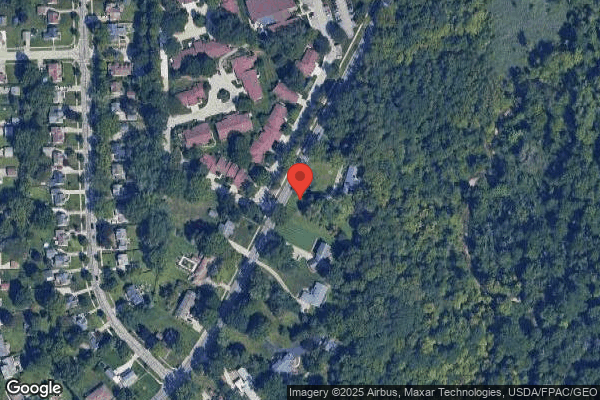
36855 RIDGE RD, WILLOUGHBY, OH 44094 (440) 942-4342
Non profit - Corporation 72 Beds OHIO LIVING COMMUNITIES Data: November 2025
Trust Grade
90/100
#126 of 913 in OH
Last Inspection: May 2025

Inspected within the last 6 months. Data reflects current conditions.

Overview

Ohio Living Breckenridge Village has received a Trust Grade of A, which indicates it is excellent and highly recommended for families considering care options. It ranks #126 out of 913 facilities in Ohio, placing it in the top half, and #3 out of 14 in Lake County, meaning there are very few local facilities that outperform it. The care provided here is improving, with issues decreasing from 2 in 2022 to just 1 in 2025. Staffing is rated 4 out of 5 stars, with a turnover rate of 43%, which is better than the state average, suggesting that employees are generally stable and familiar with residents. Notably, the facility has not incurred any fines, indicating good compliance, and has more RN coverage than 80% of other facilities in Ohio, enhancing the quality of care. However, there are some areas of concern. Recent inspections identified issues such as failing to use proper hygiene procedures during medication administration, which could risk spreading infections among residents. Additionally, there was an incident where food was plated without adequate safety measures, potentially affecting a large number of residents. Despite these weaknesses, the overall strong ratings and low fines make Ohio Living Breckenridge Village a solid choice for families seeking nursing care.

Trust Score
A
90/100
In Ohio
#126/913
Top 13%
Safety Record
Low Risk
No red flags
Inspections
Getting Better
2 → 1 violations
Staff Stability
○ Average
43% turnover. Near Ohio's 48% average. Typical for the industry.
Penalties
✓ Good
No fines on record. Clean compliance history, better than most Ohio facilities.
Skilled Nurses
✓ Good
Each resident gets 60 minutes of Registered Nurse (RN) attention daily — more than 97% of Ohio nursing homes. RNs are the most trained staff who catch health problems before they become serious.
Violations
✓ Good
Only 4 deficiencies on record. Cleaner than most facilities. Minor issues only.
★★★★★
5.0
Overall Rating
★★★★☆
4.0
Staff Levels
★★★★☆
4.0
Care Quality
★★★★★
5.0
Inspection Score
Stable
2022: 2 issues
2025: 1 issues

The Good

  • 4-Star Staffing Rating · Above-average nurse staffing levels
  • 4-Star Quality Measures · Strong clinical quality outcomes
  • Full Sprinkler Coverage · Fire safety systems throughout facility
  • No fines on record
  • Staff turnover below average (43%)

    5 points below Ohio average of 48%

Facility shows strength in staffing levels, quality measures, fire safety.

The Bad

Staff Turnover: 43%

Near Ohio avg (46%)

Typical for the industry

Chain: OHIO LIVING COMMUNITIES

Part of a multi-facility chain

Ask about local staffing decisions and management

The Ugly 4 deficiencies on record

May 2025 1 deficiency
CONCERN (F)

Potential for Harm - no one hurt, but risky conditions existed

Infection Control (Tag F0880)

Could have caused harm · This affected most or all residents

Based on observation, interview, record review, facility policy and staff training review, and review of the Centers for Medicare and Medicaid (CMS) Quality, Safety, and Oversight (QSO) Memo 24-08-NH,...

Read full inspector narrative →
Based on observation, interview, record review, facility policy and staff training review, and review of the Centers for Medicare and Medicaid (CMS) Quality, Safety, and Oversight (QSO) Memo 24-08-NH, the facility failed to use a gown for required enhanced barrier precautions (EBP) while administering medications through a gastric tube for Resident #44, failed to clean a wrist blood pressure monitor between use on Resident's #44 and #52, and failed to maintain a clean wall-mounted fan while in use and directed toward clean linen in the laundry area. This affected two residents (#44 and #52) of 60 residents reviewed for infection control and had the potential to affect all 60 residents residing in the facility. The facility reported 13 residents (#17, #22, #25, #30, #32, #44, #48, #113, #120, #121, #125, #126 and #162) on EBP precautions. Findings include: 1. Observation on 05/13/25 at 8:06 A.M. with Licensed Practical Nurse (LPN) #615 of medication administration for Resident #44 revealed LPN #615 prepared three medications for administration into a gastric tube while at the medication cart then entered Resident #44's room which had a sign posted on the door to observe EBP with gowns and gloves stored in a door rack for staff use. LPN #615 donned gloves but did not put on the required gown before engaging Resident #44 and administering the medications through the gastric tube. Once completed, LPN #615 removed the soiled gloves, performed hand hygiene and then left the resident's room. Interview at the time of the observation with LPN #615 confirmed not wearing the required gown for EBP. Review of the medical record for Resident #44 revealed an admission date of 02/27/25 with diagnoses including encephalopathy, diabetes mellitus type two, hypertensive heart disease with heart failure and gastrostomy status. The admission Minimum Data Set (MDS) assessment completed on 03/06/25 indicated Resident #44 had moderate cognitive impairment, and the plan of care dated 02/28/25 specified a need for enteral feeding through a gastric tube. Review of CMS QSO Memo 24-08-NH, entitled Enhanced Barrier Precautions in Nursing Homes, dated 03/20/24, revealed EBP are indicated for residents with indwelling medical devices even if the resident is not known to be infected or colonized with a multidrug resistant organism (MDRO). The effective date for implementation of EBP under the guidelines was 04/01/24. Review of the facility policy, Enhanced Barrier Precautions, revised 09/14/23, revealed EBP required the use of gloves and a gown with residents who had an indwelling medical device during high-contact resident care. Review of the facility staff training completed on 05/13/25 revealed the use of a gown and gloves for high-contact resident care activities was indicated for residents with indwelling medical devices. 2. Observation on 05/13/25 at 8:06 A.M. with LPN #615 of medication administration for Resident #44 revealed LPN #615 obtained a blood pressure reading using a wrist monitor prior to medication preparation then placed the monitor on top of the medication cart without cleaning it after use. LPN #615 then prepared Resident #44's medications, administered them as ordered and then moved the medication cart to where Resident #52 was located. LPN #615 picked up the soiled blood pressure monitor and used it to obtain Resident #52's blood pressure prior to preparing the resident's medications. Once completed, LPN #615 returned to the medication cart and set the soiled blood pressure monitor on top of the medication cart without cleaning it after use. Interview at the time of the observation with LPN #615 verified the wrist blood pressure monitor was not cleaned after use between Resident's #44 and #52. Review of the medical record for Resident #44 revealed an admission date of 02/27/25 with diagnoses including encephalopathy, diabetes mellitus type two, hypertensive heart disease with heart failure and gastrostomy status. Review of the medical record for Resident #52 revealed an admission date of 02/24/25 with diagnoses including chronic kidney disease, palliative care, dementia, atrial fibrillation and congestive heart failure. Review of facility staff training completed on 05/13/25, entitled Infection Control Review - Shared Medical Devices, revealed cleaning and disinfecting shared medical devices between residents are crucial for preventing the spread of infections, reducing healthcare-associated infections, and protecting residents' safety. 3. Observation on 05/14/25 at 11:19 A.M. with Housekeeping Supervisor (HS) #610 of the laundry room revealed in the clean laundry area there were two unknown laundry workers actively folding linen out of a large mostly filled clean linen cart. In proximity was a large wall mounted fan blowing air toward the two laundry workers and the clean linen. The fan had visible dirt buildup with accumulated dirt seen flapping from the air flow out of the fan toward the clean linen. Interview at the time of the observation with HS #610 confirmed the wall mounted fan being used in the clean laundry area was visibly dirty and blowing toward the clean linen.
Jun 2022 2 deficiencies
CONCERN (D)

Potential for Harm - no one hurt, but risky conditions existed

Medication Errors (Tag F0758)

Could have caused harm · This affected 1 resident

**NOTE- TERMS IN BRACKETS HAVE BEEN EDITED TO PROTECT CONFIDENTIALITY** Based on record reviews and interviews the facility failed to ensure as needed medication orders for psychotropic drugs were lim...

Read full inspector narrative →
**NOTE- TERMS IN BRACKETS HAVE BEEN EDITED TO PROTECT CONFIDENTIALITY** Based on record reviews and interviews the facility failed to ensure as needed medication orders for psychotropic drugs were limited to 14 days. This affected three (Residents #3, #23, and #34) of six residents reviewed for unnecessary medication. The census at the time of the survey was 90 residents. Findings include: 1.Record review for Resident #34 revealed the resident was readmitted to the facility on [DATE]. Pertinent diagnoses for the resident included unspecified dementia, other dissociative and conversion disorders, cognitive communication deficit, chronic pain, anxiety disorder, and major depressive disorder. The brief interview for mental status (BIMS) from MDS dated [DATE] revealed the resident had a score of five indicating severe cognitive impairment. Review of physician orders for Resident #34 revealed on 03/09/22 the physician had ordered the antipsychotic medication Seroquel one 50 milligram (mg) tablet by mouth every six hours as needed (PRN) for unspecified dementia with behavioral disturbance with no end date. The medication administration record (MAR) for Resident #34 was reviewed for the month of June 2022 and had documented administrations of the PRN antipsychotic medication Seroquel as followed: one administration on 06/04/22, one administration on 06/05/22, one administration on 06/10/22, one administration on 06/20/22, one administration on 06/24/22, and one administration on 06/28/22. The facility failed to provide evidence the physician had reviewed the continued and frequent use of the PRN psychotic medication for Resident #34. No evidence was presented to confirm the 14 day re-assessment and reorder interval was completed. These findings were verified during interview with the Director of Nursing on 06/29/22 at 10:21 A.M. Review of the facility policy titled, Psychotropic Medications, with a revised date of 03/01/21, revealed PRN orders for psychotropic drugs are limited to 14 days except if the attending physician or prescribing practitioner believes that it is appropriate for the PRN order to be extended beyond 14 days then he or she will document their rationale in the resident's medical record and indicate the duration for the PRN order. 2. Review of the medical chart for Resident #3 revealed an admission date of 03/15/22. Diagnoses include but not limited to vascular dementia without behavioral disturbance, torticollis, and brachial plexus disorders. Review of the admission Minimum Data Set (MDS) 3.0 assessment, dated 03/22/22, revealed Resident #3 had severely impaired cognition and required extensive assistance with two staff for activities of daily living except eating required supervision with set up only. Review of the physician's orders for June 2022 revealed Resident #3 was ordered 1.0 milligrams (mg) of lorazepam on 03/16/22 for muscle spasm as needed (PRN) with a maximum dose of three tablets with no stop date. Interview on 06/30/22 at 8:07 A.M. with Registered Nurse (RN) #538 verified that there was no stop date for lorazepam PRN. Review of the facility policy titled, Psychotropic Medications, with a revised date of 03/01/21, revealed PRN orders for psychotropic drugs are limited to 14 days except if the attending physician or prescribing practitioner believes that it is appropriate for the PRN order to be extended beyond 14 days then he or she will document their rationale in the resident's medical record and indicate the duration for the PRN order. #3: Record review of Resident #23 revealed she was admitted to the facility on [DATE] and had diagnoses including Alzheimer's Disease, cognitive communication deficit, restlessness and agitation, and acute psychosis. She had an active order for 25 milligrams of Seroquel (an antipsychotic) to be given twice per day as needed (PRN) for behaviors including hitting, scratching, and screaming. The order was dated 12/02/21. A psychiatric service visit dated 05/26/22 noted her PRN seroquel order was to be continued. The surveyor could not find evidence the PRN seroquel was specifically reviewed and renewed every 14 days. Record review of Resident #23's medication administration record revealed she received the PRN seroquel twice in April 2022 on 04/11/22 and 04/15/22, and no times in May or June 2022 as of the time of the record review. Review of a pharmacy record review for Resident #23 dated 01/28/22 revealed the pharmacy recommendation that the PRN Seroquel order be made to only last 14 days, and to be renewed every 14 days. The provider checked 'disagree' on the response list at the bottom and wrote to continue the medication as-ordered. Review of the facility's psychotropic medication policy dated 03/01/21 revealed antipsychotic medications were limited to 14 days and could not be renewed unless the physician evaluated the resident for appropriateness for another 14 days. The surveyor confirmed the above findings with the Director of Nursing on 06/29/22 at 10:25 A.M.
MINOR (C)

Minor Issue - procedural, no safety impact

Deficiency F0577 (Tag F0577)

Minor procedural issue · This affected most or all residents

Based on record review and staff interview, the facility failed to ensure the most recent state survey results were readily available for public review. This had the potential to affect all 90 residen...

Read full inspector narrative →
Based on record review and staff interview, the facility failed to ensure the most recent state survey results were readily available for public review. This had the potential to affect all 90 residents residing in the facility. Findings included: Review of the facility folder titled Ohio Department of Health Survey Results located in the main lobby in clear view revealed the last survey in the folder and available to be reviewed by the public was the annual survey conducted on 06/27/19. The Ohio Department of Health conducted a complaint survey at the facility on 01/04/22 resulting in a certification deficiency and licensure violation being issued to the facility: Interview with the Administrator on 06/28/22 at 9:53 A.M. confirmed the last survey in the book was 06/27/19 for public review.
Jun 2019 1 deficiency
CONCERN (E)

Potential for Harm - no one hurt, but risky conditions existed

Food Safety (Tag F0812)

Could have caused harm · This affected multiple residents

Based on observation, interview, and record review, the facility failed to ensure facial hair was covered and utensils and gloves were used when plating and serving foods. This had the potential to af...

Read full inspector narrative →
Based on observation, interview, and record review, the facility failed to ensure facial hair was covered and utensils and gloves were used when plating and serving foods. This had the potential to affect 45 residents who received meals served in the second floor dining room, as well as Residents #52 and #91. The facility census was 93 residents. Findings include: 1. Observation on 06/24/19 at 12:30 P.M. of lunch service in the second floor dining room revealed Dietary Aide (DA) #150 setting up the food on the steam table. DA #150 had a full beard without a hair restraint. On 06/24/19 at 12:30 P.M. with the Director of Dining Services (DDS) #160 confirmed DA #150 had a long beard and wasn't wearing a hair restraint to cover it. Observation on 06/24/19 at 12:30 P.M. of the start of meal service revealed DA #150 used gloved hands to plate quiche. DA #150 held the serving utensil in one hand and with the other hand directly touched the quiche to help slide it from the serving utensil and then position it on the plate. Using the same gloves with visible particles of quiche on them, DA #150 also handled lettuce and tomato, and assembled and plated sandwiches. On 06/24/19 at 12:57 P.M. DA #150 confirmed he used his gloved hands to directly handle and serve quiche, lettuce and tomatoes and sandwiches. DA #150 verified he should have used serving utensils. Review of the facility policy titled Employee Sanitary Practices dated 2013 revealed all employees shall wear hair restraints (hairnet, hat, and/or beard restraint) to prevent hair from contacting exposed food and use utensils to handle food. 2. Observation of the Courtyard dining room during the lunch meal on 06/24/19 at 11:45 A.M. revealed State Tested Nursing Aide (STNA) #201 used her bare hands to place lettuce and tomato on Resident #52's sandwich, and then held the sandwich in place to cut it in half. STNA #201 then repeated these actions for Resident #91's food. Interview with STNA #201 on 06/24/19 at 11:51 A.M. confirmed the above observations. Review of the facility's bare hand contact with food policy dated 2013 revealed single-use gloves were to be worn by staff when handling food directly, and bare handed contact with food was prohibited to staff.
Understanding Severity Codes (click to expand)
Life-Threatening (Immediate Jeopardy)
J - Isolated K - Pattern L - Widespread
Actual Harm
G - Isolated H - Pattern I - Widespread
Potential for Harm
D - Isolated E - Pattern F - Widespread
No Harm (Minor)
A - Isolated B - Pattern C - Widespread

Questions to Ask on Your Visit

  • "Can I speak with families of current residents?"
  • "What's your RN coverage like on weekends and overnight?"

Our Honest Assessment

Strengths
  • • Grade A (90/100). Above average facility, better than most options in Ohio.
  • • No major safety red flags. No abuse findings, life-threatening violations, or SFF status.
  • • No fines on record. Clean compliance history, better than most Ohio facilities.
  • • Only 4 deficiencies on record. Cleaner than most facilities. Minor issues only.
Concerns
  • • No significant concerns identified. This facility shows no red flags across CMS ratings, staff turnover, or federal penalties.
Bottom line: Generally positive indicators. Standard due diligence and a personal visit recommended.

About This Facility

What is Ohio Living Breckenridge Village's CMS Rating?

CMS assigns OHIO LIVING BRECKENRIDGE VILLAGE an overall rating of 5 out of 5 stars, which is considered much above average nationally. Within Ohio, this rating places the facility higher than 99% of the state's 100 nursing homes. This rating reflects solid performance across the metrics CMS uses to evaluate nursing home quality.

How is Ohio Living Breckenridge Village Staffed?

CMS rates OHIO LIVING BRECKENRIDGE VILLAGE's staffing level at 4 out of 5 stars, which is above average compared to other nursing homes. Staff turnover is 43%, compared to the Ohio average of 46%. This relatively stable workforce can support continuity of care.

What Have Inspectors Found at Ohio Living Breckenridge Village?

State health inspectors documented 4 deficiencies at OHIO LIVING BRECKENRIDGE VILLAGE during 2019 to 2025. These included: 3 with potential for harm and 1 minor or isolated issues.

Who Owns and Operates Ohio Living Breckenridge Village?

OHIO LIVING BRECKENRIDGE VILLAGE is owned by a non-profit organization. Non-profit facilities reinvest revenue into operations rather than distributing to shareholders. The facility is operated by OHIO LIVING COMMUNITIES, a chain that manages multiple nursing homes. With 72 certified beds and approximately 63 residents (about 88% occupancy), it is a smaller facility located in WILLOUGHBY, Ohio.

How Does Ohio Living Breckenridge Village Compare to Other Ohio Nursing Homes?

Compared to the 100 nursing homes in Ohio, OHIO LIVING BRECKENRIDGE VILLAGE's overall rating (5 stars) is above the state average of 3.2, staff turnover (43%) is near the state average of 46%, and health inspection rating (5 stars) is much above the national benchmark.

What Should Families Ask When Visiting Ohio Living Breckenridge Village?

Based on this facility's data, families visiting should ask: "Can I visit during a mealtime to observe dining assistance and food quality?" "How do you handle medical emergencies, and what is your hospital transfer rate?" "Can I speak with family members of current residents about their experience?"

Is Ohio Living Breckenridge Village Safe?

Based on CMS inspection data, OHIO LIVING BRECKENRIDGE VILLAGE has a clean safety record: no substantiated abuse findings (meaning no confirmed cases of resident harm), no Immediate Jeopardy citations (the most serious violation level indicating risk of serious injury or death), and is not on the Special Focus Facility watch list (a federal program monitoring the lowest-performing 1% of nursing homes). The facility has a 5-star overall rating and ranks #1 of 100 nursing homes in Ohio. While no facility is perfect, families should still ask about staff-to-resident ratios and recent inspection results during their visit.

Do Nurses at Ohio Living Breckenridge Village Stick Around?

OHIO LIVING BRECKENRIDGE VILLAGE has a staff turnover rate of 43%, which is about average for Ohio nursing homes (state average: 46%). Moderate turnover is common in nursing homes, but families should still ask about staff tenure and how the facility maintains care continuity when employees leave.

Was Ohio Living Breckenridge Village Ever Fined?

OHIO LIVING BRECKENRIDGE VILLAGE has no federal fines on record. CMS issues fines when nursing homes fail to meet care standards or don't correct problems found during inspections. The absence of fines suggests the facility has either maintained compliance or corrected any issues before penalties were assessed. This is a positive indicator, though families should still review recent inspection reports for the full picture.

Is Ohio Living Breckenridge Village on Any Federal Watch List?

OHIO LIVING BRECKENRIDGE VILLAGE is not on any federal watch list. The most significant is the Special Focus Facility (SFF) program, which identifies the bottom 1% of nursing homes nationally based on persistent, serious quality problems. Not being on this list means the facility has avoided the pattern of deficiencies that triggers enhanced federal oversight. This is a positive indicator, though families should still review the facility's inspection history directly.