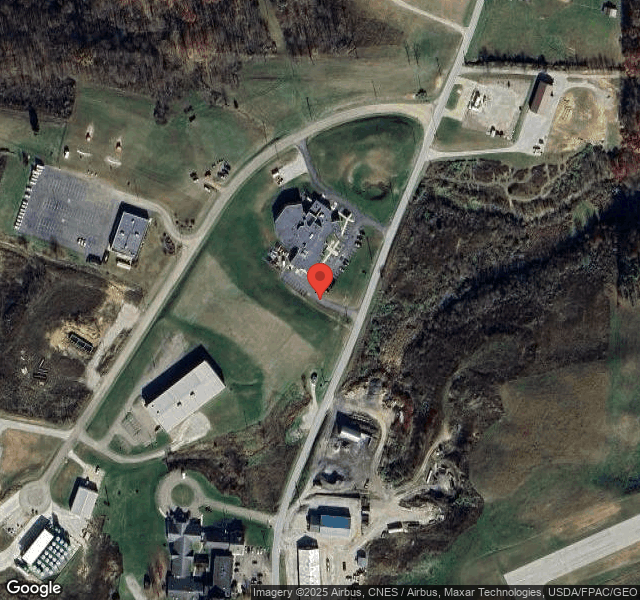
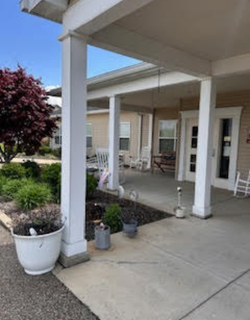
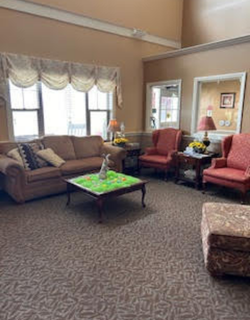
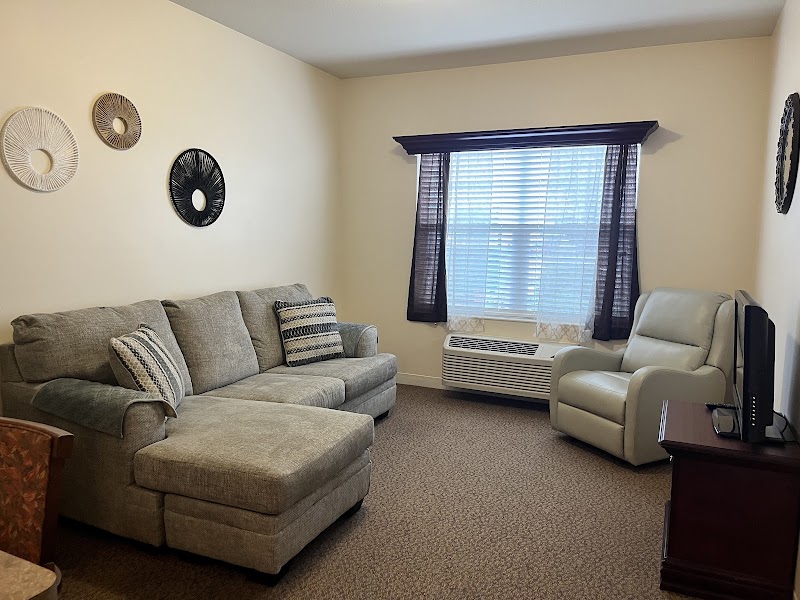
STELLAR CARE CENTER

47045 MOORE RIDGE ROAD, WOODSFIELD, OH 43793 (740) 472-0144
For profit - Corporation 41 Beds LIONSTONE CARE Data: November 2025 1 Immediate Jeopardy citation
Trust Grade
18/100
#788 of 913 in OH
Last Inspection: November 2024

Within standard 12-15 month inspection cycle. Federal law requires annual inspections.

Overview

Stellar Care Center in Woodsfield, Ohio, has received a Trust Grade of F, indicating poor performance with significant concerns. Ranking #788 out of 913 facilities in Ohio places it in the bottom half, and #2 out of 2 in Monroe County means it is the second and last option available locally. Although the facility is showing improvement, reducing issues from 36 in 2024 to 7 in 2025, it still faces serious challenges, including a concerning staffing turnover rate of 62%, which is higher than the state average. The center has incurred $175,490 in fines, reflecting compliance issues that exceed 99% of other Ohio facilities, and it has a troubling critical incident where a resident did not receive necessary heart medication, posing a life-threatening risk. While the RN coverage is good, exceeding 93% of state facilities, there are notable weaknesses in infection control practices and food safety that families should consider when evaluating care options.

Trust Score
F
18/100
In Ohio
#788/913
Bottom 14%
Safety Record
High Risk
Review needed
Inspections
Getting Better
36 → 7 violations
Staff Stability
⚠ Watch
62% turnover. Above average. Higher turnover means staff may not know residents' routines.
Penalties
⚠ Watch
$175,490 in fines. Higher than 94% of Ohio facilities. Major compliance failures.
Skilled Nurses
✓ Good
Each resident gets 61 minutes of Registered Nurse (RN) attention daily — more than 97% of Ohio nursing homes. RNs are the most trained staff who catch health problems before they become serious.
Violations
⚠ Watch
81 deficiencies on record. Higher than average. Multiple issues found across inspections.
★★☆☆☆
2.0
Overall Rating
★★★☆☆
3.0
Staff Levels
★★★★★
5.0
Care Quality
★☆☆☆☆
1.0
Inspection Score
Stable
2024: 36 issues
2025: 7 issues

The Good

  • 5-Star Quality Measures · Strong clinical quality outcomes
  • Full Sprinkler Coverage · Fire safety systems throughout facility
  • No fines on record

Facility shows strength in quality measures, fire safety.

The Bad

2-Star Overall Rating

Below Ohio average (3.2)

Below average - review inspection findings carefully

Staff Turnover: 62%

15pts above Ohio avg (46%)

Frequent staff changes - ask about care continuity

Federal Fines: $175,490

Well above median ($33,413)

Significant penalties indicating serious issues

Chain: LIONSTONE CARE

Part of a multi-facility chain

Ask about local staffing decisions and management

Staff turnover is elevated (62%)

14 points above Ohio average of 48%

The Ugly 81 deficiencies on record

1 life-threatening
Apr 2025 7 deficiencies
CONCERN (D) 📢 Someone Reported This

A family member, employee, or ombudsman was alarmed enough to file a formal complaint

Potential for Harm - no one hurt, but risky conditions existed

Assessment Accuracy (Tag F0641)

Could have caused harm · This affected 1 resident

**NOTE- TERMS IN BRACKETS HAVE BEEN EDITED TO PROTECT CONFIDENTIALITY** Based on medical record review and interview, the facility failed to ensure required components of the comprehensive assessments...

Read full inspector narrative →
**NOTE- TERMS IN BRACKETS HAVE BEEN EDITED TO PROTECT CONFIDENTIALITY** Based on medical record review and interview, the facility failed to ensure required components of the comprehensive assessments were completed as required. This affected one resident (#14) of four residents sampled. The census was 32. Findings include: Medical record review revealed Resident #14 was admitted on [DATE] with diagnoses including quadriplegia, chronic pain, diabetes mellitus, neurogenic bladder, major depressive disorder and peripheral vascular disease. Review of the annual Minimum Data Set 3.0 (MDS) assessment dated [DATE] revealed the resident's Cognitive Pattern: Brief Interview for Mental Status and Pain Assessment interview were not completed as required. Review of the quarterly MDS assessment dated [DATE] revealed the Pain Assessment interview was not completed as required. On 04/21/25 at 12:25 P.M., interview with Assistant Director of Nursing #85 verified the above. This deficiency represents an incidental finding of non-compliance investigated under Complaint Number OH00164581.
CONCERN (D) 📢 Someone Reported This

A family member, employee, or ombudsman was alarmed enough to file a formal complaint

Potential for Harm - no one hurt, but risky conditions existed

Comprehensive Care Plan (Tag F0656)

Could have caused harm · This affected 1 resident

**NOTE- TERMS IN BRACKETS HAVE BEEN EDITED TO PROTECT CONFIDENTIALITY** Based on medical record review and interview, the facility failed to develop comprehensive care plans as required. This affected...

Read full inspector narrative →
**NOTE- TERMS IN BRACKETS HAVE BEEN EDITED TO PROTECT CONFIDENTIALITY** Based on medical record review and interview, the facility failed to develop comprehensive care plans as required. This affected two residents (#23 and #33) of four sampled residents. The census was 32. Findings include: 1. Closed medical record review revealed Resident #33 was admitted on [DATE] with diagnoses including hypertension, pancreatic disorder and colostomy. The resident was discharged home on [DATE]. Review of the admission Minimum Data Set 3.0 assessment dated [DATE] revealed Resident #33 was cognitively intact for daily decision-making, denied pain, his overall goal was to return to the community, there was no active discharge plan, no referrals had been made and the local contact agency was unknown. Further review of the record revealed no other MDS assessments were completed for review. a. Review of the Physician Orders dated 03/12/25 revealed Resident #33 was ordered routine Tylenol 650 milligrams three times a day for complaints of pain to the head, neck, trunk and extremities. Review of the electronic Medication Administration Record dated April 2025 revealed Resident #33 was assessed for pain every shift and had complained of mild to moderate pain daily except on 04/05/25, 04/08/25, 04/11/25, 04/12/25, 04/13/25 and 04/15/25. b. Review of the Discharge Planning Review assessment dated [DATE] revealed Resident #33 was discharged home with home health care services. Review of the medical record revealed no evidence of a comprehensive pain care plan or discharge care plan for Resident #33. 2. Medical record review review revealed Resident #23 was admitted on [DATE] with diagnoses including cirrhosis of liver, diabetes mellitus, diverticulitis and colostomy. Review of the admission Minimum Data Set 3.0 assessment dated [DATE] revealed Resident #23 was cognitively intact for daily decision-making, the resident's overall goal was to return to the community, there was no active discharge plan, no referrals had been made and the local contact agency was unknown. Review of the medical record revealed no evidence a discharge plan of care had been developed. On 04/22/25 at 12:20 P.M., interview with Assistant Director of Nursing #85 verified the above. This deficiency represents an incidental finding of non-compliance investigated under Complaint Number OH00164581.
CONCERN (D) 📢 Someone Reported This

A family member, employee, or ombudsman was alarmed enough to file a formal complaint

Potential for Harm - no one hurt, but risky conditions existed

Pressure Ulcer Prevention (Tag F0686)

Could have caused harm · This affected 1 resident

**NOTE- TERMS IN BRACKETS HAVE BEEN EDITED TO PROTECT CONFIDENTIALITY** Based on observation, medical record review, policy review, wound dressing guideline review and interview, the facility failed t...

Read full inspector narrative →
**NOTE- TERMS IN BRACKETS HAVE BEEN EDITED TO PROTECT CONFIDENTIALITY** Based on observation, medical record review, policy review, wound dressing guideline review and interview, the facility failed to provide appropriate care and services to treat pressure ulcers. This affected one resident (#14) of one reviewed for wound care. The census was 32. Findings include: Medical record review revealed Resident #14 was admitted on [DATE] with diagnoses including quadriplegia, chronic pain, diabetes mellitus, neurogenic bladder, major depressive disorder and peripheral vascular disease. Review of the annual Minimum Data Set assessment dated [DATE] revealed Resident #14 had no skin impairments. Review of the Braden Scale for Predicting Pressure Ulcer Risk Evaluation dated 04/06/25 revealed the resident was at moderate risk for skin breakdown. Review of the nurse practitioner Skin and Wound Initial Evaluation dated 04/08/25 and 04/15/25 revealed three new facility acquired pressure ulcers including an unstageable pressure ulcer (full-thickness skin and tissue loss in which the extent of tissue damage within the ulcer cannot be confirmed because the wound bed is obscured by slough or eschar) to the resident's right hip had developed. The treatment for the unstageable right hip pressure ulcer was to cleanse with wound cleanser, apply skin prep to the periwound, apply silver alginate (autolytic debridement with antimicrobial agent) cut to fit the wound bed followed by a bordered gauze. The wound was to be changed daily. Review of the electronic Physician Orders and Treatment Administration Record dated April 2025 revealed Resident #14's right hip pressure ulcer was treated with calcium alginate (autolytic debridement without an antimicrobial agent) between 04/05/25 and 04/17/25. On 04/17/25 between 2:19 P.M. and 2:58 P.M., observation revealed the following: Licensed Practical Nurse (LPN) #33 gathered supplies to complete Resident #14's unstageable right hip pressure ulcer including saline, derma wound cleaner, calcium alginate 2 x 2 gauze and a 4 x 4 border gauze. There was a sign posted on the door upon entering the resident's room indicating enhanced barrier precautions (EBP) and a three drawer container observed directly outside of the resident's room in the hallway. LPN #33 and Assistant Director of Nursing (ADON) #85 entered the room without donning personal protective equipment (gown), washed their hands, applied gloves and explained the procedure to the resident. ADON #85 assisted the resident to his left side and LPN #33 removed the dressing and dropped it into the trash can. The soiled dressing was observed to have thick cloudy drainage with an odor. LPN #33 applied wound cleanser onto a 4 x 4 inch gauze and proceeded to wipe across the width of the wound multiple times in a back and forth motion then in a circular motion around the perimeter of the wound, then back across the wound bed again with the same gauze. LPN #33 placed the gauze in the trash can, removed her gloves, washed her hands and donned new gloves. LPN #33 reached into her pocket and removed bandage scissors. Without cleaning the scissors, LPN #33 cut a piece of calcium alginate and placed the scissors on the barrier. The calcium alginate was placed on the resident's wound but it extended over the wound at which time LPN #33 removed the calcium alginate, used the same bandage scissors to cut the dressing that had touched the wound and then placed the bandage scissors back on the barrier with the other clean supplies. LPN #33 was placing the calcium alginate onto the wound when it fell on the bed. LPN #33 picked up the calcium alginate dressing from the bed, discarded it into the trash can, picked up the bandage scissors without cleaning them and cut a new piece of calcium alginate. LPN #33 placed the calcium alginate in the wound and covered it with a border gauze. LPN #33 removed her gloves, washed her hands and cleaned her bandage scissors with alcohol prior to placing them back in her pocket. On 04/17/25 at 2:50 P.M., interview with ADON #85 verified LPN #33 did not complete the treatment as ordered and appropriate infection control practices including EBP protocols were not implemented. On 04/17/25 at 3:00 P.M., interview with LPN #33 verified the above observation made during Resident #14's dressing change. On 04/21/25 at 10:25 A.M., interview with ADON #85 revealed the resident always had an odor, verified LPN #33 had not transcribed the wound treatment correctly as silver alginate versus calcium alginate, and it was not discovered until 04/17/25 during this current survey. Review of the undated policy: Pressure Injury Treatment revealed residents with pressure injuries will be treated with consistent treatment protocols to aid in the healing process. In addition, residents with pressure injuries will have an individualized treatment program that provides the appropriate treatment to facilitate health and that assesses and addresses comorbid conditions in a systematic manner. Review of the policy: Wound Care revised August 2022 revealed the following procedure included the use of gloves when the dressing was removed, pull the glove over the dressing and discard into appropriate receptacle. Wash and dry your hands thoroughly or use a hand sanitizer and complete treatments as ordered. Review of The Wound Pros: Wound Dressings dated 2025 revealed the primary difference between calcium alginate and silver alginate lies in the presence of silver ions in the latter. While both dressings work by gelling in response to wound exudate, silver alginate dressing also delivers antimicrobial action. This makes it particularly useful for wounds that are infected or at risk of infection. This deficiency represents non-compliance investigated under Complaint Number OH00164581.
CONCERN (D) 📢 Someone Reported This

A family member, employee, or ombudsman was alarmed enough to file a formal complaint

Potential for Harm - no one hurt, but risky conditions existed

Deficiency F0691 (Tag F0691)

Could have caused harm · This affected 1 resident

**NOTE- TERMS IN BRACKETS HAVE BEEN EDITED TO PROTECT CONFIDENTIALITY** Based on medical record review and interview, the facility failed to ensure colostomy care was provided as ordered. This affecte...

Read full inspector narrative →
**NOTE- TERMS IN BRACKETS HAVE BEEN EDITED TO PROTECT CONFIDENTIALITY** Based on medical record review and interview, the facility failed to ensure colostomy care was provided as ordered. This affected two residents (#23 and #33) of four residents sampled. The census was 32. Findings include: 1. Closed medical record review revealed Resident #33 was admitted on [DATE] with diagnoses including hypertension, pancreatic disorder and colostomy. The resident was discharged home on [DATE]. Review of the admission Minimum Data Set 3.0 assessment dated [DATE] revealed Resident #33 was cognitively intact for daily decision-making and had a surgical wound. Review of the Physician Orders dated 02/11/25 revealed colostomy care was to be provided once a shift. Review of Resident #33's Treatment Administration Records (TAR) revealed the following: a. Dated February 2025 revealed colostomy care was completed on 18 of 35 opportunities. b. Dated March 2025 revealed colostomy care was completed on 53 of 62 opportunities. c. Dated April 2025 revealed colostomy care was completed on 24 of 30 opportunities. Review of the care plan: Alteration in gastrointestinal status related to colostomy dated 02/10/25 revealed to change ostomy appliance as ordered. 2. Medical record review review revealed Resident #23 was admitted on [DATE] with diagnoses including cirrhosis of liver, diabetes mellitus, diverticulitis and colostomy. Review of the admission Minimum Data Set 3.0 assessment dated [DATE] revealed Resident #23 was cognitively intact for daily decision-making. Review of the electronic Physician Orders dated 03/12/25 revealed ostomy care was to be completed every shift. Review of the TAR dated April 2025 revealed ostomy care was provided on 28 of 30 opportunities. Review of the undated care plan: Alteration in gastro-intestinal status related to colostomy revealed colostomy care was to be provided as ordered by the physician. On 04/22/25 at 1:05 P.M., interview with Assistant Director of Nursing #85 verified ostomy care was not completed as ordered for Resident #23 or #33. This deficiency represents non-compliance investigated under Complaint Number OH00164581.
CONCERN (D) 📢 Someone Reported This

A family member, employee, or ombudsman was alarmed enough to file a formal complaint

Potential for Harm - no one hurt, but risky conditions existed

Unnecessary Medications (Tag F0759)

Could have caused harm · This affected 1 resident

**NOTE- TERMS IN BRACKETS HAVE BEEN EDITED TO PROTECT CONFIDENTIALITY** Based on observation, medical record review, policy review and interview, the facility failed to ensure the facility's medicatio...

Read full inspector narrative →
**NOTE- TERMS IN BRACKETS HAVE BEEN EDITED TO PROTECT CONFIDENTIALITY** Based on observation, medical record review, policy review and interview, the facility failed to ensure the facility's medication error rate was not 5 percent or greater. This affected two residents (#19 and #30) of three residents observed for medication administration with seven errors out of 26 opportunities resulting in an error rate of 26.9%. The census was 32. Findings include: 1. Medical record review revealed Resident #19 was admitted on [DATE] with diagnoses including chronic atrial fibrillation, cerebrovascular disease, hypertension, congestive heart failure and diabetes mellitus. Review of the electronic Physician Orders dated April 2025 revealed Resident #19 was ordered the following medications to be administered at 9:00 A.M.: glipizide (diabetes) 5 milligrams (mg), metformin 500 (mg), Eliquis 2.5 (mg) and Metoprolol tartrate 25 (mg). On 04/17/25 between 10:22 A.M. and 10:50 A.M., observation revealed Registered Nurse (RN) #100 prepared and administered glipizide (diabetes), metformin (diabetes), Eliquis (anticoagulant) and Metoprolol (blood pressure) to Resident #19. At the time of the observation RN #100 verified he administered the medications outside of the required timeframe stating it was his first time on that hallway and was behind. 2. Medical record review revealed Resident #30 was admitted on [DATE] with diagnoses including unspecified dementia, diabetes mellitus, hypertension, anxiety disorder and major depressive disorder. Review of the electronic Physician Orders dated April 2025 revealed Resident #30 was ordered medications including aspirin (ASA) chewable 81 (mg), buspar 10 (mg) two tablets and Effexor (antidepressant) 37.5 (mg) three tablets. On 04/21/25 between 8:10 A.M. and 8:34 A.M., observation revealed Licensed Practical Nurse (LPN) #76 prepared Resident #30's medications including ASA enteric coated 81 (mg), buspar 10 (mg) one tablet and Effexor 37.5 (mg) one tablet. At 8:34 A.M., the surveyor asked LPN #76 regarding dosage of buspar and Effexor and LPN #76 verified she was administering the wrong doses of buspar and Effexor to Resident #30 and dispensed the additional tablets into the medication cup after reviewing the order. On 04/21/25 at 11:05 A.M., interview with LPN #76 verified she administered enteric coated ASA to Resident #30 instead of chewable stating there wasn't any chewable ASA available in the medication cart but was able to get some from the supply cabinet. Review of the undated policy: 3.0 Medication Administration Times revealed medications were to be administered as ordered and within 60 minutes before or after the facility's dosing schedule, except before or after meals orders and non-routine time ordered mediations. Medication administration pass may begin 60 minutes before the scheduled times of administration but may not exceed 60 minutes after the scheduled times of administration. This deficiency represents non-compliance investigated under Complaint Number OH00164581.
CONCERN (E) 📢 Someone Reported This

A family member, employee, or ombudsman was alarmed enough to file a formal complaint

Potential for Harm - no one hurt, but risky conditions existed

Accident Prevention (Tag F0689)

Could have caused harm · This affected multiple residents

Based on observation, record review, policy review and interview, the facility failed to ensure the resident environment remained free of accident hazards when medication carts and treatment carts wer...

Read full inspector narrative →
Based on observation, record review, policy review and interview, the facility failed to ensure the resident environment remained free of accident hazards when medication carts and treatment carts were left unlocked and unattended. This had the potential to affect seven residents (#26, #27, #28, #29, #30, #31 and #32) residing on the locked memory care unit. The census was 32. Findings include: Medical record reviews revealed Resident #26, #27, #28, #29, #30, #31 and #32 were all severely impaired for daily decision-making and resided on the locked, memory care unit. On 04/21/25 at 8:07 A.M., observation with Licensed Practical Nurse (LPN) #76 revealed the medication cart and treatment cart were unsupervised and unlocked at the nurses' station upon arrival to the memory care unit. Certified nurse assistant (CNA) #78 was observed in the dining room serving breakfast trays, and the medication and treatment carts were not within view of the CNA. There was no nurse or staff observed at the nurses' station at the time of the observation. Interview with LPN #76 at the time of the observation verified the carts were unlocked and stated the night shift nurse had already left leaving only CNA #78 on the unit to supervise the residents while LPN #76 was downstairs administering medications. LPN #76 stated Residents #26, #27, #28, #29, #30, #31 and #32 were independent with ambulation and/or could independently self-propel themselves in a wheelchair. LPN #76 verified all seven residents' wandered throughout the unit, would be capable of opening the drawers of the medication and/or treatment carts and a code/key (depending on use of stairs or the elevator) was needed to get on and off the unit. On 04/21/25 at 1:05 P.M., interview with Assistant Director of Nursing #85 verified medication and treatment carts were to be locked at all times especially on the memory care unit since all seven residents (#26, #27, #28, #29, #30, #31 and #32) had cognitive impairment. Review of the undated policy: 1.0 Medication Dispensing System revealed medication carts were to always be locked when out of sight or unattended. This deficiency represents an incidental finding of non-compliance investigated under Complaint Number OH00164581.
CONCERN (F) 📢 Someone Reported This

A family member, employee, or ombudsman was alarmed enough to file a formal complaint

Potential for Harm - no one hurt, but risky conditions existed

Infection Control (Tag F0880)

Could have caused harm · This affected most or all residents

**NOTE- TERMS IN BRACKETS HAVE BEEN EDITED TO PROTECT CONFIDENTIALITY** Based on observation, medical record review, policy review and interview, the facility failed to maintain appropriate infection ...

Read full inspector narrative →
**NOTE- TERMS IN BRACKETS HAVE BEEN EDITED TO PROTECT CONFIDENTIALITY** Based on observation, medical record review, policy review and interview, the facility failed to maintain appropriate infection control practices during a wound treatment. This affected one resident (#14) of one observed for a dressing change. The census was 32. Findings include: Medical record review revealed Resident #14 was admitted on [DATE] with diagnoses including quadriplegia, diabetes mellitus, neurogenic bladder and peripheral vascular disease. Review of the electronic Physician Orders dated 04/17/25 revealed Resident #14 was receiving daily treatments including pressure ulcer treatments to an unstageable right hip pressure ulcer. The resident had an indwelling urinary catheter and was ordered enhanced barrier precautions (an infection control intervention designed to reduce transmission of multidrug-resistant organism that involves the use of a gown and gloves during high-contact resident care activities i.e. residents with wounds or indwelling medical devices). On 04/17/25 between 2:19 P.M. and 2:58 P.M., observation revealed the following: Licensed Practical Nurse (LPN) #33 gathered supplies to complete Resident #14's unstageable right hip pressure ulcer including saline, derma wound cleaner, calcium alginate 2 x 2 gauze and a 4 x 4 border gauze. There was a sign posted on the door upon entering the resident's room indicating enhanced barrier precautions (EBP) and a three drawer container observed directly outside of the resident's room in the hallway. LPN #33 and Assistant Director of Nursing (ADON) #85 entered the room without donning personal protective equipment (gown), washed their hands, applied gloves and explained the procedure to the resident. ADON #85 assisted the resident to his left side and LPN #33 removed the dressing and dropped it into the trash can. The soiled dressing was observed to have thick cloudy drainage with an odor. LPN #33 applied wound cleanser onto a 4 x 4 inch gauze and proceeded to wipe across the width of the wound multiple times in a back and forth motion then in a circular motion around the perimeter of the wound, then back across the wound bed again with the same gauze. LPN #33 placed the gauze in the trash can, removed her gloves, washed her hands and donned new gloves. LPN #33 reached into her pocket and removed bandage scissors. Without cleaning the scissors, LPN #33 cut a piece of calcium alginate and placed the scissors on the barrier. The calcium alginate was placed on the resident's wound but it extended over the wound at which time LPN #33 removed the calcium alginate, used the same bandage scissors to cut the dressing that had touched the wound and then placed the bandage scissors back on the barrier with the other clean supplies. LPN #33 was placing the calcium alginate onto the wound when it fell on the bed. LPN #33 picked up the calcium alginate dressing from the bed, discarded it into the trash can, picked up the bandage scissors without cleaning them and cut a new piece of calcium alginate. LPN #33 placed the calcium alginate in the wound and covered it with a border gauze. LPN #33 removed her gloves, washed her hands and cleaned her bandage scissors with alcohol prior to placing them back in her pocket. On 04/17/25 at 2:50 P.M., interview with ADON #85 verified LPN #33 did not complete the treatment as ordered and appropriate infection control practices including EBP protocols were not implemented On 04/17/25 at 3:00 P.M., interview with LPN #33 verified the above. Review of the policy: Wound Care revised August 2022 revealed the following procedure included the use of gloves when the dressing was removed, pull the glove over the dressing and discard into appropriate receptacle. Wash and dry your hands thoroughly or use a hand sanitizer and complete treatments as ordered. Review of the policy Enhanced Barrier Precautions (EBP) dated 04/01/24 referred to an infection control intervention designed to reduce transmission of multidrug-resistant organisms that employs targeted gown and glove use during high contact resident care activities including the use of PPE to donning of gown and gloves during high contact resident care activities that provide opportunities for transfer of MDRO's to staff hands and clothing. EBP was indicated for residents with wounds and indwelling medical devices. This deficiency represents incidental findings of non-compliance investigated under Complaint Number OH00164581.
Dec 2024 1 deficiency
CONCERN (D) 📢 Someone Reported This

A family member, employee, or ombudsman was alarmed enough to file a formal complaint

Potential for Harm - no one hurt, but risky conditions existed

Pressure Ulcer Prevention (Tag F0686)

Could have caused harm · This affected 1 resident

**NOTE- TERMS IN BRACKETS HAVE BEEN EDITED TO PROTECT CONFIDENTIALITY** Based on observation, record review, facility policy review and interview the facility failed to develop and implement a compreh...

Read full inspector narrative →
**NOTE- TERMS IN BRACKETS HAVE BEEN EDITED TO PROTECT CONFIDENTIALITY** Based on observation, record review, facility policy review and interview the facility failed to develop and implement a comprehensive and individualized pressure ulcer prevention program to prevent the development of pressure ulcers for Resident #13 and Resident #22. This affected two residents (#13 and #22) of five residents reviewed. The facility census was 32. Findings include: 1. Record review revealed Resident #13 admitted to the facility on [DATE] with diagnoses including hyperlipidemia, hypertension, and altered mental status. Review of a care plan revised on 06/26/24 revealed Resident #13 required (staff) assistance with activities of daily living (ADLs) related to dementia, heart disease and fatigue. Interventions included requiring extensive assist to total dependence from one to two staff to complete bed mobility and toileting, check incontinence garments every two to three hours, change per product recommendations and provide peri-care as needed. Review of Resident #13's assessment dashboard revealed the most current Braden Assessment was completed on 07/05/24, which reflected the resident was at moderate risk for developing pressure ulcers. Review of the quarterly Minimum Data Set (MDS) assessment completed on 09/24/24 revealed Resident #13 had severely impaired cognition, no behaviors, was dependent on staff for toileting hygiene and bed mobility, was always incontinent of bowel and bladder, and had no pressure injuries. Review of Weekly Skin Assessments dated 11/11/24, 11/18/24, and 11/26/24 revealed Resident #13 had no new areas of concern. Review of a care plan revised on 11/27/24 revealed Resident #13 was at risk for alteration in skin integrity related to dry, thin skin and decreased dermal vascularity secondary to aging and impaired mobility as well as incontinence episodes. Interventions included turning and repositioning, and providing incontinence care as needed. Review of a care plan dated 12/01/24 revealed Resident #13 had a Stage II (partial-thickness loss of skin with exposed dermis, presenting as a shallow open ulcer. The wound bed is viable, pink or red, moist, and may also present as an intact or open/ruptured blister) pressure ulcer to her coccyx. Interventions included administer treatments as ordered and observe for effectiveness, assess/record/monitor wound healing weekly and as needed, measure length, width and depth when possible, assess and document the status of wound bed and healing progress and report to physician, alternating air mattress to bed, encourage resident to turn ever two hours side to side and only have laying on back for meals and when up in chair, and follow facility policies/protocol for the prevention/treatment of skin breakdown. A physician order, dated 12/01/24 revealed to encourage resident to turn side to side every two hours, encourage to be on back only for meals and when in chair. Review of a nursing note dated 12/01/24 at 1:39 P.M. by Registered Nurse (RN) #146 revealed while assisting an aide change Resident #13, an open area was observed to the resident's coccyx. The area was noted to be a Stage II pressure area and measured at 0.4 centimeters (cm) in length by 0.2 cm width with less than 0.1 cm depth The area was red with a small amount of serous sanguineous drainage, surrounding tissue was pink in color. The area was cleansed with wound cleanser, dried and a dime size amount of hydrogel was applied, then covered with a dry dressing. An order was written to change dressing daily. No pain was noted. Review of the physician order, dated 12/02/24 revealed a treatment order for Resident #13's coccyx including to mix hydrogel and collagen sprinkles, apply to wound bed and cover with a bordered gauze dressing every day shift for pressure injury to coccyx. Review of a Weekly Skin Assessment completed on 12/02/24 revealed Resident #13 had previously identified skin areas/abnormalities, but did not indicate location or measurements. An additional order dated 12/04/24 revealed Resident #13 required a pressure reducing cushion to her wheelchair. An order dated 12/04/24 revealed Resident #13 required an alternating pressure air mattress as of 12/01/24 for pressure injury to her coccyx. Review of nursing assistant documentation related to toileting assistance for Resident #13 revealed the resident was provided incontinence care only twice on 11/24/24, twice on 11/25/24, twice on 11/26/24, twice on 11/27/24, once on 11/28/24, once on 11/29/24, twice on 11/30/24, three times on 12/01/24, no documentation on 12/02/24, three times on 12/03/24, once on 12/04/24, and once on 12/05/24. Interview on 12/06/24 at 1:02 P.M. with Certified Nursing Assistant (CNA) #161 revealed she was concerned residents were not receiving the care they deserved, and her main concern was toileting. CNA #161 stated two residents, Resident #13 and Resident #22 had skin breakdown (pressure ulcers) and she believed this was due to incontinence care (check and changes) not being completed every two hours. The CNA stated this was because the facility was short staffed and there were only two aides most days with multiple residents requiring an assist of two staff. CNA #161 stated sometimes the nurse would help, but it depended on who was working. CNA #161 stated having 16 residents requiring incontinence care every two hours and residents who required two staff to assist meant there was not sufficient staff to provide the care. Observation on 12/06/24 at 2:26 P.M. revealed Resident #13 was not in her bed which had a regular mattress with a waffle overlay on top of it. There was not an alternating air mattress as noted in the physician orders. Interview on 12/06/24 at 3:10 P.M. with the Administrator confirmed Resident #13 had a waffle overlay instead of an alternating air mattress as ordered, the lack of documentation of adequate toileting and check and changes every two hours, and the lack of documentation in the medical record regarding the type, size, and location of the Stage II pressure ulcer following the development of the area. 2. Record review revealed Resident #22 was admitted to the facility on [DATE] with diagnoses including rheumatoid arthritis, muscle weakness, and altered mental status. Review of Resident #22's assessment dashboard revealed the most current Braden Assessment was completed for the resident on 05/31/24. Review of a care plan revised on 06/10/24 revealed Resident #22 had an ADL self care performance deficit related to dementia, heart disease, fatigue, impaired balance, impaired strength and endurance. Interventions included providing a total dependence to extensive assist of one to two staff for bed mobility and providing total dependence to extensive assist of one to two staff for toileting. A care plan revised on 06/10/24 revealed Resident #22 was at risk for an alteration to skin integrity related to impaired independence in mobility and incontinence as well as having thin/frail skin. Interventions included encouraging Resident #22 to turn and reposition at least regularly. Review of the quarterly MDS assessment dated [DATE] revealed Resident #22 had impaired cognition, no behaviors, was dependent on staff for toileting hygiene and bed mobility, was always incontinent of bowel and bladder, and had no pressure injuries Review of Weekly Skin Assessments dated 11/08/24, 11/15/24, 11/22/24, and 11/29/24 revealed Resident #22 did not have any new or existing skin breakdown. Review of nursing assistant documentation for toileting assistance revealed Resident #22 was was provided incontinence care only twice on 11/24/24, once on 11/25/24, three times on 11/26/24, once on 11/27/24, once on 11/18/24, once on 11/29/24, twice on 11/30/24, twice on 12/01/24, once on 12/02/24, three times on 12/03/24, and once on 12/04/24. There was no documentation for 12/05/24. Review of a nursing progress note dated 12/01/24 at 2:39 P.M. revealed staff should encourage Resident #22 to lay down after meals to be checked and changed and apply A&D ointment every shift and as needed to bilateral coccyx moisture associated skin dermatitis (MASD). There were no additional nursing notes addressing the resident's skin impairment. Review of the physician's orders revealed Resident #22 had an order to apply A&D ointment to bilateral buttocks every shift and as needed for MASD dated 12/01/24, Prostat twice daily for nutritional supplement dated 12/02/24, and an alternating pressure air mattress to bed as of 12/01/24 dated 12/04/24. Review of a care plan dated 12/04/24 revealed Resident #22 had a Stage II pressure ulcer to right buttock. Interventions included an alternating air mattress to the bed, encourage resident to shift weight frequently, and provide wound care per orders. Review of a physician order dated 12/05/24 revealed an order for the right buttocks pressure injury which included to mix hydrogel and collagen sprinkles, apply to wound bed and cover with a bordered gauze dressing daily. Interview on 12/06/24 at 1:02 P.M. with Certified Nursing Assistant (CNA) #161 revealed she was concerned residents were not receiving the care they deserved, and her main concern was toileting. CNA #161 stated two residents, Resident #13 and Resident #22 had skin breakdown (pressure ulcers) and she believed this was due to incontinence care (check and changes) not being completed every two hours. The CNA stated this was because the facility was short staffed and there were only two aides most days with multiple residents requiring an assist of two staff. CNA #161 stated sometimes the nurse would help, but it depended on who was working. CNA #161 stated having 16 residents requiring incontinence care every two hours and residents who required two staff to assist meant there was not sufficient staff to provide the care. Observation on 12/06/24 at 2:25 P.M. revealed Resident #22 was not in her room which had a bed with a regular mattress and a waffle overlay. There was no alternating air mattress in place. Interview on 12/06/24 at 3:10 P.M. with the Administrator confirmed Resident #22 had a waffle overlay instead of an alternating air mattress as ordered, the lack of documentation for toileting and check and changes every two hours, and the lack of documentation in the medical record regarding the type, size, and location of the Stage II pressure ulcer. Review of the facility undated policy titled Incontinence Management Standard of Care revealed routine rounding with turning and repositioning should be completed, assist with toileting needs, timely response to the needs of the resident, provision of personal hygiene and skin care after each incontinent episode and barrier cream applied after each incontinent episode. Review of the facility policy (reviewed 08/2023) titled Pressure Injury Risk Assessment revealed the standard risk assessment should be completed upon admission and throughout the resident's stay including quarterly and significant change of condition. Review of the facility undated policy titled Pressure Injury Treatment revealed residents with pressure injuries would be treated with consisted treatment protocols to aid in the healing process and would have an individualized treatment program which provided the appropriate treatment to facilitate healing and assesses and addresses comorbid conditions in a systemic manner. This deficiency represents non-compliance investigated under Complaint Number OH00159233. This violation is also an example of continued non-compliance from the survey dated 11/07/24.
Nov 2024 11 deficiencies
CONCERN (D)

Potential for Harm - no one hurt, but risky conditions existed

Deficiency F0578 (Tag F0578)

Could have caused harm · This affected 1 resident

**NOTE- TERMS IN BRACKETS HAVE BEEN EDITED TO PROTECT CONFIDENTIALITY** 2. Review of Resident #7's medical record revealed an admission date of 05/25/19 with diagnoses including severe sepsis with sep...

Read full inspector narrative →
**NOTE- TERMS IN BRACKETS HAVE BEEN EDITED TO PROTECT CONFIDENTIALITY** 2. Review of Resident #7's medical record revealed an admission date of 05/25/19 with diagnoses including severe sepsis with septic shock, major depressive disorder, unspecified psychosis not due to a substance or known physiological condition, and systolic congestive heart failure. Review of Resident #7's electronic healthcare record revealed an advanced directive physician order indicating the resident's code status was a Full Code (all life-saving procedures would be preformed to treat cardiac or respiratory arrest). Review of Resident #7's hard chart (paper chart) revealed a form indicating the resident's code status was Do Not Resuscitate Comfort Care (DNR-CC) (no life-saving procedures would be preformed to treat cardiac or respiratory arrest). Interview on 11/04/24 at 2:12 P.M. with the Director of Nursing (DON) verified the advance directive order in the electronic health record read that Resident #7's code status was a Full Code and the form in the hard chart stated the resident's code status was a DNR-CC. She further confirmed that the order and paper should match to prevent confusion about the resident's care in the event of cardiac or respiratory arrest. Review of the policy titled Advanced Directives (revised December 2016) revealed information regarding advanced directives should be displayed prominently in the medical record. Advanced directives included, but were not limited to, code status. Based on record review, interview, and policy review, the facility failed to ensure Resident #186 had an order in place for advanced directives and Resident #7's was listed correctly throughout the medical record. This affected two (#7 and #186) of two residents reviewed for advanced directives. The facility census was 33. Findings include: 1. Record review revealed Resident #186 admitted to the facility on [DATE] with diagnoses including displaced bimalleolar fracture of right lower leg, muscle weakness, difficulty in walking, hypothyroidism, and severe intellectual disabilities. Review of Resident #186's orders from 10/04/24 revealed there were no orders in place for the residents code status in the physical chart or in the electronic chart. Interview on 11/05/24 at 2:31 P.M. with Director of Nursing (DON) confirmed Resident #186 did not have an order in place for her code status until an audit was completed after being made aware of another concern with advanced directives. The DON stated there should have been an order for a code status upon Resident #186's admission to the facility. Review of a policy titled Advanced Directive, dated December 2016, revealed upon admission, a resident would be provided with written information concerning the right to refuse or accept medical or surgical intervention and to formulate advanced directives if they choose to do so. If the resident was incapacitated, the information could be provided to a legal representative. Information regarding advanced directives should be displayed prominently in the medical record. Advanced directives included, but were not limited to, code status. Advanced directives should be reviewed annually.
CONCERN (D)

Potential for Harm - no one hurt, but risky conditions existed

Deficiency F0645 (Tag F0645)

Could have caused harm · This affected 1 resident

**NOTE- TERMS IN BRACKETS HAVE BEEN EDITED TO PROTECT CONFIDENTIALITY** Based on medical record review, staff interview, and review of facility policy, the facility failed to ensure the Preadmission S...

Read full inspector narrative →
**NOTE- TERMS IN BRACKETS HAVE BEEN EDITED TO PROTECT CONFIDENTIALITY** Based on medical record review, staff interview, and review of facility policy, the facility failed to ensure the Preadmission Screening and Resident Review (PASRR) was accurate regarding a psychiatric diagnosis. This affected one resident (Resident #7) of one resident reviewed for PASRR. Findings include: Review of Resident #7's medical record revealed an admission date of 05/25/19 with diagnoses including major depressive disorder and unspecified psychosis not due to a substance or known physiological condition. Resident #7's care plan revealed care plans were in place for depression and psychosis. Review of Resident #7's PASRR documentation revealed only a PASRR document dated 05/24/19. The diagnosis for major depressive disorder and unspecified psychosis were not indicated on the PASRR documentation in section D of the document (indications of serious mental disorder). Review of Resident #7's Minimum Data Set (MDS), dated [DATE], revealed in section A: Pre-admission Screening and Resident Review the resident did not have a serious mental illness, intellectual disability or a related condition. Review of the MDS section I revealed the diagnosis of depression and psychotic disorder were indicated as active. Further review of the MDS revealed in section N (medications) the resident had received antidepressant medication in the past seven days. Interview on 11/04/24 at 3:05 P.M. with the Director of Nursing (DON) verified the diagnosis of major depressive disorder and unspecified psychosis were not indicated on the PASRR dated 05/24/19 and that the facility had not completed a resident review related to these diagnoses. Review of the policy titled Preadmission Screening and Resident Review (PASRR) Policy, updated January 2023, revealed if a resident was admitted with a result of a negative level I and there was subsequent evidence of possible, but previously, unrecognized or unreported serious mental illness the facility would complete a resident review.
CONCERN (D)

Potential for Harm - no one hurt, but risky conditions existed

Comprehensive Care Plan (Tag F0656)

Could have caused harm · This affected 1 resident

**NOTE- TERMS IN BRACKETS HAVE BEEN EDITED TO PROTECT CONFIDENTIALITY** 2. Review of Resident #4's medical records revealed an admission date of 12/28/22 and diagnoses of cerebral infarction, atherosc...

Read full inspector narrative →
**NOTE- TERMS IN BRACKETS HAVE BEEN EDITED TO PROTECT CONFIDENTIALITY** 2. Review of Resident #4's medical records revealed an admission date of 12/28/22 and diagnoses of cerebral infarction, atherosclerotic heart disease, hypertension and hyperlipidemia. Review of Resident #4's physician orders revealed an order for Eliquis (an anticoagulation medication used to reduce the risk of blood clots) oral tablet 2.5 milligrams (mg) with instructions to administer 2.5 mg by mouth two times a day related to cerebral infarction. Review of Resident #4's care plan revealed there were no care plans present for anticoagulation medications or for the increased risk of bruising and bleeding related to the medications use. Interview on 11/06/24 at 2:30 P.M. with the Director of Nursing (DON) verified that there were no anticoagulation or risk for bleeding care plans present in Resident #4's medical record. Review of a policy titled Care Planning dated 08/2023 revealed the facility's interdisciplinary team was responsible for the development of an individualized comprehensive care plan for each resident which should have been developed within seven days of the completion of the residents MDS assessment and should have been based on the comprehensive assessment. 3. Record review revealed Resident #33 admitted to the facility on [DATE] with diagnoses including dementia, hypothyroidism, anxiety disorder, and insomnia. Review of an admission minimum data set (MDS) assessment, dated 08/01/24, revealed Resident #33's cognition was impaired and she required the following assistance for activities of daily living (ADLs): set-up help for eating and oral hygiene, moderate assistance for toileting hygiene, maximum assistance with bathing, supervision for upper and lower body dressing, moderate assistance for applying and taking off footwear and personal hygiene, supervision for transfers, substantial assistance for shower transfers, moderate assistance for car transfers, and was independent for walking 10 feet and bed mobility. Review of Resident #33's comprehensive care plan revealed there was not a care plan in place for ADLs. Interview on 11/06/24 at 4:28 P.M. with the Director of Nursing (DON) confirmed Resident #33 did not have an ADL care plan in place. Review of a policy titled Care Planning dated 08/2023 revealed the facility's interdisciplinary team was responsible for the development of an individualized comprehensive care plan for each resident which should have been developed within seven days of the completion of the residents MDS assessment and should have been based on the comprehensive assessment. Based on record review, staff interview, and policy review, the facility failed to ensure residents had comprehensive care plans to address their diagnoses, medications received, and activities of daily living (ADL's). This affected three residents (#4, #5, and #33) out of 15 residents reviewed for care plans. Findings include: 1. Review of Resident #5's medical record revealed the resident was admitted to the facility on [DATE]. Her diagnoses included unspecified mild dementia without behavioral disturbances, major depressive disorder, hallucinations, insomnia, and adult onset diabetes mellitus. Review of Resident #5's admission Minimum Data Set (MDS) assessment, dated 08/28/24, revealed the resident's cognition was severely impaired. The MDS assessment was coded to reflect the resident was given insulin on five of the seven days of the assessment period. She was also coded as having received an antipsychotic and antidepressant medications. Review of Resident #5's physician's orders revealed the resident had orders to receive Aricept (a medication used in the treatment of Alzheimer's/dementia) 10 milligrams (mg) by mouth (po) once daily for dementia, Seroquel (an antipsychotic medication) 25 mg po every morning and 50 mg po at bedtime for hallucinations, Remeron (an antidepressant) 15 mg po at bedtime for major depressive disorder, Zoloft (an antidepressant) 75 mg po daily for depression, Melatonin (a supplement used for insomnia) 5 mg po at bedtime for insomnia, and Insulin Glargine (slow acting insulin) 100 units/milliliter (ml) with instructions to give 10 units subcutaneously at bedtime for diabetes mellitus. Review of Resident #5's active care plans revealed the facility did not develop a comprehensive care plan to address the resident's diagnoses of dementia, major depressive disorder, hallucinations, or insomnia. The active care plans also did not address the resident's diagnosis of adult onset diabetes mellitus or the use of insulin. On 11/06/24 at 2:08 P.M., an interview with Registered Nurse (RN) #600 confirmed Resident #5's active care plans were not comprehensive and did not include care plans to address multiple diagnoses or the use of psychotropic medications. She stated she noted the care plans seemed a little light when she printed them off. She stated the care plans were being developed by an MDS nurse that worked off-site, as well as the facility's nurse managers. They were hoping with the new Director of Nursing (DON) and Assistant Director of Nursing (ADON) starting, they would have them oversee the care planning process to ensure all the residents had the appropriate care plans in place to direct their care. Review of a policy titled Care Planning dated 08/2023 revealed the facility's interdisciplinary team was responsible for the development of an individualized comprehensive care plan for each resident which should have been developed within seven days of the completion of the residents MDS assessment and should have been based on the comprehensive assessment.
CONCERN (D)

Potential for Harm - no one hurt, but risky conditions existed

ADL Care (Tag F0677)

Could have caused harm · This affected 1 resident

**NOTE- TERMS IN BRACKETS HAVE BEEN EDITED TO PROTECT CONFIDENTIALITY** Based on record review, observation, interview, and review of policies and procedures, the facility failed to ensure a dependent...

Read full inspector narrative →
**NOTE- TERMS IN BRACKETS HAVE BEEN EDITED TO PROTECT CONFIDENTIALITY** Based on record review, observation, interview, and review of policies and procedures, the facility failed to ensure a dependent resident received assistance with bathing, showers, shaving, and oral care. This affected one (Resident #32) of three residents reviewed for activities of daily living. The census was 33. Findings include: Review of Resident #32's record revealed the resident was admitted on [DATE] with diagnoses including dementia with behavioral disturbance, myocardial infarction, acute kidney failure, gastroesophageal reflux disease, Alzheimer's disease, muscle weakness, repeated falls, cognitive communication deficit, malignant neoplasm of bronchus or lung, chronic gout, and osteoarthritis. Review of the quarterly Minimum Data Set Assessment (MDS) assessment, dated 10/10/24, revealed Resident #32 was moderately impaired for daily decision making, had difficulty focusing, was easily distractible or had difficulty keeping track of what was said, he had behavior fluctuations, had no rejection of care, had no upper or lower extremity impairment, and he utilized a wheelchair. The resident required substantial/maximum (sub/max) assistance for oral hygiene, toileting, transfers, upper and lower body dressing, and going from a sitting position to lying, as well as lying to sitting. The resident also refused showers, was frequently incontinent of bladder and occasionally incontinent of stool. Review of the activities of daily living (ADL) care plan for Resident #32, dated 03/12/24, revealed the resident had a self care performance deficit related to dementia with other behavior disturbance, acute respiratory failure with hypoxia, nutrition deficiency, hyponatremia, Alzheimer's disease, muscle weakness, repeated falls, cognitive communication deficit, malignant neoplasm of bronchus or lung, vitamin B deficiency, chronic gout, and osteoarthritis. He required set-up to total dependence to complete ADLs. The resident required sub/max assistance to partial/moderate assistance of one staff member to maintain his current level of function in bed mobility, ambulation, transfers, eating, dressing, toilet use, personal hygiene and bathing. The assessment also indicated the resident required total assistance of one staff for bathing. Review of the shower binder revealed Resident #32 was to receive a shower on Wednesdays and Sundays during the night shift. Review of the shower sheets for October 2024 through November 2024 revealed on 10/03/24 (Thursday) the resident refused bathing assistance, on 10/06/24 (Sunday) the resident received a shower, there was no evidence of attempting a shower/bath on 10/09/24 (Wednesday), on 10/13/24 (Sunday) the resident received a shower, on 10/16/24 (Wednesday) the resident received a bed bath, on 10/20/24 (Sunday) the resident received a shower, on 10/23/24 (Wednesday) and 10/27/24 (Sunday) the resident refused bathing assistance, on 10/30/24 (Wednesday) the resident received a shower, there was no evidence of attempting a shower/bath on 11/03/24 (Sunday), and on 11/06/24 (Wednesday) he refused bathing assistance. Interview and observation on 11/04/24 at 1:20 P.M. of Resident #32 revealed he was in his room in a wheelchair. The front of his shirt was wet, his pants were pulled down to his thighs, and his underwear were pulled up. The resident was not shaved. The resident stated he had used the urinal and he could not get his pants up. He stated he had dentures, but didn't brush them, and he had a toothbrush, but no toothpaste. Interview and observation on 11/04/24 at 4:52 P.M. revealed Resident #32 in a wheelchair. His right hand and arm were shaking. The resident stated he was concerned about his right arm shaking, making his whole body shake. Interview and observation on 11/05/24 at 8:37 A.M. revealed Resident #32 was sitting in a wheelchair in his room. The resident was in a patient gown and he remained unshaven. The resident stated he needed shaved and he had, again, not brushed his dentures because he had no toothpaste. Interview on 11/05/24 at 12:45 P.M. with State Tested Nursing Assistant (STNA) #506 revealed she could usually talk Resident #32 into a shower and a shave, but the resident was suppose to receive his showers from the night shift. Interview and observation on 11/05/24 at 1:03 P.M. with STNA #500 revealed night shift was suppose to take out the resident's dentures and day shift was to assist the resident to put the dentures back in, but Resident #32 already had them in this morning. She stated the resident had supplies if he wanted to brush his dentures, but that she didn't help the resident brush his dentures. The aide pointed out where the supplies were, the tooth brushing supplies were in a bath basin in the bathroom, on a shelf that the resident would not be able to reach from his wheelchair. She said they had to take the basin down for the resident and he could brush his own dentures. Toothpaste was observed in the basin. STNA #500 stated she showered and shaved Resident #32 last week (on 10/30/24) because he had an odor. She indicated the resident allowed day shift to shower him and she didn't know if night shift asked him to shower and shave. She indicated she was going to shave Resident #32 today. Interview on 11/06/24 at 2:22 P.M. with STNA #506 revealed the staff were to give Resident #32 his bath basin of personal hygiene products to brush his teeth. The STNA then verified she had seen Resident #32's right arm shaking and she agreed that Resident #32 should not be cleaning his dentures by himself when he was shaking for fear of dropping them. Interview on 11/06/24 at 4:26 P.M. with the Director of Nursing (DON) revealed the facility bathing policy didn't address how often a resident was to be showered or what to do for a refusal. She confirmed the shower schedule indicated Resident #32 was to receive assistance with showers on Wednesdays and Sundays. The DON verified there was no evidence of the staff offering showers on the next shift after a refusal. The DON further confirmed Resident #32 went a week without a shower from 10/06/24 to 10/13/24 and 10 days without a shower from 10/20/24 to 10/30/24. Review of the facility's Bathing Policy, revised August 2023, included residents had the option to take a bath/shower/bed bath as often as they would like and the resident could choose what time of day they wanted to bathe.
CONCERN (D)

Potential for Harm - no one hurt, but risky conditions existed

Deficiency F0679 (Tag F0679)

Could have caused harm · This affected 1 resident

Based on observation, family interview, staff interview, review of the facility assessment, and review of facility policy and procedure, the facility failed to ensure activities were available for res...

Read full inspector narrative →
Based on observation, family interview, staff interview, review of the facility assessment, and review of facility policy and procedure, the facility failed to ensure activities were available for resident participation. This affected one resident (Resident #30) out of three residents reviewed for activities. The census was 33. Findings include: Review of Resident #30's medical record revealed an admission date of 12/14/23 with diagnoses including mild protein calorie malnutrition, abnormalities of gait, anxiety, vitamin D deficiency and alcohol dependence. Review of the admission Minimum Data Set Assessment (MDS) assessment, dated 12/18/23, revealed it was somewhat important for the resident to listen to music, to do things with groups of people, to do favorite activities, to go outside to get fresh air, and attend religious services; music and bingo were a current interest, and watching movies were a past interest. The Quarterly MDS assessment, dated 09/06/24, revealed the resident was moderately impaired for daily decision making, had no behaviors, and utilized a walker. Review of the activity care plan, dated 12/31/23, revealed the resident was dependent on staff for activities, cognitive stimulation, social interaction related to a disorder of bone density, anxiety, left hip pain, dermatitis, history of falls, abnormalities in gait and mobility, mild protein calorie malnutrition, hyperosmolality/hyponatremia, hypokalemia, alcohol dependence, nicotine dependence and urinary tract infection. Interventions included the resident would attend and participate in activities of choice three to five times weekly, to encourage ongoing family involvement, invite family to attend special events, activities, and meals, the resident needed 1 to 1 bedside/in-room visits and activities if unable to attend out of room events, and the resident needed assistance/escort activity functions. Review of the October 2024 activity participation calendar revealed Resident #30 did not have three to five activities per week for the month, per the care plan. The resident was identified as participating in one arts and crafts activity, two religious services, one sing along, and two special events. Additional activities noted for the month of October 2024 revealed activities such as social hour (going to the dining room for meals), personal grooming (defined as the aides assisting the resident to get ready for the day), a movie (they have a machine in the Administrators office that would play a movie of choice over a certain channel so all residents could watch the movie in their room on that channel), group discussion (talking to others at dining), and family visits. Review of the November 2024 activity participation calendar revealed Resident #30 had not been to any activities except to go to the dining room at lunch and supper. Interview on 11/04/24 at 11:01 A.M. with Resident #30's family member revealed he never saw Resident #30 in activities and never saw activities staff in the resident's room. The family member further stated that Resident #30 had very poor vision. Observation on 11/04/24 at 11:01 A.M. of Resident #30 revealed she was in her room sitting on the bed, dressed in street clothes, with a clean appearance. The television was off and there was no music on, there was nothing noted in the room that would be considered an activity. Observation on 11/04/24 at 2:07 P.M. revealed Resident #30 was lying on her left side in the bed and the television was off. Observation on 11/05/24 at 8:36 A.M. revealed Resident #30 was sitting on the side of the bed in her room and the television was off. Interview on 11/05/24 at 9:04 A.M. with Activity Director #531 revealed she was the only activity person for the building since Coronavirus (COVID) started and the Administrator had recently been allowed to hire activity aides. She stated the building had a locked memory care unit on the second floor and it was difficult to do activities in the Memory Care and the regular unit. Activities Director #531 further revealed that Resident #30 participated in a few activities and sometimes she will sit and talk to Resident #30 for a 1:1 activity. Interview on 11/05/24 at 11:49 A.M. with Activities Director #532 revealed there had been days where she was pulled to work other areas, such as dietary or to help on the floor as an aide. She stated any activities scheduled those days, would not be completed. Activities Director #532 stated she would help bring residents to the dining room at lunch, pass out drinks and clothing protectors, make sure they had their silverware, and at the breakfast meal she would help pass out room trays. Observation on 11/05/24 at 2:15 P.M. revealed Resident #30 was in bed resting and the television was off. Observation on 11/06/24 at 10:00 A.M. revealed Resident #30 was in bed on her left side and the television was off. Review of the Facility Wide Assessment, undated, revealed the facility would utilize the information collected in the resident profile to identify the care and services needed to care for their residents. It stated the facility would evaluate the type of staff members, other health care professionals, and medical practitioners that were needed to provide support and care for the residents. Activities Professionals and other activities staff were listed as staff that were needed to care for the facility's resident population. Review of the facility policy titled, Activities, revised January 2020, revealed activities were to be scheduled daily including weekends.
CONCERN (D)

Potential for Harm - no one hurt, but risky conditions existed

Pressure Ulcer Prevention (Tag F0686)

Could have caused harm · This affected 1 resident

**NOTE- TERMS IN BRACKETS HAVE BEEN EDITED TO PROTECT CONFIDENTIALITY** Based on record review, observation, staff interview, and policy review, the facility failed to ensure skin prevention intervent...

Read full inspector narrative →
**NOTE- TERMS IN BRACKETS HAVE BEEN EDITED TO PROTECT CONFIDENTIALITY** Based on record review, observation, staff interview, and policy review, the facility failed to ensure skin prevention interventions were implemented for a resident with a known pressure ulcer per the plan of care. This affected one resident (Resident #28) of one resident reviewed for pressure ulcers. Findings include: Review of Resident #28's medical record revealed she was admitted to the facility on [DATE]. Her diagnoses included an unstageable pressure ulcer to an unspecified site, history of a right femur fracture, reduced mobility, muscle weakness, difficulty in walking, protein- calorie malnutrition, unspecified dementia, and adult failure to thrive. Review of Resident #28's quarterly Minimum Data Set (MDS) assessment, dated 09/17/24, revealed the resident had clear speech and minimal difficulty hearing, she was able to understand others and was usually able to make herself understood, her cognition was severely impaired and she had a functional limitation in her range of motion on one side of her lower extremity. The resident was at risk for pressure ulcers and she was identified as having an unhealed pressure ulcer. It stated she had two Stage II pressure ulcers (partial-thickness loss of skin with exposed dermis, that presents as a shallow open ulcer) that was present upon admission. She was also identified as having two deep tissue injuries (type of pressure ulcer that occurs when the soft tissue beneath the skin was damaged by pressure or shear forces) that were not present on admission. Review of Resident #28's physician's orders, dated 08/01/24, revealed the resident had an order in place to apply Prevalon boots to her bilateral feet while in bed or in a chair, and anytime there could be pressure to the heels. She also had an order, dated 08/09/24, to encourage the resident to elevate her heels while in bed as tolerated. Review of Resident #28's treatment administration record (TAR) for November 2024 revealed the nurses were initialing the implementation of the use of Prevalon boots to the resident's bilateral feet every shift. The TAR was signed off to reflect the Prevalon boots were in place daily through 11/05/24. On 11/04/24 at 10:52 A.M. an observation of Resident #28 noted her to be lying in bed. She had a dressing intact to her right foot/heel. Her heels were not offloaded as they were in direct contact with her air mattress and there were no Prevalon boots in place as ordered. On 11/05/24 at 12:20 P.M., further observation of Resident #28 revealed the resident was lying in bed without Prevalon boots on and her heels were not offloaded to help promote wound healing of her pressure ulcer on her right heel. On 11/05/24 at 12:22 P.M., an interview with Licensed Practical Nurse (LPN) #530 verified Resident #28 did not have the Prevalon boots on and her heels were not offloaded while in bed. She stated Resident #28 did have a pressure ulcer on her right heel and that the resident was supposed to have the use of Prevalon boots to help alleviate pressure off her heels. She claimed the resident did not like to wear them and she would kick them off, and that they also tried to float her heels, but the resident would kick the object used, out from under her feet, as well. She acknowledged the resident was observed to not have her Prevalon boots on her bilateral feet the past couple of days and the boots were not able to be located in her room. She stated they likely had a pair in the storage closet in the hall that could be retrieved for use. LPN #530 further acknowledged they were initialing the TAR to reflect the Prevalon boots were being implemented as ordered the past couple of days, when the resident was actually observed to not have them on and they could not be found in the resident's room. She obtained a pair of Prevalon boots from the storage closet and asked the resident if she would allow her to put them on. The resident agreed and the nurse applied the Prevalon boots as ordered. Review of the facility's policy on Pressure Injury Treatment, reviewed August 2023, revealed residents with pressure injuries would be treated with consistent treatment protocols to aid in the healing process. In addition, residents with pressure injuries would have an individualized treatment program that provided the appropriate treatment to facilitate healing and that assessed and addressed comorbid conditions in a systematic manner.
CONCERN (D)

Potential for Harm - no one hurt, but risky conditions existed

Accident Prevention (Tag F0689)

Could have caused harm · This affected 1 resident

**NOTE- TERMS IN BRACKETS HAVE BEEN EDITED TO PROTECT CONFIDENTIALITY** Based on record review, observation, staff interview, and policy review, the facility failed to ensure fall prevention intervent...

Read full inspector narrative →
**NOTE- TERMS IN BRACKETS HAVE BEEN EDITED TO PROTECT CONFIDENTIALITY** Based on record review, observation, staff interview, and policy review, the facility failed to ensure fall prevention interventions were implemented for residents at risk for falls. This affected three (Resident #5, #11, and #28) of five residents reviewed for accidents/supervision. Findings include: 1. Review of Resident #5's medical record revealed the resident was admitted to the facility on [DATE]. Her diagnoses included mild dementia without behavioral disturbances, adult onset diabetes mellitus, hypertension, and osteoarthritis. Review of Resident #5's admission Minimum Data Set (MDS) assessment, dated 08/28/24, revealed the resident had clear speech, she was able to make herself understood, and was usually able to understand others. Her cognition was severely impaired and she displayed verbal behaviors directed at others 1 to 3 days over the seven day assessment period. The resident required a substantial to maximum assistance for going from a sitting to a lying position, lying to sitting on the side of the bed, chair to bed transfers, and toilet transfers. She was not noted to have had any falls since her admission into the facility. Review of Resident #5's active care plan revealed she had a care plan in place for being at risk for falls due to her cognitive deficit, with a goal for her to be free of falls. The interventions included staff were to assist the resident with ambulation and transfers. She was also to wear non-skid footwear at all times, as tolerated, initiated on 10/28/24. Review of Resident #5's nurses' progress notes revealed a nurse's note dated 10/25/24 at 5:00 A.M. that indicated the nurse was notified by an aide that the resident was sitting on the floor in the hallway in front of her closed door, next to her wheelchair. The nurse noted that she had witnessed Resident #5 in her bed, with the wheelchair by her bed, less than 15 minutes prior to the fall. The resident stated she was trying to come back out so she was ready when they came to get her. She stated she slipped while trying to get into her chair. The nurse assessed the resident for injuries and no injuries were noted. The resident was reminded to use her call light for assistance when needing to transfer. Further review of Resident #5's progress notes revealed an interdisciplinary team (IDT) note dated 10/26/24 at 11:33 A.M. and the IDT met to review the resident's recent fall. Root probable cause of the fall was the resident self-transferred without proper footwear to prevent sliding. The resident was to have non-skid footwear on at all times. Staff were made aware of the new intervention. On 11/04/24 at 2:16 P.M., an observation of Resident #5 noted her to be lying in bed with bare feet. She was not noted to have any non-skid socks on per her plan of care for fall prevention. On 11/06/24 at 8:08 A.M., a follow up observation of Resident #5 noted her to be in bed eating her breakfast. She was not noted to be wearing non-skid socks per her plan of care for fall prevention. On 11/06/24 at 8:10 A.M., an interview with Licensed Practical Nurse (LPN) #504 revealed she was somewhat familiar with Resident #5. She stated she was not sure if the resident was at risk for falls as she stated she only worked at the facility part time and the last time she worked she was assigned a different hall. She confirmed the resident's plan of care for her fall risk included the use of non-skid socks to be worn at all times and she confirmed Resident #5 did not have on non-skid socks. LPN #504 was informed that on 11/04/24, Resident #5 was also observed in bed with bare feet. She stated sometimes residents would kick their socks off. The nurse was asked to go to Resident #5's room to see if she had non-skid socks in her bed to show they may have been in place and just removed by the resident, but she was not able to find any non-skid socks in the resident's bed or in her room. She obtained a pair of non-skid socks from the storage closet in the hall and assisted the resident with putting them on, the resident was compliant in doing so. Review of the facility's policy on Managing Falls and Fall Risk, reviewed August 2023, revealed based on previous evaluations and current data, the staff would identify interventions related to the resident's risks and causes to try to prevent the resident from falling and to try to minimize complications from falling. The staff would implement a resident-centered fall prevention plan to reduce the specific risk factors of falls for each resident at risk or with a history of falls. 2. Review of Resident #28's medical record revealed the resident was admitted to the facility on [DATE]. Her diagnoses included a history of a right femur fracture, adult onset diabetes mellitus, unspecified dementia, reduced mobility, muscle weakness, difficulty in walking, and hypertension. Review of Resident #28's quarterly Minimum Data Set (MDS) assessment, dated 09/17/24, revealed the resident had clear speech and minimal difficulty hearing, she was able to understand others and was usually able to make herself understood, and her cognition was severely impaired. It stated the resident had verbal behaviors directed at others and was known to reject care 1 to 3 days out of the seven day assessment period. The resident had a functional limitation in her range of motion on one side of her lower extremity and the resident was identified as having had a fall since the prior assessment and the resident had one fall with injury that was not major. Review of Resident #28's active care plans revealed the resident had a care plan in place for being at moderate risk for falls related to ulcers to her bilateral feet, impaired mobility, decreased safety awareness, generalized weakness, diabetes mellitus, and prescribed use of pain medication and insulin. The goal was for the resident to have decreased falls through the next review date. Resident #28's interventions included fall mats at bedside on floor which was initiated on 09/17/24. Further review of Resident #28's care plans, initiated 04/29/24, revealed she also had a care plan in place for having had an actual fall, with a goal to have decreased falls through the next review date. The interventions included to encourage non-skid socks at all times as the resident allowed/tolerated (initiated 05/10/24), and a sign to remind the resident to call for assistance with transferring and ambulating (initiated 05/10/24). Review of Resident #28's physician's orders revealed the orders included the need for a sign in the resident's room to remind resident to call for assistance with transferring/ambulating (initiated 05/13/24), and to encourage non-skid socks at all times as the resident allowed and/or tolerated (initiated 05/10/24). On 11/04/24 at 1:18 P.M. an observation of Resident #28 noted her to be in bed, she did not have any fall mats on the floor at her bedside and was not noted to be wearing any non-skid socks. There were also no signs posted in her room to remind the resident to ask for assistance for transfers and ambulation. On 11/05/24 at 8:40 A.M., further observation of Resident #28 noted her to be lying in bed in a supine position with the head of her bed up. The resident had just been given her medications by Licensed Practical Nurse (LPN) #530. As the nurse left the resident's room, she was asked to verify if the resident had her fall prevention interventions in place. On 11/05/24 at 8:41 A.M., an interview with LPN #530 confirmed Resident #28 did not have a sign posted in her room to remind her to ask for assistance when needing up. LPN #530 further confirmed Resident #28 was not wearing non-skid socks and there were no fall mats on the floor next to the residents bed. LPN #530 stated she was not aware the resident was supposed to have fall mats on the floor next to the residents bed. Review of the facility's policy on Managing Falls and Fall Risk, reviewed August 2023, revealed based on previous evaluations and current data, the staff would identify interventions related to the resident's risks and causes to try to prevent the resident from falling and to try to minimize complications from falling. The staff would implement a resident-centered fall prevention plan to reduce the specific risk factors of falls for each resident at risk or with a history of falls. 3. Review of Resident #11's medical record revealed an admission date of 11/16/21 and diagnoses including fracture of upper end of left humerus, obesity, type 2 diabetes, falls, nontraumatic subdural hemorrhage, non traumatic subarachnoid hemorrhage, fractured right wrist and hand, difficulty walking, and dementia. Review of the quarterly Minimum Data Set (MDS) assessment, dated 08/16/24, revealed Resident #11 was severely impaired for daily decision making and had no behaviors. It stated the resident had no upper or lower extremity impairment, she utilized a walker and wheelchair, she was frequently incontinent of bowel and bladder, and she had no falls since the last assessment. Review of Resident #11's care plan, dated 12/17/24, revealed the resident was at risk of falls with interventions that included to place Dycem to the wheelchair on top of the cushion and Dycem under the cushion of the wheelchair. Review of physician orders revealed an order for Dycem under the residents chair cushion as the resident would tolerate/allow (initiated 01/04/24) and Dycem to the wheelchair (on top of cushion) as the resident would allow/tolerate related to a fall investigation (initiated 05/13/24). Review of the fall investigation for Resident #11 revealed the residents last fall was 04/28/24 when the resident was seated at the nurse station, and she fell out of her wheelchair. Resident #11 had a large goose-egg sized, hematoma above her right eye. Observation on 11/04/24 at 11:53 A.M. revealed Resident #11 was in her room in a wheelchair. There was no Dycem noted to her wheelchair. Observation on 11/04/24 at 2:01 P.M. revealed Resident #11 was in her room in a wheelchair, a lift pad was under her and there was no Dycem that could be visibly observed. Observation on 11/05/24 at 1:17 P.M. revealed Resident #11 was was self propelling her wheelchair in the hall, and attempted to wheel into another residents room. Licensed Practical Nurse (LPN) #519 stopped Resident #11 and told her that was not her room. Resident #11 was visibly incontinent of urine. State Tested Nurse Aide (STNA) #500 and LPN #519 gathered incontinence supplies and returned Resident #11 to her room. When they assisted the resident to stand, there was a Dycem between the lift pad and the top of the seat cushion, but there was no Dycem under the wheelchair cushion as ordered. Interview on 11/05/24 at 1:24 P.M. with LPN #519 verified there was no Dycem under the wheelchair cushion as ordered. Review of the facility's policy on Managing Falls and Fall Risk, reviewed August 2023, revealed based on previous evaluations and current data, the staff would identify interventions related to the resident's risks and causes to try to prevent the resident from falling and to try to minimize complications from falling. The staff would implement a resident-centered fall prevention plan to reduce the specific risk factors of falls for each resident at risk or with a history of falls.
CONCERN (D)

Potential for Harm - no one hurt, but risky conditions existed

Deficiency F0697 (Tag F0697)

Could have caused harm · This affected 1 resident

**NOTE- TERMS IN BRACKETS HAVE BEEN EDITED TO PROTECT CONFIDENTIALITY** Based on record review and interview, the facility failed to adequately assess, monitor, and manage Resident #33's pain after a ...

Read full inspector narrative →
**NOTE- TERMS IN BRACKETS HAVE BEEN EDITED TO PROTECT CONFIDENTIALITY** Based on record review and interview, the facility failed to adequately assess, monitor, and manage Resident #33's pain after a fall. This affected one (#33) of one resident reviewed for pain. The facility census was 33. Findings include: Record review revealed Resident #33 admitted to the facility on [DATE] with diagnoses including dementia, hypothyroidism, anxiety disorder, and insomnia. Review of an admission Minimum Data Set (MDS) assessment dated [DATE] revealed Resident #33's cognition was impaired and she did not have pain. Review of a medication administration record for October 2024 revealed Resident #33 had an order in place starting on 09/19/24 for Acetaminophen tablet 325 milligrams take two tablets by mouth every eight hours as needed for pain. Review of a progress note dated 10/21/24 at 9:29 P.M. by Registered Nurse (RN) #512 revealed Resident #33 was found in her room at 5:45 P.M. laying on the floor on her back, was assessed for injuries and vitals were obtained. Resident #33 was assisted into bed by two staff then sent to the hospital due to hitting the back of her head. Family and provider were notified, neurological checks were continued and within normal limits. Review of a progress note dated 10/22/24 at 7:03 P.M. by Licensed Practical Nurse (LPN) #514 revealed a mobile x-ray of left and right hips was completed due to Resident #33 complaining of pain with movement. Review of a progress note dated 10/22/24 at 10:33 P.M. by LPN #514 revealed x-ray results were received of bilateral hips and pelvis with no acute skeletal injuries noted, provider was aware and representative was to be made aware in the morning. No new orders were received. Review of the medical record revealed Resident #33 did not have a comprehensive care plan related to pain and there were no additional notes from 10/22/24 through 10/23/24 to assess, monitor or address Resident #33's pain with movement. Review of the MAR for 10/2024 revealed Resident #33 received 650 mg of Acetaminophen on 10/23/24 at 11:36 A.M. but did not state her pain level or if the medication was effective. Review of a note dated 10/24/24 at 1 P.M. by LPN #501 revealed Resident #33 was sent to the emergency room to get an x-ray of the right hip due to complaints of excruciating pain to right hip. Resident #33 had a fall on 10/21/24 and in-house x-rays were completed but negative for a fracture. Resident #33 was screaming in pain with transfers, standing, and rolling in bed. Provider was notified as well as family. Review of a hospital note dated 10/24/24 at 9:56 P.M. revealed Resident #33 had a CT scan which showed a intertrochaneric proximal right femur fracture with posterior angulation as well as a transverse sacral fracture. Interview on 11/06/24 at 1:56 P.M. with LPN #501 revealed on 10/24/24, Resident #33 had been quiet unless moved, then she would yell. LPN #501 stated that was not common for Resident #33 because she was ambulatory, and staff would walk with her. LPN #501 stated she asked Resident #33 if her hip hurt, then touched her hip and Resident #33 screamed. LPN #501 stated initially Resident #33 was able to stand and pivot to her chair fine but they went to lay her down to change her and that was when Resident #33 began to screamed and when transferred back to her bed, Resident #33 would not put weight on her right leg. LPN #501 stated when she arrived to work on 10/24/24 the as needed acetaminophen was not effective. Interview on 11/06/24 at 2:16 P.M. with State Tested Nursing Assistant (STNA) # 506 revealed when Resident #33 fell on [DATE], she hit her head and was bleeding but did not have complaints of pain anywhere else. STNA #506 stated the following day (10/22/24) Resident #33 began to complain of pain in her right hip. Resident #33 kept touching her hip and saying it hurts. STNA #506 stated Resident #33 would say ouch, it hurts during care and although she is often agitated, her agitation seemed to have increased. STNA #506 stated staff kept checking Resident #33's hip since she was complaining of pain but it looked fine so the staff believed Resident #33 was just sore from the fall. Interview on 11/07/24 at 4:28 P.M. with LPN #514 revealed she could recall Resident #33 had fallen and required staples in her head, in-house x-rays were completed and were negative, but about two days later, Resident #33 was sent out to the hospital where fractures were found. LPN #514 stated Resident #33 was not yelling out or crying, but when she would be rolled there were some uncomfortable sounds but nothing was alarming. LPN #514 could not recall if she had administered the as needed acetaminophen or not. Interview on 11/07/24 at 9:30 A.M. with Director of Nursing (DON) confirmed Resident #33, who began to complain of pain on 10/22/24, did not received pain medication after complaints of pain. DON confirmed Resident #33 did have Acetaminophen on 10/23/24, but there was no documentation explaining why the as needed medication was administered, no pain assessment, and no re-assessment to determine if the medication was effective. DON confirmed Resident #33 was sent to the hospital on [DATE] with excruciating pain and stated staff should have administered as needed pain medication when Resident #33 began to complain of pain on 10/22/24. Review of a policy titled Pain Assessment and Management dated 08/2022 revealed pain management if based on a facility-wide commitment to appropriate assessment and treatment of pain based on professional standards of practice, the comprehensive care plan ,and the resident's choices related to pain management. Pain management is a multidisciplinary process that includes recognizing the presence of pain, identifying the characteristics of pain, attempting to address the underlying cause of pain, monitoring for the effectiveness of interventions, and modifying approaches as necessary. Pain assessments are completed upon admission, quarterly, for significant changes, and as needed. While recognizing pain, staff should observe for behavioral signs of pain such as crying or groaning; behaviors such as resisting care, irritability, depression, decreased participation in usual activities; and guarding, rubbing, or favoring a particular part of the body. The reported level of pain should be documented, along with the intervention and reassessment of pain after the intervention is implemented.
CONCERN (D)

Potential for Harm - no one hurt, but risky conditions existed

Medication Errors (Tag F0758)

Could have caused harm · This affected 1 resident

**NOTE- TERMS IN BRACKETS HAVE BEEN EDITED TO PROTECT CONFIDENTIALITY** Based on record review and staff interview, the facility failed to ensure abnormal involuntary movement scale (AIMS) assessments...

Read full inspector narrative →
**NOTE- TERMS IN BRACKETS HAVE BEEN EDITED TO PROTECT CONFIDENTIALITY** Based on record review and staff interview, the facility failed to ensure abnormal involuntary movement scale (AIMS) assessments were completed on a resident receiving antipsychotic medication to monitor for side effects associated with antipsychotic medication use. This affected one (Resident #5) of five residents reviewed for unnecessary medications. Findings include: Review of Resident #5's medical record revealed the resident was admitted to the facility on [DATE]. Her diagnoses included mild dementia without behavioral disturbances, major depressive disorder, and hallucinations. Review of Resident #5's physician's orders revealed the resident was ordered to receive Seroquel 25 milligrams (mg) by mouth (po) every morning and 50 mg po every night at bedtime for hallucinations. The medication had been ordered since 09/03/24. Resident #5's medical record was absent for any evidence of the resident having an AIMS assessment (a 12 item rating scale used to assess the severity of abnormal movements in residents taking neuroleptic/ antipsychotic medications) completed since the antipsychotic medication was ordered. There was no evidence of an AIMS assessment being completed, upon initiation of the antipsychotic medication, to determine a baseline for the presence of any abnormal involuntary movements or ongoing assessments to determine if those abnormal involuntary movements developed or worsened that had previously been noted. Findings were verified by the Director of Nursing (DON). On 11/07/24 at 11:05 A.M., an interview with the DON revealed residents on antipsychotic medications should have an AIMS assessment completed to monitor them for side effects such as extrapyramidal symptoms (Parkinsonian-like symptoms such as stiffness, tremors, or shuffling gait) or tardive dyskinesia (uncontrollable movements involving the face). She stated they should have completed an AIMS assessment upon initiation of the antipsychotic medication, repeating it at 30 days, 60 days, 90 days, then quarterly or after a dosage change.
CONCERN (E)

Potential for Harm - no one hurt, but risky conditions existed

Safe Environment (Tag F0584)

Could have caused harm · This affected multiple residents

Based on observation, interview, and review of facility invoices, the facility failed to ensure the facility floors, walls, air vents and rooms were maintained, clean, and free of insects. This affect...

Read full inspector narrative →
Based on observation, interview, and review of facility invoices, the facility failed to ensure the facility floors, walls, air vents and rooms were maintained, clean, and free of insects. This affected five residents (Resident's #5, #24, #29, #30, and #32) out of 24 residents reviewed in the initial pool. The facility census was 33. Findings include: Observations and interviews on 11/06/24 at 1:31 P.M. with the Administrator confirmed the following environmental concerns: a. The tile and grout around the base of Resident #24's toilet was a discolored dark brown/black color. b. The air vent going into the bathroom of Resident #30's room was rusty. There was a hole in the wall above the baseboard on the right side of the door. The tile and grout around the base of Resident #30's toilet was a discolored dark brown/black color. c. The wall above the vinyl baseboard in Resident #5's bathroom was torn around the entire perimeter of the bathroom. d. Resident #32's bed was positioned long-ways against the wall. The wall had scraped drywall and paint removed in eight areas, all measuring over a foot long each. In addition, the floor made a sticky sound when walking. Interview on 11/04/24 at 1:14 P.M. with Resident #32's family member revealed when Resident #32 moved into the room, the toilet was held on by one bolt and wiggled around and it took quite a while to get the issue fixed. The family member also stated there was an odor in the room and the floor was occasionally sticky. Observation on 11/04/24 at 4:52 P.M. of Resident #32's room revealed there were three wheelchair legs lying on the floor, one was toward the center of the bedroom area. There was a urinal on the stand in front of Resident #32's roommates (Resident #29) television. The bedding on Resident #32's bed was soiled, there was a one foot diameter light brown drainage on his pillow case and a two foot diameter area of drainage on his sheets at the foot of the bed. There was a soiled, dried wash cloth on the window sill and a dried flower shedding leaves on the areas around it. The lunch tray was still in the room after the supper tray was served and there were three insects, that looked like flies, flying around the room. Interview at 11/04/24 at 4:52 P. M with State Tested Nurse Aide (STNA) #535, at the time of the observation, verified Resident #32's bedding was soiled. STNA #535 stated that the resident didn't usually lay in the bed, but she thought he was resting his legs on the bed when he was sitting in the wheelchair. She verified there were some flies in the room and two meal trays. She also confirmed the window sill was cluttered with a shedding dead flower and the soiled, dried washcloth. STNA #535 indicated the resident was slow at eating so they did not take his tray when they were picking up trays. STNA #535 also verified the floor made a sticky sound when walking. STNA #535 was observed changing the sheets on the bed, but she left the meal tray in the room, left the wheelchair leg in the middle area of the floor, and left the dead flower and washcloth on the window sill. Observation on 11/05/24 at 12:36 P.M. revealed Resident #32 was in his room asleep in his wheelchair holding a glass of juice. There was a lunch tray with a hamburger, tater tots, a cut up fruit and coffee in front of him and a breakfast tray was noted on a chair in his room. There was a fly on his head and a fly on his left sleeve. The residents dead flowers were no longer present. Interview on 11/05/24 at 12:45 P.M. with STNA #506 confirmed Resident #32's breakfast tray was on a chair in his room during lunch. Observation and interview on 11/05/24 at 12:55 P.M. revealed License Practical Nurse (LPN) #519 came in the room. She stated she does see flies in Resident #32's room. During the interview, LPN #519 killed a fly that was on the residents curtain, and the fly had landed on his head and then his arm. Interviews on 11/06/24 at 2:22 P.M. with STNA #506 and STNA #532 revealed they fill out a maintenance form for things like light bulbs or clogged sinks. They stated the facility had not had a maintenance man for over a month, but someone from their corporate office would come into the facility about every other day. STNA #506 and STNA #532 stated they did not notice the holes in the dry wall from the molding being pulled off in the bathrooms or toilet tiles being dark, but they were aware of Resident #32's wall being damaged. The STNA's stated the floors had been sticky for years, they thought there was too much soap being used, leaving a residue, and they had reported it before. They further stated they had seen flies in the building, and they felt the flies were in Resident #32's room because his room tended to be dirty and he didn't always shower. STNA #506 further stated that Resident #32 ate slow and he would fuss sometimes if you tried to take away the tray, so she would sometimes take things off the tray, like cake for example, and leave it in his room. Interview on 11/06/24 at 5:14 P.M. with the Administrator revealed they did have flies in the facility at times and they had a quarterly contract with an exterminator. She included they can call the exterminator to come more often if needed, which they have done. Observation on 11/07/24 at 9:04 A.M. revealed Resident #32 was sitting up in a wheelchair eating breakfast, there was a urinal on the floor and dried spilled brown liquid on the floor. Interview on 11/07/24 at 09:07 A.M. with STNA #506 verified the floor was soiled. Review of the pest control invoices revealed the last invoice dated 10/16/24 was a quarterly visit. The invoice also indicated that the last visit prior to 10/16/24, was 07/29/24. There was no indication of the facility treating for flies on the invoices.
CONCERN (F)

Potential for Harm - no one hurt, but risky conditions existed

Food Safety (Tag F0812)

Could have caused harm · This affected most or all residents

Based on observations, interviews, and policy review, the facility failed to ensure foods were stored and served in a sanitary manner. This had the potential to affect 33 of 33 residents who receive f...

Read full inspector narrative →
Based on observations, interviews, and policy review, the facility failed to ensure foods were stored and served in a sanitary manner. This had the potential to affect 33 of 33 residents who receive food from the facility. Findings included: 1. Continuous observations during an initial tour of the kitchen on 11/04/24 from 8:29 A.M. to 8:44 A.M. revealed two cartons of cream with an expiration date of 11/01/24 in the walk-in refrigerator; an undated gallon Ziploc bag of beets, an undated Styrofoam container of leftovers, a bag of cookies dated 10/16/24, six undated cups of coleslaw, four undated cups of fruit, two undated bowls of salad, and two undated cups of dessert in the standing refrigerator; two 48 ounce jars of Dijon mustard with an expiration date of 10/20/24 and half of a five pound container of chili powder with an expiration date of 09/08/24 were in the dry storage area; and after running the dish washer four times, the machine would not heat past 175 degrees to the required rinse temperature of 180 degrees. Interview on 11/04/24 at 8:31 with [NAME] #537 confirmed the findings in the standing refrigerator. Interview on 11/04/24 with Dietary Supervisor (DS) #538 confirmed findings in the walk-in refrigerator, dry storage area, and the dish washing area. DS #538 stated the rinse temperature of the dishwasher had been reaching 180 degrees, and this was the first time it did not. DS #538 reviewed the dishwasher wash and rise temperature logs and there were no concerns noted. DS #538 immediately began to serve food on disposable dishes until the dishwasher could be repaired. Review of a policy titled Food Safety and Sanitation dated 2021 revealed stored food should be handled to prevent contamination and growth of pathogenic organisms; all time and temperature control for safety foods should be labeled, covered, and dated when stored; when a food package is opened, the food item should be marked to indicate the open date which is used to determine when to discard the food; leftovers should be used with 72 hours or discarded; perishable foods with expiration dates should be used prior to the use by date on the package; and canned and dry foods without expiration dates should be used within six months of delivery or according to the manufacturer's guidelines. 2. Observation of tray line on 11/05/24 at 11:50 A.M. revealed [NAME] #537 removed her gloves, did not wash her hands, and applied new gloves then continued preparing trays. Observation of tray line on 11/05/24 at 11:53 A.M. revealed [NAME] #537 removed her gloves, did not wash her hands, and applied new gloves then continued preparing trays. Observation of tray line on 11/05/24 at 11:56 A.M. revealed [NAME] #537 removed her gloves, did not wash her hands, and applied new gloves then continued preparing trays. Interview on 11/05/24 at 12:21 P.M. with [NAME] #537 confirmed she had changed her gloves multiple times while preparing food for the residents. Review of a policy titled Hand Washing dated 2021 revealed hands should be washed during food preparation, as often as necessary to remove soil or contamination and to prevent cross contamination when changing tasks, before donning disposable gloves for working with food and after gloves are removed.
Sept 2024 10 deficiencies
CONCERN (D) 📢 Someone Reported This

A family member, employee, or ombudsman was alarmed enough to file a formal complaint

Potential for Harm - no one hurt, but risky conditions existed

Deficiency F0660 (Tag F0660)

Could have caused harm · This affected 1 resident

**NOTE- TERMS IN BRACKETS HAVE BEEN EDITED TO PROTECT CONFIDENTIALITY** Based on interview, record review, and review of the facility policy the facility failed to ensure a resident's physician was pr...

Read full inspector narrative →
**NOTE- TERMS IN BRACKETS HAVE BEEN EDITED TO PROTECT CONFIDENTIALITY** Based on interview, record review, and review of the facility policy the facility failed to ensure a resident's physician was provided accurate information regarding a discharge Against Medical Advice (AMA), and failed to provide the resident or resident representative with required documentation upon transfer. This affected two residents (#34, and #36) of three residents reviewed for transfer. The facility census was 33. Findings include: 1. Review of Resident #36's closed medical record revealed an admission date of 07/01/24 with diagnoses that included aftercare following joint replacement surgery, moderate protein calorie malnutrition, depression, gastroesophageal reflux disease, polyosteoarthritis, osteoarthritis, dizziness and giddiness, artificial left knee, dementia, hypertension, unsteady on feet, and muscle weakness. The resident was discharged to another nursing facility on 08/14/24. Review of the Minimum Data Set (MDS) annual assessment, dated 06/18/24, revealed the resident was moderately impaired for daily decision making. Review of the medical record revealed the resident did not have a Discharge Planning form. The resident was given a Release of Responsibility for Discharge Against Medical Advice (AMA) dated 08/14/24 and signed by the resident's power of attorney. A 08/14/24 Nursing Note included Resident #36's daughter and power of attorney (POA) was at the nurses station insisting that her mother is leaving and she is taking her to another facility. Staff tried to explain to her that we would need to contact physician for orders, daughter remained adamant that she is leaving, and we are leaving now; (the daughter) stated I can't ever get ahold of anyone at this place. Family has been packing residents' things and removing them to the car. Release of responsibility for discharge against medical advice signed by POA. Physician was called and made aware of situation, and that AMA paper was signed. Interview on 08/26/24 at 12:41 P.M. with Admissions Staff #120 of the receiving facility revealed she requested and received transfer paperwork for Resident #36 the week prior to her transfer to their facility. She did not have the Minimum Data Set (MDS) Assessment and the transfer level of care. Per Admissions Staff #120, facility Admission/Transfer Staff #77 informed her she did not know how to do a transfer level of care and they did not do them. She emailed her a contact and a number at the Area on Aging to Assist her but did not receive a response related to the MDS or receive the transfer level of care. The following week she dealt with the resident's daughter and told her to bring her mother over to the facility without the requested paperwork. Review of the medical record revealed no evidence of Social Service notes reflecting the resident/facility were working on a transfer. There was no evidence of paperwork being initiated for the pending transfer. There was no discharge plan of care. Review of the facility discharge process (revised 02/08/22) included it is the policy of the facility to ensure that a discharge process is completed in accordance to state and federal requirements. When the facility anticipates discharge, a resident should have a discharge plan that includes, but it's not limited to the following: a post discharge plan care that is developed with the participation of the resident and with the resident's consent the resident representative, which will assist the resident to adjust to his or her new living environment. Interview with Admission/Social Services Staff #77 on 08/26/24 at 1:57 P.M. included she received an email dated 08/06/24 when she was out of town related to Resident #36 and she called the Director of Nursing (DON) who had spoken to the daughter about transferring her mother. She gave Admissions Staff #120 her cell phone number. She forwarded the request for resident records to the Business Office Manager (BOM). She said she did not know how to do a level of care and the BOM was to do it. Admissions Staff #77 was at the facility on Friday she doesn't know why she would have not responded to Admissions request for an MDS. She had let her know she did not do transfer levels of care. She verified she did not document anything in the record about the pending discharge. She included the nurse probably had the resident sign out AMA because she did not know there was a transfer pending and it was after five and the office staff/management would have been gone. She verified she had not documented in the record or started discharge paperwork. She verified if there was documentation in the medical record the nurse may have read the paperwork had been sent to the transferring facility and an AMA could have been avoided. Interview on 08/26/24 at 3:22 P.M. with BOM #86 revealed she was unable to complete the transfer level of care until the MDS was completed. Interview 08/27/24 at 9:23 A.M. with The Director of Nursing (DON) revealed she provided the surveyor all the discharge information the facility had for Resident #36's discharge. 2. Review of Resident #34's closed medical record revealed an admission date of 06/19/24 with diagnoses that included chronic systolic congestive heart failure, atherosclerotic heart disease, cerebral infarction, coronary angioplasty, diverticulosis, hyperlipidemia, iron deficiency anemia, myocardial infarction, seasonal allergies, transient ischemic attack, sick sinus syndrome, spinal stenosis, type 2 diabetes, cirrhosis of liver, fractured femur, and protein calorie malnutrition. The resident was discharged to another nursing facility on 07/12/24. Review of the Minimum Data Set (MDS) quarterly assessment, dated 06/26/24, revealed the resident was moderately impaired for daily decision making. A 07/12/24 Resident/Family Education Note included the transferring facility came to transport resident to their facility. Resident checked and changed prior to them coming. She went in a wheelchair that daughter states she will bring back to the facility. Report called to facility. All personal belongings taken with daughter. A 07/12/24 Transfer/Discharge Report included vital signs dated 07/11/24, that the resident was going to another facility, was incontinent, needed fed, and was alert and oriented times one. There was no other information on the discharge summary. Interview on 08/26/24 at 12:41 P.M. with Admissions Staff #120 of the receiving facility revealed she would have called the facility 07/08/24 or 07/09/24 and left a message on Admissions/Social Service Staff #77's voice mail. A fax that was sent from Admissions/Social Service Staff #77 on 07/10/24 was incomplete. She called and spoke to someone on floor who said she was agency and can get a message. She said no one is ever here from the office. She received an email of Resident #34's transfer paperwork. admission Staff #120 said she needed the transfer level of care but never received it. She told Admissions/Social Services Staff #77 she did not know anything about it and Admissions Staff #120 suggested to contact the Administrator. On 07/12/24 Admissions/Social Services Staff #77 emailed back and she said they have never done a transfer level of care. The Administrator apparently said they never did a transfer level of care. Admissions Staff #120 emailed her back, gave a fax number and the Area on Aging to assist her with the transfer level of care. She provided a contact name and number for the regional council in [NAME] to assist her. Review of the medical record revealed there was not a discharge order. There were no social service notes related to an impending discharge. There was no discharge plan of care. Interview with Admission/Social Services Staff #77 on 08/26/24 at 1:57 P.M. included she did not include any social service notes related to the family wanting to transfer the resident to another facility. She included the transfer facility wanted a transfer level of care. She did not provide a transfer level of care, she did not know how to do one and the business office was to be completing them until she learned how to do them. Interview on 08/27/24 at 9:23 A.M. with the Director of Nursing revealed she provided to the surveyor all the discharge information the facility had for Resident #34's discharge. This deficiency represents non-compliance investigated under Complaint Number OH00156671.
CONCERN (D) 📢 Someone Reported This

A family member, employee, or ombudsman was alarmed enough to file a formal complaint

Potential for Harm - no one hurt, but risky conditions existed

Deficiency F0661 (Tag F0661)

Could have caused harm · This affected 1 resident

Based on record review and interview, the facility failed to ensure a discharge summary which included a recapitulation (concise summary) of the resident's stay at the facility, was completed. This af...

Read full inspector narrative →
Based on record review and interview, the facility failed to ensure a discharge summary which included a recapitulation (concise summary) of the resident's stay at the facility, was completed. This affected three residents (#34, #35 and #36) of three residents reviewed for discharge. The facility census was 33. Findings include: 1. Review of Resident #36's closed medical record revealed an admission date of 07/01/24 with diagnoses that included aftercare following joint replacement surgery, moderate protein calorie malnutrition, depression, gastroesophageal reflux disease, polyosteoarthritis, osteoarthritis, dizziness and giddiness, artificial left knee, dementia, hypertension, unsteady on feet, and muscle weakness. The resident was discharged to another nursing facility on 08/14/24. Review of the Minimum Data Set (MDS) annual assessment, dated 06/18/24, revealed the resident was moderately impaired for daily decision making. Review of the medical record revealed the resident did not have a Discharge Planning form. The resident was given a Release of Responsibility for Discharge Against Medical Advice (AMA) dated 08/14/24 and signed by the residents power of attorney. Review of the closed medical record revealed no evidence of a discharge summary of recapitulation of the resident's stay at the facility. There was no discharge plan of care. Interview with Admission/Social Services Staff #77 on 08/26/24 at 1:57 P.M. verified she had not documented in the record or started discharge paperwork. Interview on 08/27/24 at 9:23 A.M. with the Director of Nursing (DON) revealed she provided all the discharge information the facility had for the discharge to the surveyor. She verified there was not an interdisciplinary or physician discharge recapitulation of the stay. 2. Review of Resident #34's closed medical record revealed an admission date of 06/19/24 with diagnoses that included chronic systolic congestive heart failure, atherosclerotic heart disease, cerebral infarction, coronary angioplasty, diverticulosis, hyperlipidemia, iron deficiency anemia, myocardial infarction, seasonal allergies, transient ischemic attack, sick sinus syndrome, spinal stenosis, type 2 diabetes, cirrhosis of liver, fractured femur, and protein calorie malnutrition. The resident was discharged to another nursing facility on 07/12/24. Review of the Minimum Data Set (MDS) quarterly assessment, dated 06/26/24, revealed the resident was moderately impaired for daily decision making. Review of the Transfer/Discharge Report dated 07/12/24 included vital signs dated 07/11/24, that the resident was going to another facility, was incontinent, needed fed, and was alert and oriented times one. There was no other information on the discharge summary. Review of the medical record revealed there was not a discharge order. There were no social service notes related to an impending discharge. There was no discharge plan of care. Interview on 08/27/24 at 9:23 A.M. with the DON revealed she provided all the discharge information the facility had for the discharge to the surveyor. She verified there was not an interdisciplinary or physician discharge recapitulation of the stay. 3. Review of Resident #35's closed medical record revealed an admission date of 07/17/24 with diagnoses that included acute cholecystitis, chronic obstructive pulmonary disease, type 2 diabetes, unsteadiness on feet, muscle weakness, epigastric pain, hyperlipidemia, anxiety disorder, chronic kidney disease Stage 3, Atherosclerotic heart disease, dementia, gastroesophageal reflux disease, hydronephrosis, need for personal assistance and weakness. The resident was discharged to another nursing facility on 08/12/24. Review of the Minimum Data Set (MDS) admission assessment, dated 07/19/24, revealed the resident was moderately impaired for daily decision making. Review of a post fall evaluation note dated 08/11/24 at 10:37 P.M. revealed the resident was transferred to the emergency room post a fall. A 08/12/24 at 12:55 A.M. note indicated the emergency room did not have transportation to return Resident #35 to the facility. A 08/12/24 at 3:30 P.M. note indicated the Licensed Practical Nurse had been on the phone all day with a facility the family wants to transfer Resident #35 due to it being closer to family. The paperwork was sent to the facility and the family came and picked up the resident's belongings. The record revealed there was no physician discharge recapitulation of the stay. During interview on 08/27/24 at 9:23 A.M. with the DON revealed she provided all the discharge information the facility had for the resident's discharge to the surveyor. The DON verified there was not a physician discharge recapitulation of stay. This deficiency represents non-compliance investigated under Complaint Number OH00156671.
CONCERN (D) 📢 Someone Reported This

A family member, employee, or ombudsman was alarmed enough to file a formal complaint

Potential for Harm - no one hurt, but risky conditions existed

Quality of Care (Tag F0684)

Could have caused harm · This affected 1 resident

Based on record review and interview, the facility failed to ensure a resident with edema was provided ordered medication for the treatment of edema related to the medical condition of congestive hear...

Read full inspector narrative →
Based on record review and interview, the facility failed to ensure a resident with edema was provided ordered medication for the treatment of edema related to the medical condition of congestive heart failure, skin ointments were applied for open skin lesions, weights obtained for a resident with edema, and intake and output assessed. This affected two residents (#21, #32) of three residents reviewed for medications. The facility census was 33. Findings include: 1. Review of Resident #21's medical record revealed a 02/27/24 admission with diagnoses including dementia with behavioral disturbance, vitamin B deficiency, osteoarthritis, respiratory failure with hypoxia, chronic gout, localized edema, myocardial infarction, acute kidney failure Stage 3, hypertension, nutritional deficiency, hypo-osmolality and hyponatremia, acute and chronic combined systolic and diastolic congestive heart failure (CHF), Alzheimer's disease, muscle weakness, abnormalities of gait and mobility, and malignant neoplasm of unspecified part of bronchus or lung. A 05/28/24 Quarterly Minimum Data Set Assessment (MDS) included the resident was severely impaired for daily decision making, and required extensive assist of two for transfers. Physician orders included an order dated 06/25/24 for TED hose on in the morning off in the evening as resident allows/tolerates for edema, 07/11/24 order for Lasix (diuretic medication), Oral Tablet 20 milligrams (mg) (Furosemide) give one tablet by mouth one time a day related to acute and chronic combined systolic and diastolic congestive heart failure, and 08/20/24 Keflex 500 mg three times a day for 10 days due to cellulitis looking areas on his left lower leg, Neosporin and wrap as resident will allow, and a consult with, podiatry, if needed. There was not a physician order for monitoring of intake and outputs or weights. Review of the resident's August 2024 medication administration record (MAR) revealed Lasix 20 mg was not recorded as being administered on 08/25/24 for the 7:00 A.M. dose. Review of the resident's Treatment Administration Record (TAR) for August 2024 revealed the treatment record included Neosporin to left lower leg and wrap with Kerlix as resident allows/tolerates every day shift had a star in the box for 08/25/24. There was no staff initial indicating the resident's treatment was provided as ordered. Monthly weights were listed as a nursing order on the treatment sheet. Observation and interview on 08/27/24 at 11:25 A.M. with Resident #21 revealed the resident was sitting in his wheelchair in his room. Observation revealed the resident's left foot and calf were edematous with a scabbed lower leg. He pointed out the swelling in his foot and leg. There was no Kerlix dressing to his leg and no TED hose on. He said he did not want the TED hose on. Observation on 08/28/24 at 9:51 A.M. of the resident revealed he was in his room, in a wheelchair with a Kerlix dressing to his left calf. Interview on 08/28/24 at 1:15 P.M. with the Director of Nursing (DON) verified the Lasix was not administered as ordered 08/25/24 at 7:00 A.M. for a resident with bilateral foot and calf edema. Also verified there was a star not a staff initial for the Neosporin administration. 2. Review of Resident #32's medical record revealed a 05/25/19 admission with diagnoses including severe sepsis with septic shock, urinary tract infection, muscle weakness, depression, hypothyroidism, psychosis, hypomagnesemia, iron deficiency anemia, hypertension, vitamin B12 deficiency anemia, GERD, paroxysmal atrial fibrillation, vitamin D deficiency, kyphosis, scoliosis, insomnia, occlusion and stenosis of unspecified carotid artery, rheumatoid arthritis with rheumatoid factor, acute bronchitis, cardiomyopathy, protein calorie malnutrition, systolic congestive heart failure. Review of a 07/05/24 quarterly MDS revealed the resident was severely impaired for daily decision-making with no behaviors. The resident required set up or cleanup assistance for eating and dependent for other activities of daily living. She was 61 inches and weighed 150 pounds for the assessment. The resident had active diagnoses, including heart failure, and hypertension, and malnutrition risk. Physician orders included an order dated 07/22/24 for a daily weight, and intake and output if incontinence brief is not wet at least three times per shift, and notify the doctor/nurse practitioner. Review of the August 2024 TAR revealed there was no evidence of a daily weight on 08/24/24 and 08/25/24. There was no evidence of an intake/output recorded on 08/25/24. Interview on 08/28/24 at 7:35 P.M. with the DON verified the daily weights and intake output were not obtained as ordered for a resident with congestive heart failure. This deficiency represents incidental findings of non-compliance investigated under Complaint Number OH00156671. This deficiency is evidence of continued non-compliance from the survey completed 07/29/24.
CONCERN (D) 📢 Someone Reported This

A family member, employee, or ombudsman was alarmed enough to file a formal complaint

Potential for Harm - no one hurt, but risky conditions existed

Pressure Ulcer Prevention (Tag F0686)

Could have caused harm · This affected 1 resident

**NOTE- TERMS IN BRACKETS HAVE BEEN EDITED TO PROTECT CONFIDENTIALITY** Based on medical record review, interview, and policy review the facility failed to provide comprehensive pressure ulcer care ti...

Read full inspector narrative →
**NOTE- TERMS IN BRACKETS HAVE BEEN EDITED TO PROTECT CONFIDENTIALITY** Based on medical record review, interview, and policy review the facility failed to provide comprehensive pressure ulcer care timely and as ordered. This affected two residents (#14 and #26) of three residents reviewed for pressure ulcer care and services. The facility census was 33. Findings included: 1. Review of Resident #26's medical record revealed a 08/21/24 admission with diagnoses including metabolic encephalopathy, chronic obstructive pulmonary disease, acute and chronic respiratory failure with hypoxia and hypercapnia, ulcerative colitis, severe protein calorie malnutrition, hypertension, hypothyroidism, depression, restless legs syndrome, polyneuropathy, scoliosis, gastroesophageal reflux disease, lupus erythematosus and spondylosis of lumbar region. Review of the 08/21/24 admission note included the resident had a Stage 1 pressure ulcer (defined as intact skin with a localized area of non-blanchable erythema (redness). In darker skin tones, the PI may appear with persistent red, blue, or purple hues) to coccyx (back of body above buttocks). The pressure ulcer measured length centimeters (cm): 0.5, width (cm): 0.5 x depth (cm): 0. Wound exudate: None. Peri wound: Normal. Pressure ulcer staging: Stage 1 Pressure ulcer / injury - non-blanchable erythema of intact skin. Painful: No. Skin tissue: Firm. Physician orders included an order dated 08/21/24 to cleanse Stage 1 pressure ulcer to coccyx with wound cleanser and pat dry, and cover with dry dressing daily every dayshift and as needed until healed and apply skin prep to bilateral heels everyday for prevention of break down. The resident did not have a comprehensive MDS assessment. Review of the resident's August 2024 Treatment Administration Record (TAR) revealed no evidence the 08/25/24 6:00 A.M. treatments to cleanse coccyx with wound cleanser and pat dry, and cover with dry dressing daily every dayshift and as needed until healed and apply skin prep to bilateral heels everyday for prevention of break down treatments was completed as ordered. Interview on 08/27/24 at 12:31 P.M. with Resident #26 revealed she gets the dressing changed on her bottom everyday or every other day. Interview on 08/27/24 at 12:46 P.M. with Registered Nurse (RN) #101 and review of the TAR verified Resident #26's treatment ordered to be completed on 08/25/24 was not completed. Review of the facility policy titled Pressure Injury Treatment (undated) revealed residents with pressure injuries will be treated with consistent treatment protocols to aid in the healing process. In addition, residents with pressure injuries will have an individualized treatment program that provides the appropriate treatment to facilitate healing and that assesses and addressed co-morbid conditions in a systematic manner. 2. Review of Resident #14's medical record revealed a 05/14/24 admission with diagnoses including fractured right femur, type 2 diabetes, vitamin D deficiency, dementia, unstageable pressure ulcer, protein calorie malnutrition, muscle weakness, difficulty walking, adult failure to thrive, hypertension, chronic embolism and thrombosis of deep veins of lower extremities, chronic kidney disease Stage 3, cellulitis, localized edema, non pressure chronic ulcer of foot and urinary tract infection. Review of the annual MDS dated [DATE] revealed the resident was moderately impaired of daily decision making, had lower extremity impairment on one side, uses a walker or wheelchair, needed substantial maximum assist for rolling side to side, moving, sit to stand and lying. Physician orders included an order dated 07/02/24 revealed for enhanced barrier precautions, order dated 08/01/24 to cleanse right heel with normal saline pat dry, and apply Santyl to wound bed only; then apply Dakins 1/4 Strength solution moist gauze to wound bed only. Keep off of good skin. Apply dry gauze. Apply ABD pad and secure. Change dressing daily and as needed one time a day. A wound assessment dated [DATE] revealed a right heel posterior unstageable pressure ulcer (defined as full thickness tissue loss in which the base of the ulcer is covered by slough (yellow, tan, gray, green or brown) and/or eschar (tan, brown or black) in the wound bed.) that measured 2.78 centimeters (cm) length x 2.59 cm width x 0.1 cm depth. Review of the August 2024 TAR revealed the pressure ulcer treatment to the right heel was not completed as ordered. Interview on 08/27/24 at 11:32 A.M. with Resident #14 revealed she gets her pressure ulcer dressing changed every day or every other day depending on the order. Interview on 08/27/24 at 5:54 P.M. with the Director of Nursing verified the pressure ulcer dressing change and treatment was not completed as ordered on 08/25/24. This deficiency represents non-compliance investigated under Complaint Number OH00156671. This deficiency is evidence of continued non-compliance from the survey completed 07/29/24.
CONCERN (D) 📢 Someone Reported This

A family member, employee, or ombudsman was alarmed enough to file a formal complaint

Potential for Harm - no one hurt, but risky conditions existed

Deficiency F0692 (Tag F0692)

Could have caused harm · This affected 1 resident

**NOTE- TERMS IN BRACKETS HAVE BEEN EDITED TO PROTECT CONFIDENTIALITY** Based on record review, observation, and interviews the facility failed to ensure residents received physician ordered nutrition...

Read full inspector narrative →
**NOTE- TERMS IN BRACKETS HAVE BEEN EDITED TO PROTECT CONFIDENTIALITY** Based on record review, observation, and interviews the facility failed to ensure residents received physician ordered nutritional supplements for identified nutritional needs. This affected two residents (#26 and #32) of four residents reviewed for nutritional care and services. The census was 33. Findings included: 1. Review of Resident #26's medical record revealed a 08/21/24 admission with diagnoses including metabolic encephalopathy, chronic obstructive pulmonary disease, acute and chronic respiratory failure with hypoxia and hypercapnia, ulcerative colitis, severe protein calorie malnutrition, hypertension, hypothyroidism, depression, restless legs syndrome (RLS), polyneuropathy, scoliosis, gastroesophageal reflux disease, lupus erythematosus and spondylosis of lumbar region. The resident was not due for a comprehensive Minimum Data Set (MDS) assessment. Review of a Nutrition assessment dated [DATE] (1:59 P.M.) included the resident diagnoses included metabolic encephalopathy, Chronic Obstructive Pulmonary Disease (COPD), Congestive Heart Failure (CHF), colitis, severe protein-calorie malnutrition, RLS, polyneuropathy, and lupus. The resident receives therapeutic cardiac diet, thin liquids without supplements. The resident eats in own room. Meal intake 50% with no chewing/swallowing difficulties. Weight 71.6 pounds on 08/21/24. Goal weight 130 pounds. Body Mass Index (BMI)11.6 underweight. Resident has own teeth, ambulatory, independent with eating, requires no setup or physical help from staff. No pressure ulcers (this is an error as the resident had a Stage 1 pressure ulcer), and no pitting edema. Resident has active malnutrition diagnosis. Interventions: regular thin liquids diets, Healthshake twice a day. A mini nutrition score of five points: malnourished. Review of the Individual Nutrition Recommendations/Response dated 08/26/24 revealed malnutrition present. Recommendations regular, thin liquids diet, discontinue cardiac diet, Healthshakes twice a day and weekly weights. Interview and observation on 08/27/24 at 12:31 P.M. with Resident #26 revealed she ate pudding, hot chocolate, meat, part of noodles and part of corn. She indicated they have not given her a supplement and there was no supplement included for the resident's meal. She drinks Boost Plus Protein, a high calorie protein drink, three to four times a day at when she resided at home. Review of Physician orders dated 08/27/24 revealed there were no orders for a nutritional supplement, regular diet or weekly weights. Interview on 08/27/24 at 1:18 P.M. with the Director of Nursing (DON) revealed she had not called the doctor yet with the recommendations because she was busy yesterday and today. She said the recommendation came late last night and she did not get them until this morning. Interview on 08/27/24 at 2:46 P.M. with Dietary Supervisor #79 revealed she received the the email at 3:22 P.M. from the Dietician with the recommendations and gave it to the DON when she was in the Business Office by 3:30 P.M. on 08/26/24. Review of a follow up on the Dietician recommendations revealed the Healthshakes and regular diet were ordered but there was no evidence of the weekly weight being ordered. Interview on 08/27/24 at 5:21 P.M. with the DON verified she did not see the order for the weekly weight. Review of the resident's Medication Administration Record (MAR) revealed the 08/27/24 6:00 P.M. healthshake was not provided as ordered. Interview on 08/28/24 at 9:27 A.M. with Registered Nurse (RN) #84 verified the resident had not been provided the supplement as ordered. 2. Review of Resident #32's medical record revealed a 05/25/19 admission with diagnoses including severe sepsis with septic shock, urinary tract infection, muscle weakness, depression, hypothyroidism, psychosis, hypomagnesemia, iron deficiency anemia, hypertension, vitamin B12 deficiency anemia, GERD, paroxysmal atrial fibrillation, vitamin D deficiency, kyphosis, scoliosis, insomnia, occlusion and stenosis of unspecified carotid artery, rheumatoid arthritis with rheumatoid factor, acute bronchitis, cardiomyopathy, protein calorie malnutrition, systolic congestive heart failure. Physician orders included an order dated 05/31/24 for Health Shake four ounces between breakfast and lunch. Review of a 07/05/24 quarterly MDS revealed the resident was severely impaired for daily decision-making with no behaviors. The resident required set up or cleanup assistance for eating and was dependent for other activities of daily living. She was 61 inches tall and weighed 150 pounds for the assessment. The resident had active diagnoses, including heart failure, and hypertension, and malnutrition risk. A Nutrition/Dietary Note dated 08/05/24 included continues regular, regular texture, thin liquid diet. NKFA. No supplements per order (actually was ordered). Oral intake ranges from 26-100 percent of meals. On 07/30/24: 149.8 pounds, BMI 28.3 healthy/normal category for advanced age. Recent significant weight loss; refer to nutrition notes. No new nutrition-related interventions at this time. Review of the TAR revealed there was no evidence of the health shake being provided 08/25/24. Interview on 08/28/24 at 7:35 P.M. with the DON verified the health shake was not provided as ordered. This deficiency represents incidental findings of non-compliance investigated under Complaint Number OH00156671. This deficiency is evidence of continued non-compliance from the survey completed 07/29/24.
CONCERN (D) 📢 Someone Reported This

A family member, employee, or ombudsman was alarmed enough to file a formal complaint

Potential for Harm - no one hurt, but risky conditions existed

Respiratory Care (Tag F0695)

Could have caused harm · This affected 1 resident

**NOTE- TERMS IN BRACKETS HAVE BEEN EDITED TO PROTECT CONFIDENTIALITY** Based on observation, record review, policy review, and interview, the facility failed to ensure respiratory equipment was maint...

Read full inspector narrative →
**NOTE- TERMS IN BRACKETS HAVE BEEN EDITED TO PROTECT CONFIDENTIALITY** Based on observation, record review, policy review, and interview, the facility failed to ensure respiratory equipment was maintained in a sanitary manner. This affected one resident (#19) of four residents observed for medication administration. The census was 33. Findings include: Review of Resident #19's medical record revealed a a 07/29/20 admission with diagnoses including Alzheimer's disease, cataract, anxiety disorder, depressive disorder, hyperlipidemia, chronic obstructive pulmonary disease (COPD), hypothyroidism, gastroesophageal reflux disease, osteoarthritis, hypertension, vitamin D deficiency and insomnia. Physician orders included an order dated 12/28/22 for Albuterol nebulizer 0.63 milligrams (mg) and 3 milliliters (ml) inhale one vile via nebulizer every six hours as needed rinse mouth after each use. Physician orders included an undated treatment to change nebulizer set weekly and as needed for soiling on Sundays. Review of the Quarterly Minimum Data Set (MDS) assessment dated [DATE] included the resident was severely impaired for daily decision making, had COPD and shortness of breath. The resident had a 07/03/24 Impaired Pulmonary/respiratory Status plan of care related to Chronic Obstructive Pulmonary Disorder (COPD) and emphysema. Observation on 08/26/24 at 8:22 A.M. a nebulizer machine and mask were observed in the dining room on the heater. The mask was on top of the machine face down. The mask was not in a bag for sanitary storage. The mask was dated 08/18/24. Interview on 08/26/24 at 8:24 A.M. with State Tested Nurse Aide (STNA) #53 revealed Resident #19 was the only resident on the hall that received nebulizer treatment. She indicated the resident doesn't come to the dining room for breakfast but does come for lunch and supper. She looked in the resident's room and said her nebulizer was not in her room. Review of the treatment sheet revealed the nebulizer set was not signed off as changed on 08/11/24 or 08/25/24. Review of the facility's Nebulizer Therapy policy (dated 04/23) included under Care of Equipment to clean after each use, and disassemble parts after every treatment. Rinse the nebulizer cup and mouthpiece with sterile or distilled water. Shake off excess water. Air dry on absorbent towel. Once completely dry, tore the nebulizer cup and mouthpiece in a Ziploc bag. Change nebulizer tubing every 72 hours or per policy. Review of the facility's Oxygen Administration policy (revised April 2023) included to keep delivery service devices covered in plastic when not in use. Interview on 08/26/24 at 8:32 A.M. with Licensed Practical Nurse (LPN) #42 verified the nebulizer machine was on the heater in the dining room with the mask on top the machine not contained in a bag for storage. The mask was dated 08/18/24 and was not changed 08/25/24 as ordered. The treatment sheet was also not signed 08/11/24 as being changed. This deficiency represents incidental findings of non-compliance investigated under Complaint Number OH00156671.
CONCERN (D) 📢 Someone Reported This

A family member, employee, or ombudsman was alarmed enough to file a formal complaint

Potential for Harm - no one hurt, but risky conditions existed

Unnecessary Medications (Tag F0759)

Could have caused harm · This affected 1 resident

Based on observation, manufacturer guidelines, policy review, and interview, the facility failed to ensure a medication error rate of five percent or less when the facility had 26 opportunities for ad...

Read full inspector narrative →
Based on observation, manufacturer guidelines, policy review, and interview, the facility failed to ensure a medication error rate of five percent or less when the facility had 26 opportunities for administration with two errors resulting in a 7.69 percent medication error rate. This affected one resident (#19) of four residents observed for medication administration. The facility census was 33. Findings include: Observation of medication administration on 08/26/24 at 8:38 A.M. with Licensed Practical Nurse (LPN) #42 revealed medications were administered to Resident #19. Oral medications were administered initially. At 9:13 A.M. the nurse returned to the resident to administer the first of two respiratory medications; Ventolin HFA Aerosol Solution micrograms (mcg) per activation (ACT) (Albuterol Sulfate HFA) two puffs inhale orally two times a day related to chronic obstructive pulmonary disease (COPD) was administered first. The nurse opened a new box of inhaler, shook it, held it to the resident mouth and activated the inhalation canister, asking the resident to breathe in. She waited approximately 15 seconds and repeated the steps for a second activation. At 9:36 A.M. LPN #42 administered the second inhaler Combivent Respimat Inhalation Aerosol Solution 20-100 MCG/ACT (Ipratropium-Albuterol) two puffs inhale orally two times a day for COPD. She shook the vial, held it to the resident's mouth and activated the inhalation canister, asking the resident to breathe in. She waited approximately 21 seconds and repeated the steps for a second activation. Review of the GlaxoSmithKline manufacturer guidelines for Ventolin included under instructions for use to hold your breath for about 10 seconds, or for as long as comfortable. Breathe out slowly as long as you can. If your healthcare provider has told you to use more sprays, wait 1 minute and shake the inhaler again. Repeat steps two through six. Review of the Teva Pharmaceuticals distributor guidelines for Combivent included if your doctor has told you to use more sprays, wait 1 minute and shake the inhaler again. Repeat steps two through six. Review of the facility's Administration of Metered-Dose Inhaler policy (dated 2022) included to wait at least a minute between puffs or per manufacturer's specifications. Interview on 08/26/24 at 9:38 A.M. with LPN #42 verified she did not wait one minute between puffs. She indicated she knew to wait 10 minutes between types of inhalers but did not know she was supposed to wait one minute between puffs. This deficiency represents non-compliance investigated under Complaint Number OH00156671.
CONCERN (D) 📢 Someone Reported This

A family member, employee, or ombudsman was alarmed enough to file a formal complaint

Potential for Harm - no one hurt, but risky conditions existed

Laboratory Services (Tag F0770)

Could have caused harm · This affected 1 resident

**NOTE- TERMS IN BRACKETS HAVE BEEN EDITED TO PROTECT CONFIDENTIALITY** Based on record review and interview, the facility failed to ensure laboratory tests were obtained as ordered. This affected thr...

Read full inspector narrative →
**NOTE- TERMS IN BRACKETS HAVE BEEN EDITED TO PROTECT CONFIDENTIALITY** Based on record review and interview, the facility failed to ensure laboratory tests were obtained as ordered. This affected three residents (#3, #19, and #21) of four residents reviewed for laboratory testing. The facility census was 33. Findings include: 1. Review of Resident #19's medical record revealed a a 07/29/20 admission with diagnoses including Alzheimer's disease, cataract, anxiety disorder, depressive disorder, hyperlipidemia, chronic obstructive pulmonary disease (COPD), hypothyroidism, gastroesophageal reflux disease, osteoarthritis, hypertension, vitamin D deficiency and insomnia. Physician orders included a 01/28/24 order for a Basic Metabolic Panel (BMP), Complete Blood Count (CBC), Vitamin D, B12, and Folate levels every three months. A 04/01/24 physician order included a Hemoglobin A1C and Lipid Level every six months. Review of the Quarterly Minimum Data Set (MDS) assessment dated [DATE] included the resident was severely impaired for daily decision making, had COPD and shortness of breath. There was no evidence of a baseline Hemoglobin A1C and Lipid Level. The last Basic Metabolic Panel, Complete Blood Count, Vitamin D, B12, and Folate levels were drawn on 05/16/24. The lab tests were not drawn in August 2024. The lab test were not on the August or September 2024 calendar to be completed. Interview on 08/27/24 at 3:30 P.M. with the Director of Nursing (DON) verified the laboratory tests were not completed as ordered. 2. Review of Resident #21's medical record revealed a 02/27/24 admission with diagnoses including dementia with behavioral disturbance, vitamin B deficiency, osteoarthritis, respiratory failure with hypoxia, chronic gout, localized edema, myocardial infarction, acute kidney failure Stage 3, hypertension, nutritional deficiency, hypo-osmolality and hyponatremia, acute and chronic combined systolic and diastolic congestive heart failure, Alzheimer's disease, muscle weakness, abnormalities of gait and mobility, and malignant neoplasm of unspecified part of bronchus or lung. Physician orders included a 03/02/24 order for CBC, BMP, B12, Folate, Vitamin D levels every three months and Lipids and Uric Acid levels every six months. Review of the resident's medical record revealed no evidence laboratory testing was completed as ordered. Interview on 08/28/24 at 5:29 P.M. with the DON verified the CBC, BMP, B12, Folate, Vitamin D levels every three months and Lipids and Uric Acid levels every six months had not been obtained. 3. Review of Resident #3's medical record revealed a 03/17/23 admission with diagnoses including hemophilia, benign prostatic hyperplasia, affective mood disorder, protein calorie malnutrition, fractured femur, otitis media, muscle weakness, difficulty walking, type 2 diabetes, gastroesophageal reflux disease, anemia, abnormalities of gait and mobility, dysphagia, osteoarthritis of knee, hypertension, atherosclerosis, reflex neuropathic bladder, vitamin D deficiency, Vitamin D deficiency, hyperlipidemia, hyperkalemia, Barrett's esophagus, and protein calorie malnutrition. Physician orders included a 01/14/24 order for Thyroid Stimulating Hormone, Hemoglobin A1C and Lipids every six months. The order was renewed 06/04/24. Review of the quarterly MDS dated [DATE] revealed the resident was independent for daily decision making, extensive assist of one for bed mobility, dependent for transfers and toileting. The resident had bilateral upper extremity impairment. The resident had pressure ulcers. Review of the resident's medical record revealed no evidence of Lipid laboratory testing as ordered. Interview on 08/28/24 at 12:26 P.M. with the DON verified the facility had not drawn any laboratory test for Lipids since admission for Resident #3. This deficiency represents non-compliance investigated under Complaint Number OH00156671.
CONCERN (E) 📢 Someone Reported This

A family member, employee, or ombudsman was alarmed enough to file a formal complaint

Potential for Harm - no one hurt, but risky conditions existed

Safe Environment (Tag F0584)

Could have caused harm · This affected multiple residents

**NOTE- TERMS IN BRACKETS HAVE BEEN EDITED TO PROTECT CONFIDENTIALITY** Based on observation and staff interview, the facility failed to ensure a clean, safe, and homelike environment. This affected 2...

Read full inspector narrative →
**NOTE- TERMS IN BRACKETS HAVE BEEN EDITED TO PROTECT CONFIDENTIALITY** Based on observation and staff interview, the facility failed to ensure a clean, safe, and homelike environment. This affected 25 residents (#2, #3, #4, #5, #6, #8, #9, #10, #11, #12, #15, #17, #18, #19, #20, #22, #23, #25, #27, #28, #29, #30, #31, #32 and #33) of 33 residents in the facility. Findings include: 1. Observation of the environment in the second floor secured Memory Care Unit, 08/26/24 between 8:07 A.M. and 9:38 A.M. included: a. Toilet paper holders were missing from rooms 202, 204, 205, 208 and 211. b. room [ROOM NUMBER]'s door frame into the bathroom needed painted bilaterally from the floor up three feet due to the paint being scratched off. c. room [ROOM NUMBER] was missing a cover on the air conditioner. d. room [ROOM NUMBER] had drywall damage in the bathroom, a one and half foot by one foot area, was loose with a hole. The drywall was falling apart. There was a mouse trap underneath the heating/air conditioning unit. e. room [ROOM NUMBER] left of the bathroom door the molding lining the floor was coming off the wall. f. room [ROOM NUMBER] the window side wall had paint off the wall and needed painted. Interview on 08/26/24 at 9:24 A.M. with Maintenance #51 revealed about a month ago someone thought they saw a mouse in room [ROOM NUMBER] so they put a trap in there and had the exterminator look. Maintenance further verified the paint and drywall that was in need of repair. Interview on 08/26/24 at 9:28 A.M. with Licensed Practical Nurse (LPN) #42 indicated she doesn't know where the toilet paper holders were. Interview on 08/26/24 at 9:29 A.M. with State Tested Nurse Aide (STNA) #53 revealed she asked housekeeping the other day where the rollers from the toilet paper holders were. 2. Observation of the first floor on 08/26/24 between 10:18 A.M. and 12:04 P.M. included: a. The 100 hall was spotted with coffee spills, dirty with streaky marks on the linoleum, the floor was dull (no shine), the linoleum from the top of the 100 hall to the end of the 100 hall was heavily cracked up and breaking. Some areas had pieces missing. b. room [ROOM NUMBER] wallpaper was damaged by bed A. c. room [ROOM NUMBER]'s bathroom door frame and entry door doorframe both needed painted due to heavy scraping of paint off the frames. d. room [ROOM NUMBER] the door frame into the room was damaged and needed painted. The sink was clogged and had four to five inches of standing water. The threshold was damaged and raised going into the bathroom causing a tripping hazard. e. room [ROOM NUMBER]'s bathroom door frame and room door frame both were damaged and needed painted. f. room [ROOM NUMBER]'s door frame was in disrepair and needed painted. The threshold into and out of room [ROOM NUMBER] had four linoleum tiles, broken, and missing pieces. g. The A/B shower room had tile broken to the lower left of the door frame. The door need painted. h. The was a urine odor in the hall outside of room [ROOM NUMBER]. Interview on 08/26/24 at 12:04 P.M. with the Director of Nursing (DON) verified the soiled damaged floor linoleum, paint in disrepair, broken tiles, damaged thresholds and standing water and urine odor. Interview on 08/26/24 at 1:35 P.M. with Maintenance #51 revealed the staff has no mercy when it comes to calling him with issues. They call him in the middle of the night. Maintenance #51 said he counted the floor tile a couple years ago because he knew it needed replaced. He revealed he trips on the linoleum when he goes down the hallway. He revealed the sink in room [ROOM NUMBER] was not clogged from the drain. It is clogged from the shower room on the second floor. The drain is backing up from the shower room and vent is clogged from someone upstairs throwing Styrofoam in the plumbing. The purpose of the vent is to allow the water to go down and it was clogged. He did not know it was backed up today. This deficiency represents non-compliance investigated under Complaint Number OH00156671.
CONCERN (F) 📢 Someone Reported This

A family member, employee, or ombudsman was alarmed enough to file a formal complaint

Potential for Harm - no one hurt, but risky conditions existed

Deficiency F0725 (Tag F0725)

Could have caused harm · This affected most or all residents

Based on observation, record review, review of the daily census, review of staff postings and staff schedules and review of the facility assessment, the facility failed to ensure adequate staffing lev...

Read full inspector narrative →
Based on observation, record review, review of the daily census, review of staff postings and staff schedules and review of the facility assessment, the facility failed to ensure adequate staffing levels to meet resident needs. This had the potential to affect all 33 residents residing in the building. Findings included: Observation and interview on 08/26/24 at 8:07 A.M. revealed there was only one State Tested Nursing Assistant (STNA) #53 on the Memory Lane secure unit to provide care for ten (10) residents. The STNA verified she was the only staff member on the unit due to the nurse administering medication on the connected assisted living (AL) (located on the first floor and the memory care unit is located on the second floor). STNA #53 revealed she usually worked 6:00 A.M. until 6:30 P.M. day shift on the secured unit and the nurse always went to the AL first around 6:30 A.M. to administer medications, leaving her alone on the unit to provide morning care (incontinence care and assist residents with activities of daily living), assist residents out of bed for breakfast, pass breakfast trays, and assist with resident meals. The nurse usually returns between 8:00 A.M. and 8:45 A.M. The STNA included the nurse must leave the secure unit several times throughout the day to go to the AL to work but she has a walkie talkie to call for help. Observation revealed on 08/26/24 from 8:07 A.M. to 8:30 A.M. STNA #53 passed the hall trays and the breakfast trays for the dining room. There were two residents (#17, and #25) sitting at the table in the dining room waiting for breakfast joined by a third resident later. At 8:09 A.M. Resident #24 was walking in the hall with a walker and was verbally prompted to go into the dining room for breakfast. At 8:11 A.M. Resident #8 was standing in her room eating breakfast from a tray that was on a counter in her room. At 8:13 A.M. Resident #11 was sitting on the side of her bed. Her room smelled like urine. At 8:14 A.M. Resident #23 was in her room sitting on the toilet. At 8:20 A.M., all of the trays were delivered except for two residents (#4 and #20) due to the residents were still sleeping. All three residents in the dining room were feeding themselves. Five residents had their breakfast trays in their rooms. Interview on 08/26/24 at 8:22 A.M. with STNA #53 revealed Resident #17 and #24 were identified to be a fall risk. They were two of the three residents eating in the dining room without staff. STNA #53 included Resident's #4 and #20 were in need of two assist. Observation and interview on 08/26/24 8:30 A.M. revealed Licensed Practical Nurse #42 returned to the floor. The LPN confirmed after she receives report in the morning, she goes straight to the AL to administer medication, leaving the STNA to monitor and assist the residents on the memory care unit, alone. Interview on 08/26/24 at 9:58 A.M. with STNA #78 in revealed an aide is supposed to go from the first floor to the second floor when the second floor nurse is on AL. STNA #78 said they do not call down from the second floor to let them know the nurse went to AL so they work with one aide on the second floor when the nurse is on AL. It is their busy time on the first floor at 6:30 A.M. getting residents up so they will stay on the first floor and get residents ready for breakfast. Interview on 08/26/24 at 12:08 P.M. with the Director of Nursing revealed she is contracted as well as the Assistant Director of Nursing. She included two staff were to be on the secured unit at all times. They are trying to get a third aide on night shift so upstairs always has two staff when the nurse is on AL. Interview on 08/26/24 at 3:15 P.M. with the Administrator revealed it has been a challenge to get staff. The issue with one staff member in the secure unit had not been completely resolved. Review of the schedule and interview on 08/26/24 at 3:17 P.M. with Housekeeping/Scheduler #41 revealed there was only one nurse upstairs on 08/25/24 from 6:00 P.M. to 6:00 A.M The nurse functioned as the nurse and aide. When the nurse went to AL the aide from the first floor would of come up to the second floor leaving the first floor with one staff. Interview on 08/27/24 at 10:10 A.M. with STNA #53 revealed STNA #88 came to the second floor around 7:00 A.M. so the secured unit would not only have one staff. STNA #53 said she was the only staff on the floor for about 30 minutes after the nurse went to AL this morning and the aide came upstairs. Interview on 08/27/24 at 7:17 P.M. with the Administrator revealed STNA #115 should have floated upstairs when the nurse went to AL so only one staff would not be on the secured unit. When the aide goes to the second floor on the second shift that leaves just the one nurse on the first floor. On 08/26/24 STNA #115 should have floated upstairs on dayshift when the nurse was in AL. The Administrator further revealed there were two staff scheduled for night shift on 08/25/24. An agency aide had called off and no one called to inform her until 5:00 A.M. If she was called she would have come in to cover the shift. On 08/28/24 at 6:30 P.M. interview and observation with STNA #92 revealed the nurse was over on AL. She gets back about 8:00 P.M. leaving her on the secure unit herself from 6:30 P.M. until 8:00 P.M. There is only one STNA on the first floor from 6:00 P.M. till 6:30 A.M. If the aide comes up from the first floor then the first floor is left with just the nurse, one staff member. The nurse goes back to the AL for about a half hour in the morning. She said if she needs the nurse the nurse will come back up. The surveyor asked STNA #92 if she could leave and the STNA did not respond. When surveyor was leaving the second floor, STNA #53 told STNA #92 she was clocking out leaving the second floor with one staff member. Review of the facility assessment,(updated 07/2024), revealed the facility was licensed for 41 beds. The center had three areas which included A Hall with the capacity to care for 18 residents and specialized in short-term care as well as long term care; B hall with the capacity of 13 residents, and the Memory care unit with the capacity to care for 11 residents and specialized in the care of residents with dementia. At the center, we consider other pertinent facts and descriptions of our resident population that we take into account when determining staffing and resource needs. Further review of the facility assessment revealed based on our resident population and their needs for care and support, we have made a good faith effort and approach to ensure that we have sufficient staff to meet the needs of the residents at any given time. At our enter we make a god faith effort to evaluate the overall number of facility staff needed to ensure a sufficient number of qualified staff are available to meet each resident's needs. Total direct care hours include 24 hours of RN service, 24 hours of LPN services, and 48 hours of state tested nursing assistant services for day shift and night shift included 24 hours for LPN, and 24 hours for STNA's. At our center, we take our resident population into account when determining staff and resource needs. This deficiency represents non-compliance investigated under Complaint Number OH00156671. This deficiency is evidence of non-compliance from the survey completed 07/29/24.
Jul 2024 14 deficiencies 1 IJ
CRITICAL (J) 📢 Someone Reported This

A family member, employee, or ombudsman was alarmed enough to file a formal complaint

Immediate Jeopardy (IJ) - the most serious Medicare violation

Quality of Care (Tag F0684)

Someone could have died · This affected 1 resident

**NOTE- TERMS IN BRACKETS HAVE BEEN EDITED TO PROTECT CONFIDENTIALITY** Based on closed and open medical record review, hospital record review, review of patient handout information from Medscape.com,...

Read full inspector narrative →
**NOTE- TERMS IN BRACKETS HAVE BEEN EDITED TO PROTECT CONFIDENTIALITY** Based on closed and open medical record review, hospital record review, review of patient handout information from Medscape.com, emergency medical services (EMS) records, policy review and interviews the facility failed to provide comprehensive, resident centered care to adequately manage and prevent worsening of cardiac conditions for Resident #50. This resulted in Immediate Jeopardy and serious life-threatening harm/death for Resident #50, who was admitted to the facility on [DATE] with a history of chronic heart failure, cardiomyopathy, ventricular tachycardia (with an implanted defibrillator), atrial fibrillation, hypertension, and hypokalemia (low blood potassium level) when the resident did not receive the correct physician ordered dose of diuretics or antiarrhythmic medications for his cardiac conditions upon admission to the facility. The resident also did not receive comprehensive, individualized care for his extensive cardiac history including monitoring for fluid volume overload (intake and output), monitoring of weights and use of anti-embolism stockings, related to congestive heart failure. Despite the resident's known history of hypokalemia, no potassium supplement was ordered on admission to the facility. Potassium supplements were ordered once the facility identified the resident had a critical (low) potassium level; however, the resident experienced vomiting after meals. The physician and/or certified nurse practitioner (CNP) were not notified of the resident's declining condition. On [DATE] the resident was found unresponsive. Cardiopulmonary resuscitation was initiated, however unsuccessful, and the resident passed away. Per the coroner's report the resident's cause of death was cardiopulmonary failure due to coronary artery disease and cardiomyopathy in addition to the significant condition of hypertension. In addition, a concern that did not rise to Immediate Jeopardy occurred when facility failed to ensure Resident #14 was provided a comprehensive, resident centered status-post surgery treatment plan upon admission to the facility and failed to provide wound care as ordered. This affected two residents (#14 and #50) of three residents reviewed for appropriate care and services. The facility census was 37. On [DATE] at 4:48 P.M. the Business Office Manager, Social Service Designee #145, Regional Director of Operation #700, [NAME] President of Clinical Operation #701, and Registered Nurse (RN)/Regional Director of Clinical Operations #180 were notified Immediate Jeopardy began on [DATE] when the facility failed to ensure Resident #50's admission physician orders were clarified regarding discrepancies with the resident's diuretic medication, Torsemide and the resident's prescribed anti-arrhythmic medications, Amiodarone and Mexiletine, resulting in the medications not being administered and/or not being administered as ordered. Additionally, the resident did not receive comprehensive, individualized care for monitoring of known extensive cardiac history including obtaining resident weights and intake and output daily. The resident's family requested lab work due to diuretic use and a known history of hypokalemia which revealed a critically low potassium level of 2.9 (normal range 3.5-5.1 millimole per liter (mmol/L). Oral potassium supplementation was ordered, however the resident experienced vomiting after meals which had the potential to affect the effectiveness of the potassium medication. The facility failed to notify the resident's physician of medication discrepancies/errors, and the resident's decline in condition resulting in the resident's death after unsuccessful CPR. The Immediate Jeopardy was removed on [DATE] when the facility implemented the following corrective actions: • On [DATE] at 6:47 A.M. Resident #50 expired in the facility. • On [DATE] at 6:21 P.M. RDCO/Registered Nurse (RN) #180 completed an audit of all 34 current resident's progress notes to ensure notification of a decline in resident condition was reported to the physician in the past 72 hours. Daily audits would begin on [DATE] and would be completed for the next three months by the Director of Nursing (DON) and/or designee for any change in condition and physician notification. • On [DATE] at 6:45 P.M. RN #180 reviewed/audited the medical records for two additional residents (#55 and #56), who had expired since [DATE] to review the residents' care. Residents (#55 and #56) were receiving Hospice services and death were expected. Daily audits would begin on [DATE] and would be completed by the DON and/or designee for three months for any resident who experiences an unexpected death. • On [DATE] RDCO/RN #180 reviewed the medical records for all new resident admissions since [DATE] who were still residing in the facility (Resident #6, #20, #54) to ensure orders were transcribed correctly from hospital discharge to facility admission. Daily audits would begin on [DATE] and would be completed by the DON and/or designee for new admission/readmissions daily for three months. RDCO #180 and/or designee would review Point Click Care (PCC) for any new or re-admissions for any medication error reports documented into the risk management in PCC by the DON/Assistant Director of Nursing (ADON) to ensure that an investigation of the error has been completed as needed. • On [DATE] at 9:56 P.M. the Administrator notified Medical Director #501 of the Immediate Jeopardy situation. • On [DATE] at 10:05 P.M RN #180 audited all current residents (#10, #30, #35 and #36) with a diagnosis of congestive heart failure (CHF) and discussed with Physician #501. The need for intake and output (I&O), weight orders, and anti-embolism stocking orders were discussed. Physician recommendations were ordered. Daily audits would begin on [DATE] and would continue for the next three months and would be completed by the DON and/or designee. Audits would include any new diagnoses of CHF for current residents or new admission with a diagnosis of CHF and would be discussed with the medical provider regarding the need for intake and output monitoring, weight orders, anti-embolism stockings and any other care needed related to the CHF diagnosis. • Beginning [DATE] 10:03 P.M. and concluding on [DATE] at 11:29 A.M. education was provided in person or via phone to eleven licensed nurses (Licensed Practical Nurse #103, #127, #129, #140, #149, #168 and RN #113, #124, #206, #703 and Agency RN #709) by RN #180, Assistant Director of Nursing (ADON)#704, and the Administrator. The education included the new process of two nurses verifying new resident admission orders to ensure the orders were transcribed correctly from the hospital discharge to admission to the facility; newly diagnosed or new admissions with CHF would be discussed with the medical provider regarding care of the resident with CHF, and reviewed the change of condition policy, and notification of the physician/CNP of medication omission/discrepancies/errors and notification of decline in resident condition. RN #180 and #704 followed-up with the nurses after the education to ensure there were no unanswered questions related to the education. • On [DATE] starting at 6:31 A.M. 14 of the facility 16 STNAs were educated in person and by via phone by ADON #704 and the Administrator on ted hose, change of condition, and I&0. Two STNAs (#711 and #712) would be educated prior to working their next scheduled shift. • ADON #704 was educated on [DATE] at 5:30 P.M., by RDCO #180 that residents who had an unexpected death would have a chart audit completed to ensure no corrective action/education was needed and reviewing CNP/physician progress notes to ensure orders are implemented or if there are any questions to contact the provider. • A new Medication Error policy and procedure created by VP of Clinical Services was reviewed by RDCO #180 and Medical Director #501 at 2:36 P.M. and would be implemented effective [DATE]. • ADON #704 was educated on the new Medication Error Policy on [DATE] at 2:45 P.M. by RDCO #180. Any medication error needed to be investigated and any interventions implemented as indicated and if any med error occurs it was added to risk management. • The DON/designee would review progress notes daily regarding resident and/or resident representative concerns and would address any concerns following the grievance process. The audits would begin on [DATE] and continue for three months. • The contracted staffing agency was sent education by the Administrator on [DATE]. Education would be added to the site for our building for the staff to review prior to picking up a shift and there was a Nursing/Agency communication book at the nurse's station for them to review prior to the shift starting. The DON/designee would ensure Agency staff have reviewed education by contacting them once they have arrived at the facility and getting a verbal acknowledgement that they have reviewed. • Starting [DATE] all new staff would be verbally educated and on the above education of what to do if a medication error occurs, what to do a patient has CHF, what to do if a family has concerns, what to do if there was a change in condition with a patient and the process of new admission orders by the DON/designee during new hire orientation. • On [DATE] at 10:15 A.M. the previously identified 11 nurses were educated by Interim ADON #704 and RDCO#180 on Medication Error policy in person and via phone. • Audit findings will be reviewed weekly by the QAPI Committee with further recommendations as needed for eight weeks. Although the Immediate Jeopardy was removed on [DATE], the facility remained out of compliance at a Severity Level 2 (no actual harm with potential for more than minimal harm that is not Immediate Jeopardy) as the facility was in the process of implementing their corrective action plan and monitoring to ensure on-going compliance. Findings included: 1. Closed record review revealed Resident #50 was admitted to the facility on [DATE] with diagnoses including chronic systolic heart failure, cardiomyopathy, hypertension, ventricular tachycardia with an implanted cardiac defibrillator (a small battery-operated device implanted in the chest that detects dangerous, irregular heart rhythms), atrial fibrillation and hyperlipidemia (elevated cholesterol levels). Review of Resident #50's hospital discharge summary note dated [DATE] revealed the resident's chief complaint was vomiting and diarrhea. He was admitted in March of 2024 with heart failure, had weight gain in a few weeks post discharge and his Torsemide (diuretic medication) was increased to twice daily. The resident had heart failure with a reduced ejection fraction that was maintained on Torsemide and Metolazone (diuretics). The resident's blood pressure was 100/60 millimeters of mercury (mmHg) and 105/57 mmHg the day of discharge ([DATE]). He had no edema in the lower extremities and his potassium was 4.4 mmol/L (normal limits). The resident had a history of hypokalemia (low potassium). The resident's condition on discharge was noted to be improved. Further review of Resident #50's discharge summary revealed Torsemide 20 milligram (mg) twice daily was resumed, and patient tolerated well, the heart failure team was consulted for management of diuretics. The plan was to monitor closely as an outpatient and gradually resume his heart failure medication depending on his blood pressure and improvement of his diarrhea. The Torsemide was held today ([DATE]) since he was nothing by mouth (NPO). The resident had non-sustained ventricular tachycardia (abnormal beating of the ventricles that did not continue) with numerous episodes. Mexiletine dose increased to every eight hours post discharge, his potassium (laboratory) goal was greater than four (4.0) and Magnesium goal greater than two (2). Record review revealed the resident's hospital discharge medication list dated [DATE] did not include orders to continue the Torsemide twice daily as indicated in the hospital discharge summary note. However, the hospital discharge medication orders included to administer Amiodarone 300 milligrams (mg) daily and Mexiletine 150 mg every eight hours (antiarrhythmic medications). Review of Resident #50's facility general progress notes, authored by Registered Nurse (RN) #703, revealed on [DATE] male resident admitted to the skilled nursing home at 1:45 P.M. after a short acute care hospital stay. The resident was alert and oriented times three. The resident was a full code (advance directives) and he had a brief medical history including but not limited to paroxysmal atrial fibrillation, coronary artery disease, decreased ejection fraction of 20% (the heart was not pumping blood as strong as it normally would) and generalized weakness. Non-pitting edema noted to upper and lower extremities. The resident's lung fields were diminished at this time with a moist non-productive cough noted. The physician was made aware of the new admission, no orders were given other than to continue current regimen at this time until the resident could be seen by a provider. The resident weighed 123 pounds per mechanical lift. Record review revealed no evidence the resident's Torsemide was discussed or clarified with the physician at this time. Review of a skilled note, authored by RN #167 and dated [DATE] at 12:47 P.M., revealed the resident's blood pressure was 138/76 and pulse was 72 and regular. The resident had plus two pedal (feet) edema (an indentation in the skin that stays present for approximately two seconds and indicates there is fluid accumulation). No signs of shortness of breath or difficulty breathing. Lung sounds were clear. Review of general progress note authored by RN #167 dated [DATE] at 4:12 P.M. revealed the resident's power of attorney (POA) was in to visit and was concerned with resident's increased edema to his bilateral lower extremities. The note indicated the POA requested resident's the diuretic be restarted. Staff spoke to the doctor and a new order was received to give Torsemide 20 mg now and to re-start 20 mg daily. The note also indicated, will have the Certified Nurse Practitioner (CNP) come in and see resident for admission history and physical. Review of a dietary note, authored by Dietary Manager #706 and an addendum note added by Dietary Supervisor #705 dated [DATE], revealed the resident was on a cardiac diet and it was clarified with the facility for a no-added salt (diet). The resident's meal intakes were 25-50%. The resident's body mass index was 19.9 (low/underweight) and his current body weight was 123 pounds on [DATE]. The note indicated the resident was at risk for weight fluctuations due to fluid shifts per hospital notes. Review of Resident #50's nutrition/hydration plan of care initiated on [DATE] revealed no evidence the resident was at risk related to CHF. Interventions included to monitor meal intakes, labs, tolerance to diet, weights per the facility policy, and to provide diet and snacks per order/preference. There was no evidence to monitor intake and output (I&O) for the resident. Review of the progress note dated [DATE] and authored by CNP #500 revealed the resident was a pleasant male with a past medical history consisting of, but not limited to, paroxysmal atrial fibrillation, chronic kidney disease, recurrent bowel obstructions, coronary artery disease, heart failure with reduced ejection fraction maintained on Torsemide and Metolazone (this medication was not ordered on admission to the nursing facility) cardiomyopathy, hypertension, and dyslipidemia. The resident had been admitted in [DATE] to the hospital for heart failure exacerbation and acute kidney injury. He had weight gain a few weeks ago post discharge so his Torsemide was increased to twice daily. The resident's heart rate was irregular, and lungs sounds were diminished. No edema noted. The plan was to monitor input and output, edema, and blood pressure. The note indicated continue Torsemide twice daily, potassium supplement (the medical record did not contain an order for potassium), and knee-high ted hose (anti-embolism/compression stockings). Review of an email confirmation, dated [DATE], revealed CNP #500 faxed Resident #50's progress note to the facility Medical Records Clerk #106 on [DATE]. Review of Resident/Family Education note authored by Agency Licensed Practical Nurse (LPN) #707 dated [DATE] revealed the Nurse Practitioner (NP) #500 saw the resident and new orders were received to apply ted hose (anti-embolism/compression stockings) daily for edema. Review of Resident #50's admission laboratory results, dated [DATE], revealed the resident's potassium level was 3.7 mmol/L (below the goal of 4.0). Record review revealed no evidence the facility developed and implemented a comprehensive and individualized plan of care for CHF/Cardiac. However, on [DATE] there was a plan of care initiated for risk of altered fluid balance and the only intervention was to evaluate skin turgor. Further review of Resident #50's plan of care revealed on [DATE] a risk for ineffective peripheral tissue perfusion was initiated. The intervention included to evaluate capillary refill and evaluate skin color, temperature, and characteristics. Review of Resident #50's five-day Minimum Data Set (MDS) assessment dated [DATE] revealed the resident had a poor appetite or overate 7-11 days. The assessment revealed the resident exhibited no behaviors including rejection of care. He was independent with prior function of everyday activities. The resident required setup or clean up assistance with eating and was dependent on staff for toileting. He had an ostomy (urostomy) and frequently incontinent with bowel. The assessment revealed the resident had CAD, heart failure, hypertension, hyperlipidemia, and malnutrition. Hyponatremia, hyperkalemia, vomiting, and shortness of breath were marked no. Weight loss/gain was marked no or unknown and the assessment noted the resident was on a therapeutic diet. The resident was on diuretics. The resident, family, significant other, legal guardian, or other legal authorized representative had not participated in the assessment or goal setting. The resident's overall goal was to be discharged to the community per family. Review of Resident/Family Education note, authored by LPN #140 and dated [DATE] at 8:00 A.M., revealed the family was in to visit and requested a lab draw to check the resident's potassium level due to the resident having a history of hypokalemia and he was on Torsemide. The physician agreed. The lab test was obtained, and the family took the specimen to the lab to drop it off. The note indicated, will await results. Review of Resident/Family Education note authored by LPN #140 and dated [DATE] at 11:17 A.M., revealed the lab called back with a critical potassium level of 2.9 (hypokalemic). The provider (Physician #501) was notified, and new orders were received for Potassium Chloride 20 milliequivalent (mEq) by mouth three times a day and recheck levels on Tuesday ([DATE]). The family was visiting and aware of the new order. Review of Resident/Family Education note, authored by LPN #140 and dated [DATE] at 6:03 P.M., revealed the resident had a small emesis this evening. It was green in color. There was no documented evidence CNP #500, or Physician #501 were notified of the resident's emesis. Review of the resident's paper and electronic medical record revealed no evidence the resident's oral intake or urinary output (I & O) were being monitored as stated in CNP #500's progress note dated [DATE]. Review of Resident #50's medication administration record (MAR) and treatment administration record (TAR), dated [DATE], revealed no evidence the potassium supplement (20 mEq) was administered until ordered on [DATE] even though the potassium supplement was first noted in CNP #500's progress note dated [DATE]. There was no further notation of the potassium supplement until [DATE] when the resident's family requested a potassium level be completed and the results were critically low, and potassium replacement was ordered in oral form. Review of Resident #50's medication administration records dated 05/2024 revealed on [DATE] the resident only received 200 mg of Amiodarone (order from hospital was 300 mg daily) and he didn't receive any Amiodarone on [DATE]. The order was discontinued and re-written for 300 mg on [DATE]. The Mexiletine order was entered as twice daily from [DATE] to [DATE]. The resident received one dose on [DATE], one dose on the 20th due to the morning dose was not administered and two doses on the [DATE]. The order was for three times daily not twice daily from the hospital. The order was discontinued and re-written three times daily on [DATE]. Further review of Resident #50's MAR revealed no evidence the ted hose daily for CHF were applied per orders. In addition, review of the MAR revealed there was an order dated [DATE] to monitor for side effects of coronary artery disease (CAD) every shift such as chest pain with activity, heartburn, nausea, vomiting, shortness of breath, excessive sweating, dependent edema, alternation in color/warmth of extremities. The MAR revealed staff were to mark 0 if no signs or symptoms of side effects and + if signs and symptoms are present. If present, staff were to document and notify the physician. Review of the MAR revealed staff were handwriting initials on the MAR for monitoring instead of 0 or +. Further review of Resident #50's [DATE] TAR revealed the resident was to be weighed every Friday for monitoring until [DATE] then monthly. There was no evidence the resident was weighed on Friday [DATE] per order. Review of a skilled note dated [DATE] at 4:04 A.M. revealed the resident was assessed by RN #167. (Note- It was determined this date and time was inaccurate per interview with Registered Nurse (RN) #167 on [DATE] at 10:30 A.M. The RN reported the assessment was completed on [DATE] around 11:00 P.M. not on [DATE] at 4:04 A.M.). The residents blood pressure was 138/70, pulse 74 and regular, respiration was 18, oxygen saturation was 95% on room air, and documented he was alert to time, person, and place. The resident had ted hose ordered. Left and right pedal pulses were plus two and normal. No signs of difficulty breathing or shortness of breath. Denied indigestion, nausea, vomiting, diarrhea, constipation, or bowel incontinence. Skin warm and dry, color within normal limits, and turgor was normal. No changes in the pressure ulcer on the coccyx, right knee, or right ankle. The resident had impairment of range of motion of both upper and lower extremities. His gait was unsteady, and he had poor balance. No safety concerns noted. Review of Resident/Family Education note, authored by RN #206 and dated [DATE] at 5:00 A.M., revealed per State Tested Nursing Assistant (STNA) #110, she had provided incontinence care to the resident around 3:00 A.M. The note indicated the resident was pleasant and carried on a conversation with the STNA throughout the care. When the nurse entered the resident's room to administer medication as ordered, the resident was non-responsive, and no vitals were found. The resident's code status was checked, and he was a full code. Cardiopulmonary resuscitation (CPR) was initiated and 911 was called. Paramedics arrived. assessed the resident and stopped CPR. The resident's time of death was noted to be 5:46 A.M. Review of emergency medical services (EMS) report dated [DATE] revealed at 5:03 A.M. a call was received from nursing home that Resident #50 had coded, and CPR was in progress. At 5:11 A.M. the squad arrived on the scene and went to Resident #50's room and CPR was being done by nursing home staff. The resident was in bed, but with a backboard under him. The EMS report indicated nursing home staff continued high quality CPR using bag valve mask (BVM) for ventilation. The EMS hooked the resident up to a four-lead showing asystole. The RN reported the resident was last seen at 3:00 A.M. and was fine. The nurse came in around 5:00 A.M. to administer medication and found the resident in this condition. Unknown down time. Due to the residents' condition and unknown down time, it was decided the resuscitation efforts would be futile. CPR was discontinued at this time. The cardiac arrest etiology was presumed cardiac. Coroner #710 arrived on scene, report given, and care transferred. Review of Resident #50's death certificate dated [DATE] revealed immediate cause of death was cardiopulmonary failure due to CAD and cardiomyopathy. Another significant condition was hypertension per Local Coroner #708. Record review revealed the facility did not complete an investigation into the resident's unexpected death and there was no documented evidence of any medication error reports being filed for the medication errors involving Resident #50. Review of the facility incident log for [DATE] revealed no documentation of the medication errors related to potassium, Amiodarone or Mexiletine for Resident #50. Review of Resident #50's medical record revealed no evidence the physician was notified of the medication errors related to the potassium, Amiodarone or Mexiletine. Interview on [DATE] at 4:28 P.M., with Family Member (FM)/Power of Attorney (POA) #502 revealed she was an RN and had voiced concerns on [DATE] to the facility regarding Resident #50's edema and difficulty breathing and requested the facility call the physician regarding restarting the resident's diuretics. The POA stated the diuretics had been stopped in the hospital due to the resident vomiting and having diarrhea. She stated she also asked daily for staff to call the provider back to get orders for a potassium supplement due to the resident having a history of hypokalemia while on diuretics. The POA voiced concerns the nurses would not address her requests related to starting a potassium supplement until [DATE] when a nurse finally agreed to call the provider to obtain orders. FM #502 stated she also requested a potassium level be obtained as well since the resident had been on a diuretic for five days. FM #502 reported a potassium level was done on [DATE] (which was within normal level but lower than the resident's goal determined by his recent hospitalization) however the resident had only received one dose of the diuretic when that lab test was obtained. An additional lab test was obtained on [DATE], and the resident had a critical (low) potassium level. FM #502 reported the resident had vomiting, which she determined the nurses were not documenting all the vomiting episodes and she didn't believe the resident could keep the oral potassium down. During the interview, POA #502 shared the resident had passed away the following morning on [DATE] and stated family believed his death was a result of poor care by facility staff. Interview on [DATE] at 8:17 A.M., with CNP #500 revealed he had seen the resident on [DATE] for Physician #501 to review admission orders. The CNP reported he had ordered labs on [DATE], however the labs were routine admission lab orders. The CNP reported he had ordered a potassium supplement; however, he did not document or recall if he ordered 10 or 20 mEq of potassium. He stated when he visits the facility, he gives the nurses verbal orders, and the nurses enter the orders in the computer. He had also ordered ted hose to be applied. The CNP reported, in his professional opinion, if a resident had a potassium level of 2.9 (critical) he would have ordered potassium to be administered intravenously and hospitalization for monitoring but ultimately it would be up to the physician to treat. The CNP stated he was not aware or notified the resident had vomiting. The CNP reported he does his own visit dictation from his visits and emails the dictation note to Medical Records Clerk #106 usually the same day or the next day. Interview on [DATE] at 10:30 A.M., with RN #167 confirmed the skilled note dated [DATE] at 4:04 A.M. was not documented with the actual time and date the assessment was completed. The RN reported she had completed the skilled assessment on [DATE] around 11:00 P.M. The RN confirmed the resident was only weighed on admission and stated the resident should have been weighed on [DATE], however there was no documented evidence the weight was obtained. The RN reported staff had documented a weight on [DATE] after the resident had expired in error as well. The RN confirmed the provider was not notified the resident was vomiting due to the family voicing it was normal for the resident to vomit after eating. RN #167 reviewed the resident's May and [DATE] MAR/TAR with the surveyor and confirmed staff were not documenting vomiting or edema on the MAR/TAR as indicated per orders. The RN reported the nurse who received orders on [DATE] from the CNP was an agency nurse and there was no order for a potassium supplement documented in the medical record. The RN confirmed the CNP, and/or physician do not write orders when they see residents and only provide verbal orders for staff to enter. RN #167 confirmed all MAR/TARs were documented on paper and not electronically. Interview on [DATE] at 11:12 A.M., with Physician #501 revealed a resident with a diagnosis of CHF should be weighed daily or at least every other day. The physician confirmed he did not physically see Resident #50 during his brief stay. The physician reported he decided to administer oral potassium because he was unaware the resident had vomiting and thought he could tolerate the oral potassium. The physician reported if he had known the resident was vomiting, he would have sent him to the emergency room for potassium intravenously (IV) and fluids IV. He stated he really can't speak on the matter, it was very unfortunate, and he understood the family concerns however he couldn't really say if the resident's death occurred due to cardiac issues as that was hard to judge. Interview on [DATE] at 1:36 P.M., with RN #180 confirmed there was no documented evidence the facility was monitoring the resident's I&O during his stay. The RN confirmed staff were not documenting on the MAR/TAR the resident was having edema or vomiting as indicated with 0 or + and that signing their initials did not provide information regarding the monitoring. Interview on [DATE] at 9:50 A.M., with Registered Nurse (RN) #180 confirmed the admission orders for the Amiodarone and Mexiletine were not transcribed accurately on admission. RN #180 reported she could not find any evidence a medication error report was completed, or the physician was notified. An additional telephone interview on [DATE] at 8:00 A.M. with FM/POA #502 revealed she was not notified Resident #50's antiarrhythmic medication was not administered as ordered. The POA reported she had issues with Agency LPN #707 not addressing her concerns regarding the potassium supplement timely. The POA stated the LPN kept telling her the resident did not need potassium
CONCERN (D) 📢 Someone Reported This

A family member, employee, or ombudsman was alarmed enough to file a formal complaint

Potential for Harm - no one hurt, but risky conditions existed

Assessment Accuracy (Tag F0641)

Could have caused harm · This affected 1 resident

**NOTE- TERMS IN BRACKETS HAVE BEEN EDITED TO PROTECT CONFIDENTIALITY** Based on medical record review and staff interview, the facility failed to ensure resident assessments were completed accurately...

Read full inspector narrative →
**NOTE- TERMS IN BRACKETS HAVE BEEN EDITED TO PROTECT CONFIDENTIALITY** Based on medical record review and staff interview, the facility failed to ensure resident assessments were completed accurately on admission. This affected one (Resident #14) of three residents reviewed for accuracy of assessments. The facility census was 37. Findings include: Record review revealed Resident #14 was admitted to the facility on [DATE] with diagnoses including femur fracture, left wrist fracture, cirrhosis, esophageal varices, pancytopenia, and hypertension. Review of Resident #14's hospital Discharge summary dated [DATE] revealed no evidence the resident had pressure ulcers. Review of Resident #14's admission history of physical dated 05/07/24 revealed no evidence the resident had pressure ulcers. Review of Resident #14's nursing admission assessment dated [DATE] revealed the resident had a surgical incision (right wrist and right hip), scattered bruising throughout the body. The note indicated the resident had no other skin issues noted. Review of Resident #14's five-day admission Minimum Date Set (MDS) 3.0 dated 05/11/24 revealed the resident had one Stage II pressure ulcer that was present upon admission/entry or reentry. Interview on 07/10/24 at 3:00 P.M., with Registered Nurse (RN) #180 confirmed the five day admission MDS was inaccurately due to the resident did not have a pressure ulcer upon admission. The RN reported the MDS nurse was contracted and obtained information from the resident's medical record and staff interviews. The MDS nurse does not make on-site observations. This deficiency represents non-compliance investigated under Master Complaint Number OH00155046 and Complaint Number OH00154208.
CONCERN (D) 📢 Someone Reported This

A family member, employee, or ombudsman was alarmed enough to file a formal complaint

Potential for Harm - no one hurt, but risky conditions existed

Pressure Ulcer Prevention (Tag F0686)

Could have caused harm · This affected 1 resident

**NOTE- TERMS IN BRACKETS HAVE BEEN EDITED TO PROTECT CONFIDENTIALITY** Based on medical record review, observation, interview, and policy review the facility failed to provide comprehensive pressure ...

Read full inspector narrative →
**NOTE- TERMS IN BRACKETS HAVE BEEN EDITED TO PROTECT CONFIDENTIALITY** Based on medical record review, observation, interview, and policy review the facility failed to provide comprehensive pressure ulcer care timely and as ordered. This affected one (Resident #14) of three reviewed for care and services. The facility census was 37. Findings included: Record review revealed Resident #14 was admitted to the facility on [DATE] with diagnoses including femur fracture, left wrist fracture, cirrhosis, esophageal varices, pancytopenia, and hypertension. Review of Resident #14's hospital Discharge summary, dated [DATE], revealed no evidence the resident had pressure ulcers. Review of Resident #14's admission history of physical, dated 05/07/24, revealed no evidence the resident had pressure ulcers. Review of Resident #14's nursing admission assessment dated [DATE] revealed the resident had surgical incisions (right wrist and right hip) and scattered bruising throughout the body. The note indicated the resident had no other skin issues noted. Review of Resident #14's skilled note, dated 05/10/24, revealed the resident had a pressure area on the buttocks that was generalized with no odors, tunneling, or undermining. There was no comprehensive assessment of the wound including measurements or staging. There was no evidence a treatment was initiated nor was the physician notified. Review of Resident #14's skin integrity care plan, dated 05/10/24, and as evidenced by surgical repair of left wrist and open area to the left inner upper thigh, revealed to encourage good nutrition and hydration, monitor and document location, size and treatment of injury. Report abnormalities, failure to heal, signs and symptoms of infection, maceration etc. to the physician, and treatment administered as ordered. Review of Resident #14's five-day admission Minimum Date Set (MDS) 3.0, dated 05/11/24, revealed the resident had one Stage II (partial thickness loss of dermis presenting as a shallow open ulcer with a red or pink wound bed, without slough or bruising. May also present as an intact or open/ruptured blister) pressure ulcer that was present upon admission/entry or re-entry to the facility. The resident was identified at risk for pressure ulcer development. Review of Resident #14's skin note, dated 05/14/24, revealed the resident had a pressure area on the buttocks that was generalized with no odors, tunneling, or undermining. There was no comprehensive assessment of the wound including measurements or staging. There was no evidence a treatment was initiated nor was the physician notified. Review of Resident #14's Braden scale for predicting pressure risk evaluation, dated 05/14/24, revealed the resident's sensory perception was very limited, the skin was very moist, the resident was chairfast with limited body movement but occasionally able to make slight changes in body or extremity position but unable to make frequent or significant changes independently. Problems with friction and shearing. The score was 12.0, indicating the resident was at risk for pressure ulcer development. Review of Resident #14's skin assessment dated , 05/16/24, revealed the resident had an open area on the upper right buttocks measuring four centimeters (cm) by three cm. Area cleansed, patted dry, and comfort foam applied. The physician was notified however, there was no depth or staging of the area. Review of Resident #14's orders and medication administration records/treatment administration records (MAR/TAR) dated 05/24 revealed to cleanse the area to the right buttocks with wound cleaner, pat dry, apply demasyn hydrogel (wound dressing that donates moisture to dry or minimally exudating wounds for an optimal moist environment), and cover with a foam dressing every other day until resolved. There was no evidence the dressing was administered on 05/20/24, 05/22/24, 05/24/24, 05/26/24, or 05/28/24 per physician orders. The treatment order was discontinued on 05/29/24. Review of Resident #14's wound note, dated 05/22/24, revealed the resident has two new skin alterations on the right buttocks (stage 2 pressure) measuring 1.5 cm by 1.8 cm by 0.1 cm with 10% slough (a by-product of the inflammatory phase of wound healing, manifesting as pale yellow, viscous fibrinous tissue that can be loosely or firmly attached, covering the wound bed) and 90% epithelial (tissue). Cleanse the area with wound cleanser, pat dry, apply a collagen dressing to the wound bed, cover with a border gauze and change daily and as needed. Spoke to nursing staff and will add house protein supplement, multivitamin, Vitamin C and low air loss mattress. Review of Resident orders and MAR/TAR dated 05/24 revealed no evidence of the order, documented on the wound note, dated 05/22/24 ( Cleanse the area with wound cleanser, pat dry, apply collagen dressing to wound bed, cover with border gauze and change daily as needed. Spoke to nursing staff and will add house protein supplement, multivitamin, Vitamin C and low air loss mattress.) was implemented. Review of Resident #14's wound note, dated 05/29/24, revealed the Wound Nurse Practitioner spoke to nursing staff and will add house protein supplement, multivitamin, Vitamin C and low air loss mattress. The pressure area on the right buttocks has resolved. Review of Resident #14's wound note, dated 06/05/24, revealed the Wound Nurse Practitioner (WNP) spoke to nursing staff and will add house protein supplement, multivitamin, Vitamin C and low air loss mattress. Review of Resident #14's wound note, dated 06/12/24, revealed the Wound Nurse Practitioner spoke to nursing staff and will add house protein supplement, multivitamin, Vitamin C and low air loss mattress. Review of Resident #14's dietary note, dated 06/17/24, revealed recommendations for Multi-Vitamin and ProStat 30 milliliters (ml) (liquid protein supplement) daily to assist with wound healing. The resident was not seen by the WNP on 06/19/24 or 06/26/24. Review of Resident #14's orders and medication and treatment administration records dated 05/07/24 to 07/08/24 revealed no evidence a house supplement, Vitamin C, or low air loss mattress were ordered, however new orders were received from the dietitian's recommendation on 06/18/24 for a Multi-Vitamin and ProStat. The multivitamin was not ordered prior to the dietician recommendation. Observation on 07/02/24 at 8:15 A.M. and 07/03/24 at 7:34 A.M., revealed no evidence Resident #14 had a low air loss mattress on their bed. Interview on 07/10/24 at 3:00 P.M., with Registered Nurse (RN) #180 confirmed the five-day admission MDS was inaccurate due to the resident did not have a pressure ulcer upon admission. RN #180 confirmed on 05/10/24 and 05/14/24 staff had documented the resident had a pressure ulcer on her buttocks; however, there was no comprehensive assessment completed, treatment orders were not implemented, and there was no evidence the physician was notified of the pressure ulcer development. RN #180 confirmed the Wound Nurse Practitioner (WNP) ordered to cleanse the area with wound cleanser, pat dry, apply collagen dressing to the wound bed, cover with border gauze and change daily and as needed, a house supplement, multivitamin, Vitamin C, and low air loss mattress on 05/22/24 but the orders were not implemented. However, the multi-vitamin was implemented on 06/18/24 after recommended by the dietitian. The RN also confirmed there was no documented evidence the dressing was changed on 05/20/24, 05/22/24, 05/24/24, 05/26/24, or 05/28/24 per orders. Review of the facility policy titled Pressure Injury Treatment undated revealed a residents with pressure injuries will be treated with consistent treatment protocols to aid in the healing process. In addition, residents with pressure injuries will have ab individualized treatment program that provides the appropriate treatment to facilitate healing and that assesses and addresses comorbid conditions in a systematic manner. This deficiency represents non-compliance investigated under Master Complaint Number OH00155046.
CONCERN (D) 📢 Someone Reported This

A family member, employee, or ombudsman was alarmed enough to file a formal complaint

Potential for Harm - no one hurt, but risky conditions existed

Deficiency F0691 (Tag F0691)

Could have caused harm · This affected 1 resident

**NOTE- TERMS IN BRACKETS HAVE BEEN EDITED TO PROTECT CONFIDENTIALITY** Based on closed record review and interviews the facility failed to ensure a resident was provided a comprehensive, resident cen...

Read full inspector narrative →
**NOTE- TERMS IN BRACKETS HAVE BEEN EDITED TO PROTECT CONFIDENTIALITY** Based on closed record review and interviews the facility failed to ensure a resident was provided a comprehensive, resident centered plan for urostomy care This affected one (Resident #50) of one residents residing in the facility with a urostomy. The facility census was 37. Findings included: Closed record review revealed Resident #50 was admitted to the facility on [DATE] with diagnoses including chronic systolic heart failure, cardiomyopathy, hypertension, ventricular tachycardia, urinary tract infections, atrial fibrillation, acute kidney failure, retention of urine, and mixed hyperlipidemia. The residence expired on [DATE]. Review of Resident #50's hospital Discharge summary, dated [DATE], revealed the resident had acute cystitis secondary to Escherichia. Coli (bacteria found in feces) due to cystostomy catheter (surgical connection between the urinary bladder and the skin used to drain urine) malfunctioning urostomy (surgical procedure that creates a stoma (artificial opening) for the urinary system). It was suspected the patient was not using sterile technique. Urology was consulted and coude catheter (type of catheter with a curved tip to help urine drain) placed. Advised to continue #14 French catheter to gravity drainage (do NOT clamp as that would encourage drainage from fistula (abnormal connection joining two hollow spaces) (instead of the bladder) for several days until the fistula dries up and then can resume regular clean intermittent catheterization (CIC) (inserting a tube through the urinary opening to empty the bladder) per routine. Review of Resident #50's admission assessment, dated [DATE], revealed the resident had a urostomy intact and the stoma was within normal limits, the urine was amber in color and there were no urinary complaints. Review of Resident #50's provider note, dated [DATE], revealed the resident had acute cystitis, secondary to E. Coli due to cystostomy catheter. Staff need to use sterile technique when handling the catheter or changing the catheter. Follow up with specialists. Monitor the output, color, and consistency. Review of Resident #50's five-day Minimum Data Set 3.0 dated [DATE] revealed the resident had a catheter, urinary ostomy, or no urine output for the entire seven days. Review of Resident #50's paper and electronic medical record (EMR), dated [DATE] to [DATE], revealed no evidence the facility was monitoring urinary output, color, or consistency. Review of Resident #50's orders, dated [DATE] to [DATE], revealed on [DATE] a new order was received to irrigate the urostomy catheter with 30-50 milliliters of sterile normal saline as needed for occlusion. Further review revealed no evidence for orders related to care of the urostomy drainage system, stoma care, monitoring urinary output, color, or consistency. Review of Resident #50's Medication and Treatment Administration Record, dated 05/24, revealed no evidence the urostomy catheter irrigation was administered. Review of Resident #50's risk for toileting self-care deficit plan of care, dated [DATE], revealed to consult ostomy/wound nurse for stoma care, educate resident/representative on proper stoma care, evaluate resident's ability for toileting self-care, and provide assistance based on resident's ability to perform self-care of stoma. Further review revealed no evidence of an individualized plan of care for the urostomy drainage system, collection system, and care including irrigation/flushes. Interview on [DATE] at 4:52 P.M., with Register Nurse (RN) #180 confirmed Resident #50 didn't have orders for his urostomy care (drainage system, stoma care, monitoring intakes and outputs, etc.) except four days after admission, staff wrote orders to flush (the urostomy) as needed. RN #180 reported she had interviewed RN #167 today to determine what type of drainage system the resident was using, and the RN thought he had a tube that drained into a catheter bag. The RN shared the granddaughter had visited frequently and the RN thought she provided urostomy care and bathed him however, the facility did not document care or have documentation the family provided care. Interview on [DATE] at 5:20 P.M., with the Administrator and RN #180 confirmed the facility did not have a policy and procedure for urostomy care. Interview on [DATE] at 5:21 P.M., with Resident #50's granddaughter, who is a nurse, revealed when the resident was at home he only did urostomy care if he had to, however when he came from the hospital, they had put in a coude catheter because he had a bad infection and the stoma was swollen and the doctor wanted it secured to his abdomen. The granddaughter reported she had to shower the resident after he had been there a few days and he didn't receive a shower. He had asked staff to shower him in the evening., and the facility wanted to give him one in the morning., so he declined the shower. The facility finally moved his shower day time shower to a night time shower, but he wasn't feeling great so after he was there a few days, she told him he was getting a shower and staff helped her transfer him. Unfortunately, when the water hit the securement of the catheter it became loose, and the catheter came out so she just put a foley catheter in since she knew the facility staff wouldn't have time to replace it due to being that they are short staffed, and he was panicked they wouldn't get it back in. She used a foley to replace the coude because she thought it would stay better and it did. She told the facility nurse what she was doing. He must have his ostomy flushed at least every four hours and the content had to be pulled back out or it would clog. The thick mucus was normal for him, he would ask the staff to flush it a few times a shift to make sure it continued to drain. Some nurses would refuse to flush it but if they didn't have orders on admission, then that would be why the nurses refused to flush it. She was not sure what French catheter she used when she re-inserted a catheter. The facility didn't have the size he usually used so she thought she went up a size. She had to flush it three times a day and it would drain about 500 cc after she flushed it with 50 cc of NS then she pulled the 50 cc back out. It was always thick and gross but that was his normal state, especially since he wasn't taking much fluids in orally. This deficiency represents non-compliance investigated under Master Complaint Number OH00155046.
CONCERN (D) 📢 Someone Reported This

A family member, employee, or ombudsman was alarmed enough to file a formal complaint

Potential for Harm - no one hurt, but risky conditions existed

Deficiency F0692 (Tag F0692)

Could have caused harm · This affected 1 resident

**NOTE- TERMS IN BRACKETS HAVE BEEN EDITED TO PROTECT CONFIDENTIALITY** Based on closed record review and interviews the facility failed to ensure residents received physician ordered nutritional supp...

Read full inspector narrative →
**NOTE- TERMS IN BRACKETS HAVE BEEN EDITED TO PROTECT CONFIDENTIALITY** Based on closed record review and interviews the facility failed to ensure residents received physician ordered nutritional supplements for identified nutritional needs. This affected one (Resident #50) of three residents reviewed for care and services. The census was 37. Findings included: Closed record review revealed Resident #50 was admitted to the facility on [DATE] with diagnoses including chronic systolic heart failure, cardiomyopathy, hypertension, ventricular tachycardia, urinary tract infections, Escherichia coli (E. coli), atrial fibrillation, acute kidney failure, retention of urine, and mixed hyperlipidemia. Review of Resident #50's hospital Discharge summary, dated [DATE], revealed the resident had moderate malnutrition and anasarca (general swelling throughout the body). Ensure (a nutritional supplement) three times a day was ordered for hypoalbuminmenia (when your body doesn't produce enough of the protein, albumin) and anasarca secondary to poor intakes from ileus and would need increased nutrient needs as evidenced by body max index of 18.8 which was low for the resident's body weight and height. He had visible severe muscle wasting to his temples, clavicle and hands. Review of Resident #50's provider note, dated 05/21/24, revealed the resident appeared ill, thin, frail, and had muscle wasting and decreased muscle tone. Review of Resident #50's orders dated 05/19/24 to 05/27/24 revealed no evidence the ensure or any type of nutritional supplement was ordered. Review of Resident #50's Medication and Treatment Administration Record, dated 05/2024, revealed no evidence a nutritional supplement was administered. The medical record contained no documentation as to why the Ensure would not be appropriate or not ordered for the resident. Interview on 07/10/24 at 11:36 A.M.,with Registered Nurse (RN) #180 confirmed the discharge summary indicated the resident was ordered Ensure three times daily, however no Ensure or any other type of nutritional supplement was ordered on admission. This deficiency represents non-compliance investigated under Master Complaint Number OH00155046.
CONCERN (D) 📢 Someone Reported This

A family member, employee, or ombudsman was alarmed enough to file a formal complaint

Potential for Harm - no one hurt, but risky conditions existed

Deficiency F0760 (Tag F0760)

Could have caused harm · This affected 1 resident

**NOTE- TERMS IN BRACKETS HAVE BEEN EDITED TO PROTECT CONFIDENTIALITY** Based on closed and open medical record review, review of the facility investigation, interview, and policy review the facility ...

Read full inspector narrative →
**NOTE- TERMS IN BRACKETS HAVE BEEN EDITED TO PROTECT CONFIDENTIALITY** Based on closed and open medical record review, review of the facility investigation, interview, and policy review the facility failed to ensure medications were administered per physician orders resulting in significant medication errors. This affected two (Resident #6 and #25) of 11 residents reviewed for medications. The facility census was 37. Findings included: 1. Record review revealed Resident #6 was admitted to the facility on [DATE] with diagnoses including dementia, transient ischemic attack (TIA), Vitamin D deficiency, acute cystitis, anemia, anxiety, epilepsy, chronic pain, glaucoma, peripheral vascular disease, gastroenteritis, osteoporosis, overactive bladder, falls, long term use of anticoagulants, and history of venous thrombosis and embolism. Review of Resident #6's progress notes, dated 05/28/24, revealed the nurse was walking down the hall with medication and forgot which room Resident #28 was in and the STNA (unidentified) said the resident was in the room (specific location was provided in the progress note). The physician was notified that Resident #6 received Resident #28's medication in error. The physician reported all medication were okay other than dicyclomine (used to treat irritable bowel syndrome). The medical doctor (MD) wanted the resident monitored for shortness of breath, hypertension, nausea/vomiting, and low blood glucose (level). The resident was alerted of the medication error. Review of Resident #6's medication error investigation report, dated 05/28/24, revealed the nurse was walking down the hall with medication and forgot which room Resident #28 was in and the STNA stated the resident was in the room (location provided on the medication error report. The physician was notified that Resident #6 received Resident #28's medication in error. The physician reported all medication were okay other than dicyclomine (used to treat irritable bowel syndrome). The MD wanted the resident monitored for shortness of breath, hypertension, nausea/vomiting, and low blood glucose (level). The resident was alerted of the medication error. Further review of the investigation report revealed no evidence of what medications were given in error. Interview on 07/09/24 at 9:03 A.M., with Family Member #505 revealed the first night his mom was admitted to the facility, her medication was not available and the facility refused to let him bring medication in to administer (from home). After returning home he had received a call the nurse gave his mom (Resident #6) the wrong medication, and the doctor was wanting them to monitor his mom because one of the medications given (a stomach medication) could cause a possible interaction. Interview on 07/10/24 at 3:00 P.M., with Registered Nurse (RN) #180 revealed she would have to pull Resident #28's medication records to determine which medication may have been given in error because the medications were not identified. Review of Resident #28's May 2024 medication administration record, provided by RN #180, revealed the RN highlighted the medication that may have been given in error by an agency nurse. The medication included: Two acetaminophen 325 mg, dicyclomine 10 mg for irritable bowel syndrome, Aricept 10 mg for cognition, Glucosamine 500 mg three tablets as a supplement, Melatonin 3 mg for insomnia, and Crestor 5 mg for hyperlipidemia. 2. Record review revealed Resident #25 was admitted on [DATE] and re-admitted to the facility on [DATE] with diagnoses including Alzheimer's disease, dementia, anxiety, hypothyroidism, hyperlipidemia, gastro-esophageal reflux disease (GERD), rheumatoid arthritis, urge incontinence, history of transient ischemic attack (TIA), Vitamin D deficiency, protein-calorie malnutrition, fracture of left wrist, insomnia, and psychotic disorder. The resident resided on the secure unit. Review of Resident #25's medication administration record (MAR), dated 07/24, revealed on 07/08/24 the resident did not receive her once-a-day house supplement, offered a snack, or was monitored for pain or side effects of psychoactive medications, hypothyroidism, coronary heart disease, or anticoagulants per orders. The resident also didn't receive the following medication as well: Vitamin D 2000 unit once daily, aspirin 81 mg daily (TIA), diltiazem 240 mg daily for hypertension, divalproex 240 mg for dementia, ezetimibe 10 mg once daily for hypertension, oxybutynin 5 mg for urge incontinence, and MiraLAX one scoop daily. Interview on 07/10/24 at 9:08 A.M., with Licensed Practical Nurse (LPN) #129 confirmed there was no documented evidence the resident received her medication on 07/08/24. The LPN reported she had helped that morning on the floor because she thought she had picked up an extra shift and the facility had already booked an agency nurse to work. She had stayed to help the agency nurse get caught up with medications, however she never administered Resident #25's medications because she was asleep. Review of the facilities policy titled Medication Administration-General Guideline dated 07/01/21 revealed medications are administered as prescribed in accordance with good nursing principles and practices and only by persons legally authorized to do so. The facility has sufficient staff and a medication distribution system to ensure safe administration of medication without unnecessary interruptions. Ensure you have the right resident, right drug, right dose, right time, right route for each medication being administered. Triple check the five rights. Medications are administered in accordance with written orders of the prescriber. Residents are identified before the medication is administered using two methods of identification. A scheduled or routine dose administration times is established by the facility and utilized on the administration record. Medication supplied for one resident are never administered to another resident. Monitoring of side effects or medication-related problems occurs continually. The individual who administers the medication dose records the administration on the resident's MAR directly after the medication was given, This deficiency represents non-compliance investigated under Master Complaint Number OH00155046.
CONCERN (F) 📢 Someone Reported This

A family member, employee, or ombudsman was alarmed enough to file a formal complaint

Potential for Harm - no one hurt, but risky conditions existed

Deficiency F0725 (Tag F0725)

Could have caused harm · This affected most or all residents

Based on record review, observation, review of the daily census and staff postings, review of staff time punches/timecards, review of the facility assessment, review of resident notes, and interviews ...

Read full inspector narrative →
Based on record review, observation, review of the daily census and staff postings, review of staff time punches/timecards, review of the facility assessment, review of resident notes, and interviews the facility failed to ensure adequate staffing levels to meet resident needs. This had the potential to affect all 37 residing in the building. Findings included: 1. Observation and interview on 07/10/24 at 7:24 A.M. revealed there was only one State Tested Nursing Assistant (STNA) #173 on the secure unit to provide care for 10 residents. The STNA confirmed she was the only staff member on the unit due to the nurse administering medication on the connected assisted living (located on the first floor and the memory care unit is located on the second floor). The STNA confirmed she usually worked day shift on the secured unit and the nurse always went to the AL first to administer medications, leaving her alone on the unit to provide morning care (showers/incontinence care/dress residents), assist residents out of bed for breakfast, pass breakfast trays, and assist with resident meals. The STNA confirmed the nurse must leave the secure unit several times throughout the day to go to the AL to work. Additional observations revealed from 8:08 A.M. to 8:20 A.M. there were five residents on the secure unit (Resident #12, #24, #28, #29, #30) that were left unattended in the dining room as they ate breakfast. Resident #5 was observed in her room with the lower portion of her body hanging off the edge of the bed. There was only one staff member (STNA #173) on the unit. At 8:09 A.M., as STNA #173 started down the hallway to pass the hall trays, she noticed Resident #5 was hanging out of bed and reported she needed to call for help I can't do this. The STNA confirmed she couldn't pass breakfast trays, supervise residents in the dining room, supervise residents in their rooms, and answer call lights by herself. The STNA called for help and the nurse arrived at the unit a minute later. The STNA assisted Resident #5, as the LPN #129 continued delivering breakfast trays, still leaving five residents in the dining room unattended. At 8:17 A.M., all of the trays were delivered except for two due to the residents were still sleeping. At 8:18 A.M. STNA #173 asked the LPN to help her with Resident #5. Resident #24 had not eaten anything from her breakfast tray and there was no staff from 8:00 A.M. to 8:20 A.M. encouraging her to eat. LPN #129 confirmed the resident had not eaten anything from her breakfast tray and reported it was difficult to supervise all the residents on the secure unit when there was only one staff member in the mornings. The LPN confirmed after she receives report in the morning, she goes straight to the AL to administer medication, leaving the STNA to monitor and assist the residents on the memory care unit, alone. Review of Resident #24's functional assessment, dated 05/16/24, revealed the resident required supervision or touch assistance with eating. 2. Interviews on 07/02/24 from 7:05 A.M. to 8:01 A.M. with anonymous staff members #200 and #201 confirmed there was a staffing shortage on both shifts, however especially on night shift. On night shift there will be times there is only one STNA for the entire building (two stories) from 10:30 P.M. until 4:00 A.M. The day shift aide will stay over four hours and the day shift aide for the next day will come in early to cover parts of the shift; however, it still leaves an aide by themselves from 10:30 P.M. to 4:00 A.M. The facility had two STNAs resign, making staffing more challenging. The Director of Nursing (DON) doesn't help much but can be found in her office or on smoke breaks. The DON will not come in when she is on call even though there are call offs that need to be replaced/shifts covered. Staff reported the facility had an Assistant Director of Nursing (ADON)/Registered Nurse (RN) #167 but they didn't know what her duties were except follow the DON around. The staff members reported there was a night last week when there were no aides in the building. 3. Interview on 07/02/24 at 7:33 A.M., with the Business Office Manager (BOM) #170, confirmed the facility was utilizing staffing agency for direct care staffing (RN, Licensed Practical Nurses (LPN), and State Tested Nursing Assistant (STNA) needs currently. The facility has had staff quit due to not being able to accommodate their schedules. 4. Interviews with Anonymous staff members #202 and #203 on 07/02/24, confirmed staffing shortages were an issue and there were residents that had skin breakdown as a result of incontinence care not being performed timely especially on the first floor. They were told staffing was determined by the census and not the care needs of the residents. Sometimes there may only be one aide in the entire building, sometimes showers would not get done as result of a staffing shortage. On day shift, the staff were expected to start getting residents up (for the day) at 7:00 A.M. for breakfast, pass water and ice, provide showers/incontinence care, and pass trays with only one aide. The nurse assigned upstairs was also the Assisting Living (AL) nurse and the nurse goes to the AL first thing in the morning to administer medication, leaving one STNA on the secure unit (second floor) alone. The DON comes and goes when she wants. The DON and ADON take a lot of smokes breaks. The DON thinks the nurse helps with transfers when the facility is short staffed, however most of the nurses don't help and staff are performing transfers that require two assist, by themselves. There have not been any major injuries as a result of transferring residents with less assistance than required, that they are aware of, but there have been an increase in falls due to a lack of supervision and short staffing. Staff reported there was an aide that stayed over last night until 10:30 P.M. and STNA #169 came in early to work from 4:00 A.M. to 8:00 A.M. to help because they were short staffed and only had one STNA last night. 5. Interview on 07/02/24 at 9:21 A.M., with staff scheduler #102, revealed the DON told her to use a formula when determining staff based on the census to ensure the facility meets the 2.5 hours per patient per day (PPD). She takes the number of aides times 11.5 plus the number of nurses times 12 to get the total and then divide that number by the census to get the PPD for the day. The acuity of resident care was not calculated in the staffing PPD nor was the time considered that the upstairs nurse spends working in the Assisting Living. The scheduler reported she was the power of attorney for a resident in the facility that has skin breakdown due to an overactive bladder and she had no concerns regarding incontinence care, however there had been residents voice concerns regarding not receiving showers and incontinence care timely. No specific residents were identified. The scheduler also reported on day shift, she tries to schedule two STNAs and one nurse downstairs and one STNA and one nurse upstairs (secure unit), however the upstairs nurse is also responsible for the AL. On night shift, she tries to schedule two nurses, however one goes and helps on the AL and two aides (one down and one up). If there is a call off on night shift, and not covered, a day shift aide will stay over till 10:30 P.M. and a day shift aide will come in at 4:00 A.M. This would leave only one aide on the floor for 37 residents. When the upstairs nurse goes to the AL, the aide will come up stairs and cover the floor while the nurse goes to the AL. That will leave the downstairs nurse by herself. If someone needs help that was a two assist they would have to wait until the nurse returns. There had been an increase in falls related to a lack of supervision on night shift but from her understanding, that had gotten better. 6. Review of the available positions revealed the facility has three full-time STNA positions open for night shift, two full-time nursing positions for day shift and one nursing position for night shift. The facility was utilizing agency staffing however they were not reliable and would un-schedule/un-book prior to scheduled shifts. 7. Interview on 07/03/24 at 8:02 A.M., an interview was attempted with a nurse. The nurse stated she was from a staffing agency and she didn't know anything about the facility or residents and today was her first day. When the surveyor asked about a resident in isolation and for some additional information, the nurse reported she would have to ask. 8. Interview on 07/08/24 from 7:00 A.M. to 7:26 A.M., with Anonymous staff members #204 and #205, revealed the facility was experiencing a staffing shortage especially on night shift. The facility only had two full time STNA positions, at this time, for night shift. The staff members confirmed on night shift there have been times there was only one aide for the entire building from 10:00 P.M. to 4:00 A.M. The upstairs nurse would be by herself to care for 10 residents until she would have to go to the AL and then the aide from downstairs would go upstairs, leaving the nurse downstairs to care for 25-30 residents, alone and covering the downstairs, which consisted of two halls. If the residents required two assist from staff, they may have to wait until the nurse came back to the nursing home side after providing care on the AL. Residents have been incontinent due to short staffing. There have been a lot of issues/concerns with staffing and the DON, and it has been reported to corporate. When the facility has a call off, the DON will not come in to cover and has been known to change the PPD. The facility has some residents that use their call light all night, making it difficult to provide care for other residents. Showers are not always getting done due to low staffing levels and not enough staff to ensure residents are receiving care as planned. 9. An interview with an anonymous licensed staff #206, during the onsite survey, revealed staffing was a concern especially on night shift. One night the facility wanted her to be the only nurse in the building to provide care to all the nursing home and AL residents. Frequently they only have one STNA on night shift and there were times she couldn't help the STNAs because she had her own assignments to complete. Lastly, the staff member shared the residents don't always get their scheduled showers due to a lack of staff. 10. Interview on 07/08/24 at 1:17 P.M., with Resident #31 revealed there were concerns with staffing. He has had to sit in a dirty depends for hours. He would ring his call light and after waiting for hours, they would answer the call light and say they would be right back, but they never returned so he would ring again and wait. The resident stated sometimes it took one to one and a half hours for staff to answer his call light. One time, he waited four hours to be changed. The resident reported he understood there were other residents that needed help but occasionally, he does as well. 11. Interview on 07/09/24 at 8:48 A.M. and 9:03 A.M. with two anonymous family members (#606 and #607) confirmed there were staffing concerns. Both families reported they were in the building and witnessed call lights not being answered timely or not being able to find staff. One family member reported their loved one did not receive a shower and was not provided incontinence care timely. Both families also reported there have been urine odors in the building on several occasions, noted while they were visiting. 12. Interview on 07/10/24 at 5:10 P.M., with family member #502 confirmed the facility was short staffed. Family Member #502 reported they have provided direct care and treatment to their loved one due to the staffing shortage. 13. Review of the daily staff posting dated 06/01/24 to 06/30/24 revealed there were two separate staff postings. One was posted for downstairs and one for the secure unit (upstairs). a. On 06/02/24 on night shift there was one STNA and one LPN for 12 hours each to care for 24 residents downstairs and one LPN for 12 hours and one STNA from 6:00 P.M. to 10:00 P.M. (four hours) to care for 10 residents on the secure unit. After 10:00 P.M., the facility had one STNA and two nurses in the facility. b. On 06/15/24 on night shift, there was one LPN and one STNA on night shift for 12 hours each to care for 29 residents downstairs and one LPN for 12 hours and one STNA for four hours to care for 10 residents on the secure unit. c. On 06/16/24 on night shift there was one RN and one STNA for 12 hours to care for 29 residents downstairs and one LPN for 12 hours and one STNA from 6:30 P.M. to 10:00 P.M. (four hours) to care for 10 residents on the secure unit. d. On 06/24/24 on night shift there was one LPN and one STNA to care for 28 residents downstairs and one LPN for 12 hours and one LPN working as the STNA for eight hours to provide care for 10 residents on the secure unit. e. On 06/28/24 on night shift there was one RN for 12 hours and no STNA to care for 28 residents downstairs and one LPN and one STNA 12 hours each to care for 10 residents on the secured unit. f. On 06/29/24 on night shift there was one LPN and one RN for 12 hours to provide care for 28 residents downstairs and one LPN and no STNA to provide care for 10 residents on the secure unit. The daily postings did not account for time for when the nurse on the secure unit had to leave the unit to provide care to the AL unit. 14. Interview on 07/03/24 at 7:34 A.M. with Resident #14 revealed the facility was short staffed. The resident reported she had to wait four and a half hours for someone to answer her call light resulting in her being incontinent. The resident showed the surveyor the chair she was sitting in when she was incontinent due to it leaving a brown stain on the chair. The resident reported also when she first arrived at the facility, she could not ambulate due to a hip fracture. Staff would also put her in a chair and push her into a common area or outside for hours without any way to call for help or assistance and staff were not available. Review of Resident #14's handwritten notes (the resident kept care notes in a personal notebook), dated 06/19/24, revealed she had waited hours for help and was left alone for four and a half hours. Observation on 07/10/24 at 10:00 A.M. of Resident #14's chair, with the Administrator, revealed there was a brown stain on the chair. The resident reported again it was a result of being incontinent and staff not answering her call light timely. Maintenance Director #171 walked into the resident's room during observation and confirmed the stain was not on the chair when the resident had moved into the room, however he thought it was chocolate. 15. Review of the facility assessment, dated 04/02/24, revealed the facility was licensed for 42 beds (actually 41 beds). The center had three areas which included A Hall with the capacity to care for 18 residents and specialized in short-term care as well as long term care; B hall with the capacity of 13 residents, and the Memory care unit with the capacity to care for 11 residents and specialized in the care of residents with dementia. At the center, we consider other pertinent facts and descriptions of our resident population that we take into account when determining staffing and resource needs. We utilize the information collected in the resident profile to identify the care and services needed to care for our residents. We evaluate the type of staff members, other health care professionals, and medical practitioners that are needed to provide support and care for our residents. Listed below is a list of staff we have identified that are needed to care for our resident population: infection control and prevention, nursing services (RN and Minimum Data Set nurse), therapy services. Further review of the facility assessment revealed based on our resident population and their needs for care and support, we have made a good faith effort and approach to ensure that we have sufficient staff to meet the needs of the residents at any given time. At our enter we make a god faith effort to evaluate the overall number of facility staff needed to ensure a sufficient number of qualified staff are available to meet each resident's needs. Total direct care hours include 12 hours of RN service, 24 hours of LPN services, and 24 hours of state tested nursing assistant services for day shift and night shift included eight hours for RN, 12 hours for LPN, and 24 hours for STNAs. This deficiency represents non-compliance investigated under Master Complaint Number OH00155046 and Complaint Number OH00154208.
CONCERN (F) 📢 Someone Reported This

A family member, employee, or ombudsman was alarmed enough to file a formal complaint

Potential for Harm - no one hurt, but risky conditions existed

Deficiency F0727 (Tag F0727)

Could have caused harm · This affected most or all residents

Based on review of the staffing schedules, timecard review, review of the daily census and staff postings, review of the facility assessment, and interviews the facility failed to ensure there was eig...

Read full inspector narrative →
Based on review of the staffing schedules, timecard review, review of the daily census and staff postings, review of the facility assessment, and interviews the facility failed to ensure there was eight consecutive hours of Registered Nurse (RN) coverage seven days a week. This had the potential to affect all 37 residents residing in the facility. Findings included: Review of the staffing schedule dated 06/01/24 to 06/30/24 revealed on (Sunday) 06/09/24, (Saturday) 06/22/24, and (Sunday) 06/30/24 there was no RN scheduled to work. Review of the staffing time sheets, dated 06/09/24, 06/22/24, and 06/30/24, revealed there was no evidence an RN worked on 06/09/24 or 06/22/24. On 06/30/24, RN #113 clocked in at 6:52 A.M., however, there was no time entered for the end of the RN's shift that date. Review of the daily postings dated 06/09/24, 06/22/24, and 06/30/34 revealed no evidence an RN worked on those dates. Interview on 07/02/24 at 9:21 A.M., the Staffing Scheduler #102, confirmed there may be some days in June there was no RN coverage due to the facility only having one RN, at that time, and she would trade her days with a Licensed Practical Nurse (LPN). Interview on 07/02/24 at 1:43 P.M., Business Office Manager (BOM)/Human Resources (HR) #170 confirmed there was no RN coverage for 06/09/24 or 06/22/24 and on 06/30/24, there was only five hours of RN coverage provided on that day. The BOM reported the facility only had one RN besides the Director of Nursing (DON) and Assistant Director of Nursing (ADON) (which were available Monday through Friday). Review of the facility assessment, dated 04/02/24, revealed the facility was licensed for 42 beds (actually 41 beds). The center had three areas which included A Hall with the capacity to care for 18 residents and specialized in short-term care as well as long term care; B hall with the capacity of 13 residents, and the Memory care unit with the capacity to care for 11 residents and specialized in the care of residents with dementia. At the center, we consider other pertinent facts and descriptions of our resident population that we take into account when determining staffing and resource needs. We utilize the information collected in the resident profile to identify the care and services needed to care for our residents. We evaluate the type of staff members, other health care professionals, and medical practitioners that are needed to provide support and care for our residents. Listed below is a list of staff we have identified that are needed to care for our resident population: infection control and prevention, nursing services (RN and Minimum Data Set nurse), therapy services. Further review of the facility assessment revealed based on our resident population and their needs for care and support, we have made a good faith effort and approach to ensure that we have sufficient staff to meet the needs of the residents at any given time. At our enter we make a god faith effort to evaluate the overall number of facility staff needed to ensure a sufficient number of qualified staff are available to meet each resident's needs. Total direct care hours include 12 hours of RN service, 24 hours of LPN services, and 24 hours of state tested nursing assistant services for day shift and night shift included eight hours for RN, 12 hours for LPN, and 24 hours STNA. This deficiency represents non-compliance investigated under Master Complaint Number OH00155046 and Complaint Number OH00154208.
CONCERN (F) 📢 Someone Reported This

A family member, employee, or ombudsman was alarmed enough to file a formal complaint

Potential for Harm - no one hurt, but risky conditions existed

Deficiency F0837 (Tag F0837)

Could have caused harm · This affected most or all residents

**NOTE- TERMS IN BRACKETS HAVE BEEN EDITED TO PROTECT CONFIDENTIALITY** Based on observation, personnel file review, job description review, facility assessment review, time sheet review, daily census...

Read full inspector narrative →
**NOTE- TERMS IN BRACKETS HAVE BEEN EDITED TO PROTECT CONFIDENTIALITY** Based on observation, personnel file review, job description review, facility assessment review, time sheet review, daily census and staff posting review, schedule review, medical record review, infection log review, policy review and interview the facility failed to maintain an effective governing body, legally responsible to establish and implement policies regarding the management and operation of the facility including but not limited to staffing needs, complete and accurate medical records, staff education and certification renewal to ensure the total care needs of all residents, residing in the facility, are met as planned. This had the potential to affect all 37 residents residing in the facility. Findings include: 1. Review of State Tested Nursing Assistant (STNA) #108's personnel file revealed the STNA's certification to work in a long term care facility was verified with the nurse aide registry (keeps track of those individuals who have met written and skills test criteria to be certified for employment in long-term care settings, usually nursing homes. Once certified, nurse aides must meet certain requirements to maintain their certification and continue to be listed on the Nurse Aide Registry as able to work in Ohio) on [DATE] and was to expire on [DATE]. The STNA signed her job description for an STNA position on [DATE], which included she would possess current state certification as a nursing assistant. Review of STNA #108's timecard, dated [DATE] to [DATE], revealed the staff position was listed as an STNA. The STNA worked [DATE], [DATE], [DATE], [DATE], [DATE], [DATE], and [DATE]. Review of the Nurse Aide Registry verification information, dated [DATE], revealed STNA #108's certification expired on [DATE]. Review of STNA #108's disciplinary form, dated [DATE], revealed the STNA was suspended on [DATE] pending a license issue. Interview on [DATE] at 10:30 A.M., with the Business Office Manager (BOM)/Human Resource (HR), confirmed the facility was unaware STNA #108's certification had expired until an updated verification was completed on [DATE]. The STNA was suspended on [DATE] because of the finding. The facility determined the STNA's hours were not updated in the Enhanced Information Dissemination and Collection system (EIDC) (an electronic reporting system) by the Administrator. The Administrator was the only staff member that has access to the EIDC system at this time and she only works 20 hours per week, at the facility, 16-20 hours per week at another skilled facility and she has another full-time job as well. The BOM reported she was also the HR person and only worked 20-25 hours per week at the facility due to having a full-time job elsewhere. 2. Review of STNA #108, #110, #138, #144, #153, #154, #162, #169, and #173 personnel files revealed no evidence of the 12-hours yearly in-services for 2023-2024. Review of the facility assessment, dated [DATE], revealed nurse aides were required to have 12 hours per year of in-service training to ensure continuing competence to provide the necessary level and types of support and care needed for the facility's population. Interview on [DATE] at 12:04 P.M., with the Business Office Manager (BOM) /Human Resource (HR) #170 confirmed the facility employed 16 STNAs and nine of the 16 had worked greater than a year at the facility. BOM/HR #170 confirmed there was no documented evidence that the identified nine STNAs had received 12 hours of in-service training in 2023 or 2024. BOM/HR #170 reported the facility had not started in-service training for the STNAs for the 2024 year even though it was already [DATE]. 3. Interview on [DATE] at 12:04 P.M., with BOM/HR #170 confirmed, as of today, the facility Administration consisted of the Administrator who worked an average of 20 hours per week (including time as the Administrator of the AL) as she has two other jobs, herself (BOM/HR) who works 20-25 hours per week because she has a full time job, the social service designee/admission director who works 40 hours a week. The facility just hired the medical records staff member full time as of yesterday ([DATE]) however she was only 16 hours a week prior, the Director of Nursing (DON) resigned yesterday ([DATE]), the Assistant Director of Nursing (ADON) resigned last week (who was also the Infection Preventionist (it was determined the ADON was the IP nurse but had not met the federal requirement to be the facility IP Nurse prior to the survey) and the unit manger resigned two weeks ago. The facility had hired an Interim DON and have posted the DON and ADON positions but would not be replacing the unit nurse position. 4. During the onsite survey, it was identified the facility did not maintain adequate staffing levels to meet the needs of the residents. On [DATE] at 7:24 A.M. observations were made on the secured unit. STNA #173 was observed to provide care to 10 residents including showers/incontinence care/dressing) and assist residents out of bed for the breakfast meal, pass breakfast trays and assist the residents with the meal. Licensed Practical Nurse (LPN) #129 was off the secured unit and was said to be administering medications to residents on the secure Assisted Living (AL). From 8:08 A.M. to 8:20 A.M. STNA #173 continued to provide care to residents with five residents (Resident #12, #24, #28, #29, #30) who were left unattended in the dining room, on the secured unit, as they ate breakfast. Resident #5 was observed in her room with the lower portion of her body hanging off the edge of the bed. At 8:09 A.M. the STNA saw Resident #5 partially hanging out of bed and she called for assistance from the LPN. The LPN arrived and continued to deliver meal trays while the 10 residents remained in the dining room, unattended/unsupervised. Resident #24 was not observed to eat from her breakfast tray and was not encouraged to eat from 8:00 A.M. to 8:20 A.M. LPN #129 confirmed the resident had not eaten anything from her breakfast tray and reported it was difficult to supervise all the residents on the secure unit when there was only one staff member in the mornings. The LPN confirmed after she receives report in the morning, she goes straight to the AL to administer medication, leaving the STNA to monitor and assist the residents on the memory care unit, alone. Interviews with anonymous staff and family members, during the onsite survey, revealed both shifts had a staffing shortage but especially night shift. The DON would not assist in covering shifts, residents had skin breakdown and incontinence due to staffing levels, showers were not provided as planned and call lights rang for longer than they should. Further interviews revealed residents were not receiving the amount of transfer assistance required for transfers (using one assist instead of two), families were unable to find staff during visits and family members would provide resident care due to staffing needs. On [DATE] at 7:34 A.M. interview with Resident #14 revealed the facility was short staffed. The resident reported she had to wait four and a half hours for someone to answer her call light resulting in her being incontinent. The resident showed the surveyor the chair she was sitting in when she was incontinent due to leaving a brown stain on the chair. The resident reported also when she first arrived at the facility, she could not ambulate due to a hip fracture. Staff would also put her in a chair and push her into a common area or outside for hours without any way to call for help or assistance and staff were not available. Review of Resident #14's handwritten notes (the resident kept care notes in a personal notebook), dated [DATE], revealed she had waited hours for help and was left alone for four and a half hours. Observation on [DATE] at 10:00 A.M. of Resident #14's chair, with the Administrator, revealed there was a brown stain on the chair. The resident reported again it was a result of being incontinent and staff not answering her call light timely. Maintenance Director #171 walked into the resident's room during observation and confirmed the stain was not on the chair when the resident had moved into the room, however he thought it was chocolate. 5. Review of the staffing schedule dated [DATE] to [DATE] revealed on (Sunday) [DATE], (Saturday) [DATE], and (Sunday) [DATE] there was no RN scheduled to work. Review of the staffing time sheets, dated [DATE], [DATE], and [DATE], revealed there was no evidence an RN worked on [DATE] or [DATE]. On [DATE], RN #113 clocked in at 6:52 A.M., however, there was no time entered for the end of the RN's shift that date. Review of the daily postings dated [DATE], [DATE], and [DATE] revealed no evidence an RN worked on those dates. Interview on [DATE] at 9:21 A.M., the Staffing Scheduler #102, confirmed there may be some days in June there was no RN coverage due to the facility only having one RN, at that time, and she would trade her days with a Licensed Practical Nurse (LPN). Interview on [DATE] at 1:43 P.M., with Business Office Manager (BOM)/Human Resources (HR) #170 confirmed there was no RN coverage for [DATE] or [DATE] and on [DATE], there was only five hours of RN coverage provided on that day. The BOM reported the facility only had one RN besides the Director of Nursing (DON) and Assistant Director of Nursing (ADON) (which were available Monday through Friday). Review of the facility assessment, dated [DATE], revealed the facility was licensed for 42 beds (actually 41 beds). The center had three areas which included A Hall with the capacity to care for 18 residents and specialized in short-term care as well as long term care; B hall with the capacity of 13 residents, and the Memory care unit with the capacity to care for 11 residents and specialized in the care of residents with dementia. At the center, we consider other pertinent facts and descriptions of our resident population that we take into account when determining staffing and resource needs. We utilize the information collected in the resident profile to identify the care and services needed to care for our residents. We evaluate the type of staff members, other health care professionals, and medical practitioners that are needed to provide support and care for our residents. Listed below is a list of staff we have identified that are needed to care for our resident population: infection control and prevention, nursing services (RN and Minimum Data Set nurse), therapy services. Further review of the facility assessment revealed based on our resident population and their needs for care and support, we have made a good faith effort and approach to ensure that we have sufficient staff to meet the needs of the residents at any given time. At our enter we make a god faith effort to evaluate the overall number of facility staff needed to ensure a sufficient number of qualified staff are available to meet each resident's needs. Total direct care hours include 12 hours of RN service, 24 hours of LPN services, and 24 hours of state tested nursing assistant services for day shift and night shift included eight hours for RN, 12 hours for LPN, and 24 hours for STNAs. 6. During the onsite survey, it was identified Resident #9, and #24 did not have physician progress notes filed within their medical record (electronic and/or paper) for 2024. This finding was verified with RN #180 and the Administrator on [DATE] at 9:50 A.M. stating Medical Records #106 only worked 16 hours per week. Interview on [DATE] at 6:00 P.M., with Medical Records (MR) #106, confirmed she only worked 16 hours per week and sometimes resident information wasn't placed timely on the charts. During the interview, a cart was observed in the medical records office that contained files with the name of each unit and was filled with resident medical records. Interview and observation on [DATE] at 9:50 A.M., with RN #180 and the Administrator, verified there was a cart for medical records that had a folder with the name of each hall. The folder was filled with papers that needed to be filed in several resident records. The papers were dated back to [DATE] to present. Both confirmed the facility only had MR #106 16 hours per week. 7. During the onsite complaint survey, it was discovered the facility identified Infection Preventionist, RN #167 did not receive the certificate of completion for the Centers for Disease Control (CDC) Nursing Home Preventionist Training Course until [DATE]. Interview on [DATE] at 8:50 A.M., with the Director of Nursing (DON) revealed she was hired about seven months ago and the IP nurse had been RN #167 since she (the DON) started. Interview on [DATE] at 1:16 P.M. and [DATE] at 11:46 A.M. with RN #167 revealed she had been the IP nurse for about one year now, however she just started the IP training a little over a week ago ([DATE]). She thought she had completed the course, however when she logged into the system today ([DATE]) she had to complete the evaluation before it would allow her to print the certificate of completion. The RN confirmed she had no oversight from the Corporate RN (RN#180) in the past year. RN #167 confirmed she had not signed, nor did she have a copy of a job description for the IP. Interview on [DATE] at 11:29 A.M., with the Administrator confirmed the facility didn't have a job description for the IP nurse. 8. Review of the infection control log dated 04/24 to 06/24 revealed no evidence infections were being trended. Further review revealed all the infections listed on the log were treated with antibiotics. There was no documented evidence of infections not treated with antibiotics. Further review revealed no evidence staff illnesses were being tracked/monitored. Review of the facility policies revealed no evidence an infection control policy and procedure was readily available for staff reference. Interview with Infection Preventionist (IP)/Registered Nurse (RN) #167 on [DATE] at 8:33 A.M., revealed she had not trended infections for the last six months or so and she doesn't always include the organism on the tracking log. The IP nurse reported she was told by someone (would not provide name) that it was not necessary to trend infections, so she stopped. The IP nurse also confirmed she only tracked infections that were treated with antibiotics. If a resident had an infection and it didn't require antibiotic treatment, she doesn't document the infection on the log. The IP reported she doesn't track staff illness/infections except for COVID-19. The IP nurse confirmed she didn't have an infection control policy or procedure to reference The IP nurse reported she had been in the IP role for about one year. Interview on [DATE] at 2:25 P.M., with the Administrator verified she called the facility's regional office and obtained a policy and procedure for the infection preventionist and control program as the policy was not readily available to staff at the facility. Review of the facility assessment dated [DATE] revealed the facility utilized the information collected in the resident profile to identify the care and services needed to care for our residents. The facility then would evaluate the type of staff members, other health care professionals, and medical practitioners that are needed to provide support and care for our residents. Listed below is a list of staff we have identified that are needed to care for our resident population: infection control and preventionist. The facility would take a good faith effort to provide the staff training/education and competencies that are necessary to provide the level and types of support and care needed for our resident population. The nursing centers monitor staff certification requirements as applicable. The infection control must include as part of its IP program mandatory training that includes written standards, policies, and procedures for the program.
CONCERN (F) 📢 Someone Reported This

A family member, employee, or ombudsman was alarmed enough to file a formal complaint

Potential for Harm - no one hurt, but risky conditions existed

Medical Records (Tag F0842)

Could have caused harm · This affected most or all residents

**NOTE- TERMS IN BRACKETS HAVE BEEN EDITED TO PROTECT CONFIDENTIALITY** Based on medical record review, review of e-mail correspondence, observation, and interview the facility failed to ensure medica...

Read full inspector narrative →
**NOTE- TERMS IN BRACKETS HAVE BEEN EDITED TO PROTECT CONFIDENTIALITY** Based on medical record review, review of e-mail correspondence, observation, and interview the facility failed to ensure medical records were accurate and complete. This affected four (Resident #9, #14, #24, and #50) of four records reviewed but had the potential to affect all 37 residents residing in the building. Findings included: 1. Record review revealed Resident #9 was admitted to the facility on [DATE] with diagnoses including paranoid schizophrenia, delusional disorders, anxiety, major depression, Vitamin B 12 and D deficiency, suicidal ideations, insomnia, and protein-calorie malnutrition. Review of Resident #9's physician progress notes for 2024 revealed no evidence the physician progress notes were filed in the resident's paper medical record or scanned into the electronic medical record (EMR) Interview on [DATE] at 9:50 A.M., with Registered Nurse (RN) #180 and the Administrator, confirmed the physician had visited the resident on [DATE], [DATE], [DATE], and [DATE] however, the progress notes had not been filed in the resident's medical record, at this time, due to the medical records staff member only working 16 hours a week. 2. Record review revealed Resident #24 was admitted to the facility on [DATE] with diagnoses including Alzheimer's, anxiety, depression, hyperlipidemia, hypothyroidism, chronic obstructive pulmonary disease, gastro-esophageal reflux, osteoarthritis, insomnia, and Vitamin D deficiency. Review of Resident #24's physician progress notes for 2024 revealed no evidence the physician progress notes were filed in the resident's paper medical record or scanned into the electronic medical record (EMR). Interview on [DATE] at 9:50 A.M., with RN #180 and the Administrator confirmed the physician had visited the resident on [DATE], [DATE], [DATE], [DATE], and [DATE] however, the notes have not been filed in the resident medical record at this time due the medical records staff member only worked 16 hours a week. 3. Interview on [DATE] at 6:00 P.M., with Medical Records (MR) #106, confirmed she only worked 16 hours per week and sometimes resident information wasn't placed timely on the charts. During the interview, a cart was observed in the medical records office that contained files with the name of each unit and was filled with resident medical records. Interview and observation on [DATE] at 9:50 A.M., with RN #180 and the Administrator, verified there was a cart for medical records that had a folder with the name of each hall. The folder was filled with papers that needed to be filed in several resident records. The papers were dated back to [DATE] to present. Both confirmed the facility only had MR #106 16 hours per week. 4. Record review revealed Resident #14 was admitted to the facility on [DATE] with diagnoses including femur fracture, left wrist fracture, cirrhosis, esophageal varices, pancytopenia, and hypertension. Review of Resident #14's orders, dated [DATE], revealed to obtain a complete blood count, basic metabolic profile, Vitamin D and B 12, and folate (labwork). Review of Resident #14's medical record revealed no evidence the laboratory testing was obtained. Interview on [DATE] at 3:00 P.M. and 4:52 P.M., with RN #180 revealed the facility could not locate the lab testing that was ordered on [DATE] however, she would call the lab to obtain the results. Review of an email sent on [DATE] at 7:13 A.M., from the Administrator, revealed the lab results dated [DATE] were printed on [DATE]. 5. Closed medical record review revealed Resident #50 was admitted to the facility on [DATE] with diagnoses including chronic systolic heart failure, cardiomyopathy, hypertension, ventricular tachycardia, urinary tract infections, Escherichia coli (E. coli), atrial fibrillation, acute kidney failure, retention of urine, cervicalgia, and mixed hyperlipidemia. The residence expired on [DATE]. Review of a skilled note dated [DATE] at 4:04 A.M. revealed the resident was assessed by RN #167. Interview with Registered Nurse (RN) #167 on [DATE] at 10:30 A.M. revealed the assessment was completed on [DATE] around 11:00 P.M. not on [DATE] at 4:04 A.M., as documented in the medical record. This deficiency represents non-compliance investigated under Master Complaint Number OH00155046.
CONCERN (F) 📢 Someone Reported This

A family member, employee, or ombudsman was alarmed enough to file a formal complaint

Potential for Harm - no one hurt, but risky conditions existed

Infection Control (Tag F0880)

Could have caused harm · This affected most or all residents

Based on infection control log review, interviews and policy review the facility failed to maintain a comprehensive infection control program responsible for tracking and trending infections. This had...

Read full inspector narrative →
Based on infection control log review, interviews and policy review the facility failed to maintain a comprehensive infection control program responsible for tracking and trending infections. This had the potential to affect all 37 residents residing in the facility. Findings included: 1. Review of the infection control log dated 04/24 to 06/24 revealed no evidence infections were being trended. Further review revealed all the infections listed on the log were treated with antibiotics. There was no documented evidence of infections not treated with antibiotics. 2. Further review revealed no evidence staff illnesses were being tracked/monitored. 3. Review of the facility policies revealed no evidence an infection control policy and procedure was readily available for staff reference. Interview with Infection Preventionist (IP)/Registered Nurse (RN) #167 on 07/03/24 at 8:33 A.M., revealed she had not trended infections for the last six months or so and she doesn't always include the organism on the tracking log. The IP nurse reported she was told by someone (would not provide name) that it was not necessary to trend infections, so she stopped. The IP nurse also confirmed she only tracked infections that were treated with antibiotics. If a resident had an infection and it didn't require antibiotic treatment, she doesn't document the infection on the log. The IP reported she doesn't track staff illness/infections except for COVID-19. The IP nurse confirmed she didn't have an infection control policy or procedure to reference The IP nurse reported she had been in the IP role for about one year. Interview on 07/03/24 at 2:25 P.M., with the Administrator verified she called the facility's regional office and obtained a policy and procedure for the infection preventionist and control program as the policy was not readily available to staff at the facility. Review of the Infection Prevention and Control Program Policy, revised 08/23, revealed this facility has developed and maintains an Infection Control Program that will provide a safe sanitary and comfortable environment and to help prevent the development and transmission of communicable diseases and infections. The program will develop prevention, surveillance and control measures to protect residents and personnel from acquired infections; perform surveillance activities to monitor and investigate causes of infection and manner of spread in order to prevent infection in the facility; analyze clusters of infection, changes in prevalent organisms and any increase in the rate of infection; monitor community-acquired infections in residents newly admitted to the facility and develop control measures to protect other residents; identify circumstances under which the facility must prohibit employees with a communicable disease or infected skin lesions from direct contact with residents or their food, if direct contact will transmit the disease. This deficiency represents non-compliance investigated under Master Complaint Complaint Number OH00155046.
CONCERN (F) 📢 Someone Reported This

A family member, employee, or ombudsman was alarmed enough to file a formal complaint

Potential for Harm - no one hurt, but risky conditions existed

Antibiotic Stewardship (Tag F0881)

Could have caused harm · This affected most or all residents

Based on review of the infection control logs, interview, and policy review the facility failed to ensure infections met criteria for treatment with antibiotics. This affected seven residents (Residen...

Read full inspector narrative →
Based on review of the infection control logs, interview, and policy review the facility failed to ensure infections met criteria for treatment with antibiotics. This affected seven residents (Resident #8, #15, #21, #22, #36, #52 and #53) of 37 residents residing in the facility. Findings included: 1. Review of April 2024 infection control log revealed: Resident #53 was treated with Cipro 250 milligrams (mg) twice daily for 10 days for a urinary tract infection (UTI). There was no documented evidence the resident meet McGeer Criteria (provide standardized guidance for infection surveillance activities and research studies in nursing homes and similar facilities). for treatment of the UTI. The physician was not notified regarding the antibiotic use. 2. Review of May 2024 infection control log revealed: a. Resident #8 had an oral infection and was treated with an erythromycin dose pack. There was no documented evidence the resident met McGeer Criteria for treatment or the physician was updated regarding treatment. b. Resident #21 was treated with Bactrim DS twice a day for eight days for a urinary infection (proteus species). There was no documented evidence the resident met McGeer Criteria for treatment or the physician was updated regarding treatment. c. Resident #22 was treated with Bactrim DS twice daily for seven days for a urinary infection. There was no documented evidence the resident met McGeer Criteria for treatment or the physician was updated regarding treatment 3. Review of June 2024 infection control log revealed: a. Resident #52 was ordered Keflex 500 milligrams (mg) every eight hours post-operatively as a preventive measure. There was no documented evidence the resident met McGeer criteria for treatment or the physician was updated regarding treatment. b. Resident #15 returned from the hospital with a urine bacterial infection and treated with Cefdinir 300 mg for three doses. There was no evidence supporting the resident met McGeer criteria, such as culture and sensitivity results or documented evidence the McGeer criteria form was completed to ensure the antibiotic was appropriate. c. Resident #36 returned from the hospital with sepsis (urine) and was treated with Cephalexin 500 mg three times a day for seven days. There was no evidence the resident met McGeer criteria, such as culture and sensitivity results or documented evidence the McGeer criteria form was completed to ensure the antibiotic was appropriate. Interview with Infection Preventionist (IP)/Registered Nurse (RN) #167 on 07/03/24 at 8:33 A.M., verified she doesn't verify residents who return from the hospital on antibiotic therapy meet criteria for treatment. The IP/RN #167 also reported she doesn't have documentation that the providers were notified when residents don't meet criteria for antibiotic treatment. Further interview verified there was no documented evidence Resident #53 met criteria for antibiotic treatment in April 2024 and she had no documented evidence Residents #8, #21, or #22 met criteria for antibiotic treatment in May. In June she had no documented evidence Residents #15, #36 and #52 met criteria for antibiotic treatment when they returned from the hospital with new orders for antibiotics. The IP nurse also confirmed she didn't have evidence the residents' providers were notified they didn't meet criteria for treatment. Review of the facilities policy and procedure titled Antibiotic Stewardship dated 08/2023 revealed the program was to monitor the use of antibiotics. When a culture and sensitivity is ordered lab results and the current clinical situation would be communicated to the prescriber as soon as available if antibiotic therapy should be started, continued, modified, or discontinued. This deficiency represents non-compliance investigated under Master Complaint Number OH00155046.
CONCERN (F) 📢 Someone Reported This

A family member, employee, or ombudsman was alarmed enough to file a formal complaint

Potential for Harm - no one hurt, but risky conditions existed

Deficiency F0882 (Tag F0882)

Could have caused harm · This affected most or all residents

**NOTE- TERMS IN BRACKETS HAVE BEEN EDITED TO PROTECT CONFIDENTIALITY** Based on review of the certificate of training, review of the facility assessment, and interview the facility failed to ensure t...

Read full inspector narrative →
**NOTE- TERMS IN BRACKETS HAVE BEEN EDITED TO PROTECT CONFIDENTIALITY** Based on review of the certificate of training, review of the facility assessment, and interview the facility failed to ensure the Infection Preventionist (IP) had specialized training in infection prevention and control from 09/23 through 07/02/24. This had the potential to affect all 37 residents residing in the facility. Findings include: Review of the Centers for Disease Control and Prevention (CDC) Nursing Home Infection Preventionist Training Course certificate revealed Register Nurse (RN) #167 completed the course on 07/02/24. Interview on 07/02/24 at 8:50 A.M., with the Director of Nursing (DON) revealed she was hired about seven months ago and the IP nurse had been RN #167 since she (the DON) started. Interview on 07/02/24 at 1:16 P.M. and 07/03/24 at 11:46 A.M. with RN #167 revealed she had been the IP nurse for about one year now, however she just started the IP training a little over a week ago (06/23/24). She thought she had completed the course, however when she logged into the system today (07/02/24) she had to complete the evaluation before it would allow her to print the certificate of completion. The RN confirmed she had no oversight from the Corporate RN (RN#180) in the past year. RN #167 confirmed she had not signed, nor did she have a copy of a job description for the IP. Interview on 07/03/24 at 11:29 A.M., with the Administrator confirmed the facility didn't have a job description for the IP nurse. Review of the facility assessment dated [DATE] revealed the facility utilized the information collected in the resident profile to identify the care and services needed to care for our residents. The facility then would evaluate the type of staff members, other health care professionals, and medical practitioners that are needed to provide support and care for our residents. Listed below is a list of staff we have identified that are needed to care for our resident population: infection control and preventionist. The facility would take a good faith effort to provide the staff training/education and competencies that are necessary to provide the level and types of support and care needed for our resident population. The nursing centers monitor staff certification requirements as applicable. The infection control must include as part of its IP program mandatory training that includes written standards, policies, and procedures for the program. This deficiency represents non-compliance investigated under Complaint Number OH00154208.
CONCERN (F) 📢 Someone Reported This

A family member, employee, or ombudsman was alarmed enough to file a formal complaint

Potential for Harm - no one hurt, but risky conditions existed

Deficiency F0947 (Tag F0947)

Could have caused harm · This affected most or all residents

**NOTE- TERMS IN BRACKETS HAVE BEEN EDITED TO PROTECT CONFIDENTIALITY** Based on personnel file review, review of the facility assessment, and interview the facility failed to ensure State Tested Nurs...

Read full inspector narrative →
**NOTE- TERMS IN BRACKETS HAVE BEEN EDITED TO PROTECT CONFIDENTIALITY** Based on personnel file review, review of the facility assessment, and interview the facility failed to ensure State Tested Nursing Assistants (STNA) received the required 12 hours of in-service training per year. This had the potential to affect all 37 residents residing in the building. Findings included: 1. Review of STNA #154's personnel file revealed STNA #154 was hired on [DATE]. There was no documented evidence the STNA had in-service hours for 2023 or 2024. 2. Review of STNA #138's personnel file revealed STNA #138 was hired on [DATE]. There was no documented evidence the STNA had in-service hours for 2023 or 2024. 3. Review of STNA #110's personnel file revealed STNA #110 was hired on [DATE]. There was no documented evidence the STNA had in-service hours for 2023 or 2024. 4. Review of STNA #153's personnel file revealed STNA #153 was hired on [DATE]. There was no documented evidence the STNA had in-service hours for 2023 or 2024. 5. Review of STNA #162's personnel file revealed STNA #162 was hired on [DATE]. There was no documented evidence the STNA had in-service hours for 2023 or 2024. 6. Review of STNA #169's personnel file revealed STNA #169 was hired on [DATE]. There was no documented evidence the STNA had in-service hours for 2023 or 2024. 7. Review of STNA #173's personnel file revealed STNA #173 was hired on [DATE]. There was no documented evidence the STNA had in-service hours for 2023 or 2024. 8. Review of STNA #144's personnel file revealed STNA #144 was hired on [DATE]. There was no documented evidence the STNA had in-service hours for 2023 or 2024. 9. Review of STNA #108's personnel file revealed STNA #108 was hired on [DATE]. There was no documented evidence the STNA had in-service hours for 2023 or 2024. Further review revealed STNA #108's STNA certification had expired on [DATE]. Review of the facility assessment dated [DATE] revealed nurse aides were required to have 12 hours per year of in-service training to ensure continuing competence to provide the necessary level and types of support and care needed for the facility's population. Interview on [DATE] at 12:04 P.M., with the Business Office Manager (BOM) /Human Resource (HR) #170 confirmed the facility emplyed 16 STNAs and nine of the 16 have worked greater than a year at the facility. The BOM/HR #170 confirmed there was no documented evidence that the identified nine STNAs had received 12 hours of in-service training in 2023 or 2024. The BOM/HR #170 reported the facility had not started in-service training for the STNAs for the 2024 year even though it was already [DATE]. This deficiency represent non-compliance investigated under Complaint Number OH00154208.
Jul 2023 4 deficiencies
CONCERN (D) 📢 Someone Reported This

A family member, employee, or ombudsman was alarmed enough to file a formal complaint

Potential for Harm - no one hurt, but risky conditions existed

Deficiency F0657 (Tag F0657)

Could have caused harm · This affected 1 resident

**NOTE- TERMS IN BRACKETS HAVE BEEN EDITED TO PROTECT CONFIDENTIALITY** Based on record review and interview, the facility failed to ensure resident's nutritional plans of care were revised to include...

Read full inspector narrative →
**NOTE- TERMS IN BRACKETS HAVE BEEN EDITED TO PROTECT CONFIDENTIALITY** Based on record review and interview, the facility failed to ensure resident's nutritional plans of care were revised to include adaptive equipment and/or revised to include the correct adaptive equipment used by the residents. This affected three residents (#10, #27, and #33) of three residents reviewed for adaptive equipment. Findings included: 1. Record review revealed Resident #10 was admitted to the facility on [DATE] with diagnoses including blindness in right and left eye and gastro-esophageal reflux disease (GERD). Review of Resident #10's orders dated September 2023 revealed on 06/23/23 the resident was ordered a scoop plate and scoop bowl for all meals. Review of Resident #10's plan of care including the nutritional plan of care initiated on 06/07/23 and the blindness plan of care initiated on 06/16/23 revealed no evidence of the scoop plate and scoop bowl for all meals per the residents' orders on 06/23/23. Interview on 09/11/23 at 11:17 A.M., with the Director of Nursing (DON) confirmed Resident #10's plan of care was not revised to reflect the new order for the resident's adaptive equipment (scoop plate and scoop bowl) on 06/23/23. 2. Record review revealed Resident #27 was admitted to the facility on [DATE] with diagnoses including weakness, cerebral infarction, hemiplegia and hemiparesis, GERD, gastroparesis, nausea, and vomiting. Review of Resident #27's orders dated September 2023 revealed the resident was ordered spouted cups for all drinks due to frequent/recent spills on 07/09/21. Review of Resident #10's nutritional plan of care dated 05/13/21 and revised on 01/04/23 revealed the care plan reflected in the focus and interventions the resident had needed lidded cups to promote independence with eating. Interview on 09/11/23 at 1:32 P.M., with the DON confirmed the resident was not ordered lidded cups. She had spoken to the therapy department and confirmed there was a difference between a lidded cup and a spouted cup. The DON reported she would revise the plan of care and remove lidded cups for the care plan. 3. Record review revealed Resident #33 was admitted to the facility on [DATE] with diagnoses including weakness, cerebral infarction, hemiplegia and hemiparesis, diabetes, and dysphagia. Review of Resident #33's orders dated September 2023 revealed on 07/19/23 the resident was ordered scoop plate for all meals. Review of Resident #33's plan of care including the nutritional plan of care initiated on 05/26/31 and revised on 07/21/23 revealed no evidence of the scoop plate for all meals per the orders on 07/19/23. Interview on 09/11/23 at 11:17 A.M., with the DON confirmed Resident #33's plan of care was not revised to reflect the new order for the resident's adaptive equipment (scoop plate) on 07/19/23.
CONCERN (D) 📢 Someone Reported This

A family member, employee, or ombudsman was alarmed enough to file a formal complaint

Potential for Harm - no one hurt, but risky conditions existed

Deficiency F0692 (Tag F0692)

Could have caused harm · This affected 1 resident

**NOTE- TERMS IN BRACKETS HAVE BEEN EDITED TO PROTECT CONFIDENTIALITY** Based on record review and interview the facility failed to ensure residents with poor nutrition received nutritional supplement...

Read full inspector narrative →
**NOTE- TERMS IN BRACKETS HAVE BEEN EDITED TO PROTECT CONFIDENTIALITY** Based on record review and interview the facility failed to ensure residents with poor nutrition received nutritional supplements as recommended and ordered. This affected two residents (#5 and #25) of three residents reviewed for nutritional supplements. Findings included: 1. Review of Resident #25's medical record revealed the resident was admitted to the facility on [DATE] with diagnoses including lung cancer, severe protein-calorie malnutrition, anorexia, chronic obstructive pulmonary disease, heart failure, and depression. Review of Resident #25's nutrition assessment dated [DATE] revealed the resident had inadequate oral intakes and intakes not meeting estimated needs to maintain weight as evidence by varied intakes. Recommend house supplement daily and monitor. Review of Resident #25's orders dated September 2023, revealed no evidence of a physician order for house supplement daily. Review of Resident #25's medication/treatment administration records dated September 2023, revealed no evidence house supplement was transcribed on the records or administered. Review of Resident #25's nursing note dated 09/06/23 revealed the resident intakes have been poor on most days he eats 0% for breakfast, 0% for lunch and 50% for dinner. He was offered snacks and house shakes to try and resident refused. Fluid intakes were poor as well. Staff try to encourage fluid intake and resident tells us to leave him alone he was dying and will eat and drink what he wants. Sister was aware also that his intakes were poor, and we have offered snacks and other items to him. There was no evidence the physician or dietician were notified of the resident's poor oral intake and his refusal of snacks and fluids. Interview on 09/12/23 at 4:18 P.M., with the Director of Nursing (DON) confirmed she did not write an order for the house supplement due to the resident had refused the supplement on 09/06/23 per the nursing note she had written on 09/06/23. The DON confirmed she did not notify the dietician or the physician at that time, however she just spoke to the physician regarding the surveyors concerns and the physician wanted the house supplement ordered daily. 2. Review of Resident #5's medical record revealed the resident was admitted to the facility on [DATE] with diagnoses including end stage renal disease, Stage 2 pressure ulcer, moderate protein calorie malnutrition, anemia, peripheral vascular disease, difficulty walking, and chronic obstructive pulmonary disease. Review of Resident #5's orders dated September 2023 revealed on 08/02/23 the resident was ordered Pro-Stat Sugar Free one time a day every Monday, Wednesday, and Friday for supplement mixed in 120 milliliters (ml) liquid of choice and two times a day every Tuesday, Thursday, Saturday, Sunday for supplement mixed in 120 ml liquid of choice. Review of Resident #5's medication administration records (MAR) dated September 2023 revealed no evidence the Pro-Stat Sugar Free was administered. Review of Resident #5's nutrition plan of care initiated on 06/14/23 and revised 09/06/23 revealed to administer supplements as ordered. Interview on 09/12/23 at 12:28 P.M., with Registered Nurse (RN) #153 and Licensed Practical Nurse (LPN) #125 confirmed Resident #5's Pro Stat order was not transcribed on the September 2023 MAR/treatment administration record (TAR) and there was no evidence the Pro Stat was administered per the orders. Resident #5 was the only resident in-house with pressure ulcer as this time per RN #153 and LPN #125. Interview on 09/12/23 at 4:18 P.M., with the DON reported she had called Resident #5's physician regarding the resident not receiving the Pro Stat as ordered this month and the physician wanted the Pro Stat continued.
CONCERN (D) 📢 Someone Reported This

A family member, employee, or ombudsman was alarmed enough to file a formal complaint

Potential for Harm - no one hurt, but risky conditions existed

Deficiency F0810 (Tag F0810)

Could have caused harm · This affected 1 resident

**NOTE- TERMS IN BRACKETS HAVE BEEN EDITED TO PROTECT CONFIDENTIALITY** Based on record review, observation and interview, the facility failed to ensure Resident #9 had a scoop plate and scoop bowl fo...

Read full inspector narrative →
**NOTE- TERMS IN BRACKETS HAVE BEEN EDITED TO PROTECT CONFIDENTIALITY** Based on record review, observation and interview, the facility failed to ensure Resident #9 had a scoop plate and scoop bowl for her meals as ordered by the physician. This affected one resident ( Resident #9) of three residents reviewed for dining services. The facility census was 35. Findings included: Review of the medical record revealed Resident #9 was admitted to the facility on [DATE]. Diagnoses included hypertension, dysuria, vitamin D deficiency, anxiety disorder, allergic rhinitis, major depressive disorder, and right eye blindness. Review of the quarterly Minimum Data Set assessment dated [DATE] revealed Resident #9 had intact cognition and required supervision for eating. Review of the July 2023 physician's orders revealed Resident #9 had an order for a scoop plate and scoop bowl for all meals dated 06/23/23. Review of the meal ticket dated 07/25/23 for lunch revealed Resident #9 was to receive a scoop dish or scoop plate. Observation in the dining room on 07/25/23 at 12:30 P.M. revealed Resident #9, who was blind in her right eye, had not received her scooped bowl for her chicken noodle soup and there was chicken noodle soup spilled onto the table from her trying to feed herself. An interview on 07/25/23 at 12:30 P.M. during the dining observation with State Tested Nursing Assistant #100 verified Resident #9 had not received her ordered scoop bowl for her soup. This deficiency resulted from non-compliance identified during the investigation of Complaint Number OH00144484.
CONCERN (F) 📢 Someone Reported This

A family member, employee, or ombudsman was alarmed enough to file a formal complaint

Potential for Harm - no one hurt, but risky conditions existed

Food Safety (Tag F0812)

Could have caused harm · This affected most or all residents

Based on observations, interview, and review of United States Department of Agriculture (USDA) website for safe defrosting methods, revealed the facility failed to defrost ground hamburger in a safe m...

Read full inspector narrative →
Based on observations, interview, and review of United States Department of Agriculture (USDA) website for safe defrosting methods, revealed the facility failed to defrost ground hamburger in a safe manner, and failed to ensure food was properly labeled, dated and stored to prevent the potential for food borne illness. This had the potential to affect all 35 residents receiving meals from the kitchen, as the facility identified no residents who did not eat by mouth. Findings include: Observation of the kitchen on 07/25/23 from 9:40 AM to 10:00 A.M. revealed 12 bowls of fresh salad with no dates as to when they were prepared, an open, four-pound box of frozen mixed vegetables open to air in the freezer, and a plastic measuring cup/scoop lying inside the large container of oatmeal. These concerns were verified at the time of the observation with [NAME] #200. Also during the observation, there were no refrigerator temperatures documented on the temperature sheet hanging up on the walk-in refrigerator since 07/07/23 and no refrigerator temperatures documented on the temperature sheet hanging up in the drink and dessert refrigerator since 07/18/23. These concerns were verified at the time of the observation with Dietary Float (DF) #201. DF #201 stated she was new but believed the cooks were supposed to obtain and document the temperature of the refrigerators and freezers. Further observations in the kitchen at this time revealed a three-pound tube of ground beef thawing in the sink in a warm water bath. The temperature of the water using the facility's thermometer was 88 degrees Fahrenheit (F). [NAME] #200 stated the cook from the night before had not pulled the ground beef out of the freezer to thaw, she needed if for today's supper so she placed it in hot water in the sink to thaw it out faster. She verified at this time it was not the proper way to thaw out meat but she did it anyway because she needed it for the day's meal. On 07/25/23 at 2:10 P.M. an interview with Registered Dietitian #300 revealed there were four ways to defrost meat properly including on the bottom shelf in the refrigerator, in the microwave, under cold running water and by just cooking it frozen. She verified placing meat into a sink of hot/warm water was not the proper defrosting procedure. She stated she would speak to the staff. On 07/25/23 at 2:31 P.M. an interview with the Administrator revealed the facility threw the ground meat out and went to the store and purchased new ground meat. Review of the USDA website https://www.usda.gov revealed food must be kept at a safe temperature while thawing. It was safe indefinitely while frozen, however, as soon as it begins to thaw and becomes warmer than 40 °F, any bacteria that may have been present before freezing could begin to multiply. There were three safe ways to thaw food: in the refrigerator, in cold water, and in the microwave. Foods thawed by the cold-water method or in the microwave should be cooked immediately after thawing. Never thaw foods out on the kitchen counter, in hot water, outdoors, or on the porch. This deficiency resulted from non-compliance identified during the investigation of Complaint Number OH00144484 and is an example of continued noncompliance from the survey dated 06/01/23.
Jun 2023 14 deficiencies
CONCERN (D)

Potential for Harm - no one hurt, but risky conditions existed

Deficiency F0578 (Tag F0578)

Could have caused harm · This affected 1 resident

**NOTE- TERMS IN BRACKETS HAVE BEEN EDITED TO PROTECT CONFIDENTIALITY** 2. Review of Resident #286's medical record revealed Resident #286 was admitted to the facility on [DATE] with admitting diagnos...

Read full inspector narrative →
**NOTE- TERMS IN BRACKETS HAVE BEEN EDITED TO PROTECT CONFIDENTIALITY** 2. Review of Resident #286's medical record revealed Resident #286 was admitted to the facility on [DATE] with admitting diagnoses including bipolar disorder, schizoaffective disorder, congestive heart failure and fracture of right lower extremity. Review of Resident #286 physician orders revealed an order dated 05/15/23 for Do Not Resuscitate (DNR) code status for Resident #286. Review of Resident #286's medical record revealed in the front of the chart a red typed sheet with Do Not Resuscitate Comfort Care (DNRCC). Further review of the medical record revealed there was not a physician signed Ohio Do Not Resuscitate Order Form reflecting Resident #286's code status. Review of Resident #286's base line care plan dated 05/11/23 revealed Resident #286 code status as being Do Not Resuscitate (DNR). Further review of Resident #286 care plan revealed code status care plan dated 05/23/23 as being a Full Code. On 05/30/23 at 3:40 P.M., interview with Registered Nurse #110 confirmed Resident #286 did not have a physician signed Ohio Do Not Resuscitate Order Form in her medical record and the physician order dated 05/15/23 for Do Not Resuscitate did not match Resident #286 care plan dated 05/23/23 for a Full Code status. Review of facility policy titled Residents' Rights Regarding Treatment and Advance Directives revealed It is the policy of this facility to support and facilitate a resident's right to request, refuse and/or discontinue medical or surgical treatment and to formulate an advance directive. Based on record review, policy review, and interview, the facility failed to ensure Resident #13's advanced directive form was dated by the physician and failed to ensure Resident #286's advanced directive form was properly signed and matched the physician order. This affected two (Resident #13 and Resident #286) of seventeen residents reviewed for advanced directives. Findings include: 1. Medical record review revealed Resident #13 was admitted to the facility on [DATE] with diagnoses including chronic obstructive pulmonary disease, dementia, diabetes mellitus, and anxiety. Review of the quarterly Minimum Data Set (MDS) 3.0 assessment, dated 04/15/23, revealed a Brief Interview for Mental Status (BIMS) score of 11, which indicated moderately impaired cognition. The MDS further revealed Resident #13 required limited, one-person assistance with personal hygiene, toileting, dressing, and bed mobility. Review of Resident #13's Do Not Resuscitate (DNR) Comfort Care Form was signed by the physician, however, there was no date on the form. Interview on 05/30/23 at 3:48 P.M. with Registered Nurse (RN) #110 confirmed Resident #13's DNR Comfort Care Form was not dated by the physician. Interview on 05/30/23 at 5:15 P.M., the Director of Nursing (DON) confirmed Resident #13's DNR Comfort Care Form was not dated by the physician, and she would obtain a properly dated form.
CONCERN (D)

Potential for Harm - no one hurt, but risky conditions existed

Notification of Changes (Tag F0580)

Could have caused harm · This affected 1 resident

**NOTE- TERMS IN BRACKETS HAVE BEEN EDITED TO PROTECT CONFIDENTIALITY** Based on record review, policy review, and interview, the facility failed to notify the resident representative of a change in h...

Read full inspector narrative →
**NOTE- TERMS IN BRACKETS HAVE BEEN EDITED TO PROTECT CONFIDENTIALITY** Based on record review, policy review, and interview, the facility failed to notify the resident representative of a change in health status. This affected one (Resident #13) of one resident reviewed for notification of change. The facility census was 32. Findings include: Medical record review revealed Resident #13 was admitted to the facility on [DATE] with diagnoses including chronic obstructive pulmonary disease, dementia, diabetes mellitus, and anxiety. Review of the quarterly Minimum Data Set (MDS) 3.0 assessment, dated 04/15/23, revealed a Brief Interview for Mental Status (BIMS) score of 11, which indicated moderately impaired cognition. The MDS further revealed Resident #13 required limited, one-person assistance with personal hygiene, toileting, dressing, and bed mobility. Review of the plan of care, dated 01/02/23, revealed the resident had a potential for alteration in respiratory status related to impaired breathing patterns such as shortness of breath related to COPD with interventions including to educate resident on deep breathing exercises and pursed lip breathing and relaxation techniques and nurse will monitor respiratory status for shortness of breath. Review of the admission record revealed Resident #13's daughter was listed as the emergency contact and the responsible party, Review of nursing progress note, dated 04/04/23 at 3:26 P.M., revealed resident lying in bed with noted dyspnea and fatigue. Refuses being sent to the hospital but did sit up on the side of the bed to make breathing easier. Tylenol given per as needed (prn) order for low grade temperature of 99.1. Physician notified and new order for Cefdinir 300 milligrams (mg) twice daily for seven days and Florastor 250 mg twice daily for ten days. Awaiting chest x-ray to be completed in house. During interview on 05/30/23 at 4:15 P.M., the Director of Nursing (DON) confirmed Resident #13's family/emergency contact should have been notified of the resident's change of health status, refusal to be transferred to the emergency room, and initiation of antibiotic therapy. Review of facility policy titled, Notification of Change, undated, revealed the purpose of this policy is to ensure the facility promptly informs the resident, consults the resident's physician; and notifies, consistent with his or her authority, the resident's representative when there is a change requiring notification, including circumstances that require a need to alter treatment. This may include new treatment. Also, significant change in the resident's physical, mental, or psychosocial.
CONCERN (D)

Potential for Harm - no one hurt, but risky conditions existed

Deficiency F0604 (Tag F0604)

Could have caused harm · This affected 1 resident

Based on observations, medical record review and staff interview the facility failed to ensure residents utilizing a reclining wheelchair were assessed to determine if the device was utilized as a pot...

Read full inspector narrative →
Based on observations, medical record review and staff interview the facility failed to ensure residents utilizing a reclining wheelchair were assessed to determine if the device was utilized as a potential restraint. This affected one of one residents (Resident #27) reviewed for potential restraint use. The facility census was 32. Findings include: Observations of Resident #27 on 05/30/23, 05/31/23, and 06/01/23 revealed the use of a tilt-in-space (allows the whole chair to tilt up to 30 to 60 degrees keeping the knees and hips at a 90 degree angle) reclining wheelchair. Review of Resident #27's medical record revealed an admission date of 10/20/21 with diagnoses that included cerebrovascular accident with hemiplegia and hemiparesis and diabetes mellitus. Further review of the medical record found no evidence of physician's orders for the use a reclining tilt-in-space wheelchair. There was no evidence of any type assessment found to determine if the tilt-in-space wheelchair was a potential restraint or a resident safety enabler used for positioning and comfort. On 05/31/23 at 2:13 P.M., interview with the facility Administrator verified no restraint assessment was completed to determine the use of the tilt-in-space wheelchair.
CONCERN (D)

Potential for Harm - no one hurt, but risky conditions existed

Deficiency F0637 (Tag F0637)

Could have caused harm · This affected 1 resident

**NOTE- TERMS IN BRACKETS HAVE BEEN EDITED TO PROTECT CONFIDENTIALITY** Based on record review and interview the facility failed to complete a significant change assessment for a resident receiving ho...

Read full inspector narrative →
**NOTE- TERMS IN BRACKETS HAVE BEEN EDITED TO PROTECT CONFIDENTIALITY** Based on record review and interview the facility failed to complete a significant change assessment for a resident receiving hospice services. This affected one resident (Resident #23) out of two residents reviewed for receiving hospice services. The facility census was 32. Findings include: Review of Resident #23's medical record revealed Resident #23 was admitted to the facility on [DATE] with admitting diagnoses including anxiety disorder, dementia, bipolar disorder, major depressive disorder. Review of Residents #23 physician orders revealed order dated 12/29/21 for hospice services via Incare Hospice related to senile degeneration of the brain. Review of Resident #23 care plan revealed the facility hospice care plan revised 04/25/22, included collaboration of care for Resident #23 between the facility and hospice. Further review revealed Resident #23 was recertified to continue hospice services and the hospice plan of care revised on 04/23/23 for the continuation of hospice services through 06/23/23. Review of Resident #23 Minimum Data Set (MDS) revealed a quarterly MDS was completed and dated 12/16/21 with no documentation of Resident #23 was receiving hospice services. Further review revealed a quarterly MDS was completed and dated 04/01/22 with documentation reflecting Resident #23 was receiving hospice services. There was not a significant change MDS completed to reflect Resident #23's change in condition which led to her being placed on hospice services. Interview with the Director of Nursing on 06/01/23 at 10:14 A.M. confirmed there was not a significant change Minimum Data Set (MDS) completed to reflect Resident #23's change in condition which led to her being placed on hospice services. Review of Centers for Medicare and Medicaid Long Term Care Facility Resident Assessment Instrument (RAI) Version 3.0 Manual revised October 2019, Chapter 2: Assessments for the RAI reveals, A significant change in status assessment (SCSA) is required to be performed when a terminally ill resident enrolls in a hospice program or changes hospice providers and remains as a resident at the nursing home. The assessment reference date (ARD) must be within 14 days from the effective date of the hospice election.
CONCERN (D)

Potential for Harm - no one hurt, but risky conditions existed

Assessment Accuracy (Tag F0641)

Could have caused harm · This affected 1 resident

**NOTE- TERMS IN BRACKETS HAVE BEEN EDITED TO PROTECT CONFIDENTIALITY** Based on medical record review and staff interview, the facility failed to ensure resident assessments were completed accurately...

Read full inspector narrative →
**NOTE- TERMS IN BRACKETS HAVE BEEN EDITED TO PROTECT CONFIDENTIALITY** Based on medical record review and staff interview, the facility failed to ensure resident assessments were completed accurately to reflect physical behaviors, type of falls, medication use and frequency. This affected two (Resident #29 and #30) of twelve residents reviewed for accuracy of assessment. The facility census was 32. Findings include: 1. Review of Resident #29's medical record revealed an admission date of 09/02/22 with diagnoses that included dementia with psychotic disturbance, delusional disorder and diabetes mellitus. Further review of the medical record included nursing progress notes revealed on 11/04/22 Resident #29 was involved in an altercation with Resident #14, when Resident #29 pushed Resident #14 to the ground and then kicked him. Staff members intervened immediately and separated the residents. At this time Resident #29 was placed on one on one observations and physician notified. The physician indicated to send Resident #29 for a mental health evaluation. On 11/05/22 Resident #29 was direct admitted to a geriatric mental health hospital. Review of the Minimum Data Set (MDS) 3.0 discharge assessment with a reference date of 11/05/22 revealed no evidence of any physical behavioral symptoms directed towards others including hitting, pushing and kicking displayed by Resident #29. Review of nursing progress notes revealed falls sustained by Resident #29 on 01/13/23 and 03/03/23. Further review of the nursing progress notes revealed no evidence of any injury with the falls. Review of the MDS 3.0 quarterly assessment with a reference date of 03/08/23 indicated Resident #29 had one fall with no injury and one fall with injury. On 05/31/23 at 2:10 P.M. interview with the facility Administrator verified the discharge MDS on 11/05/22 was coded incorrectly and should have indicated the resident had displayed physical behavioral symptoms directed towards others. The Administrator also verified the quarterly MDS on 03/08/23 indicated one fall with injury incorrectly and should have indicated two or more falls without injury. 2. Review of Resident #30's medical record revealed diagnoses including psychotic disorder with delusions and dementia with psychotic disturbance. Review of the April 2023 Medication Administration Record (MAR) revealed Resident #30 received seroquel (antipsychotic) 200 milligrams (mg) every day between 04/01/23 and 04/07/23. Review of a quarterly Minimum Data Set (MDS) assessment dated [DATE] indicated Resident #30 received an antipsychotic medication six days during the assessment reference period. However, the next section for antipsychotic medication review indicated Resident #30 did not receive antipsychotic medications. On 05/31/23 at 4:00 P.M., the Director of Nursing (DON) verified the quarterly MDS was incorrect regarding the number of days, and if, Resident #30 received an antipsychotic medication.
CONCERN (D)

Potential for Harm - no one hurt, but risky conditions existed

Deficiency F0645 (Tag F0645)

Could have caused harm · This affected 1 resident

**NOTE- TERMS IN BRACKETS HAVE BEEN EDITED TO PROTECT CONFIDENTIALITY** Based on record review and interview, the facility failed to revise and update Preadmission Screening and Resident Review (PASAR...

Read full inspector narrative →
**NOTE- TERMS IN BRACKETS HAVE BEEN EDITED TO PROTECT CONFIDENTIALITY** Based on record review and interview, the facility failed to revise and update Preadmission Screening and Resident Review (PASARR) for major mental disorder diagnosis and prescribed psychotropic medications. This affected three residents (Resident #31, Resident #284, Resident #286) out of three residents reviewed for PASARR. The facility census was 32. Findings include: 1. Review of Resident #284's medical record revealed Resident #284 was admitted to the facility on [DATE] with the admitting diagnoses including bipolar disorder, hemiplegia, chronic obstructive pulmonary disease (COPD) and Diabetes Mellitus type 2. Review of Resident #284 physician orders revealed Resident #284 was ordered an antipsychotic medication Seroquel 50 milligrams two times a day for bipolar disorder. Review of Resident #284 Preadmission Screening and Resident Review (PASARR) dated 05/25/23 revealed in section E - Indications of Serious Mental Illness question number one was marked for having a diagnosis of panic or other severe anxiety disorders. Section E lists mental disorders such as; Schizophrenia, Mood Disorders, Delusional Disorders, Panic or other Severe Anxiety Disorder, Somatic Symptom Disorder, Personality Disorder, other Psychotic Disorder. Interview with Admissions Coordinator #124 confirmed Resident #284 Preadmission Screening and Resident Review (PASARR) dated 05/25/23 was not updated to reflect Resident #284 diagnosis of a mood disorder of bipolar disorder. Review of the Department of Medicaid informational slide presentation titled PASRR - What Nursing Facility Needs to Know revealed the section titled Resident Review 5160-3-15.2 (pages 36 - 40) and the section titled Significant Change in Condition (pages 47-50) Preadmission Screening and Resident Review are to be updated when there is a change in condition, including behavioral, psychiatric or mood related symptoms and diagnoses. 2. Review of Resident #286 medical record revealed Resident #286 was admitted to the facility on [DATE] with admitting diagnoses including bipolar disorder, schizoaffective disorder, congestive heart failure and fracture of right lower. Review of Resident #286 physician orders revealed Resident #286 was ordered an antipsychotic medication Risperidone 2 milligrams daily for schizoaffective disorder. Review of Resident #286 admission Minimum Data Set (MDS) dated [DATE] section I - Active Diagnosis marked for bipolar disorder and schizophrenia. Further review of the MDS revealed section N - Medications the use of antipsychotic medication was marked for seven days. Review of Resident #286 Preadmission Screening and Resident Review (PASARR) dated 05/10/23 revealed in section E - Indications of Serious Mental Illness question number one was marked no for having a diagnosis of any mental disorders listed as; Schizophrenia, Mood Disorders, Delusional Disorders, Panic or other Severe Anxiety Disorder, Somatic Symptom Disorder, Personality Disorder, other Psychotic Disorder. Further review of Resident #286 PASARR revealed Section E question #6 - has the individual been prescribed any antipsychotic medications, mood stabilizers were marked as answer. Interview with Admissions Coordinator #124 confirmed Resident #286 Preadmission Screening and Resident Review (PASARR) dated 05/10/23 was not updated to reflect Resident #286 diagnosis of schizoaffective disorder and bipolar disorder. Further confirmation revealed Resident #286 had been receiving antipsychotic medication which was not reflected in the completion of the PASARR. Review of the Department of Medicaid informational slide presentation titled PASRR - What Nursing Facility Needs to Know revealed the section titled Resident Review 5160-3-15.2 (pages 36 - 40) and the section titled Significant Change in Condition (pages 47-50) Preadmission Screening and Resident Review are to be updated when there is a change in condition, including behavioral, psychiatric or mood related symptoms and diagnoses. 3. Review of Resident #31's medical record revealed she was admitted to the facility on [DATE] with diagnoses including pneumonia, generalized muscle weakness, difficulty in walking, fibromyalgia, and bipolar disorder. Review of Resident #31's admission Minimum Data Set (MDS) 3.0 assessment, dated 04/14/23, revealed she was cognitively independent, had an active diagnosis of bipolar disorder, and during the seven day look back period received an antidepressant for six days and an antipsychotic for five days. Review of Resident #31's physician order, dated 04/09/23, identified Risperidone (an antipsychotic) 0.5 milligram (mg) give one tablet by mouth one time a day for bipolar. Further review, dated 04/09/23, identified Cymbalta (an antidepressant) oral capsule delayed release particle 60 mg, give one capsule by mouth one time a day for nerve pain and amitriptyline (an antidepressant) oral tablet 25 mg, give one tablet by mouth at bedtime for nerve pain. Review of Resident #31's April 2023 and May 2023 Medication Administration Records (MARs) revealed she received the Risperidone, Cymbalta and amitriptyline as ordered. Review of Resident #31's PASARR, dated 04/13/23, and completed by Admissions Coordinator #124, revealed in Section E: Indications of Serious Mental Illness, the box beside Mood disorder(s) was marked with an X. Further review in the same section revealed the box beside antipsychotics was marked with an X. However, the box beside antidepressants was not marked with an X. Interview on 05/30/23 at 2:44 P.M. with Admissions Coordinator #124 verified Resident #31's most recent and only PASARR, dated 04/13/23, was not accurate. She verified she should have marked the box beside antidepressants with an X since Resident #31 was also taking Cymbalta (an antidepressant) and Amitriptyline (an antidepressant) at the time the PASARR was completed. Review of the Department of Medicaid informational slide presentation titled PASRR - What Nursing Facility Needs to Know revealed on page 12, the submitter of the Level I Screen is required to attest that the information recorded in the screen is complete and accurate to the best of their knowledge.
CONCERN (D)

Potential for Harm - no one hurt, but risky conditions existed

Deficiency F0657 (Tag F0657)

Could have caused harm · This affected 1 resident

**NOTE- TERMS IN BRACKETS HAVE BEEN EDITED TO PROTECT CONFIDENTIALITY** Based on record review and interview the facility failed to ensure resident's nutritional plans of care were revised to include ...

Read full inspector narrative →
**NOTE- TERMS IN BRACKETS HAVE BEEN EDITED TO PROTECT CONFIDENTIALITY** Based on record review and interview the facility failed to ensure resident's nutritional plans of care were revised to include adaptive equipment and/or revised to include the correct adaptive equipment used by the residents. This affected three residents (#10, #27, and #33) of three residents reviewed for adaptive equipment. Findings included: 1. Record review revealed Resident #10 was admitted to the facility on [DATE] with diagnoses including blindness in right and left eye and gastro-esophageal reflux disease (GERD). Review of Resident #10's orders dated September 2023 revealed on 06/23/23 the resident was ordered a scoop plate and scoop bowl for all meals. Review of Resident #10's plan of care including the nutritional plan of care initiated on 06/07/23 and the blindness plan of care initiated on 06/16/23 revealed no evidence of the scoop plate and scoop bowl for all meals per the residents' orders on 06/23/23. Interview on 09/11/23 at 11:17 A.M., with the Director of Nursing (DON) confirmed Resident #10's plan of care was not revised to reflect the new order for the resident's adaptive equipment (scoop plate and scoop bowl) on 06/23/23. 2. Record review revealed Resident #27 was admitted to the facility on [DATE] with diagnoses including weakness, cerebral infarction, hemiplegia and hemiparesis, GERD, gastroparesis, nausea, and vomiting. Review of Resident #27's orders dated September 2023 revealed the resident was ordered spouted cups for all drinks due to frequent/recent spills on 07/09/21. Review of Resident #10's nutritional plan of care dated 05/13/21 and revised on 01/04/23 revealed the care plan reflected in the focus and interventions the resident had needed lidded cups to promote independence with eating. Interview on 09/11/23 at 1:32 P.M., with the DON confirmed the resident was not ordered lidded cups. She had spoken to the therapy department and confirmed there was a difference between a lidded cup and a spouted cup. The DON reported she would revise the plan of care and remove lidded cups for the care plan. 3. Record review revealed Resident #33 was admitted to the facility on [DATE] with diagnoses including weakness, cerebral infarction, hemiplegia and hemiparesis, diabetes, and dysphagia. Review of Resident #33's orders dated September 2023 revealed on 07/19/23 the resident was ordered scoop plate for all meals. Review of Resident #33's plan of care including the nutritional plan of care initiated on 05/26/31 and revised on 07/21/23 revealed no evidence of the scoop plate for all meals per the orders on 07/19/23. Interview on 09/11/23 at 11:17 A.M., with the DON confirmed Resident #33's plan of care was not revised to reflect the new order for the resident's adaptive equipment (scoop plate) on 07/19/23.
CONCERN (D)

Potential for Harm - no one hurt, but risky conditions existed

Quality of Care (Tag F0684)

Could have caused harm · This affected 1 resident

**NOTE- TERMS IN BRACKETS HAVE BEEN EDITED TO PROTECT CONFIDENTIALITY** Based on record review and interview, the facility failed to ensure the physician order indicated a specific topical antibiotic ...

Read full inspector narrative →
**NOTE- TERMS IN BRACKETS HAVE BEEN EDITED TO PROTECT CONFIDENTIALITY** Based on record review and interview, the facility failed to ensure the physician order indicated a specific topical antibiotic for a wound treatment and failed to discontinue a physician order for one-to-one supervision following readmission from the hospital. This affected two (Resident #13 and Resident #29) of 13 residents reviewed. The facility census was 32. Findings include: 1. Medical record review revealed Resident #13 was admitted to the facility on [DATE] with diagnoses including chronic obstructive pulmonary disease, dementia, diabetes mellitus, and anxiety. Review of the quarterly Minimum Data Set (MDS) 3.0 assessment, dated 04/15/23, revealed a Brief Interview for Mental Status (BIMS) score of 11, which indicated moderately impaired cognition. The MDS further revealed Resident #13 required limited, one-person assistance with personal hygiene, toileting, dressing, and bed mobility. Review of a nursing progress note, dated 05/25/23 at 9:00 A.M., revealed the resident was seen in the emergency room for evaluation of a cat bite to the right hand. Review of a nursing progress note, dated 05/27/23 at 12:58 P.M., revealed antibiotics continued for cellulitis to hand due to cat bite. Review of a physician order, dated 05/29/23 at 6:00 A.M., revealed to cleanse the top of right hand above right thumb with wound cleanser and dry gently, and apply dime size amount of antibiotic ointment to site and cover with dry bandage daily. Observation of Resident #13's wound treatment on 05/31/23 at 11:15 A.M. revealed licensed practical nurse (LPN) #161 applied Triple Antibiotic topical ointment to the resident's wound. Interview on 05/31/23 at 11:20 A.M., LPN #161 revealed the physician order did not indicate which antibiotic ointment to use for Resident #13's wound treatment. Interview on 05/31/23 at 10:44 A.M., the Director of Nursing (DON) revealed the facility did not have standing orders for wound treatments and all wound orders are specific to the resident. Interview on 05/31/23 at 12:00 P.M., the DON confirmed Resident #13's physician order did not indicate a specific antibiotic ointment to be applied to the resident's wound. 2. Review of Resident #29's medical record revealed an admission date of 09/02/22 with diagnoses that included dementia with psychotic disturbance, delusional disorder and diabetes mellitus. Further review of the medical record included nursing progress notes revealed on 11/04/22 Resident #29 was involved in an altercation with Resident #14, when Resident #29 pushed Resident #14 to the ground and then kicked him. Staff members intervened immediately and separated the residents. At this time Resident #29 was placed on one on one observations and physician notified. The physician indicated to send Resident #29 for a mental health evaluation. On 11/05/23 Resident #29 was direct admitted to a geriatric mental health hospital. Upon readmission to the facility on [DATE] the physician's order for one on one supervision was continued and not discontinued at this time and currently remained in place. Review of Resident #29's care plan revealed the use of psychotropic medications related to aggressive behaviors and one on one supervision. Observation of Resident #29 from 05/30/23 and 05/31/23 revealed no evidence of any one on one supervision in place as ordered by the physician. On 05/31/23 at 10:37 A.M., interview with Licensed Practical Nurse (LPN) #123 indicated Resident #29 is not on any type of one on one supervision and the physician's order and care plan intervention should have been discontinued and removed upon readmission on [DATE].
CONCERN (D)

Potential for Harm - no one hurt, but risky conditions existed

Pressure Ulcer Prevention (Tag F0686)

Could have caused harm · This affected 1 resident

**NOTE- TERMS IN BRACKETS HAVE BEEN EDITED TO PROTECT CONFIDENTIALITY** Based on interview, record review and policy review, the facility failed to provide nutritional intervention to facilitate heali...

Read full inspector narrative →
**NOTE- TERMS IN BRACKETS HAVE BEEN EDITED TO PROTECT CONFIDENTIALITY** Based on interview, record review and policy review, the facility failed to provide nutritional intervention to facilitate healing to a resident with an unstageable suspected deep tissue injury as ordered by the physician. This affected one Resident (#31) of one resident reviewed for pressure ulcer/injury. The facility census was 32. Findings included: Review of Resident #31's medical record revealed she was admitted to the facility on [DATE] with diagnoses including pneumonia, generalized muscle weakness, difficulty in walking, fibromyalgia, and bipolar disorder. Review of Resident #31's admission Minimum Data Set (MDS) 3.0 assessment, dated 04/14/23, revealed she was cognitively independent. Further review revealed she had two unstageable deep tissue injuries (persistent non-blanchable deep red, maroon or purple discoloration; intact skin with localized area of persistent non-blanchable deep red, maroon, purple discoloration due to damage of underlying soft tissue), had pressure reducing devices for her chair and for her bed, had nutrition or hydration interventions to manage skin problem, and received pressure ulcer injury care. Review of Resident #31's physician order, dated 04/19/23, identified she was to receive a house liquid protein, 30 milliliters at each dose, two times a day for wound healing. Review of Resident #31's April 2023 Medication Administration Record (MAR) revealed she received the house liquid protein from 04/19/23 to 04/30/23 twice a day. Review of Resident #31's May 2023 MAR revealed no entry for the house liquid protein as ordered by the physician. Interview on 05/30/23 at 4:49 P.M. with Resident #31 revealed she did not get a protein supplement here in the facility. She reported she remembers getting it in the hospital, but not in the nursing home. Interview on 05/30/23 at 4:53 P.M. with Registered Nurse (RN) #110 revealed that house liquid protein was administered by the nursing staff and, if Resident #31 was on a house liquid protein, it would be noted on her MAR and administered. Review of Resident #31's May 2023 MAR with RN #110 revealed no entry for house liquid protein to be administered. Interview on 05/30/23 at 5:04 P.M. with the Director of Nursing (DON) verified Resident #31 did have an active order for house liquid protein and the order should have been on her May 2023 MAR for administration. She added, it may have been missed on MAR changeover (when new MARs are written for the next month) since the facility still used paper MARs and not electronic MARs. Review of the facility policy titled, Pressure Injury Prevention and Management, undated, revealed the facility is committed to the prevention of avoidable pressure injuries and the promotion of healing of exiting pressure injuries. Further review of the policy revealed evidence-based interventions for prevention will be implemented for all residents who are assessed at risk or who have a pressure injury present. Basic or routine care interventions could include but are not limited to maintaining or improving nutrition and hydration status, where feasible.
CONCERN (D)

Potential for Harm - no one hurt, but risky conditions existed

Deficiency F0692 (Tag F0692)

Could have caused harm · This affected 1 resident

**NOTE- TERMS IN BRACKETS HAVE BEEN EDITED TO PROTECT CONFIDENTIALITY** Based on record review and interview the facility failed to ensure residents with poor nutrition received nutritional supplement...

Read full inspector narrative →
**NOTE- TERMS IN BRACKETS HAVE BEEN EDITED TO PROTECT CONFIDENTIALITY** Based on record review and interview the facility failed to ensure residents with poor nutrition received nutritional supplements as recommended and ordered. This affected two residents (#5 and #25) of three residents reviewed for nutritional supplements. Findings included: 1. Review of Resident #25's medical record revealed the resident was admitted to the facility on [DATE] with diagnoses including lung cancer, severe protein-calorie malnutrition, anorexia, chronic obstructive pulmonary disease, heart failure, and depression. Review of Resident #25's nutrition assessment dated [DATE] revealed the resident had inadequate oral intakes and intakes not meeting estimated needs to maintain weight as evidence by varied intakes. Recommend house supplement daily and monitor. Review of Resident #25's orders dated September 2023 revealed no evidence of a physician order for house supplement daily. Review of Resident #25's medication/treatment administration records dated September 2023 revealed no evidence house supplement was transcribed on the records or administered. Review of Resident #25's nursing note dated 09/06/23 revealed the resident intakes have been poor on most days he eats 0% for breakfast, 0% for lunch and 50% for dinner. He was offered snacks and house shakes to try and resident refused. Fluid intakes were poor as well. Staff try to encourage fluid intake and resident tells us to leave him alone he was dying and will eat and drink what he wants. Sister was aware also that his intakes were poor, and we have offered snacks and other items to him. There was no evidence the physician or dietician was notified of the resident's poor oral intake and his refusal of snacks and fluids. Interview on 09/12/23 at 4:18 P.M., with the Director of Nursing (DON) confirmed she did not write an order for the house supplement due to the resident had refused the supplement on 09/06/23 per the nursing note she had written on 09/06/23. The DON confirmed she did not notify the dietician or the physician at that time, however she just spoke to the physician regarding the surveyors concerns and the physician wanted the house supplement ordered daily. 2. Review of Resident #5's medical record revealed the resident was admitted to the facility on [DATE] with diagnoses including end stage renal disease, Stage 2 pressure ulcer, moderate protein calorie malnutrition, anemia, peripheral vascular disease, difficulty walking, and chronic obstructive pulmonary disease. Review of Resident #5's orders dated September 2023 revealed on 08/02/23 the resident was ordered Pro-Stat Sugar Free one time a day every Monday, Wednesday, and Friday for supplement mixed in 120 milliliters (ml) liquid of choice and two times a day every Tuesday, Thursday, Saturday, Sunday for supplement mixed in 120 ml liquid of choice. Review of Resident #5's medication administration records (MAR) dated September 2023, revealed no evidence the Pro-Stat Sugar Free was administered. Review of Resident #5's nutrition plan of care initiated on 06/14/23 and revised 09/06/23 revealed to administer supplements as ordered. Interview on 09/12/23 at 12:28 P.M., with Registered Nurse (RN) #153 and Licensed Practical Nurse (LPN) #125 confirmed Resident #5's Pro Stat order was not transcribed on the September 2023 MAR/treatment administration record (TAR) and there was no evidence the Pro Stat was administered per the orders. Resident #5 was the only resident in-house with pressure ulcer as this time per RN #153 and LPN #125. Interview on 09/12/23 at 4:18 P.M., with the DON reported she had called Resident #5's physician regarding the resident not receiving the Pro Stat as ordered this month and the physician wanted the Pro Stat continued.
CONCERN (D)

Potential for Harm - no one hurt, but risky conditions existed

Medication Errors (Tag F0758)

Could have caused harm · This affected 1 resident

**NOTE- TERMS IN BRACKETS HAVE BEEN EDITED TO PROTECT CONFIDENTIALITY** Based on interview, record review and policy review, the facility failed to ensure psychotropic medications were ordered with ap...

Read full inspector narrative →
**NOTE- TERMS IN BRACKETS HAVE BEEN EDITED TO PROTECT CONFIDENTIALITY** Based on interview, record review and policy review, the facility failed to ensure psychotropic medications were ordered with appropriate diagnoses and Abnormal Involuntary Movement Scale (AIMS) assessments were completed for a resident receiving antipsychotic medications. This affected one resident (#31) of one resident reviewed for Preadmission Screening and Resident Review. The facility census was 32. Findings included: Review of Resident #31's medical record revealed she was admitted to the facility on [DATE] with diagnoses including pneumonia, generalized muscle weakness, difficulty in walking, fibromyalgia, and bipolar disorder. Review of Resident #31's admission Minimum Data Set (MDS) 3.0 assessment, dated 04/14/23, revealed she was cognitively independent, had an active diagnosis of bipolar disorder, and during the seven day look back period received an antidepressant for six days and an antipsychotic for five days. 1. Review of Resident #31's physician order, dated 04/08/23, identified risperidone (an antipsychotic medication) 0.5 milligram (mg) give one tablet by mouth one time a day for bipolar (a mood disorder). Review of Resident #31's April 2023 and May 2023 Medication Administration Records (MARs) revealed she received the risperidone as ordered. Review of Resident #31's care plan, dated 04/25/23, revealed she used antidepressant medications due to loss of independence, and a diagnosis of bipolar. Further review of the care plan, dated 04/25/23, revealed she used antipsychotic medication due to the diagnosis of bipolar. Interview on 05/30/23 at 3:32 P.M. with the Director of Nursing (DON) verified a diagnosis of bipolar was not appropriate for the use of risperidone (an antipsychotic). 2. Review of Resident #31's assessments dated 04/09/23 to 05/29/23 revealed no documentation to support an AIMS (a clinical outcome checklist to assess the presence and severity of abnormal movements of the face, limbs, and body in patients with tardive dyskinesia - a side effect of antipsychotic medications) assessment was completed. Interview on 05/30/23 at 3:32 P.M. with the DON verified Resident #31 should have had an AIMS assessment on admission due to being on an antipsychotic medication and an assessment had not been completed. Review of the facility policy titled, Use of Psychotropic Medication, dated 01/23, revealed residents are not given psychotropic drugs unless the medication is necessary to treat a specific condition, as diagnosed and documented in the clinical record, and the medication is beneficial to the resident, as demonstrated by monitoring and documentation of the resident's response to the medication(s). Further review revealed residents who receive an antipsychotic medication will have an Abnormal Involuntary Movement Scale (AIMS) test performed on admission, quarterly, and with a significant change in condition, change in antipsychotic medication, and PRN (as needed) or as per facility policy.
CONCERN (D)

Potential for Harm - no one hurt, but risky conditions existed

Laboratory Services (Tag F0770)

Could have caused harm · This affected 1 resident

Based on medical record review and staff interview, the facility failed to ensure physician's orders for laboratory testing was followed and completed as ordered. This affected one (Resident #29) of f...

Read full inspector narrative →
Based on medical record review and staff interview, the facility failed to ensure physician's orders for laboratory testing was followed and completed as ordered. This affected one (Resident #29) of five residents reviewed for medication use. The facility census was 32. Findings include: Review of Resident #29's medical record revealed an admission date of 09/02/22 with diagnoses that included dementia with psychotic disturbance, delusional disorder and diabetes mellitus. Further review of the medical record including physician's orders revealed on 01/10/23 the physician ordered the following laboratory testing: complete blood count (CBC), base metabolic profile (BMP), lipid panel, vitamin D level and HgbA1c level. Review of laboratory results found no evidence labs were obtained as ordered on 01/10/23. On 05/31/23 at 2:11 P.M., interview with the facility Administrator verified no labs were completed as ordered on 01/10/23 for Resident #29.
CONCERN (F)

Potential for Harm - no one hurt, but risky conditions existed

Food Safety (Tag F0812)

Could have caused harm · This affected most or all residents

Based on observation, record review and interview the facility failed to store refrigerated food and frozen food in a sanitary method. This had the potential to affect all residents residing in the fa...

Read full inspector narrative →
Based on observation, record review and interview the facility failed to store refrigerated food and frozen food in a sanitary method. This had the potential to affect all residents residing in the facility. The facility census was 32. Findings include: During the initial kitchen tour on 05/30/23 at 8:30 A.M. observation of the freezer revealed a closed plastic bag filled with frozen sausage patties with no date located on the bag. Further observation of the freezer revealed a cardboard box of pre-made biscuits with a plastic bag full of biscuits which was left open to air. Observation of the walk-in cooler on 05/30/23 at 8:35 A.M. revealed a cardboard box of beef franks with one beef frank in a plastic bag which was left open to air. Further observation revealed a cardboard box of individually sealed butter packets with a partially covered quarter stick of butter wrapped in the original paper wrapper left open to air. A cardboard box of individually wrapped sticks of butter were observed with a partially wrapped half stick of butter left open to air. Interview with Dietary Staff #102 on 05/30/23 at 8:43 A.M. confirmed the undated bag of frozen sausage patties, the bag of pre-made biscuits left open to air, the bag with one beef frank left open to air, and the two partially wrapped butter sticks left open to air. Review of facility policy titled, Food Safety Requirements revealed storage of food in a manner that helps prevent deterioration or contamination of the food, including from growth of microorganisms. Further review reveals, Labeling, dating, and monitoring refrigerated food and keeping foods covered or in tight containers.
CONCERN (F)

Potential for Harm - no one hurt, but risky conditions existed

Deficiency F0882 (Tag F0882)

Could have caused harm · This affected most or all residents

Based on record review and interview, the facility failed to provide evidence or documentation of the Infection Preventionist's (IP) specialized training in infection prevention and control. This had ...

Read full inspector narrative →
Based on record review and interview, the facility failed to provide evidence or documentation of the Infection Preventionist's (IP) specialized training in infection prevention and control. This had the potential to affect all 32 residents residing in the facility. Findings include: Record review revealed a Centers for Disease Control and Prevention (CDC) Nursing Home Infection Preventionist Training Course certificate for Corporate Registered Nurse (RN) #160. Interview on 05/30/23 at 4:15 P.M., the Director of Nursing (DON) confirmed she is the facility's designated Infection Preventionist but does not have a certificate or documentation indicating completion of the required specialized training. The DON further confirmed the Centers for Disease Control and Prevention (CDC) Nursing Home Infection Preventionist Training Course certificate provided to the survey team was issued to Corporate Registered Nurse (RN) #160 who is not the facility's infection preventionist and does not work at the facility at least part-time.
Jun 2021 20 deficiencies
CONCERN (D)

Potential for Harm - no one hurt, but risky conditions existed

Resident Rights (Tag F0550)

Could have caused harm · This affected 1 resident

**NOTE- TERMS IN BRACKETS HAVE BEEN EDITED TO PROTECT CONFIDENTIALITY** Based on observation, record review and staff interview the facility failed to ensure urinary catheter drainage collection bags ...

Read full inspector narrative →
**NOTE- TERMS IN BRACKETS HAVE BEEN EDITED TO PROTECT CONFIDENTIALITY** Based on observation, record review and staff interview the facility failed to ensure urinary catheter drainage collection bags were covered to promote resident dignity. This affected two resident (#7 and #19) of three residents reviewed for dignity. Findings include: 1. Review of Resident #7's medical record revealed a 03/24/21 admission with diagnoses including calculus of the kidney, obstructive reflux uropathy, muscle weakness, atrophy and wasting. Review of the 03/30/21 admission Minimum Data Set (MDS) 3.0 assessment revealed the resident was moderately impaired for daily decision making, required extensive assist of two staff for bed mobility and transfers, supervision set up assistance from staff for eating and extensive assist of two staff for personal hygiene. Record review revealed a physician's order, dated 05/20/21 to maintain a 22 French (FR) indwelling urinary catheter with a 30 milliliter (ml) balloon every shift On 05/24/21 at 10:23 A.M. Resident #7 was observed in bed. The resident was observed to have a urinary catheter, with the urinary drainage bag hanging on the side of the bed facing the door uncovered with dark yellow urine observed in the bag from the hall. On 05/24/21 at 1:13 P.M. and 05/25/21 at 9:39 A.M. Resident #7 was again observed with the urinary catheter drainage bag visible and facing the hall with the cylinder full of urine. On 05/25/21 at 10:11 A.M. interview with the Director of Nursing (DON) verified the resident's urinary drainage bag not covered and in view of those in the room and passing the room in the hallway. The DON indicated the resident was new to having a catheter and staff probably didn't pay attention like they did for the residents with long term catheter use. 2. Review of Resident #19's medical record revealed the resident was admitted to the facility on [DATE] with diagnoses including sepsis, urogenital implants with left ureter stint, calculus of ureter, chronic Stage 4 (severe) kidney disease, moderate protein calorie malnutrition, visual loss both eyes, dysphagia, gastrointestinal reflux disease, need for assistance with personal care, iron deficiency anemia, obstructive and reflux uropathy and acute kidney failure. Review of the 04/15/21 quarterly MDS 3.0 assessment revealed the resident was severely impaired for daily decision making, had no weight gain or loss, enjoyed music, being around animals such as pets, keeping up with the news, participating in favorite activities, spending time outdoors, participating in religious activities and practice. A physician's order, dated 05/20/21 revealed to maintain a 16 FR catheter with 10 ml balloon every shift. On 05/24/21 at 10:55 A.M. Resident #19 was observed in bed with the urinary catheter drainage bag hanging on the side of the bed uncovered. Urine was visible from the hall in the drainage bag. On 05/24/21 at 04:17 P.M. and 05/25/21 at 9:52 A.M. the resident was observed with the urinary drainage bag uncovered, visible from the hall with yellow urine collected in the bag. On 05/25/21 at 10:11 A.M. interview with the DON verified the resident had a urinary drainage bag uncovered exposing urine collection to those entering the room or walking down the hall. The DON indicated the resident was new to have a catheter and staff probably didn't pay attention like they did for the residents with long term catheter use.
CONCERN (D)

Potential for Harm - no one hurt, but risky conditions existed

Deficiency F0558 (Tag F0558)

Could have caused harm · This affected 1 resident

**NOTE- TERMS IN BRACKETS HAVE BEEN EDITED TO PROTECT CONFIDENTIALITY** Based on observation, record review, interview and policy review the facility failed to ensure Resident #7 and Resident #14's ca...

Read full inspector narrative →
**NOTE- TERMS IN BRACKETS HAVE BEEN EDITED TO PROTECT CONFIDENTIALITY** Based on observation, record review, interview and policy review the facility failed to ensure Resident #7 and Resident #14's call lights were in reach to accommodate the resident's ability to call for staff assistance. This affected two residents (#7 and #14) of two residents reviewed for accommodation of needs. Findings include: 1. Review of Resident #14's medical record revealed the resident was admitted to the facility on [DATE] with diagnoses including hypoosmolality and hyponatremia, severe protein calorie malnutrition, underweight, difficulty walking, osteoarthritis, generalized muscle weakness, Vitamin D deficiency, depression, anemia, need for assistance with personal care, type 2 diabetes mellitus, repeated falls, hypertension, hypothyroidism and gastroesophageal reflux disease. Review of the 04/01/21 quarterly Minimum Data Set (MDS) 3.0 assessment revealed the resident was moderately impaired for daily decision making, required extensive assist of two staff for bed mobility, transfers, toilet use, personal care, bathing and dressing and required extensive assist of one staff for eating. On 05/24/21 at 1:06 P.M. interview with Resident #14 revealed she can't always reach her call light to call for staff assistance. The resident revealed sometimes the call light was placed on the chair (while she was in bed and out of bed) and it was out of her reach. On 05/26/21 at 10:11 A.M. Resident #14 was observed yelling out that she could not reach her call light and she needed changed. The call light was observed out of the resident's reach and sight at that time, on a chair behind her head not pinned to her clothing. On 05/26/21 at 10:33 A.M. interview with State Tested Nursing Assistant (STNA) #9 and STNA #35 verified the resident was yelling out for help because she could not reach her call light. The resident would have used her call light if it had been within her sight/reach. Review of the facility undated Call Lights: Accessibility and Timely Response policy revealed with each interaction in the resident's room or bathroom, staff would ensure the call light was within reach of resident and secured as needed. 2. Review of Resident #7's medical record revealed a 03/24/21 admission with diagnoses including calculus of the kidney, obstructive reflux uropathy and muscle weakness, atrophy and wasting. Review of the 03/30/21 admission MDS 3.0 assessment revealed the resident was moderately impaired for daily decision making, required extensive assist of two staff for bed mobility and transfers, supervision set up assistance for eating, and extensive assist of two staff for personal hygiene. On 05/24/21 at 10:23 A.M. Resident #7 was observed in bed with the head of the bed elevated 45 degrees. The resident's call light was observed placed on the enabler bar at the head of the bed. The bar was behind the resident's shoulder and not within her reach. The resident was she was unable to reach it. When the resident attempted to move her right arm back she could not reach the light. When she attempted to put her left arm across her body to reach the bar she was unable. On 05/26/21 at 1:04 P.M. Resident #7 was observed in bed. The resident's call light was on the grab bar at the head of her bed and was again out of reach. The head of the bed was elevated 45 degrees. The grab bar was behind the resident's head/shoulders as well as the call light. At the time of the observation, Resident #7 indicated she could not maneuver her right arm to get back to the call light and her left arm was unable to reach across her body to reach back to touch it. On 05/26/21 at 1:17 P.M. interview with STNA #9 and STNA #35 verified with the head of the bed up the resident's call light was behind her and out of reach. STNA #35 revealed the bars did go down and if the bar was in the down position, the call light would be accessible to the resident to use to call for staff assistance Review of the facility undated Call Lights: Accessibility and Timely Response policy revealed with each interaction in the resident's room or bathroom, staff would ensure the call light was within reach of resident and secured as needed.
CONCERN (D)

Potential for Harm - no one hurt, but risky conditions existed

Deficiency F0655 (Tag F0655)

Could have caused harm · This affected 1 resident

Based on record review and staff interview the facility failed to ensure the baseline plan of care developed for Resident #73 was comprehensive to include the resident's immediate care needs and faile...

Read full inspector narrative →
Based on record review and staff interview the facility failed to ensure the baseline plan of care developed for Resident #73 was comprehensive to include the resident's immediate care needs and failed to ensure the plan was reviewed/provided to the resident and/or the resident's representative This affected one resident (#73) of one resident reviewed who was a new admission to the facility. Findings include: Review of Resident #73's medical record revealed a 05/21/21 admission with a diagnosis including deep vein thrombosis to the left lower extremity. The 05/21/21 admission/readmission assessment revealed Resident #73 had bilateral lower extremity edema. A physician's order, dated 05/21/21 included an order for ACE wraps to the resident's bilateral lower extremities to be applied in the morning and removed at bedtime every shift for lower extremity edema. Review of the 05/21/21 baseline care plan revealed the ACE bandage wraps were not included as part of the resident's baseline/immediate needs plan of care. In addition, the section date the plan was reviewed with the resident/representative was blank. On 05/25/21 at 5:13 P.M. interview with the Director of Nursing (DON) revealed the facility did not give baseline care plans to the family or representative. The DON revealed she did not know a summary of the baseline care plan was to be provided to the resident/representative within 48 hours of the resident's admission.
CONCERN (D)

Potential for Harm - no one hurt, but risky conditions existed

Comprehensive Care Plan (Tag F0656)

Could have caused harm · This affected 1 resident

**NOTE- TERMS IN BRACKETS HAVE BEEN EDITED TO PROTECT CONFIDENTIALITY** Based on observation, record review and interview the facility failed to develop comprehensive, person centered activity care pl...

Read full inspector narrative →
**NOTE- TERMS IN BRACKETS HAVE BEEN EDITED TO PROTECT CONFIDENTIALITY** Based on observation, record review and interview the facility failed to develop comprehensive, person centered activity care plans with measurable goals/objectives for Resident #2 and Resident #14. This affected two residents (#2 and #14) of four residents reviewed for activities. Findings include: 1. Review of Resident #2's medical record revealed a 07/24/20 admission with diagnoses including Alzheimer's disease, dysphagia, mental disorder and dementia with behavioral disturbance. Review of the 07/27/20 activity plan of care revealed the resident enjoyed participating in activities. Interventions were to assist the resident to be involved in activities of choice, encourage the family to continue to be supportive and involved, make sure resident had a current activity calendar and offer assistance to/from daily activities. Review of the quarterly 05/16/21 Minimum Data Set (MDS) 3.0 assessment revealed the resident was severely impaired for daily decision making. All the activity questions included on the assessment were answered the activity was somewhat important. On 05/24/21 at 3:46 P.M. Resident #2 was observed in a low bed laying on an invacare air mattress with a mat to the floor next to it and a Hoyer pad under the resident. On 05/25/21 at 5:53 P.M. the resident was observed in the dining room. Review of the May 2021 activity participation logs revealed the resident had attended a picture activity on 05/08/21, a graduation party and was outside on the porch on 05/21/21. On 06/01/21 at 5:33 P.M. interview with the Administrator verified Resident #2's activity plan of care was not individualized and did not contain any measurable goals. The Administrator also verified the interventions on the plan that was developed referred to the resident as a female, however the resident was a male. 2. Review of Resident #14's medical record revealed the resident was admitted to the facility on [DATE] with diagnoses including hypoosmolality and hyponatremia, severe protein calorie malnutrition, underweight, difficulty walking, osteoarthritis, generalized muscle weakness, Vitamin D deficiency, depression, anemia, need for assistance with personal care, type 2 diabetes mellitus, repeated falls, hypertension, hypothyroidism and gastroesophageal reflux disease. Review of the 01/29/21 activity plan of care revealed the resident enjoyed participating in activities. Interventions included to assist the resident to be involved in activities of her choice, encourage family to continue to be supportive and involved, have items available for resident, offer new activities, check daily and re-stock as needed, inform family monthly of the scheduled events and invite them to attend, make sure resident had a current activity calendar and offer assistance to/from daily activities. Review of the 04/01/21 quarterly MDS 3.0 assessment revealed the resident was moderately impaired for daily decision making, required extensive assist of two staff for bed mobility, transfers, toilet use, personal care, bathing, dressing and required extensive assist of one staff for eating. On 05/24/21 at 10:22 A.M. Resident #14 was observed in bed with the television on. On 05/24/21 at 12:23 P.M. interview with Resident #14 revealed she used to play bingo but doesn't anymore. She stated she liked to play cards but never does. The resident revealed staff bring in the activity calendar and put it across the room where she can't see it. She stated staff used to come in once in a while and tell us about bingo but they do not do that much now. On 05/25/21 at 9:38 A.M. Resident #14 was observed in bed with her eyes closed. On 06/02/21 at 12:23 P.M. interview with the Administrator verified the activity plan of care for Resident #14 was not comprehensive, specific to the resident's assessed needs, individualized/person centered and did not include measurable goals for the resident.
CONCERN (D)

Potential for Harm - no one hurt, but risky conditions existed

ADL Care (Tag F0677)

Could have caused harm · This affected 1 resident

**NOTE- TERMS IN BRACKETS HAVE BEEN EDITED TO PROTECT CONFIDENTIALITY** Based on observation, record review, interview and policy review the facility failed to ensure Resident #7, Resident #14 and Res...

Read full inspector narrative →
**NOTE- TERMS IN BRACKETS HAVE BEEN EDITED TO PROTECT CONFIDENTIALITY** Based on observation, record review, interview and policy review the facility failed to ensure Resident #7, Resident #14 and Resident #15 who required staff assistance for activities of daily living received timely and adequate nail care and/or oral care. This affected three residents (#7, #14 and #15) of three residents reviewed for activities of daily living. Findings include: 1. Review of Resident #7's medical record revealed a 03/24/21 admission with diagnoses including calculus of the kidney, obstructive reflux uropathy and muscle weakness, atrophy and wasting. Review of the 03/30/21 admission Minimum Data Set (MDS) 3.0 assessment revealed the resident was moderately impaired for daily decision making, required extensive assist of two staff for bed mobility and transfers, supervision set up assistance for eating and extensive assist of two staff for personal hygiene. Review of the 04/01/21 Activity of Daily Living (ADL) plan of care revealed the resident required staff assist with ADL completion and mobility. The resident was identified to be at risk for further decline related to diagnosis of dementia, chronic obstructive pulmonary disease, peripheral vascular disease, arteriosclerotic heart disease and lumbar disc disease. The resident required assist of two for transfers and was non-ambulatory but able to participate in part of self care. Interventions included staff would complete areas of care resident was unable to complete. On 05/24/21 at 10:23 A.M. observation of Resident #7 revealed the resident's fingernails had debris in the nail beds of all ten fingers. On 05/24/21 at 1:15 P.M. an additional observation revealed the resident's fingernails remained dirty with debris under all ten nails. On 05/25/21 at 2:53 P.M. observation of Resident #7 with Registered Nurse (RN) #29 verified the resident's nail beds were dirty/soiled and also long. On both hands, the resident's index finger nails were curling down onto the tip of the resident's fingers. The fingernails were discolored with dark streaks. RN #29 verified the fingernails were soiled, long and needed trimmed. On 05/25/21 at 7:10 P.M. interview with the Administrator revealed the facility did not have evidence of nail care being completed for residents and the expectation would be for nail care to be provided as part of routine care such as bathing/showering and as needed. Review of the facility undated Providing Nail Care policy revealed assessment of nails would be conducted on admission and readmission to determine the resident's nail condition, needs and preferences for nail care. Routine cleaning and inspection of nails would be provided during ADL care on an ongoing basis. Routine nail care, to include trimming and filing, would be provided on a regular schedule. Nail care would be provided between scheduled occasions as the need arises. 2. Review of Resident #14's medical record revealed the resident was admitted to the facility on [DATE] with diagnoses including hypoosmolality and hyponatremia, severe protein calorie malnutrition, underweight, difficulty walking, osteoarthritis, generalized muscle weakness, Vitamin D deficiency, depression, anemia, need for assistance with personal care, type 2 diabetes mellitus, repeated falls, hypertension, hypothyroidism and gastroesophageal reflux disease. A 05/14/20 ADL Self-Care Performance Deficit plan of care related to dementia, heart disease, fatigue, impaired balance, impaired strength and endurance revealed the resident required staff assist to complete self care ADLs/toileting and mobility needs. The resident had limited range of motion to bilateral upper extremities and bilateral knees. Interventions included staff would complete areas of care resident was unable to complete. Review of the 04/01/21 quarterly MDS 3.0 assessment revealed the resident was moderately impaired for daily decision making, required extensive assist of two staff for bed mobility, transfers, toilet use, personal care, bathing and dressing and extensive assist of one staff for eating. On 05/24/21 at 12:54 P.M. interview with Resident #14 revealed the resident voiced a concern staff only combed her hair once in a while. The resident also revealed she had dirt behind her nails and stated, it drives me nuts. The resident stated her nails should be clean but stated she was unable to keep them clean and the staff should assist her. She stated there was a girl who would polish her nails once in a while. An observation at the time of the interview revealed the nail beds on the resident's right hand were full of brown debris. The middle finger, ring finger, and left index finger nail beds were soiled. Her nails were polished and shaped. On 05/25/21 at 2:53 P.M. observation of Resident #14 with RN #29 verified there was debris under the resident's nails. RN #29 proceeded to soak and clean the resident's nails at that time. On 05/25/21 at 7:10 P.M. interview with the Administrator revealed the facility did not have evidence of nail care being completed for residents and the expectation would be for nail care to be provided as part of routine care such as bathing/showering and as needed. Review of the facility undated Providing Nail Care policy revealed assessment of nails would be conducted on admission and readmission to determine the resident's nail condition, needs and preferences for nail care. Routine cleaning and inspection of nails would be provided during ADL care on an ongoing basis. Routine nail care, to include trimming and filing, would be provided on a regular schedule. Nail care would be provided between scheduled occasions as the need arises. 3. Review of Resident #15's medical record revealed the resident was admitted to the facility on [DATE] with diagnoses including dementia with behavioral disturbance, lack of coordination, age related cataracts, right and left foot drop and muscle weakness. Review of the 02/05/19 dental plan of care revealed a potential for oral/dental problems resulting from having own teeth. Interventions included staff to set up/assist to ensure mouth care as per ADL, personal hygiene and wishes. The resident had a 12/11/20 ADL Self-Care Performance deficit related to dementia, heart disease, fatigue, impaired balance, muscle weakness, lack of coordination and bilateral ankle contractures plan of care which revealed the resident required staff assist with ADLs and mobility. Interventions included staff would complete areas of care resident was unable to complete. Review of the 04/09/21 quarterly MDS 3.0 assessment revealed the resident was moderately impaired for daily decision making and required extensive assist of two staff for personal hygiene. On 05/24/21 at 3:56 P.M. interview with Resident #15 revealed a concern that staff did not help her to brush her teeth everyday. On 05/25/21 at 9:40 A.M. interview with Resident #15, who was observed sitting in a recliner in her room revealed staff had not assisted her to brush her teeth yet this A.M. On 05/25/21 at 9:58 A.M. interview with State Tested Nursing Assistant (STNA) #26 revealed night shift gets the resident up and they were responsible for brushing the resident's teeth. The STNA revealed the resident's teeth should be brushed by night shift staff when they assist her with A.M. care and getting up. STNA #26 revealed she routinely cared for Resident #15 and had never assisted the resident with teeth brushing/oral care on day shift. STNA #26 proceeded to locate the resident's oral care toothbrush in a case in a drawer. STNA #26 opened the case and the toothbrush was dry and the toothpaste was unopened. STNA #26 verified there was no evidence of the resident using her toothbrush that morning. Review of the undated Oral Care policy revealed it was the practice of the facility to provide oral care to residents in order to prevent and control plaque associated oral diseases.
CONCERN (D)

Potential for Harm - no one hurt, but risky conditions existed

Deficiency F0679 (Tag F0679)

Could have caused harm · This affected 1 resident

**NOTE- TERMS IN BRACKETS HAVE BEEN EDITED TO PROTECT CONFIDENTIALITY** Based on observation, record review and interview the facility failed to develop and implement a comprehensive, person centered ...

Read full inspector narrative →
**NOTE- TERMS IN BRACKETS HAVE BEEN EDITED TO PROTECT CONFIDENTIALITY** Based on observation, record review and interview the facility failed to develop and implement a comprehensive, person centered activity program to meet the interest and total care needs of Resident #14. This affected one resident (#14) of four residents reviewed for activities. Findings include: Review of Resident #14's medical record revealed the resident was admitted to the facility on [DATE] with diagnoses including hypoosmolality and hyponatremia, severe protein calorie malnutrition, underweight, difficulty walking, osteoarthritis, generalized muscle weakness, Vitamin D deficiency, depression, anemia, need for assistance with personal care, type 2 diabetes mellitus, repeated falls, hypertension, hypothyroidism and gastroesophageal reflux disease. Review of the 01/29/21 activity plan of care revealed the resident enjoyed participating in activities. Interventions included to assist the resident to be involved in activities of her choice, encourage family to continue to be supportive and involved, have items available for resident, offer new activities, check daily and re-stock as needed, inform family monthly of the scheduled events and invite them to attend, make sure resident had a current activity calendar and offer assistance to/from daily activities. Review of the 04/01/21 quarterly MDS 3.0 assessment revealed the resident was moderately impaired for daily decision making, required extensive assist of two staff for bed mobility, transfers, toilet use, personal care, bathing, dressing and required extensive assist of one staff for eating. On 05/24/21 at 10:22 A.M. Resident #14 was observed in bed with the television on. On 05/24/21 at 12:23 P.M. interview with Resident #14 revealed she used to play bingo but doesn't anymore. She stated she liked to play cards but never does. The resident revealed staff bring in the activity calendar and put it across the room where she can't see it. She stated staff used to come in once in a while and tell us about bingo but they do not do that much now. On 05/25/21 at 9:38 A.M. Resident #14 was observed in bed with her eyes closed. On 06/02/21 at 12:23 P.M. interview with the Administrator verified the activity program was not comprehensive or individualized to meet Resident #14's interests and total care needs.
CONCERN (D)

Potential for Harm - no one hurt, but risky conditions existed

Quality of Care (Tag F0684)

Could have caused harm · This affected 1 resident

Based on observation, record review and interview the facility failed to ensure ACE bandages/wraps were applied for Resident #73 as ordered by the physician to treat lower extremity edema associated w...

Read full inspector narrative →
Based on observation, record review and interview the facility failed to ensure ACE bandages/wraps were applied for Resident #73 as ordered by the physician to treat lower extremity edema associated with the resident's diagnosis of deep vein thrombosis. This affected one resident (#73) of one resident reviewed who was a new admission to the facility. Findings include: Review of Resident #73's medical record revealed a 05/21/21 admission with a diagnosis including and deep vein thrombosis to left lower extremity. The 05/21/21 admission/readmission assessment revealed the resident had bilateral lower extremity edema. A physician's order, dated 05/21/21 revealed an order for ACE wraps to the resident's bilateral lower extremities. The order indicated to apply the wraps in the A.M. and may remove at bedtime every shift for lower extremity edema. Review of the treatment administration record (TAR) revealed the order for ACE wraps was not included on the administration record and therefore there was no evidence of the wraps being applied as ordered. On 05/24/21 at 3:39 P.M. Resident #73 was observed being pushed in a wheelchair after being out on the facility porch. The resident was not observed to have ACE wraps to her lower extremities/legs at that time. On 05/24/21 at 4:12 P.M. interview with Resident #73 revealed her legs and feet were usually swollen some. The resident revealed they were even more swollen now because of the blood clots in her legs. On 05/25/21 at 9:48 A.M. Resident #73 was observed sitting in a recliner in her room. The resident was observed with bilateral foot, calf and left thigh edema. There were no ACE bandages in place as ordered at that time. At the time of the observation, interview with Resident #73 revealed her legs had not been wrapped with ACE bandages since she was admitted . On 05/25/21 at 11:24 A.M. Resident #73 was observed without ACE wraps/bandages in place to her lower extremities. On 05/25/21 at 12:02 P.M. interview with Registered Nurse (RN) #29 verified the resident did not have ACE bandages/wraps to her lower extremities as ordered. RN #29 verified the order was not transferred to the TAR so they probably had not been applied since the resident was admitted .
CONCERN (D)

Potential for Harm - no one hurt, but risky conditions existed

Pressure Ulcer Prevention (Tag F0686)

Could have caused harm · This affected 1 resident

**NOTE- TERMS IN BRACKETS HAVE BEEN EDITED TO PROTECT CONFIDENTIALITY** Based on observation, record review, interview and policy review the facility failed to develop and implement a comprehensive pr...

Read full inspector narrative →
**NOTE- TERMS IN BRACKETS HAVE BEEN EDITED TO PROTECT CONFIDENTIALITY** Based on observation, record review, interview and policy review the facility failed to develop and implement a comprehensive pressure ulcer program to ensure pressure ulcer treatments and/or interventions were ordered and provided for Resident #7 and Resident #18 who were assessed to have pressure ulcers. This affected two residents (#7 and #18) of two residents reviewed for pressure ulcers. Findings include: 1. Review of Resident #18's medical record revealed an admission date of 01/06/21 with diagnoses including diabetes mellitus, bladder dysfunction, major depression, Stage III (full thickness tissue loss with subcutaneous fat that may be visible but bone, tendon or muscle were not exposed. Slough may be present but does not obscure the depth of tissue loss. Ulcer may include undermining or tunneling) pressure ulcer to the buttocks and Stage II (partial thickness loss of dermis presenting as a shallow open ulcer with a red, pink wound bed, without slough) pressure ulcer to the sacral (tailbone) area. Review of the Pressure Ulcer Risk assessment dated [DATE] revealed the resident was considered high risk for pressure ulcer development. Review of the admitted with pressure ulcers plan of care, initiated 01/10/21 revealed interventions including implement facility policies and procedures related to pressure ulcer care Review of the admission Minimum Data Set (MDS) 3.0 assessment, dated 01/12/21 revealed the resident was cognitively intact and required extensive staff assistance with activities of daily living. The resident had an indwelling urinary catheter and was always incontinent of bowel. The assessment revealed the resident had five pressure ulcers present on admission. Review of the pressure ulcer assessments revealed the resident was admitted to the facility with pressure ulcers to the buttocks and the coccyx/sacral area. Two areas to the coccyx were identified as Stage II and measured weekly through 06/02/21. The wounds remained Stage II throughout assessments. Review of the physician's orders revealed initial wound treatment orders to cleanse all areas to bilateral buttocks with soap and water, rinse and pat dry. Apply skin prep around each wound, apply a small amount of hydrogel (a gel that hydrates wounds) to each wound bed and pack wounds with Aquacel silver. Cover with an island dressing and change every other day and as needed until resolved. The treatment was changed to daily on 04/01/21. On 06/02/21 a new order to cleanse buttocks with in house wound cleanser, pat dry cover with foam dressing, change daily and as needed. Further review of the physician orders revealed no treatment for the wounds to the coccyx/sacral area since admission. Review of the Treatment Administration Records (TAR) from January 2021 through May 2021 revealed no treatment for the areas to the coccyx/sacral area. On 05/25/21 at 12:25 P.M. interview with Registered Nurse (RN) #29 revealed she was the facility wound nurse and she assessed the resident's wounds weekly. RN #29 verified the resident was admitted to the facility with five Stage II pressure ulcers to the buttocks and sacral area and was currently non-compliant with pressure relieving interventions. RN #25 revealed the resident declined the surveyor observing wound care at this time. On 06/02/21 at 3:40 P.M. Licensed Practical Nurse (LPN) #27 revealed one area to the resident's right buttocks was currently being treated and there were no other areas to the resident's skin. At 3:50 P.M. staff were observed to assist the resident onto her right side, exposing a dressing to the right buttock only. No other dressings were observed to the resident's buttocks or coccyx/sacral area. On 06/03/21 at 11:32 A.M. interview with RN #29 revealed the facility had been treating the areas to the resident's buttocks and sacral area with the same treatment. Further interview verified two different treatment entries should have been made since the sacral area was not the same as the buttocks and this should have been clearly identified on the TAR and through the physician orders. RN #29 revealed she was used to doing the treatment and did not identify the lack of information on the TAR. On 06/03/21 at 1:27 P.M. telephone interview with RN #43 verified there was no specific treatment order for the Stage II areas on the coccyx/sacral areas and no evidence the treatments were completed despite the staff saying they were applying the same treatment to the buttocks and the sacral areas. Further interview revealed a wound assessment on this date did not include pressure ulcers to the coccyx/sacral area (only the buttocks area). Review of the 11/2017 Pressure Injury Prevention and Management Policy revealed the facility was committed to the prevention of avoidable pressure injuries and the promotion of healing of existing pressure injuries. After completing a thorough assessment/evaluation, the interdisciplinary team shall develop a relevant plan of care that includes measurable goals for prevention and management of pressure injuries with appropriate interventions. The policy also included any changes to the pressure prevention and management processes would be communicated to relevant staff in a timely manner such as new onset or recurrent pressure injury development. 2. Review of Resident #7's medical record revealed a 03/24/21 admission with diagnoses including calculus of the kidney, obstructive reflux uropathy, dementia and muscle weakness, atrophy and wasting. A physician order, dated 03/24/21 included to float the resident's heels off bed as tolerated every shift, apply house moisture cream to heels twice a day for preventative skin care, every shift and encourage/assist to turn and reposition as needed every shift. Review of the 03/30/21 admission MDS 3.0 assessment revealed the resident was moderately impaired for daily decision making, required extensive assist of two staff for bed mobility and transfers, required supervision set up for eating and extensive assist of two staff for personal hygiene. The MDS revealed the resident had not pressure ulcers or catheter. A 04/01/21 at risk for alteration in skin integrity related to dry, thin skin/peripheral vascular disease, decreased independence in mobility, urinary incontinence and risk for decline in cognition secondary to a dementia diagnosis plan of care revealed an intervention dated 04/01/21 to elevate heels when in bed as tolerated and on 04/13/21 encourage to turn and reposition self or assist with at least regularly and as needed per residents wishes. The resident was hospitalized from [DATE] through 05/20/21 with a urinary tract infection, cystitis, gross hematuria and anemia. The readmission skin assessment following the hospitalization revealed the resident returned from the hospital with several areas of bruising on her arms, purple discoloration of the coccyx area and purplish areas to bilateral heels with suspected deep tissue injury (purple or maroon localized area of discolored intact skin or blood-filled blister due to damage of underlying soft tissue from pressure and/or shear. The area may be preceded by tissue that is painful, firm, mushy, boggy, warmer or cooler as compared to adjacent tissue.) There were no measurements of these areas and not interventions/treatments ordered for the deep tissue injury (DTI) area to the coccyx or heels. A 05/20/21 skin risk assessment/Braden scale for predicting pressure ulcers revealed the resident had no sensory impairment, was occasionally moist, walked occasionally, had slightly limited mobility, adequate nutrition and a potential problem with friction and shear. On 05/25/21 at 9:39 A.M. an observation of Resident #7 revealed the resident's heels were not elevated and were laying directly on the resident's bed. There was not a pillow or device at the foot of the bed to use for offloading the resident's heels. On 05/25/21 at 12:37 P.M. interview with Resident #7 revealed staff do not elevate her feet or keep her feet off the mattress when she was in bed. The resident revealed she had cushion boots in the wheelchair but did not like to wear them because they were too hot. On 05/25/21 at 2:32 P.M. interview with Registered Nurse (RN) #29 revealed she was the facility wound care/skin nurse. RN #29 revealed she was not aware of the DTI to the resident's coccyx/right buttock area. RN #29 revealed staff normally reported to her if a resident had an area of skin impairment. Review of the physician's orders revealed the resident did not have an order for any type of treatment or barrier cream to the coccyx/buttock. On 05/26/21 at 1:04 P.M. State Tested Nursing Assistant (STNA) #35 and STNA #41 verified Resident #7 had no pillow under her heels. Both STNA staff revealed they were not aware the resident's heels should be elevated and neither STNA indicated they were aware of the condition of the resident's buttocks area with a DTI. On 05/27/21 at 3:10 P.M. interview with the Administrator verified the resident was re-admitted [DATE] with a DTI to the coccyx/buttocks with no order or care plan for intervention or treatment. Review of the 11/2017 Pressure Injury Prevention and Management Policy revealed the facility was committed to the prevention of avoidable pressure injuries and the promotion of healing of existing pressure injuries. After completing a thorough assessment/evaluation, the interdisciplinary team shall develop a relevant plan of care that includes measurable goals for prevention and management of pressure injuries with appropriate interventions. The policy also included any changes to the pressure prevention and management processes would be communicated to relevant staff in a timely manner such as new onset or recurrent pressure injury development.
CONCERN (D)

Potential for Harm - no one hurt, but risky conditions existed

Accident Prevention (Tag F0689)

Could have caused harm · This affected 1 resident

**NOTE- TERMS IN BRACKETS HAVE BEEN EDITED TO PROTECT CONFIDENTIALITY** Based on record review, interview and policy review the facility failed to ensure comprehensive fall investigations were complet...

Read full inspector narrative →
**NOTE- TERMS IN BRACKETS HAVE BEEN EDITED TO PROTECT CONFIDENTIALITY** Based on record review, interview and policy review the facility failed to ensure comprehensive fall investigations were completed, appropriate fall prevention interventions were implemented and/or neurological checks were completed after falls for Resident #14 and Resident #20. This affected two residents (#14 and #20) of three residents reviewed for falls. Findings include: 1. Review of Resident #20's medical record revealed an admission date of 04/10/21 with diagnoses including right femur fracture, Parkinson's Disease, dementia with behavioral disturbance and schizophrenia. The resident had four respite hospice stays at the facility from 12/10/20 through 04/05/21 prior to being admitted for long term care on 04/10/21. Review of the at risk for falls plan of care related to medications, new environment, dementia, confusion, problems with comprehension and unaware of safety needs implemented 02/24/21 revealed interventions including to maintain a clear, clutter free environment and review conditions that may contribute to falls. Review of the physician's orders revealed a scoop mattress, bed mats to bedside for safety, bed alarm at all times due to unsafe transfers, tilt back wheelchair due to the resident's fractured hip and palliative care through Hospice services. Review of the Fall Risk Assessment, dated 04/10/21 revealed the resident had a score of 20 indicating the resident was at high fall risk. Review of the admission Minimum Data Set (MDS) 3.0 assessment, dated 04/16/21 revealed the resident had moderate cognitive impairment and required extensive assistance of two staff members with bed mobility, dressing, toilet use and personal hygiene. The resident was dependent of two staff members with transfers and was always incontinent of bowel and bladder. Review of the fall investigations revealed the following: On 02/23/21 at 4:00 P.M. the resident was observed talking with another resident and when the other resident attempted to walk away, this resident's foot got caught in the other resident's walker and this resident lost her balance and fell to the floor, striking the back of her head on the floor. The resident had a raised area to the back of her head. The physician was notified and ordered to continue neurological checks for 48 hours. The intervention implemented was to redirect the resident from crowded spaces. On 02/24/21 at 3:38 A.M. the nurse was called to the resident's room by the State Tested Nursing Assistant (STNA). The STNA stated the resident was sitting on the floor in her bathroom. The resident stated she was on the floor and couldn't get up. Staff assisted the resident with using the toilet and assisted the resident back to bed. The resident was reminded to use her call light and staff will leave the resident's bathroom light on while resting. On 02/24/21 at 6:15 P.M. the resident had fallen in the hallway. The STNA stated the resident stood up from her chair and tripped on her own feet and fell, landing on her buttocks. The neurological checks from the previous fall would continue as scheduled. The resident was assisted to her room by the nurse and it was noted the resident was incontinent of bowel. Incontinence care was provided. The intervention was to check the resident regularly and ask if she needs to use the bathroom. On 02/26/21 additional information was added for staff to check and ensure proper footwear was on when the resident was up. Further review of the fall investigation did not indicate the last time the resident was checked for incontinence or assisted with toilet use and if the resident was wearing appropriate footwear. On 03/31/21 at 2:48 P.M. the resident was walking out of her room when the licensed practical nurse saw her stumble. The resident grabbed the hand rail and fell slowly to the ground. The resident had been sleeping in bed prior to the fall. The resident was wearing shoes but had been unsteady prior to her fall. The resident was admitted this date for respite stay and her husband stated she had been awake since 3:30 A.M. The intervention implemented was a bed alarm to alert the staff and resident of unassisted transfers. The fall investigation did not indicate the last time the resident was seen prior to the fall or the last time she had been checked for incontinence or offered the bathroom. Per the resident's fall plan of care, the staff were to monitor placement and function of the bed alarm every shift and as needed. On 04/02/21 at 3:00 P.M. the Director of Nursing was approaching the nurse's station from the main hall. The resident was observed sitting on the floor, against the wall and across from the nurse's station. The investigation did not indicate the last time the resident was seen, what the resident was last seen doing, if the resident was wearing appropriate footwear, the last time the resident had been offered the bathroom or if the resident was incontinent. The intervention implemented was to apply a chair alarm and obtain neurological checks as indicated. Per the resident's plan of care staff were to monitor chair alarm placement and function every shift and as needed. On 04/11/21 at 1:05 P.M. the nurse was walking down the hallway and heard the resident talking. The nurse looked in the resident's room and fond the resident lying on the floor on her left side. The resident was incontinent of bowel and bladder and her bed alarm was not working. The intervention was a new bed alarm was applied to the resident's bed. Further review of the investigation did not reveal an assessment of the bed alarm to determine why it was not working or how to prevent further incidents of the bed alarm not working. The investigation also did not indicate the last time the resident was checked for incontinence or offered the bathroom per previous fall interventions. Review of the medical record revealed no evidence staff were monitoring bed and chair alarm placement and function each shift and as needed as indicated in the resident's plan of care. On 06/02/21 at 1:00 P.M. interview with the Administrator and Registered Nurse (RN) #43 verified the resident's fall investigations were not comprehensive and did not provide details surrounding the fall such as footwear or the last time the resident received care. Further interview verified a pattern of falls related to incontinence or toileting needs was identified but appropriate interventions were not implemented or followed as indicated. The Administrator revealed the facility continued the fall plan of care from the resident's respite stays into her current stay which was for long term care/permanent placement. The Administrator verified the facility should have identified the issue with the bed alarm not functioning and why it was not functioning to prevent further similar incidents. The Administrator verified the medical record contained no evidence the resident's bed and chair alarm was being monitored each shift for placement and function as per plan of care. The Administrator revealed the facility identified they were using bed and chair alarms too frequently for fall interventions and began a trial of not using the alarms beginning 06/01/21. Review of the facility undated Fall Prevention Program revealed when any resident experienced a fall, the facility would assess the resident, complete a post fall assessment, complete an incident report, notify physician and family, review the resident's care plan and update as indicated, document all assessments and actions, and obtain witness statements in the case of injury. In addition, when a resident who does not have a history of falling experiences a fall, the resident would be placed on the facility Fall Prevention Program. 2. Review of Resident #14's medical record revealed the resident was admitted to the facility on [DATE] with diagnoses including hypoosmolality and hyponatremia, severe protein calorie malnutrition, underweight, difficulty walking, osteoarthritis, generalized muscle weakness, need for assistance with personal care and repeated falls. Review of the 05/14/20 at risk for falls plan of care revealed the resident had a history of falls, medications, a new environment, poor gait/balance problems, dementia, confusion, comprehension problems, unawareness of safety needs and weakness identified to be contributing factors (to fall risk). An intervention included to update the fall risk assessment if a fall occurred. Record review revealed the only revision to the care plan was on 04/22/21 when the use of non skid footwear during transfers as tolerated was added. Review of the 04/01/21 quarterly MDS 3.0 assessment revealed the resident was moderately impaired for daily decision making, required extensive assist of two staff for bed mobility, transfers, toilet use, personal care, bathing and dressing and required extensive assist of one staff for eating. The assessment revealed the resident had not sustained any falls. A 04/01/21 fall risk data collection revealed the resident had intermittent confusion, no falls in the past three months, was chair bound and or needed staff assist with elimination, had adequate vision with or without glasses, gait and balance not normal, and the resident had one to two predisposing diagnoses. Record review revealed on 04/29/21 at 6:40 P.M. a health status note which reflected an aide notified this nurse the resident had fallen out of her bed. The resident stated she was getting out of the truck and fell to the ground. When asked what hurt, the resident stated she hit her head (which was lying against the wall). The resident denied any joint, back, hip, extremity or abdominal pain and no red areas were noted. The only visible injuries were a small skin tear to the left wrist that measured one centimeter (cm) by one centimeter with 0.1 cm depth and a small skin tear to the right outer calf that measured one cm by one cm with 0.1 cm depth. The resident was assisted to a sitting position and then stood with the help of this nurse and two aides and placed back in bed. The physician and responsible party were notified. Record review revealed no evidence the plan of care was updated following this fall with any new fall safety interventions. In addition, there was no evidence of any follow up following the fall. There was not a fall investigation completed. There was no evidence of neurological checks being completed from the resident hitting her head. There were no further assessment of the skin tears following the initial assessment. On 05/25/21 at 5:05 P.M. interview with the Director of Nursing (DON) revealed the resident fell on [DATE] at change of shift and midnight shift staff did not follow through on the risk management incident. Midnight shift staff did not follow up on the documentation of the incident and there were no new fall safety intervention implemented or added to the resident's plan of care following the incident. In addition, the DON verified there was no post fall assessment, no new fall safety interventions and no neurological checks completed for the resident. Review of the facility undated Fall Prevention Program revealed when any resident experienced a fall, the facility would assess the resident, complete a post fall assessment, complete an incident report, notify physician and family, review the resident's care plan and update as indicated, document all assessments and actions, and obtain witness statements in the case of injury. In addition, when a resident who does not have a history of falling experiences a fall, the resident would be placed on the facility Fall Prevention Program.
CONCERN (D)

Potential for Harm - no one hurt, but risky conditions existed

Incontinence Care (Tag F0690)

Could have caused harm · This affected 1 resident

Based on record review, interview and policy review the facility failed to ensure proper management of an indwelling catheter for Resident #3 as ordered. This affected one resident (#3) of four reside...

Read full inspector narrative →
Based on record review, interview and policy review the facility failed to ensure proper management of an indwelling catheter for Resident #3 as ordered. This affected one resident (#3) of four residents reviewed for indwelling catheters. Findings include: Review of Resident #3's medical record revealed a 02/06/19 admission with diagnoses including quadriplegia and neuromuscular dysfunction of bladder. Review of the physician's orders revealed an order, dated 02/27/21 to maintain 14 French (FR) catheter with 10 milliliter (ml) balloon with bed side drainage and an order dated 03/26/21 to change Foley catheter 14 FR and drainage bag every 30 days and as needed for soiling and dislodgement. Review of the 05/04/21 quarterly Minimum Data Set Assessment (MDS) 3.0 assessment revealed the resident was independent for daily decision making and had an indwelling Foley catheter. Review of the Treatment record revealed the Foley catheter was documented as being changed on 01/06/21, 02/10/21 (35 days later), 03/16/21 (34 days later), 04/27/21 (42 days later) and 05/15/21. Progress notes included on 05/21/21 at 6:15 P.M. the resident complained of his catheter leaking due to bladder spasms and stated his catheter was clogged. Staff documented they tried to irrigate the catheter with little return. Changed 14 FR catheter with 30 ml balloon per sterile field with urine return, inflated balloon and attached new drainage bag. A 05/22/21 6:15 P.M. progress note revealed attempted to change current urinary catheter per resident request, current urinary catheter that was inserted Friday 05/21/21 was removed after 30 ml water deflated from balloon. Resident tolerated but not well. Cleaned urethral area with provided swabs using sterile technique. Attempted to insert 14 FR catheter line, but was met with resistance/bleeding, frank blood. Reported to resident he needed to be 'sent-out' to hospital concerning his catheter/bleeding he was experiencing. The State Tested Nursing Assistant (STNA) reported to this nurse that all day the resident had reported feeling sick. Vital signs were within normal limits on this date, the resident was afebrile/no cough or shortness of breath noted. Called 911 and contacted physician. The 05/22/21 9:00 P.M. progress note revealed the resident returned to facility via stretcher. Skin intact. Denies pain or discomfort. A new 18 FR Foley catheter was inserted in emergency room. Catheter draining red-tinged urine. On 05/24/21 at 10:29 A.M. interview with Resident #3 revealed a concern the last time he had his catheter changed, the nurse didn't know what she was doing and blew up the balloon to 40 ml instead of 10 ml and it burst in him. Then the second time she didn't put it all the way in and blew up the balloon and he started to bleed and they had to sent him to the emergency room. On 05/25/21 at 1:36 P.M. interview with the Director of Nursing (DON) verified it looked like the nurse put a Foley catheter in with a 30 ml balloon instead of a 10 ml balloon as ordered. The DON further verified the catheter was not changed every 30 days as ordered with 35, 34 and 42 days between documented changes as noted above On 05/25/21 at 2:37 P.M. interview with Licensed Practical Nurse (LPN) #24 revealed she had placed a Medline 14 FR catheter with a 30 ml balloon in error on 05/21/21 not realizing he was to have a 10 ml balloon not a 30 ml balloon. On 05/27/21 at 10:22 A.M. interview with LPN #27 revealed the resident asked four times 05/22/21 to have his catheter changed. She knew he had it changed the day prior. However, his bed was wet that morning and afternoon with urine smell from leaking around the catheter. The LPN revealed the resident frequently needed the catheter changed because it got clogged with sediment. The drainage bag had pink tinged urine. She stated she uses the 14 FR 10 ml kit when she changes the catheter. When she removed the one that was in she withdrew 30 ml of clear liquid. There was not 40 ml in the balloon. She was surprised to see 30 ml because the order was for 10 ml. The LPN revealed the balloon had not burst but when she pulled out the catheter it had blood on the tip. The resident was in the recliner when she attempted to change the catheter and had never changed it in the recliner prior. She indicated she should have let night shift staff try after the resident was put to bed. When she attempted to insert the new catheter she met resistance and knew not to push. There was frank blood on the tip when she withdrew the catheter. LPN #27 revealed they used to frequently send the resident to the emergency room to have the catheter changed. He had blood in the past when inserting the catheter and in his urine. The LPN revealed the resident was not in pain that day but wanted the catheter changed because it was leaking. Review of the facility undated Catherization of a Male policy revealed larger catheter sizes and balloon sizes shall not be routinely used, and when used, shall be for the shortest duration as possible. The procedure included to position the bed so that the resident is in a supine position.
CONCERN (D)

Potential for Harm - no one hurt, but risky conditions existed

Deficiency F0692 (Tag F0692)

Could have caused harm · This affected 1 resident

**NOTE- TERMS IN BRACKETS HAVE BEEN EDITED TO PROTECT CONFIDENTIALITY** Based on observation, record review and interview the facility failed to ensure timely dietitian and physician notification of a...

Read full inspector narrative →
**NOTE- TERMS IN BRACKETS HAVE BEEN EDITED TO PROTECT CONFIDENTIALITY** Based on observation, record review and interview the facility failed to ensure timely dietitian and physician notification of a significant weight loss and failed to implement timely nutritional interventions including a liberalized diet for Resident #19 following a significant weight loss to promote optimal nutrition for the resident. The facility also failed to ensure Resident #14 was provided adeaquate water/fluids at the bedside to allow for independent fluid consumption. This affected one resident (#19) of two residents reviewed for nutrition and one resident (#14) of two residents reviewed for hydration. Findings include: 1. Review of Resident #19's medical record revealed the resident was admitted to the facility on [DATE] with diagnoses including sepsis, urogenital implants with left ureter stint, calculus of ureter, chronic Stage 4 (severe) kidney disease, moderate protein calorie malnutrition, visual loss both eyes, dysphagia, gastrointestinal reflux disease, need for assistance with personal care, iron deficiency anemia, obstructive and reflux uropathy and acute kidney failure. Physician orders included a 01/30/19 order for weights monthly and a 02/08/19 order for a no added salt diet, regular texture, thin consistency, no concentrated sweets with lidded cups/separate bowls/lactose free. On 04/08/21 the resident's weight was documented to be 100 pounds. Review of the 04/15/21 quarterly Minimum Data Set (MDS) 3.0 assessment revealed the resident was severely impaired for daily decision making and had no weight loss or gain during the assessment review period. The resident was hospitalized [DATE] until 05/19/21 for a large kidney stone and sepsis. The resident weighed 70 pounds on re-admission. The resident was noted to have a 30 percent weight loss in a month, 28 percent weight loss in three months and 31 percent weight loss in six months. On 05/25/21 at 5:55 P.M. Resident #19 was observed with spouted cups in his room. The resident had consumed some tea and had eaten Vienna sausage and bread. On 05/25/21 at 6:20 P.M. interview with State tested nursing assistant (STNA) #31 revealed the resident's daughter comes in for lunch and dinner to feed him. She brings the resident salads, chicken salad sandwiches, ham and eggs, mashed potatoes, fruit, yogurt and pudding and they put it in his refrigerator. The STNA revealed the resident was tiny but ate constantly. The STNA revealed the resident could feed himself finger foods but he needed fed other food. He ate oatmeal and an egg sandwich daily. Everyday the resident asked for Vienna sausage the family brought in and staff knew how much he ate because they would leave the tray and find staff to let them out. The family would also tell staff what they had brought in and what the resident had eaten. The family also provided push pops and sherbet. Record review revealed no evidence the physician or dietician were notified of the weight loss identified on 05/19/21 until 05/26/21. A 05/26/21 nutritional assessment revealed the resident's meal intake remained fair but he readmitted with a 30 pound weight loss confirmed by weekly weight. The resident had a new diagnosis of malnutrition and was on antibiotics for renal function. The assessment revealed to liberalize the resident's diet to regular and noted the family continued to provide snacks and foods in the resident's room for him to eat and takes him home sometimes. The resident continued to need adaptive equipment and extensive assistance from staff with meals. He had previously refused supplements and staff had historically tried all supplements and fortified foods available. Staff continued to encourage fluids. The resident did not like water but family provided flavoring for water and other fluids were offered. The resident remained at high nutritional risk and family was aware. The resident used lidded cups and separate bowls. He refused bedtime snacks and had a history of refusing supplements. The resident was blind and required extensive assistance. He averaged 50-75 percent and 1000 milliliters of fluid with meals. The resident's body mass index (BMI) was 12.2 and he was lactose intolerant. On 05/27/21 at 11:26 A.M. the resident's physician was onsite in the facility and reviewed the resident's chart since the hospital stay. There was no mention of the 30 pounds weight loss. On 06/02/21 at 2:03 P.M. interview with the Administrator revealed the Director of Nursing (DON) and dietician spoke weekly and emailed regarding residents. However, there was no evidence of emails or calls related to Resident #19's 30 pound weight loss. There was no evidence of the physician being called related to the weight loss. There was no evidence of a re-weight until 05/26/21 to ensure the 30 pound weight loss was accurate. On 05/26/21 the resident weighed 71.2 pounds. The dietician included in the 05/26/21 assessment to liberalize the resident's diet however, that was no communicated to the physician and the order was not changed. The Administrator indicated the dietician recommendation to liberalize the residents diet was in the physician folder waiting to be signed. The recommendation form was filled out 05/26/21 and the physician was in 05/27/21, however the form was not reviewed or signed by the physician on that date. On 06/02/21 at 5:56 P.M. interview with the Administrator revealed there was documentation dated 05/27/21 the physician saw the resident and reviewed his chart since hospital return. However, there was no indication the physician was made aware of the weight loss. The physician did not sign the dietary recommendation for a liberalized diet. On 06/02/21 at 6:48 P.M. interview with the Administrator revealed she spoke to the DON, who was off work on this date and the DON revealed she had called the doctor the day after the resident came back from the hospital and informed him of the 30 pound weight loss. The physician requested the resident be re-weighed. The reweigh indicated the 70 pound weight was accurate. There was no evidence the physician was updated once the re-weight was obtained. There is no documentation she called the physician. The dietician emailed the DON on 05/26/21 for diet recommendations to give a liberalized diet. The DON was off work so she did not get the email. So when the doctor came on 05/27/21 the recommendation for a liberalized diet was not in his folder to sign the recommendation. The nurse on duty said she did not have a conversation with the physician about the weight loss when he was in on 05/27/21. The dietician recommendation was not implemented until 06/02/21 to increase the resident to a liberalized diet. The DON reported she talked to family about coming in to feed the resident The 06/02/21 dietitian note included a weekly weight of 72.4 pounds with a BMI of 12.4. The resident triggered for significant weight loss of 25.5% in three months. Although the resident's weight remained significantly down since readmission, he had gained 2.4 pounds over the past two weeks (since readmission). Meal intake was good for two weeks with a 75-100% average (typically 50-75%). Voicemail left for responsible party to discuss nutritional status and possibly re-trialing supplements even though the resident had a history of refusing boost breeze, ensure clear, Juven, Prostat, juice plus, double protein diet, and 206 cookies. The dietitian documented the resident didn't want want any milk-like supplements due to his lactose intolerance. The dietitian recommended weekly monitoring of weights until stable and follow up after input received from responsible party. Recent weight change scheduled to be investigated with interdisciplinary team in the monthly weight meeting this week. 2. Review of Resident #14's medical record revealed the resident was admitted to the facility on [DATE] with diagnoses including hypoosmolality and hyponatremia, severe protein calorie malnutrition, underweight, difficulty walking, osteoarthritis, generalized muscle weakness, Vitamin D deficiency, depression, anemia, need for assistance with personal care, type 2 diabetes mellitus, repeated falls, hypertension, hypothyroidism and gastroesophageal reflux disease. Review of the 04/01/21 quarterly Minimum Data Set (MDS) 3.0 assessment revealed the resident was moderately impaired for daily decision making, required extensive assist of two staff for bed mobility, transfers, toilet use, personal care, bathing and dressing and required extensive assist of one staff for eating. The assessment revealed the resident had both a weight loss of 5% or more in last month or loss of 10% or more in last 6 months as well as a gain of the same for weight gain 5% or more in last month or loss of 10% or more in last 6 months. Review of the physician's orders revealed an order dated, 07/21/20 for the resident to have drinks placed into a spouted sippy cup. An order, dated 07/22/20 revealed the resident had an order for thin consistency liquids. There was a 10/22/20 order to increase water intake due to constipation. Review of a 08/20/20 occupational therapy discharge summary included recommendations for built up curved utensils, divided plates and lid cups. On 05/24/21 at 12:50 P.M. interview with Resident #14 revealed her lips felt chapped in the morning. The resident revealed her arms did not move well and she could not reach her water. There was a glass with a few ounces of water on the over bed table which the resident was unable to independently reach when attempted. The water was in a clear plastic cup without a spouted lid. On 05/25/21 at 2:31 P.M. observation revealed the resident's water was in a cup without a lid. On 06/02/21 at 10:24 A.M. the resident's water was in a Styrofoam cup without a spouted lid. On 05/27/21 at 3:10 P.M. interview with the Administrator verified the resident's water should be in a spouted cup at all times and not just for meals. On 06/02/21 at 10:24 A.M. observation revealed the resident's water was in a Styrofoam cup on the over bed table without a spouted lid. On 06/02/21 at 11:09 A.M. the Administrator verified the resident still had an order for sippy cups for fluids. The Administrator verified the resident should have a spouted cup for her water.
CONCERN (D)

Potential for Harm - no one hurt, but risky conditions existed

Deficiency F0740 (Tag F0740)

Could have caused harm · This affected 1 resident

Based on observation, record review and interview the facility failed to ensure Resident #18, who had identified behavioral needs was provided comprehensive and individualized behavioral health servic...

Read full inspector narrative →
Based on observation, record review and interview the facility failed to ensure Resident #18, who had identified behavioral needs was provided comprehensive and individualized behavioral health services as ordered by the physician to assist the resident to attain her highest level of well-being. This affected one resident (#18) of five residents reviewed for unnecessary medication use. Findings include: Review of Resident #18's medical record revealed an admission date of 01/06/21 with diagnoses including diabetes mellitus, major depression, pressure ulcers and bladder dysfunction. Review of the admission physician orders revealed an order for the antipsychotic medication, Seroquel 12.5 milligrams daily. The resident also had an order for a psych consult as necessary. Review of the admission Minimum Data Set (MDS) 3.0 assessment, dated 01/12/21 revealed the resident was cognitively intact and received antipsychotic medication during the assessment period. Review of the physician's progress note, dated 01/28/21 revealed nursing sent over six pages of nurses' notes related to the resident's behaviors. The resident's behaviors seemed to be a major problem for the resident. The physician diagnosed the resident with mood disorder, bipolar disorder and psychosis and ordered to increase the resident's Seroquel to 50 mg in the morning and 100 mg in the P.M. The progress note revealed to consult psychiatry for additional opinion and treatment of the resident's mood disorder. Review of an alteration in mood and behavior plan of care, dated 02/04/21 revealed interventions including may have psych consult and treatment as indicated. Additional review of the physician's orders revealed on 03/21/21 the resident's Seroquel was increased to 100 mg twice a day and an order for Lexapro (antidepressant) 10 mg daily was obtained due to aggressive resident behavior. On 05/06/21 an order to decrease the resident's Seroquel to 50 mg twice a day through 05/09/21 and then start Depakote 250 mg twice a day beginning 05/10/21 for major depressive disorder was noted. On 05/13/21 the Depakote was increased to 250 mg three times a day. Further review of the medical record revealed no evidence the resident was seen by or being followed by psychiatry as ordered by the physician. On 05/24/21 at 1:30 P.M. Resident #18 was observed in her room. An attempted interview with the resident at the time of the observation revealed the resident was cursing and yelling at the surveyor after the resident granted the surveyor permission to enter her room and the surveyor attempted to introduce herself and explain the survey process. The surveyor exited the resident's room per the resident's request. On 05/25/21 at 7:10 P.M. interview with the Director of Nursing (DON) verified the physician indicated the resident should be seen by psych but the facility never followed up. The physician progress note was transcribed by the facility but no one ever followed up with a psych appointment and they should have as the physician ordered.
CONCERN (D)

Potential for Harm - no one hurt, but risky conditions existed

Deficiency F0773 (Tag F0773)

Could have caused harm · This affected 1 resident

**NOTE- TERMS IN BRACKETS HAVE BEEN EDITED TO PROTECT CONFIDENTIALITY** Based on record review and staff interview the facility failed to ensure laboratory testing was obtained as ordered. This affect...

Read full inspector narrative →
**NOTE- TERMS IN BRACKETS HAVE BEEN EDITED TO PROTECT CONFIDENTIALITY** Based on record review and staff interview the facility failed to ensure laboratory testing was obtained as ordered. This affected one resident (#14) of five residents reviewed for unnecessary medication use. Findings include: Review of Resident #14's medical record revealed the resident was admitted to the facility on [DATE] with diagnoses including hypoosmolality and hyponatremia, severe protein calorie malnutrition, underweight, difficulty walking, osteoarthritis, generalized muscle weakness, Vitamin D deficiency, depression, anemia, need for assistance with personal care, type 2 diabetes mellitus, repeated falls, hypertension, hypothyroidism and gastroesophageal reflux disease. Record review revealed a physician's order, dated 07/30/20 for laboratory testing including a Complete Blood Count (CBC), Complete Metabolic Panel (CMP), Thyroid Stimulating Hormone (TSH) and Vitamin D level every three months related to Vitamin D deficiency, hypertension, hypothyroidism and anemia. Review of a 06/29/20 CBC results revealed a low red blood cell count of 2.97 microliters, low hemoglobin of 6.5 grams per deciliter (gm/dL) and low hematocrit of 28 percent. The physician was notified on 07/01/20 and ordered a repeat hemoglobin and hematocrit (H&H) in one month. Record review revealed no evidence the repeat H&H was obtained as ordered. Review of the 09/22/20 CMP revealed a low sodium (NA) level of 128 milliequivalents per liter (mmol/L), low chloride level of 91 mmol/L and a high blood urea and nitrogen (BUN) level of 19 milligram per deciliter (mg/dL). The facility received the results via fax on 09/23/20. On 10/07/20 the physician ordered a basic metabolic panel (BMP) to be completed in two weeks. There was no explanation for the delay in review of the laboratory test. Review of a 09/22/20 CBC results revealed a low red blood cell count of 3.34 microliters, low hemoglobin of 9.8 grams per deciliter (gm/dL) and low hematocrit of 30.9 percent. All levels had improved since the 06/29/20 test. On 10/07/20 the physician ordered a repeat hemoglobin and hematocrit (H&H). Record review revealed no explanation for the delay in review of the 09/22/20 lab results. Record review revealed no evidence of the repeat H&H was obtained as ordered. On 06/02/21 at 7:45 P.M. interview with the Administrator verified there were no follow up laboratory tests as ordered for the 06/29/20 and 09/22/20 laboratory test results.
CONCERN (D)

Potential for Harm - no one hurt, but risky conditions existed

Deficiency F0810 (Tag F0810)

Could have caused harm · This affected 1 resident

**NOTE- TERMS IN BRACKETS HAVE BEEN EDITED TO PROTECT CONFIDENTIALITY** Based on observation, record review and staff interview the facility failed to ensure adaptive equipment was provided as ordered...

Read full inspector narrative →
**NOTE- TERMS IN BRACKETS HAVE BEEN EDITED TO PROTECT CONFIDENTIALITY** Based on observation, record review and staff interview the facility failed to ensure adaptive equipment was provided as ordered for Resident #14. This affected one resident (#14) of two residents reviewed for hydration. Findings include: Review of Resident #14's medical record revealed the resident was admitted to the facility on [DATE] with diagnoses including hypoosmolality and hyponatremia, severe protein calorie malnutrition, underweight, difficulty walking, osteoarthritis, generalized muscle weakness, Vitamin D deficiency, depression, anemia, need for assistance with personal care, type 2 diabetes mellitus, repeated falls, hypertension, hypothyroidism and gastroesophageal reflux disease. Review of the 04/01/21 quarterly Minimum Data Set (MDS) 3.0 assessment revealed the resident was moderately impaired for daily decision making, required extensive assist of two staff for bed mobility, transfers, toilet use, personal care, bathing and dressing and required extensive assist of one staff for eating. The assessment revealed the resident had both a weight loss of 5% or more in last month or loss of 10% or more in last 6 months as well as a gain of the same for weight gain 5% or more in last month or loss of 10% or more in last 6 months. Review of the physician's orders revealed an order dated, 07/21/20 for the resident to have her meals served on a divided plate and drinks to be placed into a spouted sippy cup. The resident was also have specialty utensils. An order, dated 07/22/20 revealed the resident was to receive a regular diet, mechanical soft texture, thin consistency liquids with chopped meats. There was a 10/22/20 order to increase water intake due to constipation. Review of a 08/20/20 occupational therapy discharge summary included recommendations for built up curved utensils, divided plates and lid cups. On 05/24/21 at 12:50 P.M. interview with Resident #14 revealed her lips felt chapped in the morning. The resident revealed her arms did not move well and she could not reach her water. There was a glass with a few ounces of water on the over bed table which the resident was unable to independently reach when attempted. The water was in a clear plastic cup without a spouted lid. On 05/25/21 at 2:31 P.M. observation revealed the resident's water was in a cup without a lid. On 06/02/21 at 10:24 A.M. the resident's water was in a Styrofoam cup without a spouted lid. On 05/27/21 at 3:10 P.M. interview with the Administrator verified the resident's water should be in a spouted cup at all times and not just for meals. On 06/02/21 at 10:24 A.M. observation revealed the resident's water was in a Styrofoam cup on the over bed table without a spouted lid. On 06/02/21 at 11:09 A.M. the Administrator verified the resident still had an order for sippy cups for fluids, divided plate and weighted utensils. The Administrator revealed the resident did not like the weighted utensils and staff did not provide them anymore but she still required and used the sippy cup and the divided plate. The Administrator verified the resident should have a spouted cup for her water.
CONCERN (E)

Potential for Harm - no one hurt, but risky conditions existed

Free from Abuse/Neglect (Tag F0600)

Could have caused harm · This affected multiple residents

Based on closed record review, review of a facility self-reported incident (SRI), interview and policy review the facility failed to ensure Resident #72 was free from an incident of abuse/neglect. Thi...

Read full inspector narrative →
Based on closed record review, review of a facility self-reported incident (SRI), interview and policy review the facility failed to ensure Resident #72 was free from an incident of abuse/neglect. This affected one resident (#72) of one resident reviewed for abuse and had the potential to affect all seven additional residents (#1, #8, #18, #20, #21, #122 and #123) residing on the B hall. Findings include: Review of Resident #72's closed medical record revealed an admission date of 04/14/20 with diagnoses including dementia with behavioral disturbance, depression, over-active bladder, unsteadiness, lack of coordination and history of falls. Review of the quarterly Minimum Data Set (MDS) 3.0 assessment, dated 01/08/21 revealed the resident had intact cognition and required limited staff assistance with bed mobility and toilet use. The resident also required supervision with transfers and extensive assistance of one staff member with dressing and personal hygiene. The assessment revealed the resident was frequently incontinent of bowel and bladder. Review of facility SRI, tracking number 203955 revealed an allegation of neglect was reported by Resident #72's family. The reported incident revealed on 03/23/21 at 11:00 P.M. State Tested Nursing Assistant (STNA) #45 refused to assist Resident #72 to bed. Licensed Practical Nurse (LPN) #39 provided the resident the assistance needed. Upon review of the incident, the facility substantiated the allegation and STNA #45 was terminated. Review of an undated statement from the Administrator revealed the resident's daughter called to discuss an incident regarding Resident #72. Her mother, Resident #72, was in the chair requesting to go to bed and the STNA told her she could do it herself. The other staff members then came and put her mother to bed. The daughter said the STNA refused to help her mother and spoke to her in a not so nice tone. The Administrator told the daughter she would investigate the situation and follow up with her. The Administrator asked the daughter how she knew about the incident and the daughter said the family had a tablet in their mother's room that they didn't know they could connect to and her sister was able to connect to the tablet and listened. The Administrator spoke to the daughter about the device. Review of an undated statement from LPN #39 revealed Resident #72's daughter called and asked the staff to assist her mother to bed. LPN #39 asked STNA #45 to put the resident in bed. About an hour later, LPN #39 walked down the hall and saw Resident #72's door closed. When the nurse opened the door, she saw the resident laying crossways in the bed with her head hanging over one side and her legs hanging over the other side. The nurse helped the resident get into bed and covered her up, leaving the room with her door left open as she didn't like her door closed. When LPN #39 asked STNA #45 if she assisted the resident to bed the STNA stated she got the resident out of her recliner and the resident could put herself to bed. Review of an undated statement from STNA #22 revealed when she was walking down the hall, she noticed Resident #72's door was closed and she questioned STNA #45 because Resident #72's door was always open. STNA #45 just kind of ignored the question so I proceeded to open the door. The resident was in her bed sideways but STNA #22 just assumed she put herself in bed because she sometimes went to the bathroom then just laid in bed the way she was found. STNA #22 stated she sometimes heard STNA #45 tell Resident #72 she could put herself to bed and just walk out of the resident's room. Review of a statement from the Administrator dated 03/23/21 revealed she called STNA #45 several times without success. STNA #45 called the Administrator back on 03/24/21. The Administrator asked the STNA to come to the facility to discuss an allegation. STNA #45 refused to come in to speak with the Administrator so the Administrator explained the situation and asked the STNA what happened. The STNA told the Administrator the resident was in her chair on her room and STNA #45 approached the resident asking her if she wanted to lay down. The resident said ok so STNA #45 told her she could do it herself. STNA #45 said she was telling the resident to do it herself because the resident was able to. When speaking with the STNA, she had attitude about the situation. The Administrator told her she would follow up with her after the investigation was completed but she was suspended until then. A skin assessment, dated 03/23/21, was completed for Resident #72 by the Director of Nursing (DON) and no skin impairments were identified. Review of the facility investigation revealed no interviews or assessments were completed for any other residents assigned to STNA #45's care on 03/23/21. This included seven additional residents, Resident #1, #8, #18, #20, #21, #122 and #123 who resided on the B hall. Review of STNA #45's employee file revealed a hire date of 08/16/18 and a termination date of 03/30/21. Review of the STNA's time card revealed her last day of work was 03/23/21. On 05/25/21 at 6:55 P.M. interview with LPN #39 revealed she was the nurse working the night STNA #45 failed to assist Resident #72 to bed as requested by the resident's family. The nurse said the daughter called and stated the resident needed to be assisted to bed. LPN #39 stated she asked STNA #45 to assist Resident #72 to bed. About an hour later she noticed the resident's door was closed, which the resident did not like her door closed so she went to check on the resident. The resident was found lying sideways in bed with her head hanging over one side of the bed and her legs over the other. The LPN and the other STNA working, STNA #22 then assisted the resident to the bathroom and to bed, correctly positioned and covered her with blankets and left her door open as she preferred the door open. The LPN revealed she was no aware of any other residents who had voiced concerns related to care from STNA #45 during the shift. On 05/26/21 at 6:45 A.M. interview with STNA #22 revealed STNA #45 often had a stern attitude with the residents and she had heard STNA #45 tell Resident #72 she could put herself to bed previously when they worked together. STNA #22 stated the resident needed assistance from staff at times with proper positioning in bed and other activities of daily living. STNA #22 revealed residents should be assisted to bed as needed and as requested. On 05/27/21 at 12:48 P.M. interview with the Administrator verified the allegation of neglect was substantiated as STNA #45 had attitude regarding the incident when she spoke to her about the investigation and the Administrator felt if she spoke to her that way she probably spoke to residents in the same manner. The Administrator verified she did not ask other residents about the STNA's response to their requests for care and did not have nursing complete skin assessments for residents unable to verbalize care issues to determine if other residents were neglected during STNA #45's shift. The Administrator verified STNA #45 was assigned to B Hall on 03/23/21 and the investigation was not thorough as she did not identify if this was an isolated incident or of other residents were affected. Review of the facility Abuse, Neglect, and Exploitation of Residents and Misappropriation of Property policy implemented 03/2017 and revised 08/2019 revealed the facility prohibited neglect and residents would not be subjected to abuse, neglect, exploitation, mistreatment or misappropriation of property by anyone. Neglect was defined as unintentionally failing to provide a resident with any treatment, care, goods or service necessary to maintain the health or safety of the resident when the failure results in serious physical harm to the resident. Neglect was also a failure to provide goods and services necessary to avoid physical harm, mental anguish, or mental illness. A thorough investigation of all alleged violations would be conducted.
CONCERN (E)

Potential for Harm - no one hurt, but risky conditions existed

Investigate Abuse (Tag F0610)

Could have caused harm · This affected multiple residents

Based on closed record review, review of a facility self-reported incident (SRI), interview and policy review the facility failed to conduct a complete and thorough investigation related to an inciden...

Read full inspector narrative →
Based on closed record review, review of a facility self-reported incident (SRI), interview and policy review the facility failed to conduct a complete and thorough investigation related to an incident of abuse/neglect involving Resident #72. This affected one resident (#72) of one resident reviewed for abuse and had the potential to affect all seven additional residents (#1, #8, #18, #20, #21, #122 and #123) residing on the B hall. Findings include: Review of Resident #72's closed medical record revealed an admission date of 04/14/20 with diagnoses including dementia with behavioral disturbance, depression, over-active bladder, unsteadiness, lack of coordination and history of falls. Review of the quarterly Minimum Data Set (MDS) 3.0 assessment, dated 01/08/21 revealed the resident had intact cognition and required limited staff assistance with bed mobility and toilet use. The resident also required supervision with transfers and extensive assistance of one staff member with dressing and personal hygiene. The assessment revealed the resident was frequently incontinent of bowel and bladder. Review of facility SRI, tracking number 203955 revealed an allegation of neglect was reported by Resident #72's family. The reported incident revealed on 03/23/21 at 11:00 P.M. State Tested Nursing Assistant (STNA) #45 refused to assist Resident #72 to bed. Licensed Practical Nurse (LPN) #39 provided the resident the assistance needed. Upon review of the incident, the facility substantiated the allegation and STNA #45 was terminated. Review of an undated statement from the Administrator revealed the resident's daughter called to discuss an incident regarding Resident #72. Her mother, Resident #72, was in the chair requesting to go to bed and the STNA told her she could do it herself. The other staff members then came and put her mother to bed. The daughter said the STNA refused to help her mother and spoke to her in a not so nice tone. The Administrator told the daughter she would investigate the situation and follow up with her. The Administrator asked the daughter how she knew about the incident and the daughter said the family had a tablet in their mother's room that they didn't know they could connect to and her sister was able to connect to the tablet and listened. The Administrator spoke to the daughter about the device. Review of an undated statement from LPN #39 revealed Resident #72's daughter called and asked the staff to assist her mother to bed. LPN #39 asked STNA #45 to put the resident in bed. About an hour later, LPN #39 walked down the hall and saw Resident #72's door closed. When the nurse opened the door, she saw the resident laying crossways in the bed with her head hanging over one side and her legs hanging over the other side. The nurse helped the resident get into bed and covered her up, leaving the room with her door left open as she didn't like her door closed. When LPN #39 asked STNA #45 if she assisted the resident to bed the STNA stated she got the resident out of her recliner and the resident could put herself to bed. Review of an undated statement from STNA #22 revealed when she was walking down the hall, she noticed Resident #72's door was closed and she questioned STNA #45 because Resident #72's door was always open. STNA #45 just kind of ignored the question so I proceeded to open the door. The resident was in her bed sideways but STNA #22 just assumed she put herself in bed because she sometimes went to the bathroom then just laid in bed the way she was found. STNA #22 stated she sometimes heard STNA #45 tell Resident #72 she could put herself to bed and just walk out of the resident's room. Review of a statement from the Administrator dated 03/23/21 revealed she called STNA #45 several times without success. STNA #45 called the Administrator back on 03/24/21. The Administrator asked the STNA to come to the facility to discuss an allegation. STNA #45 refused to come in to speak with the Administrator so the Administrator explained the situation and asked the STNA what happened. The STNA told the Administrator the resident was in her chair on her room and STNA #45 approached the resident asking her if she wanted to lay down. The resident said ok so STNA #45 told her she could do it herself. STNA #45 said she was telling the resident to do it herself because the resident was able to. When speaking with the STNA, she had attitude about the situation. The Administrator told her she would follow up with her after the investigation was completed but she was suspended until then. A skin assessment, dated 03/23/21, was completed for Resident #72 by the Director of Nursing (DON) and no skin impairments were identified. Review of the facility investigation revealed no interviews or assessments were completed for any other residents assigned to STNA #45's care on 03/23/21. This included seven additional residents, Resident #1, #8, #18, #20, #21, #122 and #123 who resided on the B hall. Review of STNA #45's employee file revealed a hire date of 08/16/18 and a termination date of 03/30/21. Review of the STNA's time card revealed her last day of work was 03/23/21. On 05/25/21 at 6:55 P.M. interview with LPN #39 revealed she was the nurse working the night STNA #45 failed to assist Resident #72 to bed as requested by the resident's family. The nurse said the daughter called and stated the resident needed to be assisted to bed. LPN #39 stated she asked STNA #45 to assist Resident #72 to bed. About an hour later she noticed the resident's door was closed, which the resident did not like her door closed so she went to check on the resident. The resident was found lying sideways in bed with her head hanging over one side of the bed and her legs over the other. The LPN and the other STNA working, STNA #22 then assisted the resident to the bathroom and to bed, correctly positioned and covered her with blankets and left her door open as she preferred the door open. The LPN revealed she was no aware of any other residents who had voiced concerns related to care from STNA #45 during the shift. On 05/26/21 at 6:45 A.M. interview with STNA #22 revealed STNA #45 often had a stern attitude with the residents and she had heard STNA #45 tell Resident #72 she could put herself to bed previously when they worked together. STNA #22 stated the resident needed assistance from staff at times with proper positioning in bed and other activities of daily living. STNA #22 revealed residents should be assisted to bed as needed and as requested. On 05/27/21 at 12:48 P.M. interview with the Administrator verified the allegation of neglect was substantiated as STNA #45 had attitude regarding the incident when she spoke to her about the investigation and the Administrator felt if she spoke to her that way she probably spoke to residents in the same manner. The Administrator verified she did not ask other residents about the STNA's response to their requests for care and did not have nursing complete skin assessments for residents unable to verbalize care issues to determine if other residents were neglected during STNA #45's shift. The Administrator verified STNA #45 was assigned to B Hall on 03/23/21 and the investigation was not thorough as she did not identify if this was an isolated incident or of other residents were affected. Review of the facility Abuse, Neglect, and Exploitation of Residents and Misappropriation of Property policy implemented 03/2017 and revised 08/2019 revealed the facility prohibited neglect and residents would not be subjected to abuse, neglect, exploitation, mistreatment or misappropriation of property by anyone. Neglect was defined as unintentionally failing to provide a resident with any treatment, care, goods or service necessary to maintain the health or safety of the resident when the failure results in serious physical harm to the resident. Neglect was also a failure to provide goods and services necessary to avoid physical harm, mental anguish, or mental illness. A thorough investigation of all alleged violations would be conducted.
CONCERN (E)

Potential for Harm - no one hurt, but risky conditions existed

Deficiency F0657 (Tag F0657)

Could have caused harm · This affected multiple residents

**NOTE- TERMS IN BRACKETS HAVE BEEN EDITED TO PROTECT CONFIDENTIALITY** Based on record review, interview and policy review the facility failed to ensure care plans were revised timely following chang...

Read full inspector narrative →
**NOTE- TERMS IN BRACKETS HAVE BEEN EDITED TO PROTECT CONFIDENTIALITY** Based on record review, interview and policy review the facility failed to ensure care plans were revised timely following changes to care or interventions for all residents or to ensure all necessary interventions were included in the plan. This affected five residents (#14, #18, #20, #21 and #122) of eight residents reviewed for falls and/or unnecessary medication use. Findings include: 1. Review of Resident #18's medical record revealed an admission date of 01/06/21 with diagnoses including major depression, diabetes and bladder dysfunction. Review of the admission physician's orders revealed an order for Seroquel, an antipsychotic medication 12.5 milligrams (mg) daily. Review of the admission Minimum Data Set (MDS) 3.0 assessment, dated 01/12/21 revealed the resident was cognitively intact and received antipsychotic medication during the assessment period. Review of the at risk for adverse side effects related to use of antipsychotic medication dated 01/10/21 revealed interventions including the nurse would administer medications per orders, psych consult as needed, the pharmacist would complete monthly medication regimen reviews, resident would receive the lowest dose of medication for optimal level of functioning, staff would attempt reduction when appropriate for the resident and staff would monitor for adverse effects such as skin rash, blurred vision, drowsiness, hallucinations, slurred speech, etc. and will notify the physician of abnormal findings. The plan of care did not indicate monitoring for resident targeted behaviors related to the use of the antipsychotic medication. On 06/02/21 at 4:30 P.M. interview with Registered Nurse (RN) #43 verified the resident's care plan had not been revised to include monitoring for targeted behaviors while receiving the antipsychotic medication, Seroquel. 2. Review of Resident #20's medical record revealed an admission date of 04/10/21 with diagnoses including right femur fracture, dementia with behavioral disturbance, Parkinson's Disease and schizophrenia. Review of the physician's orders revealed an order for the antipsychotic medications, Zyprexa five milligrams twice a day and Perphenazine four milligrams twice a day for schizophrenia. Review of the admission MDS 3.0 assessment, dated 04/16/21 revealed the resident had moderate cognitive impairment and received antipsychotic medications during the assessment period. Review of the risk for alteration in mood and behavior related to schizophrenia plan of care initiated 04/02/21 revealed interventions including may have a psych consult and treatment as indicated, staff to administer medications as ordered and observe for effectiveness and untoward side effects. Review of the at risk for side effects due to receiving antipsychotic medication to aid in managing a diagnosis of schizophrenia revealed the plan was initiated 04/02/21. Interventions included an AIMS assessment as indicated, monitor for aide effects of antipsychotic medication such as suicidal ideation, tardive dyskinesia (abnormal, involuntary movements), hypotension and withdrawal if abruptly discontinued. On 06/02/21 at 10:20 A.M. interview with Licensed Practical Nurse (LPN) #17 revealed targeted behaviors were determined according to diagnosis and if any behaviors, the nurse documents them in the medical record. The State Tested Nursing Assistant (STNA) staff were to report behaviors to the nurse but the facility does not monitor resident's for targeted behaviors related to psychotropic medications. The only monitoring completed was monitoring for side effects listed on the medication administration record. On 06/01/21 at 1:00 P.M. interview with RN #43 verified the facility was not monitoring the resident for targeted behaviors related to the use of antipsychotic medications and this was not identified in the plan of care and should have been. In addition, review of Resident #20's at risk for falls plan of care related to medications, new environment, dementia, confusion, problems with comprehension and unaware of safety needs implemented 02/24/21 revealed interventions including maintain a clear, clutter free environment and review conditions that may contribute to falls. Review of the fall investigations for Resident #20 revealed the following: On 02/24/21 at 3:38 A.M. the nurse was called to the resident's room by the STNA. The STNA stated the resident was sitting on the floor in her bathroom. The resident stated she was on the floor and couldn't get up. Staff assisted the resident with using the toilet and assisted the resident back to bed. The resident was reminded to use her call light and staff would leave the resident's bathroom light on while resting. On 02/24/21 at 6:15 P.M. the resident had fallen in the hallway. The STNA stated the resident stood up from her chair and tripped on her own feet and fell, landing on her buttocks. The neurological checks from the previous fall would continue as scheduled. The resident was assisted to her room by the nurse and it was noted the resident was incontinent of bowel. Incontinence care was provided. The intervention was to check the resident regularly and ask if she needs to use the bathroom. However, this intervention was not added to the resident's plan of care for falls. On 03/31/21 at 2:48 P.M. the resident was walking out of her room when the LPN saw her stumble. The resident grabbed the hand rail and fell slowly to the ground. The resident had been sleeping in bed prior to the fall. The resident was wearing shoes but has been unsteady prior to her fall. The resident was admitted this date for respite stay and her husband stated she had been awake since 3:30 A.M. The intervention implemented was a bed alarm to alert the staff and resident of unassisted transfers. This fall intervention was not added to the resident's plan of care for fall prevention until 04/13/21. On 04/02/21 at 3:00 P.M. the Director of Nursing (DON) was approaching the nurse's station from the main hall. Resident #20 was observed sitting on the floor, against the wall and across from the nurse's station. The intervention implemented was to apply a chair alarm and obtain neurological checks as indicated. This intervention was not added to the fall plan of care until 05/17/21. On 06/02/21 at 1:00 P.M. interview with the Administrator verified fall care plans and behavior care plans were not timely updated and/or revised to include appropriate interventions to monitor resident targeted behaviors and fall prevention interventions. 3. Review of Resident #21's medical record revealed an admission date of 03/05/21 with diagnoses including restlessness and agitation, major depression and dementia with behavioral disturbance. Review of the physician's orders revealed an order for the medication, Zyprexa (an antipsychotic medication) 2.5 mg once a day at bedtime for dementia with behavioral disturbance. The medication was discontinued on 04/15/21 due to excessive sleepiness. Review of the at risk for adverse side effects related to use of antipsychotic medication plan of care initiated 03/09/21 revealed the resident would receive the lowest dose of medication for optimal level of functioning, the nurse would administer medications per orders, the pharmacist would complete a monthly medication review and make recommendations accordingly and the staff would attempt dose reduction when appropriate for the resident. Review of the admission MDS 3.0 assessment, dated 03/12/21 revealed the resident had moderate cognitive impairment and received antipsychotic medications during the assessment period. The resident had diagnoses including unspecified dementia with behavioral disturbance, non-traumatic dysfunction, non-Alzheimer's dementia and depression. Review of the March 2021 and April 2021 medication administration records (MAR) revealed no monitoring of targeted behaviors related to the psychoactive medication use. On 06/02/21 at 1:00 P.M. interview with RN #43 verified the facility was not monitoring the resident for targeted behaviors and the resident did not have a medical diagnosis to support the use of Zyprexa. The RN also verified the resident's plan of care did not indicate the resident should be monitored for targeted behaviors related to antipsychotic medication use. 4. Review of Resident #122's medical record revealed an admission date of 07/29/20 with diagnoses including Alzheimer's Disease, low back pain, major depression and osteoarthritis. Review of the physician's orders revealed an order for Seroquel (antipsychotic medication) 25 milligrams daily at bedtime for behaviors dated 07/29/20 and Xanax (antianxiety medication) 0.5 mg orally every 12 hours as needed for anxiety written 07/30/20 with no evaluation from the physician for continued use noted in the medical record. Further review of the physician's orders revealed the resident's Seroquel was decreased to 12.5 mg daily at bedtime on 03/19/21. Review of the quarterly MDS 3.0 assessment, dated 05/08/21 revealed the resident had severe cognitive impairment and received antipsychotic medication during the assessment period but did not receive antianxiety medication during the assessment period. Review of the resident's Xanax Drug Use Log revealed Xanax was administered on 05/01/21 at 9:00 P.M., 05/03/21 at 9:00 P.M., 05/09/21 at 9:00 P.M., 05/11/21 at 9:00 P.M., 05/16/21 at 11:00 P.M., 05/23/21 at 2:00 P.M., 05/23/21 at 10:30 P.M., 05/25/21 at 4:00 P.M. and 05/26/21 at 8:00 P.M. However, review of the May 2021 MAR revealed only one dose of Xanax was documented on the MAR as being administered to the resident, on 05/23/21 at 2:00 P.M. The record revealed the medication was administered for anxiety. No other doses were documented on the MAR and the medical record was silent for attempted nonpharmacological interventions being attempted prior to the administration of the as needed Xanax. Review of the nursing progress notes, from 05/01/21 through 05/26/21 revealed no documentation regarding the resident having anxiety requiring the use of the as needed (PRN) Xanax thus no non-pharmacologic interventions were documented as attempted prior to administration of the PRN Xanax. Review of the at risk for side effects due to receiving antipsychotic medication due to Alzheimer;s with behavioral agitation and antianxiety medication related to depression plan of care initiated 05/17/21 revealed interventions including administer antianxiety medication as ordered and monitor for side effects including dry mouth, dizziness, drowsiness, nausea, vomiting, change in appetite and headache; administer antipsychotic medication per order and monitor for side effects including drowsiness, restlessness, dry mouth and constipation; AIMS assessment as needed and monitor/record occurrence for targeted behavior symptoms such as pacing, wandering, disrobing, inappropriate response to verbal communication, violence/aggression towards staff/others etc and document per facility policy. On 06/02/21 at 1:00 P.M. interview with RN #43 verified the resident's plan of care did not reflect the use of nonpharmacological interventions to be attempted prior to the administration of the resident's prn Xanax medication. Review of the medical record revealed no evidence the resident was monitored for targeted behaviors related to the use of Seroquel. Review of the risk for alteration in mood/behavior resulting from but not limited to Alzheimer's Dementia with behavioral agitation/depression (initiated 08/04/20) revealed only interventions for staff to administer medications as ordered, observe for effectiveness and untoward side effects. Review of the AIMS assessment dated [DATE] revealed the resident had minimal involuntary movement concerns. On 06/02/21 at 1:00 P.M. interview with the Administrator verified the plan of care did not indicate the resident should be monitored for targeted behaviors and the resident's targeted behaviors had not been identified. 5. Review of Resident #14's medical record revealed the resident was admitted to the facility on [DATE] with diagnoses including hypoosmolality and hyponatremia, severe protein calorie malnutrition, underweight, difficulty walking, osteoarthritis, generalized muscle weakness, need for assistance with personal care and repeated falls. Review of the 05/14/20 at risk for falls plan of care revealed the resident had a history of falls, medications, a new environment, poor gait/balance problems, dementia, confusion, comprehension problems, unawareness of safety needs and weakness identified to be contributing factors (to fall risk). An intervention included to update the fall risk assessment if a fall occurred. Record review revealed the only revision to the care plan was on 04/22/21 when the use of non skid footwear during transfers as tolerated was added. Review of the 04/01/21 quarterly MDS 3.0 assessment revealed the resident was moderately impaired for daily decision making, required extensive assist of two staff for bed mobility, transfers, toilet use, personal care, bathing and dressing and required extensive assist of one staff for eating. The assessment revealed the resident had not sustained any falls. Record review revealed on 04/29/21 at 6:40 P.M. a health status note which reflected an aide notified this nurse the resident had fallen out of her bed. The resident stated she was getting out of the truck and fell to the ground. When asked what hurt, the resident stated she hit her head (which was lying against the wall). The resident denied any joint, back, hip, extremity or abdominal pain and no red areas were noted. The only visible injuries were a small skin tear to the left wrist that measured one centimeter (cm) by one centimeter with 0.1 cm depth and a small skin tear to the right outer calf that measured one cm by one cm with 0.1 cm depth. The resident was assisted to a sitting position and then stood with the help of this nurse and two aides and placed back in bed. The physician and responsible party were notified. Record review revealed no evidence the plan of care was updated following this fall with any new fall safety interventions. On 05/25/21 at 5:05 P.M. interview with the Director of Nursing (DON) revealed the resident fell on [DATE] at change of shift and midnight shift staff did not follow through on the risk management incident. Midnight shift staff did not follow up on the documentation of the incident and there were no new fall safety intervention implemented or added to the resident's plan of care following the incident. Review of the facility undated Fall Prevention Program revealed when any resident experienced a fall, the facility would assess the resident, complete a post fall assessment, complete an incident report, notify physician and family, review the resident's care plan and update as indicated, document all assessments and actions, and obtain witness statements in the case of injury.
CONCERN (E)

Potential for Harm - no one hurt, but risky conditions existed

Medication Errors (Tag F0758)

Could have caused harm · This affected multiple residents

**NOTE- TERMS IN BRACKETS HAVE BEEN EDITED TO PROTECT CONFIDENTIALITY** Based on record review, interview and policy review the facility failed to ensure residents receiving antipsychotic medications ...

Read full inspector narrative →
**NOTE- TERMS IN BRACKETS HAVE BEEN EDITED TO PROTECT CONFIDENTIALITY** Based on record review, interview and policy review the facility failed to ensure residents receiving antipsychotic medications were monitored for targeted behaviors and received the medications due to appropriate supporting diagnosis. The facility also failed to ensure as needed psychotropic medication orders did not exceed 14 days without appropriate physician assessments and failed to ensure non-pharmacological interventions were attempted prior to as needed administration of psychotropic medications. This affected four residents (#18, #20, #21 and #122) of eight residents reviewed for falls and/or unnecessary medication use. Findings include: 1. Review of Resident #18's medical record revealed an admission date of 01/06/21 with diagnoses including diabetes mellitus, major depression, pressure ulcers and bladder dysfunction. Review of the Abnormal Involuntary Movement Scale assessment dated [DATE] revealed no current abnormal involuntary movements were identified. Review of the admission physician orders revealed an order for the antipsychotic medication, Seroquel 12.5 milligrams (mg) daily and an order for a psych consult as necessary. Additional review of the physician's orders revealed on 03/23/21 the resident's Seroquel was increased to 100 mg twice a day and the antidepressant Lexapro 10 mg daily was ordered due to aggressive resident behavior. On 05/06/21 an order to decrease the resident's Seroquel to 50 mg twice a day through 05/09/21 and then start Depakote 250 mg twice a day beginning 05/10/21 for major depressive disorder. On 05/13/21 the Depakote was increased to 250 mg three times a day. Review of the at risk for adverse side effects related to use of antipsychotic medication plan of care (initiated 01/10/21) revealed interventions including to complete an abnormal involuntary movement scale assessment as needed, the nurse to administer medications as ordered, pharmacist to complete a monthly medication review and make recommendations accordingly and psych consult as needed. Review of the admission Minimum Data Set (MDS) 3.0 assessment, dated 01/12/21 revealed the resident was cognitively intact and received antipsychotic medication during the assessment period. Review of the January 2021 through May 2021 medication administration records (MAR) and medical record revealed no monitoring for resident specific targeted behaviors related to the psychoactive medications. On 06/02/21 at 1:00 P.M. interview with Registered Nurse (RN) #43 verified the resident received an antipsychotic medication however the facility was not monitoring the resident for resident specific targeted behaviors. The resident had not received a psych consult from admission through this date to evaluate and make recommendations related to the need for psychoactive medications. 2. Review of Resident #20's medical record revealed an admission date of 04/10/21 with diagnoses including right femur fracture, dementia with behavioral disturbance, Parkinson's Disease and schizophrenia. Review of the physician's orders revealed orders for antipsychotic medications including Zyprexa five mg twice a day and Perphenazine four mg twice a day for schizophrenia. Review of the risk for alteration in mood and behavior related to schizophrenia plan of care initiated 04/02/21 revealed interventions including may have a psych consult and treatment as indicated, staff to administer medications as ordered and observe for effectiveness and untoward side effects. Review of the at risk for side effects due to receiving antipsychotic medication to aid in managing a diagnosis of schizophrenia revealed, initiated 04/02/21 revealed interventions including an AIMS assessment as indicated, monitor for side effects of antipsychotic medication such as suicidal ideation, tardive dyskinesia (abnormal, involuntary movements), hypotension and withdrawal if abruptly discontinued. Review of the AIMS assessment completed 04/12/21 revealed the resident did not display abnormal movements at this time. Review of the admission MDS 3.0 assessment, dated 04/16/21 revealed the resident had moderate cognitive impairment and received antipsychotic medications during the assessment period. Review of the April, May and June 2021 MAR revealed no monitoring for targeted behaviors related to the use of antipsychotic medications. On 06/02/21 at 10:20 A.M. interview with Licensed Practical Nurse (LPN) #17 revealed targeted behaviors were determined according to diagnosis and if the resident had any behaviors, the nurse documented them in the medical record. The State tested nursing assistant (STNA) staff were to report behaviors to the nurse but the facility does not monitor any residents for targeted behaviors related to psychotropic medications. The only monitoring completed was monitoring for side effects listed on the medication administration record. On 06/01/21 at 1:00 P.M. interview with Registered Nurse (RN) #43 verified the facility was not monitoring the resident for targeted behaviors related to the use of antipsychotic medications. 3. Review of Resident #21's medical record revealed an admission date of 03/05/21 with diagnoses including restlessness and agitation, major depression and dementia with behavioral disturbance. Review of the physician's orders revealed an order for medications, including Zyprexa (antipsychotic medication) 2.5 mg once a day at bedtime for dementia with behavioral disturbance. The medication was discontinued on 04/15/21 due to excessive sleepiness. Review of the AIMS assessment dated [DATE] revealed the resident did not display abnormal movements. Review of the at risk for adverse side effects related to use of antipsychotic medication plan of care initiated 03/09/21 revealed the resident would receive the lowest dose of medication for optimal level of functioning, the nurse would administer medications per orders, the pharmacist would complete a monthly medication review and make recommendations accordingly and the staff would attempt dose reduction when appropriate for the resident. Review of the admission MDS 3.0 assessment, dated 03/12/21 revealed the resident had moderate cognitive impairment and received antipsychotic medications during the assessment period. The resident had diagnoses including unspecified dementia with behavioral disturbance, non-traumatic dysfunction, non-Alzheimer's dementia and depression. Review of the March and April 2021 MAR revealed no monitoring of targeted behaviors. On 06/02/21 at 1:00 P.M. interview with RN #43 verified the facility was not monitoring the resident for targeted behaviors and the resident did not have a medical diagnosis to support the use of the antipsychotic medication, Zyprexa. 4. Review of Resident #122's medical record revealed an admission date of 07/29/20 with diagnoses including Alzheimer's Disease, low back pain, major depression and osteoarthritis. Review of the physician's orders revealed an order for Seroquel (antipsychotic medication) 25 milligrams daily at bedtime for behaviors dated 07/29/20 and an order for Xanax (antianxiety medication) 0.5 mg orally every 12 hours as needed (PRN) for anxiety written 07/30/20. Record review revealed no evaluation from the physician for continued use of the medications, including the PRN noted in the medical record. Further review of the physician's orders revealed the resident's Seroquel was decreased to 12.5 mg daily at bedtime on 03/19/21. Review of the quarterly MDS 3.0 assessment, dated 05/08/21 revealed the resident had severe cognitive impairment and received antipsychotic medication during the assessment period but did not receive antianxiety medication during the assessment period. Review of the resident's Xanax Drug Use Log revealed the Xanax was administered on 05/01/21 at 9:00 P.M., 05/03/21 at 9:00 P.M., 05/09/21 at 9:00 P.M., 05/11/21 at 9:00 P.M., 05/16/21 at 11:00 P.M., 05/23/21 at 2:00 P.M., 05/23/21 at 10:30 P.M., 05/25/21 at 4:00 P.M. and 05/26/21 at 8:00 P.M. Review of the May 2021 MAR revealed only one dose of Xanax was documented as being administered to the resident. The MAR reflected a dose was administered on 05/23/21 at 2:00 P.M. for anxiety. No other doses were documented on the MAR and the medical record was silent for attempted nonpharmacological interventions being attempted prior to the administration of the as needed Xanax. Review of the nursing progress notes, for 05/01/21 through 05/26/21 revealed no documentation regarding anxiety requiring the use of the resident's as needed (PRN) Xanax thus no non-pharmacologic interventions were documented as attempted prior to administration of the PRN Xanax. Review of the undated PRN Medication Policy and Procedure revealed PRN medication referred to a medication that was taken as needed for a specific situation. It was not provided routinely and required assessment for need and effectiveness. Indications for use was the identified, documented clinical rationale for administering a medication that was based upon an assessment of the resident's condition and therapeutic goals and was consistent with manufacturer's recommendations and/or current evidence-based practices or standards. Documentation would be provided in the resident's medical record to show adequate indications for a medication's use and the diagnosed condition for which it was prescribed. When administering a PRN medication verify the physician's order for the medication. Document the reason voiced by the resident and/or assessment findings that show why the resident needs the medication. Verify the reason was for the prescribed indication for the medication. Document the time of administration and evaluate the effectiveness of the medication and document the findings. In addition, record review revealed no evidence the resident was monitored for targeted behaviors related to the use of Seroquel. Review of the risk for alteration in mood/behavior resulting from but not limited to Alzheimer's Dementia with behavioral agitation/depression (initiated 08/04/20) revealed interventions including staff to administer medications as ordered, observe for effectiveness and untoward side effects. Review of the AIMS assessment dated [DATE] revealed the resident had minimal involuntary movement concerns. Review of the at risk for side effects due to receiving antipsychotic medication due to Alzheimer;s with behavioral agitation and antianxiety medication related to depression plan of care (initiated 05/17/21) revealed interventions including administer antianxiety medication as ordered and monitor for side effects including dry mouth, dizziness, drowsiness, nausea, vomiting, change in appetite and headache; administer antipsychotic medication per order and monitor for side effects including drowsiness, restlessness, dry mouth and constipation; AIMS assessment as needed and monitor/record occurrence for targeted behavior symptoms such as pacing, wandering, disrobing, inappropriate response to verbal communication, violence/aggression towards staff/others etc and document per facility policy. On 06/02/21 at 10:40 A.M. interview with the Administrator verified the facility was not monitoring the resident for targeted behaviors and the resident did not have an appropriate diagnosis to support the use of the antipsychotic medication.
CONCERN (F)

Potential for Harm - no one hurt, but risky conditions existed

Infection Control (Tag F0880)

Could have caused harm · This affected most or all residents

3. On 06/02/21 at 3:40 P.M. Licensed Practical Nurse (LPN) #27 was observed to gather supplies to complete the dressing changes for Resident #18's pressure ulcers, one to her right abdominal fold and ...

Read full inspector narrative →
3. On 06/02/21 at 3:40 P.M. Licensed Practical Nurse (LPN) #27 was observed to gather supplies to complete the dressing changes for Resident #18's pressure ulcers, one to her right abdominal fold and one to her right buttock. LPN #27 entered the resident's room and placed the dressing supplies on the resident's over bed table without first cleaning the table or placing a barrier between the supplies and the table. LPN #27 then applied gloves and removed the old dressing from Resident #18's right abdominal fold and discarded the dressing into the trash in the resident's room. LPN #27 then removed her gloves and exited the resident's room to obtain a box of gloves from the treatment cart located in the hallway outside of the resident's room. LPN #27 returned to the room, applied a new pair of gloves and cleansed the right abdominal fold wound with wound wash and a two by two (2 x 2) gauze. The LPN then removed the glove from her right hand, applied a new glove to her right hand and placed the ordered dressing to the right abdominal wound. The LPN then removed her gloves, obtained a pen from her pocket and dated the dressing on the resident's right abdominal fold. No handwashing was completed after the dressing change. At 3:50 P.M. LPN #23 applied new gloves and removed the dressing to the resident's right buttock. The LPN changed her gloves but did not complete hand hygiene and then cleansed the resident's wound per orders. The LPN #23 then changed her gloves again and applied a new foam dressing to the resident's right buttock per orders. The LPN then washed her hands and removed the trash from the resident's room. On 06/02/21 at 4:10 P.M. interview with LPN #23 verified she did not clean the resident's over bed table or place a barrier on the table before laying her dressing supplies on the table. The LPN also verified she did not wash her hands between glove changes or upon return to the room after obtaining gloves from the treatment cart. The LPN verified hand hygiene should be completed during every glove change. On 06/02/21 at 5:30 P.M. interview with Registered Nurse (RN) #43 verified the expectation would be for staff to clean the over bed table and apply a barrier before placing dressing supplies onto the surface. Further interview revealed staff were expected to perform hand hygiene after removing gloves and before applying new gloves. Review of the undated Clean Dressing Change Policy and Procedure revealed it was the policy of the facility to provide wound care in a manner to decrease potential for infection and/or cross contamination. Set up a clean field on the over bed table with needed supplies for wound cleansing and dressing application. If the table was soiled, wipe it clean and place a disposable cloth or linen saver on the over bed table Wash your hands and put on exam gloves. Loosen the tape and remove the existing dressing. Remove gloves and discard in appropriate receptacle. Wash hands and put on clean gloves. Cleanse the wound as ordered and pat dry with gauze. Wash hands and out on clean gloves. Apply topical ointments or creams and dress the wound as ordered. Secure the dressing and mark with initials and date. Discard of disposable items and gloves into appropriate trash receptacle and wash hands. Based on observation, record review, staff interview and policy review the facility failed to maintain adequate and acceptable infection control practices during a dressing change (wound care) for Resident #18 and related to personal protective equipment (PPE) use and recommended isolation/quarantine practices related to COVID 19 to prevent the spread of infection including the COVID 19 virus. This affected three residents (#7, #14 and #18) and had the potential to affect all 23 residents residing in the facility. Findings include: 1. On 05/26/21 at 10:11 A.M. observation revealed Resident #7 and Resident #14 shared a room and were in quarantine/droplet precautions for COVID 19 following exposure to a staff member who tested positive for the virus. An isolation bin with isolation gowns, gloves and bags trash bags was outside of the room and there was a sign to see the nurse before entering the resident's room. However, there were no surgical masks in the bin and nothing for staff to use to clean their goggles or shields in the bin. At the time of the observation, staff were observed wearing N95 masks and goggles/face shield throughout the facility. a. On 05/26/21 at 10:33 A.M. State tested nursing assistant (STNA) #35 and STNA #41 were observed to enter Resident #7 and Resident #14's room after applying/donning an isolation gown and gloves. Both staff were wearing an N95 mask and goggles. The staff were not observed to have a surgical mask over their N95 mask. There were no surgical masks or cleaner for staff to use on their goggles in isolation cart. Interview with STNA #35 at the time of the observation revealed she just wears the N95 and doesn't cover it with a surgical mask. After exiting the room, neither staff member cleaned their goggles before leaving the area. The trash cans for the isolation gowns/trash and the soiled linen were not near the door upon exiting the room. They were in the middle of the room against the wall at the foot of the be between the two beds resulting in staff removing personal protective equipment (PPE) and exiting the room by walking through over half the room to get to the door to enter the hall. Both staff removed their isolation gowns and gloves and placed them in the trash container that was in the middle of the room; they were not near the exit of the room. STNA #35 and STNA #41 exited the room without cleaning their goggles and without removing their N95 mask. They were unaware they needed to clean their goggles upon exiting the room based on interview with both staff at the time of the observation. On 05/26/21 at 10:46 A.M. a follow up interview with STNA's #35 and #41 verified the trash for the isolation items was not near the exit of the room. Both staff verified they wear the same N95 mask and do not cover their N95 mask with a surgical mask to allow for reuse of the N95. Both staff also revealed they do not clean their goggles when exiting a room for a resident in quarantine for COVID 19. b. On 05/26/21 at 12:05 P.M. STNA #35 was observed in Resident #7's room wearing a face shield, N95 mask, disposable gown and gloves. The quarantine trash remained located in the center of the room against the wall located at the foot of the residents' beds. STNA #35 was assisting Resident #7 with her lunch tray, opening packages and explaining the meal contents to the resident. STNA #35 removed her gown and gloves, washed her hands and exited the room. The STNA did not change her N95 mask or clean her face shield prior to exiting Resident #7's room. On 05/26/21 at 1:20 P.M. interview with STNA #35 verified she did not wear a surgical mask over her N95 mask or change her N95 mask after exiting Resident #7's room. The STNA also verified she did not disinfect her face shield after exiting the resident's room. c. On 05/26/21 at 12:07 P.M. STNA #41 was observed outside Resident #14's room applying a disposable gown and gloves. STNA #41 was already wearing an N95 masks and face shield. No surgical mask was applied over STNA #41's N95 mask. STNA #41 entered Resident #14's room and provided the resident with her lunch meal. STNA #41 then removed her disposable gown and gloves in the trash bins located between the beds and along the wall at the foot of the residents' beds. STNA #41 then washed her hands and exited the room. STNA #41 was not observed to change her N95 mask or clean her face shield upon exit. No surgical masks or disinfectant was observed in the available personal protective equipment (PPE) supplies located outside the residents' room at this time. On 05/26/21 at 12:10 P.M. interview with STNA #41 verified she did not wear a surgical mask over her N95 mask into Resident #14's room or change her N95 masks after delivering the resident's lunch meal tray. She also did not change or clean her face shield after exiting the resident's room. STNA #41 verified the PPE available did not contain surgical masks, additional goggles or face shields' or disinfectant cleaner for the face shields'. STNA #41 revealed she was not responsible to ensure the PPE supplies were stocked. On 05/26/21 at 3:00 P.M. interview with the Administrator revealed the expectation would be for staff to clean their face shield's after caring for residents in quarantine due to recent COVID 19 exposure. The Administrator also verified staff should cover their N95 masks with a surgical mask or change their N95 mask after caring for residents on quarantine for exposure to positive COVID 19 staff members. Review of the undated Personal Protective Equipment Policy and Procedure revealed the facility promotes appropriate use of PPE to prevent the transmission of pathogens to residents, visitors and other staff. In a quarantine room, place a surgical mask over your N95 mask before entering the room then dispose of the surgical mask when finished. In a quarantine room, change your goggles/face shield before entering. Review of the facility Novel Coronavirus Prevention and Response policy, revised 03/12/20 revealed to promote easy and correct use of PPE by posting signs on the door or wall outside of the resident room that clearly describe the type of precautions needed and required PPE. Make PPE, including facemask, eye protection, gowns, and gloves, available immediately outside of the resident's room as supply permits. Position a trash can near the exit inside any resident room to make it easy to discard PPE. 2. On 05/26/21 at 1:50 P.M. Housekeeper #9 was observed cleaning the room of a resident in quarantine for COVID 19. The housekeeper had placed the housekeeping cart in the hallway blocking the door to the resident room. Housekeeper #9 was observed wearing an N95, gown, gloves and goggles. Housekeeping #9 did not have a surgical gown covering her N95. At the time of the observation, Housekeeper #9 revealed she used the same N95 mask and had not been educated to either change the N95 or wear a surgical mask over the N95 mask and to change that between room. The housekeeper was also unaware she needed to clean her goggles when leaving the room of a resident in quarantine for COVID 19. Review of the facility 07/2020 Personal Protective Equipment policy revealed the outside of goggles and face shields were contaminated and should be removed to prevent contamination by grasping the clean headband or earpiece and pulling away from the body. The outside of face mask were contaminated. Remove to prevent contamination by grasping only the bottom, then top ties/elastics. Place into appropriate waste receptacle. Do not reuse.
CONCERN (F)

Potential for Harm - no one hurt, but risky conditions existed

Antibiotic Stewardship (Tag F0881)

Could have caused harm · This affected most or all residents

**NOTE- TERMS IN BRACKETS HAVE BEEN EDITED TO PROTECT CONFIDENTIALITY** Based on record review, McGeer Criteria review, interview and policy review the facility failed to implement an effective antibi...

Read full inspector narrative →
**NOTE- TERMS IN BRACKETS HAVE BEEN EDITED TO PROTECT CONFIDENTIALITY** Based on record review, McGeer Criteria review, interview and policy review the facility failed to implement an effective antibiotic stewardship program to ensure the appropriate use of antibiotics for Resident #14 and Resident #18. This affected two residents (#14 and #18) and had the potential to affect all 23 residents residing in the facility. Findings include: 1. Review of Resident #18's medical record revealed an admission date of 01/06/21 with diagnoses including diabetes mellitus, pressure ulcers and neurogenic bladder dysfunction. Review of the physician's orders revealed the resident had an order for a urinary catheter for neurogenic bladder with catheter care every shift. Review of the nurse's progress note, dated 01/26/21 at 1:40 P.M. revealed the resident complained of pain (location not specified) and requested to go to the hospital for evaluation. The resident's physician was updated and arrangements were made to transport the resident to the hospital. Review of the emergency room documentation, dated 01/26/21 revealed the resident presented with bilateral lower leg pain and pain at her catheter insertion site. A urinalysis was completed and the resident was given a dose of the antibiotic, Macrobid 100 milligrams (mg) in the emergency room and an order for Macrobid 100 mg twice a day for five days was provided. A urine culture was sent from the emergency room. Further review of the nurse's progress notes revealed on 01/26/21 at 10:30 P.M. the resident returned from the hospital with orders for Macrobid 100 mg twice a day for five days to treat a urinary tract infection. Review of the Medication Administration Record (MAR) dated 01/27/21 through 01/31/21 revealed the resident received Macrobid 100 mg twice a day for five days per physician orders. Review of the urine culture final report dated 01/28/21 revealed the urine culture showed no common bacterial growth. Review of the McGeer Criteria, the criteria used by the facility to determine appropriate use of antibiotics, revealed a UTI with indwelling catheter must meet one of the four following signs or symptoms: a. fever, rigors, or new onset hypotension, with no alternative site of infection. b. either acute change in mental status or acute functional decline, with no alternate diagnosis or leukocytosis (high white blood cell count) c. New onset suprapubic (above the pubic bone) or costovertebral angle (formed by the 12th rib and spine) pain or tenderness. d. purulent discharge from around the catheter or acute pain. And the second criteria, which was required to be met for treatment, was a urinary catheter specimen culture with greater than 100,000 colony forming units per milliliter of urine. The facility marked on the McGeer Criteria for Infection Surveillance Checklist, dated 01/27/21, the resident had a sign or symptom of either acute change in mental status or acute functional decline with no alternate diagnosis or leukocytosis. The checklist did not indicate the UTI criteria was not met and no further documentation was provided. On 06/02/21 at 5:00 P.M. interview with Registered Nurse (RN) #43 verified the resident received the antibiotic, Macrobid, without meeting the McGeer criteria or clinical justification documented in the medical record. RN #43 verified the urine culture showed no common bacterial growth after two days and the resident received the antibiotic without appropriate criteria being met. Review of the Antibiotic Stewardship Policy dated 12/2016 revealed antibiotics would be prescribed and administered to residents under the guidance of the facility Antibiotic Stewardship Program. The purpose of the antibiotic stewardship program was to monitor the use of antibiotics in the facility residents. When a culture and sensitivity was ordered, lab results and the current clinical situation would be communicated to the prescriber as soon as available to determine if antibiotic therapy should be started, continued, modified or discontinued. Review of the Antibiotic Stewardship- Orders for Antibiotics Policy dated 12/2016 revealed antibiotics would be prescribed and administered to residents under the guidance of the facility's Antibiotic Stewardship Program and in conjunction with the facility's general policy for Medication Utilization and Prescribing. Empirical use of an antibiotic based on clinical criteria suspected sepsis may be appropriate. The staff and practitioner would document the specific criteria that support the suspicion in the resident's clinical record. 2. Review of Resident #14's medical record revealed the resident was admitted to the facility on [DATE] with diagnoses including hypoosmolality and hyponatremia, severe protein calorie malnutrition, underweight, difficulty walking, osteoarthritis, generalized muscle weakness, Vitamin D deficiency, depression, anemia, need for assistance with personal care, type 2 diabetes mellitus, repeated falls, hypertension, hypothyroidism and gastroesophageal reflux disease. Review of the medical record revealed the resident had a 05/18/20 urinalysis that was positive for nitrates, large amount of leukocytes, 10-20 white blood cells and many bacteria. The physician ordered the antibiotic Keflex 1000 mg twice a day for seven days. The cultures returned mixed urogenital flora 50,000-100,000 units per ML. There was no sensitivity performed. Review of the Medication Administration Record revealed the Keflex was administered as ordered. On 06/02/21 at 2:39 P.M. interview with RN #43 verified antibiotic stewardship was not followed for Resident #14. The resident received an antibiotic without a sensitivity testing being completed to ensure the correct antibiotic was prescribed. On 06/02/21 at 7:38 P.M. interview with the Administrator verified the facility had not implemented an effective antibiotic stewardship program. Review of the Antibiotic Stewardship Policy dated 12/2016 revealed antibiotics would be prescribed and administered to residents under the guidance of the facility Antibiotic Stewardship Program. The purpose of the antibiotic stewardship program was to monitor the use of antibiotics in the facility residents. When a culture and sensitivity was ordered, lab results and the current clinical situation would be communicated to the prescriber as soon as available to determine if antibiotic therapy should be started, continued, modified or discontinued. Review of the Antibiotic Stewardship- Orders for Antibiotics Policy dated 12/2016 revealed antibiotics would be prescribed and administered to residents under the guidance of the facility's Antibiotic Stewardship Program and in conjunction with the facility's general policy for Medication Utilization and Prescribing. Empirical use of an antibiotic based on clinical criteria suspected sepsis may be appropriate. The staff and practitioner would document the specific criteria that support the suspicion in the resident's clinical record.
Understanding Severity Codes (click to expand)
Life-Threatening (Immediate Jeopardy)
J - Isolated K - Pattern L - Widespread
Actual Harm
G - Isolated H - Pattern I - Widespread
Potential for Harm
D - Isolated E - Pattern F - Widespread
No Harm (Minor)
A - Isolated B - Pattern C - Widespread

Questions to Ask on Your Visit

  • "What changes have you made since the serious inspection findings?"
  • "Why is there high staff turnover? How do you retain staff?"
  • "Can I speak with families of current residents?"
  • "What's your RN coverage like on weekends and overnight?"

Our Honest Assessment

Strengths
  • • Licensed and certified facility. Meets minimum state requirements.
Concerns
  • • Multiple safety concerns identified: 1 life-threatening violation(s), $175,490 in fines, Payment denial on record. Review inspection reports carefully.
  • • 81 deficiencies on record, including 1 critical (life-threatening) violation. These warrant careful review before choosing this facility.
  • • $175,490 in fines. Extremely high, among the most fined facilities in Ohio. Major compliance failures.
  • • Grade F (18/100). Below average facility with significant concerns.
Bottom line: Trust Score of 18/100 indicates significant concerns. Thoroughly evaluate alternatives.

About This Facility

What is Stellar's CMS Rating?

CMS assigns STELLAR CARE CENTER an overall rating of 2 out of 5 stars, which is considered below average nationally. Within Ohio, this rating places the facility higher than 0% of the state's 100 nursing homes. A rating at this level reflects concerns identified through health inspections, staffing assessments, or quality measures that families should carefully consider.

How is Stellar Staffed?

CMS rates STELLAR CARE CENTER's staffing level at 3 out of 5 stars, which is average compared to other nursing homes. Staff turnover is 62%, which is 15 percentage points above the Ohio average of 46%. High turnover can affect care consistency as new staff learn residents' individual needs. RN turnover specifically is 62%, which is notably high. RNs provide skilled clinical oversight, so turnover in this role can affect medical care quality.

What Have Inspectors Found at Stellar?

State health inspectors documented 81 deficiencies at STELLAR CARE CENTER during 2021 to 2025. These included: 1 Immediate Jeopardy (the most serious level, indicating potential for serious harm or death) and 80 with potential for harm. Immediate Jeopardy findings are rare and represent the most serious regulatory concerns. They require immediate corrective action.

Who Owns and Operates Stellar?

STELLAR CARE CENTER is owned by a for-profit company. For-profit facilities operate as businesses with obligations to shareholders or private owners. The facility is operated by LIONSTONE CARE, a chain that manages multiple nursing homes. With 41 certified beds and approximately 32 residents (about 78% occupancy), it is a smaller facility located in WOODSFIELD, Ohio.

How Does Stellar Compare to Other Ohio Nursing Homes?

Compared to the 100 nursing homes in Ohio, STELLAR CARE CENTER's overall rating (2 stars) is below the state average of 3.2, staff turnover (62%) is significantly higher than the state average of 46%, and health inspection rating (1 stars) is much below the national benchmark.

What Should Families Ask When Visiting Stellar?

Based on this facility's data, families visiting should ask: "What changes have been made since the serious inspection findings, and how are you preventing similar issues?" "How do you ensure continuity of care given staff turnover, and what is your staff retention strategy?" "Can I visit during a mealtime to observe dining assistance and food quality?" "How do you handle medical emergencies, and what is your hospital transfer rate?" These questions are particularly relevant given the facility's Immediate Jeopardy citations and the facility's high staff turnover rate.

Is Stellar Safe?

Based on CMS inspection data, STELLAR CARE CENTER has documented safety concerns. Inspectors have issued 1 Immediate Jeopardy citation (the most serious violation level indicating risk of serious injury or death). The facility has a 2-star overall rating and ranks #100 of 100 nursing homes in Ohio. Families considering this facility should ask detailed questions about what corrective actions have been taken since these incidents.

Do Nurses at Stellar Stick Around?

Staff turnover at STELLAR CARE CENTER is high. At 62%, the facility is 15 percentage points above the Ohio average of 46%. Registered Nurse turnover is particularly concerning at 62%. RNs handle complex medical decisions and coordinate care — frequent RN changes can directly impact care quality. High turnover means new staff may not know residents' individual needs, medications, or preferences. It can also be disorienting for residents, especially those with dementia who rely on familiar faces. Families should ask: What is causing the turnover? What retention programs are in place? How do you ensure care continuity during staff transitions?

Was Stellar Ever Fined?

STELLAR CARE CENTER has been fined $175,490 across 1 penalty action. This is 5.0x the Ohio average of $34,834. Fines at this level are uncommon and typically indicate a pattern of serious deficiencies, repeated violations, or failure to correct problems promptly. CMS reserves penalties of this magnitude for facilities that pose significant, documented risk to resident health or safety. Families should request specific documentation of what issues led to these fines and what systemic changes have been implemented.

Is Stellar on Any Federal Watch List?

STELLAR CARE CENTER is not on any federal watch list. The most significant is the Special Focus Facility (SFF) program, which identifies the bottom 1% of nursing homes nationally based on persistent, serious quality problems. Not being on this list means the facility has avoided the pattern of deficiencies that triggers enhanced federal oversight. This is a positive indicator, though families should still review the facility's inspection history directly.