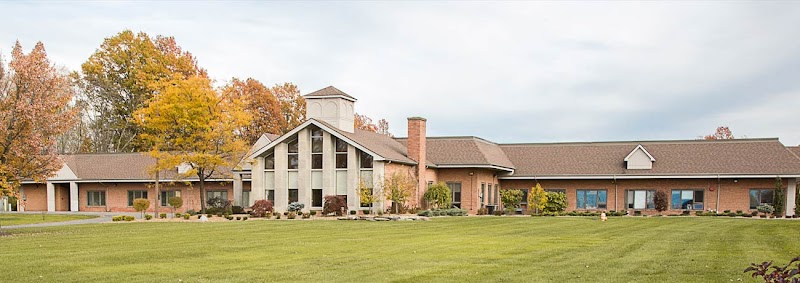

BRIARFIELD MANOR

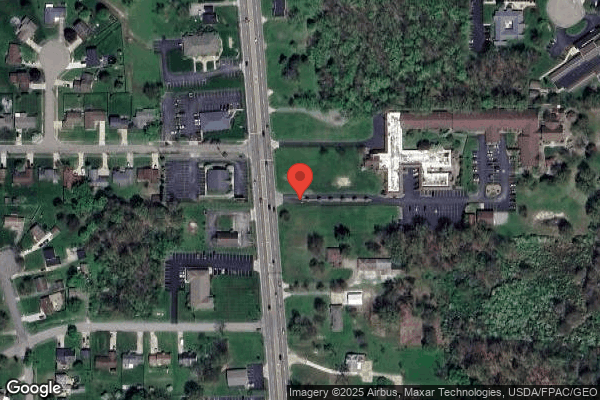
461 SOUTH CANFIELD NILES ROAD, YOUNGSTOWN, OH 44515 (330) 270-3468
For profit - Corporation 92 Beds Independent Data: November 2025
Trust Grade
45/100
#623 of 913 in OH
Last Inspection: March 2025

Within standard 12-15 month inspection cycle. Federal law requires annual inspections.

Overview

Briarfield Manor in Youngstown, Ohio, has received a Trust Grade of D, indicating below-average performance with some concerning issues. Ranking #623 out of 913 facilities in Ohio places it in the bottom half, and #21 out of 29 in Mahoning County means there are only a few local options that are better. The facility is worsening, as the number of identified issues increased from 3 in 2023 to 12 in 2025. Staffing is a relative strength, with a 4/5 star rating and a turnover rate of 42%, which is better than the Ohio average. However, there have been serious concerns, such as failing to provide timely pain management for residents and not adhering to dietary needs for residents on specific diets, which raises questions about the quality of care provided.

Trust Score
D
45/100
In Ohio
#623/913
Bottom 32%
Safety Record
Moderate
Needs review
Inspections
Getting Worse
3 → 12 violations
Staff Stability
○ Average
42% turnover. Near Ohio's 48% average. Typical for the industry.
Penalties
✓ Good
No fines on record. Clean compliance history, better than most Ohio facilities.
Skilled Nurses
⚠ Watch
Each resident gets only 29 minutes of Registered Nurse (RN) attention daily — below average for Ohio. Fewer RN minutes means fewer trained eyes watching for problems.
Violations
⚠ Watch
36 deficiencies on record. Higher than average. Multiple issues found across inspections.
★★☆☆☆
2.0
Overall Rating
★★★★☆
4.0
Staff Levels
★★☆☆☆
2.0
Care Quality
★★☆☆☆
2.0
Inspection Score
Stable
2023: 3 issues
2025: 12 issues

The Good

  • 4-Star Staffing Rating · Above-average nurse staffing levels
  • Full Sprinkler Coverage · Fire safety systems throughout facility
  • No fines on record
  • Staff turnover below average (42%)

    6 points below Ohio average of 48%

Facility shows strength in staffing levels, fire safety.

The Bad

2-Star Overall Rating

Below Ohio average (3.2)

Below average - review inspection findings carefully

Staff Turnover: 42%

Near Ohio avg (46%)

Typical for the industry

The Ugly 36 deficiencies on record

1 actual harm
Aug 2025 1 deficiency
CONCERN (D) 📢 Someone Reported This

A family member, employee, or ombudsman was alarmed enough to file a formal complaint

Potential for Harm - no one hurt, but risky conditions existed

Accident Prevention (Tag F0689)

Could have caused harm · This affected 1 resident

**NOTE- TERMS IN BRACKETS HAVE BEEN EDITED TO PROTECT CONFIDENTIALITY** Based on record reviews, fall investigation reviews, interviews and facility policy review, the facility failed to ensure falls ...

Read full inspector narrative →
**NOTE- TERMS IN BRACKETS HAVE BEEN EDITED TO PROTECT CONFIDENTIALITY** Based on record reviews, fall investigation reviews, interviews and facility policy review, the facility failed to ensure falls were thoroughly investigated for Residents #17 and #72. This affected two residents (#17 and #72) of three residents reviewed for falls. The facility census was 70. Findings include:1. Review of the medical record for Resident #17 revealed an admission date of 03/07/25. Diagnoses included history of falling, protein calorie malnutrition, hypertension, high cholesterol, gastroesophageal reflux disease (GERD), glaucoma, delirium, muscle weakness and hearing loss. Review of the fall risk assessment dated [DATE] revealed Resident #17 was at moderate risk for falls. Review of the comprehensive Minimum Data Set (MDS) assessment dated [DATE] revealed Resident #17 was severely cognitively impaired. She required supervision for eating, partial to moderate assistance for oral hygiene and showering and was dependent on staff for toileting and dressing. She was frequently incontinent of urine, always incontinent of bowel and was dependent on staff for rolling left to right, sitting to lying, lying to sitting on one side of the bed and sitting to standing or chair to bed transfers. Review of the physician's orders for August 2025 revealed an order for two quarter top positioning bars when up in bed to aid in positioning which began on 03/10/25, an alarm to the bed and wheelchair for safety which began on 05/08/25, a perimeter mattress which began on 05/23/25, and an order for one person assist with bed mobility, transfers and toileting using a front wheeled walker which began on 08/14/25. Review of the nursing note dated 05/22/25 at 5:51 P.M. revealed Licensed Practical Nurse (LPN) #201 was notified by Certified Nurse Aide (CNA) #207 that Resident #17 was out of bed. LPN #201 observed Resident #17 with both legs on the floor and her left arm in between the mattress and the bed railing facing into the mattress. When asked what happened, Resident #17 was unable to respond appropriately and stated, they are calling my mother. Vital signs were obtained, and the resident's blood pressure was 159/98, heart rate 88, pulse ox 94%, temperature 98.2 degrees Fahrenheit (F) and range of motion was within normal limits. The resident denied pain, and no injuries were noted. Resident #17's family, physician and the Director of Nursing (DON) were notified. The call light was noted to be in reach, the bed was in the lowest position, and an intervention of a perimeter mattress and floor mat were put into place. Review of the facility incident report dated 05/22/25 revealed Resident #17 was observed with both legs out of bed, with her left arm wedged in between the mattress and the arm rail. No injuries were noted. The resident was noted to be confused, incontinent with an unsteady gait, impaired memory, recent medication changes and weakness. She was oriented to person only. No predisposing factors were identified. There was no documented evidence of when she had last been toileted. Review of the care plan dated 05/25/25 revealed Resident #17 was at risk for falls due to gait and balance problems, history of falling and glaucoma. Interventions included a bed alarm, ensuring the call light within reach, a chair alarm and two quarter top positioning bars when up in bed to aid in positioning. Review of the nursing note dated 06/13/25 at 2:18 P.M. revealed LPN #202 was outside Resident #17's room when she heard her yelling for help. She went into the room to find the resident holding on to the side rail but still on the bed with her legs hanging out of the bed with blood on the floor and sheets. She called for assistance and CNAs #206 and #208 came into the room and assisted in applying pressure to Resident #17's lower extremity. The resident was assisted back into bed and presented with a large deep laceration into the fatty layers of her upper thigh. An ambulance was already in the facility for another resident; however, it was determined Resident #17's needs were greater, therefore she was taken to the emergency department (ED). Resident #17's daughter was notified; her vital signs were not able to be obtained before ambulance transport. The resident returned from the ED approximately 6:00 P.M. with 15 stitches to the laceration on the inside of her right thigh. Review of the facility incident report dated 06/13/25 revealed Resident #17 was yelling for help and found almost out of bed with blood all over. CNAs #206 and 208 assisted in getting the resident back into bed while LPN #202 attended to and addressed the injury, a deep laceration to inner right thigh. The resident was oriented to person in place, hearing impaired and did not use her call light for assistance. She was immediately sent to the ED. There was no description of the condition of the room, no indication if the bed alarm was in use or activated, no information regarding a perimeter mattress or floor mat and no evidence that the call that was within reach. Witness statements obtained as part of the investigation revealed LPN #202 was outside Resident #17's room when she heard her yell for help. The resident was found halfway out of her bed with the upper half of her body in her bed holding onto the side rail. Blood was noted on the sheets on the floor. Additional staff came to the room and assisted in getting Resident #17 back into bed. The resident was transported to the ED by ambulance. There was no documented evidence to determine if the call light was in reach, if the perimeter mattress was in place, what the room looked like, or when Resident #17 had last been toileted in the witness statements. Interview on 08/25/25 at 9:57 A.M. with LPN #202 revealed she happened to be walking by Resident #17's room when she heard her scream, so she entered her room. She said her tray table was at the end of her bed and she looked around but could not locate any source that may have caused the laceration to her leg. Interview on 08/25/25 at 10:12 A.M. with LPN #205 revealed Resident #17 was incontinent of both bowel and bladder at the time of the fall on 06/13/25. She confirmed Resident #17 should have been toileted every two hours and she believed the last time she had seen the resident was approximately 15 to 20 minutes prior to the incident. She confirmed there was a bed alarm on Resident #17's bed; however, it had not been activated because the resident was still halfway on the bed. She revealed the residents' bedside table was between the middle and the head of the bed at an angle and there was no indication of what may have caused the injury. Interview 10/25/25 at 10:20 A.M with CNA #206 revealed she had helped Resident #17 into bed approximately 10 minutes before the incident and toileted her at that time. She heard the resident scream and found her on her bed with her elbows propped up on the bed and her legs on the floor. She revealed that tray side table was over the top of her legs, but no blood was noted on the tray side table. She stated Resident #17 was incontinent of both bowel and bladder at the time of the fall. She could not confirm if a perimeter mattress was in place at the time but confirmed her call light was within reach. Interview on 08/25/25 at 12:14 P.M. with the DON verified the facility's fall investigations likely needed to be updated to ensure accuracy and thoroughness and should have included all interventions in place at the time of the falls for Resident #17 to determine a root cause analysis of the fall. 2. Review of the medical record for Resident #72 revealed an admission date of 04/14/25 and a discharge date of 07/17/25. Diagnoses included urinary tract infection, osteoporosis, hypertension, vitamin D deficiency, anxiety, muscle weakness and history of falling. Review of the fall risk assessment data 04/14/25 revealed Resident #72 was at moderate risk for falls. Review of the comprehensive MDS assessment dated [DATE] revealed Resident #72 was moderately cognitively impaired. She required supervision for eating oral and personal hygiene and partial to moderate assistance with toileting and showering. She was occasionally incontinent of urine and bowel. Review of the care plan dated 04/21/25 revealed Resident #72 was at risk for falls due to muscle weakness, history of falls, and difficulty walking. Interventions included ensuring the call light was within reach, maintaining a clear pathway and two quarter top positioning bars when up in bed to aid in positioning. Review of the nursing note dated 05/15/25 at 3:00 P.M. revealed Resident #72 was found on the floor in front of her wheelchair in her room. She said she was attempting to self-ambulate and was unable to keep her balance. She said she hit her head on the floor. A red area to her left hip and left upper head were noted. Here vital signs were noted to be within normal limits; however, they were not documented. The resident was assisted to her wheelchair, and her physician, the DON and daughter were notified. Her daughter asked that the resident be sent to the ED. Review of the facility incident report dated 05/15/25 revealed Resident #72 was attempting to self-ambulate when she lost her balance, there was an alarm (no order for an alarm) sounding at the time of the incident. The resident was assessed and both neurological checks and vital signs were stated to be within normal limits; however, neither were included in the report. Resident #72 was listed as confused but oriented to person. Predisposing factors were listed as weakness, gait imbalance and ambulating without assistance. The investigation revealed no evidence of the residents' call light being in reach. Review of the nursing note dated 07/11/25 at 10:58 A.M. revealed Resident #72 was found on the floor with no signs of injury. The resident was confused and unable to answer questions, could not follow the light with her eyes. The resident was sent to the ED, and both her daughter and son were notified as well as the physician and DON. Review of the facility incident report dated 07/11/25 revealed Resident #72 was found on the floor by LPN #205 and was assisted into her wheelchair along with an unnamed CNA. A skin assessment was completed, and no visible signs of injury were noted. The resident could not indicate if she hit her head but was unable to answer questions or follow direction. The resident's vital signs were obtained with a blood pressure of 116/70, pulse ox 99%, temperature 97.9 degrees F, heart rate 80, and no pain. Neurological checks were reported as within normal limits; however, there was no documented evidence of the neurological checks. The resident was sent to the ED for an evaluation. The resident was confused with predisposing factors of incontinence, gait imbalance and not using her call light for assistance. The investigation did not reveal if the resident's call light was within reach or when she was last toileted. Interview on 08/25/25 at 12:14 P.M. with the DON revealed Resident #72 had no physician's order or care plan addressing a bed or chair alarm. She verified the facility's fall investigations likely needed to be updated to ensure accuracy and thoroughness and should have included all interventions in place at the time of the falls for Resident #72 to determine a root cause of the fall. Review of the undated facility policy titled Fall Prevention Procedure/Policy revealed the facility would document and evaluate any fall that occurred while the patient resided at the facility including when and where and observations of the event. The facility would assess, and document vital signs, recent injuries, neurological status, precipitating factors and details of how a fall occurred. The nurse would assess the patients' vital signs, range of motion and any injuries as well as identify environmental factors that may have contributed to the fall. This deficiency represents noncompliance investigated under Complaint Number 2584229.
Mar 2025 11 deficiencies 1 Harm
SERIOUS (G)

Actual Harm - a resident was hurt due to facility failures

Deficiency F0697 (Tag F0697)

A resident was harmed · This affected 1 resident

**NOTE- TERMS IN BRACKETS HAVE BEEN EDITED TO PROTECT CONFIDENTIALITY** Based on observation, record review, facility policy review, and interview, the facility failed to develop and implement a compr...

Read full inspector narrative →
**NOTE- TERMS IN BRACKETS HAVE BEEN EDITED TO PROTECT CONFIDENTIALITY** Based on observation, record review, facility policy review, and interview, the facility failed to develop and implement a comprehensive, individualized and effective pain management program for Resident #273 and Resident #66. This affected two residents (#273 and #66) of two residents reviewed for pain. The facility census was 67. Actual harm occurred beginning on 02/20/25 when the facility failed to ensure narcotic (pain) medication (that Resident #273 had been receiving prior to admission) was ordered and provided at the time of and timely following admission to manage the resident's pain. On 02/21/25 and 02/22/25 the resident reported constant pain, all over that limited his functional abilities during therapy evaluations. On 02/23/25 the resident refused therapy due to pain and was teary-eyed. On 02/24/25 at 10:01 A.M., Resident #273 stated he was in constant pain all over. The resident was tearful and covered his face with his hands and was lying in bed with his knees bent and stated he couldn't straighten his legs because it hurt too bad. The resident reported staff told him they were unable to give him anything stronger than Tylenol for pain until he was evaluated by a physician, and the resident had not yet been seen by the physician. Findings include: 1. Review of the medical record for Resident #273 revealed an admission date of 02/20/25 with diagnoses of osteoarthritis (OA), chronic gout, major depressive disorder, chronic pain, pain in right and left ankles and feet. Review of medical record revealed Resident #273 was admitted from another nursing facility with active order for Norco Oral tablet 5/325 mg (opioid pain medication) every six hours as needed for pain. In review of the admission orders, there was no order for Norco on admission. Review of Resident #273's admission assessment dated [DATE] revealed Resident #273 was alert and oriented to person, place, time and situation and that he was verbally appropriate. The admission assessment also revealed Resident #273 relayed no pain upon admission. An admission falls assessment dated [DATE] stated Resident #273 required assistance with activities of daily living (ADL) self-performance, had an unsteady gait and used an assistive device for mobility. Review of Resident #273's Physical Therapy (PT) Evaluation dated 02/21/25 revealed Resident #273 rated his pain at rest at seven on a pain scale of zero to ten, ten being the worst, and pain with movement at nine, frequency and duration of the pain as constant and location of the pain as all over, all my joints, everywhere. The PT eval also revealed that Resident #273 verbalized pain and that the pain limits his functional abilities. Clinical Impressions in the PT assessment summary reveal severe pain limiting activity tolerance and functional mobility. Review of Resident #273's Occupational Therapy (OT) Evaluation dated 02/22/25 reveals Resident #273 rated his pain at rest at six and pain with movement at nine, frequency and duration of the pain as constant and location of the pain as all over. The OT eval also revealed that Resident #273 verbalized pain and that the pain limited his functional abilities. Review of the PT notes dated 02/23/25 reveal Resident #273 was teary-eyed throughout the therapy session and reported frustration with pain and Resident #273 declined further therapeutic exercises on that date. Review of the medical record revealed Resident #273 was ordered Tylenol 325 mg (analgesic) two tablets by mouth every four hours as needed for pain beginning on 02/24/2025 at 6:30 P.M. Review of the Medication Administration Record (MAR), he was given his first dose of Tylenol on 02/24/25 at 8:38 P.M. Interview with Resident #273 on 02/25/25 at 12:17 P.M. revealed Resident #273 was awake and lying in bed. He rated his pain at five, and he was tearful. The resident was hiding his face in his hands and stated he was in pain overnight but was offered nothing for pain. He also stated he had not yet seen a doctor. Observation of Resident #273 on 02/26/25 at 8:23 A.M. revealed he was awake and lying in bed. The surveyor observed Certified Nursing Assistant (CNA) #462 check on Resident #273 who stated he was in a lot of pain; CNA #462 stated that he would tell the nurse. Interview with Licensed Practical Nurse (LPN) #497 on 02/26/25 at 10:43 A.M. revealed Resident #273 expressed pain a lot but would not take Tylenol because he stated it doesn't help. LPN #497 was on her way to help the CNAs weigh the resident and stated she would assess his pain at that time. LPN #497 also stated Resident #273 was last medicated for pain with Tylenol on 2/24/25 at 8:38 P.M. which Resident #273 stated was effective; this was verified by record review. Interview with LPN #497 on 02/26/25 at 11:08 A.M. revealed Resident #273 refused to take Tylenol that morning and said, I tried it before and it doesn't work. LPN #497 stated she planned to reach out to the physician for further intervention. Interview with Nurse Practitioner (NP) #506 on 02/26/25 at 2:43 P.M. revealed she saw Resident #273 that afternoon and when she entered his room, he was lying in bed on his phone and was not expressing any non-verbal signs of pain. She stated that during her examination, Resident #273 stated he had burning pain in his feet and could not straighten out his legs due to pain. She prescribed Tramadol 50 mg (opioid analgesic) every six hours as needed since Resident #273 said the Tylenol does not help him. Review of Resident #273's medical record on 02/26/25 at 4:32 P.M. and review of pain assessment in Treatment Administration Record (TAR) show no pain identified for Resident #273 during all but two shifts since admission. Interview with LPN #497 confirmed this at the time of the review and stated the resident expressed pain a lot and could not account for why there were so many zeroes marked in the TAR regarding Resident #273's pain. Review of the care plan dated 02/27/25 revealed Resident #273 was at risk for pain and the goals were that the pain and discomfort would be controlled as evidenced by no signs or symptoms of pain and no complaints of pain. The care plan interventions included staff should note if pain medications were effective and notify medical doctor (MD) as indicated. Observation of Resident #273 on 02/27/25 9:28 A.M. revealed the resident was awake and alert in bed. The resident stated his pain was not too bad this morning and expressed his feeling that the new medication that was ordered had helped. He stated he hoped to participate in therapy later that day. Observation of Resident #273 on 03/03/25 at 9:05 A.M. revealed complaints of pain in both feet and stated his pain was at seven. Resident #273 stated he had been taking pain medication but did not feel any different. He was lying in bed moaning with pained facial expression. He stated the nurse was aware of his pain that morning, and she had just left his room after medicating him with Tramadol. Interview with the Director of Nursing (DON) on 03/03/25 at 12:19 P.M. revealed when residents were admitted from another facility, the admission orders were taken from the other facility's order summary and verified with the physician. A follow-up interview with DON on 03/03/25 at 3:36 P.M. confirmed Norco orders did not transfer to admission orders because this facility's doctors do things differently than other facility's doctors, and there was no chronic condition indicated for the use of Norco. The DON was unable to state where in the chart that would be documented. Interview with LPN #510 on 03/03/25 at 3:48 P.M. confirmed Resident #273's pain inhibited his ability to walk to the bathroom and his willingness to get up to use the commode. Observation of Resident #273 on 03/03/25 at 3:50 P.M. revealed the resident was lying in bed on his back, knees bent. He was awake and alert and stated he was in some pain. He stated he took a pain pill earlier. Interview with CNA #401 on 03/03/25 3:54 P.M. revealed Resident #273 doesn't allow her to touch him due to pain. He resists getting dressed or bathed because he is in too much pain. Interview with Resident #273 on 03/04/25 10:48 A.M. revealed he was about the same and rated his pain at six. He was lying on his bed with a pained facial expression and his knees were bent. Review of the undated facility pain policy revealed if the presence of pain was identified or the resident has an order for pain medication, an assessment would be completed to determine the intensity, location and interventions required. The pain policy also stated ineffective pain control, or the onset of new pain would trigger a further assessment of the pain and interventions used. 2. Review of Resident #66's medical record revealed an admission date of 12/24/24 with diagnoses including hemiplegia (paralysis) and hemiparesis (weakness) following cerebral infarction affecting the left non-dominant side, aphasia (language disorder that affects the ability to communicate effectively) following cerebral infarction, dysphagia (difficulty swallowing), dysarthria (slurred speech) following cerebral infarction and vascular dementia. Review of Resident #66's care plan dated 01/12/25 included Resident #66 was at risk for pain related to cerebral vascular accident (CVA) with left sided weakness. Resident #66 would display signs of comfort and would have no signs and symptoms or complaints of pain or discomfort. Resident #66 would report pain was resolved with medication and other interventions. Interventions included assessing symptoms of pain on occurrence and documenting location and pain scale as reported by the resident; notifying the physician as indicated; providing pain medication as prescribed. Review of Resident #66's physician orders dated 01/23/25 revealed acetaminophen tablet 325 mg, give two tablets by mouth every four hours as needed for general discomfort. Review of Resident #66's progress notes dated 01/31/25 at 6:42 A.M. included the nurse entered Resident #66's room to help transfer him into his wheelchair so he could be assisted to the dining room for breakfast. Resident #66 stated he did not want to get up in the chair or go to the dining room due to his left knee hurting. Review of Resident #66's Medication Administration Record (MAR) dated 01/31/25 did not reveal pain medication including acetaminophen was administered. Resident #66's MAR on 01/31/25 from 6:42 A.M. through 7:00 P.M. did not reveal evidence his pain was rated on a scale of zero to ten, zero being no pain and ten being the worst pain. Review of Resident #66's MAR dated 02/01/25 through 02/26/25 revealed there was no evidence Resident #66's pain was evaluated on 02/07/25 day shift, 02/08/25 day shift and 02/14/25, 02/15/25, 02/23/25 day shift. On 02/26/25 during day shift, Resident #66's pain was rated at a zero on a pain scale with zero being no pain and ten being the worst pain. Review of Resident #66's PT evaluation and plan of treatment dated 02/08/25 included Resident #66's pain at rest was rated as a five out of a ten, zero being no pain and ten being the worst pain. Resident #66's pain was intermittent, he had left sided hypersensitivity, and the pain was described as shooting pain. Resident #66's pain with movement was rated as a ten out of ten on a zero to ten pain scale. Resident #66's pain was intermittent, he had left sided hypersensitivity, and the pain was described as shooting. Resident #66 communicated pain using the faces pain rating scale. Pain limited Resident #66's functional activities. Resident #66 received pain medications on a scheduled program, and Resident #66 received pain medications as needed. Upon evaluation, Resident #66 presented with impaired bilateral lower extremity (BLE) strength the left greater than the right, left sided hemiparesis, hypersensitivity and neglect, impaired functional mobility compared to baseline, impaired balance, impaired activity tolerance and pain. Due to documented physical impairments and associated functional deficits, Resident #66 was at risk for increased tone, limiting functional movement and increased pain. Review of Resident #66's OT evaluation and plan of treatment dated 02/09/25 included Resident #66's pain at rest was a four out of a ten, on a zero to ten pain scale, the pain was located in the left knee, was constant and described as sharp. Resident #66's pain with movement was a seven out of ten on a zero to ten pain scale, the pain was in the left knee, was constant and described as sharp pain. Resident #66 verbalized his pain level and the pain limited Resident 366's functional activities. Resident #66's pain interventions were unknown. Review of Resident #66's MAR dated 02/08/25 and 02/09/25 did not reveal pain medication including acetaminophen was administered. Further review of the MAR dated 02/09/25 revealed Resident #66's pain was rated as zero. Review of Resident #66's progress notes dated 02/08/25 and 02/09/25 did not reveal documentation related to pain. Review of the 5-day Medicare Minimum Data Set (MDS) 3.0 assessment dated [DATE] revealed Resident #66 was cognitively intact. Resident #66 was dependent on staff for toileting hygiene and lower body dressing. Resident #66 required substantial to maximal assistance with bathing. Resident #66 had an indwelling catheter and was always incontinent of bowel. Resident #66 did not reject care during the seven-day assessment look-back period. Resident #66 was not on a scheduled pain regimen. He received as needed (PRN) pain medications and did not receive non-medication pain regimen. The MDS states a pain assessment interview should not be conducted because the resident was rarely/never understood. The staff assessment for pain stated Resident #66 had indicators of pain in the last five days including facial expressions (grimaces, winces, wrinkled forehead, furrowed brows, clenched teeth or jaw) observed one to two days. Review of Resident #66's physician orders dated 02/21/25 revealed Baclofen oral tablet 10 mg (muscle relaxant), give one tablet by mouth every eight hours as needed for spasms. Review of Resident #66's MAR dated 02/21/25 through 02/26/25 did not reveal Resident #66 was administered Baclofen 10 mg. Interview on 02/25/25 at 2:42 P.M. of Director of Rehab (DOR) #509 revealed Resident #66 received PT, OT, and Speech Therapy (ST). DOR #509 stated Resident #66 had difficulty with expressive and receptive communication and they were working on things like word retrieval, following commands, auditory processing and yes and no accuracy. PT and OT were working on lower and upper extremity strengthening. DOR #509 stated Resident #66 used a mechanical lift for transfers. Observation on 02/26/25 at 9:58 A.M. of Resident #66 revealed CNA #462 and CNA #491 were preparing Resident #66 to be transferred to his wheelchair using a mechanical lift. LPN #402 was standing at Resident #66's bedside along with CNA's #462 and #491. Observation of Resident #66 revealed he had facial grimacing, grunted, and cried out in pain when the mechanical lift started to lift him out of the bed. Resident #66's left leg was pulled up towards his upper body and when CNA #491 attempted to straighten it during the transfer Resident #66 cried out in pain and he had a worried look on his face. CNA #491 did not continue attempting to strengthen his leg. CNA #462 stated Resident #66 used to want to come out of his room much more when he first arrived at the facility than he did now. LPN #402 instructed the aides that when Resident #66 was uncomfortable and in pain during mechanical lifts they should get a staff person from therapy to assist them with Resident #66's positioning during transfers. Interview on 02/26/25 at 12:12 P.M. of Occupational Therapy Assistant (OTA) #508 and PT #507 revealed they worked with Resident #66 on things like simple grooming and hygiene, unsupported sitting, passive stretching, gentle range of motion. OTA #508 stated Resident #66 was having quite a bit of pain in his left arm and left leg. PT #507 stated Resident #66's left leg had a lot of tone and was drawn in, and he babied his left arm because it hurt. PT #507 stated she thought Resident #66 was receiving a muscle relaxant. PT #507 stated pain was a dominant thing that was limiting Resident #66's participation in therapy, and his tolerance for therapy was limited. PT #507 stated Resident #66 used to be up a lot but was now spending more time in bed. PT #507 and OTA #508 stated they had been in communication with the nursing staff regarding Resident #66's pain, but they could not remember which nurses they told about Resident #66's pain. PT #507 stated Resident #66 laid on his left side, he favored it, and it was hard to get him positioned so he does not lay like that. OTA #508 stated Resident #66 was cooperative with his therapy and wanted to do well, but his pain interfered with therapy. OTA #508 and PT #507 stated they did not document Resident #66's pain every day when he had therapy because his pain was constant and chronic and everyone knows he had a lot of pain including the nurses. PT #507 stated Resident #66 could not verbalize the type of pain he was having, but had facial grimacing, and you could tell he was in pain. PT #507 stated Resident #66's pain could be the reason he did not want to come out of his room. Interview on 02/26/25 at 3:23 P.M. of NP #506 revealed she evaluated Resident #66's pain and stated when someone moved him he was in pain and when he was laying still he did not have pain. NP #506 stated Resident #66 was ordered Baclofen 10 mg tablet as needed but the nurses were not giving it to him. NP #506 stated she ordered Baclofen 5 mg tablet to be given on a schedule three times a day. Review of Resident #66's MAR dated 02/26/25 did not reveal pain medication including acetaminophen was administered. Review of Resident #66's physician orders dated 02/26/25 revealed Baclofen oral tablet 5 mg, give one tablet by mouth three times a day for spasms. Interview on 02/27/25 at 8:37 A.M. of CNA's #420 and #444 revealed Resident #66's left leg was bent and pulled up towards his chest and CNA #420 stated he could not straighten his leg because it caused pain when they tried to straighten it. CNA #420 stated on 02/24/25 and 02/25/25 Resident #66 was in pain and not tolerating much in the way of care, but today his pain seemed better. Review of Resident #66's MAR dated 02/24/25 and 02/25/25 revealed Resident #66's pain for day and night shift was rated as a zero on a scale of zero to ten, zero being no pain and ten being the worst pain. Interview on 03/03/25 at 9:35 A.M. of LPN #402 revealed Resident #66 was uncomfortable and in pain when she was in his room on 02/26/25 assisting with his transfer using a mechanical lift. LPN #402 stated she was not the nurse assigned to Resident #66 on 02/26/25 and she did not remember if she told the nurse assigned to him if he was having pain. Interview on 03/03/25 at 12:05 P.M. of LPN #497 revealed she did not know why on 02/26/25 she put a zero for Resident #66's pain rating and could not remember details. Interview on 03/04/25 at 11:06 A.M. of PT #507 revealed Resident #66 was still in pain and she could just see it in his face when he received therapy. PT #507 stated she wished the facility would at least try a pain medication to see if it was effective. Interview on 03/04/25 at 11:30 A.M. of the DON revealed after the surveyor told her PT #507 stated Resident #66 was still in pain when he received therapy, the DON indicated she would reach out to NP #506 for pain medication and maybe they could try Botox. Review of the facility policy which was untitled and undated included the purpose of the policy was to safely control a resident's prolonged pain and maintain a pain free existence in achieving an optimal level of comfort. It was the policy of the facility to assess residents for the presence of pain and provide pain relief measures. All residents would be assessed for pain on admission and on an on-going basis. If the presence of pain was identified or the resident had an order for pain medication an assessment would be completed to determine the intensity, location and interventions required.
CONCERN (D)

Potential for Harm - no one hurt, but risky conditions existed

Notification of Changes (Tag F0580)

Could have caused harm · This affected 1 resident

**NOTE- TERMS IN BRACKETS HAVE BEEN EDITED TO PROTECT CONFIDENTIALITY** Based on observation, interview and record review, the facility failed to notify Resident #32's representative of a new skin imp...

Read full inspector narrative →
**NOTE- TERMS IN BRACKETS HAVE BEEN EDITED TO PROTECT CONFIDENTIALITY** Based on observation, interview and record review, the facility failed to notify Resident #32's representative of a new skin impairment. This affected one resident (#32) of three residents reviewed for changes in condition. The facility census was 67. Findings include: Review of Resident #32's medical records revealed an admission date of 06/19/23. Diagnoses included Alzheimer's, dementia and muscle weakness. Review of the care plan dated 12/24/24 revealed Resident #32 had self-care deficits. Interventions included assisting Resident #32 with transfers, toileting and bed mobility. Review of the Minimum Data Set (MDS) 3.0 assessment dated [DATE] revealed Resident #32 had impaired cognition. Review of progress note dated 02/21/25 timed 6:52 P.M. authored by Licensed Practical Nurse (LPN) #497 that stated during transfer to the toilet, Resident #32 had difficulty standing, and had fallen back into the wheelchair and received a skin tear to her right wrist. The skin tear was cleansed with normal saline and a foam dressing was applied. The progress note did not include notification of the family regarding the skin tear. Observation on 02/24/25 at 9:23 A.M. revealed Resident #32 was in a wheelchair in her room and had a foam bandage to her right wrist. Interview with Resident #32 revealed she was confused and unaware how the injury occurred. Interview with LPN #497 at time of observation revealed on 02/21/25 she was assisting Resident #32 to the toilet, and Resident #32's legs became weak, and Resident #32 flung her arms out and hit her hand on the wheelchair. Telephone interview on 02/24/25 at 10:54 A.M. with Resident #32's daughter revealed she had not been aware of Resident #32 having a skin tear. Follow up interview on 02/24/25 at 1:32 P.M. with LPN #497 revealed she could not recall calling Resident #32's daughter to inform of the skin tear. Review of progress notes with LPN #497 at time of interview confirmed progress note had not included documentation of notification to Resident #32's daughter and stated she should have called to inform of the injury.
CONCERN (D)

Potential for Harm - no one hurt, but risky conditions existed

ADL Care (Tag F0677)

Could have caused harm · This affected 1 resident

**NOTE- TERMS IN BRACKETS HAVE BEEN EDITED TO PROTECT CONFIDENTIALITY** Based on observation, interview and record review the facility failed to ensure Resident's #52 and #66's care planned interventi...

Read full inspector narrative →
**NOTE- TERMS IN BRACKETS HAVE BEEN EDITED TO PROTECT CONFIDENTIALITY** Based on observation, interview and record review the facility failed to ensure Resident's #52 and #66's care planned interventions for grooming were implemented. This affected two residents ( #52 and #66) of three residents reviewed for grooming. The facility census was 67. Findings include: 1. Review of Resident #66's medical record revealed an admission date of 12/24/24 with diagnoses including hemiplegia (paralysis) and hemiparesis (weakness) following cerebral infarction affecting the left non-dominant side, aphasia (language disorder that affects the ability to communicate effectively) following cerebral infarction, dysphagia (difficulty swallowing), dysarthria (slurred speech) following cerebral infarction, and vascular dementia. Review of the care plan dated 01/08/25 included Resident #66 had a self-care deficit regarding activities of daily living (ADL) and mobility. Resident #66's dignity would be maintained. Resident #66 would be well-groomed, clean and neat through the next assessment. Interventions included bed mobility required assistance of two staff members; Resident #66 preferred to be bathed on day shift on Monday, Wednesday, and Friday. Review of Resident #66's progress notes dated 01/27/25 through 02/26/25 did not reveal any written evidence Resident #66 refused to have his fingernails trimmed or that staff encouraged him to allow his fingernails to be trimmed. Review of the 5-day Medicare Minimum Data Set (MDS) 3.0 assessment dated [DATE] revealed Resident #66 was cognitively intact. Resident #66 was dependent on staff for toileting hygiene and lower body dressing. Resident #66 required substantial to maximal assistance with bathing. Resident #66 had an indwelling catheter and was always incontinent of bowel. Resident #66 did not reject care during the seven-day assessment look-back period. Interview on 02/25/25 at 2:42 P.M. of Director of Rehab (DOR) #509 revealed Resident #66 had difficulty with expressive and receptive communication, had difficulty with yes and no accuracy, auditory processing and following commands. Review of Resident #66's care plan initiated 02/25/25 included Resident #66 refused, resisted treatment, to comply with safe regulations, and to participate in therapy. Resident #66 would comply with the plan of treatment and care by the next evaluation. Resident #66 would have less than four episodes per week of resisting care. Interventions included determining the reason for refusal; educating regarding health, safety consequences of refusal; encouraging Resident #66 to participate in care. Further review did not reveal evidence a care plan was initiated for Resident #66 being resistive to care prior to 02/25/25. Observation on 02/26/25 at 9:58 A.M. of Resident #66 with Certified Nursing Assistant (CNA) #462 revealed the resident's fingernails on the right hand were about one half inch to three quarters of an inch long. The fingernails were yellow and had a lot of brownish colored material observed underneath them. CNA #462 confirmed Resident #66's fingernails were long, yellow and had brownish material underneath them and stated the nurse's usually cut resident fingernails because the aides did not know if a resident was a diabetic or on blood thinners or things like that. Interview on 02/26/25 at 9:59 A.M. of Licensed Practical Nurse (LPN) #446 revealed he noticed Resident #66's fingernails were long, dirty and yellow with brown material underneath them. LPN #446 stated he would look at Resident #66's fingernails today and had not got that far yet today. LPN #446 confirmed the nurse's usually cut resident fingernails, but the aides could do it if the resident was not a diabetic. Interview on 02/26/25 at 12:12 P.M. of Certified Occupational Therapy Assistant (COTA) #508 revealed she worked with Resident #66 on simple ADL, simple grooming and hygiene and unsupported sitting. COTA #508 stated Resident #66 had quite a bit of pain in his left arm and left leg and the left leg was drawn in and had a lot of tone. COTA #508 stated Resident #66 babied his left arm because it hurt. COTA #508 indicated Resident #66 wanted to do well but his pain interfered with his therapy and working on things like ADL. Review of Resident #66's Resident Shower Documentation Sheets (provided to the surveyor by email on 03/05/25) dated 02/03/25, 02/11/25, 02/13/25, 02/20/25, 02/24/25, and 02/26/25 revealed Resident #66 refused nail care. (However, the MDS 3.0 assessment stated Resident #66 had not rejected care from 02/08/25 through 02/14/25). There was no further evidence provided by the facility that nail care had been re-attempted by a nurse or certified nursing assistant (CNA) on any other days between 02/03/25 and 02/26/25 to ensure the resident was receiving assistance with nail hygiene and grooming. There was no documented evidence that the physician and/or Resident #66's responsible party were notified that Resident #66 refused nail care. 2. Review of Resident #52's medical record revealed an admission date of 01/20/25 with diagnoses including type two diabetes mellitus with ketoacidosis without coma, dementia without behavioral disturbance, psychotic disturbance, mood disturbance and anxiety, and acute kidney failure. Review of the care plan dated 01/21/25 included Resident #52 had a self-care deficit regarding ADL and mobility. Resident #66's dignity would be maintained. Resident #52 would be well-groomed, clean and neat through the next assessment. Resident #52 would participate in therapy and improve ADL, mobility and self-care. Interventions included ambulation, bed mobility, continence and oral care. Review of the admission MDS 3.0 assessment dated [DATE] included a BIMS was not conducted because Resident #52 was rarely or never understood. Resident #52 was dependent on staff for bathing, toileting hygiene, and required substantial to maximal assistance for personal hygiene. Observation on 02/25/25 at 9:29 A.M. of Resident #52 with LPN #446 revealed Resident #52 had long fingernails on both hands about one half inch to three quarters inch. Resident #52's fingernails were yellow and had a lot of brown material underneath the nails. Three to four of Resident #52's fingernails were short and very thick, and LPN #446 stated he could not cut those, but he would make sure the other long fingernails were clipped. LPN #446 confirmed Resident #52's fingernails were dirty. LPN #446 asked Resident #52 if he could cut his fingernails, and Resident #52 nodded his head yes.
CONCERN (D)

Potential for Harm - no one hurt, but risky conditions existed

Quality of Care (Tag F0684)

Could have caused harm · This affected 1 resident

**NOTE- TERMS IN BRACKETS HAVE BEEN EDITED TO PROTECT CONFIDENTIALITY** Based on observation, interview, record review and facility policy review, the facility failed to ensure treatments were adminis...

Read full inspector narrative →
**NOTE- TERMS IN BRACKETS HAVE BEEN EDITED TO PROTECT CONFIDENTIALITY** Based on observation, interview, record review and facility policy review, the facility failed to ensure treatments were administered according to physician orders for Residents #40 and #58. This affected two residents (#40 and #58) of three residents reviewed for physician orders. The facility failed to adequately document abnormal vital signs for Resident #57 exhibiting a change in condition resulting in hospitalization. This affected one resident (#57) of three residents reviewed for change in condition. The facility census was 67. Findings include: 1. Review of Resident #40's medical records revealed an admission date of 04/26/24. Diagnoses included chronic heart failure (CHF), hypertension and muscle weakness. Review of the care plan dated 01/09/25 revealed Resident #40 was at risk for edema. Interventions included Tubi grips (a tubular bandage that provides compression and support for arms and legs) per physician order. Review of the Minimum Data Set (MDS) 3.0 assessment dated [DATE] revealed Resident #40 had intact cognition. Review of the physician orders for February 2025 revealed Resident #40 was ordered Tubi grips to be worn on lower extremities while out of bed and to be removed at bedtime. Interview on 02/24/25 at 9:13 A.M. with Resident #40 revealed she would like her compression stocking applied, and she stated she had been told they had been ordered, and she had not had them for about a week. Observation at the time of the interview revealed Resident #40 was not wearing compression stockings and bilateral legs appeared to be swollen. Interview on 02/25/25 at 8:16 A.M. with Resident #40 stated she had not been given her compression stockings the previous day and she had requested them to be placed on. Observation of Resident #40 at the time of the interview revealed she was not wearing compression stockings. Interview on 02/25/25 at 12:12 P.M. with Licensed Practical Nurse (LPN) #510 revealed she was unaware Resident #40 had not been given Tubi grips. LPN #510 stated the facility had Tubi grips in the supply room and stated she would obtain a pair and place them on Resident #40. Observation at the time of the interview revealed LPN #510 had obtained a box of Tubi grips from the supply room and applied the stocking to Resident #40's bilateral extremities. Review of physician orders with LPN #510 after applying Resident #40's Tubi grips revealed physician orders had been placed in the computer system incorrectly and stated the orders had an indication that documentation was not required regarding Resident #40's Tubi grips. LPN #510 stated due to the incorrect orders, the application of Resident #40's Tubi grips had not shown in the computer system as a treatment that was to be completed daily. 2. Review of Resident #57's medical records revealed an admission date of 08/29/23. Diagnoses included respiratory failure, chronic obstructive pulmonary disease (COPD) and hypertension. Review of the care plan dated 12/24/24 revealed Resident #57 required respiratory treatments. Interventions included provide respiratory treatments as ordered. Review of the MDS 3.0 assessment dated [DATE] revealed Resident #57 had impaired cognition. Review of the progress note dated 02/07/25 timed 9:30 A.M. authored by LPN #485 revealed Resident #57 was transported by ambulance to an area hospital, vital signs were unstable with periods of confusion. Review of Resident #57's medical records revealed no documentation of Resident #57's vital signs on 02/07/25. Review of progress note dated 02/17/25 timed 11:30 P.M. authored by Registered Nurse (RN) #472 revealed Resident #57 had arrived to facility at approximately 11:30 P.M. Interview on 03/03/25 at 11:18 A.M. with LPN #485 revealed she could not recall which of Resident #57's vital signs were abnormal and stated she had not recorded Resident #57's vital signs in the electronic medical records. 3. Review of the medical record for Resident #58 revealed an admission date of 12/15/23. Diagnoses included chronic kidney disease, chronic diastolic (congestive) heart failure (CHF), atherosclerotic heart disease, and hyperlipidemia. Review of the physician orders for Resident #58 revealed a physician order, dated 10/22/24, for Furosemide (generic for Lasix which was a diuretic used to treat fluid overload in adults with CHF) one 40 milligram (mg) tablet with instructions to administer one tablet one time a day; and another physician ordered, dated 01/03/25, for Lasix oral tablet 20 mg with directions to give one 20 mg tablet every 24 hours as needed if the resident's weight increased more than two pounds in a day. Review of the modification of annual MDS 3.0 assessment dated [DATE] revealed Resident #58 was cognitively intact and had received a diuretic during the assessment reference period. Review of the care plan, created on 08/02/24, revealed Resident #58 was at risk for edema related to CHF and renal disease. Interventions included provide medication per physician order. Review of Resident #58's January 2025 and February 2025 Medication Administration Record (MAR) revealed Resident #58 had been substantially weighed daily with some resident refusals. On 01/05/25 the resident weighed 204.6 pounds and on 01/06/24 weighed 206.8, which was a 2.2 pound weight increase in 24 hours; on 02/02/24 the resident weighed 203.1 pounds and on 02/03/25 the resident weighed 205.8 pounds, which was an increase of 2.7 pounds increase in 24 hours; on 02/19/25 the resident weighed 204.2 pounds and on 02/20/25 weighed 208.9 pounds, which was an increase of 4.7 pounds in a 24 hour period; and on 02/25/25 the resident weighed 204.7 pounds and on 02/26/25 weighed 209.4, a weight increase of 4.7 pounds in a 24 hour period. Resident #58 had been administered the scheduled one 40 mg tablet of furosemide daily but had not been administered one 20 mg tablet of Lasix for a weight increase of more than a two in a day during the months of January and February. Interview on 03/02/25 at 8:04 P.M. with LPN #487 confirmed on 01/06/25 and on 02/03/25, when she input Resident #58's daily weight in the MAR, she should have administered one 20 mg tablet of Lasix since the resident had gained more than two pounds in a 24 period. She confirmed she had not administered one 20 mg tablet of Lasix for the weight increase on 01/06/25 and 02/03/25 since she hadn't realized the resident had an order to administer one 20 mg tablet of Lasix if the resident gained more than two pounds within a 24-hour period. Interview on 03/03/25 at 5:30 P.M. with Certified Nurse Practitioner (CNP) #500 revealed she was aware Resident #58 had an order in place to administer a diuretic if the resident gained more than two pounds in a day, and she would expect the facility to administer the medications as ordered. Review of the undated facility policy Medication Administration Policy revealed medications would be administered in accordance with written orders of the prescriber.
CONCERN (D)

Potential for Harm - no one hurt, but risky conditions existed

Incontinence Care (Tag F0690)

Could have caused harm · This affected 1 resident

**NOTE- TERMS IN BRACKETS HAVE BEEN EDITED TO PROTECT CONFIDENTIALITY** Based on observation, medical record review and staff interviews, the facility failed to ensure incontinence care was provided i...

Read full inspector narrative →
**NOTE- TERMS IN BRACKETS HAVE BEEN EDITED TO PROTECT CONFIDENTIALITY** Based on observation, medical record review and staff interviews, the facility failed to ensure incontinence care was provided in a timely manner for Resident #67. This affected one resident (#67) of two residents reviewed for incontinence care. The facility census was 67. Findings include: Record review revealed Resident #67 was admitted to the facility on [DATE] with diagnoses of displaced intertrochanteric fracture of left femur, subsequent encounter for closed fracture with routine healing, other fracture of head and neck of left femur, subsequent encounter for closed fracture with routine healing, difficulty in walking. Review of the Brief Interview for Mental Status (BIMS) dated 12/30/24 revealed Resident #67 scored 14 out of 15, indicating she was cognitively intact. Review of the Minimum Data Set (MDS) 3.0 assessment dated [DATE] revealed Resident #67 was always incontinent of bowel and bladder. The care plan dated 01/12/25 stated resident was on a scheduled toileting program and the goal was that the resident's incontinent episodes happen less than once per week; usually continent. The care plan interventions included toileting program: 6:00 A.M., 10:00 A.M., 1:00 P.M., 4:00 P.M., 7:00 P.M. and prior to bed if up later and as needed, continue to check and change throughout night, *prompt to use bathroom* every shift. An order dated 01/06/25 stated the resident was to be on a scheduled toileting program: 6:00 A.M., 10:00 A.M., 1:00 P.M., 4:00 P.M., 7:00 P.M. and prior to bed if up later and as needed, continue to check and change throughout night, *prompt to use bathroom* every shift. Interview with Resident #67 on 02/25/25 at 9:15 A.M. who stated she was incontinent of bowel and bladder and doesn't understand why. She stated this was new since her admission to the facility. She stated her urine and feces just comes out. She stated she puts on her call light when she needs someone to clean and change her. Interview with Certified Nursing Assistant (CNA) #455 on 02/25/25 at 4:09 P.M. who stated Resident #67 will press her call button if she needed toileting assistance or incontinence care. Observation of Resident #67 on 02/26/25 at 8:17 A.M. showed her sitting up in bed awake and alert. She stated she had not been toileted or checked and changed yet that morning. Observed Resident #67 ask CNA #401 to change her before therapy and asked CNA #401 to let nurse know she wanted something for pain before going to therapy. CNA #401 confirmed she was going to perform incontinence care at that time, and Resident #67 asked the surveyor to check on her later. Interview with Resident #67 on 03/03/25 at 9:15 A.M. who stated she was unaware she was on a scheduled toileting program and that staff was not toileting her per schedule. She stated staff provided incontinence care when she asked for them to do so. Resident #67 further stated that aides do not take her into the bathroom, and that they provide incontinence care to her while she is in bed. Observation of incontinence care provided to Resident #67 on 03/03/25 at 9:23 A.M. by CNA #401. The resident says she is satisfied with her care, always wears an incontinence brief, and stated the femur fracture causes pain. Resident #67 stated she has been incontinent the last ten days but was noticing improvement and was starting to get control back. Observation of bowel movement, formed, brown, no skin breakdown, or redness. CNA #401 stated if the resident requested to go to bathroom she would take her. CNA #401 also stated she did not take the resident to the bathroom on a schedule at 6:00 A.M.,10:00 A.M., 1:00 P.M., 4:00 P.M., 7:00 P.M. She would have Resident #67 sit on toilet midday if she needed changed and does not want to lay her down. Resident #67 stated she was not taken to bathroom on schedule, but hoped it got to that point, urine would just come out and was starting to get control back and was very happy about that. Interview with Certified Occupational Therapy Assistant (COTA) #508 on 03/04/25 8:47 A.M. who stated therapy was aware of Resident #67's scheduled toileting program but therapy was not working on that specifically. COTA #508 stated therapy does work on the toileting task with the resident but not as it directly relates to the schedule. COTA #508 stated the resident does not retain things from one day to the next and needed to be reminded daily how to perform therapy exercises she already learned. Interview with CNA #401 on 03/04/25 at 10:29 A.M. stated she provided incontinence care Resident #67 on 03/04/35 at around 9:00 A.M. and confirmed the resident was wet. CNA #401 also stated the resident was wet at least 90% of the time when incontinence care was provided. Interview with Licensed Practical Nurse (LPN) #510 on 03/04/25 at 10:30 A.M. confirmed the order for toileting schedule in Medication Administration Record (MAR)/Treatment Administration Record (TAR) for 03/03/25 was marked complete; she stated she asked her aides who stated the toileting schedule was followed. The incontinence task in Resident #67's chart for 03/03/25 stated incontinence care was provided at 6:41A.M., 10:07 A.M., 4:46 P.M.
CONCERN (D)

Potential for Harm - no one hurt, but risky conditions existed

Deficiency F0692 (Tag F0692)

Could have caused harm · This affected 1 resident

Based on record review, interviews, and review of facility policy, the facility failed to accurately and consistently monitor and record a physician ordered fluid restriction for Resident #58 and #29....

Read full inspector narrative →
Based on record review, interviews, and review of facility policy, the facility failed to accurately and consistently monitor and record a physician ordered fluid restriction for Resident #58 and #29. This affected two residents (#29 and #58) out of nine residents reviewed for nutrition. The facility census was 67. Findings include: 1. Review of the medical record for Resident #58 revealed an admission date of 12/15/23 with diagnoses including chronic kidney disease, chronic diastolic (congestive) heart failure (CHF), atherosclerotic heart disease, and hyperlipidemia. Review of the modification of the annual Minimum Data Set (MDS) 3.0 assessment, dated 12/13/24, revealed Resident #58 was cognitively intact, received a therapeutic diet, had no significant weight changes, and had received a diuretic during the assessment reference period. Review of the care plan, created on 08/02/24, revealed Resident #58 was at risk for nutritional issues secondary to impaired medical status. Interventions included: provide medical nutrition therapy interventions per order and monitor, document, and evaluate meal and fluid intakes consumed. Review of the document titled After Visit Summary, date 12/26/24, revealed Resident #58 had a visit with a cardiologist who gave instructions for her to restrict fluid intake to less than 2.2 liters (the equivalent of 2200 milliliters) per day. Review of Resident #58's physician orders revealed an order dated 12/26/24 for a 2,000 milliliter (ml) fluid restriction with dietary providing 1080 ml a day and nursing providing 920 ml a day. Review of Resident #58's January 2025 and February 2025 Medication Administration Record (MAR) and Treatment Administration Record (TAR) revealed there was no documentation of the actual fluid amounts offered and consumed from the 920 ml nursing portion of the fluid restriction for Resident #58. An interview on 02/27/25 at 8:24 A.M. with Resident #58 confirmed she needed a fluid restriction due to congestive heart failure and the facility staff brought her fluids. Interview on 02/27/25 at 8:47 A.M. with Certified Nursing Assistant (CNA) #426 revealed the aides were aware of who was on a fluid restriction by their report sheets. CNA #426 indicated Resident #58 was on a 2,000 ml fluid restriction. He stated dietary was providing the fluids which were listed on her meal ticket, and he would usually give Resident #58 one four-ounce plastic cup (120ml) of water three to four times a day (360 ml to 480 ml/day), and he would let the nurse know what fluids he had provided. Interview on 02/27/25 at 10:04 A.M. with Licensed Practical Nurse (LPN) #466 revealed Resident #58 was on a 2,000 ml fluid restriction and nursing was allowed to give 920 ml/day. She stated she usually gave 60 ml with medications twice a day (120 ml/day) during her shift and the aides would tell her if they had given fluids. After reviewing Resident #58's February 2025 MAR and TAR during the interview, LPN #466 confirmed the 920 ml fluid allotment for nursing was not being documented anywhere on the MAR, and without nursing documenting how much they had provided, there was no way to determine if nursing had adhered to the fluid restriction. LPN #466 confirmed the MAR was where it should be documented, but the fluid restriction was not listed on the MAR. Review of undated facility policy titled Fluid Restriction, revealed the total fluid restriction amount would be divided between nursing and dietary. The dietary allotment was provided to the resident according to their beverage preferences and was noted specifically by the amount on their meal card, and the nursing allotment would be found on MAR. 2. Review of the medical record for Resident #29 revealed an admission date of 01/01/25 with diagnoses including heart failure, old myocardial infarction, depressive disorder, and attention-deficit hyperactivity disorder. Review of Resident #29's quarterly Minimum Data Set (MDS) 3.0 assessment, dated 02/18/25, indicated the resident was cognitively intact, was able to feed self after tray set up, had no significant weight changes, and was on a therapeutic diet. Review of the care plan, created on 01/26/25, revealed Resident #29 was at risk for compromised nutritional status secondary to impaired skin integrity, would make choices which were not always in the best interest of the resident, and was obese and on a fluid restriction. Interventions included providing medical nutritional therapy as ordered, monitor, document, and evaluate meal and fluid intakes, fluid restriction per order, and providing nutrition education, counseling, and nutritional discharge planning as needed. Review of the physician orders revealed an order, dated 02/11/25, for a No Added Salt diet (NAS), regular texture, regular/thin liquids and an order, dated 02/11/25, for a 1500 milliliter (ml) fluid restriction with the order revised on 02/18/25 to reflect dietary would provide 1080 ml per day and nursing would provide 420 ml per day for the 2,000 ml fluid restriction. Review of the facility document titled Medical Nutrition Therapy Review, dated 02/12/25, revealed Resident #29 was on a NAS diet and 1500 ml per day fluid restriction. The fluid restriction was new from readmission, and the resident was not receptive to the fluid restriction. Education was provided, and the resident was not agreeable to remove the large tumbler (that he used for water pitcher) from the room. It was indicated in the medical nutrition therapy review that the resident may not be compliant despite education, and the facility would honor the resident's informed decision and encourage and educate when appropriate. Review of the February 2025 MAR for Resident #29 revealed the 1500 ml fluid restriction with a start date of 02/12/25 was documented on the MAR, however, there was only a check mark to indicate the nurse had signed it off each shift without accurately documenting how much fluid had been consumed by Resident #29 on each shift. This was discontinued on 12/17/25 and on 12/18/25 the order for 1500 ml per day, dietary 1080 ml per day, nursing 420 ml per day was added, but again only a check mark by the nurse was marked and not an accurate amount of how much fluid was consumed. Review of the February 2025 TAR revealed no documentation of the 1500 ml per day fluid restriction. An interview on 02/25/25 at 12:12 P.M with Resident #29 revealed he was not aware of being on fluid restriction. An interview on 02/27/25 at 10:18 A.M. with LPN #466 revealed Resident #29 was on a fluid restriction and nursing was allowed 420 ml fluids in a 24-hour period which meant each 12-hour nursing shift was allowed 210 ml each shift. She stated Resident #29 received medications at 9:00 A.M, 11:00 A.M., 2:00 P.M., and at 4:00 P.M. and each time she gave the resident his medications she would give the medications along with a half-full four-ounce cup of water (60ml) for a total of approximately 240ml being given with his medications. After looking at Resident #29's MAR, LPN #466 confirmed that the MAR indicated that nursing was allotted 420 ml in a 24 period, but there was no place to document how many ml of fluid had been provided each shift. LPN #466 indicated without nursing documenting the amount of fluids they provided during each 12-hour shift for Resident #29, there was no way to monitor how much fluids had been provided by nursing in a 24-hour period. Review of undated facility policy titled Fluid Restriction, revealed the total fluid restriction amount would be divided between nursing and dietary. The dietary allotment was provided to the resident according to their beverage preferences and was noted specifically by the amount on their meal card, and the nursing allotment would be found on MAR.
CONCERN (D)

Potential for Harm - no one hurt, but risky conditions existed

Deficiency F0698 (Tag F0698)

Could have caused harm · This affected 1 resident

**NOTE- TERMS IN BRACKETS HAVE BEEN EDITED TO PROTECT CONFIDENTIALITY** Based on record review, interviews, review of the long term care facility compliance agreement, and review of communication shee...

Read full inspector narrative →
**NOTE- TERMS IN BRACKETS HAVE BEEN EDITED TO PROTECT CONFIDENTIALITY** Based on record review, interviews, review of the long term care facility compliance agreement, and review of communication sheets from dialysis, the facility failed to ensure communication between the facility and the dialysis center was being received after every dialysis treatment as required for Resident #31. This affected one resident (#31) out of one resident reviewed for dialysis. The facility identified Resident #31 as the only resident receiving dialysis. The facility census was 67. Findings include: Review of the medical record for Resident #31 revealed an admission date of 07/09/20. Diagnoses included end stage renal disease, diabetes mellitus with hyperglycemia (high blood sugar), dependence on renal dialysis, anemia in chronic kidney disease, and renovascular hypertension (a condition in which high blood pressure is caused by the kidneys' hormonal response to the narrowing of arteries in the kidneys). Review of Resident #31's physician orders revealed an order dated 10/24/24 for dialysis Monday, Wednesday, and Friday at a dialysis center with a chair time of 10:45 A.M. Review of the quarterly Minimum Data Set (MDS) 3.0 assessment dated [DATE] revealed Resident #31 was cognitively intact, was mostly dependent on staff for mobility and for activity of daily living and received dialysis. Review of the care plan initiated on 08/03/20 revealed Resident #31 was at risk for complications from dialysis. Interventions included: hemodialysis as outpatient at an outside facility on Monday, Wednesday, and Friday; be alert to signs of fluid retention; check access site every shift and after each dialysis; lab work per physician order; monitor mental status change every shift and after each dialysis; monitor shunt for presence of bruit (swishing sound caused by turbulent blood flow through an artery) /thrill (palpable vibration on the skin over the area of turbulent blood flow), redness, bleeding or swelling at site; and monitor vital signs per physician order and as needed. Interview on 02/26/25 at 4:33 P.M. with License Practical Nurse (LPN) #451 revealed the facility would send a face sheet and a list of Resident #31's medications with the resident when she went to dialysis; however, the dialysis center didn't always send back a communication sheet with the resident. She stated when there was no communication sheet sent back from the dialysis center with Resident #31, she would call the dialysis center to see if there had been any changes and the only time she would document the call in Resident #31's medical record was if there had been changes. Interview on 02/27/25 at 10:26 A.M. with LPN #466 stated she always sent a face sheet and a list of medications with the resident when she went to dialysis; however, Resident #31 didn't always come back with a communication sheet from the dialysis center. When she noticed the resident hadn't been sent back with a communication sheet, she would call the dialysis center to have the form faxed to the facility and would give the faxed form to Medical Records #482 so it could be uploaded into the resident's electronic medical record. She went on to state she felt the communication between the facility and the dialysis center could be better. Interview on 02/27/25 at 11:00 A.M. with Medical Records #482 revealed all the information which had been sent back from the dialysis center had been uploaded into Resident #31's medical record. She went on to state there were days when Resident #31 didn't come back with a communication form from the dialysis center and confirmed there were missing communication forms in Resident #31's electronic medical record from the dialysis center. Interview on 02/27/25 at 11:10 A.M. with the Administrator revealed the normal procedure would be for the dialysis center to send back communication with Resident #31. If no communication had been sent from the dialysis center, the facility should call the dialysis center to have the communication paper faxed to the facility, so it could be uploaded into Resident #31's electronic medical record. Interview with Representative #511 from the dialysis center on 03/03/24 at 11:09 A.M. confirmed the Resident #31's chair time was on Monday, Wednesday, and Fridays; however, during the weeks of Christmas and New Year's Day, the resident went to dialysis on Sunday, Tuesday, and Friday. Review of the uploaded items in Resident #31's medical record revealed from the time frame between 12/01/24 and 2/27/25 there were uploaded communication sheets from the dialysis center for treatments on 12/02/24, 01/08/25, 01/15/25, 01/22/25, and 02/12/25. There were no communication sheets from the dialysis center for treatments on 12/04/24, 12/06/24, 12/09/24, 12/11/24, 12/13/24, 12/16/24, 12/18/24, 12/20/24, 12/22/24, 12/24/24, 12/27/24, 12/29/24, 12/31/24, 01/02/25, 01/06/25, 01/10/25, 01/13/25, 01/17/25, 01/20/25, 01/24/25, 01/27/25, 01/29/25, 01/31/25, 02/03/25, 02/05/25, 02/07/25, 02/10/25, 02/14/25, 02/17/25, 02/19/25, 02/21/25, 02/24/25, and 02/26/25. Further review of Resident #31's medical record revealed there was nothing documented in the progress notes between 12/01/24 and 02/27/25 indicating the facility had reached out to the dialysis center when the facility had not received a communication sheet from the dialysis center to see if there had been any changes with the resident. Review of the LTCF (long term care facility) Compliance Agreement, dated 07/01/23, between the facility and the dialysis center, revealed the parties agreed to coordination of care which included information transmitted to the dialysis center by the LTCF prior to dialysis and information transmitted to the LTCF by the dialysis center after dialysis.
CONCERN (D)

Potential for Harm - no one hurt, but risky conditions existed

Infection Control (Tag F0880)

Could have caused harm · This affected 1 resident

**NOTE- TERMS IN BRACKETS HAVE BEEN EDITED TO PROTECT CONFIDENTIALITY** Based on observation, interview, record review, review of the Centers for Disease control and Prevention (CDC) guidelines and fa...

Read full inspector narrative →
**NOTE- TERMS IN BRACKETS HAVE BEEN EDITED TO PROTECT CONFIDENTIALITY** Based on observation, interview, record review, review of the Centers for Disease control and Prevention (CDC) guidelines and facility policy review, the facility failed to ensure infection control logs were accurate and appropriate isolation precautions were in place for Resident #57. This affected one resident (#57) of three residents reviewed for infection control. The facility census was 67. Findings include: Review of Resident #57's medical records revealed an admission date of 07/29/23. Diagnosis included Methicillin-resistant Staphylococcus aureus (MRSA) (bacterial infection). Review of the care plan dated 12/24/24 (revised 02/25/25) revealed Resident #57 had received intravenous (IV) therapy related to an acute infection. Review of the Minimum Data Set (MDS) 3.0 assessment dated [DATE] revealed Resident #57 had impaired cognition. Resident #57 was dependent on staff for toileting and required maximum assistance with personal hygiene. Review of the physician orders for February 2025 revealed Resident #57 was ordered Vancomycin (IV antibiotic) every 48 hours for MRSA infection and enhanced barrier precautions (EBP) (due to the central line IV catheter in her upper right chest). Review of Resident #57's hospital paperwork with an encounter date of 02/07/25 revealed Resident #57 had MRSA detected in blood work. Review of infection control logs for February 2025 revealed Resident #57 was on EBP related to osteomyelitis (bone infection). Observation on 02/24/25 at 9:30 A.M. revealed no signs posted to the entrance of Resident #57's room related to isolation precautions. Further observation revealed an IV pump and pole in Resident #57's room. Observation on 02/25/25 at 12:09 P.M. revealed no signs posted to the entrance of Resident #57's room related to isolation precautions, and the IV pump and pole remained in Resident #57's room. Observation of Resident #57 on 02/25/25 at 12:12 P.M. with Licensed Practical Nurse (LPN) #510 revealed Resident #57 had a central line IV catheter in her upper right chest. LPN #510 stated Resident #57 had received IV antibiotics for pneumonia treatment. LPN #510 stated she was unaware of Resident #57 on any type of isolation precautions. Interview on 03/03/25 at 12:05 P.M. with Director of Nursing (DON)/infection preventionist confirmed the infection control log for February 2025 indicated Resident #57 had an osteomyelitis infection; however, it had been inaccurate due to Resident #57 having an MRSA infection. The DON stated Resident #57 should have been placed on contact precautions related to the MRSA infection and EBP for the central line IV catheter in her upper right chest. Review of the CDC guidance for Implementation of Personal Protective Equipment (PPE) Use in Nursing Homes to Prevent Spread of Multidrug-resistant Organisms (MDROs), dated 04/02/24, revealed EBP should be in place for a resident with an indwelling medical device. An indwelling medical device provides a direct pathway for pathogens in the environment to enter the body and cause infection. Examples of indwelling medical devices include, but are not limited to, central vascular catheters (including hemodialysis catheters, peripherally-inserted central catheters (PICCs)), indwelling urinary catheters, feeding tubes, and tracheostomy tubes. Review of the facility policy titled Isolation Precautions, revised 01/21, revealed residents with an MRSA infection required contact isolation precautions.
CONCERN (E)

Potential for Harm - no one hurt, but risky conditions existed

Safe Environment (Tag F0584)

Could have caused harm · This affected multiple residents

**NOTE- TERMS IN BRACKETS HAVE BEEN EDITED TO PROTECT CONFIDENTIALITY** 5.Review of Resident #52's medical record revealed an admission date of 01/20/25 with diagnoses including type two diabetes mell...

Read full inspector narrative →
**NOTE- TERMS IN BRACKETS HAVE BEEN EDITED TO PROTECT CONFIDENTIALITY** 5.Review of Resident #52's medical record revealed an admission date of 01/20/25 with diagnoses including type two diabetes mellitus with ketoacidosis without coma, dementia without behavioral disturbance, psychotic disturbance, mood disturbance and anxiety, and acute kidney failure. Review of the care plan dated 01/21/25 included Resident #52 had a self-care deficit regarding activity of daily living (ADL) and mobility. Resident #66's dignity would be maintained. Resident #52 would be well-groomed, clean and neat through the next assessment. Resident #52 would participate in therapy and improve ADL, mobility and self-care. Interventions included ambulation, bed mobility, continence and oral care. Review of the admission MDS 3.0 assessment dated [DATE] included a Brief Interview for Mental Status (BIMS) which was not conducted for Resident #52 due to Resident #52 was rarely or never understood. Resident #52 was dependent on staff for bathing, toileting hygiene, and required substantial to maximal assistance for personal hygiene. Resident #52 received tube feeding through a percutaneous endoscopic gastrostomy (PEG) tube. Review of Resident #52's physician orders dated 01/31/25 revealed enteral feed, two times a day, DiabetaSource (nutritional supplement) at 65 cubic centimeters (cc) per hour, continuous. Observation on 02/25/25 at 8:50 A.M. with Licensed Practical Nurse (LPN) #446 of Resident #52's IV and tube feeding pole on wheels next to Resident #52's bed revealed the pole appeared to have a large amount of rust or dried tube feeding on the lower one third of the pole and a large amount of rust or dried tube feeding on the base of the pole by the wheels. Interview on 02/25/25 at 8:50 A.M. of LPN #446 confirmed Resident #52's IV and tube feeding pole had either a large amount of rust or dried tube feeding on it. Observation on 02/25/25 at 9:27 A.M. of Housekeeper #515 with LPN #446 revealed he was cleaning Resident #52's IV and tube feeding pole. Housekeeper #515 stated he had to really scrub the pole using a non-scratch cleaning pad and a disinfectant solution on a cloth, and the pole mostly had a large amount of dried tube feeding on it with a little rust. Observation of the IV and tube feeding pole revealed it was clean and the lower third of the pole and the base by the wheels was clean and free of dried tube feeding and rust. LPN #446 confirmed the IV and tube feeding pole was clean and free of dried tube feeding and rust. Based on observation, interview and record review, the facility failed to ensure tube feeding and intravenous (IV) poles were clean and sanitary. This affected five residents (#13, #43, #52, #57 and #226) of five residents observed for tube feeding and IV poles. The facility census was 67. Findings include: 1. Review of Resident #13's medical records revealed an admission date of 04/18/24. Diagnoses included gastrostomy (feeding tube), dysphasia (difficulty swallowing) and malnutrition. Review of the care plan dated 12/24/24 revealed Resident #13 required enteral feeding (nutrition received through a feeding tube). Review of the Minimum Data Set (MDS) 3.0 assessment dated [DATE] revealed Resident #13 had no cognition score due to resident was rarely understood. Review of the physician orders for February 2025 revealed Resident #13 received enteral feedings from 5:00 P.M. to 5:00 A.M. daily. Observation on 02/24/25 at 9:38 A.M. revealed Resident #13 was sleeping in bed with a tube feeding pole positioned at the foot of his bed. Further observation revealed a large amount of dried tube feed on the base of the pole. The observation was confirmed by Certified Nursing Assistant (CNA) #434 on 02/25/25 at 2:25 P.M. She stated she was unsure who was supposed to clean the poles. 2. Review of Resident #43's medical records revealed an admission date of 04/28/21. Diagnoses included gastrostomy and dysphasia. Review of the MDS 3.0 assessment dated [DATE] revealed Resident #43 had intact cognition and required the use of enteral feeding for nutrition. Review of the physician orders for February 2025 revealed Resident #43 received continuous enteral feeding at 45 milliliters (mL) per hour (hr). Observation on 02/25/25 at 8:50 A.M. revealed Resident #43 was resting in bed with tube feeding infusing. Further observation revealed a large amount of dried tube feed on the pole as well as the base. At time of observation Social Services Designee (SSD) #425 entered Resident #43's room and confirmed the dried tube feed on the pole. SSD #425 stated an outside company was responsible for the cleaning of equipment and stated he would inform the company. 3. Review of Resident #57's medical records revealed an admission date 07/29/23. Diagnoses included Methicillin-resistant Staphylococcus aureus (MRSA) (bacterial infection). Review of the MDS 3.0 assessment dated [DATE] revealed Resident #57 had intact cognition. Review of the care plan dated 02/19/25 revealed Resident #57 received IV therapy related to an acute infection. Review of the physician orders for February 2025 revealed Resident #57 was ordered Vancomycin (antibiotic) IV one time a day. Observation on 02/25/25 at 9:30 A.M. revealed Resident #57 was sleeping in bed with an IV pole at the foot of her bed. The IV pole appeared to have a large amount of dried debris on the bottom portion of the pole. The observation was confirmed by CNA #434 on 02/25/25 at 2:25 P.M. She stated she was unsure who was supposed to clean the poles. 4. Review of Resident #226's medical records revealed an admission date of 10/07/19. Diagnosis included gastrostomy. Review of the care plan dated 12/24/24 revealed Resident #226 was at risk for nutritional issues and received supplemental tube feedings. Review of the MDS 3.0 assessment dated [DATE] revealed Resident #226 had impaired cognition. Review of the physician orders for February 2025 revealed Resident #226 was ordered tube feed at 50 ml/hr. Observation on 02/24/25 at 9:40 A.M. revealed Resident #226 was in bed sleeping, and a tube feed pole was on the side of Resident #226's bed. Further observation revealed a large amount of dried tube feed on the bottom portion of the pole. The observation was confirmed by CNA #434 on 02/25/25 at 2:25 P.M. She stated she was unsure who was supposed to clean the poles.
CONCERN (E)

Potential for Harm - no one hurt, but risky conditions existed

Deficiency F0806 (Tag F0806)

Could have caused harm · This affected multiple residents

Based on observation, interviews, record review, review of the facility Fall and Winter menus, and review of the facility policy, the facility failed to ensure there was a nutritionally equivalent alt...

Read full inspector narrative →
Based on observation, interviews, record review, review of the facility Fall and Winter menus, and review of the facility policy, the facility failed to ensure there was a nutritionally equivalent alternate for residents who disliked Brussel sprouts. This affected nine residents (#2, #8, #15, #32, #45, #59, #272, #276, and #278) the facility identified as having a dislike of Brussel Sprouts out of 66 residents receiving meals from the kitchen. The facility identified one resident (#52) as receiving nothing by mouth (NPO). The facility census was 67. Findings include: Review of the facility spreadsheet for Tuesday week three dinner (02/25/25) revealed residents on a regular and mechanical soft diet were to receive one number six scoop (five and one third ounces) of cheese tortellini with marinara sauce, one four ounce spoodle (a type of serving utensil which was a combination between a spoon and a ladle) of steamed Brussel sprouts, one slice of bread with one teaspoon of margarine, and one two-inch by two-inch piece of chocolate cream cake. Observations on 02/25/25 from 3:45 P.M. to 5:00 P.M. of the dinner meal service revealed on the steam table were Brussel Sprouts and pureed Brussel Sprouts. There were no alternative cooked vegetables prepared for the meal. Observation of the facility's dinner tray line revealed residents who had Brussel sprouts listed as a dislike on their tray ticket didn't receive the Brussel sprouts or another comparable alternate vegetable. Interview during the observation with Food and Nutrition Services Manager (FNSM) #473 confirmed for the nine residents who were identified to dislike Brussel sprouts for the meal, the facility did not replace it with another vegetable. Interview on 02/26/25 at 4:16 P.M. with Resident #8 revealed for dinner the previous night, she had received no vegetable, she disliked Brussel sprouts and she had been hungry after the meal. Interview on 02/26/25 at 4:21 P.M. with Resident #15 revealed for dinner the previous night she received no vegetable, she disliked Brussel Sprouts and would have liked to have received another vegetable instead of no vegetable. Interview on 02/26/25 at 4:49 P.M. with Resident #45 revealed for dinner the previous night he had not received a vegetable and he disliked Brussel sprouts. He went on to state that the previous night's dinner was not enough for him, and he had been hungry after the meal. Review of the facility four-week cycle Fall and Winter 2024 to 2025 menu revealed a wide of variety of meal items were offered and for each week of the cycle there were three additional entrees listed as being available if a resident didn't like the menu entrée, however, there was no alternate vegetables listed as being available if a resident didn't like the main vegetable. Review of facility policy Food and Nutrition History, revised 04/01/22, revealed menus were planned and choices were offered and available.
CONCERN (F)

Potential for Harm - no one hurt, but risky conditions existed

Menu Adequacy (Tag F0803)

Could have caused harm · This affected most or all residents

Based on observations, interviews, record review, and review of the facility menu spreadsheets and facility policy, the facility failed to follow the menu for dinner on 02/25/25 for all residents on a...

Read full inspector narrative →
Based on observations, interviews, record review, and review of the facility menu spreadsheets and facility policy, the facility failed to follow the menu for dinner on 02/25/25 for all residents on a regular texture and mechanical soft diet. This affected all residents receiving meals from the kitchen excluding 11 residents (#10, #11, #13, #21, #28, #40, #43, #57, #59, #61, and #225) the facility identified as receiving a pureed diet, one resident (#52) who received nothing by mouth (NPO) and Resident #22 who the facility identified as having a special preference noted to receive bread and margarine at the dinner meal. The facility census was 67. Findings include: Review of the facility spreadsheet for Tuesday week three dinner (02/25/25) revealed residents on a regular texture or a mechanical soft diet were to receive one number six scoop (five and one third ounces) of cheese tortellini with marinara sauce, one four ounce spoodle (a type of serving utensil which was a combination between a spoon and a ladle) of steamed Brussel sprouts, one slice of bread with one teaspoon of margarine, and one two-inch by two-inch piece of chocolate cream cake. Observation on 02/25/25 from 3:35 P.M. to 5:00 P.M. revealed there was no bread or margarine near the tray line for the meal. No residents on a regular texture or mechanical soft diet received a slice of bread with margarine, except Resident #22 who had a slice of bread and margarine listed as a preference for the meal. Review of the medical record for Resident #18 revealed an admission date of 07/01/23. Diagnoses included diabetes mellitus, hypertension (high blood pressure), and dysphagia (difficulty swallowing). The resident was severely impaired cognitively, was on a No Concentrated Sweets (NCS) diet, regular texture and regular/thin liquids, and was able to feed himself after meal set up. The resident was at nutritional risk related to being morbidly obese and by not making choices in the best interest of his nutrition. Interview on 02/25/25 at 5:02 P.M. with Resident #18 revealed he would have liked bread with his meal. Review of the medical record for Resident #122 revealed an admission date of 09/03/19. Diagnoses included diabetes mellitus, intestinal obstruction, congestive heart failure (CHF), and gastrointestinal reflux disease (GERD). The resident was moderately impaired cognitively, was on a No Concentrated Sweets (NCS) diet, regular texture and regular/thin liquids; received a house supplement twice a day and received assistance and cueing for meals as needed. Interview on 02/25/25 at 5:03 P.M. with Resident #122 revealed he would have liked a piece of bread with dinner Review of medical record for Resident #29 revealed an admission date of 01/01/25. Pertinent diagnoses included incomplete paraplegia, pressure ulcer of sacral region, chronic obstructive pulmonary disease, major depressive disorder, and generalized anxiety disorder. The resident was cognitively intact, was on a No Added Salt (NAS) diet, regular texture, regular/thin liquids, received super cereal (fortified oatmeal) once a day and Juven two times a day, and was able to feed self after meal set up. Resident #29 was at nutritional risk related to impaired skin integrity, being obese, and by making choices which were not always in the best interest of the resident. Interview on 02/25/25 at 5:05 P.M. with Resident #29 revealed he would have loved a nice piece of bread with margarine to soak up the sauce. Review of the medical record for Resident #47 revealed an admission date of 10/25/23. Pertinent diagnoses included gastroesophageal reflux disease (GERD), hypokalemia (low potassium in the blood), and dysphagia (difficulty swallowing). The resident was cognitively intact, was on a regular diet, regular texture, regular/thin liquids, was able to feed self after meal set up. Resident #47 was at nutritional risk secondary impaired medical status. Interview on 02/25/25 at 5:07 P.M. with Resident #47 revealed he would have liked a piece of bread with the meal. Interview on 02/27/25 at 12:18 P.M. with Food and Nutrition Services Manager (FNSM) #473 confirmed bread and margarine had not been served for dinner on 02/25/25 and stated she had missed that bread and margarine had been on the menu so there was none offered as indicated on the planned menu. Review of facility policy Food and Nutrition History, revised 04/01/22, revealed menus were planned and choices were offered and available.
Feb 2023 1 deficiency
CONCERN (D) 📢 Someone Reported This

A family member, employee, or ombudsman was alarmed enough to file a formal complaint

Potential for Harm - no one hurt, but risky conditions existed

Accident Prevention (Tag F0689)

Could have caused harm · This affected 1 resident

**NOTE- TERMS IN BRACKETS HAVE BEEN EDITED TO PROTECT CONFIDENTIALITY** Based on medical record review and interview, the facility failed to ensure fall interventions and orders were implemented to pr...

Read full inspector narrative →
**NOTE- TERMS IN BRACKETS HAVE BEEN EDITED TO PROTECT CONFIDENTIALITY** Based on medical record review and interview, the facility failed to ensure fall interventions and orders were implemented to prevent falls for two residents (#43 and #77) of four residents reviewed for falls. Findings include: 1. Review of Resident #77's medical record revealed diagnoses included hemiplegia and hemiparesis following a stroke, congestive heart failure (CHF), type two diabetes mellitus (DM), heart disease, chronic pain syndrome, and osteoarthritis. A physician order dated 04/07/21 indicated two assists were to be utilized for bed mobility and for transfers with a Hoyer lift (mechanical lift). A fall risk assessment dated [DATE] indicated Resident #77 was at low risk for falls. Risk factors included need for assistance with activities of daily living and incontinence of bowel and bladder. The assessment indicated Resident #77 used the call light appropriately. An activities of daily living (ADL)/functional assessment dated [DATE] indicated Resident #77 required extensive assistance of two staff with bed mobility and was dependent on two staff for toileting. The plan was to check and change Resident #77 every two hours. The ADL assessment indicated Resident #77 had flaccidity to the left side of the body. A nursing note dated 11/19/22 at 6:55 P.M. indicated the assistant director of nursing, physician and daughter were notified Resident #77 slid out of bed during hands on care and was lowered to the floor to her knees. Resident #77 was observed on the right side of her bed on her knees holding onto the bed rail. The note indicated staff assisted Resident #77 to the bed by lying her on the floor on a sheet and five staff lifting her into the bed. Resident #77 complained of her knees hurting with a pain severity of seven on a scale of zero to ten. On 02/04/23 at 1:52 P.M., Licensed Practical Nurse (LPN) #100 revealed she was administering medications on 11/19/22 when she heard State Tested Nursing Assistant (STNA) #110 yelling for help. Resident #77 was on the floor holding onto the siderails. STNA #110 stated he was providing personal care and Resident #77's legs slid out of the bottom of the bed. Resident #77 was supposed to have two assists while providing incontinence care and bed mobility. LPN #100 stated STNA #110 had not asked her for assistance in providing care for Resident #77. On 02/04/23 at 3:27 P.M., STNA #110 stated on the evening of 11/19/22 Resident #77 had repetitively rang her call light requesting incontinence care, but everyone was busy, so he decided to change her by himself. Resident #77 was on her side. When he pulled the brief, Resident #77 started to slide out of bed and was hanging onto the bedrail. Resident #77 had to be lowered to the floor. 2. Review of Resident #43's medical record revealed diagnoses included Alzheimer's disease, type two DM, osteoarthritis, hypertension, depression, neuropathy, and chronic kidney disease. Orders for chair and bed alarms were dated 02/27/21. An order dated 03/07/22 indicated two assistants were to be provided for transfers and toileting and one assist for bed mobility. A fall risk assessment dated [DATE] indicated Resident #43 was at moderate risk for falls. An ADL functional assessment dated [DATE] indicated Resident #43 transferred with extensive assistance of two, required extensive assist of two for bed mobility, was full weight bearing, and used bed and chair alarms and soft mats to the floor. A nursing note dated 11/19/22 at 11:12 A.M. indicated Resident #43 was observed on the floor in the bathroom in front of the toilet on her buttocks. Resident #43 stated she was trying to use the bathroom and appeared to be visibly soiled. No injury was noted. The note indicated Resident #43's chair alarm was not in place. Continuing education was completed with staff on performing two-hour rounds and making sure alarms were properly sounding and in place. On 02/04/23 at 12:30 P.M., the note from 11/19/22 was discussed with the Director of Nursing (DON) who verified it indicated Resident #43's alarm had not been in place at the time of the fall. This deficiency represents noncompliance investigated under Complaint Number OH00139875.
Jan 2023 1 deficiency
CONCERN (E) 📢 Someone Reported This

A family member, employee, or ombudsman was alarmed enough to file a formal complaint

Potential for Harm - no one hurt, but risky conditions existed

Safe Environment (Tag F0584)

Could have caused harm · This affected multiple residents

**NOTE- TERMS IN BRACKETS HAVE BEEN EDITED TO PROTECT CONFIDENTIALITY** Based on observations, review of the medical record, resident interviews, staff interviews and review of the facility policy the...

Read full inspector narrative →
**NOTE- TERMS IN BRACKETS HAVE BEEN EDITED TO PROTECT CONFIDENTIALITY** Based on observations, review of the medical record, resident interviews, staff interviews and review of the facility policy the facility failed to maintain a comfortable temperature of 71 to 81 degrees Fahrenheit (F) on Unit 1. This had the potential to affect all 11 residents (Resident #12, #24, #35, #41, #43, #47, #49, #50, #51, #54, and #57) on Unit 1. Findings included: 1. Review of the medical record revealed Resident #49 was admitted to the facility on [DATE]. Diagnoses included Parkinson's disease, chronic pulmonary disease, congestive heart failure, dementia, chronic kidney disease, hypertension, major depressive disorder, benign prostatic hyperplasia, osteoarthritis, intermittent explosive disorder, insomnia, transient ischemic attacks, cerebral infarction, and prostate cancer. Review of the quarterly Minimum Data Set assessment dated [DATE] revealed Resident #49 had severely impaired cognition. Review of the progress notes from 12/24/22 to 01/17/23 revealed no documentation Resident #49 was offered a new room due to his room being cold. On 01/18/23 at 4:30 P.M. an interview with the Administrator revealed they had a sprinkler pipe break on Christmas Eve, they moved the resident out of rooms [ROOM NUMBERS] closest to the break. Observation on 01/18/23 at 4:40 P.M. with Maintenance Director #102 revealed the temperature at the Unit 1 Nurse's station was 67.9 degrees Fahrenheit (F), outside the room of Resident #49 was 67.9 F and inside the room was 69.0 F. Interview at this time Maintenance Director #102 stated he did not know when the work on the broken pipe and ceiling would be completed. He stated he would need to call the contractor. He indicated he had not been doing temperature in the rooms or in the hallway and the last temperature he had taken was prior to the pipe breaking on 12/15/22. 2. Review of the facility census revealed Resident #12, #24, #35, #41, #43, #47, #49, #50, #51, #54, and #57 resided on Unit 1. On 01/18/23 at 4:15 P.M. an interview with Licensed Practical Nurse #100 revealed the facility had a pipe break on Christmas Eve. She stated it was cold and some of the residents have complained off and on about how cold it was. On 01/18/23 at 4:24 P.M. an interview with Resident #35 revealed it was cold but she has been keeping her door closed which did seem to help some, even though she does not like her door closed. On 01/18/23 at 4:30 P.M. an interview with the Administrator revealed they had a sprinkler pipe break on Christmas Eve, they moved the resident out of rooms [ROOM NUMBERS] closest to the break. Observation on 01/18/23 at 4:40 P.M. with Maintenance Director #102 revealed the temperature at the Unit 1 Nurse's station was 67.9 degrees F, outside the room of Resident #35 was 67.1 F and inside the room with the door closed was 70.3 F, outside the room of Resident #51 was 69 F and inside the room was 69 F, outside the room of Resident #54 was 67.3 F and inside the room was 68.1 F, outside the room of Resident #47 was 68.1 F and inside the room was 68.5 F. Interview at this time Maintenance Director #102 stated he did not know when the work on the broken pipe and ceiling would be completed. He stated he would need to call the contractor. He indicated he had not been doing temperature in the rooms or in the hallway and the last temperature he had taken was prior to the pipe breaking on 12/15/22. On 01/18/23 at 4:50 P.M. an interview with Resident # 49 revealed he was cold. On 01/18/23 at 5:00 P.M. an interview with Family Member # 200 revealed she has been keeping the door closed to the room and it stayed warm in her mother's room. On 01/18/23 at 5:05 P.M. an interview with Resident #51 revealed he was cold. On 01/18/23 at 5:20 P.M. an interview with State Tested Nursing Assistant #103 revealed the residents were not complaining too much today about it being cold. She stated it was worst three days ago when they had all the fans blowing in the hallway to dry the carpets. She stated she had complaints from the residents then about it being cold. On 01/18/23 at 5:30 P.M. an interview with the Director of Nursing (DON) revealed they had taken temperatures of the rooms on the affected hallway and they were never below 71 F so they did not do any type of interventions. No one was sent out due to the cold. On 01/19/23 at 9:15 A.M. an interview with the Administrator revealed they resident who wanted to move off the unit were moved and they had statements signed by the resident who declined to be moved. She indicated all the temperature throughout the night were above 71 F. On 01/19/23 at 10:10 A.M. an interview with Maintenance Director #102 revealed he had turned the boiler all the way up, placed another tarp up in the attic to stop the cold air and kept the resident's doors closed to the rooms. Observation on 01/19/23 at 10:00 A.M. of temperature on Unit 1 with Maintenance Director #102 revealed all temperature were above 71 F in the remaining resident rooms. This deficiency represents non-compliance investigated under Complaint Number OH00139486.
Jan 2023 1 deficiency
CONCERN (D) 📢 Someone Reported This

A family member, employee, or ombudsman was alarmed enough to file a formal complaint

Potential for Harm - no one hurt, but risky conditions existed

Free from Abuse/Neglect (Tag F0600)

Could have caused harm · This affected 1 resident

**NOTE- TERMS IN BRACKETS HAVE BEEN EDITED TO PROTECT CONFIDENTIALITY** Based on review of facility self-reported incidents (SRIs), record review and interview, the facility failed to prevent staff to...

Read full inspector narrative →
**NOTE- TERMS IN BRACKETS HAVE BEEN EDITED TO PROTECT CONFIDENTIALITY** Based on review of facility self-reported incidents (SRIs), record review and interview, the facility failed to prevent staff to resident abuse for Resident #67. This finding affected one resident (Resident #67) of three residents reviewed for abuse. Findings include: Review of Resident #67's medical record revealed she was admitted to the facility on [DATE] with diagnoses including diabetes, anxiety disorder and difficulty in walking. Review of Resident #67's Minimum Data Set (MDS) 3.0 assessment dated [DATE] revealed she exhibited moderate cognitive impairment and required extensive two person assist for bed mobility, transfers and toilet use. Review of a facility SRI, #228949, revealed on 11/07/22 at 7:30 A.M. the Administrator was informed Licensed Practical Nurse (LPN) #820 raised her voice when addressing Resident #67. LPN #820 was also witnessed to have put her hands on Resident #67's shoulders to assist when returning her to her wheelchair seat. The SRI indicated abuse was substantiated and LPN #820 was terminated. Review of an undated witness statement indicated it was brought to the attention of the Director of Nursing (DON) that LPN #820 was witnessed by the oncoming nurse as well as a State Tested Nursing Assistant (STNA) to pull Resident #67 aggressively down into her wheelchair. Resident #67, who had dementia and was confused at her baseline, was attempting to stand without assistance. Per the nursing report, Resident #67 began to yell at LPN #820 who then yelled back. Interview on 01/04/23 at 11:45 A.M. with the Administrator confirmed LPN #820 was terminated because of her treatment towards Resident #67. Review of the policy, Abuse Policy, last reviewed on 01/01/21, revealed the residents of the facility would be protected from any source of abuse and neglect. This deficiency represents noncompliance investigated under Complaint Number OH00137297.
Jun 2022 11 deficiencies
CONCERN (D)

Potential for Harm - no one hurt, but risky conditions existed

Deficiency F0561 (Tag F0561)

Could have caused harm · This affected 1 resident

Based on record review and interview the facility failed to ensure residents were assisted with showers as per their preference. This affected three residents (#10, #17, #46) of 18 residents interview...

Read full inspector narrative →
Based on record review and interview the facility failed to ensure residents were assisted with showers as per their preference. This affected three residents (#10, #17, #46) of 18 residents interviewed regarding choices and showers. Findings include: 1. Review of the medical record for Resident #46 revealed an admission date of 08/10/21 with diagnoses including osteomyelitis, incomplete paraplegia, major depressive disorder, anxiety disorder, muscle weakness, and need for assistance with personal care. Review of the quarterly Minimum Data Set (MDS) 3.0 assessment, dated 05/13/22 revealed Resident #46 was cognitively intact and required two person assistance for bathing. Review of Resident #46's shower records from April 2022 through 06/15/22 revealed showers were scheduled every Monday, Wednesday and Friday. The facility provided documentation of showers completed on 04/05/22, 04/11/22, 04/12/22, 04/18/22, 04/20/22, 04/22/22, 04/27/22, 05/02/22, 05/04/22, 05/13/22, 05/18/22, 05/20/22, 05/30/22, 06/05/22, 06/10/22 and 06/15/22. This reflected instances of Resident #46 not receiving showers on the scheduled days. On 06/14/22 at 11:45 A.M., interview with Resident #46 revealed a concern showers were not provided routinely. The resident voiced he was supposed to receive a shower on 06/13/22 but stated he did not get a shower because the shower aide was too busy to give him a shower. On 06/21/22 at 2:00 P.M. interview with State Tested Nurse Aide (STNA) #460 verified showers were not always completed as scheduled because she was the only designated shower aide for her assigned area and was often pulled to work as an aide the floor. She said being the only shower aide for the unit made it difficult to complete all showers as scheduled. She also stated showers did not get completed by the STNAs on the floor when she was not at the facility. 2. Review of the medical record for Resident #17 revealed an admission date of 06/03/20 with diagnoses including congestive heart failure, type two diabetes mellitus, muscle weakness, and need for assistance with personal care. Review of the quarterly MDS 3.0 assessment, dated 04/0822 revealed Resident #17 was cognitively intact and required one person assistance for bathing. Review of Resident #17's shower records from April 2022 through 06/15/22 revealed showers were scheduled for every Monday and Wednesday. The facility provided documentation of bathing being provided on 04/04/22, 04/06/22, 04/11/22, 04/20/22, 04/25/22, 04/27/22, 05/03/22, 05/05/22, 05/09/22, 05/11/22, 05/18/22, 05/23/22, 06/01/22, 06/06/22, 06/08/22, 06/13/22 and 06/15/22. This reflected large gaps up to nine days between documented showers or bathing activities for the resident. On 06/14/22 at 11:20 A.M. interview with Resident #17 revealed a concern that showers were not provided routinely. The resident was unable to recall the last time she had actually received a shower. On 06/21/22 at 2:00 P.M. interview with State Tested Nurse Aide (STNA) #460 verified showers were not always completed as scheduled because she was the only designated shower aide for her assigned area and was often pulled to work as an aide on the floor. She said being the only shower aide for the unit made it difficult to complete all showers as scheduled. She also stated showers did not get completed by the STNAs on the floor when she was not at the facility. 3. Review of Resident #10's medical record revealed diagnoses including urinary and fecal incontinence, multiple sclerosis, diabetes mellitus, asthma, and major depressive disorder. Review of the annual MDS 3.0 assessment, dated 02/04/22 revealed Resident #10 indicated it was very important to choose between a tub bath, shower, bed bath or sponge bath. A quarterly MDS 3.0 assessment, dated 06/03/22 indicated Resident #10 was able to make herself understood and was able to understand others. Resident #10 was assessed as cognitively intact. The assessment revealed Resident #10 was totally dependent on staff for transfers and required physical help in part of bathing activity. Review of Resident #10's shower records revealed for April and May 2022 the resident was scheduled to receive a shower three times per week. Review of the bathing documents for April 2022 revealed only two showers were provided the weeks beginning 04/03/22 and 04/10/22 and one shower was provided the week beginning 04/24/22. Review of the May 2022 bathing documents revealed only one shower was provided the week beginning 05/08/22, two showers were provided the week beginning 05/15/22 and no showers were recorded between 05/20/22 and 05/31/22. Review of June 2022 bathing records revealed two showers were scheduled per week, on Monday and Thursday. A notation on 06/08/22 revealed a shower was not given because staff were pulled to the floor. On 06/14/22 at 9:20 A.M. interview with Resident #10 revealed she was supposed to get showers three times a week but sometimes only received one shower. The resident indicated she was also unable to get a bed bath. On 06/21/22 at 10:45 A.M. the Director of Nursing (DON) was interviewed regarding documentation revealing showers were not provided according to the resident's preference. The DON indicated she believed she might be able to find additional documentation to reflect showers were actually provided. On 06/21/22 at 3:21 P.M. the Administrator revealed the facility was unable to find any additional information regarding showers for Resident #10. The resident had not received showers per her preference and the Administrator verified Resident #10 was oriented. This deficiency substantiates Complaint Number OH00131579.
CONCERN (D)

Potential for Harm - no one hurt, but risky conditions existed

Deficiency F0657 (Tag F0657)

Could have caused harm · This affected 1 resident

Based on medical record review and interview the facility failed to ensure residents were invited to participate in meetings discussing and developing their plan of care. This affected three residents...

Read full inspector narrative →
Based on medical record review and interview the facility failed to ensure residents were invited to participate in meetings discussing and developing their plan of care. This affected three residents (#10, #41 and #45) of 18 residents who were interviewed regarding participation in development of their plan of care. Findings include: 1. Review of Resident #10's medical record revealed diagnoses including multiple sclerosis, muscle spasms, diabetes mellitus, asthma, depression, chronic pain, and slow transit constipation. A quarterly Minimum Data Set (MDS) 3.0 assessment, dated 06/03/22 revealed Resident #10 was able to make herself understood, was able to understand others and was cognitively intact. Review of progress notes, dated 08/13/21 at 9:36 A.M., 12/17/21 at 9:51 A.M., 02/11/22 at 9:47 A.M. and 06/10/22 at 10:18 A.M. revealed plan of care meetings were held on these dates. Family were invited and did not attend. There was no documentation of resident attendance or input for the meetings. On 06/14/22 at 9:29 A.M. interview with Resident #10 revealed she was not invited to participate in setting goals and planning her care. On 06/14/22 at 3:00 P.M. interview with Social Service Designee (SSD) #480 revealed when care conferences were held, families were notified by mail. SSD #480 revealed she was unaware of residents being invited to participate in the meetings. On 06/15/22 at 1:30 P.M. interview with the Director of Nursing (DON) revealed care conferences were geared toward family so they could receive updates from all disciplines. If family wanted a resident to attend, the resident could be included. Families were notified of care plan meetings by mail. Residents did not receive notification as far as she was aware. On 06/21/22 at 3:21 P.M. interview with the Administrator revealed the facility used to go around and ask residents if there were any concerns prior to the care conferences held before the COVID pandemic. The Administrator verified residents should be given an opportunity to participate in the care planning process. 2. Review of Resident #41's medical record revealed diagnoses including end stage renal disease, chronic obstructive pulmonary disease, Alzheimer's disease, depression, chronic pain, and diabetes mellitus. A quarterly MDS 3.0 assessment, dated 05/06/22 revealed Resident #41 was usually able to make herself understood and was usually able to understand others. Resident #41 was assessed as moderately cognitively impaired. Review of a social service note, dated 08/23/21 at 2:41 P.M. revealed a care conference was held with Resident #41's guardian. A social service note, dated 02/11/22 at 9:45 A.M. indicated a plan of care meeting was held. The guardian was invited and did not attend. An MDS note, dated 05/13/22 at 9:42 A.M. revealed a plan of care meeting was held. Family was invited and did not attend. None of the notes revealed participation of Resident #41 in the discussions regarding her plan of care. On 06/13/22 at 4:14 P.M. interview with Resident #41 revealed she was not invited to participate in setting goals and planning her care. On 06/14/22 at 3:00 P.M. interview with Social Service Designee (SSD) #480 revealed when care conferences were held, families were notified by mail. SSD #480 revealed she was unaware of residents being invited to participate in the meetings. On 06/15/22 at 1:30 P.M. interview with the Director of Nursing (DON) revealed care conferences were geared toward family so they could receive updates from all disciplines. If family wanted a resident to attend, the resident could be included. Families were notified of care plan meetings by mail. Residents did not receive notification as far as she was aware. On 06/21/22 at 3:21 P.M. interview with the Administrator revealed the facility used to go around and ask residents if there were any concerns prior to the care conferences held before the COVID pandemic. The Administrator verified residents should be given an opportunity to participate in the care planning process. 3. Review of Resident #45's medical record revealed diagnoses including end stage renal disease, chronic obstructive pulmonary disease, diabetes mellitus, depression, obstructive sleep apnea, heart disease, and history of a heart attack. An annual MDS 3.0 assessment, dated 05/13/22 revealed Resident #45 usually understood others. Resident #45 was assessed as cognitively intact. Review of progress notes, dated 12/18/20 at 9:18 A.M., 03/19/21 at 9:48 A.M., 05/21/21 at 12:37 P.M., 08/20/21 at 9:37 A.M., 11/19/21 at 9:32 A.M., and 05/20/22 at 9:27 A.M. indicated plan of care meetings were held. Family was invited to the meetings and did not attend. On 06/13/22 at 11:01 A.M. interview with Resident #45 revealed he was not invited to participate in setting goals and planning his care. On 06/14/22 at 3:00 P.M. interview with Social Service Designee (SSD) #480 revealed when care conferences were held, families were notified by mail. SSD #480 revealed she was unaware of residents being invited to participate in the meetings. On 06/15/22 at 1:30 P.M. interview with the Director of Nursing (DON) revealed care conferences were geared toward family so they could receive updates from all disciplines. If family wanted a resident to attend, the resident could be included. Families were notified of care plan meetings by mail. Residents did not receive notification as far as she was aware. On 06/21/22 at 3:21 P.M. interview with the Administrator revealed the facility used to go around and ask residents if there were any concerns prior to the care conferences held before the COVID pandemic. The Administrator verified residents should be given an opportunity to participate in the care planning process.
CONCERN (D)

Potential for Harm - no one hurt, but risky conditions existed

ADL Care (Tag F0677)

Could have caused harm · This affected 1 resident

Based on observation, record review, facility policy and procedure review and interview the facility failed to ensure Resident #41 and #45, who required staff assistance with activity of daily living ...

Read full inspector narrative →
Based on observation, record review, facility policy and procedure review and interview the facility failed to ensure Resident #41 and #45, who required staff assistance with activity of daily living care received timely and adequate oral hygiene and/or nail care. This affected two residents (#41 and #45) of five residents reviewed for activities of daily living. Findings include: 1. Review of Resident #41's medical record revealed diagnoses including end stage renal disease, chronic obstructive pulmonary disease (COPD), diabetes mellitus, congestive heart failure (CHF), Alzheimer's disease, depression, and chronic pain. On 12/16/21 a physician order was written for oral hygiene every shift and as necessary. A quarterly Minimum Data Set (MDS) 3.0 assessment, dated 05/06/22 indicated Resident #41 was usually able to make herself understood and was usually able to understand others. Resident #41 was assessed as moderately cognitively impaired and no rejection of care was documented. The MDS assessment revealed Resident #41 was dependent on staff for transfers and required extensive assistance from staff for personal hygiene. On 06/13/22 at 4:15 P.M. Resident #41 was observed to have a thick film covering her teeth. At the time of the observation, interview with Resident #41 revealed staff did not provide a toothbrush or assist with brushing her teeth. On 06/14/22 at 9:35 A.M. Resident #41's teeth continued to appear unbrushed with a plaque build up noticed on her teeth. On 06/14/22 at 3:10 P.M. interview with Temporary Nursing Assistant (TNA) #466 revealed she observed Resident #41's teeth appeared unclean on 06/13/22 but was unaware of anybody offering to brush Resident #41's teeth. TNA #466 indicated she believed shower aides might have been responsible for brushing residents' teeth. Upon request, TNA #466 searched through two dressers and the nightstand and verified she was unable to locate a toothbrush in the resident's room. On 06/15/22 at 5:30 A.M. observations of Resident #41 revealed the thick film previously noted on her teeth was no longer evident. Review of the facility undated Oral Care policy revealed oral care was to be performed for each resident every shift and as necessary daily. 2. Review of Resident #45's medical record revealed diagnoses including left sided weakness and paralysis following a stroke, end stage renal disease, COPD, diabetes mellitus, CHF, heart disease and history of a heart attack. An annual MDS 3.0 assessment, dated 05/13/22 revealed Resident #45 was understood and was usually able to understand others. Resident #45 was assessed as cognitively intact. The MDS assessment revealed Resident #45 was dependent for transfers and required extensive assistance from staff for personal hygiene. On 06/13/22 at 11:05 A.M. observation revealed the under side of Resident #45's fingernails appeared black. At the time of the observation, interview with Resident #45 revealed his fingernails were cleaned the other day but they kept getting dirty. On 06/15/22 at 9:05 A.M. the under side of Resident #45's fingernails continued to appear black. On 06/15/22 at 9:08 A.M. interview with the Administrator verified Resident #45's fingernails were not clean. The Administrator stated nail care was supposed to be completed with showers and as necessary. This deficiency substantiates Complaint Number OH00131579.
CONCERN (D)

Potential for Harm - no one hurt, but risky conditions existed

Deficiency F0688 (Tag F0688)

Could have caused harm · This affected 1 resident

Based on record review and interview the facility failed to ensure Resident #10, who exhibited limited range of motion (ROM) received services to increase and/or maintain range of motion. This affecte...

Read full inspector narrative →
Based on record review and interview the facility failed to ensure Resident #10, who exhibited limited range of motion (ROM) received services to increase and/or maintain range of motion. This affected one resident (#10) of 25 residents reviewed and/or interviewed regarding range of motion. Findings include: Review of Resident #10's medical record revealed diagnoses including multiple sclerosis, diabetes mellitus, depression and chronic pain. A plan of care, initiated 06/15/15 revealed Resident #10 was at risk for contractures with a goal for Resident #10 to have no evidence of pain during ROM. Interventions included referring Resident #10 to physical and occupational therapy (dated 06/15/15) but was silent to other interventions to prevent contractures. Review of a restorative referral form, dated 12/11/20 revealed specific instructions for ROM and stretching to both lower extremities and assistive active ROM (AAROM - an exercise in which a manual or mechanical external force assists specific muscles and joints to move through their available excursion)/Passive ROM (gentle movements of a joint or joints through flexion and extension) of the right digits into extension. A restorative program was initiated for active ROM (AROM - exercises performed by an individual to restore or maintain their joint function to its optimal range) for the upper extremities and AAROM to the lower extremities to be provided 5-7 days per week for 15-30 minutes and bed mobility 5-7 days per week for 15-30 minutes. Review of restorative flow records for December 2021 revealed Resident #10 was offered/provided ROM services nine times the entire month. Review of restorative flow records for January 2022 revealed ROM services was offered five times for the month. Review of restorative flow records for February 2022 revealed AROM services were offered six times to the upper extremities per resident request. Review of restorative flow records for March 2022 revealed AROM services were offered six times to the upper extremities per resident request. On 04/01/22 the order for the restorative therapy program for ROM and bed mobility was discontinued. No ongoing evaluation of the program or reason for discontinuation of the program was able to be located. On 04/04/22 a physician order was written for ROM 3-5 times a week for 15-30 minutes by restorative staff. No records were provided to indicate the ROM was offered/provided. The order was discontinued 04/09/22 with no evidence of an evaluation or rationale. A quarterly Minimum Data Set (MDS) 3.0 assessment, dated 06/03/22 indicated Resident #10 was cognitively intact and had functional limitation in range of motion of one lower extremity. On 06/14/22 at 9:39 A.M. interview with Resident #10 revealed she had difficulty with range of motion (ROM) in her shoulder and legs. Resident #10 indicated she was supposed to get restorative services for ROM but the restorative aide was being given other assignments so she was not receiving ROM on a routine basis. On 06/21/22 at 8:06 A.M. interview with Restorative State Tested Nursing Assistant (STNA) #452 revealed Resident #10 was previously receiving restorative programs but they had been discontinued. STNA #452 indicated she was unsure why the programs were discontinued but knew the facility had to downsize the number of residents with restorative programs because she was frequently given alternate assignments and could not provide the restorative programs as ordered. On 06/22/22 at 11:30 A.M. interview with Licensed Practical Nurse (LPN) #422 revealed she was responsible for overseeing the restorative programs. LPN #422 verified restorative programs were unable to be provided as ordered on a consistent basis because the restorative aide was given alternate assignments. LPN #422 indicated she met with restorative aides to discuss residents but did not do written evaluations of programs. LPN #422 indicated Resident #10's restorative ROM programs were not discontinued due to the services not being needed but because there was nobody to provide the programs. The orders were discontinued in April 2022 because another nurse was supposed to start employment and assume responsibility of the restorative program. LPN #422 planned on restarting the program and educating the new nurse how to input the orders. However, the new nurse did not take the position and the orders were not rewritten. The facility identified seven residents, Resident #2, #8, #22, #41, #43, #45 and #55 as the only residents with current orders for restorative programs. This deficiency substantiates Complaint Number OH00131579.
CONCERN (D)

Potential for Harm - no one hurt, but risky conditions existed

Unnecessary Medications (Tag F0759)

Could have caused harm · This affected 1 resident

Based on observation, record review, facility policy and procedure review and interview the facility failed to maintain a medication error rate of less than five percent. The medication error rate was...

Read full inspector narrative →
Based on observation, record review, facility policy and procedure review and interview the facility failed to maintain a medication error rate of less than five percent. The medication error rate was calculated to be 6.25% and included two medication errors of 32 medication administration opportunities. This affected two residents (#38 and #58) of seven residents observed for medication administration. Findings include: 1. On 06/15/22 at 6:06 A.M., Licensed Practical Nurse (LPN) #604 was observed preparing and administering Lantus insulin to Resident #58 via an insulin pen. The pen was not primed after the needle was applied. The pen was set on 28 units for administration into the right lower quadrant of the abdomen. On 06/15/22 at 6:07 A.M. interview with LPN #604 verified she had not primed the insulin pen prior to administering the insulin. LPN #604 indicated she believed the pen only needed primed when the pen was originally opened. Review of the facility undated policy titled Insulin Flex Pen Policy revealed after attaching the needle to the flex pen, two units air shot was to be prepared before each injection, making sure no air bubbles collected in the cartridge by tapping lightly with the finger. Keeping the needle pointed upward, the button was to be pushed until two units of insulin was released and the indicator returned to 0. A drop of insulin should appear at the needle tip. If not the procedure was to be repeated prior to turning the dose selector to the number of units to be injected. 2. On 06/15/22 at 8:47 A.M., LPN #430 was observed preparing and administering medication to Resident #38. While preparing the medication, LPN #430 stated ordered Megace was not available for administration. Review of Resident #38's Medication Administration Record (MAR) revealed an order for Megace ES (treats loss of appetite) 400 milligrams (mg) every day. When the MAR was reviewed on 06/15/22 at 9:15 A.M. it indicated Megace ES had been administered. On 06/15/22 at 10:40 A.M. interview LPN #430 verified the Megace ES had not been located or administered as ordered during the above observation. Review of the facility undated Medication Administration policy revealed medications were to be administered in accordance with written orders of the prescriber.
CONCERN (D)

Potential for Harm - no one hurt, but risky conditions existed

Deficiency F0773 (Tag F0773)

Could have caused harm · This affected 1 resident

**NOTE- TERMS IN BRACKETS HAVE BEEN EDITED TO PROTECT CONFIDENTIALITY** Based on closed record review and interview the facility failed to promptly notify the physician or nurse practitioner of labora...

Read full inspector narrative →
**NOTE- TERMS IN BRACKETS HAVE BEEN EDITED TO PROTECT CONFIDENTIALITY** Based on closed record review and interview the facility failed to promptly notify the physician or nurse practitioner of laboratory results outside the clinical reference range for Resident #61. This affected one resident (#61) of five residents reviewed for unnecessary medication use. Findings include: Review of the closed medical record for Resident #61 revealed the resident had diagnoses including hemiplegia and hemiparesis following cerebral infarction affecting right dominant side, chronic obstructive pulmonary disorder and aphasia. Review of the laboratory testing results, dated 05/11/22 revealed the resident had a critical lab, hemoglobin of 6.9 (low) (normal range 12.1 to 15.1). Review of laboratory results dated [DATE] revealed the resident's hemoglobin remained critically low at 7.6. Review of the progress note, dated 05/11/22 revealed no evidence the physician (MD) or the certified nurse practitioner (CNP) were notified of the critical lab on this date. A progress note, dated 05/16/22 revealed the CNP was notified and the resident was sent to the hospital at that time. The resident did not return to the facility. On 06/21/22 at 4:53 P.M. interview with CNP #602 revealed she was not sure if it was her or the other CNP who would have been contacted regarding Resident #61's laboratory testing. The CNP revealed Resident #61's hemoglobin typically ran low and thought one of the CNP's had recommended to monitor and re-check in a week. She stated on 05/16/22 the resident's white blood count was high which was why the resident was transferred to the hospital on [DATE]. CNP #602 verified there was a lack of documentation to support the notification of the 05/11/22 critical labs On 06/22/22 at 8:24 A.M. interview with the Director of Nursing (DON) verified there was no evidence the MD or CNP were informed of Resident #61's critical lab on 05/11/22.
CONCERN (D)

Potential for Harm - no one hurt, but risky conditions existed

Medical Records (Tag F0842)

Could have caused harm · This affected 1 resident

3. Review of the closed medical record for Resident #62 revealed an admission date of 04/09/22 and discharge date of 05/04/22. Resident #62 had diagnoses including end stage renal disease, type two di...

Read full inspector narrative →
3. Review of the closed medical record for Resident #62 revealed an admission date of 04/09/22 and discharge date of 05/04/22. Resident #62 had diagnoses including end stage renal disease, type two diabetes mellitus, anemia in chronic kidney disease and adult failure to thrive. Further review of the closed medical record revealed no discharge planning information was available for review in the electronic health record. On 06/16/22 at 9:00 A.M. review of the assessment titled Social History, created 04/11/22 and not signed or locked, revealed the discharge planning section was blank. On 06/16/22 at 2:36 P.M. interview with Social Services Designee (SSD) #480 indicated discharge planning was discussed at care conferences. Review of the progress notes revealed the care conference progress notes did not indicate discharge planning was discussed. SSD #480 verified the progress notes did not mention discharge planning. On 06/16/22 at 3:00 P.M. interview with the Director of Nursing (DON) revealed discharge planning information was located in the Social History assessment. Review of the Social History assessment revealed it was signed and locked on 06/16/22 at 2:51 P.M. and the discharge planning information was filled out. On 06/16/22 at 3:29 P.M., interview with SSD #480 verified the Social History assessment was created on 04/11/22 and was signed and locked on 06/16/22 at 2:51 P.M. SSD #480 denied the assessment had been altered to include discharge planning documentation. Based on observation, record review and interview the facility failed to ensure resident medical records were complete and accurate. This affected three (#41, #45 and #62) of 21 residents whose medical records were reviewed. Findings include: 1. Review of Resident #41's medical record revealed diagnoses including end stage renal disease, chronic obstructive pulmonary disease (COPD), diabetes mellitus, congestive heart failure (CHF), Alzheimer's disease, depression, and chronic pain. On 12/16/21, a physician order was written for oral hygiene every shift and as necessary. Review of the quarterly Minimum Data Set (MDS) 3.0 assessment, dated 05/06/22 indicated Resident #41 was usually able to make herself understood and was usually able to understand others. Resident #41 was assessed as moderately cognitively impaired. No rejection of care was documented. The MDS assessment revealed Resident #41 was dependent on staff for transfers and required extensive assistance from staff for personal hygiene. Review of the June 2022 Treatment Administration Record (TAR) indicated nurses documented the completion of oral care every shift and as necessary. On 06/13/22 at 4:15 P.M. Resident #41 was observed to have a thick film covering her teeth. At the time of the observation, interview with Resident #41 revealed staff did not provide a toothbrush or assist her with brushing her teeth. On 06/14/22 at 9:35 A.M., Resident #41's teeth continued to appear unbrushed with a plaque build up noticed on her teeth. On 06/14/22 at 3:10 P.M., Temporary Nursing Assistant (TNA) #466 revealed she observed Resident #41's teeth appeared unclean on 06/13/22 but was unaware of anybody offering to brush Resident #41's teeth. Upon request, TNA #466 searched through two dressers and the nightstand and verified she was unable to locate a toothbrush. The resident's medical record was not accurate as the resident was not observed to have a toothbrush provided to her, yet staff documented the completion of oral hygiene every day. 2. Review of Resident #45's medical record revealed diagnoses including end stage renal disease and dependence on renal dialysis. A physician order was written for LiquaCel (protein supplement) 30 milligrams/milliliter to be administered every day as a supplement for renal purposes. The order did not indicate the amount of LiquaCel to be administered. Review of the June 2022 Medication Administration Record (MAR) indicated LiquaCel was administered every day from 06/15/22 through 06/21/22, including by Registered Nurse (RN) #491 on 06/21/22. On 06/21/22 at 11:10 A.M. RN #491 was asked for clarification of the amount of LiquaCel to be administered. RN #491 stated the LiquaCel had not been delivered yet and she had not had to administer it. After checking the medication cart, RN #491 verified there was no LiquaCel. RN #491 verified she had put the order for LiquaCel into the electronic health record. RN #491 verified the order was incomplete as it did not indicate the amount to be administered. On 06/21/22 at 12:55 P.M. interview with the Director of Nursing (DON) revealed the LiquaCel was administered at dialysis and provided a dialysis communication sheet dated 06/14/22 which indicated 30 milliliters (ml) of LiquaCel was provided at dialysis. The communication sheet did not indicate an order for LiquaCel to be administered every day. The DON stated RN #491 erroneously wrote the order for LiquaCel and it was not being administered by staff.
CONCERN (E)

Potential for Harm - no one hurt, but risky conditions existed

Deficiency F0761 (Tag F0761)

Could have caused harm · This affected multiple residents

**NOTE- TERMS IN BRACKETS HAVE BEEN EDITED TO PROTECT CONFIDENTIALITY** Based on observation, record review, facility policy and procedure review and interview the facility failed to ensure all medica...

Read full inspector narrative →
**NOTE- TERMS IN BRACKETS HAVE BEEN EDITED TO PROTECT CONFIDENTIALITY** Based on observation, record review, facility policy and procedure review and interview the facility failed to ensure all medications were properly stored and failed to ensure insulin pens were dated when opened. This affected five residents (#19, #23, #46, #53 and #58) of eight residents reviewed for medication administration and/or involved in observations of three medication carts and one medication room. The facility census was 65. Findings include: 1. Review of the medical record for Resident #46 revealed an admission date of 08/10/21 with diagnoses including osteomyelitis, incomplete paraplegia, major depressive disorder, anxiety disorder, muscle weakness, and need for assistance with personal care. Review of the physician's orders for June 2022 revealed an order for the narcotic pain medication, Norco 5-325 milligrams (mg) one tablet every eight hours as needed for pain. Review of the medication administration record (MAR) revealed staff documented the resident was administered the Norco on 06/14/22 at 11:08 A.M. On 06/14/22 at 11:45 A.M. observation of Resident #46's room revealed a single white pill in a plastic cup on the bedside table. At the time of observation, interview with Resident #46 revealed the pill was his pain medication and he was saving it for later. Resident #46 stated the nurse provided the medication with the rest of his medications that morning but he did not take that one when he took the rest of his medications. On 06/14/22 at 11:57 A.M. interview with Registered Dietitian (RD) #427 verified there was one pill in a cup on Resident #46's bedside table. On 06/21/22 at 12:57 P.M. interview with the Director of Nursing (DON) revealed the facility does not have any residents who self-administer medications. Review of the facility undated policy titled Medication Administration revealed residents would be observed after medication administration to ensure the dose was completely ingested. 2. On 06/15/22 at 5:05 A.M., Licensed Practical Nurse (LPN) #604 was observed entering room [ROOM NUMBER] leaving the medication cart unlocked and unsupervised. A medication cup with medication in it was observed on top of the medication cart. When LPN #604 returned to the medication cart at 5:14 A.M. she verified she had left Resident #19's medication on top of the cart unattended. LPN #604 stated she should have placed the medication for Resident #19 into the medication cart prior to leaving the cart unattended. LPN #604 verified the cart was left unlocked when she went into room [ROOM NUMBER]. Review of Resident #19's Medication Administration Record (MAR) and physician orders revealed medications scheduled for 6:00 A.M. administration included Gabapentin (used to treat neuropathic pain), Hydralazine (used to treat hypertension) and Clonidine (used to treat hypertension). Review of the facility undated Medication Administration policy revealed during administration of medications the medication cart was kept closed and locked when out of sight of the nurse. No medications were to be kept on top of the cart. 3. On 06/15/22 at 6:06 A.M. while observing LPN #604 prepare medication for Resident #58, it was noted the insulin Lispro pen did not have a date recorded when it was opened. This was verified by LPN #604 at the time of observation. On 06/16/22 at 11:13 A.M. observations were made of two medication carts on Unit I with LPN #444. LPN #444 verified an opened Lantus insulin pen for Resident #53 was not dated when it was opened. The pen was delivered on 06/13/22. LPN #444 verified Resident #23 had an opened/undated Lantus insulin pen which had been delivered 05/17/22. The insulin pens had an area to record the date opened and instructions that once opened, the pen should be discarded after 28 days. On 06/16/22 at 11:56 A.M., LPN #444 verified the above insulin pens were to be discarded 28 days after opening. Review of the facility Medication Storage in the Facility policy, revised January 2018 revealed medications and biologicals were stored safely, securely, and properly, following manufacturer's recommendations or those of the supplier. The medication supply was accessible only to licensed nursing personnel, pharmacy personnel, or staff members lawfully authorized to administer medications. The policy indicated medication rooms, carts and medication supplies were to be locked when not attended by persons with authorized access. Certain medication or package types, such as multiple dose injectable vials, once opened, required an expiration date shorter than the manufacturer's expiration date to insure medication purity and potency. When the original seal of a manufacturer's container or vial was initially broken, the container or vial would be dated. The nurse should place a date opened sticker on the medication and enter the date opened and the new date of expiration. The expiration date of the vial or container would be 30 days unless the manufacturer recommended another date or regulations/guidelines required different dating. The nurse was to check the expiration date of each medication before administering it.
CONCERN (F)

Potential for Harm - no one hurt, but risky conditions existed

Deficiency F0725 (Tag F0725)

Could have caused harm · This affected most or all residents

Based on record review, facility policy and procedure review and interview the facility failed to maintain sufficient levels of staff to meet the total care needs of all residents. This affected three...

Read full inspector narrative →
Based on record review, facility policy and procedure review and interview the facility failed to maintain sufficient levels of staff to meet the total care needs of all residents. This affected three residents (#10, #17 and #46) and had the potential to affect all 65 residents residing in the facility. Findings include: 1. Review of the medical record for Resident #46 revealed an admission date of 08/10/21 with diagnoses including osteomyelitis, incomplete paraplegia, major depressive disorder, anxiety disorder, muscle weakness, and need for assistance with personal care. Review of the quarterly Minimum Data Set (MDS) 3.0 assessment, dated 05/13/22 revealed Resident #46 was cognitively intact and required two person assistance for bathing. Review of Resident #46's shower records from April 2022 through 06/15/22 revealed showers were scheduled every Monday, Wednesday and Friday. The facility provided documentation of showers completed on 04/05/22, 04/11/22, 04/12/22, 04/18/22, 04/20/22, 04/22/22, 04/27/22, 05/02/22, 05/04/22, 05/13/22, 05/18/22, 05/20/22, 05/30/22, 06/05/22, 06/10/22 and 06/15/22. This reflected instances of Resident #46 not receiving showers on the scheduled days. On 06/14/22 at 11:45 A.M., interview with Resident #46 revealed a concern showers were not provided routinely. The resident voiced he was supposed to receive a shower on 06/13/22 but stated he did not get a shower because the shower aide was too busy to give him a shower. On 06/21/22 at 2:00 P.M. interview with State Tested Nurse Aide (STNA) #460 verified showers were not always completed as scheduled because she was the only designated shower aide for her assigned area and was often pulled to work as an aide the floor. She said being the only shower aide for the unit made it difficult to complete all showers as scheduled. She also stated showers did not get completed by the STNAs on the floor when she was not at the facility. 2. Review of the medical record for Resident #17 revealed an admission date of 06/03/20 with diagnoses including congestive heart failure, type two diabetes mellitus, muscle weakness, and need for assistance with personal care. Review of the quarterly MDS 3.0 assessment, dated 04/0822 revealed Resident #17 was cognitively intact and required one person assistance for bathing. Review of Resident #17's shower records from April 2022 through 06/15/22 revealed showers were scheduled for every Monday and Wednesday. The facility provided documentation of bathing being provided on 04/04/22, 04/06/22, 04/11/22, 04/20/22, 04/25/22, 04/27/22, 05/03/22, 05/05/22, 05/09/22, 05/11/22, 05/18/22, 05/23/22, 06/01/22, 06/06/22, 06/08/22, 06/13/22 and 06/15/22. This reflected large gaps up to nine days between documented showers or bathing activities for the resident. On 06/14/22 at 11:20 A.M. interview with Resident #17 revealed a concern that showers were not provided routinely. The resident was unable to recall the last time she had actually received a shower. On 06/21/22 at 2:00 P.M. interview with State Tested Nurse Aide (STNA) #460 verified showers were not always completed as scheduled because she was the only designated shower aide for her assigned area and was often pulled to work as an aide on the floor. She said being the only shower aide for the unit made it difficult to complete all showers as scheduled. She also stated showers did not get completed by the STNAs on the floor when she was not at the facility. 3. Review of Resident #10's medical record revealed diagnoses including urinary and fecal incontinence, multiple sclerosis, diabetes mellitus, asthma, and major depressive disorder. a. Review of the annual MDS 3.0 assessment, dated 02/04/22 revealed Resident #10 indicated it was very important to choose between a tub bath, shower, bed bath or sponge bath. A quarterly MDS 3.0 assessment, dated 06/03/22 indicated Resident #10 was able to make herself understood and was able to understand others. Resident #10 was assessed as cognitively intact. The assessment revealed Resident #10 was totally dependent on staff for transfers and required physical help in part of bathing activity. Review of Resident #10's shower records revealed for April and May 2022 the resident was scheduled to receive a shower three times per week. Review of the bathing documents for April 2022 revealed only two showers were provided the weeks beginning 04/03/22 and 04/10/22 and one shower was provided the week beginning 04/24/22. Review of the May 2022 bathing documents revealed only one shower was provided the week beginning 05/08/22, two showers were provided the week beginning 05/15/22 and no showers were recorded between 05/20/22 and 05/31/22. Review of June 2022 bathing records revealed two showers were scheduled per week, on Monday and Thursday. A notation on 06/08/22 revealed a shower was not given because staff were pulled to the floor. On 06/14/22 at 9:20 A.M. interview with Resident #10 revealed she was supposed to get showers three times a week but sometimes only received one shower. The resident indicated she was also unable to get a bed bath. On 06/21/22 at 10:45 A.M. the Director of Nursing (DON) was interviewed regarding documentation revealing showers were not provided according to the resident's preference. The DON indicated she believed she might be able to find additional documentation to reflect showers were actually provided. On 06/21/22 at 3:21 P.M. the Administrator revealed the facility was unable to find any additional information regarding showers for Resident #10. The resident had not received showers per her preference and the Administrator verified Resident #10 was oriented. b. A plan of care, initiated 06/15/15 revealed Resident #10 was at risk for contractures with a goal for Resident #10 to have no evidence of pain during ROM. Interventions included referring Resident #10 to physical and occupational therapy (dated 06/15/15) but was silent to other interventions to prevent contractures. Review of a restorative referral form, dated 12/11/20 revealed specific instructions for ROM and stretching to both lower extremities and assistive active ROM (AAROM - an exercise in which a manual or mechanical external force assists specific muscles and joints to move through their available excursion)/Passive ROM (gentle movements of a joint or joints through flexion and extension) of the right digits into extension. A restorative program was initiated for active ROM (AROM - exercises performed by an individual to restore or maintain their joint function to its optimal range) for the upper extremities and AAROM to the lower extremities to be provided 5-7 days per week for 15-30 minutes and bed mobility 5-7 days per week for 15-30 minutes. Review of restorative flow records for December 2021 revealed Resident #10 was offered/provided ROM services nine times the entire month. Review of restorative flow records for January 2022 revealed ROM services was offered five times for the month. Review of restorative flow records for February 2022 revealed AROM services were offered six times to the upper extremities per resident request. Review of restorative flow records for March 2022 revealed AROM services were offered six times to the upper extremities per resident request. On 04/01/22 the order for the restorative therapy program for ROM and bed mobility was discontinued. No ongoing evaluation of the program or reason for discontinuation of the program was able to be located. On 04/04/22 a physician order was written for ROM 3-5 times a week for 15-30 minutes by restorative staff. No records were provided to indicate the ROM was offered/provided. The order was discontinued 04/09/22 with no evidence of an evaluation or rationale. A quarterly Minimum Data Set (MDS) 3.0 assessment, dated 06/03/22 indicated Resident #10 was cognitively intact and had functional limitation in range of motion of one lower extremity. On 06/14/22 at 9:39 A.M. interview with Resident #10 revealed she had difficulty with range of motion (ROM) in her shoulder and legs. Resident #10 indicated she was supposed to get restorative services for ROM but the restorative aide was being given other assignments so she was not receiving ROM on a routine basis. On 06/21/22 at 8:06 A.M. interview with Restorative State Tested Nursing Assistant (STNA) #452 revealed Resident #10 was previously receiving restorative programs but they had been discontinued. STNA #452 indicated she was unsure why the programs were discontinued but knew the facility had to downsize the number of residents with restorative programs because she was frequently given alternate assignments and could not provide the restorative programs as ordered. On 06/22/22 at 11:30 A.M. interview with Licensed Practical Nurse (LPN) #422 revealed she was responsible for overseeing the restorative programs. LPN #422 verified restorative programs were unable to be provided as ordered on a consistent basis because the restorative aide was given alternate assignments. LPN #422 indicated she met with restorative aides to discuss residents but did not do written evaluations of programs. LPN #422 indicated Resident #10's restorative ROM programs were not discontinued due to the services not being needed but because there was nobody to provide the programs. The orders were discontinued in April 2022 because another nurse was supposed to start employment and assume responsibility of the restorative program. LPN #422 planned on restarting the program and educating the new nurse how to input the orders. However, the new nurse did not take the position and the orders were not rewritten. The facility identified seven residents, Resident #2, #8, #22, #41, #43, #45 and #55 as the only residents with current orders for restorative programs. Review of the undated facility Staff policy and procedure revealed staffing was per facility needs and could vary depending on census and acuity levels of patients. Staffing was assessed on a shift by shift basis and adjusted accordingly. This deficiency substantiates Complaint Number OH00131579.
CONCERN (F)

Potential for Harm - no one hurt, but risky conditions existed

Infection Control (Tag F0880)

Could have caused harm · This affected most or all residents

Based on observation, record review, facility policy and procedure review, Centers for Disease Control (CDC) guidance and interview the facility failed to maintain proper infection control practices d...

Read full inspector narrative →
Based on observation, record review, facility policy and procedure review, Centers for Disease Control (CDC) guidance and interview the facility failed to maintain proper infection control practices during blood glucose monitoring and for residents in quarantine and/or isolation for COVID-19 to decrease the risk of spreading infection, including COVID-19. This affected one resident (#58) of two residents observed for blood glucose monitoring, six residents (#4, #40, #43, #12, #211 and #212) reviewed related to COVID-19 and had the potential to affect all 65 residents residing in the facility. Findings include: 1. During the annual survey, the facility identified Resident #12 as the only resident in isolation for COVID-19 (the resident had a positive test). Resident #4, #40, #43, #12, #211 and #212 were identified to be in quarantine related to potential exposure to Resident #12, however as of 06/13/22, none of these six residents had tested positive for COVID-19. Review of the medical record for Resident #12 revealed an admission date of 03/17/22 with diagnoses including pressure ulcer of sacral region, dementia without behavioral disturbance, cognitive communication deficit and personal history of COVID-19 (dated 06/10/22). Review of the care plan, dated 06/11/22 revealed Resident #12 was at-risk for respiratory complications related to a diagnosis of COVID-19. Interventions included isolation per the facility's protocol and personal protective equipment (PPE) per the facility's protocol. Review of the progress note, dated 06/13/22 at 11:40 A.M. revealed Resident #12 had tested positive for COVID-19. A corresponding physician's order, dated 06/12/22 revealed the resident had an order for contact and droplet isolation (for COVID-19). On 06/13/22 at 11:50 A.M. State Tested Nursing Assistant (STNA) #603 was observed to exit Resident #12's room. The STNA was wearing an N95 mask with a surgical mask over top of it. Upon exiting the room, the STNA did not remove/discard either mask and did not cleanse her eye goggles. STNA #603 then applied an isolation gown and gloves and entered the room of Resident #211 and #212 wearing the same surgical and N95 mask. Resident #211 and #212 were in quarantine for COVID-19 as the residents had resided on the same unit as Resident #12, but did not have positive COVID-19 testing. Resident #212 had not been vaccinated for COVID-19. On 06/13/22 at 11:55 A.M. interview with STNA #603 verified she did not discard or change her surgical mask/ N95 mask or cleanse her eye protection after exiting Resident #12's room. The STNA revealed Resident #12 was in isolation for COVID-19 and other residents (including Resident #211 and #212) were in quarantine for COVID-19 but not isolation. STNA #603 revealed staff changed changed their surgical masks a few times throughout the shift and wore the same N95 mask for the entire shift. STNA #603 revealed there were no set time for changing masks. In addition, STNA #603 revealed sanitizing wipes for goggles were located in the storage area on the unit and staff sanitized their goggles whenever they had a free moment to do so, but there was no set time for sanitizing goggles. On 06/13/22 at 12:39 P.M. interview with STNA #603 and Nursing Assistant (NA) #414 revealed they spend a cumulative time of more than 15 minutes in each resident room (those in isolation and in quarantine) throughout their shift. On 06/15/22 at 8:04 A.M. STNA #600 was observed to exit Resident #12's room. The STNA failed to discard or change her N95 mask upon exiting the resident's room. On 06/15/22 at 8:09 A.M. interview with STNA #600 verified she did not change her N95 mask after exiting Resident #12's room and stated N95 masks do not get changed between rooms for residents in isolation and quarantine. The STNA revealed Resident #12 was the only resident with confirmed COVID-19. Other residents had been placed in quarantine due to residing on the same unit as Resident #12. On 06/15/22 between 9:22 A.M. and 9:25 A.M. Social Services Designee (SSD) #480 was observed to enter the rooms of Resident #4, #40 and #43 wearing a surgical mask and no N95 mask or respirator. These three residents had orders for contact/droplet isolation and were in quarantine for COVID-19, but had not tested positive for COVID-19. On 06/15/22 at 9:26 A.M. interview with SSD #480 verified she did not wear an N95 mask when entering the above resident rooms. SSD #480 also confirmed each resident was currently in quarantine for COVID-19 due to potential exposure from residing on the same unit as Resident #12 (who had tested positive). On 06/16/22 at 11:52 A.M. interview with the Director of Nursing (DON) revealed Resident #12 tested positive for COVID-19 on 06/10/22 via an antigen testing. The DON revealed the resident's isolation was discontinued on 06/16/22. On 06/16/22 at 1:30 P.M. interview with Local Health Department DON (DLHD) #601 revealed facilities were expected to report any positive test (PCR or rapid) to the LHD. DLHD #601 denied knowledge of the positive COVID case at the facility. DLHD #601 revealed a PCR test had to be conducted within 24 hours in order to be accurate. DLHD #601 revealed the recommendation was for a resident who tested positive for COVID-19 to be in isolation for ten days. The roommate or anyone who came in contact with a COVID-19 positive case was to quarantine for ten days. On 06/21/22 at 10:21 A.M. a phone interview with husband of Resident #12 revealed the resident had symptoms of COVID-19, prior to testing positive, including congestion, headaches and sore muscles. Review of the facility policy titled Initiation of Isolation Precautions, dated 01/01/21 revealed all personal protective equipment (PPE), including but not limited to disposable isolation gowns, masks, and gloves, should be used once and discarded in either the trash or the used linen receptacle before leaving an isolation room. Review of the Centers for Disease Control and Prevention (CDC) guidance titled Interim Infection Prevention and Control Recommendations for Healthcare Personnel During the Coronavirus Disease 2019 (COVID-19) Pandemic, dated 02/02/22 revealed the following: Source control options for health care professionals (HCP) include a NIOSH-approved N95 or equivalent or higher-level respirator OR a respirator approved under standards used in other countries that are similar to NIOSH-approved N95 filtering facepiece respirators (Note: These should not be used instead of a NIOSH-approved respirator when respiratory protection is indicated). When used solely for source control, any of the options listed above could be used for an entire shift unless they become soiled, damaged, or hard to breathe through. If they are used during the care of patient for which a NIOSH-approved respirator or facemask is indicated for personal protective equipment (PPE) (e.g., NIOSH-approved N95 or equivalent or higher-level respirator) during the care of a patient with SARS-CoV-2 infection, facemask during a surgical procedure or during care of a patient on Droplet Precautions, they should be removed and discarded after the patient care encounter and a new one should be donned. 2. On 06/15/22 at 6:00 A.M., Licensed Practical Nurse (LPN) #604 was overheard informing Resident #167 that she was going to check his blood sugar and informed him of the results. LPN #604 left Resident #167's room with a glucometer and placed it on the top of the medication cart then proceeded to Resident #58's room where she checked his blood glucose level with the same glucometer without disinfecting it. On 06/15/22 at 6:07 A.M. interview with LPN #604 verified she had not disinfected the glucometer between resident uses but should have. Review of the Center for Disease Control guidelines: Infection Prevention during Blood Glucose Monitoring and Insulin Administration revealed whenever possible, blood glucose meters should not be shared. If they must be shared, the device should be cleaned and disinfected after every use. This deficiency substantiates Complaint Number OH00131579.
MINOR (C)

Minor Issue - procedural, no safety impact

Deficiency F0868 (Tag F0868)

Minor procedural issue · This affected most or all residents

Based on review of Quality Assessment and Assurance (QAA) meeting attendance sheets and interview the facility failed to ensure the required members of the QAA committee participated in meetings to ad...

Read full inspector narrative →
Based on review of Quality Assessment and Assurance (QAA) meeting attendance sheets and interview the facility failed to ensure the required members of the QAA committee participated in meetings to address QAA activities. This had the potential to affect all 65 residents. Findings include: Review of Quality Assurance (QA) attendance sheets for meetings held on 07/13/21, 10/19/21, 01/18/22, and 04/12/22 revealed each of the meetings were held virtually by Go-To Meeting. There was no evidence of physician participation in the meetings. On 06/14/22 at 1:15 P.M. interview with the Director of Nursing (DON) verified there was no physician who participated in the QAA meetings. However, she and the Administrator did discuss the meeting afterward with the medical director. On 06/14/22 at 1:20 P.M. interview with the Administrator verified a physician did not actively participate during the facility QAA meetings. The Administrator indicated because she and the DON met with the medical director to review the meeting afterward, she considered that as participation.
Jul 2019 10 deficiencies
CONCERN (D)

Potential for Harm - no one hurt, but risky conditions existed

Deficiency F0568 (Tag F0568)

Could have caused harm · This affected 1 resident

Based on review of resident funds accounts and interview, the facility failed to deposit the entirety of a resident's funds into her account. This affected one (Resident #24) of six residents whose ac...

Read full inspector narrative →
Based on review of resident funds accounts and interview, the facility failed to deposit the entirety of a resident's funds into her account. This affected one (Resident #24) of six residents whose accounts were reviewed. The facility census was 95 residents. Findings include: During review of Resident #24's account it was noted Resident #24 received a $50.00 credit each month with the exception of two months. In February 2019 no $50.00 credit was listed. In April 2019 a $68.00 credit was posted. On 07/17/19 at 10:32 A.M., Corporate Accounts Receivable personnel #913 verified Resident #24 was not provided her $50.00 in February 2019, stating there had been a change in her liability and there was some confusion regarding her account. Resident #24 had an additional $18.00 of the $50.00 paid in April so the balance due in her account was $32.00.
CONCERN (D)

Potential for Harm - no one hurt, but risky conditions existed

Deficiency F0569 (Tag F0569)

Could have caused harm · This affected 1 resident

Based on review of resident fund accounts and interview, the facility failed to notify a resident or his guardian when the amount in his account reached $200 less than the limit permitted for Medicaid...

Read full inspector narrative →
Based on review of resident fund accounts and interview, the facility failed to notify a resident or his guardian when the amount in his account reached $200 less than the limit permitted for Medicaid recipients. This affected one (Resident #45) of six residents whose accounts were reviewed. The facility census was 95 residents. Findings include: Review of Resident #45's quarterly account statements revealed a $1500 credit was posted to his trust on 03/11/19 raising his balance to $1830.02. The account remained over $1800. As of 07/15/19, the balance was $1970.11. On 07/17/19 at 9:30 A.M., Corporate Accounts Receivable personnel #913 said spend down notifications were generally sent out once a resident's balance was within $200 of a $2000 limit. Corporate Accounts Receivable personnel #913 verified Resident #45's balance had exceeded $1800 as of 03/11/19, stating $1500 was deposited from Resident #45's main account from a Medicare overage based on a request from the activity staff to purchase a chair. On 07/17/19 at 10:32 A.M., Corporate Accounts Receivable personnel #913 verified insurance had paid for Resident #45's chair and Resident #45's guardian should have been provided a spend down notification but was not.
CONCERN (D)

Potential for Harm - no one hurt, but risky conditions existed

Quality of Care (Tag F0684)

Could have caused harm · This affected 1 resident

**NOTE- TERMS IN BRACKETS HAVE BEEN EDITED TO PROTECT CONFIDENTIALITY** Based on medical record review and interview, the facility failed to provide comprehensive assessments related to medical diagno...

Read full inspector narrative →
**NOTE- TERMS IN BRACKETS HAVE BEEN EDITED TO PROTECT CONFIDENTIALITY** Based on medical record review and interview, the facility failed to provide comprehensive assessments related to medical diagnoses and conditions for one (Resident #157) of 29 residents whose records were reviewed for assessments. The facility census was 95 residents. Findings include: Review of Resident #157's closed medical record revealed an admission date of 06/12/19. Diagnoses included a deep vein thrombosis (DVT - blood clot) of both lower extremities. A list of medications provided by the hospital revealed an order for omnicef 300 milligrams (mg) every twelve hours for seven days. A nutritional assessment dated [DATE] indicated nursing reported Resident #157 had emesis (did not indicate if was an isolated occurrence or if greater than one). Nursing and Resident #157 reported they believed the emesis was related to antibiotic use. A nursing note dated 06/15/19 at 8:40 P.M. indicated Resident #157 was sent to the emergency room after having three episodes of brown liquid emesis. A nursing note dated 8:42 P.M. revealed Resident #157 returned to the facility with an order for zofran for nausea. Resident #157 left the facility against medical advice on 06/18/19. No comprehensive circulatory assessments were documented in relation to Resident #157's DVTs and no comprehensive assessment was noted when Resident #157 was exhibiting emesis (for example, monitoring of abdominal sounds or palpation of the abdomen). On 07/18/19 10:25 A.M., the Director of Nursing (DON) was interviewed and acknowledged there was a lack of circulatory assessments for Resident #157 related to her DVTs. The DON stated the day Resident #157 was sent to the emergency room, the nurse called the DON and reported vital signs to her. The vital signs were blood pressure 142/76, temperature 98.5, heart rate 86, respirations 20, and oxygenation 96% on room air. The DON stated she never saw any documentation from nursing indicating they believed Resident #157's emesis was related to the use of the antibiotic but did not think the dietitian just made it up. The DON verified there was no evidence of physician notification of the emesis or possible relation to the antibiotic. However, the nurse practitioner was notified prior to Resident #157 being sent to the emergency room. The DON verified there was no documentation to indicate the nurse did a comprehensive assessment of Resident #157's bowel sounds or abdominal assessment when she was vomiting.
CONCERN (D)

Potential for Harm - no one hurt, but risky conditions existed

Pharmacy Services (Tag F0755)

Could have caused harm · This affected 1 resident

Based on observation, record review, and interview, the facility failed to ensure the Narcotic Control Records accurately reflected the actual narcotic count following administration of resident narco...

Read full inspector narrative →
Based on observation, record review, and interview, the facility failed to ensure the Narcotic Control Records accurately reflected the actual narcotic count following administration of resident narcotics. This affected one (Resident #39) of fourteen residents who received narcotics from medication cart #2. The facility census was 95 residents. Findings include: Observation of medication cart #2 with the Director of Nursing (DON) and Licensed Practical Nurse (LPN) #802 on 07/17/19 at 1:30 P.M. revealed, according to the Narcotic Control Record, Resident #39 had twenty-four norco tablets (hydrocodone 7.5 milligrams (mg) - acetaminophen 325 mg) remaining. Observation of the blister pack of norco at that time revealed twenty-three tablets remaining. LPN #802 was interviewed at the time of the findings and stated she had administered one tablet to Resident #39 at 9:00 A.M. and had not signed the Narcotic Control Record. LPN #802 signed the Narcotic Control Record for Resident #39 at the time of the interview. The DON was interviewed on 07/17/19 at 1:30 P.M. and stated the Narcotic Control Record was to be signed when the medication is given. Review of Resident #39's MAR for July 2019 revealed norco had been administered on 07/17/19 at 9:00 A.M. by LPN #802. Review of the undated policy Controlled Substance Administration Documentation Guidelines revealed when a controlled substance is administered, the licensed nurse administering the medication should immediately document on the medication administration record (MAR) and the accountability record.
CONCERN (D)

Potential for Harm - no one hurt, but risky conditions existed

Infection Control (Tag F0880)

Could have caused harm · This affected 1 resident

Based on observation, record review, and interview, the facility failed to maintain the appropriate infection control procedures during Resident #28's medication administration. This finding affected ...

Read full inspector narrative →
Based on observation, record review, and interview, the facility failed to maintain the appropriate infection control procedures during Resident #28's medication administration. This finding affected one (Resident #28) of five residents observed for medication administration. The facility census was 95 residents. Findings include: Observation on 07/15/19 at 10:52 A.M. with Registered Nurse (RN) #801 of Resident #28's medication administration revealed the nurse checked for residual by injecting air into the resident's stomach using a barrel and plunger type of syringe placed into the port of Resident #28's PEG tube (percutaneous endoscopic gastrostomy tube is a flexible feeding tube placed through the abdominal wall and into the stomach allowing nutrition, fluids and/or medications to be placed directly into the stomach). RN #801 removed the plunger from the barrel and placed the plunger on the bedside table. At this point, the nurse put gloves on. The plunger rolled off of the resident's bedside table and onto the resident's bed linens. The nurse picked up the plunger from the bed, placed it back onto the table and continued to administer five medications into the resident's PEG tube. The nurse attempted to administer a sixth medication however the resident's PEG tube clogged and the medication was unable to be administered at this time. Interview on 07/15/19 at 2:04 P.M. with RN #801 confirmed she did not put gloves on prior to checking for placement of Resident #28's PEG tube to prevent cross contamination of the resident's PEG tube during the resident's medication administration, did not disinfect the resident's bedside table and place a barrier on the table prior to placing the medications and barrel/plunger on the table and did not ensure the plunger was cleaned appropriately when the plunger rolled onto the resident's bed linens during the medication administration.
CONCERN (E)

Potential for Harm - no one hurt, but risky conditions existed

Transfer Notice (Tag F0623)

Could have caused harm · This affected multiple residents

**NOTE- TERMS IN BRACKETS HAVE BEEN EDITED TO PROTECT CONFIDENTIALITY** 6. Review of Resident #40's medical record revealed he was admitted to the facility on [DATE] with diagnoses that included diabe...

Read full inspector narrative →
**NOTE- TERMS IN BRACKETS HAVE BEEN EDITED TO PROTECT CONFIDENTIALITY** 6. Review of Resident #40's medical record revealed he was admitted to the facility on [DATE] with diagnoses that included diabetes, atherosclerotic heart disease, disorder of the veins, and obesity. Review of Resident #40's MDS 3.0 assessment dated [DATE] revealed the resident exhibited a memory problem. Review of Resident #40's progress note dated 05/03/19 at 7:29 P.M. indicated the resident was sent to the hospital and the family was updated. Interview on 07/17/19 at 12:52 P.M. with LSW #803 confirmed the resident, resident's family, and the ombudsman's office were not notified in writing the reason for the resident's discharge to the hospital in an easily understood language. 4. Review of Resident #87s medical record revealed the resident was admitted to the facility on [DATE] with major depressive disorder, autonomic neuropath, and Hypokalemia. Review of Resident #87's MDS 3.0 assessment dated [DATE] revealed the resident was cognitively intact. Review of Resident #87's progress note dated 05/18/19 at 8:37 A.M. indicated the resident was sent to the hospital on [DATE] at 8:00 A.M. Resident 87 was readmitted to the facility from the hospital om 06/09/19. There was no evidence in the resident's record of any written notification to the resident and/or family, or notification of the ombudsman of the discharge to the hospital on [DATE]. Interview on 07/16/19 at 4:36 P.M. with the administrator confirmed the resident, the resident's family, and the ombudsman's office were not notified in writing the reason for the resident's discharge to the hospital in an easily understood language. 5. Review of Resident #317's medical record revealed the resident was initially admitted to the facility on [DATE] with diagnoses including hemiplegia following a cerebral infarction, pleural effusion, and dysphagia. Review of Resident #317's Minimum Data Set (MDS) 3.0 assessment dated [DATE] revealed the resident was cognitively impaired. Review of Resident #317's progress note dated 06/26/19 at 2:49 P.M. indicated the resident was sent to the hospital on [DATE]. Resident #317 was readmitted to the facility from the hospital on [DATE]. There was no evidence in the resident's record of any written notification to the resident and/or family, or notification of the ombudsman of the discharge to the hospital on [DATE]. Interview on 07/16/19 at 4:36 P.M. with the Administrator confirmed the resident, the resident's family and the ombudsman's office were not notified in writing the reason for the resident's discharge to the hospital in an easily understood language. 2. Review of Resident #28's medical record revealed the resident was admitted to the facility on [DATE] with diagnoses including dementia and diabetes mellitus. The MDS assessment dated [DATE] revealed Resident #28 had severe cognitive impairment and needed staff assistance for his activities of daily living. Review of the Progress Notes dated 04/17/19 to 07/09/19 revealed the Resident was discharged to the hospital and returned to the facility on four separate occassions: 04/17/19 to 04/26/19, 06/01/19 to 06/07/19, 06/19/19 to 06/23/19, and 07/03/19 to 07/09/19. There was no evidence in the resident's record of any written notification to the resident and/or family, or notification of the ombudsman of the discharge to the hospital on [DATE], 06/01/19, 06/19/19, and 07/03/19. Interview on 07/16/19 at 4:36 P.M. with the administrator confirmed the resident, the resident's family, and the ombudsman's office were not notified in writing the reason for the resident's discharge to the hospital in an easily understood language. 3. Review of Resident #106's medical record revealed the resident was admitted to the facility on [DATE] with diagnoses including generalized anxiety disorder, iron deficiency anemia, and chronic kidney disease. The MDS assessment dated [DATE] revealed she had impaired cognition and needed staff assistance for her activities of daily living. The Progress Notes from 06/01/19 to 06/13/19 revealed the resident was hospitalized from [DATE] to 06/06/19, and on 06/13/19 after which the resident did not return to the facility. There was no evidence in the resident's record of any written notification to the resident and/or family, or notification of the ombudsman's office of the discharge to the hospital on [DATE] and 06/13/19. Interview on 07/16/19 at 4:36 P.M. with the administrator confirmed the resident, the resident's family and the ombudsman's office were not notified in writing the reason for the resident's discharge to the hospital in an easily understood language. Based on record review and interview, the facility failed to ensure Residents #28, #30, #40, #87, #106, and #317 were notified in writing the reason for the discharge to the hospital in an easily understood language, and failed to notify the ombudsman's office of the residents discharge to the hospital. This finding affected six (Residents #28, #30, #40, #87, #106, and #317) of six residents reviewed for hospitalization. The facility census was 95 residents. Findings include: 1. Review of Resident #30's medical record revealed the resident was admitted to the facility on [DATE] with diagnoses including multiple sclerosis, major depressive disorder, and muscle weakness. Review of Resident #30's Minimum Data Set (MDS) 3.0 assessment dated [DATE] revealed the resident exhibited a memory problem. Review of Resident #30's progress note dated 07/08/19 at 2:20 P.M. indicated the resident was sent to the hospital on [DATE] and all parties were aware. Interview on 07/17/19 at 12:52 P.M. with Licensed Social Worker (LSW) #803 confirmed the resident, the resident's family, and the ombudsman's office were not notified in writing the reason for the resident's discharge to the hospital in an easily understood language.
CONCERN (E)

Potential for Harm - no one hurt, but risky conditions existed

Deficiency F0761 (Tag F0761)

Could have caused harm · This affected multiple residents

**NOTE- TERMS IN BRACKETS HAVE BEEN EDITED TO PROTECT CONFIDENTIALITY** Based on observation, record review, and interview, the facility failed to store and label medications according to accepted pro...

Read full inspector narrative →
**NOTE- TERMS IN BRACKETS HAVE BEEN EDITED TO PROTECT CONFIDENTIALITY** Based on observation, record review, and interview, the facility failed to store and label medications according to accepted professional standards. This affected two (Residents #104 and #12) of four residents who received medications administered by nurses at the facility. This also had the potential to affect 27 residents who received medications held in medication storage cart #2. The facility census was 95 residents. Findings include: 1. Record review revealed Resident #104 was admitted to the facility on [DATE] with a diagnosis of multiple sclerosis (MS). Further review of Resident #104's medical record revealed a physician's order dated [DATE] for dimethyl fumarate (Tecfidera) 240 milligrams (mg) delayed release capsule two times a day (for MS). Review of Resident #104's medication administration record (MAR) from [DATE] to [DATE] revealed Tecfidera was administered 34 times. Observation of medication cart #2 on [DATE] at 1:17 P.M. with the Director of Nursing (DON) and Licensed Practical Nurse (LPN) #802, revealed an unlabeled bottle of Tecfidera. The bottle was not labeled with a resident name, medication dosage, or date opened. Interview on [DATE] at 1:17 P.M. with LPN #802 revealed the Tecfidera medication was brought in by Resident #104's family and was not labeled with the resident's name, dosage, or date opened. 2. Observation of medication cart #2 on [DATE] at 1:17 P.M. with the DON and LPN #802, revealed a spiriva inhaler for Resident #12 was expired in [DATE]. Review of the medical record for Resident #12 revealed he was admitted to the facility on [DATE] with diagnoses that included chronic obstructive pulmonary disease (COPD). Further review of the medical record revealed a physician order dated [DATE] for spiriva handihaler, 18 micrograms (mcg) capsule one inhalation daily. Review of Resident #12's MAR from [DATE] to [DATE] revealed spiriva was administered 16 times. Interview on [DATE] at 1:19 P.M. with the DON verified Resident #12's spiriva inhaler was expired. 3. Observation of medication cart #2 on [DATE] at 1:17 P.M. with the DON and LPN #802, revealed one unpackaged and unlabeled oval, yellow pill in the second drawer and one unpackaged and unlabeled oblong, bright yellow pill in the third short drawer of the medication cart. Interviewed on [DATE] at 1:18 P.M., the DON verified the above findings. 4. Observation of medication cart #2 on [DATE] at 1:17 P.M. with DON and LPN #802, revealed two vials of albuterol sulfate medication in the top short drawer of the cart. The vials did not have a resident label on them. Interviewed on [DATE] at 1:21 P.M., the DON verified the findings of the unlabeled albuterol sulfate vials.
CONCERN (F)

Potential for Harm - no one hurt, but risky conditions existed

Employment Screening (Tag F0606)

Could have caused harm · This affected most or all residents

Based on review of personnel files and interview, the facility failed to ensure prospective new employees were checked with the nurse aide registry to determine if they had findings of abuse, neglect,...

Read full inspector narrative →
Based on review of personnel files and interview, the facility failed to ensure prospective new employees were checked with the nurse aide registry to determine if they had findings of abuse, neglect, exploitation, or misappropriation reported to the nurse aide registry prior to their application and hire at the facility. This had the potential to affect all 95 facility residents. Findings include: On 07/16/19 at 3:25 P.M. during review of personel files, Human Resource staff (HR) #819 said unless a prospective employee was a nursing assistant the facility did not check the nurse aide registry to ensure that applicant did not have findings of abuse, neglect, exploitation, or misappropriation reported to the nurse aide registry prior to their application and hire at the facility. Review of the facility's abuse policy, revised 06/01/17, revealed as part of the screening process multiple interviews of potential employees would be conducted, employment references would be verified, and drug screening would be conducted. Background checks would be conducted on all employees and licenses would be verified with the appropriate boards. The policy did not indicate all employees were to be checked with the nurse aide registry to monitor for any findings of abuse, neglect, exploitation, or misappropriation. On 07/18/19 at 2:20 P.M., during review of a list of personnel with hire dates since the last annual survey (between 06/07/18 and 07/15/19), HR #819 again verified that no employees except STNA's were checked with the nurse aide registry for findings of abuse, neglect, exploitation, or misappropriation. HR #819 said she was unaware of the necessity to check the nurse aide registry for such findings unless a prospective employee was a STNA. On 07/18/19 at 3:26 P.M., HR #819 provided documented evidence that the facility had now checked all the employees currently working at the facility with the nurse aide registry to confirm the current employees had no findings of abuse, neglect, exploitation, or misappropriation reported to the nurse aide registry. This included the following new employees hired since last survey on 06/07/18: seven dietary aides, seven hospitality aides, four housekeepers, two laundry staff, one social service staff, eight licensed practical nurses, and four registered nurses.
CONCERN (F)

Potential for Harm - no one hurt, but risky conditions existed

Abuse Prevention Policies (Tag F0607)

Could have caused harm · This affected most or all residents

Based on review of personnel files and interview, the facility failed to ensure prospective new employees were checked with the nurse aide registry to determine if they had findings of abuse, neglect,...

Read full inspector narrative →
Based on review of personnel files and interview, the facility failed to ensure prospective new employees were checked with the nurse aide registry to determine if they had findings of abuse, neglect, exploitation, or misappropriation reported to the nurse aide registry prior to their application and hire at the facility. This had the potential to affect all 95 facility residents. Findings include: On 07/16/19 at 3:25 P.M. during review of personel files, Human Resource staff (HR) #819 said unless a prospective employee was a nursing assistant the facility did not check the nurse aide registry to ensure that applicant did not have findings of abuse, neglect, exploitation, or misappropriation reported to the nurse aide registry prior to their application and hire at the facility. Review of the facility's abuse policy, revised 06/01/17, revealed as part of the screening process multiple interviews of potential employees would be conducted, employment references would be verified, and drug screening would be conducted. Background checks would be conducted on all employees and licenses would be verified with the appropriate boards. The policy did not indicate all employees were to be checked with the nurse aide registry to monitor for any findings of abuse, neglect, exploitation, or misappropriation. On 07/18/19 at 2:20 P.M., during review of a list of personnel with hire dates since the last annual survey (between 06/07/18 and 07/15/19), HR #819 again verified that no employees except STNA's were checked with the nurse aide registry for findings of abuse, neglect, exploitation, or misappropriation. HR #819 said she was unaware of the necessity to check the nurse aide registry for such findings unless a prospective employee was a STNA. On 07/18/19 at 3:26 P.M., HR #819 provided documented evidence that the facility had now checked all the employees currently working at the facility with the nurse aide registry to confirm the current employees had no findings of abuse, neglect, exploitation, or misappropriation reported to the nurse aide registry. This included the following new employees hired since last survey on 06/07/18: seven dietary aides, seven hospitality aides, four housekeepers, two laundry staff, one social service staff, eight licensed practical nurses, and four registered nurses.
CONCERN (F)

Potential for Harm - no one hurt, but risky conditions existed

Deficiency F0838 (Tag F0838)

Could have caused harm · This affected most or all residents

Based on review of the facility assessment and interview, the facility failed to conduct, document, and update a comprehensive facility assessment. This had the potential to affect all 93 residents. F...

Read full inspector narrative →
Based on review of the facility assessment and interview, the facility failed to conduct, document, and update a comprehensive facility assessment. This had the potential to affect all 93 residents. Findings include: Review of the Facility Assessment indicated it was last updated on 05/28/18. The Facility Assessment indicated the average number of residents the facility could accommodate for elderly mental health was 12, for therapy services was 40, for nutritional needs was 9, and for dialysis was 4. The Facility Assessment indicated the average nursing staff scheduled on a daily basis. The Facility Assessment was silent as to provision of therapy services, dietary services, and mental health services. The Facility Assessment did not address activity needs, pharmacy services, laboratory services, or social service needs of the residents. The Facility Assessment was silent as to the use of any third party contracts. Health information technology resources were not addressed. On 07/17/19 at 11:37 A.M., the Director of Nursing (DON) and Administrator were interviewed regarding staffing. The Administrator stated as part of evaluating staffing needs, she had discussion with her staff. Through those discussions it was determined the facility needed more nurses. The facility started using agency nurses on 07/08/19. The Administrator verified the Facility Assessment was not updated when the facility planned to use agency staffing. The Administrator stated staff were supposed to meet for the annual update 07/15/19 but did not due to the survey. On 07/17/19 at 12:00 P.M., the Administrator verified the Facility Assessment only addressed need for nursing staff and it could be more comprehensive. Review of contracts with staffing agencies revealed contracts were signed 07/02/19 and 07/09/19.
Understanding Severity Codes (click to expand)
Life-Threatening (Immediate Jeopardy)
J - Isolated K - Pattern L - Widespread
Actual Harm
G - Isolated H - Pattern I - Widespread
Potential for Harm
D - Isolated E - Pattern F - Widespread
No Harm (Minor)
A - Isolated B - Pattern C - Widespread

Questions to Ask on Your Visit

  • "Can I speak with families of current residents?"
  • "What's your RN coverage like on weekends and overnight?"

Our Honest Assessment

Strengths
  • • No fines on record. Clean compliance history, better than most Ohio facilities.
  • • 42% turnover. Below Ohio's 48% average. Good staff retention means consistent care.
Concerns
  • • 36 deficiencies on record, including 1 serious (caused harm) violation. Ask about corrective actions taken.
  • • Grade D (45/100). Below average facility with significant concerns.
Bottom line: Trust Score of 45/100 indicates significant concerns. Thoroughly evaluate alternatives.

About This Facility

What is Briarfield Manor's CMS Rating?

CMS assigns BRIARFIELD MANOR an overall rating of 2 out of 5 stars, which is considered below average nationally. Within Ohio, this rating places the facility higher than 0% of the state's 100 nursing homes. A rating at this level reflects concerns identified through health inspections, staffing assessments, or quality measures that families should carefully consider.

How is Briarfield Manor Staffed?

CMS rates BRIARFIELD MANOR's staffing level at 4 out of 5 stars, which is above average compared to other nursing homes. Staff turnover is 42%, compared to the Ohio average of 46%. This relatively stable workforce can support continuity of care.

What Have Inspectors Found at Briarfield Manor?

State health inspectors documented 36 deficiencies at BRIARFIELD MANOR during 2019 to 2025. These included: 1 that caused actual resident harm, 34 with potential for harm, and 1 minor or isolated issues. Deficiencies causing actual harm indicate documented cases where residents experienced negative health consequences.

Who Owns and Operates Briarfield Manor?

BRIARFIELD MANOR is owned by a for-profit company. For-profit facilities operate as businesses with obligations to shareholders or private owners. The facility operates independently rather than as part of a larger chain. With 92 certified beds and approximately 71 residents (about 77% occupancy), it is a smaller facility located in YOUNGSTOWN, Ohio.

How Does Briarfield Manor Compare to Other Ohio Nursing Homes?

Compared to the 100 nursing homes in Ohio, BRIARFIELD MANOR's overall rating (2 stars) is below the state average of 3.2, staff turnover (42%) is near the state average of 46%, and health inspection rating (2 stars) is below the national benchmark.

What Should Families Ask When Visiting Briarfield Manor?

Based on this facility's data, families visiting should ask: "Can I visit during a mealtime to observe dining assistance and food quality?" "How do you handle medical emergencies, and what is your hospital transfer rate?" "Can I speak with family members of current residents about their experience?"

Is Briarfield Manor Safe?

Based on CMS inspection data, BRIARFIELD MANOR has a clean safety record: no substantiated abuse findings (meaning no confirmed cases of resident harm), no Immediate Jeopardy citations (the most serious violation level indicating risk of serious injury or death), and is not on the Special Focus Facility watch list (a federal program monitoring the lowest-performing 1% of nursing homes). The facility has a 2-star overall rating and ranks #100 of 100 nursing homes in Ohio. While no facility is perfect, families should still ask about staff-to-resident ratios and recent inspection results during their visit.

Do Nurses at Briarfield Manor Stick Around?

BRIARFIELD MANOR has a staff turnover rate of 42%, which is about average for Ohio nursing homes (state average: 46%). Moderate turnover is common in nursing homes, but families should still ask about staff tenure and how the facility maintains care continuity when employees leave.

Was Briarfield Manor Ever Fined?

BRIARFIELD MANOR has no federal fines on record. CMS issues fines when nursing homes fail to meet care standards or don't correct problems found during inspections. The absence of fines suggests the facility has either maintained compliance or corrected any issues before penalties were assessed. This is a positive indicator, though families should still review recent inspection reports for the full picture.

Is Briarfield Manor on Any Federal Watch List?

BRIARFIELD MANOR is not on any federal watch list. The most significant is the Special Focus Facility (SFF) program, which identifies the bottom 1% of nursing homes nationally based on persistent, serious quality problems. Not being on this list means the facility has avoided the pattern of deficiencies that triggers enhanced federal oversight. This is a positive indicator, though families should still review the facility's inspection history directly.