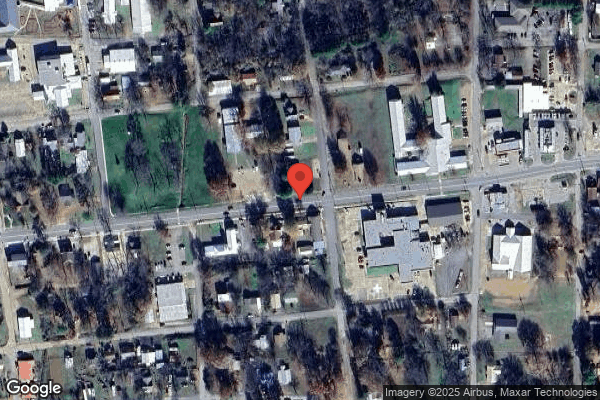
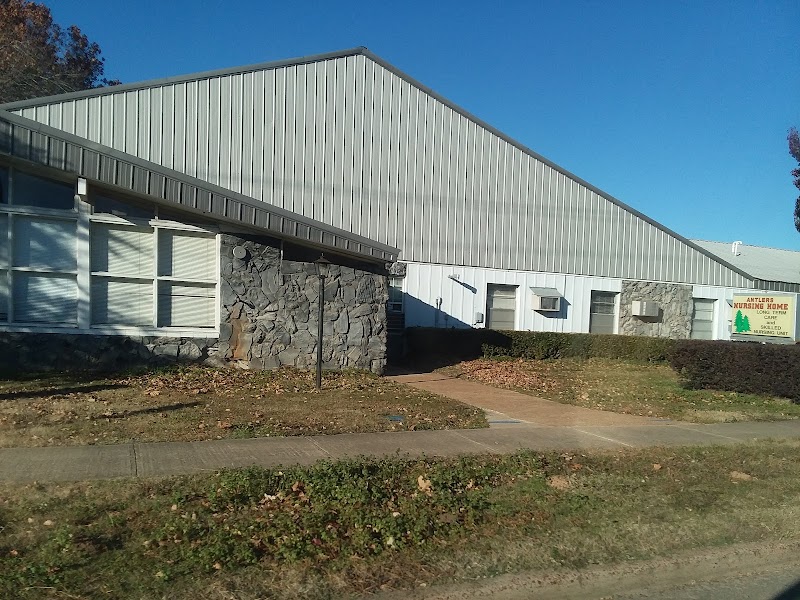
ANTLERS MANOR

511 EAST MAIN, ANTLERS, OK 74523 (580) 298-3294
For profit - Limited Liability company 133 Beds BGM ESTATE Data: November 2025
Trust Grade
80/100
#41 of 282 in OK
Last Inspection: March 2025

Within standard 12-15 month inspection cycle. Federal law requires annual inspections.

Overview

Antlers Manor has a Trust Grade of B+, indicating it is above average and recommended for families seeking care. It ranks #41 out of 282 nursing homes in Oklahoma, placing it in the top half of facilities statewide, and it is the best option out of two in Pushmataha County. The facility is improving, with the number of issues found decreasing from 7 in 2023 to 3 in 2025. Staffing is relatively strong, with a turnover rate of just 22%, much lower than the state average of 55%, and it boasts more RN coverage than 92% of Oklahoma facilities, ensuring better oversight of resident care. However, there were some concerns, including a lack of documentation for smoking safety assessments and improper medication management for some residents, which could potentially impact their well-being. Additionally, there was a failure to ensure proper sanitation in the kitchen, which may pose health risks. Overall, while there are notable strengths, families should be aware of the existing concerns.

Trust Score
B+
80/100
In Oklahoma
#41/282
Top 14%
Safety Record
Low Risk
No red flags
Inspections
Getting Better
7 → 3 violations
Staff Stability
✓ Good
22% annual turnover. Excellent stability, 26 points below Oklahoma's 48% average. Staff who stay learn residents' needs.
Penalties
✓ Good
No fines on record. Clean compliance history, better than most Oklahoma facilities.
Skilled Nurses
⚠ Watch
Each resident gets only 26 minutes of Registered Nurse (RN) attention daily — below average for Oklahoma. Fewer RN minutes means fewer trained eyes watching for problems.
Violations
⚠ Watch
16 deficiencies on record. Higher than average. Multiple issues found across inspections.
★★★★☆
4.0
Overall Rating
★★★☆☆
3.0
Staff Levels
★★☆☆☆
2.0
Care Quality
★★★★☆
4.0
Inspection Score
Stable
2023: 7 issues
2025: 3 issues

The Good

  • Low Staff Turnover (22%) · Staff stability means consistent care
  • Full Sprinkler Coverage · Fire safety systems throughout facility
  • No fines on record
  • Staff turnover is low (22%)

    26 points below Oklahoma average of 48%

Facility shows strength in staff retention, fire safety.

The Bad

Chain: BGM ESTATE

Part of a multi-facility chain

Ask about local staffing decisions and management

The Ugly 16 deficiencies on record

Mar 2025 3 deficiencies
CONCERN (E)

Potential for Harm - no one hurt, but risky conditions existed

Accident Prevention (Tag F0689)

Could have caused harm · This affected multiple residents

Based on record review and interview the facility failed to ensure a resident was assessed related to smoking and accident hazards for 1 (#22) of 1 sampled resident reviewed for smoking. The administr...

Read full inspector narrative →
Based on record review and interview the facility failed to ensure a resident was assessed related to smoking and accident hazards for 1 (#22) of 1 sampled resident reviewed for smoking. The administrator identified three residents were smokers. Findings: A policy titled SMOKING SAFETY, dated 08/03/15, read in part Initiate and complete the Smoking Safety evaluation if the resident requests smoking privileges as follows: 1. On admission 2. Quarterly .Staff will monitor distribution of smoking material during smoking sessions .Document interventions on the resident's care plan. Resident #22 had diagnoses which included acute upper respiratory infection, chronic atrial fibrillation, shortness of breath, congestive heart failure, and chronic obstructive pulmonary disease. An annual minimum data set assessment, dated 12/21/24, documented the resident was cognitively intact and currently used tobacco. The resident's plan of care, revised 12/23/24, did not document the resident's use of tobacco. The facility could not provide documentation regarding smoking safety assessments completed on admission or quarterly per the policy. On 03/03/25 at 3:26 p.m., the resident stated they smoked independently with no staff present when smoking. On 03/06/25 at 12:15 p.m., the DON stated a smoking assessment should have been completed on admission and reassessed quarterly. The DON stated the smoking assessments must have been missed. The DON reviewed the resident's plan of care and stated there was no plan of care for smoking.
CONCERN (E)

Potential for Harm - no one hurt, but risky conditions existed

Medication Errors (Tag F0758)

Could have caused harm · This affected multiple residents

Based on record review and interview, the facility failed to ensure: a. a PRN psychotropic medication had a 14 day stop date for 1 (#11], and b. an antipsychotic medication had an appropriate diagnosi...

Read full inspector narrative →
Based on record review and interview, the facility failed to ensure: a. a PRN psychotropic medication had a 14 day stop date for 1 (#11], and b. an antipsychotic medication had an appropriate diagnosis for 1 (#5) of 5 residents sampled for unnecessary medications. The administrator reported 32 residents resided in the facility. Findings: 1. Res #5 admitted to the facility with diagnoses of other Alzheimer's disorder, other depressive episodes, and bipolar disorder. A physician order, dated 02/19/24, showed risperidone (antipsychotic medication) tablet 0.5 mg, one tablet by mouth twice a day for a diagnosis of Alzheimer's disease. On 03/06/25 at 8:39 a.m., the DON stated Alzheimer's was not an appropriate diagnosis for an antipsychotic medication. 2. Res #11 admitted to the facility with diagnoses of Alzheimer's and anxiety disorder. A physician order, dated 11/22/24, showed Ativan (benzodiazepine) 0.5 mg by mouth every 12 hours PRN. There order did not contain a 14 day stop date. On 03/06/25 at 8:35 a.m., the DON reported the Ativan should have had a 14 day stop date.
CONCERN (E)

Potential for Harm - no one hurt, but risky conditions existed

Food Safety (Tag F0812)

Could have caused harm · This affected multiple residents

**NOTE- TERMS IN BRACKETS HAVE BEEN EDITED TO PROTECT CONFIDENTIALITY** Based on observation, record review, and interview, the facility failed to ensure the low temperature dish machine had the appro...

Read full inspector narrative →
**NOTE- TERMS IN BRACKETS HAVE BEEN EDITED TO PROTECT CONFIDENTIALITY** Based on observation, record review, and interview, the facility failed to ensure the low temperature dish machine had the appropriate amount of chemical to sanitize dishes for the facility. The administrator identified 32 residents who ate meals prepared by the kitchen. Findings: On [DATE] at 11:38 a.m., the DM obtained a bottle of test strips for testing the sanitizer level for the dish machine. The test strip did not register a result. The container of tests strips documented the strips had expired on 04/2024. On [DATE] at 1:25 p.m., the DM used new test strips obtained by the facility to check the sanitizer level. The test strip showed 10 parts per million. A undated manufacturers operations guide for the dish machine, read in part, Verify Sanitizer levels regularly. Use test strip to ensure sanitizer level is at least 50 ppm and no more than 200 ppm. A dish machine temperature log for [DATE] did not document the sanitizer level results for the dish machine. On [DATE] at 12:24 p.m., the DM stated they had been using the expired test strips for at least two weeks. The DM stated they had not been documenting the sanitizer level. On [DATE] at 1:59 p.m., the regional director stated there was no facility policy/instructions for testing the chemical used in the dish machine.
Nov 2023 7 deficiencies
CONCERN (D)

Potential for Harm - no one hurt, but risky conditions existed

Resident Rights (Tag F0550)

Could have caused harm · This affected 1 resident

Based on observation, record review, and interview, the facility failed to treat each resident with respect and dignity and care for each resident in a manner which promoted their quality of life by s...

Read full inspector narrative →
Based on observation, record review, and interview, the facility failed to treat each resident with respect and dignity and care for each resident in a manner which promoted their quality of life by standing above the residents while assisting them to eat for two (#2 and #27) of two residents sampled for dignity. The facility administrator documented 11 residents required assistance with eating. Findings: 1. Res #2 had diagnoses which included dementia, schizophrenia, seizures, and malnutrition. A care plan, dated 11/13/18, documented the staff were to maintain adequate nutrition for the resident by adhering to the diet and feeding him. On 11/08/23 at 12:37 p.m., the resident was observed being fed by an unidentified staff member who was standing at the residents bedside. 2. Res #27 was admitted with diagnoses which included generalized anxiety disorder, chronic pain syndrome, and anemia. A quarterly assessment, dated 10/12/23, documented the resident was dependent with eating. On 11/08/23 at 12:03 p.m., an unidentified staff member was observed standing at the resident's bedside assisting them to eat. On 11/14/23 at 1:54 p.m., the DON stated staff should have been seated at the residents' level when assisting residents to eat.
CONCERN (D)

Potential for Harm - no one hurt, but risky conditions existed

Assessment Accuracy (Tag F0641)

Could have caused harm · This affected 1 resident

Based on observation, record review, and interview, the facility failed to ensure MDS assessments accurately reflected the residents' status for three (#1, 19, and 32) of 12 residents whose assessment...

Read full inspector narrative →
Based on observation, record review, and interview, the facility failed to ensure MDS assessments accurately reflected the residents' status for three (#1, 19, and 32) of 12 residents whose assessments were reviewed. The facility failed to accurately assess for: a. gradual dose reductions for Res #1. b. oral health and condition of teeth for Res #19. c. antiplatelet medications for Res # 32. The Long-Term Care Facility Application for Medicare and Medicaid form documented 34 residents resided in the facility. Findings: 1. Res #1 had diagnoses which included intellectual disability, Alzheimer's disease, epilepsy, and personality and behavioral disorder. A consultant pharmacist review, dated 03/16/23, documented a request for reduction of Rexulti from 0.5 mg to .25 mg at bedtime. A physician response, dated 04/18/23, documented they disagreed with the request documenting the nursing staff stated the resident was still yelling out and a reduction was appropriate at that time. A physician order, dated 04/26/23, documented the facility was to administer Rexulti (an antipsychotic medication) 0.5 mg daily at bed time for a diagnosis of dementia with behavioral disturbances. An annual MDS assessment, dated 06/08/23, documented Res #1 was severely impaired in cognition, received antipsychotic medication for seven days of the seven day assessment period, and a gradual dose reduction was not attempted. The assessment documented the physician had not provided a contraindication for a dose reduction. A quarterly MDS assessment, dated 09/08/23, documented Res #1 was severely impaired in cognition, received antipsychotic medication for seven days of the seven day assessment period, and a gradual dose reduction was not attempted. The assessment documented the physician had not provided a contraindication for a dose reduction. On 11/13/23 at 12:59 p.m., MDS coordinator #1 confirmed the resident's dose of Rexulti was reduced in March of 2022 and should have been captured on the MDS. 2. Res #19 had diagnoses which included Huntington's disease, dysphagia, and chronic apical periodontitis. An annual MDS assessment, dated 01/20/23, documented Res #19 was moderately impaired in cognition, required total assistance with personal hygiene, and no issues were documented with dental conditions. A quarterly MDS assessment, dated 10/23/23, documented Res #19 was moderately impaired in cognition and was dependent on staff with oral hygiene. On 11/08/23 at 11:30 a.m., Res #19 was observed lying in their bed. The resident's teeth were observed to have been brown and broken. On 11/14/23 at 10:14 a.m., CNA #1 stated the residents oral care was done when they received a shower. The CNA stated they have to be careful as the resident became physically aggressive when staff tried to perform physical cares such as oral care. On 11/14/23 at 10:49 a.m., corporate nurse consultant #1 observed resident's teeth and stated they had obvious missing and broken teeth and cavities. The corporate nurse stated the annual MDS was not correct. On 11/14/23 at 12:17 p.m., MDS coordinator #1 stated when coding an annual assessment they would check the residents' teeth. The MDS coordinator stated they were aware the resident had missing teeth and other issues with their dental health and it was possible they did not perform a visualization of the resident's teeth for the last annual MDS. 3. Res #32 had diagnoses which included cerebrovascular disease and cerebral infarction. A physician order, dated 09/27/23, documented the facility was to administer adult low dose aspirin (an antiplatelet medication) 81 mg daily. An admission MDS assessment, dated 10/08/23, documented the resident was severely impaired in cognition and did not receive antiplatelet medications during the assessment period. On 11/13/23 at 3:24 p.m., MDS coordinator #1 confirmed aspirin was to have been coded as an antiplatelet on the MDS assessments. The stated they missed the order and coded the MDS incorrectly for Res #32.
CONCERN (D)

Potential for Harm - no one hurt, but risky conditions existed

Deficiency F0655 (Tag F0655)

Could have caused harm · This affected 1 resident

**NOTE- TERMS IN BRACKETS HAVE BEEN EDITED TO PROTECT CONFIDENTIALITY** Based on record review and interview the facility failed to ensure a baseline care plan was developed for two (#7 and #38) of 12...

Read full inspector narrative →
**NOTE- TERMS IN BRACKETS HAVE BEEN EDITED TO PROTECT CONFIDENTIALITY** Based on record review and interview the facility failed to ensure a baseline care plan was developed for two (#7 and #38) of 12 residents whose care plans were reviewed. The Long-Term Care Application for Medicare and Medicaid form documented 34 residents resided in the facility. Findings: A facility policy titled, Care Plans - Preliminary, revised August 2006, read in part, .To assure that the resident's immediate care needs are met and maintained, a preliminary care plan will be developed within twenty-four (24) hours of the resident's admission. 1. Res #7 was admitted on [DATE] with diagnoses which included diabetes, hypertension, Alzheimer's, aphasia and depression. A baseline care plan for Res #7 was not documented in their clinical record. 2. Res #38 was admitted on [DATE] with diagnoses which included cerebral infarction, dysphagia, hypertension, diabetes and anxiety. A baseline care plan for Res #7 was not documented in their clinical record. On 11/14/23 at 1:05 p.m. the DON reported a baseline care plan should have been developed for Res #7 and #38 upon admission. On 11/14/23 at 1:15 p.m., MDS Coordinator #1 reported a baseline care plan should have been developed for Res #7 and #38 upon admission.
CONCERN (E)

Potential for Harm - no one hurt, but risky conditions existed

Comprehensive Assessments (Tag F0636)

Could have caused harm · This affected multiple residents

**NOTE- TERMS IN BRACKETS HAVE BEEN EDITED TO PROTECT CONFIDENTIALITY** Based on record review and interview, the facility failed to ensure an admission MDS resident assessment was completed within 14...

Read full inspector narrative →
**NOTE- TERMS IN BRACKETS HAVE BEEN EDITED TO PROTECT CONFIDENTIALITY** Based on record review and interview, the facility failed to ensure an admission MDS resident assessment was completed within 14 days from admission for three (#31, 38 and #39) of 12 residents whose assessments were reviewed. The Long-Term Care Application for Medicare and Medicaid form documented 34 residents resided in the facility. Findings: A facility policy titled, Resident Assessment Instrument, revised October 2010, read in part, The Assessment Coordinator is responsible for ensuring .timely resident assessments .in accordance with the following schedule: a. Within fourteen (14) days of the resident's admission to the facility . 1. Res #31 was admitted on [DATE] with diagnoses which included intellectual disability, seizures, cellulitis, anxiety and depression. A review of Res #31's assessments showed the admission assessment, dated 09/18/23, was still in progress and not completed. 2. Res #38 was admitted on [DATE] with diagnoses which included cerebral infarction, dysphagia, hypertension, diabetes and anxiety. A review of Res #38's assessments showed the admission assessment, dated 09/05/23, was still in progress and not completed. 3. Res #39 was admitted on [DATE] with diagnoses which included COPD, diabetes, atherosclerotic heart disease, dysphasia, aphasia and hypertension. A review of Res #39's assessments showed no admission assessment had been started. 4. On 11/14/23 at 1:05 p.m. the DON reported the admission assessments should have been completed within the required timeframe for Res #31, 38, and #39. On 11/14/23 at 1:15 p.m., the MDS coordinator reported the admission assessment should have been completed within the required timeframe for Res #31, 38 and #39.
CONCERN (E)

Potential for Harm - no one hurt, but risky conditions existed

Comprehensive Care Plan (Tag F0656)

Could have caused harm · This affected multiple residents

**NOTE- TERMS IN BRACKETS HAVE BEEN EDITED TO PROTECT CONFIDENTIALITY** Based on record review and interview, the facility failed to ensure a comprehensive care plan was developed for three (#7, 31 an...

Read full inspector narrative →
**NOTE- TERMS IN BRACKETS HAVE BEEN EDITED TO PROTECT CONFIDENTIALITY** Based on record review and interview, the facility failed to ensure a comprehensive care plan was developed for three (#7, 31 and #38) of three sampled residents whose care plans were reviewed. The Long-Term Care Application for Medicare and Medicaid form documented 34 residents resided in the facility. Findings: The Care Planning - Interdisciplinary Team policy, revised December 2008, read in part, .A comprehensive care plan for each resident is developed within seven (7) days of completion of the resident assessment . 1. Res #7 was admitted on [DATE] with diagnoses which included diabetes, hypertension, Alzheimer's, aphasia and depression. There was no comprehensive care plan for Res #7 in their clinical record. 2. Res #31 was admitted on [DATE] with diagnoses which included intellectual disability, seizures, cellulitis, anxiety and depression. There was no comprehensive care plan for Res #31 in their clinical record. 3. Res #38 was admitted on [DATE] with diagnoses which included cerebral infarction, dysphagia, hypertension, diabetes and anxiety. There was no comprehensive care plan for Res #38 in their clinical record. On 11/14/23 at 1:05 p.m. the DON reported a comprehensive care plan should have been developed for Res #7, 31 and #38 within the required timeframe. On 11/14/23 at 1:15 p.m., the MDS Coordinator reported a baseline care plan should have been developed for Res #7, 31 and #38 within the required timeframe.
CONCERN (E)

Potential for Harm - no one hurt, but risky conditions existed

Deficiency F0700 (Tag F0700)

Could have caused harm · This affected multiple residents

Based on observation, record review, and interview, the facility failed to attempt to use alternatives, assess for risks, obtain informed consent, prior to installing side rails on resident beds for f...

Read full inspector narrative →
Based on observation, record review, and interview, the facility failed to attempt to use alternatives, assess for risks, obtain informed consent, prior to installing side rails on resident beds for four (#2, 12, 19, and #27) of five residents reviewed for accident hazards related to side rails. The facility administrator identified 10 resident who had side rails installed on their beds. Findings: 1. Res #2 had diagnoses which included dementia, schizophrenia, psychotic disorder and seizures. A physician order, dated 09/14/14, documented the resident had quarter side rails to enhance independent bed mobility. A side rail consent form, dated 04/23/18, did not document what interventions the facility attempted prior to installing side rails, or how the facility was going to mitigate the risk from the use of side rails specific to the resident. A side rail assessment, dated 05/30/18, was provided for review by the facility. The assessment did not document all the required components. No other assessments were provided by the facility. A quarterly MDS assessment, dated 09/28/23, documented Res #2 was severely impaired in cognition and required total assistance with bed mobility and transfers. A care plan, last reviewed on 09/26/23, documented the resident's use of side rails. The care plan documented the resident used side rails to assist when turning and the facility was to assess the use of side rails quarterly to determine if they were still needed and to eliminate the use of side rails if possible. On 11/08/23 at 12:32 p.m., the resident was observed lying in their bed with 1/2 side rails up on the head of the bed on both sides. 2. Res #12 had diagnoses which included functional quadriplegia, corrosion of unspecified degree of trunk, fracture of neck, and pressure ulcers. A side rail consent form, dated 06/30/16, did not document interventions which were attempted prior to installation of the side rails and how the facility was going to mitigate risks from the use of side rails specific to the resident. The last side rail assessment completed by the facility, dated 04/18/18, did not document the required components. A quarterly MDS assessment, dated 10/22/23, documented Res #12 was intact in cognition and required substantial/maximal assistance with rolling right to left. On 11/08/23 at 12:22 p.m., Res #12 was observed lying in their bed on an low air loss mattress. The resident's bed was observed to have grab bars in the up position on both sides of the head of the bed. At that time the resident stated they were paralyzed from the neck down. The stated they had minimal movement in their arms and their hands were contracted before they entered the facility and were not able to turn without assistance. A care plan, last reviewed on 11/09/23, documented the resident was paralyzed and used bed rails for independent positioning. The care plan documented the facility was to reassess the resident quarterly to determine if side rails were still required and to eliminate them if possible. 3. Res #19 had diagnoses which included Huntington's disease, difficulty in walking, lack of coordination, and muscle weakness. A combined side rail assessment and consent form, dated 12/26/19, did not document the required components for the assessment portion, the interventions attempted prior to installation of side rails, the risks associated with the use of side rails, the mitigation the facility would use related to the risks, or a resident/representative signature. An annual MDS assessment, dated 01/20/23, documented the resident was moderately impaired in cognition and required extensive assistance with bed mobility and transfers. A nurse note, dated 09/05/23, documented the resident had a cut to their right eyebrow. The note documented the resident was asked if they had struck their head on their side rail the resident stated, Yes. A care plan, last reviewed/revised on 09/05/23, documented the resident had an abrasion with bruising to the right eyebrow and the facility was to have therapy assess for appropriate protective devices such a pads and arm rolls and to make recommendations as warranted. The care plan did not document a plan of care related to the use of side rails. A quarterly MDS assessment, dated 10/23/23, documented the resident was moderately impaired in cognition, was independent with rolling left and right and was dependent with lying to sitting on the side of the bed. The assessment documented the resident was dependent with chair/bed-to-chair transferring. On 11/08/23 at 11:30 a.m., the resident was observed lying in bed with side rails up on both sides at the head of the bed. On 11/14/23 at 10:49 a.m., the resident was observed lying in bed on their side with the blankets over their head and side rails were in the up position on both sides of their bed. 4. Res #27 had diagnoses which included open wound of the left hip, anxiety disorder, and chronic pain syndrome. A side rail assessment, education tool, and consent form, dated the day of admission, did not document all of the required components. The EHR did not document an order for the use of side rails. An admission MDS assessment, dated 04/11/23, documented the resident was moderately impaired in cognition and required extensive assistance with bed mobility and transfer. A quarterly MDS assessment, dated 10/12/23, documented the resident was moderately impaired in cognition and required substantial/maximal assistance with rolling right to left and was dependent with chair/bed-to-chair transfer. On 11/08/23 at 12:03 p.m., the resident was observed lying in bed with side rails up on both sides of the head of the bed. 5. On 11/14/23 at 12:31 p.m., MDS coordinator #1 stated side rail assessments were to have been done on all residents using side rails on admission and quarterly thereafter. On 11/14/23 at 12:54 p.m., Corporate Nurse Consultant #1 reviewed the assessment and consent forms and confirmed they did not document all the required components. The corporate nurse stated Res #19's assessment and consent form had been completed on the date the resident had been admitted and therefore it was unlikely the facility had attempted alternatives to side rail use for the resident. On 11/14/23 at 2:41 p.m., the DON stated Res #27's family wanted the side rails to prevent falls and confirmed side rails was not an appropriate intervention for falls. The DON stated alternatives to the use of side rails were not tried prior to side rails being used. The DON stated the side rail assessments should have been completed quarterly.
CONCERN (E)

Potential for Harm - no one hurt, but risky conditions existed

Food Safety (Tag F0812)

Could have caused harm · This affected multiple residents

Based on observation and interview, the facility failed to prepare pureed food in a sanitary manner. DA #1 identified four residents who received a pureed diet. Findings: A facility policy, titled Pre...

Read full inspector narrative →
Based on observation and interview, the facility failed to prepare pureed food in a sanitary manner. DA #1 identified four residents who received a pureed diet. Findings: A facility policy, titled Preventing Foodborne Illness - Employee Hygiene and Sanitary Practices, revised December 2008, read in part, .4. Employees must wash their hands .g. During food preparation, as often as necessary to remove soil and contamination and to prevent cross contamination when changing tasks .10. Gloves are considered single-use items and must be discarded after completing the task for which they are used. The use of disposable gloves does not substitute for proper handwashing . On 11/13/23 at 10:45 a.m., DA #1 was observed to wash their hands, put on disposable gloves, and take chili and corn chips from the steam table to the blender bowl. DA #1 was observed to leave the blender bowl to get American cheese slices out of the refrigerator. With their same gloved hands, DA #1 was observed to touch the refrigerator and the cheese slice package and return to the blender bowl. Without removing their contaminated gloves, DA #1 was observed to separate the cheese slices and place them in the blender bowl one-by one for a total of six times. DA #1 was observed to drop one cheese slice onto the prep table and then pick it up and place it into the blender bowl. DA #1 was observed to have worn the same pair of gloves, which became contaminated, during the entire preparation of the puree meals. On 11/13/23 at 11:00 a.m., DA #1 stated they should have removed their gloves once they were contaminated, washed their hands, and put on new gloves. DA #1 reported the prep table was clean so they thought the cheese which fell onto the prep table could be used. On 11/13/23 at 11:10 a.m., the DM reported DA #1 should have removed their contaminated gloves, washed their hands, and put on new gloves, before putting the cheese into the blender bowl. The DM reported DA #1 should have thrown away the cheese that fell onto the prep table.
Jul 2022 6 deficiencies
CONCERN (D)

Potential for Harm - no one hurt, but risky conditions existed

Employment Screening (Tag F0606)

Could have caused harm · This affected 1 resident

Based on record review, observation, and interview, the facility failed to ensure all staff were screened for being found guilty of abuse, neglect, exploitation, misappropriation of property, or mistr...

Read full inspector narrative →
Based on record review, observation, and interview, the facility failed to ensure all staff were screened for being found guilty of abuse, neglect, exploitation, misappropriation of property, or mistreatment by a court of law prior to hire. The Resident Census and Conditions of Residents form documented 31 residents resided in the facility. Findings: A facility policy, titled Abuse - Reportable Events dated 08/2019, read in parts, .1. Screening: a. Pre-employment screening will be completed on all employees, to include: * Criminal History Check * Background Check * Reference check from previous employers . * Misconduct Registry * OIG . On 07/14/22, the employee files for staff members hired during the last six months were reviewed. Housekeeper #1 did not have a screening or letter of final clearance in their file. On 07/14/22 at 4:28 p.m., the corporate administrator stated the business office personnel was new and did not complete a screening on the housekeeper as they were a re-hire. She stated the business office manager did not know they were required to complete a screening on re-hires.
CONCERN (D)

Potential for Harm - no one hurt, but risky conditions existed

PASARR Coordination (Tag F0644)

Could have caused harm · This affected 1 resident

**NOTE- TERMS IN BRACKETS HAVE BEEN EDITED TO PROTECT CONFIDENTIALITY** Based on record review and interview, the facility failed to refer a resident with a new serious mental illness diagnosis to OHC...

Read full inspector narrative →
**NOTE- TERMS IN BRACKETS HAVE BEEN EDITED TO PROTECT CONFIDENTIALITY** Based on record review and interview, the facility failed to refer a resident with a new serious mental illness diagnosis to OHCA for a PASRR level II evaluation for one (#14) of two residents reviewed for PASRRs. The administrator identified seven residents with PASRR II evaluations. Findings: Resident #14 was admitted to the facility on [DATE] with diagnoses of cerebral anoxia and epilepsy. A PASRR level I, dated 03/10/07, contained no documentation of revision after the resident was diagnosed with schizophrenia. Record review documented the resident was diagnosed with schizophrenia on 03/21/18. On 07/13/22 at 3:40 p.m., the corporate nurse reported the DON was responsible for the PASRRs. The corporate nurse was shown the PASRR level I for the resident dated 2007 and then shown a diagnosis of schizophrenia from 03/21/18. The corporate nurse stated she was not sure why the PASRR was not reviewed or revised after the resident was given the schizophrenia diagnosis. On 07/13/22 at 4:34 p.m., the corporate nurse reported that she could not find any documentation that OHCA was notified of the resident's diagnosis of schizophrenia.
CONCERN (E)

Potential for Harm - no one hurt, but risky conditions existed

Assessment Accuracy (Tag F0641)

Could have caused harm · This affected multiple residents

Based on record review and interview, the facility failed to ensure resident assessments accurately reflected the residents' status for two (#9 and #231) of 15 residents whose assessments were reviewe...

Read full inspector narrative →
Based on record review and interview, the facility failed to ensure resident assessments accurately reflected the residents' status for two (#9 and #231) of 15 residents whose assessments were reviewed. The Resident Census and Conditions of Residents form documented 31 residents resided in the facility. Findings: 1. Res #231 had diagnoses which included pressure ulcers. Res #231's care plan, dated 10/08/20, documented the resident was admitted with a pressure area to the left buttock and to the left ankle. Res #231's annual MDS assessment, dated 10/22/21, documented the resident had one stage III and one stage IV pressure ulcer upon admission. The care plan, dated 01/14/22, documented alteration in skin integrity related to the left lateral foot. The quarterly MDS assessments, dated, 01/22/22, 04/24/22, and 07/03/22, documented the resident had one stage III and two stage IV pressure ulcers which were present upon admission. On 07/13/22 at 3:53 p.m., the MDS coordinator stated the quarterly MDSs were documented incorrectly and the additional pressure ulcer was not present upon admission and must have occurred while the resident was under care of the facility. 2. Resident #9 was admitted to the facility with diagnoses of quadriplegia, depression, and anxiety. An MDS assessment, dated 04/20/22, documented the resident had no behaviors such as rejection of care. A review of the resident's TAR revealed the resident had refused wound care frequently. On 07/13/22 at 4:36 p.m., the MDS cordinator reported she only looked at the weekly wound report to determine if the resident refused care. She reported the resident did refuse care with certain staff members. On 07/13/22 at 5:32 p.m., the administrative assistant confimed the resident had a history of refusing wound care during the day shift.
CONCERN (E)

Potential for Harm - no one hurt, but risky conditions existed

Deficiency F0657 (Tag F0657)

Could have caused harm · This affected multiple residents

2. Res #25 had diagnoses which included myocardial infarction, chronic pain, and congested heart failure. An incident report, dated 12/21/21, documented the resident was found in her on her left side ...

Read full inspector narrative →
2. Res #25 had diagnoses which included myocardial infarction, chronic pain, and congested heart failure. An incident report, dated 12/21/21, documented the resident was found in her on her left side on the floor with no injuries noted. Res #25's care plan, dated 12/21/21, documented to keep the bed in low position when care is not being provided and keep the call light in reach at all times. An incident report, dated 05/06/22, documented the resident had a fall resulting in a major injury. The report documented the resident slipped out of her wheelchair while in the hallway causing the resident to be admitted into the hospital for several days. A nurse note, dated 05/10/22, documented the resident returned to the facility. The quarterly assessment, dated 06/13/22, documented the resident had one fall with major injury. The care plan was not updated with new interventions to prevent the resident from falling again. On 07/14/22 at 10:20 a.m., the corporate nurse confirmed that the care plan should have been updated after the fall on 05/06/22 and that interventions should have been initiated to prevent the resident from falling again. Based on record review and interview, the facility failed to revise care plan related to falls for two (#15 and #25) of two residents who were reviewed for falls. The administrator identified 12 residents who had fallen in the last four months. Findings: 1. Res #15 had diagnoses which included dementia, Parkinson's disease, and seizure disorder. The care plan, dated 07/02/17, documented the resident had a history of falling. The eight interventions documented under this problem were dated 07/02/17. No additional interventions were documented past this date. An incident report, dated 04/07/22, read in part, . the resident fell forward out of chair, hitting her head causing a large bump on forehead and laceration on corner of left eye, scraped [sic] on knee, call 911, transferred to [hospital name deleted] ER . The quarterly assessment, dated 05/06/22, documented the resident had one fall with injury since the prior assessment. On 07/14/22 at 11:56 a.m., the DON stated new fall interventions were not developed or implemented and the care plan was not revised after the resident fell but that it should have been.
CONCERN (E)

Potential for Harm - no one hurt, but risky conditions existed

Accident Prevention (Tag F0689)

Could have caused harm · This affected multiple residents

2. Res #25 had diagnoses which included myocardial infarction, chronic pain, and congested heart failure. An incident report, dated 12/21/21, documented the resident was found in her on her left side ...

Read full inspector narrative →
2. Res #25 had diagnoses which included myocardial infarction, chronic pain, and congested heart failure. An incident report, dated 12/21/21, documented the resident was found in her on her left side on the floor with no injuries noted. Res #25's care plan, dated 12/21/21, documented to keep the bed in low position when care is not being provided and keep the call light in reach at all times. An incident report, dated 05/06/22, documented the resident had a fall resulting in a major injury. The report documented the resident slipped out of her wheelchair while in the hallway causing the resident to be admitted into the hospital for several days. A nurse note, dated 05/10/22, documented the resident returned to the facility. The quarterly assessment, dated 06/13/22, documented the resident had one fall with major injury. The care plan was not updated with new interventions to prevent the resident from falling again. On 07/13/22 at 10:48 AM, the resident was observed in lying in her bed. The bed had bolsters on both sides of the head of the bed. The resident's wheelchair was next to the resident's bed. On 07/14/22 at 10:20 a.m., the corporate nurse confirmed that the care plan should have been updated after the fall on 05/06/22 and that interventions should have been initiated to prevent the resident from falling again. Based on record review, observation, and interview, the facility failed to develope and implement fall interventions for two (#15 and #25) of two residents reviewed for falls. The administrator identified 12 residents who had fallen in the last four months. Findings: 1. Res #15 had diagnoses which included dementia, anxiety, Parkinson's disease, and seizure disorder. The care plan, dated 07/02/17, documented the resident had a history of falling. The eight interventions documented under this problem were dated 07/02/17. No additional interventions were documented past this date. An annual assessment, dated 02/03/22, documented the resident was totally dependent with bed mobility, transfers, locomotion and had no history of falls since the last assessment. An incident report, dated 04/07/22, read in part, . the resident fell forward out of chair, hitting her head causing a large bump on forehead and laceration on corner of left eye, scraped [sic] on knee, call 911, transferred to [hospital name deleted] ER . The quarterly assessment, dated 05/06/22, documented the resident had one fall with injury since the prior assessment. On 07/14/22 at 11:55 a.m., DON and ADON stated they were not sure how this resident fell but that she does lean forward in geri-chair sometimes. On 07/14/22 at 11:56 a.m., the DON stated that new fall interventions were not developed or implemented after the resident fell but that they should have been.
CONCERN (E)

Potential for Harm - no one hurt, but risky conditions existed

Drug Regimen Review (Tag F0756)

Could have caused harm · This affected multiple residents

Based on record review and interview, the facility failed to ensure the physician responded to the MRR in a timely manner for two (#9 and #28) of five residents who were sampled for medication review....

Read full inspector narrative →
Based on record review and interview, the facility failed to ensure the physician responded to the MRR in a timely manner for two (#9 and #28) of five residents who were sampled for medication review. The Resident Census and Conditions of Residents report documented 31 residents resided at the facility. Findings: A facility policy, dated November 2018, read in part .If the prescriber does not respond to recommendation directed to him/her within 30 days, the Director of Nursing and/or the consultant pharmacist may contact the Medical Director. 1. Res #9 had diagnoses which included anxiety and depression. A MRR, dated 12/16/21, documented the pharmacist requested a reduction for Zoloft (an antidepressant medication). The review was not signed and received from the physician until 03/09/22. 2. Res #28 had diagnoses of dementia with behavioral disturbance, depression, and seizure disorder. A MRR, dated 11/24/21, documented the pharmacist requested a reduction for Rexulti (an antipsychotic medication). The review was not signed and received from the physician until 03/09/22. On 07/13/22 at 4:36 p.m., the corporate nurse reported the physician had 30 days to respond and return the MRR. The corporate nurse reported the MRR should have been addressed before March.
Understanding Severity Codes (click to expand)
Life-Threatening (Immediate Jeopardy)
J - Isolated K - Pattern L - Widespread
Actual Harm
G - Isolated H - Pattern I - Widespread
Potential for Harm
D - Isolated E - Pattern F - Widespread
No Harm (Minor)
A - Isolated B - Pattern C - Widespread

Questions to Ask on Your Visit

  • "Can I speak with families of current residents?"
  • "What's your RN coverage like on weekends and overnight?"

Our Honest Assessment

Strengths
  • • Grade B+ (80/100). Above average facility, better than most options in Oklahoma.
  • • No major safety red flags. No abuse findings, life-threatening violations, or SFF status.
  • • No fines on record. Clean compliance history, better than most Oklahoma facilities.
  • • 22% annual turnover. Excellent stability, 26 points below Oklahoma's 48% average. Staff who stay learn residents' needs.
Concerns
  • • 16 deficiencies on record. Higher than average. Multiple issues found across inspections.
Bottom line: Generally positive indicators. Standard due diligence and a personal visit recommended.

About This Facility

What is Antlers Manor's CMS Rating?

CMS assigns ANTLERS MANOR an overall rating of 4 out of 5 stars, which is considered above average nationally. Within Oklahoma, this rating places the facility higher than 99% of the state's 100 nursing homes. This rating reflects solid performance across the metrics CMS uses to evaluate nursing home quality.

How is Antlers Manor Staffed?

CMS rates ANTLERS MANOR's staffing level at 3 out of 5 stars, which is average compared to other nursing homes. Staff turnover is 22%, compared to the Oklahoma average of 46%. This relatively stable workforce can support continuity of care.

What Have Inspectors Found at Antlers Manor?

State health inspectors documented 16 deficiencies at ANTLERS MANOR during 2022 to 2025. These included: 16 with potential for harm.

Who Owns and Operates Antlers Manor?

ANTLERS MANOR is owned by a for-profit company. For-profit facilities operate as businesses with obligations to shareholders or private owners. The facility is operated by BGM ESTATE, a chain that manages multiple nursing homes. With 133 certified beds and approximately 35 residents (about 26% occupancy), it is a mid-sized facility located in ANTLERS, Oklahoma.

How Does Antlers Manor Compare to Other Oklahoma Nursing Homes?

Compared to the 100 nursing homes in Oklahoma, ANTLERS MANOR's overall rating (4 stars) is above the state average of 2.6, staff turnover (22%) is significantly lower than the state average of 46%, and health inspection rating (4 stars) is above the national benchmark.

What Should Families Ask When Visiting Antlers Manor?

Based on this facility's data, families visiting should ask: "Can I visit during a mealtime to observe dining assistance and food quality?" "How do you handle medical emergencies, and what is your hospital transfer rate?" "Can I speak with family members of current residents about their experience?"

Is Antlers Manor Safe?

Based on CMS inspection data, ANTLERS MANOR has a clean safety record: no substantiated abuse findings (meaning no confirmed cases of resident harm), no Immediate Jeopardy citations (the most serious violation level indicating risk of serious injury or death), and is not on the Special Focus Facility watch list (a federal program monitoring the lowest-performing 1% of nursing homes). The facility has a 4-star overall rating and ranks #1 of 100 nursing homes in Oklahoma. While no facility is perfect, families should still ask about staff-to-resident ratios and recent inspection results during their visit.

Do Nurses at Antlers Manor Stick Around?

Staff at ANTLERS MANOR tend to stick around. With a turnover rate of 22%, the facility is 24 percentage points below the Oklahoma average of 46%. Low turnover is a positive sign. It means caregivers have time to learn each resident's needs, medications, and personal preferences. Consistent staff also notice subtle changes in a resident's condition more quickly.

Was Antlers Manor Ever Fined?

ANTLERS MANOR has no federal fines on record. CMS issues fines when nursing homes fail to meet care standards or don't correct problems found during inspections. The absence of fines suggests the facility has either maintained compliance or corrected any issues before penalties were assessed. This is a positive indicator, though families should still review recent inspection reports for the full picture.

Is Antlers Manor on Any Federal Watch List?

ANTLERS MANOR is not on any federal watch list. The most significant is the Special Focus Facility (SFF) program, which identifies the bottom 1% of nursing homes nationally based on persistent, serious quality problems. Not being on this list means the facility has avoided the pattern of deficiencies that triggers enhanced federal oversight. This is a positive indicator, though families should still review the facility's inspection history directly.