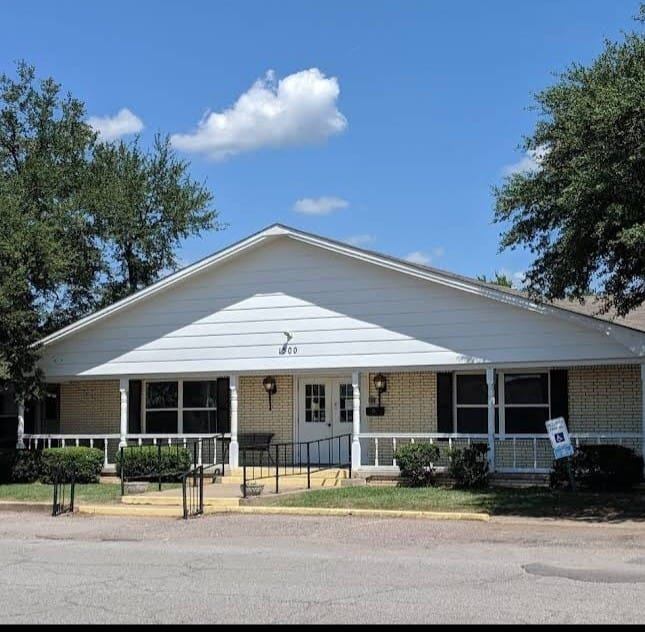


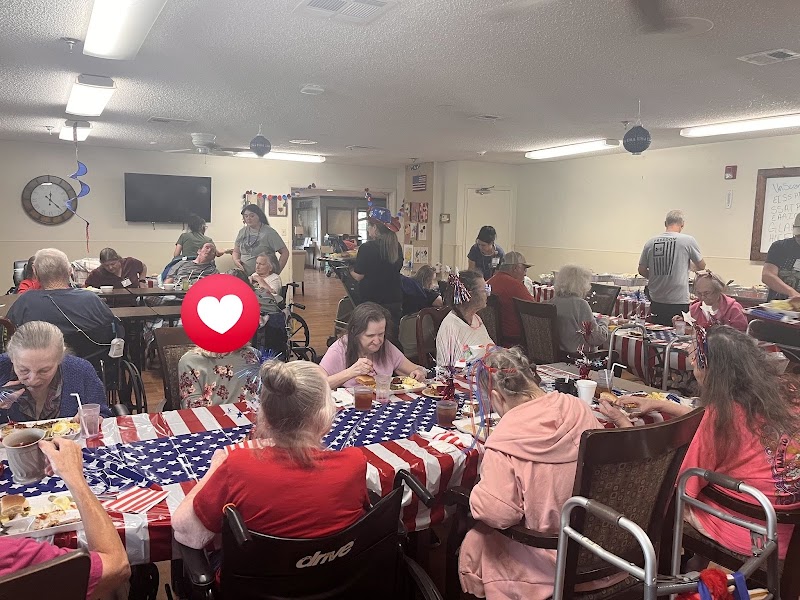
Elmbrook of Atoka

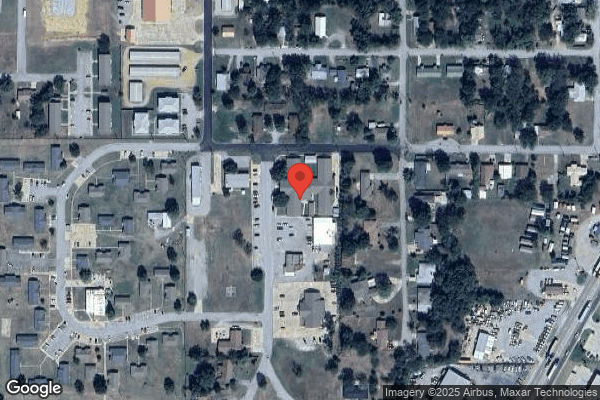
1526 SOUTH VIRGINIA STREET, ATOKA, OK 74525 (580) 889-2500
Non profit - Corporation 96 Beds Independent Data: November 2025
Trust Grade
43/100
#221 of 282 in OK
Last Inspection: July 2024

Within standard 12-15 month inspection cycle. Federal law requires annual inspections.

Overview

Elmbrook of Atoka has a Trust Grade of D, indicating below-average performance with some concerning issues. They rank #221 out of 282 facilities in Oklahoma, placing them in the bottom half of the state, but they are the only option in Atoka County. The facility's trend is worsening, with the number of issues increasing from 3 in 2023 to 6 in 2024. Staffing is a relative strength, with a turnover rate of 0%, much better than the state average of 55%, but they have a poor overall staffing rating of 1 out of 5. However, there are significant concerns, including the absence of a registered nurse as the director of nursing, which is critical for ensuring proper care. Additionally, they failed to adequately monitor side effects for residents on anticoagulants, which could lead to serious health risks. While the facility is stable in terms of staff retention, the lack of RN coverage and rising incidents highlight areas needing urgent improvement.

Trust Score
D
43/100
In Oklahoma
#221/282
Bottom 22%
Safety Record
Low Risk
No red flags
Inspections
Getting Worse
3 → 6 violations
Staff Stability
○ Average
Turnover data not reported for this facility.
Penalties
⚠ Watch
$6,350 in fines. Higher than 86% of Oklahoma facilities, suggesting repeated compliance issues.
Skilled Nurses
○ Average
RN staffing data not reported for this facility.
Violations
⚠ Watch
14 deficiencies on record. Higher than average. Multiple issues found across inspections.
★☆☆☆☆
1.0
Overall Rating
★☆☆☆☆
1.0
Staff Levels
★☆☆☆☆
1.0
Care Quality
★★★☆☆
3.0
Inspection Score
Stable
2023: 3 issues
2024: 6 issues

The Good

  • Full Sprinkler Coverage · Fire safety systems throughout facility
  • No fines on record

Facility shows strength in fire safety.

The Bad

1-Star Overall Rating

Below Oklahoma average (2.6)

Significant quality concerns identified by CMS

Federal Fines: $6,350

Below median ($33,413)

Minor penalties assessed

The Ugly 14 deficiencies on record

Jul 2024 6 deficiencies
CONCERN (D)

Potential for Harm - no one hurt, but risky conditions existed

Deficiency F0645 (Tag F0645)

Could have caused harm · This affected 1 resident

Based on record review and interview, the facility failed to ensure a PASARR level I screening was accurate for one (#1) of one resident reviewed for PASARR. The facility failed to identify a mental d...

Read full inspector narrative →
Based on record review and interview, the facility failed to ensure a PASARR level I screening was accurate for one (#1) of one resident reviewed for PASARR. The facility failed to identify a mental disorder diagnosis for the resident. The administrator identified 35 residents who resided in the facility. Findings: Resident #1 had diagnoses witch included major depressive disorder, post-traumatic stress disorder, and anxiety disorders. A PASARR level I form, dated 05/17/24, did not document the resident had a diagnosis of a serious mental illness. The care plan, dated 06/05/24, documented the resident received antidepressant medication for depression. The admission assessment, dated 05/29/24, documented the resident was not currently considered by the state level II PASARR process to have serious mental illness and/or intellectual disability or a related condition. On 07/16/24 at 11:24 a.m., the social services director was interviewed regarding the PASARR level I for the resident. The social services director reviewed the resident's clinical record and stated they must have missed the diagnosis of major depressive disorder. The social services director stated a PASARR level II referral should have been made to the Oklahoma Health Care Athority.
CONCERN (D)

Potential for Harm - no one hurt, but risky conditions existed

Drug Regimen Review (Tag F0756)

Could have caused harm · This affected 1 resident

Based on record review and interview, the facility failed to ensure a physician responded to a GDR timely and a physician's response to a GDR was implemented for one (#29) of five sampled residents re...

Read full inspector narrative →
Based on record review and interview, the facility failed to ensure a physician responded to a GDR timely and a physician's response to a GDR was implemented for one (#29) of five sampled residents reviewed for unnecessary medications. The DON identified 35 residents resided in the facility. Findings: Resident #29 had diagnoses which included mild dementia with other behavioral disturbance. A physician's order, dated 05/14/23, documented Resident #29 received Risperdal 1 mg at bedtime. A Quarterly assessment, dated 05/14/24, documented Resident #29 received an antipsychotic. A Medication Regimen Review, dated 01/24/24, documented a request to reduce the dose of Risperdal. It documented the physician agreed and to decrease the dose from 1 mg to 0.5 mg. It documented the physician did not respond to the request until 03/06/24. There was no documentation the reduction to the Risperdal dose was implemented. On 07/17/24 at 9:48 a.m., the DON described the facility's GDR procedure. She stated once they receive the GDR back from the physician, she implemented any orders. She stated some of their doctors do not complete and return the GDR to the facility timely. She stated sometimes it can take four to five weeks to receive a response. On 07/17/24 at 9:52 a.m., the DON was asked to review Resident #29's GDR from January 2024. She stated the physician had not responded to it timely and the order had not been implemented.
CONCERN (E)

Potential for Harm - no one hurt, but risky conditions existed

Deficiency F0757 (Tag F0757)

Could have caused harm · This affected multiple residents

Based on record review and interview, the facility failed to ensure side effect monitoring for an anticoagulant was completed for two (#29 and #8) of five sampled residents reviewed for unnecessary me...

Read full inspector narrative →
Based on record review and interview, the facility failed to ensure side effect monitoring for an anticoagulant was completed for two (#29 and #8) of five sampled residents reviewed for unnecessary medications. The DON identified 35 residents resided in the facility. She identified 10 residents were receiving anticoagulants. Findings: 1. Resident #29 had diagnoses which included pulmonary embolism. A physician's order, dated 02/07/24, documented Resident #29 received Eliquis twice a day. A Quarterly assessment, dated 05/14/24, documented Resident #29 received anticoagulant. There was no documentation of side effect monitoring for Eliquis in Resident #29's clinical record. On 07/16/24 at 1:46 p.m. the DON stated side effect monitoring was located under physician's orders. On 07/16/24 at 2:21 p.m., the DON brought a hand written list and stated staff were to monitor side effects for anticoagulants. On 07/16/24 at 2:23 p.m., the DON stated they, along with MDS coordinator and the pharmacist, monitored the residents' clinical records to ensure side effects were monitored. On 07/16/24 at 2:27 p.m., the DON stated Resident #29 should have a physician's order for staff to monitor side effects of the Eliquis. The DON stated they did not locate the order for monitoring. Resident #8 had diagnoses which included heart failure, acute posthemorrhagic anemia, and seizures. A physician order, dated 12/08/22, documented side effect monitoring. The staff was to monitor for discolored urine, black tarry stools, sudden severe headache, nausea and vomiting, diarrhea, muscle joint pain, lethargy, bruising, sudden changes in mental status and/or vital signs, shortness of breath, and nose bleeds every day and night shift. A physician order, dated 07/11/23, documented the resident was to receive Eliquis (a anticoagulant medication) 2.5 mg twice a day by mouth related to heart failure. The MAR and TAR for July 2024 did not document monitoring for the use of an anticoagulant medication.
CONCERN (E)

Potential for Harm - no one hurt, but risky conditions existed

Medication Errors (Tag F0758)

Could have caused harm · This affected multiple residents

Based on record review and interview, the facility failed to ensure behavior interventions and side effect monitoring was completed for four (#35, 29, 19, and #26) of five sampled residents reviewed f...

Read full inspector narrative →
Based on record review and interview, the facility failed to ensure behavior interventions and side effect monitoring was completed for four (#35, 29, 19, and #26) of five sampled residents reviewed for unnecessary medications. The DON identified 35 residents resided in the facility and 30 residents received psychotropic medications. Findings: A Behavioral Assessment, Intervention and Monitoring policy, revised March 2019, documented if a resident was being treated for altered behavior or mood, the IDT will seek and document any imporovements or worsening in the residents' behavior, mood, and function. It documents the IDT will monitor side effects and complications related to psychoactive medications. 1. Resident #19 had diagnoses which included dementia with unspecified severity, and with other behavioral disturbance, and anxiety. A physician's order, dated 01/03/23, documented Resident #19 received Zyprexa at bedtime A Significant Change assessment, dated 06/28/24, documented Resident #19 received antipsychotic. There was no documentation in the clinical record Resident #19 received behavior interventions while receiving Zyprexa. 2. Resident #29 had diagnoses which included mild dementia with other behavioral disturbance. A physician's order, dated 05/14/23, documented Resident #29 received Risperdal at bedtime. A Quarterly assessment, dated 05/14/24, documented Resident #29 received antipsychotic. There was no documentation in the clinical record Resident #29 received behavior interventions or side effect monitoring while receiving Risperdal. 3. Resident #35 had diagnoses which included anxiety. A physician's order, dated 12/21/23, documented Resident #35 received lorazepam twice a day. A physician's order, dated 03/21/24, documented Resident #35 received Zoloft. A Significant Change assessment, dated 06/22/24, documented Resident #35 was receiving an antianxiety and antidepressant. There was no documentation in the clinical record Resident #35 receiving side effect monitoring while receiving Zoloft and lorazepam. On 07/16/24 at 1:46 p.m. the DON stated behavior and side effect monitoring was located under physician's orders. On 07/16/24 at 2:04 p.m., the DON was not able to locate where the staff were monitoring Resident #35 for side effects. On 07/16/24 at 2:21 p.m., the DON brought a hand written list and stated staff were to monitor behavior interventions for antipsychotics, antianxiety, antidepressants, and hypnotics. She stated they monitor for side effects for all these medications as well. On 07/16/24 at 2:23 p.m., the DON stated they, along with MDS coordinator and the pharmacist, monitored the residents' clinical records to ensure behaviors and side effects were monitored. On 07/16/24 at 2:27 p.m., the DON stated there was no behavior monitoring for Resident #19. She stated there was no behavior or side effect monitoring for Resident #29. 4. Resident #26 had diagnoses which included vascular dementia with other behavioral disturbance, major depressive disorder, and anxiety disorder. A physician order, dated 11/15/19, documented to monitor for potential side effects of antipsychotic medication that may include: Somnolence (sleepiness), headache, nausea, extrapyramidal symptoms, dizziness, respiratory disorders, constipation, dyspepsia, rash, tachycardia, hypoesthesia, priapism, orthostatic hypotension, xerostomia (oral dryness), myalgia (muscle pain), rhinitis, cough, and syncope every day and night shift. A physician order, dated 11/15/19, documented to monitor for potential side effects of anti-depressant medication that may include: insomnia, nausea/vomiting, constipation, appetite changes, weight changes, fatigue, lethargy, headache, muscle cramps, cough, tinnitus, nervousness, dizziness, peripheral edema, flatulance, yawning, and rash every day and night shift. A physician order, dated 05/18/21, documented the resident was to receive Xanax (a antianxiety medication) 0.25 mg by mouth twice a day related to anxiety disorder. A physician order, dated 02/05/24, documented the resident was to receive Risperdal (a antipsychotic medication) 0.5 mg by mouth twice a day related to vascular dementia with behavioral disturbance. A physician order, dated 05/24/24, documented the resident was to receive Cymbalta (a antidepressant medication) 90 mg by mouth every morning related to depression. A physician order, dated 05/29/24, documented the resident was to receive Remeron (a antidepressant medication) 15 mg by mouth at bedtime related to depression. The MAR and TAR for July 2024 did not document side effect monitoring for the use of antipsychotic or antidepressant medications.
CONCERN (E)

Potential for Harm - no one hurt, but risky conditions existed

Infection Control (Tag F0880)

Could have caused harm · This affected multiple residents

Based on observation, record review, and interview, the facility failed to ensure oxygen tubing was maintained off the floor and dated for two (#8 and #36) of two residents review for infection contro...

Read full inspector narrative →
Based on observation, record review, and interview, the facility failed to ensure oxygen tubing was maintained off the floor and dated for two (#8 and #36) of two residents review for infection control pertaining to oxygen therapy. The administrator identified four residents who receive oxygen therapy. Findings: A policy titled Departmental (Respiratory Therapy)- Prevention of Infection read in parts .7. Change the oxygen cannulae tubing every seven (7) days, or as needed. 8. Keep the oxygen cannulae and tubing used PRN in a plastic bag when not in use . 1. Resident #8 had diagnoses which included acute and chronic respiratory failure with hypoxia, chronic obstructive pulmonary disease, and pneumonia. A physician order, dated 06/21/23, documented the resident was to receive oxygen therapy via nasal cannula at 2 liters to keep oxygen status greater than or equal to 92% as needed. A significant change assessment, dated 04/04/24, documented the resident was severely impaired cognitively, had a diagnosis of COPD, and received oxygen therapy. On 07/15/24 at 9:31 a.m., the resident was lying in bed. An oxygen machine was on at the bedside and set at 2 liters. The oxygen tubing was lying on the floor and was undated. 2. Resident #36 had a diagnosis of hypoxemia. A physician order, dated 05/05/23, documented the resident was to receive oxygen at 2 liters per nasal cannula as needed related to hypoxemia. A significant change assessment, dated 05/06/24, documented the resident received oxygen therapy. On 07/15/24 at 9:44 a.m., the resident was sitting in the chair in their room. There was an oxygen machine beside the bed and running at 2 liters. The oxygen tubing was lying on the floor and was dated 07/04/24. On 07/18/24 at 7:44 a.m., the DON stated the oxygen tubing should be kept off the floor and in a bag when not in use. The DON stated oxygen tubing should be changed every seven days on night shift.
CONCERN (F) 📢 Someone Reported This

A family member, employee, or ombudsman was alarmed enough to file a formal complaint

Potential for Harm - no one hurt, but risky conditions existed

Deficiency F0727 (Tag F0727)

Could have caused harm · This affected most or all residents

Based on record review and interview, the facility failed to ensure a registered nurse was designated to serve as director of nursing on a full time basis for the residents. The administrator identif...

Read full inspector narrative →
Based on record review and interview, the facility failed to ensure a registered nurse was designated to serve as director of nursing on a full time basis for the residents. The administrator identified 35 residents resided in the facility. Findings: On 07/15/24 at 7:57 a.m., the administrator in training stated LPN #1 was currently the facilities DON and had been for two years. The administrator stated the facility was not actively looking for a registered nurse for the position. The facility assessment tool, dated 07/15/24, identified LPN #1 as the director of nurses. A Oklahoma Board of Nursing verification report documented LPN #1 had an active LPN license. No documentation was found regarding a LPN #1 having a registered nurse license.
Jun 2023 3 deficiencies
CONCERN (D)

Potential for Harm - no one hurt, but risky conditions existed

Staffing Information (Tag F0732)

Could have caused harm · This affected 1 resident

Based on observation and interview, the facility failed to document and retain daily staffing information for the past 18 months. The Resident Census and Conditions of Residents form, dated 06/19/23, ...

Read full inspector narrative →
Based on observation and interview, the facility failed to document and retain daily staffing information for the past 18 months. The Resident Census and Conditions of Residents form, dated 06/19/23, documented a census of 33 residents. Findings: During the survey, a white board across from the nurse's station was observed to include documentation of census number, names, and titles of staff on duty. On 06/20/23 at 8:02 a.m., the DON was asked to provide the posted staffing information for the last six months. The DON reported the facility did not have documentation in a format which contained the census number, and staffing information for the past 18 months. They reported they were unaware of the requirement to document and retain the documentation for 18 months.
CONCERN (D)

Potential for Harm - no one hurt, but risky conditions existed

Deficiency F0837 (Tag F0837)

Could have caused harm · This affected 1 resident

Based on record review and interview, the facility failed to employ a licensed administrator. The Resident Census and Conditions of Residents, dated 06/19/23, documented a census of 33 residents. Fin...

Read full inspector narrative →
Based on record review and interview, the facility failed to employ a licensed administrator. The Resident Census and Conditions of Residents, dated 06/19/23, documented a census of 33 residents. Findings: The facility staff roster did not list an administrator of record. On 06/21/23 at 10:18 a.m., the former administrator reported they left their position at the facility on 06/07/23 and the Plant Operations Manager would be the administrator of record upon successful completion of the requirements. On 06/21/23 at 10:30 a.m., the Plant Operations Manager reported they were currently not licensed as an administrator, the Plant Operations Manager reported they were scheduled to take the test to become a licensed administrator in late July or early August.
MINOR (C)

Minor Issue - procedural, no safety impact

Deficiency F0661 (Tag F0661)

Minor procedural issue · This affected most or all residents

**NOTE- TERMS IN BRACKETS HAVE BEEN EDITED TO PROTECT CONFIDENTIALITY** Based on record review and interview, the facility failed to ensure a discharge summary was documented for one (#33) of three re...

Read full inspector narrative →
**NOTE- TERMS IN BRACKETS HAVE BEEN EDITED TO PROTECT CONFIDENTIALITY** Based on record review and interview, the facility failed to ensure a discharge summary was documented for one (#33) of three residents sampled for discharges. The DON identified 13 residents who had discharged in the past 12 months. Findings: Res #33 was admitted on [DATE]. A progress note, dated 04/10/23, documented Res #33 did not return to the facility from an outside appointment and was admitted to another facility. On 06/22/23 at 9:00 a.m., the MDS coordinator reported there was no documented discharge summary for Res #33. The MDS coordinator reported they had not been completing discharge summaries for a long time.
May 2022 5 deficiencies
CONCERN (D)

Potential for Harm - no one hurt, but risky conditions existed

Deficiency F0582 (Tag F0582)

Could have caused harm · This affected 1 resident

Based on record review the facility failed to ensure residents received advanced written notice of SNF Medicare beneficiary status prior to discharge from Medicare services for three (#2, 3, and #32) ...

Read full inspector narrative →
Based on record review the facility failed to ensure residents received advanced written notice of SNF Medicare beneficiary status prior to discharge from Medicare services for three (#2, 3, and #32) of three residents sampled for beneficiary notice. The Resident Census and Conditions of Residents documented 35 residents resided in the facility. Findings: A SNF Beneficiary Protection Notification Review, for Res #3 documented advanced written notice was not provided for Res #3 prior to their discharge from Medicare services. A SNF Beneficiary Protection Notification Review, for Res #2 documented advanced written notice was not provided for Res #2 prior to their discharge from Medicare services. A SNF Beneficiary Protection Notification Review, for Res #32 documented advanced written notice was not provided for Res #32 prior to their discharge from Medicare services.
CONCERN (D)

Potential for Harm - no one hurt, but risky conditions existed

Pharmacy Services (Tag F0755)

Could have caused harm · This affected 1 resident

**NOTE- TERMS IN BRACKETS HAVE BEEN EDITED TO PROTECT CONFIDENTIALITY** Based on record review and interview the facility failed to ensure medication was available for one (#17) of one residents sampl...

Read full inspector narrative →
**NOTE- TERMS IN BRACKETS HAVE BEEN EDITED TO PROTECT CONFIDENTIALITY** Based on record review and interview the facility failed to ensure medication was available for one (#17) of one residents sampled for medication. A Resident Census and Conditions of Residents documented 35 residents resided in the facility. Findings: Res #17 was admitted on [DATE] with diagnoses which included an anxiety disorder. A physician's order dated, 10/08/20, documented Xanax (an anti-anxiety medication) 0.5mg one tablet by mouth three times a day for anxiety. A care plan dated, 04/07/22, read in part .will remain free of S/S of distress, symptoms of anxiety. Xanax 0.5mg one tablet by mouth three times a day for anxiety x60 [sic] days then renew. An Individual Patient's Narcotic Record for Xanax documented in part .on 05/09/22 at 08:25 a.m. amount remaining zero. The MAR dated, 05/09/22 through 05/11/22, documented Res #17 did not receive 6 doses of Xanax as ordered. On 05/11/22 at 11:56 a.m., Res #17 reported they hadn't received their Xanax for the last three days. Res #17 reported being unable to sleep and feeling very anxious. On 05/16/22 at 12:41 p.m., the corporate administrator reported the physician was notified on 05/05/22 Res #17 was either out of medication or about to run out of medication. She also reported the physician didn't sign or forward a prescription for the Xanax to the pharmacy. The physician was contacted again on 05/10/22. The corporate administrator reported she was aware Res #17 hadn't received their Xanax for three days.
CONCERN (E)

Potential for Harm - no one hurt, but risky conditions existed

Deficiency F0578 (Tag F0578)

Could have caused harm · This affected multiple residents

Based on record review and interview, the facility failed to provide written information concerning the right to formulate an advanced directive for five (#16, 17, 25, 131, and #132) of five residents...

Read full inspector narrative →
Based on record review and interview, the facility failed to provide written information concerning the right to formulate an advanced directive for five (#16, 17, 25, 131, and #132) of five residents reviewed for advance directives. A Resident Census and Conditions of Resident's documented 35 residents resided in the facility. Findings: On 05/11/22, there was no documentation for advance directive information for Res. #16, 17, 25, 131, and #132. An undated document titled Advance Directives read in part .resident will be provided written information to formulate an advance directive. On 05/11/22 at 3:27 p.m., the administrator reported the facility had not offered an advance directive nor instructions on how to formulate an advance directive to the residents.
CONCERN (E)

Potential for Harm - no one hurt, but risky conditions existed

Antibiotic Stewardship (Tag F0881)

Could have caused harm · This affected multiple residents

Based on interview the facility failed to implement an antibiotic stewardship program. A Resident Census and Condition of Resident's documented 35 residents resided in the facility. Findings: On 05/1...

Read full inspector narrative →
Based on interview the facility failed to implement an antibiotic stewardship program. A Resident Census and Condition of Resident's documented 35 residents resided in the facility. Findings: On 05/11/22 at 3:00 p.m., the facility was unable to provide current antibiotic stewardship documentation. On 05/11/22 at 3:06 p.m., LPN #2, the infection preventionist, reported the facility did not have a current antibiotic stewardship program. On 05/11/22 at 3:08 p.m., the administrator reported the facility should have had a current antibiotic stewardship program.
CONCERN (F)

Potential for Harm - no one hurt, but risky conditions existed

Deficiency F0727 (Tag F0727)

Could have caused harm · This affected most or all residents

Based on record review and interview the facility failed to ensure: A. RN coverage was provided eight hours a day, seven days a week. B. an RN was employed as a full time DON. The Resident Census and ...

Read full inspector narrative →
Based on record review and interview the facility failed to ensure: A. RN coverage was provided eight hours a day, seven days a week. B. an RN was employed as a full time DON. The Resident Census and Conditions of Residents documented 35 residents resided in facility. Findings: A document titled, Atoka Manor, Inc Nursing Schedule, dated 03/01/22 to 03/31/22, showed RN coverage was not provided for 28 days. A document titled, Atoka Manor, Inc Nursing Schedule, dated 04/01/22 to 04/30/22, showed RN coverage was not provided for 18 days. A document titled, Atoka Manor, Inc Nursing Schedule, dated 05/01/22 to 05/31/22, showed RN coverage was not provided for 18 days. An Employee Position Report dated 05/16/22 documented, LPN #2 as DON. On 05/16/22 at 2:10 p.m., the administrator reported LPN #2 was the acting DON. She also reported the facility was unable to provide RN coverage eight hours a day, seven days a week.
Understanding Severity Codes (click to expand)
Life-Threatening (Immediate Jeopardy)
J - Isolated K - Pattern L - Widespread
Actual Harm
G - Isolated H - Pattern I - Widespread
Potential for Harm
D - Isolated E - Pattern F - Widespread
No Harm (Minor)
A - Isolated B - Pattern C - Widespread

Questions to Ask on Your Visit

  • "Can I speak with families of current residents?"
  • "What's your RN coverage like on weekends and overnight?"

Our Honest Assessment

Strengths
  • • No major safety red flags. No abuse findings, life-threatening violations, or SFF status.
Concerns
  • • 14 deficiencies on record. Higher than average. Multiple issues found across inspections.
  • • Grade D (43/100). Below average facility with significant concerns.
Bottom line: Trust Score of 43/100 indicates significant concerns. Thoroughly evaluate alternatives.

About This Facility

What is Elmbrook Of Atoka's CMS Rating?

CMS assigns Elmbrook of Atoka an overall rating of 1 out of 5 stars, which is considered much below average nationally. Within Oklahoma, this rating places the facility higher than 0% of the state's 100 nursing homes. A rating at this level reflects concerns identified through health inspections, staffing assessments, or quality measures that families should carefully consider.

How is Elmbrook Of Atoka Staffed?

CMS rates Elmbrook of Atoka's staffing level at 1 out of 5 stars, which is much below average compared to other nursing homes.

What Have Inspectors Found at Elmbrook Of Atoka?

State health inspectors documented 14 deficiencies at Elmbrook of Atoka during 2022 to 2024. These included: 13 with potential for harm and 1 minor or isolated issues.

Who Owns and Operates Elmbrook Of Atoka?

Elmbrook of Atoka is owned by a non-profit organization. Non-profit facilities reinvest revenue into operations rather than distributing to shareholders. The facility operates independently rather than as part of a larger chain. With 96 certified beds and approximately 39 residents (about 41% occupancy), it is a smaller facility located in ATOKA, Oklahoma.

How Does Elmbrook Of Atoka Compare to Other Oklahoma Nursing Homes?

Compared to the 100 nursing homes in Oklahoma, Elmbrook of Atoka's overall rating (1 stars) is below the state average of 2.6 and health inspection rating (3 stars) is at the national benchmark.

What Should Families Ask When Visiting Elmbrook Of Atoka?

Based on this facility's data, families visiting should ask: "Can you walk me through typical staffing levels on day, evening, and night shifts?" "Can I visit during a mealtime to observe dining assistance and food quality?" "How do you handle medical emergencies, and what is your hospital transfer rate?" "Can I speak with family members of current residents about their experience?" These questions are particularly relevant given the below-average staffing rating.

Is Elmbrook Of Atoka Safe?

Based on CMS inspection data, Elmbrook of Atoka has a clean safety record: no substantiated abuse findings (meaning no confirmed cases of resident harm), no Immediate Jeopardy citations (the most serious violation level indicating risk of serious injury or death), and is not on the Special Focus Facility watch list (a federal program monitoring the lowest-performing 1% of nursing homes). The facility has a 1-star overall rating and ranks #100 of 100 nursing homes in Oklahoma. While no facility is perfect, families should still ask about staff-to-resident ratios and recent inspection results during their visit.

Do Nurses at Elmbrook Of Atoka Stick Around?

Elmbrook of Atoka has not reported staff turnover data to CMS. Staff turnover matters because consistent caregivers learn residents' individual needs, medications, and preferences. When staff frequently change, this institutional knowledge is lost. Families should ask the facility directly about their staff retention rates and average employee tenure.

Was Elmbrook Of Atoka Ever Fined?

Elmbrook of Atoka has been fined $6,350 across 2 penalty actions. This is below the Oklahoma average of $33,142. While any fine indicates a compliance issue, fines under $50,000 are relatively common and typically reflect isolated problems that were subsequently corrected. Families should ask what specific issues led to these fines and confirm they've been resolved.

Is Elmbrook Of Atoka on Any Federal Watch List?

Elmbrook of Atoka is not on any federal watch list. The most significant is the Special Focus Facility (SFF) program, which identifies the bottom 1% of nursing homes nationally based on persistent, serious quality problems. Not being on this list means the facility has avoided the pattern of deficiencies that triggers enhanced federal oversight. This is a positive indicator, though families should still review the facility's inspection history directly.