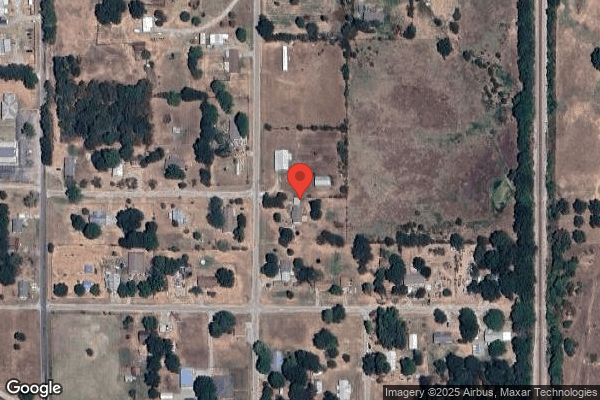

Calera Manor

1061 North Access Road, Calera, OK 74730 (580) 434-5727
For profit - Limited Liability company 82 Beds BGM ESTATE Data: November 2025
Trust Grade
40/100
#214 of 282 in OK
Last Inspection: January 2024

Within standard 12-15 month inspection cycle. Federal law requires annual inspections.

Overview

Calera Manor has a Trust Grade of D, indicating below-average performance with some concerns regarding care quality. It ranks #214 out of 282 facilities in Oklahoma, placing it in the bottom half, and #3 out of 5 in Bryan County, meaning there are only two better options nearby. The facility is showing improvement, as issues decreased from 11 in 2024 to 3 in 2025. Staffing is a concern with only one star out of five and less RN coverage than 97% of facilities in the state, which could affect the quality of care residents receive. Specific incidents include a failure to submit resident assessments on time and not having a registered nurse on staff consistently, which raises potential risks for residents. However, it's worth noting that the facility has not incurred any fines, and their staff turnover rate is slightly better than the state average.

Trust Score
D
40/100
In Oklahoma
#214/282
Bottom 25%
Safety Record
Low Risk
No red flags
Inspections
Getting Better
11 → 3 violations
Staff Stability
⚠ Watch
51% turnover. Above average. Higher turnover means staff may not know residents' routines.
Penalties
✓ Good
No fines on record. Clean compliance history, better than most Oklahoma facilities.
Skilled Nurses
⚠ Watch
Each resident gets only 4 minutes of Registered Nurse (RN) attention daily — below average for Oklahoma. Fewer RN minutes means fewer trained eyes watching for problems.
Violations
⚠ Watch
35 deficiencies on record. Higher than average. Multiple issues found across inspections.
★☆☆☆☆
1.0
Overall Rating
★☆☆☆☆
1.0
Staff Levels
★☆☆☆☆
1.0
Care Quality
★★☆☆☆
2.0
Inspection Score
Stable
2024: 11 issues
2025: 3 issues

The Good

  • Full Sprinkler Coverage · Fire safety systems throughout facility
  • No fines on record

Facility shows strength in fire safety.

The Bad

1-Star Overall Rating

Below Oklahoma average (2.6)

Significant quality concerns identified by CMS

Staff Turnover: 51%

Near Oklahoma avg (46%)

Higher turnover may affect care consistency

Chain: BGM ESTATE

Part of a multi-facility chain

Ask about local staffing decisions and management

The Ugly 35 deficiencies on record

Jun 2025 3 deficiencies
CONCERN (D) 📢 Someone Reported This

A family member, employee, or ombudsman was alarmed enough to file a formal complaint

Potential for Harm - no one hurt, but risky conditions existed

Notification of Changes (Tag F0580)

Could have caused harm · This affected 1 resident

Based on record review and interview, the facility failed to notify the physician of a significant weight change for 1 (#71) of 3 sampled residents reviewed for nutrition. A weight variance report, da...

Read full inspector narrative →
Based on record review and interview, the facility failed to notify the physician of a significant weight change for 1 (#71) of 3 sampled residents reviewed for nutrition. A weight variance report, dated 06/09/25, showed 4 residents with significant weight loss. Findings: An undated facility policy titled Weight and Height Measurement, read in part, Notify the charge nurse or physician of all weight changes of five pounds (or 5%) or more in a 30-day period or ten percent in a 180-day period or per state requirement. Review of the vital sign records for Res #71 showed their weight on: - 05/02/25 - 126.1 pounds, - 05/14/25 - 114.2 pounds, and - 05/27/25 - 109.4 pounds. A care plan intervention, implemented on 05/05/25, read in part. Monitor vital sign and weight as ordered, notify physician if there is a significant weight change. A Dietitian's Recommendations for Primary Care Provider form, dated 05/30/25, showed Res #71's weight had decreased from 126.1 pounds on 05/02/25 to 109.4 pounds in one month. The form also recommended 60 milliliters of TwoCal HN (a liquid nutritional supplement) three times a day and to consider adding Vitamin B12 and Omega 3. This form was not signed by the physician. On 06/11/25 at 2:30 p.m., LPN #1 stated the dietician was responsible for notifying the physician of significant weight loss. On 06/12/25 at 8:46 a.m., the DON stated they were unable to locate any documentation the physician had been made aware of Res #71's weight loss. They also stated they received the resident weights after the CNA's take them. They stated they had never contacted the physician regarding Res #71's weight loss.
CONCERN (D) 📢 Someone Reported This

A family member, employee, or ombudsman was alarmed enough to file a formal complaint

Potential for Harm - no one hurt, but risky conditions existed

Report Alleged Abuse (Tag F0609)

Could have caused harm · This affected 1 resident

Based on record review and interview, the facility failed to report an allegation of physical abuse to local law enforcement for 1 (#80) of 1 sampled resident reviewed for abuse. The assistant adminis...

Read full inspector narrative →
Based on record review and interview, the facility failed to report an allegation of physical abuse to local law enforcement for 1 (#80) of 1 sampled resident reviewed for abuse. The assistant administrator reported the census in the facility was 74. Findings: A facility policy titled Abuse - Reportable Events, dated 08/19, read in part, All alleged allegations of abuse will be reported to the appropriate state agency and to all other agencies as required by regulation. The policy further read in part, Local law enforcement will be notified of any reportable crime against a resident. An admission assessment, dated 05/11/24, showed Res #80 had a BIMS score (a test of cognitive function) of 15, which is indicative of intact cognition. An incident report form, dated 05/17/24, showed Res #80 reported an allegation of physical abuse to facility staff. The report also showed the physician, the resident's legal representative and adult protective services were notified. The report did not show local law enforcement had been notified. On 06/11/25 at 2:49 p.m., the DON stated they could not locate any documentation law enforcement had been contacted regarding this allegation.
CONCERN (E) 📢 Someone Reported This

A family member, employee, or ombudsman was alarmed enough to file a formal complaint

Potential for Harm - no one hurt, but risky conditions existed

Deficiency F0605 (Tag F0605)

Could have caused harm · This affected multiple residents

Based on record review and interview, the facility failed to ensure residents did not receive antipsychotic medications for the diagnosis of dementia for 2 (#14 and #25) of 6 sampled residents reviewe...

Read full inspector narrative →
Based on record review and interview, the facility failed to ensure residents did not receive antipsychotic medications for the diagnosis of dementia for 2 (#14 and #25) of 6 sampled residents reviewed for unnecessary medications. The DON stated 22 residents were prescribed antipsychotic medications at the facility. 1. A significant change MDS assessment, dated 03/09/25, showed in section C Res #14 had a BIMS score of 3 [this indicated the resident's cognition was severely impaired]. A policy titled Antipsychotic Medication Use, dated April 2007, read in part, Residents will only receive antipsychotic medications when necessary to treat specific conditions for which they are indicated and effective. A prescription order, dated 03/04/25, showed Res #14 had been prescribed one tablet of Seroquel [an antipsychotic medication] 50 mg every day for dementia with mood disturbance. A prescription order, dated 05/16/25, showed Res #14 had been prescribed one tablet of Risperdal [an antipsychotic medication] 1 mg each day for dementia with mood disturbance. On 06/11/25 at 2:42 p.m., the ADON stated it was their understanding antipsychotic medications could be used for the diagnosis of dementia with behaviors. On 06/11/25 at 2:43 p.m., MDS coordinator #1 stated it was also their understanding that antipsychotic medications could be used for the diagnosis of dementia with behaviors. 2. A prescription order, dated 02/26/24, showed Res #25 had been prescribed two tablets of Seroquel [an antipsychotic medication]100 mg each night at 8:00 p.m. for dementia with agitation. An annual MDS assessment, dated 05/12/25, showed in section C Res #25 had a BIMS score of 3 [the score of 3 on the BIMS assessment indicated the resident's cognition was severely impaired]. Section N of the MDS assessment showed Res #25 had received antipsychotic medications on a routine basis. On 06/10/25 at 11:29 a.m., the DON was asked about Res #14 and #25's use of the antipsychotic medications. They stated Risperdal and Seroquel were medications used for people with hallucinations and such. They stated the medications were not approved by the FDA for treating dementia and they believed the orders showing Res #14 and #25 were using it for dementia was a clerical error. They stated the facility did not use antipsychotic medication for dementia. They stated Res #14 and #25 had not experienced hallucinations or delusions of which they were aware. On 06/10/25 at 11:48 a.m., LPN #1 stated they had worked with Res #25 for about three months. They stated the reason the resident had been prescribed Seroquel was for them yelling out and saying things that did not make sense. They stated the Res #25 was confused at times, but they had not seen or heard of the resident hallucinating or experiencing delusions. When asked about what Seroquel was, they stated it was an antipsychotic medication. LPN #1 was asked about monitoring Res #25 for psychotic symptoms such as hallucinations and delusions. LPN #1 stated no one had instructed them to monitor for those.
Jan 2024 11 deficiencies
CONCERN (D)

Potential for Harm - no one hurt, but risky conditions existed

Deficiency F0552 (Tag F0552)

Could have caused harm · This affected 1 resident

Based on record review and interview, the facility failed to ensure informed consent was obtained for the use of an antipsychotic medication for one (#47) of five sampled residents reviewed for unnece...

Read full inspector narrative →
Based on record review and interview, the facility failed to ensure informed consent was obtained for the use of an antipsychotic medication for one (#47) of five sampled residents reviewed for unnecessary meds. The Administrator identified 67 residents resided in the facility and the DON identified 22 residents who received psychotropic medications. Findings: Resident #47 had diagnoses which included saddle embolus of pulmonary artery, high blood pressure, and dementia. A five day assessment, dated 11/18/23, documented Resident #47 had severe cognitive impairment. The clinical health record did not contain documentation an informed consent had been signed for the use of Risperdal. A medication flowsheet, dated 11/01/23 through 11/30/23, documented to administer Risperidone one milligram in the am and two milligrams at hour of sleep. A Physician Order, dated 12/11/23, documented an increase for Risperidone to two milligrams in the morning. A medication flowsheet, dated 12/01/23 through 12/21/23, documented a dose change on 12/11/23 to two milligrams in the morning. On 01/09/24 at 12:15 p.m., the Corp. Nurse Consult. #1 was asked the policy for obtaining informed consent prior to the use of psychotropic medications. They stated a consent should be obtained before the medication is administered. They were asked if a consent form had been obtained. The Corp. Nurse Consult. #1 stated there was not a consent form in the EHR but they would look in Resident #47's hard chart. No further documentation was provided by the facility.
CONCERN (D)

Potential for Harm - no one hurt, but risky conditions existed

Deficiency F0583 (Tag F0583)

Could have caused harm · This affected 1 resident

Based on record review, observation, and interview, the facility failed to ensure privacy by preventing wandering residents from going in other residents' rooms uninvited for two (#23 and #25) of thre...

Read full inspector narrative →
Based on record review, observation, and interview, the facility failed to ensure privacy by preventing wandering residents from going in other residents' rooms uninvited for two (#23 and #25) of three sampled residents reviewed for privacy. The administrator identified 67 residents resided in the facility and the ADON identified seven residents that wandered. Findings: A 'Resident Rights' document, revised 08/2013, read in parts, .Privacy and confidentiality. The resident has the right to personal privacy .Personal privacy includes accommodations . 1. Resident #25 had diagnoses which included hypertension. On 01/04/24 at 2:22 p.m., Resident #25 reported there was a male resident that walks in their room all the time unwanted and drips snot everywhere. When asked what the facility had done to stop this from happening Resident #25 stated nothing, I tell them, and they just keep coming and getting him out. 2. Resident #23 had diagnoses which included hypothyroidism. On 01/04/24 at 2:57 p.m., Resident #23 reported there were unwanted residents that walked into their room all the time and they had to call for staff to get them out. When asked what the facility had done to stop this from happening Resident #23 stated nothing, they just come and get them. On 01/08/24 at 3:15 p.m., a staff member was observed walking out of Resident #25's room holding a male resident's hand and leading him down the hall. I went into Resident #25's room and asked the resident what happened. They stated, He was in here again. I wish they would do something about that. On 01/09/24 at 9:11 a.m., the ADON was asked if they received complaints from Resident #23 or #25 about residents roaming into their rooms uninvited. The ADON stated yes, but we remove them. On 01/10/24 at 9:53 a.m., the ADON acknowledged there were interventions that could have been initiated to prevent wandering residents from entering other residents' rooms and that the facility had not effectively protected the resident's right to privacy.
CONCERN (D) 📢 Someone Reported This

A family member, employee, or ombudsman was alarmed enough to file a formal complaint

Potential for Harm - no one hurt, but risky conditions existed

Report Alleged Abuse (Tag F0609)

Could have caused harm · This affected 1 resident

Based on record review and interview, the facility failed to report allegations of abuse to the State agencies for two (#36 and #63) of three sampled residents reviewed for abuse. The Administrator re...

Read full inspector narrative →
Based on record review and interview, the facility failed to report allegations of abuse to the State agencies for two (#36 and #63) of three sampled residents reviewed for abuse. The Administrator reported there were 67 residents residing in the facility. Findings: An Abuse - Reportable Events policy, dated 08/2019, read in parts, .1. The Charge nurse will: If a resident to resident incident occurs, staff should immediately intervene. Separate residents and take them to areas away from each other until the situation has subsided .Notify the repsonsible party/guardian and physician of each resident .2. The administrator will: Notify state agency as required . 1. A quarterly MDS for resident #63, dated 10/11/23, documented they had diagnoses that included hyperlipidemia and chronic kidney disease with a BIMS of 10. 2. A significant change MDS for resident #36, dated 01/03/23, documented they had diagnoses that included dementia and cognitive communication deficit with a BIMS of 02. A Nurse's Note, written by LPN #2 on 12/17/23, documented staff had to continuously separate Resident #63 from rubbing Resident #36. On 01/08/24 at 10:18 a.m., LPN #2 was asked if they felt the rubbing referred to in their note, written 12/17/23, was of a sexual nature. LPN #2 stated, Well, sort of, yes. LPN #2 acknowledged reporting this incident to LPN #1. On 01/08/24 at 2:15 p.m., LPN #1 acknowledged receiving report of the above-mentioned incident and speaking with MDS Coordinator #1 and the Adm. Asst. about it. There was no documentation that the allegation of inappropriate touching of a sexual nature was reported to the proper authorities. On 01/08/24 at 10:20 a.m., the DON acknowledged the incident had not been reported per facility policy.
CONCERN (D) 📢 Someone Reported This

A family member, employee, or ombudsman was alarmed enough to file a formal complaint

Potential for Harm - no one hurt, but risky conditions existed

Investigate Abuse (Tag F0610)

Could have caused harm · This affected 1 resident

2. Resident #36 had diagnosis that included unspecified dementia and cognitive communication deficit. On 01/08/24 at 1:23p.m., the DON stated LPN #2 reported the incident between Resident #36 and #63 ...

Read full inspector narrative →
2. Resident #36 had diagnosis that included unspecified dementia and cognitive communication deficit. On 01/08/24 at 1:23p.m., the DON stated LPN #2 reported the incident between Resident #36 and #63 and was aware of the families request to keep the two residents away from each other. The DON stated they did not see anything wrong and the incident should have been documented and investigated. There was no documentation the allegation had been investigated. Based on record review and interview, the facility failed to investigate allegations of inappropriate sexual behavior for two (#36 and #63) of three sampled residents reviewed for abuse. The Administrator identified there were 67 residents residing in the facility. Findings: An Abuse - Reportable Events policy, dated 08/2019, read in parts, .The facility administration will conduct and investigate allegations of .suspected abuse .Investigation .b. Begin taking written statements from the person reporting the allegation or suspicion and any witnesses including staff, family, and/or residents . Resident #63 had diagnoses that included hyperlipidemia and chronic kidney disease. A quarterly MDS for Resident #63, dated 10/11/23, documented they had BIMS of 10. A Nurses Note, written by LPN #2, dated 12/17/23, documented staff had to continuously separate Resident #63 from rubbing on a female resident. On 01/08/24 at 10:18 a.m., LPN #2 acknowledged reporting incidents of a somewhat sexual nature between Resident #63 and Resident #36 to the charge nurse on duty at the time, but did not complete any incident reports. A review of Resident #63's medical record revealed no incident reports had been created for these continuous incidents and no investigations had initiated. On 01/08/24 at 10:19 a.m., the DON denied being aware of any reports of inappropriate sexual behavior involving Resident #63 and acknowledged that if incidents had occurred, an investigation should have been initiated.
CONCERN (D)

Potential for Harm - no one hurt, but risky conditions existed

ADL Care (Tag F0677)

Could have caused harm · This affected 1 resident

Based on record review and interview, the facility failed to ensure showers were provided for one (#8) of two sampled residents reviewed for ADL assistance. The administrator identified 67 residents r...

Read full inspector narrative →
Based on record review and interview, the facility failed to ensure showers were provided for one (#8) of two sampled residents reviewed for ADL assistance. The administrator identified 67 residents resided in the facility. Findings: Resident #8 had diagnoses that included Parkinson's disease, was wheelchair dependent, and required supervision and touch assistance for showers. On 01/09/24 at 12:15 p.m., Resident #8 reported they had not received a shower for the past three weeks. No showers were documented for Resident #8 for the following dates: 12/23/23, 12/26/23, 12/29/23, 01/01/24, 01/03/24, and 01/05/24. The last week of December for the bathing sheets, 3 out of 3 opportunities were missed. According the first week of January 2024 bathing sheets schedule, 3 out of 3 opportunities were missed. A facility shower list documented Resident #8 was to receive showers Monday, Wednesday, and Friday of each week. On 01/09/24 at 12:16 p.m., the ADON reviewed the showers that were documented for Resident #8 and acknowledged that showers had not been given as scheduled.
CONCERN (D)

Potential for Harm - no one hurt, but risky conditions existed

Accident Prevention (Tag F0689)

Could have caused harm · This affected 1 resident

Based on observation, record review, and interview, the facility failed to ensure supervision for a resident who was on a mechanically altered diet for one (#60) of 17 sampled residents. The administr...

Read full inspector narrative →
Based on observation, record review, and interview, the facility failed to ensure supervision for a resident who was on a mechanically altered diet for one (#60) of 17 sampled residents. The administrator identified 67 residents resided in the facility and the DON reported four residents received a pureed diet and nineteen residents received a mechanical soft diet. Findings: A Safety and Supervision of Residents policy, revised December 2007, read in parts, .Resident safety and supervision and assistance to prevent accidents are facility-wide priorities .Implementing interventions to reduce accident risks and hazards shall include the following .ensuring that interventions are implemented . Resident #60 had diagnoses that included traumatic brain injury and dysphagia. Resident #60's care plan, dated 10/05/22, read in part, .was at risk for weight loss due to dysphagia .[Resident #60] must be removed after each meal and monitored by staff to prevent him from eating off of other resident's trays . The care plan had not been updated to contain any current interventions had been put into place to prevent Resident #60 from eating food off other resident's trays. An annual assessment, dated 10/08/23, documented Resident #60's cognitive skills for daily decision making was severely impaired. A Physician Order, dated 04/12/23, documented Resident #60's diet was mechanical soft with pureed meat and nectar thick liquids. On 01/04/24 at 1:24 p.m., Resident #60 was observed to roll themselves in the dining room and began to eat off of a plate of food sitting on a table. No staff were observed in the dining room. The plate of food was not Resident #60's plate. Resident #60 was observed drinking from a cup with ice and thin liquids and eating shaved meat with their hands. CMA #2 was in the hallway near the dining room and was asked if the resident should be eating that food. CMA #2 stated the resident should not be eating the food. On 01/04/24 at 2:15 p.m., Resident #60 was observed sitting at the dining table eating a piece of bread. Activities staff were observed to put dots of paint on a plate for activities. CNA #2 was observed in the hallway near the dining room and was asked what the was resident eating. CNA #2 approached Resident #60 and removed the bread from the resident's hand. Resident #60 had dipped the bread into some of the blue paint on the plate and was attempting to take a bite when staff intervened. On 01/05/24 at 11:10 a.m., the DON was asked if staff had informed them about Resident #60 eating off another resident's tray. They stated yes, and it was in the care plan to redirect the resident and remove the resident from the dining room after meal time was over. They were asked if staff had notified them the Resident was observed eating bread during activities. They stated no. The DON stated Resident #60 is not one on one, staff did checks every 2 hours and would redirect.
CONCERN (D)

Potential for Harm - no one hurt, but risky conditions existed

Infection Control (Tag F0880)

Could have caused harm · This affected 1 resident

Based on observation, record review, and interview, the facility failed to maintain infection control during wound care for one (#19) of one sampled resident reviewed for wound care. The administrato...

Read full inspector narrative →
Based on observation, record review, and interview, the facility failed to maintain infection control during wound care for one (#19) of one sampled resident reviewed for wound care. The administrator identified 67 residents resided in the facility. The DON identified eight residents received wound care. Findings: An undated Dressing Change Guidelines, read in parts .The following is meant to be used as a guideline only and to promote the safe-and-effective use of the wound care products .ointments or medications should be placed in a clean contained (plastic med cup) which is to be brought into the room .Position resident .Don gloves, remove soiled dressings .Remove gloves wash hands .Don gloves .clean wound .Remove gloves wash hands .Don gloves for topical/dressing .apply with clean cotton tipped applicator . Resident #19 had diagnoses which included muscle wasting and atrophy, osteoarthritis, and depression. A Physician Order, dated 12/27/23, documented to cleanse the coccyx with normal saline, pat dry, apply medihoney and calcium alginate and cover with a dry dressing every day. A Physician Order, dated 12/27/23, documented to cleanse the left heel with normal saline, pat dry, apply Iodosorb and calcium alginate cover with foam and wrap with Kerlix every day. A Physician Order, dated 12/27/23, documented to cleanse the right heel with normal saline, pat dry, apply Iodosorb and calcium alginate cover with foam and wrap with Kerlix every day. On 01/10/24 at 4:29 p.m., LPN #4 was observed to perform wound care on Resident #19. LPN #4 donned gloves and removed a border dressing from the resident's coccyx, removed their gloves, sanitized their hands and donned clean gloves. LPN #4 used normal saline and gauze sponges to clean the wound, removed their gloves, did not sanitize their hands, and donned clean gloves. LPN #4 then cut dressings to size, applied medihoney with their gloved finger to the wound, applied calcium alginate dressing and secured it with a bordered dressing. Then they removed their gloves, sanitized their hands, donned clean gloves, and assisted the resident to dress. LPN #4 was then observed to cut the gauze dressings from both feet. LPN #4 then removed the dressing from the right heel, removed their gloves, but did not sanitize their hands. LPN #4 donned gloves, cleansed the right wound with normal saline and gauze sponges, picked up the tube of Iodosorb with dirty gloves, applied ointment to the wound using a q-tip, then applied the dressings and Kerlix wrap. LPN #4 then removed the cut dressing from the left heel, took off their gloves but did not sanitize their hands. LPN #4 donned gloves, cleansed the wound, removed their gloves, but did not sanitize their hands. Then they donned clean gloves used a q-tip to apply Iodosorb ointment, applied the ointment, covered with dressings, and secured with Kerlix wrap. LPN #4 removed their gloves, sanitized their hands, donned gloves, and secured both dressings with tape. On 01/10/24 at 5:15 p.m., LPN #4 acknowledged they had not sanitized their hands after glove changes and had touched the medication tube with dirty gloves during the dressing change. On 01/11/24 at 9:49 a.m., the DON was asked how should wound care be performed related to changing gloves. They stated staff should sanitize after every glove removal/change. , No.
CONCERN (E)

Potential for Harm - no one hurt, but risky conditions existed

Deficiency F0725 (Tag F0725)

Could have caused harm · This affected multiple residents

Based on record review and interview, the facility failed to ensure sufficient staff to provide supervision for one (#35) of 17 sampled residents reviewed for sufficient staffing. The administrator id...

Read full inspector narrative →
Based on record review and interview, the facility failed to ensure sufficient staff to provide supervision for one (#35) of 17 sampled residents reviewed for sufficient staffing. The administrator identified 67 residents resided in the facility and 23 resident were dependent on staff for assistance with activities of daily living. Findings: Resident #35 had diagnoses which included pain, dysphagia following cerebral infarction, and need for assistance with personal care. A Physician Order, dated 11/21/23, documented Resident #35 was to have nectar thick liquids. An admission assessment, dated 11/24/23, documented Resident #35 had no cognitive impairment, needed substantial assistance with toileting, showers, dressing, and personal hygiene, and had upper and lower extremity impairment. A Timecard Editor, dated 12/30/23, documented three staff clocked in on 10 p.m.-6 a.m. shift. A Timecard Editor, dated 01/05/24, documented three staff clocked in on 10 p.m.-6 a.m. shift. A Timecard Editor, dated 01/06/23, documented four staff clocked in on 10 p.m. -6 a.m. shift. On 01/10/24 at 2:37 p.m., Resident #35 was asked if there was an issue with staffing. Resident #35's family member was present and stated, They don't have any staff. They identified the weekends as being short staffed. Resident #35 stated they asked for thickened water around five in the morning on Sunday, 01/06/24, and was told by a staff member I don't have time to get water. On 01/11/24 at 8:15 a.m., the Adm. Asst. was asked to review 12/30/23, 01/05/24 and 01/06/24 staffing timecards for 10 p.m.-6 a.m. shift and asked if there was sufficient staff on these dates. They stated on 01/05/24 facility census was 68 residents and there should have been five staff. On 01/06/24 the facility census was 68 and there should have been five staff. On 12/30/23 the census was 74 and there should have been five staff. They were asked if staffing had been met for these dates. They stated, No.
CONCERN (E)

Potential for Harm - no one hurt, but risky conditions existed

Deficiency F0727 (Tag F0727)

Could have caused harm · This affected multiple residents

Based on record review and interview, the facility failed to ensure RN coverage for eight consecutive hours per day. The administrator identified 67 residents resided in the facility. On 01/09/24 at ...

Read full inspector narrative →
Based on record review and interview, the facility failed to ensure RN coverage for eight consecutive hours per day. The administrator identified 67 residents resided in the facility. On 01/09/24 at 2:56 pm., RN coverage time sheets were reviewed with the Adm. Asst. from 10/01/23 through 10/31/23. There was no RN coverage for eight consecutive hours per day for the following dates: 10/03/23, 10/04/23, 10/05/23, 10/07/23, and 10/09/23 through 10/14/23. The Administrator acknowledged there was no RN coverage. A staff schedule, dated 12/25/23 through 01/13/24 did not have a Registered Nurse scheduled on 01/07/24. On 01/09/24 at 3:22 p.m., the Adm. Asst. was shown the staff schedule dated 12/25/23 through 01/13/23 and asked if there had been registered nurse coverage on 01/07/24. They reviewed the the payroll time on the computer and stated no RN had clocked in on that date. No further information was provided.
CONCERN (E)

Potential for Harm - no one hurt, but risky conditions existed

Pharmacy Services (Tag F0755)

Could have caused harm · This affected multiple residents

Based on observation, record review, and interview, the facility failed to ensure: a. staff did not carry two resident's medications (#126 and #59) to administer at the same time, b. staff counted co...

Read full inspector narrative →
Based on observation, record review, and interview, the facility failed to ensure: a. staff did not carry two resident's medications (#126 and #59) to administer at the same time, b. staff counted controlled medications every shift per policy, and c. controlled medications had accurate narcotic count sheets for two (#70 and #46) of four sampled residents reviewed for medications. The administrator identified 67 residents resided in the facility. The DON identified 35 residents received narcotics. Findings: An undated Narcotic Count policy, read in parts .To complete a physical inventory of narcotics at change of each shift by two licensed nurses to identify discrepancies and need for reconciliation and accountability .To assure controlled drugs are handled, stored .properly .To assure proper record keeping for controlled drugs .Narcotic records are reconciled by a physical count of the remaining narcotics supply at the change of each shift by the oncoming and outgoing licensed nurse .If the count is not accurate, the nurse going off duty is to remain on duty until the count is reconciled . 1. On 01/09/24 at 6:54 a.m., CMA #1 was observed to have a cup of medications on top of the medication cart. They were asked to start medication pass when they were ready. CMA #1 stated they were ready and began to prepare medications for Resident #126. After the medications were prepared for Resident #126, CMA #1 was observed to pick up Resident #126's medications, nasal spray, water cup, and Resident #59's medication cup and water and enter the residents room. CMA #1 handed the medications and nasal spray to Resident #126. After Resident #126 took their medications CMA #1 then went to the restroom, washed their hands, took the nasal spray to the cart, sanitized their hands, then returned to the room and administered Resident #59's medications. On 01/09/24 at 2:37 a.m., the ADON was informed of the observation with CMA #1 during medication observation. They were asked what the policy was for passing medications to two residents at a time and what could the outcome be to the resident. The ADON stated, they should only pass one resident at a time and the possible outcome could be the wrong medication is given to the wrong patient. On 01/10/24 at 10:59 a.m., CMA #1 was asked why had they took two medications cups into the resident's room at the same time. They stated they were running late on medication pass and knew that should not have done that. 2. On 01/10/24 at 10:04 a.m., the CONTROLLED DRUGS-COUNT RECORD, for the following months were reviewed: a. from 12/01/23 through 12/31/23, the sign out sheet did not contain documentation of staff signatures for 130 of 186 opportunities, and b. from 01/01/24 through 01/10/24, the sign out sheet did not contain documentation of staff signatures for 47 of 56 opportunities. On 01/10/24 at 11:30 a.m., the DON was shown the count sheets for December 2023 and January 2024 with missing staff signatures and asked when should the count be completed. They stated every shift, but they had not been completed. 3. Resident #70 did not have narcotic count sheets completed for an unopened bottle of Lorazepam 2 mg/ml and Morphine 20/ml that was observed in the refrigerator in the medication room. Resident #46 did not have a narcotic count sheet completed for an unopened bottle of Morphine 10 mg/5 ml that was observed in the refrigerator in the medication room. Resident #70's medication count sheet, dated 12/22/23 through 01/01/24, documented there was six milliliters of Morphine 20 mg/ml in an opened bottle. On 01/10/24 at 10:04 a.m., LPN #3 was asked who was responsible for the narcotic count. They stated the nurse checks all the narcotics in from hospice services that are in the refrigerator. They were asked where the count sheets were for Resident #46's unopened bottle of morphine and for Resident #70's unopened bottles of Morphine and Lorazepam. They stated there were not any. LPN #3 was unable to determine the amount in Resident #70's opened bottle of morphine. On 01/10/24 at 10:28 a.m., the DON used a syringe to count Resident #70's remaining morphine and stated there was probably about one milliliter in the bottle. They were asked if the count was correct that documented six milliliters remained. They stated, No.
CONCERN (E)

Potential for Harm - no one hurt, but risky conditions existed

Deficiency F0809 (Tag F0809)

Could have caused harm · This affected multiple residents

Based on record review and interview, the facility failed to ensure snacks were offered to one [#8] of three sampled residents reviewed for snacks. The administrator identified 67 residents resided in...

Read full inspector narrative →
Based on record review and interview, the facility failed to ensure snacks were offered to one [#8] of three sampled residents reviewed for snacks. The administrator identified 67 residents resided in the facility. Findings: The Snacks (Between Meal and Bedtime) policy, revised October 2010, read in part, .The person performing this procedure should record the following information in the resident's medical record: 1. The date and time the snack was served. 2. The name and title of the individual(s) who served the snack. 3. The amount of the snack eaten by the resident(i.e., 50%, 75%, etc.). 4. If and how the resident participated in the procedure or any changes in the resident's ability to participate in the procedure. 5. Any special special request(s) made by the resident concerning his or her eating time or food likes and dislikes. 6. Any difficulty the resident had in feeding himself of herself, chewing or swallowing. 7. If the resident refused the snack, the reason(s) why and the intervention taken. 8. The signature and title of the person recording the data. On 1/10/24 at 1:27 p.m., Resident #8 reported they usually did not get offered snacks at night. Resident #8's clinical health record did not contain documentation that bedtime snacks had been offered since 12/19/23 at 7:13 p.m. On 01/10/24 at 2:15 p.m., the Regional Director stated, I don't see any documentation on snacks for Resident #8 in the electronic health records and medication administration records. On 0/10/24 at 2:16 p.m. the Regional Director stated, Snacks are to be offered according to physician orders and company policy.
Apr 2023 1 deficiency
CONCERN (D) 📢 Someone Reported This

A family member, employee, or ombudsman was alarmed enough to file a formal complaint

Potential for Harm - no one hurt, but risky conditions existed

Deficiency F0657 (Tag F0657)

Could have caused harm · This affected 1 resident

Based on record review and interview, the facility failed to update a care plan after falls for one (#1) of four residents reviewed for care plans. The Resident Census and Conditions of Residents, dat...

Read full inspector narrative →
Based on record review and interview, the facility failed to update a care plan after falls for one (#1) of four residents reviewed for care plans. The Resident Census and Conditions of Residents, dated 04/12/23, documented a census of 69. Findings: Res #1 was admitted with diagnoses which included dementia and below the knee amputation. The Care Planning - Interdisciplinary Team policy, revised 12/08, documented in parts, .develops and maintains a comprehensive care plan for each resident that identifies the highest level of functioning .care plans are revised as information about the resident and resident's condition change. The Care Planning/Interdisciplinary Team is responsible for the review and updating of care plans . The Quarterly Fall Risk, dated 02/23/23, documented Res #1 had diminished safety awareness and impaired mobility. It documented the resident had a history of falls within the past three months and rated the resident at a high risk for falls. Res #1's fall care plan was last updated on 02/26/23. A quarterly assessment, dated 03/30/23, documented Res #1 had severe cognitive impairment, was non-ambulatory, and required total assistance with activities of daily living. A progress note, dated 04/08/23 at 4:23 p.m., documented Res #1 was found in the floor on a fall mat. A progress note, dated 04/12/23 at 7:13 p.m., documented Res #1 was found in the floor. On 04/13/23, at 3:15 p.m., the ADON stated the care plan for Res #1 should have been updated after the falls on 04/08/23 and 04/12/23. On 04/13/23 at 3:30 p.m., the Administrator stated the care plan for Res #1 should have been updated after the falls on 04/08/23 and 04/12/23.
Dec 2022 3 deficiencies
CONCERN (D) 📢 Someone Reported This

A family member, employee, or ombudsman was alarmed enough to file a formal complaint

Potential for Harm - no one hurt, but risky conditions existed

Deficiency F0655 (Tag F0655)

Could have caused harm · This affected 1 resident

**NOTE- TERMS IN BRACKETS HAVE BEEN EDITED TO PROTECT CONFIDENTIALITY** Based on record review and interview, the facility failed to develop a baseline care plan regarding falls for two (#1 and #3) of...

Read full inspector narrative →
**NOTE- TERMS IN BRACKETS HAVE BEEN EDITED TO PROTECT CONFIDENTIALITY** Based on record review and interview, the facility failed to develop a baseline care plan regarding falls for two (#1 and #3) of five residents reviewed for falls. The Admit/Discharge Report dated, 09/13/22 through 12/13/22, identified 35 residents as new admissions in the last three months. Findings: A Care Plans - Preliminary policy revised 12-22, documented in parts, A preliminary plan of care to meet the resident's immediate needs shall be developed for each resident within 48 hours of admission .To assure that the resident's immediate care needs are met and maintained .the preliminary care plan will be used until the staff can conduct the comprehensive assessment and develop an interdisciplinary care plan. Res #1 was admitted on [DATE] with diagnoses which included muscle wasting/atrophy, debility and difficulty walking. A progress note, dated 09/23/22 at 6:00 p.m., read in parts, CN-called down to room by CMA - (name withheld) D/T resident was in the floor. Upon arrival was sitting up on her bed, said she got up and is ok, that she falls all the time. No apparent injuries noted at this time . A progress note, dated 09/25/22 at 6:16 p.m., read in parts, Called (name withheld) NP, on call for Dr. (name withheld), notified resident had a fall .orders for resident to be sent to the ER . A baseline care plan regarding falls was not developed for Res #1. Res #3 was admitted with diagnoses which included weakness and lack of coordination. A progress note, dated 10/01/22 at 6:21 p.m., read in parts, Heard someone yelling; went to resident room and noticed resident sitting in the floor with legs under the bed. Resident stated she couldn't get up . A progress note, dated 10/02/22 at 7:30 a.m., read in parts, Resident was ambulating in hallway with wheeled walker lost her balance and fell . A baseline care plan regarding falls was not developed for Res #3. On 12/14/22 at 9:45 a.m., the ADON reported there was no baseline care plans for falls developed for Res #1 and #3.
CONCERN (D) 📢 Someone Reported This

A family member, employee, or ombudsman was alarmed enough to file a formal complaint

Potential for Harm - no one hurt, but risky conditions existed

Deficiency F0657 (Tag F0657)

Could have caused harm · This affected 1 resident

Based on record review and interview, the facility failed to revise a care plan for a fall for two (#1 and #2) of five residents reviewed for falls. The All Falls for Facility report dated, 09/13/22 t...

Read full inspector narrative →
Based on record review and interview, the facility failed to revise a care plan for a fall for two (#1 and #2) of five residents reviewed for falls. The All Falls for Facility report dated, 09/13/22 through 12/13/22, identified 39 residents with falls. Findings: A Falls - Evaluation and Prevention policy last revised 12/19 read in parts, .PROCEDURE .Interventions will be implemented based on the fall risk assessment score and evaluation of other risk factors, which will be reflected in the care plan. New interventions will be implemented following subsequent falls should they occur . Res #1 was admitted with diagnoses which included muscle wasting/atrophy, debility and difficulty walking. A progress note, dated 11/06/22 at 11:00 p.m., read in parts, Pt. heard hollering out for help. Found pt. lying on her backside in the floor. Pt. c/o pain to top of head but not sure if she hit it. No noted hematoma or laceration. Pt. states she was trying to get into her w/c and fell back onto bottom .Pt does c/o pain to their bottom . A fall care plan, dated 10/06/22, was not revised regarding Res #1's fall on 11/06/22. Res #2 was admitted with diagnoses which included muscle wasting/atrophy, debility and difficulty walking. A progress note dated, 11/29/22 at 11:00 a.m., read in parts, Pt heard hollering out for help. Found pt. lying on her backside in the floor. Pt c/o pain to top of head but not sure if she hit it. No noted hematoma or laceration .Pt c/o pain to her bottom . A fall care plan, dated 07/02/21, last revised on 12/08/22, was not updated for Res #2's fall on 11/29/22. On 12/14/22 at 9:45 a.m., the ADON reported care plans should have been updated each time a resident fell to include new fall interventions.
CONCERN (E) 📢 Someone Reported This

A family member, employee, or ombudsman was alarmed enough to file a formal complaint

Potential for Harm - no one hurt, but risky conditions existed

Accident Prevention (Tag F0689)

Could have caused harm · This affected multiple residents

**NOTE- TERMS IN BRACKETS HAVE BEEN EDITED TO PROTECT CONFIDENTIALITY** Based on record review and interview, the facility failed to: a. identify residents at risk for falls for four (#1, 2, 3 and #5)...

Read full inspector narrative →
**NOTE- TERMS IN BRACKETS HAVE BEEN EDITED TO PROTECT CONFIDENTIALITY** Based on record review and interview, the facility failed to: a. identify residents at risk for falls for four (#1, 2, 3 and #5) of five residents reviewed for falls b. implement interventions to prevent falls for two (#1, and #2) of five residents reviewed for falls. The All Falls for Facility report dated, 09/13/22 through 12/13/22, identified 39 residents with falls. A Falls - Evaluation and Prevention policy last revised 12/19 read in parts, POLICY: It is the policy of this facility to assess/evaluate each resident for the potential for falls and fall risk and implement interventions for fall prevention as indicated .RESIDENTS SHOULD BE EVALUATED FOR THEIR FALL RISK: On admission/re-admission to the facility, following any change of condition ., following a fall or near-fall whether witnessed or unwitnessed, quarterly .upon admission, the nursing staff/interdisciplinary care team should determine if a resident it at risk for falls and develop appropriate interventions based on the evaluation .Interventions will be implemented based on the fall risk assessment score and evaluation of other risk factors .New interventions will be implemented following subsequent falls should they occur . Res #1 was admitted on [DATE] with diagnoses which included muscle wasting/atrophy, debility and difficulty walking. There were no fall risk assessments completed for Res #1 between their admission on [DATE] and their discharge on [DATE]. A progress note, dated 11/06/22 at 11:00 p.m., read in parts, Pt. heard hollering out for help. Found pt. lying on her backside in the floor. Pt. c/o pain to top of head but not sure if she hit it. No noted hematoma or laceration. Pt. states she was trying to get into her w/c and fell back onto bottom .Pt does c/o pain to their bottom . A fall care plan, dated 10/06/22, did not have a fall intervention for the fall on 11/06/22 for Res #1. Res #2 was admitted with diagnoses which included muscle wasting/atrophy, debility and difficulty walking. Fall risk assessments were not completed after each fall for seven of seven falls between 09/14/22 through 12/13/22. Fall risk assessments were not completed quarterly between 03/04/22 and 12/14/22. A progress note, dated 11/29/22 at 11:00 a.m., read in parts, Pt heard hollering out for help. Found pt. lying on her backside in the floor. Pt c/o pain to top of head but not sure if she hit it. No noted hematoma or laceration .Pt c/o pain to her bottom . A fall care plan, dated 07/02/21, last revised on, 12/08/22, did not have a fall intervention for the fall on 11/29/22 for Res #2. Res #3 was admitted with diagnoses which included weakness and lack of coordination. There were no fall risk assessments completed for Res #3 since admission on [DATE]. Res #5 was admitted with diagnoses which included weakness, muscle wasting/atrophy, and difficulty in walking. There was no fall risk assessment completed for Res #5 upon admission. On 12/14/22 at 9:45 a.m., the ADON reported interventions should have been developed and fall risk assessments completed with every fall.
Oct 2022 7 deficiencies
CONCERN (D)

Potential for Harm - no one hurt, but risky conditions existed

Deficiency F0657 (Tag F0657)

Could have caused harm · This affected 1 resident

Based on record review and interview, the facility failed to revise a comprehensive person centered care plan for one (#48) of two residents sampled for care plans. The Resident Census And Conditions ...

Read full inspector narrative →
Based on record review and interview, the facility failed to revise a comprehensive person centered care plan for one (#48) of two residents sampled for care plans. The Resident Census And Conditions Of Residents documented 67 residents resided in the facility. Findings: Res #48 was admitted with diagnoses which included heart failure and hypertension. The Care Planning - Interdisciplinary Team policy, revised 10/10, documented in part .care plans are revised as information about the resident and the resident's condition change. Res #48's quarterly assessment, dated 08/09/22, documented the resident was severely cognitively impaired and required limited assistance with activities of daily living. A physician's order, dated 08/26/22, documented Lasix (a diuretic) 20 mg every morning. A physicians's order, dated 09/26/22, documented discontinue Lasix 20 mg every morning and a new order for Lasix 40 mg every morning and Lasix 20 mg tab at 1:00 p.m. A physician's order, dated 09/28/22, documented Torsemide (a diuretic) 100 mg twice a day. A care plan, revised 10/16/22, did not contain documentation of diuretic use. On 10/18/22 at 2:33 p.m., the DON reported the resident's care plan did not contain documentation on diuretics and should have.
CONCERN (D)

Potential for Harm - no one hurt, but risky conditions existed

Tube Feeding (Tag F0693)

Could have caused harm · This affected 1 resident

Based on record review, observation, and interview, the facility failed to obtain a physician's order for gastrostomy care on one (#180) of two residents sampled for a gastrostomy tube. The Resident C...

Read full inspector narrative →
Based on record review, observation, and interview, the facility failed to obtain a physician's order for gastrostomy care on one (#180) of two residents sampled for a gastrostomy tube. The Resident Census And Conditions Of Residents documented two residents received tube feedings. Findings: Res #180 was admitted with diagnoses which included dysphagia and gastrostomy status. An admission assessment, dated 08/25/22, documented Res #180 was severely cognitively impaired, required extensive assistance with activities of daily living, and required tube feeding. Upon review of the electronic health record, Res #180 did not have a physician's order for care of the gastrostomy site. A progress note, dated 10/10/22, documented in part .large amount of dark brown drainage coming from PEG (gastrostomy) site. On 10/17/22 at 10:36 a.m., Res #180 was observed in bed. On 10/17/22 at 02:35 p.m., Res #180 was observed in bed. . On 10/18/22 at 11:20 a.m., LPN #1 reported the care for the gastrostomy site is not ordered and should have been. On 10/19/22 at 12:09 p.m., observed LPN #1 perform care of the gastrostomy site. On 10/18/22 at 11:28 a.m., the DON reported the gastrostomy site treatment was not ordered or documented and should have been.
CONCERN (E)

Potential for Harm - no one hurt, but risky conditions existed

Comprehensive Assessments (Tag F0636)

Could have caused harm · This affected multiple residents

Based on record review and interview, the facility failed to ensure comprehensive assessments were completed in a timely manner on three (#4, 11, and #185) of 37 residents reviewed for comprehensive a...

Read full inspector narrative →
Based on record review and interview, the facility failed to ensure comprehensive assessments were completed in a timely manner on three (#4, 11, and #185) of 37 residents reviewed for comprehensive assessments. The Resident Census And Conditions Of Residents documented 67 residents resided in the facility. Findings: Upon record review, Res #4, 11 and #185 did not have comprehensive assessments completed in a timely manner. A policy and procedure titled Resident Assessment Instrument, dated 12/10, read in parts The Assessment Coordinator is responsible for .timely resident assessments within fourteen (14) days of the resident's admission to the facility . On 10/18/22 at 3:25 p.m., the MDS coordinator reported the assessments should have been done. On 10/18/22 at 3:27 p.m., the DON reported the admission assessments should have been performed. On 10/18/22 3:39 p.m., the regional director reported the admission assessments on Res #4, 11, and #185 were not documented and should have been.
CONCERN (E)

Potential for Harm - no one hurt, but risky conditions existed

Deficiency F0638 (Tag F0638)

Could have caused harm · This affected multiple residents

Based on record review and interview, the facility failed to ensure quarterly assessments were performed in a timely manner on three (# 12, 145, and #187) of 37 residents reviewed for quarterly assess...

Read full inspector narrative →
Based on record review and interview, the facility failed to ensure quarterly assessments were performed in a timely manner on three (# 12, 145, and #187) of 37 residents reviewed for quarterly assessments. The Resident Census And Conditions Of Residents documented 67 residents resided in the facility. Findings: Upon an electronic health record review, Res #12, 145, and #187 did not have quarterly assessments documented. A policy and procedure, titled Resident Assessment Instrument, dated 12/10, read in parts timely resident assessments and reviews according to the following schedule . At least quarterly . On 10/19/22 at 10:35 a.m., the MDS coordinator reported the quarterly assessments were not done. On 10/19/22 at 10:45 a.m., the regional director reported the quarterly assessments were not done.
CONCERN (E)

Potential for Harm - no one hurt, but risky conditions existed

Deficiency F0726 (Tag F0726)

Could have caused harm · This affected multiple residents

Based on record review and interview, the facility failed to perform annual skills competencies for nursing staff. The Resident Census And Conditions Of Residents documented 67 residents resided in t...

Read full inspector narrative →
Based on record review and interview, the facility failed to perform annual skills competencies for nursing staff. The Resident Census And Conditions Of Residents documented 67 residents resided in the facility. Findings: A review of nursing staff competencies were reviewed. CNA #1's last documented competency was dated 09/13/21, LPN #2's last competency was dated 10/29/20, and RN #1's last skills competency was dated 08/28/21. On 10/19/22 at 1:45 p.m., CNA #1 reported the skills competency for this year had not been performed. On 10/20/22 at 8:49 a.m., the DON reported the competencies have not been performed.
CONCERN (F)

Potential for Harm - no one hurt, but risky conditions existed

MDS Data Transmission (Tag F0640)

Could have caused harm · This affected most or all residents

Based on record review and interview, the facility failed to transmit resident assessments to CMS within 14 days of completion. The Resident Census And Conditions Of Residents report documented 67 res...

Read full inspector narrative →
Based on record review and interview, the facility failed to transmit resident assessments to CMS within 14 days of completion. The Resident Census And Conditions Of Residents report documented 67 residents resided in the facility. Findings: CMS Submission Reports dated 03/16/22 through 10/19/22, documented 403 of of 529 resident assessments were not submitted within 14 days of completion. The facility did not have a policy regarding the submission of resident assessments within 14 days. On 10/20/22 at 9:34 a.m., the MDS coordinator reported they didn't know resident assessments were to be submitted within 14 days of completions. On 10/20/22 at 9:45 a.m., the DON reported they expected resident assessments to be submitted within 14 days of completion. On 10/20/22 at 10:18 a.m., the regional director reported they expected resident assessments to be submitted as per the RAI guidelines.
CONCERN (F)

Potential for Harm - no one hurt, but risky conditions existed

Deficiency F0727 (Tag F0727)

Could have caused harm · This affected most or all residents

Based on record review and interview, the facility failed to staff a registered nurse eight hours a day, seven days a week. The Residents Census And Conditions Of Residents documented 67 residents res...

Read full inspector narrative →
Based on record review and interview, the facility failed to staff a registered nurse eight hours a day, seven days a week. The Residents Census And Conditions Of Residents documented 67 residents resided in the facility. Findings: Upon review of the facilities payroll report and the staffing schedule, dated September 2022, the facility had a RN for eight hours a day on 09/05/22, 09/25/22 and 09/26/22 for the month of September 2022. On 10/19/22 at 03:15 p.m., the administrator reported the facility did not have a RN on staff seven days a week for eight hours a day for several days in the month of September. The administrator stated only three days in September were covered by a RN. The administrator reported the facility should have scheduled a RN but none was available.
Sept 2021 10 deficiencies
CONCERN (D)

Potential for Harm - no one hurt, but risky conditions existed

Comprehensive Assessments (Tag F0636)

Could have caused harm · This affected 1 resident

**NOTE- TERMS IN BRACKETS HAVE BEEN EDITED TO PROTECT CONFIDENTIALITY** Based on observation, interview, and record review, it was determined the facility failed to conduct a comprehensive admission a...

Read full inspector narrative →
**NOTE- TERMS IN BRACKETS HAVE BEEN EDITED TO PROTECT CONFIDENTIALITY** Based on observation, interview, and record review, it was determined the facility failed to conduct a comprehensive admission assessment within 14 days of admission for one (#158) of 28 residents whose assessments were reviewed. The facility identified a census of 57 residents who resided in the facility. Findings: Resident #158 was admitted on [DATE] with diagnoses which included dementia with behavioral disturbances, atherosclerotic heart disease, and acute embolism and thrombosis of deep veins. Resident #158's admission assessment, dated 08/16/21, documented the assessment was in progress and incomplete. On 08/30/21 at 10:58 AM, resident #158 was observed ambulating in the front lobby independently with use of a walker. The resident was not interviewable. On 08/31/21 at 2:00 PM, the minimum data set (MDS) coordinator reported the admission assessment should have been completed within 14 days of admission. She stated she had not had time to complete the assessment as she had been working on the floor. On 08/31/21 at 2:32 PM, resident #158 was observed sitting in the lobby visiting with other residents. On 09/01/21 at 10:00 AM, corporate nurses #1 and #2 reported the RAI manual was to be followed as policy for resident assessments. The RAI manual documented the admission assessment was required by day 14.
CONCERN (D)

Potential for Harm - no one hurt, but risky conditions existed

Assessment Accuracy (Tag F0641)

Could have caused harm · This affected 1 resident

**NOTE- TERMS IN BRACKETS HAVE BEEN EDITED TO PROTECT CONFIDENTIALITY** Based on observation, interview, and record review, it was determined the facility failed to perform an annual assessment which ...

Read full inspector narrative →
**NOTE- TERMS IN BRACKETS HAVE BEEN EDITED TO PROTECT CONFIDENTIALITY** Based on observation, interview, and record review, it was determined the facility failed to perform an annual assessment which accurately documented the resident status and failed to complete a quarterly assessment for one (#9) of 28 residents whose assessments were reviewed. The facility identified a census of 57 residents. Findings: Resident #9 was admitted to the facility on [DATE] and had diagnoses which included schizoaffective disorder, major depressive disorder, and generalized anxiety disorder. A Pre-admission Screening and Resident Review (PASARR) level I, dated 10/28/20, documented the resident had a diagnosis of serious mental illness, a PASARR level II had been completed, and the facility could admit her. An admission assessment, dated 10/31/20, documented the resident was cognitively intact, required limited assistance with most activities of daily living needs, and required psychotropic medications. The admission assessment documented the resident did not have a serious mental illness and did not have a PASARR level II assessment completed. A quarterly assessment, dated 07/31/21, was documented as in process in the resident's electronic medical record. The quarterly assessment had not been completed or submitted within the required timeframe. On 08/30/21 at 12:08 PM, resident #9 was observed entering the dining room for the lunch meal. Resident #9 was observed propelling herself in a wheel chair. On 09/01/21 at 2:11 PM, the minimum data set (MDS) coordinator was interviewed and reported she had not completed or transmitted the required quarterly assessment, dated 07/31/21. She stated she had been too busy. The MDS coordinator reported she did not request resident #9's PASARR level II when the resident was admitted . She stated she misunderstood the question related to PASARR level I and II and coded the admission assessment incorrectly.
CONCERN (D)

Potential for Harm - no one hurt, but risky conditions existed

PASARR Coordination (Tag F0644)

Could have caused harm · This affected 1 resident

**NOTE- TERMS IN BRACKETS HAVE BEEN EDITED TO PROTECT CONFIDENTIALITY** Based on observation, interview, and record review, it was determined the facility failed to include the recommendations from a ...

Read full inspector narrative →
**NOTE- TERMS IN BRACKETS HAVE BEEN EDITED TO PROTECT CONFIDENTIALITY** Based on observation, interview, and record review, it was determined the facility failed to include the recommendations from a preadmission assessment and resident review (PASARR) level II for one (#9) of 28 residents whose assessments and care plans were reviewed. The facility identified two residents with PASARR level II evaluations who resided in the facility. Findings: The facility utilized the Resident Assessment Instrument (RAI) manual as the facility policy on assessments. The RAI manual documented individuals who have or are suspected to have mental illness or related conditions should not have been admitted to a Medicaid-certified nursing facility unless approved through Level II PASARR determination. The RAI manual documented those residents covered by Level II PASARR process might require certain care and services provided by the nursing home, and/or specialized services provided by the State. The RAI manual documented the Level II PASARR determination and evaluation report would specify services to be provided by the nursing home and/or specialized services defined by the State. Resident #9 was admitted to the facility on [DATE] and had diagnoses which included schizoaffective disorder, major depressive disorder, and generalized anxiety disorder. A PASARR level I, dated 10/28/20, documented the resident had a diagnosis of serious mental illness, a PASARR level II had been completed, and the facility could admit her. An admission assessment, dated 10/31/20, documented the resident was cognitively intact, required limited assistance with most activities of daily living needs, and required psychotropic medications. The admission assessment documented the resident did not have a serious mental illness and did not have a PASARR level II assessment completed. On 08/30/21 at 12:08 PM, resident #9 was observed entering the dining room for the lunch meal. On 08/31/21 at 3:05 PM, corporate nurse (CN) #1 reported the facility did not have a copy of resident #9's PASARR level II assessment and evaluation on file in the facility. At that time, CN #2 confirmed resident #9's PASARR level II recommendations would not have been incorporated into the resident's plan of care. On 09/01/21 at 2:11 PM, the minimum data set coordinator reported she did not request resident #9's PASARR level II when the resident was admitted . She stated she misunderstood the question related to PASARR level I and II and coded the admission assessment incorrectly.
CONCERN (D)

Potential for Harm - no one hurt, but risky conditions existed

Medication Errors (Tag F0758)

Could have caused harm · This affected 1 resident

**NOTE- TERMS IN BRACKETS HAVE BEEN EDITED TO PROTECT CONFIDENTIALITY** Based on observation, interview, and record review, it was determined the facility failed to ensure a gradual dose reduction was...

Read full inspector narrative →
**NOTE- TERMS IN BRACKETS HAVE BEEN EDITED TO PROTECT CONFIDENTIALITY** Based on observation, interview, and record review, it was determined the facility failed to ensure a gradual dose reduction was attempted in two separate quarters after admission for one (#20) of five residents whose psychotropic medications were reviewed. The facility identified 35 residents who were prescribed a psychotropic medication. Findings: Resident #20 was admitted to the facility on [DATE] and had diagnoses of anxiety and depression. A physician order, dated 01/19/21, documented the resident was to receive mirtazapine 7.5 milligrams (mg) every day (an antidepressant medication), trazodone 100 mg three times a day (an antidepressant/sedative medication), venlafaxine 75 mg every day (an antidepressant medication). A readmit physician order, dated 02/26/21, documented an increase of diazepam (an antianxiety/sedative medication) from 2 mg every day to 2 mg twice a day. A pharmacy consult, dated 05/24/21, documented a request for a gradual dose reduction for mirtazapine, trazodone, and venlafaxine. The physician failed to respond to the gradual dose reduction as of 08/31/21. A quarterly assessment, dated 06/09/21, documented the resident was severely impaired with cognition and had no behaviors. The assessment documented the resident received an antianxiety and an antidepressant medication seven of seven days. The assessment documented there had been no gradual dose reduction attempted. A care plan, updated 08/11/21, documented the resident was at risk for adverse consequences related to receiving an antidepressant medication for treatment of depression and receiving an antianxiety medication for treatment of anxiety. The approach documented to attempt a gradual dose reduction as recommended by the pharmacy consult unless contraindicated by the physician. On 09/01/21 at 2:33 PM, the resident was observed sitting in her wheelchair in the resident lounge area. The resident was not interviewable. On 09/01/21 at 3:00 PM, corporate nurse (CN) #1 reported the facility did not have a policy for gradual dose reductions of psychotropic medications. CN #1 reported the physician had not responded to the May 2021 gradual dose reduction request from the pharmacy consult. CN #1 reported a gradual dose reduction should have been attempted since there had been no psychotropic medication reductions since admission.
CONCERN (E)

Potential for Harm - no one hurt, but risky conditions existed

Deficiency F0657 (Tag F0657)

Could have caused harm · This affected multiple residents

**NOTE- TERMS IN BRACKETS HAVE BEEN EDITED TO PROTECT CONFIDENTIALITY** 2. Resident #6 was admitted to the facility on [DATE] and had diagnoses which included gastro-esophageal reflux disease with eso...

Read full inspector narrative →
**NOTE- TERMS IN BRACKETS HAVE BEEN EDITED TO PROTECT CONFIDENTIALITY** 2. Resident #6 was admitted to the facility on [DATE] and had diagnoses which included gastro-esophageal reflux disease with esophagitis with bleeding. A physician's order, dated 02/10/21, documented the resident was re-admitted to the facility from acute care. A significant change assessment, dated 02/14/21, documented the resident had severe cognitive impairment, was non-ambulatory and utilized a wheelchair with supervision. The assessment documented she required extensive assistance with transfers and toileting. A care plan, last updated on 10/11/20, was not updated to reflect the resident's current condtion after hospilization and a change of condition on 02/10/21. On 08/31/21, at 9:00 am, the resident was observed maneuvering her wheelchair in the hallway. On 08/31/21 at 3:15 PM, the director of nursing (DON) reported she was unsure of the time frame care plans should have been updated, reviewed or revised. She also reported the resident's care plan should have been updated and revised on 02/10/21 when the resident was re-admitted with new physician's orders. On 08/31/21 at 3:30 PM, corporate nurse (CN) #2 reported the resident's care plan had not been revised or updated since 10/10/20. She reported resident care plans should have been revised or updated every three months and when there was a significant change in condition. She reported the facility did not have a policy specific to care plan updates or revisions. 3. Resident #46 was admitted to the facility on [DATE] with diagnoses which included dementia and Parkinson's disease. A progress note, dated 06/17/21, documented the resident was admitted to hospice care per family request. A significant change assessment, dated 06/21/21, documented the resident was admitted to hospice care. A care plan, last revised on 10/10/20, did not document the resident was receiving hospice care. On 08/31/21 at 3:15 PM, the director of nursing (DON) reported the resident's care plan should have been updated along with the significant change assessment on 06/21/21 when the resident was admitted to hospice services. 4. Resident #50 was admitted to the facility on [DATE] and had diagnoses which included dementia. A physician's order, dated 08/27/21, documented the resident was to receive Zyprexa (an anti-psychotic medication) 2.5 milligrams by mouth once a morning. The order documented to observe the resident closely for significant side effects, including sedation, drowsiness, dry mouth, constipation, blurred vision, extra pyramidal reaction, weight gain, edema, postural hypotension, sweating, loss of appetite and urinary retention. The order documented special instructions for special attention for tardive dyskinesia, seizure disorder, chronic constipation, glaucoma, diabetes, skin pigmentation and jaundice every shift. A care plan, last updated on 10/10/20, did not document the use of the psychotropic medication Zyprexa. On 08/31/21 at 3:00 PM, corporate nurse #2 reported the resident's care plan had not been updated or revised since 10/10/20. She reported resident care plans should have been revised every three months or when changes occurred. She reported the facility did not have a policy specific to care plan updates or revisions. Based on observation, interview, and record review, it was determined the facility failed to ensure care plans were updated to meet residents' current needs for four (#29, 50, 6, and #46) of 28 residents whose care plans were reviewed. The facility failed to ensure care plans reflected updates related to: a. interventions to prevent falls for resident #29. b. end of life/hospice care for resident #46. c. new antipsychotic medication use for #50. d. change of orders related to post hospitalization care for resident #6. The facility identified a census of 57 residents who resided at the facility. Findings: 1. Resident #29 was admitted to the facility on [DATE] and had diagnoses which included muscle wasting and atrophy, lack of coordination, and difficulty in walking. An admission assessment, dated 09/18/20, documented the resident was intact in cognition, required extensive assistance with most activities of daily living (ADLs), balance was not steady, and had falls in the last month prior to admission. The care area assessment (CAA) triggered falls for care planning. A care plan, dated 09/24/20, documented the resident was at risk for falls. An intervention to prevent falls was documented as give verbal reminders to ask for assistance and to keep the call light within reach at all times. A nurse note, dated 10/04/20 at 8:20 AM, documented resident #29 had fallen from the toilet. The steps to prevent recurrence (STPR) was documented was to encourage the resident to use the call light and for two staff members to assist the resident to the bedside commode. The care plan was reviewed and did not document an update for two staff members to assist the resident to the bedside commode. A nurse note, dated 10/14/20, documented the resident was ambulating back to bed from the bathroom with the assistance of one certified nurse aide (CNA) and lost her balance and fell. The care plan was reviewed and did not document STPR. A nurse note, dated 04/08/2021, documented the resident was found on the floor at the foot of her bed. The STPR was documented to place the resident on the fall prevention program and keep the bed in the lowest position when care was not being provided. The care plan was reviewed and was not updated to include a fall prevention program. A nurse note, dated 04/30/21, documented the resident was found on the floor at the left side of the bed. The STPR was documented as the resident was to wear gripper socks. The care plan was reviewed and was not updated to include the use of gripper socks. Nurse notes, dated 06/06/21, documented a CNA found the resident on the floor next to her bed. The care plan was reviewed and was not updated to include any STPR related to the 06/06/21 fall. The care plan documented it was last reviewed on 08/24/21. On 08/30/21 at 11:36 AM, resident #29 was observed in her room, on her bed, napping. On 09/01/21 at 8:29 AM, corporate nurse (CN) #2 reviewed the falls and the resident's care plan. She confirmed the care plan did not contain STPR for the above falls. The CN reported the care plan should have documented new STPR with each fall.
CONCERN (E)

Potential for Harm - no one hurt, but risky conditions existed

Deficiency F0692 (Tag F0692)

Could have caused harm · This affected multiple residents

**NOTE- TERMS IN BRACKETS HAVE BEEN EDITED TO PROTECT CONFIDENTIALITY** Based on observation, interview, and record review, it was determined the facility failed to ensure a dialysis diet and fluid re...

Read full inspector narrative →
**NOTE- TERMS IN BRACKETS HAVE BEEN EDITED TO PROTECT CONFIDENTIALITY** Based on observation, interview, and record review, it was determined the facility failed to ensure a dialysis diet and fluid restriction was implemented for one (#2) of one resident reviewed for dialysis. The facility identified one resident who received dialysis treatments. Findings: A policy and procedure, updated 12/2019, titled Dialysis-Guidelines and Management, documented nutritional and fluid management including weights and resident compliance with fluid or food restrictions would be monitored. Resident #2 was admitted on [DATE] and had a diagnosis of end stage renal disease. A significant change assessment, dated 05/02/21, documented the resident was cognitively intact. The assessment documented the resident required limited to supervised assistance with activities of daily living. An in-service, dated 06/25/21, titled Documentation for Diagnoses of Renal Failure, documented nursing staff would document weights and fluid intake as well as urinary output. A progress note, dated 08/14/21 at 1:17 PM, documented the resident was readmitted to the facility with a two lumen central line to the right upper chest. The progress note documented the resident was to receive dialysis treatments three times per week on Monday, Wednesday, and Fridays. A physician order, dated 08/14/21, documented resident #2 was to receive a regular diet. An electronic medical record (EMR), dated 08/19/21, documented a weight of 98 pounds (#). An EMR weight entry, dated 08/27/21, documented a weight of 100#. A care plan, updated 08/24/21, documented resident #2 was to receive a diet as ordered. The care plan documented to keep fluid restrictions as ordered. The care plan documented to monitor intake. The care plan documented to weigh the resident weekly. On 08/30/21 at 4:41 PM, resident #2 reported she received dialysis treatments three times a week lasting three hours and 30 minutes. Resident #2 reported the facility had not checked her vital signs or weight prior to and after dialysis treatments. Resident #2 reported she was not aware of any fluid or diet restrictions. Resident #2 reported she had been losing weight as a result of dialysis. On 08/30/21 at 4:45 PM, a staff member was observed providing resident #2 a bag of potato chips and a 16 ounce (oz) glass of water. The electronic medical record (EMR), dated 08/16/21 through 09/01/21, was reviewed and no additional weights or dialysis orders for resident #2 were documented. On 08/31/21 at 2:19 PM, the minimal data set (MDS) coordinator reported to have been working as charge nurse. The MDS coordinator reported to have not been aware of any fluid or diet restrictions. The MDS coordinator reported the resident was not weighed before or after dialysis treatments. The MDS coordinator reported there were no dialysis orders for resident #2. A treatment administration record (TAR), dated 08/16/21 through 08/31/21, did not document intake of fluid or weights before and after dialysis treatments. On 09/01/21 at 6:16 AM, certified nurse aide (CNA) #2 reported she was not aware of any fluid restrictions or diet restrictions for resident #2. CNA #2 reported she was not aware the resident should have been weighed before or after dialysis treatments. On 09/01/21 at 6:19 AM, the dietary manager (DM) reported she was not aware of resident #2 had any fluid or dietary restrictions. The DM provided a dietary card and there was no documented fluid or dietary restrictions. The card documented the resident was to receive a regular diet. On 09/01/21 at 6:28 AM, the charge nurse at the dialysis unit was interviewed via telephone. The dialysis charge nurse reported resident #2 was on the standing protocol dietician orders of a 32 ounce (oz) per day fluid restriction and a renal diet. On 09/01/21 at 6:44 AM, the dialysis unit provided physician orders, dated 08/16/21, documenting resident #2 was on Dietician Standing Orders. On 09/01/21 at 1:27 PM, the director of nursing (DON) reported there should have been physician and dietary orders obtained for resident #2 related to dialysis.
CONCERN (E)

Potential for Harm - no one hurt, but risky conditions existed

Deficiency F0698 (Tag F0698)

Could have caused harm · This affected multiple residents

**NOTE- TERMS IN BRACKETS HAVE BEEN EDITED TO PROTECT CONFIDENTIALITY** Based on observation, interview, and record review, it was determined the facility failed to ensure a resident receiving dialysi...

Read full inspector narrative →
**NOTE- TERMS IN BRACKETS HAVE BEEN EDITED TO PROTECT CONFIDENTIALITY** Based on observation, interview, and record review, it was determined the facility failed to ensure a resident receiving dialysis treatments was receiving the highest level of standards of care for one (#2) of one resident reviewed for dialysis. The facility failed to: a. obtain physician orders for a resident receiving dialysis treatments. b. communicate with the dialysis unit. c. monitor a resident who was receiving dialysis treatments. The facility identified one resident who received dialysis treatments. Findings: A policy and procedure, updated 12/2019, titled Dialysis-Guidelines and Management, documented an ongoing assessment of the resident's condition, monitoring for complications, and assessments before and after dialysis treatments were required. The policy and procedure documented ongoing communication and collaboration with the dialysis facility regarding dialysis care and services would be conducted. The policy and procedure documented nutritional and fluid management including weights and resident compliance with fluid or food restrictions would be monitored. The policy and procedure documented prior to leaving for dialysis, the resident would be assessed by a nurse and would complete the dialysis communication form to be sent with the resident for each treatment. Resident #2 was admitted on [DATE] and had a diagnosis of end stage renal disease. A significant change assessment, dated 05/02/21, documented the resident was cognitively intact. The assessment documented the resident required limited to supervised assistance with activities of daily living. An in-service, dated 06/25/21, titled Documentation for Diagnoses of Renal Failure, documented nursing staff would document hemodialysis frequency of treatments, where treatments were received, vital signs, weight, and fluid intake as well as urinary output. The in-service documented the nursing staff would assess residents with renal failure. A progress note, dated 08/14/21 at 1:17 PM, documented the resident was readmitted to the facility with a two lumen central line to the right upper chest. The progress note documented the resident was to receive dialysis treatments three times per week on Monday, Wednesday, and Fridays. A care plan, updated 08/24/21, documented resident #2 would be monitored for weight gain and loss due to dialysis. The care plan documented the two lumen central line to the right upper chest access site would be monitored for signs and symptoms of infection. The care plan documented the resident's vital signs would be monitored and assessed for itchy skin and shortness of breath. On 08/30/21 at 4:30 PM, resident #2 was observed being assisted from the transportation vehicle into the facility from dialysis and no assessments were observed. On 08/30/21 at 4:41 PM, resident #2 was observed in her bed. Resident #2 reported she had just returned from dialysis and staff had not obtained her weight or vital signs before or after her dialysis treatment. Resident #2 reported she had not been given a communication form to take to the dialysis unit. Resident #2 reported staff at the facility had not checked her two lumen central line. Resident #2 reported she had not been asked about any other problems such as itchy skin related to dialysis. The electronic medical record (EMR), dated 08/16/21 through 09/01/21, was reviewed for dialysis assessments and monitoring. The EMR did not document dialysis orders or assessments. On 08/31/21 at 2:19 PM, the minimal data set (MDS) coordinator reported to have been working as charge nurse. The MDS coordinator provided a communication sheet from the dialysis unit and reported there was no other form from the dialysis unit. The communication form had not documented the weight, vital signs, medications received during treatment, or how well the resident tolerated the treatment. The MDS coordinator reported to have not been aware of any medications resident #2 had received during dialysis. The MDS coordinator reported the resident was not assessed or monitored before or after dialysis treatments. The MDS coordinator reported there were no dialysis orders for resident #2. On 09/01/21 at 6:16 AM, certified nurse aide (CNA) #2 reported she was unaware the resident needed weights or vital signs before and after dialysis. On 09/01/21 at 6:28 AM, the charge nurse at the dialysis unit was interviewed via telephone. The dialysis charge nurse reported resident #2 had received weekly medications of Venofer 50 milligrams (an injectable iron) and Epogen 600 units (an injectable medication for low red blood cells). The dialysis charge nurse reported she had not received any communication sheets for resident #2. On 09/01/21 at 6:44 AM, the dialysis unit provided physician orders, dated 08/16/21, documented resident #2 was to receive Venofer 50 milligrams and Epogen 600 units weekly during dialysis. On 09/01/21 at 1:27 PM, the director of nursing (DON) reported there should have been dialysis physician orders, communication with the dialysis unit, and monitoring of resident #2.
CONCERN (E)

Potential for Harm - no one hurt, but risky conditions existed

Deficiency F0725 (Tag F0725)

Could have caused harm · This affected multiple residents

Based on interview and record review, it was determined the facility failed to ensure adequate staffing was present in the facility per the facility assessment and the resident daily census. The faci...

Read full inspector narrative →
Based on interview and record review, it was determined the facility failed to ensure adequate staffing was present in the facility per the facility assessment and the resident daily census. The facility reported a census of 57 residents. Findings: The facility assessment, updated 01/07/20, was reviewed and documented the staffing plan for direct care staff was 1:6 days, 1:8 evenings, and 1:15 nights. The staffing monthly reports were reviewed for April, May, June, and July 2021. Per the facility assessment staffing plan, the facility was understaffed multiple days on every shift for April, May, June, and July 2021. On 09/02/21 at 9:09 AM, the administrator reported he was aware there was a problem with inadequate direct care staff per the facility assessment. The administrator reported the facility had employed several direct care staff recently. The administrator reported the facility was having problems employing staff due to the demographics of the area.
CONCERN (E)

Potential for Harm - no one hurt, but risky conditions existed

Deficiency F0727 (Tag F0727)

Could have caused harm · This affected multiple residents

Based on interview and record review, it was determined the facility failed to ensure a registered nurse was staffed in the facility seven days a week, eight hours a day and a director of nursing was ...

Read full inspector narrative →
Based on interview and record review, it was determined the facility failed to ensure a registered nurse was staffed in the facility seven days a week, eight hours a day and a director of nursing was staffed on a full time basis. The facility identified a census of 57 residents. Findings: The facility schedule for registered nurse (RN) staffing was reviewed for April, May, June, July, and August 2021. The schedule documented there was no RN present in the facility eight hours per day for a total of 50 days. The director of nursing (DON) schedule was reviewed and documented the facility did not staff a full time DON from 05/07/21 through 06/01/21 for a total of 24 days. The facility assessment was reviewed and documented the staffing plan was to staff a DON full time weekdays and an RN on weekends. On 09/02/21 at 9:09 AM, the administrator reported he was aware there was a problem with staffing when he started as the current licensed administrator in July. The administrator reported the facility had recently hired RN weekend coverage. The administrator reported the facility currently had a DON staffed full time.
CONCERN (E)

Potential for Harm - no one hurt, but risky conditions existed

Deficiency F0839 (Tag F0839)

Could have caused harm · This affected multiple residents

Based on interview and record review, it was determined the facility failed to employ a licensed administrator for a period of two months. The facility identified a census of 57 residents. Findings: T...

Read full inspector narrative →
Based on interview and record review, it was determined the facility failed to employ a licensed administrator for a period of two months. The facility identified a census of 57 residents. Findings: The facility assessment was reviewed and documented the list of facility staff needed to provide support and care for residents included the administrator. On 09/02/21 at 9:00 AM, the current facility administrator reported the previous administrator had not been employed effective 05/06/21. The current administrator reported he was conducting administrator duties, in lieu of the absence of a licensed administrator, in May, June, and July 2021. The administrator reported he obtained his license for administrator effective 07/19/21.
Understanding Severity Codes (click to expand)
Life-Threatening (Immediate Jeopardy)
J - Isolated K - Pattern L - Widespread
Actual Harm
G - Isolated H - Pattern I - Widespread
Potential for Harm
D - Isolated E - Pattern F - Widespread
No Harm (Minor)
A - Isolated B - Pattern C - Widespread

Questions to Ask on Your Visit

  • "Can I speak with families of current residents?"
  • "What's your RN coverage like on weekends and overnight?"

Our Honest Assessment

Strengths
  • • No major safety red flags. No abuse findings, life-threatening violations, or SFF status.
  • • No fines on record. Clean compliance history, better than most Oklahoma facilities.
Concerns
  • • 35 deficiencies on record. Higher than average. Multiple issues found across inspections.
  • • Grade D (40/100). Below average facility with significant concerns.
Bottom line: Trust Score of 40/100 indicates significant concerns. Thoroughly evaluate alternatives.

About This Facility

What is Calera Manor's CMS Rating?

CMS assigns Calera Manor an overall rating of 1 out of 5 stars, which is considered much below average nationally. Within Oklahoma, this rating places the facility higher than 0% of the state's 100 nursing homes. A rating at this level reflects concerns identified through health inspections, staffing assessments, or quality measures that families should carefully consider.

How is Calera Manor Staffed?

CMS rates Calera Manor's staffing level at 1 out of 5 stars, which is much below average compared to other nursing homes. Staff turnover is 51%, compared to the Oklahoma average of 46%.

What Have Inspectors Found at Calera Manor?

State health inspectors documented 35 deficiencies at Calera Manor during 2021 to 2025. These included: 35 with potential for harm.

Who Owns and Operates Calera Manor?

Calera Manor is owned by a for-profit company. For-profit facilities operate as businesses with obligations to shareholders or private owners. The facility is operated by BGM ESTATE, a chain that manages multiple nursing homes. With 82 certified beds and approximately 75 residents (about 91% occupancy), it is a smaller facility located in Calera, Oklahoma.

How Does Calera Manor Compare to Other Oklahoma Nursing Homes?

Compared to the 100 nursing homes in Oklahoma, Calera Manor's overall rating (1 stars) is below the state average of 2.6, staff turnover (51%) is near the state average of 46%, and health inspection rating (2 stars) is below the national benchmark.

What Should Families Ask When Visiting Calera Manor?

Based on this facility's data, families visiting should ask: "Can you walk me through typical staffing levels on day, evening, and night shifts?" "Can I visit during a mealtime to observe dining assistance and food quality?" "How do you handle medical emergencies, and what is your hospital transfer rate?" "Can I speak with family members of current residents about their experience?" These questions are particularly relevant given the below-average staffing rating.

Is Calera Manor Safe?

Based on CMS inspection data, Calera Manor has a clean safety record: no substantiated abuse findings (meaning no confirmed cases of resident harm), no Immediate Jeopardy citations (the most serious violation level indicating risk of serious injury or death), and is not on the Special Focus Facility watch list (a federal program monitoring the lowest-performing 1% of nursing homes). The facility has a 1-star overall rating and ranks #100 of 100 nursing homes in Oklahoma. While no facility is perfect, families should still ask about staff-to-resident ratios and recent inspection results during their visit.

Do Nurses at Calera Manor Stick Around?

Calera Manor has a staff turnover rate of 51%, which is 5 percentage points above the Oklahoma average of 46%. Moderate turnover is common in nursing homes, but families should still ask about staff tenure and how the facility maintains care continuity when employees leave.

Was Calera Manor Ever Fined?

Calera Manor has no federal fines on record. CMS issues fines when nursing homes fail to meet care standards or don't correct problems found during inspections. The absence of fines suggests the facility has either maintained compliance or corrected any issues before penalties were assessed. This is a positive indicator, though families should still review recent inspection reports for the full picture.

Is Calera Manor on Any Federal Watch List?

Calera Manor is not on any federal watch list. The most significant is the Special Focus Facility (SFF) program, which identifies the bottom 1% of nursing homes nationally based on persistent, serious quality problems. Not being on this list means the facility has avoided the pattern of deficiencies that triggers enhanced federal oversight. This is a positive indicator, though families should still review the facility's inspection history directly.