MID-DEL SKILLED NURSING AND THERAPY
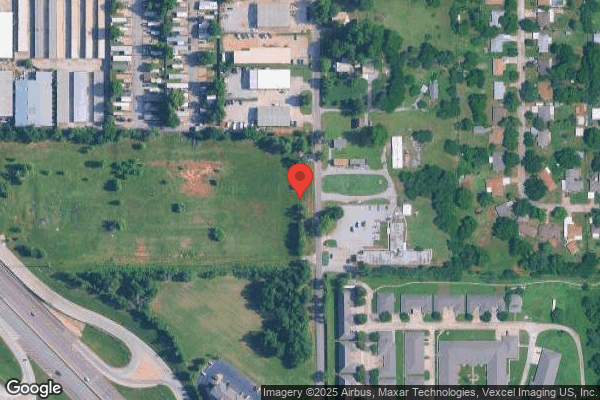
400 SOUTH SCOTT STREET, DEL CITY, OK 73115 (405) 677-3349
For profit - Partnership 61 Beds BRIDGES HEALTH Data: November 2025
Trust Grade
80/100
#64 of 282 in OK
Last Inspection: March 2025

Within standard 12-15 month inspection cycle. Federal law requires annual inspections.

Overview

Mid-Del Skilled Nursing and Therapy in Del City, Oklahoma, has a Trust Grade of B+, which indicates it is recommended and above average in quality. It ranks #64 out of 282 facilities in Oklahoma, placing it in the top half, and #5 out of 39 in Oklahoma County, meaning only a few local options are better. However, the facility is currently worsening, with the number of issues increasing from 2 in 2023 to 4 in 2025. Staffing is a positive aspect, with a 4 out of 5 star rating and a turnover rate of 51%, which is below the state average, suggesting that staff members tend to stay longer and provide consistent care. While it has no fines on record, indicating compliance with regulations, there have been specific concerns such as failing to obtain a physician's order for oxygen for a resident and not consistently assessing a dialysis resident before and after treatment, which could potentially harm the residents involved. Overall, while there are strengths in staffing and lack of fines, families should be aware of the increasing number of issues and specific incidents that could impact care quality.

Trust Score
B+
80/100
In Oklahoma
#64/282
Top 22%
Safety Record
Low Risk
No red flags
Inspections
Getting Worse
2 → 4 violations
Staff Stability
⚠ Watch
51% turnover. Above average. Higher turnover means staff may not know residents' routines.
Penalties
✓ Good
No fines on record. Clean compliance history, better than most Oklahoma facilities.
Skilled Nurses
⚠ Watch
Each resident gets only 18 minutes of Registered Nurse (RN) attention daily — below average for Oklahoma. Fewer RN minutes means fewer trained eyes watching for problems.
Violations
⚠ Watch
11 deficiencies on record. Higher than average. Multiple issues found across inspections.
★★★★☆
4.0
Overall Rating
★★★★☆
4.0
Staff Levels
★★★☆☆
3.0
Care Quality
★★★★☆
4.0
Inspection Score
Stable
2023: 2 issues
2025: 4 issues

The Good

  • 4-Star Staffing Rating · Above-average nurse staffing levels
  • Full Sprinkler Coverage · Fire safety systems throughout facility
  • No fines on record

Facility shows strength in staffing levels, fire safety.

The Bad

Staff Turnover: 51%

Near Oklahoma avg (46%)

Higher turnover may affect care consistency

Chain: BRIDGES HEALTH

Part of a multi-facility chain

Ask about local staffing decisions and management

The Ugly 11 deficiencies on record

May 2025 3 deficiencies
CONCERN (D) 📢 Someone Reported This

A family member, employee, or ombudsman was alarmed enough to file a formal complaint

Potential for Harm - no one hurt, but risky conditions existed

Notification of Changes (Tag F0580)

Could have caused harm · This affected 1 resident

**NOTE- TERMS IN BRACKETS HAVE BEEN EDITED TO PROTECT CONFIDENTIALITY** Based on record review and interview, the facility failed to notify a resident's family member listed as the emergency contact, ...

Read full inspector narrative →
**NOTE- TERMS IN BRACKETS HAVE BEEN EDITED TO PROTECT CONFIDENTIALITY** Based on record review and interview, the facility failed to notify a resident's family member listed as the emergency contact, of a change in condition for 1 (#2) of 3 sampled residents reviewed for notification of change related to assess, monitor, and intervene. The ADON identified 38 residents resided in the facility. Findings: A policy titled Resident's Family or Physician Notification of Change Guideline, dated 12/01/09, read in part, The facility will inform the resident; consult with the resident's physician; and if known, notify the resident's legal representative or interested family member of the following events: .A significant change in the resident's physical, mental, or psychosocial status. (i.e. [that is/or in other words] a deterioration in health, mental, or psychosocial status in either life-threatening conditions or clinical complications. A quarterly resident assessment, dated 02/25/25, showed Resident #2 had a BIMS of 03 meaning severely impaired cognition. Resident #2's face sheet, dated 09/04/24, showed the resident had diagnoses which included dysarthria and anarthria, hemiplegia and hemiparesis following cerebral infarction affecting left non-dominant side, and unspecified dementia without behavior disturbance. A Nurses Progress Note, dated 04/27/25 at 8:24 p.m., read in part, Resident was acting lethargic and not talkative as normal. Resident only ate 20% at dinner and drank 30% of juice. Nurse called on call provider. [provider name withheld] stated since there was no abnormal finding to vitals and resident was alert and coherent, [they] answered by continuing to monitor resident. [Provider name withheld] will be rounding tomorrow, and was advise for resident to be seen by PCP [primary care physician]. Nurse continued to monitor through out shift and night shift. Resident was placed in bed, with call light in reach. v/s [vital signs] bp [blood pressure] 123/71, p [pulse]69, 95% ra [room air]. No pain stated. There was no documentation the emergency contact was notified of Resident #2's change in condition. On 05/15/25 at 1:54 p.m., LPN #1 read the nurse progress note dated 04/27/25 at 8:20 p.m. LPN #1 stated they did not see documentation the family was notified. LPN #1 stated the family should have been notified of any change of condition.
CONCERN (D) 📢 Someone Reported This

A family member, employee, or ombudsman was alarmed enough to file a formal complaint

Potential for Harm - no one hurt, but risky conditions existed

Comprehensive Care Plan (Tag F0656)

Could have caused harm · This affected 1 resident

**NOTE- TERMS IN BRACKETS HAVE BEEN EDITED TO PROTECT CONFIDENTIALITY** Based on record review and interview, the facility failed to ensure a care plan was fully developed for 1 (#2) of 7 sampled resi...

Read full inspector narrative →
**NOTE- TERMS IN BRACKETS HAVE BEEN EDITED TO PROTECT CONFIDENTIALITY** Based on record review and interview, the facility failed to ensure a care plan was fully developed for 1 (#2) of 7 sampled residents whose care plans were reviewed. The ADON identified 38 residents resided in the facility. Findings: An undated paper copy labeled patient identification card showed Resident #2 had an insertable cardiac monitor (loop monitor). The document showed the monitor was implanted 08/21/23. Resident #2's face sheet, dated 09/04/24, showed the resident had diagnoses which included dysarthria and anarthria, hemiplegia and hemiparesis following cerebral infarction affecting left non-dominant side, and unspecified dementia without behavior disturbance. A history and physical, dated 09/05/24, showed Resident #2 had a loop monitor recorder insertion. A progress note, dated 10/28/24, showed Resident #2 had no a-fibrillation on the implantable loop monitor. A quarterly resident assessment, dated 02/25/25, showed Resident #2 was admitted to the facility on [DATE] and had a BIMS of 03 meaning severely impaired cognition. Resident #2's care plan, dated 03/18/25, did not show the resident had a loop monitor. A physician order, dated 05/02/25, showed to ensure monitor for loop was plugged in and functioning every shift at bedside. The facility was aware the resident had an implanted loop monitor and did not care plan it until after the resident returned from a hospital stay on 05/02/25. On 05/14/25 at 2:36 p.m., certified nurse aide #1 stated they were not aware of a medical device for Resident #2. On 05/15/25 at 1:51 p.m., LPN #1 stated Resident #2 did not have an order for the loop monitor prior to a recent hospital stay on 04/28/25. They stated the nurses knew about the monitor through report. They stated the loop monitor looked like a cell phone and the order was recently placed to make sure everyone knew about it. LPN #1 stated Resident #2 always had it. On 05/16/25 at 11:13 a.m., MDS coordinator #1 stated a care plan gave a summary of the residents' diagnoses, medications, and everything pertinent in their care. They stated the loop monitor was placed on Resident #2's care plan on 05/05/25. On 05/16/25 at 11:15 a.m., MDS coordinator #1 stated Resident #2 had the loop monitor prior to their recent hospital stay of 04/28/25. They stated they cared for the resident prior to becoming the MDS coordinator and could not speak on why the loop monitor was not present on the care plan then. They stated Resident #2's guardian took care of the monitor and just asked the staff to make sure it was on the resident. MDS Coordinator #1 stated outside of seeing the monitor, and knowing the resident and the family, staff would not have known.
CONCERN (D) 📢 Someone Reported This

A family member, employee, or ombudsman was alarmed enough to file a formal complaint

Potential for Harm - no one hurt, but risky conditions existed

Respiratory Care (Tag F0695)

Could have caused harm · This affected 1 resident

Based on observation, record review, and interview, the facility failed to follow hospital transfer orders for 1 (#5) of 1 sampled resident reviewed for respiratory care . The ADON reported 38 residen...

Read full inspector narrative →
Based on observation, record review, and interview, the facility failed to follow hospital transfer orders for 1 (#5) of 1 sampled resident reviewed for respiratory care . The ADON reported 38 residents resided in the facility. Findings: On 05/02/25 at 5:24 a.m., Resident #5 was observed laying in bed with eyes closed. Resident #5 was not observed to wear oxygen, CPAP or BIPAP. An undated medical diagnoses list for Resident #5 showed diagnosis of unspecified asthma. Resident #5's transfer orders from the hospital, dated 04/11/25, showed General Instructions for oxygen at 4 liters/minute by nasal cannula continuously. The orders showed a diagnoses of obesity hypoventilation syndrome and chronic respiratory failure, and CPAP/BIPAP instructions. Resident #5's care plan, initiated on 03/11/25, showed oxygen 1-4 liters as needed. The April and May 2025 treatment record for Resident #5 did not show continuous oxygen at 4 liters. The facility did not follow/implement the hospital orders for oxygen and CPAP/BIPAP. On 05/16/25 at 1:51 p.m., LPN #1 stated the process for new orders upon readmission was to check the orders and compare them to the profile and make changes as needed. LPN #1 stated if there were questions they would call the provider. On 05/16/25 at 1:54 p.m., LPN #1 stated after review of Resident #5's orders and the hospital transfer order general instructions from the 05/02/25 hospital discharge, they did not see a facility order for the CPAP/BIPAP. LPN #1 stated they could not locate the hospital diagnoses of obesity hypoventilation syndrome and chronic respiratory failure, and CPAP/BIPAP instructions in the facility's electronic medication record. They stated the general instructions/orders for oxygen were not implemented.
Mar 2025 1 deficiency
CONCERN (F)

Potential for Harm - no one hurt, but risky conditions existed

Deficiency F0847 (Tag F0847)

Could have caused harm · This affected most or all residents

**NOTE- TERMS IN BRACKETS HAVE BEEN EDITED TO PROTECT CONFIDENTIALITY** Based on record review and interview, the facility failed to ensure residents were instructed arbitration agreements were volunt...

Read full inspector narrative →
**NOTE- TERMS IN BRACKETS HAVE BEEN EDITED TO PROTECT CONFIDENTIALITY** Based on record review and interview, the facility failed to ensure residents were instructed arbitration agreements were voluntary for 3 (# 5, 34, and #43) of 5 sampled residents reviewed for arbitration agreements The administrator identified 40 residents who had entered into a binding arbitration agreement. Findings: An undated document titled An Explanation to the Resident/Family, read in part, By signing our admission contract your electronic signature will be placed on the following forms, which you will receive copies of after signing. admission Agreement/Arbitration/Medical Records Release Form: This agreement allows for admission into the facility, gives the facility consent to provide medical care/treatment, consent to have your medical records, and bill for your medical care. An admission packet, revised 11/29/22, showed DocuSign (signature) was set up in which the resident/resident's legal representative agreed to everything inside of the admission packet with just one signature. The arbitration agreement was part of the admission packet and was agreed to upon admission for everyone admitted to the facility. 1. Resident #5 was admitted on [DATE] and signed the arbitration agreement, but there was no date on the agreement. 2. Resident #34 was admitted on [DATE] and signed the arbitration agreement on 9/03/24. 3. Resident #43 was admitted on [DATE] and signed the arbitration agreement on 2/13/25. On 3/17/25 at 2:01 p.m., the administrator stated everyone signed the arbitration agreement. On 3/18/25 at 12:48 p.m., the admissions coordinator stated, I was told in training that if the resident or representative didn't sign the admission agreement including the arbitration agreement then there was nothing we could do for them. The admissions coordinator stated if the resident did not sign then they could not be admitted to the facility. On 3/18/25 at 2:27 p.m., the administrator stated they did not realize they were out of compliance.
Nov 2023 2 deficiencies
CONCERN (D) 📢 Someone Reported This

A family member, employee, or ombudsman was alarmed enough to file a formal complaint

Potential for Harm - no one hurt, but risky conditions existed

Transfer Requirements (Tag F0622)

Could have caused harm · This affected 1 resident

**NOTE- TERMS IN BRACKETS HAVE BEEN EDITED TO PROTECT CONFIDENTIALITY** Based on record review and interview, the facility failed to ensure a resident was not involuntarily discharged for one (#149) o...

Read full inspector narrative →
**NOTE- TERMS IN BRACKETS HAVE BEEN EDITED TO PROTECT CONFIDENTIALITY** Based on record review and interview, the facility failed to ensure a resident was not involuntarily discharged for one (#149) of one sampled residents reviewed for involuntary discharge. The administrator identified 45 residents resided in the facility. Findings: Resident #149 had diagnoses which included Alzheimer's disease and dementia. Resident #149's quarterly resident assessment, dated 05/16/23, documented the resident had severe cognitive impairment. A Social Service Note, dated 06/21/23, documented Resident #149 had memory issues and wandered a lot throughout the day and night. Resident #149's discharge return not anticipated resident assessment, dated 07/29/23, documented Resident #149 was discharged on 07/29/23. It documented Resident #149's decision making skills were moderately impaired. A Nurses Note, dated 07/29/23 at 3:15 a.m., documented Resident #149 was observed in another Resident's room exposed. It documented Resident #149 was discharged to the hospital and an emergency order of discharge sent with law enforcement. Resident #149's care plan, revised 08/07/23, documented Resident #149 wandered. It documented behavior monitoring three times a day was initiated on 12/09/21. On 11/22/23 at 9:01 a.m., the administrator stated Resident #149 was discharged to the hospital on [DATE]. On 11/22/23 at 9:02 a.m., the administrator stated EMSA brought Resident #149 back to the facility in the morning but the facility denied re-entry. On 11/22/23 at 9:03 a.m., the administrator stated Resident #149 was discharged to the hospital with an emergency order of discharge so the facility could not allow the resident's entry back to the facility. On 11/22/23 at 9:04 a.m., the administrator and DON stated EMSA took Resident #149 back to the hospital. On 11/22/23 at 9:09 a.m., the DON stated Resident #149 had never exhibited sexual behaviors in the facility prior to the documented incident on 07/29/23. On 11/22/23 at 12:04 p.m., the DON stated they could not locate any behavior monitoring as documented on the care plan for Resident #149.
CONCERN (D)

Potential for Harm - no one hurt, but risky conditions existed

Pharmacy Services (Tag F0755)

Could have caused harm · This affected 1 resident

**NOTE- TERMS IN BRACKETS HAVE BEEN EDITED TO PROTECT CONFIDENTIALITY** Based on observation, record review and interview, the facility failed to ensure expired medications were removed from circulati...

Read full inspector narrative →
**NOTE- TERMS IN BRACKETS HAVE BEEN EDITED TO PROTECT CONFIDENTIALITY** Based on observation, record review and interview, the facility failed to ensure expired medications were removed from circulation for one (#42) of three sampled residents observed during medication pass and storage. The administrator identified 45 residents resided in the facility. Findings: The MEDICATION STORAGE IN THE FACILITY policy, dated 01/22, read in part, .Outdated .medications .are immediately removed from inventory, disposed of according to procedures for medication disposal . Resident #9 had diagnoses which included arthropathy and depression. A physician's order, dated 11/16/23, documented boswellia [NAME] 150 mg give two capsules one time a day. On 11/21/23 at 7:59 a.m., CMA #1 handed the surveyor a bottle of boswellia [NAME] 150 mg with Resident #42's name written on the bottle. The manufacturer's expiration date documented 05/23. There was no open date on the bottle. On 11/21/23 at 8:00 a.m., CMA #1 stated the manufacturer's expiration date documented on the bottle was 05/23. They stated the medication was expired and should be discarded. On 11/21/23 at 8:02 a.m., the DON stated the manufacturer's expiration date documented on the bottle was 05/23. They stated the medication was expired and should be discarded.
Oct 2022 5 deficiencies
CONCERN (D)

Potential for Harm - no one hurt, but risky conditions existed

Deficiency F0761 (Tag F0761)

Could have caused harm · This affected 1 resident

Based on record review, observation, and interview, the facility failed to ensure medications were secured for one of two treatment carts observed for medication storage. The facility identified two t...

Read full inspector narrative →
Based on record review, observation, and interview, the facility failed to ensure medications were secured for one of two treatment carts observed for medication storage. The facility identified two treatment carts. Findings: A Medication Storage in the Facility policy, documented medications and biologicals are stored safely, securely and carts are locked when not attended by persons with authorized access On 10/23/22 at 11:25 a.m., a treatment cart for hall 200 was observed with keys in the lock, and unsecured without staff present. LPN #1 was observed to exit a room at the end of the hall. On 10/23/22 at 11:30 a.m., LPN #1 was asked how they ensured medications were secured. LPN #1 stated by locking the cart. LPN #1 was made aware of the keys observed in the treatment cart lock. They were asked the policy for securing medications. LPN #1 stated to keep the cart locked and to always have keys with them.
CONCERN (D)

Potential for Harm - no one hurt, but risky conditions existed

Infection Control (Tag F0880)

Could have caused harm · This affected 1 resident

Based on record review, observation, and interview, the facility failed to ensure a catheter bag drainage bag was properly placed to avoid cross contamination for one (#38) of one sampled resident rev...

Read full inspector narrative →
Based on record review, observation, and interview, the facility failed to ensure a catheter bag drainage bag was properly placed to avoid cross contamination for one (#38) of one sampled resident reviewed for urinary catheters. The Resident Census and Conditions of Residents report, dated 10/24/22, documented four residents with catheters. Findings: A Catheter Care policy, revised 04/05/13, documented to never allow any part of the drainage bag or tubing to touch the floor. Resident #38 had diagnoses which included chronic respiratory failure and stage four pressure ulcer. On 10/23/22 at 12:16 p.m., Resident #38 was observed in bed supine. A catheter drainage bag was observed secured to the lower bed frame. The drainage was observed to be open. On 10/23/22 at 12:44 p.m., CNA #2 was observed to lower Resident #38's bed. When the bed was lowered, the catheter drainage bag with the open drain was observed laying on the floor. On 10/23/22 at 1:40 p.m., LPN #2 was asked what the policy was for positioning a catheter drainage bag to prevent cross contamination. They stated to keep the drainage bag should be stored below the level of the bladder and secured to the bed frame or hooked underneath their wheelchair. LPN #2 was shown Resident 38's catheter drainage bag on the floor with the drain open. They stated, it shouldn't be touching floor.
CONCERN (E)

Potential for Harm - no one hurt, but risky conditions existed

Respiratory Care (Tag F0695)

Could have caused harm · This affected multiple residents

**NOTE- TERMS IN BRACKETS HAVE BEEN EDITED TO PROTECT CONFIDENTIALITY** Based on record review, observation, and interview, the facility failed to ensure a physician's order had been obtained for oxyg...

Read full inspector narrative →
**NOTE- TERMS IN BRACKETS HAVE BEEN EDITED TO PROTECT CONFIDENTIALITY** Based on record review, observation, and interview, the facility failed to ensure a physician's order had been obtained for oxygen for one (#43) of one sampled resident reviewed for oxygen services. The administrator identified six residents with orders for oxygen. Findings: A Respiratory Therapy policy, dated 08/10/04, documented oxygen therapy would be administered as needed and directed by the ordering physician. It documented to obtain an order from a physician. Resident #43 readmitted on [DATE] with diagnoses which included acute respiratory failure and COPD. A Baseline care plan, dated 10/21/22, documented the resident used oxygen at four LPM. On 10/23/22 at 1:58 p.m., Resident #43 was observed in his room lying in bed. The resident had a nasal cannula in place and was receiving oxygen at 6 LPM from an oxygen concentrator. Resident #43's physician's orders did not document an order for oxygen. On 10/23/22 2:07 p.m., LPN #2 was asked what Resident #43's order was for oxygen. The LPN was observed to look in the EMR to find the order. LPN #2 stated they didn't see an order for oxygen. On 10/23/22 at 2:15 p.m., LPN #2 was shown Resident #43 in the resident's room. LPN #2 stated the resident was getting six liters of oxygen.
CONCERN (E)

Potential for Harm - no one hurt, but risky conditions existed

Deficiency F0698 (Tag F0698)

Could have caused harm · This affected multiple residents

**NOTE- TERMS IN BRACKETS HAVE BEEN EDITED TO PROTECT CONFIDENTIALITY** Based on record review and interview, the facility failed to ensure a dialysis resident was assessed before and after dialysis f...

Read full inspector narrative →
**NOTE- TERMS IN BRACKETS HAVE BEEN EDITED TO PROTECT CONFIDENTIALITY** Based on record review and interview, the facility failed to ensure a dialysis resident was assessed before and after dialysis for one (#43) of one sampled resident reviewed for dialysis. The Resident Census and Conditions of Residents report, dated 10/24/22, documented four residents received dialysis services. Findings: Resident #43 readmitted on [DATE] with diagnoses which included end stage renal disease requiring dialysis services. A facility calendar documented the resident received dialysis services three times weekly on Mondays, Wednesdays, and Fridays. April 2022 dialysis assessments had been conducted three out of 11 opportunities. May 2022 dialysis assessments had been conducted one out of 13 opportunities. June 2022 dialysis assessments had been conducted zero out of 13 opportunities. July 2022 dialysis assessments had been conducted one out of 13 opportunities. A care plan, dated 07/21/22, documented the resident received dialysis three times weekly, to check the dialysis port for patency and signs and symptoms of infection, and to send the communication form to dialysis with the resident. August 2022 dialysis assessments had been conducted three out of 14 opportunities. September 2022 dialysis assessments had been conducted two out of 13 opportunities. October 2022 dialysis assessments had been conducted five out of 12 opportunities. A Resident Assessment, dated 10/07/22, documented the resident had been receiving dialysis services. On 10/23/22 at 1:56 p.m., Resident #43 was asked if they received dialysis services. They stated they did. The Resident was asked if the facility did vital signs and an assessment prior to and after dialysis. They stated yes. On 10/25/22 at 11:24 a.m., LPN #2 was asked what days Resident #43 went to dialysis. They stated Mondays, Wednesdays, and Fridays at 11:45 a.m. LPN #2 was asked when they assessed dialysis residents. They stated they did a full set of vital signs prior to the resident leaving for dialysis. They stated the dialysis communication form was in computer. LPN #2 stated they would print out the form and send it with the resident to dialysis and that the dialysis center would sometimes send it back. LPN #2 was observed looking in the EMR and stated the last dialysis communication form completed was on 10/14/22. They stated the resident had re-admitted on [DATE] and there were none since admission. On 10/25/22 at 3:44 p.m., the interim DON was asked what the policy was for assessing a dialysis resident. She stated the facility used a dialysis communication assessment form. She stated staff assessed the resident prior to going to dialysis, filled out the assessment and sent it with the resident to dialysis. The interim DON was informed the assessments/communications had not been conducted per their policy.
CONCERN (E)

Potential for Harm - no one hurt, but risky conditions existed

Unnecessary Medications (Tag F0759)

Could have caused harm · This affected multiple residents

Based on observation, record review, and interview, the facility failed to ensure a medication error rate of less than 5 percent. The medication error rate was 19.23 percent. The Resident Census and C...

Read full inspector narrative →
Based on observation, record review, and interview, the facility failed to ensure a medication error rate of less than 5 percent. The medication error rate was 19.23 percent. The Resident Census and Conditions of Residents report, dated 10/24/22, documented 47 residents resided in the facility. Findings: A Preparation for Medication Administration policy, revised on 08/14/07, documented medications were administered as prescribed, and the medication and dosage on the residents' MAR was compared with the medication label. 1. Resident #18 had a physician's order, dated 04/12/21, for phenytoin suspension 100mg/4ml, give 4 ml by mouth three times daily. On 10/23/22 at 11:12 a.m., ACMA #1 was observed to administer five mls of phenytoin to Resident #18. 2. Resident #10 had physician's orders, dated 01/10/22, for hydroxychloroquine sulfate 200 mg (Plaquenil), two tablets daily and Prednisone 2.5 mg, give three tablets daily. Resident #10 had a physician's order, dated 02/01/22, for artificial tears one drop in both eyes three times daily. On 10/23/22 at 11:31 a.m., CMA #2 was observed to administer one tablet of hydroxychloroquine 200 mg, one tablet of Prednisone 2.5 mgs, and two drops of artificial tears to both eyes to Resident #10. 3. Resident #43 had a physician's order for cholecalciferol 25 mcg (vitamin D), give two daily. On 10/23/22 at 11:48 a.m., CMA #2 was observed to administer one cholecalciferol 25mcg tablet to Resident #43. On 10/23/22 at 1:48 p.m., CMA #2 was asked how they were made aware of what medications to administer. CMA #2 stated the MAR gave them the name, medication, and dose. They stated they would match the card and the dose to the order on the screen. CMA #2 stated If the medications were in a card,the dose would be on the label. They stated if the medications was a liquid, they matched it up to the MAR and poured the amount stated. CMA #2 was what the facility' s policy was for administering medications. They stated to administer in a timely manner, and to double check and make sure the resident is getting the medication on the MAR. On 10/24/22 at 8:13 a.m., the interim DON was made aware of the medication error rate of 19.23 percent.
Understanding Severity Codes (click to expand)
Life-Threatening (Immediate Jeopardy)
J - Isolated K - Pattern L - Widespread
Actual Harm
G - Isolated H - Pattern I - Widespread
Potential for Harm
D - Isolated E - Pattern F - Widespread
No Harm (Minor)
A - Isolated B - Pattern C - Widespread

Questions to Ask on Your Visit

  • "Can I speak with families of current residents?"
  • "What's your RN coverage like on weekends and overnight?"

Our Honest Assessment

Strengths
  • • Grade B+ (80/100). Above average facility, better than most options in Oklahoma.
  • • No major safety red flags. No abuse findings, life-threatening violations, or SFF status.
  • • No fines on record. Clean compliance history, better than most Oklahoma facilities.
Concerns
  • • 11 deficiencies on record. Higher than average. Multiple issues found across inspections.
Bottom line: Generally positive indicators. Standard due diligence and a personal visit recommended.

About This Facility

What is Mid-Del Skilled Nursing And Therapy's CMS Rating?

CMS assigns MID-DEL SKILLED NURSING AND THERAPY an overall rating of 4 out of 5 stars, which is considered above average nationally. Within Oklahoma, this rating places the facility higher than 99% of the state's 100 nursing homes. This rating reflects solid performance across the metrics CMS uses to evaluate nursing home quality.
How is Mid-Del Skilled Nursing And Therapy Staffed?

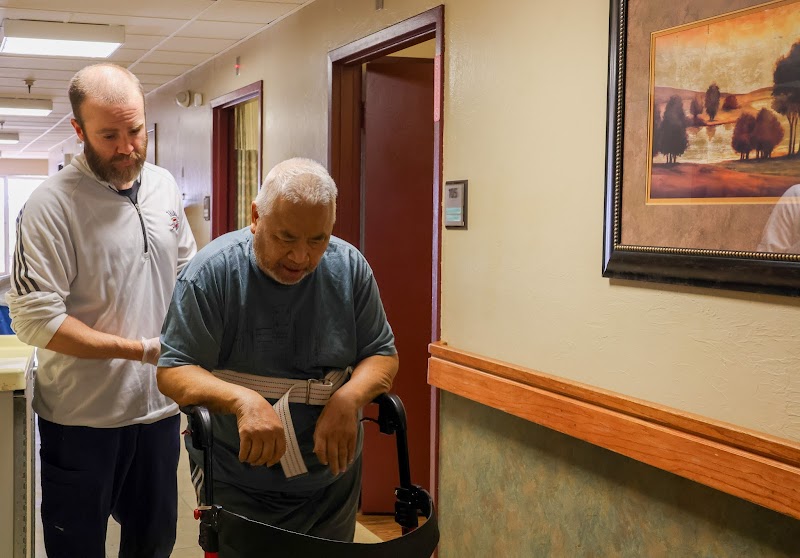
CMS rates MID-DEL SKILLED NURSING AND THERAPY's staffing level at 4 out of 5 stars, which is above average compared to other nursing homes. Staff turnover is 51%, compared to the Oklahoma average of 46%.

What Have Inspectors Found at Mid-Del Skilled Nursing And Therapy?

State health inspectors documented 11 deficiencies at MID-DEL SKILLED NURSING AND THERAPY during 2022 to 2025. These included: 11 with potential for harm.
Who Owns and Operates Mid-Del Skilled Nursing And Therapy?

MID-DEL SKILLED NURSING AND THERAPY is owned by a for-profit company. For-profit facilities operate as businesses with obligations to shareholders or private owners. The facility is operated by BRIDGES HEALTH, a chain that manages multiple nursing homes. With 61 certified beds and approximately 41 residents (about 67% occupancy), it is a smaller facility located in DEL CITY, Oklahoma.

How Does Mid-Del Skilled Nursing And Therapy Compare to Other Oklahoma Nursing Homes?

Compared to the 100 nursing homes in Oklahoma, MID-DEL SKILLED NURSING AND THERAPY's overall rating (4 stars) is above the state average of 2.6, staff turnover (51%) is near the state average of 46%, and health inspection rating (4 stars) is above the national benchmark.

What Should Families Ask When Visiting Mid-Del Skilled Nursing And Therapy?

Based on this facility's data, families visiting should ask: "Can I visit during a mealtime to observe dining assistance and food quality?" "How do you handle medical emergencies, and what is your hospital transfer rate?" "Can I speak with family members of current residents about their experience?"

Is Mid-Del Skilled Nursing And Therapy Safe?

Based on CMS inspection data, MID-DEL SKILLED NURSING AND THERAPY has a clean safety record: no substantiated abuse findings (meaning no confirmed cases of resident harm), no Immediate Jeopardy citations (the most serious violation level indicating risk of serious injury or death), and is not on the Special Focus Facility watch list (a federal program monitoring the lowest-performing 1% of nursing homes). The facility has a 4-star overall rating and ranks #1 of 100 nursing homes in Oklahoma. While no facility is perfect, families should still ask about staff-to-resident ratios and recent inspection results during their visit.

Do Nurses at Mid-Del Skilled Nursing And Therapy Stick Around?

MID-DEL SKILLED NURSING AND THERAPY has a staff turnover rate of 51%, which is 5 percentage points above the Oklahoma average of 46%. Moderate turnover is common in nursing homes, but families should still ask about staff tenure and how the facility maintains care continuity when employees leave.

Was Mid-Del Skilled Nursing And Therapy Ever Fined?

MID-DEL SKILLED NURSING AND THERAPY has no federal fines on record. CMS issues fines when nursing homes fail to meet care standards or don't correct problems found during inspections. The absence of fines suggests the facility has either maintained compliance or corrected any issues before penalties were assessed. This is a positive indicator, though families should still review recent inspection reports for the full picture.

Is Mid-Del Skilled Nursing And Therapy on Any Federal Watch List?

MID-DEL SKILLED NURSING AND THERAPY is not on any federal watch list. The most significant is the Special Focus Facility (SFF) program, which identifies the bottom 1% of nursing homes nationally based on persistent, serious quality problems. Not being on this list means the facility has avoided the pattern of deficiencies that triggers enhanced federal oversight. This is a positive indicator, though families should still review the facility's inspection history directly.