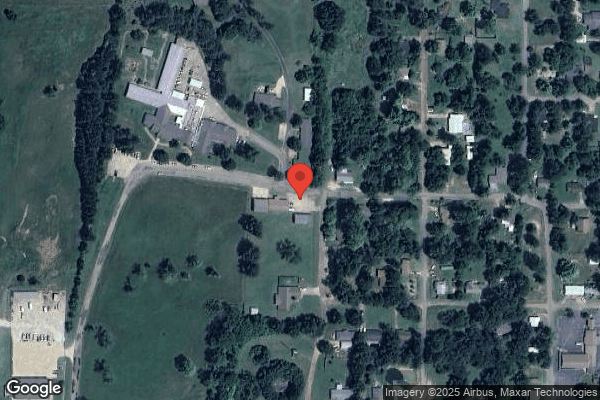




ELMBROOK OF HUGO

1200 WEST FINLEY, HUGO, OK 74743 (580) 326-8383
For profit - Individual 100 Beds ELMBROOK MANAGEMENT COMPANY Data: November 2025 3 Immediate Jeopardy citations
Trust Grade
0/100
#156 of 282 in OK
Last Inspection: May 2025

Inspected within the last 6 months. Data reflects current conditions.

Overview

Elmbrook of Hugo has received a Trust Grade of F, indicating significant concerns about its operations and care quality. It ranks #156 out of 282 nursing homes in Oklahoma, placing it in the bottom half of facilities statewide, but it is the best option in Choctaw County. The facility's performance is stable, with 4 reported issues in both 2024 and 2025, but it has alarming incidents, including a resident suffering a fracture due to improper wheelchair transfer and allegations of verbal abuse against a staff member. Staffing is a relative strength, with a 4/5 star rating and a turnover rate of 38%, which is below the state average of 55%. However, the facility has faced a concerning $57,419 in fines, indicating compliance problems, and while it has good RN coverage, more attention is needed to ensure all protocols are followed to protect residents.

Trust Score
F
0/100
In Oklahoma
#156/282
Bottom 45%
Safety Record
High Risk
Review needed
Inspections
Holding Steady
4 → 4 violations
Staff Stability
○ Average
38% turnover. Near Oklahoma's 48% average. Typical for the industry.
Penalties
✓ Good
$57,419 in fines. Lower than most Oklahoma facilities. Relatively clean record.
Skilled Nurses
⚠ Watch
Each resident gets only 24 minutes of Registered Nurse (RN) attention daily — below average for Oklahoma. Fewer RN minutes means fewer trained eyes watching for problems.
Violations
⚠ Watch
19 deficiencies on record. Higher than average. Multiple issues found across inspections.
★★☆☆☆
2.0
Overall Rating
★★★★☆
4.0
Staff Levels
★★★☆☆
3.0
Care Quality
★★☆☆☆
2.0
Inspection Score
Stable
2024: 4 issues
2025: 4 issues

The Good

  • 4-Star Staffing Rating · Above-average nurse staffing levels
  • Full Sprinkler Coverage · Fire safety systems throughout facility
  • No fines on record
  • Staff turnover below average (38%)

    10 points below Oklahoma average of 48%

Facility shows strength in staffing levels, fire safety.

The Bad

2-Star Overall Rating

Below Oklahoma average (2.6)

Below average - review inspection findings carefully

Staff Turnover: 38%

Near Oklahoma avg (46%)

Typical for the industry

Federal Fines: $57,419

Above median ($33,413)

Moderate penalties - review what triggered them

Chain: ELMBROOK MANAGEMENT COMPANY

Part of a multi-facility chain

Ask about local staffing decisions and management

The Ugly 19 deficiencies on record

3 life-threatening 1 actual harm
May 2025 4 deficiencies 1 IJ
CRITICAL (J) 📢 Someone Reported This

A family member, employee, or ombudsman was alarmed enough to file a formal complaint

Immediate Jeopardy (IJ) - the most serious Medicare violation

Free from Abuse/Neglect (Tag F0600)

Someone could have died · This affected 1 resident

On 04/17/25, a past noncompliance Immediate Jeopardy (IJ) situation was determined to exist related to the facility's failure to ensure Res #35 was not verbally abused. On 04/17/25 at 1:30 p.m. the O...

Read full inspector narrative →
On 04/17/25, a past noncompliance Immediate Jeopardy (IJ) situation was determined to exist related to the facility's failure to ensure Res #35 was not verbally abused. On 04/17/25 at 1:30 p.m. the OSDH was notified and verified the existence of the past noncompliance IJ related to the facility's failure to ensure residents were not verbally abused. On 05/06/25 at 12:48 p.m. the administrator was notified of the immediate jeopardy situation. The administrator was provided the IJ template. Documentation showed the facility completed staff in-service regarding abuse on 03/03/25. Employee #1 was suspended, then terminated on 03/04/25. A quality assurance meeting was held on 03/05/25 regarding abuse. Based on observation, record review, and interview, the facility failed to ensure a resident was not verbally abused for 1 (#35) of 3 sampled residents reviewed for abuse. The DON identified six allegations of abuse were reported to the OSDH within the past year. Findings: On 04/15/25 at 2:08 p.m., Res #35 was observed walking in a common area on the memory unit. The resident was speaking loudly in a tearful voice saying could someone help they did not know how to get out. A policy titled Abuse Investigation and Reporting, revised July 2017, read in part, If an incident or suspected incident of resident abuse, mistreatment, neglect or injury of unknown source is reported, the Administrator will assign the investigation to an appropriate individual . The Administrator will suspend immediately any employee who has been accused of resident abuse, pending the outcome of the investigation An undated facesheet for Res #35 had diagnoses which included neurocognitive disorder with Lewy body, diabetes, and major depressive disorder. Res #35's annual assessment, dated 02/19/25, showed the resident was severely impaired for daily decision making and had a BIMS score of 4. The assessment showed the resident received antipsychotic, antianxiety, and antidepressant medications. An OSDH incident form, dated 02/28/25, showed an allegation of abuse. The form showed per written statements by witnesses, the raised tone of voice by certified medication aide #1 caused Res #35 to become upset and cry. On 04/16/25 at 3:04 p.m., Res #35's family stated they were made aware of the verbal abuse allegation the same evening. On 04/17/25 at 2:57 p.m., the director of nursing stated upon completion of the investigation the facility decided to terminate the staff member. On 04/17/25 at 3:00 p.m., the administrator stated a video was viewed regarding the incident. The administrator stated they could not understand what was said, but by facial expressions and gestures they determined verbal abuse did occur.
CONCERN (D)

Potential for Harm - no one hurt, but risky conditions existed

Assessment Accuracy (Tag F0641)

Could have caused harm · This affected 1 resident

Based on observation, record review, and interview, the facility failed to ensure assessments were accurate for indwelling catheters for 1 (#24) of 13 sampled residents reviewed for resident assessmen...

Read full inspector narrative →
Based on observation, record review, and interview, the facility failed to ensure assessments were accurate for indwelling catheters for 1 (#24) of 13 sampled residents reviewed for resident assessments. The ADON identified 52 residents resided in the facility. Findings: On 04/15/25 at 11:48 a.m., Res #24 was observed lying in bed. A bedside commode was observed sitting beside the bed. No indwelling catheter was observed. A face sheet, dated 01/05/24, showed Res #24 was admitted with diagnoses which included dementia and peripheral vascular disease. A quarterly assessment, dated 03/20/25, showed Res #24 had a BIMS score of 4 and was severely cognitively impaired. The assessment showed Res #24 had an indwelling catheter. Res #24's medical record did not document an order for an indwelling catheter during the assessment review period of 03/14/25 through 03/20/25. On 04/15/24 at 12:00 p.m., Res #24 stated they did not have a catheter. They stated they did not remember if they had ever had a catheter. On 04/16/25 at 2:37 p.m., the minimum data set coordinator stated Res #24 did not have an indwelling catheter during the assessment review period. They stated the assessment was coded in error and would be modified.
CONCERN (D)

Potential for Harm - no one hurt, but risky conditions existed

Comprehensive Care Plan (Tag F0656)

Could have caused harm · This affected 1 resident

Based on record review and interview, the facility failed to ensure a care plan was implemented for 1 (#33) of 1 resident sampled for smoking. The ADON reported five residents in the facility smoked. ...

Read full inspector narrative →
Based on record review and interview, the facility failed to ensure a care plan was implemented for 1 (#33) of 1 resident sampled for smoking. The ADON reported five residents in the facility smoked. Findings: An undated medical diagnoses list for Res #33 showed the resident admitted to the facility with diagnoses which included hypertensive heart disease, chronic atrial fibrillation, and anxiety disorder. Res #33's smoking assessment, dated 01/09/25, showed the resident was safe to smoke by self. Res #33's care plan, dated 01/14/2025, showed no documentation the resident smoked. On 04/17/25 at 10:32 a.m., the ADON reported smoking should have been care planned.
CONCERN (D)

Potential for Harm - no one hurt, but risky conditions existed

Respiratory Care (Tag F0695)

Could have caused harm · This affected 1 resident

Based on observation, record review, and interview, the facility failed to follow the plan of care for 1 (#18) of 1 sampled residents reviewed for respiratory care . The ADON reported 52 residents res...

Read full inspector narrative →
Based on observation, record review, and interview, the facility failed to follow the plan of care for 1 (#18) of 1 sampled residents reviewed for respiratory care . The ADON reported 52 residents resided in the facility. Findings: On 04/15/25 at 1:23 p.m., Res #18 was observed sitting on the side of their bed with oxygen at 3 liters per minute. No date was observed on the tubing or humidifier bottle. On 04/16/25 at 11:33 a.m., Res #18 was observed sitting up on the side of their bed watching television. Their oxygen tubing and humidifier bottle were observed and showed no date. An undated medical diagnoses list for Res #18 showed diagnoses which include heart failure and chronic obstructive pulmonary disease. Res #18's care plan, dated 03/17/25, read in part, Approach: Change Oxygen tubing weekly, label with correct date, ensure oxygen tubing in proper storage bag with correct date. On 04/17/25 at 10:38 a.m., the ADON reported the care plan should have been followed.
Jun 2024 4 deficiencies 1 IJ
CRITICAL (J) 📢 Someone Reported This

A family member, employee, or ombudsman was alarmed enough to file a formal complaint

Immediate Jeopardy (IJ) - the most serious Medicare violation

Deficiency F0678 (Tag F0678)

Someone could have died · This affected 1 resident

**NOTE- TERMS IN BRACKETS HAVE BEEN EDITED TO PROTECT CONFIDENTIALITY** A past noncompliance Immediate Jeopardy (IJ) situation was determined to exist effective [DATE] related to the facility's failur...

Read full inspector narrative →
**NOTE- TERMS IN BRACKETS HAVE BEEN EDITED TO PROTECT CONFIDENTIALITY** A past noncompliance Immediate Jeopardy (IJ) situation was determined to exist effective [DATE] related to the facility's failure to ensure cardio-pulmonary resuscitation was provided according to standards of care for Res #1 who was a full code status and implement all components of the facility's CPR policy On [DATE] at 4:20 p.m., the Oklahoma State Department of Health was notified and verified the existence of the past noncompliance IJ related to the facility's failure to implement their CPR policy and provide CPR to Res #1 who was a full code. The past noncompliance IJ was removed effective [DATE] after the facility put measure in place to prevent recurrence. On [DATE] staff were in-serviced on CPR status, DNR code status policy and procedures were reviewed, code status identification policy and procedures were included in all new hire packets, with in-person training upon hire. On [DATE] at 10:35 a.m., code status identification was observed at each room/name plates on the memory care unit. On [DATE] at 10:42 a.m., the Activity Director reported having been in-serviced regarding code status and CPR and reported knowledge of how to locate the code status of a resident and when CPR should be done. On [DATE] at 10:45 a.m., LPN #3 reported having been in-serviced regarding code status and CPR and reported examples of a change in condition for a resident, when to notify the physician, where a resident's code status is posted, when to do CPR. On [DATE] at 10:53 a.m., code status identification was observed at room/name plates in the long term care halls. On [DATE] at 10:55 a.m., RN #2 reported they were not able to attend the in-service, but did review the in-service documentation. RN #2 reported examples of a change in condition for a resident, when to notify the physician, where a resident's code status is posted and when to do CPR. Based on observation, record review, and interview, the facility failed to provide CPR to a resident who was full code status and implement their CPR policy for one (#1) of four sampled residents reviewed for code status. The DON identified 15 residents who were a full code status. The administrator identified 55 residents who resided in the facility. Findings: An Emergency Procedure - Cardiopulmonary Resuscitation policy, revised February 2018, read in part, Personnel have completed training on the initiation of cardiopulmonary resuscitation (CPR) and basic life support (BLS), including defibrillation, for victims of sudden cardiac arrest .Preparation for Cardiopulmonary Resuscitation 1. Obtain and/or maintain American Red Cross or American Heart Association certification in Basic Life Support (BLS)/Cardiopulmonary Resuscitation (CPR) for key clinical staff members who will direct resuscitation efforts, including non-licensed personnel .7. Provide information on CPR/BLS and advance directives to each resident/representative upon admission. Res #1 had diagnoses which included congestive heart failure, pneumonia and dyspnea. A physician order, dated [DATE] documented Res #1 was a full code. A care plan focus, dated [DATE], documented Res #1 was full code status. There was no advance directive acknowledgement in Res #1's medical record. A progress note, dated [DATE] at 2:17 a.m., documented LPN #1 observed Res #1's oxygen saturation was 55% on 3 liters of oxygen and their respiratory rate was 20. The note documented the nurse increased the resident's oxygen to four liters per minute and placed their nasal cannula into their mouth which raised their oxygen saturation to 82%. The note documented upon recheck of the resident's oxygen saturation it had dropped back down to 54%. The nurse documented they removed the supplemental oxygen and placed Res #1 on their CPaP machine which did not raise the resident's oxygen saturation beyond 55%. The note documented the resident remained with this oxygen saturation until 11:00 p.m. at which time LPN #1 reassessed Res #1's vital signs. The note documented the resident's oxygen saturation had dropped to 35%. The note did not document EMS or a physician was contacted at this time. The note documented LPN #1 continued to reassess the resident and the oxygen saturation did not rise beyond 34%. The note documented at 12:00 a.m., a CNA notified LPN #1 Res #1 was gone. The nurse documented upon their assessment of Res #1 no vital signs were detected and the provider was notified of their passing. The note documented the provider called a time of death of 12:15 a.m. The note did not document CPR was initiated, or emergency services were contacted. A written statement from CNA #1, dated [DATE], documented around 9:00 p.m. or 10:00 p.m. on the night of [DATE], LPN #1 noted Res #1's oxygen saturation was dropping and stated to CNA #1 it appeared the resident was going to die. CNA #1 documented they asked LPN #1 and LPN #2 what the resident's code status was more than one time and the response received was Res #1 was a DNR. The CNA documented they notified LPN #1 the resident was breathing but non-responsive during peri-care. CNA #1 documented when they returned to Res #1's room Res #1 was not breathing but was still warm. They documented they notified LPN #1 at which time the LPN went to the resident's room to assess the resident. The statement documented the LPN checked the resident for breath sounds and pulse, which were not observed. CNA #1 documented they observed LPN #1 calling LPN #2. The statement documented CNA #1 went to the other hall to provide care and upon their return LPN #1 stated the resident was a full code. CNA #1 documented they asked LPN #1 if CPR should be initiated to which the nurse stated its too late now. A facility interview with LPN #1, dated [DATE], documented the nurse was not aware of the process to check a resident's code status or the process to verify code status. The interview documented LPN #1 was told by another nurse during report Res #1 was a DNR and was not to be sent to the hospital but did not verify the resident's code status. The interview documented upon notification from the aide that Res #1 was gone, LPN #1 took about five minutes to determine Res #1 was full code status. The interview documented LPN #1 was unaware of the nursing standard requirement to start CPR on residents with unknown code status until EMS or a provider stopped CPR. A written statement from CNA #2, dated [DATE], documented at 10:30 p.m. on [DATE], CNA #2 was instructed by LPN #2 to go assist LPN #1 because Res #1's vital signs wasn't looking very great. CNA #2 observed LPN #1 obtaining vital signs. The CNA documented LPN #1 retrieved LPN #2 for assistance. The CNA documented they observed LPN #2 recheck[ed] what LPN #1 had done. The CNA documented they observed LPN #1 notify LPN #2 the resident had passed. They documented they discovered the resident was a full code while attempting to find contact information for the resident's family. The CNA documented they were upset because they were told the resident was a DNR and felt they could have done CPR. An undated written statement from CNA #3, documented LPN #1 notified them around 11:00 p.m. Res #1 had passed. They documented while waiting for instruction from the nurse they were informed by LPN #2 the resident was a DNR. They documented the nurses discovered the resident was a full code while attempting to contact the resident's spouse. An employee disciplinary action form for LPN #2, dated [DATE], documented LPN #2 had received disciplinary action due to failure to provide life saving measures. The form documented LPN #2 declined to give a written statement of events. An employee termination form, dated [DATE], documented LPN #1 was terminated due to the failure to provide life saving measures for Res #1 on [DATE]. On [DATE] at 2:40 p.m., the DON reported they were unable to locate an advance directive acknowledgement for Res #1. On [DATE] at 4:40 p.m., RN #1 reported LPN #1 should have provided CPR to Res #1.
SERIOUS (G) 📢 Someone Reported This

A family member, employee, or ombudsman was alarmed enough to file a formal complaint

Actual Harm - a resident was hurt due to facility failures

Notification of Changes (Tag F0580)

A resident was harmed · This affected 1 resident

**NOTE- TERMS IN BRACKETS HAVE BEEN EDITED TO PROTECT CONFIDENTIALITY** Based on record review and interview, the facility failed to notify the physician of a resident's change in condition for one (#...

Read full inspector narrative →
**NOTE- TERMS IN BRACKETS HAVE BEEN EDITED TO PROTECT CONFIDENTIALITY** Based on record review and interview, the facility failed to notify the physician of a resident's change in condition for one (#1) of four sampled residents who were reviewed for neglect. The administrator identified 55 residents who resided in the facility. Findings: The Guidelines for Notifying Physicians of Clinical Problems, revised [DATE], read in part, The charge nurse or supervisor should contact the attending physician if a clinical situation appears to require immediate discussion and management . Immediate Notification (Acute) Problems .Immediate implies that the physician should be notified as soon as possible .These situations include: .Rapid decline or continued instability .New onset of, or progression of usual, .dyspnea with a pulse oximetry below 90% or at least 3% below usual pulse oximetry range . Res #1 had diagnoses which included congestive heart failure, pneumonia and dyspnea. A physician's order, dated [DATE], documented to administer oxygen via nasal cannula at two liters per minute to maintain oxygen saturation above 90%. A physician's order, dated [DATE], documented Res #1 was a full code. A progress note, dated [DATE] at 2:17 a.m., documented LPN #1 observed Res #1's oxygen saturation was 55% on 3 liters of oxygen and their respiratory rate was 20. The note documented the nurse increased the resident's oxygen to four liters per minute and placed their nasal cannula into their mouth which raised their oxygen saturation to 82%. The note documented upon recheck of the resident's oxygen saturation it had dropped back down to 54%. The nurse documented they removed the supplemental oxygen and placed Res #1 on their CPaP machine which did not raise the resident's oxygen saturation beyond 55%. The note documented the resident remained with this oxygen saturation until 11:00 p.m. at which time LPN #1 reassessed Res #1's vital signs. The note documented the resident's oxygen saturation had dropped to 35%. The note did not document EMS or a physician was contacted at this time. The note documented LPN #1 continued to reassess the resident and the oxygen saturation did not rise beyond 34%. The note documented at 12:00 a.m., a CNA notified LPN #1 Res #1 was gone. The nurse documented upon their assessment of Res #1 no vital signs were detected and the provider was notified of their passing. The note documented the provider called a time of death of 12:15 a.m. The note did not document CPR was initiated, or emergency services were contacted. A written statement from CNA #1, dated [DATE], documented around 9:00 p.m. or 10:00 p.m. on the night of [DATE], LPN #1 noted Res #1's oxygen saturation was dropping and stated to CNA #1 it appeared the resident was going to die. CNA #1 documented they asked LPN #1 and LPN #2 what the resident's code status was more than one time and the response received was Res #1 was a DNR. The CNA documented they notified LPN #1 the resident was breathing but non-responsive during peri-care. CNA #1 documented when they returned to Res #1's room Res #1 was not breathing but was still warm. They documented they notified LPN #1 at which time the LPN went to the resident's room to assess the resident. The statement documented the LPN checked the resident for breath sounds and pulse, which were not observed. CNA #1 documented they observed LPN #1 calling LPN #2. The statement documented CNA #1 went to the other hall to provide care and upon their return LPN #1 stated the resident was a full code. CNA #1 documented they asked LPN #1 if CPR should be initiated to which the nurse stated its too late now. A documented facility interview, dated [DATE], documented LPN #1 did not notify the provider and had they known Res #1 was a full code they would have sent them to the hospital. On [DATE] at 4:40 p.m., RN #1 stated LPN #1 should have called Res #1's doctor when their condition changed.
CONCERN (D) 📢 Someone Reported This

A family member, employee, or ombudsman was alarmed enough to file a formal complaint

Potential for Harm - no one hurt, but risky conditions existed

Deficiency F0578 (Tag F0578)

Could have caused harm · This affected 1 resident

**NOTE- TERMS IN BRACKETS HAVE BEEN EDITED TO PROTECT CONFIDENTIALITY** Based on record review and interview, the facility failed to ensure a resident was offered the choice to formulate an advanced d...

Read full inspector narrative →
**NOTE- TERMS IN BRACKETS HAVE BEEN EDITED TO PROTECT CONFIDENTIALITY** Based on record review and interview, the facility failed to ensure a resident was offered the choice to formulate an advanced directive for one (#1) of four sampled residents whose advance directive acknowledgements were reviewed. The administrator identified 55 residents who resided in the facility. Findings: An Advance Directives policy, revised on [DATE], read in part, The resident has the right to formulate an advance directive .1. Within 72 hours of admission of a resident, the social services director or designee inquires of the resident, his/her family members and/or his or her legal representative, about the existence of any written advance directives .3. Written information about the right to accept or refuse medical or surgical treatment, and the right to formulate an advance directive is provided .4. Written information includes a description of the facility's policies to implement advance directives and applicable state laws. An Emergency Procedure - Cardiopulmonary Resuscitation policy, revised February 2018, read in part, 7. Provide information on CPR/BLS and advance directives to each resident/representative upon admission. Res #1 was admitted on [DATE] and had diagnoses which included congestive heart failure and pneumonia. A physician's order, dated [DATE], documented Res #1 was a full code. A care plan focus, dated [DATE], documented in Res #1 was a full code. Res #1's medical record did not contain an advance directive acknowledgement. On [DATE] at 2:40 p.m., the DON reported they were unable to locate an advance directive acknowledgement for Res #1.
CONCERN (D) 📢 Someone Reported This

A family member, employee, or ombudsman was alarmed enough to file a formal complaint

Potential for Harm - no one hurt, but risky conditions existed

Quality of Care (Tag F0684)

Could have caused harm · This affected 1 resident

**NOTE- TERMS IN BRACKETS HAVE BEEN EDITED TO PROTECT CONFIDENTIALITY** Based on record review and interview, the facility failed to: a. follow physician's orders for a resident with oxygen, b. obtain...

Read full inspector narrative →
**NOTE- TERMS IN BRACKETS HAVE BEEN EDITED TO PROTECT CONFIDENTIALITY** Based on record review and interview, the facility failed to: a. follow physician's orders for a resident with oxygen, b. obtain orders for a CPAP, and c. ensure a CPAP was in working order for one (#1) of four sampled residents who were reviewed for neglect. The administrator identified 55 residents who resided in the facility. Findings: An Oxygen Administration policy, revised [DATE], read in part, The purpose of this procedure is to provide guidelines for safe oxygen administration .1. Verify that there is a physician's order for this procedure. Review the physician's orders for oxygen administration. 2. Review the resident's care plan .1. Oxygen therapy is administered by way of .nasal cannula .b. The nasal cannula is a tube that is place approximately one-half inch into the resident's nose. A CPAP/BiPAP Support policy, revised [DATE], read in part, 1. Only a qualified and properly trained nurse or respiratory therapist should administer oxygen through a CPAP mask .3. Review the physician's order to determine the oxygen concentration and flow, and the PEEP pressure for the machine. Res #1 had diagnoses which included congestive heart failure, pneumonia, and sleep apnea. A physician's order, dated [DATE], documented to administer oxygen via nasal cannula at a rate of two liters per minute to maintain oxygen saturation above 90%. Res #1 did not have a physician's order for use of a CPAP. A care plan, dated [DATE], documented Res #1 required a BiPap due to sleep apnea. The goals listed the resident will breathe at an optimal level and settings would be applied as ordered by the physician. The care plan documented to monitor the resident for shortness of breath or episodes of apnea. A progress note, dated [DATE] at 2:21 p.m., documented Res #1 was receiving oxygen via nasal cannula at 3.5 liters per minute. A progress note, dated [DATE] at 2:06 p.m., documented Res #1 was receiving oxygen via nasal cannula at three liters per minute. A progress note, dated [DATE] at 10:38 p.m., documented Res #1 was receiving oxygen via nasal cannula at three liters per minute and required a CPAP at night, A progress note, dated [DATE] at 2:09 p.m., documented Res #1 was receiving oxygen via nasal cannula at 3.5 liters per minute and required a CPAP at night. A progress note, dated [DATE] at 11:25 p.m., documented Res #1 was receiving oxygen via nasal cannula at three liters per minute. A progress note, dated [DATE] at 3:55 p.m., documented Res #1 was receiving oxygen via nasal cannula at three liters per minute. A progress note, dated [DATE] at 2:10 a.m., documented Res #1 had a CPAP on their dresser that was prepped and ready for use at bedtime. A progress note, dated [DATE] at 2:17 a.m., documented LPN #1 observed Res #1's oxygen saturation was 55% on 3 liters of oxygen and their respiratory rate was 20. The note documented the nurse increased the resident's oxygen to four liters per minute and placed their nasal cannula into their mouth which raised their oxygen saturation to 82%. The note documented upon recheck of the resident's oxygen saturation it had dropped back down to 54%. The nurse documented they removed the supplemental oxygen and placed Res #1 on their CPaP machine which did not raise the resident's oxygen saturation beyond 55%. The note documented the resident remained with this oxygen saturation until 11:00 p.m. at which time LPN #1 reassessed Res #1's vital signs. The note documented the resident's oxygen saturation had dropped to 35%. The note did not document EMS or a physician was contacted at this time. The note documented LPN #1 continued to reassess the resident and the oxygen saturation did not rise beyond 34%. The note documented at 12:00 a.m., a CNA notified LPN #1 Res #1 was gone. The nurse documented upon their assessment of Res #1 no vital signs were detected and the provider was notified of their passing. The note documented the provider called a time of death of 12:15 a.m. The note did not document CPR was initiated, or emergency services were contacted. A facility interview with LPN #1, dated [DATE], documented the nurse was not aware of the process to check a resident's code status or the process to verify code status. The interview documented LPN #1 was told by another nurse during report Res #1 was a DNR and was not to be sent to the hospital but did not verify the resident's code status. The interview documented upon notification from the aide that Res #1 was gone, LPN #1 took about five minutes to determine Res #1 was full code status. The interview documented LPN #1 was unaware of the nursing standard requirement to start CPR on residents with unknown code status until EMS or a provider stopped CPR. The interview documented LPN #1 placed the CPAP machine on Res #1 without a physician order and with knowledge it was non-functional. The interview documented LPN #1 was aware the CPAP would not help Res #1 who was struggling to breathe. On [DATE] at 3:30 p.m., the DON stated the order for Res #1's CPAP was missed. They stated they were not aware the CPAP was nonfunctional and the nurses should have followed the physician orders for oxygen administration.
Dec 2023 7 deficiencies
CONCERN (D)

Potential for Harm - no one hurt, but risky conditions existed

Deficiency F0578 (Tag F0578)

Could have caused harm · This affected 1 resident

**NOTE- TERMS IN BRACKETS HAVE BEEN EDITED TO PROTECT CONFIDENTIALITY** Based on observation, record review and interview, it was determined the facility failed to ensure the code status was identifie...

Read full inspector narrative →
**NOTE- TERMS IN BRACKETS HAVE BEEN EDITED TO PROTECT CONFIDENTIALITY** Based on observation, record review and interview, it was determined the facility failed to ensure the code status was identified and correct for two (#18 and #19) of three resident whose code status was reviewed. The administrator identified 60 residents who resided in the facility. Findings: 1. Res #19 had diagnoses which included atrial fibrillation, left ventricular failure, and diabetes mellitus. A physician order, dated [DATE] documented the resident's code status was DNR. A quarterly assessment, dated [DATE], documented the resident's cognitive skills were severely impaired and was dependent with ADLs. On [DATE] at 10:50 a.m., the resident was observed in a low bed with a sheet over their head. On [DATE] at 8:57 a.m., the EHR documented the resident had a DNR. The DNR had a signature of the resident's family member and had not been dated. The EHR did not contain a POA for the resident. On [DATE] at 12:05 p.m., the DON stated the resident did not have a POA. On [DATE] at 12:07 p.m., the social services director stated the resident was in the facility before they started. The social service director stated the resident was not capable of signing a DNR for themselves and the family member should not have signed the DNR because they were not the residents POA. The social service director stated the DNR should have been dated. 2. Res #18 was admitted to the facilty on [DATE] with diagnoses which included chronic lymphocytic leukemia of B-cell type not having achieved remission. A significant change dated [DATE] documented the resident was moderately impaired with cognition. On [DATE] a physician's order documented the resident be admitted to hospice services. On [DATE] Res #18 was admitted to a local hospice and a form titled Oklahoma DNR was signed by the hospice physician. A physician order, dated [DATE], documented the resident's code status was DNR. On [DATE] an observation was made of a yellow name tag by the resident's door indicating the resident was a DNR. The EHR documented the resident's code was DNR. On [DATE] at 12:03 p.m., the ADON presented a document from the OKDHS for DNR guide .your physician can certify that you would not have consented to CPR is he or she knows by clear and convincing evidence that you have decided not to be resuscitated in the event of cardiac or respiratory arrest. This certification is made on the Certification of Physician form on the back of the consent form, and this form is to be used only by physicians. Since your physician can certify your desire to not be resuscitated only if he knows with for a fact, it is important for you to discuss and to say in the presence of family or close friends-how you feel about the administration of CPR in near death situations. Your family and friends can then communicate your position to your attending physician if you become incapacitated . The ADON stated the hospice physician could legally sign the DNR for Res #18 since the resident was admitted to hospice services. On [DATE] at 12:29 p.m., an interview was conducted with Res #18 and they stated they wanted to be resuscitated in the event of cardiac or respiratory arrest and then be sent to the local hospital to be treated for life saving measures. They also stated they did not know the hospice physician signed a DNR for them but did not want to be a DNR. Res #19 had diagnoses which included atrial fibrillation, left ventricular failure, and diabetes mellitus. Surveyor: [NAME]
CONCERN (D)

Potential for Harm - no one hurt, but risky conditions existed

Deficiency F0582 (Tag F0582)

Could have caused harm · This affected 1 resident

**NOTE- TERMS IN BRACKETS HAVE BEEN EDITED TO PROTECT CONFIDENTIALITY** Based on record review and interview, the facility failed to provide a CMS 10123 NOMNC form to a resident who received skilled s...

Read full inspector narrative →
**NOTE- TERMS IN BRACKETS HAVE BEEN EDITED TO PROTECT CONFIDENTIALITY** Based on record review and interview, the facility failed to provide a CMS 10123 NOMNC form to a resident who received skilled services and afterwards went home for one (#261) of three residents sampled for beneficiary protection notification review. The administrator identified 60 residents who resided in the facility. Findings: Res #261's medical record documented the resident was admitted to the facility on [DATE] and discharged from skilled services on 11/16/23 and went home. On 12/05/23 at 12:20 p.m., SS stated a NOMNC form was not provided to the resident.
CONCERN (D)

Potential for Harm - no one hurt, but risky conditions existed

Assessment Accuracy (Tag F0641)

Could have caused harm · This affected 1 resident

Based on observation, record review, and investigation, the facility failed to ensure MDS assessments accurately reflect the residents' status for two (#11 and #37) of 15 residents whose assessments w...

Read full inspector narrative →
Based on observation, record review, and investigation, the facility failed to ensure MDS assessments accurately reflect the residents' status for two (#11 and #37) of 15 residents whose assessments were reviewed. The facility failed to accurately assess for: a. gradual dose reduction for Res #11. b. ROM for Res #37. The Long-Term Care Facility Application for Medicare and Medicaid form documented 60 residents resided in the facility. Findings: 1. Res #11 had diagnoses which included anxiety disorder, schizophrenia, and Alzheimer's disease. A consultant pharmacist review, dated 02/23/23, documented a request for reduction in the resident Seroquel 200 mg. The physician signed the MRR on 02/26/23 and documented to leave the medication alone. A quarterly assessment, dated 10/28/23, documented the resident was moderately impaired with cognition and was dependent with ADLs. The assessment documented the resident had hallucinations and received an antipsychotic medication during the look back period. The assessment documented the resident had a GDR completed on 02/26/23 and the GDR had been clinically contraindicated on 02/26/23 also. On 12/04/23 at 11:02 a.m., Res # 11 was observed in their room sitting up in the bed. The resident was holding a cell phone. Res #11 stated they had anxiety and feels sad at times because of their dementia. On 12/06/23 at 9:27 a.m., the MDS coordinator stated they thought a reduction had been completed on 02/26/23. The MDS coordinator stated the resident had previous reductions attempted. The MDS coordinator stated she could not find where the Seroquel had been decrease on 02/26/23 only where the physician documented to not reduce the Seroquel. 2. Res #37 had diagnoses which included Hemiplegia, unspecified affecting left non-dominant side. A quarterly assessment, dated 10/07/23, documented the resident was intact with cognition and was dependent with most ADLs. The assessment documented the resident had no impairment to their upper or lower extremities. A skin note, dated 12/01/23, documented the resident had a contracture to their left arm. On 12/06/23 at 12:52 p.m., the resident was observed in bed eating lunch. The resident was feeding themselves with their right hand. Res #37 stated they were not able to move their left side at all. On 12/06/23 at 3:51 p.m., the MDS coordinator stated it was an over site on the ROM because the resident was impaired on their left side.
CONCERN (D)

Potential for Harm - no one hurt, but risky conditions existed

Deficiency F0645 (Tag F0645)

Could have caused harm · This affected 1 resident

**NOTE- TERMS IN BRACKETS HAVE BEEN EDITED TO PROTECT CONFIDENTIALITY** Based on observation, record review, and interview, the facility failed to ensure a PASARR level I was completed correctly and t...

Read full inspector narrative →
**NOTE- TERMS IN BRACKETS HAVE BEEN EDITED TO PROTECT CONFIDENTIALITY** Based on observation, record review, and interview, the facility failed to ensure a PASARR level I was completed correctly and the OHCA was notified of residents with serious mental illnesses for two (#42 and #47) of two residents reviewed for PASARR. The administrator identified 60 resident's resided in the facility. Findings: 1. Resident #47 was admitted on [DATE] to the facility with a diagnosis of schizophrenia. The EHR documented the resident was diagnosed with schizophrenia before admission date of 03/29/23. A PASARR level I, dated 03/29/23, documented the resident did have a diagnosis of a serious mental illness. The facility failed to notify the OHCA for a PASARR level II on admission. On 12/06/23 at 9:20 a.m., the MDS coordinator reviewed the PASARR level I and stated they should have notified the OHCA for a PASARR Level II. 2. Res #42 had diagnoses which included frontotemporal neurocognitive disorder, schizoaffective disorder, bipolar type, and schizophrenia. A level I PASRR, dated 01/10/23, documented the resident did not have a serious mental health diagnosis. The PASRR did not document OHCA was notified of the resident's mental health diagnoses. The diagnoses in the EHR, dated 01/10/23, documented the resident had schizophrenia and schizoaffective disorder, bipolar type. A significant change assessment, dated 09/15/23, documented the residents cognitive skills were moderately impaired and required extensive to total assistance with ADLs. The assessment documented the resident received antipsychotic and antidepressant medications. A physician order, dated 10/18/23, documented Clozaril (an antipsychotic medication) administer one tablet twice a day. On 12/04/23 at 10:52 a.m., the resident was observed in their bed making loud noises at times during the observation. On 12/06/23 at 9:15 a.m., the MDS coordinator stated the resident should have had a serious mental disorder marked on the PASRR I and the PASRR was not completed correctly.
CONCERN (D)

Potential for Harm - no one hurt, but risky conditions existed

Deficiency F0661 (Tag F0661)

Could have caused harm · This affected 1 resident

**NOTE- TERMS IN BRACKETS HAVE BEEN EDITED TO PROTECT CONFIDENTIALITY** Based on record review and interview, the facility failed to document a recapitulation of stay on the discharge summary for two ...

Read full inspector narrative →
**NOTE- TERMS IN BRACKETS HAVE BEEN EDITED TO PROTECT CONFIDENTIALITY** Based on record review and interview, the facility failed to document a recapitulation of stay on the discharge summary for two (#59 and #60) of two sampled residents whose closed records were reviewed. The Long-Term Care Application for Medicare and Medicaid form documented a census of 61 residents. Findings: The Discharge Summary and Plan policy, last revised [DATE], read in part, .2. The discharge summary will include a recapitulation of the resident's stay at this facility . 1. Res #59 was admitted with diagnoses which included UTI and hypertensive heart disease. Res #59 was discharged to home with family on [DATE]. An undated discharge summary did not contain a recapitulation of Res #59's stay. 2. Res #60 was admitted with diagnoses which included Alzheimer's, Parkinson's, and pressure ulcers to left heel, right hip and sacral region. Res #60 was expired in the facility on [DATE]. An undated discharge summary did not contain a recapitulation of Res #60's stay. On [DATE] at 11:00 a.m., the ADON reported the nurses are supposed to complete the discharge summaries. The ADON reported the discharge summaries for Res #59 and #60 did not contain a recapitulation of their stay in the facility and should have.
CONCERN (E)

Potential for Harm - no one hurt, but risky conditions existed

Deficiency F0688 (Tag F0688)

Could have caused harm · This affected multiple residents

**NOTE- TERMS IN BRACKETS HAVE BEEN EDITED TO PROTECT CONFIDENTIALITY** Based on observation, record review, and interview, the facility failed to ensure residents with limited range of motion receive...

Read full inspector narrative →
**NOTE- TERMS IN BRACKETS HAVE BEEN EDITED TO PROTECT CONFIDENTIALITY** Based on observation, record review, and interview, the facility failed to ensure residents with limited range of motion received restorative services and /or assistance to prevent further decrease in range of motion for one (#37) of one sampled resident reviewed for mobility. The Long-Term Care Facility Application for Medicare and Medicaid form documented 60 residents resided in the facility. The DON reported eight residents had contractures. Findings: A facility policy Resident Mobility and Range of Motion, dated July 2017 read in part, 1. Residents will not experience an avoidable reduction in range of Motion (ROM) .3. Residents with limited mobility will receive appropriate services, equipment and assistance to maintain or improve mobility unless reduction in mobility is unavoidable . Res #37 had diagnoses which included Hemiplegia, unspecified affecting left non-dominant side. A physical therapy Discharge summary, dated [DATE], documented the discharge status recommendations were to maintain current level of function,good with consistent staff follow through. A quarterly assessment, dated 10/07/23, documented the resident was intact with cognition and was dependant with most ADLs. The assessment documented the resident did not have ROM impairment to their upper or lower extremities. The resident's care plan, dated 10/12/23, documented the resident had hemiplegia/hemiparesis, was paralyzed on the left side, and required assistance with ADLs. The care plan documented to put food and other tools on the side of resident the limbs are not effected. The care plan documented the resident required a lift for transfers and had a trapeze bar above the bed. The care plan did not contain a contracture for the resident or ROM. A skin note, dated 12/01/23, documented the resident had a contracture to their left arm. On 12/05/23 at 12:11 p.m., the ADON stated the facility did not have a restorative program. On 12/06/23 at 12:52 p.m., the resident was observed in bed eating lunch. The resident was feeding themselves with their right hand. Res #37 stated they were not able to move their left side at all. On 12/06/23 at 3:51 p.m., the MDS coordinator stated it was an over site on the ROM because the resident was impaired on their left side. On 12/05/23 at 12:12 p.m., the PTA stated they would have put Res #37 on restorative but the facility did not have a restorative program. The PTA stated the resident received functional maintenance with ADL care. On 12/05/23 at 12:13 p.m., the OTA stated the resident reported during OT that it was painful sitting in a wheel chair. The OT stated when the staff dress the resident his extremities on the left side were moved. On 12/06/23 at 12:52 p.m., Res #37 was observed in bed eating lunch they had chicken strips instead of the regular meal. Res #37 stated they were not able to move their left side at all and the OTA had helped them move their left side before therapy was cut off. Res #37 stated they did not receive ROM for their left side. On 12/07/23 at 8:10 a.m., the DON moved the resident's fingers and wrist they are not fixed but stopped when the resident stated it was painful. The resident had slight movement at the elbow. The DON was able to move the resident's leg at the knee but the resident stated that moving the left knee started hurting their left hip. The resident stated that trying to move their ankle hurt. The resident's left foot appeared to have foot drop. On 12/07/23 at 8:19 a.m., the DON stated he may be contracted at the elbow and ankle but they did not try to move past when the resident stated it hurt. She will get PT to go see the resident when they get here. On 12/07/23 at 08:33 a.m., CNA #1 stated they do every thing for Res #37 they were total dependent except for eating. CNA #1 stated the resident was able to move their right hand, arm and leg but not the left side. CNA #1 stated they do move Res #37's arm when putting their shirt on and the elbow opens up some but not completely straight. CNA #1 stated they change the resident shirt daily. On 12/07/23 9:04 a.m., the PTA stated they would consider the resident's upper arm a contracture. The PTA did not look at the resident leg but could see Res #37's foot and had foot drop. The PTA stated they did not feel the CNAs could maintain the resident with functional maintance. On 12/07/23 at 11:39 a.m., the OTA stated according the the discharge documentation for OT and PT the resident had some contracture to his left elbow and some drop foot to his left foot on discharge from therapy. 12/07/23 at 11:54 a.m., the MDS coordinator stated the resident having a contracture was not on the care plan.
CONCERN (F)

Potential for Harm - no one hurt, but risky conditions existed

Food Safety (Tag F0812)

Could have caused harm · This affected most or all residents

Based on observation and interview the facility failed to store, prepare, distribute, and serve food in accordance with professional standards for food service safety. The DON identified 59 resident ...

Read full inspector narrative →
Based on observation and interview the facility failed to store, prepare, distribute, and serve food in accordance with professional standards for food service safety. The DON identified 59 resident residing in the facility who receive meals from the kitchen. Findings: 1. On 12/04/23 at 9:33 a.m., an initial tour of the kitchen was conducted. The following observations were made. On 12/04/23 at 9:38 a.m., the walk in refrigerator contained two open large cans of pudding one chocolate and the other one was banana pudding. The tops of the puddings were covered with plastic wrap but did not have a date on the cans, a scoop was in the banana pudding. A cut tomato wrapped in plastic wrap was not labeled or dated. A resalable bag of corn bread with a used by date of 11/30/23. A tray of uncooked sausage on the bottom shelf open to air was in the refrigerator. On 12/04/23 at 9:43 a.m., observed in the walk in freezer were stuffed peppers open to air, garlic toast in a box with the bag open to air. At that that time the DM stated the items should be sealed. On 12/04/23 at 9:44 a.m., the DM stated there should not have been scoops the food items, the items should not have been left open in the freezer and should be labeled. On 12/04/23 at 9:45 a.m., the ceiling around a vent in the kitchen by the steam table with the paint and sheetrock falling off. The DM stated they were in the process of fixing the ceiling but maintenance had not had time because has to come when the kitchen is not in use. The DM stated nothing had fallen in a while from the ceiling. The vents in the kitchen on the ceiling were observed to have dust particles on them. The DM stated the get cleaned monthly. On 12/04/23 at 9:47 a.m., French fries and chicken strips were observed in a small refrigerator in the kitchen the bags was open to air. The chicken strip bag was not labeled or dated. The DM stated the items should have been sealed and dated. On 12/04/23 at 9:48 a.m., The drawers at the serving counter were hard to open and may have been off track with debris on the front of the drawers which held utensils. The DM stated the maintenance man had fixed on of the drawers and it looked like something got spilled on them. On 12/06/23 at 11:56 a.m., [NAME] #1 arrived in the kitchen wearing three gold rings on their left hand. On 12/06/23 at 12:02 p.m., the cooperate CDM was observed wiping the prep areas of the kitchen at that time she was asked to check the sanitizer in the bucket by the sink. She was not able to find the correct strips to check the sanitizer in the bucket. She stated they are Sani tabs that are used in the buckets and showed the bottle. On 12/06/23 at 12:06 p.m., the dietitian stated they tested the sanitizer buckets last time they were in the facility. The DM stated the dietitian tested the sanitizer bucket yesterday. The DM stated the staff that did not return to work must have left with the strips in their pocket because they were in the kitchen. On 12/06/23 at 12:09 p.m., the DM was observed to leave the kitchen to the dining room, came back into the kitchen retrieved silverware and went back to the dining room hand washing was not observed. On 12/06/23 at 12:13 p.m., the floor in front to the door from the kitchen to the dining room was missing the flooring and was a trip hazard. On 12/06/23 at 12:15 p.m., the tongs used to serve the bread fell into the broccoli. [NAME] #1 removed the togs with a gloved hand. [NAME] #1 then laid the tongs on a tray that was being used for a resident meal, [NAME] #1 then used the tongs to serve the bread and returned the tongs to the steam table. On 12/06/23 at 12:16 p.m., DA #1 entered the kitchen with a tub of drinks from the dining room. The DA was not observed to wash their hands when entering the kitchen and before they poured milk in gasses for residents. On 12/06/23 at 12:26 p.m., an observation of stacked plate covers which were wet and were being used during the meal service. On 12/06/23 at 12:33 p.m., during food service [NAME] #1's cell phone rang which was in the pocket of their scrub top. [NAME] #1 while serving with their gloves touched their shirt to silence the phone and continued to make the plate and served. On 12/06/23 01:34 p.m., the DM, dietitian and cooperate CDM were interviewed. The DM stated they should have had the sanitizer strips for the sanitizer buckets. The plate covers should have been air dried before using, The kitchen staff should only wear a plain wedding band while working, The staff should wash there hands when they enter the kitchen and when touching soiled items. The DM stated they should have got clean tongs after the tongs fell in the broccoli. On 12/07/23 at 8:05 a.m., the DM stated the floor had been damaged for a couple of months from the ice machine having a water leak. The DM stated the mop bucket hitting the damaged area yesterday and dumped over. 2. On 12/04/23 at 12:13 p.m., the following observations made during the dining task. Plate covers were wet and being used to cover the food going into the hot box for the hall residents. On 12/04/23 at 2:15 p.m., the DM was observed going in and out of the kitchen, they were using hand gel in the dining room but not washing their hands when going back into the kitchen. On 12/04/23 at 12:16 p.m., the DM was observed to come out of the kitchen deliver a meal and return to the kitchen without washing their hands. The dietary staff were observed going in and out of the kitchen multiple times not washing their hands when they entered into the kitchen.
Apr 2023 1 deficiency 1 IJ (1 affecting multiple)
CRITICAL (K) 📢 Someone Reported This

A family member, employee, or ombudsman was alarmed enough to file a formal complaint

Immediate Jeopardy (IJ) - the most serious Medicare violation

Accident Prevention (Tag F0689)

Someone could have died · This affected multiple residents

**NOTE- TERMS IN BRACKETS HAVE BEEN EDITED TO PROTECT CONFIDENTIALITY** An IJ situation was determined to be in existence related to the facility failing to ensure foot pedals were used during a wheel...

Read full inspector narrative →
**NOTE- TERMS IN BRACKETS HAVE BEEN EDITED TO PROTECT CONFIDENTIALITY** An IJ situation was determined to be in existence related to the facility failing to ensure foot pedals were used during a wheelchair transfer which resulted in Resident #1 sustaining a fracture on 04/09/23. An x-ray, dated 04/09/23, documented Resident #1 sustained a displaced fracture of the medial malleolus of the left ankle. Resident #1 had been transported to an orthopedic appointment on 04/11/23 and wheel chair foot pedals were not in use during that transfer. On 04/21/23 at 1:01 p.m., the Oklahoma State Department of Health was notified and verified the existence of the IJ situation. On 04/21/242 at 1:08 p.m., the Administrator and DON were notified of the IJ situation. On 04/21/23 at 3:03 p.m., an acceptable plan of removal was submitted to the Oklahoma State Department of Health. The plan of removal documented: April 21, 2023 1. Identify all residents that need foot pedals. 2. Foot pedals will be placed on residents' wheelchairs that need foot pedals. 3. In-service all staff on proper wheelchair safety and use of foot pedals. In-service staff that cannot be present in person by telephone and education witnessed by DON and/or ADON. No staff will work before having appropriate in-service related to wheelchair safety and foot pedal usage. In-services are to be completed by DON and /or ADON. 4. Update care plan on residents that need foot pedals. 5. A policy will be formulated proper wheelchair use. All staff will be given the policy prior to working their next shift. 6. The above will be completed by 1700 [5:00 p.m.] today. On 04/21/23, facility staff were interviewed and were able to state they had been educated on wheelchair safety and foot pedal use. Care plans had been updated to reflect residents' need for foot pedals. On 04/21/23 at 6:45 p.m., the Administrator and DON were notified the immediacy was lifted effective 04/21/23 at 5:00 p.m. and the deficiency remained at a harm level. Based on observation, record review, and interview, the facility failed to ensure foot pedals were used during wheelchair transports for two (#1 and #2) of three sampled residents reviewed for accident hazards. The DON identified 12 residents required wheelchairs with foot pedals. Findings: 1. Resident #1 had diagnoses which included displaced bimalleolar fracture of the left leg and osteopenia. A Resident Assessment, dated 02/09/23, documented Resident #1's cognition was intact and they used a wheelchair for mobility. A Progress Note, dated 04/09/23 at 12:04 p.m., read in part, .Pt up in wheelchair being pushed per staff member when pt let foot drop and foot twisted under wheelchair with c/o pain to left ankle with edema and outward deformity, tender to touch. Elevated and ice pack applies. Dr .notified with order to send pt to ER for [NAME] [sic] of left ankle. Notified [family member name deleted] and sending [Resident #1] to ER. An Orthopedics and Sports Medicine note, dated 04/11/23, documented Resident #1 reported they were being pushed in a wheelchair without foot pedals, their left foot got caught under the wheelchair, and they experienced immediate pain to the left leg. On 04/18/23 at 4:03 p.m., Resident #1 was asked if staff transported them safely in their wheelchair and used foot pedals. Resident #1 stated, You know it's not safe. They stated staff did not use foot pedals. Resident #1 was asked if they had ever sustained an injury while being pushed in the wheelchair. They replied they sustained a leg fracture in two places. Resident #1 was observed sitting in a gerichair with feet elevated. A wheelchair without foot pedals was observed in the room. Resident #1 was asked if they had been in the wheelchair without foot pedals since the incident on 04/09/23. They stated they were taken to an orthopedic appointment on 04/11/23 in that wheelchair. On 04/21/23 at 9:27 a.m., CMA #1 was asked what the policy was for pushing residents in a wheelchair. They stated to make sure if they had foot pedals, to put them on. On 04/21/23 at 9:30 a.m., CNA #2 was asked what the policy was for pushing residents in a wheelchair. They stated they had not been informed. On 04/21/23 at 9:32 a.m., LPN #1 was asked what the policy was for pushing residents in a wheelchair. LPN #1 stated they would push residents slowly and watch for obstacles. On 04/21/23 at 10:54 a.m., the ACT/SSD was asked about the incident with Resident #1 on 04/09/23. They stated they were pushing Resident #1 in their wheelchair to the dining room. The ACT/SSD stated they told Resident #1 they needed to raise their feet and hold them up. The ACT/SSD stated they were barely outside the Resident's door when Resident #1 hollered out, and they stopped pushing the wheelchair. The ACT/SSD stated Resident #1 told them they couldn't hold their foot up and let it drop. The ACT/SSD stated they backed the wheelchair up and pulled it back to Resident #1's room. The ACT/SSD stated Resident #1 stated they were in pain, thought their leg was broken and needed to go to the hospital. The ACT/SSD was asked if Resident #1 had foot pedals in use at the time. They stated, No. The ACT/SSD was asked if Resident #1 had been transported to an outside appointment since the accident on 04/09/23. They stated, Yes. The ACT/SSD stated the activity aide and maintenance man had taken the resident in their wheelchair. The ACT/SSD was asked if foot pedals had been in use for that transport. They stated, No. On 04/21/23 at 11:10 a.m., the ACT assistant was asked about Resident #1's transport to the orthopedic appointment on 04/11/23. They were asked if Resident #1 had foot pedals in use for the wheelchair during that transport. The ACT assistant stated they honestly did not remember them having foot pedals in use. On 04/21/23 at 11:36 a.m., the DON stated Resident #1 was being transported down the hall in a wheelchair on 04/09/23 and did not think foot pedals were in use. They stated the resident sustained a fracture. The DON was asked if foot pedals were in use for the transport to the orthopedic appointment on 04/11/23. They stated the Administrator informed them they were not. 2. Resident #2 had diagnoses which included Alzheimer's disease, muscle weakness, lack of coordination, difficulty ambulating, and communication deficit. A Resident Assessment, dated 01/19/23, documented Resident #2 had severe cognitive deficits and had impaired range of motion to bilateral lower extremities. On 04/21/23 at 7:45 a.m., Resident #2 was observed in a wheelchair in the dining room. Dietary aid #1 was observed to push Resident #2 from the dining room to hall 100. There were no foot pedals observed on the wheelchair. Resident #2 was observed to hold their feet up during the transport. Resident #2 then propelled themselves part way up the hall. On 04/21/23 at 7:48 a.m., LPN #1 was observed to push Resident #2 to the nurses' station, LPN #1 answered the telephone, then pushed Resident #2 to their room on hall 200. Resident #2 kept their feet elevated during the transport. On 04/21/23 at 9:13 a.m., CMA #1 was observed pushing Resident #2 in a wheelchair from hall 100 to their room on hall 200. There were no foot pedals observed on the wheelchair. Resident #2 was observed holding their feet up off the floor. On 04/21/23 at 12:23 p.m., the DON was asked for a wheelchair and foot pedal policy. On 04/21/23 at 12:37 p.m., the DON stated there was not a policy for wheelchairs and foot pedals.
Jul 2022 3 deficiencies
CONCERN (E)

Potential for Harm - no one hurt, but risky conditions existed

Comprehensive Care Plan (Tag F0656)

Could have caused harm · This affected multiple residents

Based on record review and interview, the facility failed to ensure care plans included care of residents with gastric tubes and UTI's for one (#25) of three residents reviewed for gastric tubes and o...

Read full inspector narrative →
Based on record review and interview, the facility failed to ensure care plans included care of residents with gastric tubes and UTI's for one (#25) of three residents reviewed for gastric tubes and one (#23) of two residents reviewed for UTI's. The Resident Census and Conditions of Residents report, dated 07/12/22, documented three residents with gastric tubes. The DON identified one resident with a UTI. Findings: 1. A physician's order, dated 03/11/22, read Jevity (a nutritional supplement) 1.5 calories 0.006 gram-1.5 kcal/ml oral liquid (one bottle) five times daily, amount to administer: 1 bottle, route: g-tube. A care plan, last updated on 06/14/22 did not contain documentation for Res #25's gastric tube. On 07/13/22 at 2:00 p.m., the DON reported documentation for care of Res #25's gastric tube was not in the care plan. On 07/13/22 at 2:25 p.m., RN #1 reported Res #25's current care plan did not contain documentation regarding care of the gastric tube. She further reported staff would not know Res #25 had a gastric tube when utilizing the current care plan. 2. A care plan, dated 12/14/21, did not contain documentation for Res #23's UTI. A nursing note dated, 04/04/22 at 7:45 p.m., read in parts, .new orders .Rocephin (Cetriazone/an antibiotic) IM x2 days for UTI, push PO fluids . A nursing note dated, 04/15/22 at 5:39 p.m., read in parts, .started on Nitrofurantoin Mac (Macrodantin/an antibiotic) 50mg one daily for 30 days for prophylactic . A physician's order dated, 04/04/22, read in parts, .Cetriazone (Rocephin/an antibiotic) 1g injection, 1 gram daily IM, UTI . A physician's order dated, 04/15/22, read in parts, .Macrodantin (Nitrofurantoin Mac/an antibiotic) 50mg oral capsule, 1 cap daily PO, UTI. A UA with C&S (a laboratory test) dated, 04/04/22, was positive for UTI. On 07/13/22 at 3:17 p.m., the DON reported the care plan should have been updated to include the resident's UTI. On 07/13/22 at 4:00 p.m., the MDS Coordinator reported the UTI should have been included in the care plan.
CONCERN (E)

Potential for Harm - no one hurt, but risky conditions existed

Deficiency F0761 (Tag F0761)

Could have caused harm · This affected multiple residents

**NOTE- TERMS IN BRACKETS HAVE BEEN EDITED TO PROTECT CONFIDENTIALITY** Based on record review, observation, and interview the facility failed to ensure outdated medications were not available for adm...

Read full inspector narrative →
**NOTE- TERMS IN BRACKETS HAVE BEEN EDITED TO PROTECT CONFIDENTIALITY** Based on record review, observation, and interview the facility failed to ensure outdated medications were not available for administration to residents. The Resident Census and Conditions of Residents, dated 07/12/22, documented 49 residents resided in the facility. Findings: The undated policy, Medication Storage in the Facility, documented in parts, .outdated medications .are immediately removed from stock, disposed of .expiration dates are routinely monitored by the consultant pharmacist during medication storage inspection. On 07/12/22 at 1:40 p.m., two expired medications were located in Medication room [ROOM NUMBER]: 1. Naproxen (a non-steroidal anti-inflammatory drug) expiration date: 03/19/22 2. Pepcid (an antihistamine and antacid) expiration date: 06/19/21 On 07/14/22 at 9:45 a.m., the ADON reported the medications were to be checked daily for expiration dates.
CONCERN (F)

Potential for Harm - no one hurt, but risky conditions existed

Food Safety (Tag F0812)

Could have caused harm · This affected most or all residents

Based on record review, observation and interview the facility failed to ensure the kitchen properly labeled and stored food, cleaned/sanitized dishes and surfaces in a proper manner for 46 residents ...

Read full inspector narrative →
Based on record review, observation and interview the facility failed to ensure the kitchen properly labeled and stored food, cleaned/sanitized dishes and surfaces in a proper manner for 46 residents who received meals from the kitchen: The Resident Census and Conditions of Residents, dated 07/12/22, documented 46 residents received meals from the kitchen. Findings: The Food Safety Requirement Policy, dated 03/18, read in parts, Foods requiring refrigeration will be received .for proper and immediate storage including labeling and dating .check for situations where potential for cross-contamination is high (e.g., raw meat stored over ready-to-eat items). The Sanitization policy, dated 12/08, read in parts, 4. Sanitizing of environmental surfaces must be performed with one of the following solutions: a. 50-100ppm chlorine solution; b. 150-200 ppm quaternary ammonium compound (QAC); or c. 12.5 ppm iodine solution. 5. Sanitizing of utensils and removable parts of equipment should be accomplished in one of the following ways: a. Contact for at least 30 seconds with an iodine solution (at approved concentration); Contact with QAC (at approved concentration) per manufacturer's instructions; c. Contact for at least 10 seconds with chlorine (at approved concentration); or d. Immersion for thirty (30) seconds in hot (at least 171 degrees Fahrenheit) water. 6. Between uses, cloths and towels used to wipe kitchen surfaces will be soaked in containers filled with approved sanitizing solution. Sanitizing solution will be changed at least once per shift or if solution becomes cloudy or visibly dirty. 10. Food preparation equipment and utensils that are manually washed will be allowed to air dry whenever practical. On 07/11/22 at 10:00 a.m., an open, unlabeled package of bacon was on the top shelf of the kitchen walk-in cooler. Bacon juice was dripping into an open box of lettuce on the shelf below. On 07/12/22 at 09:30 a.m., DA #1 pureed chicken, green beans and scalloped potatoes, after each item DA #1 put blender bowl and utensils into a sink of soapy water, scrubbed items with a sponge, and placed items into an empty sink compartment. Xcelente 24 (The manufacturer's instructions on the Xcelente 24 label read in parts multi-purpose cleaner .1:64 dilution .for walls, woodwork, marble, plastic and other surfaces) was poured onto the items, they were rinsed with water and paper towel dried. On 7/12/22 at 09:45 a.m., a large colander of raw chicken was sitting on a stainless steel prep table and draining chicken juice onto the table. DA #2 took a white cloth towel and wiped chicken juice from the colander. The DA used the same towel to wipe down numerous surfaces and appliances in the kitchen. DA #2 rinsed the towel in water and poured bleach onto the towel. The DA used the towel to clean the colander containing raw chicken, numerous surfaces and appliances. On 07/12/22 at 11:45 a.m., DA #1 reported they used the Xcelente 24 because the dishes needed to be sanitized. The DA reported they were not aware of other chemicals to use for dish sanitation. On 07/12/22 at 11:47 a.m., DA #2 reported they usually used a towel from a bucket containing a bleach water solution. On 07/12/22 at 11:52 a.m., The DM reported knowledge of proper labeling and storage of raw meat in the cooler, the proper way to clean, sanitize and dry dishes, and the cleaning of kitchen surfaces and appliances. The DM stated dishes should have been sanitized with a bleach water solution and air dried. The DM reported that Xcelente 24 was not appropriate for dish sanitation, towels for cleaning of surfaces and appliances should have been stored in a sanitation bucket containing a bleach water solution.
Understanding Severity Codes (click to expand)
Life-Threatening (Immediate Jeopardy)
J - Isolated K - Pattern L - Widespread
Actual Harm
G - Isolated H - Pattern I - Widespread
Potential for Harm
D - Isolated E - Pattern F - Widespread
No Harm (Minor)
A - Isolated B - Pattern C - Widespread

Questions to Ask on Your Visit

  • "What changes have you made since the serious inspection findings?"
  • "What safeguards are in place to prevent abuse and neglect?"
  • "Can I speak with families of current residents?"
  • "What's your RN coverage like on weekends and overnight?"

Our Honest Assessment

Strengths
  • • 38% turnover. Below Oklahoma's 48% average. Good staff retention means consistent care.
Concerns
  • • Multiple safety concerns identified: Federal abuse finding, 3 life-threatening violation(s), 1 harm violation(s), $57,419 in fines. Review inspection reports carefully.
  • • 19 deficiencies on record, including 3 critical (life-threatening) violations. These warrant careful review before choosing this facility.
  • • $57,419 in fines. Extremely high, among the most fined facilities in Oklahoma. Major compliance failures.
  • • Grade F (0/100). Below average facility with significant concerns.
Bottom line: This facility has a substantiated abuse finding. Extreme caution advised. Explore alternatives.

About This Facility

What is Elmbrook Of Hugo's CMS Rating?

CMS assigns ELMBROOK OF HUGO an overall rating of 2 out of 5 stars, which is considered below average nationally. Within Oklahoma, this rating places the facility higher than 0% of the state's 100 nursing homes. A rating at this level reflects concerns identified through health inspections, staffing assessments, or quality measures that families should carefully consider.

How is Elmbrook Of Hugo Staffed?

CMS rates ELMBROOK OF HUGO's staffing level at 4 out of 5 stars, which is above average compared to other nursing homes. Staff turnover is 38%, compared to the Oklahoma average of 46%. This relatively stable workforce can support continuity of care.

What Have Inspectors Found at Elmbrook Of Hugo?

State health inspectors documented 19 deficiencies at ELMBROOK OF HUGO during 2022 to 2025. These included: 3 Immediate Jeopardy (the most serious level, indicating potential for serious harm or death), 1 that caused actual resident harm, and 15 with potential for harm. Immediate Jeopardy findings are rare and represent the most serious regulatory concerns. They require immediate corrective action.

Who Owns and Operates Elmbrook Of Hugo?

ELMBROOK OF HUGO is owned by a for-profit company. For-profit facilities operate as businesses with obligations to shareholders or private owners. The facility is operated by ELMBROOK MANAGEMENT COMPANY, a chain that manages multiple nursing homes. With 100 certified beds and approximately 54 residents (about 54% occupancy), it is a mid-sized facility located in HUGO, Oklahoma.

How Does Elmbrook Of Hugo Compare to Other Oklahoma Nursing Homes?

Compared to the 100 nursing homes in Oklahoma, ELMBROOK OF HUGO's overall rating (2 stars) is below the state average of 2.6, staff turnover (38%) is near the state average of 46%, and health inspection rating (2 stars) is below the national benchmark.

What Should Families Ask When Visiting Elmbrook Of Hugo?

Based on this facility's data, families visiting should ask: "What changes have been made since the serious inspection findings, and how are you preventing similar issues?" "What safeguards and monitoring systems are in place to protect residents from abuse or neglect?" "Can I visit during a mealtime to observe dining assistance and food quality?" "How do you handle medical emergencies, and what is your hospital transfer rate?" These questions are particularly relevant given the facility's Immediate Jeopardy citations and the substantiated abuse finding on record.

Is Elmbrook Of Hugo Safe?

Based on CMS inspection data, ELMBROOK OF HUGO has documented safety concerns. The facility has 1 substantiated abuse finding (meaning confirmed case of resident harm by staff or other residents). Inspectors have issued 3 Immediate Jeopardy citations (the most serious violation level indicating risk of serious injury or death). The facility has a 2-star overall rating and ranks #100 of 100 nursing homes in Oklahoma. Families considering this facility should ask detailed questions about what corrective actions have been taken since these incidents.

Do Nurses at Elmbrook Of Hugo Stick Around?

ELMBROOK OF HUGO has a staff turnover rate of 38%, which is about average for Oklahoma nursing homes (state average: 46%). Moderate turnover is common in nursing homes, but families should still ask about staff tenure and how the facility maintains care continuity when employees leave.

Was Elmbrook Of Hugo Ever Fined?

ELMBROOK OF HUGO has been fined $57,419 across 3 penalty actions. This is above the Oklahoma average of $33,653. Fines in this range indicate compliance issues significant enough for CMS to impose meaningful financial consequences. Common causes include delayed correction of deficiencies, repeat violations, or care failures affecting resident safety. Families should ask facility leadership what changes have been made since these penalties.

Is Elmbrook Of Hugo on Any Federal Watch List?

ELMBROOK OF HUGO is not on any federal watch list. The most significant is the Special Focus Facility (SFF) program, which identifies the bottom 1% of nursing homes nationally based on persistent, serious quality problems. Not being on this list means the facility has avoided the pattern of deficiencies that triggers enhanced federal oversight. This is a positive indicator, though families should still review the facility's inspection history directly.