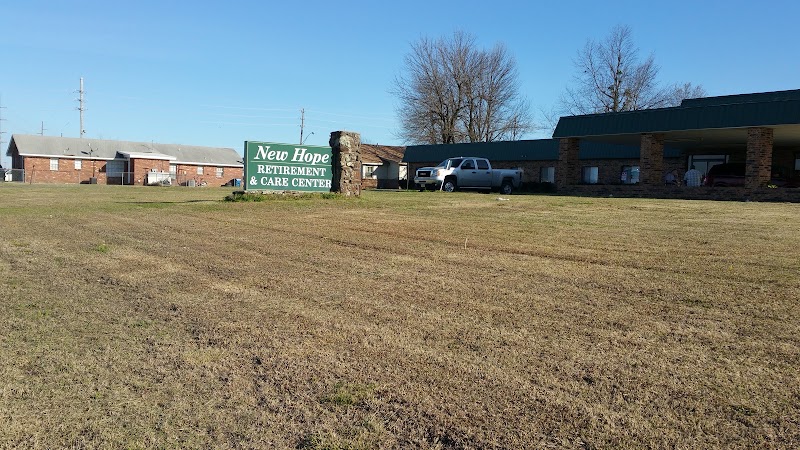
NEW HOPE RETIREMENT & CARE CENTER
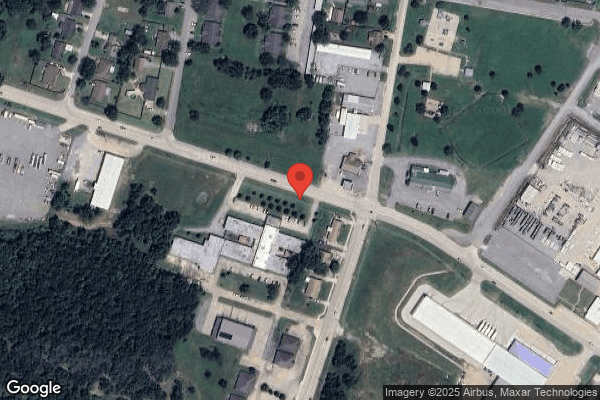
1220 EAST ELECTRIC BLVD, MCALESTER, OK 74501 (918) 423-9095
For profit - Corporation 55 Beds Independent Data: November 2025
Trust Grade
38/100
#175 of 282 in OK
Last Inspection: November 2024

Within standard 12-15 month inspection cycle. Federal law requires annual inspections.

Overview

New Hope Retirement & Care Center in McAlester, Oklahoma has a Trust Grade of F, indicating significant concerns about the quality of care provided. Ranked #175 out of 282 facilities in the state, they fall in the bottom half, with only two local options in Pittsburg County rated higher. However, the facility is showing signs of improvement, having reduced issues from 12 in 2024 to 4 in 2025. Staffing is a relative strength, rated 4 out of 5 stars, but the turnover rate of 66% is concerning, significantly higher than the state average. The facility has faced some serious issues, including a failure to adequately treat a resident's pressure ulcer and problems maintaining a safe physical environment, as well as not properly documenting required staffing information.

Trust Score
F
38/100
In Oklahoma
#175/282
Bottom 38%
Safety Record
Moderate
Needs review
Inspections
Getting Better
12 → 4 violations
Staff Stability
⚠ Watch
66% turnover. Above average. Higher turnover means staff may not know residents' routines.
Penalties
✓ Good
$7,371 in fines. Lower than most Oklahoma facilities. Relatively clean record.
Skilled Nurses
○ Average
Each resident gets 30 minutes of Registered Nurse (RN) attention daily — about average for Oklahoma. RNs are the most trained staff who monitor for health changes.
Violations
⚠ Watch
21 deficiencies on record. Higher than average. Multiple issues found across inspections.
★★☆☆☆
2.0
Overall Rating
★★★★☆
4.0
Staff Levels
★★★☆☆
3.0
Care Quality
★★☆☆☆
2.0
Inspection Score
Stable
2024: 12 issues
2025: 4 issues

The Good

  • 4-Star Staffing Rating · Above-average nurse staffing levels
  • Full Sprinkler Coverage · Fire safety systems throughout facility
  • No fines on record

Facility shows strength in staffing levels, fire safety.

The Bad

2-Star Overall Rating

Below Oklahoma average (2.6)

Below average - review inspection findings carefully

Staff Turnover: 66%

19pts above Oklahoma avg (46%)

Frequent staff changes - ask about care continuity

Federal Fines: $7,371

Below median ($33,413)

Minor penalties assessed

Staff turnover is elevated (66%)

18 points above Oklahoma average of 48%

The Ugly 21 deficiencies on record

1 actual harm
Jul 2025 4 deficiencies
CONCERN (D) 📢 Someone Reported This

A family member, employee, or ombudsman was alarmed enough to file a formal complaint

Potential for Harm - no one hurt, but risky conditions existed

Comprehensive Care Plan (Tag F0656)

Could have caused harm · This affected 1 resident

Based on record review and interview, the facility failed to ensure a comprehensive care plan was developed for indwelling urinary catheter care and maintenance for 1 (#2) of 2 residents sampled for i...

Read full inspector narrative →
Based on record review and interview, the facility failed to ensure a comprehensive care plan was developed for indwelling urinary catheter care and maintenance for 1 (#2) of 2 residents sampled for indwelling urinary catheters.The administrator identified one resident with an indwelling urinary catheter.Findings:An undated medical diagnosis list showed Res #2 had diagnoses which included retention of urine and congenital bladder neck obstruction.A physician order, dated 08/07/24, showed to change the indwelling urinary catheter every 30 days and as needed and to perform catheter care every shift and as needed.A quarterly assessment, dated 08/21/24, showed Res #2 had a BIMS score of 12 and was cognitively intact. The assessment showed Res #2 had an indwelling urinary catheter.Res #2's care plan was reviewed. There was no documentation for indwelling urinary catheter care and maintenance shown on the care plan.On 07/15/25 at 4:35 p.m., the MDS coordinator stated a comprehensive care plan for urinary catheter care and maintenance had not been developed for Res #2, but should have been.
CONCERN (D) 📢 Someone Reported This

A family member, employee, or ombudsman was alarmed enough to file a formal complaint

Potential for Harm - no one hurt, but risky conditions existed

Deficiency F0657 (Tag F0657)

Could have caused harm · This affected 1 resident

Based on record review and interview, the facility failed to update a resident's care plan after abusive behavior was observed for 1 (#3) of 3 sampled residents reviewed for abuse.The administrator id...

Read full inspector narrative →
Based on record review and interview, the facility failed to update a resident's care plan after abusive behavior was observed for 1 (#3) of 3 sampled residents reviewed for abuse.The administrator identified 39 residents resided in the facility.A care plan policy, revised March 2022, showed care plan interventions were chosen only after data gathering, proper sequencing of events, careful consideration of the relationship between the resident's problem areas and their causes, and relevant clinical decision making. The policy showed when possible, interventions addressed the underlying sources of the problem areas, not just symptoms or triggers. The policy showed assessments of residents were ongoing and care plans were revised as information about the residents and the residents' conditions change.A facility reported incident, dated 04/27/25, showed an allegation of abuse/mistreatment involving Resident #3 and Resident #6. The reported incident showed resident to resident abuse by staff. Immediate separation of residents. Alleged abuser had one on one provided while arrangements being made for behavioral placement.There were no updates to Resident #3's care plan regarding the above incident.A nursing note, dated 04/27/25 at 11:00 a.m., read in part, Resident approached another resident and was seen pushing [them] up to the table and trying to lock the wheelchair and was instructed to move on and leave resident alone. [Resident #2] approached [Resident #6] again and was seen criss [sic] crossing the strings on a neck pillow that was on the residents neck and was stopped by kitchen staff and reported it appropriately.[Name withheld] PD [police department] contacted and out to make a report and [report number withheld].DHS [Department of Human Services] LTC [long term care] notified and APS [Adult Protective Services], DON [director of nursing], ADM [administrator], Dr. [doctor] [name withheld] and contacted family [name withheld] .One on one at all times since incident and until [they] leave the facility, pending admission acceptance to a behavioral health center.An annual resident assessment, dated 06/16/25, showed Resident #3's cognition was intact (BIMS 13). The assessment showed Resident #3 had diagnosis which included non-Alzheimer's dementia.Resident #3's care plan, revised 07/08/25, did not show behaviors or interventions had been added to the care plan.On 7/15/25 at 12:42 p.m., MDS coordinator stated the care plan was not updated with new interventions after the incident. They stated care plans were to be updated with any MDS changes, hospital stays, and any changes in health.
CONCERN (D) 📢 Someone Reported This

A family member, employee, or ombudsman was alarmed enough to file a formal complaint

Potential for Harm - no one hurt, but risky conditions existed

Quality of Care (Tag F0684)

Could have caused harm · This affected 1 resident

**NOTE- TERMS IN BRACKETS HAVE BEEN EDITED TO PROTECT CONFIDENTIALITY** Based on record review and interview, the facility failed to notify the physician of signs and/or symptoms of a potential infect...

Read full inspector narrative →
**NOTE- TERMS IN BRACKETS HAVE BEEN EDITED TO PROTECT CONFIDENTIALITY** Based on record review and interview, the facility failed to notify the physician of signs and/or symptoms of a potential infection at a urinary catheter's entry site for 1 (#2) of 2 residents sampled for indwelling urinary catheters.The administrator identified one resident with an indwelling urinary catheter.Findings:An undated policy titled Communication of Resident Condition and Treatment with Antimicrobial Orders, read in part, When facility staff suspects a resident has an infection, the nurse should appropriately document a comprehensive assessment of the resident using established and accepted assessment protocols. This assessment will determine if the resident's status meets minimum criteria for initiating antibiotics. When contacting a physician to communicate to discuss a resident's change in condition and a suspected infection, a nurse should have the medical record available and should communicate the following: written results of the written resident assessment, signs and symptoms, and time symptoms first observed.An undated medical diagnosis list showed Res #2 had diagnoses which included retention of urine and congenital bladder neck obstruction.A physician order, dated 08/07/24, showed to monitor Res #2's catheter's insertion site for signs and/or symptoms of infection and report to the physician if present.A quarterly assessment, dated 08/21/24, showed Res #2 had a BIMS score of 12 and their cognition was moderately impaired. The assessment showed Res #2 had an indwelling urinary catheter.A physician order, dated 09/03/24, showed Res #2 was scheduled for suprapubic catheter placement on 09/11/24.A nurse note, dated 09/05/24 at 7:44 p.m., showed odorous brownish drainage was observed on the penile area during catheter care.A nurse note, dated 09/07/24 dated at 10:19 a.m., showed brown drainage was observed during catheter care.A nurse note, dated 09/08/24 at 10:36 a.m., showed tannish brown drainage was observed coming from the urethra during catheter care.A nurse note, dated 09/08/24 at 7:18 p.m., showed brown drainage continued from the urethra during catheter care.A nurse note, dated 09/10/24 at 7:32 p.m., showed the resident was scheduled to have a suprapubic catheter placed at the hospital on [DATE] at 8:00 a.m.A nurse note, dated 09/11/24 at 2:28 p.m., showed Res #2 had been admitted to the hospital for a urinary tract infection and hypotension. The note showed the suprapubic catheter procedure was not performed.A hospital physician report, dated 09/11/24 at 4:04 p.m., showed Res #2 was admitted to the medical surgical floor for treatment of a complicated urinary tract infection with antibiotics.A nurse note, dated 09/12/24 at 6:46 p.m., showed Res #2 returned to the facility from the hospital. The note showed the suprapubic catheter had not been placed.On 07/15/25 at 2:47 p.m., RN #1 stated it was the nurse's responsibility to monitor catheter insertion sites for signs and/or symptoms of infection such as redness, irritation, and drainage. They stated if any signs and/or symptoms of infection were observed the physician should have been notified.On 07/15/25 at 4:00 p.m., RN #2 stated Res #2 had a history of recurrent urinary tract infections and discharge from the catheter entry site. They stated Res #2 had not been feverish or complained of pain. RN #2 stated they could not remember if the physician had been notified of the brown discharge at the catheter entry site. They denied documentation of the physician having been notified or their response.On 07/16/25 at 8:00 a.m., the infection preventionist stated the physician should have been notified after the staff observed discharge with odor from Res #2's penile area. They stated the discharge could have been an indication of an infection.
CONCERN (E) 📢 Someone Reported This

A family member, employee, or ombudsman was alarmed enough to file a formal complaint

Potential for Harm - no one hurt, but risky conditions existed

Safe Environment (Tag F0584)

Could have caused harm · This affected multiple residents

Based on observation, record review, and interview, the facility failed to ensure the physical environment was maintained in good repair.The administrator identified 39 residents resided in the facili...

Read full inspector narrative →
Based on observation, record review, and interview, the facility failed to ensure the physical environment was maintained in good repair.The administrator identified 39 residents resided in the facility.Findings:On 07/15/25 at 7:55 a.m., during a tour of the dining room, the ceiling was observed to have multiple ceiling tiles with large brown watermark stains.On 07/17/25 at 3:30 p.m., during a tour of the facility, resident rooms #2, #4, #17, and #28 were observed to have sagging white ceiling tiles. The ceiling tiles had brown watermark stains around and near the air vents.A policy titled Homelike Environment, revised February 2021, read in part, Residents are provided with a safe, clean, comfortable and homelike environment.On 07/17/25 at 3:42 p.m., the maintenance supervisor stated the sagging tiles with brown watermark stains were caused by water leaks from the roof. They stated the facility's roof leaked every time it rained. The maintenance supervisor stated they tried to change out the stained and sagging ceiling tiles often, but the roof needed to be permanently repaired.On 07/17/25 at 4:01 p.m., the administrator stated the facility's roof had leaked since they began employment in February 2024. They stated management was aware, but had not permanently addressed the concern. The administrator stated the physical environment of the facility had not been maintained in good repair.
Nov 2024 8 deficiencies
CONCERN (D)

Potential for Harm - no one hurt, but risky conditions existed

Notification of Changes (Tag F0580)

Could have caused harm · This affected 1 resident

Based on record review and interview, the facility failed to ensure the physician was notified of out of parameter blood sugars for two (#21 and #31) of three sampled residents whose diabetic records ...

Read full inspector narrative →
Based on record review and interview, the facility failed to ensure the physician was notified of out of parameter blood sugars for two (#21 and #31) of three sampled residents whose diabetic records were reviewed. The administrator identified 12 residents whose blood sugars were monitored. Findings: 1. Res #21 had diagnoses which included type 2 diabetes with autonomic polyneuropathy. A physician's order, dated 04/26/24, read in part, Obtain and record FSBS (finger stick blood sugar) .ac and hs. Notify physician if FSBS <70 or >400. On 10/02/24 at 4:30 p.m., Res #21's blood sugar was 458. There was no documentation in the narrative note or blood glucose MAR the physician was notified of the out of parameter blood sugar. 2. Res #31 had diagnoses which included type 2 diabetes mellitus. A physician's order, dated 08/12/23, read in part, Obtain and record FSBS .ac and hs .Notify physician if FSBS <60 or >400. There was no documentation in the narrative note or blood glucose MAR the physician was notified of the following out of parameter blood sugars: a. on 09/20/24 at 10:10 p.m., blood sugar was 403, b. on 09/24/24 at 10:15 p.m., blood sugar was 475, c. on 09/27/24 at 8:30 p.m., blood sugar was 404, d. on 09/30/24 at 9:00 p.m., blood sugar was 431, and e. on 10/14/24 at 4:18 p.m., blood sugar was 429. On 11/07/24 at 1:20 p.m., RN #1 reported the physician should be notified of an out of parameter blood sugar. On 11/07/24 at 1:25 p.m., the DON reported physician notification of an out of parameter blood sugar would be documented in the narrative note or the blood glucose MAR. If there was no documentation the physician was not notified and should have been.
CONCERN (D)

Potential for Harm - no one hurt, but risky conditions existed

Assessment Accuracy (Tag F0641)

Could have caused harm · This affected 1 resident

Based on record review and interview, the facility failed to ensure resident assessments were accurate for two (#21 and #28) of 14 sampled residents whose resident assessments were reviewed. The admin...

Read full inspector narrative →
Based on record review and interview, the facility failed to ensure resident assessments were accurate for two (#21 and #28) of 14 sampled residents whose resident assessments were reviewed. The administrator identified 39 residents who resided in the facility. 1. Res #21 had diagnoses which included heart failure, cerebral infarction, and history of pulmonary embolism. A physician's order, dated 09/24/22, documented the resident was taking aspirin (antiplatelet mecication) 81 mg daily. A 5 day resident assessment, dated 09/24/24, documented the resident was taking an anticoagulant. The resident assessment did not document the resident was taking an antiplatelet. On 11/07/24 at 10:55 a.m., the MDS coordinator reported the medication section of the resident assessment is auto-populated and they did not catch the error of an anticoagulant being documented. The MDS coordinator reported antiplatelet should have been documented. 2. Res #28 had diagnoses which included atrial fibrillation and chronic obstructive pulmonary disease. A physician's order, dated 08/21/24, documented the resident was admitted to hospice services for a diagnosis of chronic obstructive pulmonary disease. The admission assessment, dated 08/27/24, did not document the resident was receiving hospice services. On 11/07/24 at 3:29 p.m., the MDS coordinator reviewed the admission assessment for the resident. They stated the assessment did not document the resident was receiving hospice services.
CONCERN (D)

Potential for Harm - no one hurt, but risky conditions existed

Deficiency F0697 (Tag F0697)

Could have caused harm · This affected 1 resident

Based on record review and interview, the facility failed to ensure a resident experiencing pain was monitored for pain for one (#39) of one sampled resident reviewed for pain. The administrator ident...

Read full inspector narrative →
Based on record review and interview, the facility failed to ensure a resident experiencing pain was monitored for pain for one (#39) of one sampled resident reviewed for pain. The administrator identified 39 residents who resided in the facility. Findings: Res #39 had diagnoses which included muscle spasm, pain, and anxiety disorders. A physician order, dated 09/27/24, documented the resident was to receive Tramadol (a narcotic medication) 50 mg two tablets by mouth every eight hours as needed for pain. The resident did not have a physician order for scheduled pain medication. An admission assessment, dated 10/01/24, documented the resident was cognitively intact and had occasional pain rated six on a pain scale from 0 to 10. The care plan, dated 10/04/24, documented the resident had pain. The care plan documented the resident was to have pain relieved or controlled as evident by facial expression and verbalization of pain relief. A physician order, dated 10/15/24, documented staff was to monitor the resident's pain daily every morning, evening, and night shift. The staff was to document a Y for yes if the resident had pain and a N for no pain. On 11/05/24 at 2:53 p.m., the resident stated they always had pain to their left arm and leg. They stated the pain medication given provided some relief. On 11/07/24 at 1:49 p.m., the DON stated monitoring for pain was not completed as ordered by the physician for the resident.
CONCERN (D)

Potential for Harm - no one hurt, but risky conditions existed

Medication Errors (Tag F0758)

Could have caused harm · This affected 1 resident

Based on record review and interview, the facility failed to ensure a resident who received psychotropic medication had an acceptable diagnosis/indication for the use of an antipsychotic medication fo...

Read full inspector narrative →
Based on record review and interview, the facility failed to ensure a resident who received psychotropic medication had an acceptable diagnosis/indication for the use of an antipsychotic medication for one (#33) of five sampled residents reviewed for unnecessary medications. The DON identified 10 residents who received antipsychotic medications. Findings: Res #33 had diagnoses which included dementia without behavioral or psychotic disturbances, anxiety disorders, and unspecified mood affective disorder. A physician order, dated 10/21/24, documented the resident was to receive Risperidone (an antipsychotic medication) 0.5 mg two times a day. The admission assessment, dated 10/28/24, documented the resident was cognitively intact and was receiving a antipsychotic and a antianxiety medication. The care plan, dated 11/01/24, documented the resident received psychotropic medication. The care plan documented staff were to monitor for behaviors, verbal and non-verbal, for which the medication was being given. On 11/06/24 at 4:01 p.m., the DON reviewed the resident's clinical record. The DON was unsure if the resident had an appropriate diagnosis for the use of the antipsychotic medication. On 11/06/24 at 4:06 p.m., the facility pharmacist reviewed the resident's medication and diagnoses list. The pharmacist stated the resident was receiving an antipsychotic medication and did not have a diagnosis for the use of the medication.
CONCERN (D)

Potential for Harm - no one hurt, but risky conditions existed

Deficiency F0849 (Tag F0849)

Could have caused harm · This affected 1 resident

Based on record review and interview, the facility failed to ensure there was documentation of the coordination of care between hospice and the facility for one (#28) of one sampled resident reviewed ...

Read full inspector narrative →
Based on record review and interview, the facility failed to ensure there was documentation of the coordination of care between hospice and the facility for one (#28) of one sampled resident reviewed for hospice care. The DON identified three residents who received hospice services. Findings: Res #28 had diagnoses which included atrial fibrillation and chronic obstructive pulmonary disease. A physician's order, dated 08/21/24, documented the resident was admitted to hospice services for a diagnosis of chronic obstructive pulmonary disease. The admission assessment, dated 08/27/24, did not document the resident was receiving hospice services. On 11/06/24 at 2:41 p.m., the administrator could not provide hospice documentation regarding the resident's hospice services, including the plan of care.
CONCERN (E)

Potential for Harm - no one hurt, but risky conditions existed

Resident Rights (Tag F0550)

Could have caused harm · This affected multiple residents

Based on observation, record review, and interview, the facility failed to date and cover urinary catheter bags for two (#11 and #35) of two sampled residents reviewed for urinary catheters. The DON ...

Read full inspector narrative →
Based on observation, record review, and interview, the facility failed to date and cover urinary catheter bags for two (#11 and #35) of two sampled residents reviewed for urinary catheters. The DON identified four residents with urinary catheters. Findings: 1. Res #11 had diagnoses which included overactive bladder, paraplegia, and a stage 4 sacral pressure ulcer. A physician order, dated 05/29/23, documented catheter care per facility guidelines. A discharge return anticipated assessment, dated 10/24/24, documented the resident was modified independent for daily decision making and had a urinary catheter. On 11/05/24 at 11:00 a.m., the resident was lying in bed with a urinary catheter bag hanging from the bedside. The bag was not dated or covered. On 11/07/24 at 2:23 p.m., the DON stated the resident's urinary catheter bag should have been dated and covered. 2. Res #35 had diagnoses which included retention of urine and congenital bladder neck obstruction. A physician order, dated 08/07/24, documented catheter care per facility guidelines. On 11/05/24 at 11:21 a.m., the resident was sitting in a recliner in their room. The resident's urinary catheter bag was hanging from the side of the chair. The catheter bag was not dated or covered. On 11/06/24 at 8:33 a.m., the resident was sitting in a chair in their room. The resident's catheter bag was hanging from the chair. The catheter bag was no dated or covered. On 11/07/24 at 10:20 a.m, the resident was sitting in their room in a recliner. The resident's catheter bag was hanging from the chair. The catheter bag was not dated or covered. On 11/07/24 at 2:23 p.m., the DON stated the resident's urinary catheter bag should be dated and covered.
CONCERN (E)

Potential for Harm - no one hurt, but risky conditions existed

Deficiency F0578 (Tag F0578)

Could have caused harm · This affected multiple residents

**NOTE- TERMS IN BRACKETS HAVE BEEN EDITED TO PROTECT CONFIDENTIALITY** Based on record review and interview, the facility failed to ensure DNR orders were in place for three (#4, 7 and #10) of 14 sam...

Read full inspector narrative →
**NOTE- TERMS IN BRACKETS HAVE BEEN EDITED TO PROTECT CONFIDENTIALITY** Based on record review and interview, the facility failed to ensure DNR orders were in place for three (#4, 7 and #10) of 14 sampled residents whose advance directives were reviewed. The administrator identified 12 residents who were DNR's. Findings: A Do Not Resuscitate Order policy, dated [DATE], read in part, 1. Do not resuscitate orders must be signed by the resident's Attending Physician on the physician's order sheet maintained in the resident's medical record. 1. Res #4 had diagnoses which included type 2 diabetes mellitus and cerebral infarction. A Do Not Resuscitate care plan, dated [DATE], documented Res #4 did not want CPR performed if their heart/respirations should stop. Res #4 signed an Oklahoma Do Not Resuscitate (DNR) Consent Form was signed on [DATE]. Res #4 did not have a physician's order for a DNR. 2. Res #7 had diagnoses which included Parkinson's, dementia, behavioral disturbance, and anxiety. A Do Not Resuscitate care plan, dated [DATE], documented Res #7 did not want CPR performed if their heart/respirations should stop. The POA for Res #7 signed an Oklahoma Do Not Resuscitate (DNR) Consent Form on [DATE]. Res #7 did not have a physician's order for a DNR. 3. Res #10 had diagnoses which included chronic kidney disease stage 3, type 2 diabetes mellitus, and congestive heart failure. A Do Not Resuscitate care plan, dated [DATE], documented Res #10 did not want CPR performed if their heart/respirations should stop. Res #10 signed an Oklahoma Do Not Resuscitate (DNR) Consent Form was signed on [DATE]. Res #10 did not have a physician's order for a DNR. On [DATE] at 10:58 a.m., the MDS coordinator reported the residents did not have an order for a DNR and was not aware an order needed to be written for DNR residents.
CONCERN (F)

Potential for Harm - no one hurt, but risky conditions existed

Staffing Information (Tag F0732)

Could have caused harm · This affected most or all residents

Based on observation and interview, the facility failed to post the required staffing information. The administrator identified 39 residents who resided in the facility. Findings: On 11/05/24 at 11:00...

Read full inspector narrative →
Based on observation and interview, the facility failed to post the required staffing information. The administrator identified 39 residents who resided in the facility. Findings: On 11/05/24 at 11:00 a.m., posted staffing was observed to be documented on a white board at the nursing station. The date, census, and staff/title were documented. The facility name and projected and actual staffing hours were not documented. On 11/07/24 at 9:02 a.m., posted staffing was observed to be documented on a white board at the nursing station. The date, census, and staff/tile were documented. The facility name and projected and actual staffing hours were not documented. On 11/07/24 at 9:52 a.m., the DON reported they were unaware of what staffing information was required to be documented on the staffing board.
Jul 2024 1 deficiency 1 Harm
SERIOUS (G) 📢 Someone Reported This

A family member, employee, or ombudsman was alarmed enough to file a formal complaint

Actual Harm - a resident was hurt due to facility failures

Pressure Ulcer Prevention (Tag F0686)

A resident was harmed · This affected 1 resident

**NOTE- TERMS IN BRACKETS HAVE BEEN EDITED TO PROTECT CONFIDENTIALITY** Based on observation, record review, and interview, the facility failed to provide treatment and services to prevent worsening o...

Read full inspector narrative →
**NOTE- TERMS IN BRACKETS HAVE BEEN EDITED TO PROTECT CONFIDENTIALITY** Based on observation, record review, and interview, the facility failed to provide treatment and services to prevent worsening of a pressure ulcer for one (#4) of four sampled residents reviewed for pressure ulcers. The LPN #1 identified two residents with pressure ulcers. Findings: A facility pressure ulcer policy and procedure read in part, the facility will provide care based on each resident's comprehensive assessment to ensure that a resident who enters the facility with pressure ulcers does not develop pressure ulcers unless pressure ulcers are unavoidable. The policy also read, aggressive and appropriate preventative measures and care are provided to address a resident's unique risk factors. Res #4 admitted to the facility on [DATE] with diagnoses which included peripheral vascular disease, osteoporosis, and fracture of part of the neck of right femur. A care plan, dated 07/15/24, documented to assess skin condition and treat as needed. A nursing note, dated 07/15/24, documented a small pressure area noted to buttocks, zinc oxide applied. No redness noted to surrounding skin. There was no further description or mention of this wound until 07/22/24. A bath sheet, dated 07/19/24, documented the presence of a scratch/tear to right leg. There was no mention of pressure wounds at all. A nursing note, dated 07/22/24, documented the CNA that bathed resident noticed some wounds and notified the nurse. It was documented as noted 3 open areas to buttocks. A 1cm x1cm open area to left lower sacrum. A 3 cm by 4 cm open area with slough noted to sacrum in center of buttocks. A 3 cm by 3 cm open area, black in color, noted to right buttocks. The wounds were not staged only described. A nursing note, dated 07/23/24, documented the physician was notified of the wounds to buttocks and sacrum, and new orders were received to cleanse area with NS or wound wash. pat dry. apply medihoney, cover and secure every shift and as needed until resolved. This was the first notification to the physician of the wound. A physician order, dated 07/24/24, documented to provide a cushion to wheelchair at all times while up. On 07/31/24, at 11:11 a.m., LPN #1 and DON were observed providing wound care to resident #4's buttocks, left of sacrum. The wound was not measured but was approximately the size of a quarter. It was 100% covered in slough. On 07/31/24 at 12:13 p.m., LPN #1 stated they admitted resident #4, and the area to the buttocks was not open at that time. They stated residents are to be turned every 2 hours, but resident #4 wants to sit down in their wheelchair and lay on their back. They stated staff tell each other interventions verbally, but it also will show up in the Treatment record. The Treatment record documented the order for medication to the wounds were initiated on 7/23/24 and the cushion to the wheel chair was initiated on 07/24/24. Repositioning every 2 hours was the only wound care intervention documented prior to 07/22/24. On 07/31/24, at 12:20 p.m., the administrator stated it looks like we haven't done anything. The administrator stated that resident #4 has now seen VOHRA wound care once since the wound was identified, but they were unable to provide those records.
Jun 2024 1 deficiency
CONCERN (D) 📢 Someone Reported This

A family member, employee, or ombudsman was alarmed enough to file a formal complaint

Potential for Harm - no one hurt, but risky conditions existed

Deficiency F0655 (Tag F0655)

Could have caused harm · This affected 1 resident

**NOTE- TERMS IN BRACKETS HAVE BEEN EDITED TO PROTECT CONFIDENTIALITY** Based on record review and interview, the facility failed to ensure a baseline care plan was accurate for one (#1) of three samp...

Read full inspector narrative →
**NOTE- TERMS IN BRACKETS HAVE BEEN EDITED TO PROTECT CONFIDENTIALITY** Based on record review and interview, the facility failed to ensure a baseline care plan was accurate for one (#1) of three sampled residents whose care plans were reviewed. The administrator identified a census of 46 residents. Findings: Res #1 was admitted on [DATE] with diagnoses which included right hip fracture, osteoarthritis, hypertension, anxiety and impulse disorder. Res #1's progress notes documented the resident was in the hospital with an infected right hip incision and returned to the facility on [DATE] with a JP Drain, indwelling urinary catheter, wound vac to right hip incision, PICC line with IV antibiotics and wounds to coccyx and buttocks. Res #1's baseline care plan started on 05/09/24 and updated on 05/21/24 did not include a care plan for Res #1's JP drain, indwelling urinary catheter, wound vac to right hip incision, PICC line with IV antibiotics and wounds to coccyx and buttocks. On 06/17/24, the DON reported the baseline care plan for Res #1 should have included a plan for Res #1's JP Drain, indwelling urinary catheter, wound vac to right hip incision, PICC line with IV antibiotics and wounds to coccyx and buttocks.
Jan 2024 2 deficiencies
CONCERN (D) 📢 Someone Reported This

A family member, employee, or ombudsman was alarmed enough to file a formal complaint

Potential for Harm - no one hurt, but risky conditions existed

Report Alleged Abuse (Tag F0609)

Could have caused harm · This affected 1 resident

**NOTE- TERMS IN BRACKETS HAVE BEEN EDITED TO PROTECT CONFIDENTIALITY** Based on record review and interview, the facility failed to ensure all allegations of abuse were reported within two hours for ...

Read full inspector narrative →
**NOTE- TERMS IN BRACKETS HAVE BEEN EDITED TO PROTECT CONFIDENTIALITY** Based on record review and interview, the facility failed to ensure all allegations of abuse were reported within two hours for one (Res #1) of three residents sampled for abuse. The facility identified two incidents of abuse which occurred in the previous five months. Findings: A facility policy, titled Abuse Prohibition 12/19/16, read in part, .If you have any concerns regarding these issues, you have a duty to contact us immediately through one or more of the following resources: * The Administrator/Designee *DON *ADON *Charge nurse .3 .shall as soon as possible report information supporting the belief to the Department of Health, APS, local law enforcement and ombudsman, by telephone, in writing or by personal visit .When in doubt as to the reportability of an event, report it . A nurse note documented in Res #1's general notes, dated 11/26/23 at 2:10 p.m., documented a hospital had called report to the charge nurse in preparation to send Res #1 back to the facility. The note documented the hospital told the nurse Res #1 had stated they were being sexually abused, abused, and poisoned at the facility. On 01/24/24 at 4:16 p.m., the administrator was asked if the facility had reported the allegation of abuse, documented as being reported to the facility on [DATE], to OSDH. The administrator stated the nurse taking the report had not informed the administration about the allegation and they did not know the allegation had been made. The administrator stated the staff member who took report should have informed administration so the allegation could have been reported within two hours from the time the facility became aware of the allegation.
CONCERN (D) 📢 Someone Reported This

A family member, employee, or ombudsman was alarmed enough to file a formal complaint

Potential for Harm - no one hurt, but risky conditions existed

Investigate Abuse (Tag F0610)

Could have caused harm · This affected 1 resident

**NOTE- TERMS IN BRACKETS HAVE BEEN EDITED TO PROTECT CONFIDENTIALITY** Based on record review and interview, the facility failed to ensure all allegations of abuse were thoroughly investigated for on...

Read full inspector narrative →
**NOTE- TERMS IN BRACKETS HAVE BEEN EDITED TO PROTECT CONFIDENTIALITY** Based on record review and interview, the facility failed to ensure all allegations of abuse were thoroughly investigated for one (Res #1) of three residents sampled for abuse. The facility identified two incidents of abuse which occurred in the previous five months. Findings: A facility policy, titled Abuse Prohibition 12/19/16, read in part, .Investigations: The facility shall ensure, in a timely and thorough manner, objective investigation of all allegations of abuse, neglect or mistreatment . A nurse note documented in Res #1's general notes, dated 11/26/23 at 2:10 p.m., documented a hospital had called report in preparation to send Res #1 back to the facility. The note documented the hospital told the nurse at the facility Res #1 had stated they were being sexually abused, abused, and poisoned at the facility. On 01/24/24 at 4:16 p.m., the administrator was asked if the facility had investigated the allegation of abuse, documented as being reported to the facility on [DATE]. The administrator stated the nurse taking the report had not informed the administration about the allegation and they did not know the allegation had been made. The administrator stated the staff member who took report should have informed administration so the allegation could have been investigated. The administrator confirmed as the nurse who took the report was a staff member employed at the facility, the facility technically had been informed of the allegation on 11/26/23.
Aug 2023 3 deficiencies
CONCERN (D)

Potential for Harm - no one hurt, but risky conditions existed

Drug Regimen Review (Tag F0756)

Could have caused harm · This affected 1 resident

Based on record review and interview, the facility failed to ensure the physician responded to monthly pharmacist consultations for two (#9 and #31) of five residents reviewed for unnecessary medicati...

Read full inspector narrative →
Based on record review and interview, the facility failed to ensure the physician responded to monthly pharmacist consultations for two (#9 and #31) of five residents reviewed for unnecessary medications. The Resident Census and Conditions of Residents, dated 08/14/23, documented 31 residents received psychoactive medications. Findings: 1. Res #9 was admitted with diagnoses which included bipolar, schizophrenia, and Alzheimer's. A physician's order, dated 11/16/21, documented to administer Seroquel (an antipsychotic medication) 75 mg twice daily. A physician's order, dated 02/14/22, documented administer Depakote (a mood stabilizing medication) 250 mg twice daily. A Pharmacist Review, dated 05/09/23 documented in part, Is a dosage reduction attempt possible for any of the following: Zoloft from 50 mg daily, Seroquel from 75 mg twice daily, Depakote 250 mg twice daily as this is used for bipolar disorder? A Pharmacist Review, dated 05/09/23, documented in part, .Decrease Zoloft to 25. There was no documentation regarding the recommendation to reduce the dosage of the Depakote or Seroquel. A quarterly resident assessment, dated 08/06/23, documented no behaviors for Res #9. On 08/14/23 at 9:30 a.m., Res #9 was observed in a recliner watching television. On 08/15/23 at 10:15 a.m., Res #9 was interviewed by the surveyor regarding hot water availability and Res #9 responded there was no hot water in the sink in their room. On 08/17/23 at 9:02 a.m., the ADON reported the physician had not documented a response on the Pharmacist Review, dated 05/09/23 regarding the recommendation to reduce the dosage for the Depakote or the Seroquel. The ADON reported the physician had not ever responded to more than one medication on the pharmacist recommendations. They reported the physician should have documented a response for all three of the medications. 2. Res #31 was admitted with diagnoses which included anxiety, depression, and mood disorder. A physician's order, dated 09/17/21, documented to administer Buspar (an anti-anxiety medication) 10 mg, three times a day. A quarterly resident assessment, dated 06/06/23, documented Res #31 was cognitively intact, without behaviors. On 08/14/23 at 10:00 a.m., Res #31 was observed sitting on the side of their bed, conversing with staff. On 08/15/23 at 10:15 a.m., the surveyor interviewed Res #31 regarding hot water availablity in their room and the resident reported their was no hot water in the sink. A Pharmacist Review, dated 05/03/23, documented requests to discontinue Abilify, and reduce dosage for Buspar. The physician documented to discontinue the Abilify. There was no documentation regarding the request to reduce the Buspar dosage. On 08/17/23 at 2:30 p.m., the consulting pharmacist reported when multiple medications were recommended for dosage reduction, the physician only documented a response to one medication. The pharmacist reported they might have to complete a separate recommendation for each medication in order to encourage the physician to document a response.
CONCERN (E)

Potential for Harm - no one hurt, but risky conditions existed

Deficiency F0568 (Tag F0568)

Could have caused harm · This affected multiple residents

Based on record review and interview, the facility failed to provide trust account residents with a quarterly account statement. The VP of Operations identified 16 residents who were in the trust acco...

Read full inspector narrative →
Based on record review and interview, the facility failed to provide trust account residents with a quarterly account statement. The VP of Operations identified 16 residents who were in the trust account. Findings: The undated Protection Of Resident Funds policy, read in part, .Shall provide each resident or his/her representative with a written itemized statement at least quarterly of all financial transactions involving the resident's funds . A review of the trust account records did not include a quarterly statement for April - June 2023. On 08/17/23 at 3:20 p.m., the VP of Operations reported they took over the residents' trust accounts in April 2023, but didn't provide the residents with account statements until 08/01/23.
CONCERN (E) 📢 Someone Reported This

A family member, employee, or ombudsman was alarmed enough to file a formal complaint

Potential for Harm - no one hurt, but risky conditions existed

Safe Environment (Tag F0584)

Could have caused harm · This affected multiple residents

**NOTE- TERMS IN BRACKETS HAVE BEEN EDITED TO PROTECT CONFIDENTIALITY** Based on observation and interview, the facility failed to ensure hot water was available in resident rooms for 17 of 19 residen...

Read full inspector narrative →
**NOTE- TERMS IN BRACKETS HAVE BEEN EDITED TO PROTECT CONFIDENTIALITY** Based on observation and interview, the facility failed to ensure hot water was available in resident rooms for 17 of 19 resident rooms reviewed for hot water. Findings: A floor plan of the facility with no date, documented 19 rooms were occupied by residents. On 08/14/23 at 9:45 a.m., the hot water in the sink of room [ROOM NUMBER] was allowed to run for three minutes and showed a temperature of 75 degrees Fahrenheit On 08/14/23 at 9:50 a.m., Res #31 reported the hot water in the sink did not work and hadn't for a long time. On 08/15/23 at 9:30 a.m., the hot water in the sinks of rooms [ROOM NUMBERS] was allowed to run for three minutes and showed a temperature of 76 degrees Fahrenheit. On 08/15/23 at 9:40 a.m., Res #9 reported there had been no hot water from the sink for a few months in room [ROOM NUMBER]. On 08/15/23 at 9:45 a.m., CNA #1 reported sometimes it took a long time for the water to get hot in the resident rooms. On 08/15/23 at 3:00 p.m. the administrator reported prior to the surveyor asking about the water temperatures in resident rooms, they were unaware there was an issue with hot water. On 08/15/23 at 3:05 p.m., the VP of Operations reported they were continuing to work on the hot water system. On 08/16/23 at 9:00 a.m., rooms [ROOM NUMBERS] did not have hot water in the sinks. On 08/16/23 at 9:15 a.m. the VP of Operations reported the hot water in the residents' room was not working. They reported there were plumbers coming to assist with fixing it. They reported the temperature of the water coming from the sinks in the residents rooms ranged between 68 and 75 degrees Fahrenheit. On 08/17/23 at 3:40 p.m., the sinks in rooms [ROOM NUMBERS] did not have hot water. The VP of Operations reported they thought the issue had been fixed the day before, but the water was still not hot. They reported they were waiting on assistance from corporate maintenance to assist with the issue.
Jun 2022 2 deficiencies
CONCERN (E)

Potential for Harm - no one hurt, but risky conditions existed

Comprehensive Care Plan (Tag F0656)

Could have caused harm · This affected multiple residents

Based on record review, observation, and interview, the facility failed to ensure an oxygen therapy care plan was established for two (#25 and #34) of four residents whose care plans were reviewed for...

Read full inspector narrative →
Based on record review, observation, and interview, the facility failed to ensure an oxygen therapy care plan was established for two (#25 and #34) of four residents whose care plans were reviewed for oxygen therapy. A Resident Census and Conditions of Residents documented 17 residents required oxygen therapy. Findings: Res #25 was admitted with diagnoses of atrial fibrillation, anxiety, heart failure, and angina. A physician's order, dated 11/15/20, read in part, O2 via NC at 2 LPM . A care plan, revised 04/29/22, did not document oxygen therapy. On 06/05/22 at 10:11 a.m., Res #25 was observed lying in their bed with oxygen in use. On 06/07/22 at 10:30 a.m., the LPN #1 reported the care plan for Res #25 did not include oxygen therapy. Resident #34 was admitted with diagnosis of COPD. A General Treatment Order dated 02/17/22, read in parts, O2 via NC at 3LPM as needed for shortness of breath . There was no care plan for oxygen therapy established for Res #34. On 06/06/22 at 10:00 a.m., Res #34 was observed to be sitting in their wheelchair with oxygen in use. On 06/07/22 at 3:35 p.m., the MDS Coordinator reported that oxygen therapy should have been care planned.
CONCERN (E)

Potential for Harm - no one hurt, but risky conditions existed

Respiratory Care (Tag F0695)

Could have caused harm · This affected multiple residents

Based on record review, observation, and interview, the facility failed to: a. change the oxygen tubing as ordered by the physician for four (#1, 19, 25, and #34) of four residents sampled for oxygen ...

Read full inspector narrative →
Based on record review, observation, and interview, the facility failed to: a. change the oxygen tubing as ordered by the physician for four (#1, 19, 25, and #34) of four residents sampled for oxygen therapy. b. change the humidifier bottle as ordered by the physician for one (#34) of four residents sampled for oxygen therapy. The Resident Census and Conditions of Residents documented 17 residents required oxygen therapy. Findings: Res #1 was admitted with diagnoses of asthma, chronic obstructive pulmonary disease, chronic respiratory failure with hypoxia, and chronic lung disease. A physician's order, dated 05/27/22, read in part, O2 via NC at 1.5 LPM . A general treatment order, dated 05/27/22, read in parts, .Oxygen therapy: change O2 tubing .weekly on Saturday and prn . On 06/06/22 at 9:32 a.m., Res #1 was observed in their bed with their oxygen in use. The oxygen tubing was observed to be dated 05/28/22. On 06/06/22 at 11:13 a.m. to 4:13 p.m., the oxygen tubing continued to be dated 05/28/22. Resident #19 was admitted with a diagnoses of COPD, asthma and chronic lung disease. A General Treatment Order dated 09/17/21, read in part, Change O2 tubing and nebulizer tubing weekly on Saturday and PRN. A General Treatment Order dated 03/04/22, read in part, O2 at 4 liters per nasal cannula as needed for shortness of breath during activity. A General Treatment Order dated 03/16/22, read in part, O2 at 2 liters per nasal cannula as needed for shortness of breath/COPD. On 06/06/22 at 11:23 a.m., Res #19 was observed in their room with oxygen in use. O2 tubing was observed to be without a label. 06/07/22 at 02:57 p.m., Res #19 was observed in their room with oxygen in use. O2 tubing was observed to be without a label. Res #25 was admitted with diagnoses of atrial fibrillation, anxiety, heart failure, and angina. A physician's order, dated 11/15/20, read in part, O2 via NC at 2 LPM . A physician's order, dated 11/15/20, read in parts, .Oxygen therapy: change oxygen .tubing/mask weekly on Saturday and prn . On 06/05/22 at 10:11 a.m., Res #25 was observed in their bed with oxygen in use. The O2 tubing was observed to be dated 02/13. Res #25 reported the oxygen tubing had not been changed in a few months. On 06/05/22 at 1:32 p.m. to 4:15 p.m., Res #25's oxygen tubing continued to be dated 02/13. Resident #34 was admitted with a diagnosis of COPD. A General Treatment Order dated 02/17/22, read in parts, O2 via NC at 3LPM as needed for shortness of breath . A General Treatment Order dated 02/17/22, read in part, Change O2 tubing weekly on Saturday and PRN. A General Treatment Order dated 02/17/22, read in part, Change O2 humidifier bottle monthly on the 28th and PRN. On 06/06/22 at 10:00 a.m., Res #34 was observed to be sitting in their wheelchair with oxygen in use. O2 tubing and humidifier bottle was observed to be without a label. 06/07/22 at 02:54 p.m., Res #34 was observed to be sitting in their wheelchair with oxygen in use. O2 tubing and humidifier bottle was observed to be without a label. 06/07/22 at 03:30 p.m., The DON stated the O2 tubing should be changed and labeled weekly on Saturday and humidifier bottles should be changed and labeled on the 28th of each month. DON stated the oxygen tubing and humidifier bottle had not been changed and labeled as ordered.
Understanding Severity Codes (click to expand)
Life-Threatening (Immediate Jeopardy)
J - Isolated K - Pattern L - Widespread
Actual Harm
G - Isolated H - Pattern I - Widespread
Potential for Harm
D - Isolated E - Pattern F - Widespread
No Harm (Minor)
A - Isolated B - Pattern C - Widespread

Questions to Ask on Your Visit

  • "Why is there high staff turnover? How do you retain staff?"
  • "Can I speak with families of current residents?"
  • "What's your RN coverage like on weekends and overnight?"

Our Honest Assessment

Strengths
  • • Licensed and certified facility. Meets minimum state requirements.
Concerns
  • • 21 deficiencies on record, including 1 serious (caused harm) violation. Ask about corrective actions taken.
  • • Grade F (38/100). Below average facility with significant concerns.
  • • 66% turnover. Above average. Higher turnover means staff may not know residents' routines.
Bottom line: Trust Score of 38/100 indicates significant concerns. Thoroughly evaluate alternatives.

About This Facility

What is New Hope Retirement &'s CMS Rating?

CMS assigns NEW HOPE RETIREMENT & CARE CENTER an overall rating of 2 out of 5 stars, which is considered below average nationally. Within Oklahoma, this rating places the facility higher than 0% of the state's 100 nursing homes. A rating at this level reflects concerns identified through health inspections, staffing assessments, or quality measures that families should carefully consider.
How is New Hope Retirement & Staffed?

CMS rates NEW HOPE RETIREMENT & CARE CENTER's staffing level at 4 out of 5 stars, which is above average compared to other nursing homes. Staff turnover is 66%, which is 19 percentage points above the Oklahoma average of 46%. High turnover can affect care consistency as new staff learn residents' individual needs.

What Have Inspectors Found at New Hope Retirement &?

State health inspectors documented 21 deficiencies at NEW HOPE RETIREMENT & CARE CENTER during 2022 to 2025. These included: 1 that caused actual resident harm and 20 with potential for harm. Deficiencies causing actual harm indicate documented cases where residents experienced negative health consequences.
Who Owns and Operates New Hope Retirement &?

NEW HOPE RETIREMENT & CARE CENTER is owned by a for-profit company. For-profit facilities operate as businesses with obligations to shareholders or private owners. The facility operates independently rather than as part of a larger chain. With 55 certified beds and approximately 36 residents (about 65% occupancy), it is a smaller facility located in MCALESTER, Oklahoma.
How Does New Hope Retirement & Compare to Other Oklahoma Nursing Homes?

Compared to the 100 nursing homes in Oklahoma, NEW HOPE RETIREMENT & CARE CENTER's overall rating (2 stars) is below the state average of 2.6, staff turnover (66%) is significantly higher than the state average of 46%, and health inspection rating (2 stars) is below the national benchmark.

What Should Families Ask When Visiting New Hope Retirement &?

Based on this facility's data, families visiting should ask: "How do you ensure continuity of care given staff turnover, and what is your staff retention strategy?" "Can I visit during a mealtime to observe dining assistance and food quality?" "How do you handle medical emergencies, and what is your hospital transfer rate?" "Can I speak with family members of current residents about their experience?" These questions are particularly relevant given the facility's high staff turnover rate.

Is New Hope Retirement & Safe?

Based on CMS inspection data, NEW HOPE RETIREMENT & CARE CENTER has a clean safety record: no substantiated abuse findings (meaning no confirmed cases of resident harm), no Immediate Jeopardy citations (the most serious violation level indicating risk of serious injury or death), and is not on the Special Focus Facility watch list (a federal program monitoring the lowest-performing 1% of nursing homes). The facility has a 2-star overall rating and ranks #100 of 100 nursing homes in Oklahoma. While no facility is perfect, families should still ask about staff-to-resident ratios and recent inspection results during their visit.

Do Nurses at New Hope Retirement & Stick Around?

Staff turnover at NEW HOPE RETIREMENT & CARE CENTER is high. At 66%, the facility is 19 percentage points above the Oklahoma average of 46%. High turnover means new staff may not know residents' individual needs, medications, or preferences. It can also be disorienting for residents, especially those with dementia who rely on familiar faces. Families should ask: What is causing the turnover? What retention programs are in place? How do you ensure care continuity during staff transitions?

Was New Hope Retirement & Ever Fined?

NEW HOPE RETIREMENT & CARE CENTER has been fined $7,371 across 1 penalty action. This is below the Oklahoma average of $33,153. While any fine indicates a compliance issue, fines under $50,000 are relatively common and typically reflect isolated problems that were subsequently corrected. Families should ask what specific issues led to these fines and confirm they've been resolved.

Is New Hope Retirement & on Any Federal Watch List?

NEW HOPE RETIREMENT & CARE CENTER is not on any federal watch list. The most significant is the Special Focus Facility (SFF) program, which identifies the bottom 1% of nursing homes nationally based on persistent, serious quality problems. Not being on this list means the facility has avoided the pattern of deficiencies that triggers enhanced federal oversight. This is a positive indicator, though families should still review the facility's inspection history directly.