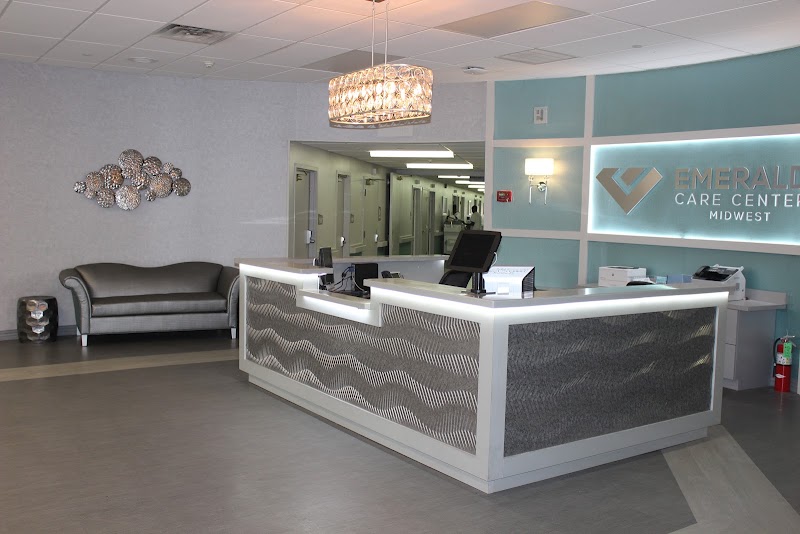
EMERALD CARE CENTER MIDWEST
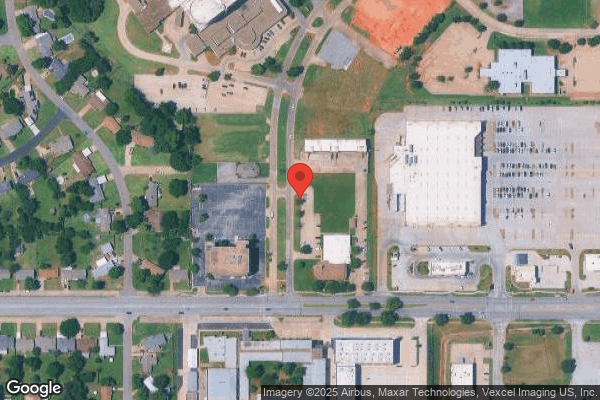
2900 PARKLAWN DRIVE, MIDWEST CITY, OK 73110 (405) 737-6601
For profit - Limited Liability company 116 Beds EMERALD HEALTHCARE Data: November 2025
Trust Grade
43/100
#158 of 282 in OK
Last Inspection: April 2025

Within standard 12-15 month inspection cycle. Federal law requires annual inspections.

Overview

Emerald Care Center Midwest has a Trust Grade of D, indicating below-average performance and some concerns about care quality. Ranking #158 out of 282 facilities in Oklahoma places it in the bottom half of the state, and #18 out of 39 in the county means there are better local options available. The facility's trend has been stable, with 8 issues recorded in both 2024 and 2025, and while staffing received an average rating of 3/5 stars, the turnover rate of 66% is concerning and higher than the state average. Notably, the center has faced issues related to resident care plans, such as failing to develop smoking interventions for residents who smoke, raising potential safety concerns. While the facility's RN coverage is average, the presence of these deficiencies suggests that families should carefully consider their options.

Trust Score
D
43/100
In Oklahoma
#158/282
Bottom 44%
Safety Record
Low Risk
No red flags
Inspections
Holding Steady
8 → 8 violations
Staff Stability
⚠ Watch
66% turnover. Above average. Higher turnover means staff may not know residents' routines.
Penalties
✓ Good
$4,017 in fines. Lower than most Oklahoma facilities. Relatively clean record.
Skilled Nurses
⚠ Watch
Each resident gets only 20 minutes of Registered Nurse (RN) attention daily — below average for Oklahoma. Fewer RN minutes means fewer trained eyes watching for problems.
Violations
⚠ Watch
39 deficiencies on record. Higher than average. Multiple issues found across inspections.
★★☆☆☆
2.0
Overall Rating
★★★☆☆
3.0
Staff Levels
★★★☆☆
3.0
Care Quality
★★☆☆☆
2.0
Inspection Score
Stable
2024: 8 issues
2025: 8 issues

The Good

  • Full Sprinkler Coverage · Fire safety systems throughout facility
  • No fines on record

Facility shows strength in fire safety.

The Bad

2-Star Overall Rating

Below Oklahoma average (2.6)

Below average - review inspection findings carefully

Staff Turnover: 66%

20pts above Oklahoma avg (46%)

Frequent staff changes - ask about care continuity

Federal Fines: $4,017

Below median ($33,413)

Minor penalties assessed

Chain: EMERALD HEALTHCARE

Part of a multi-facility chain

Ask about local staffing decisions and management

Staff turnover is elevated (66%)

18 points above Oklahoma average of 48%

The Ugly 39 deficiencies on record

Apr 2025 7 deficiencies
CONCERN (E)

Potential for Harm - no one hurt, but risky conditions existed

Assessment Accuracy (Tag F0641)

Could have caused harm · This affected multiple residents

**NOTE- TERMS IN BRACKETS HAVE BEEN EDITED TO PROTECT CONFIDENTIALITY** 3. Resident #19's care plan, dated 03/14/25, showed no smoking interventions. Resident #19's admission assessment, dated 3/17/25...

Read full inspector narrative →
**NOTE- TERMS IN BRACKETS HAVE BEEN EDITED TO PROTECT CONFIDENTIALITY** 3. Resident #19's care plan, dated 03/14/25, showed no smoking interventions. Resident #19's admission assessment, dated 3/17/25, showed the resident was admitted on [DATE] and had diagnoses which included hypertension and chronic obstructive pulmonary disease. The assessment showed the resident's cognition was moderately impaired with a BIMS score of 11 and did not use tobacco. A smoking list provided by the DON on 04/08/25 showed Resident #19 was a smoker. On 04/09/25 at 12:50 p.m., Resident #19 reported being a smoker, but had not smoked in a few days. On 04/10/25 at 12:40 p.m., the MDS coordinator reported tobacco use had not been put on the admission assessment because they were not aware Resident #19 was a smoker. The MDS coordinator reported a smoking assessment had not been completed by the clinical nurse, which was used for completing the admission assessment. The MDS coordinator reported the MDS should reflect the resident was a smoker. On 04/10/25 at 12:58 p.m., CNA #3 reported Resident #19 had been a smoker since being admitted to the facility, but only smoked occasionally. 4. On 04/09/25 at 1:16 p.m., Resident #25 was observed outside smoking in the smoking area with staff present. Resident #25's care plan, dated 03/07/25, showed no smoking interventions. Resident #25's admission assessment, dated 03/12/25, showed the resident was admitted to the facility on [DATE] with diagnoses which included diabetes mellitus. The assessment showed the resident's cognition was intact with a BIMS score of 15 and the resident did not use tobacco. A smoking list provided by the DON on 04/08/25 showed Resident #25 was a smoker. On 04/10/25 at 12:40 p.m., the MDS coordinator reported tobacco use had not been put on the admission assessment because they were not aware Resident #25 was a smoker. The MDS coordinator reported a smoking assessment had not been completed by the clinical nurse, which was used for completing the admission assessment. The MDS coordinator reported the MDS should reflect the resident was a smoker. On 04/10/25 at 12:58 p.m., CNA #3 reported Resident #25 had smoked daily since being admitted to the facility. On 04/10/25 at 1:00 p.m., the DON reported a smoking assessment should be completed as soon as they were aware residents were smokers. Based on record review and interview, the facility failed to ensure assessments were coded accurately for 4 (#19, 23, 25 and #69) of 17 sampled residents whose assessments were reviewed. The administrator reported 68 residents resided in the facility. Findings: 1. On 04/09/25 at 1:02 p.m., Resident #23 was observed outside smoking without difficulty. Staff supervision was observed during smoke time. Resident #23 admitted to the facility on [DATE]. An undated medical diagnoses list showed diagnoses which included alcohol dependence, HTN, and aphasia. Resident #23's annual assessment, dated 3/15/25, showed the resident's cognition was intact. The assessment showed the resident did not use tobacco. Resident #23's care plan, last revised on 03/26/25, showed the resident smoked. On 04/09/25 at 2:24 p.m., CNA #1 and certified medication aide #1 both reported the Resident #23 smoked. On 04/09/25 2:39 p.m., the MDS coordinator stated the assessment was incorrect and it should have been yes instead of no. 2. Resident #69 admitted to the facility on [DATE]. An undated medical diagnoses list showed diagnoses which included HTN, atrial fibrillation, and diabetes mellitus. Resident #69's discharge assessment, dated 01/09/25, showed the resident was discharged to the hospital. Resident #69's Discharge summary, dated [DATE], showed the resident was discharged home with home health in place. On 04/10/25 at 12:33 p.m., the MDS coordinator stated the assessment was inaccurate.
CONCERN (E)

Potential for Harm - no one hurt, but risky conditions existed

Comprehensive Care Plan (Tag F0656)

Could have caused harm · This affected multiple residents

**NOTE- TERMS IN BRACKETS HAVE BEEN EDITED TO PROTECT CONFIDENTIALITY** Based on observation, record review and interview, the facility failed to develop a smoking care plan for 2 (#19 and 25) of 3 sa...

Read full inspector narrative →
**NOTE- TERMS IN BRACKETS HAVE BEEN EDITED TO PROTECT CONFIDENTIALITY** Based on observation, record review and interview, the facility failed to develop a smoking care plan for 2 (#19 and 25) of 3 sampled residents reviewed for smoking. The DON identified six smokers resided in the facility. Findings: A policy titled Care Plan Process, dated 09/01/19, showed the plan of care must describe the services that were to be furnished to attain or maintain the resident's highest practicable physical, mental, and social well-being. The policy showed high-risk areas such as smoking. 1. Resident #19's care plan, dated 03/14/25, showed no smoking interventions. Resident #19's admission assessment, dated 3/17/25, showed the resident's cognition was moderately impaired with a BIMS score of 11. The assessment showed the resident was admitted to the facility on [DATE] with diagnosis which included chronic obstructive pulmonary disease. A smoking list provided by the DON on 04/08/25 showed Resident #19 was a smoker. On 04/09/25 at 12:50 p.m., Resident #19 reported being a smoker and had smoked since being admitted to the facility, but had not smoked in a few days. On 04/10/25 at 12:58 p.m., CNA #3 reported Resident #19 has been a smoker since being admitted to the facility, but only smokes occasionally. 2. On 04/09/25 at 1:16 p.m., Resident #25 was observed outside smoking in the smoking area with staff present. Resident #25's care plan, dated 03/07/25, showed no smoking interventions. Resident #25's admission assessment, dated 03/12/25, showed the resident was admitted to the facility on [DATE] with diagnosis which included diabetes mellitus. The assessment showed the resident's cognition was intact with a BIMS score of 15. A smoking list provided by the DON on 04/08/25 showed Resident #25 was a smoker. On 04/10/25 at 12:58 p.m., CNA #3 reported Resident #25 has smoked daily since being admitted to the facility. On 04/10/25 at 1:00 p.m., the DON reported smoking was added to Resident #19's and #25's care plan on 04/09/25. The DON reported smoking should be included on the care plan as soon as they become aware the resident smokes.
CONCERN (E)

Potential for Harm - no one hurt, but risky conditions existed

Accident Prevention (Tag F0689)

Could have caused harm · This affected multiple residents

**NOTE- TERMS IN BRACKETS HAVE BEEN EDITED TO PROTECT CONFIDENTIALITY** Based on observation, record review and interview, the facility failed to evaluate residents for smoking safely for 2 (#19 and #...

Read full inspector narrative →
**NOTE- TERMS IN BRACKETS HAVE BEEN EDITED TO PROTECT CONFIDENTIALITY** Based on observation, record review and interview, the facility failed to evaluate residents for smoking safely for 2 (#19 and #25) of 3 sampled residents reviewed for smoking. The DON reported six residents were smokers. Findings: 1. On 04/08/25 at 1:51 p.m., Resident #19 was in bed wearing oxygen via nasal cannula. The resident's wheelchair was observed with a portable oxygen tank attached to the back of it. A policy titled Resident Smoking, dated 01/01/24, showed all residents would be asked about tobacco use during the admission process and during comprehensive MDS assessments. The policy showed all residents would be evaluated, using the smoking/nicotine devices, to determine adaptive equipment and level of supervision required for smoking or if the resident was safe to smoke. Resident #19's care plan, dated 03/14/25, showed no smoking interventions. Resident #19's admission assessment, dated 3/17/25, showed the resident's cognition was moderately impaired with a BIMS score of 11. The assessment showed the resident was admitted to the facility on [DATE] with diagnosis which included chronic obstructive pulmonary disease and the resident did not use tobacco. A smoking list provided by the DON on 04/08/25 showed Resident #19 was a smoker. Resident #19's clinical record was reviewed and did not contain a smoking assessment. On 04/09/25 at 12:50 p.m., Resident #19 reported being a smoker, but had not smoked in a few days. On 04/10/25 at 12:58 p.m., CNA #3 reported Resident #19 had been a smoker since being admitted to the facility, but only smoked occasionally. 2. On 04/09/25 at 1:16 p.m., Resident #25 was observed outside smoking in the smoking area with staff present. Resident #25's care plan, dated 03/07/25, showed no smoking interventions. Resident #25's admission assessment, dated 03/12/25, showed the resident was admitted to the facility on [DATE] with diagnosis which included diabetes mellitus. The assessment showed the resident's cognition was intact with a BIMS score of 15 and the resident did not use tobacco. A smoking list provided by the DON on 04/08/25 showed Resident #25 was a smoker. Resident #25's clinical record was reviewed and did not contain a smoking assessment. On 04/10/25 at 12:58 p.m., CNA #3 reported Resident #25 had smoked daily since being admitted to the facility. On 04/10/25 at 1:00 p.m., the DON reported a smoking assessment for Resident #19 and #25 was not completed because they were not aware the residents smoked until 04/07/25. The DON reported the smoking assessment should have been completed as soon as staff were aware Resident #19 and #25 were smoked.
CONCERN (E)

Potential for Harm - no one hurt, but risky conditions existed

Respiratory Care (Tag F0695)

Could have caused harm · This affected multiple residents

3. On 04/08/25 at 11:03 a.m., Resident #19 was wearing oxygen at 2 liters/minute via nasal cannula. No oxygen in use signage was posted on the resident's door or inside the room. A physician's order, ...

Read full inspector narrative →
3. On 04/08/25 at 11:03 a.m., Resident #19 was wearing oxygen at 2 liters/minute via nasal cannula. No oxygen in use signage was posted on the resident's door or inside the room. A physician's order, dated 03/11/25, showed oxygen at 2 liters/minute via nasal cannula continuously, every shift for shortness of breath. Resident #19's care plan, dated 03/14/25, showed the resident received oxygen therapy. Resident #19's admission assessment, dated 03/17/25, showed the resident's cognition was moderately impaired with a BIMS score of 11. The assessment showed the resident had diagnosis which included chronic obstructive pulmonary disease. On 04/09/25 at 2:22 p.m., the DON reported rooms should have had oxygen in use signs posted for all residents on oxygen. Based on observation, record review, and interview, the facility failed to ensure No smoking/Oxygen in use signs were posted for 3 (#19, 175, and #176) of 3 residents sampled for respiratory care. The administrator reported 68 residents resided in the facility. Findings: 1. On 04/08/25 at 1:39 p.m., Resident #175 was observed resting in bed with oxygen on. No oxygen in use sign was observed posted. On 04/09/25 at 1:41 p.m., Resident #175 was observed resting in bed with oxygen on. No oxygen in use sign was posted. An undated medical diagnoses list showed diagnoses which included pneumonia and acute respiratory failure. A facility policy titled Oxygen Administration, dated 09/2024, read in part. Place an Oxygen in Use sign on the outside of the room entrance door. 2. On 04/08/25 at 10:02 a.m., Resident #176 was observed resting in bed with eyes closed and with oxygen on. No oxygen in use sign was posted. On 04/08/25 at 1:36 p.m., Resident #176 was observed resting in bed with eyes closed with oxygen on. No oxygen in use sign was posted. On 04/09/25 at 11:05 a.m., Resident #176 was observed resting in bed with eyes closed with oxygen on. No oxygen in use sign was posted. Resident #176's care plan, dated 04/03/25, showed diagnosis which included acute respiratory failure with hypoxia. On 04/09/25 at 2:17 p.m., registered nurse #1 reported they set up the equipment for new residents and made sure the resident is on oxygen before leaving the room. They reported they do not put up the oxygen sign. On 04/09/25 at 2:20 p.m., the DON reported that anyone can put up the oxygen in use sign, and that no one person was responsible for putting up the oxygen in use sign.
CONCERN (E)

Potential for Harm - no one hurt, but risky conditions existed

Infection Control (Tag F0880)

Could have caused harm · This affected multiple residents

Based on observation, record review, and interview, the facility failed to use the required PPE for residents on enhanced barrier precautions for 2 (#31 and #50) of 3 sampled residents reviewed for in...

Read full inspector narrative →
Based on observation, record review, and interview, the facility failed to use the required PPE for residents on enhanced barrier precautions for 2 (#31 and #50) of 3 sampled residents reviewed for infection control. The DON reported 68 residents resided in the facility. Findings: 1. On 04/10/25 at 11:12 a.m., LPN #2 was observed providing wound care to Resident #31's upper spine. The wound was observed to be open. LPN #2 was observed their washing hands and donning gloves before starting the wound care. LPN #2 was not observed donning a gown required for enhanced barrier precautions. A MDRO [multi drug resistant organism] PPE-Enhanced Barrier Precautions policy, dated 03/01/24, showed enhanced barrier precautions were an infection control intervention designed to reduce transmission of resistant organisms that employed targeted gown and glove use during high contact resident care activities. Resident #31's care plan, dated 12/12/24, showed enhanced barrier precautions and to utilize contact precautions during high contact resident care activities. Resident #31's quarterly assessment, dated 03/01/25, showed the resident had diagnoses which included sacropenia and pressure ulcers. The assessment showed the resident's cognition was moderately impaired with a BIMS score of 10. Resident #31's physician's order, dated 03/26/25, showed wound care: cleanse wound to spine with normal saline, pat dry, apply calcium alginate with silver (wound dressing) and cover with a superabsorbent silicone bordered dressing every day for wound healing. On 04/10/25 at 11:23 a.m., the DON reported gown and gloves should be used when performing any open wound care for enhanced barrier precautions. 2. On 04/10/25 at 9:07 a.m., LPN #1 was observed administering peg tube medications to Resident #50. The only PPE LPN #1 was observed to be wearing was gloves. An undated medical diagnoses list for Resident #50 showed diagnoses which included traumatic brain injury, anxiety, and dysphagia. On 04/10/25 at 11:21 a.m., LPN #1 was asked what should they have done before entering the room to administering peg tube medications. LPN #1 stated knock on door, sanitize hands, then put on gloves. LPN #1 was asked if the resident should have been on enhanced barrier precautions. LPN #1 stated, Yes. On 04/10/25 at 11:22 a.m., the DON was asked how staff knew who was on enhance barrier precautions. They stated there should be a sign on the door. The DON was made aware of the above observation and was asked what PPE should have been used. They stated a gown and gloves. The DON was asked where PPE was kept. They stated on the unit in the closet or on the cart.
CONCERN (E)

Potential for Harm - no one hurt, but risky conditions existed

Deficiency F0919 (Tag F0919)

Could have caused harm · This affected multiple residents

Based on observation and interview, the facility failed to have a call system available for resident use in one of three shower rooms observed. The DON reported 68 residents resided in the facility. ...

Read full inspector narrative →
Based on observation and interview, the facility failed to have a call system available for resident use in one of three shower rooms observed. The DON reported 68 residents resided in the facility. Findings: On 04/10/25 at 9:40 a.m., the shower room on hall 400 was observed to have one sink, one toilet, and two shower stalls. The shower room had no call system available. On 04/10/25 at 9:57 a.m., CNA #2, checked the shower room on hall 400 and reported no call system was available. On 04/10/25 at 11:46 a.m., the maintenance supervisor reported they were unaware the shower room on the 400 hall did not have a call system. The maintenance supervisor reported the shower room should have a call system available for residents to call for assistance.
CONCERN (E)

Potential for Harm - no one hurt, but risky conditions existed

Safe Environment (Tag F0921)

Could have caused harm · This affected multiple residents

Based on observation, record review, and interview, the facility failed to ensure the exterior building was maintained in good repair. The administrator identified 68 residents resided in the facilit...

Read full inspector narrative →
Based on observation, record review, and interview, the facility failed to ensure the exterior building was maintained in good repair. The administrator identified 68 residents resided in the facility. Findings: On 04/10/25 at 9:55 a.m. through 10:10 a.m., a tour of the outside was conducted. There were 25 areas of rotted soffit boards and peeling paint around the whole parameter of the building. The undated facility Maintenance Manager job description, read in part, The primary purpose of the job description is to plan, organize, develop, and direct the general and preventative maintenance of the physical plant and grounds. On 04/10/25 11:39 a.m., the administrator stated the job description was all the facility had. The administrator stated they did not make rounds outside except on the patio and they were not aware of all the areas of rotted soffit boards. On 04/10/25 11:44 a.m., the maintance director stated they walked around the facility daily. They stated they had put requests into corporate to have the soffits fixed since they had been employed three years ago. The maintenance director stated they had no idea why corporate had not authorized the repairs.
Jan 2025 1 deficiency
CONCERN (D) 📢 Someone Reported This

A family member, employee, or ombudsman was alarmed enough to file a formal complaint

Potential for Harm - no one hurt, but risky conditions existed

Pharmacy Services (Tag F0755)

Could have caused harm · This affected 1 resident

**NOTE- TERMS IN BRACKETS HAVE BEEN EDITED TO PROTECT CONFIDENTIALITY** Based on record review and interview, the facility failed to ensure an order for pain medication was submitted to the pharmacy i...

Read full inspector narrative →
**NOTE- TERMS IN BRACKETS HAVE BEEN EDITED TO PROTECT CONFIDENTIALITY** Based on record review and interview, the facility failed to ensure an order for pain medication was submitted to the pharmacy in a timely manner for 1 (#1) of 3 sampled residents reviewed for having pain medications ordered in a timely manner. The administrator identified 65 residents resided in the facility. Findings: Resident #1 was admitted to the facility on [DATE] with diagnoses which included status post thrombectomy of right superficial femoral, profunda femoral, and popliteal arteries. A physician's order, dated 01/23/25, showed Resident #1 was to receive hydrocodone/APAP (pain medication) tab 5-325 mg one tab every four hours as needed for complaints of pain. On 01/30/25 at 9:07 a.m., Resident #1 reported the facility took two days after they were admitted to get anything stronger than Tylenol (pain reliever) for complaints of pain. On 01/30/25 at 9:20 a.m., certified medication aide #1 stated Resident #1 received an order for a narcotic pain medication on 01/23/25, but they were not sure why it took two days to receive the medication. On 01/30/25 at 10:54 a.m., the pharmacist reported the electronic prescription for hydrocodone/APAP tab 5-325 mg for Resident #1 was not sent to the pharmacy until 01/24/25 at 5:08 p.m. A pharmacy drug delivery manifest showed hydrocodone/APAP tab 5-325 mg 21 tabs was not delivered to the facility for Resident #1 until after 5:44 p.m. on 01/24/25. The January 2025 medication administration record for Resident #1 showed their first dosage of hydrocodone/APAP tab 5-325 mg for pain was not administered until 01/24/25 at 8:59 p.m. On 01/30/25 at 11:00 a.m., the director of nursing acknowledged the order for pain medication was not submitted to the pharmacy in a timely manner.
Nov 2024 2 deficiencies
CONCERN (D) 📢 Someone Reported This

A family member, employee, or ombudsman was alarmed enough to file a formal complaint

Potential for Harm - no one hurt, but risky conditions existed

Notification of Changes (Tag F0580)

Could have caused harm · This affected 1 resident

Based on record review and interview, the facility failed to provide evidence a resident representative was notified after the resident experienced a fall for one (#7) of three sampled residents revie...

Read full inspector narrative →
Based on record review and interview, the facility failed to provide evidence a resident representative was notified after the resident experienced a fall for one (#7) of three sampled residents reviewed for falls. The wound care nurse identified 57 residents resided in the facility. The Incidents by Incident Type reports, dated 11/14/24, documented 30 residents experienced a fall for the months of September, October, and November 2024. Findings: A Notification of Changes policy, dated 01/24, read in part, It is the policy of this facility that changes in a resident's condition or treatment are immediately shared with the resident and/or representative .When a resident is mentally competent, his or her designated resident representative or family, as appropriate, should be notified of significant changes in the resident's health status because the resident may not be able to notify them personally, especially in the case of sudden illness or accident .Requirements for notification of resident, the resident representative, their physician .An accident involving the resident, which results in injury and has the potential for requiring physician interventions Resident #7 had diagnoses which included unspecified atrial fibrillation and cardiomyopathy. Resident #7's admission record, dated original admission date 05/24/23, documented Resident Representative #1 was their legal guardian and first emergency contact. A Quarterly Resident Assessment, dated 11/04/24, documented Resident #7 had moderate cognitive impairment. A General Note, dated 11/04/24 at 12:56 p.m., documented the nurse was called to Resident #7's room and found the resident on the floor with a CNA beside them. It documented the CNA reported the resident fell while trying to get out of their bed. It documented the resident suffered a bruise to their right rib. A Change in Condition Evaluation form, dated 11/04/24, documented Resident #7 had experienced a fall on 11/04/24 associated with no or minor injury. The resident representative notification section was blank. The form was signed by LPN #1 on 11/11/24. There was no documentation Resident #7's representative was notified of the 11/04/24 fall which resulted in bruising to their right rib. On 11/15/24 at 8:12 a.m., the DON stated surveyors did not have access to incident reports because they were not part of resident charts. On 11/15/24 at 8:13 a.m., the DON stated the facility completed incident reports under risk management when a resident experienced a fall. They stated each nurse had access to the risk management, but surveyors did not have access. On 11/15/24 at 10:48 a.m., Resident #7 stated they had experienced less than three falls in the facility. They stated staff would check them over to see if they were ok after a fall. The resident stated they had a significant other whom the facility would contact if they experienced a change in condition. On 11/15/24 at 10:55 a.m., LPN #1 stated when a resident experienced a fall, the physician, family, DON and ADON would be notified. LPN #1 stated when Resident #7 experienced a fall on 11/04/24, they had left a message for the family to call the facility back. They stated the notification would be documented in risk management where they documented the incident. LPN #1 stated it was not documented in the electronic record anywhere else other than under risk management for this fall.
CONCERN (E) 📢 Someone Reported This

A family member, employee, or ombudsman was alarmed enough to file a formal complaint

Potential for Harm - no one hurt, but risky conditions existed

Medical Records (Tag F0842)

Could have caused harm · This affected multiple residents

**NOTE- TERMS IN BRACKETS HAVE BEEN EDITED TO PROTECT CONFIDENTIALITY** Based on record review and interview, the facility failed to ensure: a. incident reports involving residents were accessible to ...

Read full inspector narrative →
**NOTE- TERMS IN BRACKETS HAVE BEEN EDITED TO PROTECT CONFIDENTIALITY** Based on record review and interview, the facility failed to ensure: a. incident reports involving residents were accessible to the SA for two (#1 and #7); and b. resident records were complete and accurate for two (#1 and #7) of three sampled residents reviewed for falls. The wound care nurse identified 57 residents resided in the facility. The Incidents by Incident Type reports, dated 11/14/24, documented 30 residents experienced a fall for the months of September, October, and November 2024. Findings: An Accidents and Incidents policy, dated 01/24, read in part, Accidents/incidents may include .Fall .A thorough investigation and follow-up will be completed within five working days. A summary of the accident/incident will be documented .Accident/incident will have documentation initiated by the individual witnessing, made aware of or involved in the occurrence as soon as discovered or reported. An Incident investigation is not punitive in nature, but simply an accurate, objective account of an occurrence .Incident investigations are completed for the purpose of complying with State and Federal regulations requiring an investigation of unusual incident .All unusual occurrences will be reported immediately to the Manager/Supervisor on call and Incident documentation completed .Complete an Accident/Incident documentation if the accident/incident occurred to any of the following persons .resident .Obtain and record vital signs .Document final Incident Follow Up and summary .Document the occurrence in the Nurse's Notes of resident/patient. Document only objective facts such as .Date .Time .Person involved .Where accident/incident occurred .Who first noticed accident/incident .Where involved person positioned .Assistance given .Objective findings of physical examination .Names of persons notified .Interview affected person .witnesses .review medication regimen .Provide follow-up and resolution to the investigation .Record the disposition on the Incident documentation 1. Resident #1 had diagnoses which included unspecified anemia, tremor, and hypertension. A Summary for Providers note, dated 08/22/24, documented the reason for evaluation were falls. The Fall Scene Investigation report, dated 08/23/24, had blanks for number 27, 28, and 29 and the form was not signed by the person who completed it. The Fall Risk Evaluation form, dated 08/23/24, had no information filled out and was not signed by a staff member. There was no incident report provided to the surveyor for Resident #1's fall on 08/22/24. A General Note, dated 08/24/24, read in part, Resident on shower chair washing off began to reach for faucet to turn off water then chair rolled back and [they] slid off of chair onto floor, D.O.N. and On call Physician notified . There was no incident report, change in condition evaluation, fall scene investigation report, fall risk evaluation, or pain evaluation documentation provided for Resident #1's fall on 08/24/24. The Monthly Falls Tracking form, dated 08/2024, documented Resident #1 experienced a non-injury fall on 08/22/24 and 08/24/24. There was an x in the column underlying chronic medical conditions and environmental issues for the 08/22/24 fall. There was an x in the column history of falls, underlying chronic medical conditions, and environmental issues for the 08/24/24 fall. The comments section for the 08/22/24 fall documented going to the bathroom and patient thinks (they) slipped on water. The comments section for the 08/24/24 fall documented [Resident #1] was sitting on the shower chair and reach for. There was no additional information in the comment section for the falls. On 11/14/24 at 9:52 a.m. a confidential interview was held. During the interview, it was reported Resident #1 had experienced a fall at the facility in the shower room with no staff present. On 11/14/24 at 1:16 p.m., the DON stated the information dated 08/23/24 was for Resident #1's fall on 08/22/24. They stated the fall had occurred at 11:16 p.m. on 08/22/24 and the nurse documented it as soon as they could. The DON acknowledged the fall risk evaluation form was not signed by anyone, but reported it was completed by LPN #4 who no longer worked at the facility. The DON stated they knew it was an unwitnessed fall without injury. They stated the resident reported water on the floor, but when the CNA was interviewed there was no water on the floor. On 11/14/24 at 1:23 p.m., the DON stated CNA #2 was present in the shower room when Resident #1 fell on [DATE]. On 11/14/24 at 1:28 p.m., CNA #2 stated they assisted Resident #1 with a shower on 08/24/24. They stated the resident was insistent they could do things themselves, however CNA #2 stated they explained to the resident staff had to be present in the shower. CNA #2 stated they assisted the resident into a shower chair and assisted the resident with completing a shower. CNA #2 stated they had pivoted to reach for a towel and Resident #1 reached to turn the water off. CNA #1 stated the water was already off, but when the resident had reached, they fell out of the shower chair onto the floor. They stated they called for the nurse who assessed the resident and got them off the floor. CNA #2 stated the resident did not experience an injury and staff kept close watch over them the rest of the shift. On 11/14/24 at 1:43 p.m., LPN #2 stated on 08/24/24 Resident #1 was taking a shower with the CNA present. LPN #2 stated they had stepped into the shower room at one point also because the CNA had to grab supplies. LPN #2 stated when the CNA returned, they left the shower room to complete an admission. They stated less than five minutes later, the CNA reported the resident had slipped while trying to turn off the shower. LPN #2 stated they assessed the resident who was on the floor in front of their shower chair. They stated the resident did not experience any injuries. LPN #2 stated the resident was embarrassed and stated it was their fault. LPN #2 stated the resident was their own responsible party and did not want family notified of the event. On 11/14/24 at 1:57 p.m., the DON was asked for Resident #1's IR for the 08/24/24 fall. The DON stated, That's all I have on that particular fall. They stated the nurse who was present was still employed at the facility. The DON stated the fall tracker had things they transcribed from the IR itself. The DON stated the IR was not part of the resident's chart and the surveyor was not permitted access to them. They stated the IR was what the facility used to investigate it. The DON referenced the general note dated 08/24/24. On 11/14/24 at 2:04 p.m., the DON stated the 08/24/24 general note did not documented who was present at the time of the fall, if the resident experienced any injuries, or any assessment completed on the resident. On 11/14/24 at 2:24 p.m., LPN #3 stated when a resident experienced a fall the nurse would complete a head to toe assessment to determine if there were any injuries. They stated they were not aware of any falls experienced on their shift by Resident #1. On 11/15 24 at 8:10 a.m., the DON stated when a resident experienced a fall, the nurse on duty would complete an assessment, provide first aide if needed, obtain vital signs, assist the resident back into a wheelchair if no major injury had occurred, and notify the physician and family. They stated neurological checks would be completed on any unwitnessed fall and staff would also complete 72 hour charting after a fall. The DON stated they encouraged staff to chart the information in a progress note. On 11/15/24 at 8:12 a.m., the DON stated the charge nurse would also complete an incident report. They stated surveyors were not permitted access to incident reports because they were internal and not part of residents' charts. On 11/15/24 at 8:13 a.m., the DON stated the facility completed incident reports under risk management when a resident experienced a fall. They stated each nurse had access to the risk management, but surveyors did not have access. On 11/15/24 at 8:15 a.m., the DON stated risk management triggered forms when staff completed the incident report. They stated a change in condition, fall risk evaluation, fall scene investigation, and pain would trigger. They stated all four forms would meet what was required on an incident report form. The DON stated the fall scene investigation gave a description like an incident report. They stated it provided how the resident was found and what happened. They stated the fall summary triggered them as to why the resident fell getting to the root cause. On 11/15/24 at 8:17 a.m., the DON stated on the fall scene investigation form number 27 would document what caused the fall, 28 would documented the conclusion of the investigation and what the facility could do to prevent the next fall, and 29 would document the care plan or updates nurse aides could do. The DON reviewed Resident #1's form dated 08/23/24 and stated the nurse had not completed the form. On 11/15/24 at 8:19 a.m., the DON explained the blank fall risk evaluation form for Resident #1 dated 08/23/24, was supposed to evaluate cognition, history of falls, how they ambulated, whether they were continent, their gait, high risk for falls, and asked questions on the resident's health and assistance they needed. The DON stated there were no forms completed for Resident #1's 08/24/24 fall. On 11/15/24 at 8:21 a.m., the DON stated the facility used the change in condition form to document the resident's finger sticks and any behaviors. They stated a change in condition form was not completed for Resident #1's 08/24/24 fall. The DON stated when they spoke to the nurse they did not know they were supposed to complete the forms. On 11/14/24 at 8:25 a.m., the DON was asked to review the facility's incident report policy and explain where the above four referenced forms were in the policy. The DON stated the forms were not listed in there specifically. The DON was asked how staff would know what to fill out. They stated when staff completed the risk management, at the bottom of the incident report it would have at least one to four forms to fill out. The DON stated the four forms would populate to the resident's chart. 2. Resident #7 had diagnoses which included unspecified atrial fibrillation and cardiomyopathy. Resident #7's admission record, dated original admission date 05/24/23, documented Resident Representative #1 was their legal guardian and first emergency contact. A Quarterly Resident Assessment, dated 11/04/24, documented Resident #7 had moderate cognitive impairment. A General Note, dated 11/04/24 at 12:56 p.m., documented the nurse was called to Resident #7's room and found the resident on the floor with a CNA beside them. It documented the CNA reported the resident fell while trying to get out of their bed. It documented the resident suffered a bruise to their right rib. It documented vital signs 147/63 pulse 75, oxygen saturation 97, and pain was zero. A Change in Condition Evaluation form, dated 11/04/24, documented Resident #7 had experienced a fall on 11/04/24 associated with no or minor injury. It documented yes to the question are these the most recent vital signs taken after the change in condition occurred: blood pressure 166/105 dated 11/11/24, most recent pulse 75 dated 11/11/24, most recent respiration 18 dated 10/30/24, most recent temperature 97.4 dated 10/30/24, most recent oxygen saturation 97 percent dated 10/30/24. Under the section functional status evaluation the vital signs area was blank. It documented the primary care clinician was notified on 11/04/24 at 10:00 a.m. The resident representative notification section was blank. The form was signed by LPN #1 on 11/11/24. A Fall Scene Investigation report, effective date 11/11/24, documented Resident #7 slipped and experienced a fall to the floor. It documented a statement from the CNA who observed and/or assisted the resident during the three hours prior to the fall to re-create the life of the resident before the fall. The box documented N/a and the following box documented a first name for the CNA. The form was signed by LPN #1 on 11/11/24. The Monthly Falls Tracking form, contained multiple different month/dates, documented Resident #7 experienced a fall on 11/04/24. The sections activity prior to fall, fall resulted in injury, injury type, treatment location, injury detail description, post fall evaluation components and comments were all blank. There was no incident report provided to the surveyor for this fall. On 11/15/24 at 8:12 a.m., the DON stated surveyors did not have access to incident reports because they were not part of resident charts. On 11/15/24 at 10:10 a.m., the DON stated the facility did not have a policy for state surveyor access to medical records or complete and accurate records. They stated risk management was internal. The DON stated everything the incident reports consisted of were in the fall tracker. On 11/15/24 at 10:48 a.m., Resident #7 stated they had experienced less than three falls in the facility. They stated staff would check them over to see if they were ok after a fall. The resident reported they had a significant other whom the facility would contact if they experienced a change in condition. On 11/15/24 at 10:55 a.m., LPN #1 stated when a resident experienced a fall, the physician, family, DON and ADON would be notified. LPN #1 stated when Resident #7 experienced a fall on 11/04/24, they had left a message for the family to call the facility back. They stated the notification would be documented in risk management where they documented the incident. LPN #1 stated it was not documented in the electronic record anywhere else other than under risk management for this fall.
Jun 2024 3 deficiencies
CONCERN (D) 📢 Someone Reported This

A family member, employee, or ombudsman was alarmed enough to file a formal complaint

Potential for Harm - no one hurt, but risky conditions existed

Deficiency F0660 (Tag F0660)

Could have caused harm · This affected 1 resident

Based on record review and interview, the facility failed to ensure a resident's critical post discharge medical equipment was ordered and received in a timely manner for one (#1) of two sampled resid...

Read full inspector narrative →
Based on record review and interview, the facility failed to ensure a resident's critical post discharge medical equipment was ordered and received in a timely manner for one (#1) of two sampled residents whose discharge planning process was reviewed. The DON identified 65 residents resided in the facility. Findings: Resident #1 was admitted to facility on 04/17/24 with diagnoses that included Parkinsonism, traumatic subdural hematoma, and depression. A 'Notice of Medicare Non-Coverage', was signed by Resident #1 on 04/29/24. A Nursing Progress Note, written 05/02/24, documented Resident #1 was discharged home with family. A Physician's Progress Note, submitted to the DME company, read in parts, .Without a wheelchair, the patient has a higher risk of morbidity or mortality in [their] attempts to complete [their] MRADLs . It was not signed by NP #1 nor submitted to the DME company until 05/09/24. A prescription for billing and dispensing of a standard wheelchair for Resident #1 was not signed by NP #1 nor submitted to the DME company until 05/09/24. There was no documentation in Resident #1's clinical record that any attempts were made to ensure Resident #1's wheelchair was ordered prior to their discharge from the facility. There was no documentation in Resident #1's clinical record that any attempts were made to follow up with Resident #1 or their family to ensure the wheelchair was received after it was ordered on 05/09/24. On 06/12/24 at 1:15 p.m., Resident #1's family member stated they still did not have a wheelchair for the resident and, despite leaving several messages for Social Services Dir., they never got a call back. On 06/13/24 at 9:44 a.m., Social Services Dir. was asked if post discharge medical equipment had been ordered for Resident #1 prior to their discharge from facility. They stated yes it had but they had failed to document any attempts and had shredded all related documents. Social Services Dir. was asked if any attempts were made to follow up with Resident #1 or their family to ensure they received the wheelchair once it was ordered on 05/09/24. They stated, Once the DME company said they were delivering it, I took a vacation and I didn't think anymore of it. Social Services Dir. was asked when does the facility's responsibility to the discharged resident end. They stated, After everything is in place.
CONCERN (D) 📢 Someone Reported This

A family member, employee, or ombudsman was alarmed enough to file a formal complaint

Potential for Harm - no one hurt, but risky conditions existed

Quality of Care (Tag F0684)

Could have caused harm · This affected 1 resident

**NOTE- TERMS IN BRACKETS HAVE BEEN EDITED TO PROTECT CONFIDENTIALITY** Based on record review and interview, the facility failed to administer medications and treatments in a timely manner for two (#...

Read full inspector narrative →
**NOTE- TERMS IN BRACKETS HAVE BEEN EDITED TO PROTECT CONFIDENTIALITY** Based on record review and interview, the facility failed to administer medications and treatments in a timely manner for two (#4 and #5) of six residents reviewed for receiving medications and treatments for scabies. The DON identified 65 residents resided in the facility. Findings: 1. A Physician's Order for Resident #4, dated 05/29/24, read in parts, .Ivermectin Oral Tablet 3mg .give 7 tablets by mouth one time only for rash . Pharmacy Manifest #2761767, dated 05/31/24, documented Ivermectin 3mg tabs (7 tabs) were delivered to the facility on [DATE] at 7:20 p.m. and received by LPN #1. A printout of the medication administration history for Resident #4 documented Ivermectin 3mg tabs (7 tabs) were not administered until 06/06/24 at 3:58 p.m. There was a lapse of 140.25 hours (5 days and 20.25 hours) between the time Resident #4's medication was delivered to the facility and when it was administered. 2. A Physician's Order for Resident #5, dated 06/11/24, read in parts, .Permethrin External Cream 5% .Apply to body-neck down topically one time only for rash for 2 Days .leave on for 8 hours and then shower . Pharmacy Manifest #2790737, dated 06/11/24, documented Permethrin Cream 5% was delivered to the facility on [DATE] at 7:09 p.m. and received by LPN #1. June 2024 MAR documented Permethrin Cream 5% treatment was not administered until 06/13/24 at 1:38 a.m. There was a lapse of 30.5 hours (1 day and 6.5 hours) between the time Resident #5's medication was delivered to the facility and when the resident received treatment. On 06/14/24 at 11:05 p.m., the ADON was asked to review the Physician's Orders and medication administration documents for Resident #4 and Resident #5 mentioned above. After reviewing the documents, they acknowledged the medication for Resident #4 and the treatment for Resident #5 were not administered in a timely manner.
CONCERN (D) 📢 Someone Reported This

A family member, employee, or ombudsman was alarmed enough to file a formal complaint

Potential for Harm - no one hurt, but risky conditions existed

Pharmacy Services (Tag F0755)

Could have caused harm · This affected 1 resident

Based on record review and interview, the facility failed to administer treatment as ordered for one (#5) of six sampled residents reviewed for receiving medication or treatment for scabies. The DON i...

Read full inspector narrative →
Based on record review and interview, the facility failed to administer treatment as ordered for one (#5) of six sampled residents reviewed for receiving medication or treatment for scabies. The DON identified 65 residents resided in the facility. Findings: A Physician's Order, dated 06/11/24, read in parts, .Permethrin External Cream 5% .Apply to body-neck down topically one time only for rash for 2 Days .leave on for 8 hours and then shower . June 2024 MAR documented Permethrin Cream 5% was administered on 06/13/24 at 1:38 a.m. On 06/14/24 at 9:20 a.m., Resident #5 was asked if Permethrin Cream 5% had been applied to their body for a second time during the previous night and if they had been showered this am. Resident #5 stated, No, they only did it that one time. Resident #5 was asked if they still had itching or a rash. They stated yes and showed left arm and left chest to this surveyor. Several red, raised areas were observed on Resident #5's left arm and chest. On 06/14/24 at 9:28 a.m., CNA #1 was asked if Resident #5 had received a shower this morning to remove medication applied during the night. They stated the treatment was done on Wednesday night and Resident #5 was showered on Thursday morning. CNA #1 was asked if the treatment was done again last night. They stated no we were not told that it had been. On 06/14/24 at 11:05 a.m., the ADON was asked to review Resident #5's order for Premethrin Cream 5% and their June 2024 MAR. After review, the ADON acknowledged the treatment was not done for two days as prescribed.
Apr 2024 2 deficiencies
CONCERN (E) 📢 Someone Reported This

A family member, employee, or ombudsman was alarmed enough to file a formal complaint

Potential for Harm - no one hurt, but risky conditions existed

Notification of Changes (Tag F0580)

Could have caused harm · This affected multiple residents

Based on record review and interview, the facility failed to ensure staff notified the physician of a resident with an ongoing rash and no treatment prescribed for one (#6) of six residents reviewed f...

Read full inspector narrative →
Based on record review and interview, the facility failed to ensure staff notified the physician of a resident with an ongoing rash and no treatment prescribed for one (#6) of six residents reviewed for infection control. The Administrator identified 59 residents resided in the facility. Findings: A Notification of Changes Policy, dated 01/2024, read in part, .Nurses and other care staff are educated to identify changes in a resident's status and define changes that require notification of the resident and/or their representative, and the resident's physician, to ensure the best outcomes of care for the resident . Resident #6 had diagnoses which included dementia, high blood pressure and dermatitis. A nurse progress note, dated 01/02/24 at 7:01 p.m., read in part .Resident noted to have rashes all over the body which were gotten worse with resident constantly scratching d/t itchiness. PCP was notified .new order for Clobetasol cream to be applied for 14 days twice a day . The January 2024 TAR documented Resident #6 was treated with the Clobetasol cream from 01/03/24 through 01/17/24. A skin/wound weekly observation note, dated 01/04/24 documented the resident had a rash. A nurse note, dated 01/05/24, documented the patient was seen by the wound doctor and to referred to dermatology. A physician progress note, dated 01/17/24, documented there were no new issues or concerns per patient or nursing. A skin/wound weekly observation note, dated 01/18/24, documented the resident had a rash. A skin/wound weekly observation note, dated 01/25/24, documented the resident had a rash. Resident #6's February 2024 MAR and TAR did not document any treatment indicated for the resident's rash. A skin/wound weekly observation note, dated 02/01/24, documented the resident had a rash. A skin/wound weekly observation note, dated 02/08/24, documented the resident had a rash. A skin/wound weekly observation note, dated 02/15/2,4 documented the resident had a rash. A skin/wound weekly observation note, dated 02/29/24, documented the resident had a rash. A skin/wound weekly observation note, dated 03/07/24, documented the resident had a rash. A Derm Visit note, dated 03/07/24, read in part, .No significant rash, visible excoriations on chest, some on arms .Based on hx this is likely scabies .Treating with oral Ivermectin and topical permethrin . On 04/19/24 at 10:08 a.m., the IPC nurse was shown Resident #6' skin assessments from 01/25/24 through 02/29/24 and the February MAR and TAR and asked what had been implemented for treatment of the rash. They stated, they thought something was in place. On 04/19/24 at 10:24 a.m., the DON was shown Resident #6's skin assessments from 01/25/24 through 02/29/24 and the February MAR and TAR and asked why wasn't the resident treated or the doctor notified. They stated, they did not know why it wasn't done. They were asked if Resident #6 should have had some type of treatment for the ongoing rash for four weeks. They stated, yes.
CONCERN (E) 📢 Someone Reported This

A family member, employee, or ombudsman was alarmed enough to file a formal complaint

Potential for Harm - no one hurt, but risky conditions existed

Infection Control (Tag F0880)

Could have caused harm · This affected multiple residents

Based on record review and interview, the facility failed to implement their infection control policy for surveillance of scabies for four (#3, 4, 5 and #36) of six sampled residents reviewed for infe...

Read full inspector narrative →
Based on record review and interview, the facility failed to implement their infection control policy for surveillance of scabies for four (#3, 4, 5 and #36) of six sampled residents reviewed for infection control. The Administrator identified 59 residents resided in the facility. Findings: An Infection Control-surveilance for infection policy, revised 01/2024, read in part .The Infectionist Preventionist will conduct ongoing surveillance for Healthcare-Associated Infections .that have substantial impact on potential resident outcome and that may require transmission based precautions and other preventative interventions .Infections that include routine surveillance include those with .Pathogens associated with serious outbreaks .scabies . 1. Resident #3 had diagnoses which included congestive heart failure and sarcopenia. A Derm Visit note, dated 02/05/24, read in part .Rash located on [the residents] Upper body;scalp;neck for several months. Scabies vs atopic derm vs other .Rash: located on upper body;arms .Will treat as scabies . 2. Resident #4 had diagnoses which included, type two diabetes mellitus, and acute kidney failure. A Derm Visit note, dated 01/25/24, read in part .Scabies: located on upper body .will start on permethrin and tmc bid prn flares. Advised to treat the other members and to treat the bedding and clothes as well . 3. Resident #5 had diagnoses which included muscle weakness and palsy. A Derm Visit note, dated 03/07/24, read in part : .Rash: located on body .Patient lives in a facility, 3 others in facility near also have similar itching with rash .Patient treated for scabies six months ago .Likely scabies based on hx and presentation . 4. Resident #6 had diagnoses which included dementia, high blood pressure and dermatitis. A Derm Visit note, dated 03/07/24, read in part, .No significant rash, visible excoriations on chest, some on arms .Based on hx this is likely scabies .Treating with oral Ivermectin and topical permethrin . On 04/17/24 at 12:05 p.m., the DON was asked if there should be documentation the residents rooms had been cleaned. They stated the nurse should be documenting in the progress notes. The clinical health record did not contain documentation when resident rooms had been cleaned. On 04/18/24 at 12:57 p.m., housekeeper #1 was asked how they clean a room when the resident has scabies. They stated they had only worked there for two weeks and was waiting to be trained. On 04/18/24 at 1:12 the DON was asked to review the policy and procedure for surveillance and asked if they were aware of the policy. They stated, No. They were asked if they had been gathering surveillance data as part of the plan. They stated, No. The DON was asked if a resident with scabies should be monitored as part of the infection control plan. They stated, Yes, according to this plan. On 04/19/24 at 9:13 a.m., housekeeper #2 was asked how they clean the rooms when a resident has scabies. They stated, they had not cleaned the room when a resident had scabies the aides cleaned the rooms. They were unsure what was to be done. On 04/19/24 at 10:24 a.m., the IPC nurse was shown the infection surveillance plan and asked if they were aware of the policy. They stated, no. They stated another nurse was over infection control and thought they had been keeping a surveillance list but was unsure where it was. No documentation for a surveillance plan was provided.
Mar 2024 1 deficiency
CONCERN (E) 📢 Someone Reported This

A family member, employee, or ombudsman was alarmed enough to file a formal complaint

Potential for Harm - no one hurt, but risky conditions existed

Abuse Prevention Policies (Tag F0607)

Could have caused harm · This affected multiple residents

Based on record review and interview, the facility failed to implement their abuse policy for three (#4, 13, and #14) of four sampled residents reviewed for abuse. The DON identified 63 residents resi...

Read full inspector narrative →
Based on record review and interview, the facility failed to implement their abuse policy for three (#4, 13, and #14) of four sampled residents reviewed for abuse. The DON identified 63 residents resided in the facility. Findings: An Abuse policy, dated 01/2024, documented residents must not be subject to abuse by anyone. It documented, in response to abuse, the facility must report it immediately to the Administrator, other officials in accordance with State law, and State Survey and Certification agency. It documented, when suspicion of abuse occurs, an investigation is immediately conducted. 1. Resident #4 had diagnoses which included anxiety disorder. An Annual assessment, dated 08/21/23, documented Resident #4's cognition was intact. A Witness Statement, dated 11/07/23, documented Resident #4 told CNA #5 on 11/06/23 a staff member yelled at Resident #4 on 11/03/23. A Resolution Form, dated 02/15/24, documented Resident #4 reported the housekeeping supervisor was verbally abusive. The resolution from staff read in part, .All residents .who were cognitive have been interviewed. No negative findings .Advised [housekeeping supervisor] to be careful [with] this [resident] who tends to be problematic [with] others . There was no documentation the allegation had been reported to state agencies. On 03/06/24 at 8:25 a.m., Resident #4 stated the housekeeping supervisor was rude and hateful to them last week. They stated they reported in to the DON. On 03/06/24 at 10:08 a.m., CNA #5 stated abuse allegations were reported to the charge nurse and DON immediately. They were asked about their witness statement from November 2023. CNA #5 stated they weren't sure if they had reported it immediately, but didn't think so. They stated they didn't know why there was a delay in reporting. On 03/06/24 at 10:41 a.m., the DON was asked about the resolution form from 02/15/24 regarding Resident #4 and the allegation of verbal abuse. She stated it had been turned over to the Administrator and they didn't feel it was abuse. She stated she was told not to complete a state reportable. On 03/07/24 at 10:45 a.m., the DON was asked about the witness statement from CNA #5 from November 2023. She stated it wasn't reported until the 7th (the next day) and they started an investigation. She stated the Administrator, abuse coordinator, should have been notified immediately. 2. Resident #13 had diagnoses which included hypertension. A Resolution Form, dated 02/26/24, documented Resident #13 stated the therapy person was being rough. There was no documentation this allegation was reported to state agencies or was investigated. A Five day assessment, dated 02/28/24, documented Resident #13's cognition was intact. On 03/06/24 at 11:00 a.m., the ADON stated they spoke with the director of therapy regarding the complaint of roughness. She stated she wasn't sure what the director did regarding the complaint. She stated no other residents were asked. She stated she thinks she spoke with the nurse. The DON stated the abuse policy was not followed. 3. Resident #14 had diagnoses which included aftercare of joint replacement. A Resolution Form, dated 02/24/24, documented Resident #14 stated a CNA was rough with them and accused the CNA of pulling on them too hard. There was no documentation this allegation was reported to state agencies. A Five day assessment, dated 02/27/24, documented Resident #14's cognition was intact. On 03/06/24 at 10:55 a.m., the DON stated a state reportable was not completed because they didn't feel the allegation was abuse.
Dec 2023 7 deficiencies
CONCERN (D)

Potential for Harm - no one hurt, but risky conditions existed

Abuse Prevention Policies (Tag F0607)

Could have caused harm · This affected 1 resident

Based on record review and interview, the facility failed to complete pre-employment screening for history of abuse and neglect per their abuse policy for one (housekeeping and laundry supervisor) of ...

Read full inspector narrative →
Based on record review and interview, the facility failed to complete pre-employment screening for history of abuse and neglect per their abuse policy for one (housekeeping and laundry supervisor) of five employee files reviewed. The current employee list, undated, documented 97 facility employees. Findings: The facility's Abuse Protection policy, revised on 05/03/22, read in part, .It is the policy of the facility to ensure residents are free from abuse .The resident has the right to be free from verbal, sexual, physical, and mental abuse, corporal punishment, involuntary seclusion, neglect, and misappropriation of property .Our facility conducts employee background checks .Screening-Protocols for conducting employment background checks: background checks include State Criminal, Federal Criminal .reference checks, OIG check, Sex Offender check, and any other review required under State or Federal regulation . Housekeeping and laundry supervisor had a hire date of 10/02/23. The OK Screen for housekeeping and laundry supervisor was dated 12/13/23. On 12/13/23 at 10:48 a.m., the HRD was ask for background check on housekeeping and laundry supervisor. On 12/13/23 at 12:32 p.m., the OK Screen for housekeeping and laundry supervisor was provided. On 12/13/23 at 12:51 p.m., the HRD stated background checks were to be done upon hire once they were approved for onboarding. On 12/13/23 at 12:49 p.m., the Administrator stated the policy for OK Screen was to do the OK Screen after the interview. The employee can't start on boarding until the OK Screen had been completed. On 12/13/23 at 12:51 p.m., the Administrator stated the OK Screen had been completed on 12/13/23. They stated it fell threw the crack, so they personally ran it today.
CONCERN (D)

Potential for Harm - no one hurt, but risky conditions existed

Tube Feeding (Tag F0693)

Could have caused harm · This affected 1 resident

Based on observation, record review and interview, the facility failed to ensure nutrition via tube feeding was administered as ordered for one (#55) of five sampled residents observed during medicati...

Read full inspector narrative →
Based on observation, record review and interview, the facility failed to ensure nutrition via tube feeding was administered as ordered for one (#55) of five sampled residents observed during medication pass. The DON identified 64 residents resided in the facility and two residents received their nutrition through tube feeding. Findings: The Care and Treatment of Feeding Tubes policy, dated 11/17, read in part, .Feeding tubes will be utilized according to physician orders, which typically include: the kind of feeding and its caloric value, volume, duration, mechanism of administration, and frequency of flush . Resident #55 had diagnoses which included gastrostomy and protein calorie malnutrition. A physician's order, dated 12/08/23, documented enteral feed order every shift for continuous peg feedings glucerna 1.2 at 70 ml per hour with 23 ml per hour flush of water. On 12/12/23 at 12:41 p.m., Resident #55's tube feeding pump setting was observed with glucerna 1.2 at 70 ml per hour and water flush 30 ml every zero hours. The water bag was dated 12/11/23. On 12/12/23 at 12:53 p.m., LPN #1 stated the settings on the pump was glucerna 1.2 at 70 ml per hour and water flush 30 ml every one hour. They stated the zero on the pump would change after an hour. On 12/12/23 at 12:58 p.m., LPN #1 stated Resident #55's tube feeding order documented glucerna 1.2 at 70 ml per hour with 23 ml per hour flush of water. On 12/12/23 at 12:59 p.m., LPN #1 stated the tube feeding order was wrong. On 12/12/23 at 2:19 p.m., the DON stated nurses should follow physician orders and verify tube feeding and flush rate every shift.
CONCERN (D)

Potential for Harm - no one hurt, but risky conditions existed

Unnecessary Medications (Tag F0759)

Could have caused harm · This affected 1 resident

Based on observation, record review and interview, the facility failed to ensure the medication error rate was less than 5%. A total of 25 opportunities were observed with two errors. The total medica...

Read full inspector narrative →
Based on observation, record review and interview, the facility failed to ensure the medication error rate was less than 5%. A total of 25 opportunities were observed with two errors. The total medication error rate was 8%. The DON identified 64 residents resided in the facility. Findings: The Medication Discrepancies and Adverse Medication Reactions policy, dated 2021, read in part, .Medication Discrepancy .It is also an omission of an ordered medication due to prescribing, dispensing, or administering error . Resident #55 had diagnoses which included hypertension, syncope, and collapse. A physician's order, dated 11/20/23, documented amlodipine Besylate 10 mg give one tablet by mouth one time a day for hypertension hold and notify MD if systolic blood pressure below 100, or diastolic blood pressure below 60, or pulse below 55. A physician's order, dated 11/20/23, documented carvedilol oral tablet 6.25 mg give one tablet by mouth two times a day for hypertension hold and notify MD if systolic blood pressure below 100, or diastolic blood pressure below 60, or pulse below 55. On 12/13/23 at 8:36 a.m., CMA #1 stated Resident #48's blood pressure reading on the blood pressure machine was 118/59 with a pulse of 65. On 12/13/23 at 8:40 a.m., CMA #1 administered Resident #48's medications including the carvedilol 6.25 mg. On 12/13/23 at 8:45 a.m., CMA #1 stated Resident #48's amlodipine 10 mg was not available to administer. On 12/13/23 at 1:08 p.m., CMA #1 stated they should have held the carvedilol because Resident #48's diastolic blood pressure was below 60. On 12/13/23 at 1:09 p.m., CMA #1 stated it was a medication error. On 12/13/23 at 1:17 p.m., the DON stated the CMA should have held Resident #48's carvedilol. They stated it was a medication error.
CONCERN (D)

Potential for Harm - no one hurt, but risky conditions existed

Deficiency F0808 (Tag F0808)

Could have caused harm · This affected 1 resident

Based on record review, observation and interview, the facility failed to ensure residents received a therapeutic diet as ordered for one (#163) of two sampled residents reviewed for nutrition. The DO...

Read full inspector narrative →
Based on record review, observation and interview, the facility failed to ensure residents received a therapeutic diet as ordered for one (#163) of two sampled residents reviewed for nutrition. The DON identified 64 residents resided in the facility. Findings: The facility's Therapeutic Diet Orders policy, dated 11/17, read in part, .To assure residents receive and consume foods in the appropriate form and/or the appropriate nutritive content as prescribed by a physician, and/or assessed by the interdisciplinary team to support the resident's treatment, plan of care, in accordance with his/her goals and preferences .2. Therapeutic diets will be provided to residents in the appropriate nutritive content as prescribed by the physician and/or assessed by the interdisciplinary team to support the treatment and plan of care. Resident #163's diagnosis included Diabetes type II, hyperlipidemia, hypertension and calculus kidney. A Physician Order, dated 12/01/23, documented resident #163 was to receive a consistent carbohydrate controlled diet. On 12/12/23 at 10:11 a.m., during a review of documents with the CDM, they stated Resident #163 has a regular/regular on his meal ticket. They stated we use communications forms for meal tickets. On 12/12/23 at 10:22 a.m., the CDM stated Resident #163 is diabetic and had a physician ordered consistent carbohydrate controlled diet. They stated, I must have hit the wrong one and made a mistake.
CONCERN (E)

Potential for Harm - no one hurt, but risky conditions existed

Pharmacy Services (Tag F0755)

Could have caused harm · This affected multiple residents

2. Resident #55 had diagnoses which included hypertension, syncope, and collapse. A physician's order, dated 11/20/23, documented amlodipine besylate 10 mg give one tablet by mouth one time a day for ...

Read full inspector narrative →
2. Resident #55 had diagnoses which included hypertension, syncope, and collapse. A physician's order, dated 11/20/23, documented amlodipine besylate 10 mg give one tablet by mouth one time a day for hypertension. On 12/13/23 at 8:45 a.m., CMA #1 stated Resident #48's amlodipine 10 mg was not available to administer. On 12/13/23 at 12:51 p.m., LPN #2 stated Resident #48's amlodipine was not available. On 12/13/23 at 1:10 p.m., CMA #1 stated Resident #48's amlodipine had not arrived at the facility. Based on observation, record review and interview, the facility failed to administer medication as ordered: a. for one (#9) of five sampled residents reviewed for unnecessary medications; and b. for one (#48) of five sampled residents observed during medication pass. The DON identified 64 residents resided in the facility. Findings: The Medication Administration and General Guidelines policy, dated 2021, read in part, .Medications are administered in accordance with written orders of the attending physician .Medications are administered within one hour of the scheduled time . 1. Resident #9 had diagnoses which included hypertension and Dementia. A physician's order, dated 07/20/23, documented Donepezil HCl oral tablet 5 mg give one tablet by mouth at bedtime related to Dementia. A physician's order, dated 07/24/23, documented metoprolol tartrate oral tablet give 12.5 mg by mouth two times a day related to hypertension. The October 2023 medication administration record documented; a. Donepezil HCl 5mg had no notation or waiting on pharmacy on 10/10/23, 10/21/23, 10/22/23, 10/23/23, 10/24/23, 10/27/23,10/28/23, 10/29/23, 10/30/23, 10/31/23, and b. metoprolol 12.5 mg had no notation or waiting on pharmacy on 10/16/23, 10/21/23, 10/23/23, 10/24/23, 10/27/23, 10/30/23, and 10/31/23 for one dose on each day. The November 2023 medication administration record documented; a. Donepezil HCl 5 mg had no notation on 11/01/23, 11/02/23, 11/04/23, 11/05/23, 11/06/23, 11/07/23, and b. metoprolol 12.5 mg was not available, or had no notation on 11/01/23, 11/02/23, and 11/08/23. The December 2023 medication administration record documented; a. metoprolol 12.5 mg was on order on 12/05/23. On 12/13/23 at 2:35 p.m., the DON stated they do not know if the medications were given or held without a note on Resident #9's MAR.
CONCERN (E)

Potential for Harm - no one hurt, but risky conditions existed

Deficiency F0760 (Tag F0760)

Could have caused harm · This affected multiple residents

Based on record review, observation, and interview, the facility failed to ensure a significant medication error did not occur for one (#9) of five sampled residents for unnecessary medication regimen...

Read full inspector narrative →
Based on record review, observation, and interview, the facility failed to ensure a significant medication error did not occur for one (#9) of five sampled residents for unnecessary medication regimen review. The DON identified 64 residents resided in the facility. Findings: The Medication Administration and General Guidelines policy, dated 2021, read in part, .Medications are administered in accordance with written orders of the attending physician . The Medication Discrepancies and Adverse Medication Reactions policy, dated 2021, read in part, .Medication Discrepancy .It is also an omission of an ordered medication due to prescribing, dispensing, or administering error . Resident #9 had diagnoses which included chronic atrial fibrillation, chronic diastolic (congestive) heart failure, hypertension, and acute embolism and thrombosis of unspecified deep veins of unspecified lower extremity. Physician's orders, dated 07/20/23, documented the following medications: a. Eliquis (anticoagulant) 5 mg two times a day for chronic atrial fibrillation, and b. furosemide (diuretic) 20 mg one time a day. A physician's order, dated 07/24/23, documented metoprolol tartrate oral tablet give 12.5 mg by mouth two times a day related to hypertension. The October 2023 medication administration record documented: a. Eliquis 5 mg was on order, waiting on pharmacy, not available, or had no notation on 10/21/23 for two doses, 10/23/23 for one dose, 10/24/23 for two doses, 10/25/23 for one dose, 10/28/23 for two doses, 10/29/23 for two doses, 10/30/23 for one dose, 10/31/23 one dose, b. furosemide 20 mg had no notation on 10/04/23, and c. metoprolol 12.5 mg was on order, waiting on pharmacy, not available, or had no notation on 10/14/23, 10/15/23, 10/22/23, 10/25/23, 10/27/23, 10/28/23, and 10/29/23 for two doses each day. The November 2023 medication administration record documented: a. Eliquis 5 mg was on order, waiting on pharmacy, not available, or had no notation on 11/01/23 and 11/02/23 for one dose, 11/04/23 and 11/05/23 for two doses, 11/06/23, 11/07/23, 11/08/23, and 11/18/23 for one dose, b. furosemide 20 mg had no notation on 11/05/23, 11/07/23, and 11/08/23 and, c. metoprolol 12.5 mg had no notation on 11/04/23 and 11/05/23 for both doses on each day. The December 2023 medication administration record documented Eliquis 5 mg was on order for 12/06/23 and 12/11/23. On 12/13/23 at 1:54 p.m., the DON stated the policy for medication errors was to notify the physician once aware of error. On 12/13/23 at 2:28 p.m., the DON identified the above medications as not being given. On 12/13/23 at 2:37 p.m., the DON stated there was no documentation of notifying the physician of the above medication errors.
CONCERN (E)

Potential for Harm - no one hurt, but risky conditions existed

Food Safety (Tag F0812)

Could have caused harm · This affected multiple residents

Based on observation, record review, and interview, the facility failed to ensure: a. the ice machine was in sanitary condition in accordance with professional standards for food safety and service fo...

Read full inspector narrative →
Based on observation, record review, and interview, the facility failed to ensure: a. the ice machine was in sanitary condition in accordance with professional standards for food safety and service for one of two ice machines observed; and b. food was handled under sanitary conditions in accordance with professional standards for food safety and service for one of one kitchen observations. The DON identified 63 residents received nutritional services from the kitchen in the facility. Findings: An undated Equipment food-contact surfaces and utensils facility policy, read in part, .equipment food-contact surfaces and utensils shall be cleaned and sanitized .at a frequency necessary to preclude accumulation of soil or mold . An undated Gloves, use limitation facility policy, read in part, .single use gloves shall be used for only one task .and discarded when damaged or soiled, or when interruptions occur in the operation . On 12/11/23 at 8:38 a.m., the ice machine in the dining room was observed to be dripping water, with a white substance all over the dispense funnel, drainage panel and sensor. The dispensing funnel was not attached to the ice machine. The dispenser funnel was sitting on the drainage panel. On 12/11/23 at 9:06 a.m., the CDM stated the ice machine in the dining room was dirty with hard water substance. On 12/11/23 at 11:20 a.m., the CDM touched the Mexican casserole with their left gloved hand after being observed touching utensils, lids, and the side of the steam table with the same gloved hand. On 12/11/23 at 11:25 a.m., the CDM stated they tried to change their gloves when they got dirty.
Nov 2023 1 deficiency
CONCERN (E) 📢 Someone Reported This

A family member, employee, or ombudsman was alarmed enough to file a formal complaint

Potential for Harm - no one hurt, but risky conditions existed

ADL Care (Tag F0677)

Could have caused harm · This affected multiple residents

Based on record review and interview, the facility failed to ensure residents received their bath/shower per schedule for two (#3 and #7) of three sampled residents reviewed for bathing. The ADON iden...

Read full inspector narrative →
Based on record review and interview, the facility failed to ensure residents received their bath/shower per schedule for two (#3 and #7) of three sampled residents reviewed for bathing. The ADON identified 54 residents resided in the facility. Findings: The Hall Shower List Form, undated, documented all shower sheets must be filled out and returned to the nurse. It documented all refusals should be brought to the charge nurse to be charted, all showers as well needed to be charted in the electronic record. It documented all showers and refusals would be monitored daily by management. 1. Resident #3 had diagnoses which included cerebral palsy and glaucoma. Resident #3's Care Plan, revised 03/27/23, documented the resident required extensive assistance by staff for bathing. A Quarterly Resident Assessment, dated 09/17/23, documented Resident #3's cognition was intact, and they required extensive two person physical assist for bed mobility and transfers. It documented the task of bathing did not occur and/or non-facility staff provided care 100 percent of the time for the activity over the entire seven day period. The September 2023 bathing record documented an NA on the 5th, and blanks on the 12th, 15th, 19th, 26th, and 29th scheduled bath/shower. The October 2023 bathing record documented an NA on the 17th, and blanks on the 24th, 27th, and 31st scheduled bath/shower. The November 2023 bathing record documented a blank for 11/03/23 scheduled shower/bath. The Hall 300 Shower List, undated, documented Resident #3's scheduled shower/bath was on the 3:00 p.m. to 11:00 p.m. shift on Tuesdays and Fridays. On 11/07/23 at 7:15 a.m., Resident #3 stated they used a sit to stand lift for transfers and required one staff member for a bath/shower. They stated they would like to be bathed twice a week, but that wasn't happening. They stated the last shower they received was last Tuesday. They stated they were supposed to receive a shower on Friday, but the facility had a party. They stated they were informed they would receive a shower Saturday, but staff ran out of time. 2. Resident #& had diagnoses which included acute diastolic heart failure, glaucoma, and macular degeneration. Resident #7's Care Plan, revised 04/04/23, documented the resident required extensive assistance of one staff member for bathing. A Quarterly Resident Assessment, dated 10/10/23, documented Resident #7's cognition was intact, and they required substantial maximum assistance for the task of shower/bathe self. The September 2023 bathing record documented NA on the 2nd, 9th, 16th, 23rd, and 30th scheduled bath/shower. The October 2023 bathing record documented NA on the 14th, 21st, and 28th scheduled bath/shower. The November 2023 bathing record documented a blank for the 11/04/23 scheduled shower/bath. The Hall 300 Shower List, undated, documented Resident #7's scheduled shower/bath was on the 7:00 a.m. to 3:00 p.m. shift on Wednesdays and Saturdays. On 11/07/23 at 8:00 a.m., Resident #7 stated they had certain days of the week they were offered a bath/shower. They stated for the, it didn't happen often enough. They stated they would like at least one bath/shower a week. They were asked how often they received a bath/shower. They stated, I don't. On 11/07/23 at 11:55 a.m., CNA #2 stated residents were offered bathing assistance two to three times per week. They stated bathing was charted in the electronic record and on the shower sheets. They stated if the section was blank, staff might not have read it in the computer. On 11/07/23 at 11:58 a.m., CNA #2 stated Resident #7 required substantial assistance for bathing and was scheduled to receive a bath/shower on Wednesday and Saturday day shift. CNA #2 stated Resident #3 was a total two person assist for bathing and was scheduled Tuesday and Friday on the 3:00 p.m. to 11:00 p.m. shift. On 11/07/23 at 12:05 p.m., the DON stated bathing was offered twice a week to every resident. They stated if a resident requested to be bathed anytime of the day or week, they would be. They stated they documented bathing on bathing sheets and in the computer. They stated if the section was blank, it could mean they did not receive a shower, or staff might not have documented it.
May 2023 4 deficiencies
CONCERN (D) 📢 Someone Reported This

A family member, employee, or ombudsman was alarmed enough to file a formal complaint

Potential for Harm - no one hurt, but risky conditions existed

Notification of Changes (Tag F0580)

Could have caused harm · This affected 1 resident

**NOTE- TERMS IN BRACKETS HAVE BEEN EDITED TO PROTECT CONFIDENTIALITY** Based on record review and interview, the facility failed to provide notification to Resident representative of a change in cond...

Read full inspector narrative →
**NOTE- TERMS IN BRACKETS HAVE BEEN EDITED TO PROTECT CONFIDENTIALITY** Based on record review and interview, the facility failed to provide notification to Resident representative of a change in condition for one (#6) of six sampled residdents reviewed for notification of change in condition. The Resident Census and Conditions of Residents form, dated 05/22/23, documented 63 Residents resided in the facility. Findings: A Notification of Changes Policy, created 05-17, read in parts, .The nurse will immediately notify the residents physician and the residents representative for the following: b. A significant change in Residents physical, mental, or psychosocial status that is a deterioration of health .c. A need to discontinue or change an existing form of treatment .or to commence a new form of treatment . Resident #6 had diagnoses that included acute kidney failure, and COPD. An admission MDS, dated [DATE], documented Resident #6 was alert and oriented to person, place, time, and situation, was wheelchair dependent with assistance for mobility, and was able to verbalize their needs. A Nurse Progress Note, written 05/04/23 at 4:11 p.m., documented Resident #6 was found to be lethargic and hard to arouse even with sternal rub. The physician was notified and a chest x-ray, urinalysis, blood work, and new medications were prescribed. There was no documentation that Resident #6's representative was notified of the change in their condition. A Nurse's Progress Note, written 05/04/23 at 5:15 p.m., documented Resident #6 was seen by the Nurse Practitioner and IV fluids and O2 were prescribed. There was no documentation that Resident #6's Representative was notified of the need to commence a new form of treatment. A Nurse Progress Note, written 05/04/23 at 7:26 p.m., documented Resident #6's physician was notified of chest x-ray results showing positive for CHF and IV fluids were discontinued. There was no documentation that Resident #6's representative was notified of the results of their chest x-ray nor the need to discontinue an existing form of treatment. A Nurse Progress Note, written 05/05/23 at 2:42 a.m., documented an on call physician was notified that Resident #6's Potassium level was 5.8 (High) and new medication orders were received. A Nurse Progress Note, written 05/05/23 at 9:30 p.m., documented Resident #6 was sent to the ER due to a significant decline. There was no documentation that Resident #6's representative was notified of the lab results nor the need to commence a new form of treatment. On 05/19/23 at 2:10 p.m. Resident #6's family member was contacted via telephone and asked what time they were notified of the change in Resident #6's condition on 05/04/23. They stated no one had notified them at all. They found out on the morning of 05/05/23, when they arrived at the facility and found Resident #6 in bed unconscious and not responding. On 05/24/23 at 5:52 p.m., the DON was asked what the facility policy was on notifying resident's families of changes in condition. They stated families were notified immediately along with the physician if a resident had a change in condition. The DON was asked to locate in Resident #6's electronic record where the family was notified of their change in condition on 05/04/23. No documentation was found.
CONCERN (D) 📢 Someone Reported This

A family member, employee, or ombudsman was alarmed enough to file a formal complaint

Potential for Harm - no one hurt, but risky conditions existed

Deficiency F0839 (Tag F0839)

Could have caused harm · This affected 1 resident

**NOTE- TERMS IN BRACKETS HAVE BEEN EDITED TO PROTECT CONFIDENTIALITY** Based on record review and interview, the facility failed to ensure PEG medications were administered by an ACMA for one (#2) of...

Read full inspector narrative →
**NOTE- TERMS IN BRACKETS HAVE BEEN EDITED TO PROTECT CONFIDENTIALITY** Based on record review and interview, the facility failed to ensure PEG medications were administered by an ACMA for one (#2) of one sampled resident reviewed for PEG medication administration. The DON identified no current residents in the facility who received medications via a PEG tube. Findings: Resident #2 was admitted to the facility on [DATE] and had diagnosis which included dysphagia. Resident #2 physician's order, dated 03/09/23, documented they had order for Creon oral capsules via G-tube. A review of the MAR for March 2023 documented CMA#2 administered the Creon to Resident #2 on 05/13/23. A review of the CMA #2 employee file contained no documentation the CMA was trained to administer medications via a peg tube. On 05/23/23 at 1:24 p.m., the Oklahoma State Department of Health nurse aide registry website was observed and showed the medication only was certified for standard administration of medication and had no advanced training for administering peg medications. On 05/23/23 at 1:30 p.m., the DON was asked who administered PEG medications. The DON stated they have advanced Certified medication aides and licensed nurses. On 05/23/23 at 1:35 p.m., HR director was asked how they monitored to ensure only those with the right training passed medication and/or administered peg medications. The HR director stated he thought the facility received notifications, search and make sure credentials are current and than make sure they are up to date. On 05/23/23 at 1:43 p.m., the DON was asked how they knew if medications aides were able to pass peg medications and had advanced certification. The DON stated HR pulls their certification and keeps up with that and they never check licensee and certifications. On 05/23/23 at 1:47 p.m. The HR director was asked if CMA #2 was an ACMA. The The HR director stated CMA #2 does not have his advanced certification and only had basic certified medication aide and certified nurse aide. On 05/24/23 at 3:57 p.m., CMA #2 stated they were not an ACMA and had not been one, but administered PEG medications at another facility. The CMA stated they do not remember passing medications to Resident #2, reviewed the MAR and then stated no one else can use his log in for medications. On 05/24/23 at 4:19 p.m., the DON was asked who they monitored to ensure only licensed nurses and ACMA were administering PEG medications. The DON stated we make sure they have the advanced standing so they can administer the medications. She was asked to review the MAR for resident #2 and was asked about CMA #2 administering medications. The DON reviewed the MAR and stated they could not explain why CMA #2 was was signing on the MAR and CMA #2 should not be administering medications.
CONCERN (E) 📢 Someone Reported This

A family member, employee, or ombudsman was alarmed enough to file a formal complaint

Potential for Harm - no one hurt, but risky conditions existed

Incontinence Care (Tag F0690)

Could have caused harm · This affected multiple residents

Based on record review, observation, and interview the facility failed to a. follow proper infection control procedures when performing urinary catheter care to prevent cross contiamination for one (#...

Read full inspector narrative →
Based on record review, observation, and interview the facility failed to a. follow proper infection control procedures when performing urinary catheter care to prevent cross contiamination for one (#14) of four sampled residents reviewed for cather care; and b. provide urinary catheter flush in a sterile manner for one (#10) of one four sampled residents with orders for catheter flushes. The Resident Census and Conditions of Residents form, dated 05/19/23, documented five residents with indwelling or external urinary catheters resided in the facility. Findings: 1. Resident #10 had diagnoses that included neuromuscular dysfunction of the bladder and presence of indwelling urinary catheter. A physician's order for Resident #10, dated 02/01/23, read in part, .Normal Saline Flush Solution .Insert 60 ml in the urethra every 8 hours for maintenance of catheter . On 05/25/23 at 9:59 a.m., Resident #10 was observed in bed. A urinary catheter drainage bag was observed to be secured to the right side of the bed frame. This surveyor observed LPN #2 enter Res #10's room to perform catheter flush. LPN #2 entered wearing gloves and carrying a small clear plastic cup ½ full of clear liquid which they placed on Res #10's dresser and stated they were going to get a syringe. LPN #2 returned wearing gloves and removed a 60ml syringe from its packaging, laid it on Res #10's over bed table, and pulled aside Res #10's covers to expose the urinary catheter tubing where it connected to the drainage tubing. LPN #2 then picked up the 60ml syringe from the bedside table, aspirated 60ml of the clear solution from the plastic cup sitting on the dresser, wiped around the end of the catheter where it connected to the drainage tubing with an alcohol prep, disconnected the tubing from the catheter, inserted the 60ml syringe into the end of the catheter, instilled the contents of the syringe, and reinserted the drainage tubing into the catheter. Before leaving Res #10's room, LPN #2 rinsed the 60ml syringe out in the sink, put it back in the wrapper, and placed it in a glass sitting on Res #10's sink. LPN #2 was asked why they had left the syringe on the sink. They stated, For next time. LPN #2 did not follow proper infection control procedures while performing the urinary catheter flush for Resident #10. 2. Resident #14 had diagnoses that included neuromuscular dysfunction of the bladder and presence of indwelling suprapubic urinary catheter. A physician's order for Resident #14, dated 05/17/23, read in part, .Catheter care every shift . On 05/25/23 at 10:15 a.m., Resident #14 was observed fully dressed and lying across the bed. A urinary catheter drainage bag was observed secured to the left side of the bed frame. This surveyor observed LPN #2 enter Res #14's room to perform catheter care. LPN #2 entered wearing gloves and carrying a 60ml medication cup ½ full of clear liquid, two unopened sterile gauze pads, one unopened sterile drain gauze pad, and a pair of bandage scissors. They placed all the items on Res #14's over bed table and helped Res #14 lower their pants to expose the dressing covering the suprapubic catheter insertion site. LPN #2 then removed the dressing from the suprapubic site, opened one sterile gauze pad and dipped it into the clear liquid, wiped the skin around the catheter several times in a circular motion, wiped the catheter tubing in a back and forth motion with the same gauze, discarded the gauze, and applied the clean drain gauze pad to the site. After helping Res #14 fix their clothes, LPN #2 removed the gloves, discarded the remaining items on the over bed table and left the room. LPN #2 did not follow proper infection control procedures while performing catheter care on Resident #14's suprapubic urinary catheter. On 05/25/23 at 10:35 a.m., LPN #2 was asked how they ensured that bacteria was not introduced into Res #10's bladder while flushing their urinary catheter. LPN #2 stated they cleaned the catheter with an alcohol swab. LPN #2 was asked if a sterile technique should have been used to perform the procedure. They stated, We don't get sterile kit here. LPN #2 was asked what infection control measures should have been followed when performing suprapubic catheter care for Res #14. They stated, I did wear gloves. LPN #2 reported they would prepare a clean field and change gloves after removing the old dressing only if they were changing out the whole catheter. On 05/25/23 at 10:47 a.m., the DON was asked the procedure, according to facility policy, for performing a urinary catheter flush. They stated, We use a sterile piston and sterile saline and then monitor drainage. The DON was asked to provide a copy of the facility policy and procedures for the care and management of residents with urinary catheters. On 05/25/23 at 11:15 a.m., the DON reported the facility did not have a documented policy for the care and management of residents with urinary catheters. She reported the facility followed best practices and MD orders concerning the care of residents with urinary catheters. The DON was asked what the best practices were, related to the care and management of residents with urinary catheters. She stated she would have to look it up. The DON was informed of observations made during the performance of suprapubic urinary catheter care for Res #14 and urinary catheter flush for Resident #10 by LPN #2 and was asked if they had followed facility policy. The DON stated no. The DON was asked what LPN #2 should have done differently. They acknowledged LPN #2 did not follow routine infection control measures when performing suprapubic catheter care, nor sterile technique when performing the catheter flush to protect Resident #10 and Resident #14 from infection.
CONCERN (E) 📢 Someone Reported This

A family member, employee, or ombudsman was alarmed enough to file a formal complaint

Potential for Harm - no one hurt, but risky conditions existed

Deficiency F0726 (Tag F0726)

Could have caused harm · This affected multiple residents

**NOTE- TERMS IN BRACKETS HAVE BEEN EDITED TO PROTECT CONFIDENTIALITY** Based on observation, record review, and interview, the facility failed to ensure that a certified nurse aide did not work with ...

Read full inspector narrative →
**NOTE- TERMS IN BRACKETS HAVE BEEN EDITED TO PROTECT CONFIDENTIALITY** Based on observation, record review, and interview, the facility failed to ensure that a certified nurse aide did not work with an expired certification for one (CNA #2) of 27 certified nurse aide certifications reviewed. The facility HR identified 27 employees that were certified nurse aides. Findings: A review of CNA #2 employee file contained a certification for long term care aide that expired on [DATE]. A review of CNA #2 time and punch detail for [DATE] through [DATE] documented the CNA had worked 47 shifts after their certification had expired. On [DATE] from 9:30 a.m. through 10:30 a.m. CNA #2 was observed working on halls entering and exiting resident rooms. On [DATE] at 4:40 p.m., the Oklahoma State Department of Health nurse aide registry website was observed and showed the nurse aide had an expired certification that expired on [DATE]. On [DATE] at 12:39 p.m., CNA #3, the staffing coordinator was asked what duties CNA #2 performed. The CNA stated they currently worked as a hospitality aide due weight restrictions. The CNA was asked what duties the aide performed as a hospitality aide. They stated passes water, makes beds, CNA #2 does everything but lifting. CNA #3 stated CNA #2 provided care as long as it did not involve pushing and pulling and they work on the floor as a CNA except for lifting. CNA #3 was asked to clarify the duties of the hospitality aide and they stated the CNA will provide the cleaning during incontinent care and another aide had to do all the lifting. [DATE] at 12:49 p.m., CNA #2 was asked what her duties were at the facility. CNA #2 stated they helped with with showers, dressing and any all care, but now was a hospitality aide. The [NAME] was asked what her duties were as a hospitality aide. CNA #2 stated they made bed and helped with care as long as was not over 15 pounds, but if they asked I helped with care so residents would not have to wait. CNA was asked when their certification expired. They stated, I just got notified today my certification expired, I had no idea it expired in February. On [DATE] at 4:05 p.m., the HR director was asked how long CNA #2 certification had been expired. The HR director stated, I did not know the certification was not current for [CNA #2]. They than stated, The system I have needs improvement it is not very effective. On [DATE] at 4:27 p.m. the DON was asked when CNA #2 certification had expired. The DON stated they did not know if the certification had expired the HR director would know when certifications expired. The DON further stated they do not check certifications and they relied on HR. The DON was made aware of the certification expiring in Feburary 2023. The DON stated, I was not aware that she had an expired certification and she was working on the floor. On [DATE] at 4:53 p,m. the administrator stated they did not know until today the certification expired in February.
May 2023 3 deficiencies
CONCERN (D) 📢 Someone Reported This

A family member, employee, or ombudsman was alarmed enough to file a formal complaint

Potential for Harm - no one hurt, but risky conditions existed

Quality of Care (Tag F0684)

Could have caused harm · This affected 1 resident

Based on record review, observation, and interview the facility failed to assess, monitor, and intervene for a resident after a fall for two (#3 and #13) of three sampled residents reviewed for falls....

Read full inspector narrative →
Based on record review, observation, and interview the facility failed to assess, monitor, and intervene for a resident after a fall for two (#3 and #13) of three sampled residents reviewed for falls. The Resident Census and Conditions of Residents report, dated 002/16/23, documented 60 residents resided in the facility. Findings: A Fall Protocols policy, reviewed 10/21/19, read in parts, .An evaluation is completed post fall only if the resident was not previously assessed as being at high risk for falls .Falls that involve a possible head injury or are unwitnessed will have neurological checks performed and documented . A Falls Management policy, revised 04/2020, read in parts, .Procedure: Assess and review resident risk factors for falls and injuries .after a fall .Post Fall/Injury Resident Management: head-to-toe scan will be performed .palpating and examining all areas for breaks in the skin and/or other abnormal findings. Obtain neurological checks (neuro-checks) .for any unwitnessed fall or any fall with evidence of injury to head .Resident fall will be documented for three days for post fall monitoring, including full vital signs every 8 hours . 1. Res #3 had diagnoses that included osteoarthritis, myalgia, and low back pain. A Morse Fall Scale dated 08/16/21, documented Res #3 scored high risk for falling. No fall risk assessments were documented for Res #3 for the period between 08/16/21 through 02/19/23. A Nursing Progress Note written 04/21/23 at 7:24 a.m., documented Res #3 was found sitting on the floor in their room between the beds. There was no documentation that a head-to-toe assessment was performed at the time of the fall. The progress note stated, Note placed in non-emergency MD book for NP to [evaluate] . There was no evidence in Res #3's clinical record that monitoring was completed from 04/21/23 through 04/24/23. There were no updates related to the cause of resident's fall made to Res #3's Care Plan immediately following their fall on 04/21/23. A Radiology Results Report for Res #3, dated 04/22/23, read in parts, .Reported Date: 04/22/2023 12:11 [p.m.] .X-RAY EXAM OF FOOT 2VIEW .IMPRESSION: Acute fractures distal 2nd, 3rd metatarsals . There was no documentation in the clinical record that Res #3's physician was notified of these x-ray results. A Nursing Progress Note written 04/24/23 at 7:54 p.m., documented Res #3 was experiencing pain in their left foot when they walked on it, swelling, and bruising to the 2nd digit on their left foot. The NP was then given the results of Res #3's x-ray done on 04/22/23. There was no evidence in Res #3's clinical record that monitoring were completed from 04/25/23 through 04/28/23 after the physician was notified Res #3 had fractures of their distal 2nd and 3rd metatarsals. A Nursing Progress Note written 04/28/23 at 5:21 p.m., documented Res #3 was experiencing increased pain, marked swelling, and bruising to her left foot and requested to be sent to the ER for evaluation. Note stated Res #3's physician was notified and an order was received to send to ER for evaluation and treatment. On 05/01/23 at 3:30 p.m., the DON verified the above findings for Res #3. The DON was asked about the facility policy on completing fall risk assessments for residents who were high risk for falls. They stated annually and as needed after falls. They were asked if fall risk assessments had been completed for Res #3 according to facility policy. They stated, No. I guess they just were not done. The DON was asked if Res #3 had been assessed and monitored per facility policy after their fall on 04/21/23. They stated no. The DON was asked if appropriate interventions were initiated and carried out in response to Res #3's fall and injury on 04/21/23. They stated, No they were not. Someone put the x-ray results in our non-urgent box and nobody looked at it. 2. Res #13 had diagnoses that included amputation of toes of right foot with surgical wound and repeated falls. A Physicians Order for Res #13, dated 03/27/23, read in parts, .Morse Fall Risk Scale to be done on admission, quarterly and prn falls .busPIRone HCL Oral Tablet 10 MG Give 1 tablet two times a day .Carvedilol Oral Tablet 3.125 MG Give 1 tablet two times a day .Furosemide Oral Tablet 40 MG Give 1 tablet one time a day .Venlafaxine HCL Oral Tablet 75 MG Give 0.5 tablet one time a day . A Fall Risk Evaluation, dated 03/28/23, documented Res #13 scored low risk for falls. The assessment did not contain documentation of Res #13's diagnoses of loss of toes to right foot and repeated falls as potential concerns, and did not indicate that Res #13 was currently taking antihypertensives, diuretics, and psychotropic medications when determining their fall risk score. A Nursing Progress Note, dated 03/30/23 at 10:42 p.m., documented Res #13 was found sitting on the floor in their room. There was no documentation that a head-to-toe assessment was performed on Res #13 nor that neurological checks were initiated at the time of Res #13's fall. There was no evidence in Res #13's clinical record that post fall monitoring nor a Fall Risk assessment was completed immediately after their fall on 03/30/23. There were no updates made to Res #13's Care Plan immediately following their fall on 03/30/23. A Fall Risk Evaluation, dated 04/10/23, documented Res #13 was medium risk for falls. The assessment did not document Res #13 had experienced a fall since their admission to the facility, did not list Res #13's diagnoses of loss of toes to right foot and repeated falls as potential concerns, and did not document Res #13 was currently taking diuretics and psychotropic medications when re-determining their fall risk score. On 05/01/23 at 3:15 p.m., the DON verified the above findings for Res #13. The DON was asked what items would be considered in determining a resident's fall risk, according to facility policy. They stated previous falls, diagnoses, medications, and resident physical condition were a few. The DON was asked if thorough fall risk evaluations had been completed for Res #13 on 03/28/23 or 04/10/23. They stated no. The DON was asked about the facility policy on assessing and monitoring residents after a fall. They stated residents received head-to-toe assessments and were monitored for at least 24 hours after a fall and, if the fall was unwitnessed or involved a head injury, neurochecks were initiated. The DON was asked if Res #13 had been assessed and monitored per facility policy after their fall on 03/30/23. They stated no. The DON was asked if appropriate interventions were initiated in response to Res #13's fall on 03/30/23, or to prevent future falls for Res #13. They stated no.
CONCERN (D) 📢 Someone Reported This

A family member, employee, or ombudsman was alarmed enough to file a formal complaint

Potential for Harm - no one hurt, but risky conditions existed

Pharmacy Services (Tag F0755)

Could have caused harm · This affected 1 resident

Based on record review and interview the facility failed to ensure medications were administered according to physician's orders for one (#1) of three sampled residents reviewed for medication adminis...

Read full inspector narrative →
Based on record review and interview the facility failed to ensure medications were administered according to physician's orders for one (#1) of three sampled residents reviewed for medication administration. The Resident Census and Conditions of Residents report, dated 02/16/23, documented 60 residents resided in the facility. Findings: A Medication Administration and General Guidelines policy, 2021 Edition, read in parts, .Medications are administered in accordance with written orders of the attending physician .All current medications and dosage schedules .are listed on the resident's medication administration record . An Emergency Pharmacy Service policy, read in parts, .Emergency needs for medication are met using the facilities approved emergency medication supply .When an emergency or stat order is received the charge nurse .calls the pharmacy and have the pharmacist paged if the medication is not available in the emergency kit . Resident #1 had diagnoses that included COPD, asthma, and emphysema. A Progress Note, written by LPN #4, dated 02/01/23 at 3:30 p.m., read in part, .Order obtained from [doctor] to .apply O2 10L via NC, administer Albuterol breathing tx x2 q15 min, Solu-Medrol 40mg IM x one time, Rocephin 1g IM x one time . The MAR, dated February 2023, had no documentation that new orders were prescribed nor administered on 02/01/23. On 02/17/23 at 11:45 a.m., LPN #4 was contacted via phone and asked if the new medication orders received on 02/01/23 for Res #1 had been carried out. They stated yes. LPN #4 was asked if the orders were entered into Res #1's EHR. They stated yes. LPN #4 was asked how they had obtained the new medications to administer to Res #1. They stated, I got them from the DON and she got them out of the E-Kit I believe. On 02/17/23 at 3:47 p.m., the DON was asked how verbal orders were handled. They explained that when the receiving nurse entered new orders into the EHR they automatically populated on the resident's MAR or TAR. Then the nurse signs when they are carried out. The DON was asked to locate documentation in the EHR that verbal orders received for Res #1 on 02/01/23 were entered into the EHR and carried out. They did not locate the documentation. The DON was asked if they had removed medications from the E-Kit for Res #1 on 02/01/23. They stated, I do not remember doing that. On 02/17/23 at 4:06 p.m., the Admissions Nurse was asked to check the E-Kit electronic recording system to verify if medications had been removed from the E-Kit on 02/01/23 for Res #1. They were not able to find an account of medications withdrawn for Res #1 on that day. On 02/21/23 at 3:13 p.m., the Pharmacist was asked to verify if medications had been removed from the facility's E-Kit for Res #1 on 02/01/23. The pharmacist reported there was no record of medications being removed from the E-Kit nor orders received by phone or fax for Res #1 on that day.
CONCERN (D) 📢 Someone Reported This

A family member, employee, or ombudsman was alarmed enough to file a formal complaint

Potential for Harm - no one hurt, but risky conditions existed

Deficiency F0887 (Tag F0887)

Could have caused harm · This affected 1 resident

Based on record review and interview, the facility failed to document the provision of information and education regarding the risks, benefits, and potential side effects of the COVID-19 vaccination a...

Read full inspector narrative →
Based on record review and interview, the facility failed to document the provision of information and education regarding the risks, benefits, and potential side effects of the COVID-19 vaccination and obtain signed consent or declination from the resident or legal representative for three (#5, #6, and #9) of five sampled residents reviewed for the COVID-19 vaccine. The Resident Census and Conditions of Residents report, dated 02/16/23, documented 60 residents resided in the facility. Findings: A COVID 19 Policy, revised 09/27/22, read in parts, .Residents, Resident's representatives .will be educated on the regarding the benefits and potential side effects associated with the Covid-19 vaccine and offered the vaccine .the resident, resident representative .can accept or refuse a COVID-19 vaccine .efforts will be documented . 1. Res #5 had diagnoses that included pulmonary hypertension and hypoxia and were admitted to facility on 02/13/23. Res #5's Clinical Immunizations record did not document resident had received any vaccinations for COVID-19. There was no documentation in Res #5's clinical record that information and education regarding the risks, benefits, and potential side effects of the vaccination had been provided nor that the vaccine had been offered and accepted or declined. 2. Res #6 had diagnoses that included COPD and OSA and were admitted to facility on 12/16/20. Res #6's Clinical Immunizations record did not document resident had received any vaccinations for COVID-19. There was no documentation in Res #6's clinical record that information and education regarding the risks, benefits, and potential side effects of the vaccination had been provided nor that the vaccine had been offered and accepted or declined. 3. Res #9 had diagnoses that included moderate persistent asthma and OSA and were admitted to facility on 02/01/23. Res #9's Clinical Immunizations record did not document resident had received any vaccinations for COVID-19. There was no documentation in Res #9's clinical record that information and education regarding the risks, benefits, and potential side effects of the vaccination had been provided nor that the vaccine had been offered and accepted or declined. On 02/17/23 at 10:33 a.m., the DON was asked to provide documentation that Res #5, #6, and #9, or their representatives, were provided information and education regarding the risks, benefits, and potential side effects of the COVID-19 vaccine and were offered and accepted or declined the vaccination. The DON did not provide the information. The DON was asked if the requested information had been documented in the residents' medical records. The DON reviewed the clinical records and stated the information and education regarding the risks, benefits, and potential side effects of the COVID-19 vaccination nor a signed acceptance or declination for the COVID-19 vaccine were present for Res #5, #6, nor #9.
Apr 2023 1 deficiency
CONCERN (E) 📢 Someone Reported This

A family member, employee, or ombudsman was alarmed enough to file a formal complaint

Potential for Harm - no one hurt, but risky conditions existed

Safe Environment (Tag F0584)

Could have caused harm · This affected multiple residents

Based on record review, observation and interview, the facility failed to maintain a comfortable bedroom temperature for eight (#3, 5, 6, 7, 8, 9, 10, and #14) of seventeen sampled residents whose roo...

Read full inspector narrative →
Based on record review, observation and interview, the facility failed to maintain a comfortable bedroom temperature for eight (#3, 5, 6, 7, 8, 9, 10, and #14) of seventeen sampled residents whose rooms were checked for temperature. Findings: §483.10(i)(6), read in part, .Comfortable and safe temperature levels. Facilities initially certified after October 1, 1990 must maintain a temperature range of 71 to 81°F . A Weekly Air Temp log, dated 04/03/23, document resident room temperatures should be Max 80 degrees F and Min 70 degrees F. (1) On 04/05/23 at 8:14 a.m., the temperature reading in Res #9's room taken by the Maintenance Supervisor and observed by surveyor was 67 degrees F. On 04/05/23 at 4:18 p.m., Res #9 was observed in their room wearing a hooded jacket and wearing a wool cap and a hood on their head. Res #9 was asked if they were going outside. They stated, No. It's just really cold in this room all the time. (2) On 04/05/23 at 8:15 a.m., the temperature reading in Res #14's room taken by the Maintenance Supervisor and observed by surveyor was 68 degrees F. On 04/05/23 at 2:24 p.m., Res #14 was observed in their room and asked whether they thought the facility was as homelike as possible. They stated, It's noisy and it gets cold a lot. (3) On 04/05/23 at 8:16 a.m., the temperature reading in Res #6's room taken by the Maintenance Supervisor and observed by surveyor was 67 degrees F. On 04/05/23 at 2:20 p.m., Res #6 was observed in bed under three blankets. To additional blankets were folded across their chair. Res #6 was asked why they had so many blankets. They stated, It gets pretty chilly in here. (4) On 04/05/23 at 8:17 a.m., the temperature reading in Res #3's room taken by the Maintenance Supervisor and observed by surveyor was 63 degrees F. On 04/05/23 at 2:22 p.m., Res #3 was observed lying in bed with two blankets on their bed. Res #3 was asked whether they thought the facility was as homelike as possible. They stated, No. My room is always too cold. (5) On 04/05/23 at 8:25 a.m., the temperature reading in Res #7's room taken by the Maintenance Supervisor and observed by surveyor was 67 degrees F. On 04/05/23 at 2:12 p.m., Res #7 was observed in their room up in wheelchair. They were asked whether they thought the facility was as homelike as possible. Res #7 stated, Yes. It's just a little cold sometimes. (6) On 04/05/23 at 8:25 a.m., the temperature reading in Res #8's room taken by the Maintenance Supervisor and observed by surveyor was 67 degrees F. On 04/05/23 at 2:13 p.m., Res #8 was observed lying in bed under two blankets. Another blanket was observed rolled up and lying across the windowsill. Res #8 was asked why the blanket was in the windowsill. They stated, It gets real cold in here. I need an electric blanket. (7) On 04/05/23 at 8:26 a.m., the temperature reading in Res #10's room taken by the Maintenance Supervisor and observed by surveyor was 67 degrees F. On 04/05/23 at 2:01 p.m., Res #10 was observed with four blankets folded at the bottom of their bed. They were asked why they had so many blankets. Res #10 stated, It can get cold in here at night. (8) On 04/05/23 at 8:30 a.m., the temperature reading in Res #5's room taken by the Maintenance Supervisor and observed by surveyor was 66 degrees F. On 03/05/23 at 2:00 p.m., Res #5 was observed in their room wearing a thick sweater sitting with arms folded. Res #5 was asked whether they thought the facility was as homelike as possible. They stated, It is a nice place, but it is always very cold in my room. On 04/05/23 at 7:56 a.m., the Maintenance Supervisor was asked how often resident room temperatures were checked. They stated, I check them every Monday and keep a log. We keep the temperatures between 70-80 degrees F. Maintenance Supervisor was asked to obtain temperature of several random rooms with this surveyor. On 04/05/23 at 12:30 p.m., the DON was made aware of room temperature readings below 70 degrees F in residents' rooms. They were asked what actions they take when residents complain of being cold. The DON stated they offer extra blankets and sweaters in cold.
Oct 2022 7 deficiencies
CONCERN (D)

Potential for Harm - no one hurt, but risky conditions existed

Abuse Prevention Policies (Tag F0607)

Could have caused harm · This affected 1 resident

Based on record review and interview, it was determined the facility failed to ensure background checks were conducted for one (CNA#1) of five sampled employees reviewed for background checks. The Re...

Read full inspector narrative →
Based on record review and interview, it was determined the facility failed to ensure background checks were conducted for one (CNA#1) of five sampled employees reviewed for background checks. The Resident Census and Conditions of Residents report, dated 10/11/22, documented 66 residents resided in the facility. Findings: The Abuse Protection policy, revised 05/03/22, read in part .Screening-Protocols for conducting employment background checks; background checks include State Criminal, Federal Criminal (if applicable), reference checks .Sex Offender check, and any other review required under State or Federal regulation . On 10/13/22 at 10:15 a.m., the HR director was asked to provide a copy of an OK SCREEN for CNA #1. The HR director stated that CNA #1 did not have one in their file and they had not seen them on OK Screen when they checked. On 10/13/222 at 10:50 a.m., the HR director provided a copy of an OK SCREEN for CNA #1. The OK Screen, dated 10/13/22, documented the screening had been conducted on 10/13/22 at 10:43 a.m. On 10/13/22 at 11:16 a.m., the HR director stated their policy for OK SCREEN was to run it prior to the employee starting employment. When asked when CNA #1 had their OK SCREEN, the HR director stated, I just did it today.
CONCERN (D)

Potential for Harm - no one hurt, but risky conditions existed

ADL Care (Tag F0677)

Could have caused harm · This affected 1 resident

**NOTE- TERMS IN BRACKETS HAVE BEEN EDITED TO PROTECT CONFIDENTIALITY** Based on record review and interview, the facility failed to ensure a dependent resident was bathed as scheduled for one (#22) o...

Read full inspector narrative →
**NOTE- TERMS IN BRACKETS HAVE BEEN EDITED TO PROTECT CONFIDENTIALITY** Based on record review and interview, the facility failed to ensure a dependent resident was bathed as scheduled for one (#22) of one sampled resident reviewed for ADLs. The Resident Census and Conditions of Residents report, dated 10/11/22, documented 66 residents resided in the facility and eight residents were dependent for bathing. Findings: Resident #22 admitted on [DATE] with diagnoses which included Alzheimer's disease. ADL bathing records and skin worksheets, reviewed from 08/19/22 through 08/31/22, documented Resident #22 had not been provided bathing two out of four opportunities. A resident assessment, dated 09/01/22, documented Resident #22 required total assistance for bathing. ADL bathing records and skin worksheets, reviewed from 09/01/22 through 09/30/22, documented Resident #22 had not been bathed five out of nine opportunities, and two out of three opportunities in October, 2022. ADL bathing records and skin worksheets, reviewed from 10/01/22 through 10/12/22, documented Resident #22 had not been bathed two out of three opportunities in October, 2022. On 10/11/22 at 1:00 p.m., Resident #22's family member was asked how frequently the resident was provided a bath. They stated the resident was last bathed on 10/07/22. They stated the resident was supposed to be bathed twice weekly. The family member stated when the resident was on the COVID unit, they were not bathed for 10 days. The resident had come out of the COVID unit on 10/07/22. On 10/13/22 at 11:44 a.m., the IP was shown Resident #22's ADL bathing records and the shower sheets. They were asked how frequently the resident was scheduled to be bathed. They stated twice weekly. The IP was asked to provide documentation the resident had been bathed twice weekly. On 10/13/22 at 12:03 p.m., the IP stated they had noticed back in June that bathing wasn't being provided as scheduled. The IP stated they started a PIP at that time, and that they had seen very little improvement in bathing.
CONCERN (D)

Potential for Harm - no one hurt, but risky conditions existed

Quality of Care (Tag F0684)

Could have caused harm · This affected 1 resident

Based on record review and interview, the facility failed to ensure physician's orders were followed to obtain weights three times weekly for one (#31) of one sampled residents reviewed for nutrition....

Read full inspector narrative →
Based on record review and interview, the facility failed to ensure physician's orders were followed to obtain weights three times weekly for one (#31) of one sampled residents reviewed for nutrition. The Resident Census and Conditions of Residents report, dated 10/11/22, documented 66 residents resided in the facility. Findings: Resident #31 had diagnoses which included heart failure and chronic kidney disease. A physician's order, dated 03/21/22, documented to weigh the resident three times weekly and notify the physician if there was a 3 pound gain each time or a five pound gain in a week. An August 2022 treatment sheet documented the resident had not been weighed nine out of 13 opportunities. A September 2022 treatment sheet documented the resident had not been weighed six out of 13 opportunities. An October 2022 treatment sheet documented the resident had not been weighed four out of five opportunities. On 10/13/22 at 11:07 a.m., the DON was asked what the policy was for obtaining resident weights. She stated monthly unless otherwise ordered. She was shown the above documentation and was asked if Resident #31's weights had been obtained as ordered. She stated they had noticed issues with not getting weights obtained back in June. The DON stated the monthly weights had improved, but they were still having issues with the residents with more frequent weights.
CONCERN (D)

Potential for Harm - no one hurt, but risky conditions existed

Unnecessary Medications (Tag F0759)

Could have caused harm · This affected 1 resident

Based on observation, record review, and interview, the facility failed to ensure a medication error rate of less than 5 percent. The medication error rate was 7.41 percent. The Resident Census and Co...

Read full inspector narrative →
Based on observation, record review, and interview, the facility failed to ensure a medication error rate of less than 5 percent. The medication error rate was 7.41 percent. The Resident Census and Conditions of Residents report, dated 10/11/22, documented 66 residents resided in the facility. Findings: A medication administration policy, 2021 edition, documented medications are administered in accordance with written orders of the attending physician. Resident #17 had diagnoses which included personal history of transient ischemic attack (TIA), cerebral infarction, and constipation. A physician's order, dated, 10/06/22, documented to administer MiraLax packet 17 grams, 1 packet by mouth two times a day. A physician's order, dated, 10/11/22, documented to administer Children's aspirin tablet chewable 81 mg one tablet by mouth one time a day. An October 2022 MAR, documented aspirin and MiraLax had not been administered on 10/12/22. It documented to see the nurse notes. On 10/12/22 at 8:06 a.m., CMA #1 informed Resident #17 that their aspirin and Miralax were unavailable. A Note Text dated, 10/12/2022 8:12 a.m., read in part, .Children's Aspirin Tablet Chewable 81 MG .Give 1 tablet by mouth one time a day .medication not here from pharmacy nurse notified . A Note Text dated, 10/12/2022 8:12 a.m., read in part, .MiraLax Packet 17 GM .Give 1 packet by mouth two times a day .medication not here from pharmacy nurse notified . On 10/13/22 at 7:00 p.m., the ADM and DON were made aware of the medication error rate of 7.41 percent.
CONCERN (D)

Potential for Harm - no one hurt, but risky conditions existed

Deficiency F0761 (Tag F0761)

Could have caused harm · This affected 1 resident

Based on observation, record review, and interview, the facility failed to ensure medication carts were secured for one of one treatment/medication cart observed unlocked. The Resident Census and Cond...

Read full inspector narrative →
Based on observation, record review, and interview, the facility failed to ensure medication carts were secured for one of one treatment/medication cart observed unlocked. The Resident Census and Conditions of Residents report, dated 10/11/22, documented 66 residents resided in the facility. Findings: A medication storage policy, 2021 edition, documented medication supply is accessible only to the license nursing personnel, pharmacy personnel, or staff members lawfully authorized to administer medications. It documented medication rooms, carts, and medication supplies are locked or attended by persons with authorized access. On 10/11/22 at 11:43 a.m., the hall 200 treatment/medication cart was observed to be unlocked and unattended. There were IV medications, FSBS supplies, ointments, and numerous creams and paste in the cart. On 10/11/22 at 11:47 a.m., LPN #1 approached the treatment/medication cart and locked it. When LPN #1 was asked what the policy for ensuring medications and treatments were secured, they stated, by locking the cart. When asked if the cart was locked when they approached the cart they stated, no.
CONCERN (D)

Potential for Harm - no one hurt, but risky conditions existed

Room Equipment (Tag F0908)

Could have caused harm · This affected 1 resident

Based on oberservation and interview, the facility failed to maintain mechanical and electrical equipment in safe operating condition. Findings: The maintenance supervisor and dietary manager opened t...

Read full inspector narrative →
Based on oberservation and interview, the facility failed to maintain mechanical and electrical equipment in safe operating condition. Findings: The maintenance supervisor and dietary manager opened the vents to the exhaust fans to witness the electrical equipment that were not in working condition. On 10/12/22 at 10:28 a.m., the dietary manager was asked about the exhaust fans. They stated, Our exhaust fans are not working right now and it was reported to the maintanence supervisior. We have maintanence fans on the kitchen floor and they do have lint on the fan blades.
CONCERN (E)

Potential for Harm - no one hurt, but risky conditions existed

Food Safety (Tag F0812)

Could have caused harm · This affected multiple residents

Based on oberservation, record review, and interview the facility failed to ensure: a. proper storage and labeling for food-handling practices; and b. ice and coffee machines were in sanitary condit...

Read full inspector narrative →
Based on oberservation, record review, and interview the facility failed to ensure: a. proper storage and labeling for food-handling practices; and b. ice and coffee machines were in sanitary conditions with accordance to professional standards for food safety and service. Findings: On 10/11/22 at 11:33a.m., during the brief initial tour of the kitchen it was found that multiple food items were stored in refrigerator unlabeled and undated. The senior cook was asked about the unlabeled and undated items. They replied, This food was supposed to be thrown away and it never was tossed out. On 10/12/22 at 10:23a.m., the Dietary Manager was asked about the policy regarding these unlabeled items. They replied, They are supposed to be labeled and dated/or thrown away. The facility policies, read in part, .b. Educate and Inform i Educate staff, family, residents, visitors and community groups on resident's right to consume food foods not procured by the facility on admission, readmission and as needed. Education on safe food handling will be provided to all staff, family, residents, residents council, visitors and community groups who mayprovide foods or fluids to residentsof the facility. This education will include at a minimum: 4. Proper labeling anf dating of each item 5. Leftover foods will be used within 3 days or discarded. d. Foods requiring refrigeration will be received by the facility designee (activity department, food department, food and nutrition department, charge nurse, etc.) for proper amd immediate storage including labeling and dating . Cleaning logs were reviewed and the last enrty made by dietary staff for the ice machine was dated for 02/12/22. On 10/12/22 at 10:24a.m., the ice and coffee machine in the dining room was observed by Dietary Manager that appeared unsanitary and stained. They where asked if they could identify the stains on the ice machine. They stated, It's hard water and salts. They were asked who maintained the ice and coffee machines. The Dietary Manager stated, Dietary staff is supposed to clean the machines and the stains are coffee, sugar, and creamer, they are supposed dump it when its full.
Understanding Severity Codes (click to expand)
Life-Threatening (Immediate Jeopardy)
J - Isolated K - Pattern L - Widespread
Actual Harm
G - Isolated H - Pattern I - Widespread
Potential for Harm
D - Isolated E - Pattern F - Widespread
No Harm (Minor)
A - Isolated B - Pattern C - Widespread

Questions to Ask on Your Visit

  • "Why is there high staff turnover? How do you retain staff?"
  • "Can I speak with families of current residents?"
  • "What's your RN coverage like on weekends and overnight?"

Our Honest Assessment

Strengths
  • • No major safety red flags. No abuse findings, life-threatening violations, or SFF status.
  • • $4,017 in fines. Lower than most Oklahoma facilities. Relatively clean record.
Concerns
  • • 39 deficiencies on record. Higher than average. Multiple issues found across inspections.
  • • Grade D (43/100). Below average facility with significant concerns.
  • • 66% turnover. Above average. Higher turnover means staff may not know residents' routines.
Bottom line: Trust Score of 43/100 indicates significant concerns. Thoroughly evaluate alternatives.

About This Facility

What is Emerald Midwest's CMS Rating?

CMS assigns EMERALD CARE CENTER MIDWEST an overall rating of 2 out of 5 stars, which is considered below average nationally. Within Oklahoma, this rating places the facility higher than 0% of the state's 100 nursing homes. A rating at this level reflects concerns identified through health inspections, staffing assessments, or quality measures that families should carefully consider.
How is Emerald Midwest Staffed?

CMS rates EMERALD CARE CENTER MIDWEST's staffing level at 3 out of 5 stars, which is average compared to other nursing homes. Staff turnover is 66%, which is 20 percentage points above the Oklahoma average of 46%. High turnover can affect care consistency as new staff learn residents' individual needs.

What Have Inspectors Found at Emerald Midwest?

State health inspectors documented 39 deficiencies at EMERALD CARE CENTER MIDWEST during 2022 to 2025. These included: 39 with potential for harm.
Who Owns and Operates Emerald Midwest?

EMERALD CARE CENTER MIDWEST is owned by a for-profit company. For-profit facilities operate as businesses with obligations to shareholders or private owners. The facility is operated by EMERALD HEALTHCARE, a chain that manages multiple nursing homes. With 116 certified beds and approximately 64 residents (about 55% occupancy), it is a mid-sized facility located in MIDWEST CITY, Oklahoma.
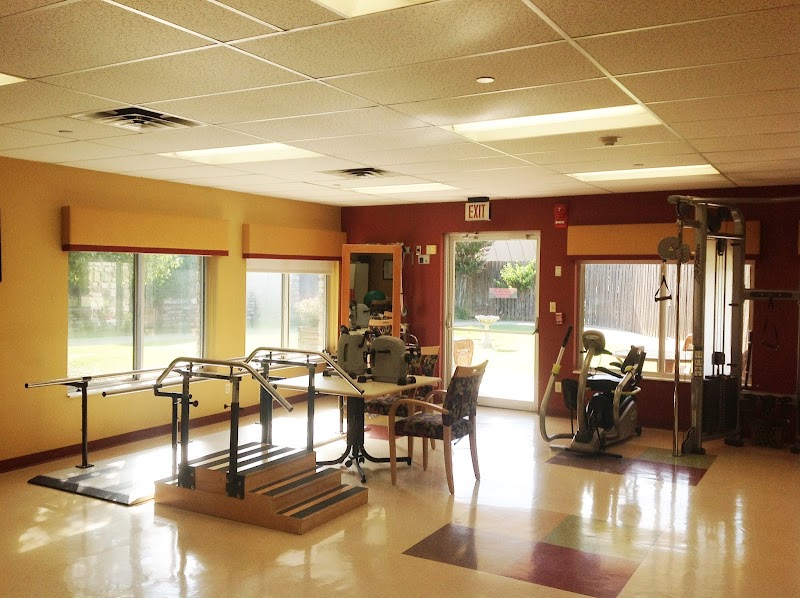
How Does Emerald Midwest Compare to Other Oklahoma Nursing Homes?

Compared to the 100 nursing homes in Oklahoma, EMERALD CARE CENTER MIDWEST's overall rating (2 stars) is below the state average of 2.6, staff turnover (66%) is significantly higher than the state average of 46%, and health inspection rating (2 stars) is below the national benchmark.

What Should Families Ask When Visiting Emerald Midwest?

Based on this facility's data, families visiting should ask: "How do you ensure continuity of care given staff turnover, and what is your staff retention strategy?" "Can I visit during a mealtime to observe dining assistance and food quality?" "How do you handle medical emergencies, and what is your hospital transfer rate?" "Can I speak with family members of current residents about their experience?" These questions are particularly relevant given the facility's high staff turnover rate.

Is Emerald Midwest Safe?

Based on CMS inspection data, EMERALD CARE CENTER MIDWEST has a clean safety record: no substantiated abuse findings (meaning no confirmed cases of resident harm), no Immediate Jeopardy citations (the most serious violation level indicating risk of serious injury or death), and is not on the Special Focus Facility watch list (a federal program monitoring the lowest-performing 1% of nursing homes). The facility has a 2-star overall rating and ranks #100 of 100 nursing homes in Oklahoma. While no facility is perfect, families should still ask about staff-to-resident ratios and recent inspection results during their visit.

Do Nurses at Emerald Midwest Stick Around?

Staff turnover at EMERALD CARE CENTER MIDWEST is high. At 66%, the facility is 20 percentage points above the Oklahoma average of 46%. High turnover means new staff may not know residents' individual needs, medications, or preferences. It can also be disorienting for residents, especially those with dementia who rely on familiar faces. Families should ask: What is causing the turnover? What retention programs are in place? How do you ensure care continuity during staff transitions?

Was Emerald Midwest Ever Fined?

EMERALD CARE CENTER MIDWEST has been fined $4,017 across 1 penalty action. This is below the Oklahoma average of $33,119. While any fine indicates a compliance issue, fines under $50,000 are relatively common and typically reflect isolated problems that were subsequently corrected. Families should ask what specific issues led to these fines and confirm they've been resolved.

Is Emerald Midwest on Any Federal Watch List?

EMERALD CARE CENTER MIDWEST is not on any federal watch list. The most significant is the Special Focus Facility (SFF) program, which identifies the bottom 1% of nursing homes nationally based on persistent, serious quality problems. Not being on this list means the facility has avoided the pattern of deficiencies that triggers enhanced federal oversight. This is a positive indicator, though families should still review the facility's inspection history directly.