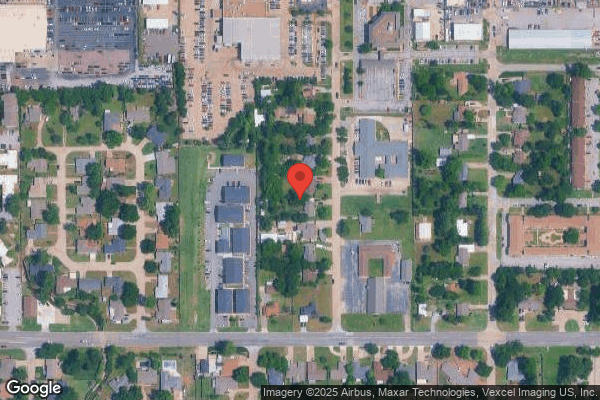
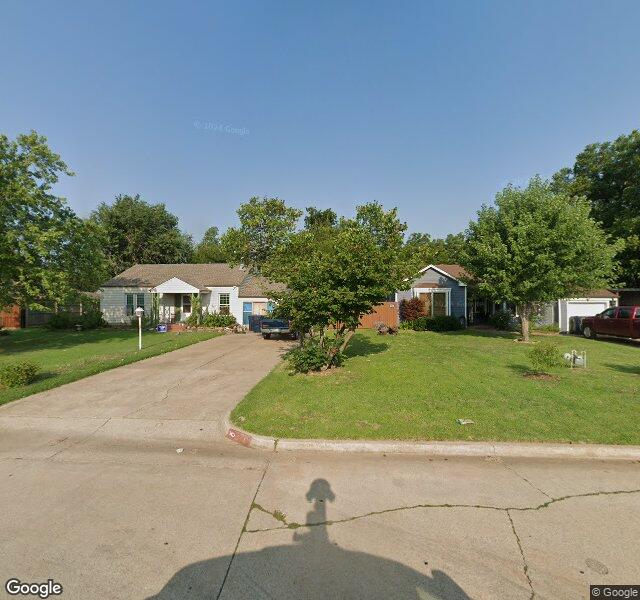
HERITAGE MANOR

3804 NORTH BARR AVE, OKLAHOMA CITY, OK 73122 (405) 789-7103
For profit - Limited Liability company 55 Beds Independent Data: November 2025 1 Immediate Jeopardy citation
Trust Grade
18/100
#166 of 282 in OK
Last Inspection: May 2024

Within standard 12-15 month inspection cycle. Federal law requires annual inspections.

Overview

Heritage Manor has a Trust Grade of F, indicating significant concerns about the care provided. Ranking #166 out of 282 nursing homes in Oklahoma places it in the bottom half, and at #21 out of 39 in Oklahoma County, it offers limited options for families seeking better facilities nearby. The facility is improving, having reduced its number of issues from 17 in 2024 to just 1 in 2025. However, staffing remains a concern with a turnover rate of 75%, significantly higher than the state average of 55%. Specific incidents raise alarm, such as a lack of supervision leading to a resident wandering and a serious fall incident where safety measures were not properly implemented. While Heritage Manor has strong quality measures, the high fines of $34,615 and poor health inspection ratings highlight ongoing compliance issues that families should carefully consider.

Trust Score
F
18/100
In Oklahoma
#166/282
Bottom 42%
Safety Record
High Risk
Review needed
Inspections
Getting Better
17 → 1 violations
Staff Stability
⚠ Watch
75% turnover. Very high, 27 points above average. Constant new faces learning your loved one's needs.
Penalties
⚠ Watch
$34,615 in fines. Higher than 77% of Oklahoma facilities, suggesting repeated compliance issues.
Skilled Nurses
⚠ Watch
Each resident gets only 16 minutes of Registered Nurse (RN) attention daily — below average for Oklahoma. Fewer RN minutes means fewer trained eyes watching for problems.
Violations
⚠ Watch
31 deficiencies on record. Higher than average. Multiple issues found across inspections.
★★☆☆☆
2.0
Overall Rating
★★☆☆☆
2.0
Staff Levels
★★★★★
5.0
Care Quality
★☆☆☆☆
1.0
Inspection Score
Stable
2024: 17 issues
2025: 1 issues

The Good

  • 5-Star Quality Measures · Strong clinical quality outcomes
  • Full Sprinkler Coverage · Fire safety systems throughout facility
  • No fines on record

Facility shows strength in quality measures, fire safety.

The Bad

2-Star Overall Rating

Below Oklahoma average (2.6)

Below average - review inspection findings carefully

Staff Turnover: 75%

28pts above Oklahoma avg (46%)

Frequent staff changes - ask about care continuity

Federal Fines: $34,615

Above median ($33,413)

Moderate penalties - review what triggered them

Staff turnover is very high (75%)

27 points above Oklahoma average of 48%

The Ugly 31 deficiencies on record

1 life-threatening 1 actual harm
Mar 2025 1 deficiency 1 IJ
CRITICAL (J) 📢 Someone Reported This

A family member, employee, or ombudsman was alarmed enough to file a formal complaint

Immediate Jeopardy (IJ) - the most serious Medicare violation

Accident Prevention (Tag F0689)

Someone could have died · This affected 1 resident

**NOTE- TERMS IN BRACKETS HAVE BEEN EDITED TO PROTECT CONFIDENTIALITY** On 03/19/25, an Immediate Jeopardy (IJ) situation was determined to exist related to the facility's failure to provide supervisi...

Read full inspector narrative →
**NOTE- TERMS IN BRACKETS HAVE BEEN EDITED TO PROTECT CONFIDENTIALITY** On 03/19/25, an Immediate Jeopardy (IJ) situation was determined to exist related to the facility's failure to provide supervision for Resident #1 who wandered and experienced exit seeking behaviors. An undated elopement policy, read in part, It is the policy of this facility to provide a safe and comfortable environment to prevent resident elopements. Resident #1's Wandering Risk Assessment, dated 02/13/25, showed the resident was a high risk for wandering and was a known wanderer/history of wandering. A nurse note, dated 02/15/25 at 1:03 p.m., showed Resident #1 remains confused trying to exit pushing on north hall door. The note showed Resident #1 was wandering on other halls and went in other rooms. An admission resident assessment, dated 02/19/25, showed Resident #1's BIMS score was 00 (severe cognitive impairment) and the resident was independent for the task of sit to stand and walking 10 feet, 50 feet with two turns, and 150 feet. A nurse note, dated 02/19/25 at 8:35 p.m., read in part, At about [8:35 p.m.] this nurse was notified, by nurses aide, resident had wandered off, and was assisted back in by the neighbor. A State reportable incident, dated 02/19/25, showed staff responded to the alarm at the South door and could not find anyone there. The report showed staff began to perform an elopement drill, during the drill, neighbors brought Resident #1 to the front door. The report showed the neighbors witnessed Resident #1 leaving through the side door. The report showed Resident #1 was placed on every 15 minute observation for safety. On 03/19/25 at 10:42 a.m., Resident #1 was observed lying in bed with their eyes open. When the surveyor attempted to speak to the resident, Resident #1 just smiled and began to laugh. On 03/19/25 at 10:50 a.m., CNA #3 stated Resident #1 liked to walk around. They stated they tried to get the resident to walk toward the main part of the building to make sure the resident was not escaping. They stated the resident liked to go to the end of the hall and push on doors. They stated they tried to get them to watch TV. CNA #3 stated they could not answer whether or not Resident #1 had ever eloped. They stated not on their shift. On 03/19/25 at 10:57 a.m., CNA #2 stated they were not familiar with Resident #1, but they knew the facility completed 15 minute checks on the resident. They stated they did not know the reason for the 15 minute checks. On 03/19/25 11:02 a.m., CNA #1 stated elopement was when a resident ran off. They stated the facility completed 15 minute checks on certain residents and some were supervised at all times. They stated staff would search the premises if a resident had eloped. They stated staff would try redirecting the resident by offering them a drink to change their mood. CNA #1 stated Resident #1 liked to roam the building a lot. They stated staff completed 15 minute checks. CNA #1 stated from their understanding Resident #1 had not eloped. On 03/19/25 at 11:14 a.m., ACMA #2 stated the facility had codes on the doors so residents could not leave without the codes and they did not share codes with the residents. They stated if residents pushed on the door, after 15 seconds it would open and alarm. ACMA #2 stated elopement was when a resident ran away. They stated they would complete a head count, shut everything down, look around the building, look behind closet doors, and even have staff drive around a two mile radius looking if a resident eloped. They stated they did not know Resident #1. On 03/19/25 at 11:17 a.m., ACMA #1 stated staff checked on Resident #1 every 15 minutes. They stated everyone knew Resident #1 was at a high risk to leave. ACMA #1 stated Resident #1 liked to walk the halls and went to the door. They stated if they observed the resident walking the halls, they would sit them on the sofa because the resident would sit and watch TV. ACMA #1 stated they thought Resident #1 had eloped on a weekend because when they left, everything was fine, but when they came back to work, the nurse told them to keep an eye on the resident. ACMA #1 stated the nurse did not say why and so they did not know if Resident #1 had eloped or had tried to elope. On 03/19/25 at 11:28 a.m., LPN #2 stated the doors of the facility were coded and had alarms. They stated if they knew a resident was a wanderer, they would have someone always keeping an eye on them. They stated the policy for elopement was for everyone to come to the nurses' station, they would delegate where everyone was going to look for the resident inside and outside the building, and would complete a head count. They stated staff would place the residents on 15 minute checks and the nurses were responsible for completing them. LPN #2 stated they had redirected Resident #1 in the past by dancing with them down the hall. LPN #2 stated they knew Resident #1 was a wanderer, but they were not sure if the resident actually did elope. On 03/19/25 at 11:38 a.m., LPN #1 stated anyone who staff knew was an elopement risk, staff would keep an extra eye on. They stated the doors had to be pushed for 15 seconds before you could get out and the buzzer would sound. They stated there were codes for all of the doors. LPN #1 stated if staff noticed a resident was missing they would call everyone to the desk, staff would go to their specific hall, and complete a head count. They stated the nurse would assign who was responsible for searching inside the building, outside the building, and who would be responsible for driving the 2 mile radius from the building looking for the missing resident. They stated staff would continue searching until they were located. They stated the administrator would be called immediately. LPN #1 stated they were not aware of Resident #1 eloping from the facility. They stated the resident had not eloped on their shift and was on every 15 minute checks because the resident exit seeks. On 03/19/25 at 11:47 a.m., the DON stated Resident #1 got out. They stated they were not 100 percent, but the door was alarming and as they were doing the drill looking for the resident, the neighbor had seen Resident #1 go out the door and brought them back in the front door. The DON stated the administrator at the time came to the facility that night (02/19/25) and completed an elopement drill. On 03/19/25 at 1:02 p.m., the administrator stated they were new to the facility and was not aware of any resident in the facility that had eloped. They stated they knew Resident #1 was an elopement risk because they discussed it in their morning meetings, but they could not say whether or not it actually occurred because the administrator was not working at the facility at the time of the incident on 02/19/25. There was no documentation to show an elopement drill was conducted on 02/19/25. On 03/19/25 at 4:40 p.m., the Oklahoma State Department of Health was notified and verified the existence of the IJ situation. On 03/19/25 at 4:45 p.m., the administrator, DON, corporate nurse consultant #1, and corporate business office were notified of the IJ situation. On 03/20/25 at 4:46 p.m., the administrator, DON, corporate nurse consultant #1, corporate nurse consultant #2, and corporate business office were notified of the amended IJ template which contained the following additional information: On 02/19/25 between 7:52 p.m. and 8:52 p.m., the Oklahoma City outside temperature was 9 to 10 degrees Fahrenheit. There is a two lane residential road North [NAME] Avenue that sits west of the facility. Approximately half a block north of the facility is U.S. Route 66 which is a busy four lane road. On 03/21/25 at 12:57 p.m., an acceptable plan of removal was approved by the Oklahoma State Department of Health. The plan of removal, read in part, Heritage Manor Plan of Removal Immediate Jeopardy 3/19/25 The facility's response to the IJ called for the facility to implement a plan of removal to ensure there is a system in place to protect residents from elopement. The facility will be in compliance on 3/19/25 by 10pm. 1. All staff are educated on the Elopement Policy on hire and annually, as well as periodically as a reminder. An in-service had been completed with nursing staff following the attempted elopement by resident [Resident]. 2. In-service will be completed with all staff by 10 pm on 3/19/25 over the following: A. Elopement Policy to include the following interventions to prevent elopement: a. Any resident who is determined to be a wanderer on admission will be placed on Elopement Risk on their profile and frequent Q 15 minute visual checks to monitor for exit seeking behaviors for 4 weeks and then re-evaluated. If no exit seeking behaviors have been noted, they will no longer be considered an elopement risk. b. Institute 1:1 [one on one] monitoring or Frequent Visual Checks charting Q 15minutes or as indicated if a resident with Dementia is having any exit-seeking behaviors or attempts to go out without supervision, until no longer deemed at risk. c. Re-evaluate at least quarterly for wandering and exit seeking and revise plan for monitoring according to resident's risk. d. Institute other interventions as needed for residents with exit seeking behaviors to re-direct or distract resident from exit seeking behaviors such as: Camouflaging doors with wallpaper or curtains so they are not recognized as doors, Stop signs on exit doors, Encouraging family members to visit, Diversional activities during times of restlessness. B. Location of the Elopement Risk book that has a list and information for all residents on Elopement Risk. C. A list of Resident's at risk for elopement will continue to be posted in each charge nurses report book. 3. Agency will be provided with in-service materials as well. 4. Any staff on vacation or unable to reach will be in-serviced before working their next shift. 5. All residents considered high risk for elopement have an identifier on the residents profile to alert staff, Elopement Risk. The IJ was lifted, effective 03/19/25 at 10:00 p.m., when all components of the plan of removal had been verified as completed. This was verified by staff interviews, review of inservice information, and a review of resident records to ensure interventions were in place for residents who exhibited exit seeking behaviors and residents at risk for elopement. The deficient practice remained at an isolated level with the potential for more than minimal harm. Based on observation, record review, and interview, the facility failed to provide supervision for a resident who wandered and experienced exit seeking behaviors for 1 (#1) of 3 sampled residents reviewed for elopement. The administrator identified 11 residents at risk for elopement resided in the facility. Findings: On 03/17/25 at 1:55 p.m., no residents were observed exit seeking on the East Hall. On 03/17/25 at 2:17 p.m., no residents were observed exit seeking on the North Hall. On 03/17/25 at 2:57 p.m., Resident #1 was observed sitting on the couch in the tv area by the front door with their eyes closed. On 03/18/25 8:41 a.m., Resident #1 was observed lying in bed, eyes closed, with audible snoring heard. On 03/18/25 at 11:32 a.m. no residents were observed demonstrating exit seeking behaviors on the East, North, or South hall that were all observed from the nurses' station. On 03/18/25 at 12:26 p.m., Resident #1 was observed in the dining room being fed by ACMA #1 who was seated next to them. Resident #1 was observed using their left hand to take a drink from their cup while ACMA #1 gave the resident a bite of food in between drinks. Resident #1 did not speak during the observation. On 03/18/25 at 1:39 p.m., Resident #1 was observed seated on couch in the dining area, eyes closed, with staff present and the television on. An undated elopement policy, read in part, It is the policy of this facility to provide a safe and comfortable environment to prevent resident elopements .When the resident has been assessed to be a high elopement risk beyond he capability of the facility safeguards, the Administrator and Director of Nursing will ascertaine [sic] possible discharge of the resident to protect the safety of that resident .At any time during the course of the resident's stay, if the resident is assessed to be an elopement risk, the Administrator and Director of Nursing will confer with the resident's physician and family regarding the resident's admission status. If the determination is that the resident is appropriately placed in the facility, then the resident's care plan will address elopement risk and appropriate interventions tailored to the particular resident will be put into place to prevent any elopements .Also, residents who are determined to be at 'high risk for elopements' will have an identifier on the medical record. Resident #1 had diagnoses which included unspecified dementia unspecified severity, with other behavioral disturbance. Resident #1's Wandering Risk Assessment, dated 02/13/25, showed the resident was a high risk for wandering and was a known wanderer/history of wandering. A nurse note, dated 02/15/25 at 1:03 p.m., showed Resident #1 remains confused trying to exit pushing on north hall door. The note showed Resident #1 was wandering on other halls and went in other roomsand occasionally hard to re-direct attempts tohit [sic] staff but not successful. A nurse note, dated 02/16/25 at 3:42 p.m., read in part, Resident after lunch continues on observation r/t [related to] elopementbehavior[sic]/wandering with no incident of existing [sic] or trying to leave/push on doors. A nurse note, dated 02/17/25 at 9:41 p.m., read in part, Resident currently wandering through out facility, exit seekingthroughout [sic] shift, easily redirected. An admission resident assessment, dated 02/19/25, showed Resident #1's BIMS score was 00 (severe cognitive impairment) and the resident was independent for the task of sit to stand and walking 10 feet, 50 feet with two turns, and 150 feet. A nurse note, dated 02/19/25 at 8:35 p.m., read in part, At about [8:35 p.m.] this nurse was notified, by nurses aide, resident had wandered off, and was assisted back in by the neighbor. A State reportable incident, dated 02/19/25, showed staff responded to the alarm at the South door and could not find anyone there. The report showed staff began to perform an elopement drill, during the drill, neighbors brought Resident #1 to the front door. The report showed the neighbors witnessed Resident #1 leaving through the side door. The [NAME] showed Resident #1 was placed on every 15 minute observation for safety. On 02/19/25 between 7:52 p.m. and 8:52 p.m., the Oklahoma City outside temperature was 9 to 10 degrees Fahrenheit. There was a two lane residential road North [NAME] Avenue that sat [NAME] of the facility. Approximately half a block North of the facility was U.S. Route 66 which was a busy four lane road. There was no documentation to show an elopement drill was conducted on 02/19/25. A nurse note, dated 02/22/25 at 8:27 p.m., read in part, Resident wandering in hallway easily directed. A nurse note, dated 02/23/25 at 7:57 p.m., read in part, Resident wandering in hallway easily directed. A nurse note, dated 03/07/25 at 7:48 p.m., read in part, Resident assisted to bed at this time. Elopementmonitoring [sic] continues Given that, [they] tried to open front door threetime [sic]. A nurse note, dated 03/12/25 at 7:52 p.m., read in part, Resident continues on elopement risk precautions. This nurse had to redirect resident a few times. On 03/18/25 at 8:14 a.m., the host was observed seated at a table by the front door. They stated they were responsible for checking visitors in and answering phones. They stated their sign in was primarily for vendors. They stated when family members came in they would sign in and out at the nurses' station. The host stated just the staff members had the number to get out of the building. On 03/19/25 at 10:50 a.m., CNA #3 stated Resident #1 liked to walk around. They stated they tried to get the resident to walk toward the main part of the building to make sure the resident was not escaping. They stated the resident liked to go to the end of the hall and push on doors. They stated they tried to get them to watch TV. CNA #3 stated they could not answer whether or not Resident #1 had ever eloped. They stated not on their shift. On 03/19/25 at 10:57 a.m., CNA #2 stated they were not familiar with Resident #1, but they knew the facility completed 15 minute checks on the resident. They stated they did not know the reason for the 15 minute checks. On 03/19/25 11:02 a.m., CNA #1 stated elopement was when a resident ran off. They stated the facility completed 15 minute checks on certain residents and some were supervised at all times. They stated staff would search the premises if a resident had eloped. They stated staff would try redirecting resident by offering them a drink to change their mood. CNA #1 stated Resident #1 liked to roam the building a lot. They stated staff completed 15 minute checks. CNA #1 stated from their understanding Resident #1 had not eloped. On 03/19/25 at 11:14 a.m., ACMA #2 stated the facility had codes on the doors so residents could not leave without the codes and they did not share codes with the residents. They stated if residents pushed on the door, after 15 seconds it would open and alarm. ACMA #2 stated elopement was when a resident ran away. They stated they would complete a head count, shut everything down, look around the building, look behind closet doors, and even have staff drive around a two mile radius looking if a resident eloped. They stated they did not know Resident #1. On 03/19/25 at 11:17 a.m., ACMA #1 stated staff checked on Resident #1 every 15 minutes. They stated everyone knew Resident #1 was at a high risk to leave. ACMA #1 stated Resident #1 liked to walk the halls and went to the door. They stated if they observed the resident walking the halls, they would sit them on the sofa because the resident would sit and watch TV. ACMA #1 stated they thought Resident #1 had eloped on a weekend because when they left, everything was fine, but when they came back to work, the nurse told them to keep an eye on the resident. ACMA #1 stated the nurse did not say why and so they did not know if Resident #1 had eloped or had tried to elope. On 03/19/25 at 11:28 a.m., LPN #2 stated they knew Resident #1 was a wanderer, but they were not sure if the resident actually did elope. On 03/19/25 at 11:38 a.m., LPN #1 stated they were not aware of Resident #1 eloping from the facility. They stated the resident had not eloped on their shift and was on every 15 minute checks because the resident exit seeks. On 03/19/25 at 11:47 a.m., the DON stated the facility had doors that required a code to open and had alarms. They stated several residents were on frequent monitoring. They stated staff would redirect them if they were exhibiting exit seeking behaviors. They stated elopement was if a resident was outside the building without staff being aware. The DON stated the policy for elopement was if staff noticed someone was missing, they go to the nurses' station, the nurse calls the elopement drill, everyone checks halls and visually counts each resident. The DON stated if a resident was not found in the building, staff searched the perimeter and notified the administrator, police and family. The DON stated Resident #1 got out. They stated they were not 100 percent, but the door was alarming and as they were doing the drill looking for the resident, the neighbor had seen Resident #1 go out the door and brought them back in the front door. The DON stated the administrator at the time came to the facility that night (02/19/25) and completed an elopement drill. The DON stated the facility put every 15 minute monitoring in place, redirected the resident, used activities, and the mental health provider saw Resident #1 for interventions to prevent it from happening again. On 03/19/25 at 12:53 p.m., the DON was shown only 17 of their 49 staff signed the elopement drill on 03/13/25 and was asked to explain how the remaining staff were educated. The DON stated there had not been any additional elopement drills after Resident #1's elopement other than the one on 03/13/25. On 03/19/25 at 1:02 p.m., the administrator stated residents were to sign out in the book before they left the facility. They stated they had never been involved in an elopement. They stated the doors were always locked. They stated an alarm would sound if a resident pushed on the door and it opened. They stated they were new to the facility and was not aware of any resident in the facility that had eloped. They stated they knew Resident #1 was an elopement risk because they discussed it in their morning meetings, but they could not say whether or not it actually occurred because the administrator was not working at the facility at the time of the incident on 02/19/25. On 03/19/25 at 1:12 p.m., the DON stated the next quality assurance performance improvement meeting was scheduled on 03/28/25 and elopement would be discussed as well as any other concerns. On 03/19/25 at 3:12 p.m., the DON stated from what they understood everyone was looking for Resident #1 at the time of the elopement. The DON stated as they started looking for the resident, the neighbor saw Resident #1 go out. The DON stated from what they understood, it was minutes and the neighbor brought Resident #1 right back into the front door as they were still searching the building. On 03/19/25 at 3:52 p.m., LPN #1 stated they guess staff should not chart easily redirected. They stated they should say how they were redirecting. LPN #1 stated for instance when they came down the hall dancing with Resident #1, instead of putting easily redirected, they should have put dancing down the hall. They stated easily redirect could mean a lot.
Oct 2024 3 deficiencies
CONCERN (D) 📢 Someone Reported This

A family member, employee, or ombudsman was alarmed enough to file a formal complaint

Potential for Harm - no one hurt, but risky conditions existed

Deficiency F0583 (Tag F0583)

Could have caused harm · This affected 1 resident

Based on observation, record review, and interview, the facility failed to ensure a privacy curtain was utilized during personal care for one (#9) of three sampled residents observed receiving inconti...

Read full inspector narrative →
Based on observation, record review, and interview, the facility failed to ensure a privacy curtain was utilized during personal care for one (#9) of three sampled residents observed receiving incontinent care. The AIT identified 44 residents resided in the facility. Findings: An undated PERI CARE policy, read in part, Provide privacy, ensure door is closed, privacy curtain is pulled to provide full visual privacy and window blinds are closed. Resident #9 had diagnoses which included generalized muscle weakness and cerebral infarction. Resident #9's annual resident assessment, dated 09/17/24, documented they had severe cognitive impairment. Resident #9's care plan for ADL deficit, revised 10/10/24, documented they required total assist with toileting. On 10/22/24 at 2:59 p.m., CNA #1 entered Resident #9's room to provide incontinent care. CNA #1 closed the door. The resident's roommate was in the room in their wheelchair. On 10/22/24 at 3:00 p.m., CNA #1 told the resident they would be providing care. CNA #1 provided incontinent care to the resident. The privacy curtain was not utilized during the provision of care. On 10/22/24 at 3:11 p.m., CNA #1 stated the policy was to pull the privacy curtain during care. They stated they did not pull the privacy curtain during the provision of peri care.
CONCERN (D) 📢 Someone Reported This

A family member, employee, or ombudsman was alarmed enough to file a formal complaint

Potential for Harm - no one hurt, but risky conditions existed

ADL Care (Tag F0677)

Could have caused harm · This affected 1 resident

Based on observation, record review, and interview, the facility failed to ensure thorough incontinent care was provided for one (#9) of three sampled residents observed receiving incontinent care. Th...

Read full inspector narrative →
Based on observation, record review, and interview, the facility failed to ensure thorough incontinent care was provided for one (#9) of three sampled residents observed receiving incontinent care. The AIT identified 44 residents resided in the facility. Findings: Resident #9 had diagnoses which included generalized muscle weakness and cerebral infarction. Resident #9's annual resident assessment, dated 09/17/24, documented they had severe cognitive impairment. Resident #9's care plan for ADL deficit, revised 10/10/24, documented they required total assist with toileting. On 10/22/24 at 2:59 p.m., CNA #1 entered Resident #9's room to provide incontinent care. They closed the door. On 10/22/24 at 3:00 p.m., CNA #1 told Resident #9 they would be providing care. CNA #1 had on gloves. They partly removed the resident's soiled brief, turned the resident on their side, and cleansed their buttocks. Fecal matter was observed during cleaning. CNA #1 removed the soiled brief and put it in a trash bag. They put the soiled pad on the floor mat. CNA #1 put a new brief on the resident and adjusted the resident in bed. Fecal matter was observed on Resident #9's labia. CNA #1 did not clean the resident's front peri-area. On 10/22/24 at 3:02 p.m., CNA #1 was asked to observe Resident #9's front peri-area. They stated they did not see the fecal matter in the peri-area. The new brief was observed to have fecal matter. CNA #1 stated they were supposed to clean the resident's front peri-area.
CONCERN (D) 📢 Someone Reported This

A family member, employee, or ombudsman was alarmed enough to file a formal complaint

Potential for Harm - no one hurt, but risky conditions existed

Infection Control (Tag F0880)

Could have caused harm · This affected 1 resident

Based on observation, record review, and interview, the facility failed to maintain infection control during the provision of incontinent care for one (#9) of three sampled residents observed receivin...

Read full inspector narrative →
Based on observation, record review, and interview, the facility failed to maintain infection control during the provision of incontinent care for one (#9) of three sampled residents observed receiving incontinent care. The AIT identified 44 residents resided in the facility. Findings: Resident #9 had diagnoses which included generalized muscle weakness and cerebral infarction. Resident #9's annual resident assessment, dated 09/17/24, documented they had severe cognitive impairment. Resident #9's care plan for ADL deficit, revised 10/10/24, documented they required total assist with toileting. On 10/22/24 at 2:59 p.m., CNA #1 entered Resident #9's room to provide incontinent care. They closed the door. On 10/22/24 at 3:00 p.m., CNA #1 told Resident #9 they would be providing care. CNA #1 had on gloves. They partly removed the resident's soiled brief, turned the resident on their side, and cleansed their buttocks. Fecal matter was observed during cleaning. CNA #1 removed the soiled brief and put it in a trash bag. They put the soiled pad on the floor mat. They put a new brief on the resident and adjusted the resident in bed. CNA #1 did not change their gloves. On 10/22/24 at 3:02 p.m., CNA #1 was asked to observe Resident #9's front peri-area. They stated they did not see the fecal matter in the peri-area. The new brief was observed to have fecal matter. On 10/22/24 at 3:03 p.m., CNA #1, with the same gloves they had on at the start of the incontinent care, opened Resident #9's drawers looking for wipes and a brief. They removed their gloves to go out of the room to locate wipes and a brief. On 10/22/24 at 3:06 p.m., CNA #1 came back with wipes. They donned gloves and cleansed the resident's peri-area. Another staff brought CNA #1 a brief. CNA #1 put the new brief on the resident and adjusted them in bed. CNA #1 did not change their gloves. On 10/22/24 at 3:08 p.m., CNA #1 with the same gloves, pinned the call light to the bed, and propped the resident with pillows. CNA #1 removed their gloves, took the trash out, and washed their hands. On 10/22/24 at 3:12 p.m., CNA #1 stated they were supposed to put the dirty pad in a plastic bag. They stated lately they were not provided with plastic bags. On 10/22/24 at 3:13 p.m., CNA #1 stated they were supposed to change their gloves three times, but changed them twice during the incontinent care.
May 2024 13 deficiencies 1 Harm
SERIOUS (G)

Actual Harm - a resident was hurt due to facility failures

Accident Prevention (Tag F0689)

A resident was harmed · This affected 1 resident

2. Resident #32 had documented falls on 05/17/24 and on 05/19/24 with injury. Fall interventions on Resident #32's care plan included fall mat at bedside (dated 05/17/24) and environmental check and r...

Read full inspector narrative →
2. Resident #32 had documented falls on 05/17/24 and on 05/19/24 with injury. Fall interventions on Resident #32's care plan included fall mat at bedside (dated 05/17/24) and environmental check and removal of rug (dated 05/19/24). On 05/21/24 at 9:50 a.m., Resident #32 was observed in bed asleep. Two throw rugs were observed on the floor in the path to the bathroom and no fall mat was at the bedside. On 05/21/24 at 9:58 a.m., Operations Manager was taken to Resident #32's room and was asked if fall precautions were being observed and if fall hazards had been removed from resident's room. They stated, There is so much wrong in here. [Resident #32] should have a fall mat. These rugs should not be here. On 05/21/24 at 12:20 p.m., Operations Manager acknowledged the accident hazards had not been removed from Resident 32's room and the care plan intervention had been implemented. Based on observation, record review, and interview, the facility failed to ensure: a. falls were evaluated for cause and interventions implemented to prevent falls with injuries for one (#48) of three sampled residents reviewed for accident hazards and falls. Resident #48 had a fall with a major injury in December 2023 which resulted in staples to the head. The facility did not assess the fall and implement changes in interventions to aide in the prevention of falls. Resident #48 had two additional falls one in March 2024 and one in April 2024 that also resulted in injuries without any implemented changes to interventions to aide in the prevention of falls. b. care plan interventions were implemented for one (#32) of three sampled residents reviewed for accident hazards and falls. The facility Centers for Medicaid and Medicare from 802 , documented 6 residents had falls with injuries and two had falls with major injuries. Findings: 1. Resident #48 had diagnosis that included Schizophrenia, dementia, unspecified psychosis, abnormal coagulation, and acute kidney failure. Residents #48 care plan, last revised on 05/18/23, read in part, .Focus .[Resident #48] is at risk for falls r/t history of falls, poor safety awareness, impaired cognition/dementia, confusion and delusional thought processes, amnesia, impaired balance, and medication use/side effects . .goal .will be free of minor injuries related to falls through the review date . .Interventions Administer medications as ordered by MD. Monitor/document/report PRN for side effects and effectiveness of medications Anticipate and meet [Resident #48] needs .At times, [Resident #48] uses a walker to assist with walking. Remind/encourage/cue him to use his walker when ambulating to reduce risk of falling .Be sure the resident's call light is within reach and encourage the resident to use it for assistance .Check on resident every 2 hours and .PRN .Educate the resident/family/caregivers about safety reminders and what to do if a fall occurs .Encourage the resident to participate in activities that promote exercise and physical activity for strengthening and improved mobility . Ensure the resident is wearing appropriate footwear when up and out of bed. (nonslip socks or shoes) .Fall Assessment quarterly and with each fall PRN .Falling Leaves Fall Prevention Program . Remind resident to ask for assistance with toileting, transfers and ADL's Resident needs a safe environment with even floors free from spills and/or clutter, .adequate, glare free light, a working call light, bed in lowest position, etc .The resident needs prompt response to all requests for assistance. A Morse Fall Scale, dated 10/31/23, documented the resident was a high risk for falls with a score of 55. A score of 45 or greater indicated a high risk for falls. A progress note, dated 12/02/23 at 1:39 a.m., read in part, .This nurse heard the CNA holler out for help to get res out of another res room. As I was walking down the hall I witnessed the res fall backwards into the hall hitting his head on the floor. Res began to bleed profusely. Pressure and ice applied immediately .sent to ER .for eval and treat . A progress note, dated 12/02/23 at 2:04 p.m., read in part, .Aide took report from the wife and left a note stating, He has staples in his head and has a brain bleed . The emergency department notes, dated 12/02/24, read in part, .assessment .subdural hematoma .CT 3mm acute subdural hematoma over right posterior parietal lobe .chef complaint .fall 5cm head lac .right scalp laceration, stapled . There was no documentation the facilty evaluated the fall for cause and potential ways to prevent further falls with injuries. Resident #48 care plan was not reviewed and there were no implemented changes in fall preventions after the fall that resulted in staples to the head and a brain bleed. The last documented update to fall interventions was dated 05/18/23. A quarterly assessment, dated on 01/24/24, documented the resident had two falls one with no injury and one with a major injury. A Morse Fall Scale, dated 01/24/24, documented the resident was a high risk for falls with a score of 55. A score of 45 or greater indicated a high risk for falls. An incident report, dated 03/03/24 at 8:45 a.m., read in part, .Resident was noted sitting in room floor on his bottom with his back facing the bed .unable to give description .injury type abrasion .left hand . A Morse Fall Scale, dated 03/03/24, documented the resident was a high risk for falls with a score of 80. A score of 45 or greater indicated a high risk for falls. There was no documentation the facilty evaluated the fall for cause and potential ways to prevent further falls with injuries. Resident #48 care plan was not reviewed and there were no implemented changes in fall preventions after the fall on 03/03/24 which resulted in an abrasion to the left pinky. The last documented update to fall interventions was dated 05/18/23. An incident report, dated 04/01/24 at 6:30 p.m., read in part, . This nurse was called to resident room by another nurse, upon entering the room resident was sitting on the floor, on buttocks. Upon body assessment noted blood flowing from the crown of resident's head .unable to give description .Upon assessment of resident's room, noted water on the floor, that resident had spilled .resident's assistive device a cane, in the bathroom . A Morse Fall Scale, dated 04/01/24, documented the resident was a high risk for falls with a score of 90. A score of 45 or greater indicated a high risk for falls. The emergency department notes, dated 04/01/24, read in part, .assessment closed head injury .reasons for visit .fall . There was no documentation the facilty evaluated the fall for cause and potential ways to prevent further falls with injuries. Resident #48 care plan was not reviewed and there were no implemented changes in fall preventions after the fall on 04/01/24 which resulted in a hematoma to the head. The last documented update to fall interventions was dated 05/18/23. A Therapy Screening Form , dated 04/12/24, read in part, .nursing referral .fall .pt evaluated today today for least restrictive device .is unstable with cane (sp) [secondary] to dragging .4ww recommended .left @ BS with resident .training today .notified staff . The wheeled walker was listed on Resident #48 as an intervention dated 05/18/23. An annual assessment, dated 04/23/24 documented Resident #48 had two falls with non major injuries since the last assessment that was completed on 01/24/24. On 05/22/24 12:45 a.m., Resident #48 was observed out of his ambulating from his room to the lobby. The resident was very unsteady and was not using a cane or a walker. On 05/23/24 at 9:45 a.m., Resident #48 was ambulating in the hall without the use of a cane, walker or any assistive devices. The resident was unsteady while ambulating. On 05/23/24 at 11:06 a.m., the regional MDS coordinator, stated the resident was a fall risk and had a fall with staples in December 2023. The regional MDS coordinator stated the resident had two additional falls after December that resulted in harm; one on 03/03/24 and 04/01/24. They stated the resident had a head injury with a hematoma to the head. The regional MDS coordinator then stated the other was an abrasion to his finger. They stated the facility did not evaluate the falls and no new interventions were implemented for falls. The regional MDS coordinator confirmed the last time Resident #58 care plan for falls was reviewed and revised was on 05/18/23. On 05/23/24 at 1:05 p.m., LPN #2 stated Resident #48 was a high risk for falls and was to use a cane for ambulating, but will forget to use the cane and walk without the assistive device. On 05/23/24 at 1:26 p.m., LPN #1 stated Resident #48 was a high risk for falls and was very unsteady on his feet. LPN #1 then stated the wife wanted a walker so therapy evaluated them for it. They then stated the resident does not use the walker or any assistive devices because they forget. On 05/23/24 at 9:59 a.m., Regional Nurse Consultant #2, the intern Director of nursing, stated they could not find any additional interventions changes between 12/02/24 and 04/01/24. The Regional Nurse Consultant #2, then stated there had been no changes and confirmed the resident had three injuries.
CONCERN (D)

Potential for Harm - no one hurt, but risky conditions existed

Deficiency F0660 (Tag F0660)

Could have caused harm · This affected 1 resident

**NOTE- TERMS IN BRACKETS HAVE BEEN EDITED TO PROTECT CONFIDENTIALITY** Based on record review and interview the facility failed to ensure discharge planning was completed prior to discharge for one (...

Read full inspector narrative →
**NOTE- TERMS IN BRACKETS HAVE BEEN EDITED TO PROTECT CONFIDENTIALITY** Based on record review and interview the facility failed to ensure discharge planning was completed prior to discharge for one (#55) of one sampled resident discharged from the facility into the community. The Regional Nurse Consultant #1, identified four residents who discharged into the community in the last six months. Findings: A communication progress note, dated 03/20/24 at 9:45 a.m., documented Resident #55 wanted to discharge from the facility at the end of the month into the community with a friend. There was no documentation in the clinical record the facility made arrangements for medical services, pharmacy services and or any other follow up appointments. An activity progress note, dated 03/27/24 at 12:23 p.m., documented Resident #55 was looking forward to their discharge from the facility. A nurse's progress note, dated 04/01/24 at 1:49 p.m., documented the resident discharged from the facility in the morning with all belongings and medications. A social service progress note, dated 04/01/24 at 2:09 p.m., documented the facility had filled a report with adult protective services and the local police department about the discharge into the community. A social service progress note, dated 04/01/24 at 2:31 p.m., an email was sent to the power of attorney with the residents medication list and that all medication scripts were transferred to a local pharmacy. The note further documented the power of attorney received the list of medications. A Discharge summary, dated [DATE] at 10:08 a.m., documented Resident #55 was discharged from the facility on 04/01/24. There were notes on the discharge summary that read in part, .filed APS report post discharge, referral #37898 .also spoke with .PD department to notify them of the APS report filed and address of discharge. SSD to assist APS as needed. SSD attempted to contact family, no contact was made at this time. MD notified . There was no documentation the facility had planned for necessary services, equipment and other services until after Resident #55 had been discharged into the community on the morning of 04/01/24. On 05/21/24 at 7:41 a.m., the business office manager stated Resident #55 discharged into the community on April 1, 2024. The business office manager stated the social service director was responsible for the discharge planning and arranging everything for the resident. The business office manager stated they would look for any documentation the facility had completed the discharge planning prior to Resident #55 leaving the facility. On 05/21/24 at 8:10 a.m., the corporate human resource specialist stated Resident #55 had discharged into the community and they called adult protective services and the police after he was discharged because they did not know if the home was safe for Resident #55. The corporate human resource specialist then stated they would look for any documentation of discharge planning prior to leaving the facility on 04/01/24. On 05/21/24 at 11:4 a.m., the corporate human resource specialist stated there was nothing documented that services were set up such as pharmacy prior to Resident #55 leaving the facility. They then stated the facilty sent medications with the resident and transferred all scripts after they left. They also stated services were not se up prior to leaving and they were trying to complete everything that should have been completed before the discharge.
CONCERN (E)

Potential for Harm - no one hurt, but risky conditions existed

Deficiency F0582 (Tag F0582)

Could have caused harm · This affected multiple residents

Based on record review and interview, the facility failed to provide a SNF ABN to one of three residents reviewed for beneficiary notification. LPN #3 identified 51 residents resided in the facility. ...

Read full inspector narrative →
Based on record review and interview, the facility failed to provide a SNF ABN to one of three residents reviewed for beneficiary notification. LPN #3 identified 51 residents resided in the facility. Findings: The Regional MDS Specialist identified 12 residents who had been discharged from a Medicare Part A covered stay with benefit days remaining in the past 6 months. Resident #206 admitted to Part A skilled services on 11/16/23 and discharged from Part A services on 12/05/24. There was no documentation a SNF ABN was provided to resident #25. On 05/20/24 at 2:23 p.m., the Regional MDS Specialist stated they had completed the SNF benefit review and Resident #206 did not have a notice issued. They stated there should have been a notice issued for Resident #206.
CONCERN (E) 📢 Someone Reported This

A family member, employee, or ombudsman was alarmed enough to file a formal complaint

Potential for Harm - no one hurt, but risky conditions existed

Safe Environment (Tag F0584)

Could have caused harm · This affected multiple residents

**NOTE- TERMS IN BRACKETS HAVE BEEN EDITED TO PROTECT CONFIDENTIALITY** Based on observation and interview, the facility failed to ensure room [ROOM NUMBER] was free of odors for one (#29) of 30 rooms...

Read full inspector narrative →
**NOTE- TERMS IN BRACKETS HAVE BEEN EDITED TO PROTECT CONFIDENTIALITY** Based on observation and interview, the facility failed to ensure room [ROOM NUMBER] was free of odors for one (#29) of 30 rooms observed for odors. The facility operations manager identified 30 rooms in the facility that were occupied by residents. Findings: On 05/19/24 from 8:30 a.m., through 1:15 p.m., there was a strong odor of urine coming from room [ROOM NUMBER]. When the rooms door was open it could be detected down the hall approximately six feet from the room. On 05/20/24, 05/21/24, 05/22/24 and 05/23/24, the same observations were made of the room. On 05/23/24 at 1:10 p.m., Housekeeper #1 stated room [ROOM NUMBER] has had a strong urine odor since they stated work at the facility the first of March, 2024. They stated the room is cleaned twice a day and the tile has been replaced and they still can not keep up with the urine odor in the room. On 05/23/24 at 1:18 p.m., the Housekeeping Supervisor stated they made rounds twice a day to ensure rooms were being cleaned. The supervisor stated they clean room [ROOM NUMBER] twice a day and smell of urine still remained. They stated they used chemicals in the room while cleaning to eliminated odors, changed the bathroom tile and the odors continued to strong. The housekeeping supervisor stated the issues had been going on for several months. On 05/23/24 at 1:47 p.m., the operations manger stated she was aware of the urine odor in the room and it had been an on going issues before they were at the facility.
CONCERN (E)

Potential for Harm - no one hurt, but risky conditions existed

Assessment Accuracy (Tag F0641)

Could have caused harm · This affected multiple residents

**NOTE- TERMS IN BRACKETS HAVE BEEN EDITED TO PROTECT CONFIDENTIALITY** Based on record review and interview, the facility failed to ensure the cognitive pattern, section (C), of the minimum data set ...

Read full inspector narrative →
**NOTE- TERMS IN BRACKETS HAVE BEEN EDITED TO PROTECT CONFIDENTIALITY** Based on record review and interview, the facility failed to ensure the cognitive pattern, section (C), of the minimum data set was coded for one (#42) of 13 sampled residents whose MDS were reviewed. LPN #3 identified 51 residents currently resided in the facility. Findings: Resident # 42 had diagnosis to include schizophrenia, angina, cerebral infarction, restlessness and agitation, hypertension, acute kidney disease, psychosis and diabetes mellitus. A quarterly assessment dated [DATE], under section C cognitive patterns had dashes located in every box. There were no documented answerers to any of the questions located in section C of the assessment. On 05/22/24 at 1:02 p.m., [NAME] Nurse Consultant #2, the intern DON, stated sections C should have been completed and the Regional MDS coordinator would be able to tell why it was not. He stated without it being filled out it was not accurate. On 05/23/2024 at 10:09 a.m., The Regional MDS coordinator stated section C had dashes which indicated the section was not coded and Resident #42 was not assessed for cognition. They then stated the assessment is not accurate when sections were left blank and not filled out.
CONCERN (E)

Potential for Harm - no one hurt, but risky conditions existed

Deficiency F0657 (Tag F0657)

Could have caused harm · This affected multiple residents

Based on record reciew and interview, the facility failed to ensure care plans were reviewed every three months for three (#12, #42, and #48) of 13 resident care plans reviewed. LPN #3 identified 51 ...

Read full inspector narrative →
Based on record reciew and interview, the facility failed to ensure care plans were reviewed every three months for three (#12, #42, and #48) of 13 resident care plans reviewed. LPN #3 identified 51 residents resided in the home. Findings: 1. Resident #12 had diagnosis to include unspecified skin condition, peripheral vascular disease, and non-pressure ulcers. Resident #12 care plan was last reviewed on 03/11/23. 2. Resident # 42 had diagnosis to include schizophrenia, angina, cerebral infarction, restlessness and agitation, hypertension, acute kidney disease, psychosis and diabetes mellitus. Resident #42 care plan was last reviewed on 05/04/2023. 3. Resident #48 had diagnosis that included Schizophrenia, Diabetes Mellitus, unspecified psychosis, abnormal coagulation, and acute kidney failure. Resident #48 care plan was last reviewed on 08/14/23. On 05/23/24 at 11:06 a.m., the Regional MDS Coordinator was asked how often care plans were to be reviewed. They stated quarterly, every three months and a comprehensive care plan annually. The Regional MDS Coordinator reviewed the care plans for Resident #12, Resident #42 and Resident #48, and stated we have been doing the best we can and have been trying to fill this position. They then stated they had been doing the care plans for over a year because the facility did not have a full time care plan coordinator. When asked how many were not current or up dated, they stated just about all of them.
CONCERN (E)

Potential for Harm - no one hurt, but risky conditions existed

Quality of Care (Tag F0684)

Could have caused harm · This affected multiple residents

2. Resident #29 had a physician's order, dated 05/17/24, to receive Vistaril Oral Capsule 25mg one capsule by mouth every eight hours as needed for anxiety for 14 Days. April 2024 MAR documented Resid...

Read full inspector narrative →
2. Resident #29 had a physician's order, dated 05/17/24, to receive Vistaril Oral Capsule 25mg one capsule by mouth every eight hours as needed for anxiety for 14 Days. April 2024 MAR documented Resident #29 received PRN doses of Vistaril on 04/05/24 at 9:41 a.m. and 4:55 p.m.; 04/15/24 at 12:25 p.m.; 04/22/24 at 11:42 a.m.; and 04/25/24 at 11:02 a.m. April 2024 MAR documented Resident #29 had no behaviors warranting the administration of PRN Vistaril on any shift for the dates listed above. Progress Notes dated 04/01/24 through 05/22/24 documented no occurrences of behaviors on any shift warranting the administration of PRN Vistaril. On 05/22/24, at 10:55 a.m., PA, the assistant to Resident #29's Psych MD, was asked what the conditions should be for administering Resident #29's PRN Vistaril. They stated, It should be given for an episode of anxiety after attempts to redirect or calm resident have been unsuccessful. Episodes, measures attempted, and effectiveness should be documented to help us determine if the medication should be continued, adjusted, or stopped. On 05/22/24, at 10:57 a.m., Regional Nurse Consult. #1 stated a PRN anxiety medication would only be given after the resident was assessed by a nurse and acknowledged that behaviors warranting administration of the medication should have been documented on the MAR and in the progress notes. On 05/22/24, at 11:36 a.m., LPN #1 reported PRN anxiety medications would only be given by the CMA after the resident was examined by the nurse and that documentation would include why they needed the medication and what else was done to help them. Based on observation, record review, and interview, the facility failed to: a. ensure a trauma wound to the left second toe was changed as needed when viably soiled and not intact for one (#12) of one sampled resident reviewed for trauma injury to the feet.; and b. accurately document behaviors to support the administration of as needed antianxiety medication for one (#29) of one sampled resident receiving as needed antianxiety medication. LPN #3 identified 51 residents resided in the facility. Findings: An Administering Medications policy, revised April 2019, read in parts, As required or indicated for a medication, the individual administering the medication records in the resident's medical record .any complaints or symptoms for which the drug was administered .any results achieved and when those results were observed . 1. Resident #12 had diagnosis to include unspecified skin condition, peripheral vascular disease, and non-pressure ulcers. The current physician orders for Resident #12 documented the following treatment order: cleanse left second toe area with non-saline, apply Medihoney and SilverAlg, cover with an ABD wrap with Kerlix every day shift on Monday, Wednesday, and Friday. A second order for Resident #12, read in part, .Observe dressing, if soiled or dislodged - Cleanse left second Toe with NS and pat dry, apply Medihoney and SilverAlg, cover with ABD (absorbent dressing) and wrap with Kerlix every shift . On 05/19/24 at 8:15 a.m., Resident #12 was observed up in his wheelchair in the hallway near the dining room. The resident did not have a show on the left foot. The resident had a soiled dressing wrapped around the ankle. The second toe had an absorbent dressing without any Kerlix over it. There was visible dried blood and drainage soaked through the absorbent pad. On 05/19/24 at 10:06 a.m., Resident #12 was observed in his room with his left shoe off. The The resident had a soiled dressing wrapped around the ankle. The second toe continued to have an absorbent dressing without any Kerlix over it. with visible dried blood and drainage soaked through the pad. On 05/19/24 at 10:15 a.m., two aides were observed transferring Resident #12 to bed and no one alerted a nurse to the condition of the dressing. On 05/19/24 at 11:25 a.m., Resident #12 was observed being transferred to the wheelchair and the dining room. Resident #12 continued to have no left shoe on and the dressing had not been changed. On 05/19/24 at 12:30 p.m., Resident #12 was again observed up in the dining room without the dressing being changed. On 05/19/24 at 1:30 p.m., Resdient #12 was observed up in his wheelchair with no changes to the left toe dressing. On 05/19/24 at 1:55 p.m., Resident #12 was observed in his wheelchair in his room. The left toe continued to have viable dried blood and drainage soaked through the pad without any Kerlix. On 05/19/24 at 2:30 p.m., LPN #4 was observed leaving the resident room. The resident was observed in bed with a new dressing on dated 05/19/24. The resident was observed for over six hours without the soiled dressing being changed. On 05/19/24 at 3:12 p.m., LPN #4 stated they had noticed while cleaning a urine mess under a dining room table that Resident #12 dressing was saturated and needed to be changed. The LPN stated the dressing was changed after 2:00 p.m., because they were not able to get to it sooner. LPN #4 than stated the dressing should have been changed earlier in the day but they did not know about it.
CONCERN (E)

Potential for Harm - no one hurt, but risky conditions existed

Deficiency F0692 (Tag F0692)

Could have caused harm · This affected multiple residents

Based on observation, record review, and interview, the facility failed to implement a weight loss intervention of shakes three times a day timely for one (#48) of one resident reviewed for weight los...

Read full inspector narrative →
Based on observation, record review, and interview, the facility failed to implement a weight loss intervention of shakes three times a day timely for one (#48) of one resident reviewed for weight loss. The facility Centers for Medicaid and Medicare from 802 , documented 3 residents had excessive weight loss. Findings: Resident #48 had diagnosis that included Schizophrenia, Diabetes Mellitus, unspecified psychosis, abnormal coagulation, and acute kidney failure. A care plan last updated on 05/18/23, documented the resident was at risk for weight loss and had a history of severe weight loss. A documented intervention was to have the registered dietician to evaluate and make diet change recommendations. A review of Resident #48 weight record, dated 03/29/24, documented the resident weighed 158.2 pounds. The weight record also documented the resident had a severe weight loss of 32 pounds (16.8%) in 180 days from 10/25/23 to 03/29/24; and a severe weight loss of 11 pounds (6.5%) in 30 days from 02/23/24 to 03/29/24. A consulting dietician recommendation, dated 04/01/24, documented Resident #48 had a significant weight loss in one month and recommended an increase in the house shake from twice a day to three times a day. The consulting dietician recommendation, dated 04/01/24, was not signed by the facility director of nursing and physician until 05/14/24. A review of the Medication administration record and Treatment Administration record, documented the resident did not receive the shakes three times a day until 05/14/24. On 05/23/24 at 10:01 a.m., the dietary manager reviewed the consulting dieticans recommendations dated 04/01/24 and the implementation date of the recommendation. The dietary manager stated they facility did not act upon the recommendation timely. On 05/23/24 at 10:32 a.m., Regional Nurse Consultant #2, the intern director of nursing, stated the facility did not act upon the recommendations timely.
CONCERN (E) 📢 Someone Reported This

A family member, employee, or ombudsman was alarmed enough to file a formal complaint

Potential for Harm - no one hurt, but risky conditions existed

Deficiency F0725 (Tag F0725)

Could have caused harm · This affected multiple residents

Based on observation, record review, and interview, the facility failed to ensure there was sufficient staff and supervison for the needs of the residents. LPN #3 identified 51 residents resided in th...

Read full inspector narrative →
Based on observation, record review, and interview, the facility failed to ensure there was sufficient staff and supervison for the needs of the residents. LPN #3 identified 51 residents resided in the facility. Findings: 1. Resident #48 had diagnosis that included Schizophrenia, dementia, unspecified psychosis, abnormal coagulation, and acute kidney failure. Residents #48 care plan, last revised on 05/18/23, read in part, .Focus .[Resident #48] is at risk for falls r/t history of falls, poor safety awareness, impaired cognition/dementia, confusion and delusional thought processes .Interventions .Remind/encourage/cue him to use his walker when ambulating to reduce risk of falling .Check on resident every 2 hours and .PRN . A progress note, dated 12/02/23 at 1:39 a.m., read in part, .This nurse heard the CNA holler out for help to get res out of another res room. As I was walking down the hall I witnessed the res fall backwards into the hall hitting his head on the floor. Res began to bleed profusely. Pressure and ice applied immediately .sent to ER .for eval and treat . A progress note, dated 12/02/23 at 2:04 p.m., read in part, .Aide took report from the wife and left a note stating, He has staples in his head and has a brain bleed . The emergency department notes, dated 12/02/24, read in part, .assessment .subdural hematoma .CT 3mm acute subdural hematoma over right posterior parietal lobe .chef complaint .fall 5cm head lac .right scalp laceration, stapled . An incident report, dated 03/03/24 at 8:45 a.m., read in part, .Resident was noted sitting in room floor on his bottom with his back facing the bed .unable to give description .injury type abrasion .left hand . An incident report, dated 04/01/24 at 6:30 p.m., read in part, . This nurse was called to resident room by another nurse, upon entering the room resident was sitting on the floor, on buttocks. Upon body assessment noted blood flowing from the crown of resident's head .unable to give description .Upon assessment of resident's room, noted water on the floor, that resident had spilled .resident's assistive device a cane, in the bathroom . On 05/21/24 at 6:34 a.m., LPN #5 stated Resident #48 is a high risk for falls. They stated there are two aides and herself and it is hard to supervise all the residents and provide the care that is needed. LPN #5 stated Resident #48 does not use a walker or cane to ambulate when up because they forget about it. On 05/21/24 at 7:12 a.m., CNA #5, stated Resident #48 does not remember to ask for asssistance and was at risk for falls. They stated their are two aides and one nurse at night at they can not get their work done and monitor residents that need close supervison. On 05/21/24 at 7:37 a.m., CNA #6 stated they do not have enough staff to provide supervison to those needing supervison and provide the care. CNA #6 stated Resident #48 was at risk for falls and did not use a walker or cane to ambulate with. 2. Resident #12 had diagnosis to include unspecified skin condition, peripheral vascular disease, and non-pressure ulcers. A physician's order for Resident #12, read in part, .Observe dressing, if soiled or dislodged - Cleanse left second Toe with NS and pat dry, apply Medihoney and SilverAlg, cover with ABD (absorbant dressing) and wrap with Kerlix every shift . On 05/19/24 at 8:15 a.m., Resident #12 was observed up in his wheelchair in the hallway near the dining room. The resident did not have a shoe on the left foot. The resident had a soiled dressing wrapped around the ankle. The second toe had an absorbent dressing without any Kerlix over it. There was visible dried blood and drainage soaked through the absorbent pad. On 05/19/24 at 10:06 a.m., Resident #12 was observed in his room with his left shoe off. The The resident had a soiled dressing wrapped around the ankle. The second toe continued to have an absorbent dressing without any Kerlix over it. with visible dried blood and drainage soaked through the pad. On 05/19/24 at 10:15 a.m., two aides were observed transferring Resident #12 to bed and no one alerted a nurse to the condition of the dressing. On 05/19/24 at 11:25 a.m., Resident #12 was observed being transferred to the wheelchair and the dining room. Resident #12 continued to have no left shoe on and the dressing had not been changed. On 05/19/24 at 12:30 p.m., Resident #12 was again observed up in the dining room without the dressing being changed. On 05/19/24 at 1:30 p.m., Resident #12 was observed up in his wheelchair with no changes to the left toe dressing. The left toe continued to have visible dried blood and drainage soaked through the pad without any Kerlix. On 05/19/24 at 1:55 p.m., Resident #12 was observed in his wheelchair in his room. The left toe continued to have visible dried blood and drainage soaked through the pad without any Kerlix. The resident was observed for over six hours without the soiled dressing being changed. On 05/19/24 at 3:12 p.m., LPN #4 stated they had noticed while cleaning a urine mess under a dining room table that Resident #12 dressing was saturated and needed to be changed. The LPN stated the dressing was changed after 2:00 p.m., because they were not able to get to it sooner. On 05/21/24 during the resident council interview with five alert and oriented residents, all in attendance stated there were not enough staff to take care of the residents and care is not provided timely as a result. They stated the night time was the worse.
CONCERN (E)

Potential for Harm - no one hurt, but risky conditions existed

Staffing Information (Tag F0732)

Could have caused harm · This affected multiple residents

Based on observation and interview, the facility failed to ensure staffing information was posted with the required components and was accessible to all residents. LPN #3 identified 51 residents who ...

Read full inspector narrative →
Based on observation and interview, the facility failed to ensure staffing information was posted with the required components and was accessible to all residents. LPN #3 identified 51 residents who resided in the facility. Findings: On 05/19/24 at 8:00 a.m., there was no staff information observed posted in the facility. On 05/20/24 from 8:00 a.m. through 2:30 p.m., there was no staff information observed posted in the facility. On 05/21/24 at 6:15 a.m., there was no staff information observed posted in the facility. On 05/21/24 at 6:57 a.m., the operations manager stated the staffing should be posted on the large white dry erase board near the nurses station. The operations manager than stated after observing the blank board they did not know it was a requirement the information had to be posted.
CONCERN (E)

Potential for Harm - no one hurt, but risky conditions existed

Deficiency F0883 (Tag F0883)

Could have caused harm · This affected multiple residents

Based on record review and interview, the facility failed to provide education and consent before administration of the influenza vaccine for four (#12, 15, 23, and #32) of five residents reviewed for...

Read full inspector narrative →
Based on record review and interview, the facility failed to provide education and consent before administration of the influenza vaccine for four (#12, 15, 23, and #32) of five residents reviewed for immunizations. LPN #3 identified 51 residents resided in the facility. Findings: (a) Resident #12's signed consent for influenza shot was dated 10/04/23. Their immunization record documented influenza shot was given to resident on 10/03/23. (b) Resident #15's signed consent for influenza shot was dated 04/19/24. Their immunization record documented influenza shot was given to resident on 10/03/23. (c) Resident #23's signed consent for influenza shot was dated 10/04/23. Their immunization record documented influenza shot was given to resident on 10/03/23. (d) Resident #32's signed consent for influenza shot was dated 10/04/23. Immunization record documented influenza shot was given to resident on 10/03/23. On 05/23/24 at 11:05 a.m., Regional Nurse Consultant #1 was asked when residents or their responsible parties are offered the influenza vaccine and educated on the risk and benefits. They stated we talk to residents or their representatives on admit or at the start of the flu season. Regional Nurse Consultant #1 was asked if, according to facility policy, vaccines could be administered before education was provided and consent was obtained. They stated no. On 05/23/24 at 2:15 p.m., Regional Nurse Consultant was asked to review the immunization records and the consent forms for the residents listed above and acknowledged that, based on the documentation, these vaccines were given before education was provided and consent was obtained.
CONCERN (E)

Potential for Harm - no one hurt, but risky conditions existed

Deficiency F0887 (Tag F0887)

Could have caused harm · This affected multiple residents

Based on record review and interview, the facility failed to provide education and consent before administration of the COVID-19 vaccine for three (#12, 23, and #32) of five residents reviewed for imm...

Read full inspector narrative →
Based on record review and interview, the facility failed to provide education and consent before administration of the COVID-19 vaccine for three (#12, 23, and #32) of five residents reviewed for immunizations. LPN #3 identified 51 residents resided in the facility. Findings: (a) Resident #12's immunization record documented a COVID-19 vaccination was administered to resident on 04/23/24. There was no signed consent nor documentation that education on the risks and benefits of the vaccination had been provided to the resident or their representative in the clinical record for Resident #12. (b) Resident #23's immunization record documented a COVID-19 vaccination was administered to resident on 04/23/24. There was no signed consent nor documentation that education on the risks and benefits of the vaccination had been provided to the resident or their representative in the clinical record for Resident #23. (c) Resident #32's immunization record documented a COVID-19 vaccination was administered to resident on 11/30/22. There was no signed consent nor documentation that education on the risks and benefits of the vaccination had been provided to the resident or their representative in the clinical record for Resident #32. On 05/23/24 at 11:05 a.m., Regional Nurse Consultant #1 was asked when residents or their responsible parties are offered the COVID-19 vaccine and educated on the risk and benefits. They stated we talk to residents or their representatives on admit or when boosters are available. Regional Nurse Consultant #1 was asked if vaccines could be administered before education was provided and consent was obtained. They stated no. On 05/23/24 at 2:15 p.m., Regional Nurse Consultant #1 was asked to review the immunization records and clinical records for the residents listed above. They stated no education or consent forms were found. Regional Nurse Consultant #1 was asked if this meant these vaccines were given without the proper representative consent. They stated yes, it appears that way, but not by me.
CONCERN (F)

Potential for Harm - no one hurt, but risky conditions existed

Staffing Data (Tag F0851)

Could have caused harm · This affected most or all residents

Based on record review and interview, the facility failed to submit accurate payroll based journal staffing data to CMS for FY quarter 1 2024. LPN #3 identified 51 residents resided in the facility. F...

Read full inspector narrative →
Based on record review and interview, the facility failed to submit accurate payroll based journal staffing data to CMS for FY quarter 1 2024. LPN #3 identified 51 residents resided in the facility. Findings: A PBJ Staffing Data Report dated 10/01/24 through 12/31/24, documented the facility did not have RN hours for 10/22, 10/23, 11/03, 11/10, 11/17, 11/30, 12/01, 12/04, 12/07, 12/08, 12/09, 12/10, 12/22, 12/23, 12/24, 12/25, and 12/30/24. The report documented the facility did not have licensed nursing coverage for 24 hours/day for 12/09, 12/10, 12/23, and 12/24/24. On 05/23/24 at 8:31 a.m., Corporate Nurse Consultant #1 stated we had the hours they just didn't get on the report. On 05/23/24 at 1:14 p.m., the Operations Manager provided documentation of coverage for the dates above.
Feb 2024 1 deficiency
CONCERN (D) 📢 Someone Reported This

A family member, employee, or ombudsman was alarmed enough to file a formal complaint

Potential for Harm - no one hurt, but risky conditions existed

ADL Care (Tag F0677)

Could have caused harm · This affected 1 resident

Based on record review and interview, the facility failed to ensure a bath/shower was provided to a resident who required assistance from staff for one (#3) of three sampled residents reviewed for ADL...

Read full inspector narrative →
Based on record review and interview, the facility failed to ensure a bath/shower was provided to a resident who required assistance from staff for one (#3) of three sampled residents reviewed for ADL assistance. The administrator identified 51 residents resided in the facility. Findings: The Activities of Daily Living (ADLs), Supporting policy, revised 03/18, read in part, .care and services will be provided for residents who are unable to carry out ADLs independently .including appropriate support and assistance with .bathing . Resident #3 had diagnoses which included end stage renal disease and pain. Resident #3's admission resident assessment, dated 07/27/23, documented Resident #3's cognition was intact and they required limited assistance from another person for transfers during bathing. A Documentation Survey Report v2, dated July 2023, documented Resident #3's bathing schedule was Monday, Wednesday, and Friday. The report documented the Resident had not received a bath, one out of four opportunities. The report documented blank for 07/28/23. A Documentation Survey Report v2, dated August 2023, for Resident #3, documented the Resident had not received a bath, two out of five opportunities. The report documented blanks for 08/04/23 and 08/09/23. On 02/08/24 at 2.12 p.m., the DON reviewed Resident #3's ADLs record and stated there was a blank on 07/28/23, 08/04/23, and 08/09/23. On 02/08/24 at 2.12 p.m., the DON stated the blank meant a bath/shower was not documented. The DON stated they could not find documentation for the above dates.
Apr 2023 5 deficiencies
CONCERN (D)

Potential for Harm - no one hurt, but risky conditions existed

Safe Environment (Tag F0584)

Could have caused harm · This affected 1 resident

Based on observation and interview, the facility failed to provide maintenance repairs to ensure: a. water damaged sheetrock and missing baseboards in the dining room were repaired and b. paint on the...

Read full inspector narrative →
Based on observation and interview, the facility failed to provide maintenance repairs to ensure: a. water damaged sheetrock and missing baseboards in the dining room were repaired and b. paint on the wall on the halls and door frames was not peeled, chipped, and/or scuffed. The Resident Census and Condition of Residents, dated 04/06/23, documented 54 residents resided in the facility. Findings: On 04/10/23 at 3:00 p.m.,The front commons area paint was scraped from the walls in entry area outside the Administrators office, the east hall walls were scuffed with black marks, paint was chipped, missing, and scuffed with black marks on the south east blue hall and black marks and scuffs were on the dining room walls and door trims, and the base boards were missing with visible water damage to the sheetrock in dining area was observed. On 04/10/23 at 3:06 p.m.,The Corporate Maintenance was asked if the missing paint , scuffed walls, missing base boards and damaged sheetrock in the dining room and scratched and scuffed paint in the front common areas and halls facilitated a home like environment. The Corporate Maintenance stated, does it look nice, No, but is it dangerous, No. On 04/10/23 at 3:08 p.m.,The Maintenance Supervisor referenced the damaged baseboards and sheetrock in the dining area. They stated that the renovations and repairs were started then the old owners just gave up. They stated that the base boards in the dining room were damaged but can't be repaired until new sheet rock was made available and he was waiting on the current new owners to supply the materials and time. On 04/10/23 at 3:42 p.m.,The Administrator was shown the scuffs on walls in the front common area, the scuffs on the east hall walls, the missing paint, scuffs on south east blue hall, and the damaged sheet rock and missing bases boards in the dining room. The Administrator was asked asked if based on the observations, does she think the preceding observations facilitated a home like sanitary environment, she stated , No.
CONCERN (D) 📢 Someone Reported This

A family member, employee, or ombudsman was alarmed enough to file a formal complaint

Potential for Harm - no one hurt, but risky conditions existed

Deficiency F0727 (Tag F0727)

Could have caused harm · This affected 1 resident

Based on record review and interview, the facility failed to have a registered nurse as a DON (Director of Nursing) on a full-time basis for eight hours a day five days a week. The Resident Census and...

Read full inspector narrative →
Based on record review and interview, the facility failed to have a registered nurse as a DON (Director of Nursing) on a full-time basis for eight hours a day five days a week. The Resident Census and Conditions of Residents report, dated 04/06/23, documented 54 residents resided in the facility. Findings: The facility's previous DON time cards provided for dates 10/01/22 through 02/10/23 documented the following : 1. 10/03/22 through 10/07/22 documented 32.39 hours worked. 2. 10/17/22 through 10/21/22 documented 38.40 hours worked. 3. 10/31/22 through 11/04/22 documented 38.54 hours worked. 4. 11/21/22 through 11/25/22 documented 25.03 hours worked. 5. 12/12/22 through 12/16/22 documented 32.58 hours worked. 6. 12/26/22 through 12/30/22 documented 32.17 hours worked. 7. 01/02/23 through 01/06/23 documented 32.35 hours worked. 8. 01/30/23 through 02/03/23 documented 38.51 hours worked. On 04/05/23 at 9:11 a.m., the Corp. Nurse Consultant #1 stated the current DON was corporate CNO who had taken over as interim DON. On 04/10/23 at 5:08 p.m., the interim DON was asked who was the previous DON prior to them taking over. They stated did not know their name, but they left around the time of the buyout in February this year. On 04/10/23 at 5:24 p.m., The interim DON provided a handwritten paper of the timeline of the DON coverage that documented the original DON was employed 01/20/20 - 2/10/23. On 04/10/23 at 5:42 p.m., the administrator was asked to review the time cards and clarify the DON's worked hours for October 2022 through February 2023. The administrator reviewed the time cards and stated office manager would need to review the time cards. The office manager verified that the lines drawn on the time card represented one week at a time, and verified that there were not 40 hrs worked each week by the DON. Both the administrator and the office manager were shown the weeks that did not have 40 hrs. The office manager verbalized understanding.
CONCERN (D)

Potential for Harm - no one hurt, but risky conditions existed

Deficiency F0925 (Tag F0925)

Could have caused harm · This affected 1 resident

Based on record review, observation and interview, the facility failed to maintain an effective pest control program for one (#104) of 12 sampled residents reviewed for pest. The Resident Census and C...

Read full inspector narrative →
Based on record review, observation and interview, the facility failed to maintain an effective pest control program for one (#104) of 12 sampled residents reviewed for pest. The Resident Census and Condition of Residents, dated 04/06/23, documented 54 residents resided in the facility. Findings: A Pest Control Program, policy undated, read in part, .It is the policy of [named facility] to maintain an effective pest control program that eradicating contains common household pest, and rodents .Facility will utilize a variety of methods and controlling certain seasonal pest, i.e. flies. These will involve outdoor and indoor methods that are deemed appropriate by the outside pest service and state and federal regulations . On 04/06/23 at 8:51 a.m., Resident # 104 pointed to a sticky fly trap pinned to the ceiling hanging about 24 inches down at the foot of the Resident # 104 bed and stated, what is that up there never seen in my life. A sticky fly trap was observed covered with dead flying insects identified as flies. Resident #104 stated the item was there when they admitted to the room. On 04/10/23 at 02:56 p.m., The Corporate Maintenance and the Maintenance Supervisor were taken to Resident #104's room and shown the sticky fly strip in the room hanging from the ceiling near the curtain separating beds. The sticky fly strip was observed to have 22 flies stuck and hanging from the ceiling. On 04/10/23 at 2:45 p.m., The Maintenance Supervisor was asked if they had any concerns related to pest. They stated they had not had any problems with flies. On 04/10/23 at 02:56 p.m., The Corporate Maintenance and the Maintenance Supervisor were taken to Resident #104's room and shown the sticky fly strip in the room hanging from the ceiling. They were asked if the fly strip that had been in Resident #104's room since the resident checked in on 03/30/23 facilitated a home like environment. The corporate maintenance stated that they did not see a problem.
CONCERN (E) 📢 Someone Reported This

A family member, employee, or ombudsman was alarmed enough to file a formal complaint

Potential for Harm - no one hurt, but risky conditions existed

ADL Care (Tag F0677)

Could have caused harm · This affected multiple residents

**NOTE- TERMS IN BRACKETS HAVE BEEN EDITED TO PROTECT CONFIDENTIALITY** Based on record review, observation, and interview, the facility failed to ensure bathing was offered to residents (#8 and #46) ...

Read full inspector narrative →
**NOTE- TERMS IN BRACKETS HAVE BEEN EDITED TO PROTECT CONFIDENTIALITY** Based on record review, observation, and interview, the facility failed to ensure bathing was offered to residents (#8 and #46) of six sampled residents reviewed for bathing. The Resident Census and Conditions of Residents report, dated 04/06/23, documented 54 residents resided in the facility. Findings: 1. Resident #8 had diagnoses which included paranoid schizophrenia, morbid obesity, COPD, and spondylosis. Resident #8's care plan initiated 08/04/22 documented bath/shower 3x weekly. Resident #8's Bath Schedule sheets provided for the month of October 2022 documented six showers offered out of 12 opportunities. Resident #8's Bath Schedule sheets provided for the month of November 2022 documented nine showers offered out of 13 opportunities. Resident #8's Bath Schedule sheets provided for the month of December 2022 documented 10 showers offered out of 14 opportunities. Resident #8's Bath Schedule sheets provided for the month of January 2023 documented one shower offered out of 13 opportunities. Resident #8's quarterly resident assessment dated [DATE], documented resident had moderately impaired cognition and required extensive assist of one person for bathing. Resident #8's Bath Schedule sheets provided for the month of February 2023 documented seven showers offered out of 12 opportunities. Resident #8's Bath Schedule sheets provided for the month of March 2023 documented five showers offered out of 13 opportunities. On 04/10/23 at 03:21 p.m., Resident #8 was observed with hair covering entire chin. The resident was asked about the hair under their chin. Resident #8 stated, It comes and goes. The resident was asked if they preferred to have facial hair. The resident stated, No. Resident #8 was asked what days were their shower days. They stated they did not know. On 04/10/23 at 3:22 p.m., ACMA #2 was asked if they knew Resident #8's bathing schedule. They stated, I don't know but I can find out. On 04/10/23 at 3:25 p.m., ACMA #2 returned and asked if it was a test, and stated the shower days were Tuesday/Thursday and Saturday day shift. 2. Resident #46 had diagnoses which included unspecified mood disorder, dementia with behaviors, anhedonia, paranoid schizophrenia,major depressive disorder, anxiety GERD, and pain. Resident #46's care plan initiated 08/17/22 documented bath/shower 3x weekly. Resident #46's bathing sheets for October 2022 documented resident was offered four showers offered out of 12 opportunities. Resident #46's bathing sheets and bathing records for November 2022 documented three showers offered out of 12 opportunities. Resident #46's Treatment record bath record for January 2023 documented two showers offered out of 13 opportunities. Resident #46's annual resident assessment dated [DATE], documented resident has severely impaired cognition and required limited assist of one person for bathing. Resident #46's Treatment record bath record for February 2023 documented eight offered out of 12 opportunities. Resident #46's Treatment record bath record for April 2023 documented one offered out of two opportunities. On 04/10/23 at 3:50 p.m., the Corp. Nurse Consult #1 was asked to review Resident #8, and Resident #46 for the missed opportunities for showers. They stated, Yes, I can see concerns with bathing. They further stated, It is one of the things we will be working on.
CONCERN (E)

Potential for Harm - no one hurt, but risky conditions existed

Food Safety (Tag F0812)

Could have caused harm · This affected multiple residents

Based on record review, observation, and interview, the facility failed ensure: a. clean dishes were stored on sanitary clean rust free surfaces away from unsanitary wash sinks, b. trash was disposed ...

Read full inspector narrative →
Based on record review, observation, and interview, the facility failed ensure: a. clean dishes were stored on sanitary clean rust free surfaces away from unsanitary wash sinks, b. trash was disposed of in a covered trashcan in the kitchen and, c. the ice machine was cleaned and sanitary. The Administrator identified 52 residents received nutrition form the kitchen. The Resident Census and Condition of Residents, dated 04/06/23, documented 54 residents resided in the facility. Findings: A DRY STORAGE- DISHES AND UTENSILS policy, undated, read in part, .Enclosed storage will be provided for clean and sanitized dishes and utensils .Storage areas will be cleaned and sanitized .Dish storage areas will be kept closed and covered when not in use . A Cleaning Policies and Procedures document, undated, read in part, .all surfaces must be cleaned on a routine basis .once equipment and utensils have been sanitized, they should be handled and stored to protect the equipment and utensils from re-contamination . A Sanitation, policy, undated, read in part, .The food service supervisor will provide work schedules and cleaning assignments to indicate a time and the projects to be carried out by individual employees .Daily cleaning duties should be listed on the individual job procedure, as well as on a master cleaning schedule . A new cleaning schedule is posted weekly or monthly with cleaning assignments for each employee .Once the cleaning assignment is completed, it is initialed and dated by the employee who completed the job .Once initialed and dated by the employee, the dietary manager inspects the item and works with the employee if cleaning is not satisfactory .Waste which is not disposed of by mechanical means, will be kept in leak proof nonabsorbent containers with close fitting covers .Containers used for dry waste will have close fitting covers . A Garbage and Trashcans policy, undated , read in part, .All food waste must be places in covered garbage and trash cans . A Ice Machines and Ice Storage Chests policy, undated , read in part, .Our facility has establish procedures for cleaning and disinfecting ice machines and ice storage chest which adhere to the manufacturers instructions . On 04/07/23 at 8:00 a.m., A one compartment wash sink at the end of the clean dish receiving area was observed to have one dirty cup and one dirty white plastic bin in the wash sink. Clean glassware was stored above the wash sink where water was observed splashing on the clean glasses when wash sink was utilized. To the left of the wash sink with no divider or space, a five shelf wire rack with clean pots and pans stored was observed. The wire shelf was rusted and contaminated from repeated splashes from the wash sink. A brown and white hard crusty residue was visible on the five shelf wire rack where clean pots and pans were stored was observed. On 04/07/23 at 8:05 a.m., clean clear plastic glasses were observed stored uncovered above the wash sink in the dish area. Splashes from the wash sink could be seen splashing on the clean glasses. On 04/07/23 at 8:00 a.m., The CDM was asked what the policies were for drying, cleaning, and storing dishware. The CDM stated they should be stored clean, sanitary, and air dried. The CDM was asked what is the issue with the five rack shelf rack with dishes and pans stored next to the wash sink. The CDM replied it's rusted and has splashes from the wash sink. She stated, I don't care because maybe if you tag us, they will do something about it. The CDM stated the washing sink is used to wash compartment trays, pots, and pans. On 04/07/23 at 8:30 a.m., The Corporate Maintenance and Maintenance Supervisor were showed the wash sink in the dish area. The water was ran in the wash sink and water splashed on the clean dishes stored next to the wash sink. They were asked what is the problem with the five shelf wire rack with clean pots and pans next to the wash sink. The Corporate maintenance replied. It's rusted and the water splashes on it. On 04/07/23 at 8:32 a.m., The Maintenance Supervisor measured the distance between wash sink and clean glasses stored above the wash sink. The Maintenance Supervisor stated the glasses were 15 inches above the wash sink. On 04/07/23 at 8:39 a.m., The Maintenance Supervisor was asked to open the top part of the ice machine. The Corporate Maintenance was present. Inside the machine, a black substance could be seen running down the back wall into the ice chamber. Pink mold was visible inside the top part of the ice machine. The corporate maintenance was asked if he would consume ice from this ice machine. He stated, no sir. On 4/10/23 at 11:44 a.m., during lunch service, a trash can was observed by the hand sink with no lid. Paper hand towels and food items were being discarded in the trash can by dietary cooks. A sanitizer bucket was located less than 6 inches from the mouth of the trash can and discarded trash items. On 04/10/23 at 11:45 a.m., The CDM was asked how trash should be disposed of in the kitchen. The CDM states that the trash can should have a lid and when was requested they never received one. On 04/10/23 at 2:14 p.m., The CDM was asked to describe the cleaning schedule for the kitchen. She stated, We started it but we are so short handed , it fell by the wayside. The CDM provided a Daily Cleaning Schedule document that was blank and had not been utilized. The CDM was asked were you aware trash should be covered in the kitchen. She stated,Yes. The CDM was asked was the small trash by the hand sink covered. The CDM stated that the trashcan by the hand sink was not covered. The CDM was asked what are your policies to ensure ice machine is clean and sanitary. The CDM stated the ice machine is cleaned by maintenance. On 04/10/23 at 3:06 p.m., The Corporate Maintenance was asked who was responsible for maintaining and cleaning the ice machine. They stated that an ice tech company is responsible for cleaning and maintenance. On 04/10/23 at 3:08 p.m., The Maintenance Supervisor stated that the ice machine has always been cleaned by the ice tech company.
Nov 2021 8 deficiencies
CONCERN (E)

Potential for Harm - no one hurt, but risky conditions existed

Free from Abuse/Neglect (Tag F0600)

Could have caused harm · This affected multiple residents

**NOTE- TERMS IN BRACKETS HAVE BEEN EDITED TO PROTECT CONFIDENTIALITY** Based on interview, and record review, the facility failed to supervise, protect, and prevent resident to resident abuse for fou...

Read full inspector narrative →
**NOTE- TERMS IN BRACKETS HAVE BEEN EDITED TO PROTECT CONFIDENTIALITY** Based on interview, and record review, the facility failed to supervise, protect, and prevent resident to resident abuse for four (#18, 23, 36, and #42) of five sampled residents reviewed for abuse. The Resident Census and Conditions of Residents report documented 54 residents resided in the facility. Findings: The Resident to Resident Abuse policy and procedure, not dated, read in part, .Facility staff will immediately intervene to halt abusive behavior and initiate appropriate actions to ensure safety of all the residents based on individual occurrence .remove abusive residents from other residents . 1. Resident (Res) #52 had diagnoses which included born deaf; dissociative identity disorder; schizophrenia, unspecified. An Initial Social Service History Note, dated 06/25/20, read in part, .Unable to speak and cannot hear, but is able to read and sign language . An Activity Progress Note, dated 09/22/20 (year clarified), read in part, .has had some non-favorable interactions/behaviors that are not allowed . A Nurse's Note, dated 02/09/21, read in part, .nurse aide to nurses station, stated that nurse aide went into a resident room and observed this resident kissing another resident. This nurse notified ADON and DON also about about . The clinical record did not document the name of the resident being kissed. No other documentation regarding this incident was provided. An activity progress note, dated 02/11/21, read in part, .continues to have behavioral issues when it comes to female staff and residents (touching and kissing on them) . A Psych Note, dated 02/19/21, read in part, .inappropriate behaviors with others .focused at length over appropriate boundaries with others, respecting personal space .not going into females rooms, facility rules .acknowledges counseling/boundaries . A Psych Note, dated 03/25/21, read in part, .does not acknowledge any inappropriate behaviors. nods yes when counseling on appropriate boundaries with others .intimidating behaviors towards staff when upset. Inappropriate boundaries with some females (vendors) that enter building .focused on appropriate boundaries with others. d/c lexapro begin paxil 10 mg daily . A Nurse's Note, dated 04/03/21, read in part, .resident in female peers room on another hall. Assisted resident back to room on North hall, explained to resident about inappropriate to go into female room while they are sleeping, resident shook head yes in understanding . The clinical record did not document the name of the resident's room entered. No other documentation regarding this incident was provided. A Psych Note, dated 04/27/21, read in part, . acknowledges getting upset recently .increased agitation. makes fist towards staff when upset. goes into females rooms. staff monitors closely .focused on appropriate boundaries. cannot enter others rooms/touch other residents .Plan: If patient is considered a harm to self or others inpatient psychiatric hospitalization is recommended .Increase Paxil to 20 mg daily. Begin Depakote RR 125 mg BID . A Physician's Progress Note, dated 05/18/21, read in part, .Acute History: The nurse reports the patient has been having behaviors. He is very physical, usually passive with touch on shoulder or hand, hugging etc. Earlier this year he was observed by staff in a female residents room leaning over her bead (sic) and kissing her. He was going into female rooms; was redirectable but would eventually start doing it again. Psych. started him on Paxil and recently increased it and added Depakote. Last week when being redirected he became physically aggressive (sic). The patient is mute and deaf, he reportedly made fist at staff and acted out punching. Nurse was able to calm him and communicate in writting (sic) that he could not go in other rooms or touch other residents. He nodded in understanding . A Social Service's Progress Note, dated 05/20/21, read in part, .has been a little to [sic] touchy with the female employees and this has been brought to the attention of the charge nurse, DON, ADON and the administrator . A Nurse's Note, dated 05/22/21, read in part, .[Res #52 name deleted] kept going to ladies rooms. This nurse advice (sic) resident not to go into the women rooms Resident got angry and called 911 but couldn't expressed self since he can't talk . The clinical record did not document the names of the residents' rooms entered. No other documentation regarding this incident was provided. An Activity Progress Note, dated 06/16/21, read in part, .Continues to have issues with touching both female staff and residents . A Nurse's Note, dated 06/19/21, read in part, .[Res #52 name deleted] was found touching the breast of [Res #42 name deleted] said [Res #21 name deleted]. But when asked [Res #42 name deleted] if [Res #52 name deleted] touch her breast she say No one has actually touch her in her breast. ADON notified . No other documentation regarding this incident was provided. A Nurse's Note, dated 06/21/21, read in part, .This nurse put in writing a note for the resident not to enter into other residents rooms and the resident accepted . A Nurse's Note, dated 06/29/21, read in part, .Pt is very open with touch of the opposite sex . The annual MDS assessment, dated 07/08/21, read in part, .BIMS 13 .ambulatory without assistive device .moderately independent with upper body and lower body dressing, grooming and hygiene . An Activity Progress Note, dated 07/11/21, read in part, .Behavioral issue have not gotten better, issues are still occuring . A Nurse's Note, dated 07/24/21, read in part, .Res touching female staff on back! Res told multiple time to stop touching females . A Nurse's Note, dated 08/10/21, read in part, .Found on top of [Res #36 name deleted] with the covers over them. He was fully clothed, [Res #36 name deleted] had a tshirt and diaper in place. Aide found the residents and [Res #52 name deleted] immediately got out of [Res #36 name deleted] bed and quickly walked down the hall waving off all staff. After speaking to the Administrator [Res #52 name deleted] is now 1:1 supervision indefinately . An Incident Report, dated 08/10/21, read in part, .Found on top of [Res #36 name deleted] in her bed by CNA, the RN entered the room as [Res #52 name deleted] was quickly walking away and refusing to stop to talk to staff. Female res was lying in bed covered with a sheet, diaper in place. However, CNA saw [Res #52 name deleted] under the sheet with the resident. [Res #36 name deleted] had pressed the call light to alert staff .monitor [Res 36 name deleted] for safety, [Res #52 name deleted] is now a one on one. Currently looking for a new home for [Res #52 name deleted] . No documentation was provided to show a thorough investigation was completed to ensure the safety of the residents. There was no documentation of the one on one provided for Res #52 after this incident occurred. A Nurse's Note, dated 08/15/21, read in part, .[Res #52 name deleted] ran out of room [ROOM NUMBER], [Res #18 name deleted] yelling, Get out! Get out! [Res #18 name deleted] states He touched me on my leg then staff entered room to see what was going on. [Res #52 name deleted] went outside to smoke. Refused to have vital signs taken. Asked what resident was doing in peers room, signed that he was looking for a soda. Then became aggitated, throwing both hands into air. [Res #52 name deleted] returned back to room to bed . No other documentation regarding this incident was provided. A Physician's Progress Note, dated 08/17/21, read in part, .Interval History: The patient was seen by MMS last week and his med were adjusted. The pt continues with sexual type behaviors. He is laying in beds with female residents, touching, etc. He was evaluated by [name-deleted] LTC for transfer, but they declined to take him. I recommend contacting MR/ICF facility, [name-deleted], for more appropiate (sic) placement. A Nurse's Note, dated 09/12/21, read in part, .CNA walked into room [ROOM NUMBER]B saw [Res #52 name deleted] touching [Res #42 name deleted] breasts. CNA told male res to stop! leave room. He then went to 14A was hugging [Res #23 name deleted]. Male resident [Res #52] told to leave room . No other documentation regarding this incident was provided. A Psychological Evaluation, dated 09/21/21, read in part, .reason for referral: largely nonverbal, deaf and ambulatory. Administrator requested the current eval to assess level of intellectual and adaptive functioning. The results will be used for diagnostic and placement purposes. (seems bored, and his current placement may not be appropriate) . The Resident Council Meeting Minutes, dated 09/22/21, read in part, .[Res #52 name deleted] touching women residents and staff and standing at doors . There was no documentation to indicate this grievance had been addressed. A Nurse's Note, dated 09/30/21, read in part, .Res has had to be redirected out of other people's rooms/restricted areas x4 this shift. Res becoming very angry when attempt to redirect is made . There was no documentation of interventions put in place at this time. On 11/04/21 at 09:03 a.m., the Activity Director stated Res #52 had behavioral issues, touching people. He had been the topic of resident council. The behavior began around two months after his admission. She stated he would go in to other resident's rooms, stealing, causing problems. She stated an allegation of abuse was someone accusing another of doing something. She stated Res #17 would see him coming out of Res #42's room and she reported to the DON, administrator or nurse. At 09:25 a.m., the Social Services Director stated in reference to her note, dated 05/20/21, he touched staff and res. She stated, I seen him touching the resident for sure. She described him touching a resident, touching their shoulders bilaterally and moving down their chest area. He was told, That's not right. Don't do that. She stated he knew when staff were busy and that's when he would do it [go into other residents rooms]. There was a dietary staff, every time she'd go by, he had to touch her. She considered an allegation of abuse as inappropriate touching, neglect, disrespect, emotional, shouting, yelling, physical harm. She stated she reported allegations of abuse to the charge nurse, ADON, DON, and the administrator. At 10:17 a.m., the ADON stated she was aware of behaviors due to stand up meetings. If staff came to her she referred them to their charge nurse. She considered him taking something that didn't belong to him or touching someone who didn't want to be touched as an allegation of abuse. She stated she didn't see him [Res #52] (touch) anyone, but was told he did. She stated if it were reported to her she would tell the administrator and separate the resident from other residents. At 11:20 a.m., the DON stated she considered an allegation of abuse as anybody who physically, mentally or neglected a resident. She stated there was res to res and a state reportable. She stated he [Res #52] wanted to hug residents and staff members. He was very handsy. She stated she did not know of his behaviors at first, but was made aware when she became the DON on 06/06/21. She stated they tried talking to him about hugging people, but he was defiant. When the reportable occurred on 08/10/21 he was made a one on one for 72 hours. The administrator spoke to him. He stated he wouldn't do it again so he was taken off one on one. They immediately tried to find placement for him, but they were turned down. It took a long time to find a place to take him. At 11:43 a.m., the administrator stated she considered anytime a person hit or was verbally abusive was an allegation of abuse. She stated the Res #52's behaviors were gradual over the last eight months. She stated, He wanted to touch you. At first, she thought it was to get your attention by touching your shoulder since he couldn't speak. When she tried to speak to him about any inappropriate behavior she stated he would wave her off and didn't want to discuss then later he would have pages and pages of rebuttal written. She stated she had spoken to his doctor and councelor and they agreed in treatment with hormones and later increasing. Behaviors slowed to some degree. She stated she interviewed residents, staff and room mates. She was asked how the residents were protected. She stated he [Res #52] was a one on one for 72 hours and they were actively trying to find him placement. She provided no documentation of interviews completed with the residents and staff regarding allegations of abuse, the one on one supervision or the ongoing attempt to find placement for Res #52. At 2: 39 p.m., the administrator was asked what interventions had been put in place for the allegations of abuse with Res #52. She stated they had tried to keep everyone safe by watching Res #52. She provided no additional investigation documentation for allegations of abuse involving Res #52. At 3:10 p.m., the DON was asked what interventions had been put in place for the allegations of abuse with Res #52. She stated, I don't think they kept a log when they did a one on one. They should have documented on the behavioral sheets. On 11/08/21 at 3:39 p.m. the DON was asked how she determined an allegation of abuse. She stated it was physical, verbal, and allegations we have to investigate and take it serious. She was asked what she considered an allegation. She stated, if a resident says they cussed at them or talked really ugly, if they do any physical harm or threatening behavior. She was asked about touching. She stated, Yes, touching is an allegation. She stated, they had to interview the resident as to what happened and report it to the state. The DON was asked how they protected all the residents. She stated, made rounds and asked if there was any problems, interviewed if there were other people around, should be documented in a separate progress sheet. 2. Resident #42 had diagnoses which included diabetes mellitus and anxiety. The annual MDS assessment, dated 06/18/21, read in part, .BIMS 9 .extensive assistance .two-person assist .locomotion: total dependence .one person physical assist .always incontinent of bladder and bowel . A Nurse's Note for Res #52, dated 06/19/21, read in part, .[Res #52 name deleted] was found touching the breast of [Res #42 name deleted] said [Res #21 name deleted]. But when asked [Res #42 name deleted] if [Res #52 name deleted] touch her breast she say No one has actually touch her in her breast. ADON notified . No other documentation regarding this incident was provided. A Nurse's Note for Res #52, dated 09/12/21, read in part, .CNA walked into room [ROOM NUMBER]B saw [Res #52 name deleted] touching [Res #42 name deleted] breasts. CNA told male res to stop! leave room. He then went to 14A was hugging [Res #23 name deleted]. Male resident [Res #52] told to leave room . No other documentation regarding this incident was provided. 3. Resident #36 had diagnoses which included Alzheimer's disease and anxiety. The quarterly MDS assessment, dated 06/01/21, read in part, .BIMS 99 .severely impaired-never/rarely made decisions .limited assistance .one person physical assist .frequently incontinent of bladder and bowel . A Nurse's Note for Res #52, dated 08/10/21, read in part, .Found on top of [Res #36 name deleted] with the covers over them. He was fully clothed, [Res #36 name deleted] had a tshirt and diaper in place. Aide found the residents and [Res #52 name deleted] immediately got out of [Res #36 name deleted] bed and quickly walked down the hall waving off all staff. After speaking to the Administrator [Res #52 name deleted] is now 1:1 supervision indefinately . An Incident Report, dated 08/10/21, read in part, .Found on top of [Res #36 name deleted] in her bed by CNA, the RN entered the room as [Res #52 name deleted] was quickly walking away and refusing to stop to talk to staff. Female res was lying in bed covered with a sheet, diaper in place. However, CNA saw [Res #52 name deleted] under the sheet with the resident. [Res #36 name deleted] had pressed the call light to alert staff .monitor [Res 36 name deleted] for safety, [Res #52 name deleted] is now a one on one. Currently looking for a new home for [Res #52 name deleted] . No documentation was provided to show a thorough investigation was completed to ensure the safety of the residents. There was no documentation of the one on one provided for Res #52 after this incident occurred. 4. Resident #18 had diagnoses which included dementia and depression. The quarterly MDS assessment, dated 05/10/21, read in part, .BIMS 15 .independent .occasionally incontinent of bladder .always continent of bowel . A Nurse's Note for Res #52, dated 08/15/21, read in part, .[Res #52 name deleted] ran out of room [ROOM NUMBER], [Res #18 name deleted] yelling, Get out! Get out! [Res #18 name deleted] states He touched me on my leg then staff entered room to see what was going on. [Res #52 name deleted] went outside to smoke. Refused to have vital signs taken. Asked what resident was doing in peers room, signed that he was looking for a soda. Then became aggitated, throwing both hands into air. [Res #52 name deleted] returned back to room to bed . No other documentation regarding this incident was provided. On 11/03/21 at 10:29 a.m., Res #18 was asked if she felt safe at the facility. She stated, No, not really. Too many people come in here. She was asked what they did when they entered her room. She stated they came in and looked around. She stated she would start to holler and the staff came and got them. She was asked if any of them touched her. She stated one day he [Res #52] came in and touched her on the leg. She stated, He's gone now. She stated he [Res #52] was no longer here, they found another place for him. He was the only one who ever touched her. She stated when she was by herself in another room he tried to hug her. She stated she told him to get out. He also touched her on the shoulder on another occasion. She stated there was a lock on the door now. It made her feel better. 5. Resident #23 had diagnoses which included dementia and multiple sclerosis. The quarterly MDS assessment, dated 05/18/21, read in part, .BIMS 3 .limited assistance .one person physical assist .frequently incontinent of bladder .always continent of bowel . A Nurse's Note for Res #52, dated 09/12/21, read in part, .CNA walked into room [ROOM NUMBER]B saw [Res #52 name deleted] touching [Res #42 name deleted] breasts. CNA told male res to stop! leave room. He then went to 14A was hugging [Res #23 name deleted]. Male resident [Res #52] told to leave room . No other documentation regarding this incident was provided.
CONCERN (E)

Potential for Harm - no one hurt, but risky conditions existed

Abuse Prevention Policies (Tag F0607)

Could have caused harm · This affected multiple residents

**NOTE- TERMS IN BRACKETS HAVE BEEN EDITED TO PROTECT CONFIDENTIALITY** Based on interview, and record review, the facility failed to implement the resident to resident abuse policy for five (#18, 23,...

Read full inspector narrative →
**NOTE- TERMS IN BRACKETS HAVE BEEN EDITED TO PROTECT CONFIDENTIALITY** Based on interview, and record review, the facility failed to implement the resident to resident abuse policy for five (#18, 23, 36, 42 and #52) of five residents reviewed for abuse. The Resident Census and Conditions of Residents report documented 54 residents resided in the facility. Findings: The Resident Abuse Prevention policy and procedure, revised 05/07/17, read in part, .strives to provide the highest quality of care possible for each resident. Through our dedication for protecting all residents .will make every effort possible to ensure that residents are safe and free from Abuse .will take the precautionary steps in attempts to intervene prior to suspected Abuse happening .identify, correct and intervene in situations in which abuse .is more likely to occur .identify events, such as .patterns and trends that may constitute abuse and could possible determine the direction of the investigation .having skilled supervision on duty to identify inappropriate behaviors .supervisory staff monitoring for actions .residents with communication disorders, those that require heavy nursing care and or are totally dependent on staff . Resident (Res) #52 had diagnoses which included born deaf; dissociative identity disorder; schizophrenia, unspecified. An Initial Social Service History Note, dated 06/25/20, read in part, .Unable to speak and cannot hear, but is able to read and sign language . An Activity Progress Note, dated 09/22/20 (year clarified), read in part, .has had some non-favorable interactions/behaviors that are not allowed . A Nurse's Note, dated 02/09/21, read in part, .nurse aide to nurses station, stated that nurse aide went into a resident room and observed this resident kissing another resident. This nurse notified ADON and DON also about about . The clinical record did not document the name of the resident being kissed. No other documentation regarding this incident was provided. An activity progress note, dated 02/11/21, read in part, .continues to have behavioral issues when it comes to female staff and residents (touching and kissing on them) . A Psych Note, dated 02/19/21, read in part, .inappropriate behaviors with others .focused at length over appropriate boundaries with others, respecting personal space .not going into females rooms, facility rules .acknowledges counseling/boundaries . A Psych Note, dated 03/25/21, read in part, .does not acknowledge any inappropriate behaviors. nods yes when counseling on appropriate boundaries with others .intimidating behaviors towards staff when upset. Inappropriate boundaries with some females (vendors) that enter building .focused on appropriate boundaries with others. d/c lexapro begin paxil 10 mg daily . A Nurse's Note, dated 04/03/21, read in part, .resident in female peers room on another hall. Assisted resident back to room on North hall, explained to resident about inappropriate to go into female room while they are sleeping, resident shook head yes in understanding . The clinical record did not document the name of the resident's room entered. No other documentation regarding this incident was provided. A Psych Note, dated 04/27/21, read in part, . acknowledges getting upset recently .increased agitation. makes fist towards staff when upset. goes into females rooms. staff monitors closely .focused on appropriate boundaries. cannot enter others rooms/touch other residents .Plan: If patient is considered a harm to self or others inpatient psychiatric hospitalization is recommended .Increase Paxil to 20 mg daily. Begin Depakote RR 125 mg BID . A Physician's Progress Note, dated 05/18/21, read in part, .Acute History: The nurse reports the patient has been having behaviors. He is very physical, usually passive with touch on shoulder or hand, hugging etc. Earlier this year he was observed by staff in a female residents room leaning over her bead (sic) and kissing her. He was going into female rooms; was redirectable but would eventually start doing it again. Psych. started him on Paxil and recently increased it and added Depakote. Last week when being redirected he became physically aggressive (sic). The patient is mute and deaf, he reportedly made fist at staff and acted out punching. Nurse was able to calm him and communicate in writting (sic) that he could not go in other rooms or touch other residents. He nodded in understanding . A Social Service's Progress Note, dated 05/20/21, read in part, .has been a little to [sic] touchy with the female employees and this has been brought to the attention of the charge nurse, DON, ADON and the administrator . A Nurse's Note, dated 05/22/21, read in part, .[Res #52 name deleted] kept going to ladies rooms. This nurse advice (sic) resident not to go into the women rooms Resident got angry and called 911 but couldn't expressed self since he can't talk . The clinical record did not document the names of the residents' rooms entered. No other documentation regarding this incident was provided. An Activity Progress Note, dated 06/16/21, read in part, .Continues to have issues with touching both female staff and residents . A Nurse's Note, dated 06/19/21, read in part, .[Res #52 name deleted] was found touching the breast of [Res #42 name deleted] said [Res #21 name deleted]. But when asked [Res #42 name deleted] if [Res #52 name deleted] touch her breast she say No one has actually touch her in her breast. ADON notified . No other documentation regarding this incident was provided. A Nurse's Note, dated 06/21/21, read in part, .This nurse put in writing a note for the resident not to enter into other residents rooms and the resident accepted . A Nurse's Note, dated 06/29/21, read in part, .Pt is very open with touch of the opposite sex . The annual MDS assessment, dated 07/08/21, read in part, .BIMS 13 .ambulatory without assistive device .moderately independent with upper body and lower body dressing, grooming and hygiene . An Activity Progress Note, dated 07/11/21, read in part, .Behavioral issue have not gotten better, issues are still occuring . A Nurse's Note, dated 07/24/21, read in part, .Res touching female staff on back! Res told multiple time to stop touching females . A Nurse's Note, dated 08/10/21, read in part, .Found on top of [Res #36 name deleted] with the covers over them. He was fully clothed, [Res #36 name deleted] had a tshirt and diaper in place. Aide found the residents and [Res #52 name deleted] immediately got out of [Res #36 name deleted] bed and quickly walked down the hall waving off all staff. After speaking to the Administrator [Res #52 name deleted] is now 1:1 supervision indefinately . An Incident Report, dated 08/10/21, read in part, .Found on top of [Res #36 name deleted] in her bed by CNA, the RN entered the room as [Res #52 name deleted] was quickly walking away and refusing to stop to talk to staff. Female res was lying in bed covered with a sheet, diaper in place. However, CNA saw [Res #52 name deleted] under the sheet with the resident. [Res #36 name deleted] had pressed the call light to alert staff .monitor [Res 36 name deleted] for safety, [Res #52 name deleted] is now a one on one. Currently looking for a new home for [Res #52 name deleted] . No documentation was provided to show a thorough investigation was completed to ensure the safety of the residents. There was no documentation of the one on one provided for Res #52 after this incident occurred. A Nurse's Note, dated 08/15/21, read in part, .[Res #52 name deleted] ran out of room [ROOM NUMBER], [Res #18 name deleted] yelling, Get out! Get out! [Res #18 name deleted] states He touched me on my leg then staff entered room to see what was going on. [Res #52 name deleted] went outside to smoke. Refused to have vital signs taken. Asked what resident was doing in peers room, signed that he was looking for a soda. Then became aggitated, throwing both hands into air. [Res #52 name deleted] returned back to room to bed . No other documentation regarding this incident was provided. A Physician's Progress Note, dated 08/17/21, read in part, .Interval History: The patient was seen by MMS last week and his med were adjusted. The pt continues with sexual type behaviors. He is laying in beds with female residents, touching, etc. He was evaluated by [name-deleted] LTC for transfer, but they declined to take him. I recommend contacting MR/ICF facility, [name-deleted], for more appropiate (sic) placement. A Nurse's Note, dated 09/12/21, read in part, .CNA walked into room [ROOM NUMBER]B saw [Res #52 name deleted] touching [Res #42 name deleted] breasts. CNA told male res to stop! leave room. He then went to 14A was hugging [Res #23 name deleted]. Male resident [Res #52] told to leave room . No other documentation regarding this incident was provided. A Psychological Evaluation, dated 09/21/21, read in part, .reason for referral: largely nonverbal, deaf and ambulatory. Administrator requested the current eval to assess level of intellectual and adaptive functioning. The results will be used for diagnostic and placement purposes. (seems bored, and his current placement may not be appropriate) . The Resident Council Meeting Minutes, dated 09/22/21, read in part, .[Res #52 name deleted] touching women residents and staff and standing at doors . There was no documentation to indicate this grievance had been addressed. A Nurse's Note, dated 09/30/21, read in part, .Res has had to be redirected out of other people's rooms/restricted areas x4 this shift. Res becoming very angry when attempt to redirect is made . There was no documentation of interventions put in place at this time. At 11:43 a.m., the administrator was asked how the residents were protected. She stated he [Res #52] was a one on one for 72 hours and they were actively trying to find him placement. She provided no documentation of interviews completed with the residents and staff regarding the allegations of abuse, the one on one supervision or the ongoing attempt to find placement for Res #52. At 3:10 p.m., the DON was asked what interventions had been put in place for the allegations of abuse with Res #52. She stated, I don't think they kept a log when they did a one on one. They should have documented on the behavioral sheets.
CONCERN (E)

Potential for Harm - no one hurt, but risky conditions existed

Report Alleged Abuse (Tag F0609)

Could have caused harm · This affected multiple residents

Based on interview, and record review, the facility failed to report an allegation of resident to resident abuse to the Oklahoma State Department of Health for one (#18) of five sampled residents revi...

Read full inspector narrative →
Based on interview, and record review, the facility failed to report an allegation of resident to resident abuse to the Oklahoma State Department of Health for one (#18) of five sampled residents reviewed for abuse. The Resident Census and Conditions of Residents report documented 54 residents resided in the facility. Findings: The Identification of Abuse policy and procedure, dated 05/08/17, read in part, .the following are some examples of signs and symptoms of abuse and or neglect that should be promptly reported. However, this listing is not all-inclusive .when in doubt, report . Resident #18 had diagnoses which included dementia and depression. An Incident Report, dated 08/15/21, read in part, .staff heard resident yell .staff entered room resident #52 came running out of room .resident yelling, Get out! Get out! She states, He touched me on the lower part of my leg. Additional comments and/or steps to prevent reoccurrence: Do no let [Res #52 name deleted] in room . No documentation was provided when asked for a state report for the incident documented on 08/15/21. On 11/08/21 at 3:39 p.m. the DON was asked how she determined an allegation of abuse. She stated it was physical, verbal, and allegations we have to investigate and take it serious. She was asked what she considered an allegation. She stated, if a resident says they cussed at them or talked really ugly, if they do any physical harm or threatening behavior. She was asked about touching. She stated, Yes, touching is an allegation. She stated, they had to interview the resident as to what happened and report it to the state. She was asked if they documented an allegation of abuse in a state reportable. She stated, Yes. She was asked if a male res went in a female res room and touched her on the leg, was it considered an allegation of abuse. She stated, Yes, we interview them. She was asked about the incident, dated 08/15/21. She stated, the res was asleep and he touched her like that and it startled her. She was asked how it was investigated. She stated, the nurse went in and found out what happened, if she remembered right the nurse said the res said he touched her when she was asleep and it startled her. The DON was asked if it was documented in the incident report. She stated, I don't see it on here. She was asked if it was reported to the OSDH. She stated, We did not do a state reportable because the resident stated it just startled her.
CONCERN (E)

Potential for Harm - no one hurt, but risky conditions existed

Investigate Abuse (Tag F0610)

Could have caused harm · This affected multiple residents

Based on interview, and record review, the facility failed to thoroughly investigate allegations of resident to resident abuse for two (#18 and #36) of five sampled residents reviewed for abuse. The ...

Read full inspector narrative →
Based on interview, and record review, the facility failed to thoroughly investigate allegations of resident to resident abuse for two (#18 and #36) of five sampled residents reviewed for abuse. The Resident Census and Conditions of Residents report documented 54 residents resided in the facility. Findings: The Abuse Investigation policy and procedure, revised 06/24/17, read in part, .the administrator/designee will promptly and thoroughly investigate reports of resident abuse .management will ensure that all alleged violations involving abuse .are reported immediately, but not later than 2 hours after the allegation is made .review incident report and or nursing notes if available and or interview the person reporting the allegation, if possible and or available .interviews will be conducted separately and privately .investigative statement will be requested in writing .interview the accuser/victim and document .interview the accused person/persons in the presence of a witness and document .interview possible witnesses to the incident/allegation and document .interview staff members .who had contact with the resident during the 24 hour period, prior to the time of the reported incident/allegation .interview the resident's roommate .interview other residents to determine if they have any complaints against the accused and document .interview co-workers to determine if they have ever witnessed other incidents that they felt inappropriate involving the person accused and document .maintain all documentation received for investigation, in report file . 1. Resident #36 had diagnoses which included Alzheimer's disease and anxiety. A State Reportable Incident Report, dated 08/10/21, read in part, .[Res #52 name deleted]was found on top of [Res #36 name deleted] in her bed by [CNA name deleted], the [RN name deleted] entered the room as [Res #52 name deleted] was quickly walking away and refusing to stop to talk to staff. [Res #36 name deleted] was lying in bed covered with a sheet, diaper in place. However the CNA saw [Res #52 name deleted] under the sheet with the resident. [Res #36 name deleted] had pressed the call light to alert staff . On 11/04/21 at 11:20 a.m., the DON stated when the reportable occurred on 08/10/21 he was made a one on one for 72 hours. The administrator spoke to him. He stated he wouldn't do it again so he was taken off one on one. They immediately tried to find placement for him, but they were turned down. It took a long time to find a place to take him. She provided no additional documentation of investigation completed regarding the allegation on 08/10/21. At 2:39 p.m., the administrator was asked about their abuse investigation policy. She stated they tried to keep everyone safe by watching him. She provided no additional documentation of investigation completed regarding the allegation on 08/10/21. At 3:10 p.m., the DON was asked about the resident to resident abuse policy. She stated, I don't think they kept a log when they did a one on one. They should have documented on the behavioral sheets. No additional documentation was provided regarding investigation of the allegation on 08/10/21. 2. Resident #18 had diagnoses which included dementia and depression. An Incident Report, dated 08/15/21, read in part, .staff heard resident yell .staff entered room [Res #52 name deleted] came running out of room .resident yelling, Get out! Get out! She states, He touched me on the lower part of my leg. Additional comments and/or steps to prevent reoccurrence: Do no let [Res #52 name deleted] in room . The staff were asked for a state reportable for the allegation of abuse on 08/15/21. No state reportable was provided. On 11/08/21 at 3:39 p.m. the DON was asked how she determined an allegation of abuse. She stated it was physical, verbal, and allegations we have to investigate and take it serious. She was asked what she considered an allegation. She stated, if a resident says they cussed at them or talked really ugly, if they do any physical harm or threatening behavior. She was asked about touching. She stated, Yes, touching is an allegation. She stated, they had to interview the resident as to what happened and report it to the state. The DON was asked how they protected all the residents. She stated, made rounds and asked if there was any problems, interviewed if there were other people around, should be documented in a separate progress sheet. She was asked if they documented in the state reportable. She stated, Yes. She was asked if a male res went in a female res room and touched her on the leg, was it considered an allegation of abuse. She stated, Yes, we interview them. She was asked about the incident, dated 08/15/21. She stated, the resident was asleep and he touched her like that and it startled her. She was asked how it was investigated. She stated, the nurse went in and found out what happened, if she remembered right the nurse said the resident said he touched her when she was asleep and it startled her. The DON was asked if the interview with the resident was documented in the incident report. She stated, I don't see it on here. The DON was asked if they had interviewed other residents to find out if he had touched them. She stated, No, he was constantly watched and we reported the other incidents.
CONCERN (E)

Potential for Harm - no one hurt, but risky conditions existed

Deficiency F0692 (Tag F0692)

Could have caused harm · This affected multiple residents

**NOTE- TERMS IN BRACKETS HAVE BEEN EDITED TO PROTECT CONFIDENTIALITY** Based on record review, and interview, the facility failed to consistently monitor a resident's meal percentages and initiate ne...

Read full inspector narrative →
**NOTE- TERMS IN BRACKETS HAVE BEEN EDITED TO PROTECT CONFIDENTIALITY** Based on record review, and interview, the facility failed to consistently monitor a resident's meal percentages and initiate new interventions for significant weight loss for one (#28) of one sampled resident reviewed for nutrition. The Resident Census and Conditions of Residents report documented 54 residents resided in the facility. Findings: Resident (Res) #28 had diagnoses which included hemiplegia and dysphagia. The quarterly Minimum Data Set (MDS) (a resident assessment tool used to identify resident care needs), dated 08/20/21, documented he was severely impaired in cognitive skills for daily decision making. He required extensive assistance of one person for eating. His weight was 201 pounds. The resident's Care Plan, last reviewed on 08/30/21, read in part, .at risk for altered nutrition and hydration status .monitor/document amount consumed at meals and record on meal percentage log . The Weight Flow Sheet, dated 09/08/21, documented 203 pounds. The Diet Record, dated 09/2021, documented 40 of 93 missed opportunities for meal percentages. A Physician's Order, dated 10/06/21, documented to weigh and record weekly for one month. The Weight Flow Sheet, dated 10/12/21, documented 188 pounds. A Nutrition Assessment Note, dated 10/12/21, read in part, .Current Weight 190.0 #'s .6.4 % weight change in one month .Dietary Charting Assessment .resident weight reported to be 203.0#, a -13# loss from last month. Puree diet, and does not always eat, refuses sometimes. Has to be fed in his room for all 3 meals .Continue to follow and encourage to eat . The clinical record was reviewed. No new interventions were documented since the weight loss was identified by the DM on 10/12/21. The Weekly Weights, dated 10/2021, read in part, .week 2 .190.2 .week 3 .187.8 .week 4 .185 . The Diet Record, dated 10/2021, documented 44 of 93 missed opportunities for meal percentages. The Weekly Weights, dated 11/2021, read in part, .week 1 .188.8 . On 11/04/21 at 1:50 p.m., CNA #1 was asked how they monitored the residents during meals. She stated they monitored the amount eaten every meal and they documented the meal percentages in the clinical record. At 2:17 p.m., the DON was asked who monitored the meal percentages. She stated the CNA's monitored the floor trays and the nurse's monitored the dining room. She stated they were documented in the meal percentage book and the individual meal percentage log for each resident every meal. She was asked why meal percentages were monitored. She stated to make sure the residents were eating enough. She was asked what they considered a significant weight loss. She stated if a resident lost 5% or more in one month they needed to look at it. She stated they would initiate new interventions if a resident lost more than 5% in one month and it would be documented in the dietary or the nurse's notes. The DON was asked to review the meal percentage documentation for 09/2021 and 10/2021. She stated they had not monitored the meal percentages every meal. She was asked how the staff would identify a problem with meal intake if they were not monitoring every meal. She stated, It would be hard. She was asked what percentage of weight loss the resident had in one month as documented on the nutrition assessment dated [DATE]. She stated 6.4%. She was asked what new interventions they had initiated for the weight loss. She stated, I can't tell by looking at her note.
CONCERN (E)

Potential for Harm - no one hurt, but risky conditions existed

Deficiency F0761 (Tag F0761)

Could have caused harm · This affected multiple residents

Based on observation, record review, and interview, the facility failed to a. monitor the temperature in the medication storage room for one of one medication storage room observed and b. monitor the ...

Read full inspector narrative →
Based on observation, record review, and interview, the facility failed to a. monitor the temperature in the medication storage room for one of one medication storage room observed and b. monitor the emergency crash cart supplies for one of one emergency crash cart observed. The Resident Census and Conditions of Residents report documented 54 residents resided in the facility. Findings: A Medication Storage policy, dated 08/14/07, read in part, .Medications requiring storage at room temperature are kept at temperatures ranging from 60 [degrees] F to 80 [degrees] F. Daily Temperature of the medication room shall be monitored and documented on PS-502B along with the daily temperature of the medication refrigerator . 1. On 11/04/21 at 9:16 a.m., the medication storage room was observed with CMA #1. There was no thermometer or temperature log to monitor the medication storage room. She was asked how the medication room was monitored for room temperature. She stated the room temperature was not monitored. At 9:30 a.m., the administrator was asked how the medication room was monitored to ensure medications were stored at the correct temperatures. She stated it was not monitored. She stated it should be monitored because the temperature must be below 80 degrees at all times. 2. On 11/04/21 at 9:41 a.m., the DON was asked to demonstrate how to use the suction machine. She stated she could not find the long suction tubing to attach to the yonkauer (device attachment used to suction). She stated the tubing should be kept on the cart for an emergency situation. She was asked how they monitored the emergency cart to ensure supplies were available on the cart. She stated the cart was being monitored by the nurses. She was asked to provide documentation the cart was being monitored. She stated there was no documentation the nurses were monitoring the emergency cart.
CONCERN (E)

Potential for Harm - no one hurt, but risky conditions existed

Infection Control (Tag F0880)

Could have caused harm · This affected multiple residents

**NOTE- TERMS IN BRACKETS HAVE BEEN EDITED TO PROTECT CONFIDENTIALITY** Based on observation, record review, and interview, the facility failed to a. quarantine one unvaccinated newly admitted reside...

Read full inspector narrative →
**NOTE- TERMS IN BRACKETS HAVE BEEN EDITED TO PROTECT CONFIDENTIALITY** Based on observation, record review, and interview, the facility failed to a. quarantine one unvaccinated newly admitted resident (# 154) of two sampled residents reviewed for new admission infection control protocol and b. report positive COVID cases to OSDH in a timely manner for one resident (#155) of three sampled residents reviewed and two staff of three sampled staff reviewed for reporting of communicable disease. A Revised Letter of Directions for Nursing Homes and Assisted Living Facilities policy, dated 02/04/21, read in part, .residents should be placed in a 14 day quarantine, even if they have a negative test upon admission, except when residents who are being admitted to a post-acute care facility are fully vaccinated and have not had prolonged close contact with someone with COVID-19 infection in the prior 14 days; or Residents are recovered within 3 months of a SARS-CoV-2 infection . 1. A Resident Listing Report, dated 10/03/21 through 11/02/21, documented Resident #154 was admitted on [DATE]. On 11/02/21 at 2:46 p.m., the resident's room was observed. There was no TBP signage on the door and no PPE station noted outside the door. The resident was asked if she had been vaccinated. She stated she had not. At 2:50 p.m., the DON was asked if any resident was in quarantine. She stated no. She was asked what the facility policy was for unvaccinated new admissions. She stated the residents were put in a room by themselves and monitored for signs and symptoms of COVID. She was asked what PPE was required to enter the room. She stated just a mask. She was asked if resident #154 was vaccinated. She stated no. She stated the resident was tested by the hospital and tested by the facility upon arrival and tested negative both times. 2. An Incident Report Form, dated 12/24/20, documented a staff member tested positive for COVID-19. There was a fax transmission verification report which documented the positive cases were reported to OSDH on 12/27/20. An Incident Report Form, dated 12/31/20, documented positive COVID-19 cases. There was a fax transmission verification report which documented the positive cases were reported on 03/04/13. An Incident Report Form, dated 08/25/21, documented a staff member tested positive for COVID-19. There was no documentation of time or date it was reported to OSDH. On 11/08/21 at 11:27 a.m., the administrator was asked what the process was for reporting a positive COVID-19 case to OSDH. She stated there was a 24 hour requirement for reporting positive COVID-19 cases. After it was reported they filed the incident report with the fax confirmation documenting the date and time it was sent. She was asked to review the three incident reports. She stated one incident report did not have a fax confirmation sheet, one fax confirmation had the incorrect date, and one case was reported late. FACILITY Infection Control 11/04/21 10:42 AM How often are you COVID testing? Who do you test? Who performs the test? Where do you document the test? Tell me about you vaccines? 11/08/21 09:55 AM DON Yes we use the SBAR- 11/08/21 10:04 AM [NAME] provided documentation with tracking and trending infections in the facility. We were doing two times a week. 100% vaccinated. 1 relig. exp and 1 medical. They are testing twice a week. [NAME] does the testing I/P. Testing log in 3 ring binder. [NAME] is keeping track of the covid vaccine status. Flu vacc. we offer it yearly. We document the vacc. status in the patient charts. Penu. vaccine. We offer if they do want it. The nurses will ask on admission. They put it in the nurse notes. 11/04/21 10:55 AM [NAME] Kit [NAME] [NAME] 11/04/21 10:56 AM [NAME] ADON we are testing unvaccinated staff twice a week. Any staff that are symptomatic or anyone that wants one. 11/04/21 11:12 AM Shron Manning- LPN- We monitor every shift- temp, we look for s/s, we document in a 3 ring binder kept on the cart, notify physician DON family, isolate by themselves, we test them with a physician order. initiate PPE. 11/04/21 11:15 AM observation of visitor monitoring throughout the survey 11/08/21 09:13 AM How do you do visitation? How do you accommidate residents family who can not come in at those times? Are your staff aware there can be accommidations? The questions asked for visitation requirements? 11/08/21 09:15 [NAME]- s/s- I call families and schedule families on Tuesdays and Thursdays. If they can not come on Tuesdays and Thursdays we will accom. We ask them if they have their vaccinations, we ask them to have proof of vaccination, if they are not vaccinated they get tested and wear a mask and social distance, We ask the COVID questions and take temp., 11/08/21 09:21 AM ADM, we have visitation on Tuesdays and Thursdays, we like for them to have and appointment but we will accom. as we need to. If they need to come one the weekend we will accom. as well. we aske the COVID questions, If they have had the vaccine, if the res and family has had the vaccine they can visit, no one goes to res room, they can go outside, if they don't have the vaccine they have to wear mask. maintain social distancing, yes staff is aware we will accom. Who notifies families and residents when there is a new COVID case in the facility? How do you notify res and families of a new COVID case in the facility? Where do you document? 11/08/21 09:37 AM [NAME] we send out a letter to the families and the staff notifies the residents, We document in their charts they have been notified. We notify them when we test them. 11/08/21 10:08 AM office manager- surety bond is for $100,000. 11/08/21 11:18 AM DON was asked if there was a fax sheet documenting the time and date the COVID 19 case was sent to the OSDH. She stated she did not have the fax sheet to show date and time it was sent. for tabitan [NAME] What is the process for reporting? Where do you keep the documentation? what should I find when looking at the documentation? What are the requirements for reporting COVID 19? 11/08/21 11:27 AM ADM staff fills out the report and we do the investigation. There is a 24 hour requirement. We keep it in binders. who it was. where they have been around. Symptoms, any info from the physician, There should be a confirmation attached to the form documenting the date and the time. No the DON was fairly new at that time and did not keep the form. When should this have been reported [NAME] Perry? she tested positive on 12/24/20. it should have been reported on 12/24/20. It was not sent in until 12/27/20. It was not reported in a timely manner. The resident tested positive on 12/31/20. What documentation do you use to show the report was sent? She state the report should have a fax sheet with the date and time attached to it. She was asked if the correct date and time was documented on 12/31/21. She stated no.
CONCERN (F)

Potential for Harm - no one hurt, but risky conditions existed

Food Safety (Tag F0812)

Could have caused harm · This affected most or all residents

Based on observation, interview, and record review, the facility failed to store food in a safe and sanitary manner in one of one refrigerator and one of three freezers observed for food storage. The...

Read full inspector narrative →
Based on observation, interview, and record review, the facility failed to store food in a safe and sanitary manner in one of one refrigerator and one of three freezers observed for food storage. The Resident Census and Conditions of Residents report documented 52 residents were served food from the kitchen. Findings: A Food Storage policy, read in part, .Foods should be stored in their original containers if designed for freezing. Foods to be frozen should be stored in airtight containers or wrapped in heavy-duty aluminum foil or special laminated papers. Label and date all food items . On 11/01/21 at 9:18 a.m., a box of bacon was observed in the refrigerator to be open to air. The dietary staff was asked how opened packages of food should be stored. She stated it should be sealed to keep germs out. A small bag of diced ham was dated 07/21/21. The dietary staff was asked if the date on the ham was correct. She stated 07/21/21 was the date it was received and placed in the freezer. She stated it should have the date it was opened but it did not. At 9:25 a.m., the freezer was observed. There were six hamburger patties in a storage container and a ham wrapped in tin foil not dated. The dietary staff was asked how foods stored in the freezer should be kept to ensure foods were safe to eat. She stated they should all be dated.
Understanding Severity Codes (click to expand)
Life-Threatening (Immediate Jeopardy)
J - Isolated K - Pattern L - Widespread
Actual Harm
G - Isolated H - Pattern I - Widespread
Potential for Harm
D - Isolated E - Pattern F - Widespread
No Harm (Minor)
A - Isolated B - Pattern C - Widespread

Questions to Ask on Your Visit

  • "What changes have you made since the serious inspection findings?"
  • "Why is there high staff turnover? How do you retain staff?"
  • "Can I speak with families of current residents?"
  • "What's your RN coverage like on weekends and overnight?"

Our Honest Assessment

Strengths
  • • Licensed and certified facility. Meets minimum state requirements.
Concerns
  • • Multiple safety concerns identified: 1 life-threatening violation(s), 1 harm violation(s), $34,615 in fines. Review inspection reports carefully.
  • • 31 deficiencies on record, including 1 critical (life-threatening) violation. These warrant careful review before choosing this facility.
  • • $34,615 in fines. Higher than 94% of Oklahoma facilities, suggesting repeated compliance issues.
  • • Grade F (18/100). Below average facility with significant concerns.
Bottom line: Trust Score of 18/100 indicates significant concerns. Thoroughly evaluate alternatives.

About This Facility

What is Heritage Manor's CMS Rating?

CMS assigns HERITAGE MANOR an overall rating of 2 out of 5 stars, which is considered below average nationally. Within Oklahoma, this rating places the facility higher than 0% of the state's 100 nursing homes. A rating at this level reflects concerns identified through health inspections, staffing assessments, or quality measures that families should carefully consider.

How is Heritage Manor Staffed?

CMS rates HERITAGE MANOR's staffing level at 2 out of 5 stars, which is below average compared to other nursing homes. Staff turnover is 75%, which is 28 percentage points above the Oklahoma average of 46%. High turnover can affect care consistency as new staff learn residents' individual needs. RN turnover specifically is 100%, which is notably high. RNs provide skilled clinical oversight, so turnover in this role can affect medical care quality.

What Have Inspectors Found at Heritage Manor?

State health inspectors documented 31 deficiencies at HERITAGE MANOR during 2021 to 2025. These included: 1 Immediate Jeopardy (the most serious level, indicating potential for serious harm or death), 1 that caused actual resident harm, and 29 with potential for harm. Immediate Jeopardy findings are rare and represent the most serious regulatory concerns. They require immediate corrective action.

Who Owns and Operates Heritage Manor?

HERITAGE MANOR is owned by a for-profit company. For-profit facilities operate as businesses with obligations to shareholders or private owners. The facility operates independently rather than as part of a larger chain. With 55 certified beds and approximately 41 residents (about 75% occupancy), it is a smaller facility located in OKLAHOMA CITY, Oklahoma.

How Does Heritage Manor Compare to Other Oklahoma Nursing Homes?

Compared to the 100 nursing homes in Oklahoma, HERITAGE MANOR's overall rating (2 stars) is below the state average of 2.6, staff turnover (75%) is significantly higher than the state average of 46%, and health inspection rating (1 stars) is much below the national benchmark.

What Should Families Ask When Visiting Heritage Manor?

Based on this facility's data, families visiting should ask: "What changes have been made since the serious inspection findings, and how are you preventing similar issues?" "How do you ensure continuity of care given staff turnover, and what is your staff retention strategy?" "Can you walk me through typical staffing levels on day, evening, and night shifts?" "Can I visit during a mealtime to observe dining assistance and food quality?" These questions are particularly relevant given the facility's Immediate Jeopardy citations, the facility's high staff turnover rate, and the below-average staffing rating.

Is Heritage Manor Safe?

Based on CMS inspection data, HERITAGE MANOR has documented safety concerns. Inspectors have issued 1 Immediate Jeopardy citation (the most serious violation level indicating risk of serious injury or death). The facility has a 2-star overall rating and ranks #100 of 100 nursing homes in Oklahoma. Families considering this facility should ask detailed questions about what corrective actions have been taken since these incidents.

Do Nurses at Heritage Manor Stick Around?

Staff turnover at HERITAGE MANOR is high. At 75%, the facility is 28 percentage points above the Oklahoma average of 46%. Registered Nurse turnover is particularly concerning at 100%. RNs handle complex medical decisions and coordinate care — frequent RN changes can directly impact care quality. High turnover means new staff may not know residents' individual needs, medications, or preferences. It can also be disorienting for residents, especially those with dementia who rely on familiar faces. Families should ask: What is causing the turnover? What retention programs are in place? How do you ensure care continuity during staff transitions?

Was Heritage Manor Ever Fined?

HERITAGE MANOR has been fined $34,615 across 2 penalty actions. The Oklahoma average is $33,425. While any fine indicates a compliance issue, fines under $50,000 are relatively common and typically reflect isolated problems that were subsequently corrected. Families should ask what specific issues led to these fines and confirm they've been resolved.

Is Heritage Manor on Any Federal Watch List?

HERITAGE MANOR is not on any federal watch list. The most significant is the Special Focus Facility (SFF) program, which identifies the bottom 1% of nursing homes nationally based on persistent, serious quality problems. Not being on this list means the facility has avoided the pattern of deficiencies that triggers enhanced federal oversight. This is a positive indicator, though families should still review the facility's inspection history directly.