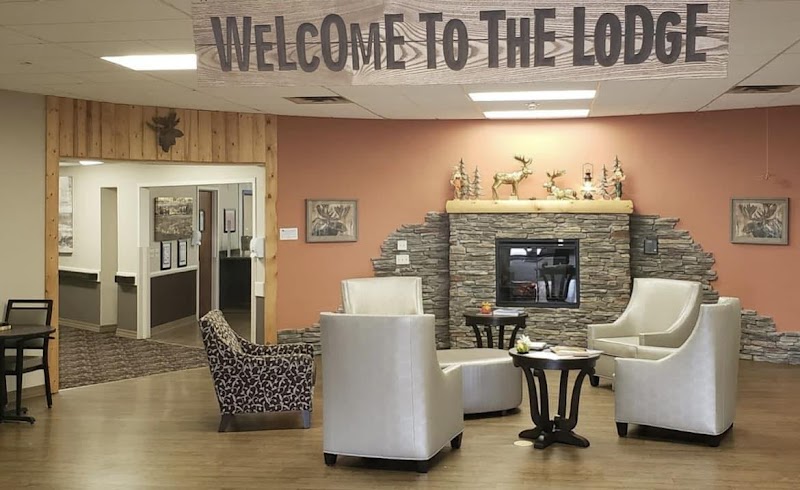
The Lodge At Brookline
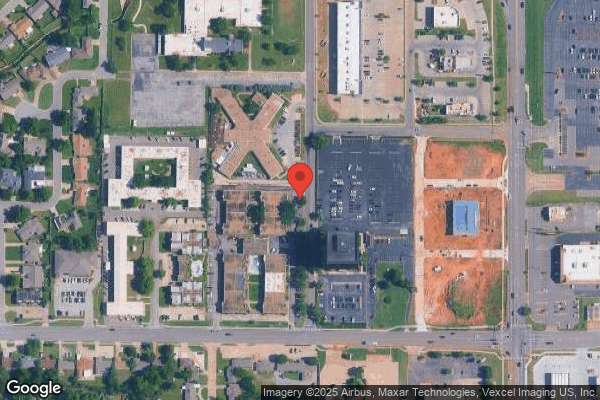
5301 North Brookline, Oklahoma City, OK 73112 (405) 251-2847
For profit - Corporation 132 Beds DIAKONOS GROUP Data: November 2025 2 Immediate Jeopardy citations
Trust Grade
6/100
#276 of 282 in OK
Last Inspection: September 2024

Within standard 12-15 month inspection cycle. Federal law requires annual inspections.

Overview

The Lodge at Brookline has received a Trust Grade of F, indicating significant concerns and a poor reputation in care standards. They rank #276 out of 282 facilities in Oklahoma, placing them in the bottom half, and #39 out of 39 in Oklahoma County, meaning there are no better local options. The facility is currently improving, having reduced reported issues from 19 in 2024 to 7 in 2025, but still has a high staff turnover rate of 70%, significantly above the state average of 55%. While they have no fines on record, which is a positive sign, critical incidents such as failing to administer CPR to residents who were unresponsive highlight serious deficiencies in emergency care. Despite having good RN coverage, more than 83% of facilities in Oklahoma, the overall poor trust score and alarming incidents create a concerning picture for families considering this home.

Trust Score
F
6/100
In Oklahoma
#276/282
Bottom 3%
Safety Record
High Risk
Review needed
Inspections
Getting Better
19 → 7 violations
Staff Stability
⚠ Watch
70% turnover. Very high, 22 points above average. Constant new faces learning your loved one's needs.
Penalties
✓ Good
No fines on record. Clean compliance history, better than most Oklahoma facilities.
Skilled Nurses
⚠ Watch
Each resident gets only 28 minutes of Registered Nurse (RN) attention daily — below average for Oklahoma. Fewer RN minutes means fewer trained eyes watching for problems.
Violations
⚠ Watch
48 deficiencies on record. Higher than average. Multiple issues found across inspections.
★☆☆☆☆
1.0
Overall Rating
★★☆☆☆
2.0
Staff Levels
★★★☆☆
3.0
Care Quality
★☆☆☆☆
1.0
Inspection Score
Stable
2024: 19 issues
2025: 7 issues

The Good

  • Full Sprinkler Coverage · Fire safety systems throughout facility
  • No fines on record

Facility shows strength in fire safety.

The Bad

1-Star Overall Rating

Below Oklahoma average (2.6)

Significant quality concerns identified by CMS

Staff Turnover: 70%

24pts above Oklahoma avg (46%)

Frequent staff changes - ask about care continuity

Chain: DIAKONOS GROUP

Part of a multi-facility chain

Ask about local staffing decisions and management

Staff turnover is very high (70%)

22 points above Oklahoma average of 48%

The Ugly 48 deficiencies on record

2 life-threatening
Jul 2025 7 deficiencies 1 IJ
CRITICAL (J) 📢 Someone Reported This

A family member, employee, or ombudsman was alarmed enough to file a formal complaint

Immediate Jeopardy (IJ) - the most serious Medicare violation

Deficiency F0678 (Tag F0678)

Someone could have died · This affected 1 resident

**NOTE- TERMS IN BRACKETS HAVE BEEN EDITED TO PROTECT CONFIDENTIALITY** On [DATE] an Immediate Jeopardy (IJ) situation was determined to exist related to the facility's failure to ensure a Resident #4...

Read full inspector narrative →
**NOTE- TERMS IN BRACKETS HAVE BEEN EDITED TO PROTECT CONFIDENTIALITY** On [DATE] an Immediate Jeopardy (IJ) situation was determined to exist related to the facility's failure to ensure a Resident #4 received timely CPR per the physician's order when the resident was found unresponsive and without vital signs. The resident was pronounced deceased by EMS.On [DATE] at 11:26 a.m., the Oklahoma State Department of Health was notified and verified the existence of an IJ situation.On [DATE] at 11:43 a.m., the administrator and DON were notified of the existence of the IJ situation and was provided the IJ template. On [DATE] at 4:28 p.m., an acceptable plan of removal was approved by the Oklahoma State Department of Health. The plan of removal, read in part, [DATE] 3:58pm1.The facility failed to initiate CPR immediately when a resident with a full code status was found without signs of life.2. All residents residing in the facility who are full code status are at risk.3. Staff are in-serviced on policy and procedure of Medical Emergency Response and educated on locations of Code Status Identifiers for all residents residing in the facility. Signs are placed throughout facility for quick identification of how to respond to a resident without signs of life. DON updated code status sheets on [DATE].4. Plan will be completed [DATE] by 5:00pm.5. Staff present in building on [DATE] are in-serviced. Staff not present in building are contacted by phone call to provide verbal in-service on [DATE] with written documentation of date and time of contact for in-service. Signage posted throughout facility on [DATE].6. Changes to Code Status Document will be discussed in morning meeting to include Code Status changes, room changes, new admits or discharges. PIP will be initiated [DATE] for monitoring during 3 months for any changes needed to the system and will be added to QAPI [quality assurance and performance improvement]. New employees will be educated on Medical Emergency Response Policy and Procedure. A PIP will be initiated for the RN supervisor, [name withheld], [DATE] and monitored for the next 3 months.7. Medical Emergency Response Policy and Procedure provided with oral in-service, Signage posted throughout facility for quick identification of how to respond to a resident without signs of life with oral in-service for explanation of signage, and verbal education of locations of Code Status Identifiers for all residents residing in the facility. 8. The facility failed to initiate CPR immediately when a resident with a full code status was found without signs of lifeOn [DATE] at 9:11 a.m., after all staff members had been in-serviced, staff CPR training was verified, residents code status was verified for accuracy, and performance improvement projects were initiated with ongoing auditing, the immediacy was lifted, effective [DATE] at 5:00 p.m. The deficient practice remained at an isolated level with the potential for more than minimal harm.Based on observation, record review, and interview, the facility failed to initiate CPR to an unresponsive resident with a full code status for 1 (#4) of 1 sampled resident reviewed for emergency basic life support to include CPR.The administrator identified 47 residents resided in the facility and 31 Residents had a full code status.Findings: On [DATE] at 6:38 a.m., laminated code response/instructions were observed posted on shower doors, above nurse carts, and in the dining room. A Cardiopulmonary Resuscitation (CPR) policy, with a copyright date of 2024, read in part, If a resident experiences a cardiac arrest, facility staff will provide basic life support, including CPR, prior to the arrival of emergency medical services, and: a. in accordance with the resident's advance directives, or b. in the absence of advance directives or a Do Not Resuscitate order; and c. if the resident does not show obvious signs of clinical death (e.g. [for example] rigor mortis, dependent lividity, decapitation, transection, or decomposition). CPR certified staff will be available at all times.The employee who first witnesses or is the first on the site of a medical emergency, that are trained, will initiate immediate action, including CPR as appropriate, basic first aid and summon for assistance. CPR will continue unless: a. there is a DNR order in place. b. There are obvious signs of clinical death (rigor mortis, dependent lividity, decapitation, transection, or decomposition). c. initiating CPR could cause injury or peril to the rescuer.This will continue until emergency personnel arrive and resident is transported to the emergency room by the EMS. A Physician's order, dated [DATE] at 8:47 p.m., showed the resident was a full code and was admitted on [DATE]. An admission assessment, dated [DATE], showed Resident #4 had diagnoses which included bladder cancer, stage 3 kidney disease, and absence of kidney. A Nurse Progress Note, dated [DATE] at 3:27 p.m., showed LPN #1 received report from the night shift nurse at 7:00 a.m., Resident #4 had been anxious and attempting to get out of bed all night and that pain medication had been given at 6:30 a.m. The note showed at 8:00 a.m., LPN #1 completed the initial assessment, and vital signs were within normal limits. The note showed Resident #4 appeared anxious and was requesting more pain medication. The note showed Resident #4 was repositioned and the bed was lowered to the floor for safety. The note showed at approximately 9:00 a.m., CNA #1 reported Resident #4 had refused to put on a gown. The note showed CNA #1 responded to the call light at 9:30 a.m. and Resident #4 was sitting up in bed complaining of feeling hot and still did not want a gown on. The note showed between 10:30 and 10:45 a.m., CNA #1 checked on Resident #4 again and the resident still refused a gown, but was sitting up in the bed. The note showed at 11:05 a.m., Resident #4's family member stepped into the hall and alerted CNA #1 Resident #4 was breathing weird. The note showed CNA #1 entered the room and found Resident #4 unresponsive, with one leg on the floor and one on the bed. The note showed CNA #1 called for help and LPN #1 and two other nurses, and three other CNA's responded. The note showed Resident #4 was not breathing and had no pulse. The note showed 911 was immediately called and CPR was initiated until EMS arrived and assumed CPR. The note showed EMS performed CPR for approximately 26 minutes and administered six rounds of epinephrine, when they pronounced Resident #4 dead at 12:03 p.m. The note showed the physician, administrator, and DON were notified. The note showed the resident's family member was assisted in notifying other family members, Resident #4 was put back into bed and cleaned up. The note showed the family was provided privacy and time to make arrangements. On [DATE] at 2:52 p.m., a phone interview was conducted with Resident #4's family member that was present during the incident. The family member stated Resident #4 was admitted on [DATE] at 6:20 p.m. The family member stated when they returned to the facility on [DATE] at 11:11 a.m., Resident #4 had both knees on the floor and was leaning to their right onto their lowered bed. The family member stated Resident #4's mouth and eyes were open, but they were not breathing. The family member stated they walked to the hall and told a nurse Resident #4 was not breathing. The family member stated CNA #1 walked into the room and back out and then within two minutes seven to eight staff arrived. The family member stated the staff picked Resident #4 off the floor and placed them into the bed where staff proceeded to clean Resident #4 up and make the bed. The family member stated when air came out of Resident #4, the staff then called 911, and moved Resident #4 to the floor and may have done three compressions before the fire department arrived. The family member stated it was probably seven to nine minutes before the staff called 911 after being aware the resident was not breathing. The family member stated, They did not do anything resuscitative all the way up until after they called 911. On [DATE] at 3:37 p.m., via a telephone interview, RN #1 stated LPN #1 and LPN #2 were the ones that responded. RN #1 stated, I was in the building, but was not aware of the situation. RN #1 stated they did not know anything about that resident. On [DATE] from 3:44 p.m. to 4:00 p.m., via a telephone interview, LPN #1 stated they had received report from night shift Resident #4 had been anxious. LPN #1 stated they did not have a lot of information, except the resident had been crying out in pain and was anxious during their assessment. LPN #1 stated they were in a different resident's room when CNAs were running towards Resident #4's room. LPN #1 stated CNA #1 had told them they were just in Resident #4's room [ROOM NUMBER] minutes prior to being called into the room by a family member. LPN #1 stated somebody was checking for a pulse or breathing, and when it was not found, the staff moved Resident #4 up into the bed and were cleaning the resident up. LPN #1 stated they thought it was weird Resident #4 did not have much bowel movement in their colostomy, but there was bowel movement coming from the rectum. LPN #1 stated One of the CNAs thought they heard a breath, so the supervisor (RN #1) instructed them to move Resident #4 to the floor. LPN #1 stated LPN #2 started CPR while they called 911. LPN #1 stated RN #1 was going to check for code status. LPN #1 stated they took over CPR for LPN #2, so that LPN #2 could go get the crash cart. LPN #1 stated CPR was continued until EMS arrived and took over. LPN #1 stated, I am not going to override my clinical nurse supervisor on when to start CPR, when they were asked why CPR was not initiated as soon as it was recognized there was no pulse or breathing. On [DATE] from 4:08 p.m. until 4:28 p.m., via a telephone interview, CNA #1 stated they had checked on and spoken with the resident when breakfast trays were dropped off, picked up, and at least twice while they were offering to assist Resident #4 to put on a gown. CNA #1 stated they had last observed Resident #4 sitting up in bed at approximately 10:55 a.m. CNA #1 stated they were coming out of a different resident's room when the family member told them Resident #4 was not breathing at approximately 11:05 a.m. CNA #1 stated they ran up the halls asking for a nurse. CNA #1 stated while the nurses were checking for vital signs, the CNAs put Resident #4 on the bed and put a gown, and a brief on Resident #4. CNA #1 stated, It felt like an eternity, but was probably four to five minutes before CPR was initiated. CNA #1 stated, while RN #1 was looking for the code status one of the CNAs thought they heard a breath, so when RN #1 returned, they were instructed to move the resident to the floor and initiate CPR. CNA #1 stated LPN #2 started CPR, but then LPN #1 took over compressions while LPN #2 went to get the crash cart. CNA #1 stated they did not remember when 911 was called, but it started quickly once they were told to start CPR. CNA #1 stated the electronic health record system could be logged into from their phones within 60 seconds if they have good wireless internet. On [DATE] at 8:39 a.m., CNA #4 stated resident code statuses were kept in a binder. They showed the surveyor the binder in the linen closet by room [ROOM NUMBER] that showed resident names with a red column for DNR and a green column for full code. They stated every hall had a binder. They stated the DON was responsible for entering the code status. They stated the nurse would probably be the person to determine when to initiate CPR on a resident. CNA #4 stated they had not been involved in a code and would try to help in any way. On [DATE] at 8:44 a.m., CNA #5 showed the surveyor a binder in the linen closet by room [ROOM NUMBER]. They stated it identified each resident’s code status. They stated the nurses put the information in. They stated if a resident appeared to not be breathing, they would get the nurse. CNA #5 stated when a resident dropped to the floor, if staff were right there, they could not leave the resident by themselves. They stated if the resident started turning a color, they would start CPR. They stated their role in a code was to make sure everyone was out of the way. On [DATE] at 8:49 a.m., CNA #6 stated if a resident appeared to not be breathing, they would get the nurse and call for help. They stated they guessed they could initiate CPR if needed. On [DATE] at 8:52 a.m., CNA #3 stated staff would check to see if a resident was unresponsive. They stated if they did not respond they would start CPR. They stated their role could vary from chest compressions or swapping out breathing depending on what the person running the code instructed them to do. On [DATE] at 8:55 a.m., ACMA #2 stated resident code statuses were located in the MAR. They stated if a resident was unconscious or lethargic with a slow response, not moving, or not responding when their name was called, they would notify the nurse before beginning CPR. They stated their role was to assist the nurse when needed during a code. On [DATE] at 9:01 a.m., ACMA #3 stated there was a code sheet in both the linen closet on the hall and in their MAR. They stated when a resident appeared to not be breathing, they would check for a pulse, check their oxygenation, and call for a nurse. They stated they believed the nurse decided when to initiate CPR. They stated they would assist the nurse in whatever they needed. On [DATE] at 9:05 a.m., ACMA #4 stated if a resident appeared to not be breathing, they would stay with the resident, get the nurse, look at the code book to make sure they were a full code, call 911, and complete CPR until the paramedics arrived. On [DATE] at 9:08 a.m., LPN #4 stated if a resident appeared to not be breathing, they would get their stethoscope, watch for their chest to rise and fall, if it did not, they would do a sternal rub. They stated if the resident continued to not respond, they would check their code status if they were not breathing. They stated if they were a full code, depending on the bed, they would either deflate the bed or pull the resident to the ground and start chest compressions while calling for help. On [DATE] at 9:13 a.m., RN #2 stated the DON was the person responsible for putting resident code statuses in. They stated if a resident appeared to not be breathing, they would check their airway, circulatory status, and heart rate. They stated they would call for help, call 911, and initiated CPR if they did not have a pulse. RN #2 stated they would likely be the person running the code. On [DATE] at 9:10 a.m., RN #1 was re-interviewed via telephone. RN #1 stated, They came to get me, [Resident #4] wasn't responding. I went down there, [their] [family member] was sitting by the bed. [Resident #4] was already gone. RN #1 stated when one of the CNAs heard spontaneous breathing they found the code status on the electronic health record and instructed staff to initiate CPR and call 911. On [DATE] at 9:25 a.m., the DON stated, CPR should be initiated when you find a resident with the absence of vital signs and you find out they are a full code. The DON stated, Staff should assume CPR is necessary unless there is a DNR on file. I put [Resident #4's] orders in, and I know [Resident #4] was a full code. The DON stated the RN #1 told them Resident #4 had an absence of vital signs and they stated yes when they asked if we were doing a full code. The DON stated, CPR should be initiated quickly within a couple minutes at the most and should be continued until someone says they are a DNR or EMS takes over. The DON stated they did an in-service and placed the code status of every resident on the insides of the closets, on the nurses' carts, crash cart book, and the electronic health record. The DON stated staff should be able to get logged into the electronic health record within 60 seconds usually, and it should not take more than three to four minutes to find a resident's code status. On [DATE] at 10:47 a.m., the administrator was present, while the DON stated the code status list was updated for any new admissions, changes in room, or code status. The DON stated the ADON and administrator had access and would be able to update the list if the DON was not available. The DON stated they had completed CPR in-service on the weekend of [DATE], and then again with the weekly staff the following Monday. The DON stated the inaccuracies of residents being listed, or incorrect room numbers being listed, were found by surveyors were because one resident had just recently passed, one was recently discharged , and two had just had their rooms changed. The DON stated they were planning on updating the code status sheet that day. On [DATE] at 7:29 a.m., CNA #2 stated they were CPR certified, but that they had not received in-service in the past two weeks. On [DATE] at 7:44 a.m., performance improvement projects in regard to CPR initiation, were provided to state surveyors. They had been initiated on [DATE]. On [DATE] at 8:35 a.m., the administrator stated all of the staff had now been in-serviced, except one of the staff members who was in the intensive care unit, but they would in-service them when and if they returned to work. The administrator also stated that CNA #2 had been in-serviced that morning at 8:32 a.m. On [DATE] at 8:49 a.m., the updated code status sheet was provided and verified to be accurate.
CONCERN (D) 📢 Someone Reported This

A family member, employee, or ombudsman was alarmed enough to file a formal complaint

Potential for Harm - no one hurt, but risky conditions existed

Pressure Ulcer Prevention (Tag F0686)

Could have caused harm · This affected 1 resident

Based on record review and interview, the facility failed to ensure interventions to promote pressure ulcer healing were implemented for 1 (#1) of 3 sampled residents reviewed for pressure ulcers.The ...

Read full inspector narrative →
Based on record review and interview, the facility failed to ensure interventions to promote pressure ulcer healing were implemented for 1 (#1) of 3 sampled residents reviewed for pressure ulcers.The administrator identified three residents with pressure ulcers resided in the facility.Findings:A wound care policy, revised 10/2010, read in part, The purpose of this procedure is to provide guidelines for the care of wounds to promote healing.Make the resident comfortable. Use supportive devices as instructed.An undated turning policy, read in part, To prevent pressure injuries, promote comfort, and maintain skin integrity by ensuring residents are turned and repositioned at appropriate intervals.All residents who are immobile, at risk for pressure ulcers, or require assistance will be turned and repositioned at a minimum of every two to three hours or as individually assessed and documented in the care plan. Position changes should be documented and communicated appropriately.Wound care provider visits notes, dated 02/06/25, 02/13/25, 02/20/25, 03/04/25, 03/11/25, 03/27/25, 04/01/25, 04/15/25, 04/22/25, and 04/29/25 showed interventions for wound care treatment that included turning Resident #1 every two hours using a foam wedge.Resident #1's February 2025 ADL records showed blanks for the task of turning and repositioning every two hours 63 out of 336 opportunities.Resident #1's March 2025 ADL records showed blanks for the task of turning and repositioning every two hours 93 out of 300 opportunities.A quarterly resident assessment, dated 03/22/25, showed Resident #1 had functional limitation in range of motion for bilateral upper and lower extremities. The assessment showed they required substantial/maximal assistance to roll left and right, had one stage three pressure ulcer, had four stage four pressure ulcers, and had one unstageable deep tissue injury. All wounds were present upon admission/entry or reentry. The assessment showed skin and ulcer/injury treatments which included a turning and repositioning program. The assessment showed Resident #1 had diagnoses which included pressure ulcer of sacral region stage four, pressure ulcer of right heel stage four, pressure-induced deep tissue damage of left heel, osteomyelitis, and viral hepatitis. Resident #1's April 2025 ADL records showed blanks for the task of turning and repositioning every two hours 146 out of 339 opportunities.Resident #1's care plan, revised 05/05/25, showed interventions for wounds which included the need for staff assistance with transfers and/or repositioning due to having limitations in mobility. Resident #1 no longer resided in the facility and their wounds were unable to be observed.On 07/10/25 at 11:46 a.m., CNA #3 stated staff turned residents every two hours to prevent pressure ulcer development. They stated Resident #1 at times would not allow staff to turn them due to being uncomfortable. They stated they would ask the resident how they could make them more comfortable.On 07/10/25 at 11:49 a.m., CNA #3 stated Resident #1 had wounds that were always covered.On 07/10/25 at 1:14 p.m., LPN #3 stated Resident #1 had wounds on their back side and knee. They stated the resident was contracted and paralyzed. They stated the resident could not roll or turn themselves. They stated the resident was turned every two hours to promote wound healing.On 07/10/25 at 2:24 p.m., the DON stated Resident #1 had several wounds with slow healing progression. The administrator stated the resident admitted to the facility with several wounds. On 07/10/25 at 2:27 p.m., the administrator stated Resident #1 was contracted, not mobile, and did not want to turn. The DON stated the resident was very resistive to turning. The DON stated staff repositioned the resident with pillows as much as they would allow staff to. On 07/10/25 at 2:29 p.m., the DON stated staff attempted to turn the resident at least every two hours. On 07/10/25 at 2:32 p.m., the DON stated with the blanks in the ADL documentation, they had no way to prove Resident #1 was turned every two hours.
CONCERN (D) 📢 Someone Reported This

A family member, employee, or ombudsman was alarmed enough to file a formal complaint

Potential for Harm - no one hurt, but risky conditions existed

Deficiency F0694 (Tag F0694)

Could have caused harm · This affected 1 resident

**NOTE- TERMS IN BRACKETS HAVE BEEN EDITED TO PROTECT CONFIDENTIALITY** Based on record review and interview, the facility failed to ensure PICC/central line care was provided and the site was assesse...

Read full inspector narrative →
**NOTE- TERMS IN BRACKETS HAVE BEEN EDITED TO PROTECT CONFIDENTIALITY** Based on record review and interview, the facility failed to ensure PICC/central line care was provided and the site was assessed for 1 (#1) of one sampled resident reviewed for PICC lines. The administrator identified no residents with PICC lines resided in the facility at the time of the survey.Findings:A central venous catheter care and dressing change policy, revised 03/2022, read in part, The purpose of this procedure it to prevent complications associated with intravenous therapy, including catheter-related infections that are associated with contaminated, loosened, soiled, or wet dressings.A physician's order is not needed for this procedure.Perform site care and dressing change at established intervals or immediately if the integrity of the dressing is compromised.Change the dressing if it becomes damp, loosened or visibly soiled and.at least every seven days.Assess central venous access devices with each infusion and at least daily.Resident #1's discharge hospital summary, dated 10/18/24, showed a tunneled PICC line was placed on 10/17/24.A hospital after visit summary, dated 10/08/24 through 10/18/24, showed Resident #1 was to start taking Unasyn (an antibiotic) three grams via intravenous piggyback route. There was no order located in Resident #1's orders for the care of the central line that was placed on 10/17/24.Resident #1's October 2024 MAR/TAR did not document central line care was provided.Resident #1's December 2024 MAR/TAR did not document central line care was provided.An interventional radiology note, dated 12/22/24, showed the removal of a tunneled single lumen powerline catheter for Resident #1.Nurse progress notes from the time the resident was readmitted to the facility on [DATE] until the central line was discontinued on 12/22/24 did not document the site was assessed daily, or the dressing to the insertion site was changed. On 07/10/25 at 12:06 p.m., ACMA #1 stated it was completely the nurse's responsibility to care for a resident with a PICC/central line. On 07/10/25 at 12:48 p.m., LPN #3 stated nurses took care of any medications or dressing changes with a PICC/central line.On 07/10/25 at 12:49 p.m., LPN #3 stated they would change the dressing every two weeks, unless it was leaking, soiled, or peeling around the edges. They stated where it was documented was a good question. They stated nowadays, they knew how to put it in a progress note. They stated during this time they were not familiar with the facility's charting system. LPN #3 stated they did not know if they were documenting it anywhere at the time. They stated unless someone put in a specific order to change the dressing, it would not populate an area to chart the dressing change was completed. On 07/10/25 at 12:52 p.m., LPN #3 stated they started in November 2024. They reviewed the November 2024 MAR/TAR and stated the only documentation related to Resident #1's PICC line was the heparin flush through 12/17/24. On 07/10/25 at 12:57 p.m., LPN #3 stated they did not see anything about a dressing change for November or December 2024.On 07/10/25 at 1:48 p.m., the DON stated the care for a PICC or central line was essentially the same. They stated staff would change the dressing once a week or as needed if it became loosened or soiled. They stated the line was flushed before and after medication administration with normal saline. They stated if the line did not receive a flush with medications, then staff would flush it once per shift. The DON stated the dressing changes should be on the nurse's treatment sheet.On 07/10/25 at 1:50 p.m., the administrator stated the PICC line was placed on 10/17/24 at the hospital. On 07/10/25 at 2:03 p.m., the DON stated there was a heparin flush order started on 10/17/24 through 12/17/24. They stated that was all they were seeing on the treatment record. The administrator stated they did not find anything charted in the notes. Neither the DON or the administrator were able to locate assessments of the central line site or dressing changes while the central line was in place. On 07/10/25 at 2:05 p.m., the DON stated the site should be assessed every shift.
CONCERN (D) 📢 Someone Reported This

A family member, employee, or ombudsman was alarmed enough to file a formal complaint

Potential for Harm - no one hurt, but risky conditions existed

Pharmacy Services (Tag F0755)

Could have caused harm · This affected 1 resident

Based on record review and interview, the facility failed to ensure a resident received their pain medication as ordered by the physician for 1 (#6) of 1 sampled residents reviewed for medications pro...

Read full inspector narrative →
Based on record review and interview, the facility failed to ensure a resident received their pain medication as ordered by the physician for 1 (#6) of 1 sampled residents reviewed for medications provided accurately.The administrator identified 47 residents resided in the facility. Findings:An Administering Medications policy, revised April 2019, read in part, Medications are administered in a safe and timely manner, and as prescribed.Staffing schedules are arranged to ensure that medications are administered without unnecessary interruptions.Medication administration times are determined by resident need and benefit, not staff convenience. Factors that are considered include: enhancing optimal therapeutic effect of the medication.A Controlled Drug Receipt, dated 06/04/25, showed the facility received 56 tabs of oxycodone (an opioid) 10 mg tablets for Resident #6. The receipt also showed the last tablet was administered to Resident #6 on 07/01/25 at 9:30 p.m.A Controlled Drug Receipt, dated 07/04/25, showed oxycodone was not available in the facility for Resident #6 again until 07/04/25. The next dose administered was on 07/05/25 at 6:00 a.m.On 07/07/25 at 1:33 p.m., Resident #6 stated they put them on tramadol (an opioid) when they ran out of oxycodone, but the tramadol was like eating a tic tac. Resident #6 stated when the oxycodone ran out, they have had to wait three to four days before the medication was available for them again.On 07/10/25 at 11:56 a.m., LPN #4 stated staff were supposed to reorder medications when the number went into the blue area, indicating they had usually a few days of medication left. They stated they pushed a reorder button on the computer, but if they actually needed a physician signature, then they also had to fax to the physician, or tell the DON. LPN #4 stated they did fax it to the physician and told the DON, but was not sure when because they could not find a record of when that occurred. They stated they requested it a few days before the medication was completely out. They stated they remembered they had a hard time getting the hard script for the refill because the physician was out of the office at that time for the holiday.On 07/10/25 at 12:06 p.m., the DON stated the medications were supposed to be ordered when there was a four to five day supply left. They stated they sent an email on 07/01/25 to the physician's assistant because that was the first day they were made aware the medication needed to be refilled. The DON stated they did call the physician on 07/04/25 when they had still not received a response and the physician told them the assistant was out. and therefore, they had not received the request. The DON stated there should have been better communication between the facility and the physician. The DON stated it was not acceptable for Resident #6's narcotic to be unavailable to them.
CONCERN (E) 📢 Someone Reported This

A family member, employee, or ombudsman was alarmed enough to file a formal complaint

Potential for Harm - no one hurt, but risky conditions existed

Incontinence Care (Tag F0690)

Could have caused harm · This affected multiple residents

**NOTE- TERMS IN BRACKETS HAVE BEEN EDITED TO PROTECT CONFIDENTIALITY** Based on observation, record review, and interview, the facility failed to ensure:a. urinary catheter care was completed as orde...

Read full inspector narrative →
**NOTE- TERMS IN BRACKETS HAVE BEEN EDITED TO PROTECT CONFIDENTIALITY** Based on observation, record review, and interview, the facility failed to ensure:a. urinary catheter care was completed as ordered for 1 (#7); andb. orders for urinary catheter care were transcribed and completed for 1 (#1) of 3 sampled residents reviewed for urinary catheters.The administrator identified three residents with urinary catheters resided in the facility.Findings:A catheter care policy, with a handwritten date of 02/07/25, read in part, It is the policy of this facility to ensure that residents with indwelling catheters receive appropriate catheter care.Catheter care will be performed every shift and as needed by nursing personnel.1. A significant change resident assessment, dated 12/20/25, showed Resident #1 had an indwelling catheter, and diagnoses which included benign prostatic hyperplasia and viral hepatitis. A discontinued physician order, dated 01/28/25, showed staff were to provide catheter care to Resident #1 every shift related to neuromuscular dysfunction of the bladder.The February 2025 treatment administration record showed Resident #1's catheter care every shift was discontinued on 02/28/25.The March 2025 treatment administration record did not contain catheter care every shift for Resident #1.Resident #1's hospital records, dated 03/12/25, showed they admitted with a urinary tract infection associated with indwelling urethral catheter. The records showed the urinary catheter contained lots of sediment, was dark, and was changed upon admission to the hospital.Resident #1's after visit hospital summary showed the resident was hospitalized [DATE] through 03/17/25. The summary showed discharge instructions which included urinary catheter with routine care. Resident #1's orders did not show the catheter care was continued when the resident returned to the facility from the hospital.A quarterly resident assessment, dated 03/22/25, showed Resident #1 had an indwelling catheter.The April 2025 treatment administration record did not contain catheter care every shift for Resident #1.On 07/10/25 at 11:44 a.m., CNA #3 stated their only responsibility when a resident had a urinary catheter was to empty the bag and ensure nothing was leaking. They stated if it was leaking, they would notify the nurse. They stated they believed it was the nurse's responsibility to clean the catheter and provide care while a resident had an indwelling urinary catheter. They stated Resident #1 did have a urinary catheter while they were a resident at the facility.On 07/10/25 at 12:10 p.m., ACMA #1 stated they did not provide any urinary catheter care. They stated the nurse was responsible for providing care to a urinary catheter. They stated Resident #1 did have a urinary catheter while a resident.On 07/10/25 at 1:00 p.m., LPN #3 stated a urinary catheter being placed and not cleaned could contribute to a resident developing a UTI.On 07/10/25 at 1:01 p.m., LPN #3 stated every staff member was allowed to clean a urinary catheter. They stated the aides cleaned them when they gave a resident a shower or changed their brief. They stated they were allowed to clean around the catheter. On 07/10/25 at 1:02 p.m., LPN #3 stated where the information was documented was a good question. They stated there would be a spot on the MAR or TAR that would pop up on their end from time to time. They stated they believed their charting was to just monitor the output, not anything other than that. LPN #3 stated they were not a fan of urinary catheters because they believed they promoted UTIs. LPN #3 identified the last catheter care for Resident #1 was documented in February 2025. They stated when a resident returned from the hospital the DON, ADON, or administrator was responsible for ensuring the orders from the hospital were put in. On 07/10/25 at 1:10 p.m., LPN #3 stated they believed Resident #1 had a urinary catheter in March and April 2025. They reviewed the 03/12/25 hospital records and stated the records indicated Resident #1 was treated for a UTI. On 07/10/25 at 1:38 p.m., the administrator stated Resident #1 came back from the hospital on [DATE] and was also hospitalized [DATE] and returned to the facility on [DATE]. On 07/10/25 at 2:06 p.m., the DON stated decreased fluid intake, improper incontinent care, dietary intake, and general cleanliness were factors that could contribute to a resident developing a UTI. On 07/10/25 at 2:07 p.m., the DON stated when a resident had a urinary catheter, the nurses should provide catheter care as ordered by the physician. They stated it should be listed in the physician orders. The DON stated the floor staff who provided incontinent care should also be providing general catheter care such as cleaning the meatus around the catheter to ensure bacteria and stool did not get in there. They stated CNAs, CMAs, and nurses could all clean the catheter.On 07/10/25 at 2:09 p.m., the DON stated nurses documented catheter care in the treatment records. They stated Resident #1 did have a urinary catheter. On 07/10/25 at 2:10 p.m., the DON reviewed the after visit hospital note, dated 03/12/25 through 03/17/25, and stated, Foley catheter with routine care. The DON reviewed the hospital update, dated 03/12/25, and stated Resident #1 was treated for a UTI. On 07/10/25 at 2:18 p.m., the DON stated Resident #1's catheter care showed it was last completed on the TAR on 02/28/25. On 07/10/25 at 2:19 p.m., the DON stated they did not locate catheter care on the resident's March or April 2025 TAR. 2. On 07/09/25 at 1:58 p.m., Resident #7's suprapubic catheter site was observed to have a split gauze secured with tape around it with the 7-3 (indicating the shift) and 7/7/25 (indicating date) written in black marker on it. Dried red blood was observed in the abdominal fold below the gauze.A physician order, dated 02/17/25, showed suprapubic catheter care was to be done every shift.A quarterly resident assessment, dated 06/12/25, showed Resident #7 had a BIMS of 10 (indicating moderately impaired cognition), had an indwelling catheter, diagnosis which included chronic kidney disease stage 5, and was dependent on staff for all activities of daily living.The July 2025 treatment record for suprapubic catheter care every shift showed staff initials on 07/07/25 for day shift, evening shift, and night shift. The record also showed staff initials for 07/08/25 for day shift, evening shift, and night shift, indicating suprapubic catheter care had been done. The initials on 07/07/25 and 07/08/25 belonged to LPN #4.On 07/09/25 at 2:03 p.m., the DON stated the gauze around the suprapubic site was labeled 7-3 and 7/7/25, they also stated there was some serosanguinous drainage noted to Resident #7's abdominal fold and the gauze dressing. The DON stated the suprapubic catheter was pulled tight and was wrapped around the securement clamp on the resident's leg.On 07/09/25 at 2:30 p.m., ACMA # 4 stated the suprapubic catheter care was to be done by the nurses. They stated the initials on the day shift for both days belonged to LPN #4, but they were not working that day.On 07/10/25 at 8:55 a.m., the DON stated, I know catheter care is on the nurses treatment orders, and initials indicate that the care was provided. I know where you are going with this. I verified the treatment record was initialed on different shifts, by different nurses, but it did not appear the care was actually provided. I did check into it and in-serviced the staff about it.On 07/10/25 at 8:58 a.m., LPN #4 stated the initials meant they did complete the care on that day by cleaning the site and tube with normal saline, but there was no new gauze, so LPN #4 left on the old gauze. They confirmed the initials on the treatment record did belong to them for the day shift on 07/07/25 and 07/08/25.
CONCERN (E) 📢 Someone Reported This

A family member, employee, or ombudsman was alarmed enough to file a formal complaint

Potential for Harm - no one hurt, but risky conditions existed

Tube Feeding (Tag F0693)

Could have caused harm · This affected multiple residents

Based on observation, record review, and interview, the facility failed to ensure orders for PEG tube care were transcribed and completed for 2 (#6 and #7) of 2 sampled residents reviewed for PEG tube...

Read full inspector narrative →
Based on observation, record review, and interview, the facility failed to ensure orders for PEG tube care were transcribed and completed for 2 (#6 and #7) of 2 sampled residents reviewed for PEG tube care.The administrator identified five residents had PEG tubes.Findings:1.On 07/09/25 at 12:33 p.m., Resident #6's peg site was observed to have no gauze around it, There was some dark residue around the PEG site entrance into the abdomen and the clamp appeared to have red droplets on it. An undated PEG Site Cleaning Policy and Procedure, read in part, To ensure the safe and effective care of residents with PEG tubes, LTC facility staff will follow standardized procedures for routine PEG site cleaning to prevent infection, skin breakdown, and complications. Purpose: To maintain cleanliness, promote healing, and prevent infections or irritation at the PEG insertion site. Scope: This policy applies to all licensed nursing staff responsible for the care of residents with a PEG tube. Frequency: Daily, after any leakage or soiling, as per physician or wound care recommendations. Supplies needed: clean gloves, mild soap or normal saline, gauze pads.There were no physician orders to clean or care for the PEG tube for Resident #6.A quarterly resident assessment, dated 06/20/25, showed Resident #6 was blind, had a BIMS of 8 (indicating moderately impaired cognition), had a PEG tube, and was dependent upon staff for all activities of daily living.On 07/09/25 at 1:31 p.m., the DON stated the PEG tube site did not look clean, there was dark matter at the site, and there was no gauze in place to keep the plastic ring from rubbing against Resident #6's skin. The DON stated PEG tube care should be done at least daily and more often if there was drainage.2. On 07/09/25 at 1:58 p.m., Resident #7's PEG tube site was observed to have a split gauze secured with tape around it with the 7-3 (indicating the shift) and 7/7/25 (indicating date) written in black marker on it. There were no physician orders to clean or care for the PEG tube for Resident #7.A quarterly resident assessment, dated 06/12/25, showed Resident #7 had a BIMS of 10 (indicating moderately impaired cognition), had a PEG tube, diagnosis which included chronic kidney disease stage 5, and was dependent on staff for all activities of daily living.On 07/09/25 at 2:03 p.m., the DON stated the PEG site had gauze around it labeled 7-3 and 7/7/25. The DON stated there was a dark residue under the gauze at the PEG site at the entrance to the abdomen of resident #7.On 07/10/25 at 8:58 a.m., LPN #4 stated the initials mean they did complete the care on that day by cleaning the site and tube with normal saline, but there was no new gauze, so LPN #4 left on the old gauze. They confirmed the initials on the treatment record did belong to them for the day shift on 07/07/25 and 07/08/25.
CONCERN (E) 📢 Someone Reported This

A family member, employee, or ombudsman was alarmed enough to file a formal complaint

Potential for Harm - no one hurt, but risky conditions existed

Medical Records (Tag F0842)

Could have caused harm · This affected multiple residents

**NOTE- TERMS IN BRACKETS HAVE BEEN EDITED TO PROTECT CONFIDENTIALITY** Based on observation, record review, and interview, the facility failed to ensure resident records were accurate for 3 (#1, 6, a...

Read full inspector narrative →
**NOTE- TERMS IN BRACKETS HAVE BEEN EDITED TO PROTECT CONFIDENTIALITY** Based on observation, record review, and interview, the facility failed to ensure resident records were accurate for 3 (#1, 6, and #7) of 3 sampled residents reviewed for accurate records.The administrator identified 47 residents resided in the facility.Findings:A charting and documentation policy, revised 07/2017, read in part, Documentation in the medical record will be objective (not opinionated or speculative), complete, and accurate.1.Resident #1's hospital records showed the resident was hospitalized [DATE] through 03/17/25.The March 2025 MAR showed Resident #1 was administered the following medications at the facility during the dates the resident was hospitalized :a. aricept 10 mg (a medication used to treat dementia) on the 13th, 15th and 16th;b. ferrous sulfate 325 mg (a supplement for low iron) on the 15th and 16th;c. megestrol acetate suspension 5 milliliters (appetite stimulant) on the 15th and 16th;d. protonix 40 mg (used to treat reflux) on the 15th and 16th;e. prozac 20 mg (used to treat depression) on the 15th and 16th;f. vitamin B12 1000 (a supplement) micrograms on the 15th and 16th;g. zinc sulfate 220 mg (a supplement) on the 15th and 16th;h. arginaid oral packet (a supplement) on the 13th, 15th, and 16th;i. oxycontin extended release 10 mg (a pain medication) on the 13th for a pain level of four, on the 15th for a pain level of 2, and the 16th for a pain level of 2 (the narcotic count records for this medication were reviewed and did not document any dispensing of this medication on these dates);j. gabapentin 300 mg (a pain medication) on the 13th, 15th and 16th;k. lithium 150 mg (a mood stabilizer) on the 13th, 15th, and 16th;l. midodrine 5 mg (a medication to treat low blood pressure) on the 15th and 16th with blood pressures documented; andm. Ativan 1 mg (an antianxiety medication) on the 15th and 16th.On 07/10/25 at 12:02 p.m., ACMA #1 stated they would ask their nurse if they had any questions and would double check information to ensure accurate documentation.On 07/10/25 at 12:04 p.m., ACMA #1 stated they had from 7:00 p.m. to 11:00 p.m. to administer medications on their shift. They stated once they administered the medications, they would select yes on the electronic record to document it was given.On 07/10/25 at 12:06 p.m., ACMA #1 stated there was an option to document hospitalized when a resident was hospitalized . They stated they did recall Resident #1 was hospitalized at times, but could not recall what month. (This staff member was not in the facility to review the above documented administration when the resident was hospitalized , but was one of the staff members who documented medications were administered).On 07/10/25 at 12:37 p.m., LPN #3 stated there really was no way of ensuring staff documented accurately. They stated when staff administered medications, they were to initial them as administered. They stated when staff administered breathing treatments or wound care, they would click yes as they completed it. They stated ultimately at the end of the day, they hoped everyone was honest.On 07/10/25 at 12:38 p.m., LPN #3 stated when a resident was hospitalized , staff can click hospitalized as the option. On 07/10/25 at 12:40 p.m., LPN #3 stated Resident #1 was hospitalized from [DATE] to 03/17/25. LPN #3 reviewed the medications initialed as given during this time and stated, I don't know. They stated the medication aides were who gave the resident their medications. They stated they were not sure why a staff member would document medications were given when the resident was in the hospital. On 07/10/25 at 1:34 p.m., the DON stated staff should be accurately documenting at the time they complete a task.On 07/10/25 at 1:36 p.m., the DON stated staff should pull up a medication, and initial it as administered in the electronic charting system at the time it was given. They stated their initials should print for who administered the medications.On 07/10/25 at 1:37 p.m., the DON stated there was a number six option on the legend to document when a resident was hospitalized on the MAR. They stated some staff chose a nine that meant see nurse's note and documented there the resident was hospitalized . On 07/10/25 at 1:38 p.m. the administrator stated Resident #1 went to the hospital on [DATE] and returned to the facility on [DATE]. The administrator and the DON were asked to review all of the above medications initialed as administered during Resident #1's hospitalization. The DON stated they did not have an explanation for staff documenting the medications were administered or the reason vital signs were recorded when the resident was not in the building. On 07/10/25 at 1:48 p.m., the administrator and DON reviewed the narcotic count record for Resident #1's oxycontin ER 10 mg and stated there were no pills signed out during this time. They stated they believed it was a documentation error. 2. On 07/09/25 at 12:33 p.m., Resident #6's peg site was observed to have no gauze around it, There was some dark residue around the PEG site entrance into the abdomen and the clamp appeared to have red droplets on it. An undated PEG Site Cleaning Policy and Procedure, read in part, To ensure the safe and effective care of residents with PEG tubes, LTC facility staff will follow standardized procedures for routine PEG site cleaning to prevent infection, skin breakdown, and complications. Purpose: To maintain cleanliness, promote healing, and prevent infections or irritation at the PEG insertion site. Scope: This policy applies to all licensed nursing staff responsible for the care of residents with a PEG tube. Frequency: Daily, after any leakage or soiling, as per physician or wound care recommendations. Supplies needed: clean gloves, mild soap or normal saline, gauze pads.There were no physician orders to clean or care for the PEG tube for Resident #6.A quarterly resident assessment, dated 06/20/25, showed Resident #6 was blind, had a BIMS of 8 (indicating moderately impaired cognition), had a PEG tube, and was dependent upon staff for all activities of daily living.On 07/09/25 at 1:31 p.m., the DON stated the PEG tube site did not look clean, there was dark matter at the site, and there was no gauze in place to keep the plastic ring from rubbing against Resident #6's skin. The DON stated PEG tube care should be done at least daily and more often if there was drainage.3. On 07/09/25 at 1:58 p.m., Resident #7's suprapubic catheter site was observed to have a split gauze secured with tape around it with the 7-3 (indicating the shift) and 7/7/25 (indicating date) written in black marker on it. Dried red blood was observed in the abdominal fold below the gauze. The PEG tube site was also observed to have a split gauze secured with tape around it with the 7-3 (indicating the shift) and 7/7/25 (indicating date) written in black marker on it. There were no physician orders to clean or care for the PEG tube for Resident #7.A physician order, dated 02/17/25, showed suprapubic catheter care was to be done every shift.A quarterly resident assessment, dated 06/12/25, showed that Resident #7 had a BIMS of 10 (indicating moderately impaired cognition), had an indwelling catheter and a PEG tube, diagnosis which included chronic kidney disease stage 5, and was dependent on staff for all activities of daily living.The July 2025 treatment record for suprapubic catheter care every shift showed staff initials on 07/07/25 for day shift, evening shift, and night shift. The record also showed staff initials for 07/08/25 for day shift, evening shift, and night shift, indicating suprapubic catheter care had been done. The initials on 07/07/25 and 07/08/25 belonged to LPN #4.On 07/09/25 at 2:03 p.m., the DON stated the gauze around the suprapubic site was labeled 7-3 and 7/7/25, they also stated there was some serosanguinous drainage noted to Resident #7's abdominal fold and the gauze dressing. The DON stated the suprapubic catheter was pulled tight and was wrapped around the securement clamp on the resident's leg. The DON also acknowledged the PEG site had gauze around it labeled 7-3 and 7/7/25. The DON stated there was a dark residue under the gauze at the PEG site at the entrance to the abdomen of Resident #7.On 07/09/25 at 2:30 p.m., ACMA #4 stated the suprapubic catheter care was to be done by the nurses. They stated the initials on the day shift for both days belonged to LPN #1, but that they were not working that day.On 07/10/25 at 8:55 a.m., the DON stated I know catheter care is on the nurses treatment orders, and initials indicate that the care was provided. I know where you are going with this. I verified the treatment record was initialed on different shifts, by different nurses, but it did not appear the care was actually provided. I did check into it and in-serviced the staff about it.On 07/10/25 at 8:58 a.m., LPN #4 stated the initials mean they did complete the care on that day by cleaning the site and tube with normal saline, but there was no new gauze, so LPN #4 left on the old gauze. They confirmed the initials on the treatment record did belong to them for the day shift on 07/07/25 and 07/08/25.
Dec 2024 5 deficiencies
CONCERN (D) 📢 Someone Reported This

A family member, employee, or ombudsman was alarmed enough to file a formal complaint

Potential for Harm - no one hurt, but risky conditions existed

Grievances (Tag F0585)

Could have caused harm · This affected 1 resident

Based on observation, record review, and interview, the facility failed to ensure grievance forms were posted in the designated location per facility policy. The administrator identified 39 residents...

Read full inspector narrative →
Based on observation, record review, and interview, the facility failed to ensure grievance forms were posted in the designated location per facility policy. The administrator identified 39 residents resided in the facility. Findings: On 11/26/24 at 2:20 p.m., a tour of the facility was conducted. Grievance information was posted at the entrance. It documented the grievance personnel, address, phone number, email, ombudsman's name and phone number, state survey agency phone number, and Adult Protective Services phone number. It documented the grievance forms could be found in a binder on the table in the front lobby. On 11/26/24 at 2:24 p.m., the front lobby table was observed with no grievance forms or binder. On 11/27/24 at 8:19 a.m., CNA #1 stated they did not know where the grievance forms were located. On 11/27/24 at 8:25 a.m., the social services director stated the forms were located in their office. They stated according to the grievance policy the forms should be on the table in the front lobby.
CONCERN (D) 📢 Someone Reported This

A family member, employee, or ombudsman was alarmed enough to file a formal complaint

Potential for Harm - no one hurt, but risky conditions existed

Assessment Accuracy (Tag F0641)

Could have caused harm · This affected 1 resident

Based on record review and interview, the facility failed to ensure a MDS was coded accurately for one (#5) of six sampled residents whose MDS assessments were reviewed. The administrator identified 3...

Read full inspector narrative →
Based on record review and interview, the facility failed to ensure a MDS was coded accurately for one (#5) of six sampled residents whose MDS assessments were reviewed. The administrator identified 39 residents resided in the facility. They identified one resident received noninvasive ventilator services. Findings: Resident #5 had diagnoses which included amyotrophic lateral sclerosis. Resident #5's significant change in status resident assessment, dated 09/26/24, did not code Resident #5 received noninvasive ventilator services. On 11/26/24 at 2:56 p.m., a noninvasive ventilator was observed on Resident #5's bedside table. The device was off. On 11/27/24 at 11:04 a.m., Resident #5 stated they were admitted to the facility with a noninvasive ventilator. On 11/27/24 at 11:31 a.m., the DON stated Resident #5 had the noninvasive ventilator since admit. On 11/27/24 at 11:46 a.m., the DON stated they were responsible for completing care plans and MDS's. On 11/27/24 at 1:12 p.m., the DON stated they had looked at Resident #5's significant change in status MDS assessment and the noninvasive ventilator was not coded.
CONCERN (D) 📢 Someone Reported This

A family member, employee, or ombudsman was alarmed enough to file a formal complaint

Potential for Harm - no one hurt, but risky conditions existed

Comprehensive Care Plan (Tag F0656)

Could have caused harm · This affected 1 resident

Based on record review and interview, the facility failed to ensure a resident's care plan included the use of a noninvasive ventilator for one (#5) of two sampled residents reviewed for respiratory s...

Read full inspector narrative →
Based on record review and interview, the facility failed to ensure a resident's care plan included the use of a noninvasive ventilator for one (#5) of two sampled residents reviewed for respiratory services. The administrator identified 16 residents received respiratory services. Findings: The Noninvasive Ventilation policy, dated 2023, read in part, It is the policy of this facility to provide noninvasive ventilation as per physician's orders and current standards of practice. Resident #5 had diagnoses which included amyotrophic lateral sclerosis. Resident #5's care plan, dated 10/02/24, did not document the use of a noninvasive ventilator. On 11/26/24 at 2:56 p.m., a noninvasive ventilator was observed on Resident #5's bedside table. The device was off. On 11/26/24 at 2:58 p.m., Resident #5 stated they used the noninvasive ventilator at bedtime. The resident stated they were admitted to the facility with the noninvasive ventilator. On 11/27/24 at 11:31 a.m., the DON stated Resident #5 had the noninvasive ventilator since admit. On 11/27/24 at 11:46 a.m., the DON stated they were responsible for completing care plans. They stated there was no care plan for the use of the noninvasive ventilator. They stated it should have been care planned.
CONCERN (D) 📢 Someone Reported This

A family member, employee, or ombudsman was alarmed enough to file a formal complaint

Potential for Harm - no one hurt, but risky conditions existed

Respiratory Care (Tag F0695)

Could have caused harm · This affected 1 resident

Based on observation, record review, and interview, the facility failed to ensure a resident had a physician order for the use of a noninvasive ventilator for one (#5) of two sampled residents reviewe...

Read full inspector narrative →
Based on observation, record review, and interview, the facility failed to ensure a resident had a physician order for the use of a noninvasive ventilator for one (#5) of two sampled residents reviewed for respiratory services. The administrator identified 16 residents received respiratory services. Findings: The Noninvasive Ventilation policy, dated 2023, read in part, The facility will obtain an order for the use of a CPAP, BiPAP, AVAPS or [name withheld] device and settings from the practitioner. Resident #5 had diagnoses which included amyotrophic lateral sclerosis. On 11/26/24 at 2:56 p.m., a noninvasive ventilator was observed on Resident #5's bedside table. The device was off. On 11/26/24 at 2:58 p.m., Resident #5 stated they used the noninvasive ventilator at bedtime. The resident stated they were admitted to the facility with the noninvasive ventilator. On 11/27/24 at 11:31 a.m., the DON stated Resident #5 had the noninvasive ventilator since admit. A physician's order, dated 11/27/24, documented noninvasive ventilator on at night and off in the morning at bedtime related to amyotrophic lateral sclerosis. There was no physician order for the use and monitoring of the noninvasive ventilator prior to 11/26/24. On 11/27/24 at 11:40 a.m., the DON reviewed Resident #5's hospice record and electronic health records. They stated they could not locate a physician's order for the use and monitoring of the noninvasive ventilator prior to 11/26/24.
CONCERN (D) 📢 Someone Reported This

A family member, employee, or ombudsman was alarmed enough to file a formal complaint

Potential for Harm - no one hurt, but risky conditions existed

Deficiency F0919 (Tag F0919)

Could have caused harm · This affected 1 resident

Based on observation and interview, the facility failed to ensure emergency call cord was available in a resident's bathroom for one (#2) of three sampled residents whose emergency bathroom call syste...

Read full inspector narrative →
Based on observation and interview, the facility failed to ensure emergency call cord was available in a resident's bathroom for one (#2) of three sampled residents whose emergency bathroom call system was observed. The administrator identified 39 residents resided in the facility. Findings: The Call Lights: Accessibility and Timely Response policy, revised 10/21/24, read in part, The call system must be accessible to the resident at each toilet and bath or shower facility. The call system should be accessible to a resident lying on the floor. Resident #2 had diagnoses which included other abnormalities of gait and mobility. Resident #2's care plan for daily care, dated 10/01/24, documented the resident was able to use their call light to call for help. On 11/26/24 at 11:28 a.m., Resident #2 stated they fell in the bathroom and could not reach the emergency call system. On 11/26/24 at 11:31 a.m., Resident #2's bathroom had a red emergency switch by the side of the toilet. Resident #2 stated they had not been able to walk around and depended on a wheelchair for locomotion. A resident lying on the floor could not reach the switch on the wall. On 11/26/24 at 1:05 p.m., CNA #2 stated there was a call switch that had a string that a resident could use in the bathroom to call for help. On 11/26/24 at 1:06 p.m., CNA #2 stated Resident #2 can use their call light. On 11/26/24 at 1:13 p.m., CNA #2 observed the resident's bathroom. They stated the call switch did not have a string and a resident lying on the floor would not be able to reach the switch. On 11/26/24 at 1:18 p.m., the administrator stated the pull string in the bathroom should be on either side or in front of the toilet.
Sept 2024 11 deficiencies
CONCERN (D)

Potential for Harm - no one hurt, but risky conditions existed

Deficiency F0578 (Tag F0578)

Could have caused harm · This affected 1 resident

Based on record review and interview, the facility failed to ensure residents were offered the choice to formulate an advanced directive for one (#44) of 12 sampled residents whose advance directive a...

Read full inspector narrative →
Based on record review and interview, the facility failed to ensure residents were offered the choice to formulate an advanced directive for one (#44) of 12 sampled residents whose advance directive acknowledgements were reviewed. The Executive Director identified 43 residents resided in the facility. Findings: Resident #44 had diagnoses which included malignant neoplasm of the lungs and end stage renal disease. On 09/04/24 at 9:45 a.m., the ED was asked to locate the advanced directive acknowledgment. On 09/06/24 at 1:05 p.m., the ED was asked again to locate the advanced directive acknowledgement. They stated they were unable to locate the acknowledgement. They were asked for the policy. No policy was provided by the time of exit.
CONCERN (D)

Potential for Harm - no one hurt, but risky conditions existed

Deficiency F0583 (Tag F0583)

Could have caused harm · This affected 1 resident

Based on observation and interview, the facility failed to ensure: a. privacy was maintained during provision of care for two (Resident #25, and an unidentified resident) of four residents whose prote...

Read full inspector narrative →
Based on observation and interview, the facility failed to ensure: a. privacy was maintained during provision of care for two (Resident #25, and an unidentified resident) of four residents whose protected health information and privacy was reviewed during a tour of the facility, and b. protected health information was secure, for two, (Resident #21 and #40). The Executive Director identified 43 residents in the facility. Findings: A HIPAA Security Measures policy, dated 07/24/2024, read in part, It is the facility's policy to implement reasonable and appropriate measures to protect and maintain the confidentiality, integrity, and availability of the residents identifiable information and/or records that are in electronic format. A Promoting/Maintaining Resident Dignity policy, dated 07/24/24, read in part, Maintain resident privacy. On 09/04/24 at 8:43 a.m., observation made of a cart on hall 500 to be unlocked and the laptop open exposing resident information of resident #21. There was no nurse near the cart. LPN #4 was also observed walking to the cart with gloves on and had a glocometer in their hand. While removing their gloves they stated they had come from doing a FSBS in the lobby on a resident. They stated the policy for infection control and privacy was they probably should not have done the FSBS in the lobby, to clean after each resident. They stated the policy did not include wearing gloves in the hallway or doing a FSBS in the lobby. LPN #4 stated they should have taken the resident to their room. They stated they did not follow the policy. On 09/04/24 at 8:47 a.m., LPN #4 was observed to return to the cart. They stated the policy for securing medical information was to lock the computer screen. They then locked the screen. On 09/06/24 at 9:39 a.m., an observation was made of a laptop on top of the hall 400 treatment cart open and showing the TAR for Resident #40. There was no staff near the cart. On 09/06/24 at 9:41 a.m., LPN #3 came out of a room down the hall and stated they were aware they left the laptop open and were not aware of the exact policy. Resident #25 had diagnoses which included muscle wasting and chronic pain. On 09/06/24 at 9:43 a.m., LPN #3 was observed; in the hall of hall 400 next to the treatment cart with 2 staff members and the ED in the hall; to have a cup with cream inside. They were observed to put on gloves and apply cream to a residents legs. On 09/06/24 at 9:44 a.m., LPN #1 was asked how they ensure dignity and privacy with point of care treatments. They stated they could not answer that and they did not know the policy. LPN #1 acknowledged they applied the cream in the hall and stated it was their second day at the facility. Their badge stated they were a member at a sister facility. On 09/06/24 at 9:49 a.m., the ED was made aware of the findings and stated they had already started the inservice's.
CONCERN (D)

Potential for Harm - no one hurt, but risky conditions existed

Assessment Accuracy (Tag F0641)

Could have caused harm · This affected 1 resident

Based on record review and interview, the facility failed to ensure Resident Assessments were accurately coded for two (#21 and #34) of 13 residents reviewed for assessments. The Executive Director id...

Read full inspector narrative →
Based on record review and interview, the facility failed to ensure Resident Assessments were accurately coded for two (#21 and #34) of 13 residents reviewed for assessments. The Executive Director identified 43 residents resided in the facility. Findings: A Conducting an Accurate Resident Assessment policy, undated, read in part, qualified staff who are knowledgeable about the resident will conduct an accurate assessment addressing each resident's status, needs, strengths, and areas of decline. The assessment will be documented in the medical record. 1. Resident #21 had diagnoses which included gastrostomy, pressure ulcer of sacral region stage 4, stage 4 right heel, osteomyelitis, and hepatitis C. An Annual Resident Assessment, dated 08/06/24, documented that anticoagulants were taken in the last 7 days and there was an indication for their use. There were no physician orders for anticoagulant use. On 09/06/24 at 10:48 a.m., LPN #1 stated the medication administration record for August does not show that resident #21 was taking anticoagulants. LPN #1 stated the MDS was coded inaccurately. 2. Resident #34 had diagnoses which included heart disease, end stage renal disease, and COPD. A Quarterly Resident Assessment, dated 06/28/24, documented Resident #34 had received insulin injections for 7 of the past 7 days. There was no physician order for insulin. On 09/06/24 at 10:52 a.m., LPN #1 stated the medication administration record for June does not show that resident #34 received insulin. LPN #1 stated the MDS was coded inaccurately. On 09/06/24 at 10:58 a.m., the Executive Director stated the policy was for the MDS to be coded accurately.
CONCERN (D)

Potential for Harm - no one hurt, but risky conditions existed

Deficiency F0655 (Tag F0655)

Could have caused harm · This affected 1 resident

**NOTE- TERMS IN BRACKETS HAVE BEEN EDITED TO PROTECT CONFIDENTIALITY** Based on record review and interview, the facility failed to ensure a baseline care plan was completed in a timely manner for on...

Read full inspector narrative →
**NOTE- TERMS IN BRACKETS HAVE BEEN EDITED TO PROTECT CONFIDENTIALITY** Based on record review and interview, the facility failed to ensure a baseline care plan was completed in a timely manner for one (#38) of 13 sampled residents reviewed for baseline care plans. The Administrator identified 43 residents resided in the facility. Findings: A Baseline Care Plan policy, undated, read in part, The baseline care plan will be developed within 48 hours of a residents admission. Resident # 38 admitted on [DATE] with diagnoses which included hemiplegia, malnutrition, gastrostomy, and chronic pain. There was not a baseline care plan put into place within 48 hours. The comprehensive care plan was created on 06/26/24. On 09/06/24 at 10:39 a.m., LPN #1 Stated the baseline care plan must be completed within 48 hours, they stated the baseline care plan was not completed within the 48 hours and it should have been. On 09/06/24 at 10:58 a.m., the Executive Director stated the policy was for the baseline care plan to be completed within 48 hours.
CONCERN (D)

Potential for Harm - no one hurt, but risky conditions existed

Quality of Care (Tag F0684)

Could have caused harm · This affected 1 resident

Based on record review and interview, the facility failed to ensure neurological checks were conducted and monitored after an unwitnessed fall for one (Resident #29) reviewed for falls. The ED identif...

Read full inspector narrative →
Based on record review and interview, the facility failed to ensure neurological checks were conducted and monitored after an unwitnessed fall for one (Resident #29) reviewed for falls. The ED identified 43 residents resided in the facility. Findings: Resident #29 had diagnoses which included epilepsy, end stage renal disease, cirrhosis of the liver. A Nurse Note, dated, 08/27/24 at 2:47 p.m., documented, resident presented on [their] bedroom floor, upon entering resident's room resident observed resident laying on [their] right side. Noted resident's chair in front of [them]. Resident stated My chair was hurting my back and I didn't want to wait for someone to help me into bed, so I did it myself, I fell and now I can't get up. Head to toe evaluation implemented, no noted injuries, resident stated that [they] did not hit [their] head, no noted abnormalities to [their] head, no bruising, no hematomas, no skin tears, resident able to move all four extremities without any difficulty. Neurological checks initiated noted blood pressure 136/74, temperature 97.6, pulse 72, respirations 18, O2 sat 98% room air. Resident was offered medication for pain, resident refused pain medication, resident was assisted off of the floor by this Nurse and CNA and assisted into [their] bed, resident then stated I feel good now, thank you. Dr. [name withheld] was notified of fall with no injuries, noted no new orders. Director of Clinical Services notified, Administrator notified, resident's daughter noticed. No neurological checks located to review. On 09/06/24 at 12:58 p.m., the interim DON was asked where the neurological checks for the 8/27/24 fall were located. Present in the room was the Executive Director, LPN #1, and the DON. On 09/06/24 at 1:00 p.m., LPN #1 went to look for the documents. The DON stated they were done on paper because the electronic medical record form did not allow for multiple people to document on it. On 09/06/24 at 1:15 p.m., LPN #1 stated Resident #29 did not hit their head so neuro's were not initiated. They were asked why the note stated the neuro's were initiated and an un-witnessed fall. After LPN #1 reviewed the nursing note, they stated the note for 8/27/24 documented they were initiated but did not do a form. LPN #1 stated they would need to get the policy to know if the policy was followed. On 09/06/24 at 1:28 p.m., LPN #1 stated the policy did not specifically state neuro checks had to be done for an un-witnessed fall. They were asked to show where in the policy. LPN #1 read the policy and stated if there was a variance from the initial neurological assessment then not needed unless they had worsened. LPN #1 was asked how they would determine if the resident had worsened if there were no neurological assessments to monitor. LPN #1 stated they would resort back to best practice if there was not anything specific in the policy. They stated there should have been neurological assessments completed.
CONCERN (D)

Potential for Harm - no one hurt, but risky conditions existed

Staffing Information (Tag F0732)

Could have caused harm · This affected 1 resident

Based on observation and interview, the facility failed to ensure staffing information, which included the facility name, date, actual hours worked for RNs, LPNs, CMAs, and CNAs, and the resident cens...

Read full inspector narrative →
Based on observation and interview, the facility failed to ensure staffing information, which included the facility name, date, actual hours worked for RNs, LPNs, CMAs, and CNAs, and the resident census was updated. The ED identified 43 residents resided in the facility. Findings: On 09/04/24 at 9:08 a.m., observed the staffing sheet posted on the wall next to the nurses station window that did not have the name of the facility or the census or hours on it. On 09/06/24 at 10:54 a.m., observed the staffing sheet posted on the wall next to the nurses station window. It did not have the census, the name of the facility, nor the hours or total number of hours listed. On 09/06/24 at 11:00 a.m. the ED was asked what was required to be on the posted staffing sheet. They stated each discipline for direct care and for the shift that they were on, the date, and the census. On 09/06/24 at 11:04 a.m., the ED stated it did not have the required information.
CONCERN (D)

Potential for Harm - no one hurt, but risky conditions existed

Pharmacy Services (Tag F0755)

Could have caused harm · This affected 1 resident

Based on record review and interview, the facility failed to ensure medication was administered according to physician orders for one (#16) of five residents reviewed for medications. The Executive Di...

Read full inspector narrative →
Based on record review and interview, the facility failed to ensure medication was administered according to physician orders for one (#16) of five residents reviewed for medications. The Executive Director identified 43 residents resided in the facility. Findings: Resident #16 had diagnoses which included systemic lupus erythematosus, hypertension and diabetes mellitus. A Medication Administration, policy, dated 2/2023, read in parts, Medication are administered .as ordered by the physician . The policy also read, Review MAR to identify medication to be administered .Sign MAR after administration . A physicians order dated 8/31/24 documented to start Aquaphor to body two times a day one time only for 10 days. The September TAR had no documentation for the Aquaphor administration for 9/1/24 through 9/10/24. There were x for 9/11/24 through 9/30/24. On 09/06/24 at 2:34 p.m., Resident #16's left foot was observed to be red and inflamed with dry scaling on the leg. Resident #16 stated the foot hurt all over and stated there was cream for it. On 09/06/24 at 2:09 p.m., LPN #2 stated the blanks on the TAR usually indicate they did not do it or forgot. They stated there were blanks on the TAR for the Aquaphor. They stated the x on the TAR meant the treatment had stopped. On 09/06/24 at 2:11 p.m., LPN #2 stated they could not tell if the resident received the Aquaphor. They stated there were no initials so they would say the treatment was not done. They were not aware of any foot issues for the resident. On 09/06/24 at 2:15 p.m., LPN #2 observed Resident #16's left foot and stated there was dryness and slight redness to the top that indicated there was a problem.
CONCERN (D)

Potential for Harm - no one hurt, but risky conditions existed

Deficiency F0919 (Tag F0919)

Could have caused harm · This affected 1 resident

Based on observation, record review, and interview, the facility failed to ensure emergency call cords were within reach for one dependent resident (#21) while lying in bed of 13 sampled residents rev...

Read full inspector narrative →
Based on observation, record review, and interview, the facility failed to ensure emergency call cords were within reach for one dependent resident (#21) while lying in bed of 13 sampled residents reviewed for access to call light. The Executive Director identified 43 residents resided in the facility. Findings: A Call Lights: Accessibility and Timely Response policy, dated 11/28/23, read in part, Staff will ensure the call light is within reach of resident and secured, as needed. On 09/03/24 at 1:15 p.m., the call light was observed hanging between the head of the bed and the wall, out of reach of resident #21 who was lying in bed and was dependent on staff for all ADL's. They were moaning in pain and stated they just have to scream to get staff attention. On 09/03/24 at 1:25 p.m., CNA #1 stated the call button was out of the reach of the resident, they stated resident #21 just had wound care and they must have moved it. The call light is supposed to be on resident #21's chest. On 09/04/24 at 2:56 p.m., the Executive Director agreed that call lights are supposed to be within the resident's reach.
CONCERN (E)

Potential for Harm - no one hurt, but risky conditions existed

Deficiency F0761 (Tag F0761)

Could have caused harm · This affected multiple residents

Based on observation and interview, the facility failed to ensure medication carts were secured when not in use for three observations at random times throughout the survey on hall 400. The Executive ...

Read full inspector narrative →
Based on observation and interview, the facility failed to ensure medication carts were secured when not in use for three observations at random times throughout the survey on hall 400. The Executive Director identified 43 residents resided in the facility. Findings: A Medication Storage policy, dated 7/2024, read in part, All drugs and biologicals will be stored in locked compartments (i.e., medication carts, cabinets, drawers, refrigerators, medication rooms) under proper temperature controls. On 09/03/24 at 12:42 p.m., an observation of the nurse cart on hall 400 was unlocked and unattended. There were medications, insulin, needles, etc located inside. On 09/03/24 at 12:44 p.m., LPN #1 was observed exiting a resident room. They stated the cart was not locked and the policy was to lock it when step away. On 09/04/24 at 7:59 a.m., LPN #1 was observed to walk away from the medication cart on hall 400 with medication cups in both hands. The cart was unlocked. On 09/04/24 at 8:01 a.m., LPN #1 returned to the cart and stated they did it again and it was not locked. On 09/06/24 at 9:39 a.m., an observation was made of a cart on hall 400 unattended and unlocked. The cart contained medication, insulin, needles, etc. On 09/06/24 at 9:41 a.m., LPN #3 returned to the cart and stated they were aware the cart was unlocked and they did not know the exact policy.
CONCERN (E)

Potential for Harm - no one hurt, but risky conditions existed

Food Safety (Tag F0812)

Could have caused harm · This affected multiple residents

Based on observation and interview, the facility failed to ensure the appropriate dishwasher temperature and sanitization concentration levels were reached on a high temperature dishwasher. The ED ide...

Read full inspector narrative →
Based on observation and interview, the facility failed to ensure the appropriate dishwasher temperature and sanitization concentration levels were reached on a high temperature dishwasher. The ED identified 43 residents resided in the facility. Findings: A Dishwashing Machine Use policy, dated, 5/2024, read in parts, Dishwashing machines that use hot water to sanitize must maintain the following wash solution temperatures: c. 165 F for stationary rack, single temperature machines .Dishwashing machine hot water sanitation rinse temperatures may not be more than 194 F, or less than: a. 165 F for stationary rack, single temperature machines. b. 180 F for all other machines. The policy also read, A supervisor will ensure the dishwashing machine is checked for proper concentrations of sanitizer solution (measured as parts-per-million[PPM] or ml/L) .The supervisor will check the calibration of the gauge weekly . On 09/04/24 at 10:38 a.m. during the follow up tour of the kitchen, the high temperature dishwasher was observed. Dietary Aide #1 was asked to run the dishwasher and to check the sanitizer. They were observed to have used the machine already and were to run it again. The wash temp was 162 degrees. On 09/04/24 at 10:46 a.m., the CDM stated with high temperature dishwasher not use sanitizer if the temperature reached 180 degrees. The machine was run again and read 167 degrees at the wash and 159 degrees at the rinse. There was no reaction on the sanitizer strip when tested. The CDM stated they were going to call maintenance to switch out the container but that it was not empty. On 09/04/24 at 10:49 a.m., the CDM ran the machine again. Wash temperature was 157 degrees and the rinse was 157 degrees. Ran again at wash and rinse at 156 degrees. On 09/04/24 at 10:40 a.m., maintenance had arrived and stated they did not hear the pump switch on and stated to call the company as they were not able to touch those. The CDM was to call. On 09/04/24 at 10:54 a.m., the CDM stated they called the appropriate companies to repair and will use the three compartment sink until repaired. On 09/04/24 at 12:26 p.m., observation made of the three compartment sink and appropriate temperature and sanitization.
CONCERN (E)

Potential for Harm - no one hurt, but risky conditions existed

Infection Control (Tag F0880)

Could have caused harm · This affected multiple residents

**NOTE- TERMS IN BRACKETS HAVE BEEN EDITED TO PROTECT CONFIDENTIALITY** Based on observation, record review, and interview, the facility failed to ensure: a. enhanced barrier precautions were utilized...

Read full inspector narrative →
**NOTE- TERMS IN BRACKETS HAVE BEEN EDITED TO PROTECT CONFIDENTIALITY** Based on observation, record review, and interview, the facility failed to ensure: a. enhanced barrier precautions were utilized for two of two (#2 and #21) residents observed with indwelling devices and open wounds, b. infection control practices were adhered to after providing resident care. The Executive Director identified 43 residents resided in the facility. The Resident Matrix, dated 09/03/24, documented five residents that resided in the facility had gastric tubes, three of which had urinary catheters, and two also had pressure ulcers. Findings: A Standard Precautions policy, dated 9/2017, read in part, Remove gloves promptly after use, before touching non-contaminated items and environmental surfaces, and before going to another resident and wash hands immediately to avoid transfer of microorganisms to other residents or environments. Place used disposable syringes and needles .and other sharp items in appropriate puncture-resistant containers located as close as practicable to the area in which the items were used . An Infection Prevention and Control Program policy, dated 1/2024, read in part, Soiled linen shall be collected at the bedside and placed in a linen bag. When the task is complete, the bag shall be closed securely and placed in the soiled utility room . An Enhanced Barrier Precautions policy, dated 08/0724, read in part, enhanced barrier precautions refer to the use of gown and gloves for use during high-contact resident care activities for residents known to be colonized or infected with a MDRO as well as those at increased risk of MDRO acquisition (e.g., residents with wounds or indwelling medical devices). The policy also read, a. all staff receive training on enhanced barrier precautions upon hire and at least annually and are expected to comply with all designated precautions. b. all staff receive training on high-risk activities and common organisms that require enhanced barrier precautions. c. clear signage will be posted on the door or wall outside of the resident room indicating the type of precautions, required personal protective equipment (PPE), and the high-contact resident care activities that require the use of gown and gloves. 1. Resident #2 had diagnoses that included gastrostomy, MRSA, Kidney Transplant Status, HIV, and quadriplegia. The quarterly MDS, dated [DATE], documented resident #2 was dependent on staff for all ADL's. They had a gastric tube, indwelling catheter, and one stage 3 pressure ulcer, two stage 4 pressure ulcers, and two unstageable pressure ulcers. On 09/03/24, upon the initial tour, it was observed that only one room had a sign indicating EBP were required. There were no PPE carts identified. On 09/04/24 at 2:15 p.m., RN #1 stated resident #2 had a gastric tube, indwelling catheter, and multiple open wounds. RN #1 Stated they were supposed to wear a gown, gloves, and a mask when administering medications or accessing indwelling devices. They stated the supplies usually stay on the carts or in the rooms. They stated there was no EBP sign on the door and no PPE available right now. 2. Resident #21 had diagnoses that included gastrostomy, pressure ulcer of sacral region stage 4, stage 4 right heel, osteomyelitis, and hepatitis C. The annual MDS, dated [DATE], documented resident #21 was dependent on staff for all ADL's. They had a gastric tube, indwelling catheter, and two stage 4 pressure ulcers. On 09/04/24 at 2:34 p.m., LPN #2 stated resident #21 is unable to get out of bed and requires a mechanical lift to transfer. They stated resident #21 has open wounds, an indwelling catheter, and a gastric tube. They stated they use universal precautions like hand washing. They stated they had not heard of enhanced barrier precautions. They stated gowns were kept on hall 300 and resident #21 was on hall 400. There was no EBP signage on the door. On 09/04/24 at 2:56 p.m., the Executive Director stated they were not surprised that some of the staff did not know what enhanced barrier protection meant because it was a newer policy. On 09/05/24 at 1:08 p.m., LPN #1 Was observed providing wound care to a resident without a gown on. On 09/05/24 at 1:23 p.m., LPN #1 Stated there was no EBP signage on the door. They stated they got a gown out but left it on the treatment cart outside the resident's door. On 09/04/24 at 8:43 a.m., LPN #4 was observed on hall 200 wearing gloves and with a glucometer in their hand, they walked past their cart to throw something in the trash outside of the kitchen, then walked back to their cart while removing the gloves. They stated they were coming from doing a finger stick blood sugar in the lobby on a resident. LPN #4 was asked what the infection control policy was. They stated they probably were not suppose to do the blood sugar in the lobby and should have taken them to their room. LPN #4 stated the concern with the gloves on in the hall was they could cross contaminate and they did not follow the policy. On 09/06/24 at 10:08 a.m., LPN #3 was observed walking from hall 400 to hall 300 with gloves on and linen in their right hand that was not in a bag. LPN #3 was asked if the linen was suppose to be in a bag. They stated they did not know the policy, then stated, Yes, it should be in a bag and not touching the floor and taken directly to the soiled utility room. They were observed to walk back to hall 400 and take the linen inside the soiled utility room.
May 2024 3 deficiencies
CONCERN (D) 📢 Someone Reported This

A family member, employee, or ombudsman was alarmed enough to file a formal complaint

Potential for Harm - no one hurt, but risky conditions existed

Deficiency F0565 (Tag F0565)

Could have caused harm · This affected 1 resident

**NOTE- TERMS IN BRACKETS HAVE BEEN EDITED TO PROTECT CONFIDENTIALITY** Based on record review and interview, the facility failed to address and document a grievnaces of clothing and medical equipment...

Read full inspector narrative →
**NOTE- TERMS IN BRACKETS HAVE BEEN EDITED TO PROTECT CONFIDENTIALITY** Based on record review and interview, the facility failed to address and document a grievnaces of clothing and medical equipment for one (#1) of four sampled residents reviewed for grievnaces. The administrator identified 43 residents currently resided in the facility. Findings: An undated facility policy, Resident and Family Grievances, read in part, .Evidence demonstrating the results of all grievances will be maintained for a period of no less than 3 years from the issuance of the grievance decision .The facility will make prompt efforts to resolve grievances . Resident #1 was admitted to the facility on [DATE] with diagnosis to include severe protein Calorie Malnutrition, and end stage renal disease. A hand written social service note, dated 04/23/24, documented Resident #1 family had complained about missing wheelchair, purse, and clothes. A review of Resident #1 clinical record contained no additional documentation the resident or the family had any complaints or grievnaces and the resolution of the missing items from the hand written social service note. On 05/30/24 at 10:48 a.m., the administrator stated Resident #'s daughter called the social service director about missing clothes, the wrong wheelchair was sent home with the resident. The administrator stated they did not have documentation of how the complaint of wrong wheelchair and clothes were addressed. On 05/30/24 at 11:02 a.m., The social service director stated they received a call from family about the wrong wheelchair, purse and missing clothes. They then sated there was no documentation on how the grievance was handled.
CONCERN (D) 📢 Someone Reported This

A family member, employee, or ombudsman was alarmed enough to file a formal complaint

Potential for Harm - no one hurt, but risky conditions existed

Deficiency F0661 (Tag F0661)

Could have caused harm · This affected 1 resident

**NOTE- TERMS IN BRACKETS HAVE BEEN EDITED TO PROTECT CONFIDENTIALITY** Based on record review and interview, the facility failed to complete a discharge summary with a recapitulation of stay for one ...

Read full inspector narrative →
**NOTE- TERMS IN BRACKETS HAVE BEEN EDITED TO PROTECT CONFIDENTIALITY** Based on record review and interview, the facility failed to complete a discharge summary with a recapitulation of stay for one (#1) of one sampled resident reviewed. The administrator identified eight residents who have discharged from the he facility since 04/02/24. Findings: Resident #1 was admitted to the facility on [DATE] with diagnosis to include protein calorie malnutrition, diabetes mellitus and cachexia. A review of the progress notes, dated 04/22/24, documented the resident was discharged from the facility and went home with their daughter. A discharge instruction form, dated 05/14/24, documented the resident went home with their daughter and medications were provided to them. There was no documentation of a complete summary of the residents stay. There was no documentation in the clinical record the facility completed a discharge summary for Resident #1 with a recapitulation of their stay. On 05/30/2024 at 10:48 a.m., the administrator was asked for the discharge summary for Resident #1. The administrator stated the only form they used for a discharge summary was the discharge instructions form. The administrator was asked if this form included a full recapitulation of Resident #1. The administrator stated the surveyor saw everything they had regarding the discharge summary.
CONCERN (E) 📢 Someone Reported This

A family member, employee, or ombudsman was alarmed enough to file a formal complaint

Potential for Harm - no one hurt, but risky conditions existed

Infection Control (Tag F0880)

Could have caused harm · This affected multiple residents

**NOTE- TERMS IN BRACKETS HAVE BEEN EDITED TO PROTECT CONFIDENTIALITY** Based on observation, record review, and interview, the facility failed to obtain finger stick blood sugars in a manner to preve...

Read full inspector narrative →
**NOTE- TERMS IN BRACKETS HAVE BEEN EDITED TO PROTECT CONFIDENTIALITY** Based on observation, record review, and interview, the facility failed to obtain finger stick blood sugars in a manner to prevent cross contamination for three of four observations. The administrator identified 15 residents who received finger sick blood sugars. Findings: 1. Resident #2 had diagnosis to include diabetes mellitus, hyperlipidemia, gout, anxiety, paroxysmal atrial fibrillation, acute kidney failure, sleep apnea, respiratory failure A current physician's order for Resident #2 documented they received Novolog injections four times a day per sliding scale. 2. Resident #3 had diagnosis to include diabetes mellitus. A current physician's order for Resident #3 documented they received Insulin Lispro injections per sliding scale three times a day. 3. Resident #3 had diagnosis to include diabetes mellitus. The current physician's order for Resident #4 documented they received Humalog injections per sliding scale before meals. On 05/29/24 at 11:41 a.m., LPN#1 was observed completing a finger stick blood sugar and administering two units of insulin to Resident #2. LPN #1 was observed getting the supplies and removing the glucometer from the cart. LPN #1 did not wash her hands or use hand sanitizer prior to starting and did not clean and disinfect the glucometer before use. After obtaining the finger stick blood sugars LPN #1 placed the glucometer on top of the cart without cleaning and sanitizing it. The LPN#1 did not wash her hands or use hand sanitizer after administering two units of insulin. On 05/29/24 at 11:46 a.m., LPN #1 rolled the cart down to room [ROOM NUMBER] to check Resident #3 glucometer. LPN #1 was observed checking Resident #1 blood sugars with the same glucometer that was not cleaned and sanitized after being used on Resident #2. LPN #1 took the reading returned to the cart and placed the glucometer in the cart and locked the cart back up. LPN #1 did not wash her hands or use hand sanitizer after she was completed with the task. On 05/29/24 at 11:58 p.m., LPN #3 was observed obtaining a finger stick blood sugar from Resident #4. LPN #3 obtained the glucometer from the cart, cleaned and sanitized it. After setting for two minutes the LPN took the glucometer into the room to obtain the reading. LPN #3 did not was their hands and/or use hand sanitizer before taking the reading. On 05/29/24 at 11:50 a.m., LPN #1 stated each hall has only one glucometer to use. They were asked what the policy was for cleaning medical equipment. They stated they did not know. They were asked about handwashing and cleaning and sanitizing the glucometer. LPN #1 stated they did not wash their hands, or clean and sanitize the glucometer before and after. On 05/29/24 at 12:07 p.m., LPN #3 stated they did not wash their hands before and after completing the finger sick blood sugar of Resident #4.
Aug 2023 8 deficiencies
CONCERN (D)

Potential for Harm - no one hurt, but risky conditions existed

Comprehensive Care Plan (Tag F0656)

Could have caused harm · This affected 1 resident

Based on record review and interview, the facility failed to develop a comprehensive care plan for one (#24) of 15 residents reviewed for comprehensive care plans. The Resident Census and Conditions o...

Read full inspector narrative →
Based on record review and interview, the facility failed to develop a comprehensive care plan for one (#24) of 15 residents reviewed for comprehensive care plans. The Resident Census and Conditions of Residents report, dated 07/31/23, documented 46 residents resided in the facility. Findings: A Comprehensive Care Plans policy, revised October 2022, read in parts, .It is the policy of this facility to develop and implement a comprehensive person-centered care plan for each resident, consistent with the resident rights, that includes measurable objectives and timeframes to meet a resident's medical, nursing, and mental and psychosocial need that are identified in the resident's comprehensive assessment . The comprehensive care plan will be developed within 7 days after the completion of the comprehensive MDS assessment. All Care Assessment Areas (CAAs) triggered by the MDS will be considered in developing the plan of care. Other factors identified by the interdisciplinary team, or in accordance with the resident's preferences, will also be addressed in the plan of care .The services that are to be furnished to attain or maintain the resident's highest practicable physical, mental, and psychosocial well-being .Any service that would otherwise be furnished, but are not provided due to the resident's exercise of his or her right to refuse treatment . The resident's goals for admission, desired outcomes, and preferences for future discharge .Discharge plans, as appropriate .Resident specific interventions that reflect the resident's needs and preferences and align with the resident's cultural identity, as indicated . Resident #47 had diagnoses which included hereditary ataxia, secondary malignant neoplasm of liver and intrahepatic bile duct, malignant neoplasm of unspecified site of unspecified female breast, DMII without complications, Parkinson's disease, and essential hypertension. An admission Assessment, dated 06/02/23, the care area assessment documented the following care areas triggered in the CAAs, cognitive loss/dementia, ADL functional/rehabilitation potential, urinary incontinence and indwelling catheter, falls, pressure ulcer, psychotropic drug use, and pain. No comprehensive care plan was found in the resident record. On 08/02/23 at 10:37 A.M., the MDS Coordinator was asked what was included on the comprehensive care plan. They stated, The triggered areas, anything that impacts their level of care, and sometimes it doesn't trigger but still needs to be care planned. The MDS coordinator was asked if a comprehensive care plan had been developed. They stated, No ma'am.
CONCERN (D)

Potential for Harm - no one hurt, but risky conditions existed

Medication Errors (Tag F0758)

Could have caused harm · This affected 1 resident

Based on record review and interview, the facility failed to ensure residents had an appropriate diagnosis for use of an antipsychotic medication for one (#36) of five sampled residents reviewed for u...

Read full inspector narrative →
Based on record review and interview, the facility failed to ensure residents had an appropriate diagnosis for use of an antipsychotic medication for one (#36) of five sampled residents reviewed for unnecessary medications. The Resident Census and Conditions of Residents report, dated 07/31/23, documented 33 residents received psychoactive medications. Findings: A Medication Regimen Review policy, revised February 2023, read in parts, .The drug regimen of each resident is reviewed at least once a month by a licensed pharmacist and includes a review of the resident's medical chart .Facility staff shall act upon all recommendations according to procedures for addressing medication regimen review irregularities . Resident #36 had diagnoses which included neurocognitive disorder with Lewy bodies, unspecified dementia, unspecified severity, with other behavioral disturbance, adjustment disorder with mixed anxiety, and depressed mood. A Pharmaceutical Consultant Report, dated 05/18/23, documented Resident #36 had an order for Zyprexa (antipsychotic medication) 10mg at hour of sleep for neurocognitive disorder with Lewy bodies. The consultant pharmacist requested clarification for the diagnosis related to the Zyprexa (not approved per CMS guidelines). The physician redirected the clarification to a mental health provider. On 08/01/23 at 3:35 p.m., the ADON was asked if the mental health provider had addressed the MRR. They stated there were no notes in the electronic health record from the mental health provider and they did not see where it had been addressed. On 08/01/23 at 3:37 p.m., the ADON stated the Zyprexa did not have the appropriate diagnosis.
CONCERN (D)

Potential for Harm - no one hurt, but risky conditions existed

Deficiency F0760 (Tag F0760)

Could have caused harm · This affected 1 resident

Based on observation, record review, and interview, the facility failed to ensure there was not a significant medication error for one (#22) of four residents observed during medication administration...

Read full inspector narrative →
Based on observation, record review, and interview, the facility failed to ensure there was not a significant medication error for one (#22) of four residents observed during medication administration. The Resident Census and Conditions of Residents report, dated 07/31/23, documented 46 residents resided in the facility. Findings: Resident #22 had diagnoses which included unspecified atrial fibrillation and essential hypertension. A physician's order, dated 03/17/23 documented Digoxin 125 mg daily, hold if pulse below 60 bpm. A physician's order, dated 03/17/23 documented Metoprolol Succinate ER 100 mg daily. On 08/01/23 at 7:45 a.m., CMA #1 was observed removing the blood pressure machine from Resident #22's room which read 113/62 with a pulse of 68. CMA #1 was observed gathering Resident #22's morning medication and stated they were holding some of their medication because the vitals were too low. On 08/01/23 at 7:53 a.m., CMA #1 administered Resident #22's medications. CMA #1 did not administer the resident's Digoxin, and metaprolol. On 08/01/23 at 2:14 p.m., CMA #1 was asked what the policy and procedure was for medication administration. They stated they would check the medication with the MAR, pop the medication, and initial the MAR. The stated they would explain to the resident what they were doing, and administer the medication. They were asked why the blood pressure medication was held that morning. They stated, Their blood pressure was too low to administer. They stated if the blood pressure was below a certain number, they had to hold the medication. The CMA further stated if the blood pressure was below 115 they were not to give it. They were asked if that was an order or a policy. They stated, On the order. On 08/01/23 at 2:16 p.m., CMA #1 was asked where was it documented to hold the digoxin 125 mg, and metoprolol 100 mg. They stated the digoxin says to hold if pulse was below 60. CMA #1 was asked about the metoprolol. They stated they gave it. The CMA stated the pulse was 58. On 08/01/23 at 2:16 p.m., CMA #1 was asked where was it documented to hold the digoxin 125 mg and metoprolol 100 mg. They stated the digoxin says to hold if pulse was below 60. They were asked what the orders for each medication documented. Was asked about the metoprolol. They stated they gave it. The CMA stated the pulse was 58. On 08/01/23 at 2:20 p.m., CMA #1 was asked if they followed the physician's orders. They stated, Yes, I clicked it too fast. The CMA further stated they did not find the blood pressure. They stated they knew the blood pressure was too low then. On 08/01/23 at 2:29 p.m., the DON was asked what the policy and procedure was for medication administration. They stated to pull the MAR, compare it to the Rx, and administer the medication. The DON was asked for what reason would a blood pressure medication be held. They stated if the MD had specific guidelines or if there was an order to give the medication in dialysis. The DON looked at Resident #22's MAR and was asked if there were any medications held on 08/01/23. They stated it documented the digoxin and metoprolol were held. The DON was asked if there were any parameters on the orders. They stated digoxin documented to hold if pulse was below 60 and metoprolol had no parameters. On 08/01/23 at 2:47 p.m., the DON was asked if they were able to tell if those medications should have been held. They stated, No, don't see a blood pressure documented. Do we have an interview that talks about this being a significant error. Is there a way to make this different that the med error rate tag so it isn't a copy/paste?
CONCERN (D)

Potential for Harm - no one hurt, but risky conditions existed

Deficiency F0761 (Tag F0761)

Could have caused harm · This affected 1 resident

Based on observation and interview, the facility failed to ensure medication carts left unattended were securely locked at all times for one of two medication carts observed. The Resident Census and C...

Read full inspector narrative →
Based on observation and interview, the facility failed to ensure medication carts left unattended were securely locked at all times for one of two medication carts observed. The Resident Census and Condition of Residents report, dated 07/31/23, documented 46 residents resided in the facility. Findings: An Equipment and Supplies for Administering Medications policy, dated April 2015, read in parts .During administration of medications, the medication cart is kept closed and locked when out of sight of the medication nurse or aide .The cart must be clearly visible to the personnel administering medications, and all outward sides must be inaccessible to residents or others passing by. On 08/01/23 at 7:53 a.m., CMA #1 was observed during medication administration for Resident #22, to walk away from the medication cart with medications in hand. The medication cart was not locked. CMA #1 went into Resident #22's room located across the hall from the medication cart, not directly in front of the resident's room, and not in view of the CMA. On 08/01/23 at 8:00 a.m., CMA #1 was asked what the policy and procedure was for medication cart storage. They stated to make sure it was locked at all times. The CMA was asked if they locked the cart when they went to administer Resident #22's medication. They stated, I don't think I did, I got nervous. On 08/01/23 at 2:29 p.m., the DON was asked what the policy and procedure was for medication cart storage. They stated they were to be locked anytime they were not within direct view.
CONCERN (E)

Potential for Harm - no one hurt, but risky conditions existed

Deficiency F0582 (Tag F0582)

Could have caused harm · This affected multiple residents

Based on record review and interview, the facility failed to ensure a SNF ABN form was provided when a resident discharged from Medicare Part A stay with benefit days remaining for two (#11 and #49) o...

Read full inspector narrative →
Based on record review and interview, the facility failed to ensure a SNF ABN form was provided when a resident discharged from Medicare Part A stay with benefit days remaining for two (#11 and #49) of three sampled residents reviewed for beneficiary notices. The MDS Coordinator identified 10 residents who had discharged from Medicare Part A stay with benefit days remaining in the past six months. Findings: An Advance Beneficiary Notices policy, revised 03/19, read in parts, .It is the policy of this facility to provide timely notices regarding Medicare eligibility and coverage .The facility shall inform Medicare beneficiaries of his or her potential liability for payment .For Part A items and services, the facility shall use the Skilled Nursing Facility Advance Beneficiary Notice (SNFABN) . 1. Resident #11's Medicare Part A skilled services start date was 12/17/22 and last covered day of Part A service was 01/20/23. The facility did not provide a SNF ABN form to the resident. 2. Resident #49's Medicare Part A skilled services start date was 03/09/23 and last covered day of Part A service was on 04/01/23. The facility did not provide a SNF ABN form to the resident. On 08/01/23 at 7:55 a.m., the Administrator stated the facility had completed a mock survey two weeks ago and had identified the beneficiary notifications were not being done. The Administrator stated Residents #11, #49, and #100 were not provided with beneficiary notifications. On 08/01/23 at 10:45 a.m., the MDS Coordinator was asked if they were responsible for beneficiary notices. They stated, Yes. On 08/01/23 at 10:49 a.m., the MDS Coordinator was asked if Resident #11 and #49 remained in the facility after their skilled stay. They stated, Yes, they did. On 08/01/23 at 10:50 a.m., the MDS Coordinator was asked if Resident #11 had received a SNF ABN form. They stated, No. On 08/01/23 at 10:51 a.m., the MDS Coordinator was asked if Resident #49 had received a SNF ABN form. They stated, No. They were asked the policy for providing SNF ABN notifications. They stated the form should have been given to residents when they come off of skilled services. The MDS Coordinator was asked how long they had been responsible for beneficiary notices. They stated they had been at the facility two and a half years and had received the policy on beneficiary notices yesterday. On 08/01/23 at 3:49 p.m., the MDS Coordinator was asked to explain what prior administration on the beneficiary protection notification review meant. They stated the prior administration had a different understanding of the way the beneficiary notices worked. They stated the therapy department was working with the facility to ensure they were providing the correct forms now.
CONCERN (E) 📢 Someone Reported This

A family member, employee, or ombudsman was alarmed enough to file a formal complaint

Potential for Harm - no one hurt, but risky conditions existed

ADL Care (Tag F0677)

Could have caused harm · This affected multiple residents

Based on record review and interview, the facility failed to ensure bathing was provided for one (#13) of three sampled residents reviewed for ADLs. The Resident Census and Conditions of Residents rep...

Read full inspector narrative →
Based on record review and interview, the facility failed to ensure bathing was provided for one (#13) of three sampled residents reviewed for ADLs. The Resident Census and Conditions of Residents report, dated 07/31/23, documented 46 residents required assistance with bathing. Findings: Resident #13 had diagnosis which included DMII, CKD, ASHD, and ESRD. A quarterly assessment, dated 07/08/23, documented Resident #13 required extensive assistance of one person with bathing. A care plan, dated 07/26/23, documented Resident #13 preferred showers and was able to help with some of the bathing, but needed staff to transfer and set up. A review of the May, June, July, and August 2023 bathing task documented Resident #13 had missed 6 out of 42 opportunities for bathing. On 08/02/23 at 8:14 a.m., Resident #13 stated they never received a shower because staff could not do it. They stated their last shower was on Sunday (07/30/23). Resident #13 stated they were supposed to receive a bath/shower on Sunday, Tuesday, and Friday. On 08/03/23 at 8:26 a.m., CNA #4 was asked when Resident #13 was scheduled to receive a bath/shower. They stated three times a week. On 08/03/23 at 8:35 a.m., LPN #1 was asked when Resident #13 had last received a shower. They stated it was last Saturday. They stated, Obviously he is not getting it. On 08/03/23 at 2:44 p.m., the MDS coordinator stated Resident #13 had not received their baths as scheduled.
CONCERN (E)

Potential for Harm - no one hurt, but risky conditions existed

Pharmacy Services (Tag F0755)

Could have caused harm · This affected multiple residents

Based on observation, record review and interview, the facility failed to ensure: a. the count was verified for controlled medications awaiting destruction for eight (#24, 49, 101, 102, 103, 104, 105...

Read full inspector narrative →
Based on observation, record review and interview, the facility failed to ensure: a. the count was verified for controlled medications awaiting destruction for eight (#24, 49, 101, 102, 103, 104, 105 and #106), and b. the count was verified when controlled medications were acquired from pharmacy for three (#49, 101, and #102) of eight sampled residents whose narcotic sheets were reviewed during medication storage. The Resident Census and Conditions of Residents report, dated 07/31/23, documented 46 residents resided in the facility. Findings: A Controlled Substance Storage policy, dated April 2015, read in parts, Medications included in the Drug Enforcement Administration (DEA) classification as controlled substances are subject to special handling, storage, disposal and record keeping in the facility in accordance with federal, state and other applicable laws and regulations .A controlled substance accountability record is prepared by the pharmacy/facility for all Schedule II, III, IV, and V medications .The following information is completed on the accountability form upon dispensing or receipt of a controlled substance .Date received .Name of person receiving medication supply . On 08/01/23 at 2:50 p.m., the discontinued narcotics storage was observed with the DON. Random medications were chosen for review. Upon review, there were 10 individual patients narcotic record sheets that did not have the date or signatures of the persons receiving and placing the controlled medication for destruction, and four that did not have the date or signatures of the person receiving the controlled medications upon acquiring from pharmacy. See below: a. Resident #102 had an individual narcotic record for Alprazolam (antianxiety medication) 2 mg, Rx #3202520 with no date or signature of arrival from pharmacy and no date or two signatures for storage of the controlled medication for destruction, b. Resident #49 had an individual narcotic record for Tramadol (pain medication) 50 mg, Rx #2885131 with no date or signature of arrival from pharmacy and no date or two signatures for storage of the controlled medication for destruction, c. Resident #101 had an individual narcotic record for Morphine (pain medication) 20 mg/ml, Rx #1158800 with no date or signature of arrival from pharmacy and no date or two signatures for storage of the controlled medication for destruction, d. Resident #101 had an individual narcotic record for Lorazepam (antianxiety medication) 2 mg/ml, Rx #1158801 with no date or signature of arrival from pharmacy and no date or two signatures for storage of the controlled medication for destruction, e. Resident #103 had an individual narcotic record for Pregabalin (nerve pain medication) 100 mg, Rx #1157372 with no date or two signatures for storage of the controlled medication for destruction, f. Resident #104 had an individual narcotic record for Fentanyl (pain medication) 25 mcg/hr, Rx #1159271 with no date or two signatures for storage of the controlled medication for destruction, g. Resident #24 had an individual narcotic record for Morphine 30 mg, Rx #1165603 with no date or two signatures for storage of the controlled medication for destruction, h. Resident #104 had an individual narcotic record for Hydromorphone (pain medication) 2 mg, Rx #1158531 with no date or two signatures for storage of the controlled medication for destruction, i. Resident #106 had an individual narcotic record for Fycompa (seizure medication) 2 mg, Rx #3120687 with no date or two signatures for storage of the controlled medication for destruction, and j. Resident #105 had an individual narcotic record for Tramadol 50 mg, Rx #3162612 with no date or two signatures for storage of the controlled medication for destruction. On 08/01/23 at 3:00 p.m., the DON was asked if any of the medication count sheets pulled, had two signatures of the count being verified when they received the controlled medications for destruction. They stated, No. On 08/03/23 at 1:30 p.m., the DON was asked if the count was not being verified when the controlled medication was brought in for destruction, how did staff know the amount awaiting destruction was accurate. They stated, We just hadn't been doing it, that is regular practice and we just did not do it, we will now. The DON stated they understood the issue and had immediately corrected it. The DON stated the proper procedure was to write the number of medications received, circle it, and have the staff who brought in the medication and the DON sign it. On 08/03/23 at 1:32 p.m., the DON was asked should their be a name on the individual narcotic record of the person who completed the form when they receive the medication from pharmacy. They stated, Yes. They were asked who signed for each of the medications shown. They stated Resident #49, Resident #101, and Resident #107 did not have a signature. On 08/03/23 at 1:39 p.m., the DON was asked how they ensured a sufficient detailed record of receipt and disposition of all controlled medications were performed to enable an accurate reconciliation of the medications. They stated by spot checking/counting when the medication bag arrived from pharmacy. The DON stated they made sure they were destroying what was left over instead of what was current. On 08/03/23 at 1:43 p.m., the DON was asked what does the line that states, Name of nurse completing form on the individual patients narcotic record mean. They stated, The nurse is attesting to what we received. They were asked the reason some were blank. They stated, The nurse just didn't do it. The DON stated, They will be inserviced.
CONCERN (E)

Potential for Harm - no one hurt, but risky conditions existed

Unnecessary Medications (Tag F0759)

Could have caused harm · This affected multiple residents

Based on observation, record review, and interview, the facility failed to ensure medication error rate did not exceed five percent. The Resident Census and Conditions of Residents report, dated 07/3...

Read full inspector narrative →
Based on observation, record review, and interview, the facility failed to ensure medication error rate did not exceed five percent. The Resident Census and Conditions of Residents report, dated 07/31/23, documented 46 residents resided in the facility. Findings: Resident #22 had diagnoses which included unspecified atrial fibrillation and essential hypertension. A physician's order, dated 03/17/23, documented Amlodipine Besylate 5mg daily. A physician's order, dated 03/17/23, documented Digoxin 125 mg daily, hold if pulse below 60 bpm. A physician's order, dated 03/17/23, documented Metoprolol Succinate ER 100 mg daily. A physician's order, dated 08/01/23, documented Cozaar 25 mg daily, call attending physician for blood pressure greater than 145 systolic or 90 diastolic or Less than 105 systolic or 65 diastolic. On 08/01/23 at 7:45 a.m., CMA #1 was observed removing the blood pressure machine from Resident #22's room which read 113/62 with a pulse of 68. CMA #1 was observed gathering Resident #22's morning medication and stated they were holding some of their medication because the vitals were too low. On 08/01/23 at 7:53 a.m., CMA #1 administered Resident #22's medications. CMA #1 did not administer the resident's Amlodipine, Cozaar, Digoxin, or Metoprolol. On 08/01/23 at 2:14 p.m., CMA #1 was asked what the policy and procedure was for medication administration. They stated they would check the medication with the MAR, pop the medication, and initial the MAR. The stated they would explain to the resident what they were doing, and administer the medication. They were asked why the blood pressure medication was held that morning. They stated, Their blood pressure was too low to administer. They stated if the blood pressure was below a certain number, they had to hold the medication. The CMA further stated if the blood pressure was below 115 they were not to give it. They were asked if that was an order or a policy. They stated, On the order. On 08/01/23 at 2:16 p.m., CMA #1 was asked where it was documented to hold the amlodipine 5mg, the digoxin 125 mg, cozaar 25 mg, and metoprolol 100 mg. They stated the digoxin says to hold if pulse was below 60. They were asked what the orders for each medication documented . They stated, It doesn't say hold. CMA #1 pointed to the (110) at the end of the order in the EMR which was a diagnosis code. CMA #1 was asked about the metoprolol. They stated they gave it. CMA #1 was asked about the cozaar. They stated the order was to call the MD for blood pressure greater than 145/90 or less than 105/65, so it was not given. The CMA stated the pulse was 58. On 08/01/23 at 2:20 p.m., CMA #1 was asked if they followed the physician's orders. They stated, Yes, I clicked it too fast. The CMA stated they did not find the blood pressure. They stated they knew the blood pressure was too low then. On 08/01/23 at 2:29 p.m., the DON was asked what the policy and procedure was for medication administration. They stated to pull the MAR, compare it to the Rx, and administer the medication. The DON was asked for what reason would a blood pressure medication be held. They stated if the MD had specific guidelines or if there was an order to give the medication in dialysis. The DON looked at Resident #22's MAR and was asked if there were any medications held on 08/01/23. They stated it documented 5 for amlodipine, which meant it was held, digoxin documented 5, cozaar documented 5, and metoprolol documented 5. The DON was asked if there were any parameters on the orders. They stated no for amlodipine. They stated digoxin documented to hold if pulse was below 60, cozaar documented call MD for blood pressure greater than 145/90 or less than 105/65, and metoprolol had no parameters. On 08/01/23 at 2:47 p.m., the DON was asked if they were able to tell if those medications should have been held. They stated, No, don't see a blood pressure documented. A total of 34 opportunities were observed with four errors. The total medication error rate was 13.33%.
Feb 2023 2 deficiencies
CONCERN (D) 📢 Someone Reported This

A family member, employee, or ombudsman was alarmed enough to file a formal complaint

Potential for Harm - no one hurt, but risky conditions existed

Safe Environment (Tag F0584)

Could have caused harm · This affected 1 resident

Based on record review, observation and interview, the facility failed to ensure a clean, comfortable and homelike environment. Findings: The Routine Cleaning and Disinfection policy, revised on Octo...

Read full inspector narrative →
Based on record review, observation and interview, the facility failed to ensure a clean, comfortable and homelike environment. Findings: The Routine Cleaning and Disinfection policy, revised on October 2022, read in part, .Ensure that assigned work areas are maintained in a clean, safe, comfortable and attractive manner .Routine cleaning and disinfection of frequently touched or visibly soiled surfaces will be performed in common areas, resident rooms . On 02/06/23 at 12:01 p.m., walking through hall 400 a pungent urine odor was persistent throughout the survey. The odor grew more pungent further down the hall. White lint, used alcohol swabs, glucometer strips, debris, and a red stain were also observed on the carpeted hallway. On 02/06/23 at 12:06 p.m., it was observed in the dining room two unoccupied tables were filled with used plates of food, cups, and napkins. The floors were dirtied with napkins, sugar and salt wrappers by the serving line. The serving line was observed to have multiple cups that were used and unused, with spilled condiments (mustard and ketchup) scattered on top of the dirty countertops next to the hydration station. On 02/07/23 at 11:22 a.m., there was a foul odor in resident #2's bathroom. There were 20 wads of used toilet paper, some with brown stains, two styrofoam cups and a cup lid with brown splatter in the toilet bowl. On 02/07/23 at 2:13 p.m., resident #2 was asked about their bathroom cleanliness. They stated the other resident who shared the bathroom leaves it filthy. On 02/07/23 at 2:22 p.m., the housekeeping supervisor stated they had a routine down, but was unable to provide documentation of daily tasks completed. They stated, I haven't documented anything. On 02/08/23 at 8:49 a.m., resident #1 stated, It needs to be cleaner. Specifically, the floor. It's always sticky. The window sill was observed to have dust, dead insects, and cobwebs.
CONCERN (E) 📢 Someone Reported This

A family member, employee, or ombudsman was alarmed enough to file a formal complaint

Potential for Harm - no one hurt, but risky conditions existed

Deficiency F0804 (Tag F0804)

Could have caused harm · This affected multiple residents

Based on observation and interview, the facility failed to serve food at an appetizing temperature. Findings: The Serving a Meal policy, revised on October 2022, read in part, .Provide adequate time f...

Read full inspector narrative →
Based on observation and interview, the facility failed to serve food at an appetizing temperature. Findings: The Serving a Meal policy, revised on October 2022, read in part, .Provide adequate time for the resident to consume the meal, and offer to reheat foods as needed . On 02/06/23 at 12:18 p.m., hall trays were observed in the dining room on rolling carts. The resident's food was served on styrofoam and plastic plates that were labeled and wrapped in clear plastic. The residents food was cold to touch. On 02/06/23 at 12:34 p.m., resident #2 stated, My meals are cold most of the time. On 02/06/23 at 12:36 p.m., resident #3 stated the food was served cold most of the time. On 02/07/23 at 2:13 p.m., LPN #1 stated the residents who recieved hall trays complained the food was cold, but they (the staff) told the dietary manager. On 02/08/23 at 9:01 a.m., resident #5 stated, The food is usually warm when I eat in the cafeteria, but when I eat in my room the food is served cold.
Dec 2022 2 deficiencies
CONCERN (E) 📢 Someone Reported This

A family member, employee, or ombudsman was alarmed enough to file a formal complaint

Potential for Harm - no one hurt, but risky conditions existed

Free from Abuse/Neglect (Tag F0600)

Could have caused harm · This affected multiple residents

Based on record review, observation, and interview, the facility failed to ensure residents were free from neglect, mental abuse and mistreatment for one (#4) of four sampled residents reviewed for ab...

Read full inspector narrative →
Based on record review, observation, and interview, the facility failed to ensure residents were free from neglect, mental abuse and mistreatment for one (#4) of four sampled residents reviewed for abuse. The administrator identified 58 residents resided in the facility. Findings: An undated, Abuse, Neglect and Exploitation policy, read in parts, .Mental abuse also includes abuse that is facilitated or caused by nursing home staff taking or using photographas or recording in a manner that would demean or humiliate a resident(s) . Neglect means failure of the faicilty, its employees, .to provide goods and services to a resident that are necessary to avoid physical harm, pain, mental anguish . Mistreatment means inappropriate treatment or exploitation of a resident . Resident #4 had diagnoses which included epilectic seizures, heart failure, tracheostomy, lower back pain and diabetes mellitus type two. A Care Plan, updated 12/19/22, read in part, I have Seizure Disorder that I have had for 30+ years .Do not leave me alone during seizure, Protect from injury .I have risk for falls because I am unsteady in my walking at times, I use a walker for ambulation and have kyphosis due to my back issues . On 12/19/22 at 3:34 p.m., Resident #4 was observed laying on right side in a fetal position with right side of face resting on the floor in their room. LPN #3 was observed standing over resident calling out resident #4 name and stated why are you on the floor. Resident did not respond to LPN #3. LPN #3 was observed pulling out a cell phone and proceeded to take a picture of resident #4 who continued laying on the floor. LPN #3 then walked out of the room and was observed walking down the hallway and turned right in the direction of the dining room. Resident remained on floor moaning, occasionally coughing and remained in fetal position. Resident #4 remained on floor for 12 minutes with no other staff present and LPN #3 did not return. At 3:46 p.m., LPN #2 and MDS Coordinator observed walking up the hallway looking into each open door. LPN#2 looked into Resident #4 and yelled out for assistance. LPN #2 and MDS Coordinator donned PPE and entered room and provided assistance. At 4:36 p.m., the administrator was informed of concern that LPN #3 was observed taking a picture of resident #4 who was laying on the floor and walked out of the room leaving the resident on the floor unsupervised for an extended time. The administrator replied okay. On 12/20/22 at 8:05 a.m., the administrator was asked what was done related to the concern reported of the staff who took picture of resident #4 while resident was laying on floor, did not provide assistance and left resident unsupervised for 12 minutes. The administrator replied The DON did an in-service. At 1:11 p.m., the administrator acknowledge that a report was not completed and a thorough investigation needed to be completed.
CONCERN (E) 📢 Someone Reported This

A family member, employee, or ombudsman was alarmed enough to file a formal complaint

Potential for Harm - no one hurt, but risky conditions existed

Abuse Prevention Policies (Tag F0607)

Could have caused harm · This affected multiple residents

Based on record review, observation, and interview, the facility failed to ensure the facility abuse policy was implemented by: ~ reporting the allegation ~ conducting a thorough investigation and, ~...

Read full inspector narrative →
Based on record review, observation, and interview, the facility failed to ensure the facility abuse policy was implemented by: ~ reporting the allegation ~ conducting a thorough investigation and, ~ the residents were protected by suspending the staff member for alleged violation for one (#4) of four sampled residents reviewed for abuse. The administrator identified 58 residents resided in the facility. Findings: An undated, Abuse, Neglect and Exploitation policy, read in parts, It is the policy of this facility to provide protection for the health, welfare and rights of each resident by .implementing written policies and procedures that prohibit and prevent abuse, neglect, exploitation . Alleged Violation is a situation or occurrence that is observed or reported by staff, resident, relative, visitor or others but has not been investigated and, if verified, could be indication of non-compliance with Federal requirements related to mistreatment, exploitation, neglect or abuse . The facility will designate an Abuse Prevention Coordinator .who is responsible for reporting allegations or suspected abuse, neglect, or exploitation . Identifying, correcting and intervening in situations in which abuse, neglect, exploitation .possible indicators of abuse include .Failure to provide care needs such as comfort, safety .Evidence of photographs or videos of a resident that are demeaning or humiliating in nature, regardless of whether the resident provided consent and regardless of the resident's cognitive status . An immediate investigation is warranted when suspicion of abuse, neglect or exploitation, or reports of abuse, neglect or exploitation occur .written procedures include .providing complete and thorough documentation of the investigation . Protection of Resident The facility will make effort to ensure all residents are protected from physical and psychosocial harm, as well as additional abuse .Responding immediately to protect the alleged victim .staff changes .to protect the residents from alleged perpetrator . Reporting of all alleged violation .within specified timeframe's .immediately ,but not later than 2 hours after allegation is made, if the event that cause the allegation involved abuse . Resident #4 had diagnoses which included epileptic seizures, heart failure, tracheotomy, lower back pain and diabetes mellitus type two. A Care Plan, updated 12/19/22, read in part, I have Seizure Disorder that I have had for 30+ years .Do not leave me alone during seizure, Protect from injury .I have risk for falls because I am unsteady in my walking at times, I use a walker for ambulation and have kyphosis due to my back issues . On 12/19/22 at 3:34 p.m., Resident #4 was observed laying on right side in a fetal position with right side of face resting on the floor in their room. LPN #3 was observed standing over resident calling out resident #4 name and stated why are you on the floor. Resident did not respond to LPN #3. LPN #3 was observed pulling out a cell phone and proceeded to take a picture of resident #4 who continued laying on the floor. LPN #3 then walked out of the room and was observed walking down the hallway and turned right in the direction of the dining room. Resident remained on floor moaning, occasionally coughing and remained in fetal position. Resident #4 remained on floor for 12 minutes with no other staff present and LPN #3 did not return. At 3:46 p.m., LPN #2 and MDS Coordinator observed walking up the hallway looking into each open door. LPN#2 looked into Resident #4 and yelled out for assistance. LPN #2 and MDS Coordinator donned PPE and entered room and provided assistance. At 4:36 p.m., the administrator was informed of concern that LPN #3 was observed taking a picture of resident #4 who was laying on the floor and walked out of the room leaving the resident on the floor unsupervised for an extended time. The administrator replied okay. On 12/20/22 at 8:05 a.m., the administrator was asked what was done related to the concern reported of the staff who took picture of resident #4 while resident was laying on floor, did not provide assistance and left resident unsupervised for 12 minutes. The administrator replied The DON did an in-service. At 1:11 p.m., the administrator acknowledge that a report was not completed and a thorough investigation needed to be completed.
Mar 2022 10 deficiencies 1 IJ
CRITICAL (J)

Immediate Jeopardy (IJ) - the most serious Medicare violation

Deficiency F0678 (Tag F0678)

Someone could have died · This affected 1 resident

**NOTE- TERMS IN BRACKETS HAVE BEEN EDITED TO PROTECT CONFIDENTIALITY** A past noncompliance immediate Jeopardy (IJ) situation was determined to exist effective [DATE] related to the facility's failur...

Read full inspector narrative →
**NOTE- TERMS IN BRACKETS HAVE BEEN EDITED TO PROTECT CONFIDENTIALITY** A past noncompliance immediate Jeopardy (IJ) situation was determined to exist effective [DATE] related to the facility's failure to immediately perform Cardio Pulmonary Resuscitation (CPR) on a Resident (Res) with full code status who was found not breathing and without a detectable heart beat. Res #42 was found by an unidentified Certified Nurse Aide (CNA) in bed and appeared not to be breathing. The unidentified CNA reported the findings to the Licensed Practical Nurse (LPN) immediately at approximately 6:00 a.m., who then assessed the resident and found him to have no signs of life. The LPN then notified the resident's family member, the administrator, the Director of Nursing (DON), and the Police. The LPN did not initiate CPR on Res #42 who had on file an order for full code. Approximately 53 minutes later, EMSA and the fire department arrived to initiate CPR. The fire department and EMSA were unable to revive Res #42. On [DATE] at 1:02 p.m., the Oklahoma State Department of Health verified the existence of the past noncompliance IJ related to the facilities failure to ensure staff members initiated CPR on a resident who was deemed full code in the event a resident was found to be without a pulse or respirations. The past noncompliance IJ was removed, effective [DATE] at 3:00 p.m., after the facility put measures in place to prevent recurrence. A staff training of American Heart Association Basic Life Support was conducted on [DATE]. An additional in-service, dated [DATE] at 2:00 p.m. to 3:00 p.m., was conducted with the nursing staff regarding how to check Do Not Resuscitate (DNR) and full code status and when to perform CPR. On [DATE], interviews were conducted with facility staff and they voiced knowledge of what to do in an event a resident was found in cardio-pulmonary arrest. Based on interview and record review, the facility failed to provide basic life support, including CPR, to one (#42) of two residents sampled for closed record review due to death. The administrator identified 31 residents in the facility with full code status. Findings: An undated facility policy, titled Cardiopulmonary Resuscitation (CPR) read in parts If a resident experiences a cardiac arrest, facility staff will provide basic life support, including CPR, prior to the arrival of emergency medical services, and: . In the absence of advance directives or a Do Not Resuscitate order; . Res #42 had diagnoses which included chronic obstructive pulmonary disease, chronic respiratory failure, dementia, severe protein-calorie malnutrition, and depression. A review of Res #42's clinical record did not document a DNR form. A physician order, dated [DATE], documented Res #42 was a full code. A care plan, created on [DATE], read in parts Code status: I prefer to be a DNR, or I prefer to have CPR. I have an advanced directive that says it is empowered once 2 doctors determine I am incompetent to make my own decisions. I do not have an Advance Directive. An admission MDS assessment, dated [DATE], documented Res #42 was severely impaired in cognition, required extensive assistance with bed mobility, transfer, locomotion, dressing, toilet use, bathing, hygiene, and did not walk. The assessment documented Res #42 had shortness of breath when lying flat and during exertion, and utilized oxygen. A nurse note, dated [DATE] at 6:15 a.m., documented LPN #1 was notified at 6:00 a.m., that Res #42 was in bed and an unidentified CNA came to let her know that she did not think Res #42 was breathing. The note documented LPN #1 assessed Res #42 and his pupils were fixed and dilated and he had no pulse. The noted documented LPN #1 was unable to obtain a blood pressure on Res #42. The note documented LPN #1 notified a family member of Res #42 who stated they were on their way to the facility. The note documented LPN #1 notified the police, administrator, and the director of nursing. The note documented LPN had last visualized Res #42 at 5:15 a.m., when LPN #1 had put Res #42's oxygen cannula back in his nares. The note documented Res #42 was speaking at that time. The note did not document CPR had been initiated. The next nurse note entry, dated [DATE] at 6:53 a.m. by LPN #1, documented the fire department and EMSA had arrived to do CPR and Res #42's family member was at the bedside. The note documented the family member's statement of not attempting CPR on Res #42 and documented LPN #1 informing her that a DNR would have had to been signed and on file in the facility in order for the EMSA and fire department to not initiate CPR. A nurse note, dated [DATE] at 7:11 a.m., documented the fire department and EMSA were unable to revive Res #42 and the facility was waiting for the arrival of the medical examiner. On [DATE] at 5:15 p.m., the administrator was asked if the staff had initiated CPR for Res #42. The administrator stated she did not know as she was not in the building when Res #42 expired. When asked if the staff were CPR certified, the administrator stated the nurses were CPR knowledgeable but she did not know if they were all certified. On [DATE] at 5:32 p.m., the administrator provided documentation RN #1, who was working evening and night shift on [DATE], was CPR certified. On [DATE] at 8:29 a.m., a family member of Res #42 was interviewed and confirmed Res #42 did not have a DNR and was a full code. The family member stated they had received information on formulation of an advanced directive and DNR and had requested the facility assist them to complete the forms but had not done so before Res #42 had expired. [DATE] at 9:37 a.m., LPN #1 was interviewed and stated she was not assigned to care for Res #42 on the night shift of [DATE] onto [DATE], but had put his oxygen back on a few times during the night shift. LPN #1 stated at around 6:00 a.m. on [DATE], she heard a staff member yelling down the hall and went down to check on Res #42 then checked the chart and found was there was no DNR documented. LPN #1 stated she called the family member listed and was told by her/him they did not want Res #42 to be resuscitated as he would not want CPR. LPN #1 stated she told the family member they were required to start CPR since he did not have a DNR and he was a full code. LPN#1 stated she did not start CPR as she was trying to honor the family's request. LPN #1 stated CPR was not started until EMSA got to the facility and when the family member came in CPR was in progress. LPN #1 stated she knew the policy of the facility in the event of cardio-pulmonary arrest was to check the residents chart for code status and CPR was to be started if a DNR was not on file. LPN #1 stated she did not do that with Res #42. On [DATE] at 10:15 a.m., the social service (SS) director reported the family had told him the resident did have a DNR and advanced directive during the admission paperwork but did not have the documents with them. The SS director stated he told Res #42's family member the facility would be required to perform CPR on Res #42 if he experienced cardio-pulmonary arrest until a DNR on was on file with the facility. The SS director stated he made sure the family member understood this. On [DATE] at 11:05 a.m., the administrator stated the facility always asked for advanced directives and DNR's on admission and if they don't have one they are encouraged to complete one at that time. The administrator stated they are told if they had a DNR or advanced directives, they need to bring a copy to the facility as soon as possible as the resident will be resuscitated as a full code until the documents are in the building. The administrator stated she would contact the DON for additional information related to Res #42's cardio-pulmonary arrest. On [DATE] at 11:30 a.m., the administrator stated she spoke with the DON by phone and was told the BLS/CPR training and in-service in [DATE] were conducted due to the response of the facility staff when Res #42 experienced cardio-pulmonary arrest and subsequently expired.
CONCERN (D)

Potential for Harm - no one hurt, but risky conditions existed

Safe Environment (Tag F0584)

Could have caused harm · This affected 1 resident

**NOTE- TERMS IN BRACKETS HAVE BEEN EDITED TO PROTECT CONFIDENTIALITY** Based on observation, interview, and record review, the facility failed to provide a clean, comfortable, and sanitary environmen...

Read full inspector narrative →
**NOTE- TERMS IN BRACKETS HAVE BEEN EDITED TO PROTECT CONFIDENTIALITY** Based on observation, interview, and record review, the facility failed to provide a clean, comfortable, and sanitary environment for one (31) of 16 residents reviewed for environment. The Resident Census and Conditions of Residents report documented 37 residents resided at the facility. Findings: 1. On 03/07/22 at 5:43 a.m., a dirty table observed in the dining room it had various food items left from a meal the night before. Trash was observed on another table and trash and debris on the dining room floor. A resident came into the dining room for a drink and sat at a table with used napkins on the table. On 03/07/22 at 6:13 a.m., dietary aide (DA) #1 stated she got there at 6:00 a.m., and cleans the dining room before breakfast. On 03/07/22 at 6:21 a.m., the tables in the dining room were observed still dirty with food and trash on them. On 03/07/22 at 1:26 p.m., the dietary manager (DM) stated the dietary staff leave at 7:00 p.m. She stated when she left at 6:4., last night there were no plates on the tables in the dining room. the DM stated if its staff eating at the tables in the dining room the tables should be cleaned off and the trash should be thrown away. 2. Resident (Res) #31 admitted to the facility and had diagnoses which included peripheral vascular disease, acute kidney failure, respiratory failure, and depression. A baseline care plan form, dated 01/26/22 was in the resident EHR but it was not filled out resident specific and did not document the resident needs. An admission assessment, dated 02/02/22, documented the resident was severely impaired with cognition and required extensive assistance with toileting. On 03/07/22 at 7:31 a.m., Res #31 was observed sitting in the lobby in her wheel chair. She stated she did not know where she wanted to go. She stated she had been in the facility three or four months but it was hard to remember. At this time Res #31 was assisted back to her room by a staff member. On 03/08/2 at 5:04 p.m., Res #31's family stated the resident's toilet runs into the floor when flushing it. Stated it had been this way ever since the resident moved to that room. Also there was either blood or BM on the door to the bathroom that had been there since the resident moved into the room. The family member stated both of these issues had been reported to facility staff members. On 03/08/2 at 5:10 p.m., a towel was observed on the floor in the resident's bathroom and a reddish brown substance was observed on the lower left hand side of the bathroom door. On 03/09/22 at 9:37 a.m., a towel was observed in the floor by the toilet. The toilet was flushed by the surveyor and after flushing water rose in the toilet and then after the water went down it was observed to come out under the toilet onto the floor. On 03/09/22 at 9:40 a.m., maintenance, housekeeping, and laundry supervisor stated he was not aware the toilet leaked into the floor for Res #31. He stated he would work on it today. On 03/09/22 at 9:50 a.m., maintenance man stated he usually would get a work order for equipment not working. He stated housekeeping was to clean the rooms daily. On 03/09/22 at 9:53 a.m., CNA #1 stated she was not aware of the toilet leaking in the resident's bathroom. On 03/09/22 at 9:56 a.m., CNA #2 stated she was not aware the toilet was leaking. On 03/10/22 at 8:26 a.m., Res #31 was in her room sitting in her wheel chair. She stated the toilet was still leaking into the floor when she used it. An observation was made at this time and the toilet in room [ROOM NUMBER] was still leaking into the floor and not flushing correctly. At 08:29 a.m., CNA #1 stated she saw the maintenance man working on the toilet yesterday. At 8:38 a.m., the maintenance request book was observed and did not see a request for the toilet in room [ROOM NUMBER]. On 03/10/22 at 8:30 a.m., the maintenance man was informed the toilet in room [ROOM NUMBER] was still leaking into the floor. He stated he thought he had fixed it yesterday.
CONCERN (D)

Potential for Harm - no one hurt, but risky conditions existed

MDS Data Transmission (Tag F0640)

Could have caused harm · This affected 1 resident

**NOTE- TERMS IN BRACKETS HAVE BEEN EDITED TO PROTECT CONFIDENTIALITY** Based on interview and record review, it was determined the facility failed to complete and transmit a discharge minimum data se...

Read full inspector narrative →
**NOTE- TERMS IN BRACKETS HAVE BEEN EDITED TO PROTECT CONFIDENTIALITY** Based on interview and record review, it was determined the facility failed to complete and transmit a discharge minimum data set (MDS) assessment in a timely manner for one (#2) of one resident sampled for transmission of assessments. The Census and Conditions of Residents form documented 37 residents resided in the facility. Findings: Resident (Res) #2 was admitted on [DATE] with diagnoses which included traumatic amputation of two or more toes, osteomyeletis, and aseptic necrosis of right fingers. Res #2's medical record documented the resident was discharged from the facility on 11/21/21. The medical record did not document the discharge, return not anticipated, MDS assessment had been completed. On 03/08/22 at 4:59 p.m., the administrator reported a corporate registered nurse (RN) #1, who was familiar with MDS assessments, checked the residents medical records and reported the discharge MDS had not been completed or transmitted for Res #2.
CONCERN (D)

Potential for Harm - no one hurt, but risky conditions existed

ADL Care (Tag F0677)

Could have caused harm · This affected 1 resident

Based on observation, interview, and record review, the facility failed to provide showers or baths to dependent residents for one (#34) of three residents reviewed for ADL assistance. The Resident C...

Read full inspector narrative →
Based on observation, interview, and record review, the facility failed to provide showers or baths to dependent residents for one (#34) of three residents reviewed for ADL assistance. The Resident Census and Conditions of Residents report documented 37 residents resided at the facility. Findings: Resident (Res) #34 was admitted to the facility and had diagnoses which included acute respiratory failure, COPD, diabetes mellitus with chronic kidney disease, osteoarthritis and Parkinson's Disease. A significant change assessment, dated 12/26/22, documented the resident was cognitively intact and required total assistance with bed mobility, transfers, locomotion, toilet use, and bathing. The care plan last reviewed 01/13/22, documented the resident needed assistance with daily care. The care plan documented for bathing the resident preferred showers and did not need staff to give her assistance with bathing. A five day assessment, dated 02/05/22, documented the resident was cognitively intact and required total assistance with bed mobility, transfers, locomotion, dressing, toilet use, and bathing. Bathing documentation, dated 02/07/22 to 03/07/22 was observed in the EHR. The documentation showed the resident received six baths, missed six bathes, and one bath was refused during this time. On 03/07/22 at 6:56 a.m., Res #34 was observed laying on her bed, She stated she did not get bathes as much as she would like. She stated she would prefer a bed bath but was told by staff she had to get a shower. Res #34 stated the sling hurts her and she would prefer not to have to use it to get up for a shower. On 03/08/22 at 1:31 p.m., CNA #4 stated she was new and did not know the resident's bathing schedule. On 03/08/22 at 1:33 p.m., CNA #5 stated the resident's bath days were Monday, Wednesday, and Friday. She stated the resident's preference is a bed bath rather than a shower. CNA #5 stated they give Res #34 a bed bath when she wants one. CNA #5 was asked where bathes were charted. CNA #5 stated in the EHR. She stated when there is a check mark in the column of assistance that is when the resident received a bath. CNA #5 stated the documentation does not specify if it is a bed bath or a shower. The CNA stated if the resident does not want to get up we give her a bed bath.
CONCERN (D)

Potential for Harm - no one hurt, but risky conditions existed

Pharmacy Services (Tag F0755)

Could have caused harm · This affected 1 resident

Based on observation, interview, and record review, the facility failed to administer and observe the resident taking medication for one (#1) of 16 sampled residents observed on initial tour. The adm...

Read full inspector narrative →
Based on observation, interview, and record review, the facility failed to administer and observe the resident taking medication for one (#1) of 16 sampled residents observed on initial tour. The administrator identified 37 residents who resided in the facility. Findings: Resident (Res) #1's admission assessment, dated 02/25/22, documented the resident was cognitively intact and required limited assistance with activities of daily living and supervision with eating. The assessment documented the resident received antianxiety, opioid, and antibiotic medications during the look-back period. The current physician orders documented to administer buspirone 5 mg for anxiety, pantoprazole 40 mg for GERD, gabapentin 300 mg for diabetic neuropathy, oxycodone-acetaminophen 7.5-325 mg for hip pain, and Colace 100 mg for constipation every morning. On 03/07/22 at 8:22 a.m., Res #1 was observed in his room. Medications were observed in a small plastic cup sitting by his breakfast meal on an overbed table. The resident refused to be interviewed. On 03/09/22 at 5:01 p.m., certified medication aide (CMA) #1 stated the resident is known for asking the staff to leave his medications in his room. The CMA stated he never did and had told the resident he had to watch him swallow the medication. The CMA stated the resident had told him that other staff leave them for him to take later. The CMA stated the resident did not have an order to self administer medications. On 03/09/22 at 5:09 p.m., the administrator stated the staff were supposed to watch the residents while they take their medications.
CONCERN (E)

Potential for Harm - no one hurt, but risky conditions existed

Deficiency F0655 (Tag F0655)

Could have caused harm · This affected multiple residents

**NOTE- TERMS IN BRACKETS HAVE BEEN EDITED TO PROTECT CONFIDENTIALITY** 2. Resident (Res) #31 admitted to the facility and had diagnoses which included peripheral vascular disease, acute kidney failur...

Read full inspector narrative →
**NOTE- TERMS IN BRACKETS HAVE BEEN EDITED TO PROTECT CONFIDENTIALITY** 2. Resident (Res) #31 admitted to the facility and had diagnoses which included peripheral vascular disease, acute kidney failure, respiratory failure, and depression. A baseline care plan form, dated 01/26/22, was in the resident EHR but it was not filled out resident specific and did not document the resident needs. An admission assessment, dated 02/02/22, documented the resident was severely impaired with cognition and required limited to extensive assistance with most activities of daily living. On 03/07/22 at 7:31 a.m., Res #31 was observed sitting in the lobby in her wheel chair. She stated she did not know where she wanted to go. She stated she has been in the facility three or four months but it was hard to remember. At this time Res #31 was assisted back to her room by a staff member. On 03/08/22 at 3:06 p.m., the administrator stated the baseline care plan should have been done and also a care plan she believed after the admission assessment was completed. She stated care plans had been a weakness. Based on observation, interview, and record review, the facility failed to complete a 48 hour base line care plan for two, (#29 and #31) of 13 residents whose care plans were reviewed. The Census and Conditions of Residents form documented 37 residents resided at the facility. Findings: 1. Resident (Res) #29 was admitted on [DATE] and had diagnoses which included fracture of left femur, congestive heart failure, anxiety disorder, and diabetes mellitus. A review of Res #29's medical record did not document a 48 hour base line care plan had been completed. A baseline care plan template, dated 1/17/2022, was present in Res #29's care plan tab in the electronic medical record, however the template had not been filled out with Res #29's information. An admission MDS assessment, dated 01/24/22 documented Res #29 was moderately impaired in cognition and required extensive assistance with most activities of daily living (ADL) needs. The Care Area Assessment (CAA) triggered psychotropic drug use, cognitive loss, ADL functioning, urinary incontinence, falls, nutritional status, and pressure ulcer, for care planning. On 03/07/22 at 1:28 p.m., Res #29 was observed in his room in bed. On 03/08/22 at 3:11 p.m., the administrator reported the care coordinator was on vacation and unavailable for interview. The administrator stated Res #29's care plans should have been completed.
CONCERN (E)

Potential for Harm - no one hurt, but risky conditions existed

Comprehensive Care Plan (Tag F0656)

Could have caused harm · This affected multiple residents

**NOTE- TERMS IN BRACKETS HAVE BEEN EDITED TO PROTECT CONFIDENTIALITY** 4. Res #31 admitted to the facility and had diagnoses which included peripheral vascular disease, acute kidney failure, respirat...

Read full inspector narrative →
**NOTE- TERMS IN BRACKETS HAVE BEEN EDITED TO PROTECT CONFIDENTIALITY** 4. Res #31 admitted to the facility and had diagnoses which included peripheral vascular disease, acute kidney failure, respiratory failure, and depression. An admission assessment, dated 02/02/22, documented the resident was severely impaired with cognition and required limited to extensive assistance with most activities of daily living. Review of the resident EHR reveiled the resident did not have a care plan in place. On 03/07/22 at 7:31 a.m., Res #31 was observed sitting in the lobby in her wheel chair. She stated she did not know where she wanted to go. She stated she has been in the facility three or four months but it was hard to remember. At this time Res #31 was assisted back to her room by a staff member. On 03/08/22 at 3:06 p.m., the administrator stated the care plan should have been completed after the admission assessment was completed. 3. Res #29 was admitted on [DATE] and had diagnoses which included fracture of left femur, congestive heart failure, anxiety disorder, and diabetes mellitus. An admission MDS assessment, dated 01/24/22 documented Res #29 was moderately impaired in cognition and required extensive assistance with most activities of daily living (ADL) needs. The Care Area Assessment (CAA) triggered psychotropic drug use, cognitive loss, ADL functioning, urinary incontinence, falls, nutritional status, and pressure ulcer, for care planning. The care plan template documented the care plan was overdue. A care plan template, was present in Res #29's care plan tab in the electronic medical record, however the template had not been filled out with Res #29's information other than his preferred name. The care plan template did not address the use of psychotropic drug use, cognitive loss, ADL functioning, urinary incontinence, falls, nutritional status, and pressure ulcer care/prevention. On 03/07/22 at 1:28 p.m., Res #29 was observed in his room in bed. On 03/08/22 at 3:11 p.m., the administrator reported the care coordinator was on vacation and unavailable for interview. The administrator stated Res #29's care plans should have been completed. The administrator stated care plans had been an issue. The facility failed to develop comprehensive person-centered care plans for four (#29, 30, 31, and #41) of 12 sampled residents whose care plans were reviewed. The administrator identified 37 residents who resided in the facility. Findings: 1. Resident (Res) #30 was admitted to the facility on [DATE] with diagnoses which included endocarditis, MRSA infection, protein-calorie malnutrition, DM, emphysema, hypothyroidism, GERD, HTN, and dysphagia. An admission assessment, dated 02/01/22, documented the resident was moderately cognitively impaired, required limited to extensive assistance with ADLs, was frequently incontinent of bowel and bladder, received scheduled pain medication, had a stage II pressure ulcer, and received anticoagulant and antibiotic medication. On 03/07/22 at 8:13 a.m., the resident stated she had a sore on her bottom which was present when she admitted to the facility. She stated the facility staff were applying cream treatments. The resident's record did not contain a care plan to address the pressure ulcer or the multiple care needs of the resident. On 03/08/22 at 2:33 p.m., the corporate nurse #2 confirmed the resident's care plan had not been completed. 2. Res #41 was admitted to the facility on [DATE] with diagnoses which included end-stage renal disease, dependence on renal dialysis, pneumonia, diabetes mellitus, pulmonary fibrosis, protein-calorie malnutrition, heart failure, colostomy, coccyx fracture, lung transplant, sleep apnea with use of c-pap, major depression, An admission assessment, dated 02/21/22, documented the resident was moderately cognitively impaired, required limited assistance with ADLs, received antipsychotic, antidepressant, and antibiotic medication, and received dialysis services. On 03/07/22 at 12:43 p.m., the resident stated she went to dialysis five times a week to a unit at the facility. The resident's record did not contain a care plan to address dialysis, psychoactive medication, or the multiple care needs of the resident. On 03/08/22 at 2:34 p.m., the corporate nurse #2 confirmed the resident's care plan had not been completed.
CONCERN (E)

Potential for Harm - no one hurt, but risky conditions existed

Drug Regimen Review (Tag F0756)

Could have caused harm · This affected multiple residents

2. Res #33 admitted to the facility with diagnoses which included COPD, diabetes mellitus with diabetic polyneuropathy, major depressive disorder, and anxiety disorder. A MMR, dated 7/22/21, document...

Read full inspector narrative →
2. Res #33 admitted to the facility with diagnoses which included COPD, diabetes mellitus with diabetic polyneuropathy, major depressive disorder, and anxiety disorder. A MMR, dated 7/22/21, documented the pharmacist requested a reduction of Buspirone and/or Mirtazapine. The physician documented ''No'' to a dose reduction on 08/18/21. The physician did not provide a rational to the request. A MMR, dated 01/22/22, documented the pharmacist requested a reduction for Lexapro and/or Remeron. The physician's response to the MRR was not available in the resident's EHR. On 03/09/22 at 3:04 p.m., the administrator stated she was not able to find a response from the physician for the MMR form dated 01/22/22. The administrator stated she was not aware if the form had been sent or seen by the physician. 3. Resident #38 was admitted to the facility with diagnoses which included major depressive disorder, vascular dementia, chronic pain, and anxiety disorder. A spread sheet documented a MMR was conducted on 7/22/21, and the pharmacist asked for a reduction. There was no documentation provided for this MMR. An order, dated 11/05/21, to admit to hospice care for senile dementia of the brain. A spread sheet documented a MMR was conducted on 01/22/22, and the pharmacist asked for a reduction. The MMR forms for 07/22/21 and 01/22/22 were not provided. On 03/08/22 at 1:48 p.m., the corporate director of operations stated the documentation from the mental health provider on 07/20/21 and the physicians notes dated 01/22/21, 02/24/21, and 08/11/21 was all the documentation they had. She did not have the MMRs for the dates listed above. Based on observation, interview, and record review, the facility failed to ensure the physician responded to a request from the consultant pharmacist to attempt to reduce the use of psychotropic medications for three (#33, 37, and #38) of five residents sampled for unnecessary medications and failed to ensure the medication regimen review policy contained time frames for the different steps after the completion of a review by the consultant pharmacist. The census and conditions form documented 37 residents resided in the facility. Findings: An undated facility policy, titled Medication Regimen Review read in parts . Timelines and responsibilities for Medication Regimen Review: a. The consultant pharmacist shall schedule at least one monthly visit to the facility , and shall allow for sufficient time to complete all required activities. b. The pharmacist shall communicate any recommendations and identified irregularities via written communication within 10 working days of the review. c. If the pharmacist should identify an irregularity that requires urgent action to protect a resident, the [NAME] or designee is informed verbally . The policy did not document the time frame for action when the pharmacist identified a irregularity that required urgent action to protect the resident. The policy did not address the time frame for the policy to be submitted to the physician for review, the time frame for the physician to act on and reply to the request, and the time frame for the facility to act on the physician response. 1. Resident (Res) #37 had diagnoses which included diabetes mellitus with diabetic neuropathy, major depressive disorder, and anxiety disorder. An annual MDS assessment, dated 05/10/21, documented Res #37 was intact in cognition and required limited to extensive assistance with most activities of daily living. The assessment documented Res #37 received antianxiety and antidepressant medications for seven days of the seven day look back period. A physician order, dated 05/11/21 documented the facility was to administer alprazolam (an antianxiety medication) 0.25 mg by mouth two times a day. The medication regimen review (MRR) book for 2021 documented the consultant pharmacist had conducted MMR for Res #37 on 07/22/21. A physician order, dated 10/15/21, documented and order for the facility to administer Trazodone (an antidepressant medication sometimes used for insomnia) 50 mg by mouth at bedtime related to insomnia. A record of a MRR, conducted in October of 2021, documented a gradual dose reduction (GDR) for unspecified medications was requested by the consultant pharmacist in July of 2021. The facility was unable to produce the GDR request dated in July 2021 or provide documentation the physician had responded to the GDR. A MRR, dated 01/22/22, documented a request for the physician to consider a reduction in alprazolam 0.25 and Trazadone 50 mg. The facility was unable to provide documentation the physician had responded to the consultant pharmacist's request for reductions. A quarterly MDS assessment, dated 02/27/22, documented Res #37 was intact in cognition, required limited to extensive assistance with most activities of daily living. The assessment documented Res #37 received antianxiety and antidepressant medications for seven days of the seven day look back period. On 03/07/22 at 7:17 a.m., Res #37 was observed lying in her bed in her room and was interviewed during the initial pool process. On 03/08/22 at 1:48 p.m., the corporate director of operation stated the facility was unable to locate the MRR, dated 07/22/21, or GDR and response for July 2021, or a response to the MRR with GDR request, dated 01/22/22.
CONCERN (E)

Potential for Harm - no one hurt, but risky conditions existed

Deficiency F0761 (Tag F0761)

Could have caused harm · This affected multiple residents

Based on observation, interview, and record review, the facility failed to ensure controlled drugs along with other drugs subject to abuse were stored in locked compartments with a separately locked, ...

Read full inspector narrative →
Based on observation, interview, and record review, the facility failed to ensure controlled drugs along with other drugs subject to abuse were stored in locked compartments with a separately locked, permanently affixed compartment. The census and conditions form documented 37 residents resided in the facility. Findings: An undated facility policy, titled Medication Storage read in part . a. Schedule II drugs and back-up stock of Schedule III, IV, and V medications are stored under double-lock and key . b. Schedule II controlled medications are to be stored within a separately locked permanently affixed compartment when other medications are stored in the same area, such as in refrigerator . On 03/09/22 at 11:15 a.m., the administrator was interviewed regarding an unlocked cabinet in the DON office which contained a locking steel container, identified as the controlled medication storage for discontinued medications, which could be easily removed from the cabinet. The administrator stated this was not adequate for controlled medication storage. The administrator stated she did not know if there were any medications in the steel storage box. The administrator stated the only keys to the box were the DON's, who was not available. The care coordinator had been given the keys and she was also not available. The keys had then been given to the assistant DON who was not in the facility until 3:00 p.m., to work the evening shift. On 03/09/22 at 11:45 a.m., the medication storage room was observed with LPN #6. Two refrigerators were observed in the medication room, neither had a permanently affixed locking compartment for storing controlled medications requiring refrigeration. LPN #6 stated there was not a refrigerator for the storage of narcotics. On 03/09/22 at 4:06 p.m., during an interview with the administrator, she stated she had not thought about the new refrigerator not having a permanently affixed locking compartment for controlled medications requiring refrigeration. The administrator stated this was usually a DON thing and she would speak to maintenance about fixing a permanently affixed locking compartment in the refrigerator.
CONCERN (E)

Potential for Harm - no one hurt, but risky conditions existed

Food Safety (Tag F0812)

Could have caused harm · This affected multiple residents

**NOTE- TERMS IN BRACKETS HAVE BEEN EDITED TO PROTECT CONFIDENTIALITY** Based on observation and interview the facility failed to store, prepare, and serve food in a sanitary manner. The Resident Cens...

Read full inspector narrative →
**NOTE- TERMS IN BRACKETS HAVE BEEN EDITED TO PROTECT CONFIDENTIALITY** Based on observation and interview the facility failed to store, prepare, and serve food in a sanitary manner. The Resident Census and Conditions of Residents report documented 37 residents resided at the facility. Findings: On 03/07/22 at 5:57 a.m., a bell pepper with mold on it was observed in the refrigerator with an date opened of 02/14/22. On 03/07/22 at 6:01 a.m., a staff member in the kitchen was observed with a head wrap but no hair net covering the hair sticking out the top of wrap. On 03/07/22 at 1:18 p.m., the dietary manager (DM) stated the food in the refrigerator had either a use by date or opened date. At 1:23 p.m., the DM stated hair nets were to be used in the kitchen at all times. She stated she looked daily in the refrigerator and threw out any food expired or not usable. On 03/08/22 at 2:12 p.m., a dietary staff member was observed without a hair net covering braids which are not contained in a head wrap. At 10:20 a.m., a dietary staff member was observed with a hair net on but it was not in place. The hair net had slid back on the staff members head not covering all of her hair. At 10:39 a.m., [NAME] #1 was asked by the DM to get some ice in a glass. She went out of the kitchen returned with a glass of ice and then finished taking the food out to the serving area. She did not wash her hands when she re-entered the kitchen. At 10:52 a.m., cook #1 was observed making coffee out by the steam table serving area. A resident walked up with his coffee cup in his hand and wanted more coffee. [NAME] #1 took the coffee cup from the resident poured his coffee in the cup returned it to the resident and continued taking the coffee container out to the dining room. Hand hygiene was not observed. At 11:00 a.m., [NAME] #1 was in the dining room by the steam/serving counter. She used hand sanitizer and then returned to the kitchen to get a pureed meal for a resident. She did not wash her hands when she entered the kitchen and retrieved the resident's meal. At 11:13 a.m., test tray went out on hall cart for 400 hall. CNA #6 put drinks on the cart and delivered the 1st tray to room [ROOM NUMBER]. CNA #6 went back to cart for the drinks, then delivered delivered another meal to room [ROOM NUMBER]. The CNA picked up a dropped butter off of the floor in the hall and then delivered a meal to room [ROOM NUMBER]. Hand hygiene was not observed. On 03/08/22 at 4:36 p.m., LPN # 5 used hand hygiene then touched her clothing by pulling up her pants, touched her mask, then delivered two meals to residents in the dining room. LPN # 5 touched her mask again, looked at her phone and placed back in her pocket and delivered another meal to a resident in the dining room. LPN #5 was observed to use hand sanitizer, then was observed standing with arms crossed touching her clothes and adjusting mask on her face. She then delivered a meal to another resident in the dining room. LPN #5 her touched her jacket adjusting it, touched her mask, and touched her head by her hair, she then delivered deserts to the dining room of nine residents at 4:45 p.m. LPN #5 delivered and uncovered food for a resident, stirred the food in the bowl, touched the resident on the arm and moved the residents wheel chair closer to the table. LPN #5 then tried to give the resident a bite of food. Hand hygiene was not performed. LPN #5 then retrieved another desert for another resident. LPN #5 was observed to touch her earrings and her neck. At 4:52 p.m., LPN #5 was observed looking at her phone while standing in the dining room. Then uncovered a resident's desert without performing hand hygiene. On 03/08/22 at 4:59 p.m., a resident was observed getting her own yogurt and drink from the prepared drinks on the cart in the dining room. On 03/09/22 at 9:53 a.m., CNA # 1 stated she washed her hands before and after meal pass. On 03/09/22 at 9:59 a.m., LPN #5 stated she sanitized hands between each resident on the hall and in the dining room when passing meals. On 03/10/22 at 10:51 a.m., the DM stated hand washing should be performed every time you enter the kitchen. She stated any time you touch something dirty you should wash your hands in the kitchen and use hand hygiene in the dining room. She stated anytime before you handle any food hands should be washed. She stated gloves never take the place of hand washing in the kitchen. She stated hand sanitizer is not used in the kitchen. 2. On 03/07/22 between 7:45 a.m. and 7:59 a.m., three staff members were observed delivering hall trays to residents on the 400 hall. During the meal tray pass, one staff member was observed performing hand hygiene one time. No other hand hygiene was observed.
Understanding Severity Codes (click to expand)
Life-Threatening (Immediate Jeopardy)
J - Isolated K - Pattern L - Widespread
Actual Harm
G - Isolated H - Pattern I - Widespread
Potential for Harm
D - Isolated E - Pattern F - Widespread
No Harm (Minor)
A - Isolated B - Pattern C - Widespread

Questions to Ask on Your Visit

  • "What changes have you made since the serious inspection findings?"
  • "Why is there high staff turnover? How do you retain staff?"
  • "Can I speak with families of current residents?"
  • "What's your RN coverage like on weekends and overnight?"

Our Honest Assessment

Strengths
  • • No fines on record. Clean compliance history, better than most Oklahoma facilities.
Concerns
  • • Multiple safety concerns identified: 2 life-threatening violation(s). Review inspection reports carefully.
  • • 48 deficiencies on record, including 2 critical (life-threatening) violations. These warrant careful review before choosing this facility.
  • • Grade F (6/100). Below average facility with significant concerns.
  • • 70% turnover. Very high, 22 points above average. Constant new faces learning your loved one's needs.
Bottom line: Trust Score of 6/100 indicates significant concerns. Thoroughly evaluate alternatives.

About This Facility

What is The Lodge At Brookline's CMS Rating?

CMS assigns The Lodge At Brookline an overall rating of 1 out of 5 stars, which is considered much below average nationally. Within Oklahoma, this rating places the facility higher than 0% of the state's 100 nursing homes. A rating at this level reflects concerns identified through health inspections, staffing assessments, or quality measures that families should carefully consider.
How is The Lodge At Brookline Staffed?
CMS rates The Lodge At Brookline's staffing level at 2 out of 5 stars, which is below average compared to other nursing homes. Staff turnover is 70%, which is 24 percentage points above the Oklahoma average of 46%. High turnover can affect care consistency as new staff learn residents' individual needs. RN turnover specifically is 83%, which is notably high. RNs provide skilled clinical oversight, so turnover in this role can affect medical care quality.

What Have Inspectors Found at The Lodge At Brookline?

State health inspectors documented 48 deficiencies at The Lodge At Brookline during 2022 to 2025. These included: 2 Immediate Jeopardy (the most serious level, indicating potential for serious harm or death) and 46 with potential for harm. Immediate Jeopardy findings are rare and represent the most serious regulatory concerns. They require immediate corrective action.
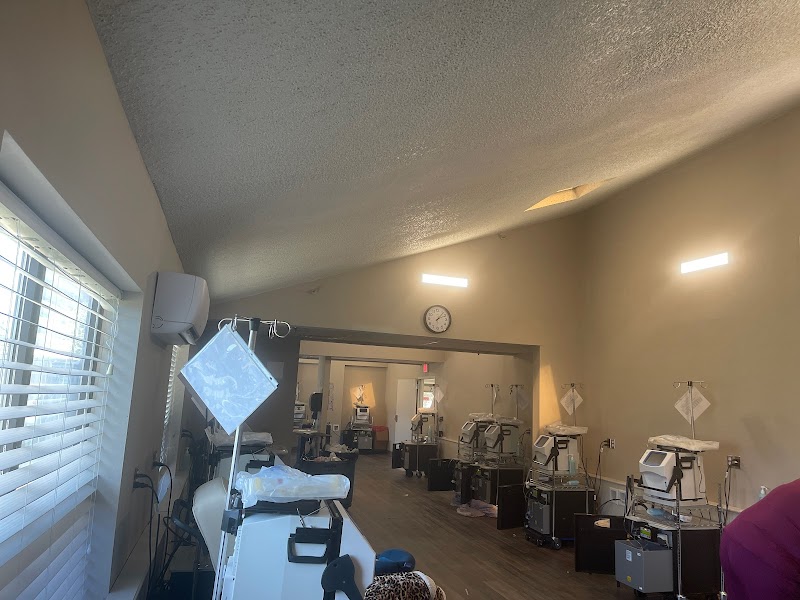
Who Owns and Operates The Lodge At Brookline?

The Lodge At Brookline is owned by a for-profit company. For-profit facilities operate as businesses with obligations to shareholders or private owners. The facility is operated by DIAKONOS GROUP, a chain that manages multiple nursing homes. With 132 certified beds and approximately 52 residents (about 39% occupancy), it is a mid-sized facility located in Oklahoma City, Oklahoma.

How Does The Lodge At Brookline Compare to Other Oklahoma Nursing Homes?

Compared to the 100 nursing homes in Oklahoma, The Lodge At Brookline's overall rating (1 stars) is below the state average of 2.6, staff turnover (70%) is significantly higher than the state average of 46%, and health inspection rating (1 stars) is much below the national benchmark.

What Should Families Ask When Visiting The Lodge At Brookline?

Based on this facility's data, families visiting should ask: "What changes have been made since the serious inspection findings, and how are you preventing similar issues?" "How do you ensure continuity of care given staff turnover, and what is your staff retention strategy?" "Can you walk me through typical staffing levels on day, evening, and night shifts?" "Can I visit during a mealtime to observe dining assistance and food quality?" These questions are particularly relevant given the facility's Immediate Jeopardy citations, the facility's high staff turnover rate, and the below-average staffing rating.

Is The Lodge At Brookline Safe?

Based on CMS inspection data, The Lodge At Brookline has documented safety concerns. Inspectors have issued 2 Immediate Jeopardy citations (the most serious violation level indicating risk of serious injury or death). The facility has a 1-star overall rating and ranks #100 of 100 nursing homes in Oklahoma. Families considering this facility should ask detailed questions about what corrective actions have been taken since these incidents.

Do Nurses at The Lodge At Brookline Stick Around?

Staff turnover at The Lodge At Brookline is high. At 70%, the facility is 24 percentage points above the Oklahoma average of 46%. Registered Nurse turnover is particularly concerning at 83%. RNs handle complex medical decisions and coordinate care — frequent RN changes can directly impact care quality. High turnover means new staff may not know residents' individual needs, medications, or preferences. It can also be disorienting for residents, especially those with dementia who rely on familiar faces. Families should ask: What is causing the turnover? What retention programs are in place? How do you ensure care continuity during staff transitions?

Was The Lodge At Brookline Ever Fined?

The Lodge At Brookline has no federal fines on record. CMS issues fines when nursing homes fail to meet care standards or don't correct problems found during inspections. The absence of fines suggests the facility has either maintained compliance or corrected any issues before penalties were assessed. This is a positive indicator, though families should still review recent inspection reports for the full picture.

Is The Lodge At Brookline on Any Federal Watch List?

The Lodge At Brookline is not on any federal watch list. The most significant is the Special Focus Facility (SFF) program, which identifies the bottom 1% of nursing homes nationally based on persistent, serious quality problems. Not being on this list means the facility has avoided the pattern of deficiencies that triggers enhanced federal oversight. This is a positive indicator, though families should still review the facility's inspection history directly.