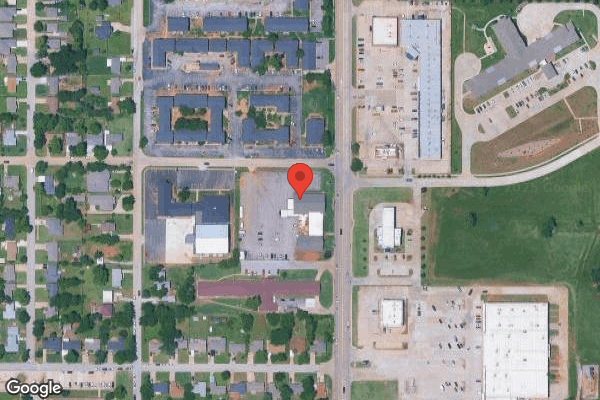
GRAN GRANS PLACE

1110 SOUTH CORNWELL DRIVE, YUKON, OK 73099 (405) 350-2311
For profit - Partnership 69 Beds Independent Data: November 2025
Trust Grade
75/100
#55 of 282 in OK
Last Inspection: July 2024

Within standard 12-15 month inspection cycle. Federal law requires annual inspections.

Overview

Gran Gran's Place in Yukon, Oklahoma, has a Trust Grade of B, indicating it is a good option for families, meaning it performs well overall but has room for improvement. It ranks #55 out of 282 facilities in Oklahoma, placing it in the top half, and is #3 out of 5 in Canadian County, meaning there is only one other local option that ranks higher. Unfortunately, the facility is experiencing a worsening trend, with the number of identified issues increasing from 7 in 2023 to 9 in 2024. Staffing is decent, with a 3/5 star rating and a turnover rate of 51%, which is slightly better than the state average of 55%. Notably, there have been no fines, which is a positive sign, and the facility has more RN coverage than 77% of other Oklahoma facilities, suggesting that residents receive good medical oversight. However, there are some concerns highlighted in recent inspections. For example, a resident with dementia did not receive their scheduled snacks as outlined in their care plan, as staff failed to document and provide these consistently. Additionally, two staff members did not have their annual competency reviews completed, raising questions about staff training and qualifications. Lastly, the dietary manager has not completed the required certification for their role, which could affect the quality of food services for residents. While Gran Gran's Place has strengths, these issues warrant careful consideration for families evaluating their care options.

Trust Score
B
75/100
In Oklahoma
#55/282
Top 19%
Safety Record
Low Risk
No red flags
Inspections
Getting Worse
7 → 9 violations
Staff Stability
⚠ Watch
51% turnover. Above average. Higher turnover means staff may not know residents' routines.
Penalties
✓ Good
No fines on record. Clean compliance history, better than most Oklahoma facilities.
Skilled Nurses
⚠ Watch
Each resident gets only 25 minutes of Registered Nurse (RN) attention daily — below average for Oklahoma. Fewer RN minutes means fewer trained eyes watching for problems.
Violations
⚠ Watch
16 deficiencies on record. Higher than average. Multiple issues found across inspections.
★★★★☆
4.0
Overall Rating
★★★☆☆
3.0
Staff Levels
★★★★★
5.0
Care Quality
★★★☆☆
3.0
Inspection Score
Stable
2023: 7 issues
2024: 9 issues

The Good

  • 5-Star Quality Measures · Strong clinical quality outcomes
  • Full Sprinkler Coverage · Fire safety systems throughout facility
  • No fines on record

Facility shows strength in quality measures, fire safety.

The Bad

Staff Turnover: 51%

Near Oklahoma avg (46%)

Higher turnover may affect care consistency

The Ugly 16 deficiencies on record

Jul 2024 9 deficiencies
CONCERN (D)

Potential for Harm - no one hurt, but risky conditions existed

Notification of Changes (Tag F0580)

Could have caused harm · This affected 1 resident

Based on record review and interview, the facility failed to notify the physician of a resident who had a significant decline in their meal intake with weight loss for one (#24) of three reviewed for ...

Read full inspector narrative →
Based on record review and interview, the facility failed to notify the physician of a resident who had a significant decline in their meal intake with weight loss for one (#24) of three reviewed for nutrition. The Long Term Care Application documented 35 residents resided in the facility. Findings: Resident #24 had diagnoses which included hypertension, dementia, and gastroesophageal reflux disease. A quarterly assessment, dated 05/07/24, documented Resident #24 received a mechanically altered diet. A Dietary Flow Record, dated June 2024, documented Resident #24 had refused or consumed less than 50% for 22 of 30 breakfast meals, 19 of 30 lunch meals, and 13 of 30 dinner's. A Dietary Flow Record, dated July 2024, documented Resident #24 had refused or consumed less than 50% for one of eight breakfast meals, four of eight lunch meals, and four of seven dinner meals. On 07/07/24 at 9:32 a.m., Resident #24 was observed in the dining room, a plate with raised edges and two cups with lids and a straw were observed in front of the resident. A weight entry form, documented Resident #24's weight was 120 pounds on 05/07/24 and was 112 pound on 07/08/24 for a 6.67 % weight loss. On 07/09/24 at 11:02 a.m., the MDS coordinator was asked if the physician had been notified about the resident refusing their meals. They stated there was nothing documented. On 07/09/24 at 2:43 p.m., the DON was asked who reviewed the dietary flow records to ensure the resident was eating. They stated the dietary supervisor. The DON was asked if the physician had been notified the resident had a decline in their meal intake. The stated any nurse could notify the physician. The DON stated they were not aware Resident #24 had not been eating.
CONCERN (D)

Potential for Harm - no one hurt, but risky conditions existed

Deficiency F0637 (Tag F0637)

Could have caused harm · This affected 1 resident

Based on record review and interview, the facility failed to complete a significant change assessment for one (#34) of 14 residents reviewed for assessments. The Long Term Care Application documented ...

Read full inspector narrative →
Based on record review and interview, the facility failed to complete a significant change assessment for one (#34) of 14 residents reviewed for assessments. The Long Term Care Application documented 35 residents resided in the facility. Findings: An undated Resident Assessment Policy, read in part .Significant change assessments will be completed as soon as needed to provide appropriate care to the resident, but in no case, later than 14 days after determining a significant change in the resident's physical or mental condition has occurred . Resident #34 had diagnoses which included, Alzheimer's early onset and dementia. A quarterly assessment, dated 01/25/24, documented Resident #34 needed supervision or touching assistance with eating, and substantial or maximal assistance with toileting. A quarterly assessment, dated 04/23/24, documented Resident #34 needed partial to moderate assistance with eating, and was dependent on staff for toileting. On 07/09/24 at 2:29 p.m., the MDS coordinator was asked what constituted a significant change. They stated if there was a change in two or more areas that would be permanent. They were asked to review the January and April assessments; and asked if the Resident #34 had a significant change. They stated a significant change assessment should have been completed.
CONCERN (D)

Potential for Harm - no one hurt, but risky conditions existed

Drug Regimen Review (Tag F0756)

Could have caused harm · This affected 1 resident

Based on record review and interview, the facility failed to ensure a physician response was documented for a dose reduction for one (#16) of five residents reviewed for unnecessary medications. The L...

Read full inspector narrative →
Based on record review and interview, the facility failed to ensure a physician response was documented for a dose reduction for one (#16) of five residents reviewed for unnecessary medications. The Long Term Care Application documented 35 residents resided in the facility. Findings: An Antidepressants policy, dated 08/01/09, read in part, .If continuation of the medication is deemed necessary, the physician indicated this in the resident's medical record .If the physician determined that the medication may be discontinued, the plan for tapering the dose and the target date for discontinuation are indicated in the resident's medical record .Contraindication to dose reductions must be described in the resident's medical record by the responsible physician . Resident #16 had diagnoses which included depression and Alzheimer's. A physician order, dated 01/02/23, documented Resident #16 was to be administered Sertraline 100 mg along with 25 mg to equal 125 mg dose one time a day. A Consultant Pharmacist's Medication Regimen Review, dated 02/05/24, read in part, This resident currently receives sertraline 125 mg daily. If in your medical opinion a dose reduction is warranted for this medication please provide a new order below -OR- Please provide a written rationale below describing why a dose reduction for this medication is clinically contraindicated. The form did not contain a response from the physician. On 07/09/24 at 12:18 p.m., the DON was asked if a GDR had been attempted for Sertraline. They stated they were not sure and would look. On 07/09/24 at 12:45 p.m., the DON stated they were unable to locate any documentation where the physician had responded to the GDR request, dated 02/05/24, for a decrease in Sertraline.
CONCERN (D)

Potential for Harm - no one hurt, but risky conditions existed

Laboratory Services (Tag F0770)

Could have caused harm · This affected 1 resident

Based on record review and interview, the facility failed to ensure lab results were received in a timely manner for one (#34) of five residents reviewed for unnecessary medications. The Long Term Ca...

Read full inspector narrative →
Based on record review and interview, the facility failed to ensure lab results were received in a timely manner for one (#34) of five residents reviewed for unnecessary medications. The Long Term Care Application documented 35 residents resided in the facility. Findings: Resident #34 had diagnoses which included Alzheimer's, early onset and dementia. A Physician Order, dated 12/01/23 documented to complete a CMP and CBC every six months in April and October. The clinical health record did not contain CMP lab results for April 2024. On 07/09/24 at 3:08 p.m., the MDS coordinator stated they had ordered the lab and it had been drawn on 04/02/24 but the CBC had clotted so the lab returned on 4/10/24 and collected the CBC. The MDS coordinator provided a copy of CMP results that had been received 07/09/24 They stated they had to call the lab and get the results for the CMP dated 04/02/24 it was not in the facility.
CONCERN (E)

Potential for Harm - no one hurt, but risky conditions existed

Deficiency F0692 (Tag F0692)

Could have caused harm · This affected multiple residents

2. Resident #13 had diagnoses which included Alzheimer's and dementia. A care plan, dated 05/16/24, documented to provide Resident #13 a healthshake if they eat less than 50% and that the resident had...

Read full inspector narrative →
2. Resident #13 had diagnoses which included Alzheimer's and dementia. A care plan, dated 05/16/24, documented to provide Resident #13 a healthshake if they eat less than 50% and that the resident had to be fed and and to provide a snack two times a day at 10:00 a.m. and 2:00 p.m. A Dietary Flow record, dated June 2024, read in part, .Breakfast Replacement if 50% or less consumed .Lunch Replacement if 50% or less consumed .Dinner Replacement if 50% or less consumed . A Dietary Flow record, dated June 2024, failed to document meal placements had been provided for 13 of 30 breakfast opportunities, 11 of 30 lunch opportunities, and six of 30 opportunities for dinner. On 07/08/24 at 2:00 p.m., a staff member was observed passing snacks on Resident #13's hall. Resident #13 was observed asleep in their room. Staff was not observed to enter and offer a snack to the resident. On 07/08/24 at 2:09 CMA #1 was asked who had received 2 p.m. snacks. They stated they ask the residents who can respond. They were asked if they had offered a snack to Resident #13. CMA #1 stated no, that Resident #13 was asleep in bed. They were asked who documented meal percentages and health shakes offered and consumed. CMA #1 stated dietary. On 07/09/24 at 2:57 p.m., the DON was asked what staff would do if a was resident asleep and unable to feed themselves when snacks where passed. They stated if the resident is asleep and unable to feed themselves, whoever is passing snacks needs to feed it to them. 3. Resident #24 had diagnoses which included hypertension, dementia, and gastroesophageal reflux disease. A quarterly assessment, dated 05/07/24, documented the resident received a mechanically altered diet. A Dietary Flow record, dated June 2024, failed to document meal replacements had been provided for 22 of 30 breakfast opportunities, nineteen of thirty lunch opportunities, and thirteen of thirty opportunities for dinner. A Dietary Flow record, dated July 2024, failed to document meal replacements had been provided for one of eight breakfast opportunities, four of eight lunch opportunities, and four of seven opportunities for dinner. On 07/07/24 at 9:32 a.m., Resident #24 was observed in the dining room, a plate with raised edges and two cups with lids and a straw were observed in front of the resident. On 07/09/24 at 11:02 a.m., the MDS coordinator was asked if the physician had been notified about the resident refusing their meals. They stated there was nothing documented. On 07/09/24 at 2:43 p.m., the DON was asked who reviewed the dietary flow records to ensure the resident was eating. They stated the dietary supervisor. The DON was asked if the physician had been notified the resident had a decline in their meal intake. They stated any nurse could notify the physician. The DON stated they were not aware Resident #24 had not been eating. On 07/09/24 at 7:39 a.m., dietary aide #1 was asked what the process was for monitoring meal percentages. They stated they were supposed to go around and document what percentage the resident had eaten. They were asked what if the resident refuses their meal or eats less than 50 % or less. They stated they are to offer a shake or magic cup. They were asked where that would be documented. Dietary aide #1 stated in the meal percentages. The dietary manager was asked if they were aware Resident #24 had been refusing their meals in June and July. They stated they had been watching that. They were asked if they had notified the DON. They stated No. Based on observation, record review, and interview, the facility failed to ensure: a. 2:00 p.m. snacks were provided to one (#13) and, b. meal replacements were provided when residents consumed less that 50% of a meal for three (#19, 13, and 24) of three residents reviewed for nutrition. The Long Term Care Application documented 35 residents resided in the facility Findings: An undated, Dietary Services Policy, read in part Food Substitutes If resident refuse food, substitutes of similar nutrition shall be offered. Food substitutes shall be consistent with the usual and ordinary food items provided to residents. 1. Resident #19 had diagnoses which included pressure ulcer and protein calorie malnutrion. A Care plan, dated 03/06/24, documented to provide supplements if Resident #19 eats less than 50% of meals. A Dietary Flow record, dated June 2024, read in part, .Breakfast Replacement if 50% or less consumed .Lunch Replacement if 50% or less consumed .Dinner Replacement if 50% or less consumed . A Dietary Flow record, dated June 2024, did not contain documentation meal replacement had been provided four of 30 opportunities for breakfast, three of 30 opportunities for lunch, and four of 30 opportunities. On 07/08/24 at 1:57 p.m., the DON stated residents would be given a health shake if they did not eat much. The DON was asked where that would be documented. They stated on dietary sheets. The DON was shown Resident #19's dietary flow record for June 2024 that showed the missed opportunities for meal replacements.
CONCERN (E)

Potential for Harm - no one hurt, but risky conditions existed

Deficiency F0730 (Tag F0730)

Could have caused harm · This affected multiple residents

Based on record review and interview, the facility failed to ensure annual competency reviews were completed for two (#1 and #2) of two staff reviewed for annual competency reviews. The Long Term Car...

Read full inspector narrative →
Based on record review and interview, the facility failed to ensure annual competency reviews were completed for two (#1 and #2) of two staff reviewed for annual competency reviews. The Long Term Care Application documented 35 residents resided in the facility. Findings: CNA #1 and CNA #2's personnel files were reviewed for annual competency reviews. On 07/1024 at 1:14 p.m., the DON was asked if annual competency checks were completed. They stated no they are not done annually and there was no documentation checks had been completed for CNA #1 and CNA #2.
CONCERN (E)

Potential for Harm - no one hurt, but risky conditions existed

Deficiency F0801 (Tag F0801)

Could have caused harm · This affected multiple residents

Based on record review and interview, the facility failed to ensure the person designated to serve as the dietary manager had completed their certification for dietary management. The Long Term Care ...

Read full inspector narrative →
Based on record review and interview, the facility failed to ensure the person designated to serve as the dietary manager had completed their certification for dietary management. The Long Term Care Application documented 35 residents resided in the facility. Findings: The dietary manager had been in that position since July 2021. On 07/10/24 at 8:19 a.m., the dietary manager was asked if they had their certificate for dietary management. They stated, No. On 07/10/24 at 8:29 a.m., the Administrator was asked how long the dietary manager had been in their position. They stated they were unsure. The Administrator was asked why the dietary manager had not received their certification. They stated the dietary manager had not gone to training.
CONCERN (E)

Potential for Harm - no one hurt, but risky conditions existed

Food Safety (Tag F0812)

Could have caused harm · This affected multiple residents

Based on observation, record review, and interview, the facility failed to ensure dietary staff did not touch food with their bare hands during meal service. The Long Term Care Application documented...

Read full inspector narrative →
Based on observation, record review, and interview, the facility failed to ensure dietary staff did not touch food with their bare hands during meal service. The Long Term Care Application documented 35 residents resided in the facility. Findings: An undated, Dietary Services policy, read in part Foods are prepared and served with clean tongs, scoops, forks, spoons, spatulas, or other suitable implements so as to avoid manual contact of prepared foods. On 07/07/24 at 8:13 a.m., the dietary manager was observed to remove a piece of bread from the package with their bare hands, place it in the toaster, remove it with their bare hand, brush butter on it, slice it then put it on a plate to serve to a resident. On 07/07/24 at 8:22 a.m., the dietary aide #1 was observed to split a biscuit using their bare hands, and place the biscuit on a plate. They were observed to cut up a piece of round sausage and was observed to touch the sausage with their fingers while cutting it up. They scraped the sausage from the plate onto the plate with the biscuit and then served to the resident. On 07/07/24 at 8:25 a.m., the dietary manager was asked what the policy was regarding touching food with bare hands and gloves. They stated it depended on what it was, if it was a meat product or eggs anything that could be a possible contamination, gloves should be worn.
CONCERN (E)

Potential for Harm - no one hurt, but risky conditions existed

Deficiency F0883 (Tag F0883)

Could have caused harm · This affected multiple residents

Based on record review and interview, the facility failed to ensure residents were provided education and potential side effects of the influenza vaccine annually for three (#5, 6, and #13) of five re...

Read full inspector narrative →
Based on record review and interview, the facility failed to ensure residents were provided education and potential side effects of the influenza vaccine annually for three (#5, 6, and #13) of five residents reviewed for vaccinations. The Long Term Care Application documented 35 residents resided in the facility. Findings: 1. Resident #5's informed consent for influenza vaccination had been signed on 01/16/2019. The vaccine had been administered on 10/18/23. 2. Resident #6's informed consent for influenza vaccination had been signed on 06/21/22. 3. Resident #13's informed consent for influenza vaccination had been signed on 05/29/18. On 07/10/24 at 2:29 p.m., the DON was asked if residents/resident representatives were provided with education and possible side effects annually. They stated, starting this year, there will be.
Nov 2023 1 deficiency
CONCERN (D) 📢 Someone Reported This

A family member, employee, or ombudsman was alarmed enough to file a formal complaint

Potential for Harm - no one hurt, but risky conditions existed

Pharmacy Services (Tag F0755)

Could have caused harm · This affected 1 resident

Based on observation, record review, and interview, the facility failed to ensure a controlled medication was documented timely and a discrepancy in the narcotic count was reported for one (#4) of thr...

Read full inspector narrative →
Based on observation, record review, and interview, the facility failed to ensure a controlled medication was documented timely and a discrepancy in the narcotic count was reported for one (#4) of three sampled residents whose narcotic counts were reviewed. The MDS Coordinator identified the resident census was 39 and there were 19 total residents receiving controlled medications. Findings: An Administration of Schedule 2 Medications policy, revised 08/07/2012, read in parts, . All Schedule 2 medications removed from storage for the purpose of administering doses to the resident will be entered onto the individual resident's Controlled Drug Receipt/Record/Disposition Form .Any discrepancies in the individual resident's Controlled Drug Receipt/Record/Disposition Form must be immediately reported to the Director of Nursing . Resident #4 had diagnoses which included leukemia and chronic pain. A physician's order, dated 10/05/23, documented Resident #4 was to be administered Hydrocod/APAP (Norco) 5/325mg tab one tablet by mouth every four hours as needed for pain. A Daily Pain Record documented, on 11/07/23 at 8:10 a.m., Resident #4 had a pain rating of six out of ten and complained of bilateral lower extremity pain. The November MAR documented Norco one tab was administered to Resident #4 by LPN #1 on 11/07/23 at 8:10 a.m. On 11/09/23 at 10:24 a.m., this surveyor conducted a count of Resident #4's Hydrocod/APAP (Norco) 5/325mg tablets with LPN #1 and observed a notation on the Controlled Drug Receipt/Record/Disposition Form, initialed by LPN #2 and LPN #3, which changed the amount of the Norco pills remaining from 14 to 13 tablets and stated the count had been corrected. Thirteen Norco tablets were observed. There was no explanation for the correction on the Controlled Drug Receipt/Record/Disposition Form nor in Resident #4's clinical record. LPN #1 reported they were not aware of the discrepancy and CMA #1 had performed the count of narcotics with the off going nurse that morning. On 11/09/23 at 3:08 p.m., LPN #2 was asked if the DON had been notified when they discovered the discrepancy in the Norco count for Resident #4 and documented on the Controlled Drug Receipt/Record/Disposition Form that count had been corrected during change of 3 p.m.-11 p.m. shift on 11/08/23. LPN #2 stated no. On 11/09/23 at 3:13 p.m., the DON was asked the facility policy for reporting discrepancies in the narcotic count. They stated any discrepancies were to be reported to her by phone call or text immediately. The DON was asked if the discrepancy in the Norco count for Resident #4, documented on the Controlled Drug Receipt/Record/Disposition Form at change of the 3 p.m. to 11 p.m. shift on 11/08/23 had been reported to her. She stated, No, I found out when you did, and I am investigating the reason right now. On 10/29/23 at 3:40 p.m., the DON reported they had reviewed the MAR and the Controlled Drug Receipt/Record/Disposition Form for Resident #4 and determined LPN #1 had not signed the medication out on the narcotic count sheet for the dose given 11/07/23 at 8:10 a.m. There was no documentation on the Controlled Drug Receipt/Record/Disposition Form for Resident #4 that Norco one tab had been removed and given at 8:10 a.m. on 11/07/23. On 10/29/23 at 3:50 p.m., the DON was asked how often narcotics should be counted. They stated every shift change. The DON acknowledged there had been five shift change opportunities, since 8:10 a.m. on 11/07/23, where the discrepancy in the Norco count should have been reported and corrected. The DON was asked if facility policy had been followed. She stated no.
Jun 2023 6 deficiencies
CONCERN (D) 📢 Someone Reported This

A family member, employee, or ombudsman was alarmed enough to file a formal complaint

Potential for Harm - no one hurt, but risky conditions existed

Quality of Care (Tag F0684)

Could have caused harm · This affected 1 resident

Based on record review and interview, the facility failed to assess and intervene for a resident who had a change in condition for one ( #137) of three residents sampled for change in conditions. The...

Read full inspector narrative →
Based on record review and interview, the facility failed to assess and intervene for a resident who had a change in condition for one ( #137) of three residents sampled for change in conditions. The DON identified 33 residents resided in the facility. Findings: Resident #137 had diagnoses which included chronic kidney disease, congestive heart failure, and end stage renal disease. Resident #137's resident assessment, dated 12/15/22, documented they had no cognitive impairment. A Nurse's Notes, dated 03/08/23 at 5:00 p.m., read in part, .Resident had runny nose [with] cough. Covid test done [with] neg. Results . There was no documentation vital signs or an assessment had been completed. A Nurse's Note, dated 03/08/23 at 7:30 p.m., read in parts, .Resident c/o n/v-upon assessment RN noted patient to be very pale, diaphoretic and dry heaves observed. Resident moaning continuously saying 'ouch' Resident unable to specify location of pain .Temp is 97.4, BP-80/40, P-100- R-28. FSBS 198 .EMS arrived and transported pt out of facility . On 06/21/23 at 3:15 p.m., the DON was shown the progress notes and asked asked if the resident had been assessed at 5:00 p.m. The DON stated there were no vital signs documented. They were asked an assessment should contain. They stated an interview with the resident, temperature, blood pressure, oxygen saturation, and document all of the findings. They were asked if the doctor had been notified. The DON stated, No. The DON was asked if Resident #137 had complaints of coughing, would an assessment include an assessment of lung sounds. They stated, Yes.
CONCERN (E) 📢 Someone Reported This

A family member, employee, or ombudsman was alarmed enough to file a formal complaint

Potential for Harm - no one hurt, but risky conditions existed

Medication Errors (Tag F0758)

Could have caused harm · This affected multiple residents

Based on record review and interview, the facility failed to ensure the prescribing physician documented the rationale and duration for prescribing prn psychotropic medications for more than 14 days f...

Read full inspector narrative →
Based on record review and interview, the facility failed to ensure the prescribing physician documented the rationale and duration for prescribing prn psychotropic medications for more than 14 days for two (#9 and #24) of five residents sampled for unnecessary medications. The DON identified five residents received prn psychotropic medications and 33 residents resided in the facility. Findings: A SEDATIVE/HYPNOTICS policy, revised 08/07/12, read in parts, . Residents receive sleep-inducing medication's only when medically necessary .hypnotic medication ordered on a PRN basis, or administered only .The continue need for hypnotic medication is reassessed periodically by the prescribing physician .If continuation of the medication is deemed necessary, the physician indicates this in the residents medical record .Contraindication to dose reductions must be described in the residents medical record by the responsible physician .The consultant pharmacist notifies the responsible physician, if any prescribed hypnotic, does not comply with these guidelines . 1. Resident #9 had diagnoses which included quadriplegia, scoliosis, anxiety disorder, and depressive episodes. A annual assessment, dated 05/25/23, documented Resident #9's cognition was intact. Resident #9's Pharmacy Communications, dated 02/27/23, 05/30/23 and, 06/12/23, read in parts, .This resident has been ordered a PRN psychotropic medication, which per CMS regulations .Psychotropic drugs should be limited to 14 days or less unless the prescriber documents the following information .if the attending physician or prescribing practitioner, believe that it is appropriate for PRN orders to be extended beyond 14 days, he or she should: document the rationale in the residence medical record, and indicate the duration for the PRN order . The pharmacy communications did not document the duration for the prn order for Temazepam 15 mg or the rationale and was unsigned by the physician. A Physician's Order, dated 02/27/2023, read in part, .Temazepam 15 mg .1 CAPSULE BY MOUTH ONE TIME A DAY BEDTIME AS NEEDED . Medication Administration records, documented Resident #9 received Temazepam 15 mg for 73 consecutive days from 04/01/23 through 06/22/23. On 06/22/23 at 10:47 a.m., The DON was shown the pharmacy communication, dated 06/12/23, and asked to show where the physician responded and documented the rationale for prn temazepam 15 mg and the duration. They stated, I cannot show you. I did not understand that procedure properly. The DON stated that they thought the resident seeing a physician every 30 days was sufficient to meet compliance. 2. Resident #24 had diagnoses of anxiety, depression, anemia, glaucoma, angina, and hypertension. A Physician's Orders, dated 03/27/2023, read in part, .Alprazolam Tab 0.25mg .1 Tablet by Mouth Every eight hours as needed . Medication Administration records, documented Resident #24 had received Alprazolam 0.25 mg prn eight days in the month of April 2023 and eight days in the month of May 2023. A Pharmacy Communication PRN Psychotropic Notice, dated 06/05/23, read in parts, .This Resident has been ordered a PRN psychotropic medication which per CMS regulations .should be limited to 14 days or less unless prescriber documents the following .Indication for use .document the rationale .duration for the PRN order . Resident #24's pharmacy communication dated, 06/05/23, did not document the duration for the PRN Order for Alprazolam tab 0.25mg or the rationale and was unsigned by the physician. On 06/23/23 at 9:34 a.m.,The DON was shown the pharmacy communication and was asked to show where the physician responded with a rationale to continue the medication. The DON stated, No, the physician did not document the rationale or time frame. They stated they thought psych services seeing the resident monthly covered the procedure. The DON was asked if the resident receive the prn medication for more than 14 days without a physician documenting the rationale and time frame. The DON stated, Yes.
CONCERN (E)

Potential for Harm - no one hurt, but risky conditions existed

Unnecessary Medications (Tag F0759)

Could have caused harm · This affected multiple residents

Based on observation,record review and interview, the facility failed to ensure medication pass error rate was less than five percent for one (#27) of four sampled residents reviewed during the medica...

Read full inspector narrative →
Based on observation,record review and interview, the facility failed to ensure medication pass error rate was less than five percent for one (#27) of four sampled residents reviewed during the medication pass. There were 10 errors and 33 opportunities which resulted in a 30.3 % error rate. The DON identified 33 residents received medication from the facility Findings: Resident #27 had diagnoses which included malignant neoplasm of breast, anxiety, dementia, and high blood pressure. A Crushing of Medications policy, revised 08/07/12, read in parts, .The crushing of medications requires a Physician order .If crushing of the medication is authorized by physician the Pharmacy should be notified and documentation must be made in the resident's medical record . The admission Orders and Plan of Care, dated 11/09/22, did not contain an order to crush or open medications. Physician's Orders, dated June 2023, did not contain an order to crush or open medications. On 06/22/23 at 7:26 a.m., CMA #1 was observed to prepare and crush the following medications to administer to Resident #27; a. Amlodipine 5 mg one tablet, b. Letrozole 2.5 mg one tablet, c. Levothyroxine 100 mcg one tablet, d. Magnesium Oxide 400 mg one tablet, e. Memantine 10 mg one tablet, f. Metformin 500 mg one tablet, g. Multivitamin one tablet, h. Oxybutynin 5 mg one tablet, i. Senna 8.5 mg one tablet, and j. Florastar 250 mg two capsules was opened. CMA #1 then mixed the medications with a spoonful of jelly and administered the medications to Resident #27. On 06/22/23 at 7:58 a.m., LPN #1 was asked if Resident #27 had physician orders to crush medications. They looked at the physician orders and stated, it was supposed to be on the start up (admission orders and plan of care). LPN #1 looked at the admission orders and plan of care and stated that's why it's not on the physician orders. LPN #1 stated there was no documentation on the admission orders and plan of care, so it did not get put on the physician orders. On 06/22/23 at 8:13 a.m., CMA #1 was asked what medications did they crush during the medication pass for Res #27. They stated all of them and they had opened the probiotic (Florastar) capsules. They were asked if there was an order to crush the medications. They looked at the physician order and admission orders and stated, I cannot find it. I don't see one.
CONCERN (E)

Potential for Harm - no one hurt, but risky conditions existed

Deficiency F0868 (Tag F0868)

Could have caused harm · This affected multiple residents

Based on record review and interview, the facility failed to ensure Quality Assurance meetings were held quarterly. The DON identified 33 residents resided in the facility. Findings: A QA sign in she...

Read full inspector narrative →
Based on record review and interview, the facility failed to ensure Quality Assurance meetings were held quarterly. The DON identified 33 residents resided in the facility. Findings: A QA sign in sheet, dated 03/01/23, documented attendees of the March QA meeting. On 06/22/23 at 3:00 p.m., the DON was asked for QA meeting documentation. They stated the only sign in sheet was from 03/01/23. They were asked if they had any documentation for the other quarters since last year. They stated they had meetings in June 2022, September 2022, and January 2023, but did not have any sign in sheets or documentation about what had been discussed.
CONCERN (E)

Potential for Harm - no one hurt, but risky conditions existed

Infection Control (Tag F0880)

Could have caused harm · This affected multiple residents

Based on record review and interview, the facility failed to ensure a water management system was in place to track and prevent waterborne diseases. The DON identified 33 residents resided in the faci...

Read full inspector narrative →
Based on record review and interview, the facility failed to ensure a water management system was in place to track and prevent waterborne diseases. The DON identified 33 residents resided in the facility. Findings: On 06/22/23 at 3:25 p.m., the Administrator was asked if the facility had a system in place to track and identify Legionella. They stated they were not aware they had to do that and did not have anything in place. The Administrator stated they had no policy related to Legionella.
CONCERN (E)

Potential for Harm - no one hurt, but risky conditions existed

Deficiency F0887 (Tag F0887)

Could have caused harm · This affected multiple residents

Based on record review and interview the facility failed to ensure COVID-19 vaccinations were offered for one (#27) of five residents sampled for vaccinations. The DON identified 33 residents resided ...

Read full inspector narrative →
Based on record review and interview the facility failed to ensure COVID-19 vaccinations were offered for one (#27) of five residents sampled for vaccinations. The DON identified 33 residents resided in the facility. Findings: Resident #27 had diagnoses which included malignant neoplasm of breast, anxiety, dementia and high blood pressure. Resident #27's clinical health record had no documentation Resident #27 or the Resident representative had been educated and offered the COVID-19 vaccination. On 06/23/23 at 10:00 a.m., the DON was asked what the process was to educate and offer the COVID vaccination to residents. They stated the residents or representatives were asked if they wanted the vaccination, but there was no documentation for a consent or decline form. The DON was shown the clinical health record for Resident #27. They stated there was no documentation related to the COVID-19 vaccination and they did not have a consent/decline COVID-19 vaccination form.
Understanding Severity Codes (click to expand)
Life-Threatening (Immediate Jeopardy)
J - Isolated K - Pattern L - Widespread
Actual Harm
G - Isolated H - Pattern I - Widespread
Potential for Harm
D - Isolated E - Pattern F - Widespread
No Harm (Minor)
A - Isolated B - Pattern C - Widespread

Questions to Ask on Your Visit

  • "Can I speak with families of current residents?"
  • "What's your RN coverage like on weekends and overnight?"

Our Honest Assessment

Strengths
  • • No major safety red flags. No abuse findings, life-threatening violations, or SFF status.
  • • No fines on record. Clean compliance history, better than most Oklahoma facilities.
Concerns
  • • 16 deficiencies on record. Higher than average. Multiple issues found across inspections.
Bottom line: Generally positive indicators. Standard due diligence and a personal visit recommended.

About This Facility

What is Gran Grans Place's CMS Rating?

CMS assigns GRAN GRANS PLACE an overall rating of 4 out of 5 stars, which is considered above average nationally. Within Oklahoma, this rating places the facility higher than 99% of the state's 100 nursing homes. This rating reflects solid performance across the metrics CMS uses to evaluate nursing home quality.

How is Gran Grans Place Staffed?

CMS rates GRAN GRANS PLACE's staffing level at 3 out of 5 stars, which is average compared to other nursing homes. Staff turnover is 51%, compared to the Oklahoma average of 46%.

What Have Inspectors Found at Gran Grans Place?

State health inspectors documented 16 deficiencies at GRAN GRANS PLACE during 2023 to 2024. These included: 16 with potential for harm.

Who Owns and Operates Gran Grans Place?

GRAN GRANS PLACE is owned by a for-profit company. For-profit facilities operate as businesses with obligations to shareholders or private owners. The facility operates independently rather than as part of a larger chain. With 69 certified beds and approximately 32 residents (about 46% occupancy), it is a smaller facility located in YUKON, Oklahoma.

How Does Gran Grans Place Compare to Other Oklahoma Nursing Homes?

Compared to the 100 nursing homes in Oklahoma, GRAN GRANS PLACE's overall rating (4 stars) is above the state average of 2.6, staff turnover (51%) is near the state average of 46%, and health inspection rating (3 stars) is at the national benchmark.

What Should Families Ask When Visiting Gran Grans Place?

Based on this facility's data, families visiting should ask: "Can I visit during a mealtime to observe dining assistance and food quality?" "How do you handle medical emergencies, and what is your hospital transfer rate?" "Can I speak with family members of current residents about their experience?"

Is Gran Grans Place Safe?

Based on CMS inspection data, GRAN GRANS PLACE has a clean safety record: no substantiated abuse findings (meaning no confirmed cases of resident harm), no Immediate Jeopardy citations (the most serious violation level indicating risk of serious injury or death), and is not on the Special Focus Facility watch list (a federal program monitoring the lowest-performing 1% of nursing homes). The facility has a 4-star overall rating and ranks #1 of 100 nursing homes in Oklahoma. While no facility is perfect, families should still ask about staff-to-resident ratios and recent inspection results during their visit.

Do Nurses at Gran Grans Place Stick Around?

GRAN GRANS PLACE has a staff turnover rate of 51%, which is 5 percentage points above the Oklahoma average of 46%. Moderate turnover is common in nursing homes, but families should still ask about staff tenure and how the facility maintains care continuity when employees leave.

Was Gran Grans Place Ever Fined?

GRAN GRANS PLACE has no federal fines on record. CMS issues fines when nursing homes fail to meet care standards or don't correct problems found during inspections. The absence of fines suggests the facility has either maintained compliance or corrected any issues before penalties were assessed. This is a positive indicator, though families should still review recent inspection reports for the full picture.

Is Gran Grans Place on Any Federal Watch List?

GRAN GRANS PLACE is not on any federal watch list. The most significant is the Special Focus Facility (SFF) program, which identifies the bottom 1% of nursing homes nationally based on persistent, serious quality problems. Not being on this list means the facility has avoided the pattern of deficiencies that triggers enhanced federal oversight. This is a positive indicator, though families should still review the facility's inspection history directly.