CURRY VILLAGE HEALTH AND REHAB OF CASCADIA


1 PARK AVENUE, BROOKINGS, OR 97415 (541) 469-3111
For profit - Limited Liability company 59 Beds CASCADIA HEALTHCARE Data: November 2025
Trust Grade
75/100
#8 of 127 in OR
Last Inspection: January 2025

Within standard 12-15 month inspection cycle. Federal law requires annual inspections.

Overview

Curry Village Health and Rehab of Cascadia has a Trust Grade of B, indicating it is a good choice for families seeking care, but not without some areas for improvement. It ranks #8 out of 127 nursing homes in Oregon, placing it in the top half of facilities in the state, and it is the only option in Curry County. The facility is improving, with issues decreasing from 20 in 2023 to just 7 in 2025. Staffing is a strength, receiving a 5-star rating with a turnover rate of 45%, which is better than the state average. Notably, the facility had no fines on record and offers more RN coverage than 90% of Oregon facilities, ensuring better oversight of resident care. However, there are some concerning incidents to note. A serious violation was found regarding a resident's inadequate protein and fluid intake, which resulted in significant weight loss without proper medical follow-up. Additionally, the kitchen was cited for improper food storage and handling, which poses a risk for foodborne illnesses. Lastly, issues were noted with how personal protective equipment was stored, indicating a lack of adherence to safety protocols. Families should weigh these strengths and weaknesses carefully when considering this facility for their loved ones.

Trust Score
B
75/100
In Oregon
#8/127
Top 6%
Safety Record
Moderate
Needs review
Inspections
Getting Better
20 → 7 violations
Staff Stability
○ Average
45% turnover. Near Oregon's 48% average. Typical for the industry.
Penalties
✓ Good
No fines on record. Clean compliance history, better than most Oregon facilities.
Skilled Nurses
✓ Good
Each resident gets 59 minutes of Registered Nurse (RN) attention daily — more than average for Oregon. RNs are trained to catch health problems early.
Violations
⚠ Watch
33 deficiencies on record. Higher than average. Multiple issues found across inspections.
★★★★★
5.0
Overall Rating
★★★★★
5.0
Staff Levels
★★★★★
5.0
Care Quality
★★★☆☆
3.0
Inspection Score
Stable
2023: 20 issues
2025: 7 issues

The Good

  • 5-Star Staffing Rating · Excellent nurse staffing levels
  • 5-Star Quality Measures · Strong clinical quality outcomes
  • Full Sprinkler Coverage · Fire safety systems throughout facility
  • No fines on record
  • Staff turnover below average (45%)

    3 points below Oregon average of 48%

Facility shows strength in staffing levels, quality measures, fire safety.

The Bad

Staff Turnover: 45%

Near Oregon avg (46%)

Typical for the industry

Chain: CASCADIA HEALTHCARE

Part of a multi-facility chain

Ask about local staffing decisions and management

The Ugly 33 deficiencies on record

1 actual harm
Jan 2025 7 deficiencies
CONCERN (D)

Potential for Harm - no one hurt, but risky conditions existed

Deficiency F0554 (Tag F0554)

Could have caused harm · This affected 1 resident

Based on observation, interview, and record review it was determined the facility failed to ensure a resident was assessed to self-administer medications for 1 of 1 resident (#2) observed during dinin...

Read full inspector narrative →
Based on observation, interview, and record review it was determined the facility failed to ensure a resident was assessed to self-administer medications for 1 of 1 resident (#2) observed during dining observations. This placed residents at risk for an unsafe medication regimen. Findings include: Resident 2 was admitted to the facility in 6/2006 with a diagnosis of paralysis of the lower body. A 1/19/25 quarterly MDS revealed Resident 2 was cognitively intact and did not have difficulty swallowing. On 1/30/25 at 8:22 AM Resident 2 was observed in the dining room sitting alone at a table with her/his breakfast tray. Next to Resident 2's tray on a paper napkin were 12 medications and a staff member was not by her/his side to ensure she/he swallowed the medications. On 1/30/25 at 8:23 AM Staff 10 (RN) stated she always left Resident 2's medications on a napkin at breakfast because Resident 2 liked to take them while she/he ate. Staff 10 stated Resident 2 sat alone at meals. On 1/30/25 at 8:25 AM with Staff 2 (Chief Nursing Officer) and Staff 3 (Clinical Resource) Staff 2 stated if medications were left with a resident the resident was to be assessed to ensure she/he was safe to self-administer medications. Staff 3 stated a self-medication administration assessment was not completed and not in Resident 2's clinical record. On 1/30/25 at 8:59 AM Resident 2 stated she/he preferred to take her/his morning medications on her/his own time, she/he was very capable of taking the medications, and did not have issues with swallowing. Resident 2 stated she/he sat alone and other residents did not interrupt her/him during meals.
CONCERN (D)

Potential for Harm - no one hurt, but risky conditions existed

ADL Care (Tag F0677)

Could have caused harm · This affected 1 resident

Based on observation, interview, and record review it was determined the facility failed to ensure dependent residents received required assistance with ADLs for 1 of 3 sampled residents (#36) reviewe...

Read full inspector narrative →
Based on observation, interview, and record review it was determined the facility failed to ensure dependent residents received required assistance with ADLs for 1 of 3 sampled residents (#36) reviewed for ADLs. This placed residents at risk for unmet needs. Findings include: Resident 36 was admitted to the facility in 1/2025 with diagnoses of Alzheimer's disease and diabetes. A review of the admission MDS with an Aessment Review date of 1/7/25 revealed Resident 36's BIMS was six, indicating a severe cognitive impact. Resident 36 required partial to moderate assistance with personal hygiene. A review of Resident 36's care plan dated 1/7/25 revealed she/he had an ADL self-care performance deficit and required partial to moderate assistance with personal hygiene and bathing. A Documentation Survey Report from 1/2025 revealed Resident 36 received bathing on Saturdays and Tuesdays. On 1/25/25 there was no record Resident 36 was offered or refused bathing. An unnamed document dated 1/25/25 indicated Resident 36 was not assigned to a staff member for bathing on 1/25/25. On 1/27/25 at 1:00 PM Witness 2 (Family) stated she would prefer Resident 36 not have facial hair. Witness 2 did not know staff could remove the resident's facial hair. On 1/27/25 at 11:51 AM Resident 36 was observed in her/his room with facial hair approximately two inches long. Resident 36 stated she/he did not remember the last time she/he received a shower. On 1/28/25 the following occurred: -9:07 AM: Resident 36 stated she/he used to use a razor to shave but she/he no longer owned one. She/he wanted her/his facial hair removed. -12:11 PM Resident 36 was observed in the main dining room with other residents. Resident 36's facial hair was approximately two inches long. On 1/29/25 the following occurred: -7:36 AM Staff 9 (CNA) stated if a resident was diabetic, he would ask a nurse to shave the resident while in the shower. Staff 9 stated he did not have Resident 36 assigned for a shower on 1/25/25 so he did not provide her/him a shower. -7:48 AM Staff 22 (LPN) stated nurses would shave diabetic residents' facial hair if they did not have an electric razor. CNAs sometimes did not know how to get a nurse while the resident was showering. -9:02 AM Staff 17 (CNA) assisted Resident 36 into her/his room. Resident 36 was observed with approximately two-inch long facial hair. Staff 17 stated some residents had an electric razor for facial hair, but she did not know the process for residents without an electric razor. -3:20 PM Staff 1 (Chief Executive Officer), Staff 2 (Chief Nursing Officer), and Staff 3 (Clinical Resource) expected staff to offer and provide shaving for the residents. Staff 2 stated the staff member who was responsible for the assignment sheet for bathing had left unexpectedly and Resident 36's shower was missed.
CONCERN (D) 📢 Someone Reported This

A family member, employee, or ombudsman was alarmed enough to file a formal complaint

Potential for Harm - no one hurt, but risky conditions existed

Deficiency F0688 (Tag F0688)

Could have caused harm · This affected 1 resident

**NOTE- TERMS IN BRACKETS HAVE BEEN EDITED TO PROTECT CONFIDENTIALITY** Based on observation, interview, and record review it was determined the facility failed to ensure a resident received ROM for 1...

Read full inspector narrative →
**NOTE- TERMS IN BRACKETS HAVE BEEN EDITED TO PROTECT CONFIDENTIALITY** Based on observation, interview, and record review it was determined the facility failed to ensure a resident received ROM for 1 of 2 sampled residents (#18) reviewed for mobility. This placed residents at risk for decreased ROM. Findings include: Resident 18 was admitted to the facility in 2/2024 with a diagnosis of incomplete quadriplegia (limited movement below the neck). An 8/5/24 significant change MDS revealed Resident 18 had dementia, was blind, and required assistance with ADLs due to her/his quadriplegia. Resident 18 had functional limitations in ROM to both sides to the arms and legs. A 10/22/24 quarterly MDS revealed Resident 18 continued to have functional limitation in ROM to both sides to the arms and legs. A care plan initiated 11/4/24 revealed Resident 18 had Parkinson's disease and quadriplegia. Goals included Resident 18 would remain free of complications related to Parkinson's disease and maintain optimal quality of life within limitations imposed by her/his neurological deficits. Interventions staff were to provide included passive ROM with AM and PM care. A current (as of 1/29/25) [NAME] (CNA guide for resident specific care) revealed there was no ROM task set up for CNAs. On 1/29/25 at 11:14 AM Staff 17 (CNA) stated if a resident was to be provided ROM it was on the resident's [NAME]. Staff 17 stated she was able to do ROM if it was on the [NAME] and if there were directions for the type of ROM to be provided. On 1/29/25 at 3:04 PM Staff 14 (OT) stated Resident 18 did not tolerate therapy, had poor pain tolerance, poor insight, and was discharged from therapy services. When Resident 18 was discharged from therapy the facility did not have an RA program. Staff 14 stated CNAs were able to do simple, passive ROM. On 1/29/25 at 3:21 PM Staff 16 (CNA) stated he learned how to do ROM in her/his CNA certification class, was comfortable providing ROM, and provided ROM if it was on a resident's [NAME]. On 1/29/25 at 4:01 PM Staff 14 (CNA) stated she worked with Resident 18 and she/he did not have ROM on the [NAME] and she did not provide Resident 18 ROM. On 1/29/25 at 3:42 PM Staff 4 (Resident Care Manager RN) acknowledged Resident 18's care plan directed staff to provide ROM with AM and PM care. Staff 4 stated the ROM was not on the [NAME] as a task and staff did not do the ROM. On 1/30/25 at 7:57 AM with Staff 2 (Chief Nursing Officer) and Staff 3 (Clinical Resource) Staff 2 stated CNAs could do ROM but were not doing ROM.
CONCERN (D)

Potential for Harm - no one hurt, but risky conditions existed

Medication Errors (Tag F0758)

Could have caused harm · This affected 1 resident

2. Resident 28 was admitted to the facility in 9/2024 with a diagnosis of cancer. A 1/2025 MAR revealed Resident 28 was administered trazodone (antidepressant) daily at bedtime for sleep. A care pla...

Read full inspector narrative →
2. Resident 28 was admitted to the facility in 9/2024 with a diagnosis of cancer. A 1/2025 MAR revealed Resident 28 was administered trazodone (antidepressant) daily at bedtime for sleep. A care plan dated 10/1/24 indicated Resident 28 was administered an antidepressant and the goal was for her/him to be free from adverse reactions including sedation, agitation, and confusion. A 1/2025 MAR and TAR revealed staff did not monitor Resident 28 for side effects from her/his antidepressant. On 1/28/25 at 7:49 AM, 1/28/25 at 9:55 AM, and 1/28/25 at 12:05 PM Resident 28 was observed to be alert, sitting up, at the dining room, and conversing with others. On 1/28/25 at 3:56 PM Staff 11(LPN) stated the nurses monitored residents for side effects of medications and if they observed side effects they documented in residents' progress notes. Psychotropic medications with potential side effects which were to be monitored were on the MAR or TAR. Staff 11 stated Resident 28 was administered an antidepressant but did not have side effects which were to be monitored listed on the MAR or TAR. On 1/28/25 at 4:01 PM Staff 4 (Resident Care Manager RN) stated the monitoring of psychotropic medication side effects were to be completed on the MAR or TAR. Staff 4 stated Resident 28 did not have antidepressant side effect monitoring in her/his clinical record. On 1/28/25 at 4:11 PM Staff 2 (Chief Nursing Officer) and Staff 3 (Clinical Resource) verified Resident 28's psychotropic side effect monitoring was to be documented on the MAR and TAR but was not done. Based on observation, interview, and record review it was determined the facility failed to ensure residents did not receive unnecessary psychotropic medications and failed to monitor for side effects of psychotropic medications for 2 of 5 sampled residents (#s 7 and 28) reviewed for medications. This placed residents at risk for adverse side effects of medications. Finding include: 1. Resident 7 was admitted to the facility in 10/2017 with diagnoses including anxiety disorder. A review of Resident 7's signed physician orders dated 1/15/25 instructed staff to administer Xanax (to treat anxiety) every eight hours PRN for anxiety for 90 days, starting on 10/18/24. A review of the 1/2025 MAR instructed staff to administer Xanax every eight hours PRN for anxiety for 90 days, starting on 10/18/24. The MAR indicated Resident 7 was administered Xanax on 1/17/25, 1/18/25, 1/19/25 1/22/25, 1/23/25, 1/26/25, 1/27/25 and 1/28/25. Resident 7 was administered Xanax eight times after the end date of 1/16/25. No end date was documented on the MAR. On 1/30/25 at 6:28 AM, Staff 8 (LPN) stated staff should document the end date in clinical records. On 1/30/25 at 7:55 AM Staff 1 (Chief Executive Officer), Staff 2 (Chief Nursing Officer), and Staff 3 (Clinical Resource) expected staff to document an end date in clinical records for a medication that was ordered for 90 days.
CONCERN (D)

Potential for Harm - no one hurt, but risky conditions existed

Unnecessary Medications (Tag F0759)

Could have caused harm · This affected 1 resident

Based on observation, interview, and record review it was determined the facility failed to ensure a medication error rate of less than 5%. The facility administration error rate was 7.41% with two er...

Read full inspector narrative →
Based on observation, interview, and record review it was determined the facility failed to ensure a medication error rate of less than 5%. The facility administration error rate was 7.41% with two errors in 27 opportunities. This placed residents at risk for an ineffective medication regimen. Findings include: Resident 92 was admitted to the facility in 1/2025 with a diagnosis of malnutrition. A 1/27/25 hospital After Visit Summary form revealed Resident 92 was to be administered medications including Ferrous Sulfate EC (enteric coated) 324 mg (supplement) and Calcium with Vitamin D (supplement). On 1/28/25 at 7:48 AM Staff 11(LPN) was observed to administer Resident 92 medications including one Slow Iron 45 mg tablet. Staff 11 did not administer Calcium with Vitamin D. On 1/28/25 at 9:24 AM Staff 11 stated when a resident was admitted to the facility with new orders Staff 18 (Medical Records) entered the orders into a resident's clinical record and a nurse was to review the orders prior to administering the medications to ensure all the orders were entered correctly. Staff 11 reviewed Resident 92's admission orders and he acknowledged he administered the wrong dose of iron, stated the Calcium with Vitamin D was not transcribed onto the MAR, therefore, he did not administer the medication as ordered. On 1/28/25 at 9:26 AM Staff 1 (Chief Executive Officer) stated resident admission orders were entered into the clinical record by medical record staff and a nurse had to approve the orders before the medications could be administered. Staff 2 (Chief Nursing Officer) was notified the Calcium with Vitamin D was not transcribed onto the MAR. On 1/28/25 at 10:27 AM Staff 18 stated she did not enter the Calcium with Vitamin D order into Resident 92's clinical record and the nurse did not see the omitted order when they verified her/his orders.
CONCERN (E)

Potential for Harm - no one hurt, but risky conditions existed

Deficiency F0804 (Tag F0804)

Could have caused harm · This affected multiple residents

Based on observation, interview and record review it was determined the facility failed to ensure food for the residents was prepared in a manner which preserved the nutritional value for pureed textu...

Read full inspector narrative →
Based on observation, interview and record review it was determined the facility failed to ensure food for the residents was prepared in a manner which preserved the nutritional value for pureed texture diets. This placed residents at risk for nutritional deficits. Findings include: An observation of lunch meal service on 1/29/25 at 11:43 AM revealed pureed cranberry chicken as a main course available to residents with puree texture diets. On 1/29/25 at 3:15 PM Staff 19 (Dietary Aid) stated food was mixed with water to create the puree texture. He also stated the puree texture consistency was determined by sight. On 1/29/25 at 3:27 PM Staff 12 (Culinary Manager) stated the recipes and texture guidelines for the kitchen came from Sysco (a kitchen food and non-food product supplier). He stated the kitchen staff were instructed to use water to make the puree texture. Staff 12 stated he would bring the survey team the recipes and guidelines from Sysco. No further information was provided to the survey team. A 1/30/25 review of pureed food recipes and texture guidelines on Sysco's website revealed the following: - Pureed food texture was determined by using a two-step testing method prior to serving it - Foods were to be mixed with gravy, sauce, broth, or milk to create a puree texture.
CONCERN (F)

Potential for Harm - no one hurt, but risky conditions existed

Food Safety (Tag F0812)

Could have caused harm · This affected most or all residents

Based on observation and interview it was determined the facility failed to ensure food was stored properly in 1 of 1 resident refrigerators, failed to ensure food was stored, prepared, and handled pr...

Read full inspector narrative →
Based on observation and interview it was determined the facility failed to ensure food was stored properly in 1 of 1 resident refrigerators, failed to ensure food was stored, prepared, and handled properly in 1 of 1 kitchen, and failed to keep kitchen equipment clean. This put residents at risk for food borne illnesses. Findings include: During the initial kitchen observation on 1/27/25 at 8:15 AM the following items were found in the walk-in refrigerator: - A plastic wrapped white tube containing a soft white substance, a white tub of semi hard white substance, and a white tub with dark liquid inside did not have labels or open dates - A metal bowl covered with plastic wrap labeled streusel topping, a used jug of thickened orange juice (juice with a thickening agent mixed into it), a used jug of 1% milk, a used carton of almond milk, used bags of shredded cheddar and mozzarella cheese, a box containing opened and uncovered packages of meat, and a used package of cheese slices with hard edges wrapped in plastic wrap did not have open dates - Two uncovered trays of hamburger patties on a bottom shelf During an initial kitchen observation on 1/27/25 at 8:25 AM the walk-in freezer contained the following items without open dates: - A loosely covered pie tin containing partially eaten pie - A bag of meat opened and wrapped loosely with plastic wrap - An open bag of meat patties inside an open box On 1/27/25 at 8:32 AM Staff 12 (Culinary Manager) verified all items found and stated they would be removed and staff educated on the proper food storage policy. He stated he would bring the food storage policy to the survey team. No further documentation was provided. On 1/28/25 at 12:30 PM Staff 12 verified the following items were found in the resident refrigerator: - A used jug of 1% milk, a used carton of almond milk, two used containers of nectar consistency orange juice (juice with a thickening agent mixed into it), and a used jug of cranberry juice cocktail did not have open dates - Plastic wrapped sliced cheese with multiple hard slices did not have a label or an open date During the meal tray preparation and meal service on 1/29/25 at 11:43 AM the following were observed: - Staff 12 used a thermometer to check the temperatures for all items on the steam table without cleaning it between items or wearing gloves until instructed. When asked about the proper procedure for getting food temperatures, he stated the policy was to wear gloves and clean the thermometer between all items. He stated he would bring the food service policy to the survey team. No further documentation was provided. - Staff 20 (Dietary Aid) did not have her hair net properly in place until instructed. She stated she did not know if there was a policy for hair nets. - Staff 20 was not wearing gloves while portioning out brown sugar from a large container until instructed. She stated the policy was to wear gloves when handling food. - Staff 19 (Dietary Aid) collected supplies for preparation of salads while wearing gloves and did not change his gloves prior to touching the salad mix. He did not change gloves or throw away the contaminated mix until instructed. He stated he did not realize he needed to change his gloves before touching the salad mix and did not know if there was a glove wearing policy. - Staff 19 removed squashed grapes and grapes with fuzz from a large bag of grapes without wearing gloves, and did not wash his hands or put on gloves until instructed. He stated he did not think he needed gloves to remove the grapes from the bag. On 1/29/25 at 12:20 PM Staff 12 stated the expectation of all kitchen staff was to wear gloves while performing tasks involving food. He stated he would bring the glove wearing policy to the survey team. No further information was received by the survey team. On 1/29/25 at 3:15 PM Staff 19 stated the expectation of kitchen staff was to label and date all food items upon opening them, but he did not know if there was a policy for food storage. He also stated the kitchen was cleaned on an as needed basis with no set schedule for cleaning or deep cleaning. He revealed a cutting board in use on the steam table which had dark spots on the underside, and stated he could not get it clean and did not know how long it had been in that condition. A follow up observation of the kitchen walk-in refrigerator on 1/29/25 at 3:23 PM noted the items from the initial kitchen observation still present as well as a used container of skim milk and a used carton of liquid eggs without open dates. Staff 12 verified the identified items. On 1/29/25 at 3:27 PM Staff 12 stated he did not have cleaning audits or a cleaning schedule for the kitchen. He stated he did not know about the dark spots on the underside of the cutting board, and upon visualizing the dark spots he stated the cutting board would be cleaned or thrown away. A kitchen observation on 1/30/25 at 10:31 AM revealed the following: - The cutting board with the dark spots underneath was being used on the steam table - All verified undated and unlabeled items from previous observations were still in place in the walk-in refrigerator, walk-in freezer, and resident refrigerator A follow up kitchen observation on 1/30/25 at 11:08 AM noted Staff 21 (Regional Culinary Manager) taking the steam table cutting board to the dumpster. She stated the board would not be used again, a new board had been ordered, and a cleaning schedule had been made for the kitchen staff.
Sept 2023 20 deficiencies
CONCERN (D) 📢 Someone Reported This

A family member, employee, or ombudsman was alarmed enough to file a formal complaint

Potential for Harm - no one hurt, but risky conditions existed

Deficiency F0561 (Tag F0561)

Could have caused harm · This affected 1 resident

Based on observation, interview, and record review it was determined the facility failed to ensure preferences were honored for 1 of 2 sampled residents (#2) reviewed for choices. This placed resident...

Read full inspector narrative →
Based on observation, interview, and record review it was determined the facility failed to ensure preferences were honored for 1 of 2 sampled residents (#2) reviewed for choices. This placed residents at risk for lack of support for preferences. Findings include: 1. Resident 2 was admitted to the facility in 12/2010 with diagnosis including quadriplegia. The 7/24/23 Quarterly MDS revealed Resident 2's BIMS score was 15 which indicated the resident was cognitively intact. a. A revised 8/7/23 care plan indicated Resident 2 had a self-care performance deficit and needed assistance with her ADLs. Resident 2 preferred to be up in her/his wheelchair for breakfast and required two staff assist for morning care. Resident 2 prefered early morning showers. On 9/19/23 at 8:46 AM Resident 2 was observed in bed eating her/his breakfast. On 9/20/23 at 7:18 AM Staff 5 (CNA) was in Resident 2's room while Resident 2 was in her/his bed. Staff 5 stated to Resident 2 as soon as she got all the feeders (residents who require assistance with eating) up she would come back and assist Resident 2 to get out of bed. At 11:15 AM Staff 5 stated Resident 2 preferred to be out of bed for her/his breakfast and there were times she did not have the time to get her/him up. Staff 5 stated she was able to get Resident 2 up out of bed about 75 percent of the time. On 9/21/23 at 11:00 AM Staff 1 (Chief Executive Officer) and Staff 2 (DNS) stated it was a rare exception when Resident 2 was not out of bed in the morning for breakfast. b. A 9/26/18 care plan indicated Resident 2 had a self-care performance deficit and needed assistance with her/his ADLs. Resident 2 preferred to have her/his lunch at 11:30 AM every day. On 9/19/23 at 12:10 PM Resident 2 was in her/his room and reported her/his lunch had not been served. No lunch tray was observed in the room. On 9/20/23 at 11:15 AM Staff 5 stated Resident 2 was provided lunch when all other residents' lunches were served between 12:30 PM and 1:00 PM. On 9/21/23 at 11:00 AM Staff 1 (Chief Executive Officer) and Staff 2 (DNS) stated Resident 2's lunch should be set out early and provided by 11:30 AM. c. A revised 8/7/23 care plan indicated Resident 2 had a self-care performance deficit and needed assistance with her/his ADLs. Resident 2 preferred to have all evening care completed by 9:00 PM. On 9/18/23 at 2:33 PM Resident 2 stated the CNAs determined when she/he got up and went to bed. Resident 9 stated she/he preferred to be in bed and all cares and treatments to be completed by 9:00 PM. Resident 2 stated Staff 8 (LPN) did not always come in to assist her/him until 9:00 PM or 10:00 PM and all other nurses were able to complete treatments by 9:00 PM. On 9/21/23 at 9:20 AM Staff 8 stated sometimes it was difficult to get into Resident 2's room and complete her/his cares before her/his preferred bedtime. On 9/22/23 at 7:53 AM Staff 9 (CNA) stated Resident 2 became upset if staff did not have her/his evening cares completed by an exact time. When Staff 9 was asked if Resident 2 was care planned to have evening cares completed by a certain time Staff 9 stated she did not know Resident 2's care planned preferences for evening. On 9/21/23 at 11:00 AM Staff 1 (Chief Executive Officer) and Staff 2 (DNS) stated in the evening it was a challenge for staff to complete all the diabetic treatments and staff attempted to get to Resident 2 for her/his care and treatment before her/his preferred time for sleep. d. An 10/21/22 Annual MDS indicated it was very important for Resident 2 to choose what clothes to wear. A revised 8/7/23 care plan indicated Resident 2 had a self-care performance deficit and needed one-person staff assistance with dressing. On 9/18/23 at 2:33 PM Resident 2 stated when she/he did not pick out her/his clothing with the evening CNA, the morning CNA picked her/his clothing without allowing her/him to choose what to wear. On 9/21/23 at 7:04 AM Staff 5 (CNA) stated she usually picked out Resident 2's clothing for the day and if the night shift helped Resident 2 pick them out, they would be set out for the morning. Staff 5 also stated she asked Resident 2 what she/he wanted and got the clothing out. On 9/21/23 at 11:00 AM Staff 1 (Chief Executive Officer) and Staff 2 (DNS) stated Resident 2 should have the choice of what to wear for her/his clothing in the mornings.
CONCERN (D)

Potential for Harm - no one hurt, but risky conditions existed

Deficiency F0578 (Tag F0578)

Could have caused harm · This affected 1 resident

Based on interview and record review it was determined the facility failed to ensure a resident was provided advance directive information for 1 of 2 sampled residents (#3) reviewed for advance direct...

Read full inspector narrative →
Based on interview and record review it was determined the facility failed to ensure a resident was provided advance directive information for 1 of 2 sampled residents (#3) reviewed for advance directives. This placed residents at risk for end-of-life decisions not being honored. Findings include: Resident 3 was admitted to the facility in 2023 with diagnoses including heart disease. An 8/10/23 Clinical Evaluation admission form revealed the resident did not have an advance directive. An 8/15/23 admission MDS indicated Resident 15 was cognitively intact. An 8/31/23 Care Plan revealed staff were to review advance directive information with Resident 3 and/or her/his appointed representative on admission, with a change of condition and at least quarterly. There was no documentation on the care plan to indicate advance directive information was provided. On 9/20/23 at 12:26 PM Staff 3 (Social Services Coordinator) stated if a resident had an advance directive it was scanned into the record. If the resident did not have one, the information was offered and then documented in the resident's record. Staff 3 thought she offered the information to Resident 3 and the resident declined, but there was no documentation in the resident's record.
CONCERN (D) 📢 Someone Reported This

A family member, employee, or ombudsman was alarmed enough to file a formal complaint

Potential for Harm - no one hurt, but risky conditions existed

Deficiency F0583 (Tag F0583)

Could have caused harm · This affected 1 resident

Based on observation, interview, and record review it was determined the facility failed to ensure resident privacy was provided for 1 of 3 sampled residents (#2) reviewed for dignity. This placed res...

Read full inspector narrative →
Based on observation, interview, and record review it was determined the facility failed to ensure resident privacy was provided for 1 of 3 sampled residents (#2) reviewed for dignity. This placed residents at risk for lack of privacy. Findings include: Resident 2 was admitted to the facility in 12/2010 with diagnosis including quadriplegia. The 7/24/23 Quarterly MDS revealed Resident 2 had a BIMS score of 15 which indicated the resident was cognitively intact with no behavioral concerns. An 8/27/23 revised care plan revealed Resident 2 had an ADL self-care performance deficit with interventions including the resident required one staff for bathing, and two staff for AM shift care. On 9/18/23 at 2:49 PM Resident 2 stated she/he felt exposed as staff only partially closed her/his privacy curtain and not her/his room door during cares. Resident 2 indicated when she/he could see people in the hallway, the people in the hallway could see her/him. On 9/20/23 at 10:48 AM Staff 4 (CNA) stated when only one staff member assisted Resident 2, staff left the room door ajar because Resident 2 was care planned to have two staff for cares. Resident 2 had a history of threatening she/he would get staff fired. On 9/20/23 at 11:15 AM Staff 5 (CNA) stated Resident 2 was care planned to have two people assist with care. On 9/21/23 at 7:14 AM Staff 4 (CNA) came out of Resident 2's room, obtained the mechanical transfer lift from the hall and went back into Resident 2's room. The privacy curtain and door were open and Resident 2 was observed being transferred from her/his bed to her/his wheelchair by Staff 4 and Staff 5 with the mechanical lift. On 9/21/23 at 9:44 AM Resident 2 stated staff also left the door open to the shower room while the staff assisted her/him to shower and she/he felt it was inappropriate. On 9/21/23 at 11:00 AM Staff 1 (Chief Executive Officer) and Staff 2 (DNS) stated it was expected for a resident not to be seen from the hallway while cares were provided to the resident.
CONCERN (D)

Potential for Harm - no one hurt, but risky conditions existed

Grievances (Tag F0585)

Could have caused harm · This affected 1 resident

Based on interview and record review it was determined the facility failed to follow-up on a resident grievance in a timely manner for 1 of 1 sampled resident (#8) reviewed for personal property. This...

Read full inspector narrative →
Based on interview and record review it was determined the facility failed to follow-up on a resident grievance in a timely manner for 1 of 1 sampled resident (#8) reviewed for personal property. This placed residents at risk for missing personal items. Findings include: Resident 8 was admitted to the facility in 2020 with diagnoses included muscle weakness. A 7/17/23 admission MDS revealed the resident was cognitively intact. An 8/2/23 Concerns/Complaints/Compliments/Grievances Follow-up form revealed the resident reported she/he was missing four shorts, three sweat pants, three shirts, one underwear and two jeans. The form indicated the CNAs, housekeeping and social services searched the facility for the missing clothing. There was no resolution documented on the form. On 9/18/23 at 3:45 PM Resident 8 stated she/he received clothing for her/his birthdays and holidays and many items were missing including jeans. She/he submitted a grievance and did not have a resolution yet. Resident 8 stated all her/his clothing were marked with her/his name. On 9/20/23 at 12:07 PM Staff 3 (Social Services Coordinator) stated if a resident reported missing clothing and the clothing was not found, the items would be replaced. Generally, staff tried to resolve grievances in approximately two weeks. Facility staff looked for Resident 8's missing clothing, found some but not all of the missing items. Staff 3 acknowledged the grievance was not completely resolved at this time and the missing clothes were reported more than one month ago.
CONCERN (D) 📢 Someone Reported This

A family member, employee, or ombudsman was alarmed enough to file a formal complaint

Potential for Harm - no one hurt, but risky conditions existed

Transfer Requirements (Tag F0622)

Could have caused harm · This affected 1 resident

Based on interview and record review it was determined the facility failed to ensure a resident was permitted timely return to the facility after a scheduled outpatient medical procedure for 1 of 1 sa...

Read full inspector narrative →
Based on interview and record review it was determined the facility failed to ensure a resident was permitted timely return to the facility after a scheduled outpatient medical procedure for 1 of 1 sampled resident (#83) reviewed for change of condition. This placed residents at risk for loss of rights to return to the facility. Findings include. Resident 83 was admitted to the facility in 2023 with an arm fracture. Resident 83's 4/12/23 and 4/13/23 Progress Notes revealed the ward clerk made arrangements for the resident to go the the hospital emergency department to have her/his cast removed because the resident refused to attend the scheduled orthopedic office appointment to have the cast removed. The resident's physician was notified and the resident was agreeable to go to the hospital via non-emergent transport to be evaluated for x-rays and cast removal. There was no indication in Resident 83's record she/he was discharged from the facility. An 4/14/23 Emergency Department Note revealed the resident was sent to the emergency department because the resident refused to be seen at the orthopedic office. The facility was frustrated with the resident and refused to allow her/him to return. An e-mail dated 4/25/23 from the LTCO (Long Term Care Ombudsman) to the former facility administrator indicated the resident was in the hospital emergency department for 11 days and the resident reported she/he wanted out of the emergency department. On 9/20/23 at 4:03 PM Staff 2 (DNS) stated the former administrator made the decision to not accept the resident back after the resident was evaluated in the emergency department for the cast removal and the resident was not allowed to return until the LTCO became involved. On 9/21/23 at 10:28 AM a request was made to Staff 1 (Chief Executive Officer) to provide documentation to demonstrate the resident was discharged from the facility, was provided a 30 day notice or was not safe to return because she/he was a danger to her/himself or others. No additional information was provided.
CONCERN (D)

Potential for Harm - no one hurt, but risky conditions existed

Transfer Notice (Tag F0623)

Could have caused harm · This affected 1 resident

Based on interview and record review it was determined the facility failed to ensure the Office of the State Long Term Care Ombudsman was notified of resident hospitalization for 1 of 1 sampled reside...

Read full inspector narrative →
Based on interview and record review it was determined the facility failed to ensure the Office of the State Long Term Care Ombudsman was notified of resident hospitalization for 1 of 1 sampled resident (#15) reviewed for hospitalization. This placed residents at risk for lack of advocacy by the Ombudsman's office. Findings include: Resident 15 was admitted to the facility in 7/2023 with diagnosis of kidney disease. The 7/11/23 Health Status Note indicated Resident 15 was sent to the hospital. The 7/18/23 admission Summary Note indicated Resident 15 readmitted to the facility. No evidence was found in the resident's clinical record to indicate the Office of the State Long Term Care Ombudsman was notified of Resident 15's hospitalization. On 9/21/23 at 11:15 AM Staff 1 (Chief Executive Officer) stated historically the facility did not send out written hospital notifications for the Office of the State Long Term Care Ombudsman.
CONCERN (D)

Potential for Harm - no one hurt, but risky conditions existed

Deficiency F0637 (Tag F0637)

Could have caused harm · This affected 1 resident

Based on interview and record review it was determined the facility failed to ensure a significant change MDS was completed for 1 of 5 sampled residents (#5) reviewed for medications. This placed resi...

Read full inspector narrative →
Based on interview and record review it was determined the facility failed to ensure a significant change MDS was completed for 1 of 5 sampled residents (#5) reviewed for medications. This placed residents at risk for unmet needs. Findings include: Resident 5 was admitted to the facility in 2023 with diagnoses related to adult failure to thrive. Resident 5's Progress Notes dated 8/14/23 and 8/16/23 revealed the resident's physician discontinued all non-essential medications, she/he was discharged from skilled therapy and placed on comfort care. On 9/20/23 at 10:53 AM Staff 15 (RNCM) stated on 8/14/23 Resident 5 elected end of life care provided by the facility versus hospice services. Staff 15 stated a significant change MDS should have been completed but was not done.
CONCERN (D)

Potential for Harm - no one hurt, but risky conditions existed

Comprehensive Care Plan (Tag F0656)

Could have caused harm · This affected 1 resident

2. Resident 19 was admitted to the facility in 2023 with diagnoses including pneumonia. Resident 19's current care plan identified problems of diabetes, use of an intravenous line for the delivery of...

Read full inspector narrative →
2. Resident 19 was admitted to the facility in 2023 with diagnoses including pneumonia. Resident 19's current care plan identified problems of diabetes, use of an intravenous line for the delivery of antibiotics, dehydration related to poor intake and pain related to skin conditions. The care plan did not include: -The use of two diuretics (medication to increase urination) to treat lymphedema (blockage in the lymph system causing swelling in the arms or legs) which could lead to dehydration. -Lymphedema, diabetic neuropathy (nerve damage leading to pain and numbness), peripheral vascular disease (plaque build up restricting blood flow causing pain and leg cramps) and immobility which could cause pain. -Visual problems due to glaucoma and a cataract. -Severe kidney disease with recent consideration for dialysis (a process to eliminate toxins from the blood). -Sleep apnea (condition that causes a person to stop breathing while sleeping). On 9/22/23 at 8:55 AM Resident 19's care plan was discussed with Staff 2 (DNS). Staff 2 stated she expected resident conditions being treated at the facility and pertinent to a resident's care to be included in the care plan. Based on interview and record review it was determined the facility failed to develop a care plan with interventions to address resident care needs for 2 of 5 sampled residents (#s 8 and 19) reviewed for medications. This placed residents at risk for unmet care needs and unnecessary medications. Findings include: 1. Resident 8 was admitted to the facility in 2023 with diagnoses including anxiety. A 7/24/23 admission MDS and CAAs revealed the resident took antianxiety medications and the goal was for the resident to not have adverse medication reactions. A care plan last updated 8/15/23 revealed the resident had an emotional support cat related to anxiety. The care plan indicated the resident was able to care for the cat and enjoyed talking to staff about the cat. Staff were to monitor the resident for mood changes and side effects of the resident's antianxiety medications. There were no triggers listed in the resident's care plan related to the resident's anxiety and no non-pharmacological interventions listed which could be effective to reduce the resident's anxiety. A 9/2023 MAR revealed Resident 8 was administered PRN alprazolam (to treat anxiety) at least daily. On 9/19/23 at 3:59 PM Staff 15 (RNCM) stated the resident was alert, anxious and had multiple triggers for her/his antianxiety. Staff 15 acknowledged the care plan did not address interventions or triggers related to the resident's anxiety. Refer to 758
CONCERN (D)

Potential for Harm - no one hurt, but risky conditions existed

Deficiency F0679 (Tag F0679)

Could have caused harm · This affected 1 resident

Based on interview and record review it was determined the facility failed to ensure a resident was provided supplies for independent in-room activities for 1 of 2 sampled residents (#8) reviewed for ...

Read full inspector narrative →
Based on interview and record review it was determined the facility failed to ensure a resident was provided supplies for independent in-room activities for 1 of 2 sampled residents (#8) reviewed for activities. This placed residents at risk for lack of meaningful activities. Findings include: Resident 8 was readmitted to the facility in 2023 with diagnoses including heart disease. A 7/17/23 admission MDS revealed Resident 8 was cognitively intact and it was somewhat important for her/him to do her/his favorite activities. Resident 8's 8/23/23 through 9/20/23 activity documentation revealed Resident 8 participated in two group activities. There was no one to one activity or self directed activity documented. A Care Plan initiated 5/26/23 revealed staff were to invite the resident to activities of choice, provide an activity calendar and respect the resident's wishes to decline activities. The care plan did not specify the type of activities the resident liked or the type of supplies the resident may need. On 9/18/23 at 3:38 PM Resident 8 stated the facility had supplies in a bin, but did not have the type of supplies that she/he preferred. Resident 8 stated she/he would like to paint by number or other types of art that she/he could do independently in her/his room. Resident 8 stated she/he had to buy her/his own supplies. On 9/19/23 at 3:21 PM Staff 13 (Activity Assistant) stated Resident 8 did not like the activities that she provided for the other residents in the facility and Resident 8 did not have a common bond with the other residents. Resident 8 preferred to do her/his own activities in her/his room, go into the community to shop or go out with her/his family. Staff 13 stated the resident mentioned she/he would like to do more crafts in her/his room and Staff 13 did not provide the resident with the specific supplies the resident requested. Staff 13 stated she should not expect the resident to buy all her/his art supplies since the resident had a limited income. Staff 13 stated the resident was able to voice her/her needs but acknowledged the care plan was not resident specific to the types of activities the resident preferred and staff should know what types of supplies to provide.
CONCERN (D)

Potential for Harm - no one hurt, but risky conditions existed

Quality of Care (Tag F0684)

Could have caused harm · This affected 1 resident

Based on interview and record review it was determined the facility failed to follow physician orders for 2 of 5 sampled residents (#s 1 and 8) reviewed for medications. This placed residents at risk ...

Read full inspector narrative →
Based on interview and record review it was determined the facility failed to follow physician orders for 2 of 5 sampled residents (#s 1 and 8) reviewed for medications. This placed residents at risk for adverse medication reactions. Findings include: 1. Resident 1 was admitted to the facility in 6/2002 with diagnoses including diabetes. A signed 9/1/23 physician order instructed staff to check Resident 1's BMP (basic metabolic panel, a group of blood tests to show how well the kidneys work), CPK (creatine phosphokinase, a blood test that measures the creatine in the blood, an enzyme required for muscle function and energy production) and ALT (alanine transaminase, a blood test which measures the amount of ALT in the blood to help with early detection of liver disease) every three months in March, June, September and December with an order date of 4/17/19. No documentation was found in clinical record to indicate Resident 1's 6/2023 BMP, CPK and ALT tests were completed. On 9/22/23 at 8:14 AM Staff 1 (Chief Executive Officer) and Staff 2 (DNS) stated it was expected of staff to follow physician orders. 2. Resident 8 was admitted to the facility in 2023 with diagnoses including heart disease. A 7/7/23 Order Summary Report revealed the resident was to receive Metoprolol Succinate ER/Extended Release (treats high blood pressure). The medication was to be held if the heart rate was less than 60 and the systolic blood pressure (top number) was less than 100. A 9/2023 MAR revealed Resident 8's Metoprolol Succinate ER was held when the heart rate was less than 60 but the systolic blood press was not less than 100 on 9/3/23, 9/8/23, 9/9/23, 9/10/23, 9/11/23, 9/12/23 and 9/15/23. On 9/19/23 at 2:58 PM Staff 15 (RNCM) stated the resident would not take the medication if her/his heart rate was less than 60. A request was made to Staff 15 to provide documentation the order was clarified with the resident's physician to hold the Metoprolol Succinate ER if only the heart rate was less than 60. No additional information was provided.
CONCERN (D)

Potential for Harm - no one hurt, but risky conditions existed

Deficiency F0692 (Tag F0692)

Could have caused harm · This affected 1 resident

Based on observation, interview, and record review it was determined the facility failed to ensure sufficient fluids were provided for 1 of 1 sampled resident (#3) reviewed for hydration. This placed ...

Read full inspector narrative →
Based on observation, interview, and record review it was determined the facility failed to ensure sufficient fluids were provided for 1 of 1 sampled resident (#3) reviewed for hydration. This placed residents at risk for dehydration. Findings include: Resident 3 was admitted to the facility in 2023 with diagnoses including heart disease. A Care Plan initiated 8/15/23 indicated the resident was at risk for dehydration due to the use of diuretics (medications to help remove extra fluids from the body) and staff were to monitor the resident. An 8/25/23 Nutrition Evaluation Comprehensive form revealed the resident's most recent laboratory studies and meal intakes were reviewed. The resident's fluid consumption was assessed to average 120 to 240 ml per meal. The resident was assessed to require 1650 to 1850 mL each day. The recommendation was for the resident to be on a hydration pass. Resident 3's Care Plan was not updated to include a hydration pass after the 8/25/23 nutrition evaluation. Resident 3's record did not include additional documentation to indicate the resident received additional fluids between meals. Resident 3's 8/19/23 through 9/18/23 meal monitoring revealed the resident received less than 1000 ml of fluids each day and not the recommended 1650 to 1850 ml per day. On 9/18/23 at 2:18 PM Resident 3 was observed with dry lips and teeth. A water pitcher with a straw was on the resident's bedside dresser but not within reach. On 9/20/23 at 10:41 AM and 9/21/23 at 11:12 AM Staff 15 (RNCM) stated after the RD assessed a resident the recommendations were implemented if the recommendations did not require a physician order. A hydration pass did not require an order. The CNAs provided additional fluids throughout the day and would document in the meal section of the resident's chart or the fluids between meal section. Staff 15 stated the care plan was not updated to include a hydration pass and a place for the staff to document fluids between meals was not created. Staff 15 stated the CNA staff may not have documented all the fluids provided to the resident. Staff 15 acknowledged the resident received approximately half the fluids recommended by the RD. On 9/20/23 at 10:47 AM Staff 11 (Nurse Manager) stated if the staff did not document the extra fluids provided during a hydration pass the RD would not be able to determine the effectiveness of the intervention. On 9/20/23 at 11:14 AM Staff 19 (NA) stated all residents received a hydration pass when she did their vital signs. She made sure the water pitchers were full and offered other fluids when she interacted with the residents. Staff 19 stated if there was not a spot to document the fluids between meals she added the extra fluids the residents drank in the meal intake section.
CONCERN (D)

Potential for Harm - no one hurt, but risky conditions existed

Drug Regimen Review (Tag F0756)

Could have caused harm · This affected 1 resident

Based on interview and record review it was determined the facility failed to follow up on pharmacy recommendations for 3 of 5 sampled residents (#s 1, 8, and 19) reviewed for medications. This placed...

Read full inspector narrative →
Based on interview and record review it was determined the facility failed to follow up on pharmacy recommendations for 3 of 5 sampled residents (#s 1, 8, and 19) reviewed for medications. This placed residents at risk for ineffective and adverse medication reactions. Findings include: 1. Resident 1 was admitted to the facility in 6/2002 with diagnoses including schizoaffective disorder (a mental health disorder with symptoms such as delusions and hallucinations), and depression. a. An 8/4/23 Behavior Psychoactive Meeting revealed pharmacy and physician recommendations. Resident 1 was due for a gradual dose reduction of risperidone (used to treat certain mental and mood disorders), fluoxetine (used to treat depression), and divalproex sprinkles (used to treat epilepsy and bipolar disorder). A letter was sent to the physician. A 9/6/23 Consultation Report indicated a repeat recommendation from 8/9/23: Resident 1 received risperidone, fluoxetine, and divalproex sprinkles and was due for an annual review of the medications. The report had a fax date on the top of 9/19/23 and handwritten across the top was No response from August. Handwritten on the bottom of the form indicated Missing signature called 9/20 @ 10 AM to req Dr. to sign or provide verbal see prog notes. On 9/22/23 at 8:14 AM Staff 1 (Chief Executive Officer) and Staff 2 (DNS) expected staff to follow up timely with pharmacy recommendations. b. A 9/1/23 signed physician order instructed staff to check Resident 1's BMP (basic metabolic panel, a group of blood tests to show how well the kidneys work, and including serum creatinine) every three months in March, June, September, and December with an order date of 4/17/19. It also instructed staff to administer metformin two times a day for diabetes with a start date of 6/23/20. A 9/2023 MAR instructed staff to administer metformin two times a day for diabetes. It was documented as administered from 9/1/23 through 9/19/23. A 9/6/23 Consultation Report indicated the recommendation was repeated from 7/5/23 and 8/9/23. Resident 1 received metformin twice daily but did not have a recent serum creatinine lab documented in the medical record, and to Please monitor serum creatinine. No documentation was found in clinical records to indicate a BMP for Resident 1 was obtained in 6/2023, 7/2023 or 8/2023. On 9/22/23 at 8:14 AM Staff 1 (Chief Executive Officer) and Staff 2 (DON) expected staff to follow up timely with pharmacy recommendations. 3. Resident 19 was admitted to the facility in 2023 with diagnoses including pneumonia. A 7/5/23 Pharmacy Consultation Report instructed staff to include special instructions related to the administration of two eye medications for glaucoma (pressure in the eye that could cause optic nerve damage). An 8/9/23 Pharmacy Consultation Report repeated the request for special instructions to be added to the eye medications. On 9/14/23 Staff 15 (RNCM) responded to the 8/9/23 recommendation stating Resident 19 instructed staff regarding the administration of the two eye drops and per Resident 19's instructions staff waited longer than the recommended time frame. On 9/20/23 at 3:57 PM Staff 2 (DNS) stated pharmacy recommendations should be acted upon within a couple days and special instructions should have been added to Resident 19's MAR. 2. Resident 8 was admitted to the facility in 2023 with diagnosed including anxiety. a. A pharmacy Consultation Report dated 3/21/23 revealed the recommendation was repeated from 2/21/23. The recommendation was to notify the physician the resident required a 90 day re-evaluation for the use of the PRN alprazolam (antianxiety medication). The physician did not review the recommendation until 3/29/23. This was over one month after the recommendation was originally sent. On 9/20/23 at 3:53 PM Staff 2 (DON) stated Resident 8's physician was known for not responding timely to the pharmacy recommendations. If the resident's physician did not respond the facility physician was to address the recommendations. Staff 2 stated the recommendation responses should be received from the physician within a week, and Resident 8's recommendation response was not received in a timely manner. b. A pharmacy Consultation Report dated 3/21/23 revealed the recommendation was repeated from 2/21/23. The recommendation was to attempt a gradual dose reduction on the resident's bupropion (antidepressant). The physician did not sign the recommendation until 5/25/23, three months after the original recommendation. On 9/20/23 at 3:53 PM Staff 2 (DNS) stated Resident 8's physician was known for not responding timely to the pharmacy recommendations. If the resident's physician did not respond the facility physician was to address the recommendations. Staff 2 stated the recommendation responses should be received from the physician within a week, and Resident 8's recommendation response was not received in a timely manner.
CONCERN (D)

Potential for Harm - no one hurt, but risky conditions existed

Medication Errors (Tag F0758)

Could have caused harm · This affected 1 resident

Based on interview and record review it was determined the facility failed to ensure residents were provided non-pharmacological interventions prior to the use of PRN psychotropic medications for 2 of...

Read full inspector narrative →
Based on interview and record review it was determined the facility failed to ensure residents were provided non-pharmacological interventions prior to the use of PRN psychotropic medications for 2 of 5 sampled residents (#s 5 and 8) reviewed for medications. This placed residents at risk for sedation. Findings include: 1. Resident 5 was admitted to the facility in 2023 with diagnoses including failure to thrive. Resident 5's Progress Notes dated 8/14/23 and 8/16/23 revealed the resident's physician discontinued all non-essential medications, the resident was discharged from skilled therapy and placed on comfort care. A 9/2023 MAR from 9/1/23 through 9/19/23 revealed the resident was administered lorazepam (antianxiety medication) up to four times a day for anxiety/restlessness. The documentation indicated the medication was effective. The MAR also had directions for staff to try non-pharmacological interventions prior to use of PRN medications including repositioning, offer warm blankets, distraction and to decrease environment stimulation, and staff were to document the interventions. There were no interventions documented prior to the use of the antianxiety medication. Resident 5's Progress Notes dated 9/1/23 through 9/19/23 revealed one note on 9/2/23 which indicated the resident was inconsolable. No additional notes indicated non-pharmacological interventions were provided prior to the administration of the PRN lorazepam. On 9/20/23 at 10:53 AM Staff 15 (RNCM) stated staff may have provided interventions but there was no documentation. 2. Resident 8 was re-admitted to the facility in 2023 with diagnoses including anxiety. A MAR from 9/1/23 through 9/18/23 revealed the resident was administered alprazolam up to two times a day PRN for anxiety. The MAR also had directions for staff to try non-pharmacological interventions prior to the use of PRN medications including repositioning, offer warm blankets, distraction and to decrease environmental stimulation. Staff were to document interventions. There was no documentation non-pharmacological interventions were provided. Resident 8's Progress Notes dated 9/1/23 through 9/18/23 revealed one note on 9/2/23 which indicated the resident was inconsolable. No additional notes indicated non-pharmacological interventions were provided prior to the administration of the PRN alprazolam On 9/19/23 at 2:58 PM Staff 15 (RNCM) stated Resident 8 was alert, oriented and asked for the antianxiety medication. Staff 15 stated most anything could cause the resident anxiety. Staff 15 stated she did not ask the resident if there was anything the staff could do prior to the administration of the PRN alprazolam which could decrease the resident's anxiety.
CONCERN (D)

Potential for Harm - no one hurt, but risky conditions existed

Infection Control (Tag F0880)

Could have caused harm · This affected 1 resident

**NOTE- TERMS IN BRACKETS HAVE BEEN EDITED TO PROTECT CONFIDENTIALITY** Based on observation, interview, and record review it was determined the facility failed to ensure 2 of 2 staff (#s 12 and 13) w...

Read full inspector narrative →
**NOTE- TERMS IN BRACKETS HAVE BEEN EDITED TO PROTECT CONFIDENTIALITY** Based on observation, interview, and record review it was determined the facility failed to ensure 2 of 2 staff (#s 12 and 13) wore appropriate PPE for a resident who required aerosol generating proceduress (AGPs). This placed residents at risk for cross contamination. Findings include: On 9/20/23 at 9:15 AM room [ROOM NUMBER] was observed with a sign on the door. The sign included the resident had AGPs completed at 7:47 AM, precautions ended at [no time was written]. The sign instructed authorized, trained staff to wear a gown, N95 mask, eye protection and gloves. Staff 12 (Housekeeper) was observed to enter the room with only a surgical mask and gloves. Staff 12 stated she only wore eye protection and a gown if a resident had COVID-19. On 9/20/23 at 9:30 AM Staff 13 (Activities Assistant) was observed to enter room [ROOM NUMBER] with only a surgical mask. On 9/20/23 at 9:32 AM and 10:15 AM Staff 14 (LPN IP) stated all staff were to wear PPE as directed on the sign for two hours after the AGPs stopped.
CONCERN (D)

Potential for Harm - no one hurt, but risky conditions existed

Deficiency F0887 (Tag F0887)

Could have caused harm · This affected 1 resident

Based on interview and record review it was determined the facility failed to ensure residents received risk and benefits of the COVID-19 vaccine for 3 of 5 sampled residents (#s 7, 15, and 16) review...

Read full inspector narrative →
Based on interview and record review it was determined the facility failed to ensure residents received risk and benefits of the COVID-19 vaccine for 3 of 5 sampled residents (#s 7, 15, and 16) reviewed for immunizations. This placed residents at risk for uninformed decisions. Findings include: 1. Resident 7 was admitted to the facility in 2018 with diagnoses including heart failure. Resident 7's record revealed the resident received the COVID-19 vaccines and boosters in 2021 and 2022. The record did not include education was provided to the resident including the risks and benefits. On 9/20/23 at 4:00 PM and 9/21/23 at 12:33 PM Staff 2 (DNS) stated she was not able to find documentation to indicate staff provided education to Resident 7 prior to the vaccines. 2. Resident 15 was admitted to the facility in 2022 with diagnoses including kidney disease. Resident 15's record revealed she/he refused the COVID-19 vaccines and boosters, dates were not listed. The record did not include education was provided to the resident including the risks and benefits. On 9/20/23 at 4:00 PM and 9/21/23 at 12:33 PM Staff 2 (DNS) stated she was not able to find documentation to indicate staff provided education to Resident 15 prior to the vaccine refusals. 3. Resident 16 was admitted to the facility in 2022 with diagnoses including a stroke. Resident 16's record revealed the resident refused the COVID-19 vaccines, and dates were not listed. The record did not include education was provided to the resident including the risks and benefits. On 9/20/23 at 4:00 PM and 9/21/23 at 12:33 PM Staff 2 (DNS) stated she was not able to find documentation to indicate staff provided education to Resident 16 prior to the vaccine refusals.
CONCERN (E) 📢 Someone Reported This

A family member, employee, or ombudsman was alarmed enough to file a formal complaint

Potential for Harm - no one hurt, but risky conditions existed

Resident Rights (Tag F0550)

Could have caused harm · This affected multiple residents

Based on observation, interview, and record review it was determined the facility failed to ensure residents were treated with dignity and respect for 1 of 3 sampled residents (#2) and 2 of 4 halls (#...

Read full inspector narrative →
Based on observation, interview, and record review it was determined the facility failed to ensure residents were treated with dignity and respect for 1 of 3 sampled residents (#2) and 2 of 4 halls (#s 1 and 3) reviewed for dignity and random observations. This placed residents at risk for lack of dignity. Findings include: 1. Resident 2 was admitted to the facility in 12/2010 with diagnosis including quadriplegia. A 7/24/23 Quarterly MDS revealed Resident 2 had an indwelling catheter. On 9/18/23 at 2:37 PM Resident 2 stated she/he preferred to have her/his urinary catheter bag covered with a privacy bag when she/he was in bed. The urinary catheter bag was observed hanging on the bed with no privacy cover and urine could be seen in the bag. Resident 2 stated people should not have to look at her/his urine. On 9/20/23 at 7:18 AM Resident 2 was in bed with urinary catheter bag hanging on the bed with no privacy bag. Urine could be observed in the bag from the hallway outside of Resident 2's room. On 9/20/23 at 10:48 AM Staff 4 (CNA) stated Resident 2's urinary catheter bag should have a privacy bag on it while she/he was in bed. On 9/21/23 at 10:59 AM Staff 1 (Chief Executive Officer) and Staff 2 (DNS) stated it was expected urinary catheter bags should be covered with privacy bags. 2. During observations on 9/20/23 at 7:18 AM Staff 5 (CNA) was in Resident 2's room while Resident 2 was in her/his bed. Staff 5 stated to Resident 2 as soon as she got all the feeders (residents who require assistance with eating) up, she would come back and assist Resident 2 to get out of bed. At 11:15 AM when asked if the dining room was available for interview, Staff 5 stated it was stating she started to get the feeders ready around noon. When asked if feeders was the term that facility staff used to address residents who required assistance with eating Staff 5 stated she should address residents who require assistance as assist. On 9/22/23 at 8:08 AM Staff 1 (Chief Executive Officer) and Staff 2 (DNS) confirmed it was not appropriate for staff to call residents who required assistance with eating feeders.
CONCERN (E)

Potential for Harm - no one hurt, but risky conditions existed

Deficiency F0657 (Tag F0657)

Could have caused harm · This affected multiple residents

5. Resident 1 was admitted to the facility in 6/2002 with diagnosis including cerebral palsy (a movement disorder). An 8/3/23 Multidisciplinary Care Conference form revealed the following: -Meeting t...

Read full inspector narrative →
5. Resident 1 was admitted to the facility in 6/2002 with diagnosis including cerebral palsy (a movement disorder). An 8/3/23 Multidisciplinary Care Conference form revealed the following: -Meeting time and date were blank. -Attendance was blank. -Key review section was blank. -Resident and responsible party expectations and concerns were blank. -Comments and recommendations had notes with names of two other people who were not the resident and information about the two other people. -Recommendation section was blank. -The check boxes for care plan reviewed and updated and current orders and care plans reviewed with resident or representative and copies provided were not marked. A review of Social Services Notes for 7/2023 and 8/2023 revealed no social service notes pertaining to care conferences. On 9/21/23 at 12:52 PM Staff 3 (Social Services Coordinator) stated Resident 1's care conference date was noted as 8/3/23 on her hand-written calendar. Staff 3 stated she would have to look for additional information about the care conference. No additional information was provided. On 9/22/23 at 8:13 AM Staff 1 (Chief Executive Officer) and Staff 2 (DNS) were informed of the findings. 4. Resident 14 was admitted to the facility in 2023 with diagnoses including heart failure. On 9/19/23 at 9:28 AM Resident 14 was asked about participation in care planning and she/he stated she/he did not remember a care plan conference with facility staff. There was no evidence in the clinical record to indicate a care plan conference occurred for Resident 14. On 9/20/23 at 4:34 PM Staff 2 (DNS) was asked about care conferences and she stated care conferences should follow the MDS schedule. Staff 2 added she was unable to find evidence of a care conference for Resident 14. Based on interview and record review it was determined the facility failed to ensure a care conference with the interdisciplinary team occurred and failed to ensure a resident's care plan related to a UTI and medications were revised for 5 of 8 sampled residents (#s 1, 3, 5, 8, and 14) reviewed for care planning and medications. This placed residents at risk for adverse medication reactions and unmet needs. Findings include: 1. Resident 3 was admitted to the facility in 2023 with diagnoses including heart disease. An 8/15/23 admission MDS indicated Resident 3 was cognitively intact. An 8/24/23 Progress Note indicated the resident refused to schedule a care conference. Resident 3's record did not reveal the Interdisciplinary Team met to develop the resident's care plan. On 9/20/23 at 3:22 PM Staff 2 (DNS) stated a care conference was to be held to develop the resident's care plan and was based on the MDS schedule. A request was made to Staff 2 to provide documentation a care conference was held to develop Resident 3's care plan. No additional information was provided. 2. Resident 5 was admitted to the facility in 2023 with diagnoses including failure to thrive. A Care Plan initiated 7/20/23 revealed Resident 5 was administered an antidepressant for depression. An 8/14/23 Progress Note revealed all Resident 5's non-essential medications were discontinued. A 9/2023 MAR revealed Resident 5 was not administered an antidepressant. On 9/20/23 at 10:53 AM Staff 15 (RNCM) stated Resident 5 had a decline in health and all her/his medications were discontinued except for the resident's seizure medication. Staff 15 acknowledged the care plan was not revised to reflect the discontinuation of the antidepressant. 3. Resident 8 was admitted to the facility in 2020 with diagnoses including a muscular disease. A 7/17/23 admission MDS indicated the resident was cognitively intact. Resident 8's record revealed the last care conference held with the resident was on 11/3/22. On 9/18/23 at 3:45 PM Resident 8 stated she/he did not have a care conference for a while. On 9/19/23 at 2:13 PM Staff 15 (RNCM) stated Staff 3 (Social Services Coordinator) scheduled and documented all the care conferences for residents. Staff 15 stated she did not see a recent care conference documented in Resident 8's record. On 9/20/23 at 12:19 PM Staff 3 stated each resident was to have a quarterly care conference. Staff 3 stated Resident 8 was due for her/his last care conference 5/2023 and it did not occur.
CONCERN (E)

Potential for Harm - no one hurt, but risky conditions existed

Deficiency F0727 (Tag F0727)

Could have caused harm · This affected multiple residents

Based on interview and record review it was determined the facility failed to ensure a RN was available for at least eight consecutive hours per day seven days per week for 9 out of 32 days reviewed f...

Read full inspector narrative →
Based on interview and record review it was determined the facility failed to ensure a RN was available for at least eight consecutive hours per day seven days per week for 9 out of 32 days reviewed for staffing. This placed residents at risk for unmet assessment needs. Findings include: Direct Care Daily Staff Reports reviewed from 8/19/23 through 9/19/23 indicated there was no RN coverage on the following dates: 8/25/23, 8/26/23, 8/30/23, 9/1/23, 9/7/23, 9/8/23, 9/9/23, 9/15/23, and 9/16/23. On 9/21/23 at 10:45 AM Staff 1 (Chief Executive Officer) and Staff 2 (DNS) stated one of the facility's RNs retired and there were now some days without the required RN staffing.
CONCERN (E)

Potential for Harm - no one hurt, but risky conditions existed

Antibiotic Stewardship (Tag F0881)

Could have caused harm · This affected multiple residents

Based on interview and record review it was determined the facility failed to ensure an antibiotic stewardship program was implemented for 1 of 1 facility and for 1 of 1 sampled resident (#3) reviewed...

Read full inspector narrative →
Based on interview and record review it was determined the facility failed to ensure an antibiotic stewardship program was implemented for 1 of 1 facility and for 1 of 1 sampled resident (#3) reviewed for UTI. This placed residents at risk for worsening infections. Findings include: An Antibiotic Stewardship Policy last revised on 10/15/22 revealed the IP would track cultures and sensitivity reports routinely as part of the surveillance of the infection. Resident 3 was admitted to the facility in 2023 with diagnoses including heart disease. Resident 3's 9/15/23 and 9/16/23 Progress Notes revealed the resident had increased confusion, the physician was notified and a urine sample was obtained to rule out a UTI. The resident was started on Levofloxacin (antibiotic) per physician orders. The 9/15/23 final urine culture was received at the facility via fax on 9/20/23. This was five days after the culture was verified. The culture results revealed the resident was on the appropriate antibiotic to eliminate Resident 3's infection. On 9/20/23 at 2:07 PM with Staff 2 (DNS) and Staff 14 (LPN IP), Staff 14 stated the nurses who worked with the residents watched for the culture results when they were ordered for residents. Staff 14 stated she did not have a system in place to track and monitor the current residents to ensure the urine cultures came back in a timely manner. Staff 14 acknowledged the culture for Resident 3 was resulted on 9/15/23 and the facility did not receive the culture results until staff requested the results for this surveyor.
CONCERN (E)

Potential for Harm - no one hurt, but risky conditions existed

Deficiency F0883 (Tag F0883)

Could have caused harm · This affected multiple residents

Based on interview and record review it was determined the facility failed to ensure residents received vaccines, education, and risk and benefits for 5 of 5 sampled residents (#s 2, 7, 11, 15, and 16...

Read full inspector narrative →
Based on interview and record review it was determined the facility failed to ensure residents received vaccines, education, and risk and benefits for 5 of 5 sampled residents (#s 2, 7, 11, 15, and 16) reviewed for immunizations. This placed residents at risk for infections and lack of information. Findings include: 1. Resident 2 was admitted to the facility in 2010 with diagnoses including paralysis. Resident 2's record revealed the resident received a pneumonia vaccine but the consent with risk and benefits was not located in the resident's record. The record also did not indicate which pneumonia vaccine the resident received. On 9/20/23 at 4:00 PM and 9/21/23 at 12:33 PM Staff 2 (DNS) stated Resident 2 received the PPSV23 vaccine, acknowledged Resident 2's pneumonia series was not complete and the record did not include the consent with risk and benefits. 2. Resident 7 was admitted to the facility in 2018 with diagnoses including heart failure. Resident 7's record revealed the resident received the PPSV23 vaccine but the consent with risk and benefits was not in the resident's record. The resident was eligible for an additional pneumonia vaccine but the record did not indicate it was offered. On 9/20/23 at 4:00 PM and 9/21/23 at 12:33 PM Staff 2 (DNS) stated she did not locate the resident's previous vaccine consent form and documentation to indicate additional vaccines were offered. 3. Resident 11 was admitted to the facility in 2020 with diagnoses including kidney failure. Resident 11's record revealed the resident received PPSV23 vaccine in 2021 by facility staff but the consent with risk and benefits was not in the record. The resident was eligible for another pneumonia vaccine but there was no documentation it was offered. On 9/20/23 at 4:00 PM and 9/21/23 at 12:33 PM Staff 2 (DNS) stated she did not find the resident's consent for the previous vaccine and no additional pneumonia vaccines were documented as offered. 4. Resident 15 was admitted to the facility in 2022 with diagnoses including kidney disease. Resident 15's record revealed she/he refused the PPSV23 and PCV20 vaccine on two occasions. Dates of the refusals were not documented and there was no documentation education was provided on the risks and benefits for the refusals. On 9/20/23 at 4:00 PM and 9/21/23 at 12:33 PM Staff 2 (DNS) stated she did not have documentation related to the residents refusals and if the resident was provided risk and benefits for the vaccine refusals. 5. Resident 16 was admitted to the facility in 2022 with diagnoses including a stroke. Resident 16's record revealed she/he refused the flu and PCV20 vaccines in 2022. There was no education found in the resident's record including the risks and benefits of the vaccines. On 9/20/23 at 4:00 PM and 9/21/23 at 12:33 PM Staff 2 (DNS) stated she did not locate documentation related to the risk and benefits of vaccine refusals.
Jul 2022 6 deficiencies 1 Harm
SERIOUS (G)

Actual Harm - a resident was hurt due to facility failures

Deficiency F0692 (Tag F0692)

A resident was harmed · This affected 1 resident

**NOTE- TERMS IN BRACKETS HAVE BEEN EDITED TO PROTECT CONFIDENTIALITY** Based on interview and record review it was determined the facility failed to provide care and services to maintain acceptable p...

Read full inspector narrative →
**NOTE- TERMS IN BRACKETS HAVE BEEN EDITED TO PROTECT CONFIDENTIALITY** Based on interview and record review it was determined the facility failed to provide care and services to maintain acceptable parameters of nutritional status for 1 of 1 sampled resident (#128) reviewed for nutrition. This failure resulted in Resident 128 having a severe weight loss of 8 percent in 20 days. Findings include: Resident 128 was admitted to the facility on [DATE] with diagnoses including hip fracture and nutritional deficiency (not ingesting enough nutrients with food). A review of the residents weights from admission date 7/6/22 through 7/25/22 revealed Resident 128 had a weight loss of eight percent. Nutrition parameters indicate a greater than five percent weight loss in one month (or less) was designated as a severe weight loss. Resident 128's Weight Summary Report printed on 7/29/22 included the following weight loss alert indicators in red ink adjacent to the resident's weights: On 7/7/22 at 10:16 AM a weight loss alert was triggered to indicate a change from last weight of -3.6%. The alert was cleared by an LPN. On 7/9/22 at 9:52 AM a weight loss alert was triggered to indicate a change of weight of -6%. The alert was cleared by an LPN. On 7/11/22 at 10:15 AM a weight loss alert was triggered to indicate a change of -7.1%. The alert was cleared by an RN. On 7/18/22 at 9:17 AM a weight loss alert was triggered to indicate a change of -7.5%. The alert was cleared by an LPN. On 7/25/22 at 9:00 AM two weight loss alerts were triggered to indicate a change of -7.9%. The alerts were cleared by an LPN. There was no documentation found to indicate any steps were taken by nursing staff to address the severe weight loss alerts in the report. Resident 128's 5-day/admission MDS dated [DATE] contained a Nutritional Status CAA which indicated the resident weighed 97 pounds and did not have a loss of five percent or more in the last month. Review of the MDS revealed the facility did not use the resident's weight on admission of 104.2 pounds. Using the resident's actual admission weight of 104.2 pounds would indicate the resident had a seven percent weight loss on 7/12/22. On 7/26/22 at 2:50 PM a review of Resident 128's medical record revealed there was no initial Dietician Assessment found in the record. The Dietician Assessment was due within 14 days of the resident's admission. There were also no NAR (Nutrition at Risk) notes or Nutritional Status Notes located in the record as of 7/26/22. No documentation was found in the medical record to indicate the resident's initial weight of 104.2 lbs was not accurate. An Initial Nutritional Status Dietitian Assessment was located in progress notes on 7/27/22 and included the following: Effective Date: 7/18/2022 10:36 AM Department: Dietary Created By: Registered Dietician Created Date : 7/27/2022 1:22 PM The Created Date was 7/27/22 or 21 days after Resident 128's admission. Dietician Assessments were due on or before 14 days. The assessment included the resident's admission weight of 104 pounds and current weight of 96 pounds. The resident's caloric intake, protein intake and fluid intake were inadequate. A review of the resident's medical record found no documentation to indicate the physician was notified of Resident 128's weight loss. On 7/29/22 at 10:10 AM Staff 7 (RD) indicated she did not provide onsite visits for the residents at the facility. She attended the facility's NAR meeting virtually when it was held once a month. She acknowledged the initial assessment was done on 7/27/22 and not within the 14 day requirement. She agreed the resident had an eight percent weight loss and understood it was considered a severe weight loss per regulation. Staff 7 also indicated the Resident 128 received fortified meals and an afternoon health shake as interventions but continued to lose weight.
CONCERN (D)

Potential for Harm - no one hurt, but risky conditions existed

Notification of Changes (Tag F0580)

Could have caused harm · This affected 1 resident

Based on interview and record review it was determined the facility failed to have a system in place to notify the physician of resident weight loss for 1 of 1 sampled resident (#128) reviewed for wei...

Read full inspector narrative →
Based on interview and record review it was determined the facility failed to have a system in place to notify the physician of resident weight loss for 1 of 1 sampled resident (#128) reviewed for weight loss. This placed residents at risk for not having their providers informed. Findings include: Resident 128 was admitted to the facility in 2022 with diagnoses including hip fracture and nutritional deficiency (not ingesting enough nutrients with food). A review of the residents weights from admission date 7/6/22 through 7/25/22 revealed a weight loss of eight percent. Nutrition parameters indicate a greater than five percent weight loss in one month (or less) is identified as a severe weight loss. A review of the resident's medical record found no documentation the physician was notified of the resident's weight loss. On 7/29/22 at 11:44 AM Staff 2 (DNS) stated they had no process in place to notify the physician of weight loss in residents.
CONCERN (D)

Potential for Harm - no one hurt, but risky conditions existed

Comprehensive Care Plan (Tag F0656)

Could have caused harm · This affected 1 resident

Based on interview and record review it was determined the facility failed to develop a comprehensive care plan for 1 of 5 sampled residents (#19) reviewed for medications. This placed residents at ri...

Read full inspector narrative →
Based on interview and record review it was determined the facility failed to develop a comprehensive care plan for 1 of 5 sampled residents (#19) reviewed for medications. This placed residents at risk for unmet needs. Findings include: Resident 19 was admitted to the facility in 2022 with diagnoses including GERD (reflux disease), hypertension and nutritional deficiency. The 7/2022 MAR indicated Resident 19 received pantoprazole for reflux disease, amlodipine and lopressor for hypertension and Remeron (antidepressant) for insomnia. A review of the comprehensive care plan did not include information related to pertinent conditions for which Resident 19 was being treated including GERD, hypertension and refusal of medications. The care plan further identified the use of Remeron as an appetite stimulant for poor intake. On 7/28/22 at 11:01 AM Staff 3 (RNCM) was asked about the care planning process and stated she did not care plan for GERD and hypertension. Staff 3 further stated she did not consider GERD as a potential factor impacting Resident 19's appetite. Staff 3 was asked about the use of Remeron and stated it was used to stimulate Resident 19's appetite but the resident often missed doses due to spitting out the medication. Staff 3 acknowledged Resident 19's behaviors were not included in her/his care plan. On 7/28/22 at 1:10 PM Care planning was discussed with Staff 2 (DNS) who stated she expected residents to be care planned for all pertinent conditions, medications and behaviors that impacted the resident's care.
CONCERN (D)

Potential for Harm - no one hurt, but risky conditions existed

Deficiency F0757 (Tag F0757)

Could have caused harm · This affected 1 resident

**NOTE- TERMS IN BRACKETS HAVE BEEN EDITED TO PROTECT CONFIDENTIALITY** Based on interview and record review it was determined the facility failed to ensure antibiotic medications had adequate indicat...

Read full inspector narrative →
**NOTE- TERMS IN BRACKETS HAVE BEEN EDITED TO PROTECT CONFIDENTIALITY** Based on interview and record review it was determined the facility failed to ensure antibiotic medications had adequate indications for use for 1 of 5 sampled residents (#79) reviewed for medications. This placed residents at risk for receiving unnecessary medications. Findings include: Resident 79 was admitted to the facility in 2022 with diagnoses including broken ribs. A hospital Discharge summary dated [DATE] indicated Resident 79 received two intravenous (IV) antibiotics. There was no indication why the resident received the antibiotics. The 7/2022 MAR indicated Resident 79 received Augmentin and Doxycycline (antibiotics) ordered at the time of admission. No diagnoses were included on the MAR. On 7/28/22 at 11:24 AM Staff 3 (RNCM) stated when a resident came to the facility with antibiotic orders, the facility was not likely to stop them. Staff 3 further added she could not find an indication for the the use of the antibiotics. On 7/29/22 at 7:27 AM Staff 1 (Administrator) stated the facility could not find an indication for the use of the antibiotics.
CONCERN (E)

Potential for Harm - no one hurt, but risky conditions existed

Deficiency F0578 (Tag F0578)

Could have caused harm · This affected multiple residents

**NOTE- TERMS IN BRACKETS HAVE BEEN EDITED TO PROTECT CONFIDENTIALITY** 4. Resident 18 was admitted to the facility in 2022 with diagnoses including respiratory failure and kidney failure. Resident 18...

Read full inspector narrative →
**NOTE- TERMS IN BRACKETS HAVE BEEN EDITED TO PROTECT CONFIDENTIALITY** 4. Resident 18 was admitted to the facility in 2022 with diagnoses including respiratory failure and kidney failure. Resident 18 was on Hospice. On 7/28/22 at 9:10 AM Resident 18's medical record was reviewed and no advance directive information was found. Resident 18 had a Durable Power of Attorney for finances on file but not for medical decision making. A reviews of residents' medical records revealed a pattern of the facility using the POLST (Physician Order for Life Sustaining Treatment) form as an advance directive as evidenced by: When copies of resident advance directives were requested, the facility provided copies of POLST forms. On resident Face Sheets under the heading of Advance Directives: POLST information was listed. On resident MAR/TARs under Advance Directives: POLST information was listed. On 7/27/22 at 12:10 PM Staff 4 (Social Services) stated she asked about a POLST and advance directive at admission. She asked if they had one or if they wanted the information. If there were questions they were to let her know. No documentation was found in Resident 18's medical record or social services notes to verify the facility offered, assisted, obtained or periodically reviewed advance directives. Based on interview and record review it was determined the facility failed to have a system in place to evaluate a resident's ability to execute an advance directive or offer, assist, obtain and periodically review advance directives for 4 of 4 sampled residents (#s 12, 18, 21 and 22) reviewed for advance directives. This placed residents at risk for not having their health care wishes honored. Findings include: 1. Resident 12 was admitted to the facility in 2022 with diagnoses including stroke. A review of the resident's medical record revealed Resident 12 was her/his own decision maker and no information could be found related to advance directives. Reviews of residents' medical records revealed a pattern of the facility using the POLST as an advance directive as evidenced by: When copies of resident advance directives were requested from medical records, the facility provided copies of POLST forms. On resident Face Sheets under the heading of Advance Directives: POLST information was listed. On resident MAR/TARs under Advance Directives: POLST information was listed. A Care Conference Note dated 5/26/22 indicated Resident 12's POLST (physician's order for life sustaining treatment) was verified. On 7/27/22 at 12:10 PM Staff 4 (Social Services) stated she asked about a POLST and advance directives at admission. Staff 4 added she confirmed the resident did not change their mind regarding their POLST. On 7/27/22 at 12:17 PM Staff 5 (Health Information Manager) stated residents were asked about advance directives at each care conference. Staff 5 agreed only the POLST was reviewed at Resident 12's care conference. 2. Resident 21 was admitted to the facility with diagnoses including lung disease. A Social Services assessment dated [DATE] indicated Resident 21 was her/his own decision maker. No information could be found in Resident 21's medical record related to advance directives. Reviews of residents' medical records revealed a pattern of the facility using the POLST (Physician Order for Life Sustaining Treatment) as an advance directive as evidenced by: When copies of resident advance directives were requested from medical records, the facility provided copies of POLST forms. On resident Face Sheets under the heading of Advance Directives: POLST information was listed. On resident MAR/TARs under Advance Directives: POLST information was listed. A Care Conference Note dated 7/26/22 included information related to Resident 21's POLST (physician's order for life sustaining treatment) and code status. On 7/27/22 at 12:10 PM Staff 4 (Social Services) stated she asked about a POLST and advance directives at admission. Staff 4 added she confirmed the resident did not change their mind regarding their POLST. On 7/27/22 at 12:17 PM Staff 5 (Health Information Manager) stated residents were asked about advance directives at each care conference. Staff 5 agreed only the POLST was reviewed at Resident 21's care conference. 3. Resident 22 was admitted to the facility in 2002 with diagnoses including a mental disorder. An Advance Care Planning note dated 3/15/19 documented the family member was healthcare power of attorney for Resident 22 and a copy was requested. The note further indicated a POLST (physician's order for life sustaining treatment) was discussed with Resident 22 and her/his family and they did not want to fill anything else out at this time. A review of the resident's medical record did not contain evidence of a POA, revealed Resident 22 was her/his own decision maker and no additional information could be found related to advance directives. Reviews of residents' medical records revealed a pattern of the facility using the POLST (Physician Order for Life Sustaining Treatment) as an advance directive as evidenced by: When copies of resident advance directives were requested from medical records, the facility provided copies of POLST forms. On resident Face Sheets under the heading of Advance Directives: POLST information was listed. On resident MAR/TARs under Advance Directives: POLST information was listed. A Care Conference Note dated 7/7/22 indicated neither family or the resident were present. The note further indicated Resident 22's POLST was confirmed. The note did not indicate who confirmed the POLST. On 7/27/22 at 12:10 PM Staff 4 (Social Services) stated she asked about a POLST and advance directives at admission. Staff 4 added she confirmed the resident did not change their mind regarding their POLST. On 7/27/22 at 12:17 PM Staff 5 (Health Information Manager) stated residents were asked about advance directives at each care conference. Staff 5 agreed only the POLST was reviewed at Resident 22's care conference.
CONCERN (F)

Potential for Harm - no one hurt, but risky conditions existed

Infection Control (Tag F0880)

Could have caused harm · This affected most or all residents

Based on observation and interview it was determined the facility failed to handle PPE and perform aerosol generating procedures (AGPs) based on infection control standards for COVID-19 for 1 of 1 fac...

Read full inspector narrative →
Based on observation and interview it was determined the facility failed to handle PPE and perform aerosol generating procedures (AGPs) based on infection control standards for COVID-19 for 1 of 1 facility reviewed for infection control. This placed residents at risk for contracting COVID-19. Findings include: 1. According to CDC guidance: eye protection should be disinfected, stored in labeled plastic containers or bags, not removed from the facility and if plastic bags were used, they should be stored in separate labeled bins or cubbies. Face masks should be discarded at the end of a shift or if reused stored in paper bags. No other items should be stored in the storage bins or cubbies. On 7/27/22 at 9:22 two AM staff members entered the facility with their goggles on top of their heads. On 7/27/22 at 2:05 PM several PPE storage cubbies were observed. One contained a labeled plastic bag with a face mask. Another cubby contained an unlabeled plastic bag with a face mask. Another unlabeled cubby contained an empty plastic bag and an un-bagged face shield. Two labeled cubbies contained un-bagged masks and two additional labeled cubbies contained un-bagged goggles. On 7/29/22 at 10:34 AM the PPE storage area was observed with Staff 2 (DNS). Staff 2 stated the facility had enough masks and staff should not save used masks. Staff 2 further indicated eye protection should be stored inside labeled plastic bags and nothing else should be in the storage cubbies. 2. According to CDC guidance: Staff were to fully remove PPE during breaks and may place their PPE on a paper towel on a table within eye sight. A separate disinfection station should be available in the breakroom. On 7/29/22 at 9:48 AM a staff member was observed seated at a table in the breakroom. The table contained an opened box of donuts and disinfection supplies. The staff member had her face mask pulled under her chin and her goggles on top of her head while she consumed a donut. On 7/29/22 at 10:34 AM Staff 2 (DNS) was asked to observe the breakroom. Staff 2 admitted the PPE storage was not sufficient, there where no bags available if staff wanted to store their eye protection during breaks and there should not be any communal food. Staff 2 agreed there should be a separate disinfection area in the break room. 3. According to CDC guidance: Aerosol Generating Procedures (AGPs) have been associated with an increased risk for transmission in healthcare settings. Facilitate private rooms for all residents utilizing AGPs as able. a. During an AGP implement the following procedure. i. Only one staff member present during the procedure. ii. Door closed during the procedure and for two hours afterwards unless the facility's air exchange rate is known. iii. Staff who enter the room during and for up to two hours after the treatment should wear full PPE including an N95. iv. Staff should remove PPE prior to leaving the resident's room, discard the N95 mask and replace with an acceptable face mask and disinfect their eye protection. v. Disinfection of surfaces should be implemented for the resident's room after completion of the treatment. Resident 22 had orders for nebulizer (AGP) treatments twice a day. Observations of Resident 22's room revealed no AGP signs related to needed PPE and no PPE or disinfection supplies were available near the resident's room. On 7/29/22 at 10:34 AM Staff 2 (DNS) was asked about AGPs. Staff 2 stated they were not following the recommendations and the facility needed to work on protocols.
Understanding Severity Codes (click to expand)
Life-Threatening (Immediate Jeopardy)
J - Isolated K - Pattern L - Widespread
Actual Harm
G - Isolated H - Pattern I - Widespread
Potential for Harm
D - Isolated E - Pattern F - Widespread
No Harm (Minor)
A - Isolated B - Pattern C - Widespread

Questions to Ask on Your Visit

  • "Can I speak with families of current residents?"
  • "What's your RN coverage like on weekends and overnight?"

Our Honest Assessment

Strengths
  • • No fines on record. Clean compliance history, better than most Oregon facilities.
  • • 45% turnover. Below Oregon's 48% average. Good staff retention means consistent care.
Concerns
  • • 33 deficiencies on record, including 1 serious (caused harm) violation. Ask about corrective actions taken.
Bottom line: Generally positive indicators. Standard due diligence and a personal visit recommended.

About This Facility

What is Curry Village Health And Rehab Of Cascadia's CMS Rating?

CMS assigns CURRY VILLAGE HEALTH AND REHAB OF CASCADIA an overall rating of 5 out of 5 stars, which is considered much above average nationally. Within Oregon, this rating places the facility higher than 99% of the state's 100 nursing homes. This rating reflects solid performance across the metrics CMS uses to evaluate nursing home quality.
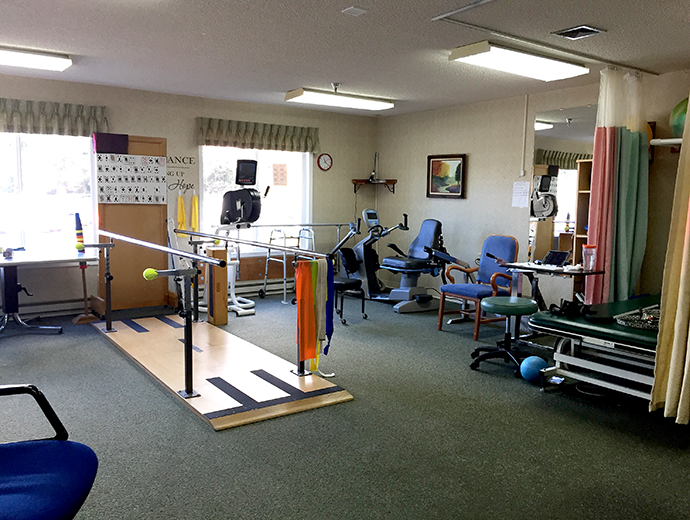
How is Curry Village Health And Rehab Of Cascadia Staffed?

CMS rates CURRY VILLAGE HEALTH AND REHAB OF CASCADIA's staffing level at 5 out of 5 stars, which is much above average compared to other nursing homes. Staff turnover is 45%, compared to the Oregon average of 46%. This relatively stable workforce can support continuity of care.

What Have Inspectors Found at Curry Village Health And Rehab Of Cascadia?

State health inspectors documented 33 deficiencies at CURRY VILLAGE HEALTH AND REHAB OF CASCADIA during 2022 to 2025. These included: 1 that caused actual resident harm and 32 with potential for harm. Deficiencies causing actual harm indicate documented cases where residents experienced negative health consequences.

Who Owns and Operates Curry Village Health And Rehab Of Cascadia?

CURRY VILLAGE HEALTH AND REHAB OF CASCADIA is owned by a for-profit company. For-profit facilities operate as businesses with obligations to shareholders or private owners. The facility is operated by CASCADIA HEALTHCARE, a chain that manages multiple nursing homes. With 59 certified beds and approximately 35 residents (about 59% occupancy), it is a smaller facility located in BROOKINGS, Oregon.
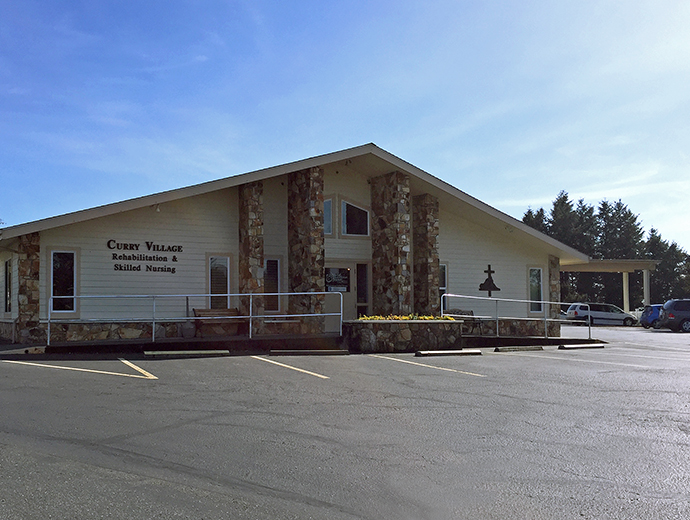
How Does Curry Village Health And Rehab Of Cascadia Compare to Other Oregon Nursing Homes?

Compared to the 100 nursing homes in Oregon, CURRY VILLAGE HEALTH AND REHAB OF CASCADIA's overall rating (5 stars) is above the state average of 3.0, staff turnover (45%) is near the state average of 46%, and health inspection rating (3 stars) is at the national benchmark.

What Should Families Ask When Visiting Curry Village Health And Rehab Of Cascadia?

Based on this facility's data, families visiting should ask: "Can I visit during a mealtime to observe dining assistance and food quality?" "How do you handle medical emergencies, and what is your hospital transfer rate?" "Can I speak with family members of current residents about their experience?"

Is Curry Village Health And Rehab Of Cascadia Safe?

Based on CMS inspection data, CURRY VILLAGE HEALTH AND REHAB OF CASCADIA has a clean safety record: no substantiated abuse findings (meaning no confirmed cases of resident harm), no Immediate Jeopardy citations (the most serious violation level indicating risk of serious injury or death), and is not on the Special Focus Facility watch list (a federal program monitoring the lowest-performing 1% of nursing homes). The facility has a 5-star overall rating and ranks #1 of 100 nursing homes in Oregon. While no facility is perfect, families should still ask about staff-to-resident ratios and recent inspection results during their visit.

Do Nurses at Curry Village Health And Rehab Of Cascadia Stick Around?

CURRY VILLAGE HEALTH AND REHAB OF CASCADIA has a staff turnover rate of 45%, which is about average for Oregon nursing homes (state average: 46%). Moderate turnover is common in nursing homes, but families should still ask about staff tenure and how the facility maintains care continuity when employees leave.

Was Curry Village Health And Rehab Of Cascadia Ever Fined?

CURRY VILLAGE HEALTH AND REHAB OF CASCADIA has no federal fines on record. CMS issues fines when nursing homes fail to meet care standards or don't correct problems found during inspections. The absence of fines suggests the facility has either maintained compliance or corrected any issues before penalties were assessed. This is a positive indicator, though families should still review recent inspection reports for the full picture.

Is Curry Village Health And Rehab Of Cascadia on Any Federal Watch List?

CURRY VILLAGE HEALTH AND REHAB OF CASCADIA is not on any federal watch list. The most significant is the Special Focus Facility (SFF) program, which identifies the bottom 1% of nursing homes nationally based on persistent, serious quality problems. Not being on this list means the facility has avoided the pattern of deficiencies that triggers enhanced federal oversight. This is a positive indicator, though families should still review the facility's inspection history directly.