MARQUIS PLUM RIDGE POST ACUTE REHAB
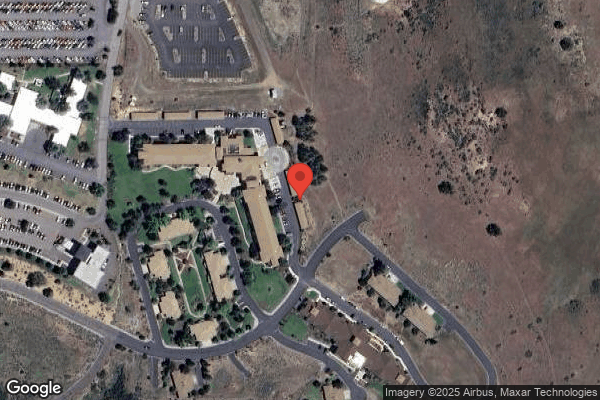

1401 BRYANT WILLIAMS DR., KLAMATH FALLS, OR 97601 (541) 882-6691
For profit - Corporation 77 Beds MARQUIS COMPANIES Data: November 2025
Trust Grade
35/100
#92 of 127 in OR
Last Inspection: January 2025

Within standard 12-15 month inspection cycle. Federal law requires annual inspections.

Overview

Marquis Plum Ridge Post Acute Rehab has received a Trust Grade of F, which indicates significant concerns about the facility's overall quality. It ranks #92 out of 127 nursing homes in Oregon, placing it in the bottom half, but it is the only option in Klamath County. The facility is showing signs of improvement, with the number of issues decreasing from 16 in 2023 to 8 in 2025. Staffing is a relative strength, rated at 4 out of 5 stars with a turnover rate of 47%, slightly below the state average. However, there have been critical concerns, including staff failing to wear hair restraints while preparing food, and not following proper hand hygiene protocols when delivering meals, which poses a risk for infection. While the facility has no fines on record and offers good RN coverage, families should weigh these strengths against the overall poor trust grade and the concerning inspection findings.

Trust Score
F
35/100
In Oregon
#92/127
Bottom 28%
Safety Record
High Risk
Review needed
Inspections
Getting Better
16 → 8 violations
Staff Stability
⚠ Watch
47% turnover. Above average. Higher turnover means staff may not know residents' routines.
Penalties
✓ Good
No fines on record. Clean compliance history, better than most Oregon facilities.
Skilled Nurses
✓ Good
Each resident gets 49 minutes of Registered Nurse (RN) attention daily — more than average for Oregon. RNs are trained to catch health problems early.
Violations
⚠ Watch
29 deficiencies on record. Higher than average. Multiple issues found across inspections.
★★☆☆☆
2.0
Overall Rating
★★★★☆
4.0
Staff Levels
★★★★☆
4.0
Care Quality
★★☆☆☆
2.0
Inspection Score
Stable
2023: 16 issues
2025: 8 issues

The Good

  • 4-Star Staffing Rating · Above-average nurse staffing levels
  • 4-Star Quality Measures · Strong clinical quality outcomes
  • Full Sprinkler Coverage · Fire safety systems throughout facility
  • No fines on record

Facility shows strength in staffing levels, quality measures, fire safety.

The Bad

2-Star Overall Rating

Below Oregon average (3.0)

Below average - review inspection findings carefully

Staff Turnover: 47%

Near Oregon avg (46%)

Higher turnover may affect care consistency

Chain: MARQUIS COMPANIES

Part of a multi-facility chain

Ask about local staffing decisions and management

The Ugly 29 deficiencies on record

Jan 2025 8 deficiencies
CONCERN (D) 📢 Someone Reported This

A family member, employee, or ombudsman was alarmed enough to file a formal complaint

Potential for Harm - no one hurt, but risky conditions existed

Deficiency F0568 (Tag F0568)

Could have caused harm · This affected 1 resident

Based on interview and record review it was determined the facility failed to provide quarterly statements in writing of Personal Incidental Funds (PIF) to the resident representative for 1 of 2 sampl...

Read full inspector narrative →
Based on interview and record review it was determined the facility failed to provide quarterly statements in writing of Personal Incidental Funds (PIF) to the resident representative for 1 of 2 sampled residents (#1) reviewed for PIFs. This placed residents at risk of being uninformed of financial statements. Findings include: Resident 1 was admitted to the facility in 2013 with diagnoses including a stroke and depression. The 12/19/24 Quarterly MDS revealed Resident 1 had a BIMS score of 3, which indicated the resident had severe cognitive impairment. A review of Resident 1's clinical record revealed Witness 4 (Family Member) was the resident's designated power of attorney. No evidence was found that Witness 4 received quarterly PIF statements. In an interview on 1/28/25 at 10:00 AM, Witness 4 stated he was Resident 1's designated representative and the resident's PIF account was managed by the facility. Witness 4 stated he had not received any quarterly statements from the facility regarding Resident 1's PIF account. In an interview on 1/29/25 at 3:19 PM, Staff 3 (Office Manager) stated quarterly PIF statements for Resident 1 should have been generated and sent to Witness 4. Staff 3 acknowledged Witness 4 did not receive any PIF quarterly statements for Resident 1.
CONCERN (D) 📢 Someone Reported This

A family member, employee, or ombudsman was alarmed enough to file a formal complaint

Potential for Harm - no one hurt, but risky conditions existed

Deficiency F0578 (Tag F0578)

Could have caused harm · This affected 1 resident

Based on interview and record review it was determined the facility failed to assist residents to formulate an advanced directive for 3 of 4 sampled residents (#s 3, 7, and 37) reviewed for advance di...

Read full inspector narrative →
Based on interview and record review it was determined the facility failed to assist residents to formulate an advanced directive for 3 of 4 sampled residents (#s 3, 7, and 37) reviewed for advance directives. This placed residents at risk for healthcare decisions to conflict with resident wishes. Findings include: 1. Resident 3 was admitted to the facility in 3/2023 with diagnoses including weakness. A 3/8/24 Annual MDS revealed Resident 3 was cognitively intact. The 3/12/24 Interdisciplinary Care Conference notes revealed Resident 3 did not have an advance directive. On 1/27/25 at 2:20 PM Resident 3 stated staff did not offer her/him an advance directive and she/he would like to have her/his options reviewed. On 1/29/25 at 11:28 AM Staff 26 (Social Service Director) stated she would review options for residents regarding advance directives in their quarterly Interdisciplinary Care Conference. On 1/30/25 at 10:54 AM Staff 1 (Administrator) acknowledged staff were behind on quarterly Interdisciplinary Care Conferences, and advance directives were not being followed-up on. 2. Resident 7 was admitted to the facility in 8/2023 with diagnoses including respiratory failure. The 8/8/24 Annual MDS indicated Resident 7 was cognitively intact. The 2/24/24 Interdisciplinary Care Conference notes revealed Resident 7 did not have an advance directive. On 1/27/25 at 1:53 PM Resident 7 stated staff did not offer her/him an advance directive and she/he would like to have her/his options reviewed. On 1/29/25 at 11:28 AM Staff 26 (Social Service Director) stated she would review options for residents regarding advance directives in their quarterly Interdisciplinary Care Conference. On 1/30/25 at 10:54 AM Staff 1 (Administrator) acknowledged staff were behind on quarterly Interdisciplinary Care Conference, and advance directives were not being followed-up on. 3. Resident 37 was admitted to the facility in 2/2023 with diagnoses including surgical aftercare. The 2/16/24 Annual MDS indicated Resident 37 was cognitively intact. The 9/11/24 Interdisciplinary Care Conference notes revealed Resident 37 did not have an advance directive. On 1/28/25 at 9:23 AM Resident 37 stated staff did not offer her/him an advance directive and she/he would like to have one. On 1/29/25 at 11:28 AM Staff 26 (Social Service Director) stated she would review options for residents regarding advance directives in their quarterly Interdisciplinary Care Conference. On 1/30/25 at 10:54 AM Staff 1 (Administrator) acknowledged staff were behind on quarterly Interdisciplinary Care Conference, and advance directives were not being followed-up on.
CONCERN (D) 📢 Someone Reported This

A family member, employee, or ombudsman was alarmed enough to file a formal complaint

Potential for Harm - no one hurt, but risky conditions existed

Deficiency F0602 (Tag F0602)

Could have caused harm · This affected 1 resident

Based on interview and record review it was determined the facility failed to ensure residents were free from misappropriation of property for 1 of 2 sampled residents (#68)reviewed for abuse. This pl...

Read full inspector narrative →
Based on interview and record review it was determined the facility failed to ensure residents were free from misappropriation of property for 1 of 2 sampled residents (#68)reviewed for abuse. This placed residents at risk for loss of property. Findings include: Resident 68 was admitted to the facility in 4/2022 with diagnoses including cirrhosis (scarring)of the liver. On 11/8/24 a public complaint was received which alleged Resident 68 had money stolen from her/him. A 11/13/24 witness statement indicated on 11/6/24 Resident 68's bank card was run for her/his monthly liability and declined for payment. Staff 3 (Business Office Manager) notified Resident 68's power of attorney (POA) of the declined payment. On 11/8/24 Resident 68's POA notified Staff 3 Resident 68 was missing $3300 from her/his bank account and the POA made a police report. A 11/15/24 investigation indicated the Automated Teller Machine(ATM)withdrawals were made from an ATM near the facility. Law enforcement retrieved the video recording from the ATM and the parking lot. The facility assisted law enforcement with identification of the suspect using the images from the cameras. The identified staff member was on leave until the investigation was completed, the facility reimbursed the family $3300, and the facility continued to work with law enforcement to resolve the incident. On 1/28/25 at 8:30 AM Witness 2 (Complainant) stated Resident 68 had a total of $3320 taken from her/his bank account using her/his bank card from 10/30/24 through 11/1/24. On 1/29/25 at 3:27 PM Witness 3 (Complainant) stated Staff 6 (former Activity Assistant) was identified as a suspect and arrested. Witness 3 stated the case was awaiting trial. On 1/30/25 at 9:28 AM Staff 6 stated a gentleman she thought was a family member of Resident 68,threatened her and her family due to money he said someone in Staff 6's family owed him. Staff 6 stated she paid this gentleman $1500 of her own money. Staff 6 stated on 10/30/24 this gentleman requested she assist him with withdrawing money from an ATM. Staff 6 stated she agreed to withdraw the money but stated she did not know it was Resident 68's account. Staff 6 stated she could not read the name on the ATM card. Staff 6 stated it did not sit right with her that she was an accessory to hurting Resident 68. On 1/30/25 at 12:00 PM Staff 1 (Administrator)stated Resident 68's money was taken by Staff 6.
CONCERN (D) 📢 Someone Reported This

A family member, employee, or ombudsman was alarmed enough to file a formal complaint

Potential for Harm - no one hurt, but risky conditions existed

Investigate Abuse (Tag F0610)

Could have caused harm · This affected 1 resident

Based on interviews and record review it was determined the facility failed to thoroughly investigate alleged verbal abuse from staff for 1 of 2 sampled residents (#7) reviewed for abuse. This placed ...

Read full inspector narrative →
Based on interviews and record review it was determined the facility failed to thoroughly investigate alleged verbal abuse from staff for 1 of 2 sampled residents (#7) reviewed for abuse. This placed residents at risk for physical and verbal abuse from staff. Findings include: The facility's 12/2020 Abuse Investigation Policy included: All reports of abuse, neglect, misappropriation of resident property, and injuries of unknown origin shall be promptly and thoroughly investigated. The investigation shall consist of: -A review of the completed Resident Incident Report Form. -An interview with the resident. -Witness reports in writing, signed and dated. Resident 7 was admitted to the facility in 8/2023 with diagnoses including respiratory failure. The 1/21/25 investigation report indicated Staff 8 (LPN) reported to Staff 28 (RNCM) Resident 7 reported an allegation of abuse. Resident 7 indicated she/he was forced out of bed and forced to take a shower by Staff 18 (RN). On 1/28/25 at 2:37 PM Resident 7 stated Staff 18 came to her/his room and stated she/he had to take a shower. Resident 7 stated she/he told staff she/he did not want to take a shower. Resident 7 stated she/he told staff, this is the last time she/he will be made to take a shower when she/he did not want to. Resident 7 stated she/he had PTSD and a trigger was someone telling her/him what to do and Staff 18 does this all the time. Resident 7 stated she/he felt verbally abused. On 1/28/25 at 2:45 PM Staff 28 (RNCM) stated Resident 7 had a shower on evening shift on 1/21/25 then reported to staff the next day that Staff 18 verbally abused her/him. Staff 28 stated she spoke with Staff 13 (CNA) and Staff 23 (CNA) who assisted Staff 18 and they indicated Resident 7 did not allege abuse while being showered. Staff 28 stated she spoke with Staff 18 and she indicated Resident 7 did not say anything during the shower. Staff 28 stated Resident 7 waited 12 hours to report the abuse incident. Staff 28 stated the investigation did not have witness statements and she did not speak to Resident 7 regarding the abuse allegation. Staff 28 stated Resident 7 had PTSD and one of her/his triggers were showers. Staff 28 stated she spoke with Staff 18 regarding Resident 7's care plan which indicated the resident prefers bed baths and will ask for a shower if she/he wanted one. Staff 28 acknowledged she should have spoken with the resident after the allegation of abuse. On 1/28/25 at 3:04 PM Staff 8 stated the day after the incident Resident 7 asked if she/he could refuse getting out of bed and taking showers. Staff 8 stated she told Resident 7 she/he could refuse any cares. Staff 8 stated Resident 7 indicated she/he told staff she/he did not want a shower but they did it anyway and she/he felt verbally abused. On 1/29/25 at 12:48 PM Staff 23 stated Resident 7 did not indicate she/he did not want a shower or say she/he was abused. On 1/29/25 at 3:56 PM Staff 13 stated Resident 7 did not refuse to take a shower but indicated she/he got nauseated when getting up out of bed. Staff 13 stated Resident 7 did not indicate she/he felt abused. On 1/30/25 at 2:41 PM Staff 18 stated she asked Resident 7 if she/he wanted to take a shower and the resident stated she/he would think about it. Staff 18 stated she asked the resident again and the resident agreed to a shower. Staff 18 stated Resident 7 did not indicate she/he was upset or felt abused. Staff 18 stated she should have looked closer at the resident's care plan regarding the resident would ask for showers if she/he wanted one, but thought the resident was fine. 1/30/25 at 3:53 PM Staff 1 Administrator stated her expectation for an allegation of abuse would be for staff to interview the resident, and have written and signed witness statements. Staff 1 acknowledged the investigation was not thourough.
CONCERN (D) 📢 Someone Reported This

A family member, employee, or ombudsman was alarmed enough to file a formal complaint

Potential for Harm - no one hurt, but risky conditions existed

Deficiency F0657 (Tag F0657)

Could have caused harm · This affected 1 resident

Based on interview and record review it was determined the facility failed to conduct quarterly care conferences as required for 3 of 3 sampled residents (#s 3, 7, and 37) reviewed for care conference...

Read full inspector narrative →
Based on interview and record review it was determined the facility failed to conduct quarterly care conferences as required for 3 of 3 sampled residents (#s 3, 7, and 37) reviewed for care conferences. This placed residents at risk for lack of participation in care goals and unmet needs. Findings include: The 11/2017 facility Care Planning-Interdisciplinary Team Policy and Procedure indicated the resident's comprehensive care plan will be reviewed and updated at a minimal on a quarterly basis by the IDT (Interdisciplinary Team.) 1. Resident 3 was admitted to the facility in 3/2023 with diagnoses including weakness. A review of the 3/12/24 Interdisciplinary Team Care Plan Conference Form for Resident 3 revealed no quarterly care conferences were provided after 3/12/24. On 1/27/25 at 1:20 PM Resident 3 stated she/he had not had a care conference in months and had concerns she/he would like to discuss with staff. On 1/30/25 at 10:54 AM Staff 1 (Administrator) confirmed quarterly care conferences were not conducted with Resident 3 to address care plan needs quarterly. 2. Resident 7 was admitted to the facility in 3/2023 with diagnoses including weakness. A review of the 2/22/24 Interdisciplinary Team Care Plan Conference Form for Resident 7 revealed no quarterly care conferences were provided after 2/22/24. On 1/27/25 at 1:20 PM Resident 7 stated she/he had not had a care conference in months and had care concerns she/he would like to discuss with staff. On 1/30/25 at 10:54 AM Staff 1 (Administrator) confirmed quarterly care conferences were not conducted with Resident 7 to address care plan needs quarterly. 3. Resident 37 was admitted to the facility in 2/2023 with diagnoses including surgical aftercare. A review of the 9/11/24 Interdisciplinary Team Care Plan Conference Form for Resident 37 revealed no quarterly care conferences were provided after 9/11/24. On 1/28/25 at 9:23 AM Resident 37 stated she/he had not had a care conference in months and had care concerns she/he would like to discuss with staff. On 1/30/25 at 10:54 AM Staff 1 (Administrator) confirmed quarterly care conferences were not conducted with Resident 37 to address care plan needs.
CONCERN (D) 📢 Someone Reported This

A family member, employee, or ombudsman was alarmed enough to file a formal complaint

Potential for Harm - no one hurt, but risky conditions existed

Pressure Ulcer Prevention (Tag F0686)

Could have caused harm · This affected 1 resident

**NOTE- TERMS IN BRACKETS HAVE BEEN EDITED TO PROTECT CONFIDENTIALITY** Based on observation, interview and record review it was determined the facility failed to ensure pressure injury wounds were ac...

Read full inspector narrative →
**NOTE- TERMS IN BRACKETS HAVE BEEN EDITED TO PROTECT CONFIDENTIALITY** Based on observation, interview and record review it was determined the facility failed to ensure pressure injury wounds were accurately assessed, and care plans were followed for 2 of 4 sampled residents (#s 3 and 31) reviewed for pressure ulcers. This placed residents at risk for inaccurate assessment and worsening of wounds. Findings include: 1. Resident 3 was admitted to the facility in 2/2023 with diagnoses including a Stage 4 (penetration of all three layers of skin exposing muscles, tendons and bones) pressure ulcer. The 12/29/24, 1/5/25, 1/14/25, and 1/19/25 Wound Evaluation Form indicated Resident 3 had a Stage 4 pressure ulcer. The wound contained slough (dead skin tissue) which indicated an unstageable (with dead tissues making it impossible to determine the depth of the wound) pressure ulcer. On 1/29/25 at 1:36 PM Staff 2 (DNS) acknowledged Resident 6's wound was not a Stage 4 pressure ulcer but an unstageable pressure ulcer due to the slough in the wound, and the Wound Evaluation Form was not accurate. 2. Resident 31 was admitted to the facility in 11/2024 with diagnoses including right hip fracture and diabetes. The admission MDS dated [DATE], revealed Resident 31 had a BIMS score of 14, which indicated the resident was cognitively intact. A 12/16/24 Skin Event revealed Resident 31 had a pressure injury to the right heel, which was a red, shiny, blanchable (the skin area turns white or pale), pea sized area. Resident 31 was not aware the wound was there but knew that it hurt. Treatment was initiated and staff were to offload the resident's right heel with a pillow or use a blue heel boot protector when in bed. A care plan revised on 12/19/24, revealed Resident 31 was at risk for skin impairments and pressure ulcers related to a right femur fracture and the resident had a closed pressure area to the right heel. Staff were to ensure Resident 31's right heel was offloaded with pillows or a blue heel boot protector to the right heel when the resident was in bed. Random observations from 1/29/25 through 1/30/25 revealed Resident 31 in bed on her/his back. Resident 31 stated her/his right foot on the bottom hurt. Resident 31 was observed with no pillow or boot protector to her/his right foot. On 1/29/25 at 8:45 AM, Resident 31 stated she/he had a wound on her/his right heel and at times the wound was painful. Resident 31 stated no one placed pillows under her/his heels when she/he was in bed. On 1/29/25 at 8:48 AM, and 1:10 PM, Staff 11 (CNA/CMA) stated he worked with Resident 31 and did not believe the resident had a wound to her/his right heel and would need to review the care plan. Staff 11 entered Resident 31's room; the resident was in bed, and Staff 11 removed her/his blankets and socks, lifted the right heel and acknowledged a small red area (approximately pencil eraser size) on the base of Resident 31's right heel. Staff 11 acknowledged the wound on the resident's right heel and acknowledged the resident's right heel was not offloaded in bed. On 1/29/25 interviews were conducted from 1:28 PM through 6:43 PM with Staff 12 (CNA), Staff 13 (CNA), Staff 14 (LPN), and Staff 21 (CNA). Staff 12, Staff 13, Staff 14, and Staff 21 stated they worked with Resident 31 and were not aware the resident had a wound to her/his right heel. Staff 12, Staff 13, and Staff 21 indicated they reviewed residents' care plans prior to the start of their shift, and if they saw any new skin issues, they would report the concern to the charge nurse. If Resident 31 had a wound to her/his heel they would offload the resident's feet with a pillow when in bed. Staff 14 stated if Resident 31 had a wound to the heel, the CNAs would offload her/his heels with a pillow or apply a heel boot protector. On 1/30/25 at 8:52 AM, Staff 16 (RNCM) stated Resident 31 had a Stage 1 (intact skin with a localized area of non-blanchable erythema [redness] pressure ulcer to her/his right heel and staff were supposed to offload the right heel with a pillow or a blue heel boot protector. Staff 16 acknowledged staff were not following the care plan and Resident 31's right heel was not being offloaded when the resident was in bed. On 1/30/25 at 1:23 PM, Staff 1 (Administrator) and Staff 2 (DNS) were present for an interview. Staff 1 and Staff 2 stated staff were expected to review the care plan prior to the start of their shift and ensure the care plan was implemented. Staff 1 and Staff 2 acknowledged Resident 31's care plan was not followed.
CONCERN (E) 📢 Someone Reported This

A family member, employee, or ombudsman was alarmed enough to file a formal complaint

Potential for Harm - no one hurt, but risky conditions existed

Deficiency F0761 (Tag F0761)

Could have caused harm · This affected multiple residents

Deficiency Text Not Available

Read full inspector narrative →
Deficiency Text Not Available
CONCERN (E) 📢 Someone Reported This

A family member, employee, or ombudsman was alarmed enough to file a formal complaint

Potential for Harm - no one hurt, but risky conditions existed

Deficiency F0804 (Tag F0804)

Could have caused harm · This affected multiple residents

2. Resident 3 was admitted to the facility in 3/2023 with diagnoses including a pressure ulcer. Observations made in the dining room on 1/27/24 from 5:06 PM through 5:53 PM revealed the following: -1/...

Read full inspector narrative →
2. Resident 3 was admitted to the facility in 3/2023 with diagnoses including a pressure ulcer. Observations made in the dining room on 1/27/24 from 5:06 PM through 5:53 PM revealed the following: -1/27/25 05:06 PM covers were removed from the food on the steam table and staff tempted the food. -5:23 PM multiple complaints of cold food were heard from the residents in the dining room. -5:47 PM the food on the steam table was recovered but not tempted before the dinner trays were delivered to the halls. Multiple complaints of cold food were heard from the residents. -5:53 PM Staff 24 (Assistant Kitchen Manager) stated staff did not check the temperature of the food before it was delivered to the halls. On 1/27/25 at 5:58 PM Resident 3 was observed in her/his room during dinner which included quiches, potatoes, stewed tomatoes and cake. Resident 3 stated the food was cold and undercooked. On 1/28/25 at 12:40 PM Resident 3 was observed in her/his room with lunch which consisted of chicken parmesan with pasta and overcooked veggies. Resident 3 stated the food was cold and tasted bad. On 1/29/25 at 7:30 AM, Staff 27 (Dietary Manager) stated he was aware residents had complaints of food being served cold. On 1/30/25 at 8:50 AM, Staff 1 (Administrator) stated she was aware of resident complaints of cold food. Staff 1 stated she expected food to be served at the appropriate temperature for all residents and acknowledged food should be served at the residents' preferred temperature. 3. Resident 6 was admitted to the facility in 6/2023 with diagnoses including diabetes. On 1/29/25 at 7:30 AM, Staff 27 (Dietary Manager) stated he was aware residents had food complaints, regarding food being served cold. On 01/29/25 at 10:33 AM Resident 6 stated she/he had a breakfast burrito for breakfast and it was cold. Resident 6 stated the food is always cold. On 1/30/25 at 8:50 AM, Staff 1 (Administrator) stated she was aware of resident complaints of cold food. Staff 1 stated she expected food to be served at the appropriate temperature for all residents and acknowledged food should be served at the residents' preferred temperature. 4. Resident 37 was admitted to the facility in 2/2023 with diagnoses including surgical aftercare. On 1/28/25 at 12:06 PM Resident 37 was observed in her/his room with lunch which consisted of a hamburger, cake and vegetables. Resident 37 stated the food was cold as always. On 1/29/25 at 7:30 AM, Staff 27 (Dietary Manager) stated he was aware residents had complaints of food being served cold. On 1/29/25 at 11:02 AM, nine residents attended the resident council meeting and expressed ongoing concerns regarding meals being served cold. On 1/29/25 at 12:38 PM Resident 37 was observed in her/his room with lunch which included beef stroganoff, and green beans. Resident 37 stated the food was cold and awful. On 1/30/25 at 8:50 AM, Staff 1 (Administrator) stated she was aware of resident complaints of cold food. Staff 1 stated she expected food to be served at the appropriate temperature for all residents and acknowledged food should be served at the residents' preferred temperature. 5. Resident 23 was admitted to the facility in 1/2020 with diagnoses including diabetes. On 1/27/25 at 1:41 PM Resident 23 stated the food was often cold and did not consistently taste good. Resident 23 stated the grilled cheese sandwich was often hard. On 1/29/25 at 1:33 PM, Resident 23 stated she/he had the beef stroganoff for lunch. Resident 23 stated the beef was mechanical soft, chewed up texture, scratchy on the throat, and the noodles were hard and cold. On 1/30/25 at 8:50 AM, Staff 1 (Administrator) stated she was aware of resident complaints of cold food. Staff 1 stated she expected food to be served at the appropriate temperature for all residents and acknowledged food should be served at the residents' preferred temperature. 6. Resident 266 was admitted to the facility in 11/2024 with a diagnoses including a hip fracture and depression. The Annual MDS 11/21/24, revealed Resident 266 had a BIMS score of 15, which indicated the resident was cognitively intact. On 1/27/25 at 2:10 PM, Resident 266 stated when she/he received her/his meals the food was often cold. On 1/29/25 at 1:12 PM, Resident 266 stated the food was warm, not hot, and the stroganoff and noodles were cold. The green beans were cold, and the resident was unsure how the green beans were prepared. In an interview on 12/30/25 at 8:50 AM, Staff 1 (Administrator) stated she was aware of resident complaints of cold food. Staff 1 stated she expected food to be served at the appropriate temperature for all residents and acknowledged food should be served at the residents' preferred temperature and palatability. Based on observation, interview and record review it was determined the facility failed to ensure proper food temperatures were maintained for food trays served from 1 of 1 facility kitchens reviewed for food service and for 5 of 5 residents (#s 3, 6, 23, 37 and 266) sampled for food. This placed residents at risk for food that was not palatable, safe or appetizing. Findings include: 1. In an interview on 1/29/25 at 7:30 AM, Staff 27 (Dietary Manager) was aware residents complaints of food being served cold and not always being palatable. On 1/29/25 at 11:02 AM, nine residents attended the resident council meeting and expressed ongoing concerns regarding meals being served cold. On 1/29/25 at 12:56 PM, a lunch test tray and an alternative test tray were provided and sampled by the survey team. The lunch tray consisted of beef stroganoff with gravy, pasta, and green beans. The alternative meal test tray consisted of a French dip sandwich with au jus, grilled cheese, and tater tots. The survey team sampled the regular and alternative meals which revealed the following: *The beef stroganoff was barely warm. *The noodles were dried out and tough to chew. *The green beans were cold. *The grilled cheese sandwich was hard around the edges and lukewarm. *The tater tots tasted freezer burnt and were cold. In an interview on 1/30/25 at 8:50 AM, Staff 1 (Administrator) stated she was aware of residents' complaints of cold food. Staff 1 stated she expected food to be served at the appropriate temperature for all residents and acknowledged food should be served at the residents' preferred temperature and palatability.
Oct 2023 16 deficiencies
CONCERN (D)

Potential for Harm - no one hurt, but risky conditions existed

Deficiency F0554 (Tag F0554)

Could have caused harm · This affected 1 resident

Based on observation, interview and record review it was determined the facility failed to assess a resident's ability to self-administer medications for 1 of 1 sampled resident (#45) reviewed for sel...

Read full inspector narrative →
Based on observation, interview and record review it was determined the facility failed to assess a resident's ability to self-administer medications for 1 of 1 sampled resident (#45) reviewed for self-administration of medications. This placed residents at risk for improper medication administration. Findings include: Resident 45 was admitted to the facility in 2023 with dysphagia (difficulty swallowing) and a feeding tube (a tube in the stomach to receive nutrition) with diagnoses including malnutrition and kidney transplant. On 10/2/23 at 8:54 AM Resident 45 was observed sitting up in bed with two medication cups containing multiple medications on the bedside table and a cup of orange liquid medication. Resident 45 stated she/he was not sure what the medications were. No assessment was located in the medical record for self-administration of medications for Resident 45. On 10/2/23 at 11:23 AM Staff 36 (LPN) stated if Resident 45 did not administer her/his medications by 11:00 AM staff were to administer the medications via her/his feeding tube. Staff 36 stated she was not aware if Resident 45 was assessed to administer her/his own medications. On 10/5/23 at 10:16 AM Staff 1 (Administrator), Staff 2 (DNS), and Staff 5 (RNCM) confirmed Resident 45 was not assessed to self-administer her/his medications.
CONCERN (D)

Potential for Harm - no one hurt, but risky conditions existed

Deficiency F0578 (Tag F0578)

Could have caused harm · This affected 1 resident

Based on interview and record review it was determined the facility failed to assist residents to formulate advance directives for 2 of 4 sampled residents (#s 55 and 68) reviewed for advance directiv...

Read full inspector narrative →
Based on interview and record review it was determined the facility failed to assist residents to formulate advance directives for 2 of 4 sampled residents (#s 55 and 68) reviewed for advance directives. This placed residents at risk for healthcare decisions to be in conflict with their wishes. Findings include: 1. Resident 55 was admitted to the facility in 2023 with diagnoses including stroke. A 6/23/23 admission MDS revealed Resident 55 was moderately cognitively impaired. A 7/5/23 Multidisciplinary Care Conference revealed there was no advance directive planning in place and Resident 55 wanted follow up to have options reviewed. On 10/3/23 at 3:14 PM Staff 24 (Social Services Director) confirmed Resident 55 did not have advance directive planning in place and options would be reviewed during her/his next care conference (approximately three months after Resident 55's request for advance directive follow-up). On 10/5/23 at 2:48 PM Staff 1 (Administrator) acknowledged follow up after a request for advance directive planning should be within a week. 2. Resident 68 was admitted to the facility in 2023 with diagnoses including diabetes. An 8/23/23 Care Conference note indicated Resident 68 was interested in establishing an advance directive. On 10/3/23 at 3:14 PM Resident 68 stated she/he was interested in formulating an advance directive but staff did not follow-up with her/him after the care conference. Review of the medical record revealed no information related to follow-up regarding an advance directive. On 10/3/23 at 3:14 PM Staff 24 (Social Service Director) stated advance directives were reviewed with residents upon admission as part of the admission packet. Staff 24 stated the advance directive was on the docket for the next quarterly review. On 10/5/23 at 2:48 PM Staff 1 (Administrator) stated the expectation was for staff to follow-up within a week if residents were interested in formulating advance directives.
CONCERN (D)

Potential for Harm - no one hurt, but risky conditions existed

Notification of Changes (Tag F0580)

Could have caused harm · This affected 1 resident

Based on interview and record review it was determined the facility failed to notify a physician of an unavailable medication for 1 of 5 sampled residents (#23) reviewed for medications. This placed r...

Read full inspector narrative →
Based on interview and record review it was determined the facility failed to notify a physician of an unavailable medication for 1 of 5 sampled residents (#23) reviewed for medications. This placed residents at risk for lack of adequate treatment. Findings include: Resident 23 was admitted to the facility in 2023 with diagnoses including UTI and sepsis (harmful microorganisms in the blood leading to the malfunction of organs). A 5/31/23 physician order indicated Resident 23 was to receive Lactobacillus Rhamnosus (supplement used to restore normal intestinal bacteria and treat UTIs) each morning. The 9/2023 MAR indicated for 15 of 30 days the supplement was unavailable. A review of Resident 23's clinical record revealed the physician was not notified the supplement was unavailable. On 10/4/23 at 9:06 AM Staff 5 (RNCM) acknowledged Resident 23's physician was not notified the facility did not have the prescribed supplement available for the resident as above.
CONCERN (D)

Potential for Harm - no one hurt, but risky conditions existed

Grievances (Tag F0585)

Could have caused harm · This affected 1 resident

Based on interview and record review it was determined the facility failed to ensure a resident's grievance was resolved in a timely manner for 1 of 1 sampled resident (#31) reviewed for personal prop...

Read full inspector narrative →
Based on interview and record review it was determined the facility failed to ensure a resident's grievance was resolved in a timely manner for 1 of 1 sampled resident (#31) reviewed for personal property. This placed residents at risk for unresolved concerns. Findings include: Resident 31 was admitted to the facility in 2019 with diagnoses including anxiety. A Concerns and Grievances Policy last revised 2016 revealed any resident or resident representative could report a concern. The social service director was responsible for overseeing the grievance process. The facility would investigate the concern and resolve the grievance promptly; within five days. The administrator would review the findings upon completion of the investigation. The resident would be notified of the summary of findings and outcome. A 6/2/23 Quarterly MDS revealed Resident 31 was cognitively intact and did not have delusions (beliefs that were firmly held, contrary to reality). A 6/15/23 Lost Resident Property Investigation Report revealed Resident 31 reported a pair of pants was missing. An 8/2/23 Multidisciplinary Care Conference form revealed Resident 31 and staff discussed missing items including clothing. The resident believed other people were getting into her/his belongings. The form indicated the resident's family member joined the meeting via phone. The family member voiced the resident had some memory issues. The form indicated the facility Will seek reimbursement for the resident's clothes so the resident could buy what she/he chose. A 9/2/23 Quarterly MDS indicated Resident 31 was cognitively intact and did not have delusions. On 10/2/23 at 8:31 AM Resident 31 stated she/he reported missing pants to the facility. Resident 31 stated she/he was on a limited income and it was difficult to first buy the pants in order to provide a receipt to the facility. Resident 31 did not want family to buy the pants because she/he wanted to pick out the clothing her/himself. On 10/4/23 at 1:09 PM and 10/5/23 at 9:27 AM Staff 24 (Social Services Director) stated a grievance form was initiated on 6/15/23 and the form was not completely filled out. In 8/2023 Resident 31 reported missing pants and initially the facility was going to reimburse the resident money so the resident could go to the store to purchase pants of her/his choosing. Later the resident and family talked about the family purchasing the pants and then receiving reimbursement. Staff 24 stated he was waiting for the receipt. Staff 24 acknowledged there was no resolution to the reported 6/15/23 missing pants and he did not complete the form and give it to the administrator until 10/4/23. On 10/5/23 at 7:52 AM Staff 1 (Administrator) stated she just received the grievance form from Staff 24 (four months after the grievance form was initiated).
CONCERN (D)

Potential for Harm - no one hurt, but risky conditions existed

Deficiency F0657 (Tag F0657)

Could have caused harm · This affected 1 resident

2. Resident 63 was admitted to the facility in 2023 with diagnoses including cancer. On 10/2/23 at 12:56 PM Resident 63 stated the facility kept her/him informed but did not recall a care conference w...

Read full inspector narrative →
2. Resident 63 was admitted to the facility in 2023 with diagnoses including cancer. On 10/2/23 at 12:56 PM Resident 63 stated the facility kept her/him informed but did not recall a care conference with the team. On 10/4/23 at 9:02 AM Staff 23 (Resident Care Manager) stated the facility did not conduct initial care conferences and Resident 63 was not in the facility long enough to need a care conference. On 10/4/23 at 12:05 PM Staff 24 (Social Services Director) was asked about care conferences and he stated he scheduled them and they were conducted upon admission and quarterly unless there were resident changes that required additional care conferences. Staff 24 added he could not locate a care conference for Resident 63. On 10/5/23 at 12:19 PM Staff 2 (DNS) was asked about a care conference for Resident 63. Staff 2 stated there was no evidence a formal care conference was conducted for Resident 63. Based on observation, interview and record review it was determined the facility failed to ensure a resident care plans were updated and failed to conduct a care conferences for 2 of 3 sampled residents (#s 20 and 63) reviewed for dental care, and participation in care planning. This placed residents at risk for unmet care needs. Findings include: 1. Resident 20 was admitted to the facility in 2019 with diagnoses including dementia. A 6/3/23 Progress Note revealed a CNA found Resident 20's bottom denture in the denture cup and the denture was broken. A Care Plan last updated 12/2019 revealed the resident had both upper and lower dentures. On 10/3/23 at 3:55 PM Staff 4 (RNCM) acknowledged the resident's care plan was not updated after the resident's denture broke.
CONCERN (D)

Potential for Harm - no one hurt, but risky conditions existed

Deficiency F0676 (Tag F0676)

Could have caused harm · This affected 1 resident

Based on interview and record review it was determined the facility failed to ensure a resident was offered to walk for 1 of 3 sampled residents (#31) reviewed for ADLs. This placed residents at risk ...

Read full inspector narrative →
Based on interview and record review it was determined the facility failed to ensure a resident was offered to walk for 1 of 3 sampled residents (#31) reviewed for ADLs. This placed residents at risk for increased weakness. Findings include: Resident 31 admitted to the facility in 2020 with diagnoses including heart disease. A care plan last revised on 2/24/23 revealed Resident 31 had a restorative program to improve the resident's endurance. Staff were to offer the resident to walk before lunch and the resident would decide if and how far she/he would walk. A 3/2023 Annual CAA revealed Resident 3 was alert, oriented and was able to transfer independently but was unstable. The resident used her/his walker and staff assisted with the management of the resident's oxygen equipment. Staff were to encourage the resident to walk. An 8/25/23 Quarterly Nursing Summary indicated Resident 31 was alert, oriented and had an ambulation program. The resident did not want to come out of her/his room due to COVID-19 but walked in her/his room. Staff were to continue to offer walks and the distance was to be determined by the resident. The 9/3/23 through 10/3/23 Ambulation program documentation revealed the resident accepted to walk on two occasions and did not accept to walk on one occasion. There were only three days documented for this time period. The resident's record did not have additional documentation to indicate the resident was offered to walk. On 10/2/23 at 9:36 AM Resident 31 stated she/he used to walk more but now it was more difficult because she/he needed assist with the oxygen because it was attached to the wheelchair and not the walker. On 10/4/23 at 10:20 AM Staff 7 (CNA) and Staff 34 (CNA) were observed to assist Resident 31 to her/his wheelchair. The staff were not observed to offer the resident to walk. On 10/4/23 at 10:21 AM Staff 7 stated Resident 31 usually walked before lunch. Staff 7 then asked Resident 31 if she/he wanted to walk. Resident 31 indicated she/he would walk later. Staff 7 stated staff documented if the resident accepted or declined to walk in the resident's record. On 10/4/23 at 2:13 PM Resident 31 stated the staff never came back to assist her/him to walk. On 10/4/23 at 8:19 AM Staff 32 (CNA) stated Resident 31 used a walker to walk and staff followed the resident with the oxygen and the resident's wheelchair. If staff offered the resident to walk and the resident declined, the refusal was documented in the resident's record. On 10/4/23 at 3:08 PM Staff 4 (RNCM) stated the resident did not walk as often as she/he used to due to increased shortness of breath and the fear of exposure to COVID-19. Staff 4 stated she offered the resident physical therapy to assist the resident with breathing strategies, but the resident did not accept additional therapy at this time. A request was made to Staff 4 to provide documentation staff offered Resident 31 to walk. No additional information was provided.
CONCERN (D)

Potential for Harm - no one hurt, but risky conditions existed

Deficiency F0679 (Tag F0679)

Could have caused harm · This affected 1 resident

Based on interview and record review it was determined the facility failed to ensure a resident was provided a meaningful activity program for 1 of 3 sampled residents (#30) reviewed for activities. T...

Read full inspector narrative →
Based on interview and record review it was determined the facility failed to ensure a resident was provided a meaningful activity program for 1 of 3 sampled residents (#30) reviewed for activities. This placed residents at risk for lack of daily stimulation. Findings include: Resident 30 was admitted to the facility in 2019 with diagnoses including a stroke. An 4/26/23 Activities Summary revealed the resident continued to prefer to spend time napping, watching television, going outside when the weather was 80 degrees and looking out the window. A 7/26/23 Activities Summary revealed Resident 30 spent the majority of her/his time in her/his room sleeping and watching television. A Care Plan revised on 8/5/22 revealed the activity staff were to offer and assist Resident 30 outside when the temperature met the resident's preferred environmental temperature. Staff were to also offer to open the resident's window blinds. Review of Outdoor Activity documentation from 9/3/23 through 10/3/23 revealed the resident looked out the window on two occasions. There was no documentation to indicate the resident was assisted outside or if the resident declined. On 10/4/23 at 8:07 AM Staff 32 (CNA) stated the resident liked to go outside when the weather was warm. At times the resident pointed to the door to let staff know she/he wanted to go outside. On 10/5/23 at 7:58 AM Staff 31 (Activity Director) stated the resident was alert, but was not able to verbalize due to a stroke. The resident was able to gesture and answer with yes and no. The resident preferred to stay in her/his room and liked to look out her/his window. The resident really enjoyed going outside when the weather was warm. Staff were to open the blinds and take the resident outside when the weather was warm. Staff 31 stated the last three months there were many days when the weather was warm and there were opportunities for staff to take Resident 30 outside. Staff 31 stated she was on a leave from work, but other staff should have offered to assist the resident to go outside and document in the resident's record. Staff 31 reviewed the resident's record and acknowledged staff did not offer to assist the resident to go outside. Staff 31 stated the weather was now changing, warm days would be more limited which would mean fewer opportunities for the resident to go outside.
CONCERN (D)

Potential for Harm - no one hurt, but risky conditions existed

Quality of Care (Tag F0684)

Could have caused harm · This affected 1 resident

Based on interview and record review it was determined the facility failed to ensure medications were given per pharmacy guidelines for 1 of 1 sampled resident (#36) reviewed for antibiotics. This pla...

Read full inspector narrative →
Based on interview and record review it was determined the facility failed to ensure medications were given per pharmacy guidelines for 1 of 1 sampled resident (#36) reviewed for antibiotics. This placed residents at risk for decreased medication efficacy (effectiveness). Findings include: Resident 36 was admitted to the facility in 2023 with diagnoses including a hardware infection. Epocrates online (web based pharmacy resource) revealed when doxycycline and calcium carbonate were administered together the efficacy of the antibiotic was decreased. An 10/2023 Order Summary Report revealed Resident 36 was to be administered calcium carbonate-vitamin D tablet (supplement) in the morning and doxycycline (antibiotic) two times a day. An 10/2023 MAR revealed Resident 36 was administered both the calcium carbonate-vitamin D and the doxycycline daily at 8:00 AM. On 10/2/23 at 10:10 AM and on 10/4/23 at 10:44 AM Resident 36 stated she/he had elbow surgery and was on an antibiotic. Resident 36 stated the antibiotic and calcium should not be given together and she/he told multiple staff including Staff 35 (CMA). On 10/4/23 at 10:51 AM Staff 35 stated about one week prior Resident 36 mentioned concerns about taking the doxycycline and the calcium at the same time and Staff 35 stated she informed the nurse. Staff 35 stated she administered Resident 36 her/his medications at 8:00 AM and there were no changes to the administration times. On 10/4/23 at 3:33 PM Staff 4 (RNCM) stated she just heard about the interaction concern related to the antibiotic and calcium. Staff 4 stated she reviewed all of Resident 36's medications with the resident and adjusted the administration times as needed to prevent drug to drug interactions.
CONCERN (D)

Potential for Harm - no one hurt, but risky conditions existed

Deficiency F0688 (Tag F0688)

Could have caused harm · This affected 1 resident

**NOTE- TERMS IN BRACKETS HAVE BEEN EDITED TO PROTECT CONFIDENTIALITY** Based on interview and record review it was determined the facility failed to ensure a resident was provided range of motion for...

Read full inspector narrative →
**NOTE- TERMS IN BRACKETS HAVE BEEN EDITED TO PROTECT CONFIDENTIALITY** Based on interview and record review it was determined the facility failed to ensure a resident was provided range of motion for 1 of 3 sampled residents (#30) reviewed for ADLs. This placed residents at risk for pain. Findings include: Resident 30 was admitted to the facility in 2020 with diagnoses including a stroke. A Physical Therapy Discharge summary dated [DATE] revealed the resident had a contracture (shortening of the muscle or tendon) to the left ankle and the resident and family did not want a brace or aggressive ROM to the ankle. The note indicated per care conference the resident was willing to do active ROM with the legs, a restorative nursing program was designed and instructions were given. A 11/18/22 Annual CAA revealed Resident 30 had a stroke and was not able to move her/his right side. The resident was dependent on others for assistance with most ADLs, but was able to feed her/himself. The resident did not always understand she/he required positioning assistance. The resident spent most of the time in bed and reported she/he was lazy. The resident could lift her/his left arm and left leg to dress but chose not to wear clothing while in bed. The resident had pain related to muscle spasms and arthritis, but her/his ADL performance was not expected to improve due to the resident's choice to not participate in care. The CAAs did not indicate if staff attempted to provide or encourage ROM or in-bed exercises for the resident since the resident chose to be in bed most of the day. Resident 30's Care Plan last updated 9/2023 did not include a restorative or ROM program. On 10/3/23 at 4:23 PM Staff 4 (RNCM) stated the resident often refused care and treatments, and often stayed in bed. The family and physician were aware of the refusals. Staff 4 acknowledged therapy recommended a restorative nursing program and stated the care plan did not have ROM as an intervention. A request was made to Staff 4 to provide documentation to indicate the resident or family declined a restorative nursing program or staff attempted to implement a program. No additional information was provided.
CONCERN (D)

Potential for Harm - no one hurt, but risky conditions existed

Incontinence Care (Tag F0690)

Could have caused harm · This affected 1 resident

Based on observation, interview and record review it was determined the facility failed to provide adequate urinary care for 1 of 4 sampled residents (#23) reviewed for urinary catheters. This placed ...

Read full inspector narrative →
Based on observation, interview and record review it was determined the facility failed to provide adequate urinary care for 1 of 4 sampled residents (#23) reviewed for urinary catheters. This placed residents at risk for lack of preferred urinary care treatment. Findings include: Resident 23 was admitted to the facility in 2023 with diagnoses including UTI and sepsis (harmful microorganisms in the blood leading to the malfunction of organs). A 6/5/23 admission Urinary Incontinence and Indwelling Catheter CAA revealed Resident 23 had a personal PureWick (external catheter system that draws urine away from body) system and asked to keep the PureWick system on at all times instead of bladder training. Staff were to clean and change the PureWick per manufacturer's instructions. A 6/7/23 revised care plan revealed Resident 23 used a Purewick system and staff were instructed to separate the resident's legs, gluteus (buttock) muscles and genitals and gently tuck the soft gauze side of the device between the gluteus and genitals and ensure the top of the gauze was aligned with her/his pubic (front part of the hip) bone. Staff were directed to see instructions for removal and replace the gauze every eight to 12 hours if soiled with feces or blood. A 9/5/23 Quarterly MDS revealed Resident 23 was always incontinent of bowel and bladder. On 10/2/23 at 8:55 AM Resident 23 was observed in her/his room seated in her/his wheelchair without her/his Purewick device in place. The PureWick gauze was uncovered and placed on top of the PureWick canister lid near the floor. No instructions for the PureWick were visible in the room. On 10/2/23 at 1:57 PM Resident 23 was placed in bed with her/his PureWick on. Staff 16 (CNA) stated she was unsure why Resident 23's PureWick gauze was uncovered since this was the first time Staff 16 cared for Resident 23. Staff 16 stated she did not see a PureWick system prior to today. On 10/3/23 the following occurred: -At approximately 1:00 PM Resident 23 was observed being returned to her/his room. -At 2:24 PM Resident 23 was observed in her/his bed with the PureWick gauze uncovered and placed on top the the canister lid near the floor. Resident 23 stated she/he asked to have the PureWick in place when she/he returned (90 minutes ago) and the care did not happen. -At 2:27 PM Witness 3 (Family) stated instructions for the use of Resident 23's PureWick was provided to the facility, procedures were often not followed and concerns were discussed with nursing. Witness 3 stated Resident 23's PureWick gauze was often found uncovered or she/he was without the use of her/his PureWick when Witness 3 visited. On 10/4/23 at 9:44 AM Staff 8 (CNA) stated Resident 23's PureWick was to be used while in bed and changed every eight hours. Staff 8 was unsure how the PureWick gauze was to be stored when not in use. On 10/5/23 at 2:19 PM Staff 5 (RNCM) acknowledged Resident 23's wishes for the use of her/his PureWick should have been provided before staff left her/his room and and the care plan did not include resident specifics related to the use of the PureWick device. On 10/5/23 at 2:45 PM Staff 2 (DNS) acknowledged PureWick training should have taken place for staff because it was an unfamilar device.
CONCERN (D)

Potential for Harm - no one hurt, but risky conditions existed

Deficiency F0698 (Tag F0698)

Could have caused harm · This affected 1 resident

**NOTE- TERMS IN BRACKETS HAVE BEEN EDITED TO PROTECT CONFIDENTIALITY** Based on observation, interview, and record review it was determined the facility failed to provide dialysis services for 1 of 1...

Read full inspector narrative →
**NOTE- TERMS IN BRACKETS HAVE BEEN EDITED TO PROTECT CONFIDENTIALITY** Based on observation, interview, and record review it was determined the facility failed to provide dialysis services for 1 of 1 sampled resident (#24) reviewed for dialysis. This placed residents at risk for unmet dialysis needs. Findings include: Resident 24 was admitted to the facility in 2023 with diagnoses including kidney disease. A 7/15/23 revised care plan revealed Resident 24 had kidney failure with dialysis, and did not include the days of dialysis, location, and times. There was no information related to dialysis emergency procedures and blood pressure monitoring for Resident 24. On 10/2/23 at 3:18 PM Resident 24 was observed in bed and stated she/he recently returned from dialysis. Resident 24 stated staff took her/his blood pressure when she/he returned, but she/he had to remind staff not to use the arm with the dialysis access site to measure the blood pressure. Resident 24 stated this happened often. On 10/5/23 at 1:55 PM Staff 16 (CNA), and Staff 27 (CNA) stated they did not have dialysis training for a long time. Staff were not aware if the resident had fluid restrictions. Staff stated there were no instructions on the [NAME] (CNA care plan) which mentioned Resident 24's dialysis. On 10/5/23 at 2:29 PM Staff 5 (RNCM) stated Resident 24 did not have information on the care plan or [NAME] regarding dialysis care. Staff 5 stated staff did not have dialysis training in a long time and acknowledged it should have taken place when the facility admitted a dialysis resident.
CONCERN (D)

Potential for Harm - no one hurt, but risky conditions existed

Drug Regimen Review (Tag F0756)

Could have caused harm · This affected 1 resident

Based on interview and record review it was determined the facility failed to follow up on pharmacy recommendations for 1 of 5 sampled residents (#23) reviewed for medications. This placed residents a...

Read full inspector narrative →
Based on interview and record review it was determined the facility failed to follow up on pharmacy recommendations for 1 of 5 sampled residents (#23) reviewed for medications. This placed residents at risk for adverse medication reactions. Findings include: Resident 23 was admitted to the facility in 2023 with diagnoses including inflammation of the spine. A 5/30/23 physician order indicated Resident 23 was to receive one percent Diclofenac Sodium External Gel (topical pain relief) applied to the affected area four times a day for pain. A 7/25/23 Pharmacist's Report to Nursing and 8/30/23 Pharmacist's Recommendation to the Provider indicated instructions for the Diclofenanc Gel was to include maximum limits of eight grams per day to Resident 23's upper extremity or 32 grams per day over her/his entire body. On 10/4/23 at 9:06 AM Staff 5 (RNCM) stated Resident 23's pain was related to her/his back. Staff 5 acknowledged the pharmacy recommendation for Resident 23 was not addressed and an improved process to review pharmacy recommendations was needed.
CONCERN (D)

Potential for Harm - no one hurt, but risky conditions existed

Unnecessary Medications (Tag F0759)

Could have caused harm · This affected 1 resident

Based on observation, interview, and record review it was determined the facility failed to ensure the medication error rate was less than 5 percent. There were 31 medication administration observatio...

Read full inspector narrative →
Based on observation, interview, and record review it was determined the facility failed to ensure the medication error rate was less than 5 percent. There were 31 medication administration observations with 12 errors; a 39 percent medication error rate. This placed residents at risk for ineffective medications. Findings include: Resident 45 was admitted to the facility in 2023 with dysphagia (difficulty swallowing) and a feeding tube. The 9/1/23 Physician Order indicated Resident 45 was to receive the following medications by mouth: -Amlodipine (for blood pressure) by mouth -Vitamin D (supplement) by mouth -Potassium (supplement) by mouth -Apixiban (blood thinner) twice a day by mouth -Escitalopram (for depression) by mouth -Pantoprazole (for GERD) by mouth -Prednisone (steroid) by mouth -Super B complex (supplement) by mouth -D-Manose (supplement) by mouth -Mycophenolate (immnosuppressant) twice a day by mouth -Omega 3 (supplement) twice a day by mouth -Cyclosporine (immnosuppressant) twice a day by mouth On 10/4/23 at 11:18 AM Staff 36 (LPN) crushed Resident 45's medication and administered them by her/his feeding tube. On 10/5/23 at 10:16 AM Staff 1 (Administrator), Staff 2 (DNS), and Staff 5 (RNCM) stated Resident 45 did not have an order to administer her/his medication through her/his feeding tube.
CONCERN (D)

Potential for Harm - no one hurt, but risky conditions existed

Infection Control (Tag F0880)

Could have caused harm · This affected 1 resident

Based on observation, interview, and record review it was determined the facility failed to follow infection control standards for 3 of 4 sampled residents (#s 23, 28, and 36) reviewed for urinary dev...

Read full inspector narrative →
Based on observation, interview, and record review it was determined the facility failed to follow infection control standards for 3 of 4 sampled residents (#s 23, 28, and 36) reviewed for urinary devices. This placed residents at risk for urinary infection. Findings include. 1. Resident 23 was admitted to the facility in 2023 with diagnoses including UTI and sepsis (harmful microorganisms in the blood leading to the malfunction of organs). A 6/5/23 admission Urinary Incontinence and Indwelling Catheter CAA revealed Resident 23 had a personal PureWick (external catheter system that draws urine away from body) system and asked to keep the PureWick system on at all times instead of bladder training. Staff were to clean and change the PureWick device per manufacturer's instructions. A 6/7/23 revised care plan revealed Resident 23 used a PureWick system. The care plan did not indicate how the gauze was to be stored if not in use. On 10/2/23 at 8:55 AM and 10/3/23 at 2:24 PM Resident 23 was observed with her/his PureWick not in use. The PureWick gauze was uncovered and placed on top of the PureWick canister lid near the floor. On 10/3/23 at 2:27 PM Witness 3 (Family) stated instructions for the use of Resident 23's PureWick were provided to the facility by the family and the procedures were often not followed. Witness 3 stated Resident 23's PureWick gauze was often found uncovered when Witness 3 visited. On 10/4/23 at 9:44 AM Staff 8 (CNA) stated he was not instructed how the PureWick gauze was to be stored when not in use. On 10/5/23 at 2:19 PM Staff 5 (RNCM) acknowledged Resident 23's care plan lacked information related to infection control practices for her/his PureWick and the gauze should be covered when not in use. 2. Resident 28 was admitted to the facility in 2023 with diagnoses including joint replacement surgery. The 9/2023 TAR revealed Resident 28 had a catheter due to urinary retention. On 10/2/23 at 11:33 AM Resident 28 was observed in her/his room in a wheelchair and her/his catheter bag touched the floor. Staff 33 (CNA) wheeled Resident 28 out of her/his room and did not adjust her/his catheter bag which caused the catheter bag to drag on the floor. Staff 33 stated the facility did not have catheter privacy bags available which allowed the catheter bag to remain secured under residents' wheelchairs and off the ground. Staff 33 stated she looked at the placement of residents' catheter bags if she had time. On 10/4/23 at 9:29 AM Staff 5 (RNCM) acknowledged Resident 28's catheter bag should be securely attached to her/his wheelchair and not touching the floor. 3. Resident 36 was admitted to the facility in 2023 with diagnoses including a pressure ulcer. On 10/2/23 at 10:08 AM Resident 36's urinary drainage bag was observed on the floor. Staff 4 (RNCM) entered the room and stated the drainage bag should not be on the floor.
CONCERN (D)

Potential for Harm - no one hurt, but risky conditions existed

Deficiency F0883 (Tag F0883)

Could have caused harm · This affected 1 resident

Based on interview and record review it was determined the facility failed to ensure residents received vaccines and education for 3 of 5 sampled residents (#s 16, 30, and 39) reviewed for immunizatio...

Read full inspector narrative →
Based on interview and record review it was determined the facility failed to ensure residents received vaccines and education for 3 of 5 sampled residents (#s 16, 30, and 39) reviewed for immunizations. This placed residents at risk for infections. Findings include: 1. Resident 16 was admitted to the facility in 2022 with diagnoses including diabetes. a. Resident 16's record revealed she/he received the flu vaccine on 11/5/22. The resident's record did not have documentation to indicate the resident received the risk and benefits of receiving the flu vaccine prior to administration. On 10/5/23 at 10:41 AM a request was made to Staff 2 (DNS) to provide documentation the risk and benefits of the flu vaccine were provided to the resident prior to the vaccine. No additional information was provided. b. Resident 16's record revealed the resident received a pneumonia vaccine in 2001 outside of the facility. Resident 16 was eligible for an additional pneumonia vaccine. There was no documentation in the resident's record to indicate the resident was offered additional pneumonia vaccines. On 10/5/23 at 10:41 AM a request was made to Staff 2 (DNS) to provide documentation additional vaccines were offered to Resident 16. No additional information was provided. 2. Resident 30 was admitted to the facility in 2020 with diagnoses including a stroke. Resident 30's record indicated she/he received a pneumonia vaccine in 2014 outside of the facility. Resident 30 was eligible for an additional pneumonia vaccine. There was no documentation in the resident's record to indicate the resident was offered additional vaccines. On 10/5/23 at 10:41 AM a request was made to Staff 2 (DNS) to provide documentation additional vaccines were offered to Resident 30. No additional information was provided. 3. Resident 39 was admitted to the facility in 2022 with diagnoses including kidney failure. a. Resident 39's record revealed the resident refused the flu vaccine on 10/28/22. The record did not have documentation to indicate the resident was provided the risk and benefits of the vaccine. On 10/5/23 at 10:41 AM a request was made to Staff 2 (DNS) to provide documentation the flu vaccine education was provided. No additional information was provided. b. Resident 39's electronic record did not have documentation related to pneumonia vaccines prior to admission and if the facility offered the resident a pneumonia vaccine. On 10/5/23 at 10:41 AM a request was made to Staff 2 (DNS) to provide documentation the resident was up to date on pneumonia vaccines or was offered vaccines. No additional information was provided.
CONCERN (E) 📢 Someone Reported This

A family member, employee, or ombudsman was alarmed enough to file a formal complaint

Potential for Harm - no one hurt, but risky conditions existed

Deficiency F0602 (Tag F0602)

Could have caused harm · This affected multiple residents

Based on interview and record review it was determined the facility failed to ensure residents were free from misappropriation of property for 1 of 1 facility reviewed for misappropriation of property...

Read full inspector narrative →
Based on interview and record review it was determined the facility failed to ensure residents were free from misappropriation of property for 1 of 1 facility reviewed for misappropriation of property. This failure, determined to be a past non-compliance situation, resulted from the facility failing to ensure residents were free from misappropriation of property. Findings include: A FRI report dated 6/16/23 indicated a staff member found unrecognizable signatures in the Narcotic Log Book, brought it to the attention of the Resident Care Manager and Staff 2 (DNS) and an investigation was started. Multiple forged signatures were found in the skilled unit Log Book. The FRI indicated there was no resident theft as the facility covered the cost of medications. Staff 11 (Former CMA) was identified as a suspect and was suspended pending the outcome of the investigation. A Facility Investigation document dated 6/13/23 indicated during the investigation 102 instances of forged or false signatures were found. Staff 11 worked around the times of the discovered forged signatures. No other staff schedules matched the pattern of forged signatures. Staff 11 denied any diversion of medications. Staff 11 was escorted to the local hospital for a drug screen but dropped the first urine sample into the toilet and two additional urine samples were diluted. Staff 11 then refused to provide another urine sample. Two additional narcotic pills were found missing from Staff 11's medication cart on the day she was suspended. Staff 11 was also found to have wasted medications without a licensed nurse co-signature and there were numerous instances where she signed a narcotic out of the Narcotic Log Book but did not chart it as administered on the MAR. Twenty-three resident Narcotic Log Book pages were identified with a total of 102 possible diversions. The medications diverted were identified as opioid pain medications. No evidence was found to indicate residents did not receive medications when they asked for them and there were no abnormal resident complaints about pain. On 10/5/23 at 3:12 PM Staff 1 (Administrator) and Staff 2 acknowledged the drug diversion occurred. On 6/20/23, the Past Noncompliance was corrected when the facility completed a risk analysis of the incident and determined misappropriation of property occurred. The Plan of Correction included: -Staff 1 and Staff 2 began Investigation immediately upon being informed of possible forged signatures in the Narcotic Log Book. -Staff 11 was identified as a possible suspect and suspended pending the investigation. -Staff 2 educated licensed staff and CMAs on increased medication cart security and reporting Narcotic Log Book irregularities immediately. -Drug Diversion was determined and reported to all required parties. -Full audits of the Narcotic Log Books were completed. -The facility determined no outcome to residents occurred. -Following Staff 1's investigation Staff 11 was terminated on 6/20/23 from employment. - One-hundred percent reconciliation was done of all identified potentially false signatures and Staff 11's associated narcotic documentation. -The medication diverted was identified and the facility reimbursed residents for the missing narcotics. -All licensed nurses and CMA staff were again in-serviced on narcotic shift counts and Controlled Substance policies and procedures. -An Ad Hoc Quality Assurance meeting was held to review the findings and determine further action and monitoring as needed. -Audits were to be completed by Staff 2 or a RNCM of Narcotic Log Book signatures, and observations of shift counts, at least weekly for four weeks. -Results would be reported to the Quality Assurance committee as part of an Action Plan.
Aug 2022 5 deficiencies
CONCERN (D)

Potential for Harm - no one hurt, but risky conditions existed

Accident Prevention (Tag F0689)

Could have caused harm · This affected 1 resident

Based on observation, interview and record review it was determined the facility failed to ensure smoking materials were secured and residents smoked in the designated area for 2 of 2 sampled resident...

Read full inspector narrative →
Based on observation, interview and record review it was determined the facility failed to ensure smoking materials were secured and residents smoked in the designated area for 2 of 2 sampled residents (#s 13 and 65) reviewed for accidents. This placed residents at risk for accidents. Findings include: A 5/2011 Smoking Policy revealed the following: -Smoking restrictions would be strictly enforced in all non-smoking areas. -Nursing staff would complete a smoking assessment upon admission and at least quarterly for residents who smoked. -Smoking articles were kept at the facility nursing station. -Residents would use disposable safety lighters and residents could not keep lighter fluids, including butane gas or any other forms of gas or fluids, at any time. -The facility may check periodically to determine if residents had any smoking articles or were in violation of the smoking policies and staff would confiscate any such articles and notify the charge nurse. 1. Resident 65 admitted to the facility in 10/2021 with diagnoses including diabetes and depression. An 8/9/22 Smoking Assessment revealed Resident 65 was safe to smoke independently. Staff were to ask for Resident 65's cigarettes and lighter upon her/him returning from smoking. On 8/24/22 at 1:07 PM Resident 65 was observed in her/his wheelchair, self-propelling outside and had two cigarettes and a lighter on her/his lap. Resident 65 was approximately 20 feet from the entrance of the facility and lit a cigarette. When finished she/he disposed of her/his cigarette in an outside stand-up ashtray receptacle. Resident 65 returned back into the facility and self-propelled down the 100 hall into the dining room area but she/he did not return her/his lighter to staff and no staff was in the area. There were no non-smoking signs indicating Resident 65 could not smoke in the area. On 8/24/22 at 3:35 PM Resident 65 was observed smoking outside the front entrance of the facility seated by a stand-up ashtray receptacle. When Resident 65 finished smoking she/he proceeded back inside the facility toward the 100 hall and placed her/his lighter on top of the medication cart and went into the dining room. Resident 65's lighter remained on top of the medication cart approximately 15 minutes before Staff 12 (LPN) locked the lighter in the medication cart. No other residents were in the area. On 8/24/22 at 3:46 PM Staff 10 (CNA) stated she thought there were three smokers on the 100 hall and residents would ask for their cigarettes and lighters prior to going out to smoke. On 8/24/22 at 3:58 Staff 11 (CNA) indicated they had one smoker on the 100 hall and cigarettes and lighters were locked in the medication cart. On 8/24/22 at 4:05 PM Staff 12 stated smoking materials were locked up in the medication cart and residents that smoked asked for their cigarettes and lighters. Staff 12 stated once Resident 65 finished smoking she/he was to turn her/his lighter and cigarettes in to staff. Staff 12 stated she did not know Resident 65 had gone out to smoke and left her/his lighter on the medication cart. Random observations on 8/25/22 and 8/26/22 day shift revealed Resident 65 smoked approximately 20 feet from the entrance of the facility next to the stand-up ashtray receptacle. On 8/25/22 at 3:15 PM Staff 8 (RNCM) stated Resident 65 was aggressive, non-compliant with ADL cares and was angry because she/he was not allowed to smoke. Staff 8 stated a specialist recommended Resident 65 be allowed to smoke. Staff 8 stated she/he was assessed and could smoke safely on her/his own. Staff 8 stated when Resident 65 went out to smoke she/he was to go to the edge of the property but she/he did not always go that far from the building. On 8/26/22 at 8:27 AM and 10:27 AM Staff 1 (Administrator) and Staff 2 (DNS) were present for an interview. Staff 1 stated Resident 65's smoking materials were to be secured in the medication cart and she/he would request those items and return them when she/he was done smoking. Staff 1 further stated Resident 65 was to go off the property to smoke and staff were expected to ensure she/he smoked in the designated area. 2. Resident 13 admitted to the facility in 6/2020 with diagnoses including diabetes and polyneuropathy (degeneration of peripheral nerves). An 3/28/22 Smoking Assessment revealed Resident 13 was safe to smoke independently. Staff were to ask for Resident 13's cigarettes and lighter upon her/him returning from smoking. Resident 13 was agreeable to utilize a bath blanket on her/his lap to prevent cigarettes from dropping between her/his legs where it could take her/him longer to retrieve a cigarette. Resident 13 was aware no staff would be with her/him when smoking. A care plan revised on 5/27/22 revealed Resident 13 was able to smoke safely on her/his own but should have a bath blanket or towel on her/his lap when going out to smoke for safety. Resident 13 was to leave her/his lighter and cigarettes at the nursing station. On 8/22/22 at 10:09 AM Resident 13 stated she/he was a smoker and kept her/his cigarette and lighter in her/his room and made sure they were safely stored away. Resident 13 stated I go out and smoke offsite every couple of hours. On 8/24/22 at 1:07 PM Resident 13 was observed in her/his electric wheelchair, went outside the facility to the edge of the property and lit up her/his cigarette to smoke. No blanket or towel was observed on Resident 13's lap. At 1:29 PM Resident 13 went back into the facility to her/his room on the 200 hall but did not return her/his smoking material to staff. On 8/24/22 at 4:05 PM Staff 4 (CNA) stated Resident 13 was a smoker and she/he just takes off to go smoke. Staff 4 stated Resident 13 was to keep her/his smoking materials at the nurses' station. Staff 4 stated Resident 13 was not supervised when she/he smoked and was required to go to the edge of the property to smoke. On 8/25/22 at 12:58 PM Staff 3 (CMA) stated Resident 13 smoked and was required to go off the facility property. Staff 3 stated Resident 13's smoking materials were to be kept at the nurses' station. On 8/26/22 at 8:27 AM and 10:27 AM Staff 1 (Administrator) and Staff 2 (DNS) were present for an interview. Staff 1 stated if residents chose to smoke staff were expected to complete a smoking assessment upon admission and then quarterly thereafter. Staff 1 stated Resident 13's smoking materials were to be secured in the medication cart and Resident 13 should request those items and return them when she/he was done smoking. Staff 1 stated she was not aware Resident 13 kept her/his lighter and cigarettes in her/his room.
CONCERN (D)

Potential for Harm - no one hurt, but risky conditions existed

Deficiency F0692 (Tag F0692)

Could have caused harm · This affected 1 resident

Based on observation, interview and record review it was determined the facility failed to ensure meal trays were set up and residents were provided appropriate adaptive utensils for 1 of 2 sampled re...

Read full inspector narrative →
Based on observation, interview and record review it was determined the facility failed to ensure meal trays were set up and residents were provided appropriate adaptive utensils for 1 of 2 sampled residents (#16) reviewed for nutrition. This placed residents at risk for unmet nutritional needs. Findings include: Resident 16 was admitted to the facility in 3/2022 with diagnoses including Parkinson's (a disorder of the central nervous system and often includes tremors) disease and end of life care. A 8/25/22 Meal Tray ticket revealed Resident 16 was provided weighted utensils with foam handles. On 8/25/22 at 8:11 AM Resident 16 was observed sitting in the 200-dining room with her/his breakfast meal. Resident 16 had tremors to her/his bilateral hands and she/he had three individual bowls all with lids on them. Resident 16 struggled to remove the lids from the bowls due to her/his tremors and no staff offered to assist with removing the lids. On 8/25/22 at 12:36 PM Resident 16 was observed sitting in the 200-dining room with her/his lunch meal and was provided regular silverware. Witness 1 (Hospice Nurse) was at the table with Resident 16. Resident 16 had difficulty picking up her/his silverware due to her/his tremors and difficulty eating her/his lunch. Resident 16 appeared agitated when attempting to utilize her/his silverware and once getting the food into her/his mouth she/he would spit the food out onto her/his clothes protector and the floor. No staff intervened with Resident 16. On 8/25/22 at 1:03 PM Staff 14 (CNA) stated Resident 16 was alert, oriented and able to state her/his needs. Staff 14 entered the 200-dining room and indicated Resident 16 was supposed to have adaptive silverware and was not sure why she/he was given regular silverware for her/his lunch. Staff 14 stated staff were expected to review the meal tickets to ensure Resident 16 was provided with appropriate adaptive silverware and staff were to remove lids upon delivering meal trays. On 8/26/22 at 8:45 AM Staff 1 (Administrator) and Staff 2 (DNS) stated staff were expected to remove lids for Resident 16 when her/his meal tray was delivered and staff were expected to ensure Resident 16 had adaptive silverware for all her/his meals. Staff 2 stated staff were expected to review the meal ticket prior to delivering Resident 16's meals to her/him.
CONCERN (D)

Potential for Harm - no one hurt, but risky conditions existed

Deficiency F0698 (Tag F0698)

Could have caused harm · This affected 1 resident

Based on observation, interview and record review it was determined the facility failed to provide dialysis services to 1 of 1 sampled resident (#33) reviewed for dialysis. This placed residents at ri...

Read full inspector narrative →
Based on observation, interview and record review it was determined the facility failed to provide dialysis services to 1 of 1 sampled resident (#33) reviewed for dialysis. This placed residents at risk for unmet dialysis needs. Findings include: Resident 33 admitted to the facility in 2018 with diagnoses including end stage renal disease. On 8/23/22 at 1:19 PM Resident 33 stated she/he had no problems with dialysis (a process to filter toxins from the body). Resident 33 was observed to have a dressing on her/his upper left arm. A review of the 7/2022 MAR indicated Resident 33 had a order for Midodrine (used to treat low blood pressure) before dialysis on dialysis days. The order also instructed staff to send a Midodrine tablet to dialysis to be administered by dialysis staff if needed. The 8/2022 MAR indicated the order for Midodrine to be taken at dialysis had a discontinued date of 8/2/22. On 8/25/22 at 12:49 PM Staff 16 (RN) was asked about dialysis and stated she had a form to complete and send with Resident 33, she checked her/his fistula (dialysis access site) and was not aware of any medication to be sent with Resident 33. Staff 16 stated when Resident 33 returned from dialysis she retrieved the form and checked the bandage. Staff 16 added she had no place to document the post-dialysis dressing check. A random sample of 24 dialysis communication forms (used to document pre and post dialysis services and condition) from 5/3/22 through 8/18/22 documented two times the dressing was assessed following dialysis. There was no information related to post dialysis assessment on 22 out of the 24 dialysis communication forms reviewed. On 8/25/22 at 1:52 PM Staff 13 (RNCM) was asked about dialysis care. Staff 13 stated Resident 33 received Midodrine on dialysis days and took another Midodrine tablet to dialysis. Staff 13 added the dressing assessment was charted by exception (only if abnormal findings were noted). When Resident 33 returned from a hospital stay, the orders were reviewed to ensure completeness. Staff 13 further added the Midodrine for Resident 33 was not resumed following her/his return to the facility. On 8/25/22 at 4:29 PM Staff 2 (DNS) stated the post dialysis dressing assessment should have been in the POC (plan of care) documentation. Staff 2 added when Resident 33 went to the hospital all orders were discontinued and were not reactivated upon Resident 33's return, including the order for Midodrine.
CONCERN (F)

Potential for Harm - no one hurt, but risky conditions existed

Food Safety (Tag F0812)

Could have caused harm · This affected most or all residents

Based on observation and interview it was determined the facility failed to ensure hair was restrained by staff preparing food in 1 of 1 kitchen. This placed residents at risk for contaminated foods. ...

Read full inspector narrative →
Based on observation and interview it was determined the facility failed to ensure hair was restrained by staff preparing food in 1 of 1 kitchen. This placed residents at risk for contaminated foods. Finding include: On 8/24/22 at 12:10 PM Staff 19 (Cook) was observed in the kitchen working directly with food and preparing multiple containers and menu items for the evening meal. Staff 19 wore no hair restraint during food preparation. On 8/24/22 at 12:44 PM Staff 21 (Cook) stated staff were not to enter the kitchen preparation area without hair restraints. Staff 21 stated Staff 19 never wore any hair restraint when he worked in the kitchen. On 8/24/22 at 1:05 PM Staff 19 stated he was never informed a hair restraint was required during food preparation. On 8/25/22 at 3:43 PM Staff 17 (Corporate RD) acknowledged hair restraints should be worn by any staff while in the kitchen.
CONCERN (F)

Potential for Harm - no one hurt, but risky conditions existed

Infection Control (Tag F0880)

Could have caused harm · This affected most or all residents

Based on observation, interview and record review it was determined the facility failed to ensure staff removed gloves while meal trays were delivered and followed appropriate hand hygiene or PPE (Per...

Read full inspector narrative →
Based on observation, interview and record review it was determined the facility failed to ensure staff removed gloves while meal trays were delivered and followed appropriate hand hygiene or PPE (Personal Protective Equipment) utilization for 1 of 1 kitchen and 1 of 2 dining rooms. This placed residents at risk for food borne illnesses and contracting COVID-19. Findings include: The 2/2022 CDC Interim Infection Prevention and Control Recommendations for Healthcare Personnel During the Coronavirus Disease (COVID-19) Pandemic revealed source control for healthcare staff could include an N95 mask or well-fitting medical mask and could be used for an entire shift unless the mask become soiled, damaged, or hard to breathe through. On 8/22/22 at 8:50 AM surveyors entered the facility during an active COVID-19 outbreak. All staff were required to wear N95 face masks and eye protection. 1. On 8/24/22 from 12:20 PM to 1:05 PM Staff 19 (Cook) was observed in the kitchen preparing food, wore an N95 mask, his eye protection rested on the top of his head and he walked within six feet of other kitchen staff. On 8/24/22 at 12:20 PM Staff 20 (Dietary Aide) was observed to touch his N95 face mask with his hands and did not perform hand hygiene prior to the continuation of his work throughout the kitchen. On 8/24/22 at 12:38 PM Staff 19 (Cook) was observed to touch his N95 face mask while he prepared food in the kitchen and did not perform hand hygiene prior to the continuation of his task. On 8/24/22 at 1:05 PM Staff 19 was observed with gloves on while he prepared raw vegetables. Staff 19 touched his face mask with his hands and did not changed his gloves or perform hand hygiene before he continued to prepare the vegetables for the evening meal. Staff 19 stated he was unaware of the need to perform hand hygiene after he touched his face mask and indicated the mask slipped off his nose when worn because it did not fit him properly. On 8/24/22 at 1:19 PM Staff 20 stated he placed his N95 face mask directly on a counter during breaks and wore the same mask after his break. Staff 20 stated the masks did not fit properly and continued to slip when worn. On 8/25/22 at 9:25 AM Staff 18 (Assistant Dietary Manager) acknowledged all staff were to wear N95 face masks and eye protection when in the kitchen area and hand hygiene should be performed between any change in task or when something unsanitary was touched. On 8/25/22 at 3:43 PM Staff 17 (Corporate RD) confirmed staff should perform appropriate hand hygiene after staff touched their face or mask and before resuming food preparation. 2. On 8/25/22 at 8:05 AM Staff 6 (RN) was observed wearing gloves while delivering breakfast trays to residents in the 200-dining room. Staff 6 delivered a meal tray to a resident, removed the lid from the plate and set the lid on the table. Staff 6 went to another resident, pulled her/his hair off to the side and adjusted the resident's clothing protector. Staff 6 went back to the meal cart with the same pair of gloves, pulled a meal tray and delivered the meal tray to a resident sitting just outside of the dining room area. Staff 6 placed the meal tray down on the resident's bedside table, tapped the resident on the shoulder with her gloves and placed a clothing protector on the resident. Staff 6 moved the resident's bedside table closer to the resident so she/he could eat her/his breakfast. Staff 6 removed her/his gloves in the dining area but did not sanitize her/his hands and delivered another breakfast tray to a resident and then Staff 6 sanitized her hands. On 8/25/22 at 8:27 AM Staff 6 acknowledged she did not remove her gloves and did not sanitize her hands in between each resident. Staff 6 stated she should have removed her gloves and performed appropriate hand hygiene. On 8/25/22 at 2:01 PM Staff 1 (Administrator) and Staff 2 (DNS) stated staff were not to wear gloves while passing meal trays and Staff 1 and Staff 2 expected staff to sanitize their hands between each meal tray being delivered or after touching a resident.
Understanding Severity Codes (click to expand)
Life-Threatening (Immediate Jeopardy)
J - Isolated K - Pattern L - Widespread
Actual Harm
G - Isolated H - Pattern I - Widespread
Potential for Harm
D - Isolated E - Pattern F - Widespread
No Harm (Minor)
A - Isolated B - Pattern C - Widespread

Questions to Ask on Your Visit

  • "What safeguards are in place to prevent abuse and neglect?"
  • "Can I speak with families of current residents?"
  • "What's your RN coverage like on weekends and overnight?"

Our Honest Assessment

Strengths
  • • No fines on record. Clean compliance history, better than most Oregon facilities.
Concerns
  • • Multiple safety concerns identified: Federal abuse finding. Review inspection reports carefully.
  • • 29 deficiencies on record. Higher than average. Multiple issues found across inspections.
  • • Grade F (35/100). Below average facility with significant concerns.
Bottom line: This facility has a substantiated abuse finding. Extreme caution advised. Explore alternatives.

About This Facility

What is Marquis Plum Ridge Post Acute Rehab's CMS Rating?

CMS assigns MARQUIS PLUM RIDGE POST ACUTE REHAB an overall rating of 2 out of 5 stars, which is considered below average nationally. Within Oregon, this rating places the facility higher than 0% of the state's 100 nursing homes. A rating at this level reflects concerns identified through health inspections, staffing assessments, or quality measures that families should carefully consider.

How is Marquis Plum Ridge Post Acute Rehab Staffed?

CMS rates MARQUIS PLUM RIDGE POST ACUTE REHAB's staffing level at 4 out of 5 stars, which is above average compared to other nursing homes. Staff turnover is 47%, compared to the Oregon average of 46%.

What Have Inspectors Found at Marquis Plum Ridge Post Acute Rehab?

State health inspectors documented 29 deficiencies at MARQUIS PLUM RIDGE POST ACUTE REHAB during 2022 to 2025. These included: 29 with potential for harm.

Who Owns and Operates Marquis Plum Ridge Post Acute Rehab?

MARQUIS PLUM RIDGE POST ACUTE REHAB is owned by a for-profit company. For-profit facilities operate as businesses with obligations to shareholders or private owners. The facility is operated by MARQUIS COMPANIES, a chain that manages multiple nursing homes. With 77 certified beds and approximately 62 residents (about 81% occupancy), it is a smaller facility located in KLAMATH FALLS, Oregon.

How Does Marquis Plum Ridge Post Acute Rehab Compare to Other Oregon Nursing Homes?

Compared to the 100 nursing homes in Oregon, MARQUIS PLUM RIDGE POST ACUTE REHAB's overall rating (2 stars) is below the state average of 3.0, staff turnover (47%) is near the state average of 46%, and health inspection rating (2 stars) is below the national benchmark.

What Should Families Ask When Visiting Marquis Plum Ridge Post Acute Rehab?

Based on this facility's data, families visiting should ask: "What safeguards and monitoring systems are in place to protect residents from abuse or neglect?" "Can I visit during a mealtime to observe dining assistance and food quality?" "How do you handle medical emergencies, and what is your hospital transfer rate?" "Can I speak with family members of current residents about their experience?" These questions are particularly relevant given the substantiated abuse finding on record.

Is Marquis Plum Ridge Post Acute Rehab Safe?

Based on CMS inspection data, MARQUIS PLUM RIDGE POST ACUTE REHAB has documented safety concerns. The facility has 1 substantiated abuse finding (meaning confirmed case of resident harm by staff or other residents). The facility has a 2-star overall rating and ranks #100 of 100 nursing homes in Oregon. Families considering this facility should ask detailed questions about what corrective actions have been taken since these incidents.

Do Nurses at Marquis Plum Ridge Post Acute Rehab Stick Around?

MARQUIS PLUM RIDGE POST ACUTE REHAB has a staff turnover rate of 47%, which is about average for Oregon nursing homes (state average: 46%). Moderate turnover is common in nursing homes, but families should still ask about staff tenure and how the facility maintains care continuity when employees leave.

Was Marquis Plum Ridge Post Acute Rehab Ever Fined?

MARQUIS PLUM RIDGE POST ACUTE REHAB has no federal fines on record. CMS issues fines when nursing homes fail to meet care standards or don't correct problems found during inspections. The absence of fines suggests the facility has either maintained compliance or corrected any issues before penalties were assessed. This is a positive indicator, though families should still review recent inspection reports for the full picture.

Is Marquis Plum Ridge Post Acute Rehab on Any Federal Watch List?

MARQUIS PLUM RIDGE POST ACUTE REHAB is not on any federal watch list. The most significant is the Special Focus Facility (SFF) program, which identifies the bottom 1% of nursing homes nationally based on persistent, serious quality problems. Not being on this list means the facility has avoided the pattern of deficiencies that triggers enhanced federal oversight. This is a positive indicator, though families should still review the facility's inspection history directly.