
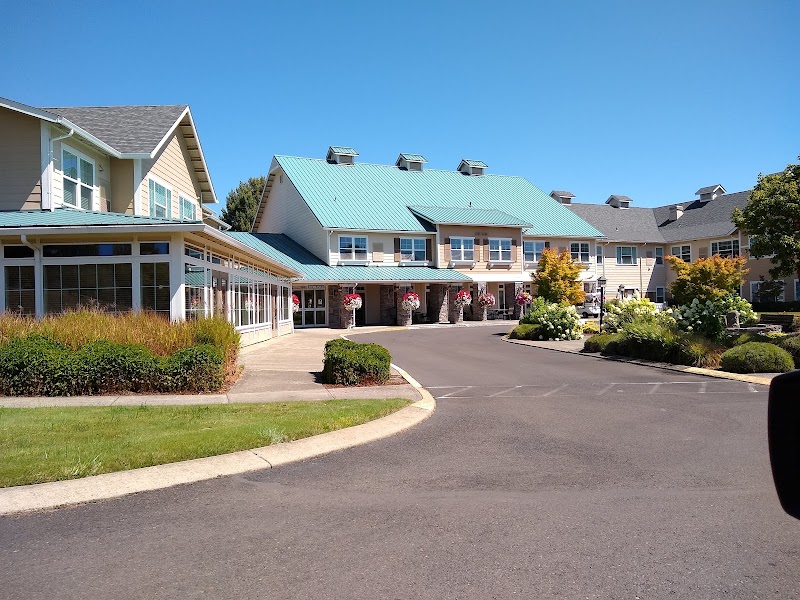

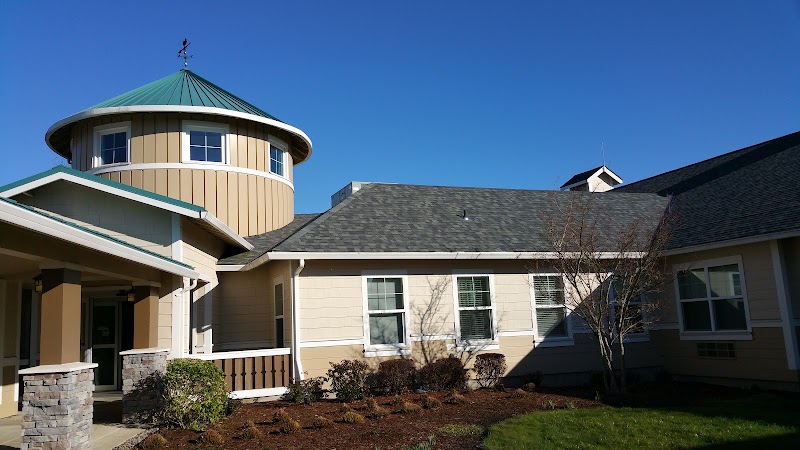
VILLAGE AT HILLSIDE

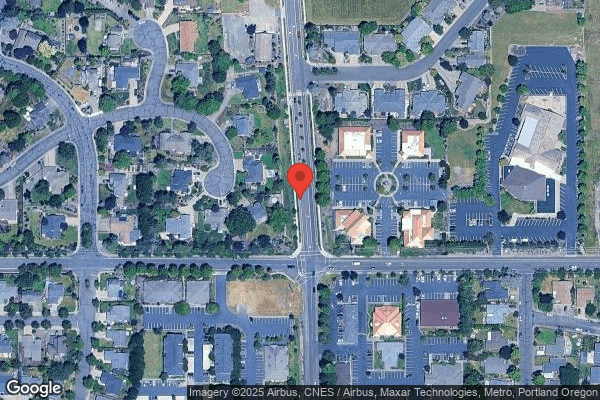
400 NW HILLSIDE PARK WAY, MCMINNVILLE, OR 97128 (503) 472-9534
Non profit - Corporation 20 Beds HUMANGOOD Data: November 2025
Trust Grade
40/100
#73 of 127 in OR
Last Inspection: July 2024

Within standard 12-15 month inspection cycle. Federal law requires annual inspections.

Overview

The Village at Hillside has received a Trust Grade of D, indicating below-average quality and some concerns about care and safety. It ranks #73 out of 127 nursing homes in Oregon, placing it in the bottom half of facilities in the state, and #3 out of 6 in Yamhill County, meaning only two local facilities are rated higher. The facility is improving, with a decrease in issues from 15 in 2023 to 6 in 2024. Staffing is a relative strength, earning a 4 out of 5 stars, but with a concerning turnover rate of 74%, which is significantly higher than the Oregon average. However, the facility has incurred $44,909 in fines, higher than 96% of Oregon facilities, suggesting ongoing compliance issues. Noteworthy incidents include a serious concern where a resident experienced unnecessary hardship due to improper discharge procedures, and there were multiple instances of inadequate RN coverage for at least 8 hours on several identified dates. Additionally, there were sanitation issues in the kitchen, including improper food temperature documentation and unclean food preparation areas. While there are strengths in staffing and ongoing improvements, families should weigh these concerns carefully.

Trust Score
D
40/100
In Oregon
#73/127
Bottom 43%
Safety Record
Moderate
Needs review
Inspections
Getting Better
15 → 6 violations
Staff Stability
⚠ Watch
74% turnover. Very high, 26 points above average. Constant new faces learning your loved one's needs.
Penalties
⚠ Watch
$44,909 in fines. Higher than 82% of Oregon facilities, suggesting repeated compliance issues.
Skilled Nurses
✓ Good
Each resident gets 121 minutes of Registered Nurse (RN) attention daily — more than 97% of Oregon nursing homes. RNs are the most trained staff who catch health problems before they become serious.
Violations
⚠ Watch
24 deficiencies on record. Higher than average. Multiple issues found across inspections.
★★★☆☆
3.0
Overall Rating
★★★★☆
4.0
Staff Levels
★★★★☆
4.0
Care Quality
★★★☆☆
3.0
Inspection Score
Stable
2023: 15 issues
2024: 6 issues

The Good

  • 4-Star Staffing Rating · Above-average nurse staffing levels
  • 4-Star Quality Measures · Strong clinical quality outcomes
  • Full Sprinkler Coverage · Fire safety systems throughout facility
  • No fines on record

Facility shows strength in staffing levels, quality measures, fire safety.

The Bad

3-Star Overall Rating

Near Oregon average (3.0)

Meets federal standards, typical of most facilities

Staff Turnover: 74%

27pts above Oregon avg (46%)

Frequent staff changes - ask about care continuity

Federal Fines: $44,909

Above median ($33,413)

Moderate penalties - review what triggered them

Chain: HUMANGOOD

Part of a multi-facility chain

Ask about local staffing decisions and management

Staff turnover is very high (74%)

26 points above Oregon average of 48%

The Ugly 24 deficiencies on record

1 actual harm
Jul 2024 6 deficiencies
CONCERN (D)

Potential for Harm - no one hurt, but risky conditions existed

Deficiency F0552 (Tag F0552)

Could have caused harm · This affected 1 resident

Based on interview and record review it was determined the facility failed to inform the resident's representative of the risks and benefits of psychotropic medication for 1 of 5 sampled residents (#8...

Read full inspector narrative →
Based on interview and record review it was determined the facility failed to inform the resident's representative of the risks and benefits of psychotropic medication for 1 of 5 sampled residents (#8) reviewed for unnecessary medications. This placed residents at risk for not being informed of adverse side effects of medications. Findings include: Resident 8 was admitted to the facility in 7/2023 with diagnoses including dementia and anxiety. Resident 8's 5/5/24 Quarterly MDS indicated Resident 8 had severe cognitive impairment. Resident 8's Profile Sheet, reviewed on 7/18/24, listed a resident representative (Witness 1). Resident 8's record included a Physician Order dated 7/27/23 for citalopram hydrochloride (an antidepressant) 10 MG oral tablets daily. The 7/2023 MAR indicated Resident 8 began receiving the citalopram on 7/28/23. Resident 8's health record revealed a consent for citalopram signed by Witness 1 (Family) on 10/5/23 (more than two months after the resident began receiving citalopram). No evidence was found to indicate Resident 8 and Witness 1 were provided with risks and benefits of citalopram prior to the start of administration in 7/2023. In an interview on 7/17/24 at 2:30 PM Staff 2 (Resident Care Manager/MDS Coordinator) acknowledged the lack of timely notification of risks and benefits of citalopram.
CONCERN (D)

Potential for Harm - no one hurt, but risky conditions existed

Deficiency F0553 (Tag F0553)

Could have caused harm · This affected 1 resident

Based on interview and record review it was determined the facility failed to include the resident's representative in care planning for 1 of 1 sampled resident (#8) reviewed for care planning. This p...

Read full inspector narrative →
Based on interview and record review it was determined the facility failed to include the resident's representative in care planning for 1 of 1 sampled resident (#8) reviewed for care planning. This placed residents at risk for lack of resident-centered care planning. Findings include: Resident 8 was admitted to the facility in 7/2023 with diagnoses including dementia and anxiety. Resident 8's 5/5/24 Quarterly MDS indicated Resident 8 had severe cognitive impairment. Resident 8's Profile Sheet, reviewed on 7/18/24, indicated she/he had a resident representative. A 1/14/24 Collaborative Care document indicated Resident 8 had a care conference on 1/14/24. In an interview on 7/15/24 at 3:01 PM Witness 1 (Family) stated they did not participate in a care conference in the past year. He said he did not get medical information unless he asked for it and Witness 1 said he was not notified of updates/changes to the resident's care plan or outcomes of healthcare provider visits. A review of Resident 8's clinical record revealed no indication that the resident representative was contacted regarding the resident's care plan. In an interview on 7/17/24 at10:40 AM Staff 3 (Social Service Coordinator) stated Resident 8's family was not offered a care conference since 1/2024.
CONCERN (D)

Potential for Harm - no one hurt, but risky conditions existed

Drug Regimen Review (Tag F0756)

Could have caused harm · This affected 1 resident

Based on interview and record review it was determined the facility failed to follow up on pharmacist recommendations for 1 of 5 sampled residents (#11) reviewed for unnecessary medications. This plac...

Read full inspector narrative →
Based on interview and record review it was determined the facility failed to follow up on pharmacist recommendations for 1 of 5 sampled residents (#11) reviewed for unnecessary medications. This placed residents at risk for unnecessary medication administration. Findings include: Resident 11 admitted to the facility in 2023 with diagnoses including migraines and pain. Review of the 7/1/24 physician orders indicated Resident 11 received Depakote (anticonvulsant) BID for migraines and Miralax (laxative) as needed for constipation. Review of Resident 11's pharmacist reviews indicated the following recommendations: - 5/2024 recommended to clarify the order to administer Miralax with food/meals. There was no indication of follow up or a response by the physician. - 7/2024 recommended a gradual dose reduction (GDR) of the Depakote from BID to once a day at bedtime. The physician was noted to indicate yes and accepted the recommendation on 7/3/24. Review of the 7/2024 MAR from 7/4/24 through 7/16/24 indicated Resident 11 was still receiving Depakote BID. Review of the 5/2024, 6/2024 and 7/2024 MAR revealed no indication the use of Miralax was updated to include direction to be administered with food/meals. On 7/17/24 at 9:33 AM Staff 2 (LPN Resident Care Manager) stated she assisted with monthly pharmacist reviews. Staff 2 stated pharmacist recommendations were faxed to the physician and the facility typically received a response promptly. Staff 2 stated when a response was received, orders were either changed or updated. Staff 2 stated she misread the 7/2024 pharmacist recommendation for the Depakote and the recommendation to reduce Resident 11's Depakote was not implemented. Staff 2 also acknowledged there was no information to indicate the Miralax recommendation was followed up on.
CONCERN (D)

Potential for Harm - no one hurt, but risky conditions existed

Deficiency F0757 (Tag F0757)

Could have caused harm · This affected 1 resident

Based on interview and record review, it was determined the facility failed to ensure residents did not receive unnecessart blood pressure medication for 1 of 5 sampled residents (#3) reviewed for med...

Read full inspector narrative →
Based on interview and record review, it was determined the facility failed to ensure residents did not receive unnecessart blood pressure medication for 1 of 5 sampled residents (#3) reviewed for medications. This placed the resident at risk for low blood pressure. Findings include: Resident 3 was admitted to the facility in 2/2022 with diagnoses including essential hypertension. A review of Resident 3's medication orders revealed an order dated 3/14/24 for verapamil HCI tablet 120 mg (an antihypertensive medication) to be given 1 time a day related to hypertension with instructions to hold for blood pressure less than 100 systolic or 60 diastolic. The order also indicated to hold the medication for pulse less than 60. A review of Resident 3's MARs dated 6/1/24 through 7/15/24 revealed six instances that the verapamil was administered when the resident's blood pressure or pulse were outside of ordered parameters: 6/8/24, 6/9/24, 6/21/24, 6/24/24, 6/26/24 and 7/6/24. During an interview with Staff 8 (RN) on 7/18/24 at 10:28 AM she stated stated she would expect the medication to be held when blood pressure or pulse was not within the ordered parameters. She confirmed that the medications were documented as administered on those dates.
CONCERN (F)

Potential for Harm - no one hurt, but risky conditions existed

Deficiency F0727 (Tag F0727)

Could have caused harm · This affected most or all residents

Based on interview and record review it was determined the facility failed to use the services of a registered nurse for at least eight consecutive hours a day for 19 of 46 days reviewed for staffing....

Read full inspector narrative →
Based on interview and record review it was determined the facility failed to use the services of a registered nurse for at least eight consecutive hours a day for 19 of 46 days reviewed for staffing. This placed residents at risk for lack of RN oversight including comprehensive assessments. Findings include: A review of the Direct Care Staff Daily Reports for dates from 6/1/24 through 7/16/24 revealed no RN coverage during the 24-hour period on the following dates: - 6/4/24, 6/5/24, 6/6/24, 6/7/24, 6/10/24, 6/11/24, 6/12/24, 6/16/24, 6/18/24, 6/19/24, 6/22/24, 6/23/24, 6/25/24, 6/26/24, 7/2/24, 7/3/24, 7/6/24, 7/7/24, 7/10/24 In a follow up interview on 7/18/24 at 10:00 AM Staff 1 (Administrator) was informed of the identified dates when the staffing sheets indicated there was a lack of RN coverage. Staff 1 acknowledged there was no RN working as a charge nurse for at least 8 hours on the identified dates.
CONCERN (F)

Potential for Harm - no one hurt, but risky conditions existed

Food Safety (Tag F0812)

Could have caused harm · This affected most or all residents

Based on observation and interview it was determined the facility failed to provide a sanitary kitchen environment, document food temperatures and ensure staff wore appropriate hair restraints during ...

Read full inspector narrative →
Based on observation and interview it was determined the facility failed to provide a sanitary kitchen environment, document food temperatures and ensure staff wore appropriate hair restraints during meal preparation for 1 of 2 kitchens reviewed for sanitation. This placed residents at risk for unsanitary food and cross contamination. Findings include: 1. On 7/15/24 at 9:23 AM and 7/17/24 at 7:21 AM, the inside of the refrigerator in the kitchen was observed to have three small fans circulating air, and each fan had approximately a quarter-inch buildup of dust particles. The ceiling of the refrigerator above the three fans had multiple visible dust particles. Adjacent to the three fans was a black insulated tubing which had visible dust particles on the exterior of the insulated tubing. On 7/17/24 at 10:18 AM Staff 6 (Certified Dietary Manager) and Staff 7 (Registered Dietician) both observed and acknowledged the three fans, the ceiling and the black insulated tubing were dirty and had a visible build-up of dust particles. 2. On 7/15/24 at 9:43 AM and 7/17/24 at 10:16 AM Staff 5 (Executive Chief) was observed in the kitchen prepping meals without a hair restraint or a beard restraint. On 7/17/24 at 10:18 AM Staff 6 (Certified Dietary Manager) and Staff 7 (Registered Dietician) observed Staff 5 without a hair or a beard restraint in the kitchen. Staff 7 stated she expected Staff 5 to have a hair and beard restraint whenever he was in the kitchen. 3. On 7/17/24 at 7:34 AM Staff 4 (Cook) was observed checking temperatures for hot breakfast items but she did not write down or log the food temperatures. Staff 4 stated they were out of the temperature log sheets and she was not able to record the temperatures. On 7/17/24 at 10:18 AM food temperature logs were requested. At 12:46 PM, Staff 7 provided one Dietary Food Temperature Log dated 7/16/24, which had nine breakfast items with temperatures listed on the form. Staff 7 stated she could not locate any other food temperature logs. Staff 7 stated staff were checking food temperatures but not recording them on the temperature log form. Staff 7 stated she expected staff to complete temperature checks for each meal and record the temperature on the temperature log form.
Mar 2023 15 deficiencies 1 Harm
SERIOUS (G)

Actual Harm - a resident was hurt due to facility failures

Transfer Requirements (Tag F0622)

A resident was harmed · This affected 1 resident

**NOTE- TERMS IN BRACKETS HAVE BEEN EDITED TO PROTECT CONFIDENTIALITY** Based on interview and record review it was determined the facility failed to ensure appropriate services and medical equipment ...

Read full inspector narrative →
**NOTE- TERMS IN BRACKETS HAVE BEEN EDITED TO PROTECT CONFIDENTIALITY** Based on interview and record review it was determined the facility failed to ensure appropriate services and medical equipment were provided at time of discharge for 1 of 3 sampled residents (#11) reviewed for facility discharge. As a result, the unsafe discharge resulted with Resident 11 experiencing unnecessary hardship and pain. Findings include: Resident 11 was admitted to the facility on [DATE] with diagnoses including essential tremors, left hip hemiarthroplasty (partial hip joint replacement). Resident 11's 2/17/23 admission MDS indicated she/he was cognitively intact. A Notice of Medicare Non-Coverage (NOMNC) which notified the resident of skilled services ending was issued on 2/15/23 and indicated skilled services would end on 2/17/23. The physical therapy Discharge summary, dated [DATE], indicated Resident 11 was a moderate fall risk, used a front wheel walker (FWW), and was making progress but limited due to only receiving three treatments. PT discharge recommendations included FWW, daily check-ins and home health PT. The occupational therapy Discharge summary, dated [DATE], indicated Resident 11 required supervision or hands-on assistance with toilet transfers, showers, and lower body dressing using adaptive equipment. OT discharge recommendations included community support, home health OT, PT, bath aide, raised toilet seat, grab bars in shower, wheelchair and FWW. A nursing progress note on 2/17/23 indicated the resident requested to discharge that day at 11:30 AM. A Transition of Care and Discharge summary, dated [DATE], indicated Resident 11 was independent with toilet transfers, showers, and lower body dressing and did not receive any therapy services during her/his stay. A walker was recommended, and no home health services were ordered. A 3/13/23 hospital discharge summary revealed Resident 11 was re-admitted to the hospital on [DATE] for a revision surgery undergoing a left hip hemiarthroplasty and open reduction and internal fixation due to a femur fracture (surgical procedure in which broken pieces of thigh [femur] bone are held together by hardware such as metal rods, pins or screws) with partial weightbearing on left lower extremity. On 3/20/23 at 2:21 PM Resident 11 stated she/he was discharged home too soon, stated she/he trusted the facility when she/he was informed she/he was ready to go home and expected that the resources would be at her/his home already. No services, resources or equipment were set-up when Resident 11 arrived home. Resident 11 had to call a local community resource center to borrow a wheelchair and walker to get out of the car and into her/his home. Home health was never started. Resident 11 further stated she/he felt her/his left hip was refractured a week after being at home. Resident 11 was not able to get around her/his home without being in a wheelchair and the pain was unbearable. Resident 11 stated she/he did not take her/his medications for several days due to pain, not being able to move and not being able to reach her/his medications due to obstacles in the home. Resident 11 stated she/he requested x-rays from her/his surgeon due to the unbearable pain, inability to walk and weightbear on her/his left leg. Resident 11's surgeon admitted resident to the hospital for a revision surgery due to a left femur fracture on 3/8/23. On 3/21/23 at 11:11 AM Staff 3 (Operations Consultant RN) stated there was no additional documentation or paperwork regarding Resident 11's discharge regarding services provided or plan for Resident 11's discharge. On 3/22/23 at 11:07 AM Staff 2 (DNS) stated she completed the Transition of Care Discharge Summary on 2/17/23 however did not recall any information regarding the discharge.
CONCERN (D)

Potential for Harm - no one hurt, but risky conditions existed

Deficiency F0578 (Tag F0578)

Could have caused harm · This affected 1 resident

Based on interview and record review it was determined the facility failed to ensure a resident's advance directive was available for staff access in case of an emergency for 1 of 2 sampled residents ...

Read full inspector narrative →
Based on interview and record review it was determined the facility failed to ensure a resident's advance directive was available for staff access in case of an emergency for 1 of 2 sampled residents (#1) reviewed for advance directives. This placed residents at risk for lack of end of life choices being honored. Findings include: Resident 1 was admitted to the facility in 5/2022 with diagnoses including back pain. The 2/26/23 Care Conference form indicated the resident had an advance directive. A 2/2023 Quarterly MDS indicated Resident 1 was cognitively intact. On 3/20/23 at 2:13 PM Resident 1 stated she/he filled out an advance directive. Resident 1's record did not contain a copy of her/his advance directive. On 3/20/23 at 2:20 PM and 3/21/23 at 9:51 AM Staff 2 (DNS) indicated upon admit staff were to ask residents if they had an advance directive. If the resident had one, the staff were to obtain a copy for the resident's record. Staff 2 stated Resident 1 had an advance directive but it was in the resident's previous living community and not in the facility where staff had immediate access.
CONCERN (D)

Potential for Harm - no one hurt, but risky conditions existed

Deficiency F0582 (Tag F0582)

Could have caused harm · This affected 1 resident

Based on interview and record review it was determined the facility failed to provide a written notification to 3 of 5 sampled residents (#s 3, 4, and 7) reviewed for Beneficiary Protection Notices. T...

Read full inspector narrative →
Based on interview and record review it was determined the facility failed to provide a written notification to 3 of 5 sampled residents (#s 3, 4, and 7) reviewed for Beneficiary Protection Notices. This placed residents at risk for unknown financial liabilities. Finding include: 1. Resident 3 admitted to the facility 10/2014 with diagnoses including asthma and adult failure to thrive. Resident 3 started Medicare Part A services (skilled services including therapy) on 1/23/23. Resident 3's last covered day of Part A services was 2/2/23. A Skilled Nursing Facility Advanced Beneficiary Notice of Non-Coverage (SNF ABN) which informed the resident of potential financial liability due to Resident 3 remaining in the facility was not issued. A Notice of Medicare Non-Coverage (NOMNC) which notified the resident of skilled services ending and their rights of appeal was not issued. On 3/22/23 at 10:23 AM Staff 3 (Operations Consultant RN) confirmed a SNF ABN and NOMNC was not issued to Residents 3 and the person who was assigned to issue the forms was not aware the forms were supposed to be issued when residents remained in the facility. 2. Resident 4 was admitted to the facility 7/2022 with diagnoses including Alzheimer's disease and high blood pressure. Resident 4 started Medicare Part A services (skilled services including therapy) on 1/27/23. Resident 4's last covered day of Part A services was 2/2/23. A Skilled Nursing Facility Advanced Beneficiary Notice of Non-Coverage (SNF ABN) which informed the resident of potential financial liability due to Resident 4 remaining in the facility was not issued. A Notice of Medicare Non-Coverage (NOMNC) which notified the resident of skilled services ending and their rights of appeal was not issued. On 3/22/23 at 10:23 AM Staff 3 (Operations Consultant RN) confirmed a SNF ABN and NOMNC was not issued to Residents 4 and the person who was assigned to issue the forms was not aware the forms were supposed to be issued when residents remained in the facility. 3. Resident 7 was admitted 8/2022 with diagnoses including a stroke with left sided weakness. Resident 7 started Medicare Part A services (skilled services including therapy) on 1/27/23. Resident 7's last covered day of Part A services was 2/2/23. A Skilled Nursing Facility Advanced Beneficiary Notice of Non-Coverage (SNF ABN) which informed the resident of potential financial liability due to Resident 7 remaining in the facility was not issued. A Notice of Medicare Non-Coverage (NOMNC) which notified the resident of skilled services ending and their rights of appeal was not issued. On 3/22/23 at 10:23 AM Staff 3 (Operations Consultant RN) confirmed a SNF ABN and NOMNC was not issued to Resident 7 and the person who was assigned to issue the forms was not aware the forms were supposed to be issued when residents remained in the facility.
CONCERN (D)

Potential for Harm - no one hurt, but risky conditions existed

Transfer Notice (Tag F0623)

Could have caused harm · This affected 1 resident

Based on interview and record review it was determined the facility failed to ensure the ombudsman was notified of a resident's discharge for 1 of 1 sampled resident (#12) reviewed for hospitalization...

Read full inspector narrative →
Based on interview and record review it was determined the facility failed to ensure the ombudsman was notified of a resident's discharge for 1 of 1 sampled resident (#12) reviewed for hospitalization. This placed residents at risk for lack of advocacy assistance. Findings include: Resident 12 was admitted to the facility in 2022 with diagnoses including chronic lung disease. Progress Notes indicated on 1/23/23 Resident 12 reported she/he did not feel well. The resident's physician was notified and the resident was sent to the hospital for evaluation and treatment. The note indicated the family was notified but did not indicate the ombudsman was notified. On 3/24/23 at 8:48 AM Staff 4 (Social Services Director) stated she was new to the facility. Generally they notified the ombudsman and kept a log. The log only went back to 12/2022. Staff 4 stated there was no documentation which indicated the ombudsman was notified of Resident 12's discharge.
CONCERN (D)

Potential for Harm - no one hurt, but risky conditions existed

Deficiency F0625 (Tag F0625)

Could have caused harm · This affected 1 resident

Based on interview and record review it was determined the facility failed to provide a resident a bed hold policy at the time of hospital transfer for 1 of 1 sampled resident (#12) reviewed for hospi...

Read full inspector narrative →
Based on interview and record review it was determined the facility failed to provide a resident a bed hold policy at the time of hospital transfer for 1 of 1 sampled resident (#12) reviewed for hospitalization. This placed residents at risk for not being informed of her/his rights to return to the facility. Findings include: Resident 12 was admitted to the facility in 2022 with diagnoses including chronic lung disease. A 9/22/22 Bed Hold Agreement signed by Resident 12's spouse indicated they did not wish to hold the bed if Resident 12 was discharged to the hospital. Progress Notes revealed on 1/23/23 Resident 12 reported she/he did not feel well, the physician was notified and the resident was transferred to the hospital for evaluation and treatment. There were no notes to indicate the resident was provided a new bed hold form. On 3/23/23 at 2:51 PM and 3:42 PM Staff 3 (Operations Consultant RN) stated resident's signed a Bed Hold Agreement at the beginning of their facility stay. Staff 3 acknowledged residents were to get a bed hold policy when discharged to the hospital and stated Resident 12 did not receive a bed hold policy after she/he was discharged to the hospital.
CONCERN (D)

Potential for Harm - no one hurt, but risky conditions existed

Deficiency F0655 (Tag F0655)

Could have caused harm · This affected 1 resident

**NOTE- TERMS IN BRACKETS HAVE BEEN EDITED TO PROTECT CONFIDENTIALITY** Based on interview and record review it was determined the facility failed to provide residents with the baseline care plan for ...

Read full inspector narrative →
**NOTE- TERMS IN BRACKETS HAVE BEEN EDITED TO PROTECT CONFIDENTIALITY** Based on interview and record review it was determined the facility failed to provide residents with the baseline care plan for 1 of 1 sampled resident (#114) reviewed for new admissions. This placed residents at risk for being uniformed of their plan of care. Findings include: Resident 114 was admitted to the facility on [DATE] with diagnoses including pelvic fracture. Review of the medical record indicated no evidence baseline care plan information was given to Resident 114. On 3/22/23 at 10:47 AM Staff 2 (DNS) and Staff 3 (Operations Consultant/RN) were not aware of baseline care plans which were to be given to the residents. Staff 3 stated Staff 17 (MDS Coordinator) was responsible for the initial resident care plans. On 3/22/23 at 10:49 AM Staff 17 stated the facility did not have a process to provide residents a baseline care plan and information was not given to residents' in the facility which included Resident 114.
CONCERN (D) 📢 Someone Reported This

A family member, employee, or ombudsman was alarmed enough to file a formal complaint

Potential for Harm - no one hurt, but risky conditions existed

Deficiency F0658 (Tag F0658)

Could have caused harm · This affected 1 resident

Based on interview and record review it was determined the facility failed to ensure Staff 6 (LPN) adhered to professional nursing standards related to leave the facility with no licensed nurse on dut...

Read full inspector narrative →
Based on interview and record review it was determined the facility failed to ensure Staff 6 (LPN) adhered to professional nursing standards related to leave the facility with no licensed nurse on duty and to count the medication with a non-licensed staff. This placed residents at risk for adverse health conditions and unmet needs. Findings include: On 12/28/22 a public alledged on 12/24/22, in the afternoon, a resident did not receive medication due to no (licensed) nurse in the facility. On 3/23/23 at 12:03 PM Staff 5 (Human Resources Director) provided a list of names, phone numbers and the hours worked on 12/24/22. The list included the following: -Staff 6 (LPN) worked from 9:49 AM to 4:02 PM. -Staff 8 (CNA) worked 1:54 PM to 10:40 PM. -Staff 10 (LPN) worked 5:56 PM to 6:23 AM (12/24/22). -Staff 21 (CNA) worked 1:20 PM to 10:00 PM. On 3/23/23 at 12:21 PM Staff 6 confirmed she worked on 12/24/22 from 9:49 AM to 4:02 PM. Staff 6 stated when she left at 4:02 PM there was no other licensed nurse in the facility. She stated she was aware the evening nurse could not arrive early for the 6:00 PM scheduled shift, so she left a note for the evening nurse. Staff 6 stated she counted the medications before she left the facility with Staff 5 because there was no licensed nursing staff available to count the medications. On 3/23/23 at 12:32 PM Staff 8 confirmed she worked on 12/24/22 from 1:54 PM to 10:40 PM. Staff 8 confirmed the facility did not have any licensed nurses available during the two hours (4:00 PM to 6:00 PM) prior to when Staff 10 arrived around 6:00 PM. Staff 8 did not recall any urgent events which required a licensed nurse and no negative resident outcomes during 4:00 PM to 6:00 PM on 12/24/22. On 3/23/23 at 12:43 PM Staff 10 confirmed when she arrived for her 12/24/22 evening shift there was not a licensed nurse in the facility. Staff 10 acknowledged Staff 6 left a note for her when Staff 6 left the facility earlier on 12/24/22. Staff 10 acknowledged she was told several residents missed medications and she checked in with all the residents. Staff 10 confirmed several residents missed medications opportunities. Staff 10 stated no negative outcomes for residents occurred in the two hours prior to the start of her shift on 12/24/22. On 3/24/23 at 10:05 AM Staff 1 (Administrator) stated he expected the facility to always have at least one licensed nurse in the facility and medications be counted with two licensed staff from the nursing department. _____________ Refer to F725
CONCERN (D)

Potential for Harm - no one hurt, but risky conditions existed

Deficiency F0679 (Tag F0679)

Could have caused harm · This affected 1 resident

**NOTE- TERMS IN BRACKETS HAVE BEEN EDITED TO PROTECT CONFIDENTIALITY** Based on observation, interview and record review, it was determined the facility failed to provide an ongoing program of activi...

Read full inspector narrative →
**NOTE- TERMS IN BRACKETS HAVE BEEN EDITED TO PROTECT CONFIDENTIALITY** Based on observation, interview and record review, it was determined the facility failed to provide an ongoing program of activities designed to meet the interests and psychosocial well-being of 2 of 3 sampled residents (#s 4 and 5) reviewed for activities. Failure to provide meaningful and regular activities placed residents at risk for unmet psychosocial needs. Findings include: 1. Resident 5 was admitted to the facility in 2019 with diagnoses including depression. An 8/2022 Significant Change MDS and associated CAAs revealed the resident had memory issues but was able to make her/his needs known. A 2/23/23 Quarterly MDS indicated the resident was able to make her/his needs known. A 2/28/23 quarterly activity interest form revealed the resident liked activities including flowers. Group and individual activities from 2/22/23 through 3/22/23 revealed activities were not offered. On 3/20/23 at 10:32 AM Resident 5 stated she/he did not like to leave her/his room to participate in activities but would like to do more activities in her/his room like painting and flower arrangements. Observations revealed the following: -3/20/23 at 2:11 PM Resident 5 was in bed, her/his eyes were shut and the television was on. -3/21/23 at 11:54 AM Resident 5 was in bed with her/his eyes shut, the room lights were off and music played on the television. -3/22/23 at 9:09 AM Resident 5 was in bed with her/his eyes shut and music played on the television. On 3/22/23 at 9:24 AM Staff 13 (CNA) stated she was familiar with Resident 5. Resident 5 did not like to get out of bed to participate in activities. The resident usually watched television and was able to change the channels by her/himself. On 3/22/23 at 9:37 AM Staff 4 (Activities) stated she was new to the facility but was familiar with Resident 5 from another facility. The resident was very social and loved to talk. Staff 4 indicated the resident would benefit from more engaging 1:1 activities and not just being in her/his room watching television all day. Staff 4 indicated Resident 5 reported she/he liked nail care and going forward Staff 4 would include spa days and could also help the resident with floral arrangements. Staff 4 stated she would also see if the resident would like to set a goal to leave her/his room on occasion. Surveyor: [NAME], [NAME] R. 2. Resident 14 admitted to the facility in 7/2022 with diagnosis including Alzheimer's disease and a stroke. Resident 14's 8/2/22 admission MDS indicated severe cognitive impairment. The preferences for activities were listed as the following: -Somewhat important: books/newspaper reading materials, music, keep up with news, groups of people, do favorite activity, and go outside in good weather; - Not very important: pets, and religion. The 7/20/22 care plan goal was to provide Resident 14 activities to maintain involvement in cognitive stimulation, social activities as she/he desired. The care plan directed staff to invite her/him to scheduled programs which might interest her/him, to provide 1:1 bed/side/in-room visits/activities if she/he was unable to attend out of room events and when not her/his choice to participate in a group activity, staff were to turn on the TV or music in room to provide sensory stimulation. The Optimum Life Program admission Data (activity assessment) completed 7/27/22, indicated Resident 14 enjoyed to fish and hunt. It directed staff to provide a book for individual activities. Record review revealed activity Program notes were made for 1/28/23, 2/1/23 and 3/21/23. No other documentation of participation was found. Multiple observations were made of Resident 14 not engaged in group, meaningful or recreational activities between 3/20/23 through 3/22/23 between the hours of 8:53 AM to 3:09 PM. The activity calendar list groups activities offered which Resident 14 did not attend. Observation was made of Resident 14 on 3/21/23 between 10:12 AM to 11:12 AM to wander in her/his wheelchair the halls, push a mechanical lift down the hallway and moved some paper items on a table. Resident 14 stated she/he was looking for something do. On 3/23/23 at 2:44 PM Staff 4 stated she started to work with the activity program about a week prior. Staff 4 stated the facility did not have a staff person designated to the long term care unit and it was reported to her a person from another department would stop into the unit and provide activities to the residents every once in a while. She was unaware of any documentation of participation for which activities occurred for residents on the unit. Staff 4 acknowledged Resident 14 did not participate in the activities the week of 3/20/23 to 3/22/23 other than a brief one on one visit on 3/21/23. No further information was provided. On 3/24/23 at 10:05 AM Staff 1 (Administrator) acknowledged the lack of an on-going activity program for the unit in the past year.
CONCERN (D)

Potential for Harm - no one hurt, but risky conditions existed

Quality of Care (Tag F0684)

Could have caused harm · This affected 1 resident

Based on interview and record review it determined the facility failed to obtain a UA per physician orders and monitor a resident for signs of a UTI for 1 of 1 sampled resident (#2) reviewed for chang...

Read full inspector narrative →
Based on interview and record review it determined the facility failed to obtain a UA per physician orders and monitor a resident for signs of a UTI for 1 of 1 sampled resident (#2) reviewed for change of condition, failed to follow physician parameters for medication administration for 1 of 5 sampled residents (#2) and failed to document a rationale for a decrease in a resident's antidepressant and monitor the residents after the medication change for 2 of 5 sampled residents (#s 2 and 5) reviewed for medications. This placed residents at risk for delayed treatment and adverse medication reactions. Findings include: 1. Resident 2 was admitted to the facility in 2022 with diagnoses including depression. a. Progress Notes indicated on 12/8/22 Resident 2 had increased confusion, poor intake and a low grade fever. Resident 2's physician was notified and ordered a UA. Resident 2's record did not reveal results of the UA. On 3/22/23 at 10:14 AM Staff 2 (DNS) stated a UA was not obtained per physician orders. b. A 12/8/22 Progress Notes revealed Resident 2 had increased confusion, had poor intake and a temperature of 100.7 degrees F. After Tylenol (reduces fever) was administered the resident's temperature decreased to 99.5 degrees F. The note also indicated the resident received the Covid-19 booster on 12/7/22. The physician was notified and ordered a UA and directed staff to monitor the resident closely. The progress notes did not have additional assessments of the resident related to her/his mentation or if the resident had signs of a UTI. On 3/22/23 at 10:14 AM Staff 2 (DNS) and Staff 3 (Operations Consultant RN) acknowledged the resident was not monitored for signs of a UTI after the physician was notified of the resident's change of condition on 12/8/22. On 3/24/23 at 10:02 AM Staff 2 (DNS) stated residents should be monitored for a change of condition every eight hours for at least 72 hours and longer if needed. c. An 11/14/22 pharmacy Consultation Report revealed Resident 2's physician declined to decrease the resident's Lexapro (antidepressant) because a reduction was contraindicated. The physician indicated a reduction would likely cause the resident to be psychologically unstable. Progress Notes dated 12/9/22 revealed Resident 2's Lexapro was decreased. The resident's record did not have a rationale for the decrease. There were also no progress notes after 12/9/22 to indicate staff monitored the resident to ensure there were no adverse reactions to the medication reduction. On 3/22/23 at 10:14 AM Staff 3 (Operations Consultant RN) acknowledged the resident was not monitored after the reduction of the resident's antidepressant. On 3/24/23 at 10:02 AM Staff 2 (DNS) stated a rationale, signed pharmacy recommendation or an assessment for the decrease in the resident's antidepressant was not located. d. Resident 2's 3/20/23 Active Orders Report revealed the resident was to be administered losartan (treats high blood pressure) and verapamil (treats high blood pressure). The medications were to be held if the top number of the blood pressure was less than 100. Review of the 2/22/23 through 3/23/23 MARs revealed on 3/4/23, 3/6/23, 3/12/23, 3/18/23 and 3/19/23 the medication was given prior to the blood pressure being taken. On 3/21/23 at 1:04 PM Staff 20 (CMA) stated if a resident had medications with vital sign parameters the vital signs were to be taken before the medications were administered. The vital signs were to be documented in the resident's record. On 3/22/23 at 10:18 AM Staff 2 (DNS) and Staff 3 (Operations Consultant RN) acknowledged there were five days when Resident 2's medications were administered prior to the blood pressure being taken. 2. Resident 5 was admitted to the facility in 2019 with diagnoses including depression. An 11/15/22 pharmacy Consultation Report revealed Resident 5's physician declined to decrease the resident's venlafaxine (antidepressant) because a reduction was contraindicated. The physician indicated a reduction would likely cause the resident to be psychologically unstable. Progress Notes by Staff 16 (LPN) dated 12/6/22 indicated, per pharmacy recommendation, the venlafaxine was decreased. The resident's record did not have a rationale for the decrease. There were also no progress notes after 12/6/22 to indicate staff monitored the resident to ensure there were no adverse reactions to the medication reduction. On 3/23/23 at 10:38 AM Staff 16 stated she did not recall the situation. On 3/22/23 at 10:14 AM Staff 3 (Operations Consultant RN) acknowledged Resident 5 was not monitored after the reduction of the resident's antidepressant. On 3/24/23 at 10:02 AM Staff 2 (DNS) stated a rationale, signed pharmacy recommendation or assessment for the decrease of Resident 5's decrease in antidepressant was not located.
CONCERN (D)

Potential for Harm - no one hurt, but risky conditions existed

Deficiency F0761 (Tag F0761)

Could have caused harm · This affected 1 resident

Based on observation and interview it was determined the facility failed to store treatment supplies in locked compartments for 1 of 1 treatment cart observed. This placed residents at risk for accide...

Read full inspector narrative →
Based on observation and interview it was determined the facility failed to store treatment supplies in locked compartments for 1 of 1 treatment cart observed. This placed residents at risk for accidents. Findings include: On 3/20/23 from 10:03 AM through 10:16 AM an unlocked treatment cart was observed outside of the nurse's station. Staff were observed to walk by the cart but did not lock the cart. There were no residents in the area. On 3/20/23 at 10:22 AM Staff 3 (Operations Consulting RN) stated the treatment cart contained different items used for treatments and confirmed it was to be locked. On 3/20/23 at 2:16 PM this surveyor and Staff 2 (DNS) walked by a treatment cart at the nurse's station. The treatment cart was observed to be unlocked. There were no staff or residents near the treatment cart. The cart contained insulin, needles and creams. Staff 2 stated the cart was to be locked.
CONCERN (D)

Potential for Harm - no one hurt, but risky conditions existed

Laboratory Services (Tag F0770)

Could have caused harm · This affected 1 resident

Based on interview and record review it was determined the facility failed to ensure laboratory services were obtained for 1 of 1 sampled resident (#2) reviewed for change of condition. This placed re...

Read full inspector narrative →
Based on interview and record review it was determined the facility failed to ensure laboratory services were obtained for 1 of 1 sampled resident (#2) reviewed for change of condition. This placed residents at risk for delayed treatment. Findings include: Resident 2 was admitted to the facility in 2022 with diagnoses including cognitive impairment. Progress Notes indicated on 12/8/22 Resident 2 had increased confusion, poor intake and a low grade fever. The resident's physician was notified and ordered a UA. On 12/10/22, Saturday, the facility staff called the laboratory to follow-up on the UA specimen pick-up. The note indicated the laboratory did not come to the facility on the weekends and a new UA would be collected on 12/11/22, Sunday, for an early 12/12/22, Monday, pick-up. On 3/21/23 at 3:25 PM Staff 2 (DNS) stated the facility used the local hospital laboratory and they only picked up samples Monday through Friday. Samples which were marked as urgent would be picked up on Saturday and Sunday. Staff 2 indicated on the weekend if a UA was not ordered as urgent the facility staff were to take to the sample to the hospital for processing to ensure treatment, if indicated, was not delayed. See F684 Example 1 (a) and (b) for additional information.
CONCERN (D)

Potential for Harm - no one hurt, but risky conditions existed

Deficiency F0883 (Tag F0883)

Could have caused harm · This affected 1 resident

Based on interview and record review it was determined the facility failed to ensure 5 of 5 sampled residents (#s 2, 3, 4, 11 and 114) were offered a PCV20 (pneumonia) vaccine. This placed residents a...

Read full inspector narrative →
Based on interview and record review it was determined the facility failed to ensure 5 of 5 sampled residents (#s 2, 3, 4, 11 and 114) were offered a PCV20 (pneumonia) vaccine. This placed residents at risk for respiratory infections. Findings include: 1. Resident 2 was admitted to the facility in 2022 with diagnoses including high blood pressure. Resident 2's record revealed she/he was not offered the PCV20 vaccine. On 3/23/23 at 1:30 PM Staff 2 (DNS) and Staff 3 (Operations Consultant RN) stated the resident was eligible but was not offered the PCV20 vaccine. 2. Resident 3 was readmitted to the facility in 2014 with diagnoses including adult failure to thrive. Resident 3's record revealed she/he was eligible but not offered the PCV20 vaccine. On 3/23/23 at 1:30 PM Staff 2 (DNS) and Staff 3 (Operations Consultant RN) stated the resident was eligible but was not offered the PCV20 vaccine. 3. Resident 4 was admitted to the facility in 2022 with diagnoses including stroke. Resident 4's record revealed she/he was eligible but was not offered the PCV20 vaccine. On 3/23/23 at 1:30 PM Staff 2 (DNS) and Staff 3 (Operations Consultant RN) stated the resident was eligible but was not offered the PCV20 vaccine. 4. Resident 114 was admitted to the facility in 2023 with diagnoses including respiratory infection. Resident 114's record revealed she/he was eligible but was not offered the PCV20 vaccine. On 3/23/23 at 1:30 PM Staff 2 (DNS) and Staff 3 (Operations Consultant RN) stated the resident was eligible but was not offered the PCV20 vaccine. 5. Resident 11 was readmitted to the facility in 2023 with diagnoses including a fractured leg. Resident 11's record revealed she/he was eligible but was not offered the PCV20 vaccine. On 3/23/23 at 1:30 PM Staff 2 (DNS) and Staff 3 (Operations Consultant RN) stated the resident was eligible but was not offered the PCV20 vaccine.
CONCERN (E)

Potential for Harm - no one hurt, but risky conditions existed

Safe Environment (Tag F0584)

Could have caused harm · This affected multiple residents

Based on observation, interview and record review it was determined the facility failed to ensure linens fit residents' beds for 2 of 2 sampled residents (#s 5 and 11) reviewed for linens. This placed...

Read full inspector narrative →
Based on observation, interview and record review it was determined the facility failed to ensure linens fit residents' beds for 2 of 2 sampled residents (#s 5 and 11) reviewed for linens. This placed residents at risk for uncomfortable sleeping conditions. Findings include: 1. Resident 5 was admitted to the facility in 2019 with diagnoses including diabetes. A 2/23/23 Quarterly MDS indicated the resident had some memory impairment but was able to communicate her/his needs. On 3/20/23 at 10:35 AM Resident 5 stated the fitted bottom sheets did not stay on the mattress. On 3/22/23 at 12:21 PM Resident 5 was observed in bed and the top half of the mattress was exposed. The fitted sheet was only visible to be on at the foot of the mattress. Resident 5 indicated the fitted sheets have been an issue for a long time. On 3/22/23 at 2:22 PM Staff 12 (Housekeeping) stated the facility had a hard time obtaining fitted sheets that fit all the beds. Staff 12 indicated she needed to go to the resident rooms to measure the mattresses and see which sheets fit the beds. On 3/22/23 at 12:24 PM Staff Staff 9 (CNA) stated for at least the last three months the facility did not have enough fitted sheets for all the beds. On 3/22/23 at 12:31 PM Staff 2 (DNS) and Staff 3 (Operational Consultant RN) stated the facility had a variety of beds, some were longer and wider than others, and acknowledged some of the fitted sheets did not fit all the mattresses. 2. Resident 11 was admitted to the facility on 3/2023 with diagnoses including revised left hip surgery (partial hip joint replacement). A 3/16/23 admission MDS indicated the resident was cognitively intact. On 3/22/23 at 11:10 AM two rough textured bath blankets were observed to be used as Resident 11's bottom sheet. On 3/23/23 at 9:19 AM Staff 19 (CNA) stated she used bath blankets as bed linens for at least a month or so on some beds due to a shortage of bed linens. On 3/23/23 at 4:17 PM was observed Resident 11 laying on two bath blankets used as a bottom sheet. Resident 11 stated the CNA just made her/his bed after her/his shower. Resident 11 stated she/he wished the bed linen was softer and smoother, but did not want to complain. On 3/22/23 at 12:31 PM Staff 2 (DNS) and Staff 3 (Operational Consultant RN) stated the facility had a variety of beds, some were longer and wider than others, and acknowledged some of the fitted sheets did not fit all the mattresses.
CONCERN (E) 📢 Someone Reported This

A family member, employee, or ombudsman was alarmed enough to file a formal complaint

Potential for Harm - no one hurt, but risky conditions existed

Deficiency F0725 (Tag F0725)

Could have caused harm · This affected multiple residents

Based on interview and record review it was determined the facility failed to staff a licensed nurse on a 24-hour basis to provide nursing care to all residents in accordance with resident care plans ...

Read full inspector narrative →
Based on interview and record review it was determined the facility failed to staff a licensed nurse on a 24-hour basis to provide nursing care to all residents in accordance with resident care plans and standards of nursing practice for 36 of 113 days reviewed for staffing: This placed residents at risk for lack of care. Findings include: Review of the facility's Pay Based Journal (PBJ) Staffing Data Report for the fiscal year, Quarter 4 (7/2022, 8/2022 and 9/2022) revealed the facility reported the following dates the facility failed to have licensed nursing coverage, no RN or LPN, for 24 hours a day: 7/2/22, 7/16/22, 7/26/22, 7/27/22, 7/30/22, 7/31/22, 8/1/22, 8/2/22, 8/3/22, 8/4/22, 8/5/22, 8/6/22, 8/7/22, 8/8/22, 8/9/22, 8/10/22, 8/11/22, 8/15/22, 8/16/22, 8/17/22, 8/18/22, 8/22/22, 8/27/22, 8/29/22, 8/30/22, 8/31/22, 9/1/22, 9/12/22, 9/13/22, 9/18/22, 9/19/22, 9/20/22, 9/24/22, 9/25/22, and 9/26/22. On 12/28/22 a public complaint alledged on 12/24/22, in the afternoon, a resident did not receive medication due to no (licensed) nurse in the facility. On 3/23/23 at 12:03 PM Staff 5 (Human Resources Director) provided a list of staff hours worked on 12/24/22. On 12/24/22 between 4:02 PM and 5:56 PM the facility did not have a licensed nurse, no RN or LPN, available for resident care, needs or medications. On 3/24/23 at 10:05 AM Staff 1 (Administrator) acknowledged the PBJ Quarter 4 reported information. Staff 1 stated none of the current management staff were employed during the PBJ report time, he thought there should have been licensed staff in the facility but could not confirm or deny. Staff 1 was not able to provide additional documentation. Staff 1 acknowledged the 12/24/22 lack of licensed nurse coverage between 4:02 PM and 5:56 PM. No additional information was provided.
CONCERN (E) 📢 Someone Reported This

A family member, employee, or ombudsman was alarmed enough to file a formal complaint

Potential for Harm - no one hurt, but risky conditions existed

Deficiency F0727 (Tag F0727)

Could have caused harm · This affected multiple residents

Based on interview and record review it was determined the facility failed to staff an RN for 8 consecutive hours per day 7 days per week for 6 out of 113 days reviewed for staffing. This placed resid...

Read full inspector narrative →
Based on interview and record review it was determined the facility failed to staff an RN for 8 consecutive hours per day 7 days per week for 6 out of 113 days reviewed for staffing. This placed residents at risk for lack of timely assessments and care. Findings include: Review of the facility's Pay Based Journal (PBJ) Staffing Data Report for the fiscal year, Quarter 4 (7/2022, 8/2022 and 9/2022) revealed the facility reported the following dates the facility failed to provide staff an RN for eight consecutive hours a day for the following dates: 7/4/22, 7/23/22, 7/24/22, and 8/5/22. The Direct Care Staff Daily Reports from 3/1/23 through 3/20/23 revealed the facility did not have RN staffed on 3/11/23 and 3/18/23. On 3/24/23 at 10:05 AM Staff 1 (Administrator) acknowledged the PBJ Quarter 4 reported information and the 3/11/23 and 3/23/23 lack of RN coverage for 8 consecutive hours a day. No additional information was provided.
Jun 2019 3 deficiencies
CONCERN (D)

Potential for Harm - no one hurt, but risky conditions existed

Deficiency F0657 (Tag F0657)

Could have caused harm · This affected 1 resident

Based on observation, interview and record review it was determined the facility failed to ensure care plans related to smoking were revised for 1 of 1 sampled resident (#4) reviewed for accidents. Th...

Read full inspector narrative →
Based on observation, interview and record review it was determined the facility failed to ensure care plans related to smoking were revised for 1 of 1 sampled resident (#4) reviewed for accidents. This placed residents at risk for inaccurate information related to smoking. Findings include: Resident 4 admitted to the facility in 3/2019 with diagnoses including sepsis (blood infection). On 5/30/19 in the morning and on 5/31/19 at 12:44 PM Resident 4 was observed to be smoking just outside facility's south west hall exit door. The 5/9/19 care plan for smoking indicated Resident 4 was educated on smoking only in a car, as the facility was a smoke free campus. On 5/30/19 at 10:00 AM Staff 1 (Executive Director) stated the facility smoking area was outside the exit door at the end south west hallway. On 5/30/19 at 10:30 AM Resident 4 stated she/he smoked outside the doors of the south west hall entrance. On 6/3/19 at 8:56 AM Staff 1 acknowledged the care plan was not revised to reflect the correct location where Resident 4 smoked.
CONCERN (D)

Potential for Harm - no one hurt, but risky conditions existed

ADL Care (Tag F0677)

Could have caused harm · This affected 1 resident

Based on interview and record review it was determined the facility failed to provide ADL assistance for 1 of 1 sampled resident (#113) reviewed for neglect. This placed residents at risk for lack of ...

Read full inspector narrative →
Based on interview and record review it was determined the facility failed to provide ADL assistance for 1 of 1 sampled resident (#113) reviewed for neglect. This placed residents at risk for lack of incontinent and oral care. Findings include: Resident 113 admitted to the facility in 2018 with diagnoses including dementia. Resident 113 was on hospice services and passed away in 4/2019. The 2/26/18 Bladder Incontinence Comprehensive Care Plan instructed staff to check and change Resident 113 upon rising in the morning, before and after meals, at bedtime and four times during the night shift. The care plan further indicated to provide incontinent care as needed. The 9/28/18 ADL Comprehensive Care Plan instructed staff to check Resident 113's oral cavity for food after meals because she/he pocketed food. The undated In-room Care Plan indicated Resident 113 was to be laid down in bed to rest after meals and to check Resident 113's mouth prior to lying her/him down because she/he pocketed food at times. The care plan further indicated to turn and reposition when providing toileting services and as needed. A 3/11/19 facility investigation revealed on 3/10/19 Resident 113 was left to sit in her/his wheelchair from approximately 10:00 AM through 6:30 PM and was not provided with incontinence care or repositioning assistance. The investigation further indicated Resident 113 was care planned to pocket food, was to have oral care after each meal, did not receive oral care and food was found in Resident 113's mouth. On 5/31/19 at 1:56 PM Staff 1 (Executive Director) acknowledged the facility investigation substantiated and Staff 10 was terminated. Staff 1 stated he believed Resident 113 did not receive incontinent care.
CONCERN (D)

Potential for Harm - no one hurt, but risky conditions existed

Accident Prevention (Tag F0689)

Could have caused harm · This affected 1 resident

Based on observation, interview and record review it was determined the facility failed to ensure safe storage of resident smoking materials for 1 of 1 sampled resident (#4) reviewed for accidents. Th...

Read full inspector narrative →
Based on observation, interview and record review it was determined the facility failed to ensure safe storage of resident smoking materials for 1 of 1 sampled resident (#4) reviewed for accidents. This placed residents at risk for smoking related accidents. Findings include: Resident 4 admitted to the facility in 3/2019 with diagnoses including sepsis (blood infection). The facility's Smoking Management Policy last updated 11/2017 indicated residents who smoked were not permitted to keep smoking materials, including lighters, in their room. The policy indicated these items would be maintained and distributed by facility staff. An undated facility document indicated Resident 4 was a smoker and her/his designated smoking area was outside of the south west hallway exit door. On 5/30/19 in the morning and on 5/31/19 at 12:44 PM Resident 4 was observed to be smoking outside the south west hall exit door. A 5/9/19 smoking data collection indicated Resident 4 was safe to smoke independently and in designated smoking areas. The 5/9/19 care plan for smoking indicated Resident 4 was educated to only smoke in a car, as the facility was a smoke free campus. The care plan did not indicate where the resident's smoking materials would be held or who would dispense them. On 5/31/19 at 1:14 PM Staff 9 (LPN) acknowledged Resident 4 smoked, but was unsure of where she/he was designated to smoke. Staff 9 indicated the facility was a non smoking campus. Staff 9 further stated he was unsure, but believed Resident 4 stored her/his smoking materials in her/his room or on her/his person. On 6/3/19 at 8:56 AM Staff 1 (Executive Director) acknowledged Resident 4's care plan did not accurately reflect the designated smoking area in which the resident smoked and did not include information related to the storage of her/his smoking materials. Staff 1 acknowledged the resident had stored her/his own smoking materials in her/his room.
Understanding Severity Codes (click to expand)
Life-Threatening (Immediate Jeopardy)
J - Isolated K - Pattern L - Widespread
Actual Harm
G - Isolated H - Pattern I - Widespread
Potential for Harm
D - Isolated E - Pattern F - Widespread
No Harm (Minor)
A - Isolated B - Pattern C - Widespread

Questions to Ask on Your Visit

  • "Why is there high staff turnover? How do you retain staff?"
  • "Can I speak with families of current residents?"
  • "What's your RN coverage like on weekends and overnight?"

Our Honest Assessment

Strengths
  • • Licensed and certified facility. Meets minimum state requirements.
Concerns
  • • 24 deficiencies on record, including 1 serious (caused harm) violation. Ask about corrective actions taken.
  • • $44,909 in fines. Higher than 94% of Oregon facilities, suggesting repeated compliance issues.
  • • Grade D (40/100). Below average facility with significant concerns.
  • • 74% turnover. Very high, 26 points above average. Constant new faces learning your loved one's needs.
Bottom line: Trust Score of 40/100 indicates significant concerns. Thoroughly evaluate alternatives.

About This Facility

What is Village At Hillside's CMS Rating?

CMS assigns VILLAGE AT HILLSIDE an overall rating of 3 out of 5 stars, which is considered average nationally. Within Oregon, this rating places the facility higher than 0% of the state's 100 nursing homes. This mid-range rating indicates the facility meets federal standards but may have areas for improvement.

How is Village At Hillside Staffed?

CMS rates VILLAGE AT HILLSIDE's staffing level at 4 out of 5 stars, which is above average compared to other nursing homes. Staff turnover is 74%, which is 27 percentage points above the Oregon average of 46%. High turnover can affect care consistency as new staff learn residents' individual needs. RN turnover specifically is 83%, which is notably high. RNs provide skilled clinical oversight, so turnover in this role can affect medical care quality.

What Have Inspectors Found at Village At Hillside?

State health inspectors documented 24 deficiencies at VILLAGE AT HILLSIDE during 2019 to 2024. These included: 1 that caused actual resident harm and 23 with potential for harm. Deficiencies causing actual harm indicate documented cases where residents experienced negative health consequences.

Who Owns and Operates Village At Hillside?

VILLAGE AT HILLSIDE is owned by a non-profit organization. Non-profit facilities reinvest revenue into operations rather than distributing to shareholders. The facility is operated by HUMANGOOD, a chain that manages multiple nursing homes. With 20 certified beds and approximately 13 residents (about 65% occupancy), it is a smaller facility located in MCMINNVILLE, Oregon.

How Does Village At Hillside Compare to Other Oregon Nursing Homes?

Compared to the 100 nursing homes in Oregon, VILLAGE AT HILLSIDE's overall rating (3 stars) matches the state average, staff turnover (74%) is significantly higher than the state average of 46%, and health inspection rating (3 stars) is at the national benchmark.

What Should Families Ask When Visiting Village At Hillside?

Based on this facility's data, families visiting should ask: "How do you ensure continuity of care given staff turnover, and what is your staff retention strategy?" "Can I visit during a mealtime to observe dining assistance and food quality?" "How do you handle medical emergencies, and what is your hospital transfer rate?" "Can I speak with family members of current residents about their experience?" These questions are particularly relevant given the facility's high staff turnover rate.

Is Village At Hillside Safe?

Based on CMS inspection data, VILLAGE AT HILLSIDE has a clean safety record: no substantiated abuse findings (meaning no confirmed cases of resident harm), no Immediate Jeopardy citations (the most serious violation level indicating risk of serious injury or death), and is not on the Special Focus Facility watch list (a federal program monitoring the lowest-performing 1% of nursing homes). The facility has a 3-star overall rating and ranks #1 of 100 nursing homes in Oregon. While no facility is perfect, families should still ask about staff-to-resident ratios and recent inspection results during their visit.

Do Nurses at Village At Hillside Stick Around?

Staff turnover at VILLAGE AT HILLSIDE is high. At 74%, the facility is 27 percentage points above the Oregon average of 46%. Registered Nurse turnover is particularly concerning at 83%. RNs handle complex medical decisions and coordinate care — frequent RN changes can directly impact care quality. High turnover means new staff may not know residents' individual needs, medications, or preferences. It can also be disorienting for residents, especially those with dementia who rely on familiar faces. Families should ask: What is causing the turnover? What retention programs are in place? How do you ensure care continuity during staff transitions?

Was Village At Hillside Ever Fined?

VILLAGE AT HILLSIDE has been fined $44,909 across 1 penalty action. The Oregon average is $33,528. While any fine indicates a compliance issue, fines under $50,000 are relatively common and typically reflect isolated problems that were subsequently corrected. Families should ask what specific issues led to these fines and confirm they've been resolved.

Is Village At Hillside on Any Federal Watch List?

VILLAGE AT HILLSIDE is not on any federal watch list. The most significant is the Special Focus Facility (SFF) program, which identifies the bottom 1% of nursing homes nationally based on persistent, serious quality problems. Not being on this list means the facility has avoided the pattern of deficiencies that triggers enhanced federal oversight. This is a positive indicator, though families should still review the facility's inspection history directly.