MEADOW VIEW NURSING CENTER

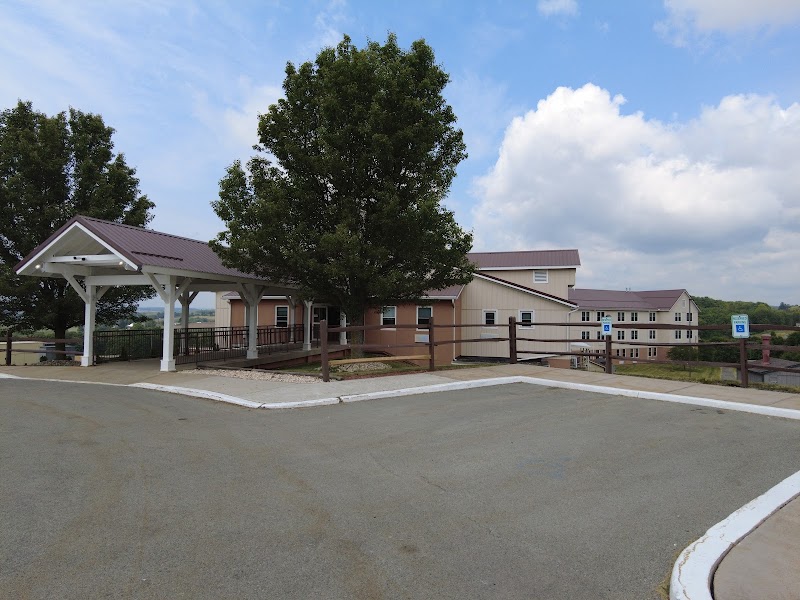
1404 HAY STREET, BERLIN, PA 15530 (814) 267-4212
Non profit - Corporation 150 Beds Independent Data: November 2025
Trust Grade
20/100
#460 of 653 in PA
Last Inspection: February 2025

Within standard 12-15 month inspection cycle. Federal law requires annual inspections.

Overview

Meadow View Nursing Center in Berlin, Pennsylvania has a Trust Grade of F, indicating significant concerns about the quality of care provided. It ranks #460 out of 653 facilities in Pennsylvania, placing it in the bottom half, and #3 out of 6 in Somerset County, meaning only two local options are worse. The facility's performance is worsening, with issues increasing from 15 in 2024 to 20 in 2025. While staffing is a relative strength with a rating of 4 out of 5 stars, turnover is average at 47%, and there is less RN coverage than 85% of state facilities, which is concerning. Notably, there have been serious incidents of neglect, including a resident suffering a fractured hip from a fall due to inadequate supervision and another resident experiencing harm from a fall out of bed, indicating critical gaps in care and oversight.

Trust Score
F
20/100
In Pennsylvania
#460/653
Bottom 30%
Safety Record
High Risk
Review needed
Inspections
Getting Worse
15 → 20 violations
Staff Stability
⚠ Watch
47% turnover. Above average. Higher turnover means staff may not know residents' routines.
Penalties
○ Average
$27,885 in fines. Higher than 74% of Pennsylvania facilities. Some compliance issues.
Skilled Nurses
⚠ Watch
Each resident gets only 28 minutes of Registered Nurse (RN) attention daily — below average for Pennsylvania. Fewer RN minutes means fewer trained eyes watching for problems.
Violations
⚠ Watch
46 deficiencies on record. Higher than average. Multiple issues found across inspections.
★★☆☆☆
2.0
Overall Rating
★★★★☆
4.0
Staff Levels
★★★★★
5.0
Care Quality
★☆☆☆☆
1.0
Inspection Score
Stable
2024: 15 issues
2025: 20 issues

The Good

  • 4-Star Staffing Rating · Above-average nurse staffing levels
  • 5-Star Quality Measures · Strong clinical quality outcomes
  • Full Sprinkler Coverage · Fire safety systems throughout facility
  • No fines on record

Facility shows strength in staffing levels, quality measures, fire safety.

The Bad

2-Star Overall Rating

Below Pennsylvania average (3.0)

Below average - review inspection findings carefully

Staff Turnover: 47%

Near Pennsylvania avg (46%)

Higher turnover may affect care consistency

Federal Fines: $27,885

Below median ($33,413)

Moderate penalties - review what triggered them

The Ugly 46 deficiencies on record

2 actual harm
Jun 2025 2 deficiencies 2 Harm
SERIOUS (G) 📢 Someone Reported This

A family member, employee, or ombudsman was alarmed enough to file a formal complaint

Actual Harm - a resident was hurt due to facility failures

Free from Abuse/Neglect (Tag F0600)

A resident was harmed · This affected 1 resident

Based on review of policies, investigation reports, clinical records, and staff education records, as well as staff interviews, it was determined that the facility failed to ensure that residents were...

Read full inspector narrative →
Based on review of policies, investigation reports, clinical records, and staff education records, as well as staff interviews, it was determined that the facility failed to ensure that residents were free from neglect for two of four residents reviewed (Residents 2, 3), resulting in harm to Resident 2 due to a fall that resulted in fractured hip and harm to Resident 3 due to a fall from bed that resulted in a hematoma. This deficiency was cited as past non-compliance. Findings include: The facility's policy regarding abuse and neglect, dated September 1, 2024, indicated that the definition of neglect referred to the failure through inattentiveness, carelessness, or omission to provide timely, consistent, safe, adequate, and appropriate services, treatment and care, including but not limited to: nutrition, medication, therapies, and activities of daily living. The absence of reasonable accommodations of individual needs and preferences may result in resident neglect. The facility's policy regarding falls, dated September 1, 2024, indicated that a resident-centered fall prevention plan was to be implemented to reduce the specific risk factor(s) of falls for each resident at risk or with a history of falls. The facility's policy regarding a change in status, dated September 1, 2024, indicated that all nursing staff were responsible to ensure pertinent information was communicated to the charge nurse regarding a resident's change in status and all nursing staff were to communicate to the charge nurse if a resident refused care, medications, or interventions at the time of refusal. The charge nurse would encourage the resident to participate in the plan of care. A significant change Minimum Data Set (MDS) assessment (a mandated assessment of a resident's abilities and care needs) for Resident 2, dated April 1, 2025, revealed that the resident was confused, required assistance from staff with daily care needs, used a walker, and had a history of falls. The resident's care plan, dated April 17, 2025, revealed that the resident was at risk for falls and was to use hipsters (padded hip protectors used to prevent injuries to the hips) at all times. A nursing note for Resident 2, dated May 24, 2025, at 12:41 p.m. revealed that staff witnessed the resident going into the bathroom with her walker and left her walker inside the bathroom door. She then walked out to the hallway, lost her balance, and tripped before staff could get to her. The resident was witnessed falling on her left side and was noted to have shortening of the left leg, and complained of pain to her left hip and upper thigh area. The physician was notified and orders were received to transfer the resident to the hospital for evaluation and treatment. At 5:14 p.m. a report was received from the hospital informing the facility that Resident 2 had a left hip fracture. Information submitted by the facility, dated May 30, 2025, revealed that on May 24, 2025, at 3:00 a.m. Resident 2 was witnessed to be resistant to care and combative throughout the shift. She woke up early in the morning, a shower was given to promote improvement of mood/behaviors, and she refused her hipsters. On May 24, 2025, at 11:40 a.m. she had a witnessed fall in the common bathroom on the third floor, was transferred to the hospital, and had a fractured hip. It was discovered that Nurse Aide 1 did not notify any other staff of Resident 2 refusing her hipsters, which prevented the ability to put other interventions in place, substantiating neglect. A written statement from Nurse Aide 1, dated May 24, 2025, revealed that Resident 2 refused to wear her hipsters after receiving a shower at 3:00 a.m. Further interviews, undated, revealed that Nurse Aide 1 confirmed that she did not report to any other staff that the resident refused her hipsters prior to the resident falling. Education records for Nurse Aide 1, dated May 22, 2025, revealed that she received education on abuse and neglect. An interview with the Nursing Home Administrator and Director of Nursing on June 12, 2025, at 4:23 p.m. confirmed that Nurse Aide 1 failed to follow the facility's policy for reporting a resident's refusal of care, which prevented staff from attempting other interventions to prevent injuries from falls, and the Nursing Home Administrator also confirmed that there was no evidence that Nurse Aide 1 re-approached Resident 2 at a later time to apply the hipsters. The facility's policy regarding positioning the resident bed, dated September 1, 2024, revealed that if a one-person assist is utilized the resident should be rolled toward the attendant and not away from them. This also avoids the potential of the resident rolling out of bed. An annual MDS assessment for Resident 3, dated April 17, 2025, revealed that the resident was understood, could understand others, and had a diagnosis which included a cerebral vascular accident (CVA - commonly referred to as a stroke). Care plans for the resident, dated August 11, 2022, revealed that the resident was at risk for falls related to impaired mobility, and that the resident was at risk for complications due to her activities of daily living (ADLs) dependence as evidenced by requiring assistance with her ADLs. A nursing note for Resident 3, dated May 28, 2025, at 2:38 p.m., revealed that the writer was notified by staff that the resident fell out of bed. When the writer arrived at the resident's room, she was on the floor on her back with her head facing the top of her bed and her feet toward the bottom. Per the nurse aide the resident was being provided peri care (the cleaning and care of the genitals and anal area) when she rolled off the bed. The resident hit the left side of her head off the trash can. The resident was unable to answer questions currently. The resident's pupils were sluggish; the resident could not follow the writer's finger. The resident has a one-inch scratch mark on top of her head and a hematoma (a localized collection of blood outside of blood vessels, typically caused by trauma or injury) just above her left temporal (the side of the head between the eyes and the ear) area. The resident had an emesis after hitting floor and was rolled onto her left side. The resident was lifted back up into bed by the mechanical lift and 911 was called at 2:00 p.m. A nursing note at 8:05 p.m. revealed that the resident returned to the facility from the hospital. The resident expressed a complaint of a headache related to the temporal area hematoma that measures four centimeters (cm) by three cm. A statement completed by Nurse Aide 2, dated May 28, 2025, revealed that she was providing care to Resident 3. She had rolled the resident towards the wall. She was on her right side, and as Nurse Aide 2 was changing her, the resident rolled off the bed and onto the floor. Nurse Aide 2 attempted to catch the resident but could not grab her in time. When she fell, she hit her head off the garbage can. Investigative documents for Resident 3, dated May 28, 2025, revealed that on May 28, 2025, at approximately 1:55 p.m. Nurse Aide 2 was providing care to the resident. While providing care, Nurse Aide 2 rolled the resident away from herself and the resident rolled from the bed onto the floor. The resident was sent out to the hospital for evaluation. The resident was noted to have a hematoma to her head. The investigation revealed that Nurse Aide 2 rolled the resident away from herself, which did not follow the standard of care as taught in the Nurse Aide program, which Nurse Aide 2 participated in August 2024. The facility investigation revealed that Nurse Aide 2 failed to follow the standard of care by rolling the resident away from herself, and the allegation of neglect was substantiated. Nurse Aide 2 was terminated due to the allegation of neglect being substantiated. Education records for Nurse Aide 2, dated July 30, 2024, revealed that she received education on abuse and neglect. Interview with the Director of Nursing on June 12, 2025, at 4:23 p.m. confirmed that the facility's investigation substantiated neglect because Nurse Aide 2 did not follow the facility's policy by rolling Resident 3 away from her and not towards her since she was the only one assisting the resident. Following the investigation on May 28, 2025, the facility's corrective actions included: Nurse Aide 2 was terminated from employment at the facility. Staff education on abuse was completed. Audits to identify any issues with abuse were started. The results of these audits will be brought to Quality Assurance Performance Improvement committee for further analysis and corrective actions if necessary. Review of the facility's corrective actions and interviews completed with staff regarding their re-education revealed that they were in compliance with F600 on June 4, 2025. 28 Pa. Code 201.14(a) Responsibility of Licensee. 28 Pa. Code 201.18(b)(1)(e)(1) Management. 28 Pa. Code 211.10(c)(d) Resident Care Policies. 28 Pa. Code 211.12(d)(1)(5) Nursing Services.
SERIOUS (G) 📢 Someone Reported This

A family member, employee, or ombudsman was alarmed enough to file a formal complaint

Actual Harm - a resident was hurt due to facility failures

Accident Prevention (Tag F0689)

A resident was harmed · This affected 1 resident

Based on review of facility policies, clinical records, and facility investigation reports, as well as staff interviews, it was determined that the facility failed to provide an environment that was f...

Read full inspector narrative →
Based on review of facility policies, clinical records, and facility investigation reports, as well as staff interviews, it was determined that the facility failed to provide an environment that was free of accident hazards for residents who were at risk for falls by failing to follow care-planned interventions and facility policies for two of four residents reviewed (Residents 2, 3), resulting in harm to Resident 2 due to a fall that resulted in fractured hip and harm to Resident 3 due to a fall from bed that resulted in a hematoma. This deficiency was cited as past non-compliance. Findings include: The facility's policy regarding falls, dated September 1, 2024, indicated that a resident-centered fall prevention plan was to be implemented to reduce the specific risk factor(s) of falls for each resident at risk or with a history of falls. The facility's policy regarding a change in status, dated September 1, 2024, indicated that all nursing staff were responsible to ensure pertinent information was communicated to the charge nurse regarding a resident's change in status and all nursing staff were to communicate to the charge nurse if a resident refused care, medications, or interventions at the time of refusal. The charge nurse would encourage the resident to participate in the plan of care. A significant change Minimum Data Set (MDS) assessment (a mandated assessment of a resident's abilities and care needs) for Resident 2, dated April 1, 2025, revealed that the resident was confused, required assistance from staff with daily care needs, used a walker, and had a history of falls. The resident's care plan, dated April 17, 2025, revealed that the resident was at risk for falls and was to use hipsters (padded hip protectors used to prevent injuries to the hips) at all times. A nursing note for Resident 2, dated May 24, 2025, at 12:41 p.m. revealed that staff witnessed the resident going into the bathroom with her walker and left her walker inside the bathroom door. She then walked out to the hallway, lost her balance, and tripped before staff could get to her. The resident was witnessed falling on her left side and was noted to have shortening of the left leg, and complained of pain to her left hip and upper thigh area. The physician was notified and orders were received to transfer the resident to the hospital for evaluation and treatment. At 5:14 p.m. a report was received from the hospital informing the facility that Resident 2 had a left hip fracture. Information submitted by the facility, dated May 30, 2025, revealed that on May 24, 2025, at 3:00 a.m. Resident 2 was witnessed to be resistant to care and combative throughout the shift. She woke up early in the morning, a shower was given to promote improvement of mood/behaviors, and she refused her hipsters. On May 24, 2025, at 11:40 a.m. Resident 2 had a witnessed fall in the common bathroom on the third floor, was transferred to the hospital, and had a fractured hip. It was discovered that Nurse Aide 1 did not notify any other staff of Resident 2 refusing her hipsters, which prevented the ability to put other interventions in place to prevent injuries from a fall. A written statement from Nurse Aide 1, dated May 24, 2025, revealed that Resident 2 refused to wear her hipsters after receiving a shower at 3:00 a.m. Further interviews, undated, revealed that Nurse Aide 1 confirmed that she did not report to any other staff that the resident refused her hipsters prior to the resident falling. An interview with the Nursing Home Administrator and Director of Nursing on June 12, 2025, at 4:23 p.m. confirmed that Nurse Aide 1 failed to follow the facility's policy for reporting a resident's refusal of care, which prevented staff from attempting other interventions to prevent injuries from falls, and the Nursing Home Administrator also confirmed that there was no evidence that Nurse Aide 1 re-approached Resident 2 at a later time to apply the hipsters. The facility's policy regarding positioning the resident bed, dated September 1, 2024, revealed that if a one-person assist is utilized the resident should be rolled toward the attendant and not away from them. This also avoids the potential of the resident rolling out of bed. An annual MDS assessment for Resident 3, dated April 17, 2025, revealed that the resident was understood, could understand others, and had a diagnosis which included a cerebral vascular accident (CVA - commonly referred to as a stroke). Care plans for the resident, dated August 11, 2022, revealed that the resident was at risk for falls related to impaired mobility, and that the resident was at risk for complications due to her activities of daily living (ADLs) dependence as evidenced by requiring assistance with her ADLs. A nursing note for Resident 3, dated May 28, 2025, at 2:38 p.m. revealed that the writer was notified by staff that the resident fell out of bed. When the writer arrived at the resident's room, she was on the floor on her back with her head facing the top of her bed and her feet toward the bottom. Per the nurse aide the resident was being provided peri care (the cleaning and care of the genitals and anal area) when she rolled off the bed. The resident hit the left side of her head off the trash can. The resident was unable to answer questions currently. The resident's pupils were sluggish; the resident could not follow the writer's finger. The resident had a one-inch scratch mark on top of her head and a hematoma (a localized collection of blood outside of blood vessels, typically caused by trauma or injury) just above her left temporal (the side of the head between the eyes and the ear) area. The resident had an emesis after hitting floor and was rolled onto her left side. The resident was lifted back up into bed by the mechanical lift and 911 was called at 2:00 p.m. A nursing note at 8:05 p.m. revealed that the resident returned to the facility from the hospital. The resident expressed a complaint of a headache related to the temporal area hematoma that measures four centimeters (cm) by three cm. A statement completed by Nurse Aide 2, dated May 28, 2025, revealed that she was providing care to Resident 3. She had rolled the resident towards the wall. She was on her right side, and as Nurse Aide 2 was changing her, the resident rolled off the bed and onto the floor. Nurse Aide 2 attempted to catch the resident but could not grab her in time. When she fell, she hit her head off the garbage can. Investigative documents for Resident 3, date May 28, 2025, revealed that on May 28, 2025, at approximately 1:55 p.m. Nurse Aide 2 was providing care to the resident. While providing care, Nurse Aide 2 rolled the resident away from herself and the resident rolled from the bed onto the floor. The resident was sent out to the hospital for evaluation. The resident was noted to have a hematoma to her head. The investigation revealed that Nurse Aide 2 rolled the resident away from herself, which did not follow the standard of care as taught in the Nurse Aide program, which Nurse Aide 2 participated in August 2024. The facility investigation revealed that Nurse Aide 2 failed to follow the standard of care by rolling the resident away from herself. Interview with the Director of Nursing on June 12, 2025, at 4:23 p.m. confirmed that because Nurse Aide 2 did not follow the facility's policy by rolling Resident 3 away from her and not towards her since she was the only one assisting the resident. Following the investigation on May 28, 2025, the facility's corrective actions included: Nurse Aide 2 was terminated from employment at the facility. Preformed audits of residents' bed mobility. Any residents with questionable bed mobility status are being evaluated by therapy to determine recommendations. Staff education on bed mobility policy, techniques for transfer, and moving, was completed. Specific bed mobility recommendations were added to the care plan and Kardex (a system, either paper-based or electronic, used by nurses to track and manage key patient information). Audits to identify any issues with care provided to residents were started. The results of these audits will be brought to Quality Assurance Performance Improvement committee for further analysis and corrective actions if necessary. Review of the facility's corrective actions and interviews completed with staff regarding their re-education revealed that they were in compliance with F689 on June 4, 2025. 28 Pa. Code 201.14(a) Responsibility of licensee. 28 Pa. Code 201.18(b)(1)(e)(10 Management. 28 Pa. Code 201.24(e)(4) admission Policy. 28 Pa. Code 211.12(d)(1)(5) Nursing Services.
Apr 2025 1 deficiency
CONCERN (D) 📢 Someone Reported This

A family member, employee, or ombudsman was alarmed enough to file a formal complaint

Potential for Harm - no one hurt, but risky conditions existed

Safe Environment (Tag F0584)

Could have caused harm · This affected 1 resident

Based on review of facility policies, as well as observations and staff interviews, it was determined that the facility failed to provide a clean and homelike environment in residents' bathrooms for t...

Read full inspector narrative →
Based on review of facility policies, as well as observations and staff interviews, it was determined that the facility failed to provide a clean and homelike environment in residents' bathrooms for three of seven residents reviewed (Residents 3, 4, 6). Findings included: The facility's policy regarding cleaning and disinfecting, dated September 1, 2024, indicated that the facility was to provide a sanitary and homelike environment. Observations of Resident 4's bathroom on April 23, 2025, at 11:25 a.m. revealed that the base of the toilet, where the toilet and the floor meet, had a heavy accumulation of dried, yellowish/brown, removable debris. This debris was noted to encompass all sides of the toilet base. Observations of Resident 3's bathroom on April 23, 2025, at 11:57 a.m. revealed that the entire base of the toilet had an accumulation of dried, crusted, yellowish debris, with pieces of caulking coming off. Interview with the Maintenance Director on April 23, 2025, at 12:05 p.m. confirmed that the floor around the toilet bases in Residents 3's and 4's bathroom were in need of cleaning. He indicated that housekeeping cleans the bathrooms daily and the toilet bases should have been clean. Observations of Resident 6's bathroom on April 23, 2025, at 9:58 a.m. and 1:34 p.m. revealed that the floor along the baseboard in the bathroom was scattered with black debris, there was a black stain on the floor under the water shut-off valve that supplied the toilet, as well as a golden/brown stain on the floor beside the toilet on the sink side, and there was an area of the vinyl flooring missing toward the hinge side of the door. Interview with the Maintenance Director on April 23, 2025, at 1:55 p.m. confirmed that the floor in Residents 6's bathroom was in need of cleaning. He indicated that housekeeping cleans the rooms daily and that the they have a schedule to routinely deep clean the rooms, as well as deep clean the rooms when a resident is discharged from the room. 28 Pa. Code 201.18. Management (b)(3)(2.1)
Feb 2025 17 deficiencies
CONCERN (D)

Potential for Harm - no one hurt, but risky conditions existed

Transfer Notice (Tag F0623)

Could have caused harm · This affected 1 resident

Based on clinical record reviews and staff interviews, it was determined that the facility failed to notify the resident and resident's representative in writing of the transfer and reason for hospita...

Read full inspector narrative →
Based on clinical record reviews and staff interviews, it was determined that the facility failed to notify the resident and resident's representative in writing of the transfer and reason for hospitalization for three of 43 residents reviewed (Residents 3, 45, 93). This deficiency was cited as past noncompliance. Findings include: A significant change Minimum Data Set (MDS) assessment (a mandated assessment of a resident's abilities and care needs) for Resident 3, dated November 29, 2024, indicated that the resident had moderate cognitive impairment, required assistance from staff for personal care needs, and had diagnoses that included a displaced trimalleolar fracture of the left lower leg (fracture in the ankle joint on the left leg). A physician's note for Resident 3, dated November 19, 2024, at 5:17 p.m., revealed that the resident had fallen in her room and had an obvious left ankle deformity. She was transferred to the emergency room for evaluation and treatment. There was no documented evidence that a written notice of Resident 3's transfer to the hospital was provided to the resident's representative regarding the reason for transfer. A significant change MDS assessment for Resident 45, dated November 25, 2024, revealed that the resident was cognitively intact, required assistance from staff for daily care tasks, and had diagnoses that included atrial fibrillation (irregular heartbeat), high blood pressure, right femur fracture, asthma, and chronic obstructive pulmonary disease. A nursing note for Resident 45, dated November 14, 2024 at 3:43 a.m., revealed that the resident had a fall, and her right leg was shortened and externally rotated. The resident was transported to the local hospital. There was no documented evidence that a written notice of Resident 45's transfer to the hospital was provided to the resident's representative regarding the reason for transfer. A significant change MDS assessment for Resident 93, dated October 24, 2024, revealed that the resident was cognitively impaired, required assistance from staff for daily care tasks, had an unstageable pressure ulcer (full-thickness pressure injury involving tissue damage and death), a venous ulcer (ulcers caused by problems with blood flow in the leg veins), and had diagnoses that included peripheral vascular disease (a disease causing poor blood circulation to lower limbs) and diabetes. A nursing note for Resident 93, dated October 4, 2024, revealed that she was transported to the hospital. There was no documented evidence that a written notice of Resident 93's transfer to the hospital was provided to the resident's representative regarding the reason for transfer. Interview with the Nursing Home Administrator on February 4, 2025, at 10:58 a.m. confirmed that the facility did not provide a written notice to the above residents and/or their representative when the residents were transferred to the hospital. The Nursing Home Administrator indicated that they had identified the issue of not providing written notices of the transfers to the hospital on November 24, 2024. Following the identification on November 24, 2024, that they were not providing the written notices to the resident and/or the resident's representative and state ombudsman when the resident was transferred to the hospital, the facility's corrective actions included: Education was provided to staff regarding the required written notice that was to be given to the resident and/or the resident's representative when the resident was transferred to the hospital. Education was provided to staff regarding the required notice to the state ombudsman when the resident was transferred to the hospital. Audits were started on all residents that were transferred to the hospital. The results of these audits will be brought to the Quality Assurance Performance Improvement committee for further analysis and corrective actions if necessary. Review of the facility's corrective actions and interviews with staff regarding their re-education revealed that they were in compliance with F623 on December 31, 2024. 28 Pa. Code 201.14(a) Responsibility of Licensee. 28 Pa. Code 201.18(b)(3) Management.
CONCERN (D)

Potential for Harm - no one hurt, but risky conditions existed

Deficiency F0625 (Tag F0625)

Could have caused harm · This affected 1 resident

Based on review of policies and clinical records, as well as staff interviews, it was determined that the facility failed to provide a written notice of the facility's bed-hold policy to the resident ...

Read full inspector narrative →
Based on review of policies and clinical records, as well as staff interviews, it was determined that the facility failed to provide a written notice of the facility's bed-hold policy to the resident and/or the resident's representative at the time of a transfer for three of 43 residents reviewed (Residents 3, 45, 93). This deficiency was cited as past noncompliance. Findings include: A significant change Minimum Data Set (MDS) assessment (a mandated assessment of a resident's abilities and care needs) for Resident 3, dated November 29, 2024, indicated that the resident had moderate cognitive impairment, required assistance from staff for personal care needs, and had diagnosis that included a displaced trimalleolar fracture of the left lower leg (fracture in the ankle joint on the left leg). A physician's order note for Resident 3, dated November 19, 2024, at 5:17 p.m., revealed that the resident had fallen in her room and had an obvious left ankle deformity. She was transferred to the emergency room for evaluation and treatment. There was no documented evidence that a bed-hold notice was provided to Resident 3 or her responsible party. A significant change MDS assessment for Resident 45, dated November 25, 2024, revealed that the resident was cognitively intact, required assistance from staff for daily care tasks, and had diagnoses that included atrial fibrillation (irregular heartbeat), high blood pressure, right femur fracture, asthma, and chronic obstructive pulmonary disease. A nursing note for Resident 45, dated November 14, 2024 at 3:43 a.m., revealed that the resident had a fall, and her right leg was shortened and externally rotated. The resident was transported to the local hospital. There was no documented evidence that a bed-hold notice for Resident 45 was provided to the resident's representative. A significant change MDS assessment for Resident 93, dated October 24, 2024, revealed that the resident was cognitively impaired, required assistance from staff for daily care tasks, had an unstageable pressure ulcer (full-thickness pressure injury involving tissue damage and death) a venous ulcer (ulcers caused by problems with blood flow in the leg veins), and had diagnoses that included peripheral vascular disease (a disease causing poor blood circulation to lower limbs) and diabetes. A nursing note for Resident 93, dated October 4, 2024, revealed that the resident was transported to the hospital. There was no documented evidence that a bed-hold notice for Resident 93 was provided to the resident's representative. Interview with the Nursing Home Administrator on February 4, 2025, at 10:58 a.m. confirmed that the facility did not provide bed-hold notices to the above residents and/or their representative when the residents were transferred to the hospital. The Nursing Home Administrator indicated that they had identified the issue of not providing bed-hold notices to residents and/or their representative on November 24, 2024. Following the identification on November 24, 2024, that they were not providing the bed-hold notices to the resident and/or the resident's representative when the resident was transferred to the hospital, the facility's corrective actions included: Education was provided to staff regarding the required bed-hold notice that was to be given to the resident and/or the resident's representative when the resident was transferred to the hospital. Audits were started on all residents that were transferred to the hospital. The results of these audits will be brought to the Quality Assurance Performance Improvement committee for further analysis and corrective actions if necessary. Review of the facility's corrective actions and interviews with staff regarding their re-education revealed that they were in compliance with F625 on December 31, 2024. 28 Pa. Code 201.14(a) Responsibility of Licensee. 28 Pa. Code 201.18(b)(3) Management.
CONCERN (D)

Potential for Harm - no one hurt, but risky conditions existed

Comprehensive Care Plan (Tag F0656)

Could have caused harm · This affected 1 resident

Based on clinical record reviews and staff interviews, it was determined that the facility failed to ensure that comprehensive resident-centered care plans were developed and implemented for one of 43...

Read full inspector narrative →
Based on clinical record reviews and staff interviews, it was determined that the facility failed to ensure that comprehensive resident-centered care plans were developed and implemented for one of 43 residents reviewed (Resident 45). Findings include: The facility's policy regarding care plans, dated September 12, 2024, indicated that the facility will create a person-centered care plan including necessary and appropriate care, attending physician orders, services and accommodation of resident needs and preferences in order for the resident to attain or maintain the highest practicable physical, mental, and psychosocial well-being in accordance with the comprehensive assessment. A significant change Minimum Data Set (MDS) assessment (a mandated assessment of a resident's abilities and care needs) for Resident 45, dated November 25, 2024, revealed that the resident was cognitively intact, required assistance from staff for her daily care needs, required oxygen therapy, and had diagnoses that included atrial fibrillation (irregular heartbeat), high blood pressure, right femur fracture, asthma, and chronic obstructive pulmonary disease. Physician's orders for Resident 45, dated November 18, 2024, included an order for the resident to receive oxygen at 2 liters per minute via nasal cannula. There was no documented evidence that a care plan was developed to address Resident 45's individual care and treatment needs related to his use of oxygen. Interview with the Director of Nursing on February 4, 2025, at 1:18 p.m. confirmed that there was no care plan developed for Resident 45's care and treatment needs related to his use of oxygen. 28 Pa. Code 211.12(d)(5) Nursing Services.
CONCERN (D)

Potential for Harm - no one hurt, but risky conditions existed

Accident Prevention (Tag F0689)

Could have caused harm · This affected 1 resident

Based on review of facility policy and clinical records, as well as staff interviews, it was determined that the facility failed to ensure that assistance devices to prevent accidents or injury were i...

Read full inspector narrative →
Based on review of facility policy and clinical records, as well as staff interviews, it was determined that the facility failed to ensure that assistance devices to prevent accidents or injury were in place for one of 43 residents reviewed (Resident 88). Findings include: A quarterly Minimum Data Set (MDS) assessment (a mandated assessment of a resident's abilities and care needs) for Resident 88, dated January 7, 2025, revealed that the resident was cognitively impaired, was dependent on staff for daily care needs, and had diagnoses that included dementia. Review of Resident 88's care plan, dated October 4, 2024, indicated that the resident was at risk for falling. An intervention, dated October 22, 2024, indicated that the resident was to wear hipsters when out of bed. Review of a nurse's note for Resident 88, dated November 9, 2024, at 9:34 p.m., revealed that the resident was observed lying on the floor in the solarium on B hall and he was not wearing hipsters. Review of a nurse's note for Resident 88, dated January 31, 2025, at 4:12 p.m., revealed that the resident was observed lying on his left side on the floor in the 1B solarium, and hipsters were not on the resident. Interview with the Director of Nursing on February 5, 2024, at 2:35 p.m. revealed that the resident was not wearing hipsters at the time of his fall on November 9, 2024, and January 31, 2025, because the task was not put on the nurse aide task list correctly so that the nurse aides were aware the resident should wear them. Interview with the Director of Nursing revealed that the nurse's note for Resident 88 did confirm that the resident was not wearing hipsters at the time of his fall as care planned. 28 Pa. Code 211.12(d)(3)(5) Nursing Services.
CONCERN (D)

Potential for Harm - no one hurt, but risky conditions existed

Deficiency F0730 (Tag F0730)

Could have caused harm · This affected 1 resident

Based on review of personnel files, as well as staff interviews, it was determined that the facility failed to ensure that nurse aide performance evaluations were completed annually based on hire date...

Read full inspector narrative →
Based on review of personnel files, as well as staff interviews, it was determined that the facility failed to ensure that nurse aide performance evaluations were completed annually based on hire dates for one of three nurse aides reviewed (Nurse Aide 4). Findings include: A list of nurse aides provided by the facility revealed that based on their months and days of hire, an annual performance evaluation for Nurse Aide 4 was due by April 8, 2024. However, there was no documented evidence that an annual performance evaluation was completed between March 15, 2023, and January 15, 2025, as required for this nurse aide. Interview with the Nursing Home Administrator on February 7, 2025, at 11:09 a.m. confirmed that an annual performance evaluation was not completed as required for Nurse Aide 4. 28 Pa. Code 201.18(e)(1) Management.
CONCERN (D)

Potential for Harm - no one hurt, but risky conditions existed

Pharmacy Services (Tag F0755)

Could have caused harm · This affected 1 resident

Based on review of clinical records, as well as staff interviews, it was determined that the facility failed to maintain a complete and accurate accounting of controlled medications (medications with ...

Read full inspector narrative →
Based on review of clinical records, as well as staff interviews, it was determined that the facility failed to maintain a complete and accurate accounting of controlled medications (medications with the potential to be abused) for one of 43 residents reviewed (Resident 80). Findings include: Physician's orders for Resident 80, dated July 16, 2024, included an order for the resident to receive one 50 milligram (mg) tablet of Tramadol (a narcotic medication to treat moderate to severe pain) every six hours as needed for moderate to severe pain. Resident 80's controlled drug logs for December 2024 and January 2025 revealed that staff signed out doses of Tramadol for administration to the resident on December 9, 2024, at 9:00 a.m.; December 20, 2024, at 9:00 a.m.; December 23, 2024, at 9:00 a.m.; December 29, 2024, at 9:00 a.m.; January 11, 2025, at 8:30 p.m.; January 12, 2025, at 9:00 a.m.; and on January 16, 2025, at 9:40 a.m. However, the resident's clinical record, including the Medication Administration Records (MARs) and the nursing notes, revealed no documented evidence that the Tramadol was administered to the resident on these dates and times. Interview with the Director of Nursing on February 7, 2025, at 11:09 a.m. confirmed that there was no documented evidence that the Tramadol was administered to Resident 80 on these dates and times. 28 Pa. Code 211.9(j)(3) Pharmacy Services. 28 Pa. Code 211.12(d)(1)(5) Nursing Services.
CONCERN (D)

Potential for Harm - no one hurt, but risky conditions existed

Deficiency F0761 (Tag F0761)

Could have caused harm · This affected 1 resident

Based on a review of facility policies, manufacturer's instructions, and clinical records, as well as observations and staff interviews, it was determined that the facility failed to securely store me...

Read full inspector narrative →
Based on a review of facility policies, manufacturer's instructions, and clinical records, as well as observations and staff interviews, it was determined that the facility failed to securely store medication for one of 43 residents reviewed (Resident 57), and failed to label multi-dose containers of medications with the date they were opened in one of three medication carts observed (Third floor medication cart). Findings include: The facility's policy regarding medication administration, dated September 12, 2024, revealed that residents may self-administer their own medications only if the attending physician, in conjunction with the interdisciplinary care planning team, has determined that they have the decision-making capacity to do so safely. A quarterly Minimum Data Set (MDS) assessment (a mandated assessment of the resident's abilities and care needs) for Resident 57, dated December 17, 2024, revealed that the resident was understood and could understand others. A care plan for the resident, dated April 9, 2024, revealed that the resident was on diuretic therapy (medications that increase urine output by promoting the excretion of water and electrolytes through the kidneys) related to ascites (a condition where excess fluid accumulates in the abdominal cavity between the liver, stomach, intestines, and other organs), and staff was to administer his medications as ordered. Physician's orders for Resident 57, dated October 5, 2024, included an order for the resident to receive one 100 milligram (mg) tablet of Spironolactone (a type of medicine called a diuretic) one time a day. The resident's Medication Administration Record (MAR), dated February 2025, revealed that the Spironolactone was administered on the morning of February 3, 2025. Observations on February 3, 2025, at 10:04 a.m. revealed that Resident 57 was lying in bed on top of the covers, and there was a white, round tablet lying in the resident's bed on top of the covers. Interview with Licensed Practical Nurse 5 on February 3, 2025, at 10:05 a.m. confirmed that there was a white, round tablet lying in Resident 57's bed on top of the covers. Licensed Practical Nurse 5 then picked up the white, round tablet in a tissue and took it to Licensed Practical Nurse 6, who was assigned to administer medications to the residents on that hall. She confirmed that it was the resident's 100 mg tablet of Spironolactone. Interview with the Director of Nursing on February 4, 2025, at 2:40 p.m. confirmed that Resident 57 was not able to self-administer his own medications, and that the Spironolactone should not have been on his bed. Manufacturer's directions on the container for use of Trelegy Ellipta (used to treat chronic obstructive pulmonary disease, a condition that causes inflammation and narrowing of the airways) inhaler revealed that the inhaler was to be discarded six weeks after being removed from the foil pouch. The facility's policy regarding medication administration, dated September 12, 2024, revealed that the expiration/beyond use date on the medication label must be checked prior to administering. When opening a multi-dose container, the date opened shall be recorded on the container. The facility's policy regarding medication storage, dated September 12, 2024, revealed that when the original seal of the manufacture's container or vial is initially broken, the container or vial will be dated. Physician's orders for Resident 76, dated November 13, 2024, included an order for the resident to receive one 200-62.5-25 microgram (mcg) puff from the Trelegy Ellipta inhaler every day shift. Observations of the Third-floor medication cart on February 7, 2025, at 10:32 a.m. revealed that the 200-62.5-25 mcg Trelegy Ellipta inhaler for Resident 76 was opened and not dated with the date that it was opened. Interview with Licensed Practical Nurse 6 at the time of observation confirmed that the inhaler for Resident 76 was opened and not dated with the date it was opened, and it should have been dated. 28 Pa. Code 211.9(a)(1)(h) Pharmacy Services. 28 Pa. Code 211.12(d)(1) Nursing Services.
CONCERN (E)

Potential for Harm - no one hurt, but risky conditions existed

Assessment Accuracy (Tag F0641)

Could have caused harm · This affected multiple residents

**NOTE- TERMS IN BRACKETS HAVE BEEN EDITED TO PROTECT CONFIDENTIALITY** Based on review of the Resident Assessment Instrument User's Manual and clinical records, as well as staff interviews, it was de...

Read full inspector narrative →
**NOTE- TERMS IN BRACKETS HAVE BEEN EDITED TO PROTECT CONFIDENTIALITY** Based on review of the Resident Assessment Instrument User's Manual and clinical records, as well as staff interviews, it was determined that the facility failed to complete accurate Minimum Data Set assessments for nine of 43 residents reviewed (Residents 3, 9, 12, 18, 45, 58, 85, 88, 131). Findings include: The Long-Term Care Facility Resident Assessment Instrument (RAI) User's Manual, which provides guidance and instructions for the completion of Minimum Data Set (MDS) assessments (mandated assessments of a resident's abilities and care needs), dated October 2024, indicated that the intent of Section N was to record the number of days, during the seven days of the assessment period, that any type of injection, insulin, and/or select medications were received by the resident. Sections N0145B antianxiety, N0415F Antibiotic, N0415G Diuretic, N0415H Opioid (narcotic medications used to treat pain), and N0415K anticonvulsant medications were to be coded if the resident took the medication during the seven-day look-back period. Section O0110J1 (Dialysis) was to be coded if the resident received dialysis services. Section O0110K (hospice care) was to be coded if the resident received hospice services. A significant change MDS assessment for Resident 3, dated November 29, 2024, indicated that the resident had moderate cognitive impairment, required assistance from staff for personal care needs, and had diagnosis that included a displaced trimalleolar fracture of the left lower leg (fracture in the ankle joint on the left leg). Section N0415F-Antibiotic indicated that the resident did not receive any antibiotics during the seven-day look-back period. Physician's orders for Resident 3, dated November 26, 2024, indicated that the resident was to receive 4.5 grams of piperacillin (an antibiotic) intravenously (into a vein) every six hours for seven days. Review of the Medication Administration Record (MAR) for Resident 3, dated November 2024, revealed that the resident did receive piperacillin during the seven-day look-back period. Interview with the Registered Nurse Assessment Coordinator on February 7, 2025, at 8:30 a.m. confirmed that Resident 3's MDS, dated [DATE], was inaccurately coded regarding antibiotics. A quarterly MDS assessment for Resident 9, dated January 30, 2025, revealed that the resident was cognitively intact, required assistance from staff for personal care needs, and had diagnoses that included coronary artery disease. Section N0415H (Opioid) indicated that the resident received an opioid during the seven-day look-back period. Review of the MAR for Resident 9, dated January, 2025, revealed that the resident did not receive opioids during the seven-day look-back period. Interview with the Registered Nurse Assessment Coordinator on February 7, 2025, at 8:30 a.m. confirmed that Resident 3's MDS, dated [DATE], was inaccurately coded regarding opioid medications. A quarterly MDS assessment for Resident 12, dated January 27, 2025, revealed that the resident was cognitively intact, independent with personal care needs, and had diagnoses that included diabetes. Section N0415H (Opioid) indicated that the resident did not receive an opioid during the seven-day look-back period. Physician's orders for Resident 12, dated August 1, 2024, included an order for the resident to receive 50 milligrams of Tramadol (an opioid) every 12 hours as needed for pain. Review of the MAR for Resident 12, dated January 2025, revealed that the resident received Tramadol during the seven-day look-back period. Interview with the Registered Nurse Assessment Coordinator on February 7, 2025, at 8:30 a.m. confirmed that Resident 12's MDS, dated [DATE], was inaccurately coded regarding opioid medication. A quarterly MDS assessment for Resident 18, dated December 10, 2024, revealed that the resident was cognitively impaired, required assistance from staff for daily care needs, and had diagnoses that included dementia, high blood pressure, and stroke. Section N0415H (Opioid) indicated that the resident received an opioid medication during the assessment period, and Section O0110K (Hospice care) indicated that hospice services were not received. Physician's orders for Resident 18, dated July 15, 2024, included an order for the resident to receive hospice services from the facility's contracted hospice provider. Physician's orders for Resident 18, dated August 30, 2024, included an order for the resident to receive 0.5 milliliters of morphine sulfate (opioid) every two hours as needed for pain. A review of the December 2024 MAR revealed that the medication was not administered during the seven-day look-back period. Interview with the Director of Nursing on February 5, 2025 at 12:25 p.m. confirmed that the quarterly MDS assessment for Resident 18 was inaccurately coded regarding opioid medication and hospice services. A significant change MDS assessment for Resident 45, dated November 25, 2024, revealed that the resident was cognitively intact, required assistance from staff for her daily care needs, required oxygen therapy, and had diagnoses that included atrial fibrillation (irregular heartbeat), high blood pressure, right femur fracture, asthma, and chronic obstructive pulmonary disease. Section N0415F (Antibiotic) and N0415H (Opioid) revealed that the resident received antibiotic and opioid medications during the look-back period. A review of Resident 45's MAR for November 2024 revealed that the resident did not receive an antibiotic or opioid medication during the seven-day look-back period. Interview with the Nursing Home Administrator on February 4, 2025, at 1:18 p.m. confirmed that Residents 45's significant change MDS assessment was inaccurately coded regarding antibiotic and opioid medications. A quarterly MDS assessment for Resident 58, dated January 8, 2025, revealed that the resident was cognitively impaired, required assistance from staff for daily care needs, and had diagnoses that included end-stage renal disease (disease that affects kidney function) and dependence on renal dialysis. Section O0110J1 (Dialysis) revealed that the resident did not receive dialysis. Physician's orders for Resident 58, dated July 15, 2024, included an order for the resident to receive dialysis on Monday, Wednesday, and Friday. Review of Resident 58's clinical record revealed documentation that the resident received dialysis services during the assessment period. Interview with the Registered Nurse Assessment Coordinator on February 5, 2025, at 2:30 p.m. confirmed that Resident 58's quarterly MDS assessment was inaccurately coded regarding dialysis. A quarterly MDS assessment for Resident 85, dated January 14, 2025, revealed that the resident was cognitively intact, required assistance from staff for daily care needs, and had diagnoses that included high blood pressure and dementia. Section N0415G (Diuretic) revealed that the resident did not receive a diuretic medication during the seven-day assessment period. Physician's orders for Resident 85, dated July 16, 2024, included an order for the resident to receive 2.5-6.25 milligram of bisoprolol hydrochlorothiazide (diuretic medication) one time a day for high blood pressure. A review of Resident 85's MAR for January 2025 revealed that the resident received the diuretic medication during the seven-day look-back period. Interview with the Registered Nurse Assessment Coordinator on February 5, 2025, at 2:30 p.m. confirmed that Resident 85's quarterly MDS assessment was inaccurately coded regarding the diuretic medication. A quarterly MDS assessment for Resident 88, dated January 7, 2025, revealed that the resident had severe cognitive impairment, was dependent on staff for care needs, and had diagnoses that included dementia. Section N0415F (Antibiotic) revealed that the resident did not receive an antibiotic during the look-back period and Section N0415K (anticonvulsant) revealed that the resident received an anticonvulsant medication during the look-back period. Physician's orders for Resident 88, dated December 19, 2024, included an order for the resident to receive triple antibiotic ointment topically to his right fourth finger every day for a skin tear. Physician's orders, dated January 6, 2024, included for the resident to receive triple antibiotic ointment to sutures above his right eye twice day until January 13, 2025. Review of the MAR, dated January 2025, revealed that Resident 88 received an antibiotic during the seven-day look-back period but did not receive an anticonvulsant. Interview with the Registered Nurse Assessment Coordinator on February 7, 2025, at 2:02 p.m. confirmed that Resident 88's January 7, 2025, MDS was inaccurately coded regarding antibiotic and anticonvulsant medication. The RAI User's Manual, dated October 2024, indicated that the intent of Section A was to record the discharge status of the resident. Section A2105 was to be coded with the location of the resident's discharge. A discharge tracking MDS assessment for Resident 131, dated January 11, 2025, indicated that the resident was discharged to home. A nursing note for Resident 131, dated January 12, 2025, at 12:14 a.m. indicated that the resident was admitted to the local hospital. Interview with Director of Nursing on February 7, 2025, at 11:09 a.m. confirmed that Resident 131's discharge MDS assessment was coded inaccurately and that the resident was discharged to the local hospital. 28 Pa. Code 211.5(f) Clinical Records.
CONCERN (E)

Potential for Harm - no one hurt, but risky conditions existed

Deficiency F0657 (Tag F0657)

Could have caused harm · This affected multiple residents

Based on review of facility policies and clinical records, as well as staff interviews, it was determined that the facility failed to ensure that care plans were updated/revised to reflect specific ca...

Read full inspector narrative →
Based on review of facility policies and clinical records, as well as staff interviews, it was determined that the facility failed to ensure that care plans were updated/revised to reflect specific care needs for three of 43 residents reviewed (Residents 8, 26, 42). Findings include: A facility policy for care plans, dated September 12, 2024, indicated that care plans will be reviewed and revised as necessary by the interdisciplinary team at least quarterly after each Minimum Data Set (MDS) assessment (a mandated assessment of a resident's abilities and care needs) or more often as changes occur. An annual MDS assessment for Resident 8, dated December 21, 2024, indicated that the resident was cognitively impaired, required assistance with care needs, used oxygen, and had a diagnosis of hemiplegia and hemiparesis (paralysis or weakness to one side of the body due to brain injury). A respiratory care plan for Resident 8, dated December 19, 2024, indicated that the resident was to be provided oxygen as ordered. A nursing note for Resident 8, dated January 25, 2025, at 3:54 p.m., revealed that the resident does not wear his oxygen as ordered and his oxygen saturation (blood oxygen level) was measuring greater than 90 percent on room air (without supplemental oxygen). The doctor was notified, and his oxygen was discontinued. Interview with the Director of Nursing on February 7, 2025, confirmed that Resident 8's care plan was not revised to reflect that his oxygen was discontinued and it should have been. An admission MDS assessment for Resident 26, dated January 15, 2025, indicated that the resident was cognitively intact, required assistance with care needs, and had diagnoses that included pneumonia and clostridium difficile infection (C-Diff-a contagious infection affecting the colon). A care plan for Resident 26, dated January 10, 2025, indicated that the resident was taking an antibiotic related to C-diff infection and pneumonia and was on contact precautions (used to prevent the spread of infection passed through direct contact with an infected person or their environment) for the C-diff infection. Physician's orders for Resident 26, dated January 10, 2025, indicated that the resident was to be placed on contact precautions for 10 days through January 19, 2025. Observations on February 3, 2025, at 9:53 a.m. revealed that the resident had signage on her door for contact precautions; however, as of February 5, 2025, there was no documented evidence in Resident 26's clinical record that she was ordered an antibiotic. Interview with the Nursing Home Administrator on February 5, 2025, at 11:53 a.m. confirmed that Resident 26's care plan for the antibiotic related to the C-diff infection and PNA should have been revised to reflect that she was no longer on antibiotic therapy and confirmed that her care plan should have been revised to reflect that the contact precaution for the C-diff were discontinued. A quarterly MDS assessment for Resident 42, dated December 26, 2024, indicated that the resident was cognitively intact, required assistance with personal care needs, and had diagnoses that included chronic respiratory failure. Review of the care plan for Resident 42, dated September 10, 2024, indicated that the resident was receiving anticoagulant (blood thinner) therapy. Review of Resident 42's clinical record, including his medication administration record, revealed no documented evidence that the resident was receiving an anticoagulant. Interview with the Registered Nurse Assessment Coordinator on February 7, 2025, at 8:30 a.m. confirmed that Resident 42 was not receiving an anticoagulant and his care plan should have been revised to reflect that. 28 Pa. Code 211.12(d)(5) Nursing Services.
CONCERN (E)

Potential for Harm - no one hurt, but risky conditions existed

Deficiency F0658 (Tag F0658)

Could have caused harm · This affected multiple residents

**NOTE- TERMS IN BRACKETS HAVE BEEN EDITED TO PROTECT CONFIDENTIALITY** Based on review of Pennsylvania's Nursing Practice Act, facility policies, clinical records, and facility investigation document...

Read full inspector narrative →
**NOTE- TERMS IN BRACKETS HAVE BEEN EDITED TO PROTECT CONFIDENTIALITY** Based on review of Pennsylvania's Nursing Practice Act, facility policies, clinical records, and facility investigation documents, as well as staff interviews, it was determined that the facility failed to correctly transcribe physician's orders for one of 43 residents reviewed (Resident 9), and failed to ensure that a licensed practical nurse followed professional standards regarding the administration of medications for one of 43 residents reviewed (Resident 81). Findings include: The Pennsylvania Code, Title 49, Professional and Vocational Standards, State Board of Nursing 21.11 (a)(1)(2)(4) indicated that the registered nurse was responsible for assessing human responses and plans, implementing nursing care, analyzing/comparing data with the norm in determining care needs, and carrying out nursing care actions that promote, maintain and restore the well-being of individuals. A quarterly minimum data set (MDS) assessment (mandated to assess the resident abilities and care needs) for Resident 9, dated January 30, 2025, revealed that the resident was cognitively intact, required assistance from staff for personal care needs, and had diagnoses that included coronary artery disease. A physician's order note for Resident 9, dated October 30, 2024, at 1:07 a.m. revealed that the resident was seen by the certified registered nurse practitioner (a registered nurse who has advanced training and education) on October 29, 2024, and new orders were received for the resident to receive 20 milligrams (mg) of escitalopram (antidepressant medication) daily for depression. An incident note for Resident 9, dated November 5, 2024, at 12:15 p.m. revealed that during a pharmacy medication/chart audit, it was noted that the resident was ordered 10 mg of escitalopram daily and 20 mg of escitalopram daily for a combined dose of 30 mg of escitalopram daily from October 30, 2024, to November 5, 2024. A transcription error was identified that the 10 mg of escitalopram was not discontinued when the medication was increased to 20 mg. A physician's progress note, dated December 16, 2024, at 10:58 a.m., revealed that orders were placed to decrease escitalopram from 20 mg to 10 mg daily after a review from a previous hospitalization. An incident note for Resident 9, dated December 19, 2024, at 6:59 a.m., revealed that an order was received from the certified registered nurse practitioner on December 16, 2024, to decrease escitalopram from 20 mg daily to escitalopram 10 mg daily. Escitalopram 20 mg was discontinued. The new order for escitalopram 10 mg daily was not entered into the clinical record. After review of a medication audit, the order was corrected, and the physician approved starting the escitalopram 10 mg daily that day. Interview with the Director of Nursing on February 5, 2025, at 2:49 p.m. revealed that Resident 9 received 30 mg of escitalopram instead of the ordered dose of 20 mg of escitalopram from October 30, 2024, through November 5, 2024, and did not receive the ordered dose of 10 mg of escitalopram on December 17 and 18, 2024. Incident investigations were completed revealing that transcription errors were made in both occurrences. The Pennsylvania Code, Title 49, Professional and Vocational Standards, State Board of Nursing, 21.145 (a)(3) indicated that the Licensed Practical Nurse (LPN) is prepared to function as a member of the health-care team by exercising sound nursing judgment based on preparation, knowledge, experience in nursing and competency. The LPN participates in the planning, implementation and evaluation of nursing care using focused assessment in settings where nursing takes place. An LPN shall follow the written, established policies and procedures of the facility that are consistent with the act. The facility's policy regarding medication administration, dated September 12, 2024, revealed that medications must be administered in accordance with the orders, including any required time frame. The individual administering medications must check the resident's identity before giving the resident his/her medications. Methods of identifying the resident include checking identification band and checking photograph attached to the medical record, and if necessary, verify resident identification with other facility personnel. The individual administering the medication must check the label THREE (3) times to verify the right resident, right medication, right dose, right time, and method (route) of administration before giving the medication. An annual MDS assessment for Resident 81, dated December 6, 2024, revealed that the resident was sometimes understood, sometimes understands, and had a diagnosis which included dementia. A care plan for the resident, dated December 16, 2023, revealed that the resident has a communication deficit related to cognitive deficits (refer to impairments in a person's thinking abilities). A nursing note for Resident 81, dated December 17, 2024, revealed that Licensed Practical Nurse 1 reported to this registered nurse that this resident received another resident's medications in error. Agency Licensed Practical Nurse 2 reported that she went to the beauty shop to pick up Resident 93 to return her to room [ROOM NUMBER]-A to administer her medications. The nurse aides realized that Resident 81 was not in her assigned room of 230-A. The nurse aides found Resident 81 in room [ROOM NUMBER]-A. The nurse aides then returned Resident 81 to her room. Resident 81 had a moderate-sized emesis of what appeared to be medications. Licensed Practical Nurse 1 confirmed that she had not administered any medications to this resident this morning. Agency Licensed Practical Nurse 2 stated that she thought this resident was Resident 93, who lives in room [ROOM NUMBER]-A, and attempted to administer Resident 93's medications to this resident. This resident would not accept medications per Agency Licensed Practical Nurse 2. Assessment of the resident revealed that the resident was up in her wheelchair per orders. She was alert to self, no distress noted. She looks at you when you speak to her but does not respond, and this is the resident's baseline. Vital signs were stable. The physician and the resident's responsible party were notified. A statement by Agency Licensed Practical Nurse 2, dated December 17, 2024, revealed that she took the medications to the beauty salon. She asked the hairdresser which resident was Resident 93. She pointed to Resident 81 and stated that was Resident 93. She then tried to administer the medication to Resident 81 thinking that she was Resident 93. Resident 81 spit the medications out and would not take them. An Interdisciplinary Team (IDT) note for Resident 81, dated December 17, 2024, revealed that the incident was reviewed by the IDT. The licensed practical nurse involved was an agency licensed practical nurse. The agency licensed practical nurse's agency was contacted regarding the probable medication error. Agency Licensed Practical Nurse 2 was placed on a do not return to the facility list due to not following the administering medication rights. Interview with the Director of Nursing on February 7, 2025, at 1:05 p.m. confirmed that Agency Licensed Practical Nurse 2 did not follow the facility's policy when administering medications to a resident. 28 Pa. Code 211.12(d)(1)(3)(5) Nursing Services.
CONCERN (E)

Potential for Harm - no one hurt, but risky conditions existed

Quality of Care (Tag F0684)

Could have caused harm · This affected multiple residents

Based on review of facility policies and clinical record reviews, as well as staff interviews, it was determined that the facility failed to provide care and treatment in accordance with professional ...

Read full inspector narrative →
Based on review of facility policies and clinical record reviews, as well as staff interviews, it was determined that the facility failed to provide care and treatment in accordance with professional standards of practice by failing to follow physician's orders for two of 43 residents reviewed (Residents 10, 57). Findings include: The facility's policy regarding medication administration, dated September 12, 2024, revealed that medications must be administered in accordance with the orders, including any required time frame. The individual administering the medication must check the label THREE (3) times to verify the right resident, right medication, right dose, right time, and method (route) of administration before giving the medication. Physician's orders for Resident 10, dated December 22, 2024, included an order for the resident to receive one 10 milligram (mg) tablet of Midodrine (used to treat low blood pressure (hypotension) three times a day for hypotension, and staff was to hold the medication if the resident's systolic blood pressure (the top number of the blood pressure) was greater than 120 millimeters of mercury (mmHg) or if the diastolic blood pressure (the bottom number of the blood pressure) was greater than 80 mmHg. Resident 10's Medication Administration Records (MARs) for December 2024, January and February 2025, revealed that staff administered the one 10 mg tablet of Midodrine on December 22, 2024, at 8:30 a.m. for a blood pressure of 130/75 mmHg; on December 23, 2024, at 8:30 a.m. for a blood pressure of 124/48; on December 24, 2024, at 12:30 p.m. for a blood pressure of 126/60 mmHg; on December 26, 2024, at 12:30 p.m. for a blood pressure of 122/76 mmHg; on December 27, 2024, at 8:30 a.m. for a blood pressure of 169/83 mmHg; and on December 31, 2024, at 8:30 a.m. for a blood pressure of 122/66 mmHg, and at 12:30 p.m. for a blood pressure of 126/72 mmHg; on January 4, 2025, at 12:30 p.m. for a blood pressure of 122/82 mmHg; on January 5, 2025, at 8:30 a.m. for a blood pressure of 146/78 mmHg; on January 8, 2025, at 12:30 p.m. for a blood pressure of 138/74 mmHg, and at 5:30 p.m. for a blood pressure of 130/78 mmHg; on January 10, 2025, at 12:30 p.m. for a blood pressure of 138/62 mmHg, and at 5:30 p.m. for a blood pressure of 152/100 mmHg; on January 11, 2025, at 8:30 a.m. for a blood pressure of 134/52 mmHg; on January 14, 2025, at 5:30 p.m. for a blood pressure of 126/68 mmHg; on January 15, 2025, at 12:30 p.m. for a blood pressure of 126/56 mmHg; and on January 25, 2025, at 8:30 a.m. for a blood pressure of 134/88 mmHg; and on February 2, 2025, at 8:30 a.m. for a blood pressure of 124/82 mmHg. Interview with the Director of Nursing on February 5, 2025, at 10:51 a.m. confirmed that Resident 10's one 10 mg tablet of Midodrine should not have been administered on the above dates. Physician's orders for Resident 57, dated July 16, 2024, included an order for the resident to receive one 10 mg tablet of Midodrine three times a day for hypotension, and staff was to hold the medication if the resident systolic blood pressure was greater than 120 mmHg or if the diastolic blood pressure was greater than 80 mmHg. Resident 57's MARs for December 2024, January and February 2025, revealed that staff administered the one 10 mg tablet of Midodrine on December 9, 2024, at 8:30 p.m. for a blood pressure of 106/88 mmHg; on December 11, 2024, at 8:30 a.m. for a blood pressure of 116/82 mmHg, and at 8:30 p.m. for a blood pressure of 120/88 mmHg; on December 17, 2024, at 8:30 a.m. for a blood pressure of 128/66 mmHg, and at 12:30 p.m. for a blood pressure of 126/64 mmHg; on December 25, 2024, at 8:30 p.m. for a blood pressure of 136/66 mmHg; and on December 27, 2024, at 8:30 a.m. for a blood pressure of 126/78 mmHg; on January 6, 2025, at 8:30 p.m. for a blood pressure of 128/70 mmHg; on January 9, 2025, at 8:30 p.m. for a blood pressure of 124/68 mmHg; on January 14, 2025, at 8:30 a.m. for a blood pressure of 110/84 mmHg; on January 15, 2025, at 8:30 p.m. for a blood pressure of 122/72 mmHg; and on January 23, 2025, at 8:30 p.m. for a blood pressure of 122/73 mmHg; and on February 3, 2025, at 12:30 p.m. for a blood pressure of 118/82 mmHg, and at 8:30 p.m. for a blood pressure of 129/76 mmHg. Interview with the Director of Nursing on February 4, 2025, at 1:18 p.m. confirmed that Resident 57's one 10 mg tablet of Midodrine should not have been administered on the above dates. 28 Pa. Code 211.12(d)(1)(3)(5) Nursing Services.
CONCERN (E)

Potential for Harm - no one hurt, but risky conditions existed

Deficiency F0694 (Tag F0694)

Could have caused harm · This affected multiple residents

Based on review of policies and clinical records, as well as staff interviews, it was determined that the facility failed to flush a PICC line (a tube placed in a vein that can be used to deliver flui...

Read full inspector narrative →
Based on review of policies and clinical records, as well as staff interviews, it was determined that the facility failed to flush a PICC line (a tube placed in a vein that can be used to deliver fluids and/or medications) and a peripheral intravenous catheter (a small, thin tube inserted into a vein in the arm, hand or foot to administer medications and/or fluids) as ordered by the physician for two of 43 residents reviewed (Residents 8, 117), failed to administer intravenous fluids as ordered by the physician for one of 43 residents reviewed (Resident 8), and failed to change PICC line dressing as ordered by the physician for one of 43 residents reviewed (Resident 122). Findings include: The facility's policy regarding PICC line dressing changes, dated September 12, 2024, indicated that the PICC's will be flushed every shift and after each use with five to 10 cubic centimeters (cc) of normal sterile saline (NSS - a mixture of water and salt with a salt concentration of 0.9 percent) and five cc of Heparin (used to prevent and treat blood clots) if the physician's orders indicate. An annual Minimum Data Set (MDS) assessment (a mandated assessment of a resident's abilities and care needs) for Resident 8, dated December 21, 2024, indicated that the resident was cognitively impaired, required assistance with care needs, used oxygen, and had a diagnosis of hemiplegia and hemiparesis (paralysis or weakness to one side of the body due to brain injury). Physician's orders for Resident 8, dated December 15, 2024, included an order for staff to administer 800 milliliters (ml) of sodium chloride solution 0.9 percent intravenously (a way of giving a drug or other substance through a needle or tube inserted into a vein) for low sodium every shift for a total of two liters (2,000 ml) through December 16, 2024. Physician's orders for Resident 8, dated December 16, 2024, included an order for staff to administer sodium chloride solution 0.9 percent intravenously at a rate of 70 ml per hour one time only for hydration for one day for a total of one liter. Physician's orders for Resident 8, dated December 18, 2024, included an order for staff to administer sodium chloride solution 0.9 percent intravenously at a rate of 75 ml per hour every shift for poor intake for a total of one liter. Review of Resident 8's Medication Administration Record (MAR), dated December 2024, revealed that there was no documented evidence that the resident received the ordered amount of sodium chloride solution as per physician orders. Interview with Director of Nursing on February 7, 2025, at 1:29 p.m. confirmed that there was no documented evidence that Resident 8 received the ordered amount of sodium chloride solution as per physician orders. Physician's orders for Resident 8, December 15, 2024, included an order for staff to flush the resident's intravenous line to his left wrist with 10 cc of NSS every shift prior to intravenous medication/fluid administration and 10 cc of NSS every shift after intravenous medication/fluid administration. Physician's orders for Resident 8, dated December 16, 2024, included an order for the resident to receive one gram (gm) of ceftriaxone sodium solution (an antibiotic) intravenously one time a day pending urine culture through December 21, 2024. Review of Resident 8's MARs dated December 2024, revealed that there was no documented evidence that staff flushed the resident's intravenous line with 10 cc of NSS prior to and after administration of ceftriaxone on the day shift on December 16, 2024; on the day shift on December 20, 2024; on the evening shift on December 15 and 19, 2024; and on the night shift for December 19, 2024. Interview with the Director of Nursing on February 7, 2025, at 1:14 p.m. confirmed that there was no documented evidence that the staff flushed Resident 8's intravenous line on the above mentioned dates and shifts. Physician's orders for Resident 117, dated September 16, 2024, included an order for staff to flush the resident's PICC with 10 cc of NSS every shift for six weeks. Review of Resident 117's MARs, dated September 2024, revealed that there was no documented evidence that staff flushed the resident's PICC with the 10 cc of NSS during the evening shift on September 20 through 23, 2024, and during the night shift on September 22, 2024. Physician's orders for Resident 117, dated September 23, 2024, included an order for staff to flush the resident's PICC with 200 units of Heparin every night shift for six weeks. Review of Resident 117's MARs, dated September and October 2024, revealed that there was no documented evidence that staff flushed the resident's PICC with the 200 units of Heparin during the night shift on September 27, and 28, 2024, and on October 4 through 6, and 25, 2024. Physician's orders for Resident 117, dated September 23, 2024, included an order for staff to flush the resident's PICC with 10 cc of NSS every shift for six weeks. Review of Resident 117's MARs, dated September and October 2024, revealed that there was no documented evidence that staff flushed the resident's PICC with the 10 cc of NSS during the day shift on September 26 and 30, 2024, and on October 4, 2024; during the evening shift on September 24, 25, 28, and 30, 2024, and on October 1, 4, 5, 10, 11, 14, 15, 23, and 25, 2024; and during the night shift on September 27 and 28, 2024, and on October 4, 5, 6, and 25, 2024. Physician's orders for Resident 117, dated September 16, 2024, included an order for the resident to receive one gram (gm) of Vancomycin (an antibiotic) intravenously every 12 hours. There was no documented evidence that Resident 117's physician was contacted for orders to flush the resident's midline with a saline solution prior to and/or after medication administration. Review of Resident 117's MARs, dated September 2024, revealed that staff administered the one gm of Vancomycin intravenously on September 16, 2024, at 6:00 p.m.; on September 17, 18, and 19, 2024 at 6:00 a.m. and 6:00 p.m.; and on September 20, 2024, at 6:00 a.m. However, there was no documented evidence that Resident 117's midline was flushed with a saline solution before and after the administration of the Vancomycin. Physician's orders for Resident 117, dated September 23, 2024, included an order for the resident to receive two gms of Ceftriaxone (an antibiotic) intravenously (a way of giving a drug or other substance through a needle or tube inserted into a vein) every 24 hours. There was no documented evidence that Resident 117's physician was contacted for orders to flush the resident's midline with a saline solution prior to and/or after medication administration. Review of Resident 117's MARs, dated September, October, and November 2024, revealed that staff administered the two gms of Ceftriaxone intravenously daily on September 24 through 27, and 30, 2024; on October 1 through 4, 8 through 25, 27 through 31, 2024; and on November 1 through 4, 2024. However, there was no documented evidence that Resident 117's PICC was flushed with a saline solution before and after the administration of the Ceftriaxone. Interview with the Director of Nursing on February 7, 2025, at 12:06 p.m. confirmed that there was no documented evidence that Resident 117's PICC was flushed with the 10 cc of NSS every shift, flushed with 200 units of Heparin every night shift, and flushed with 10 cc of NSS every shift on the above dates. She indicated that the resident's PICC was to be flushed with a saline solution before and after the administration of the antibiotics and confirmed that there was no documented evidence that the resident's physician was contacted for orders to flush the resident's midline with a saline solution prior to and/or after medication administration, and confirmed that there was no documented evidence that the resident's PICC was flushed with a saline solution prior to and/or after the Vancomycin and Ceftriaxone administration on the above dates The facility's policy regarding PICC line dressing changes, dated September 12, 2024, revealed that dressings were changed at 24 hours with new insertion then every seven days and as needed if loose, wet, or soiled. An admission Minimum Data Set (MDS) assessment (a mandated assessment of the resident's abilities and care needs) for Resident 122, dated January 22, 2025, indicated that the resident was cognitively intact, required assistance for daily care needs, received IV medications, and had medical diagnosis that include high blood pressure and sepsis. Observation on February 5, 2025, at 11:00 a.m. revealed that Resident 122 was sitting in his chair PICC line in right arm and was dated January 28, 2025. Physician's orders, dated January 21, 2025, included orders for resident's PICC line to be changed every seven days on nightshift. Resident 122's Medication Administration Record for April 2024 revealed that the residents PICC line was due to be changed February 4, 2025, and that the treatment was not signed off as completed. Interview with the Registered Nurse 3 on February 5, 2025, at 11:06 a.m. confirmed that Resident 122's PICC line was dated January 28, 2024, and that it should have been changed last night per physician orders and it was not. Interview with the Director of Nursing on February 5, 2025, at 2:24 p.m. confirmed that Resident 122's PICC line should have been changed per physician order and it was not. 28 Pa. Code 211.12(d)(1)(5) Nursing Services.
CONCERN (E)

Potential for Harm - no one hurt, but risky conditions existed

Deficiency F0760 (Tag F0760)

Could have caused harm · This affected multiple residents

**NOTE- TERMS IN BRACKETS HAVE BEEN EDITED TO PROTECT CONFIDENTIALITY** Based on review of facility policies and clinical records, as well as staff interviews, it was determined that the facility fail...

Read full inspector narrative →
**NOTE- TERMS IN BRACKETS HAVE BEEN EDITED TO PROTECT CONFIDENTIALITY** Based on review of facility policies and clinical records, as well as staff interviews, it was determined that the facility failed to ensure that physician's orders for medications were followed, resulting in significant medication errors for one of 43 residents reviewed (Resident 3), and failed to ensure that residents were free from significant medication errors for one of 43 residents reviewed (Resident 81). Findings include: The facility's policy regarding medication administration, dated September 12, 2024, revealed that medications must be administered in accordance with the orders, including any required time frame. The individual administering medications must check the resident's identity before giving the resident his/her medications. Methods of identifying the resident include: checking identification band, checking photograph attached to the medical record, and if necessary, verify resident identification with other facility personnel. The individual administering the medication must check the label THREE (3) times to verify the right resident, right medication, right dose, right time, and method (route) of administration before giving the medication. A significant change Minimum Data Set (MDS) assessment (a mandated assessment of a resident's abilities and care needs) for Resident 3, dated November 29, 2024, indicated that the resident had moderate cognitive impairment, required assistance from staff for personal care needs, and had diagnosis that included a displaced trimalleolar fracture of the left lower leg (fracture in the ankle joint on the left leg). A physician's order note for Resident 3, dated November 25, 2024, at 12:44 p.m., revealed orders to stop Xarelto (an anticoagulant taken by mouth) and start Lovenox (an anticoagulant given by injection) twice a day, and were confirmed and verified. Review of the Medication Administration Record (MAR) for Resident 3, dated November 2024, revealed that 20 milligrams (mg) of Xarelto was administered at 9:30 a.m. on November 26, 27, 28, and 29, 2024. Interview with the Director of Nursing on February 7, 2024, at 11:09 a.m. revealed that Resident 3 received Xarelto for four days after it was discontinued and should not have. An annual MDS assessment for Resident 81, dated December 6, 2024, revealed that the resident was sometimes understood, sometimes understands, and had a diagnosis which included dementia. A care plan for the resident, dated December 16, 2023, revealed that the resident has a communication deficit related to cognitive deficits (refer to impairments in a person's thinking abilities). A nursing note for Resident 81, dated December 17, 2024, revealed that Licensed Practical Nurse 1 reported to the registered nurse that the resident received another resident's medications in error. Agency Licensed Practical Nurse 2 reported that she went to the beauty shop to pick up Resident 93 to return to room [ROOM NUMBER]-A to administer her medications. The nurse aides realized that Resident 81 was not in her assigned room of 230-A. The nurse aides found Resident 81 in room [ROOM NUMBER]-A. The nurse aides then returned Resident 81 to her room. Resident 81 had a moderate-sized emesis of what appeared to be medications. It was confirmed with Licensed Practical Nurse 1 that she had not administered any medications to the resident this a.m. Agency Licensed Practical Nurse 2 stated that she thought this resident was Resident 93, who lives in room [ROOM NUMBER]-A, and attempted to administer Resident 93's medications to this resident. The resident would not accept medications per Agency Licensed Practical Nurse 2. Assessment of the resident revealed that the resident was up in her wheelchair per orders. She was alert to self, no distress noted. She does look at you when you speak to her but does not respond, and this is the resident's baseline. Vital signs were stable. The physician and the resident's responsible party were notified. A statement by Agency Licensed Practical Nurse 2, dated December 17, 2024, revealed that she took the medications to the beauty salon. She asked the hairdresser which resident was Resident 93. She pointed to Resident 81 and stated that was Resident 93. She then tried to administer the medication to Resident 81 thinking that she was Resident 93. Resident 81 spit the medications out and would not take them. An Interdisciplinary Team (IDT) note for Resident 81, dated December 17, 2024, revealed that the incident was reviewed by the IDT. The licensed practical nurse involved was an agency licensed practical nurse. The agency licensed practical nurse's agency was contacted regarding the probable medication error. Agency Licensed Practical Nurse 2 was placed on a do not return to the facility list due to not following the administering medication rights. Interview with the Director of Nursing on February 7, 2025, at 1:05 p.m. confirmed that Agency Licensed Practical Nurse 2 did not follow the facility's policy when administering medications to a resident and administered another resident's medications to Resident 81. 28 Pa Code 211.9(a)(1) Pharmacy Services. 28 Pa. Code 211.12(d)(1)(5) Nursing Services.
CONCERN (E)

Potential for Harm - no one hurt, but risky conditions existed

Medical Records (Tag F0842)

Could have caused harm · This affected multiple residents

Based on a review of clinical records, as well as resident and staff interviews, it was determined that the facility failed to maintain clinical records that were complete and accurately documented fo...

Read full inspector narrative →
Based on a review of clinical records, as well as resident and staff interviews, it was determined that the facility failed to maintain clinical records that were complete and accurately documented for three of 43 residents reviewed (Residents 45, 117, 122). Findings include: A significant Minimum Data Set (MDS) assessment (a mandated assessment of a resident's abilities and care needs) for Resident 45, dated November 25, 2024, revealed that the resident was cognitively intact, required assistance from staff for her daily care needs, required oxygen therapy, and had diagnoses that included atrial fibrillation (irregular heartbeat), high blood pressure, right femur fracture, asthma, and chronic obstructive pulmonary disease. Review of nurse aide documentation of care for Resident 45, dated December 2024 and January 2025, revealed that the resident was to be showered each Monday and Friday evening. Documentation for Resident 45 for December 2, 9, 13, 16, 20, 23, 27,30, 2024, and January 3, 6, 10, 13, 17, 20, 24 and 31, 2025, indicated not applicable for showers/bath. There was no documentation on these days that the resident was offered a shower or bed bath or that she refused a shower or bed bath. Interview with the Director of Nursing on February 7, 2025, at 12:08 p.m. revealed that Resident 45's showers were scheduled for the daytime and inaccurately entered the charting system. She stated the resident was a day shift shower and that is why night shift was documentation not applicable. She confirmed there was no documentation in the resident's clinical record that she received a shower on those dates listed above. Physician's orders for Resident 117, dated September 23, 2024, included an order for the resident to receive two gms of Ceftriaxone (an antibiotic) intravenously (a way of giving a drug or other substance through a needle or tube inserted into a vein) every 24 hours. Review of Resident 117's Medication Administration Records (MARs), dated September and October 2024, revealed that there was no documented evidence that staff signed as administering the two gms of Ceftriaxone intravenously daily on September 28, and 29, 2024, and October 5 through 7, and 26, 2024. Interview with the Director of Nursing on February 7, 2025, at 12:06 p.m. confirmed that the Ceftriaxone was not signed off as being administered on Resident 117's MAR. She stated that she verified it with the pharmacy and that there were no missing doses, so the nurses must not have signed it as being administered. An admission MDS assessment for Resident 122, dated January 22, 2025, indicated that the resident was cognitively intact, required assistance for daily care needs, received intravenous medications, and had medical diagnosis that include high blood pressure and sepsis (a life-threatening condition that occurs when the body's immune system overreacts to an infection). Physician's orders, dated January 18, 2025, for Resident 122 to receive 1500 milligrams (mg) of Vancomycin (antibiotic) IV every 12 hours for bacteremia (a condition where bacteria are present in the bloodstream). A review of the resident's January 2025 MAR revealed that the medication was not signed off as administered on January 20 and 26, 2025. An interview with the Director of Nursing on February 5, 2025, at 2:24 p.m. confirmed that the medication was not signed off as administered on the MAR. She stated that she verified with the pharmacy that there were no missing doses that the nurses must not have signed them off as administered. 28 Pa Code 211.5(f) Clinical Records. 28 Pa. Code 211.12(d)(5) Nursing Services.
CONCERN (E)

Potential for Harm - no one hurt, but risky conditions existed

Deficiency F0849 (Tag F0849)

Could have caused harm · This affected multiple residents

Based on review of facility policies and clinical records, as well as staff interviews, it was determined that the facility failed to ensure that the designated interdisciplinary team member obtained ...

Read full inspector narrative →
Based on review of facility policies and clinical records, as well as staff interviews, it was determined that the facility failed to ensure that the designated interdisciplinary team member obtained the required information from the contracted hospice provider for three of 43 hospice residents reviewed (Residents 18, 57, 93). Findings include: The facility's policy regarding Hospice services (a type of end-of-life care that includes physical, emotional, and spiritual support for people with terminal illnesses), dated September 12, 2024, revealed that Hospice will provide the skilled nursing facility within 48 to 72 hours of admission the following: A copy of the physician's certification of terminal illness (a form signed by the resident's hospice physician and specific to each patient); a copy of the Hospice agreement signed by the resident/resident's legal representative; and a copy of the Hospice coordinated plan of care. The Hospice documents will be a part of the resident's medical record and filed either on the chart or in a separate folder, which remains with the chart. Coordinated plan of care is filed with the resident's care plan. Copies of all hospice visits documentation will be filed in the chart. The facility's designated staff member is responsible for obtaining the following information from the Hospice: The most recent Hospice plan of care specific to each resident; Hospice election form (a form signed to indicate that the individual waives all rights to traditional Medicare Part A payments for treatment related to the terminal illness); physician certification and recertification of the terminal illness specific to each resident; names and contact information for hospice personnel involved in hospice care of each resident; instructions on how to access the hospice 24-hour on-call system; hospice medication information specific to each resident; and hospice physician and attending physician (if any) orders specific to each resident. A quarterly Minimum Data Set (MDS) assessment (a mandated assessment of the resident's abilities and care needs) for Resident 18, dated December 10, 2024, revealed that the resident is cognitively impaired, required assistance from staff for daily care needs, and had medical diagnoses that include dementia, high blood pressure, and history of a stroke. Physician's orders for Resident 18, dated July 15, 2024, revealed that the resident was to receive hospice services from the facility's contracted hospice provider. As of February 5, 2025, there was no documented evidence in the resident's clinical record, or in the hospice provider's clinical record, that the facility obtained the physician certification form and nursing notes from the hospice provider. Interview with the Director of Nursing on February 5, 2025, at 12:25 p.m. revealed that there was no evidence that the physician certification and nursing notes were on Resident 18's hospice chart. A quarterly MDS assessment for Resident 57, dated December 17, 2024, revealed that the resident was understood, could understand others, had diagnoses that included alcoholic cirrhosis (a chronic liver disease caused by long-term, excessive alcohol consumption) of the liver with ascites (a condition where excess fluid accumulates in the abdominal cavity) and chronic obstructive pulmonary disease (COPD - a group of lung diseases that cause airflow obstruction and breathing problems), and received hospice services. A care plan for the resident, dated September 11, 2024, revealed that the resident was receiving hospice services due to a terminal condition. Staff was to collaborate with the hospice provider to ensure services were coordinated to meet the resident's and family's needs. Physician's orders for Resident 57, dated September 11, 2024, included an order for the resident to be admitted to hospice. Review of Resident 57's clinical record, as well as the resident's hospice clinical record revealed that there was no current hospice plan of care and/or hospice visit notes after the last hospice visit that was completed on December 11, 2024. Interview with the Director of Nursing on February 5, 2025, at 12:27 p.m. confirmed that there was no documented evidence that Resident 57's clinical record, as well as the resident's hospice clinical record contained a current hospice plan of care and/or hospice visit notes after the last hospice visit that was completed on December 11, 2024. A significant change MDS assessment for Resident 93, dated January 24, 2025, revealed that the resident was cognitively impaired, required assistance from staff for daily care tasks, had an unstageable pressure ulcer (full-thickness pressure injury involving tissue damage and death) and a venous ulcer (ulcers caused by problems with blood flow in the leg veins), had diagnoses that included peripheral vascular disease (a disease causing poor blood circulation to lower limbs) and diabetes, and received hospice services. A care plan for the resident, dated January 20, 2025, revealed that the resident was receiving hospice services due to a terminal condition. Physician's orders for Resident 57, dated September 11, 2024, included an order for the resident to be admitted to hospice. Physician's orders for Resident 93, dated January 19, 2025, included an order for the resident to be admitted to hospice services. As of February 5, 2025, there was no documented evidence in the resident's clinical record that the facility obtained any of the required hospice records from the hospice provider. Interview with the Director of Nursing on February 5, 2025, at 12:29 p.m. confirmed that the facility had no hospice records in a hospice binder or uploaded into the electronic medical record for Resident 93 since the resident was admitted to hospice on January 19, 2025. 28 Pa. Code 211.12(d)(3)(5) Nursing Services.
CONCERN (E)

Potential for Harm - no one hurt, but risky conditions existed

QAPI Program (Tag F0867)

Could have caused harm · This affected multiple residents

Based on review of the facility's plans of correction for previous surveys, and the results of the current survey, it was determined that the facility's Quality Assurance Performance Improvement (QAPI...

Read full inspector narrative →
Based on review of the facility's plans of correction for previous surveys, and the results of the current survey, it was determined that the facility's Quality Assurance Performance Improvement (QAPI) committee failed to maintain compliance with nursing home regulations and ensure that plans to improve the delivery of care and services effectively addressed recurring deficiencies. Findings include: The facility's deficiencies and plans of corrections for State Survey and Certification (Department of Health) survey ending March 7, 2024, revealed that the facility developed plans of correction that included quality assurance systems to ensure that the facility-maintained compliance with cited nursing home regulations. The results of the current survey, ending February 7, 2025, identified repeated deficiencies related to a failure to complete accurate Minimum Data Set (MDS) assessments (mandated assessment of a resident's abilities and care needs); failure to update residents' care plans; failure to provide professional nursing services; failure to provide quality care; failure to provide safety/prevent accidents; failure to properly store and label medications; and failure to ensure proper infection control practices were followed. The facility's plan of correction for a deficiency regarding a failure to ensure that MDS assessments were accurate upon submission, cited during the survey ending March 7, 2024, revealed that the facility developed a plan of correction that included completing audits and reporting the results of the audits to the QAPI committee for review. The results of the current survey, cited under F641, revealed that the facility's QAPI committee was ineffective in correcting deficient practices related to accurate MDS assessments. The facility's plan of correction for a deficiency regarding a failure to update residents' care plans, cited during the survey ending March 7, 2024, revealed that the facility developed a plan of correction that included completing audits and reporting the results of the audits to the QAPI committee for review. The results of the current survey, cited under F657, revealed that the facility's QAPI committee failed to successfully implement their plan to ensure ongoing compliance with regulations regarding updating residents' care plans. The facility's plan of correction for a deficiency regarding professional nursing services, cited during the survey ending March 7, 2024, revealed that the facility would complete audits and report the results of the audits to the QAPI committee for review. The results of the current survey, cited under F658, revealed that the facility's QAPI committee failed to successfully implement their plan to ensure ongoing compliance with regulations regarding professional nursing services. The facility's plan of correction for a deficiency regarding quality care, cited during the survey ending March 7, 2024, revealed that the facility would complete audits and report the results of the audits to the QAPI committee for review. The results of the current survey, cited under F684, revealed that the facility's QAPI committee failed to successfully implement their plan to ensure ongoing compliance with regulations regarding quality care. The facility's plans of correction for deficiencies regarding providing a safe environment free of accident hazards, cited during the survey ending March 7, 2024, revealed that the facility developed plans of correction that included completing audits and reporting the results of the audits to the QAPI committee for review. The results of the current survey, cited under F689, revealed that the facility's QAPI committee was ineffective in correcting deficient practices related to safety and accident-free environments. The facility's plan of correction for a deficiency regarding storing/labeling medications properly, cited during the survey ending March 7, 2024, revealed that the facility developed a plan of correction that included completing audits and reporting the results of the audits to the QAPI committee for review. The results of the current survey, cited under F761, revealed that the facility's QAPI committee was ineffective in correcting deficient practices related to storing/labeling medications properly. The facility's plans of correction for deficiencies regarding infection control practices, cited during the survey ending March 7, 2024, revealed that the facility would complete audits, and the results would be reviewed as part of quality assurance. The results of the current survey, cited under F880, revealed that the facility's QAPI committee was ineffective in correcting deficient practices related to infection control. Refer to F641, F657, F658, F684, F689, F761, F880. 28 Pa. Code 201.14(a) Responsibility of Licensee. 28 Pa. Code 201.18(e)(1) Management.
CONCERN (E)

Potential for Harm - no one hurt, but risky conditions existed

Infection Control (Tag F0880)

Could have caused harm · This affected multiple residents

Based on review of established infection control guidelines, facility policy, and residents' clinical records, as well as observations and staff interviews, it was determined that the facility failed ...

Read full inspector narrative →
Based on review of established infection control guidelines, facility policy, and residents' clinical records, as well as observations and staff interviews, it was determined that the facility failed to follow infection control guidelines from the Centers for Medicare/Medicaid Services (CMS) and the Centers for Disease Control (CDC) to reduce the spread of infections and prevent cross-contamination for four of 43 residents reviewed (Residents 10, 27, 65, 93). Findings include: CDC guidance on isolation precautions and Implementation of Personal Protective Equipment (PPE) use in Nursing Homes to Prevent Spread of Multidrug-Resistant Organisms (MDRO's - bacteria that have become resistant to certain antibiotics, and these antibiotics can no longer be used to control or kill the bacteria), dated July 12, 2022, indicates that MDRO transmission is common in skilled nursing facilities, contributing to substantial resident morbidity and mortality and increased healthcare costs. Enhanced Barrier Precautions (EBP's) are an infection control intervention designed to reduce transmission of resistant organisms that employs targeted gown and glove use during high contact resident care activities. CMS updated its infection prevention and control guidance effective April 1, 2024. The recommendations now include the use of EBP's during high-contact care activities for residents with chronic wounds or indwelling medical devices, regardless of their MDRO status, in addition to residents who have an infection or colonization with a CDC-targeted or other epidemiologically important MDRO when contact precautions do not apply. The facility's policy regarding EBP's, dated September 12, 2024, indicated that EBPs are indicated (when contact precautions do not otherwise apply) for residents with wounds and/or indwelling medical devices regardless of MDRO colonization or infection status. Wounds are those that are chronic or longer healing. Examples of chronic wounds include, but are not limited to, pressure ulcers, diabetic foot wounds, unhealed surgical wounds, and venous stasis ulcers. Indwelling medical device examples include central lines, urinary catheters, feeding tubes, and tracheostomies. An admission Minimum Data Set (MDS) assessment (a mandated assessment of the resident's abilities and care needs) for Resident 10, dated December 27, 2024, revealed that the resident was usually understood, could usually understand others, had a diagnosis which included end-stage renal disease (ESRD - permanent kidney failure that requires a regular course of dialysis or a kidney transplant), and dementia, and received hemodialysis (a treatment that removes waste and extra fluid from the blood when the kidneys are not working properly). A nursing note for Resident 10, dated December 21, 2024, revealed that the resident was admitted to the facility from the hospital and that the resident receives hemodialysis on Monday, Wednesday, and Friday, and had a left chest wall tunneled catheter (a long-term vascular access device used for hemodialysis). Observations of Resident 10's room on February 3, 2025, at 10:31 a.m.; on February 4, 2025, at 11:14 a.m.; and on February 5, 2025, at 11:56 a.m. revealed that the door to the resident's room was closed, and there was no infection control sign posted at the entrance to the resident's room to indicate that the resident required EBPs. Interview with Registered Nurse/Infection Control Preventionist on February 4, 2025, at 12:37 p.m. confirmed that Resident 10 should be on EBPs due to having the left chest wall tunneled catheter. Interview with the Director of Nursing on February 4, 2025, at 2:40 p.m. confirmed that Resident 10 should be on EBPs. An annual MDS assessment for Resident 27, dated January 21, 2025, revealed that the resident had severe cognitive impairment, was dependent on staff for care needs, had a feeding tube (a medical device that delivers nutrition, fluids, and sometimes medicine directly into the stomach or small intestine), and had a diagnosis that include stroke. Physician's orders for Resident 27, dated July 16, 2024, revealed that the resident was to have placement of her feeding tube verified before every feeding and medication administration per facility policy. Observations of Resident 27's room on February 2, 2025, at 10:36 a.m. and on February 4, 2025, at 12:30 p.m. revealed that there was no infection control sign posted at the entrance to the resident's room to indicate that the resident required EBPs. Interview with Registered Nurse 8 on February 4, 2025, at 12:35 p.m. confirmed that Resident 27 had a feeding tube in place and did not have any EBP's in place. Interview with Nursing Home Administrator on February 4, 2025, at 3:05 p.m. confirmed that Resident 27 should have been on EBPs because she had a feeding tube in place. A quarterly MDS assessment for Resident 65, dated December 17, 2024, revealed that the resident was understood, could understand others, and had a diagnosis which included an open wound to her left lower leg. A care plan for the resident, dated January 2, 2025, revealed that the resident has the potential for altered skin integrity related to non-healing wounds to her left lower extremity. A care plan, dated October 14, 2024, and revised on February 5, 2025, revealed that the resident was on EBPs related to chronic wounds, ad that staff was to educate the resident and her family on EBPs as needed, and that PPE was available when providing care with high contact activities. Physician's orders for Resident 65, dated January 5, 2025, included an order for staff to moisten the dressing to resident's left lateral (to the side of, or away from, the middle of the body) calf hematoma (a localized collection of blood outside of blood vessels that forms as a result of trauma or injury) with normal sterile saline (NSS - a mixture of water and salt with a salt concentration of 0.9 percent) prior to removal. Then cleanse the wound with 0.25 percent acetic acid (used for the treatment of chronic wound), then apply Vaseline moisturizer to the peri skin (the skin around a wound), then apply collagen powder (to treat the loss of skin hydration) mixed with bacitracin (topical antibiotic ointment) to the base of the wound, then secure with an ABD pad (a specialized medical dressing designed to manage and protect moderate to heavily draining wounds), rolled gauze, and then apply an ACE wrap from her toes to beneath her knee every day. Observations of Resident 65's room on February 3, 2025, at 12:32 p.m. and on February 4, 2025, at 11:37 a.m. revealed that the resident was in her room, and there was no infection control sign posted at the entrance to the resident's room to indicate that the resident required EBPs. Interview with Registered Nurse/Infection Control Preventionist on February 4, 2025, at 12:37 p.m. revealed that for residents that have wounds, they do not place the resident on EBP, unless there is an infection in the wound or there is some other type of problem. She indicated that if the wound could be covered, they would not be on EBP. She indicated that a resident should be on EBP if they have any type of medical device inserted. Interview with the Director of Nursing on February 4, 2025, at 2:40 p.m. confirmed that Resident 65 should be on EBPs. A significant change MDS assessment for Resident 93, dated October 24, 2024, revealed that the resident was cognitively impaired, required assistance from staff for daily care tasks, had an unstageable pressure ulcer (full-thickness pressure injury involving tissue damage and death) and a venous ulcer (ulcers caused by problems with blood flow in the leg veins), and had diagnoses that included peripheral vascular disease (a disease causing poor blood circulation to lower limbs) and diabetes. An active care plan for Resident 93, dated September 20, 2024, revealed that she had a pressure ulcer to her left outer heel. Physician's orders for Resident 93, dated January 27, 2025, included an order for the staff to cleanse the pressure wound to her left lateral heel with wound cleanser, apply skin prep to peri wound, apply medical grade honey to wound base, cover with 2x2 gauze and bordered foam every day shift every other day. Observations of Resident 93's room on February 4, 2025, at 9:18 a.m. revealed that the resident was in her room, and there was no infection control signage posted at the entrance to the resident's room and no PPE to indicate that the resident required EBPs. Interview with Registered Nurse/Infection Control Preventionist on February 4, 2025, at 11:18 a.m. revealed that EBP would be implemented for a resident that has an MDRO in a wound but not necessarily for chronic wounds in general. Interview with the Nursing Home Administrator on February 4, 2025, at 3:05 p.m. confirmed that Resident 93 should have been on EBP related to her wounds and she was not. Observations of Resident 93's wound care on February 5, 2025, at 9:15 a.m. revealed that Licensed Practical Nurse 7 did not apply the appropriate PPE prior to starting wound care to the resident's left heel. Interview with Licensed Practical Nurse 7, after completing Resident 93's wound care at 9:26 a.m., revealed that she saw the EBP signage on the door frame and the PPE on the door but was not sure why the resident was on EBP. She confirmed she did not apply a gown prior to wound care because she did not think she had to unless dressing a wound with an MDRO. Interview with the Nursing Home Administrator on February 5, 2025, at 11:53 a.m. confirmed that the Licensed Practical Nurse should have donned a gown to perform wound care. 28 Pa. Code 201.14(a) Responsibility of Licensee. 28 Pa. Code 201.18(e)(1) Management. 28 Pa. Code 211.12(d)(1)(5) Nursing Services.
Mar 2024 15 deficiencies
CONCERN (D)

Potential for Harm - no one hurt, but risky conditions existed

Free from Abuse/Neglect (Tag F0600)

Could have caused harm · This affected 1 resident

Based on review of policies, clinical records, and investigation documents, as well as staff interviews, it was determined that the facility failed to ensure that residents were free from abuse for tw...

Read full inspector narrative →
Based on review of policies, clinical records, and investigation documents, as well as staff interviews, it was determined that the facility failed to ensure that residents were free from abuse for two of 41 residents reviewed (Residents 88, 115). Findings include: The facility's abuse policy, dated October 6, 2023, indicated that each resident had the right to be free from abuse, neglect, misappropriation of resident property, corporal punishment, and exploitation. A comprehensive Minimum Data Set (MDS) assessment (a mandated assessment of a resident's abilities and care needs) for Resident 88, dated January 9, 2024, indicated that the resident was cognitively intact and required assistance from staff for all his care needs. Resident 88's care plan, dated December 21, 2023, indicated that the resident was dependent on staff for all activities of daily living. Facility documents, undated, revealed that Nurse Aide 1 completed the nurse aide training program on December 22, 2023, and that he received education on abuse, resident rights, and resident psychosocial needs in the nurse aide class. Facility investigation documents, dated February 2, 2024, revealed that Resident 88 reported that Nurse Aide 1 removed his call bell from his reach and told him to stop ringing so much. A written statement from Nurse Aide 2, dated February 2, 2024, revealed that Nurse Aide 1 told her that Resident 88 rang his bell too much and that he told the resident he was not the only resident that needed care and that he removed his call bell from his reach. A written statement from Licensed Practical Nurse 3, dated February 2, 2024, revealed that Nurse Aide 1 was complaining about Resident 88 ringing his call bell too much and that she asked Nurse Aide 2 to care for the resident instead. A review of Nurse Aide 1's time card revealed that he worked a double shift from 3:00 p.m. on Feburary 1, 2024, until 7:00 a.m. on February 2, 2024 and that he was not immediately removed from his shift when Nurse Aide 2 and Licensed Practical Nurse 3 were made aware that he removed the call bell from Resident 88 and told him not to ring any more for the night shift. Interview with Resident 88 on March 7, 2024, at 4:00 p.m. revealed that he used his call bell for care because he is totally dependent on staff for all of his care needs. Interview with the the Nursing Home Administrator and the Director of Nursing on March 7, 2024, at 4:00 p.m. confirmed that Nurse Aide 1 should never have removed Resident 88's call bell from his reach and told him not to ring his call bell for assistance. The Nursing Home Administrator stated that Nurse Aide 1 should have been removed from duty when staff were made aware that he removed the call bell from Resident 88 and told the resident not to ring anymore that night; however, the licensed practical nurse did not report the allegation of abuse against Nurse Aide 1 immediately to her supervisor as she should have done. A comprehensive MDS for Resident 115, dated November 29, 2023, indicated that the resident was cognitively intact and required assistance from staff for all his care needs. Resident 115's care plan, dated November 24, 2023, indicated that the resident was dependent on staff for all activities of daily living. Facility documents, undated, revealed that Nurse Aide 4 completed the nurse aide education class on October 27, 2023, and that she received education on abuse, resident rights, and resident psychosocial needs in the class. Facility investigation documents, dated January 22, 2024, revealed that Resident 115 reported that Nurse Aide 4 withheld Resident 115's urinal from him and told him to urinate on himself, made fun of him for having lit himself on fire, and told him he needed tough love, causing Resident 115 to urinate on the floor. A written statement from Nurse Aide 5, dated January 21, 2024, revealed that Nurse Aide 4 stated she was not going to deliver the lunch tray to or feed Resident 115 because she told him she was not going to hold his f*cking urinal, that he could call his mother to hold it for him. A written statement from Social Services Director, dated January 22, 2024, revealed that Resident 115 asked Nurse Aide 4 for his urinal and that she refused to get it for him and she told him he could urinate on himself. Resident 115 stated that Nurse Aide 4 told him that he was incontinent just to get her into trouble. A review of Nurse Aide 4's time card revealed that she worked the entire shift on January 21, 2024, and that she was not removed from duty when staff were made aware of Resident 115's allegations that she had refused to provide care for him and insulted him. Interview with the Nursing Home Administrator and the Director of Nursing on March 7, 2024, at 4:00 p.m. confirmed that Nurse Aide 4 should not have refused to care for Resident 115. The Nursing Home Administrator stated that she should have been removed from duty when staff were made aware of the allegations at lunch time; however, the Director of Nursing had not arrived at the building until the end of Nurse Aide 4's shift and therefore she was not immediately removed from care. 28 Pa. Code 201.14(a) Responsibility of Licensee. 28 Pa. Code 201.18(b)(1)(e)(1) Management. 28 Pa. Code 201.29(a)(j) Resident Rights. 28 Pa. Code 211.12(d)(5) Nursing Services.
CONCERN (D)

Potential for Harm - no one hurt, but risky conditions existed

Abuse Prevention Policies (Tag F0607)

Could have caused harm · This affected 1 resident

Based on review of policies and clinical records, as well as staff interviews, it was determined that the facility failed to follow its abuse policy regarding the immediate release of an involved staf...

Read full inspector narrative →
Based on review of policies and clinical records, as well as staff interviews, it was determined that the facility failed to follow its abuse policy regarding the immediate release of an involved staff member from their duty pending a full investigation, to protect the resident/victim for two of 41 residents reviewed (Residents 88, 115) and to implement its abuse prohibition policies regarding verifying new employees' standing with the Pennsylvania Nurse Aide Registry or the State Board of Nursing for two of five new employees reviewed (Nurse Aide 11, Registered Nurse 12). Findings include: The facility's policy regarding abuse, dated October 6, 2023, indicated that every complaint or allegation of resident abuse or neglect shall be promptly reported to the immediate supervisor of the area, and the Nursing Home Administrator and/or his/her designee. Each report shall be treated promptly and with discretion, with the following priorities of concern: protection of the person and rights of the resident (alleged victim); compliance with pertinent laws and regulations; protection of the rights of the alleged abuser, whether employee, contractor, volunteer, visitor, another resident or other individual; maintenance of order and smooth operation of the facility. A comprehensive Minimum Data Set (MDS) assessment (a mandated assessment of a resident's abilities and care needs) for Resident 88, dated January 9, 2024, indicated that the resident was cognitively intact and required assistance from staff for all his care needs. Resident 88's care plan, dated December 21, 2023, indicated that the resident was dependent on staff for all activities of daily living. Facility investigation documents, dated February 2, 2024, revealed that Resident 88 reported that Nurse Aide 1 removed his call bell from his reach and told him to stop ringing so much. A written statement from Nurse Aide 2, dated February 2, 2024, revealed that Nurse Aide 1 told her that Resident 88 rang his bell too much and that he told the resident he was not the only resident that needed care and that he removed his call bell from his reach. A written statement from Licensed Practical Nurse 3, dated February 2, 2024, revealed that Nurse Aide 1 was complaining about Resident 88 ringing his call bell too much and that she asked Nurse Aide 2 to care for the resident instead. A review of Nurse Aide 1's time card revealed that he worked a double shift from 3:00 p.m. on Feburary 1, 2024, until 7:00 a.m. on February 2, 2024, and that he was not immediately removed from his shift when Nurse Aide 2 and Licensed Practical Nurse 3 were made aware that Nurse Aide 1 removed the call bell from Resident 88 and told him not to ring any more for the night shift. Interview with Resident 88 on March 7, 2024, at 4:00 p.m. revealed that he used his call bell for care because he is totally dependent on staff for all of his care needs. Interview with the Nursing Home Administrator and the Director of Nursing on March 7, 2024, at 4:00 p.m. confirmed that Nurse Aide 1 was not immediately removed from his duty the night of the allegation and that he should have been. A comprehensive MDS for Resident 115, dated November 29, 2023, indicated that the resident was cognitively intact and required assistance from staff for all his care needs. Resident 115's care plan, dated November 24, 2023, indicated that the resident was dependent on staff for all activities of daily living. Facility documents, undated, revealed that Nurse Aide 4 completed the nurse aide education class on October 27, 2023, and that she received education on abuse, resident rights, and resident psychosocial needs in the class. Facility investigation documents, dated January 22, 2024, revealed that Resident 115 reported that Nurse Aide 4 withheld the use of Resident 115's urinal from him, that she told him to urinate himself, made fun of him for having lit himself on fire, and told him he needed tough love, causing Resident 115 to urinate on the floor. A written statement from Nurse Aide 5, dated January 21, 2024, revealed that Nurse Aide 4 stated she was not going to deliver the lunch tray to or feed Resident 115 because she told him she was not going to hold his f*cking urinal, that he could call his mother to hold it for him. A written statement from Social Services Director, dated January 22, 2024, revealed that Resident 115 asked Nurse Aide 4 for his urinal and that she refused to get it for him and she told him he could urinate himself. Resident 115 stated that Nurse Aide 4 told him that he was incontinent just to get her into trouble. A review of Nurse Aide 4's time card revealed that she worked the entire shift on January 21, 2024, and that she was not removed from duty when staff were made aware of Resident 115's allegations that she had refused to provide care for him and insulted him. Interview with the Nursing Home Administrator and the Director of Nursing on March 7, 2024, at 4:00 p.m. confirmed that Nurse Aide 4 should not have refused to care for Resident 115. The Nursing Home Administrator stated that she should have been removed from duty when staff were made aware of the allegations at lunch time; however, the Director of Nursing had not arrived at the building until the end of Nurse Aide 4's shift and therefore she was not removed from care immediately. The facility's policy regarding abuse prohibition, dated October 6, 2023, indicated that the facility would check the nurse aide registry for enrollment and state licensure agency for verification prior to employment. The personnel file for Nurse Aide 11 revealed that she was hired on November 7, 2023; however, her enrollment on the Pennsylvania Nurse Aide Registry was not verified until March 5, 2024, which was 119 days after being hired. The personnel file for Registered Nurse 12 revealed that she was hired on January 3, 2024; however, there was no documented evidence that her professional license was verified with the State Board of Nursing until March 5, 2024, which was 62 days after being hired. Interview with the Human Resources Director on March 6, 2024, at 2:30 p.m. confirmed that there was no documented evidence that Nurse Aide 11's enrollment in the nurse aide registry and Registered Nurse 12's licensure were verified prior to employment. 28 Pa. Code 201.18(e)(1) Management.
CONCERN (D)

Potential for Harm - no one hurt, but risky conditions existed

Deficiency F0657 (Tag F0657)

Could have caused harm · This affected 1 resident

Based on clinical record reviews and staff interviews, it was determined that the facility failed to revise resident care plans with individualized interventions to address their care needs for one of...

Read full inspector narrative →
Based on clinical record reviews and staff interviews, it was determined that the facility failed to revise resident care plans with individualized interventions to address their care needs for one of 41 residents reviewed (Resident 49). Findings include: A facility policy for pacemakers (a small, battery-powered device that prevents the heart from beating too slowly), dated October 6, 2023, revealed that the facility will place the physician's orders for pacemaker monitoring on the resident's care plan. An admissions Minimum Data Set (MDS) assessment (a federally-mandated assessment of a resident's abilities and care needs) for Resident 49, dated February 19, 2024, revealed that the resident was understood and could understand others, was cognitively intact, required maximum assistance with dressing and toilet use, and had diagnoses of coronary artery disease and heart failure. The current care plan for Resident 49 revealed that he had a pacemaker; however, there was no documented evidence of an appointment for pacemaker monitoring. Interview with the Registered Nurse Assessment Coordinator (a nurse who monitors and evaluates resident care to ensure the appropriate execution of prescribed care plans) on March 7, 2024, at 9:05 a.m. confirmed that the care plan should have been updated to reflect resident-specific information for his pacemaker. 28 Pa. Code 201.24(e)(4) admission Policy. 28 Pa. Code 211.12(d)(5) Nursing services.
CONCERN (D)

Potential for Harm - no one hurt, but risky conditions existed

Quality of Care (Tag F0684)

Could have caused harm · This affected 1 resident

Based on clinical record reviews and staff interviews, it was determined that the facility failed to provide medications as ordered by the physician for one of 41 residents reviewed (Resident 107). Fi...

Read full inspector narrative →
Based on clinical record reviews and staff interviews, it was determined that the facility failed to provide medications as ordered by the physician for one of 41 residents reviewed (Resident 107). Findings include: Physician's orders for Resident 107, dated December 14, 2023, included an order for the resident to receive 10 milligrams (mg) of Oxycodone HCL every six hours as needed for pain. However, the resident's Medication Administration Record (MAR) for January 2024 revealed that the resident was administered 5 mg Oxycodone on January 17 and January 20, 2024, and not the 10 mg that was ordered. Interview with Registered Nurse 6 on March 7, 2024, at 2:43 p.m. confirmed that Resident 107 only received 5 mg of Oxycodone on January 17 and 20, 2024, and not the 10 mg he was ordered. 28 Pa. Code 211.12(d)(5) Nursing Services.
CONCERN (D)

Potential for Harm - no one hurt, but risky conditions existed

Accident Prevention (Tag F0689)

Could have caused harm · This affected 1 resident

Based on clinical record reviews, observations, and staff interviews, it was determined that the facility failed to ensure that fall prevention interventions were in place as ordered and care planned ...

Read full inspector narrative →
Based on clinical record reviews, observations, and staff interviews, it was determined that the facility failed to ensure that fall prevention interventions were in place as ordered and care planned for one of 41 residents reviewed (Resident 19). Findings include: An admission Minimum Data Set (MDS) assessment (a mandated assessment of a resident's abilities and care needs) for Resident 19, dated December 5, 2023, revealed that the resident was understood, could understand, had a diagnosis which included a cerebral vascular accident (CVA - commonly known as a stroke), and had two or more falls with no injuries since his admission to the facility. A care plan for the resident, dated December 5, 2023, revealed that the resident was at risk for falls and that the resident was to have bilateral fall mats. Physician's orders for Resident 19, dated November 28, 2023, included an order for the resident to have bilateral fall mats. Nursing notes for Resident 19, dated December 4, 2023, and January 1, 2, 6, 7, and 8, 2024, revealed that staff entered the resident's room and found the resident out of bed on the fall mat. Observations of Resident 19 on March 4, 2024, at 11:03 a.m., 12:02 p.m., and 12:06 p.m. revealed that the resident was lying in bed and a fall mat was placed on the floor on the right side of the bed toward the window. There was no fall mat on the floor on the left side of the resident's bed toward the door. Interview with Agency Nurse Aide 7 on March 4, 2024, at 12:06 p.m. confirmed that Resident 19's fall mat was placed on the right side of the resident's bed toward the wall and not on the left side toward the door. 28 Pa. Code 211.12(d)(5) Nursing Services.
CONCERN (D)

Potential for Harm - no one hurt, but risky conditions existed

Deficiency F0700 (Tag F0700)

Could have caused harm · This affected 1 resident

Based on observations and clinical record reviews, as well as staff interviews, it was determined that the facility failed to complete a safety assessment for one of 41 residents reviewed (Resident 49...

Read full inspector narrative →
Based on observations and clinical record reviews, as well as staff interviews, it was determined that the facility failed to complete a safety assessment for one of 41 residents reviewed (Resident 49) who used top side rails for mobility. Findings include: An admission Minimum Data Set (MDS) assessment (a mandated assessment of a resident's abilities and care needs) for Resident 49, dated February 19, 2024, revealed that the resident was understood and could understand, and had a diagnosis of arthritis (inflammation or swelling of one or more joints). Observations of Resident 49 lying in his bed on March 6, 2024, at 10:06 a.m. revealed that the bed had bilateral top side rails. A review of Resident 49's clinical record revealed no documented evidence that a side rail safety assessment had been conducted prior to the use of bilateral top side rails for mobility purposes. An interview with Nursing Home Administrator on March 7, 2024, at 11:04 a.m. confirmed that a side rail safety assessment was not completed for Resident 49 and should have been. 28 Pa. Code 211.12(d)(5) Nursing Services.
CONCERN (D)

Potential for Harm - no one hurt, but risky conditions existed

Deficiency F0761 (Tag F0761)

Could have caused harm · This affected 1 resident

Based on clinical record reviews, review of pharmacy labels for medications, and staff interviews, it was determined that the facility failed to ensure that medications were properly labeled for one o...

Read full inspector narrative →
Based on clinical record reviews, review of pharmacy labels for medications, and staff interviews, it was determined that the facility failed to ensure that medications were properly labeled for one of 41 residents reviewed (Resident 107). Findings include: Physician's orders for Resident 107, dated December 14, 2023, included an order for the resident to receive 10 milligrams (mg) of Oxycodone HCL (narcotic pain medication) every six hours as needed for pain. Review of the label on Resident 107's pill card of Oxycodone revealed that the card contained 5 mg tablets and the resident was to receive only one tablet every six hours as needed for pain. Interview with Registered Nurse 6 on March 7, 2024, at 2:43 p.m. confirmed that Resident 107's current physician's order for Oxycodone did not match the label on the card of Oxycodone and it should have. 28 Pa. Code 211.9(h) Pharmacy Services.
CONCERN (E)

Potential for Harm - no one hurt, but risky conditions existed

Assessment Accuracy (Tag F0641)

Could have caused harm · This affected multiple residents

Based on review of the Resident Assessment Instrument User's Manual and clinical records, as well as staff interviews, it was determined that the facility failed to complete accurate comprehensive Min...

Read full inspector narrative →
Based on review of the Resident Assessment Instrument User's Manual and clinical records, as well as staff interviews, it was determined that the facility failed to complete accurate comprehensive Minimum Data Set assessments for seven of 41 residents reviewed (Residents 1, 49, 68, 87, 90, 122, 124). Findings include: The Resident Assessment Instrument (RAI) User's Manual, which gives instructions for completing Minimum Data Set (MDS) assessments (mandated assessments of a resident's abilities and care needs), dated October 2023, revealed that if the pneumococcal (pneumonia) vaccine was not received, Section O0300C (pneumococcal vaccine) was to be coded with the reason the pneumonia vaccine was not received. The section was to be coded with a one (1) if the resident was not eligible (medical contraindication); two (2) if the vaccine was offered and declined; or (3) if the vaccine was not offered. A quarterly MDS assessment for Resident 1, dated January 5, 2024 revealed that Section O0300B was coded with not assessed, no information. However, a pneumococcal consent/declination form, dated June 30, 2023, revealed that Resident 1 was offered the pneumococcal vaccine and declined. An admission MDS assessment for Resident 49, dated February 19, 2024, revealed that Section O0300B was coded with not assessed, no information. However, an immunization form for Resident 49, dated February 12, 2024, revealed that the resident was offered and refused the flu and pneumococcal vaccine. An annual MDS assessment for Resident 68, dated December 28, 2023, revealed that Section 00300B was coded with not assessed, no information. However, an immunization form for Resident 68, dated January 5, 2023, revealed that the resident was offered and refused the flu and pneumococcal vaccine. A quarterly MDS assessment for Resident 87, dated March 6, 2024, revealed that Section O0250C was coded with not assessed, no information; and Section O0300B was coded with not assessed, no information. An immunization form for Resident 87, dated December 8, 2023, revealed that the resident was offered and refused the flu and pneumococcal vaccine. A quarterly MDS assessment for Resident 90, dated February 16, 2024, revealed that Section O0300B was coded with not assessed, no information. An immunization form, undated, revealed that Resident 90 received a pneumococcal vaccine on July 18, 2019, and August 10, 2020. An admission MDS assessment for Resident 122, dated January 25, 2024, revealed that Section O0300B was coded with not assessed, no information. However, an immunization form, dated January 18, 2023, revealed that Resident 122 was offered the pneumococcal vaccine and flu vaccine and declined. An admission MDS assessment for Resident 124, dated February 25, 2024, revealed that Section O0300B was coded with not assessed, no information. However, an immunization form for Resident 124, dated February 17, 2024, revealed that the resident was offered and refused the flu vaccine. Interview with Registered Nurse Assessment Coordinator (RNAC - a registered nurse who is responsible for the completion of MDS assessments) on March 7, 2024, at 12:14 p.m. confirmed that all of the MDS assessments listed above were not coded correctly because the vaccine information was not a part of the electronic medical record and was located in their paper charts. 28 Pa. Code 211.5(f) Clinical Records.
CONCERN (E)

Potential for Harm - no one hurt, but risky conditions existed

Deficiency F0658 (Tag F0658)

Could have caused harm · This affected multiple residents

Based on review of Pennsylvania's Nursing Practice Act and clinical records, as well as staff interviews, it was determined that the facility failed to clarify physician's orders for pain management f...

Read full inspector narrative →
Based on review of Pennsylvania's Nursing Practice Act and clinical records, as well as staff interviews, it was determined that the facility failed to clarify physician's orders for pain management for one of 41 residents reviewed (Resident 19). Findings include: The Pennsylvania Code, Title 49, Professional and Vocational Standards, State Board of Nursing, 21.11 (a)(1)(2)(4) indicated that the registered nurse was to collect complete and ongoing data to determine nursing care needs, analyze the health status of individuals and compare the data with the norm when determining nursing care needs, and carry out nursing care actions that promote, maintain and restore the well-being of individuals. Physician's orders for Resident 19, dated January 17, 2024, included an order for the resident to receive one 10-325 milligrams (mg) tablet of Norco (a narcotic pain medication) every six hours for moderate to severe pain (4-10) (on a scale of 0 to 10 where 10 is the worst pain). The order did not include instructions for the staff to give the Norco when the resident's pain rating was 0 to 3, and there was no documented evidence that the nursing staff attempted to clarify the orders with the resident's physician. Resident 19's Medication Administration Records (MAR's) for February and March 2024 revealed the following: Staff administered one 10-325 mg tablet of Norco for a pain rating of 0 at 12:00 a.m. on February 1, 2, 4, 5, 7, 9, 12, 13, 15, 17, 18, 20, 23-26, and March 2, 2024. Staff administered one 10-325 mg tablet of Norco for a pain rating of 0 at 6:00 a.m. on February 1-5, 7, 8, 12-15, 17, 19, 23, 25, and 26, and March 1, 2, and 5, 2024. Staff administered one 10-325 mg tablet of Norco for a pain rating of 0 at 12:00 p.m. on February 1-21, 23, and 25-29, and March 1, 2, 4-6, 2024. Staff administered one 10-325 mg tablet of Norco for a pain rating of 0 at 6:00 p.m. on February 1-6, 9-20, 22, 24, 25, and 27-29, and March 1, 2, 4, and 5, 2024. Staff administered one 10-325 mg tablet of Norco for a pain rating of 2 at 6:00 a.m. on February 6, 16, and 21, 2024. Staff administered one 10-325 mg tablet of Norco for a pain rating of 2 at 6:00 p.m. on February 23, 2024. Staff administered one 10-325 mg tablet of Norco for a pain rating of 3 at 6:00 a.m. on March 6, 2024. An interview with the Registered Nurse/Staff Development/Nurse Aide Educator on March 7, 2024, at 8:53 a.m. confirmed that Resident 19's physician's orders for pain medications should have been clarified with the physician. 28 Pa. Code 211.12(d)(1)(3)(5) Nursing Services.
CONCERN (E)

Potential for Harm - no one hurt, but risky conditions existed

Tube Feeding (Tag F0693)

Could have caused harm · This affected multiple residents

Based on a review of policies and clinical records, as well as staff interviews, it was determined that the facility failed to ensure that a tube feeding was administered in accordance with the facili...

Read full inspector narrative →
Based on a review of policies and clinical records, as well as staff interviews, it was determined that the facility failed to ensure that a tube feeding was administered in accordance with the facility's policy for one of 41 residents reviewed (Resident 122). Findings include: The facility's policy regarding enteral feeding (nutritional formula provided via a tube inserted into the stomach), dated October 6, 2023, indicated that nursing staff will check and document for residual volume prior to administering the feeding. An admission Minimum Data Set (MDS) assessment (a mandated assessment of a resident's abilities and care needs) for Resident 122, dated January 25, 2024, indicated that the resident was cognitively intact, required minimal assistance from staff for all daily care needs, and had a feeding tube (a tube surgically implanted into the stomach for feeding). Review of Resident 122's clinical record from January 18, 2024, through March 4, 2024, revealed that there was no documented evidence that gastric residuals were checked prior to administering tube feedings per policy. Interview with the Registered Dietician on March 6, 2024, at 10:32 a.m. confirmed that there was no documented evidence that gastric residuals were checked prior to tube feedings for Resident 122 and should have been per the facility's policy. 28 Pa. Code 211.12(d)(5) Nursing Services.
CONCERN (E)

Potential for Harm - no one hurt, but risky conditions existed

Medication Errors (Tag F0758)

Could have caused harm · This affected multiple residents

Based on clinical record reviews and staff interviews, it was determined that the facility failed to ensure that non-pharmacological (non-medication) interventions were attempted prior to the administ...

Read full inspector narrative →
Based on clinical record reviews and staff interviews, it was determined that the facility failed to ensure that non-pharmacological (non-medication) interventions were attempted prior to the administration of anti-anxiety medications for one of 41 residents reviewed (Resident 79). Findings include: A quarterly Minimum Data Set (MDS) assessment (a mandated assessment of a resident's abilities and care needs) for Resident 79, dated December 27, 2023, indicated that the resident was cognitively impaired, received antianxiety medication, and had diagnoses that included dementia. Physician's orders, dated December 17, 2023, included an order for the resident to receive 0.5 milligrams/milliliter (mg/mL) of lorazepam (an antianxiety medication) gel applied to the inner wrist topically every eight hours as needed for anxiety, and physician's orders, dated January 18, 2024, included orders for the resident to receive 0.5 mg of Ativan (an antianxiety medication) every eight hours as needed for anxiety. Physician's orders, dated February 1, 2024, included orders for the resident to receive 1 mg/mL of lorazepam gel applied to the inner wrist topically every 12 hours as needed for anxiety/agitation, and physician's orders, dated February 14, 2024, included orders for the resident to receive 1 mg/mL of lorazepam gel applied to the inner wrist topically every six hours as needed for anxiety/agitation. Resident 79's Medication Administration Records (MAR's) for December 2023 and January, February, and March 2024, revealed that staff administered as needed Ativan to the resident on December 25 at 6:35 p.m., December 27 at 12:39 p.m., January 23 at 6:03 p.m., January 24 at 4:38 p.m., and January 28 at 2:12 p.m., February 6 at 9:39 a.m., February 8 at 5:10 p.m., February 14 at 11:37 a.m., February 17 at 12:29 a.m. and 7:58 p.m., and February 24 at 11:18 a.m. There was no documented evidence in Resident 79's clinical record regarding any non-medication interventions that were attempted prior to the administration of Ativan on the above days. Interview with Licensed Practical Nurse 8 on March 7, 2024, at 1:07 p.m. confirmed that non-medication interventions were to be attempted prior to medicating residents and the interventions were to be documented. Interview with the Nursing Home Administrator on March 7, 2024, at 1:38 p.m. confirmed that there was no documentation of any non-medication interventions prior to the administration of Ativan. 28 Pa. Code 211.12(d)(3)(5) Nursing Services.
CONCERN (E)

Potential for Harm - no one hurt, but risky conditions existed

Deficiency F0804 (Tag F0804)

Could have caused harm · This affected multiple residents

Based on review of facility policies and observations, as well as resident and staff interviews, it was determined that the facility failed to serve food items at appetizing temperatures. Findings inc...

Read full inspector narrative →
Based on review of facility policies and observations, as well as resident and staff interviews, it was determined that the facility failed to serve food items at appetizing temperatures. Findings include: The facility's current policy regarding food temperatures and resident tray audits, dated October 6, 2023, indicated that the facility's standards for test tray temperatures were to be 135 degrees Fahrenheit (F) or higher for soups, hot cereals, eggs, pancakes/waffles/French toast, entree/casseroles, starches, and vegetables; 120 to 160 degrees F for hot beverages; and 41 degrees F and lower for salads, desserts, fruit, juice, and milk. Interview with Resident 12 on March 4, 2024, at 12:51 p.m. revealed that he does not like the taste of the food. Interview with Resident 45 on March 4, 2024, at 11:45 a.m. revealed that the French fries she receives are cold, and that she threw up when she had the liver and onions. Observations in the main kitchen on March 6, 2024, revealed that the Second Floor second cart left the main kitchen at 11:39 a.m. and arrived on the Second Floor at 11:40 a.m. Trays were passed to the residents in their rooms at 11:44 a.m. and the last resident was served at 12:11 p.m. At 12:12 p.m. the temperature of the pork and gravy was 119.3 degrees F, the temperature of the rice pilaf was 127.6 degrees F, the temperature of the steamed broccoli was 117.1 degrees F, the temperature of the cinnamon scalloped peaches was 51 degrees F, the temperature of the coffee was 136.7 degrees F, and the temperature of the milk was 44.6 degrees F. The pork and gravy, rice pilaf, and steamed broccoli were lukewarm and not appetizing. Interview with the Registered Dietitian at the time of observation revealed that they would like their hot foods to be at a minimum of 135 degrees F. 28 Pa. Code 211.6(b) Dietary Services.
CONCERN (E)

Potential for Harm - no one hurt, but risky conditions existed

Food Safety (Tag F0812)

Could have caused harm · This affected multiple residents

Based on review of facility policies, as well as observations and staff interviews, it was determined that the facility failed to store food in accordance with professional standards for food service ...

Read full inspector narrative →
Based on review of facility policies, as well as observations and staff interviews, it was determined that the facility failed to store food in accordance with professional standards for food service safety by failing to store food under sanitary conditions, failing to ensure that food was served under sanitary conditions, and failing to ensure that ice was made and stored in sanitary ice machines for one of four ice machines (Second Floor Nourishment Station). Findings include: Observations in the walk-in freezer on March 4, 2024, at 9:09 a.m. and March 6, 2024, at 11:05 a.m. revealed that there was an accumulation of ice on the ceiling, the floor, and metal storage racks, as well as on cases of asparagus cuts and tips, fresh frozen brussel sprouts, and breaded popcorn shrimp that were stored on the shelves below the freezer condenser. Interview with the Registered Dietitian on March 6, 2024, at 11:05 a.m. confirmed that there was an accumulation of ice on the food products stored below the freezer condensers in the walk-in freezer. Review of the main kitchen's daily floor cleaning assignments, undated, revealed that the floors must be swept and mopped daily. Observations in the main kitchen on March 4, 2024, at 9:15 a.m. and March 6, 2024, at 11:07 a.m. revealed that there was a French fry along with other food debris under a wheeled cart sitting beside the prep table across from the two door ovens. Interview with the Registered Dietitian on March 6, 2024, at 11:26 a.m. confirmed that there was a French fry along with other food debris under a wheeled cart sitting beside the prep table across from the two door ovens. The facility's current policy regarding handwashing, dated October 6, 2023, revealed that food handlers will wash their hands before they start work and after touching anything else that may contaminate hands, such as unsanitized equipment, work surfaces, or wash cloths. Observations during the lunch meal on March 6, 2024, at 11:16 a.m., 11:20 a.m., 11:25 a.m. and 11:32 a.m. revealed that Dietary Worker 9 was at the end of the tray line receiving the trays with the prepared plates. Dietary Worker 9 added the prepared cinnamon scalloped peaches, as well as a roll and jelly, to the tray and then placed them into the cart to be delivered to the residents. When the cart was full, Dietary Worker 9 left the kitchen with the cart to deliver it to the nursing units. Upon return to the main kitchen, Dietary Worker 9 did not perform hand washing, and she continued to take the prepared trays with the prepared plates, place the prepared cinnamon scalloped peaches, as well as a roll and jelly, to the tray and placed them into the carts for delivery. Interview with the Registered Dietitian on March 6, 2024, at 11:26 a.m. confirmed that Dietary Worker 9 should have performed hand washing each time she returned to the kitchen from the nursing units. Observations of the Hoshizaki ice machine in the Second Floor Nourishment Station on March 7, 2024, at 9:42 a.m. revealed that the end of the drain line coming from the ice machine had a buildup of a black, removable substance. Interview with the Director of Maintenance on March 7, 2024, at 10:25 a.m. confirmed that the ice machine in the Second Floor Nourishment Station had a buildup of a black, removable substance on the end of the drain line coming from the ice machine. He indicated that the ice machines are cleaned quarterly. 28 Pa. Code 211.6(f) Dietary Services. 28 Pa. Code 207.4 Ice Containers and Storage.
CONCERN (E)

Potential for Harm - no one hurt, but risky conditions existed

QAPI Program (Tag F0867)

Could have caused harm · This affected multiple residents

Based on review of the facility's plans of correction for previous surveys, and the results of the current survey, it was determined that the facility's Quality Assurance Performance Improvement (QAPI...

Read full inspector narrative →
Based on review of the facility's plans of correction for previous surveys, and the results of the current survey, it was determined that the facility's Quality Assurance Performance Improvement (QAPI) committee failed to correct quality deficiencies and ensure that plans to improve the delivery of care and services effectively addressed recurring deficiencies. Findings include: The facility's deficiencies and plans of correction for a State Survey and Certification (Department of Health) surveys ending April 13, 2023, and July 27, 2023, revealed that the facility developed plans of correction that included quality assurance systems to ensure that the facility maintained compliance with cited nursing home regulations. The results of the current survey, ending March 7, 2024, identified repeated deficiencies related to freedom from abuse/neglect, accuracy of Minimum Data Sets (MDS) assessments, services provided to meet professional standards, quality of care, safety and accidents hazards, palatability of food, food procurement/storage/preparation, and infection control. The facility's plan of correction for a deficiency regarding freedom from abuse/neglect, cited during the survey ending July 27, 2023, revealed that the facility would complete audits and report the results of the audits to the QAPI committee for review. The results of the current survey, cited under F600, revealed that the facility's QAPI committee failed to successfully implement their plan to ensure ongoing compliance with regulations regarding freedom from abuse/neglect. The facility's plan of correction for a deficiency regarding completing accurate MDS assessments, cited during the survey ending April 13, 2023, revealed that the facility would complete audits and report the results of the audits to the QAPI committee for review. The results of the current survey, cited under F641, revealed that the facility's QAPI committee failed to successfully implement their plan to ensure ongoing compliance with regulations regarding accurate MDS assessments. The facility's plan of correction for a deficiency regarding services provided to meet professional standards, cited during the survey ending April 13, 2023, revealed that the facility would complete audits and report the results of the audits to the QAPI committee for review. The results of the current survey, cited under F658, revealed that the facility's QAPI committee failed to successfully implement their plan to ensure ongoing compliance with regulations regarding services provided to meet professional standards. The facility's plan of correction for a deficiency regarding quality of care, cited during the survey ending April 13, 2023, revealed that the facility would complete audits and report the results of the audits to the QAPI committee for review. The results of the current survey, cited under F684, revealed that the facility's QAPI committee failed to successfully implement their plan to ensure ongoing compliance with regulations regarding quality of care. The facility's plan of correction for a deficiency regarding safety and accident hazards, cited during the surveys ending April 13, 2023, and July 27, 2023, revealed that the facility would complete audits and report the results of the audits to the QAPI committee for review. The results of the current survey, cited under F689, revealed that the facility's QAPI committee failed to successfully implement their plan to ensure ongoing compliance with regulations regarding safety and accident hazards. The facility's plan of correction for a deficiency regarding palatable food, cited during the survey ending April 13, 2023, revealed that the facility would complete audits and report the results of the audits to the QAPI committee for review. The results of the current survey, cited under F804, revealed that the facility's QAPI committee failed to successfully implement their plan to ensure ongoing compliance with regulations regarding palatable food. The facility's plan of correction for a deficiency regarding food procurement/storage/preparation, cited during the survey ending April 13, 2023, revealed that the facility would complete audits and report the results of the audits to the QAPI committee for review. The results of the current survey, cited under F812, revealed that the facility's QAPI committee failed to successfully implement their plan to ensure ongoing compliance with regulations regarding food procurement/storage/preparation. The facility's plan of correction for a deficiency regarding infection control, cited during the survey ending April 13, 2023, revealed that the facility would complete audits and report the results of the audits to the QAPI committee for review. The results of the current survey, cited under F880, revealed that the facility's QAPI committee failed to successfully implement their plan to ensure ongoing compliance with regulations regarding infection control. Refer to F600, F641, F658, F684, F689, F804, F812, F880. 28 Pa. Code 201.14(a) Responsibility of licensee. 28 Pa. Code 201.18(e)(1) Management.
CONCERN (E)

Potential for Harm - no one hurt, but risky conditions existed

Infection Control (Tag F0880)

Could have caused harm · This affected multiple residents

Based on review of guidance from the Pennsylvania Department of Health (DOH) and review of the facility's policies, as well as observations and staff interviews, it was determined that the facility fa...

Read full inspector narrative →
Based on review of guidance from the Pennsylvania Department of Health (DOH) and review of the facility's policies, as well as observations and staff interviews, it was determined that the facility failed to follow infection control standards and DOH guidelines to reduce the spread of infections and prevent cross-contamination. Findings include: Pennsylvania Department of Health, COVID-19 Infection Control and Outbreak Response Toolkit for Long-Term Care (LTC), dated February 2024, revealed that personal protective equipment (PPE) is a key component of infection prevention practices in LTCF's. PPE is equipment that is worn to minimize exposure to hazards that may cause workplace harm or illness. In LTCF's and other medical settings, health care professionals (HCP) are to wear PPE to protect them from potentially infectious conditions. This includes equipment such as respirators, masks, gowns, gloves, and eye protection. While having the recommended PPE is important to protect the wearer, it is equally critical to ensure the wearer knows how to appropriately don (put on) and doff (take off) PPE to best protect themselves from infectious disease exposure. Source control refers to the use of respirators or well-fitting facemasks to cover a person's mouth and nose to prevent spread of respiratory secretions when they are breathing, talking, sneezing, or coughing. People, particularly those at high risk for severe illness, should wear the most protective form of source control that they are able to wear. The facility's current policy regarding Infection Control COVID-19 General Guidelines, dated October 6, 2023, revealed that the core principles of COVID-19 infection prevention is source control used by staff and visitors (defined as well-fitting face covering or mask covering mouth and nose). When the community transmission is high, everyone entering the facility must have a source control mask in place and utilize it at all times. Appropriate staff use of PPE. Physician's orders for Resident 45, dated March 5, 2024, included an order for the resident to be in contact isolation (steps that healthcare facility visitors and staff need to follow before going into a resident's room). A nursing note for Resident 45, dated March 5, 2024, revealed that the resident's husband was at the bedside and reported that when the resident called him last night, she seemed confused. There was no confusion today. She was alert to her baseline. Her voice was hoarse. She was tested for COVID-19 and the result was positive. Observations on March 6, 2024, at 12:00 p.m. revealed that there was sign on Resident 45's doorway indicating PPE usage in red zone COVID-19 Positive or COVID-19 symptoms with test pending. Contact and Droplet Precautions. PPE required at all times. N95 respirator, goggles/face shield. PPE required during patient care: gloves, N95 respirator, goggles/face shield, gown. Observations revealed that there was a cart sitting outside the resident's room with personal belongings on the cart. The Registered Nurse/Staff Development/Nurse Aide Educator was inside the room, opened the door wearing a surgical mask, a gown, and had an N95 mask on under her chin. She obtained items from the cart and took them into the room closing the door behind her. She opened the door and obtained more items from the cart, closing the door several times during the observation. Interview with the Registered Nurse/Staff Development/Nurse Aide Educator on March 6, 2024, at 12:21 p.m. confirmed that she should have been wearing a N95 mask while in Resident 45's room. Interview with the Nursing Home Administrator on March 6, 2024, at 3:00 p.m. confirmed that the Registered Nurse/Staff Development/Nurse Aide Educator should have been wearing a N95 mask while in Resident 45's room. Observations of Agency Licensed Practical Nurse 10 on March 7, 2024, at 12:40 p.m. revealed that she was down the Second Floor B Hallway with the medication cart that had several COVID-19 positive rooms with her surgical mask on down under her chin. She returned the medication cart to the medication room and shortly after came out of the medication room with the medication cart with her surgical mask down under her chin. She proceeded down the Second Floor Hallway B and stopped outside a resident's room. Interview with Agency Licensed Practical Nurse 10 on March 7, 2024, at 12:52 p.m. revealed that this was her first time working at the facility and she was not sure of the facility's requirements. Interview with the Nursing Home Administrator on March 7, 2024, at 1:42 p.m. confirmed Agency Licensed Practical Nurse 10 should have been wearing a surgical mask. 28 Pa. Code 211.12(d)(1)(5) Nursing Services.
Apr 2023 11 deficiencies
CONCERN (D)

Potential for Harm - no one hurt, but risky conditions existed

Comprehensive Care Plan (Tag F0656)

Could have caused harm · This affected 1 resident

Based on review of policies and clinical records, as well as staff interviews, it was determined that the facility failed to develop a comprehensive person-centered care plan that included specific an...

Read full inspector narrative →
Based on review of policies and clinical records, as well as staff interviews, it was determined that the facility failed to develop a comprehensive person-centered care plan that included specific and individualized interventions for one of 24 residents reviewed (Resident 62). Findings include: The facility's policy regarding care plans, dated April 11, 2022, revealed that the facility was to develop a comprehensive, person-centered care plan established by the interdisciplinary team within 21 days of admission. The plan would be reviewed and revised as needed, but at least quarterly by the interdisciplinary team. The plan of care would address the appropriate type of medically-necessary items and services required by the resident to address the mental, psychosocial and physical needs; accomodate the resident's individual preferences; deliver physician-ordered services; and provide guidance to staff regarding the day-to-day services delivered. An annual MDS assessment (a mandated assessment of a resident's abilities and care needs) for Resident 62, dated January 27, 2023, revealed that the resident was understood and could understand others, had diagnoses that included a pulmonary embolism (blood clot in the lung), and was receiving an anti-coagulant (blood thinner). Physician's orders for Resident 62, dated February 17, 2023, included an order for the resident to receive 5 milligrams (mg) of apixaban (blood thinner) two times a day for a pulmonary embolism. The Medication Administration Record (MAR) for March and April 2023 revealed that Resident 62 was receiving apixaban two times a day. There was no documented evidence that a care plan was developed to address Resident 62's care needs related to receiving an anticoagulant. Interview with the Director of Nursing on April 12, 2023, at 9:35 a.m. confirmed that Resident 62's care plan did not include the use of anticoagulant medications. 28 Pa. Code 211.11(d) Resident care plan. 28 Pa. Code 211.12(d)(5) Nursing services.
CONCERN (D)

Potential for Harm - no one hurt, but risky conditions existed

Deficiency F0658 (Tag F0658)

Could have caused harm · This affected 1 resident

Based on review of the Pennsylvania Nurse Practice Act and residents' clinical records, as well as staff interviews, it was determined that the facility failed to ensure that a professional (registere...

Read full inspector narrative →
Based on review of the Pennsylvania Nurse Practice Act and residents' clinical records, as well as staff interviews, it was determined that the facility failed to ensure that a professional (registered) nurse completed an assessment of a resident following a change in condition for one of 42 residents reviewed (Resident 65). Findings include: The Pennsylvania Code, Title 49, Professional and Vocational Standards, State Board of Nursing, 21.11 (a)(1)(2)(4) indicated that the registered nurse was to collect complete and ongoing data to determine nursing care needs, analyze the health status of individuals and compare the data with the norm when determining nursing care needs, and carry out nursing care actions that promote, maintain and restore the well-being of individuals. A quarterly Minimum Data Set (MDS) assessment (a federally-mandated assessment of a resident's abilities and care needs) for Resident 65, dated January 31, 2023, revealed that the resident was understood and could understand, required limited to extensive assistance from staff for his daily care tasks, and had diagnoses that included diabetes. A nursing note for Resident 65, completed by the licensed practical nurse, dated November 18, 2022, at 3:18 a.m. revealed that the resident's evening blood sugar was 55 milligrams/deciliter (mg/dL) (a normal blood sugar level is between 70 to 100 mg/dL). The resident was nonresponsive, and the registered nurse was notified. The resident was administered one milligram (mg) of Glucagon (a hormone that raises blood glucose levels). A recheck of the resident's blood sugar level 10 minutes after the injection of Glucagon was 89 mg/dL. The resident was responding per usual and was given orange juice and peanut butter crackers. The resident's evening insulin was held. There was no documented evidence that Resident 65 was assessed by a professional (registered) nurse following this change in his condition. Interview with Registered Nurse 2 on April 13, 2023, at 11:21 a.m. revealed that a professional (registered) nurse should have assessed the resident and written a note. Interview with the Director of Nursing on April 13, 2023, at 1:18 p.m. confirmed that there was no documented evidence that a professional (registered) nurse assessed Resident 65 following this change in his condition. 28 Pa. Code 211.12(d)(1)(3)(5) Nursing services.
CONCERN (D)

Potential for Harm - no one hurt, but risky conditions existed

Medical Records (Tag F0842)

Could have caused harm · This affected 1 resident

Based on a review of clinical records, as well as resident and staff interviews, it was determined that the facility failed to maintain clinical records that were complete and accurately documented fo...

Read full inspector narrative →
Based on a review of clinical records, as well as resident and staff interviews, it was determined that the facility failed to maintain clinical records that were complete and accurately documented for one of 42 residents reviewed (Resident 53). Findings include: A quarterly Minimum Data Set (MDS) assessment (a mandated assessment of a resident's abilities and care needs) for Resident 53, dated March 27, 2023, indicated that the resident was understood and could understand, was dependent on staff for personal hygiene tasks, and had diagnoses that included Parkinson's disease (a progressive disorder that affects the nervous system). Review of nurse aide documentation of care for Resident 53, dated February 2023 and March 2023, revealed that the resident was to be showered each Sunday and Wednesday evening. Documentation for Resident 53 for February 1, 5, 8, and 19, 2023, and March 5, 8, 15, and 26, 2023, indicated not applicable for showers/bath. There was no documentation on these days that the resident was offered a shower or bed bath or that she refused a shower or bed bath. Interview with the Director of Nursing on April 13, 2023, at 1:22 p.m. revealed that Resident 53 refused showers on the above-mentioned dates and was given a bed bath instead at her request. The nurse aides documented incorrectly by using not applicable instead of the code for bed bath. 28 Pa Code 211.5(f) Clinical records 28 Pa. Code 211.12(d)(5) Nursing services
CONCERN (D)

Potential for Harm - no one hurt, but risky conditions existed

Infection Control (Tag F0880)

Could have caused harm · This affected 1 resident

Based on review of facility policies and clinical records, as well as observations and staff interviews, it was determined that the facility failed to use proper infection control practices during inc...

Read full inspector narrative →
Based on review of facility policies and clinical records, as well as observations and staff interviews, it was determined that the facility failed to use proper infection control practices during incontinent care for one of 42 residents reviewed (Resident 73). Findings include: The facility's policy for incontinent care procedures, dated April 11, 2022, indicated that after staff wash, rinse and dry the rectal and buttocks area, they are to remove gloves, wash their hands, and don new gloves. The facility's policy for handwashing, dated April 11, 2022, indicated that hands should be washed before and after direct patient care. A quarterly Minimum Data Set (MDS) assessment (a mandated assessment of a resident's abilities and care needs) for Resident 73, dated January 5, 2023, revealed that the resident was cognitively intact, required extensive assistance from staff for toileting, was always incontinent of bowel, and had diagnoses that included spinal stenosis (a narrowing of the spaces in the spine). Observations of Resident 73 on April 12, 2023, at 1:46 p.m. revealed that she was incontinent of bowel and was provided incontinent care by staff. While performing incontinence care, Nurse Aide 2 got feces on her gloves. She completed cleaning the resident's bottom, then proceeded to assist the resident in turning and applied a clean brief without changing her gloves. After a clean brief was applied to the resident, Nurse Aide 2 removed her gloves, gave Resident 73 her call bell and moved some items on the resident's over-the-bed table without performing hand hygiene first. Interview with Nurse Aide 2 on April 12, 2023, at 2:07 p.m. revealed that she did not know she had feces on her gloves, but she should have changed them after cleaning the bowel movement and prior to putting a clean brief on, and she should have used hand sanitizer or washed or hands after removing her gloves. An interview with the Director of Nursing on April 12, 2023, at 3:30 p.m. confirmed that staff are to remove gloves after providing incontinence care and prior to applying clean brief and clothes and that proper hand hygiene should be performed after removing gloves and prior to touching resident's personal belongings. 28 Pa. Code 211.12(d)(1)(5) Nursing services.
CONCERN (D)

Potential for Harm - no one hurt, but risky conditions existed

Deficiency F0883 (Tag F0883)

Could have caused harm · This affected 1 resident

**NOTE- TERMS IN BRACKETS HAVE BEEN EDITED TO PROTECT CONFIDENTIALITY** Based on review of facility policies and clinical records, as well as staff interviews, it was determined that the facility fail...

Read full inspector narrative →
**NOTE- TERMS IN BRACKETS HAVE BEEN EDITED TO PROTECT CONFIDENTIALITY** Based on review of facility policies and clinical records, as well as staff interviews, it was determined that the facility failed to ensure that each resident was assessed, offered and/or received the influenza and/or the pneumococcal immunizations for four of 42 residents reviewed (Residents 53, 61, 65, 100). Findings include: The facility's policy regarding Seasonal Influenza Immunization Program, dated April 11, 2022, revealed that annually, prior to the seasonal influenza season, typically in August and September, residents and families/responsible parties are provided current education information provided by the CDC. Consent for vaccine administration will accompany this education. Once the consent is received and a physician's order is obtained, the vaccine is administered. Documentation of the administration will be completed in the resident Medication Administration Record (MAR) /Immunizations. Consents returned with a choice made to decline the vaccine for purposes other than allergy, physician contraindication, or religious beliefs will be followed up by the infection control nurse. The nurse will attempt to identify other possible reasons for declination and provide additional education to provide support and attempt to obtain consent. Additional education and outcome will be documented in the resident's clinical record. Residents admitted into the facility during the seasonal influenza season will be offered a vaccine at the time of admission and will be vaccinated as soon as possible. Should the resident decline the vaccine, additional education will be provided and steps followed as stated above. The facility's policy regarding Pneumovax Immunization, dated April 11, 2022, revealed that upon admission residents would be assessed for eligibility to receive the pneumococcal vaccine series and when indicated would be offered the vaccine unless medically contraindicated or the resident had already been vaccinated. Before receiving a pneumococcal vaccine, the resident or resident representative would receive information and education regarding the benefits and potential side effects of the pneumococcal vaccine. Provision of such education would be documented in the resident's medical record. Residents/resident representatives have the right to refuse vaccination. If refused, appropriate entries will be documented in each resident's medical record indicating the date of the refusal of the pneumococcal vaccine. A quarterly Minimum Data Set (MDS) assessment (a mandated assessment of a resident's abilities and care needs) for Resident 53, dated January 24, 2023, indicated that the resident was admitted [DATE], was understood and could understand, required limited assistance from staff for daily care needs, and had diagnoses that included Parkinson's disease. Section O0250 A (Influenza Vaccination) revealed that the resident did not receive the influenza vaccine in this facility for this year's influenza vaccination season. Section O0300 B (Pneumococcal Vaccination) revealed that the resident was not up to date on the pneumococcal vaccine. Review of the Immunization Records and nursing notes for Resident 53 revealed no documented evidence as of April 13, 2023, that the resident was offered or received the influenza vaccine during the previous influenza season or the pneumococcal vaccine. A quarterly MDS assessment for Resident 61, dated March 27, 2023, indicated that the resident was admitted on [DATE], was understood and could understand, was dependent on staff for personal hygiene tasks, and had diagnoses that included colon cancer. Section O0250 A (Influenza Vaccination) revealed that the resident did not receive the influenza vaccine in this facility for this year's influenza vaccination season. Review of the Immunization Records and nursing notes for Resident 61 revealed no documented evidence as of April 13, 2023, that the resident was offered or received the influenza vaccine during the previous influenza season. A quarterly MDS assessment for Resident 65, dated January 31, 2023, indicated that the resident was admitted on [DATE], was understood and could understand, required extensive assistance for daily care needs, and had diagnoses that included kidney disease. Section O0250 A (Influenza Vaccination) revealed that the resident did not receive the influenza vaccine because it was offered and declined. Review of the Immunization Records and nursing notes for Resident 65 revealed that the resident refused the influenza vaccine for the 2021/2022 influenza season; however, there was no documented evidence that he was offered education and the influenza vaccine for the 2022/2023 influenza vaccine season. A quarterly MDS assessment for Resident 100, dated March 3, 2023, indicated that the resident was admitted on [DATE], was sometimes understood and could sometimes understand, required supervision for daily care needs, and had diagnoses that included stroke. Section O0250 A (Influenza Vaccination) revealed that the resident did not receive the influenza vaccine in this facility for this year's influenza vaccination season. Section O0300 B (Pneumococcal Vaccination) revealed that the resident was not up to date on the pneumococcal vaccine. Review of the Immunization Records and nursing notes for Resident 100 revealed no documented evidence as of April 13, 2023, that the resident was offered or received the influenza vaccine during the previous influenza season or the pneumococcal vaccine. Interview with the Director of Nursing, who is also the Infection Preventionist, on April 14, 2023, at 10:43 a.m. confirmed that Residents 53, 61, 65, and 100 were residents during the most recent influenza season and that there was no documentation that they were offered the influenza vaccine at that time. The Director of Nursing also confirmed that there was no documentation as of April 13, 2023, that Residents 53 and 100 were offered the pneumococcal vaccine. 28 Pa. Code 201.14(a) Responsibility of licensee. 28 Pa. Code 201.18(b)(1) Management. 28 Pa. Code 211.12(d)(1)(5) Nursing services.
CONCERN (E)

Potential for Harm - no one hurt, but risky conditions existed

Quality of Care (Tag F0684)

Could have caused harm · This affected multiple residents

Based on clinical record reviews and staff interviews, it was determined that the facility failed to ensure that physician's orders were followed for four of 42 residents reviewed (Residents 51, 54, 5...

Read full inspector narrative →
Based on clinical record reviews and staff interviews, it was determined that the facility failed to ensure that physician's orders were followed for four of 42 residents reviewed (Residents 51, 54, 58, 62). Findings include: A quarterly Minimum Data Set (MDS) assessment (a mandated assessment of a resident's abilities and care needs) for Resident 51, dated March 8, 2023, revealed that the resident was alert and oriented, received insulin, and had diagnoses that included diabetes. Physician's orders for Resident 51, dated November 1, 2022, included an order for the resident to receive Novolog insulin (lowers blood sugar levels) according to a sliding scale (the amount of insulin given is based on the result of a fingerstick blood sugar test) before meals. The sliding scale included giving 2 units of insulin for a blood sugar of 141-180 milligrams/deciliter (mg/dL), 4 units for a blood sugar of 181-220 mg/dL, 6 units for a blood sugar of 221-260 mg/dL, 8 units for a blood sugar of 261-300 mg/dL, 10 units for a blood sugar of 301-340 mg/dL, and 12 units for a blood sugar greater than 341 mg/dL and to call the physician. Resident 51's Medication Administration Records (MAR's) for February, March, and April 2023 revealed that the resident's blood sugar results were greater than 341 mg/dL at 6:30 p.m. on February 21, March 23, March 31, and April 9, 2023. There was no documented evidence that the physician was notified per the order on these dates and times. Interview with the Nursing Home Administrator and Director of Nursing on April 12, 2023, at 1:00 p.m. confirmed that the physician should have been notified when Resident 51's blood sugar results were greater than 341 mg/dL. A quarterly MDS assessment for Resident 54, dated February 27, 2023, revealed that the resident was understood and could understand, required limited assistance from staff for his daily care tasks, and had an indwelling urinary catheter (a catheter which is inserted into the bladder to drain urine). The resident's care plan, dated November 23, 2021, revealed that the resident had an indwelling urinary catheter and staff was to monitor and document the resident's intake and output as per facility policy. Physician's orders for Resident 54, dated August 2, 2022, included an order for staff to measure the resident's output every shift. Review of Resident 54's clinical record, dated January and April 2023, revealed that there was no documented evidence that staff measured the resident's output during the dayshift on January 4, 11, 27, and 29, 2023, and April 3, 2023. Review of Resident 54's clinical record, dated January, February, and April 2023, revealed that there was no documented evidence that staff measured the resident's output during the evening shift on January 4, 2023, and February 28, 2023. Review of Resident 54's clinical record, dated January, February, March, and April 2023, revealed that there was no documented evidence that staff measured the resident's output during the night shift on January 16 and 30, 2023; February 3, 18, 23, and 24, 2023; March 6, 19, and 30, 2023; and April 7, 2023. Interview with the Director of Nursing on April 12, 2023, at 8:51 a.m. confirmed that the measuring of Resident 54's output was not completed as ordered on the above dates. A quarterly MDS assessment for Resident 58, dated March 10, 2023, revealed that the resident was understood and could understand, required extensive assistance from staff for her daily care tasks, and had an indwelling catheter. Physician's orders for Resident 58, dated December 2, 2019, included an order for staff to measure the resident's output every shift. Review of Resident 58's clinical record, dated January, February, and March, 2023, revealed that there was no documented evidence that staff measured the resident's output during the dayshift on January 11, 27, and 29, 2023, February 13, 2023, and March 1, 2023. Review of Resident 58's clinical record, dated January and February 2023, revealed that there was no documented evidence that staff measured the resident's output during the evening shift on January 4, 2023, and February 28, 2023. Review of Resident 58's clinical record, dated January, February, March, and April 2023, revealed that there was no documented evidence that staff measured the resident's output during the night shift on January 16 and 30, 2023; February 3, 18, 23, and 24, 2023; March 6, 8, 17, 19, and 30, 2023; and April 7, 2023. Interview with the Nursing Home Administrator on April 12, 2023, at 3:15 p.m. confirmed that the measuring of Resident 58's output was not completed as ordered on the above dates. The facility's policy regarding pain assessment and management, dated April 11, 2022, indicated that medications were to be administered as prescribed in accordance with good nursing principles and practices, and only by persons legally authorized to do so. An annual MDS assessment for Resident 62, dated January 27, 2023, revealed that the resident was alert and oriented, had pain frequently, received routine and as needed pain medication, and received an opioid (narcotic pain reliever). Physician's orders dated August 9, 2022, included an order for Resident 62 to receive 5 milligrams (mg) of Oxycodone every 12 hours as needed for severe pain (7 out of 10 on a scale of 1-10). Resident 62's Medication Administration Record (MAR) for January and February 2023 revealed that staff administered Oxycodone for a pain rating less than 7 on January 1, 3, 5, 8-11, 13-15, 17, 19, 21, 27-29, and 31, and February 1-6, 10-13, 15, 17, 19, and 20, 2023. Interview with the Director of Nursing and Nursing Home Administrator on April 12, 2023, at 1:00 p.m. confirmed that Resident 62 was given pain medication outside of the physician-ordered parameters. 28 Pa. Code 211.12(d)(1)(3)(5) Nursing services.
CONCERN (E)

Potential for Harm - no one hurt, but risky conditions existed

Accident Prevention (Tag F0689)

Could have caused harm · This affected multiple residents

Based on a review of facility policies and clinical records, as well as observations and staff interviews, it was determined that the facility failed to ensure that residents received assistance devic...

Read full inspector narrative →
Based on a review of facility policies and clinical records, as well as observations and staff interviews, it was determined that the facility failed to ensure that residents received assistance devices to prevent accidents for one of 42 residents reviewed (Resident 27) and failed to develop and implement new interventions for fall/injury prevention for one of 42 residents reviewed (Resident 94). Findings include: The facility's policy for transporting residents via wheelchair, dated April 11, 2023, revealed that residents will not be transported (pushed) in wheelchairs without the use of leg rests. The facility's policy for fall reduction and interventions, dated April 11, 2022, revealed that an individualized plan of care is developed for those identified at risk, with interventions implemented to reduce the risk of falls and minimize potential injury. After every fall, attempts are made to identify a possible root cause for the fall and implement additional or revised interventions that are relevant to the fall. If underlying causes cannot be readily identified or corrected, staff will attempt various interventions, based on assessment of the nature or category of falling, until falling is reduced or stopped, or until the reason for the continuation of the falling is identified as unavoidable. In conjunction with the attending physician, staff will identify and implement relevant interventions (e.g., hip padding or treatment of osteoporosis, as applicable) to try to minimize serious consequences of falling. If the resident continues to fall, staff will re-evaluate the situation and whether it is appropriate to continue or change current interventions. As needed, the attending physician will help the staff reconsider possible causes that may not previously have been identified A quarterly Minimum Data Set (MDS) assessment (a mandated assessment of a resident's abilities and care needs) for Resident 27, dated February 9, 2023, revealed that the resident was cognitively intact, required limited assistance for daily care needs including transfers and locomotion on and off the unit, and had diagnoses that included heart failure. Physician's orders for Resident 27, dated April 11, 2023, included that the resident was to use a standard wheelchair with leg rests and a pressure-relieving cushion. A care plan for Resident 27 for being at risk of complications due to a dependence for activities of daily living included an intervention, dated April 11, 2022, that the resident was to use a standard wheelchair with leg rests and a pressure-relieving cushion. Observation of Resident 27 on April 12, 2023, at 2:05 p.m. revealed that the resident was sitting in a wheelchair and was being transported through the hallway to her room by Licensed Practical Nurse 1. There were no footrests on her wheelchair to prevent her feet from dragging during the transport. An interview with Licensed Practical Nurse 1 at that time confirmed that the resident should have had leg rests on her wheelchair to prevent injury during the transport. An interview with the Director of Nursing on April 12, 2023, at 3:30 p.m. confirmed that footrests should have been used when transporting Resident 27 in her wheelchair. An annual MDS assessment for Resident 94, dated February 23, 2023, revealed that the resident was usually understood and could usually understand others, required extensive assistance with personal hygiene needs, ambulated with one-person physical assist, and had a diagnosis of Alzheimer's disease. A nurse's note for Resident 94, dated March 10, 2023, at 2:49 p.m. revealed that the resident was found lying on his back on the floor in front of the doorway to his room. There was no documented evidence that an intervention was implemented to attempt to prevent further falls or to try to minimize consequences of falling after this fall. A nurse's note for Resident 94, dated March 25, 2023, at 5:46 a.m. revealed that the resident was ambulating in his room without assistance and sustained a fall. The resident reported he was getting up to get help and that he had lower back pain prior to the fall. There was no documented evidence that an intervention was implemented to attempt to prevent further falls or to try to minimize consequences of falling after this fall. A nurse's note for Resident 94, dated April 6, 2023, at 11:07 p.m. revealed that the resident was witnessed standing up beside his wheelchair, losing his balance and falling. There was no documented evidence that an intervention was implemented to attempt to prevent further falls or to try to minimize consequences of falling after this fall. A care plan for Resident 94, dated March 26, 2023, revealed that no new interventions were put in place to prevent falls since March 10, 2022. Interview with the Director of Nursing on April 13, 2023, at 1:22 p.m. revealed that Resident 94 is non-compliant with care and that they do the same interventions after his falls, which includes education and therapy consults, and confirmed that new interventions were not implemented and added to the resident's care plan after the falls mentioned above. 28 Pa. Code 211.10(c)(d) Resident care policies. 28 Pa. Code 211.12(d)(5) Nursing services.
CONCERN (E)

Potential for Harm - no one hurt, but risky conditions existed

Incontinence Care (Tag F0690)

Could have caused harm · This affected multiple residents

Based on review of clinical records, as well as resident and staff interviews, it was determined that the facility failed to ensure that an indwelling catheter change was completed as recommended by t...

Read full inspector narrative →
Based on review of clinical records, as well as resident and staff interviews, it was determined that the facility failed to ensure that an indwelling catheter change was completed as recommended by the urologist for one of 42 residents reviewed (Resident 54) and failed to ensure that residents received proper care for indwelling urinary catheters for one of 42 residents reviewed (Resident 58). Findings include: A quarterly Minimum Data Set (MDS) assessment (a mandated assessment of a resident's abilities and care needs) for Resident 54, dated February 27, 2023, revealed that the resident was understood, understands, required limited assistance from staff for his daily care tasks, and has an indwelling urinary catheter (a catheter which is inserted into the bladder to drain urine). A urology consultation (branch of medicine that focuses on the urinary tract system) for Resident 54, dated January 30, 2023, revealed that the resident was there for a foley change and his bladder biopsy (a procedure in which small pieces of tissue are removed from the bladder) results. The plan for the resident was to regularly change his indwelling urinary catheter in the nursing home every four weeks and in six months schedule a visit with us for evaluation and to change his indwelling urinary catheter. The nursing home was to get in touch with them if there were any problems with the resident. The resident was agreeable to all the above. However, there was no documented evidence in Resident 54's clinical record that the resident's physician was notified of the urologist's recommendations until April 11, 2023, or that the resident's indwelling urinary catheter was changed four weeks after the January 30, 2023, consultation. Physician's orders for Resident 54, dated April 11, 2023, included an order for the resident to have his indwelling urinary catheter changed every four weeks during the dayshift and if there were any issues with the resident's indwelling urinary catheter change, staff was to notify urology. Interview with the Director of Nursing on April 12, 2023, at 8:51 a.m. confirmed that Resident 54's physician was not notified until April 11, 2023, regarding the urologist recommendations from January 30, 2023, or that his indwelling urinary catheter was not changed as ordered four weeks after the January 30, 2023, consult. A quarterly MDS assessment for Resident 58, dated March 10, 2023, revealed that the resident was understood and could understand, required extensive assistance from staff for her daily care tasks, and had an indwelling catheter. The resident's care plan, dated January 26, 2021, revealed that the resident had an indwelling urinary catheter and catheter care was to be provided with morning and evening care and as needed daily. Review of Resident 58's clinical record, dated January, February, and March 2023, revealed that there was no documented evidence that staff performed indwelling urinary catheter care during the dayshift on January 11, 27, and 29, 2023; February 13, 2023; and March 1, 2023. Review of Resident 58's clinical record, dated January and February 2023, revealed that there was no documented evidence that staff performed indwelling urinary catheter care during the evening shift on January 4, 2023, and February 28, 2023. Interview with the Nursing Home Administrator on April 12, 2023, at 3:15 p.m. confirmed that the indwelling urinary catheter care for Resident 58's was not completed as care planned on the above dates. 28 Pa. Code 211.12(d)(3)(5) Nursing services.
CONCERN (E)

Potential for Harm - no one hurt, but risky conditions existed

Deficiency F0804 (Tag F0804)

Could have caused harm · This affected multiple residents

Based on review of policies, as well as observations and interviews with staff, it was determined that the facility failed to serve food that was palatable and at proper temperatures. Findings include...

Read full inspector narrative →
Based on review of policies, as well as observations and interviews with staff, it was determined that the facility failed to serve food that was palatable and at proper temperatures. Findings include: The facility's policy regarding tray line food temperatures, dated April 1, 2023, revealed that the temperature of foods from the tray line have been cooked or stored to ensure safety and increase palatability in order to promote residents' consumption and satisfaction. Suggested minimum safe internal food temperature of hot foods should be 135 or greater or they are to be reheated. Observation of the breakfast food cart on April 12, 2023, at 8:17 a.m. revealed that the cart was in the hallway of Level one for an extended period of time and the trays were not served to the residents upon arrival to the the floor. A test tray for the lunch meal on Level one on April 12, 2023, revealed that the cart left the kitchen at 12:05 p.m., arrived on the hall at 12:08 p.m., and the last resident was served at 12:26 p.m. The Dietary Director took the temperatures of the food at 12:27 p.m. The temperature of the green beans was 124 degrees Fahrenheit and the temperature of the coffee was 130 degrees Fahrenheit. The green beans and the coffee were not palatable due to tasting cold. Interview with the Dietary Manager on April 12, 12:27 p.m. revealed that temperatures of the green beans and the coffee was not greater than than 135 degrees Fahrenheit and therefore was not palatable. 28 Pa. Code 201.18(b)(1)(2)(e) Management. 28 Pa. Code 211.6(c) Dietary services.
CONCERN (E)

Potential for Harm - no one hurt, but risky conditions existed

Food Safety (Tag F0812)

Could have caused harm · This affected multiple residents

Based on review of policies and manufacturer's directions for use, as well as observations and staff interviews, it was determined that the facility failed to ensure that food was stored, prepared, an...

Read full inspector narrative →
Based on review of policies and manufacturer's directions for use, as well as observations and staff interviews, it was determined that the facility failed to ensure that food was stored, prepared, and served under sanitary conditions. Findings include: The facility's policy regarding dating and expiration of foods, dated April 1, 2023, revealed that food products are to be labeled with both the date opened and the expiration date to ensure that the food is safe to serve. All bulk products are dated one month (30 days) out from when they are opened. Observations in the walk-in refrigerator on April 10, 2023, at 8:58 a.m. revealed that a previously opened package of shredded lettuce was not labeled with the date it was opened. Interview the Dietary Manager on April 10, 2023, at 8:58 a.m. confirmed that the package of shredded lettuce was not labeled with date it was opened and should have been. Observations in the walk-in freezer on April 10, 2023, at 9:15 a.m. revealed that cupcakes, dated January 14, were not completely covered and had an accummulation of ice on top of the foil that was covering them. Interview the Dietary Manager on April 10, 2023, at 8:58 a.m. confirmed that the cupcakes were not dated correctly or covered completely and they should have been. Observations in the kitchen's dry storage area on April 10, 2023, at 9:21 a.m. revealed that previously opened packages of macaroni noodles were not labeled with the date they were opened. Interview with the Dietary Manager on April 10, 2023, at 9:21 a.m. confirmed that the packages of macaroni noodles were not labeled with the date they were opened and should have been. The facility's routine cleaning policy, dated April 1, 2023, revealed that routine cleaning will be practiced on a regular basis in order to keep all dietary equipment/enviornment at optimal level of functioning and cleanliness. Observations in the kitchen on April 12, 2023, at 8:15 a.m. revealed an accumulation of dust and debris on the floor behind the steam table and convection oven; food debris on the food transport carts; a metal cup storage cart with an accumulation of dust and debris; cereal bowls, serving pans, and knives that had food debris; and dishwasher racks where clean desert bowls were stored had food debris on the racks. Interview with the Dietary Manager on April 1, 2023, confirmed that there was accumulation of dust and debris on the floor behind the steam table and convection oven; transport carts with food debris; a metal cart for storage of cups with accumulation of dust and debris; cereal bowls, serving pans, and knives with food debris; and dishwasher racks with clean desert bowls with food debris on racks and there should not have been. 28 Pa. Code 211.6(f) Dietary services.
CONCERN (E)

Potential for Harm - no one hurt, but risky conditions existed

QAPI Program (Tag F0867)

Could have caused harm · This affected multiple residents

Based on review of the facility's plans of correction for previous surveys, and the results of the current survey, it was determined that the facility's Quality Assurance Performance Improvement (QAPI...

Read full inspector narrative →
Based on review of the facility's plans of correction for previous surveys, and the results of the current survey, it was determined that the facility's Quality Assurance Performance Improvement (QAPI) committee failed to correct quality deficiencies and ensure that plans to improve the delivery of care and services effectively addressed recurring deficiencies. Findings include: The facility's deficiencies and plans of corrections for State Survey and Certification (Department of Health) survey ending May 4, 2022, and September 7, 2022, revealed that the facility developed plans of correction that included quality assurance systems with audits, to ensure that the facility-maintained compliance with cited nursing home regulations. The results of the audits were to be reported to the QAPI committee for review. The results of the current survey, ending April 13, 2023, identified repeated deficiencies related to a failure to complete Minimum Data Set (MDS) assessments (mandated assessments of residents' abilities and care needs) accurately, to maintain a safe environment, to label and store food under sanitary conditions, and failure to follow proper infection control practices. The facility's plan of correction for a deficiency regarding completing accurate MDS assessments, cited during the survey ending May 4, 2022, revealed that the facility would complete audits and report the results of the audits to the QAPI committee for review. The results of the current survey, cited under F641, revealed that the facility's QAPI committee failed to successfully implement their plan to ensure ongoing compliance with regulations regarding completing accurate MDS assessments. The facility's plan of correction for a deficiency regarding failure to maintain a safe environment, cited during the surveys ending May 4, 2022, and September 7, 2022, revealed that the facility would complete audits and report the results of the audits to the QAPI committee for review. The results of the current survey, cited under F689, revealed that the facility's QAPI committee failed to successfully implement their plan to ensure ongoing compliance with regulations regarding maintaining a safe environment. The facility's plan of correction for a deficiency regarding labeling and storing food under sanitary conditions, cited during the survey ending May 4, 2022, revealed that the facility developed a plan of correction that included completing audits and reporting the results of the audits to the QAPI committee for review. The results of the current survey, cited under F812, revealed that the QAPI committee failed to successfully implement their plan to ensure ongoing compliance with regulations regarding labeling and storing food under sanitary conditions. The facility's plan of correction for a deficiency regarding following proper infection control practices, cited during the survey ending May 4, 2022, revealed that the facility developed a plan of correction that included completing audits and reporting the results of the audits to the QAPI committee for review. The results of the current survey, cited under F880, which revealed that the facility's QAPI committee failed to successfully implement their plan to ensure ongoing compliance with regulations regarding following proper infection control practices. Refer to F641, F689, F812, F880. 28 Pa. Code 201.14(a) Responsibility of licensee. 28 Pa. Code 201.18(e)(1) Management.
Understanding Severity Codes (click to expand)
Life-Threatening (Immediate Jeopardy)
J - Isolated K - Pattern L - Widespread
Actual Harm
G - Isolated H - Pattern I - Widespread
Potential for Harm
D - Isolated E - Pattern F - Widespread
No Harm (Minor)
A - Isolated B - Pattern C - Widespread

Questions to Ask on Your Visit

  • "What safeguards are in place to prevent abuse and neglect?"
  • "Can I speak with families of current residents?"
  • "What's your RN coverage like on weekends and overnight?"

Our Honest Assessment

Strengths
  • • Licensed and certified facility. Meets minimum state requirements.
Concerns
  • • Multiple safety concerns identified: Federal abuse finding, 2 harm violation(s), $27,885 in fines. Review inspection reports carefully.
  • • 46 deficiencies on record, including 2 serious (caused harm) violations. Ask about corrective actions taken.
  • • $27,885 in fines. Higher than 94% of Pennsylvania facilities, suggesting repeated compliance issues.
  • • Grade F (20/100). Below average facility with significant concerns.
Bottom line: This facility has a substantiated abuse finding. Extreme caution advised. Explore alternatives.

About This Facility

What is Meadow View Nursing Center's CMS Rating?

CMS assigns MEADOW VIEW NURSING CENTER an overall rating of 2 out of 5 stars, which is considered below average nationally. Within Pennsylvania, this rating places the facility higher than 0% of the state's 100 nursing homes. A rating at this level reflects concerns identified through health inspections, staffing assessments, or quality measures that families should carefully consider.

How is Meadow View Nursing Center Staffed?

CMS rates MEADOW VIEW NURSING CENTER's staffing level at 4 out of 5 stars, which is above average compared to other nursing homes. Staff turnover is 47%, compared to the Pennsylvania average of 46%.

What Have Inspectors Found at Meadow View Nursing Center?

State health inspectors documented 46 deficiencies at MEADOW VIEW NURSING CENTER during 2023 to 2025. These included: 2 that caused actual resident harm and 44 with potential for harm. Deficiencies causing actual harm indicate documented cases where residents experienced negative health consequences.

Who Owns and Operates Meadow View Nursing Center?

MEADOW VIEW NURSING CENTER is owned by a non-profit organization. Non-profit facilities reinvest revenue into operations rather than distributing to shareholders. The facility operates independently rather than as part of a larger chain. With 150 certified beds and approximately 118 residents (about 79% occupancy), it is a mid-sized facility located in BERLIN, Pennsylvania.

How Does Meadow View Nursing Center Compare to Other Pennsylvania Nursing Homes?

Compared to the 100 nursing homes in Pennsylvania, MEADOW VIEW NURSING CENTER's overall rating (2 stars) is below the state average of 3.0, staff turnover (47%) is near the state average of 46%, and health inspection rating (1 stars) is much below the national benchmark.

What Should Families Ask When Visiting Meadow View Nursing Center?

Based on this facility's data, families visiting should ask: "What safeguards and monitoring systems are in place to protect residents from abuse or neglect?" "Can I visit during a mealtime to observe dining assistance and food quality?" "How do you handle medical emergencies, and what is your hospital transfer rate?" "Can I speak with family members of current residents about their experience?" These questions are particularly relevant given the substantiated abuse finding on record.

Is Meadow View Nursing Center Safe?

Based on CMS inspection data, MEADOW VIEW NURSING CENTER has documented safety concerns. The facility has 1 substantiated abuse finding (meaning confirmed case of resident harm by staff or other residents). The facility has a 2-star overall rating and ranks #100 of 100 nursing homes in Pennsylvania. Families considering this facility should ask detailed questions about what corrective actions have been taken since these incidents.

Do Nurses at Meadow View Nursing Center Stick Around?

MEADOW VIEW NURSING CENTER has a staff turnover rate of 47%, which is about average for Pennsylvania nursing homes (state average: 46%). Moderate turnover is common in nursing homes, but families should still ask about staff tenure and how the facility maintains care continuity when employees leave.

Was Meadow View Nursing Center Ever Fined?

MEADOW VIEW NURSING CENTER has been fined $27,885 across 1 penalty action. This is below the Pennsylvania average of $33,358. While any fine indicates a compliance issue, fines under $50,000 are relatively common and typically reflect isolated problems that were subsequently corrected. Families should ask what specific issues led to these fines and confirm they've been resolved.

Is Meadow View Nursing Center on Any Federal Watch List?

MEADOW VIEW NURSING CENTER is not on any federal watch list. The most significant is the Special Focus Facility (SFF) program, which identifies the bottom 1% of nursing homes nationally based on persistent, serious quality problems. Not being on this list means the facility has avoided the pattern of deficiencies that triggers enhanced federal oversight. This is a positive indicator, though families should still review the facility's inspection history directly.