FOREST PARK NURSING AND REHABILITATION
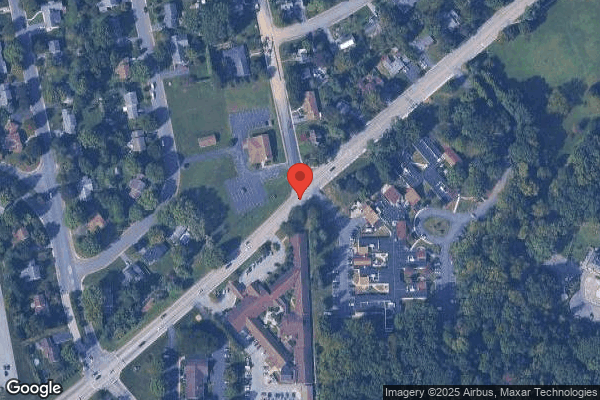
700 WALNUT BOTTOM ROAD, CARLISLE, PA 17013 (717) 960-7700
For profit - Limited Liability company 114 Beds Independent Data: November 2025 4 Immediate Jeopardy citations
Trust Grade
0/100
#558 of 653 in PA
Last Inspection: March 2025

Within standard 12-15 month inspection cycle. Federal law requires annual inspections.

Overview

Forest Park Nursing and Rehabilitation has a Trust Grade of F, indicating significant concerns about the quality of care provided. With a state rank of #558 out of 653, they are in the bottom half of nursing facilities in Pennsylvania, and #15 out of 17 in Cumberland County, meaning there are very few local options that are worse. While the facility is trending towards improvement, with issues decreasing from 45 to 29 over the past year, the overall situation remains concerning, particularly with 108 total deficiencies identified. Staffing is below average at 2 out of 5 stars, with a high turnover rate of 68%, suggesting instability among caregivers. Additionally, the facility has incurred $203,844 in fines, which is higher than 96% of facilities in the state, pointing to ongoing compliance challenges. Notably, there have been critical incidents, including a failure to respond to a medical emergency for a resident who became unresponsive, and a lack of adequate care following changes in residents' conditions, which tragically contributed to a resident's death.

Trust Score
F
0/100
In Pennsylvania
#558/653
Bottom 15%
Safety Record
High Risk
Review needed
Inspections
Getting Better
45 → 29 violations
Staff Stability
⚠ Watch
68% turnover. Above average. Higher turnover means staff may not know residents' routines.
Penalties
✓ Good
$203,844 in fines. Lower than most Pennsylvania facilities. Relatively clean record.
Skilled Nurses
○ Average
Each resident gets 31 minutes of Registered Nurse (RN) attention daily — about average for Pennsylvania. RNs are the most trained staff who monitor for health changes.
Violations
⚠ Watch
108 deficiencies on record. Higher than average. Multiple issues found across inspections.
★☆☆☆☆
1.0
Overall Rating
★★☆☆☆
2.0
Staff Levels
★★★☆☆
3.0
Care Quality
★☆☆☆☆
1.0
Inspection Score
Stable
2024: 45 issues
2025: 29 issues

The Good

  • Full Sprinkler Coverage · Fire safety systems throughout facility
  • No fines on record

Facility shows strength in fire safety.

The Bad

1-Star Overall Rating

Below Pennsylvania average (3.0)

Significant quality concerns identified by CMS

Staff Turnover: 68%

21pts above Pennsylvania avg (46%)

Frequent staff changes - ask about care continuity

Federal Fines: $203,844

Well above median ($33,413)

Significant penalties indicating serious issues

Staff turnover is elevated (68%)

20 points above Pennsylvania average of 48%

The Ugly 108 deficiencies on record

4 life-threatening 1 actual harm
Jul 2025 1 deficiency
CONCERN (E) 📢 Someone Reported This

A family member, employee, or ombudsman was alarmed enough to file a formal complaint

Potential for Harm - no one hurt, but risky conditions existed

Deficiency F0839 (Tag F0839)

Could have caused harm · This affected multiple residents

**NOTE- TERMS IN BRACKETS HAVE BEEN EDITED TO PROTECT CONFIDENTIALITY** Based on facility policy review, employee record reviews, and staff interview, it was determined that the facility failed to ens...

Read full inspector narrative →
**NOTE- TERMS IN BRACKETS HAVE BEEN EDITED TO PROTECT CONFIDENTIALITY** Based on facility policy review, employee record reviews, and staff interview, it was determined that the facility failed to ensure that nursing staff possessed an active nurse aid certification for one of eight employee files reviewed (Employee 8). Findings include:Review of the employee file for Employee 8 revealed a signed position description for a certified nursing assistant (CNA) with a date of hire listed as [DATE]. Further review of Employee 8's file revealed a document from Pennsylvania Department of Health Nurse Aide registry verification website, indicating the facility verified Employee 8's nurse aid certification on [DATE]. Review of the aforementioned document revealed Employee 8's Nurse Aide certification had an expiration date of February 23, 2025. Additional review of Employee 8's filed failed to reveal an updated nurse aide registry verification. The Surveyor's review of the Pennsylvania Department of Health Nurse Aide registry verification website revealed Employee 8's Nurse Aide certification was renewed on [DATE]. Review of Employee 8's work schedule from February 24, 2025 to [DATE] revealed she worked 98 shifts with an expired Nurse Aide certification. An interview on [DATE] at approximately 3:15 PM, with the Nursing Home Administrator, revealed the facility recently discovered Employee 8‘s CNA certification had expired. She was suspended and an audit was completed of all licensed and certified staff. No other staff licenses or certifications were found to be expired. The NHA stated she would expect staff to have current license/certifications and for verifications to be completed.28 Pa Code 201.18(e)(1)(2) Management28 Pa. Code 211.12(d)(5) Nursing services
Jun 2025 1 deficiency
CONCERN (D) 📢 Someone Reported This

A family member, employee, or ombudsman was alarmed enough to file a formal complaint

Potential for Harm - no one hurt, but risky conditions existed

Safe Environment (Tag F0584)

Could have caused harm · This affected 1 resident

Based on observations as well as resident and staff interviews, it was determined that the facility failed to maintain a safe, comfortable, and home-like interior in two of three unit spas (Evergreen ...

Read full inspector narrative →
Based on observations as well as resident and staff interviews, it was determined that the facility failed to maintain a safe, comfortable, and home-like interior in two of three unit spas (Evergreen and Laurel Lane). Findings include: Interview with Resident 3 on June 25, 2025, at 12:30 PM, she stated the temperature in the bathroom in her room and the spa are is hot. Observation with Employee 1 on June 25, 2025, in the Laurel spa at 2:23 PM, revealed the ambient temperature registered 85.8 degrees Fahrenheit. Audible fan noise noted. Spa shower noted to be dry. Observation in the Evergreen spa at 2:38 PM, revealed the ambient temperature registered 85 degrees Fahrenheit. Audible fan noise noted. Spa shower noted to be dry. The surveyor discussed the concern of the temperature in the Laurel and Evergreen spa with the Nursing Home Administrator on June 25, 2025, a 2:45 PM. No further information was provided. 28 Pa. Code 201.18 (b)(1)(3)(e)(2.1) Management
Jun 2025 1 deficiency
CONCERN (D) 📢 Someone Reported This

A family member, employee, or ombudsman was alarmed enough to file a formal complaint

Potential for Harm - no one hurt, but risky conditions existed

Report Alleged Abuse (Tag F0609)

Could have caused harm · This affected 1 resident

Based on facility policy review, review of select facility documentation, and staff interviews, it was determined that the facility failed to ensure all alleged violations involving abuse were reporte...

Read full inspector narrative →
Based on facility policy review, review of select facility documentation, and staff interviews, it was determined that the facility failed to ensure all alleged violations involving abuse were reported in a timely manner for two of three residents reviewed (Residents 1 and 2). Findings include: Review of facility policy, titled Abuse, Neglect, Exploitation or Misappropriation- Reporting and Investigating, dated April 2021, revealed If resident abuse, neglect, exploitation, misappropriation of resident property or injury of unknown source is suspected, the suspicion must be reported immediately to the administrator and to other officials according to state law . 'Immediately' is defined as: a. within two hours of an allegation involving abuse or result in serious bodily injury; or b. within 24 hours of an allegation that does not involve abuse or result in serious bodily injury. Review of facility policy, titled Resident-to-Resident Altercations, dated December 2016, revealed All altercations, including those that may represent resident-to-resident abuse, shall be investigated and reported to the nursing supervisor, the director of nursing services and to the administrator. Facility staff will monitor residents for aggressive/inappropriate behavior towards other residents, family members, visitors, or to the staff. Occurrences of such incidents shall be promptly reported to the nurse supervisor, director of nursing services, and to the administrator. Review of facility reported incident dated June 9, 2025, revealed that the Nursing Home Administrator (NHA) was made aware on June 9, 2025, at 8:45 AM, of possible resident-to-resident sexual abuse that occurred on June 7, 2025. Review of facility's investigation revealed an interview with Employee 4 (Housekeeper) on June 9, 2025, stating that over the weekend, she observed a female resident, possibly Resident 1, in Resident 2's room and it looked like they were kissing. Employee 4 denied seeing anything else occur and stated she could not recall where the female Resident's hands were placed. Employee 4 stated she told Employee 1 (Nurse Aide) who arrived in the room and told the Residents to stop. Review of Employee 1's witness statement, undated, revealed that on Saturday June 7, 2025, at approximately 2:30 PM, Employee 4 called Employee 1 to Resident 2's room. Employee 1 wrote in her statement that she observed Resident 1 in Resident 2's room, bent over Resident 2 with her hand on his penis. Employee 1 stated she walked Resident 1 back to her room and then told the nurse what she had just witnessed. Review of facility's interview with Employee 2 (RN-Registered Nurse) on June 9, 2025, revealed that on June 7, 2025, Employee 1 came out of the resident's room openly stating what she saw between the two residents .I told her I am not the Supervisor on duty, please go tell them. Further review of the interview revealed no details regarding what exactly Employee 1 witnessed occuring between the two residents. Review of facility's interview with Employee 6 (Nurse Aide) dated June 9, 2025, revealed The housekeepers called our attention to the room. [Employee 1] went in and immediately asked [Resident 1] to leave the room. She came out to the nurses' station telling [Employee 2] that she saw them making out, [Resident 1] was kissing [Resident 2], and she reached down towards his crotch. I did not hear her say she was touching any part of his body. At no time did I hear him [Employee 2] tell her to go tell the Supervisor. Review of facility's interview with Employee 3 (RN Supervisor) dated June 9, 2025, revealed that nobody informed her of any incident or inappropriate sexual encounters between Residents 1 and 2. Review of facility's interview with Employee 5 (Manager on duty) dated June 10, 2025, revealed Employee 1 had called her on June 7, 2025, and told her that she saw Resident 1's hands down Resident 2's pants. Employee 5 asked Employee 1 if she notified the supervisor and Employee 1 stated yes. Employee 5 stated I thought the supervisor was going to take the steps that needed to be done. Review of facility's follow up interview with Employee 1 dated June 10, 2025, revealed I told [Employee 2], I thought he was the supervisor, that [Residents 1 and 2] were making out. I told dayshift and second shift aides to keep the residents separated. I called [Employee 5] told her that [I] had just seen them making out and that [Employee 2] the supervisor had been notified. During an interview with the NHA on June 10, 2025, at 10:18 AM, she stated that she was not made aware of the resident-to-resident interaction that occurred on June 7, 2025, until June 9, 2025. She stated that she was informed of the incident at this time by Employee 5, who was the manager on duty on June 7, 2025. She further stated that Employee 1 reported the incident to Employee 2, but he was not the supervisor and the nursing supervisor denied any knowledge of the incident occuring. In a follow up interview with the NHA on June 10, 2025, at 12:41 PM, she stated that abuse allegations are to be reported immediately. 28 Pa. Code 201.14(a) Responsibility of licensee 28 Pa. Code 201.18(b)(1) Management 28 Pa. Code 211.12(d)(1)(2)(5) Nursing services
Mar 2025 17 deficiencies
CONCERN (D)

Potential for Harm - no one hurt, but risky conditions existed

Transfer Notice (Tag F0623)

Could have caused harm · This affected 1 resident

**NOTE- TERMS IN BRACKETS HAVE BEEN EDITED TO PROTECT CONFIDENTIALITY** Based on facility policy review, clinical record reviews, and staff interviews, it was determined that the facility failed to no...

Read full inspector narrative →
**NOTE- TERMS IN BRACKETS HAVE BEEN EDITED TO PROTECT CONFIDENTIALITY** Based on facility policy review, clinical record reviews, and staff interviews, it was determined that the facility failed to notify the resident/resident representative of a resident's transfer, in writing, to include: the reason for the transfer or discharge, date of transfer, location of transfer, statement of the resident's appeal rights, name, and address (mailing and email) for two of four resident records reviewed for hospitalization (Residents 21 and 80). Findings include: Review of facility policy, titled Bed-Holds and Returns, last reviewed February 3, 2025, revealed, in part, 3. Prior to a transfer, written information will be given to the residents and the resident representative that explain in detail: d. the details of the transfer (per the notice of transfer). Review of Resident 21's clinical record revealed diagnoses that included hypertensive heart disease without heart failure (a long-term condition that develops over many years in people who have high blood pressure), chronic kidney disease (longstanding disease of the kidneys leading to renal failure), and chronic obstructive pulmonary disease (COPD-a type of progressive lung disease characterized by long term respiratory symptoms and airflow limitations). Review of Resident 21's clinical record revealed that the Resident had been transferred and admitted to the hospital on [DATE], and September 5, 2024. Review of Resident 21's transfer notices dated June 4, 2024, and September 6, 2024, revealed that they were not signed by Resident 21 nor their Resident Representative, and there was no documentation on the notice of whom the information may have been reviewed with verbally. Further, they did not contain the mailing address of the Office of the State Long-Term Care Ombudsman; the mailing address for the agency responsible for protection and advocacy of individuals with developmental disabilities; nor, the mailing address for agency responsible for the protection and advocacy of individuals with mental disorders. The facility was unable to provide documentation that Resident 21's transfers to the hospital on June 3, 2024, and September 5, 2024, were reported to the Ombudsman. During a staff interview with the Nursing Home Administrator (NHA) on March 4, 2025, at 1:14 PM, the NHA indicated that when she started at the facility in December 2024, she could not find where there were any reports or emails to show that the Ombudsman reporting was being completed. She confirmed that she would expect the Ombudsman reporting to have been completed. During a staff interview with the NHA on March 5, 2025, at 2:00 PM, the NHA confirmed that the transfer notices were not signed, and she had no documentation to provide of whom received the information contained in the transfer notice. She also confirmed that not all required info was included in transfer notice and should have been. Review of Resident 80's clinical record revealed diagnoses that included type 2 diabetes mellitus (body's inability to use insulin causing sugar to build up in the blood) and Alzheimer's disease (progress disease that destroys memory and other mental functions). Further review of Resident 80's clinical record revealed he was transferred out of the facility to the hospital on December 29, 2024, and was subsequently admitted to the hospital. Additional review of Resident 80's clinical record failed to reveal a notice of transfer was provided to Resident 80 or his Representative. During an interview on March 6, 2025, at 9:19 AM, with the NHA and Director of Nursing, it was revealed the facility had no additional information to provide. The NHA stated it was the expectation of the facility that notice of transfer be provided to residents and/or representatives. 28 Pa. Code 201.14(a) Responsibility of licensee 28 Pa. Code 211.12(d)(2)(3)(5) Nursing services
CONCERN (D)

Potential for Harm - no one hurt, but risky conditions existed

Deficiency F0625 (Tag F0625)

Could have caused harm · This affected 1 resident

**NOTE- TERMS IN BRACKETS HAVE BEEN EDITED TO PROTECT CONFIDENTIALITY** Based on facility policy review, clinical record reviews, and staff interviews, it was determined that the facility failed to en...

Read full inspector narrative →
**NOTE- TERMS IN BRACKETS HAVE BEEN EDITED TO PROTECT CONFIDENTIALITY** Based on facility policy review, clinical record reviews, and staff interviews, it was determined that the facility failed to ensure the resident and/or the resident's representative were provided the bed-hold notice upon transfer for two of four residents reviewed for hospitalizations (Residents 21 and 80). Finding include: Review of the facility policy, titled Bed-Holds and Returns, last reviewed February 3, 2025, revealed, in part, 3. Prior to a transfer, written information will be given to the residents and the residents representatives that explains in detail: a. the rights and limitations of the resident regarding bed-holds; b. the reserve bed payment policy as indicated by the state plan (Medicaid resident); c. the facility per diem rate required to hold a bed (non-Medicaid resident), or to hold a bed beyond the state bed-hold period (Medicaid residents . Review of Resident 21's clinical record revealed diagnoses that included hypertensive heart disease without heart failure (a long-term condition that develops over many years in people who have high blood pressure), chronic kidney disease (longstanding disease of the kidneys leading to renal failure), and chronic obstructive pulmonary disease (COPD-a type of progressive lung disease characterized by long term respiratory symptoms and airflow limitations). Review of Resident 21's clinical record revealed that the Resident had been transferred and admitted to the hospital on [DATE], and September 5, 2024. Review of Resident 21's Bed-Hold Policy and Notification and Authorization notices dated June 3, 2024, and September 5, 2024, failed to include the bed-hold reserve payment rate. During a staff interview with the Nursing Home Administrator (NHA) on March 5, 2025, at 2:00 PM, the NHA confirmed that the facility's Bed-Hold Policy and Notification and Authorization notices should include the bed-hold reserve payment rate. Review of Resident 80's clinical record revealed diagnoses that included type 2 diabetes mellitus (body's inability to use insulin causing sugar to build up in the blood) and Alzheimer's disease (progress disease that destroys memory and other mental functions). Further review of Resident 80's clinical record revealed he was transferred out of the facility to the hospital on December 29, 2024, and was subsequently admitted to the hospital. Additional review of Resident 80's clinical record failed to reveal a bed-hold notification was provided to Resident 80 or his Representative. During an interview on March 6, 2025 at 9:19 AM, with the NHA and Director of Nursing it was revealed the facility had no additional information to provide. The NHA stated it was the expectation of the facility that a bed-hold notification be provided to residents and/or representatives. 28 Pa. Code 201.14(a) Responsibility of licensee 28 Pa. Code 211.12(d)(2)(3)(5) Nursing services
CONCERN (D)

Potential for Harm - no one hurt, but risky conditions existed

Assessment Accuracy (Tag F0641)

Could have caused harm · This affected 1 resident

**NOTE- TERMS IN BRACKETS HAVE BEEN EDITED TO PROTECT CONFIDENTIALITY** Based on clinical record review and staff interviews, it was determined that the facility failed to ensure that the resident ass...

Read full inspector narrative →
**NOTE- TERMS IN BRACKETS HAVE BEEN EDITED TO PROTECT CONFIDENTIALITY** Based on clinical record review and staff interviews, it was determined that the facility failed to ensure that the resident assessment accurately reflected the resident's status for two of 26 residents reviewed (Residents 64 and 72). Findings include: Review of Resident 64's clinical record revealed diagnoses that included contracture of muscle (a condition where muscles, tendons, joints, or other tissues tighten or shorten, causing deformity and loss of movement in the joint), functional quadriplegia (complete immobility due to severe disability or frailty caused by another medical condition, without physical injury or damage to the brain or spinal cord), and depression (a mood disorder that causes a persistent feeling of sadness and loss of interest in things). Review of Resident 64's clinical record revealed he has been on a turning and repositioning program since his admission on [DATE]; and the intervention has been noted to be a part of his pain management program since December 14, 2024. Review of Resident 64's admission and 5 Day MDS assessments (Minimum Data Set- assessment tool utilized to identify residents' physical, mental and psychosocial needs) with ARD (assessment reference date- last day of the assessment period) of December 19, 2024, revealed Resident 64 was marked no under section J, Received non-medication intervention for pain?, and was marked no under section M, Turning/repositioning program. During an email correspondence with the Nursing Home Administrator (NHA) on March 5, 2025, at 1:51 PM, she revealed Employee 9 (Licensed Practical Nurse Assessment Coordinator) revised the aforementioned MDS assessments to indicate that Resident 64 received non-medication intervention for pain and was on a turning/repositioning program during the ARD. During a follow-up interview with the NHA on March 6, 2025, at 10:14 AM, she revealed she would expect Resident 64's MDS assessments to be coded accurately. Review of Resident 72's clinical record revealed diagnoses that included hypotension (low blood pressure) and atrial fibrillation (an irregular heartbeat). Review of Resident 72's clinical record revealed the Resident had an un-witnessed fall on September 20, 2024, and fell out of bed, with no injury occurring. Review of Resident 72's Quarterly MDS dated [DATE], revealed that Section J1800, Any Fall Since Admission/Entry/ or Reentry or Prior Assessment (Has the resident had any falls since admission/entry or reentry or the prior assessment) was marked No; as well as Section J1900, Number of Falls Since Admission/Entry or Reentry or Prior Assessment (A. Number of falls since admission or Prior assessment - No Injury) failed to capture Resident 72's fall on September 20, 2024. Electronic correspondence received from the NHA on March 5, 2025, at 1:53 PM, revealed Resident 72's Quarterly MDS completed on October 16, 2024, was corrected to reflect Resident 72's fall with no injury, and confirmed a modification was made on Section J1800 and Section J1900. Interview with the NHA on March 6, 2025, at 10:05 AM, revealed she would have expected Resident 72's Quarterly MDS dated [DATE], to have been coded accurately. 28 Pa. Code 211.5(f) Medical records 28 Pa Code 211.12 (d)(3)(5) Nursing Services
CONCERN (D)

Potential for Harm - no one hurt, but risky conditions existed

Deficiency F0657 (Tag F0657)

Could have caused harm · This affected 1 resident

Based on observations, clinical record review, and resident and staff interviews, it was determined that the facility failed to ensure the care plan was reviewed and revised for two of 26 residents re...

Read full inspector narrative →
Based on observations, clinical record review, and resident and staff interviews, it was determined that the facility failed to ensure the care plan was reviewed and revised for two of 26 residents reviewed (Residents 65 and 88). Findings Include: Review of Resident 65's clinical record revealed diagnoses that included congestive heart failure (a serious condition that occurs when the heart can't pump blood efficiently enough to meet the body's needs) and difficulty walking not elsewhere classified (a medical term used when someone has difficulty walking but the cause cannot be more precise). Observation of Resident 65 on March 3, 2025, at 11:22 AM, revealed Resident 65 lying in bed, and Resident 65's rolling walker was sitting beside the Resident's bed. Interview with Resident 65 at that time revealed that she is able to walk with the rolling walker. Review of Resident 65's care plan revealed a care plan with a focus area of, Requires assistance transferring from one position to anther related to unsteady gait, with a revision date of January 8, 2025. The care plan failed to mention Resident 65's use of a rolling walker. Interview with the Nursing Home Administrator (NHA) on March 5, 2025, at 2:55 PM, revealed that the rolling walker was on the care plan previously, but the care plan was revised and updated, and the previous version cannot be retrieved. Review of Resident 88's clinical record revealed diagnoses that included anxiety disorder (a group of mental health conditions characterized by excessive and persistent worry, fear, and nervousness that can significantly interfere with daily life) and psoriasis (a chronic skin condition characterized by raised, red, scaly patches of skin called plaque). Review of Resident 88's clinical record revealed she had an unwitnessed fall on December 27, 2024, where Resident 88 was found sitting on the floor beside her bed. Review of Resident 88's comprehensive care plan revealed a focus area related to being at risk for falls with an intervention for fall matt(s): Left side of bed, with an initiation date of December 27, 2024. Observations of Resident 88 on March 4, 2025, at 9:25 AM, and March 5, 2025, at 9:57 AM, revealed Resident 88 was in their room laying in bed, with no fall mat present on the left side. Electronic correspondence received from the NHA on March 5, 2025, at 3:40 PM, revealed the fall mat was being removed from Resident 88's care plan as Resident 88 transfers independently in and out of bed. Interview with the NHA on March 6, 2025, at 10:04 AM, revealed she would have expected Resident 88's fall mat to have been removed from their care plan if it was not in use. 28 Pa. Code 211.12(d)(5) Nursing services
CONCERN (D)

Potential for Harm - no one hurt, but risky conditions existed

Deficiency F0658 (Tag F0658)

Could have caused harm · This affected 1 resident

Based on facility policy reviews, product information review, observations, clinical record reviews, and staff interviews, it was determined that the facility failed to ensure care and services were p...

Read full inspector narrative →
Based on facility policy reviews, product information review, observations, clinical record reviews, and staff interviews, it was determined that the facility failed to ensure care and services were provided in accordance with professional standards for two of six residents observed during medication preparation and administration for (Residents 25 and 65) and for one of one resident observed for treatment administration (Resident 68). Findings include: Review of facility policy, titled Administering Medications, with a last review date of February 3, 2025, revealed,in part, 25. Staff follows established facility infection control procedures (e.g., handwashing, antiseptic technique, gloves, isolation precautions, etc.) for the administration of medications, as applicable. Review of facility policy, titled Insulin Administration, with a last review date of February 3, 2025, revealed, in part, 5. The nursing staff will have access to specific instructions (from the manufacturer if appropriate) on all forms of insulin delivery system(s) prior to their use. Review of facility policy, titled Pharmacy Services Policy and Procedure, with a last review date of February 3, 2025, revealed, in part, Facility staff shall not borrow medication from another resident's supply. The practice of borrowing medication is not consistent with professional standards and contributes to medication errors. Review of the instruction leaflet for Lantus-Solostar Insulin Pen, with a last revised date of February 23, 2016, revealed the following, in part: Always use a new sterile needle for each injection. A. Wipe the rubber seal with alcohol. B. Remove the protective seal from a new needle. C. Line up the needle with the pen and keep it straight as you attach it (screw or push on, depending on the needle type). Review of Resident 25's clinical record revealed diagnoses that included hypertension (high blood pressure), chronic diastolic congestive heart failure (heart failure that occurs when the heart does not relax properly between beats, causing the heart to be unable to pump an adequate amount of blood to the body), and diabetes mellitus (disease that occurs when your blood glucose, also called blood sugar, is too high). Review of Resident 25's current physician orders revealed an order for Lantus SoloStar Subcutaneous Solution Pen-injector 100 units/ml (Insulin Glargine) Inject 20 unit subcutaneously in the morning for DM [Diabetes Mellitus], Give 1/2 dose if sugar less than 120, dated May 24, 2024. During a medication pass observation on March 5, 2025, at approximately 8:41 AM, Employee 4 (Licensed Practical Nurse) was observed removing Resident 25's Lantus Solostar insulin pen from the medication cart, removing the cap on the insulin pen, and applying a new sterile needle to the pen. Employee 25 failed to cleanse the rubber seal prior to applying the new sterile needle. In addition, at approximately 8:55 AM, Employee 4 was observed administering Resident 25's Lantus insulin to her abdomen without wearing gloves. Review of Resident 65's clinical record revealed diagnoses that included chronic systolic congestive heart failure (a specific type of heart failure that occurs in the left ventricle and the ventricle cannot contract normally when the heart beats) and diabetes. Review of Resident 65's current physician orders revealed orders for Insulin Glargine Subcutaneous Solution 100 UNIT/ML (Insulin Glargine-Lantus) Inject 15 unit subcutaneously two times a day related to diabetes, dated February 20, 2025; and Insulin Lispro Injection Solution 100 UNIT/ML (Insulin Lispro) Inject 8 unit subcutaneously with meals related to diabetes, dated February 20, 2025. During a medication pass observation on March 5, 2025, at approximately 9:02 AM, Employee 4 was observed removing Resident 65's Lantus SoloStar insulin pen and her Lispro insulin pen from the medication cart, removing the caps on the insulin pens, and applying a new sterile needle to the pens. Employee 4 failed to cleanse the rubber seals prior to applying the new sterile needle. During a staff interview with Employee 4 on March 5, 2025, at 9:32 AM, he confirmed that he did not clean the insulin pens for Residents 25 and 65 prior to attaching the new sterile needle. He said that the pens were a closed system and did not need to be cleaned since he did not touch the end of the pens. He said that he had never been instructed that the end of an insulin pen should be cleansed with alcohol before applying the needle. Employee 4 further confirmed that he did not wear gloves while administering Resident 25's insulin. He said that if a person administers their own insulin, they do not have to wear gloves and, therefore, he did not wear gloves. During a staff interview with the Nursing Home Administrator (NHA) on March 6, 2025, at 09:36 AM, the NHA confirmed that she would expect insulin pens to be cleaned before the needles are applied and that Employee 4 should have worn gloves when administering the insulin injection to Resident 25. Review of Resident 68's clinical record revealed diagnoses that included cerebral infarction (a stroke-damage to the brain from interruption of its blood supply), diabetes mellitus, and liver transplant. Further review of Resident 68's clinical record revealed that he had a stage 2 pressure ulcer (a partial thickness tissue loss wound that does not go deeper than the dermis or middle layer of skin) on his right buttock; a stage 3 pressure ulcer (a full-thickness tissue loss wound where the tissue just under the skin may be visible, but no bone, tendon, or muscle is exposed) on his left buttock; and an unstageable pressure ulcer (full-thickness skin and muscle loss, with slough or eschar obstructing the wound bed making it impossible to determine the depth of the wound) on his sacrum (the part of the spinal column that is directly connected to the pelvis). Review of Resident 68's current physician orders revealed orders to apply zinc oxide ointment to left and right buttock every shift for wound care, dated February 26, 2025; and cleanse sacrum with NSS (normal saline solution), apply Santyl (a medication used to remove debris or dead tissue from a burn, ulcer, or wound, which helps promote healing and decrease the risk of infection), and cover with a dry sterile dressing every day shift, dated February 20, 2025. Observation of Resident 68's dressing change on March 5, 2025, at 12:52 PM, performed by Employee 5 (Licensed Practical Nurse) revealed that Employee 5 had prepared all treatment items prior to surveyor arrival. After the treatment observation was completed, at approximately 1:30 PM, Employee 5 was asked to provide the tube of Santyl she utilized to perform the treatment. Observation of this tube at approximately 1:30 PM, revealed that it was labeled with another resident's name. During an immediate interview with Employee 5, she acknowledged the tube of Santyl had another resident's name on it. In addition, the name on the tube was also verified by Employee 6 (Licensed Practical Nurse) and the Director of Nursing (DON) at 1:35 PM. During a staff interview with the NHA and DON on March 6, 2025, at 10:09 AM, the DON confirmed that Employee 5 should have used Resident 68's tube of Santyl for his treatment. 28 Pa. Code 201.18(b)(1) Management 28 Pa. Code 211.10(d) Resident care policies 28 Pa. Code 211.12(d)(1)(2)(3)(5) Nursing services
CONCERN (D)

Potential for Harm - no one hurt, but risky conditions existed

Pressure Ulcer Prevention (Tag F0686)

Could have caused harm · This affected 1 resident

Based on facility policy review, clinical record review, observation, and staff interview, it was determined that the facility failed to ensure that residents receive necessary treatment and services,...

Read full inspector narrative →
Based on facility policy review, clinical record review, observation, and staff interview, it was determined that the facility failed to ensure that residents receive necessary treatment and services, consistent with professional standards of practice, to identify pressure ulcers and to promote healing and prevent infection of a pressure ulcer for one of three residents reviewed for pressure ulcers (Resident 68). Findings include: Review of facility policy, titled Dressings, Dry/Clean, with a last review date of February 3, 2025, revealed, in part, 15. Cleanse the wound with ordered cleanser. If using gauze, use clean gauze for each cleansing stroke. Clean from the least contaminated area to the most contaminated area (usually, from the center outward); 16. Use dry gauze to pat the wound dry; and 17. Apply the ordered dressing and secure with tape or bordered dressing per order. Review of Resident 68's clinical record revealed diagnoses that included cerebral infarction (a stroke-damage to the brain from interruption of its blood supply), type 2 diabetes mellitus (disease that occurs when your blood glucose, also called blood sugar, is too high, but does not require the use of insulin), and liver transplant. Further review of Resident 68's clinical record revealed that he had a stage 2 pressure ulcer (a partial thickness tissue loss wound that does not go deeper than the dermis or middle layer of skin) on his right buttock; a stage 3 pressure ulcer (a full-thickness tissue loss wound where the tissue just under the skin may be visible, but no bone, tendon, or muscle is exposed) on his left buttock; and an unstageable pressure ulcer (full-thickness skin and muscle loss, with slough or eschar obstructing the wound bed making it impossible to determine the depth of the wound) on his sacrum (the part of the spinal column that is directly connected to the pelvis). Review of Resident 68's current physician orders revealed orders to apply zinc oxide ointment to left and right buttock every shift for wound care, dated February 26, 2025; and cleanse sacrum with NSS (normal saline solution), apply Santyl (a medication used to remove debris or dead tissue from a burn, ulcer, or wound, which helps promote healing and decrease the risk of infection), and cover with a dry sterile dressing every day shift, dated February 20, 2025. Observation of Resident 68's dressing change on March 5, 2025, at 12:52 PM, performed by Employee 5 (Licensed Practical Nurse), revealed that Employee 5 cleansed all wounds with normal saline solution and a gauze pad, Employee 5 then applied the Santyl to the sacral wound utilizing a tongue depressor, applied the zinc oxide ointment to the buttock wounds, applied a foam bordered dressing to the sacrum, removed her gloves, washed her hands, and applied clean gloves to assist in repositioning Resident 68. During a staff interview with the Nursing Home Administrator and Director of Nursing (DON) on March 6, 2025, at 10:09 AM, the DON confirmed that Employee 5 should have changed gloves, washed her hands, and applied clean gloves between cleansing Resident 68's wound and applying ordered treatment. 28 Pa. Code 201.18(b)(1) Management 28 Pa. Code 211.10(d) Resident care policies 28 Pa. Code 211.12(d)(1)(2)(3)(5) Nursing services
CONCERN (D)

Potential for Harm - no one hurt, but risky conditions existed

Respiratory Care (Tag F0695)

Could have caused harm · This affected 1 resident

Based on facility policy review, clinical record review, observations, and staff interview, it was determined that the facility failed to provide respiratory care/oxygen services consistent with profe...

Read full inspector narrative →
Based on facility policy review, clinical record review, observations, and staff interview, it was determined that the facility failed to provide respiratory care/oxygen services consistent with professional standards of practice for one of one resident reviewed for oxygen use (Resident 57). Findings include: Review of the facility policy, titled Oxygen Administration, with a last review date of February 3, 2025, revealed, in part, Verify that there is a physician's order for this procedure. Review the physician's orders or facility protocol for oxygen administration. Review of Resident 57's clinical record revealed diagnoses that included hypertension (high blood pressure), atrial fibrillation (abnormal heart rhythm characterized by rapid and irregular beating of the upper chamber of the heart), and cerebral infarction (a stroke-damage to the brain from interruption of its blood supply). Observations of Resident 57 on March 3, 2025, at 11:01 AM, and March 4, 2025, at 11:00 AM, revealed that the Resident was receiving oxygen at 1 liter per minute via a nasal cannula. Review of Resident 57's clinical record physician orders failed to reveal an order for oxygen administration. During a staff interview with the Nursing Home Administrator on March 5, 2025, at 9:58 AM, she confirmed that Resident 57 was currently utilizing oxygen and that an order should have been in place for her oxygen use. 28 Pa code 211.12(d)(1)(2) Nursing services
CONCERN (D)

Potential for Harm - no one hurt, but risky conditions existed

Deficiency F0697 (Tag F0697)

Could have caused harm · This affected 1 resident

**NOTE- TERMS IN BRACKETS HAVE BEEN EDITED TO PROTECT CONFIDENTIALITY** Based on facility policy review, clinical record review, and resident and staff interviews, it was determined that the facility ...

Read full inspector narrative →
**NOTE- TERMS IN BRACKETS HAVE BEEN EDITED TO PROTECT CONFIDENTIALITY** Based on facility policy review, clinical record review, and resident and staff interviews, it was determined that the facility failed to ensure that pain management is provided to residents who require such services consistent with professional standards of practice, the comprehensive person-centered care plan, and the residents' goals and preferences for one of three residents reviewed for pain management (Resident 64). Findings include: Review of facility policy, titled Pain Assessment and Management, last reviewed February 3, 2025, read, in part, The purposes of this procedure are to help the staff identify pain in the resident, and to develop interventions that are consistent with the resident's goals and needs and that address the underlying causes of pain. Pain management is a multidisciplinary care process that includes the following: Developing and implementing approaches to pain management; identifying and using specific strategies for different levels and sources of pain; monitoring for the effectiveness of interventions; and modifying approaches as necessary. Non-pharmacological interventions may be appropriate alone or in conjunction with medications. Some non-pharmacological interventions include: a. Environmental - adjusting the room temperature, smoothing the linens, providing a pressure-reducing mattress, repositioning, etc.; b. Physical - ice packs, cool or warm compresses, baths, transcutaneous electrical nerve stimulation (TENS), massage, acupuncture, etc.; c. Exercise - range of motion exercises to prevent muscle stiffness and contractures; and d. Cognitive or Behavioral - relaxation, music, diversions, activities, etc. If pain has not been adequately controlled, the multidisciplinary team, including the physician, shall reconsider approaches and make adjustments as indicated. Report the following information to the physician or practitioner: significant changes in the level of the resident's pain; and prolonged, unrelieved pain despite care plan interventions. Review of Resident 64's clinical record revealed he was admitted to the facility on [DATE], with diagnoses that included contracture of muscle (a condition where muscles, tendons, joints, or other tissues tighten or shorten, causing deformity and loss of movement in the joint), functional quadriplegia (complete immobility due to severe disability or frailty caused by another medical condition, without physical injury or damage to the brain or spinal cord), and depression (a mood disorder that causes a persistent feeling of sadness and loss of interest in things). Interview with Resident 64 on March 3, 2025, at 10:26 AM, revealed his pain level is consistently an 8 (out of 10), but when he receives his medicine, sometimes it goes down to a 5 or 6. Review of Resident 64's physician orders revealed he had orders for both routine and PRN (as needed) pain medications. Review of Resident 64's care plan revealed a focus area At risk for pain with an intervention for Notify physician if pain frequency/intensity is worsening or if current analgesia regimen has become ineffective, with a start date of December 30, 2024. Review of Resident 64's MAR (Medication Administration Record - documentation for medication/treatment administered or monitored) revealed he was administered a dose of as needed oxycodone (narcotic pain medication) on December 17, 2024, at 1:59 PM, and that his pain level was an 8. Review of Resident 64's nursing progress notes revealed a note on December 17, 2024, at 1:59 PM, that stated complained of general discomfort-rest/reposition ineffective. Further review of Resident 64's nursing progress notes revealed a follow-up note linked to the aforementioned notes on December 17, 2024, at 4:47 PM, that stated PRN administration was: ineffective. Follow-up pain scale was 7. No further as needed pain medication was administered that evening, no non-pharmacological interventions were noted to be effective, and no physician notification was noted in response to the prolonged, unrelieved pain. Review of Resident 64's clinical record revealed from January 12, 2025, at 11:10 PM, until January 13, 2025, at 9:45 AM, his pain level was assessed four times during that period; all four times his pain level was noted to be at an 8. Review of Resident 64's nursing progress notes revealed a note on January 13, 2025, at 3:50 AM, that stated, Resident verbalized pain, requesting pain medication, Administered [at] 3:50 AM. Review of Resident 64's nursing progress notes revealed a follow-up note linked to the aforementioned note on January 13, 2025, at 6:34 AM, that stated PRN administration was: ineffective. Follow-up pain scale was 8. Review of Resident 64's clinical record revealed he was administered as needed oxycodone on January 13, 2025, at 9:45 AM, and it was noted that rest and repositioning was ineffective for pain relief. No physician notification was noted in response to the prolonged, unrelieved pain. Further review of Resident 64's nursing progress notes revealed a follow-up note linked to the aforementioned note on January 13, 2025, at 4:35 PM, that stated PRN administration was: unknown [for effectiveness]. Review of Resident 64's clinical record revealed he was administered as needed oxycodone on January 21, 2025, at 2:01 AM; a nursing progress note was linked to the medication administration that stated, requested for complaint of lower back pain, repositioning not effective. Further review of Resident 64's nursing progress notes revealed a follow-up note linked to the aforementioned note on January 21, 2025, at 5:33 AM, that stated PRN administration was: ineffective. Follow-up pain scale was 6. No further as needed pain medication was administered that day, no non-pharmacological interventions were noted to be effective, and no physician notification was noted in response to the prolonged, unrelieved pain. Review of Resident 64's clinical record revealed from February 21, 2025, at 11:56 AM, until February 21, 2025, at 10:03 PM, his pain level was assessed eight times during that period; all four times his pain level was noted to be at an 8. Review of Resident 64's nursing progress notes revealed a progress note on February 21, 2025, at 11:30 AM, that he was given an as needed oxycodone medication that stated, Complaints of general discomfort-rest/reposition ineffective. Further review of Resident 64's TAR revealed he was given his as needed oxycodone every four hours as requested for pain, but that the as needed administrations were ineffective at relieving his pain, with a follow up pain scale of 8 at 11:56 AM, and 6:14 PM. No further as needed pain medication was administered that day, no non-pharmacological interventions were noted to be effective, and no physician notification was noted in response to the prolonged, unrelieved pain. Review of Resident 64's clinical record on March 4, 2025, revealed the following physician orders for as needed pain medications: Oxycodone HCl Oral Tablet 15 MG, Give one tablet by mouth every 4 hours as needed for moderate pain, max daily amount 90 mg, with a start date of December 13, 2024. Hydromorphone (opioid pain medication) HCl Oral Tablet 2 MG, Give one tablet by mouth every 4 hours as needed for breakthrough pain, max daily Amount 12 mg, with a start date of December 13, 2024. Ibuprofen (pain medication) Oral Tablet 400 MG, Give one tablet by mouth every 6 hours as needed for headaches, with a start date of December 13, 2024. During an interview with Employee 7 (Licensed Practical Nurse) on March 4, 2025, at 1:06 PM, the surveyor questioned the process for administering the as needed pain medications. She revealed if Resident 64 continued with unrelieved pain after his routine pain medications are given, she administers the as needed oxycodone. If Resident 64 is still experiencing pain after he has received his as needed oxycodone, she will administer the as needed ibuprofen. She further revealed that she does not administer the as needed hydromorphone, because it hasn't been available in the medicine cart for quite some time. During an email correspondence with the Director of Nursing (DON) on March 4, 2025, at 1:25 PM, the surveyor inquired if there should be numerical pain scales attached to the as needed oxycodone and hydromorphone so staff knows which medication to administer first, why the hydromorphone hasn't been available, and if the resident would benefit from having other non-pharmacological pain interventions that are being measured in their effectiveness of pain relief, other than rest/repositioning that is frequently noted to be ineffective. Return email from the DON on March 4, 2025, at 5:27 PM, revealed they had added pain scales to the hydromorphone and oxycodone orders so staff knows which medication to administer first based on the residents pain level, and that the hydromorphone needs a new written prescription which is why it is not in the medication cart. She further revealed that she would follow-up with the physician for a new prescription for the medication, and that she has requested that Employee 9 (Licensed Practical Nurse Assessment Coordinator) review if Resident 64 would benefit from additional non-pharmacological pain interventions. During an interview with Resident 64 on March 5, 2025, at 12:49 PM, he revealed he gets headaches and has a lot of pain, and sometimes it helps him to hold a cup of ice to his forehead and listen to music. Review of Resident 64's physician orders on March 5, 2025, revealed pain scales of 5-7 for oxycodone administration, 8-10 for hydromorphone administration, and the following non-pharmacological pain interventions had been added to his as needed oxycodone and hydromorphone medication orders: 1. Reposition 2. Back rub 3. Music 4. Warm/cool compress 5. Diversional activity 6. Other (progress note). Interview with the DON on March 6, 2025, at 10:18 AM, revealed she would expect the pain medications to have pain scales for guidelines to administer the medications, and the facility should have notified the physician in response to days of prolonged unrelieved pain per his care plan intervention and facility policy. She further revealed that they should have reviewed the Resident for the potential of additional, measurable, non-pharmacological pain interventions, including the possibility to be seen by a pain clinic, and the interventions that have now been added to his physician orders. During a follow-up interview with the DON on March 6, 2025, at 12:00 PM, the surveyor revealed the overall concern with Resident 64's regimen for pain management, lack of facility implemented effective non-pharmacological interventions to manage his pain, consistent use of as needed pain medications versus effective routine pain management, and lack of availability of one of his as needed pain medications for a severe pain level of 8-10. The DON verbalized her understanding, revealed the facility will be reaching out to the physician to inquire the ability to revise his pain management regimen, and stated that the only written prescription for hydromorphone that the facility had since his admission was from December 17, 2024, and there were only 28 tablets, so when the medication was no longer available, that is when the facility should have looked into other options for pain management. 28 Pa. Code 211.9(a)(1) Pharmacy services 28 Pa. Code 211.12(c)(d)(1)(3)(5) Nursing services
CONCERN (D)

Potential for Harm - no one hurt, but risky conditions existed

Deficiency F0700 (Tag F0700)

Could have caused harm · This affected 1 resident

Based on policy review, observation, record review, and staff interviews, it was determined that the facility failed to complete a risk benefit analysis and obtain consent for enabler bar use for one ...

Read full inspector narrative →
Based on policy review, observation, record review, and staff interviews, it was determined that the facility failed to complete a risk benefit analysis and obtain consent for enabler bar use for one of 23 residents reviewed (Resident 56). Findings include: Review of the facility policy, titled Bed Safety last reviewed February 3, 2025, revealed, 5. If side rails are used, there shall be an interdisciplinary assessment of the resident, consultation with the attending physician, and input form the resident and/or legal representative. 6. The staff shall obtain consent for the use of side rails from the resident or the resident's legal representative prior to their use. Review of Resident 56's clinical record revealed the diagnoses that included dementia (a chronic disorder of the mental processes caused by brain disease, marked by memory disorders, personality changes, and impaired reasoning) and acquired absence of the right and left leg above the knee (absence of a limb that has been removed due to trauma, medical condition, or surgery). Observation of Resident 56's room on March 3, 2025, at 12:29 PM, revealed bilateral (on both sides) enabler bars. Additional review of Resident 56's clinical record failed to reveal a consent for enabler bar use. An email correspondence with the Director of Nursing (DON) on March 6, 2025, at 9:17 AM, revealed the facility was not able to provide a signed consent for Resident 56's enabler bar use. During an interview with the Nursing Home Administrator and DON on March 6, 2025 at 9:51 AM, the DON stated it was the expectation of the facility that consent for enabler bar usage be obtained. 28 PA code 201.18(b)(1) Management 28 PA code 211.12(d)(1)(2)(3)(5) Nursing services
CONCERN (D)

Potential for Harm - no one hurt, but risky conditions existed

Drug Regimen Review (Tag F0756)

Could have caused harm · This affected 1 resident

Based on clinical record review, policy review, and staff interviews, it was determined that the facility failed to act upon the licensed pharmacist's report of a medication recommendation, and failed...

Read full inspector narrative →
Based on clinical record review, policy review, and staff interviews, it was determined that the facility failed to act upon the licensed pharmacist's report of a medication recommendation, and failed to provide a monthly medication regimen review for one of five residents reviewed for unnecessary medications, psychotropic medications, and medication regimen review (Resident 23). Findings include: Review of the facility policy, titled Consultant Pharmacist Reports: Medication Regimen Review (Monthly Report), with a last review date of February 3, 2025, revealed, The consultant pharmacist reviews the medication regimen of each resident at least monthly; and Physician accepts and acts upon suggestion or rejects and provides and explanation for disagreeing. Review of Resident 23's clinical record revealed diagnoses that included anxiety disorder (a group of mental health conditions characterized by excessive and persistent worry, fear, and nervousness that can significantly interfere with daily life) and hypertension (high blood pressure). Review of Resident 23's pharmacy recommendation dated July 12, 2024, revealed the consultant pharmacist's recommendation stated, This resident is receiving lisinopril. Please ensure that a periodic cmp (comprehensive metabolic panel) is conducted to monitor this medication. Document of results should be accessible for review. Further review of the recommendation dated July 12, 2024, revealed the physician failed to provide a response. Review of Resident 23's pharmacy recommendation dated September 16, 2024, revealed the consultant pharmacist's recommendation stated, Orders for PRN (as needed) psychotropic drugs are limited to 14 days. Please evaluate if the PRN Lorazepam can be discontinued or add a stop/reassess date; as well as the recommendation, This resident has been receiving Lexapro 20 milligram (mg) daily, Remeron 15 mg at bedtime, Seroquel 25 mg AM and 75 mg 2 times a day, Ativan 1 mg every 8 hours as needed and 0.5 mg 2 times a day - please consider GDR (gradual dose reduction) - if GDR is clinically contraindicated at this time, please document that clinical rationale below. Further review of the recommendation dated September 16, 2024, revealed the physician failed to provide a response. Review of Resident 23's pharmacy recommendation dated November 15, 2024, revealed the consultant pharmacist's recommendation stated, Please add 'mix into 4 to 8 ounces of fluid to the polyethylene glycol order as well as, In addition to the over the counter pain management options, this resident has been receiving the following medication for long-term pain management: morphine 10 mg every 1 hour as needed. In an effort to eliminate unnecessary medications and prevent possible side effects associated with them, please evaluate the risk verse benefit of each medication, then discontinue all unnecessary medications, as you deem appropriate. Further review of the recommendation dated November 15, 2024, revealed the physician failed to provide a response. Further review of Resident 23's monthly pharmacy recommendations revealed the facility was unable to provide evidence that Resident 23 had a pharmacy recommendation completed in December 2024. Electronic correspondence received from the Director of Nursing on March 5, 2025, at 3:40 PM, revealed she was not able to provide a pharmacy recommendation for December 2024 for Resident 23, or any physician's responses to the recommendations made by the pharmacist in July 2024, September 2024, or November 2024. Interview with the Nursing Home Administrator on March 6, 2025, at 10:06 AM, revealed she would have expected Resident 23 to have had a pharmacy recommendation completed in December 2024, and would have expected the physician to have responded to the recommendations for Resident 23 in July 2024, September 2024, and November 2024. 42 CFR 483.45 Drug Regimen Review 28 Pa. Code 211.9 (a)(1) Pharmacy services 28 Pa. Code 211.12 (d)(1)(3)(5) Nursing services
CONCERN (D)

Potential for Harm - no one hurt, but risky conditions existed

Deficiency F0761 (Tag F0761)

Could have caused harm · This affected 1 resident

Based on facility policy review, observation, and staff interview, it was determined that the facility failed to properly label and store prescribed medication or preventative creams in one of two tre...

Read full inspector narrative →
Based on facility policy review, observation, and staff interview, it was determined that the facility failed to properly label and store prescribed medication or preventative creams in one of two treatment carts observed (Evergreen Way/Stepping Stones). Findings include: Review of facility policy, titled Storage of Medications, with a last review date of February 3, 2025, revealed, in part, 2. Drugs and biologicals are stored in the packaging, containers or other dispensing systems in which they are received. Only the issuing pharmacy is authorized to transfer medications between containers; 3. The nursing staff is responsible for maintaining medication storage and preparation areas in a clean, safe, and sanitary manner. Review of facility policy, titled Pharmacy Services Policy and Procedure, with a last review dated of February 3, 2025, revealed, in part, Drugs and biologicals used in the facility shall be labeled in accordance with currently accepted professional principles, and include the appropriate accessory and cautionary instructions, and the expiration date when applicable. Observation of the Evergreen Way/Stepping Stones treatment cart on March 5, 2025, at 1:33 PM, with the Director of Nursing (DON) revealed that there were seven tubes of medication or preventative creams that were laying in the top drawer of the cart, outside of a box or bag labeled with a resident's name. Four of the tubes were noted to have a resident's name on them. During an immediate staff interview with the DON, she indicated that the treatment creams/medications should have been stored in their proper packaging or individual bags with a resident's name clearly indicated. 28 Pa. Code 201.18(b)(1) Management 28 Pa. Code 211.9(a)(1) Pharmacy services
CONCERN (E)

Potential for Harm - no one hurt, but risky conditions existed

Resident Rights (Tag F0550)

Could have caused harm · This affected multiple residents

Based on facility policy review, observations, and staff interviews, it was determined that the facility failed to promote care for residents in a manner and environment that enhances each resident's ...

Read full inspector narrative →
Based on facility policy review, observations, and staff interviews, it was determined that the facility failed to promote care for residents in a manner and environment that enhances each resident's dignity for six of 23 Residents reviewed (Residents 6, 7, 34, 42, 57, and 68). Findings Include: Review of facility policy, titled Dignity, with a last review date of February 3, 2025, revealed, in part, 5. When assisting with care, residents are supported in exercising their rights. For example, residents are e. provided with a dignified dining experience; 10. Staff protect confidential clinical information. Examples include the following: b. Signs indicating the resident's clinical status or care needs are not openly posted in the resident's room unless specifically requested by the resident or family member. Discreet posting of important clinical information for safety reasons is permissible (e.g., taped to the inside of the closet door); and 12. Demeaning practices and standards of care that compromise dignity are prohibited. Staff are expected to promote dignity and assist residents; for example: a. helping the resident to keep urinary catheter bags covered. Observation of Resident 7 on March 3, 2025, at 11:06 AM, revealed that Resident 7 was seated in her chair and Employee 2 was standing over Resident 7, assisting her with her lunch. Observation of Resident 34 on March 3, 2025, at 11:12 AM, revealed that Resident 34 was laying in his bed, which was in the low position to the floor, and Employee 3 was standing at the bedside, assisting him with his lunch. Observation of Resident 6 on March 4, 2025, at 11:25 AM, revealed that Resident 6 was seated in her chair and Employee 1 was standing over Resident 6, assisting her with her lunch. Observation of Resident 7 on March 4, 2025, at 11:40 AM, revealed that Resident 7 was seated in her chair and Employee 1 was standing over Resident 7, assisting her with her lunch. During a staff interview with Employee 1 on March 4, 2025, at 1:35 PM, Employee 1 indicated that if she is assisting a resident in bed with their meal, she usually brings the bed up to her height to make eye contact with the resident. She further indicated that if she was assisting a resident seated in their chair with their meal, she would sit in a chair if one was available. During a staff interview with the Nursing Home Administrator (NHA) on March 5, 2025, at 10:05 AM, the NHA confirmed that she would expect staff to be at eye-level contact with a resident when assisting them with their meals. Observations of Resident 42's room on March 3, 2025, at 10:29 AM, and on March 4, 2025, at 10:41 AM, revealed a typed sign hanging above the head of her bed that said, Keep head of bed elevated when on tube feeding. Observations of Resident 57's room on March 3, 2025, at 11:00 AM, and March 4, 2025, at 10:39 AM, revealed a typed sign hanging above the head of her bed that said, Please do not leave wipes at bedside. During a staff interview with the NHA on March 5, 2025, at 10:58 AM, the NHA indicated that it was not a good practice to have the signs posted like those observed for public view. Observations of Resident 68 on March 3, 2025, at 10:32 AM, and 12:52 PM, and on March 4, 2025, at 9:18 AM and 11:40 AM, all revealed that Resident 68's urinary catheter drainage bag with urine noted in the bag was visible from the hallway. During an interview with the NHA on March 5, 2025, at 12:20 PM, the NHA indicated that she would expect Resident 68's urinary catheter bag to have a dignity cover in place to hide it from public view. 28 Pa Code 201.29(a) Resident rights 28 Pa Code 211.11(d)(1)(2) Nursing services
CONCERN (E)

Potential for Harm - no one hurt, but risky conditions existed

Quality of Care (Tag F0684)

Could have caused harm · This affected multiple residents

Based on clinical record reviews, observation, facility document review, and resident and staff interviews, it was determined that the facility failed to provide care and services in accordance with p...

Read full inspector narrative →
Based on clinical record reviews, observation, facility document review, and resident and staff interviews, it was determined that the facility failed to provide care and services in accordance with professional standards for four of 23 residents reviewed (Resident 5, 64, 68, and 88). Findings include: Review of Resident 5's clinical record revealed diagnoses that included vascular dementia (disease process in which damage to the blood vessels of the brain causes decreased contact with reality and decreased ability to perform activities of daily living) and congestive heart failure (decreased ability of the heart to pump blood through the body). Review of Resident 5's clinical record revealed that on April 30, 2024, Resident 5 had a consultative gastrointestinal appointment for signs of dysphagia (difficulty swallowing). Review of the consultation report revealed the recommendations stated, Call with update in [two] weeks if [swallowing] no better Barium swallow next. Continue soft diet, thin liquids. Recommends dentures - see dentist. Review of the consultation sheet revealed it was signed by facility staff and the attending physician. After Resident 5's April 30, 2024, appointment, facility staff documented that Resident 5 had coughing during meal consumption (sign and/or symptom of dysphagia) on May 9, 10, 11, 12, 13, and 14, 2024. As of March 5, 2025, Resident 5 did not have a dental consult scheduled for the evaluation of dentures, did not have any further gastrointestinal appointments, nor any further speech therapy to address Resident 5's dysphagia despite the coughing episodes persisting. Review of Resident 5's February, 2025 interdisciplinary progress notes revealed that staff documented that Resident 5 continued to have coughing episodes during or directly after meal consumption. During a staff interview on March 6, 2025, the Nursing Home Administrator (NHA) revealed it was the facility's expectation that staff would have followed the recommendations provided by Resident 5's consultant gastrointestinal physician. Review of Resident 64's clinical record revealed diagnoses that included contracture of muscle (a condition where muscles, tendons, joints, or other tissues tighten or shorten, causing deformity and loss of movement in the joint), functional quadriplegia (complete immobility due to severe disability or frailty caused by another medical condition, without physical injury or damage to the brain or spinal cord), and depression (a mood disorder that causes a persistent feeling of sadness and loss of interest in things). Review of Resident 64's January 2025 TAR (Treatment Administration Record- documentation for medication/treatment administered or monitored) revealed three wound treatments on January 27, 2025, all of which were marked with a 9 rather than being checked to indicate they were administered. Further review of the TAR revealed 9 is a chart code for other/see progress notes. Review of Resident 64's progress notes on January 27, 2025, failed to reveal notation as to why the wound treatments were not completed on that date. Review of Resident 64's February 2025 TAR revealed a daily wound treatment to his right medial shin, with a start date of December 21, 2024. Further review of his TAR revealed it was left blank on February 17, 2025, failing to indicate the treatment was completed. During an interview with the Director of Nursing (DON) on March 6, 2025, at 10:14 AM, she revealed she was unable to provide information as to why the wound treatments were not documented as completed on January 27, 2025, and February 17, 2025; and she would expect wound treatments to be documented as completed, or notation in the clinical record why they were not completed. Review of Resident 68's clinical record revealed diagnoses that included cerebral infarction (a stroke-damage to the brain from interruption of its blood supply), type 2 diabetes mellitus (disease that occurs when your blood glucose, also called blood sugar, is too high, but does not require the use of insulin), and liver transplant. Review of Resident 68's January physician orders revealed an order for Humulin 70/30 Insulin Suspension 100 units per ml (milliliters) inject 16 units subcutaneously every 8 hours for diabetes, dated January 5, 2025. The order did not indicate any parameters as to when insulin should not be administered. Review of Resident 68's January 2025 Medication Administration Record (MAR) revealed the following: 1) January 16th 8:00 AM: dose was not administered, blood sugar was recorded as 68, and the insulin was coded as 14 (insulin not needed); 2) January 21st 8:00 AM: dose was not administered, no blood sugar was recorded, and the insulin was coded as 5 (Hold see progress note); and 3) January 23rd 8:00 AM: dose was not administered, no blood sugar was recorded, and the insulin was coded as 5 (Hold see progress note). Review of Resident 68's January 2025 progress notes revealed the following: 1) there was no documentation on January 16, at 8:00 AM, indicating why the insulin was not administered or that Resident 68's physician was made aware that the insulin was not administered; 2) a progress note dated January 21, at 8:21 AM, that indicated AM BS [blood sugar] low, resident refused breakfast, but failed to indicate if Resident 68's physician was made aware of the low blood sugar, Resident refusing breakfast, and insulin not being administered; 3) a progress note dated January 23, at 8:25 AM, that indicated the insulin was not administered Due to low BS, but failed to indicate if Resident 68's physician was made aware of the low blood sugar and insulin not being administered. Review of Resident 68's February 2025 physician orders revealed an order for Humulin 70/30 Insulin Suspension 100 units/ml (milliliters) inject 16 units subcutaneously every 8 hours for diabetes, dated February 20, 2025. This order did not indicate any parameters as to when insulin should not be administered. Review of Resident 68's February 2025 MAR revealed the following: 1) February 20th 12:00 PM: dose was not administered, blood sugar was recorded as 89, and the insulin was coded as 5 (Hold see progress note); 2) February 21st 8:00 AM: dose was not administered, blood sugar was recorded as 112, and the insulin was coded as 5 (Hold see progress note); 3) February 21st 12:00 PM: dose was not administered, blood sugar was recorded as 112, and the insulin was coded as 5 (Hold see progress note); 4) February 24th 8:00 AM: dose was not administered, blood sugar was recorded as 122, and the insulin was coded as 5 (Hold see progress note); and 5) February 24th 12:00 PM: dose was not administered, blood sugar was recorded as 112, and the insulin was coded as 5 (Hold see progress note). Review of Resident 68's February 2025 progress notes revealed the following: 1) a progress note dated February 20, at 2:05 PM, indicated that the insulin was not administered due to low BS, but failed to indicate if Resident 68's physician was made aware of the low blood sugar and insulin not being administered; 2) a progress note dated February 21, at 9:49 AM, that indicated the insulin was not administered due to low BS, but failed to indicate if Resident 68's physician was made aware of the low blood sugar and insulin not being administered; 3) a progress note dated February 21, at 1:27 PM, that indicated the insulin was not administered due to low BS, but failed to indicate if Resident 68's physician was made aware of the low blood sugar and insulin not being administered; 4) a progress note dated February 24, at 9:24 AM, that indicated the insulin was not administered Resident refused breakfast, but failed to indicate if Resident 68's physician was made aware that he had refused breakfast and insulin was not administered; and 5) a progress note dated February 24, at 1:08 PM, that indicated the insulin was not administered Resident refused lunch, but failed to indicate if Resident 68's physician was made aware that he had refused lunch and insulin was not administered. During a staff interview with the NHA and DON on March 6, 2025, at 10:12 AM, the DON confirmed that she would expect residents to receive their ordered insulin doses or physician notification to occur if a nurse felt the need to hold the insulin based on their nursing judgement. Review of Resident 88's clinical record revealed diagnoses that included anxiety disorder (a group of mental health conditions characterized by excessive and persistent worry, fear, and nervousness that can significantly interfere with daily life) and psoriasis (a chronic skin condition characterized by raised, red, scaly patches of skin called plaque). Review of Resident 88's clinical record revealed an active physician's order for: compression stockings, apply in the morning and remove at bedtime. Check every day and evening shift for Prevent DVT (Deep vein thrombosis - a blood clot that forms in a deep vein). Apply in the morning, with a start date of November 30, 2024. Observation of Resident 88 on March 3, 2025, at 9:25 AM, and March 4, 2025, at 9:59 AM, revealed the Resident was laying in bed without compression stockings on. Interview with Resident 88 on March 4, 2025, at 9:27 AM, revealed staff told her that she only needs to wear compression stockings if she is going to be out of bed for a few hours at a time. Review of Resident 88's March 2025 MAR revealed that the order for compression stockings, apply in the morning and remove at bedtime. Check everyday and evening shift for prevent DVT, was marked off as being administered to Resident 88 on March 3, 2025, and March 4, 2025, during day shift. Electronic correspondence received from the DON on March 5, 2025, at 3:40 PM, revealed that Resident 88 has been refusing compression stockings, but it has not been documented in progress notes. Interview with the NHA on March 6, 2025, at 10:05 AM, revealed she would have expected staff to be marking if Resident 88 is refusing compression stockings on the MAR instead of marking that it is being completed. 28 Pa Code 201.18(b)(1) Management 28 Pa Code 211.12(d)(1)(3)(5) Nursing services
CONCERN (E)

Potential for Harm - no one hurt, but risky conditions existed

Deficiency F0692 (Tag F0692)

Could have caused harm · This affected multiple residents

Based on clinical record review and staff interviews, it was determined that the facility failed to monitor the resident's nutritional status for one of seven residents reviewed for nutrition (Residen...

Read full inspector narrative →
Based on clinical record review and staff interviews, it was determined that the facility failed to monitor the resident's nutritional status for one of seven residents reviewed for nutrition (Resident 72). Findings include: Review of Resident 72's clinical record revealed diagnoses that included hypotension (low blood pressure) and atrial fibrillation (an irregular heartbeat). Review of Resident 72's clinical record revealed a full nutrition assessment/weight change completed by the dietitian on September 13, 2024, at 10:16 PM, which read, in part, that Resident 72 triggers for significant undesired weight loss of 25% in one month and will order weekly weights for four weeks for weight monitoring. Will monitor weight trends. Review of Resident 72's September 2024 MAR (Medication Administration Record) revealed an order for Weights; weekly weights for 4 weeks, for weight monitoring for four administrations, with a start date of September 14, 2024. Further review of Resident 72's September 2024 MAR revealed that no weights were obtained per the order above on September 14 and 28, 2024, or October 5, 2024. Review of Resident 72's comprehensive care plan revealed a nutrition focus area with an intervention for weights as ordered, with an initiation date of July 9, 2024. Electronic correspondence received from the Director of Nursing on March 5, 2025, at 2:44 PM, revealed she is unsure as to why weights were not obtained for Resident 72 as she was not at the facility. Interview with the Nursing Home Administrator on March 6, 2025, at 10:07 AM, revealed she would have expected weights to have been obtained as ordered by the physician. 28 Pa code 211.12(d)(1)(3)(5) Nursing services
CONCERN (E)

Potential for Harm - no one hurt, but risky conditions existed

Medication Errors (Tag F0758)

Could have caused harm · This affected multiple residents

Based on clinical record reviews and staff interviews, it was determined that the facility failed to adequately monitor possible side effects and target behaviors for two of five residents reviewed fo...

Read full inspector narrative →
Based on clinical record reviews and staff interviews, it was determined that the facility failed to adequately monitor possible side effects and target behaviors for two of five residents reviewed for unnecessary psychotropic medications (Residents 68 and 80). Findings include: Review of Resident 68's clinical record revealed diagnoses that included depression, anxiety, and cerebral infarction (a stroke-damage to the brain from interruption of its blood supply). Review of Resident 68's physician orders revealed an order for lorazepam tablet 0.5 milligrams give one tablet via PEG (percutaneous endoscopic gastrostomy-a flexible feeding tube placed through the abdominal wall and into the stomach which allows nutrition to be placed directly into the stomach) tube every 6 hours as needed for anxiety for 14 days, dated February 20, 2025. Review of Resident 68's Medication Administration Records (MARs) for February 2025 and March 2025 revealed that he had received four doses of his lorazepam: February 21, 2025, at 10:54 PM; March 3, 2025, at 11:53 AM and 9:21 PM; and March 6, 2025, at 1:14 AM. Further review of Resident 68's MARs for February 2025 and March 2025, as well as his clinical record progress notes, revealed that there were no non-pharmacological interventions documented as being attempted prior to the lorazepam administration February 21, at 10:54 PM; March 3, at 11:53 AM; or March 6, at 1:14 AM. Further review failed to reveal any identified targeted behaviors, behavior monitoring, or side effect monitoring for the use of the lorazepam. During a staff interview with the Nursing Home Administrator (NHA) and Director of Nursing (DON) on March 6, 2025, at 12:02 PM, the DON confirmed that staff should have been documenting non-pharmacological interventions that were attempted prior to the administration of the lorazepam to Resident 68. She indicated that the order was entered incorrectly and did not allow supplemental documentation of non-pharmacological interventions to be documented on the MAR. The DON also confirmed that behaviors and medication side effects should have been monitored and documented. Review of Resident 80's clinical record revealed diagnoses that include major depressive disorder (persistent low mood that significantly interferes with daily life) and dementia (a chronic disorder of the mental processes caused by brain disease and marked by memory disorders, personality changes, and impaired reasoning). Review of Resident 80's physician orders revealed orders for Seroquel (antipsychotic medication) for dementia, buspirone for anxiety disorder, and mirtazapine for depression. Resident 80 also had orders for side effect monitoring every shift for antipsychotic use, antidepressant use, antianxiety medication use, and behavior monitoring every shift. Review of Resident 80's medication administration record revealed no side effect monitoring documentation and no behavior monitoring documentation for the following dates and shifts: day shift - January 28, 2025; February 2, 14, 15, and 28, 2025; and March 1 and 2, 2025; evening shift - January 27, 28, 30, and 31, 2025, February 1, 2, 8, 14, 15, 22, 24, and 28, 2025; and March 1, 2, and 3, 2025; night shift - January 28 and 29, 2025; and February 2, 6, 8, 14, 16, 19, and 26, 2025. During an interview with the NHA and DON on March 5, 2025 at 12:13 PM, it was revealed the facility had no addition information regarding the missing documentation. The DON stated it was the expectation of the facility that side effect and behavior monitoring be done as ordered. 28 Pa. Code 201.18(b)(1) Management 28 Pa. Code 211.10(d) Resident care policies 28 Pa. Code 211.12(d)(1)(2)(3)(5) Nursing services
CONCERN (E)

Potential for Harm - no one hurt, but risky conditions existed

Food Safety (Tag F0812)

Could have caused harm · This affected multiple residents

Based on facility policy review, observations, and staff interviews, it was determined that the facility failed to store food items in accordance with professional standards for food service safety in...

Read full inspector narrative →
Based on facility policy review, observations, and staff interviews, it was determined that the facility failed to store food items in accordance with professional standards for food service safety in the main kitchen and three of three nourishment areas. Findings include: Review of facility policy, titled Food Receiving and Storage, last revised October 2023, read, in part, Food shall be received and stored in a manner that complies with safe food handling practices. Dry foods that are stored in bins will be removed from original packaging, labeled and dated ('use by' date). All food items to be kept at 41 degrees Fahrenheit must be placed in the refrigerator located at the nurses station and labeled with a 'use by' date. Observation of the dry storage area on March 3, 2025, at 9:38 AM, revealed one bag of egg noodles open without an open date or use by date once opened; one bag of spiral pasta open without an open date or use by date once opened; 10 boxes of fudge round cookies not dated; and one box of potatoes that were all covered with sprouts and appeared to be old. Interview with Employee 8 (Foodservice Director) on March 3, 2025, at 9:40 AM, revealed she preferred to store potatoes in the walk-in refrigerator to preserve their freshness, and that box of potatoes should be thrown out. Observation in the Laurel Lane pantry area refrigerator on March 3, 2025, at 9:50 AM, revealed one honey thickened cranberry juice and one nectar thickened cranberry juice open without an open date. Further observation of the Laurel Lane pantry area on March 3, 2025, at 9:52 AM, revealed a bin containing individually labeled snacks without dates, to indicate when the snacks expire. Interview with Employee 8 on March 3, 2025, at 9:54 AM, revealed the snack bins should be labeled when they are replenished to indicate when the snacks will expire; and that juices should be labeled when opened, as they have guidelines on the containers to be discarded at either 7 or 10 days once opened. Observation in the Chapel [NAME] pantry area refrigerator on March 3, 2025, at 9:55 AM, revealed one honey thickened orange juice; one honey thickened apple juice; and one carton of fortified nutritional drink, all open without an open date. Further observation of the Chapel [NAME] pantry area on March 3, 2025, at 9:56 AM, revealed a bin containing individually labeled snacks without dates. Observation in the Evergreen/Stepping Stone pantry area refrigerator on March 3, 2025, at 9:58 AM, revealed one honey thickened apple juice and two cartons of fortified nutritional drinks, all open without an open date. Further observation of the Chapel [NAME] pantry area on March 3, 2025, at 9:59 AM, revealed a bin containing individually labeled snacks without dates. Interview with Employee 8 on March 3, 2025, at 10:04 AM, the surveyor revealed the concern with the dry storage area of the kitchen as well as the three pantries. Employee 8 revealed she is working with the staff on proper food storage, including labeling and dating. Interview with the Nursing Home Administrator on March 4, 2025, at 1:07 PM, revealed it was the facility's expectation that food and beverages are labeled and dated per facility policy and in accordance with professional standards. 28 Pa. Code 201.14(a) Responsibility of licensee
CONCERN (E)

Potential for Harm - no one hurt, but risky conditions existed

Antibiotic Stewardship (Tag F0881)

Could have caused harm · This affected multiple residents

Based on facility policy review and staff interview, it was determined that the facility failed to establish and implement an antibiotic stewardship program to monitor the use of antibiotics. Findings...

Read full inspector narrative →
Based on facility policy review and staff interview, it was determined that the facility failed to establish and implement an antibiotic stewardship program to monitor the use of antibiotics. Findings include: Review of the facility's policy, titled Antibiotic Stewardship, last revised December 2016, revealed the policy statement was, Antibiotics will be prescribed and administered to residents under the guidance of the facility's antibiotic stewardship program. The policy's interpretation and implementation included, The purpose of our antibiotic stewardship program is to monitor the use of antibiotics in [the] residents. As of March 6, 2025, at 11:45 AM, the facility was unable to provide evidence that antibiotic stewardship was implemented via providing documentation including, but not limited to, tracking antibiotics used, duration of use, and monitoring culture and sensitivity of identified organisms to ensure prescribed antibiotic effectiveness. During a staff interview on March 6, 2025, at approximately 11:45 AM, Nursing Home Administrator revealed it was the facility's expectation that monitoring antibiotic use via an antibiotic stewardship program should be in place. 28 Pa code 211.12(d)(1)(3)(5) Nursing services
Feb 2025 8 deficiencies
CONCERN (D) 📢 Someone Reported This

A family member, employee, or ombudsman was alarmed enough to file a formal complaint

Potential for Harm - no one hurt, but risky conditions existed

Incontinence Care (Tag F0690)

Could have caused harm · This affected 1 resident

Based on policy review, clinical record review, observations, and staff interview, it was determined that the facility failed to ensure appropriate care and services were provided for an indwelling ur...

Read full inspector narrative →
Based on policy review, clinical record review, observations, and staff interview, it was determined that the facility failed to ensure appropriate care and services were provided for an indwelling urinary catheter for one of two residents reviewed for urinary catheter (Resident 1). Findings include: Review of facility policy, titled Catheter Care, Urinary, last revised September, 2014, revealed that subsection, Infection Control, stated, b. Be sure the catheter tubing and drainage bag are kept off the floor. Review of Resident 1's clinical record revealed diagnoses that included type two diabetes mellitus (decreased ability of the body to utilize insulin for the transport of glucose into the cells for nourishment) and cerebral infarct (commonly known was stroke, sudden interruption of the blood flow to the brain leading to cell death). During multiple observations on February 24, 2025, between 10:13 AM and approximately 2:15 PM, it was observed, from the hallway, that Resident 1's foley catheter (tube inserted into the bladder to facilitate the removal of urine into a container) collection container was laying on the floor. During the observations, multiple staff were observed passing Resident 1's room and were in line of sight of Resident 1's foley catheter collection container that was on the floor. During a staff interview on February 25, 2025, at approximately 3:00 PM, Director of Nursing revealed it was the facility's expectation that Resident 1's collection container would be kept off the floor. 28 Pa code 211.12(1)(5) Nursing services
CONCERN (D) 📢 Someone Reported This

A family member, employee, or ombudsman was alarmed enough to file a formal complaint

Potential for Harm - no one hurt, but risky conditions existed

Deficiency F0725 (Tag F0725)

Could have caused harm · This affected 1 resident

Based on observations, clinical record review, facility document and policy review, and resident and staff interviews, it was determined that the facility failed to provide a sufficient number of staf...

Read full inspector narrative →
Based on observations, clinical record review, facility document and policy review, and resident and staff interviews, it was determined that the facility failed to provide a sufficient number of staff for the administration of medications for one of four units observed, which resulted in the missed or late administration of medications for four of 12 residents reviewed for medication administration (Residents 4, 5, 9, and 10). Findings include: Review of the facility policy, titled Administering Medications, last revised April, 2019, revealed the policy statement was, Medications are administered in a safe and timely manner, and as prescribed. Review of the policy revealed it included, 3. Staffing schedules are arranged to ensure that medications are administered without unnecessary interruptions .4. Medications are administered in accordance with prescriber orders, including any required time frame .5. Medication administration times are determined by resident need and benefit, not staff convenience. Factors include: a. enhancing optimal therapeutic effect of the medication; b. preventing potential medication or food interactions; and c: honoring resident choices and preferences, consistent with his or her care plan .7. Medications are administered within one (1) hour of their prescribed time, unless otherwise specified (for example, before and after meal orders). During observations of the Laurel Lane unit on February 24, 2025, between approximately 9:30 AM and 10:30 AM, Employee 1 (Licensed Practical Nurse [LPN]) was observed performing medication administration. During a staff interview with Employee 1 at approximately 10:30 AM, Employee 1 indicated that she was late for her shift that morning and was providing the morning medications. Based on review of facility documentation, it was identified that Employee 1 was scheduled to work the day shift, starting at 7:00 AM, as the medication nurse for Laurel Lane. During an interview with Resident 4, who resided on Laurel Lane, on February 24, 2025, at approximately 11:25 AM, revealed that he was not provided his insulin with his morning meal. Resident 4 also stated that he consumed his morning meal. During the interview, Resident 4 stated he was waiting for his lunch to be served and he had not received his insulin that was to be administered with his lunch meal yet. During a staff interview on February 24, 2025, at approximately 11:40 AM, Employee 7 (LPN) revealed that he had assumed responsibility for medication administration on Laurel Lane from Employee 1. At that time, Employee 7 was asked if he was provided a report from Employee 1 regarding Residents who had not received medications that were scheduled for morning administration. At that time, Employee 7 provided a facility document, titled Report Sheet Laurel Lane. During a staff interview with Employee 2 (Registered Nurse Unit Manager) on February 24, 2025, at approximately 12:00 PM, it was revealed that Employee 1 had notified the facility via phone that she would not be at the facility on time to start the 7:00 AM to 3:00 PM shift. Employee 2 revealed that in the absence of Employee 1, she was assigned the responsibility of the medication cart and medication administration. Employee 2 revealed that she performed shift change with the prior shift nurse and was given the keys to the medication cart at approximately 7:00 AM that morning. During the staff interview, Employee 2 indicated that her responsibilities as a Registered Nurse Unit Manager needed to be completed (progress note completion and laboratory result reviews). As a result, Employee 2 was unable to start medication administration timely. Employee 2 revealed that she was able to provide morning medications to two residents on Laurel Lane prior to Employee 1 arriving and assuming responsibility for the Laurel Lane medication cart. Employee 2 stated that Employee 1 arrived sometime between 9:00 AM and 9:30 AM. During the interview, Employee 2 stated that Employee 1 is frequently late for her shift. Review of Resident 4's clinical record revealed diagnoses that included hypertension (elevated/high blood pressure) and diabetes mellitus type two (decreased ability of the body to produce and/or utilize insulin for the transport of glucose from the blood stream into the cells for nourishment). Review of Resident 4's physician orders revealed an order for insulin lispro, 4 units to be injected with meals for type two diabetes. Review of the manufacturer's medication information for insulin lispro, the medication should be administered by injection, within 15 minutes before a meal or immediately after a meal. At approximately 11:40 AM, Resident 4 was observed to be eating lunch. During a follow-up interview with Resident 4 on February 24, 2025, at approximately 12:47 PM, Resident 4 stated he had not received any insulin injections for either his breakfast or lunch meals. Review of Resident 4's medication administration record (MAR - documentation tool utilized to record that physician orders were administered at the scheduled times) and accompanying administration time documentation for February 24, 2025, revealed that Resident 4 did not receive a dose of insulin lispro until 2:29 PM and did not receive the medication with meals as ordered. Review of Resident 5's clinical record revealed diagnoses that included hypertension and type two diabetes mellitus. Review of Resident 5's physician orders revealed an order for hydralazine (medication used to treat high blood pressure) 25 milligrams (mg - metric unit of measure) to be administered four times a day. Review of the order revealed the schedule administration times were 8:00 AM, 12:00 PM, 4:00 PM, and 8:00 PM. Review of Resident 5's MAR and accompanying documentation revealed Resident 5 did not receive the scheduled morning medications until 11:49 AM on February 24, 2025, and a missed administration of the 8:00 AM hydralazine 25 mg medication. Review of Resident 9's clinical record revealed diagnoses that included Parkinson's disease (progress, degenerative neurological disorder that affects movement, balance, and other bodily functions). Review of Resident 9's physician orders revealed an order for carbidopa-levodopa (combination medication used to treat Parkinson's disease) two tablets four times a day for Parkinson's disease. Review of the order revealed the scheduled administration times were 8:00 AM, 12:00 PM, 4:00 PM, and 8:00 PM. Review of Resident 9's MAR and accompanying documentation revealed Resident 9 did not receive scheduled morning medications until 11:55 AM on February 24, 2025, resulting in the missed administration of the 8:00 AM carbidopa-levodopa medication. Review of Resident 10's clinical record revealed diagnoses that included congestive heart failure (disease process of the heart that results in decreased ability of the heart to pump blood through the body) and type two diabetes mellitus. Review of Resident 10's physician orders revealed Resident 10 was ordered 8 units of insulin lispro to be injected with meals. Resident 10's lunch meal on February 24, 2025, was served at approximately 11:40 AM. Review of Resident 10's MAR and accompanying documentation revealed Resident 10 did not receive her lunch meal dose of insulin lispro until 12:58 PM, more than an hour after the start of lunch service. During a staff interview on February 25, 2025, at approximately 11:30 AM, Director of Nursing revealed it was the facility's expectation that the facility have the available staff to provide medications timely to residents. 28 Pa code 201.18(b)(1)(3) Management 28 Pa code 211.12(d)(1)(5) Nursing services
CONCERN (D) 📢 Someone Reported This

A family member, employee, or ombudsman was alarmed enough to file a formal complaint

Potential for Harm - no one hurt, but risky conditions existed

Medical Records (Tag F0842)

Could have caused harm · This affected 1 resident

Based on clinical record review, facility document review, facility policy review, and staff interviews, it was determined that the facility failed to ensure the resident record was complete and accur...

Read full inspector narrative →
Based on clinical record review, facility document review, facility policy review, and staff interviews, it was determined that the facility failed to ensure the resident record was complete and accurately documented for one of three residents reviewed for change in medical condition (Resident 14). Findings include: Review of facility policy, titled Change in Resident's Condition or Status, last revised February 2021, revealed subsection 8 stated, The nurse will record in the resident's medical record information relative to a change in the resident's medical/mental condition or status. Review of facility education provided to staff, dated December 5, 2024, with the topic of, Change in Residents Condition or Status, revealed the education included, Any changes in condition must be reported to [Registered Nurse] supervisor/Unit manager immediately so an assessment can be completed. When a change in condition has been identified a [user defined assessment form] must be completed. Review of Resident 14's clinical record revealed diagnoses that included congestive heart failure (disease process of the heart that results in a decrease in the ability of the heart to pump blood throughout the body) and hypertension (elevated/high blood pressure). During a staff interview on February 25, 2025, at approximately 11:30 AM, Director of Nursing (DON) revealed that on the morning of February 24, 2025, Resident 14 was experiencing a change in medical condition exhibited by vomiting. DON revealed that Employee 2 (Registered Nurse Unit Manager) was notified and performed an assessment of Resident 14. Review of facility document, titled Report Sheet Laurel Lane, revealed an unidentified staff member hand wrote, [Resident 14] loose stools - light brown .vomit - white[sic] .immodium [medication used to treat diarrhea]/Zofran [medication used to treat nausea and vomiting] [as-needed] 0910[AM]. Review of Resident 14's medication administration record (MAR - documentation tool utilized to record when physician orders are completed or administered), along with narrative addition contained in the interdisciplinary progress notes, revealed that Employee 2 documented administering the as needed Zofran on February 24, 2025, at 9:14 AM, with an accompanying eMAR (electron medication administration) note, which stated, Emesis [medical term for vomit] after eating breakfast. [NAME] in color. However, no documented administration of Immodium for the morning of February 24, 2025, was found. Further, review of Resident 14's clinical record revealed no documentation of an assessment by Employee 2. Review of Resident 14's documented vital signs (heart rate, respiratory rate, blood pressure, temperature, oxygen saturation levels) revealed no vital signs were documented on the day of February 24, 2025. Finally, there was no documentation that facility staff notified the attending physician of Resident 14's change in condition on the morning of February 24, 2025. During a staff interview on February 25, 2025, at approximately 3:00 PM, DON revealed that an assessment by Employee 2 should have included vital signs and should have been documented in the clinical record. DON also revealed that Employee 2 should have documented that the attending physician was notified of the change in medical condition. 28 Pa code 211.12(d)(1)(3)(5) Nursing services
CONCERN (D) 📢 Someone Reported This

A family member, employee, or ombudsman was alarmed enough to file a formal complaint

Potential for Harm - no one hurt, but risky conditions existed

Deficiency F0920 (Tag F0920)

Could have caused harm · This affected 1 resident

Based on observations and resident and staff interviews, it was determined that the facility failed to provide sufficient space for residents to participate and observe an activity for one of one acti...

Read full inspector narrative →
Based on observations and resident and staff interviews, it was determined that the facility failed to provide sufficient space for residents to participate and observe an activity for one of one activity observed in the Florida Room lounge. Findings include: Observation on February 24, 2025, at approximately 10:35 AM, revealed that the morning activity of Bean Bag Toss was being held in the lounge outside of the Florida Room. There were 14 residents seated near one another at one end of room, and Resident 3 was noted to be sitting in the doorway to the room. There was also two activity staff present assisting with the activity. In addition to the activity that was occurring, there was a resident-use computer sitting on an overbed table where Resident 4 was observed sitting in his wheelchair using the computer. Subsequent observation of Resident 3 at approximately 10:54 AM, revealed Resident 3 was sitting in the hallway, and a separate resident was sitting in the door frame participating in the activity. During an interview with Resident 3, Resident 3 stated that she was participating in the activity but had to move so that other residents had the opportunity to participate. During the interview, Resident 3 stated she hoped she could rejoin the activity that was being conducted. During an interview with the Nursing Home Administrator (NHA) on February 24, 2025, at approximately 11:30 AM, the NHA indicated that the facility was temporarily using the Florida Room lounge area for the morning activity because the heat was still in process of being repaired in the Activity Room. She indicated that the vendor was on-site working on the heating issue today. Interview with Employee 5 (Activity Aide) on February 24, 2025, at 1:10 PM, he indicated that he had been employed at the facility for approximately 3 weeks. He indicated that they use the Main Dining Room for the afternoon activities, but they had been using the Florida Room for the morning activity since about day 5 of his employment. He said that having the morning activity in the Main Dining Room interrupts dining staff from setting the room up for lunch. Interview with Resident 4 in the Florida room at the resident-use computer station, on February 24, 2025, at 2:50 PM, Resident 4 indicated that he felt the Florida Room was often too crammed for residents to fully participate in the activities. He also indicated that he was the resident who primarily uses the resident-use computer station and that it is hard for him to access it at times when activities are occurring in the Florida Room. He said that he feels that others invade his space when an activity occurs, and he wants to utilize the computer. During an interview with the NHA on February 25, 2025, at 11:23 AM, the NHA confirmed that residents were being switched out of the activity due to the limited space not accommodating the number of residents that wanted to participate. During the interview, the NHA confirmed that spaces being utilized for activities should be able to accommodate all residents wishing to participate and/or observe an activity. She also confirmed that a resident should not have to leave the activity to allow another resident space to participate. 28 Pa. Code 201.14 (a) Responsibility of licensee 28 Pa. Code 201.18(e)(1) Management
CONCERN (E) 📢 Someone Reported This

A family member, employee, or ombudsman was alarmed enough to file a formal complaint

Potential for Harm - no one hurt, but risky conditions existed

ADL Care (Tag F0677)

Could have caused harm · This affected multiple residents

Based on clinical record review, facility document review, and resident and staff interviews, it was determined that the facility failed to provide assistance with activities of daily living for three...

Read full inspector narrative →
Based on clinical record review, facility document review, and resident and staff interviews, it was determined that the facility failed to provide assistance with activities of daily living for three of six residents reviewed (Residents 4, 12, and 13). Findings include: During a resident interview on February 24, 2025, Resident 4 stated that he had not been receiving showers or baths twice a week as he is supposed to receive. Review of Resident 4's comprehensive plan of care revealed Resident 4 was care planned to receive limited assistance with bathing from staff. Review of Resident 4's Nurse Aide task documentation revealed that no shower/bathing documentation for January 29, 2025; February 12, 15, and 22, 2025. Review of the document revealed that the shower/bathing task for February 1, 2025, was marked as, Not applicable. During a resident interview on February 24, 2025, Resident 12 stated, No, when asked if she was receiving a shower or bath twice a week. Review of Resident 12's comprehensive plan of care revealed that Resident 12 required extensive assistance from staff to perform shower or bathing activities. Review of Resident 12's Nurse Aide task documentation revealed no shower/bathing documentation for January 30, 2025; February 3, 6, 13, 17, and 20, 2025. During a resident interview on February 24, 2025, Resident 13 stated she did not receive showers regularly. Review of Resident 13's comprehensive plan of care revealed Resident 13 required limited assistance by staff for showering or bathing. Review of Resident 13's Nurse Aide task documentation revealed no shower/bathing documentation for February 8, 12, and 22, 2025. Further, staff documented Not Applicable, for January 29, 2025, and February 15, 2025. Review of Facility document, titled Report Sheet Laurel Lane, revealed it stated Resident 4's shower schedule was to be Wednesday and Saturdays on the 3:00 PM to 11:00 PM shift, Resident 12's shower schedule was Monday and Thursday on the 7:00 AM to 3:00 PM shift, and Resident 13's shower schedule was on Wednesday and Saturday on the 3:00 PM to 11:00 PM shift. During a staff interview on February 25, 2025, at approximately 3:00 PM, Director of Nursing (DON) revealed that there was discrepancies in the shower schedules between the Report Sheet Laurel Lane and the electronic health records for residents. During the interview, the DON revealed it was the facility's expectation that residents receive assistance with showering or bathing as scheduled. 28 Pa code 211.12(d)(1)(5) Nursing services
CONCERN (E) 📢 Someone Reported This

A family member, employee, or ombudsman was alarmed enough to file a formal complaint

Potential for Harm - no one hurt, but risky conditions existed

Pharmacy Services (Tag F0755)

Could have caused harm · This affected multiple residents

**NOTE- TERMS IN BRACKETS HAVE BEEN EDITED TO PROTECT CONFIDENTIALITY** Based on clinical record review and staff interviews, it was determined that the facility failed to provide pharmaceutical servi...

Read full inspector narrative →
**NOTE- TERMS IN BRACKETS HAVE BEEN EDITED TO PROTECT CONFIDENTIALITY** Based on clinical record review and staff interviews, it was determined that the facility failed to provide pharmaceutical services to accurately acquire, receive, dispense, and administer drugs to meet the needs of each resident for four of four residents reviewed (Residents 1, 6, 7, and 8). Findings include: Review of Resident 1's clinical record revealed diagnoses that included cerebral infarction (a stroke-damage to the brain from interruption of its blood supply), history of liver transplant, and respiratory failure (long term condition in which the respiratory system is unable to adequately exchange oxygen and carbon dioxide in the body). Review of Resident 1's January 2025 Medication Administration Record (MAR) revealed that on January 31st, day shift, 15 medications (a total of 18 doses) were coded 9- see progress notes. Review of Resident 1's progress notes revealed two notes dated January 31, 2025, which indicated that the medications were unavailable and awaiting delivery from pharmacy. Review of Resident 1's clinical record revealed that the Resident was hospitalized on [DATE], and returned to the facility on February 20, 2025, at 11:24 AM. Review of Resident 1's February 2025 MAR revealed that on February 20th, evening shift, four medications (a total of 4 doses) and on February 21st, night shift, one medication (a total of 1 dose) were coded 9- see progress notes. Review of Resident 1's progress notes revealed five notes dated February 20, 2025, and one note dated February 21, 2025, which indicated that the medications were unavailable and awaiting delivery from pharmacy. In an email communication received from the Director of Nursing (DON) on February 25, 2025, at 1:25 PM, she indicated that Resident 1's medications may not have been available in the facility back-up supply and, therefore, they would have waited for the pharmacy to deliver the medications. Review of Resident 6's clinical record revealed diagnoses that included non-pressure chronic ulcer of the right lower leg and hypertension (high blood pressure). Review of Resident 6's clinical record revealed that the Resident was hospitalized on [DATE], and returned to the facility on February 17, 2025, at 7:00 PM. Review of Resident 6's hospital medication list indicated that one of her medications was to specifically start on the evening shift of February 17, 2025. Review of Resident 6's February 2025 MAR revealed that the medication that was to start on the February 17, 2025, on evening shift, was entered to be started on day shift on February 18, 2025. In addition, it was documented that on February 18th, day shift, that a one-time order was entered for half the ordered dose of medication, which was documented as being administered on February 18th at 1:10 PM. An additional one-time order was entered on February 18, 2025, that also indicated that half the ordered dose was to be administer on February 18th day shift at 2:15 PM, but was documented as being administered on February 19th at 7:02 AM. Further review of Resident 6's February 2025 MAR revealed that on February 17th, evening shift, one additional medication (total of 1 dose) was coded 9- see progress notes. Review of Resident 6's progress notes revealed a note dated February 17, 2025, which indicated the medication was unavailable and awaiting delivery from pharmacy. Further review of Resident 6's progress notes revealed a note dated February 18, 2025, which indicated the medication that should have started on February 17th, evening shift, per hospital paperwork, was held the morning of February 18th because clarification was needed from the pharmacy on medication delivered. In an email communication received from the DON on February 25, 2025, at 1:40 PM, she indicated that Resident 6's medications were not late in arriving but there was a discrepancy in the instruction versus the order and staff reached out to MD but received a late response. She also indicated that, to her knowledge, Resident 6 received the correct dosage of medication and that she cannot speak to why pharmacy deliveries are not timely. Review of Resident 7's clinical record revealed that the Resident was admitted to the facility on [DATE], at 4:15 PM, with diagnoses that included kidney failure and hypertension. Review of Resident 7's February 2025 MAR revealed that on February 19, 2025, evening shift, two medications (a total of 2 doses) were coded 9- see progress notes. Review of Resident 7's progress notes revealed two notes dated February 19, 2025, which indicated that the medications were unavailable and awaiting delivery from pharmacy. In an email communication received from the DON on February 25, 2025, at 1:41 PM, she indicated that she could not answer to why pharmacy deliveries for Resident 7 were not timely. Review of Resident 8's clinical record revealed that the Resident was readmitted to the facility on [DATE], at 5:42 PM, with diagnoses that included hypertension and chronic kidney disease (longstanding disease of the kidneys leading to renal failure). Review of Resident 8's February 2025 MAR revealed that on February 20, 2025, on evening shift, two medications (a total of 2 doses); on February 21, 2025, on night shift, three medications (a total of 3 doses); on February 21, 2025, day shift, three medications (a total of 4 doses); and on February 22, 2025, day shift, two medications (a total of 3 doses) were coded 9- see progress notes. Review of Resident 8's progress notes revealed two notes dated February 20, 2025; 7 notes dated February 21, 2025; and 3 notes dated February 22, 2205, which indicated that the medications were unavailable and awaiting delivery from pharmacy. During a staff interview with the NHA and DON on February 25, 2025, from 3:00 PM to 3:40 PM, the DON indicated that the pharmacy cut-off times for medication orders are 10:30 AM and 9:00 PM, and that pharmacy deliveries are usually 4 hours after order cut-off time. The DON indicated that for Resident 1, she had talked with the pharmacy and that his medications were delivered, but the nurse may not have recognized the generic name of the medication the pharmacy sent. The DON indicated that for Resident 6, her medication order was not entered in the format the pharmacy needed it to be and that the order had to be corrected for the pharmacy. The DON confirmed that Resident 6's medications were not administered timely, and maybe the nurse that signed for the one-time order as being administered on [DATE]th was just a delay in documentation. The DON indicated that she believed Resident 6 received the correct full medication dose within a 4-5 hour timeframe on February 18th. The DON indicated that for Resident 8, one medication was sent in the wrong form (pill instead of liquid). She indicated that the pharmacy said that they delivered all medications at the same time and that she could not answer as to why Resident 8 did not receive all his ordered medications. The DON indicated that she would expect nursing staff to administer medications at ordered times, to properly document medication administration, and to notify a resident's physician if there was an issue. The NHA indicated that the facility staff were not aware of any back-up pharmacy contracts being in place and, therefore, had not utilized them to obtain resident medications. The NHA confirmed that she would expect resident medications to be received in a timely manner. 28 Pa. Code 201.18 (b)(1) Management 28 Pa. Code 211.9(a)(1)(d)(f)(4)Pharmacy services 28 Pa. Code 211.12(d)(1)(2)(3)(5) Nursing services
CONCERN (E) 📢 Someone Reported This

A family member, employee, or ombudsman was alarmed enough to file a formal complaint

Potential for Harm - no one hurt, but risky conditions existed

Infection Control (Tag F0880)

Could have caused harm · This affected multiple residents

Based on observations, facility document review, policy review, and staff interviews, it was determined that the facility failed to establish and maintain an infection prevention and control program f...

Read full inspector narrative →
Based on observations, facility document review, policy review, and staff interviews, it was determined that the facility failed to establish and maintain an infection prevention and control program for two of four unit hallways observed (Evergreen Way and Laurel Lane). Findings include: Upon entrance to the facility on February 24, 2025, at approximately 9:00 AM, it was observed that the facility had a posted sign that the facility was under infectious disease outbreak procedure and that masks were required within the facility. During an interview directly after entering the building, Nursing Home Administrator confirmed that visitors and staff should be wearing masks while in the building. During observations of the Laurel Lane unit on February 24, 2025, between approximately 9:30 AM, and 10:30 AM, it was observed that Employee 1 was not wearing a mask. During the observations, Employee 1 was observed entering multiple resident rooms providing medications to residents. During multiple observations on February 24, 2025, between approximately 9:30 AM and 2:20 PM, Employee 6 was observed not wearing a mask and entering multiple resident rooms on the Evergreen Way hall. During a staff interview on February 25, 2025, at approximately 11:30 AM, Director of Nursing (DON) confirmed that staff should have been wearing a mask while in the building. Review of facility policy, titled Administering Medications, last revised April 2019, revealed the policy statement was, Medications are administered in a safe and timely manner, and as prescribed. Subsection 25 of the policy stated, Staff follows established facility infection control procedures (e.g., handwashing, antiseptic technique, gloves, isolation precautions, etc. for the administration of medications, as applicable. During general observations on February 24, 2025, at approximately 10:10 AM, Employee 1 was observed preparing medications for Resident 2. During the preparation, Employee 1 was observed dispensing medication tablets from a multidose container into her ungloved hand, then placing the tablet into the medication cup. Employee 1 was subsequently observed entering Resident 2's room and administering Resident 2's medications. Again, during observation at approximately 10:30 AM, Employee 1 was observed dispensing two medications from a multidose container into her ungloved hand, then placing the medication into the medication cup in preparation for administration to Resident 11. Employee 1 was subsequently observed entering Resident 11's room to administer the medication. During a staff interview on February 25, 2025, at approximately 11:30 AM, the DON revealed it was the facility's expectation that staff do no handle medications for administration with their bare hands. 28 Pa code 211.12(d)(1)(5) Nursing services
MINOR (B) 📢 Someone Reported This

A family member, employee, or ombudsman was alarmed enough to file a formal complaint

Minor Issue - procedural, no safety impact

Staffing Information (Tag F0732)

Minor procedural issue · This affected multiple residents

Based on observations and staff interviews, it was determined that the facility failed to post the required daily staffing in a prominent place for review by the residents and visitors. Findings inclu...

Read full inspector narrative →
Based on observations and staff interviews, it was determined that the facility failed to post the required daily staffing in a prominent place for review by the residents and visitors. Findings include: An observation on February 24, 2025, at approximately 10:40 AM, revealed that the required posting of daily staffing was located on the upper left-hand corner of the fully opened door of the Human Resources Office. There were approximately four other postings noted, which were located beside and below the daily staffing posting. With the door being in a fully opened position, the location of the daily posting, and the location of the other posted documents, the daily staffing posting was not clearly visible in a prominent location for review by residents or visitors to see. During an immediate staff interview with Employee 3 (Human Resource Director) on February 24, 2025, at approximately 10:40 AM, Employee 3 indicated that this was not where the posting of daily staffing would normally be located, but because of facility renovations and newly painted walls, this was where it had been temporarily placed. Employee 3 indicated that the posting was usually displayed in the entrance hallway. During a staff interview with the Nursing Home Administrator (NHA) and the Director of Nursing on February 25, 2025, at 11:20 AM, the NHA confirmed that the required daily staffing posting should have been posted in a clearly visible area for residents and visitors to view. She said that there had been recent renovations and that they were in the process of putting all items in the proper locations to include the posting of staffing hours. 42 CFR 483.35(g)(2)(ii) Nursing Staff Information 28 Pa. Code 201.14 (a) Responsibility of licensee 28 Pa. Code 201.18(e)(1) Management
Feb 2025 1 deficiency 1 IJ (1 affecting multiple)
CRITICAL (K) 📢 Someone Reported This

A family member, employee, or ombudsman was alarmed enough to file a formal complaint

Immediate Jeopardy (IJ) - the most serious Medicare violation

Free from Abuse/Neglect (Tag F0600)

Someone could have died · This affected multiple residents

**NOTE- TERMS IN BRACKETS HAVE BEEN EDITED TO PROTECT CONFIDENTIALITY** Based on facility policy review, clinical record review, and staff interviews, it was determined that the facility failed to pro...

Read full inspector narrative →
**NOTE- TERMS IN BRACKETS HAVE BEEN EDITED TO PROTECT CONFIDENTIALITY** Based on facility policy review, clinical record review, and staff interviews, it was determined that the facility failed to protect the residents' right to be free from neglect by failing to provide orientation and/or training to agency staff and failed to ensure agency staff responded to a medical emergency, which resulted in a delay in emergency services to a resident who went unresponsive (Resident 1). This failure placed a total of 48 residents in an immediate jeopardy situation who would require emergency intervention if found unresponsive (Residents 2-49). Findings Include: Review of facility policy, titled Identifying Neglect, dated [DATE], revealed, 'Neglect' is defined as the failure of the facility, its employees or service providers to provide goods and services to a resident that are necessary to avoid physical pain, mental anguish, or emotional distress. Any situation in which te resident's care needs are known (or should be known) by staff (based on assessment and care planning), and those needs are not met due to other circumstances, can be defined as neglect. Circumstances that can lead to neglect include: a. failure to monitor or supervise residents; b. lack of training on a specific care interventions or use and care of needed equipment. Review of facility policy, titled Emergency Procedure - Cardiopulmonary Resuscitation, with a revision date of February 2018, revealed, If an individual (resident, visitor, or staff member) is found unresponsive and not breathing normally, a licensed staff member who is certified in CPR/BLS shall initiate CPR unless: a. it is known that a Do Not Resuscitate (DNR) order that specifically prohibits CPR and/or external defibrillation exists for that individual; or b. there are obvious signs of irreversible death (e.g., rigor mortis). Review of Resident 1's clinical record revealed diagnoses that included alcoholic cirrhosis of the liver with ascites (a condition where chronic alcohol abuse damages the liver, leading to the accumulation of fluid in the abdominal cavity), congestive heart failure (CHF - a chronic condition where the heart muscle is weakened and cannot pump blood effectively, leading to a buildup of fluid in the lungs, legs, and other parts of the body), Type 2 Diabetes Mellitus (a condition that happens because of a problem in the way the body regulates and uses sugar/glucose as a fuel), and pneumonia (lung infection). Review of Resident 1's physician orders revealed an order, dated February 4, 2025, for Full Code, meaning if Resident 1 is found unresponsive and without a pulse, CPR (cardiopulmonary resuscitation) is to be performed. Review of Resident 1's POLST form (Pennsylvania Orders for Life-Sustaining Treatment), revealed that if Resident 1 was found without a pulse and not breathing, Resident 1's wishes were for CPR/attempt resuscitation. Resident 1 signed the POLST form on February 4, 2025. The POLST form was also signed by Resident 1's physician. Review of Resident 1's progress notes revealed a note, written by Resident 1's nurse, Employee 1 (Licensed Practical Nurse), dated February 7, 2025, stated that at approximately 8:40 PM, Employee 1 was informed by a nurse aide that Resident 1 did not appear to be himself. Employee 1's note stated that upon assessment, Resident 1 appeared pale and with tachypnea (rapid breathing). The note further stated that Resident 1's blood glucose was 64 (normal is 70-99), blood pressure 86/44 (normal 120/80), temperature 97.1, respiratory rate 38 (normal 12-20). No pulse was documented and Employee 1 stated she was unable to obtain an oxygen saturation. The note further stated that Employee 1 immediately notified the nursing supervisor and supplied oxygen to the Resident at 2 L (liters). Review of Resident 1's progress notes revealed a note, written by the RN (registered nurse) supervisor, Employee 3, dated February 7, 2025. The note stated that at approximately 8:45 PM, Resident 1's nurse asked Employee 3 to check on Resident 1. Upon assessment, Resident 1 was noted to be pale, sweaty, short of breath and his respiratory rate was 30. The note stated Resident 1 was talking but with labored breathing and he denied pain. Vital signs at this time were documented as temperature 97.1, heart rate 101 (normal 60-100), blood pressure 86/44, unable to obtain an oxygen saturation and oxygen was applied at 4 L via nasal cannula. Employee 3 notified Resident 1's physician and an order was received to transfer Resident 1 to the hospital and 911 was called. Further review of Employee 3's progress note stated that she was then called to the room by a nurse aide who stated that Resident 1 was unresponsive. The note further stated that Resident 1 was found unresponsive and without a pulse. EMS (emergency medical services) arrived and CPR was initiated. Resuscitation efforts continued without success and Resident was pronounced deceased at 9:21 PM. During a telephone interview with Resident 1's nurse, Employee 1 (Agency LPN), on February 12, 2025, at 10:11 AM, Employee 1 stated that she was at the nursing station and was told that Resident 1 wasn't looking good. She stated she immediately went to assess the Resident and stated that he didn't look good. Employee 1 stated that she assessed the Resident, took his vital signs and informed the RN supervisor (Employee 3). Employee 1 stated that Employee 3 assessed Resident 1 and at this time, he was responsive. Employee 1 stated that Employee 3 notified the physician and called 911 and that Employee 1 put oxygen on Resident 1. Employee 1 stated she was unable to recall anything else that happened after that. Employee 1 stated she did not know who started chest compressions. Employee 1 was asked if she was in the room when EMS arrived or went into the room after EMS was already there, and she replied I can't recall at this very moment. Employee 1 was unable to provide any additional information at that time, stating I can't remember everything that happened and I'm trying to remember everything accurately. Review of Employee 1's CPR certification revealed she was issued her CPR certification in [DATE], with an expiration date of [DATE]. During a telephone interview with Employee 2 (Nurse Aide) on February 12, 2025, at 11:50 AM, she stated that Resident 1 was having trouble breathing so she notified Resident 1's nurse, Employee 1. She stated that Employee 1 came into the room to assess Resident 1. She stated Employee 1 then notified Employee 3, who also assessed Resident 1, who was still responsive at this time. Employee 2 stated that Employee 3 made the comment Let me call his family and see what they want done with him. Employee 2 stated there was confusion, as Resident 1 was wearing a bracelet on his arm that said DNR but his POLST said to perform CPR. Employee 2 stated that Resident 1 may have come back from the hospital with the DNR band in place, as she wasn't aware of the facility using those bands. Employee 2 stated she then left Resident 1's room to tend to her other residents and she thinks that Employee 1 was still in Resident 1's room at that time. Employee 2 stated she was not present when EMS arrived and was not present when CPR was started. During a telephone interview with Employee 3 (Agency RN) on February 12, 2025, at 1:33 PM, she stated that she assessed Resident 1 upon the request of Employee 1. Employee 3's assessment revealed that Resident 1 was having difficulty breathing, but he was responsive, talking and had a pulse. Employee 3 instructed Employee 1 to put Resident 1 on oxygen while she went out to call the physician. Employee 3 stated that Employee 1 was then asking where all of the supplies were for the oxygen and that another employee had to get the oxygen tank for Employee 1. Employee 3 stated the physician ordered Resident 1 to be sent to the hospital. Employee 3 stated she was then questioning Resident 1's code status. She stated that Resident 1's physician order said full code and the POLST said to perform CPR but Resident 1 was wearing a DNR bracelet and in his electronic clinical record, it said full code but had special instructions underneath the full code that said DNR with limited interventions. Employee 3 stated that Resident 1 had a recent hospital stay, being readmitted to the facility on [DATE], and, at that time, changed his POLST, indicating he wanted CPR. She stated although the POLST said CPR, the bracelet and the special instructions in the chart were misleading. Employee 3 stated she then called the Director of Nursing (DON) to apprise her of Resident 1's change in condition and to question the code status. Employee 3 stated the DON instructed her to follow the POLST. Employee 3 then stated that as she was on the phone with the DON, she observed EMS had arrived in the building and were down at the end of the hallway. At this same time, she stated a nurse aide called out to her to come to Resident 1's room. Employee 3 stated she immediately entered Resident 1's room and found that he was unresponsive, warm, not breathing and had no pulse. Employee 3 stated that at that time, EMS arrived and they started chest compressions. She stated CPR was performed but was unsuccessful and Resident was pronounced deceased . During this interview, Employee 3 was asked where Employee 1 was during this time and what her role was. Employee 3 stated she didn't know where Employee 1 was and stated that she was not in Resident 1's room when Employee 3 went back in his room and found him unresponsive. Employee 3 stated she did not feel there was a delay in Resident 1's care but she did have a concern that it was mostly agency staff present. Review of facility's staffing deployment sheet, dated February 7, 2025, for evening shift, revealed that one of one RNs was agency and two of four LPNs were agency staff. During a telephone interview with Emergency Response Personnel 1 (ERP) on February 12, 2025, at 2:02 PM, she stated that EMS was dispatched to a call at the facility for someone who was having trouble breathing. She stated that upon arrival, there was nobody at the door to meet them and let them in. She stated they had to ring the door bell and wait, and it was a painter who was in the building who let them in. She stated that upon arrival to the nursing unit, she observed the charge nurse (Employee 3), on the phone and looking through a chart. She stated that upon entering the Resident's room, no staff were present in the room. ERP 1 stated that Resident 1 felt warm and they placed him on the monitor, which said PEA (pulseless electrical activity- a life-threatening condition where the heart's electrical activity is present but there is no pulse). ERP 1 stated that she initiated chest compressions. EPR 1 then stated that an unidentified staff member was standing in the Resident's doorway. EPR 1 asked her if she could help do chest compressions. She stated the employee looked away shyly and left the room. EPR 1 stated she continued with compressions until a nurse from a different unit came to assist and relieve her. EPR 1 stated she was then able to assist her partner to place an intraosseous line (IO-a hollow needle inserted into the bone marrow to deliver fluids, medications, and blood products), start an airway, and give medications. She stated they continued resuscitation for approximately 25 minutes before terminating efforts and pronouncing the Resident deceased . Email correspondence received on February 12, 2025 at 3:06 PM, ERP 2 stated no one was in the room when they arrived to Resident 1's room. During a telephone interview with Employee 4 (Nurse Aide) on February 12, 2025, at 3:34 PM, she stated that when EMS arrived, there were no staff members present in Resident 1's room. She stated that she thought the RN and LPN were confused about what to do, because Resident 1 was wearing a DNR bracelet. Employee 4 stated that after EMS arrived, nurses from other units came to assist with compressions. In a follow-up telephone interview with Employee 3, on February 13, 2025, at 8:40 AM, she stated that after she found Resident 1 to be not breathing and without a pulse, she ran out of the room to get the code cart. When Employee 3 was asked why she didn't immediately start chest compressions, she stated because EMS was right there, she didn't know if any of the nurse aides, or any of the agency staff, would know where the crash cart was, and she did not know where Resident 1's nurse, Employee 1, was. Employee 3 stated that Employee 1 was not involved in Resident 1's resuscitation efforts. The facility failed to ensure that Resident 1 was free from neglect and provided the necessary emergency services. Employee 1 was assigned to work on the unit that Resident 1 resided on. She was aware of the Resident's decline during her assessment and that EMS was called for transport to the hospital. There was no evidence that Employee 1 followed up with Resident 1 to check his status. When Resident 1 was found without a [NAME] or respirations and CPR was initiated, Employee 1 did not assist and staff on the unit did not know where she was. Additionally, when Employee 3 found Resident 1 without a pulse, she did not immediately start CPR, instead she left the room to obtain the Crash cart. During the onsite survey on February 13, 2025, at 1:16 PM, in an interview with Employee 5 (LPN, agency) stated that she did not know where the crash cart or emergency equipment is located, and she would ask a RN where they are located. She also revealed she would look for a resident's code status on the POLST form. During an interview with Employee 6 (LPN, agency) on February 13, 2025, at 1:20 PM, she stated her first time at the facility was a couple of months ago and she had been working at the facility this week and last week. She further revealed she did not know where the oxygen room was and knew where the crash cart was on the other unit she usually works on, but not on the unit she was currently working. She revealed that in the event of an emergency, she would run to the other unit to get the crash cart and notify to Registered Nurse on duty. She stated she would look for code status in physician orders and in the hard chart. She stated she had not received any orientation to the facility, such as a facility tour or orientation to facility policies. During an interview with the Nursing Home Administrator (NHA) and DON, on February 13, 2025, at 2:55 PM, the NHA stated that when the receptionist is not present, visitors need to ring the doorbell, which is only heard in the lobby area, not at the nursing stations. She stated that visitors would then have to call the facility's main number and when someone picked up the phone, that person would then need to walk to the front door to let them in. The NHA stated that if someone is calling 911, someone should be at the door waiting for EMS to arrive. She stated that she is not sure if agency staff would know to send someone to the door to wait for EMS. At that time, the DON stated that staff are supposed to look at a resident's orders and POLST, to determine their code status. The DON stated that if there is a discrepancy, staff are instructed to go by the POLST. The NHA stated that when agency comes to the building for the first time, they are not given any orientation or tour of the facility. The facility failed to provide orientation and/or training to agency staff. They failed to ensure agency staff responded correctly to a medical emergency. This resulted in a delay in emergency services to a resident who went unresponsive, placing 48 other residents in an immediate jeopardy situation, who requested CPR be administered in the event that they were to suddenly become unresponsive and pulseless. Review of facility provided provided documentation revealed that Residents 2-49 were a full code and wanted CPR. The NHA and DON were notified of the immediate jeopardy situation on February 13, 2025, at 3:00 PM, and were provided the immediate jeopardy template. An immediate action plan was requested. On February 13, 2025, at 5:12 PM, the facility's immediate action plan was accepted, which included: DON/Designee will provide immediate orientation/education to licensed agency and facility staff currently working in the facility to include facility policies on resident code status, copy of floor plan including location of crash carts, oxygen, and other emergency supplies as well as how to meet EMS at the front door after calling 911 if receptionist is not on duty. Education will include the following information: if a resident has change in condition, the nurse refers to the order and the POLST. If there is no order and no POLST, resident is automatic full code. If resident is a full code and CPR is to be initiated, code is called immediately, All available licensed staff are to be present and CPR initiated and not stopped until EMS arrives and instructed to do so. Do not freely type a special instruction in PCC regarding code status. When a resident is admitted or readmitted to facility from the hospital, all hospital bracelets are to be removed. DON/Designee will provide orientation/education to any additional licensed agency and facility staff prior to the start of their shift to include facility policies on resident code status, copy of floor plan including location of crash carts, oxygen, and other emergency supplies as well a how to meet EMS at the front door after calling 911 if receptionist is not on duty. Education will include the following information: if a resident has change in condition, the nurse refers to the order and the POLST. If there is no order and no POLST, resident is automatic full code. If resident is a full code and CPR is to be initiated, code is called immediately, All available licensed staff are to be present and CPR initiated and not stopped until EMS arrives and instructed to do so. Do not freely type a special instruction in PCC regarding code status. When a resident is admitted or readmitted to facility from the hospital, all hospital bracelets are to be removed. Human Resources Director/Designee will review schedule daily to ensure licensed agency and staff scheduled have completed the orientation or will complete prior to start of shift for new agency staff. This education/orientation will be forwarded to agencies for signatures prior to start of shift. DON/Designee will audit current resident code status to ensure the order and POLST match, there are no residents with hospital wrist bands and no special instructions in PCC regarding code status. DON/Designee will audit 10 resident charts weekly for 2 months, then monthly for 3 months to ensure resident have code status in order and if there is a POLST that it matches the order. NHA/Designee will audit licensed agency staff for completed orientation weekly for 2 months, then monthly for 2 months. Results of audit will be reviewed by QAPI committee for any recommendations. Date of compliance will be February 14, 2025. On February 14, 2025, at 10:53 AM, the Immediate Jeopardy was lifted during an onsite survey after ensuring that the immediate action plan had been implemented. Staff interviews on February 14, 2025, revealed the facility had re-educated staff on facility policy regarding resident code status, the locations of crash carts, oxygen and other emergency supplies, the process for removal of hospital wrist band upon admission, the process for meeting emergency services at the door when the receptionist is not on duty, and abuse and neglect policies. Interviews were conducted with three RNs and three LPNs. All were able to verbalize understanding of the education points. 28 Pa. Code 201.14 (a) Responsibility of licensee 28 Pa. Code 201.18 (b)(1)(3) Management 28 Pa Code 211.12(d)(1)(2)(3)(5) Nursing services
Dec 2024 1 deficiency
CONCERN (E) 📢 Someone Reported This

A family member, employee, or ombudsman was alarmed enough to file a formal complaint

Potential for Harm - no one hurt, but risky conditions existed

Infection Control (Tag F0880)

Could have caused harm · This affected multiple residents

Based on policy review, facility document review, observations, and staff interviews, it was determined that the facility failed to implement infection control policies and procedures to help prevent ...

Read full inspector narrative →
Based on policy review, facility document review, observations, and staff interviews, it was determined that the facility failed to implement infection control policies and procedures to help prevent the development and spread of a communicable disease for four of four units observed (Laurel Lane, Evergreen, Stepping Stone, and Dementia units). Findings include: Review of facility policy, titled Isolation - Categories of Transmission-Based Precautions, with a revision date of October 2018, revealed the policy statement was, Transmission-based precautions are initiated when a resident develops signs and symptoms of a transmissible infection; arrives for admission with symptoms of an infection; or has a laboratory confirmed infection; and is at risk of transmitting the infection to other residents. Review of the Policy Interpretation and Implementation subsection revealed it stated, .2. Transmission-based precautions are additional measures that protect staff, visitors and other residents from becoming infected. These measures are determined by the specific pathogen and how it is spread from person to person. The three types of transmission-based precautions are contact, droplet and airborne .5. When a resident is placed on transmission-based precautions, appropriate notification is placed on the room entrance door and on the front of the chart so that personnel and visitors are aware of the need for and the type of precaution . Review of subsection titled Contact Precautions of the aforementioned policy revealed it stated, 1. Contact precautions may be implemented for residents known or suspected to be infected with microorganisms that can be transmitted by direct contact with the resident or indirect contact with environmental surfaces or resident-care items in the resident's environment .4. Staff and visitors will wear gloves (clean, non-sterile) when entering the room .5. Staff will wear a disposable gown upon entering the room and remove before leaving the room when providing direct resident care and avoid touching potentially contaminated surfaces with clothing after gown is removed . Observations on December 30, 2024, between 9:30 AM and 1:00 PM, revealed 10 rooms on Laurel Lane unit, two rooms on Evergreen unit, nine rooms on Stepping Stone unit, and seven rooms on the Dementia unit had signs posted on the room doors identifying that the room was on Special Droplet/Contact Precautions. Review of the signs posted on the room doors revealed it stated, Everyone Must: including visitors, doctors & staff .Clean hands when entering and leaving room .Wear face mask .Wear eye protection (face shield or goggles) .Gown and glove at door. During a staff interview on December 30, 2024, at approximately 10:00 AM, Director of Nursing revealed the facility had experienced an outbreak of residents experiencing gastro-intestinal symptoms in the days leading up to December 30, 2024. This increase in gastro-intestinal symptoms prompted the facility to place residents on contact precautions to limit the spread of a possible pathogen. Observations during the aforementioned date and time revealed the following: At approximately 10:15 AM, Employee 3 was observed entering the room of Resident 17 to provide ice. Resident 17's room door had a sign on the door for Special Droplet/Contact Precautions. Employee 3 did not perform hand hygiene, don gloves or a gown prior to entering Resident 17's room. Upon exiting the room Employee 3 did not perform hand hygiene. Employee 3 was observed accessing a cooler of ice and the ice scooper for multiple other residents on the unit without performing hand hygiene. At approximately 10:40 AM, Employee 1 was observed entering Resident 3's room that had a sign displayed on the door for Special Droplet/Contact Precautions. Employee 1 was providing ice water for Resident 3. Prior to and while in Resident 3's room, Employee 1 did not don gown, gloves or eye protection. After exiting the room, Employee 1 was observed to handle the scoop for the ice prior to performing hand hygiene. Observations at approximately 11:25 AM, revealed Employee 2 entering Resident 1's room which had a sign on the door for Special Droplet/Contact Precautions. Employee 2 did not don gloves, gown, eye protection, nor perform hand hygiene prior to or after exiting Resident 1's room. Employee 2 was observed removing a meal tray from Resident 2's room and placing it on a meal cart. Employee 2 was then observed entering multiple other rooms, which were not under droplet/contact precautions, to retrieve meal trays. At approximately 11:29 AM, Employee 4 was observed in the room of Resident 4. Resident 4's room door had a sign for Special Droplet/Contact Precautions. Employee 4 did not have a gown or gloves on while in Resident 4's room. At approximately 11:40 AM, Employee 3 and Employee 5 were observed in Resident 5's room, adjusting Resident 5's position in bed. Observation of Resident 5's room door revealed a sign for Special Droplet/Contact Precautions. Neither Employee 3 or Employee 5 were observed wearing gown, gloves or eye protection. During the observations, multiple other staff were observed entering and exiting rooms with the Special Droplet/Contact Precautions hung on the door, without performing hand hygiene prior to or after exiting, nor donning gown, gloves, and eye protection; including facility staff providing medications, social services conducting interviews, rehabilitation staff performing therapy with residents, and staff providing and retrieving meal trays. During a staff interview on December 31, 2024, at approximately 10:30 AM, Nursing Home Administrator revealed it was the facility's expectation that staff don personal protective equipment prior to entering the rooms marked for contact precautions and perform hand hygiene upon leaving exiting the room. 28 Pa code 201.18(b)(1) Management 28 Pa code 211.12(d)(1)(3)(5) Nursing services
Dec 2024 2 deficiencies 2 IJ (1 affecting multiple)
CRITICAL (J) 📢 Someone Reported This

A family member, employee, or ombudsman was alarmed enough to file a formal complaint

Immediate Jeopardy (IJ) - the most serious Medicare violation

Accident Prevention (Tag F0689)

Someone could have died · This affected 1 resident

Based on clinical record review, observations, facility document review, staff interviews, and facility policy review, it was determined that the facility displayed past non-compliance by failing to i...

Read full inspector narrative →
Based on clinical record review, observations, facility document review, staff interviews, and facility policy review, it was determined that the facility displayed past non-compliance by failing to implement interventions, supervision, and effective safety measures to prevent elopement of a resident identified as being at risk for elopement and exhibiting exit seeking behaviors (Resident 1). Resident 1 was found lying in the parking lot of the facility and was medically compromised as evidenced by a low body temperature and abrasions. This failure placed a total of five residents in an Immediate Jeopardy situation who were identified as at risk for elopement and not on a locked unit (Residents 1, 6, 7, 9, and 10). Findings include: Review of facility policy, titled Wandering and Elopements, undated, read, in part; The facility will identify residents who are at risk of unsafe wandering and strive to prevent harm while maintaining the least restrictive environment for residents. Policy Interpretation and Implementation 1. If identified as at risk for wandering, elopement, or other safety issues, the resident's care plan will include strategies and interventions to maintain the resident's safety. Review of Resident 1's clinical record revealed diagnoses that included encephalopathy (a disturbance in brain function causing confusion, memory loss, and a decline in the ability to reason), mild cognitive impairment, and alcohol abuse. Review of Resident 1's physician orders revealed orders dated March 19, 2024, for an alarming security bracelet (Wander guard, SecureCare, Accutech), with placement checks every shift and function checks every night shift. Further review of Resident 1's physician orders revealed an order dated August 30, 2024, for frequent monitoring, every 15-minute checks for behaviors/safety. Review of documentation in Resident 1's clinical record for the past 30 days indicated Resident 1 was independent with ambulation. Further review of Resident 1's clinical record revealed an assessment titled wandering risk scale, dated April 1, 2024. The assessment indicated Resident 1 was at high risk for wandering and to continue use of wander guard. An additional assessment titled elopement/wandering risk, dated May 22, 2024, indicated Resident 1 was at risk for elopement and to implement plan of care for unsafe wandering/exit seeking behavior. Review of Resident 1's nursing progress notes revealed a note dated November 16, 2024, at 7:40 PM, that indicated Resident 1 was wanting to go home, asking a nurse aide for a beer, exhibiting increased behaviors, exit seeking, and setting off door alarms. Further review of Resident 1's progress notes revealed a note dated November 30, 2024, at 6:42 PM, that Resident 1 was found lying on the ground in front of the building by a visitor. An additional progress note dated November 30, 2024, at 6:45 PM, indicated Resident 1 was brought in through the front lobby entrance by two staff and placed in a wheelchair. A Registered nurse assessment was completed, and Resident 1 was noted to have abrasions to the tip of his left middle finger, the top of his left hand, left eyebrow, left cheek, and left knee. The areas were cleaned with normal sterile saline. Resident 1's left middle finger was wrapped with gauze and the other abrasions were left open to air. Resident 1's initial vital signs were temperature 92.9 degrees Fahrenheit (F), blood pressure 180/110, pulse 50, and oxygen saturation 82% on room air (Normal vital signs are as follows: temperature 97.8 - 99.1 degrees F, blood pressure 90/60 - 120/80, pulse 60 - 100 beats per minute, oxygen saturation 95 - 100%). Resident 1 was noted to have appeared shaky and cool to touch. Resident 1 was changed into warm clothes and covered in blankets. Vital signs were reassessed: temperature 96.8 degrees, blood pressure 175/102, pulse 90, and oxygen saturation 95% on room air. Resident 1 denied pain, but wincing was noted with right arm movement when applying a sweater. The physician was notified and no new orders were received. A progress note dated December 1, 2024, at 9:51 AM, indicated Resident 1 was incontinent of urine and needed extensive assistance to sit up in bed, which was not Resident 1's baseline. According to the Cleveland Clinic, hypothermia is a condition that occurs when body temperature drops below 95 degrees F. The average normal body temperature is 98.6 F. Hypothermia symptoms include: shivering and chattering teeth, exhaustion, clumsiness/slow movements and reactions, sleepiness, week pulse, fast heart rate, rapid breathing, pale skin color, confusion and poor judgment/loss of awareness, excessive urination, and trouble speaking. Review of the facility provided incident report under section titled Immediate Action Taken revealed: RN assessment completed. Resident taken into shower room, hands cleaned and noted abrasion to tip of left middle finger 2 cm x 2 cm, top of left-hand abrasion 1.5 cm x 1.5 cm, left eyebrow abrasion 2 cm x 1 cm, left cheek abrasion 0.5 cm x 0.5 cm, left knee abrasion 1 cm x 1 cm. Areas cleansed with NSS (normal sterile saline) and left open to air, left middle finger wrapped with gauze and secured with tape. Review of witness statements provided by the facility indicated Resident 1 was last seen by a nursing assistant in his room eating around 5:10 PM and that no door alarms had sounded. The witness statements also revealed that Resident 1 was wearing a blue sweat suit with a blue zip-up hoody, tan slipper socks, and a hat at the time he was found outside. Review of facility provided document titled Safety Check, revealed on November 30, 2024, Resident 1 was on every 15 minutes safety checks and is documented as checked at 5:30 PM and 5:45 PM. Review of Resident 1's care plan revealed that Resident 1's care plan was not updated to reflect wandering and being at risk for elopement with additional interventions until December 2, 2024, which was two days after Resident 1 eloped from the facility. Resident 1's care plan included the following focus areas: 1) At risk for behavior symptoms related to alcoholism, encephalopathy, adjustment disorder, depression, initiated on October 2, 2022. 2) At risk for changes in mood related to anxiety, depression, alcohol abuse, and adjustment disorder, may feel down, initiated on October 2, 2022. 3) At risk for falls due to history of falls, impaired balance/poor coordination, initiated October 2, 2022. 4) At risk for substance abuse history of alcohol abuse, initiated October 14, 2022. 5) Inappropriate physical/social sexual behavior towards Resident by another female resident. History of attempting to enter a female resident's room needing redirection and reminders of inappropriate behaviors. May wander around the unit, initiated November 14, 2022. Intervention for wander guard to right arm, initiated May 31, 2023. Further review of Resident 1's clinical record revealed that an Elopement Risk assessment was completed on December 2, 2024, after the elopement occurred, which indicated that Resident 1 was assessed as High Risk. During an interview with the Director of Nursing (DON) on December 4, 2024, at 10:03 AM, the DON indicated that Resident 1 exited though a side door that is used by staff and family members. The door does not have a wander guard alarm but does have an alarm that sounds if opened without entering a code. After the code is entered there is an eight second delay before the alarm resets. It is believed the Resident followed a visitor out of the door. During the interview, the DON indicated that after Resident 1 was found outside on November 30, 2024, the maintenance department was called in and all exterior doors were inspected, all were found to be functioning properly. The facility also contacted the door company, and an inspection was completed on December 2, 2024. The door was found to be functioning properly. The DON reported she performed a full system check of the wander guard system on November 30, 2024, and the system was found to be functioning properly. During an additional interview with the DON on December 4, 2024, at 12:30 PM, the DON revealed Resident 1 had been found lying on the ground in the fire lane in front of the building. She also revealed that the side exit door on Laurel Lane is primarily used by staff because the time clock is located by the door. She stated that a few frequently visiting family members had obtained the code for the door and at least four different families used the door that day without staff assistance. The DON stated that it was the expectation of the facility that family members are not given the code to locked doors. She also indicated that the code had been changed on November 30, 2024, and only maintenance and administration have the new code. An interview with Employee 1 on December 4, 2024, at approximately 11:48 AM, revealed he had been called in the evening of November 30, 2024, and was to inspect all exit doors. Employee 1 indicated that his inspection revealed all doors and alarms were functioning properly. Employee 1 also indicated that the code for the exit door on Laurel Lane had been changed on November 30, 2024. Assessment of the side exit door located on the Laurel Lanes unit on December 4, 2024, at approximately 11:45 AM, revealed the door had been covered with clear plastic that was taped around the top and edges of the door, with a zipper down the center. The code box had been covered with caution tape and signage was present indicating the door was not to be used. Upon opening the door, by pushing on a metal bump bar (a type of door opening mechanism which allows a door to open by pushing a bar), a loud alarm sounded, and a code was required to be entered to silence the alarm. Information provided by the facility indicated that there are four additional residents identified as elopement risks that reside on the unlocked units (Residents 6, 7, 9, and 10). Review of the clinical records for Resident 6, 7, 9, and 10 revealed orders for a Wander guard and to check placement and function every shift. The facility is located on a main road with a one way half circle drive at the front of the building. There is a parking lot on the right side of the building, parking lots on each side of the lobby in front of the building, and a portico located at the main front entrance outside of the door that vehicles drive through. Outside temperatures on November 30, 2024, for the facility's location, per online historical data, was high of 37 degrees F and a low of 24 F. The facility failed to implement interventions, supervision, and effective safety measures to prevent elopement. The DON was provided the immediate jeopardy template on December 4, 2024 at 2:04 PM, and an immediate action plan was requested. The facility initiated immediate interventions on November 30, 2024, after the incident. Documents and actions provided by the facility to address the Immediate Jeopardy included: The code to the side door was changed on November 30, 2024. The new code was only given to the maintenance department and administration. All staff and families were notified on November 30, 2024, that that door is no longer in use and that anyone seeking entryway or exit should go to the main entrance. The door was closed via signage to noticeably display its lack of service as an exit/entry and only to be used as an emergency exit as of November 30, 2024. All staff were educated on awareness of residents' whereabouts when entering or leaving an exit area. Staff were educated not to provide the code to doors to family members. A letter was sent to all family members that they are only to use the main entrance to enter or exit. All residents assessed as elopement risks were identified and their wander guards checked for functionality. Audits were initiated on November 30, 2024, and will be done weekly on the residents with wander guards for placement and function and also of the exit doors for function. Additionally, a QAA committee meeting was held on December 2, 2024, to review the investigation process and develop additional recommendations. The facility's plan was reviewed on December 4, 2024, during the onsite survey. On December 4, 2024, at 4:32 PM, the facility's immediate action plan was accepted, which included: 1) On November 30, 2024, the code to the side door was changed. The new code was not given to staff or visitors. 2) All staff and families have been notified that that door is no longer in use. The door has been closed via signage to noticeably display its lack of service as an exit/entry and only to be used as an emergency exit as of November 30, 2024. 3) All staff have been educated on awareness of residents' whereabouts when entering or leaving an exit area starting November 30, 2024, completed December 4, 2024. 4) Signs have been placed since the occurrence stating the door is presently not in use as an exit/entry and only to be used as an emergency exit and that anyone seeking entryway or exit should go to the main entrance as of November 30, 2024. 5) Education included that staff are not to provide the code to doors to family members. A letter has also been sent to all family members that they are only to use the main entrance to enter or exit the facility as of November 30, 2024. 6) All residents assessed as elopement risk have been identified and their wander guards checked for functionality December 2, 2024. 7) Audits will be done weekly on the resident with wander guards for placement and function and also of the exit doors for function started November 30, 2024. 8) The above ensure that any resident that is at risk is secured from exiting from the side door. Facility staff were interviewed during the onsite survey regarding the facility's Immediate Action Plan and demonstrated knowledge of education regarding using the main front door for entry and exit of the building, only using the side door for an emergency exit, not providing visitors with door codes, and being aware of their surroundings when entering and exiting the building. The Immediate Jeopardy was lifted on December 4, 2024, at 4:40 PM, after ensuring that the immediate action plan had been implemented. 28 Pa. Code 201.14(a) Responsibility of licensee 28 Pa. Code 201.18(b)(1)(3)(e)(1) Management 28 Pa. Code 211.12(d)(1)(3)(5) Nursing services
CRITICAL (K) 📢 Someone Reported This

A family member, employee, or ombudsman was alarmed enough to file a formal complaint

Immediate Jeopardy (IJ) - the most serious Medicare violation

Quality of Care (Tag F0684)

Someone could have died · This affected multiple residents

**NOTE- TERMS IN BRACKETS HAVE BEEN EDITED TO PROTECT CONFIDENTIALITY** Based on clinical record review, facility document review, hospital record review, and staff interviews, it was determined that ...

Read full inspector narrative →
**NOTE- TERMS IN BRACKETS HAVE BEEN EDITED TO PROTECT CONFIDENTIALITY** Based on clinical record review, facility document review, hospital record review, and staff interviews, it was determined that the facility failed to ensure care and services were provided after a change in condition for two of 11 residents reviewed (Residents 4 and 5). This failure resulted in continued decline of one resident (Resident 4), which required an emergency transfer to the hospital for low blood oxygen levels and difficulty breathing which contributed to cardiac arrest and resulted in death. This failure placed the residents residing on one of four units (Laurel Lane) in an immediate jeopardy situation. Findings include: Review of the current facility policy, titled Change in a Resident's Condition or Status, revealed the policy statement was, Our facility promptly notifies the resident, his or her attending physician, and the resident representative of changes in the resident's medical/mental condition and/or status (e.g., changes in level of care, billing/payments, resident rights, etc.). The Policy Interpretation and Implementation, section revealed, 1. The nurse will notify the resident's attending physician or physician on call when there has ben a(an) .d. significant change in the resident's physical/emotional/mental condition; e. need to alter the resident's medical treatment significantly .8. The nurse will record the resident's medical record information relative to changes in the resident's medical/mental condition or status . Review of Resident 4's clinical record revealed diagnoses that included hypertension (elevated/high blood pressure) and peripheral vascular disease (narrowing or blocking of blood vessels, which results in decreased blood flow to the body's extremities). Review of the facility's schedule and assignments for the night shift of November 26 into the 27, 2024, revealed that Employee 4 (Licensed Practical Nurse) was the only nurse assigned to Resident 4's unit during that shift. Review of Resident 4's progress notes revealed a note that was entered on November 27, 2024, at 5:50 AM, Employee 4 documented, resident [oxygen saturation] was 88% head of bed was up and resident voiced his struggle to breath [Registered Nurse] aware now on oxygen @2L [liters per minute]. At 5:59 AM, Employee 4 documented resident on 2L oxygen and o2 [saturation] now at 91%. Review of Resident 4's physician orders revealed that Resident 4 did not have an order for supplemental oxygen on November 27, 2024. Further review of the clinical record revealed no evidence that the Registered Nurse was made aware or assessed the Resident. Review of Resident 4's progress notes revealed that on November 27, 2024, at 7:14 AM, Employee 7 (Registered Nurse) who was the dayshift RN, documented a Situation, Background, Assessment, and Recommendation (SBAR) note which revealed assessment findings of blood pressure 88/49 (normally less than 120/80; however, considered low when below 90/60), pulse of 102 (normal range 60 to 100 beats per minute), respiration rate 46 (normal range between 12 to 20), and oxygen saturation while on supplemental oxygen via nasal cannula was 73% (normal range between 95 and 100%). Further review of the SBAR note completed by Employee 7 stated, At [6:45 AM], RN alerted by LPN [Licensed Practical Nurse] that resident was having [shortness of breath] with decrease in [oxygen] saturation at 77% on [room air], reported began at [3:30 AM]. Placed on 2L [nasal cannula] by LPN on duty, repeat [oxygen saturation] at [6:45 AM] 73%. [Oxygen] increased to 5L, [oxygen saturation] 78%. Color = pale and resident continued to report pain in abdomen. No [blood sugar] noted . As a result of the assessment findings, Employee 7 notified the attending physician and received an order to send Resident 4 to the hospital for further evaluation. Review of the clinical record for Resident 4 revealed no vital signs documented on November 26 or November 27, 2024, prior to 6:45 AM, entered by Employee 7. During a staff interview on December 5, 2024, at approximately 2:42 PM, Employee 5 (Licensed Practical Nurse) stated that between the hours of 5:00 AM and 6:00 AM, Employee 4 had called Employee 5's unit to speak with the night shift RN supervisor (Employee 6). During that call, Employee 4 stated that she needed to speak with Employee 6 regarding a Resident's complaints of difficulty breathing. Employee 5 stated that Employee 6 was not available at that time but would inform Employee 6. During a staff interview on December 5, 2024, at approximately 3:40 PM, Employee 6 stated that he did not recall being informed of Resident 4's change of condition on November 27, 2024. During a staff interview on December 5, 2024, at approximately 2:50 PM, Employee 7 (Registered Nurse) revealed that she had arrived at the building for the 7:00 AM to 3:00 PM shift on November 27, 2024. At which time she called the unit that Employee 4 was working on as the nurse. Employee 7 stated that she had called the unit to remind nursing staff to complete documentation. Employee 7 stated that at the time of that phone call, Employee 4 reported that Resident 4 was having difficulty breathing and needed oxygen via nasal cannula. It was at that time that Employee 7 went to Resident 4 to assess the Resident condition. During the interview, Employee 7 said that Employee 4 stated that Resident 4 initially had complaints of difficulty breathing and approximately 3:30 AM on November 27, 2024, and had low oxygen saturation that required the use of supplemental oxygen via nasal cannula. Employee 7 stated that Employee 4 reported notifying Employee 6. Review of hospital records revealed that upon arriving at the hospital, Resident 4's pulse was 114, respiratory rate was 38, blood pressure was 81/51, oxygen saturation was 100% and pain level was 10. Review of the laboratory blood studies performed on Resident 4 revealed the following values: hemoglobin (cellular component responsible for carrying oxygen) 6.0 (reference normal range 12.8 to 16.6); venous (blood returning to the heart) pH 7.14 (acidic range, normal reference range 7.32 to 7.42); venous PcO2 (measure of carbon dioxide levels in the blood returning to the heart) less than 15 (reference normal range 37 to 47); and troponin (protein in the heart muscle cells that is released when the heart sustains damage) 4,231 (reference normal range less than 20). Review of the hospital notes stated, .On examination patient is toxic appearing. He appears to be very ill and pale. He has diffuse abdominal pain .Patient was very pale and I was concerned that he was having hypovolemic shock secondary to bleeding. Patient hemoglobin came back at 6 .In the setting of the patient's poor function prior to the cardiac arrest including elevated troponin, severe lactic acidosis, low hemoglobin and patient's age and comorbidities I was concerned that the patient would not have a good neurological outcome. Cardiac arrest resuscitation efforts were stopped at [9:35 AM]. Time of death was [9:35 AM]. Employee 4 failed to notify the RN supervisor and/or the attending/on-call physician of Resident 4's change in condition, which required medical intervention. Review of Resident 5's clinical record revealed diagnoses that included pneumonitis (inflammation of lung tissue), resistance to multiple antimicrobial drugs (condition where bacteria within the body develops resistance to a wide range of antibiotics causing the medications to be ineffective for treating infections), and COVID-19 (respiratory virus characterized by fever and cough and is capable of progressing to severe symptoms). Review of Resident 5's physician orders revealed that Resident 5 had an order for supplemental oxygen at 2 liters per minute via nasal cannula to maintain oxygen saturation above 90%, dated November 17, 2024 and Albuterol sulfate nebulization solution 3 milliliters via nebulizer every four hours as needed for shortness of breath/wheezing. Review of the facility's schedule and assignments for the night shift of November 26 into the 27, 2024, revealed that Employee 4 was the only nurse assigned to Resident 5's unit during that shift. Review of Resident 5's progress notes revealed a note dated November 18, 2024, at 5:38 PM, that stated Resident 5 tested positive for COVID-19 and was receiving Levaquin (antibiotic medication) for pneumonia. Further review of Resident 5's progress notes revealed a note dated November 27, 2024, 6:00 AM, Employee 4 documented, resident [complained of] not being able to breath checked oxygen he was on 3L [liters] stats [oxygen saturation] at 77%, increased oxygen to 5L now at 92%. Further review of Resident 5's clinical record revealed no evidence that the Registered Nurse was made aware and assessed the Resident. Review of Resident 5's medication administration record (MAR - document utilized to record when medications are administered) for November 2024, revealed no nebulizer treatments were documented as administered during the night shift hours for November 26 or 27, 2024. Further review of Resident 5's MAR revealed no documentation that supplemental oxygen had been administered during the month of November 2024. Review of Resident 5's progress notes revealed that on November 27, 2024, at 9:35 AM, Employee 7, documented a SBAR note which revealed assessment findings of blood pressure 127/65, pulse of 44, respiration rate 22, and oxygen saturation while on supplemental oxygen via nasal cannula was 92%. Further review of the SBAR note completed by Employee 7 (Dayshift RN) stated, During this nurse's review of 24hr report, it was noted that resident [4] c/o SOB [shortness of breath] at 0600 and was placed on 5L NC for O2 sat of 77%. With this nurses's assessment at 0920, resident sitting in w/c, no acute distress noted. Duoneb given .LS [lung sounds] with positive wheezing to right upper lobe. Employee 7 notified the physician. No new orders were received. A progress note dated November 27, 2024, at 11:37 AM, stated the physician was in and evaluated Resident 5. New orders were obtained for stat (medical term used when an order is to be completed immediately) blood work and a chest x-ray. A progress note dated November 27, 2024, at 8:55 PM, stated the physician review Resident 5's chest x-ray and blood work. The chest x-ray indicated bilateral lower lobe pneumonia, worsening. New orders received for Lasix (medication used to treat fluid retention) and Zithromax (antibiotic medication) and repeat blood work in two weeks. Review of the electronic health record revealed the vitals section did not contain any vital signs documented on November 26 or 27, 2024, prior to 9:36 AM entered by Employee 7. Review of the facility's schedule and assignments for the night shift of December 1 into the 2, 2024, revealed that Employee 4 was the only nurse assigned to Resident 5's unit during that shift. Review of Resident 5's progress notes revealed a note dated December 2, 2024, at 4:15 AM, Employee 4 documented, resident constantly screaming for help when asked what he needs he state he doesn't know [nurse aides] and nurse did multiple attempts in trying to make him comfortable resident continue to just scream but denies pain. Further review of Resident 5's clinical record revealed no evidence that Employee 4 notified the RN Supervisor. An additional note dated December 2, 2024, at 6:19 AM, revealed Employee 4 documented, oxygen [saturation] at 92 now with increase in O2 from 3L to 4.5L. A progress note entered December 2, 2024, at 6:33 AM, revealed Employee 8 (RN) documented, .O2 sat was checked at 78% during the night, given the [as-needed] albuterol breathing treatment and O2 increased to 4.5 L via NC [nasal canula]. Increasingly coughing wet cough but no sputum. Further review of Resident 5's clinical record revealed no evidence that Employee 8 notified the attending/on-call physician of Resident 5's change of condition. Review of Resident 5's progress notes revealed that on December 2, 2024, at 1:01 PM, Employee 7 (Registered Nurse) who was the dayshift RN, documented a SBAR note which revealed assessment findings of blood pressure 104/60, pulse of 52, respiration rate 24, and oxygen saturation while on supplemental oxygen via nasal cannula was 90%. Further review of the SBAR note completed by Employee 7 stated, Resident yelling out throughout shift and previous shift per hand off of care report. When asking resident what is wrong and why yelling he states, 'I don't know' . Employee 7 notified the attending physician and received orders for a urinalysis and culture and to initiate IV (intravenous) fluid, one liter of normal sterile saline at 60 cubic centimeters (metric unit of measure) per hour. Review of the electronic health record revealed the vitals section did not contain any vital signs documented on December 2, 2024, prior to 10:40 AM. Review of Resident 5's MAR for December 2024, revealed Employee 4 documented a nebulizer treatment was administered at 3:08 AM on December 2, 2024. Further review of Resident 5's MAR revealed no documentation that supplemental oxygen had been administered as of December 2, 2024. Employee 4 failed to notify the RN supervisor of Resident 5's change in condition on November 27, 2024, and December 2, 2024, which required medical interventions and Employee 8 failed to notify the attending/on-call physician of Resident 4's change in condition on December 2, 2024, which required medical intervention. The failure to notify the RN supervisor and/or the attending/on-call physician of a change in condition placed the other residents who resided on the unit, under the care of Employee 4, in an Immediate Jeopardy situation. The Nursing Home Administrator (NHA) was provided the immediate jeopardy template on December 6, 2024, at 12:40 PM, and an immediate action plan was requested. On December 6, 2024, at 4:43 PM, the facility's immediate action plan was accepted, which included: 1. Education was provided to Employee 4 verbally on November 27, 2024, and in written form on December 2, 2024. 2. Education has been given to licensed nursing staff on change in condition protocol including the need for LPNs and RN's as charge nurses to notify the RN Supervisor immediately, including Physician notification and orders. Any New/Agency Staff will be educated on the same protocol on arrival December 5 and 6, 2024. 3. Facility wide audit will be completed of current residents by review of the facility's 24 hour shift report to ensure that any resident with a change in condition has had an RN assessment with notification of the physician on completed on December 6, 2024. 4. Every shift the Director of Nursing or designee will review the 24 hour shift report for any changes in condition and will ensure that an RN assessment and physician notification was completed for four weeks. On December 6, 2024, at 5:27 PM, the Immediate Jeopardy was lifted during the onsite survey after ensuring that the immediate action plan had been implemented. 28 Pa. Code 201.14(a) Responsibility of licensee 28 Pa. Code 201.18(b)(1)(3)(e)(1) Management 28 Pa. Code 211.12(d)(1)(3)(5) Nursing services
Oct 2024 2 deficiencies
CONCERN (D) 📢 Someone Reported This

A family member, employee, or ombudsman was alarmed enough to file a formal complaint

Potential for Harm - no one hurt, but risky conditions existed

Deficiency F0658 (Tag F0658)

Could have caused harm · This affected 1 resident

Based on observations, clinical record review, and staff interview, it was determined that the facility failed to ensure care and services were provided in accordance with professional standards of pr...

Read full inspector narrative →
Based on observations, clinical record review, and staff interview, it was determined that the facility failed to ensure care and services were provided in accordance with professional standards of practice for one of five residents reviewed (Resident 4). Findings include: Review of Resident 4's clinical record revealed diagnoses that included normal pressure hydrocephalus (rare condition that causes excess fluid in the brain and affects gait, cognition, and bladder control) and dementia (loss of memory, language, problem-solving, and other thinking abilities that are severe enough to interfere with daily life). Review of nursing progress notes dated July 3, 2024, revealed Resident 4 returned from her neurology appointment at 1230 PM, with recommendations that included starting Rytary (used to treat symptoms of Parkinson's Disease such as muscle stiffness, tremors, spasms, and poor muscle control) three times per day, and starting Gabapentin (used to treat seizures, nerve pain and restless leg syndrome) three times per day. Further review revealed that the physician was notified and was in agreement with the recommendations. Review of Resident 4's July 2024 Medication Administration Record revealed that an order for Rytary was written effective July 4, 2024, and that it was documented that Resident 4 received eight doses of Rytary between July 4 and 9, 2024. Review of Resident 4's neurology consultation report dated July 3, 2024, revealed she was seen on that date for a follow-up for ambulatory dysfunction and communicating hydrocephalus (occurs when the flow of cerebrospinal fluid is blocked after it leaves the ventricles of the brain). Further review revealed a recommendation was given to start Gabapentin three times per day for headaches. Also attached to the consult form was a printed prescription for Rytary extended release capsules 61.25 mg-245 mg, two caps three times per day for 90 days for a diagnoses of Parkinson's disease with dyskinesia (long-term movement disorder where the brain cells that control movement start to die and cause changes in how one moves, feels, and acts). The printed prescription form was noted to be for another patient of the neurologist, and not for Resident 4. Review of nursing progress notes dated July 9, 2024, revealed that nursing staff discovered the transcription error, the physician was notified at that time, the medication was discontinued, the Resident Representative was notified of the error, and that the Resident suffered no negative outcomes. Review of a physician progress note dated July 9, 2024, confirmed that he was notified that Resident 4 received five days of Rytary that was meant for another person, and that no adverse effects were noted. During an interview with the Director of Nursing on October 8, 2024, at 3:05 PM, she revealed the expectation that Resident 4's medication order should have been appropriately verified. 28 Pa. Code 201.18(b)(1)(e)(1) Management 28 Pa. Code 211.12(d)(1)(3)(5) Nursing services
CONCERN (E) 📢 Someone Reported This

A family member, employee, or ombudsman was alarmed enough to file a formal complaint

Potential for Harm - no one hurt, but risky conditions existed

Safe Environment (Tag F0584)

Could have caused harm · This affected multiple residents

Based on observations and staff interviews, it was determined that the facility failed to ensure the resident's right to a clean, comfortable, and homelike environment in the multi-purpose room and fo...

Read full inspector narrative →
Based on observations and staff interviews, it was determined that the facility failed to ensure the resident's right to a clean, comfortable, and homelike environment in the multi-purpose room and four of four nursing units observed (Evergreen, Laurel Lane, Stepping Stones, and Chapelwood). Findings Include: Observation in the hallways on Laurel Lane, Evergreen, and Stepping Stones, on October 8, 2024, at 9:20 AM, revealed dried, dark spills on the floors throughout the hallways as well as miscellaneous debris on the floors. Observation of the hallway to the multi-purpose room on October 8, 2024, at 10:30 AM, revealed dark spots of dried liquid on the floor and a dead bug near the door to the courtyard. Observation of the multi-purpose room at this time revealed miscellaneous debris, including paper, food and dead bugs, on multiple places on the floor of the room. Observation of the Chapelwood unit on October 8, 2024, at 10:31 AM, revealed dark, dried spills on the hallway floor as well as miscellaneous debris on the floor. Additional observations of Evergreen, Laurel Lane, Stepping Stones, Chapelwood, and the multi-purpose room, on October 8, 2024, at 2:30 PM, revealed the same dried, dark spills, miscellaneous debris and dead bugs on the floors as was observed at 9:20 AM, 10:30 AM, and 10:31 AM. During an interview with Employee 1 (Housekeeper) on October 8, 2024, at 2:35 PM, Employee 1 stated that there are not enough housekeeping staff and she will not be able to clean all of her assigned rooms before her shift ends at 3:00 PM. She further stated that the multi-purpose hallway and room are not on her assignment for today. During an interview with Employee 2 (Housekeeper) on October 8, 2024, at 2:37 PM, Employee 2 stated she would not be able to finish all of her assigned rooms before her shift ends at 3:00 PM. She further stated that the multi-purpose hallway and room are not on her assignment for today and she wasn't sure who was responsible for cleaning those areas. On October 8, 2024, at 2:46 PM, observation was made alongside the Director of Nursing (DON) of the aforementioned areas. On October 8, 2024, at 3:01 PM, the DON stated it was her expectation that housekeeping would be adequate. 28 Pa. Code 201.14(a) Responsibility of licensee 28 Pa. Code 201.18(b)(1)(3) Management
Jul 2024 1 deficiency
CONCERN (D) 📢 Someone Reported This

A family member, employee, or ombudsman was alarmed enough to file a formal complaint

Potential for Harm - no one hurt, but risky conditions existed

ADL Care (Tag F0677)

Could have caused harm · This affected 1 resident

Based on clinical record review and resident and staff interviews, it was determined that the facility failed to maintain adequate personal hygiene and grooming of residents dependent on staff for ass...

Read full inspector narrative →
Based on clinical record review and resident and staff interviews, it was determined that the facility failed to maintain adequate personal hygiene and grooming of residents dependent on staff for assistance with these activities of daily living for two of three residents reviewed (Residents 1 and 3). Findings include: Review of Resident 1's clinical record revealed diagnoses that included muscle weakness and history of falling. Review of Resident 1's current care plan revealed that he had a self-care deficit related to weakness and impaired mobility, and that he required assistance with bathing. During an interview with Resident 1 on July 29, 2024, at 10:30 AM, he revealed that he was supposed to receive two showers per week, but he was lucky if he received one per week. Review of shower documentation revealed that it was not documented that Resident 1 received a shower on July 1, 15 and 22, 2024. No refusals were noted on these dates. Review of Resident 3's clinical record revealed diagnoses that included muscle weakness and hemiplegia and hemiparesis following cerebrovascular disease (inability to move, severe weakness, or rigid movement on either the right or left side of the body following stroke). Review of Resident 3's current care plan revealed that she had a self-care deficit related to physical limitations and hemiplegia, and that she required extensive assistance with bathing. During an interview with Resident 3 on July 29, 2024, at 10:15 AM, she revealed that she does not always receive two showers per week. Review of Resident 3's shower documentation revealed that it was not documented that Resident 3 received a shower on July 18, 2024. During an interview with the Nursing Home Administrator on July 29, 2024, at 12:27 PM, she revealed that the facility standard was for residents to receive two showers per week. During an interview with the Director of Nursing on July 30, 2024, at 1:05 PM, she confirmed that Resident 1's scheduled shower days were Mondays and Thursdays, and that Resident 3's scheduled shower days were Tuesdays and Thursdays. She also revealed that she had no additional information to provide regarding why Resident 1 and Resident 3 did not receive showers/baths on the aforementioned scheduled shower days. 28 Pa. Code 211.12(d)(1)(3)(5) Nursing services
Jul 2024 1 deficiency
CONCERN (D) 📢 Someone Reported This

A family member, employee, or ombudsman was alarmed enough to file a formal complaint

Potential for Harm - no one hurt, but risky conditions existed

Quality of Care (Tag F0684)

Could have caused harm · This affected 1 resident

Based on clinical record review, facility document review, and staff interviews, it was determined that the facility failed to provide transportation services to maintain highest practical level of he...

Read full inspector narrative →
Based on clinical record review, facility document review, and staff interviews, it was determined that the facility failed to provide transportation services to maintain highest practical level of health and well-being for one of 10 residents reviewed (Resident 5). Findings include: Review of Resident 5's clinical record revealed diagnoses that included peripheral vascular disease (disease process which results in decreased blood circulation to the extremities) and stage three chronic kidney disease (moderately impaired ability of the kidneys to filter toxins from the blood). Review of facility grievance form completed by Resident 5, dated July 8, 2024, revealed that Resident 5 submitted a grievance after the facility was unable to transport the Resident to a scheduled doctor appointment on July 2, 2024, and a scheduled surgical appointment on July 8, 2024. During a an interview with the DON on July 8, 2024, at approximately 11:10 AM, Resident 5 was scheduled to have pre-surgical vein mapping (non-invasive procedure in which ultra sound imaging is used to size, depth, and location of veins); however, the facility transportation van was identified as having no valid Pennsylvania Department of Transportation motor vehicle registration during a traffic stop on the day of July 2, 2024, thus, the vehicle could not be used to transport Resident 5 to her scheduled appointment. The DON then revealed that the facility was unable to transport Resident 5 to the July 8, 2024, scheduled procedure due to the facility transportation vehicle being inoperable and unable to start. The DON revealed that the facility was unable to deploy alternative transportation methods for Resident 5 and, subsequently, Resident 5's surgical appointment was rescheduled to July 11, 2024. The DON stated that the facility's maintenance personnel was able to return the facility transportation vehicle to operational status on July 8, 2024; however, it was too late for Resident 5 to be transported to the scheduled appointment. During a staff interview on July 10, 2024, the DON revealed it was the facility's expectations that the facility's transport vehicle would have a valid Pennsylvania Department of Transportation registration. Further, that the transportation vehicle would be in operational status for resident transportation to and from appointments. 28 Pa code 201.18(b)(1)(3) Management
Jun 2024 1 deficiency
CONCERN (D) 📢 Someone Reported This

A family member, employee, or ombudsman was alarmed enough to file a formal complaint

Potential for Harm - no one hurt, but risky conditions existed

Staffing Information (Tag F0732)

Could have caused harm · This affected 1 resident

Based on observation and staff interview, it was determined that the facility failed to ensure the posting of nursing staffing data on a daily basis for two days reviewed (June 16 and 17, 2024). Findi...

Read full inspector narrative →
Based on observation and staff interview, it was determined that the facility failed to ensure the posting of nursing staffing data on a daily basis for two days reviewed (June 16 and 17, 2024). Findings include: During observation on June 17, 2024, at approximately 12:00 PM, it was revealed that the daily nurse staffing information posted was dated June 15, 2024. During a staff interview on June 17, 2024, at approximately 1:10 PM, the Director of Nursing revealed that the night shift Registered Nurse or the Human Resources employee is responsible for posting the daily nurse staffing information each day. At approximately 1:15 PM, Nursing Home Administrator confirmed that the nurse staffing information that was posted was dated for June 15, 2024. 28 Pa code 201.18(b)(3) Management
Apr 2024 27 deficiencies
CONCERN (D)

Potential for Harm - no one hurt, but risky conditions existed

Resident Rights (Tag F0550)

Could have caused harm · This affected 1 resident

Based on facility policy review, observations, and staff interviews, it was determined that the facility failed to promote care for residents in a manner and environment that enhances each resident's ...

Read full inspector narrative →
Based on facility policy review, observations, and staff interviews, it was determined that the facility failed to promote care for residents in a manner and environment that enhances each resident's dignity for two of 23 Residents reviewed (Residents 9 and 31). Findings Include: Review of facility policy, titled Dignity, with a last revised date of February 2021, revealed, in part: 11. Staff promote, maintain, and protect resident privacy, including bodily privacy .; and 12. Demeaning practices and standards of care that compromise dignity are prohibited. Staff are expected to promote dignity and assist residents; for example: a) helping the resident to keep urinary bags covered. Review of Resident 9's clinical record revealed diagnoses that included cerebral infarction (a stroke - damage to the brain from interruption of its blood supply), abnormal posture, and stiffness of left hand. Observation of Resident 9 on April 16, 2024, at 9:39 AM, revealed that she was sitting in her wheelchair in the unit common area at a table. Her shirt was slightly raised up, her pants were slightly down on her belly, her belly was partially exposed, and a portion of her incontinent brief was visible over the waist of her pants. A staff member dressed in scrubs was witnessed speaking to and providing Resident 9 a snack, and then immediately exiting the unit. Observation of Resident 9 was shared with Employee 4 on April 16, 2024, at 9:42 AM. Employee 4 went to the Resident and confirmed that she should not have been left that way, and immediately asked a nurse aide to provide care for Resident 9. During an interview with the Nursing Home Administrator (NHA) and Director of Nursing (DON) on April 17, 2024, at 2:01 PM, the DON confirmed that Resident 9 should not have been left like that by a staff member. Review of Resident 31's clinical record revealed diagnoses that included hypertension (elevated blood pressure) and chronic kidney disease (CKD - longstanding disease of the kidneys leading to renal failure). Further review of Resident 31's clinical record revealed that she had a urinary catheter. Observation of Resident 31 on April 16, 2024, at 9:30 AM, revealed that she was lying in bed and three incontinent briefs were present on her night stand, visible from the hallway. Observation of Resident 31 on April 17, 2024, at 8:26 AM, revealed that she was lying in bed, her urinary catheter drainage bag was lying on the floor beside her bed and approximately half full with yellow urine, and her dignity cover for her catheter drainage bag was located on her wheelchair. The aforementioned was all visible from the hallway. The observation of Resident 31 was shared with Employee 2 on April 17, 2024, at 8:30 AM. Employee 2 confirmed that the urinary catheter drainage bag was visible from the hallway and should have been in a dignity cover. Employee 2 was witnessed to place the catheter drainage bag into the dignity cover. During an interview with the NHA and DON on April 17, 2024, at 1:52 PM, the aforementioned observations were shared. The DON confirmed that Resident 31's catheter drainage bag should have been in a dignity cover and that briefs should not be left out in open view. A follow-up observation of Resident 31 on April 18, 2024, at 11:20 AM, revealed that she was in bed, her urinary catheter drainage bag was lying beside her feet on her bed with yellow urine noted in the bag, and the dignity cover for her catheter drainage bag was located on her wheelchair. The aforementioned was visible from the hallway. During a final interview with the NHA and DON on April 18, 2024, at 11:20 AM, the aforementioned follow-up observation was shared. The DON again confirmed that Resident 31's urinary catheter drainage bag should have been in her dignity cover. 28 Pa. Code 201.18(b)(2) Management 28 Pa. Code 201.29(a) Resident Rights 28 Pa. Code 211.12(d)(1)(2) Nursing Services
CONCERN (D) 📢 Someone Reported This

A family member, employee, or ombudsman was alarmed enough to file a formal complaint

Potential for Harm - no one hurt, but risky conditions existed

Deficiency F0582 (Tag F0582)

Could have caused harm · This affected 1 resident

Based on review of select facility documentation and staff interview, it was determined that the facility failed to provide the required notice to the resident or the resident's representative followi...

Read full inspector narrative →
Based on review of select facility documentation and staff interview, it was determined that the facility failed to provide the required notice to the resident or the resident's representative following the end of their Medicare coverage for one of two residents reviewed (Resident 60). Findings include: A Skilled Nursing Facility (SNF) Beneficiary Protection Notification Review form completed by the facility on April 18, 2024, revealed that Medicare coverage for Resident 60 began on November 1, 2023, and that her last covered day was November 16, 2023. The form indicated that the facility-initiated discontinuation from Medicare Part A coverage and that the Resident's benefit days were not exhausted. Further review of the form revealed that an Advanced Beneficiary Notice of Non-coverage (ABN - a notice given to Medicare beneficiaries to convey that Medicare is not likely to provide coverage for a skilled service) was not provided to the Resident or her Representative at the time that Medicare Part A was discontinued. During an interview with the Nursing Home Administrator on April 18, 2024, at 1:49 PM, she revealed the expectation that the appropriate notices should have been provided to Residents 60. 28 Pa. Code 201.18(e)(1) Management 28 Pa. Code 201.14 (a) Responsibility of licensee
CONCERN (D)

Potential for Harm - no one hurt, but risky conditions existed

Investigate Abuse (Tag F0610)

Could have caused harm · This affected 1 resident

Based on observation, facility policy review, clinical record review, and resident and staff interviews, it was determined that the facility failed to investigate an injury of unknown origin to rule o...

Read full inspector narrative →
Based on observation, facility policy review, clinical record review, and resident and staff interviews, it was determined that the facility failed to investigate an injury of unknown origin to rule out abuse, neglect, or mistreatment for one of 29 residents reviewed (Resident 72). Findings Include: Review of facility policy, titled Forest Park Abuse Policy, with a review/revise date of April 24, 2018, revealed Injury of unknown source is defined as an injury that meets both of the following conditions: (1) The source of the injury was not observed by any person or the source of the injury could not be explained by the resident; and (2) The injury is suspicious because of: (a) the extent of the injury; or (b) the location of the injury (e.g., the injury is located in an area not generally vulnerable to trauma); or (c) the number of injuries observed at one particular point in time; or (d) the incidence of injuries over time. Review of Resident 72's clinical record revealed diagnoses that included Type 2 Diabetes Mellitus and unstageable left heel pressure ulcer (injury to skin and underlying tissue resulting from prolonged pressure on the skin). Observation of Resident 72 on April 15, 2024, at 8:45 AM, revealed Resident 72 with a bruise on the underside of his left upper arm, between his elbow and armpit. During an interview Resident 72 at that time, he pointed out the bruise, but was unable to state how the bruise occurred. Review of Resident 72's clinical record revealed no mention or assessment of Resident 72's bruise. On April 17, 2024, at 2:46 PM, the Nursing Home Administrator (NHA) and Director of Nursing (DON) were made aware of the observation of Resident 72's bruise. They stated they would look into it. On April 18, 2024, at 10:06 AM, the NHA provided an incident report regarding Resident 72's bruise. Review of Resident 72's incident report revealed that it was dated April 17, 2024. Further review of the incident report revealed that a bruise was found on Resident 72's left upper arm, bluish/purple in color, and measuring 10 cm x 6 cm. Resident 72 stated he is unaware of how the bruise occurred. The incident report further stated that Resident 72 was hospitalized earlier that week. Facility protocol was initiated and staff interviews would be conducted. Review of Resident 72's clinical record revealed that he was transferred to the hospital emergency department on April 14, 2024, and returned to the facility later that same day. During an interview with the NHA and DON on April 18, 2024, at 12:05 PM, the NHA acknowledged that the incident report wasn't completed until the surveyor brought the bruise to their attention. In a follow-up interview with the NHA and DON on April 18, 2024, at 2:21 PM, the DON stated that a skin assessment was not completed on Resident 72 when he returned from the emergency department. The DON further stated that the bruise should have been investigated previously, as it is an injury of unknown origin. 28 Pa. Code 201.18(b)(1) Management 28 Pa. Code 211.12(d)(1)(2)(3)(5) Nursing services
CONCERN (D)

Potential for Harm - no one hurt, but risky conditions existed

Comprehensive Assessments (Tag F0636)

Could have caused harm · This affected 1 resident

**NOTE- TERMS IN BRACKETS HAVE BEEN EDITED TO PROTECT CONFIDENTIALITY** Based on clinical record review and staff interview, it was determined that the facility failed to ensure that a comprehensive a...

Read full inspector narrative →
**NOTE- TERMS IN BRACKETS HAVE BEEN EDITED TO PROTECT CONFIDENTIALITY** Based on clinical record review and staff interview, it was determined that the facility failed to ensure that a comprehensive assessment was completed every 12 months, as required, for one of 103 residents (Resident 73). Findings include: Review of Resident 73's clinical record revealed diagnoses that included hypertension (elevated blood pressure) and gout (a form of arthritis that causes severe pain, swelling, redness and tenderness in joints). Further review of Resident 73's clinical record revealed he had a comprehensive MDS assessment (Minimum Data Set - an assessment tool to review all care areas specific to the resident such as a resident's physical, mental, or psychosocial needs) completed on March 9, 2023. Review of Resident 73's MDS assessments revealed that Resident 73's comprehensive MDS assessment dated [DATE], has not yet been completed and was still in progress. Resident 73 has had no other comprehensive MDS assessments completed since March 9, 2023. On April 17, 2024, at 2:36 PM, the Nursing Home Administrator stated the facility has already identified an issue with MDS assessments not being completed timely. 28 Pa. Code 201.14(a) Responsibility of licensee 28 Pa. Code 211.12(d)(1)(3)(5) Nursing services
CONCERN (D)

Potential for Harm - no one hurt, but risky conditions existed

Deficiency F0638 (Tag F0638)

Could have caused harm · This affected 1 resident

**NOTE- TERMS IN BRACKETS HAVE BEEN EDITED TO PROTECT CONFIDENTIALITY** Based on clinical record review and staff interviews, it was determined that the facility failed to ensure that quarterly Minimu...

Read full inspector narrative →
**NOTE- TERMS IN BRACKETS HAVE BEEN EDITED TO PROTECT CONFIDENTIALITY** Based on clinical record review and staff interviews, it was determined that the facility failed to ensure that quarterly Minimum Data Set assessments were completed within the required timeframe for two of 103 residents (Residents 31 and 45). Findings include: Review of Resident 31's clinical record revealed diagnoses that included hypertension (elevated blood pressure) and chronic kidney disease (CKD - longstanding disease of the kidneys leading to renal failure). Review of Resident 31's MDS assessments (Minimum Data Set - an assessment tool to review all care areas specific to the resident such as a resident's physical, mental, or psychosocial needs), revealed that Resident 31 had a quarterly MDS scheduled for March 15, 2024. Further review of Resident 31's MDS assessments revealed that Resident 31's quarterly MDS assessment dated [DATE], had four sections that had not yet been completed and was still in progress. During an interview with the Nursing Home Administrator (NHA) and Director of Nursing (DON) on April 17, 2024, at 2:36 PM, the NHA stated that the facility had already identified an issue with MDS assessments not being completed timely. During a final interview with the NHA and DON on April 18, 2024, at 11:22 AM, the NHA confirmed that she would expect MDSs to be completed and submitted in accordance to regulations. Review of Resident 45's clinical record revealed diagnoses that included COPD (chronic obstructive pulmonary disease - a group of lung diseases that block airflow and make it difficult to breathe) and hypertension. Review of Resident 45's MDS assessments, revealed that Resident 45 had a quarterly MDS completed on December 23, 2023. Further review of Resident 45's MDS assessments revealed that Resident 45's quarterly MDS assessment dated [DATE], had not yet been completed and was still in progress. On April 17, 2024, at 2:36 PM, the NHA stated that the facility has already identified an issue with MDS assessments not being completed timely. 28 Pa. Code 201.14(a) Responsibility of licensee 28 Pa. Code 211.12(d)(1)(3)(5) Nursing services
CONCERN (D)

Potential for Harm - no one hurt, but risky conditions existed

Assessment Accuracy (Tag F0641)

Could have caused harm · This affected 1 resident

Based on clinical record review and staff interviews, it was determined that the facility failed to ensure that the resident assessment accurately reflected the resident's status for one of four resid...

Read full inspector narrative →
Based on clinical record review and staff interviews, it was determined that the facility failed to ensure that the resident assessment accurately reflected the resident's status for one of four residents reviewed for pressure injuries (Resident 60) and one of four residents reviewed for dementia care (Resident 86). Findings include: Review of Resident 60's clinical record on April 16, 2024, at approximately 10:20 AM, revealed diagnoses that included diabetes mellitus type 2 (decreased ability of the body to utilize insulin for the transport of glucose from the blood stream into the cells for nourishment) and stage III pressure injury (wound of the skin that extends through the layers of skin) of the sacral region. Review of Resident 60's clinical record revealed Resident 60 developed an unstageable pressure injury of the sacral region while a resident at the facility on November 16, 2023. Review of consultant wound physician's progress notes revealed the pressure ulcer remained unstageable until January 17, 2024, at which time the consultant wound physician assessed the pressure injury to be at stage III. Review of Resident 60's Quarterly Minimum Data Set (MDS - standardized assessment utilized to identify a residents physical, mental, and psychosocial needs), with an assessment reference date of January 30, 2024, revealed that subsection M0300-Current number of unhealed pressure ulcers/injuries at each stage was coded to reflect that Resident 60 had a stage III pressure injury that was not developed at the facility. During a staff interview on April 18, 2024, at approximately 11:30 AM, Nursing Home Administrator (NHA)confirmed that Resident 60's January 30, 2024, Quarterly MDS was coded incorrectly. During the interview, the NHA confirmed that the facility was in the process of submitting a corrected assessment. Review of Resident 86's clinical record revealed diagnoses that included dementia (loss of memory, language, problem-solving, and other thinking abilities that are severe enough to interfere with daily life) with psychotic disturbance (loss of contact with reality) and depression (mood disorder that causes persistent feelings of sadness and loss of interest). Review of Resident 86's current care plan revealed a focus area for wandering/pacing due to cognitive impairment and restlessness, initiated on May 21, 2023. Review of nursing progress notes dates January 21, 2024, revealed Resident wandering around the unit throughout the shift being verbally abusive towards staff. Review of Resident 86's January 27, 2024, quarterly MDS revealed that the assessment was not coded to indicate that Resident 86 experienced wandering behavior in the lookback period (prior seven days). During an interview with the Director of Nursing on April 18, 2024, at 11:51 AM, she confirmed the assessment was incorrect and should have been coded to indicate Resident 86's wandering behavior. 28 Pa code 211.12(d)(1)(5) Nursing services
CONCERN (D)

Potential for Harm - no one hurt, but risky conditions existed

ADL Care (Tag F0677)

Could have caused harm · This affected 1 resident

Based on facility policy review, observations, clinical record review, and staff interviews, it was determined that the facility failed to maintain adequate personal hygiene and grooming of residents ...

Read full inspector narrative →
Based on facility policy review, observations, clinical record review, and staff interviews, it was determined that the facility failed to maintain adequate personal hygiene and grooming of residents dependent on staff for assistance with these activities of daily living for one of 23 residents reviewed (Resident 9). Findings include: Review of facility policy, titled Activities of Daily Living, Supporting, with a last revised date of March 2018, revealed, in part: Residents who are unable to carry out activities of daily living independently will receive the services necessary to maintain good nutrition, grooming, and personal and oral hygiene. Review of Resident 9's clinical record revealed diagnoses that included cerebral infarction (a stroke - damage to the brain from interruption of its blood supply), abnormal posture, and stiffness of left hand. Review of Resident 9's care plan revealed a focus for ADL (Activities of Daily Living - washing face, brushing teeth, personal hygiene) Self-care deficit related to CVA (stroke), weakness, impaired gait and mobility, with a date initiated March 10, 2021. Interventions included, but were not limited to, extensive assistance with hygiene/grooming, dated March 10, 2021; and assist with daily hygiene, grooming, dressing, oral care and eating as needed, dated March 12, 2021. Observation of Resident 9 on April 15, 2024, at 9:30 AM, revealed that she was in her wheelchair in the unit common area. Her hair was disheveled and she had visible facial hair noted on her upper lip and chin. Observation of Resident 9 on April 16, 2024, at 9:38 AM, revealed that she was in her wheelchair in the unit common area. She still had visible facial hair noted to her upper lip and chin. Observation of Resident 9 on April 17, 2024, at 10:00 AM, revealed that she was in her wheelchair in the unit common area. She still had visible facial hair noted to her upper lip and chin. Further review of Resident 9's clinical record on April 17, 2024, at 10:00 AM, revealed in her nurse aide task documentation for personal hygiene from April 1 through 16, 2024, that she was documented as having received extensive to total assistance with personal hygiene on a daily basis, except for April 13, 2024. During an interview with the Nursing Home Administrator (NHA) and Director of Nursing (NHA) on April 17, 2024, at 2:01 PM, the aforementioned observations of Resident 9 were shared for follow-up. Follow-up review of Resident 9's clinical record on April 18, 2024, at 8:00 AM, revealed in her nurse aide task documentation for personal hygiene that there was no documentation of her having received any assistance with personal hygiene on April 17, 2024. Observation of Resident 9 on April 18, 2024, at 9:21 AM, revealed that she was in her wheelchair in the unit common area. She still had visible facial hair noted to her upper lip and chin. During a follow-up interview with the NHA and DON on April 18, 2024, at 11:18 AM, the DON indicated that the staff took care of Resident 9's facial hair last evening. Surveyor shared the aforementioned observation of Resident 9 at 9:21 AM. The DON indicated she would get it addressed. She also confirmed that she would expect staff to look at a resident's facial hair when providing care and complete if necessary. She also indicated that they probably need to look at this on a more frequent basis for female residents. 28 Pa. Code 211.10(d) Resident Care Policies 28 Pa. Code 211.12(d)(1)(2)(5) Nursing Services
CONCERN (D)

Potential for Harm - no one hurt, but risky conditions existed

Respiratory Care (Tag F0695)

Could have caused harm · This affected 1 resident

Based on observation, clinical record review, and staff interviews, it was determined that the facility failed to ensure that respiratory care and services provided were consistent with professional s...

Read full inspector narrative →
Based on observation, clinical record review, and staff interviews, it was determined that the facility failed to ensure that respiratory care and services provided were consistent with professional standards of care for one of two residents reviewed for respiratory care (Resident 407). Findings include: Review of facility policy, titled Oxygen Administration, with a revision date of October 2010, revealed 1. Verify that there is a physician's order for this procedure. Review of Resident 407's clinical record on April 18, 2024, at 10:57 AM, revealed diagnoses of metabolic encephalopathy (an alteration in consciousness caused due to brain dysfunction) and chronic diastolic (congestive) heart failure (a condition in which the heart's left ventricle becomes stiff and unable to fill properly). During an interview on April 15, 2024, at 9:35 AM, with Resident 407, an observation was made of Resident 407 receiving supplemental oxygen via nasal canula at 2.5 liters (of oxygen) per minute. An additional observation was made on April 16, 2024, at 11:13 AM, of the oxygen tubing and nasal canula lying in bed bedside Resident 407. The oxygen concentrator (medical device that gives you extra oxygen) was running and set at 2.5 liters (of oxygen) per minute. Review of Resident 407's physician orders revealed Resident 407 had no physician order for supplemental oxygen. During a staff interview April 18, 2024, at 12:06 PM, with the Nursing Home Administrator (NHA) and Director of Nursing (DON), the surveyor requested additional information regarding Resident 407's supplemental oxygen use without a physician's order. During an additional staff interview on April 18, 2024, at 2:39 PM, with the NHA, DON, and Employee 2, the DON stated that on April 13, 2024, Resident 407 had an episode of low oxygen saturation (measurement of oxygen in the blood) and was placed on supplemental oxygen. The DON also stated she was informed the nurse received a verbal order from the physician for supplemental oxygen, but failed to enter the order or document that the physician was notified. The DON stated she did not have additional information as to why Resident 407 remained on supplemental oxygen April 15 and 16, 2024. The NHA and DON stated it was the facility's expectation that orders be obtained and entered for supplemental oxygen use. 28 Pa. Code 211.12(d)(1)(5) Nursing services
CONCERN (D)

Potential for Harm - no one hurt, but risky conditions existed

Deficiency F0806 (Tag F0806)

Could have caused harm · This affected 1 resident

Based on resident and staff interviews, it was determined that the facility failed to provided food per resident preference for two of 24 residents observed (Residents 96 and 358). Findings include: D...

Read full inspector narrative →
Based on resident and staff interviews, it was determined that the facility failed to provided food per resident preference for two of 24 residents observed (Residents 96 and 358). Findings include: During an interview with Resident 96 on April 15, 2024, at 10:44 AM, the Resident indicated that they only receive 1% milk and would prefer to have 2% or whole milk. The Resident further indicated that they had spoken to Employee 1 (Certified Dietary Manager) regarding their preference, and was told by Employee 1 that the facility can only get 1% from their supplier. During an interview with Resident 358 on April 15, 2024, at 10:46 AM, the Resident indicated that they only receive 1% milk and would prefer to have 2% or whole milk. The Resident also indicated that they had spoken to Employee 1 regarding their preference, and was told by Employee 1 that the facility can only get 1% from their supplier. During an interview with Employee 1 on April 18, 2024, at 9:47 AM, they indicated that there was a national shortage on paper milk cartons and that they can only get 1% in the individual cartons. When asked if the facility could purchase a larger container of whole or 2% milk to honor a residents' preferences, Employee 1 stated if we start doing it for one then they will all want it and we can't be pouring it for all the residents. During an interview with the Nursing Home Administrator (NHA) and Director of Nursing (DON) on April 18, 2024, at 11:30 AM, the aforementioned resident and staff interviews were shared. Both the NHA and DON confirmed that there had been discussions regarding the matter, and that the owner of the facility had also spoken to Resident 358 regarding his preference. The DON indicated that, based on their last discussion, she thought that the kitchen was going to be purchasing a half-gallon or gallon of either whole or 2% milk to provide. The DON confirmed that the kitchen staff do pour other beverages into individual serving glasses. The NHA confirmed that the facility should make reasonable efforts to accommodate resident preferences. The NHA and DON indicated that they were only aware of one resident requesting whole or 2% milk. The surveyor shared the two residents that voiced the preference, and the DON indicated that she would follow-up to see that Residents 96 and 358 get their preferences addressed. 28 Pa. Code 201.24(e)(4) admission Policy 28 Pa code 211.6(c) Dietary Services
CONCERN (D)

Potential for Harm - no one hurt, but risky conditions existed

Deficiency F0810 (Tag F0810)

Could have caused harm · This affected 1 resident

Based on observations, clinical record review, and staff interviews, it was determined that the facility failed to provide adaptive feeding devices for two of 29 residents reviewed (Residents 9 and 35...

Read full inspector narrative →
Based on observations, clinical record review, and staff interviews, it was determined that the facility failed to provide adaptive feeding devices for two of 29 residents reviewed (Residents 9 and 35). Findings Include: Review of Resident 9's clinical record revealed diagnoses that included cerebral infarction (a stroke - damage to the brain from interruption of its blood supply), abnormal posture, and stiffness of left hand. Review of Resident 9's physician orders revealed a diet order that included a Kennedy cup with meals, dated February 4, 2024. Review of Resident 9's current care plan revealed a care plan focus for being at risk for altered nutrition with an intervention for Kennedy cup, with a revision date of May 27, 2021. Observation of Resident 9 at lunch on April 15, 2024, at 11:55 AM, revealed that a Kennedy cup was present on her meal tray, but was turned upside down with no beverage ever poured into the cup. She had three small plastic beverage cups, each containing a beverage. Observation of Resident 9 at breakfast on April 16, 2024, at 8:03 AM, revealed that a Kennedy cup was not present on her meal tray. She had milk, juice, and water in small plastic beverage cups. She was observed drinking the juice. Observation of Resident 9 at breakfast on April 17, 2024, at 8:06 AM, revealed that a Kennedy cup was present on her meal tray, but was turned upside down with no beverage ever poured into the cup. She had three small plastic beverage cups, each containing a beverage. Observations of Resident 9 was shared with Employee 2 on April 17, 2024, at 8:32 AM, for further follow-up. Employee 2 indicated that they would follow-up with the nursing staff. A follow-up observation of Resident 9 at lunch on April 17, 2024, at 12:00 PM, revealed that she had one Kennedy cup containing a beverage, as well as three small plastic beverage cups each containing a beverage. During an interview with the Nursing Home Administrator (NHA) and Director of Nursing (DON) on April 17, 2024, at 2:00 PM, the DON indicated that they had spoken with staff regarding Resident 9's use of the Kennedy cup, and that the nursing staff reported that Resident 9 does not like to use the Kennedy cup. The DON further indicated that they would be reviewing this. During a final interview with the NHA and DON on April 18, 2024, at 2:20 PM, the DON indicated that staff had not reported the Resident not liking to use the Kennedy cup prior to surveyor observations. Review of Resident 35's clinical record revealed diagnoses that included Schizoaffective Disorder (a mental health condition including schizophrenia and mood disorder symptoms) and anxiety. Review of Resident 35's current care plan revealed an intervention dated January 16, 2024, for adaptive equipment- Kennedy cup. Review of Resident 35's current physician orders revealed a diet order dated February 6, 2024, for Resident 35 to have a Kennedy cup with meals. Review of Resident 35's meal ticket revealed Kennedy cup was listed under the adaptive equipment. Observation of Resident 35 on April 17, 2024, at 11:09 AM, revealed Resident 35 eating lunch in bed. Further observation revealed Resident 35's Kennedy cup turned upside down on his lunch tray, not being used. Resident 35's drinks were in regular cups. Observation of Resident 35 on April 18, 2024, at 8:01 AM, revealed Resident 35 eating breakfast in bed. Further observation revealed Resident 35's Kennedy cup turned upside down on his breakfast tray, not being used. Observation at 8:20 AM, at the conclusion of Resident 35's breakfast meal, revealed the Kennedy cup remained upside down and had not been used. On April 18, 2024, at 12:05 PM, the NHA and DON were made aware of the observations of Resident 35's Kennedy cup remaining upside down on his lunch and breakfast trays. On April 18, 2024, at 2:20 PM, the DON stated that Resident 35 does not like to use the Kennedy cup and he will be reevaluated regarding the use of a Kennedy cup. At that time, the DON also stated that Resident 35 should have been reevaluated prior, since it has been determined that he does not like to use the Kennedy cup. 28 Pa. Code 201.14(a) Responsibility of licensee 28 Pa. Code 201.18(b)(1) Management
CONCERN (D)

Potential for Harm - no one hurt, but risky conditions existed

Deficiency F0868 (Tag F0868)

Could have caused harm · This affected 1 resident

Based on review of facility documents and staff interview, it was determined that the facility failed to ensure that all required staff persons were in attendance at quarterly Quality Assurance Proces...

Read full inspector narrative →
Based on review of facility documents and staff interview, it was determined that the facility failed to ensure that all required staff persons were in attendance at quarterly Quality Assurance Process Improvement (QAPI) Committee meetings for one of four quarters reviewed (fourth quarter, October - December 2023). Findings include: A review of Quality Assurance/Performance Improvement (QAPI) Committee meeting sign-in sheets for the period of April 2023 through March 2024, failed to reveal that the Nursing Home Administrator (NHA), owner, board member, or other person in a leadership role was present at any of the meetings held in the fourth quarter of 2023. During an interview with the NHA on April 18, 2024, at 12:00 PM, she revealed that she was not able to locate any sign-in sheets that had all required members for that time period. 28 Pa. Code §201.18(e)(1)(2)(3) Management
CONCERN (E)

Potential for Harm - no one hurt, but risky conditions existed

Safe Environment (Tag F0584)

Could have caused harm · This affected multiple residents

Based on observations and resident and staff interviews, it was determined that the facility failed to ensure the resident's right to a clean, comfortable, and homelike environment for one of three sh...

Read full inspector narrative →
Based on observations and resident and staff interviews, it was determined that the facility failed to ensure the resident's right to a clean, comfortable, and homelike environment for one of three shower rooms observed (Laurel Lane) and two of four nursing units observed (Evergreen and Chapelwood). Findings Include: Observations of Resident 9's wheelchair on the Chapelwood unit on April 15, 2024, at 9:29 AM; April 17, 2024, at 8:12 AM; and April 17, 2024, at 10:02 AM, revealed that the base of her wheelchair had a moderate amount of dry dusty appearing debris, and the seat cushion had a small amount of dried food debris. Observation of Resident 15's room on the Chapelwood unit on April 15, 2024, at 9:03 AM, revealed the following: one of the closet doors was off track, leaning into closet and causing the other closet door to be pushed outward at the floor; there were missing slats from the window blinds lying on the floor; the Resident's wheelchair had food debris noted on the seat surface; the clear plastic chair rail along the wall, near the head of the bed, had a brown sticky appearing substance noted; there were brown smears on wall by the side of the; the baseboard molding was peeling away from the wall; there were stains noted on the upper portion of wall above bed, where the lighting unit was located; and there was a strong odor of urine in the bathroom with a brown splatter noted on the left side of the toilet, the floor around the base of toilet was dark brown in color, and the tank cover toilet tank cover was chipped. Observation of Resident 15's room on April 16, 2024, at 9:55 AM, and on April 17, 2024, at 8:09 AM and 10:01 AM, revealed that all the aforementioned observations were still present. In addition, there was a large amount of a brown substance all over the toilet seat. Observation of Resident 15's room on April 17, 2024, at 12:11 PM, revealed that the toilet seat had been cleaned, but all the other aforementioned observations remained. During an interview with the Nursing Home Administrator (NHA) and Director of Nursing (DON) on April 17, 2024, at 1:45 PM, all the aforementioned environmental concerns for Resident 9 and 15 were shared for further follow-up. A follow-up observation of Resident 9's wheelchair on April 18, 2024, at 9:20 AM, revealed that all the same aforementioned concerns remained. A follow-up observation of Resident 15's room on April 18, 2024, at 9:17 AM, revealed that the closet doors had been repaired, the blind slats had been removed from the floor, and the toilet had been cleaned. All other aforementioned concerns still remained. During a final interview with the NHA and DON on April 18, 2024, at 11:32 AM, the NHA confirmed that she would expect the residents to have a clean homelike environment. Observations on Chapelwood unit revealed the following: - On April 15, 2024, at 8:03 AM; April 16, 2024, at 8:03 AM; and on April 17, 2024, at 10:28 AM: a discolored, golf-ball sized open hole in the ceiling was present above the couch in the common area. Smears of a brown substance were present on the arm and seat of a blue couch in the common area. - On April 15, 2024, at 8:15 AM; on April 16, 2024, at 8:08 AM; and on April 17, 2024, at 10:32 AM: the closet door in Resident 32's room was disconnected from the hinges, and was leaning/propped against the closet/other door. The baseboard inside of Resident 32's room to the left of the entrance was falling off of the wall and was laying on the floor. Bits of plaster were present on the floor. - On April 15, 2024, at 9:54 AM, and on April 17, 2024, at 10:33 AM: a coffee-can sized round, sunken area was present in the hallway between Resident 51 and 66's rooms. During an interview with the NHA on April 17, 2024, at 2:36 PM, she confirmed that there were no pending work orders for the Chapelwood unit. During an interview with the DON on April 18, 2024, at 11:56 AM, she revealed the expectation that the aforementioned concerns should have been corrected. Per email correspondence received from the NHA on April 18, 2024, at 2:58 PM, the blue couch on Chapelwood unit had been cleaned. An interview with Resident 39 on April 16, 2024, at 10:16 AM, revealed that on several occasions upon going into the shower room for a shower, there was feces on the floor. Observation of the shower room on Laurel Lane on April 16, 2024, at 10:25 AM, revealed three large brown chunks of a substance on the shower floor and a brown substance smeared on the shower floor. Observation of the shower room on Laurel Lane on April 17, 2024, at 9:31 AM, revealed a brown substance smeared on the shower room floor. An interview with the DON on April 18, 2024, at 11:15 AM, revealed that she would expect the shower room be kept clean for the residents use. Observation of Resident 207's room on the Evergreen Unit on April 15, 2024, at 10:03 AM, revealed a brown substance splattered on the wall near Resident 207's nightstand. Additional observations on April 16, 2024, at 9:07 AM, and April 17, 2024, at 10:22 AM, revealed the same brown substance splattered on the wall. On April 17, 2024, at 1:49 PM, the NHA and DON were made aware of the observations of Resident 207's room. Observation of Resident 207's room on April 18, 2024, at 11:10 AM, revealed the same brown substance remained splattered on the wall. On April 18, 2024, at 12:13 PM, observation of Resident 207's room was made with the NHA present. At that time, the NHA acknowledged the brown splatters on Resident 207's wall. No additional information was provided. Observation of Resident 407's room on the Evergreen Unit on April 15, 2024, at 9:34 AM, revealed four blind slats lying on the floor below the window. An additional observation on April 16, 2024, at 9:26 AM, revealed the blind slats remained on the floor below the window. On April 17, 2024, at 2:40 PM, the NHA and DON were made aware of the observations of Resident 407's room. No additional information was provided. 28 Pa. Code 201.14(a) Responsibility of licensee 28 Pa. Code 201.18(b)(1)(3) Management
CONCERN (E)

Potential for Harm - no one hurt, but risky conditions existed

Transfer Notice (Tag F0623)

Could have caused harm · This affected multiple residents

**NOTE- TERMS IN BRACKETS HAVE BEEN EDITED TO PROTECT CONFIDENTIALITY** Based on clinical record review and staff interviews, it was determined that the facility failed to provide notice of transfer t...

Read full inspector narrative →
**NOTE- TERMS IN BRACKETS HAVE BEEN EDITED TO PROTECT CONFIDENTIALITY** Based on clinical record review and staff interviews, it was determined that the facility failed to provide notice of transfer to the resident and/or resident representative, as well as a notice to the Office of the State Long-Term Care Ombudsman, after a transfer out of the facility for seven of 10 residents reviewed for hospitalization (Residents 4, 32, 35, 63, 71, 72, and 89). Findings include: Review of Resident 4's clinical record on April 16, 2024, at approximately 10:30 AM, revealed diagnoses that included hypothyroidism (condition of the thyroid gland that results in decreased production of thyroid hormones) and vascular dementia (progressive, irreversible degenerative disease of the brain that results in decreased reality awareness and decrease in capacity to perform activities of daily living). Review of Resident 4's clinical record revealed that on October 1, 2023, Resident 4 was transferred to a hospital emergency room for concerns of chest pain. The Resident subsequently returned from the hospital to the facility on October 6, 2023. During a staff interview on April 17, 2024, at approximately 1:30 PM, a request was made to the Nursing Home Administrator (NHA) and Director of Nursing (DON) for documentation that Resident 4 or Resident 4's Responsible Party was provided with a transfer notice, along with documentation that the State Ombudsman Office was notified of Resident 4's transfer. During a staff interview on April 18, 2024, at approximately 11:30 AM, the NHA and DON revealed that the facility did not provide transfer notices to the Resident nor notification of transfer to the State Ombudsman Office for Resident 4's October 1, 2023, hospital transfer. During the interview, the NHA revealed that the facility was aware that the required notifications were not conducted at the time of Resident 4's hospital transfer. Review of Resident 32's clinical record revealed diagnoses that included malignant neoplasm of colon (colon cancer) and chronic obstructive pulmonary disease (COPD - chronic inflammatory lung disease that causes obstructed airflow from the lungs). Further review of Resident 32's clinical record revealed he was transferred out to the hospital due to a change in condition on January 2, 15, and 28, 2024, and was subsequently admitted each time. Email correspondence received from the DON on April 17, 2024, at 10:12 AM, revealed she was unable to locate any notice of transfers that would have been sent for Resident 32's aforementioned hospital transfers. She also revealed that she was unable to locate evidence that the State Ombudsman was notified of Resident 32's January 2024 hospital transfers. Review of Resident 35's clinical record revealed diagnoses that included Schizoaffective Disorder (a mental health condition including schizophrenia and mood disorder symptoms) and anxiety. Further review of Resident 35's clinical record revealed that he was transferred and admitted to the hospital on [DATE]. On April 17, 2024, at 12:08 PM, the DON stated that she was unable to locate the notice of transfer provided to the Resident and/or the Resident Representative at the time of the hospital transfer, and she was also unable to find evidence that the State Ombudsman Office was notified of Resident 35's hospital transfer on February 2, 2024. Review of Resident 63's clinical record on April 17, 2024, at 8:52 AM, revealed diagnoses that included fracture of unspecified part of neck of left femur (type of hip fracture of the thigh bone) and acute posthemorrhagic anemia (condition that develops when you lose a large amount of blood quickly). Further review of Resident 63's clinical record revealed that on January 23, 2024, Resident 63 was transferred out of the facility and was subsequently admitted to the hospital. During a staff interview on April 17, 2024, at 2:41 PM, with the NHA and DON, the surveyor requested a copy of the transfer notice and Ombudsman notification for the aforementioned hospital transfer. During an additional staff interview on April 18, 2024, at 12:02 PM with the NHA and DON, it was revealed the facility was unable to provide additional information. The DON, in the presence of the NHA, stated it had been identified that transfer notices were not being provided to residents or their representatives at the time of transfer, and that staff education had been provided. The DON also stated the facility could not provide documentation the Ombudsman had been notified. The NHA and DON stated that it was the expectation of the facility that transfer notices be given to the Resident and Resident Representative, and that the Ombudsman notifications be sent. Review of Resident 71's clinical record on April 15, 2024, at approximately 9:00 AM, revealed diagnoses that included dementia and atrial fibrillation (irregular heart beat). Review of Resident 71's clinical record revealed that on January 5, 2024, Resident 71 was transferred to the hospital emergency room after chest x-rays revealed possible pneumonia. Resident 71 returned to the facility from the hospital on January 9, 2024. During a staff interview on April 17, 2024, at approximately 1:30 PM, a request was made to the NHA and DON for documentation that Resident 71 or Resident 71's Responsible Party was provided with a transfer notice, along with documentation that the State Ombudsman Office was notified of Resident 71's transfer. During a staff interview on April 18, 2024, at approximately 11:30 AM, NHA and DON revealed that the facility did not provide transfer notices to the Resident, nor notification of transfer to the State Ombudsman Office for Resident 71's January 5, 2024 hospital transfer. During the interview, the NHA revealed that the facility was aware that required notifications were not conducted at the time of Resident 71's hospital transfer. Review of Resident 72's clinical record revealed diagnoses that included Type 2 Diabetes Mellitus and unstageable left heel pressure ulcer (injury to skin and underlying tissue resulting from prolonged pressure on the skin). Further review of Resident 72's clinical record revealed that he was transferred and admitted to the hospital on [DATE]. On April 17, 2024, at 1:45 PM, the DON stated that she was unable to locate the notice of transfer provided to the Resident and/or the Resident Representative at the time of the hospital transfer, and she was also unable to find evidence that the State Ombudsman Office was notified of Resident 72's hospital transfer on December 5, 2023. Review of Resident 89's clinical record on April 18, 2024, at 9:15 AM, revealed diagnoses that included urinary tract infection (UTI - an infection caused by bacteria in any part of the urinary system) and acute and chronic respiratory failure with hypoxia (occurs when there is not enough oxygen in the blood). Further review of Resident 89's clinical record revealed that on December 12, 2023, January 9, 2024, and March 8, 2024, Resident 89 was transferred out of the facility and was subsequently admitted to the hospital. During a staff interview on April 18, 2024, at 12:02 PM, with the NHA and DON, the surveyor requested a copy of the transfer notice and Ombudsman notification for the aforementioned hospital transfers. It was revealed that the facility was unable to provide any additional information. The DON, in the presence of the NHA, stated it had been identified that transfer notices were not being provided to residents or their representatives, and that staff education had been provided. The DON also stated the facility could not provide documentation the Ombudsman had been notified. The NHA and DON stated that it was the expectation of the facility that transfer notices be given to the Resident and Resident Representative, and that Ombudsman notifications be sent. 28 Pa. Code 201.14(a) Responsibility of licensee
CONCERN (E)

Potential for Harm - no one hurt, but risky conditions existed

Deficiency F0625 (Tag F0625)

Could have caused harm · This affected multiple residents

**NOTE- TERMS IN BRACKETS HAVE BEEN EDITED TO PROTECT CONFIDENTIALITY** Based on clinical record review, facility policy review, and staff interviews, it was determined that the facility failed to pro...

Read full inspector narrative →
**NOTE- TERMS IN BRACKETS HAVE BEEN EDITED TO PROTECT CONFIDENTIALITY** Based on clinical record review, facility policy review, and staff interviews, it was determined that the facility failed to provide residents with a copy of the facility's bed-hold policy as a result of a transfer out of the facility for seven of 10 residents reviewed for hospitalization (Residents 4, 32, 35, 63, 71, 72, and 89). Findings include: Review of facility policy, titled Bed-Holds and Returns, last revised March 2022, read, in part, 1. All residents/representatives are provided written information regarding the facility bed-hold policies, which address holding or reserving a resident' bed during period of absence (hospitalization or therapeutic leave). b. at the time of transfer (or, if the transfer was an emergency, within 24 hours). Review of Resident 4's clinical record on April 16, 2024, at approximately 10:30 AM, revealed diagnoses that included hypothyroidism (condition of the thyroid gland that results in decreased production of thyroid hormones) and vascular dementia (progressive, irreversible degenerative disease of the brain that results in decreased reality awareness and decrease in capacity to perform activities of daily living). Review of Resident 4's clinical record revealed that on October 1, 2023, Resident 4 was transferred to a hospital emergency room for concerns of chest pain. The Resident subsequently returned from the hospital to the facility on October 6, 2023. During a staff interview on April 17, 2024, at approximately 1:30 PM, a request was made to the Nursing Home Administrator (NHA) and Director of Nursing (DON) for documentation that Resident 4 or Resident 4's Responsible Party was provided a copy of the facility's bed-hold policy upon transfer. During a staff interview on April 18, 2024, at approximately 11:30 AM, NHA and DON revealed that the facility did not have documentation that a bed-hold notice was provide for Resident 4's October 1, 2023, hospital transfer. During the interview, the NHA revealed that the facility was aware of concerns with bed-hold notices being provided at the time of transfer. Review of Resident 32's clinical record revealed diagnoses that included malignant neoplasm of colon (colon cancer) and chronic obstructive pulmonary disease (COPD - chronic inflammatory lung disease that causes obstructed airflow from the lungs). Further review of Resident 32's clinical record revealed he was transferred out to the hospital due to a change in condition on January 2, 15, and 28, 2024, and was subsequently admitted each time. Review of Resident 32's clinical record failed to reveal evidence that a bed-hold notice was provided to Resident 32 or his Representative at the times he was transferred to the hospital. Per email correspondence received from the DON on April 17, 2024, at 10:12 AM ,she was not able to locate any evidence that a bed-hold notice was provided to Resident 32 or his Representative at the time of the aforementioned hospitalizations. Review of Resident 35's clinical record revealed diagnoses that included Schizoaffective Disorder (a mental health condition including schizophrenia and mood disorder symptoms) and anxiety. Further review of Resident 35's clinical record revealed that he was transferred and admitted to the hospital on [DATE]. On April 17, 2024, at 12:08 PM, the DON stated she was unable to locate the bed-hold transfer that was provided upon Resident 35's transfer to the hospital. Review of Resident 63's clinical record on April 17, 2024, at 8:52 AM, revealed diagnoses that included fracture of unspecified part of neck of left femur (type of hip fracture of the thigh bone) and acute posthemorrhagic anemia (condition that develops when you lose a large amount of blood quickly). Further review of Resident 63's clinical record revealed that on January 23, 2024, Resident 63 was admitted to the hospital. Review of Resident 63's clinical record failed to reveal that Resident 63 or Resident 63's Representative were provided the facility's bed-hold policy at the time of transfer or within 24 hours. During a staff interview on April 17, 2024, at 2:41 PM, with the NHA and DON, the surveyor requested a copy of the bed-hold policy provided to Resident 63 or Resident 63's Representative for the January 2024 hospitalization. During an additional staff interview on April 18, 2024, at 12:02 PM, with the NHA and DON, it was revealed the facility is unable to provide additional information. The DON, in the presence of the NHA, stated it had been identified that bed-hold policies were not being provided to residents or their representatives at the time of transfer, and that staff education had been provided. The NHA and DON stated that it was the expectation of the facility that bed-hold policy be given to the resident and resident representative at the time of transfer. Review of Resident 71's clinical record on April 15, 2024, at approximately 9:00 AM, revealed diagnoses that included dementia and atrial fibrillation (irregular heart beat). Review of Resident 71's clinical record revealed that on January 5, 2024, Resident 71 was transferred to the hospital emergency room after chest x-rays revealed possible pneumonia. Resident 71 returned to the facility from the hospital on January 9, 2024. During a staff interview on April 17, 2024, at approximately 1:30 PM, a request was made to the NHA and DON for documentation that Resident 71 or Resident 71's Responsible Party was provided a copy of the facility's bed-hold policy upon transfer. During a staff interview on April 18, 2024, at approximately 11:30 AM, NHA and DON revealed that the facility did not have documentation that a bed-hold notice was provide for Resident 71's January 9, 2024, hospital transfer. During the interview, the NHA revealed that the facility was aware of concerns with bed-hold notices being provided at the time of transfer. Review of Resident 72's clinical record revealed diagnoses that included Type 2 Diabetes Mellitus and unstageable left heel pressure ulcer (injury to skin and underlying tissue resulting from prolonged pressure on the skin). Further review of Resident 72's clinical record revealed that he was transferred and admitted to the hospital on [DATE]. During an interview with the DON on April 17, 2024, at 1:45 PM, she stated she was unable to provide a copy of the bed-hold transfer that was provided upon Resident 72's transfer to the hospital. Review of Resident 89's clinical record on April 18, 2025, at 9:15 AM, revealed diagnoses that included urinary tract infection (UTI - an infection caused by bacteria in any part of the urinary system) and acute and chronic respiratory failure with hypoxia (occurs when there is not enough oxygen in the blood). Further review of Resident 89's clinical record revealed Resident 89 was admitted to the hospital on [DATE], and March 8, 2024. Review of Resident 89's clinical record failed to reveal that Resident 89 or Resident 89's Representative were provided the facility's bed-hold policy at the time of transfer or within 24 hours. During a staff interview on April 18, 2024, at 12:02 PM, with the NHA and DON, it was revealed the facility is unable to provide additional information. The DON, in the presence of the NHA, stated it had been identified that bed-hold policies were not being provided to residents or their representatives at the time of transfer, and that staff education had been provided. The NHA and DON stated that it was the expectation of the facility that bed-hold policy be given to the resident and resident representative at the time of transfer. 28 Pa Code 201.14(a) Responsibility of licensee 28 Pa Code 201.18(b)(3) Management 28 Pa Code 201.29(a)(c.3)(2) Resident Rights
CONCERN (E)

Potential for Harm - no one hurt, but risky conditions existed

MDS Data Transmission (Tag F0640)

Could have caused harm · This affected multiple residents

**NOTE- TERMS IN BRACKETS HAVE BEEN EDITED TO PROTECT CONFIDENTIALITY** Based on clinical record review and staff interviews, it was determined that the facility failed to submit Minimum Data Set (MDS...

Read full inspector narrative →
**NOTE- TERMS IN BRACKETS HAVE BEEN EDITED TO PROTECT CONFIDENTIALITY** Based on clinical record review and staff interviews, it was determined that the facility failed to submit Minimum Data Set (MDS) assessments within the required timeframe (14 days following completion) for 13 of 103 residents reviewed (Residents 2, 3, 8, 14, 32, 33, 36, 56, 61, 66, 68, 86, and 97). Findings include: Review of Resident 2's clinical record revealed diagnoses that included Alzheimer's Disease and epilepsy (seizure disorder). Review of Resident 2's MDS assessments (Minimum Data Set - an assessment tool to review all care areas specific to the resident such as a resident's physical, mental, or psychosocial needs), revealed her quarterly MDS assessment dated [DATE], was not completed until April 9, 2024, and was accepted on April 12, 2024. Review of Resident 3's annual assessment dated [DATE], revealed it was not completed until January 20, 2024, and was not accepted until January 23, 2024. Review of Resident 3's quarterly MDS assessment dated [DATE], revealed it was completed, but had not yet been submitted as of April 18, 2024. Review of Resident 8's assessments revealed her quarterly MDS assessment dated [DATE], was not completed until April 9, 2024, and was not accepted until April 12, 2024. Review of Resident 14's assessments revealed her quarterly MDS assessment dated [DATE], was not completed until January 2, 2024, and was not accepted until January 5, 2024. Review of Resident 14's quarterly MDS dated [DATE], revealed it was completed, but had not been submitted as of April 18, 2024. Review of Resident 32's quarterly MDS dated [DATE], revealed it was not completed until March 4, 2024, and was not accepted until March 5, 2024. Review of Resident 33's quarterly assessment dated [DATE], revealed it was not completed until January 8, 2024, and was not accepted until January 11, 2024. Review of Resident 33's quarterly MDS dated [DATE], revealed it was completed, but had not been submitted as of April 18, 2024. Review of Resident 36's annual MDS dated [DATE], revealed it was not completed until April 12, 2024, and was not accepted until April 12, 2024. Review of Resident 36's quarterly MDS dated [DATE], revealed it was completed, but had not been submitted as of April 17, 2024. Review of Resident 56's quarterly MDS dated [DATE], revealed it was not completed until January 8, 2024, and was not accepted until January 11, 2024. Review of his quarterly MDS dated [DATE], revealed it was completed on April 9, 2024, and was accepted on April 12, 2024. Review of Resident 61's annual MDS dated [DATE], revealed the assessment was not completed until January 27, 2024, and was not accepted until January 30, 2024. Review of Resident 61's quarterly MDS assessments dated March 12 and 22, 2024, revealed the assessments were completed, but had not been submitted as of April 18, 2024. Review of Resident 66's quarterly MDS dated [DATE], revealed it was not completed until January 6, 2024, and was not accepted until January 11, 2024. Review of Resident 66's quarterly MDS dated [DATE], revealed the assessment was completed, but had not been submitted as of April 18, 2024. Review of Resident 68's annual MDS dated [DATE], revealed the assessment was not completed and accepted until January 15, 2024. Review of Resident 86's quarterly MDS dated [DATE], revealed it was not completed until March 7, 2024, and was not accepted until March 10, 2024. Review of Resident 97's quarterly MDS dated [DATE], revealed it was not completed until January 20, 2024, and was not accepted until January 23, 2024. On April 17, 2024, at 2:36 PM, the Nursing Home Administrator stated that the facility has already identified an issue with MDS assessments not being submitted timely. 28 Pa. Code 201.14(a) Responsibility of licensee 28 Pa. Code 211.12(d)(1)(3)(5) Nursing services
CONCERN (E)

Potential for Harm - no one hurt, but risky conditions existed

Deficiency F0657 (Tag F0657)

Could have caused harm · This affected multiple residents

**NOTE- TERMS IN BRACKETS HAVE BEEN EDITED TO PROTECT CONFIDENTIALITY** Based on observations, clinical record review, and resident and staff interviews, it was determined that the facility failed to ...

Read full inspector narrative →
**NOTE- TERMS IN BRACKETS HAVE BEEN EDITED TO PROTECT CONFIDENTIALITY** Based on observations, clinical record review, and resident and staff interviews, it was determined that the facility failed to ensure the care plan was reviewed and revised for four of 29 residents reviewed (Residents 32, 72, 89, and 407). Findings include: Review of Resident 32's clinical record revealed diagnoses that included malignant neoplasm of colon (colon cancer) and chronic obstructive pulmonary disease (COPD - chronic inflammatory lung disease that causes obstructed airflow from the lungs). Review of nursing progress note dated April 1, 2024, revealed that Resident 32 was admitted to hospice (medical services, emotional support, and spiritual resources for people who are in the last stages of a terminal illness) on that date for malignant neoplasm of colon. Review of Resident 32's active care plan on April 17, 2024, failed to reveal any notation of hospice services. During an interview with the Director of Nursing (DON) on April 18, 2024, at 11:47 AM, she confirmed that Resident 32's care plan should have been updated with this information, and that it was now updated to reflect that Resident 32 was receiving hospice services. Review of Resident 72's clinical record revealed diagnoses that included Type 2 Diabetes Mellitus and unstageable left heel pressure ulcer (injury to skin and underlying tissue resulting from prolonged pressure on the skin). Review of Resident 72's current care plan revealed an intervention dated July 5, 2023, for pressure reduction boots while in bed. Observations of Resident 72 on April 15, 2024, at 8:40 AM, and April 18, 2024, at 10:23 AM, revealed Resident 72 in bed with a pressure reduction boot to his left foot only. During an interview with the DON on April 18, 2024, at 3:07 PM, she stated that Resident 72 refuses to wear the boot on the right foot. She stated that Resident 72's care plan should have been updated to reflect the refusal. Review of resident 89's clinical record on April 18, 2025, at 9:15 AM, revealed diagnoses that included urinary tract infection (UTI - an infection caused by bacteria in any part of the urinary system) and multiple sclerosis (long-lasting disease of the central nervous system). During a Resident interview on April 15, 2024, at 11:20 AM, Resident 89 reported having several UTIs since October 2023, and a urine culture that was positive for VRE (a type of bacteria called Enterococci that have developed resistance to many antibiotics, especially vancomycin) Further review of Resident 89's clinical record revealed a hospital Discharge summary dated [DATE]. Review of the hospital discharge summary revealed Resident 89 had been hospitalized due to a complicated UTI, and returned to the facility with oral antibiotics. Review of Resident 89's physician progress notes revealed a note dated April 6, 2024, at 11:03 AM, that read, in part, resident with positive UA (urinalysis) C and S (culture and sensitivity) reviewed VRE isolated add Macrobid and use 100 mg bid for a week . Review of Resident 89's comprehensive plan of care revealed the facility failed to update the comprehensive care plan to include a focus area for UTI, antibiotic use, and the new identification of VRE in Resident 89's urine. During a staff interview April 18, 2024, at 11:53, with the Nursing Home Administrator (NHA) and DON, the surveyor requested additional information regarding revision of Resident 89's care plan. During an additional interview on April 18, 2024, at 2:36 PM, with the NHA, DON, and Employee 2, the DON stated that no additional information was available, and it was the facility's expectation that care plan revisions be done. Review of Resident 407's clinical record on April 17, 2024, at 2:31 PM, revealed diagnoses that included dementia (impaired ability to remember, think, or make decisions that interferes with doing everyday activities) and abnormalities of gait and mobility (difficulty walking). Review of Resident 407's comprehensive plan of care revealed a focus area of at risk for falls due to involuntary movements, unsteady gait and poor cognition, with an intervention for body pillow left side of bed. Observations on April 15, 2024, at 9:36 AM, and April 16, 2024, at 9:28 AM, of Resident 407, revealed body pillows tucked under the right and left side of Resident 407's fitted bed sheet. During a staff interview on April 17, 2024, at 2:42 PM, with the NHA and DON, the surveyor notified the NHA and DON of the two observations of body pillows on the left and right side of Resident 407's bed and requested additional information. During an additional interview on April 18, 2024, at 12:06 PM, with the NHA and DON, the DON stated she did not have any additional information, but would double check. During a final interview on April 18, 2024, at 2:40 PM, with the NHA, DON, and Employee 2, the DON stated it was determined Resident 407 needed two body pillows for positioning, and Resident 407's care plan should have been updated. The DON stated that it was the faciliy's expectation that care plan revisions be done timely. 28 Pa. Code 211.12(d)(1)(5) Nursing services
CONCERN (E)

Potential for Harm - no one hurt, but risky conditions existed

Quality of Care (Tag F0684)

Could have caused harm · This affected multiple residents

**NOTE- TERMS IN BRACKETS HAVE BEEN EDITED TO PROTECT CONFIDENTIALITY** Based on clinical record review and staff interviews, it was determined that the facility failed to ensure care and services are...

Read full inspector narrative →
**NOTE- TERMS IN BRACKETS HAVE BEEN EDITED TO PROTECT CONFIDENTIALITY** Based on clinical record review and staff interviews, it was determined that the facility failed to ensure care and services are provided in accordance with professional standards of practice that will meet each resident's physical, mental, and psychosocial needs for three of 29 residents reviewed (Residents 31, 32, and 73). Findings include: Review of Resident 31's clinical record revealed diagnoses that included hypertension (elevated blood pressure) and chronic kidney disease (CKD - longstanding disease of the kidneys leading to renal failure). Further review of Resident 31's clinical record revealed a POLST form (Pennsylvania Orders for Life Sustaining Treatment), dated [DATE], stating that if Resident 31 was found with no pulse and not breathing, Resident 31 wishes to have CPR/Full Treatment (full resuscitative measures). Review of Resident 31's physician orders revealed an order dated [DATE], for DNR (Do Not Resuscitate), meaning no CPR would be provided if Resident 31 was found without a pulse and not breathing. Review of Resident 31's clinical record progress notes revealed a note dated [DATE], at 1:56 PM, written by Social Services, that indicated a care plan meeting was held with the facility's interdisciplinary team and Resident 31's Representative, and that Resident 31's code status was discussed. The note further indicated In the system, she was a full code, but daughter shared that she should be a DNR. Nursing will take care of the discrepancy. During an interview with Employee 4 (Licensed Practical Nurse [LPN]) on [DATE], at 10:10 AM, Employee 4 stated she would go by the POLST since it was signed by Resident 31's physician. She further indicated that she was trained to go by the POLST, as this was what was actually signed by the doctor. She further confirmed that, based on the Social Service note dated [DATE], that Resident 31's POLST should have been changed. During an interview with the Nursing Home Administrator (NHA) and Director of Nursing (DON) on [DATE], at 1:56 PM, the DON stated that staff are trained to look at the POLST to determine a resident's code status in an emergent situation. She also confirmed that Resident 31's POLST should have been revised when the new order was obtained on [DATE]. Review of Resident 32's clinical record revealed diagnoses that included malignant neoplasm of colon (colon cancer) and chronic obstructive pulmonary disease (COPD - chronic inflammatory lung disease that causes obstructed airflow from the lungs). Further review of Resident 32's clinical record revealed a POLST form dated [DATE], stating that if Resident 32 was found with no pulse and not breathing, Resident 32 wished to have CPR/Full Treatment (full resuscitative measures). Review of Resident 32's physician orders revealed an order dated [DATE], for DNR, meaning no CPR would be provided if Resident 32 was found without a pulse and not breathing. Review of nursing progress note dated [DATE], revealed that Resident 32 was admitted to hospice for malignant neoplasm of the colon and that a new DNR order was written. During an interview with Employee 4 on [DATE], at 10:17 AM, she confirmed that Resident 32's code status changed when he began hospice services, and that his POLST should have been updated at that time. During an interview with the DON on [DATE], at 2:40 PM, she acknowledged the concern and confirmed that Resident 32's POLST had been updated to reflect his DNR status. Review of Resident 73's clinical record revealed diagnoses that included hypertension and gout (a form of arthritis that causes severe pain, swelling, redness and tenderness in joints). Further review of Resident 73's clinical record revealed a POLST form (Pennsylvania Orders for Life Sustaining Treatment), dated [DATE] with an illegible year, stating that if Resident 73 was found with no pulse and not breathing, Resident 73 wishes to be a DNR. Review of Resident 73's physician orders revealed an order dated [DATE], for Full Code, meaning CPR would be provided if Resident 73 was found without a pulse and not breathing. During an interview with Employee 3 (LPN) on [DATE], at 9:36 AM, Employee 3 stated that if she needed to determine a resident's code status in an emergent situation, she would look at the resident's dashboard in the computer and also at the resident's POLST form. At that time, Employee 3 was made aware of the discrepancy of Resident 73's physician order on the dashboard and POLST form. Employee 3 confirmed that Resident 73's dashboard stated full code and the POLST form stated DNR. In a follow-up interview with Employee 3 on [DATE], at 9:46 AM, she stated that she followed-up with Resident 73 and his wishes are to be a DNR. Review of Resident 73's updated physician orders revealed an order for DNR, dated [DATE]. During an interview with the NHA and DON on [DATE], at 1:43 PM, the DON stated that staff are trained to look at the POLST to determine a resident's code status in an emergent situation. 28 Pa. Code 201.18(b)(1)(3) Management 28 Pa. Code 211.10(a)(c) Resident care policies 28 Pa. Code 211.12(d)(1)(2)(5) Nursing services
CONCERN (E)

Potential for Harm - no one hurt, but risky conditions existed

Accident Prevention (Tag F0689)

Could have caused harm · This affected multiple residents

Based on observations, clinical record review, and staff interviews, it was determined that the facility failed to implement fall interventions for three of 29 residents reviewed (Residents 31, 35, an...

Read full inspector narrative →
Based on observations, clinical record review, and staff interviews, it was determined that the facility failed to implement fall interventions for three of 29 residents reviewed (Residents 31, 35, and 72). Findings Include: Review of Resident 31's clinical record revealed diagnoses that included hypertension (elevated blood pressure), muscle weakness, lack of coordination, and repeated falls. Review of Resident 31's current fall care plan revealed an intervention, in part, dated November 20, 2023, for a scoop mattress (a mattress with edges that are built higher than the center to help keep a resident from rolling off) to be placed on bed for fall safety. Observations of Resident 31 in their bed on April 15, 2024, at 9:16 AM; April 16, 2024, at 9:52 AM; and April 17, 2024, at 8:25 AM; all failed to reveal the presence of scoop mattress on their bed. Observation was shared with Employee 2 on April 17, 2024, at 8:30 AM. She indicated that she would follow-up on the noted concern. Observation on Resident 31's room on April 17, 2024, at 12:10 PM, revealed that they were out of bed, and that a scoop mattress had been applied to their bed. During an interview with the Nursing Home Administrator (NHA) and Director of Nursing (DON) on April 17, 2024, at 1:52 PM, the DON confirmed that the scoop mattress should have been on Resident 31's bed as care planned. Review of Resident 35's clinical record revealed diagnoses that included Schizoaffective Disorder (a mental health condition including schizophrenia and mood disorder symptoms) and anxiety. Review of Resident 35's current fall care plan revealed an intervention dated January 16, 2024, for a fall mat on the left side. Observation of Resident 35 on April 17, 2024, at 11:09 AM, and April 18, 2024, at 8:01 AM, revealed Resident 35 in bed, with a fall mat on the right side of Resident 35's bed. Further observation failed to reveal a fall mat to the left side of Resident 35's bed. On April 18, 2024, at 12:05 PM, the NHA and DON were made aware of the observations of Resident 35's fall mat. On April 18, 2024, at 2:18 PM, the DON stated that Resident 35's care plan was correct and the fall mat has been moved to the left side. Review of Resident 72's clinical record revealed diagnoses that included Type 2 Diabetes Mellitus and unstageable left heel pressure ulcer (injury to skin and underlying tissue resulting from prolonged pressure on the skin). Review of Resident 72's current fall care plan revealed an intervention dated March 22, 2024, for a fall mat to the left side of the bed. Observations on April 18, 2024, at 10:00 AM and 10:47 AM, revealed Resident 72 in bed, with a fall mat to the right side of his bed. Further observations failed to reveal a fall mat to the left side of the bed. During an interview with the DON on April 18, 2024, at 2:18 PM, she stated that Resident 72's care plan is correct and the fall mat has been moved to the left side of the bed. 28 Pa code 211.12(d)(1)(5) Nursing services
CONCERN (E)

Potential for Harm - no one hurt, but risky conditions existed

Incontinence Care (Tag F0690)

Could have caused harm · This affected multiple residents

Based on facility policy review, observations, clinical record review, and staff interviews, it was determined that the facility failed to ensure residents receive appropriate treatment and services t...

Read full inspector narrative →
Based on facility policy review, observations, clinical record review, and staff interviews, it was determined that the facility failed to ensure residents receive appropriate treatment and services to prevent urinary tract infections in residents with a foley catheter for one of one Residents reviewed (Resident 31). Findings include: Review of facility policy, titled Catheter Care, Urinary, with a last revision date of September 14, 2014, revealed, in part: The urinary drainage bag must be held or positioned lower than the bladder at all times to prevent the urine in the tubing and drainage bag from flowing back into the urinary bladder . be sure the tubing and catheter bag are kept off of the floor. The policy indicated step-by-step procedural instructions on how to perform catheter care, which included the following: cleansing of the genital and perineum with soap and water and rinsing well; using a clean washcloth with warm water and soap to cleanse and rinse the catheter from insertion site to approximately four inches outward; and that the following information should be documented in the resident's medical record, date and time catheter care was given; name and title of individual giving the catheter care, and all assessment data obtained when giving catheter care. Review of Resident 31's clinical record revealed diagnoses that included hypertension (elevated blood pressure) and chronic kidney disease (CKD - longstanding disease of the kidneys leading to renal failure). Review of Resident 31's current physician orders revealed an order for an indwelling Foley Catheter (a flexible tube placed through the urethra to the bladder to drain urine) 18 French 30 cc (cubic centimeter) Balloon to straight bag gravity drainage for urinary retention, dated March 14, 2024. Further review of Resident 31's physician order revealed that her foley catheter was originally ordered on January 5, 2024. Further review of Resident 31's clinical record, including physician orders and treatment administration records from January 5, 2024, through April 18, 2024, failed to reveal any order or documentation of the provision of catheter care. Review of Resident 31's care plan revealed a care plan focus for use of indwelling urinary catheter related to urinary retention (difficulty urinating and completely emptying the bladder), dated March 14, 2024, with an intervention to maintain catheter drainage bag below bladder level. Further review of Resident 31's care plan history from January 5, 2024, through April 18, 2024, failed to reveal an intervention for the provision of catheter care. Observation of Resident 31 on April 15, 2024, at 11:29 AM, revealed that she was seated in her wheelchair in the common area of the unit. Her catheter bag was in a dignity cover and resting in her lap. Her lunch tray was delivered by a staff member at 11:35 AM. The aforementioned observation was shown to Employee 4 ( Licensed Practical Nurse), who confirmed that Resident 31's urinary drainage bag should not have been in her lap. Employee 4 directed another staff member to correct the concern. Review of Resident 31's clinical record progress notes revealed that a nurse's note dated April 17, 2024, at midnight, that indicated her foley bag noted to not have any urine in it and brief was saturated at end of 3-11 shift. Tinge of bloody urine noted in foley bag. Foley catheter changed as ordered and resident tolerated well. Catheter with 30 cc nss [normal saline solution] removed and catheter removed, was brown in color. Resident noted to have white chunky discharge and red rash to groin. New catheter inserted 18 fr [French] using sterile technique and balloon inflated with 30 cc nss. Foley began draining thick cloudy yellow urine. Urine obtained for UA [urinalysis] C & S [culture and sensitivity]. RN [Registered Nurse] updated. Observation of Resident 31 on April 17, 2024, at 8:26 AM, revealed that her urinary drainage bag was lying directly on the floor. The aforementioned observation of Resident 31 was shown to Employee 2 (Corporate Clinical Nurse) on April 17, 2024, at 8:30 AM. Employee 2 confirmed that the urinary drainage bag was on the floor, but stated it could have fallen off the bed frame. She corrected the concern. During an interview with the Nursing Home Administrator (NHA) and Director of Nursing (DON) on April 17, 2024, at 2:24 PM, the DON confirmed that Resident 31's catheter bag should not have been laying on her lap or on the floor. At that time, the surveyor requested Resident 31's urinalysis results. Observation of Resident 31 on April 18, 2024, at 9:19 AM, revealed that her urinary drainage bag was laying her bed beside her left lower leg. Review of Resident 31's urinalysis results on April 18, 2024, at 10:31 AM, revealed several abnormalities indicative of an urinary tract infection, including blood, elevated white blood cells, and high leukocyte esterase (high level of white blood cells in the urine). The urine also showed a high level of yeast present in the urine. During an interview with the NHA and DON on April 18, 2024, at 11:21 AM, the DON confirmed that Resident 31's urinary drainage bag should not be laying on the Resident's bed, as this puts the drainage bag on the same plane [level] as the bladder. In addition, the aforementioned findings in Resident 31's nurse's note from April 17, 2024, was discussed and concern was shared that no documentation could be located regarding the provision of catheter care. The DON indicated that Resident 31 was now being treated for both a yeast infection and an urinary tract infection. The surveyor requested any additional information regarding catheter care. During a final interview with the NHA, DON, and Employee 2 on April 18, 2024, at 2:23 PM, the DON confirmed that catheter care was not added in task or treatment documentation when Resident 31's catheter was originally ordered. She indicated that she had no additional information to offer regarding the provision of Resident 31's catheter care. She further indicated that this had now been added. The DON confirmed that she would expect that the Residents with catheters would receive catheter care and documentation be completed. 28 Pa code 211.12(d)(1)(2)(5) Nursing services
CONCERN (E)

Potential for Harm - no one hurt, but risky conditions existed

Deficiency F0699 (Tag F0699)

Could have caused harm · This affected multiple residents

Based on review of facility policy, clinical record review, and resident and staff interviews, it was determined that the facility failed to ensure that the residents who are trauma survivors receive ...

Read full inspector narrative →
Based on review of facility policy, clinical record review, and resident and staff interviews, it was determined that the facility failed to ensure that the residents who are trauma survivors receive culturally competent, trauma-informed care in accordance with professional standards of practice in order to eliminate or mitigate triggers that may cause re-traumatization of the resident for one of 30 residents reviewed (Resident 80). Findings include: Review of facility policy, titled Trauma Informed Care, revised March 2019, revealed, Purpose: To guide staff in appropriate and compassion care specific to individuals who have experienced trauma. Review of Resident 80's clinical record revealed diagnoses that included Post Traumatic Stress Disorder (PTSD - a disorder in which a person has difficulty recovering after experiencing or witnessing a terrifying event. The condition may last months or years, with triggers that can bring back memories of the trauma, accompanied by intense emotional and physical reactions) and depression (a group of conditions associated with the elevation or lowering of a person's mood). Review of Resident 80's care plan on April 17, 2024, failed to reveal any plan of care regarding treatment of Resident 80's trauma. Review of Resident 80's medical record on April 17, 2024, failed to reveal any screening or evaluation of Resident 80's history of trauma. Interview with Resident 80 on April 18, 2024, at 10:34 AM, revealed that the Resident had a history of trauma, and that the Resident did not recall being evaluated for the trauma since being admitted to the facility. Interview with the Director of Nursing on April 18, 2024, at 11:15 AM, revealed that the Resident would be evaluated and that a care plan would be added to better provide care for Resident 80 regarding the Resident's history of trauma. 28 Pa. Code 201.14 (a) Responsibility of licensee
CONCERN (E)

Potential for Harm - no one hurt, but risky conditions existed

Deficiency F0730 (Tag F0730)

Could have caused harm · This affected multiple residents

Based on review of select facility documentation and staff interview, it was determined that the facility failed to ensure that nurse aide performance evaluations were completed at least annually and ...

Read full inspector narrative →
Based on review of select facility documentation and staff interview, it was determined that the facility failed to ensure that nurse aide performance evaluations were completed at least annually and that in-service education was provided based on the outcome of these reviews for five of five nurse aides reviewed (Employees 5, 6, 7, 8, and 9). Findings Include: Review of select facility documentation revealed that Employee 5 was hired in 2015; Employee 6 was hired in 2022; Employee 7 was hired in 2018; Employee 8 was hired in 2009; and Employee 9 was hired in 2008. Review of facility-provided employee performance evaluations for Employees 5, 7, 8, and 9 revealed: one was completed on February 20, 2019, for Employee 5; one was completed on July 28, 2019, for Employee 7; one was completed in December 2021 for Employee 8; and one was completed on March 23, 2023, for Employee 9. No performance evaluation was provided for Employee 6. During an interview with the Nursing Home Administrator on April 19, 2024, at 11:59 AM, she acknowledged that the nurse aide performance evaluations were not timely. She also confirmed that all evaluations that could be located were provided. 28 Pa. Code 201.14(a) Responsibility of licensee 28 Pa. Code 201.18(b)(3) Management
CONCERN (E)

Potential for Harm - no one hurt, but risky conditions existed

Drug Regimen Review (Tag F0756)

Could have caused harm · This affected multiple residents

Based on clinical record review, facility policy review, and staff interviews, it was determined that the facility failed to ensure Medication Regimen Reviews were completed by a consultant pharmacist...

Read full inspector narrative →
Based on clinical record review, facility policy review, and staff interviews, it was determined that the facility failed to ensure Medication Regimen Reviews were completed by a consultant pharmacist, responded to in a timely manner by the attending physician or prescriber, and that a rationale was provided for any declined recommendations for five of five residents reviewed for unnecessary medications (Residents 27, 32, 86, 89, and 407). Findings include: Review of facility policy, titled Medication Regimen Reviews, revised May 2019, revealed, The consultant pharmacist reviews the medication regimen of each resident at least monthly .The attending physician documents in the medical record that the irregularity has been reviewed and what (if any) action was taken to address it. Review of Resident 27's clinical record revealed diagnoses that included diabetes (a group of endocrine diseases that cause high blood sugar levels) and major depressive disorder (a mental health disorder characterized by persistently depressed mood or loss of interest in activities, causing significant impairment in daily life). Review of Resident 27's electronic medical record on April 17, 2024, failed to reveal any evidence that Resident 27 had a pharmacist review their medication regimen for the months of July, September, October, and December of 2023. An interview with the Director of Nursing (DON) on April 18, 2024, at 10:30 AM, revealed that they do not have any documents to show that a pharmacist reviewed their medication regimen for the months of July, September, October, and December of 2023. Review of Resident 32's clinical record revealed diagnoses that included schizoaffective disorder (condition in which a person experiences a combination of schizophrenia symptoms - such as hallucinations or delusions - and mood disorder symptoms, such as mania or depression) and dementia (loss of memory, language, problem-solving, and other thinking abilities that are severe enough to interfere with daily life). Further review of Resident 32's clinical record revealed progress notes on July 7, 2023; February 12, 2024; March 11, 2024; and April 9, 2024, indicating that the Resident was reviewed by the consultant pharmacist and recommendations were made. Review of available clinical documentation failed to reveal what aforementioned recommendations were made. During an interview with the DON on April 18, 2024, at 2:38 PM, she revealed that they were not able to locate any additional information regarding Resident 32's aforementioned pharmacy recommendations. Review of Resident 86's clinical record revealed diagnoses that included dementia (loss of memory, language, problem-solving, and other thinking abilities that are severe enough to interfere with daily life) with psychotic disturbance (loss of contact with reality) and depression (mood disorder that causes persistent feelings of sadness and loss of interest). Further review of Resident 86's clinical record revealed progress notes on May 5, 2023; July 7, 2023; and October 2, 2023, indicating that the Resident was reviewed by the consultant pharmacist and recommendations were made. Review of available clinical documentation failed to reveal what aforementioned recommendations were made. During an interview with the DON on April 18, 2024, at 2:38 PM, she revealed that they were not able to locate any additional information regarding Resident 86's aforementioned pharmacy recommendations. Review of Note to Attending Physician/Prescriber form for Resident 86, dated August 7, 2023, revealed the following recommendation was made by the consultant pharmacist: The resident is receiving Gabapentin 100 mg [used to treat neuropathic pain] 3 times a day. In an effort to eliminate unnecessary medications and prevent possible side effects associated with them, please evaluate their current pain management regimen. Consider a trial reduction or discontinuation, if appropriate. If this medication must be continued, please provide the risk vs. benefit rationale. Further review of the form revealed that the physician marked the box, indicating that he disagreed with this recommendation, but documented no rationale for the disagreement. Review of Note to Attending Physician/Prescriber form for Resident 86, dated September 8, 2023, revealed the following recommendation was made by the consultant pharmacist: The resident has been receiving Ativan 0.5 mg [antianxiety medication] 2 times a day and every 4 hours as needed; Risperdal 0.5 mg [antipsychotic medication] 2 times a day; ABH 1/12.5/1 mg [combination drug that can be used to treat agitation] every 4 hours as needed .Please consider an attempted dose reduction or trial discontinuation, as you deem appropriate. If gradual dose reduction [GDR] is clinically contraindicated at this time, please document the clinical rationale below. This must address the reason(s) why an attempted GDR would likely impair the resident's function or cause psychiatric instability, by exacerbating an underlying medical or psychiatric disorder. Further review of the form revealed that the physician marked the box indicating that he disagreed with this recommendation, but documented no rationale for the disagreement. During an interview with the DON on April 18, 2024, at 11:56 PM, she revealed the expectation that the physician would document some rationale when disagreeing with a pharmacy recommendation. Review of Resident 89's clinical record on April 17, 2024, at 2:38 PM, revealed diagnoses that included anxiety disorder (a constant state of worry, fear, and dread) and major depressive disorder (a mental health disorder characterized by persistently depressed mood or loss of interest in activities, causing significant impairment in daily life). Review of Resident 89's monthly pharmacy reviews revealed that on September 12, 2023; October 3, 2023; November 6, 2023; December 7, 2023; January 10, 2024; and March 10, 2024, a recommendation was made by the pharmacist. No evidence was revealed that a pharmacy review was completed for the months of July 2023 and August 2023. During a staff interview on April 17, 2024, at approximately 2:38 PM, with the Nursing Home Administrator (NHA) and DON, the surveyor requested additional information regarding pharmacy reviews for July 2023 and August 2023, a copy of the pharmacy recommendations, and the physician's responses. During an additional staff interview on April 18, 2024, at 12:00 PM, with the NHA and DON, the surveyor made a second request for additional information regarding pharmacy reviews for July 2023 and August 2023, a copy of the aforementioned pharmacy recommendations, and the physician's responses. On April 18, 2024, at 1:55 PM, the facility provided a copy of the pharmacy recommendations for October 3, 2023, and December 7, 2023. Review of the pharmacy recommendations failed to reveal physician acknowledgement or signature for the October 2023 and December 2023 pharmacy recommendations. During a final staff interview on April 18, 2024, at 2:32 PM, with the NHA, DON, and Employee 2, it was revealed the facility was unable to provide any additional information on pharmacy reviews, pharmacy recommendations, and physician responses. Review of Resident 407's clinical record on April 17, 2024, at 9:58 AM, revealed diagnoses that included unspecified dementia (A condition in which a person loses the ability to think, remember, learn, make decisions, and solve problems) and anxiety disorder (a constant state of worry, fear, and dread). Review of Resident 407's monthly pharmacy reviews revealed that on April 9, 2024, a recommendation was made by the pharmacist. During a staff interview on April 17, 2024, at 2:40 PM, with the NHA and DON, the surveyor requested a copy of the pharmacy recommendation and the physician's response. During an additional staff interview on April 18, 2024, at 12:10 PM, with the NHA and DON, the surveyor again requested a copy of the pharmacy recommendation and the physician's response. The DON stated she would provide a copy. During a subsequent staff interview on April 18, 2024, at 2:35 PM, with the NHA, DON, and Employee 2, the surveyor made a third request for the pharmacy recommendation and the physician's response. The DON again said she would provide a copy. During a final interview on April 18, 2024, at 3:08 PM, with the NHA, DON, and Employee 2, the DON stated there was no further information available. 28 Pa. Code 201.14(a) Responsibility of licensee 28 Pa. Code 201.18(b)(1) Management 28 Pa. Code 211.10(c) Resident care policies
CONCERN (E)

Potential for Harm - no one hurt, but risky conditions existed

Medication Errors (Tag F0758)

Could have caused harm · This affected multiple residents

Based on clinical record review and staff interview, it was determined that the facility failed to ensure as needed antipsychotic drugs were evaluated and renewed every 14 days for one of five residen...

Read full inspector narrative →
Based on clinical record review and staff interview, it was determined that the facility failed to ensure as needed antipsychotic drugs were evaluated and renewed every 14 days for one of five residents reviewed for unnecessary medications (Resident 86). Findings include: Review of Resident 86's clinical record revealed diagnoses that included dementia (loss of memory, language, problem-solving, and other thinking abilities that are severe enough to interfere with daily life) with psychotic disturbance (loss of contact with reality) and depression (mood disorder that causes persistent feelings of sadness and loss of interest). Review of Resident 86's current active physician orders revealed an order for ABH gel (combination medication consisting of Ativan [antianxiety medication], Benadryl [antihistamine], and Haldol [antipsychotic medication]) every four hours as needed for agitation, effective April 21, 2023, and no documented end date. Review of Resident 86's clinical record failed to reveal evidence that the order for ABH gel was reviewed for appropriateness after 14 days. During an interview with the Director of Nursing (DON) and Nursing Home Administrator on April 18, 2024, at 2:38 PM, the DON revealed that the physician intended to continue use of the ABH gel. They also expressed understanding that orders for antipsychotic medications must be reviewed for continued use every 14 days. 28 Pa. Code 211.2(d)(3) Medical Director 28 Pa. Code 211.12(d)(1)(3)(5) Nursing services
CONCERN (E)

Potential for Harm - no one hurt, but risky conditions existed

Deficiency F0804 (Tag F0804)

Could have caused harm · This affected multiple residents

Based on review of facility policy, test tray completion, review Resident Council Meeting minutes, and resident and staff interviews, it was determined that the facility failed to provide beverages th...

Read full inspector narrative →
Based on review of facility policy, test tray completion, review Resident Council Meeting minutes, and resident and staff interviews, it was determined that the facility failed to provide beverages that are palatable and at a safe and appetizing temperature for one of one meal observed on the Evergreen Way hall. Findings include: Review of facility policy, titled Food Preparation and Service, with a last revised date of April 2019, revealed, in part, the following: Food and nutrition services employees prepare and serve food in a manner that complies with safe food handling practices. In section titled Food Preparation, Cooking and Holding Time/Temperatures, revealed 1. The 'danger zone' for food temperatures is between 41 degrees Fahrenheit and 135 degrees Fahrenheit. This temperature range promotes rapid growth of pathogenic microorganisms that cause foodborne illness. 2. Potentially hazardous foods include meats, poultry, seafood, cut melon, eggs, milk, yogurt, and cottage cheese. 3. The longer foods remain in the 'danger zone' the greater the risk for growth of harmful pathogens. Therefore, PHF [potentially hazardous foods] must be maintained below 41 degrees Fahrenheit or above 135 degrees Fahrenheit. During an interview with Resident 35 on April 15, 2024, at 10:23 AM, revealed that their food was cold at times. During an interview with Resident 45 on April 15, 2024, at 12:00 PM, revealed that the food trays sit in food carts for an extended amount of time, and that the food gets cold and the ice cream melts. During an interview with Resident 77 on April 15, 2024, at 8:52 AM, revealed that their food was often cold. During an interview with Resident 87 on April 15, 2024, at 8:02 AM, revealed that their food was often cold. During an interview with Resident 96 on April 15, 2024, at 10:44 AM, revealed that their food was cold every day. Review of the Resident Council Meeting minutes for January 2024, February 2024, and March 2024, revealed each month the resident group had voiced concerns regarding food temperatures. A test tray was completed on April 17, 2024, at 11:27 AM, in the Evergreen Way hall. Test tray temperatures were taken by Employee 1 (Certified Dietary Manager) on the tray that had been prepared for Resident 43, at approximately 11:31 AM, and revealed the following: Pureed Fruited Jello 55 degrees Fahrenheit (F), not palatable temperature; Chocolate Milk (honey thickened) 53 degrees F, not palatable temperature; and Water (honey thickened) 54 degrees F, not palatable temperature. During an interview with Employee 1 on April 17, 2024, at 11:37 AM, they indicated that food and beverage temperatures are based on resident palatability. Some resident's don't like their foods as hot or their cold beverages as cold as the temperature guidelines. The surveyor share the concerns with the temperatures and that several residents had voiced complaints about the food temperatures. During an interview with the Nursing Home Administrator (NHA) and Director of Nursing on April 17, 2024, at 2:10 PM, the NHA confirmed that the beverage temps were a little on the high side. The NHA also shared that the facility had recently purchased a pellet warmer to help maintain the temperatures of hot food items, but were still awaiting one additional piece of equipment and then staff would be trained on proper usage. 28 Pa. Code 201.14(a) Responsibility of Licensee 28 Pa. Code 201.8(b)(1) Management 28 Pa. Code 211.6 Dietary Services
CONCERN (E)

Potential for Harm - no one hurt, but risky conditions existed

Infection Control (Tag F0880)

Could have caused harm · This affected multiple residents

Based on facility document review and staff interview, it was determined that the facility failed to maintain an accurate data collection system of infection surveillance from June 2023 through Septem...

Read full inspector narrative →
Based on facility document review and staff interview, it was determined that the facility failed to maintain an accurate data collection system of infection surveillance from June 2023 through September 2023. Findings Include: Review of facility form, titled Monthly Infection Control Log (Line List), revealed data to be collected and documented each month include resident's name, room number, unit, type of infection, date of infection, culture, antibiotic resistant, classification, and isolation precautions. Review of the facility's completed Monthly Infection Control Log (Line List) failed to reveal that any documentation of infections occurred for June, July, August or September in 2023. On April 18, 2024, at 8:36 AM, the Nursing Home Administrator stated the facility was unable to locate any infection tracking for June, July, August or September in 2023. 28 Pa. Code 201.14(a)(c) Responsibility of licensee 28 Pa. Code 201.18(b)(1) Management 28 Pa code 211.10(a) Resident care policies
CONCERN (E)

Potential for Harm - no one hurt, but risky conditions existed

Deficiency F0947 (Tag F0947)

Could have caused harm · This affected multiple residents

Based on personnel file review and staff interview, it was determined that the facility failed to ensure each nurse aide was provided required in-service training consisting of no less than 12 hours p...

Read full inspector narrative →
Based on personnel file review and staff interview, it was determined that the facility failed to ensure each nurse aide was provided required in-service training consisting of no less than 12 hours per year for five of five nurse aide employee records reviewed (Employees 5, 6, 7, 8, and 9). Findings Include: Review of select facility documentation revealed that Employee 5 was hired in 2015; Employee 6 was hired in 2022; Employee 7 was hired in 2018; Employee 8 was hired in 2009; and Employee 9 was hired in 2008. Review of training records provided by the facility failed to reveal evidence that Employees 5, 6, 7, 8, and 9 received at least 12 hours of annual in-service training. During an interview with the Nursing Home Administrator on April 18, 2024, at 11:59 AM, she acknowledged the concern with the aforementioned nurse aides not completing 12 hours of in-service training annually. 28 Pa. Code 201.14(a) Responsibility of licensee 28 Pa. Code 201.18(b)(1) Management 28 Pa. Code 201.20(a)(d) Staff development
CONCERN (F) 📢 Someone Reported This

A family member, employee, or ombudsman was alarmed enough to file a formal complaint

Potential for Harm - no one hurt, but risky conditions existed

Food Safety (Tag F0812)

Could have caused harm · This affected most or all residents

Based on observations, policy review, select document review, and staff interviews, it was determined that the facility failed to store, prepare, distribute, and serve food in accordance with professi...

Read full inspector narrative →
Based on observations, policy review, select document review, and staff interviews, it was determined that the facility failed to store, prepare, distribute, and serve food in accordance with professional standards for food safety in the kitchen, in three of three nursing unit refrigerators, and one of two ice machines (Evergreen Way/Stepping Stones unit). Findings include: Review of facility policy, titled Food Receiving and Storage, with a last revised date of October 2017, revealed, in part: 1. Food services, or other designated staff, will maintain clean food storage areas at all times. 8. All foods stored in the refrigerator or freezer will be covered, labeled, and dated ('use by' date). 14. Food items and snacks kept on the nursing units must be maintained as indicated below: a. All food items .must be labeled with a 'use by' date. b. All foods belonging to a residents must be labeled with the resident's name, the item and the 'use by' date. e. Other opened containers must be dated and sealed or covered during storage. g. Medications .may not be stored in the same refrigerator with food. Review of facility policy, titled Refrigerators and Freezers, with a last revised date of December 2014, revealed, in part: 7. All food shall be appropriately dated to ensure proper rotation by expiration dates. 'Received dates' (dates of delivery) will be marked on cases and on individual items removed from cases for storage. 'Use by' dates will be completed with expiration dates on all prepared foods in refrigerators. Expiration dates on unopened food will be observed and 'use by' dates indicated once food is opened. 9. Supervisors will inspect refrigerators and freezers monthly for gasket condition, fan condition, presence of rust, excess condensation, and any other damage or maintenance needs. 10. Refrigerators and freezers will be kept clean, free of debris, and mopped with a sanitizing solution on a scheduled basis and more often as necessary. Review of facility policy, titled Sanitization, with a last revised date of October 2008, revealed, in part: 1. All kitchens, kitchen areas and dining areas shall be kept clean, free from litter and rubbish and protected from rodents, roaches, and flies and other insects. Review of facility policy, titled Dishwashing Machine Use, with a last revision date of March 2010, revealed, in part: 2. Dishwashing machines that use hot water to sanitize must maintain the following wash solution temperatures: a. 150 degrees Fahrenheit for stationary rack, dual temperature machines; 3. Dishwashing machine hot water sanitation rinse temperatures may not be more than 194 degrees Fahrenheit, or less than b.180 degrees Fahrenheit, except for stationary rack single temperature machines. The policy continued, 7. The operator will check temperatures using the machine gauge with each dishwashing machine cycle, and will record the results in a facility approved log Inadequate temperatures will be reported to the supervisor and corrected immediately. 9. If hot water temperatures or chemical solution concentrations do not meet requirements, cease use of the dishwashing machine immediately until temperatures or PPM [parts per million-referring to the chemical sanitation solution] are adjusted. Initial tour of kitchen and all nourishment rooms were completed by the surveyor with Employee 1 (Certified Dietary Manager) present on April 15, 2024. Observation of the dry storage area in the kitchen on April 15, 2024, at 7:22 AM, revealed the following: under the metal shelving unit near the wall was a black substance on the floor; an onion on the floor with a sprout that measured approximately 6 inches sticking up through the open shelving unit; two cans of soda and a bottle of juice on the floor under the shelving units; three 1-gallon mustard containers (one opened) that all had a use by date of April 4, 2024; a bottle of syrup not dated when opened; and a can of diced tomatoes, banana pudding, and mandarin with no received date indicated. Observation of the beverage area on April 15, 2024, at approximately 7:30 AM, revealed a dish storage cart in which all dishes were stored upright and uncovered, and there was a plate and a bowl noted with debris. The cart also had visible debris on the inside of the bottom of the cart. Observation of the food preparation/cooking area on April 15, 2024, at approximately 7:33 AM, revealed a vent on the wall by a door that had a heavy build-up of a black colored debris inside; and the oven had a heavy grease build-up on the outside of the doors and knobs. Observation of the cooks' cooler on April 15, 2024, at approximately 7:37 AM, revealed cheese that was dated as being opened on April 7, 2024, and to be used by April 14, 2024; which Employee 1 discarded and indicated it was not dated properly. In addition, there were two small metal bins labeled as riblets but were not dated. Employee 1 indicated that these were left over from April 13, 2024. Observation of the Laurel Lane nourishment room on April 15, 2024, at 7:49 AM, revealed the freezer had slight food debris noted. Further, the refrigerator had a red, sticky substance on the shelving; a yellow, sticky substance on the base of refrigerator; the insulated gasket molding at the bottom of the door was busted; rust noted on the bottom of the refrigerator; food debris was present in the recessed door handles and in the rubber insulated gasket molding; and the microwave had a moderate amount of food splatter. During an immediate interview with Employee 1, she indicated that kitchen staff stock the refrigerators daily and that they will wipe up spills if noted, but that nursing should be cleaning the refrigerators routinely. Employee 1 indicated that housekeeping should be cleaning the microwaves. Employee 1 further indicated that she would get someone to clean the refrigerator and microwave. Observation of the Evergreen Way/Stepping Stones nourishment room on April 15, 2024, at 7:52 AM, revealed that the freezer had a light brown discoloration; a red and yellow, dried, sticky appearing residue on the refrigerator shelves; a heavy, yellow food splatter in the microwave; a personal tote bag in the cabinet; and a drawer with miscellaneous items such as loose cup lids, a pencil, and loose coffee filters. Observation of the ice machine on Evergreen Way/Stepping Stones on April 15, 2024, at 7:57 AM, revealed that the ice scoop was slightly laying out of its storage bin and resting directly on the top of the ice machine. There were small black spots on the inside of the ice machine lid, but was not in direct contact with the. The wall had some patchwork completed, and the floor had some black staining noted. Observation of the Chapelwood nourishment room on April 15, 2024, at 7:58 AM, revealed a brown spill in the freezer; a large amount of a red sticky residue on the shelf; a plastic bag that contained a Caesar salad kit, a bottle of generic MiraLAX, carrots, and cranberry juice, none of which had a name or date; a plate of three hot dog rolls containing some type of meat that was dated 4/14, but the clear plastic wrap was peeled back and one of the hot dog rolls directly exposed; a container of garlic butter with no name or date, but manufacturer sell by date was 2/1/2024; and a large stain on the floor in front of refrigerator that was a sticky brown substance with food crumbs adhered. Employee 1 discarded the plastic bag of items as mentioned above. Observation of the Evergreen Way ice machine on April 16, 2024, at 9:54 AM, revealed that the black substance remained on the inside lid of the ice machine. Observation of the dish machine on April 16, 2024, at 12:44 PM, revealed that the wash temperature was 130 degrees Fahrenheit (F) and the rinse temperature was 160 degrees F. Temperatures were verified by Employee 1. She further indicated that she did not think the gauges were working properly because the temperature gauge did not seem to move during the cycle. She further indicated that it was working earlier. Employee 1 then called maintenance to come and check the dishwasher. Employee 10 (Maintenance Worker) came to the kitchen and ran the machine, and also confirmed that the proper temperatures were not being reached and suggested to Employee 1 call the outside service provider. Continued observation of the dish machine on April 16, 2024, at 12:51 PM, revealed the wash temperature was 130 degrees F, and the rinse temperature was 154 degrees F. Employee 1 again stated it was ok at breakfast. Review of the Dish Machine Temperature Log for April 2024, on April 16, 2024, at 12:52 PM, revealed instructions that stated, The wash temperature must be at least 150 degrees and the final rinse temperature at least 180 degrees. IF the temperature is not at the proper temperature DO NOT USE THE MACHINE-notify your supervisor for instructions. The temperature check for breakfast on April 16, 2024, had temperatures recorded, but were scribbled out. The temperatures appeared to read a wash temperature of 149 degrees F and a rinse temperature of 178 degrees F. There had been no lunch temperatures recorded. On April 16, 2024, at 12:55 PM, Employee 1 ran a metal thermometer through the dish machine while the surveyor and Employee 10 were present. When Employee opened door to the dish machine and immediately read the temperature, it registered 145 degrees F. Employee 10 again indicated to Employee 1 to call the outside vendor. On April 16, 2024, at 12:57 PM, Employee 1 made a call to the outside service provider for an emergency work order. Further review of the Dish Machine Temperature Log for April 2024, revealed the following concerns: the lunch wash temperature for April 15, 2024, appeared to be 147 degrees F, but the number 4 had been altered/written over with what appeared to be the number 6; there was no dinner temperature recorded for April 15, 2024; and the rinse temperature was recorded as less than 180 degrees F for the following: April 1, 2024, for breakfast (172 degrees F) and lunch (170 degrees F); April 2, 2024, for breakfast (172 degrees); April 8, 2024, for lunch (161 degrees) and on April 9, 2024, for dinner (160 degrees, but the number had been written over). There was no observation that dietary staff were instructed to stop using the dish machine. During a follow-up interview with Employee 1 on April 17, 2024, at 10:56 AM, Employee 1 indicated that the facility vendor had been out to the facility on a service call, and that he had adjusted the water temperature regulators and that the chemical sanitation solution was also adjusted so the dishes would be properly sanitized in the event the water temperatures were to drop again. The surveyor requested a copy of the service providers report. A follow-up observation of the Laurel Lane nourishment room refrigerator on April 17, 2024, at 10:37 AM, revealed the freezer still had slight food debris noted; that the refrigerator still had a red sticky substance on the shelving; a yellow colored sticky substance on the base of refrigerator; the insulated gasket molding at the bottom of the door was busted; food debris was still present in the recessed door handles and in the rubber insulated gasket molding; and the microwave had microwave with food splatter moderate amount. A follow-up observation of the Chapelwood nourishment room refrigerator on April 17, 2024, at 10:41 AM, revealed that the large, sticky, red residue in the refrigerator and the large brown, sticky spill on the floor in front of refrigerator remained. During an interview with the Nursing Home Administrator (NHA) and Director of Nursing (DON) on April 17, 2024, at 2:10 PM, the NHA indicated that she was aware of the food storage and cleanliness concerns that had been identified. The surveyor shared that there were concerns in the kitchen, in all nourishment room refrigerators, and in the ice machine on the Evergreen Way. A follow-up observation of the Evergreen Way ice machine on April 18, 2024, at 9:14 AM, revealed that the ice scoop was housed properly in the storage bin and the ice machine door had been cleaned. A follow-up observation of the Evergreen Way nourishment room refrigerator on April 18, 2024, at 9:15 AM, revealed that the red and yellow, dried, sticky appearing residue remained, as well as the heavy food splatter yellow in color in the microwave. Review of the work order dated April 16, 2024, revealed a service call was completed between 5:00 PM and 6:00 PM. The report indicated that they checked the temperature on the second cycle after they arrived to get an accurate reading. Wash was steady at 175 degrees Fahrenheit. Rinse cycle never made it up past 170 degrees Fahrenheit. Adjusted both booster temperature and wash tank thermostat. Ran a few cycles to get everything up to temp[erature]. Wash stays steady at 160 [degrees Fahrenheit] through cycle and rinse stays above 170 [degrees Fahrenheit] through cycle. During an interview with the NHA and DON on April 18, 2024, at 11:28 AM, the confirmed that she would expect food to be properly stored, labeled, dated, and discarded according to facility policy and guidelines. During a final email communication received from the NHA on April 18, 2024, at 1:46 PM, the NHA confirmed that she would expect dishwasher temperatures to be taken at each meal and recorded, that the dishwasher would meet required temperatures for sanitation of the dishes, and that unit refrigerators/microwaves/ice machines to be cleaned on a routine basis or when a spill occurs. 28 Pa. Code 201.14(a) Responsibility of licensee 28 Pa. Code 201.18(b)(1) Management
Apr 2024 4 deficiencies
CONCERN (E) 📢 Someone Reported This

A family member, employee, or ombudsman was alarmed enough to file a formal complaint

Potential for Harm - no one hurt, but risky conditions existed

Deficiency F0660 (Tag F0660)

Could have caused harm · This affected multiple residents

**NOTE- TERMS IN BRACKETS HAVE BEEN EDITED TO PROTECT CONFIDENTIALITY** Based on clinical record reviews and staff interviews, it was determined that the facility failed to reevaluate and update the d...

Read full inspector narrative →
**NOTE- TERMS IN BRACKETS HAVE BEEN EDITED TO PROTECT CONFIDENTIALITY** Based on clinical record reviews and staff interviews, it was determined that the facility failed to reevaluate and update the discharge plan for two of four residents reviewed (Residents 1 and 4); and failed to develop an effective discharge plan for one of four residents reviewed (Resident 3). Findings include: Review of Resident 1's clinical record revealed diagnoses that included prostate cancer, legal blindness, abnormalities of gait (walking) and mobility (the ability to move or be moved freely and easily), aftercare of a fracture (a break) of the right femur (large bone located in the thigh area of the leg), and unspecified fall encounter. Resident 1 was admitted to the facility on [DATE], and discharged home on March 7, 2024. Review of Resident 1's progress notes revealed a note dated March 3, 2024, at 4:50 PM, written by the Social Worker that indicated Resident 1's Representative was contacted to discuss the discharge plan, and that they would work on HH [home health] nursing, PT [Physical Therapy]/OT [Occupational Therapy] referrals to support resident's needs upon discharge. Further review of Resident 1's clinical record revealed a progress note dated March 6, 2024, at 6:09 PM, by the Social Worker that indicated referrals sent for HH services upon discharge. Currently waiting for response on agency able to accept resident for skilled services at home. The next note written regarding Resident 1's discharge planning process was a progress note dated March 7, 2024, at 11:00 AM, written by a Registered Nurse, that indicated that the Resident was discharged home and that discharge instructions, which included home health and therapy services, were reviewed. The clinical record failed to identify which home health agency referrals or any information as to which home health agency had accepted the referral for Resident 1. Review of Resident 1's Discharge Instructions dated March 7, 2024, revealed in Section E. In Home Care or Services that the Resident was to have in-home care services provided by a Home Health agency and a phone number was provided. In addition, the Discharge Instructions were not signed by Resident 1 or their Representative. During a phone interview with the Home Health agency community liaison on April 4, 2024, at 1:16 PM, they reviewed emails and phone messages and confirmed that the agency did not receive a referral for Resident 1. They further indicated that the referral was also not found in their electronic health record system. She also indicated that, based on the city that Resident 1 resided in, they would not have accepted the referral because they do not currently have staff to cover the area where Resident 1 resides. Review of Resident 3's clinical record revealed diagnoses that included atrial fibrillation (an irregular, often rapid heart rate that commonly causes poor blood flow), chronic diastolic congestive heart failure (heart failure that occurs when the heart does not relax properly between beats, causing the heart to be unable to pump an adequate amount of blood to the body), compression fracture (collapse of a vertebra possibly due to trauma or a weakening of the vertebra) of the lower back, abnormalities of gait and mobility, and muscle weakness. Resident 3 was admitted to the facility on [DATE], and discharged home on March 15, 2024. Review of Resident 3's clinical record revealed a progress note dated March 6, 2024, at 5:31 PM, by the Social Worker that indicated they had spoken to Resident 3's Representative on the phone and that they wanted to have Resident 3 discharged . The note further indicated that alternatives were offered (room or roommate change), that they were appreciative of the plan, and that the Social Worker would continue to offer support towards discharge planning goals to the Resident and family. Review of Resident 3's clinical record did reveal two physician progress notes dated March 11, 2024, at 7:57 PM, and March 13, 2024, at 1:38 PM, that indicated Resident 3 was planning to discharge home. Further review of Resident 3's clinical record progress notes revealed no other Social Services documentation of discharge planning and referrals being made to appropriate community agencies. In addition, there was no documentation of Resident 3 being discharged from the facility. Review of Resident 3's Discharge Instructions dated March 15, 2024, revealed in Section E. In Home Care or Services that the Resident was to have in-home care services, but subsections 2a. Agency; 2b. Contact; and 2c. Phone Number were all blank. In addition, these Discharge Instructions were not signed by Resident 3 or their Representative. Review of Resident 4's clinical record revealed diagnoses that included liver abscess (a collection of pus that has built up within the liver tissue), viral hepatitis (an infection that causes liver inflammation and damage), and hypertension (high blood pressure). Resident 4 was admitted to the facility on [DATE], and discharged home on March 27, 2024. Review of Resident 4's clinical record progress notes revealed a note dated March 25, 2024, at 11:04 AM, by the Social Worker that indicated they met with Resident 4 to discuss desire to discharge home. The note indicated that Resident 4 felt comfortable taking care of their intravenous (IV) therapy and their surgical drains with the support of HH (home health) services. The note further indicated that the referral was made for HH services, that a referral was being made for IV therapy (no provider name given) at home, and that they would continue to offer support for discharge planning as needed. Review of Resident 4's clinical record progress notes revealed a note dated March 25, 2024, at 2:45 PM, by the Social Worker that indicated that that specific Home Health agency was unable to accept the referral for Resident 4 related to a high census, and that referrals were made to additional home health companies (no providers named). Review of Resident 4's clinical record progress notes revealed a note dated March 26, 2024, at 12:08 PM, by the Social Worker that indicated they met with Resident 4 to update them that HH has stated that, due to staffing, they are unable to accept the referral as it was sent; and spoke with another agency for possible HH services. Review of Resident 4's progress note dated March 27, 2024, at 11:02 AM, by Social Worker, indicated that a call placed to confirm the Resident's discharge and delivery of IV medications at home, and that Resident 4 indicated that the Resident would be leaving around noon that date. Further review of Resident 4's clinical record progress notes failed to reveal any documentation that Resident 4 was made aware of his confirmed home health provider. Review of Resident 4's Discharge Instructions dated March 25, 2024, revealed in Section E. In Home Care or Services that the Resident was to have in-home care services, but subsections 2a. Agency; 2b. Contact; and 2c. Phone Number were all blank. These Discharge Instructions were signed by Resident 4 and dated March 27, 2024. During an interview with the Director of Nursing (DON) on April 4, 2023, at 2:30 PM, all the aforementioned concerns for Residents 1, 3, and 4 regarding the lack of documentation of discharge planning, home care services being arranged/finalized, and Discharge Instructions being incomplete or inaccurate were shared. The DON confirmed that that there was lacking documentation of identified services being arranged prior to or at discharge for Residents 1 and 3. The DON further indicated that there was some confusion over the home health services for Resident 1. She said that she had received a call from Resident 1's Representative to report that no home health agency had shown up since their discharge from the facility. She said that after she spoke to Resident 1's Representative, the DON called the Social Worker to see what had happened. She revealed that the Social Worker said she was having difficulty setting up services and that she would make some additional calls. The DON indicated that they then did find a HH provider and that she called and informed Resident 1's Representative of the agency to provide services. She said that she called Resident 1's Representative the next day and they confirmed home health services had begun. At the time of the interview, the DON could not provide dates as to when the above communication occurred, but said she would look at her phone logs, email communications, and would follow-up with the Social Worker as they had been off the past couple of days. She also indicated that she would follow-up on Resident 3's lack of documentation regarding their discharge and their referral to home health. She also indicated that she would see if she could find any additional information to provide for the aforementioned concerns. During a final interview with the Nursing Home Administrator, DON, and Assistant DON on April 5, 2024, at 11:49 AM, the DON confirmed she had no additional information to provide for review for Residents 1, 3, and 4. She confirmed that she would expect the discharge planning process to be completed and documented for each Residents' discharge. She further confirmed that she would expect all appropriate services based upon the Resident's identified needs at the time of discharge to be arranged prior to or at the time of discharge, as well as documentation completed to reflect the arrangements made and that the resident and/or their Representative were made aware. She confirmed that she would expect staff to complete a Resident's Discharge Instructions form accurately and completely, as applicable, and that it should be signed by the Resident or their Representative at time of discharge. 28 Pa. Code 201.18(b)(1) Management 28 Pa. Code 211.10(c) Resident Care Policies 28 Pa. Code 211.12(d)(1)(2)(3)(5) Nursing Services
CONCERN (E) 📢 Someone Reported This

A family member, employee, or ombudsman was alarmed enough to file a formal complaint

Potential for Harm - no one hurt, but risky conditions existed

Deficiency F0661 (Tag F0661)

Could have caused harm · This affected multiple residents

**NOTE- TERMS IN BRACKETS HAVE BEEN EDITED TO PROTECT CONFIDENTIALITY** Based on facility policy review, clinical record reviews, and staff interviews, it was determined the facility failed to develop...

Read full inspector narrative →
**NOTE- TERMS IN BRACKETS HAVE BEEN EDITED TO PROTECT CONFIDENTIALITY** Based on facility policy review, clinical record reviews, and staff interviews, it was determined the facility failed to develop a discharge summary that included a recapitulation of the resident's stay, reconciliation of medications, and post-discharge plan of care that indicated where the individual plans to reside, any arrangements that have been made for the resident's follow-up care, and any post-discharge medical and non-medical services for four of four residents reviewed (Residents 1, 2, 3, and 4). Findings Include: Review of facility policy, titled Discharging the Resident, revealed the following, in part: 5. If the resident is being discharged home, ensure that resident and/or responsible party receive teaching and discharge instructions; and in section titled Documentation that The following information should be recorded in the resident's medical record: 1. The date and time the discharge was made. 2. The name and title of the individual(s) who assisted in the discharge. 3. All assessment data obtained during the procedure, if applicable. 4. How the resident tolerated the procedure, if applicable. 5. If the resident refused the discharge, the reason(s) why and the intervention taken. 6. The signature and title of the person recording the data. Review of Resident 1's closed clinical record revealed diagnoses that included prostate cancer, legal blindness, abnormalities of gait (walking) and mobility (the ability to move or be moved freely and easily), aftercare of a fracture (a break) of the right femur (large bone located in the thigh area of the leg), and unspecified fall encounter. The review of the closed clinical record for Resident 1 on April 4, 2024, revealed that Resident 1 was admitted to the facility on [DATE], and that the Resident was discharged home on March 7, 2024. Review of Resident 1's clinical record progress notes revealed a note dated March 7, 2024, at 11:00 AM, written by a Registered Nurse, that indicated that the Resident was discharged to home. Transported by family via personal vehicle. Discharge instructions including home health and therapy services to be provided, medications, and upcoming appts reviewed at bedside. Review of Resident 1's hospital Discharge summary dated [DATE], revealed that the Resident was to schedule a follow-up appointment in 1-2 weeks at a Neurosurgery Clinic. The physcian name and clinic address and phone number were listed; but this information was not provided to the resident on the discharge instructions at the time of discharge from the facility. Further review of Resident 1's clinical record revealed a Consultation Report dated March 6, 2024, that indicated Resident 1 had a scheduled follow-up appointment with their orthopedic surgeon on May 1, 2024, at 1:15 PM. Review of Resident 1's Discharge Instructions dated March 7, 2024, revealed that the following sections were blank: D. Pharmacy; G. Housing Arrangements; J. Emergency Contact Information if Emergency or Symptoms Get Worse; K. Brief Medical History; M. Scheduled Appointments and Tests; and N. If Problems Arise during Discharge, Please contact the Following Individual(s) at the Nursing Facility. In addition, the following sections were partially completed as indicated: E. In Home Care or Services that they were to have in-home care services provided by Home Health, name and a phone number provided, but no contact name provided; Section O. Signatures: Resident 1 nor their Representative had signed the document; and in Section R. Medications no medications were listed and the section was marked to see attached with no medication list attached. Review of Resident 2's clinical record revealed diagnoses that included chronic diastolic congestive heart failure (heart failure that occurs when the heart does not relax properly between beats, causing the heart to be unable to pump an adequate amount of blood to the body), hypertension (high blood pressure), and hemiplegia (paralysis of one side of body) and hemiparesis (muscle weakness on one side of the body) following cerebrovascular (blood flow to the brain) disease affecting the left dominant side. Review of the closed clinical record for Resident 2 on April 4, 2024, revealed that Resident 2 was admitted to the facility on [DATE], and discharged home on March 1, 2024. Review of Resident 2's clinical record revealed a progress note dated March 1, 2024, at 12:41 PM, which was identified as Discharge Summary Note written by a Registered Nurse, which indicated Resident and wife given discharge instructions. Daughter in resident's room, as well. All verbalized understanding of instructions and denied having any questions. Pt. discharged on 3/1/2024 @1241 with wife and daughter. Pt. left facility by w/c [wheelchair], escorted by CNA [Certified Nurse Assistant]. All belongings sent with resident and family. Medications sent with resident and family. Resident out of building in w/c with no incident. Review of Resident 2's Discharge Instructions dated March 1, 2024, revealed that the following sections were blank: C. Primary Physician(s); D. Pharmacy; J. Emergency Contact Information if Emergency or Symptoms Get Worse; and M. Scheduled Appointments and Tests. In addition, the following sections were partially completed as indicated: Section E. In Home Care or Services it was marked that the Resident was to receive services but no contact number was provided; at Section F. Medical Equipment Arrangements it was noted that Medical Equipment Arrangements were made for a bedside commode, but the Medical Equipment Provider was left blank as well as phone number; in Section O. Signatures: Resident 2 nor their Representative had signed the document; and in Section R. Medications no medications were listed, and the section was marked to see attached with no medication list attached. Review of Resident 3's clinical record revealed diagnoses that included atrial fibrillation (an irregular, often rapid heart rate that commonly causes poor blood flow), chronic diastolic congestive heart failure (heart failure that occurs when the heart does not relax properly between beats, causing the heart to be unable to pump an adequate amount of blood to the body), compression fracture (collapse of a vertebra possibly due to trauma or a weakening of the vertebra) of the lower back, abnormalities of gait and mobility, and muscle weakness. The review of the closed clinical record for Resident 3 on April 4, 2024, revealed that Resident 3 was admitted to the facility on [DATE], and that the Resident was discharged home on March 15, 2024. Review of Resident 3's clinical record progress notes revealed no other Social Services documentation of their discharge planning and referrals being made to appropriate community agencies. In addition, there was no documentation of Resident 3 being discharged from the facility. Review of Resident 3's Discharge Instructions dated March 15, 2024, revealed that the following sections were blank: D. Pharmacy; J. Emergency Contact Information if Emergency or Symptoms Get Worse; K. Brief Medical History; L. Current Treatments and Therapies; M. Scheduled Appointments and Tests; N. If Problems Arise during Discharge, Please contact the Following Individual(s) at the Nursing Facility. In addition, the following sections were partially completed as indicated: Section E. In Home Care or Services it was marked that the Resident was to receive services, but no agency with contact information was listed; and in Section O. Signatures in Section R. Medications a notation was in the first drug name box to see medication discharge instructions, however, nothing was attached to the Discharge Instructions. Review of Resident 4's clinical record revealed diagnoses that included liver abscess (a collection of pus that has built up within the liver tissue), viral hepatitis (an infection that causes liver inflammation and damage), and hypertension (high blood pressure). Review of the closed clinical record for Resident 4 on April 4, 2024, revealed that Resident 4 was admitted to the facility on [DATE], and that the Resident was discharged home on March 27, 2024. Review of Resident 4's clinical record progress notes revealed a note dated March 27, 2024, at 12:19 PM, written by a Registered Nurse, that indicated res[ident] discharged via wheelchair with brother @1200pm. discharge paperwork signed and copies sent with. meds sent with resident. Review of Resident 4's Discharge Instructions dated March 25, 2024, revealed that the following sections were blank: D. Pharmacy; F. Medical Equipment; I. Prevention and Disease Management Education; and N. If Problems Arise during Discharge, Please contact the Following Individual(s) at the Nursing Facility. In addition, the following sections were partially completed as indicated: Section E. In Home Care or Services that the Resident was to have in-home care services, but no agency or contact information was provided; and at Section R. Medications no medications were listed and the section was marked to see attached with no medication list attached. During an interview with the DON on April 4, 2024, at 2:30 PM, all the aforementioned concerns for Residents 1, 2, 3, and 4 regarding the lack of complete discharge summary documentation were shared. The DON confirmed that that there was lacking documentation. She also indicated that she would follow-up on Resident 3's lack of documentation regarding their discharge and their referral to home health. She also indicated that she would see if she could find any additional information to provide for the aforementioned concerns. During a final interview with the Nursing Home Administrator, DON, and Assistant DON, on April 5, 2024, at 11:49 AM, the DON confirmed she had no additional information to provide for review for Residents 1, 2, 3, and 4. She confirmed that she would expect staff to complete a Resident's Discharge Summary/Instructions form accurately and completely, as applicable, and that it should be signed by the Resident or their Representative at time of discharge. 28 Pa. Code 201.18(b)(1) Management 28 Pa. Code 211.5(f) Medical Records 28 Pa. Code 211.10(c) Resident Care Policies 28 Pa. Code 211.12(d)(1)(2)(3)(5) Nursing Services
CONCERN (E) 📢 Someone Reported This

A family member, employee, or ombudsman was alarmed enough to file a formal complaint

Potential for Harm - no one hurt, but risky conditions existed

Deficiency F0745 (Tag F0745)

Could have caused harm · This affected multiple residents

**NOTE- TERMS IN BRACKETS HAVE BEEN EDITED TO PROTECT CONFIDENTIALITY** Based on clinical record reviews and staff interviews, it was determined that the facility failed to provide medically-related s...

Read full inspector narrative →
**NOTE- TERMS IN BRACKETS HAVE BEEN EDITED TO PROTECT CONFIDENTIALITY** Based on clinical record reviews and staff interviews, it was determined that the facility failed to provide medically-related social services to attain or maintain the highest practicable physical, mental, and psychosocial well-being for residents transitioning to home by not making appropriate referrals for home care services for two of four residents reviewed (Residents 1 and 3); and failing to inform a resident of a change in their discharge plan for one of four residents reviewed (Resident 4). Findings Include: Review of Resident 1's clinical record revealed diagnoses that included prostate cancer, legal blindness, abnormalities of gait (walking) and mobility (the ability to move or be moved freely and easily), aftercare of a fracture (a break) of the right femur (large bone located in the thigh area of the leg), and unspecified fall encounter. Resident 1 was admitted to the facility on [DATE] and was discharged home on March 7, 2024. Review of Resident 1's progress notes revealed a note dated March 3, 2024, at 4:50 PM, written by the Social Worker, that indicated they had notified Resident 1's Representative to discuss a discharge plan and that they would work on HH [home health] nursing, PT [Physical Therapy]/OT [Occupational Therapy] referrals to support resident's needs upon discharge. Further review of Resident 1's clinical record revealed a progress note dated March 6, 2024, at 6:09 PM, by the Social Worker that indicated referrals sent for HH services upon discharge. Currently waiting for response on agency able to accept resident for skilled services at home. Further review of Resident 1's clinical record progress notes revealed that the next note written regarding Resident 1's discharge planning process was a note dated March 7, 2024, at 11:00 AM, written by a Registered Nurse, that indicated that the Resident was discharged home and that discharge instructions, which included home health and therapy services, were reviewed. The clinical record failed to identify which home health agency referrals were sent or any information as to which home health agency had accepted the referral for Resident 1. Review of Resident 1's Discharge Instructions dated March 7, 2024, revealed in Section E. In Home Care or Services that the Resident was to have in-home care services provided by a specific Home Health agency and a phone number was provided, but no contact name provided. During a phone interview with the the Home Health agency community liaison on April 4, 2024, at 1:16 PM, they reviewed emails and phone messages and confirmed that the agency did not receive a referral for Resident 1. They further indicated that the referral was also not found in their electronic health record system. She stated that, based on the city that Resident 1 resided in, they would not have accepted the referral because they do not currently have staff to cover the area where Resident 1 resides. Review of Resident 3's clinical record revealed diagnoses that included atrial fibrillation (an irregular, often rapid heart rate that commonly causes poor blood flow), chronic diastolic congestive heart failure (heart failure that occurs when the heart does not relax properly between beats, causing the heart to be unable to pump an adequate amount of blood to the body), compression fracture (collapse of a vertebra possibly due to trauma or a weakening of the vertebra) of the lower back, abnormalities of gait and mobility, and muscle weakness. Resident 3 was admitted to the facility on [DATE], and that the Resident was discharged home on March 15, 2024. Review of Resident 3's clinical record revealed a progress note dated March 6, 2024, at 5:31 PM, by the Social Worker, that indicated they had spoken to Resident 3's Representative on the phone and that they wanted to have Resident 3 discharged as soon as possible. The note further indicated that alternatives were offered (room or roommate change), that they were appreciative of the plan, and that the Social Worker would continue to offer support towards discharge planning goals to resident and family. Review of Resident 3's clinical record revealed two physician progress notes dated March 11, 2024, at 7:57 PM, and March 13, 2024, at 1:38 PM, that indicated Resident 3 was planning to discharge home. Further review of Resident 3's clinical record progress notes revealed no other Social Services documentation of their discharge planning and referrals being made to appropriate community agencies. Review of Resident 4's clinical record revealed diagnoses that included liver abscess (a collection of pus that has built up within the liver tissue), viral hepatitis (an infection that causes liver inflammation and damage), and hypertension (high blood pressure). Resident 4 was admitted to the facility on [DATE] and was discharged home on March 27, 2024. Review or Resident 4's progress notes revealed a note dated March 25, 2024, at 11:04 AM, by the Social Worker, that indicated they met with Resident 4 to discuss their desire to discharge home. The note indicated that Resident 4 felt comfortable taking care of their intravenous (IV) therapy and their surgical drains with the support of HH (home health) services. The note further indicated that the referral was made for HH services, that a referral was being made for IV therapy (no provider name given) at home, and that they would continue to offer support for discharge planning as needed. Review of Resident 4's clinical record progress notes revealed a note dated March 25, 2024, at 2:45 PM, by the Social Worker that indicated that one Home Health was unable to accept the referral for Resident 4 related to a high census, and that referrals were made to additional home health companies (no providers named). Review of Resident 4's clinical record progress notes revealed a note dated March 26, 2024, at 12:08 PM, by the Social Worker that indicated they met with Resident 4 to update them that HH has stated that, due to staffing, they were unable to accept the referral as it was sent; and spoke with another HH agency for possible services. Review of Resident 4's clinical record progress notes dated March 27, 2024, at 11:02 AM, by the Social Worker, that indicated that a call placed to confirm the Resident's discharge and delivery of IV medications at home, and that Resident 4 indicated that the Resident would be leaving around noon that date. Further review of Resident 4's clinical record progress notes failed to reveal any documentation that Resident 4 was made aware of his confirmed home health provider. During an interview with the DON on April 4, 2023, at 2:30 PM, all of the aforementioned concerns for Residents 1, 3, and 4 regarding the lack of documentation of discharge planning and home care services being arranged/finalized were shared. The DON confirmed that that there was lacking documentation of identified services being arranged prior to or at discharge for Residents 1 and 3. The DON further indicated that there was some confusion over the home health services for Resident 1. She said that she had received a call from Resident 1's Representative to report that no home health agency had shown up since their discharge from the facility. She said that, after she spoke to Resident 1's Representative, the DON called the Social Worker to see what had happened. She said that the Social Worker said she was having difficulty setting up services and that she would make some additional calls. The DON indicated that they then did find a HH provider, and that she called and informed Resident 1's Representative of the agency to provide services. She said that she called Resident 1's Representative the next day and confirmed home health services had begun. At the time of the interview, the DON could not provide dates as to when the above communication occurred, but said she would look at her phone logs, email communications, and would follow-up with the Social Worker as they had been off the past couple of days. She also indicated that she would follow-up on Resident 3's lack of documentation regarding their discharge and their referral to home health. She also indicated that she would see if she could find any additional information to provide for the aforementioned concerns. During a final interview with the Nursing Home Administrator, DON, and Assistant DON, on April 5, 2024, at 11:49 AM the DON confirmed that she had no additional information to provide for Residents 1, 3, and 4. She confirmed that she would expect the Social Worker to complete all the necessary steps of the discharge planning process, and that this would all be clearly and accurately documented in the Resident's clinical record. She further confirmed that she would expect all appropriate services based upon the Resident's identified needs at time of discharge to be arranged prior to or at the time of discharge, documentation completed to reflect the arrangements made, and that the Resident and/or their Representative were made aware. 28 Pa. Code 201.18(b)(1) Management 28 Pa. Code 211.10 (c)(d) Resident Care Policies 28 Pa. Code 211.12(d)(1)(2)(3)(5) Nursing Services
CONCERN (E) 📢 Someone Reported This

A family member, employee, or ombudsman was alarmed enough to file a formal complaint

Potential for Harm - no one hurt, but risky conditions existed

Pharmacy Services (Tag F0755)

Could have caused harm · This affected multiple residents

**NOTE- TERMS IN BRACKETS HAVE BEEN EDITED TO PROTECT CONFIDENTIALITY** Based on facility policy review, clinical record review, and staff interviews, it was determined that the facility failed to ens...

Read full inspector narrative →
**NOTE- TERMS IN BRACKETS HAVE BEEN EDITED TO PROTECT CONFIDENTIALITY** Based on facility policy review, clinical record review, and staff interviews, it was determined that the facility failed to ensure pharmaceutical services provide an accurate account for the obtaining of medications and disposition of medications during the discharge process for four of four residents reviewed (Residents 1, 2, 3, and 4). Findings include: Review of facility policy, titled Discarding and Destroying Medications, with a last revised date of April 2019, revealed 11. The medication disposition record will contain the following information: a. The resident's name; b. Date medication disposed; c. The name and strength of the medication; d. The name of the dispensing pharmacy; e. The quantity disposed; f. Method of disposition; g. Reason for disposition; and h. Signature of witnesses. 12. Completed medication disposition records shall be kept on file in the facility for at least two (2) years, or as mandated by state law governing the retention and storage of such records. Review of Resident 1's closed clinical record revealed diagnoses that included prostate cancer, legal blindness, abnormalities of gait (walking) and mobility (the ability to move or be moved freely and easily), aftercare of a fracture (a break) of the right femur (large bone located in the thigh area of the leg), and unspecified fall encounter. The review of the closed clinical record for Resident 1 on April 4, 2024, revealed that Resident 1 was admitted to the facility on [DATE], and that the Resident was discharged home on March 7, 2024. Review of Resident 1's closed record physician orders revealed that the Resident had a total of five prescription medications at the time of their discharge, and that the Resident had an order that the facility could send any remaining medications home with them at discharge. Review of Resident 1's form, titled Medication Disposition, revealed that only two medications, simvastatin (a medication used to treat high cholesterol) one dose and abiraterone acetate (a hormone therapy medication used to treat prostate cancer) 12 doses, were returned to the pharmacy. The form gave the reason for returning the medication to the pharmacy as discharged . Review of Resident 1's clinical record progress notes revealed a note written by a Registered Nurse dated March 7, 2024, at 11:00 AM, that indicated that Resident 1 was discharged home, that their medications were reviewed at bedside, and that the Resident was transported home by family. The note failed to reveal any documentation that medications were sent home with Resident 1. During an interview with the Director of Nursing (DON) on April 4, 2024, at 1:40 PM, she indicated that nursing staff reviews all the residents' medications with them at discharge as part of the discharge process. She said that they either give the resident the Transfer/Discharge Report or a copy of their physician orders that includes all their ordered medications. She said that they send the medications home with the resident, unless they have physician orders not to do so. She said that the medication packs that are given to the resident indicate when the resident is to take the next doses, and that all this is reviewed verbally with the resident at time of discharge. During an interview with the DON on April 4, 2024, at 2:30 PM, the aforementioned concerns for Resident 1 were shared. The DON indicated that she could not answer as to why the simvastatin was returned to the pharmacy, but that the abiraterone acetate was returned secondary to the cost and because the Resident had his own supply that he brought into the facility. She further shared that, when the facility received the referral from the hospital, that it was indicated that Resident 1 would be bringing their own supply of abiraterone acetate from home because it was very costly. She confirmed that there was no documentation of the medication being brought into the facility or the amount that was brought into the facility. The DON also indicated that on the day Resident 1 was being discharged , that the nurse had forgotten to get the medication from the cart to give to Resident 1's family member. She said the family member specifically asked about it and that the DON went to the medication cart, retrieved the medication, and gave it to Resident 1's family member. The DON confirmed that there was no documentation that the medication was given to Resident 1 or their family member, and that there was no documentation to reflect how many tablets were sent home with them. She also confirmed that there should have been documentation of the medication being brought into the facility to include the amount (tablets) received. A follow-up review of Resident 1's clinical record also failed to reveal any documentation of the abiraterone acetate being brought into the facility by them at the time of admission or the number of tablets present. Review of Resident 2's closed clinical record revealed diagnoses that included chronic diastolic congestive heart failure (heart failure that occurs when the heart does not relax properly between beats, causing the heart to be unable to pump an adequate amount of blood to the body), epilepsy (a disorder in which nerve cell activity in the brain is disturbed, causing seizures), diabetes mellitus (disease that occurs when your blood glucose, also called blood sugar, is too high), and hypertension. The review of the closed clinical record for Resident 2 on April 4, 2024, revealed that Resident 2 was admitted to the facility on [DATE], and discharged home on March 1, 2024. Review of Resident 2's closed record physician orders revealed that the Resident had a total of 11 prescription medications at the time of discharge, and that the Resident had an order that the facility could send any remaining medications home with them at discharge. Review of Resident 2's form, titled Medication Disposition, revealed that all 11 medications were listed on the form and were being returned to the pharmacy with the indication of D/C [discharged ] written in the box titled Reason. Review of Resident 2's clinical record progress notes revealed a note written by a Unit Manager dated March 1, 2024, at 12:41 PM, that indicated the Resident was discharged home, family was in attendance, and that medications were sent home with them. Review of Resident 3's clinical record revealed diagnoses that included atrial fibrillation (an irregular, often rapid heart rate that commonly causes poor blood flow), chronic diastolic congestive heart failure (heart failure that occurs when the heart does not relax properly between beats, causing the heart to be unable to pump an adequate amount of blood to the body), and hypertension (high blood pressure). Review of closed clinical record for Resident 3 on April 4, 2024, revealed that Resident 3 was admitted to the facility on [DATE], and discharged home on March 15, 2024. Review of Resident 3's physician orders revealed that the Resident had a total of four prescription medications at the time of their discharge, and that the Resident had an order that the facility could send any remaining medications home with them at discharge. Further review of Resident 3's clinical record failed to reveal any form, titled Medication Disposition, or documentation of their medication reconciliation being completed. Review of Resident 3's clinical record progress notes failed to reveal any documentation of their actual discharge from the facility. Review of Resident 4's clinical record revealed diagnoses that included liver abscess (a collection of pus that has built up within the liver tissue), viral hepatitis (an infection that causes liver inflammation and damage), and hypertension. Review of the closed clinical record for Resident 4 on April 4, 2024, revealed that Resident 4 was admitted to the facility on [DATE], and was discharged home on March 27, 2024. Review of Resident 4's closed record physician orders revealed that the Resident had a total of 10 prescription medications at the time of their discharge, and that there was no order indicating if the facility could or could not send any remaining medications home with them at discharge. Further review of Resident 4's clinical record failed to reveal any form, titled Medication Disposition, or documentation of their medication reconciliation being completed. Review of Resident 4's clinical record progress notes revealed a note written by a nurse dated March 27, 2024, at 11:02 AM, that indicated the Resident was discharged home, accompanied by a family member, and that their medications were sent home with them. During an interview with the DON on April 4, 2024, at 2:30 PM, all the aforementioned concerns for Residents 1, 2, 3, and 4 were shared for further follow-up. During a final interview with the Nursing Home Administrator, DON, and Assistant DON, on April 5, 2024, at 11:49 AM, the DON confirmed that she had no additional information to provide regarding Residents 1, 2, 3, and 4's medication reconciliation and disposition. She further indicated that she would expect all medications to be reconciled at time of discharge with clear documentation of the final disposition of medications. 28 Pa. Code 211.9(f)(2)(j) Pharmacy services 28 Pa. Code 211.12(d)(1)(2)(3)(5) Nursing services
Mar 2024 2 deficiencies
CONCERN (D) 📢 Someone Reported This

A family member, employee, or ombudsman was alarmed enough to file a formal complaint

Potential for Harm - no one hurt, but risky conditions existed

Notification of Changes (Tag F0580)

Could have caused harm · This affected 1 resident

Based on clinical record review and staff interview, it was determined that the facility failed to ensure timely notification of the listed emergency contact person following a fall for one of six res...

Read full inspector narrative →
Based on clinical record review and staff interview, it was determined that the facility failed to ensure timely notification of the listed emergency contact person following a fall for one of six residents reviewed (Resident 1). Findings include: Review of Resident 1's closed clinical record revealed that diagnoses that included dementia (irreversible, progressive degenerative disease of the brain, resulting in loss of reality contact and functioning ability), hypertension (elevated blood pressure), and a history of repeated falls. A review of the nursing notes dated February 10, 2024, revealed that Resident 1 had an unwitnessed fall on February 10, 2024, at 5:00 AM, without injury. The staff documented they would notify the emergency contact later on the morning of February 10, 2024. Review of the fall investigation revealed that the Emergency Contact person was never notified until February 12, 2024, at 9:26 AM. During an interview with the Director of Nursing (DON) on March 25, 2024, at approximately 1:00 PM, the DON confirmed the delay in notification of the Emergency Contact Person, and revealed that the Emergency Contact Person should have been notified on February 10, 2024. 28 Pa. Code 211.12(d)(1)(5)Nursing services.
CONCERN (D) 📢 Someone Reported This

A family member, employee, or ombudsman was alarmed enough to file a formal complaint

Potential for Harm - no one hurt, but risky conditions existed

Medical Records (Tag F0842)

Could have caused harm · This affected 1 resident

Based on record review, staff interview, and policy review, it was determined that the facility failed to accurately document information in the clinical record for one of three residents reviewed (Re...

Read full inspector narrative →
Based on record review, staff interview, and policy review, it was determined that the facility failed to accurately document information in the clinical record for one of three residents reviewed (Resident 1). Findings include: A review of the facility policy, titled Charting and Documentation, last revised July 2017, stated under #3, Documentation in the medical record will be objective (not opinionated or speculative), complete, and accurate. A review of the closed clinical record for Resident 1 revealed diagnoses that included percutaneous endoscopic gastrostomy (PEG- medical procedure in which a tube is passed into a person's stomach through the abdominal wall) and dysphagia (difficulty swallowing foods or liquids). A review of Resident 1's physician orders dated February 2024, revealed Resident 1 was NPO (nothing by mouth). A review of nursing notes dated February 8, 9, 13, 16, and 17, 2024, revealed staff documented Resident 1 received a regular texture diet and PEG tube feedings. The NPO status was verified by the facility on March 25, 2024, with a review of a dietary system entry of NPO status showing no meal trays were provided to Resident 1. During an interview with the Director of Nursing (DON) on March 25, 2024, at 1:00 PM, the DON confirmed that documentation should be accurate, and staff should not have documented a regular texture diet for Resident 1 who was NPO. 28 Pa. Code 211.12(d)(5) Nursing services.
Mar 2024 1 deficiency
CONCERN (D) 📢 Someone Reported This

A family member, employee, or ombudsman was alarmed enough to file a formal complaint

Potential for Harm - no one hurt, but risky conditions existed

Deficiency F0685 (Tag F0685)

Could have caused harm · This affected 1 resident

Based on clinical record review, observation, and staff interviews, it was determined the facility failed to ensure each resident received proper treatment and assistive devices to maintain hearing ab...

Read full inspector narrative →
Based on clinical record review, observation, and staff interviews, it was determined the facility failed to ensure each resident received proper treatment and assistive devices to maintain hearing abilities for one of nine residents reviewed (Resident 2). Findings include: Review of Resident 2's clinical record revealed diagnoses that included hypertension (elevated blood pressure) and chronic kidney disease (CKD - when the kidneys have become damaged over time [for at least 3 months] and have a hard time doing all of their important jobs). Review of Resident 2's clinical record revealed a nurse's progress note dated May 10, 2023, at 4:41 PM, with the following note text: Dayshift nurse reports unable to locate resident's hearing aid. Asked staff to look for hearing aids. Social Services made aware. An observation of Resident 2 on March 6, 2024, at 10:53 AM, revealed Resident 2 was not wearing hearing aids at that time. During an interview with Employee 3 (Licensed Practical Nurse [LPN]) on March 6, 2024, at 10:55 AM, Employee 3 confirmed Resident 2 did not currently have hearing aids and they were still working on getting Resident 2 new ones. Review of Resident 2's current comprehensive person-centered care plan revealed a focus area for the following: Hearing is impaired: bilateral, history or wax accumulation, with an initiation date of June 19, 2021; as well as an intervention including: Hearing aids bilateral, with an initiation date of June 19, 2021. Review of the facility's February 2024 grievance log revealed a grievance filed on behalf of Resident 2 on February 28, 2024, regarding multiple concerns, including hearing aid issues. Further review of the grievance report form revealed a summary regarding hearing aid concerns: Hearing aid - doesn't have; switched from Miracle ear to a local vendor - January 2024. Not received yet. The grievance report form was marked as resolved as of March 1, 2024, with a resolution relating to Resident 2's hearing aids, including Resident 2 being scheduled an appointment on March 11, 2024, for someone to come in and do molds and an exam. During an interview with the Director of Nursing (DON) on March 6, 2024, at 12:34 PM, DON revealed that the provider who initially started the process for Resident 2's hearing aids went out of business and the facility was not aware. DON revealed they reached out to a different provider and have an appointment for Resident 2 on March 11, 2024, for hearing aid molds and exam. DON revealed they would have expected Resident 2 to have their hearing aids by now. 28 Pa. Code 211.12(d)(5) Nursing services.
Feb 2024 1 deficiency
CONCERN (D) 📢 Someone Reported This

A family member, employee, or ombudsman was alarmed enough to file a formal complaint

Potential for Harm - no one hurt, but risky conditions existed

Pressure Ulcer Prevention (Tag F0686)

Could have caused harm · This affected 1 resident

Based on clinical record review and staff interview, it was determined that the facility failed to ensure that residents receive necessary treatment and services consistent with professional standards...

Read full inspector narrative →
Based on clinical record review and staff interview, it was determined that the facility failed to ensure that residents receive necessary treatment and services consistent with professional standards of practice to promote healing and prevent infection for one of 10 residents reviewed (Resident 9). Findings include: Review of Resident 9's clinical record reveals diagnoses that included chronic kidney disease (CKD - a gradual loss of kidney function occurs over a period of months to years) and hypertension (high blood pressure). Review of Resident 9's clinical record revealed the following treatment orders: Treatment 1: Pressure ulcer sacrum, cleanse with NSS (normal sterile saline), apply Santyl and cover with alginate and bordered foam dressing once a day and as needed every evening shift for wound, with a start date of December 1, 2023, and a discharge date of January 6, 2024; Treatment 2: Pressure ulcer sacrum, apply ¼ strength Dakins wet to dry and cover with bordered foam dressing every evening shift for wound, with a start date of January 6, 2024, and a discharge date of January 26, 2024; and Treatment 4: right heel, apply skin prep every evening shift, offload heels in bed, with a start date of December 22, 2023, and a discharge date of January 11, 2024. Review of Resident 9's comprehensive person-centered care plan revealed a focus area of the following: Actual skin breakdown related to pressure ulcers, present on admission: Left buttock, right buttock, sacrum, and deep tissue injury on left and right heels, with an initiation date of December 2, 2023. Further, Resident 9's care plan intervention revealed for treatments to be administered per physician orders, with an initiation date of December 2, 2023. Review of Resident 9's clinical record January 2024 TAR (Treatment Administration Record) revealed a blank space on January 5, 2024, for Treatment 1: pressure ulcer of the sacrum, indicating there was no evidence of the treatment being completed on Resident 9 on that day. Further review of Resident 9's January 2024 TAR revealed January 6, 7, and 8, 2024, being blank for Treatment 2: pressure ulcer of the sacrum, indicating there was no evidence of the treatment being completed on those days. Review of Resident 9's January 2024 TAR also revealed January 5, 6, and 7, 2024, being blank for Treatment 4: Right heel, indicating there was no evidence of the treatment being complete on Resident 9 on those days. The facility was unable to provide any further documentation or evidence of the treatments above being completed on Resident 9. During an interview with the Director of Nursing on February 12, 2024, at 2:26 PM, she revealed that she is not sure why Resident 9's January TAR treatments were not documented as being completed from January 5, 2024, through January 8, 2024, and would have expected staff to mark off on the TAR that the treatment was completed on Resident 9 after doing so. 28 Pa. Code 211.12(d)(1)(5) Nursing services 28 Pa. Code 211.12(d)(3) Nursing services
Jan 2024 1 deficiency
CONCERN (D) 📢 Someone Reported This

A family member, employee, or ombudsman was alarmed enough to file a formal complaint

Potential for Harm - no one hurt, but risky conditions existed

Safe Environment (Tag F0921)

Could have caused harm · This affected 1 resident

**NOTE- TERMS IN BRACKETS HAVE BEEN EDITED TO PROTECT CONFIDENTIALITY** Based on observation, facility policy review, clinical record review, and resident and staff interviews, it was determined that ...

Read full inspector narrative →
**NOTE- TERMS IN BRACKETS HAVE BEEN EDITED TO PROTECT CONFIDENTIALITY** Based on observation, facility policy review, clinical record review, and resident and staff interviews, it was determined that the facility failed to inspect Resident's personal medical equipment brought into the facility to ensure a safe and functional environment for one resident reviewed (Residents 1). Findings include: Review of facility policy, titled Electrical Appliances, with a last revised date of January 2019, revealed, in part, the following: 1. Residents may not maintain any electrical appliances (i.e., heating irons, cooking utensils, etc.,) within their living area, unless approved, in writing, by the administrator, or his/her designee; 3. Should electrical appliances be permitted, each must be in good working order, free of frayed cords, and UL approved. Review of facility policy, titled Electrical Safety for Residents, with a last revised date of January 2011, revealed, in part, 2. Inspect electrical outlets, extension cords, power strips, and electrical devices as part of routine fire safety and maintenance inspections. During an interview with Resident 1 on January 24, 2024, at 12:00 PM, Resident 1 indicated that they had brought their CPAP machine (Continuous Positive Airway Pressure - a machine that uses mild air pressure to keep breathing airways open while one sleeps), nebulizer machine (machine used to change medication from a liquid to a mist allowing it to be inhaled into the lungs), and an oxygen monitoring device from home to use while at the facility. Resident 1 further indicated that staff were aware and that no one had inspected the equipment to determine that they were safe for use at the facility. Resident 1 indicated that that they receive nebulizer treatments every shift. Immediate observation of the CPAP machine, nebulizer machine, and oxygen monitoring device revealed that they were all plugged into an electrical outlet. The oxygen monitoring device was noted to be plugged into an outlet that was separated from the wall with a portion of the metal housing unit visible. There was no evidence noted that any of the equipment had been inspected. During an interview with the Nursing Home Administrator (NHA) and Director of Nursing (DON) on January 24, 2024, at 2:05 PM, the aforementioned concern was reported for further follow-up. Review of Resident 1's clinical record revealed that they were admitted to the facility on [DATE]. In addition, R1 changed rooms on Janaury 22, 2024. The facility provided documentation that revealed R1 had a CPAP machine that they would be bringing from home. No other personal medical or electrical equipment was noted to be mentioned in the facility provided documentation. Review of Resident 1's Medication Administration Record on January 24, 2024, at 1:00 PM, revealed that they had received nebulizer treatments every eight hours since January 13, 2024, and had received an as needed nebulizer treatment on five other occasions, for a documented total of 28 doses at time of review. Review of Resident 1's Treatment Administration Record on January 24, 2024, at 1:00 PM, revealed that they had utilized their CPAP machine on nine occasions. Review of Resident 1's clinical record progress notes revealed a noted dated January 20, 2024, at 2:55 AM, that indicated, in part, that their oxygen saturation monitor was alarming. Stated her oxygen saturation was 82-85% at 4L with CPAP on and that the CPAP machine was found to be off. When turned on it would run for a short period of time and then turn off again. RN [Registered Nurse] aware and witness to malfunction of . machine. Resident was put on 3L [liters] NC [nasal cannula] and oxygen saturation increased to 92-93%. Email communication received from DON on January 25, 2024, at 2:22 PM, in response to the questions of who assesses the electrical equipment brought in by residents to determine that it is safe to be used in the facility and how this is documented on the equipment, the DON indicated that Maintenance routinely visualizes any and all equipment in resident room to identify any potential hazards, no not documented on equipment. The email also indicated that the electrical outlet in question was assessed by maintenance and they stated the bottom of the electrical outlet is out but that it is still in the electrical box, they will address. The email also indicated that they were replacing Resident 1's CPAP machine. During a final interview with the NHA, DON, and Assistant DON on January 25, 2024, at 4:00 PM, when asked if the medical equipment should have been inspected for safe use since they were being used by Resident 1 and electrically powered, the NHA indicated that she had no other policies or documentation to provide at that point. She further indicated that the electrical devices were checked for safe use and function at the facility prior to being utilized for Resident 1 but could not provide any documentation of such. Email communication from the DON on January 26, 2024 at 4:10 PM, provided an attached statement from the maintenance director stated that on January 9, 2024, there was no safety concerns with any equipment in Resident 1's room; but, Resident 1 did not reside in that room until January 22, 2024. 28 Pa. Code 207.2(a) Administrator's Responsibility
Jan 2024 1 deficiency
CONCERN (D) 📢 Someone Reported This

A family member, employee, or ombudsman was alarmed enough to file a formal complaint

Potential for Harm - no one hurt, but risky conditions existed

Quality of Care (Tag F0684)

Could have caused harm · This affected 1 resident

Based on review of the clinical records and staff interviews, it was determined that the facility failed to ensure care and services were provided in accordance with professional standards that met th...

Read full inspector narrative →
Based on review of the clinical records and staff interviews, it was determined that the facility failed to ensure care and services were provided in accordance with professional standards that met the resident need for one of four residents reviewed (Resident 4). Findings include: Review of Resident 4's clinical record on January 3, 2024, at 1:00 PM, revealed a diagnosis of hydronephrosis with renal and ureteral calculous obstruction (swelling of one or both kidneys because of excess fluid due to a backup of urine caused by a blockage of the urinary tract). Review of Resident 4's clinical record revealed that Resident 4 had been scheduled for a surgical procedure on December 21, 2023. During an electronic communication on January 3, 2024, at 12:19 PM, Director of Nursing (DON) revealed that Resident 4's December 21, 2023, surgery was canceled on December 20, 2023, and rescheduled to January 11, 2024, due to the facility not receiving instruction nor a physician order to hold Resident 4's coumadin (anticoagulant/blood thinner) prior to the procedure. Review of Resident 4's clinical record revealed pre-operative instructions provided by consultative surgical office which included, .Coumadin [anticoagulant/blood thinner] on hold from December 14 [2023] to December 21 [2023] . Review of document revealed Resident 4 was scheduled for surgery Thursday, December 21, 2023, and containing pre-surgery instructions. The document was signed as noted December 6, 2023 and initialed by Employee 3. Review of Resident 4's progress notes revealed a nursing progress note written on December 6, 2023, at 10:41 AM, stating, pre-surgical orders reviewed. NPO after midnight December 21, 2023, Coumadin on hold from December 14 to December 21 [2023] . During an interview with the DON on January 3, 2024, at 1:07 PM, she was made aware of the of the progress note stating the pre-surgical instructions had been reviewed and a signed document from consultative surgical office with pre-surgical instructions in Resident 4's chart. The DON stated she was not aware the pre-surgical instructions had been on the chart and had been informed the order to hold Resident 4's Coumadin had not been received initially. After reviewing the document, the DON stated the night shift nurse doing chart checks had signed the document, and the expectation is the nurse doing chart checks would enter the orders. 28 Pa. Code 211.12(d)(1)(3)(5) Nursing Services
Dec 2023 3 deficiencies
CONCERN (D) 📢 Someone Reported This

A family member, employee, or ombudsman was alarmed enough to file a formal complaint

Potential for Harm - no one hurt, but risky conditions existed

Comprehensive Care Plan (Tag F0656)

Could have caused harm · This affected 1 resident

Based on clinical record reviews, policy review, observations, and staff interviews, it was determined that the facility failed to develop and/or implement a comprehensive person-centered care plan fo...

Read full inspector narrative →
Based on clinical record reviews, policy review, observations, and staff interviews, it was determined that the facility failed to develop and/or implement a comprehensive person-centered care plan for four of 11 records reviewed (Residents 2, 6, 7, and 9). Findings include: Review of facility policy, titled Care Plans, Comprehensive Person-Centered, with a last revised date of December 2016, revealed 13. Assessments of residents are ongoing and care plans are revised as information about the residents and the residents' conditions change. Review of facility policy, titled Goals and Objectives, Care Plans, with a last revised date of April 2009, revealed the following: 1. Care plan goals and objectives are defined as the desired outcome for a specific resident problem; 2. When goals and objectives are not achieved, the resident's clinical record will be documented as to why the results were not achieved and what new goals and objectives have been established. Care plans will be modified accordingly; and 4. Goals and objectives are entered on the resident's care plan so that all disciplines have access to such information and are able to report whether or not the desired outcomes are being achieved. Review of Resident 2's clinical record revealed diagnoses that included acute systolic congestive heart failure (heart failure that occurs when the left ventricle in the heart cannot pump enough blood), end stage renal disease (ESRD-condition in which a person's kidneys cease functioning on a permanent basis), chronic obstructive pulmonary disease (COPD-a type of progressive lung disease characterized by long term respiratory symptoms and airflow limitations), encephalopathy (disease in which brain functioning is affected by some agent or condition, such as an infection or toxins in the blood), and history of various fractures (bone breaks). Review of Resident 2's care plan revealed a care plan focus for At risk for falls due to unsteady gait and mild cognitive impairment, with an initiated date of November 6, 2023. Interventions included, but were not limited to, Body pillows [bilateral] to help remind resident to ring call bell for assistance, with an initiated date of November 12, 2023. Observation of Resident 2 on November 29, 2023, at 1:42 PM, revealed Resident 2 lying in bed with no body pillows on bed, nor were they noted to be present in Resident 2's room. Review of Resident 6's clinical record revealed diagnoses that included hypertension (high blood pressure), chronic kidney disease (longstanding disease of the kidneys leading to renal failure), and cerebral infarction (a stroke-damage to the brain from interruption of its blood supply). Review of Resident 6's care plan revealed a care plan focus for At risk for alteration in skin integrity related to impaired mobility, incontinence, impaired safety awareness, with a last revised date of October 26, 2023. Interventions included, but were not limited to, Provide/encourage use of gerisleeves, dermasavers, long sleeves, pants. Tubigrips (a tubular elastic bandage designed to provide tissue support and compression in the treatment of conditions such as edema, soft tissue injuries, and weak joints) to BLE (bilateral lower extremities) for skin tear prevention. May remove for routine hygiene, all dated with a revision date of April 2, 2023. Observation of Resident 6 on November 29, 2023, at 1:51 PM, revealed Resident 2 was up in their wheelchair and did not have tubigrips in place. Further review of Resident 6's clinical record revealed that there was no documentation regarding their removal of the tubigrips prior to November 29, 2023, at time investigation was initiated. Review of Resident 7's clinical record revealed diagnoses that included dementia (a chronic disorder of the mental processes caused by brain disease, and marked by memory disorders, personality changes, and impaired reasoning), unspecified heart failure, and anxiety disorder (mental health disorder characterized by feelings of worry, anxiety, or fear that are strong enough to interfere with one's daily activities). Review of Resident 7's care plan focus for At risk for falls due to impaired mobility and gait, cognitive impairment, weakness, and increased anxiety, oxygen use as needed, arthritis, medication use, with a last revised date of January 24, 2023. Interventions included, but were not limited to, dycem ( a non-skid material used to reduce slippage) to wheelchair, with a revision date of March 1, 2022. Observation of Resident 7's wheelchair on November 29, 2023, at 1:49 PM, revealed that there was no dycem noted on top of or below their pressure reducing cushion. The aforementioned observations were shown to the Director of Nursing (DON) and Assistant Director of Nursing on another tour of the facility on November 29, 2023, between 2:45 PM and 3:05 PM. The DON indicated that she would look into the concerns and address them accordingly. Review of Resident 9's clinical record revealed diagnoses that included dementia, hypertension (high blood pressure), and anxiety disorder. Review of Resident 9's care plan revealed a care plan focus for ADL (activities of daily living) Self-care deficit secondary to cognitive impairment, with a last revised date of September 29, 2022. Interventions included, but were not limited to full upper and lower dentures, dated May 21, 2019. Observation of Resident 9 on November 29, 2023, at 3:20 PM, revealed that they were sitting in their wheelchair at the nurses' station eating ice cream and did not have their lower denture in place. Email communication was sent to the DON on November 30, 2023, at 10:46 AM, requesting any additional information regarding Resident 9's lower denture. Email communication received from DON on November 30, 2023, at 12:15 PM, indicated that Resident 2's body pillows were put in place to comply with plan of care; Resident 6's care plan was reviewed and revised because it was determined that Resident 6 removes the tubigrips, thereby, making them an inappropriate intervention; and that dycem had been placed on Resident 7's wheelchair. Another email communication received from DON on November 30, 2023, at 1:19 PM, indicated that Resident 9's lower denture was broken and that they were working with the facility's mobile dentist to either get them repaired or replaced. A follow-up email communication received from DON on November 30, 2023, at 4:14 PM, indicated that she would have expected Resident 2's and Resident 7's care plan interventions to have been in place. She confirmed that she did not see any nurse's notes regarding Resident 6 removing their tubigrips, but that interviews with staff indicated that Resident 6 does remove these. She further indicated that, although Resident 6 was not wearing their care planned tubigrips, they were wearing long pants. She said that the tubigrips were one of many interventions and staff was unable to keep in place, so they used one of the other interventions which did include long pants. 28 Pa. Code 211.11(d) Resident Care Plans 28 Pa. Code 211.5 (f) Clinical records
CONCERN (D) 📢 Someone Reported This

A family member, employee, or ombudsman was alarmed enough to file a formal complaint

Potential for Harm - no one hurt, but risky conditions existed

Deficiency F0790 (Tag F0790)

Could have caused harm · This affected 1 resident

Based on clinical record review, observation, facility policy review, and staff interviews, it was determined that the facility failed to ensure dental services were provided to meet resident need for...

Read full inspector narrative →
Based on clinical record review, observation, facility policy review, and staff interviews, it was determined that the facility failed to ensure dental services were provided to meet resident need for one of one residents reviewed (Resident 9). Findings include: Review of facility policy, titled Dental Services, with a last revised date of December 2016, indicated the following: 10. If dentures are damaged or lost, residents will be referred for dental services within 3 days. If the referral is not made within 3 days, documentation will be provided regarding what is being done to ensure that the resident is able to eat and drink adequately while awaiting the dental services; and the reason for the delay. 11. All dental services provided are recorded in the resident's medical record. A copy of the resident's dental record is provided to any facility to which the resident is transferred. Review of Resident 9's clinical record revealed diagnoses that included dementia (a chronic disorder of the mental processes caused by brain disease, and marked by memory disorders, personality changes, and impaired reasoning), hypertension (high blood pressure), and anxiety disorder (mental health disorder characterized by feelings of worry, anxiety, or fear that are strong enough to interfere with one's daily activities). Review of Resident 9's care plan revealed a care plan intervention for full upper and lower dentures dated May 21, 2019. Observation of Resident 9 on November 29, 2023, at 3:20 PM, revealed that they were sitting in their wheelchair at the nurses' station eating ice cream and did not have their lower denture in place. Review of Resident 9's clinical record progress notes on November 30, 2023, at 10:00 AM, revealed a note dated September 22, 2023, at 2:39 AM, that indicated when doing rounds cna (certified nurse aide) found broken dentures on floor by window. Further review of Resident 9's clinical record progress notes on November 30, 2023, at 10:00 AM, revealed a note dated October 6, 2023, at 2:57 PM, that indicated Resident unable to find teeth. Further review of Resident 9's clinical record on November 30, 2023, at 10:00 AM, failed to reveal any documentation that dental services had been contacted in regard to the broken lower denture, or that a dental visit had occurred. In addition, there were no progress notes indicating any measures taken to address the broken lower denture, that an evaluation of their chewing or eating abilities was completed, or that Resident 9's Responsible Party was made aware of the broken lower denture. Email communication was sent to the Director of Nursing (DON) on November 30, 2023, at 10:46 AM, requesting information regarding Resident 9's broken lower denture, the aforementioned conflicting progress notes, and facility follow-up. Email communication received from DON on November 30, 2023, at 1:19 PM, indicated that Resident 9's dentures were not missing, that the facility has her lower denture, and that it is broken. She further indicated that they were currently working with the facility contracted dental service to either get the plate repaired or issuing a new lower plate. Another review of Resident 9's clinical record on November 30, 2023, at 2:30 PM, revealed the following: 1) a note dated November 30, 2023, at 1:00 PM, that stated, Residents teeth are not missing and are being kept in DON office waiting for mobile dental to return. Teeth are broken and need to be fused together before reinserting them; and 2) a note dated November 30, 2023, at 1:02 PM, that stated, Resident is having no trouble with eating and no documented weight loss. Staff will continue to monitor for any issues related to lower dentures no in place at this time. Email communication was sent to the DON on November 30, 2023, at 2:54 PM, requesting any additional information that the facility could provide in regard to Resident 9's broken denture and follow-up. Email communication received from DON on December 1, 2023, at 11:01 AM, indicated that her understanding was that Resident 9 was on the list for November and that she was waiting for the November list from dental services to verify who was seen. She further indicated that the contracted dental service was in the facility on November 29, 2023. She further indicated that Resident 9's family was aware of the broken dentures, and that the facility had talked with Resident 9's daughter to see if she was okay with waiting or if she would like Resident 9 to be seen by an outside provider. The DON indicated that Resident 9's daughter was okay with the facility dentist taking care of the broken dentures. The DON also indicated that Resident 9 was not experiencing any difficulties with chewing or eating at this time and that they will be seen by the facility contracted dental service dentist in December, but that she was still waiting for the exact date. Email communication was sent to the DON and NHA on December 1, 2023, at 11:10 AM, requesting information as why there was such a delay in seeking dental services for Resident 9. The dentures were found broken on September 22, 2023, and DON had indicated that Resident 9 was not being seen until December. Email communication received from the DON on December 1, 2023, at 11:56 AM, indicated that to the best of my knowledge the unit manager was aware in October and she was doing the follow-up and wasn't aware that dental was in the building on November 29, 2023. I have no other information to offer. During a final interview with the DON and NHA on December 1, 2023, at 1:45 PM, the DON confirmed she had no additional information or documentation to provide to show that dental services were sought within three days of finding Resident 9's broken dentures on September 22, 2023, or documentation of any extenuating circumstances in acquiring the dental services. 28 Pa. Code 211.12(d)(1)(3)(5) Nursing services
CONCERN (E) 📢 Someone Reported This

A family member, employee, or ombudsman was alarmed enough to file a formal complaint

Potential for Harm - no one hurt, but risky conditions existed

Safe Environment (Tag F0584)

Could have caused harm · This affected multiple residents

Based on facility policy review, observations, and staff interviews, it was determined that the facility failed to maintain a safe, clean, and home-like environment for six of 11 Residents reviewed (R...

Read full inspector narrative →
Based on facility policy review, observations, and staff interviews, it was determined that the facility failed to maintain a safe, clean, and home-like environment for six of 11 Residents reviewed (Residents 3, 4, 5, 6, 7, and 9) and on three of three nursing units observed. Findings include: Review of facility policy, titled Cleaning and Disinfection of Resident-Care Items and Equipment, with a last revised date of October 2018, indicated: 3. Durable medical equipment (DME) must be cleaned and disinfected before reuse by another resident; and 4. Reusable resident-care equipment will be decontaminated and/or sterilized between residents according to manufacturer's instructions. Observation of Resident 3 on November 29, 2023, at 12:57 PM, revealed the presence of a visible dust build-up on the frame and wheel spokes of their wheelchair. Observation of Resident 4 on November 29, 2023, at 12:58 PM, revealed the presence of a visible dust build-up on the frame of their chair. Observation of Resident 5 on November 29, 2023, at 1:02 PM, revealed the presence of a visible dust build-up on the frame and wheel spokes of their wheelchair. Observation of Resident 6 on November 29, 2023, at 1:03 PM, revealed the presence of food debris on the seat of their wheelchair, and a heavy build-up of a sticky appearing residue on the base of their wheelchair with debris and what appeared to be hair adhered to the residue. In addition, the wheel spokes were also noted to have the presence of dust build-up. Observation of Resident 7 on November 29, 2023, at 1:07 PM, revealed the presence of a pink colored, dried substance noted down the right side of their wheelchair, and a dried residue with debris noted on the base of their wheelchair. In addition, the wheel spokes were also noted to have a dust build-up. Observation of Resident 9 on November 29, 2023, at 1:26 PM, revealed the presence of a visible dust build-up on the frame and wheel spokes of their wheelchair. Tour of the facility on November 29, 2023, between 12:45 PM and 3:00 PM, revealed the following cleanliness concerns: 1) at 12:45 PM: carpet in lobby and in the corridor leading to the main hallway was noted to be darker in color than that of the edges near the baseboard; had the appearance of being heavily soiled or stained; 2) at 1:00 PM: entry/exit door into Chapelwood unit revealed the presence of a brown, sticky appearing residue noted in corners of doorway; 3) at 1:22 PM: lobby area outside therapy gym with scattered debris and dust noted; 4) at 1:24 PM: on Laurel Lane a full body mechanical lift was noted to have duct tape over the foam padding at the base of the lift sling pad bracket (staff were taking this lift into a resident's room); 5) at 1:28 PM: in Laurel Lane shower room a stand-aide lift was noted to have debris noted on knee support and foot platform; 6) at 1:30 PM: in Evergreen Shower Room a stand-aide lift was noted to have debris noted on knee support and foot platform; two full body mechanical lifts were noted to be present with debris noted on the base of the lift as well as the handle area; in addition, one of these full body lifts was noted to have duct tape over the foam padding at the base of the lift sling pad bracket; and 7) at 2:58 PM: on Evergreen in a small storage cubby near the nurse's station was an electric vital sign machine, which revealed the presence of dust on the handle and basket bracket and a brown colored spill noted, as well as dust build-up on the base of the machine. All the aforementioned observations were shown to the Director of Nursing (DON) and the Assistant Director of Nursing during a follow-up tour from 2:45 PM to 3:05 PM. During an interview with DON on November 29, 2023, at 3:05 PM, she indicated that night shift nursing staff was responsible for the cleaning of the wheelchairs and that it should be done weekly. She further confirmed that she would expect the environment to be clean and that all equipment would be cleaned according to facility policy or protocol. Email communication received from DON on November 30, 2023, at 12:14 PM, she indicated that all areas of the facility discussed above had been cleaned. She further indicated that the Director of Housekeeping would be completing re-education with housekeeping staff regarding thoroughness of cleaning. She indicated that the carpet in front lobby was a high traffic area due to residents frequently congregating in this area, that routine cleaning of carpet was in place, that the carpet was vacuumed daily, that the carpet was last shampooed in February, and that the carpet will be shampooed again in December. Follow-up email communication received from the DON on November 30, 2023, at 4:14 PM, she clarified that wheelchair cleaning was to be done every two weeks. She further indicated that the lifts had been cleaned and will be followed by the cleaning policy. She further indicated that the carpet in the front lobby the routine cleaning would include vacuuming and cleaning of spills and incidentals on a routine basis per schedule. Pa. Code 207.2(a) Administration responsibility
Aug 2023 1 deficiency
CONCERN (D) 📢 Someone Reported This

A family member, employee, or ombudsman was alarmed enough to file a formal complaint

Potential for Harm - no one hurt, but risky conditions existed

Notification of Changes (Tag F0580)

Could have caused harm · This affected 1 resident

Based on clinical record review, policy review, and staff interview, it was determined that the facility failed to notify the listed emergency contact person (Resident's Representative) of the transfe...

Read full inspector narrative →
Based on clinical record review, policy review, and staff interview, it was determined that the facility failed to notify the listed emergency contact person (Resident's Representative) of the transfer to the hospital for one of nine residents reviewed (Resident 1). Findings include: A review of the facility policy, titled Change in Resident's Condition or Status last revised February 2021, stated, A nurse will notify the residents representative when it is necessary to transfer a resident to the hospital. Clinical record review revealed that Resident 1 had diagnoses that included urinary tract infection (an infection in any part of the urinary system, the kidneys bladder or urethra) and Type 2 Diabetes Mellitus (a form of diabetes that is characterized by high blood sugar, insulin resistance, and relative lack of insulin). Review of a nurse's note dated June 22, 2023, revealed that Resident 1 was transferred to the hospital due to shortness of breath. There was no documentation in the clinical record that the Resident's Representative was notified of the transfer. During an an interview on August 3, 2023, at 1:00 PM, the Director of Nursing confirmed that the Resident's Representative should have been notified that the Resident 1 was transferred to the hospital. 28 Pa. Code 211.12(d)(1)(5) Nursing services
Jun 2023 1 deficiency 1 Harm
SERIOUS (G) 📢 Someone Reported This

A family member, employee, or ombudsman was alarmed enough to file a formal complaint

Actual Harm - a resident was hurt due to facility failures

Accident Prevention (Tag F0689)

A resident was harmed · This affected 1 resident

Based on facility policy review, clinical record review, facility document review, and staff interviews, it was determined that the facility failed to ensure the resident environment remains free of a...

Read full inspector narrative →
Based on facility policy review, clinical record review, facility document review, and staff interviews, it was determined that the facility failed to ensure the resident environment remains free of accident hazards for one of seven residents reviewed (Resident 2) and failed to ensure that interventions were put into place to prevent falls, resulting in harm, as evidenced by transfer to the hospital for a laceration to the left eyebrow requiring four sutures and a laceration to the left cheek requiring three sutures for one of seven residents reviewed (Resident 2). Findings Include: Review of facility policy titled Assessing Falls and Their Causes, revised December 2007, revealed After an observed or probable fall, the staff will clarify the details of the fall, such as when the fall occurred and what the individual was trying to do at the time the fall occurred. Within 24 hours of a fall, the nursing staff will begin to try to identify possible or likely causes of the incident. The staff will continue to collect and evaluate information until they either identify the cause of falling or determine that the cause cannot be found. Review of Resident 2's clinical record revealed diagnoses that included dementia (a group of thinking and social symptoms that interferes with daily functioning), atrial fibrillation (Afib-an irregular, often rapid heart rate that commonly causes poor blood flow), depression, and muscle weakness. Review of Resident 2's current care plan revealed a fall intervention of nonskid shoes/slippers, initiated on April 16, 2023, and a fall intervention of a bed alarm, initiated on April 20, 2023. Review of Resident 2's clinical record revealed that on May 20, 2023, Resident 2 was found on the floor by the nurse aide. Review of Resident 2's fall report, dated May 20, 2023, revealed that Resident 2 stated he was getting up to do something unintelligible. Further review of the fall report revealed that the box for Alarm(s) sounding/functioning, was not checked and the box next to bare feet was checked. Review of Resident 2's fall care plan revealed that Resident 2 had an unwitnessed fall on May 20, 2023 and that Resident 2's alarm was not turned on and Resident 2 had bare feet. Further review of the care plan revealed no new interventions were initiated after the fall. Review of Resident 2's clinical record revealed a progress note dated June 2, 2023, stating that staff heard a loud thump and found Resident 2 on the bathroom floor. Resident 2 was unable to give specifics of the fall but stated he fell while trying to urinate. Further review of the progress note revealed After checking bed alarm, it was noted to be turned off. Review of Resident 2's fall report dated June 2, 2023, revealed that the box next to Alarm(s) NOT sounding/functioning was checked. Further review of the fall report revealed that the bed alarm was turned off and therefore, staff were unaware that Resident 2 got out of bed. Review of Resident 2's fall care plan revealed that on June 2, 2023, Resident 2 had an unwitnessed fall in the bathroom, the bed alarm was not turned on and staff were disciplined and educated. Further review of the care plan revealed no new interventions were initiated after the fall. Review of Resident 2's fall report dated June 8, 2023, revealed that Resident 2 was observed exiting another resident's room. Resident 2 reported to nursing staff that he fell in the bathroom. Further review of Resident 2's June 8 fall report revealed that the box next to Alarm(s) NOT sounding/functioning was checked. Review of Resident 2's fall care plan revealed that during the fall on June 8, 2023, Resident 2's bed alarms were not on and that staff were disciplined and educated. Further review of the care plan revealed no new interventions were initiated after the fall. During an interview with the Director of Nursing (DON) on June 20, 2023, at 3:00 PM, she confirmed that Resident 2's alarm was not on when Resident 2 fell on May 20, June 2, and June 8, 2023. Review of Resident 2's clinical record revealed a progress note dated June 9, 2023, at 9:45 PM, stating that Resident 2 was found laying on the floor from an unwitnessed fall. It was observed that Resident 2 had a left head laceration (a deep cut or tear in the skin), large bruising around his jaw line and a laceration to the left arm. Resident 2 was then transferred to the Emergency Department. Review of Resident 2's hospital records, dated June 9, 2023, revealed Resident 2 had a laceration to his left cheek, measuring 2 cm (centimeters) in length and 5 mm (millimeters) in depth, requiring three sutures to repair it. Resident 2 also had a laceration to his left eyebrow, measuring 3 cm in length and 5 mm in depth, requiring four sutures to repair it. Review of Resident 2's fall report, dated June 9, 2023, revealed that the boxes next to Alarm(s) sounding/functioning, Fall alarm and Non-skid socks in place were not checked. Further review of the fall report revealed no evidence that Resident 2's fall interventions were in place at the time of Resident 2's fall. Review of Employee 1's (Licensed Practical Nurse) witness statement, dated June 9, 2023, revealed This nurse was doing med pass down resident side of the hall when I witnessed resident open door, resident was laying on floor and had a laceration to head near left eye. The witness statement further stated that a Registered Nurse was called to assess Resident 2 and he was transferred to the hospital. Review of Employee 2's (Licensed Practical Nurse) witness statement, obtained two days after the fall on June 11, 2023, revealed that Employee 2 was on a different nursing unit when Resident 2 fell and had no information to provide regarding the fall. Review of Resident 2's Treatment Administration Record (TAR), dated June 2023, revealed an order to verify placement and patency of bed alarm while in bed, every shift, with a start date of April 24, 2023. Further review of the TAR revealed that on evening shift on June 9, 2023, it is documented as a 9, meaning other/see progress note. Review of corresponding nursing progress note, dated June 9, 2023, at 10:28 PM, revealed the statement no alarm box attached. Review of Resident 2's nurse aide task documentation for the bed alarm being on and functioning, dated June 9, 2023, revealed that it was signed off as being completed on day shift at 9:26 AM and not signed off as being completed until after the fall on evening shift at 10:48 PM. During an interview with the Director of Nursing (DON) on June 20, 2023, at 3:00 PM, she stated that there are normally more witness statements to accompany a fall report but there are only two witness statements for Resident 2's fall on June 9, 2023. At this time she also stated that the alarm checks should be done at the beginning of the shift. During an interview with the Nursing Home Administrator (NHA) and DON on June 20, 2023, at 3:30 PM, they stated they could not say for certain if Resident 2's alarms were on or not at the time of the fall on June 9. On June 23, 2023, at 10:00 AM, the NHA was made aware of the concern with Resident 2's fall on June 9, 2023, and that the fall report and witness statements provided no evidence that Resident 2's fall interventions, to include the bed alarm, were on and functioning at the time of Resident 2's fall. She stated that she couldn't find a policy specific to alarms but stated that it is her expectation that alarms would be checked at the beginning of the shift, but would continue to look for a policy. On June 23, 2023, at 11:38 AM, the NHA stated she was unable to locate a facility policy in regards to bed or chair alarms. Resident 2 experienced repeated falls due to the facility staff's continued non-compliance with alarms not being in place per Resident 2's care plan, which resulted in harm after the fourth fall. The facility failed to thoroughly investigate Resident 2's fall on June 9, 2023, to determine the root cause analysis, and only obtained two witness statements, one of which was not working on the same nursing unit at the time of the fall. 28 Pa. Code 201.14(a) Responsibility of licensee 28 Pa. Code 201.18(b)(1)(e)(1) Management 28 Pa. Code 211.10(c)(d) Resident care policies 28 Pa. Code 211.12(d)(1)(2)(3)(5) Nursing services
Apr 2023 22 deficiencies
CONCERN (D)

Potential for Harm - no one hurt, but risky conditions existed

Resident Rights (Tag F0550)

Could have caused harm · This affected 1 resident

Based on facility policy review, observations, clinical record review, and staff interviews, it was determined that the facility failed to promote care for residents in a manner and environment that e...

Read full inspector narrative →
Based on facility policy review, observations, clinical record review, and staff interviews, it was determined that the facility failed to promote care for residents in a manner and environment that enhances each resident's dignity for two of 26 residents reviewed (Residents 71 and 79). Findings include: Review of facility policy, titled Dignity with a last revised dated of February 2021, revealed 12. Demeaning practices and standards of care that compromise dignity are prohibited. Staff are expected to promote dignity and assist residents: for example: a. helping the resident to keep urinary catheter bags covered. Review of Resident 71's clinical record revealed diagnoses that included benign prostatic hyperplasia (age associated prostate gland enlargement that can cause difficulty with urinating) and cerebral palsy (a congenital disorder of movement, muscle tone, or posture). Review of Resident 71's current physician orders revealed an order for foley catheter 16 French with 30 cubic centimeter balloon (a flexible tube placed through the urethra to the bladder to drain urine) to straight bag gravity drainage, dated March 17, 2023. Observations of Resident 71 on April 25, 2023, at 2:11 PM, and April 26, 2023, at 9:59 AM, revealed their catheter drainage bag to be visible from the hallway with yellow urine noted in the drainage bag. On April 26, 2023, at 10:40 AM, the Nursing Home Administrator (NHA) and Director of Nursing (DON) were made aware of the identified concern. Observation of Resident 71 on April 26, 2023, at 11:40 AM, revealed their catheter drainage bag to be visible from the hallway with yellow urine noted in the drainage bag. Email communication received from the NHA on April 26, 2023, at 1:51 PM, indicated that a dignity bag had been placed over the drainage bag. During an interview with the NHA on April 27, 2023, at 8:25 AM, she confirmed that she would have expected the dignity bag to be in place. Review of Resident 79's clinical record revealed diagnoses that included paraplegia (paralysis of the legs and lower body) and uninhibited neuropathic bladder (when a person lacks bladder control due to brain, spinal cord, or nerve problems). Review of Resident 79's current physician orders revealed orders for a foley catheter 16 French with 30 cubic centimeter balloon to straight bag gravity drainage, dated March 9, 2023, and a Suprapubic catheter (a flexible drainage tube inserted through the abdomen directly into the bladder) 16 French 10 cubic centimeter balloon to straight bag gravity drainage, dated March 10, 2023. Observations of Resident 79 on April 25, 2023, at 8:53 AM, and April 26, 2023, at 9:57 AM, revealed their catheter drainage bag to be visible from the hallway with yellow urine noted in the drainage bag. On April 26, 2023, at 10:40 AM, the NHA and DON were made aware of the identified concern. Observation of Resident 79 on April 26, at 1:12 PM, revealed that the urinary drainage bag was covered with a dignity bag. Email communication received from the NHA on April 26, 2023, at 1:51 PM, indicated that a dignity bag had been placed over the drainage bag. During an interview with the NHA on April 27, 2023, at 8:25 AM, she confirmed that she would have expected the dignity bag to be in place. 28 Pa code 201.29(d) - Resident Rights
CONCERN (D)

Potential for Harm - no one hurt, but risky conditions existed

Deficiency F0575 (Tag F0575)

Could have caused harm · This affected 1 resident

Based on observations and staff interview, it was determined that the facility failed to ensure that informational postings located throughout the facility contained all pertinent state agency and res...

Read full inspector narrative →
Based on observations and staff interview, it was determined that the facility failed to ensure that informational postings located throughout the facility contained all pertinent state agency and resident advocacy contact information. Findings include: Observation of the informational postings on April 25 2023, at 11:06 AM, revealed the informational postings present throughout the facility did not contain the mailing and email addresses of the State Survey Agency, mailing and email addresses of the State Long-Term Care Ombudsman program, contact information (name, phone number, mailing and email addresses) for home and community-based service programs and for the protection and advocacy network agency, as well as contact information (name, phone number, mailing and email addresses) for the Medicaid Fraud Control unit. During an interview with the Nursing Home Administrator on April 27, 2023, at 11:03 AM, she revealed that she was in the process of revising the postings. 28 Pa. Code 201.29(i) Resident rights
CONCERN (D)

Potential for Harm - no one hurt, but risky conditions existed

Safe Environment (Tag F0584)

Could have caused harm · This affected 1 resident

Based on observations and resident and staff interviews, it was determined that the facility failed to maintain a safe, clean, and home-like environment for one of three shower rooms (Evergreen Way/ S...

Read full inspector narrative →
Based on observations and resident and staff interviews, it was determined that the facility failed to maintain a safe, clean, and home-like environment for one of three shower rooms (Evergreen Way/ Stepping Stones). Findings include: During an interview with Resident 84, on April 24, 2023, at 11:16 AM, they voiced a concern that there was a black substance that oozes out of the drain when using the shower in the shower room. Observations of the Evergreen Way/ Stepping Stones shower room on April 25, 2023, at 10:53 AM, and April 26, 2023, at 1:14 PM, revealed a black liquid, sticky appearing substance at the drain in the shower room. The flooring directly near the drain felt soft and sunken when stepping on the area, which also increased the oozing of the black substance. On April 27, 2023, at 11:22 AM, the Nursing Home Administrator (NHA) and Director of Nursing were made aware of the identified concern. Observation and interview with the NHA and Employee 8 (Housekeeping/Laundry Supervisor) on April 27, 2023, at 1:15 PM, revealed that they believe it is the glue oozing from the flooring because of how the water drains. Employee 8 indicated that he placed calls out today to get a quote for replacing the flooring. It was also demonstrated that the floor was soft to the upper portion of the drain where the leak was the most obvious and that, when stepping on this area, the oozing increases. The NHA indicated that, once the quotes are received, she will send to the corporate office for approval. During a follow-up interview with the NHA on April 27, 2023, at 1:49 PM, the NHA revealed that they had an issue with the flooring in the past, but that she thought it had been corrected because she had not heard anything else about it. She indicated that, apparently, this was a chronic problem and they are looking to get flooring replaced. 28 Pa. Code 207.2(a) Administration responsibility
CONCERN (D)

Potential for Harm - no one hurt, but risky conditions existed

Investigate Abuse (Tag F0610)

Could have caused harm · This affected 1 resident

Based on clinical record review, review of facility incident reports, review of facility policy, and interviews with staff, it was determined that the facility failed to conduct a timely and thorough ...

Read full inspector narrative →
Based on clinical record review, review of facility incident reports, review of facility policy, and interviews with staff, it was determined that the facility failed to conduct a timely and thorough investigation to rule out abuse, neglect, or mistreatment following unwitnessed falls for two of two residents reviewed for falls (Residents 78 and 209). Findings Include: Review of facility policy, titled Accidents and Incidents - Investigating and Reporting, revised July 2017, revealed, All accidents and incidents involving residents .occuring on our premises shall be investigated and reported to the Administrator. 1. The Nurse Supervisor/Charge Nurse and/or the department director or supervisor shall promptly initiate and document investigation of the accident or incident. 2. The following data, as applicable, shall be included on the Report of Incident /Accident form: .The circumstances surrounding the accident or incident .The name(s) of witnesses and their accounts of the accident or incident. Review of Resident 78's clinical record revealed diagnoses that included intertrochanteric fracture of the right femur (hip fracture) and dementia. Review of Resident 78's progress notes as well as incident report, dated November 25, 2022, revealed Responded to code apple to find resident on her back on the floor in the common area/dining/activity area. Resident unable to give description. Resident 78 was assessed for injuries with a small hematoma (a collection of blood under the skin) noted to the right side of her head. It was also noted that Resident 78 had external rotation of the right leg and had pain in her right hip. Further review of the incident report revealed that Resident 78 was in the common area and was wearing non-skid socks at the time of the unwitnessed fall. No additional details or information was given in the progress notes or incident report relating to the fall. Review of Resident 78's progress notes revealed that Resident 78 had an X-ray completed after the fall which revealed an acute intertrochanteric fracture of the right femur. Resident 78 was then transferred to the hospital for treatment. Further review of Resident 78's incident report failed to reveal that a thorough investigation was done, including obtaining witness statement from staff working at the time of the incident, to determine if all applicable care plan interventions were in place and/or to rule out neglect. During an interview with the Nursing Home Administrator and Director of Nursing (DON) on April 27, 2023, at 2:05 PM, they stated they were unable to find any additional information or documentation relating to Resident 78's fall on November 25, 2022. Review of Resident 209's clinical record revealed diagnoses that included dementia with behavioral disturbance (loss of memory, language, problem-solving, and other thinking abilities that are severe enough to interfere with daily life) and anxiety disorder (mental disorder characterized by feelings of worry about future events and/or fear in reaction to current events). Further review of Resident 209's clinical record revealed that she was admitted to the facility's locked dementia care unit on April 14, 2023, and that she was oriented only to person upon arrival. Review of hospital history and physical dated April 10, 2023, revealed a history of severe dementia at baseline. Review of Resident 209's care plan initiated April 14, 2023, indicated that she was at risk for falls related to impaired cognition, balance gait, and mobility. Review of nursing progress notes and facility incident report revealed Resident 209 experienced an unwitnessed fall to the floor on April 15, 2023, where she obtained a skin tear to her cheek as well as a laceration above her eyebrow that required sutures (stitches). Further review revealed CNA was walking up the hall and noted resident laying on floor with substantial bleeding. The incident report indicated that the Resident's level of consciousness was confused at the time of the incident, but that the Resident indicated that she was attempting to go to the bathroom when the fall occurred. Review of available documentation failed to reveal that an investigation was done, including obtainment of witness statement from staff working at the time of the incident, to determine if all applicable care plan interventions were in place and/or to rule out neglect. During an interview with the DON on April 27, 2023, at 1:55 PM, she revealed that while she was told that witness statements were obtained, she was not able to locate evidence that they were done. She also revealed that registered nurse supervisors were recently retrained on steps that should be followed when a fall happens, including obtaining witness statements. 28 Pa. Code 201.18(b)(1) Management 28 Pa. Code 211.12(d)(1)(3)(5) Nursing services
CONCERN (D)

Potential for Harm - no one hurt, but risky conditions existed

Assessment Accuracy (Tag F0641)

Could have caused harm · This affected 1 resident

**NOTE- TERMS IN BRACKETS HAVE BEEN EDITED TO PROTECT CONFIDENTIALITY** Based on clinical record review and staff interview, it was determined that the facility failed to ensure that the resident asse...

Read full inspector narrative →
**NOTE- TERMS IN BRACKETS HAVE BEEN EDITED TO PROTECT CONFIDENTIALITY** Based on clinical record review and staff interview, it was determined that the facility failed to ensure that the resident assessment accurately reflected the resident's status for two of 29 residents reviewed (Residents 38 and 78). Findings Include: Review of Resident 38's clinical record revealed diagnoses that included gangrene (dead tissue caused by an infection or lack of blood flow), peripheral vascular disease (a circulatory condition in which narrowed blood vessels reduce blood flow to the limbs), and hypertension (elevated blood pressure). Review of Resident 38's quarterly MDS assessment (Minimum Data Set - an assessment tool to review all care areas specific to the resident such as a resident's physical, mental, or psychosocial needs), dated March 16, 2023, revealed that in Section M, Resident 38 was coded as having one unstageable pressure ulcer. During an interview with the Nursing Home Administrator (NHA) on April 27, 2023, at 10:55 AM, she stated that Resident 38 had an a surgical site that was incorrectly labeled on a wound report as a pressure ulcer. During an interview with Employee 6 (Registered Nurse Assessment Coordinator), on April 27, 2023, at 11:58 AM, she stated that Resident 38 did not have a pressure ulcer and the March 16 MDS was coded incorrectly. During an interview with the NHA and Director of Nursing on April 27, 2023, at 2:06 PM, they were made aware that Employee 6 stated that Resident 38's MDS was coded incorrectly. No additional information was provided. Review of Resident 78's clinical record revealed diagnoses that included intertrochanteric fracture of the right femur (hip fracture) and dementia. Further review of Resident 78's clinical record revealed that Resident 78 was transferred and admitted to the hospital on [DATE], after a fall, resulting in the right femur fracture and Resident 78 was readmitted to the facility on [DATE]. Review of Resident 78's MDS assessments revealed Resident 78 had a quarterly MDS assessment completed on December 8, 2022, which was the first assessment completed after Resident 78's reentry to the facility. Review of Resident 78's quarterly MDS dated [DATE], revealed that in Section A0310E, which asks Is this assessment the first assessment (OBRA, Scheduled PPS, or Discharge) since the most recent admission/entry or reentry? was coded as 0/No. Review of section J1700, Fall History on Admission/Entry or Reentry, revealed Complete only if A0310A = 01 or A0310E = 1. Since section A0310E was coded as a 0, Section J1700 was not coded and Resident 78's fall with major injury was not captured on the MDS. In an email correspondence from the NHA on April 26, 2023, at 12:20 PM, she stated that Resident 78's MDS was coded incorrectly and the Registered Nurse Assessment Coordinator is doing a modification. 28 Pa. Code 211.5(f) Clinical records 28 Pa. Code 211.12(d)(1)(5) Nursing services
CONCERN (D)

Potential for Harm - no one hurt, but risky conditions existed

Comprehensive Care Plan (Tag F0656)

Could have caused harm · This affected 1 resident

**NOTE- TERMS IN BRACKETS HAVE BEEN EDITED TO PROTECT CONFIDENTIALITY** Based on facility policy review, observation, clinical record review, and staff interviews, it was determined that the facility ...

Read full inspector narrative →
**NOTE- TERMS IN BRACKETS HAVE BEEN EDITED TO PROTECT CONFIDENTIALITY** Based on facility policy review, observation, clinical record review, and staff interviews, it was determined that the facility failed to ensure that a comprehensive, person-centered care plan was developed for three of 29 residents reviewed (Residents 26, 54, and 79). Findings Include: Review of facility policy, titled Care Plans, Comprehensive Person-Centered, with a last revised date of December 2016, revealed the following: 1) The interdisciplinary team, in conjunction with the resident and his/her family or legal representative, develops and implements a comprehensive, person centered care plan for each resident; 8) g. incorporate identified problem areas; and 10) identifying problem areas and their causes, and developing interventions that are targeted and meaningful to the resident, are the endpoint of an interdisciplinary process. Review of Resident 26's clinical record revealed diagnoses that included Type 2 Diabetes Mellitus, stroke, amputation of left leg below the knee (BKA), and amputation of right leg above the knee (AKA). Observation of Resident 26 on April 24, 2023, at 2:03 PM, revealed Resident 26 in the hallway, in his motorized wheelchair. Resident 26 was observed to have a seatbelt in place. Observation of Resident 26 on April 25, 2023, at 11:19 AM, revealed Resident 26 in the hallway, in his motorized wheelchair, with a seatbelt in place. Review of Resident 26's current care plan revealed no care plan in place for the use of the seatbelt. In an email correspondence from the Nursing Home Administrator (NHA) on April 26, 2023, at 8:40 PM, she stated that Resident 26's care plan has been updated after confirming Resident 26's desire to have the seatbelt and ensuring he can release it. Review of Resident 54's clinical record revealed diagnoses that included dementia (a chronic disorder of the mental processes caused by brain disease, marked by memory disorders, personality changes, and impaired reasoning) and chronic kidney disease. Review of Resident 54's care plan revealed a care plan focus for dental or oral cavity health problem related to edentulous (lacking teeth), with a date initiated of December 2, 2022. Review of Resident 54's clinical record revealed an admission oral assessment dated [DATE], that indicated that Resident 54 has own teeth, color yellowish, some missing. In addition, Resident 54 had a follow-up evaluation dated March 10, 2023, that also indicated the Resident was not edentulous. During an interview with the NHA and Director of Nursing (DON) on April 27, 2023, at 11:21 AM, the DON indicated that she would have expected the care plan to be accurate. A further review of Resident 54's care plan revealed a care plan focus for: At risk for behavior symptoms related to dementia, mild cognitive impairment (an early stage of memory loss in individuals who maintain the ability to independently perform activities of daily living) and unspecified psychosis (severe mental condition in which thought and emotions are so affected that contact can be lost with reality), with a date initiated of December 2, 2022, with no identified Resident specific behaviors for staff to monitor. Review of Resident 54's physician orders also revealed no identification of Resident specific (target) behaviors for staff to monitor. Concerns were shared with the NHA and DON on April 26, 2023, at 10:30 AM. A follow-up email communication was sent to the NHA on April 26, 2023, at 9:58 PM, indicating additional information still needed. During an interview with the NHA and DON on April 27, 2023, at 11:20 AM, the concern of no Resident specific (target) behaviors being identified on the care plan or any documentation of tracking of Resident specific (target) behaviors was shared again. During an interview with the NHA and DON on April 27, 2023, at 1:48 PM, they indicated that they had no other information to provide. NHA indicated that the target behaviors should have been identified on the care plan and orders, and that the Assistant Director of Nursing (ADON) was updating information, orders, and care plans. Review of Resident 79's clinical record revealed diagnoses that included bipolar disorder a disorder associated with episodes of mood swings ranging from depressive lows to manic highs), anxiety disorder (mental health disorder characterized by feelings of worry, anxiety, or fear that are strong enough to interfere with one's daily activities), and post-traumatic stress disorder (PTSD - a disorder in which a person has difficulty recovering after experiencing or witnessing a terrifying event with triggers that can bring back memories of the trauma accompanied by intense emotional and physical reactions). Review of Resident 79's care plan revealed the following focuses: Episodes of anxiety related to change in routine/caregivers, loss of control, and relocation, dated March 12, 2023; At risk for changes in mood related to anxiety, depression, psychiatric illness, Bipolar, PTSD, anxiety, and ADHD, dated March 12, 2023; and Potential to exhibit behaviors that are a result of past trauma(s), which may impact my moods or behaviors as evidence by (a negative mood, arousal symptoms, avoidance symptoms and/or intrusion symptoms), dated March 12, 2023. There were no Resident specific (target) behaviors identified for staff to monitor. Review of Resident 79's physician orders also revealed no identification of Resident specific (target) behaviors for staff to monitor. Concerns were shared with the NHA and DON on April 26, 2023, at 10:30 AM. A follow-up email communication was sent to the NHA on April 26, 2023, at 9:58 PM, indicating additional information still needed. During an interview with the NHA and DON on April 27, 2023, at 11:20 AM, the concern of no Resident specific (target) behaviors being identified on the care plan or any documentation of tracking of Resident specific (target) behaviors was shared again. During an interview with the NHA and DON on April 27, 2023, at 1:47 PM, they indicated that they had no other information to provide. NHA indicated that the Resident specific (target) behaviors should have been identified on the care plan and orders, and that the ADON was updating information, orders, and care plans. 28 Pa. Code 211.11 (d) Resident care plan 28 Pa. Code 211.5 (f) Clinical records
CONCERN (D)

Potential for Harm - no one hurt, but risky conditions existed

Deficiency F0660 (Tag F0660)

Could have caused harm · This affected 1 resident

Based on staff and resident interviews and clinical record review, it was determined that the facility failed to update a resident's discharge plan in the clinical record for one of 29 clinical record...

Read full inspector narrative →
Based on staff and resident interviews and clinical record review, it was determined that the facility failed to update a resident's discharge plan in the clinical record for one of 29 clinical records reviewed (Resident 23). Findings include: Review of Resident 23's clinical record revealed diagnoses that included: end stage renal disease (a condition in which a person's kidneys cease functioning on a permanent basis, leading to the need for long-term dialysis or a kidney transplant), atrial fibrillation (an irregular, often rapid heart rate that commonly causes poor blood flow), high blood pressure (the force of the blood against the artery walls is too high), and congestive heart failure (a chronic condition in which the heart doesn't pump blood as well as it should). Interview with Resident 23 on April 25, 2023, at 9:30 AM, revealed he has been in the Nursing Home Transitions program (NHT- program was created to help re-balance the long-term care system in Pennsylvania so that people in need of long-term services could receive them in the setting of their choice, including their home) for two years, has his name on a list at five different residence. Resident 23 wasn't sure who the Social Worker was, and wanted to know the status of his discharge back into the community. Review of Resident 23 care plan included a focus area: patient shows potential for discharge, as he is working with nursing home transition with an initiation date of October 19, 2020, and a revision date of December 12, 2021. The goal included for Resident to discharge to community when Nursing Home Transitions has housing and care in place for Resident, with an initiated date of February 4, 2022, a revision date of April 23, 2023. The intervention included to review progress towards discharge during scheduled meetings, with an initiation date of December 14, 2021. Review of Social Work note on April 26, 2023, at 3:07 PM read, in part, Resident is easily understood and can make needs known. Plan is for Resident to remain in facility for long-term care needs. Review of Social Work note on December 8, 2021, Resident has a discharge plan to discharge to the community when housing is obtained. On November 9, 2021, Social Worker completed application for housing that was sent by NHT. June 11, 2021, discharge plan is for resident to work with NHT and the waiver program (Medicaid home and community programs provide funding for supports and services to help one live in your home and community). Review of Resident 23's quarterly Minimum Data Set (MDS- a comprehensive assessment of a resident's functional capabilities and helps nursing home staff identify health problems), dated January 23, 2023, documented no active discharge plan occurring for the Resident to return to the community. Review of Resident 23's quarterly Minimum Data Set (MDS- a comprehensive assessment of a resident's functional capabilities and helps nursing home staff identify health problems), dated October 23, 2022, documented that there was an active discharge plan occurring for the Resident to return to the community. Interview with the Nursing Home Administrator (NHA) on April 27, 2023, at 11:30 AM, revealed that, with NHT services, Resident 23 would be appropriate to discharge to the community. NHA was informed of the concern regarding Resident 23's discharge plan of returning to the community wasn't being followed through based on the progress notes and MDS. Interview with the NHA on April 27, 2023 at 2:00 PM, revealed that, moving forward, the facility will submit another request for services through NHT for Resident 23, as the facility wasn't aware of who the previous Social Worker had contact with. 28 Pa. Code 211.11(d) Resident Care Plans
CONCERN (D)

Potential for Harm - no one hurt, but risky conditions existed

Deficiency F0804 (Tag F0804)

Could have caused harm · This affected 1 resident

Based on observation, test tray, and interviews, it was determined that the facility failed to provide food and beverage that are palatable and at a safe and appetizing temperature for one of one meal...

Read full inspector narrative →
Based on observation, test tray, and interviews, it was determined that the facility failed to provide food and beverage that are palatable and at a safe and appetizing temperature for one of one meal observed on the Stepping Stones hallway. Findings include: Observation on April 27, 2023, at approximately 11:05 AM, revealed the tray cart was delivered to Stepping Stones hallway. A test tray was completed on April 27, 2023, on the Stepping Stones hallway utilizing the last tray waiting to be served. Test tray temperatures were taken by Employee 9 (Dietary Manager) at approximately 11:30 AM and revealed the following: Milk 52 degrees Fahrenheit, not palatable temperature (point of service temperature should be less than 41 degrees Fahrenheit; Coffee 121 degrees Fahrenheit, not palatable temperature (point of service temperature should be greater than 135 degrees Fahrenheit); Juice 56 degrees Fahrenheit, not palatable temperature (point of service temperature should be less than 41 degrees Fahrenheit); Chocolate Mousse 59 degrees Fahrenheit, not palatable temperature (point of service temperature should be less than 41 degrees Fahrenheit); Mashed Potatoes 136 degrees Fahrenheit, palatable Winter Blend Vegetables 130 degrees Fahrenheit, not palatable temperature (point of service temperature should be greater than 135 degrees Fahrenheit); and Pulled Pork Barbecue 128 degrees Fahrenheit, not palatable temperature (point of service temperature should be greater than 135 degrees Fahrenheit). Employee 9 offered no explanation as to the food items not being at palatable temperatures at time of observation and testing. During an interview with Nursing Home Administrator on April 27, 2023, at 12:28 PM, she confirmed that she would expect food to be served at appropriate temperatures. She further indicated that they had ordered new bases to use, and she wasn't sure why they weren't holding temperatures. She said she would look into the situation further to come up with a plan. 28 Pa code 211.6(b)(d) - Dietary Services
CONCERN (D)

Potential for Harm - no one hurt, but risky conditions existed

Deficiency F0882 (Tag F0882)

Could have caused harm · This affected 1 resident

Based on review of regulations and staff interviews, it was determined that the facility failed to have an Infection Preventionist (IP) that completed an approved program for specialized training in i...

Read full inspector narrative →
Based on review of regulations and staff interviews, it was determined that the facility failed to have an Infection Preventionist (IP) that completed an approved program for specialized training in infection prevention and control, prior to assuming the role of the IP. Findings include: The Centers for Medicare and Medicaid Services regulation §483.80(b)(4) states, The facility must designate one or more individual(s) as the Infection Preventionist(s) (IP)(s) who are responsible for the facility's IPCP (Infection Prevention Control Program) that have completed specialized training in infection prevention and control. Review of the facility's IPCP revealed that the facility did not have an Infection Preventionist who completed specialized training in infection prevention and control. During an interview with the Nursing Home Administrator (NHA), Director of Nursing (DON), and Assistant Director of Nursing (ADON) on April 27, 2023, at 12:15 PM, the DON stated that she just completed the post-test for the required training this past weekend. She stated she was having difficulty printing off the certificate of completion. The ADON stated she was scheduled to take the required IP training in the next week. On the above date and time, the NHA stated that no other employee of the facility had the required IP training at the time the DON started as the IP and during the time she was completing the IP training course. The facility was unable to provide the training certificate or proof of the training by the facility's designated IP. Email correspondence with the NHA on May 1, 2022 at 1:52 PM she confirmed that they have been without an Infection Preventionist who meets the qualifications since approximately December 13, 2023. 28 Pa. Code 201.18(b)(2) Management
CONCERN (D)

Potential for Harm - no one hurt, but risky conditions existed

Deficiency F0883 (Tag F0883)

Could have caused harm · This affected 1 resident

**NOTE- TERMS IN BRACKETS HAVE BEEN EDITED TO PROTECT CONFIDENTIALITY** Based on facility policy review, clinical record review, and staff interview, it was determined that the facility failed to asse...

Read full inspector narrative →
**NOTE- TERMS IN BRACKETS HAVE BEEN EDITED TO PROTECT CONFIDENTIALITY** Based on facility policy review, clinical record review, and staff interview, it was determined that the facility failed to assess for eligibility and offer the pneumococcal and/or influenza vaccines to three of five residents reviewed (Residents 28, 91, and 93). Findings Include: Review of facility policy, titled Influenza Vaccine, revised August 2016, revealed All residents and employees who have no medical contraindications to the vaccine will be offered the influenza vaccine annually to encourage and promote the benefits associated with vaccinations against influenza. The facility shall provide pertinent information about the significant risks and benefits of vaccines to staff and residents (or residents' legal representatives). A resident's refusal of the vaccine and reason for refusal shall be documented on the Informed Consent for Influenza Vaccine and documented in the electronic health record. Review of facility polity, titled Pneumococcal Vaccine, revised October 2019, revealed All residents will be offered pneumococcal vaccines to aid in preventing pneumonia/pneumococcal infections. Prior to or upon admission, residents will be assessed for eligibility to receive the pneumococcal vaccine series, and when indicated, will be offered the vaccine series within thirty (30) days of admission to the facility unless medically contraindicated or the resident has already been vaccinated. Review of Resident 28's clinical record revealed that Resident 28 was admitted to the facility on [DATE]. Further review of the record revealed it is unknown if Resident 28's pneumococcal vaccination is up to date or is needed. There is no evidence that Resident 28 was assessed for eligibility, offered the vaccine if it was indicated, or provided education on the benefits and potential side effects of the immunization. Review of Resident 91's clinical record revealed that Resident 91 was admitted to the facility on [DATE]. Review of Resident 91's electronic clinical record revealed that, under the immunization tab, it states that consent was refused for the pneumococcal vaccine. Further review of the clinical record revealed no evidence that Resident 91 was provided education on the benefits and potential side effects of the immunization. The facility could not provide a signed declination of the pneumococcal vaccine by Resident 91 or Resident 91's Responsible Party, showing that Resident 91 was offered but refused the vaccine. Review of Resident 93's clinical record revealed that Resident 93 was admitted to the facility on [DATE]. Review of Resident 93's electronic clinical record revealed that, under the immunization tab, it states that consent was refused for the influenza and pneumococcal vaccines. Further review of the clinical record revealed no evidence that Resident 93 was provided education on the benefits and potential side effects of the immunizations. The facility could not provide a signed declination of the pneumococcal or influenza vaccines by Resident 93 or Resident 93's Responsible Party, showing that Resident 93 was offered but refused the vaccines. During an interview with the Nursing Home Administrator and Director of Nursing (DON) on April 27, 2023, at 12:03 PM, the DON stated that the employee(s) responsible for admissions should be acquiring the vaccination information of Residents at or before their admission to the facility. On April 27, 2023, at 2:07 PM, the DON stated they were unable to find any signed declinations for Residents 28, 91, and 93, and unable to find evidence that these Residents were offered the vaccines and provided education on the vaccines. 28 Pa. Code 201.14(a) Responsibility of licensee 28 Pa. Code 201.18(b)(1) Management 28 Pa. Code 211.12(d)(1)(5) Nursing services
CONCERN (E)

Potential for Harm - no one hurt, but risky conditions existed

Deficiency F0578 (Tag F0578)

Could have caused harm · This affected multiple residents

**NOTE- TERMS IN BRACKETS HAVE BEEN EDITED TO PROTECT CONFIDENTIALITY** Based on facility policy review, clinical record review, and staff interview, it was determined that the facility failed to ensu...

Read full inspector narrative →
**NOTE- TERMS IN BRACKETS HAVE BEEN EDITED TO PROTECT CONFIDENTIALITY** Based on facility policy review, clinical record review, and staff interview, it was determined that the facility failed to ensure each resident the right to formulate an advance directive and facilitate follow-up procedures to provide information to the resident or resident representative at an appropriate time for six of 35 residents reviewed (Residents 34, 38, 54, 97, 207, and 209). Findings Include: Review of facility policy, titled Advance Directives, revised September 2022, revealed The resident has the right to formulate an advance directive, including the right to accept or refuse medical or surgical treatment. 1. Prior to or upon admission of a resident, the social services director or designee inquires of the resident, his/her family members and/or his or he legal representative, about the existence of any written advance directives. 2. The resident or representative is provided with written information concerning the right to refuse or accept medical or surgical treatment and to formulate an advance directive if he or she chooses to do so. Review of Resident 34's clinical record revealed diagnoses that included hemiparesis (muscle weakness or partial paralysis on one side of the body that can affect the arms, legs, and facial muscles) left non-dominant side following a stroke (damage to the brain from interruption of its blood supply), anxiety (a feeling of worry, nervousness, or unease), peripheral vascular disease (a circulatory condition in which narrowed blood vessels reduce blood flow to the limbs), and diabetes mellitus (the body's ability to produce or respond to the hormone insulin is impaired, resulting in abnormal metabolism of carbohydrates and elevated levels of glucose in the blood and urine). Further review of Resident 34's clinical record revealed he was admitted to the facility on [DATE]. Resident 34's clinical record revealed a Pennsylvania Orders for Life Sustaining Treatment (POLST- a written medical order that helps give people more control over their own care by specifying the types of medical treatment they want to receive during serious illness) was dated January 21, 2022. Further review of Resident 34's clinical record revealed no documentation of an advance directive or documentation of facility staff discussion with the Resident and/or Resident Representative regarding the right to formulate an advance directive. Interview with the Nursing Home Administrator (NHA) on April 26, 2023, at 2:15PM, it was revealed that there's no documentation that Resident 34 and/or the Responsible Party were offered the opportunity to formulate an advanced directive. Review of Resident 38's clinical record revealed diagnoses that included gangrene (dead tissue caused by an infection or lack of blood flow), peripheral vascular disease (a circulatory condition in which narrowed blood vessels reduce blood flow to the limbs), and hypertension (elevated blood pressure). Further review of Resident 38's clinical record revealed no documentation of an advance directive or documentation of facility staff discussion with the Resident and/or Resident Representative regarding the right to formulate an advance directive. During an email correspondence from the NHA on April 26, 2023, at 9:45 AM, she stated the facility does not have advance directive information for Resident 38 and they do not have documentation that an advance directive was offered. In a follow up interview with the NHA on April 27, 2023, at 10:50 AM, she confirmed that the advance directive was not available for Resident 38. Review of Resident 54's clinical record revealed diagnoses that included dementia (a chronic disorder of the mental processes caused by brain disease, marked by memory disorders, personality changes, and impaired reasoning) and chronic kidney disease. Review of Resident 54's current physician orders revealed an order for DNR (Do Not Resuscitate) Comfort Measures Only dated December 4, 2022. Review of Resident 54's admission documentation in their clinical record revealed a form, titled Code Status, that indicated In the event of my heart were to stop beating or I would stop breathing, I do want cardiac resuscitating, dated December 2, 2022, and signed by Resident 54's Responsible Party. NHA and Director of Nursing- (DON) were made aware of concern on April 26, 2023, at approximately 10:30 AM. An email communication was sent to NHA on April 26, 2023, at 9:58 PM, regarding need for follow-up information. During an interview with the NHA and DON on April 27, 2023, at 11:18 AM, the NHA indicated that she had a call out to the Resident's Responsible Party to clarify because the Resident was not capable of making the decision because of their cognitive (mental) status. She further indicated that she was not sure why there was conflicting information. During a follow-up interview with the NHA and DON on April 27, 2023, at 1:49 PM, the NHA indicated that she still has not heard back from the Resident's Responsible Party to clarify their wishes. She indicated that she would update the information when she hears back from him. She confirmed that there was a conflict of information and that this should not be the case. Review of Resident 97's clinical record revealed diagnoses that included congestive heart failure (CHF- a chronic condition in which the heart doesn't pump blood as well as it should) and hypertension. Further review of Resident 97's clinical record revealed no documentation of an advance directive or documentation of facility staff discussion with the Resident and/or Resident Representative regarding the right to formulate an advance directive. During an email correspondence from the NHA on April 26, 2023, at 9:45 AM, she stated the facility does not have advance directive information for Resident 97 and they do not have documentation that an advance directive was offered. In a follow up interview with the NHA on April 27, 2023, at 10:50 AM, she confirmed that the advance directive was not available for Resident 97. Review of Resident 207's clinical record revealed diagnoses that included congestive heart failure and COVID-19 (contagious viral disease). Further review of Resident 207's clinical record revealed an admission date of April 20, 2023. Continued review of Resident 207's clinical record revealed no documentation of an advance directive or documentation of facility staff discussion with the Resident and/or Resident Representative regarding the right to formulate an advance directive. Review of Resident 209's clinical record revealed diagnoses that included dementia and anemia (condition that develops when the blood lacks enough healthy red blood cells). Further review of Resident 209's clinical record revealed an admission date of April 16, 2023. Continued review of Resident 209's clinical record no documentation of an advance directive or documentation of facility staff discussion with the Resident and/or Resident Representative regarding the right to formulate an advance directive. During an interview with the NHA on April 27, 2023, at 1:55 PM, she revealed the facility was not able to locate advance directive information for Residents 207 or 209, and they do not have documentation that an advance directive was offered. 28 Pa. Code 201.14 (a) Responsibility of licensee 28 Pa. Code 211.5 (f) Clinical records
CONCERN (E)

Potential for Harm - no one hurt, but risky conditions existed

Deficiency F0657 (Tag F0657)

Could have caused harm · This affected multiple residents

Based on clinical record review, observation, as well staff and resident interviews, it was determined that the facility failed to ensure the care plan was reviewed and revised for four of 29 resident...

Read full inspector narrative →
Based on clinical record review, observation, as well staff and resident interviews, it was determined that the facility failed to ensure the care plan was reviewed and revised for four of 29 residents reviewed (Resident 38, 71, 73, and 99). Findings include: Review of Resident 38's clinical record revealed diagnoses that included gangrene (dead tissue caused by an infection or lack of blood flow), peripheral vascular disease (a circulatory condition in which narrowed blood vessels reduce blood flow to the limbs), and hypertension (elevated blood pressure). Review of Resident 38's current care plan revealed a care plan in place for pain related to left foot amputation site, sacral pressure areas, and MASD (moisture associated skin damage), with a revision date of May 5, 2022. Further review revealed a care plan, revised on March 16, 2023, for nutritional status related to recent surgery, pressure area on foot. Review of Resident 38's clinical record revealed no evidence that Resident 38 currently had any pressure areas. In an email correspondence from the Nursing Home Administrator (NHA) on April 26, 2023, at 12:20 PM, she stated that Resident 38's left heel was a surgical site that was incorrectly labeled a pressure ulcer on a wound report. She stated that Resident 38's care plans regarding the sacral area pressure ulcer and the heel pressure ulcer have been resolved. Review of Resident 71's clinical record revealed diagnoses that included pressure ulcer on right buttock and pressure ulcer to left buttock. Review of Resident 71's current plan revealed a care plan focus for actual skin breakdown related to pressure ulcers, with a last revision date of April 6, 2023, that included an intervention of wound vac (a device that helps a wound heal by gently vacuuming fluid from the wound to help reduce swelling and keep the wound clean) to bilateral hips, with a initiated date of March 19, 2023. Review of Resident 71's current physician orders revealed no order for a wound vac. Further review of Resident 71's order history revealed that the wound vac was discontinued on March 28, 2023. During an interview with the NHA on April 27, 2023, at 8:25 AM, she confirmed that the wound vac had been discontinued for Resident 71 and that she would have expected the care plan to have been updated when the change in orders occurred. Review of Resident 73's clinical record revealed diagnoses that included muscle weakness (when your full effort doesn't produce a normal muscle contraction or movement) and essential hypertension (occurs when you have abnormally high blood pressure that's not the result of a medical condition). Observation of Resident 73 in their room on April 25, 2022, at 10:30 AM, revealed that the Resident had their own natural teeth. This was confirmed with an interview of Resident 73 at that time. Review of Resident 73's care plan provided by the facility on March 25, 2023, revealed a care plan problem of: Dental or oral cavity health problem related to edentulous (lacking teeth), with a date initiated of November 11, 2022. Interview with the Director of Nursing (DON) on April 27, 2023, at 1:45 PM, DON revealed that she is aware that the Resident 73 has their own natural teeth and the care plan is being changed to reflect that. Review of Resident 99's clinical record revealed diagnoses that included end stage renal disease (a medical condition in which a person's kidneys cease functioning on a permanent basis, leading to the need for a regular course of long-term dialysis or a kidney transplant to maintain life) and essential hypertension (occurs when you have abnormally high blood pressure that's not the result of a medical condition). Review of Resident 99's physician's order on April 24, 2022, at 11:45 AM, revealed a physician's order, with a start date of April 7, 2023, for supplemental oxygen at 2 liters per minute via nasal canula as needed for shortness of breath. Interview with Resident 99 on April 25, 2023, at 10:30 AM, revealed that she uses supplemental oxygen when she feels short of breath. Review of Resident 99's care plan on April 26, 2023, at 11:00 AM, failed to reveal any information regarding Resident 99's supplemental oxygen use. Interview with the DON on April 27, 2023, at 1:45 PM, revealed that Resident 99's care plan did not contain any information regarding their supplemental oxygen use, but that it was being added. 42 CFR 483.21(b) Comprehensive Care Plans 28 Pa. Code 211.11(d)(e) Resident care plan 28 Pa. Code 211.12(d)(5) Nursing services
CONCERN (E)

Potential for Harm - no one hurt, but risky conditions existed

Deficiency F0658 (Tag F0658)

Could have caused harm · This affected multiple residents

Based on observation, facility policy review, clinical record review, and resident and staff interviews, it was determined that the facility failed to ensure care and services were provided in accorda...

Read full inspector narrative →
Based on observation, facility policy review, clinical record review, and resident and staff interviews, it was determined that the facility failed to ensure care and services were provided in accordance with professional standards of practice for five of 29 residents reviewed (Residents 1, 23, 68, 94, and 209). Findings Include: Review of facility policy, titled Administering Medications, revised April 2019, revealed Medications are administered in a safe and timely manner, and as prescribed. Residents may self-administer their own medications only if the attending physician, in conjunction with the interdisciplinary care planning team, has determined that they have the decision-making capacity to do so safely. Review of Resident 1's clinical record revealed diagnoses that included Schizoaffective disorder (a mental health condition including schizophrenia and mood disorder symptoms) and Bipolar disorder (a disorder associated with episodes of mood swings ranging from depressive lows to manic highs). Observation of Resident 1, on April 24, 2023, at 10:14 AM, revealed that Resident had a cup of medications sitting in front of her, on her bedside table. At 10:28 AM, Resident 1 was asked about the cup of medications, still sitting in front of Resident 1. Resident 1 stated she isn't supposed to leave them here but does. Review of Resident 1's clinical record revealed no physician's order for self-administration of medications, no assessment, and no care plan indicating that Resident 1 was able to self-administer medications. Review of resident council meeting minutes, dated March 13, 2023, revealed Resident brought concern that medication was being left on bedside table. In an email correspondence from the Nursing Home Administrator (NHA) on April 27, 2023, at 1:33 PM, she stated that the facility had a staff meeting two days after the March 13, 2023, resident council meeting and the concern of leaving medications at the bedside was addressed. She stated that the facility currently does not have any residents in the facility who are able to safely self-administer medications. She also stated that the nurse who left the medications at Resident 1's bedside will be educated. In a follow up interview with the NHA on April 27, 2023, at 10:57 AM, she stated that the nurse should have stayed with Resident 1 until the mediations were taken. Review of Resident 23's clinical record revealed diagnoses that included: end stage renal disease (a condition in which a person's kidneys cease functioning on a permanent basis, leading to the need for long-term dialysis or a kidney transplant), atrial fibrillation (an irregular, often rapid heart rate that commonly causes poor blood flow), high blood pressure (the force of the blood against the artery walls is too high), and congestive heart failure (a chronic condition in which the heart doesn't pump blood as well as it should). Review of Resident 23's March 2023, medication administration record (MAR- documentation of medications that were administered): Coreg 25 mg (milligram - unit of measure) twice a day (medication used to treat high blood pressure), start date November 1, 2022, and discontinued March 14, 2023 was administered per physician orders; hydralazine 10 mg three times a day (medication used to treat high blood pressure), with a start date of March 2023, and wasn't administered on March 20, 2023, at 4:00 PM, and March 21 at 12:00 AM; and Toprol 75 mg twice a day (medication used to treat high blood pressure), with a start date of March 20, 2023, was administered per physician orders. Review of Resident 23's progress notes read, in part, on March 20, 2023, at 2:21 PM, Resident 23 returned from an appointment on March 1, 2023, with new orders to discontinue Coreg, start hydralazine three times a day, and start Toprol twice a day. Physician was notified and orders were entered. Further review of progress notes revealed Resident 23 wasn't administered hydralazine due to awaiting delivery from pharmacy, and not in the facility's automated medication dispensing machine. Further review of the progress notes failed to document the Physician was notified of the unavailable medication/doses of missed medication. A copy of the March 2023, consult was requested where the aforementioned medication recommendations were made, and it wasn't provided. Interview with the Director Of Nursing (DON) on April 27, 2023, at 2:00 PM, revealed that the hydralazine wasn't available in the facility's automated medication dispensing machine, and that the physician should've been notified that the hydralazine wasn't available/not administered. Review of Resident 68's clinical record revealed diagnoses that included: ileus (inability of the bowel to contract normally and move waste out of the body), congestive heart failure, diabetes mellitus (the body's ability to produce or respond to the hormone insulin is impaired, resulting in abnormal metabolism of carbohydrates and elevated levels of glucose in the blood and urine), and chronic kidney disease (the kidneys are unable to filter waste and excess fluid from the blood as they should). Review of Resident 68's physician orders included enteral tube feeding (administration of food or medications via a tube into the gastrointestinal tract) Nepro 1.8 calories/ml (sole-source nutritional supplement designed to meet the needs of a person with chronic kidney disease) at 65 ml/hour starting at 4:00 PM to 5:00 AM for a total volume of 845 ml, with a start date of March 10, 2023. Review of Resident 68's March 2023 Medication Administration Record (MAR) revealed that nursing staff were to document when the tube feeding was started at 4:00 PM and also when it was completed at 5:00 AM. On March 27th 2023, the MAR indicated that the tube feeding was started at 4:00 PM but there was no documentation that it was completed at 5:00 AM. Further review revealed that on March 28th and 29th, 2023, there was documentation on the MAR that the tube feeding was initiated at 4:00 PM and a 9 (see nurses note) was documented for the completion of the tube feeding at 5:00 AM. Review of Resident 68's progress notes dated March 29, 2023 at 5:37 AM, read, in part, Resident's enteral feed was not connected when nurse went in to disconnect the enteral feed tube. Nurse was unable to determine if the tube feeding was administered, physician was made aware. Further review of the progress notes on March 29th, 2023, at 10:00 PM, revealed Resident 68 was transferred to the hospital due to abdominal discomfort; no documentation of tube feeding status. During an interview with the DON on April 27, 2023 at 2:00 PM, revealed the expectation is that the MAR would document when the tube feeding was initiated and taken down. It was also revealed that there was no communication that the Resident's tube feeding was to be held or stopped due to Resident 68 not tolerating it on March 27th or 28th, 2023. The facility failed to ensure accurate documentation for the administration of enteral nutrition; therefore, they were unable to determine the actual amount of enteral feeding that was administered to Resident 68. Review of Resident 94's clinical record revealed diagnoses that included type 2 diabetes mellitus and dementia. Review of Resident 94's physician orders revealed an order for Novolog solution (insulin - hormone produced by the body which allows the body to use sugar), inject per sliding scale. If blood sugar reading is greater than 400, give 5 units and call the doctor, effective January 20, 2023. Review of Resident 94's March and April 2023 MARs (Medication Administration Records - forms used to document physician orders as well as when and how medications are administered to a resident) revealed that on the following dates Resident 94's blood sugar readings exceeded 400: March 10, 2023, and April 9, 2023. Review of available documentation failed to reveal that the physician was notified of Resident 94's blood sugar reading exceeding 400. During an interview with the DON on April 27, 2023, at 11:00 AM, she revealed that they were unable to locate any evidence that the physician was notified per order on the aforementioned dates. Review of facility policy, titled Neurological Assessment, revised October 2010, revealed that neurological assessments (an evaluation of the nervous system) are indicated following an unwitnessed fall or a fall/injury involving head trauma. Review of Resident 209's clinical record revealed diagnoses that included dementia with behavioral disturbance and anxiety disorder (mental disorder characterized by feelings of worry about future events and/or fear in reaction to current events). Review of facility incident report and nursing progress notes revealed that Resident 209 experienced an unwitnessed fall on April 15, 2023, where she obtained a laceration above her eyebrow, skin tear to her cheek, and a hematoma (localized collection of blood outside the blood vessels, due to either disease or trauma including injury or surgery and may involve blood continuing to seep from broken capillaries) to the left side of her head. Review of available facility documentation failed to reveal that ongoing neurological assessments were completed. During an interview with the DON on April 27, 2023, at 1:57 PM, she revealed that neurological assessments are typically completed for three days post incident, that the nurse recalls completing them, but that she was unable to locate evidence that neurological assessments were completed for Resident 209 following her fall on April 15, 2023. 28 Pa. Code 201.18(b)(1) Management. 28 Pa. Code 211.12(d)(1)(5) Nursing services
CONCERN (E)

Potential for Harm - no one hurt, but risky conditions existed

Respiratory Care (Tag F0695)

Could have caused harm · This affected multiple residents

Based on facility policy reviews, observations, clinical record reviews, and resident and staff interviews, it was determined that the facility failed to provide respiratory care/oxygen services consi...

Read full inspector narrative →
Based on facility policy reviews, observations, clinical record reviews, and resident and staff interviews, it was determined that the facility failed to provide respiratory care/oxygen services consistent with professional standards of practice for four of 26 residents reviewed (Residents 20, 49, 58, and 359). Findings include: Review of facility policy, titled CPAP (Continuous Positive Airway Pressure - a machine that uses mild air pressure to keep breathing airways open while one sleeps) -BiPAP (bilevel positive airway pressure which is a type of ventilator used to treat sleep apnea) Support with revision date of March 2015 under section titled General Guidelines for Cleaning identified the following guidelines for routine cleaning: 5 Humidifier b. Clean humidifier weekly and air dry; and #7 Masks, Nasal pillows, and tubing should be clean daily by placing in warm soapy water and soaking/agitating for 5 minutes. Mild dish detergent should be used. Rinse with warm water and allow it to air dry between uses. Review of Resident 20's clinical record documented diagnoses that included: protein calorie malnutrition (muscle wasting, loss of fat, and reduced functional capacity), depression (feelings of severe despondency and dejection), anxiety (a feeling of worry, nervousness, or unease), chronic obstructive pulmonary disease (a group of lung disease that block airflow and make it difficult to breathe), and heart failure (a chronic condition in which the heart doesn't pump blood as well as it should). Observation on April 24, 2023, at 11:44 AM, Resident 20 wasn't wearing oxygen, the concentrator was running at 2 liters/minute, the tubing was draped over top of concentrator not covered, and the tubing and humidifier weren't dated. Interview with Resident 20 on April 24, 2023, at 11:45 AM, revealed she doesn't wear oxygen all of the time. Review of Resident 20's April 2023 physician orders included oxygen at 2 liters/minute via nasal cannula, as needed for shortness of breath, with a start date of April 4, 2023; clean oxygen concentrator filter every night shift every Sunday for comfort measures, with a start date of April 4, 2023. On April 24, 2023, review of Resident 20's April 2023 medication and treatment administration records (MAR & TAR- documentation of medications and treatments administered) documented oxygen humidifier and tubing changed last on April 16, 2023 and was scheduled to be changed on April 23rd, 2023; however there was no documentation in the MAR that the task was completed - it was blank. Interview with the Director Of Nursing (DON) on April 25, 2023, at 2:30 PM, DON revealed that the humidifier bottle and the tubing should be changed weekly on Sunday, and it should be dated when it is changed. Review of Resident 49's clinical record revealed diagnoses that included: depression (feelings of severe despondency and dejection), anxiety (a feeling of worry, nervousness, or unease), chronic obstructive pulmonary disease (a group of lung disease that block airflow and make it difficult to breathe), heart failure (a chronic condition in which the heart doesn't pump blood as well as it should), and emphysema (a condition in which the air sacs of the lungs are damaged and enlarged, causing breathlessness). Observation in Resident 49's room on April 24, 2023, at 12:11 PM, oxygen running at 2 liters/minute, the tubing was dated March 27, 2023, and the nasal cannula was on the bed side table. Interview with Resident 49 on April 24, 2023, at 12:11 PM, revealed she should wear her oxygen; however, a staff member removed it when she went to the restroom before lunch. When she came out of the restroom her lunch tray was delivered. Observation in Resident 49's room on April 25, 2023, at 10:30 AM, oxygen running at 2 liters/minute. Interview with Resident 49 on April 25, 2023, at 10:30 AM, revealed the oxygen tubing and humidifier weren't changed since yesterday. Observation on April 25, 2023, at 10:50 AM, with the DON, Resident 49's oxygen was running at 2 liters/minute, and tubing and humidifier bottle were dated March 27, 2023. Interview with the DON on April 25, 2023, at 10:50 AM, revealed that the humidifier bottle and the tubing should be changed weekly on Sunday, and it should be dated when it is changed. Review of Resident 49's April 2023 physician orders included oxygen at 2 Liters/minute via nasal cannula as needed for comfort, with a start date of April 21, 2023; change oxygen tubing and canister every night shift every Sunday with an order date of April 25, 2023, and a start date of April 30, 2023. Review of Resident 58's clinical record revealed diagnoses that included: dementia (a chronic disorder of the mental processes caused by brain disease, marked by memory disorders, personality changes, and impaired reasoning), and hypoxemia (low levels of oxygen in the blood). Observation in Resident 58's room on April 25, 2023, at 10:35 AM, Resident 58 was in her wheelchair, the oxygen concentrator was on, and the nasal cannula was on the floor behind Resident 58. The humidifier bottle was dated March 27, 2023. Interview with Resident 58 on April 25, 2023, at 10:35 AM, revealed she wears oxygen at night. Observation in Resident 58's room with the DON on April 25, 2023, at 10:50 AM, the nasal cannula was on the floor and the humidifier bottle was dated March 27, 2023. Interview with the DON on April 25, 2023, at 10:50 AM, revealed that Resident 58 may have removed her oxygen herself, and that the humidifier bottle and tubing should be changed weekly on Sunday. Review of Resident 58's April 2023 physician orders included oxygen at 2 liters/minute via nasal canula at bedtime, with a start date December 19, 2022; and change oxygen tubing and canister every night shift every Sunday and as needed for oxygen use, with start date of April 25, 2023. Review of Resident 58's medication and treatment administration record revealed: oxygen at 2 liters/minute via nasal canula at bedtime, with start date December 19, 2022; change oxygen tubing and canister every night shift every Sunday and as needed for oxygen use, with a start date of April 30, 2023; and clean concentrator filter every night shift every Sunday and as needed for oxygen, with a start date of April 30, 2023. Review of Resident 359's clinical record revealed diagnoses that included obstructive sleep apnea (intermittent airflow blockage during sleep). Observations of Resident 359's room revealed the following: on April 24, 2023, at 10:54 AM, their CPAP lying mask directly on the floor with tubing and mask undated; and on April 25, 2023, at 8:57 AM, their CPAP mask unbagged and draped over the top of the CPAP machine on bedside stand, still with mask and tubing undated. Review of Resident 359's physician orders revealed the following orders: CPAP: 10-20 cmH2O (inhalation & exhalation) every day shift for sleep apnea dated April 21, 2023; and CPAP: 10-20 cmH2O (inhalation & exhalation) every evening shift for sleep apnea dated April 21, 2023. There was no order to address the cleaning of the CPAP equipment. Review of Resident 359's care plan revealed a care plan focus for has/at risk for respiratory impairment related to obstructive sleep apnea, dated April 20, 2023, with an intervention of CPAP 10/20 use per physician orders, also dated April 20, 2023. There was no intervention noted for the cleaning of the CPAP equipment. Nursing Home Administrator (NHA) and DON were made aware of above concerns on April 26, 2023, at 10:40 AM, for further follow-up. Observation of Resident 359's room on April 27, 2023, at 10:47 AM, revealed that their CPAP mask was stored in a clear plastic bag at the bedside. During a follow-up interview with the NHA and DON on April 27, 2023, at 11:11 AM, the NHA indicated that the CPAP mask should have been cleaned as per facility policy and that the mask should also be bagged when not in use. 28 Pa code 211.12(d)(1)(2) Nursing Services
CONCERN (E)

Potential for Harm - no one hurt, but risky conditions existed

Deficiency F0698 (Tag F0698)

Could have caused harm · This affected multiple residents

Based on review of facility policy, clinical record review, observations, and interviews with staff, it was determined that the facility failed to ensure that residents who require dialysis receive su...

Read full inspector narrative →
Based on review of facility policy, clinical record review, observations, and interviews with staff, it was determined that the facility failed to ensure that residents who require dialysis receive such services, consistent with professional standards of practice, the comprehensive person-centered care plan, and the residents' goals and preferences for three of three residents reviewed (Residents 23, 99, and 359). Findings include: Review of facility policy, titled End-Stage Renal Disease (ESRD), Care of a Resident with with a revision date of September 2010, revealed: 2. Education and training of staff includes, specifically: a. the nature and clinical management of ESRD (including infection prevention and nutritional needs) and b. the type of assessment data that is to be gathered about the resident's condition on a daily or per shift basis; and 4. Agreements between this facility and the contracted ESRD facility include all aspects of how the resident ' s care will be managed, including: b. how information will be exchanged between the facilities. Review of Resident 23's clinical record revealed diagnoses that included: end stage renal disease (a condition in which a person's kidneys cease functioning on a permanent basis, leading to the need for long-term dialysis or a kidney transplant), atrial fibrillation (an irregular, often rapid heart rate that commonly causes poor blood flow), high blood pressure (the force of the blood against the artery walls is too high), and congestive heart failure (a chronic condition in which the heart doesn't pump blood as well as it should). Review of Resident 23's April 2023 physician orders included Dialysis Days: Monday, Wednesday, and Friday, with a start date of February 4, 2022. Review of Resident 23's care plan included focus area for renal insufficiency related to chronic renal failure, presence of fistula/graft/catheter, initiated date July 2, 2020. Interventions included emergency equipment at bedside, initiated date October 20. 2020. Observation in Resident 23's room on April 26, 2023 at 1:30 PM, revealed no emergency equipment noted at bedside as per care plan. Interview with Director Of Nursing (DON) on April 26, 2023, at 2:30 PM, revealed the emergency kit should be at the bed side. Review of Resident 99's clinical record revealed diagnoses that included end stage renal disease (a medical condition in which a person's kidneys cease functioning on a permanent basis, leading to the need for a regular course of long-term dialysis or a kidney transplant to maintain life) and essential hypertension (occurs when you have abnormally high blood pressure that's not the result of a medical condition). Review of Resident 99's physician's order on April 24, 2022, at 11:45 AM, revealed a physician's order, with a start date of March 31, 2023, for Resident 99 to receive dialysis on Mondays, Wednesdays, and Fridays at US renal. Further review revealed another physician's order, with a start date of March 31, 2023, for Resident 99 to have an emergency kit at their bedside containing appropriate equipment, tourniquet, sterile gauze, and gloves. Observation of Resident 99 on April 25, 2023, at 10:30 AM, revealed Resident 99 lying in bed and there was no dialysis emergency kit (tourniquet, sterile gauze, and gloves) at the bedside. Review of Resident 99's care plan on April 26, 2023, at 11:00 AM, revealed a care plan with a focus area of: Renal insufficiency related to chronic renal failure, presence of catheter, with a date initiated and revision date of April 2, 2023. Further review of this care plan revealed an intervention of: Emergency equipment at bedside, initiated on April 2, 2023; and another invention of: Coordinate dialysis care with the dialysis treatment facility, initiated on April 2, 2023. Review of Resident 99's clinical records failed to reveal a single dialysis communication form (form completed by the facility and sent with the resident to dialysis, then completed by the dialysis center, noting any changes, and sent back to the facility with the resident) that was completed and placed in the Resident's record. Interview with the DON on April 27, 2023, at 1:45 PM, revealed that Resident 99's should have had an emergency kit at the bedside and that there should have been a dialysis communication form completed and added to the resident chart for each time that the Resident had been to dialysis, on March 22, 24, and 31, 2023, and April 3, 5, 12, 14, and 21, 2023. Review of Resident 359's clinical record revealed diagnoses that included chronic kidney disease (CKD- longstanding disease of the kidneys leading to renal failure) and dependence on renal dialysis (external filtering of the blood performed by a machine by removing the blood and replacing it). Review of Resident 359's physician orders revealed orders for Dialysis Precautions: No blood draws / injections / blood pressure from right arm. Emergency kit at bedside containing appropriate equipment; tourniquet, sterile gauze, gloves every shift for dialysis catheter, dated April 20, 2023; and Dialysis with Davita Rossmoyne Monday, Wednesday, and Friday with chair time 11:15 AM, dated April 14, 2023. Review of Resident 359's care plan revealed a care plan focus for Renal insufficiency related to CKD-stage 5 that included an intervention for Emergency equipment at bedside, with a date initiated of April 20, 2023. Review of Resident 359's clinical record on April 25, 2023, revealed the presence of one Hemodialysis Communication Form dated April 17, 2023, and the facility portions (Section 1 and Section 3) of the form were blank, but the dialysis center had completed their portion (Section 2). The Nursing Home Administrator (NHA) and DON were made aware of above concern on April 26, 2023, at 10:34 AM. Additional dialysis sheets were requested for April 19, 21, and 24, 2023. Observation of Resident 359's room on April 26, 2023, at 12:29 PM, revealed no emergency equipment noted at bedside as per physician orders and care plan. Email communication was sent to NHA on April 26, 2023, at 9:58 PM, notifying her of the absence of emergency equipment at the bedside. Email communication received from NHA on April 27, 2023, at 9:51 AM, indicated that Emergency Kits for dialysis residents are being made up and placed in rooms. Additional email communication received from NHA on April 27, 2023, at 10:33 AM, indicated the following items would be included in the kits: Gauze; Alcohol wipes, Fistula Clamps, Hemostat clamp, and medical tape to secure. During a follow-up interview with the NHA and DON on April 27, 2023, at 11:10 AM, the NHA confirmed that they could not provide any other communication from dialysis for April 19, 21, 24, or 26, 2023. The NHA indicated that she would expect the communication to be received back if the facility sent it with the Resident. In addition, the DON confirmed that the emergency equipment should have been at bedside as indicated in Resident 359's physician orders and care plan. 28 Pa Code 211.5(f) Clinical records 28 Pa. Code 211.12 (d)(1)(3)(5) Nursing services
CONCERN (E)

Potential for Harm - no one hurt, but risky conditions existed

Deficiency F0700 (Tag F0700)

Could have caused harm · This affected multiple residents

Based on facility policy review, observations, record reviews, and interviews, the facility failed to complete a risk-benefit analysis and obtain consent for enabler bar use for three of 29 residents ...

Read full inspector narrative →
Based on facility policy review, observations, record reviews, and interviews, the facility failed to complete a risk-benefit analysis and obtain consent for enabler bar use for three of 29 residents reviewed (Residents 30, 36, and 54). Findings include: Review of facility policy, titled Bed Rails with a last reviewed/revised date of October 24, 2022, revealed: Each resident will not have bed rails in use at the facility unless the IDT (interdisciplinary team) has completed a comprehensive assessment, use of alternative approaches have been unsuccessful, and informed consent is obtained. The facility must: 1. Have attempted with documentation of alternatives to bed rails and determined that these alternatives do not meet the resident's needs, the facility must assess the resident for the risks of entrapment and possible benefits of bed rails. 2. In addition, the resident assessment must include an evaluation of the alternatives to the use of a bed rail that were attempted and how these alternatives failed to meet the resident's assessed needs. 3. The facility must also assess the resident's risk from using bed rails. 4. After alternatives have been attempted and prior to installation, the facility must obtain informed consent from the resident or if applicable, the resident representative for the use of bed rails. The facility should maintain evidence that it has provided sufficient information so that the resident or resident representative could make an informed decision. 5. Before bed rails are installed, the facility should: Check with the manufacturer(s) to make sure the bed rails, mattress, and bed frame are compatible, since most bed rails and mattresses are purchased separately from the bed frame. 7. When installing and using bed rails, the facility should: ·Ensure that the bed's dimensions are appropriate for the resident. ·Confirm that the bed rails to be installed are appropriate for the size and weight of the resident using the bed. ·Install bed rails using the manufacturer's instructions to ensure a proper fit. ·Inspect and regularly check the mattress and bed rails for areas of possible entrapment. ·Regardless of mattress width, length, and/or depth, the bed frame, bed rail and mattress should leave no gap wide enough to entrap a resident's head or body. Gaps can be created by movement or compression of the mattress which may be caused by resident weight, resident movement or bed position, or by using a specialty mattress, such as an air mattress, mattress pad or water bed. The use of a specialty air-filled mattress or a therapeutic air-filled bed may also present an entrapment risk that is different from rail entrapment with a regular mattress. Review of Resident 30's clinical record revealed diagnoses that included congestive heart failure (weakness of the heart that leads to build-up of fluid in the lungs and surrounding body tissues) and morbid obesity (excess body fat with obesity related health condition). Observation on April 25, 2023, at 1:16 PM, revealed bilateral enablers attached to Resident 30's bed. Review of Resident 30's clinical record revealed no evidence of signed consent or that the Resident or Resident Representative were made aware of the risks versus benefits of the enabler bars. During an interview with the Director of Nursing (DON) on April 27, 2023, at 1:55 PM, DON revealed they were unable to locate any signed consent or proof that risk/benefits were explained to Resident 30 or her Representative for enabler bars. Review of Resident 36's clinical record revealed diagnoses that included dementia and Type 2 Diabetes Mellitus. Observation of Resident 36's bed on April 24, 2023, at 1:08 PM, revealed bilateral enabler bars attached to the bed. Review of Resident 36's clinical record revealed no evidence that the Resident/Resident Representative were made aware of the risks versus benefits of the enabler bars and no evidence of signed consent for use of the enabler bars. On April 27, 2023, at 10:56 AM the Nursing Home Administrator (NHA) confirmed there was no signed consent with risks verses benefits for Resident 36's enabler bars. Review of Resident 54's clinical record revealed diagnoses that included dementia (a chronic disorder of the mental processes caused by brain disease, marked by memory disorders, personality changes, and impaired reasoning) and chronic kidney disease. Observation of Resident 54 on April 24, 2023, at 12:41 PM, revealed the presence of bilateral enabler bars and presence of an air mattress on their bed. Review of Resident 54's current physician orders revealed no order for bilateral enabler rails. Further review of Resident 54's clinical record failed to reveal documentation of: an evaluation of the alternatives to the use of a bed rail that were attempted and how these alternatives failed to meet the Resident's assessed needs; an assessment for safe use of the bilateral enablers; documentation of risks versus benefits; and signed consent for use of the enabler bars. On April 26, 2023, at approximately 10:30 AM, the NHA and DON were made aware of the identified concern. An email communication received from the NHA on April 26, 2023, at 3:51 PM, indicated Resident 54's assist rails were removed. We think he was placed in the bed and they were not removed from previous occupant. During a follow-up interview with the NHA on April 27, 2023, at 8:25 AM, she revealed that she had located a work order dated for December 2, 2022, requesting bilateral enabler bars and an air mattress in Residents' room for a new admission. She confirmed, however, there were no assessments completed prior to the installation of the enabler rails and that she would have expected all the proper assessments to be completed prior to installation. 28 Pa. Code 201.18(b)(1) Management
CONCERN (E)

Potential for Harm - no one hurt, but risky conditions existed

Drug Regimen Review (Tag F0756)

Could have caused harm · This affected multiple residents

**NOTE- TERMS IN BRACKETS HAVE BEEN EDITED TO PROTECT CONFIDENTIALITY** Based on facility policy review, clinical record review, and staff interviews, it was determined that the facility failed to ens...

Read full inspector narrative →
**NOTE- TERMS IN BRACKETS HAVE BEEN EDITED TO PROTECT CONFIDENTIALITY** Based on facility policy review, clinical record review, and staff interviews, it was determined that the facility failed to ensure that the physician reviewed and responded to pharmacy review recommendations in a timely manner for four of five residents reviewed for unnecessary medications (Residents 53, 54, 79, and 94). Findings include: Review of facility policy, titled Medication Regimen Reviews with last revised date of January 31, 2023, revealed the following: 1) The Consultant Pharmacist will perform a medication regimen review (MRR) for every resident in the facility. 2) Routine reviews will be done monthly. 5) The primary purpose of this review is to help the facility maintain each resident's highest practicable level of functioning by helping them utilize medications appropriately and prevent or minimize adverse consequences related to medication therapy to the extent possible. 8. The Consultant Pharmacist will provide a written report to physicians for each resident with an identified irregularity. If the situation is serious enough to represent a risk to a person's life, health, or safety, the Consultant Pharmacist will contact the Physician directly to report the information to the physician, and will document such contacts. If the physician does not provide a pertinent response, or the Consultant Pharmacist identifies that no action has been taken, he/she will then contact the Medical Director, or -if the Medical Director is the Physician of Record- the Administrator. 9) The Consultant Pharmacist will provide the Director of Nursing Services and Medical Director with a written, signed and dated copy of the report, listing the irregularities found and recommendations for their solutions. 10) The facility will ensure response to the consultant pharmacist's recommendations within 30 days. 11) Copies of drug/medication regimen review reports, including physician responses, will be maintained as part of the permanent medical record. Review of Resident 53's clinical record revealed diagnoses that included dementia (loss of memory, language, problem-solving, and other thinking abilities that are severe enough to interfere with daily life) and unspecified psychosis (abnormal condition of the mind that involves a loss of contact with reality). Review of Note to Attending Physician/Prescriber dated March 5, 2023, revealed that the reviewing pharmacist made the following recommendations regarding Resident 53's medication regimen: The resident currently receives the proton pump inhibitor, Protonix 40 mg daily. Current guidelines and recent literature note the recommended duration of treatment with PPIs to be 4 to 12 weeks (depending on type and severity of the disease). PPIs are generally not indicated for continuous use beyond 3 months. Please evaluate if a trial reduction or discontinuation would be appropriate at this time. Further review of the form revealed that the physician did not review and act on the recommendation until April 26, 2023. Review of Resident 53's progress notes indicated that medication regimen reviews were also completed and recommendations were made by the pharmacist in November 2022 and February 2023. Review of Resident 53's clinical record failed to reveal documentation of what the recommendations were or evidence that the physician reviewed and acted upon these recommendations. During an interview with the Director of Nursing (DON) on April 27, 2023, at 1:55 PM, DON revealed that she was not able to locate any additional information regarding Resident 53's November 2022 and February 2023 pharmacy recommendations. She also acknowledged that they physician's response to Resident 53's March 2023 pharmacy recommendation was not timely. Review of Resident 54's clinical record revealed diagnoses that included dementia (a chronic disorder of the mental processes caused by brain disease, marked by memory disorders, personality changes, and impaired reasoning) with other behavioral disturbances, major depressive disorder, anxiety disorder, and unspecified psychosis (severe mental condition in which thought and emotions are so affected that contact can be lost with reality). Review of Resident 54's current physician orders revealed the following orders: 1) risperidone (an antipsychotic medication used to treat medication used to treat bipolar disorder-a disorder associated with episodes of mood swings ranging from depressive lows to manic highs) 3 milligram tablet take half tablet =1.5 milligrams by mouth at bedtime for psychosis, dated December 2, 2022; 2) risperidone 1 milligram tablet take one tablet by mouth in the morning for psychosis, dated December 2, 2022; 3) depakote (medication used to treat seizures or bipolar disorder) tablet delayed release 125 milligrams Give two tablets by mouth every morning and at bedtime for unspecified psychosis, dated December 2, 2022; 4) buspirone hydrochloride (a medication used to treat anxiety) tablet 10 milligrams Give one tablet by mouth every morning and at bedtime for unspecified psychosis, dated December 2, 2022; 5) remeron (medication used to treat depression) tablet 15 milligrams Give half tablet by mouth at bedtime for anxiety, dated December 2, 2022; and 6) prozac (medication used to treat depression) capsule 20 milligrams Give one capsule by mouth in the afternoon for anxiety, dated December 2, 2022. Review of Resident 54's clinical record revealed the following notes: December 4, 2022, at 10:27 PM, Resident reviewed by consultant pharmacist - See report for recommendation(s); January 5, 2023, at 12:56 PM, Resident reviewed by consultant pharmacist - See report for recommendation(s); February 4, 2023, at 10:13 PM, Resident reviewed by consultant pharmacist - See report for recommendation(s); March 5, 2023, at 11:42 PM, Resident reviewed by consultant pharmacist - Please see recommendations; and April 6, 2023, at 10:17 PM, Resident reviewed by consultant pharmacist - See report for recommendation(s). Review of Resident 54's admission Medication Regimen Review (MRR) dated December 4, 2022, revealed the following recommendations: 1) medication requiring clarification with current diagnosis: buspirone; 2) medications that may have potential to result in a drug interaction: fluoxetine and risperidone; aspirin and divalproex; fluoxetine and mirtazapine; and aspirin and fluoxetine; 3) potentially inappropriate medications: fluoxetine and risperidone; and 4) Pharmacist's recommendations: risperidone should be avoided in elderly patients with dementia. The MRR report was initialed and dated 12/6 by physician. Review of Resident 54's clinical record physician progress notes revealed a note dated December 8, 2023, at 12:01 PM, which stated, Recent admit meds reviewed needs risperidal for delusions cont[inue] to chart any issues. No additional rationale was provided regarding the continuation of this medication and none of the other irregularities identified by the Consultant Pharmacist were addressed. Review of the Consultant Pharmacist Report provided by facility dated March 5, 2023, revealed that the pharmacist made a recommendation to review melatonin for a dose reduction. The physician checked as being in agreement with the recommendation and wrote order to decrease the medications. It was initialed by the physician and dated April 26, 2023. Concerns above were shared with the NHA and DON on April 26, 2023, at 10:30 AM. A follow-up email communication was sent to the NHA on April 26, 2023, at 9:58 PM, indicating additional information still needed. During an interview with the NHA and DON on April 27, 2023, at 11:20 AM, the additional medication regimen review reports were requested again. During an interview with the NHA and DON on April 27, 2023, at 1:48 PM, the NHA and DON confirmed that they had no other information to provide and could not provide pharmacy reviews for January 2023, February 2023, or April 2023. The DON confirmed that she would have expected that pharmacy recommendations would be addressed and kept on file. Review of Resident 79's clinical record revealed that they were admitted on [DATE], with diagnoses that included bipolar disorder (a disorder associated with episodes of mood swings ranging from depressive lows to manic highs), anxiety disorder (mental health disorder characterized by feelings of worry, anxiety, or fear that are strong enough to interfere with one's daily activities), and post-traumatic stress disorder (PTSD - a disorder in which a person has difficulty recovering after experiencing or witnessing a terrifying event with triggers that can bring back memories of the trauma accompanied by intense emotional and physical reactions). Review of Resident 79's current physician orders revealed the following orders, in part: 1) cymbalta (medication used to treat depression) oral capsule delayed release particles (medication used to treat depression) 60 milligrams (duloxetine hydrochloride), Give 60 milligrams by mouth in the morning for physician order, dated March 8, 2023; 2) amitriptyline hydrochloride (medication to treat depression and neuropathic (nerve) pain) 50 milligrams Give one tablet by mouth at bedtime related to obstructive sleep apnea, dated March 8, 2023; 3) buspirone hydrochloride (a medication used to treat anxiety) oral tablet 10 milligrams Give one tablet by mouth two times a day related to anxiety disorder, dated March 8, 2023; 4) ziprasidone hydrochloride (medication used to treat bipolar disorder) oral capsule 60 milligrams Give one tablet by mouth two times a day related to bipolar disorder, dated March 8, 2023; 5) apixaban oral tablet 2.5 milligrams (medication used to prevent blood clots) Give one tablet by mouth two times a day related to paraplegia, dated March 8, 2023; 6) lorazepam (medication used to treat anxiety) oral tablet 1 milligram Give one tablet by mouth every six hours as needed for anxiety related to anxiety disorder, dated March 8, 2023; 7) gabapentin (medication used to treat seizures and nerve pain) oral capsule Give 300 milligrams by mouth three times a day for pain related to paraplegia, dated March 8, 2023; and 8) mirabegron (medication used to treat overactive bladder) extended release oral tablet 50 milligrams Give one tablet by mouth one time a day related to paraplegia, dated March 8, 2023. Review of Resident 79's admission Medication Regimen Review (MRR) dated March 10, 2023, revealed the following recommendations: 1)Medications requiring clarification with current diagnosis: amitriptyline, cymbalta, apixaban, mirabegron, gabapentin; 2) medications that may have potential to result in a drug interaction: cymbalta, amitriptyline, and buspirone 3) pharmacist's recommendations: history of celecoxib (a non-steroidal anti-inflammatory medication used to treat pain) allergy may lead to cross sensitivity reaction to lasix (medication used to treat fluid retention or swelling) or voltaren (a non-steroidal anti-inflammatory medication used to treat pain); please update above orders- patient has diagnosis to support medications but not correctly documented on MAR (medication administration record); and as needed (PRN) lorazepam should not exceed 14 days of use without prescriber reassessment. The MRR report was initialed by physician with no date indicated and, as of review on April 26, 2023, there were no changes in the orders as all had order dates of March 8, 2023. Review of Resident 79's clinical record progress notes revealed a note dated April 6, 2023, at 10:19 PM, that indicated Resident reviewed by consultant pharmacist - See report for recommendation(s). Review of Resident 79's April 6, 2023, MRR report revealed that the recommendation was review melatonin and lorazepam for a reduction as the as needed (PRN) should not exceed 14 days unless physician completes a reassessment. It was signed by physician and dated for April 27, 2023. As of review on April 27, 2023, at 12:33 PM, there were no changes noted in Resident 79's orders and no physician progress notes were identified to provide a supporting rationale for the ongoing use of the lorazepam. Above concerns were shared with the NHA and DON on April 27, 2023, at 11:14 AM. The DON indicated that she would expect the physician to review the recommendations and address them accordingly. During an interview with the NHA and DON on April 27, 2023, at 1:47 PM, the NHA and DON confirmed that they had no additional information to provide. Review of Resident 94's clinical record revealed diagnoses that included dementia with behavioral disturbance and depression (mood disorder that causes persistent feelings of sadness and loss of interest). Review of Resident 94's progress notes indicated that medication regimen reviews were completed and recommendations were made by the pharmacist on January 5, 2023; March 5, 2023; and April 6, 2023. Review of Resident 94's clinical record failed to reveal evidence that the physician reviewed and acted upon these recommendations. During an interview with the DON on April 27, 2023, at 2:26 PM, she revealed that she was unaware of the process regarding pharmacy reviews, and confirmed that the physician did not review or act upon Resident 94's aforementioned pharmacy recommendations. 28 Pa. Code 211.2(a) Physician services 28 Pa. Code 211.10(a)(c) Resident care policies 28 Pa. Code 211.12(d)(1)(3)(5) Nursing services
CONCERN (E)

Potential for Harm - no one hurt, but risky conditions existed

Medication Errors (Tag F0758)

Could have caused harm · This affected multiple residents

**NOTE- TERMS IN BRACKETS HAVE BEEN EDITED TO PROTECT CONFIDENTIALITY** Based on review of facility policy, clinical record review, and staff interview, it was determined that the facility failed to e...

Read full inspector narrative →
**NOTE- TERMS IN BRACKETS HAVE BEEN EDITED TO PROTECT CONFIDENTIALITY** Based on review of facility policy, clinical record review, and staff interview, it was determined that the facility failed to ensure that residents were free from unnecessary psychotropic medications for five of five residents reviewed for unnecessary medications (Residents 53, 54, 79, 94, and 209). Findings include: Review of facility policy, titled Antipsychotic Medication Use, revised July 2022, revealed, Residents will not receive medications that are not clinically indicated to treat a specific condition. Antipsychotic medications will be prescribed at the lowest possible dosage for the shortest period of time and are subject to gradual dose reduction and re-review .The attending physician and other staff will gather and document information to clarify a resident's behavior, mood, function, medical condition, specific symptoms, and risks to the resident and others .The attending physician will identify, evaluate and document, with input from other disciplines and consultants as needed, symptoms that may warrant the use of antipsychotic medications . Diagnoses alone do not warrant the use of an antipsychotic medication .antipsychotic medications will generally only be considered if the following conditions are also met: the behavioral symptoms present a danger to the resident or others; AND: (1) the symptoms are identified as being due to mania or psychosis (such as auditory, visual, or other hallucinations; delusions, paranoia or grandiosity; or (2) behavioral interventions have been attempted and included in the plan of care Antipsychotic medications will not be used if the only symptoms are one of the following: a. Wandering b. Poor self-care c. Restlessness d. Impaired memory e. Mild anxiety f. Insomnia g. Inattention or indifference to surroundings; h. Sadness or crying alone that is not related to depression or other psychiatric disorders; i. Fidgeting j. Nervousness; or k. Uncooperativeness Residents (and/or resident representatives) will be informed of the recommendation, risks, benefits, purpose and potential adverse consequences of antipsychotic medication use .Nursing staff shall monitor for and report any of the following side effects and adverse consequences of antipsychotic medications to the attending physician: a. General /anticholinergic : constipation, blurred vision, dry mouth, urinary retention, sedation; b. Cardiovascular: orthostatic hypotension, arrhythmias; c. Metabolic: increase in total cholesterol/triglycerides, unstable or poorly controlled blood sugar, weight gain, or; d. Neurologic: akathisia, dystonia, extrapyramidal effects, akinesia; or tardive dyskinesia, stroke or TIA. Review of Resident 53's clinical record revealed diagnoses that included dementia (loss of memory, language, problem-solving, and other thinking abilities that are severe enough to interfere with daily life) and unspecified psychosis (abnormal condition of the mind that involves a loss of contact with reality). Review of Resident 53's physician orders revealed a current order for Risperdal (medication used to manage psychosis) 0.5 mg daily at bedtime. Review of order history revealed that Resident 53 had been receiving this dose of Risperdal daily since August 4, 2021 (Resident's date of admission). Review of Resident 53's clinical record from May 2022 to April 26, 2023 failed to reveal any evidence of the following: routine side effect monitoring, documentation of behaviors or symptoms (hallucinations, delusions, etc) that would indicate use of an antipsychotic, or attempted gradual dose reductions for Resident 53's Risperdal. During an interview with Employee 10 (Licensed Practical Nurse) on April 26, 2023, at 12:26 PM, she revealed that, typically, Resident 53 only displays evidence of psychosis (specifically delusions) right before he experiences a medical event (such as an infection), but otherwise no evidence of psychosis is present on a day-to-day basis. During an interview with the Director of Nursing (DON) on April 27, 2023, at 1:55 PM, DON revealed that they were not able to locate evidence of side effect or behavioral monitoring, or an attempted gradual dose reduction for Resident 53's Risperdal. Review of Resident 54's clinical record revealed diagnoses that included dementia (a chronic disorder of the mental processes caused by brain disease, marked by memory disorders, personality changes, and impaired reasoning) with other behavioral disturbances, major depressive disorder, anxiety disorder, and unspecified psychosis (severe mental condition in which thought and emotions are so affected that contact can be lost with reality). Review of Resident 54's current physician orders revealed the following orders: 1) risperidone (an antipsychotic medication used to treat medication used to treat bipolar disorder-a disorder associated with episodes of mood swings ranging from depressive lows to manic highs) 3 milligram tablet take half tablet =1.5 milligrams by mouth at bedtime for psychosis, dated December 2, 2022; 2) risperidone 1 milligram tablet take one tablet by mouth in the morning for psychosis dated December 2, 2022; 3) depakote (medication used to treat seizures or bipolar disorder) tablet delayed release 125 milligrams Give two tablets by mouth every morning and at bedtime for unspecified psychosis, dated December 2, 2022; 4) buspirone hydrochloride (a medication used to treat anxiety) tablet 10 milligrams Give one tablet by mouth every morning and at bedtime for unspecified psychosis, dated December 2, 2022; 5) remeron (medication used to treat depression) tablet 15 milligrams Give half tablet by mouth at bedtime for anxiety, dated December 2, 2022; and 6) prozac (medication used to treat depression) capsule 20 milligrams Give one capsule by mouth in the afternoon for anxiety, dated December 2, 2022. Review of Resident 54's physician orders also revealed no identification of resident specific (target)behaviors for staff to monitor. A review of Resident 54's care plan revealed a care plan focus for: At risk for behavior symptoms related to dementia with other behavioral disturbances, mild cognitive impairment (an early stage of memory loss in individuals who maintain the ability to independently perform activities of daily living), and unspecified psychosis (severe mental condition in which thought and emotions are so affected that contact can be lost with reality), with a date initiated of December 2, 2022, with no identified Resident specific behaviors for staff to monitor. Review of Resident 54's clinical record revealed the following additional findings: 1) the form titled Consent for Use of Psychotropic Medication Therapy was blank in the sections titled Psychotropic Medications Ordered; Diagnosis for Medication Usage; Targeted Behavior for which the Medication is Being Ordered; and The beneficial effects expected from the medication. In addition, it was noted that the form was marked as I DO Consent to the use of, but no information was filled in on this line as to what medication was being given consent; furthermore, it was not signed by anyone. The only information on the form was the Resident's name room number and a date of December 2, 2022; 2) there was no baseline AIMS (Abnormal Involuntary Movement Scale- a rating scale designed to measure involuntary movements that sometimes develop as a side effect of long term treatment with antipsychotic medications) completed on admission nor were any follow-up assessments completed; 3) there were no target behaviors identified for the use of the medications for staff to monitor; and 4) review of Resident 54's physician's progress notes revealed a note dated December 8, 2023, at 12:01 PM, which stated, Recent admit meds reviewed needs risperidal for delusions cont[inue] to chart any issues with no additional rationale provided regarding the continuation of this medication; and 5) review of Medication Administration Records from December 2022, through review on April 26, 2023, did not have target behaviors identified for tracking purposes. Above concerns were shared with the Nursing Home Administrator (NHA) and DON on April 26, 2023, at 10:30 AM. A follow-up email communication was sent to the NHA on April 26, 2023, at 9:58 PM, indicating the following additional information was still needed: any information regarding the consent being blank and unsigned; no target behaviors/ behavior monitoring for psychoactive medications, and baseline AIMS assessment. During an interview with the NHA and DON on April 27, 2023, at 11:20 AM, the concern of no Resident specific (target) behaviors being identified on the care plan or any documentation of tracking of Resident specific (target) behaviors was shared again. The NHA indicated that this Resident transferred here from a sister facility and that she has contacted the other facility to see if they have a consent that they could provide, but that they currently have nothing to provide. DON indicated that there was no AIMS assessment completed. It was discussed again that there were no target behaviors identified on care plan nor is there any documentation of tracking of target behaviors. In addition, there was no information regarding any gradual dose reduction attempts, that the physician made notes that the risperidal was needed for delusions, but there was no other documentation to support this and that there were random nursing notes that indicated the Resident had no diagnosis of delusions and behaviors mentioned in nurse's notes only indicated a behavior of yelling out. During an interview with the NHA and DON on April 27, 2023, at 1:48 PM, they indicated that they had no other information to provide. The DON confirmed that she would have expected a consent to have been obtained for psychotropic medications, a baseline AIMS to have been completed, target behaviors to be identified/monitored, and that gradual dose reductions should have been attempted. The NHA further indicated that the Assistant DON was updating information, orders, and care plans. Review of Resident 79's clinical record revealed that they were admitted on [DATE], with diagnoses that included bipolar disorder (a disorder associated with episodes of mood swings ranging from depressive lows to manic highs), anxiety disorder (mental health disorder characterized by feelings of worry, anxiety, or fear that are strong enough to interfere with one's daily activities), and post-traumatic stress disorder (PTSD - a disorder in which a person has difficulty recovering after experiencing or witnessing a terrifying event with triggers that can bring back memories of the trauma accompanied by intense emotional and physical reactions). Review of Resident 79's current physician orders revealed the following orders, in part: 1) cymbalta (medication used to treat depression) oral capsule delayed release particles (medication used to treat depression) 60 milligrams (duloxetine hydrochloride) Give 60 milligrams by mouth in the morning for physician order, dated March 8, 2023; 2) amitriptyline hydrochloride (medication to treat depression and neuropathic (nerve) pain) 50 milligrams Give one tablet by mouth at bedtime related to obstructive sleep apnea, dated March 8, 2023; 3) buspirone hydrochloride (a medication used to treat anxiety) oral tablet 10 milligrams Give one tablet by mouth two times a day related to anxiety disorder, dated March 8, 2023; 4) ziprasidone hydrochloride (medication used to treat bipolar disorder) oral capsule 60 milligrams Give one tablet by mouth two times a day related to bipolar disorder, dated March 8, 2023; and 5) lorazepam (medication used to treat anxiety) oral tablet 1 milligram Give 1 tablet by mouth every 6 hours as needed for anxiety related to anxiety disorder, dated March 8, 2023. Review of Resident 79's care plan revealed the following focuses: Episodes of anxiety related to change in routine/caregivers, loss of control, and relocation, dated March 12, 2023; At risk for changes in mood related to anxiety, depression, psychiatric illness, Bipolar, PTSD, anxiety, and ADHD, dated March 12, 2023; and Potential to exhibit behaviors that are a result of past trauma(s), which may impact my moods or behaviors as evidence by (a negative mood, arousal symptoms, avoidance symptoms and/or intrusion symptoms), dated March 12, 2023. There were no Resident specific (target) behaviors identified for staff to monitor. Review of Resident 79's clinical record revealed the following additional findings: 1) the form titled Consent for Use of Psychotropic Medication Therapy was blank in the sections titled Psychotropic Medications Ordered; Diagnosis for Medication Usage; Targeted Behavior for which the Medication is Being Ordered; and The beneficial effects expected from the medication. In addition, it was noted that the form was marked as I DO Consent to the use of, but no information was filled in on this line as to what medication was being given consent. It was signed by the Resident and dated for March 8, 2023.; 2) there was no baseline AIMS (Abnormal Involuntary Movement Scale- a rating scale designed to measure involuntary movements that sometimes develop as a side effect of long term treatment with antipsychotic medications) assessment completed at time of admission; 3) there were no target behaviors identified for the use of the medications for staff to monitor; and 4) review of Behavior and Side Effect Monitoring from December 2022, through review on April 26, 2023, also revealed there were no target behaviors identified for tracking purposes or monitoring of potential side effects initiated. Further review of Resident 79's clinical record progress notes revealed a note dated April 6, 2023, at 10:19 PM, that indicated Resident reviewed by consultant pharmacist - See report for recommendation(s). Review of this Medication Regimen Review report revealed that the recommendation was to review lorazepam for a reduction as the as needed (PRN) order should not exceed 14 days unless physician completes a reassessment. It was signed by physician and dated for April 27, 2023. As of review on April 27, 2023, at 12:33 PM, there were no changes noted in Resident 79's orders and no physician progress notes were identified to provide a supporting rationale for the ongoing use of the as needed (PRN)lorazepam. Review of Resident 79's Medication Administration Record for March 2023, revealed they had received 22 doses of the as needed (PRN) lorazepam. Review of Resident 79's Medication Administration Record for April 2023, up to April 26, 2023, revealed they had received 22 doses of the as needed (PRN) lorazepam. The above concerns were shared with the NHA and DON on April 26, 2023, at 10:30 AM, for further follow-up. A follow-up email communication was sent to the NHA on April 26, 2023, at 9:58 PM, indicating additional information still needed. Above concerns were shared with the NHA and DON on April 27, 2023, at 11:14 AM. The DON indicated that she would expect the physician to review the recommendations and address them accordingly. During an interview with the NHA and DON on April 27, 2023, at 11:17 PM, the DON indicated that there was no AIMS assessment completed and she provided no additional information in regards to the consent not indicating the medications; the diagnoses; and targeted behaviors. It was also shared again that the Resident had no targeted behaviors on their orders or care plan, and there was no documentation of assessing for side effects of the psychotropic medications During an interview with the NHA and DON on April 27, 2023, at 1:47 PM, they revealed that they had no other information to provide. The DON confirmed that she would have expected the consent form to be filled in, a baseline AIMS assessment to be completed, target behaviors to be identified/monitored, and that side effect monitoring would be tracked. NHA indicated that the Assistant DON was updating information, orders, and care plan. Review of Resident 94's clinical record revealed diagnoses that included dementia with behavioral disturbance and depression (mood disorder that causes persistent feelings of sadness and loss of interest). Review of Resident 94's physician orders revealed orders for Seroquel 50 mg (medication used to manage psychosis) in the morning, effective December 7, 2022, and and 75 mg at bedtime, effective December 6, 2022. Further review revealed that Resident 94's bedtime dose of Seroquel was increased from 50 mg to 75 mg on December 6, 2022. Continued review of Resident 94's clinical record from date of admission [DATE]) through April 26, 2023 failed to reveal evidence of the following: routine side effect monitoring, documentation of behaviors or symptoms (hallucinations, delusions, etc) that would indicate use of an antipsychotic, or an increase in behaviors or symptoms that would warrant the increase in Resident 94's Seroquel on December 6, 2022. During an interview with the DON on April 27, 2023,at 1:50 PM, she revealed that Resident 94 was experiencing increased behaviors in November 2022, which lead to an increase in his Seroquel, but that she could not find documentation of this. She also confirmed that there was no routine monitoring of behavioral symptoms or side effect monitoring for Resident 94's Seroquel. Review of Resident 209's clinical record revealed diagnoses that included dementia with behavioral disturbance and anxiety disorder (mental disorder characterized by feelings of worry about future events and/or fear in reaction to current events). Review of Resident 209's current physician orders revealed an order for Seroquel 50 mg three times per day, effective April 14, 2023 (resident's date of admission). Continued review of Resident 209's clinical record from date of admission [DATE]) through April 26, 2023, failed to reveal evidence of the following: routine side effect monitoring, or documentation of behaviors or symptoms (hallucinations, delusions, etc) that would indicate use of an antipsychotic. During an interview with the DON on April 27, 2023,at 1:50 PM, she revealed that there was no routine monitoring of behavioral symptoms or side effect monitoring in place for Resident 209's use of Seroquel. 28 Pa. Code 211.12(d)(1)(3)(5) Nursing services
CONCERN (E)

Potential for Harm - no one hurt, but risky conditions existed

Food Safety (Tag F0812)

Could have caused harm · This affected multiple residents

**NOTE- TERMS IN BRACKETS HAVE BEEN EDITED TO PROTECT CONFIDENTIALITY** Based on observations, policy review, product manufacturer label, and interviews, it was determined that the facility failed to ...

Read full inspector narrative →
**NOTE- TERMS IN BRACKETS HAVE BEEN EDITED TO PROTECT CONFIDENTIALITY** Based on observations, policy review, product manufacturer label, and interviews, it was determined that the facility failed to store and serve food/beverages in accordance with professional standards for food safety in the kitchen, in two of three nourishment rooms, one of two ice rooms/areas, and the activity room. Findings include: Review of facility policy, titled Labeling and Dating, undated, indicated the following: 1) Receiving and Storing Food: When contents are removed from the master container (cardboard box), they must be dated (and labeled if needed) to ensure that items are used by the expiration date; Some frozen vegetables and pasta products are packed in unlabeled plastic bags, and must be labeled and dated; dating examples: using the year is desirable for dry goods (spices) and frozen foods that have a longer shelf life; 2) Storing Prepared Food: All prepared foods must be labeled and dated to ensure that all staff are aware of the contents of the package and when it must be used by; foods may not exceed manufacturer's use by/ sell by date; use by dates for open products requiring refrigeration after opening must be dated with a use buy date based on guidelines or manufacturer's instructions; and a best practice is to check all refrigerated and storage areas early each morning to assure that 1) all foods are labeled and dated; and 2) all foods that have that day's use by date are discarded. Check dairy foods and leftovers to ensure that no foods are stored beyond their use-by date or sell by date. Review of facility policy, titled Food Receiving and Storage, with last revised date of July 2014, revealed the following: 8) All foods stored in the refrigerator or freezer will be covered, labeled and dated (use by date); and 14) Food items and snacks kept on the nursing units must be maintained as follows: a. All food items to be kept below 41 degrees Fahrenheit must be laced in the refrigerator located at the nurses stations and labeled with a 'use by' date; b) All foods belonging to residents must be labeled with the resident's name, the time, and the 'use by' date; d) Beverages must be dated when opened and discarded after twenty-four hours; e) Other opened containers must be dated and sealed or covered during storage. Review of facility policy, titled Forest Park Food from Outside Sources, undated, indicated the following: 2) Visitors/ family member will label food and beverages with the resident's name, room number, and date; and 3) Perishable foods with a 'use by' date which is three days from the date it was brought into the facility. During tour of the kitchen with Employee 9 (Dietary Manager) on April 24, 2023, at 9:18 AM, the following concerns were noted: 1) in the dry storage area: there was a plastic bin of adaptive equipment had cups and silverware stored upright and uncovered; Employee 9 indicated they should be covered; 2) in the food preparation area: there was a container of cinnamon that expired in 2018; a container of ground thyme undated; another container of thyme dated 12/12 with no year indicated; three small plastic containers of beef paste and one container of chicken paste, all opened, undated, and the manufacturer packaging indicated to refrigerate after opening; an additional container of chicken paste was dated, but not refrigerated as per manufacturer guidelines on the container; a container of parsley flakes opened and not dated; a container of powdered milk opened, but not dated; and a clear plastic scoop was laying directly on the top of the sugar bin 3) in the cook's cooler (reach-in): there was a container of chicken salad not dated; and a plastic bag of turkey sandwich meat not dated; 4) in the walk-in freezer: there was a package of breaded meat patties, unopened, with no dates noted on the packaging; and two other packages of breaded meat patties that were opened and secured, but had no date indicating when the packages were opened; 5) in the walk-in refrigerator: there was a bin of applesauce that was labeled use by April 23, 2023. During tour of the kitchen, Employee 9 discarded all identified items of concern. Tour of the Laurel Lane Nourishment Room on April 24, 2023, at approximately 10:30 AM, revealed an ice scoop in an open mesh bin on the side of cooler, directly under a paper towel dispenser. Tour of the Ice Machine Room in the Stepping Stones Hallway on April 24, 2023, at 11:34 AM, revealed an ice scoop stored inside an open mesh bag on the side of a cooler, and there was an orange colored substance noted on bottom of bag. Tour of the Evergreen Nourishment Room on April 24, 2023 at 11:36 AM, revealed the following: 1) three purses on the countertops and one in chair; 2) three beverage containers that appeared to be staffs' personal beverages; 3) dirty tray on the counter; 4) the trash can was overflowing onto the floor; 5) and, in the refrigerator, there was a container of prune juice and thickened orange juice that were not dated. Tour of the Activity Room on April 24, 2023, at 1:38 PM, the following concerns were noted in the refrigerator: 1) a coffee drink from McDonald's with straw inserted and exposed, with no name and no date; 2) a box of Land of Lakes stick butter with one stick present in the box, with a manufacturer Best by date of April 17, 2023, on the packaging; 3) a prepackaged salad with no name or date, with a manufacturer Best by date of March 24, 2023, on the packaging; 4) a [NAME] crescent dough baking sheet with a manufacturer Best by date of March 14, 2023, on the packaging; and 5) a package of pepperoni slices with a manufacturer Best by date of April 9, 2023, on the packaging. Identified Concerns were shared with Nursing Home Administrator (NHA) and Director of Nursing on April 26, 2023, at 10:45 AM, for further follow-up. During a follow-up interview with the NHA on April 27, 2023, at 9:20 AM, the NHA Indicated that she would have expected food items to be labeled and dated according to policies, that items would have been discarded by expiration dates, and that all items would be properly stored. 28 Pa code 211.6(b)(d) - Dietary Services
CONCERN (E)

Potential for Harm - no one hurt, but risky conditions existed

Medical Records (Tag F0842)

Could have caused harm · This affected multiple residents

Based on clinical record review and staff interview, it was determined that the facility failed to ensure that clinical records were complete and accurately documented for two of 29 residents reviewed...

Read full inspector narrative →
Based on clinical record review and staff interview, it was determined that the facility failed to ensure that clinical records were complete and accurately documented for two of 29 residents reviewed (Residents 29 and 38). Findings Include: Review of Resident 26's clinical record revealed diagnoses that included Type 2 Diabetes Mellitus, stroke, amputation of left leg below the knee (BKA), and amputation of right leg above the knee (AKA). Observation of Resident 26 on April 24, 2023, at 2:03 PM, revealed Resident 26 in the hallway, in his motorized wheelchair. Resident 26 was observed to have a seatbelt in place. Resident 26 was asked about the seatbelt and if he was able to release it. Resident 26 stated yes. Observation of Resident 26 on April 25, 2023, at 11:19 AM, revealed Resident 26 in the hallway, in his motorized wheelchair, with a seatbelt in place. Review of Resident 26's clinical record revealed no physician order for the seatbelt and no documentation of an assessment for the use of the seat belt to indicate whether Resident 26 could release the seat belt or of identification of medical symptoms that would require the use of the seat belt while in his wheelchair. In an email correspondence from the Nursing Home Administrator (NHA) on April 26, 2023, at 8:40 PM, she stated that Resident 26 has had his seatbelt for a long time. She stated that when the facility changed owners, only certain items were carried over to the new electronic health system. She stated she could not say if an assessment was done or not, for the use of the seatbelt. The NHA further stated that an assessment has since been completed on April 26, 2023, and Resident 26's care plan was updated after confirming it is Resident 26's desire to have the seatbelt and that he can release it. In a follow up interview with the NHA on April 27, 2023, at 10:57 AM, she stated that therapy has since assessed Resident 26 and he is able to remove the seatbelt on his own. She stated that Resident 26 wants the seatbelt while in his wheelchair, due to his lower extremity amputations. Review of Resident 26's clinical record revealed that a physician order for the seatbelt was placed on April 27, 2023: may use seatbelt in wheel chair for personal sense of security. Resident is able to independently secure and unfasten seat belt. Review of Resident 38's clinical record revealed diagnoses that included gangrene (dead tissue caused by an infection or lack of blood flow), peripheral vascular disease (a circulatory condition in which narrowed blood vessels reduce blood flow to the limbs), and hypertension (elevated blood pressure). Review of Resident 38's wound consult dated April 21, 2022, revealed an initial assessment for wound #6, left lateral foot surgical site. Review of Resident 38's wound consult dated September 6, 2022, revealed that Resident 38 continued with the #6 left lateral foot surgical site. Review of Resident 38's wound consult dated September 15, 2022, revealed Resident 38's #6 left lateral foot surgical site was now labeled as #6 left lateral foot presure ulcer. Review of Resident 38's wound care consults dated after September 15, 2022, revealed Resident 38's wound, #6 left lateral foot, was continuing to be labeled a pressure ulcer. In an email correspondence with the Nursing Home Administrator (NHA) on April 26, 2023, at 12:20 PM, she stated that the left foot was a surgical site that was incorrectly labeled on a wound report, was never changed, and kept carrying over onto subsequent wound assessments. During an interview with Employee 6 (Registered Nurse Assessment Coordinator) on April 27, 2023, at 11:58 AM, she stated that she made the wound doctor aware that the left foot was incorrectly documented as a pressure ulcer, but that it continued being incorrectly documented on the wound assessments. Review of Resident 38's wound care consult dated March 29, 2023, revealed that all of Resident 38's wounds have been resolved. 28 Pa Code 211.12(d)(1)(2)(5) Nursing services 28 Pa. Code 211.5(f) Clinical records
CONCERN (E)

Potential for Harm - no one hurt, but risky conditions existed

Infection Control (Tag F0880)

Could have caused harm · This affected multiple residents

Based on observation, facility policy review, clinical record review, and staff interview, it was determined that the facility failed to ensure the implementation of infection control processes and pr...

Read full inspector narrative →
Based on observation, facility policy review, clinical record review, and staff interview, it was determined that the facility failed to ensure the implementation of infection control processes and procedures regarding posted transmission-based precautions signage for a COVID-19 positive individual (Resident 207) and failed to maintain an accurate data collection system of infection surveillance from July 2022 through March 2023. Findings Include: Review of facility policy, titled Isolation - Categories of Transmission-Based Precautions, revised January 2012, revealed, Signs - the facility will implement a system to alert staff and visitors to the type of precaution the resident requires. Review of Resident 207's clinical record revealed diagnoses including COVID-19 (contagious viral infection) and congestive heart failure (weakness of the heart that leads to buildup of fluid in the lungs and surrounding body tissues). Review of Resident 207's current physician orders revealed an order for contact and droplet precautions: masks (N95), gloves, gown, and eye shield every shift, effective April 21, 2023. Observation on April 25, 2023, at 9:59 AM, revealed Resident 207 in her room with the door closed. A bin of assorted personal protective equipment was present outside of Resident's door. No signage was observed outside of the room alerting staff or visitors to required transmission-based precautions. During an interview with the Nursing Home Administrator (NHA) on April 26, 2023, at 10:53 AM, she acknowledged that no precaution signage was present at the time of the observation. She also revealed the expectation that signage should have been posted. Review of facility form, titled Monthly Infection Control Log (Line List), dated April 2023, revealed data to be collected and documented include resident's name, admission date, room number, unit, type of infection, body site, date of onset, date culture taken, organism, antibiotic resistant, type of antibiotic, start date of antibiotic, infection definition met or not met, resident in facility greater than 48 hours, classification of infection, date resolved, and if isolated. The facility was unable to provide any infection line listings prior to April 2023. During an interview with the Assistant Director of Nursing (ADON) on April 27, 2023, at 9:49 AM, ADON stated that she started at the facility on April 3, 2023, and the facility was not completing this line list or doing tracking and trending of infections prior to her starting at the facility. During an interview with the NHA and Director of Nusing on April 27, 2023, at 12:03 PM, it was confirmed that the facility is not tracking and trending all infections in the facility. 28 Pa. Code 201.14(a)(c) Responsibility of licensee 28 Pa. Code 201.18(b)(1) Management 28 Pa Code 211.1(a)(c)Reportable diseases 28 Pa code 211.10(a) Resident care policies
CONCERN (E)

Potential for Harm - no one hurt, but risky conditions existed

Deficiency F0887 (Tag F0887)

Could have caused harm · This affected multiple residents

**NOTE- TERMS IN BRACKETS HAVE BEEN EDITED TO PROTECT CONFIDENTIALITY** Based on review of facility provided documentation, review of facility policy, and review of clinical records, as well as staff ...

Read full inspector narrative →
**NOTE- TERMS IN BRACKETS HAVE BEEN EDITED TO PROTECT CONFIDENTIALITY** Based on review of facility provided documentation, review of facility policy, and review of clinical records, as well as staff interviews, it was determined that the facility failed to provide accurate and timely documentation related to offering the COVID-19 vaccine and provide education regarding the benefits, risks, and potential side effects of the COVID-19 vaccine for five of five residents reviewed for immunizations (Residents 28, 59, 91, 93, and 97). Findings Include: Review of facility policy, titled Coronavirus Disease (COVID-19) - Vaccination of Residents, revised June 2022, revealed Each resident is offered the COVID-19 vaccine unless the immunization is medically contraindicated or the resident has already been immunized. Review of facility provided document, which lists Residents and their COVID-19 vaccination status, revealed that for Residents 28, 59, 91, 93, and 97, it was documented as no documentation/no history. Review of Resident 28's clinical record revealed Resident 28 was admitted to the facility on [DATE]. Further review of Resident 28's clinical record revealed that Resident 28's COVID-19 vaccination status was unknown. Review of Resident 59's clinical record revealed that Resident 59 was admitted to the facility on [DATE]. Further review of Resident 59's clinical record revealed that Resident 59's COVID-19 vaccination status was unknown. Review of Resident 91's clinical record revealed that Resident 91 was admitted to the facility on [DATE]. Further review of Resident 91's clinical record revealed that COVID-19 vaccination consent was refused. Further review of Resident 91's clinical record revealed no evidence that Resident 91 and/or Resident 91's Responsible Party was provided education on the risks, benefits, and potential side effects of the COVID-19 vaccination. Review of Resident 93's clinical record revealed that Resident 93 was admitted to the facility on [DATE]. Further review of Resident 93's clinical record revealed that Resident 93's COVID-19 vaccination status was unknown. Review of Resident 97's clinical record revealed that Resident 97 was admitted to the facility on [DATE]. Further review of Resident 97's clinical record revealed that Resident 97's COVID-19 vaccination status was unknown. During an interview with the Nursing Home Administrator (NHA) and Director of Nursing (DON) on April 27, 2023, at 12:03 PM, the DON stated that the employee(s) responsible for admissions should be acquiring the vaccination information of Residents at or before their admission to the facility. They stated that they were unable to provide evidence that the COVID-19 vaccination information was acquired at admission or prior to April 27, 2023, for Residents 28, 59, 91, 93, and 97; and were unable to provide evidence that the COVID-19 vaccinations were offered, and education provided, to these five residents. During a follow up interview with the NHA on April 27, 2023, at 2:07 PM, she stated that it was determined that Resident 28 previously received the COVID-19 vaccinations plus booster, and that Resident 59 has not been vaccinated. The NHA confirmed that the facility did not have this information prior to April 27, 2023. 28 Pa. Code 201.14(a)Responsibility of licensee 28 Pa. Code 201.18(b)(1) Management 28 Pa Code 211.5(f)Clinical records
Apr 2023 2 deficiencies
CONCERN (D) 📢 Someone Reported This

A family member, employee, or ombudsman was alarmed enough to file a formal complaint

Potential for Harm - no one hurt, but risky conditions existed

Quality of Care (Tag F0684)

Could have caused harm · This affected 1 resident

**NOTE- TERMS IN BRACKETS HAVE BEEN EDITED TO PROTECT CONFIDENTIALITY** Based on observation, clinical record review, as well as resident and staff interview, it was determined that the facility faile...

Read full inspector narrative →
**NOTE- TERMS IN BRACKETS HAVE BEEN EDITED TO PROTECT CONFIDENTIALITY** Based on observation, clinical record review, as well as resident and staff interview, it was determined that the facility failed to ensure care and services were provided in accordance with professional standards of practice to meet each resident's physical, mental, and psychosocial needs for three of nine residents reviewed (Residents 1, 2, and 9). Findings include: Review of Resident 1's clinical record revealed diagnoses that included chronic obstructive pulmonary disease (chronic inflammatory lung disease that causes obstructed airflow from the lungs) and congestive heart failure (weakness of the heart that leads to buildup of fluid in the lungs and surrounding body tissues). Further review of Resident 1's clinical record revealed an admission date of April 17, 2023. Observation on April 19, 2023, at 9:00 AM, revealed Resident 1 receiving supplemental oxygen via nasal cannula at 3 Liters per minute. Review of Resident 1's current physician orders failed to reveal any order for supplemental oxygen usage or rate of administration. During an interview with the Director of Nursing (DON) on April 19, 2023, at 1:35 PM, she confirmed that no active physician order for supplemental oxygen use was in place, but that it should have been. Review of Resident 1's April 2023 Medication and Treatment Administration Records (forms used to document physician orders as well as when and how medications/treatments are administered to a resident) and nursing progress notes revealed that the following medications were not administered in the morning, as scheduled, on April 18, 2023, because they were not yet available from the pharmacy: amlodipine (used to treat high blood pressure), azithromycin (antibiotic), Breo Ellipta (used to decrease symptoms of ongoing lung disease), furosemide (diuretic), Glucotrol XL (used to control high blood sugar), losartan (used to treat high blood pressure), metoprolol (used to treat chest pain, heart failure and high blood pressure), potassium chloride (used to treat low levels of potassium), prednisone (steroid), and Preservision Areds (eye vitamin and mineral supplement). Further review of Resident 1's clinical record failed to reveal evidence that the physician was notified of the unavailability of Resident 1's medications. During an interview with the DON on April 19, 2023, at 2:47 PM, she confirmed that she was not able to locate evidence that the physician was notified of Resident 1's missed medication administration on April 18, 2023. She also revealed the expectation that the staff should be notifying the physician each time this occurs, and stated that staff had recently been reminded to do this. Review of Resident 2's clinical record revealed diagnoses that included atrial fibrillation (irregular heart beat) and COVID 19 (contagious viral disease). Further review of Resident 2's clinical record revealed she was admitted to the facility on [DATE] at 2:49 PM. Review of Resident 2's hospital discharge medication summary, dated April 5, 2023, revealed instructions to continue cephalexin (antibiotic) three times per day. Review of Resident 2's April 2023 Medication and Treatment Administration Records revealed an order for cephalexin three times per day (at 7:30 AM, 2:00 PM, and 9:00 PM), with a start date of April 6, 2023 (date following day of admission). Review of list of medications available in facility's drug dispensing cabinet revealed that cephalexin was available for dispensing. Further review of Resident 2's April 2023 Medication and Treatment Administration Records, as well as nursing progress notes, revealed that the following medications were not administered in the evening, as scheduled, on April 5, 2023, because they were not yet available from the pharmacy: diltiazem (used to prevent chest pain) and pregabalin (used to treat anxiety and neuropathic pain among other ailments). Review also revealed that pregabalin was not administered in the morning on April 6, 2023, due to unavailability from the pharmacy. Review of list of medications available in facility's drug dispensing cabinet (Cubex) revealed that pregabalin was available for dispensing and use while awaiting pharmacy delivery. Further review of Resident 2's clinical record failed to reveal evidence that the physician was notified that medications were not administered due to unavailability on April 5 and 6, 2023. During an interview with the DON on April 19, 2023, at 2:47 PM, she revealed that she did not have any additional information as to why Resident 2's order for cephalexin was effective for the date following admission. She also revealed that she did not have any evidence that this medication was administered during the evening on the date of admission. Additionally, she confirmed that she was not able to locate evidence that the physician was notified of Resident 2's missed medication administration on April 5 and 6, 2023. She also revealed the expectation that the staff should be notifying the physician each time this occurs, and stated that staff had recently been reminded to do this. Review of Resident 9's clinical record revealed diagnoses that included diabetes mellitus (impairment in the way the body regulates and uses sugar [glucose] as a fuel resulting in too much sugar circulating in the bloodstream) and atrial fibrillation. Further review of Resident 9's clinical record revealed that she was admitted on [DATE], at 6:33 PM. Review of Resident 9's hospital discharge medication summary, dated April 18, 2023, revealed instructions to continue insulin glargine (used to control high blood sugar) at bedtime, Eliquis (anticoagulant) every 12 hours, cephalexin (antibiotic) every 12 hours, atorvastatin (used to treat high cholesterol) at bedtime, and ropinirole (used to treat movement disorders such as restless leg syndrome) at bedtime. Review of Resident 9's April 2023 Medication and Treatment Administration Records revealed the following orders with a start date of April 19, 2023 (day after admission): insulin glargine for diabetes mellitus daily at bedtime, Eliquis for antithrombotic (reduces formation of blood clots) twice a day at 8:00 AM and 8:00 PM, cephalexin twice a day at 8:00 AM and 8:00 PM, atorvastatin at bedtime for hyperlipidemia (high cholesterol levels in blood), and ropinirole for muscle spasms at bedtime. Review of list of medications available in facility's drug dispensing cabinet revealed that insulin glargine, Eliquis, cephalexin, and atorvastatin were available for dispensing and use while awaiting pharmacy delivery. During an interview with the DON on April 19, 2023, at 2:47 PM, she revealed that she did not have any additional information as to why Resident 9's orders for the aforementioned medications were effective for the date following admission. She also revealed that at least some of the medications could have been obtained from the facility Cubex and that she did not have any evidence that these medications were administered during the evening on the date of admission. 28 Pa. Code 211.12(d)(1)(3)(5) Nursing services
CONCERN (D) 📢 Someone Reported This

A family member, employee, or ombudsman was alarmed enough to file a formal complaint

Potential for Harm - no one hurt, but risky conditions existed

Staffing Information (Tag F0732)

Could have caused harm · This affected 1 resident

Based on observation and staff interview, it was determined that the facility failed to post required nurse staffing information on a daily basis. Findings Include: Observation on April 19, 2023, at 1...

Read full inspector narrative →
Based on observation and staff interview, it was determined that the facility failed to post required nurse staffing information on a daily basis. Findings Include: Observation on April 19, 2023, at 10:50 AM, revealed the posted facility's nursing staff information was dated for April 14, 2023. During an immediate interview with the Employee 1 (Staffing Coordinator), she revealed that the staffing information was to be changed daily by the night shift nurse, but might have been missed if the night nurse was an agency nurse. During an interview with the Nursing Home Administrator on April 19, 2023, at approximately 3:30 PM, she acknowledged that she was aware of the posted staffing concern and revealed that, in the future, the staffing coordinator would be responsible for making sure it was posted daily. 28 Pa. Code 201.14(a) Responsibility of licensee
Feb 2023 1 deficiency
CONCERN (E) 📢 Someone Reported This

A family member, employee, or ombudsman was alarmed enough to file a formal complaint

Potential for Harm - no one hurt, but risky conditions existed

Deficiency F0726 (Tag F0726)

Could have caused harm · This affected multiple residents

Based on review of facility documentation, job description, employee files and staff interviews, it was determined that the facility failed to ensure that nursing staff had the appropriate competencie...

Read full inspector narrative →
Based on review of facility documentation, job description, employee files and staff interviews, it was determined that the facility failed to ensure that nursing staff had the appropriate competencies and skills sets to provide nursing and related services to assure resident safety and attain or maintain the highest practicable physical, mental, and psychosocial well-being of each resident for two of two employees reviewed (Licensed Practical Nurse (LPN) 1 and 2). Findings include: Review of facility job description, titled Nurse Supervisor dated with a Revision Date of October 29, 2013, indicated the following: Purpose of Your Job Position -The primary purpose of your position is to supervise the day-to-day nursing activities of the Facility during your tour of duty. Such supervision must be in accordance with current federal, state, and local standards, guidelines, and regulations that govern our Facility, and as may be required by the Director of Nursing Services, to ensure that the highest degree of quality care is maintained at all times; and Education-Nursing Degree from an accredited college or university or be a graduate of an approved LPN/LVN (Licensed Practical Nurse/ Licensed Vocational Nurse) program. Review of the Facility Assessment regarding Nursing Staffing, undated, indicated that the facility needed one Registered Nurse (RN) Supervisor on every shift 7:00 AM - 3:00 PM, 3:00 PM -11:00 PM, and 11:00 PM - 7:00 AM every day. Duties included: Admission, supervise facility, oversee charge nurses, families, doctors, contact person when Nursing Home Administrator, Director of Nursing, and Unit Manager not in facility. The Facility Assessment further indicated that the facility needed a RN/ LPN Charge Nurse on each shift as follows: 7-3 four; 3-11 four; and 11-7 three. Duties included: medication management, treatments, families, doctors, supervise aides, and admissions. During an interview with Nursing Home Administrator (NHA) on January 30, 2023, at approximately 2:00 PM, the NHA indicated that the facility has employed Registered Nurse (RN) 1, who is enrolled in the Pennsylvania Nurse Peer Assistance Program (PNAP-an independent, non-profit organization, approved by the Pennsylvania State Board of Nursing, dedicated to helping nurses and nursing students deal with substance use and psychological disorders). NHA indicated that RN 1 was not allowed to be in a supervisor role, but could pass medications and had no restrictions as far as narcotics were concerned. The NHA further indicated that, on some days when RN 1 works, a Licensed Practical Nurse (LPN) would be designated as the supervisor of the shift rather than another RN. Review of the employee file for RN 1 revealed documents from the Pennsylvania Department of State Bureau of Professional and Occupational Affairs dated April 10, 2019, that indicated the following: Effective immediately you have the approval of the Disciplinary Monitoring Unit (DMU) to resume the practice of nursing that involves the administration of controlled substances. It further stated, As a reminder, you shall not do any of the following until you obtain the written approval of your DMU case manager: 1) Function as a supervisor; and indicated: According to your Board Order you shall not work in any practice setting, including attendance at a nursing school clinical course, without direct supervision. Also present in RN 1's employee file was a PNAP Contract Addendum dated January 27, 2023, whereby the Director of Nursing signed as the signatory for the facility in acknowledgement of RN 1's restrictions. Review of nurse staffing deployment sheet dated November 26, 2022, revealed that Registered Nurse (RN) 1 worked from 7:00 PM to 11:00 PM on the 3:00 PM to 11:00 PM shift and from 11:00 PM to 7:00 AM on the 11:00 PM to 7:00 AM shift with no other RN scheduled, and that Licensed Practical Nurse (LPN) 1 was designated as the supervisor. Review of nurse staffing deployment sheet dated December 30, 2022, revealed that RN 1 worked 7:00 PM to 11:00 PM on the 3:00 PM to 11:00 PM shift and 11:00 PM to 7:00 AM on the 11:00 PM to 7:00 AM shift with no other RN scheduled, and that LPN 1 was designated as the supervisor. Review of nurse staffing deployment sheet and time clock report dated January 3, 2023, revealed that RN 1 worked 11:00 PM to 7:00 AM on the 11:00 PM to 7:00 AM shift with no other RN scheduled, and that LPN 2 was designated as the supervisor. Review of nurse staffing deployment sheet and time clock report dated January 5, 2023, revealed that RN 1 worked 11:00 PM to 7:00 AM on the 11:00 PM to 7:00 AM shift with no other RN scheduled, and that LPN 2 was designated as the supervisor. Review of nurse staffing deployment sheet and time clock report dated January 13, 2023, revealed that RN 1 worked 11:00 PM to 7:00 AM on the 11:00 PM to 7:00 AM shift with no other RN scheduled, and that LPN 1 was designated as the supervisor. Review of nurse staffing deployment sheet and time clock report dated January 14, 2023, revealed that RN 1 worked 7:00 PM to 11:00 PM on the 3:00 PM to 11:00 PM shift and 11:00 PM to 7:00 AM on the 11:00 PM to 7:00 AM shift with no other RN scheduled, and that LPN 1 was designated as the supervisor. Review of nurse staffing deployment sheet and time clock report dated January 21, 2023, revealed that RN 1 worked 7:00 PM to 11:00 PM on the 3:00 PM to 11:00 PM shift and 11:00 PM to 7:00 AM on the 11:00 PM to 7:00 AM shift with no other RN scheduled, and that LPN 1 was designated as the supervisor. Email communication received from NHA received on January 31, 2023, at 10:16 AM, confirmed RN 1's hire date was April 28, 2022. Email communication received from NHA on January 31, 2023, at 3:36 PM, revealed the following in regards to the date the facility assessment was completed: I could not locate the one that was done when they purchased the building last March, so I completed that this morning (and used the one from Emerald Rehab as a template editing it to be appropriate for Forest Park). Email communication received from NHA on February 1, 2023, at 10:01 AM, revealed that LPN 2 started employment at the facility on December 27, 2022, and that LPN 2 would receive a 90 Day Review in March. She further indicated that, when new owners bought the building in March 2022, LPN 1 was already an employee and that LPN 1 would receive an annual evaluation in March. Email communication received from NHA on February 1, 2023, at 12:09 PM, indicated that she could only provide new hire mandatory staff education information for LPN 2. She further indicated that they do not have evaluations in the employee files for LPN 1. She also confirmed that there are not signed nurse supervisor job descriptions for LPN 1 or 2. Review of LPN 2's new hire mandatory staff education information revealed that this education included the following: Resident Rights; Abuse, Neglect, and Exploitation; Fire Safety; Infection Control; Hazard Communication; Incident Accident Prevention; Workplace Violence; Body Mechanics; Customer Service; Advanced Directives; Dementia Care; Sexual Harrassment; Elopement; and Pain. This training did not include any competencies or skills sets training. During a follow-up interview with NHA on February 1, 2023, at approximately 1:01 PM, the NHA confirmed she could not provide any completed skill competencies or signed job descriptions for LPN 1 and LPN 2 to support that LPN 1 and LPN 2 possessed the the appropriate competencies and skills sets to serve in the capacity of a Nurse Supervisor and understood their role while serving in the capacity of a Nurse Supervisor. She further indicated that the facility was and had been utilizing LPN's in the supervisor role at times when RN 1 was working, and that this had been the process since before she started at the facility in December 2022. 28 Pa Code 201.20(a) Staff development 28 Pa Code 211.12(d)(5)(e) Nursing services
Jan 2023 1 deficiency
CONCERN (E) 📢 Someone Reported This

A family member, employee, or ombudsman was alarmed enough to file a formal complaint

Potential for Harm - no one hurt, but risky conditions existed

Food Safety (Tag F0812)

Could have caused harm · This affected multiple residents

Based on observation, review of facility policy, product label information, and interview, it was determined that the facility failed to store and serve food/beverages in accordance with professional ...

Read full inspector narrative →
Based on observation, review of facility policy, product label information, and interview, it was determined that the facility failed to store and serve food/beverages in accordance with professional standards for food safety for three of three nourishment panty refrigerators, one walk-in refrigerator, and one reach-in refrigerators in the kitchen area. Findings include: Review of facility policy, titled Food Receiving and Storage, revised July 2014, read, in part, all foods stored in the refrigerator or freezer will be covered, labeled and dated with a use by date; all foods belonging to residents must be labeled with the resident's name, item, and the use by date; beverages must be dated when opened and discarded after 24 hours. Observation in the Chapelwood unit nourishment center on January 4, 2023, at 12:17 PM, revealed the freezer had a brown dried substance on the bottom, and there was a 14 ounce (oz- unit of measure) container of coffee ice cream without a resident name. Inside the refrigerator the following items were open with contents partially removed: one 8 oz carton of milk; one 8 oz container ensure clear; 46 oz container of honey thick apple juice; 32 oz container rice milk; 46 oz container of nectar thick water; and 46 oz container honey thick water. All aforementioned items didn't contain an open or use by date. Also in the refrigerator, there was one plastic store bag with an empty plastic container and one bottle of ranch dressing which was open with contents partially removed; the items didn't contain a resident name or date. Interview on January 4, 2023, at 12:31 PM, with Employee 1 (Food Service Director), it was revealed that all items should be dated when opened, and resident food should contain a resident name and date. Observation in the Evergreen nourishment pantry on January 4, 2023, at 12:35 PM, the microwave contained a dried red substance on the inside of the unit, and the inside of the refrigerator contained a dried brown liquid on the inside door shelves. Also, in the refrigerator was one plastic container of soup with Resident 5's name that didn't contain a date and one sub sandwich with Resident 6's name that didn't contain a date. The following items in the refrigerator were open with contents partially removed and didn't contain an open or use by date: one 46 oz container of honey thick apple juice; one 46 oz container of nectar thick water; and one 8 oz container of high calorie nutritional supplement. Interview on January 4, 2023, at 12:35 PM with Employee 1, it was revealed that the microwave and refrigerator should be cleaned, all items should be dated when opened, and resident food should contain a resident name and date. Observation in the Laurel Lane nourishment pantry on January 4, 2023, at 12:39 PM, the microwave contained a dried brown liquid on the inside, and the inside of the freezer contained a dried brown liquid. In the freezer there was one plastic container of a coffee beverage and a box of frozen cheesy chicken and rice dinner that didn't contain a resident name. In the refrigerator the following items were open with contents partially removed and didn't contain an open or use by date: 46 oz container of honey thick apple juice and 46 oz container of nectar thick water. Also in the refrigerator the following items didn't contain a resident name or date: one container of meal replacement shake; strawberry nutritional supplement (brand not supplied by the facility); garden vegetable spread; one jar of pizza sauce; one container of vanilla nondairy coffee creamer; and one container of hazelnut nondairy creamer. Interview on January 4, 2023, at 12:40 PM, with Employee 1, it was revealed that microwave and freezer should be cleaned, all items should be dated when opened, and resident food should contain a resident name and date. Observation in the area between the kitchen and the main dining room on January 4, 2022, at 12:43 PM, there were two scoops on top of the ice machine that were not in a container or covered. Interview with Employee 1 revealed that the ice scoops should be stored in the containers near the ice machine and not directly on top of the machine. Observation in the walk-in refrigerator on January 4, 2022, at 1:02 PM, the following items were open with contents partially removed and didn't contain an open date: one 5 pound (LB - unit of measure) package of sliced turkey; one 5 lb package of ham; two 64 oz containers of nectar thick orange juice; one 64 oz container honey thick water; one 64 oz container honey thick apple juice; and three containers of lactose free milk. The container of lactose free milk read, in part, to use within seven days of opening. Interview on January 4, 2023, at 1:06 PM, with Employee 1, it was revealed that the package of turkey should've been securely wrapped and that all of the aforementioned food items in the walk-in refrigerator should have been dated when opened. Observation in the three-door refrigerator in the kitchen on January 4, 2023, at 1:10 PM, revealed that the plastic coating on all of the shelves were peeled off, and rust colored metal was exposed. Interview on January 4, 2023, at 1:10 PM with Employee 1, it was revealed that the poor condition of the shelves in the three-door refrigerator was reported to maintenance and administration. 28 Pa code 211.6(b)(d) - Dietary Service
Dec 2022 2 deficiencies 1 IJ (1 affecting multiple)
CRITICAL (K) 📢 Someone Reported This

A family member, employee, or ombudsman was alarmed enough to file a formal complaint

Immediate Jeopardy (IJ) - the most serious Medicare violation

Accident Prevention (Tag F0689)

Someone could have died · This affected multiple residents

**NOTE- TERMS IN BRACKETS HAVE BEEN EDITED TO PROTECT CONFIDENTIALITY** Based on clinical record review, observation, facility document review, staff interview, and facility policy review, it was dete...

Read full inspector narrative →
**NOTE- TERMS IN BRACKETS HAVE BEEN EDITED TO PROTECT CONFIDENTIALITY** Based on clinical record review, observation, facility document review, staff interview, and facility policy review, it was determined that the facility failed to implement interventions, supervision, and effective safety measures to prevent elopement of a resident identified as being at risk for elopement and exhibiting exit seeking behaviors (Resident 7). This failure placed three additional residents at the facility in an Immediate Jeopardy situation who were identified as at risk for elopement (Residents 8, 10, and 11) out of 11 residents reviewed. Findings include: Review of facility policy, titled Section 10F- All Hazards Emergency- Elopement Policy, undated, revealed the following: It is the policy of the facility to institute measures to identify residents who may be at risk to leave the facility without knowledge of the staff. In order to protect all residents, especially those identified as 'at risk of elopement,' it is the policy of the facility to implement measures to reduce or eliminate the possibility of elopement. It further indicated the following: Function of the alarm monitoring system will be checked quarterly by the Director of Nursing or Maintenance Director. If a concern is identified at any point in time, the nursing supervisor or Maintenance Director will alert the Administrator and Director of Nursing and assign a staff member to the area in question. Review of Resident 7's clinical record revealed diagnoses that included hypertension, alcohol dependence, nicotine dependence, depression, and healing fracture of left tibia (larger bone in lower leg often referred to as the shin bone). Further review of Resident 7's clinical record revealed that the Resident had obtained the fracture to his left tibia as the result of being struck by an automobile when crossing the street prior to admission to the facility on December 16, 2022. Review of Resident 7's physician orders revealed an order for an Alarming Security Bracelet (such brands include Wanderguard, SecureCare, and Accutech), every shift Check Placement dated December 16, 2022. The order did not indicate to check the alarm for proper functioning. Review of Resident 7's Treatment Administration Record (TAR) revealed that placement had been checked on the evening shift of December 16, 2022, and night shift, day shift, and evening shift of December 17, 2022, and placement was continuing to be checked each shift. Review of Resident 7's care plan revealed the following focus areas: 1) at risk for falls, initiated on December 16, 2022; 2) verbal and/or physical agitation and/or aggression related to alcohol and/or drug withdrawal, initiated on December 16, 2022; 3) at risk for substance abuse with history of alcohol and nicotine dependence, initiated on December 16, 2022; Review of Resident 7's progress notes revealed a note dated December 16, 2022, at 10:45 PM, that indicated Resident 7 was up in the wheelchair, pushing himself through the hallways, stating he was going home. The note further indicated that a nurse aide walked with Resident 7 throughout the hallways to ensure there were no attempts to leave, Resident 7 decided to return to his room and that a Wanderguard (a bracelet that is equipped to alarm when it comes in contact with a sensor box at an exit door) was placed for safety. Further review of Resident 7's care plan revealed that the care plan was not updated to include at risk for elopement and no interventions were implemented other than the placement of the wanderguard bracelet at the time Resident 7 was noted to be wandering and exit seeking on December 16, 2022. Further review of the care plan revealed a care area for Elopement risk related to Cognitive impairment, initiated on December 19, 2022. Review of Resident 7's progress notes revealed a note dated December 17, 2022, at 9:42 PM, revealed that Resident 7 was found in the front parking lot of the facility at 6:45 PM by a nurse aide who reported it to the Licensed Practical Nurse (LPN). The LPN brought Resident 7 back into the facility. Resident 7 revealed he had let himself out the front the door. Resident 7 was then moved to the secured unit due to wandering and exit seeking. Review of facility provided incident report for Resident 7 indicated under section titled Incident Description that on December 17, 2022, a nurse aide came in from outside at [6:45] PM and asked the LPN Supervisor, if we have a resident with a brace on their leg. The LPN Supervisor went out front of the building and noted that resident was in his wheelchair in the parking lot. LPN Supervisor brought resident back into building. It further indicated that the Resident stated, he let himself out, so he could get some fresh air. Review of the facility provided incident report under section titled Immediate Action Taken revealed: the Resident had a Wanderguard in place at time of elopement, but alarm did not sound; Wanderguard was activated by LPN Supervisor; Director of Nursing (DON) and Nursing Home Administrator (NHA) were called and made aware; Resident was moved to the locked unit in a new room due to wandering and exit seeking; Emergency contact was made aware of the elopement and room move; and the physician was also made aware. Further review of the incident report revealed the following: the alarm was not sounding/functioning; resident had confusion, was non-compliant, and had depression ; and the resident was an active exit-seeker, was admitted within the last 72 hours, using wheelchair, and a wanderer. There were no investigative statements with the incident report that indicated the facility had attempted to determine when the Resident was last seen and why alarm did not sound. Further review of Resident 7's clinical record revealed that an Elopement Risk Assessment was completed on December 17, 2022, after the elopement occurred which indicated that Resident 7 was now assessed as At Risk for Elopement. Resident 7's care plan was not updated to reflect their assessed risk for elopement with additional interventions added until December 19, 2022, which was two days after Resident 7 eloped from the facility. On December 21, 2022, at approximately 2:15 PM, NHA stated she would see if there were any statements in the DON 's office, but indicated that there was a nurse's note documented at 6:15 PM, and that was when Resident 7 was most likely last seen. During an interview with NHA on December 21, 2022, at approximately 2:30 PM, NHA indicated that she had tried the current Wanderguard bracelets the facility was using which was Accu-tech and that this brand would not alarm at the front door because it was a [NAME] Wanderguard sensor box that is located at this door. Assessment of front door with Employee 7, a maintenance employee, and Nursing Home Administrator (NHA) on December 21, 2022, at approximately 3:30 PM, revealed that the front door can only be locked by turning off the breaker to the door. Employee 7 indicated that this should be done when the receptionist leaves for the day. The NHA indicated that Monday through Friday the receptionist leaves at 7:00 PM and on Saturday and Sunday, the receptionist leaves at 5:00 PM. The breaker box is approximately four feet from the main door and is covered with the same wallpaper as the lobby, making the breaker box concealed. Employee 7 also confirmed that the Wanderguard system on this door does not work and has not worked since this new door was installed. Employee 7 indicated that this door had been installed recently and he would obtain the exact date. Employee 7 further indicated that, in the event of an emergency, even if this door was locked by shutting off the breaker, this door can be pushed against and it will open. The NHA indicated that she was not aware that the door had to be locked and that she was not aware that the wanderguard system on this door did not work. It was also noted that directly (approximately 12 inches) to the left hand side of the front door when exiting there was a push button with a framed sign that said Press square button to open door and there was an arrow pointing directly to said button. The button is located at wheelchair level and has the handicapped logo. The button can be easily pushed. The facility is located on a main road with a one way half circle drive at the front of the building. There are parking lots on each side of the lobby and a portico located at the main front entrance outside of the door that vehicles drive through. Email communication received from NHA on December 21, 2022, at 3:53 PM, indicated the new door was installed on October 13, 2022. During an interview with Employee 8 (Receptionist) on December 21, 2022, at approximately 3:55 PM, Employee 8 indicated that, prior to today, she was not aware that there was a way to lock the front door and that she was not aware that she was to turn the breaker off when she would leave for the day. She indicated that she had been employed at the facility in this position since May 2022. Email communication received from NHA December 21, 2022, at 5:12 PM, indicated that there were three additional residents identified as elopement risks: Residents 8, 10, and 11. Review of the clinical records for Resident 8, 10, and 11 revealed orders for a Wanderguard and to check placement and function every shift. During an interview with NHA on December 22, 2022, at 3:30 PM, NHA confirmed that she that she had no investigative statements to provide that would identify when the Resident was last seen or why the alarm was not sounding at the time of Resident 7's exit from the building. NHA also confirmed that she would expect the Wanderguard system to have been in place and proper door locking procedures to be followed to protect the safety and welfare of the residents and prevent elopements. This failure placed residents at the facility who are at risk for elopment, with an intervention of a wanderguard in place, in an Immediate Jeopardy situation. The NHA was provided the immediate jeopardy template on December 21, 2022, at 4:00 PM, and an immediate action plan was requested. On December 21, 2022, at 6:33 PM, the facility's immediate action plan was accepted which included: 1) Staff educated as to how to turn off the breaker at front door to prevent it from opening. When the evening receptionist leaves for the day, he/she will turn off the breaker for the evening. There is signage indicating to staff and visitors the need to go to the side door and ring the doorbell. 2) All other doors have functioning alarms that sound when door is opened. 3) Vendor has been contacted to install a new Wanderguard system. 4) Until new Wanderguard system is installed, a staff person will be positioned in the lobby after receptionist leaves for the day and will remain until the morning receptionist arrives. 5) Evening and night shift supervisors will audit the door two times nightly to ensure that it remains off. 6) When the new system is installed on the front door, residents deemed at risk will receive new bracelets compatible with system. Orders will be obtained to check for placement and function every shift. 7) When the new alarm system is installed, a designated staff person will check the front door daily utilizing a compatible bracelet. On December 22, 2022, at 3:28 PM, the Immediate Jeopardy was lifted during an onsite survey after ensuring that the immediate action plan had been implemented. 28 Pa. Code 211.12(d)(1)(3)(5) Nursing services 28 Pa. Code 201.14(a) Responsibility of licensee 28 Pa. Code 201.18(a)(b)(1)(3) Management 28 Pa. Code 201.18(e)(1) Management
CONCERN (E) 📢 Someone Reported This

A family member, employee, or ombudsman was alarmed enough to file a formal complaint

Potential for Harm - no one hurt, but risky conditions existed

Safe Environment (Tag F0584)

Could have caused harm · This affected multiple residents

**NOTE- TERMS IN BRACKETS HAVE BEEN EDITED TO PROTECT CONFIDENTIALITY** Based on observations and staff interview, it was determined that the facility failed to maintain a safe, clean, and home-like e...

Read full inspector narrative →
**NOTE- TERMS IN BRACKETS HAVE BEEN EDITED TO PROTECT CONFIDENTIALITY** Based on observations and staff interview, it was determined that the facility failed to maintain a safe, clean, and home-like environment on three of three units observed. Findings include: Tour of the facility conducted on December 21, 2022, at 10:30 AM, revealed the following concerns: 1) Shower Room on Evergreen had an area on the ceiling where there were three small holes noted with a surrounding tan colored stain; an area of brown discoloration above one of the shower room entry doors; and a black substance noted along the grout at the base of one of the shower stalls. 2) room [ROOM NUMBER] had areas of brown to black discoloration on the flooring in the bathroom (This room was not currently occupied by any resident) 3) Shower room on Laurel Lane revealed that the toilet was not firmly adhered to the floor and could easily be moved. The toilet had brown colored specks all around the inside, and there were yellow stains with debris noted at the base of the toilet. 4) Hallway on Chapelwood unit by the cupboard area, there was an area noted on the ceiling that revealed two strips where the plaster was peeling away or had fallen off, and there were two small holes noted in the center of this area with a black substance. 5) Chapelwood area ceiling above wall across from the spa was noted to have paint peeling and a brown discoloration. The above concerns were shown to the Nursing Home Administrator (NHA) and Employee 6 (Maintenance worker) during a group tour on December 20, 2022, at approximately 1:30 PM. Employee 6 revealed the following responses in regards to the identified concerns: 1) the two ceiling concerns identified were from a past water leak and needed repaired. Employee 6 further indicated that the substance at the base of the shower along the grout was mold and that the grout needed to be cleaned; 2) the discoloration on the bathroom floor was from where the toilet had leaked in the past and indicated maintenance staff would look into the flooring damage; 3) the toilet needed to be re-secured and mostly likely needed a new wax ring placed as well; and that for the signs of uncleanliness, a housekeeper would be directed to come in and clean; 4) the ceiling concern was from a past roof or water leak and needed to be repaired; and 5) the ceiling concern was from a past roof or water leak and needed to be repaired. During an interview with NHA on December 22, 2022, at 3:30 PM, NHA confirmed that the areas of concern existed and indicated that she would have expected repairs to have been completed timely to provide a homelike environment for the residents. Pa. Code 207.2(a) Administration responsibility
Nov 2022 1 deficiency
CONCERN (D) 📢 Someone Reported This

A family member, employee, or ombudsman was alarmed enough to file a formal complaint

Potential for Harm - no one hurt, but risky conditions existed

Deficiency F0658 (Tag F0658)

Could have caused harm · This affected 1 resident

Based on interviews, record review, scope of practice and facility policy, it was determined that the facility failed to follow professional standards of practice when providing medication administrat...

Read full inspector narrative →
Based on interviews, record review, scope of practice and facility policy, it was determined that the facility failed to follow professional standards of practice when providing medication administration to one of three residents reviewed (Resident 1). Findings include: Review of the Pennsylvania Nursing Practice Act for Licensed Practical Nurses (LPN), Chapter 21.145. revealed Functions of the LPN. (a) The LPN is prepared to function as a member of the health-care team by exercising sound nursing judgement based on preparation, knowledge, experience in nursing and competency. The LPN participates in the planning, implementation and evaluation of nursing care using focused assessment in settings where nursing takes place. (1) An LPN shall communicate with a licensed professional nurse and patient's healthcare team members to seek guidance when the patient's care needs exceed the licensed practical nursing scope of practice. A review of the facility policy titled, Self-Administration of Drugs, last revised 2001, states, As part of the overall evaluation, the staff and practitioner will assess each resident's mental and physical abilities to determine whether a resident is capable of self-administering medications. Review of the clinical record for Resident 1 on November 22, 2022, at 11:00 AM, revealed diagnoses that included Diabetes mellitus (a form of diabetes that is characterized by high blood sugar, insulin resistance, and relative lack of insulin) and Congestive Heart Failure (excessive body/lung fluid caused by a weakened heart muscle). During an interview with Resident 1 on November 22, 2022, at approximately 8:20 AM, Resident 1 was observed with her morning medications sitting on her bedside stand. Resident 1 was asked if the medication nurse left the medications there for her to take on her own, and she replied yes, so that I can take them when I'm ready. Further review of Resident 1's care plan and clinical record failed to reveal that she has been evaluated to self-administer medications. During an interview with the Director of Nursing on November 22, 2022, at approximately 11:00 AM, she confirmed that Resident 1 wasn't evaluated or care planned to self-administer medications, and the medications should have been taken orally by Resident 1 while the medication nurse was present. 28 Pa. Code 211.12(d)(1)(5)Nursing services
Understanding Severity Codes (click to expand)
Life-Threatening (Immediate Jeopardy)
J - Isolated K - Pattern L - Widespread
Actual Harm
G - Isolated H - Pattern I - Widespread
Potential for Harm
D - Isolated E - Pattern F - Widespread
No Harm (Minor)
A - Isolated B - Pattern C - Widespread

Questions to Ask on Your Visit

  • "What changes have you made since the serious inspection findings?"
  • "What safeguards are in place to prevent abuse and neglect?"
  • "Why is there high staff turnover? How do you retain staff?"
  • "Can I speak with families of current residents?"
  • "What's your RN coverage like on weekends and overnight?"

Our Honest Assessment

Strengths
  • • Licensed and certified facility. Meets minimum state requirements.
Concerns
  • • Multiple safety concerns identified: Federal abuse finding, 4 life-threatening violation(s), Special Focus Facility, 1 harm violation(s), $203,844 in fines. Review inspection reports carefully.
  • • 108 deficiencies on record, including 4 critical (life-threatening) violations. These warrant careful review before choosing this facility.
  • • $203,844 in fines. Extremely high, among the most fined facilities in Pennsylvania. Major compliance failures.
  • • Grade F (0/100). Below average facility with significant concerns.
Bottom line: This facility has a substantiated abuse finding. Extreme caution advised. Explore alternatives.

About This Facility

What is Forest Park Nursing And Rehabilitation's CMS Rating?

CMS assigns FOREST PARK NURSING AND REHABILITATION an overall rating of 1 out of 5 stars, which is considered much below average nationally. Within Pennsylvania, this rating places the facility higher than 0% of the state's 100 nursing homes. A rating at this level reflects concerns identified through health inspections, staffing assessments, or quality measures that families should carefully consider.

How is Forest Park Nursing And Rehabilitation Staffed?

CMS rates FOREST PARK NURSING AND REHABILITATION's staffing level at 2 out of 5 stars, which is below average compared to other nursing homes. Staff turnover is 68%, which is 21 percentage points above the Pennsylvania average of 46%. High turnover can affect care consistency as new staff learn residents' individual needs. RN turnover specifically is 75%, which is notably high. RNs provide skilled clinical oversight, so turnover in this role can affect medical care quality.

What Have Inspectors Found at Forest Park Nursing And Rehabilitation?

State health inspectors documented 108 deficiencies at FOREST PARK NURSING AND REHABILITATION during 2022 to 2025. These included: 4 Immediate Jeopardy (the most serious level, indicating potential for serious harm or death), 1 that caused actual resident harm, 102 with potential for harm, and 1 minor or isolated issues. Immediate Jeopardy findings are rare and represent the most serious regulatory concerns. They require immediate corrective action.

Who Owns and Operates Forest Park Nursing And Rehabilitation?

FOREST PARK NURSING AND REHABILITATION is owned by a for-profit company. For-profit facilities operate as businesses with obligations to shareholders or private owners. The facility operates independently rather than as part of a larger chain. With 114 certified beds and approximately 99 residents (about 87% occupancy), it is a mid-sized facility located in CARLISLE, Pennsylvania.

How Does Forest Park Nursing And Rehabilitation Compare to Other Pennsylvania Nursing Homes?

Compared to the 100 nursing homes in Pennsylvania, FOREST PARK NURSING AND REHABILITATION's overall rating (1 stars) is below the state average of 3.0, staff turnover (68%) is significantly higher than the state average of 46%, and health inspection rating (1 stars) is much below the national benchmark.

What Should Families Ask When Visiting Forest Park Nursing And Rehabilitation?

Based on this facility's data, families visiting should ask: "What changes have been made since the serious inspection findings, and how are you preventing similar issues?" "What safeguards and monitoring systems are in place to protect residents from abuse or neglect?" "How do you ensure continuity of care given staff turnover, and what is your staff retention strategy?" "Can you walk me through typical staffing levels on day, evening, and night shifts?" These questions are particularly relevant given the facility's Immediate Jeopardy citations, the substantiated abuse finding on record, the facility's high staff turnover rate, and the below-average staffing rating.

Is Forest Park Nursing And Rehabilitation Safe?

Based on CMS inspection data, FOREST PARK NURSING AND REHABILITATION has documented safety concerns. The facility has 1 substantiated abuse finding (meaning confirmed case of resident harm by staff or other residents). Inspectors have issued 4 Immediate Jeopardy citations (the most serious violation level indicating risk of serious injury or death). The facility is currently on the Special Focus Facility watch list (a federal program monitoring the lowest-performing 1% of nursing homes nationwide). The facility has a 1-star overall rating and ranks #100 of 100 nursing homes in Pennsylvania. Families considering this facility should ask detailed questions about what corrective actions have been taken since these incidents.

Do Nurses at Forest Park Nursing And Rehabilitation Stick Around?

Staff turnover at FOREST PARK NURSING AND REHABILITATION is high. At 68%, the facility is 21 percentage points above the Pennsylvania average of 46%. Registered Nurse turnover is particularly concerning at 75%. RNs handle complex medical decisions and coordinate care — frequent RN changes can directly impact care quality. High turnover means new staff may not know residents' individual needs, medications, or preferences. It can also be disorienting for residents, especially those with dementia who rely on familiar faces. Families should ask: What is causing the turnover? What retention programs are in place? How do you ensure care continuity during staff transitions?

Was Forest Park Nursing And Rehabilitation Ever Fined?

FOREST PARK NURSING AND REHABILITATION has been fined $203,844 across 7 penalty actions. This is 5.8x the Pennsylvania average of $35,117. Fines at this level are uncommon and typically indicate a pattern of serious deficiencies, repeated violations, or failure to correct problems promptly. CMS reserves penalties of this magnitude for facilities that pose significant, documented risk to resident health or safety. Families should request specific documentation of what issues led to these fines and what systemic changes have been implemented.

Is Forest Park Nursing And Rehabilitation on Any Federal Watch List?

FOREST PARK NURSING AND REHABILITATION is currently an SFF Candidate, meaning CMS has identified it as potentially qualifying for the Special Focus Facility watch list. SFF Candidates have a history of serious deficiencies but haven't yet reached the threshold for full SFF designation. The facility is being monitored more closely — if problems continue, it may be added to the official watch list. Families should ask what the facility is doing to address the issues that led to this status.