LeTort Spring Nursing and Rehab LLC
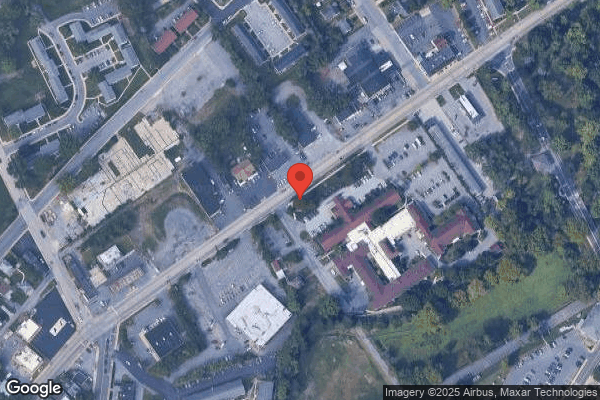
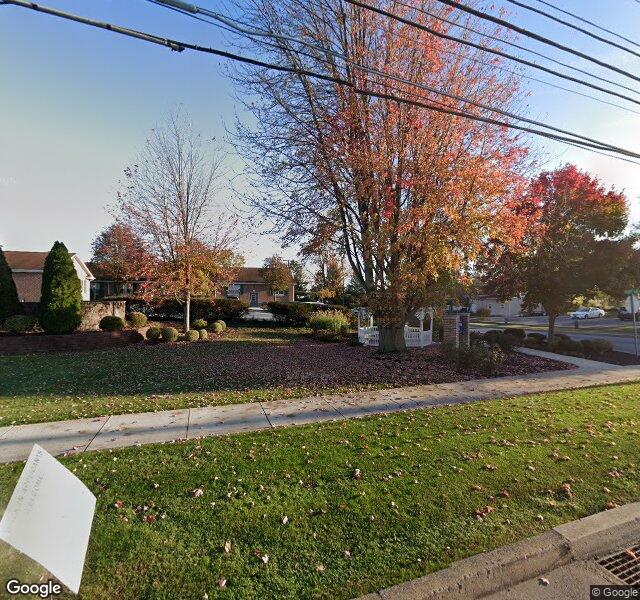
801 N. HANOVER STREET, CARLISLE, PA 17013 (717) 249-5322
Non profit - Church related 109 Beds Independent Data: November 2025 1 Immediate Jeopardy citation
Trust Grade
8/100
#601 of 653 in PA
Last Inspection: February 2025

Within standard 12-15 month inspection cycle. Federal law requires annual inspections.

Overview

LeTort Spring Nursing and Rehab LLC has received a Trust Grade of F, indicating significant concerns about the facility’s quality of care. Ranking #601 out of 653 in Pennsylvania and #17 out of 17 in Cumberland County places it in the bottom half of both state and local facilities. Although the facility is showing some improvement in its trend, with the number of issues decreasing from 22 in 2024 to 14 in 2025, the staffing rating is concerning, receiving only 1 out of 5 stars and indicating inadequate registered nurse coverage compared to most other facilities in Pennsylvania. Additionally, the facility has incurred $63,892 in fines, which is alarming and suggests ongoing compliance issues. Specific incidents include a resident eloping from the facility and being found injured, as well as failures in monitoring nutritional status that resulted in significant weight loss for multiple residents. While staffing turnover is impressively low at 0%, indicating staff stability, the overall performance reflects serious weaknesses that families should consider carefully.

Trust Score
F
8/100
In Pennsylvania
#601/653
Bottom 8%
Safety Record
High Risk
Review needed
Inspections
Getting Better
22 → 14 violations
Staff Stability
○ Average
Turnover data not reported for this facility.
Penalties
○ Average
$63,892 in fines. Higher than 69% of Pennsylvania facilities. Some compliance issues.
Skilled Nurses
⚠ Watch
Each resident gets only 25 minutes of Registered Nurse (RN) attention daily — below average for Pennsylvania. Fewer RN minutes means fewer trained eyes watching for problems.
Violations
⚠ Watch
45 deficiencies on record. Higher than average. Multiple issues found across inspections.
★☆☆☆☆
1.0
Overall Rating
★☆☆☆☆
1.0
Staff Levels
★★★★☆
4.0
Care Quality
★☆☆☆☆
1.0
Inspection Score
Stable
2024: 22 issues
2025: 14 issues

The Good

  • 4-Star Quality Measures · Strong clinical quality outcomes
  • Full Sprinkler Coverage · Fire safety systems throughout facility
  • No fines on record

Facility shows strength in quality measures, fire safety.

The Bad

1-Star Overall Rating

Below Pennsylvania average (3.0)

Significant quality concerns identified by CMS

Federal Fines: $63,892

Above median ($33,413)

Moderate penalties - review what triggered them

The Ugly 45 deficiencies on record

1 life-threatening 2 actual harm
Apr 2025 1 deficiency 1 IJ (1 affecting multiple)
CRITICAL (K) 📢 Someone Reported This

A family member, employee, or ombudsman was alarmed enough to file a formal complaint

Immediate Jeopardy (IJ) - the most serious Medicare violation

Accident Prevention (Tag F0689)

Someone could have died · This affected multiple residents

**NOTE- TERMS IN BRACKETS HAVE BEEN EDITED TO PROTECT CONFIDENTIALITY** Based on clinical record review, observations, facility document review, staff interviews, and facility policy review, it was de...

Read full inspector narrative →
**NOTE- TERMS IN BRACKETS HAVE BEEN EDITED TO PROTECT CONFIDENTIALITY** Based on clinical record review, observations, facility document review, staff interviews, and facility policy review, it was determined that the facility displayed past non-compliance by failing to implement interventions, supervision, and effective safety measures to prevent elopement of a resident identified as being at risk for elopement and exhibiting exit seeking behaviors (Resident 1). Resident 1 was found approximately one half mile from the facility approximately 17.5 hours following his elopement with injury to his forehead. This failure placed an additional 16 residents, who were identified as being at risk on their elopement risk evaluations, in an immediate jeopardy situation (Residents 2, 4, 5, 6, 9, 10, 11, 12, 13, 14, 15, 16, 17, 18, 19, and 20). Findings include: Review of facility policy, titled Elopement, revised June 2023, read, in part; It is the policy of this facility to provide a safe and secure environment for our residents and to be proactive in preventing resident elopement. Residents at risk for elopement will be appropriately monitored to reduce the potential for injury . Residents that are identified at moderate or high risk for elopement will have an intervention implemented for their safety. Those residents identified as low risk will have an Interdisciplinary review to determine if intervention/s are necessary . Elopement risk will be care planned with individualized approaches to reduce the potential for elopement and/or to redirect the resident in the event that an elopement attempt is made .Electronic monitoring systems may be implemented as possible interventions as appropriate. Review of Resident 1's clinical record revealed diagnoses that included alcohol dependence with alcohol-induced persisting dementia (caused by long-term, excessive consumption of alcohol, resulting in neurological damage and impaired cognitive function) and Alzheimer's disease (progressive neurological disorder characterized by a gradual decline in memory, thinking, and behavior due to the build-up of proteins in the brain, leading to death of brain cells). Further review of Resident 1's clinical record revealed that he was admitted to the facility from the hospital on April 9, 2025. Review of hospital treatment notes dated March 31, 2025, through April 4, 2025, indicated that Resident 1 required a sitter as an elopement precaution while hospitalized . Review of Resident 1's elopement/wander risk evaluation completed on April 9, 2025, revealed a score of 11 (high risk) with suggested care plan intervention to provide structured activities: toileting, walking inside and outside, reorientation strategies including signs, pictures and memory boxes. Review of Resident 1's nursing progress notes revealed the following: April 9, 2025 15:20 - Resident pushing on exit doors, increasingly agitated, asking how the hell do I get out of here. Resident began banging on doorway to steps. Staff attempting to redirect with little effect. April 10, 2025 12:43 - Resident sitting in his winter coat, saying he needs to go get in his truck. Resident pushing on exit doors. April 16, 2025 09:47 - Actively exit seeking all morning. Staff provided redirecting, provided snack/drinks, 1:1 conversation, activity with no effect. Resident banging on doors. Resident asking how to leave to get to his truck. Resident increasingly agitated and becoming tired. April 16, 2025 11:26 - Stated he wanted to get out of here, cont.[continuing] to exit seek. Attempting redirection, taken to TV room for monitoring. April 19, 2025 12:48 - Pacing the unit all day. Frequently states he is looking for a way to get out so he can 'get to his truck.' April 20, 2025 11:33 - Resident Eloped on 4/19/25 - Search party continues at this time. Resident is not in facility. Review of facility incident report revealed that on April 19, 2025, at 9:25 PM, staff identified that Resident 1 was missing. A facility search was conducted and a resident count was completed at that time. After Resident 1 was not able to be located, 911 was called at 9:50 PM. Police arrived at 10:00 PM and began their investigation. At 10:15 PM, additional police personnel, [NAME], and K9 support arrived and continued the search. IT personnel arrived and pulled video from the facility lobby, which showed Resident 1 left the facility via the front doors at 6:33 PM. Around noon on April 20, 2025, fire police entered the building and informed staff that Resident 1 was located approximately one half mile from the facility attempting to get into a truck, and was being sent to the emergency department for evaluation and treatment of scratches on his head. Resident 1 returned to the facility from the emergency department at 5:47 PM. Further review of the incident report revealed that, upon investigation, it was determined that no alarms sounded nor did anything else bring Resident 1's exit to staff's attention. It was determined that Resident 1 likely exited the locked unit where he resided by following a visitor or staff person who had entered the exit code to the doors. Review of emergency department treatment notes dated April 20, 2025, revealed that Resident 1 was brought to the emergency department by Emergency Medical Services (EMS) and that he had superficial lacerations and abrasions to his forehead. It was noted that Resident 1 did not recall if or how he fell. Resident 1 was able to tell his name, but did not know where he was or the date. Resident 1 believed he lived at home with his wife. Additional review revealed that Resident 1 was treated for a 2 cm (centimeter) U-shaped laceration to the right forehead. During an interview with the Director of Nursing (DON) on April 23, 2025, at 11:35 AM, she revealed that after investigation they were not able to conclusively state how Resident 1 was able to exit the locked unit, but it's assumed that he followed, or was let out by, a visitor since he could have been easily mistaken for a visitor himself. The DON also revealed that until the incident, it had been the practice that family members and visitors knew and could independently enter the codes needed to exit the locked unit doors. Additionally, the DON revealed that the use of wanderguard monitors for residents residing on the locked unit was discontinued by the prior administration. During a later interview with the DON on April 23, 2025, at 11:55 AM, she confirmed that the front lobby doors were not locked from the inside. She also revealed that the lobby was not routinely monitored since the receptionist position is vacant, and administrative staff with offices in that area are not typically present after normal work hours. During an additional interview with the DON on April 24, 2025, at 9:15 AM, she confirmed that no staff were present in the offices nearest to the lobby when Resident 1 exited the building on April 19, 2025. She also revealed the expectation that Resident 1 would not have left the building unaccompanied. The facility is located on a main road. There are parking lots on each side of the front entrance, and a portico located at the main front entrance outside of the door that vehicles can drive through. Clinical record review for Residents 1, 2, 4, 5, 6, 9, 10, 11, 12, 13, 14, 15, 16, 17, 18, 19, and 20 revealed that they resided on the locked unit and scored greater than zero on their elopement risk evaluations. Per the aforementioned interview with the DON, wanderguards were not in use for residents residing on the locked unit. The facility failed to implement interventions, supervision, and effective safety measures to prevent elopement. The Nursing Home Administrator was provided the immediate jeopardy template on April 23, 2025, at 1:16 PM, and an immediate action plan was requested. On April 23, 2025, at 3:32 PM, the facility's immediate action plan was accepted, which included: 1) The facility completed a new resident elopement evaluation and updated Resident 1's care plan . Resident 1 was issued an electronic monitoring device. 2) The facility completed new elopement evaluations on all current residents in house. Care plans were updated based on the risk score. Other residents identified at risk for elopement were issued an electronic monitoring device. 3) The egress time on the locked unit doors was reduced from 20 to 10 seconds. 4) The egress code was changed for the locked unit doors. 5) Additional signage was posted near the locked unit exits to remind visitors and staff not to allow residents to exit the unit unassisted. 6) Staff were educated on the current elopement policy, including the code changes and escorting all non-employees off the locked unit. 7) The DON or designee will audit new admission elopement scores to determine if appropriate interventions are in place. The audits will be reviewed at QAPI (Quality and Process Improvement) meetings. The Immediate Jeopardy was lifted on April 23, 2025, at 3:32 PM, after ensuring that the immediate action plan had been implemented. The facility demonstrated past non-compliance by initiating immediate interventions starting April 20, 2025, following the incident. Documents and actions provided by the facility to address the Immediate Jeopardy were reviewed on April 23, 2025, during the onsite survey and included: - A new elopement risk assessment was completed for Resident 1 on April 20, 2025. His care plan was updated and an electronic monitoring device was issued. Resident 1 was placed on 1:1 supervision during waking hours and 15 minute checks when sleeping. - An audit of all residents was completed on April 20, 2025 to identify those at risk for elopement. Electronic monitoring devices were issued to those residents determined to be at risk for elopement. Care plans were updated accordingly. - The code to the locked unit door was changed on April 21, 2025, and the escort time was shortened from 20 seconds to 10 seconds. - Staff were educated not to share the new codes with visitors and to assist them off of the unit. - Additional signage was placed at the locked unit doors to notify visitors and staff not to allow residents to exit the unit unassisted. - Staff were educated on the facility elopement policy. - An elopement drill was conducted on April 22, 2025. - Audits were initiated on April 21, 2025, and will be done daily on new admissions to determine if elopement risk is present and appropriate interventions are in place. During the onsite survey on April 23, 2025, no additonal concerns related to elopement were identified based on observations, clinical record review, interviews with staff, review of audits, and review of education provided to staff. 28 Pa. Code 201.14(a) Responsibility of licensee 28 Pa. Code 201.18(b)(1)(3)(e)(1) Management 28 Pa. Code 211.12(d)(1)(3)(5) Nursing services
Feb 2025 13 deficiencies 1 Harm
SERIOUS (G)

Actual Harm - a resident was hurt due to facility failures

Deficiency F0692 (Tag F0692)

A resident was harmed · This affected 1 resident

Based on facility policy review, clinical record review, and staff and resident representative interviews, it was determined that the facility failed to ensure proper monitoring to maintain acceptable...

Read full inspector narrative →
Based on facility policy review, clinical record review, and staff and resident representative interviews, it was determined that the facility failed to ensure proper monitoring to maintain acceptable parameters of nutritional status for three of six residents reviewed for nutrition or hydration (Residents 17, 28, and 58). This failure resulted in harm for Resident 17, as evidenced by significant weight loss. Findings include: Review of facility policy, titled Weight Monitoring, last reviewed January 17, 2025, read, in part, The facility will ensure that all residents maintain acceptable parameters of nutritional status, such as usual body weight or desirable body weight range and electrolyte balance, unless the residents clinical condition demonstrates this is not possible or residents preferences indicate otherwise .the facility will utilize a systematic approach to optimize a residents nutritional status. This process includes .Monitoring the effectiveness of interventions and revising them as necessary .Residents with weight loss-monitor weight weekly .the physician should be informed of a significant change in weight and may order nutritional interventions .The Registered Dietitian or Dietary Manager should be consulted to assist with interventions; actions are recorded in the nutrition progress notes .the interdisciplinary plan of care communicates care instructions to staff. Review of Resident 17's clinical record revealed diagnoses that included vascular dementia (a type of dementia caused by brain damage from impaired blood flow marked by memory disorders, personality changes, and impaired reasoning), dysphagia (difficulty swallowing), and major depressive disorder (a mood disorder that causes a persistent feeling of sadness and loss of interest in things). Review of Resident 17's clinical record revealed he had oral surgery on May 20, 2024, with recommendation to follow a soft diet for a week after surgery. Review of Resident 17's physician orders revealed a diet order, Regular diet, Mechanical Soft texture, Regular/Thin consistency, Soft diet is recommended for first week post extractions, with a start date of May 20, 2024, and discontinued May 27, 2024. Review of Resident 17's physician orders revealed a diet order, Regular diet, Regular texture, Regular/Thin consistency, mechanical soft meats; add gravy to meats, with a start date of May 28, 2024, and discontinued on June 16, 2024. Review of Resident 17's physician orders revealed a change to the diet order on June 16, 2024, Regular diet, Puree texture, Regular/Thin consistency. Review of Resident 17's clinical record revealed a progress note on June 16, 2024, that stated Resident was in dining room at lunch and resident was observed coughing on corn. Resident was able to clear the corn. Resident also noted to be coughing on mechanical soft ground ham. Spoke with resident and resident is ok with puree foods. Spoke with POA (power of attorney- legal representative) who was unaware that resident went back to Regular diet mechanical soft meats. POA is ok with resident being pureed. Dietary made aware. Review of Resident 17's clinical record revealed a significant weight loss of 28 pounds (-10.4%) from April 23, 2024, to October 18, 2024. Review of Resident 17's clinical record revealed a dietitian note on October 25, 2024, that read, in part, Review of monthly weight. Current weight of 241.8 pounds (October 18, 2024) triggers as a significant loss in 6 months. Weight fluctuations anticipated related to diuretic therapy. Recommending weekly weights to monitor trend. Resident continues to tolerate a regular diet, puree, thin liquids. Weight loss and intake reviewed with POA; POA is not interested in supplementation at this time. POA sees weight loss as beneficial. Care plan reviewed/updated. A follow up dietitian note was linked to the aforementioned note on October 29, 2024, that read, Per nursing, resident with decreased snacking between meals; may contribute to weight loss. Review of Resident 17's physician orders on February 5, 2025, revealed that the diuretic was not a new medication for him, and he had been on it since March 1, 2023. Review of Resident 17's physician orders revealed an order to Weigh weekly every day shift every Monday, with a start date of October 28, 2024. Review of Resident 17's clinical record failed to reveal weekly weights were obtained on the week of November 11 and 18, 2024. During an email correspondence with the Nursing Home Administrator (NHA) on February 5, 2025, at 11:49 AM, the surveyor inquired if the aforementioned weekly weights were obtained, she revealed, These weights were not obtained. On November 11, 2024, the PRN [as needed] nurse who was working didn't sign off with no explanation. On November 18, 2024, the agency nurse signed off saying it would be obtained on 3-11 shift, but the weight was then missed by 3-11. Additionally, during the email correspondence with the NHA on February 5, 2025, at 11:49 AM, she revealed [Physician notification of] weight loss missing on [Resident 17] due to communication between dietitian and POA stating she felt the weight loss was ok due to his current weight. Therefore, no notification was made to the physician. We had lots of conversation at interdisciplinary meetings around this as [Resident 17] had recently had oral surgery and was not snacking as prior. He also had been downgraded to puree diet and he was not happy with his meal options. All weight loss (anticipated and not) is discussed at QAPI (quality assurance meeting) monthly. [Resident 17's] weight loss situation did not follow normal protocol due to circumstances explained. In an additional interview with the NHA on February 5, 2025, at 1:39 PM, she stated that residents with weight loss are discussed in QAPI, and the physician signs the QAPI sign in sheet. No physician notification or response to the weight loss was noted in Resident 17's medical record. Review of Resident 17's weight measures revealed his weight loss continued 8.8 pounds (-3.6%) from October 18, 2024, to December 2, 2024. Review of Resident 17's clinical record revealed a dietitian note on December 4, 2024, that read, in part, Weight and intake reviewed with [POA]; she maintains wish for no supplementation at this time. Further review of Resident 17's weight measures revealed his weight loss continued 8.2 pounds (-3.5%) from December 2, 2024, to January 20, 2025. Review of Resident 17's clinical record revealed a physician note written by Employee 6 (Medical Director) on January 30, 2025, that read, Resident weight noted down some, intake good, on Lasix [diuretic medication] monitor [electro]lytes, NAD, today eating lunch. Interview with Employee 2 (Registered Dietitian) on February 5, 2025, at 1:35 PM, revealed she was concerned about Resident 17's weight loss, but the Resident's POA did not want him on supplements. During an interview with the NHA and the Director of Nursing (DON) on February 5, 2025, at 1:39 PM, revealed the weekly weights that were missed should have been obtained per physician order, and that Resident 17 has remained on a puree diet because his POA refused speech therapy services for a potential diet upgrade. The surveyor requested documentation in the medical record to indicate the refusal of speech therapy services and any physician involvement in response to weight loss prior to January 30, 2025. Interview with Resident 17's POA on February 6, 2025, at 2:58 PM, revealed she did not refuse speech therapy services and that, when supplements were discussed with her, she was concerned that Resident 17 needs more food rather than supplements, and he would eat more food if he wasn't on a puree diet. Follow-up interview with the NHA and DON on February 6, 2025, at 3:38 PM, the surveyor revealed the concern with lack of documentation to indicate speech therapy services were refused and lack of physician response to the significant weight loss, no further information was provided. The Resident was noted to have significant weight loss. The Resident was not reassessed by speech therapy after his diet was downgraded in June 2024. There was no evidence that a speech therapy consult or supplements were discussed with the physician. There were no physician progress notes that addressed Resident 17's weight loss from when his weight loss became significant in September 2024, until January 30, 2025. Review of Resident 28's clinical record revealed diagnoses that included heart failure (condition that develops when your heart doesn't pump enough blood for your body's needs), chronic kidney disease (longstanding disease of the kidneys leading to renal failure), and dementia (a chronic disorder of the mental processes caused by brain disease, and marked by memory disorders, personality changes, and impaired reasoning). Review of Resident 28's physician orders revealed an order for Daily weight - Notify MD if increase of 3 pounds in 24 hr or gain/loss of 5 pounds in 1 week every night shift for fluid balance management, with an original order date of October 26, 2024. Review of Resident 28's Treatment Administration Record for October revealed that on October 28, 2024, the weight and signature box were both blank; October 30, 2024, was signed as completed on night shift but the box where the weight was to be entered was marked with an X and the entries for the weight and signature boxes on day shift were blank; and October 31, 2024, was signed as completed on night shift with an X marked in the box where the weight was to be entered. Review of additional information provided by the facility revealed that Resident 28 weighed 144 pounds on October 30, 2024, and weighed 152.3 pounds on October 31, 2024, indicating an 8.3-pound weight gain in 24 hours. Review of Resident 28's progress notes failed to reveal any documentation that their physician was notified of the greater than 3-pound weight gain in 24 hours on October 31, 2024. Review of Resident 28's Treatment Administration Record for November 2024 revealed that the Resident refused their weight on November 15 and 24, 2024. All other entries for the month were signed that the weight was obtained, but the box where the weight was to be entered was marked with an X. Review of Resident 28's Treatment Administration Record for December 2024 revealed that on December 10 and 11, 2024, the weight and signature box were both blank; December 1-9, and 12-20, 2024, were signed that the weight was obtained, but the box where the weight was to be entered was marked with an X. Further review of Resident 28's Treatment Administration Record for December 2024 revealed that on December 24, 2024, the Resident weighed 146.8 pounds and on December 25, 2024, weighed 150 pounds; indicating a 3.2-pound weight gain in 24 hours. In addition, on December 28, 2024, the Resident weighed 153.5 pounds and on December 29, 2024, weighed 156.8 pounds; indicating a 3.3-pound weight gain in 24 hours. Review of Resident 28's progress notes failed to reveal any documentation that their physician was notified of the greater than 3-pound weight gain in 24 hours on December 25 or 29, 2024. Review of Resident 28's Treatment Administration Record for January 2025 revealed that the Resident refused their weight on January 11, 13, 16, 17, and 24, 2025; and on January 1 and 19, 2025, the weight and signature boxes were both blank. Further review of Resident 28's Treatment Administration Record for January 2025 revealed that on January 29, 2025, the Resident weighed 150.8 pounds and on January 30, 2025, weighed 157 pounds; indicating a 6.2-pound weight gain in 24 hours. Review of Resident 28's progress notes failed to reveal any documentation that their physician was notified of the greater than 3-pound weight gain in 24 hours on January 30, 2025. Review of Resident 28's Treatment Administration Record for February revealed that on February 1 and 4, 2025, the weight and signature boxes were both blank. Further review of Resident 28's clinical record revealed a nutrition/dietary note dated October 28, 2024, at 12:04 PM, that indicated a comprehensive nutrition assessment had been completed when Resident 28 returned from a hospital stay. The note indicated that Resident 28 had experienced a significant weight gain over 30 days, 3 months, and 6 months. There was a late entry nutrition/dietary note dated October 28, 2024, at 3:28 PM, that indicated Resident 28 had experienced a significant weight loss following hospitalization, not a significant gain as previously documented. Review of Resident 28's progress notes revealed a physician's progress note dated October 29, 2024, at 4:27 PM, which indicated that Resident 28 was seen post hospital stay and the vital signs and appetite were ok and that the Resident had minimal edema (swelling) to their bilateral legs. There was no documentation of an assessment of Resident 28's significant weight loss. Email communication received from the NHA on February 5, 2025, at 8:33 PM, indicated that she acknowledged Resident 28 had missing weights. During an interview with the NHA, DON, and Employee 2 (Dietician) on February 6, 2025, at 11:53 AM, Employee 2 confirmed that Resident 28 had a significant weight loss upon return to the facility from a hospital stay. Employee 2 indicated that the weight loss was reviewed with Resident 28's physician during the Quality Assurance Performance Improvement (QAPI) Meeting on November 15, 2024. The DON confirmed that she would expect staff to obtain and document resident weights as ordered and that staff should have notified Resident 28's physician of the greater than 3-pound weight gains as per physician order. Email communication received from the NHA on February 6, 2025, at 1:29 PM, confirmed that Resident 28's October 28, 2024, weight loss was reviewed in the facility's QAPI Meeting on November 15, 2024, at which Resident 28's physician was in attendance. She confirmed that she had no information to provide that the physician assessed Resident 28 for their weight loss. In addition, the NHA confirmed that she would expect that Resident 28's daily weights to be obtained, documented, and physician follow-up completed as indicated in the order. During a staff interview with the NHA and the DON on February 6, 2025, at 2:10 PM, the NHA acknowledged that the Resident 28's physician was not made aware of their weight loss identified on October 28, 2024, until November 15, 2024. During a final staff interview with the NHA, DON, and Employee 2 on February 6, 2025, 2:25 PM, the DON indicated that she could not give a direct expectation of physician notification of a weight loss because it is on a case-by-case basis. She said that she felt Resident 28's physician was aware that she had been hospitalized in October and that he would have been aware of treatment received at the hospital regarding her fluid status and the continued monitoring at the facility. Review of Resident 58's clinical record revealed diagnoses that included dementia, heart failure, and dysphagia (difficulty swallowing). Review of Resident 58's progress notes revealed a weight change note dated August 1, 2024, at 3:56 PM, that indicated Resident 58's weekly weights were reviewed and that Resident 58 current weight triggered as a significant loss (7.1%) over 30 days. The note also indicated that the weight fluctuations would be anticipated related to diuretic therapy. Review of Resident 58's progress notes revealed a nutrition/dietary note dated August 16, 2024, at 10:06 AM, that indicated that Resident 58's weekly weights were reviewed and that Resident 58's weight was fairly stable over approximately a 3-week span, but the Resident continued to trigger for a significant loss over 30 days. Review of Resident 58's physician progress notes that were dated August 7, 11, 15, 16, 22, and 28, 2024, all of which failed to reveal any documentation of them being aware of or evaluating Resident 58's significant weight loss. Review of Resident 58's clinical record revealed a nutrition/dietary note dated October 24, 2024, at 3:00 PM, that indicated a comprehensive nutrition assessment was completed upon the Resident's return to the facility from a hospital stay, and Resident 58 was noted to have a significant loss over 30 and 180 days following hospitalization. The note further indicated that weekly weight monitoring was in place per admission protocol, that Resident 58's oral intake was not adequate to meet needs, and supplements were added. Review of Resident 58's physician progress notes revealed notes that were dated October 25, 28, 29, and 30, 2024, all of which failed to reveal any documentation of them being aware of or evaluating Resident 58's significant weight loss. Review of Resident 58's Treatment Administration Record for November 2024 revealed that on November 18, 2024, it was signed that the weight was obtained, but the box where the weight was to be entered was marked with an X. Email communication from the NHA on February 5, 2025, at 8:33 PM, regarding Resident 58's identified weight losses on August 1 and 16, 2024, the dietician documented that weight was stable and that weight loss was anticipated due to diuretic therapy and this would not be considered emergent and would be discussed at QAPI. The NHA further indicated that in November 2024 and December 2024 Resident 58's weight loss remained on the dietician's report and that there was still monitoring of the weight loss. She also indicated that Resident 58's weight loss was first discussed in August QAPI meeting reports, in which Resident 58's physician participated. During a staff interview with the NHA, DON, and Employee 2 on February 6, 2025, at 12:20 PM, the NHA confirmed that they could not provide any information for Resident 58's weight being signed as completed with no weight recorded on November 18, 2024. She said that she would expect weights to have been obtained as ordered by the physician. She again indicated that weight losses were reviewed with the physician during the facility's monthly QAPI meeting. She confirmed that there was no physician documentation regarding Resident 58's weight loss. During a final staff interview with the NHA, DON, and Employee 2 on February 6, 2025, at 2:25 PM, the DON indicated that she could not give a direct expectation of physician notification of weight loss because it is on a case-by-case basis. 28 Pa Code 201.18(b)(1) Management 28 Pa Code 211.2(d)(3) Medical director 28 Pa Code 211.12(c)(d)(1)(2)(3)(5) Nursing services
CONCERN (D)

Potential for Harm - no one hurt, but risky conditions existed

Assessment Accuracy (Tag F0641)

Could have caused harm · This affected 1 resident

**NOTE- TERMS IN BRACKETS HAVE BEEN EDITED TO PROTECT CONFIDENTIALITY** Based on clinical record review and staff interviews, it was determined that the facility failed to ensure that the resident ass...

Read full inspector narrative →
**NOTE- TERMS IN BRACKETS HAVE BEEN EDITED TO PROTECT CONFIDENTIALITY** Based on clinical record review and staff interviews, it was determined that the facility failed to ensure that the resident assessment accurately reflected the resident's status for three of 30 residents reviewed (Residents 17, 28, and 58). Findings include: Review of Resident 17's clinical record revealed diagnoses that included vascular dementia (a type of dementia caused by brain damage from impaired blood flow marked by memory disorders, personality changes, and impaired reasoning), dysphagia (difficulty swallowing), and major depressive disorder (a mood disorder that causes a persistent feeling of sadness and loss of interest in things). Review of Resident 17's clinical record revealed he had a significant weight loss of 31 pounds (-11.5%) from May 10, 2024, to November 4, 2024. Review of Resident 17's Quarterly MDS (Minimum Data Set - an assessment tool to review all care areas specific to the resident such as a resident's physical, mental or psychosocial needs) with the assessment reference date (last day of the assessment period) of November 19, 2024, revealed in Section K. Swallowing and Nutritional Status, the question weight loss of more than 5% in the last month or loss of 10% or more in the last 6 months, was marked no or unknown. Email correspondence with the Nursing Home Administrator (NHA) on February 4, 2025, at 4:08 PM, revealed the MDS should have been marked for weight loss and was being modified by the RNAC (Registered Nurse Assessment Coordinator). During a follow-up interview with the NHA on February 6, 2025, at 2:33 PM, she confirmed that she would expect a resident's MDS to be coded accurately. Review of Resident 28's clinical record revealed diagnoses that included heart failure (condition that develops when your heart doesn't pump enough blood for your body's needs), chronic kidney disease (longstanding disease of the kidneys leading to renal failure), and dementia (a chronic disorder of the mental processes caused by brain disease, and marked by memory disorders, personality changes, and impaired reasoning). Review of Resident 28's clinical record revealed a nutrition/dietary note dated October 28, 2024, at 12:04 PM, that indicated a comprehensive nutrition assessment had been completed as Resident 28 had returned from a hospital stay. The note indicated that Resident 28 had experienced a significant weight gain over 30 days, 3 months, and 6 months. In addition, there was a late entry nutrition/dietary note dated October 28, 2024, at 3:28 PM, that indicated Resident 28 had experienced a significant weight loss following hospitalization, not a significant gain as previously documented. Review of Resident 28's Medicare 5 Day MDS with the assessment reference date of November 1, 2024, revealed in Section K. Swallowing and Nutritional Status that did not have a weight loss of 5% or more in the last month or loss of 10% or more in last 6 months. During a staff interview with the NHA, Director of Nursing (DON), and Employee 2 (Dietician) on February 6, 2025, from 2:10 PM, to 2:25 PM, Employee 2 confirmed that Resident 28's MDS was coded inaccurately regarding their weight loss. The NHA confirmed that she would expect a resident's MDS to be coded accurately. Review of Resident 58's clinical record revealed diagnoses that included dementia, heart failure, and hydronephrosis (a condition where one or both kidneys swell due to a blockage or obstruction that prevents urine from draining properly). Review of Resident 58's physician orders revealed an order for an indwelling Foley catheter dated October 22, 2024. Review of Resident 58's October 2024 and November 2024 Treatment Administration Records revealed that Resident 58 had a foley catheter in place. Review of Resident 58's Quarterly MDS with the assessment reference date November 8, 2024, revealed in Section H. Bowel and Bladder that they were not coded as having a urinary catheter. Email communication received from the NHA on February 5, 2025, at 8:33 AM, confirmed that Resident 58's foley catheter was not coded correctly on their Quarterly assessment dated [DATE], and indicated that the Registered Nurse Assessment Coordinator would complete a modification. During a staff interview with the NHA and DON on February 6, 2025, at 11:20 AM, the NHA confirmed that she would expect that she would expect a resident's MDS to be coded accurately. 28 Pa Code 211.12 (d)(3)(5) Nursing services
CONCERN (D)

Potential for Harm - no one hurt, but risky conditions existed

Pressure Ulcer Prevention (Tag F0686)

Could have caused harm · This affected 1 resident

Based on observation, policy review, clinical record review, and staff interviews, it was determined that the facility failed to provide care and services to promote healing and prevent infection in a...

Read full inspector narrative →
Based on observation, policy review, clinical record review, and staff interviews, it was determined that the facility failed to provide care and services to promote healing and prevent infection in accordance with professional standards for one of two residents reviewed for pressure ulcers (Resident 2). Findings include: Review of facility policy, titled Enhanced Barrier Precautions, last reviewed January 17, 2025, revealed the facility's policy stated, It is the policy of the this facility to implement enhanced barrier precautions for the prevention of transmission of multidrug-resistant organisms. Review of the aforementioned policy revealed section 2. Initiation of Enhanced Barrier Precautions, subsection b stated, An order for enhanced barrier precautions will be obtained for residents with any of the following .Wounds (e.g., chronic wounds such as pressure ulcers .even if the resident is not known to be infected or colonized with a [multi-drug resistant organism. Section 3, Implementation of Enhanced Barrier Precautions, subsection a stated, Make gowns and gloves available immediately near or outside of the resident's room . Further, review of subsection 9 Droplet Precautions, revealed it included, f. Based upon the pathogen or clinical syndrome, if there is risk of exposure of mucous membranes or substantial spraying of respiratory secretions is anticipated, gloves and gown as well as goggles (or face shield) should be worn. Review of Resident 2's clinical record on February 4, 2025, revealed diagnoses that included dementia (progressive, irreversible degenerative disease of the brain that results in decreased contact with reality and decreased ability to perform activities of daily living) and hypertension (elevated/high blood pressure). Review of Resident 2's clinical record revealed Resident 2 had an unstageable pressure injury (wound of the skin that has an undetermined depth due to the wound bed being covered with dead tissue or other wound debris) of the third toe on the right foot. Prior to wound treatment observation on February 5, 2025, at approximately 12:45 PM, Employee 3 (Licensed Practical Nurse) stated that Resident 2 had been diagnosed with influenza. Prior to entering Resident 2's room for wound treatment observation on February 5, 2025, at approximately 12:50 PM, the door to Resident 2's room was observed to have a sign that stated the room was on droplet precautions, which required the use of a facemask and gloves. Upon entering Resident 2's room, it was observed that a sign indicating enhanced barrier precautions (use of gloves, mask, gown when performing high contact procedures such as wound treatment) was attached the back of Resident 2's door. Employee 3 was observed entering the Resident room with a facemask and was observed performing hand hygiene and glove changes while performing the wound treatment to Resident 2's toe; however, Employee 3 did not place a gown on during the wound treatment, per Enhanced Barrier Precautions. During a staff interview after the wound treatment, Employee 3 was asked about the Enhanced Barrier Precaution sign. Employee 3 stated that Resident 2 was placed on droplet precautions for influenza and was no longer on Enhanced Barrier Precautions, which is why the sign for Enhanced Barrier Precautions was on the back of Resident 2's door. During a staff interview on February 5, 2025, at approximately 1:30 PM, Director of Nursing (DON) revealed that Resident 2 would still be considered under the Enhanced Barrier Precaution protocol while also under droplet precautions. During the staff interview, DON confirmed that possible coughing by Resident 2 could present possible exposure to respiratory secretions for those in the room. DON revealed that Employee 3 should have worn a gown while performing the treatment to Resident 2's pressure ulcer per the Enhanced Barrier Precaution requirements. 28 Pa code 211.12(d)(1)(5) Nursing services
CONCERN (D)

Potential for Harm - no one hurt, but risky conditions existed

Accident Prevention (Tag F0689)

Could have caused harm · This affected 1 resident

Based on record review, observation, and staff interviews, it was determined that the facility failed to prevent accident and hazards for two of 18 residents reviewed (Residents 35 and 47.) Findings i...

Read full inspector narrative →
Based on record review, observation, and staff interviews, it was determined that the facility failed to prevent accident and hazards for two of 18 residents reviewed (Residents 35 and 47.) Findings include: Review of Resident 35's clinical record revealed diagnoses that included Alzheimer's disease (a brain disorder that slowly destroys memory and thinking skills, and, eventually, the ability to carry out the simplest tasks) and hyperlipidemia (high levels of fats in the bloodstream). Review of Resident 35's fall incident report that occurred on September 8, 2024, revealed Resident 35 had an un-witnessed fall that occurred in the Resident's bathroom. The Incident Description revealed, in part, This writer was called to residents' room related to unwitnessed fall in bathroom. [NAME] noted to foot of bed in residents' room. Bathroom call bell was not activated. Staff reports assisting resident to the bathroom and providing her with the call bell prior to fall. No staff member present in the bathroom when resident attempted to get herself off the toilet. No apparent injuries noted. Review of Resident 35's comprehensive care plan revealed an Activities of Daily Living (ADL) focus area with an intervention for toilet use: assist of one, with an initiation date of June 13, 2024; and an intervention for transfer: one assist with rolling walker and gait belt, with an initiation date of June 13, 2024. During an interview with Employee 3 on February 5, 2025, at 12:09 PM, revealed Resident 35 was not able to use her call bell and does not ever use it. During an interview with Employee 4 on February 5, 2025, at 9:57 AM, revealed Resident 35 did not understand how to use their call bell, and will often yell out instead when the Resident needed assistance. During an interview with Employee 5 on February 5, 2025, at 9:43 AM, revealed Resident 35 did not understand how to use their call bell. Review of Resident 35's clinical record reveals the Resident has a BIMS (brief interview for mental status) score of 3, which suggest severe cognitive impairment. During an interview with the Nursing Home Administrator (NHA) on February 5, 2025, revealed that Resident 35 should not have been left alone in the bathroom during the fall incident that occurred on September 8, 2024, and that the staff member involved was terminated. NHA revealed they determine if a resident is able to use a call bell based off of their BIMS in most circumstances. Review of Resident 47's clinical record revealed diagnoses that included dementia (a brain disorder that causes a decline in cognitive function, memory, and behavior, severe enough to interfere with daily life) and hypertension (high blood pressure). Observation on February 3, 2025, on 1:04 PM, revealed Resident 47 was not in their room, although there was a fall mat on the floor to the left side of their bed. Review of Resident 47's comprehensive care plan revealed a focus area for being a fall risk with an intervention for their fall mat to left side of bed when Resident in bed. Remove when out of bed, with an initiation date on April 8, 2024. Review of Resident 47's clinical record revealed an incident note on December 17, 2024, that read, in part, A staff member responded to an unwitnessed fall in Resident 47's room. Arrived to Resident 47 sitting on the left side of her bed leaning up against her bed with grip socks on and fall mat not in place. No injuries were found. Staff educated on placing fall mat. During an interview with the NHA on February 5, 2025, at 8:32 PM, revealed education was provided in ensuring Resident 47's fall mat is properly in place. 28 Pa. Code 201.18(b)(1)(2)Management 28 Pa. Code 211.12(d)(3)(5)Nursing services
CONCERN (D)

Potential for Harm - no one hurt, but risky conditions existed

Deficiency F0790 (Tag F0790)

Could have caused harm · This affected 1 resident

Based on clinical record review, resident and staff interviews, and facility document review, it was determined that the facility failed to ensure residents are assisted with obtaining routine dental ...

Read full inspector narrative →
Based on clinical record review, resident and staff interviews, and facility document review, it was determined that the facility failed to ensure residents are assisted with obtaining routine dental care for one of one residents reviewed for dental care (Resident 52). Findings include: Review of Resident 52's clinical record on February 3, 2025, revealed diagnoses that included hypertension (elevated/high blood pressure) and diabetes mellitus type two (decreased ability of the body to utilize insulin for the transport of glucose from the blood stream into the cells for nourishment). During a resident interview on February 3, 2025, Resident 52 indicated that he was awaiting teeth extraction of his upper teeth in order to have a full-upper denture created. During the interview, Resident 52 stated that he had a partial top denture that moves around as he eats. Review of Resident 52's clinical record revealed a dental consultation that was conducted on October 21, 2024. Review of the dental consultation sheet revealed that section Treatment notes, stated, [Patient] wears upper partial denture. [Patient] removed upper partial. Noted [patient] appears to have retained root tips under existing upper partial . recommend FMX [x-rays of the mouth] in order to evaluate dentition .will follow up with [patient] following xrays .[patient] will be set up for a oral surgery consult for extractions following xray review . Further, review of consult sheet's Recommended treatment, section revealed the box for Other X-Ray; FMX needed to evaluate dentition. Review of Resident 52's clinical record on February 5, 2025, revealed that, as of review, Resident 52 had not had any dental x-rays completed, nor had there been any consultation order for the extraction of Resident 52's upper teeth. Review of facility document, titled Visit Summary, submitted on February 6, 2025, at 2:29 PM, revealed it was a document that listed the Resident's evaluated on October 21, 2025, along with recommendations and/or orders made by the dentist, and future treatment(s) recommended by the dentist. Review of the Visit Summary, revealed Resident 52's Recommendations / Orders, and Future Treatment(s), did not include the recommendation identified on Resident 52's individual dental consult sheet of dental x-rays and surgical consult for extraction of teeth. During a staff interview on February 6, 2025, at approximately 3:20 PM, Nursing Home Administrator revealed that the physician reviews the Visit Summary and would provide orders that were indicated on that sheet, and since the recommendations identified on Resident 52's individual dental consultation form were not included in the Visit Summary document, Resident 52 would not have had further treatment or consultation. 28 Pa code 211.12(d)(3)(5) Nursing services 28 Pa code 211.15 Dental services
CONCERN (D)

Potential for Harm - no one hurt, but risky conditions existed

Infection Control (Tag F0880)

Could have caused harm · This affected 1 resident

Based on observations, facility policy review, and staff interviews, it was determined that the facility failed to ensure staff implemented infection control policies to prevent the spread of infectio...

Read full inspector narrative →
Based on observations, facility policy review, and staff interviews, it was determined that the facility failed to ensure staff implemented infection control policies to prevent the spread of infection by using PPE (personal protective equipment) in two of four resident care areas reviewed (Love one and Love two), and failed to handle potentially contaminated items to decrease the possibility for transmission of a infectious disease for one of one unit treatment carts observed (Love unit treatment cart). Findings Include: Review of facility policy, Transmission-Based (Isolation) Precautions, last reviewed January 17, 2025, revealed that, Contact precautions refer to measures that are intended to prevent transmission of infectious agents which are spread by direct or indirect contact with the resident or the resident's environment. Further review of this policy under the section labeled, Contact Precautions, revealed that healthcare personnel caring for residents on Contact Precautions wear a gown and gloves for all interactions that may involve contact with the resident or potentially contaminated areas in the resident's environment. Also, donning personal protective equipment (PPE) upon room entry and discarding before exiting the room is done to contain pathogens, especially those that have been implicated in transmission through environmental contamination. Review of the aforementioned policy, revealed subsection 7-g, stated, Use disposable or dedicated noncritical resident-care equipment .If sharing noncritical equipment between residents, the equipment will be cleaned and disinfected following manufacturer's instructions with an EPA-registered disinfectant after use. Review of Resident 2's clinical record on February 4, 2025, revealed diagnoses that included dementia (progressive, irreversible degenerative disease of the brain that results in decreased contact with reality and decreased ability to perform activities of daily living) and hypertension (elevated/high blood pressure). Review of Resident 2's clinical record revealed Resident 2 had an unstageable pressure injury (wound of the skin that has an undetermined depth due to the wound bed being covered with dead tissue or other wound debris) of the third toe on the right foot. Prior to wound treatment observation on February 5, 2025, at approximately 12:45 PM, Employee 3 (Licensed Practical Nurse) stated that Resident 2 had been diagnosed with influenza. Observation of Resident 2's room door revealed Resident 2 was on droplet precautions (use of gloves, mask, eye protection, and gown-if there is a risk of contamination e.g., coughing, aerosol treatments, splatter of infectious bodily fluids). Prior to wound treatment, Employee 3 was observed removing supplies from the Love unit treatment cart, which included individually packaged gauze. During wound treatment observations, Employee 3 was observed placing the treatment supplies on Resident 2's bedside table. After Employee 3 was finished with the wound treatment to Resident 2's right third toe, Employee 3 was observed moving an unused, unopened pack of gauze from the bedside table to Resident 2's bed. Employee 3 was observed retrieving the pack of gauze from Resident 2's bed, exiting the room, and returning the pack of gauze into the box in the treatment cart from where they were removed. During a staff interview directly after the observation, Employee 3 confirmed that the gauze were in the Resident's room, who was on droplet precaution for influenza and that the gauze made contact with Resident 2's table and bed. Employee 3 was observed then removing the box of gauze from the treatment cart. During a staff interview on February 5, 2025, at approximately 1:30 PM, Director of Nursing (DON) revealed that Employee 3 should have discarded the pack of gauze and not returned them to the treatment cart. Review of Resident 5's clinical record revealed diagnoses that included dysphagia (difficulty swallowing foods or liquids) and dementia (a brain disorder that causes a decline in cognitive function, memory, and behavior, severe enough to interfere with daily life). Observation of Resident 5 on February 3, 2025, at 12:45 PM, revealed the Resident was laying in bed in their room. There was a sign on the door that revealed Resident 5 was on droplet precautions, that further read: Everyone must clean their hands, including before entering and when leaving the room. Make sure their eyes, nose, and mouth are fully covered before room entry. Remove face protection before room exit. Further observation on February 3, 2025, at 12:46 PM, revealed Employee 7 enter room to provide Resident 5 their lunch tray, exit their room and enter another resident's room, then back into Resident 5's room and proceeded to assist Resident 5 in eating their lunch. Employee 7 did not perform any hand hygiene prior to entering Resident 5's room or upon exiting Resident 5's room, and did not wear any face protection upon entering their room. Review of Resident 5's current physician orders reveal an order for Droplet precautions for influenza A, with an active date of January 30, 2025. During an interview with the Nursing Home Administrator (NHA) on February 5, 2025, at 8:32 PM, confirmed that droplet precautions were not followed during the observation of Resident 5 being served lunch by Employee 7 on February 3, 2025. Review of Resident 25's clinical record revealed diagnoses that included diabetes (a chronic disease that occurs when your blood sugar levels are too high) and dementia (a group of diseases and illnesses that affect your thinking, memory, reasoning, personality, mood and behavior). Observation of Resident 25 on February 3, 2025, at 10:17 AM, revealed the Resident 25 sitting in her room. There was a sign on the door that revealed that the Resident was on contact precautions. Further observation at 12:19 PM, on February 3, 2025, revealed Employee 1 enter Resident 25's room to bring the Resident's lunch and set it up for Resident 26 to eat. Employee 1 then exited the room and continued taking meal trays to other residents. At no time did Employee 1 use any PPE while in Resident 25's room or even perform hand hygiene. Review of Resident 25's electronic medical record on February 3, 2025, revealed that Resident 25 was tested for scabies (a contagious skin condition caused by mites burrowing into the skin) on January 30, 2025, and the test returned positive, indicating that Resident 25 had scabies. Review of Resident 25's physician orders on February 3, 2025, revealed an order dated January 30, 2025, that indicated that Resident 25 was to be on contact precautions. Interview of the NHA on February 6, 2025, at 11:15 AM, revealed that she would expect employees to follow the facility policies and guidance regarding residents on contact precautions. 28 Pa. Code 211.12(d)(1)(3)(5) Nursing services
CONCERN (D)

Potential for Harm - no one hurt, but risky conditions existed

Deficiency F0883 (Tag F0883)

Could have caused harm · This affected 1 resident

Based on facility policy review, clinical record review, and staff interviews, it was determined that the facility failed to provide evidence that education was provided to Residents and/or their Repr...

Read full inspector narrative →
Based on facility policy review, clinical record review, and staff interviews, it was determined that the facility failed to provide evidence that education was provided to Residents and/or their Representatives on the risks, benefits, or side effects of the influenza vaccine for two of five residents reviewed for immunizations (Residents 8 and 25). Findings Include: Review of facility policy, titled Influenza Vaccination with an implementation date of April 7, 2022, and a last review date of January 17, 2025, revealed, in part, 5. Prior to the administration of the influenza vaccine, the person receiving the immunization, or his/her legal representative, will be provided with a copy of CDC's current vaccine information statement relative to the influenza vaccination. 6. The vaccine information statements (VIS) will, as appropriate, be supplemented with visual presentations or oral explanations to assist vaccine recipients in understanding the benefits and potential side effects of the influenza vaccine. (See Vaccine Information Statements Policy.) 7. Individuals receiving the influenza vaccine, or their legal representative, will be required to sign a consent form prior to the administration of the vaccine. The completed, signed, and dated record will be filed in the individual's medical record. 9. The resident's medical record will include documentation that the resident and/or the resident's representative was provided education regarding the benefits and potential side effects of immunization, and that the resident received or did not receive the immunization due to medical contraindication or refusal. Review of Resident 8's clinical record revealed diagnoses that included hypertension (high blood pressure), diabetes (disease that occurs when your blood glucose, also called blood sugar, is too high), and severe dementia (a chronic disorder of the mental processes caused by brain disease, and marked by memory disorders, personality changes, and impaired reasoning). Review of Resident 8's clinical record revealed that Resident 8's Representative refused the flu and RSV vaccination on September 4, 2024. Further review of Resident 8's clinical record revealed no evidence that Resident 8's Representative was educated on the benefits, risks, or potential side effects of the vaccine. Review of Resident 25's clinical record revealed diagnoses that included diabetes, hypertension, and protein-calorie malnutrition (nutritional status in reduced availability of nutrients leads to changes in body composition and function). Review of Resident 25's clinical record revealed that the Resident last received an influenza vaccine on September 27, 2024. Further review of Resident 25's clinical record revealed no evidence that Resident 25 or Resident 25's Representative were educated on the benefits, risks, and potential side effects of the vaccine. During a staff interview with Employee 10 (facility Infection Preventionist) on February 4, 2025, at approximately 1:40 PM, Employee 10 revealed that the facility does not utilize influenza or pneumococcal vaccine consent or declination forms. Employee 10 indicated that they speak with Residents and/or their Representatives, distribute the appropriate Vaccine Information Statement to the Resident and/or their Representative and that they then complete a note in the Resident's medical record regarding consent or refusal and education provided. During a staff interview with the Nursing Home Administrator (NHA) and Director of Nursing on February 6, 2025, at 2:09 PM, the NHA confirmed that influenza vaccine education should have been provided to Residents 8 and 25 and/or their Representative and that documentation should have reflected such. 28 Pa. Code 201.14(a) Responsibility of licensee 28 Pa. Code 201.18(b)(1) Management 28 Pa. Code 211.12(d)(2)(5) Nursing services
CONCERN (D)

Potential for Harm - no one hurt, but risky conditions existed

Deficiency F0887 (Tag F0887)

Could have caused harm · This affected 1 resident

Based on facility policy review, clinical record review, and staff interviews, it was determined that the facility failed to provide evidence that education was provided to Residents and/or their Repr...

Read full inspector narrative →
Based on facility policy review, clinical record review, and staff interviews, it was determined that the facility failed to provide evidence that education was provided to Residents and/or their Representatives on the risks, benefits, or side effects of the COVID-19 vaccine for two of five residents reviewed for immunizations (Residents 8 and 25). Findings Include: Review of facility policy, titled COVID-19 Vaccination with a last revised date of June 19, 2023, and a last review date of January 17, 2025, revealed 26. The resident's medical record will include documentation of the following: a. Education to the resident or resident representative regarding the risks, benefits, and potential side effects of the COVID-19 vaccine; b. Each dose of the vaccine administered to the resident, or c. If the resident did not receive the COVID-19 vaccine due to medical contraindication or refusal. Review of Resident 8's clinical record revealed diagnoses that included hypertension (high blood pressure), diabetes (disease that occurs when your blood glucose, also called blood sugar, is too high), and severe dementia (a chronic disorder of the mental processes caused by brain disease, and marked by memory disorders, personality changes, and impaired reasoning). Review of Resident 8's clinical record revealed that Resident 8's Representative refused the COVID-19 vaccination on September 4, 2024. Further review of Resident 8's clinical record revealed no evidence that Resident 8's Representative was educated on the benefits, risks, or potential side effects of the vaccine. Review of Resident 25's clinical record revealed diagnoses that included diabetes, hypertension, and protein-calorie malnutrition (nutritional status in reduced availability of nutrients leads to changes in body composition and function). Review of Resident 25's clinical record revealed that the Resident last received a COVID-19 booster vaccine on October 20, 2024. Further review of Resident 25's clinical record revealed no evidence that Resident 25 or Resident 25's Representative were educated on the benefits, risks, and potential side effects of the vaccine. During a staff interview with Employee 10 (facility Infection Preventionist) on February 4, 2025, at approximately 1:40 PM, Employee 10 revealed that the facility does not utilize COVID vaccine consent or declination forms. Employee 10 indicated that they speak with Residents and/or their Representatives, distribute the appropriate Vaccine Information Statement to the Resident and/or their Representative and that they then complete a note in the Resident's medical record regarding consent or refusal and education provided. During a staff interview with the Nursing Home Administrator (NHA) and Director of Nursing on February 6, 2025, at 2:09 PM, the NHA confirmed that COVID vaccine education should have been provided to Residents 8 and 25 and/or their Representative and that documentation should have reflected such. 28 Pa. Code 201.14(a) Responsibility of licensee 28 Pa. Code 201.18(b)(1) Management 28 Pa. Code 211.12(d)(2)(5) Nursing services
CONCERN (E)

Potential for Harm - no one hurt, but risky conditions existed

Transfer Notice (Tag F0623)

Could have caused harm · This affected multiple residents

**NOTE- TERMS IN BRACKETS HAVE BEEN EDITED TO PROTECT CONFIDENTIALITY** Based on clinical record review and staff interviews, it was determined that the facility failed to provide a notice of transfer...

Read full inspector narrative →
**NOTE- TERMS IN BRACKETS HAVE BEEN EDITED TO PROTECT CONFIDENTIALITY** Based on clinical record review and staff interviews, it was determined that the facility failed to provide a notice of transfer for two of six residents reviewed for hospitalization (Residents 28 and 53 ), and failed to provide five of six residents reviewed for transfers with a notice of transfer that included the required information (Residents 1, 28, 52, 58, and 69). Findings include: Review of Resident 1's clinical record revealed diagnoses that included heart failure (condition that develops when your heart doesn't pump enough blood for your body's needs), chronic kidney disease (longstanding disease of the kidneys leading to renal failure), and hyperlipidemia (high fat levels in the blood). Review of Resident 1's clinical record revealed that on January 1, 2025, Resident 1 was transferred to the hospital due to an acute medical change in condition. Review of facility document, Notice of Resident Transfer or Discharge, provided to Resident 1's Representative, revealed the notice did not contain the mailing address of the entity which receives request for appeals; mailing address of the Office of the State Long-Term Care Ombudsman; the mailing address for the agency responsible for protection and advocacy of individuals with developmental disabilities; nor, the mailing address for agency responsible for the protection and advocacy of individuals with mental disorders. During a staff interview with the Nursing Home Administrator (NHA) and Director of Nursing (DON) on February 6, 2025, at 11:35 AM, the NHA confirmed that the required mailing addresses were not present on the facility transfer notices. Review of Resident 28's clinical record revealed diagnoses that included heart failure, chronic kidney disease, and dementia (a chronic disorder of the mental processes caused by brain disease, and marked by memory disorders, personality changes, and impaired reasoning). Review of Resident 28's clinical record revealed that the Resident had been transferred and admitted to the hospital on [DATE]; July 21 and 30, 2024; August 8, 2024; and October 18, 2024. Review of Resident 28's Notice of Transfer or Discharge forms signed by their Representative for their June 29, 2024; July 21 and 30, 2024; and October 18, 2024, hospital transfers revealed that the notice did not contain the mailing address of the entity which receives request for appeals; mailing address of the Office of the State Long-Term Care Ombudsman; the mailing address for the agency responsible for protection and advocacy of individuals with developmental disabilities; nor, the mailing address for agency responsible for the protection and advocacy of individuals with mental disorders. Further review of Resident 28's clinical record revealed that a Notice of Transfer or Discharge was not present for the August 8, 2024 hospital transfer. During a staff interview with Employee 9 on February 4, 2025, at 12:52 PM, Employee 9 indicated that they had called Resident 28's Representative about their August 8, 2024, transfer but failed to get the paperwork signed by Resident 28's Representative. During an interview on February 5, 2025, at 1:10 PM, the NHA confirmed that Resident 28's Representative should have been provided the notice and that they should have signed the form when received. During a staff interview on February 6, 2025, at 11:30 AM, the NHA confirmed that the required mailing addresses were not present on the facility transfer notices. Review of Resident 52's clinical record, revealed diagnoses that included hypertension (elevated/high blood pressure). Review of Resident 52's clinical record revealed that on September 14, 2024, Resident 52 was transferred to the hospital due to an acute medical change in condition. Review of facility document, Notice of Resident Transfer or Discharge, provided to Resident 52's Representative, revealed the notice did not contain the mailing address of the entity which receives request for appeals; mailing address of the Office of the State Long-Term Care Ombudsman; the mailing address for the agency responsible for protection and advocacy of individuals with developmental disabilities; nor, the mailing address for agency responsible for the protection and advocacy of individuals with mental disorders. Review of Resident 53's clinical record, revealed diagnoses that included dementia (irreversible, progressive degenerative brain disease that results in decreased contact with reality and decreased ability to perform activities of daily living) and hypertension. Review of Resident 53's clinical record revealed that Resident 53 was sent to the hospital for evaluation after Resident 53 suffered a fall at the facility on May 21, 2024. Review of available clinical records revealed no evidence that Resident 53 nor Resident 53's Representative was provided a notice of transfer for the transfer to the hospital on May 21, 2024. During a staff interview on February 6, 2025, at approximately 11:00 AM, DON confirmed that the facility did not have documentation that Resident 53, nor Resident 53's Representative was provided with a transfer notice. Review of Resident 58's clinical record revealed diagnoses that included dementia, heart failure, and hydronephrosis (a condition where one or both kidneys swell due to a blockage or obstruction that prevents urine from draining properly). Review of Resident 58's clinical record revealed that the Resident had been transferred and admitted to the hospital on [DATE]. Review of Resident 58's Notice of Transfer or Discharge form signed by their Representative for their October 17, 2024, hospital transfer revealed that the notice did not contain the mailing address of the entity which receives request for appeals; mailing address of the Office of the State Long-Term Care Ombudsman; the mailing address for the agency responsible for protection and advocacy of individuals with developmental disabilities; nor, the mailing address for agency responsible for the protection and advocacy of individuals with mental disorders. Review of Resident 69's clinical record on February 5, 2025, revealed diagnoses that included type two diabetes mellitus (decreased ability of the body to utilize insulin for the transport of glucose from the blood stream into the cells for nourishment) and hypertension. Review of Resident 69's clinical record revealed that on November 12, 2024, Resident 69 was transferred to a hospital due to an acute medical change in condition. Review of facility document, Notice of Resident Transfer or Discharge, provided to Resident 69's representative, revealed the notice did not contain the mailing address of the entity which receives request for appeals; mailing address of the Office of the State Long-Term Care Ombudsman; the mailing address for the agency responsible for protection and advocacy of individuals with developmental disabilities; nor, the mailing address for agency responsible for the protection and advocacy of individuals with mental disorders. During a staff interview with the NHA and DON on February 6, 2025, at 11:30 AM, the NHA confirmed that the required mailing addresses were not present on the facility transfer notices. 28 Pa. Code 201.14(a) Responsibility of licensee
CONCERN (E)

Potential for Harm - no one hurt, but risky conditions existed

Deficiency F0625 (Tag F0625)

Could have caused harm · This affected multiple residents

**NOTE- TERMS IN BRACKETS HAVE BEEN EDITED TO PROTECT CONFIDENTIALITY** Based on clinical record review and staff interviews, it was determined that the facility failed to provide a copy of the facili...

Read full inspector narrative →
**NOTE- TERMS IN BRACKETS HAVE BEEN EDITED TO PROTECT CONFIDENTIALITY** Based on clinical record review and staff interviews, it was determined that the facility failed to provide a copy of the facility's bed-hold notice upon transfer or discharge from the facility for two of six residents reviewed for transfer or discharge (Residents 28 and 53), and failed to provide bed-hold notices that included the required information for five of six residents reviewed for transfer or discharge (Residents 1, 28, 52, 58, and 69). Findings include: Review of Resident 1's clinical record revealed diagnoses that included heart failure (condition that develops when your heart doesn't pump enough blood for your body's needs), chronic kidney disease (longstanding disease of the kidneys leading to renal failure), and hyperlipidemia (high fat levels in the blood). Review of Resident 1's clinical record revealed that the Resident had been transferred and admitted to the hospital on [DATE]. Review of Resident 1's Bed Hold Prior to Transfer forms signed by their Representative for their January 1, 2025, hospital transfer revealed that the notice did not contain written information as to the duration of the state bed-hold, if any, or the reserve bed payment, if any. During a staff interview with the Nursing Home Administrator (NHA) and Director of Nursing (DON) on February 5, 2025, at 1:10 PM, the NHA confirmed that the duration of the state bed-hold and bed-reserve rate should have been included in the bed-hold notice. Review of Resident 28's clinical record revealed diagnoses that included heart failure, chronic kidney disease, and dementia (a chronic disorder of the mental processes caused by brain disease, and marked by memory disorders, personality changes, and impaired reasoning). Review of Resident 28's clinical record revealed that the Resident had been transferred and admitted to the hospital on [DATE]; July 21 and 30, 2024; August 8, 2024; and October 18, 2024. Review of Resident 28's Bed Hold Prior to Transfer forms signed by their Representative for their June 29, 2024; July 21 and 30, 2024; and October 18, 2024, hospital transfers revealed that the notice did not contain written information as to the duration of the state bed-hold, if any, or the reserve bed payment, if any. Further review of Resident 28's clinical failed to reveal that a Bed Hold Prior Transfer or Discharge or was present for their August 8, 2024, hospital transfer. During a staff interview with Employee 9 on February 4, 2025, at 12:52 PM, Employee 9 indicated that they had called Resident 28's Representative about their August 8, 2024, transfer but failed to get the paperwork signed by Resident 28's Representative. During a staff interview with the NHA and DON on February 5, 2025, at 1:10 PM, the NHA confirmed that Resident 28's Representative should have been provided the facility bed-hold policy at the time of each hospital transfer and the duration of the state bed-hold and bed-reserve rate should have been included in the bed-hold notice. During a staff interview with the NHA and DON on February 6, 2025, at 11:30 AM, the NHA confirmed that the required mailing addresses were not present on the facility transfer notices. Review of Resident 52's clinical record on February 3, 2025, revealed diagnoses which included hypertension (elevated/high blood pressure) and diabetes mellitus type two (decreased ability of the body to utilize insulin for the transport of glucose from the blood stream into the cells for nourishment). Review of Resident 52's clinical record revealed that on September 14, 2024, Resident 52 was transferred to the hospital due to an acute medical change in condition. Review of the facility bed-hold notice, provided and signed by Resident 52's Representative on September 16, 2024, revealed that the notice did not contain written information as to the duration of the state bed-hold, if any, or the reserve bed payment, if any. Review of Resident 53's clinical record on February 4, 2025, revealed diagnoses which included dementia and hypertension. Review of Resident 53's clinical record revealed that Resident 53 was sent to the hospital for evaluation after Resident 53 suffered a fall at the facility on May 21, 2024. Review of available clinical records failed to revealed documentation that Resident 53, or Resident 53's representative, received a copy of the Facility's bed-hold policy upon transfer to the hospital on May 21, 2024. During a staff interview on February 6, 2025, at approximately 11:00 AM, DON confirmed that the facility did not have documentation that Resident 53, nor Resident 53's Representative was provided with the facility's bed-hold policy upon transfer on May 21, 2024. Review of Resident 58's clinical record revealed diagnoses that included dementia, heart failure, and hydronephrosis (a condition where one or both kidneys swell due to a blockage or obstruction that prevents urine from draining properly). Review of Resident 58's clinical record revealed that the Resident had been transferred and admitted to the hospital on [DATE]. Review of Resident 58's Bed Hold Prior to Transfer form signed by their Representative for their October 17, 2024, hospital transfer revealed that the notice did not contain written information as to the duration of the state bed-hold, if any, or the reserve bed payment, if any. Review of Resident 69's clinical record on February 5, 2025, revealed diagnoses which included type two diabetes mellitus and hypertension. Review of Resident 69's clinical record revealed that on November 12, 2024, Resident 69 was transferred to a hospital due to an acute medical change in condition. Review of the facility bed-hold notice, provided and signed by Resident 69's representative on November 12, 2024, revealed that the notice did not contain written information as to the duration of the state bed-hold, if any, or the reserve bed payment, if any. During a staff interview with the NHA and DON on February 5, 2025, at 1:10 PM, the NHA confirmed that the duration of the state bed-hold and bed-reserve rate should have been included in the bed-hold notice. 28 Pa. Code 201.14(a) Responsibility of licensee
CONCERN (E)

Potential for Harm - no one hurt, but risky conditions existed

Deficiency F0657 (Tag F0657)

Could have caused harm · This affected multiple residents

**NOTE- TERMS IN BRACKETS HAVE BEEN EDITED TO PROTECT CONFIDENTIALITY** Based on facility policy review, clinical record review, and resident and staff interviews, it was determined that the facility ...

Read full inspector narrative →
**NOTE- TERMS IN BRACKETS HAVE BEEN EDITED TO PROTECT CONFIDENTIALITY** Based on facility policy review, clinical record review, and resident and staff interviews, it was determined that the facility failed to ensure the residents right to participate in the care planning process for one of 18 resident's reviewed (Resident 4), and the facility failed to review and revise the resident plan of care for three of 18 residents reviewed (Residents 28, 37, and 58). Findings include: Review of facility policy, titled Comprehensive Care Plans with a last revised date of October 23, 2022, and a last review date of January 17, 2025, revealed, in part, 3. The comprehensive care plan will describe, at a minimum, the following: a. The services that are to be furnished to attain or maintain the resident's highest practicable physical, mental, and psychosocial well-being; 5. The comprehensive care plan will be reviewed and revised by the interdisciplinary team after each comprehensive and quarterly MDS assessment. Review of facility policy, titled Care Plan Revisions Upon Status Change, with a last revised date of April 18, 2023, and a last review date of January 17, 2025, revealed, in part, The Comprehensive Care Plan will be reviewed, and revised as necessary, when a resident experiences a status change; the MDS Coordinator and Interdisciplinary Team will discuss the resident condition and collaborate on intervention options; the team meeting will be documented in the progress notes; and the care plan will be updated with the new or modified interventions. Review of facility policy, titled Care Planning- Resident Participation, last revised April 18, 2023, read, in part, Policy: This facility supports the resident's right to be informed of, and participate in, his or her care planning and treatment (implementation of care). The facility will honor the resident's choice in individuals to be included in the care planning process. The facility will honor requests for care plan meetings and acknowledge requests for revisions to the person-centered plan of care. The facility will discuss the plan of care with the resident and/or resident representative at regularly scheduled care plan conferences. Review of Resident 4's clinical record revealed she was admitted to the facility on [DATE], with diagnoses that included dysphagia (difficulty swallowing), hypertension (high blood pressure), and overactive bladder (a bladder control problem which leads to a sudden urge to urinate). Interview with Resident 4 on February 4, 2025, at 1:13 PM, revealed she has not been invited to a care plan meeting. Review of Resident 4's clinical record revealed three multidisciplinary care conference notes dated November 5, 18, and 22, 2024; further review of the care conference notes failed to reveal Resident 4 attended the meetings. Email correspondence with the Nursing Home Administrator (NHA) on February 5, 2025, at 11:49 AM, revealed it is her expectation that residents are invited to their care plan meetings. She further revealed there is a new activities director that has taken a lead on coordinating care plan meetings, and they need to make sure she knows to document attendance in the notes and whether residents declined or attended. During a follow-up interview with the NHA on February 6, 2025, at 11:36 AM, she revealed the documentation that Resident 4 was invited to her care plan was missed. Review of Resident 28's clinical record revealed diagnoses that included heart failure (condition that develops when your heart doesn't pump enough blood for your body's needs), chronic kidney disease (longstanding disease of the kidneys leading to renal failure), and dementia (a chronic disorder of the mental processes caused by brain disease, and marked by memory disorders, personality changes, and impaired reasoning). During an interview with Resident 28 on February 3, 2025, at 10:12 AM, she indicated that she has a rash that itches, which has been going on for about 6 months and that the staff applies a cream to the rash. Review of Resident 28's clinical record revealed that the Resident was identified as having a skin rash on November 22, 2024. Review of Resident 28's physician orders revealed orders for a dermatology consult dated November 22, 2024; [NAME] External Lotion 0.5-0.5 % (Camphor &Menthol) apply to rash topically two times a day for rash/itchiness, dated November 22, 2024; anti-fungal powder (house stock) every morning and at bedtime for fungal areas to groin and under breasts, dated December 2, 2024; and hydroxyzine HCl (hydrochloride) oral tablet 25 mg (milligrams) Give 1 tablet by mouth at bedtime for itch, dated December 19, 2024. Review of Resident 28's care plan failed to reveal any documentation of the presence of any rash or their interventions for the treatment of the rash. During a staff interview with the NHA and Director of Nursing (DON) on February 6, 2025, at 11:26 AM, the DON confirmed that she would expect the rash to have been on Resident 28's care plan. During the same interview with Resident 28 on February 3, 2025, at 10:17 AM, she indicated that she would like to wear a bra every day. Resident 28 reported that she was not wearing one. During a follow-up interview with Resident 28 on February 4, 2025, at 11:43 AM, she again indicated that she was not wearing a bra. She said she did not know if it was because she did not have one. Review of Resident 28's Significant Change MDS (Minimum Data Set - an assessment tool to review all care areas specific to the resident such as a resident's physical, mental or psychosocial needs) with the assessment reference date (last day of the assessment period) of August 21, 2024, revealed in Section F. Preferences for Routine & Activities that it was somewhat important to her to be able to choose her clothing. Review of Resident 28's Significant Change MDS with the with the assessment reference date of August 21, 2024, revealed in Section V. Care Area Assessment Summary that they needed assistance with eating, oral hygiene, toileting hygiene, showering/bathing, upper body dressing, lower body dressing, putting on and taking off footwear, personal hygiene, transfers, and mobility. The summary also indicated that these areas would be care planned. Review of Resident 28's care plan revealed a care plan focus for personalized care general. Interventions included keep phone in reach at all times, dated November 5, 2024; and may go out on therapeutic leave with medication, dated October 29, 2024. Further review of Resident 28's care plan revealed a care plan focus for ADL (activities of daily living) self-care performance deficit related to activity intolerance and limited mobility. The only intervention was Transfer: full mechanical lift with 2 assist, dated September 27, 2024. During an interview with Employee 9 on February 4, 2025, at 12:50 PM, they indicated that they had searched Resident 28's room and found 3 bras. Employee 9 further indicated that staff had put a bra on the Resident. Email communication received from the NHA on February 5, 2025, at 8:33 PM, indicated that it was determined that when Resident 28 was discharged to the hospital in August, her care plan was closed and then, upon return, a new care plan needed completed. She indicated that preferences were not completed upon that re-admission because they were not required on that assessment and, therefore, no preferences were pulled to their care plan. The NHA indicated that this concern was missed during facility care plan reviews and that a preference form will be completed and care plan updated accordingly. In an email communication received from the NHA on February 6, 2025, at 1:29 PM, she confirmed that when Resident 28's next MDS was completed on November 6, 2024, their care plan should have been reviewed and someone should have identified that Resident 28's care plan was missing Resident-specific ADL information. Review of Resident 37's clinical record revealed diagnoses that included chronic diastolic congestive heart failure (heart failure that occurs when the heart does not relax properly between beats, causing the heart to be unable to pump an adequate amount of blood to the body), chronic kidney disease, and dementia. Observation of Resident 37 on February 3, 2025, at 11:48 AM, revealed the presence of a raised red rash across their chest and bilateral arm. Resident 37 was observed to be scratching their left arm. Review of Resident 37's clinical record revealed that were identified as having a skin rash on November 26, 2024. Review of Resident 37's physician orders revealed orders for [NAME] External Lotion 0.5-0.5 % (Camphor &Menthol) Apply to bilateral legs and groin topically every day and evening shift for rash, dated November 26, 2024; and an order for hydroxyzine HCl Oral Tablet 25 mg Give 1 tablet by mouth at bedtime for itchiness/rash, dated February 4, 2025. Review of Resident 37's progress notes revealed a note dated February 3, 2025, at 10:27 PM, that indicated, in part, Resident continues with rash to entire body. Resident reports feeling itchy and noted taking clothes off to scratch .[NAME] itch lotion applied. Resident stated it helped her not feel itchy. Review of Resident 37's care plan failed to reveal any documentation of the presence of any rash or their interventions for the treatment of the rash. During a staff interview with the NHA and DON on February 6, 2025, at 11:26 AM, the DON confirmed that Resident 37's rash should have been included on their care plan. Review of Resident 58's clinical record revealed diagnoses that included dementia, heart failure, and hydronephrosis (a condition where one or both kidneys swell due to a blockage or obstruction that prevents urine from draining properly). Review of Resident 58's physician orders revealed an order for quetiapine (Seroquel) [an antipsychotic medication] 25 mg tablet give 12.5 mg by mouth at bedtime for dementia, dated October 22, 2024. Review of Resident 58's Significant Change MDS with the with the assessment reference date of October 29, 2024, revealed in Section V. Care Area Assessment Summary that the Resident received an antipsychotic medication daily. The summary also indicated that these areas would be care planned. Review of Resident 58's Quarterly MDS with the with the assessment reference date of November 8, 2024, revealed in Section N. Medications that the Resident was still receiving an antipsychotic medication daily. Review of Resident 58's care plan failed to reveal any documentation of their antipsychotic medication use or their identified target behaviors the antipsychotic medication was being utilized to manage. Email communication received from NHA on February 5, 2025, at 8:33 PM, indicated that Resident 58's care plan was updated to reflect antipsychotic use. During a staff interview with the NHA and DON on February 6, 2025, at 11:20 AM, the DON confirmed that Resident 58's care plan should have included their antipsychotic medication use as well as their identified target behaviors. 42 CFR 483.21(b) Comprehensive Care Plans 28 Pa. Code 211.10(c)(d) Resident care policies 28 Pa. Code 211.12(d)(5) Nursing services
CONCERN (E)

Potential for Harm - no one hurt, but risky conditions existed

Medication Errors (Tag F0758)

Could have caused harm · This affected multiple residents

Based on clinical record review, policy review, and staff interviews, it was determined that the facility failed to adequately monitor possible side effects and target behaviors for two of five reside...

Read full inspector narrative →
Based on clinical record review, policy review, and staff interviews, it was determined that the facility failed to adequately monitor possible side effects and target behaviors for two of five residents reviewed for unnecessary psychotropic medications (Residents 53 and 58). Findings include: Review of facility policy, titled Psychoactive Medication Policy, last reviewed January 17, 2025, revealed subsection Psychoactive Medication Monitoring, stated, 'Monitoring' is the ongoing collection and analysis of information and comparison to resident baseline in order to [sic] [a]scertain the resident's response to treatment and care, including progress or lack of progress toward therapeutic goal[;] [d]etect complications or adverse consequences of the condition or of the treatments[; and,] [s]upport decisions to modify, discontinue, or continue any interventions. Further review of the aforementioned policy revealed subsection, titled Psychoactive Medication Monitoring Procedure, revealed it stated, Behavior Management Flow Records (BMFR) will be utilize to record and monitor the number of mood/behavior events each shift, non-pharmacological interventions attempted, and observed adverse consequences . Review of Resident 53's clinical record on February 4, 2025, revealed diagnoses that included dementia (irreversible, progressive degenerative brain disease that results in decreased contact with reality and decreased ability to perform activities of daily living) and hypertension (elevated/high blood pressure). Review of Resident 53's physician's orders revealed an order for Abilify (atypical antipsychotic medication used to treat mental health disorders) 2 mg (milligrams - metric unit of measure) once a day for the indication of hallucinations, which was most recently ordered on December 11, 2024. Review of Resident 53's care plan for the use of the atypical antipsychotic medication, with the focus of, [Resident 53] uses psychotropic medications [related to] [diagnosis] hallucinations, revealed the intervention to monitor possible side effects, specific to the use of an atypical antipsychotic medication, which included .unsteady gait, tardive dyskinesia [chronic, involuntary movement disorder that can occur with long-term us of antipsychotic medication], EPS [extrapyramidal symptoms] (shuffling gait, rigid muscles, shaking) . Review of Resident 53's monitoring for side effects of Abilify, documented by licensed nursing staff in Resident 53's Medication Administration Record (documentation tool utilize to record when medication, treatments, and/or other identified care and services ordered by the physician are completed), revealed the side effect monitoring for the Abilify medication was listed as an anti-depressant. Review of the specific symptoms monitored revealed that it did not include the side effects specific to antipsychotic medications as listed above and included in Resident 52' care plan. During a staff interview on February 6, 2025, at approximately 11:30 AM, Director of Nursing (DON) confirmed that the side effect monitoring for Resident 52's atypical antipsychotic medication did not include the side effects specific to antipsychotic medications. During the interview, it was confirmed that side effect monitoring for Resident 52 was changed to include the items identified in the care plan. Further, review of Resident 52's clinical record failed to reveal documented monitoring of Resident targeted behaviors and/or hallucinations. During the staff interview on February 6, 2025, DON confirmed that Resident 52 did not have behavior monitoring in place but that, it had been added as a result of the review. Review of Resident 58's clinical record revealed diagnoses that included dementia (a chronic disorder of the mental processes caused by brain disease, and marked by memory disorders, personality changes, and impaired reasoning), anxiety disorder (mental health disorder characterized by feelings of worry, anxiety, or fear that are strong enough to interfere with one's daily activities), and depression. Review of Resident 58's physician orders revealed an order for quetiapine (Seroquel) [an antipsychotic medication] 25 mg tablet give 12.5 mg (milligrams) by mouth at bedtime for dementia, dated October 22, 2024; Ativan Oral Tablet 0.5 MG (lorazepam) Give 0.5 mg by mouth every 12 hours for Anxiety, dated October 22, 2024; and Cymbalta Oral Capsule Delayed Release Particles 30 MG (Duloxetine HCl) Give 60 mg by mouth one time a day for Depression, dated October 22, 2024. Review of Resident 58's clinical record revealed that nursing staff were monitoring for potential side effects of antipsychotic, antianxiety, and antidepressant medication use on their Medication Administration Records until October 18, 2024, at which time they were sent to the hospital for an acute illness. Further review of Resident 58's clinical record failed to reveal any documentation of what their actual identified target behaviors were, nor any monitoring of those target behaviors. Review of Resident 58's care plan failed to reveal any documentation of their antipsychotic medication use, potential side effects to monitor for, or their identified target behaviors for which the antipsychotic medication was being utilized to manage. During a staff interview with the Nursing Home Administrator (NHA) and DON on February 6, 2025, at 11:20 AM, the DON confirmed that Resident 58's care plan should have included their antipsychotic medication use, side effects to monitor for, as well as their identified target behaviors. She indicated that nurse aides document on the task documentation any behaviors that they observe. She further indicated that the facility expectation was that the Licensed Practical Nurse assigned to the Resident would write a progress note if a resident was exhibiting behaviors. She said the side effect monitoring was included in the Resident's orders until her hospitalization and, when she came back, it was not caught. DON confirmed that she would expect the side effect monitoring of Resident 58's antipsychotic, antianxiety, and antidepressant medications to have been included on their care plan and in their orders for documentation and monitoring purposes. She confirmed that she had no documentation to provide which would indicate Resident 58's identified target behaviors. Email communication received from the NHA on February 5, 2025, at 8:33 PM, indicated that Resident 58's care plan was updated to reflect their antipsychotic medication use and that their newly formed psych[iatric] review team had been working with pharmacy and geriatric psychiatry consultant, as well as the Medical Director, to ensure that gradual dose reductions, pharmacy recommendations, and regulations were followed. She further indicated that they would add to that meeting a review of a Resident's behavior monitoring tool in the task section of electronic health record with each Resident review. Email communication received from the NHA on February 6, 2025, at 12:53 PM, the NHA confirmed that she would expect Resident 58's care plan to have included their antipsychotic medication use and that Resident 58's identified target behaviors should have been identified and care planned. The NHA further indicated that it was not facility practice for nursing staff to document and track behaviors on a Resident's Medication or Treatment Administration Record. The NHA confirmed that Resident 58's antipsychotic, antianxiety, antidepressant side effect monitoring should have been on their Medication Administration Record for staff to complete on every shift. 28 pa code 211.12(d)(1)(3)(5) Nursing services
CONCERN (E)

Potential for Harm - no one hurt, but risky conditions existed

Food Safety (Tag F0812)

Could have caused harm · This affected multiple residents

Based on review of select facility documentation and staff interviews, it was determined that the facility failed to utilize kitchen equipment in accordance with professional standards for food servic...

Read full inspector narrative →
Based on review of select facility documentation and staff interviews, it was determined that the facility failed to utilize kitchen equipment in accordance with professional standards for food service safety in the main kitchen. Findings include: Review of the forms, titled Dish Machine Temperature Log, utilized by the kitchen, read, in part, Keep temperature log on file for 1 year. Record Temperatures once per meal period. Review of the May 2024 Dish Machine Temperature Log revealed dish machine temperatures failed to be recorded on May 10, 14-17, 28, 30, and 31 at breakfast; May 7-18, 27, 28, 30, and 31 at lunch; and May 1-31 at dinner. June and July 2024 Dish Machine Temperature Logs failed to be provided. Review of the August 2024 Dish Machine Temperature Log revealed dish machine temperatures failed to be recorded on August 10 and 14 at lunch; and August 1-31 at dinner. Review of the September 2024 Dish Machine Temperature Log revealed dish machine temperatures failed to be recorded on September 1-30 at dinner. Review of the October 2024 Dish Machine Temperature Log revealed dish machine temperatures failed to be recorded on October 1-31 at dinner. Review of the November 2024 Dish Machine Temperature Log revealed dish machine temperatures failed to be recorded on November 1-30 at dinner. Review of the December 2024 Dish Machine Temperature Log revealed dish machine temperatures failed to be recorded on December 1-31 at dinner. Review of the January 2025 Dish Machine Temperature Log failed to reveal dish machine temperatures were logged during dinner on January 1-30; temperatures failed to be logged during all meal periods on January 31. Interview with Employee 8 (Food Service Director) on February 5, 2025, at 12:30 PM, revealed it's possible staff are not logging temperatures during dinner since management is not there to supervise. He further revealed he was unable to locate the June 2024 and July 2024 dish machine temperature logs. Interview with the Nursing Home Administrator on February 5, 2025, at 1:30 PM, revealed it is the facility's expectation that kitchen equipment is utilized in accordance with professional standards. 28 Pa. Code 201.18(b)(1) Management
Nov 2024 3 deficiencies
CONCERN (D) 📢 Someone Reported This

A family member, employee, or ombudsman was alarmed enough to file a formal complaint

Potential for Harm - no one hurt, but risky conditions existed

Free from Abuse/Neglect (Tag F0600)

Could have caused harm · This affected 1 resident

Based on clinical record review, observation, policy review, staff interview, and facility document review, the facility failed to protect the resident's right to be free from physical abuse by a staf...

Read full inspector narrative →
Based on clinical record review, observation, policy review, staff interview, and facility document review, the facility failed to protect the resident's right to be free from physical abuse by a staff member for one of three residents reviewed for abuse (Resident 1). Findings include: Review of facility policy, titled Abuse, Neglect and Exploitation, last revised June 23, 2024, revealed the statement, It is the policy of this facility to provide protections for the health, welfare and rights of each resident by developing and implementing written policies and procedures that prohibit and prevent abuse, neglect, exploitation and misappropriation of resident property. Review of Resident 1's clinical record revealed diagnoses that included dementia (irreversible, progressive degenerative disease of the brain that results in decreased contact with reality and decreased ability to perform activities of daily living) and hypertensive heart disease (group of heart conditions caused by chronic high blood pressure). Review of facility incident report completed by Employee 2 (Registered Nurse Supervisor) revealed that on November 17, 2024, at 8:00 PM, Employee 4 reported that Employee 1 had struck Resident 1. Review of Employee 4's witness statement said, [Employee 1] asked me to help with a resident to get him cleaned up. I assisted him with helping get [Resident 1] into bed. We attempted to try to clean him up [Resident 1] got combative so [Employee 1] got another [nurse aide] to help. So we all 3 tried to clean resident up & [Resident 1] hit [Employee 1] in his face. Tried to tell [Employee 1] walk away & [reapproach] later but [Employee 1] then hit resident twice. First time on his right side I believe & then punched [Resident 1] in his face. Review of Employee 5's witness statement, dated November 17, 2024, revealed Employee 5 witnessed Employee 1 strike Resident 1 stating, .as I let go [of Resident's 1 hands] Resident 1 [struck] [Employee 1]. [Employee 1] did respond and [struck] the resident . Review of Resident 1's clinical record revealed Resident 1 was transported to the hospital for evaluation and returned with no identified concerns. Observation of Resident 1 on November 18, 2024, revealed Resident 1 had light bruising to the outer aspect of the right eye. During a staff interview on November 19, 2024, at approximately 3:10 PM, Nursing Home Administrator confirmed it was the facility's expectation that residents are free of abuse. 28 Pa code 201.18(b)(1)(2)(3) Management
CONCERN (D) 📢 Someone Reported This

A family member, employee, or ombudsman was alarmed enough to file a formal complaint

Potential for Harm - no one hurt, but risky conditions existed

Quality of Care (Tag F0684)

Could have caused harm · This affected 1 resident

Based on clinical record review, staff interviews, and facility document review, it was determined that the facility failed to provide care and services in accordance with professional standards of pr...

Read full inspector narrative →
Based on clinical record review, staff interviews, and facility document review, it was determined that the facility failed to provide care and services in accordance with professional standards of practice for one of 18 residents reviewed for skin issues (Resident 18). Findings include: Review of Resident 18's clinical record revealed diagnoses that included dementia (irreversible, progressive degenerative brain disease that results in decreased contact with reality and decreased ability to perform activities of daily living) and hypertension (elevated/high blood pressure). Further, review of Resident 18's clinical record revealed that on October 15, 2024, a physician communication form stated, Resident [18's] family [complaint of] rash like areas on [right] arm. The physician responded with an order for hydrocortisone cream 1% twice a day as needed. At 4:00 PM, a interdisciplinary note was entered which stated, POA [Power of Attorney] (son) made aware of new order for hydrocortisone cream [due to] [bilateral upper extremity] rash. POA voiced concern for possible need bath soap change. Resident may benefit from dove soap. Review of Resident 18's clinical record revealed no assessment of the rash to Resident 18's right arm which provided possible characteristics of the rash (size, presentation, area). During interview on November 19, 2024, at approximately 1:15 PM, Director of Nursing confirmed that there was no assessment of Resident 18's rash. During a staff interview on November 19, 2024, at approximately 3:10 PM, Nursing Home Administrator revealed it was the facility's expectation that Resident 18's rash would have been assessed when identified. 28 Pa code 211.12(d)(1)(3)(5) Nursing services
CONCERN (E) 📢 Someone Reported This

A family member, employee, or ombudsman was alarmed enough to file a formal complaint

Potential for Harm - no one hurt, but risky conditions existed

Infection Control (Tag F0880)

Could have caused harm · This affected multiple residents

Based on clinical record review, review of Centers for Disease Control and Prevention guidance, facility documentation review, and staff interviews, it was determined that the facility failed to imple...

Read full inspector narrative →
Based on clinical record review, review of Centers for Disease Control and Prevention guidance, facility documentation review, and staff interviews, it was determined that the facility failed to implement infection control practices to prevent or limit the spread of infectious disease for 13 of 17 residents reviewed for skin conditions (Residents 2, 4, 5, 7, 8, 9, 10, 11, 13, 14, 15, 16, and 17). Findings include: Review of the Centers for Disease Control and Prevention (CDC) guidance, titled Public Health Strategies for Scabies Outbreaks in Institutional Settings, dated December 18, 2023, revealed the guidance stated: Prevention: Early detection, treatment, and implementation of appropriate isolation and infection control practices are essential in preventing scabies outbreaks. Institutions should maintain a high index of suspicion that undiagnosed skin rashes and conditions may be scabies, even if characteristic signs or symptoms of scabies are absent (e.g. no itching). New patients/residents and employees should be screened carefully and evaluated for any skin conditions that could be compatible with scabies. The onset of scabies in a staff person who has had scabies before can be an early warning sign of undetected scabies in a patient/resident. When there is concern for scabies in a person, skin scrapings should be obtained and examined carefully by a person who is trained and experienced in identifying scabies mites. Appropriate isolation and infection control practices (e.g., gloves, gowns, avoidance of direct skin-to-skin contact, etc.) should be used when providing hands-on care to patients/residents who might have scabies. Epidemiologic and clinical information about patients/residents with confirmed and suspected scabies should be collected and used for systematic review in order to facilitate early identification of and response to potential outbreaks. Surveillance: Establish surveillance. Have an active program for early detection of infested patients/residents and staff. Maintain a high index of suspicion that scabies may be the cause of undiagnosed skin rash; evaluate and confirm suspected cases by obtaining skin scrapings . Diagnostic Services: Ensure that adequate diagnostic services are available. Consult with an experienced dermatologist for assistance in differentiating between skin rashes and scabies. During a staff interview on November 19, 2024, at approximately 12:30 PM, Director of Nursing (DON) revealed the facility did not have a specific policy or procedure for scabies and that the facility would follow the CDC guidance for a scabies outbreak. Review of available facility documentation revealed that the facility had identified an increase in skin rashes in the facility population since approximately December 2023. Review of the documentation revealed 23 residents were monitored for skin rashes. Of those 23 residents that were included in the facility monitoring, 16 were still living in the facility with continued rashes at the time of the onsite survey on November 18, 2024, and confirmed by the DON via an electronic communication on November 19, 2024, at 2:14 PM. Review of the documentation for the 16 residents still residing in the facility, revealed rashes were identified on the following dates: Resident 2, July 21, 2023 Resident 3, May 7, 2024 Resident 4, October 11, 2024 Resident 5, September 4, 2024 Resident 6, December 24, 2023 Resident 7, May 26, 2024 Resident 8, August 14, 2024 Resident 9, October 24, 2024 Resident 10, November 2, 2024 Resident 11, October 21, 2024 Resident 13, September 28, 2024 Resident 14, March 26, 2024 Resident 15, August 5, 2024 Resident 16, March 23, 2024 Resident 17, June 26, 2024 Based on review of clinical records, Resident 18 was identified as having complaints of a rash that was communicated to the physician, but no assessment or tracking of the skin condition was implemented. Resident 3 had developed a rash on May 7, 2024. Review of the facility documentation revealed that between May 7, 2024, and November 7, 2024, Resident 3 had been treated multiple times for the rash and had multiple medications, oral and topical (on skin) ordered to treat the rash and itching. However, Resident 3's rash persisted and results of a skin scrape (scraping of the skin observed under a microscope in an attempt to confirm scabies infection) conducted by consultant dermatologist on November 7, 2024, confirmed the presence of scabies (contagious skin condition caused by parasites that borrow into the skin) eggs and mites. During an interview with DON on November 18, 2024, at approximately 1:20 PM, DON confirmed that the only residents who was on contact precautions for scabies was Resident 3 and Resident 6, who shared the room with Resident 3. Resident 6 was being monitored for a rash that was first identified December 24, 2023. During the interview, DON confirmed that no skin scrapes had been conducted for any other residents that presented with rashes and, at that time, the facility did not have the means to collect skin scrapes of rashes. DON also revealed that no skin scrapes had been conducted on residents with rashes prior to Resident 3's skin scrape on November 7, 2024. As of November 18, 2024, the facility failed to implement isolation and infection control practices for Residents 2, 4, 5, 7, 8, 9, 10, 11, 13, 14, 15, 16, and 17 for undiagnosed rashes after a confirmed case of scabies in the facility. Further, at that time the facility had not secured testing via skin scrapes for residents who present with a rash. During a staff interview on November 19, 2024, at approximately 3:10 PM, Nursing Home Administrator revealed it was the facility's expectation that the facility follow the CDC's guidelines after scabies have been identified in the building. 28 Pa code 201.18(b)(1)(3) Management 28 Pa code 211.12(d)(1)(3)(5) Nursing services
Jul 2024 1 deficiency
CONCERN (D) 📢 Someone Reported This

A family member, employee, or ombudsman was alarmed enough to file a formal complaint

Potential for Harm - no one hurt, but risky conditions existed

Notification of Changes (Tag F0580)

Could have caused harm · This affected 1 resident

Based on facility policy review, clinical record review, and staff interviews, it was determined that the facility failed to timely notify hospice of a change in condition for one of six residents rev...

Read full inspector narrative →
Based on facility policy review, clinical record review, and staff interviews, it was determined that the facility failed to timely notify hospice of a change in condition for one of six residents reviewed (Resident 1). Findings Include: Review of facility policy, titled Notification of Changes, revised August 29, 2023, revealed, The facility must inform the resident, consult with the resident's physician and/or notify the resident's family member or legal representative when there is a change requiring such notification. Circumstances requiring notification include: .Significant change in the resident's physical, mental or psychosocial condition such as deterioration in health, mental or psychosocial status. Review of the facility's hospice contract with Resident 1's hospice provider, most recently dated August 26, 2013, revealed Facility shall immediately notify Hospice when: a. A significant change in a patient's physical, mental, social or emotional status occurs. b. Clinical complications appear that suggest the need to alter the plan of care. The contract also stated, in part, to ensure that the needs of the patient are addressed and met 24 hours per day. Review of Resident 1's clinical record revealed diagnoses that included acute respiratory failure with hypoxia (when the lungs can't get enough oxygen into the blood) and diffuse large B-cell lymphoma (a type of cancer). Further review of Resident 1's clinical record revealed that she was admitted to hospice on July 11, 2024, with a primary diagnosis of interstitial pulmonary disease (an umbrella term used for a large group of diseases that cause scarring of the lungs. The scarring causes stiffness in the lungs which makes it difficult to breathe and get oxygen to the bloodstream). Review of Resident 1's physician orders revealed an order dated June 27, 2024, for oxygen at 5 L (liters) via nasal cannula. Review of Resident 1's nursing progress note dated July 21, 2024, at 11:43 PM, revealed that at around 9:00 PM, Resident 1's oxygen saturation was 86% on 5 L of oxygen via nasal cannula. RN (registered nurse) assessment revealed the Resident was laying in her bed with her eyes closed, with oxygen saturation 48% on 5 L of oxygen. Resident 1 denied shortness of breath, pain, or discomfort. Resident 1 received as needed morphine for comfort. Review of Resident 1's Medication Administration Record (MAR) dated July 2024, revealed that Resident 1 received as needed morphine on the following dates and times, and with the following oxygen saturations documented during those times: July 21 at 9:07 PM- oxygen saturation 86% July 22 at 12:32 AM- oxygen saturation 48% July 22 at 5:58 AM- oxygen saturation 52% July 22 at 8:35 AM- oxygen saturation 44%. Review of Resident 1's nursing progress note dated July 22, 2024, at 9:06 AM, revealed the nurse was called into the Resident's room related to a change in condition. Resident was resting in bed, oxygen saturation 89% on supplemental oxygen, no signs or symptoms of respiratory distress. The note further stated that one of Resident 1's representatives was at the bedside and that hospice was contacted at the request of another one of Resident 1's representatives. Review of Resident 1's hospice progress note dated July 22, 2024, revealed that Resident 1 was seen by hospice on this date and her oxygen saturation was now 96% on 5 L. During an interview with the Director of Nursing and Employee 1 (RN) on July 29, 2024, at 11:20 AM, they stated that with Resident 1 being on hospice and having low oxygen saturations, it could have been an indication that Resident 1 was starting to decline and transition. In a follow-up interview with the Nursing Home Administrator on July 30, 2024, at 11:22 AM, she stated that hospice should have been contacted during the night when Resident 1's oxygen saturation was 48-52%. 28 Pa. Code 211.12(d)(1)(3)(5) Nursing services
Mar 2024 18 deficiencies 1 Harm
SERIOUS (G)

Actual Harm - a resident was hurt due to facility failures

Deficiency F0692 (Tag F0692)

A resident was harmed · This affected 1 resident

**NOTE- TERMS IN BRACKETS HAVE BEEN EDITED TO PROTECT CONFIDENTIALITY** Based on facility policy review, clinical record review, and staff interviews, it was determined that the facility failed to ens...

Read full inspector narrative →
**NOTE- TERMS IN BRACKETS HAVE BEEN EDITED TO PROTECT CONFIDENTIALITY** Based on facility policy review, clinical record review, and staff interviews, it was determined that the facility failed to ensure proper monitoring and timely implementation of interventions to maintain acceptable parameters of nutritional status for four of 17 residents reviewed (Residents 22, 23, 45, and 57), resulting in actual harm as evidenced by continued weight loss after a significant weight loss was documented for two of 17 residents reviewed (Residents 22 and 45). Findings include: Review of facility policy, titled Weight Monitoring, dated October 2022, read, in part, The facility will ensure that all residents maintain acceptable parameters of nutritional status, such as usual body weight or desirable body weight range and electrolyte balance, unless the residents clinical condition demonstrates this is not possible or residents preferences indicate otherwise .the facility will utilize a systematic approach to optimize a residents nutritional status. This process includes .Monitoring the effectiveness of interventions and revising them as necessary .Residents with weight loss-monitor weight weekly .the physician should be informed of a significant change in weight and may order nutritional interventions .The Registered Dietitian or Dietary Manager should be consulted to assist with interventions; actions are recorded in the nutrition progress notes .the interdisciplinary plan of care communicates care instructions to staff. Review of Resident 22's clinical record revealed diagnoses that included dementia (a chronic disorder of the mental processes caused by brain disease, marked by memory disorders, personality changes, and impaired reasoning), dysphagia (difficulty swallowing), and major depressive disorder (a mood disorder that causes a persistent feeling of sadness and loss of interest in things). Review of Resident 22's weights revealed she weighed 127.5 pounds (lbs) on January 22, 2024; 109.8 lbs on February 2, 2024; 109.7 lbs on February 7, 2024; and 107.4 lbs on February 13, 2024. This equated to a weight loss of 17.7 pounds (-13.8%) from January 22, 2024, to February 2, 2024, and a continued weight loss of 2.4 pounds (-2%) from February 2, 2024, to February 13, 2024. Review of Resident 22's clinical record failed to reveal that a nutritional assessment was completed for Resident 22 between the dates of August 14, 2023, and March 20, 2024; and failed to reveal that any interventions were put into place for a significant weight loss between February 2, 2024 (the date a significant weight loss was noted), and February 16, 2024 (the date the physician was notified of Resident 22's weight loss). Review of Resident 22's progress notes revealed a note dated February 16, 2024, that stated, [Employee 11 (Physician)] notified of resident's 20 lb weight loss over past 3 weeks. Resident is consuming 0-25% of meals consistently, has Med Pass 2.0 ordered twice daily and receives snacks between meals three times daily. Antibiotic treatment for UTI (urinary tract infection) was completed on 2/10/24. New order received for Remeron 15 mg by mouth in the evenings. POA (power of attorney) notified of new order. Review of Resident 22's progress notes revealed a note dated February 19, 2024, that stated, Fax placed to MD in regards to obtaining weekly weights. Review of Resident 22's progress notes revealed a note dated February 20, 2024, that stated, New order for weekly weights due to weight loss. POA aware. Review of Resident 22's physician orders revealed an order for Weekly weights x 4 every day shift every Mon for 4 Administrations, with a start date of February 26, 2024. Review of Resident 22's MAR (Medication Administration Record - documentation for treatments/medication administered or monitored) and her clinical record failed to reveal a weekly weight was obtained on March 11, 2024, as per physician order. Review of Resident 22's progress notes revealed a note dated February 22, 2024, that stated, Notified by Social worker that resident's family was updated at care plan meeting about resident's weight loss and declining condition. Family will discuss hospice. During an interview with the Nursing Home Administrator (NHA) on March 20, 2024, at 2:34 PM, the surveyor revealed the concern with Resident 22's weight loss not being assessed timely, interventions not being put into place timely and implemented per order, and continued weight loss without interventions. The NHA confirmed she would have expected nutrition assessments and interventions to be put into place timely and implemented following a significant weight change. The NHA further revealed nursing was responsible for notifying the physician of significant weight changes at that time, since the facility did not have dietitian coverage during the period of Resident 22's weight loss. She also revealed that there was a corporate Certified Dietary Manager that they should have consulted during that time, but that they failed to consult them. The facility failed to ensure timely evaluation and implementation of new interventions to prevent further weight loss for Resident 17 following a significant weight loss of 17.7 lbs (13.8%) in less than 14 days, resulting in harm as evidenced by an additional weight loss of 2.3 lbs (2%) before interventions were put into place. Review of Resident 23's clinical record revealed diagnoses that included dementia, hypertensive heart disease (heart condition caused by high blood pressure), and depression. Review of Resident 23's weight records revealed that they weighed 194.8 lbs on July 18, 2023; 187 lbs on September 3, 2023; and 164.2 lbs on March 1, 2024 (a loss of 12.19%). Review of Resident 23's Physician Services notes revealed a note dated February 27, 2024, which indicated the following: Resident 23 was being seen for a routine visit and review of their weight loss; the Resident had an 11.98% weight loss over the past six months; their weight had consistently declined month-to-month in that time; their nutritional supplement was increased in January 2024; the resident was on a regular diet with double portions and increased dessert portions; and their cause of weight loss was unknown as their caloric intake and meal consumption was high, but was likely unavoidable secondary to advanced dementia. The note further indicated that the practitioner's plan was to increase the nutritional supplement again, to have Resident 23 weighed weekly, and follow further recommendations of the dietician. Review of Resident 23's clinical record on March 19, 2023, at 10:31 AM, revealed that they had one nutritional assessment completed by the facility dietician on July 25, 2023, at the time of their admission to the facility. Review of Resident 23's clinical record progress notes on March 19, 2023, at 10:31 AM, revealed that the last documentation completed by a dietician was dated August 3, 2023, at which time the note indicated that they were questioning a weight that had been obtained and had requested that the resident be reweighed. During an interview with the NHA and Employee 1 (Registered Nurse Assessment Coordinator - RNAC) on March 20, 2024, at 2:24 PM, the aforementioned information from the practitioner's note was shared, as well as concern regarding the lack of nutritional assessments or any documented follow-up by a dietician. The NHA confirmed that there were no additional nutritional assessments completed on Resident 23 since they were admitted to the facility on [DATE]. She indicated that the facility was without a dietician from September 15, 2023, until March 5, 2024. She indicated that during the time the facility was without a dietician, the Director of Nursing (DON) was to be reviewing resident weights and addressing weight concerns in the interim, and that there was a corporate Certified Dietary Manager that the facility could have reached out to when needed. The NHA shared that this DON was no longer an employee at the facility, and that the facility had failed to contact the corporate Certified Dietary Manager for assistance. A follow-up review of Resident 23's clinical record on March 21, 2024, at 8:59 AM, revealed a progress note by the dietician which indicated that there was an order clarification for the weekly weight monitoring due to significant weight loss over six months. At the time of this review, there was still no documented nutritional assessment by the facility dietician. During a final interview with the NHA on March 21, 2024, at 10:29 AM, she confirmed that she would expect a resident to have a nutritional assessment completed quarterly by a dietician, at minimum, and with any nutritional change, such as weight loss. Review of Resident 45's clinical record revealed diagnoses that included dementia, dysphagia, and breast cancer. Review of Resident 45's weight records revealed the following weights: December 1, 2023, 111 lbs; January 22, 2024, 101.5 lbs; January 30, 2024, 101.6 lbs; February 20, 2024, 97.5 lbs February 21, 2024, 95.4 lbs February 22, 2024, 96.2 lbs February 26, 2024, 85.6 lbs February 27, 2024, 88.7 lbs March 1, 2024, 93.6 lbs March 5, 2024, 93.5 lbs This equated to a significant weight loss of 13.5 lbs (12.2%) between December 1, 2023, and February 20, 2024; an additional 11.9 lb weight loss between and February 20, 2024 and February 26, 2024; and a total weight loss of 17.5 lbs (15.7%) between December 1, 2023 and March 5, 2024. Review of Resident 45's clinical record revealed that their last nutritional assessment was completed by a dietician on September 20, 2023, at the time of their admission to the facility. Review of Resident 45's clinical record progress notes revealed a note by the facility dietician dated March 6, 2024, at 1:09 PM, which indicated that their weekly weights were reviewed and that their current weight on March 5, 2024, triggers as a significant loss of 6.9% x 30 days. Resident continues to tolerate a Regular diet, regular texture, thin liqs [liquids] PO [oral] intake is not adequate to meet estimated needs at ~ [approximately] 30 % ave[rage] w[ith]/ 9 meal refusals. Resident continues to receive and accept Medpass [a nutritional supplement] 240 mL [milliliters] BID [twice a day], ~[approximately] 100% ave[rage]. Recommending to increase Medpass to 240 mL TID [three times a day] to provide additional calories and protein. Order added on (2/17) to encourage fluids. Weekly wt [weight] monitoring to continue. Care plan updated. In addition, there was a progress note dated March 6, 2024, at 1:37 PM, which indicated that Resident 45's responsible party was notified of their weight change and new recommendations. The documentation did not indicate if Resident 45's physician was made aware of the weight loss. Further review of Resident 45's clinical record progress notes failed to reveal any documentation regarding Resident 45's weight loss, including physician notification and responsible party notification between February 20, 2024, when the resident started triggering for weight loss, and March 6, 2024. The last documentation of Resident 45's physician being made aware of any weight loss was on December 19, 2023, during which time the resident was experiencing a COVID-19 infection and additional orders were given for nutritional supplementation. During an interview with the NHA on March 20, 2024, at 10:24 AM, the aforementioned concerns were shared regarding Resident 45's weight loss identification, lack of dietician involvement, and lack of documentation that the physician or responsible party were notified of the weight loss that triggered on February 20, 2024, and of ongoing weight loss triggered with each weight obtained thereafter. The NHA confirmed that there were no other nutritional assessments completed for Resident 45 since they were admitted to the facility on [DATE]. She indicated that the facility did not have a dietician during this timeframe, and that nursing was attempting to identify and address weight concerns. During another interview with the NHA and Employee 1 on March 20, 2024, at 2:24 PM, the aforementioned concerns were all shared again. The NHA indicated that the facility was without a dietician from September 15, 2023, until March 5, 2024. She indicated that during the time the facility was without a dietician, the DON was to be reviewing resident weights and addressing weight concerns in the interim, and that there was a corporate Certified Dietary Manager that the facility could have reached out to when needed. The NHA shared that this DON was no longer an employee at the facility and that the facility had failed to contact the corporate Certified Dietary Manager for assistance. During an interview with the NHA on March 21, 2024, at 10:29 AM, she confirmed that she would expect a resident to have a nutritional assessment completed quarterly by a dietician, at minimum, and with any nutritional change, such as weight loss. During a final interview with the NHA on March 21, 2024, at 1:24 PM, the NHA confirmed that Resident 45's physician and responsible party should have been notified when they began triggering for weight loss at the end of February 2024. The facility failed to ensure timely evaluation and implementation of new interventions to prevent further weight loss for Resident 45 following a significant weight loss of 13.5 lbs. (12.2%), resulting in harm as evidenced by an additional weight loss which totaled 17.5 net pounds (15.7%) before interventions were put into place. Review of Resident 57's clinical record revealed diagnoses that included dementia, major depressive disorder, and vitamin D deficiency. Review of Resident 57's weight measures revealed she had a significant weight gain of 9.4 lbs. (+10.6%) from October 17, 2023, to November 3, 2023. Review of Resident 57's clinical record on March 20, 2024, failed to reveal that a nutritional assessment was completed for Resident 57 between the dates of September 15, 2023, and present. During an interview with the NHA on March 20, 2024, at 2:34 PM, the surveyor revealed the concern that Resident 57 did not have a nutritional assessment completed following a significant weight change. The NHA confirmed she would expect nutrition assessments to be conducted timely following a significant weight change. The NHA further revealed nursing was responsible for notifying the physician of significant weight changes at that time, as the facility did not have dietitian coverage during the period of Resident 57's weight gain. She also revealed there was a corporate Certified Dietary Manager that they should have consulted during that time, but failed to do. 28 Pa. Code 201.14(a) Responsibility of licensee. 28 Pa. Code 201.18(b)(1)(3)(e)(6) Management. 28 Pa Code 211.12(d)(1)(3)(5) Nursing Services.
CONCERN (D)

Potential for Harm - no one hurt, but risky conditions existed

Deficiency F0661 (Tag F0661)

Could have caused harm · This affected 1 resident

Based on clinical record review and staff interview, it was determined the facility failed to develop a discharge summary that anticipated resident needs and included all required information for one ...

Read full inspector narrative →
Based on clinical record review and staff interview, it was determined the facility failed to develop a discharge summary that anticipated resident needs and included all required information for one of two discharged residents reviewed (Resident 69). Findings Include: Review of Resident 69's clinical record revealed diagnoses that included chronic obstructive pulmonary disease (COPD - a group of lung diseases that block airflow and make it difficult to breathe) and anxiety disorder (a mental health disorder characterized by feelings of worry, anxiety, or fear that are strong enough to interfere with one's daily activities). Review of Resident 69's clinical record revealed she was discharged to her home on December 23, 2023. Continued review of Resident 69's clinical record revealed no documentation of a recapitulation of the resident's stay, a final summary of the resident's status, a reconciliation of the resident's pre-discharge and post-discharge medications, or a post-discharge plan of care, developed with resident participation, to assist Resident 69 to adjust to her living environment. An interview with the Nursing Home Administrator on March 20, 2024, at 1:30 PM, revealed a recapitulation of Resident 69's stay, a final summary of the resident's status, and reconciliation of the resident's medications were not completed, and she would have expected them to have been completed. 28 Pa. Code 211.5(d)(f) Clinical records 28 Pa. Code 211.12(d)(1)(5) Nursing services.
CONCERN (D)

Potential for Harm - no one hurt, but risky conditions existed

ADL Care (Tag F0677)

Could have caused harm · This affected 1 resident

Based on observation, facility policy review, clinical record review, and resident and staff interviews, it was determined that the facility failed to provide assistance with activities of daily livin...

Read full inspector narrative →
Based on observation, facility policy review, clinical record review, and resident and staff interviews, it was determined that the facility failed to provide assistance with activities of daily living (ADL) for dependent residents for one of 19 residents reviewed (Resident 29). Findings Include: Review of facility policy, titled Activities of Daily Living, dated November 26, 2016, revealed The facility will provide care and services for the following activities of daily living: (1) Hygiene- bathing, dressing, grooming and oral care. Review of Resident 29's clinical record revealed diagnoses that included atrial fibrillation (A-fib- an irregular, often rapid heart rate that commonly causes poor blood flow) and hypertension (elevated blood pressure). Review of Resident 29's current ADL care plan, dated December 10, 2023, revealed that Resident 29 is a moderate 1-2 assist for dressing. Further review of Resident 29's care plan revealed no evidence that Resident 29 prefers to stay in bed or prefers to be in a gown. Observation of Resident 29 on March 18, 2024, at 12:13 PM and 1:00 PM, revealed Resident 29 in bed, wearing a nightgown. During an interview with Resident 29 on March 18, 2024, at 12:13 PM, Resident 29 stated she has not yet received her morning care and the gown she is wearing is what she slept in the night prior. During an interview with the Nursing Home Administrator on March 21, 2024, at 1:23 PM, she stated that she has not had a chance to speak to the Nurse Aide who cared for Resident 29 on March 18, 2024, to determine why the resident remained in bed and a gown at that time, but stated that she would expect that residents would be dressed prior to that time, unless it would be noted as a preference on their care plan to remain in bed and/or in a gown. 28 Pa. code 211.10(d) Resident care policies 28 Pa. code 211.12(d)(1)(5) Nursing services
CONCERN (D)

Potential for Harm - no one hurt, but risky conditions existed

Accident Prevention (Tag F0689)

Could have caused harm · This affected 1 resident

Based on observations, facility policy review, clinical record review, and staff interviews, it was determined that the facility failed to implement a fall intervention for one of six residents review...

Read full inspector narrative →
Based on observations, facility policy review, clinical record review, and staff interviews, it was determined that the facility failed to implement a fall intervention for one of six residents reviewed for falls (Resident 29). Findings Include: Review of facility policy, titled Fall Prevention and Management Interventions, dated May 11, 2018, revealed Bedside mat. Review of Resident 29's clinical record revealed diagnoses that included atrial fibrillation (A-fib- an irregular, often rapid heart rate that commonly causes poor blood flow) and hypertension (elevated blood pressure). Review of Resident 29's progress notes revealed a note dated January 22, 2024, stating that Resident 29 had an unwitnessed fall and a new fall intervention would be a fall mat to the left side of Resident 29's bed. Review of Resident 29's current care plan revealed an intervention dated January 22, 2024, for a fall mat to the left side of the bed. Review of Resident 29's current physician orders revealed an order dated February 8, 2024, for a fall mat to the left side of the bed. Observations of Resident 29's room on March 19, 2024, at 1:21 PM, and on March 21, 2024, at 9:07 AM, revealed Resident 29 in bed, with a fall mat on the right side of the bed. Further observations revealed there was no fall mat on the left side of the bed during either observation. On March 21, 2024, at 10:16 AM, the Nursing Home Administrator (NHA) was made aware of the observations of the fall mat not being on the left side of the bed. In an email correspondence from the NHA on March 21, 2024, at 11:40 AM, she stated that, based on Resident 29's physician order and care plan, staff are not following the care plan by placing the fall mat to the right side of the bed. 28 Pa code 211.12(d)(1)(5) Nursing services
CONCERN (D)

Potential for Harm - no one hurt, but risky conditions existed

Respiratory Care (Tag F0695)

Could have caused harm · This affected 1 resident

Based on facility policy review, observations, clinical record reviews, and staff interviews, it was determined that the facility failed to provide respiratory care/oxygen services consistent with pro...

Read full inspector narrative →
Based on facility policy review, observations, clinical record reviews, and staff interviews, it was determined that the facility failed to provide respiratory care/oxygen services consistent with professional standards of practice for two of two residents reviewed for respiratory care (Residents 33 and 41). Findings Include: Review of facility policy, titled Noninvasive Ventilation (CPAP [in part]), with an implemented date of April 17, 2023, revealed Definitions: CPAP, or continuous positive airway pressure, is a respiratory therapy intervention used to provide a patent airway during periods of sleep apnea [intermittent airflow blockage during sleep]. It uses air pressure generated by a machine, delivered through a tube into a mask that fits over the nose or mouth and 13. Follow manufacturer instructions for the frequency of cleaning/replacing filters [in part]. Review of Resident 33's clinical record revealed diagnoses that included sleep apnea (a potentially serious sleep disorder in which breathing repeatedly stops and starts) and atrial fibrillation (A-fib - an irregular, often rapid heart rate that commonly causes poor blood flow). Review of Resident 33's current physician orders revealed an order dated March 5, 2023, for CPAP for sleep, and an order dated April 4, 2023 for CPAP mask to be placed in appropriate storage bag when not in use. Observations of Resident 33's room on March 18, 2024, at 10:44 AM; March 19, 2024, at 1:08 PM; and March 20, 2024, at 9:38 AM, revealed Resident 33's CPAP mask was not in a storage bag and was laying on top of the CPAP machine, which was located on Resident 33's bedside dresser. Additional observations on those dates and times also revealed a clear, gallon container of distilled water sitting near the CPAP machine. The distilled water container was not full and had no date indicating when the container was opened. During an interview with the Nursing Home Administrator (NHA) on March 20, 2024, at 11:08 AM, she stated that Resident 33's CPAP mask should be stored in a bag when not in use and the distilled water should be dated when opened. Review of Resident 41's clinical record revealed diagnoses that included obstructive sleep apnea (intermittent airflow blockage during sleep), unspecified heart failure (condition that develops when your heart doesn't pump enough blood for your body's needs), and depression. Review of Resident 41's physician orders revealed the following orders: CPAP,continue with current settings at 8.0, dated March 9, 2023; Change CPAP mask and fine filter (light blue) every 14 days, dated February 28, 2023; and Resident requesting water level of CPAP to be checked at night and be refilled if needed every night shift, dated February 28, 2023. Observations of Resident 41's room on March 19, 2024, at 8:38 AM, and March 20, 2024, at 9:41 AM, revealed their CPAP machine to be sitting on their nightstand with a clear plastic gallon container of distilled water, approximately 25 percent full, with no date indicating when the container was opened. Observation of the CPAP filter at the same times revealed a slight gray, dusty appearance along the blue plastic rim of the filter. Review of Resident 41's March Treatment Administration Record (TAR) revealed that on March 13, 2024, their filter and tubing were scheduled to be changed, but that it was coded as 9. Other/See progress note. Further review of the TAR revealed no other entries that the filter or tubing were changed. Review of Resident 41's clinical record progress notes for March 13, 2024, revealed a note that indicated the order was not completed because supplies were not available and that the Registered Nurse would notify Social Services. Further review of Resident 41's clinical record progress notes revealed no other documentation regarding obtaining the supplies and/or the filter and tubing being changed as ordered. During an interview with the NHA on March 20, 2024, at 10:54 AM, the aforementioned observations were shared as well as the concern that the documentation indicated that Resident 41's filter and tubing were not changed as ordered because of lack of supplies. The NHA indicated that the distilled water should have been dated when opened. She further indicated that she would look into the supply concern and the changing of the filter and tubing. In email communication received from the NHA on March 21, 2024, at 9:22 AM, she indicated: We do not have documentation to prove that the C-PAP tubing was changed. I do know we had a supply concern that weekend but it was communicated that when the supplies arrived Monday the tubing would be changed. However, we do not have documentation that it was done. During a follow-up interview with the NHA on March 21, 2024, at 10:27 AM, she confirmed that she would expect staff to communicate supply concerns and complete all necessary follow-up documentation of actions/communications. 28 Pa. Code 211.12(d)(1)(2)(5) Nursing Services.
CONCERN (D)

Potential for Harm - no one hurt, but risky conditions existed

Deficiency F0725 (Tag F0725)

Could have caused harm · This affected 1 resident

Based on observations, facility policy review, clinical record review, and resident and staff interviews, it was determined that the facility failed to ensure there was sufficient staff to ensure resi...

Read full inspector narrative →
Based on observations, facility policy review, clinical record review, and resident and staff interviews, it was determined that the facility failed to ensure there was sufficient staff to ensure residents attained or maintained the highest practicable physical, mental, and psychosocial well-being for one of 19 residents reviewed (Resident 29). Findings Include: Review of facility policy, titled Call Lights: Accessibility and Timely Response, dated October 23, 2022, revealed All staff members who see or hear an activated call light are responsible for responding. If the staff member cannot provide what the resident desires, the appropriate personnel should be notified. Review of Resident 29's clinical record revealed diagnoses that included atrial fibrillation (A-fib- an irregular, often rapid heart rate that commonly causes poor blood flow) and hypertension (elevated blood pressure). Review of Resident 29's current care plan revealed an intervention, dated December 10, 2023, for moderate assistance with toilet use, and a care plan intervention, dated February 6, 2024, to transfer and ambulate with assist of one with rolling walker and gait belt. During an interview with Resident 29 on March 18, 2024, at 12:13 PM, she stated that staff do not always answer her call bell timely and, if they do, they often tell her they are busy. At that time, Resident 29 was noted to be in her gown, which she stated she slept in the night prior and had not yet received morning care. On March 18, 2024, at 12:51 PM, staff were observed passing out lunch trays. The surveyor was in the lounge right outside of Resident 29's room and, at that time, the surveyor overheard an unidentified staff member say to Resident 29 that they were busy passing trays right now. The surveyor immediately entered Resident 29's room, but the unidentified staff member had already exited. The surveyor asked Resident 29 what she asked the staff member for and if Resident 29 knew the staff member's name. Resident 29 stated she asked to use the bathroom and she thought it was Employee 12 who told her they were passing out trays right now. Continuous observations from 12:51 PM through 1:22 PM revealed no staff member assisting Resident 29 to the bathroom. At 1:23 PM, Resident 29 told the surveyor she still needed to use the bathroom and put her call light on at that time. Resident 29's call light was immediately responded to and she was assisted to the bathroom, 32 minutes after she initially asked to use the bathroom. On March 19, 2024, at 1:10 PM, the surveyor observed Resident 29's call light to be on. The call light was already on prior to the surveyor arriving to the nursing unit. At 1:18 PM, the surveyor spoke to Resident 29 who stated she was ringing for a drink, but that her family member just went and got it for her so she didn't have to wait anymore. At 1:27 PM, Resident 29's call light was responded to by staff, 17 minutes after the surveyor noted the call light to be on. On March 20, 2024, at 2:45 PM, the Nursing Home Administrator (NHA) was made aware of the aforementioned observations. She stated that she would have to look at the facility policy, but it is her expectation that a call light be responded to within 15 minutes. On March 20, 2024, at 5:15 PM, the NHA provided the call bell policy and stated Our policy does not address timely response or how long is expected to answer a call bell. In a follow-up interview with the NHA on March 21, 2024, at 10:18 AM, it was revealed that Employee 12 was not assigned to Resident 29's unit on March 18, 2024, so it was unable to be confirmed if that was the staff member who stated they were passing trays when Resident 29 requested to use the bathroom. At that time, the NHA again stated that it is her expectation for call bells to be responded to within 15 minutes. 28 Pa. Code 201.14 (a) Responsibility of licensee 28 Pa. Code 201.18 (b)(1)(3) Management 28 Pa. Code 211.12 (d)(1)(4)(5) Nursing services
CONCERN (D)

Potential for Harm - no one hurt, but risky conditions existed

Deficiency F0730 (Tag F0730)

Could have caused harm · This affected 1 resident

Based on facility document review and staff interview, it was determined that the facility failed to complete a performance review for nurse aide staff at least once every 12 months for one of five em...

Read full inspector narrative →
Based on facility document review and staff interview, it was determined that the facility failed to complete a performance review for nurse aide staff at least once every 12 months for one of five employees reviewed (Employee 6). Findings Include: Review of Employee 6's personnel record revealed a hire date of September 18, 2017, and no evidence of a recent annual performance review. On March 20, 2024, at 8:22 AM, the Nursing Home Administrator confirmed that Employee 6 did not have a recent annual performance review completed. 28 Pa. Code 201.14(a) Responsibility of licensee. 28 Pa. Code 201.19(2) Personnel policies and procedures.
CONCERN (D)

Potential for Harm - no one hurt, but risky conditions existed

Pharmacy Services (Tag F0755)

Could have caused harm · This affected 1 resident

**NOTE- TERMS IN BRACKETS HAVE BEEN EDITED TO PROTECT CONFIDENTIALITY** Based on clinical record review and staff interviews, it was determined that the facility failed to ensure an accurate accountin...

Read full inspector narrative →
**NOTE- TERMS IN BRACKETS HAVE BEEN EDITED TO PROTECT CONFIDENTIALITY** Based on clinical record review and staff interviews, it was determined that the facility failed to ensure an accurate accounting of the disposition of uncontrolled medications during the discharge process for one of two discharged residents reviewed (Resident 68). Findings include: Review of Resident 68's closed clinical record revealed diagnoses that included chronic obstructive pulmonary disease (COPD - a type of progressive lung disease characterized by long term respiratory symptoms and airflow limitations) and chronic diastolic congestive heart failure (heart failure that occurs when the heart does not relax properly between beats causing the heart to be unable to pump an adequate amount of blood to the body). The review of the closed clinical record for Resident 68 on March 21, 2024, revealed that Resident 68 was admitted to the facility on [DATE], and that they passed away at the facility on January 9, 2024. Review of Resident 68's physician orders revealed that the resident had a total of 24 uncontrolled medications orders at the time of their death. Further review of Resident 68's closed record revealed a form, titled Medication Disposition, with an effective date of January 11, 2024, which listed three medications with doses remaining that were being returned to the pharmacy. The form was not signed/dated as being completed. During an interview with the Nursing Home Administrator (NHA) on March 20, 2024, at 2:20 PM, the aforementioned concern was shared and additional information was requested. Email communication received from the NHA on March 21, 2024, at 10:23 AM, confirmed that Resident 68's medication disposition was started and not completed. During a final interview with the NHA on March 23, 2023, at 10:46 AM, the NHA confirmed that she would expect all uncontrolled medications to be accounted for on the medication disposition form at the time of a resident's discharge and that the form would be completed in it's entirety. 28 Pa. Code 211.9(j.1)(3) Pharmacy services. 28 Pa. Code 211.12(d)(1)(3)(5) Nursing services
CONCERN (D)

Potential for Harm - no one hurt, but risky conditions existed

Drug Regimen Review (Tag F0756)

Could have caused harm · This affected 1 resident

Based on facility policy review, clinical record review, and staff interview, it was determined that the facility failed to ensure that the physician reviewed and responded to pharmacy review recommen...

Read full inspector narrative →
Based on facility policy review, clinical record review, and staff interview, it was determined that the facility failed to ensure that the physician reviewed and responded to pharmacy review recommendations in a timely manner for one of five residents reviewed for unnecessary medications (Resident 7). Findings include: Review of facility policy, titled Medication Regimen Review, undated, revealed At least monthly, the consultant pharmacist reports any irregularities to the attending physician, Medical Director and Director of Nursing .The findings are faxed or e-mailed within (72 hours) to the director of nursing or designee and are documented in the resident's active record. The prescriber and/or medical director is notified if needed .Recommendations are acted upon and documented by the facility staff and/or the prescriber. Prescriber accepts and acts upon suggestion or rejects and provides an explanation for disagreeing. Review of Resident 7's clinical record revealed diagnoses that included bipolar disorder (a disorder associated with episodes of mood swings ranging from depressive lows to manic highs) and Type 2 Diabetes Mellitus (a long-term condition in which the body has trouble controlling blood sugar and using it for energy). Review of Resident 7's monthly pharmacy reviews revealed that on December 27, 2023, a recommendation was made by the pharmacist. Review of Resident 7's clinical record revealed no evidence of what the recommendation was or if the physician responded to it. During an interview with the Nursing Home Administrator on March 20, 2024, at 11:04 AM, she stated that the pharmacist sent the recommendation to the person who was the Director of Nursing (DON) at that time, and that the DON did not forward the recommendation to the provider for a response. She further stated that she would expect the pharmacy recommendations to be forwarded to the physician and responded to timely. 28 Pa. Code 211.12(d)(1)(3)(5) Nursing services.
CONCERN (D)

Potential for Harm - no one hurt, but risky conditions existed

Deficiency F0804 (Tag F0804)

Could have caused harm · This affected 1 resident

Based on facility policy review, review of select facility documentation, observation, completion of a test tray, and resident and staff interviews, it was determined that the facility failed to provi...

Read full inspector narrative →
Based on facility policy review, review of select facility documentation, observation, completion of a test tray, and resident and staff interviews, it was determined that the facility failed to provide food and beverages that were palatable and at appetizing temperatures for one of one meals tested. Findings include: Review of facility policy, titled Resident Services- Taste and Temperature Control, last revised November 2002, read, in part, Cold foods such as milk, butter, ice cream and juices are refrigerated during service or properly iced. Review of document, titled Senior Living Meal Assessment, revealed hot food should be served at 130 degrees or greater, and cold beverages should be served at or below 45 degrees. An interview with Resident 270 on March 18, 2024, at 10:54 AM, revealed the food could be better and is always served cold. Review of facility grievance log for November 2023 revealed a grievance filed on November 15, 2023, with complaints of cold food. Observation during the tray line meal service on March 20, 2024, at 11:50 AM, revealed the cold beverages served on the trays were stored at room temperature during service. A test tray was completed on March 20, 2024, at 12:42 PM, utilizing a lunch tray served from tray line in the main kitchen. A test tray was served and placed in a closed food cart for approximately two minutes prior to being delivered to the Love Unit (other trays for room service were being delivered here also at this time). The test tray included: country fried steak with gravy, baked potato, green beans, strawberry cake, apple juice, and coffee. Temperatures taken by Employee 8 (Dietary Manager) revealed the country fried steak with gravy was 121 degrees, the green beans were 119 degrees (the green beans were not seasoned), and the apple juice was 60 degrees. Consequently, all items were not palatable. During an interview with Employee 8 on March 20, 2024, at 12:50 PM, he revealed that he would expect hot food and cold beverages to be served at palatable temperatures. He further revealed that he put a new pan of green beans directly on the tray line without seasoning them first with margarine, salt, and pepper, that he should have seasoned them, and that the cold beverages served from the tray line should be kept chilled during service. During an interview with the Nursing Home Administrator on March 20, 2024, at 2:31 PM, the surveyor revealed the concerns with the test tray. The NHA revealed she would expect food and beverages to be served at appetizing and palatable temperatures. 28 Pa. Code 201.14(a) Responsibility of licensee.
CONCERN (E)

Potential for Harm - no one hurt, but risky conditions existed

Deficiency F0558 (Tag F0558)

Could have caused harm · This affected multiple residents

Based on observations, clinical record reviews, and staff interviews, it was determined that the facility failed to ensure that services were provided with reasonable accommodation of resident need fo...

Read full inspector narrative →
Based on observations, clinical record reviews, and staff interviews, it was determined that the facility failed to ensure that services were provided with reasonable accommodation of resident need for one of 17 residents reviewed (Resident 6). Findings include: Review of Resident 6's clinical record revealed diagnoses that included dementia (a chronic disorder of the mental processes caused by brain disease, marked by memory disorders, personality changes, and impaired reasoning), legal blindness (a term to describe severe visual impairment that cannot be corrected with glasses or contact lenses), and generalized anxiety disorder (a mental disorder characterized by feelings of worry, nervousness, or unease). Review of Resident 6's care plan revealed a focus area of [Resident 6] has impaired visual function related to legal Blindness ., created on February 23, 2023, with interventions for Place foods in individual bowl except sandwiches, arrange all items on tray, by placing same arrangement on tray each time to enhance ability to feed self created on February 23, 2023, and The resident prefers to have their room and things arranged to promote independence. Resident prefers to have cell phone within reach while awake, staff to place on charger at bedside every evening and remove from charger and keep within reach while awake, created on April 12, 2023. Observations of Resident 6 on March 18, 2024, at 12:09 PM; March 18, 2024, at 12:50 PM; March 19, 2024, at 9:13 AM; March 19, 2024, at 12:29 PM; and March 20, 2024, at 9:37 AM, revealed Resident 6 was awake, sitting in her recliner, and her cell phone was across the room charging on a table. Observation of Resident 6 during her lunch meal on March 18, 2024, at 12:50 PM, revealed her food was in three separate bowls and they were all set-up on her tray in a straight line. Observation of Resident 6 during her lunch meal on March 19, 2024, at 12:29 PM, revealed her food was in three separate bowls, her ice cream and carrots were in the front of her tray side-by-side, and her entrée was at the back of her tray. During an interview with the Nursing Home Administrator (NHA) on March 20, 2024, at 10:37 AM, the surveyor revealed the observations of Resident 6's phone not being in reach while awake and the inconsistencies of her tray set-up during lunch. During a follow-up interview with the NHA on March 20, 2024, at 2:56 PM, she revealed Resident 6's meal tray should be set-up with the bowls arranged in a clockwise manner, and she would expect her phone to be within reach when she's awake. 28 Pa. Code 211.12(c)(d)(1)(3)(5) Nursing services
CONCERN (E)

Potential for Harm - no one hurt, but risky conditions existed

Assessment Accuracy (Tag F0641)

Could have caused harm · This affected multiple residents

**NOTE- TERMS IN BRACKETS HAVE BEEN EDITED TO PROTECT CONFIDENTIALITY** Based on clinical record review and staff interviews, it was determined that the facility failed to ensure that the resident ass...

Read full inspector narrative →
**NOTE- TERMS IN BRACKETS HAVE BEEN EDITED TO PROTECT CONFIDENTIALITY** Based on clinical record review and staff interviews, it was determined that the facility failed to ensure that the resident assessment accurately reflected the resident's status for six of 19 residents reviewed (Residents 6, 7, 8, 22, 33, and 41). Findings Include: Review of Resident 6's clinical record revealed diagnoses that included dementia (a chronic disorder of the mental processes caused by brain disease, marked by memory disorders, personality changes, and impaired reasoning), legal blindness (a term to describe severe visual impairment that cannot be corrected with glasses or contact lenses), and generalized anxiety disorder (a mental disorder characterized by feelings of worry, nervousness, or unease). Review of Resident 6's Quarterly MDS (Minimum Data Set - an assessment tool to review all care areas specific to the resident such as a resident's physical, mental, or psychosocial needs) dated February 23, 2024, revealed under Section O. Special Treatments, Procedures and Programs, subsection K1. Hospice Care, Resident 6 was marked yes, indicating she was receiving hospices services during the ARD (assessment reference date of previous 7 days). Review of Resident 6's clinical record revealed a social services progress note on November 28, 2023, that stated Resident 6's last covered day for hospice services was December 1, 2023, and that they are not able to recertify her on hospice services. Review of Resident 6's clinical record revealed she had a Significant Change MDS Assessment completed on December 1, 2023, due to the discontinuation of hospice services. During an interview with Employee 1 on March 20, 2024, at 2:41 PM, the surveyor inquired about hospice being coded on Resident 6's MDS with ARD of February 23, 2024. Employee 1 (Registered Nurse Assessment Coordinator) replied Yes, that was a mistake. During an interview with the Nursing Home Administrator (NHA) on March 20, 2024, at 2:42 PM, she revealed she would expect Resident 6's aforementioned Quarterly MDS assessment to be coded accurately. Review of Resident 7's clinical record revealed diagnoses that included Bipolar disorder (a disorder associated with episodes of mood swings ranging from depressive lows to manic highs) and Type 2 Diabetes Mellitus (a long-term condition in which the body has trouble controlling blood sugar and using it for energy). Review of Resident 7's current physician orders revealed orders, both dated February 26, 2023, for Olanzapine (antipsychotic medication), 2.5 mg daily, and Xarelto (anticoagulant medication), 15 mg at bedtime. Review of Resident 7's quarterly MDS assessment dated [DATE], revealed that in Section N, it was marked No, that Resident 7 was taking an antipsychotic medication or an anticoagulant medication. Further review of Resident 7's MDS revealed that Section N0450 A, was coded No, antipsychotics were not received. Review of Resident 7's Medication Administration Record (MAR) dated February 2024, revealed that Resident 7 received Olanzapine and Xarelto every day in February 2024. During an interview with the NHA on March 21, 2024, at 10:20 AM, she stated that Resident 7's MDS was marked in error. Review of Resident 8's clinical record revealed diagnoses that included hypertension (high blood pressure) and dementia. Review of Resident 8's quarterly MDS assessment dated [DATE], revealed that Section P0100 Physical Restraints, D. Other, was marked Used daily. Review of Resident 8's clinical record revealed no indication of Resident 8 having a physical restraint. Observation of Resident 8 on March 18, 2024, at 10:09 AM, revealed no observation of Resident 8 having a physical restraint. During an interview with the NHA on March 20, 2024, at 2:21 PM, she revealed that Resident 8 does not have a physical restraint. During an interview with the NHA on March 21, 2024, at 10:37 AM, she revealed that Resident 8's quarterly MDS dated [DATE], Section P0100 D was coded incorrectly and should not have indicated Resident 8 had a physical restraint. Review of Resident 22's clinical record revealed diagnoses that included dementia, history of falling, and major depressive disorder (a mood disorder that causes a persistent feeling of sadness and loss of interest in things). Review of Resident 22's clinical record revealed she had an unwitnessed fall on December 24, 20213, that resulted in a fracture to her left forearm. Review of Resident 22's care plan revealed a focus area of, [Resident 22] has an alteration in musculoskeletal status related to fracture of the left forearm, initiated on December 29, 2023, upon her return from the hospital. Review of Resident 22's Discharge Return Anticipated MDS dated [DATE], revealed that in section J under subsection J1900, resident 22 was marked one for Number of falls since admission or Prior assessment - Injury (except major) and one for Number of falls since admission or Prior assessment - Major injury. During an interview with Employee 1 (RNAC - Registered Nurse Assessment Coordinator) on March 20, 2024, at 2:32 PM, she revealed Resident 22 had a fall with major injury prior to the assessment, and did not have a fall with injury (except major) that should be coded on that assessment. She revealed Resident 22 was coded incorrectly for Number of falls since admission or Prior assessment - Injury (except major) and should have been coded no under that section. During a follow-up interview with the NHA on March 20, 2024, at 2:32 PM, she revealed she would expect Resident 22's MDS assessment to be coded accurately. Review of Resident 33's clinical record revealed diagnoses that included sleep apnea (a potentially serious sleep disorder in which breathing repeatedly stops and starts) and atrial fibrillation (A-fib - an irregular, often rapid heart rate that commonly causes poor blood flow). Review of Resident 33's current physician orders revealed an order dated March 5, 2023, for CPAP (continuous positive airway pressure - a machine that uses mild air pressure to keep breathing airways open while you sleep) for sleep. Review of Resident 33's quarterly MDS assessment dated [DATE], revealed that in Section O, Non-Invasive Mechanical Ventilator (provides respiratory support without the use of invasive ventilation, such as CPAP) was coded as No. During an interview with the NHA and Employee 1 on March 20, 2024, at 2:42 PM, Employee 1 stated that the CPAP was missed being coded on Resident 33's MDS. Review of Resident 41's clinical record revealed diagnoses that included obstructive sleep apnea (intermittent airflow blockage during sleep), unspecified heart failure (condition that develops when your heart doesn't pump enough blood for your body's needs), and depression. Review of Resident 41's physician orders revealed an order for CPAP, continue with current settings at 8.0, dated March 9, 2023. Review of Resident 41's Annual MDS with the assessment reference date of January 17, 2024, and Quarterly MDS with the assessment reference date of February 28, 2024, revealed in Section O. Special Procedures, Treatments, and Programs that at question G1. Non-invasive Mechanical Ventilator Resident 41 was coded as No, therefore, disabling question G3. CPAP from being answered. During an interview with the NHA and Employee 1 on March 20, 2024, at 2:21 PM, Employee 1 confirmed that Resident 41's MDS was coded inaccurately for their CPAP. 28 Pa. Code 211.12(d)(1)(3)(5) Nursing services
CONCERN (E)

Potential for Harm - no one hurt, but risky conditions existed

Deficiency F0657 (Tag F0657)

Could have caused harm · This affected multiple residents

**NOTE- TERMS IN BRACKETS HAVE BEEN EDITED TO PROTECT CONFIDENTIALITY** Based on facility policy review, observations, clinical record review, and staff interviews, it was determined that the facility...

Read full inspector narrative →
**NOTE- TERMS IN BRACKETS HAVE BEEN EDITED TO PROTECT CONFIDENTIALITY** Based on facility policy review, observations, clinical record review, and staff interviews, it was determined that the facility failed to ensure the resident's comprehensive plan of care was updated upon changes in the resident's condition for three of 17 residents reviewed (Residents 29, 53, and 60). Findings Include: Review of facility policy, titled Care Plan Revisions Upon Status Change, with a last revised date of April 18, 2023, revealed 1. The comprehensive care plan will be reviewed, and revised as necessary, when a resident experiences a status change. Review of Resident 29's clinical record revealed diagnoses that included atrial fibrillation (A-fib- an irregular, often rapid heart rate that commonly causes poor blood flow) and hypertension (elevated blood pressure). Review of Resident 29's current care plan revealed an active care plan for a pressure ulcer, dated December 10, 2023. Review of Resident 29's wound assessment dated [DATE], revealed that Resident 29's pressure ulcer resolved as of this date. During an interview with the Nursing Home Administrator (NHA) on March 21, 2024, at 10:19 AM, she stated that Resident 29's care plan should have been updated when the pressure ulcer resolved. Review of Resident 53's clinical record revealed diagnoses that included vascular dementia (brain damage caused by multiple strokes which causes memory loss in older adults), anxiety disorder (mental health disorder characterized by feelings of worry, anxiety, or fear that are strong enough to interfere with one's daily activities), and atrial fibrillation. Review of Resident 53's care plan revealed a focus area for risk of falls related to deconditioning, with an initiated and revised date of March 21, 2023. Interventions included, but were not limited to, ensuring that the resident is wearing appropriate footwear when ambulating or mobilizing in wheelchair, with a last revision date of March 10, 2024. Observations of Resident 53 on March 19, 2024, at 8:28 AM; March 19, 2024, at 12:43 PM; and March 20, 2024, at 8:33 AM, all revealed that the resident was barefoot and sitting on the side of the bed. During an interview with the NHA on March 20, 2024, at 10:35 AM, the aforementioned observations of Resident 53 were shared. She indicated that she would look into the concern. Email communication received from the NHA on March 20, 2024, at 1:47 PM, indicated she had spoken to the staff on the unit where Resident 53 resides and that they said that Resident 53 often removes their socks. She further indicated that she asked them to care plan that. During an interview with the NHA and Employee 1 (Registered Nurse Assessment Coordinator-RNAC) on March 20, 2024, at 2:21 PM, the NHA confirmed that Resident 53's care plan prior to today should have included that they often remove their socks. Review of Resident 60's clinical record revealed diagnoses that included dementia (a chronic disorder of the mental processes caused by brain disease, marked by memory disorders, personality changes, and impaired reasoning), dysphagia (difficulty swallowing), and major depressive disorder (a mood disorder that causes a persistent feeling of sadness and loss of interest in things). Review of Resident 60's care plan on March 18, 2024, revealed she had an active care plan with a focus area The resident has oxygen therapy r/t Ineffective gas exchange, with a start date of June 22, 2023, with an intervention for Oxygen settings: O2 via nasal cannula, with a start date of June 22, 2023. Observation in Resident 60's room on March 18, 2024, at 1:04 PM, failed to reveal oxygen equipment. Review of Resident 60's active physician orders on March 21, 2024, failed to reveal an order for oxygen. Review of select facility order sheet provided for Resident 60 revealed an order for Oxygen: Obtain SPO2 as needed, with discontinued date of October 26, 2023, and a reason of Resident is no longer in need of oxygen. An interview with the NHA on March 21, 2024, at 1:25 PM, revealed she would expect Resident 60's oxygen care plan to be resolved. 28 Pa. Code 211.12(d)(5) Nursing services
CONCERN (E)

Potential for Harm - no one hurt, but risky conditions existed

Quality of Care (Tag F0684)

Could have caused harm · This affected multiple residents

**NOTE- TERMS IN BRACKETS HAVE BEEN EDITED TO PROTECT CONFIDENTIALITY** Based on observations, facility policy review, clinical record review, and staff interviews, it was determined that the facility...

Read full inspector narrative →
**NOTE- TERMS IN BRACKETS HAVE BEEN EDITED TO PROTECT CONFIDENTIALITY** Based on observations, facility policy review, clinical record review, and staff interviews, it was determined that the facility failed to ensure care and services were provided in accordance with professional standards of practice to meet each resident's physical, mental, and psychosocial needs for four of 19 residents reviewed (Residents 7, 22, 45, and 67). Findings Include: Review of facility policy, titled Dressing Change Policy, dated January 15, 2017, revealed Remove soiled dressing and discard in a trash bag; .Don non-sterile/sterile gloves (when appropriate) prior to cleansing wound site; Cleanse wound site per physician's order; Wash hands; [NAME] non-sterile/sterile gloves (when appropriate) and apply topical treatment as ordered . Review of facility policy, titled Pressure Injury Prevention and Management, dated October 23, 2022, revealed Pressure Ulcer/Injury refers to localized damage to the skin and/or underlying soft tissue usually over a bony prominence or related to a medical or other device. Review of Resident 7's clinical record revealed diagnoses that included Bipolar disorder (a disorder associated with episodes of mood swings ranging from depressive lows to manic highs) and Type 2 Diabetes Mellitus (a long-term condition in which the body has trouble controlling blood sugar and using it for energy). Reivew of Resident 7's current physician orders revealed a treatment order for Resident 7's MASD (moisture associated skin damage), dated February 23, 2024, to cleanse sacrum with normal saline solution (NSS), pat dry, apply medical grade honey and cover with a foam border, daily, and PRN (as needed) when soiled/dislodged. Observation of Resident 7's treatment on March 20, 2024, at 11:23 AM, revealed Employee 7 (Licensed Practical Nurse [LPN]) washed her hands and applied gloves. Resident 7 was positioned onto his side and his brief was removed. At that time, Resident 7 was observed to not have a dressing in place to remove from his sacrum. Employee 7 was asked why Resident 7 did not have a dressing in place, as ordered. Employee 7 stated that the nurse aide had just been in the room prior to the dressing change, and Resident 7 was incontinent; the dressing was soiled and removed. Further observation of Resident 7's treatment revealed Employee 7 cleansed Resident 7's wound with NSS, patted the wound dry, and applied the medical grade honey and then the foam border. Employee 7 then removed her gloves and washed her hands. Employee 7 did not change gloves or perform hand hygiene after cleansing the wound and prior to applying the medical grade honey. During an interview with the Nursing Home Administrator (NHA) on March 21, 2024, at 9:45 AM, she stated that Employee 7 should have followed the facility policy regarding hand hygiene and changing gloves. Review of Resident 22's clinical record revealed diagnoses that included dementia (a chronic disorder of the mental processes caused by brain disease, marked by memory disorders, personality changes, and impaired reasoning), dysphagia (difficulty swallowing), and major depressive disorder (a mood disorder that causes a persistent feeling of sadness and loss of interest in things). Review of Resident 22's care plan revealed a focus area of, [Resident 22] has an alteration in musculoskeletal status related to fracture of the left forearm, last revised March 21, 2024, with an intervention to encourage the resident with use of supportive devices (splints, braces, canes, crutches etc.) as recommended, last revised March 21, 2024. Observations of Resident 22 on March 18, 2024, at 9:13 AM and at 12:49 AM; and March 19, 2024, at 12:33 PM failed to reveal Resident 22 wearing a splint device to her left forearm. Email correspondence with the NHA on March 20, 2024, at 7:22 PM, revealed Resident 22 came back from the hospital with orders for a splint and it is care planned, and when therapy had her on their caseload from January 1, 2024, to January 11, 2024, she was still ordered the splint. Her family declined her appointment for her orthopedic follow-up and they had decided on comfort care. According to staff interviews, she continued to refuse the sling, but it is in her room and available and, due to lack of orthopedic follow-up, the care plan remained for her to wear when she is agreeable. Review of Resident 22's hospital Discharge summary dated [DATE], revealed Open fracture of the distal end of left radius (arm) .Post reduction placed in sugar tong splint. Review of Resident 22's physician orders failed to reveal an order for a splint/brace. Email correspondence with the NHA on March 21, 2024, at 12:59 PM, revealed Resident 22 had no order for her splint in her electronic health record. The usage of the splint was from her discharge order from the hospital and a clarification order will be obtained and the care plan updated accordingly. During a follow-up interview with the NHA on March 21, 2024, at 1:26 PM, the NHA explained she will follow-up with the physician to clarify if Resident 22 should be ordered the splint, because the family cancelled her orthopedic follow-up and she refuses the splint. She revealed the facility never ordered the splint per the directions of her hospital discharge summary, and they should have ordered it when she returned from the hospital. Review of Resident 45's clinical record revealed diagnoses that included dementia, dysphagia, and breast cancer. Observations of Resident 45 on March 19, 2024, at 12:42 PM, and on March 20, 2024, at 1:34 PM, revealed Resident 45's bilateral feet/toes were resting against the footboard of their bed. Review of Resident 45's clinical record progress notes revealed a nurse's progress note dated November 7, 2023, at 9:55 PM, that indicated that Resident 45 was found to have a dark, purple red coloration with generalized dependent edema noted at right lower shin, ankle, and foot. Noted area that presents as venous stasis issue at tip of right great toe and same at left great toe. Bilateral lower extremities are cool to touch with dependent, generalized edema noted. Review of Resident 45's clinical record progress notes also revealed a nurse's note dated November 7, 2023, at 10:05 PM, that indicated that a consult had been faxed to Wound Healing Solutions (wound mangement consultation service) to determine etiology and treatment of areas at the tip of right great toe and tip of left great toe. Review of Resident 45's clinical record progress notes revealed a note dated November 17, 2023, at 2:41 PM, that indicated that the resident had been seen by the wound specialist from Healing Partners (wound mangement consultation service) earlier that day at 7:41 AM, and Resident 45 had a pressure injury to their left great toe that measured 0.4 centimeters (cm) by 0.6 cm, and was classified as a deep tissue injury. A diagnosis of Pressure-induced deep tissue damage of the other site was added, treatment orders were given, and a recommendation was made for staff to ensure the resident had proper fitting footwear to prevent/minimize unwanted pressure and friction. Review of Resident 45's clinical record progress notes revealed a note dated November 20, 2023, at 1:39 PM, that indicated their toe was assessed that morning and, at that time, Resident's toes were noted to be hitting against footboard of bed causing possible trauma to site. Resident was repositioned to prevent sliding in bed. Review of Resident 45's clinical record progress notes revealed a note dated November 24, 2023, that indicated the area to their left toe now measured 0.5 cm by 0.5 cm, and was documented as a trauma area to left great toe. Review of Resident 45's clinical record progress notes revealed a note dated December 1, 2023, at 3:07 PM, that indicated that the resident was seen by the wound specialist from Healing Partners earlier that day at 8:07 AM, and that Resident 45 had an injury to their left great toe. Per nursing staff this is due to trauma from the patient hitting her toes on the end of the bed. The note went on to state that the primary etiology was trauma, that the wound was still classified as a deep tissue injury, and measured 0.4 cm by 0.6 cm. Review of Resident 45's clinical record progress notes revealed a note dated December 7, 2023, that indicated the resident was seen by the wound specialist from Healing Partners earlier that day, and that the etiology of Resident 45's wound to their left great toe was arterial and measured 0.4 cm by 0.5 cm. This note also included the results of their November 8, 2023, arterial studies that showed No significant PAD [Peripheral Artery Disease - condition in which narrowed arteries reduce blood flow to the arms and legs] of arteries of bilateral LE [lower extremities]. ABI [Ankle Brachial Index - test for peripheral artery disease]: normal range and satisfactory perfusion [how much pressure it takes to push blood through all the blood vessels in a specific area]. Review of Resident 45's clinical record progress notes revealed a note dated December 15, 2023, that indicated they were seen by the wound specialist from Healing Partners earlier that day, and that the etiology of Resident 45's wound to their left great toe was arterial and measured 0.4 cm by 0.5 cm. This note also included the aforementioned results of their November 8, 2023, arterial studies that showed No significant PAD of arteries of bilateral LE. ABI: normal range and satisfactory perfusion. Review of Resident 45's clinical record progress notes revealed a note dated December 21, 2023, at 1:01 PM, that indicated L[eft]Toe is NOT a Pressure Injury - We need to d/c [discontinue] documenting this as a Pressure injury, per DON [Director of Nursing]/WCC [wound care certified]. Review of Resident 45's clinical record progress notes revealed a note dated December 22, 2023, that indicated the resident was seen by the wound specialist from Healing Partners earlier that day, and that the etiology of Resident 45's wound to their left great toe was arterial and measured 0.4 cm by 0.5 cm. This note also included the aforementioned results of their November 8, 2023, arterial studies that showed No significant PAD of arteries of bilateral LE. ABI: normal range and satisfactory perfusion. Review of Resident 45's clinical record progress notes revealed a note dated December 29, 2023, that indicated they were seen by the wound specialist from Healing Partners earlier that day, the the etiology of Resident 45's wound to their left great toe was arterial and measured 0.0 centimeters by 0.0 centimeters and was resolved. Further review of Resident 45's clinical record progress notes revealed that facility nurses continued to document on the area to the left great toe on a weekly basis. During an interview with the NHA on March 20, 2024, at 10:37 AM, concerns were presented regarding wound documentation and classification of Resident 45's wound in the clinical record. Discussion specifically included that there were notes by the wound specialist consultant that had identified the area as pressure initially, then the wound specialist consultant documented that the wound was trauma related, and then the wound specialist consultant documented that the wound was an arterial ulcer. It was also shared that in the same note by the wound specialist consultant that indicated the wound was an arterial ulcer, it was noted that the arterial test results revealed that Resident 45 did not have any arterial blood flow blockages. Surveyor also shared that there were notes that indicated the wound was resolved and notes that indicated that the wound remained. During an interview with the NHA and Employee 1 (RNAC - Registered Nurse Assessment Coordinator) on March 20, 2024, at 2:26 PM, Employee 1 indicated that they were reviewing everything to determine what type of wound Resident 45 had. The NHA also indicated that the Registered Nurse Supervisor was going to assess Resident 45 to determine if the wound was still present. She also indicated that she had reached out to the wound specialist consultant for additional information. The NHA indicated that she seemed to recall that there was some discussion with the former Director of Nursing (DON) and the wound specialty consultant having conflicting information regarding Resident 45's wound. Email communication received from the NHA on March 20, 2024, at 7:30 PM, indicated that Resident 45 had a wound to their left great toe that was documented as resolved on December 29, 2023. She also indicated that, according to an interview with the Nurse Supervisor that date, staff continued to document on the resolved area because there is still a scab. Email communication received from the NHA on March 21, 2024, at 9:00 AM, included an email from Wound Healing Partners's wound nurse who saw Resident 45 for her left great toe wound, and indicated that the DON did not think this was pressure and did not want it listed as such. The email further indicated that was why arterial studies were ordered. The NHA also indicated that facility staff are still treating the L[eft] great toe because there is still a scab on it. They continue to monitor and will make referral to WHP (Wound Healing Partners) if necessary. During a final interview with the NHA on March 21, 2024, at 10:30 AM, she confirmed that she would expect clear communication to have occurred to determine the exact wound type for adequate follow-up at the time that Resident 45 developed the wound. She also indicated that the DON who was employed at the facility at the time that Resident 45 developed their wound has since been terminated, and that part of the reason they were terminated was related to wound classifications. Review of Resident 67's clinical record revealed diagnoses that included hypertension (high blood pressure) and dementia. Review of Resident 67's current comprehensive person-centered care plan revealed a focus area of: The Resident has a Urinary Tract Infection (UTI), with an initiation date of February 19, 2024, and a revision date of March 16, 2024, with an intervention to include: monitor vital signs every shift until March 19, 2024, with an initiation date of March 16, 2024. Review of Resident 67's clinical record revealed vital signs were not being monitored every shift as care planned from March 12, 2024, to March 19, 2024. During an interview with the NHA on March 21, 2024, at 1:28 PM, she revealed that Resident 67's vital signs were not consistently documented, and she would have expected them to have been if it was care planned. 28 Pa. Code 211.12(c)(d)(1)(2)(5) Nursing services
CONCERN (E)

Potential for Harm - no one hurt, but risky conditions existed

Deficiency F0801 (Tag F0801)

Could have caused harm · This affected multiple residents

Based on clinical record review and staff interviews, it was determined that the facility failed to consult qualified dietary staff to assess the nutritional needs of residents in the absence of a qua...

Read full inspector narrative →
Based on clinical record review and staff interviews, it was determined that the facility failed to consult qualified dietary staff to assess the nutritional needs of residents in the absence of a qualified dietitian for four of 17 residents reviewed (Residents 22, 23, 45, 57). Findings include: During the initial tour of the kitchen and pantries with Employee 9 (Cook) on Monday March 18, 2024, at 9:25 AM, he revealed the Dietary Manager was off that day, the Dietitian was new, and he wasn't sure about her schedule. During an interview with the Nursing Home Administrator (NHA) on March 20, 2024, at 10:50 AM, she revealed they now have a Dietitian that recently started a little over a week ago. During an interview with Employee 8 (Dietary Manager) on March 20, 2024, at 11:25 AM, he revealed he has been employed as the Dietary Manager at the facility since October 2023 and they have been without a Dietitian since then. He revealed nursing communicates residents' diet orders to the kitchen, and Employee 9, himself, or a dining clerk see residents upon admission, and as needed, to obtain their personal food and beverage preferences and allergies; this information is then sent to headquarters and a nutritional ticket is generated for that resident. He further revealed neither he nor Employee 9 would be able to assess residents' nutritional needs or nutritional status. During an interview with Employee 10 (Registered Dietitian) on March 20, 2024, at 12:08 PM, she revealed she started employment with the facility on March 5, 2024. She further revealed she usually comes to the facility on Wednesdays, but she has remote access to the facility's electronic health record and checks in daily and as needed. Review of Resident 22's clinical record revealed diagnoses that included dementia (a chronic disorder of the mental processes caused by brain disease, marked by memory disorders, personality changes, and impaired reasoning), and dysphagia (difficulty swallowing). Review of Resident 22's clinical record failed to reveal a nutritional assessment was completed for Resident 22 between the dates of September 15, 2023, and March 20, 2024. Review of Resident 23's clinical record revealed diagnoses that included dementia and anemia (deficiency of healthy red blood cells). Review of Resident 23's clinical record on March 19, 2023, at 10:31 AM, revealed that they had one nutritional assessment completed by the facility Dietician on July 25, 2023, at the time of their admission to the facility. Review of Resident 23's clinical record progress notes on March 19, 2023, at 10:31 AM, revealed that the last documentation completed by a Dietician was on August 3, 2023, at which time the note indicated that they were questioning a weight that was obtained and had requested that the resident be reweighed. Review of Resident 45's clinical record revealed diagnoses that included dementia and dysphagia. Review of Resident 45's clinical record failed to reveal any nutritional assessments between the dates of September 20, 2023, and March 6, 2024. Review of Resident 57's clinical record revealed diagnoses that included dementia and vitamin D deficiency. Review of Resident 57's clinical record on March 20, 2024, failed to reveal a nutritional assessment was completed for Resident 57 between the dates of September 15, 2023, to present. During an interview with the NHA on March 20, 2024, at 2:29 PM, the surveyor revealed the concern with absence of qualified dietary staff to conduct nutrition assessments during the period when the facility was without Dietitian coverage, which was between September 15, 2023, and March 5, 2024. The NHA revealed they could have been consulting the corporate Certified Dietary Manager at the time, and should have, but they failed to consult them. 28 Pa. Code 201.18(b)(1)(3)(e)(6) Management.
CONCERN (E)

Potential for Harm - no one hurt, but risky conditions existed

Food Safety (Tag F0812)

Could have caused harm · This affected multiple residents

Based on facility policy review, observations, and staff interviews, it was determined that the facility failed to store food and utilize and monitor equipment in accordance with professional standard...

Read full inspector narrative →
Based on facility policy review, observations, and staff interviews, it was determined that the facility failed to store food and utilize and monitor equipment in accordance with professional standards for food service safety in the main kitchen and in two of two pantry areas. Findings include: Review of facility policy, titled Date Marking for Food Safety, last revised April 15, 2023, read, in part, Policy: The facility adheres to a date marking system to ensure the safety of ready-to-eat, time/temperature control for safety food .refrigerated, ready-to-eat, time/temperature control for safety food (i.e. perishable food) shall be held at a temperature of 41 degrees Fahrenheit or less for a maximum of 7 days .The food shall be clearly marked to indicate the date or day by which the food shall be consumed or discarded .the marking system shall consist of the day/date of opening and the day/date the item must be consumed or discarded .the department head, or designee, shall be responsible for checking the refrigerator daily for food items that are expiring and shall discard them accordingly. Review of facility policy, titled Unit Refrigeration, last revised August 2009, read, in part, Purpose: To assure that refrigeration units are properly monitored for temperatures and contents storage .Nursing team members to document on Refrigerator Temperature Log on all refrigerators on unit .Nursing team members will maintain daily temperature logs for each refrigerator. Observation in the dry storage area in the main kitchen on March 18, 2024, at 9:28 AM, revealed three gelatin mixes not dated; two stuffing mixes not dated; and one package of strawberry mousse mix not dated. Observation in the main walk-in refrigerator unit on March 18, 2024, at 9:34 AM, revealed a container of sweet and sour sauce with the lid partially open; one cut zucchini and tomato wrapped together, not dated; one bucket of pickles dated April 28, 2023 that had a black substance around the lid; and four individual yogurts with a use by date of February 2, 2024. Observation in the walk-in freezer unit on March 18, 2024, at 9:40 AM, revealed two bags of donut holes, not dated; two individual pie shells, not dated; six cupcakes in a bin labeled use by January 16, 2024; and four pumpkin pies labeled use by January 25, 2024. Observation in the main kitchen on March 18, 2024, at 9:43 AM, revealed four individually prepped cups of brown sugar, not dated. An interview with Employee 9 (Cook) on March 18, 2024, at 9:43 AM, revealed the brown sugar cups should have been labeled with a date. Observation in the main kitchen on March 18, 2024, at 9:49 AM, revealed one container of cinnamon sugar labeled use by March 6, 2024; one open container of donut glaze not dated with an open date; and one open container of margarine not labeled with an open date. An interview with Employee 9 on March 18, 2024, at 9:49 AM, revealed the open containers should have been labeled with an open date and a date when they should be discarded. Observation of the three-compartment sink in the main kitchen on March 18, 2024, at 9:53 AM, revealed the sanitizer sink was filled with sanitizing solution and water. The surveyor requested Employee 9 test the sanitizer water with a test strip. The test strip used to test the water revealed a concentration around 100 parts per million (ppm- concentration unit of measure). An interview with Employee 9 on March 18, 2024, at 9:54 AM, revealed he was not sure what concentration the sanitizer solution should be, and that they do not log the concentration of the sanitizer solution. Observation of the dishwasher temperature log in the main kitchen on March 18, 2024, at 9:56 AM, revealed the AM and PM temperatures were logged for March 1 and 2, 2024, but no other dates for March 2024 were logged. Observation during initial tour of the Faith pantry area on March 18, 2024, at 10:05 AM, revealed a bin of individual cookies, not dated. Observation of the Refrigerator/Freezer Temperature Log in Faith Pantry Area on March 18, 2024, at 10:07 AM, revealed there were holes in the PM area of the March 2024 temperature log on March 1-6, 9-10, and 13-16, 2024. Observation during initial tour of the Love pantry area on March 18, 2024, at 10:14 AM, revealed 12 individual cereal boxes in a bin, not dated; and nine individual cereal boxes in a cabinet, not dated. Observation of the Refrigerator/Freezer Temperature Log in Faith Pantry Area on March 18, 2024, at 10:17 AM, revealed it was a different log than the previous unit, as it only required staff to log the refrigerator and freezer temperatures once daily, and temperatures were not recorded on March 6, 2024. An interview with the Nursing Home Administrator (NHA) on March 20, 2024, at 10:14 AM, revealed it is the facility's expectation that food and beverages are labeled and dated, and food items and kitchen equipment are stored and utilized in accordance with professional standards. During an interview with Employee 8 (Dietary Manager) on March 20, 2024, at 11:31 AM, the surveyor revealed the concerns of the initial tour of the kitchen and pantries on March 18, 2024, including the lack of a log for the three-compartment sink sanitizer ppm. Employee 8 confirmed he would expect labeling and dating per facility policy, and staff should be logging the ppm of the three compartment sink sanitizer water. The surveyor requested information on the required ppm of the sanitizer solution used in order for it to be effective. Review of Safety Data Sheet (SDS) for the sanitizing solution provided by the NHA on March 20, 2024, at 12:28 PM, revealed the ppm of the sanitizing solution should be between 272 and 700 ppm to be effective. During a follow-up interview with the NHA on March 20, 2024, at 2:28 PM, she confirmed the SDS states the ppm should be between 272 and 700 ppm, dietary staff should be recording the concentration of the sanitizing sink, the facility should not be using conflicting temperature logs in the pantries, and she expects them to use the log that requires them to log temperatures daily. 28 Pa. Code 201.18(b)(1)(3)(e)(1) Management. 28 Pa. Code 211.6(f) Dietary services
CONCERN (E)

Potential for Harm - no one hurt, but risky conditions existed

Deficiency F0947 (Tag F0947)

Could have caused harm · This affected multiple residents

Based on personnel file review and staff interviews, it was determined that the facility failed to ensure each nurse aide was provided required in-service training consisting of no less than 12 hours ...

Read full inspector narrative →
Based on personnel file review and staff interviews, it was determined that the facility failed to ensure each nurse aide was provided required in-service training consisting of no less than 12 hours per year, which included dementia management and resident abuse prevention, for five of five nurse aide employee records reviewed (Employees 2, 3, 4, 5, and 6). Findings Include: Review of personnel information revealed Employee 2's hire date was February 14, 2022; Employee 3's hire date was May 2, 2016; Employee 4's hire date was June 21, 2022; Employee 5's hire date was September 4, 2012; and Employee 6's hire date was September 18, 2017. Review of facility training records failed to reveal that the aforementioned Employees completed 12 hours of required annual training in the past 12 months. Further review of facility training records failed to reveal evidence that dementia management training was completed by Employees 2, 3, 4, 5, and 6 within the past 12 months, or that abuse prevention training was completed by Employee 3 within the past 12 months. During an interview with the Nursing Home Administrator (NHA) on March 19, 2024, at 2:55 PM, she stated that it had already been recognized that nurse aide education was a concern and that a performance improvement plan had been initiated. On March 20, 2024, at 8:22 AM, the NHA confirmed that Employees 2, 3, 4, 5, and 6 did not have any education for the year 2023. The NHA stated that Employees 2, 4, 5, and 6 completed an education fair in February 2024, which included Resident Rights, Abuse/Neglect and Exploitation, Emergency Preparedness, Lift Training (Nursing only), Behavioral Health, QAPI, Compliance & Ethics, Communication, but could provide no documented evidence that at least 12 hours of training had been completed in the past 12 months. 28 Pa. Code 201.14(a) Responsibility of licensee 28 Pa. Code 201.19(7) Personnel policies and procedures 28 Pa. Code 201.20(a)(d) Staff development
CONCERN (F)

Potential for Harm - no one hurt, but risky conditions existed

Infection Control (Tag F0880)

Could have caused harm · This affected most or all residents

Based on facility policy review and staff interview, it was determined that the facility failed to develop a Water Management Program for the prevention, detection, and control of water-borne contamin...

Read full inspector narrative →
Based on facility policy review and staff interview, it was determined that the facility failed to develop a Water Management Program for the prevention, detection, and control of water-borne contaminants, such as Legionella, a bacteria that may cause Legionnaires' Disease (a serious type of pneumonia). Findings Include: Review of facility policy, titled Water Management Program, dated October 23, 2022, revealed It is the policy of this facility to establish water management plans for reducing the risk of Legionellosis and other opportunistic pathogens . A water management team has been established to develop and implement the facility's water management program . The Maintenance Director maintains documentation that describes the facility's water system . A risk assessment will be conducted by the water management team annually . The facility was unable to provide an assessment to identify where Legionella and other opportunistic waterborne pathogens could grow and spread, and was unable to provide evidence of measures to prevent the growth of opportunistic waterborne pathogens and how to monitor them. During an interview with the Nursing Home Administrator on March 19, 2024, at 10:15 AM, she confirmed that the facility has not implemented a water management program. 28 Pa. Code 201.18(b)(1)(3) Management
Apr 2023 9 deficiencies
CONCERN (D)

Potential for Harm - no one hurt, but risky conditions existed

Deficiency F0558 (Tag F0558)

Could have caused harm · This affected 1 resident

Based on clinical record review, observations, and resident and staff interview, it was determined that the facility failed to ensure that resident needs were accommodated regarding call bell accessib...

Read full inspector narrative →
Based on clinical record review, observations, and resident and staff interview, it was determined that the facility failed to ensure that resident needs were accommodated regarding call bell accessibility for two of 20 residents (Residents 6 and 35). Findings include: Review of Resident 6's clinical record revealed diagnoses that included heart failure (condition that develops when your heart doesn't pump enough blood for your body's needs) and osteoarthritis (degeneration of joint cartilage and the underlying bone). Review of Resident 6's care plan revealed an intervention of: Be sure the resident's call light is within reach and encourage the resident to use it for assistance as needed. The resident needs prompt response to all requests for assistance. Observation on April 2, 2023, at 12:30 PM, in Resident 6's room, the call bell was on the floor and out of reach of the Resident. Observation with Employee 3 on April 2, 2023, at 12:40 PM, in Resident 6's room, the call bell was on the floor and out of reach of the Resident. Interview with Employee 3 on April 2, 2023, at 12:40 PM, it was revealed that the call bell should be in reach of the Resident. It was also noted that the Resident can use it, however, usually calls out when he needs assistance. Interview with the Nursing Home Administrator (NHA) on April 4, 2023, at 12:40 PM, to inform of the concern with the call bell out of Resident's reach, no further information was provided. Review of Resident 35's clinical record revealed diagnoses that included heart failure (condition that develops when your heart doesn't pump enough blood for your body's needs) and unspecified sequelae of cerebral infarction (after effects of a stroke; a stroke occurs when something blocks blood flow to the brain or when a blood vessel in the brain bursts). Review of Resident 35's care plan revealed an intervention of: Be sure the resident's call light is within reach and encourage the resident to use it for assistance as needed. The resident needs prompt response to all requests for assistance. Observation of Resident 35 on April 2, 2023, at 11:19 AM, revealed their call bell laying on the floor. Resident 35 was in bed. Observation of Resident 35 on April 3, 2023, at 10:05 AM, revealed their call bell laying on the floor. Resident 35 was in bed. Observation of Resident 35 on April 5, 2023, at 9:44 AM, revealed that staff were leaving the room and had just finished transferring Resident 35 from their bed to their wheelchair. The call bell was noted to be on the floor, behind the wheelchair. Resident 35 stated, it's usually on the floor. Observation was immediately shown to Employee 3, who indicated that the call bell should have placed in Resident 35's reach when they were gotten up. Employee 2 further indicated that they were not assigned to this Resident today. Employee 3 did place call bell within reach of Resident 35. During an interview with the NHA and Director of Nursing on April 5, 2023, at 11:40 AM, the NHA confirmed that the call bell should have been placed within Resident 35's reach. 28 Pa code 201.29(d) - Resident Rights 28 Pa Code 211.12(d)(1) Nursing Services
CONCERN (D)

Potential for Harm - no one hurt, but risky conditions existed

Safe Environment (Tag F0584)

Could have caused harm · This affected 1 resident

Based on observations, clinical record review, and staff interview, it was determined that the facility failed to maintain a safe, clean, and home-like environment for one of 20 residents reviewed (Re...

Read full inspector narrative →
Based on observations, clinical record review, and staff interview, it was determined that the facility failed to maintain a safe, clean, and home-like environment for one of 20 residents reviewed (Resident 24). Findings include: Review of Resident 24's clinical record revealed diagnoses that included: dementia (a chronic disorder of the mental processes caused by brain disease, marked by memory disorders, personality changes, and impaired reasoning), atrial fibrillation (an irregular, often rapid heart rate causing poor blood flow), and peripheral vascular disease (a circulatory condition in which narrowed blood vessels reduce blood flow to the limbs). Observation in Resident 24's room on April 2, 2023, at 1:07 PM, there were was a fall mat on the floor to each side of the bed. Both mats contained several spots of a light brown, dried liquid and had a white film. The fall mat on the window side of bed the coating was torn on the bottom right and top right corners, causing the foam to be exposed. Interview on April 2, 2023, at 1:30 PM, with Employee 3 revealed that housekeeping is responsible for cleaning and replacing the floor mats, and the mats are replaced as needed. Interview on April 5, 2023, at 9:10AM with the Nursing Home Administrator (NHA) revealed that housekeeping cleans the floor mats, and any staff member can put in a work order to have the floor mats replaced. It was also revealed that there are floor mats in-house, and that NHA submitted a work order to replace Resident 24's floor mats. 28 Pa. code 201.18(b)(3) Management
CONCERN (D)

Potential for Harm - no one hurt, but risky conditions existed

Deficiency F0637 (Tag F0637)

Could have caused harm · This affected 1 resident

Based on clinical record review and staff interview, it was determined the facility failed to complete a comprehensive assessment after a significant change in condition for one of 20 residents review...

Read full inspector narrative →
Based on clinical record review and staff interview, it was determined the facility failed to complete a comprehensive assessment after a significant change in condition for one of 20 residents reviewed (Resident 42). Findings include: Review of Resident 42's clinical record revealed diagnoses that included Alzheimer's Disease and hypertension (elevated blood pressure). Review of Resident 42's nursing progress notes revealed a note dated August 24, 2022, that Resident 42 would be discharged from hospice on August 31, 2022, due to no longer meeting the hospice requirements. Review of an additional nursing progress note, dated August 31, 2022, revealed a new order for Resident 42 to discharge from hospice effective August 31, 2022. Review of Resident 42's MDS assessments (Minimum Data Set - an assessment tool to review all care areas specific to the resident such as a resident's physical, mental or psychosocial needs), revealed that a significant change MDS was not completed when Resident 42 was discharged from hospice. During an interview with Employee 2 (Corporate Registered Nurse Assessment Coordinator), on April 5, 2023, at 10:30 AM, she stated that a significant change MDS should have been completed when Resident 42 was discharged from hospice. On April 5, 2023, at 11:35 AM, the Nursing Home Administrator was made aware that Resident 42 did not have a significant change MDS assessment done after being discharged from hospice and of the interview with Employee 2, stating that one should have been done. No additional information was provided. 28 Pa code 211.12(d)(1)(3)(5) Nursing services
CONCERN (D)

Potential for Harm - no one hurt, but risky conditions existed

Comprehensive Care Plan (Tag F0656)

Could have caused harm · This affected 1 resident

**NOTE- TERMS IN BRACKETS HAVE BEEN EDITED TO PROTECT CONFIDENTIALITY** Based on observations, interviews, and record review, the facility failed to develop and/or implement a comprehensive person-cen...

Read full inspector narrative →
**NOTE- TERMS IN BRACKETS HAVE BEEN EDITED TO PROTECT CONFIDENTIALITY** Based on observations, interviews, and record review, the facility failed to develop and/or implement a comprehensive person-centered care plan for four of 20 records reviewed (Residents 4, 6, 19, and 58). Findings include: Review of Resident 4's clinical record revealed diagnoses that included dementia (a chronic disorder of the mental processes caused by brain disease, marked by memory disorders, personality changes, and impaired reasoning). Review of Resident 4's care plan failed to document a plan of care for dementia. Further review of Resident 4's clinical record revealed the care plan was reviewed on March 25, 2023. Interview with the Nursing Home Administrator (NHA) on April 5, 2023, at 10:30 AM, NHA revealed that the facility switched electronic medical record systems March 1, 2023; and resident records were being updated with their quarterly assessments. Review of Resident 6's clinical record revealed diagnoses that included heart failure (condition that develops when your heart doesn't pump enough blood for your body's needs). Observation in Resident 6's room on April 2, 2023, at 12:13 PM, revealed the Resident wearing oxygen running at 3 liters/minute (unit of measure). Review of Resident 6's physician orders revealed: oxygen at 3 Liters per minute via nasal cannula every shift, with a start date of March 9, 2023; oxygen tubing and humidifier changed every night shift every Monday, with a start date of March 13, 2023; oxygen tubing change weekly every night shift every Sunday, with a start date of April 2, 20/2/23. Further review of Resident 6's clinical record reveled they have been using oxygen since August 24, 2022; and physician orders included to change oxygen tubing and canister every week. Review of Resident 6's care plan failed to include a respiratory plan of care and use of oxygen. Interview with the Director Of Nursing (DON) on April 5, 2023, at 11:46 AM, it was revealed that Resident 6 should've had a respiratory care plan, and that the care plan was updated on April 5, 2023. Review of Resident 19's clinical record revealed diagnoses that included a nondisplaced fracture (a break in the bone when the bone fragments are not out of place) of the medial malleolus of right tibia (right ankle) and laceration without foreign body of the right lower leg. During an interview with Resident 19 on April 3, 2023, at 9:45 AM, Resident 19 indicated that they have a wound on their right leg and that it could be from their surgery. Further review of Resident 19's clinical record revealed an admission note dated February 21, 2023, at 5:54 PM, that stated, in part, that Resident 19 had a cast on their right ankle. Review of an additional progress note dated February 27, 2023, at 3:37 PM, indicated Resident 19 had their cast removed at their orthopedic appointment, and wound care orders were given for the laceration on the right lower leg. Review of Resident 19's orders revealed an order to Cleanse right calf wound with NSS, pat dry, and apply Xeroform non-adherent dressing and kling wrap every evening shift, dated March 15, 2023. Review of Resident 19's care plan failed to include Resident 19's actual wound to their right lower leg. During an interview on April 5, 2023, at 10:46 AM, with the DON, the DON indicated that Resident 19's current wound should have been specifically identified on their care plan. Review of Resident 58's clinical record revealed that they were admitted to the facility on [DATE], with diagnoses that included heart failure (condition that develops when your heart doesn't pump enough blood for your body's needs) and edema (build-up of fluid in the body's tissue). Observation of Resident 58 on April 2, 2023, at 10:07 AM, revealed that their bilateral lower extremities (legs and feet) were swollen. Review of Resident 58's physician orders revealed orders for Lasix Oral Tablet (Furosemide), give 20 mg by mouth one time a day related to heart failure, and apply Ace wraps at 0600 after Biofreeze (a topical menthol gel that provides penetrating pain relief for sore muscles and joints) and Remove at HS (bedtime), all dated March 5, 2023. Review of Resident 58's care plan failed to include their heart failure and edema issues. During an interview with the DON on April 5, 2023, at 10:46 AM, the DON confirmed that Resident 58's heart failure and edema were not care planned, but should have been since they were longstanding issues for Resident 58. He further indicated the care plan would be updated to reflect these concerns. 28 Pa. Code 211.11(d) Resident Care Plans
CONCERN (D)

Potential for Harm - no one hurt, but risky conditions existed

Accident Prevention (Tag F0689)

Could have caused harm · This affected 1 resident

Based on observations, clinical record review, and resident and staff interview, it was determined that the facility failed to ensure the resident environment is free from accident hazards for one of ...

Read full inspector narrative →
Based on observations, clinical record review, and resident and staff interview, it was determined that the facility failed to ensure the resident environment is free from accident hazards for one of 20 residents reviewed (Resident 58). Findings Include: Review of Resident 58's clinical record revealed diagnoses that included heart failure (condition that develops when your heart doesn't pump enough blood for your body's needs) and mild cognitive impairment (an early stage of memory loss in individuals who maintain the ability to independently perform activities of daily living). Review of Resident 58's physician orders revealed orders for: Betadine Swabsticks External Swab 10 % (an antiseptic that is used to treat or prevent skin infection in minor cuts, scrapes, or burns), apply to between toes topically at bedtime and place lamb's wool between toes, dated March 3,2023. Further review of this order revealed that Resident 58 had been receiving this treatment since April 5, 2022. Continued review of physician orders revealed: Lotrisone External Cream 1-0.05 % (Clotrimazole w/ Betamethasone- a topical medication used to treat fungal infections of the feet, groin, or body), apply to bilateral upper extremities topically every 12 hours as needed for Rash, dated March 2, 2023. Further review of this order revealed that Resident 58 has had this order since March 24, 2022. There was no order noted that Resident 58 could self-administer these medications. Observation of Resident 58 in their room on April 2, 2023, at 10:17 AM, revealed a tube of Lotrisone (clotrimazole-betamethasone cream) 1-0.05% laying at the foot of the bed, along with a clear plastic bag that contained betadine-iodine swabs and an ivory colored material. Resident 58 indicated they use it for my feet. Observation of Resident 58 in their room on April 3, 2023, at 10:09 AM, revealed the same items were still present at the foot of the bed, slightly covered by an afghan. Observation of Resident 58 in their room on April 4, 2023, at 8:48 AM, revealed the same items were still present at the foot of the bed, slightly covered by an afghan. Further review of Resident 58's clinical record revealed that on March 30, 2023, a Self-Administration of Medication evaluation had been completed which indicated the following about Resident 58: Not capable of storing medications in a secure location. Assistance required with opening/closing medication containers. Administration of medication by route: Not capable of administering eye drops/ointments. Not capable of administering topical medications (including patches). Not capable of administering ear drops. Not capable of administering inhalants or inhalers. Not capable of administering suppositories. Not capable of administering subcutaneous injections. Medication knowledge: Not capable of naming medication(s) and their prescribed use. Not capable of reading the labels for medication(s)/prescription(s). Not capable of identifying common side effects of medication(s). Not capable of stating what time medication(s) are to be taken. Not capable of stating the proper dosage for medication(s). Not capable of dispensing proper amount of medication(s). Not capable of documenting self-administration of medication(s). PRN medication(s) (as needed medications): Not capable of identifying situations requiring the administration of PRN medication(s). During an interview with Employee 1 on April 4, 2023, at 11:43 AM, when shown the tube of clotrimazole-betamethasone cream 1/0.05% laying at foot of bed, along with a clear plastic bag that contained betadine-iodine swabs and an ivory colored material; they indicated that Resident 58 receives this treatment in the evenings. When asked if these items should be in the Resident's room, Employee 1 stated No, probably not. Employee 1 then removed the items from the room. During an interview with the Nursing Home Administrator (NHA) and the Director of Nursing on April 4, 2023, at 12:35 PM, the NHA indicated that these items should not have been left in Resident 58's room. 28 Pa. Code 211.12(d)(1)(3)(5) Nursing services
CONCERN (E)

Potential for Harm - no one hurt, but risky conditions existed

Assessment Accuracy (Tag F0641)

Could have caused harm · This affected multiple residents

**NOTE- TERMS IN BRACKETS HAVE BEEN EDITED TO PROTECT CONFIDENTIALITY** Based on clinical record review, observation, and staff interview, it was determined that the facility failed to ensure that the...

Read full inspector narrative →
**NOTE- TERMS IN BRACKETS HAVE BEEN EDITED TO PROTECT CONFIDENTIALITY** Based on clinical record review, observation, and staff interview, it was determined that the facility failed to ensure that the resident assessment accurately reflected the resident's status for eight of 20 residents reviewed (Resident 6, 16, 19, 42, 45, 50, 58, and 65). Findings include: Review of Resident 6's clinical record revealed diagnoses that included heart failure (condition that develops when your heart doesn't pump enough blood for your body's needs) and osteoarthritis (degeneration of joint cartilage and the underlying bone). Observation in Resident 6's room on April 2, 2023, at 12:13 PM, revealed the Resident wearing oxygen running at 3 liters/minute (unit of measure). Review of Resident 6's physician orders the current electronic medical record revealed: oxygen at 3 Liters per minute via nasal cannula every shift, with a start date of March 9, 2023; oxygen tubing and humidifier changed every night shift every Monday, with a start date of March 13, 2023; oxygen tubing change weekly every night shift every Sunday, with a start date of April 2, 20/2/23. Further review of Resident 6's clinical record reveled they have been using oxygen since August 24, 2022; and physician orders included to change oxygen tubing and canister every week. Review of Resident 6's quarterly MDS (Minimum Data Set - an assessment tool to review all care areas specific to the resident such as a resident's physical, mental, or psychosocial needs) with the assessment reference date (last day of the assessment period) of October 21, 2022, failed to document the use of oxygen. Interview on April 5, 2023, at 10:35 AM, with Employee 2 (Corporate Registered Nurse Assessment Coordinator), revealed that Resident 6's quarterly MDS dated [DATE], should've been documented for oxygen use. Interview on April 5, 2023, at 11:30 AM, the Nursing Home Administrator (NHA) was informed of the concern regarding the lack of documentation for oxygen use on Resident 6's October 21, 2022, quarterly MDS. No additional information was provided. Review of Resident 16's clinical record revealed diagnoses that included: dementia (a chronic disorder of the mental processes caused by brain disease, marked by memory disorders, personality changes, and impaired reasoning), depression (feelings of severe despondency and dejection), anxiety (a feeling of worry, nervousness, or unease), encephalopathy (a disease in which the functioning of the brain is affected by some agent or condition), moderate protein calorie malnutrition (low body weight), and pain. Review of Resident 16's quarterly MDS dated [DATE], documented transfer status as extensive assistance with assistance of two staff members. Review of Resident 16's annual MDS dated [DATE], documented transfer status as supervision with assistance of two staff members. Review of Resident 16's care plan and physician orders documented transfer status as use of a Hoyer lift (a sling type lift) with assistance of two staff members. Interview with the NHA on April 4, 2022, at 1:10 PM, revealed the Resident 16 requires the use of a Hoyer lift. Email communication with the NHA on April 4, 2023, at 7:31 PM, documented that Resident 16 is total assistance of two or more for transfers. It was also revealed that the quarterly MDS dated [DATE], and the annual MDS dated [DATE], documented transfer status incorrectly. Review of Resident 19's clinical record revealed diagnoses that included a nondisplaced fracture (a break in the bone when the bone fragments are not out of place) of the medial malleolus of right tibia (right ankle) and laceration without foreign body of the right lower leg. Further review of Resident 19's clinical record revealed an admission note dated February 21, 2023, at 5:54 PM, that stated in part that Resident 19 had a cast on their right ankle. Review of Resident 19's Comprehensive admission MDS (Minimum Data Set - an assessment tool to review all care areas specific to the resident such as a resident's physical, mental, or psychosocial needs) with the assessment reference date (last day of the assessment period) of February 28, 2023, revealed in Section M Skin Conditions failed to include the presence of a non-removable device (cast). During an interview with Employee 2 (Corporate Registered Nurse Assessment Coordinator), on April 5, 2023, at 10:33 AM, Employee 2 confirmed that there was an error in coding and that the cast should have been coded as a non-removable device. Review of Resident 42's clinical record revealed diagnoses that included Alzheimer's Disease, hypertension (elevated blood pressure), and pressure ulcer to right heel (injury to skin and underlying tissue resulting from prolonged pressure on the skin). Review of Resident 42's wound consult, dated March 6, 2023, revealed Resident 42 has an unstageable pressure ulcer to the right heel. Review of Resident 42's quarterly MDS assessment, dated March 17, 2023, revealed that Section M0100A, is coded no to Resident has a pressure ulcer/injury . Further review of the MDS revealed M0210, Does this resident have one or more unhealed pressure ulcer/injuries, is coded as yes. The MDS is also coded that Resident 42 has one stage 2 pressure ulcer and zero unstageable pressure ulcers. During an interview with Employee 2, on April 5, 2023, at 10:30 AM, she stated that M0100A was incorrectly coded. Employee 2 also stated that Resident 42's pressure ulcer was previously a Stage 2 and was reclassified as unstageable. She stated the wound consult from March 6, 2023, was not uploaded into the Resident's electronic clinical record until after the March 17, 2023, MDS was completed. Therefore, the MDS was coded based on the prior documentation, not the most recent, which was documented as an unstageable pressure ulcer. On April 5, 2023, at 11:35 AM, the NHA was made aware of Resident 42's MDS coding errors based on the interview with Employee 2. No additional information was provided. Review of Resident 45's clinical record revealed diagnoses that included obstructive sleep apnea (intermittent airflow blockage during sleep) and heart failure (condition that develops when your heart doesn't pump enough blood for your body's needs). Review of Resident 45's physician orders for Continuous Positive Airway Pressure (CPAP- a machine that uses mild air pressure to keep breathing airways open while one sleeps) continue with current settings at 8.0 dated March 9, 2023. Further review of Resident 45's clinical record revealed that Resident 45 had been using the CPAP since May 24, 2022. Review of Resident 45's Quarterly MDS (Minimum Data Set - an assessment tool to review all care areas specific to the resident such as a resident's physical, mental, or psychosocial needs) with the assessment reference date (last day of the assessment period) of July 22, 2022, revealed that the use of the CPAP was not included in Section O Special Treatments, Procedures and Programs. Review of Resident 45's Quarterly MDS (Minimum Data Set - an assessment tool to review all care areas specific to the resident such as a resident's physical, mental, or psychosocial needs) with the assessment reference date (last day of the assessment period) of October 14, 2022, revealed that the use of the CPAP was not included in Section O Special Treatments, Procedures and Programs. Review of Resident 45's Quarterly MDS (Minimum Data Set - an assessment tool to review all care areas specific to the resident such as a resident's physical, mental or psychosocial needs) with the assessment reference date (last day of the assessment period) of January 6, 2023, revealed that the use of the CPAP was documented as a ventilator (a machine or device used medially to support or replace the breathing of a person who is ill, injured, or under anesthesia) in Section O Special Treatments, Procedures and Programs. During an interview with Employee 2, on April 5, 2023, at 10:39 AM, Employee 2 confirmed that all these assessments were coded inaccurately. Review of Resident 50's clinical record revealed diagnoses that included dementia and atherosclerotic heart disease (the build-up of fats, cholesterol, and other substances in and on the artery walls). Review of Resident 50's quarterly MDS, dated [DATE], revealed in Section I, Resident 50 is coded as having a diagnosis of Schizophrenia. Review of Resident 50's clinical record, including a psych consult dated September 16, 2022, failed to reveal Schizophrenia listed as a diagnosis. During an interview with Employee 2 on April 5, 2023, at 10:30 AM, she stated that Resident 50's MDS was coded incorrectly, as Resident 50 does not have a diagnosis of Schizophrenia. On April 5, 2023, at 11:36 AM, the NHA was made aware that Employee 2 stated Resident 50's MDS was coded incorrectly. No additional information was provided. Review of Resident 58's clinical record revealed diagnoses that included heart failure (condition that develops when your heart doesn't pump enough blood for your body's needs) and mild cognitive impairment (an early stage of memory loss in individuals who maintain the ability to independently perform activities of daily living). Review of Resident 58's physician orders revealed orders for Betadine Swabsticks External Swab 10 % (an antiseptic that is used to treat or prevent skin infection in minor cuts, scrapes, or burns), apply to between toes topically at bedtime and place lamb's wool between toes, dated March 3, 2023. Further review of this order revealed that Resident 58 had been receiving this treatment since April 5, 2022. Review of Resident 58's Quarterly MDS's (Minimum Data Set - an assessment tool to review all care areas specific to the resident such as a resident's physical, mental, or psychosocial needs) with the assessment reference dates of June 24, 2022; September 23, 2022; December 16, 2022; and the Annual MDS with assessment reference date of January 18, 2023, revealed that the foot treatment was not included in Section M Skin Conditions. Further review of Resident 58's Quarterly MDS's with the assessment reference dates of June 24, 2022; September 23, 2022; and December 16, 2022, revealed in Section N Medications that Resident 58 had been documented as receiving a hypnotic for seven days during the assessment period. In addition, the Annual MDS with assessment reference date of January 18, 2023, revealed in Section N Medications that Resident 58 had received a hypnotic for seven days and an antibiotic for two days during the assessment period. Review of Resident 58's medication orders during the identified assessment periods revealed that Resident 58 had not received these medications. During an interview with Employee 2, on April 5, 2023, at 10:33 AM, Employee 2 confirmed that all these assessments were coded inaccurately. Review of Resident 65's clinical record revealed diagnoses that included sepsis (a serious condition resulting from the presence of harmful microorganisms in the blood or other tissues, potentially leading to the malfunctioning of various organs). Further review of Resident 65's clinical record revealed he was admitted to the facility on [DATE], from the hospital, with a discharge plan to return to the independent living facility where he previously resided. Resident 65 was discharged from this facility back to independent living on January 23, 2023. Review of Resident 65's discharge MDS dated [DATE], documented it was a planned discharge to the hospital with return not anticipated on January 23, 2023. Interview with Employee 2, on April 5, 2023, at 11:20 AM, revealed that the discharge MDS dated [DATE], was marked in error. It was also revealed that Resident 65 was discharged back to independent living. Interview with the NHA on April 5, 2023, at 11:30 AM, revealed that, based on the information that was provided to him, Resident 65's discharge MDS was marked in error. 28 Pa. Code 211.5(f) Clinical records
CONCERN (E)

Potential for Harm - no one hurt, but risky conditions existed

Respiratory Care (Tag F0695)

Could have caused harm · This affected multiple residents

**NOTE- TERMS IN BRACKETS HAVE BEEN EDITED TO PROTECT CONFIDENTIALITY** Based on review of facility policy review, record review, observations, and resident and staff interview it was determined that ...

Read full inspector narrative →
**NOTE- TERMS IN BRACKETS HAVE BEEN EDITED TO PROTECT CONFIDENTIALITY** Based on review of facility policy review, record review, observations, and resident and staff interview it was determined that the facility failed to provide respiratory care/oxygen services consistent with professional standards of practice for four of 20 residents reviewed (Residents 6, 23, 35, and 45). Findings include: Review of facility policy, titled CPAP Cleaning dated October 29, 2008, indicated: 1. Face Mask Cleaning Procedure- Facemask must be cleaned daily with soap and water. Let the face mask air-dry before putting the mask away. Do not use harsh chemicals on the mask because the mask will deteriorate and a proper seal will not be obtained for the resident. 2. Tubing Cleaning Procedure- Clean tubing weekly using soap and water. Fill a clean basin with warm soap and water and submerse tubing in the water. Rinse tubing well and let the tubing air-dry. If tubing is dirty or torn, new tubing must be obtained. Review of facility policy, titled Oxygen Therapy, revised October 2000, read, in part, check physician orders for oxygen order, in an emergency situation, start oxygen at 2 liters/minute and increase until pulse oximeter is noted to be 90% or greater, or respiratory symptoms have improved. The nurse must contact physician once emergent situation is over or resident is stable to inform the physician of resident's status and obtain additional orders. Initiate treatment order for oxygen therapy outlining if treatment is required continuously or PRN (as needed) and indicate equipment changing and cleaning. The following portion of the policy was updated July 29, 2016, and read, in part, continuous and intermittent use oxygen with and without humidification, change cannula tubing every two weeks and humidifier weekly. Review of Resident 6's clinical record revealed diagnoses that included heart failure (condition that develops when your heart doesn't pump enough blood for your body's needs). Observation in Resident 6's room on April 2, 2023, at 12:13 PM, Resident 6 was wearing oxygen running at 3 liters/minute (unit of measure), the oxygen tubing was dated March 20, 2023, and the humidifier bottle wasn't date marked. Review of Resident 6's physician orders revealed: oxygen at 3 Liters per minute via nasal cannula every shift, with a start date of March 9, 2023; oxygen tubing and humidifier changed every night shift every Monday, with a start date of March 13, 2023; oxygen tubing change weekly every night shift every Sunday, with a start date of April 2, 2023. Further review of Resident 6's clinical record reveled they have been using oxygen since August 24, 2022; and physician orders included to change oxygen tubing and canister every week. Interview on April 4, 2023, at 12:23 PM, with Employee 2 (Registered Nurse), revealed oxygen tubing is changed every Sunday on night shift. Observation in Resident 6's room on April 2, 2023, at 12:25 PM, with Employee 2, Resident 6's oxygen tubing was dated March 20, 2023, and the humidification bottle wasn't date marked. Interview on April 4, 2023, at 12:25 PM with Employee 2, it was revealed that Resident 6's oxygen tubing was not changed, and it should have been changed on Sunday March 26, 2023. Interview on April 4, 2023, at 2:30 PM the Nursing Home Administrator (NHA) was made aware that Resident 6's oxygen tubing was dated March 20, 2023, and the humidifier wasn't dated. No further information was provided. Review of Resident 23's clinical record revealed he was admitted to the facility on [DATE]. Further clinical record review revealed diagnoses that included: disorientation, hypertensive heart disease (heart problems that occur because of high blood pressure), cognitive communication deficit (an impairment in organization/thought organization, sequencing, attention, memory, planning, problem-solving, and safety awareness). Observation in Resident 23's room on April 2, 2023, at 1:21 PM, Resident 23 wasn't wearing oxygen, the concentrator wasn't running, the tubing was observed to be on the floor and not in an infection control bag, and the tubing wasn't labeled with a date. Interview with Resident 23 on April 2, 2023, at 1:21 PM, revealed that he had used oxygen several days ago, but doesn't use it continuously. Further review of Resident 23's clinical record revealed on March 28, 2023, Resident 23 was short of breath and was administered oxygen at 2 liters/minute due to oxygens saturation of 84% on room air. On March 29, 2023, on day shift, Resident oxygen saturation was 99% on 2 liters/minute of oxygen, and on evening shift oxygen saturation was 92% on room air (was not wearing oxygen). Review of Resident 23's physician orders: oxygen at 2 liters/minute to maintain saturation >90%, as needed for hypoxia, with a start date April 4, 2023; oxygen tubing and humidifier change every night shift every Sunday, with a start date April 4, 2023; and ensure oxygen tubing is in antimicrobial bag every shift, monthly every shift, and every night shift starting on the 9th and ending on the 10th every month, with a start date of April 9, 2023. The facility failed to obtain an oxygen order for Resident 23, and continue to administer oxygen without an order 24 hours after initiated emergently. Facility failed to ensure oxygen tubing was kept clean and sanitary. During an interview in April 4, 2023, at 2:30 PM, NHA was made aware that Resident 23 was administered oxygen without a physician order, that the tubing was not dated, and was observed to be on the floor. No further information was provided. Review of Resident 35's clinical record revealed diagnoses that included sleep apnea (a potentially serious sleep disorder in which breathing repeatedly stops and starts) and heart failure (condition that develops when your heart doesn't pump enough blood for your body's needs). Review of Resident 35's physician's orders revealed an order for Continuous Positive Airway Pressure (CPAP- a machine that uses mild air pressure to keep breathing airways open while one sleeps) for sleep at 12-18 centimeters of H2O (water) via CPAP face mask every evening shift, dated March 5, 2023. There were no orders noted for the cleaning of the CPAP face mask or tubing. Further review of Resident 35's clinical record revealed that they had been using the CPAP since November 9, 2022. Observation of Resident 35 on April 2, 2023, at 11:16 AM, revealed their CPAP mask laying on the floor beside their bed, unbagged. Observation of Resident 35 on April 3, 2023, at 10:06 AM, revealed their CPAP mask laying on top of the CPAP machine on the bedside stand, unbagged. Observation of Resident 35 on April 4, 2023, at 8:35 AM, revealed their CPAP mask laying on their bed, unbagged. During an interview with the NHA and Director of Nursing (DON) on April 4, 2023, at 12:38 PM, the above concerns were shared for follow-up. During a follow-up interview with the NHA and DON on April 5, 2023, at 09:07 AM, the DON confirmed that Resident 35 had no orders for cleaning of their CPAP and that the orders for cleaning should have been obtained at the same time the order was given for the CPAP. He indicated that the orders would be updated to reflect the cleaning of the CPAP. He further indicated that the mask should have been bagged when not in use and that an infection control bag had been placed at the bedside for this purpose. Follow-up observation of Resident 35 on April 5, 2023, at 11:45 AM, revealed Resident 35's CPAP mask was stored in an infection control bag at bedside. Review of Resident 45's clinical record revealed diagnoses that included obstructive sleep apnea (intermittent airflow blockage during sleep) and heart failure (condition that develops when your heart doesn't pump enough blood for your body's needs). Review of Resident 45's physician orders for Continuous Positive Airway Pressure (CPAP- a machine that uses mild air pressure to keep breathing airways open while one sleeps) continue with current settings at 8.0, dated March 9, 2023; Cleanse humidification container and mask with mild soap and water and dry weekly every night shift every Sunday, dated March 4, 2023; and Change CPAP mask and fine filter (light blue) every 14 days (family to provide supplies), dated February 28, 2023. Further review of Resident 45's clinical record revealed that they had been using the CPAP since May 24, 2022. Observation of Resident 45 on April 2, 2023, at 10:47 AM, revealed a CPAP machine on their bedside stand with the mask hanging on the side of the bedside stand, still connected to tubing, attached to the machine, and unbagged. Observation of Resident 45 on April 3, 2023, at 10:00 AM, revealed their CPAP mask hanging on bedside stand, still connected to tubing, attached to machine, and unbagged. Observation of Resident 45 on April 4, 2023, at 10:04 AM, revealed their CPAP mask laying on top of the CPAP machine, still connected to tubing, attached to machine, and unbagged. During an interview with the NHA and DON on April 4, 2023, at 12:35 PM, the above concerns were shared for follow-up. During a follow-up interview with the NHA and DON on April 5, 2023, at 09:07 AM, the DON confirmed that he was in process of reviewing facility policy to determine exact cleaning method. He further indicated that infection control bags had been placed in Resident 45's room to put the mask in when not in use. He confirmed that the infection control bags should have been in place. A follow-up observation of Resident 45 on April 5, 2023, at 10:17 AM, revealed that Resident 45's CPAP mask was stored in an infection control bag at bedside. 28 Pa code 211.12(d)(1)(2) Nursing Services
CONCERN (E)

Potential for Harm - no one hurt, but risky conditions existed

Deficiency F0730 (Tag F0730)

Could have caused harm · This affected multiple residents

Based on personnel file review and staff interview, it was determined that the facility failed to ensure that nurse aide performance evaluations were completed at least annually for five of five nurse...

Read full inspector narrative →
Based on personnel file review and staff interview, it was determined that the facility failed to ensure that nurse aide performance evaluations were completed at least annually for five of five nurse aides reviewed (Nurse Aides 8, 9, 10, 11, and 12). Findings Include: Review of Nurse Aide (NA) 8's submitted employee documentation revealed that NA 8 was hired on May 2, 2016. Review of available documentation revealed no annual performance evaluation for NA 8. Review of NA 9's submitted employee documentation revealed that NA 9 was hired on May 6, 2019. Review of available documentation revealed no annual performance evaluation for NA 9. Review of NA 10's submitted employee documentation revealed that NA 10 was hired on November 7, 2016. Review of available documentation revealed no annual performance evaluation for NA 10. Review of NA 11's submitted employee documentation revealed that NA 11 was hired on May 2, 2016. Review of available documentation revealed no annual performance evaluation for NA 11. Review of NA 12's submitted employee documentation revealed that NA 12 was hired on December 5, 2014. Review of available documentation revealed no annual performance evaluation for NA 9. During an interview with the Nursing Home Administrator on April 4, 2023, at approximately 1:00 PM, it was revealed that the facility did not perform annual performance evaluations for Nurse Aides. 28 Pa. Code 201.14(a) Responsibility of licensee 28 Pa. Code 201.18(b)(1)(3) Management 28 Pa. Code 201.20(a)(c) Staff development
CONCERN (E)

Potential for Harm - no one hurt, but risky conditions existed

Food Safety (Tag F0812)

Could have caused harm · This affected multiple residents

Based on observation, review of facility policy, and interviews, it was determined that the facility failed to store and serve food/beverages in accordance with professional standards for food safety ...

Read full inspector narrative →
Based on observation, review of facility policy, and interviews, it was determined that the facility failed to store and serve food/beverages in accordance with professional standards for food safety in the kitchen and in two of two nourishment pantries. Findings include: Review of facility policy, titled Employee Hair Restraints, no date, read, in part, food employees shall wear hair restraints such as hats, hair coverings, or nets to effectively keep their hair from contacting food. Review of facility policy, titled Use and Storage of Food Brought in by Family or visitors, revised April 3, 2023, read in part, food brought in must be labeled with content and date. Review of facility policy, titled Food Safety Management Systems, revised December 6, 2022, read, in part, date cartons, cases, and boxes with date received. Food prepared in the food establishment and held longer than the subsequent meal period must be marked to indicate the date or day by which the food is to be consumed or discarded when held at 41 degrees Fahrenheit for a maximum of seven days. Observation in the walk-in freezer on April 2, 2023, at 9:48 AM, the following items were not date marked: one bag of cream puffs, and one quarter yellow sheet cake. Interview with Employee 5 (Food Service Supervisor), on April 2, 2023, at 9:48 AM, revealed that the bag of cream puffs and the yellow cake should be marked with a date. Observation in the walk-in refrigerator on April 2, 2023, at 9:49 AM, the following items were not date marked: two sheet trays of portioned cherry crisp; one half pan pulled pork; one pan that contained pork shoulder; one quarter pan of chipped beef; two 5 pound (unit of measure) boxes and one 5 pound bag of thawed diced chicken; four trays of thawed Danish; four pounds of sliced white American cheese; two pounds of thawed Salisbury steak; one open 5 pound bag of diced onions; one open container of diced green peppers; two open bags of parsley; one open 5 pound bucket of dill pickle spears, dated as delivered September 23, 2022, and the bucket contained a speckled black substance around the upper quarter perimeter of the container; one quarter pan of sliced scrapple; one and a quarter pounds of slices Swiss cheese; and 30 pounds of thawed chicken breasts. Interview on April 2, 2023, at 9:50 AM, with Employee 5, revealed that the cherry crisp was to be served for lunch that day; the pulled pork and the pork shoulder were served on Saturday and will be put in the freezer; the chipped beef was pulled from the freezer on Thursday and served Saturday; the diced chicken was pulled from the freezer on Friday; the Danish should be date marked when pulled from the freezer; the American cheese should be date marked when opened; the Salisbury steak was served the other day and should be thrown away; the diced onions, green peppers, and parsley should be dated when opened; the dill pickles should be discarded; the scrapple was served for breakfast the other day and should be discarded; the Swiss cheese should be dated when opened, and the chicken breasts were pulled from the freezer April 1st, 2023, and should be dated when pulled from the freeze. Observation in the kitchen on April 2, 2023, at 10:18 AM, revealed the following: one bulk bin containing flour had a scoop stored inside the bin, and the bin wasn't labeled or date marked; one bulk bin containing sugar had a scoop stored inside the bin, and the bin wasn't labeled or date marked; and one half pan contained five wrapped sugar cookies and one wrapped blueberry muffin that wasn't date marked. Interview on April 2, 2023, at 10:20 AM, with Employee 5 revealed that the bulk bins of flour and sugar were recently cleaned and filled, and the scoop shouldn't be stored inside. It was also revealed that the sugar cookies and blueberry muffin were left over from a recent meal and should be date marked or discarded. Observation on April 2, 2023, at 10:15 AM, revealed that the pH test strips at the three-compartment sink contained an expiration date of June 2022. Interview with Employee 5 revealed he wasn't aware that the pH strips contained an expiration date. It was also revealed that all containers of pH strips in the facility were expired. Observation in the Faith unit nourishment pantry refrigerator on April 2, 2023, at 10:30 AM, revealed two 32 ounce (oz- unit of measure) containers of prune juice were open with contents partially removed and didn't contain an open or use by date. Observation in the Faith unit nourishment pantry freezer on April 2, 2023, at 10:31 AM, revealed one plastic cup from a commercial fast food restaurant contained a light brown frozen substance that wasn't labeled with a name or date. Interview on April 2, 2023, at 10:35 AM, with Employee 15 (Registered Nurse), revealed the prune juice should be date marked when opened. It was also revealed that the aforementioned cup in the freezer should've been marked with a resident name and date. Further observation in the Faith wing nourishment pantry on April 2, 2023, at 10:29 AM, revealed the drain pipe from the ice machine was below the grade of the floor drain and there was no air gap. Observation with Employee 7 (Director of Maintenance), on April 4, 2023, at 8:52 AM, revealed the drain pipe from the ice machine in the Faith Nourishment pantry was below the top of the drain; there wasn't an air gap. Interview with Employee 7, April 4, 2023, at 8:52 AM, it was revealed that the drain pipe was propped up by a wooden block which had moved, leaving no air gap. Employee 7 stated that maintenance would repair the drainpipe. Observation in the Love unit nourishment pantry with Employee 3 (Registered Nurse), on April 2, 2023, at 10:45 AM, the following items were not date marked: two 32 oz containers prune juice; one 42 oz container nectar thick apple juice; one 42 oz container honey thick apple juice; one 42 oz container honey thick orange juice; 4 oz container of chocolate pudding open with contents partially removed; 8 oz cup of thickened ice tea, with no resident name; one plastic container of pulled pork, with no resident name. Interview with Employee 3 on April 2, 2023, at 10:48 AM, revealed the aforementioned items should be dated when opened, and resident food should be labeled with a name and date. Further observation in the Love wing nourishment pantry on April 2, 2023, at 10:48 AM, the drainpipe from the ice machine was below the top grade of the floor drain, there was no air gap. Observation with Employee 7, on April 4, 2023, at 8:55 AM, the drain pipe from the ice machine in the Love Nourishment pantry was below the top of the drain, there wasn't an air gap. Interview with Employee 7, on April 4, 2023, at 8:55 AM, it was revealed that the drainpipe was propped up by a small section of plastic pipe and it had moved, leaving no air gap. Employee 7 stated that maintenance would repair the drainpipe. Interview with the Nursing Home Administrator (NHA) on April 3, 2023, at 2:30 PM, reviewed the concerns regarding labeling and date marking of food items in the kitchen, and nourishment pantries. It was revealed that food items should be labeled and dated per policies. Interview with the NHA on April 4, 2023, at 12:40 PM, to inform of the concern with the lack of an air gap for the ice machines in the nourishment pantries; it was revealed that the repairs were being completed that day. Observation during lunch meal service on April 3, 2023, at 12:30 PM, in the kitchen, Employees' 13 and 14 hair was not fully covered with a hair net. Interview with Employee 6 on April 3, 2023, at 12:35 PM, revealed that staff should have hair nets on that cover all of their hair. Employee 6 instructed Employees 13 and 14 to ensure their hair is covered by the hair net. Interview with the NHA on April 4, 2023, at 12:40 PM, to inform of the concern with the two employees without appropriate hair covering during meal service; no further information was provided. 28 Pa code 211.6(b)(d) - Dietary Services
Understanding Severity Codes (click to expand)
Life-Threatening (Immediate Jeopardy)
J - Isolated K - Pattern L - Widespread
Actual Harm
G - Isolated H - Pattern I - Widespread
Potential for Harm
D - Isolated E - Pattern F - Widespread
No Harm (Minor)
A - Isolated B - Pattern C - Widespread

Questions to Ask on Your Visit

  • "What changes have you made since the serious inspection findings?"
  • "Can I speak with families of current residents?"
  • "What's your RN coverage like on weekends and overnight?"

Our Honest Assessment

Strengths
  • • Licensed and certified facility. Meets minimum state requirements.
Concerns
  • • Multiple safety concerns identified: 1 life-threatening violation(s), 2 harm violation(s), $63,892 in fines. Review inspection reports carefully.
  • • 45 deficiencies on record, including 1 critical (life-threatening) violation. These warrant careful review before choosing this facility.
  • • $63,892 in fines. Extremely high, among the most fined facilities in Pennsylvania. Major compliance failures.
  • • Grade F (8/100). Below average facility with significant concerns.
Bottom line: Trust Score of 8/100 indicates significant concerns. Thoroughly evaluate alternatives.

About This Facility

What is Letort Spring Nursing And Rehab Llc's CMS Rating?

CMS assigns LeTort Spring Nursing and Rehab LLC an overall rating of 1 out of 5 stars, which is considered much below average nationally. Within Pennsylvania, this rating places the facility higher than 0% of the state's 100 nursing homes. A rating at this level reflects concerns identified through health inspections, staffing assessments, or quality measures that families should carefully consider.

How is Letort Spring Nursing And Rehab Llc Staffed?

CMS rates LeTort Spring Nursing and Rehab LLC's staffing level at 1 out of 5 stars, which is much below average compared to other nursing homes.

What Have Inspectors Found at Letort Spring Nursing And Rehab Llc?

State health inspectors documented 45 deficiencies at LeTort Spring Nursing and Rehab LLC during 2023 to 2025. These included: 1 Immediate Jeopardy (the most serious level, indicating potential for serious harm or death), 2 that caused actual resident harm, and 42 with potential for harm. Immediate Jeopardy findings are rare and represent the most serious regulatory concerns. They require immediate corrective action.

Who Owns and Operates Letort Spring Nursing And Rehab Llc?

LeTort Spring Nursing and Rehab LLC is owned by a non-profit organization. Non-profit facilities reinvest revenue into operations rather than distributing to shareholders. The facility operates independently rather than as part of a larger chain. With 109 certified beds and approximately 85 residents (about 78% occupancy), it is a mid-sized facility located in CARLISLE, Pennsylvania.

How Does Letort Spring Nursing And Rehab Llc Compare to Other Pennsylvania Nursing Homes?

Compared to the 100 nursing homes in Pennsylvania, LeTort Spring Nursing and Rehab LLC's overall rating (1 stars) is below the state average of 3.0 and health inspection rating (1 stars) is much below the national benchmark.

What Should Families Ask When Visiting Letort Spring Nursing And Rehab Llc?

Based on this facility's data, families visiting should ask: "What changes have been made since the serious inspection findings, and how are you preventing similar issues?" "Can you walk me through typical staffing levels on day, evening, and night shifts?" "Can I visit during a mealtime to observe dining assistance and food quality?" "How do you handle medical emergencies, and what is your hospital transfer rate?" These questions are particularly relevant given the facility's Immediate Jeopardy citations and the below-average staffing rating.

Is Letort Spring Nursing And Rehab Llc Safe?

Based on CMS inspection data, LeTort Spring Nursing and Rehab LLC has documented safety concerns. Inspectors have issued 1 Immediate Jeopardy citation (the most serious violation level indicating risk of serious injury or death). The facility has a 1-star overall rating and ranks #100 of 100 nursing homes in Pennsylvania. Families considering this facility should ask detailed questions about what corrective actions have been taken since these incidents.

Do Nurses at Letort Spring Nursing And Rehab Llc Stick Around?

LeTort Spring Nursing and Rehab LLC has not reported staff turnover data to CMS. Staff turnover matters because consistent caregivers learn residents' individual needs, medications, and preferences. When staff frequently change, this institutional knowledge is lost. Families should ask the facility directly about their staff retention rates and average employee tenure.

Was Letort Spring Nursing And Rehab Llc Ever Fined?

LeTort Spring Nursing and Rehab LLC has been fined $63,892 across 3 penalty actions. This is above the Pennsylvania average of $33,718. Fines in this range indicate compliance issues significant enough for CMS to impose meaningful financial consequences. Common causes include delayed correction of deficiencies, repeat violations, or care failures affecting resident safety. Families should ask facility leadership what changes have been made since these penalties.

Is Letort Spring Nursing And Rehab Llc on Any Federal Watch List?

LeTort Spring Nursing and Rehab LLC is not on any federal watch list. The most significant is the Special Focus Facility (SFF) program, which identifies the bottom 1% of nursing homes nationally based on persistent, serious quality problems. Not being on this list means the facility has avoided the pattern of deficiencies that triggers enhanced federal oversight. This is a positive indicator, though families should still review the facility's inspection history directly.