SARAH A TODD MEMORIAL HOME
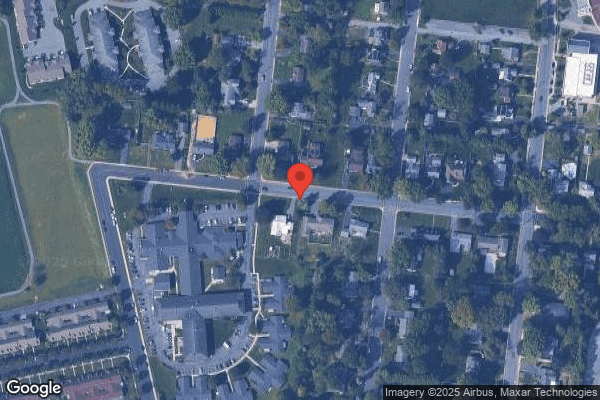
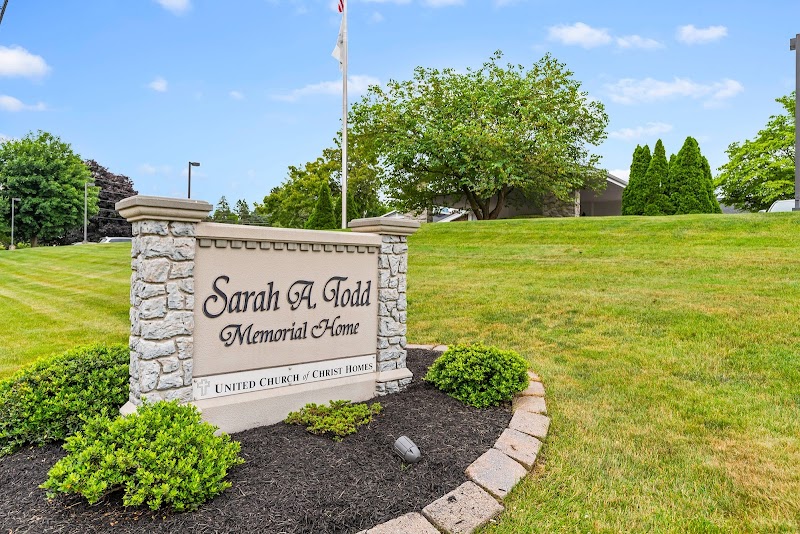
1000 WEST SOUTH STREET, CARLISLE, PA 17013 (717) 245-2187
Non profit - Corporation 117 Beds Independent Data: November 2025
Trust Grade
83/100
#225 of 653 in PA
Last Inspection: December 2024

Within standard 12-15 month inspection cycle. Federal law requires annual inspections.

Overview

Sarah A Todd Memorial Home in Carlisle, Pennsylvania, has a Trust Grade of B+, indicating it is above average and recommended for families considering care options. It ranks #225 out of 653 facilities in Pennsylvania, placing it in the top half, and #6 out of 17 in Cumberland County, meaning only five local options are better. The facility is new to inspections, showing a stable trend with four identified concerns, but no critical issues or fines, which is a positive sign. Staffing is a strong point with a 5/5 rating and a low turnover rate of 28%, suggesting that employees are dedicated and familiar with residents. However, there were concerns about infection control practices, as staff failed to properly prepare insulin pens for residents, and there were instances of not respecting residents' dignity during medication administration, which are important considerations for families.

Trust Score
B+
83/100
In Pennsylvania
#225/653
Top 34%
Safety Record
Low Risk
No red flags
Inspections
Too New
0 → 4 violations
Staff Stability
✓ Good
28% annual turnover. Excellent stability, 20 points below Pennsylvania's 48% average. Staff who stay learn residents' needs.
Penalties
✓ Good
No fines on record. Clean compliance history, better than most Pennsylvania facilities.
Skilled Nurses
✓ Good
Each resident gets 48 minutes of Registered Nurse (RN) attention daily — more than average for Pennsylvania. RNs are trained to catch health problems early.
Violations
✓ Good
Only 4 deficiencies on record. Cleaner than most facilities. Minor issues only.
★★★★☆
4.0
Overall Rating
★★★★★
5.0
Staff Levels
★☆☆☆☆
1.0
Care Quality
★★★★☆
4.0
Inspection Score
Stable
: 0 issues
2024: 4 issues

The Good

  • 5-Star Staffing Rating · Excellent nurse staffing levels
  • Low Staff Turnover (28%) · Staff stability means consistent care
  • Full Sprinkler Coverage · Fire safety systems throughout facility
  • No fines on record
  • Staff turnover is low (28%)

    20 points below Pennsylvania average of 48%

Facility shows strength in staffing levels, staff retention, fire safety.

The Bad

No Significant Concerns Identified

This facility shows no red flags. Among Pennsylvania's 100 nursing homes, only 1% achieve this.

The Ugly 4 deficiencies on record

Dec 2024 3 deficiencies
CONCERN (D)

Potential for Harm - no one hurt, but risky conditions existed

Deficiency F0557 (Tag F0557)

Could have caused harm · This affected 1 resident

Based on observations, clinical record review, facility policy review, and staff interview, it was determined that the facility failed to provide medications in a manner that respected the residents' ...

Read full inspector narrative →
Based on observations, clinical record review, facility policy review, and staff interview, it was determined that the facility failed to provide medications in a manner that respected the residents' dignity for two of 10 residents observed for medication administration (Residents 23 and 53). Findings include: Review of Facility policy, titled Dignity and Respect in Personal Property (F557), revision date December 2022, revealed the policy statement was, Residents have the right to be treated with respect and dignity . Review of Resident 23's clinical record revealed diagnoses that included dementia with Lewy bodies and diabetes mellitus type II. During medication observations on December 18, 2024, at approximately 9:20 AM, Employee 1 was observed preparing two insulin pens for administration for Resident 23. Employee 1 was observed administering the medication (one in each upper arm), while the Resident was seated in the unit's common area with multiple residents present in the room. Review of Resident 53's clinical record revealed diagnoses of dementia (progressive, irreversible degenerative disease of the brain that results in decreased contact with reality and decreased ability to perform activities of daily living) and diabetes mellitus type II (decreased ability of the body to utilize insulin for the transport of glucose from the blood stream into the cells for nourishment). During medication observation on December 18, 2024, at approximately 9:17 AM, Employee 1 was observed preparing and administering Resident 53's insulin injection into Resident 53's left lower abdomen after lifting Resident 53's shirt to access the area. Employee 1 administered the insulin injection in the unit's common area with multiple residents present in the room. During a staff interview on December 19, 2024, at approximately 10:30 AM, Nursing Home Administrator revealed it was the facility's expectation the employees provide injections in the Residents' room to afford privacy and dignity for the residents. 28 Pa code 211.12(d)(1)(5) Nursing Services
CONCERN (D)

Potential for Harm - no one hurt, but risky conditions existed

Infection Control (Tag F0880)

Could have caused harm · This affected 1 resident

Based on observations, staff interview, and manufacturer guidance reviews, it was determined that the facility failed to follow infection control procedures for three of 10 residents observed for medi...

Read full inspector narrative →
Based on observations, staff interview, and manufacturer guidance reviews, it was determined that the facility failed to follow infection control procedures for three of 10 residents observed for medication administration (Residents 18, 23, and 53). Findings include: Review of the manufacturer's usage information for Basaglar Kwipen, Lantus Solostar, Novolog Flexpen, and Insulin Aspart Flexpen (insulins contained in a multidose pen dispensing unit), revealed that directions included swabbing the rubber tip of the pen (area that is punctured by an insulin administering needle) prior to attaching the insulin needle to help prevent infection. During medication administration observation on December 18, 2024, at approximately 9:17 AM, Employee 1 was observed preparing Basaglar Kwikpen for Resident 53. Upon removing the cap of the multi-dose pen dispensing unit, Employee 1 failed to cleanse the rubber tip with an alcohol swab prior to attaching the insulin needle. Employee 1 was subsequently observed injecting the insulin into Resident 53. During medication administration observation on December 18, 2024, at approximately 9:20 AM, Employee 1 was observed preparing Lantus Solostar and Novolog Flexpen for Resident 23. Upon removing the cap of the multi-dose pen dispensing units, Employee 1 failed to cleanse rubber tip of the pens prior to attaching the insulin needles. Employee 1 was subsequently observed injecting the insulin into Resident 23. During medication administration observations on December 18, 2024, at approximately 11:13 AM, Employee 2 was observed preparing Insulin Aspart Flexpen for Resident 18. Upon removing the cap of the multi-dose pen dispensing unit, Employee 2 failed to cleanse the rubber tip of the pen prior to attaching the insulin needle. Employee 2 was subsequently observed injecting the insulin into Resident 18. During a staff interview on December 19, 2024, at approximately 10:30 AM, Nursing Home Administrator revealed it was the facility's expectation that employees cleanse the rubber tips of the insulin pens prior to attaching the insulin needles. 28 Pa code 211.12(d)(1)(5) Nursing services
CONCERN (E)

Potential for Harm - no one hurt, but risky conditions existed

Food Safety (Tag F0812)

Could have caused harm · This affected multiple residents

**NOTE- TERMS IN BRACKETS HAVE BEEN EDITED TO PROTECT CONFIDENTIALITY** Based on review of select facility documentation and staff interviews, it was determined that the facility failed to utilize and...

Read full inspector narrative →
**NOTE- TERMS IN BRACKETS HAVE BEEN EDITED TO PROTECT CONFIDENTIALITY** Based on review of select facility documentation and staff interviews, it was determined that the facility failed to utilize and monitor equipment in accordance with professional standards for food service safety in the main kitchen and one of three dining areas ([NAME] Unit). Findings include: Review of document, titled Dish Machine Temperature Log for the main kitchen from April 2024 to present, read, in part, Minimum wash temperature- 150 degrees F (Fahrenheit unit of measure); minimum rinse temperature 180 degrees F. Action Plan: If temperatures are not within acceptable ranges- Circle temperature and notify supervisor. Supervisor will investigate and make necessary adjustments or call maintenance. Supervisor will make note of action taken. Review of the April 2024 Dish Machine Temperature Log for the main kitchen, revealed wash and rinse cycle temperatures failed to be recorded on April 5, 20, and 21, during breakfast and lunch; and April 15, 26, and 27 during dinner. Further review of the April 2024 Dish Machine Temperature Log for the main kitchen, revealed the wash cycle temperature was below the minimum acceptable temperature on April 2 at lunch. No corrective action was noted. Review of the May 2024 Dish Machine Temperature Log for the main kitchen, revealed wash and rinse cycle temperatures failed to be recorded on May 23 through 25 at dinner. Review of the August 2024 Dish Machine Temperature Log for the main kitchen, revealed wash and rinse cycle temperatures failed to be recorded on August 4 and 18 at breakfast; August 3, 17, 18, and 21 at lunch; and August 1, 3, 4, 17-20, and 22 at dinner. Further review of the August 2024 Dish Machine Temperature Log for the main kitchen, revealed the wash cycle temperature was below the minimum acceptable temperature on August 20, 22-25, and 28-30 at breakfast; August 19, 20, 22-25, 29 and 30 at lunch; and August 24 and 25 at dinner. No corrective action was noted. Review of the September 2024 Dish Machine Temperature Log for the main kitchen, revealed the wash cycle temperature was below the minimum acceptable temperature on September 1-5 at breakfast; September 1-5 and 10 at lunch; and September 2 at dinner. No corrective action was noted. Review of the October 2024 Dish Machine Temperature Log for the main kitchen, revealed wash and rinse cycle temperatures failed to be recorded on October 2, 3, 12, 13, and 15 at breakfast and lunch. Review of documents, titled Sarah [NAME] Dish Machine Temperatures, from May 2024 to present, read, in part, If temperatures fall below 145 degrees F for wash and 180 for rinse, notify the director of dining services or kitchen supervisor. Review of the May 2024 [NAME] Unit Dish Machine Temperature Log revealed wash and rinse cycle temperatures failed to be recorded on May 1 at dinner; and a final rinse temperature failed to be recorded on May 23 at dinner. Further review of the May 2024 [NAME] Unit Dish Machine Temperature Log revealed the wash cycle temperature was below the minimum acceptable temperature on May 11, 19, 25, and 26 at breakfast; May 1, 11, 17, 18, 25, 26, 29, and 30 at lunch; and May 2, 11, 22, 25, 26 at dinner. No corrective action was noted. Review of the June 2024 [NAME] Unit Dish Machine Temperature Log revealed wash and rinse cycle temperatures failed to be recorded on June 29 at dinner. Further review of the June 2024 [NAME] Unit Dish Machine Temperature Log revealed the wash cycle temperature was below the minimum acceptable temperature on June 5-7, 11, 14, and 15 at breakfast; June 1, 2, 9, 15, and 17 at lunch; and June 5, 8, 21, and 26 at dinner. No corrective action was noted. Review of the July 2024 [NAME] Unit Dish Machine Temperature Log revealed the wash cycle temperature was below the minimum acceptable temperature on July 7, 16, 21, and 27 at breakfast; July 11, 12, 21, and 31 at lunch; and July 4, 15, 21, 24, 25, and 27-31 at dinner. No corrective action was noted. Review of the August 2024 [NAME] Unit Dish Machine Temperature Log revealed the wash cycle temperature was below the minimum acceptable temperature on August 9 and 15 at breakfast; and August 3-5, 15, 16, 20-24, and 31 at dinner. No corrective action was noted. Further review of the August 2024 [NAME] Unit Dish Machine Temperature Log revealed the rinse cycle temperature was below the minimum acceptable temperature on August 2, 6, 9, 15, 22, and 29 at breakfast; August 5, 9, 15, 16, and 18 at lunch; and August 22 at dinner. No corrective action was noted. Review of the September 2024 [NAME] Unit Dish Machine Temperature Log revealed the wash cycle temperature was below the minimum acceptable temperature on September 21 at breakfast; September 19 at lunch; and September 4, 6, 18, and 20 at dinner. No corrective action was noted. Further review of the September 2024 [NAME] Unit Dish Machine Temperature Log revealed the rinse cycle temperature was below the minimum acceptable temperature on September 11, 21, and 22 breakfast; and September 1, 2, and 4 at lunch; no corrective action was noted. In addition, no wash or rinse temperatures were recorded on September 26 at breakfast, lunch, or dinner. Interview with Employee 3 (Dietary Manager) on December 17, 2024, at 12:23 PM, revealed he provides staff education when temperatures are not recorded, and education to staff in the [NAME] dining area to allow the dish machine to heat up to proper temperature prior to use. During an interview with the Nursing Home Administrator on December 18, 2024, at 1:05 PM, she revealed her expectation for kitchen equipment to be utilized and monitored in accordance with professional standards. 28 Pa. Code 211.6(f) Dietary services 28 Pa. Code 201.18(b)(3) Management
Feb 2024 1 deficiency
CONCERN (D)

Potential for Harm - no one hurt, but risky conditions existed

Respiratory Care (Tag F0695)

Could have caused harm · This affected 1 resident

Based on review of facility policy, record review, observations, and staff interviews, it was determined that the facility failed to provide respiratory care/oxygen services consistent with profession...

Read full inspector narrative →
Based on review of facility policy, record review, observations, and staff interviews, it was determined that the facility failed to provide respiratory care/oxygen services consistent with professional standards of practice for one of 21 residents reviewed (Resident 86). Findings include: Review of facility policy, titled Procedure: Infection Control: BiPAP [bi-level positive airway pressure which is a type of ventilator used to treat sleep apnea] & CPAP [Continuous Positive Airway Pressure - a machine that uses mild air pressure to keep breathing airways open while one sleeps] Devices, dated May 14, 2013, with a last review date of January 25, 2024, revealed the following, in part: E. The following must be done weekly: 4. Change Ziploc bag weekly that holds mask date and initial (3-11); V. SPECIAL CONSIDERATIONS: A. When the mask is not in use store in clear Ziploc bag (bags to be replaced weekly); and B. Date and initial on bag when changed. Review of Resident 86's clinical record revealed diagnoses that included obstructive sleep apnea (intermittent airflow blockage during sleep), dementia (a chronic disorder of the mental processes caused by brain disease, and marked by memory disorders, personality changes, and impaired reasoning), and Parkinson's disease (a long term degenerative disorder of the central nervous system that mainly affects the motor system). Review of Resident 86's physician orders revealed an order for CPAP mask-wash daily with soap and water, air dry, dated July 13, 2023. Observations of Resident 86's room on January 29, 2024, at 10:20 AM and 12:39 PM, revealed their CPAP mask was attached to tubing, which was attached to the machine, laying directly on the nightstand and not bagged. Observation of Resident 86's room on January 30, 2024, at 11:09 AM, revealed their CPAP mask was attached to tubing, which was attached to the machine, bagged in a black bag dated 8/[?] The actual day date was noted be illegible as it had been written over. During an interview with Employee 2 on January 30, 2024, at 11:28 AM, the aforementioned observation was shown. Employee 2 confirmed that the actual date was illegible on the bag in which the CPAP mask was being stored. Employee 2 further indicated that they were not sure of the policy as to when the bag should be changed, but they would look into it. Further review of Resident 86's physician orders revealed no order for the CPAP storage bag to be changed on a weekly basis prior to January 30, 2024. Review of Resident 86's January Medication, Treatment, and Task Administration Record Report or documentation of the CPAP storage bag being changed on a weekly basis prior to January 30, 2024. Observation of Resident 86's room on January 30, 2024, at 11:28 AM, revealed that their CPAP mask was stored in a clear Ziploc bag dated January 30, 2024. During an interview with the Nursing Home Administrator (NHA), Director of Nursing (DON), and Assistant Director of Nursing (ADON) on January 31, 2024, at 10:51 AM, all the aforementioned observations were shared. The ADON indicated that Resident 86 had an order for their mask to be rinsed and air dried daily. It was further discussed that the observations on January 29, 2024, revealed that their CPAP mask was still attached to the tubing and to the machine. In addition, it was again shared that the mask was laying directly on the nightstand with no barrier between the mask and the surface of the nightstand. During a follow-up interview with the NHA and DON on January 31, 2024, at 2:25 PM, the DON confirmed that the CPAP mask should not have been laying directly on the nightstand without a barrier if it was being air dried, and that the storage bag should have been changed weekly. 28 Pa code 211.12(d)(1)(2) Nursing Services
Understanding Severity Codes (click to expand)
Life-Threatening (Immediate Jeopardy)
J - Isolated K - Pattern L - Widespread
Actual Harm
G - Isolated H - Pattern I - Widespread
Potential for Harm
D - Isolated E - Pattern F - Widespread
No Harm (Minor)
A - Isolated B - Pattern C - Widespread

Questions to Ask on Your Visit

  • "Can I speak with families of current residents?"
  • "What's your RN coverage like on weekends and overnight?"

Our Honest Assessment

Strengths
  • • Grade B+ (83/100). Above average facility, better than most options in Pennsylvania.
  • • No major safety red flags. No abuse findings, life-threatening violations, or SFF status.
  • • No fines on record. Clean compliance history, better than most Pennsylvania facilities.
  • • Only 4 deficiencies on record. Cleaner than most facilities. Minor issues only.
Concerns
  • • No significant concerns identified. This facility shows no red flags across CMS ratings, staff turnover, or federal penalties.
Bottom line: Generally positive indicators. Standard due diligence and a personal visit recommended.

About This Facility

What is Sarah A Todd Memorial Home's CMS Rating?

CMS assigns SARAH A TODD MEMORIAL HOME an overall rating of 4 out of 5 stars, which is considered above average nationally. Within Pennsylvania, this rating places the facility higher than 99% of the state's 100 nursing homes. This rating reflects solid performance across the metrics CMS uses to evaluate nursing home quality.

How is Sarah A Todd Memorial Home Staffed?

CMS rates SARAH A TODD MEMORIAL HOME's staffing level at 5 out of 5 stars, which is much above average compared to other nursing homes. Staff turnover is 28%, compared to the Pennsylvania average of 46%. This relatively stable workforce can support continuity of care.

What Have Inspectors Found at Sarah A Todd Memorial Home?

State health inspectors documented 4 deficiencies at SARAH A TODD MEMORIAL HOME during 2024. These included: 4 with potential for harm.
Who Owns and Operates Sarah A Todd Memorial Home?

SARAH A TODD MEMORIAL HOME is owned by a non-profit organization. Non-profit facilities reinvest revenue into operations rather than distributing to shareholders. The facility operates independently rather than as part of a larger chain. With 117 certified beds and approximately 109 residents (about 93% occupancy), it is a mid-sized facility located in CARLISLE, Pennsylvania.
How Does Sarah A Todd Memorial Home Compare to Other Pennsylvania Nursing Homes?

Compared to the 100 nursing homes in Pennsylvania, SARAH A TODD MEMORIAL HOME's overall rating (4 stars) is above the state average of 3.0, staff turnover (28%) is significantly lower than the state average of 46%, and health inspection rating (4 stars) is above the national benchmark.

What Should Families Ask When Visiting Sarah A Todd Memorial Home?

Based on this facility's data, families visiting should ask: "Can I visit during a mealtime to observe dining assistance and food quality?" "How do you handle medical emergencies, and what is your hospital transfer rate?" "Can I speak with family members of current residents about their experience?"

Is Sarah A Todd Memorial Home Safe?

Based on CMS inspection data, SARAH A TODD MEMORIAL HOME has a clean safety record: no substantiated abuse findings (meaning no confirmed cases of resident harm), no Immediate Jeopardy citations (the most serious violation level indicating risk of serious injury or death), and is not on the Special Focus Facility watch list (a federal program monitoring the lowest-performing 1% of nursing homes). The facility has a 4-star overall rating and ranks #1 of 100 nursing homes in Pennsylvania. While no facility is perfect, families should still ask about staff-to-resident ratios and recent inspection results during their visit.

Do Nurses at Sarah A Todd Memorial Home Stick Around?

Staff at SARAH A TODD MEMORIAL HOME tend to stick around. With a turnover rate of 28%, the facility is 17 percentage points below the Pennsylvania average of 46%. Low turnover is a positive sign. It means caregivers have time to learn each resident's needs, medications, and personal preferences. Consistent staff also notice subtle changes in a resident's condition more quickly. Registered Nurse turnover is also low at 15%, meaning experienced RNs are available to handle complex medical needs.

Was Sarah A Todd Memorial Home Ever Fined?

SARAH A TODD MEMORIAL HOME has no federal fines on record. CMS issues fines when nursing homes fail to meet care standards or don't correct problems found during inspections. The absence of fines suggests the facility has either maintained compliance or corrected any issues before penalties were assessed. This is a positive indicator, though families should still review recent inspection reports for the full picture.

Is Sarah A Todd Memorial Home on Any Federal Watch List?

SARAH A TODD MEMORIAL HOME is not on any federal watch list. The most significant is the Special Focus Facility (SFF) program, which identifies the bottom 1% of nursing homes nationally based on persistent, serious quality problems. Not being on this list means the facility has avoided the pattern of deficiencies that triggers enhanced federal oversight. This is a positive indicator, though families should still review the facility's inspection history directly.