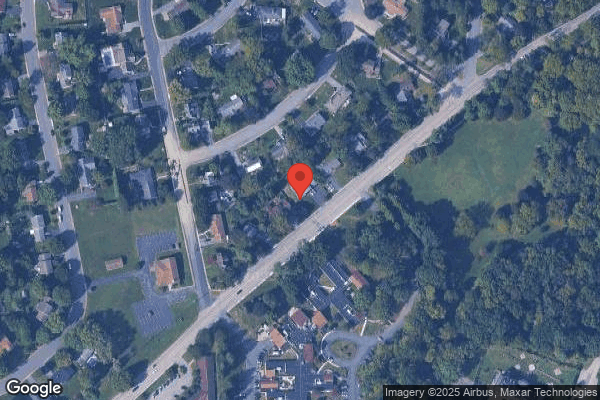

THORNWALD HOME

442 WALNUT BOTTOM ROAD, CARLISLE, PA 17013 (717) 249-4118
Non profit - Church related 83 Beds Independent Data: November 2025
Trust Grade
85/100
#131 of 653 in PA
Last Inspection: December 2024

Within standard 12-15 month inspection cycle. Federal law requires annual inspections.

Overview

Thornwald Home in Carlisle, Pennsylvania has a Trust Grade of B+, indicating it is above average and recommended for families considering care for their loved ones. It ranks #131 out of 653 facilities statewide, placing it in the top half of Pennsylvania nursing homes, and #4 out of 17 in Cumberland County, meaning there are only three better local options. The facility is improving, with issues decreasing from 8 in 2024 to 3 in 2025. Staffing is a strong point, with a 5/5 star rating and a turnover rate of 34%, which is significantly lower than the state average. While the home has no fines, which is a positive sign, there have been some concerns, such as failures to prevent urinary tract infections in residents with catheters and improper food storage practices, indicating areas that still need attention.

Trust Score
B+
85/100
In Pennsylvania
#131/653
Top 20%
Safety Record
Low Risk
No red flags
Inspections
Getting Better
8 → 3 violations
Staff Stability
○ Average
34% turnover. Near Pennsylvania's 48% average. Typical for the industry.
Penalties
✓ Good
No fines on record. Clean compliance history, better than most Pennsylvania facilities.
Skilled Nurses
✓ Good
Each resident gets 58 minutes of Registered Nurse (RN) attention daily — more than average for Pennsylvania. RNs are trained to catch health problems early.
Violations
⚠ Watch
18 deficiencies on record. Higher than average. Multiple issues found across inspections.
★★★★★
5.0
Overall Rating
★★★★★
5.0
Staff Levels
★★☆☆☆
2.0
Care Quality
★★★★☆
4.0
Inspection Score
Stable
2024: 8 issues
2025: 3 issues

The Good

  • 5-Star Staffing Rating · Excellent nurse staffing levels
  • Full Sprinkler Coverage · Fire safety systems throughout facility
  • No fines on record
  • Staff turnover below average (34%)

    14 points below Pennsylvania average of 48%

Facility shows strength in staffing levels, fire safety.

The Bad

Staff Turnover: 34%

12pts below Pennsylvania avg (46%)

Typical for the industry

The Ugly 18 deficiencies on record

Jan 2025 3 deficiencies
CONCERN (D) 📢 Someone Reported This

A family member, employee, or ombudsman was alarmed enough to file a formal complaint

Potential for Harm - no one hurt, but risky conditions existed

Abuse Prevention Policies (Tag F0607)

Could have caused harm · This affected 1 resident

Based on personnel training file review, facility policy review, and staff interview, it was determined that the facility failed to implement written policies and procedures by not completing annual a...

Read full inspector narrative →
Based on personnel training file review, facility policy review, and staff interview, it was determined that the facility failed to implement written policies and procedures by not completing annual abuse training for one of three personnel training records reviewed (Employee 2). Findings include: Review of facility policy, titled Freedom from Abuse, Neglect, and Exploitation of Residents and Misappropriate of Resident Property, dated February 9, 2023, revealed Employees, including those who work in the facility as consultants and volunteers will be educated upon hire during New Employee Orientation, Online Training Programs, and/or Information packets. Education will be provided annually and as needed; Covered individuals will receive training and education regarding the following: Identifying what constitutes abuse, neglect, exploitation, and misappropriate of resident property; Prohibiting and preventing all forms of abuse, neglect, misappropriate of property and exploitation; Recognizing signs of abuse, neglect, exploitation, and misappropriate of resident property; Reporting abuse, neglect, exploitation and misappropriate of resident property, including injuries of unknown sources and to whom and when staff and others must report their knowledge related to any alleged violation without fear of reprisal. The policy further indicated that an Initial/Annual Acknowledgement (UCCH #1411) is provided to those vendors and contractors who do business with United Church of Christ Homes. Review of training transcript provided by facility for Employee 2 (a contracted Physician Assistant) revealed that the Employee had not received annual abuse training in the calendar year of 2024. During a staff interview with the Nursing Home Administrator (NHA) and Employee 2 (Assistant Director of Nursing) on January 30, 2025, at 3:32 PM, the NHA confirmed that there was no documentation of annual abuse to provide for Employee 2 or an annual acknowledgement as indicated in the facility policy. She confirmed that she would expect all staff, including contracted staff, to receive this training on an annual basis. 28 Pa. Code 201.14(a) Responsibility of licensee 28 Pa. Code 201.18(b)(1)(e)(1) Management 28 Pa. Code 201.20(a)(5)(d) Staff development 28 Pa. Code 201.29(a) Resident rights
CONCERN (D) 📢 Someone Reported This

A family member, employee, or ombudsman was alarmed enough to file a formal complaint

Potential for Harm - no one hurt, but risky conditions existed

Report Alleged Abuse (Tag F0609)

Could have caused harm · This affected 1 resident

Based on facility policy review, clinical record reviews, facility documentation review, and staff interviews, it was determined that the facility failed to report an allegation of abuse in a timely m...

Read full inspector narrative →
Based on facility policy review, clinical record reviews, facility documentation review, and staff interviews, it was determined that the facility failed to report an allegation of abuse in a timely manner for one of four residents reviewed (Resident 1). Findings include: Review of facility policy, titled Freedom from Abuse, Neglect, and Exploitation of Residents and Misappropriate of Resident Property, dated February 9, 2023, revealed, in part, Any incident of abuse must be reported to the Executive Director/Designee; All reports of alleged abuse/neglect shall be immediately and thoroughly investigated. The immediate response shall consist of: Social Services/Designee to interview the resident and if possible, obtain a signed statement from the resident. Interview with the person(s) reporting the alleged abuse/neglect and obtain a signed statement, if possible. Interview and obtain signed statements, if possible, from any witness or individual who has knowledge of the alleged incident. If any allegation of physical abuse is made, the nurse shall examine the resident. Findings of the examination must be recorded in the resident's medical record. Investigation of alleged sexual abuse requires a physical exam by a physician, unless the resident or resident representative expressly refuses. Review of Resident 1's clinical record revealed diagnoses that included chronic kidney disease (longstanding disease of the kidneys leading to renal failure), chronic combined systolic diastolic heart failure (heart failure in which the heart cannot pump [systolic] or fill [diastolic] properly), and anxiety disorder (mental health disorder characterized by feelings of worry, anxiety, or fear that are strong enough to interfere with one's daily activities). Review of Resident 1's clinical record revealed a physician progress note written by Employee 2 dated January 9, 2025, at 10:28 AM, that indicated they had visited with Resident 1 this date and that she reported being assaulted in her genitalia. Specifically, she reported someone was cutting her in that area. She genuinely believes that these events occurred. The note further indicated, I did later talk to her nurse, who reviewed prior nursing notes with me. The note indicated that Resident 1 was alert and oriented to person and time, and that Employee 2 believed Resident 1's thought content was delusional. The documentation of their physical assessment failed to include any documentation that an assessment of Resident 1's genitalia was completed because of their reported assault. Review of Resident 1's clinical record revealed a physician progress note written by Employee 2 dated January 14, 2025, at 9:52 AM, that indicated they had visited with Resident 1 this date to follow-up on their delusions. The note indicated that Employee 2 had spoken to Resident 1's nurse who described her mental state as improving and that, as Employee 2 continued the conversation with Resident 1, she started to tell me again about being struck over the head, being assaulted in her genitalia, and being conspired against by staff. The note also indicated that Resident 1 was oriented to herself, and her thought content was delusional. The documentation of their physical assessment failed to include any documentation that an assessment of Resident 1 was completed because of their reported assault. Review of a facility provided witness statement written by Employee 6 (a Licensed Practical Nurse) dated January 30, 2025, revealed that on January 9, 2025, at approximately 8:20 AM, Employee 2 had approached them and was questioning them about Resident 1's delusions and accusations. The statement further indicated that Employee 6 did not recall any specific comments regarding any 'assault towards genitalia'. Employee 6 said that they discussed side effects of medications, signs and symptoms of acute gastrointestinal illness, and possible side effects of dehydration that could be causing Resident 1 to experience delusions and confusion. During an interview with Employee 1 (Assistant Director of Nursing) on January 30, 2025, at approximately 10:55 AM, Employee 1 indicated that on January 22, 2025, at 10:30 AM, while reviewing the Physician Assistant's (PA-Employee 2) progress notes that morning in clinical meeting it was discovered that Employee 2 had documented that Resident 1 had been assaulted in her genitalia in a January 9, 2025, and January 14, 2025, progress notes. Employee 1 indicated that an investigation was initiated immediately when this was discovered. During a staff interview with the Nursing Home Administrator (NHA) and Employee 1 on January 30, 2025, at 3:32 PM, the NHA confirmed that she nor any other administrative staff were made aware of Resident 1's initial report of an allegation of sexual assault on January 9, 2025. She also confirmed that she nor any other administrative staff were made aware of Resident 1's continued allegation of sexual assault on January 14, 2025. The NHA confirmed that she would expect all staff to report all allegations of abuse immediately to her. 28 Pa. Code 201.14(a) Responsibility of licensee 28 Pa. Code 201.18(b)(1)(e)(1) Management 28 Pa. Code 201.20(a)(5) Staff development 28 Pa. Code 201.29(a) Resident rights
CONCERN (D) 📢 Someone Reported This

A family member, employee, or ombudsman was alarmed enough to file a formal complaint

Potential for Harm - no one hurt, but risky conditions existed

Investigate Abuse (Tag F0610)

Could have caused harm · This affected 1 resident

Based on facility policy review, clinical record reviews, review of facility reported incidents, review of facility documentation, and staff interviews, it was determined that the facility failed to c...

Read full inspector narrative →
Based on facility policy review, clinical record reviews, review of facility reported incidents, review of facility documentation, and staff interviews, it was determined that the facility failed to complete thorough investigations of abuse allegations and, therefore, failed to protect the safety of a resident during abuse investigations for one of four residents reviewed (Resident 1). Findings include: Review of facility policy, titled Freedom from Abuse, Neglect, and Exploitation of Residents and Misappropriate of Resident Property, dated February 9, 2023, revealed, in part, All reports of alleged abuse/neglect shall be immediately and thoroughly investigated. The immediate response shall consist of: Social Services/Designee to interview the resident and if possible, obtain a signed statement from the resident. Interview with the person(s) reporting the alleged abuse/neglect and obtain a signed statement, if possible. Interview and obtain signed statements, if possible, from any witness or individual who has knowledge of the alleged incident. Upon notification that an employee is alleged to have committed abuse, the facility will: Ensure that the resident is safe. The individual may be suspended pending investigation. If the individual is not employed by the facility, the individual will be denied unsupervised access to the resident and visits may only be made in designated areas approved by the Executive Director/Designee. Review of Resident 1's clinical record revealed diagnoses that included chronic kidney disease (longstanding disease of the kidneys leading to renal failure), chronic combined systolic diastolic heart failure (heart failure in which the heart cannot pump [systolic] or fill [diastolic] properly), and anxiety disorder (mental health disorder characterized by feelings of worry, anxiety, or fear that are strong enough to interfere with one's daily activities). Review of Resident 1 clinical record revealed a progress note written by Employee 4 (Director of Social Services) dated January 8, 2025, at 2:38 PM, that indicated Resident 1's behavior care plan was updated related to delusions that may include staff that are people of color. Further review of Resident 1's clinical record progress notes revealed a progress note written by Employee 3 (a Registered Nurse) dated January 8, 2025, at 2:39 PM, that indicated Resident 1 had told the Social Worker I was out in the snow looked for the person who hit me in the head and pulled me. It was two black girls I'd know one if I saw her. The note also indicated that Resident 1 said to Employee 3 I was hit on the head and dragged into the Cat Scan. They scanned my (pointed to private area). I was so full of urine. I had to relieve myself. I peed in the trash can. Now I am being punished. Review of facility provided investigation documentation revealed a statement written by Employee 4 (Director of Social Services) dated January 8, 2025, at 10:45 AM, indicated that she had stopped by to see Resident 1 and that she was tearful and said They've maligned me in every way because I peed in the trash can. What would you do? I was out in the snow looking for the person who hit me in the head and pulled me. No other investigation or witness statements were provided as part of the investigation. Review of a facility reported incident with an original submission date of January 8, 2025, at 2:26 PM, indicated that Resident 1 had stated to Employee 4 that staff have maligned me in every way because I peed in the trashcan. What would you do? I was out in the snow looking for the person who hit me in the head and pulled me. The report further indicated that the facility was unable to identify any individual involved. Further review of this report revealed that an update was submitted on January 13, 2025, indicating that the allegation was found to be unsubstantiated as the facility was unable to identify a perpetrator. An update was submitted on January 16, 2025, that indicated, At time of accusation, resident was experiencing increased confusion and delusions. The facility reported incident failed to indicate that Resident 1 had shared a description of the alleged perpetrator(s) and said that she would be able to identify her if she saw her or that the facility had taken any measures to identify the alleged perpetrator. During a staff interview with Employee 1 (Assistant Director of Nursing) on January 30, 2025, at 10:55 AM, Employee 1 confirmed that the facility does have female staff fitting the resident's description and that one had cared for Resident 1 on one shift. Employee 1 confirmed that she had not obtained investigation or witness statements from any nursing staff regarding Resident 1's allegation and that Resident 1 had not been asked to identify the alleged perpetrator. Although, Resident 1 had provided a description and said that she would be able to identify her if she saw her. Employee 1 indicated that she usually reviews clinical notes daily. Employee 1 indicated that Resident 1 had been discussed in the daily clinical meetings because of her changes in health status. She indicated that they utilize the 24-hour report from the facility's electronic health record to discuss residents. She further indicated that this was an electronic report and that do not print them. Review of a facility reported incident with an original submission date of January 22, 2025, at 12:22 PM, indicated that on January 22, 2025, at 10:30 AM, it was discovered that Employee 2 had documented that Resident 1 had been assaulted in her genitalia in a January 9, 2025, and January 14, 2025, progress note. Further review of this report revealed that an update was submitted on January 27, 2025, indicating that Employee 2 did not communicate the Resident's concern to any facility staff member; and on January 28, 2025, indicating that Employee 1 had provided Employee 2 with education on the abuse policy, and he was given a copy of the policy. Review of provided investigation documentation revealed a statement written by Employee 5 (a Social Worker) which indicated that they had interviewed Resident 1 on January 22, 2025, and Resident 1 stated that she was hit on the head and a nurse was sticking something sharp inside of me. The resident also described the appearance of the two alleged employees. During a staff interview with the Nursing Home Administrator (NHA) on January 30, 2025, at 12:07 PM, the NHA indicated that, during daily clinical meeting, the interdisciplinary team reviews incidents and accidents, as well as verbal nursing reports. She said that the facility's electronic health record pulls a 24-hour report that reveals notes that have occurred in the prior 24 hours so that appropriate follow-up can be completed or initiated. When asked if open investigations are reviewed during this meeting, the NHA indicated that it depends on where they are in the investigation process and sometimes; they are not done in this meeting because of the nature of the investigation. The NHA attempted to pull 24-hour history reports from prior dates, but the system would not enable the report to be pulled. At time of conclusion of field office investigation on January 30, 2025, at 3:25 PM, the facility was unable to provide any documentation that indicated they had obtained investigation or witness statements from any nursing staff regarding Resident 1's abuse allegations or that Resident 1 had been asked to identify the alleged perpetrator(s). Although, Resident 1 had again provided a description and that she would be able to identify her if she saw her. During a staff interview with the NHA and Employee 1 on January 30, 2025, at 3:32 PM, the NHA confirmed that the facility had not thoroughly investigated Resident 1's allegations of abuse. She confirmed that Resident 1 was never asked to identify the alleged perpetrator(s); although, Resident 1 had provided a physical description and said that she would be able to identify her if she saw her again on two separate occasions over a 14-day timespan. The NHA confirmed that no staff members were suspended while the facility was completing the investigations for Resident 1. The NHA indicated that she would expect all abuse investigations to be completed thoroughly to enforce resident safety. 28 Pa. Code 201.14(a) Responsibility of licensee 28 Pa. Code 201.18(b)(1)(e)(1) Management 28 Pa. Code 201.29(a) Resident rights
Dec 2024 3 deficiencies
CONCERN (D)

Potential for Harm - no one hurt, but risky conditions existed

Deficiency F0688 (Tag F0688)

Could have caused harm · This affected 1 resident

**NOTE- TERMS IN BRACKETS HAVE BEEN EDITED TO PROTECT CONFIDENTIALITY** Based on observations, clinical record review, and staff interviews, it was determined that the facility failed to ensure a resi...

Read full inspector narrative →
**NOTE- TERMS IN BRACKETS HAVE BEEN EDITED TO PROTECT CONFIDENTIALITY** Based on observations, clinical record review, and staff interviews, it was determined that the facility failed to ensure a resident with limited mobility received appropriate services, equipment, and assistance to maintain or improve mobility for one of four residents reviewed (Resident 27). Findings include: Review of Resident 27's clinical record revealed diagnoses that included Parkinson's Disease (progressive and irreversible neurological disease that causes decreased control of the nervous system resulting in stiffness, slowing of movement, and uncontrolled bodily movements) and muscle weakness. Review of Resident 27's care plan revealed that the Resident had an impaired functional status and approaches/interventions included transfers: 1-person assist, stand pivot with a walker and to have right AFO (Ankle Foot Orthotic - braces support the ankle, keeping the toes aligned with the rest of the foot) on for transfers and when OOB [out of bed], OOB to pedal Broda chair (a tilt-in-space positioning chair which prevents skin breakdown through reducing heat and moisture) with cushion and bilateral leg rests for proper positioning, dated January 27, 2024; and Walking: non-ambulatory, dated January 27, 2024. Observation of Resident 27 on December 9, 2024, at 10:26 AM, revealed that the Resident was in their room, seated in their Broda chair with no leg rests, leaning slightly to the left, and that the Resident had slippers on both feet. The leg rests for the Broda chair, their AFO, and their shoes were noted on the floor nearby in front of a nightstand. Observation of Resident 27 on December 10, 2024, at 10:18 AM, revealed that the Resident was in their room, seated in their Broda chair with leg rests present, and that the Resident had gripper socks on both feet. Their AFO and shoes were noted on the floor nearby in front of a nightstand. Observation of Resident 27 on December 10, 2024, at 12:52 PM, revealed that the Resident was in the dining room, seated in their Broda chair with leg rests in place, and the Resident had on sneakers. The AFO was not present. Immediate observation of Resident 27's room revealed that their AFO was present in their room on the floor in front of the nightstand. Observation of Resident 27 on December 11, 2024, at 10:09 AM, revealed that the Resident was in their room, seated in their Broda chair with leg rests present, and that the Resident had their AFO in place and was wearing sneakers. Review of Resident 27's Physical Therapy Discharge summary dated [DATE], revealed that Discharge Recommendations included a Restorative Nursing Program (RNP) for sit to stand transfers and bilateral lower extremities therapeutic exercises in order to maintain current level of function. In addition, it was noted that Resident 27's long-term therapy goal for Pt. will ambulate 25 feet safely with front wheeled walker and min assist (25% assist) on even surfaces was discontinued on November 22, 2024, and stated rationale indicated ambulation discontinued due to decreased safety. This discharge summary failed to include any mention of Resident 27's AFO. Review of Resident 27's nurse aide task documentation revealed that the Resident was on a Restorative Nursing Program for range of motion and walking. Review failed to reveal any documentation regarding Resident 27's use of their AFO. Further review of this documentation from November 22, 2024, through December 11, 2024, revealed that on November 25 and 27, 2024; December 4 and 9, 2024, there was no documentation indicating that Resident 27 was provided their range of motion or ambulation programs. In addition, it was noted that on November 30, 2024, and December 1, 2, 3, and 6, 2024, there was no documentation that Resident 27 was provided their ambulation program. During a staff interview with the Nursing Home Administrator (NHA) and Director of Nursing (DON) on December 11, 2024, at 1:50 PM, concerns were shared regarding the observations of Resident 27, missing RNP documentation, missing AFO documentation, and conflicting information regarding Resident 27 being non-ambulatory, but on a walking RNP. During a staff interview with the NHA on December 12, 2024, at 9:49 AM, the NHA indicated that Resident 27's walking program was placed on hold sometime back in July. The NHA said she was not sure why it would have been still populating for staff to perform/document. She confirmed that the Resident 27's care plan indicated that she was non-ambulatory and that the therapy discharge summary indicated on November 22, 2024, that ambulation was not safe. During a final staff interview with the NHA and DON on December 12, 2024, at 11:12 AM, the NHA indicated that she had no additional information to provide regarding Resident 27's AFO use or why staff would be ambulating Resident 27 if they were not ambulatory. The NHA confirmed that she would expect range of motion exercises to have been provided and documented accordingly, and that she would expect Resident 27's care plan to have been followed for the use of their AFO. 28 Pa. Code 211.12(d)(2)(3)(5) Nursing services
CONCERN (D)

Potential for Harm - no one hurt, but risky conditions existed

Deficiency F0692 (Tag F0692)

Could have caused harm · This affected 1 resident

**NOTE- TERMS IN BRACKETS HAVE BEEN EDITED TO PROTECT CONFIDENTIALITY** Based on facility policy review, clinical record review, and staff interviews, it was determined that the facility failed to ens...

Read full inspector narrative →
**NOTE- TERMS IN BRACKETS HAVE BEEN EDITED TO PROTECT CONFIDENTIALITY** Based on facility policy review, clinical record review, and staff interviews, it was determined that the facility failed to ensure proper monitoring to maintain acceptable parameters of nutritional status and failed to notify the physician of a significant weight change for two of 21 residents reviewed (Residents 38 and 79). Findings include: Review of facility policy, titled Procedure: Weighing and Documenting Resident Weights, last reviewed January 25, 2024, read, in part, Unit coordinators review weights and transfer all weights to include any re-weights to resident medical records via Care Tracker. Dietitian will notify nursing via [NAME] of any significant weight loss or weight gain, as well as physician after reviewing the weight detail report in Care Tracker. If nurse aide reports a variance, weight must be done again in presence of a licensed staff on that shift. A weight variance is defined as any resident weighing greater than 120 pounds with a gain or loss of five pounds or more, or a resident weighing less than 120 pounds with a weight gain or loss of three pounds or more. admission weekly weights will be obtained for four weeks post admission from day of admission. Review of Resident 38's clinical record revealed diagnoses that included moderate protein-calorie malnutrition (an imbalance between the nutrients the body needs to function and the nutrients it gets), dementia (a chronic disorder of the mental processes caused by brain disease, marked by memory disorders, personality changes, and impaired reasoning), and congestive heart failure (a chronic condition in which the heart doesn't pump blood as well as it should). Review of Resident 38's physician orders revealed an order for Weekly weight Tuesday day shift- every week, with a start date of November 26, 2024. Review of Resident 38's clinical record revealed he had a significant weight loss of 20.8 pounds (11.9%) from November 3 to 26, 2024. Further review of Resident 38's clinical record revealed he was not weighed again until December 3, 2024. Review of Resident 38's clinical record revealed a dietitian note on November 26, 2024, in response to the weight loss that read, in part, Unsure if weight loss is true weight loss or water loss. Recommend fortified cereal to increase caloric intake. Further review of the dietitian note on November 26, 2024, failed to reveal documentation that the physician was notified. During an email correspondence with the Nursing Home Administrator (NHA) on December 10, 2024, at 12:27 PM, the surveyor inquired if there had been communication to the physician related to Resident 38's significant weight change. Interview with Employee 1 (Physician Assistant) on December 11, 2024, at 10:56 AM, revealed he was notified of Resident 38's weight loss the previous evening of December 10, 2024, by nursing. He further revealed he is typically only notified of significant weight changes that the nursing staff are concerned about, and he rarely has communication with the dietitian. Interview with the NHA on December 11, 2024, at 1:55 PM, the surveyor revealed the concern with the missed re-weigh measure for the weight variance and lack of physician notification of resident 38's significant weight loss. The NHA revealed she would expect weight monitoring and physician notification per facility policy. Review of Resident 79's clinical record revealed she was admitted to the facility on [DATE], with diagnoses that included hypertension (high blood pressure), hyperlipidemia (high cholesterol), and osteoporosis (a condition that weakens bones and increases the risk of fractures). Review of Resident 79's physician orders revealed an order for Weekly weight Tuesday 3-11 shift weights- every week, with a start date of September 17, 2024. Review of Resident 79's clinical record failed to reveal a weekly weight measure was obtained during the week of September 15 through 21, 2024. Interview with the NHA and Director of Nursing on December 12, 2024, at 11:16 AM, revealed they are unable to locate a weekly weight measure between the aforementioned dates, and she would expect weekly weights to be obtained per physician order and facility policy. 28 Pa Code 211.12(d)(1)(3)(5) Nursing Services
CONCERN (E)

Potential for Harm - no one hurt, but risky conditions existed

Incontinence Care (Tag F0690)

Could have caused harm · This affected multiple residents

Based on facility policy review, clinical record review, and staff interviews, it was determined that the facility failed to ensure residents receive appropriate treatment and services to prevent urin...

Read full inspector narrative →
Based on facility policy review, clinical record review, and staff interviews, it was determined that the facility failed to ensure residents receive appropriate treatment and services to prevent urinary tract infections in residents with a foley catheter for two of three residents reviewed (Residents 65 and 72). Findings include: Review of facility policy, titled Procedure: Guidelines For Prevention of Catheter Associated Urinary Tract Infections, with a last review date of January 25, 2024, revealed that Special meatus [opening leading to the interior of the body] care with an indwelling urinary catheter is not required. Daily soap and water cleansing of the perineal area is an important part of the hygiene for all patients. Review of Resident 65's clinical record revealed diagnoses that included urinary retention (a condition where your bladder doesn't empty all the way or at all when you urinate) and use of an indwelling foley catheter (a tube placed and held in the bladder to drain urine). Review of Resident 65's nurse aide task documentation from October 1, 2024, through December 12, 2024, revealed that there was no documentation of catheter care being provided as follows: October: 6th evening shift; 11th evening shift; 18th evening shift; 19th night shift; 21st day and evening shift; 22nd day and evening shift; 23rd evening shift; 27th day shift; 30th evening shift; November: 4th day shift; 8th day and evening shift; 13th evening shift; 14th day shift; 18th day and evening shift; 22 day and night shift; 24th day shift; 29th night shift; and December: 1st evening shift; 2nd day shift; 3rd evening shift; 5th evening and night shift; 6th evening shift; 7th evening and night shift; and 8th evening shift. Further review of Resident 65's clinical record revealed that the Resident was diagnosed with a urinary tract infection (UTI) on October 25, 2024, and that their final urine culture dated October 28, 2024, indicated that their urine contained greater than 100,000 CFU/ml of E-coli (Escherichia coli-a bacteria that lives harmlessly in your gut which can cause an infection if it enters your urinary system from stool). During a staff interview with the Nursing Home Administrator (NHA) and Director of Nursing (DON) on December 11, 2024, at 1:44 PM, they both confirmed that they would expect catheter care to be provided and documented every shift. Review of Resident 72's clinical record revealed diagnoses that included benign prostatic hyperplasia (a condition in which the flow of urine is blocked due to the enlargement of prostate gland) and chronic kidney disease (a condition characterized by a gradual loss of kidney function). Review of Resident 72's physician orders revealed orders for catheter check every shift, with a start date of September 27, 2024. Review of Resident 72's nurse aide task documentation from October 1, 2024, through December 10, 2024, revealed that there was no documentation of catheter care being provided as follows: October: 10th night shift; 12th night shift; 16th evening shift; 30th evening shift; 31st evening and night shift; November: 1st night shift; 2nd evening shift; 6th day shift; 12th evening shift; 13th day shift; 25th day shift; December: 3rd evening shift; and 10th evening shift. Further review of Resident 72's clinical record revealed he was started on an antibiotic for a UTI on October 27, 2024, twice daily for seven days; and on December 9, 2024, daily with a stop date of December 20, 2024. Interview with the DON on December 11, 2024, at 1:58 PM, revealed she would expect catheter care to be completed and documented per facility protocol, daily every shift. 28 Pa. Code 211.10(c)(d) Resident care policies 28 Pa code 211.12(d)(1)(2)(5) Nursing services
Jan 2024 5 deficiencies
CONCERN (D)

Potential for Harm - no one hurt, but risky conditions existed

Assessment Accuracy (Tag F0641)

Could have caused harm · This affected 1 resident

Based on clinical record review and staff interviews, it was determined that the facility failed to ensure the resident assessment accurately reflected the resident status for one of 22 residents revi...

Read full inspector narrative →
Based on clinical record review and staff interviews, it was determined that the facility failed to ensure the resident assessment accurately reflected the resident status for one of 22 residents reviewed (Resident 75). Findings Include: Review of Resident 75's clinical record revealed diagnoses that included obstructive and reflux uropathy (a blockage in the urinary tract that causes trouble urinating), benign prostatic hyperplasia (an enlarged prostate), and chronic kidney disease (a condition characterized by a gradual loss of kidney function). Review of Resident 75's physician orders revealed orders for checking and irrigation of a foley catheter, starting December 14, 2023. Review of Resident 75's care plan revealed a focus area [Resident 75] does have continence issues with a subsection, [Resident 75] uses: Bathroom, pull-ups, foley, with a start date of December 14, 2023. Review of Resident 75's Comprehensive MDS assessment (Minimum Data Set- assessment tool utilized to identify residents' physical, mental, and psychosocial needs), with an ARD (assessment reference date - last day of the assessment period) of December 21, 2023, revealed, Section H: Bowel and Bladder, subsection H0100. Appliances, Resident 75 was coded Z. None of the above under subsection H0100, which included an indwelling catheter. During an interview with the Nursing Home Administrator (NHA) on January 17, 2024, at 12:25 PM, the surveyor inquired about the accuracy of Resident 75's comprehensive assessment regarding the catheter. Email correspondence with the NHA on January 17, 2024, at 7:29 PM, revealed the MDS assessment had been modified to reflect that Resident 75 had a catheter. Follow-up interview with the NHA on January 18, 2024, at 11:40 AM, revealed it was the facility's expectation that the Resident MDS would be coded accurately. 28 Pa. Code 211.5(f) Clinical records
CONCERN (D)

Potential for Harm - no one hurt, but risky conditions existed

Deficiency F0657 (Tag F0657)

Could have caused harm · This affected 1 resident

Based on observation, clinical record review, and staff interview, it was determined that the facility failed to ensure that the resident's care plan was reviewed and revised to reflect the resident's...

Read full inspector narrative →
Based on observation, clinical record review, and staff interview, it was determined that the facility failed to ensure that the resident's care plan was reviewed and revised to reflect the resident's current status for two of 22 residents reviewed (Residents 57 and 75). Findings include: Review of Resident 57's clinical record revealed diagnoses that included vascular dementia (condition caused by the lack of blood that carries oxygen and nutrient to a part of the brain that causes problems with reasoning, planning, judgment, and memory) and chronic kidney disease (CKD - gradual loss of kidney function). Review of Resident 57's current care plan on January 17, 2024, at 11:02 AM, revealed the following information: Resident 57 wore bilateral hearing aides, and staff were to ensure that the appliances were clean and in working order; Resident 57 was actively being treated for a UTI (Urinary Tract Infection); and Resident 57 was at risk of dehydration due to a 1600 cc per day fluid restriction. Observation of Resident 57 on January 17, 2024, at 1:00 PM, revealed he was not wearing any hearing aides. During an immediate interview with Employee 2, she confirmed that Resident 57 was not wearing hearing aides and that his wife had taken them home. Review of Resident 57's physician orders revealed no current orders for treatment of a UTI. Review of nursing progress notes revealed that the last notation made regarding treatment/tracking of a UTI was November 21, 2023, when it was noted that there were not signs or symptoms of a UTI or adverse reactions to previous antibiotic treatment. Review of Resident 57's current physician orders revealed an order for 1800 cc per day fluid restriction, effective December 19, 2023. During an interview with the Nursing Home Administrator (NHA) on January 18, 2024, at 11:50 AM, she revealed that Resident 57's care plan was updated to reflect that his hearing aides were not in use, and that Resident 57's care plan was under revision to ensure it reflected the correct fluid restriction amount. During a later interview with the NHA on January 18, 2024, at 2:40 PM, she acknowledged that Resident 57's care plan still included information about active treatment of a UTI, confirmed that Resident 57 was not currently receiving treatment for a UTI, and revealed that the care plan would be updated. Review of Resident 75's clinical record revealed diagnoses that included obstructive and reflux uropathy (a blockage in the urinary tract that causes trouble urinating), benign prostatic hyperplasia (an enlarged prostate), and pressure ulcer of sacral region (injury to skin and underlying tissue resulting from prolonged pressure on the skin). Review of Resident 75's current care plan on January 16, 2024, at 2:00 PM, revealed the following information: Resident 75 was actively being treated for a UTI; and that he had an unstageable pressure ulcer. Review of Resident 75's Comprehensive MDS assessment (Minimum Data Set- assessment tool utilized to identify residents' physical, mental, and psychosocial needs), with an ARD (assessment reference date - last day of the assessment period) of December 21, 2023, revealed Resident 75 was coded as having a stage III pressure ulcer. Email correspondence with the NHA on January 17, 2024, at 11:56 AM, the surveyor inquired about when Resident 75's pressure ulcer changed stages, and if he currently had an UTI. Review of select facility documentation provided on January 17, 2024, at 1:05 PM, revealed Resident 75's pressure ulcer changed from unstageable to stage III on December 21, 2023, and that Resident 75's UTI had resolved on January 8, 2023. Follow-up interview with the NHA on January 18, 2024, at 11:40 AM, revealed she would expect Resident 75's care plan to be updated to reflect the current stage of his wound and that he no longer has an UTI. 28 Pa. Code 211.12(d)(1)(5) Nursing services 28 Pa. Code 211.5(f) Clinical records
CONCERN (D)

Potential for Harm - no one hurt, but risky conditions existed

Quality of Care (Tag F0684)

Could have caused harm · This affected 1 resident

**NOTE- TERMS IN BRACKETS HAVE BEEN EDITED TO PROTECT CONFIDENTIALITY** Based on review of the clinical records and resident and staff interviews, it was determined that the facility failed to ensure ...

Read full inspector narrative →
**NOTE- TERMS IN BRACKETS HAVE BEEN EDITED TO PROTECT CONFIDENTIALITY** Based on review of the clinical records and resident and staff interviews, it was determined that the facility failed to ensure care and services were provided in accordance with professional standards that met the residents needs; and failed to implement resident-directed care and treatment consistent with the resident's physician orders and care plan for two of 22 residents reviewed (Resident 70 and 75). Findings include: Review of Resident 70's clinical record revealed diagnoses that included noninfective gastroenteritis and colitis, unspecified (inflammation of the stomach and intestines), and hypomagnesemia (electrolyte imbalance caused by a low level of magnesium in the blood). During an interview with Resident 70 on January 17, 2024, at 10:10 AM, she stated she has been suffering from diarrhea for several weeks. She reported the diarrhea to be severe causing her to be incontinent at times, and she stated, they can't seem to figure out what is causing it. Further review of Resident 70's clinical record on January 18, 2024, at approximately 10:30 AM, revealed a hospital discharge summary indicating she was admitted [DATE], to December 26, 2023, for electrolyte derangement (an imbalance of electrolytes in the blood) and diarrhea. Review of the hospital discharge summary revealed multiple stool tests were collected on December 18, 2023, and the results were pending at the time of discharge. The discharge summary also instructed to follow-up with outpatient gastroenterology (physicians that focus on the digestive system and disorders). Further review of Resident 70's clinical record failed to reveal results from any stool testing and a follow-up appointment for outpatient gastroenterology. During an interview with the Nursing Home Administrator (NHA) and Director of Nursing (DON) on January 18, 2024, at 11:50 AM, results of the stool testing and information on a follow-up gastroenterology appointment were requested. In a follow-up interview with the NHA and DON on January 18, 2024, at 2:47 PM, the NHA stated a call had been placed to the hospital requesting results of the stool testing. She also stated a call had been placed to the facility physician and Resident 70's family to check if further gastroenterology follow-up and treatment is wanted. During an additional interview with the DON on January 18, 2024, at 3:54 PM, results from the stool testing were provided. Review of the results provided revealed Resident 70's calprotectin stool test (a test used to check for inflammation in the intestines) results were 525 mcg/g (micrograms/gram). The reference range indicated a normal calprotectin level is less than 50 mcg/g and levels greater than 120 mcg/g are elevated. The DON stated that after the facility physician reviewed the results of the testing, he had ordered a follow-up with gastroenterology and the facility has placed a call to schedule an appointment. The DON confirmed the result of testing should have been obtained and reviewed, and the follow-up appointment should have been scheduled when Resident 70 returned from the hospital. Review of Resident 75's clinical record revealed diagnoses that included pressure ulcer of sacral region (injury to skin and underlying tissue resulting from prolonged pressure on the skin), basal cell carcinoma of skin (skin cancer), and obstructive and reflux uropathy (a blockage in the urinary tract that causes trouble urinating). Review of Resident 75's care plan revealed a focus area for skin conditions [Resident 75] is at risk for skin impairment/pressure ulcers related to impaired mobility and incontinence; unstageable pressure on coccyx, with an intervention for treatment as ordered, with a start date of December 14, 2023. Further review of Resident 75's care plan focus area for skin conditions revealed, [Resident 75] has a lower back wound that may be a malignancy, with an intervention for, Be seen by MD and receive debridement until healed, with a start date of December 28, 2023. Review of Resident 75's physician orders revealed an order for Sacral wound care- Once daily night shift. Cleanse with NSS and pat dry. Fluff and apply Calcium Alginate with Ag and cover with bordered gauze daily at night. May replace if soiled or lifted. Code: 1 = no sign of infection, 2 = sign of infection, note required, 3 = small amount of drainage, 4 = moderate amount of drainage, 6 = no pain, 7 = signs/symptoms of pain. For sacral wound once daily. Review of Resident 75's TAR (Treatment Administration Record - documentation for treatment administered or monitored) failed to reveal documentation to indicate the treatment order was completed on January 9, 2024. Review of Resident 75's physician orders revealed an order for Dressing change LL (left lower) back .once daily wash area of LL back and pat dry. Fluff and apply Ca Alg (Calcium Alginate- wound treatment) to wound bed and cover with bordered gauze. May replace if soiled or lifting. For back wound once daily, with a start date of December 21, 2023. Review of Resident 75's TAR failed to reveal documentation to indicate the treatment order was completed on January 2 and 9, 2024. Interview with the NHA on January 18, 2024, at 11:40 AM, revealed she did not have any information to provide related to the missing documentation, and she would expect physician orders to be followed and documented as completed. 28 Pa. Code 211.12(d)(1)(3)(5) Nursing services
CONCERN (D)

Potential for Harm - no one hurt, but risky conditions existed

Incontinence Care (Tag F0690)

Could have caused harm · This affected 1 resident

Based on clinical record review and staff interview, it was determined that the facility failed to ensure physician orders were followed for catheter care for one of two residents reviewed for cathete...

Read full inspector narrative →
Based on clinical record review and staff interview, it was determined that the facility failed to ensure physician orders were followed for catheter care for one of two residents reviewed for catheters (Resident 75). Findings include: Review of Resident 75's clinical record revealed diagnoses that included obstructive and reflux uropathy (a blockage in the urinary tract that causes trouble urinating), benign prostatic hyperplasia (an enlarged prostate), and chronic kidney disease (a condition characterized by a gradual loss of kidney function). Review of Resident 75's physician orders revealed an order for Catheter Protocol Foley Check: Code 1=Patent, output good, No sediment; 2=Low output; 3=sediment- Every shift, with a start date of December 14, 2023, and an end date of December 28, 2023. Review of Resident 75's TAR (Treatment Administration Record - documentation for treatment administered or monitored) failed to reveal documentation to indicate Resident 75's aforementioned catheter order was completed on December 21, 2023, day shift; and December 23 and 26, 2023, night shift. Review of Resident 75's physician orders revealed an order for Catheter Foley tubing Stabilization Adhesive Anchor Type - Catheter Care - Every shift. Anchor site check, change anchor as needed. Code 0 = Skin intact, 1 = Red, 2 = Pink, 3 = Open area, once daily, with a start date of December 14, 2023, and an end date of December 18, 2023. Review of Resident 75's TAR failed to reveal documentation to indicate Resident 75's aforementioned catheter order was completed for the duration of the order. Review of Resident 75's physician orders revealed an order for Catheter Graduated Container Change Type - Catheter Care - Once daily (weekly on Saturday). Review of Resident 75's TAR failed to reveal documentation to indicate Resident 75's aforementioned catheter order was completed on January 16, 2023. Review of Resident 75's physician orders revealed an order for Catheter Protocol Foley Check: Code 1=Patent, output good, No sediment; 2=Low output; 3=sediment- Every shift, with a start date of December 28, 2023. Review of Resident 75's TAR failed to reveal documentation to indicate Resident 75's aforementioned catheter order was completed on January 12, 2024, day shift; January 8, 12, and 14, 2024, evening shift; and December 30, 2023, and January 9, 2024, night shift. Review of Resident 75's physician orders revealed an order for Catheter Foley tubing Stabilization Adhesive Anchor Type - Catheter Care - Every shift. Anchor site check, change anchor as needed. Code 0 = Skin intact, 1 = Red, 2 = Pink, 3 = Open area, every shift, with a start date of December 18, 2023. Review of Resident 75's TAR failed to reveal documentation to indicate Resident 75's aforementioned catheter order was completed on December 21, 2023, and January 12, 2024, day shift; December 18, 2023, and January 8, 12, 14, 2024, evening shift; and December 18, 23, 26, and 30, 2023, and January 9, 2024, night shift. Interview with the Nursing Home Administrator on January 18, 2024, at 11:40 AM, revealed she would expect physician orders to be followed and documented as completed. 28 Pa. Code 211.12(d)(1)(3)(5) Nursing services
CONCERN (E)

Potential for Harm - no one hurt, but risky conditions existed

Food Safety (Tag F0812)

Could have caused harm · This affected multiple residents

**NOTE- TERMS IN BRACKETS HAVE BEEN EDITED TO PROTECT CONFIDENTIALITY** Based on facility policy review, observations, and staff interviews, it was determined that the facility failed to store food an...

Read full inspector narrative →
**NOTE- TERMS IN BRACKETS HAVE BEEN EDITED TO PROTECT CONFIDENTIALITY** Based on facility policy review, observations, and staff interviews, it was determined that the facility failed to store food and beverages in accordance with professional standards for food service safety in the main kitchen and two of two dining areas. Findings include: Review of facility policy, titled Food Storage, revealed, Food storage areas shall be maintained in a clean, safe, and sanitary manner. The surveyor requested a food storage labeling policy that pertains to labeling and dating of food items on January 17, 2024, at 2:20 PM. No further policies were provided. Observation of the walk-in freezer unit on January 16, 2024, at 11:51 AM, revealed three packs of onion rings not dated. Interview with Employee 1 (Food Service Director) on January 16, 2024, at 11:52 AM, revealed food items should be labeled with the date they are received if they are removed from the original package. Observation of the walk-in refrigerator on January 16, 2024, at 11:53 AM, revealed a container of shredded mozzarella cheese labeled 12-18 and some of the cheese had turned blue; one bin of celery dated 12-24 that was brown and wilted; one bin of cabbage labeled 12-23 and the outer leaves of the cabbage were black; and one box of tomatoes without a date, and half of the tomatoes were rotten. Interview with Employee 1 on January 16, 2024, at 11:55 AM, revealed produce is labeled with the date it was received, and should be used before it goes bad or tossed when it goes bad. Observation in the main kitchen on January 16, 2024, at 11:56 AM, revealed two containers of crisped rice cereal, one was dated 9-21 and one was dated 7-24. Interview with Employee 1 on January 16, 2024, at 11:57 AM, revealed the bins have been filled since those dates and should be relabeled. Observation during initial tour of the [NAME] dining area refrigerator on January 16, 2024, at 12:05 PM, revealed one container of apple juice labeled 11-3 that was open; one container of apple juice labeled 12-29 that was open; one container of cranberry juice labeled 11-7 that was open; and two containers of thickened orange juice labeled 12-15 that were open. Observation of the [NAME] dining area freezer on January 16, 2024, at 12:07 PM, revealed one box of ice cream sandwiches without a date, and they appeared freezer burned; two lime sherbet without a date; and one orange sherbet without a date. Observation during initial tour of the Courtyard dining area on January 16, 2024, at 12:17 PM, revealed 29 boxes of cereal varieties all not labeled with use by dates. Observation of the Courtyard dining area refrigerator on January 16, 2024, at 12:17 PM, revealed two containers of tomato juice labeled 12-26 and they were open; one container of grape juice labeled 1-2 and it was open; one container of cranberry juice labeled 9-29 and it was open; one container of ketchup without a date; and one container of mustard without a date. Observation of the pantry in the Courtyard dining area on January 16, 2024, at 12:19 PM, revealed one bag of wheat bread with a best by date of January 14, 2024; one bag of white bread with a best by date of January 14, 2024; and one bag of bagels not dated. Observation of the Courtyard dining area refrigerator on January 16, 2024, at 12:21 PM, revealed one bin of ice cream sandwiches without a date; and 10 lime sherbet without a date. Interview with Employee 1 on January 16, 2024, at 12:24 PM, revealed the facility's process is to label juices with their received date once removed from the original package; juices should be labeled with an open date once open and discarded after seven days; freezer items not dated should be labeled with a use by date; cereals, condiments, and breads should be dated; and food items should be discarded once past their best by date. Interview with the Nursing Home Administrator on January 17, 2024, at 12:20 PM, revealed it was the facility's expectation that expired items are discarded, foods items are labeled and dated per facility process, and that food and beverage items are stored and utilized in accordance with professional standards, and discarded once expired. 28 Pa. Code 211.6(f) Dietary services
Feb 2023 7 deficiencies
CONCERN (D)

Potential for Harm - no one hurt, but risky conditions existed

Quality of Care (Tag F0684)

Could have caused harm · This affected 1 resident

Based on observation, clinical record review, and resident and staff interview, it was determined that the facility failed to ensure care and services are provided in accordance with professional stan...

Read full inspector narrative →
Based on observation, clinical record review, and resident and staff interview, it was determined that the facility failed to ensure care and services are provided in accordance with professional standards of practice that will meet each resident's physical, mental, and psychosocial needs for one of 21 residents reviewed (Resident 43). Findings include: Review of Resident 43's clinical record revealed diagnoses that included occlusion (blockage) and stenosis (abnormal narrowing of a blood vessel) of unspecified carotid artery (a major artery that carries blood from the heart to the head). Review of Resident 43's current physician orders included an order for Eliquis (apixaban; a blood thinner which blocks the activity of certain clotting substances in the blood) 5 mg, one tablet by mouth every 12 hours, dated November 30, 2022. Observation of Resident 43 on February 21, 2023, at 10:21 AM, revealed an ecchymosis (a discoloration of the skin resulting from bleeding underneath) to their right antecubital fossa (the anterior surface of the elbow). Interview with Resident 43 at the time of observation revealed that they have had this since their recent cataract surgery. Further review of Resident 43's clinical record revealed that they had their most recent cataract surgery on February 14, 2023. Review of Resident 43's clinical notes from February 14, 2023, through February 22, 2023, revealed no documentation regarding the ecchymosis. Review of Resident 43's weekly skin check documentation revealed that the Resident had a weekly skin check completed on February 20, 2023, that indicated no new skin issues. Review of skin monitoring book on Resident 43's nursing unit revealed no documentation of monitoring the bruise. In an email communication received from Director of Nursing (DON) on February 22, 2023, at 1:46 PM, the DON confirmed there was no ecchymosis tracking or documentation in place at time of occurrence. DON further indicated that the facility had initiated there ecchymosis protocol as of February 22, 2023, Resident 43's ecchymosis. During an interview with the Nursing Home Administrator (NHA) and DON on February 23, 2023, at approximately 10:36 AM, the DON indicated that she could not speak to what facility practice of assessing residents upon return to facility after procedures were performed at that time since she just recently assumed the role of DON. She revealed that she knows some facilities complete skin checks after returning from being out of the facility. She confirmed that there was no documentation prior to yesterday of the ecchymosis to his right antecubital. During a follow-up interview with the NHA and DON on February 23, 2023, at approximately 10:36 AM, both confirmed that the ecchymosis should have at least been identified on his weekly skin check on February 20, 2023, and addressed at that time. 28 Pa. Code 211.5(f) Clinical records 28 Pa. Code 211.12(c)(d)(1)(5) Nursing services
CONCERN (D)

Potential for Harm - no one hurt, but risky conditions existed

Deficiency F0730 (Tag F0730)

Could have caused harm · This affected 1 resident

Based on review of select facility documentation and staff interview, it was determined that the facility failed to ensure that nurse aide performance evaluations were completed at least annually and ...

Read full inspector narrative →
Based on review of select facility documentation and staff interview, it was determined that the facility failed to ensure that nurse aide performance evaluations were completed at least annually and that in-service education was provided based on the outcome of these reviews for two of five nurse aides reviewed (Employees 1 and 2). Findings Include: Review of select facility documentation revealed that Employee 1 was hired on August 8. 2016, and Employee 2 was hired on September 28, 2020. Review of annual performance evaluation forms for Employees 1 and 2 revealed that the last one completed was dated October 13, 2021. During an interview with the Nursing Home Administrator on February 23, 2023, at 10:53 AM, she confirmed that the evaluations completed for Employees 1 and 2 in October 2021 were the most recent evaluations that were completed. 28 Pa. Code 201.14(a) Responsibility of licensee 28 Pa. Code 201.18(b)(1) Management
CONCERN (D)

Potential for Harm - no one hurt, but risky conditions existed

Drug Regimen Review (Tag F0756)

Could have caused harm · This affected 1 resident

Based on clinical record review, facility policy review, and staff interview, it was determined that the facility failed to ensure that the physician reviewed and responded to a pharmacy review recomm...

Read full inspector narrative →
Based on clinical record review, facility policy review, and staff interview, it was determined that the facility failed to ensure that the physician reviewed and responded to a pharmacy review recommendation for one of five residents reviewed for unnecessary medications (Resident 41). Findings include: Review of facility policy, titled Medication Regimen Review and Reporting, dated November 2017, revealed, For those issues that require physician intervention, the attending physician either accepts and acts upon the report and recommendations or rejects all or some of the report and should document his or her rationale of why the recommendation is rejected in the resident's medical record. Review of Resident 41's clinical record revealed diagnoses that included dementia (loss of memory, language, problem-solving, and other thinking abilities that are severe enough to interfere with daily life) with psychosis (abnormal condition of the mind that involves a loss of contact with reality) and anxiety disorder (mental disorder characterized by feelings of worry about future events and/or fear in reaction to current events). Review of Note to Attending Physician/Prescriber, dated November 28, 2022, revealed the reviewing pharmacist documented, This resident has been taking the antipsychotic Zyprexa 2.5mg daily. Please evaluate the current dose and consider a dose reduction. Further review of the form revealed no evidence that it was reviewed or responded to by the physician. During an interview with the Director of Nursing on February 23, 2023, at 2:26 PM, she revealed that she had no additonal information to provide. 28 Pa. Code 211.2(a) Physician services
CONCERN (E)

Potential for Harm - no one hurt, but risky conditions existed

Assessment Accuracy (Tag F0641)

Could have caused harm · This affected multiple residents

Based on clinical record review and staff interviews, it was determined that the facility failed to ensure that the resident assessment accurately reflected the resident's status for three of 21 resid...

Read full inspector narrative →
Based on clinical record review and staff interviews, it was determined that the facility failed to ensure that the resident assessment accurately reflected the resident's status for three of 21 residents reviewed (Residents 21, 40, 51). Findings include: Review of Resident 21's clinical record revealed diagnoses that included diabetes mellitus (impairment in the way the body regulates and uses sugar [glucose] as a fuel, resulting in too much sugar circulating in the bloodstream) and Parkinson's disease (long-term movement disorder where the brain cells that control movement start to die and cause changes in how one moves, feels, and acts). Review of Resident 21's October 12, 2022 comprehensive and December 13, 2022 quarterly MDS assessments (Minimum Data Set - an assessment tool to review all care areas specific to the resident, such as a resident's physical, mental, or psychosocial needs) revealed that these assessments were coded to indicate that Resident 21 received insulin one time during each look back period (seven days prior to the aforementioned dates). Review of Resident 21's October 2022 and December 2022 MARs (Medication Administration Records - form used to document physician orders as well as when and how medications are administered to a resident) failed to reveal that the Resident received insulin during that time. During an interview with the Nursing Home Administrator (NHA) on February 23, 2023, at 10:47 AM, she confirmed that the aforementioned MDS assessments were coded in error and were being corrected. Review of Resident 40's clinical record revealed diagnoses that included Alzheimer's Disease (a progressive disease that destroys memory and other important mental functions) and hypertension (high blood pressure). Review of Resident 40's clinical record revealed that they had a Stage 2 pressure ulcer that resolved on January 29, 2023. Review of Resident 40's Quarterly MDS (Minimum Data Set - an assessment tool to review all care areas specific to the resident such as a resident's physical, mental or psychosocial needs) with the assessment reference date (last day of the assessment period) of October 5, 2022, revealed in section M Skin Conditions that Resident 40 had no pressure ulcers noted. Review of Resident 40's Annual Comprehensive MDS with the assessment reference date (last day of the assessment period) of January 3, 2023, revealed in section M Skin Conditions, that Resident 40 had a Stage 2 pressure ulcer and that the pressure ulcer was present upon admission. Further review of Resident 40's clinical record revealed that they had been in the facility between October 5, 2022, and January 3, 2023, with no transfers out of the facility. During an interview with Employee 4 on February 22, 2023, at 2:33 PM, Employee 4 revealed that the pressure ulcer was coded incorrectly as being present upon admission. Email communication received from the NHA on February 22, 2023, at 6:48 PM, revealed that a correction had been made to the MDS. Review of Resident 40's current physician orders revealed an order for risperidone (an antipsychotic medication used to treat certain psychiatric conditions) 0.5 mg, take one tablet in the evening. Further review of Resident 40's clinical record revealed that they have been followed by Psycho-Geriatric Services (PGS) and their primary care physician for management of the antipsychotic medication. PGS visit note dated May 3, 2022, indicated after careful consideration, the benefits of antipsychotic medications in this patient outweigh the potential risks of tardive dyskinesia (disorder that results in involuntary repetitive body movements), hyperglycemia (elevated blood sugar), and stroke. GDR (gradual dose reduction) contraindicated due to uncontrolled and unsafe behaviors. Review of Resident 40's Quarterly MDS's with the assessment reference date of July 6, 2022, and October 5, 2022, and their Annual Comprehensive MDS with assessment reference date of January 3, 2023, revealed in section N Medications, that there had been no documented contraindication to a gradual dose reduction. During an interview with Employee 4 on February 22, 2023, at 2:33 PM, Employee 4 revealed that the gradual dose reduction contraindication date should have been on the MDS's with assessment reference dates of July 6, 2022; October 5, 2022; and January 3, 2023. Email communication received from the NHA on February 22, 2023, at 6:48 PM, revealed that corrections had been made to the MDS's. During an interview with the NHA and Director of Nursing on February 23, 2023, at 1:11 PM, they both confirmed that they would have expected the MDS's to be completed accurately. Review of Resident 51's clinical record revealed diagnoses that included Cerebral Palsy and unspecified intellectual disabilities. Review of Resident 51's quarterly MDS assessment, dated December 6, 2022, revealed that in Section O, Restorative Nursing Programs- Record, the number of days each of the following restorative programs was performed (for at least 15 minutes a day) in the last seven calendar days (enter 0 if none or less than 15 minutes daily), splint or brace assistance was coded as 0. Review of Resident 51's daily charting for splint or brace assistance device 1 minutes, dated November 30, 2022, through December 6, 2022, revealed that three of the seven days were documented as 15 minutes. During an interview with the NHA on February 23, 2023, at 1:17 PM, she confirmed that Resident 51's MDS was coded incorrectly. 28 Pa. Code 211.5(f) Clinical records 28 Pa. Code 211.12(d)(1)(5) Nursing services
CONCERN (E)

Potential for Harm - no one hurt, but risky conditions existed

Deficiency F0657 (Tag F0657)

Could have caused harm · This affected multiple residents

Based on policy review, clinical record review, and staff interview, it was determined that the facility failed to ensure the residents' comprehensive plans of care were updated upon changes in the re...

Read full inspector narrative →
Based on policy review, clinical record review, and staff interview, it was determined that the facility failed to ensure the residents' comprehensive plans of care were updated upon changes in the resident's condition for five of 21 residents reviewed (Residents 19, 21, 40, 43, and 60). Findings include: Review of facility policy, titled Care Plans-Comprehensive dated 2013, revealed 4. Care Plan Care plans are revised as changes in the resident's condition dictates. Reviews are made at least quarterly. Review of Resident 19's clinical record revealed diagnoses that included peripheral vascular disease (circulation disorder that affects blood vessels outside of the heart and brain, often those that supply the arms and legs) and type II diabetes mellitus (impairment in the way the body regulates and uses sugar [glucose] as a fuel, resulting in too much sugar circulating in the bloodstream). Review of Resident 19's current physician orders revealed order for a pureed diet effective January 2, 2023. Review of Resident 19's care guide on February 22, 2023, at 1:00 PM, revealed that the care guide indicated Resident 19 was on a regular diet with chopped meat as well as a pureed diet. During an interview with the Nursing Home Administrator (NHA) on February 23, 2023, at 10:48 AM, she confirmed that the care guide was not accurate and that it was being revised for accuracy. Review of Resident 21's clinical record revealed diagnoses that included Parkinson's Disease (long-term movement disorder where the brain cells that control movement start to die and cause changes in how one moves, feels, and acts) and type II diabetes mellitus (impairment in the way the body regulates and uses sugar [glucose] as a fuel, resulting in too much sugar circulating in the bloodstream). Review of Resident 21's current physician orders revealed an order to obtain weekly weights, effective January 6, 2023. Review of Resident 21's care plan on February 22, 2023, at 10:15 AM, revealed that it indicated that Resident 21 was to be weighed monthly. During an interview with the NHA on February 23, 2023, at 2:07 PM, she confirmed that the care plan needed to be corrected, and that they were in the process of reviewing to ensure that the care plans reflected current orders. Review of Resident 40's clinical record revealed diagnoses that included Alzheimer's Disease (a progressive disease that destroys memory and other important mental functions) and hypertension (high blood pressure). Review of Resident 40's clinical record revealed that they had a Stage 2 pressure ulcer that resolved on January 29, 2023. Review of Resident 40's care plan revealed a care plan focus for: has a sacral pressure ulcer. Notations under the care plan focus indicated October 26, 2022, Stage 2 coccyx area January 29, 2023 Stage 2 resolved. Although documentation indicated that Resident 40's pressure ulcer resolved and was now a potential problem, the care plan focus was not changed to identify the change in Resident 40. During an interview with the NHA and Director of Nursing (DON) on February 23, 2023, at approximately 10:45 AM, both confirmed that they would have expected the care plan to be updated to reflect the change from an actual alteration to a potential for alteration. Review of Resident 43's clinical record revealed diagnoses that included diastolic congestive heart failure (chronic condition in which the heart cannot fill adequately) and chronic kidney disease (longstanding disease of the kidneys leading to renal failure). Review or Resident 43's current physician orders revealed an order for 1500 cc fluid restriction daily, dated February 15, 2023. Review of Resident 43's care plan revealed a care plan focus for Resident on a therapeutic diet and fluid restriction with an approach (intervention) of 1800 cc fluid restriction encourage compliance. NHA provided a revised care plan for Resident 43 to reflect the 1500 cc fluid restriction by email on February 23, 2023, at 9:23 AM. During an interview with the NHA and DON on February 23, 2023, at approximately 10:37 AM, both confirmed that they would have expected the care plan to be updated when the order was changed. Review of Resident 60's care plan on February 22, 2023, revealed diagnoses of Cerebral infarction (a result of disrupted blood flow to the brain due to problems with the blood vessels that supply it) and Dysphagia (the medical term for swallowing difficulties). Further review revealed a care plan with a goal of: tube feeding due to Cerebral infarction and Dysphagia; had an action listed as: Glucerna 1.2 at 60 cc/hour with 10 ml flush every hour x 20 hours. Off from 10:00 AM to 2:00 PM daily. Review of Resident 60's current physician's orders on February 21, 2023, revealed a physician's order for Glucerna 1.2 at 60 cc per hour, continuously for 10 hours from 8:00 PM to 6:00 AM daily. Interview with the NHA on February 23, 2023, at 11:00 AM, revealed that she is aware that there are inconsistencies on some of the care plans and that they are already planning on correcting the problem. 28 Pa. Code 211.5(f) Clinical records 28 Pa. Code 211.11(d)(e) Resident care plan 28 Pa. code 211.12(d)(1)(3)(5) Nursing services
CONCERN (E)

Potential for Harm - no one hurt, but risky conditions existed

Deficiency F0688 (Tag F0688)

Could have caused harm · This affected multiple residents

**NOTE- TERMS IN BRACKETS HAVE BEEN EDITED TO PROTECT CONFIDENTIALITY** Based on observations, clinical record review, as well as resident and staff interviews, it was determined that the facility fai...

Read full inspector narrative →
**NOTE- TERMS IN BRACKETS HAVE BEEN EDITED TO PROTECT CONFIDENTIALITY** Based on observations, clinical record review, as well as resident and staff interviews, it was determined that the facility failed to ensure each resident with limited range of motion received appropriate treatment and services to prevent further decrease in range of motion for two of three residents reviewed for limited range of motion (Residents 23 and 51). Findings Include: Review of Resident 23's clinical record revealed diagnoses that included hemiplegia and hemiparesis of left side (inability to move, severe weakness, or rigid movement on either the right or left side of the body) following cerebral infarction (area of dead tissue in the brain resulting from a blockage or narrowing in the arteries supplying blood and oxygen to the brain) and contracture of left hand (tightening of tissue of the palm of the hand leading to the bending of the fingers). During an interview with Resident 23 on February 21, 2023, at 10:10 AM, she expressed concern that therapy services had ended and that restorative nursing (program available in nursing homes that helps residents maintain any progress they've made during therapy treatments) exercises were not always being done with her. Review of Resident 23's current care guide revealed that she was to receive passive range of motion to her left upper extremity/hand, flexion and extension all planes for 8-10 minutes on 3 PM -11 PM shift daily. Review of Resident 23's restorative nursing documentation for the period of January 21, 2023, through February 21, 2023, revealed 21 instances where it was not documented that she received at least 8 minutes of restorative services daily. During an interview with Employee 7 (Registered Nurse Assessment Coordinator) on February 23, 2023, at 1:14 PM, she revealed that she had no explanation as to why Resident 23 did not receive at least 8 minutes of restorative services each day. When informed of the concern on February 23, 2023, at 1:18 PM, the Nursing Home Administrator (NHA) had no additional information to provide. Review of Resident 51's clinical record revealed diagnoses that included Cerebral Palsy and unspecified intellectual disabilities. Observation of Resident 51 on February 21, 2023, at 9:58 AM, revealed that Resident 51's right hand was contracted and there was no splint/brace present. Resident 51's left hand was under her blanket and was unable to be visualized at this time. An additional observation of Resident 51 on February 21, 2023, at 11:17 AM, revealed that Resident 51's right and left hand were contracted and there was no splint/brace present on either hand. During an interview with Resident 51's Responsible Party at this time, who visits almost daily, Resident 51's Responsible Party was asked if Resident 51 ever wears splints or braces to her hands. Resident 51's Responsible Party answered no but stated she was told therapy was going to be started the next day for Resident 51's hands. During an interview with Employee 3 (Rehab Program Director) on February 23, 2023, at 10:30 AM, she stated that Resident 51 was discharged from OT in October 2022, with recommendations for palm guards. Employee 3 stated that nurse aides were educated on Resident 51's palm guards and, since therapy staff is unable to educate every nurse aide, the nurse aides who were given education would educate other nurse aides. Employee 3 stated that when palm guards or any restorative nursing program is recommended, the RNAC (Registered Nurse Assessment Coordinator) is responsible for following through with the program. Employee 3 also stated that Resident 51 is being re-evaluated this week to see if any changes need to be made with her current palm guards, as Employee 3 feels they may not be fitting Resident 51 properly. Review of Resident 51's Occupational Therapy (OT) Discharge summary, dated [DATE], revealed that Resident 51 will tolerate bilateral upper extremity palmar guards for four to six hours in order to promote skin integrity. Patient demonstrates improved tolerance of bilateral palm guards, with decreased risk of skin tear. Staff is educated on wear schedule. Further review of the discharge summary revealed that the discharge plan and instructions include bilateral palm guards. Review of Resident 51's facility form, titled Resident Care Guide, which is part of Resident 51's current care plan, revealed a restorative nursing program was to be started on October 29, 2022, with instructions to Apply stockinette to bilateral hands to protect skin from breakdown, Step 2 apply bilateral hand palm guard splint after AM care for 4 hours on 7-3. Remove stockinette & splint at last round of 7-3 shift. Observation of Resident 51 on February 22, 2023, at 10:45 AM, revealed Resident 51 was not wearing her bilateral palm guards. During an interview with Employee 4 (RNAC), on February 23, 2023, at 11:19 AM, she stated that, according to nursing, Resident 51 does not always wear the palm guards, but stated that there is no documentation of refusals. Review of nurse aide education, dated October 27 2022, and October 28, 2022, revealed that four nurse aides signed off on receiving education for Resident 51's palm guards. The education included applying a stockinette under the palm guards, wearing a max of four to six hours a day, and to check skin integrity when removing the palm guards. Review of Resident 51's daily charting for splint or brace assistance device 1 minutes, dated November 30, 2022, through December 6, 2022, revealed three days were documented as 15, three days were documented as 0 and on one day, December 6, 2022, there was no documentation for splint or brace assistance. Review of Resident 51's daily charting for splint or brace assistance device 1 minutes, dated January 23, 2023, through February 22, 2023, revealed that 26 of those days it was documented as 0, four of those days it was documented as 15 and on one day, February 21, 2023, there was no documentation for splint or brace assistance. During an interview with the Director of Nursing (DON) on February 23, 2023, at 2:05 PM, she stated that 0 means it did not occur and 15 means it occurred for 15 minutes. At this time, the NHA and DON were made aware of the aforementioned documentation of 0, 15, and the missing documentation for two days. They were also made aware of the observations of Resident 51 not wearing her palm guards. No additional information was provided. 28 Pa. Code 211.11(a) Resident care plan 28 Pa. Code 211.12(d)(1)(3)(5) Nursing services
CONCERN (E)

Potential for Harm - no one hurt, but risky conditions existed

Pharmacy Services (Tag F0755)

Could have caused harm · This affected multiple residents

Based on observation, facility policy review, and staff interview, it was determined that the facility failed to establish a system of records of receipt and disposition of all controlled drugs in suf...

Read full inspector narrative →
Based on observation, facility policy review, and staff interview, it was determined that the facility failed to establish a system of records of receipt and disposition of all controlled drugs in sufficient detail to enable an accurate reconciliation; and determines that drug records are in order and that account of all controlled drugs is maintained and periodically reconciled for two of two medication carts observed (A/C and E/F medication carts). Findings Include: Review of facility policy, titled Controlled Medication Storage, dated 2007, revealed Medications included in the Drug Enforcement Administration (DEA) classification as controlled substances [substances that have an accepted medical use, Schedules II-V, have a potential for abuse, ranging from low to high, and may also lead to physical or psychological dependence] are subject to special handling, storage, disposal and record keeping in the nursing care center in accordance with federal, state and other applicable laws and regulations. The Director of Nursing and the consultant pharmacist monitor for compliance with federal and state laws and regulations in the handling of controlled medications. A controlled medication accountability record is prepared when receiving inventory of a Schedule II medication. Accountability record necessity for Scheduled III, IV or V medications will depend on state regulations or a decision of the nursing care center. Observation of medication administration on the A/C hallway, on February 22, 2023, at 9:08 AM, revealed Employee 5 (Licensed Practical Nurse [LPN]), dispensing a Xanax (schedule IV medication) tablet and a Tramadol (schedule IV) tablet. The Xanax and Tramadol were stored under a double lock in the medication cart, but Employee 5 was not observed reconciling (a system of recordkeeping that ensures an accurate inventory of medications by accounting for controlled medications that have been received, dispensed, administered, and/or including the process of disposition) the Xanax or Tramadol when they were dispensed. During an immediate interview with Employee 5, she stated that the facility does not reconcile those medications, only medications such as oxycodone, which is a schedule II drug. Observation of the A/C medication cart revealed that there were no additional controlled substances stored in this medication cart; just the Xanax and Tramadol. Observation of the medication cart for the E/F hallway, on February 22, 2023, at 11:10 AM, with Employee 6 (LPN), revealed that the medication cart contained Tramadol, Ativan (schedule IV), Lyrica (schedule V), Valium (schedule IV), Percocet (schedule II), Fentanyl (schedule II) and Morphine (schedule II); all of which were double locked in the medication cart. Employee 6 stated that the facility only reconciles Schedule II medications and there was no evidence of reconciliation of the Tramadol, Ativan, Lyrica, or Valium. Employee 6 stated that the Percocet, Fentanyl, and Morphine is reconciled and observation of the reconciliation sheet for those three medications was up to date and correct at that time. During an interview with the Nursing Home Administrator (NHA) and Director of Nursing (DON) on February 22, 2023, at 2:19 PM, they stated it is their understanding that only schedule II medications are reconciled, but they would need to look into it to confirm. At that time, they were asked about their process of reconciliation of controlled substances that are not schedule II and how the facility monitors for potential diversion of those medications. They stated they would look into this and provide additional information. During an interview with the NHA and DON on February 23, 2023, at 9:28 AM, they stated that only schedule II controlled substances are routinely reconciled. They stated that, if there is a concern for possible diversion of schedule III-V, a MAR audit can be done. In a follow-up interview on February 23, 2023, at 10:34 AM, the NHA and DON stated that by the end of the day, all controlled substances, schedule II-V, will be reconciled and a record of routine reconciliation will be completed. 28 Pa. Code 211.9(j)Pharmacy services 28 Pa. Code 211.12(d)(1)(3)(5) Nursing services
Understanding Severity Codes (click to expand)
Life-Threatening (Immediate Jeopardy)
J - Isolated K - Pattern L - Widespread
Actual Harm
G - Isolated H - Pattern I - Widespread
Potential for Harm
D - Isolated E - Pattern F - Widespread
No Harm (Minor)
A - Isolated B - Pattern C - Widespread

Questions to Ask on Your Visit

  • "Can I speak with families of current residents?"
  • "What's your RN coverage like on weekends and overnight?"

Our Honest Assessment

Strengths
  • • Grade B+ (85/100). Above average facility, better than most options in Pennsylvania.
  • • No major safety red flags. No abuse findings, life-threatening violations, or SFF status.
  • • No fines on record. Clean compliance history, better than most Pennsylvania facilities.
  • • 34% turnover. Below Pennsylvania's 48% average. Good staff retention means consistent care.
Concerns
  • • 18 deficiencies on record. Higher than average. Multiple issues found across inspections.
Bottom line: Generally positive indicators. Standard due diligence and a personal visit recommended.

About This Facility

What is Thornwald Home's CMS Rating?

CMS assigns THORNWALD HOME an overall rating of 5 out of 5 stars, which is considered much above average nationally. Within Pennsylvania, this rating places the facility higher than 99% of the state's 100 nursing homes. This rating reflects solid performance across the metrics CMS uses to evaluate nursing home quality.

How is Thornwald Home Staffed?

CMS rates THORNWALD HOME's staffing level at 5 out of 5 stars, which is much above average compared to other nursing homes. Staff turnover is 34%, compared to the Pennsylvania average of 46%. This relatively stable workforce can support continuity of care.

What Have Inspectors Found at Thornwald Home?

State health inspectors documented 18 deficiencies at THORNWALD HOME during 2023 to 2025. These included: 18 with potential for harm.

Who Owns and Operates Thornwald Home?

THORNWALD HOME is owned by a non-profit organization. Non-profit facilities reinvest revenue into operations rather than distributing to shareholders. The facility operates independently rather than as part of a larger chain. With 83 certified beds and approximately 76 residents (about 92% occupancy), it is a smaller facility located in CARLISLE, Pennsylvania.

How Does Thornwald Home Compare to Other Pennsylvania Nursing Homes?

Compared to the 100 nursing homes in Pennsylvania, THORNWALD HOME's overall rating (5 stars) is above the state average of 3.0, staff turnover (34%) is significantly lower than the state average of 46%, and health inspection rating (4 stars) is above the national benchmark.

What Should Families Ask When Visiting Thornwald Home?

Based on this facility's data, families visiting should ask: "Can I visit during a mealtime to observe dining assistance and food quality?" "How do you handle medical emergencies, and what is your hospital transfer rate?" "Can I speak with family members of current residents about their experience?"

Is Thornwald Home Safe?

Based on CMS inspection data, THORNWALD HOME has a clean safety record: no substantiated abuse findings (meaning no confirmed cases of resident harm), no Immediate Jeopardy citations (the most serious violation level indicating risk of serious injury or death), and is not on the Special Focus Facility watch list (a federal program monitoring the lowest-performing 1% of nursing homes). The facility has a 5-star overall rating and ranks #1 of 100 nursing homes in Pennsylvania. While no facility is perfect, families should still ask about staff-to-resident ratios and recent inspection results during their visit.

Do Nurses at Thornwald Home Stick Around?

THORNWALD HOME has a staff turnover rate of 34%, which is about average for Pennsylvania nursing homes (state average: 46%). Moderate turnover is common in nursing homes, but families should still ask about staff tenure and how the facility maintains care continuity when employees leave.

Was Thornwald Home Ever Fined?

THORNWALD HOME has no federal fines on record. CMS issues fines when nursing homes fail to meet care standards or don't correct problems found during inspections. The absence of fines suggests the facility has either maintained compliance or corrected any issues before penalties were assessed. This is a positive indicator, though families should still review recent inspection reports for the full picture.

Is Thornwald Home on Any Federal Watch List?

THORNWALD HOME is not on any federal watch list. The most significant is the Special Focus Facility (SFF) program, which identifies the bottom 1% of nursing homes nationally based on persistent, serious quality problems. Not being on this list means the facility has avoided the pattern of deficiencies that triggers enhanced federal oversight. This is a positive indicator, though families should still review the facility's inspection history directly.