
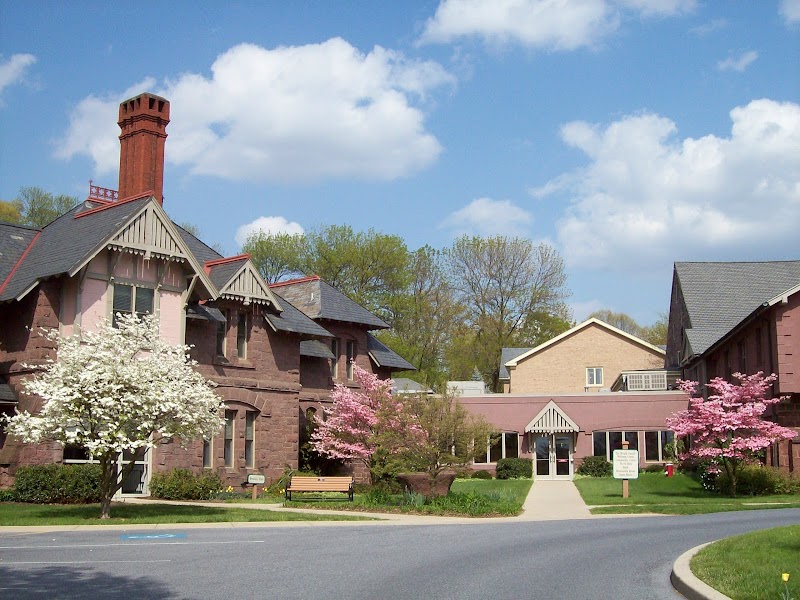



CORNWALL MANOR

BOYD STREET, CORNWALL, PA 17016 (717) 273-2647
Non profit - Corporation 96 Beds Independent Data: November 2025
Trust Grade
90/100
#24 of 653 in PA
Last Inspection: June 2025

Inspected within the last 6 months. Data reflects current conditions.

Overview

Cornwall Manor has received a Trust Grade of A, indicating excellent quality and high recommendations for families considering this nursing home. It ranks #24 out of 653 facilities in Pennsylvania, placing it in the top half, and is the best option among the 10 facilities in Lebanon County. The facility's performance is stable, with only one issue noted in both 2024 and 2025. Staffing is a strong point, with a 5/5 star rating and a turnover rate of 31%, which is significantly lower than the state average, suggesting that staff members are experienced and familiar with the residents. However, there have been concerns noted, including inadequate supervision for residents at risk of wandering and failure to provide appropriate care for respiratory equipment, which could potentially impact resident safety and well-being. Despite these weaknesses, the absence of fines and strong staffing ratings point towards a generally positive environment at Cornwall Manor.

Trust Score
A
90/100
In Pennsylvania
#24/653
Top 3%
Safety Record
Low Risk
No red flags
Inspections
Holding Steady
1 → 1 violations
Staff Stability
○ Average
31% turnover. Near Pennsylvania's 48% average. Typical for the industry.
Penalties
✓ Good
No fines on record. Clean compliance history, better than most Pennsylvania facilities.
Skilled Nurses
✓ Good
Each resident gets 53 minutes of Registered Nurse (RN) attention daily — more than average for Pennsylvania. RNs are trained to catch health problems early.
Violations
○ Average
7 deficiencies on record. Average for a facility this size. Mostly minor or procedural issues.
★★★★★
5.0
Overall Rating
★★★★★
5.0
Staff Levels
★★★☆☆
3.0
Care Quality
★★★★★
5.0
Inspection Score
Stable
2024: 1 issues
2025: 1 issues

The Good

  • 5-Star Staffing Rating · Excellent nurse staffing levels
  • Full Sprinkler Coverage · Fire safety systems throughout facility
  • No fines on record
  • Staff turnover below average (31%)

    17 points below Pennsylvania average of 48%

Facility shows strength in staffing levels, fire safety.

The Bad

Staff Turnover: 31%

15pts below Pennsylvania avg (46%)

Typical for the industry

The Ugly 7 deficiencies on record

Jun 2025 1 deficiency
CONCERN (D)

Potential for Harm - no one hurt, but risky conditions existed

Respiratory Care (Tag F0695)

Could have caused harm · This affected 1 resident

Based on facility policy review, clinical record review, observation, and staff interview it was determined that the facility failed to provide appropriate care for respiratory equipment for one of 18...

Read full inspector narrative →
Based on facility policy review, clinical record review, observation, and staff interview it was determined that the facility failed to provide appropriate care for respiratory equipment for one of 18 sampled residents. (Resident 60) Findings include: Review of facility policy entitled, Oxygen Usage and Storage on Nursing Units, last reviewed on November 6, 2024, revealed that all respiratory therapy equipment was to be changed on a weekly basis. Clinical record review revealed that Resident 60 had diagnoses that included chronic respiratory failure with hypoxia (low oxygen level). On May 17, 2025 the physician ordered oxygen via nasal cannula at bedtime and as needed for labored breathing, dyspnea, and for comfort. On April 5, 2025, the physician ordered for staff to wipe down the concentrator, clean filters, replace humidification bottle, oxygen mask, nasal cannula, and plastic bags weekly on night shift and items should be marked with date of replacement. Observations on June 11, 2025, at 9:59 a.m. and on June 12, 2025, at 12:15 p.m., revealed that the oxygen tubing was dated May 25, 2025. In an interview on June 11, 2025, at 2:09 p.m., the Assistant Director of Nursing confirmed that the oxygen tubing should be changed weekly. 28 Pa. Code 211.12(d)(1)(5) Nursing services.
Aug 2024 1 deficiency
CONCERN (D)

Potential for Harm - no one hurt, but risky conditions existed

Deficiency F0740 (Tag F0740)

Could have caused harm · This affected 1 resident

Based on clinical record review and staff interview, it was determined that the facility failed to provide behavioral health services for one of three sampled residents with mood and behavior concerns...

Read full inspector narrative →
Based on clinical record review and staff interview, it was determined that the facility failed to provide behavioral health services for one of three sampled residents with mood and behavior concerns. (Resident 22) Findings include: Clinical record review revealed that Resident 22 had diagnoses that included anxiety. Review of the care plan revealed the resident had a history of suicidal ideation and alterations to psychosocial well-being with behaviors and delusions. The interventions were for staff to monitor the resident for anxiety, distress, and changed mood or behavior. Staff were to notify the resident's physician, provide social services case assistance, and interventions as needed. On July 26, 2024, staff noted that the resident had refused to go to bed or allow staff to provide incontinence care and stated that she just wanted to die. There was no evidence that staff notified social services or the resident's physician of the alteration in the resident's mood. In an interview on August 1, 2024, at 9: 49 a.m., the Director of Nursing confirmed that staff were to notify social services or the physician for changes in mood and there was no evidence that the resident's care team was made aware of the alteration in mood or that interventions were implemented. 28 Pa. Code 201.14(a) Responsibility of licensee. 28 Pa. Code 211.12(d)(1)(5) Nursing services.
Jul 2023 5 deficiencies
CONCERN (D)

Potential for Harm - no one hurt, but risky conditions existed

Notification of Changes (Tag F0580)

Could have caused harm · This affected 1 resident

Based on clinical record review and staff interview, it was determined that the facility failed to notify the resident's physician and responsible party of a change in condition/injury for one of 19 s...

Read full inspector narrative →
Based on clinical record review and staff interview, it was determined that the facility failed to notify the resident's physician and responsible party of a change in condition/injury for one of 19 sampled residents. (Resident 42) Findings include: Clinical record review revealed that Resident 42 had diagnoses that included Alzheimer's disease, chronic kidney disease, and hypertension (high blood pressure). Review of a nurse's note dated July 17, 2023, revealed that a bruise was observed on the resident's right forearm. There was no documentation to support that the resident's physician or responsible party were notified of the bruise. In an interview on July 28, 2023, at 12:54 p.m., the Director of Nursing confirmed that there was no documented evidence that the resident's physician or responsible party were notified of the change in condition/injury. 28 Pa. Code 211.12(d)(1)(5) Nursing services.
CONCERN (D)

Potential for Harm - no one hurt, but risky conditions existed

Quality of Care (Tag F0684)

Could have caused harm · This affected 1 resident

Based on clinical record review and staff interview, it was determined that the facility failed to ensure that physician's orders were implemented for one of 19 sampled residents. (Resident 5) Finding...

Read full inspector narrative →
Based on clinical record review and staff interview, it was determined that the facility failed to ensure that physician's orders were implemented for one of 19 sampled residents. (Resident 5) Findings include: Clinical record review revealed that Resident 5 had diagnoses that included Alzheimer's disease, hypertension, and orthostatic hypotension. On November 13, 2022, a physician ordered that staff administer a medication (midodrine hydrochloride) three times a day to treat the resident's low blood pressure. Staff was not to give the medication if the resident had a systolic blood pressure of 140 mm/Hg (millimeters of mercury) or more. A review of the May, June, and July 2023, Medication Administration Records revealed that staff administered the medication when the resident's systolic blood pressure was over the established parameter one time in May, four times in June, and two times in July. In an interview on July 28, 2023, at 12:50 p.m., the Director of Nursing confirmed the documentation indicated that Resident 5 received the midodrine hydrochloride when his systolic blood pressure was above 140 mm/Hg. 28 Pa. Code 211.12(d)(1)(5) Nursing services.
CONCERN (D)

Potential for Harm - no one hurt, but risky conditions existed

Deficiency F0697 (Tag F0697)

Could have caused harm · This affected 1 resident

Based on facility policy review, clinical record review, and staff interview, it was determined that the facility failed to ensure pain management was consistent with professional standards and failed...

Read full inspector narrative →
Based on facility policy review, clinical record review, and staff interview, it was determined that the facility failed to ensure pain management was consistent with professional standards and failed to attempt non-pharmacological interventions to alleviate pain prior to the administration of pain medication prescribed on an as needed basis for one of 19 sampled residents. (Resident 65) Findings include: Review of the facility policy entitled, Pain Assessment and Management Policy, reviewed November 9, 2022, revealed that the interdisciplinary care plan team would ensure that pain management and interventions were in place to address pain and the use of as needed pain medications would be based upon person-centered needs. Additional documentation provided by the facility indicated that a standardized 10-point numeric pain rating scale for cognitively impaired residents (0-3 mild pain, 4-6 moderate pain, and 7-10 severe pain) was to be used to determine level of pain. Clinical record review revealed that Resident 65 had diagnoses that included dementia, rheumatoid arthritis, osteoporosis, history of left femur fracture, and presence of artificial left hip joint. There were physician's orders dated February 11, 2023, for the resident to receive the narcotic pain medication morphine sulfate every four hours as needed for pain (failed to identify pain parameters) and acetaminophen every four hours as needed for mild pain. Review of Medication Administration Records revealed that the resident received the as needed narcotic (morphine sulfate) for mild pain on two occasions in June 2023, and once in July 2023. The resident did not receive any doses of as needed acetaminophen for mild pain in June and July, 2023. In addition, Resident 65's care plan directed that probable causes of pain were to be monitored, documented, and removed/limited where possible. There was a lack of documentation to support that non-pharmacological interventions were attempted to remove/limit pain prior to the administration of as needed pain medication on eight occasions in June 2023, and 10 occasions in July 2023. During an interview on July 28, 2023, the Director of Nursing confirmed that parameters had not been ordered for the administration of the narcotic pain medication and that there was a lack of documentation to support that non-pharmacological interventions for pain had been provided prior to the administration of as needed pain medication. 28 Pa. Code 211.9(a)(1) Pharmacy services. 28 Pa. Code 211.12(d)(1)(5) Nursing services.
CONCERN (D)

Potential for Harm - no one hurt, but risky conditions existed

Medication Errors (Tag F0758)

Could have caused harm · This affected 1 resident

Based on clinical record review and staff interview, it was determined that the facility failed to ensure that a PRN (as needed) psychoactive medication was limited to 14 days unless the physician doc...

Read full inspector narrative →
Based on clinical record review and staff interview, it was determined that the facility failed to ensure that a PRN (as needed) psychoactive medication was limited to 14 days unless the physician documented in the clinical record the rationale for the PRN to be extended beyond 14 days for two of 19 sampled residents. (Residents 16, 73) Findings include: Clinical record review revealed that Resident 16 had diagnoses that included anxiety and post-traumatic stress disorder. On May 12, 2023, a physician ordered that staff administer a psychoactive medication (lorazepam) every six hours as needed for anxiety. The order for the lorazepam failed to include a time frame for the continued use of the medication. There was no physician documentation that it was appropriate for the order to be extended beyond 14 days. In an interview on July 28, 2023, the Director of Nursing confirmed that there was no evidence the physician documented a rationale for continuing the medication beyond 14 days. Clinical record review revealed that Resident 73 had diagnoses that included Alzheimer's dementia, aphasia (communication disorder), and anxiety. On July 10, 2023, a physician ordered that staff administer a psychoactive medication (lorazepam) four times a day as needed for anxiety. There was no physician documentation that it was appropriate for the order to be extended beyond 14 days. In an interview on July 28, 2023, at 10:33 a.m., the Director of Nursing confirmed that there was no evidence the physician documented a rationale for continuing the medication beyond 14 days. 28 Pa. code 211.12(d)(1)(5) Nursing services.
CONCERN (E)

Potential for Harm - no one hurt, but risky conditions existed

Accident Prevention (Tag F0689)

Could have caused harm · This affected multiple residents

**NOTE- TERMS IN BRACKETS HAVE BEEN EDITED TO PROTECT CONFIDENTIALITY** Based on facility policy review, clinical record review, and staff interview, it was determined that the facility failed to adeq...

Read full inspector narrative →
**NOTE- TERMS IN BRACKETS HAVE BEEN EDITED TO PROTECT CONFIDENTIALITY** Based on facility policy review, clinical record review, and staff interview, it was determined that the facility failed to adequately supervise residents who were at risk for wandering, elopement, and/or other behavioral symptoms for two of 19 sampled residents. (Residents 16, 73) Findings include: Review of the facility policy entitled, Elopement Assessment, Prevention, and Response, last reviewed November 9, 2022, revealed that an elopement is defined as when a resident leaves the premises without authorization. Clinical record review revealed that Resident 73 was admitted to the facility on [DATE], with diagnoses that included Alzheimer's dementia, anxiety, and adjustment disorder. Review of the Minimum Data Set assessment dated [DATE], revealed that the resident had memory impairment and exhibited wandering behavior. Review of the care plan revealed the resident was at risk for elopement and walked independently without any assistive devices. Review of nursing documentation revealed that Resident 73 was attempting to leave the unit on May 19, 2023. On May 31, 2023, and June 6, 2023, a nurse noted that Resident 73 left the unit and was redirected back in by staff. On June 17, 2023, the resident was attempting to leave the unit. On June 18, 2023, a nurse noted that Resident 73 left the unit and was redirected back by staff. On June 27, 29, and 30, 2023, and July 4, 8, and 10, 2023, Resident 73 was attempting to leave the unit. On July 10, 2023, a nurse noted the resident left the unit and was redirected back by staff. On July 11, 12, 14, 17, and 22, 2023, the resident was again attempting to leave the unit. Review of an incident report dated July 22, 2023, revealed that at 3:50 p.m., Resident 73 was observed outside the main entrance of the building by the receptionist. Further review of facility documention, revealed that the resident had exited through the main unit doors, taken the elevator down to the first floor, and then exited the building. She then walked up the sidewalk around the side of the building to the main entrance where she was observed by the receptionist. The facility failed to provide adequate supervision in order to prevent an elopement. Clinical record review revealed that Resident 16 was admitted to the facility with diagnoses that included Alzheimer's disease and depression. Review of Resident 16's current care plan revealed that the resident wandered into other residents' rooms and had the potential to be physically aggressive towards other residents. Review of the nursing notes revealed that on April 28, 2023, June 22, 23, 24, 25, 26, and 29, 2023, and July 1, 5, and 8, 2023, Resident 16 was found in multiple residents' rooms. On May 2, 2023, a social services note indicated that the resident often wandered into other residents' rooms. Review of a facility incident report and nursing notes revealed that on July 3, 2023, the resident was found outside the unit patio outside the fence. Staff was unaware of the resident's location at that time. The facility failed to provide adequate supervision for Resident 16's elopement and wandering behavior. 28 Pa. Code 211.12(d)(1)(5) Nursing services.
Understanding Severity Codes (click to expand)
Life-Threatening (Immediate Jeopardy)
J - Isolated K - Pattern L - Widespread
Actual Harm
G - Isolated H - Pattern I - Widespread
Potential for Harm
D - Isolated E - Pattern F - Widespread
No Harm (Minor)
A - Isolated B - Pattern C - Widespread

Questions to Ask on Your Visit

  • "Can I speak with families of current residents?"
  • "What's your RN coverage like on weekends and overnight?"

Our Honest Assessment

Strengths
  • • Grade A (90/100). Above average facility, better than most options in Pennsylvania.
  • • No major safety red flags. No abuse findings, life-threatening violations, or SFF status.
  • • No fines on record. Clean compliance history, better than most Pennsylvania facilities.
  • • 31% turnover. Below Pennsylvania's 48% average. Good staff retention means consistent care.
Concerns
  • • No significant concerns identified. This facility shows no red flags across CMS ratings, staff turnover, or federal penalties.
Bottom line: Generally positive indicators. Standard due diligence and a personal visit recommended.

About This Facility

What is Cornwall Manor's CMS Rating?

CMS assigns CORNWALL MANOR an overall rating of 5 out of 5 stars, which is considered much above average nationally. Within Pennsylvania, this rating places the facility higher than 99% of the state's 100 nursing homes. This rating reflects solid performance across the metrics CMS uses to evaluate nursing home quality.

How is Cornwall Manor Staffed?

CMS rates CORNWALL MANOR's staffing level at 5 out of 5 stars, which is much above average compared to other nursing homes. Staff turnover is 31%, compared to the Pennsylvania average of 46%. This relatively stable workforce can support continuity of care.

What Have Inspectors Found at Cornwall Manor?

State health inspectors documented 7 deficiencies at CORNWALL MANOR during 2023 to 2025. These included: 7 with potential for harm.

Who Owns and Operates Cornwall Manor?

CORNWALL MANOR is owned by a non-profit organization. Non-profit facilities reinvest revenue into operations rather than distributing to shareholders. The facility operates independently rather than as part of a larger chain. With 96 certified beds and approximately 75 residents (about 78% occupancy), it is a smaller facility located in CORNWALL, Pennsylvania.

How Does Cornwall Manor Compare to Other Pennsylvania Nursing Homes?

Compared to the 100 nursing homes in Pennsylvania, CORNWALL MANOR's overall rating (5 stars) is above the state average of 3.0, staff turnover (31%) is significantly lower than the state average of 46%, and health inspection rating (5 stars) is much above the national benchmark.

What Should Families Ask When Visiting Cornwall Manor?

Based on this facility's data, families visiting should ask: "Can I visit during a mealtime to observe dining assistance and food quality?" "How do you handle medical emergencies, and what is your hospital transfer rate?" "Can I speak with family members of current residents about their experience?"

Is Cornwall Manor Safe?

Based on CMS inspection data, CORNWALL MANOR has a clean safety record: no substantiated abuse findings (meaning no confirmed cases of resident harm), no Immediate Jeopardy citations (the most serious violation level indicating risk of serious injury or death), and is not on the Special Focus Facility watch list (a federal program monitoring the lowest-performing 1% of nursing homes). The facility has a 5-star overall rating and ranks #1 of 100 nursing homes in Pennsylvania. While no facility is perfect, families should still ask about staff-to-resident ratios and recent inspection results during their visit.

Do Nurses at Cornwall Manor Stick Around?

CORNWALL MANOR has a staff turnover rate of 31%, which is about average for Pennsylvania nursing homes (state average: 46%). Moderate turnover is common in nursing homes, but families should still ask about staff tenure and how the facility maintains care continuity when employees leave.

Was Cornwall Manor Ever Fined?

CORNWALL MANOR has no federal fines on record. CMS issues fines when nursing homes fail to meet care standards or don't correct problems found during inspections. The absence of fines suggests the facility has either maintained compliance or corrected any issues before penalties were assessed. This is a positive indicator, though families should still review recent inspection reports for the full picture.

Is Cornwall Manor on Any Federal Watch List?

CORNWALL MANOR is not on any federal watch list. The most significant is the Special Focus Facility (SFF) program, which identifies the bottom 1% of nursing homes nationally based on persistent, serious quality problems. Not being on this list means the facility has avoided the pattern of deficiencies that triggers enhanced federal oversight. This is a positive indicator, though families should still review the facility's inspection history directly.