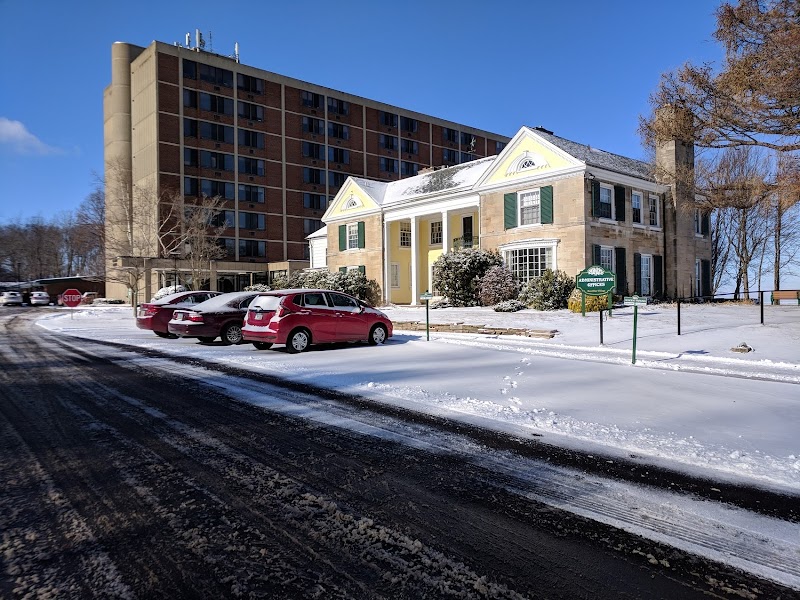
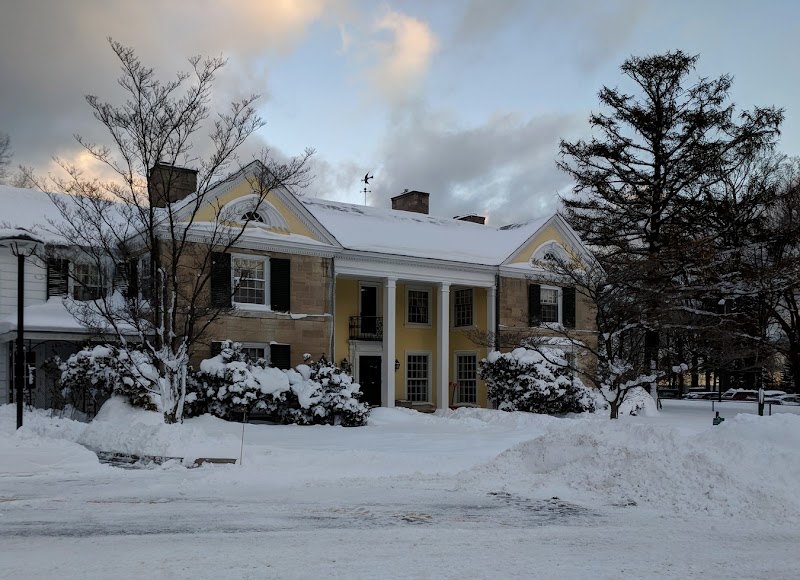


BALL PAVILION, THE

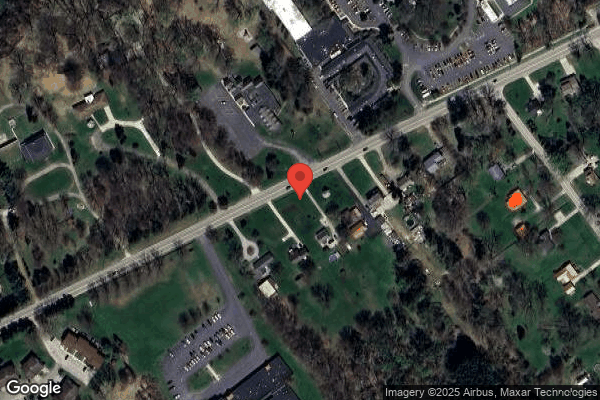
5416 EAST LAKE ROAD, ERIE, PA 16511 (814) 899-8600
Non profit - Church related 85 Beds Independent Data: November 2025
Trust Grade
80/100
#155 of 653 in PA
Last Inspection: March 2025

Within standard 12-15 month inspection cycle. Federal law requires annual inspections.

Overview

Ball Pavilion in Erie, Pennsylvania has a Trust Grade of B+, indicating it is above average and recommended for families considering care options. It ranks #155 out of 653 facilities in Pennsylvania, placing it in the top half statewide, and #7 out of 18 in Erie County, suggesting that only a few local homes offer better options. The facility is improving; it has reduced issues from 7 in 2023 to 3 in 2025. Staffing is rated 4 out of 5 stars, showing stability with 45% turnover, which is slightly below the state average. Notably, there have been no fines recorded, which is a positive sign. However, there are some concerns. Recent inspections revealed that the dish machine was not sanitizing properly, as it only reached 146 degrees instead of the required temperatures, which could risk food safety. Additionally, monthly pharmacy drug regimen reviews were not completed for several residents, indicating potential oversight in medication management. Lastly, the facility has struggled to maintain cleanliness, with wheelchairs observed to have food residue and dust, and some in disrepair. While Ball Pavilion has several strengths, families should weigh these issues when considering this nursing home.

Trust Score
B+
80/100
In Pennsylvania
#155/653
Top 23%
Safety Record
Low Risk
No red flags
Inspections
Getting Better
7 → 3 violations
Staff Stability
○ Average
45% turnover. Near Pennsylvania's 48% average. Typical for the industry.
Penalties
✓ Good
No fines on record. Clean compliance history, better than most Pennsylvania facilities.
Skilled Nurses
✓ Good
Each resident gets 49 minutes of Registered Nurse (RN) attention daily — more than average for Pennsylvania. RNs are trained to catch health problems early.
Violations
○ Average
10 deficiencies on record. Average for a facility this size. Mostly minor or procedural issues.
★★★★☆
4.0
Overall Rating
★★★★☆
4.0
Staff Levels
★★★☆☆
3.0
Care Quality
★★★★☆
4.0
Inspection Score
Stable
2023: 7 issues
2025: 3 issues

The Good

  • 4-Star Staffing Rating · Above-average nurse staffing levels
  • Full Sprinkler Coverage · Fire safety systems throughout facility
  • No fines on record
  • Staff turnover below average (45%)

    3 points below Pennsylvania average of 48%

Facility shows strength in staffing levels, fire safety.

The Bad

Staff Turnover: 45%

Near Pennsylvania avg (46%)

Typical for the industry

The Ugly 10 deficiencies on record

Mar 2025 3 deficiencies
CONCERN (D)

Potential for Harm - no one hurt, but risky conditions existed

Pressure Ulcer Prevention (Tag F0686)

Could have caused harm · This affected 1 resident

**NOTE- TERMS IN BRACKETS HAVE BEEN EDITED TO PROTECT CONFIDENTIALITY** Based on clinical record and policy review, and staff interview, it was determined that the facility failed to provide care rega...

Read full inspector narrative →
**NOTE- TERMS IN BRACKETS HAVE BEEN EDITED TO PROTECT CONFIDENTIALITY** Based on clinical record and policy review, and staff interview, it was determined that the facility failed to provide care regarding treatment, consistent with professional standards of practice, to an existing injury to facilitate wound healing for one of five residents reviewed (Resident R52). Findings include: A facility policy entitled Provide Treatment to Pressure Injury dated 9/09/24, indicated that residents with a Stage 2 (partial thickness loss of dermis [presenting as a shallow open ulcer without slough) be assessed for a positioning program and support devices. Resident R52's clinical record revealed an admission date of 6/20/18, with diagnoses including stroke with left-sided weakness, Type 2 diabetes, dementia, and high blood pressure. Review of assessments and documentation provided by the contracted wound care specialist revealed: -8/19/24, initial assessment of a partial thickness moisture associated skin damage (MASD- erosion or inflammation of the skin caused by long-term exposure to moisture); wound on the left buttock measured 8.6cm (centimeters) X 1.9cm X 0.1cm and included orders for side-to-side offloading while in bed. -10/21/24, partial thickness MASD wound on the left buttock measured 6.2cm X 0.6cm X 0.1cm, condition improving, and included orders for side-to-side offloading while in bed. -12/09/24, partial thickness MASD wound on the left buttock measured 1.5cm X 0.2cm X 0.1cm, condition improving, and included orders for side-to-side offloading while in bed. -2/17/25, partial thickness MASD wound on the left buttock measured 1.5cm X 1.3cm X 0.2cm, condition deteriorating, and included orders for side-to-side offloading while in bed. Review of Resident R52's Minimum Data Set (MDS- standardized assessment tool that measures health status in nursing home residents) revealed: -Quarterly MDS dated , 8/14/24, Section GG0170, Mobility was coded as requiring substantial/maximal assistance to roll left and right. -Quarterly MDS dated [DATE], Section GG0170, Mobility was coded as requiring partial/moderate assistance to roll left to right. -Quarterly MDS dated [DATE], Section GG0170, Mobility was coded as requiring substantial/maximal assistance to roll left and right. -Annual MDS dated [DATE], Section GG0170, Mobility was coded as requiring partial/moderate assistance to roll left to right. Further review of Resident R52's clinical record lacked evidence of a physician's order for side-to-side offloading (turn and position) in bed as recommended by the wound care specialist; the care plan entitled potential/actual impairment to skin integrity dated 2/21/24, lacked evidence of an intervention side-to-side offloading in bed, and lacked documentation that Resident R52 was provided side-to-side offloading while in bed. During an interview on 3/21/25, at 11:46 a.m. the Registered Nurse Assessment coordinator confirmed that Resident R52 should have an offloading side-to-side program in place to prevent worsening of his/her wound. 28 Pa. Code 211.12(d)(1)(3)(5) Nursing Services
CONCERN (E)

Potential for Harm - no one hurt, but risky conditions existed

Drug Regimen Review (Tag F0756)

Could have caused harm · This affected multiple residents

Based on review of facility contract and policy, and clinical record review, and staff interviews, it was determined that the facility failed to ensure that monthly pharmacy drug regimen reviews were ...

Read full inspector narrative →
Based on review of facility contract and policy, and clinical record review, and staff interviews, it was determined that the facility failed to ensure that monthly pharmacy drug regimen reviews were completed for five of five residents reviewed (Residents R11, R13, R17, R30, and R52). Findings include: A facility contract entitled Care Apothecary Consultant Pharmacy Retainer Agreement dated 6/07/24, indicated that: monthly reviews of the drug regimen of each resident at Ball Pavilion will be conducted; recommendations, plans for implementation, and continuing assessment regarding medication policies and use through dated, and signed reports will be provided to administrator; and the pharmacy agrees to be responsible for providing continuous Consultant Pharmacist Services to the facility through the term of the agreement. A facility policy entitled Pharmacy Consultant Report at Ball Pavilion dated 9/09/24, indicated that the Pharmacy Consultant will e-mail Director of Nursing, Administrator, RNAC (Registered Nurse Assessment Coordinator), and Rehab Director with monthly pharmacy summary. Resident R11's clinical record revealed an admission date of 4/26/24, with diagnoses including Parkinson's Disease (disease of involuntary muscle movements) atrial fibrillation (irregular heart beat) and orthostatic hypotension (low blood pressure when in a standing position). Resident R13's clinical record revealed an admission date of 2/22/22, with diagnoses including dementia, Type 2 diabetes (happens when the body cannot use insulin correctly and sugar builds up in the blood), irregular heartbeat, and anxiety. Resident R17's clinical record revealed an admission date of 6/25/24, with diagnoses including dementia with mood disturbance, anoxic brain damage (occurs when the brain is deprived of oxygen, leading to brain cell death and potentially permanent brain damage or even death), heart disease and convulsions. Resident R30's clinical record revealed an admission date of 12/12/23 with a diagnoses of Alzheimer's disease (a disease characterized by forgetfulness and confusion) Type 2 diabetes (condition of poor blood sugar control) and hypertension (high blood pressure). Resident R52's clinical record revealed an admission date of 6/20/18, with diagnoses including stroke with left-sided weakness, Type 2 diabetes, dementia, and high blood pressure. Residents R11, R13, R17, R30, and R52's clinical records lacked evidence that a Pharmacy Consultant review was conducted for October 2024, November 2024, and December 2024. During an interview on 3/20/25, at 2:20 p.m. the Registered Nurse Assessment Coordinator confirmed that the pharmacy did not provide a Pharmacy Consultant to conduct the monthly reviews of the drug regimen of each resident during October 2024, November 2024, and December 2024. 28 Pa. Code 201.14(a) Responsibility of licensee 28 Pa. Code 201.18(b)(1)(3) Management 28 Pa. Code 211.5(f)(x) Medical records 28 Pa. Code 211.9(f)(3) Pharmacy Services 28 Pa. Code 211.12(d)(1)(3)(5) Nursing services
MINOR (B)

Minor Issue - procedural, no safety impact

Assessment Accuracy (Tag F0641)

Minor procedural issue · This affected multiple residents

**NOTE- TERMS IN BRACKETS HAVE BEEN EDITED TO PROTECT CONFIDENTIALITY** Based on review of clinical records and Minimum Data Set (MDS - federally mandated standardized assessment conducted at specific...

Read full inspector narrative →
**NOTE- TERMS IN BRACKETS HAVE BEEN EDITED TO PROTECT CONFIDENTIALITY** Based on review of clinical records and Minimum Data Set (MDS - federally mandated standardized assessment conducted at specific intervals to plan resident care), and staff interview, it was determined that the facility failed to ensure that the MDS assessments accurately reflected the status for three of 24 residents reviewed (Residents R35, R51, and R52). Findings include: Resident 35's clinical record revealed an admission date of 10/01/24, with diagnoses including dementia, stroke with right-sided weakness, Schizophrenia (a serious mental health condition that affects how people think, feel and behave, and may result in a mix of hallucinations, delusions, and disorganized thinking and behavior), and intellectual disabilities. Review of R35's Quarterly MDS dated [DATE], under Section M0300, Skin Conditions revealed it was coded as having a Stage Three (full thickness tissue loss). Resident R35's clinical record revealed assessment documentation provided by the contracted wound care specialist as follows: -11/11/24, initial examination of moisture associated skin damage (MASD- erosion or inflammation of the skin caused by long-term exposure to moisture) partial thickness wound to the gluteal cleft. -11/25/24, follow-up assessment MASD partial thickness wound to the gluteal cleft. Resident R51's clinical record revealed an admission date of 7/08/24, with diagnoses including sepsis (the body's immune system has an extreme response to an infection, causing organ dysfunction), Stage Four pressure ulcer of the right buttock (full-thickness tissue loss with exposed bone, tendons, or muscle), and quadriplegia (paralysis that affects all a person's limbs). Review of Resident R51's Quarterly MDS dated [DATE], under Section M0300, Skin Conditions revealed it was coded as a Stage Four, not present on admission. Resident R51's clinical record revealed assessment documentation provided by the contracted wound care specialist dated 12/09/24, and indicated that his/her Stage Four wound was not acquired at the facility. Resident R52's clinical record revealed an admission date of 6/20/18, with diagnoses including stroke with left-sided weakness, Type 2 diabetes, dementia, and high blood pressure. Review of Resident R52's Quarterly MDS's dated 10/23/24, and 12/11/24, and Annual MDS dated [DATE], Section M Skin Conditions, was coded as having a Stage Three pressure ulcer. Resident R52's clinical record revealed assessments and documentation provided by the contracted wound care specialist as follows: -8/19/24, initial assessment of a partial thickness moisture associated skin disorder wound on the left buttock measured 8.6 cm (centimeters) X 1.9 cm X 0. 1cm and included orders for side-to-side offloading while in bed. -10/21/24, partial thickness moisture associated skin disorder wound on the left buttock measured 6. 2cm X 0.6 cm X 0. 1cm, condition improving, and included orders for side-to-side offloading while in bed. -12/09/24, partial thickness moisture associated skin disorder wound on the left buttock measured 1. 5cm X 0. 2cm X 0. 1cm, condition improving, and included orders for side-to-side offloading while in bed. -2/17/25, partial thickness moisture associated skin disorder wound on the left buttock measured 1. 5cm X 1.3 cm X 0. 2cm, condition deteriorating, and included orders for side-to-side offloading while in bed. During an interview on 3/21/25, at 11:56 a.m. the Registered Nurse Assessment Coordinator confirmed that the wound staging on the above MDS's for Residents R35, R51, and R52 were coded incorrectly. 28 Pa. Code 201.14(a) Responsibility of licensee 28 Pa. Code 211.5(f)(11)(iv)(ix) Medical records
May 2023 7 deficiencies
CONCERN (D)

Potential for Harm - no one hurt, but risky conditions existed

Deficiency F0657 (Tag F0657)

Could have caused harm · This affected 1 resident

Based on review of facility policy and clinical records and staff interview, it was determined that the facility failed to update and/or individualize care plans for two of 17 residents reviewed (Resi...

Read full inspector narrative →
Based on review of facility policy and clinical records and staff interview, it was determined that the facility failed to update and/or individualize care plans for two of 17 residents reviewed (Residents R11 and R23). Findings include: Review of facility policy entitled, Care Plan dated 11/2022, indicated that .each time a resident's condition indicates; a new care plan will be done to address the most current problem/concern. Review of Resident R11's clinical record revealed an admission date of 12/29/21, with diagnoses that included fractured right femur, anxiety, dementia and history of falling. Review of clinical record documentation and fall investigation tool for Resident R11, revealed that he/she fell on 2/21/23, at 7:00 p.m. resulting in a right femur fracture requiring hospitalization. There was no evidence that the care plan was updated to reflect the fall and interventions. Review of Resident R23's clinical record revealed an admission date of 9/1/22, with diagnoses that included high blood pressure, fractured right femur, and dementia. Review of clinical record documentation and fall investigation tool for Resident R23, revealed that he/she fell on 1/9/23, at 7:45 p.m. resulting in a right femur fracture requiring hospitalization and surgical intervention. Review of Resident R23's care plan on 5/11/23, related to fall's reflected that resident was found on the floor on 9/9/22, and failed to reflect the 1/9/23 fall that resulted in a fracture or interventions implemented as a result of the 1/9/23, fall and/or fracture. During an interview on 5/12/23, at 11:38 a.m. the Registered Nurse Assessment Coordinator confirmed that Resident R11 and R23's fall care plan was not updated to reflect most recent fall and/or fracture. 28 Pa. Code 211.5(f) Clinical records 28 Pa. Code 211.12(d)(1)(5) Nursing services
CONCERN (D)

Potential for Harm - no one hurt, but risky conditions existed

Incontinence Care (Tag F0690)

Could have caused harm · This affected 1 resident

Based on review of clinical records, observations and staff interview, it was determined that the facility failed to provide appropriate care regarding a urinary catheter (a tube placed and held in th...

Read full inspector narrative →
Based on review of clinical records, observations and staff interview, it was determined that the facility failed to provide appropriate care regarding a urinary catheter (a tube placed and held in the bladder to drain urine) for one of 17 residents reviewed (Resident R7). Findings include: Review of Resident R7's Quarterly Minimum Data Set (MDS-a mandated assessment of a residents abilities and care needs) assessment, dated March 22, 2023, revealed that the resident was cognitively impaired, required extensive assistance for daily care, and had an indwelling urinary catheter Observations in Resident R7's room on May 10, 2023, at 9:12 a.m. and again on May 11, 2023, at 10:00 a.m. revealed that the resident's urinary drainage bag and tubing were lying on the floor without a cover over the drainage bag. Interview with the Nursing Home Administrator on May 11, 2023, at 10:10 a.m. confirmed that Resident R7's urinary drainage bag and tubing should not have been on the floor and should have a cover over the drainage bag. 28 Pa. Code 211.12(d)(1)(5) Nursing services
CONCERN (D)

Potential for Harm - no one hurt, but risky conditions existed

Respiratory Care (Tag F0695)

Could have caused harm · This affected 1 resident

Based on review of clinical records, observations, and staff interview, it was determined that the facility failed to promote cleanliness and prevent the potential spread of infection regarding respir...

Read full inspector narrative →
Based on review of clinical records, observations, and staff interview, it was determined that the facility failed to promote cleanliness and prevent the potential spread of infection regarding respiratory care equipment according to physician orders, and failed to administer supplemental oxygen as ordered for two of 17 residents reviewed (Residents R7 and R15). Findings include: Review of a facility policy entitled, Oxygen Concentrator (device that takes air from your surroundings, extracts oxygen and filters it into purified oxygen for you to breathe) Operation dated November 2022, indicated that oxygen will be administered to residents at the rate ordered by the physician and per oxygen concentrator with humidifier unless otherwise ordered. Review of Resident R7's clinical record revealed an admission date of 1/04/22, with diagnoses that included respiratory failure, pressure ulcer of the sacral region, bone infection of the sacral region, dementia and high blood pressure. Resident R7's physician's orders dated 3/03/23, included an order for Albuterol Sulfate (medication used to open airways via nebulizer mask) nebulization solution four times a day. Resident R7 also had an order for a wound vac (vacuum machine used to remove drainage from a wound). Observations on 5/10/23, at 9:00 a.m. revealed Resident R7's wound vac machine and drainage tubing resting on top of Resident R7's nebulizer mask. During an interview on 5/10/23, at 9:35 a.m. the Director of Nursing confirmed that the nebulizer mask should be stored in a bag while not in use and the wound vac machine and drainage tubing should not have been resting on Resident R7's nebulizer mask. Review of Resident R15's clinical record revealed an admission date of 6/20/18, with diagnoses that included stroke with left-sided weakness, Type 2 Diabetes (affects how the body uses glucose (sugar)), dementia, mood disturbance, and high blood pressure. The clinical record also revealed a physician's order dated 3/15/22, for oxygen at two liters per minute via concentrator and to change the distilled water in the humidifier bottle every day on night shift. Observations on 5/09/23, and 5/12/23, revealed that Resident R15's supplemental oxygen concentrator was set at three liters per minute continuously, and that the humidifier bottle lacked distilled water. During an interview on 5/12/23, at 8:40 a.m. Licensed Practical Nurse Employee E2 confirmed that Resident R13's oxygen concentrator was not set at the correct liters per minute as ordered by the physician and that the humidifier bottle was empty. 28 Pa. Code 211.12(d)(1)(5) Nursing services
CONCERN (D)

Potential for Harm - no one hurt, but risky conditions existed

Infection Control (Tag F0880)

Could have caused harm · This affected 1 resident

Based on review of facility policy, clinical records, observations, and staff interview, it was determined that the facility failed to prevent the potential for cross contamination during a dressing c...

Read full inspector narrative →
Based on review of facility policy, clinical records, observations, and staff interview, it was determined that the facility failed to prevent the potential for cross contamination during a dressing change for one of two residents with pressure ulcers requiring wound care reviewed (Resident R7). Findings include: Review of the facility policy entitled, Dressings/Prevention of Infection, dated 11/15/2022, indicated to remove the soiled dressing, remove soiled gloves and then wash hands. Review of Resident R7's clinical record revealed an admission date of 1/04/22, with diagnoses that included respiratory failure, pressure ulcer of the sacral region, bone infection of the sacral region, dementia and high blood pressure. Review of Resident R7's physician's orders dated 3/03/23, included an order to cleanse the sacral wound and apply a wound vac (vacuum machine used to remove drainage from a wound). Observation of wound care on 5/10/23, at 9:00 a.m. revealed that the Director of Nursing moved the garbage can closer to Resident R7 with their gloved hands and then proceeded to remove the soiled dressing without removing gloves or washing hands and then continued to cleanse the wound without removing gloves or washing hands. During an interview on 5/10/23, at 9:35 a.m. the Director of Nursing confirmed he/she did not change gloves and did not complete hand hygiene when indicated. 28 Pa. Code 201.18 (b)(2) Management 28 Pa. Code 211.10(d) Resident care policies 28 Pa. Code 211.12(d)(1)(2)(5) Nursing services
CONCERN (E)

Potential for Harm - no one hurt, but risky conditions existed

Safe Environment (Tag F0584)

Could have caused harm · This affected multiple residents

Based on observations and staff interviews, it was determined that the facility failed to maintain a clean homelike environment for two of two resident neighborhoods (A and B Wings). Findings include:...

Read full inspector narrative →
Based on observations and staff interviews, it was determined that the facility failed to maintain a clean homelike environment for two of two resident neighborhoods (A and B Wings). Findings include: Observations between 5/09/23, and 5/11/23, of eight resident wheelchairs (Residents R1, R2, R4, R25, R32, R34, R36, R39, and R50) revealed wheelchairs with dried solid/food substances, dried liquid, and a build-up of dust and debris on the wheelchair armrest, seats, wheels, and frames. One resident wheelchair was observed to have a torn armrest that had been taped with black plastic electrical tape, and one resident wheelchair to have an armrest in disrepair. During an interview on 5/11/23, at 11:00 a.m. the Director of Nursing confirmed the presence of dried solid/food substances, dried liquid, and a build-up of dust and debris on the wheelchair seats, wheels and frames, and one wheelchair with a torn armrest that had been taped with black plastic electrical tape, and one wheelchair with an armrest in disrepair on B-Wing. During an interview on 5/11/23, at 11:50 a.m. Registered Nurse Employee E1 confirmed the presence of dried solid/food substances, dried liquid, and build-up of dust and debris on the wheelchair armrest, seat, wheels and frame on A-Wing. 28 Pa. Code 207.2(a) Administrator's responsibility 28 Pa. Code 201.18(b)(1) Management
CONCERN (E)

Potential for Harm - no one hurt, but risky conditions existed

Comprehensive Care Plan (Tag F0656)

Could have caused harm · This affected multiple residents

Based on review of facility policy and clinical records, and staff interviews, it was determined that the facility failed to develop a comprehensive care plan for six of 17 residents reviewed (Residen...

Read full inspector narrative →
Based on review of facility policy and clinical records, and staff interviews, it was determined that the facility failed to develop a comprehensive care plan for six of 17 residents reviewed (Residents R7, R55, R30, R14, R25, and R15). Findings include: Review of facility policy entitled, Care Plan dated 11/2022, revealed that .each time a resident's condition indicates; a new care plan will be done to address the most current problem/concern and The care plan will include measurable objectives and timetables to meet each resident's medical, nursing, mental, and psychosocial needs identified in the comprehensive assessment. Review of Resident R7's clinical record revealed an admission date of 1/04/22, with diagnoses that included respiratory failure, pressure ulcer of the sacral region, bone infection of the sacral region, dementia and high blood pressure. Review of Resident R7's Quarterly Minimum Data Set (MDS-a mandated assessment of a residents abilities and care needs) assessment, dated March 22, 2023, revealed that the resident was cognitively impaired, required extensive assistance for daily care,complained of constant pain and had an indwelling urinary catheter (a tube placed and held in the bladder to drain urine). Review of Resident R7's comprehensive care plan on 5/11/23, lacked reference to Resident R7's urinary catheter and pain status. Review of Resident R55's clinical record revealed an admission date of 4/14/23, with diagnoses that included chronic kidney disease, urinary tract infection, diabetes (high blood sugar) and heart failure. Review of clinical record documentation revealed Resident R55 was started on an antibiotic on 4/23/23, for a urinary tract infection. Review of Resident R55's comprehensive care plan on 5/11/23, lacked reference to Resident R55's urinary status or urinary tract infection. Review of Resident R30's clinical record revealed an admission date of 1/25/20, with diagnoses that included dysphagia (difficulty swallowing food and/or liquids), dementia, and gastro-esophageal reflux disease (occurs when stomach acid repeatedly flows back into the tube connecting your mouth and stomach). Review of clinical record documentation revealed Resident R30 had a significant weight loss (weight loss of 5% in the last 30-day and/or 10% in the last six months) of 12.98% in the last six months. Review of physician's orders revealed Resident R30 was on a pureed diet (texture modified diet) and utilized a divided plate and Kennedy cup (light weight spill proof drinking cup with straw) Review of Resident R30's comprehensive care plan on 5/11/23, lacked reference to Resident R30's nutritional status, diet orders, or adaptive equipment required for meals. Review of Resident R14's clinical record revealed an admission date of 6/21/21, with diagnoses that included diabetes, high blood pressure, and atrial fibrillation (irregular heart rhythm that can lead to blood clots in the heart). Review of Resident R14's clinical record revealed physician's order dated 9/28/22, for Eliquis (medication to prevent blood clots) 5 milligrams (mg) by mouth twice a day, Insulin Lispro (medication used to control high blood sugar) 4 units subcutaneous (sq) four times a day before meals and at bedtime, and Lantus (medication used to control high blood sugar) 18 units sq once a day at 9:00 p.m. and physician orders dated 10/11/22, for Lantus 14 units sq once a day at 6:00 a.m. Review of Resident R14's comprehensive care plan on 5/11/23, lacked reference to Resident R14's diabetes or usage of Insulin Lispro or Lantus as well as reference to Resident R14's atrial fibrillation and usage of Eliquis. Review of Resident R25's clinical record revealed an admission date of 8/5/16, with diagnoses that included dementia, high blood pressure, and right leg deep vein thrombosis (blood clot that formed in the leg). Review of Resident R25's clinical record revealed a physician's order dated 6/29/22, for Xarelto (medication to prevent blood clots) 10 mg by mouth daily. Review of Resident R25's comprehensive care plan on 5/11/23, lacked reference to Resident R25's history of blood clots or usage of Xarelto. Review of Resident R15's clinical record revealed an admission date of 6/20/18, with diagnoses including stroke with left-sided weakness, Type 2 Diabetes (affects how the body uses glucose (sugar)), dementia, mood disturbance, and high blood pressure. Review of Resident R15's clinical record revealed a physician's order dated 3/15/22, for oxygen at two liters per minute. Review of Resident R15's comprehensive care plan on 5/11/23, lacked reference to providing supplemental oxygen. Observations on 5/09/23, and 5/12/23, revealed Resident R15 lying in bed with supplemental oxygen being administered through a nasal cannula (tubing that delivers supplemental oxygen through the nose). During an interview on 5/12/23, at 11:38 a.m. Registered Nurse Assessment Coordinator confirmed that care plans had not been developed to address Resident R7's pain or indwelling catheter, R55's urinary tract infection, R30's nutritional status, R14's insulin, or anticoagulant, R25's anticoagulant, and R15's oxygen usage. 28 Pa. Code 201.14(a) Responsibility of licensee 28 Pa. Code 211.11(a) Resident care plan 28 Pa. Code 211.12(d)(3)(5) Nursing services
CONCERN (F)

Potential for Harm - no one hurt, but risky conditions existed

Food Safety (Tag F0812)

Could have caused harm · This affected most or all residents

Based on observations and staff interviews, it was determined that the facility failed monitor the sanitizing functions of the dish machine in the main kitchen, and store food and food containers in a...

Read full inspector narrative →
Based on observations and staff interviews, it was determined that the facility failed monitor the sanitizing functions of the dish machine in the main kitchen, and store food and food containers in a safe and sanitary manner in one of three nourishment refrigerators (B wing). Findings include: Review of a facility policy entitled, Dish Machine Temperatures dated July 2022, indicated that dish machine temperatures will be taken at the beginning of breakfast, dinner, supper dish runs, and any temperature that is below regulation (160-180 Fahrenheit degrees (F) wash, 180-200 F final rinse) will be reported immediately to the supervisor/coordinator on duty, and in the event that a dish machine is not working properly, paper products will be used for meal service. Review of a facility policy entitled Pantry Stock of Nursing Units and Dining Rooms dated July 2022, indicated that storage areas will be cleaned and organized as necessary. Observation on 5/09/23, at 2:00 p.m. the dish washer washing cycle reached 146 F, and final rinse cycle reached 156 F. Review of the High Temp Dish Log for May 2023, revealed that the wash cycle temperature failed to reach the minimum 160 F for the following meals; supper on 5/02/23, 5/04/23, and 5/07/23: the final rinse cycle failed to reach the minimum required 180 F on the following meals; dinner on 5/01/23, 5/03/23, 5/06/23, 5/08/23, and 5/09/23; supper on 5/02/23, 5/03/23, 5/04/23, and 5/07/23, or 12 of 26 meals documented. During an interview on 5/09/23, at 2:00 p.m. the Dietary Manager confirmed that the recorded dish washer temperatures for the above mentioned meals did not reach the minimum required 160 F for the wash cycle and 180 F for the final rinse cycle, and that dietary staff failed to notify the manager/coordinator and that meals were not provided the residents on paper products. Observations on 5/09/23, at 3:37 p.m. and 5/10/23, at 11:30 a.m. of the B wing nourishment revealed a brown dried substance splashed on middle and bottom shelves and down the left side panel of the internal refrigerator wall, and a yellow dried substance on the top door shelf. Interview on 5/10/23, at 11:30 a.m. with Registered Nurse Employee E3 confirmed the brown and yellow dried substances in the refrigerator and that the condition did not meet appropriate sanitary conditions, he/she believes that dietary staff clean it daily when they stock the refrigerator and take temperatures, and nursing staff are to clean up spills if they notice them. Interview on 5/10/23, at 12:20 p.m. with the Dietary Manager confirmed that whoever spills food/liquids in the refrigerators or finds the spilled substance should clean it up. 28 Pa. Code 201.14(a) Responsibility of licensee 28 Pa. Code 201.18(b)(1)(3) Management 28 Pa. Code 211.6(f) Dietary services
Understanding Severity Codes (click to expand)
Life-Threatening (Immediate Jeopardy)
J - Isolated K - Pattern L - Widespread
Actual Harm
G - Isolated H - Pattern I - Widespread
Potential for Harm
D - Isolated E - Pattern F - Widespread
No Harm (Minor)
A - Isolated B - Pattern C - Widespread

Questions to Ask on Your Visit

  • "Can I speak with families of current residents?"
  • "What's your RN coverage like on weekends and overnight?"

Our Honest Assessment

Strengths
  • • Grade B+ (80/100). Above average facility, better than most options in Pennsylvania.
  • • No major safety red flags. No abuse findings, life-threatening violations, or SFF status.
  • • No fines on record. Clean compliance history, better than most Pennsylvania facilities.
  • • 45% turnover. Below Pennsylvania's 48% average. Good staff retention means consistent care.
Concerns
  • • No significant concerns identified. This facility shows no red flags across CMS ratings, staff turnover, or federal penalties.
Bottom line: Generally positive indicators. Standard due diligence and a personal visit recommended.

About This Facility

What is Ball Pavilion, The's CMS Rating?

CMS assigns BALL PAVILION, THE an overall rating of 4 out of 5 stars, which is considered above average nationally. Within Pennsylvania, this rating places the facility higher than 99% of the state's 100 nursing homes. This rating reflects solid performance across the metrics CMS uses to evaluate nursing home quality.

How is Ball Pavilion, The Staffed?

CMS rates BALL PAVILION, THE's staffing level at 4 out of 5 stars, which is above average compared to other nursing homes. Staff turnover is 45%, compared to the Pennsylvania average of 46%. This relatively stable workforce can support continuity of care.

What Have Inspectors Found at Ball Pavilion, The?

State health inspectors documented 10 deficiencies at BALL PAVILION, THE during 2023 to 2025. These included: 9 with potential for harm and 1 minor or isolated issues.

Who Owns and Operates Ball Pavilion, The?

BALL PAVILION, THE is owned by a non-profit organization. Non-profit facilities reinvest revenue into operations rather than distributing to shareholders. The facility operates independently rather than as part of a larger chain. With 85 certified beds and approximately 67 residents (about 79% occupancy), it is a smaller facility located in ERIE, Pennsylvania.

How Does Ball Pavilion, The Compare to Other Pennsylvania Nursing Homes?

Compared to the 100 nursing homes in Pennsylvania, BALL PAVILION, THE's overall rating (4 stars) is above the state average of 3.0, staff turnover (45%) is near the state average of 46%, and health inspection rating (4 stars) is above the national benchmark.

What Should Families Ask When Visiting Ball Pavilion, The?

Based on this facility's data, families visiting should ask: "Can I visit during a mealtime to observe dining assistance and food quality?" "How do you handle medical emergencies, and what is your hospital transfer rate?" "Can I speak with family members of current residents about their experience?"

Is Ball Pavilion, The Safe?

Based on CMS inspection data, BALL PAVILION, THE has a clean safety record: no substantiated abuse findings (meaning no confirmed cases of resident harm), no Immediate Jeopardy citations (the most serious violation level indicating risk of serious injury or death), and is not on the Special Focus Facility watch list (a federal program monitoring the lowest-performing 1% of nursing homes). The facility has a 4-star overall rating and ranks #1 of 100 nursing homes in Pennsylvania. While no facility is perfect, families should still ask about staff-to-resident ratios and recent inspection results during their visit.

Do Nurses at Ball Pavilion, The Stick Around?

BALL PAVILION, THE has a staff turnover rate of 45%, which is about average for Pennsylvania nursing homes (state average: 46%). Moderate turnover is common in nursing homes, but families should still ask about staff tenure and how the facility maintains care continuity when employees leave.

Was Ball Pavilion, The Ever Fined?

BALL PAVILION, THE has no federal fines on record. CMS issues fines when nursing homes fail to meet care standards or don't correct problems found during inspections. The absence of fines suggests the facility has either maintained compliance or corrected any issues before penalties were assessed. This is a positive indicator, though families should still review recent inspection reports for the full picture.

Is Ball Pavilion, The on Any Federal Watch List?

BALL PAVILION, THE is not on any federal watch list. The most significant is the Special Focus Facility (SFF) program, which identifies the bottom 1% of nursing homes nationally based on persistent, serious quality problems. Not being on this list means the facility has avoided the pattern of deficiencies that triggers enhanced federal oversight. This is a positive indicator, though families should still review the facility's inspection history directly.