LECOM AT PRESQUE ISLE, INC
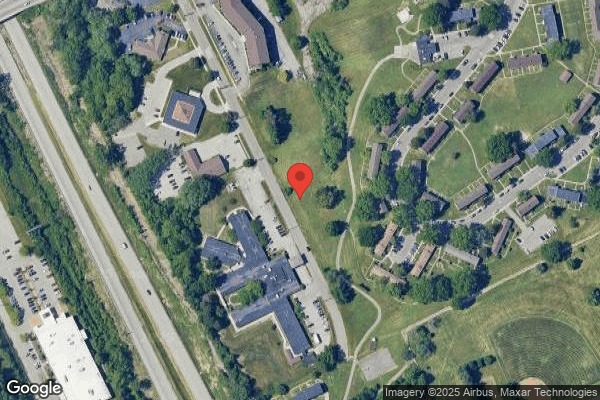
4114 SCHAPER AVENUE, ERIE, PA 16508 (814) 868-0831
Non profit - Corporation 135 Beds Independent Data: November 2025
Trust Grade
80/100
#193 of 653 in PA
Last Inspection: January 2025

Within standard 12-15 month inspection cycle. Federal law requires annual inspections.

Overview

LECOM at Presque Isle, Inc. in Erie, Pennsylvania has a Trust Grade of B+, indicating it is above average and recommended for families considering care options. It ranks #193 out of 653 facilities in Pennsylvania, placing it in the top half, and #8 out of 18 in Erie County, meaning there are only a few local alternatives that perform better. The facility is improving, having reduced its issues from three in 2024 to two in 2025. Staffing is average, with a 3 out of 5 rating and a turnover rate of 47%, which is on par with the state average. Fortunately, there are no fines on record, suggesting compliance with regulations. However, there are some concerns. Recent inspections revealed that the facility failed to maintain respiratory care equipment properly, affecting five residents, and did not consistently offer bedtime snacks, which could lead to long gaps between meals. Additionally, cleanliness issues were noted, as privacy curtains in two residents' rooms were found heavily soiled. While the facility has many strengths, families should be aware of these weaknesses when making a decision.

Trust Score
B+
80/100
In Pennsylvania
#193/653
Top 29%
Safety Record
Low Risk
No red flags
Inspections
Getting Better
3 → 2 violations
Staff Stability
⚠ Watch
47% turnover. Above average. Higher turnover means staff may not know residents' routines.
Penalties
✓ Good
No fines on record. Clean compliance history, better than most Pennsylvania facilities.
Skilled Nurses
○ Average
Each resident gets 37 minutes of Registered Nurse (RN) attention daily — about average for Pennsylvania. RNs are the most trained staff who monitor for health changes.
Violations
○ Average
7 deficiencies on record. Average for a facility this size. Mostly minor or procedural issues.
★★★★☆
4.0
Overall Rating
★★★☆☆
3.0
Staff Levels
★★★★☆
4.0
Care Quality
★★★★☆
4.0
Inspection Score
Stable
2024: 3 issues
2025: 2 issues

The Good

  • 4-Star Quality Measures · Strong clinical quality outcomes
  • Full Sprinkler Coverage · Fire safety systems throughout facility
  • No fines on record

Facility shows strength in quality measures, fire safety.

The Bad

Staff Turnover: 47%

Near Pennsylvania avg (46%)

Higher turnover may affect care consistency

The Ugly 7 deficiencies on record

Jun 2025 1 deficiency
MINOR (B) 📢 Someone Reported This

A family member, employee, or ombudsman was alarmed enough to file a formal complaint

Minor Issue - procedural, no safety impact

Comprehensive Assessments (Tag F0636)

Minor procedural issue · This affected multiple residents

**NOTE- TERMS IN BRACKETS HAVE BEEN EDITED TO PROTECT CONFIDENTIALITY** Based on review of the Resident Assessment Instrument (RAI) User's Manual (provides instructions and guidelines for completing r...

Read full inspector narrative →
**NOTE- TERMS IN BRACKETS HAVE BEEN EDITED TO PROTECT CONFIDENTIALITY** Based on review of the Resident Assessment Instrument (RAI) User's Manual (provides instructions and guidelines for completing required Minimum Data Set [MDS - federally mandated standardized assessment conducted at specific intervals to plan resident care] assessments), dated October 2024, and clinical records, and staff interview, it was determined that the facility failed to make certain that MDS assessments were completed in the required time frame for four of sixteen residents reviewed (Resident R1, R2, R8, and R13). Findings include: Review of the Long-Term Care Facility RAI User's manual, revealed that for an admission MDS, the MDS completion date, and the Care Area Completion Date is to be completed no later than 14 calendar days following admission (admission date plus 13 calendar days), and the Care Plan Decision Date is to be the Care Area Completion Date plus 7 calendar days. The RAI manual further revealed that for a quarterly MDS, the MDS completion date is the Assessment Reference Date (ARD) plus 14 calendar days and for a discharge return anticipated MDS, the MDS completion date is the discharge date plus 14 calendar days. Resident R1 was admitted to the facility on [DATE], with diagnoses that included tracheostomy (a hole made through the front of the neck and into the windpipe [trachea] where a tube is placed to keep the hole open for breathing), traumatic brain injury - (TBI - brain injury cause by an outside force that may result in permanent or temporary impairment in physical and/or mental functioning), and Seizures. Resident R1 had an admission MDS with an ARD of 5/20/25. The MDS completion date and Care Area Completion date were due 5/27/25, and the Care Plan Decision date was due 6/2/25. The MDS completion date, Care Area Completion date, and Care Plan Decision date were all signed off as completed on 6/18/25, twenty-two and fifteen days after their due date, respectively. Resident R2 was admitted to the facility on [DATE], with diagnoses that included Chronic Obstructive Pulmonary Disease (COPD - a condition that prevents airflow to the lungs resulting in difficulty breathing), lung Cancer, and high blood pressure. Resident R2 had a quarterly MDS with an ARD of 5/19/25. The MDS completion date was due 6/2/25. The MDS completion date was signed off as completed on 6/18/25, sixteen days after the due date. Resident R8 was admitted to the facility on [DATE], with diagnoses that include dementia (loss of cognitive functioning affecting a persons memory and behaviors), anxiety (a condition that causes a person to be nervous, uneasy, or worried about something or someone), and high blood pressure. Resident R8 had an admission MDS with an ARD of 5/14/25. The MDS completion date and Care Area Completion date were due 5/21/25, and the Care Plan Decision date was due 5/28/25. The MDS completion date, Care Area Completion date, and Care Plan Decision date were all signed off as completed on 6/18/25, twenty-eight and twenty-one days after their due date, respectively. Resident R13 was admitted to the facility on [DATE], with diagnoses that included COPD, respiratory failure (a condition where you don't get enough oxygen or you get too much carbon dioxide in your body), and high blood pressure. Resident R13 had a discharge return anticipated MDS with an ARD of 5/20/25. The MDS completion date was due 6/3/25. The MDS completion date was signed off as completed on 6/18/25, or fifteen days after the due date. Resident R13 had another discharge return anticipated MDS with an ARD of 5/30/25. The MDS completion date was 6/13/25. The MDS completion date was signed off as completed on 6/18/25, or five days after the due date. During a telephone interview on 6/18/25, at 4:16 p.m. Nursing Home Administrator confirmed the facility failed to make certain that MDS assessments were completed within the required time frame for four of sixteen residents reviewed as identified above. 28 Pa. Code 201.14(a) Responsibility of licensee
Jan 2025 1 deficiency
CONCERN (E)

Potential for Harm - no one hurt, but risky conditions existed

Respiratory Care (Tag F0695)

Could have caused harm · This affected multiple residents

Based on review of facility policies and clinical records, observations, and staff interview, it was determined that the facility failed to appropriately maintain respiratory care equipment and in acc...

Read full inspector narrative →
Based on review of facility policies and clinical records, observations, and staff interview, it was determined that the facility failed to appropriately maintain respiratory care equipment and in accordance with physician's orders for five of 23 residents reviewed (Residents R4, R40, R75, R95 and R205). Findings include: A facility policy entitled, Oxygen Concentrator (device that takes air from your surroundings, extracts oxygen and filters it into purified oxygen to breathe) dated 10/28/24, revealed to not run concentrator with a dusty filter. A facility policy entitled, Oxygen Therapy dated 10/28/24, revealed that humidification (process that adds moisture to oxygen therapy to prevent a dry, irritated respiratory tract) for patient comfort may be provided at any flow rate and whenever specifically ordered by the physician. A facility policy entitled, Oxygen Therapy via Nasal Cannula (thin, flexible tube that goes around your head with two prongs that go inside your nostrils that deliver the oxygen) dated 10/28/24, revealed to verify physician's order, attach the humidifying device, if liter flow is 4 or greater or upon resident request, and change the prefilled bottle humidifier when low or at least weekly. Resident R4's clinical record revealed an admission date of 10/24/17, with diagnoses that included Alzheimer's disease (brain disorder that gradually destroys memory and thinking skills, and eventually the ability to perform everyday tasks), heart disease, heart failure, myopathy (disease that affects the muscles that control voluntary movement). Resident R4's clinical record lacked evidence of a physician's order/treatment to provide humidification to his/her supplemental oxygen and clean the concentrator filter. Observation on 1/11/25, at 2:25 p.m. revealed Resident R4's oxygen concentrator filter's external surface was covered with a white/grey fluffy substance and the prefilled humidifier bottle attached to the oxygen tubing and secured to the external surface of the concentrator was empty. Observation on 1/12/25, at 11:53 a.m. revealed Resident R4's oxygen concentrator filter was clean on the external surface and covered with white/grey fluffy substance on the internal surface and a full prefilled humidifier bottle was sitting on the floor. At the time of the observation on 1/12/25, the Director of Nursing confirmed that the internal surface of the filter was not clean and that it appeared that the filter had been turned around, and that the humidification bottle should not have been resting on the floor. During an interview on 1/12/25, at 1:56 p.m. the Regional Director of Nursing confirmed Resident R4's clinical record lacked evidence of a physician's order to provide humidification and an order on the Treatment Administration Record (TAR) for cleaning the oxygen concentrator filter was not identified. Resident R40's clinical record revealed an admission date of 5/09/24, with diagnoses that included blood clots in the legs, dependence on supplemental oxygen, stroke with paralysis, pleural effusion (condition where too much fluid builds up in the area between the lungs and chest wall). Resident R40's January 2025 TAR indicated that the oxygen concentrator was cleaned on 1/11/25, at 7:00 p.m. Observation on 1/11/25, at 2:00 p.m. revealed Resident R40's oxygen concentrator filter's external surface was covered with a white/grey fluffy substance. Observation on 1/12/25, at 11:50 a.m. revealed Resident R40's oxygen concentrator filter was clean on the external surface and covered with white/grey fluffy substance on the internal surface. At the time of the observtion on 1/12/25, the Director of Nursing confirmed that the internal surface of the filter was not clean and that it appeared that the filter had been turned around. Resident R75's clinical record revealed an admission date of 4/06/22, with diagnoses that included respiratory failure, dependence on supplemental oxygen, blood clots in the legs, disorders of diaphragm (trauma, tumors, or other conditions that affect the diaphragm muscle and make it difficult to breathe). Resident R75's January 2025 TAR indicated that the oxygen concentrator was scheduled to be cleaned on 1/12/25, at 7:00 p.m. Observation on 1/11/25, at 3:10 p.m. revealed Resident R75's oxygen concentrator filter's external surface was covered with a white/grey fluffy substance. Observation on 1/12/25, at 11:55 a.m. revealed Resident R75's oxygen concentrator filter was clean on the external surface and covered with white/grey fluffy substance on the internal surface. At the time of the observation on 1/12/25, the Director of Nursing confirmed that the internal surface of the filter was not clean and that it appeared that the filter had been turned around. Resident R95's clinical record revealed an admission date of 10/16/24, with diagnoses that included respiratory failure, dependence on supplemental oxygen, alcoholic cirrhosis of liver (severe form of liver disease that occurs when the liver is permanently scarred from excessive alcohol consumption), myopathy. Resident R95's January 2025 TAR indicated that the oxygen concentrator was cleaned on 1/11/25, at 7:00 p.m. Observation on 1/11/25, at 2:20 p.m. revealed Resident R95's oxygen concentrator filter's external surface was covered with a white/grey fluffy substance. Observation on 1/12/25, at 11:53 a.m. revealed Resident R95's oxygen concentrator filter was clean on the external surface and covered with white/grey fluffy substance on the internal surface. At the time of the observation on 1/12/25, the Director of Nursing confirmed that the internal surface of the filter was not clean and that it appeared that the filter had been turned around. Resident R205's clinical record revealed an admission date of 1/06/25, with diagnoses that included respiratory failure, heart disease, chronic obstructive pulmonary disease (COPD- ongoing lung disease limits airflow into and out of the lungs). Resident R205's TAR lacked evidence of a treatment to clean the concentrator filter. Observation on 1/11/25, at 2:30 p.m. revealed Resident R205's oxygen concentrator filter's external surface was covered with a white/grey fluffy substance. Observation on 1/12/25, at 11:58 a.m. revealed Resident R205's oxygen concentrator filter was clean on the external surface and covered with white/grey fluffy substance on the internal surface. At the time of the observation on 1/12/25, the Director of Nursing confirmed that the internal surface of the filter was not clean and that it appeared that the filter had been turned around. 28 Pa. Code 211.12(d)(1)(3)(5) Nursing services 28 Pa. Code 201.14(a) Responsibility of licensee 28 Pa. Code 211.5(f)(i)(viii) Medical records
Aug 2024 1 deficiency
CONCERN (D) 📢 Someone Reported This

A family member, employee, or ombudsman was alarmed enough to file a formal complaint

Potential for Harm - no one hurt, but risky conditions existed

Safe Environment (Tag F0584)

Could have caused harm · This affected 1 resident

Based on observations, review of facility policy, and staff interview it was determined that the facility failed to maintain a clean, homelike environment for two of 12 residents reviewed (Residents R...

Read full inspector narrative →
Based on observations, review of facility policy, and staff interview it was determined that the facility failed to maintain a clean, homelike environment for two of 12 residents reviewed (Residents R1 and R2). Findings include: Review of a facility policy entitled Daily Resident Room and Bathroom Cleaning dated 10/10/23, indicated, Check privacy curtains and spot clean as needed. Observations of Resident R1's room on 8/8/24, at approximately 12:50 p.m. revealed the privacy curtain was heavily soiled with a brown colored substance. Observations of Resident R2's room on 8/8/24, at approximately 12:55 p.m. revealed the privacy curtain was heavily soiled with a brown colored substance. During an interview on 8/8/24, at 1:25 p.m. the Assistant Director of Nursing confirmed that the privacy curtains in Resident R1's and R2's rooms were heavily soiled with a brown colored substance and that the privacy curtains should have been cleaned or replaced. 28 Pa. Code 201.18 5(e)(2.1) Management 28 Pa. Code 201.14(a) Responsibility of licensee
Feb 2024 2 deficiencies
CONCERN (D)

Potential for Harm - no one hurt, but risky conditions existed

Deficiency F0761 (Tag F0761)

Could have caused harm · This affected 1 resident

Based on observation, review of drug manufacturer instructions, and staff interviews, it was determined that the facility failed to appropriately date and store medications on one of two nursing units...

Read full inspector narrative →
Based on observation, review of drug manufacturer instructions, and staff interviews, it was determined that the facility failed to appropriately date and store medications on one of two nursing units (North medication room) and one of five medication carts (South medication cart). Findings include: Observation on 2/14/2024, at 9:45 a.m. in the North medication room, revealed an opened vial of Tubersol Purified Protein Derivative (PPD-a skin testing agent for tuberculosis) without an open date marked on the vial. A review of the drug manufacturer leaflet indicated a vial of Tubersol which has been entered and in use for 30 days should be discarded. At the time of the observation, the Registered Nurse Supervisor Employee E1 confirmed the PPD vial was opened, undated and not dated to indicate when the medication should be discarded. The Director of Nursing (DON) confirmed on 2/15/2024, at 9:45 a.m. the PPD vial should have been identified with an open date to indicate after 30 days of use, the vial would be discarded. Observation on 2/14/2024, at 3:10 p.m. of the South medication cart, revealed an opened Humalog insulin pen without an open date marked on the pen. A review of the drug manufacturer leaflet indicated a Humalog insulin pen which has been entered and in use for 28 days should be discarded. At the time of the observation, the Licensed Practical Nurse Employee E2 confirmed the insulin pen was opened, undated and not dated to indicate when the medication should be discarded. The DON confirmed on 2/15/2024, at 9:45 a.m. the insulin pen should have been identified with an open date to indicate after 28 days of use, the insulin pen would be discarded. 28 Pa. Code 211.9(a)(1) Pharmacy services 28 Pa. Code 211.12(d)(1)(5) Nursing services
CONCERN (E)

Potential for Harm - no one hurt, but risky conditions existed

Deficiency F0809 (Tag F0809)

Could have caused harm · This affected multiple residents

Based on review of facility policy and facility documents, and staff and resident interviews, it was determined that the facility failed to ensure that the residents were offered snacks at bedtime dai...

Read full inspector narrative →
Based on review of facility policy and facility documents, and staff and resident interviews, it was determined that the facility failed to ensure that the residents were offered snacks at bedtime daily for four of four nursing units. Findings include: Review of facility policy entitled Resident Nourishments, with a policy review date of 10/30/2023, revealed Nourishments will be provided in addition to regular meals in order to promote high levels of nutritional intake. These items are located in the pantries. At any time, residents can request food from the kitchen or direct care staff. When kitchen staff are not available, the direct care staff can access food if it is not in the pantry. Review of meal times revealed that breakfast is delivered to the first hallway at 7:35 a.m. and dinner delivered to the first hallway at 4:35 p.m., which is fifteen hours between meals. The facility must provide meals within 14 hours unless a nourishing snack is served. During a resident council meeting held on 2/14/2024, at 1:00 p.m. there were seven cognitively intact residents that regularly attend resident council meetings. The residents were asked if the facility offers them snacks in the evening. The residents responded that the kitchen area is stocked with snacks after dinner, you have to get what you want right away or else they are out of snacks. If you try to request a snack, staff are either too busy or you have to wait long periods of time to get what you want. Sometimes they forget and you don't get anything. Residents who can't request a snack do not get one. Observation of the snack cabinets on 2/15/24, at 9:30 a.m. in the dining area revealed snacks were available for resident consumption. It was observed that the pantry doors were unlocked, and snacks were available for residents to take when they wanted. During an interview with the Director of Nursing (DON) and the Nursing Home Administrator (NHA), on 2/15/2024, at 8:45 a.m. they confirmed that the facility does supply and stock snacks to residents in the kitchen area. Residents have to obtain them themselves if they are able to go to the kitchen area, or wait for staff assistance to request a snack from staff members. It was confirmed that snacks are not offered or delivered to all residents by staff members routinely. Residents unable to request or obtain a snack themselves do not get snacks. 28 Pa. Code 201.14(a) Responsibility of licensee
Mar 2023 2 deficiencies
CONCERN (D)

Potential for Harm - no one hurt, but risky conditions existed

Resident Rights (Tag F0550)

Could have caused harm · This affected 1 resident

Based on review of facility policy, observations, and staff interview, it was determined that the facility failed to provide medication administration in a manner that enhanced resident dignity for on...

Read full inspector narrative →
Based on review of facility policy, observations, and staff interview, it was determined that the facility failed to provide medication administration in a manner that enhanced resident dignity for one of eight residents observed (Resident R61). Findings include: Review of the facility policy entitled, Resident Privacy dated as last reviewed 1/2/23, indicated that all residents will be examined and treated in the privacy of their own room or a private examination room. No residents will be assessed in a public space. Observation of medication pass on 3/14/23, at 4:20 p.m. revealed that Resident R61 received medications from Licensed Practical Nurse (LPN) Employee E1, in the hallway while sitting in a wheelchair by the nurses station. While Resident R61 was trying to take the medications he/she was having trouble swallowing them and needed multiple sips of water. Another resident passing by assisted Resident R61 with a drink to help with swallowing the medications. After the medications were administered, an interview was conducted on 3/14/23, at 4:28 p.m. with LPN Employee E1 who confirmed that it would have been more appropriate to administer the medications for Resident R61 in his/her room or a private area to ensure resident dignity. During an interview on 3/16/23, at 1:00 p.m. the Director of Nursing confirmed that Resident R61 should not have had his/her medications administered in the middle of a busy hallway with other residents and passers by present to observe and that residents should receive medications and care in a private area to maintain dignity and respect. 28 Pa. Code 201.29 (j) Resident rights 28 Pa. Code 211.10 (c) (d) Resident care policies 28 Pa. Code 2121.12 (d) (3) (5) Nursing services
CONCERN (D) 📢 Someone Reported This

A family member, employee, or ombudsman was alarmed enough to file a formal complaint

Potential for Harm - no one hurt, but risky conditions existed

Quality of Care (Tag F0684)

Could have caused harm · This affected 1 resident

**NOTE- TERMS IN BRACKETS HAVE BEEN EDITED TO PROTECT CONFIDENTIALITY** Based on clinical record review, and staff interviews, it was determined that the facility failed to reorder medications in a ti...

Read full inspector narrative →
**NOTE- TERMS IN BRACKETS HAVE BEEN EDITED TO PROTECT CONFIDENTIALITY** Based on clinical record review, and staff interviews, it was determined that the facility failed to reorder medications in a timely manner for one of three residents reviewed for medication administration (Resident R61). Findings include: Review of Resident R61's clinical record revealed an admission date of [DATE], with diagnoses that included acute respiratory failure, cognitive communication deficit, Alzheimer's disease, dementia, major depressive disorder, anxiety disorder, undue concern and preoccupation with stressful events, and age related physical debility. Review of Resident R61's clinical record revealed a physician's order with a start date of [DATE], for Lorazepam tablet 0.5 milligrams (mg) give 1 tablet by mouth three times a day for anxiety disorder for 180 days. This order expired on Monday [DATE], and was not reordered until [DATE], at 8:00 p.m. for Ativan tablet 0.5 mg (Lorazepam) give 1 tablet by mouth three times a day for related anxiety for 180 days. Resident R61 missed six doses of the medication. The facility could not produce a policy regarding timeliness of reordering expired medication orders. During an interview on [DATE], at 1:30 p.m. the Director of Nursing confirmed that Resident R61 missed six doses of the medication Ativan for anxiety between [DATE] and [DATE]. The medications were not reordered in a timely manner after the order expired. 28 Pa. Code 201.18 (b)(1)(3) Management 28 Pa. Code 201.18 (d)(3) Management 28 Pa. Code 211.12 (d)(1)(5) Nursing services
Understanding Severity Codes (click to expand)
Life-Threatening (Immediate Jeopardy)
J - Isolated K - Pattern L - Widespread
Actual Harm
G - Isolated H - Pattern I - Widespread
Potential for Harm
D - Isolated E - Pattern F - Widespread
No Harm (Minor)
A - Isolated B - Pattern C - Widespread

Questions to Ask on Your Visit

  • "Can I speak with families of current residents?"
  • "What's your RN coverage like on weekends and overnight?"

Our Honest Assessment

Strengths
  • • Grade B+ (80/100). Above average facility, better than most options in Pennsylvania.
  • • No major safety red flags. No abuse findings, life-threatening violations, or SFF status.
  • • No fines on record. Clean compliance history, better than most Pennsylvania facilities.
Concerns
  • • No significant concerns identified. This facility shows no red flags across CMS ratings, staff turnover, or federal penalties.
Bottom line: Generally positive indicators. Standard due diligence and a personal visit recommended.

About This Facility

What is Lecom At Presque Isle, Inc's CMS Rating?

CMS assigns LECOM AT PRESQUE ISLE, INC an overall rating of 4 out of 5 stars, which is considered above average nationally. Within Pennsylvania, this rating places the facility higher than 99% of the state's 100 nursing homes. This rating reflects solid performance across the metrics CMS uses to evaluate nursing home quality.

How is Lecom At Presque Isle, Inc Staffed?

CMS rates LECOM AT PRESQUE ISLE, INC's staffing level at 3 out of 5 stars, which is average compared to other nursing homes. Staff turnover is 47%, compared to the Pennsylvania average of 46%.

What Have Inspectors Found at Lecom At Presque Isle, Inc?

State health inspectors documented 7 deficiencies at LECOM AT PRESQUE ISLE, INC during 2023 to 2025. These included: 6 with potential for harm and 1 minor or isolated issues.

Who Owns and Operates Lecom At Presque Isle, Inc?

LECOM AT PRESQUE ISLE, INC is owned by a non-profit organization. Non-profit facilities reinvest revenue into operations rather than distributing to shareholders. The facility operates independently rather than as part of a larger chain. With 135 certified beds and approximately 108 residents (about 80% occupancy), it is a mid-sized facility located in ERIE, Pennsylvania.

How Does Lecom At Presque Isle, Inc Compare to Other Pennsylvania Nursing Homes?

Compared to the 100 nursing homes in Pennsylvania, LECOM AT PRESQUE ISLE, INC's overall rating (4 stars) is above the state average of 3.0, staff turnover (47%) is near the state average of 46%, and health inspection rating (4 stars) is above the national benchmark.

What Should Families Ask When Visiting Lecom At Presque Isle, Inc?

Based on this facility's data, families visiting should ask: "Can I visit during a mealtime to observe dining assistance and food quality?" "How do you handle medical emergencies, and what is your hospital transfer rate?" "Can I speak with family members of current residents about their experience?"

Is Lecom At Presque Isle, Inc Safe?

Based on CMS inspection data, LECOM AT PRESQUE ISLE, INC has a clean safety record: no substantiated abuse findings (meaning no confirmed cases of resident harm), no Immediate Jeopardy citations (the most serious violation level indicating risk of serious injury or death), and is not on the Special Focus Facility watch list (a federal program monitoring the lowest-performing 1% of nursing homes). The facility has a 4-star overall rating and ranks #1 of 100 nursing homes in Pennsylvania. While no facility is perfect, families should still ask about staff-to-resident ratios and recent inspection results during their visit.

Do Nurses at Lecom At Presque Isle, Inc Stick Around?

LECOM AT PRESQUE ISLE, INC has a staff turnover rate of 47%, which is about average for Pennsylvania nursing homes (state average: 46%). Moderate turnover is common in nursing homes, but families should still ask about staff tenure and how the facility maintains care continuity when employees leave.

Was Lecom At Presque Isle, Inc Ever Fined?

LECOM AT PRESQUE ISLE, INC has no federal fines on record. CMS issues fines when nursing homes fail to meet care standards or don't correct problems found during inspections. The absence of fines suggests the facility has either maintained compliance or corrected any issues before penalties were assessed. This is a positive indicator, though families should still review recent inspection reports for the full picture.

Is Lecom At Presque Isle, Inc on Any Federal Watch List?

LECOM AT PRESQUE ISLE, INC is not on any federal watch list. The most significant is the Special Focus Facility (SFF) program, which identifies the bottom 1% of nursing homes nationally based on persistent, serious quality problems. Not being on this list means the facility has avoided the pattern of deficiencies that triggers enhanced federal oversight. This is a positive indicator, though families should still review the facility's inspection history directly.