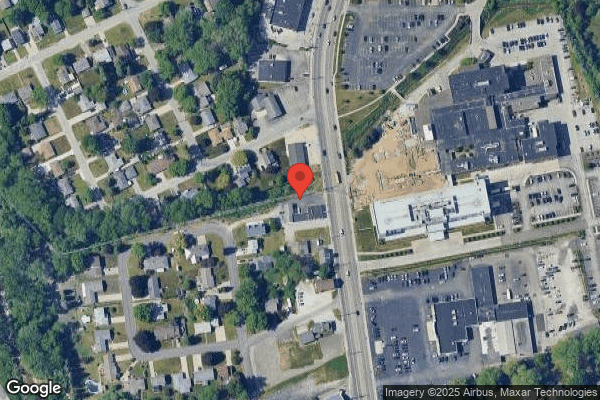
Millcreek Manor

5535 PEACH STREET, ERIE, PA 16509 (814) 868-7395
Non profit - Corporation 144 Beds Independent Data: November 2025 1 Immediate Jeopardy citation
Trust Grade
43/100
#204 of 653 in PA
Last Inspection: January 2025

Within standard 12-15 month inspection cycle. Federal law requires annual inspections.

Overview

Millcreek Manor has a Trust Grade of D, indicating below-average performance with some concerning issues. It ranks #204 out of 653 facilities in Pennsylvania, placing it in the top half, but still raises questions about quality. The facility is improving, as the number of issues decreased from 14 in 2024 to 6 in 2025. Staffing is a strong point, rated 5/5 stars, with a turnover rate of 47%, which is about average for the state, suggesting that staff are relatively stable. However, the facility has accumulated $100,240 in fines, which is concerning and suggests repeated compliance problems. There have been critical incidents, including a failure to prevent a resident with a history of suicide attempts from overdosing on medication due to inadequate safety precautions. Additionally, the facility did not properly assess whether another resident was safe to self-administer medication, which could lead to potential harm. Lastly, four residents did not receive a written summary of their care plans, indicating lapses in communication and documentation. Overall, while there are strengths in staffing, the facility has significant weaknesses that families should carefully consider.

Trust Score
D
43/100
In Pennsylvania
#204/653
Top 31%
Safety Record
High Risk
Review needed
Inspections
Getting Better
14 → 6 violations
Staff Stability
⚠ Watch
47% turnover. Above average. Higher turnover means staff may not know residents' routines.
Penalties
⚠ Watch
$100,240 in fines. Higher than 91% of Pennsylvania facilities. Major compliance failures.
Skilled Nurses
✓ Good
Each resident gets 54 minutes of Registered Nurse (RN) attention daily — more than average for Pennsylvania. RNs are trained to catch health problems early.
Violations
⚠ Watch
31 deficiencies on record. Higher than average. Multiple issues found across inspections.
★★★★☆
4.0
Overall Rating
★★★★★
5.0
Staff Levels
★★★☆☆
3.0
Care Quality
★★★☆☆
3.0
Inspection Score
Stable
2024: 14 issues
2025: 6 issues

The Good

  • 5-Star Staffing Rating · Excellent nurse staffing levels
  • Full Sprinkler Coverage · Fire safety systems throughout facility
  • No fines on record

Facility shows strength in staffing levels, fire safety.

The Bad

Staff Turnover: 47%

Near Pennsylvania avg (46%)

Higher turnover may affect care consistency

Federal Fines: $100,240

Well above median ($33,413)

Significant penalties indicating serious issues

The Ugly 31 deficiencies on record

1 life-threatening
Jul 2025 2 deficiencies
CONCERN (D) 📢 Someone Reported This

A family member, employee, or ombudsman was alarmed enough to file a formal complaint

Potential for Harm - no one hurt, but risky conditions existed

Quality of Care (Tag F0684)

Could have caused harm · This affected 1 resident

Based on review of facility policy and clinical records and staff interview, it was determined that the facility failed to follow physician's orders regarding the administration of insulin for one of ...

Read full inspector narrative →
Based on review of facility policy and clinical records and staff interview, it was determined that the facility failed to follow physician's orders regarding the administration of insulin for one of five residents reviewed (Resident R1). Findings include: A facility policy entitled Administering Medications dated 11/12/24, indicated that medications are administered in accordance with prescriber orders. Resident R1's clinical record revealed an admission date of 5/19/21, with diagnoses that included diabetes (a health condition caused by the body's inability to produce enough insulin), Hodgkin lymphoma (cancer of the immune system) and Chronic Obstructive Pulmonary Disease (COPD - a condition that prevents airflow to the lungs resulting in difficulty breathing). Resident R1's clinical record revealed a physician's order dated 3/8/25, for Insulin Lispro (a hormone that works by lowering level of glucose [sugar] in the blood) inject 3 units subcutaneously (sq - between the skin and muscle) after meals. Hold for BG (blood glucose) below 270. Resident R1's June 2025 Medication Administration Record (MAR) revealed that on 7/14/25, at 6:00 p.m. Resident R1's BG results were 212 mg/dL [milligrams/deciliter] and he/she received Insulin Lispro injection into his/her right arm when the Insulin Lispro was to be held per physician orders. During an interview on 7/29/25, at 3:12 p.m. Corporate Registered Nurse (RN) confirmed the clinical record indicated Resident R1 received his/her Insulin Lispro on 7/14/25, at 6:00 p.m. with a BG of 212 and per physician orders it was not to be given. Resident R1's clinical record revealed a physician's order dated 3/15/25, and 7/4/25, for Free Style Libre (a small sensor placed in the back of your arm so the device can continuously monitor your blood sugars) every 3 hours. A physician's order dated 5/5/25, and again 7/4/25, for Insulin Lispro inject 1 unit sq as needed for hyperglycemia (unusually high amounts of glucose are in the blood) if blood sugar (BS) is greater than 400 mg/dL and Insulin Lispro inject 2 units sq as needed for hyperglycemia if blood sugar is greater than 500 mg/dL. Resident R1's MAR revealed the following BS results for 6/13/25, through 7/29/25, at 12:00 a.m. with no evidence of insulin administration per physician's orders:6/13/25 413 mg/dL6/17/25 465 mg/dLResident R1's MAR revealed the following BS results for 6/13/25, through 7/29/25, at 3:00 a.m. with no evidence of insulin administration per physician's orders:6/17/25 435 mg/dL7/18/25 469 mg/dLResident R1's MAR revealed the following BS results for 6/13/25, through 7/29/25, at 6:00 a.m. with no evidence of insulin administration per physician's orders:6/17/25 500 mg/dL6/28/25 435 mg/dL7/19/25 406 mg/dL7/27/25 No resultsResident R1's MAR revealed the following BS results for 6/13/25, through 7/29/25, at 9:00 a.m. with no evidence of insulin administration per physician's orders:7/05/25 473 mg/dL7/06/25 436 mg/dL7/07/25 523 mg/dL7/10/25 487 mg/dL7/18/25 498 mg/dL7/19/25 444 mg/dL7/26/25 474 mg/dLResident R1's MAR revealed the following BS results for 6/13/25, through 7/29/25, at 12:00 p.m. with no evidence of insulin administration per physician's orders:7/07/25 416 mg/dL7/23/25 427 mg/dL7/26/25 490 mg/dLResident R1's MAR revealed the following BS results for 6/13/25, through 7/29/25, at 1:00 p.m. with no evidence of insulin administration per physician's orders:7/07/25 460 mg/dLResident R1's MAR revealed the following BS results for 6/13/25, through 7/29/25, at 6:00 p.m. with no evidence of insulin administration per physician's orders:7/06/25 469 mg/dL7/07/25 460 mg/dL7/09/25 404 mg/dL7/19/25 460 mg/dL7/20/25 418 mg/dL7/22/25 421 mg/dLResident R1's MAR revealed the following BS results for 6/13/25, through 7/29/25, at 9:00 p.m. with no evidence of insulin administration per physician's orders:7/05/25 479 mg/dL7/12/25 420 mg/dL7/15/25 459 mg/dLDuring an interview on 7/29/25, at 3:32 p.m. Corporate Registered Nurse (RN) confirmed the clinical record lacked evidence of as needed physician's order for blood sugars above 400 mg/dL and 500 mg/dL being followed stating the order may be confusing to some nurses, which may be the reason and clarification should be obtained. 28 Pa. Code 211.10(d) Resident care policies28 Pa. Code 211.12(d)(1)(5) Nursing services
MINOR (B) 📢 Someone Reported This

A family member, employee, or ombudsman was alarmed enough to file a formal complaint

Minor Issue - procedural, no safety impact

Medical Records (Tag F0842)

Minor procedural issue · This affected multiple residents

Based on review of facility policy and clinical records and staff interview, it was determined that the facility failed to maintain accurate and complete documentation related to physician notificatio...

Read full inspector narrative →
Based on review of facility policy and clinical records and staff interview, it was determined that the facility failed to maintain accurate and complete documentation related to physician notification for one of five residents reviewed (Resident R17).Findings include: Review of facility policy entitled Charting and Documentation dated 11/12/24, indicated the medical record should facilitate communication between the interdisciplinary team regarding the resident's conditions and response to care. The policy further stated that documentation of procedures and treatments will include care-specific details, including notification of family, physician, or other staff, if indicated. Resident R17's clinical record revealed an admission date of 10/9/24 with diagnoses that included Alzheimer's disease (a brain disorder that destroys memory and thinking skills), diabetes (a health condition caused by the body's inability to produce enough insulin), and high blood pressure. Resident R17's clinical record revealed a physician's order dated 11/20/24, for Insulin Lispro sliding scale before meals at 7:30 a.m., 11:30 a.m., and 4:30 p.m., and bedtime at 9:00 p.m. Physician's order further indicated that if BS [blood sugar] results are 401+ [and greater] to administer 12 units of insulin and call MD (physician). Resident R17's July 2025 Medication Administration Record (MAR) revealed Resident R17's BS at 11:30 a.m. on 7/18/25, was 486 mg/dL, at 4:30 p.m. on 7/4/25, was 430 mg/dL, and at 9:00 p.m. on 7/25/25, was 422 mg/dL and on 7/28/25, was 538 mg/dL. Further review of Resident R17's clinical record lacked evidence of physician notification in accordance with physician orders. During a telephone interview on 7/30/25, at 2:50 p.m. the Nursing Home Administrator (NHA) stated the facility often will text a physician per their preferences on the supervisor's phone. NHA confirmed the supervisors phone containing text messages to the physicians are not part of the resident's permanent clinical record and the clinical record for Resident R17 lacked evidence that the physician was notified in accordance with physician's orders. 28 Pa. Code 211.5(f)(ii)(iii) Medical records28 Pa. Code 211.12(d)(1)(5) Nursing services
Mar 2025 1 deficiency
CONCERN (D) 📢 Someone Reported This

A family member, employee, or ombudsman was alarmed enough to file a formal complaint

Potential for Harm - no one hurt, but risky conditions existed

Deficiency F0760 (Tag F0760)

Could have caused harm · This affected 1 resident

Based on review of facility policy and clinical records, and staff interview, it was determined that the facility failed to ensure that a resident was free from significant medication errors for one o...

Read full inspector narrative →
Based on review of facility policy and clinical records, and staff interview, it was determined that the facility failed to ensure that a resident was free from significant medication errors for one of ten residents reviewed (Resident R1). Findings include: Review of a current facility policy entitled Management of Hypoglycemia revealed that nursing staff must notify the physician if the resident has signs of hypoglycemia [low blood sugar] that are not resolved by following the facility protocol for hypoglycemia management. Resident R1's clinical record revealed an admission date of 12/07/21, with diagnoses that included diabetes (condition of improper blood sugar/insulin levels), pancreatectomy (removal of the pancreas), and Hodgkin's lymphoma (cancer of the immune system). Resident R1's clinical record revealed a physician's order dated 2/27/25, for Lispro (type of insulin) 100 Units/ml (milliliter) inject 3 units subcutaneous (sq - injected into the tissue between the skin and muscle) in the morning (9:00 a.m.) for diabetes. Hold if BS (blood sugar) is below 270 [milligrams/deciliter (mg/dL)]. Resident R1's February 2025, Medication Administration Record (MAR) revealed that Resident R1 had a BS of 267 mg/dL on 2/13/25, and staff administered the Lispro 3 units, which should not have been given according to physician's orders. Lispro insulin was administered and not in accordance with physician's orders and Resident R1 was administered 3 units of Lispro when his/her BS was below 270 mg/dL on the above date and times and should have been held. Resident R1's clinical record revealed a physician's order dated 2/27/25, for Glucagon (type of sugar) intramuscular injection (IM) to be given if blood sugar is less than 90 mg/dl. Resident R1's February 2025 MAR revealed that Resident R1 had a BS of 100 mg/dL on 3/15/25 at 12:03 p.m., and staff gave the injection of Glucagon when the medication was ordered to be held. There was no documentation in the Resident R1's clinical record to indicate that they were experiencing symptoms related to hypoglycemia, such as reporting that they were feeling cold, clammy, or experiencing light headedness and no recorded communication with the physician. Glucagon IM was administered and not in accordance with physician's orders and Resident R1 was administered Glucagon IM when BS was above 90 mg/dl when it should not have been given. During an interview on 3/25/25, at approximately 12:55 p.m. the Regional Director of Nursing confirmed that Resident R1's Lispro insulin was administered on 2/13/25 at 9:00 a.m. when it was ordered to be held and on and Glucagon IM was administered on 2/13/25 at 12:03 p.m. when it was ordered to not be administered. 28 Pa. Code 211.12(d)(1)(5) Nursing services 28 Pa. Code 211.10(c) Resident care policies
Jan 2025 3 deficiencies
CONCERN (D)

Potential for Harm - no one hurt, but risky conditions existed

Deficiency F0578 (Tag F0578)

Could have caused harm · This affected 1 resident

**NOTE- TERMS IN BRACKETS HAVE BEEN EDITED TO PROTECT CONFIDENTIALITY** Based on review of facility policy and clinical records, and staff interview, it was determined that the facility failed to ensu...

Read full inspector narrative →
**NOTE- TERMS IN BRACKETS HAVE BEEN EDITED TO PROTECT CONFIDENTIALITY** Based on review of facility policy and clinical records, and staff interview, it was determined that the facility failed to ensure physician's orders and resident Physician Order for Life Sustaining Treatment (POLST- a legal document specifying the resident/responsible party choices regarding life-sustaining treatments) were consistent for one of 26 residents reviewed (Resident R121). Findings include: A facility policy entitled Advance Directives dated [DATE], indicated The Director of Nursing services . of advance directives (or changes in advance directives) so that appropriate orders can be documented in the residents medical record and plan of care. and The plan of care for each resident is consistent with his or her documented treatment preferences and/or advance directive. Resident R121's clinical record revealed an admission date of [DATE], with diagnoses that included Parkinson's (a chronic and progressive movement disorder that causes shaking, slows a person's ability to move and worsens over time), and hypertension (high blood pressure). Review of Resident R121's clinical recorded revealed a POLST dated [DATE], signed by the physician for Cardiopulmonary Resuscitation (CPR-emergency life-saving procedure that is done when breathing or a heartbeat has stopped and when performed immediately can double or triple chances of survival after cardiac arrest)- Full Code. Review of physician's orders revealed an order dated [DATE], for Do Not Attempt Resuscitation (DNR- allow natural death). Review of Resident R121's care plans revealed a care plan with a focus of Advanced Directives Full code with Interventions to initiate CPR. During an interview with the Director of Nursing on [DATE], at 2:45 p.m. he/she confirmed Resident R121's physician's orders, POLST, and care plan were not consistent with each other. He/she also confirmed that Resident R121's physician's orders, POLST and care plan should reflect Resident R121's Advance Directive wishes and be consistent with each other. 28 Pa. Code 201.18 (b)(1) Management 28 Pa. Code 201.29(a) Resident rights 28 Pa. Code 211.5(f)(i) Medical records 28 Pa. Code 211.10(c) Resident care policies
CONCERN (D)

Potential for Harm - no one hurt, but risky conditions existed

Medication Errors (Tag F0758)

Could have caused harm · This affected 1 resident

Based on review of facility policy, clinical records, and staff interview, it was determined that the facility failed to provide evidence that non-pharmacological interventions (interventions attempte...

Read full inspector narrative →
Based on review of facility policy, clinical records, and staff interview, it was determined that the facility failed to provide evidence that non-pharmacological interventions (interventions attempted to calm a resident other than medication) were attempted prior to the administration of an as needed (PRN) psychotropic (mind altering) medication for one of five residents reviewed for unnecessary medications (Resident R58). Findings include: Review of facility policy entitled Antipsychotic Medication Use dated 11/12/24, revealed Pertinent non-pharmacological interventions must be attempted, unless contraindicated, and documented following the resolution of the acute psychiatric situation. Review of Resident R58's clinical record revealed an admission date of 3/14/24, with diagnoses that included anxiety, major depressive disorder, and cognitive communication deficit. The clinical record revealed that on 8/28/24, Resident R58's physician ordered Hydroxyzine (a medication ordered to treat anxiety) 10 milligrams (mg) every 24 hours PRN for anxiety. Review of Resident R58's December 2024 and January 2025 Medication Administration Record revealed that the PRN Hydroxyzine was used on 12/03/24, 12/09/24, 12/11/24, 12/17/24, 12/21/24, 12/30/24, 1/02/25, 1/06/25, 1/08/25, 1/14/25, 1/18/25, 1/19/25, and 1/20/25. Resident R58's clinical record lacked evidence of non-pharmacological interventions being attempted prior to the administration of the PRN Hydroxyzine for the six administrations in December 2024 and for the seven administrations in January 2025. During an interview on 1/23/25, at 2:45 p.m. the Director of Nursing confirmed that Resident R58's clinical record lacked evidence that non-pharmacological interventions were attempted prior to the administration of a PRN psychotropic medication and that non-pharmacological interventions should be attempted and documented in the clinical record. 28 Pa. Code 211.10(c) Resident care policies 28 Pa. Code 211.12(d)(1)(3)(5) Nursing services
CONCERN (D)

Potential for Harm - no one hurt, but risky conditions existed

Deficiency F0761 (Tag F0761)

Could have caused harm · This affected 1 resident

**NOTE- TERMS IN BRACKETS HAVE BEEN EDITED TO PROTECT CONFIDENTIALITY** Based on review of facility policies, observations, and staff interviews, it was determined that the facility failed to store sc...

Read full inspector narrative →
**NOTE- TERMS IN BRACKETS HAVE BEEN EDITED TO PROTECT CONFIDENTIALITY** Based on review of facility policies, observations, and staff interviews, it was determined that the facility failed to store schedule II-V medications in a separately locked, permanently affixed compartment in one of four medication rooms reviewed (3 West) and the facility failed to appropriately discard outdated medications for one of four medication rooms reviewed (2 West). Findings include: Review of facility policy entitled Medication Labeling and Storage dated [DATE], indicated Controlled substances . and other drugs subject to abuse are separately locked in permanently affixed compartments . and Multi-dose vials that have been opened or accessed . are dated and discarded within 28 days . Review of manufacturer's guidelines revealed that an open vial of Lispro Insulin (medication to treat diabetes and control blood sugar) must be used within 28 days after opening or be discarded, even if the vial still contains insulin. Observation of drug storage on [DATE], at 1:15 p.m. of the 3 [NAME] medication room revealed a bottle of liquid Lorazepam (a controlled antianxiety medication) lying on the top shelf of the refrigerator. The Lorazepam was not in a separate locked permanently affixed container in the refrigerator allowing the Lorazepam to be removed from the refrigerator. During an interview with Licensed Practical Nurse (LPN) Employee E1 on [DATE], at the time of observation, he/she confirmed the bottle of Lorazepam was lying on the top shelf in the refrigerator and was not in a separate locked permanently affixed container. He/she also confirmed that the Lorazepam should be in a separate locked permanently affixed container. Observation of drug storage on [DATE], at 1:30 p.m. of the 2 [NAME] medication room revealed an open vial of Lispro Insulin in the refrigerator with an expiration date of [DATE]. During an interview with LPN Employee E2 on [DATE], at the time of observation, he/she confirmed that the open vial of Lispro Insulin had an expiration date of [DATE]. He/she also confirmed that the open expired vial of Lispro Insulin should have been discarded. 28 Pa. Code 201.18(b)(1) Management 28 Pa. Code 211.9(a)(1) Pharmacy services 28 Pa. Code 211.12(d)(1) Nursing services
Sept 2024 1 deficiency
CONCERN (D) 📢 Someone Reported This

A family member, employee, or ombudsman was alarmed enough to file a formal complaint

Potential for Harm - no one hurt, but risky conditions existed

Deficiency F0760 (Tag F0760)

Could have caused harm · This affected 1 resident

Based on review of facility policy and clinical records, and staff interview, it was determined that the facility failed to ensure that it was free from significant medication errors for one of five r...

Read full inspector narrative →
Based on review of facility policy and clinical records, and staff interview, it was determined that the facility failed to ensure that it was free from significant medication errors for one of five residents reviewed (Resident R1). Findings include: Review of a facility policy entitled Person Centered Medication Administration dated 3/1/24, revealed that nursing staff must comply with person centered medication pass time ranges and Medication Administration Record (MAR) directions. Resident R1's clinical record revealed an admission date of 5/19/21, with diagnoses that included diabetes, pancreatectomy (removal of the pancreas), and Hodgkin lymphoma (cancer of the immune system). Resident R1's clinical record revealed physician's order dated 4/4/24, for Lantus (type of insulin) 100 Units/ml (milliliter) inject 3 units subcutaneous (sq - injected into the tissue between the skin and muscle) in the evening (6:00 p.m.) for diabetes. Hold if BS (blood sugar) is below 150 [milligrams/deciliter (mg/dL)]. Resident R1's August 2024 MAR revealed that Resident R1 had a BS of 226 mg/dL on 8/17/24, and staff failed to administer the Lantus 3 units as ordered. Resident R1's clinical record revealed physician's order dated 4/04/24, for Novolog (type of insulin) 100 Units/ml inject 3 units sq in the morning (9:00 a.m.) for diabetes. Hold if BS is below 280 mg/dL. Resident R1's August 2024 MAR revealed that Resident R1 had a BS of 215 mg/dL on 8/18/24, and staff failed to hold the Novolog 3 units as ordered. Resident R1's clinical record revealed physician's order dated 4/04/24, for Novolog inject 3 units sq in the afternoon (1:00 p.m.) for diabetes. Hold if BS is below 280 mg/dL. Resident R1's MAR revealed that Resident R1 had a BS of 247 mg/dL on 8/18/24, and staff failed to hold the Novolog 3 units as ordered. During an interview on 9/4/24, at approximately 12:55 p.m. the Regional Director of Nursing confirmed that Resident R1's Lantus insulin was not administered in accordance with physician's orders and that Resident R1 was administered 3 units of Novolog when his/her BS was below 280 mg/dL on the above date and times and should have been held. 28 Pa. Code 211.12(d)(1)(5) Nursing services 28 Pa. Code 211.10(c) Resident care policies
Jul 2024 1 deficiency
CONCERN (D) 📢 Someone Reported This

A family member, employee, or ombudsman was alarmed enough to file a formal complaint

Potential for Harm - no one hurt, but risky conditions existed

Abuse Prevention Policies (Tag F0607)

Could have caused harm · This affected 1 resident

Based on review of facility policy and clinical records, and staff interviews, it was determined that the facility failed to implement their established procedures for investigation and protection of ...

Read full inspector narrative →
Based on review of facility policy and clinical records, and staff interviews, it was determined that the facility failed to implement their established procedures for investigation and protection of residents in response to potential abuse for one of two residents reviewed (Resident R1). Findings include: Facility policy, Abuse and Neglect dated 1/10/24, revealed It is the policy to have zero tolerance for incidents of abuse and/or neglect. The purpose of the policy is to show that all allegations of abuse/neglect will be thoroughly investigated and reported to the appropriate County, State and Federal agencies pursuant to Federal regulations to include: screening, training, prevention, identification, investigation, protection, and reporting. Procedure: Identifying/Reporting/Investigating/Protection: Staff witnessing any incident of alleged abuse or neglect of Residents are required to report the incident to the supervisor immediately. The nursing supervisor will have the staff witnessing write a detailed account of the event, then sign and date. The supervisor will notify the Director of Nursing, who will notify the Administrator. The employee who has been accused will be informed of the allegation, asked to give a written statement (including signature, date, and time) and will be suspended pending investigation. If the allegations are found to be substantiated, the employee will be terminated and reported to the appropriate agency for disposition. If the allegations are not substantiated, the employee may resume their normal duties. Training/Prevention: All staff will be proficient in the reporting of abuse and neglect. Resident R1's clinical record revealed an admission date of 12/07/21, with diagnoses of diabetes mellitus with hyperglycemia (condition where glucose [blood sugar] tends to build up in the bloodstream), colostomy (opening in the large intestine, or surgical procedure that creates one), intestinal obstruction (a gastrointestinal condition in which digested material is prevented from passing normally through the bowel), and hemorrhage of anus and rectum (blood passes from rectum or anus). Upon request of an abuse investigation for Resident R1, regarding an incident that occurred on 7/04/24, the facility provided information that the investigation was initiated on 7/08/24. A description of the incident revealed that on July 8, 2024, the Assistant Director of Nursing (ADON) was notified by Resident R1's family member regarding alleged abuse by a staff member toward Resident R1. The incident alleged that Registered Nurse (RN) Employee E1 had grabbed his/her wrist attempting to obtain blood sugar level and the resident felt like RN Employee E1 was trying to break their arm. Review of Nurse Aide Employee E2's witness statement for the incident that occurred on 7/04/24, revealed that RN Employee E1 was attempting to obtain Resident R1's blood sugar and the resident was moving her hand back and forth so the nurse grabbed her arm and told her she had to get it. Resident R1 started struggling with the RN and she was holding down her arm. NA Employee E2 had stated I told her to stop, what is wrong with you-you should leave the room and call the supervisor. The statement further indicated that NA Employee E2 had to remove RN Employee E1's hand off Resident R1's arm and the RN was upset and said f*** this job, I don't need it and threw the blood glucose testing machine that hit the table in the resident's room, called the supervisor and reported it to him/her (RN). Review of facility records of RN Employee E1's statement of the incident that occurred on 7/04/24, revealed - Resident's blood sugar reading Hi per Libre glucose monitor. Reported to his/her family member who requested a fingerstick confirmation. Upon entering the room to perform the fingerstick, resident became agitated and began hitting and kicking at staff. Resident swinging arm rapidly down towards overbed table and I caught his/her arm near the wrist to prevent him/her hurting himself/herself. Review of Resident R1's progress notes lacked evidence of an assessment of Resident's arm, physician notification, and/or any investigation of incident on 7/04/24, with RN Employee E1. The facility lacked evidence that a thorough investigation was immediately initiated on 7/04/24, to ensure Resident R1 and all residents were protected against potential abuse from RN Employee E1. During an interview on 7/24/24, at 2:35 p.m. the Nursing Home Administrator and Director of Nursing confirmed the facility was unable to provide evidence that a thorough investigation was initiated on 7/04/24, when the incident with Resident R1 and RN Employee E1 occurred, and the investigation was only initiated on 7/08/24, when Resident R1's family member notified the ADON. 28 Pa. Code 201.14(a) Responsibility of licensee 28 Pa. Code 201.18(e)(1) Management 28 Pa. Code 201.29(a) Resident rights
Feb 2024 9 deficiencies 1 IJ
CRITICAL (J)

Immediate Jeopardy (IJ) - the most serious Medicare violation

Accident Prevention (Tag F0689)

Someone could have died · This affected 1 resident

Based on review of facility policy, clinical and hospital records, and resident and staff interviews, it was determined that the facility failed to implement sufficient safety precautions to prevent a...

Read full inspector narrative →
Based on review of facility policy, clinical and hospital records, and resident and staff interviews, it was determined that the facility failed to implement sufficient safety precautions to prevent a resident with a history of suicide attempt by overdose, from appropriating a significant number of prescription medications that resulted in an overdose of the prescription medications that were provided during medication administration by the facility for one (Resident R234) of three residents reviewed with a history of suicide attempts, and resulted in an Immediate Jeopardy situation. Findings include: Review of a facility policy entitled Medication Administration dated 10/30/23, indicated that staff will remain at bedside with the resident until all medications are taken. Resident R234's clinical record revealed an admission date of 10/09/23, with diagnoses that included major depressive disorder, anxiety, long-term pain, spinal stenosis (inflammation of the vertebrae causing compression of the spinal cord) of the neck, and epilepsy. Resident R234's clinical record lacked evidence of a care plan addressing safety interventions to prevent suicide attempts and to include safety measures to prevent an overdose of medications. Review of Resident R234's physician orders revealed an order dated 10/11/23, to administer Tizanidine HCL (medication to reduce muscle spasms often used with spinal cord injuries) four milligram tablet four times per day for pain. Further review of Resident R234's clinical record revealed: A physician's progress note dated 10/10/23, that identified that Resident R234 had attempted to overdose on medication in August 2023. A departmental progress note dated 10/10/23, revealed that the results of Resident R234's Basic Interview of Mental Status (BIMS)- scored 15 (intact cognition). A physician's order dated 10/11/23, to administer Tizanidine for pain four times per day. A practitioner progress note dated 10/18/23, revealed facility knowledge of two previous attempted over-doses. A practitioner progress note dated 10/25/23, revealed Resident R234 expressed increased pain and feeling miserable since admission. A departmental progress note dated 12/31/23, revealed Resident R234 reported to staff that he/she was extremely depressed. A Social Services progress note dated 1/06/24, indicated that psychological/psychiatric services were not indicated. A practitioner progress note dated 1/11/24, indicated that Resident R234 had not seen psychiatry services since 10/26/23. A Social Services progress note dated 1/15/24, indicated that Resident R234's BIMS remained a 15. A departmental progress note dated 1/30/24, indicated staff found a box of approximately 100 Tizanidine tablets in a box in Resident R234's room. Review of hospital records revealed: An Intensive Care Unit (ICU) Inpatient Record and Progress Note dated 1/30/24, listed Resident R234's admitting diagnosis as Tizanidine overdose, and that the hospital contacted the Poison Control Center for recommended management. Review of a History and Physical admission Exam dated 1/30/24, revealed that Resident R234 was found to be completely unresponsive, and that facility staff had found a stash of his/her muscle relaxers (Tizanidine). Resident R234 was treated in the Emergency Department and admitted to ICU for evaluation and management of Tizanidine overdose. A Behavioral Health Evaluation dated 2/01/24, revealed that Resident R234 had been hoarding Tizanidine while at the Senior Living Center; then took a large amount of the medication with the intention of killing herself; that he/she planned out how to save his/her medication; took them with the intention of killing herself; had a prior psychiatric history of three suicide attempts (21 years ago- overdose of Aspirin, 8/23/23-overdose of Oxycodone, 1/30/24-overdose of Tizanidine). During an interview on 2/20/24, at 3:03 p.m. resident stated: He/she was able to hoard his/her muscle relaxer (Tizanidine) over time and get enough to attempt to commit suicide on 1/30/24; he/she stated that is wasn't hard, as many nurse's didn't stay in the room while he/she took her pills and he/she easily slipped them into the sheets, and there were certain nurses who stayed in the room so he/she came up with a way to have his/her pills delivered in separate cups. While they weren't paying attention he/she was able to stack an empty cup into the cup with his/her Tizanidine to hide it, once he/she stacked all of the cups, the nurse's would throw the whole stack in the trash, once the nurse left the room, then he/she would retrieve the medication out of the trash and put it in his/her drawer. Resident R234 also stated that he/she kept asking to see a VA (Veteran's Administration) doctor and a counselor. When he/she was admitted , the Social Worker told him/her to call anytime, and that in the afternoon on 1/30/24, he/she left a message and didn't hear back, later that day he/she took the pills. Resident R234 disclosed that if the nurse's had been more diligent with watching him/her take his/her meds, he/she would not have been able to attempt suicide. The facility knew on admission that he/she was a risk for this and did nothing. During an interview on 2/20/24, at 4:30 p.m. the Director of Nursing (DON) confirmed that staff have not completed competencies on medication administration pass since last summer. During an interview on 2/20/24, at 4:57 p.m. the current Nursing Home Administrator (NHA) confirmed that there were no staff competencies for medication administration. The facility failed to implement sufficient safety measures to prevent appropriating prescription medications, putting three residents with a history of suicide attempts at risk and causing an Immediate Jeopardy situation. The NHA and DON were notified of the Immediate Jeopardy (IJ) situation on February 20, 2024, at 5:35 p.m. An Immediate Plan of Correction was requested and the IJ Template was provided. The Immediate Action Plan was provided by the NHA and DON on February 20, 2024, at 7:08 p.m. which was accepted at 7:26 p.m. The plan included: 1. Resident R234's care plan was updated to include; crushing medications, observe resident taking medications and ensuring it is swallowed; every 15 minutes checks; psych services as needed; diversion activities; involve family; behavioral tracking and addressing feelings of loss/suicidal ideations; involve physician, psych services and family with indications of suicidal ideations; and contact and facilitate mental health inpatient stay as needed. 2. All other residents with suicidal ideations will have psych services in place. 3. Staff will observe and ensure medication are taken and swallowed before exiting the room. 4. Facility will offer Mental Health inpatient services. 5. Preventative and safety precautions will be implemented as needed. 6. Each resident's needs will be addressed individually specific to their psychological needs. 7. Care plans will be updated to reflect the present plan of care. 8. Effective immediately, all nurses will be trained on proper medication administration. 9. Training will be completed by 2/24/24. 10. Training will be completed before each nurse works on the units. 11. The above plan will be reviewed at the Quality Assurance Performance Improvement Meeting. Review of facility documentation 100% of nurses working on the units between 2/20/24, at 7:26 p.m. and 2/21/24, at 11:00 a.m. received the medication administration training. Interviews on 2/21/24, between 8:30 a.m. and 10:40 a.m. revealed six licensed nursing staff confirmed that they received medication administration training prior to starting their shifts. On February 21, 2024, at 11:36 a.m. the Immediate Jeopardy was lifted after ensuring the Immediate Action Plan had been implemented. 28 Pa. Code 201.14(a) Responsibility of licensee 28 Pa. Code 201.18(b)(1)(3)(e)(1) Management 28 Pa. Code 211.10(d) Resident care policies 28 Pa. Code 211.12(c)(d)(1)(5) Nursing services
CONCERN (D)

Potential for Harm - no one hurt, but risky conditions existed

Deficiency F0637 (Tag F0637)

Could have caused harm · This affected 1 resident

Based on review of the Minimum Data Set (MDS-periodic assessment of resident care needs) User's Manual, clinical record, and staff interview, it was determined that the facility failed to complete a c...

Read full inspector narrative →
Based on review of the Minimum Data Set (MDS-periodic assessment of resident care needs) User's Manual, clinical record, and staff interview, it was determined that the facility failed to complete a comprehensive assessment after a significant change in condition for one of five residents receiving hospice services (Resident R89). Findings include: Review of the MDS User's Manual revealed that a significant change in status assessment is required to be performed when a terminally ill resident enrolls in a hospice program and remains a resident at the nursing home. The Assessment Reference Date (ARD) must be within 14-days from effective date of the hospice election. Resident R89's clinical record revealed an admission date of 9/23/23, with diagnoses that included Parkinson's Disease (a progressive disorder that affects the nervous system and the parts of the body controlled by the nerves), muscle wasting, neurogenic bowel (the loss of normal bowel function), and cognitive communication deficit (difficulty with thinking and how someone uses language). The clinical record revealed a physician's order dated 10/26/23, to admit Resident R89 to Hospice services. Review of Resident 89's MDS's lacked evidence that a significant change MDS with an ARD completed within 14-days from when Resident R897 was admitted to hospice care was completed. During an interview on 2/22/24, at 1:00 p.m. the Licensed Practical Nurse Assessment Coordinator Employee E2 confirmed that the significant change MDS was not completed within 14-days of Resident R89 entering Hospice services. 28 Pa. Code 201.14(a) Responsibility of licensee
CONCERN (D)

Potential for Harm - no one hurt, but risky conditions existed

Assessment Accuracy (Tag F0641)

Could have caused harm · This affected 1 resident

**NOTE- TERMS IN BRACKETS HAVE BEEN EDITED TO PROTECT CONFIDENTIALITY** Based on review of clinical records and facility documentation, and staff interview, it was determined that the facility failed ...

Read full inspector narrative →
**NOTE- TERMS IN BRACKETS HAVE BEEN EDITED TO PROTECT CONFIDENTIALITY** Based on review of clinical records and facility documentation, and staff interview, it was determined that the facility failed to complete the Minimum Data Set (MDS-periodic assessment of resident care needs) to accurately reflect the resident's status at the time of the assessment for one of 25 residents reviewed (Resident R67). Findings include: Resident R67's admission record revealed an admission date of 1/30/2023, with diagnoses that included dementia, depression, and pain. Resident R67's clinical record revealed that Hospice (end-life services) was ordered on 1/30/2023 and has continued throughout R67's stay at the facility. The Annual MDS dated [DATE], Section O110. Special Treatments, Procedures, and Programs category K1. Hospice was marked No indicating Resident R67 was not receiving Hospice services. During an interview on 2/22/2024, at 12:58 p.m. Licensed Nurse Assessment Coordinator Employee E2 confirmed that Section O110. Special Treatments, Procedures, and Programs category K1. Hospice for the Quarterly MDS dated [DATE], was incorrectly coded for Resident R67 regarding Hospice care services. 28 Pa. Code 201.14(a) Responsibility of licensee
CONCERN (D)

Potential for Harm - no one hurt, but risky conditions existed

Comprehensive Care Plan (Tag F0656)

Could have caused harm · This affected 1 resident

Based on review of facility policy and clinical records, it was determined that the facility failed to implement a person-centered care plan that included safety precautions for a resident with a hist...

Read full inspector narrative →
Based on review of facility policy and clinical records, it was determined that the facility failed to implement a person-centered care plan that included safety precautions for a resident with a history of suicide attempt by overdose, for one of 25 residents reviewed (Resident R234). Findings include: A facility policy entitled, Care Plans (Plans of Service) dated 10/30/23, indicated that the facility will develop a comprehensive care plan for each resident that includes measurable objectives and timetables to meet a resident's medical, nursing, and mental/psychosocial needs within 10 days of admission. Resident R234's clinical record revealed an admission date of 10/09/23, with diagnoses that included major depressive disorder, anxiety, long-term pain, spinal stenosis (inflammation of the vertebrae causing compression of the spinal cord) of the neck, and epilepsy. Resident R234's clinical record revealed a care plan related to major depressive disorder which lacked interventions to ensure resident safety related to previous suicide attempts with an overdose. Further review of Resident R234's clinical record revealed: A physician's progress note dated 10/10/23, that identified that Resident R234 had attempted to overdose on medication in August 2023. A departmental progress note dated 10/10/23, revealed that the results of Resident R234's Basic Interview of Mental Status (BIMS)- scored 15 (intact cognition). A practitioner progress note dated 10/18/23, revealed facility knowledge of two previous attempted over-doses. A practitioner progress note dated 10/25/23, revealed Resident R234 expressed increased pain and feeling miserable since admission. A departmental progress note dated 12/31/23, revealed Resident R234 reported to staff that he/she was extremely depressed. A practitioner progress note dated 1/11/24, indicated that Resident R234 had not seen psychiatry services since 10/26/23. The facility was aware of Resident R234's history of suicide attempt previously and did not develop a comprehensive person-centered care plan with adequate safety precautions to address that concern. Refer to F689 28 Pa. Code 211.12(d)(1)(5) Nursing services
CONCERN (D)

Potential for Harm - no one hurt, but risky conditions existed

Medication Errors (Tag F0758)

Could have caused harm · This affected 1 resident

Based on review of facility policy and clinical records, and staff interviews, it was determined that the facility failed to provide a clinical rationale for the continued use of a PRN (as needed) psy...

Read full inspector narrative →
Based on review of facility policy and clinical records, and staff interviews, it was determined that the facility failed to provide a clinical rationale for the continued use of a PRN (as needed) psychotropic (affecting the mind) medication beyond 14 days for one of five residents reviewed (Resident R61). Findings include: A facility policy entitled PRN Psychotropic Medication Use, dated 10/30/23, indicated that all PRN non-antipsychotic psychotropic medications will be limited to an initial duration of 14 days or less, and Use may be extended beyond 14 days upon provider . documentation of rationale and expected duration. Review of Resident R61's clinical record revealed an admission date of 4/28/21, with diagnoses that included Generalized Anxiety Disorder (a disorder that causes a person to feel nervous), Hypertension (high blood pressure), and Chronic Obstructive Pulmonary Disease (a disease that causes obstructed airflow from the lungs). Review of Resident R61's medication orders revealed a physician order dated 2/8/24, to administer Vistaril (anti-anxiety medication) 25 milligrams (mg) every six hours PRN for anxiety. The medication lacked the required stop date within 14 days or a clinical rational for continuing beyond 14 days. During an interview on 2/23/2024, at 9:23 a.m. the Assistant Director of Nursing confirmed that Resident R61's Vistaril order lacked the required stop date within 14 days or a clinical rationale for continued use beyond 14 days. 28 Pa. Code 211.12(d)(1)(3)(5) Nursing services
CONCERN (D)

Potential for Harm - no one hurt, but risky conditions existed

Administration (Tag F0835)

Could have caused harm · This affected 1 resident

Based on review of facility records and job descriptions, it was determined that the Nursing Home Administrator (NHA) and the Director of Nursing (DON) failed to effectively manage the facility to ens...

Read full inspector narrative →
Based on review of facility records and job descriptions, it was determined that the Nursing Home Administrator (NHA) and the Director of Nursing (DON) failed to effectively manage the facility to ensure adequate resident safety and supervision. Findings include: Review of the job description for the NHA revealed that he/she is responsible for overall facility management, profitability, operations, and direction in all aspects. Accountable for but not limited to, census development, management of accounts receivable and collections, maximization of Net Operating Income, resident/patient care, state and federal survey compliance, positive employee relations, a positive return on investment, an effective business plan and implementation of core programs. Designated the representative in the facility and community. Follows all policies and procedures. Completes rounds of entire facility premises at least daily to ensure compliance with all policies, procedures, and regulations. Review of the job description for the DON revealed that he/she is responsible for maintaining a high standard of resident centered care and is expected to keep resident care running smoothly while staying within budget. Based on the findings in this report that identified the facility failed to ensure adequate supervision and implement all safety interventions, the NHA and DON failed to fulfill essential job duties to ensure that the Federal and State guidelines and regulations were followed. Refer to F689 28 Pa. Code 201.14(a) Responsibility of Licensee 28 Pa. Code 201.18(b)(1)(3) Management 28 Pa. Code 201.18(e)(1) Management 28 Pa. Code 211.12(c) Nursing Services 28 Pa. Code 211.12(d)(1)(5) Nursing Services
CONCERN (E)

Potential for Harm - no one hurt, but risky conditions existed

Deficiency F0554 (Tag F0554)

Could have caused harm · This affected multiple residents

Based on observations, review of facility policy and clinical records and staff interview, it was determined that the facility failed to assess a resident for self-administration of medication for one...

Read full inspector narrative →
Based on observations, review of facility policy and clinical records and staff interview, it was determined that the facility failed to assess a resident for self-administration of medication for one of 25 residents reviewed (Resident R102). Findings include: Review of facility policy entitled Resident Self-Administration of Medication dated 10/03/23, indicated that the interdisciplinary team will determine if it is safe for the resident to self-administer drugs before the resident may exercise that right. It also indicated that the interdisciplinary team must determine who will be responsible for the storage and documentation of the administration of drugs and that self-administration of medication will be permitted with the orders of a licensed physician and is monitored by the facility. Resident R102's clinical record revealed an admission date of 1/19/23, with diagnoses that included schizoaffective disorder (condition with symptoms of schizophrenia and affective disorder at the same time), bipolar disorder, anxiety, and depression. Observation of medication administration on 2/21/24, at approximately 8:30 a.m. revealed Resident R102 with a bottle of Ipratropium Bromide Nasal spray (medication to treat runny nose caused by colds or allergies) on the bedside tray table. At the time of the observation Resident R102 stated, I always have my nasal spray on my bedside tray table. Resident R102's clinical record revealed a physician's order dated 3/01/23, for Ipratropium Bromide Nasal Solution 0.03% two sprays in each nostril as needed for runny nose four times daily. Resident R102's clinical record lacked a self administration of medication assessment or an order to keep the nasal spray at the bedside. Resident R102's Medication Administration Record (MAR) revealed from the original order date of 3/01/23, to 2/20/204, a period of 11 months and 20 days that Resident R102 was administered the nasal spray on 3/05/23, 3/24/23, 7/22/23, and 7/23/23, a total of four times. An order audit report from the pharmacy for Resident R102 revealed that the nasal spray was ordered on 3/01/23, and re-ordered on 4/10/23, 7/22/23, 9/18/23 and 12/27/23, for a total of 5 bottles that were dispensed from 3/01/23, to 2/20/24. During an interview on 2/21/2024, at approximately 10:00 a.m. the Nursing Home Administrator confirmed that Resident R102's clinical record lacked a self-administration assessment of medication for Resident R102 for the nasal spray that was at the bedside. 28 Pa. Code 211.5(f)(ii)(iii) Medical records 28 Pa. Code 211.12(d)(1)(5) Nursing services
CONCERN (E)

Potential for Harm - no one hurt, but risky conditions existed

Deficiency F0655 (Tag F0655)

Could have caused harm · This affected multiple residents

Based on review of facility policy, clinical record review, and staff interview, it was determined that the facility failed to provide a written summary of the baseline care plan and order summary to ...

Read full inspector narrative →
Based on review of facility policy, clinical record review, and staff interview, it was determined that the facility failed to provide a written summary of the baseline care plan and order summary to the resident and/or representative for four of 25 residents reviewed (Residents R10, R79, R124, and R117). Findings include: A facility policy entitled, Care Plans dated 10/30/2023, revealed that A copy of the care plan will be provided to the resident and/or family/responsible party. Resident R10's clinical record revealed an admission date of 9/25/2023, with diagnoses that included hypertension (high blood-pressure), hyperlipidemia (high cholesterol), and a femur fracture. R10's clinical record lacked evidence that a written summary of the baseline care plan and order summary was provided to Resident R10 and/or his/her representative. Resident R79's clinical record revealed an admission date of 1/5/2024, with diagnoses that included hypertension, muscle weakness, and a femur fracture. R79's clinical record lacked evidence that a written summary of the baseline care plan and order summary was provided to Resident R79 and/or his/her representative. Resident R124's clinical record revealed an admission date of 12/15/2023, with diagnoses that included hypertension anxiety, and Parkinson's disease (a progressive disorder that affects the nervous system and can cause tremors, stiffness, and poor balance). R124's clinical record lacked evidence that a written summary of the baseline care plan and order summary was provided to Resident R124 and/or his/her representative. Resident R117's clinical record revealed an admission date of 10/11/2023, with diagnoses that included diabetes (condition of improper blood sugar control), hypertension (high blood pressure), and osteomyelitis of vertebra (infection in the bone of the vertebra). R117's clinical record lacked evidence that a written summary of the baseline care plan and order summary was provided to Resident R117 and/or his/her representative. During an interview on 2/22/2024, at 3:45 p.m. the Director of Nursing confirmed that the clinical records for the residents listed above lacked evidence that a written summary of the baseline care plan and order summary was provided the resident and/or his/her representative upon admission to the facility. 28 Pa. Code 201.14(a) Responsibility of licensee
CONCERN (E)

Potential for Harm - no one hurt, but risky conditions existed

Medical Records (Tag F0842)

Could have caused harm · This affected multiple residents

Based on observations, review of facility policy and clinical records and staff interview, it was determined that the facility failed to maintain accurate and complete documentation related to medicat...

Read full inspector narrative →
Based on observations, review of facility policy and clinical records and staff interview, it was determined that the facility failed to maintain accurate and complete documentation related to medication administration for one of 25 residents reviewed (Resident R102). Findings include: Review of facility policy entitled Resident Self-Administration of Medication dated 10/03/23, indicated that the interdisciplinary team will determine if it is safe for the resident to self-administer drugs before the resident may exercise that right. It also indicated that the interdisciplinary team must determine who will be responsible for the storage and documentation of the administration of drugs and that self-administration of medication will be permitted with the orders of a licensed physician and is monitored by the facility. Resident R102's clinical record revealed an admission date of 1/19/23, with diagnoses that included schizoaffective disorder (condition with symptoms of schizophrenia and affective disorder at the same time), bipolar disorder, anxiety, and depression. Observation of medication administration on 2/21/24, at approximately 8:30 a.m. revealed Resident R102 with a bottle of Ipratropium Bromide Nasal spray (medication to treat runny nose caused by colds or allergies) on the bedside tray table. At the time of the observation Resident R102 stated, I always have my nasal spray on my bedside tray table. Resident R102's clinical record revealed a physician's order dated 3/01/23, for Ipratropium Bromide Nasal Solution 0.03% two sprays in each nostril as needed for runny nose four times daily. Resident R102's clinical record lacked a self administration of medication assessment or an order to keep the nasal spray at the bedside. Resident R102's Medication Administration Record (MAR) revealed from the original order date of 3/01/23, to 2/20/204, a period of 11 months and 20 days that Resident R102 was administered the nasal spray on 3/05/23, 3/24/23, 7/22/23, and 7/23/23, a total of four times. A order audit report from the pharmacy for Resident R102 revealed that the nasal spray was ordered on 3/01/23, and re-ordered on 4/10/23, 7/22/23, 9/18/23 and 12/27/23, for a total of 5 bottles that were dispensed from 3/01/23, to 2/20/24. During an interview on 2/22/2024, at approximately 8:30 a.m. the Nursing Home Administrator confirmed that Resident R102's clinical record lacked documentation regarding the nasal spray administration. 28 Pa. Code 211.5(f)(ii)(iii) Medical records 28 Pa. Code 211.12(d)(1)(5) Nursing services
Feb 2024 3 deficiencies
CONCERN (D) 📢 Someone Reported This

A family member, employee, or ombudsman was alarmed enough to file a formal complaint

Potential for Harm - no one hurt, but risky conditions existed

Quality of Care (Tag F0684)

Could have caused harm · This affected 1 resident

**NOTE- TERMS IN BRACKETS HAVE BEEN EDITED TO PROTECT CONFIDENTIALITY** Based on review of facility policies and clinical records, and staff interviews, it was determined that the facility failed to f...

Read full inspector narrative →
**NOTE- TERMS IN BRACKETS HAVE BEEN EDITED TO PROTECT CONFIDENTIALITY** Based on review of facility policies and clinical records, and staff interviews, it was determined that the facility failed to follow physician's orders for two of three residents reviewed (Residents R4 and R7). Findings include: Review of a facility policy entitled Person Centered Medication Administration dated 1/10/24, revealed that all nurses are to follow physician orders as written. Review of the facility hypoglycemic (low blood sugar) protocol entitled Standing Diabetic Orders dated 11/15/23, revealed that if blood sugar (BS) is less than 70 [milligrams/deciliter (mg/dL)] and resident is symptomatic and able to swallow, squeeze one entire tube [of oral glucose (form of sugar)] into mouth. Review of Resident R4's clinical record revealed an admission date of 6/29/22, with diagnoses that included diabetes, high blood pressure, and depression. Resident R4's clinical record revealed a physician's order dated 7/18/23, for Insulin Lispro sliding scale before meals at 7:30 a.m., 11:30 a.m., and 4:30 p.m Physician's orders further indicated that if BS results are 0 - 69 mg/dL follow hypoglycemic protocol and if BS results are 401 mg/dL and higher to administer 12 units of insulin and to call the physician. Resident R4's Medication Administration Record (MAR) revealed Resident R4's BS at 4:30 p.m. on 1/4/24, was 69 mg/dL. Further review of Resident R4's clinical record lacked evidence of Glucose Gel being administered in accordance with physician's order for a BS 0 - 69 mg/dL. Resident R4's MAR revealed Resident R4's BS at 7:30 a.m. on 1/3/24, was 489 mg/dL, on 1/4/24, BS was 443 mg/dL, and on 1/5/24, BS was 476 mg/dL and BS at 4:30 p.m. on 1/10/24, was 416 mg/dL. Further review of Resident R4's clinical record lacked evidence of physician notification in accordance with physician orders. Resident R7 was admitted to the facility on [DATE], with diagnoses that included diabetes, pancreatectomy (removal of the pancreas), and Hodgkin lymphoma (cancer of the immune system). Resident R7's clinical record revealed a physician's order dated 4/5/23, and again on 1/11/24, for Free Style Libre (a small sensor is placed in the back of your arm so the device can continuously monitor your blood sugars) every 3 hours and if results are above 400 mg/dL to notify physician. Resident R7's MAR revealed the following BS results for January 2024 at 12:00 a.m.: 1/02/24 438 mg/dL 1/03/24 415 mg/dL 1/12/24 405 mg/dL 1/13/24 475 mg/dL 1/17/24 455 mg/dL 1/18/24 415 mg/dL 1/19/24 403 mg/dL 1/22/24 460 mg/dL 1/27/24 498 mg/dL 1/31/24 553 mg/dL Resident R7's MAR revealed the following BS results for January 2024 at 3:00 a.m.: 1/13/24 425 mg/dL 1/17/24 422 mg/dL 1/20/24 425 mg/dL Resident R7's MAR revealed the following BS results for January 2024 at 6:00 a.m.: 1/13/24 417 mg/dL 1/29/24 566 mg/dL 1/31/24 420 mg/dL Resident R7's MAR revealed the following BS results for January 2024 at 9:00 a.m.: 1/13/24 478 mg/dL 1/18/24 524 mg/dL 1/19/24 407 mg/dL 1/27/24 489 mg/dL Resident R7's MAR revealed the following BS results for January 2024 at 12:00 p.m.: 1/01/24 444 mg/dL 1/03/24 416 mg/dL 1/17/24 569 mg/dL 1/30/24 537 mg/dL Resident R7's MAR revealed the following BS results for January 2024 at 3:00 p.m.: 1/17/24 422 mg/dL 1/18/24 552 mg/dL 1/19/24 403 mg/dL 1/24/24 413 mg/dL 1/27/24 428 mg/dL 1/30/24 479 mg/dL Resident R7's MAR revealed the following BS results for January 2024 at 6:00 p.m.: 1/11/24 583 mg/dL 1/12/24 428 mg/dL 1/17/24 555 mg/dL 1/19/24 403 mg/dL 1/21/24 416 mg/dL 1/24/24 442 mg/dL 1/27/24 474 mg/dL 1/30/24 598 mg/dL Resident R7's MAR revealed the following BS results for January 2024 at 9:00 p.m.: 1/02/24 492 mg/dL 1/12/24 518 mg/dL 1/19/24 457 mg/dL 1/22/24 465 mg/dL 1/23/24 432 mg/dL 1/24/24 408 mg/dL 1/26/24 498 mg/dL 1/27/24 420 mg/dL 1/31/24 469 mg/dL Resident R7's clinical record lacked evidence of physician notification in accordance with physician orders for the above identified BS levels. During an interview on 2/2/24, at approximately 12:23 p.m. the Nursing Home Administrator and Director of Nursing confirmed the physician ordered hypoglycemic protocol was not followed in accordance with physician orders for Resident R4. During an interview on 2/2/24, at approximately 4:10 p.m. the Nursing Home Administrator and Director of Nursing confirmed the clinical record lacked evidence of physician notification in accordance with physician orders for Residents R4 and R7's BS above 400 mg/dL as identified above. 28 Pa. Code 211.10(d) Resident care policies 28 Pa. Code 211.12(d)(1)(5) Nursing services
CONCERN (D) 📢 Someone Reported This

A family member, employee, or ombudsman was alarmed enough to file a formal complaint

Potential for Harm - no one hurt, but risky conditions existed

Deficiency F0760 (Tag F0760)

Could have caused harm · This affected 1 resident

Based on review of facility policy and clinical records, and staff interviews, it was determined that the facility failed to ensure that it was free from significant medication errors for one of three...

Read full inspector narrative →
Based on review of facility policy and clinical records, and staff interviews, it was determined that the facility failed to ensure that it was free from significant medication errors for one of three residents reviewed (Resident R7). Findings include: Review of a facility policy entitled Person Centered Medication Administration dated 1/10/24, revealed that all nurses are to follow physician orders as written. Resident R7's clinical record revealed an admission date of 5/19/21, with diagnoses that included diabetes, pancreatectomy (removal of the pancreas), and Hodgkin lymphoma (cancer of the immune system). Resident R7's clinical record revealed physician's order dated 12/28/23, for Novolog (type of insulin) 100 Units/ml (milliliter) inject 3 units subcutaneous (sq - injected into the tissue between the skin and muscle) in the morning (8:00 a.m.) for diabetes. Hold if BS (blood sugar) is below 270 [milligrams/deciliter (mg/dL)]. Resident R7's January 2024 Medication Administration Record (MAR) revealed that Resident R7 had a BS of 181 mg/dL on 1/5/24, 223 mg/dL on 1/6/24, and 144 mg/dL on 1/7/24, and staff failed to hold the Novolog 3 units as ordered for those occurrences. Resident R7's clinical record revealed physician's order dated 12/27/23, for Novolog inject 3 units sq in the afternoon (12:00 p.m.) for diabetes. Hold if BS is below 270 mg/dL. Resident R7's MAR revealed that Resident R7 had a BS of 236 mg/dL on 1/4/24, and staff failed to hold the Novolog 3 units as ordered. Resident R7's clinical record revealed physician's order dated 12/27/23, and 1/12/24, for Novolog inject 3 units sq in the evening (5:00 p.m.) for diabetes. Hold if BS is below 270 mg/dL. Resident R7's MAR revealed that Resident R7 had a BS of 226 mg/dL on 1/5/24, 150 mg/dL on 1/6/24, and 256 mg/dL on 1/15/24, and staff failed to hold the Novolog 3 units as ordered. During an interview on 2/2/24, at approximately 12:23 p.m. the Nursing Home Administrator and Director of Nursing confirmed that Resident R7's insulin was not held in accordance with physician's orders and that Resident R7 was administered 3 units of Novolog when his/her BS was below 270 mg/dL on the above dates and times. 28 Pa. Code 211.12(d)(1)(5) Nursing services 28 Pa. Code 211.10(c) Resident care policies
CONCERN (D) 📢 Someone Reported This

A family member, employee, or ombudsman was alarmed enough to file a formal complaint

Potential for Harm - no one hurt, but risky conditions existed

Medical Records (Tag F0842)

Could have caused harm · This affected 1 resident

Based on review of facility policy and clinical records and staff interview, it was determined that the facility failed to maintain accurate and complete documentation related to refusal of medication...

Read full inspector narrative →
Based on review of facility policy and clinical records and staff interview, it was determined that the facility failed to maintain accurate and complete documentation related to refusal of medications for one of three residents reviewed (Resident R4). Findings include: Review of facility policy entitled Charting and Documentation dated 1/10/24, revealed that the residents medical record is a concise account of treatment, care, response to care, signs, symptoms, and progress of resident's condition and it is a written support of care and services provided and serves as communication among caregivers who are providing services. Resident R4's clinical record revealed an admission date of 6/29/22, with diagnoses that included diabetes, high blood pressure, and depression. Resident R4's clinical record revealed a physician's order dated 12/7/23, for Insulin Lispro 10 units subcutaneous (sq - injected into the tissue between the skin and muscle) daily at 11:30 a.m. Resident R4's Medication Administration Record (MAR) revealed Resident R4's 11:30 a.m. insulin was held on 1/1/24, 1/6/24, and 1/7/24, due to blood sugar results and on 1/10/24, indicating coverage was not needed. Resident R4's clinical record revealed a physician's order dated 1/11/24, for Insulin Lispro 5 units sq daily at 11:30 a.m. Resident R4's MAR revealed Resident R4's 11:30 a.m. insulin was held on 1/20/24, indicating coverage was not needed. Resident R4's clinical record revealed a physician's order dated 1/23/24, for Insulin Lispro 4 units sq daily at 11:30 a.m. Resident R4's MAR revealed Resident R4's 11:30 a.m. insulin was held on 1/29/24, due to blood sugar results. Resident R4's clinical record revealed a physician's order dated 1/4/23, for Insulin Lispro 15 units sq daily at 4:30 p.m. Resident R4's MAR revealed Resident R4's 4:30 p.m. insulin was held on 1/9/24, and 1/19/24, indicating coverage was not needed, and on 1/13/24, indicating vital signs were outside parameter. Resident R4's clinical record revealed a physician's order dated 1/22/24, for Insulin Lispro 13 units sq daily at 4:30 p.m. Resident R4's MAR revealed Resident R4's 4:30 p.m. insulin was held on 1/22/24, indicating coverage was not needed. Resident R4's clinical record revealed a physician's order dated 1/4/24, for Lantus (type of insulin) 33 units sq daily at 4:30 p.m. Resident R4's MAR revealed Resident R4's 4:30 p.m. insulin was held on 1/13/24, indicating vital signs were outside parameter. Resident R4's clinical record revealed a physician's order dated 12/28/23, for Lantus 33 units sq daily at 9:00 p.m. Resident R4's MAR revealed Resident R4's 9:00 p.m. insulin was held on 1/2/24, indicating coverage was not needed. During an interview on 2/2/2024, at approximately 12:19 p.m. Nursing Home Administrator (NHA) and Director of Nursing (DON) stated that Resident R4 will often time refuse his/her insulin. NHA and DON also confirmed that Resident R4's physician's order lacked parameters for holding insulin and was for routine insulin administration and not based on a sliding scale requiring coverage. NHA and DON stated they believed all the dates and times indicated above were times Resident R4 refused his/her insulin and staff inaccurately documented that on the MAR. 28 Pa. Code 211.5(f)(ii)(iii) Medical records 28 Pa. Code 211.12(d)(1)(5) Nursing services
Oct 2023 4 deficiencies
CONCERN (D) 📢 Someone Reported This

A family member, employee, or ombudsman was alarmed enough to file a formal complaint

Potential for Harm - no one hurt, but risky conditions existed

Notification of Changes (Tag F0580)

Could have caused harm · This affected 1 resident

Based on review of facility policy, clinical record, and staff interview, it was determined that the facility failed to notify the resident's physician and emergency contact regarding a change in cond...

Read full inspector narrative →
Based on review of facility policy, clinical record, and staff interview, it was determined that the facility failed to notify the resident's physician and emergency contact regarding a change in condition for one of ten residents reviewed (Resident R1). Findings include: Review of the facility policy entitled Hypoglycemia & Hyperglycemia Protocol, dated 8/2023, indicated that after immediate action for a hypoglycemic episode (blood sugar less than 70 milligrams [mg] per decilliter [dL]) the physician should be notified and upon resolution of a hypoglycemic episode it should be documented that the medical team or house officer and family were notified. Review of Resident R1's clinical record revealed an admission date of 5/19/2021, with diagnoses that included Type 1 Diabetes (condition of improper blood sugar control) with hyperglycemia (high blood sugar), liver transplant, and anxiety disorder. Review of the clinical record revealed that on 10/01/2023, at 1:26 a.m. Resident R1 had a blood sugar reading of 58 mg/dL. The clinical record lacked evidence that the physician and emergency contact were notified. During an interview on 10/13/2023, at 3:51 p.m. the Director of Nursing confirmed that the physician should have been contacted and it should have been documented in the clinical record at the time of the hypoglycemic episode. 28 Pa. Code 201.14(a) Responsibility of licensee 28 Pa. Code 201.18(b)(1) Management 28 Pa. Code 211.12(d)(1)(5) Nursing services
CONCERN (D) 📢 Someone Reported This

A family member, employee, or ombudsman was alarmed enough to file a formal complaint

Potential for Harm - no one hurt, but risky conditions existed

Quality of Care (Tag F0684)

Could have caused harm · This affected 1 resident

**NOTE- TERMS IN BRACKETS HAVE BEEN EDITED TO PROTECT CONFIDENTIALITY** Based on review of facility policy, clinical records, and staff interview, it was determined that the facility failed to obtain ...

Read full inspector narrative →
**NOTE- TERMS IN BRACKETS HAVE BEEN EDITED TO PROTECT CONFIDENTIALITY** Based on review of facility policy, clinical records, and staff interview, it was determined that the facility failed to obtain physician's orders and failed to implement interventions related to a hypoglycemic (low blood sugar) episode for one of ten residents reviewed (Resident R1). Findings include: Review of the facility policy entitled Hypoglycemia & Hyperglycemia Protocol, dated 8/2023, indicated that in a suspected hypoglycemia situation obtain a STAT [immediate] finger stick: if blood glucose is less than 70 [milligrams (mg) per deciliter (dL)] and patient is unconscious or uncooperative or NPO (nothing by mouth) proceed to Appendix A: if blood glucose is less than 70 [mg/dL] and patient is symptomatic, conscious, cooperative, and able to swallow, proceed to Appendix B. Appendix A indicated for staff to remain with resident, administer glucagon [substance used to quickly increase blood sugar levels], and notify physician. Appendix B indicated to provide 15 grams of carbohydrates and notify physician. Review of the clinical record revealed that Resident R1 was admitted to the facility on [DATE], with diagnoses that included Type 1 Diabetes (condition of improper blood sugar control) with hyperglycemia (high blood sugar), liver transplant, and anxiety disorder. Review of the clinical record revealed that on 10/01/23 at 1:26 a.m. Resident R1 had a blood sugar reading of 58 mg/dL. The clinical record lacked evidence that the physician was contacted to obtain orders to address the low blood sugar and also lacked evidence that nursing interventions were used to address/increase Resident R1's blood sugar. During an interview on 10/13/23, at 3:51 p.m. the Director of Nursing confirmed that the physician should have been contacted to obtain orders and that the clinical record lacked evidence that nursing interventions were implemented at the time of the hypoglycemic episode. 28 Pa. Code 201.18(b)(1) Management 28 Pa. Code 211.10(d) Resident care policies 28 Pa. Code 211.12(d)(1)(5) Nursing services 28 Pa. Code 201.14(a) Responsibility of licensee 28 Pa. Code 211.5(f) Medical records
CONCERN (E) 📢 Someone Reported This

A family member, employee, or ombudsman was alarmed enough to file a formal complaint

Potential for Harm - no one hurt, but risky conditions existed

Safe Environment (Tag F0584)

Could have caused harm · This affected multiple residents

Based on observations, and resident and staff interviews, it was determined that the facility failed to maintain a safe homelike environment for three of seven residents (Residents R1, R5, and R6). Fi...

Read full inspector narrative →
Based on observations, and resident and staff interviews, it was determined that the facility failed to maintain a safe homelike environment for three of seven residents (Residents R1, R5, and R6). Findings include: Observations on 10/11/23, at 11:43 a.m. revealed Resident R6's bed controller (a device attached to the bed that moves the position of the bed) had the outer rubber layer of the controller cord pulled away from the coated smaller wires that are contained inside the outer rubber layer, leaving the coated wires inside of the rubber outer layer exposed. Observations on 10/11/23, at 11:52 a.m. revealed Resident R5's bed controller had the outer rubber layer of the controller cord pulled away from the coated smaller wires that are contained inside the outer rubber layer, leaving the coated wires inside of the rubber outer layer exposed. Observations on 10/11/23, at 12:01 p.m. revealed Resident R1's bed controller had the outer rubber layer of the controller cord pulled away from the coated smaller wires that are contained inside the outer rubber layer, leaving the coated wires inside of the rubber outer layer exposed. During an interview on 10/11/23, at 11:43 a.m. Resident R6 stated that his/her bed controller has been like that for a long time. He/she had told the staff that the rubber outer layer of the bed remote cord was pulling away from the inside wires and no one had fixed it. During an interview on 10/11/23, at 12:54 p.m. the Director of Nursing confirmed that the three bed controllers had the outer rubber layer of the controller cord pulled away from the coated smaller wires that are contained inside the outer rubber layer and that they were not appropriate and needed repaired. 28 Pa. Code 201.18 (b)(1)(3) Management
CONCERN (E) 📢 Someone Reported This

A family member, employee, or ombudsman was alarmed enough to file a formal complaint

Potential for Harm - no one hurt, but risky conditions existed

Medical Records (Tag F0842)

Could have caused harm · This affected multiple residents

Based on review of clinical records, and staff interview, it was determined that the facility failed to have complete and accurate documentation in the treatment records regarding wound dressing chang...

Read full inspector narrative →
Based on review of clinical records, and staff interview, it was determined that the facility failed to have complete and accurate documentation in the treatment records regarding wound dressing changes for three of four residents reviewed with wounds (Residents R2, R3, and R4) Findings include: Review of Resident R2's clinical record revealed an admission date of 8/24/23, with diagnoses that included Stage Three (full thickness loss of skin) pressure ulcer, diabetes (condition of improper blood sugar control), hypotension (a condition where your blood pressure is too low), hyperlipidemia (high cholesterol), and sleep apnea (a condition where you stop breathing while you are sleeping). Review of Resident R2's August 2023 Treatment Administration Record (TAR) revealed 11 different wound dressings that lacked documentation indicating the treatment was completed per physician orders on 12 different occasions. Resident R2's September 2023 TAR revealed six different wound dressings that lacked documentation indicating the treatment was completed per physician orders on six different occasions. Review of Resident R3's clinical record revealed an admission date of 8/10/23, with diagnoses that included, pressure ulcer of the sacral region, diabetes, hypertension (high blood pressure), and hyperlipidemia. Review of Resident R3's August 2023 TAR revealed one wound dressing that lacked documentation indicating the treatment was completed per physician orders on three different occasions. Review of Resident R3's September 2023 TAR revealed four different wound dressings that lacked documentation indicating the treatment was completed per physician orders on seven different occasions. Review of Resident R4's clinical record revealed an admission date of 1/7/2019, with diagnoses that included pressure ulcer of sacral region Stage Three, dementia (a disease that causes short term memory loss and the inability to think logically), and hypertension. Review of Resident R4's August 2023 TAR revealed four different wound dressings that lacked documentation indicating the treatment was completed per physician orders on eight different occasions. Review of Resident R4's September 2023 TAR revealed three different wound dressings that lacked documentation indicating the treatment was completed per physician orders on five different occasions. During an interview on 10/16/2023, at 12:34 p.m. the Director of Nursing confirmed that Residents R2, R3, and R4's treatment records did not have complete documentation regarding wound dressing changes. 28 Pa. Code 211.5(f)(viii)(ix) Medical Records 28 Pa. Code 211.12(d)(1)(5) Nursing Services
Mar 2023 6 deficiencies
CONCERN (D)

Potential for Harm - no one hurt, but risky conditions existed

Comprehensive Care Plan (Tag F0656)

Could have caused harm · This affected 1 resident

Based on review of facility policy and clinical records and staff interview, it was determined that the facility failed to develop a comprehensive care plan for two of 27 residents reviewed (Residents...

Read full inspector narrative →
Based on review of facility policy and clinical records and staff interview, it was determined that the facility failed to develop a comprehensive care plan for two of 27 residents reviewed (Residents R42 and R86) Findings include: Review of facility policy dated 4/08/22, entitled Care Plans - Comprehensive and Baseline indicated Each resident will have a person-centered comprehensive care plan developed and implemented to meet his/her other preferences and goals, and address the resident's medical, physical, mental and psychosocial needs. The care plan is reviewed and updated at least quarterly, and is based on ongoing assessment and evaluation of resident needs. It may be specifically reviewed and updated as the resident's condition changes . Review of Resident R42's clinical record revealed an admission date of 6/29/22, with diagnoses that included dependence on renal dialysis (removal of toxins from the blood in people whose kidneys can no longer perform these functions naturally) heart failure, diabetes, and high blood pressure. Resident R42's clinical record revealed current physician's order from March 2023, for dialysis every Tuesday, Thursday and Saturday since 11/28/22. The clinical record lacked evidence that a care plan had been developed to address Resident R42's dialysis services. Review of Resident R86's clinical record revealed an admission date of 12/29/22, with diagnoses that included end stage heart failure, stroke affecting left side, diabetes and high blood pressure. Resident R86's clinical record revealed a physician's order dated 1//20/2023, for a hospice referral. The clinical record lacked evidence that a care plan had been developed to address Resident R86's terminal condition or hospice services. During an interview on 3/24/23, at 9:45 a.m. the Assistant Director of Nursing confirmed that a care plan had not been developed to address Resident R42's dialysis and R86's hospice services. 28 Pa. Code 201.14(a) Responsibility of licensee 28 Pa. Code 211.11(a) Resident care plan 28 Pa. Code 211.12(d)(3)(5) Nursing services
CONCERN (D)

Potential for Harm - no one hurt, but risky conditions existed

Quality of Care (Tag F0684)

Could have caused harm · This affected 1 resident

Based on review of facility policy and clinical records and staff interview, it was determined that the facility failed to collaborate and coordinate care with Hospice and Dialysis services for two of...

Read full inspector narrative →
Based on review of facility policy and clinical records and staff interview, it was determined that the facility failed to collaborate and coordinate care with Hospice and Dialysis services for two of 27 residents reviewed (Residents R42 and R86) Findings include: Review of facility policy dated 4/08/22, entitled Condition of participation: Interdisciplinary group, care planning and coordination of services, indicated that hospice must develop and maintain a system of communication and integration to provide for and ensure the ongoing sharing of information between all disciplines providing care and services in all settings. Review of facility policy dated 4/08/22, entitled Dialysis Protocol, indicated that the Dialysis center will communicate any relevant change in condition and any medications given while at the Dialysis center to the facility nursing staff on the specified communication form. Review of Resident R42's clinical record revealed an admission date of 6/29/22, with diagnoses that included dependence on renal dialysis ( removal of toxins from the blood in people whose kidneys can no longer perform these functions naturally) heart failure, diabetes, and high blood pressure. Resident R42's clinical record revealed current physician's order from March 2023, for dialysis every Tuesday, Thursday and Saturday since 11/28/22. A nurse's noted dated 3/21/23, revealed that a dialysis communication form from 2/23/23, indicated that resident R42 was to start Renvela (phosphorus lowering medication for dialysis patients) 800 milligrams three times daily with meals. The clinical record lacked a dialysis communcation form dated 2/23/23. The Renvela medication was not ordered until 3/21/23, a period of 27 days after the dialysis order. Review of Resident R86's clinical record revealed an admission date of 12/29/22, with diagnoses that included end stage heart failure, stroke affecting left side, diabetes and high blood pressure. Resident R86's clinical record revealed a physician's order dated 1//20/23, for a hospice referral. Hospice physician's order dated 1/31/23, revealed to discontinue Norco (pain medication) 5- 325 milligrams(mg) and to start Norco 10-325 mg as needed every 4 hours. Review of a hospice physician order dated 2/14/23, revealed an order to discontinue Metformin (medication to treate diabetes) 1,000 mg three times daily and to start Metformin 1,000 mg twice daily. As of 3/23/23, Resident R86's clinical record did not reflect the above hospice orders, a period of 52 days since the Norco order and 38 days since the Metformin order. During an interview on 3/23/23, at 2:45 a.m. the Director of Nursing confirmed that the above orders for Residents R42 and Resident R86 had not been completed as ordered. 28 Pa. Code 201.14(a) Responsibility of licensee 28 Pa. Code 211.11(a) Resident care plan
CONCERN (D)

Potential for Harm - no one hurt, but risky conditions existed

Respiratory Care (Tag F0695)

Could have caused harm · This affected 1 resident

Based on review of facility policy and clinical records, observations, and staff interviews, it was determined that the facility failed to provide oxygen for one of three residents reviewed for respir...

Read full inspector narrative →
Based on review of facility policy and clinical records, observations, and staff interviews, it was determined that the facility failed to provide oxygen for one of three residents reviewed for respiratory services according to a physician's order (Resident R4). Findings include: Review of a facility policy entitled Oxygen therapy and Equipment dated 4/8/22, stated Physician to be notified and order received as soon as possible after placing resident on oxygen. Review of Resident R4's clinical record revealed an admission date of 1/6/23, with diagnoses that included chronic obstructive pulmonary disease (COPD - a lung disease that causes difficulty breathing), high blood pressure, diabetes, and urinary tract infection. Observation of Resident R4's oxygen flow meter (a medical device used for oxygen flow measurement) on 3/21/23, at 3:45 p.m. revealed the oxygen flow measurement was at three liters per minute through a nasal cannula (a tube that delivers oxygen to your nose through soft prongs). Observation of Resident R4's oxygen flow meter on 3/22/23, at 11:00 a.m. revealed the oxygen flow measurement was at two liters per minute through a nasal cannula. Observation of Resident R4's oxygen flow meter on 3/24/23, at 8:45 a.m. revealed the oxygen flow measurement was at four liters per minute through a nasal cannula. During an interview on 3/24/23, at 8:45 a.m. Licensed Practical Nurse (LPN) Employee E1 confirmed the oxygen administration level was set at four liters per minute through a nasal cannula. LPN Employee E1 stated that Resident R4 has used oxygen since she was admitted to the facility and sometimes Resident R4 is on two or three liters, but they titrate (change or adjust) her oxygen as needed. During review of the clinical record with LPN Employee E1 on 3/24/23, at 8:48 a.m. it was confirmed that the clinical record lacked a physician's order for oxygen therapy for Resident R4. 28 Pa. Code 211.12(d)(1)(3)(5) Nursing services 28 Pa. Code 211.5(f)(g)(h) Clinical records
CONCERN (D)

Potential for Harm - no one hurt, but risky conditions existed

Medication Errors (Tag F0758)

Could have caused harm · This affected 1 resident

Based on review of clinical records, and staff interviews, it was determined that the facility failed to provide a clinical rationale for the continued use of a PRN (as needed) psychotropic (affecting...

Read full inspector narrative →
Based on review of clinical records, and staff interviews, it was determined that the facility failed to provide a clinical rationale for the continued use of a PRN (as needed) psychotropic (affecting the mind) medication beyond 14-days two of 27 residents (Residents R39 and R127). Findings include: Review of Resident R39's clinical record revealed an original admission date of 9/30/20, with diagnoses including end stage renal disease with dependence on dialysis, Type 2 Diabetes (affects how your body uses glucose [sugar]), and seborrheic dermatitis (skin disease that causes an itchy rash with flaky scales). A physician's order originally dated 8/09/22, reordered 12/05/22, and 2/20/23, to administer Hydroxyzine (anti-anxiety agent) 10 milligrams (mg) by mouth every six hours for pruritis (itching) lacked the required stop date within 14 days or a clinical rationale for continued use beyond 14 days. Review of Resident R39's medication administration record (MAR) revealed he/she received the Hydroxyzine twice in August 2022, five times in September 2022, seven times in October 2022, three times in November 2022, five times in December 2022, three times in January 2023, six times in February 2023, and eight times in March 2023 (as of 3/23/23). Review of Resident R127's clinical record revealed an admission date of 11/19/22, with diagnoses including Parkinson's disease (brain disorder that causes unintended or uncontrollable movements, such as shaking, stiffness, and difficulty with balance and coordination), anxiety disorder, dementia with agitation, and depression. A physician's order dated 1/24/23, to administer Hydroxyzine 25 mg by mouth every 12 hours for restlessness and agitation and lacked the required stop date within 14 days or a clinical rationale for continued use beyond 14 days. Review of Resident R127's MAR revealed he/she received the Hydroxyzine three times in January 2023 (after 1/24/23), six times in February 2023, and twice in March 2023 (as of 3/23/23). During an interview on 3/24/23, at 8:22 a.m. the Corporate Nursing Home Administrator confirmed there was no evidence that Residents R39 and R127's Hydroxyzine orders lacked the required stop date within 14 days or a clinical rationale for continued use beyond 14 days. 28 Pa. Code 211.12(d)(1)(3)(5) Nursing services
CONCERN (D)

Potential for Harm - no one hurt, but risky conditions existed

Deficiency F0849 (Tag F0849)

Could have caused harm · This affected 1 resident

**NOTE- TERMS IN BRACKETS HAVE BEEN EDITED TO PROTECT CONFIDENTIALITY** Based on review of hospice contracts and clinical records, as well as staff interview, it was determined that the facility faile...

Read full inspector narrative →
**NOTE- TERMS IN BRACKETS HAVE BEEN EDITED TO PROTECT CONFIDENTIALITY** Based on review of hospice contracts and clinical records, as well as staff interview, it was determined that the facility failed to ensure that the designated interdisciplinary team member obtained the required information from the contracted hospice provider for one of two hospice residents reviewed (Resident R86). Findings include: Review of an agreement between the facility and a hospice provider (provider of end-of-life services) indicated that the facility would designate a member of the Facility's Interdisciplinary Team (IDT Member) who is responsible to work with Hospice staff to coordinate care provided to the Hospice Patient. The agreement also indicated that the IDT Member is responsible for maintaining complete medical records for the Hospice Patients including all treatment, progress notes, authorizations, physcian's orders and other pertinent information. Copies of all documents of services provided by Hospice will be filed and maintained in the facility chart. Review of Resident R86's clinical record revealed an admission date of [DATE], with diagnoses that included end stage heart failure, stroke affecting left side, diabetes and high blood pressure. The clinical record also indicated that Resident R86 was alert and oriented and his own responsible party. Physician's orders for Resident R86, dated [DATE], revealed that the resident was to receive hospice services from the facility's contracted hospice provider. As of [DATE], there was no documented evidence in the resident's clinical record, or in the hospice provider's clinical record, that the facility obtained the hospice progress notes since Resident R86 began receiving hospices services on [DATE], a period of 60 days. Resident R86's hospice plan of care dated [DATE], indicated that Resident R86 was a DNR (Do Not Attempt Resuscitation [allow natural death]) signed on [DATE], by Resident 86's sister. Facility documentation Pennsylvania Orders for Life-Sustaining Treatment (POLST) dated [DATE], signed by Resident R86 indicated to perform CPR (cardiopulmonary resuscitation) but do not intubate (place a tube into airway to assist in breathing) Interview with the Director of Nursing on [DATE], at 2:45 p.m. confirmed that Resident R86's clinical record lacked hospice progress notes, physician's orders and other pertinent information for a period of 60 days. It was also confirmed that the Hospice POLST dated [DATE] and the POLST dated [DATE], had conflicting orders. 28 Pa. Code 211.12(d)(3) Nursing services 28 Pa. Code 211.12(d)(5) Nursing services
MINOR (C)

Minor Issue - procedural, no safety impact

Deficiency F0625 (Tag F0625)

Minor procedural issue · This affected most or all residents

**NOTE- TERMS IN BRACKETS HAVE BEEN EDITED TO PROTECT CONFIDENTIALITY** Based on review of facility policy and clinical records and staff interview, it was determined that the facility failed to provi...

Read full inspector narrative →
**NOTE- TERMS IN BRACKETS HAVE BEEN EDITED TO PROTECT CONFIDENTIALITY** Based on review of facility policy and clinical records and staff interview, it was determined that the facility failed to provide the resident and/or resident representative with a written notice of the facility bed-hold policy (explanation of how long a bed can be held during a leave of absence and the cost per day) upon or within twenty-four hours of transfer for ten of ten residents reviewed for hospitalizations (Residents CR137, R4, R8, R72, R75, R79, R125, R47, R42, and R99) Findings include: Review of facility policy entitled Bed Hold Notice dated 4/8/22, stated the second bed hold notice will be provided to the resident, and if applicable the resident's representative, at the time of transfer with a therapeutic leave, or in case of emergency transfer, within 24 hours. Review of Closed Record Resident CR137's clinical record revealed an admission date of 11/16/22, with diagnoses that included diabetes, high blood pressure, urinary retention, and transient ischemic attack (TIA - temporary period of symptoms like those of stroke). Departmental notes indicated that Resident CR137 was transferred to the hospital on [DATE], and returned to the facility on [DATE], and again transferred to the hospital on [DATE], where he subsequently passed away. The clinical record lacked evidence indicating that Resident CR137 and/or their representative was provided with a copy of the facility bed-hold policy for either transfer. Review of Resident R4's clinical record revealed an admission date of 1/6/23, with diagnoses that included chronic obstructive pulmonary disease (COPD - a lung disease that causes difficulty breathing), high blood pressure, diabetes, and urinary tract infection. Departmental notes indicated that Resident R4 was transferred to the hospital on 1/30/23, and returned to the facility on 2/8/23, and again transferred to the hospital on 2/27/23, and returned to the facility on 3/3/23. The clinical record lacked evidence indicating that Resident R4 and/or their representative was provided with a copy of the facility bed-hold policy for either transfer. Review of Resident R8's clinical record revealed an admission date of 11/8/10, with diagnoses that included diabetes, Alzheimer's (a type of brain disorder that causes problems with memory, thinking, and behaviors), COPD, and dysphagia (difficulty in swallowing foods or liquids). Departmental notes indicated that Resident R8 was transferred to the hospital on 1/2/23, and returned to the facility on 1/5/23. The clinical record lacked evidence indicating that Resident R8 and/or their representative was provided with a copy of the facility bed-hold policy. Review of Resident R72's clinical record revealed an admission date of 2/18/21, with diagnoses that included diabetes, high blood pressure, pneumonia, and chronic pain. Departmental notes indicated that Resident R72 was transferred to the hospital on 1/4/23, and returned to the facility on 1/7/23, and again transferred to the hospital on 2/13/23, and returned 2/21/23. The clinical record lacked evidence indicating that Resident R72 and/or their representative was provided with a copy of the facility bed-hold policy for either transfer. Review of Resident R75's clinical record revealed an admission date of 11/20/21, with diagnoses that included COPD, diabetes, arthritis, and high blood pressure. Departmental notes indicated that Resident R75 was transferred to the hospital on [DATE], and returned to the facility on [DATE], and again transferred to the hospital on [DATE], and returned to the facility on [DATE]. The clinical record lacked evidence indicating that Resident R75 and/or their representative was provided with a copy of the facility bed-hold policy for either transfer. Review of Resident R79's clinical record revealed an admission date of 5/7/22, with diagnoses that included diabetes, COPD, high blood pressure, and arthritis. Departmental notes indicated that Resident R79 was transferred to the hospital on 1/16/23, and returned to the facility on 1/17/23, and again transferred to the hospital on 1/26/23, and returned to the facility on 1/30/23. The clinical record lacked evidence indicating that Resident R79 and/or their representative was provided with a copy of the facility bed-hold policy for either transfer. Review of Resident R125's clinical record revealed an admission date of 8/2/22, with diagnoses that included high blood pressure, emphysema (lung condition that causes difficulty breathing), depression, and gastro-esophageal reflux disease (GERD - occurs when stomach acid flow back into the tube connecting your mouth and stomach). Departmental notes indicated that Resident R125 was transferred to the hospital on [DATE], and returned to the facility on [DATE], and again transferred to the hospital on 1/1/23, and returned to the facility on 1/5/23. The clinical record lacked evidence indicating that Resident R125 and/or their representative was provided with a copy of the facility bed-hold policy for either transfer. Review of Resident R47's clinical record revealed an admission date of 3/24/15, with diagnoses including COPD, heart failure, Alzheimer's Disease, pneumonia (lung infection), and major depression with psychotic symptoms. Departmental notes indicated that Resident R47 was transferred to the hospital on 1/02/23, and returned to the facility on 1/05/23. The clinical record lacked evidence indicting the Resident R47 and/or their representative was provided with a copy of the facility bed-hold policy. Review of Resident R42's clinical record revealed an admission date of 6/29/22, with diagnoses including dependence on renal dialysis ( removal of toxins from the blood in people whose kidneys can no longer perform these functions naturally) heart failure, diabetes, and high blood pressure. Departmental notes indicated that Resident R42 was transferred to the hospital on the following dates, 11/07/22, 2/01/23 and 2/05/23, and returned to the facility on the following dates respectively, 11/26/22, 2/03/23, 2/06/23. The clinical record lacked evidence indicting the Resident R42 and/or their representative was provided with a copy of the facility bed-hold policy. Review of Resident R99's clinical record revealed an admission date of 8/17/20, with diagnoses including Parkinson's disease, dementia, and obstructive and reflux uropathy. R99 was transferred to the hospital on the following dates, 1/29/23 and 3/07/23, and returned to the facility on the following dates respectively, 2/19/23 and 3/09/23. The clinical record lacked evidence indicting the Resident R99 and/or their representative was provided with a copy of the facility bed-hold policy. During an interview on 3/23/23, at 1:34 p.m. the Nursing Home Administrator confirmed that the facility did not have evidence that the facility provided CR137, R4, R8, R72, R75, R79, R125, R47, R42, R99 and/or their representative with written notice of the facility bed-hold policy upon or within twenty-four hours of transfer. 28 Pa. Code 201.18(e)(1) Management 28 Pa. Code 201.29(f) Resident rights
Feb 2023 1 deficiency
CONCERN (E) 📢 Someone Reported This

A family member, employee, or ombudsman was alarmed enough to file a formal complaint

Potential for Harm - no one hurt, but risky conditions existed

Deficiency F0725 (Tag F0725)

Could have caused harm · This affected multiple residents

Based on resident interviews, it was determined that the facility failed to provide sufficient nursing staff to promote the physical and mental well-being and meet the needs of 12 of 17 residents inte...

Read full inspector narrative →
Based on resident interviews, it was determined that the facility failed to provide sufficient nursing staff to promote the physical and mental well-being and meet the needs of 12 of 17 residents interviewed (Residents R2, R3, R5, R6, R8, R10, R11, R12, R13, R14, R18 and R21). Findings include: During interviews on 2/3/23, from 9:45 a.m. through 1:00 p.m., Residents R2, R3, R5, R6, R8, R10, R11, R12, R13, R14, R18 and R21 all expressed complaints of poor call bell response times, indicating that they often had to wait nearly an hour after after activating the call bell, to have their needs met. Residents R2, R5, R13, R10, R11 and R18 stated that the staff work hard to meet the residents needs but that there are rarely enough staff members to keep up with the resident's needs and to respond to the call bells in a timely manner. 28 Pa. Code 211.12(d)(4)(5) Nursing services
Understanding Severity Codes (click to expand)
Life-Threatening (Immediate Jeopardy)
J - Isolated K - Pattern L - Widespread
Actual Harm
G - Isolated H - Pattern I - Widespread
Potential for Harm
D - Isolated E - Pattern F - Widespread
No Harm (Minor)
A - Isolated B - Pattern C - Widespread

Questions to Ask on Your Visit

  • "What changes have you made since the serious inspection findings?"
  • "Can I speak with families of current residents?"
  • "What's your RN coverage like on weekends and overnight?"

Our Honest Assessment

Strengths
  • • Licensed and certified facility. Meets minimum state requirements.
Concerns
  • • Multiple safety concerns identified: 1 life-threatening violation(s), $100,240 in fines, Payment denial on record. Review inspection reports carefully.
  • • 31 deficiencies on record, including 1 critical (life-threatening) violation. These warrant careful review before choosing this facility.
  • • $100,240 in fines. Extremely high, among the most fined facilities in Pennsylvania. Major compliance failures.
  • • Grade D (43/100). Below average facility with significant concerns.
Bottom line: Trust Score of 43/100 indicates significant concerns. Thoroughly evaluate alternatives.

About This Facility

What is Millcreek Manor's CMS Rating?

CMS assigns Millcreek Manor an overall rating of 4 out of 5 stars, which is considered above average nationally. Within Pennsylvania, this rating places the facility higher than 99% of the state's 100 nursing homes. This rating reflects solid performance across the metrics CMS uses to evaluate nursing home quality.

How is Millcreek Manor Staffed?

CMS rates Millcreek Manor's staffing level at 5 out of 5 stars, which is much above average compared to other nursing homes. Staff turnover is 47%, compared to the Pennsylvania average of 46%.

What Have Inspectors Found at Millcreek Manor?

State health inspectors documented 31 deficiencies at Millcreek Manor during 2023 to 2025. These included: 1 Immediate Jeopardy (the most serious level, indicating potential for serious harm or death), 28 with potential for harm, and 2 minor or isolated issues. Immediate Jeopardy findings are rare and represent the most serious regulatory concerns. They require immediate corrective action.

Who Owns and Operates Millcreek Manor?

Millcreek Manor is owned by a non-profit organization. Non-profit facilities reinvest revenue into operations rather than distributing to shareholders. The facility operates independently rather than as part of a larger chain. With 144 certified beds and approximately 138 residents (about 96% occupancy), it is a mid-sized facility located in ERIE, Pennsylvania.

How Does Millcreek Manor Compare to Other Pennsylvania Nursing Homes?

Compared to the 100 nursing homes in Pennsylvania, Millcreek Manor's overall rating (4 stars) is above the state average of 3.0, staff turnover (47%) is near the state average of 46%, and health inspection rating (3 stars) is at the national benchmark.

What Should Families Ask When Visiting Millcreek Manor?

Based on this facility's data, families visiting should ask: "What changes have been made since the serious inspection findings, and how are you preventing similar issues?" "Can I visit during a mealtime to observe dining assistance and food quality?" "How do you handle medical emergencies, and what is your hospital transfer rate?" "Can I speak with family members of current residents about their experience?" These questions are particularly relevant given the facility's Immediate Jeopardy citations.

Is Millcreek Manor Safe?

Based on CMS inspection data, Millcreek Manor has documented safety concerns. Inspectors have issued 1 Immediate Jeopardy citation (the most serious violation level indicating risk of serious injury or death). The facility has a 4-star overall rating and ranks #1 of 100 nursing homes in Pennsylvania. Families considering this facility should ask detailed questions about what corrective actions have been taken since these incidents.

Do Nurses at Millcreek Manor Stick Around?

Millcreek Manor has a staff turnover rate of 47%, which is about average for Pennsylvania nursing homes (state average: 46%). Moderate turnover is common in nursing homes, but families should still ask about staff tenure and how the facility maintains care continuity when employees leave.

Was Millcreek Manor Ever Fined?

Millcreek Manor has been fined $100,240 across 1 penalty action. This is 2.9x the Pennsylvania average of $34,081. Fines at this level are uncommon and typically indicate a pattern of serious deficiencies, repeated violations, or failure to correct problems promptly. CMS reserves penalties of this magnitude for facilities that pose significant, documented risk to resident health or safety. Families should request specific documentation of what issues led to these fines and what systemic changes have been implemented.

Is Millcreek Manor on Any Federal Watch List?

Millcreek Manor is not on any federal watch list. The most significant is the Special Focus Facility (SFF) program, which identifies the bottom 1% of nursing homes nationally based on persistent, serious quality problems. Not being on this list means the facility has avoided the pattern of deficiencies that triggers enhanced federal oversight. This is a positive indicator, though families should still review the facility's inspection history directly.