PENNSYLVANIA SOLDIERS AND SAILORS HOME
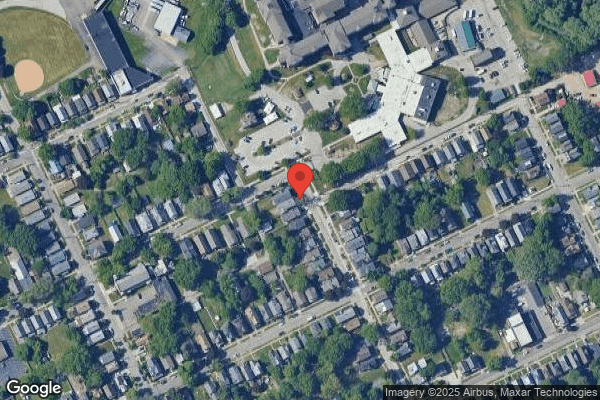
560 EAST THIRD ST, ERIE, PA 16512 (814) 871-4531
Government - State 107 Beds Independent Data: November 2025
Trust Grade
75/100
#96 of 653 in PA
Last Inspection: March 2025

Within standard 12-15 month inspection cycle. Federal law requires annual inspections.

Overview

The Pennsylvania Soldiers and Sailors Home has a Trust Grade of B, indicating it is a good choice for families seeking care - solid but not top-tier. It ranks #96 out of 653 facilities in Pennsylvania, placing it in the top half of the state's nursing homes, and #5 out of 18 in Erie County, meaning only four local options are better. However, the facility is experiencing a worsening trend, with issues increasing from 2 in 2024 to 4 in 2025. Staffing is a strength, boasting a 5-star rating and a turnover rate of 33%, which is well below the state average, ensuring staff consistency for residents. On the downside, the home has incurred $176,348 in fines, which is concerning and indicates compliance issues, and there have been specific incidents such as failing to provide oxygen as prescribed and not properly managing food safety in resident pantries. Overall, while there are notable strengths in staffing and care, families should be aware of the facility's recent compliance challenges.

Trust Score
B
75/100
In Pennsylvania
#96/653
Top 14%
Safety Record
High Risk
Review needed
Inspections
Getting Worse
2 → 4 violations
Staff Stability
○ Average
33% turnover. Near Pennsylvania's 48% average. Typical for the industry.
Penalties
⚠ Watch
$176,348 in fines. Higher than 99% of Pennsylvania facilities. Major compliance failures.
Skilled Nurses
✓ Good
Each resident gets 90 minutes of Registered Nurse (RN) attention daily — more than 97% of Pennsylvania nursing homes. RNs are the most trained staff who catch health problems before they become serious.
Violations
○ Average
6 deficiencies on record. Average for a facility this size. Mostly minor or procedural issues.
★★★★★
5.0
Overall Rating
★★★★★
5.0
Staff Levels
★★☆☆☆
2.0
Care Quality
★★★★☆
4.0
Inspection Score
Stable
2024: 2 issues
2025: 4 issues

The Good

  • 5-Star Staffing Rating · Excellent nurse staffing levels
  • Full Sprinkler Coverage · Fire safety systems throughout facility
  • No fines on record
  • Staff turnover below average (33%)

    15 points below Pennsylvania average of 48%

Facility shows strength in staffing levels, fire safety.

The Bad

Staff Turnover: 33%

13pts below Pennsylvania avg (46%)

Typical for the industry

Federal Fines: $176,348

Well above median ($33,413)

Significant penalties indicating serious issues

The Ugly 6 deficiencies on record

Mar 2025 4 deficiencies
CONCERN (D)

Potential for Harm - no one hurt, but risky conditions existed

Respiratory Care (Tag F0695)

Could have caused harm · This affected 1 resident

Based on review of facility policy and clinical records, observations, and staff interview, it was determined that the facility failed to provide oxygen according to physician's orders and failed to p...

Read full inspector narrative →
Based on review of facility policy and clinical records, observations, and staff interview, it was determined that the facility failed to provide oxygen according to physician's orders and failed to promote cleanliness and help prevent the spread of infection for three of five residents reviewed regarding respiratory care equipment (Residents R6, R30, and R38). Findings include: A facility policy dated 3/3/25, entitled Supplemental Oxygen Therapy revealed Turn the Flow Meter to the prescribed setting. DO NOT select a different setting unless the Provider has prescribed a change and The Nursing staff shall be responsible to clean filters (located at the back / side of the concentrators), wipe down machine, change all tubing, distilled water canisters (if applicable) and bags weekly. Resident R6's clinical record revealed an admission date of 6/5/15, with diagnoses that included Chronic obstructive pulmonary disease (COPD - when your lungs do not have adequate air flow), high blood pressure, and anxiety (a condition that causes a person to be nervous, uneasy, or worried about something or someone). Resident R6's clinical record revealed a physician's order dated 8/29/23, for oxygen at 2 liters per minute (lpm) via nasal cannula (a thin tube with two prongs that fit into the resident's nostrils to deliver oxygen) PRN (as needed) for SOB (Shortness of Breath). Observation on 3/6/25, at 11:00 a.m. revealed Resident R6 seated in his/her wheelchair with supplemental oxygen in place and the oxygen concentrator liter flow set at 4 lpm. During an interview on 3/6/25, at 11:00 a.m. Licensed Practical Nurse (LPN) Employee E4 confirmed that Resident R6's oxygen concentrator was on and set at 4 lpm and was not in accordance with the physician's order dated 8/29/23, for oxygen at 2 lpm. Resident R30's clinical record revealed an admission date of 6/11/18, with diagnoses that included COPD, high blood pressure, and depression (condition characterized by persistent feeling of sadness loss of interest in activities once enjoyed). Resident R30's clinical record revealed a physician's order dated 4/22/24, to clean filter on oxygen concentrator weekly on Wednesday 7-3, and another physician's order dated 4/29/24, for oxygen at 3 lpm via nasal cannula continuous. Observation on 3/5/25, at 10:25 a.m. revealed Resident R30 lying in bed with oxygen being delivered via nasal cannula at 3 lpm. Oxygen concentrator had a filter on the back of the concentrator that contained a gray dusty substance, and the actual concentrator was dusty with dried white substance noted down the front and on the sides. During an interview on 3/5/25, at 10:43 a.m. LPN Employee E2 confirmed that Resident R30's concentrator filter was dusty and the concentrator itself was dusty with dried substance noted down the front and sides. Resident R38's clinical record revealed an admission date of 9/30/22, with diagnoses that included COPD, lung cancer, and high blood pressure. Resident R38's clinical record revealed a physician's order dated 8/7/24, for oxygen at 3 lpn via nasal cannula prn for SOB. Observations on 3/4/25, at 1:08 p.m. and 3/5/25, at 9:53 a.m. revealed Resident R38 lying in bed with oxygen being delivered via nasal cannula at 3 lpm. Oxygen concentrator had a filter on the back of the concentrator that contained a gray dusty substance, and the actual concentrator was dusty and with a dried white and brown substance down the front and on the sides. During an interview on 3/5/25, at 10:15 a.m. Registered Nurse Employee E1 confirmed that Resident R38's concentrator filter was dusty and the concentrator itself was dusty with dried substance noted down the front and sides. 28 Pa. Code 211.10(c) Resident care policies 28 Pa. Code 211.12(d)(1)(5) Nursing services
CONCERN (D)

Potential for Harm - no one hurt, but risky conditions existed

Medication Errors (Tag F0758)

Could have caused harm · This affected 1 resident

Based on review of facility policy and clinical record review, and staff interview, it was determined that the facility failed to ensure that a PRN (as needed) anti-anxiety psychotropic (any drug that...

Read full inspector narrative →
Based on review of facility policy and clinical record review, and staff interview, it was determined that the facility failed to ensure that a PRN (as needed) anti-anxiety psychotropic (any drug that affects brain activities associated with mental processes and behavior) medication had clinical rationale identified for the use beyond the limitation of 14 days for one of 23 residents reviewed (Resident R4). Findings include: A facility policy entitled Resident Care/Pharmacy Services dated 3/2023, revealed that PRN orders for psychotropic medications (antipsychotic, anxiolytic, antidepressant and sedative/hypnotic) will be limited to 14 days unless the physician identifies the rationale to extend the medication beyond 14 days. Resident R4's clinical record revealed an admission date of 4/28/18, with diagnoses that included dementia (a disease of the brain that affects decision making, memory, mood and behavior), aneurysm of iliac artery (a bulge or dilation in the wall of the iliac arteries, located in the pelvis), benign neoplasm of colon (a non-cancerous growth that originated in the large intestine), and benign prostatic hyperplasia (an age related condition in which the prostate gland grows larger than normal). Resident R4's clinical record revealed a physician's order dated 7/29/24, for Xanax (Alprazolam) 0.25 milligram (mg) by mouth every one-hour PRN as needed for anxiety or shortness of breath. During an interview on 3/07/25, at 9:45 a.m. the Nursing Home Administrator confirmed there was no clinical rationale documented by the physician for the extended time-period of Resident 4's PRN Xanax usage beyond 14 days. 28 Pa. Code 211.12 (d)(1)(3) Nursing services
CONCERN (D)

Potential for Harm - no one hurt, but risky conditions existed

Food Safety (Tag F0812)

Could have caused harm · This affected 1 resident

Based on review of facility policy, observations, and staff interview, it was determined that the facility failed to ensure that food was stored in accordance with standards for food safety in a resid...

Read full inspector narrative →
Based on review of facility policy, observations, and staff interview, it was determined that the facility failed to ensure that food was stored in accordance with standards for food safety in a resident pantry in one of two refrigerators reviewed (Unit A pantry). Findings include: Review of facility policy entitled Resident Rights; Visitation dated 3/3/25, indicated Perishable food . brought in will be permitted to be placed in the unit refrigerator for 24 hours. The food must be labeled with resident's name date and time. Perishable items not of a leftover nature, may be placed in the unit refrigerator/freezer up through package expiration date. Observations on 3/5/25, at 11:40 a.m. of a refrigerator in the Unit A pantry used for residents revealed three zip lock bags containing snap peas, two of the zip lock bags had a date of 1/21/25, and the third zip lock bag lacked a date. Observation of one of the zip lock bags revealed the snap peas were soft and there was a liquid substance in the bottom of the zip lock bag. Further observations revealed a plastic container of blackberries that lacked a name and date, a jar of pepper rings with a date of 9/9/24, and no expiration date on the jar, and a jar of mixed vegetables that lacked a date and no expiration date on the jar. During an interview with Nursing Assistant Employee E3 at the time of observation, he/she confirmed that one zip lock bag of the snap peas was lacking a date, and the other two zip lock bags of snap peas were beyond their use by date, the blackberries lacked a name and date, the jar of pepper rings lacked an expiration date and the jar of mixed vegetable lacked a date and an expiration date. He/she also confirmed that food items should be discarded by their expiration or use by date. During an interview on 3/5/25, at 1:07 p.m. the Director of Nursing confirmed that food items in the resident refrigerator should have a resident name and opened date and should be discarded before or by their use by date. 28 Pa. Code 201.14(a) Responsibility of licensee 28 Pa. Code 201.18(b)(1) Management
CONCERN (D)

Potential for Harm - no one hurt, but risky conditions existed

Infection Control (Tag F0880)

Could have caused harm · This affected 1 resident

Based on review of facility policy and infection control records, and staff interviews, it was determined that the facility failed to ensure measures were in place to monitor and prevent legionella in...

Read full inspector narrative →
Based on review of facility policy and infection control records, and staff interviews, it was determined that the facility failed to ensure measures were in place to monitor and prevent legionella in the facility water. Findings include: A facility policy entitled, Prevention of Healthcare-Associated Legionella Disease, dated 3/03/25, revealed The State Veterans' Homes must establish and maintain an infection prevention and control program designed to provide a safe, sanitary, and comfortable environment and to help prevent the development and transmission of communicable diseases and infections. Prevention of Healthcare-Associated Legionella (L. pneumophila) Disease - If environmental testing detects L. pneumophila then the environmental actions in this sub-paragraph are required. Any amount of L. pneumophila detected in a sample is considered a positive result. Implement remedial action using the criteria below. This remedial action approach uses a graded response for addressing L. pneumophila-positive samples detected through routine water testing. After environmental remediation is completed, promptly retest the water in the areas that tested positive for L. pneumophila to determine if the remediation procedures were successful at reducing L. pneumophilia to undetectable levels. If the remediation procedures were successful, then the quarterly water environmental validation cycle is complete. Review of facility water management records, Legionella Testing dated 12/04/24, revealed positive results for Legionella non-pneumophila species in Unit B - First Floor - Kitchenette Faucet - Hot Water. The facility lacked evidence of further testing for Legionella of the facility water system after 12/04/24. An interview with the Facility and Grounds Director on 3/07/25, at 9:10 a.m. revealed the facility received the positive findings for Legionella in the above noted area on 12/04/24; Flushing of the facility water system with bleach/water was completed, but no further testing of the water system for Legionella was completed after 12/04/24. An interview with the Nursing Home Administrator on 3/07/25, at 10:30 a.m. confirmed that testing for Legionella should have been completed promptly after 12/04/24, date of positive results of Legionella, to ensure the usage of facility water was safe for all persons. 28 Pa. Code 201.14(a) Responsibility of licensee 28 Pa. Code 201.18(b)(1) Management 28 Pa. Code 211.10(d) Resident care policies
Apr 2024 2 deficiencies
CONCERN (D)

Potential for Harm - no one hurt, but risky conditions existed

Free from Abuse/Neglect (Tag F0600)

Could have caused harm · This affected 1 resident

**NOTE- TERMS IN BRACKETS HAVE BEEN EDITED TO PROTECT CONFIDENTIALITY** Based on review of facility policy, facility documentation and clinical record, and resident and staff interviews, it was determ...

Read full inspector narrative →
**NOTE- TERMS IN BRACKETS HAVE BEEN EDITED TO PROTECT CONFIDENTIALITY** Based on review of facility policy, facility documentation and clinical record, and resident and staff interviews, it was determined that the facility failed to ensure that one of 22 residents reviewed was free of neglect during care. (Resident R11) Findings include: Review of facility policy entitled Administrative Services dated 3/2/24, revealed Neglect: The failure of the home, its employees or service providers to provide goods and services to a resident that are necessary to avoid physical harm, pain, mental anguish, or emotional distress. Review of facility policy entitled Clinical Care dated 3/2/24, revealed Basic Elements of Lift, Gait Belts, and Slider Boards Use, 1.maintains a no manual body lift directive to minimize risk of injury to the resident . Review of Resident R11's clinical record revealed an admission date of 7/2/19, with diagnoses that included Alzheimer's disease (brain disorder that slowly destroys memory, thinking skills, and, over time the ability to carry out the simplest tasks), anxiety (a condition that causes a person to be nervous, uneasy, or worried about something or someone), and essential tremor (a condition that causes involuntary shaking of any part of the body most often in the hands). Review of Resident R11's Quarterly Minimum Data Set (MDS - an assessment tool used to facilitate the management of care) assessment dated [DATE], revealed under section GG 0170 E, that Resident R11 was dependent on staff for transfer from chair to bed. Review of Resident R11's active physician orders revealed an order for transfers by use of knee lift ([NAME]) with size medium sling. Review of Resident 11's Care Plans under Activities of Daily Living (ADLs) revealed resident transfers with the knee lift ([NAME]) and medium sling. Review of information submitted by facility dated 4/23/24, and interview with the Nursing Home Commandant revealed Resident R11 was incorrectly transferred and that he/she was transferred to his/her chair by one staff member physically lifting him/her. Review of the facility's investigation revealed that Nurse Aide (NA) Employee E2 confirmed on 4/20/24, he/she transferred Resident R11 by physically picking him/her up. Further review of facility investigation revealed NA Employee E2 put one arm under the resident's knees and one arm behind the residents back then transferred him/her to the chair. Review of documentation submitted by the facility dated 4/23/24, revealed that the facility initiated and investigation, regarding resident neglect on 4/20/24. The investigation revealed that NA Employee E2 was suspended pending investigation. During an interview on 4/25/24, at 2:53 p.m. the Nursing Home Commandant confirmed that NA Employee E2 transferred Resident R11 by physically lifting him/her and not using the knee lift as ordered. He/she also confirmed that the resident should have been transferred as care planned with the use of the knee lift. 28 Pa. Code 201.14(a) Responsibility of licensee 28 Pa. Code 201.18(b)(1) Management 28 Pa. Code 201.18(e)(1) Management 28 Pa. Code 211.12(c) Nursing services 28 Pa. Code 211.12(d)(1)(3)(5) Nursing services
CONCERN (D)

Potential for Harm - no one hurt, but risky conditions existed

Deficiency F0657 (Tag F0657)

Could have caused harm · This affected 1 resident

Based on review of facility policy and clinical records and staff interview, it was determined that the facility failed to review and/or revise resident care plans for two of 22 residents reviewed (Re...

Read full inspector narrative →
Based on review of facility policy and clinical records and staff interview, it was determined that the facility failed to review and/or revise resident care plans for two of 22 residents reviewed (Residents R27 and R57). Findings include: Review of a facility policy dated 3/2/24, entitled Comprehensive Care Plans (Nursing Care) indicated that the comprehensive care plan will be reviewed and revised by the interdisciplinary team after each comprehensive and quarterly MDS (Minimum Data Set - federally mandated standardized assessment conducted at specific intervals to plan resident care) assessment. Resident R27's clinical record revealed an admission date of 5/9/14, with diagnoses that included paraplegia (injury to your spinal cord or brain causes paralysis to your lower body), high blood pressure, and diabetes (condition of improper insulin/blood sugar levels). Review of Resident R27's comprehensive care plan with a problem category of Pressure Ulcer / Injury revealed an outstanding target date (a date that the resident's care plan must be updated by) of 3/14/24. Resident R57's clinical record revealed an admission date of 5/3/21, with diagnoses that included dementia (loss of memory, language, problem-solving, and other thinking abilities), diabetes, and congestive heart failure (condition when your heart does not pump the blood as well resulting in difficulty breathing, tiredness, and swelling). Review of Resident R57's comprehensive care plans revealed that of the 24 care plans present, 22 had an outstanding target date of 2/21/24. The care plans included the problem categories of: ADL Function / Rehabilitation Potential - COVID, Communication, ADL Function / Rehabilitation Potential - Restorative Nursing, ADL Function / Rehabilitation - Elopement, Psychosocial Well-Being, Cognitive Loss / Dementia, Behavioral Symptoms - Disruptive, Behavioral Symptoms - Wandering, Behavioral Symptoms - Abusive, Behavioral Symptoms - Refusal, Mood State, Psychotropic Drug Use, ADL Function / Rehabilitation Potential - Care, ADL Function / Rehabilitation - Bleeding, Visual Function, Communication, Dental Care, Pain, Falls, Dehydration / Fluid Maintenance, Urinary Incontinence, and Integumentary. During an interview on 4/24/24, at 11:42 a.m. Registered Nurse Assessment Coordinator Employee E1 confirmed that Resident R27 and R57's care plans were not reviewed and/or revised as required. 28 Pa. Code 211.12(d)(1)(5) Nursing services
Understanding Severity Codes (click to expand)
Life-Threatening (Immediate Jeopardy)
J - Isolated K - Pattern L - Widespread
Actual Harm
G - Isolated H - Pattern I - Widespread
Potential for Harm
D - Isolated E - Pattern F - Widespread
No Harm (Minor)
A - Isolated B - Pattern C - Widespread

Questions to Ask on Your Visit

  • "Can I speak with families of current residents?"
  • "What's your RN coverage like on weekends and overnight?"

Our Honest Assessment

Strengths
  • • 33% turnover. Below Pennsylvania's 48% average. Good staff retention means consistent care.
Concerns
  • • Multiple safety concerns identified: $176,348 in fines. Review inspection reports carefully.
  • • $176,348 in fines. Extremely high, among the most fined facilities in Pennsylvania. Major compliance failures.
Bottom line: Generally positive indicators. Standard due diligence and a personal visit recommended.

About This Facility

What is Pennsylvania Soldiers And Sailors Home's CMS Rating?

CMS assigns PENNSYLVANIA SOLDIERS AND SAILORS HOME an overall rating of 5 out of 5 stars, which is considered much above average nationally. Within Pennsylvania, this rating places the facility higher than 99% of the state's 100 nursing homes. This rating reflects solid performance across the metrics CMS uses to evaluate nursing home quality.

How is Pennsylvania Soldiers And Sailors Home Staffed?

CMS rates PENNSYLVANIA SOLDIERS AND SAILORS HOME's staffing level at 5 out of 5 stars, which is much above average compared to other nursing homes. Staff turnover is 33%, compared to the Pennsylvania average of 46%. This relatively stable workforce can support continuity of care.

What Have Inspectors Found at Pennsylvania Soldiers And Sailors Home?

State health inspectors documented 6 deficiencies at PENNSYLVANIA SOLDIERS AND SAILORS HOME during 2024 to 2025. These included: 6 with potential for harm.

Who Owns and Operates Pennsylvania Soldiers And Sailors Home?

PENNSYLVANIA SOLDIERS AND SAILORS HOME is owned by a government entity. Government-operated facilities are typically run by state, county, or municipal agencies. The facility operates independently rather than as part of a larger chain. With 107 certified beds and approximately 102 residents (about 95% occupancy), it is a mid-sized facility located in ERIE, Pennsylvania.

How Does Pennsylvania Soldiers And Sailors Home Compare to Other Pennsylvania Nursing Homes?

Compared to the 100 nursing homes in Pennsylvania, PENNSYLVANIA SOLDIERS AND SAILORS HOME's overall rating (5 stars) is above the state average of 3.0, staff turnover (33%) is significantly lower than the state average of 46%, and health inspection rating (4 stars) is above the national benchmark.

What Should Families Ask When Visiting Pennsylvania Soldiers And Sailors Home?

Based on this facility's data, families visiting should ask: "Can I visit during a mealtime to observe dining assistance and food quality?" "How do you handle medical emergencies, and what is your hospital transfer rate?" "Can I speak with family members of current residents about their experience?"

Is Pennsylvania Soldiers And Sailors Home Safe?

Based on CMS inspection data, PENNSYLVANIA SOLDIERS AND SAILORS HOME has a clean safety record: no substantiated abuse findings (meaning no confirmed cases of resident harm), no Immediate Jeopardy citations (the most serious violation level indicating risk of serious injury or death), and is not on the Special Focus Facility watch list (a federal program monitoring the lowest-performing 1% of nursing homes). The facility has a 5-star overall rating and ranks #1 of 100 nursing homes in Pennsylvania. While no facility is perfect, families should still ask about staff-to-resident ratios and recent inspection results during their visit.

Do Nurses at Pennsylvania Soldiers And Sailors Home Stick Around?

PENNSYLVANIA SOLDIERS AND SAILORS HOME has a staff turnover rate of 33%, which is about average for Pennsylvania nursing homes (state average: 46%). Moderate turnover is common in nursing homes, but families should still ask about staff tenure and how the facility maintains care continuity when employees leave.

Was Pennsylvania Soldiers And Sailors Home Ever Fined?

PENNSYLVANIA SOLDIERS AND SAILORS HOME has been fined $176,348 across 1 penalty action. This is 5.1x the Pennsylvania average of $34,842. Fines at this level are uncommon and typically indicate a pattern of serious deficiencies, repeated violations, or failure to correct problems promptly. CMS reserves penalties of this magnitude for facilities that pose significant, documented risk to resident health or safety. Families should request specific documentation of what issues led to these fines and what systemic changes have been implemented.

Is Pennsylvania Soldiers And Sailors Home on Any Federal Watch List?

PENNSYLVANIA SOLDIERS AND SAILORS HOME is not on any federal watch list. The most significant is the Special Focus Facility (SFF) program, which identifies the bottom 1% of nursing homes nationally based on persistent, serious quality problems. Not being on this list means the facility has avoided the pattern of deficiencies that triggers enhanced federal oversight. This is a positive indicator, though families should still review the facility's inspection history directly.