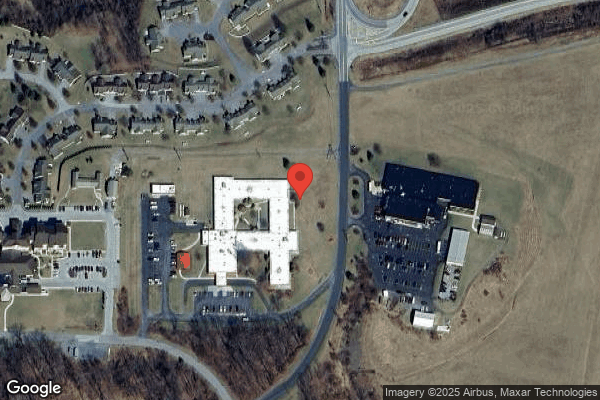
PENNKNOLL VILLAGE

208 PENNKNOLL ROAD, EVERETT, PA 15537 (814) 623-3200
For profit - Corporation 133 Beds CONSULATE HEALTH CARE/INDEPENDENCE LIVING CENTERS/NSPIRE HEALTHCARE/RAYDIANT HEALTH CARE Data: November 2025
Trust Grade
0/100
#619 of 653 in PA
Last Inspection: January 2025

Within standard 12-15 month inspection cycle. Federal law requires annual inspections.

Overview

Pennknoll Village has received a Trust Grade of F, indicating significant concerns about the quality of care provided. It ranks #619 out of 653 nursing homes in Pennsylvania, placing it in the bottom half of facilities in the state and #2 out of 2 in Bedford County, meaning there is only one other local option available that is better. While the facility is improving, as it reduced issues from 22 in 2024 to 17 in 2025, it still has serious problems, including incidents where residents experienced falls that resulted in fractures due to neglect and failure to follow care plans. Staffing is average with a rating of 3 out of 5 stars and a turnover rate of 50%, which is on par with the state average, but the facility has incurred $45,126 in fines, higher than 82% of similar facilities, suggesting ongoing compliance issues. Although there is average RN coverage, the incidents of neglect raise serious concerns about the safety and well-being of residents.

Trust Score
F
0/100
In Pennsylvania
#619/653
Bottom 6%
Safety Record
High Risk
Review needed
Inspections
Getting Better
22 → 17 violations
Staff Stability
⚠ Watch
50% turnover. Above average. Higher turnover means staff may not know residents' routines.
Penalties
✓ Good
$45,126 in fines. Lower than most Pennsylvania facilities. Relatively clean record.
Skilled Nurses
○ Average
Each resident gets 37 minutes of Registered Nurse (RN) attention daily — about average for Pennsylvania. RNs are the most trained staff who monitor for health changes.
Violations
⚠ Watch
60 deficiencies on record. Higher than average. Multiple issues found across inspections.
★☆☆☆☆
1.0
Overall Rating
★★★☆☆
3.0
Staff Levels
★★☆☆☆
2.0
Care Quality
★☆☆☆☆
1.0
Inspection Score
Stable
2024: 22 issues
2025: 17 issues

The Good

  • Full Sprinkler Coverage · Fire safety systems throughout facility
  • No fines on record

Facility shows strength in fire safety.

The Bad

1-Star Overall Rating

Below Pennsylvania average (3.0)

Significant quality concerns identified by CMS

Staff Turnover: 50%

Near Pennsylvania avg (46%)

Higher turnover may affect care consistency

Federal Fines: $45,126

Above median ($33,413)

Moderate penalties - review what triggered them

Chain: CONSULATE HEALTH CARE/INDEPENDENCE

Part of a multi-facility chain

Ask about local staffing decisions and management

The Ugly 60 deficiencies on record

5 actual harm
May 2025 2 deficiencies 2 Harm
SERIOUS (G) 📢 Someone Reported This

A family member, employee, or ombudsman was alarmed enough to file a formal complaint

Actual Harm - a resident was hurt due to facility failures

Free from Abuse/Neglect (Tag F0600)

A resident was harmed · This affected 1 resident

Based on clinical record reviews, staff interviews, and investigation reports, it was determined that the facility failed to ensure that residents were free from neglect which resulted in harm as evid...

Read full inspector narrative →
Based on clinical record reviews, staff interviews, and investigation reports, it was determined that the facility failed to ensure that residents were free from neglect which resulted in harm as evidenced by a fall with fracture for one of five residents reviewed (Resident 3). Findings include: The facility's policy regarding abuse, neglect, exploitation, and misappropriation, dated January 16, 2025, revealed that each resident was afforded basic human rights, including the right to be free from abuse, neglect, mistreatment, exploitation, and misappropriation of property. Nurse aide documentation revealed that Resident 3 was an extensive assist of two for bed mobility and toileting at the time of the fall. The care plan for Resident 3, dated June 2, 2023, for a self-care performance deficit related to limited mobility included interventions for two assist with bed mobility. An occupational therapy note for Resident 3, dated for the certification period of May 2 to May 31, 2025, indicated that Resident 3 was dependent and in need of two assist for toileting hygiene. A nursing note for Resident 3, dated May 6, 2025, at 6:49 a.m., revealed that Registered Nurse 1 was called to the room where the resident was found on the floor between the beds. She was face down moaning in pain and was rolled onto her back with the support of three staff. A registered nurse assessment at that time revealed that there was bleeding and bruising to the nose and right side of the face, as well as skin tears to the right elbow and right shin. The resident was sent to the emergency room for evaluation. An emergency room X-ray report for Resident 3, dated May 6, 2025, at 10:59 a.m., revealed a nondisplaced fracture of the third digit of the right hand. An incident report for Resident 3, dated May 6, 2025, at 5:52 a.m. revealed that Nurse Aide 2 was in the resident's room providing incontinent care when the resident shifted her weight causing her to slip through the aide's arms and roll onto the floor between the beds. Nurse Aide 2 performed care by herself and did use a two person assist. A witness statement, dated May 6, 2025 at 5:52 a.m., revealed that the Nurse Aide 2 was removing Resident 3 from the bedpan when the resident shifted her weight and slid through her hands and off the bed. She indicated that the RN and other aide were in another room attending to a resident at that time. She went on to say that she was trying to get Resident 3 settled in time for the other aide to leave at 6:30 a.m., because at that time she would be by herself. In addition, she indicated that the resident was wanting to get off the bedpan as soon as possible. A fall investigation form, dated May 6, 2025, submitted at 3:24 p.m., indicated that one staff person was providing care at the time of the fall. Interview with the Director of Therapy on May 29, 2025, at 3:15 p.m. indicated that at the time of Resident 3's fall, she was a maximum assist of two for bed mobility. She went on to say that during the facility's morning meeting on the day of the fall, the Director of Nursing indicated that Resident 3 was to be an assist of two while removing the bedpan and not one. Interview with Resident 3 on May 29, 2025, at 3:25 p.m. indicated that on the day of the fall, the aide tilted her and she went off the bed. Additionally, she indicated that the there is usually two staff in the room assisting with her care. Interview with the Director of Nursing on May 29, 2025, at 6:14 p.m. confirmed that there should have been two nursing assistants providing care to Resident 3 while removing her from the bedpan. Nurse Aide 2 did not follow the resident's plan of care for a two person assist resutling in a fall from bed and a fracture. 28 Pa. Code 201.14(a) Responsibility of Licensee. 28 Pa. Code 211.12(d)(5) Nursing Services.
SERIOUS (G) 📢 Someone Reported This

A family member, employee, or ombudsman was alarmed enough to file a formal complaint

Actual Harm - a resident was hurt due to facility failures

Accident Prevention (Tag F0689)

A resident was harmed · This affected 1 resident

Based on clinical record reviews, staff interviews, and investigation reports, it was determined that the facility failed to ensure that a safe environment was provided for one of five residents revie...

Read full inspector narrative →
Based on clinical record reviews, staff interviews, and investigation reports, it was determined that the facility failed to ensure that a safe environment was provided for one of five residents reviewed (Resident 3) resulting in a fall with fracture. Findings include: The facility's policy regarding fall prevention, dated January 16, 2025, revealed that the facility was to provide an environment that is free from accident hazards over which the facility has control, and provide supervision to prevent avoidable accidents. A quarterly Minimum Data Set (MDS) assessment (a mandated assessment of a resident's abilities and care needs) for Resident 3, dated May 16, 2025, indicated that the resident was cognitively intact, could understand and was understood. Nurse aide documentation revealed that Resident 3 was an extensive assist of two for bed mobility and toileting at the time of the fall. The care plan for Resident 3, dated June 2, 2023, for a self-care performance deficit related to limited mobility included interventions for two assist with bed mobility. An occupational therapy note for Resident 3, dated for the certification period of May 2 to May 31, 2025, indicated that Resident 3 was dependent and in need of two assist for toileting hygiene. A nursing note for Resident 3, dated May 6, 2025, at 6:49 a.m., revealed that Registerd Nurse 1 called to the room where the resident was found on the floor between the beds. She was face down moaning in pain and was rolled onto her back with the support of three staff. A registered nurse assessment at that time revealed that there was bleeding and bruising to the nose and right side of the face, as well as skin tears to the right elbow and right shin. The resident was sent to the emergency room for evaluation. An emergency room X-ray report for Resident 3, dated May 6, 2025, at 10:59 a.m., revealed a nondisplaced fracture of the third digit of the right hand. An incident report for Resident 3, dated May 6, 2025, at 5:52 a.m. revealed that Nurse Aide 2 was in the resident's room providing incontinent care when the resident shifted her weight causing her to slip through the aide's arms and roll onto the floor between the beds. A witness statement, dated May 6, 2025 at 5:52 a.m., revealed that Nurse Aide 2 was removing Resident 3 from the bedpan when the resident shifted her weight and slid through her hands and off the bed. She indicated that the RN and other aide were attending to another resident at that time. A fall investigation form, dated May 6, 2025, submitted at 3:24 p.m., indicated that one staff person was providing care at the time of the fall. Interview with the Director of Therapy on May 29, 2025, at 3:15 p.m. indicated that at the time of Resident 3's fall, she was a maximum assist of two for bed mobility. She went on to say that during the facility's morning meeting on the day of the fall, the Director of Nursing indicated that Resident 3 was to be an assist of two while removing the bedpan and not one. Interview with Resident 3 on May 29, 2025, at 3:25 p.m. indicated that on the day of the fall, the aide tilted her and she went off the bed. Additionally, she indicated that the there is usually two staff in the room assisting with her care. Interview with the Director of Nursing on May 29, 2025, at 6:14 p.m. confirmed that there should have been two nursing assistants providing care to Resident 3 while removing her from the bedpan. 28 Pa. Code 201.14(a) Responsibility of Licensee. 28 Pa. Code 211.12(d)(5) Nursing Services.
Jan 2025 15 deficiencies
CONCERN (D)

Potential for Harm - no one hurt, but risky conditions existed

Safe Environment (Tag F0584)

Could have caused harm · This affected 1 resident

Based on observations and staff interviews, it was determined that the facility failed to provide a clean and homelike environment in resident rooms for two of 30 residents reviewed (Residents 5, 29)....

Read full inspector narrative →
Based on observations and staff interviews, it was determined that the facility failed to provide a clean and homelike environment in resident rooms for two of 30 residents reviewed (Residents 5, 29). Findings include: The facility's policy, dated March 18, 2024, indicated that resident care equipment, including durable medical equipment, will be kept clean, and resident rooms will be maintained in such a way as to present a homelike appearance. Observations of Resident 5 on January 12, 2025, at 12:10 p.m. and January 14, 2025, at 2:03 p.m. revealed that the resident was lying in her bed with a feeding pump (machine that administers liquid nutrition) running at 50cc/hr. The feeding pump had a moderate amount of a light brown, sticky substance on the front and back, and the resident's overbed table top had two areas measuring approximately one inch by two inches of a yellowish/white removable substance. In addition, a red stethoscope dangling from the feeding pump was observed to have a large amount of a bright white, dried substance on it. Interview with Licensed Practical Nurse 1 and the Director of Nursing on January 14, 2025, at 1:06 p.m. and 1:10 p.m., respectively, confirmed that Resident 5's feeding pump, bedside stand, and stethoscope should have been clean, and they were not. Observations in Residents 29's room on January 12, 2025, at 11:30 a.m. revealed that the wall behind the resident's bed had multiple scratches, cuts, and nicks in it. Interview with the Maintenance Director on January 15, 2025, at 11:46 a.m. confirmed that Resident 29's room needed repaired and painted. 28 Pa. Code 207.2(a) Administrator's Responsibility.
CONCERN (D)

Potential for Harm - no one hurt, but risky conditions existed

Abuse Prevention Policies (Tag F0607)

Could have caused harm · This affected 1 resident

Based on a review of policies, clinical records, personnel files, and investigative reports, as well as interviews with staff, it was determined that the facility failed to ensure that the abuse polic...

Read full inspector narrative →
Based on a review of policies, clinical records, personnel files, and investigative reports, as well as interviews with staff, it was determined that the facility failed to ensure that the abuse policy was followed for one of 30 residents reviewed (Resident 28), and failed to complete a professional licensure verification with the Pennsylvania State Board of Nursing prior to hire for one of four employees reviewed (Registered Nurse 1). Findings include: The facility's abuse policy, dated March 18, 2024, indicated that no employee may at any time commit an act of physical, psychological, or emotional abuse; neglect; mistreatment and/or misappropriation of property against any resident, and persons applying for employment with the center will be screened for a history of abuse, neglect, exploitations, or misappropriation of resident property, including but not limited to employment history, criminal background check, abuse check with appropriate licensing board and registries prior to hire, and licensure or registration verification prior to hire. A quarterly Minimum Data Set (MDS) assessment (a mandated assessment of a resident's abilities and care needs) for Resident 28, dated November 25, 2024, revealed that the resident was cognitively intact and was dependent on staff for all daily care needs. Investigation documents provided by the facility for Resident 28, dated October 31, 2024, revealed that on October 31, 2024, Nurse Aide 3 was overheard telling Resident 28 to shut up. The facility determined that Nurse Aide 3 did tell the resident to shut up and was subsequently terminated. Interview with the Director of Nursing on January 14, 2025, at 11:04 a.m. revealed that Nurse Aide 3 did not follow the facility's abuse policy when she told Resident 28 to shut up. The personnel file for Registered Nurse 2 revealed that she was hired on September 10, 2024, and as of January 13, 2025 (four months after hire) a professional licensure verification with the Pennsylvania State Board of Nursing had not been completed. Interview with Director of Human Resources on January 15, 2025, at 2:47 p.m. confirmed that there was no documented evidence to indicate that Registered Nurse 2's professional licensure was verified with the State Board of Nursing prior to the nurse's hire date. 28 Pa. Code 201.14(a) Responsibility of Licensee. 28 Pa. Code 201.18(e)(1) Management.
CONCERN (D)

Potential for Harm - no one hurt, but risky conditions existed

Transfer Notice (Tag F0623)

Could have caused harm · This affected 1 resident

Based on review of facility policy and clinical record reviews, and staff interviews, it was determined that the facility failed to notify the resident, responsible party, and Ombudsman, in writing, r...

Read full inspector narrative →
Based on review of facility policy and clinical record reviews, and staff interviews, it was determined that the facility failed to notify the resident, responsible party, and Ombudsman, in writing, regarding the reason for hospitalization for two of 30 residents reviewed (Residents 68, 70). Findings include: The facility policy for Transfer/Discharge Notification, dated March 18, 2024, revealed that before a resident is transferred or discharged , the facility will notify the resident and resident representative of the transfer or discharge and the reason for the move in writing and will send a copy of the notice to a representative of the Office of the State Long Term Care Ombudsman. A significant change Minimum Data Set (MDS) assessment (a mandated assessment of a resident's abilities and care needs) for Resident 68, dated November 7, 2024, indicated that the resident was cognitively intact and required assistance from staff for daily care needs. A nursing note for Resident 68, dated October 28, 2024, at 3:42 a.m. revealed that the resident complained of difficulty breathing. Despite interventions she continued to have difficulty breathing and requested to go to the emergency department, and she was transferred to the hospital. There was no documented evidence that a written notice of Resident 68's transfer to the hospital was provided to the resident's responsible party and the Ombudsman regarding the reason for transfer. A quarterly MDS assessment for Resident 70, dated November 14, 2024, indicated that the resident was cognitively impaired and was dependent on staff for daily care needs. A nursing note for Resident 70, dated April 3, 2024, at 10:40 p.m., revealed that the resident had a fall from her chair and had a bleeding laceration to the back of her head, and she was transferred to the hospital. There was no documented evidence that a written notice of Resident 70's transfer to the hospital was provided to the resident's responsible party and the Ombudsman regarding the reason for transfer. Interview with the Nursing Home Administrator on January 15, 2025, at 9:41 a.m. confirmed that the facility did not provide a written notice to the residents, the residents' responsible parties, or the Ombudsman when Residents 68 and 70 were transferred to the hospital. 28 Pa. Code 201.25 Discharge Policy. 28 Pa. Code 201.29(f)(g) Resident Rights.
CONCERN (D)

Potential for Harm - no one hurt, but risky conditions existed

Deficiency F0625 (Tag F0625)

Could have caused harm · This affected 1 resident

Based on review of facility policies and clinical records, as well as staff interviews, it was determined that the facility failed to ensure that appropriate parties were notified about the facility's...

Read full inspector narrative →
Based on review of facility policies and clinical records, as well as staff interviews, it was determined that the facility failed to ensure that appropriate parties were notified about the facility's bed-hold policy upon transfer to the hospital for two of 30 residents reviewed (Residents 68, 70). Findings include: The facility policy for Bed Hold Notice, dated March 18, 2024, revealed that in accordance with state and federal law the facility provides written notice of its bed-hold information to each resident and resident representative. A significant change Minimum Data Set (MDS) assessment (a mandated assessment of a resident's abilities and care needs) for Resident 68, dated November 7, 2024, indicated that the resident was cognitively intact and required assistance from staff for daily care needs. A nursing note for Resident 68, dated October 28, 2024, at 3:42 a.m., revealed that the resident complained of difficulty breathing. Despite interventions she continued to have difficulty breathing and requested to go to the emergency department, and she was transferred to the hospital. There was no documented evidence that the resident and/or the responsible party was notified about the facility's bed-hold policy at the time of the above transfer to the hospital for Resident 68. A quarterly MDS assessment for Resident 70, dated November 14, 2024, indicated that the resident was cognitively impaired and was dependent on staff for daily care needs. A nursing note for Resident 70, dated April 3, 2024, at 10:40 p.m., revealed that the resident had a fall from her chair and had a bleeding laceration to the back of her head, and she was transferred to the hospital. There was no documented evidence that the resident and/or the responsible party was notified about the facility's bed-hold policy at the time of the above transfer to the hospital for Resident 70. Interview with the Nursing Home Administrator on January 15, 2025, at 9:41 a.m. confirmed that there was no documented evidence that a bed-hold notice was issued to Residents 68 and 70 or their responsible parties and there should have been. 28 Pa. Code 201.25 Discharge Policy. 28 Pa. Code 201.29(f)(g) Resident Rights.
CONCERN (D) 📢 Someone Reported This

A family member, employee, or ombudsman was alarmed enough to file a formal complaint

Potential for Harm - no one hurt, but risky conditions existed

Deficiency F0657 (Tag F0657)

Could have caused harm · This affected 1 resident

Based on review of facility policies and clinical records, as well as staff interviews, it was determined that the facility failed to ensure that care plans were updated to reflect changes in resident...

Read full inspector narrative →
Based on review of facility policies and clinical records, as well as staff interviews, it was determined that the facility failed to ensure that care plans were updated to reflect changes in residents' care needs for one of 30 residents reviewed (Resident 29). Findings include: The facility's policy regarding care plans, dated March 18, 2024, indicated that an individualized person-centered plan of care will be established by the interdisciplinary team with the resident or resident representative to the extent practicable and will be updated in accordance with state and federal regulatory requirements. A quarterly Minimum Data Set (MDS) assessment (a mandated assessment of a resident's abilities and care needs) for Resident 29, dated December 14, 2024, revealed that she was cognitively impaired, was dependent on staff for activities of daily living, and had a diagnoses that included dementia and high blood pressure. A consult note for Resident 29 from the wound doctor, dated January 7, 2025, revealed that the consultant company was signing off on the resident and that she has no open wounds at this time. The current care plan for Resident 29, dated July 9, 2024, revealed that the resident has pressure ulcer to right heel. Interview with the Director of Nursing on January 15, 2025 at 12:49 p.m. confirmed that Resident 29's pressure ulcer was healed and that her care plan should have been discontinued. 28 Pa. Code 201.24(e)(4) admission Policy. 28 Pa. Code 211.12(d)(5) Nursing Services.
CONCERN (D) 📢 Someone Reported This

A family member, employee, or ombudsman was alarmed enough to file a formal complaint

Potential for Harm - no one hurt, but risky conditions existed

Deficiency F0679 (Tag F0679)

Could have caused harm · This affected 1 resident

Based on clinical record reviews and resident and staff interviews, it was determined that the facility failed to provide adequate, ongoing activities designed to meet the needs of residents for seven...

Read full inspector narrative →
Based on clinical record reviews and resident and staff interviews, it was determined that the facility failed to provide adequate, ongoing activities designed to meet the needs of residents for seven of 30 residents reviewed (Residents 3, 14, 20, 24, 36, 63, 66). Findings include: A quarterly Minimum Data Set (MDS) assessment (a mandated assessment of a resident's abilities and care needs) for Resident 3, dated December 6, 2024, indicated that the resident was cognitively intact and was dependent on staff for daily care needs, and that it was very important for the resident to be provided with books to read, be involved in group activities, participate in favorite activities, and participate in religious activities. A quarterly MDS assessment for Resident 14, dated December 11, 2024, indicated that the resident was cognitively intact and dependent on staff for daily care needs, and that it was very important for the resident to listen to music, participate in favorite activities, go outside when the weather is nice, and participate in religious activities. A quarterly MDS assessment for Resident 20, dated December 30, 2024, indicated that the resident was cognitively intact, required partial assistance from staff for daily care needs, and that it was very important for the resident to listen to music, be around animals, participate in favorite activities, go outside when the weather is nice, and participate in religious activities. A quarterly MDS assessment for Resident 24, dated December 1, 2024, indicated that the resident was cognitively intact, required maximum assistance from staff for daily care needs, and that it was very important for the resident to listen to music, participate in favorite activities, and go outside when the weather is nice. A quarterly MDS assessment for Resident 36, dated December 21, 2024, indicated that the resident was cognitively intact, was dependent on staff for daily care needs, and that it was very important for the resident to be able to have books to read, listen to music, keep up with the news, do activities with groups of people, and participate in favorite activities. A quarterly MDS assessment for Resident 63, dated December 19, 2024, indicated that the resident was cognitively impaired, was independent with daily care needs, and that it was very important for the resident to participate in favorite activities, do actives in groups of people, and participate in religious activities. An annual MDS assessment for Resident 66, dated November 8, 2024, indicated that the resident was cognitively intact, was dependent on staff for all care needs, and that it was very important for the resident to listen to music, do activities with groups of people, participate in favorite activities, and to go outside when the weather is nice. Resident council meeting minutes from January 2025 revealed that the residents were upset because activity hours were cut and they did not have as many activities, and they wanted them back. A review of the activity calendars for October and November 2024 revealed that the residents had three to four activities per day during the week and three activities per day on the weekends. Activity calendars for December, 2024 and January 2025 revealed that the residents had two to three activities during the weeks and two activities on the weekends. Sunday activities were Sunday social and church. Observations of the Sunday Social activity on January 12, 2025, in the activities room consisted of residents sitting around a table, there were no refreshments provided, and residents were quiet and spoke very little. An interview with a group of Residents on January 13, 2025, at 11:15 a.m. revealed that the residents would like more activities. They stated that two of the activity aides were recently let go, and their activities have been cut in half. They would like more bingo, music, and religious activities. Their bingo is very important to them because they get points during bingo, and they are allowed to purchase items with those points. The residents stated that some residents do not have family who can bring them special items, and by cutting bingo back these residents are no t able to get these items. They stated they only have half as many activities during the week and very little on weekends. Interview with Resident 66 on January 15, 2025, at 1:45 p.m. revealed that she was upset that bingo was decreased and that church during the week was cut. She stated, What do they want us to do, stare at the walls like we are in a prison? The activities are the only things we have to do here. Interview with the Activity Director on January 13, 2025, at 12:41 p.m. revealed that two activity staff were recently let go, and that her hours were cut back. She stated that she was aware the residents were requesting more activities like bingo, music, and church, but it is difficult to schedule them with the cut in her hours and the loss of activites staff. 28 Pa. Code 201.24(e)(4) admission Policy. 28 Pa. Code 211.12(d)(3)(5) Nursing Services.
CONCERN (D) 📢 Someone Reported This

A family member, employee, or ombudsman was alarmed enough to file a formal complaint

Potential for Harm - no one hurt, but risky conditions existed

Accident Prevention (Tag F0689)

Could have caused harm · This affected 1 resident

Based on a review of clinical records, as well as staff interviews, it was determined that the facility failed to ensure that a resident's transfer status was followed for one of 30 residents reviewed...

Read full inspector narrative →
Based on a review of clinical records, as well as staff interviews, it was determined that the facility failed to ensure that a resident's transfer status was followed for one of 30 residents reviewed (Resident 68). Findings include: A significant change Minimum Data Set (MDS) assessment (a mandated assessment of a resident's abilities and care needs) for Resident 68, dated November 7, 2024, revealed that the resident was cognitively intact, required two-person assistance for transfers, and had diagnoses of acute respiratory failure and muscle weakness. A nursing note for Resident 68, dated December 20, 2024, at 10:45 a.m. revealed that the resident was being transferred from the bed to a wheelchair by one nurse aide when the resident became weak and was slowly lowered to a sitting position on the floor. Resident was wearing black sneakers and was assessed, no injuries were found and there were no complaints of pain. Interview with the Nursing Home Administrator on January 15, 2025, at 9:41 a.m. confirmed that Resident 68 was transferred by one staff member and she should have been transferred by two staff members. 28 Pa. Code 211.10(a) Resident Care Policies. 28 Pa. Code 211.12(d)(3)(5) Nursing Services.
CONCERN (D) 📢 Someone Reported This

A family member, employee, or ombudsman was alarmed enough to file a formal complaint

Potential for Harm - no one hurt, but risky conditions existed

Deficiency F0725 (Tag F0725)

Could have caused harm · This affected 1 resident

Based on observations, as well as resident and staff interviews, it was determined that the facility failed to ensure that there was sufficient nursing staff available to transport residents to activi...

Read full inspector narrative →
Based on observations, as well as resident and staff interviews, it was determined that the facility failed to ensure that there was sufficient nursing staff available to transport residents to activities and to provide licensed nursing staff in the facility's main dining area for the lunch and dinner meals. Findings include: A grievance from Resident 68, dated November 15, 2024, revealed that the resident was unable to go to activities due to nursing aides not being able to take her there. Staff were educated on the importance of ensuring residents were out of bed and transferred to their activities per each resident's preference. Review of the facility's dietary delivery times, undated, revealed that breakfast meals were to be delivered to the units from 7:00 a.m. to 8:15 a.m., lunch meals were to be delivered to the units from 12:40 a.m. to 1:00 p.m., the main dining room was to be served at 1:10 p.m., and dinner meals were to be delivered to the units from 5:00 p.m. to 6:15 p.m. Observations in the main dining room for lunch on January 12, 2025, at 1:02 p.m. revealed that only one resident was present (Resident 83). Interview with Resident 83 at that time revealed that he prefers to eat in the dining room and would prefer to eat dinner in the dining room too. Interview with a group of residents on January 13, 2025, at 11:15 a.m. revealed that they preferred to eat their meals in the dining room and were not aware that the dining room was open and available to eat in. They stopped going because they had to wait for long periods of time in the dining room for a nurse to get there. They were too hungry, and said they were served faster if they just ate in their rooms, so they stopped going. Interview with Licensed Practical Nurse 4 on January 13, 2025, at 12:19 p.m. confirmed that staff do not use the dining room because it is easier for them to serve the residents in their rooms rather than getting them all to the dining room. Interview with Dietary Manager on January 14, 2025, at 12:20 p.m. confirmed that only one resident comes to the dining room for lunch and stated the residents used to come all the time for lunch and for their monthly special breakfast. The residents really enjoyed it, but there has to be a licensed nurse in the dining room and the residents do not like waiting a long time until one is able to come. Interview with Nurse Aide 5 and Nurse Aide 6 on January 14, 2025, at 1:38 p.m. confirmed that only one resident was in the dining room for lunch, and that was because he takes himself. The other residents are served in their rooms due to staffing. They also stated that they were not able to get the residents to activities because the activity aides used to help transport the residents, but they were let go. Nurse Aides 5 and 6 said they were kept too busy with their daily care tasks. Interviews with Nurse Aide 7, Nurse Aide 8, and Nurse Aide 9 on January 14, 2025, at 1:49 p.m. revealed that they did not have enough staff to get their daily care tasks done. They were still showering residents at 12:00 p.m. and were not able to take all the residents to the dining hall that wanted to go. They would have to take the residents down early and they would have to wait for one to two hours. Residents are served in their rooms. Nurse Aides 7, 8, and 9 believed it was due to staffing. Nurse aides used to have help from the activity aides but they lost two of their people. Interview with Director of Nursing on January 14, 2025, at 2:46 p.m. confirmed that the dining room is open for residents for lunch and dinner. She was not sure why the residents were not using it, and Resident 68 should have been transported to the activity by the nurse aides. 28 Pa. Code 201.18(e)(1) Management. 28 Pa. Code 211.12(d)(5) Nursing Services.
CONCERN (D) 📢 Someone Reported This

A family member, employee, or ombudsman was alarmed enough to file a formal complaint

Potential for Harm - no one hurt, but risky conditions existed

Deficiency F0730 (Tag F0730)

Could have caused harm · This affected 1 resident

Based on review of personnel files, as well as staff interviews, it was determined that the facility failed to ensure that nurse aide performance evaluations were completed annually based on hire date...

Read full inspector narrative →
Based on review of personnel files, as well as staff interviews, it was determined that the facility failed to ensure that nurse aide performance evaluations were completed annually based on hire dates for one of three nurse aides reviewed (Nurse Aide 10). Findings include: A list of nurse aides provided by the facility revealed that based on their months and days of hire, an annual performance evaluation for Nurse Aide 10 was due September 24, 2024. As of January 15, 2025, there was no documented evidence that the annual performance evaluation was completed as required for Nurse Aide 10. Interview with the Director of Human Resources on January 15, 2025, at 2:03 p.m. confirmed that there was no documented evidence that the annual performance evaluation for Nurse Aide 10 was completed as required. 28 Pa. Code 201.14(a) Responsibility of Licensee. 28 Pa. Code 201.18(b)(1)(3)(e)(1) Management. 28 Pa. Code 201.20(a)(c) Staff Development.
CONCERN (D)

Potential for Harm - no one hurt, but risky conditions existed

Deficiency F0807 (Tag F0807)

Could have caused harm · This affected 1 resident

Based on observations, as well as resident and staff interviews, it was determined that the facility failed to ensure that residents' drink and food preferences were honored. Findings include: Intervi...

Read full inspector narrative →
Based on observations, as well as resident and staff interviews, it was determined that the facility failed to ensure that residents' drink and food preferences were honored. Findings include: Interview with a group of residents on January 13, 2025, at 11:15 a.m. revealed that they would enjoy soda, but you can only get soda now if you are sick. They have requested dippy eggs, hot dogs, sausage, kielbasa, and also asked for ice cream as a snack but were told no. One resident stated, We have no joy in our lives, we may as well be in prison. Interview with the Dietary Manager and Nursing Home Administrator on January 14, 2025, at 1:07 p.m. revealed that she is not able to purchase any of the requested drink or snack items for residents and that everything she receives was determined by corporate. She revealed that the beverages on the menu are juices and not soda, and that with the increased cost of food there is no money left to buy the requested snacks such as soda and ice cream. Residents have to purchase the items themselves. She indicated that sometimes she uses her own money to buy things. The Nursing Home Administrator revealed that they do not have hot dogs because it is a choking hazard and someone choked. The Dietary Manager indicated that there is no facility policy regarding tube meat such as hot dogs being a choking hazard. 28 Pa. Code 201.29(j) Resident Rights.
CONCERN (E) 📢 Someone Reported This

A family member, employee, or ombudsman was alarmed enough to file a formal complaint

Potential for Harm - no one hurt, but risky conditions existed

Grievances (Tag F0585)

Could have caused harm · This affected multiple residents

Based on review of facility policy and Food Committee meeting minutes, and resident and staff interviews, it was determined that the facility failed to make ongoing efforts to resolve resident grievan...

Read full inspector narrative →
Based on review of facility policy and Food Committee meeting minutes, and resident and staff interviews, it was determined that the facility failed to make ongoing efforts to resolve resident grievances regarding cold food. Findings include: The facility's policy regarding food quality and palatability, dated March 18, 2024, revealed that food will be palatable, attractive, and served at a safe and appetizing temperature. Food Committee meeting minutes for January through August 2024 and October through December 2024 indicated that the residents were receiving cold food. A meeting with a group of residents on January 13, 2025, at 11:15 a.m. revealed that the residents have been served food that was cold and unpalatable. They stated that they have requested food that is served at the correct temperature. They stated that this had been occurring for at least one year. Interview with Director of Dietary on January 14, 2025, at 12:14 p.m. confirmed that she was aware that residents complained about cold food, and that it was brought up during the Food Committee meetings. She stated that she did not address the issue because the food that was temped in the kitchen was at the correct temperatures. 28 Pa. Code 201.29(i) Resident Rights. 28 Pa. Code 211.12(d)(5) Nursing Service.
CONCERN (E) 📢 Someone Reported This

A family member, employee, or ombudsman was alarmed enough to file a formal complaint

Potential for Harm - no one hurt, but risky conditions existed

Quality of Care (Tag F0684)

Could have caused harm · This affected multiple residents

Based on review of facility policies and clinical records, as well as staff interviews, it was determined that the facility failed to ensure that physician's orders were followed for two of 30 residen...

Read full inspector narrative →
Based on review of facility policies and clinical records, as well as staff interviews, it was determined that the facility failed to ensure that physician's orders were followed for two of 30 residents reviewed (Residents 40, 53). Findings include: A quarterly Minimum Data Set (MDS) assessment (a mandated assessment of a resident's abilities and care needs) for Resident 40, dated November 13, 2024, revealed that the resident was cognitively intact, was independent with daily care needs, had diagnoses that included high blood pressure, diabetes, and Parkinson's. Current physician's orders for Resident 40 included orders for the resident to receive 10 milligrams of Cetirizine at bedtime every Monday and Thursday for allergies, 100 micrograms of Synthroid daily for hypothyroidism (when the thyroid gland does not make enough thyroid hormones), 17 grams of Miralax daily for constipation, 30 milligrams of Diltiazem twice a day for high blood pressure, and 500 milligram of Tylenol twice a day for left knee pain. A review of Resident 40's Medication Administration Records (MAR's) for December 2024 revealed no documented evidence that the medications were administered as ordered on December 3, 9, 10, 12, 16, 18, 21, and 24, 2024. Interview with Resident 40 on January 14, 2025, at 11:41 a.m. revealed that he has not been receiving his medications per the physician orders. An interview with the Director of Nursing on January 14, 2025, confirmed that Resident 40's MAR revealed no documented evidence to indicate that the medications were administered on the dates listed above. An admission MDS for Resident 53, dated December 3, 2024, revealed that the resident was cognitively impaired, required assistance with daily care needs, had diagnoses that included diabetes (a disease that interferes with blood sugar control), high blood pressure, and a stroke. Physician's orders for Resident 53, dated November 27, 2024, included orders for accuchecks every morning and at bedtime and to notify the physician if the blood sugar was less than 60 mg/dL or greater than 400 mg/dl. A review of the MAR for Resident 53, dated December 2024, revealed that on December 1, 2024, at 9:00 p.m. the resident's blood sugar was 32 mg/dl and on December 2, 2024, at 6:00 a.m. the resident's blood sugar was 41 mg/dl. There was no documented evidence that the physician was notified of these low blood sugars as ordered. Interview with the Director of Nursing on January 15, 2025, at 10:15 a.m. confirmed that the physician was not notified of Residents 53's low blood sugars mentioned above, and he should have been. 28 Pa. Code 211.12(d)(1)(5) Nursing Services.
CONCERN (E)

Potential for Harm - no one hurt, but risky conditions existed

Food Safety (Tag F0812)

Could have caused harm · This affected multiple residents

Based on review facility policy, as well as observations and staff interviews, it was determined that the facility failed to store and serve food in accordance with professional standards for food ser...

Read full inspector narrative →
Based on review facility policy, as well as observations and staff interviews, it was determined that the facility failed to store and serve food in accordance with professional standards for food service safety by failing to store and serve food under sanitary conditions. Findings include: The facility's current policy for outside food indicated that when food items are intended for later consumption the responsible facility staff member will label foods with the resident's name and current date. Frozen foods may be retained for 30 days. Observations in the main kitchen during an initial tour on January 12, 2025, at 9:17 a.m. revealed that Dietary Employee 11 was removing a cake from the cooler and his hair and beard were exposed and not covered with a hair net or beard guard. Interview with Dietary Employee 11 at that time confirmed that he should have been wearing a hair net and beard guard but he was just getting a cake out. Observations in the solarium refrigerator on January 12, 2025, at 9:35 a.m. revealed that the following items that had resident names but were open and undated or outdated: five pints of ice cream; one cup of ranch dressing; one cup of applesauce; two cups of butterscotch pudding; an eight-ounce glass of chocolate milk with a milk ring around the glass; one piece of pumpkin pie on a paper plate; a half full 16-ounce cup of applesauce; a Tupperware container with two deviled eggs that were turning to liquid and had a bad smell; one old stalk of celery; a plastic bag dated December 29, 2024, with spaghetti; one snack-sized Ziploc bag of moldy meat and cheese dated December 2, 2024; one hard sandwich roll in a Ziploc bag; one plate of grilled chicken breast and mashed potatoes; one four- ounce container of cottage cheese, dated November, 2024; three four-ounce containers of cottage cheese, dated December, 2024; one 1.3-ounce package of pepper snack sticks; and two 10-ounce containers of diet cranberry juice that were three-quarters full. There was a brown, removable substance on the refrigerator door. Interview with the Director of Nursing on January 12, 2025, at 10:22 a.m. confirmed that the food listed above should have been thrown out and that food should be labeled with the resident's name and date upon arrival per the facility's policy. Interview with the Nursing Home Administrator on January 12, 2025, at 1:58 p.m. confirmed that Dietary Employee 11 should have been wearing a hair net and beard guard while in the kitchen. 28 Pa. Code 211.6(f) Dietary Services.
CONCERN (E) 📢 Someone Reported This

A family member, employee, or ombudsman was alarmed enough to file a formal complaint

Potential for Harm - no one hurt, but risky conditions existed

QAPI Program (Tag F0867)

Could have caused harm · This affected multiple residents

Based on review of the facility's plans of correction for previous surveys, and the results of the current survey, it was determined that the facility's Quality Assurance Performance Improvement (QAPI...

Read full inspector narrative →
Based on review of the facility's plans of correction for previous surveys, and the results of the current survey, it was determined that the facility's Quality Assurance Performance Improvement (QAPI) committee failed to maintain compliance with nursing home regulations and ensure that plans to improve the delivery of care and services effectively addressed recurring deficiencies. Findings include: The facility's deficiencies and plan of correction for a State Survey and Certification (Department of Health) survey ending February 23, 2024, revealed that the facility developed plans of correction that included quality assurance systems to ensure that the facility maintained compliance with cited nursing home regulations. The results of the current survey, ending January 15, 2025, identified repeated deficiencies related to a failure to ensure that grievances were resolved, care plans were revised/updated, quality of care-physician's orders were followed, nurse aide performance reviews were conducted, and food and drink preferences were honored. The facility's plan of correction for a deficiency regarding a failure to resolve grievances, cited during the survey ending February 23, 2024, revealed that the facility developed a plan of correction that included completing audits and reporting the results of the audits to the QAPI committee for review. The results of the current survey, cited under F585, revealed that the facility's QAPI committee was ineffective in correcting deficient practices related to resolving grievances. The facility's plan of correction for a deficiency regarding a failure to revise or update care plans, cited during the survey ending February 23, 2024, revealed that the facility developed a plan of correction that included completing audits and reporting the results of the audits to the QAPI committee for review. The results of the current survey, cited under F657, revealed that the facility's QAPI committee was ineffective in correcting deficient practices related to revising/updating care plans. The facility's plan of correction for a deficiency regarding quality of care, following physician's orders, cited during the survey ending February 23, 2024, revealed that the facility developed a plan of correction that included completing audits and reporting the results of the audits to the QAPI committee for review. The results of the current survey, cited under F684, revealed that the facility's QAPI committee was ineffective in correcting deficient practices related to quality of care, following physician's orders. The facility's plan of correction for a deficiency regarding a failure to conduct nurse aide performance reviews, cited during the survey ending February 23, 2024, revealed that the facility developed a plan of correction that included completing audits and reporting the results of the audits to the QAPI committee for review. The results of the current survey, cited under F730, revealed that the facility's QAPI committee was ineffective in correcting deficient practices related to conducting nurse aide performance reviews. The facility's plan of correction for a deficiency regarding a failure to honoring food and drink preferences, cited during the survey ending February 23, 2024, revealed that the facility developed a plan of correction that included completing audits and reporting the results of the audits to the QAPI committee for review. The results of the current survey, cited under F807, revealed that the facility's QAPI committee was ineffective in correcting deficient practices related to honoring residents food and drink preferences. Refer to F585, F657, F684, F730, F804. 28 Pa. Code 201.14(a) Responsibility of Licensee. 28 Pa. Code 201.18(e)(1) Management.
CONCERN (F)

Potential for Harm - no one hurt, but risky conditions existed

Deficiency F0804 (Tag F0804)

Could have caused harm · This affected most or all residents

Based on observations, as well as resident and staff interviews, it was determined that the facility failed to serve palatable food that was at appropriate temperatures. Findings include: Review of fo...

Read full inspector narrative →
Based on observations, as well as resident and staff interviews, it was determined that the facility failed to serve palatable food that was at appropriate temperatures. Findings include: Review of food committee meeting minutes for 2024 revealed that the food is burnt, has been cold, and tasted bad. Interview with Resident 66 on January 12, 2025, at 10:47 a.m. indicated that the food tastes burnt and does not taste good, and it is cold at times. Interview with Resident 74 on January 12, 2025, at 1:22 p.m. indicated that the food is terrible and has no taste, there is too much pork, and it is cold. Observations of the kitchen's lunch meal tray line on January 14, 2025, revealed that it began at 12:10 p.m. and included macaroni and cheese, chicken, mashed potatoes, fruit cocktail, and coffee. The last tray was placed on the cart at 12:15 p.m. The cart left the kitchen and arrived on the unit at 12:16 p.m. and the last tray was removed from the cart and served at 12:27 p.m. The test tray was removed from the cart at 12:28 p.m. The macaroni and cheese was 141 degrees Fahrenheit (F), the chicken was 136.5 degrees F and dry to taste, the mashed potatoes were 136.5 degrees F and not palatable, the fruit cocktail was 61 degrees F and warm to taste, and the coffee was 138.3 degrees F. Interview with Director of Dietary on January 14, 2025, at 12:40 p.m. confirmed that the fruit cocktail was a little warmer than she liked. She stated that she had pulled it out of the refrigerator and did not put it back to keep it cold. 28 Pa. Code 201.18(b)(1) Management. 28 Pa. Code 211.6(f) Dietary Services.
Oct 2024 1 deficiency
CONCERN (D) 📢 Someone Reported This

A family member, employee, or ombudsman was alarmed enough to file a formal complaint

Potential for Harm - no one hurt, but risky conditions existed

Deficiency F0810 (Tag F0810)

Could have caused harm · This affected 1 resident

Based on review of clinical records, as well as observations and staff interviews, it was determined that the facility failed to ensure that staff provided assistive devices to eat in accordance with ...

Read full inspector narrative →
Based on review of clinical records, as well as observations and staff interviews, it was determined that the facility failed to ensure that staff provided assistive devices to eat in accordance with occupational therapy recommendations for one of four residents reviewed (Resident 3). Findings include: A quarterly Minimum Data Set (MDS) assessment (a mandated assessment of a resident's abilities and care needs) for Resident 3, dated October 8, 2024, indicated that the resident was cognitively intact, was dependent with personal hygiene needs and eating, and had diagnoses that included, tremors, spinal stenosis, contractures of the hands, and kyphosis (an abnormal curvature of the neck and/or spine). Occupational Therapy recommendations for Resident 3, dated October 11, 2024, included a recommendation for the use of slightly built-up utensils (black handled) for meals. Observations of Resident 3 during the breakfast meal on October 22, 2024, at 8:30 a.m. revealed that the resident was in her room eating her meal and she had a large handled (good grip) spoon on her tray. The resident wants to, and is encouraged to, feed herself as much as possible. She indicated that it is difficult to use the larger handled spoon. Interview with Occupational Therapy Director on October 22, 2024, at 4:36 p.m. confirmed that Resident 3 should have had black handled utensils as recommended by the Occupational Therapy department and not good grip utensils. The black handled utensils are better suited for the resident due to her hand/finger contractures. Interview with the Nursing Home Administrator on October 22, 2024, confirmed that Resident 3 should have had the black handled utensils that Occupational Therapy recommended. 28 Pa. Code 211.12(d)(3)(5) Nursing Services.
Sept 2024 1 deficiency
CONCERN (D) 📢 Someone Reported This

A family member, employee, or ombudsman was alarmed enough to file a formal complaint

Potential for Harm - no one hurt, but risky conditions existed

Pressure Ulcer Prevention (Tag F0686)

Could have caused harm · This affected 1 resident

Based on review of clinical records, as well as staff interviews, it was determined that the facility failed to ensure that pressure ulcers were assessed and documented on for two of four residents re...

Read full inspector narrative →
Based on review of clinical records, as well as staff interviews, it was determined that the facility failed to ensure that pressure ulcers were assessed and documented on for two of four residents reviewed (Residents 1, 3). Findings include: The facility's policy regarding pressure ulcer monitoring, dated February 13, 2024, indicated that the facility would document the presence of skin impairments/new skin impairment related to pressure when first observed, and weekly thereafter until the site is resolved. An admission Minimum Data Set (MDS) assessment (a mandated assessment of a resident's abilities and care needs) for Resident 1, dated July 24, 2024, revealed that the resident was cognitively impaired, required assistance with daily care needs, and had diagnoses that included left femur fracture (large leg bone). A skin integrity care plan for Resident 1, dated July 17, 2024, indicated that the care and treatment included weekly wound assessments with documentation to include the width, length, depth, type of tissue, exudate, and any other notable changes or observations for each area of skin breakdown. A nursing note for Resident 1, dated July 22, 2024, indicated that new pressure areas were identified on the left and right heel and coccyx. Physician's orders for Resident 1, dated July 22, 2024, included an order for skin prep to bilateral heels and to coccyx daily. A nursing note for Resident 1, dated July 31, 2024, indicated that the area to the coccyx was worsening and measured 5.0 centimeters (cm) x 2.0 cm with no measurable depth due to slough (a form or necrosis that appears as soft yellow or white tissue in a wound). Physician's orders for Resident 1, dated July 31, 2024, included an order for Dakins wet to dry dressing and secure with tape twice a day for pressure ulcer. A review of the clinical record for Resident 1 revealed no documented evidence that weekly wound assessments or wound documentation was completed from July 22, 2024, through September 9, 2024. An admission MDS assessment for Resident 3, dated July 23, 2024, revealed that the resident was moderately cognitively impaired, required assistance with daily care needs, and had diagnoses that included a traumatic brain injury with paraplegia and cellulitis (infection of the skin). A skin integrity care plan for Resident 3, revised on July 24, 2024, indicated that the care and treatment included weekly wound assessments with documentation to include the width, length, depth, type of tissue, exudate, and any other notable changes or observations for each area of skin breakdown. A nursing note for Resident 3, dated June 29, 2024, indicated that an open area was identified on the right buttock. Physician's orders for Resident 3, dated June 29, 2024, included an order to cleanse the right buttock wound with soap and water, pat dry, irrigate with one quarter Dakin's Solution (an antiseptic), cover with dry gauze, and secure with tape. A review of Resident 3's clinical record revealed that from July 6, 2024, through September 9, 2024, there were only two weeks (July 18, 2024, and August 22, 2024) with wound documentation. An interview with Licensed Practical Nurse 1 on September 9, 2024, at 2:50 p.m. confirmed that weekly wound assessments were not done in the facility. The residents were followed by an outside wound clinic, who determines the wound treatments. An interview with the Nursing Home Administrator on September 9, 2024, at 4:15 p.m. confirmed that Resident 1 and Resident 3 were care planned for weekly wound assessments that should have been completed by the facility. 28 Pa. Code 211.12(d)(5) Nursing Services.
Jul 2024 1 deficiency
CONCERN (E) 📢 Someone Reported This

A family member, employee, or ombudsman was alarmed enough to file a formal complaint

Potential for Harm - no one hurt, but risky conditions existed

Deficiency F0727 (Tag F0727)

Could have caused harm · This affected multiple residents

Based on review of the facility's job descriptions and interviews with staff, it was determined that the facility failed to ensure the consistent services of a full-time Director of Nursing (35 or mor...

Read full inspector narrative →
Based on review of the facility's job descriptions and interviews with staff, it was determined that the facility failed to ensure the consistent services of a full-time Director of Nursing (35 or more hours a week) in the facility. Findings include: The facility's job description for the Director of Nursing (DON), undated, revealed that as a Health Care Director of Services, the DON is entrusted with the responsibility of caring for the facility's residents, families, co-workers, visitors, and all others. The primary purpose of the job position is to plan, organize, develop, and direct the overall operation of the nursing service department in accordance with current federal, state, and local standards, guidelines, and regulations that govern the facility. Interview with the Regional Nurse Consultant on July 17, 2024, at 11:53 a.m. revealed that she is trying to cover the Director of Nursing position but that she has to work the floor too much and cannot get the Director of Nursing job duties done. She stated that they are in the process of hiring someone, but that person has not started yet. She indicated that there has not been a full-time Director of Nursing for several weeks as she has had to work as a registered nurse on the floor. Interview with the Nursing Home Administrator on July 17, 2024, at 13:38 p.m. confirmed that the facility is in the process of hiring a Director of Nursing but that currently there is not one. The Regional Nurse Consultant is pulled from that position daily in order to work on the floor. 28 Pa Code 201.3 Definitions. 28 Pa Code 201.14(a) Responsibility of Licensee. 28 Pa. Code 201.18(e)(6) Management. 28 Pa. Code 211.12(b)(c)(d) Nursing Services.
May 2024 1 deficiency
CONCERN (E) 📢 Someone Reported This

A family member, employee, or ombudsman was alarmed enough to file a formal complaint

Potential for Harm - no one hurt, but risky conditions existed

Deficiency F0727 (Tag F0727)

Could have caused harm · This affected multiple residents

Based on review of the facility's job descriptions, and interviews with staff, it was determined that the facility failed to ensure the consistent services of a full-time Director of Nursing (35 or mo...

Read full inspector narrative →
Based on review of the facility's job descriptions, and interviews with staff, it was determined that the facility failed to ensure the consistent services of a full-time Director of Nursing (35 or more hours a week) in the facility. Findings include: The facility's job description for the Director of Nursing (DON), undated, revealed that as a Health Care Director of Services, the DON is entrusted with the responsibility of caring for the facility's residents, families, co-workers, visitors, and all others. The primary purpose of the job position is to plan, organize, develop, and direct the overall operation of the nursing service department in accordance with current federal, state, and local standards, guidelines, and regulations that govern the facility. Information reported to the State Department of Health indicated that Registered Nurse 1 started as the DON for the facility on May 1, 2024. Interview with the Registered Nurse Assessment Coordinator (RNAC - a registered nurse who is responsible for completion of MDS assessments) on May 13, 2024, at 3:34 p.m. revealed that Registered Nurse 1 started in the beginning of May as the facility's interim DON, and that she was the facility's regional nurse consultant. She indicated that Registered Nurse 1 has not been present in the facility for the past two weeks. She indicated that the facility is currently searching to hire an administrator, DON, and an Assistant Director of Nursing (ADON), because they do not currently have an ADON for the facility. Interview with the interim Nursing Home Administrator on May 13, 2024, at 4:30 p.m. confirmed that Registered Nurse 1 has not been in the facility as the DON for the past two weeks. Interview with the interim Nursing Home Administrator on May 16, 2024, at 2:40 p.m. confirmed that there was no documented evidence that Registered Nurse 1 worked 35 or more hours a week in the facility as DON. 28 Pa Code 201.3 Definitions. 28 Pa Code 201.14(a) Responsibility of Licensee. 28 Pa. Code 201.18(e)(6) Management. 28 Pa. Code 211.12(b)(c)(d) Nursing Services.
Feb 2024 18 deficiencies
CONCERN (D)

Potential for Harm - no one hurt, but risky conditions existed

Deficiency F0558 (Tag F0558)

Could have caused harm · This affected 1 resident

Based on clinical record reviews, observations, and staff interviews, it was determined that the facility failed to provide reasonable accommodation of a resident's needs by failing to ensure that the...

Read full inspector narrative →
Based on clinical record reviews, observations, and staff interviews, it was determined that the facility failed to provide reasonable accommodation of a resident's needs by failing to ensure that the call bell was within reach for one of 25 residents reviewed (Resident 31). Findings include: An annual Minimum Data Set (MDS) assessment (a mandated assessment of a resident's abilities and care needs) for Resident 31, dated January 29, 2024, indicated that the resident was understood and could understand, and he required maximum assistance for transfers and toileting. The resident's current care plan indicated that the resident had decreased mobility and that staff were to ensure the call bell was within reach. Observations of Resident 31 on February 20, 2024, at 1:05 p.m. revealed that the resident was lying in bed, and the call bell was hanging off the back of the bed onto the floor and was not within his reach. Interview with Licensed Practical Nurse 1 at that time revealed that Resident 31 was capable of using his call bell and it should have been placed within his reach. 28 Pa. Code 211.12(d)(5) Nursing Services.
CONCERN (D)

Potential for Harm - no one hurt, but risky conditions existed

Notification of Changes (Tag F0580)

Could have caused harm · This affected 1 resident

**NOTE- TERMS IN BRACKETS HAVE BEEN EDITED TO PROTECT CONFIDENTIALITY** Based on a review of facility policies and clinical records, as well as staff interviews, it was determined that the facility fa...

Read full inspector narrative →
**NOTE- TERMS IN BRACKETS HAVE BEEN EDITED TO PROTECT CONFIDENTIALITY** Based on a review of facility policies and clinical records, as well as staff interviews, it was determined that the facility failed to ensure that a resident's attending physician was notified about changes in weight for one of 51 residents reviewed (Resident 19), failed to notify the physician regarding an elevated blood sugar and change in skin condition for one of 51 residents reviewed (Resident 47), and failed to notify the physician of purulent drainage from a resident's nephrostomy tube for one of 51 residents reviewed (Resident 97) . Findings include: The facility's policy regarding weight monitoring, dated February 13, 2024, indicated to record weight and alert the nurse to any significant weight change. When there is a significant variance from the previous recorded weight, the scale should be rebalanced and the resident re-weighed and a licensed nurse is to validate. The nurse is responsible to notify the physician of any significant weight change and to consult with the Director of Dietary Services and/or the dietician. A quarterly Minimum Data Set (MDS) assessment (a mandated assessment of a resident's abilities and care needs) for Resident 19, dated January 30, 2024, indicated that the resident had a weight loss, was not on a physician-prescribed weight loss program, and the resident had diagnoses that included congestive heart failure (the heart cannot pump blood as well as it should causing fluid to build up in the lungs and lower legs). Physician's orders for Resident 19, dated January 23, 2024, included an order for 40 milligrams (mg) of Lasix (a medication used to treat fluid build-up) daily and 25 mg of Spironolactone (a medication used to treat fluid build-up) daily for 90 days (through April 23, 2024). Physician's orders for Resident 19, dated January 30, 2024, included an order for weekly weights due to weight loss in the hospital. A review of Resident 19's clinical record revealed that the resident's weight on January 8, 2024, (prior to her hospitalization on January 15, 2024) was 173.6 pounds. The resident's weight on readmission on [DATE], was 164 pounds. Her weight on January 31, 2024, was 161.2 pounds; on February 8, 2024, her weight was 158 pounds; on February 14, 2024, her weight was 159 pounds; and on February 21, 2024, her weight was 169.6 pounds. There was no documented evidence that the nurse was alerted to the weight changes, that the weight changes were validated by a re-weight, that the Dietary Director or dietician was consulted, or that the physician was notified about Resident 19's progressive weight loss from January 23, 2024, through February 8, 2024, and her significant weight increase from February 14, 2024, to February 21, 2024. Interview with the Director of Nursing on February 23, 2024, at 1:49 p.m. confirmed that there was no documented evidence that the nurse was alerted to the weight changes, that the weight changes were validated by a re-weight, that the Dietary Director or dietician was consulted, or that the physician was notified about Resident 19's progressive weight loss from January 23, 2024, through February 8, 2024, and her significant weight increase from February 14, 2024, to February 21, 2024. An annual MDS assessment for Resident 47, dated December 19, 2023, revealed that the resident was cognitively intact and required assistance with daily care tasks. A nursing note for Resident 47, dated February 15, 2024, at 10:10 a.m., revealed that staff reported when turning the resident during daily care the nurse aide noticed a crack in the skin approximately 1.0 centimeter (cm) x 1.0 cm behind the right knee, and she notified the registered nurse. There was no documented evidence that the physician was notified by the registered nurse about the change in skin condition for Resident 47. Interview with the Director of Nursing on February 22, 2024, at 3:02 p.m. confirmed that there was no documented evidence in Resident 47's clinical record that the facility called the physician to notify him about the change in skin condition. A nursing note for Resident 47, dated February 4, 2024, at 3:54 p.m. stated that resident's blood sugar was 411 milligrams/deciliter (mg/dL) and the resident was in bed eating a bag of chips when the blood sugar was taken. The registered nurse was updated and was to inform the physician when the resident's blood sugar was over 400 mg/dL. There was no documented evidence in Resident 47's medical record that the physcian was notified of the resident's elevated blood sugar. Interview with the Director of Nursing on February 22, 2024, at 3:03 p.m. confirmed that the physician was not notified of Resident 47's elevated blood sugar. A quarterly MDS assessment for Resident 97, dated February 2, 2024, revealed that the resident was cognitively impaired, required assistance with daily care tasks, and had a diagnosis of neurogenic bladder (a lack of bladder control due to a brain, spinal cord, or nerve problem). Resident 97's care plan, dated April 28, 2023, indicated to monitor the nephrostomy site for signs and symptoms of infection during care. A nursing note for Resident 97, dated February 12, 2024, revealed that the resident's nephrostomy site (a nephrostomy is a thin catheter that drains urine from the kidney into a bag) had drainage that was greenish and bloody, there was a distinct odor present, and the resident had complaints of pain. The registered nurse was notified of the change in condition of the resident. There was no documented evidence the physician was notified about the change in condition to Resident 97's nephrostomy site. Interview with the Director of Nursing on February 22, 2024, at 2:04 p.m. confirmed that there was no documented evidence that Resident 97's physician was notified about the change in condition of the resident's nephrostomy. 28 Pa. Code 211.12(d)(1)(3) Nursing Services.
CONCERN (D)

Potential for Harm - no one hurt, but risky conditions existed

Comprehensive Care Plan (Tag F0656)

Could have caused harm · This affected 1 resident

Based on review of facility policies and clinical records, as well as observations and staff interviews, it was determined that the facility failed to develop care plans for individualized resident ca...

Read full inspector narrative →
Based on review of facility policies and clinical records, as well as observations and staff interviews, it was determined that the facility failed to develop care plans for individualized resident care needs for three of 51 residents reviewed (Residents 7, 42, 68). Findings include: The facility's policy on care plans, dated February 13, 2024, indicated that a comprehensive, individualized, person-centered plan of care would be developed for each resident that includes measurable objectives and timetables to meet the resident's medical, nursing, mental and psychological needs that are identified in the comprehensive assessment. A Minimum Data Set (MDS) assessment (a mandated assessment of a resident's abilities and care needs) for Resident 7, dated December 29, 2023, indicated that the resident was cognitively intact, required moderate to substantial assistance with care needs, and was frequently incontinent of bowel and bladder. An urology consult for Resident 7, dated January 4, 2024, indicated that the resident has a cystoscopy (a procedure to diagnose a treat urinary tract problems) to remove a urethral stent (a tiny tube that holds open the ureters-tubes that carry urine from the kidneys to the bladder). Physician's orders for Resident 7, dated January 4, 2024, included an order for the resident to receive 250 milligrams (mg) of Keflex (an antibiotic) at bedtime, status post cystoscopy with stent removal for six months (through July 4, 2024). There was no documented evidence that a care plan was developed to address Resident 7's need for long-term antibiotic therapy. An interview with the Director of Nursing on February 23, 2024, at 9:28 a.m. confirmed that Resident 7 did not have a care plan for long-term antibiotic therapy and should have. A significant correction MDS assessment for Resident 42, dated February 2, 2024, revealed that the resident was dependent for care needs, was cognitively impaired, and was incontinent of bowel. Observations on February 20, 2024, at 11:33 a.m. revealed that Resident 42 was on contact precautions for Clostridium difficile (C. diff) (a highly contagious infection of the colon). Progress notes for Resident 42, dated February 13, 2024, revealed that the resident's stool tested positive for C. diff. and the resident's room was changed with contact precautions initiated. Physician's orders for Resident 42, dated February 13, 2024, included an order for the resident to receive 500 mg of Metronidazole (an antibiotic) three times a day for 10 days. There was no documented evidence that the resident had a care plan in place to address the C. diff infection with antibiotic and contact precautions. Interview with the Director of Nursing on February 22, 2024, at 3:02 p.m. confirmed that there was no comprehensive care plan in place to address Resident 42's C. diff infection with antibiotic and contact precautions. A quarterly MDS assessment for Resident 68, dated January 23, 2024, indicated the resident was cognitively impaired, required substantial assistance to dependent with care needs, used oxygen, and had a diagnosis of congestive heart failure (the heart cannot pump blood as well as it should) and respiratory failure (blood does not have enough oxygen and causes difficulty breathing). Progress notes for Resident 68, dated December 13, 2023, revealed that the resident's pulse oximetry (measures blood oxygen levels) was 78 percent on room air (without supplemental oxygen). The respiratory therapist evaluated the resident and oxygen was applied at 3 liters per minute (LPM) via nasal cannula (a small tube that delivers oxygen through the nasal passages). The resident's pulse oximetry increased to 92 percent. The medical director and resident representative were notified. Physician's orders for Resident 68, dated December 13, 2023, included an order for oxygen at 3 LPM via nasal cannula, change tubing, mask, and/or nasal cannula weekly and sooner as needed. Physician's orders, dated January 18, 2024, included an order for oxygen at 3 LPM continuously via nasal cannula with ear protectors on tubing. There was no documented evidence that the resident had a care plan in place to address his need for supplemental oxygen. Interview with the Director of Nursing on February 22, 2024, at 4:02 p.m. confirmed that there was no comprehensive care plan in place to address Resident 68's need for supplemental oxygen. 28 Pa. Code 211.12(d)(5) Nursing Services.
CONCERN (D)

Potential for Harm - no one hurt, but risky conditions existed

Deficiency F0657 (Tag F0657)

Could have caused harm · This affected 1 resident

Based on review of facility policy and clinical records, as well as staff interviews, it was determined that the facility failed to ensure that care plans were updated to reflect changes in care needs...

Read full inspector narrative →
Based on review of facility policy and clinical records, as well as staff interviews, it was determined that the facility failed to ensure that care plans were updated to reflect changes in care needs for one of 51 residents reviewed (Resident 29). Findings include: The facility's policy on care plans, dated February 13, 2024, indicated that the comprehensive care plan will be reviewed, updated and/or revised based on changing goals, preferences and needs of the resident and in response to current interventions after the completion of each Omnibus Budget Reconciliation Act (OBRA) MDS assessment and as needed. A quarterly Minimum Data Set (MDS) assessment (a mandated assessment of a resident's abilities and care needs) for Resident 29, dated February 3, 2024, revealed that the resident was cognitively intact and required supervision to partial assist with care needs. Clinical record review for Resident 29 revealed that he had a care plan in place for heparin (an anticoagulant or blood thinning medication). The resident did not have an order for heparin or any other anticoagulant. Interview with the Director of Nursing on February 22, 2024, at 4:01 p.m. confirmed the Resident 29's care plan for anticoagulant should have been resolved to reflect the resident was not on an anticoagulant. 28 Pa. Code 211.12(d)(5) Nursing Services.
CONCERN (D)

Potential for Harm - no one hurt, but risky conditions existed

Quality of Care (Tag F0684)

Could have caused harm · This affected 1 resident

**NOTE- TERMS IN BRACKETS HAVE BEEN EDITED TO PROTECT CONFIDENTIALITY** Based on clinical record reviews and staff interviews, it was determined that the facility failed to ensure that physician's ord...

Read full inspector narrative →
**NOTE- TERMS IN BRACKETS HAVE BEEN EDITED TO PROTECT CONFIDENTIALITY** Based on clinical record reviews and staff interviews, it was determined that the facility failed to ensure that physician's orders were followed for one of 51 residents reviewed (Resident 33) and failed to prevent a delay in care for one of 51 residents reviewed (Resident 97) resulting in his hospitalization. Findings include: A quarterly Minimum Data Set (MDS) assessment (a mandated assessment of a resident's abilities and care needs) for Resident 33, dated February 2, 2024, revealed that the resident was cognitively impaired. A nutritional note for Resident 33, dated December 12, 2023, revealed that the resident was to receive a health shake two times per day to meet her protein needs. Physician's orders for Resident 33, dated December 13, 2023, included orders for the resident to receive a 4-ounce health shake two times per day. Review of Resident 33's Medication Administration Records (MAR) and nursing notes for December 2023, as well as January and February 2024, revealed that staff had documented that the health shake was not available for administration. Interview with the Director of Nursing on February 22, 2024, at 3:25 p.m. confirmed that Resident 33 did not receive the health shakes as ordered by the physician A quarterly MDS assessment for Resident 97, dated February 2, 2024, revealed that the resident was cognitively impaired, required assistance with daily care tasks, and has a diagnosis of neurogenic bladder (lack of bladder control due to a brain, spinal cord, or nerve problem). A nursing note for Resident 97, dated October 8, 2023, at 3:05 p.m., revealed that the nephrostomy (a catheter that is inserted in the kidney through the abdomen and allows urine to drain) dressing was loose, there was blood in the drainage bag, and six centimeters of the tube was exposed from the site. The nurse sent a fax to the provider to notify them of the change in condition. A nursing note for Resident 97, dated October 9, 2023, at 7:53 a.m., revealed that six centimeters of the nephrostomy tube was exposed from the site due to sutures being out, and a call was placed to the physician with orders to contact the urologist office. A nursing note for Resident 97, dated October 9, 2023, at 3:23 p.m., indicated that the resident had 180 milliliter (ml) of frank (fresh) red blood in the nephrostomy tube and 100 ml of tea-colored urine in the catheter. A call was placed to the urologist's office and staff were waiting on a call back. A nursing note for Resident 97, dated October 9, 2023, at 3:37 p.m., indicated that the resident needs to be sent to the emergency room due to the bleeding and inability to provide urology care. A nursing note for Resident 97, dated October 9, 2023, at 4:19 p.m., revealed that the resident would need to be sent to Altoona UPMC instead of [NAME] UPMC due to the possibility to staying overnight and needing to see a urologist. UPMC [NAME] did not have a urologist available at that time. Interview with the Director of Nursing on February 22, 2024, at 11:43 a.m. confirmed that the physician was not notified timely about Resident 97's changes in condition, which led to her hospitalization and treatment of a blood clot. 28 Pa. Code 211.12(d)(1)(5) Nursing Services.
CONCERN (D)

Potential for Harm - no one hurt, but risky conditions existed

Pressure Ulcer Prevention (Tag F0686)

Could have caused harm · This affected 1 resident

Based on review of facility policies and clinical records, as well as staff interviews, it was determined that the facility failed to ensure that treatments for pressure ulcers were provided as ordere...

Read full inspector narrative →
Based on review of facility policies and clinical records, as well as staff interviews, it was determined that the facility failed to ensure that treatments for pressure ulcers were provided as ordered by the physician for one of 51 residents reviewed (Resident 42). Findings include: The facility's policy regarding dressing changes, dated February 13, 2024, indicated that all dressings were to be applied to wounds by a nurse, as ordered by the physician to promote healing, and then documented in the medical record. A significant correction Minimum Data Set (MDS) assessment (a mandated assessment of a resident's abilities and care needs) for Resident 42, dated February 2, 2024, revealed that the resident was dependent for care needs, was cognitively impaired, had an indwelling foley catheter (a thin, flexible tube inserted into the bladder to drain urine from the bladder), a Stage 2 pressure ulcer (pressure wound with skin loss), a Stage 3 pressure ulcer (pressure wound involving the fat layers beneath the skin), an unstageable pressure ulcer (full-thickness pressure injuries in which the base is obscured by slough and/or eschar), a venous ulcer (ulcers caused by problems with blood flow in the leg veins), and had diagnoses that included peripheral vascular disease (disease reducing blood flow to the legs) and diabetes (disease causing high blood sugar levels). The resident's care plan, revised on January 30, 2024, revealed that staff were to administer treatments as ordered and to monitor for effectiveness. Physician's orders for Resident 42, dated November 12, 2023, included an order for the staff to cleanse the right great toe with betadine (an antiseptic solution used to treat and prevent infection) every day shift and may cover with a dry dressing as needed for drainage. A review of the resident's Treatment Administration Record (TAR) for January 2024 revealed that the resident did not receive the treatment on January 25, 2024, as ordered. Physician's order for Resident 42, dated December 29, 2023, included an order for the staff to cleanse and dry the coccyx, apply exufiber AG (a dressing used on wounds with a high amount of drainage) to the wound bed, and cover with border foam daily. A review of the resident's TAR for January 2024 revealed that the resident did not receive this treatment on January 9, 2024, as ordered. Physician's orders for Resident 42, dated January 6, 2024, included an order for the staff to cleanse the left hip with soap and water, dry well, apply optifoam gentle (a foam dressing) to the area daily and as needed for soilage and dislodgement. A review of the resident's TAR for January 2024 revealed that the resident did not receive this treatment on January 18, 2024, as ordered. Physician's orders for Resident 42, dated January 18, 2024, included an order for staff to paint the resident's right heel with betadine and cover with foam dressing every day and evening shift. A review of the resident's TAR for January 2024 revealed that the resident did not receive this treatment on January 21 and 31, 2024, on the evening shift and on January 25, 2024, on the day shift as ordered. Physician's orders for Resident 42, dated January 18, 2024, included an order for staff to cleanse and dry the coccyx, apply calcium AG (a dressing used to wounds with a high amount of drainage) to the wound bed, and cover with sacral foam daily. A review of the resident's TAR for January 2024 revealed that the resident did not receive this treatment on January 25 and 26, 2024, as ordered. Physician's order for Resident 42, dated January 19, 2024, included an order for the staff to apply santyl (a wound debridement treatment) to the left hip every day shift. A review of the resident's TAR for January 2024 revealed that the resident did not receive this treatment on January 25, 2024, as ordered. Physician's orders for Resident 42, dated January 27, 2024, included an order for staff to irrigate the coccyx with one-forth strength Dakins (a solution used to treat and prevent tissue infections), apply santyl to the wound bed, and cover with sacral foam daily. A review of the resident's TAR for February 2024 revealed that the resident did not receive this treatment on February 14, 2024, as ordered. Interview with the Director of Nursing on February 22, 2024, at 11:26 a.m. confirmed there was no documented evidence that wound treatments were attempted or done to the areas listed above on dates listed above. 28 Pa. Code 211.12(d)(1)(5) Nursing Services.
CONCERN (D)

Potential for Harm - no one hurt, but risky conditions existed

Incontinence Care (Tag F0690)

Could have caused harm · This affected 1 resident

Based on a review of clinical records, as well as staff interviews, it was determined that the facility failed to provide suprapubic urinary catheter changes as ordered by the physician for one of 51 ...

Read full inspector narrative →
Based on a review of clinical records, as well as staff interviews, it was determined that the facility failed to provide suprapubic urinary catheter changes as ordered by the physician for one of 51 residents reviewed (Resident 35). Findings include: An admission Minimum Data Set (MDS) assessment (a mandated assessment of a resident's abilities and care needs) for Resident 35, dated February 8, 2024, revealed that the resident was cognitively intact; was understood; could understand; required partial assistance with dressing, toilet use, and bathing; was independent with bed mobility and eating; had an indwelling catheter (a tube inserted into the bladder to drain urine); and had an active diagnosis of neurogenic bladder (bladder does not function properly due to disease or damage to the central nervous system). A care plan for Resident 35's indwelling catheter, dated February 1, 2024, revealed that she had a suprapubic catheter due to a neurogenic bladder. A nursing note for Resident 35, dated February 10, 2024, at 9:30 a.m., revealed that the consultant physician recommended the resident to have a suprapubic catheter change every two weeks while at the facility. Resident 35 must use a 24 French catheter size. The Medical Director was notified of the recommendation. Physician's orders for Resident 35, dated February 10, 2024, included orders for staff to change the 24 French, 10-millimeter balloon catheter (indicates size of catheter) every two weeks. The catheter must be a 24 French suprapubic tube. A review of Resident 35's Medication and Treatment Administration Records (MAR/TAR) for February 2024 revealed that the catheter was not changed on February 20, 2024, as scheduled. A nursing note for Resident 35, dated February 20, 2024, at 7:00 a.m., revealed that staff were unable to change the catheter this shift and were awaiting delivery of correct size of the catheter per physician's order. Interview with Director of Nursing on February 23, 2024, at 3:33 p.m. confirmed that the catheter was not changed as ordered, because central supply was not notified of the physician's order and the supplies were not ordered. 28 Pa. Code 211.12(d)(3)(5) Nursing Services.
CONCERN (D)

Potential for Harm - no one hurt, but risky conditions existed

Respiratory Care (Tag F0695)

Could have caused harm · This affected 1 resident

Based on review of policies and clinical records, as well as observations and staff interviews, it was determined that the facility failed to ensure that residents received oxygen as ordered by the ph...

Read full inspector narrative →
Based on review of policies and clinical records, as well as observations and staff interviews, it was determined that the facility failed to ensure that residents received oxygen as ordered by the physician for one of 51 residents reviewed (Resident 95). Findings include: The facility's policy regarding oxygen therapy, dated December 13, 2023, indicated that oxygen was to be administered by licensed staff and in accordance with physician's orders. A quarterly Minimum data Set (MDS) assessment (a mandated assessment of a resident's abilities and care needs) for Resident 95, dated February 16, 2024, revealed that the resident was cognitively intact and had diagnoses that included chronic respiratory failure with hypoxia (a serious condition that causes low blood oxygen). Resident 95's care plan, dated September 1, 2023, indicated that she had difficulty breathing related to respiratory failure. Physician's orders for Resident 95, dated February 9, 2024, included an order for the resident to receive continuous oxygen at a flow rate of 4 liters per minute via nasal cannula (tubes that deliver oxygen into the nostrils). Observations of Resident 95 on February 11, 2024, at 1:10 p.m., and February 12, 2023, at 12:28 p.m. and 3:35 p.m. revealed that the resident was in her room receiving oxygen from an oxygen concentrator (electrical machine that concentrates oxygen from the air) that was set between 3.0 and 3.5 liters per minute. Interview with Licensed Practical Nurse 3 on February 22, 2024, at 3:35 p.m. confirmed that Resident 95's oxygen flow rate was set between 3.0 and 3.5 liters per minute, and not 4.0 liters per minute as ordered by the physician. Interview with the Director of Nursing on February 22, 2024, at 9:30 a.m. confirmed that Resident 95's oxygen flow rate should be set at 4 liters per minute continuously as per physician order, and it was not. 28 Pa. Code 211.12(d)(1)(3)(5) Nursing Services.
CONCERN (D)

Potential for Harm - no one hurt, but risky conditions existed

Deficiency F0729 (Tag F0729)

Could have caused harm · This affected 1 resident

Based on review of personnel files, as well as staff interviews, it was determined that the facility failed to verify registry verification prior to allowing individuals to work as a nurse aide for on...

Read full inspector narrative →
Based on review of personnel files, as well as staff interviews, it was determined that the facility failed to verify registry verification prior to allowing individuals to work as a nurse aide for one of five newly hired nurse aides reviewed (Nurse Aide 4). Findings include: The personnel file for Nurse Aide 4 revealed that she was hired by the facility on October 9, 2023. However, there was no documented evidence that the facility verified the nurse aide's standing with the state nurse aide registry until February 21, 2024. Interview with the Nursing Home Administrator on February 22, 2024, at 11:21 a.m. confirmed that Nurse Aide 4 did not have a nurse aide registry check completed prior to her start date and that she should have. 28 Pa. Code 201.29 Personnel Policies and Procedures.
CONCERN (D)

Potential for Harm - no one hurt, but risky conditions existed

Deficiency F0730 (Tag F0730)

Could have caused harm · This affected 1 resident

Based on review of personnel files, as well as staff interviews, it was determined that the facility failed to ensure that nurse aide performance evaluations were completed annually based on hire date...

Read full inspector narrative →
Based on review of personnel files, as well as staff interviews, it was determined that the facility failed to ensure that nurse aide performance evaluations were completed annually based on hire dates for four of five nurse aides reviewed (Nurse Aides 5, 6, 7, 8). Findings include: A list of nurse aides provided by the facility revealed that Nurse Aide 5 was hired on June 20, 2019, and that she was due for her annual performance evaluation in June 2023. Nurse Aide 6 was hired December 21, 2017, and was due for her annual performance evaluation in December 2023. Nurse Aide 7 was hired May 4, 2015, and was due for her annual performance evaluation in May 2023. Nurse Aide 8 was hired September 24, 2015, and was due for her annual performance evaluation in September 2023. There was no documented evidence that the annual performance evaluations were completed as required for Nurse Aides 5, 6, 7, and 8. Interview with the Nursing Home Administrator on February 22, 2024, at 12:07 p.m. confirmed that he could not provide evidence that annual performance evaluations were completed as required for Nurse Aides 5, 6, 7, and 8. 28 Pa. Code 201.14(a) Responsibility of Licensee. 28 Pa. Code 201.18(b)(1)(3)(e)(1) Management. 28 Pa. Code 201.20(a)(c) Staff Development.
CONCERN (D)

Potential for Harm - no one hurt, but risky conditions existed

Drug Regimen Review (Tag F0756)

Could have caused harm · This affected 1 resident

Based on review of policies and clinical records, as well as staff interviews, it was determined that the facility failed to ensure that the physician or designee responded timely to a pharmacy recomm...

Read full inspector narrative →
Based on review of policies and clinical records, as well as staff interviews, it was determined that the facility failed to ensure that the physician or designee responded timely to a pharmacy recommendation for one of 51 residents reviewed (Resident 15). Findings include: The facility's policy regarding Monthly Drug Regimen Reviews, dated February 13, 2024, indicated that consultant reports have one recommendation per page. The Director of Nursing or designee would contact the physician with any outstanding recommendations, if no response from the physician notify the medical director for further assistance 15-21 days after the reports are available. During the drug regimen review, routine recommendations were to be communicated to the Director of Nursing or the designee, attending physician, and the Medical Director for response and resolution, after the completion of the monthly medication review. Physician's orders for Resident 15, dated April 11, 2023, included an order for the resident to receive one 20 milligram (mg) tablet of Omeprazole delayed release twice a day for gastro-esophageal reflux disease (GERD - heartburn) scheduled at 9:00 a.m. and 5:00 p.m. A monthly pharmacy medication regimen review for Resident 15, dated January 10, 2024, revealed a recommendation for a change in the medication administration times. The medication should be given 30 to 60 minutes before food for optimal control of gastric acidity. There was no documented evidence that the recommendation was addressed by the physician or designee. Interview with the Director of Nursing on February 22, 2024, at 4:45 p.m. confirmed that there was no documented evidence in Resident 15's clinical record to indicate that the physician or designee addressed the January 10, 2024, pharmacy recommendation to change the medication administration time for optimal effectiveness. 28 Pa. Code 211.12(d)(3)(5) Nursing Services.
CONCERN (D)

Potential for Harm - no one hurt, but risky conditions existed

Dental Services (Tag F0791)

Could have caused harm · This affected 1 resident

Based on review of facility policy and clinical records, as well as observations and staff interviews, it was determined that the facility failed to offer routine dental services for one of 51 residen...

Read full inspector narrative →
Based on review of facility policy and clinical records, as well as observations and staff interviews, it was determined that the facility failed to offer routine dental services for one of 51 residents reviewed (Resident 91). Findings include: The facility's policy regarding dental services, dated February 13, 2024, revealed that routine and emergency dental services are available to meet the resident's oral health services in accordance with the resident's assessment and plan of care. An annual Minimum Data Set (MDS) assessment (a mandated assessment of a resident's abilities and care needs) for Resident 91, dated December 16, 2023, revealed that the resident was cognitively intact and was dependent on staff for daily care tasks including oral care. An interview with Resident 91's family members on February 21, 2024, at 9:13 a.m. revealed that the resident and her family had requested that she see the dentist for a regular cleaning since she still had all of her own teeth. Observations of Resident 91 on February 21, 2024, at 9:13 a.m. revealed that the resident still had all of her own teeth and that they were in good condition. However, there was no documented evidence that Resident 91 had seen a dentist or was scheduled for an appointment to see the dentist since her admission to the facility in January 2023. Interview with the Director of Nursing on February 23, 2024, at 11:20 a.m. confirmed that Resident 91 had not seen a dentist or had a consult with a dentist since her admission. 28 Pa. Code 211.12(c)(d)(3)(5) Nursing Services 28 Pa. Code 211.15(a) Dental Services.
CONCERN (D)

Potential for Harm - no one hurt, but risky conditions existed

QAPI Program (Tag F0867)

Could have caused harm · This affected 1 resident

Based on review of the facility's plans of correction for previous surveys, and the results of the current survey, it was determined that the facility's Quality Assurance Performance Improvement (QAPI...

Read full inspector narrative →
Based on review of the facility's plans of correction for previous surveys, and the results of the current survey, it was determined that the facility's Quality Assurance Performance Improvement (QAPI) committee failed to correct quality deficiencies and ensure that plans to improve the delivery of care and services effectively addressed recurring deficiencies. Findings include: The facility's deficiencies and plans of corrections for a State Survey and Certification (Department of Health) survey ending March 30, 2023, revealed that the facility developed plans of correction that included quality assurance systems to ensure that the facility maintained compliance with cited nursing home regulations. The results of the current survey, ending February 23, 2024, identified repeated deficiencies related to revision of residents' care plans, catheter care, regulations regarding nurse aide annual performance evaluations, and infection prevention and control. The facility's plan of correction for a deficiency regarding revising residents' care plans, cited during the survey ending March 30, 2023, revealed that audits of care plans would be completed, and the results would be reported to the QAPI committee for review. The results of the current survey, cited under F657, revealed that the QAPI committee was ineffective in maintaining compliance with the regulation regarding revising residents' care plans. The facility's plans of correction for deficiencies regarding, catheter care, cited during the survey ending on March 30, 2023, revealed that audits would be conducted and the results of the audits would be brought before the QAPI committee for further monitoring. The results of the current survey, cited under F690, revealed that the QAPI committee was ineffective in maintaining compliance with the regulation regarding catheter care. The facility's plan of corrections for deficiencies regarding nurse aide annual performance evaluations, cited during the survey ending March 30, 2023, revealed that the facility would complete audits and report the results of the audits to the QAPI committee for review. The results of the current survey, cited under F730, revealed that the facility's QAPI committee failed to successfully implement their plan to ensure ongoing compliance with regulations regarding nurse aide annual performance evaluations. The facility's plan of correction for a deficiency regarding infection prevention and control, cited during the survey ending March 30, 2023, revealed that infection prevention and control would be monitored by QAPI. The results of the current survey, cited under F880, revealed that the QAPI committee was ineffective in maintaining compliance with infection prevention and control. Refer to F657, F690, F730, and F880. 28 Pa. Code 201.14(a) Responsibility of Licensee. 28 Pa. Code 201.18(e)(1) Management.
CONCERN (D)

Potential for Harm - no one hurt, but risky conditions existed

Infection Control (Tag F0880)

Could have caused harm · This affected 1 resident

Based on review of policies and clinical records, as well as observations and staff interviews, it was determined that the facility failed to ensure that proper infection control practices were follow...

Read full inspector narrative →
Based on review of policies and clinical records, as well as observations and staff interviews, it was determined that the facility failed to ensure that proper infection control practices were followed while providing care for two of 51 residents reviewed (Residents 12, 109). Findings include: The facility's policy regarding catheter care, dated February 13, 2024, indicated that the catheter tubing and drainage bag were to be kept off the floor to prevent catheter-associated urinary tract infections. A significant change Minimum Data Set (MDS) assessment (a mandated assessment of a resident's abilities and care needs) for Resident 12, dated December 13, 2023, revealed that the resident was moderately cognitively impaired and had diagnoses that included acute kidney failure (a condition where the kidneys cannot filter waste from the blood) with dysfunction of the bladder. The resident's care plan, dated February 5, 2024, indicated the use of an indwelling catheter with interventions that included that the catheter tubing and bag should be kept off the floor. Observations on February 20, 2024, at 1:13 p.m. and February 21, at 3:15 p.m. revealed that Resident 12's catheter drainage bag was touching the floor as it hung off the right side of her bed. Interview with Nurse Aide 9 on February 21, 2024, at 3:15 p.m. confirmed that the catheter bag was touching the floor, and it should not have been. Interview with the Director of Nursing on February 21, 2024, at 3:24 p.m. confirmed that Resident 12's catheter bag should not have been touching the floor. The facility's policy regarding the hand washing and hand hygiene, dated February 13, 2024, indicated that alcohol-based hand rub containing at least 62 percent alcohol, or alternatively soap and water, was to be used before and after direct contact with residents, before and after handling clean or soiled dressings, before moving from a contaminated body site to clean body site during resident care, after handling used dressings and contaminated equipment, and after removing gloves. An admission Minimum Data Set (MDS) assessment (a mandated assessment of a resident's abilities and care needs) for Resident 109, dated February 8, 2024, revealed that the resident was cognitively impaired; was dependent on staff for toileting, hygiene and transfers; and was at risk for pressure ulcers. The resident's care plan, dated February 11, 2024, indicated that she had a Stage II pressure injury on the gluteal cleft (butt crack) related to immobility and staff were to administer treatments as ordered. Physician's orders for Resident 109, dated February 11, 2024, included an order for the gluteal cleft be cleansed, patted dry, peri protect applied to the area, and covered with optifoam. Observations of Resident 109's wound care on February 22, 2024, at 12:46 p.m. revealed that there were two distinct open areas on her gluteal cleft. Licenced Practical Nurse (LPN) 10 removed a urine-soaked brief, provided incontinence care, and removed the soiled dressing. LPN 10 then washed her hands with soap and water and donned clean gloves before cleansing the pressure area with moistened wash clothes and soap. LPN 10 removed her gloves, donned a clean pair without performing hand hygiene, and applied the peri protect with a gloved hand. LPN 10 removed her gloves, donned a clean pair of gloves, applied the foam bordered dressing, and secured the clean brief. Interview with the LPN 10 on February 22, 2024, at 1:15 p.m. confirmed that she did not wash her hands or perform hand hygiene between glove changes and dirty-to-clean tasks. Interview with the Director of Nursing on February 22, 2024, at 3:45 p.m. confirmed that hand hygiene should have been completed between dirty and clean tasks and between glove changes. 28 Pa. Code 211.12(d)(1)(5) Nursing Services.
CONCERN (E)

Potential for Harm - no one hurt, but risky conditions existed

Grievances (Tag F0585)

Could have caused harm · This affected multiple residents

Based on review of clinical records and grievance records, as well as resident and staff interviews, it was determined that the facility failed to make ongoing efforts to resolve a grievance regarding...

Read full inspector narrative →
Based on review of clinical records and grievance records, as well as resident and staff interviews, it was determined that the facility failed to make ongoing efforts to resolve a grievance regarding dietary complaints. Findings include: The facility's policy regarding complaint and grievances, dated February 13, 2024, indicated that residents should have reasonable expectations of care and services and the facility should address those expectations in a timely, reasonable, and consistent manner. The grievance log from December 2023 revealed that there were three grievances from the resident council meeting on December 10, 2023, regarding residents not receiving food that they requested, receiving tiny portions of food, and hair found in the soup. Education was provided to dietary. The grievance log from February 2024 revealed that the rice was undercooked, foods that were to be served cold were being served on the hot plates, the dietary department ignores resident requests, portions were small, food was not palatable and was terrible, poor food quality, and residents were served the wrong consistency. The dietary staff were re-educated about these concerns to resolve them. A meeting with a group of residents on February 21, 2024, at 11:30 a.m. revealed that the residents continue to be dissatisfied with the quality and palatability of the food served at the facility. The group has made complaints to dietary regarding food services, but there have been no changes. Interview with the Nursing Home Administrator on February 23, 2024, at 11:48 a.m. confirmed that there are many grievances regarding food and re-education has been ineffective to resolve food complaints. 28 Pa. Code 201.29(i) Resident Rights. 28 Pa. Code 211.12(d)(5) Nursing Services.
CONCERN (E)

Potential for Harm - no one hurt, but risky conditions existed

Deficiency F0692 (Tag F0692)

Could have caused harm · This affected multiple residents

Based on review of facility policies and clinical records, as well as staff interviews, it was determined that the facility failed to ensure that weights were obtained and documented as ordered for re...

Read full inspector narrative →
Based on review of facility policies and clinical records, as well as staff interviews, it was determined that the facility failed to ensure that weights were obtained and documented as ordered for residents with weight loss for two of 51 residents reviewed (Residents 12, 42) and failed to ensure supplements were provided and documented as ordered for two of 51 residents reviewed (Residents 77, 97). Findings include: The facility's policy for weighing residents, dated February 13, 2024, indicated that weights will be completed as indicated and documented in the clinical record. A significant change Minimum Data Set (MDS) assessment (a mandated assessment of a resident's abilities and care needs) for Resident 12, dated December 13, 2023, revealed that the resident was moderately cognitively impaired, had diagnoses that included coronary (heart) artery disease and dysphagia (difficulty swallowing foods or liquids), required tube feedings for nutrition, and had weight loss that was not a physician-prescribed weight loss regimen. Current care plans indicated that the resident was at potential risk for altered nutritional status related to her dysphagia diagnosis. Physician's orders for Resident 12, dated December 6, 2023, revealed that the resident was to be weighed every evening shift for three days (December 6, 7, 8, 2023), then every Wednesday on the evening shift for four weeks, (December 13, 20, 27, 2023, and January 3, 2024) then every evening shift, starting on the first and ending on the third of every month (February 1, 2 , 3, 2024). A review of Resident 12's weight record for December 2023 and January and February 2024 revealed no documented evidence that the weights were completed on Friday, December 8, 2023; Wednesday, December 13, 2023; or Friday February 2, 2024, as ordered. A significant correction MDS assessment for Resident 42, dated February 2, 2024, revealed that the resident was cognitively impaired, dependent for care needs, had pressure ulcers, and had a weight loss that was not a physician-prescribed weight loss regimen. Physician's orders for Resident 42, dated January 16, 2024, included an order for 0.5 tablet of 15 milligrams (mg) of Remeron (an antidepressant used to stimulate appetite) at bedtime for weight loss. Physician's orders for Resident 42, dated January 18, 2024, included an order for weekly weights for four weeks every day shift on Thursday to monitor weight due to weight loss. A review of Resident 42's weight record and TAR for January and February 2024 revealed no documented evidence that the weekly weights were completed on Thursday, January 25, 2024, or Thursday, February 8, 2024, as ordered. An interview with the Director of Nursing on February 22, 2024, at 11:26 a.m. confirmed that there was no documented evidence that the weights for Resident's 12 and 42 were completed as ordered on the above dates mentioned, and they should have been. An admission MDS assessment for Resident 77, dated January 14, 2024, revealed that the resident was severely cognitively impaired (unable to make sound decisions), able to make himself understood, could understand others, had concerns with pocketing food, required an altered diet, and required staff assistance with meals. Current physician's orders for Resident 77 revealed that the resident was to have a health shake or substitute with meals due to weight loss. A review of the Medication Administration Records (MAR) and nursing notes for Resident 77 for December 2023 and January 2024 revealed that staff documented that the health shake was not available for administration. A quarterly MDS assessment for Resident 97, dated January 20, 2024, revealed that the resident was cognitively intact, was able to make herself understood, could understand others, had weight loss while not on a physician-prescribed weight loss regimen, and had diagnoses that included anemia (problem of not having enough healthy red blood cells or hemoglobin to carry oxygen to the body's tissues) and kidney disease. A nurse's note for Resident 97, dated January 17, 2024, revealed that the dietician recommended a health shake or substitute with meals four times a day and to add a yogurt at bedtime due to weight loss. The physician was made aware of the recommendation and an order was received for a health shake or substitute with meals and to add a yogurt at bedtime due to weight loss. A review of the MAR and nursing notes for Resident 97 for December 2023 and January 2024 revealed that staff documented that the health shake was not available for administration. Interview with Licensed Practical Nurse 2 on February 21, 2024, at 12:17 p.m. revealed that the kitchen provides the health shake, and if the health shake is unavailable, they will make a fortified pudding as a substitute. Interview with the Director on Nursing on February 22, 2024, at 3:25 p.m. confirmed that Residents 77 and 97 did not receive the health shakes as ordered by the physician/dietician and should have received either a health shake or a substitute. 28 Pa. Code 211.12(d)(3)(5) Nursing Services.
CONCERN (E)

Potential for Harm - no one hurt, but risky conditions existed

Pharmacy Services (Tag F0755)

Could have caused harm · This affected multiple residents

Based on review of policies and clinical records, as well as staff interviews, it was determined that the facility failed to ensure the accountability of controlled medications (drugs with the potenti...

Read full inspector narrative →
Based on review of policies and clinical records, as well as staff interviews, it was determined that the facility failed to ensure the accountability of controlled medications (drugs with the potential to be abused) for two of 51 residents reviewed (Residents 15, 29). Findings include: The facility's policy regarding controlled drug disposal, dated February 13, 2024, indicated that controlled drugs should be wasted using a commercial controlled drug disposal system signed by two nurses witnessing the destruction of the controlled drug. The facility's policy regarding medication administration, dated February 13, 2024, indicated that the nurse will document on the Medication Administration Record (MAR) immediately prior to administration or immediately post administration based on the preferred individual practice of the nurse. A quarterly Minimum Data Set (MDS) assessment (a mandated assessment of a resident's abilities and care needs) for Resident 15, dated December 28, 2023, revealed that the resident was cognitively intact, was dependent on staff for care needs, had constant pain, and was receiving controlled pain medication. Physician's order for Resident 15, dated February 28, 2023, included an order for the resident to receive 5 milligrams (mg) of Oxycodone (a narcotic pain medication) by mouth every eight hours as needed for severe pain. Review of Resident 15's controlled drug records for December 2023 and February 2024 revealed that a dose of Oxycodone was signed-out once on February 2, 2024, at 5:00 p.m. However, the resident's clinical record, including the MAR, contained no documented evidence that Oxycodone was actually administered. Physician's orders for Resident 15, dated July 6, 2023, included an order for the resident to receive a 50 micrograms (mcg) Fentanyl (a narcotic pain patch) patch to be applied every three days for pain management and removed per schedule, and an order for a second nurse to witness the disposal of the patch every three days. The MAR and a controlled drug count record for Resident 15, dated December 2023 and January and February 2024 revealed that a 50 mcg Fentanyl patch was applied to the resident on December 15 and 27, 2023; January 2, 2024; and February 4 and 22, 2024. There was no documented evidence that two licensed nurses signed that the old patch was destroyed after removal on that dates listed above. Interview with the Director of Nursing on February 23, 2024, at 3:33 p.m. confirmed that the Oxycodone for Resident 15 was signed out on the narcotic sheet but was not documented as administered on the medication administration record, and confirmed that there was no documented evidence that two licensed personnel performed the destruction of Resident 15's Fentanyl patches as required. A quarterly MDS assessment for Resident 29, dated February 3, 2024, revealed the resident was cognitively intact, required supervision to partial assist with care needs, had a surgical area, and was receiving controlled pain medication. Physician's orders for Resident 29, dated January 3, 2024, included an order for the resident to receive 50 milligrams (mg) of Tramadol every six hours as needed for moderate to severe pain. Review of the controlled drug record for Resident 29 for January 2024 revealed that a dose of Tramadol was signed out on January 7, 2024, at 8:55 p.m. and January 14, 2024, at 6:30 p.m. Review of Resident 29's MAR and nursing notes revealed no documented evidence that the signed-out doses of Tramadol were administered to the resident on the above-mentioned dates and times. Interview with the Director of Nursing on February 23, 2024, at 3:03 p.m. confirmed that there was no documented evidence in Resident 29's clinical records to indicate that the signed-out doses of Tramadol were administered to the resident on the above-mentioned dates and times. 28 Pa. Code 211.9(h) Pharmacy Services. 28 Pa. Code 211.12(d)(1)(5) Nursing Services.
CONCERN (E)

Potential for Harm - no one hurt, but risky conditions existed

Deficiency F0804 (Tag F0804)

Could have caused harm · This affected multiple residents

Based on individual resident interviews and an interview with a group of residents, as well as a meal test tray, it was determined that the facility failed to serve food items that were palatable to r...

Read full inspector narrative →
Based on individual resident interviews and an interview with a group of residents, as well as a meal test tray, it was determined that the facility failed to serve food items that were palatable to residents. Findings include: Interview with Resident 7 on February 20, 2024, at 1:01 p.m. revealed that the food was awful and there was nothing good about it. Interview with Resident 11 on February 20, 2024, at 2:00 p.m. and Resident 93 during the initial tour on February 21, 2024, at 10:11 a.m. revealed that the food was bad. Interview with Resident 115 during the initial tour on February 20, 2023, at 11:03 a.m. revealed the food was not palatable as it did not taste good. Resident 115 would frequently order take out or have family bring in food. Interview with a group of residents on February 21, 2024, at 11:43 a.m. revealed that the food was bland, the vegetables were overcooked, and condiments do not come on the trays. Observations of the lunch meal on February 22, 2024, at 12:23 p.m. revealed that food items on a test tray were not palatable to taste. The brussel sprouts were overcooked, mushy and bland. The pureed stuffing and chicken were bland and pasty, and the honey Dijon chicken was bland with no seasoning and not palatable to taste. Condiments were noted on top of the tray carts and were available on resident request per staff interviews. Interview with the Dietary Manager on February 22, 2024, at the time of the test tray, revealed no response to observations of food tasting bland and vegetables being overcooked. Interview with the Dietary Manager and the corporate dietary consultant on February 22, 2024, at 4:30 p.m. revealed that the recipe is followed and the chicken was cooked then brushed with the seasonings then put back in the oven to finish cooking. The blandness of the honey Dijon chicken and pureed food and consistency of the brussel sprouts were addressed again with the Dietary Manager and she stated she could not speak to the individual tastes of the residents and that she seasons the food within the restrictions of the residents. 28 Pa. Code 211.6(b) Dietary Services.
Dec 2023 2 deficiencies
CONCERN (D) 📢 Someone Reported This

A family member, employee, or ombudsman was alarmed enough to file a formal complaint

Potential for Harm - no one hurt, but risky conditions existed

Deficiency F0757 (Tag F0757)

Could have caused harm · This affected 1 resident

Based on review of policies and clinical records, as well as staff interviews, it was determined that the facility failed to ensure that residents were free from unnecessary medications for one of fou...

Read full inspector narrative →
Based on review of policies and clinical records, as well as staff interviews, it was determined that the facility failed to ensure that residents were free from unnecessary medications for one of four residents reviewed (Resident 1). Findings include: The facility's policy regarding medication administration, dated February 9, 2023, revealed that staff were to review the electronic medication administration record and should there be any uncertainties, to verify the physician's order sheet and seek clarification as needed. An admission Minimum Data Set (MDS) assessment (a mandated assessment of a resident's abilities and care needs) for Resident 1, dated December 21, 2023, indicated that the resident was cognitively impaired, required substantial assistance, and had diagnoses that included multiple sclerosis and bone fracture. A medication discrepancy report for Resident 1, dated December 16, 2023, revealed that Resident 1 was administered 15 milligrams of Rivaroxaban (blood thinning medication) in error. A nursing note, dated December 16, 2023, indicated that the medication was administered to the wrong resident and that nursing education was provided. Interview with the Director of Nursing on December 28, 2023, at 5:25 p.m. confirmed that Resident 1 was administered a medication that she was not ordered because the nurse was distracted. 28 Pa. Code 211.12(d)(3)(5) Nursing services.
CONCERN (D) 📢 Someone Reported This

A family member, employee, or ombudsman was alarmed enough to file a formal complaint

Potential for Harm - no one hurt, but risky conditions existed

Deficiency F0804 (Tag F0804)

Could have caused harm · This affected 1 resident

Based on facility policy and observations, as well as family, resident and staff interviews, it was determined that the facility failed to serve food items that were palatable and at proper temperatur...

Read full inspector narrative →
Based on facility policy and observations, as well as family, resident and staff interviews, it was determined that the facility failed to serve food items that were palatable and at proper temperatures. Findings include: The facility's policy regarding food temperatures, dated February 9, 2023, indicated that all hot food items were to be cooked to appropriate internal temperatures and held at a temperature of at least 135 degrees Fahrenheit (F) for hot foods and less than 41 degrees F for cold foods. Observations in the kitchen for the lunch meal service on December 28, 2023, at 11:58 a.m. revealed that a test tray left the kitchen and arrived on the nursing unit at 11:58 a.m. Trays were passed to the residents in their rooms, and the last resident was served and eating at 12:12 p.m. At 12:13 p.m. the temperature of the chicken with maple dijon glaze was 120.1 degrees Fahrenheit (F), brussel sprouts were 116.5 degrees F, and the broccoli was 119.4 degrees F and was lukewarm to taste. The pudding cup was 53.7 degrees and was not cold to taste Interview with the Dietary Manager on December 28, 2023, at 12:21 p.m. confirmed that the foods were not served at appropriate temperatures in accordance with the facility's policy. 28 Pa. Code 211.6(b) Dietary services.
Nov 2023 2 deficiencies
CONCERN (D) 📢 Someone Reported This

A family member, employee, or ombudsman was alarmed enough to file a formal complaint

Potential for Harm - no one hurt, but risky conditions existed

Medical Records (Tag F0842)

Could have caused harm · This affected 1 resident

**NOTE- TERMS IN BRACKETS HAVE BEEN EDITED TO PROTECT CONFIDENTIALITY** Based on review of clinical records, as well as staff interviews, it was determined that the facility failed to maintain clinica...

Read full inspector narrative →
**NOTE- TERMS IN BRACKETS HAVE BEEN EDITED TO PROTECT CONFIDENTIALITY** Based on review of clinical records, as well as staff interviews, it was determined that the facility failed to maintain clinical records that were complete and accurately documented for one of three residents reviewed (Resident 2). Findings include: A facility policy regarding skin and wounds, dated February 9, 2023, revealed that residents were to be provided weekly skin evaluations documented in the medical record. An admission Minimum Data Set (MDS) assessment (a mandated assessment of a resident's abilities and care needs) for Resident 2, dated September 4, 2023, revealed that the resident was admitted on [DATE], was cognitively intact, was dependent on staff for all daily care needs, and had a Stage II pressure ulcer (a wound caused by pressure) that was present on admission to the facility. Resident 2's care plan, dated August 28, 2023, indicated that she had a chronic pressure ulcer/wound of the coccyx related to immobility. Staff were to assess, record, and monitor by the facility wound team. A pressure ulcer wound assessment for Resident 2, dated August 30, 2023, revealed that the pressure ulcer was on the sacral area and measured 2.0 centimeters (cm) by 1.0 cm with a depth of 0.5 cm, was a Stage II pressure ulcer, the surrounding tissue was intact with granulation (healing tissue), firm edges, and no drainage. Physician's orders for Resident 2, dated August 31, 2023, included an order for the Stage II pressure injury to be cleansed and patted dry, then triad applied topically and covered with an optifoam dressing twice a day. A wound round form, used by the Assistant Director of Nursing for wound tracking, indicated that Resident 2's wound was measured on September 4, 2023, as 2.0 cm by 1.5 cm, and on September 11, 2023, as 2.5 cm by 2.0 cm; however, there was no documented assessment of the wound from August 30, 2023, until September 15, 2023, in the medical record. A pressure ulcer wound assessment for Resident 2, dated September 15, 2023, revealed that the pressure ulcer was on the coccyx area, measured 2.5 cm x 2.0 cm, was a Stage II with slough (nonviable tissue), rolled edges, and a small amount of sero-sanguineous yellow drainage. Interview with the Assistant Director of Nursing on November 8, 2023, at 4:49 p.m. confirmed that there was no documented evidence of a weekly wound assessment in the medical record from August 30, 2023, until September 15, 2023. 28 Pa Code 211.5(f) Clinical records. 28 Pa. Code 211.12(d)(5) Nursing services.
CONCERN (D) 📢 Someone Reported This

A family member, employee, or ombudsman was alarmed enough to file a formal complaint

Potential for Harm - no one hurt, but risky conditions existed

Infection Control (Tag F0880)

Could have caused harm · This affected 1 resident

Based on review of policies and clinical records, as well as observations and staff interviews, it was determined that the facility failed to ensure that staff followed proper infection control practi...

Read full inspector narrative →
Based on review of policies and clinical records, as well as observations and staff interviews, it was determined that the facility failed to ensure that staff followed proper infection control practices during wound care for one of three residents reviewed (Resident 2). Findings include: The facility's policy regarding the hand washing and hand hygiene, dated February 9, 2023, indicated that alcohol-based hand rub containing at least 62 percent alcohol, or alternatively soap and water, was to be used before and after direct contact with resident, before and after handling clean or soiled dressing, before moving from a contaminated body site to clean body site during resident care, after handling used dressings and contaminated equipment, and after removing gloves. An admission Minimum Data Set (MDS) assessment (a mandated assessment of a resident's abilities and care needs) for Resident 2, dated September 4, 2023, revealed that the resident was cognitively intact, was dependent on staff for all daily care needs, and had a pressure ulcer (a wound caused by pressure) that was present on admission to the facility. The resident's care plan, dated August 28, 2023, indicated that she had a chronic pressure ulcer/wound of the coccyx related to immobility and staff were to administer treatments as ordered. Physician's orders for Resident 2, dated November 8, 2023, included an order for the coccyx to be irrigated with 20 milliters (ml) of saline, patted dry, skin prep applied and window the periwound with transparent film. The black foam was to be cut to fit the area and depth with a bridge to the lateral thigh for track pad placement. The foam was to be secured with the vacuum drape, with a quarter-size hole cut into the film with the wound vacuum settings to be on 120 millimeters of mercury (mmHg) of continuous suction on Mondays, Wednesdays, and Fridays. Observations of Resident 2's wound care on November 8, 2023, at 5:59 p.m. revealed that there was one distinct open area on her coccyx. The Assistant Director of Nursing removed the wound vaccuum, irrigated the wound with 20 mls of saline, picked up the trash can by the upper lip and moved it to the side of the bed, and removed gloves while Licenced Practical Nurse 1 positioned the resident on her side. Then, without performing hand hygiene, donned new gloves, opened the wound vac supplies and cleaned the scissors with an alcohol pad, cut stripes of the transparent film, and applied skin prep of the edges of the wound, and applied multiple stripes to create a transparent film barrier. The wound measured 4.8 cm by 5.0 cm by 1.5 cm. The Assistant Director of Nursing then removed her gloves and donned another pair without performing hand hygiene to hold the resident on her side. Licenced Practical Nurse 1 changed positions with the Assistant Director of Nursing to obtain a measuring device for the tunneling areas. Licenced Practical Nurse 1 removed her gloves and washed her hands. The Assistant Director of Nursing then removed her gloves and donned another pair without performing hand hygiene to hold the resident on her side. Upon return Licenced Practical Nurse 1 washed her hands with soap and water and put on gloves. The Assistant Director of Nursing then removed her gloves and washed her hands to finished measuring tunneling from a 3 to 6 o'clock direction of 1.7 cm and from 9-12 o'clock position of 2 cm, then removed her gloves and washed her hands before donning a clean pair of gloves. Finally, the Assistant Director of Nursing cut the black foam and secured with more transparent film, cut the hole in the film, applied vacuum drape, and turned on the wound vacuum. Interview with the Assistant Director of Nursing on November 8, 2023, at 6:54 p.m. confirmed that she did not wash her hands or perform hand hygiene between glove changes and dirty-to-clean tasks. 28 Pa. Code 211.12(d)(1)(5) Nursing services.
Sept 2023 2 deficiencies
CONCERN (D) 📢 Someone Reported This

A family member, employee, or ombudsman was alarmed enough to file a formal complaint

Potential for Harm - no one hurt, but risky conditions existed

Deficiency F0657 (Tag F0657)

Could have caused harm · This affected 1 resident

Based on review of policies and clinical records, as well as observations and staff interviews, it was determined that the facility failed to review and revise residents' care plans for one of nine re...

Read full inspector narrative →
Based on review of policies and clinical records, as well as observations and staff interviews, it was determined that the facility failed to review and revise residents' care plans for one of nine residents reviewed (Resident 3). Findings include: The facility's policy regarding care plans, dated February 9, 2023, indicated that individualized, person-centered plans of care would be established with the interdisciplinary team. The care plan would be reviewed, updated, and revised based on changing goals, preferences, and needs of the resident and in response to current interventions after the completion of each OBRA Minimum Data Set (MDS) assessment (a mandated assessment of a resident's abilities and care needs) and as needed. A Significant Change in Status MDS assessment for Resident 3, dated July 11, 2023, revealed that the resident was understood, could understand, and required extensive assistance from staff for her daily care tasks, including with ambulation. A care plan for the resident, dated April 26, 2023, revealed that she had an activities of daily living self-care performance deficit, required the assist of one staff with transfers and toileting, and was to wear a cervical collar when she was out of bed. Physician's orders for Resident 3, dated April 26, 2023, included an order for the resident to wear a cervical collar when out of bed. Observations of Resident 3 on September 13, 2023, at 10:10 a.m. revealed that Nurse Aide 1 had the resident in the bathroom seated on the toilet. The resident did not have her cervical collar on at the time of observation. Interview with Nurse Aide 1 on September 13, 2023, at 1:55 p.m. confirmed that Resident 3 did not have her cervical collar on when she had her out of bed to the bathroom. She indicated that the resident does not want to wear the cervical collar all the time when she gets out of bed. Interview with Registered Nurse 2 on September 13, 2023, at 1:58 p.m. revealed that she does not believe that Resident 3 uses the cervical collar. She indicated that a nursing note in April 2023 revealed that the resident was out to see her orthopedic doctor (branch of surgery concerned with conditions involving the musculoskeletal system) and at that time she was to continue to wear the cervical collar when she was out of bed. Interview with Resident 3 on September 13, 2023, at 2:00 p.m. revealed that she was told to wear the cervical collar when she was doing strenuous activities, otherwise she does not like to wear the cervical collar. As of September 13, 2023, there was no documented evidence that Resident 3's care plan was revised to reflect her refusal to wear the cervical collar when she is out of bed. Interview with the Director of Nursing on September 13, 2023, at 4:20 p.m. confirmed that Resident 3 does refuse to wear the cervical collar at times when she is out of bed and also confirmed that the resident's care plan was not updated to reflect that she refuses to wear the cervical collar when she is out of bed. 28 Pa. Code 211.11(d) Resident care plan. 28 Pa. Code 211.12(d)(5) Nursing services.
CONCERN (D) 📢 Someone Reported This

A family member, employee, or ombudsman was alarmed enough to file a formal complaint

Potential for Harm - no one hurt, but risky conditions existed

Accident Prevention (Tag F0689)

Could have caused harm · This affected 1 resident

**NOTE- TERMS IN BRACKETS HAVE BEEN EDITED TO PROTECT CONFIDENTIALITY** Based on review of clinical records, as well as observations and staff interviews, it was determined that the facility failed to...

Read full inspector narrative →
**NOTE- TERMS IN BRACKETS HAVE BEEN EDITED TO PROTECT CONFIDENTIALITY** Based on review of clinical records, as well as observations and staff interviews, it was determined that the facility failed to provide an environment that was free of accident hazards by failing to follow physician's orders and care-planned interventions for one of nine residents reviewed (Resident 2), who was at risk for falls. Findings include: An admission Minimum Data Set (MDS) assessment (a mandated assessment of a resident's abilities and care needs) for Resident 2, dated July 14, 2023, revealed that the resident was understood, could understand, required extensive assistance from staff for her daily care tasks as well as with her transfers and ambulation, and had diagnoses that included cerebral vascular accident (CVA - commonly referred to as a stroke) and traumatic brain injury. A care plan for the resident, dated July 7, 2023, revealed that she had a self-care performance deficit, required extensive assist of two staff for toileting and transfers, and that she was at risk for falls. A [NAME] (a desktop file system that gives a brief overview of each patient and is updated every shift) for Resident 2, undated, revealed that the resident required extensive assistance of two staff for toileting and transfers. A physical therapy evaluation for Resident 2, dated September 5, 2023, revealed that the resident was referred to therapy due to an exacerbation (an acute increase in the severity of a problem, illness, or bad situation) of compromised physical exertion level during activity, decrease in functional mobility, decrease in strength, falls/fall risk, and reduced activities of daily living participation. The resident's assessment revealed that for transfers she required 76 to 99 percent assist from therapy, was considered substantial/maximal assist, and that she required extensive assist by two staff to move between surfaces. Observations of Resident 2 on September 13, 2023, at 8:45 a.m. revealed that the resident was sitting on the edge of her bed and Nurse Aide 3 placed tennis shoes on her. Nurse Aide 3 then assisted the resident to stand and turn to sit in her wheelchair, then took the resident to the bathroom and assisted her to stand and turn to sit on the toilet. Interview with the Rehabilitation Manager on September 13, 2023, at 11:00 a.m. revealed that Resident 2 was currently on case load with therapy at the request of the resident's family. She confirmed that the physical therapy evaluation from September 5, 2023, determined that the resident required moderate to maximum assistance from the therapy staff and indicated that from a nursing standpoint the resident would be an assist of two staff for her transfers. Interview with Nurse Aide 3 on September 13, 2023, at 11:15 a.m. confirmed that she should have transferred Resident 2 with another staff member as care planned. Interview with the Director of Nursing on September 13, 2023, at 4:20 p.m. confirmed that Nurse Aide 3 should have transferred Resident 2 with the assistance of another staff member as per her plan of care. 28 Pa. Code 201.14(a) Responsibility of licensee. 28 Pa. Code 201.18(b)(1) Management. 28 Pa. Code 201.18(e)(1) Management. 28 Pa. Code 211.11(d) Resident care plan. 28 Pa. Code 211.12(d)(1)(5) Nursing services.
Aug 2023 2 deficiencies 1 Harm
SERIOUS (G) 📢 Someone Reported This

A family member, employee, or ombudsman was alarmed enough to file a formal complaint

Actual Harm - a resident was hurt due to facility failures

Free from Abuse/Neglect (Tag F0600)

A resident was harmed · This affected 1 resident

Based on review of policies, investigative reports, and residents' clinical records, as well as staff and resident interviews, it was determined that the facility failed to ensure that residents were ...

Read full inspector narrative →
Based on review of policies, investigative reports, and residents' clinical records, as well as staff and resident interviews, it was determined that the facility failed to ensure that residents were free from neglect caused by a failure to follow a resident's physician orders to prevent worsening of a non-pressure skin condition for one of six residents reviewed (Resident 2). Findings include: The facility's policy regarding abuse, neglect, exploitation, and misappropriation, dated February 9, 2023, revealed that each resident was afforded basic human rights, including the right to be free from abuse, neglect, mistreatment, exploitation, and misappropriation of property. A quarterly Minimum Data Set (MDS) assessment (a mandated assessment of a resident's abilities and care needs) for Resident 2, dated July 17, 2023, revealed that the resident was cognitively intact, was dependent on staff for transfers, and needed assistance of two staff members for daily care needs. Resident 2 had diagnoses of kyphosis, cervical region (spine curves toward the front of the body) and general muscle weakness. Physician's orders for Resident 2, dated July 19, 2023, indicated to thoroughly cleanse MASD (moisture-associated skin damage) to the right clavicle (collar bone) and right neck/chest excoriation (scraped or abraded) with soap and water, dry well, apply DermaCol/Ag (a wound care dressing made of collagen and sodium alginate) to wound, and moisten wound bed with sterile water if needed to begin healing process. Cover the wound with optifoam gentle (a soft foam dressing that can be easily removed) and apply and an old pillow case length wise around the neck to separate every evening shift. Due to the location on the right clavicle area of the MASD, Resident 2's saliva and drool would accumulate causing the moisture. A non-pressure skin assessment was completed on July 24, 2023, and indicated that Resident 2's non-pressure area on the right clavicle measured 2.0 x 2.0 x 0.1 cm in size. The surrounding skin was intact and a small amount of serous red/pink drainage with an odor was noted to be present. A nursing note for Resident 2, dated July 25, 2023, at 5:30 a.m. revealed that Resident 2 complained to the CNA that her neck was very sore and stinky. The nurse went to the room and ask the resident what was wrong. The resident stated that her neck had not been done for three days. The nurse removed the old dressing from her neck, which was dated from Friday, July 21, 2023. There was a cottage cheese-like exudate under the neck fold with a foul odor and the wound dressing was dried to the wound bed on her collar bone. The treatment was performed per orders. The treatment was signed as administered for July 22, 23, and 24, 2023. The dressing that was dried to the wound was dated July 21, 2023. The Director of Nursing was made aware via paper statement and provided with the old dressing for viewing. The physician and responsible party were made aware and the registered nurse completed a non-pressure skin assessment. A non-pressure skin assessment was completed on July 25, 2023, and indicated that Resident 2's non-pressure area on the right clavicle measured 2.0 x 3.0 cm in size. The surrounding skin was intact with redness noted and a small amount of serous sanguineous drainage (a thin water fluid that is pink in color due to small amounts of red blood cells) with an odor was noted. A nursing note for Resident 2, dated July 26, 2023, at 9:17 p.m., revealed that there was a small to moderate amount of bleeding noted at dressing change. The resident had pain at the site, which is not her normal. Resident 2 was medicated for pain with positive effect and registered nurse was made aware. A nursing note for Resident 2, dated July 26, 2023, at 11:25 p.m., reveled that the registered nurse was made aware of the bleeding during dressing change and that the resident was medicated for pain with positive effect. Resident 2's vital signs were within normal limits. However, the resident was noted to have slight confusion during the shift. She was unable to recall recent events and who her care takers were. The resident was not in acute distress, and the Certified Registered Nurse Practioner (CRNP) was notified. A non-pressure skin assessment was completed on July 27, 2023, and indicated that Resident 2's non-pressure area on the right clavicle measured 2.5 x 3.5 cm in size. The surrounding skin was intact with redness and increased drainage. A nursing note for Resident 2, dated July 28, 2023, at 1:37 p.m., revealed that Resident 2's MASD was noted to be larger with increased drainage (odor is fungal in nature), and the wound nurse was consulted via live streaming video for recommendation. The wound nurse recommended to cleanse daily with soap and water, apply silver alginate to the wound bed, and cover with optifoam to absorb moisture. All parties were made aware of change and CRNP the approved changes. The facility's investigation determined that Licensed Practical Nurse 1 gave a verbal statement to the Director of Nursing on July 25, 2023. She stated that she forgot to do Resident 2's treatment on July 24, 2023. She stated that the hall is crazy and she had trouble remembering. She stated that it only happened on July 24, 2023. She did not give an explanation for the other two nights of missing the treatment. She stated that she writes her treatments down and then clicks them off before doing them. She stated that she knows that is not the proper procedure for administration of treatments. She also stated that she thought the treatment was twice a day. Licensed Practical Nurse 1 did not want to write down her statement. After giving a verbal statement to the Director of Nursing, Licensed Practical Nurse 1 was escorted out of the building after notification of her suspension. Interview with the Director of Nursing on August 2, 2023, at 3:30 p.m. confirmed that Licensed Practical Nurse 1 failed to administer Resident 2's treatment to right clavicle as ordered on July 22, 23, and 24, 2023, and documented that she did. Resident 2's non-pressure wound did increase in size and neglect was substantiated. Licensed Practical Nurse 1 was terminated for negligence and falsifying documentation. 28 Pa. Code 201.14(a) Responsibility of licensee. 28 Pa. Code 201.18(b)(1)(e)(1) Management. 28 Pa. Code 211.10(c)(d) Resident care policies. 28 Pa. Code 211.12(d)(1)(5) Nursing services.
CONCERN (D) 📢 Someone Reported This

A family member, employee, or ombudsman was alarmed enough to file a formal complaint

Potential for Harm - no one hurt, but risky conditions existed

Medical Records (Tag F0842)

Could have caused harm · This affected 1 resident

Based on clinical record reviews and staff interviews, it was determined that the facility failed to ensure that residents' clinical records were complete and accurately documented for one of six resi...

Read full inspector narrative →
Based on clinical record reviews and staff interviews, it was determined that the facility failed to ensure that residents' clinical records were complete and accurately documented for one of six residents reviewed (Resident 2). Findings include: A quarterly Minimum Data Set (MDS) assessment (a mandated assessment of a resident's abilities and care needs) for Resident 2, dated July 17, 2023, revealed that the resident was cognitively intact, was dependent on staff for transfers, and needed assistance of two staff members for daily care needs. Resident 2 had diagnoses of kyphosis, cervical region (spine curves toward the front of the body) and general muscle weakness. A nursing note for Resident 2, dated July 25, 2023, at 5:30 a.m. revealed that Resident 2 complained to nurse aide that her neck was very sore and stinky. The nurse went to the room and asked the resident what was wrong. Resident stated that her neck treatment had not been done for three days. The nurse removed the old dressing from her neck, which was dated from Friday July 21, 2023. The treatment was performed per orders at that time. The treatment administration record for Resident 2's right clavicle (collar bone) wound was signed as being completed for July 22, 23, and 24, 2023. The dressing that was removed from the wound was dated July 21, 2023. The Director of Nursing was made aware via written statement and provided with the old dressing for viewing. The physician and responsible party were made aware and the registered nurse completed a non-pressure skin assessment. The facility's investigation determined that Licensed Practical Nurse 1 gave a verbal statement to the Director of Nursing on July 25, 2023. She stated that she forgot to do Resident 2's treatment on July 24, 2023. She stated that the hall is crazy and she had trouble remembering. She stated that it only happened on July 24, 2023. She did not give an explanation for the other two nights of missing the treatment. She stated that she writes her treatments down and then clicks them off before doing them. She stated that she knows that is not the proper procedure for administration of treatments. She also stated that she thought the treatment was twice a day. Licensed Practical Nurse 1 did not want to write down her statement. After giving a verbal statement to the Director of Nursing, Licensed Practical Nurse 1 was escorted out of the building after notification of her suspension. Interview with the Director of Nursing on August 2, 2023, at 3:30 p.m. confirmed that Licensed Practical Nurse 1 failed to administer Resident 2's treatment to right clavicle as ordered on July 22, 23, and 24, 2023, and documented that she did. Licensed Practical Nurse 1 was terminated for negligence and falsifying documentation. 28 Pa Code 211.5(f) Clinical records. 28 Pa. Code 211.12(d)(5) Nursing services.
Mar 2023 11 deficiencies 2 Harm
SERIOUS (G)

Actual Harm - a resident was hurt due to facility failures

Free from Abuse/Neglect (Tag F0600)

A resident was harmed · This affected 1 resident

**NOTE- TERMS IN BRACKETS HAVE BEEN EDITED TO PROTECT CONFIDENTIALITY** Based on review of facility policy, clinical records, and investigation reports, as well as staff interviews, it was determined ...

Read full inspector narrative →
**NOTE- TERMS IN BRACKETS HAVE BEEN EDITED TO PROTECT CONFIDENTIALITY** Based on review of facility policy, clinical records, and investigation reports, as well as staff interviews, it was determined that the facility failed to ensure that two of 39 residents reviewed (Residents 22, 67) were free from sexual abuse perpetrated by another resident (Resident 296). Findings include: The facility's policy regarding abuse, neglect, exploitation, and misappropriation, dated February 9, 2023, revealed that each resident was afforded basic human rights, including the right to be free from abuse, neglect, mistreatment, exploitation, and misappropriation of property. Sexual abuse was non-consensual sexual contact of any type with a resident. Sexual abuse includes unwanted intimate touching of any kind especially of breast and perineal area and forced observation of masturbation. Sexual contact was non-consensual when the resident lacks the cognitive ability to consent or does not want the contact to occur. A nursing note for Resident 296, dated March 1, 2023, at 10:25 p.m. revealed that the resident made multiple sexual comments towards nursing staff during the evening shift. Nursing staff attempted to redirect the resident and inform him that this kind of language and comments are not necessary and are inappropriate. Redirection was unsuccessful. A social services progress note for Resident 296, dated March 2, 2023, at 11:31 a.m. revealed there was an attempt to follow up with the resident about the comments that he made to nursing staff last night and if he said anything inappropriate, and he denied any such comments. A behavior care plan for Resident 296 was developed on March 2, 2023, and included interventions to discuss the resident's behavior. If he is reasonable, explain/reinforce why the behavior is inappropriate and/or unacceptable to the resident, redirect resident to positive conversation when he starts to make inappropriate comments, and remind the resident to use appropriate language if he starts swearing. The care plan was updated on March 6, 2023, to include frequent visualization of the resident. A nursing note for Resident 296, dated March 6, 2023, at 1:44 p.m. revealed that he had been using sexually explicit and violently motivated language. The medical doctor was notified and orders were requested. A social service note for Resident 296, dated March 7, 2023, at 6:69 a.m. (as a late entry note for March 3, 2023) revealed that Resident 296 had been in the hallway saying/yelling that he was looking for his [NAME] 45 to kill people because they were trying to steal his truck. He stated he was tired of people taking advantage of him. Resident 296 was able to be redirected and was taken to his room because he did not have socks or shoes on. Resident 296 laid on the bed while he was assisted with putting socks and gripper socks on. The resident fell asleep after his socks were put on. An annual Minimum Data Set (MDS) assessment (a mandated assessment of a resident's abilities and care needs) for Resident 67, dated January 3, 2023, revealed that the resident was cognitively impaired; was understood; could understand; and required extensive assistance with bed mobility, transfers, dressing, toilet use, and personal hygiene. A nursing note for Resident 67, dated March 7, 2023, revealed that at approximately 3:20 a.m. Resident 296 forcefully asserted himself (was sexually aggressive) toward Resident 67 while she was sleeping. A social services note, dated March 10, 2023, revealed that Resident 67 was seen as a follow up to the recent event with another resident. Resident 67 indicated that she felt down and was unsure why she felt that way but did not accept any assistance from the social worker. Interview with Resident 67 on March 28, 2023, revealed that she did not know the resident that came into her room, but he climbed on top of her and fondled her. She said it was scary, and she told him to get off of her or she was going to kick him in the face. A quarterly MDS for Resident 22, dated February 27, 2023, revealed diagnoses that included dementia, anxiety and major depressive disorder; was confused; required assistance for care; and used a walker as a mobility device. A nursing note for Resident 22, dated March 7, 2023, revealed that at approximately 3:20 a.m. a resident forcefully asserted himself towards the resident while she was sitting by the nursing station. Interview with Nurse Aide 2 on March 28, 2023, at 11:08 p.m. revealed that she remembered the event on March 7, 2023. Nurse Aide 2 said that she heard someone calling for help and entered Resident 67's room and found Resident 296 lying half way on top of the resident. Resident 296 stated, I am going to f**k you. Nurse Aide 2 said she had to physically remove Resident 296 from on top of Resident 67, assisted him to his room where she toileted him, and put him in bed. Then she went to the nurse's station to report the incident to Nurse Supervisor 3. At that time, Resident 296 came out of his room, of his own accord, to the nurse's station where Resident 22 was sitting and the second incident occurred, but Nurse Aide 2 was not in direct sight to say what occurred. The prior shift reported that he had aggressive and agitated behaviors. Interview with the Nurse Supervisor 3 on March 28, 2023, at 11:17 p.m. revealed that Resident 296 was housed on the 100 Hall. After receiving a report of the incident, she assessed Resident 67, who was rattled and upset. When she returned to the nurse's station Resident 296 was there. Nurse Supervisor 3 considered Resident 269 a one-to-one observation, because he would carry out violent threats and harm other staff or residents. While on one-to-one, Resident 296 approached Resident 22, pulled down his pants, and started fondling himself. Resident 296 was redirected away from the resident and then directed to his room, where he remained until the ambulance arrived. Resident 296 was yelling, cursing and swearing the entire night. Information reported to the Department of Health on March 7, 2023, indicated that Resident 296 was immediately removed from the room and brought to the nurse's station. A discharge MDS for Resident 296, dated March 8, 2023, revealed that the resident was cognitively impaired and required extensive assistance with daily care activities. Resident 296 had diagnoses including Parkinson's disease (a brain disorder that causes unintended or uncontrolled), cognitive communication deficit, and intellectual disabilities. The resident's care plan, dated March 2, 2023, revealed that he had behaviors related to inappropriate comments, cursing and swearing towards staff. Information reported to the Department of Health by the facility on March 7, 2023, at 3:30 a.m. revealed that Resident 296 was found in bed with Resident 67 and stated, I am going to f**k you. Both residents were clothed and Resident 296 was immediately removed from the room and taken to the nurse's station to monitor behavior. An event report, dated March 7, 2023, at 3:35 a.m., revealed that Resident 296 exposed his genitals to Resident 22 after being found on top of Resident 67. A nursing note, dated March 7, 2023, at 7:46 a.m., revealed that at approximately 3:20 a.m. Resident 296 forcefully self-asserted himself towards Residents 22 and 67, and that no injuries were noted. Resident 296 stated that he was going to shoot on-duty staff. 9-1-1 was called and resident was transported to the hospital for evaluation. There was no documented evidence in Resident 296's clinical record to indicate that new interventions were implemented to prevent further incidents of sexual abuse toward other residents and that there was no documented evidence that frequent visualizations of the resident were completed as care planned on March 6, 2023. Interviews with the Nursing Home Administrator and Director of Nursing on March 30, 2023, at 4:19 p.m. confirmed that there was no documented evidence that frequent visualizations of Resident 296 were done or that other interventions were implemented to prevent further incidents. 42 CFR 483.13 Resident Behavior and Facility Practices, 10-1-1998 Edition. 28 Pa. Code 211.12(d)(5) Nursing services.
SERIOUS (G)

Actual Harm - a resident was hurt due to facility failures

Accident Prevention (Tag F0689)

A resident was harmed · This affected 1 resident

**NOTE- TERMS IN BRACKETS HAVE BEEN EDITED TO PROTECT CONFIDENTIALITY** Based on review of policies and clinical records, as well as observations and staff interviews, it was determined that the facil...

Read full inspector narrative →
**NOTE- TERMS IN BRACKETS HAVE BEEN EDITED TO PROTECT CONFIDENTIALITY** Based on review of policies and clinical records, as well as observations and staff interviews, it was determined that the facility failed to ensure that the resident's environment remained as free of accident hazards as possible, by failing to develop and implement new interventions for fall/injury prevention for one of 39 residents reviewed (Resident 44) who had a history of falls, which resulted in a fracture; by failing to develop and implement new interventions for fall/injury prevention for one of 39 residents reviewed (Resident 56) who had a history of falls; by failing to complete a thorough investigation and assessment of falls to determine the possible cause and/or if care-planned interventions were in place at the time of the falls for one of 39 residents reviewed (Resident 68); by failing to ensure that residents were transported in a safe manner for one of 39 residents reviewed (Resident 74); and by failing to ensure that fall prevention interventions were in place as care planned for one of 39 residents reviewed (Resident 87). Findings include: The facility's policy regarding fall management, dated February 9, 2023, revealed post-fall strategies that the resident will be evaluated and post-fall care provided, will re-evaluate fall risk utilizing the Post-Fall Evaluation, will update care plan and nurse aide [NAME] (a desktop file system that gives a brief overview of each patient) with intervention(s), the interdisciplinary team will review fall documentation and complete a root cause analysis, and review fall trends monthly during QAPI. A quarterly Minimum Data Set (MDS) assessment (a mandated assessment of a resident's care needs and abilities) for Resident 44, dated February 27, 2023, revealed that the resident was understood, could understand, required assistance for care, was occasionally incontinent of bowel and bladder and had diagnoses that included Alzheimer's disease, stroke, and dementia. A care plan for the resident, dated November 3, 2022, revealed that the resident had a self-care deficit. Staff was to encourage the resident with walking to and from the bathroom with a wheeled walker and a moderate assist of one and required limited assist of one staff for toileting. A care plan, dated January 12, 2023, revealed that the resident had behavior problems related to refusal of care and was non-compliant with sensor alarms to his bed and chair (will turn them off or place objects on them so the alarm will not sound or will stop sounding). Staff were to anticipate the resident's needs. A care plan, dated February 27, 2023, revealed that the resident was at risk for falls related to deconditioning, muscle weakness, and fatigue. Staff will anticipate the resident's needs, be sure the resident's call light is within reach, and encourage the resident to use it for assistance as needed. Encourage the resident to use the call bell and wait for assistance when needed. Ensure that the resident is wearing appropriate footwear/nonskid socks when ambulating or mobilizing in his wheelchair. Staff were to offer toileting frequently and were to have multiple urinals placed in the resident's room for the resident to have easy access for usage. A nursing note for Resident 44, dated July 3, 2022 at 8:45 p.m. revealed that at approximately 7:04 p.m. a falling star (an announcement used by the facility to inform staff when a resident has fallen) was announced to room [ROOM NUMBER]. Upon entering the resident's room the resident was sitting on his buttocks in his bathroom with his bilateral knees flexed upwards. The resident was alert and oriented to person, but otherwise confused as per his norm. The resident stated that he ambulated himself to the bathroom without the assistance of his quad cane to urinate. The resident is independent for transfers. The resident stated that he did urinate a small amount on the floor. When he attempted to ambulate back to his bed, he slipped in the urine and fell. A nursing note for Resident 44, dated August 12, 2022, at 2:50 p.m. revealed that the resident expressed increased weakness to bilateral lower extremities and was requesting assistance from staff for transfers. The resident is currently an independent transfer status. The assigned nurse aides were educated to ensure the resident has assistance when needed. A nursing note for Resident 44, dated August 19, 2022, at 3:15 p.m. revealed that a falling star was called. The resident was found kneeling on his right knee. The resident had been to the bathroom and toileted himself and reported that his right knee gave out. A therapy referral was made; however, there were no new interventions put into place to prevent the resident from transferring unassisted. A nursing note for Resident 44, dated October 19, 2022, 3:15 p.m. revealed that a falling star was called to the resident's room. He was found kneeling on his right knee. Resident 44 had been up to bathroom and toileted himself, and he reported that his right knee gave out causing him to fall. There were no new interventions put into place to prevent the resident from transferring unassisted. A nursing note for Resident 44, dated November 19, 2022, at 11:40 p.m. revealed that the resident was found sitting on the floor outside of the bathroom. The resident stated that his legs gave out and he went to his knees while ambulating to the bathroom. The care plan was updated to include verify the alarms. A nursing note for Resident 44, dated November 28, 2022, at 8:11 a.m. revealed that the resident was found lying on the floor in front of the restroom door. The resident stated that he had to use the restroom and got up unassisted. The resident's alarm did not sound. Staff made sure the alarm sounded before leaving the room. The care plan was updated to include make frequent offers to toilet. A nursing note for Resident 44, dated December 9, 2022, at 12:45 a.m. revealed that at approximately 11:00 p.m. on December 8, 2022, the nurse aide walked by the resident's room and noted that the resident was not in bed and was found sitting on the floor. The resident stated that he was walking and lost his balance. The resident was given new footwear. A nursing note for Resident 44, dated January 17, 2023, at 7:11 p.m. revealed that the resident had a unwitnessed fall in his room during shift change at 7:00 p.m. Staff heard a bang in the resident's room and responded finding the resident sitting on his buttocks beside his bed. The resident reported that he hit his head during the fall. The resident stated he had to piss. There was a urinal on the other side of his bed. The alarm on his wheelchair was turned off. The resident has a long history of non-compliance and turning alarms off and not waiting or calling for assistance. The wheelchair alarm was turned back on and another urinal was provided. The care plan was updated to include for the resident to have multiple urinals. A nursing note for Resident 44, dated February 27, 2023, at 9:42 p.m. revealed that at approximately 8:30 p.m., upon entering the room, the resident was found lying on the floor near the walkway. The resident stated that he lost his balance and fell to the floor. The resident did not have his walker by his side. The resident did not ring his call bell. A bowel and bladder program was to be evaluated for appropriateness. However, there was no documented evidence that the bowel and bladder evaluation was started until March 10, 2023. A nursing note for Resident 44, dated March 10, 2023, at 6:02 p.m. revealed that at approximately 5:50 p.m. the resident had a unwitnessed fall in the restroom. The resident ambulated unassisted to restroom and did not use a cane or wheelchair. The call bell was not on. The resident had non-skid socks in place. However, there were no new interventions put into place to prevent the resident from transferring unassisted. A nursing note for Resident 44, dated March 12, 2023, at 11:50 a.m. revealed that the nurse aide entered the resident's room to assist him with toileting and discovered him lying on the floor on his back between the bed and the window. The bed was in the low position and the call bell was in reach. The resident did not have gripper socks on. He reports that he was going to the restroom and was incontinent of bowel and bladder. No injuries were found; however, there were no new interventions put in place to prevent the resident from transferring unassisted. A nursing note for Resident 44, dated March 12, 2023, at 1:40 p.m. revealed that staff notified the registered nurse that the resident had a second fall. Nurse aides heard his plate crash to the floor. He was sitting on the floor between his bed and the window. He was complaining of severe pain to left hip and leg. The resident was sent to the hospital. A nursing note for Resident 44, dated March 13, 2023, at 10:16 a.m. revealed that the resident returned from the hospital at 7:00 p.m. on March 12, 2023. All scans were negative and no fractures noted. A nursing note for Resident 44, dated March 13, 2023, at 5:53 p.m. revealed that the resident was having extreme pain to left hip and leg. The physician was notified, and his reply was that he saw his x-rays and he has a fractured hip. The facility's investigation, dated March 12, 2023, revealed that Resident 44 did not ring for help and attempted to ambulate himself to the bathroom. Interview with the Director of Nursing on March 29, 2023, at 9:10 a.m. confirmed that she could not find any new interventions implemented to prevent Resident 44 from repeatedly transferring unassisted. A quarterly Minimum Data Set (MDS) assessment (a mandated assessment of a resident's abilities and care needs) for Resident 56, dated February 8, 2023, revealed that the resident was cognitively impaired, was understood and could understand, required extensive assistance with care, and had a history of falls. A care plan for Resident 56, dated April 27, 2021, revealed that the resident was at risk for falls related to deconditioning, gait balance problems, unawareness of safety needs, and non-adherence to recommendations. Staff were to anticipate and meet the resident's needs and ensure that the resident was wearing appropriate footwear and non-skid socks when ambulating or mobilizing in wheelchair. A fall investigation form, dated April 30, 2022, indicated that Resident 56 had a witnessed fall in the hallway. Resident 56's sweater was caught in the wheel of her wheelchair. The clothing got stuck and she attempted to remove it; however, the resident ended up on the floor. As a result, the intervention was to provide education to Resident 56 to ask for assistance and staff education about removing extraneous items on the wheelchair. The care plan was updated to have staff inspect the wheelchair for extraneous items on the seat or handlebars and remove any items that may pose a risk to the resident while in motion. A fall investigation form date May 28, 2022, indicated that Resident 56 had an unwitnessed fall in the bathroom. Resident 56 was found on the floor in front of the toilet. The resident said she was leaning over to clean up urine on the floor and fell from the toilet. The resident used the call bell after the fall to alert staff. As a result the intervention to provide two-hour checks at night to offer assistance to the bathroom. There was no documented evidence that two-hour checks were implemented or documented. The care plan was updated for staff to check the resident through the night and offer toileting as needed. A fall investigation form, dated June 28, 2022, indicated that Resident 56 had an unwitnessed fall in her room. She transferred herself out of bed without assistance. The investigation revealed that the grippers on her socks were worn down. The care plan was updated to include new gripper socks and to check them to ensure proper grip and replace if the grips were worn. A fall investigation form, dated July 4, 2022, indicated that Resident 56 had an unwitnessed fall in the bathroom. Resident 56 utilized the bathroom call bell and staff responded and found her on the floor. The investigation determined that the resident was non-compliant with asking staff for assistance for toileting and transfers for toilet use. An intervention to have a bathroom door alarm was added to prevent further falls. The care plan was not updated with the new intervention. Observations and interview with Licenced Practical Nurse 1 on March 29, 2023, at 2:56 p.m., revealed that there was no alarm on Resident 56's bathroom door and has not been for a while. There was no documented evidence that a bathroom alarm was added following the fall. A fall investigation form, dated October 21, 2022, indicated that Resident 56 had an unwitnessed fall in her room. Resident 56 self-transferred out of her wheelchair to her bed without assistance. The investigation revealed that she was not wearing gripper socks. As a result, staff were to provide new gripper socks. The care plan was updated to include gripper socks were to be changed daily during a.m. care. A fall investigation form, dated March 5, 2023, indicated that Resident 56 had an unwitnessed fall out of her wheelchair in her room. Upon investigation, the resident's wheelchair had items around and under the cushion of the wheelchair elevating the back of the cushion and causing a forward slope of the chair. The care plan was updated to include an intervention to remove excess items from wheelchair for safety. A fall investigation form, dated March 19, 2023, indicated that Resident 56 had an unwitnessed fall out of her wheelchair in her room. An employee statement revealed that the resident's door was closed and that the resident had closed it to open the bathroom door. An assessment revealed that the resident had on regular socks without grippers and multiple items piled up on the back of the wheelchair and seat (clothing and napkins). Staff removed excess items from the wheelchair seat for safety. Interview with the Director of Nursing on March 30, 2023, at 1:44 p.m. confirmed that the interventions of removing excess items on the wheelchair and having adequate gripper socks on were repetitive, and also confirmed that there was no evidence the bathroom door alarm was ever implemented, and no evidence that two-hour checks for toileting were implemented or documented. A quarterly MDS assessment for Resident 68, dated July 5, 2022, indicated that the resident was able to understand and be understood by others; however, he was moderately cognitively impaired and required extensive assistance from staff for his daily care tasks including with walking. The resident's care plan, dated August 12, 2022, indicated that the resident was at risk for falls related to deconditioning. Interventions on the care plan included to anticipate and meet the resident's needs, be sure the resident's call light was within reach and encourage the resident to use it for assistance as needed, bed in low position, bilateral fall mats while in bed, bilateral pool noodles while in bed, encourage resident to ask for assistance when reaching out of bed for items, encourage resident to keep remote control within reach, ensure that the resident is wearing appropriate footwear/nonskid socks when ambulating or mobilizing in wheelchair daily, frequent visualizations related to falls, monitor for malfunctioning sensor alarm, offer nutrition at bedtime, offer the resident to be out of bed to chair when restless, offer tactile objects in an attempt to decrease agitation, use a sensor chair/bed electronic alarm, and check placement and function every shift. A nursing note for Resident 68, dated July 25, 2022, at 3:30 p.m. revealed that staff was called to the resident's room and found the resident lying on his left side on the floor in front of his bathroom door. He had socks on, but no pants or brief. The resident reported that he was trying to take himself to the bathroom. His wheelchair was in the bathroom beside the toilet and the brief was on the toilet. Resident 68's left elbow had a skin tear and the back of his head was noted to have a laceration approximately 1.5 centimeter (cm). Orders were received to send him to the hospital. There was no documented evidence that Resident 68's fall was investigated. A nursing note for Resident 68, dated August 17, 2022 at 3:20 p.m. revealed that the resident had an unwitnessed fall at 3:20 p.m. The resident was found lying on his right side in front of the bathroom door with his chair in the bathroom. The resident was visualized by staff five minutes prior in his wheelchair in the hallway self-propelling without any complaints. Staff had entered another resident's room to provide care when the fall occurred. The wheelchair alarm was on and working and non-skid socks were in place. The resident reported that he took himself to the bathroom and urinated and when he was getting back into his chair he just fell. There were no other witness statements obtained from other staff involved in the residents care that afternoon in an attempt to determine what may have caused the resident to self-transfer to the bathroom. A nursing note for Resident 68, dated October 12, 2022, at 10:05 a.m. revealed that the resident was found by the social services assistant sitting between his bed and the bathroom. He had appropriate footwear on, the call bell was in place, and the bed was in a low position, but the bed alarm was not on. The resident stated that he was trying to go to the bathroom. His bed alarm was turned off and his fall mats were not in place on the floor. There were no other statements obtained from staff who were involved in the resident's care to determine if the bed alarm was on and if the fall mats were in place. A nursing note for Resident 68, dated February 1, 2023, at 3:50 p.m. revealed that the resident had an unwitnessed fall in his room out of his bed. Staff were in another resident's room when they heard the bed alarm sound. Staff entered his room and found him on his knees beside his bed. However, the investigation did not included to see if the fall mats were in place at the time of the fall. Interview with the Director of Nursing on March 30, 2023, at 12:45 p.m. confirmed that there was no documented evidence that Resident 68's fall on July 25, 2022, was investigated and that no additional statements were obtained regarding Resident 68's falls on August 17, 2022; August 28, 2022; and October 12, 2022, and that additional statements should have been obtained from all caregivers involved in the resident's care to include when the resident was last toileted. The Director of Nursing also confirmed that the investigations were not thoroughly investigated to include if all care-planned interventions were in place at the time of the falls. A quarterly MDS assessment for Resident 74, dated February 16, 2023, indicated that the resident was severely cognitively impaired and required extensive assistance from staff for bed mobility, transfers, and locomotion on the unit. Resident 74's care plan, dated May 17, 2022, indicated that he had a deficit with self-care performance related to activity intolerance, impaired balance, limited mobility, and limited range of motion A visual/bedside [NAME] report for Resident 74, current as of March 8, 2023, revealed that bilateral leg rests were to be used on the wheelchair to provide assistance for staff with propelling. Observations of Resident 74 on March 27, 2023, at 10:46 a.m., revealed that he was sitting in his wheelchair holding on to the ice cart. At 11:20 a.m., the resident had fallen asleep and let go of the ice cart. Licenced Practical Nurse 1 proceeded to push the wheelchair from outside of room [ROOM NUMBER] to room [ROOM NUMBER] while the resident was asleep and both of the resident's feet were sliding on the ground. An interview with Licenced Practical Nurse 1 on March 27, 2023, at 11:23 a.m. revealed that Resident 74's foot rests were forgotten and he had not thought about putting the footrests on, but will make sure they were in place next time, as they should be in place for transport. Interview with the Director of Nursing on March 28, 2023, at 10:30 a.m. confirmed that footrests should have been in place before assistance was provided when a resident was unable to self-propel. An admission MDS for Resident 87, dated January 28, 2023, indicated that he was confused, required extensive assistance of two for bed mobility, extensive assist of one for transfers, limited assistance of two for ambulation in his room, and he had a history of falls. A diagnosis record for Resident 87, dated March 7, 2023, included repeated falls, unsteadiness on his feet, vascular dementia, and anxiety. A nursing note for Resident 87, dated February 23, 2023, indicated that at 12:05 a.m. he was found on the floor beside the right side of his bed and that he had rolled out of his bed. A measure to prevent future falls included fall mats to bilateral sides of the bed to be used when he was in bed. A nursing note, dated February 23, 2023, indicated that at approximately 2:30 a.m. Resident 87's alarm sounded, and he was found on the floor beside his bed. A nursing note, dated February 24, 2023, indicated that at approximately 3:35 a.m. the resident was found on the floor beside his bed and a measure to prevent further falls was to use pool noodles at the sides of the resident's bed. The plan of care for Resident 87, dated February 23, 2023, indicated that he was to have fall mats to bilateral sides of the bed. The task record for nurse aides, dated February 24, 2023, indicated that pool noodles were to be utilized at the sides of Resident 87's bed. Observations of Resident 87 while in bed on March 27, 2023, at 10:16 a.m. and March 28, 2023, at 3:45 p.m. revealed that there was a fall mat on the floor on the left side of the bed only. Observations of Resident 87 on March 29, 2023, at 10:3 a.m. revealed that he was in bed lying on his right side and there were no pool noodles noted on the sides/surface of his bed. Interview with Nurse Aide 7 on March 27, 2023, at 12:02 p.m. revealed that the resident was only to have the fall mat on the left side of the bed. Interview with Registered Nurse 8 on March 28, 2023, at 3:50 p.m. revealed that the resident was to have a fall mat on each side of the bed. Interview with the Director of Nursing on March 29, 2023 at 11:50 a.m. indicated that bilateral fall mats and pool noodles should be in place when the resident is in bed. 28 Pa. Code 211.12(d)(3)(5) Nursing services.
CONCERN (D)

Potential for Harm - no one hurt, but risky conditions existed

Abuse Prevention Policies (Tag F0607)

Could have caused harm · This affected 1 resident

Based on review of policies and personnel files, as well as staff interviews, it was determined that the facility failed to ensure that the status of nursing licenses were checked with the State Board...

Read full inspector narrative →
Based on review of policies and personnel files, as well as staff interviews, it was determined that the facility failed to ensure that the status of nursing licenses were checked with the State Board of Nursing for two of three newly hired nurses reviewed (Registered Nurse 4, Licensed Practical Nurse 5), failed to complete a nurse aide registry verification for one of two nurse aides reviewed upon hire (Nurse Aide 6), and failed to ensure that criminal background checks were completed prior to hire for one of five employee files reviewed (Nurse Aide 6). Findings include: The facility's policy regarding abuse, neglect, involuntary seclusion, misappropriation of property, other suspicious crimes or events, dated February 9, 2023, indicated that persons applying for employment with the center will be screened for a history of abuse, neglect, exploitation, or misappropriation of resident property. This includes, but not limited to employment history, criminal background check, abuse check with appropriate licensing board and registries prior to hire, licensure or registration verification prior to hire, and documentation of status of any disciplinary actions from licensing or registration boards, and other registries. The center will ensure that all prospective consultants, contractors, volunteers, caregivers, and students are prescreened as required by law. The personnel file for Registered Nurse 4 revealed a start date of February 1, 2023. However, there was no documented evidence that her license was checked with the State Board prior to her working. The personnel file for Licensed Practical Nurse 5 revealed a start date of March 2, 2023. However, there was no documented evidence that her license was checked with the State Board prior to her working. The personnel file for Nurse Aide 6 revealed a start date of January 24, 2023, and her first day to work on the unit was January 26, 2023. However, there was no documented evidence until February 10, 2023, that the nurse aide's standing on the Pennsylvania Nurse Aide Registry was verified. There was no documented evidence that the nurse aide's criminal background check was completed prior to hire. Interview with the Human Resources Director on March 30, 2023, at 12:40 p.m. revealed that Registered Nurse 4 presented her with a copy of her registered nurse's license, so she did not complete a check with the State Board prior to her working, and that corporate has her using a different vendor to perform licensure checks so she did not check with the State Board prior to the hiring of Licensed Practical Nurse 5. She also indicated that Nurse Aide 6 had worked at the facility prior and when she was going through her file she noticed that the nurse aide registry check was not completed, so she completed it on February 10, 2023. She also confirmed that a criminal background check was not completed prior to hire for Nurse Aide 6. 42 CFR 483.13 Resident Behavior and Facility Practices, 10-1-1998 Edition. 28 Pa. Code 201.14(a) Responsibility of licensee. 28 Pa. Code 201.18(e)(1) Management
CONCERN (D)

Potential for Harm - no one hurt, but risky conditions existed

ADL Care (Tag F0677)

Could have caused harm · This affected 1 resident

Based on review of clinical records, as well as staff interviews, it was determined that the facility failed to provide appropriate services to maintain personal hygiene by failing to provide showers ...

Read full inspector narrative →
Based on review of clinical records, as well as staff interviews, it was determined that the facility failed to provide appropriate services to maintain personal hygiene by failing to provide showers as scheduled for one of 39 residents reviewed (Resident 19). Findings include: A quarterly Minimum Data Set (MDS) assessment (a mandated assessment of a resident's abilities and care needs) for Resident 19, dated February 9, 2023, indicated that she was alert and able to make her needs known, required two-person extensive assistance for bed mobility and bathing. and was non-ambulatory. The nurse aide task documentation form for Resident 19, dated May 13, 2022, indicated that she was to have a shower provided on Tuesday and Fridays. Review of the documentation for Resident 19's bathing indicated that she had no showers from January 1-23, 2023, but had a bed bath on Tuesday, January 3, 10, 17 and Friday, January 6, 20, 2023. There was no documentation noted on Friday, January 13, 2023's shower day. Documentation for Resident 19's bathing for March 2023 indicated that she had a partial bath provided on March 3 and 7, 2023, which were her shower days. There was no documented evidence why she was not provided a shower as per her plan and/or of any refusals on these dates. Interview with the Director of Nursing on March 28, 2023, at 3:03 p.m. confirmed that there was no documented evidence that Resident 19 had a shower from January 1-24, 2023, and no documentation of refusals at that time. She confirmed that her shower days are to be Tuesdays and Fridays. 28 Pa. Code 211.12(d)(5) Nursing services.
CONCERN (D)

Potential for Harm - no one hurt, but risky conditions existed

Incontinence Care (Tag F0690)

Could have caused harm · This affected 1 resident

Based on a review of facility policies and clinical records, as well as staff interviews, it was determined that the facility failed to provide suprapubic urinary catheter care as ordered by the physi...

Read full inspector narrative →
Based on a review of facility policies and clinical records, as well as staff interviews, it was determined that the facility failed to provide suprapubic urinary catheter care as ordered by the physician for one of 39 residents reviewed (Resident 27). Findings include: The facility's policy for suprapubic catheters, dated February 9, 2023, revealed that staff were to obtain physician's orders and assemble the proper equipment, including the urinary catheter. A quarterly Minimum Data Set (MDS) assessment (a mandated assessment of a resident's abilities and care needs) for Resident 27, dated January 23, 2023, revealed that the resident was cognitively intact; was understood; could understand; required limited assistance with dressing and personal hygiene; required supervision for bed mobility, transfers and toilet use; was independent with locomotion and eating; had an indwelling catheter (a tube inserted into the bladder to drain urine); and had an active diagnosis of neurogenic bladder. A care plan for Resident 27's indwelling catheter, dated January 24, 2019, revealed that she had the catheter due to urinary retention due to a neurogenic bladder, with interventions to change the catheter as ordered by the physician. Physician's orders for Resident 27, dated January 16, 2023, indicated that staff were to change the 18 French, five millimeter balloon catheter (indicates size of catheter) monthly. A medication/treatment administration record (MAR/TAR) for Resident 27 for March 2023, revealed that the catheter was changed on March 16, 2023. Resident 27's catheter change for March 2023 revealed that an 18 French catheter with a ten millimeter balloon was inserted. Interview with Director of Nursing confirmed that the catheter inserted in March 2023 was the incorrect size. 28 Pa. Code 211.12(d)(3)(5) Nursing services.
CONCERN (D)

Potential for Harm - no one hurt, but risky conditions existed

Deficiency F0730 (Tag F0730)

Could have caused harm · This affected 1 resident

Based on a list of nurse aides provided by the facility and their personnel files, as well as staff interviews, it was determined that the facility failed to ensure that nurse aide performance evaluat...

Read full inspector narrative →
Based on a list of nurse aides provided by the facility and their personnel files, as well as staff interviews, it was determined that the facility failed to ensure that nurse aide performance evaluations were completed annually based on the hire dates for one of three nurse aides reviewed (Nurse Aide 9). Findings include: Review of Nurse Aide 9's personnel file revealed that she was hired by the facility on March 5, 2015. However, there was no documented evidence that annual performance evaluations were completed as required for Nurse Aide 9. Interview with the Nursing Home Administrator on March 30, 2023, at 4:04 p.m. confirmed that there was no documented evidence that Nurse Aide 9 had an annual nurse aide performance evaluation completed as required. 28 Pa. Code 201.14(a) Responsibility of licensee. 28 Pa. Code 201.18(b)(1)(3)(e)(1) Management. 28 Pa. Code 201.20(a)(c) Staff development.
CONCERN (D)

Potential for Harm - no one hurt, but risky conditions existed

Deficiency F0761 (Tag F0761)

Could have caused harm · This affected 1 resident

Based on review of facility policies, manufacturer's instructions and clinical records, as well as observations and staff interviews, it was determined that the facility failed to label multidose cont...

Read full inspector narrative →
Based on review of facility policies, manufacturer's instructions and clinical records, as well as observations and staff interviews, it was determined that the facility failed to label multidose containers of insulin with the date they were opened. Findings include: The facility's policy for medication storage and administration, dated February 9, 2023, indicated that there should be a label placed on the insulin pens and that they are to be dated when opened. The manufacturer's instructions for Lantus insulin (long acting insulin), dated March, 2023, indicated that all insulin that is in use should be discarded after 28 days even if there is insulin left. The manufacturer's instructions for Lispro insulin (fast acting insulin), dated February, 2023, indicated that all insulin that is in use should be discarded after 28 days even if there is insulin left. Physician's orders for Resident 22, dated February 21, 2023, included an order for her to be administered 8 units of Lispro insulin every morning with breakfast, every afternoon with lunch, and every evening with supper. Physician's orders for Resident 50, dated March 23, 2023, included an order for 6 units of Lispro insulin before meals every Monday, Wednesday, Friday and Sunday. Physician's orders, dated March 22, 2023, included an order for 26 units of Glargine (Lantus) Insulin every day at bedtime. Observations of the 200 hall medication cart on March 28, 2023, at 8:40 a.m. revealed that there was an opened, in use and undated Lispro insulin pen for Resident 22, and an opened, in use Lantus insulin pen and two opened, in use Lispro insulin pens for Resident 50 that were not dated when opened. Interview with Licensed Practical Nurse 10 on March 28, 2023, at 8:40 a.m. confirmed that these medications were not dated when opened and that they should have been. Interview with the Director of Nursing on March 29, 2023 at 9:10 a.m. confirmed that all insulins and all multidose medications should be dated when opened. 28 Pa. Code 211.9(a)(1) Pharmacy services.
CONCERN (D)

Potential for Harm - no one hurt, but risky conditions existed

Infection Control (Tag F0880)

Could have caused harm · This affected 1 resident

Based on review of policies and clinical records, as well as observations and staff interviews, it was determined that the facility failed to ensure that proper infection control practices were follow...

Read full inspector narrative →
Based on review of policies and clinical records, as well as observations and staff interviews, it was determined that the facility failed to ensure that proper infection control practices were followed while administering medications for one of 39 residents reviewed (Resident 59). Findings include: The facility's medication administration policy, dated February 9, 2023, indicated that staff was to follow established facility infection control procedures (e.g., handwashing, antiseptic technique, gloves, isolation precautions, etc.) for the administration of medications as applicable. Physician's orders for Resident 59, dated October 8, 2021, included an order for the resident to receive one five milligram (mg) tablet of Amlodipine (a medication to treat high blood pressure) daily. Observations during medication administration on March 28, 2023, at 8:35 a.m. revealed that while preparing medications for Resident 59, Licensed Practical Nurse 5 went to remove the Amlodipine from the medication blister package to place the medication into a medication souffle cup; however, she missed the medication souffle cup and the Amlodipine landed on top of the medication cart. With her bare fingers Licensed Practical Nurse 5 picked the Amlodipine up and placed it into the medication souffle cup. She continued to prepare Resident 59's medications. When she completed obtaining Resident 59's medications, she picked up all the capsules with her bare fingers and placed them into a separate medication souffle cup. She then crushed the medications in the souffle cup without the capsules. Upon completion of crushing the medications she returned the capsules to the medication souffle cup, added applesauce, and then administered the medications to Resident 59 at 8:40 a.m. Interview with Licensed Practical Nurse 5 on March 28, 2023, at 8:45 a.m. confirmed that she should not have touched Resident 59's medications with her bare fingers. Interview with the Director of Nursing on March 29, 2023, at 9:10 a.m. confirmed that Licensed Practical Nurse 5 should not have touch Resident 59's medications with her bare fingers. 28 Pa. Code 211.12(d)(1)(5) Nursing services.
CONCERN (D)

Potential for Harm - no one hurt, but risky conditions existed

Deficiency F0947 (Tag F0947)

Could have caused harm · This affected 1 resident

Based on a review of a list of nurse aides currently employed by the facility, including their hire dates and training hours, as well as staff interviews, it was determined that the facility failed to...

Read full inspector narrative →
Based on a review of a list of nurse aides currently employed by the facility, including their hire dates and training hours, as well as staff interviews, it was determined that the facility failed to ensure that nurse aides received annual in-service training regarding dementia for one of three nurse aides reviewed (Nurse Aide 9). Findings include: Education records for Nurse Aide 9 revealed that she was hired by the facility on March 5, 2015. However, there was no documented evidence that Nurse Aide 9 had received annual training regarding dementia during the period of March 5, 2022, through March 5, 2023. Interview with the Nursing Home Administrator on March 30, 2023, at 4:04 p.m. confirmed that there was no documented evidence of the training being completed for Nurse Aide 9. 28 Pa. Code 201.20(c) Staff development.
CONCERN (E)

Potential for Harm - no one hurt, but risky conditions existed

Deficiency F0657 (Tag F0657)

Could have caused harm · This affected multiple residents

**NOTE- TERMS IN BRACKETS HAVE BEEN EDITED TO PROTECT CONFIDENTIALITY** Based on review of facility policies and clinical records, as well as staff interviews, it was determined that the facility fail...

Read full inspector narrative →
**NOTE- TERMS IN BRACKETS HAVE BEEN EDITED TO PROTECT CONFIDENTIALITY** Based on review of facility policies and clinical records, as well as staff interviews, it was determined that the facility failed to ensure that care plans were updated to reflect changes in residents' care needs for three of 39 residents reviewed (Residents 27, 56, 68). Findings include: The facility's policy regarding care plans, dated February 9, 2023, indicated that individualized person-centered plan of care would be established with the interdisciplinary team. The care plan would be reviewed, updated, and revised based on changing goals, preferences, and needs of the resident and in response to current interventions after the completion of each OBRA MDS assessment and as needed. The facility's policy regarding fall management, dated February 9, 2023, revealed post-fall strategies of resident will be evaluated and post-fall care provided, update the care plan and nurse aide [NAME] (a desktop file system that gives a brief overview of each patient) with intervention(s), and update the care plan with new interventions as appropriate. A quarterly Minimum Data Set (MDS) assessment (a mandated assessment of a resident's abilities and care needs) for Resident 27, dated January 23, 2023, revealed that the resident was cognitively intact; was understood; could understand; required limited assistance with dressing and personal hygiene; required supervision for bed mobility, transfers, and toilet use; was independent with locomotion in rooms and corridors and eating; had an indwelling catheter (a tube inserted into the bladder to drain urine); and had active diagnosis of neurogenic bladder. Physician's orders for Resident 27, dated January 16, 2023, indicated that staff were to change an 18 French, 5 millimeter balloon catheter (size of the catheter) monthly. A care plan for Resident 27's indwelling catheter, dated January 24, 2019, indicated she had an indwelling suprapubic catheter due to urinary retention due to a neurogenic bladder, with interventions to include to change catheter as ordered by the physician with a suprapubic catheter 22 French and 30 cc balloon. Interview with Director of Nursing on March 30, 2023, at 9:38 a.m. confirmed that the current physician's order did not match the correct catheter size as care planned. The care plan was not accurate and should have been revised. A quarterly Minimum Data Set (MDS) assessment (a mandated assessment of a resident's abilities and care needs) for Resident 56, dated February 8, 2023, revealed that the resident was cognitively impaired; was understood; could understand; required extensive assistance with bed mobility, transfers, dressing, toilet use, and personal hygiene; required supervision for eating; and had a history of falls. A fall investigation form date July 4, 2022, indicated that Resident 56 was had an unwitnessed fall in the bathroom. Resident 56 utilized the bathroom call bell and staff responded and found her on the floor. The investigation determined that the resident was non-compliant with asking staff for assistance for toileting and transfers for toilet use. As a result, the intervention to have a bathroom door alarm was added as an intervention to prevent further falls. Observations and interview with Licenced Practical Nurse 1 on March 29, 2023, at 2:56 p.m. revealed that there was no bathroom alarm on Resident 56's bathroom door and it has not had one for a while. Interview with the Direct of Nursing on March 30, 2023, at 1:44 p.m. confirmed that the intervention of a bathroom alarm was an appropriate intervention, but there was no evidence that the intervention was added to the care plan, or evidence that the use of a bathroom alarm was resolved. A nursing note for Resident 68, dated March 13, 2022, revealed that the writer was called to the resident's room due to the resident rolling out of bed onto the fall mat. He was incontinent of bowel and bladder. The bed alarm sounded and he had appropriate foot wear on. He received a one centimeter (cm) by one cm skin tear on his right elbow. As a future fall prevention, an intervention of toileting the resident prior and after meals was added. However, there was no documented evidence that the intervention was added to the resident's care plan until March 28, 2023. A nursing note for Resident 68, dated August 17, 2022, at 3:20 p.m. revealed that the resident had a unwitnessed fall at 3:20 p.m. The resident was found lying on his right side in front of the bathroom door with his chair in the bathroom. The resident was visualized by staff five minutes prior in his wheelchair in the hallway self-propelling without any complaints. Staff had entered another resident's room to provide care when the fall occurred. The wheelchair alarm was on and working, and non-skid socks were in place. The resident reported that he took himself to the bathroom and urinated and when he was getting back into his chair he just fell. As a future fall prevention, an intervention of providing the resident with diversional activity was added. However, there was no documented evidence that the intervention was added to the resident's care plan until March 28, 2023. A nursing note for Resident 68, dated August 28, 2022, at 2:15 p.m. revealed that the resident had a witnessed fall in the hallway. The resident attempted to stand from wheelchair, the sensor alarm sounded, and the resident's legs immediately gave out causing the resident to sit on the floor. Staff was not able to intervene to prevent the fall due to being too far away. The resident sustained a V shaped skin tear to right elbow measuring 1.5 cm x 0.8 cm. It appeared that the resident was getting up to use the bathroom. The resident reported that he was getting up to use the bathroom. As a future fall prevention, an intervention of toileting the resident after meals was added. However, there was no documented evidence that the intervention was added to the resident's care plan until March 28, 2023. A nursing note for Resident 68, dated October 19, 2022, at 4:10 p.m. revealed that the resident had a unwitnessed fall in his bathroom. Staff had taken the resident to the bathroom to toilet him. While on the toilet staff went to collect wash clothes to provide hygiene care to another resident while in the bathroom. Upon return the resident was found sitting on the floor in front of the toilet on his buttocks. As a future fall prevention intervention, staff was educated not to leave the resident in bathroom. However, as of March 30, 2023, there was no documented evidence that the intervention was placed into the resident's care plan. A nursing note for Resident 68, dated December 22, 2022, at 6:25 p.m. revealed that a falling star (a announcement used by the facility to inform staff when a resident has fallen) was called to the resident's room. The resident sustained a fall while attempting to transfer from his wheelchair to his bed. The sensor pad alarm sounded. After entering the COVID positive room, the resident was witnessed sliding from the wheelchair to the floor beside the bed. The resident had a U shaped skin tear approximately 2.5 cm in length. The resident was incontinent at the time of fall, and stool was noted on the cushion. As a future fall prevention, an intervention was added for the resident to have gripper socks on when out of bed and to toilet the resident directly after finishing his supper tray. However, there was no documented evidence that the intervention for the gripper socks was added to the resident's care plan until March 28, 2023, and as of March 30, 2023, there was no documented evidence that the intervention to toilet the resident directly after finishing his supper tray was placed into the resident's care plan. A nursing note for Resident 68, dated February 1, 2023, at 3:50 p.m. revealed that the resident had an unwitnessed fall in his room out of his bed. Staff was in another resident's room when they heard the bed alarm sound. Staff entered his room and found him on his knees beside his bed. As a future fall prevention, an intervention of providing the resident with diversional activity was added. However, there was no documented evidence that the intervention was added to the resident's care plan until March 28, 2023. Interview with the Director of Nursing on March 30, 2023, at 12:45 p.m. confirmed that Resident 68's care plan was not revised to include the above fall prevention interventions until March 28, 2023, and that the interventions of not leaving the resident in bathroom and to toilet the resident directly after finishing his supper tray were not in the resident's care plan. 28 Pa. Code 211.11(d) Resident care plan. 28 Pa. Code 211.12(d)(5) Nursing services.
CONCERN (E)

Potential for Harm - no one hurt, but risky conditions existed

QAPI Program (Tag F0867)

Could have caused harm · This affected multiple residents

Based on review of the facility's plans of correction for previous surveys, and the results of the current survey, it was determined that the facility's Quality Assurance Performance Improvement (QAPI...

Read full inspector narrative →
Based on review of the facility's plans of correction for previous surveys, and the results of the current survey, it was determined that the facility's Quality Assurance Performance Improvement (QAPI) committee failed to correct quality deficiencies and ensure that plans to improve the delivery of care and services effectively addressed recurring deficiencies. Findings include: The facility's deficiencies and plan of correction for the State Survey and Certification (Department of Health) survey ending April 30, 2022, revealed that the facility developed plans of corrections that included quality assurance systems to ensure that the facility-maintained compliance with cited nursing home regulations. The results of the current survey, ending March 30, 2023, identified repeated deficiencies related to abuse/neglect policies, care plan timing and revision, safety and accidents, bowel and bladder incontinence, labeling/storage of biologics and infection control. The facility's plan of correction for a deficiency regarding abuse/neglect policies, cited during the survey ending April 30, 2022, revealed that the facility developed a plan of correction that included completing audits and reporting the results of the audits to the QAPI committee for review. The results of the current survey, cited under F607, revealed that the QAPI committee was ineffective in correcting deficient practices related to development of abuse/neglect policies. The facility's plan of correction for a deficiency regarding care plan timing and revision, cited during the survey ending April 30, 2022, revealed that the facility developed a plan of correction that included completing audits and reporting the results of the audits to the QAPI committee for review. The results of the current survey, cited under F657, revealed that the QAPI committee was ineffective in correcting deficient practices related to care plan timing and revision. The facility's plan of correction for a deficiency regarding safety/accidents, cited during the survey ending April 30, 2022, revealed that the facility developed a plan of correction that included completing audits and reporting the results of the audits to the QAPI committee for review. The results of the current survey, cited under F689, revealed that the QAPI committee was ineffective in correcting deficient practices related to safety/accidents. The facility's plan of correction for a deficiency regarding bowel and bladder incontinence, cited during the survey ending April 30, 2022, revealed that the facility developed a plan of correction that included completing audits and reporting the results of the audits to the QAPI committee for review. The results of the current survey, cited under F690, revealed that the QAPI committee was ineffective in correcting deficient practices related to bowel and bladder incontinence. The facility's plan of correction for a deficiency regarding labeling and storage of medications, cited during the survey ending April 30, 2022, revealed that the facility developed a plan of correction that included completing audits and reporting the results of the audits to the QAPI committee for review. The results of the current survey, cited under F761, revealed that the QAPI committee was ineffective in correcting deficient practices related to label and storage of medications. The facility's plan of correction for a deficiency regarding infection control, cited during the survey ending April 30, 2022, revealed that the facility developed a plan of correction that included completing audits and reporting the results of the audits to the QAPI committee for review. The results of the current survey, cited under F880, revealed that the QAPI committee was ineffective in correcting deficient practices related to infection control. Refer to F607, F657, F689, F690, F761, F880. 28 Pa. Code 201.14(a) Responsibility of licensee. 28 Pa. Code 201.18(e)(1) Management.
Mar 2023 1 deficiency
CONCERN (D) 📢 Someone Reported This

A family member, employee, or ombudsman was alarmed enough to file a formal complaint

Potential for Harm - no one hurt, but risky conditions existed

Quality of Care (Tag F0684)

Could have caused harm · This affected 1 resident

Based on review of clinical records, as well as observations and staff interviews, it was determined that the facility failed to follow physician's orders for one of six residents reviewed (Resident 2...

Read full inspector narrative →
Based on review of clinical records, as well as observations and staff interviews, it was determined that the facility failed to follow physician's orders for one of six residents reviewed (Resident 2). Findings include: A quarterly Minimum Data Set (MDS) assessment (a mandated assessment of a resident's abilities and care needs) for Resident 2, dated January 12, 2023, revealed that the resident had diagnoses that included epilepsy with a history of seizures, was cognitively intact and required extensive assistance of two staff for daily care needs, and required supervision for eating. Physician's orders for Resident 2, dated June 25, 2021, included orders for the resident to be supervised during all meals throughout the time the resident is eating due to a choking risk if the resident seizes while eating every day and evening shift. Observations of the lunch meal on March 20, 2023, at 12:15 p.m. revealed that Resident 2 was eating her lunch in her room unsupervised. She continued to eat her lunch unsupervised until 12:28 p.m. Interview with Licensed Practical Nurse 1 on March 20, 2023, at 12:28 p.m. revealed that the resident is supervised at times, but not always. Licensed Practical Nurse 1 also indicated that he had initialed the treatment administration record for Resident 2, which indicated that she was supervised during her meals and he should not have. Interview with the Director of Nursing on March 20, 2023, at 3:00 p.m. confirmed that Resident 2 should have been supervised during her meals due to a risk of seizures and she was not. 28 Pa. Code 211.12(d)(3)(5) Nursing services.
Feb 2023 1 deficiency
CONCERN (D) 📢 Someone Reported This

A family member, employee, or ombudsman was alarmed enough to file a formal complaint

Potential for Harm - no one hurt, but risky conditions existed

Deficiency F0760 (Tag F0760)

Could have caused harm · This affected 1 resident

**NOTE- TERMS IN BRACKETS HAVE BEEN EDITED TO PROTECT CONFIDENTIALITY** Based on review of clinical records and facility investigations, as well as staff interviews, it was determined that the facilit...

Read full inspector narrative →
**NOTE- TERMS IN BRACKETS HAVE BEEN EDITED TO PROTECT CONFIDENTIALITY** Based on review of clinical records and facility investigations, as well as staff interviews, it was determined that the facility failed to ensure that residents were free from significant medication errors for one of five residents reviewed (Resident 2). Findings include: An admission Minimum Data Set (MDS) assessment (a mandated assessment of a resident's abilities and care needs) for Resident 2, dated January 28, 2023, revealed that the resident was understood, could understand, had a severe cognitive impairment, required extensive assistance from staff for his daily care tasks, and had diagnoses that included anemia (low levels of healthy red blood cells), coronary artery disease (a narrowing or blockage of your coronary arteries), hypertension (elevated blood pressure), diabetes (a disease that occurs when your blood sugar is too high), dementia, and Chronic Obstructive Pulmonary Disease (COPD - a group of diseases that cause airflow blockage and breathing-related problems). A nursing note for Resident 2, dated February 3, 2023, revealed that the resident inadvertently received the wrong medications this morning. The physician was notified and orders were received. Physician's orders for Resident 2, dated February 3, 2023, included an order for staff to complete 72-hour charting every shift related to a medication error. Obtain vital signs and accuchecks (to check the blood sugar levels via a finger stick) with meals today and then every shift until February 5, 2023, at 7:00 a.m., and hold the resident's morning Cozaar (used to treat high blood pressure). A medication/drug incident report for Resident 2, dated February 3, 2023, revealed that Licensed Practical Nurse 1 reported to the registered nurse supervisor that she administered Resident 5's 9:00 a.m. medications to Resident 2. The medications included Losartan (used to treat high blood pressure), Oxybutyrin ER (long-acting medication used to treat overactive bladder and urinary conditions), Amlodipine (treats high blood pressure), [NAME] Thyroid (used to treat underactive thyroid), and Toujeo Max SoloStar (Insulin Gargine - a type of long-acting insulin) 36 units. The Nursing Home Administrator provided re-education to Licensed Practical Nurse 1 regarding the five rights of medication administration. Interview with the Nursing Home Adminstrator on February 7, 2023, at 7:10 p.m. confirmed that Licensed Practical Nurse 1 administered another resident's medications to Resident 2. 28 Pa. Code 211.12(d)(5) Nursing services.
Understanding Severity Codes (click to expand)
Life-Threatening (Immediate Jeopardy)
J - Isolated K - Pattern L - Widespread
Actual Harm
G - Isolated H - Pattern I - Widespread
Potential for Harm
D - Isolated E - Pattern F - Widespread
No Harm (Minor)
A - Isolated B - Pattern C - Widespread

Questions to Ask on Your Visit

  • "What safeguards are in place to prevent abuse and neglect?"
  • "Can I speak with families of current residents?"
  • "What's your RN coverage like on weekends and overnight?"

Our Honest Assessment

Strengths
  • • Licensed and certified facility. Meets minimum state requirements.
Concerns
  • • Multiple safety concerns identified: Federal abuse finding, 5 harm violation(s), $45,126 in fines. Review inspection reports carefully.
  • • 60 deficiencies on record, including 5 serious (caused harm) violations. Ask about corrective actions taken.
  • • $45,126 in fines. Higher than 94% of Pennsylvania facilities, suggesting repeated compliance issues.
  • • Grade F (0/100). Below average facility with significant concerns.
Bottom line: This facility has a substantiated abuse finding. Extreme caution advised. Explore alternatives.

About This Facility

What is Pennknoll Village's CMS Rating?

CMS assigns PENNKNOLL VILLAGE an overall rating of 1 out of 5 stars, which is considered much below average nationally. Within Pennsylvania, this rating places the facility higher than 0% of the state's 100 nursing homes. A rating at this level reflects concerns identified through health inspections, staffing assessments, or quality measures that families should carefully consider.

How is Pennknoll Village Staffed?

CMS rates PENNKNOLL VILLAGE's staffing level at 3 out of 5 stars, which is average compared to other nursing homes. Staff turnover is 50%, compared to the Pennsylvania average of 46%. RN turnover specifically is 63%, which is notably high. RNs provide skilled clinical oversight, so turnover in this role can affect medical care quality.

What Have Inspectors Found at Pennknoll Village?

State health inspectors documented 60 deficiencies at PENNKNOLL VILLAGE during 2023 to 2025. These included: 5 that caused actual resident harm and 55 with potential for harm. Deficiencies causing actual harm indicate documented cases where residents experienced negative health consequences.

Who Owns and Operates Pennknoll Village?

PENNKNOLL VILLAGE is owned by a for-profit company. For-profit facilities operate as businesses with obligations to shareholders or private owners. The facility is operated by CONSULATE HEALTH CARE/INDEPENDENCE LIVING CENTERS/NSPIRE HEALTHCARE/RAYDIANT HEALTH CARE, a chain that manages multiple nursing homes. With 133 certified beds and approximately 85 residents (about 64% occupancy), it is a mid-sized facility located in EVERETT, Pennsylvania.

How Does Pennknoll Village Compare to Other Pennsylvania Nursing Homes?

Compared to the 100 nursing homes in Pennsylvania, PENNKNOLL VILLAGE's overall rating (1 stars) is below the state average of 3.0, staff turnover (50%) is near the state average of 46%, and health inspection rating (1 stars) is much below the national benchmark.

What Should Families Ask When Visiting Pennknoll Village?

Based on this facility's data, families visiting should ask: "What safeguards and monitoring systems are in place to protect residents from abuse or neglect?" "Can I visit during a mealtime to observe dining assistance and food quality?" "How do you handle medical emergencies, and what is your hospital transfer rate?" "Can I speak with family members of current residents about their experience?" These questions are particularly relevant given the substantiated abuse finding on record.

Is Pennknoll Village Safe?

Based on CMS inspection data, PENNKNOLL VILLAGE has documented safety concerns. The facility has 1 substantiated abuse finding (meaning confirmed case of resident harm by staff or other residents). The facility has a 1-star overall rating and ranks #100 of 100 nursing homes in Pennsylvania. Families considering this facility should ask detailed questions about what corrective actions have been taken since these incidents.

Do Nurses at Pennknoll Village Stick Around?

PENNKNOLL VILLAGE has a staff turnover rate of 50%, which is about average for Pennsylvania nursing homes (state average: 46%). Moderate turnover is common in nursing homes, but families should still ask about staff tenure and how the facility maintains care continuity when employees leave.

Was Pennknoll Village Ever Fined?

PENNKNOLL VILLAGE has been fined $45,126 across 2 penalty actions. The Pennsylvania average is $33,530. While any fine indicates a compliance issue, fines under $50,000 are relatively common and typically reflect isolated problems that were subsequently corrected. Families should ask what specific issues led to these fines and confirm they've been resolved.

Is Pennknoll Village on Any Federal Watch List?

PENNKNOLL VILLAGE is not on any federal watch list. The most significant is the Special Focus Facility (SFF) program, which identifies the bottom 1% of nursing homes nationally based on persistent, serious quality problems. Not being on this list means the facility has avoided the pattern of deficiencies that triggers enhanced federal oversight. This is a positive indicator, though families should still review the facility's inspection history directly.