
SAINT PAUL HOMES

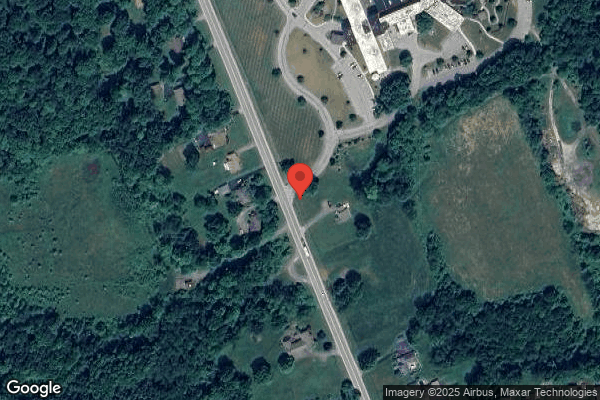
339 EAST JAMESTOWN ROAD, GREENVILLE, PA 16125 (724) 588-7610
Non profit - Other 192 Beds Independent Data: November 2025
Trust Grade
90/100
#117 of 653 in PA
Last Inspection: August 2025

Inspected within the last 6 months. Data reflects current conditions.

Overview

Saint Paul Homes in Greenville, Pennsylvania, has received an impressive Trust Grade of A, indicating excellent quality and high recommendations from residents and families. It ranks #117 out of 653 nursing homes in the state, placing it in the top half, and #5 out of 10 in Mercer County, meaning only four local options are better. The facility's performance has been stable, with only one issue reported in both 2023 and 2025, and it has a strong staffing rating of 5 out of 5 stars, with a turnover rate of 31%, significantly lower than the state average. Additionally, there have been no fines recorded, showcasing a commitment to compliance. However, there are some concerns, such as failures to maintain proper dishwashing machine temperatures, which could impact food safety, and a lack of documented non-pharmacological interventions before administering psychotropic medications. Overall, while the facility has notable strengths, families should be aware of these specific deficiencies when considering care options.

Trust Score
A
90/100
In Pennsylvania
#117/653
Top 17%
Safety Record
Low Risk
No red flags
Inspections
Holding Steady
1 → 1 violations
Staff Stability
○ Average
31% turnover. Near Pennsylvania's 48% average. Typical for the industry.
Penalties
✓ Good
No fines on record. Clean compliance history, better than most Pennsylvania facilities.
Skilled Nurses
✓ Good
Each resident gets 47 minutes of Registered Nurse (RN) attention daily — more than average for Pennsylvania. RNs are trained to catch health problems early.
Violations
✓ Good
Only 3 deficiencies on record. Cleaner than most facilities. Minor issues only.
★★★★★
5.0
Overall Rating
★★★★★
5.0
Staff Levels
★★★★★
5.0
Care Quality
★★★★★
5.0
Inspection Score
Stable
2023: 1 issues
2025: 1 issues

The Good

  • 5-Star Staffing Rating · Excellent nurse staffing levels
  • 5-Star Quality Measures · Strong clinical quality outcomes
  • Full Sprinkler Coverage · Fire safety systems throughout facility
  • No fines on record
  • Staff turnover below average (31%)

    17 points below Pennsylvania average of 48%

Facility shows strength in staffing levels, quality measures, fire safety.

The Bad

Staff Turnover: 31%

15pts below Pennsylvania avg (46%)

Typical for the industry

The Ugly 3 deficiencies on record

Aug 2025 1 deficiency
CONCERN (D)

Potential for Harm - no one hurt, but risky conditions existed

Deficiency F0605 (Tag F0605)

Could have caused harm · This affected 1 resident

Based on review of clinical records and staff interview, it was determined that the facility failed to provide evidence that non-pharmacological interventions (interventions attempted to calm a reside...

Read full inspector narrative →
Based on review of clinical records and staff interview, it was determined that the facility failed to provide evidence that non-pharmacological interventions (interventions attempted to calm a resident other than medication) were attempted prior to the administration of a PRN (as needed) psychotropic (affecting the mind) medication for one of five residents reviewed for unnecessary medications (Resident R114). Findings include: Upon request, the facility was unable to provide a policy regarding non-pharmacological interventions prior to the administration of psychotropic medications. Resident R114's clinical record revealed an admission date of 9/18/23, with diagnoses that included dementia (loss of cognitive functioning affecting a person's memory and behaviors), gastroesophageal reflux disease (GERD - happens when stomach acid flows back up into the esophagus and causes heartburn), and high blood pressure. Resident R114's clinical record revealed a physician's order dated 5/18/25, with a discontinuation date of 11/18/25, that identified to administer Lorazepam (anti-anxiety medication) 0.5 milligrams (mg) by mouth daily PRN for increased behaviors / anxiety. Resident R114's May 2025 Medication Administration Record (MAR) revealed that the PRN Lorazepam was used five times (5/20/25, 5/21/25, 5/22/25, 5/27/25, and 5/28/25). Review of May MAR and clinical record progress notes revealed that there was no evidence of non-pharmacological interventions being attempted prior to the administration of the PRN Lorazepam four of the five times it was used. Resident R114's June 2025 MAR revealed that the PRN Lorazepam was used four times (6/3/25, 6/10/25, 6/12/25, and 6/23/25). Review of June MAR and clinical record progress notes revealed that there was no evidence of non-pharmacological interventions being attempted prior to the administration of the PRN Lorazepam three of the four times it was used. Resident R114's July 2025 MAR revealed that the PRN Lorazepam was used six times (7/3/25, 7/8/25, 7/18/25, 7/28/25, 7/30/25, and 7/31/25). Review of July MAR and clinical record progress notes revealed that there was no evidence of non-pharmacological interventions being attempted prior to the administration of the PRN Lorazepam six of the six times it was used. Resident R114's August 2025 MAR revealed that the PRN Lorazepam was used one time (8/5/25). Review of August MAR and clinical record progress notes revealed that there was no evidence of non-pharmacological interventions being attempted prior to the administration of the PRN Lorazepam one of one time it was used. During an interview on 8/7/25, at 1:47 p.m. the Director of Nursing confirmed that the facility lacked evidence of non-pharmacological interventions being attempted prior to the administration of a PRN anti-anxiety medication for each time it was administered. 28 Pa. Code 211.12(d)(1)(3)(5) Nursing services
Oct 2023 1 deficiency
CONCERN (F)

Potential for Harm - no one hurt, but risky conditions existed

Food Safety (Tag F0812)

Could have caused harm · This affected most or all residents

**NOTE- TERMS IN BRACKETS HAVE BEEN EDITED TO PROTECT CONFIDENTIALITY** Based on observations, review of dishwashing machine manufacturer's instructions, and staff interviews, it was determined that t...

Read full inspector narrative →
**NOTE- TERMS IN BRACKETS HAVE BEEN EDITED TO PROTECT CONFIDENTIALITY** Based on observations, review of dishwashing machine manufacturer's instructions, and staff interviews, it was determined that the facility failed to maintain dishwashing machine water temperatures in accordance with manufacturer recommendations for food service safety on three of three kitchenettes observed ([NAME], Gardens, and Springs). Findings include: Review of manufacturer's instructions for the facility dishwashing machine revealed that the hot water sanitizing mode minimum wash temperature and recommended wash temperature was 150 degrees Farenheit (F). Review of the Dishwashing/Warewashing machine temperature log sheet revealed that the temperature requirements for the wash cycle was: Wash 150 degrees F. If temperatures were not met per standard, fill out work order and notify management. Observations of the dishwashing machine operation on 10/11/2023, at 1:10 p.m. on the [NAME] unit, in the presence of the Dietary Aide Employee E1, revealed a dishwasher temperature of 144.2 degrees F during the wash cycle. Dietary Aide Employee E1 confirmed, at the time of observation, that the wash cycle was lower than the required 150 degrees F. Observations of the dishwashing machine operation on 10/11/2023, at 1:12 p.m. on the Gardens unit, in the presence of the Dietary Aide Employee E2, revealed a dishwasher temperature of 147.6 degrees F during the wash cycle. Dietary Aide Employee E2 confirmed, at the time of observation, that the wash cycle was lower than the required 150 degrees F. Observations of the dishwashing machine operation on 10/11/2023, at 1:15 p.m. on the Springs unit, in the presence of the Dietary Aide Employee E3, revealed a dishwasher temperature of 146.3 degrees F during the wash cycle Dietary Aide Employee E3 confirmed, at the time of observation, that the wash cycle was lower than the required 150 degrees F. Review of Dishwashing/Warewashing machine temperature logs for the Springs, [NAME], and Gardens kitchenettes revealed that Springs kitchenette dishwashing machine logged wash temperatures below 150 degrees F for multiple days and shifts in the months of September and October 2023. During an interview on 10/11/2023, at 1:30 p.m. the Dining Manager confirmed that dishwashing machine temperatures are supposed to meet the 150 degrees F during the wash cycle. Staff recording and observing the dishwashing machine temperatures are to inform management and maintenance if the dishwashing machines do not meet the required temperatures for wash and rinse cycles. The facility did not produce a policy on monitoring and documenting dishwashing machine temperatures. 28 Pa. Code 201.14(a) Responsibility of licensee 28 Pa. Code 201.18(b)(1) Management
Nov 2022 1 deficiency
CONCERN (D)

Potential for Harm - no one hurt, but risky conditions existed

Quality of Care (Tag F0684)

Could have caused harm · This affected 1 resident

Based on review of facility policy and clinical records, observation, and staff interview, it was determined that the facility failed to ensure physician's orders were accurate and reflected the statu...

Read full inspector narrative →
Based on review of facility policy and clinical records, observation, and staff interview, it was determined that the facility failed to ensure physician's orders were accurate and reflected the status and care provided to one of 24 residents reviewed (Resident R8). Findings include: Review of a facility policy entitled, Special Locking Arrangement (SLA) and Secure Care Systems, dated 1/27/22, indicated that With a signed consent and a physician's order, residents considered at risk for elopement, will be properly fitted with an ankle transmitter to be worn . Resident R8's clinical record revealed an admission date of 8/31/21, with diagnoses that included dementia (group of symptoms affecting memory, thinking and social abilities severely enough to interfere with your daily life), muscle weakness, and anemia. Review of Resident R8's clinical record revealed an elopement risk assessment completed on 11/6/22, at 3:23 p.m. that identified a transmitter was fitted to the resident on 11/6/22, due to history of wandering and making statement that they are leaving or seeking to find someone/something. Further review of Resident R8's clinical record revealed there was not a physician's order for the secure band/ankle transmitter. Observation of Resident R8 on 11/9/22, at 10:11 a.m. revealed a secure band/ankle transmitter to his/her left ankle. During an interview on 11/9/22, at 2:35 p.m. Registered Nurse (RN) Employee E1 and Licensed Practical Nurse (LPN) Employee E2 confirmed that Resident R8 had a secure band/ankle transmitter to his/her left ankle. On 11/9/22, at 2:40 p.m. RN Employee E1 and LPN Employee E2 confirmed that there was no physician's order for use of the secure care/ankle transmitter band for Resident R8. 28 Pa. Code 211.5(f) Clinical Records 28 Pa. Code 211.12 (d)(1)(5) Nursing Services
Understanding Severity Codes (click to expand)
Life-Threatening (Immediate Jeopardy)
J - Isolated K - Pattern L - Widespread
Actual Harm
G - Isolated H - Pattern I - Widespread
Potential for Harm
D - Isolated E - Pattern F - Widespread
No Harm (Minor)
A - Isolated B - Pattern C - Widespread

Questions to Ask on Your Visit

  • "Can I speak with families of current residents?"
  • "What's your RN coverage like on weekends and overnight?"

Our Honest Assessment

Strengths
  • • Grade A (90/100). Above average facility, better than most options in Pennsylvania.
  • • No major safety red flags. No abuse findings, life-threatening violations, or SFF status.
  • • No fines on record. Clean compliance history, better than most Pennsylvania facilities.
  • • Only 3 deficiencies on record. Cleaner than most facilities. Minor issues only.
Concerns
  • • No significant concerns identified. This facility shows no red flags across CMS ratings, staff turnover, or federal penalties.
Bottom line: Generally positive indicators. Standard due diligence and a personal visit recommended.

About This Facility

What is Saint Paul Homes's CMS Rating?

CMS assigns SAINT PAUL HOMES an overall rating of 5 out of 5 stars, which is considered much above average nationally. Within Pennsylvania, this rating places the facility higher than 99% of the state's 100 nursing homes. This rating reflects solid performance across the metrics CMS uses to evaluate nursing home quality.

How is Saint Paul Homes Staffed?

CMS rates SAINT PAUL HOMES's staffing level at 5 out of 5 stars, which is much above average compared to other nursing homes. Staff turnover is 31%, compared to the Pennsylvania average of 46%. This relatively stable workforce can support continuity of care.

What Have Inspectors Found at Saint Paul Homes?

State health inspectors documented 3 deficiencies at SAINT PAUL HOMES during 2022 to 2025. These included: 3 with potential for harm.

Who Owns and Operates Saint Paul Homes?

SAINT PAUL HOMES is owned by a non-profit organization. Non-profit facilities reinvest revenue into operations rather than distributing to shareholders. The facility operates independently rather than as part of a larger chain. With 192 certified beds and approximately 121 residents (about 63% occupancy), it is a mid-sized facility located in GREENVILLE, Pennsylvania.

How Does Saint Paul Homes Compare to Other Pennsylvania Nursing Homes?

Compared to the 100 nursing homes in Pennsylvania, SAINT PAUL HOMES's overall rating (5 stars) is above the state average of 3.0, staff turnover (31%) is significantly lower than the state average of 46%, and health inspection rating (5 stars) is much above the national benchmark.

What Should Families Ask When Visiting Saint Paul Homes?

Based on this facility's data, families visiting should ask: "Can I visit during a mealtime to observe dining assistance and food quality?" "How do you handle medical emergencies, and what is your hospital transfer rate?" "Can I speak with family members of current residents about their experience?"

Is Saint Paul Homes Safe?

Based on CMS inspection data, SAINT PAUL HOMES has a clean safety record: no substantiated abuse findings (meaning no confirmed cases of resident harm), no Immediate Jeopardy citations (the most serious violation level indicating risk of serious injury or death), and is not on the Special Focus Facility watch list (a federal program monitoring the lowest-performing 1% of nursing homes). The facility has a 5-star overall rating and ranks #1 of 100 nursing homes in Pennsylvania. While no facility is perfect, families should still ask about staff-to-resident ratios and recent inspection results during their visit.

Do Nurses at Saint Paul Homes Stick Around?

SAINT PAUL HOMES has a staff turnover rate of 31%, which is about average for Pennsylvania nursing homes (state average: 46%). Moderate turnover is common in nursing homes, but families should still ask about staff tenure and how the facility maintains care continuity when employees leave.

Was Saint Paul Homes Ever Fined?

SAINT PAUL HOMES has no federal fines on record. CMS issues fines when nursing homes fail to meet care standards or don't correct problems found during inspections. The absence of fines suggests the facility has either maintained compliance or corrected any issues before penalties were assessed. This is a positive indicator, though families should still review recent inspection reports for the full picture.

Is Saint Paul Homes on Any Federal Watch List?

SAINT PAUL HOMES is not on any federal watch list. The most significant is the Special Focus Facility (SFF) program, which identifies the bottom 1% of nursing homes nationally based on persistent, serious quality problems. Not being on this list means the facility has avoided the pattern of deficiencies that triggers enhanced federal oversight. This is a positive indicator, though families should still review the facility's inspection history directly.