MANOR AT ST LUKE VILLAGE,THE
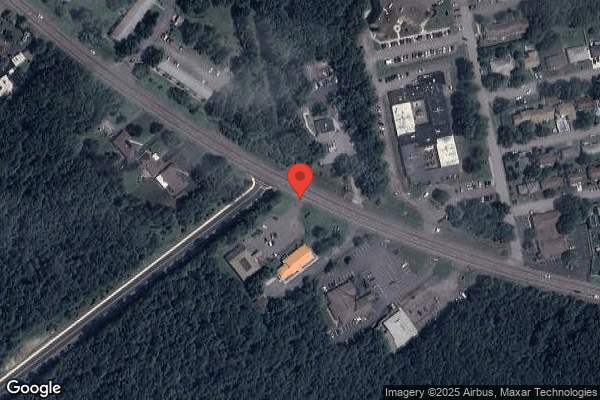

1711 EAST BROAD STREET, HAZLETON, PA 18201 (570) 453-5122
For profit - Corporation 104 Beds CONSULATE HEALTH CARE/INDEPENDENCE LIVING CENTERS/NSPIRE HEALTHCARE/RAYDIANT HEALTH CARE Data: November 2025
Trust Grade
63/100
#308 of 653 in PA
Last Inspection: March 2025

Within standard 12-15 month inspection cycle. Federal law requires annual inspections.

Overview

The Manor at St. Luke Village in Hazleton, Pennsylvania has a Trust Grade of C+, indicating it is slightly above average but not without flaws. Ranked #308 out of 653 facilities in Pennsylvania, it is in the top half, and #5 out of 22 in Luzerne County, meaning only four other local options are better. The facility is improving, as the number of reported issues has decreased from 13 in 2024 to 7 in 2025. Staffing is a strength, with a rating of 4 out of 5 stars and a turnover rate of 27%, significantly lower than the state average. However, there have been some concerning incidents, such as failures in infection control practices, insufficient nursing staff leading to unmet resident care needs, and the inappropriate use of psychotropic medications without proper clinical rationale for some residents. While the facility has no fines on record and maintains a good level of RN coverage, these incidents highlight areas that need attention to ensure resident safety and quality care.

Trust Score
C+
63/100
In Pennsylvania
#308/653
Top 47%
Safety Record
Low Risk
No red flags
Inspections
Getting Better
13 → 7 violations
Staff Stability
✓ Good
27% annual turnover. Excellent stability, 21 points below Pennsylvania's 48% average. Staff who stay learn residents' needs.
Penalties
✓ Good
No fines on record. Clean compliance history, better than most Pennsylvania facilities.
Skilled Nurses
○ Average
Each resident gets 36 minutes of Registered Nurse (RN) attention daily — about average for Pennsylvania. RNs are the most trained staff who monitor for health changes.
Violations
⚠ Watch
41 deficiencies on record. Higher than average. Multiple issues found across inspections.
★★★☆☆
3.0
Overall Rating
★★★★☆
4.0
Staff Levels
★★★★★
5.0
Care Quality
★★☆☆☆
2.0
Inspection Score
Stable
2024: 13 issues
2025: 7 issues

The Good

  • 4-Star Staffing Rating · Above-average nurse staffing levels
  • 5-Star Quality Measures · Strong clinical quality outcomes
  • Low Staff Turnover (27%) · Staff stability means consistent care
  • Full Sprinkler Coverage · Fire safety systems throughout facility
  • No fines on record
  • Staff turnover is low (27%)

    21 points below Pennsylvania average of 48%

Facility shows strength in staffing levels, quality measures, staff retention, fire safety.

The Bad

3-Star Overall Rating

Near Pennsylvania average (3.0)

Meets federal standards, typical of most facilities

Chain: CONSULATE HEALTH CARE/INDEPENDENCE

Part of a multi-facility chain

Ask about local staffing decisions and management

The Ugly 41 deficiencies on record

Jun 2025 1 deficiency
CONCERN (D) 📢 Someone Reported This

A family member, employee, or ombudsman was alarmed enough to file a formal complaint

Potential for Harm - no one hurt, but risky conditions existed

Quality of Care (Tag F0684)

Could have caused harm · This affected 1 resident

**NOTE- TERMS IN BRACKETS HAVE BEEN EDITED TO PROTECT CONFIDENTIALITY** Based on a review of clinical records, select facility policy, and staff interviews, it was determined the facility failed to pr...

Read full inspector narrative →
**NOTE- TERMS IN BRACKETS HAVE BEEN EDITED TO PROTECT CONFIDENTIALITY** Based on a review of clinical records, select facility policy, and staff interviews, it was determined the facility failed to provide nursing services consistent with professional standards of practice by failing to monitor, obtain physician orders, and develop and implement a person-centered comprehensive care plan in accordance with standards of practice for one resident out of six sampled residents (Resident CR1). Findings include: According to the American Nurses Association Principles for Nursing Documentation, nurses document their work and outcomes and provide an integrated, real-time method of informing the health care team about the resident's status. Timely documentation of the following types of information should be made and maintained in a patient's EHR (electronic health record) to support the ability of the health care team to ensure informed decisions and high-quality care in the continuity of patient care: Assessments Clinical problems Communications with other health care professionals regarding the patient Communication with and education of the patient, family, and the patient's designated support person. Proper documentation and care planning ensure: Monitoring for Symptoms: Identifying signs of device-related complications. Timely Intervention: Staff can promptly address concerns or escalate issues to a physician. Comprehensive Care: Avoiding complications, such as infections at the implant site, through routine assessments and interventions. A review of the clinical record revealed that Resident CR1 was admitted to the facility on [DATE], with diagnoses including liver cirrhosis (chronic liver damage from various causes leading to scarring and liver failure) and chronic ascites (abdominal swelling caused by fluid accumulation, most often related to liver disease). A review of a Minimum Data Set (MDS a federally mandated standardized assessment process conducted periodically to plan resident care) dated April 25, 2025, revealed that Resident CR1 was cognitively intact with a BIMS score of 15 (Brief Interview for Mental Status a tool within the Cognitive Section of the MDS that assesses the resident's attention, orientation, and ability to register and recall new information; a score of 13-15 indicates cognition is intact). A review of a facility policy titled Abdominal or Pleural Intermittent Drainage, last reviewed by the facility on January 23, 2025, required staff to document the condition of the drain site and catheter. Resident CR1 had a left-side thoraco-abdominal drain (a tube inserted to drain fluid from the chest and abdominal cavities) upon admission and underwent an outpatient procedure for placement of a right tunneled peritoneal catheter (a flexible tube inserted into the abdominal cavity to drain excess fluid) on May 12, 2025, while residing at the facility. A review of outpatient interventional radiology (IR) records, provided at the request of the surveyor, showed that after placement of the right tunneled peritoneal catheter, the resident required drainage every other and to call the IR department for any questions, in which a phone number was provided. However, an interview with the Director of Nursing (DON) on June 26, 2025, at 1:00PM, revealed the facility did not have post-procedure care instructions because the family had taken them, and the facility failed to contact the IR department to obtain them. Resident CR1 was sent to the emergency room after this procedure and admitted to the hospital on [DATE], and was re-admitted to the facility on [DATE]. A review of the resident's care plan at discharge and the baseline care plan completed at readmission on [DATE], revealed no specific identification of the right tunneled peritoneal catheter or instructions for its care, including frequency of drainage. The baseline care plan only referenced abdominal drains in general and did not distinguish the two separate sites. A review of physician's orders failed to show any orders for care or monitoring of the newly placed right tunneled peritoneal catheter. A readmission assessment dated [DATE], noted the presence of a right lower quadrant drain site covered by a surgical dressing. Further review of the readmission assessment revealed a nurse's note that stated Resident CR1 had abdominal drain sites on the left upper quadrant and the right lower quadrant, and that the resident stated the right lower surgical dressing cannot be removed until the follow-up appointment, but no follow-up appointment was documented. An interview with the DON confirmed the facility did not inquire about or schedule any follow-up appointment. A review of a change in condition assessment for Resident CR1, dated May 15, 2025, indicated that the resident had a recent hospitalization for a drain repair; however, this documentation was inaccurate, as the hospitalization was for placement of a new right tunneled peritoneal catheter (a flexible tube inserted into the abdominal cavity to drain excess fluid). The same assessment noted that Resident CR1 had a left-side thoraco-abdominal drain (a tube inserted to drain fluid from the chest and abdominal cavities) which was drained for approximately 1000 milliliters every Monday, Thursday, and as needed. The assessment did not include any information about the newly placed right tunneled peritoneal catheter or how often it should be drained. A review of a skin evaluation completed before discharge, dated May 18, 2025, showed no documentation acknowledging the presence of the right tunneled peritoneal catheter. A review of Resident CR1's progress notes likewise revealed no entries describing the right tunneled peritoneal catheter, its care, or monitoring. A review of Medication Administration Records and Treatment Administration Records revealed no documentation related to Resident CR1's right tunneled peritoneal catheter or monitoring. Resident CR1 was sent to the hospital on May 18, 2025, for worsening jaundice (condition marked by yellowing of the skin and eyes caused by increased bilirubin in the blood) and was admitted for sepsis (a life-threatening response to infection) and a mucus plug in the bronchi (airways in the lungs). In an interview conducted on June 26, 2025, at approximately 2:00 P.M., the Nursing Home Administrator and Director of Nursing (DON) reviewed the information outlined above with the surveyor. During this interview, it was discussed that the facility did not provide evidence of continued monitoring of Resident CR1's right tunneled peritoneal catheter, did not obtain appropriate physician orders, and did not implement a care plan to address the catheter. 28 Pa. Code 211.12 (c)(d)(1)(3)(5) Nursing services. 28 Pa. Code 211.5(f) Medical records.
Mar 2025 5 deficiencies
CONCERN (D)

Potential for Harm - no one hurt, but risky conditions existed

Investigate Abuse (Tag F0610)

Could have caused harm · This affected 1 resident

**NOTE- TERMS IN BRACKETS HAVE BEEN EDITED TO PROTECT CONFIDENTIALITY** Based on a review of facility policy, resident grievance documentation, clinical records, and interviews with residents and staf...

Read full inspector narrative →
**NOTE- TERMS IN BRACKETS HAVE BEEN EDITED TO PROTECT CONFIDENTIALITY** Based on a review of facility policy, resident grievance documentation, clinical records, and interviews with residents and staff, it was determined that the facility failed to ensure a thorough and complete investigation of an allegation of sexual abuse for 1 of 19 sampled residents (Resident 63). Findings included: A review of a facility policy entitled Abuse, Neglect, Exploitation & Misappropriation revealed it is the policy of the facility to provide professional care and services in an environment that is free from abuse, neglect, mistreatment, exploitation, and/or misappropriation of property. The facility will follow the federal guidelines dedicated to the prevention of abuse and timely and thorough investigations of allegations. Sexual abuse is defined as the nonconsensual sexual contact of any type with a resident which includes but is not limited to unwanted touching of any kind especially of breast or perineal area. Further review of the facility abuse policy revealed under the area of investigation that the Abuse Coordinator or designee will investigate all reports or allegations of abuse, neglect, misappropriation and exploitation. Upon the allegation of abuse or neglect, the suspect will be immediately segregated from residents pending the investigation of the resident allegation. The nurse or Director of Nursing/designee will perform and document a thorough nursing evaluation and notify the attending physician. An incident report will be filed by the individual in charge who received the report in conjunction with the person who reported the abuse. The Abuse Coordinator and/or Director of Nursing will take statements from the victim, the suspect(s) and all possible witnesses including all other employees in the vicinity of the alleged abuse. He/she will also secure all physical evidence. Upon completion of the investigation, a detailed report will be prepared. Under the area of reporting, the facility should report the results of all investigations to the Executive Director or his or her designated representative and to other officials in accordance with state law, including to the State Survey Agency within 5 working days of the incident. A review of Resident 63's clinical record revealed the resident was admitted to the facility on [DATE], with diagnoses which included congestive heart failure (a condition where the heart does not pump blood as efficiently as it should) and chronic kidney disease (a condition where the kidneys cannot filter blood properly leading to waste buildup). A review of the facility grievance dated February 14, 2025, revealed that Resident 63 no longer wanted Employee 1 to care for her because of the way Employee 1 performed peri-care ((perineal care hygiene of the private areas) made Resident 63 uncomfortable. A written statement from the RN on the 11-7 shift dated February 14, 2025, at 12:00 AM, revealed Resident 63 complained of poor care received on the evening shift. It further revealed Resident 63 stated she felt she is being assaulted when she is getting peri care by Employee 1. A written statement from the NHA dated February 14, 2025, at 8:15 AM documented the NHA asking for additional clarification from the RN on the 11-7 shift. The RN reported Resident 63 said specifically, She didn't like how her hands were on her buttocks and that her fingers went into her rectum and that Resident 63 didn't like the way Employee 1 cleaned her up. Upon an interview conducted on March 26, 2025, at approximately 11 AM, Resident 63 indicated, Employee 1 Put her finger up my a** while performing peri care. The Resident denied sexual or physical harm but stated, It was weird, I did not want her doing that to me again or any other resident. During a telephone interview on March 26, 2025, at approximately 12:00 PM, Employee 1 indicated she no longer works at the facility because of group of residents did not like her due to her race. She further stated she would document care given to Resident 63 but did not perform the care because Resident 63 always refused to let her care for her. The Documentation Survey Report v2 for February 2025 indicated Employee 1 rendered personal hygiene care to Resident 63 on the evening shift of February 13, 2025. Despite this allegation meeting the definition of sexual abuse as outlined by both facility policy and federal regulation, the facility failed to demonstrate a thorough and complete investigation as required. The facility did not: Obtain written statements from witnesses or other staff present. Document a comprehensive nursing evaluation. Notify the attending physician. Complete an incident report. Secure physical evidence. Report the results of the investigation to the State Survey Agency within the required 5 working days. In an interview conducted on March 26, 2025, at approximately 12:45 PM, the NHA and DON acknowledged they were unable to provide evidence that the abuse investigation was completed in response to the resident's allegation. 28 Pa. Code 201.14 (a) Responsibility of licensee 28 Pa. Code 201.18(e)(1) Management 28 Pa. Code 201.29(a)(c) Resident Rights
CONCERN (D)

Potential for Harm - no one hurt, but risky conditions existed

Deficiency F0660 (Tag F0660)

Could have caused harm · This affected 1 resident

**NOTE- TERMS IN BRACKETS HAVE BEEN EDITED TO PROTECT CONFIDENTIALITY** Based on a review of clinical records and staff interviews it was determined the facility failed to develop and implement an ind...

Read full inspector narrative →
**NOTE- TERMS IN BRACKETS HAVE BEEN EDITED TO PROTECT CONFIDENTIALITY** Based on a review of clinical records and staff interviews it was determined the facility failed to develop and implement an individualized discharge plan for one of 19 residents reviewed (Resident 58) to reflect the resident's discharge goals. Findings Include: Clinical record review revealed that Resident 58 was admitted to the facility on [DATE], with diagnoses to include Dysarthria (the muscles used for speech are weak or are hard to control. Dysarthria often causes slurred or slow speech that can be difficult to understand) following a cerebral infraction (stroke). Review of a significant change Minimum Data Set Assessment (MDS- a federally mandated standardized assessment process completed at specific intervals to plan resident care) dated March 2, 2025, indicated the resident had a BIMS (brief interview mental screener that aids in detecting cognitive impairment) score of 15 indicating he was cognitively intact. A review of Resident 58's social service notes revealed no social service notes in regard to discharge planning. Resident 58's clinical record did reveal a psychiatry consult dated January 27, 2025 indicating the resident wanted to discharge from the facility. There was no further documentation in Resident 58's clinical record regarding discharge planning. A review of the resident's comprehensive care plan, reviewed during the survey ending March 28, 2025, revealed no documented evidence that an individualized discharge plan was developed, and revised, as needed to reflect the resident's current desire for discharge or long-term placement at the facility. During an interview with the Nursing Home Administrator on March 27, 2025, at 12:00 PM confirmed there was no documented evidence of a current discharge goal and plan for this resident. 28 Pa. Code 201.18(b)(1) Management
CONCERN (D)

Potential for Harm - no one hurt, but risky conditions existed

Respiratory Care (Tag F0695)

Could have caused harm · This affected 1 resident

**NOTE- TERMS IN BRACKETS HAVE BEEN EDITED TO PROTECT CONFIDENTIALITY** Based on a review of clinical records, facility policy, observation, and staff interviews, it was determined the facility failed...

Read full inspector narrative →
**NOTE- TERMS IN BRACKETS HAVE BEEN EDITED TO PROTECT CONFIDENTIALITY** Based on a review of clinical records, facility policy, observation, and staff interviews, it was determined the facility failed to ensure oxygen therapy was administered in accordance with professional standards of care for one out of the 19 residents sampled (Resident 1). Findings include: A review of the facility policy titled Oxygen Therapy, last reviewed by the facility on January 23, 2025, revealed it is the facility policy and procedure to ensure the physician's order for oxygen therapy shall include all of the following: (1) oxygen administration modality, (2) liter flow, (3) as needed or continuous administration, and (4) as needed orders must include specific guidelines as to when the resident is to use oxygen. A clinical record review revealed Resident 1 was admitted to the facility on [DATE], with diagnoses that included chronic obstructive pulmonary disease (COPD is a condition caused by damage to the airways or other parts of the lung that blocks airflow and makes it hard to breathe). A review of a quarterly Minimum Data Set assessment (MDS-a federally mandated standardized assessment process conducted periodically to plan resident care) dated February 7, 2025, revealed that Resident 1 is cognitively intact with a BIMS score of 15 (Brief Interview for Mental Status- a tool within the Cognitive Section of the MDS that is used to assess the resident's attention, orientation, and ability to register and recall new information; a score of 13-15 indicates cognition is intact). A clinical record review revealed a physician's order that indicated oxygen as needed due to decreased blood oxygen saturation less than SpO2 88%, with direction to provide oxygen as needed, initiated on February 4, 2025. The physician's order did not include the amount of oxygen per liter required to address Resident 1's low blood oxygen saturation. An observation on March 25, 2025, at 10:20 AM, revealed Resident 1 was in her room receiving oxygen via nasal cannula (medical device used to deliver oxygen a thin flexible tube with two prongs that fit into the nostrils) at 2.0 liters per minute (lpm). During an interview at the same time as the observation on March 25, 2025, Resident 1 did not know her prescribed oxygen liter flow rate. An observation on March 26, 2025, at 11:15 AM, revealed Resident 1 was in her room receiving oxygen via nose cannula at 2.0 liters per minute (lpm). During an interview at the time of the observation, the Director of Nursing (DON) confirmed Resident 1 was receiving 2.0 liters per minute of oxygen via nasal cannula. The DON confirmed Resident 1's physician's order did not indicate a flow rate for oxygen administration. Following inquiries made during the week of the survey, Resident 1 had a revised physician's order to receive oxygen at 2.0 liters per minute via nasal cannula due to a decrease in SpO2 to less than 88% as needed, initiated on March 26, 2025. During an interview on March 26, 2025, at approximately 11:30 AM, the Director of Nursing confirmed it is the responsibility of the facility to ensure oxygen therapy is administered in accordance with professional standards of care, which includes ensuring physicians' orders indicate the prescribed oxygen flow rate (i.e., how many liters of oxygen per minute). 28 Pa. Code 211.2 (d)(3) Medical director. 28 Pa. Code 211.10 (c) Resident care policies. 28 Pa. Code 211.12 (d)(1)(3)(5) Nursing services.
CONCERN (E)

Potential for Harm - no one hurt, but risky conditions existed

Medication Errors (Tag F0758)

Could have caused harm · This affected multiple residents

**NOTE- TERMS IN BRACKETS HAVE BEEN EDITED TO PROTECT CONFIDENTIALITY** Based on review clinical records and staff interviews, it was determined that the facility failed to ensure that residents were ...

Read full inspector narrative →
**NOTE- TERMS IN BRACKETS HAVE BEEN EDITED TO PROTECT CONFIDENTIALITY** Based on review clinical records and staff interviews, it was determined that the facility failed to ensure that residents were free from unnecessary use of psychoactive drugs by failing to ensure the presence of clinical rationale for the continued use of an as needed (PRN) psychotropic medication for two of 19 residents reviewed (Residents 75 and Resident 77). Findings include: A review of Resident 75's clinical record revealed the resident was admitted to the facility on [DATE], with diagnoses to include dementia (a condition characterized by progressive or persistent loss of intellectual functioning, especially with impairment of memory and abstract thinking, and often with personality change, resulting from organic disease of the brain). A review of Resident 75's clinical record revealed a physician's order dated January 7, 2025, directed Lorazepam (anti-anxiety medication) 0.5 mg by mouth every eight hours as needed (PRN) for anxiety, for 167 days. A review of the physician's notes for the months of January and February 2025 revealed the physician failed to document the clinical rationale for the continuation of the PRN order beyond the 14-day limit, nor any re-evaluation of the need for the medication. Review of the March 2025 Medication Administration Record (MAR) showed the Lorazepam was administered 25 times. A review of Resident 77's clinical record revealed the resident was admitted to the facility on [DATE], with diagnoses to include Cerebral Infarction (occurs when blood flow to the brain is obstructed, typically by a blood clot, resulting in the death of brain cells) and hemiplegia (one sided paralysis) A review of Resident 77's clinical record revealed a physician's order for Ativan 0.5mg tablet (anti-anxiety medication) 0.5mg by mouth every eight hours as needed (PRN) for anxiety with a start date of February 17,2025 and discontinued March 13,2025. A new order was written March 13, 2025, for Ativan 0.5 mg every eight hours as needed for anxiety, for 90 days. Review of physician notes from February and March 2025 showed no documentation of a clinical rationale or re-evaluation for continuation of the PRN medication beyond 14 days. A review of the resident's March 2025 Medication Administration Record revealed Ativan 0.5mg was administered to the resident 21 times. During an interview conducted on March 27, 2025, at approximately 12:30 PM, the Director of Nursing confirmed that no physician documentation was present to justify the continuation of PRN psychotropic medications beyond the 14-day period, and no periodic re-evaluations were documented 28 Pa. Code 211.2 (d)(3)(7)(9) Medical director. 28 Pa. Code 211.12 (d)(3) Nursing services.
CONCERN (E)

Potential for Harm - no one hurt, but risky conditions existed

Deficiency F0809 (Tag F0809)

Could have caused harm · This affected multiple residents

Based on a review of scheduled facility mealtimes, resident committee meeting minutes, grievances filed with the facility, select facility policy, and resident and staff interviews, it was determined ...

Read full inspector narrative →
Based on a review of scheduled facility mealtimes, resident committee meeting minutes, grievances filed with the facility, select facility policy, and resident and staff interviews, it was determined the facility failed to consistently provide snacks as desired by residents, including experiences reported by seven out of nine residents during a group interview (Residents 1, 6, 9, 20, 25, 33, and 83). Findings include: A review of facility policy titled Snacks, last reviewed by the facility on January 23, 2025, revealed it is the facility policy that snacks and beverages will be provided as identified in residents' individual plans of care. Bedtime (HS- hour of sleep) snacks will be provided for all residents. Additional snacks and beverages will be available upon request for all residents who want to eat at non-traditional times. Nursing services is responsible for delivering the individual snacks to the identified residents and for offering evening snacks to all other residents. A review of the facility's scheduled mealtimes revealed the time between dinner and breakfast the next day exceeds 14 hours. A review of grievances filed with the facility revealed a grievance dated December 5, 2024, indicating residents at resident council raised concerns that nighttime snacks are not always provided or offered. The resolution section of the grievance indicated in-service training was provided to facility staff. A review of food committee meeting minutes dated March 4, 2025, revealed residents in attendance raised concerns that not all residents were receiving nightly snacks. During a resident group interview on March 26, 2025, at 10:00 AM, seven residents in attendance stated they are not consistently offered a nourishing evening snack (Residents 1, 6, 9, 20, 25, 33, and 83). The residents in attendance indicated that sometimes the facility does not have snacks when the residents request them and explained that staff do not always distribute the snacks to residents. The residents in attendance indicated they have brought this concern to staff's attention, but nothing has improved over the last few months. The residents in attendance expressed frustration about not having evening snacks. During an interview on March 27, 2025, at approximately 1:30 PM, the Nursing Home Administrator (NHA) was unable to explain why residents are reporting the facility is not offering nutritious snacks as desired. The NHA confirmed it is the facility's policy to offer and serve residents a nourishing snack in accordance with their needs, preferences, and requests at bedtime on a daily basis. 28 Pa. Code 211.12 (d)(3)(5) Nursing services.
Jan 2025 1 deficiency
CONCERN (F) 📢 Someone Reported This

A family member, employee, or ombudsman was alarmed enough to file a formal complaint

Potential for Harm - no one hurt, but risky conditions existed

Infection Control (Tag F0880)

Could have caused harm · This affected most or all residents

**NOTE- TERMS IN BRACKETS HAVE BEEN EDITED TO PROTECT CONFIDENTIALITY** Based on observations, review of the facility's infection control tracking logs and infection control and prevention policy and ...

Read full inspector narrative →
**NOTE- TERMS IN BRACKETS HAVE BEEN EDITED TO PROTECT CONFIDENTIALITY** Based on observations, review of the facility's infection control tracking logs and infection control and prevention policy and staff interviews it was determined the facility failed to develop and implement a comprehensive infection control program to prevent the spread of infectious diseases including upper respiratory infection for 1 of 23 residents reviewed (Resident 1). Findings include: A review of the facility's infection control policy, last revised on January 23, 2025, indicated that the policy was designed to facilitate a safe, sanitary, and comfortable environment while preventing and managing the transmission of infectious diseases The objectives of the infection control policies and practices were to: a. Prevent, detect, investigate and control infections in the facility. b. Maintain a safe, sanitary and comfortable environment for personnel, residents, visitors, and the public. c. Establish guidelines for implementing isolation precautions, including Standard and Transmission-Based precautions: d. Establish guidelines for the availability and accessibility of supplies and equipment necessary for Standard and Transmission-Based Precautions. e. Maintain records of incidents and corrective actions related to infections; and f. Provide guidelines for the safe cleaning and reprocessing or reusable resident-care equipment. However, the policy lacked specific provisions for consistent tracking, analysis, and response to respiratory infections, including COVID-19, Influenza, and RSV. No additional infection control policies were provided upon request during the survey. During an interview on January 28, 2025, at 12:00 PM, the Infection Preventionist and Director of Nursing confirmed that the policy provided was the facility's only infection control policy and were unaware of any additional policies. A review of the facility's infection control tracking logs revealed the system in place did not provide evidence of a functional method for monitoring and investigating infections. The logs did not document trends, clusters, changes in prevalent organisms, or increases in infection rates in a timely manner. There was no documentation indicating that residents with upper respiratory symptoms were tested for viral illnesses such as COVID-19, Influenza, or RSV. Clinical record review revealed that Resident 1 was admitted to the facility on [DATE], with diagnosis to include metabolic encephalopathy (a change in how the brain works due to an underlying condition. It can cause confusion, memory loss and loss of consciousness) and diabetes. A significant change minimum data set assessment (Minimum Data Set - a federally mandated standardized assessment conducted at specific intervals to plan resident care) dated January 10, 2025, revealed that Resident 1 had a BIMS score (a test used to get a quick snapshot of how well you are functioning cognitively at the moment, a score of 13 to 15, cognitively intact) of 15. The resident was noted to be cognitively intact. A review of nursing documentation dated December 27, 2024, at 2 A.M. revealed Resident 1 exhibited symptoms of an upper respiratory infection, coughing. The resident was administered cough medication and evaluated via telemedicine but was not tested for any respiratory virus. On December 28, 2024 at 8:15 A.M., the resident was experiencing shortness of breath and the resident's oxygen saturation level dropped to 84% (normal 95% to 100%) on 4 liters of oxygen. , Documentation revealed the residents needs could not be met at the facility and the resident was transferred to the hospital, and tested positive for RSV (Respiratory Syncytial Virus, a common respiratory virus that infects the nose, throat, and lungs. RSV symptoms make it difficult to distinguish it from the common cold or other respiratory viruses like the flu or COVID-19). There was no documented evidence the facility assessed, tested, or implemented isolation precautions for the resident prior to hospitalization. Interviews conducted on January 28, 2025, with Employee 1 (LPN), Employee 2 (LPN), and Employee 3 (RN Supervisor) confirmed that while COVID-19 testing supplies were available, testing was not routinely conducted for residents exhibiting symptoms unless indicated by the facility's COVID-19 assessment form. Employees confirmed that the facility no longer implemented isolation precautions for COVID-19, and testing for other respiratory illnesses such as RSV or Influenza was not part of the routine protocol. A review of infection control data revealed the following infections were tracked as noted: December 2024: 5 urinary tract infections (UTI), 1 eye infections, 1 ear infection, 2 skin infections and 8 upper respiratory infections (URI). January 2025: 6 UTI, 2 ear infection, 19 upper respiratory infection and 3 skin infection, 4 eye infections. The facility tracking logs were noted to be comprehensive, noting all the infections on each monthly log. The logs did not indicate if the residents with noted upper respiratory symptoms were tested for COVID-19, Influenza or RSV (viral illnesses). Further review of the facility's infection control logs revealed the data collected was incomplete and did not include resident room locations, infectious organisms, or treatments provided. There was no documented analysis of infection trends, interventions, or follow-up measures to prevent the spread of infections. Additionally, there was no documentation of infection resolution dates, complete culture information, or whether isolation precautions were implemented when necessary. During an interview on January 28, 2025, at approximately 1:00 PM, the Infection Preventionist confirmed that the facility's tracking system was incomplete and did not support routine, ongoing surveillance to identify healthcare-associated infections, communicable disease outbreaks, or infection risks. She further stated that she had been using corporate forms that did not allow for the inclusion of detailed infection data. The facility failed to develop and implement a comprehensive infection control program, including effective tracking, monitoring, and response measures. This failure had the potential to place residents at increased risk for infection transmission and prevent the implementation of appropriate infection prevention practices. 28 Pa Code 211.10 (c)(d) Resident Care Policies. 28 Pa Code 211.12 (d)(1)(2)(3)(5) Nursing Services. 28 Pa. Code 201.18 (b)(1)(e)(1) Management
May 2024 13 deficiencies
CONCERN (D)

Potential for Harm - no one hurt, but risky conditions existed

Deficiency F0559 (Tag F0559)

Could have caused harm · This affected 1 resident

Based on clinical record review, resident and staff interview, it was determined the facility failed to ensure that in preparation for a room change each resident/resident representative received writ...

Read full inspector narrative →
Based on clinical record review, resident and staff interview, it was determined the facility failed to ensure that in preparation for a room change each resident/resident representative received written notice, including the reason for the change before the resident's room was changed for one out of 23 sampled (Resident 89). Findings include: Federal regulatory guidance under §483.10(e)(6) notes that moving to a new room or changing roommates is challenging for residents. A resident's preferences should be taken into account when considering such changes. When a resident is being moved at the request of facility staff, the resident, family, and/or resident representative must receive an explanation in writing of why the move is required. The resident should be provided the opportunity to see the new location, meet the new roommate, and ask questions about the move. A review of Resident 89's clinical record revealed admission to the facility on April 8, 2024, with diagnoses including gastro-esophageal reflux disease (GERD), diabetes, and heart failure. A review of Resident 89's clinical record, profile, revealed a responsible party (RP), emergency contact # 1, and next of kin, a brother. Emergency contact # 2, substitute decision maker was identified as relationship as other, and Resident 89, self, as no contact type assigned. During interview with alert and oriented Resident 89 on May 30, 2024, at approximately 9:05 AM, the resident stated that some time ago, he had an incident that while lying in bed he was experiencing knee pain. While waiting for the nurse to get him Tylenol, his roommate (Resident 13) came over, without permission, and inappropriately began rubbing - massaging his knee. According to Resident 89, his roommate (Resident 13), then began moving his hands up his leg towards his groin area, making him feel uncomfortable, uneasy. Upon further questioning, Resident 89 stated he did not tell the staff about the incident. However, he further stated that a staff member approached him, and stated that they will be moving his room because the police are going to arrest his roommate (Resident 13). A review of the resident's clinical record revealed that Resident 89's room was changed April 30, 2024. A review of a nursing progress note dated April 30, 2024, at 9:30 AM, indicated interdisciplinary care plan team met to review the resident's plan of care and to continue current plan. A SPN/skilled note dated May 1, 2024, at 1357 (1:57 PM), included a brief statement that the resident is adjusting well to new room. During interview with the Director of Social Services on May 30, 2024, at approximately 11:35 AM, she stated that earlier that morning (April 30, 2024) Resident 89 had told her that he awoke and found his roommate (Resident 13), sitting next to his bed, in a chair, staring at him. Resident 89 further stated that made him feel uncomfortable, uneasy. According to the Director of Social Services, there is no documentation regarding this interaction with Resident 89, and regarding the reason for the room change. During interview with the Nursing Home Administrator (NHA) on May 30, 2024, at approximately 1:55 PM the NHA confirmed there is no additional information regarding the room change, and that the facility did not provide any written explanation of the reasons for this move to the resident and/their representative. Refer F 657, F 745 28 Pa Code 201.29 (a) Resident Rights
CONCERN (D)

Potential for Harm - no one hurt, but risky conditions existed

Transfer Requirements (Tag F0622)

Could have caused harm · This affected 1 resident

Based on a clinical record review and staff interview, it was determined that the facility failed to ensure that the necessary resident information was communicated to the receiving health care provid...

Read full inspector narrative →
Based on a clinical record review and staff interview, it was determined that the facility failed to ensure that the necessary resident information was communicated to the receiving health care provider for one resident out of 23 residents sampled with facility-initiated transfers (Residents 21). The findings include: A review of Resident 21's clinical record revealed that the resident was transferred to the hospital on December 13, 2023. There was no documented evidence that the facility had communicated specific information to the receiving health care provider for the residents transferred and expected to return, including contact information of the practitioner responsible for the care of the resident, resident representative information including contact information, advance directive information, all special instructions or precautions for ongoing care, as appropriate, and any other documentation, as applicable, to ensure a safe and effective transition of care. A review of Resident 21's clinical record revealed that the resident was transferred to the hospital on March 15, 2024. There was no documented evidence that the facility had communicated specific information to the receiving health care provider for the residents transferred and expected to return, including contact information of the practitioner responsible for the care of the resident, resident representative information including contact information, advance directive information, all special instructions or precautions for ongoing care, as appropriate, comprehensive care plan goals, and any other documentation, as applicable, to ensure a safe and effective transition of care. During an interview on May 31, 2024, at approximately 11:30 AM, the Director of Nursing (DON) confirmed that there was no evidence that the necessary information was communicated to the receiving health care institution or provider for Resident 21's facility-initiated transfers on December 13, 2023 or March 15, 2024. 28 Pa. Code 201.29 (a)(c.3)(2) Resident rights 28 Pa. Code 211.12 (d)(3)(5) Nursing services
CONCERN (D)

Potential for Harm - no one hurt, but risky conditions existed

Assessment Accuracy (Tag F0641)

Could have caused harm · This affected 1 resident

**NOTE- TERMS IN BRACKETS HAVE BEEN EDITED TO PROTECT CONFIDENTIALITY** Based on review of clinical records, the Resident Assessment Instrument, and staff interview, it was determined that the facilit...

Read full inspector narrative →
**NOTE- TERMS IN BRACKETS HAVE BEEN EDITED TO PROTECT CONFIDENTIALITY** Based on review of clinical records, the Resident Assessment Instrument, and staff interview, it was determined that the facility failed to ensure the Minimum Data Set Assessments (MDS, a federally mandated standardized assessment conducted at specific intervals to plan resident care) accurately reflected the status of one resident out of the 23 sampled (Resident 21). Findings include: A review of Resident 21's quarterly MDS assessment dated [DATE] revealed in Section I Active Diagnoses that Resident 21 has a Multidrug Resident Organism (MDRO- an organism that is resistant to one or more antimicrobial drugs). However, a clinical record review revealed no evidence that Resident 21 had an acute or colonized MDRO. During an interview on May 30, 2024, at approximately 10:30 AM, the Director of Nursing (DON) confirmed that Resident 21 did not have an acute or colonized MDRO. The DON indicated that the MDS entry was an error.
CONCERN (D)

Potential for Harm - no one hurt, but risky conditions existed

Deficiency F0657 (Tag F0657)

Could have caused harm · This affected 1 resident

Based on review of clinical records and staff interview, it was determined that the facility failed to revise a comprehensive care plan in response to potential inappropriate behavior displayed by one...

Read full inspector narrative →
Based on review of clinical records and staff interview, it was determined that the facility failed to revise a comprehensive care plan in response to potential inappropriate behavior displayed by one resident out of 23 reviewed (Resident 13). Findings include: Review of the clinical record of Resident 13 revealed initial admission to the facility on December 15, 2021, with diagnoses to include chronic obstructive pulmonary disease (COPD), and diabetes. A Social Service Progress note dated March 25, 2024, at 1537 hours (3:37 PM), revealed that the social service staff member spoke with Resident 13 along with the Nursing Home Administrator (NHA), regarding another his roommate's (Resident 49) account that this resident (Resident 13) touched his (Resident 49) leg when he did not want him to. Resident 13, verbalized understanding of appropriate versus inappropriate touch and he denied that he touched anyone in this way. Resident 13 stated he feels safe here and has no concern. Will continue to monitor A review of information dated March 25, 2024, submitted by the facility revealed that Resident 49 alleged his roommate (resident 13) touches him inappropriately while he sleeps. Responsible party (RP), MD, AAA, police notified, Act 13 sent. A review of Resident 13's current care plan revealed a focused area of mood problems related to depression, tearful/sad, related to partner and housing situation, insomnia, date revised April 22, 2024. Interventions included to administer medications as ordered and monitor for side effects, see physician orders, medication administration records (MARs) date revised March 21, 2023, assist resident in developing/providing program of activities, identify strengths, positive coping skills, behavioral health consults as needed, educate on expectations of treatment and side effects, monitor for risk for harm to self, monitor mood, and report to MD mood patterns, acute episode feelings or sadness, depression, risk of harming others, and encourage need to express feelings, date initiated February 24, 2023. There was no documented evidence that Resident 13's care plan had been reviewed and revised related to his roommate's allegation unwelcome touching and need for continued monitoring for this potential behavior as noted in the Social Service Progress note dated March 25, 2024, which was confirmed during interview with the . the Director of Nursing (DON) on May 30, 2024, at approximately 2:10 PM. Refer F 559, F 745 28 Pa. Code 211.12 (d)(3)(5) Nursing Services.
CONCERN (D) 📢 Someone Reported This

A family member, employee, or ombudsman was alarmed enough to file a formal complaint

Potential for Harm - no one hurt, but risky conditions existed

Pressure Ulcer Prevention (Tag F0686)

Could have caused harm · This affected 1 resident

**NOTE- TERMS IN BRACKETS HAVE BEEN EDITED TO PROTECT CONFIDENTIALITY** Based on a review of clinical records, select facility policy, and facility investigation reports, observation, and resident, st...

Read full inspector narrative →
**NOTE- TERMS IN BRACKETS HAVE BEEN EDITED TO PROTECT CONFIDENTIALITY** Based on a review of clinical records, select facility policy, and facility investigation reports, observation, and resident, staff, and resident family member interviews, it was determined that the facility failed to ensure that residents receive care consistent with professional standards of practice to prevent pressure sore development for one of 23 residents sampled (Resident 88). Findings include: A review of facility policy titled Skin and Wound, last reviewed by the facility on March 25, 2024, revealed it is the facility's policy to provide a system for identifying risk, and implementing resident centered interventions to promote skin health, prevention and healing of pressure injuries. A clinical record review revealed Resident 88 was admitted to the facility on [DATE], with diagnoses that included atrial fibrillation (a condition that causes the heart to beat irregularly and sometimes much faster than normal) and acute kidney failure (kidneys are suddenly not able to filter waste products from the blood). A baseline care plan dated February 19, 2024, indicated that Resident 88 has the potential for altered skin integrity, with a goal to prevent a skin breakdown or injury. The plan included an intervention to turn the resident every two hours and as needed, provide incontinence care as needed, apply preventative skin care each shift and as needed, apply barrier incontinence cream each shift and as needed, and report any skin breakdown to the charge nurse. A review of an admission Minimum Data Set assessment (MDS - a federally mandated standardized assessment process conducted periodically to plan resident care) dated February 21, 2024, revealed that Resident 88 was cognitively intact with a BIMS score of 15 (Brief Interview for Mental Status- a tool within the Cognitive Section of the MDS that is used to assess the resident's attention, orientation, and ability to register and recall new information; a score of 13-15 indicates cognition is intact). Resident 88 was dependent on staff to roll from lying on the back to the left and right sides, to move from a sitting position to lying on the bed, to stand from a sitting position, to transfer to and from a bed to a chair, and to get in and out of a tub or shower. A Braden Scale for Predicting Pressure Sore {Ulcer} Risk dated February 26, 2024, indicated that Resident 88 was assessed and found to be at risk of developing pressure injuries. Braden Scale for Predicting Pressure Sore {Ulcer} Risk dated March 11, 2024, indicated that Resident 88 was assessed and found to be not at risk of developing pressure injuries. The assessment indicated that Resident 88 was rarely moist (skin is usually dry) and walked occasionally (walks during the day, but for very short distances). However, a review of the survey documentation reports dated February 2024 and March 2024 revealed that from February 19, 2024, through March 11, 2024, Resident 88 walked on only four out of 66 shifts and was found to be incontinent of urine 26 times from February 19, 2024, through March 11, 2024. A documentation survey report for March 2024 indicated that staff did not turn and reposition Resident 88 every two hours as indicated in her baseline care plan. The report indicated that turning and repositioning began on March 18, 2024, the date the resident was first assessed to have a pressure injury. The medical record failed to indicate if staff turned or repositioned the resident every two hours prior to the resident developing a pressure injury on March 18, 2024. A pressure ulcer wound round document dated March 18, 2024, revealed that the resident was assessed to have an unstageable pressure ulcer wound on her coccyx measuring 3.0 cm x 2.0 cm x 0.2 cm. The assessment indicated that an unstageable pressure injury is full-thickness tissue loss in which the base of the ulcer is covered by slough (dead skin tissue that is yellow, tan gray, green, or brown) and/or eschar (dead tissue that is tan, brown, or black) in the wound bed. The assessment further noted that the wound was not present on admission. The wound bed was observed to have a yellow slough. The wound edges were rolled. The assessment indicated that the wound had a small amount of serous drainage. Furthermore, the assessment indicated that the wound began as two scratch-like areas that combined and opened the coccyx area. A review of pressure ulcer wound round documentation revealed the following progress of the resident's coccyx wound: On March 18, 2024, the wound measured 3.0 cm x 2.0 cm x 0.2 cm. On March 20, 2024, the wound measured 2.2 cm x 1.5 cm x 2.0 cm. On March 27, 2024, the wound measured 2.3 cm x 1.5 cm x 2.0 cm. On April 3, 2024, the wound measured 2.5 cm x 2.0 cm x 2.0 cm. On April 10, 2024, the wound measured 2.5 cm x 2.0 cm x 2.0 cm. On April 17, 2024, the wound measured 2.5 cm x 2.0 cm x 2.0 cm. On April 24, 2024, the wound measured 3.5 cm x 2.5 cm x 3.8 cm. On May 1, 2024, the wound measured 2.8 cm x 3.0 cm x 3.3 cm. On May 8, 2024, the wound measured 2.1 cm x 1.4 cm x 0.8 cm. On May 15, 2024, the wound measured 2.5 cm x 1.5 cm x 0.7 cm On May 22, 2024, the wound measured 1.7 cm x 1.0 cm x 0.3 cm. On May 29, 2024, the wound measured 1.5 cm x 1.0 cm x 0.3 cm. A physician's order for Resident 88 to be admitted to Hospice Services related to a diagnosis of heart failure dated March 25, 2024. During an interview on May 28, 2024, at 12:10 PM, Resident 88 was not able to recall staff turning or repositioning her during her first month of admission. Resident 88 stated that she sometimes waits 30 minutes for staff to respond when she rings her call bell for assistance. The resident explained that the wait time is longer on the weekends. Resident 88 stated that she ends up soiling herself when staff are not able to respond. During an interview on May 28, 2024, at 12:15 PM, Resident 88's family member explained that Resident 88 was not being turned or repositioned by staff regularly from the time of admission until the development of her pressure injury. He explained that he was upset that there were not enough facility staff to properly care for his family member. The family member stated that before hospice services began providing care to Resident 88 on March 25, 2024, the facility would often leave her in bed until 11:00 AM or later. The family member explained that now, hospice services are coming daily, Monday through Friday, and the hospice staff get her out of bed each morning. A clinical record review revealed no documentation indicating what time of day Resident 88 was assisted out of bed each morning from her admission on [DATE], until the assessment of an unstageable pressure ulcer wound on her coccyx on March 18, 2024. During an observation on May 30, 2024, at 1:50 PM, the wound was measured at 1.5 cm x 1.0 cm x 0.8 cm. The wound was observed with edges intact, no odor, and no drainage noted. The wound dressing was clean, with no color noted. The resident indicated that she was not experiencing pain related to her injury. During an interview on May 31, 2024, at approximately 11:15 PM, the Director of Nursing and Nursing Home Administrator (NHA) confirmed that it is the facility's responsibility to ensure that residents receive care consistent with professional standards of practice to prevent pressure injuries and ensure pressure injuries do not develop. The DON or NHA were unable to provide evidence that Resident 88 was turned or repositioned as indicated in her baseline plan of care to prevent the development of pressure injuries. Refer F550 and F725 28 Pa. Code 211.5 (f)(ii)(iii)(iv) Medical records 28 Pa. Code 211.10(d) Resident care policies 28 Pa Code 211.12 (c)(d)(1)(3)(5) Nursing services
CONCERN (D)

Potential for Harm - no one hurt, but risky conditions existed

Deficiency F0688 (Tag F0688)

Could have caused harm · This affected 1 resident

**NOTE- TERMS IN BRACKETS HAVE BEEN EDITED TO PROTECT CONFIDENTIALITY** Based on clinical record review and resident, and staff interview, it was determined that the facility failed to provide restora...

Read full inspector narrative →
**NOTE- TERMS IN BRACKETS HAVE BEEN EDITED TO PROTECT CONFIDENTIALITY** Based on clinical record review and resident, and staff interview, it was determined that the facility failed to provide restorative nursing services planned to maintain mobility and functional abilities of one of four residents sampled (Resident 75). Findings included: A review of the clinical record of Resident 75 revealed admission to the facility on June 30, 2022, with diagnoses to include reduced mobility, muscle wasting, muscle weakness, and unsteadiness on feet. A physician's order dated was March 22, 2024, for the resident to receive RNP ambulation. During interview with the alert and oriented Resident 75, on May 28, 2024, at approximately 12:45 PM, the resident stated staff are not walking her. Resident 75 further stated she kept track and in the past 29 days she was walked once. The resident further stated she had told staff that she is not being ambulated as ordered and nothing was done about it. A review of Resident 75's Physical Therapy Discharge summary dated [DATE], indicated that the resident was receiving services from March 12, 2024, to April 24, 2024, and that the discharge recommendations were to receive Restorative Nursing Program (RNP, with no indication of the specifics of the restorative nursing program. A review of a facility provided document entitled Rehab Services Restorative Nursing/Functional Maintenance Referral form dated April 24, 2024, indicated that the resident was to receive ambulation, to preserve functional mobility skills. Instructions indicated RNP with a restorative nursing assistant (RNA) for ambulation with a wheeled walker (WW) for up to 300 feet contact guard (CG) assist with close wheelchair (WC) follow. A physician orders dated May 23, 2024, was noted for physical therapy (PT) 5X/week for 30 days for gait training, therapeutic exercises, therapeutic activities, neuromuscular re-education. During an interview on May 29, 2024, at approximately 11:45 AM, with the Director of Therapy Services, confirmed Resident 75 should have received RNP, with a restorative nursing assistant for ambulation, from April 24, 2024, through May 23, 2024. A review of the Documentation Survey Report v2 for April 2024, and May 2024, revealed that Resident 75's RNP for ambulation was not implemented, as recommended by in the PT discharge summary, Rehab Services Restorative Nursing/Functional Maintenance Referral, and as prescribed by the physician. Interview with the Director of Nursing (DON) on May 29, 2024, at 12:45 PM failed to provide documented evidence that Resident 75 was provided with the physician prescribed RNP program. 28 Pa. Code: 211.5(f) Clinical records 28 Pa. Code: 211.12(c)(d)(3)(5) Nursing services
CONCERN (D)

Potential for Harm - no one hurt, but risky conditions existed

Deficiency F0744 (Tag F0744)

Could have caused harm · This affected 1 resident

**NOTE- TERMS IN BRACKETS HAVE BEEN EDITED TO PROTECT CONFIDENTIALITY** Based on a review of clinical records and select investigation reports, and staff interview, it was determined that the facility...

Read full inspector narrative →
**NOTE- TERMS IN BRACKETS HAVE BEEN EDITED TO PROTECT CONFIDENTIALITY** Based on a review of clinical records and select investigation reports, and staff interview, it was determined that the facility failed to develop and/or implement an individualized person-centered plan to address a resident's dementia-related behavioral symptoms to promote resident safety and highest practicable physical and mental well-being for one out of 23 residents reviewed (Resident 42). Findings include: A review of Resident 42's clinical record revealed the resident was admitted to the facility on [DATE], with diagnoses to include dementia (a condition characterized by progressive or persistent loss of intellectual functioning, especially with impairment of memory and abstract thinking, and often with personality change), overactive bladder, and myasthenia gravis (a disorder that causes weakness of the skeletal muscles). A review of Resident 42's Quarterly Minimum Data Set Assessment (MDS - a federally mandated standardized assessment conducted at specific intervals to plan resident care) dated December 15, 2023, revealed the resident was severely cognitively impaired. The resident displayed multiple behavioral symptoms including physical behavioral symptoms directed towards others (e.g., hitting, kicking, pushing, scratching, grabbing, abusing others sexually); Verbal behavioral symptoms directed towards others (e.g., threatening others, screaming at others, cursing at others); Other behavioral symptoms not directed towards others (e.g., physical symptoms such as hitting or scratching self, pacing, rummaging, public sexual acts, disrobing in public, throwing or smearing food or bodily wastes, or verbal/vocal symptoms like screaming. Section E, impact on resident, indicated that these behaviors significantly impacted the resident negatively and potentially impacted other residents negatively. Under section E Wandering, it was noted that the resident had wandering behavior 1-3 days during the 7 day look back period. A review of progress notes in the resident's clinical record dated from December 1, 2023, to May 30, 2024, revealed that the resident exhibited behaviors of standing unassisted, falling, wandering, being nasty, argumentative, combative, yelling, smacking/hitting staff, cursing, undressing in public, urinating on floor. A review of facility investigation report entitled fall, dated December 1, 2023, at 1710 hours (5:10 PM), indicated that the resident's chair alarm activated. The resident was found in dining room on floor on her left side. Resident stating she was trying to make it to the bathroom. A review of facility investigation report entitled fall, dated December 30, 2023, at 1932 hours (7:32 PM), indicated that the resident is non-compliant, and ambulates unassisted. Staff found the resident sitting on the floor in the doorway of another resident's room. Resident stated she was looking for a thing from the garden. A review of facility investigation report entitled fall, dated April 20, 2024, at 11:40 AM, revealed that the resident stood up from her wheelchair unassisted. The alarm was sounding, and the resident attempted to walk and fell. Resident stated I had to go to the bathroom. A review of facility investigation report entitled fall, dated May 4, 2024, at 1415 hours (2:15 PM), revealed that staff observed the laying on the floor in front of the closed bathroom door with a garbage can under her buttocks, and dry brief down at her knees. Resident stated I had to go o the bathroom. Review of Resident 42's current care plan in effect at the time of the survey ending May 31, 2024, revealed a focus area of the resident's behavioral concerns including disrobing, restless, yelling/cursing at staff related to anxiety, and metabolic encephalopathy, date revised April 22, 2024. The interventions planned included to administer medications, anticipate needs, provide positive interaction, attention, intervene as necessary, monitor behavior and attempt to determine cause, and praise in progress, date-initiated October 4, 2023. A review of the resident care plan also revealed a focus area regarding wandering related to attempts to leave the facility unattended date revised April 22, 2024. The interventions planned included to document wandering behavior and attempted diversional intervention, distract resident, change wander guard per protocol, check placement every shift and function daily, identify patterns, provide structured activities, date-revised November 16, 2023. A continued review of resident 42's care plan at the time the survey ending May 31, 2024, failed to identify the resident combative behavior of smacking/hitting staff and the interventions designed for staff to employ to address these physically combative behaviors. There was no documented evidence at the time the survey ending May 31, 2024, to demonstrate that facility had updated the resident's care plan with respect to the interventions/tasks for staff to implement in response to the dementia related behaviors, in an effort to deter, modify or safely manage the behaviors displayed. Interview with the Director of Nursing (DON) on May 30, 2024, at approximately 2:05 PM confirmed the facility failed to identify the resident combative behavior of smacking/hitting staff and or the interventions designed for staff to employ to address these behaviors, and that the facility had not updated the resident's care plan for behaviors from November 2023, to present, with respect to the interventions/tasks, in an effort to deter, modify or safely manage the behaviors displayed, to address the resident's known dementia related behaviors to include standing unassisted, falling, wandering, being nasty, argumentative, combative, yelling, smacking/hitting staff, cursing, undressing in public, urinating on floor. There was no evidence that the facility had developed an interdisciplinary approach to the resident's dementia care and ensured that staff demonstrated the necessary competencies and skills to provide appropriate services to the resident, to include individualized approaches to the resident's care, including direct care and activities. There was no evidence that the facility had attempted to provide meaningful activities, which promote resident engagement based on the resident's customary routines, interests, preferences, to enhance the resident's mental health and well-being. An interview with the Nursing Home Administrator (NHA) on May 30, 2024, at approximately 2:11 PM, confirmed the facility was unable to provide evidence of the development and implementation of an individualized person-centered plan to address the resident's dementia-related behaviors. 28 Pa Code 211.12 (d)(3)(5) Nursing services
CONCERN (D)

Potential for Harm - no one hurt, but risky conditions existed

Deficiency F0745 (Tag F0745)

Could have caused harm · This affected 1 resident

Based on review of clinical records, and resident and staff interviews, it was revealed that the facility failed to provide therapeutic social services to promote the mental and psychosocial well-bein...

Read full inspector narrative →
Based on review of clinical records, and resident and staff interviews, it was revealed that the facility failed to provide therapeutic social services to promote the mental and psychosocial well-being of one resident out of 23 sampled (Resident 89). Findings include: According to regulatory guidance under §483.40(d) Medically-related social services means services provided by the facility's staff to assist residents in attaining or maintaining their mental and psychosocial health, which include providing or arranging for needed mental and psychosocial counseling services and identifying and promoting individualized, non-pharmacological approaches to care that meet the mental and psychosocial needs of each resident. A review of Resident 89's clinical record indicated admission to the facility on April 8, 2024, with diagnosis including gastro-esophageal reflux disease (GERD), diabetes, and heart failure. During interview with alert and oriented Resident 89 on May 30, 2024, at approximately 9:05 AM, the resident stated that some time ago, he had an incident that occurred while he was lying in bed. He was experiencing knee pain and while waiting for the nurse to get him Tylenol, his roommate (Resident 13) came over, without request or permission, and began rubbing - massaging his knee. According to Resident 89, his roommate (Resident 13), then began moving his hands up his leg towards his groin area, making him feel uncomfortable, uneasy. Upon further questioning, Resident 89 stated he did not tell the staff about the incident. However, he further stated that a staff member approached him, and stated that they will be moving his room because the police are going to arrest his then roommate (Resident 13). Resident 89's clinical record revealed that the resident's room was changed on April 30, 2024. A nursing progress note dated April 30, 2024, at 9:30 AM, indicated that the interdisciplinary care plan team met to review plan of care. Continue current plan. A SPN/skilled note dated May 1, 2024, at 1357 (1:57 PM), noted that the resident was adjusting well to new room. During interview with the Director of Social Services on May 30, 2024, at approximately 11:35 AM, she stated that earlier on the morning of April 30, 2024, Resident 89 had told her that he awoke and found his roommate (Resident 13), sitting next to his bed, in a chair, staring at him. Resident 89 further stated that made him feel uncomfortable, uneasy. According to the Director of Social Services, there is no documentation regarding her conversation with Resident 89, or regarding the room change. She was unable to provide documented evidence that she had followed up, or talked with Resident 89 regarding this incident of awakening and finding his roommate (Resident 13), sitting next to his bed, in a chair, staring at him, which caused him to feel uncomfortable, uneasy, causing the facility to change his room. During interview with the Director of Nursing (DON) on May 30, 2024, at approximately 2:10 PM the DON confirmed there is no documentation regarding the reason for Resident 89's room change, and that there was no documented evidence of the provision of therapeutic social services provided to Resident 89 following his statement of being made uncomfortable, uneasy, by his roommate's inappropriate touching. Refer F 559, F 657 28 Pa. Code 201.29 (a) Resident rights. 28 Pa. Code 211.5(f) Medical records 28 Pa. Code 211.16 (a) Social Services
CONCERN (D)

Potential for Harm - no one hurt, but risky conditions existed

QAPI Program (Tag F0867)

Could have caused harm · This affected 1 resident

Based on a review of clinical records, the facility's plan of correction from the survey ending May 31, 2024, interviews with residents and staff, and the outcome of the activities of the facility's q...

Read full inspector narrative →
Based on a review of clinical records, the facility's plan of correction from the survey ending May 31, 2024, interviews with residents and staff, and the outcome of the activities of the facility's quality assurance committee, it was determined that the facility failed to develop and implement a quality assurance plan that was able to identify and correct ongoing quality deficiencies related to providing a safe, clean, orderly, and homelike environment for residents. Findings included: During the survey ending on May 31, 2024, deficient facility practice was identified related to the facility's failure to provide sufficient nursing staff to provide timely and quality care to residents and, in accordance with each resident's plan of care, to meet individual needs and promote residents' health and well-being. In response to these identified quality deficiencies, the facility developed plans of correction, which included quality assurance monitoring plans to ensure that solutions were sustained. In response to the deficiency cited related to the facility's failure to provide sufficient nursing staff during the facility's plan of correction, it was indicated that the facility would identify other residents who have the potential to be affected. The Nursing Home Administrator (NHA) will conduct resident council meetings, and negative findings will be addressed. The interdisciplinary team reviewed each quality finding to ensure each nursing wing was staffed to meet residents' acuity. In order to prevent future concerns with sufficient nurse staffing, the facility staff educator provided education to nursing staff on answering call bells within a timely manner, the facility's shower policy, and resident rights policy. To monitor and maintain compliance, the NHA would conduct weekly resident council meetings for four weeks, then biweekly meetings for two weeks, and then conduct monthly meetings for two additional months. The facility indicated the findings would be submitted to the QAPI committee for further recommendations. However, continued deficient practice was identified under this same requirement at the time of this revisit survey conducted on August 8, 2024, based on a review of clinical records and staff and resident interviews. Interviews with certified nursing aides working on August 8, 2024, revealed that the facility is understaffed, resulting in staff experiencing burnout (direct care burnout is a widespread phenomenon characterized by a reduction in direct care employees' energy that manifests in emotional exhaustion, lack of motivation, and feelings of frustration and may lead to reductions in work efficacy), residents waiting over 30 minutes for care, and residents missing showers. Interviews with residents on August 8, 2024, revealed that residents continue to experience long wait times for staff to provide care, waiting for hours for assistance out of bed, not receiving showers as assigned in their plan of care, and feelings of anger and frustration because of the overall lack of care due to low staffing numbers. During an interview on August 8, 2024, at 7:15 PM, the Nursing Home Administrator (NHA) confirmed that the facility must provide sufficient nursing staff to provide timely and quality care for all residents. The NHA confirmed that the facility has been having difficulty hiring and retaining nursing staff. Refer F725 28 Pa. Code 201.14 (a) Responsibility of licensee. 28 Pa. Code 201.18(e)(6) Management. 28 Pa. Code 201.29(a) Resident rights. 28 Pa. Code 211.12(c)(d)(4)(5)(f.1)(3)(4)(i)(2) Nursing services.
CONCERN (E) 📢 Someone Reported This

A family member, employee, or ombudsman was alarmed enough to file a formal complaint

Potential for Harm - no one hurt, but risky conditions existed

Resident Rights (Tag F0550)

Could have caused harm · This affected multiple residents

Based on a review of grievances filed with the facility and minutes from resident group meetings, and resident, family, and staff interviews, it was determined that the facility failed to provide care...

Read full inspector narrative →
Based on a review of grievances filed with the facility and minutes from resident group meetings, and resident, family, and staff interviews, it was determined that the facility failed to provide care in a manner and environment that promotes each resident's quality of life by failing to respond timely to residents' requests for assistance, including experiences reported by two out of the 23 residents sampled (Residents 88 and 298) and three out of 10 residents interviewed during a group interview (Residents 23, 30, and 64). Findings include: A review of grievances filed with the facility revealed a grievance dated March 9, 2024, indicating that Resident 199 was not offered a shower because facility staff told her that they were too short {of staff} to give her a shower. Resident Council Meeting minutes dated April 9, 2024, revealed that the Director of Nursing (DON) explained to residents in attendance that they are trying to find workers to hire. Residents in attendance indicated that they had concerns about needing more help in the facility to provide their care. Resident Council Meeting minutes dated May 7, 2024, revealed that the DON explained to residents that there will be a nurse aide class beginning next month and that three new nurse aides were hired to increase facility staffing. During an interview on May 28, 2024, at 12:10 PM, Resident 88 stated that she sometimes waits 30 minutes for staff to respond when she rings her call bell for staff assistance. The resident explained that the wait time is longer on the weekends. Resident 88 stated that she ends up soiling herself when staff are not able to respond promptly. Resident 88 further explained that the facility staff are nice and work hard, but when there is only one person assigned to her hall, then that person can't help everyone. During an interview on May 28, 2024, at 12:15 PM, Resident 88's family member explained that he is upset that there is not enough staff working in the facility to properly care for his family member. The family member stated that until hospice services began for Resident 88 on March 25, 2024, the facility staff would often leave her in bed until 11:00 AM or later. He explained that she was in bed until 2:00 PM on a few occasions. The family member explained that now that staff from the hospice agency are coming daily Monday through Friday, the hospice staff get her out of bed each morning. He stated that the lack of care is likely because of the low nurse staffing in the facility. The family member stated that he believes his mother developed a pressure injury because of the lack of care by the facility. He explained that she never had bed sores in the past, but she had been lying in bed for hours at the facility. During an interview on May 28, 2024, at 12:30 PM, Resident 298 stated that she had been in the facility for only a few days. She explained that sometimes she is in pain and needs the staff's assistance. Resident 298 stated that she has stopped ringing the call bell because it takes at least 20 minutes for staff to respond to her request for assistance. During a resident group interview with alert and oriented residents, on May 29, 2024, at 10:00 AM, all residents in attendance indicated that the facility doesn't have enough staff to take care of the residents and meet their needs timely. The residents explained that when the facility is short on staff, residents experience long waits for care and assistance. The residents stated that this has been discussed at resident group meetings with no resolution to date. During a resident group interview on May 29, 2024, at 10:00 AM, Resident 23 stated that there is often only one nurse aide working on her hall. She explained that she had recently waited over an hour for staff to provide her care after she rings her call bell. She explained that she is frustrated and angry that no one in the facility addresses this issue. During a resident group interview on May 29, 2024, at 10:00 AM, Resident 30 stated that she has recently waited one hour for staff assistance and has waited as long as two hours within the last two weeks. She explained that sometimes there is only one staff member assigned to her hall, causing long waits for care. Resident 30 explained that she and her husband are both dependent on staff for their care. She indicated that she attempts to help her husband because she does not like to see him waiting for assistance, even though she knows it is not safe for her to do so. During the resident group interview on May 29, 2024, at 10:00 AM, Resident 64 stated that he has soiled himself because the staff response is longer than his body is able to wait. During an interview on May 31, 2024, at approximately 11:30 AM, the Nursing Home Administrator (NHA) and DON verified that all residents at the facility should be treated with dignity and respect, including timely staff responses to residents' requests for assistance. Refer F686 and F725 28 Pa. Code 201.18 (e)(1) Management 28 Pa. Code 201.29 (a) Resident Rights 28 Pa. Code 211.12 (c)(d)(1)(5) Nursing services
CONCERN (E)

Potential for Harm - no one hurt, but risky conditions existed

Deficiency F0698 (Tag F0698)

Could have caused harm · This affected multiple residents

**NOTE- TERMS IN BRACKETS HAVE BEEN EDITED TO PROTECT CONFIDENTIALITY** Based on observations, clinical record review and staff interview it was determined that the facility failed to ensure consisten...

Read full inspector narrative →
**NOTE- TERMS IN BRACKETS HAVE BEEN EDITED TO PROTECT CONFIDENTIALITY** Based on observations, clinical record review and staff interview it was determined that the facility failed to ensure consistent communication between the facility and dialysis center were completed, including weights and vital signs, and failed to monitor fluid intake for residents prescribed on fluid restrictions for two residents out of 23 residents sampled (Residents 76 and 54). Findings include: A review of a facility policy entitled Coordination of Hemodialysis Services that was last reviewed by the facility on January 25, 2024, indicated that residents requiring an outside End Stage Renal Disease [(ESRD) is a condition where the kidney reaches advanced state of loss of function. This causes changes in urination, fatigue, swelling of feet, high blood pressure, and loss of appetite] facility would have services coordinated by the facility and that there would be communication between the facility and ESRD facility regarding the resident. The Dialysis Communication form would be initiated by the facility for any resident going to an ESRD center for hemodialysis [a procedure where a dialysis machine and a special filter called an artificial kidney, or a dialyzer, are used to clean blood]. Nursing will collect and complete the information regarding the resident and send to the ESRD Center. Upon the resident's return to the facility, nursing would review the Dialysis Communication form and communicate with the resident's physician and other ancillary department as needed and implement interventions as appropriate. Nursing will complete the post dialysis information on the Dialysis Communication form and file the completed form in the resident's clinical record. The facility policy entitled Fluid Restrictions that was last reviewed by the facility on January 25, 2024, indicated that the Care Planning Team will discuss the restrictions, and would be included in the care plan. The dietitian documents the allowed fluids in the medical record and provide a written breakdown of fluids to nursing staff. The attending physician will be notified of resident choice not to adhere to restrictions. A review of Resident 76's clinical record revealed that the resident was admitted to the facility on [DATE], with diagnoses that included ESRD and required hemodialysis treatments three times per week. A physician's order was dated November 26, 2023, for dialysis treatments three times per week on Monday, Wednesday, and Friday and an order for a 1,000 cc's fluid restriction [limits the amount of daily fluid consumption to help avoid fluid overload (build-up of fluid] per day. A review of Resident 76's plan of care that was last revised on April 15, 2024, indicated that the resident required dialysis related to renal failure and would not have any signs or symptoms of complications from dialysis. Planned interventions included to communicate with dialysis facility as needed, monitor resident treatment records from dialysis center, 1,000 ml per 24-hour fluid restriction, and 600 cc's from dietary and 400 cc's from nursing. Review of Resident 76's Medication Administration Record dated January 2024 through May 31, 2024, revealed that the facility was not monitoring the total amount of fluids that the resident was consuming from meals and medications. The resident's Survey Documentation Report [an electronic record that summarizes planned resident centered tasks and care completed by nurse aides] dated January 2024 through May 31, 2024, revealed that fluid consumption was not consistently recorded. Resident 76's clinical record failed to reveal that staff were consistently and accurately recording and monitoring the physician's prescribed fluid restriction and unable to determine the actual amount of fluids consumed. The resident's plan of care failed to indicate the amount of fluids that would be provided at meals and snacks. A review of Resident 76's Dialysis Communication forms April 2024 through May 31, 2024, revealed that there were no post dialysis weights recorded. The facility failed to provide documented evidence that post dialysis/dry weights were obtained to ensure that Resident 76 medical status was monitored for potential complications post treatments. A review of Resident 54's clinical record revealed that the resident was readmitted to the facility was on January 2, 2024, with diagnoses that ESRD and receiving hemodialysis, and dementia [is the loss of cognitive functioning, thinking, remembering, and reasoning, to such an extent that it interferes with a person's daily life and activities]. A physician's order dated January 3, 2024, was noted for dialysis treatments three times per week on Monday, Wednesday, and Friday and an order for a 1,500 cc's fluid restriction [limits the amount of daily fluid consumption to help avoid fluid overload (build-up of fluid] per day. Resident 54's plan of care that was last revised on April 23, 2024, indicated that the resident required dialysis related to renal failure and would not have any signs or symptoms of complications from dialysis. Planned interventions included to communicate with dialysis facility as needed, monitor resident treatment records from dialysis center, 1,500 ml per 24-hour fluid restriction, 260 cc's from nursing every shift. Review of Resident 54's Medication Administration Record dated January 2024 through May 31, 2024, revealed that the facility was not monitoring the total amount of fluids that the resident was consuming from meals and medications. The Survey Documentation Report dated January 2024 through May 31, 2024, revealed that fluid consumption was not consistently recorded. Resident 54's clinical record failed to reveal that staff were consistently and accurately recording and monitoring the physician's prescribed fluid restriction and unable to determine the actual amount of fluids consumed. The resident's plan of care failed to indicate the amount of fluids that would be provided at meals and snacks. A review of Resident 54's Dialysis Communication forms April 2024 through May 31, 2024, revealed that there were no post dialysis weights recorded. The facility failed to provide documented evidence that post dialysis/dry weights were obtained to ensure that Resident 54's medical status was monitored for potential complications post treatments. During an interview with Employee 1, Registered Nurse Supervisor, on May 29, 2024, at 10:35 a.m., revealed that each dialysis resident had a Dialysis Communication form that should have a recorded pre and post dialysis weight. Employee 1 reported that post weights for dialysis residents were not being consistently obtained at the dialysis treatment center and that facility staff didn't follow-up with the center to ensure a weight was collected and entered into the resident's clinical record for post dialysis monitoring. The facility was unable to provide documented evidence that the facility ensured that Resident 76's and Resident 54's physician prescribed fluid restriction or fluid intakes were accurately recorded or monitored. Interview with the Director of Nursing (DON) on May 31, 2024, at 10:30 a.m., confirmed that the facility failed to accurately document fluid intakes for residents ordered on fluid restrictions and failed to provide documented evidence post dialysis weights were obtained, recorded, and monitored for Residents 76 and 54. 28 Pa. Code 211.12 (d)(3)(5) Nursing Services 28 Pa. Code 211.10 (a)(c)(d) Resident care policies
CONCERN (F) 📢 Someone Reported This

A family member, employee, or ombudsman was alarmed enough to file a formal complaint

Potential for Harm - no one hurt, but risky conditions existed

Deficiency F0725 (Tag F0725)

Could have caused harm · This affected most or all residents

**NOTE- TERMS IN BRACKETS HAVE BEEN EDITED TO PROTECT CONFIDENTIALITY** Based on a review of nurse staffing, clinical records, grievances lodged with the facility and the minutes from Residents Counci...

Read full inspector narrative →
**NOTE- TERMS IN BRACKETS HAVE BEEN EDITED TO PROTECT CONFIDENTIALITY** Based on a review of nurse staffing, clinical records, grievances lodged with the facility and the minutes from Residents Council meetings and staff, resident and family interviews, it was determined that the facility failed to provide sufficient nursing staff to provide timely and quality of care to residents, and in accordance with each resident's plan of care, to meet individualized needs and promote the resident's health and well-being. Findings included: A review of grievances filed with the facility revealed a grievance dated March 9, 2024, indicating that Resident 199 was not offered a shower because facility staff told her that they were too short {of staff} to give her a shower. Resident Council Meeting minutes dated April 9, 2024, revealed that the Director of Nursing (DON) explained to residents in attendance that they are trying to find workers to hire. Residents in attendance indicated that they had concerns about needing more help in the facility to provide their care. Resident Council Meeting minutes dated May 7, 2024, revealed that the DON explained to residents that there will be a nurse aide class beginning next month and that three new nurse aides were hired to increase facility staffing. During an interview on May 28, 2024, at 12:10 PM, Resident 88 stated that she sometimes waits 30 minutes for staff to respond when she rings her call bell for staff assistance. The resident explained that the wait time is longer on the weekends. Resident 88 stated that she ends up soiling herself when staff are not able to respond promptly. Resident 88 further explained that the facility staff are nice and work hard, but when there is only one person assigned to her hall, then that person can't help everyone. During an interview on May 28, 2024, at 12:15 PM, Resident 88's family member explained that he is upset that there is not enough staff working in the facility to properly care for his family member. The family member stated that until hospice services began for Resident 88 on March 25, 2024, the facility staff would often leave her in bed until 11:00 AM or later. He explained that she was in bed until 2:00 PM on a few occasions. The family member explained that now that staff from the hospice agency are coming daily Monday through Friday, the hospice staff get her out of bed each morning. He stated that the lack of care is likely because of the low nurse staffing in the facility. The family member stated that he believes his mother developed a pressure injury because of the lack of care by the facility. He explained that she never had bed sores in the past, but she had been lying in bed for hours at the facility. During an interview on May 28, 2024, at 12:30 PM, Resident 298 stated that she had been in the facility for only a few days. She explained that sometimes she is in pain and needs the staff's assistance. Resident 298 stated that she has stopped ringing the call bell because it takes at least 20 minutes for staff to respond to her request for assistance. During a resident group interview with alert and oriented residents, on May 29, 2024, at 10:00 AM, all residents in attendance indicated that the facility doesn't have enough staff to take care of the residents and meet their needs timely. The residents explained that when the facility is short on staff, residents experience long waits for care and assistance. The residents stated that this has been discussed at resident group meetings with no resolution to date. During a resident group interview on May 29, 2024, at 10:00 AM, Resident 23 stated that there is often only one nurse aide working on her hall. She explained that she had recently waited over an hour for staff to provide her care after she rings her call bell. She explained that she is frustrated and angry that no one in the facility addresses this issue. During a resident group interview on May 29, 2024, at 10:00 AM, Resident 30 stated that she has recently waited one hour for staff assistance and has waited as long as two hours within the last two weeks. She explained that sometimes there is only one staff member assigned to her hall, causing long waits for care. Resident 30 explained that she and her husband are both dependent on staff for their care. She indicated that she attempts to help her husband because she does not like to see him waiting for assistance, even though she knows it is not safe for her to do so. During the resident group interview on May 29, 2024, at 10:00 AM, Resident 64 stated that he has soiled himself because the staff response is longer than his body is able to wait. During an interview on May 31, 2024, at approximately 11:30 AM, the Nursing Home Administrator (NHA) and DON verified that all residents at the facility should be treated with dignity and respect, including timely staff responses to residents' requests for assistance. A clinical record review revealed Resident 88 was admitted to the facility on [DATE], with diagnoses that included atrial fibrillation (a condition that causes the heart to beat irregularly and sometimes much faster than normal) and acute kidney failure (kidneys are suddenly not able to filter waste products from the blood). A baseline care plan dated February 19, 2024, indicated that Resident 88 has the potential for altered skin integrity, with a goal to prevent a skin breakdown or injury. The plan included an intervention to turn the resident every two hours and as needed, provide incontinence care as needed, apply preventative skin care each shift and as needed, apply barrier incontinence cream each shift and as needed, and report any skin breakdown to the charge nurse. A review of an admission Minimum Data Set assessment (MDS - a federally mandated standardized assessment process conducted periodically to plan resident care) dated February 21, 2024, revealed that Resident 88 was cognitively intact with a BIMS score of 15 (Brief Interview for Mental Status- a tool within the Cognitive Section of the MDS that is used to assess the resident's attention, orientation, and ability to register and recall new information; a score of 13-15 indicates cognition is intact). Resident 88 was dependent on staff to roll from lying on the back to the left and right sides, to move from a sitting position to lying on the bed, to stand from a sitting position, to transfer to and from a bed to a chair, and to get in and out of a tub or shower. A Braden Scale for Predicting Pressure Sore {Ulcer} Risk dated February 26, 2024, indicated that Resident 88 was assessed and found to be at risk of developing pressure injuries. Braden Scale for Predicting Pressure Sore {Ulcer} Risk dated March 11, 2024, indicated that Resident 88 was assessed and found to be not at risk of developing pressure injuries. The assessment indicated that Resident 88 was rarely moist (skin is usually dry) and walked occasionally (walks during the day, but for very short distances). However, a review of the survey documentation reports dated February 2024 and March 2024 revealed that from February 19, 2024, through March 11, 2024, Resident 88 walked on only four out of 66 shifts and was found to be incontinent of urine 26 times from February 19, 2024, through March 11, 2024. A documentation survey report for March 2024 indicated that staff did not turn and reposition Resident 88 every two hours as indicated in her baseline care plan. The report indicated that turning and repositioning began on March 18, 2024, the date the resident was first assessed to have a pressure injury. The medical record failed to indicate if staff turned or repositioned the resident every two hours prior to the resident developing a pressure injury on March 18, 2024. A pressure ulcer wound round document dated March 18, 2024, revealed that the resident was assessed to have an unstageable pressure ulcer wound on her coccyx measuring 3.0 cm x 2.0 cm x 0.2 cm. The assessment indicated that an unstageable pressure injury is full-thickness tissue loss in which the base of the ulcer is covered by slough (dead skin tissue that is yellow, tan gray, green, or brown) and/or eschar (dead tissue that is tan, brown, or black) in the wound bed. The assessment further noted that the wound was not present on admission. The wound bed was observed to have a yellow slough. The wound edges were rolled. The assessment indicated that the wound had a small amount of serous drainage. Furthermore, the assessment indicated that the wound began as two scratch-like areas that combined and opened the coccyx area. A physician's order for Resident 88 to be admitted to Hospice Services related to a diagnosis of heart failure dated March 25, 2024. During an interview on May 28, 2024, at 12:10 PM, Resident 88 was not able to recall staff turning or repositioning her during her first month of admission. Resident 88 stated that she sometimes waits 30 minutes for staff to respond when she rings her call bell for assistance. The resident explained that the wait time is longer on the weekends. Resident 88 stated that she ends up soiling herself when staff are not able to respond. During an interview on May 28, 2024, at 12:15 PM, Resident 88's family member explained that Resident 88 was not being turned or repositioned by staff regularly from the time of admission until the development of her pressure injury. He explained that he was upset that there were not enough facility staff to properly care for his family member. The family member stated that before hospice services began providing care to Resident 88 on March 25, 2024, the facility would often leave her in bed until 11:00 AM or later. The family member explained that now, hospice services are coming daily, Monday through Friday, and the hospice staff get her out of bed each morning. A clinical record review revealed no documentation indicating what time of day Resident 88 was assisted out of bed each morning from her admission on [DATE], until the assessment of an unstageable pressure ulcer wound on her coccyx on March 18, 2024. During an observation on May 30, 2024, at 1:50 PM, the wound was measured at 1.5 cm x 1.0 cm x 0.8 cm. The wound was observed with edges intact, no odor, and no drainage noted. The wound dressing was clean, with no color noted. The resident indicated that she was not experiencing pain related to her injury. During an interview on May 31, 2024, at approximately 11:15 PM, the Director of Nursing and Nursing Home Administrator (NHA) confirmed that it is the facility's responsibility to ensure that residents receive care consistent with professional standards of practice to prevent pressure injuries and ensure pressure injuries do not develop. The DON or NHA were unable to provide evidence that Resident 88 was turned or repositioned as indicated in her baseline plan of care to prevent the development of pressure injuries. A review of the clinical record of Resident 75 revealed admission to the facility on June 30, 2022, with diagnoses to include reduced mobility, muscle wasting, muscle weakness, and unsteadiness on feet. A physician's order dated was March 22, 2024, for the resident to receive RNP ambulation. During interview with the alert and oriented Resident 75, on May 28, 2024, at approximately 12:45 PM, the resident stated staff are not walking her. Resident 75 further stated she kept track and in the past 29 days she was walked once. The resident further stated she had told staff that she is not being ambulated as ordered and nothing was done about it. A review of Resident 75's Physical Therapy Discharge summary dated [DATE], indicated that the resident was receiving services from March 12, 2024, to April 24, 2024, and that the discharge recommendations were to receive Restorative Nursing Program (RNP, with no indication of the specifics of the restorative nursing program. A review of a facility provided document entitled Rehab Services Restorative Nursing/Functional Maintenance Referral form dated April 24, 2024, indicated that the resident was to receive ambulation, to preserve functional mobility skills. Instructions indicated RNP with a restorative nursing assistant (RNA) for ambulation with a wheeled walker for up to 300 feet contact guard (CG) assist with close wheelchair (WC) follow. A physician orders dated May 23, 2024, was noted for physical therapy (PT) 5X/week for 30 days for gait training, therapeutic exercises, therapeutic activities, neuromuscular re-education. During an interview on May 29, 2024, at approximately 11:45 AM, with the Director of Therapy Services, confirmed Resident 75 should have received RNP, with a restorative nursing assistant for ambulation, from April 24, 2024, through May 23, 2024. A review of the Documentation Survey Report v2 for April 2024, and May 2024, revealed that Resident 75's RNP for ambulation was not implemented, as recommended by in the PT discharge summary, Rehab Services Restorative Nursing/Functional Maintenance Referral, and as prescribed by the physician. Interview with the Director of Nursing (DON) on May 29, 2024, at 12:45 PM failed to provide documented evidence that Resident 75 was provided with the physician prescribed RNP program. A review of the facility's staffing levels revealed that on the following dates the facility failed to provide state minimum nurse staffing of 2.87 hours of general nursing care to each resident: March 21, 2024 - 2.46 direct care nursing hours per resident March 22, 2024 - 2.39 direct care nursing hours per resident March 23, 2024 - 2.30 direct care nursing hours per resident March 24, 2024 - 2.33 direct care nursing hours per resident March 25, 2024 - 2.39 direct care nursing hours per resident March 26, 2024 - 2.51 direct care nursing hours per resident March 27, 2024 - 2.82 direct care nursing hours per resident March 31, 2024 - 2.24 direct care nursing hours per resident April 1, 2024 - 2.72 direct care nursing hours per resident April 2, 2024 - 2.64 direct care nursing hours per resident April 3, 2024 - 2.79 direct care nursing hours per resident April 4, 2024 - 2.84 direct care nursing hours per resident April 5, 2024 - 2.81 direct care nursing hours per resident April 6, 2024 - 2.55 direct care nursing hours per resident May 24, 2024 - 2.45 direct care nursing hours per resident May 25, 2024 - 2.35 direct care nursing hours per resident May 26, 2024 - 2.27 direct care nursing hours per resident May 27, 2024 - 2.65 direct care nursing hours per resident May 28, 2024 - 2.48 direct care nursing hours per resident May 29, 2024 - 2.67 direct care nursing hours per resident May 30, 2024 - 2.25 direct care nursing hours per resident An interview with the Director of Nursing (DON) on May 31, 2024, at 12: 30 p.m., confirmed the facility failed to consistently provide minimum general nursing care hours to each resident daily. Refer F550, F686, F688 28 Pa. Code 211.12 (c)(d)(4)(5)(f.1)(2)(4) Nursing services 28 Pa. Code 201.18 (b)(1)(3)(e)(1)(2)(3)(6) Management
MINOR (B)

Minor Issue - procedural, no safety impact

Transfer Notice (Tag F0623)

Minor procedural issue · This affected multiple residents

Based on review of clinical records and transfer notices, and staff interviews, it was determined that the facility failed to provide written notices of facility-initiated transfers to the resident an...

Read full inspector narrative →
Based on review of clinical records and transfer notices, and staff interviews, it was determined that the facility failed to provide written notices of facility-initiated transfers to the resident and the resident's representative as soon as practicable for one out of the 23 residents reviewed (Residents 21). Findings include: A review of the clinical record of Resident 21 revealed the resident was transferred to a community hospital on December 11, 2023. A clinical record review revealed no documented evidence that a notice of transfer or discharge letter was provided to Resident 21 or her resident representative regarding her transfer to the hospital on December 11, 2023. A review of the clinical record of Resident 21 revealed the resident was transferred to the hospital on March 15, 2024. A clinical record review revealed no documented evidence that a notice of transfer or discharge letter was provided to Resident 21 or her resident representative regarding her transfer to the hospital on March 15, 2024. During an interview on May 31, 2024, at approximately 11:30 AM, the Nursing Home Administrator and Director of Nursing confirmed that the facility had no documented evidence that Resident 21 or her resident representative were provided written notices for the facility-initiated transfers on December 11, 2023, or March 15, 2024. 28 Pa. Code 201.29 (a)(c.3)(2) Resident rights
Nov 2023 3 deficiencies
CONCERN (D) 📢 Someone Reported This

A family member, employee, or ombudsman was alarmed enough to file a formal complaint

Potential for Harm - no one hurt, but risky conditions existed

Deficiency F0565 (Tag F0565)

Could have caused harm · This affected 1 resident

Based on a review of select facility policy, the minutes from Residents' Council meetings and grievances lodged with the facility and staff interviews it was determined that the facility failed to dem...

Read full inspector narrative →
Based on a review of select facility policy, the minutes from Residents' Council meetings and grievances lodged with the facility and staff interviews it was determined that the facility failed to demonstrate their response to resident complaints/grievances raised at Resident Council meetings, including four of the four grievances raised at the October 2023 Resident Council meeting. Findings include: A review of the facility policy titled Complaint/Grievances, last reviewed by the facility on January 1, 2023, revealed that the facility will make prompt efforts to resolve grievances and inform residents of progress towards resolution. The policy also indicates that the facility's Grievance Officer or designee shall act on the grievance and begin follow-up on the concern or submit it to the appropriate director for follow-up. Furthermore, the policy states that the grievance follow-up should be completed in a reasonable time frame; this should not exceed 14 days. A review of Resident Council Meeting minutes dated October 10, 2023, indicated that residents in attendance voiced complaints regarding the length of time the second and third shifts take to administer medications; the towels from the laundry are rough and dirty; and the housekeeping staff are not cleaning every day. The Resident Council Meeting Minutes dated October 10, 2023, referred to the Resident Food Committee Meeting for concerns related to dietary services. A review of Food Committee Meeting Minutes dated, October 10, 2023 indicated that a resident raised concerns that vegetables are soggy, that salads lack flavor, and that too much pork is being served. A review of written grievances filed with the facility revealed no reference or record of the residents' complaints raised at the October 10, 2023 Resident Council Meeting. Further review of facility grievance records revealed no grievances filed after September 26, 2023. An observation at 12:50 PM of resident grievance information posted in common areas throughout the facility revealed outdated information regarding the facility's current Grievance Official. During an interview on November 16, 2023, at approximately 1:30 PM, the Nursing Home Administrator indicated that the facility Grievance Official's last day of employment with the facility was October 25, 2023. The Nursing Home administrator confirmed that the information posted regarding the facility's current grievance official was not accurate. The Nursing Home Administrator was unable to provide evidence that the facility had responded to the concerns raised at the October 10, 2023, resident council and food committee meetings. 28 Pa. Code: 201.18 (e)(1) Management. 28 Pa. Code: 201.29 (a) Resident Rights.
CONCERN (D) 📢 Someone Reported This

A family member, employee, or ombudsman was alarmed enough to file a formal complaint

Potential for Harm - no one hurt, but risky conditions existed

Accident Prevention (Tag F0689)

Could have caused harm · This affected 1 resident

**NOTE- TERMS IN BRACKETS HAVE BEEN EDITED TO PROTECT CONFIDENTIALITY** Based on observation, review of clinical records and select facility policies, and staff interviews it was determined that the f...

Read full inspector narrative →
**NOTE- TERMS IN BRACKETS HAVE BEEN EDITED TO PROTECT CONFIDENTIALITY** Based on observation, review of clinical records and select facility policies, and staff interviews it was determined that the facility failed to ensure adequate staff supervision and effective safety measures were implemented to supervise wandering behavior resulting in an attempted/actual elopement and failed to evaluate the circumstances of an attempted elopement and the effectiveness of safety measures to prevent future elopement for one resident (Resident A1) with exit seeking behaviors out of three sampled residents. Findings include: Review of the facility Elopement/Wandering Risk Guideline Policy last reviewed by the facility January 2023, indicated staff are to evaluate and identify residents that are at risk for elopement and develop individualized interventions. Residents are to be evaluated on admission, re-admission, 7 days post admission, quarterly, with a significant change in condition, and elopement event using the risk tool. If a resident is identified as being at risk complete an Elopement Risk Alert and obtain a photograph. Initiate individualized interventions based on Resident's risk. Document individualized interventions in the resident Care Plan and [NAME]. If utilizing a wander monitoring system device check placement of the device every shift and functionality every day. Maintain the Elopement Risk Alerts in an easily accessible location. Review of the facility Missing Resident Policy last reviewed January 2023, indicated that staff will investigate cases of missing residents and possible elopement. An elopement occurs when a resident leaves the premises or a safe area without authorization and/or any necessary supervision to do so, placing the resident at risk for harm or injury. Review and revise the interventions as indicated related to the elopement and wandering risk and update the care plan and [NAME]. A review of the clinical record revealed that Resident A1 was admitted to the facility on [DATE], with diagnoses, which included dementia (a chronic or persistent disorder of the mental processes caused by brain disease or injury and marked by memory disorders, personality changes, and impaired reasoning) and diabetes. Review of Resident A1's Elopement Risk Evaluations dated September 28 and October 4, 2023, indicated that the facility determined that the resident was not at risk for elopement. A nurses note dated October 21, 2023, at 5:59 PM indicated that a Wanderguard bracelet (a bracelet which triggers an alarm when within close range) was placed on the resident because the resident was verbalizing that she wants to go home to see her mom. Further review of the clinical record revealed no indication that the facility's Elopement/Wandering Risk Guidelines policy and procedures were fully implemented based on the placement of the Wanderguard bracelet and resident's expressed desire to go home to see her mom. An Elopement Risk Evaluation dated October 29, 2023 indicated that Resident A1 was not at risk for elopement despite the placement of the Wanderguard bracelet on October 21, 2023. A nurses note dated November 2, 2023 at 6:44 PM noted resident attempting elopement. States she has to go home. Found at East Wing back door. Observation of the East Wing back door on November 16, 2023 at 12:00 PM in the presence of Employee 1 (RN) revealed that a Wanderguard alert system on the wall approximately six feet from the exit door to alert staff by an alarm if a resident with a Wanderguard approaches the area. The exit door is also alarmed and will sound if opened. Interview with employee 1 (RN) at this time confirmed that she was working the evening of the incident and that both alarms sounded when Resident A1 attempted to exit the building. Further review of the clinical record revealed no further details related to the incident including if the resident was found inside or outside the exit door based on the exit door alarming which would indicate that Resident A1 had opened the door. There was no documented evidence of an investigation was completed as per facility policy. Review of Resident A1's October 21, 2023, through November 15, 2023 Treatment Administration Records revealed no documented evidence that the placement of the resident's Wanderguard was being checked every shift or that the function was being checked daily per facility policy. Review of Resident A1's care plan related to the resident being an elopement risk/wanderer initially dated October 23, 2023 revealed no indication that the care plan was reviewed/revised following the incident on November 2, 2023. Review of the facility's Elopement Risk Binder and photographs of residents at risk for elopement revealed that Resident A1's name and photograph was not added to the list until November 3, 2023 (13 days after Resident A1's Wanderguard bracelet was initially placed). The facility failed to provide consistent necessary supervision, at the frequency and level required, by a resident displaying exit seeking behavior to prevent a potential/actual elopement. Interview with the nursing home administrator on November 16, 2023, at approximately 1:30 PM, confirmed the potential/actual elopement on November 2, 2023 should have been investigated as per facility policy. The administrator failed to provide documented evidence that the facility's elopement policy was implemented, and safety measure were evaluated related to Resident A1's wandering and risk for elopement. 28 Pa. Code 211.12 (d)(3)(5) Nursing services 28 Pa. Code 211.10(a)(d) Resident care policies
CONCERN (E) 📢 Someone Reported This

A family member, employee, or ombudsman was alarmed enough to file a formal complaint

Potential for Harm - no one hurt, but risky conditions existed

Deficiency F0802 (Tag F0802)

Could have caused harm · This affected multiple residents

Based on review of scheduled meal delivery times and resident and staff interviews it was revealed that the facility failed to ensure sufficient staffing to support the operations of the food and nutr...

Read full inspector narrative →
Based on review of scheduled meal delivery times and resident and staff interviews it was revealed that the facility failed to ensure sufficient staffing to support the operations of the food and nutrition service department and timely meal service to residents. Findings include: During an interview on November 16, 2023, at 9:15 AM, Resident A2 stated that meal delivery times vary and are not consistent with the established schedule. Resident A2 stated that breakfast arrived on time today, but other times the meals are delivered over 30 minutes late. Resident A2 did not know why the meals were sometimes delivered late. During an interview on November 16, 2023, at 9:20 AM Resident A3 stated that meal delivery times have been from 45 minutes to an hour late recently. Resident A3 stated that the facility is understaffed and there are not enough workers to pass out the meals on time. Review of the facility's meal delivery schedule to residents revealed that established meal delivery times were in place for breakfast, lunch, and dinner. Interview with the food service director (FSD) on November 16, 2023, at 1:00 PM revealed that new dietary staff were recently hired and that the food and nutrition services department was still looking to hire additional staff. The FSD confirmed that meal delivery times are monitored and that meals have been greater than 30 minutes late at times, mostly at dinner, due to staffing issues in the food and nutrition services department. Review of recorded meal delivery times from October 30 through November 15, 2023 revealed that meals were at least 30 minutes late on the following dates: October 30, 2023 dinner for the bottom East nursing unit was 35 minutes late October 30, 2023 dinner for the bottom [NAME] nursing unit was 35 minutes late October 31, 2023 dinner for the top [NAME] nursing unit was 39 minutes late October 31, 2023 dinner for the middle East nursing unit was 56 minutes late October 31, 2023 dinner for the bottom East nursing unit was one hour late October 31, 2023 dinner for the bottom [NAME] nursing unit was 1 hour and 6 minutes late November 5, 2023 breakfast for the bottom East nursing unit was 30 minutes late November 5, 2023 breakfast for the bottom [NAME] nursing unit was 30 minutes late November 6, 2023 breakfast for the middle East nursing unit was 30 minutes late November 6, 2023 breakfast for the bottom [NAME] nursing unit was 30 minutes late November 8, 2023 dinner for the top [NAME] nursing unit was 37 minutes late November 8, 2023 dinner for the middle East nursing unit was 50 minutes late November 8, 2023 dinner for the middle [NAME] nursing unit was 1 hour 10 minutes late November 8, 2023 dinner for the bottom East nursing unit was 1 hour 25 minutes late November 11, 2023 dinner for the middle [NAME] nursing unit was 33 minutes late November 11, 2023 dinner for the bottom East nursing unit was 35 minutes late November 11, 2023 dinner for the bottom [NAME] nursing unit was 34 minutes late November 13, 2023 dinner for the bottom East nursing unit was 32 minutes late November 13, 2023 dinner for the bottom [NAME] nursing unit was 35 minutes late Interview with the nursing home administrator on November 16, 2023, at approximately 2:15 PM failed to provide documented evidence that sufficient staffing to support the operations of the food and nutrition service department were consistently available daily to ensure the timely arrival and delivery of meals to residents as scheduled. 28 Pa. Code 201.18(e)(1)(3)(6) Management
Apr 2023 13 deficiencies
CONCERN (D) 📢 Someone Reported This

A family member, employee, or ombudsman was alarmed enough to file a formal complaint

Potential for Harm - no one hurt, but risky conditions existed

Safe Environment (Tag F0584)

Could have caused harm · This affected 1 resident

**NOTE- TERMS IN BRACKETS HAVE BEEN EDITED TO PROTECT CONFIDENTIALITY** Based on observations, resident and staff interview, it was determined that the facility failed to provide housekeeping and main...

Read full inspector narrative →
**NOTE- TERMS IN BRACKETS HAVE BEEN EDITED TO PROTECT CONFIDENTIALITY** Based on observations, resident and staff interview, it was determined that the facility failed to provide housekeeping and maintenance services necessary to maintain a clean and orderly resident environment in select resident rooms (resident rooms [ROOM NUMBER]). Findings include: An observation of the bathroom of resident room [ROOM NUMBER] on April 25, 2023, at 11:55 AM revealed that the floor of the bathroom dirty and debris present was on the floor. The red bin trash bag was removed from the red bin and leaning against the door frame with trash overflowing. Inside the red bin, which did not have a trash liner, was what appeared to be a plastic fast food cup with melted ice cream on the interior of the can. There was a bed pan half wrapped in plastic and directly on the bathroom floor under the sink. The toilet paper holder was not secured to the wall fully and was hanging from one side as the other side was not secured to the wall. An additional observation on April 27, 2023, at 11:15 AM of the bathroom in resident room [ROOM NUMBER] revealed that the bathroom floor remained dirty and debris remained on the floor. The bedpan, which was half wrapped in plastic remained on the floor under the sink and the toilet paper holder remained hanging from the wall. An observation of the bathroom in resident room [ROOM NUMBER] on April 27, 2023, at 12:25 PM revealed a 12 inch patch of missing dry wall on the area of the wall adjacent to the sink. There was debris on the floor behind the toilet. There was a plastic raised toilet seat lying directly on the floor next to the toilet. An observation in resident room [ROOM NUMBER] on April 28, 2023, at 9:30 a.m. revealed that the handle to the drawer of the bedside night stand was missing Interview with the administrator on April 28, 2023, at approximately 1:30 p.m., confirmed that the residents' rooms and bathrooms were maintained in a clean, functional and orderly manner. 28 Pa. Code 207.2 (a) Administrator's Responsibility.
CONCERN (D)

Potential for Harm - no one hurt, but risky conditions existed

PASARR Coordination (Tag F0644)

Could have caused harm · This affected 1 resident

Based on clinical record review and staff interview, it was determined that the facility failed to incorporate the recommendations from the Pre-admission Screening and Resident Review (PASARR) level I...

Read full inspector narrative →
Based on clinical record review and staff interview, it was determined that the facility failed to incorporate the recommendations from the Pre-admission Screening and Resident Review (PASARR) level II determination and the PASRR evaluation report into a resident's assessment, care planning, and transitions of care for one of three residents reviewed (Resident 24). Findings include: Review of clinical record of Resident 24 revealed diagnoses to include schizophrenia (a disorder that affects a person's ability to think, feel, and behave clearly) and depression. Further review of Resident 24's clinical record revealed a PASARR Level I (federally required assessment to help ensure that all individuals with serious mental disorders and/or intellectual disabilities are not inappropriately placed in nursing homes for long term care) dated September 1, 2016, with the following outcome: Individual has a positive screen for Serious Mental Illness, Intellectual Disability, and/or Other Related Condition; requires further evaluation (Level II). A PASARR Level II determination letter dated October 11, 2017, indicated that, You do have evidence of a Mental Health condition that meets the criteria for review by the Office of Mental Health and Substance Abuse Services (OMHSAS). You may benefit from specialized mental health services. The County Mental Health office shall assist the nursing facility in accessing mental health services for you in accordance with OMHSAS Bulletin-16-11. The treatment must be provided by qualified mental health professionals, and treatment can include partial psychiatric hospitalization, peer support services, psychiatric outpatient clinic services, mobile mental health treatment, crisis intervention services, targeted mental health care management, and outpatient drug and alcohol services. Residents who reside in the Nursing Facility may receive specialized mental health services either in the facility or in the community. Review of Resident 24's current care plan conducted during the survey ending April 28, 2023, revealed no care plan developed in relationship to the PASARR II determination. The care plan failed to identify the individual and specific referrals made, or services recommended and/or provided to the resident as the result of the resident's mental health condition and PASARR II. An interview with the Director of Nursing on April 27, 2023 at 1:00 PM confirmed that the PA-PASARR-ID II form completed had identified Resident 24 as a target resident and were unable to provide evidence of coordination of services including care planning. There was no evidence at the time of the survey that the facility had timely identified and coordinated the provision of specialized services for Resident 24. 28 Pa. Code 211.16(a)(b) Social Services 28 Pa. Code 201.18(e)(1) Management 28 Pa. Code 211.12 (c)(d)(3)(5) Nursing services 28 Pa. Code 211.5(f) Clinical Records
CONCERN (D) 📢 Someone Reported This

A family member, employee, or ombudsman was alarmed enough to file a formal complaint

Potential for Harm - no one hurt, but risky conditions existed

Quality of Care (Tag F0684)

Could have caused harm · This affected 1 resident

**NOTE- TERMS IN BRACKETS HAVE BEEN EDITED TO PROTECT CONFIDENTIALITY** Based on observation, a review of clinical records, and staff interviews, it was determined that the facility failed to provide ...

Read full inspector narrative →
**NOTE- TERMS IN BRACKETS HAVE BEEN EDITED TO PROTECT CONFIDENTIALITY** Based on observation, a review of clinical records, and staff interviews, it was determined that the facility failed to provide nursing services consistent with professional standards of practice by failing to assess and record changes in skin integrity to reflect the resident's current condition in accordance with standards of practice, for one resident out of 18 sampled residents (Resident 287). Findings include: According to the American Nurses Association Principles for Nursing Documentation, nurses document their work and outcomes and provide an integrated, real-time method of informing the health care team about the patient status. Timely documentation of the following types of information should be made and maintained in a patient's EHR (electronic health record) to support the ability of the health care team to ensure informed decisions and high-quality care in the continuity of patient care: · Assessments · Clinical problems · Communications with other health care professionals regarding the patient · Communication with and education of the patient, family, and the patient ' s designated support person and other third parties. A review of the clinical record revealed that Resident 287 was admitted to the facility on [DATE], with diagnoses that included intracapsular fracture of right femur, subsequent encounter for closed fracture with routine healing and long-term use of anticoagulants. A review of Resident 287's paper baseline care plan dated April 16, 2023, at 11:00 AM, revealed a focus area of anticoagulant use and a goal in which the resident will have no complications related to anticoagulant use. Interventions include to monitor for sign/symptoms of internal/external bleeding and to protect from injury. Additionally, an electronic care plan dated April 17, 2023, revealed a focus area of anticoagulant therapy related to status post right hip hemi arthroplasty, DVT (deep vein thrombosis) popliteal vein LLE (left lower extremity) and Apixaban/Eliquis (anticoagulant medication). The goal was for the resident will be free from discomfort or adverse reactions related to anticoagulant use through the review date of July 16, 2023. Interventions in place included: daily skin inspections, report abnormalities, monitor/document/report PRN (as needed) adverse reactions to anticoagulant therapy: bruising. Observation of Resident 287 on April 25, 2023, at 11:55 AM, revealed that the resident was in bed and was observed to have what appeared to be scratches on her right outer lower leg and bruising to her wrist, which extended under her sweatshirt. A review of the resident's clinical record on April 25, 2023, failed to reveal nursing documentation regarding the above observed skin injuries on the areas of the resident's skin, which were observed by the surveyor on April 25, 2023. In response to surveyor inquiry regarding the resident's skin injuries, at a 11:15 AM the Director of Nursing provided the surveyor a form entitled Skin evaluation prior to discharge/transfer/LOA with seven (7) locations on Resident 287's body, which had skin conditions noted. There were no measurements of these areas documented. The DON confirmed the form was completed on April 27, 2023, by the Assistant Director of Nursing following surveyor inquiry regarding Resident 287's scratches and bruises. Interview with the Director of Nursing on April 27, 2023 at 11:15 AM revealed that Resident 287 had been transferred to an acute care hospital on April 24, 2023, and returned to the facility on April 25, 2023. According to the DON nursing would not conduct a body audit or skin evaluation upon the resident's return unless the resident was admitted to the hospital and then returned to the facility. The DON confirmed that there was no documented evidence of a skin evaluation prior to the resident's transfer to the hospital. Observation of Resident 287's skin on April 27, 2023 at approximately 12:00 PM with the ADON revealed the following impaired skin areas and corresponding measurements: #1 = 4.5 cm x 3.5 cm noted as right calf scratches with purpura; #2 = small purple area was right upper arm was 4 distinct fading 1 cm x 1 cm bruise; #3 = purple area just below left AC (antecubital) area, and measured 5 cm x 5 cm; #4 = light purple area right wrist measuring 2 cm x 2 cm; #5 = purpura, area on right forearm with scattered areas, not measured; #6 - black heel which measured 3 cm x 2 cm and #7 a sacral slit, area not measured due to resident refusal. During an interview on April 28, 2023, at approximately 2:00 PM, with the Director of Nursing, confirmed there was no documented evidence of a nursing assessment or documentation of the record of resident's impaired areas of skin prior to surveyor inquiry during the survey. 28 Pa. Code 211.12 (a)(c)(d)(1)(3)(5) Nursing services 28 Pa. Code 211.5(f)(g)(h) Clinical records.
CONCERN (D) 📢 Someone Reported This

A family member, employee, or ombudsman was alarmed enough to file a formal complaint

Potential for Harm - no one hurt, but risky conditions existed

Accident Prevention (Tag F0689)

Could have caused harm · This affected 1 resident

**NOTE- TERMS IN BRACKETS HAVE BEEN EDITED TO PROTECT CONFIDENTIALITY** Based on a review of clinical records and select facility incident reports and investigative reports, and staff interview, it wa...

Read full inspector narrative →
**NOTE- TERMS IN BRACKETS HAVE BEEN EDITED TO PROTECT CONFIDENTIALITY** Based on a review of clinical records and select facility incident reports and investigative reports, and staff interview, it was determined that the facility failed to provide necessary staff assistance and effective safety measures with activities of daily living to prevent falls for one resident out of three sampled (Resident 22). Findings include: A review of the clinical record of Resident 22 revealed admission to the facility on July 29, 2019, with diagnoses that included polyneuropathy (damage or disease affecting peripheral (hands/feet) nerves which may cause weakness, numbness and burning pain), respiratory failure, atrial fibrillation (irregular heart rhythm). A review of a quarterly Minimum Data Set assessment (MDS - a federally mandated standardized assessment process conducted periodically to plan resident care) dated March 28, 2023, revealed the resident had a BIMS score of 15 (Brief Interview for Mental Status - a tool to assess cognitive function; a score of 15 indicates intact cognitive response). The resident required extensive assistance of two persons for bed mobility and total dependence with assistance of two persons for transfers. The resident's plan of care for ADL self-care performance deficits, dated as revised February 10, 2023, revealed that the resident required extensive assistance of two for bed mobility. A review of the resident's [NAME] (a nursing information system used to obtain specific care information for each resident) dated as of April 27, 2023, (during the survey) revealed the resident required extensive assistance of two for bed mobility. A review of a facility incident report dated April 9, 2023, at 12:48 AM, revealed that Resident 22 rolled out of bed during care. A witness statement by Employee 2 (nurse aide) noted that During patient care, she turned toward her right side of the bed in a sitting position, as she turned, she continued to roll off the side of the bed. I tried to catch her, unfortunately it was too late. I immediately call for the nurse and supervisor on duty. Interventions in place at the time of the fall were The resident requires Ext (Assist) of two for bed mobility as per Resident 22's care plan. Further review of the facility incident investigation dated April 11, 2023, revealed that Resident 22 was too close to the edge of the bed when she rolled over resulting in a fall. The facility's Fall Investigation included the planned interventions that the facility educated Resident not to turn too far and position self in center of bed before rolling. Resident offered scoop mattress. However, the resident was dependent on the assistance of two staff for bed mobility. During an interview on April 27, 2023, at 11:19 AM, the Director of Nursing (DON) confirmed that Resident 22's MDS, Care Plan and [NAME] indicate that Resident 22 requires extensive assistance of two persons for bed mobility. The DON also confirmed that only Employee 2 (nurse aide) witnessed the resident's fall from bed. The facility investigation indicated that only one nurse aide was in the resident's room at the time of the resident's fall. The DON confirmed that a second staff member should have been present during the resident's care because the resident required the assistance of two staff assist for bed mobility. The DON confirmed that the facility did not obtain a statement from the resident to obtain the resident's account of the fall as part of their investigation process, although the resident is cognitively intact. The DON confirmed staff reeducation was not provided on proper positioning of a resident prior to providing care in bed for dependent residents. The DON verified that Employee 2 was not reeducated and failed to address the employee's failure to provide the necessary level of supervision and assistance to prevent the resident's fall from bed. 28 Pa. Code 211.12 (a)(c)(d)(1)(5) Nursing Services 28 Pa. Code 211.11 (d)(e) Resident care plan
CONCERN (D)

Potential for Harm - no one hurt, but risky conditions existed

Deficiency F0698 (Tag F0698)

Could have caused harm · This affected 1 resident

**NOTE- TERMS IN BRACKETS HAVE BEEN EDITED TO PROTECT CONFIDENTIALITY** Based on review of facility policy and clinical records, observation, and staff interview it was determined that the facility fa...

Read full inspector narrative →
**NOTE- TERMS IN BRACKETS HAVE BEEN EDITED TO PROTECT CONFIDENTIALITY** Based on review of facility policy and clinical records, observation, and staff interview it was determined that the facility failed to ensure the ready availability of necessary emergency supplies and accurately monitor fluid intake as ordered by the physician for one resident out of one sampled resident receiving hemodialysis (Resident 55). Findings include: According to the National Kidney Foundation patients receiving hemodialysis should keep emergency care supplies on hand. A review of facility policy, entitled Fluid Restrictions last reviewed by the facility on January 11, 2023, revealed that residents will have fluid restrictions calculated so that he/she can have intake on each shift based on resident preferences. In calculating intake per shift, keep in mind fluid required for resident to take medications and desired at mealtimes. A review of the clinical record revealed that Resident 55 was admitted to the facility on [DATE], with diagnoses to include end stage renal disease, dependence on renal dialysis, pneumonia, and hypertensive chronic kidney disease, and protein-calorie malnutrition. A physician order dated July 15, 2021, was noted for a daily fluid intake restriction 1500 ml. The resident was receiving hemodialysis (process of removing waste products and excess fluid from the body when the kidneys are not able to adequately filter the blood) Mondays, Wednesdays, and Fridays. Resident 55's plan of care initiated March 21, 2021, revealed that the resident had the potential for cardio/respiratory distress and abnormal bleeding related to End Stage Renal Disease on hemodialysis. The planned interventions were to encourage the resident to go for scheduled dialysis appointment, send lunch with the resident, pick up time is 9:30 AM for a chair time of 10:15 AM and an emergency kit at the resident's bedside including clamp and pressure dressing available. The resident's care plan, dated March 23, 2021, revealed that the resident was prescribed a 1500 ml fluid restrictive meal plan that included a 1500 ml fluid restrictions, 720 ml for meals, 260 ml per shift. An observation on April 25, 2023, at approximately 10:19 AM, revealed no emergency equipment located in the resident's room as care planned. A second observation on April 25, 2023, at approximately 11:45 AM in the presence of the Director of Nursing (DON), revealed there was no emergency equipment located in the resident's room. Interview with DON at that time confirmed that each resident in the facility receiving dialysis should have emergency supplies available at the bedside. In response to surveyor inquiry regarding the maintenance of the resident's 1500 cc daily fluid restriction, on April 27, 2023, at approximately 11:00 AM, Employee 1, (Registered Nurse, Unit Manager), provided the surveyor with a single, unlined, paper entitled Fluid restrictions 7-16-21, with Resident 55's name on top. The paper noted the following: 1500 ml a day, with Juice 120 ml, Hot beverage 120 ml, cold beverage 120 ml, hot beverage 120 ml, juice 120 ml, and hot beverage 120 ml, the distribution of the 1500 ml a day was noted as 720 ml kitchen total, and nursing 260 ml per shift. Employee 1 stated that the resident received these fluids at at Breakfast, Lunch, and Dinner. There was no documented evidence of an accounting of any free fluids provided or consumed by the resident throughout the day with snacks or activities. Employee 1, RN, Unit Manager, confirmed that there was no written account of the amount of fluids the resident consumed as free fluids during the day. An interview with the Director of Nursing (DON), on April 27, 2023, at approximately 1:35 PM, verified that the facility's method and forms used to monitor the resident's fluid intake failed to provide an accurate accounting of the fluids consumed by the resident on a daily basis, including fluids provided by both nursing & dietary staff and free fluids throughout the day. Interview with Nursing Home Administrator (NHA) on April 27, 2023, at approximately 1:50 PM confirmed the need for emergency supplies to be readily available, and that the facility failed to accurately monitor fluid intake as ordered by the physician for a resident receiving dialysis services. 28 Pa. Code 211.12 (a)(c)(d)(1)(3)(5) Nursing Services 28 Pa. Code 211.10 (a)(c)(d) Resident care policies
CONCERN (D)

Potential for Harm - no one hurt, but risky conditions existed

Deficiency F0699 (Tag F0699)

Could have caused harm · This affected 1 resident

**NOTE- TERMS IN BRACKETS HAVE BEEN EDITED TO PROTECT CONFIDENTIALITY** Based on review of clinical records and staff interviews, it was determined that the facility failed to develop and implement an...

Read full inspector narrative →
**NOTE- TERMS IN BRACKETS HAVE BEEN EDITED TO PROTECT CONFIDENTIALITY** Based on review of clinical records and staff interviews, it was determined that the facility failed to develop and implement an individualized person-centered plan to provide trauma-informed care to a resident with a diagnosis of Post Traumatic Stress Disorder (PTSD) for one resident out of one sampled with a diagnosis of PTSD (Resident 23). Findings include: A review of the clinical record revealed that Resident 23 was admitted to the facility on [DATE], with diagnoses to include peripheral vascular disease, protein-calorie malnutrition, morbid (severe) obesity due to excess calories, major depressive disorder, and Post Traumatic Stress Disorder (PTSD). quarterly Minimum Data Set assessments (MDS- a federally mandated standardized assessment process conducted at specific intervals to plan resident care) dated December 16, 2022, and March 17, 2023, Section I, Active Diagnoses, Psychiatric/Mood Disorder, question I6100, indicated the resident has post-traumatic stress disorder (PTSD). The resident's current care plan, in effect at the time of the survey ending April 28, 2023, did not identify the resident PTSD diagnosis, symptoms or triggers related to this diagnosis and resident specific interventions to meet the resident's needs for minimizing triggers and/or re-traumatization. Interview with the Director of Nursing (DON) on April 26, 2023, at approximately 11:40 AM, confirmed that the resident's current care plan did not address the resident's diagnosis, symptoms, or triggers related to the diagnosis of PTSD. The facility failed to develop and implement an individualized person-centered plan to address, this resident's diagnosis of PTSD according to standards of practice to promote the resident's emotional well-being and safety. Interview with the Nursing Home Administrator (NHA) on April 26, 2023, at approximately 12:50 PM, confirmed the facility was unable to demonstrate that the facility provided culturally competent, trauma-informed care in accordance with professional standards of practice and accounting for resident's experiences and preferences in order to eliminate or mitigate triggers that may cause re-traumatization of the resident. 28 Pa Code 211.12 (a)(c)(d)(1)(3)(5) Nursing services 28 Pa Code 211.11(d) Resident care plan
CONCERN (E) 📢 Someone Reported This

A family member, employee, or ombudsman was alarmed enough to file a formal complaint

Potential for Harm - no one hurt, but risky conditions existed

Deficiency F0558 (Tag F0558)

Could have caused harm · This affected multiple residents

Based on observations and resident and staff interviews it was determined that the facility failed to accommodate residents' need for ready access to the call bell system to request staff assistance f...

Read full inspector narrative →
Based on observations and resident and staff interviews it was determined that the facility failed to accommodate residents' need for ready access to the call bell system to request staff assistance for five residents out of 18 sampled (Resident 21, 22, 26, 72, 287). Findings include: Observation on April 25, 2023, at 10:00 a.m. revealed that Resident 72 lying in her bed. The resident's call bell was placed behind the top of her mattress and was not within reach of the resident. Observation on April 25, 2023, at 10:12 a.m. revealed Resident 21 sitting out of bed in bedside chair. The resident's call bell was located on the opposite side of the bed, behind the headboard, and was not within reach of the resident. Observation on April 25, 2023, at 11:56 a.m. revealed Resident 287 in her bed. The resident's call bell was laying on the floor behind the residents bed and was not within reach of the resident. Observation on April 26, 2023, at 9:36 a.m. revealed Resident 26 yelling help me from her room. Upon entering the resident was in her bed and her call bell was draped across the head of the bed and was not within reach. Observation on April 27, 2023, at 8:45 a.m. revealed Resident 22 lying in her bed. The resident's call bell was laying on the floor and was not within the resident's reach. Interview with Resident 26, a cognitively intact resident, at this time revealed, they place the call bell out of reach all the time and the resident appeared visibly upset when speaking to the surveyor about the location of the call bell out of reach and the resident's inability to readily access the call bell to request staff assistance when needed. Interview with the Nursing Home Administrator on April 28, 2023, at approximately 2:00 PM confirmed that residents' call bells should be in reach of the resident and that the observed call bell placement was not within the residents' reach failing to accommodate the resident's need to summon staff assistance when required. 28 Pa. Code 211.12 (a) Nursing services 28 Pa. Code 201.29 (j) Resident rights
CONCERN (E)

Potential for Harm - no one hurt, but risky conditions existed

Grievances (Tag F0585)

Could have caused harm · This affected multiple residents

Based on observations, review of select facility policy and resident and staff interviews, it was determined that the facility failed to provide or make information regarding the facility's grievance/...

Read full inspector narrative →
Based on observations, review of select facility policy and resident and staff interviews, it was determined that the facility failed to provide or make information regarding the facility's grievance/complaint process and the residents' rights to file an anonymous grievance readily available in prominent locations on the nursing units. Findings include: A review of the facility's policy titled Complaint/Grievance last reviewed by the facility January 11, 2023, indicated that the facility will support each resident's right to voice a complaint/grievance. The policy failed to identify the current Grievance Official or the procedure to file a grievance anonymously. The policy also failed to indicate that grievances will be kept for three years. During a group interview conducted on April 26, 2023, at 10:00 AM with five alert and oriented residents (Residents 8, 70, 1, 43, and 339) the residents stated that they were not aware of how to file a grievance with the facility anonymously. The residents stated they were also unaware of who was the current Grievance Official in the facility. All five residents in attendance stated they were unaware of any postings in the facility, which was comprised of two nursing unit, regarding how to file a grievance anonymously or of being provided the directions to file an anonymous grievance. During individual interviews conducted on April 28, 2023, between 10:38 AM and 11:00 AM, with three alert and oriented residents (Residents 22, 40 and 5), the residents stated they were not aware of the facility's grievance process to include the location of the grievance forms or any grievance box, any postings of a grievance policy, instructions of how to file a grievance, or who was the Grievance Officer. Observations of the nursing unit and bulletin boards throughout the facility, conducted on the days of survey from April 25, 2023, through April 28, 2023, revealed the postings for the grievance policy were not placed at eye level for an individual seated in a wheelchair. The postings did not indicate the process of how to file an anonymous grievance. The grievance box was present, but not labeled with its intended purpose. During an interview on April 28, 2023, at 11:30 AM, the Nursing Home Administrator acknowledged that the facility failed to label and identify the grievance box, post or individually provide residents details of the grievance process to include how to file a grievance anonymously, identification of the Grievance Official and related procedural information. 28 Pa. Code 201.29(a)(c)(d)(e) Resident rights 28 Pa. Code 201.18(e)(1) Management
CONCERN (E)

Potential for Harm - no one hurt, but risky conditions existed

Assessment Accuracy (Tag F0641)

Could have caused harm · This affected multiple residents

**NOTE- TERMS IN BRACKETS HAVE BEEN EDITED TO PROTECT CONFIDENTIALITY** Based on a review of clinical records and the Resident Assessment Instrument and staff interviews, it was determined the facilit...

Read full inspector narrative →
**NOTE- TERMS IN BRACKETS HAVE BEEN EDITED TO PROTECT CONFIDENTIALITY** Based on a review of clinical records and the Resident Assessment Instrument and staff interviews, it was determined the facility failed to ensure the Minimum Data Set Assessments (MDS - a federally mandated standardized assessment conducted at specific intervals to plan resident care) accurately reflected the status of two residents out of 18 sampled (Residents 27 and 24). Findings include: Quarterly MDS Assessments of Resident 27, dated September 8, 2022, September 29, 2022, November 9, 2022, and February 8, 2023 all revealed in Section M0300 G that Resident 27 had an unstageable pressure injury presenting as deep tissue injury. Documentation presented by the facility disclosed that the area was an arterial ulcer, making the quarterly MDS Assessments of Resident 27, dated September 8, 2022, September 29, 2022, November 9, 2022, and February 8, 2023 inaccurate. A review of Resident 24's clinical record revealed that the resident was admitted to the facility on [DATE], and had diagnoses, which include schizophrenia (a disorder that affects a person's ability to think, feel, and behave clearly) and depression. A review of Resident 24's annual MDS assessment dated [DATE], and significant change MDS assessment dated [DATE], indicated that Section A 1500 was coded as 0 indicating that the resident was not considered by the State to require a Level II PASARR process, to have serious mental illness, and/or intellectual disability or mental retardation or a related condition. (Preadmission Screening and Resident Review {PASARR} is a federal requirement to help ensure that individuals are not inappropriately placed in nursing homes for long term care. PASARR requires that 1) all applicants to a Medicaid-certified nursing facility be evaluated for serious mental disorder and/or intellectual disability; 2) be offered the most appropriate setting for their needs (in the community, a nursing facility, or acute care setting); and 3) receive the services they need in those settings). However, a review of Resident 24's clinical record revealed a Level I PASARR was completed on September 1, 2016, which indicated that the resident did meet the criteria for a Level II PASARR. A determination letter dated October 11, 2017 from the Pennsylvania Department of Health Office of Mental Health and Substance Abuse confirmed Resident 24's need for specialized services due to a mental condition. Interview with the Administrator on April 27, 2023, at approximately 11:50 a.m. confirmed that the impaired skin area was an arterial ulcer and she confirmed that the quarterly MDS' Assessments of Resident 27, dated September 8, 2022, September 29, 2022, November 9, 2022, and February 8, 2023 were inaccurate and that Resident 24's Annual MDS assessment dated [DATE] and Significant change MDS assessment dated [DATE], were inaccurate, with respect to completion of Section A 1500 related to the PASARR. 28 Pa. Code 211.5(g)(h) Clinical records 28 Pa. Code 211.12 (c)(d)(1)(3)(5) Nursing services
CONCERN (E) 📢 Someone Reported This

A family member, employee, or ombudsman was alarmed enough to file a formal complaint

Potential for Harm - no one hurt, but risky conditions existed

Pressure Ulcer Prevention (Tag F0686)

Could have caused harm · This affected multiple residents

**NOTE- TERMS IN BRACKETS HAVE BEEN EDITED TO PROTECT CONFIDENTIALITY** Based on observation, review of clinical records and staff interview, it was determined that the facility repeatedly failed to i...

Read full inspector narrative →
**NOTE- TERMS IN BRACKETS HAVE BEEN EDITED TO PROTECT CONFIDENTIALITY** Based on observation, review of clinical records and staff interview, it was determined that the facility repeatedly failed to implement interventions and services designed to preserve skin intergrity and prevent pressure sores for one resident out of 18 sampled residents (Resident 287). Findings include: A review of the clinical record revealed that Resident 287 was admitted to the facility on [DATE], with diagnoses, which included intracapsular fracture of right femur, subsequent encounter for closed fracture with routine healing, pressure ulcer sacral region and pressure ulcer right heel, unstageable. A review of Resident 287's baseline plan of care, initially dated April 16, 2023, revealed that Resident 287 was identified with the potential for altered skin integrity with a goal of prevent any skin breakdown or injury and heal/improve current skin issues. Interventions planned: follow facility skin protocol, turn every 2 hours and as needed, immediately report any skin redness to nurse, report any skin breakdown to the charge nurse, preventative skin care every shift, pressure reducing mattress, treatments as orders and right heel lifter in and out of bed. Observation of Resident 287 on April 25, 2023, at 11:55 AM revealed that the resident was in bed, lying in a supine position (lying horizontally with the face and torso facing up). Both of the resident's heels were directly on the mattress. The heel lifter was observed on a chair located at the foot of the resident's bed. Observation on Resident 287 on April 26, 2023, at 9:30 AM revealed that the resident was in bed, lying in a supine position. Both of the resident's heels were directly on the mattress. The heel lifter was observed on a chair located at the foot of the resident's bed. Observation of Resident 287 on April 27, 2023, at 9:15 AM revealed that the resident was in bed, lying in a supine position. Both of the resident's heels were directly on the mattress. The heel lifter was observed on a chair located at the foot of the resident's bed. Interview with the Assistant ADON on April 28, 2022, at 9:15 a.m. confirmed that the heel lifter should have been in place during the above observations. A review of Resident 287's clinical record revealed a physician order dated April 16, 2023, at 1729 (5:29 PM) to turn and reposition the resident every 2 hours while in bed. Further review of Resident 287's clinical record failed to reveal documented evidence that the facility was turning and repositioning the resident as ordered. Interview with the Director of Nursing on April 28, 2023, at approximately 1:30 PM confirmed the facility failed to implement and document interventions developed to prevent skin breakdown. 28 Pa. Code 211.5(f) Clinical records. 28 Pa. Code 211.12(a)(c)(d)(3)(5) Nursing services.
CONCERN (E)

Potential for Harm - no one hurt, but risky conditions existed

Deficiency F0688 (Tag F0688)

Could have caused harm · This affected multiple residents

**NOTE- TERMS IN BRACKETS HAVE BEEN EDITED TO PROTECT CONFIDENTIALITY** Based on clinical record review and resident and staff interview, it was determined that the facility failed to provide restorat...

Read full inspector narrative →
**NOTE- TERMS IN BRACKETS HAVE BEEN EDITED TO PROTECT CONFIDENTIALITY** Based on clinical record review and resident and staff interview, it was determined that the facility failed to provide restorative nursing services planned to maintain the functional abilities of two of five sampled residents (Residents 67 and 11). Findings include: A review of the clinical record revealed that Resident 67 was admitted to the facility on [DATE], with diagnoses that included diabetes and left and right above the knee amputations. A physical therapy Discharge summary dated [DATE], indicated that upon discharge from skilled rehab services, Resident 67 was to receive Restorative Nursing services. A Restorative Nursing Program (RNP) was to be established for active range of motion (AROM) of the bilateral hips for all planes of movement daily according to the PT discharge summary. There was no documented evidence that the facility had implemented and provided the RNP program recommended by PT from April 7, 2023 until surveyor inquiry at the time of the survey on April 28, 2023 Interview with the ADON on April 27, 2023, at 10:30 a.m., confirmed that the facility was unable to demonstrate the provision of an RNP program to Resident 67 from April 7, 2023 until surveyor inquiry on April 28, 2023. A review of the clinical record revealed that Resident 11 had diagnoses to include COPD (chronic obstructive pulmonary disease- group of lung diseases that block airflow and make it difficult to breathe). An Annual Minimum Data Set Assessment (MDS - a federally mandated standardized assessment process) dated March 15, 2023, indicated that Resident 11 was cognitively intact with a BIMS (brief interview mental screener completed to assess cognitive function) score of 15 (a score of 13-15 indicates cognitively intact), required the assistance of two staff for transfers (how resident moves between surfaces including to or from bed/chair, standing position), did not ambulate, received physical therapy from November 29, 2022 through January 27, 2023, and did not receive restorative nursing. During interview on April 25, 2023, at 11:30 AM Resident 11 stated that staff were using a mechanical lift for her transfers to and from bed. Resident 11 stated that when she was receiving physical therapy, she was able to transfer and even stand for short period of time with staff assistance. Resident 11 stated that when physical therapy ended, she lost the ability to transfer and was now being transferred to and from bed via a mechanical lift. Review of a Physical Therapy Discharge Summary report dated January 27, 2023, indicated that Resident 11 achieved a standing duration of 30-60 seconds and was able to do a sit to stand transfer with partial/moderate assistance. The discharge recommendation was for a functional maintenance program for transfers with assist of two staff with use of wheeled walker daily. As a result of progress in physical therapy, physical therapy recommended that the resident be transferred with the assist of two staff for transfers with use of two wheeled walker, ending the use of the mechanical lift. Further review of the clinical record revealed no documented evidence that a functional maintenance program for transfers with the assist of two staff with use of a wheeled walker was being provided to maintain Resident 11's ability to transfer without the use of a mechanical lift to the extent possible for the resident. Interview with the ADON on April 27, 2023 at approximately 10:30 AM failed to provide documented evidence that Resident 11 was placed on a maintenance program as recommended by physical therapy to maintain the resident's ability to transfer. 28 Pa. Code: 211.5(f) Clinical records 28 Pa Code 211.12 (a)(c)(d)(3)(5) Nursing services
CONCERN (E)

Potential for Harm - no one hurt, but risky conditions existed

Deficiency F0697 (Tag F0697)

Could have caused harm · This affected multiple residents

**NOTE- TERMS IN BRACKETS HAVE BEEN EDITED TO PROTECT CONFIDENTIALITY** Based on clinical record review, and staff interviews it was determined that the facility failed to follow physician orders for ...

Read full inspector narrative →
**NOTE- TERMS IN BRACKETS HAVE BEEN EDITED TO PROTECT CONFIDENTIALITY** Based on clinical record review, and staff interviews it was determined that the facility failed to follow physician orders for administration of pain medication for one of three records reviewed.(Resident 187) Findings include: A review of the clinical record revealed that Resident 187 was admitted to the facility on [DATE], with diagnoses of pain from a fractured lumbar vertebrae and diabetes. The resident had a physicians order dated August 31, 2022 for Acetaminophen (Tylenol - non-narcotic analgesic) 325 milligram (mg) give 2 tablet by mouth every 6 hours as needed for mild pain (1-3) and for Percocet (Analgesic Opioid Oxycodone Combination used to treat moderate to severe pain) 5-325 mg by mouth every 6 hours as needed for moderate to severe pain (4-10). On September 22, 2022, the physician changed the order for the prn Percocet to Percocet 5-325 mg by mouth every 6 hours as needed for moderate pain (4-6) along with an order dated September 23, 2022, for a straight dose of Percocet 5-325 mg by mouth every 8 hours for pain. Review of the resident's September 2022 Medication Administration Record (MAR) staff administered both the acetaminophen and prn Percocet outside the physician prescribed parameters to manage the resident's pain. On September 4, 2022 at 12:30 a.m. the staff administered Acetaminophen for a pain level of 4; on September 3, 2022 at 4:13 p.m. September 6, 2022 at 4:54 p.m. September 15, 2022 at 3:35 p.m. and September 17, 2022 at 4:43 p.m. staff administered prn Percocet for a pain level of 3; on September 25, 2022 at 12:32 p.m. the prn Percocet was administered for a pain level of 8 (order was for every 6 hours as needed for moderate pain 4-6 at that time). Review of the Controlled Substance Utilization Record indicated that staff removed a dose of Percocet from the resident's supply on September 5, 2022, at 4:00 p.m September 7, 2022, at 11:00 p.m September 8, 2022, at 6:00 a.m, but there was no documentation on the September 2022 MAR to indicate that staff administered the pain medication to the resident on those dates and times. Review of the resident's MARs for the months of October 2022, through February 14, 2023, the date of the resident's discharge, staff administered both the acetaminophen and prn Percocet outside the physician prescribed parameters for pain management. On October 9, 2022 at 11:38 a.m. staff administered prn Percocet for a pain level of 8; on October 12, 2022 at 12:00 p.m. staff administered prn Percocet for a pain level of 7; on November 17, 2022, at 5:05 a.m. staff administered prn Percocet for a pain level of 8; on , January 1, 2023, at 9:00 p.m. staff administered Percocet for a pain level of 10; on January 20, 2023, at 1:00 p.m. staff administered Percocet for a pain level of 7 (Percocet order was for every 6 hours as needed for moderate pain 4-6) and on February 4, 2023 at 5:12 a.m. staff administered Acetaminophen for a pain level of 4. There was no documented evidence that nursing staff had consulted with the physician regarding the resident's continued expressions of pain rated at levels from 7-10 while receiving both the straight and prn doses of Percocet. A review of the resident's Controlled Substance Utilization Record indicated that staff removed a dose of Percocet from the resident's supply on January 17, 2023 at 2:15 a.m. but there was documentation on the MAR that this medication was given to the resident for treatment of pain on this date and time. Interview with the Administrator on April 28, 2023 at 9:15 a.m. confirmed that the physician orders for administration of the prescribed pain medications were not followed. The NHA verified the inconsistencies between the resident's MARS and Controlled Substance Utilization records relating to the administration of Percocet to the resident and further verified that there was no documented evidence of consultation with the physican regarding the effectiveness of the resident's pain management program. 28 Pa. Code 211.5(f)(g) Clinical records 28. Pa Code: 211.12 (a)(d)(1)(3)(5) Nursing services
CONCERN (E)

Potential for Harm - no one hurt, but risky conditions existed

Deficiency F0806 (Tag F0806)

Could have caused harm · This affected multiple residents

Based on review of the facility's planned menus and resident and staff interview it was determined that the facility failed to serve food that accommodated resident food preferences to the extent poss...

Read full inspector narrative →
Based on review of the facility's planned menus and resident and staff interview it was determined that the facility failed to serve food that accommodated resident food preferences to the extent possible to increase resident satisfaction with meals which included for Residents 8, 70, 43, 339, 22, 40, 5, and 11. Findings include: During a group interview conducted with residents on April 26, 2023, at 10:00 AM including Residents 8, 70, 43, and 339, the residents relayed that in the past they enjoyed meals served at the facility that included hot dogs, sausage links, and kielbasa. However, the residents expressed concerns that these food items, which they enjoyed were removed from the menus and are no longer being served at the facility. The residents stated that the facility had not informed the residents of their decision to remove these preferred food items from the menu. The residents stated that they became aware via word of mouth and that the items were no longer served at their meals. The residents felt that they should be able to receive the food items which they enjoyed including hot dogs, sausage links, and kielbasa. Interview with Resident 11 on April 27, 2023, at 11:30 AM revealed that she would enjoy a good quality hot dog. Interviews with Resident 22, Resident 40, and Resident 5 on April 28, 2023, between 10:40 AM and 11:00 AM revealed that the residents stated that they were disappointed that food items such as hot dogs, sausage links, and kielbasa were no longer being served at the facility. Review of the facility's current four-week cycle menu and alternate menu revealed that food items such as hot dogs, sausage links, and kielbasa were not offered. Interview with the administrator on April 27, 2023, at approximately 1:00 PM revealed that a corporate decision was made to remove food items in the shape of a link such as hot dogs, sausage links, and kielbasa from the menu due to those food items being a choking risk. The administrator stated the corporate decision was made sometime in November 2022, but could not provide any documented evidence of notification to the residents of the decision. The administrator failed to provide documented evidence that residents' food preferences were considered when the decision was made to remove the items from the menu which were previously allowed on the menu and enjoyed by residents which included Residents 8, 70, 43, 339, 22, 40, 5, and 11. 28 Pa. Code 211.6 (c) Dietary services 28 Pa. Code 201.29(a)(i)(j) Resident rights
Feb 2023 4 deficiencies
CONCERN (D) 📢 Someone Reported This

A family member, employee, or ombudsman was alarmed enough to file a formal complaint

Potential for Harm - no one hurt, but risky conditions existed

Report Alleged Abuse (Tag F0609)

Could have caused harm · This affected 1 resident

Based on a review of the facility's abuse prohibition policy, clinical records and select investigative reports and staff interviews it was determined that the facility failed to ensure staff timely r...

Read full inspector narrative →
Based on a review of the facility's abuse prohibition policy, clinical records and select investigative reports and staff interviews it was determined that the facility failed to ensure staff timely reported alleged resident abuse of two residents out of four sampled (Residents 1 and 2). Findings include: A review of the facility abuse prevention policy last reviewed November 16, 2022, revealed that acts of abuse directed against residents are absolutely prohibited. Such acts are cause for disciplinary action, including dismissal and possible criminal prosecution. Any employee or contracted service provider who witnesses or has knowledge of an act of abuse or an allegation of abuse, neglect, exploitation or mistreatment, including injuries of unknown source and misappropriation of resident property, to a resident is obligated to report such information immediately, but no later than 2 hours after the allegation is made, if the events that cause the allegation involve abuse or result in serious injury, to the administrator of other officials in accordance with state law. A review of a facility investigation report dated February 1, 2023, at 12:17 PM revealed that on 2/1/23 Employee 1 (housekeeping manager) called the Nursing Home Administrator (NHA) to make the NHA aware that one of the housekeeping employees reported to Employee 1 that she had witnessed Resident 1 being unlawfully restrained, tied to her wheelchair with a bed sheet. The employee, Employee 2 (laundry Aide), reported to Employee 1 that she had witnessed this restraining of Resident 1 on Monday January 30, 2023, at approximately 4:30 AM. Employee 2 stated that she told three nurse aides on duty at that time that they were not allowed to restrain residents and the nurse aides reportedly replied to Employee 2 by stating you see nothing. Employee 2 reported the incident in to Employee 1(housekeeping manager) on February 1, 2023, at approximately 11:30 AM. Employee 2 failed to immediately report the alleged abuse of Resident 1 she reportedly had witnessed on January 30, 2023. A review of an employee witness statement dated February 3, 2023, at 9:44 AM, Employee 1 (contracted housekeeping manager) stated that On Wednesday February 1, 2023 at around 11:45 A.M., I was in the office and I overheard Employee 2 (laundry aide) say something about a female resident being tied up to her wheelchair at 4:30 A.M. when she came into work. She was talking to Employee 9 (floor technician). I called Employee 2 (laundry aide) to my office and asked her for the details. Employee 2 (laundry aide) stated that she came into work Monday January 30, 2023, at 4:40 AM. She was going down the hallway and at the nurses station she saw a female resident tied to her wheelchair with a sheet tied around her. Employee 2 (laundry aide) stated there were three nurse aides present and Employee 2 (laundry aide) told the nurse aides, you can not tie her up like this, this is an unlawful restraint, to which one of the nurse aides told her, You did not see anything. Employee 2 (laundry aide) stated that she did not come forward until Wednesday February 1, 2023, because she felt threatened by the nurse aide that stated you did not see anything, and was scared of (other staff) judgement and repercussions if she did report it (the unlawful restraint of Resident 1). Upon getting the details Employee 1 stated I then called the Nursing Home Administrator (NHA) and informed her of the incident. I was told to report with Employee 2 (laundry aide) to the NHA to report and record the incident. Upon relaying her report of the incident to the NHA, Employee 2 (laundry aide) stated that this incident with Resident 1 was not the first time she witnessed a resident being tied up with a sheet. Employee 2 stated that about a week prior, another resident was tied up with bed sheet to restrain the resident in a geri chair. She stated that the resident was an unstable male, who was a fall risk. The same day she saw the male resident restrained, he was discharged from the facility (This resident was identified as Resident 2). Employee 2 (laundry aide) was suspended for not reporting the incident in a timely manner. During an interview February 7, 2023 at 2 P.M., the Nursing Home Administrator confirmed that the above allegation of resident abuse was not reported timely according to facility policy. 28 Pa. Code 201.18 (e)(1) Management. 28 Pa. Code 201.29(a)(c)(d) Resident Rights
CONCERN (D) 📢 Someone Reported This

A family member, employee, or ombudsman was alarmed enough to file a formal complaint

Potential for Harm - no one hurt, but risky conditions existed

Investigate Abuse (Tag F0610)

Could have caused harm · This affected 1 resident

**NOTE- TERMS IN BRACKETS HAVE BEEN EDITED TO PROTECT CONFIDENTIALITY** Based on a review of clinical records, select investigative and incident/accident reports and staff interviews it was determined...

Read full inspector narrative →
**NOTE- TERMS IN BRACKETS HAVE BEEN EDITED TO PROTECT CONFIDENTIALITY** Based on a review of clinical records, select investigative and incident/accident reports and staff interviews it was determined that the facility to conduct timely and thorough investigations into allegations of abuse for two of four sampled residents (Resident 1 and 2). Findings included: A review of a facility investigation dated February 1, 2023 at 12:17 P.M. revealed On 2/1/23 Employee 1 (housekeeping manager) called the Nursing Home Administrator (NHA) to make the NHA aware that one of his employees, had reportedly witnessed Resident 1 being tied to her wheelchair with a sheet. According to Employee 1, his employee, Employee 2 (laundry Aide) reported that she witnessed this on Monday January 30th, 2023 at approximately 0430 A.M. Employee 2 told Employee 1 that she told three nurse aides on duty that they were not allowed to restrain residents and that they said to her you see nothing. Employee 1(housekeeping manager) became aware of this alleged wrongful restraint of Resident 1 on February 1, 2023, at approximately 11:30 AM and then informed the NHA. Clinical record review revealed that Resident 1 was admitted to the facility on [DATE], with diagnoses to include metabolic encephalopathy and dementia. A 5-day MDS (Minimum Data Set - a federally mandated standardized assessment conducted at specific intervals to plan resident care) dated January 30, 2023, revealed that the resident was moderately cognitively impaired with a BIMS (an assessment of cognition) score of 9 and exhibited hallucinations, verbal and physical behaviors, rejection of care and wandering behaviors. The MDS Assessment also indicated that Resident 1 utilized a wheelchair and walker for ambulation and required extensive staff assistance for activities of daily living, including ambulation and transfers. A review of a facility investigation dated February 1, 2023, at 12:17 P.M. revealed On 2/1/23 Employee 1 (housekeeping manager) called the Nursing Home Administrator (NHA) to make aware that he had an employee witness a Resident 1 being tied to her wheelchair with a sheet. Employee 2 (laundry Aide) indicated that she witnessed this happen on Monday January 30th, 2023 at approximately 0430 A.M She indicated that she told 3 CNAs that were on that they were not allowed to restrain residents, and that they said to her, you see nothing. The facility investigation of abuse of Resident 1 was noted to be completed February 1, 2023. A review of nursing documentation dated January 30, 2023, at 2:03 A.M. revealed that nursing staff noted that Resident 1 is anxious angry, negative statements, flat affect, fidgety. Resident 1 is frequently standing from wheelchair by her self with attempts to self ambulate without assistance. She becomes very angry, agitated, combative with staff when attempting to redirect resident to chair. Resident ambulated in dining room/activities area with two nurse aides. Very difficult to redirect. Behavioral problems are physical behaviors (hitting, kicking, etc.) verbal behaviors (screaming, cursing, etc.) Behaviors currently improved with providing resident folding activity. Refusing to attempt sleep in bed. Becomes combative when approached for care. Nursing documentation dated January 30, 2023, at 4:20 A.M. revealed nursing staff collected a urine specimen at 5:28 A.M and a blood specimen drawn by the phlebotomist. A review of information dated February 1, 2023, at 12:17 PM submitted by the facility revealed that Employee 1 (laundry aide) made her supervisor aware that she saw a resident tied to her wheelchair with a sheet. The police and the area agency on aging were notified, investigation initiated. A review of a witness statement dated February 3, 2023, at 9:44 AM revealed that on Wednesday February 1, 2023, at around 11:45 AM I was in the office and I overheard Employee 2 (laundry aide) say something about a female resident being tied up to her wheelchair at 4:30 AM when she came into work. She was talking to Employee 10 (floor tech). I called her to my office and asked her for all the details. She said when she came in to work Monday January 30, 2023 at 4:30 am she was going down the hall and at the nurses station she saw a female resident tied to her wheelchair with a sheet tied around her. Employee 2 (laundry aide) then stated that there were 3 nurse aides there and that Employee 2(laundry aide) told them You can not tie her up like this, this is unlawful restraint. to which a nurse aide told her You did not see anything. Employee 2 (laundry aide) stated that she did not come forward to me until Wednesday February 01, 2023, because she felt threatened by the nurse aide that stated she saw nothing, and was also scared of judgement and repercussions if she did report it. Upon getting the details, I then called the nursing home administrator (NHA) and informed her of the incident. Upon receiving the details from myself, the NHA said for me and Employee 2 (laundry aide) to report to her office immediately to report and record the incident. We Immediately went to report to her office and Employee 2 (laundry aide) reported what she saw and was told to the NHA and wrote up the incident report. Upon telling the NHA of the incident, Employee 2 (laundry aide) stated this was not the first time she witnessed a resident being tied up with a sheet. Employee 2 (laundry aide) stated that about a week prior another resident was tied to a Gerryatric chair with a sheet. She stated that the resident was an unstable male, who was a fall risk. That same day she saw the male resident restrained and he was discharged from the facility. Upon completion of questioning and report filing, the NHA informed myself and Employee 2 that unfortunately she had to suspend Employee 2 (laundry aide) until the investigation was completed due to not reporting the incident in a timely manner as is stated in the facility pre employment packet. There was no documented evidence that the second allegation of abuse (the unstable male) was investigated by the facility as of the time of the survey ending February 7, 2023. During the survey, the noted unstable male resident was identified as Resident 2. He was admitted to the facility on [DATE], with diagnoses to include dementia. Nursing documentation indicated that Resident 2 had multiple falls as well as exhibiting unsafe behaviors. Nursing noted on a daily basis that the resident was restless, anxious and and displayed unsafe behaviors. Nursing documentation dated Friday January 27, 2023, at 12:47 P.M., indicated that Resident 2 will not stay in his wheelchair. His behaviors include rolling on the floor. Unable to redirect the resident. The behavioral unit at the hospital was contacted for evaluation and treatment. He was sent to the hospital and admitted on that date. A review of a witness statement dated February 1, 2023, (no time indicated) Employee 2 (laundry aide) stated I witnessed Resident 1 tied with a sheet in a wheelchair at approximately 4:30 A.M. The aides are Employee 3 (na), Employee 4 (na) and Employee 5 (agency na). I said, you are not allowed to restrain residents. They (employees 3,4,and 5) said you have seen nothing. Employee 6 (RN) and 7 (LPN) were aware of this and in charge that night. I reported it to Employee 1 (housekeeping manager) on Wednesday February 1, 2023 at 11:30 A.M. I was afraid to say something due to repercussions. A review of an undated witness statement indicated that Employee 12 (housekeeping) stated, at 11:45 A.M. on Wednesday February 1, 2023, Employee 2 (laundry aide) was talking to Employee 10 (floor tech). I came down to punch out for lunch and sat down. Employee 10 (floor tech) then got up to use the rest room. Employee 2 (laundry aide) then started talking about she saw, which was a resident being tied up with a sheet. I said to her that she needed to report this as soon as possible. As soon as I said that, Employee 1 (laundry manager) came out (of his office) to talk to her (Employee 2, laundry aide) about the incident. This witness statement was requested by the state survey agency and received on February 9, 2023, after the facility investigation was completed. The above two employee witness statements were not included with the facility's investigation but then received during the survey ending February 7, 2023. A review of an employee witness statement dated February 2, 2023 (no time indicated) from Employee 7(LPN) revealed that the employee stated I did not witness any residents restrained at any time. A review of a witness statement dated February 2, 2022, (no time indicated) Employee 3 (na) noted that Sunday January 29, 2023, into Monday January 30, 2023, was my night off. I have never tied or seen a resident tied to a chair or restrained in any way. A review of a witness statement dated February 2, 2023, (no time) Employee 6 (RN) revealed that no restraints were observed or materials being used as restraints. If action would have been observed, this would have been discouraged immediately with appropriate disciplinary action taken. I work 11P. M. to 7 A.M. shift, late 3 PM to 11 P.M. shift and sometimes early 7 A.M. shift, restraint use has never been observed or reported to myself within this facility on any shift. A review of a witness statement dated February 2, 2023, (no time indicated) revealed that Employee 4 (nurse aide) revealed that I did not witness any resident tied to a chair or restrained. I have never tied or restrained a resident and it was never reported to me. Resident 1 was at the table folding towels. I did not work on January 30, 2023 when she said it happened. A review of a witness statement dated February 2, 2023, (no time indicated) from Employee 5(agency nurse aide) revealed that I did not witness any resident being tied to a chair or restrained. I have never tied or restrained a resident and it was never reported to me. Resident 1 was sitting at the table with us folding towels. I did not work on January 30, 2023 when she said it happened. A review of a witness statement dated February 2, 2023, from Employee 8 (nurse aide) revealed I worked Sunday night (January 30, 2023) 11 P.M. to 7 A.M. shift on the east resident hallway. Employee 6 (RN) the RN supervisor was on duty. We had a difficult resident (Resident 1) that night. We tried several attempts to keep her calm and safe. At that time Employee 6 (RN) suggested giving her linen to fold. She was given wash cloths, big towels and sheets to fold. It appeared to be a great idea. She remained calm and appeared to be very focused on folding. I have never witnessed any resident being tied/restrained nor have I taken any part in restraining a resident. The facility concluded their abuse investigation on February 1, 2023, indicating that the alleged abuse of Residents 1 and 2 by identified perpetrators Employees 3, 4 and 5 (nurse aides) was been unsubstantiated and Employee 2 was terminated on February 1, 2023. The facility's completed abuse investigative report (PB-22) dated February 9, 2023, was submitted to the State Survey Agency also noted that the police were contacted and visited the facility on February 1, 2023. The facility did not include any information as to whether local law enforcement had completed their investigation or their findings in the facility's completed abuse investigation. The facility completed their investigation on February 1, 2023, terminating Employee 2 (laundry aide) for not timely reporting an allegation of abuse, stating that she made a false allegation against employees at the facility. However, all employee witness statements had not been collected at that time prior to the facility concluding their investigation and were not included in the investigative report resubmitted to the State Survey Agency on February 9, 2023. The police investigation into the event had also not been completed There was also no evidence that the allegation of abuse of Resident 2 was investigated. During an interview February 7, 2023 at approximately 2 P.M. the Nursing Home Administrator stated that the facility's investigation into the allegations of abuse was completed at that time and Employee 2 (laundry aide) was terminated from employment at the facility. 28 Pa. Code 201.18 (e)(1)(2) Management 28 Pa. Code 201.29 (a)(c)(d) Resident rights 28 Pa. Code 211.12 (c) Nursing services
CONCERN (D) 📢 Someone Reported This

A family member, employee, or ombudsman was alarmed enough to file a formal complaint

Potential for Harm - no one hurt, but risky conditions existed

Infection Control (Tag F0880)

Could have caused harm · This affected 1 resident

**NOTE- TERMS IN BRACKETS HAVE BEEN EDITED TO PROTECT CONFIDENTIALITY** Based on observation and a review of select facility policy and clinical records and staff interview, it was determined that the...

Read full inspector narrative →
**NOTE- TERMS IN BRACKETS HAVE BEEN EDITED TO PROTECT CONFIDENTIALITY** Based on observation and a review of select facility policy and clinical records and staff interview, it was determined that the facility failed to maintain infection control practices in the facility, including appropriate PPE use, to prevent the spread of COVID-19 Findings include: A review of the current facility policy for infection control, no policy review date, revealed the following procedures for residents with a confirmed COVID-19 infection: -Place the resident in a single room, door should remain closed if safe, with a dedicated bathroom. If a single room is not available, residents with the same respiratory pathogen ay be cohorted in the same room. --Initiate transmission based precautions based on CDC (center for disease control) guidance, PPE--N95 or higher respirator mask, eye protection, gown and gloves. --The resident will remain in their room at this time. --The facility may consider designating a unit or area to care for residents with COVID-19. A review of the clinical record revealed that Resident 1 was admitted to the facility on [DATE], with diagnoses to include metabolic encephalopathy and dementia. Resident 1 tested positive for COVID-19 on February 6, 202,3 and was placed on isolation precautions and was quarantined in her room. A 5-day MDS Assessment (Minimum Data Set - a federally mandated standardized assessment conducted at specific intervals to plan resident care) dated January 30, 2023, revealed that the resident was moderately cognitively impaired with a BIMS score of 9 (Brief Interview for Mental Status) and exhibited hallucinations, verbal and physical behaviors, rejection of care and wandering behaviors. The MDS assessment noted that Resident 1 utilized a wheelchair and walker for ambulation and required extensive staff assistance for activities of daily living, including ambulation and transfers. An observation on February 7, 2023, at approximately 10:30 A.M, Resident 1 was unmasked in the front lobby of the facility. At this same time, there were multiple residents seated in the lobby area with Resident 1 without social distancing between Resident 1 and the other residents. Resident 1 was observed yelling and talking loudly at this time. Employee 10, a nurse aide, approached Resident 1 and transferred the resident to a wheelchair and transported the resident back to her room. Resident 1 was resistive to the move. Employee 10 was wearing a surgical mask at that time, which was positioned under his nose and not covering his nose. Employee 10 entered Resident 1's quarantine room wearing that surgical mask and no additional PPE (personal protective equipment). Resident 1 was exhibiting wandering behaviors at that time and did not want to remain in her room. Employee 11, an agency nurse aide, then entered Resident 1's COVID-positive room wearing only a surgical mask. Employee 10 exited Resident 1's room and donned a gown and replaced the surgical mask with an N-95 mask. Employee 10 did not perform hand hygiene after the leaving the resident's room and prior to donning the gown and N-95 mask. He then reentered Resident 1's room to assist Employee 11 in caring for Resident 1. Employee 10 again exited Resident 1's room, but did not doff the PPE and perform hand hygiene. Employee 10 wore the contaminated PPE while walking down the hallway, a neutral zone. COVID negative residents (green rooms) were also located on the this same unit/hall. The facility had no dedicated red unit for COVID positive residents. Employee 10 then entered the last room on the hallway, where another COVID-19 positive resident resided wearing with the same PPE. Approximately 5 minutes later, he exited that COVID-19 positive resident room without doffing the original PPE and performing hand hygiene. He walked down the neutral hallway and again entered Resident 1's room without changing PPE or performing hand hygiene. During an interview February 7, 2023 at approximately 1 P.M., the Director of Nursing confirmed that Resident 1, was COVID positive, but had wandering behaviors and it was difficult to keep her in her room. She stated that she should not have been wandering about the facility or in the front lobby area with other residents. She confirmed that Resident 1 did not wear a mask while wandering about the building and did not maintain social distancing from other residents. The DON also verified that Employees 10 and 11 failed to appropriately wear and use PPE when caring for COVID positive residents and moving about the resident units between COVID positive red rooms. 28 Pa Code 211.12 (a)(c)(d)(1)(3)(5) Nursing Services 28 Pa. Code 211.10 (a)(c)(d) Resident care policies
CONCERN (E) 📢 Someone Reported This

A family member, employee, or ombudsman was alarmed enough to file a formal complaint

Potential for Harm - no one hurt, but risky conditions existed

Deficiency F0886 (Tag F0886)

Could have caused harm · This affected multiple residents

Based on a review of resident clinical records and CMS directives, observations and staff interviews it was determined that the facility failed to conduct COVID-19 testing of facility staff in respons...

Read full inspector narrative →
Based on a review of resident clinical records and CMS directives, observations and staff interviews it was determined that the facility failed to conduct COVID-19 testing of facility staff in response to a Covid-19 outbreak in the facility. Findings included: A review of the Pennsylvania Department of Health 2022 - PAHAN - 663 - 10-04-UPD dated October 4, 2022, subject: UPDATE: Interim Infection Prevention and Control. Recommendations for Healthcare Settings during the COVID-19 Pandemic. This HAN Update provides comprehensive information regarding infection prevention and control for COVID-19 in healthcare settings based on changes made by CDC on September 23, 2022. Perform SARS-CoV-2 Viral Testing: - Anyone with even mild symptoms of COVID-19, regardless of vaccination status, should receive a viral test as soon as possible - Asymptomatic patients with close contact with someone with SARS-CoV-2 infection, regardless of vaccination status, should have a series of three viral tests for SARS-CoV-2 infection. If the date of a discrete exposure is known, testing is recommended immediately (but not earlier than 24 hours after the exposure) and, if negative, again 48 hours after the first negative test and, if negative, again 48 hours after the second negative test. This will typically be at day 1, day 3, and day 5. Review of information submitted by the facility revealed that residents tested positive for COVID-19 on January 30, 2023, which initiated outbreak testing in the facility. On January 31, 2023, two additional residents tested positive for COVID-19, and facility residents continued to test positive for COVID on February 1, 2, 3, 4, 6 and 7, 2023 . According to the Centers for Medicare and Medicaid Services, Center for Clinical Standards and Quality/Survey & Certification Group QSO-Memo - 20-38-NH initially dated August 26, 2020, states that documentation of testing includes the following: for symptomatic residents and staff, document the date(s) and time(s) of the identification of signs or symptoms, when testing was conducted, when results were obtained, and the actions the facility took based on the results. Upon identification of a new COVID-19 case in the facility, document the date the case was identified, the date that other residents and staff are tested, the dates that staff and residents who tested negative are retested, and the results of all tests. For each instance of testing document in the resident records that testing was offered, completed (as appropriate to the resident's testing status), and the results of each test. A review of facility staff COVID-19 testing records revealed that the facility outbreak began on January 30, 2023. There was no evidence at the time of the survey ending February 7, 2023, of documented contract tracing used to identify potential staff requiring COVID testing. The outbreak in the facility began on January 30, 2023, on the west resident unit and continued through the date of the survey, February 7, 2023. Residents tested positive for COVID were located throughout the facility on all resident units as of the time of the survey. A review of staff COVID-19 testing conducted as of February 7, 2023, revealed that to date, only two staff members were tested for COVID-19 during this current outbreak. Interview with Director of Nursing on February 7, 2023, at 2 PM confirmed that staff testing for COVID-19 was not completed in response to the recent COVID-19 outbreak in the facility to demonstrate compliance with testing requirements. She stated that the only staff COVID-19 testing completed was in response to staff reported symptoms. 28 Pa. Code 211.12 (c)(d)(1)(5) Nursing services 28 Pa. Code 211.10 (a)(d) Resident care policies
Dec 2022 1 deficiency
MINOR (B) 📢 Someone Reported This

A family member, employee, or ombudsman was alarmed enough to file a formal complaint

Minor Issue - procedural, no safety impact

Deficiency F0558 (Tag F0558)

Minor procedural issue · This affected multiple residents

**NOTE- TERMS IN BRACKETS HAVE BEEN EDITED TO PROTECT CONFIDENTIALITY** Based on a review of clinical records, grievances lodged with the facility and facility documentation and staff interviews it wa...

Read full inspector narrative →
**NOTE- TERMS IN BRACKETS HAVE BEEN EDITED TO PROTECT CONFIDENTIALITY** Based on a review of clinical records, grievances lodged with the facility and facility documentation and staff interviews it was determined that the facility failed to provide services with reasonable accommodation of resident needs and preferences with regards to ensuring needed/preferred personal belongings were transferred along with the resident during a temporary room change for one of four residents reviewed (Resident A1). Findings include: Clinical record review that Resident A1 had diagnoses which included dementia (group of symptoms affecting intellectual and social abilities severely enough to interfere with daily functioning). Review of facility documentation indicated that Resident A2 tested positive for Covid-19 on November 28, 2022. As a result of Resident A2's positive Covid-19 test, Resident A1 (Resident A2's roommate) was transferred from Resident room [ROOM NUMBER]B to Resident room [ROOM NUMBER]B. Resident A2 remained in Resident room [ROOM NUMBER]B without a roommate for 10 days to isolate to mitigate the spread of Covid-19 to the extent possible. On December 8, 2022 Resident A1 was transferred back to Resident room [ROOM NUMBER]B. Review of a facility Complaint/Grievance Report and attached social services director witness statement note dated November 29, 2022, indicated that Resident A1's responsible party reported multiple concerns for the facility to address which included a concern that none of Resident A1's belongings were moved with him when his room was changed on November 28, 2022. Interview with the social services director (SSD) on December 28, 2022 at 1:00 PM confirmed that staff were to also move residents' needed belongings when room changes are completed even if the room changes are temporary. The SSD confirmed that staff did not promptly move Resident A1's needed belongings to his new room on November 28, 2022 when the room change occurred. During interview with the director of nursing (DON) on December 28, 2022 at approximately 2:00 PM, the DON confirmed the facility failed to promptly move Resident A1's belongings during the temporary room change. The DON confirmed the facility failed to ensure Resident A1's needed/preferred belongings were relocated along with the resident when his room was changed. 28 Pa. Code 201.29 (c)(j) Resident rights.
Understanding Severity Codes (click to expand)
Life-Threatening (Immediate Jeopardy)
J - Isolated K - Pattern L - Widespread
Actual Harm
G - Isolated H - Pattern I - Widespread
Potential for Harm
D - Isolated E - Pattern F - Widespread
No Harm (Minor)
A - Isolated B - Pattern C - Widespread

Questions to Ask on Your Visit

  • "Can I speak with families of current residents?"
  • "What's your RN coverage like on weekends and overnight?"

Our Honest Assessment

Strengths
  • • No fines on record. Clean compliance history, better than most Pennsylvania facilities.
  • • 27% annual turnover. Excellent stability, 21 points below Pennsylvania's 48% average. Staff who stay learn residents' needs.
Concerns
  • • 41 deficiencies on record. Higher than average. Multiple issues found across inspections.
Bottom line: Mixed indicators with Trust Score of 63/100. Visit in person and ask pointed questions.

About This Facility

What is Manor At St Luke Village,The's CMS Rating?

CMS assigns MANOR AT ST LUKE VILLAGE,THE an overall rating of 3 out of 5 stars, which is considered average nationally. Within Pennsylvania, this rating places the facility higher than 0% of the state's 100 nursing homes. This mid-range rating indicates the facility meets federal standards but may have areas for improvement.

How is Manor At St Luke Village,The Staffed?

CMS rates MANOR AT ST LUKE VILLAGE,THE's staffing level at 4 out of 5 stars, which is above average compared to other nursing homes. Staff turnover is 27%, compared to the Pennsylvania average of 46%. This relatively stable workforce can support continuity of care.

What Have Inspectors Found at Manor At St Luke Village,The?

State health inspectors documented 41 deficiencies at MANOR AT ST LUKE VILLAGE,THE during 2022 to 2025. These included: 39 with potential for harm and 2 minor or isolated issues.

Who Owns and Operates Manor At St Luke Village,The?

MANOR AT ST LUKE VILLAGE,THE is owned by a for-profit company. For-profit facilities operate as businesses with obligations to shareholders or private owners. The facility is operated by CONSULATE HEALTH CARE/INDEPENDENCE LIVING CENTERS/NSPIRE HEALTHCARE/RAYDIANT HEALTH CARE, a chain that manages multiple nursing homes. With 104 certified beds and approximately 91 residents (about 88% occupancy), it is a mid-sized facility located in HAZLETON, Pennsylvania.

How Does Manor At St Luke Village,The Compare to Other Pennsylvania Nursing Homes?

Compared to the 100 nursing homes in Pennsylvania, MANOR AT ST LUKE VILLAGE,THE's overall rating (3 stars) matches the state average, staff turnover (27%) is significantly lower than the state average of 46%, and health inspection rating (2 stars) is below the national benchmark.

What Should Families Ask When Visiting Manor At St Luke Village,The?

Based on this facility's data, families visiting should ask: "Can I visit during a mealtime to observe dining assistance and food quality?" "How do you handle medical emergencies, and what is your hospital transfer rate?" "Can I speak with family members of current residents about their experience?"

Is Manor At St Luke Village,The Safe?

Based on CMS inspection data, MANOR AT ST LUKE VILLAGE,THE has a clean safety record: no substantiated abuse findings (meaning no confirmed cases of resident harm), no Immediate Jeopardy citations (the most serious violation level indicating risk of serious injury or death), and is not on the Special Focus Facility watch list (a federal program monitoring the lowest-performing 1% of nursing homes). The facility has a 3-star overall rating and ranks #1 of 100 nursing homes in Pennsylvania. While no facility is perfect, families should still ask about staff-to-resident ratios and recent inspection results during their visit.

Do Nurses at Manor At St Luke Village,The Stick Around?

Staff at MANOR AT ST LUKE VILLAGE,THE tend to stick around. With a turnover rate of 27%, the facility is 19 percentage points below the Pennsylvania average of 46%. Low turnover is a positive sign. It means caregivers have time to learn each resident's needs, medications, and personal preferences. Consistent staff also notice subtle changes in a resident's condition more quickly. Registered Nurse turnover is also low at 11%, meaning experienced RNs are available to handle complex medical needs.

Was Manor At St Luke Village,The Ever Fined?

MANOR AT ST LUKE VILLAGE,THE has no federal fines on record. CMS issues fines when nursing homes fail to meet care standards or don't correct problems found during inspections. The absence of fines suggests the facility has either maintained compliance or corrected any issues before penalties were assessed. This is a positive indicator, though families should still review recent inspection reports for the full picture.

Is Manor At St Luke Village,The on Any Federal Watch List?

MANOR AT ST LUKE VILLAGE,THE is not on any federal watch list. The most significant is the Special Focus Facility (SFF) program, which identifies the bottom 1% of nursing homes nationally based on persistent, serious quality problems. Not being on this list means the facility has avoided the pattern of deficiencies that triggers enhanced federal oversight. This is a positive indicator, though families should still review the facility's inspection history directly.