HIGHLANDS REHABILITATION AND HEALTHCARE
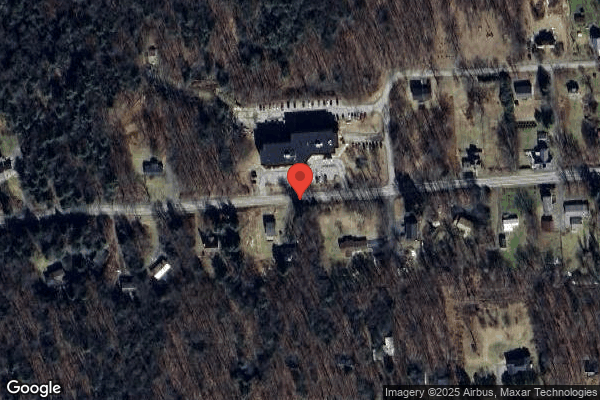
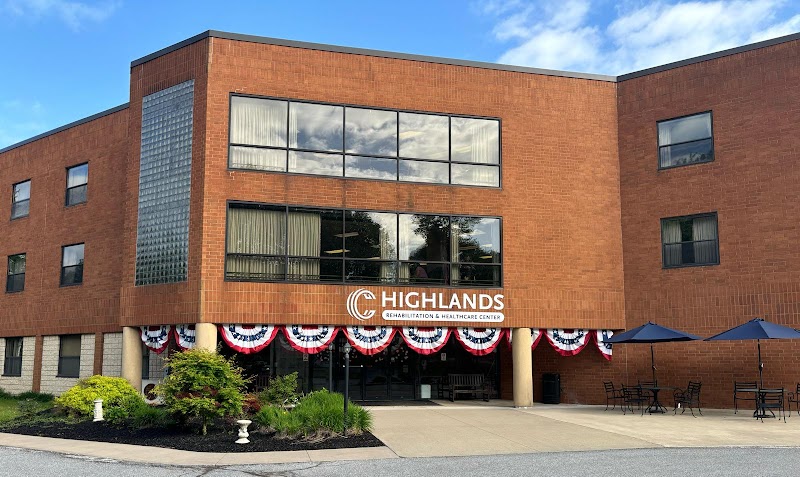
918 MAIN STREET, LAPORTE, PA 18626 (570) 946-7700
For profit - Corporation 120 Beds CENTURY HEALTHCARE Data: November 2025
Trust Grade
50/100
#438 of 653 in PA
Last Inspection: January 2025

Within standard 12-15 month inspection cycle. Federal law requires annual inspections.

Overview

Highlands Rehabilitation and Healthcare has a Trust Grade of C, which means it is average and falls in the middle of the pack compared to other facilities. It ranks #438 out of 653 in Pennsylvania, placing it in the bottom half, but it is #2 out of 2 in Sullivan County, meaning only one other local option is available. The facility is improving, with the number of issues reducing from 20 in 2024 to 11 in 2025. Staffing is an average strength with a rating of 3 out of 5 stars and a turnover rate of 44%, which is slightly below the state average. On the downside, there have been concerning incidents, such as food storage and preparation issues in the kitchen that could risk food safety, and failures to maintain residents' mobility for several individuals, indicating room for improvement in care practices.

Trust Score
C
50/100
In Pennsylvania
#438/653
Bottom 33%
Safety Record
Low Risk
No red flags
Inspections
Getting Better
20 → 11 violations
Staff Stability
○ Average
44% turnover. Near Pennsylvania's 48% average. Typical for the industry.
Penalties
✓ Good
No fines on record. Clean compliance history, better than most Pennsylvania facilities.
Skilled Nurses
⚠ Watch
Each resident gets only 23 minutes of Registered Nurse (RN) attention daily — below average for Pennsylvania. Fewer RN minutes means fewer trained eyes watching for problems.
Violations
⚠ Watch
50 deficiencies on record. Higher than average. Multiple issues found across inspections.
★★☆☆☆
2.0
Overall Rating
★★★☆☆
3.0
Staff Levels
★★★★☆
4.0
Care Quality
★★☆☆☆
2.0
Inspection Score
Stable
2024: 20 issues
2025: 11 issues

The Good

  • 4-Star Quality Measures · Strong clinical quality outcomes
  • Full Sprinkler Coverage · Fire safety systems throughout facility
  • No fines on record
  • Staff turnover below average (44%)

    4 points below Pennsylvania average of 48%

Facility shows strength in quality measures, fire safety.

The Bad

2-Star Overall Rating

Below Pennsylvania average (3.0)

Below average - review inspection findings carefully

Staff Turnover: 44%

Near Pennsylvania avg (46%)

Typical for the industry

Chain: CENTURY HEALTHCARE

Part of a multi-facility chain

Ask about local staffing decisions and management

The Ugly 50 deficiencies on record

Jan 2025 11 deficiencies
CONCERN (D) 📢 Someone Reported This

A family member, employee, or ombudsman was alarmed enough to file a formal complaint

Potential for Harm - no one hurt, but risky conditions existed

Deficiency F0625 (Tag F0625)

Could have caused harm · This affected 1 resident

Based on resident interview, clinical record review, and staff and resident interview, it was determined that the facility failed to provide written notice regarding the facility's bed-hold policy for...

Read full inspector narrative →
Based on resident interview, clinical record review, and staff and resident interview, it was determined that the facility failed to provide written notice regarding the facility's bed-hold policy for one of five residents reviewed for hospitalization concerns (Resident 63). Findings include: Interview with Resident 63 on January 13, 2025, at 12:12 PM revealed that he was hospitalized with symptoms that were questionably indicative of a stroke (cerebrovascular accident, interruption of blood flow or bleeding in the brain), but he returned to the facility after his hospitalization. Clinical record review for Resident 63 revealed nursing documentation dated October 12, 2024, at 12:24 PM that indicated Resident 63 was calling for help, had an elevated temperature, increased confusion, and agreed to transfer to the hospital for evaluation. Nursing documentation dated October 12, 2024, at 12:47 PM revealed that Resident 63 left the facility via an ambulance in route to the hospital. Nursing documentation dated October 12, 2024, at 1:25 PM revealed that staff spoke to Resident 63's sister to inform her of his transfer to the emergency department. The documentation did not indicate that staff forwarded written information to Resident 63's sister (resident representative) regarding the facility's bed-hold policy. Nursing documentation dated October 12, 2024, at 6:11 PM indicated that the emergency department admitted Resident 63 to the hospital. Review of a Bed Hold Notice (document that the facility utilizes to communicate the duration of the bed-hold policy) dated October 12, 2024, revealed that staff documented, Resident unable to sign, on October 14, 2024, on the signature line designated for the resident or resident representative name. The notice stipulated both that Resident 63 did not wish to authorize the facility to retain his bed and that he or his representative wanted to hold his bed for 15 days. The document did not indicate that staff forwarded written information to Resident 63's sister (resident representative) regarding the facility's bed-hold policy. The surveyor requested evidence that facility staff provided written information to Resident 63 and Resident 63's representative (sister) regarding the facility's bed-hold policy at the time of his October 12, 2024, hospitalization during an interview with the Nursing Home Administrator and the Director of Nursing on January 14, 2025, at 1:30 PM, and January 15, 2025, at 12:28 PM and 2:07 PM. The facility failed to provide evidence that Resident 63's responsible party received written information related to holding beds during absences from the facility within 24 hours of his emergency transfer. 28 Pa. Code 201.14(a) Responsibility of license 28 Pa. Code 201.29(a) Resident rights
CONCERN (D) 📢 Someone Reported This

A family member, employee, or ombudsman was alarmed enough to file a formal complaint

Potential for Harm - no one hurt, but risky conditions existed

Assessment Accuracy (Tag F0641)

Could have caused harm · This affected 1 resident

Based on clinical record review and staff interview, it was determined that the facility failed to ensure a complete and accurate Minimum Data Set (MDS) assessment for one of 22 residents reviewed (Re...

Read full inspector narrative →
Based on clinical record review and staff interview, it was determined that the facility failed to ensure a complete and accurate Minimum Data Set (MDS) assessment for one of 22 residents reviewed (Resident 34). Findings include: Review of Resident 34's clinical record revealed that the facility admitted her with a diagnosis of Schizophrenia. Further review revealed a PASRR (Pennsylvania Preadmission Screening Resident Review Identification Level 1 form) completed on May 22, 2019, that indicated the resident had a mental health condition or suspected mental illness that may lead to a chronic disability and the resident met the criteria (positive screen) to have a PASRR Level 2 evaluation done. A completed PASRR Level 2 by the Pennsylvania Department of Human Services Office on Mental Health and Substance abuse services dated August 1, 2019, indicated Resident 34 had evidence of a Mental Health condition that met the criteria, and the resident was determined as eligible for Mental Health services. Review of Resident 34's last comprehensive (annual) MDS (minimum Data set - an assessment completed at periodic intervals of time to determine resident care needs) completed on May 6, 2024, revealed facility staff assessed the resident as not being considered by the state level II PASRR process to have a serious mental illness and/or intellectual disability or a related condition. The above information was reviewed with the Nursing Home Administrator and Director of Nursing on January 15, 2025, at 2:00 PM. The Nursing Home Administrator confirmed on January 16, 2025, at 9:38 AM the MDS noted above for Resident 34 was not accurately completed and the facility submitted a corrected MDS after the information was reviewed as noted above. 28 Pa. Code 211.5(f)(ix) Medical records 28 Pa. Code 211.12(d)(1)(5) Nursing services
CONCERN (D) 📢 Someone Reported This

A family member, employee, or ombudsman was alarmed enough to file a formal complaint

Potential for Harm - no one hurt, but risky conditions existed

Deficiency F0657 (Tag F0657)

Could have caused harm · This affected 1 resident

Based on clinical record review and resident, family, and staff interview, it was determined that the facility failed to revise residents' care plans for three of 21 residents reviewed (Residents 79, ...

Read full inspector narrative →
Based on clinical record review and resident, family, and staff interview, it was determined that the facility failed to revise residents' care plans for three of 21 residents reviewed (Residents 79, 81, and 86). Findings include: Interview with Resident 79's daughter on January 13, 2025, at 10:29 AM indicated that she believed that her mother could become verbally and/or physically abusive to staff when she gets anxious. She stated that she believed that her mother has an anxious response when approached by two staff to perform care and that she suggested to the facility that her mother receive care by one staff. Resident 79's daughter also indicated that she provides soda for staff to give her mother to provide caffeine since she no longer smokes cigarettes or drinks coffee to lessen her behaviors and improve her compliance with care. Clinical record review for Resident 79 revealed social services documentation dated November 26, 2024, at 1:39 PM that during a care plan meeting, Resident 79's daughter expressed concerns that Resident 79 may be more combative in the morning with care because she no longer smokes cigarettes or drinks coffee. Resident 79's daughter provided diet soda for Resident 79 to have in the morning to provide some caffeine. Resident 79's daughter also suggested attempting care with only one staff member to see if Resident 79 would be less combative. The documentation indicated that staff updated resident 79's care plan. Plans of care developed by the facility to record Resident 79's problem areas, goals, and interventions revealed areas that addressed Resident 79's impaired cognitive function related to dementia (decline in cognitive function that affects memory, thinking, judgement, and behavior); psychotropic medication use to treat dementia, depression, and anxiety; behaviors that include physical aggression and resistance to care; and communication deficits due to dementia. The plans of care did not include an intervention to attempt care with one staff to minimize Resident 79's anxiety, aggression, and refusal to cooperate with care. Review of Task Documentation (electronic documentation by nurse aide staff to record care provided and the level of staff assistance utilized) dated November 2024, revealed that two staff provided assistance with dressing and transfers November 27 through 30, 2024. Two staff provided assistance with personal hygiene on November 27 and 28, 2024. The November 2024, documentation did not indicate that staff offered the diet soda to Resident 79. Review of Task Documentation dated December 2024, revealed that two staff provided Resident 79 assistance with dressing on 27 of the 31 days reviewed; with transfers on 22 of the 31 days reviewed; and with personal hygiene on 25 of the 31 days reviewed. The December 2024, documentation did not indicate that staff offered the diet soda to Resident 79. Review of Task Documentation dated January 1 through 16, 2025, revealed that two staff provided Resident 79 assistance with dressing on 12 of the 16 days reviewed; and with personal hygiene on 11 of the 16 days reviewed. The January 2025, documentation did not indicate that staff offered the diet soda to Resident 79. Interview with Employee 1 (nurse aide) on January 16, 2025, at 11:05 AM revealed that she often provides care to Resident 79. Employee 1 stated staff, typically go in with two (staff), to provide Resident 79's care. Employee 1 stated that two staff provide care because Resident 79 is combative. Employee 1 confirmed that staff do not document that care was unsuccessfully attempted by one staff before two staff attempt to provide care. Employee 1 also confirmed that there was no instruction in the nurse aide computer tablet (that is used to inform nurse aide staff of resident care needs) to provide Resident 79 a diet soda. Interview with the Nursing Home Administrator and the Director of Nursing on January 16, 2025, at 10:36 AM confirmed that Resident 79's plans of care did not include the new intervention to attempt care with one staff assistance. The interview also confirmed that the available documentation failed to indicate that staff offer Resident 79 a diet soda as part of her daily care. Interview with Resident 81 on January 14, 2025, at 11:54 AM revealed that he has a tooth that is bothering him. Clinical record review for Resident 81 revealed documentation by the facility's consultant dentist dated January 11, 2024, that Resident 81 had two missing teeth and retained roots (fragments of the tooth roots that remain in the jawbone after tooth loss or extraction) for three teeth (tooth number four, 17, and 32). Documentation by the facility's consultant dentist dated March 22, 2024, indicated that the facility referred Resident 81 for services due to a complaint of tooth pain. An annual MDS (Minimum Data Set, an assessment tool completed at specific intervals to determine resident care needs) dated June 8, 2024, assessed Resident 81 without any obvious or likely cavity or broken natural teeth. The MDS assessment did not trigger facility staff to develop a plan of care to address Resident 81's potential for dental health concerns. Interview with Employee 2 (registered nurse assessment coordinator) on January 16, 2025, at 12:00 PM indicated that she did not review the dental progress notes when completing the MDS assessment. Employee 2 confirmed the June 8, 2024, annual MDS assessment was inaccurate and because the assessment did not note Resident 81's broken teeth, the assessment did not trigger a dental care area that required a plan of care. Documentation by the facility's consultant dentist dated July 8, 2024, indicated that Resident 81's thirteenth tooth was, non-restorable (tooth damage that cannot be fixed to prevent the tooth from removal); and that he recommended extraction of the tooth as needed. Resident 81 did not exhibit symptoms to warrant extraction at that time. Nursing documentation dated December 19, 2024, at 9:42 AM indicated that Resident 81 complained of a toothache, and the physician provided a new order to refer Resident 81 to a dentist. Nutritional staff documentation dated December 25, 2024, at 6:00 PM noted that Resident 81 complained of tooth pain. The writer indicated that it was difficult to see which tooth was symptomatic due to multiple decaying teeth. Interview with the Director of Nursing and the Nursing Home Administrator on January 15, 2025, at 12:28 PM confirmed that no plan of care was developed or revised to include the above available information that Resident 81 had episodes of tooth pain, had retained tooth roots, and had multiple decaying teeth. Interview with Resident 86 on January 14, 2025, at 11:37 AM revealed that she had partial dentures for her upper and lower jaw but they went missing. Resident 86 stated that they (the facility's consultant dental provider) are supposed to be making new ones. Resident 86 indicated that it was eight months to one year that she did not have her partial dentures. Progress note documentation by the facility's consultant dental provider dated October 29, 2024, revealed that Resident 86 presented for an assessment of her bite for the casts (molds) of upper and lower partial dentures. The documentation indicated that it was the second assessment of Resident 86's bite. Review of a plan of care created by the facility on Resident 86's admission date of December 8, 2023, to address her self-care deficits in her activities of daily living (ADL), revealed that she had partial upper and lower dentures. Facility staff did not revise this plan of care to reflect Resident 86's missing partial dentures. Interview with the Nursing Home Administrator and the Director of Nursing on January 15, 2025, at 12:20 PM confirmed that facility staff did not revise Resident 86's plan of care in response to Resident 86's missing partial dentures. 28 Pa. Code 211.12(d)(1)(3)(5) Nursing services
CONCERN (D) 📢 Someone Reported This

A family member, employee, or ombudsman was alarmed enough to file a formal complaint

Potential for Harm - no one hurt, but risky conditions existed

Deficiency F0676 (Tag F0676)

Could have caused harm · This affected 1 resident

Based on clinical record review and resident and staff interview, it was determined that the facility failed to provide care and services to maintain or improve the ability to perform activities of da...

Read full inspector narrative →
Based on clinical record review and resident and staff interview, it was determined that the facility failed to provide care and services to maintain or improve the ability to perform activities of daily living for one of two residents reviewed for rehabilitation concerns (Resident 12). Findings include: Interview with Resident 12 on January 13, 2025, at 12:58 PM revealed that she had a walker device in her room that is used when staff walk with her; however, that does not occur, too much because they (the facility) don't have too many people (staff). A discharge summary by physical therapy staff dated November 29, 2023, indicated that services included patient and caregiver training, and instruction regarding an in-home exercise program (HEP) to preserve Resident 12's current level of function and prevent functional decline. Resident 12's prognosis was assessed as good with consistent staff follow-through. Discharge recommendations included that Resident 12 was to continue with the HEP restorative nursing program for gait and independent transfers and wheelchair mobility. Review of Task Documentation (electronic documentation by nurse aide staff to record care provided and the level of staff assistance utilized) dated November 2024, revealed that staff documented Resident 12's program to ambulate for 100 feet was not applicable (NA) on November 12 and 27, 2024. Staff documented that Resident 12 refused to ambulate on eight days; however, there was no indication that staff re-approached Resident 12 to give her an opportunity to complete the program after her initial refusal on seven of the eight occasions. Nursing documentation dated December 3, 2024, at 10:55 AM revealed that staff reviewed Resident 12's nursing ambulation program and made no changes at that time. Review of Task Documentation dated December 2024, revealed that staff documented Resident 12's program to ambulate for 100 feet was, NA, on December 9, 10, and 24, 2024. Staff documented that Resident 12 refused the program on December 1, 6, 8, 17, 19, 23, 25, 30, and 31, 2024; however, there was no indication that staff re-approached Resident 12 to give her an opportunity to complete the program after her initial refusal on those nine days. Staff documented that Resident 12 completed the program on only 19 of the 31 days reviewed for December 2024. Review of Task Documentation dated January 1 through 15, 2025, revealed that staff documented Resident 12's program to ambulate for 100 feet was, NA, on January 2, 4, 9, and 13, 2025. Staff documented that Resident 12 refused the program on January 5, 6, 12, and 15, 2025; however, there was no indication that staff re-approached Resident 12 to give her an opportunity to complete the program after her initial refusal on those four days. Staff documented that Resident 12 completed the program on only seven of the 15 days reviewed for January 2025. The surveyor reviewed the above concerns regarding Resident 12's restorative nursing program for ambulation during an interview with the Nursing Home Administrator and the Director of Nursing on January 16, 2025, at 10:36 AM. 28 Pa. Code 211.12(d)(1)(3)(5) Nursing services
CONCERN (D) 📢 Someone Reported This

A family member, employee, or ombudsman was alarmed enough to file a formal complaint

Potential for Harm - no one hurt, but risky conditions existed

Respiratory Care (Tag F0695)

Could have caused harm · This affected 1 resident

Based on observation, clinical record review, and staff interview, it was determined that the facility failed to implement physician ordered supplemental oxygen consistent with professional standards ...

Read full inspector narrative →
Based on observation, clinical record review, and staff interview, it was determined that the facility failed to implement physician ordered supplemental oxygen consistent with professional standards of practice for one of one resident reviewed for supplemental oxygen concerns (Resident 63). Findings include: Clinical record review for Resident 63 revealed a physician's order dated November 11, 2024, for staff to administer supplemental oxygen at two liters per minute as needed to keep oxygen saturation levels above 90 percent, use as needed for oxygen saturations of less than 90 percent. Review of Resident 63's medication administration records and treatment administration records (MAR and TAR, electronic documentation completed by staff to record the completion of medications and treatments) dated November 2024, December 2024, and January 2025, revealed that staff did not obtain routine assessments of Resident 63's oxygenation saturations to determine the need for supplemental oxygen. Observation of Resident 63 on January 13, 2025, at 12:20 PM revealed no supplemental oxygen in use. Review of Resident 63's clinical record revealed no evidence that staff obtained an assessment of Resident 63's oxygen saturation to determine that he did not need supplemental oxygen. The surveyor reviewed the above concern that Resident 63's supplemental oxygen was ordered to maintain an oxygenation saturation greater than 90 percent; however, staff are not obtaining oxygenation saturation assessments regularly during an interview with the Nursing Home Administrator and the Director of Nursing on January 14, 2025, at 2:15 PM. The facility provided a revised physician order dated January 15, 2025, at 10:45 AM that would prompt staff every shift to evaluate Resident 63's need for supplemental oxygen. 28 Pa. Code 211.12(d)(1)(5) Nursing services
CONCERN (D) 📢 Someone Reported This

A family member, employee, or ombudsman was alarmed enough to file a formal complaint

Potential for Harm - no one hurt, but risky conditions existed

Deficiency F0744 (Tag F0744)

Could have caused harm · This affected 1 resident

Based on clinical record review and staff interview, it was determined that the facility failed to develop and implement an individualized person-centered care plan to address dementia and cognitive l...

Read full inspector narrative →
Based on clinical record review and staff interview, it was determined that the facility failed to develop and implement an individualized person-centered care plan to address dementia and cognitive loss displayed by one of one resident reviewed (Resident 43). Findings include: Clinical record review for Resident 43 revealed the facility admitted her on October 31, 2024, with diagnosis including Dementia (loss of memory, language, problem-solving, and other thinking abilities that interfere with daily life). A review of Resident 43's most recent annual Minimum Data Set Assessment (MDS, a form completed at specific intervals to determine care needs) dated November 6, 2024, indicated that the facility assessed Resident 43 as having a diagnosis of dementia. The facility determined that a care plan for dementia and cognitive loss would be developed. A review of Resident 43's care plan entitled impaired cognitive function related to dementia revealed that there was no indication that the facility had implemented an individualized person-centered care plan to address the resident's dementia and cognitive loss needs, until the surveyor brought it to their attention on January 15, 2025, at 11:30 AM. The findings were reviewed with the Nursing Home Administrator and Director of Nursing on January 15, 2025, at 2:30 AM. The facility failed to develop and implement an individualized person-centered care plan to address dementia and cognitive loss for Resident 43. 28 Pa Code 211.12 (d)(1)(3)(5) Nursing services
CONCERN (D) 📢 Someone Reported This

A family member, employee, or ombudsman was alarmed enough to file a formal complaint

Potential for Harm - no one hurt, but risky conditions existed

Dental Services (Tag F0791)

Could have caused harm · This affected 1 resident

Based on clinical record review, observation, and resident and staff interview, it was determined that the facility failed to provide routine dental services related to partial dentures for one of two...

Read full inspector narrative →
Based on clinical record review, observation, and resident and staff interview, it was determined that the facility failed to provide routine dental services related to partial dentures for one of two residents reviewed for dental concerns (Resident 86). Findings include: Interview with Resident 86 on January 14, 2025, at 11:37 AM revealed that she had partial dentures for her upper and lower jaw but they went missing. Resident 86 stated that they (the facility's consultant dental provider) are supposed to be making new ones. Resident 86 indicated that it was eight months to one year that she did not have her partial dentures. Observation of Resident 86 on the date and time of the interview revealed that she had natural teeth and was missing teeth. Clinical record review for Resident 86 revealed a plan of care created by the facility on Resident 86's admission date of December 8, 2023, to address her self-care deficits in her activities of daily living (ADL). The plan of care noted that Resident 86 had partial upper and lower dentures. Progress note documentation by the facility's consultant dental provider dated October 29, 2024, revealed that Resident 86 presented for an assessment of her bite for the casts (molds) of upper and lower partial dentures. The documentation indicated that it was the second assessment of Resident 86's bite. Interview with the Nursing Home Administrator and the Director of Nursing on January 15, 2025, at 12:20 PM confirmed that the facility did not have a concern form, grievance form, or clinical record documentation to indicate when Resident 86's partial dentures became missing; however, confirmed that the consultant dental provider documentation dated October 29, 2024, stipulated that Resident 86 presented for an assessment of her bite for the molds of upper and lower partial dentures. The surveyor requested that the facility provide their policy or procedure when resident property (including dentures) is determined missing. The facility did not provide a policy that stipulated the facility's responsibilities when there is loss or damage of resident dentures. 28 Pa. Code 201.18(d) Management 28 Pa. Code 211.10(a) Resident care policies 28 Pa. Code 211.12(d)(1)(3)(5) Nursing services
CONCERN (D) 📢 Someone Reported This

A family member, employee, or ombudsman was alarmed enough to file a formal complaint

Potential for Harm - no one hurt, but risky conditions existed

Deficiency F0883 (Tag F0883)

Could have caused harm · This affected 1 resident

**NOTE- TERMS IN BRACKETS HAVE BEEN EDITED TO PROTECT CONFIDENTIALITY** Based on clinical record review and staff interview, it was determined that the facility failed to ensure residents' medical rec...

Read full inspector narrative →
**NOTE- TERMS IN BRACKETS HAVE BEEN EDITED TO PROTECT CONFIDENTIALITY** Based on clinical record review and staff interview, it was determined that the facility failed to ensure residents' medical records included documentation that residents' representatives were provided education regarding the risks and benefits of immunizations for two of five residents reviewed for immunization concerns (Residents 21 and 46). Findings include: Clinical record review for Resident 21 revealed a quarterly MDS (minimum data set, an assessment completed by the facility at intervals to determine care needs) assessment dated [DATE], that indicated Resident 21 had a BIMS (Brief Interview for Mental Status) score of three, indicating she had severe cognitive impairment. A psychiatric note dated October 4, 2024, at 12:00 PM indicated that Resident 21 was awake, alert, and oriented. Review of Resident 21's Influenza Vaccination (a shot that protects against the flu) consent form revealed that there was no signature by the resident or her responsible party indicating that she received and understood the risk versus benefits of the vaccination. The form revealed that she received an Influenza Vaccination on October 14, 2024. Attempted interview of Resident 21 on January 15, 2024, at 11:50 AM revealed that she was unable to answer if she gave permission to be vaccinated with the influenza vaccination on October 14, 2024. The facility could not provide evidence that Resident 21or her responsible party were given education regarding the risks and benefits of the influenza vaccination prior to it being administered on October 14, 2024. Clinical record review for Resident 46 revealed a quarterly MDS assessment dated [DATE], that indicated Resident 46 had a BIMS score of three, indicating she had severe cognitive impairment. A physician's progress note dated October 3, 2024, at 5:23 PM revealed that Resident 46 is alert with confusion and has a diagnosis of dementia (a group of thinking and social symptoms that interferes with daily functioning). Review of Resident 46's Influenza Vaccination consent form revealed that Resident 46 signed the form but did not date it, indicating that she gave consent to receive the influenza vaccination and that she understood the risk versus benefits of the vaccination. The form also indicated that she received the vaccine on October 14, 2024. Review of Resident 46's Pneumococcal Vaccination (a shot that protects against pneumonia) informed consent form revealed that Resident 46 signed it indicating that she received a copy of the pneumococcal vaccination education, but no date was present to indicate when she signed the form, and that she gave permission for the vaccine to be administered. The vaccine was administered on December 10, 2024. The facility could not provide evidence that Resident 46's responsible party was given education regarding the risks and benefits of the Influenza or the Pneumococcal vaccination (given Resident 46's incapacity to be her own responsible party for medical decisions) for her to make an informed decisions regarding the vaccination administration to Resident 46. An interview with Employee 3, Infection preventionist, on January 16, 2025, at 10:00 AM confirmed the above noted findings for Residents 21 and 46. The Nursing Home Administrator and Director of Nursing were made aware of the above noted concerns related to Resident 21 and 46's vaccinations on January 16, 2024, at 11:32 AM. 483.80(d)(1)(2) Influenza and Pneumococcal Immunizations Previously cited deficiency 2/9/24 28 Pa. Code 211.5(f) Medical records 28 Pa. Code 211.12(d)(1)(3)(5) Nursing services
CONCERN (D) 📢 Someone Reported This

A family member, employee, or ombudsman was alarmed enough to file a formal complaint

Potential for Harm - no one hurt, but risky conditions existed

Deficiency F0887 (Tag F0887)

Could have caused harm · This affected 1 resident

**NOTE- TERMS IN BRACKETS HAVE BEEN EDITED TO PROTECT CONFIDENTIALITY** Based on clinical record review and staff interview, it was determined that the facility failed to ensure a residents' medical r...

Read full inspector narrative →
**NOTE- TERMS IN BRACKETS HAVE BEEN EDITED TO PROTECT CONFIDENTIALITY** Based on clinical record review and staff interview, it was determined that the facility failed to ensure a residents' medical records included documentation that the residents' representative was provided education regarding the risks and benefits of receiving a COVID-19 immunizations for one of five residents reviewed for immunization concerns (Residents 46). Findings include: Clinical record review for Resident 46 revealed a quarterly MDS assessment dated [DATE], that indicated resident had a BIMS score of three, indicating she had severe cognitive impairment. A physician's progress note dated October 3, 2024, at 5:23 PM revealed that Resident 46 is alert with confusion and has a diagnosis of dementia (a group of thinking and social symptoms that interferes with daily functioning). Review of Resident 46's COVID-19 vaccine consent/administration record provided by the facility, revealed that Resident 46 signed the form on November 7, 2024, indicating that she understood the benefits and risks of the vaccine and consented to receive the updated COVID vaccine. The form also indicated that Resident 46 received the COVID-19 vaccine on November 21, 2024. The facility could not provide evidence that Resident 46's responsible party was given education regarding the risks and benefits of the COVID-19 vaccination (given Resident 46's incapacity to be her own responsible party for medical decisions) for her to make an informed decision regarding the vaccination administration to Resident 46. An interview with Employee 3, Infection preventionist, on January 16, 2025, at 10:00 AM confirmed the above noted findings for Resident 46. The Nursing Home Administrator and Director of Nursing were made aware of the above noted concerns related to Resident 46 on January 16, 2024, at 11:32 AM. 483.80(d)(3)(i)-(vii) Covid-19 Immunization Previously cited deficiency 2/9/24 28 Pa. Code 201.14(a) Responsibility of licensee 28 Pa. Code 211.5(f) Medical records 28 Pa. Code 211.12(d)(1)(3)(5) Nursing services
CONCERN (E) 📢 Someone Reported This

A family member, employee, or ombudsman was alarmed enough to file a formal complaint

Potential for Harm - no one hurt, but risky conditions existed

Deficiency F0688 (Tag F0688)

Could have caused harm · This affected multiple residents

Based on review of select facility policies, clinical record review, and staff interview, it was determined that the facility failed to provide services to maintain or improve a resident's range of mo...

Read full inspector narrative →
Based on review of select facility policies, clinical record review, and staff interview, it was determined that the facility failed to provide services to maintain or improve a resident's range of motion (ROM) and mobility for four of five residents reviewed (Resident 19, 48, 59, and 74). Findings include: Review of the facility policy entitled, Restorative Nursing Services, last reviewed without changes on August 15, 2024, revealed that residents will receive restorative nursing care as needed to help promote optimal safety and independence. Restorative nursing care consists of nursing interventions that may or may not be accompanied by formalized rehabilitative services. Restorative goals and objectives are individualized and resident-centered and outlined in the resident's plan of care. Restorative goals may include but are not limited to supporting and assisting the resident in adjusting or adapting to changing abilities; developing, maintaining, or strengthening their physiological and psychological resources; maintaining their dignity, independence, and self-esteem; and participate in development and implementation of their plan of care. The policy does not speak to the expectations and frequency (how often) staff are to complete the resident's restorative nursing program interventions. Clinical record review for Residents 19 revealed a therapy restorative referral dated November 8, 2024, which identified they had a decrease in their active ROM (movement of the body to maintain a resident's ability). Therapy staff indicated nursing staff should provide PROM (passive range of motion) to their BLE's (bilateral [both] lower extremities [legs]) for 10 repetitions, all available planes, and ranges. Therapy staff did not indicate the frequency (how often) or specific shift(s) that nursing staff should complete Resident 19's restorative nursing program. Review of Resident 19's task documentation for Resident 19 revealed that nursing staff implemented their PROM restorative nursing program during each shift, however, opened the PROM task to be completed/documented only during day shift. There was no documentation that staff completed Resident 19's PROM restorative nursing program during evening or night shifts throughout the three months (November and December 2024, and January 2025) reviewed. Clinical record review for Residents 48 revealed a therapy restorative referral dated November 26, 2024, which identified they had a decrease in their independent ambulation. Therapy staff indicated nursing staff should ambulate Resident 48 up to 110 feet with a FWW (front wheeled walker) with assist of one and w/c (wheelchair) to follow for safety. Therapy staff did not indicate the frequency (how often) or specific shift(s) that nursing staff should complete Resident 48's restorative nursing program. Review of task documentation for Resident 48 revealed that nursing staff implemented their ambulation restorative nursing program during each shift, however, opened the ambulation task to be completed/documented only during day shift. There was no documentation that staff completed Resident 48's ambulation restorative nursing program during evening or night shifts throughout the three months (November and December 2024, and January 2025) reviewed. Further review revealed that staff noted NA (not applicable) for Resident 48's ambulation restorative nursing program on December 15, 2024, day shift. Further review for Residents 48 revealed a therapy restorative referral dated January 7, 2025, which identified they had a decrease in AROM active range of motion) for their right elbow. Therapy staff indicated nursing staff should perform slow, gentle, and sustained PROM to their right elbow into extension for 2 sets of 10 repetitions for joint integrity/mobility. Therapy staff did not indicate the frequency (how often) or specific shift(s) that nursing staff should complete Resident 48's restorative nursing program. Nursing staff initialed the therapy referral, which indicated that they acknowledged the information and implemented the therapist's restorative program. Review of task documentation for Resident 48 revealed that they had an AROM restorative nursing program for their RUE (right upper extremity) and right elbow, 2 sets of 10 repetitions in sitting position for every shift already implemented when therapy made the PROM restorative referral to nursing staff. There was no documentation that nursing staff discontinued Resident 48's AROM restorative nursing program and implemented their PROM restorative nursing program as indicated by therapy's restorative referral. Clinical record review for Residents 59 revealed a therapy restorative referral dated January 1, 2025, which identified they had a decrease in ROM for their BLE's and RUE (right upper extremity [arm]). Therapy staff indicated nursing staff should provide PROM to their BLE's and LUE (left upper extremity) for 10 repetitions, all available planes, and ranges to prevent decline in current ROM. Therapy staff did not indicate the frequency (how often) or specific shift(s) that nursing staff should complete Resident 59's restorative nursing program and indicated the decline was in Resident 59's RUE but implemented a restorative nursing program for their LUE. Therapy did not address the noted RUE decline in their restorative referral. Review of task documentation for Resident 59 revealed that nursing staff implemented that their PROM restorative nursing program during each shift, however, opened the PROM task to be completed/documented only during day and evening shift. Nursing staff also added with a.m. (morning) and p.m. (afternoon) care to the ROM task. Clinical record review for Residents 74 revealed therapy restorative referral dated September 23, 2024, which identified they had a concern with the flexion of their RUE. Therapy staff indicated nursing staff should perform slow, gentle, sustained PROM exercised right hand digits 2 - 5 into extension, positive wrist mobility, and place resting orthotic (splint) on the right hand for skin integrity, contracture management, and joint alignment. Therapy staff did not indicate the frequency (how often) or specific shift(s) that nursing staff should complete Resident 74's restorative nursing program. Review of task documentation for Resident 74 revealed that nursing staff implemented their PROM restorative nursing program during each shift, however, opened the PROM task to be completed/documented only during day shift. There was no documentation that staff completed Resident 74's restorative program on evening or night shifts. Further review revealed that staff indicated NA for the restorative program January 13, 2025, day shift. Further review of Resident 74's task documentation revealed that nursing staff implemented the therapy restorative referral for their right hand orthotic, with staff to apply a right palm roll and forearm splint on the AM (morning) and remove at HS (hour of sleep). Staff may remove for care and ambulation. There was no documentation in the therapy restorative referral or a physician's order, which indicated when staff were to apply and/or remove Resident 74's orthotic, place a palm roll, or that staff may remove for care and/or ambulation. Further review revealed that staff indicated NA or failed to document task completion on the following dates: Day Shift: October 5, 7 and 31, 2024 Evening Shift: December 7, 2024 The surveyor reviewed the above information on January 16, 2025, at 11:30 AM with the Nursing Home Administrator and the Director of Nursing. 28 Pa. Code 211.10(a)(c)(d) Resident care policies 28 Pa. Code 211.12(c)(d)(1)(3)(5) Nursing services
MINOR (B) 📢 Someone Reported This

A family member, employee, or ombudsman was alarmed enough to file a formal complaint

Minor Issue - procedural, no safety impact

Transfer Notice (Tag F0623)

Minor procedural issue · This affected multiple residents

**NOTE- TERMS IN BRACKETS HAVE BEEN EDITED TO PROTECT CONFIDENTIALITY** Based on clinical record review and staff interview, it was determined that the facility failed to notify a resident and/or thei...

Read full inspector narrative →
**NOTE- TERMS IN BRACKETS HAVE BEEN EDITED TO PROTECT CONFIDENTIALITY** Based on clinical record review and staff interview, it was determined that the facility failed to notify a resident and/or their responsible party in writing of a transfer to the hospital with the required information for five of five residents reviewed (Residents 18, 59, 63, 91, and 98). Findings include: Clinical record review for Resident 59 revealed that they were transferred to the hospital on December 1, 2024, after a change in their condition. There was no documentation that the facility provided written notification to the resident or the resident's responsible party regarding the transfer that included the required contents: reason for the transfer, effective date of the transfer, location to which the resident was transferred, a statement of the resident's right to appeal, including the name, contact, email, and address, how to obtain and appeal form, assistance completing and submitting the appeal form and hearing request, and contact, email, and address information for the Office of the State Long-Term Care Ombudsman, and information for the agency responsible for the protection and advocacy of individuals with developmental disabilities. The surveyor reviewed the above information for during an interview with the Nursing Home Administrator and Director of Nursing on January 16, 2025, at 11:00 AM. Clinical record review for Resident 91 revealed the resident was sent to the hospital on October 5, 2024, after a fall/change in condition and admitted . Clinical record review for Resident 18 revealed the resident was sent to the hospital on December 7, 2024, for a change in condition and admitted . Clinical record review for Resident 98 revealed the resident was sent to the hospital on November 3, 2024, for a change in condition and admitted . Resident 98 did not return to the facility . There was no evidence Resident 91 or 98's responsible party or Resident 18 and her responsible party were notified in writing of the transfer with the required contents noted above. There was no evidence the State Ombudsman was notified timely of the transfer for Resident 91 and 98. The nursing home administrator confirmed in an interview on January 16, 2025, at 10:14 AM the facility did not provide written notice of transfer as required to the resident's above and the facility had not submitted any transfer notices to the office of the stated ombudsman for September, October, and December 2024, until January 14, 2025, after it was brought to facility staff's attention during the survey process. Interview with Resident 63 on January 13, 2025, at 12:12 PM revealed that he was hospitalized with symptoms that were questionably indicative of a stroke (cerebrovascular accident, interruption of blood flow or bleeding in the brain), but he returned to the facility after his hospitalization. Clinical record review for Resident 63 revealed nursing documentation dated September 28, 2024, at 6:55 PM that indicated Resident 63 was diaphoretic (sweating), had an altered mental status, reported that he was going to pass out, and that he wanted to go to the hospital. Nursing documentation dated September 28, 2024, at 7:24 PM indicated that Resident 63 went to the hospital via an ambulance. Nursing documentation dated September 30, 2024, at 12:45 PM indicated that Resident 63 returned to the facility from the hospital. Nursing documentation dated October 12, 2024, at 12:24 PM indicated that Resident 63 was calling for help, had an elevated temperature, increased confusion, and agreed to transfer to the hospital for evaluation. Nursing documentation dated October 12, 2024, at 12:47 PM revealed that Resident 63 left the facility via an ambulance in route to the hospital. Nursing documentation dated October 12, 2024, at 1:25 PM revealed that staff spoke to Resident 63's sister to inform her of his transfer to the emergency department; however, the documentation did not indicate that staff forwarded a written notice that included the required contents to Resident 63's sister (resident representative). Nursing documentation dated October 12, 2024, at 6:11 PM indicated that the emergency department admitted Resident 63 to the hospital. The surveyor requested evidence that facility staff provided written notices of transfer to Resident 63, Resident 63's representative (sister), and the State Ombudsman when he was hospitalized on [DATE], and October 12, 2024, during an interview with the Nursing Home Administrator and the Director of Nursing on January 14, 2025, at 1:30 PM, and January 15, 2025, at 12:28 PM and 2:07 PM. The facility failed to provide evidence that Resident 63, his responsible party, or the State Ombudsman received the required written notices of transfers for the above hospitalizations. 28 Pa. Code 201.14 (a) Responsibility of license 28 Pa. Code 201.29(a) Resident rights
Oct 2024 1 deficiency
CONCERN (E) 📢 Someone Reported This

A family member, employee, or ombudsman was alarmed enough to file a formal complaint

Potential for Harm - no one hurt, but risky conditions existed

Safe Environment (Tag F0584)

Could have caused harm · This affected multiple residents

**NOTE- TERMS IN BRACKETS HAVE BEEN EDITED TO PROTECT CONFIDENTIALITY** Based on observation and resident and staff interview, it was determined that the facility failed to maintain comfortable and sa...

Read full inspector narrative →
**NOTE- TERMS IN BRACKETS HAVE BEEN EDITED TO PROTECT CONFIDENTIALITY** Based on observation and resident and staff interview, it was determined that the facility failed to maintain comfortable and safe temperature levels between 71 and 81 degrees Fahrenheit on two of two floors (Second and Third floors). Findings include: Observation of the facility on October 19, 2024, at 3:00 PM revealed the following temperatures: Second Floor: Resident room [ROOM NUMBER], 83 degrees Fahrenheit Resident room [ROOM NUMBER], 84 degrees Fahrenheit Resident room [ROOM NUMBER], 84 degrees Fahrenheit Resident room [ROOM NUMBER], 82 degrees Fahrenheit Resident room [ROOM NUMBER], 83 degrees Fahrenheit Resident room [ROOM NUMBER], 83 degrees Fahrenheit Resident room [ROOM NUMBER], 82 degrees Fahrenheit Second Floor Medication room [ROOM NUMBER].4 degrees Fahrenheit Third Floor: Resident room [ROOM NUMBER], 88 degrees Fahrenheit Resident room [ROOM NUMBER], 87 degrees Fahrenheit Resident room [ROOM NUMBER], 86 degrees Fahrenheit Resident room [ROOM NUMBER], 86 degrees Fahrenheit Resident room [ROOM NUMBER], 88 degrees Fahrenheit Resident room [ROOM NUMBER], 85 degrees Fahrenheit Resident room [ROOM NUMBER], 84 degrees Fahrenheit Resident room [ROOM NUMBER], 83 degrees Fahrenheit Resident room [ROOM NUMBER], 83 degrees Fahrenheit Resident room [ROOM NUMBER], 85 degrees Fahrenheit Resident room [ROOM NUMBER], 86 degrees Fahrenheit Third Floor Hallway 83 degrees Fahrenheit Third Floor Medication room [ROOM NUMBER] degrees Fahrenheit Interview with Resident 1 at 3:03 PM revealed that, it is too warm in here. Interview with Resident 2 at 3:04 PM she stated her room is too hot, and she prefers it to be between 65 and 75 degrees Fahrenheit. Interview with Resident 7 at 3:24 PM they stated it is always hot in the facility, fans help a little to move air. Interview with Resident 10 at 3:31 PM he stated his room has gotten as hot as 88 degrees Fahrenheit. Interview with Residents 11 and 12 at 3:39 PM they stated it often gets hot in the facility, and staff offer fans to help, but they don't help much. Interview with Resident 13 at 3:47 PM confirmed that the facility is too warm. Interview with Resident 3 at 3:52 PM she stated her room gets warm on sunny days, fans cool it down some, but still above 80 degrees Fahrenheit. Interview with Resident 5 at 4:05 PM he stated his room, dining room, and hallways are often warm. Interview with Resident 6 at 4:12 PM they stated it gets hot in the facility when it's nice outside. Interview with the Director of Nursing and Employee 1 (maintenance director) on October 19, 2024, at 4:00 PM confirmed the warm temperatures in the building. Employee 1 stated they are unable to control the temperatures in the facility due to needing to replace the chiller and control panel. Employee 1 stated the facility has received approval to replace the chiller but does not have a date when repairs will happen. Employee 1 indicated they have not yet received approval to replace the control panel. The facility failed to maintain safe and comfortable temperatures. 483.10(i)(1)-(7) Safe/clean/comfortable/homelike Environment Previously cited deficiency 02/09/24 28 Pa. Code 201.18(b)(3)(e)(2.1) Management
Apr 2024 3 deficiencies
CONCERN (D) 📢 Someone Reported This

A family member, employee, or ombudsman was alarmed enough to file a formal complaint

Potential for Harm - no one hurt, but risky conditions existed

Abuse Prevention Policies (Tag F0607)

Could have caused harm · This affected 1 resident

Based on clinical record review, review of select policies and procedures, and staff interview, it was determined that the facility failed to implement their abuse policy regarding investigating an al...

Read full inspector narrative →
Based on clinical record review, review of select policies and procedures, and staff interview, it was determined that the facility failed to implement their abuse policy regarding investigating an allegation of abuse for two of 11 residents reviewed (Residents 3 and 4). Findings include: Review of the facility's Abuse Policy implemented on April 1, 2024, indicated that allegations must be reported to the Administrator or other officials and an investigation will be initiated immediately. Review of Resident 3's clinical record revealed nursing documentation dated April 3, 2024, at 3:45 PM indicating that Resident 3 walked down the hallway and was witnessed striking Resident 4 in the face. This was witnessed by Employee 3, housekeeper, and that further investigation will be made. The documentation indicated that the incident was reported to the Director of Nursing. The facility was unable to provide documented evidence that an investigation was started regarding the physical incident between Resident 3 and Resident 4. There was no documented evidence that Resident 4 was assessed for injuries. The facility provided a statement from Employee 3 after the surveyors questioning. The surveyor observed Employee 3 writing the statement in the Administrator's office during the on-site visit on April 24, 2024, at 12:45 PM. Review of Employee 3's statement regarding Resident 3 revealed that it was dated for April 4, 2023, despite just writing the statement on April 24, 2024, and the incident happening on April 3, 2024. Interview with Employee 3 on April 24, 2024, at 1:53 PM revealed that when she witnessed the event she told the nurse on duty, and then stated she did write up an initial statement when it happened on April 3, 2024. Employee 3 was unsure what happened to that statement after she handed it in. Employee 3 confirmed that she just wrote up the statement today that was provided to the surveyor. Interview with the Administrator and Director of Nursing on April 24, 2024, at 2:30 PM confirmed the above findings. 483.12(b)(2) Polices to investigate allegations Previously cited 2/9/24 28 Pa. Code 201.18(b)(1) Management 28 Pa. Code 201.29(a)(c) Resident rights
CONCERN (D) 📢 Someone Reported This

A family member, employee, or ombudsman was alarmed enough to file a formal complaint

Potential for Harm - no one hurt, but risky conditions existed

Quality of Care (Tag F0684)

Could have caused harm · This affected 1 resident

Based on closed clinical record review and staff interview, it was determined that the facility failed to provide the highest practicable care regarding the administration of physician ordered pain me...

Read full inspector narrative →
Based on closed clinical record review and staff interview, it was determined that the facility failed to provide the highest practicable care regarding the administration of physician ordered pain medications for one of 11 residents reviewed (Resident CR1). Findings include: Review of Resident CR1's closed clinical record revealed a physician's order dated March 23, 2024, for nursing staff to administer Morphine Sulfate 20mg/ml (milligrams/milliliter) 0.5 ml every two hours as needed for pain. A physician's order dated March 24, 2024, indicated that nursing staff were to administer Morphine Sulfate 20mg/ml, 0.75 ml every four hours around the clock for pain, scheduled to be given at 12:00 AM, 4:00 AM, 8:00 AM, 12:00 PM, 4:00 PM, and 8:00 PM, every day. Review of Resident CR1's Medication Administration Record (MAR, a form utilized to document the administration of medications) dated April 2024, revealed that Employee 4, registered nurse, only administered 0.5 ml of Resident CR1's Morphine Sulfate dose on April 3, 2024, at 4:47 PM and again at 8:47 PM. Resident CR1's Morphine Sulfate dose at those times should have been 0.75 ml. There was no documented evidence to indicate that Employee 4 administered any as needed Morphine Sulfate doses to Resident CR1 during her shift. Interview with the Administrator on April 24, 2024, at 9:30 AM confirmed that there were no reported medication errors for April 2024, and during a meeting on the same date at 2:30 PM, confirmed the above findings for Resident CR1. 28 Pa. Code 211.10 (a)(c)(d) Resident care policies 28 Pa. Code 211.12(d)(1)(3)(5) Nursing services
CONCERN (E) 📢 Someone Reported This

A family member, employee, or ombudsman was alarmed enough to file a formal complaint

Potential for Harm - no one hurt, but risky conditions existed

Infection Control (Tag F0880)

Could have caused harm · This affected multiple residents

Based on clinical record review, review of select facility policies and procedures, and staff interview, it was determined that the facility failed to ensure an effective infection control program for...

Read full inspector narrative →
Based on clinical record review, review of select facility policies and procedures, and staff interview, it was determined that the facility failed to ensure an effective infection control program for outbreak testing and transmission-based precautions to prevent the spread of infection on one of two nursing units (3rd Floor Nursing Unit; Residents 1 and 2, Employees 1 and 2). Findings include: Review of the policy entitled COVID-19 Testing Requirements last reviewed on May 10, 2023, indicates that a single new case of COVID-19 infection in any staff or resident should be evaluated to determine if others in the facility could have been exposed. The approach could involve either contact tracing or a broad-based approach. A broad-based approach is preferred if all potential contacts cannot be identified or managed with contact tracing or if contact tracing fails to halt transmission. Testing is recommended immediately, and again 48 hours after the first negative test, and if negative, again 48 hours after the second negative test. Testing should continue on affected units until there are no new cases for 14 days. The facility's current policy entitled Duration of Transmission-Based Precautions for Residents with COVID-19 Infection, indicates that residents will be on transmission-based precautions for at least 10 days since their first positive viral test or since symptoms first appeared. Review of Resident 1's clinical record revealed nursing documentation dated March 26, 2024, that indicated nursing staff tested him for COVID-19 and the results were positive. The nursing documentation for March 26, 2024, also indicated Resident 1 was symptomatic with a cough and sinus congestion. A physician's order dated March 26, 2024, indicated that nursing staff were to start droplet precautions. The droplet precautions were discontinued after only seven days on April 2, 2024. The facility did not maintain Resident 1's droplet precautions for 10 days. Review of facility submitted incidents via ERS (Event Reporting System, a web-based notification system facilities use to notify the Department of Health of reportable incidents) revealed that the facility tested Employee 1, nurse aide on March 26, 2024, for COVID-19 because she was feeling ill. Employee 1 also tested positive for COVID-19 on March 26, 2024. Employee 2, nurse aide, tested positive for COVID-19 on March 26, 2024, because she was feeling ill. Review of Resident 2's clinical record revealed that she tested positive for COVID-19 on March 28, 2024. Resident 2 was symptomatic with a cough and a low-grade temperature. There was no documented evidence in Resident 2's clinical record to indicate how long the facility kept her on transmission-based precautions. There was no physician order initiated to start or discontinue droplet precautions. The facility was not able to provide any documented evidence that either contract tracing or a broad-based approach of testing was initiated after staff and residents were identified as having symptomatic COVID-19 starting on March 26, 2024. Interview with the Administrator on April 24, 2024, at 11:30 AM revealed that the facility's infection control preventionist quit at the end of March 2024. A new infection control preventionist was hired but did not initiate facility wide COVID-19 testing until April 3, 2024. From March 26, 2024, until April 20, 2024, the facility has reported at least 55 resident and staff cases of COVID-19 to the Department of Health. Interview with the Administrator and Director of Nursing on April 24, 2024, at 2:30 PM confirmed the above findings. 483.80 Infection Control Previously cited 2/9/24 28 Pa. Code 201.18(b)(1) Management 28 Pa. Code 211.10(d) Resident care policies
Feb 2024 16 deficiencies
CONCERN (D) 📢 Someone Reported This

A family member, employee, or ombudsman was alarmed enough to file a formal complaint

Potential for Harm - no one hurt, but risky conditions existed

Deficiency F0578 (Tag F0578)

Could have caused harm · This affected 1 resident

**NOTE- TERMS IN BRACKETS HAVE BEEN EDITED TO PROTECT CONFIDENTIALITY** Based on clinical record review and staff interview it was determined that the facility failed to ensure the resident or residen...

Read full inspector narrative →
**NOTE- TERMS IN BRACKETS HAVE BEEN EDITED TO PROTECT CONFIDENTIALITY** Based on clinical record review and staff interview it was determined that the facility failed to ensure the resident or resident's responsible party participation in the development of end-of-life treatment wishes for one of six residents reviewed for advance directive concerns (Resident 33). Findings include: Clinical record review for Resident 33 revealed an electronic physician's order dated [DATE], that instructed staff to not provide resuscitation (CPR, chest compressions and artificial breathing assistance upon a medical emergency and/or death). Review of Resident 33's physical chart revealed a POLST form (Physician Orders for Life-Sustaining Treatment, portable medical order form that records patients' treatment wishes so that emergency personnel know what treatments the patient wants in the event of a medical emergency) signed by Resident 33's brother/responsible party on [DATE], that indicated he wanted CPR/full treatment. Interview with Employee 6, licensed practical nurse, on February 7, 2024, at 12:32 PM verified the POLST on Resident 33's physical medical record did not match Resident 33's electronic medical record physician order. The surveyor confirmed the above findings with the Director of Nursing and Employee 1 (Director of Clinical Operations) on February 6, 2024, at 2:00 PM. The facility provided a revised electronic medical record physician's order dated February 7, 2024 (following the surveyor's questioning) that now instructed staff to provide Resident 33 Full Code treatment in the event of a medical emergency. 483.10(c)(6)(8)(g)(12)(i)-(v) Request/Refuse/Discontinue Trmnt; Formulate Adv Dir Previously cited deficiency [DATE] 28 Pa. Code 211.5(f) Clinical records 28 Pa. Code 211.12(d)(1)(3)(5) Nursing services
CONCERN (D) 📢 Someone Reported This

A family member, employee, or ombudsman was alarmed enough to file a formal complaint

Potential for Harm - no one hurt, but risky conditions existed

Abuse Prevention Policies (Tag F0607)

Could have caused harm · This affected 1 resident

Based on review of select facility policies and procedures, review of clinical record and facility documentation, and staff interview, it was determined that the facility failed to ensure that allegat...

Read full inspector narrative →
Based on review of select facility policies and procedures, review of clinical record and facility documentation, and staff interview, it was determined that the facility failed to ensure that allegations of potential abuse were thoroughly investigated and reported to the appropriate agencies for two of four sampled residents (Residents 82, 84, 79, and 92). Findings include: The facility policy entitled, Abuse Investigation and Reporting, last reviewed February 22, 2023, revealed that all reports of resident abuse, neglect, exploitation, misappropriation of resident property, mistreatment, and/or injuries of unknown source shall be promptly reported to local, state, and federal agencies and thoroughly investigated by facility management. If an incident or suspected incident of resident abuse, mistreatment, neglect, or injury of unknown source is reported, the Administrator will assign the investigation to an appropriate individual. The role of the investigator, the individual conducting the investigation, will, at a minimum, review the resident's medical record to determine events leading up to the incident, interview persons reporting the incident, and interview any witnesses to the incident. Guidelines used when conducting interviews include to conduct each interview separately and in a private location; and obtain witness reports in writing (either the witness will write his/her statement and sign and date it or the investigator will obtain a statement, read it back to the member, and have him/her sign and date it). All alleged violations involving abuse, neglect, exploitation, or mistreatment, including injuries of an unknown source and misappropriation of property will be reported by the facility Administrator (or designee) to the state licensing/certification agency responsible for surveying/licensing the facility. The Administrator, or his/her designee, will provide the appropriate agencies with a written report of the findings of the investigation within five working days of the occurrence of the incident. Clinical record review for Resident 92 revealed nursing documentation dated December 13, 2023, at 8:37 PM that this resident became agitated with the nurse aide staff when that staff was redirecting her from entering another resident's room. Resident 92, .then struck another (Resident 79) in the back, when Resident 79 was also making attempts to enter the same room. Nursing documentation by Employee 7 (registered nurse) dated December 13, 2023, at 8:32 PM revealed that the registered nurse on the second floor reported to her that Resident 92 hit another resident in the back. Employee 7's documentation noted that, When staff attempted to redirect the two residents out of the room, (Resident 92) had swung at staff and inadvertently, hand lightly hit (Resident 79) in back. Interview with Employee 7 on February 7, 2024, at 10:05 AM revealed that she was the registered nurse supervisor; and that she was the supervisor on shift when the above altercation occurred between Residents 79 and 92. Employee 7 confirmed that the wording of her documentation indicated that the physical contact initiated by Resident 92 was inadvertent (therefore, would not be considered physical abuse); contrasting the registered nurse's documentation that Resident 92 struck Resident 79 (which would meet the definition of physical abuse). Employee 7 stated that she could not recall which nurse aide was on shift at the time of the incident; or if she obtained written statements from that staff. Employee 7 stated that she remembered interviewing the registered nurse and the nurse aide at the same time at the nurses' station and believed that their report was that the action was inadvertent. Employee 7 could not locate an incident investigation report in the facility's electronic medical record system. The facility provided the name and telephone contact information for the nurse aide (Employee 8) working with Residents 79 and 92 on the December 13, 2023, evening shift. A telephone interview with Employee 8 on February 7, 2024, at 1:42 PM indicated that he vividly recalled the details from the one night he worked in the facility (claimed he had not been to the facility since); and the incident was between Resident 92 and Resident 79 when Resident 92 hit Resident 79. Employee 8 stated that Resident 92, got mad, and swung around and hit (Resident 79). Employee 8 stated that Resident 79 yelled, Ow! Employee 8 stated that it was his opinion that Resident 92 did not inadvertently touch Resident 79; Resident 92 intended to hit Resident 79. Employee 8 stated that Resident 92, .gritted her teeth and nailed her, she definitely intended to hit (Resident 79). Employee 8 could not recall if the facility asked him to write a statement; but he said that he spoke to the nurses that were working at the time of the incident. The surveyor requested the facility's investigation of the December 13, 2023, incident between Residents 79 and 92 during an interview with the Director of Nursing and Employee 1 (Director of Clinical Operations) on February 7, 2024, at 2:05 PM. The interview confirmed that the facility did not report the resident-to-resident physical abuse incident to the Department as required. A facility incident investigation provided by the facility for Resident 92 dated December 13, 2023, at 3:30 PM noted in the incident description that Resident 92, inadvertently struck, another resident in the back. The report noted Employee 8 (nurse aide) was a witness and recorded his statement as, I was redirecting (Resident 92) and (Resident 79) from entering (another resident's) room. (Resident 92) got mad and inadvertently touched (Resident 79). There was no handwritten statement from Employee 8; there was no indication that he signed interview notes attesting to the accuracy of the recording of his statement. Clinical record review for Resident 82 revealed a nursing progress note dated December 11, 2023, at 2:17 PM. The note indicated that Resident 82 stepped on Resident 84's foot. Resident 84 then grabbed Resident 82 by the shirt. Resident 82 then proceeded to hit Resident 84 in the face. The residents were separated. No injuries were noted. Review of the facility investigation into the event revealed a witness statement that indicated the same, that both residents were in the hallway when Resident 82 stepped on Resident 84's foot, and he grabbed resident 82 by the shift so she hit him in the face. Clinical record review revealed a nursing progress note dated January 10, 2023, at11:48 AM that indicated that Resident 82 was walking through the hallway at a fast pace and Resident 84 pushed her out of the way by her arms. The note indicated that the nurse aide stated that she did not believe there was intent to harm. Further clinical record review for Resident 82 revealed a social service progress note dated January 11, 2024, at 9:09 AM that indicated she reviewed the incident and determined the altercation was incidental, residents were redirected appropriately, and no complaints of pain or discomfort were noted from either resident. Review of the facility investigation dated January 10, 2024, at 9:40 AM revealed a witness statement that indicated Resident 84 grabbed and pushed Resident 82 out of his way because she would not move out of his way. Interview with Employee 1, Director of Clinical Operations, on February 8, 2024, at 3:00 PM confirmed that the facility did not report the above noted Resident-to-Resident events to the appropriate agencies as required. The facility failed to thoroughly investigate and report to the appropriate agencies allegations of potential abuse. 28 Pa. Code 201.18 (e)(1) Management 28 Pa. Code 201.29 (a)(c) Resident rights 28 Pa. Code 211.12 (d)(3) Nursing services
CONCERN (D) 📢 Someone Reported This

A family member, employee, or ombudsman was alarmed enough to file a formal complaint

Potential for Harm - no one hurt, but risky conditions existed

Deficiency F0660 (Tag F0660)

Could have caused harm · This affected 1 resident

**NOTE- TERMS IN BRACKETS HAVE BEEN EDITED TO PROTECT CONFIDENTIALITY** Based on clinical record review, facility documentation, and staff and resident interview, it was determined that the facility f...

Read full inspector narrative →
**NOTE- TERMS IN BRACKETS HAVE BEEN EDITED TO PROTECT CONFIDENTIALITY** Based on clinical record review, facility documentation, and staff and resident interview, it was determined that the facility failed to develop and implement an effective discharge planning process, which begins on admission, including resident's assessments and goals for care for one of 24 residents reviewed (Resident 90). Findings include: Clinical record review for Resident 90 revealed that the resident was [AGE] years old and was admitted to the facility on [DATE], following a fracture of the right proximal humerus (upper arm). The surveyor requested an admission history and physical for Resident 90 and was provided with a history and physical competed by the referring hospital dated October 17, 2023. The history and physical revealed the resident lived at home prior to the hospitalization. The resident reported current drug use of marijuana and prescription drugs. Resident 90 lived with two roommates. Review of a care plan for Resident 90 dated October 23, 2023, revealed the resident concealed medications when staff administered medications. The staff were to ensure that the resident swallowed medications during the medication pass and to observe for mental status or behavioral changes when new medication is started or when there is a change in dosage. Review of a social service discharge plan completed for Resident 90 on October 24, 2023, revealed the resident wished to be discharged to live independently in an apartment. Review of an admission MDS (Minimum Data Set, a comprehensive assessment to determine resident needs) for Resident 90 dated October 26, 2023, revealed the resident had a BIMS (Brief Interview for Mental Status, a score of 13 to 15 indicates the person is cognitively intact) of 15. Review of physician progress notes for Resident 90 dated December 13, 2023, referred to the resident being opioid (narcotic) dependent and on January 3, 2024, referred to the resident as drinking a lot and was taking narcotics. Interview with Resident 90 on February 6, 2024, at 11:35 AM revealed that the resident was being discharged the following day to a hotel. The resident indicated that the facility tried to get representative payee (a payee manages benefit payments for residents incapable of managing their Social Security Income payments) but the resident cancelled it by contacting the Social Security office. Resident 90 reported being homeless. The resident lived with roommates, but they did criminal activities, so the resident went to a hotel. Resident 30 indicated wanting to be discharged and the facility wanting the resident discharged . Clinical record review for Resident 90 on February 6, 2024, at 12:30 PM revealed there were no care plans related to discharge planning and no social service notes regarding the impending discharge. In addition, clinical record review for Resident 90 revealed there were no referrals to agencies regarding drug abuse or offers of treatment for drug abuse upon discharge. The surveyor requested discharge planning information for Resident 90 and subsequently met with the Nursing Home Administrator and Employee 5, business office manager, on February 6, 2024, at 12:30 PM. During this time, Employee 4 provided documentation entries, which included the resident's financial status, apartment application status, money the resident owed the facility, and conversations with the Social Security department and the facility social worker. The Nursing Home Administrator confirmed these records were not part of the resident's clinical record but documents in the financial record. Following the surveyor's questioning Resident 90's discharge plans, social service documentation on February 6, 2024, at 12:49 PM revealed that the social worker and business office manager met with the resident to confirm that the resident received an application for a specific apartment, and that the resident had a reservation at a local hotel from February 7 to 14, 2024, paid by the facility and a $50.00 dollar gift care for necessities or food until Resident 90's Social Security funds become available on February 8, 2024. A social service note dated February 7, 2024, at 11:08 AM revealed the resident will be seen by a physician in the community for follow up on February 8, 2024. Review of a physician discharge summary for Resident 90 dated February 7, 2024, revealed the resident got into trouble at a hotel in the area, was kicked out, was homeless, and had to be admitted to the facility. The reasons for admission were poor social support, homelessness, drug seeking, and associated abnormal behaviors. The resident wanted to be discharged and the facility provided her with some funds to rent a local hotel room. The facility failed to develop and implement an effective discharge planning process, which begins on admission, including resident assessments and goals, and the reduction of factors leading to preventable readmissions, and referrals to local contact agencies for treatment of drug dependence. 28 Pa. Code 201.18 (3)(e)(1) Management 28 Pa. Code 211.10(a) Resident care plan
CONCERN (D) 📢 Someone Reported This

A family member, employee, or ombudsman was alarmed enough to file a formal complaint

Potential for Harm - no one hurt, but risky conditions existed

ADL Care (Tag F0677)

Could have caused harm · This affected 1 resident

Based on clinical record review and staff interview, it was determined that the facility failed to provide bathing assistance for a resident dependent on staff assistance for one of two residents samp...

Read full inspector narrative →
Based on clinical record review and staff interview, it was determined that the facility failed to provide bathing assistance for a resident dependent on staff assistance for one of two residents sampled for activities of daily living (Resident 71). Findings include: Clinical record review of Resident 71's task documentation (computerized documentation completed by staff to record residents care needs and care performed) revealed that his preference for bathing was to have a shower. His shower was to be completed on Wednesdays and Saturdays during the evening shift. Review of Resident 71's current plan of care revealed that he required limited (resident is highly involved in performing the activity but receives some physical help) to extensive (resident requires weight bearing support) assistance from staff for bathing. Review of Resident 71's bathing/shower documentation for December 2023, revealed that he did not receive a shower from December 1-12, 2023, with documentation on December 1, 5, 8, and 12 indicating NA (not applicable). Review of Resident 71's bathing/shower documentation for the January 2024, revealed that he did not receive a shower from January 6-26, 2024. Documentation revealed that he refused a shower on January 24, 2024, and NA was documented for January 9, 12, 16, 19, and 23, 2024. Interview with the Director of Nursing on February 9, 2024, at 11:10 AM confirmed that there was an issue with Resident 71 getting his showers. The facility failed to provide bathing assistance for a resident dependent on staff assistance for his showers. 483.24(a)(2) ADL Care Provided for Dependent Residents Previously cited deficiency 3/24/23 28 Pa. Code 211.12 (d)(1)(2)(3)(5) Nursing services
CONCERN (D) 📢 Someone Reported This

A family member, employee, or ombudsman was alarmed enough to file a formal complaint

Potential for Harm - no one hurt, but risky conditions existed

Accident Prevention (Tag F0689)

Could have caused harm · This affected 1 resident

Based on clinical record review, observation, and resident and staff interview, it was determined that the facility failed to implement interventions for injury prevention for one of seven residents r...

Read full inspector narrative →
Based on clinical record review, observation, and resident and staff interview, it was determined that the facility failed to implement interventions for injury prevention for one of seven residents reviewed for accident concerns (Resident 38). Findings include: Clinical record review for Resident 38 revealed an electronic medical record physician order dated January 26, 2024, to implement floor mats bilaterally (on both sides) when Resident 38 was in bed. Review of a plan of care developed by the facility to address Resident 38's risk for falls revealed interventions that included bilateral floor mats when in bed. Nursing documentation dated October 19, 2023, at 7:09 PM revealed that staff responded to Resident 38 yelling in her room. Staff found Resident 38 on the floor on the right side of her bed. Resident 38 reported that she rolled out of bed. Nursing documentation dated December 11, 2023, at 5:10 PM revealed that nurse aide staff reported to the nurse that Resident 38 was on the floor. The nurse observed Resident 38, face down, on her fall mat. Nursing documentation dated December 14, 2023, at 9:12 AM revealed staff were alerted to Resident 38's room by her yelling. Staff observed Resident 38 in the prone (lying face down) position on the fall mat. Observation of Resident 38 on February 7, 2024, at 10:40 AM revealed Resident 38 was in bed with one fall mat on the floor on the right side of Resident 38's bed. Interview with Resident 38 on the date and time of the above observation revealed that she believed that she had approximately three falls recently; however, Resident 38 could not recount the details of the falls (such as the date, time, or any resulting injuries). Observation of Resident 38 on February 9, 2024, at 11:42 AM revealed she was in bed with one fall mat on the floor on the right side of her bed. Interview with Employee 9 (nurse aide) at Resident 38's bedside on February 9, 2024, at 11:42 AM confirmed that Resident 38 only had one fall mat. Employee 9 confirmed that she was assigned to Resident 38's nursing unit that shift. Interview with Employee 6 (licensed practical nurse) at Resident 38's bedside on February 9, 2024, at 11:51 AM verified that although current physician orders instructed staff to implement a fall mat on each side of Resident 38's bed, there was only one fall mat in place. The surveyor reviewed the above findings with the Director of Nursing and Employee 1 (Director of Clinical Operations) on February 9, 2024, at 12:39 PM. 483.25(d)(1)(2) Free of Accident Hazards/supervision/devices Previously cited deficiency 3/24/24 28 Pa. Code 211.12(d)(1)(5) Nursing services
CONCERN (D) 📢 Someone Reported This

A family member, employee, or ombudsman was alarmed enough to file a formal complaint

Potential for Harm - no one hurt, but risky conditions existed

Incontinence Care (Tag F0690)

Could have caused harm · This affected 1 resident

Based on observation, clinical record review, and resident and staff interview, it was determined that the facility failed to provide care and services for an indwelling catheter for two of five resid...

Read full inspector narrative →
Based on observation, clinical record review, and resident and staff interview, it was determined that the facility failed to provide care and services for an indwelling catheter for two of five residents reviewed for catheter concerns (Residents 7 and 55). Findings include: Clinical record review for Resident 7 revealed a physician's order dated July 17, 2023, that instructed staff to change a Foley catheter (thin, flexible, tube inserted through the urethra into the bladder to drain urine) as needed. Another physician's order dated July 17, 2023, instructed staff to irrigate the Foley catheter with 60 milliliters of normal saline as needed for blockages. A physician's order dated September 6, 2023, instructed staff to attach the Foley catheter to a leg bag (smaller bag that can be attached to the leg under clothing to conceal urine collection during the day) when he was out of bed; and to a straight drainage bag (larger urine collection bag that can be hung from the bed frame) when he was in bed. Documentation by Resident 7's urologist (doctor that specializes in the urinary and reproductive tracts) dated October 11, 2023, instructed staff to perform catheter changes monthly. Documentation by Resident 7's urologist dated January 11, 2024, instructed staff to, .continue catheter changes monthly/prn (as needed) . Review of Resident 7's TAR (treatment administration record, electronic documentation used by the facility to document the completion of physician ordered treatments) dated October and November 2023 and January 2024 revealed no evidence that staff changed Resident 7's Foley catheter during those months. During an interview with the Director of Nursing on February 8, 2024, at 10:45 AM the surveyor reviewed Resident 7's active physician order (since July 17, 2023) to change the catheter PRN; although the urologist indicated on October 11, 2023, that Resident 7 should have a catheter change monthly. Interview with the Director of Nursing on February 8, 2024, at 12:15 PM confirmed the findings that Resident 7 did not have his catheter changed monthly. A physician's order dated February 8, 2024 (following the surveyor's questioning) instructed staff to change Resident 7's Foley catheter monthly on the 11th day of the month. Observation of Resident 55 on February 6, 2024, at 2:17 PM revealed he was in bed with an indwelling urinary catheter collection bag hung from the left side of his bed. Interview with Resident 55 on February 7, 2024, at 12:01 PM revealed that he believed staff used to change his Foley catheter on a schedule; however, now it is only changed when he asks for it to be changed. Clinical record review for Resident 55 revealed a physician's order dated October 10, 2023, that instructed staff to change Resident 55's Foley catheter and collection bag once a month (on the 12th of every month) and as needed. Review of Resident 55's TAR dated October through December 2023 revealed that staff changed Resident 55's Foley catheter on October 12, 2023, and December 16, 2023; however, there was no evidence that staff changed his Foley catheter during the month of November 2023. Interview with the Director of Nursing on February 8, 2024, at 12:43 PM confirmed that the facility had no evidence of a Foley catheter change between October 12, 2023, and December 16, 2023, for Resident 55. 483.25(e)(1)-(3) Bowel/bladder Incontinence, Catheter, UTI Previously cited deficiency 3/24/23 28 Pa. Code 211.12(d)(1)(5) Nursing services
CONCERN (D) 📢 Someone Reported This

A family member, employee, or ombudsman was alarmed enough to file a formal complaint

Potential for Harm - no one hurt, but risky conditions existed

Deficiency F0699 (Tag F0699)

Could have caused harm · This affected 1 resident

**NOTE- TERMS IN BRACKETS HAVE BEEN EDITED TO PROTECT CONFIDENTIALITY** Based on clinical record review and staff interview, it was determined that the facility failed to identify triggers related to ...

Read full inspector narrative →
**NOTE- TERMS IN BRACKETS HAVE BEEN EDITED TO PROTECT CONFIDENTIALITY** Based on clinical record review and staff interview, it was determined that the facility failed to identify triggers related to a resident's diagnosis of Post-Traumatic Stress Disorder, to provide culturally, competent, trauma-informed care and eliminate or mitigate re-traumatization for one of one resident reviewed. (Resident 93). Findings include: Clinical record review for Resident 93 revealed that the facility admitted her on December 8, 2023. Further review of her clinical record revealed that a diagnosis of Post-Traumatic Stress Disorder (PTSD, a mental and behavioral disorder that develops related to a terrifying event) was added to her medical diagnosis on December 13, 2023. Review of Resident 93's admission Minimum Data Set (MDS, an assessment completed by the facility at intervals to determine care needs) assessment dated [DATE], indicated PTSD was an active diagnosis for Resident 93. Clinical record review for Resident 93 on February 7, 2024, at 9:30 AM revealed that she did not have a care plan addressing trauma informed care related to her diagnosis of PTSD or her related triggers (everyday situations that cause a person to re-experience the traumatic event as if it were reoccurring). The surveyor notified the Director of Nursing (DON) on February 7, 2024, at 10:00 AM that Resident 93's clinical record did not have a care plan related to her PTSD to include trauma informed care and related triggers. Further clinical record review for Resident 93 revealed a social service progress note dated February 7, 2023, at 10:30 AM (after the surveyor notified the DON that Resident 93 did not have a care plan related to her PTSD and trauma informed care) that indicated she contacted the power of attorney for the resident regarding her PTSD diagnosis. The facility failed to identify and care plan triggers that may retraumatize Resident 93 related to her diagnosis of PTSD. 28 Pa Code 211.12 (a)(d)(3)(5) Nursing services 28 Pa Code 211.11(d) Resident care plan 28 Pa. Code 211.16(a) Social services
CONCERN (D) 📢 Someone Reported This

A family member, employee, or ombudsman was alarmed enough to file a formal complaint

Potential for Harm - no one hurt, but risky conditions existed

Deficiency F0757 (Tag F0757)

Could have caused harm · This affected 1 resident

Based on clinical record review and staff interview, it was determined that the facility failed to ensure a resident's drug regimen was free from an unnecessary antibiotic medication for one of one re...

Read full inspector narrative →
Based on clinical record review and staff interview, it was determined that the facility failed to ensure a resident's drug regimen was free from an unnecessary antibiotic medication for one of one resident sampled (Resident 90). Findings include: Review of a history and physical for Resident 90 dated October 17, 2023, revealed the genitourinary (a physical exam of the female internal and external urinary and reproductive system) exam was deferred (put off until a later time). Review of a nursing progress note for Resident 90 dated February 5, 2024, at 2:02 PM revealed that the physician was made aware that the resident had vaginal burning and odor. Augmentin (antibiotic to treat a bacterial infection) 875/125 milligrams was ordered to be given twice daily for seven days. Clinical record review for Resident 90 revealed that there was no related physical exam documented of the genitourinary system and that there was no details of the type of vaginal odor or signs of infection for use of an antibiotic. The antibiotic was ordered without adequate indication for its use. During an interview with the Director of Nursing on February 7, 2024, at 2:05 PM it was confirmed there was no clinical documentation to support the use of an antibiotic. 28 Pa. Code 211.2(d)(3) Medical Director 28 Pa. Code 211.12(d)(1)(3)(5) Nursing services
CONCERN (D) 📢 Someone Reported This

A family member, employee, or ombudsman was alarmed enough to file a formal complaint

Potential for Harm - no one hurt, but risky conditions existed

Deficiency F0801 (Tag F0801)

Could have caused harm · This affected 1 resident

Based on staff interview, it was determined that the facility failed to employ a qualified director of food and nutrition services in the absence of a full-time dietitian. Findings include: During the...

Read full inspector narrative →
Based on staff interview, it was determined that the facility failed to employ a qualified director of food and nutrition services in the absence of a full-time dietitian. Findings include: During the initial tour of the facility's main kitchen on February 6, 2024, at 9:15 AM, Employee 3, Dietary Manager, stated that she was the dietary manager, and had been in that role since November 2023. An interview with Employee 3 on February 8, 2024, at 1:06 PM revealed she was not certified; however, the facility was discussing enrolling her in certified dietary manager courses. An interview with Employee 1, Director of Clinical Operations, on February 8, 2024, at 2:25 PM revealed the facility did employ a consultant dietitian; however, the dietitian was not full time and worked remotely 24 hours a week. Employee 1 confirmed there was no evidence that Employee 3 had any qualifications of food service manager certification/degree, or a certified dietary manager credential in the absence of a full-time dietitian. 28 Pa Code 201.18(e)(1)(6) Management
CONCERN (D) 📢 Someone Reported This

A family member, employee, or ombudsman was alarmed enough to file a formal complaint

Potential for Harm - no one hurt, but risky conditions existed

Infection Control (Tag F0880)

Could have caused harm · This affected 1 resident

Based on a review of the facility's water management program and staff interview it was determined that the facility failed to assess the building's water system for waterborne pathogen risk; and impl...

Read full inspector narrative →
Based on a review of the facility's water management program and staff interview it was determined that the facility failed to assess the building's water system for waterborne pathogen risk; and implement measures to monitor and prevent the growth of opportunistic pathogens within the facility's water system. Findings include: The CDCs (Centers for Disease Control and Prevention) current Water Management Program Toolkit, Practical Guide to Implementing Industry Standards, indicated that many buildings need a water management program to reduce the risk for Legionella (bacteria that can grow and spread in water systems and can cause a serious type of pneumonia (lung infection) known as Legionnaires' disease) growing and spreading within their water system and devices. Developing and maintaining a water management program is a multi-step process that requires continuous review. Steps to building an effective Legionella water management program include: A description of the building's water system using flow diagrams and a written description to include details like connections to the municipal water supply, how water is distributed, and location of water heaters/boilers. Identification of potentially hazardous conditions such as areas where water temperature could promote Legionella growth or where water flow might be low. Control measures (such as heating, adding disinfectant, or cleaning) that include where and how to monitor them. Control limits are the maximum value, minimum value, or range of values that are acceptable for the control measure. Determine what corrective actions or contingency responses to take when control measures are outside the control limits established. Interview with Employee 10 (multi-facility corporate maintenance director) and Employee 11 (maintenance assistant) on February 8, 2024, at 12:28 PM revealed that the facility does not have a maintenance director at this time; the previous maintenance director was no longer employed at the facility. Employee 10 stated that he is the maintenance director at another facility within Highlands Healthcare and Rehabilitation Center's multi-facility organization; and that he would answer questions pertaining to this corporation's expected practices. Employee 10 stated that, per Department of Environmental Protection standards, a facility that is supplied by a city water system is to test water samples monthly via chlorine testing and pH (numeric value used to express how acidic a solution is) testing. Employee 10 confirmed that Highlands Healthcare and Rehabilitation Center is supplied water through a city water system. Employee 10 repeatedly stated that the facility's water management program manual was outdated and did not reflect the most current corporate policies and procedures. Employee 10 stated that the available manual did not include numeric ranges deemed acceptable for chlorine and pH testing results. Logbook Documentation, Water Systems: Chlorine Residual Test, logs dated July, August, September, October, November, and December 2024 (marked done on-time by the previous maintenance director) and January and February 2024 (marked done on-time by Employee 11), included pH values. Each value result was documented as, low. There were no comments or actions documented on the logs to indicate any measures to correct identified low results. Interview with Employees 10 and 11 indicated that the facility could not stipulate if the numeric values listed were a pH testing result or a chlorine residual testing result. The facility could not provide acceptable numeric ranges to determine if the findings were acceptable. Employees 10 and 11 were unable to provide any evidence that the building water system was assessed for potential areas where Legionella and other opportunistic waterborne pathogens could grow and spread. The surveyor reviewed the above concerns regarding the facility's water management program during an interview with the Director of Nursing and Employee 1 (Director of Clinical Operations) on February 8, 2024, at 2:42 PM. 483.80(a)(1)(2)(4)(e)(f) Infection Prevention and Control Previously cited deficiency 3/24/23 28 Pa. Code 201.14(a) Responsibility of licensee 28 Pa. Code 201.18(b)(1)(3)(e)(2.1) Management
CONCERN (D) 📢 Someone Reported This

A family member, employee, or ombudsman was alarmed enough to file a formal complaint

Potential for Harm - no one hurt, but risky conditions existed

Deficiency F0887 (Tag F0887)

Could have caused harm · This affected 1 resident

Based on review of select facility policies and procedures, clinical record review, and staff interview, it was determined that the facility failed to ensure residents' representatives received educat...

Read full inspector narrative →
Based on review of select facility policies and procedures, clinical record review, and staff interview, it was determined that the facility failed to ensure residents' representatives received education regarding the risks and benefits of the COVID-19 vaccination; and that residents' responsible parties were given the opportunity to accept or refuse the COVID-19 vaccination for residents incapable of making medical decisions independently for two of five residents reviewed for immunization concerns (Residents 22 and 88). Findings include: The facility policy entitled, Coronavirus Disease (COVID-19) - Vaccination of Residents, revised May 2023, revealed that residents who are eligible to receive the COVID-19 vaccine are strongly encouraged to do so. COVID-19 vaccine education, documentation, and reporting are overseen by the infection preventionist and coordinated by his or her designee. Before the COVID-19 vaccine is offered, the resident is provided with education regarding the benefits, risks, and potential side effects associated with the vaccine. Information is provided to the resident in a format and language that is understood by the resident or representative. Residents must sign a consent to vaccinate form prior to receiving the vaccine. The resident's medical record includes documentation that includes, at a minimum, that the resident or resident representative was provided education regarding the benefits and potential risks associated with COVID-19 vaccine including: samples of the education materials used; the date the education took place; and the name of the individual who received the education. The policy did not indicate how the facility would provide education or obtain consent for a resident who is deemed incapable of making medical decisions independently. Clinical record review for Resident 88 revealed nursing documentation dated September 28, 2023, at 1:25 PM that the facility admitted her to the second-floor secured nursing unit. The documentation indicated that Resident 88 was oriented to person, noted to have current/history of behaviors, and was at risk for elopement. Review of hospitalization documentation dated September 25, 2023 (before Resident 88's admission to the facility) listed Resident 88's principal problem as Alzheimer's dementia (disease with a group of symptoms that affects memory, thinking and interferes with daily life). The documentation noted that Resident 88 presented with an altered mental status in the setting of Alzheimer's dementia. In August 2023, Resident 88 was involuntarily admitted to a psychiatric treatment hospital for confusion and acute psychosis (sudden break from reality with delusions and hallucinations). Social services were in contact with county aging services to coordinate needs of Resident 88's safe discharge. Social services documentation dated September 29, 2023, at 8:57 AM revealed that the facility sent all admission documentation to the county's office of aging. Profile information available for Resident 88 indicated that the county's office of aging representative was her responsible party. A quarterly MDS (Minimum Data Set, an assessment tool completed at specific intervals to determine resident care needs) dated January 4, 2024, assessed a BIMS (Brief Interview for Mental Status, intended to determine the resident's attention, orientation, and ability to register and recall new information and if the resident has signs and symptoms of delirium) score of seven (indicating severe cognitive impairment) for Resident 88. Review of Resident 88's electronic immunization history revealed that consent for the Moderna COVID-19 Spikevax vaccine (2023) was refused. A COVID-19 Vaccine (2023-2024 Formulation) Screening and Consent/Declination form indicated that the facility obtained Resident 88's signature to refuse the COVID-19 vaccine on November 28, 2023. The facility could not provide evidence that Resident 88s' responsible party was given education regarding the risks and benefits of the COVID-19 vaccination; or that Resident 88's responsible party refused the vaccination for Resident 88 (given Resident 88's incapacity to be her own responsible party for medical decisions) Clinical record review for Resident 22 revealed that the facility admitted her on April 6, 2023. Resident 22's profile information listed a guardian as her emergency contact and responsible party. Guardianship documentation contained in Resident 22's medical record dated November 3, 2021, indicated that a court of law found clear and convincing evidence that Resident 22 was deemed a totally incapacitated person due to intellectual disabilities; and that an attorney assumed the role of guardian for her. Immunization history documentation in Resident 22's electronic medical record indicated that consent was refused for the COVID-19 Moderna Spikevax (2023) vaccine. Review of a COVID-19 Vaccine (2023-2024 Formulation) Screening and Consent/Declination form indicated that the facility obtained Resident 22's signature to refuse the COVID-19 vaccine on October 6, 2023. The facility could not provide evidence that Resident 22's responsible party was given education regarding the risks and benefits of the COVID vaccine; or that Resident 22's responsible party refused the vaccination for Resident 22 (given Resident 22's incapacity to be her own responsible party for medical decisions). Electronic communication with the Director of Nursing on February 8, 2024, at 5:05 PM reviewed the above concerns regarding Residents 22 and 88's COVID-19 immunization history. Interview with the Director of Nursing and Employee 1 (Director of Clinical Operations) on February 9, 2024, at 12:39 PM confirmed the above findings for Residents 22 and 88; the facility had no additional information to provide. 28 Pa. Code 211.5(f) Medical records 28 Pa. Code 211.12(d)(1)(3)(5) Nursing services
CONCERN (E) 📢 Someone Reported This

A family member, employee, or ombudsman was alarmed enough to file a formal complaint

Potential for Harm - no one hurt, but risky conditions existed

Safe Environment (Tag F0584)

Could have caused harm · This affected multiple residents

Based on review of facility documentation, observation, and resident, family, and staff interview, it was determined that the facility failed to provide a comfortable and homelike environment on one o...

Read full inspector narrative →
Based on review of facility documentation, observation, and resident, family, and staff interview, it was determined that the facility failed to provide a comfortable and homelike environment on one of two nursing units reviewed (Third floor nursing unit; Residents 8, 51, and 67). Findings include: During an interview with Resident 8's family member on February 7, 2024, at 9:29 AM it was reported that the building gets too hot and sweltering, especially on warm winter days. This includes resident rooms and the lounge behind the elevator on the third floor. There are times the staff leave the front entrance doors open and when they do, there is no security. This past Christmas day was an example. Interview with Resident 67 on February 7, 2024, at 1:50 PM revealed his room is very hot and gets very hot in the afternoon and has a fan on. Concurrent observation of the thermostat in Resident 67's room revealed the thermostat read 83 degrees Fahrenheit. The surveyor then observed the thermostat in the room shared by Residents 8 and 51 and it read 82 degrees Fahrenheit. Concurrent interview with Resident 51 revealed that it was very hot in the room and the resident said she is usually cold. During an interview with the Director of Nursing and Employee 1, director of clinical services, on February 7, 2024, at 2:00 PM the surveyor reviewed the above findings about the temperatures and the resident and family reports. Review of a ERS (event reporting system, a report of unusual occurrences submitted to the Pennsylvania Department of Health) dated February 7, 2024, revealed that temperatures conducted by maintenance revealed the temperatures on the third floor ranged from 79 degrees to 86 degrees Fahrenheit. The maintenance department adjusted the heating. Review of temperature audits conducted by the facility on February 7, 2024, at 4:00 PM revealed that the temperatures recorded in Fahrenheit on the third floor ranged between 78 degrees to 83 degrees in resident rooms and 86 degrees in the unit dining room. Review of temperature audits conducted by the facility from February 7, 2024, at 6:00 PM revealed that the temperatures recorded in Fahrenheit on the third floor ranged between 77 degrees to 83 degrees in resident rooms and 79 degrees in the unit dining room. During an interview with Employee 4, [NAME] President of Facilities, on February 8, 2024, at 12:13 PM confirmed the elevated temperatures above 81 degrees Fahrenheit and indicated the boiler repair company has been in the facility since the elevated temperatures have been reported and the facility is repairing the problem including adding parts for ambient control. 28 Pa. Code 201.18(b)(1)(e)(2.1) Management
CONCERN (E) 📢 Someone Reported This

A family member, employee, or ombudsman was alarmed enough to file a formal complaint

Potential for Harm - no one hurt, but risky conditions existed

Deficiency F0804 (Tag F0804)

Could have caused harm · This affected multiple residents

Based on review of facility documentation, observation, and resident and staff interview, it was determined that the facility failed to serve food that is palatable on one of two nursing units (Third ...

Read full inspector narrative →
Based on review of facility documentation, observation, and resident and staff interview, it was determined that the facility failed to serve food that is palatable on one of two nursing units (Third floor nursing unit, Residents 67 and 90). Findings include: Review of food committee meeting minutes date November 29, 2023, revealed that the residents would like more gravy over their meats. Review of food committee meeting minutes dated December 27, 2023, revealed the residents reported the pork is dry. Neither meeting minutes mentioned follow-up of the previous month's concerns. Interview and observation on February 6, 2024, at 12:00 PM with Resident 90 revealed the pork chop was tough. The pork chop was dry and very difficult to cut. There was no gravy or broth on the pork chop. Interview with Resident 67 on February 7, 2024, at 10:09 AM revealed that he is on a soft diet and received a pork chop yesterday that he could not chew. On February 8, 2024, at 11:20 AM the surveyor tested a food tray of regular consistency foods in the presence of Employee 2, nurse aide. The surveyor noted that the chicken breast was very dry and difficult to chew. There was no gravy or broth provided. Employed 2 confirmed that the chicken breast looked dry. During a meeting with the acting Nursing Home Administrator and Director of Nursing on February 8, 2024, at 2:15 PM the surveyor reviewed the above findings about food palatability. 28 Pa. Code 201.18 (b)(3)(e)(4) Management
CONCERN (E) 📢 Someone Reported This

A family member, employee, or ombudsman was alarmed enough to file a formal complaint

Potential for Harm - no one hurt, but risky conditions existed

Deficiency F0883 (Tag F0883)

Could have caused harm · This affected multiple residents

Based on review of select facility policies and procedures, clinical record review, and staff interview, it was determined that the facility failed to ensure residents' medical records included docume...

Read full inspector narrative →
Based on review of select facility policies and procedures, clinical record review, and staff interview, it was determined that the facility failed to ensure residents' medical records included documentation that residents' representatives were provided education regarding the risks and benefits of immunizations for three of five residents reviewed for immunization concerns (Residents 88, 22, and 92); and that residents received the pneumococcal vaccine for two of five residents reviewed for immunization concerns (Residents 88 and 91). Findings include: The facility policy entitled, Influenza Vaccine, last reviewed February 22, 2023, indicated that all residents and employees who have no medical contraindications to the vaccine will be offered the influenza vaccine annually to encourage and promote the benefits associated with vaccinations against influenza. The facility will provide pertinent information about the significant risks and benefits of vaccines to staff and residents (or residents' legal representatives). Prior to the vaccination, the resident (or resident's legal representative) will be provided information and education regarding the benefits and potential side effects of the influenza vaccine. Provision of such education will be documented in the resident's medical record. A resident's refusal of the vaccine and reason for refusal will be documented on the Informed Consent for Influenza Vaccine and documented in the electronic health record. The facility policy entitled, Pneumococcal Vaccine, last reviewed February 22, 2023, indicated that all residents will be offered pneumococcal vaccines to aid in preventing pneumonia/pneumococcal infections. Prior to or upon admission, residents will be assessed for eligibility to receive the pneumococcal vaccine series, and when indicated, will be offered the vaccine series within 30 days of admission to the facility unless medically contraindicated or the resident has already been vaccinated. Before receiving a pneumococcal vaccine, the resident or legal representative will receive information and education regarding the benefits and potential side effects of the pneumococcal vaccine. Provision of such education will be documented in the resident's medical record. Pneumococcal vaccines will be administered to residents (unless medically contraindicated, already given, or refused) per the facility's physician-approved pneumococcal vaccination protocol. Residents/representatives have the right to refuse vaccination. If refused, appropriate entries will be documented in each resident's medical record indicating the date of the refusal of the pneumococcal vaccination. For residents who receive the vaccines, the date of vaccination, lot number, expiration date, person administering, and the site of vaccination will be documented in the resident's medical record. Clinical record review for Resident 88 revealed nursing documentation dated September 28, 2023, at 1:25 PM that the facility admitted her to the second-floor secured nursing unit. The documentation indicated that Resident 88 was oriented to person, noted to have current/history of behaviors, and was at risk for elopement. Review of hospitalization documentation dated September 25, 2023 (before Resident 88's admission to the facility) listed Resident 88's principal problem as Alzheimer's dementia (disease with a group of symptoms that affects memory, thinking and interferes with daily life). The documentation noted that Resident 88 presented with an altered mental status in the setting of Alzheimer's dementia. In August 2023, Resident 88 was involuntarily admitted to a psychiatric treatment hospital for confusion and acute psychosis (sudden break from reality with delusions and hallucinations). Social services were in contact with county aging services to coordinate needs of Resident 88's safe discharge. Social services documentation dated September 29, 2023, at 8:57 AM revealed that the facility sent all admission documentation to the county's office of aging. Profile information available for Resident 88 indicated that the county's office of aging representative was her responsible party. A quarterly MDS (Minimum Data Set, an assessment tool completed at specific intervals to determine resident care needs) dated January 4, 2024, assessed a BIMS (Brief Interview for Mental Status, intended to determine the resident's attention, orientation, and ability to register and recall new information and if the resident has signs and symptoms of delirium) score of seven (indicating severe cognitive impairment) for Resident 88. Clinical record review of influenza and pneumococcal vaccination information for Resident 88 revealed staff documented, Consent Refused, for the influenza vaccination. The electronic medical record contained no information pertaining to a history of pneumococcal vaccines. Review of an Influenza Vaccination - Informed Consent/Declination form dated November 28, 2023, indicated that the facility obtained Resident 88's signature to refuse the influenza vaccine. The facility could not provide evidence that Resident 88's responsible party was given education regarding the risks and benefits of the influenza and pneumococcal vaccinations; or that Resident 88's responsible party refused the vaccinations for Resident 88 (given Resident 88's incapacity to be her own responsible party for medical decisions). Clinical record review for Resident 91 revealed profile information that listed a sister-in-law as Resident 91's power of attorney (POA) for finances and care and as her responsible party. A responsible party/POA consent form dated October 4, 2023, indicated that Resident 91's sister-in-law gave consent for the facility to administer a pneumococcal vaccine (PCV20) to Resident 91. Resident 91's clinical record contained no evidence that Resident 91 ever received the PCV20 vaccine. Clinical record review for Resident 22 revealed that the facility admitted her on April 6, 2023. Resident 22's profile information listed a guardian as her emergency contact and responsible party. Guardianship documentation contained in Resident 22's medical record dated November 3, 2021, indicated that a court of law found clear and convincing evidence that Resident 22 was deemed a totally incapacitated person due to intellectual disabilities; and that an attorney assumed the role of guardian for her. Immunization history documentation in Resident 22's electronic medical record indicated that consent was refused for the Prevnar 20 (pneumococcal) and influenza vaccines. Review of an Influenza Vaccination - Informed Consent/Declination form dated September 20, 2023, indicated that the facility obtained Resident 22's signature to refuse the influenza vaccine on September 20, 2023. Review of a Pneumococcal Vaccination - Informed Consent form dated January 25, 2024, indicated that the facility obtained Resident 22's signature to refuse the pneumococcal vaccine. The facility could not provide evidence that Resident 22's responsible party was given education regarding the risks and benefits of the influenza and pneumococcal vaccinations; or that Resident 22's responsible party refused the vaccinations for Resident 22 (given Resident 22's incapacity to be her own responsible party for medical decisions). Clinical record review for Resident 92 revealed that the facility admitted her on December 1, 2023, with diagnoses that included Alzheimer's dementia and psychotic disorder with delusions. Profile information indicated that Resident 92's sister was her emergency contact and responsible party. An Influenza Vaccination - Informed Consent/Declination form and a Pneumococcal Vaccination - Informed Consent/Declination form dated December 5, 2023, indicated that verbal consent was refused by Resident 92's POA/sister for both the influenza and pneumococcal vaccinations; however, no facility staff signed and dated the documentation. Electronic communication with the Director of Nursing on February 8, 2024, at 5:05 PM reviewed the above concerns regarding Residents 22, 88, 91, and 92's immunization history. Interview with the Director of Nursing and Employee 1 (Director of Clinical Operations) on February 9, 2024, at 12:39 PM confirmed the above findings for Residents 22, 88, 91, and 92. The facility had no additional information to provide. 28 Pa. Code 211.5(f) Medical records 28 Pa. Code 211.12(d)(1)(3)(5) Nursing services
CONCERN (F) 📢 Someone Reported This

A family member, employee, or ombudsman was alarmed enough to file a formal complaint

Potential for Harm - no one hurt, but risky conditions existed

Food Safety (Tag F0812)

Could have caused harm · This affected most or all residents

Based on observation and staff interview, it was determined that the facility failed to store food items and maintain equipment in a safe and sanitary manner in the facility's main kitchen. Findings ...

Read full inspector narrative →
Based on observation and staff interview, it was determined that the facility failed to store food items and maintain equipment in a safe and sanitary manner in the facility's main kitchen. Findings included: Initial tour of the facility's main kitchen on February 6, 2024, between 9:15 AM and 10:15 AM revealed the following: There was a significant amount of debris on top of the dishwasher. There was also a significant amount of dust accumulating on the ceiling above the dishwasher including where the clean dishes came out of the washer. A pipe just behind the dishwasher had an accumulation of dust and had a large piece of protective covering falling off the pipe. The dry storage room had a large bucket of rice with no date or expiration on the bucket. There were dried splashes on the entire wall behind the drink prep area. There was a large number of dead bugs and debris in the bottom of the ceiling light covering above the drink prep area. A plastic container holding lids for juice containers had two lids that were put away wet. There was a plastic drink pitcher with a maroon lid that has moisture in it. A blue colored drink pitcher was found on the floor under the prep table. There was a significant dust build-up on top of the knife storage rack. There was a significant build-up of dirt and debris behind the slicer. There was a significant build-up of crumbs on top of the oven. The following was observed in the utility/housekeeping closet: a puddle of water pooling on the floor, a sprinkler head had a cloth rag wrapped around the base of the sprinkler head (staff were unsure of the purpose for this), the wall was crumbling in several areas and was falling off in some places, a plastic wall covering was starting to detach from the wall, and there were numerous black dried stains covering the entirety of the back wall of the closet. The food prep area had a significant number of dried stains covering the wall above the prep area, electrical outlets, and under an overhead stainless-steel shelf. A plastic container on the shelf holding various utensils (such as ice cream scoops) had a significant number of crumbs and debris in the bottom of the container. The ceiling above the walk-in cooler and walk-in freezer was noted to have areas where caulking was hanging down from the ceiling. Cooking pans underneath the food prep area had debris and dried food on them. A steamer had dried debris and stains on the side. A fire extinguisher holding area (no fire extinguisher) had debris on the bottom of it, which included a dead moth. The employee eyewash station on the wall had a 32 fluid ounce bottle of eyewash that expired in February 2023. There was debris on the top of the station, dust on the eyewash bottle, and dust on the seat for the bottle. A plastic container at the tray line holding multiple clean Kennedy cups (spill proof cups) had debris in the bottom of it. There were multiple splashes on the wall under the first aid cabinet. The perimeter of the floor where it met the wall in the area of the three-compartment sink, the cooler, and ice machine had a build-up of debris and dirt. There was a significant amount of dust on top of the ice machine. A wheeled cart holding coffee mugs had an excessive accumulation of debris on the bumper of the cart. There was a significant amount of dust on the ceiling over the coffee machine. A black plastic container near the tray line holding pens and a food thermometer had a significant amount of debris in the bottom of it. The electrical box near the tray line had a significant amount of dust on it. The tile wall underneath it had a significant number of stains and dried food. There was a missing wall tile and a broken wall tile. The walk-in cooler had an expired five-pound container of sour cream with a best by date of 1/30/2024. There was a gallon container of mustard with a use by date written as 1/31/24. The walk-in freezer had an excessive amount of paper debris and food debris under the shelving racks. The above information was reviewed during a walk through of the kitchen with Employee 3, Dietary Manager, on February 6, 2024, at 10:18 AM. The above findings were reviewed with the Director of Nursing and Employee 1, Director of Clinical Operations, on February 7, 2024, at 2:38 PM. 28 Pa. Code 201.14(a) Responsibility of licensee
MINOR (C) 📢 Someone Reported This

A family member, employee, or ombudsman was alarmed enough to file a formal complaint

Minor Issue - procedural, no safety impact

Garbage Disposal (Tag F0814)

Minor procedural issue · This affected most or all residents

Based on observation and staff interview, it was determined that the facility failed to properly contain and dispose of garbage. Findings include: Observation of the main dumpsters outside of the kitc...

Read full inspector narrative →
Based on observation and staff interview, it was determined that the facility failed to properly contain and dispose of garbage. Findings include: Observation of the main dumpsters outside of the kitchen dock entrance on February 6, 2024, at 10:10 AM revealed the following: There was debris and garbage on the ground surrounding the facility's two dumpsters that included: a large piece of balled up tin foil, multiple small pieces of cardboard, broken glass, food condiment packets, and a balled-up medical glove. The area between the dumpsters and the dock had a pile of garbage that included various paper products, a discarded water bottle, dead leaves, and various food packaging containers. There was a bag of lids open and spilled on the ground behind one dumpster. The dumpster lid was found open with garbage visible in the dumpster and there were no staff noted near the dumpster at the time of the findings. There were pieces of dried food on top of the dumpster. A cardboard box was found broken apart and laying in a pile of snow. The entrance to the kitchen at the dock next to the dumpsters had a large amount of debris in the perimeter where the dock met the wall. There was a discarded partially smoked cigarette butt. There was an accumulation of cobwebs on the walls, ceiling, and an active air vent above the entrance to the kitchen. The above information was reviewed during a walk through of the kitchen with Employee 3, Dietary Manager, on February 6, 2024, at 10:18 AM. The above findings were reviewed with the Director of Nursing and Employee 1, Director of Clinical Operations, on February 7, 2024, at 2:38 PM. 28 Pa. Code 201.14(a) Responsibility of licensee
Dec 2023 1 deficiency
CONCERN (E) 📢 Someone Reported This

A family member, employee, or ombudsman was alarmed enough to file a formal complaint

Potential for Harm - no one hurt, but risky conditions existed

Deficiency F0740 (Tag F0740)

Could have caused harm · This affected multiple residents

**NOTE- TERMS IN BRACKETS HAVE BEEN EDITED TO PROTECT CONFIDENTIALITY** Based on clinical record review, review of select facility policies, and staff interview, it was determined that the facility fa...

Read full inspector narrative →
**NOTE- TERMS IN BRACKETS HAVE BEEN EDITED TO PROTECT CONFIDENTIALITY** Based on clinical record review, review of select facility policies, and staff interview, it was determined that the facility failed to provide behavior health care that was individualized to attain or maintain the highest practical physical, mental, or psychosocial well-being for one of five residents reviewed for behaviors (Resident 1). Findings include: The current facility policy entitled Behavioral Assessment, Intervention, and Monitoring, revealed the facility will provide and residents will receive behavioral health services as needed to attain or maintain the highest practicable physical, mental, and psychosocial well-being in accordance with the comprehensive assessment and plan of care. Behavior symptoms will be identified using facility-approved behavior screening tools and a comprehensive assessment. As part of the comprehensive assessment, staff will evaluate based on input from the resident, family, and caregivers, review of medical records, and general observations. The interdisciplinary team (IDT) will thoroughly evaluate new or changing behavior symptoms to identify underlying causes and address any modifiable factors that may have contributed to the resident's change in condition. The IDT will evaluate behavior symptoms in residents to determine the degree of severity, distress, and potential safety risk to the resident and develop a plan of care accordingly. The resident and family or representative will be involved in the development and implementation of the care plan. Resident and family involvement or attempts to include the resident and family in care planning and treatment will be documented. Interventions will be individualized and part of an overall care environment that supports physical, functional, and psychosocial needs, and strives to understand, prevent, or relieve resident's distress or loss of abilities. Interventions and approaches will be based on a detailed assessment of physical, psychological, and behavioral symptoms and their underlying causes, as well as the potential situational and environmental reasons for the behavior. The care plan will include, as a minimum: a description of the behavioral symptoms precipitating factors or situations, targeted and individualized interventions for the behavioral and/or psychological symptoms, specific and measurable goals for targeted behaviors, and how staff will monitor for effectiveness of the interventions. Non-pharmacological approaches will be utilized to the extent possible. The Director of Nursing, or designee will evaluate whether the staffing needs have changed based on the residents' acuity and their care plans. Additional staff and/or staff training will be provided if it is determined that the needs of the residents cannot be met with the current level of staff or staff training. If the resident is being treated for altered behavior or mood, the IDT will seek and document any improvements or worsening in the individual's behavior, mood, and function. Interventions will be adjusted based on the impact on behavior and other symptoms. Clinical record review revealed the facility admitted Resident 1 on December 1, 2023, with diagnoses including Alzheimer's dementia and psychotic disorder. Nursing documentation dated December 4, 2023, at 4:28 AM noted Resident 1 was ambulating in hallways and entering other resident rooms despite redirection from staff. When staff attempted to redirect, she became agitated, yelling, and raising her fists at the nurse aide. Nursing documentation dated December 4, 2023, at 1:48 PM noted Resident 1 came into the hallway with her pants around her ankles, yelling, cursing, grabbing, and trying to punch staff. Resident 1 walked up and down the hall attempting to go into multiple rooms, all while threatening everyone she saw. Nursing documentation dated December 6, 2023, at 9:20 PM revealed Resident 1 was wandering the hallways attempting to enter other resident rooms. Frequent redirection and diversion were unsuccessful at times and Resident 1 became agitated and raised her fists at staff. Nursing documentation dated December 7, 2023, at 1:53 AM noted Resident 1 was walking around in a pullup and would not put pants on. Resident 1 was raising her fists and swinging at staff who tried to talk to her while going in and out of other resident rooms. Residents were yelling at Resident 1 as she was waking them up at 2:00 AM. Nursing documentation dated December 7, 2023, at 4:18 AM noted Resident 1 was pacing, cornering, and beating staff with her fists. Documentation revealed Resident 1 was pushing staff, yelling, going into other resident rooms, unplugging fans, and televisions, undressing, and walking into male resident rooms naked, not easily redirected. Nursing documentation dated December 7, 2023, at 3:51 PM revealed Resident 1 attempted to enter behind the nurse's station, a licensed practical nurse (LPN) was closing the nurse's station door and Resident 1 proceeded to pinch and swing her fist at the nurse, leaving marks on the nurse. Nursing documentation dated December 7, 2023, at 4:26 PM noted Resident 1 became aggressive to two other residents while a nurse was passing medications. When the LPN intervened, she was struck on the side of the head multiple times. Nursing documentation dated December 7, 2023, at 5:24 PM revealed Resident 1 was in another resident's room when two nurse aides entered the room to redirect Resident 1. Documentation revealed Resident 1 punched the nurse aide multiple times and proceeded to grab the nurse aide with two hands by the neck. A nurse and a third nurse aid intervened, and the redirection had a positive effect for a very short amount of time. Nursing documentation dated December 7, 2023, at 8:00 PM revealed Resident 1 was aggressive to staff while in another resident's room. Staff attempted to redirect Resident 1 out of this room, and she began swinging closed fists at both nurse aides, kicking both nurse aides and the wall, resulting in a small abrasion to Resident 1's right knee. Nursing documentation dated December 8, 2023, at 9:49 PM noted Resident 1 was very combative after dinner, she was going into other resident rooms, and going through her roommate's items. When staff attempted to redirect Resident 1, she punched staff in the chest. Nursing documentation dated December 9, 2023, at 9:33 AM revealed Resident 1 was noted with behaviors of physical and verbal aggression towards staff and other residents. Resident 1 does not like to be redirected out of other resident rooms, when staff attempt to redirect, resident noted with increased agitation. Resident 1 responds with a closed fist swinging at staff and grabbing them by the neck. Nursing documentation dated December 9, 2023, at 5:27 PM revealed Resident 1 continues with behaviors, placing herself on the floor in front of other resident wheelchairs and in front of the medication cart. Resident 1 refuses to get up off the floor, and when assisted up gets physically aggressive towards staff. Documentation revealed Resident 1 grabbed this nurse's face and attempted to grab her throat. Nursing documentation dated December 10, 2023, at 2:01 PM noted Resident 1 was very disruptive, in and out of other resident rooms and behaviors increase when being redirected, screaming, and yelling at staff and other residents. Nursing documentation dated December 10, 2023, at 4:03 PM revealed Resident 1 requested to go to the bathroom, then when walking back up the hall she ripped the pictures off the wall and threw them on the floor. Resident 1 became physically aggressive with staff, swinging closed fists and connecting with the LPNs face. Staff noted Resident 1 was not able to be redirected. Nursing documentation dated December 10, 2023, at 4:29 PM indicated staff reported more aggressive behaviors, and Resident 1 assaulted the nurse aide with a walker. Nursing documentation dated December 10, 2023, at 4:53 PM revealed Resident 1 was in bed for approximately 15 minutes and then taking large pictures off the wall by Resident room [ROOM NUMBER]. Resident 1 went into the dining room and was noted to be antagonizing other residents and attempting to put a chair into the Christmas tree. Documentation revealed Resident 1 continued to be unable to be redirected. Nursing documentation dated December 11, 2023, at 3:30 AM revealed upon waking in shift Resident 1 started going into other resident rooms, yelling, and touching their belongings, causing other residents to become upset. Staff made attempts to redirect the resident and Resident 1 was noted to become aggressive with staff. Nursing documentation dated December 12, 2023, at 4:37 PM noted Resident 1 had increased agitation this shift. Resident 1 struck the LPN twice in the face, scratched the chest of another staff member, and cornered at third. Nursing documentation dated December 12, 2023, at 9:40 PM noted Resident 1 was extremely aggressive all shift. Resident 1 was hitting, punching, pinching, scratching, and rummaging through other resident belongings. All attempts to redirect had negative effects and led to the resident making false accusations of physical and sexual abuse from staff and other residents she was near. Nursing documentation dated December 13, 2023, at 8:32 PM noted Resident 1 hit another resident in the back. Nursing documentation dated December 14, 2023, at 10:13 PM revealed Resident 1 was hitting and punching staff, unable to be redirected due to resident becoming physically aggressive. Nursing documentation dated December 23, 2023, at 7:55 PM noted Resident 1 with increased behaviors, ambulating by the medication cart grabbing the mouse and pulling the computer off the cart smashing the protective outer ring around the screen. Resident 1 then went into other resident rooms causing verbal altercations. A review of Resident 1's behavior tracking on the Treatment Administration Record (TAR) dated December 2023 revealed no documentation that the facility was monitoring Resident 1's aggressive behavior. A review of Resident 1's plan of care initiated on December 1, 2023, and revised on December 18, 2023, revealed Resident 1 was at risk for behavior symptoms of wandering into other resident rooms, refusing to leave rooms, aggression towards staff related to cognitive loss and mental health. The goal was for Resident 1 to accept care and medications as prescribed. The only interventions listed were administering Resident 1's medication per physician order, attempting psychotropic drug reduction per physician orders, and psych referral as needed. An interview with the Nursing Home Administrator and Director of Nursing on December 27, 2023, at 2:38 PM confirmed the above findings. The Nursing Home Administrator indicated there was no documentation of a comprehensive assessment evaluating input from family and caregivers or attempts to include them in the development and implementation of her care planning and treatment. The facility failed to provide behavioral health care and services that involved an interdisciplinary approach, including individualized approaches to Resident 1's care. 28 Pa. Code 211.12(d)(1)(2)(3) Nursing services
Dec 2023 1 deficiency
CONCERN (F) 📢 Someone Reported This

A family member, employee, or ombudsman was alarmed enough to file a formal complaint

Potential for Harm - no one hurt, but risky conditions existed

Food Safety (Tag F0812)

Could have caused harm · This affected most or all residents

Based on observation, review of select facilities policies and procedures, and staff interview, it was determined that the facility failed to store food, prepare, and distribute food, and ensure tempe...

Read full inspector narrative →
Based on observation, review of select facilities policies and procedures, and staff interview, it was determined that the facility failed to store food, prepare, and distribute food, and ensure temperature monitoring was in place to prevent the potential spread of food-borne illness in the facility's main kitchen. Findings included: The current facility policy entitled Food Preparation and Service, revealed potentially hazardous foods are cooled rapidly. This is defined as cooling from 135°F (Fahrenheit) to 70°F within two hours and then to a temperature of 41°F or below within the next 4 hours. The total cooling time between 135°F and 41°F should not exceed 6 hours. Proper hot and cold temperatures are maintained during food distribution and service. Foods that are held in the temperature danger zone are discarded after 4 hours. The temperatures of foods held in steam tables are monitored throughout the meal service by food and nutrition services staff. The current facility policy entitled Food Receiving and Storage, revealed all foods stored in the refrigerator or freezer are covered, labeled, and dated (use by date). Refrigerated foods are labeled, dated, and monitored so they are used by their use by date, frozen, or discarded. Observation of Employee 1 (cook) and Employee 2 (cook) in the main kitchen preparing breakfast trays on the tray line on December 9, 2023, from 7:20 to 7:50 AM revealed that they failed to monitor temperatures during this meal service. An interview with Employee 2 on December 9, 2023, at 7:55 AM confirmed these findings. Observation of the walk-in refrigerator in the facility's main kitchen on December 9, 2023, at 8:10 AM revealed the following items past their use-by date: Container of leftover vegetable soup with a use-by date of December 1, 2023. Container of leftover tater tot casserole with a use-by date of December 8, 2023. Container of leftover cheesesteaks with a use-by date of December 1, 2023. Container of leftover sloppy joe meat with a use-by date of December 1, 2023. Container of leftover egg salad with a use-by date of December 8, 2023. Container of leftover macaroni and cheese with a use-by date of December 8, 2023. A large jug of relish with a use-by date of November 20, 2023. The above information was reviewed in a meeting with the Nursing Home Administrator and Director of Nursing on December 9, 2023, at 10: 56 AM. The Nursing Home Administrator confirmed that the food listed above should have been discarded. He stated the facility had no further documentation indicating staff had cool-down logs for the food items identified in the walk-in refrigerator. The facility failed to store and prepare foods in a manner that prevented potential food borne illness. 28 Pa. Code 201.14(a) Responsibility of licensee
Mar 2023 17 deficiencies
CONCERN (D)

Potential for Harm - no one hurt, but risky conditions existed

Deficiency F0578 (Tag F0578)

Could have caused harm · This affected 1 resident

**NOTE- TERMS IN BRACKETS HAVE BEEN EDITED TO PROTECT CONFIDENTIALITY** Based on clinical record review and staff and resident interview, it was determined that the facility failed to honor advance di...

Read full inspector narrative →
**NOTE- TERMS IN BRACKETS HAVE BEEN EDITED TO PROTECT CONFIDENTIALITY** Based on clinical record review and staff and resident interview, it was determined that the facility failed to honor advance directive choices for one of 18 residents reviewed (Resident 34). Findings include: Clinical record review for Resident 34 revealed that the facility admitted him on [DATE], with the resident indicating that his wishes were Do Not Resuscitate (DNR, a medical order written by a doctor. It instructs health care providers not to do cardiopulmonary resuscitation (CPR) if a patient's breathing stops or if the patient's heart stops beating). On [DATE], Resident 34 was readmitted to the facility. Facility staff indicated that he was a Full Code (chooses to be resuscitated if he or she stops breathing or if the heart stops beating). This physician order continued throughout the resident's facility stay until [DATE], after identified by the surveyor. There was no documentation indicating that Resident 34 and/or his responsible party changed or chose to become a full code. Interview on [DATE], at 10:01 AM with Resident 34 revealed that he did not choose to be a Full Code and confirmed his choice of being a DNR. Interview on [DATE], at 2:30 PM AM with the Director of Nursing and the Nursing Home Administrator acknowledge the concern with Resident 34's code status. 28 Pa. Code 201.29(d) Resident rights 28 Pa. Code 211.10(a) Resident care policies 28 Pa. Code 211.12(d)(1)(3)(5) Nursing services
CONCERN (D) 📢 Someone Reported This

A family member, employee, or ombudsman was alarmed enough to file a formal complaint

Potential for Harm - no one hurt, but risky conditions existed

Deficiency F0676 (Tag F0676)

Could have caused harm · This affected 1 resident

**NOTE- TERMS IN BRACKETS HAVE BEEN EDITED TO PROTECT CONFIDENTIALITY** Based on clinical record review and staff interview, it was determined that the facility failed to identify and assess a residen...

Read full inspector narrative →
**NOTE- TERMS IN BRACKETS HAVE BEEN EDITED TO PROTECT CONFIDENTIALITY** Based on clinical record review and staff interview, it was determined that the facility failed to identify and assess a resident's decline in activities of daily living (ADL) for one of one resident reviewed for an ADL decline (Resident 51). Findings include: Review of Resident 51's Minimum Date Set (MDS, an assessment completed at specific intervals to determine care needs) assessment dated [DATE], noted nursing staff assessed Resident 51 as independent requiring no staff assistance for bed mobility or transfers. Review of 51's next quarterly MDS assessment dated [DATE], revealed nursing staff assessed Resident 51 as declining and requiring extensive assistance of one staff member for bed mobility, and limited assistance of one staff for transfers. There was no documented evidence in Resident 51's clinical record to indicate that the facility identified or assessed Resident 51's decline in his ability to perform these activities of daily living. The surveyor reviewed the above findings for Resident 51 during an interview with the Director of Nursing on March 23, 2023, at 2:37 PM. The facility was unable to provide any further documentation that the facility assessed Resident 51's decline in bed mobility and transfers. 483.24(a)(1)(b)(1)-(5)(i)-(iii) Activities Daily Living (ADLs)/Maintain Abilities Previously cited 3/11/22 28 Pa. Code 211.12(d)(1)(3)(5) Nursing services
CONCERN (D)

Potential for Harm - no one hurt, but risky conditions existed

Quality of Care (Tag F0684)

Could have caused harm · This affected 1 resident

Based on clinical record review and staff interview, it was determined that the facility failed to provide the highest practicable care regarding physician ordered laboratory levels for one of 18 resi...

Read full inspector narrative →
Based on clinical record review and staff interview, it was determined that the facility failed to provide the highest practicable care regarding physician ordered laboratory levels for one of 18 residents reviewed (Resident 82). Findings include: Clinical record review for Resident 82 revealed physician orders for the following: On February 15, 2023, complete a complete blood count (CBC), complete metabolic count (CMP, electrolyte levels), lipid (cholesterol levels), Vitamin D3, HgbA1C (measures hemoglobin to obtain the three-month average of blood sugar), and Vitamin B12 blood levels. Clinical record review of Resident 82's physical and electronic chart revealed that there was no documentation until March 20, 2023, that the facility completed her CBC, lipids, or CMP levels and there was no documentation that the facility completed her Vitamin D3 and HgbA1C laboratory levels from February 15, 2023. The surveyor reviewed the above information during an interview on March 24, 2023, at 12:15 PM with the Nursing Home Administrator and Director of Nursing. 28 Pa. Code 211.10(d) Resident care policies 28 Pa. Code 2s1.12(c)(d)(1)(3)(5) Nursing Services
CONCERN (D)

Potential for Harm - no one hurt, but risky conditions existed

Deficiency F0685 (Tag F0685)

Could have caused harm · This affected 1 resident

Based on clinical record review and resident and staff interview, it was determined that the facility failed to ensure the provision of vision assistive devices for one of two residents reviewed for c...

Read full inspector narrative →
Based on clinical record review and resident and staff interview, it was determined that the facility failed to ensure the provision of vision assistive devices for one of two residents reviewed for communication/sensory concerns (Resident 74). Findings include: Interview with Resident 74 on March 21, 2023, at 11:43 AM revealed that she had a pair of glasses, but she could not see well with them. She indicated that the facility's consultant for vision services did not provide a new pair of glasses although she needed them. Clinical record review for Resident 74 revealed progress note documentation from the facility's consultant vision services provider dated November 27, 2022, that Resident 74 reported that her eyes were blurry bilaterally and that refraction was indicated, performed, and ordered on this visit. The practitioner indicated that based on the testing, a new prescription was indicated to improve Resident 74's vision with constant wear recommended. The documentation indicated that Resident 74 was wearing an incorrect pair of glasses. Resident 74 approached the surveyor in the hallway of her nursing unit on March 23, 2023, at 10:46 AM and reiterated her complaint that she did not receive new glasses after she was evaluated by the facility's consultant vision services provider. Interview with the Nursing Home Administrator, the Director of Nursing, and Employee 3 (administrator-in-training) on March 23, 2023, at 4:28 PM revealed that the facility could not find evidence that Resident 74 received glasses following her appointment with the practitioner in November 2022, nor did the facility have evidence of a subsequent assessment by that practitioner since November 2022. Interview with Resident 74 in the presence of Employee 3 on March 24, 2023, at 10:20 AM reconfirmed that Resident 74 claimed that she could not see well with the pair of glasses that she had, she had only one pair of glasses, and that she never received a new prescription pair of glasses after her appointment with the practitioner on November 27, 2022. Interview with Employee 3 following the above interview with Resident 74 confirmed that the facility had no evidence Resident 74 received appropriate follow-up treatment to ensure vision correction lenses met her needs following her appointment in November 2022. 28 Pa. Code 201.21(b) Use of outside resources 28 Pa. Code 211.12(d)(1)(3)(5) Nursing services
CONCERN (D)

Potential for Harm - no one hurt, but risky conditions existed

Deficiency F0687 (Tag F0687)

Could have caused harm · This affected 1 resident

Based on observation, clinical record review, and staff and resident interview, it was determined that the facility failed to arrange for foot care with a qualified provider for one of one resident re...

Read full inspector narrative →
Based on observation, clinical record review, and staff and resident interview, it was determined that the facility failed to arrange for foot care with a qualified provider for one of one resident reviewed for podiatry concerns (Resident 54). Findings include: Interview with Resident 54 on March 21, 2023, at 12:32 PM revealed that she was concerned that her toenails were too long and requested podiatry services. Clinical record review for Resident 54 revealed that the facility admitted her on February 8, 2023, with diagnoses that included lymph edema (inability of the body to mobilize and remove excess fluid resulting in edema) and diabetes (high blood sugar). A plan of care initiated by the facility on February 9, 2023, to address Resident 54's concerns pertaining to her endocrine system (the body's system of glands and organs that regulate hormones for purposes such as metabolism) related to diabetes and hypothyroidism (insufficient production of the thyroid gland) listed interventions that included diabetic foot care and podiatry care as needed. There was no evidence that the facility initiated a consent form for services from the facility's contracted podiatry provider until February 24, 2023, when Resident 54 consented to services. There was no evidence in Resident 54's clinical record that she received podiatry care since her admission to the facility. Observation of Resident 54 on March 23, 2023, at 1:19 PM with Employee 5 (wound consultant certified registered nurse practitioner) revealed that several toenails of her bilateral feet were long and jagged. The lengths of her toenails were inconsistent. Interview with Resident 54 on the date and time of the observation indicated that she has a history of brittle nails splitting and breaking off. Interview with Nursing Home Administrator, Director of Nursing, and Employee 3 (administrator-in-training) on March 23, 2023, at 4:28 PM confirmed that although the facility admitted Resident 54 on February 8, 2023, with diagnoses that predisposed her to foot problems, the facility did not initiate the process to obtain consent for podiatry services until two weeks later (on February 24, 2023). The interview confirmed that Resident 54 has not received podiatry services as identified as necessary per her plan of care in the six weeks that she has resided in the facility. 28 Pa. Code 201.21(b) Use of outside resources 28 Pa. Code 211.11(d) Resident care plan 28 Pa. Code 211.12(d)(1)(3)(5) Nursing services
CONCERN (D)

Potential for Harm - no one hurt, but risky conditions existed

Accident Prevention (Tag F0689)

Could have caused harm · This affected 1 resident

**NOTE- TERMS IN BRACKETS HAVE BEEN EDITED TO PROTECT CONFIDENTIALITY** Based on review of select facility policies, observation, clinical record review, and staff interview, it was determined that th...

Read full inspector narrative →
**NOTE- TERMS IN BRACKETS HAVE BEEN EDITED TO PROTECT CONFIDENTIALITY** Based on review of select facility policies, observation, clinical record review, and staff interview, it was determined that the facility failed to implement appropriate interventions related to fall injury prevention for one of seven residents reviewed (Resident 73). Findings include: A review of the policy titled, Falls and Fall Risk, Managing, last reviewed without changes on February 22, 2023, revealed a policy statement that indicated that, Based on previous evaluations and current data, staff will identify interventions related to the resident's specific risks and causes to try to prevent the resident from falling and try to minimize complications from falling. A review of the current physician orders for Resident 73 revealed an order dated March 20, 2023, that instructed staff to utilize bilateral fall mats beside the bed every shift for safety and fall risk. A review of the current care plan for Resident 73 revealed the resident is at risk for falls related to the resident's medical history and a history of the resident rolling to the edge of the bed and flopping his legs out. An intervention included bilateral fall mats. A review of the nursing [NAME] (a nursing information system used to obtain specific care information for each resident) for Resident 73 noted bilateral falls mats. An observation of Resident 73 on March 22, 2023, at 9:25 AM noted the resident was in bed. There were no observed fall mats. An observation of Resident 73 on March 22, 2023, at 12:11 PM and 1:50 PM noted the resident was in bed. There were no observed fall mats. An interview with Employee 7, licensed practical nurse, on March 22, 2023, at 1:51 PM confirmed there were no fall mats down and verbalized that she, thought they were in the room. The above findings were reviewed with the Nursing Home Administrator and Director of Nursing on March 22, 2023, at 2:30 PM. 28 Pa. Code 201.18 (e)(1) Management 28 Pa. Code 211.10(d) Resident care policies 28 Pa. Code 211.12(d)(1)(5) Nursing services
CONCERN (D)

Potential for Harm - no one hurt, but risky conditions existed

Incontinence Care (Tag F0690)

Could have caused harm · This affected 1 resident

**NOTE- TERMS IN BRACKETS HAVE BEEN EDITED TO PROTECT CONFIDENTIALITY** Based on clinical record review and staff interview, it was determined that the facility failed to assess and implement interven...

Read full inspector narrative →
**NOTE- TERMS IN BRACKETS HAVE BEEN EDITED TO PROTECT CONFIDENTIALITY** Based on clinical record review and staff interview, it was determined that the facility failed to assess and implement interventions to promote bowel and bladder continence for one of one resident reviewed for incontinence concerns (Resident 74). Findings include: Clinical record review for Resident 74 revealed quarterly MDS (Minimum Data Set, an assessment tool completed at specific intervals to determine resident care needs) assessments dated May 17, 2022, and August 16, 2022, that assessed her as continent of both bowel and bladder. A quarterly MDS assessment dated [DATE], assessed a decline in Resident 74 as now occasionally incontinent of bladder, but still continent of bowel. An annual MDS assessment dated [DATE], assessed a decline in Resident 74 as now occasionally incontinent of bladder and frequently incontinent of bowel. The MDS assessments for November 16, 2022, and February 13, 2023, noted that there was no toileting program in place to address incontinence. Plans of care developed by the facility to address Resident 74's history of CVA (stroke, brain injury from either abnormal bleeding or blood clotting) with resulting right sided hemiparesis (a loss or decrease in function of one side of the body) indicated that Resident 74 was at risk for developing incontinence. The surveyor requested any information regarding incontinence assessments and/or an individualized toileting program plans for Resident 74 during an interview with the Nursing Home Administrator and the Director of Nursing on March 22, 2023, at 2:00 PM. Interview with the Nursing Home Administrator, the Director of Nursing, and Employee 3 (administrator-in-training) on March 23, 2023, at 4:28 PM revealed that the facility did not initiate a toileting diary (assessments of continence/incontinence at scheduled times) until following the surveyor's questioning. There was no evidence that the facility addressed the gradual decline in Resident 74's bowel and bladder continence as evidenced by the above MDS assessments. 28 Pa. Code 211.11(d) Resident care plan 28 Pa. Code 211.12(d)(1)(5) Nursing services
CONCERN (D)

Potential for Harm - no one hurt, but risky conditions existed

Deficiency F0775 (Tag F0775)

Could have caused harm · This affected 1 resident

Based on clinical record review and staff interview, it was determined that the facility failed to ensure laboratory reports were filed in residents' clinical records for one of 18 residents reviewed ...

Read full inspector narrative →
Based on clinical record review and staff interview, it was determined that the facility failed to ensure laboratory reports were filed in residents' clinical records for one of 18 residents reviewed (Resident 82). Findings include: Clinical record review for Resident 82 revealed physician orders for the following: On November 30, 2022, complete a complete metabolic count (CMP, electrolyte blood levels), a lipid panel (cholesterol levels), Vitamin D3, hemoglobin A1C (HgbA1C, blood sugar level), and complete blood count (CBC) blood levels. On February 15, 2023, complete a Vitamin D3, HgbA1C, and Vitamin B12 blood levels. Clinical record review of Resident 82's physical and electronic chart revealed that there was no documentation of her Vitamin D3, and HgbA1C, CBC laboratory levels from November 30, 2022, and her Vitamin D3, HgbA1C, and Vitamin B12 laboratory levels from February 15, 2023. Interview with the Director of Nursing on March 24, 2023, at 2:05 PM revealed that Resident 82 had the physician ordered laboratory levels completed as ordered. She confirmed that the laboratory levels were not filed in Resident 82's clinical record until identified by the surveyor. 28 Pa. Code 211.5(f) Clinical records 28 Pa. Code 211.12(d)(1)(3)(5) Nursing services
CONCERN (D) 📢 Someone Reported This

A family member, employee, or ombudsman was alarmed enough to file a formal complaint

Potential for Harm - no one hurt, but risky conditions existed

Deficiency F0947 (Tag F0947)

Could have caused harm · This affected 1 resident

Based on review of employee education records and staff interview, it was determined that the facility failed to ensure that nurse aides received 12 hours of in-service training annually for two of si...

Read full inspector narrative →
Based on review of employee education records and staff interview, it was determined that the facility failed to ensure that nurse aides received 12 hours of in-service training annually for two of six nurse aides reviewed (Employees 1 and 2). Findings include: A list of nurse aides provided by the facility on March 22, 2023, revealed that based on their months and dates of hire, Employees 1 and 2 (nurse aides) should have received at least 12 hours of in-service training in the last year. Review of Employee 1's training record revealed that for the previous year Employee 1 completed 8.50 hours of continuing education. Continued review revealed that there were no additional training records available for review at the time of the survey. Review of Employee 2's training record revealed that for the previous year Employee 2 completed 9.50 hours of continuing education. Continued review revealed that there were no additional training records available for review at the time of the survey. Interview with the Nursing Home Administrator and Director of Nursing on March 23, 2023, at 2:51 PM confirmed there was no documented evidence that Employees 1 and 2 received the required 12 hours of annual in-service training. 28 Pa. Code 201.20(a) Staff development
CONCERN (E) 📢 Someone Reported This

A family member, employee, or ombudsman was alarmed enough to file a formal complaint

Potential for Harm - no one hurt, but risky conditions existed

Deficiency F0558 (Tag F0558)

Could have caused harm · This affected multiple residents

**NOTE- TERMS IN BRACKETS HAVE BEEN EDITED TO PROTECT CONFIDENTIALITY** Based on clinical record review, observations, and staff interview, it was determined that the facility failed to accommodate re...

Read full inspector narrative →
**NOTE- TERMS IN BRACKETS HAVE BEEN EDITED TO PROTECT CONFIDENTIALITY** Based on clinical record review, observations, and staff interview, it was determined that the facility failed to accommodate resident needs regarding the accessibility to a call bell for three of 18 residents reviewed (Residents 67, 66, and 15). Findings include: Clinical record for Resident 67 revealed the facility admitted her on February 22, 2020. The facility added an intervention to her plan of care indicating she was a high risk for falls and to ensure Resident 67's call bell was within reach on March 3, 2020. Observation of Resident 67 on March 21, 2023, at 10:09 AM revealed she was in bed and her call bell was clipped to the top of her bed frame out of reach and behind her. Observation of Resident 67 on March 22, 2023, at 11:22 AM revealed she was in bed and her call bell was under her pillows, behind her head. Observation of Resident 67 on March 23, 2023, at 11:58 AM revealed she was in bed and her call bell was clipped to the top of her mattress, behind her and out of reach. Observation of Resident 67 on March 24, 2023, at 12:48 PM revealed she was in bed and her call bell was again clipped to the top of her mattress and the cord was hanging down to the floor. The above information for Resident 67 was reviewed with the Director of Nursing on March 24, 2023, at 1:15 PM. Clinical record review for Resident 66 revealed a current care plan that noted the resident was at risk for falls due to impaired cognition, a history of falls, impaired balance, poor coordination, and medication side effects. An intervention listed on the care plan included having the call bell within reach. Further review of the care plan for Resident 66 revealed a care plan that noted the resident has communication difficulties / deficit due to impaired cognition related to Alzheimer's disease / dementia. An intervention listed included ensuring a safe environment, which specified to have the call bell within reach. Observation of Resident 66 on March 21, 2023, at 10:16 AM revealed she was sitting in a wheelchair at the bedside. The call bell was observed laying on the bed and was located two feet from the resident. The call bell was behind her and out of her view. Observation of Resident 66 on March 22, 2023, at 9:40 AM revealed she was in bed. The call bell was observed at the foot of the bed and out of reach. Clinical record review for Resident 15 revealed a current care plan that noted she was at risk for falls and communication deficits related to the medical history. An intervention listed included ensuring a safe environment, which specified to have the call bell within reach. Observation of Resident 15 on [NAME] 24, 2023 at 10:40 AM revealed she was in bed. The call bell was clipped to the top of the bed to the right of the resident, under the pillows, and behind and out of the reach of the resident. An interview at the bedside with Employee 7, licensed practical nurse, revealed the call bell for Resident 15 was initially difficult to locate. The majority of the call bell cord was hanging off the back of the bed and the remainder was under the pillows and not accessible by the resident. Employee 7 stated the call bell should be within reach of the resident and proceeded to reposition the call bell. The above information for Residents 66 and 15 was reviewed in a meeting with the Director of Nursing on March 24, 2023, at 12:46 PM. 28 Pa. Code 211.12(d)(5) Nursing services
CONCERN (E) 📢 Someone Reported This

A family member, employee, or ombudsman was alarmed enough to file a formal complaint

Potential for Harm - no one hurt, but risky conditions existed

ADL Care (Tag F0677)

Could have caused harm · This affected multiple residents

**NOTE- TERMS IN BRACKETS HAVE BEEN EDITED TO PROTECT CONFIDENTIALITY** Based on clinical record review, observation, and family and staff interview, it was determined that the facility failed to prov...

Read full inspector narrative →
**NOTE- TERMS IN BRACKETS HAVE BEEN EDITED TO PROTECT CONFIDENTIALITY** Based on clinical record review, observation, and family and staff interview, it was determined that the facility failed to provide bathing assistance (Resident 26) and oral care (Resident 15) for residents dependent on staff assistance for one of two resident's sampled for activities of daily living. Findings include: Observation of Resident 26 on March 21, 2023, at 10:32 AM revealed his hair was long and appeared unclean. Interview with Resident 26's family at this time revealed that he prefers long hair. Resident 26's family stated that the facility does not shower/bath him because Resident 26 requires a mechanical lift for transfers, and they do not have enough staff. Resident 26's family stated the facility only gives him bed baths, and do not offer him a shower/bath. Review of Resident 26's most recent MDS (Minimum Data Set, an assessment completed at specific intervals to determine care needs) dated March 23, 2023, indicated nursing staff assessed Resident 26 as totally dependent on one staff for bathing. Review of Resident 26's task documentation (ADL, activities of daily living charting) for December 2022 to current confirmed Resident 26 only received bed baths. There was no documentation of Resident 26 refusing any showers. Further review of Resident 26's task documentation revealed Resident 26's bathing preference was changed from preferring a shower once a week to a bed bath on January 23, 2023. Interview with the Director of Nursing on March 23, 2023, at 2:23 PM confirmed the facility had no documentation as to why Resident 26's preference was changed from a shower to a bed bath. The Director of Nursing was unable to provide any further documentation that Resident 26 received staff assistance for bathing. Review of Resident 15's most recent MDS dated [DATE], indicated nursing staff assessed Resident 15 as totally dependent on one staff for oral hygiene (defined as the ability to use suitable items to clean teeth). The same MDS further noted that Resident 15's cognitive skills for daily decision making were severely impaired. A Comprehensive Brief Interview for Mental Status (BIMS) dated June 2, 2022, at 10:30 AM revealed the resident had a BIMS of 99, which indicated the resident was unable to complete the interview. A review of the current physician orders for Resident 15 revealed an order dated June 16, 2022, that instructed staff to perform oral care three times daily and as needed. A review of the current care plan for Resident 15 revealed the resident has her own teeth that are defined as carious (decayed). An intervention included oral care three times a day and as needed. A review of the nursing [NAME] (a nursing information system used to obtain specific care information for each resident) for Resident 15 instructed staff to assist with oral hygiene as needed and oral care three times daily and as needed. Clinical documentation for Resident 15 revealed a Resident Evaluation dated March 3, 2023, at 6:17 PM that revealed the resident had no dentures noted and there were indications of potential cavities and/or broken natural teeth. Nursing documentation for Resident 15 dated June 16, 2022, at 1:04 PM revealed a nursing note that indicated the resident has areas of poor dentition. A recommendation was received and approved by the physician to increase oral hygiene to three times daily and as needed to support oral intake and maintain good dental health. Nursing documentation dated June 17, 2022, at 9:13 AM revealed the resident is NPO (cannot have anything to eat or drink by mouth) and .increased oral hygiene will remain for dental health. There was no evidence in Resident 15's clinical record that she received oral care as ordered by the physician and per the resident's care plan. The above information was reviewed with the Nursing Home Administrator and Director of Nursing on March 22, 2023, at 2:30 PM and again with the Director of Nursing on March 24, 2023, at 12:46 PM. 483.24 (a)(2) ADL's for dependent residents Previously cited 3/11/22 28 Pa. Code 211.12 (d)(1)(2)(3)(5) Nursing services
CONCERN (E)

Potential for Harm - no one hurt, but risky conditions existed

Pressure Ulcer Prevention (Tag F0686)

Could have caused harm · This affected multiple residents

**NOTE- TERMS IN BRACKETS HAVE BEEN EDITED TO PROTECT CONFIDENTIALITY** Based on clinical record review, observation, and staff and resident interview, it was determined that the facility failed to ap...

Read full inspector narrative →
**NOTE- TERMS IN BRACKETS HAVE BEEN EDITED TO PROTECT CONFIDENTIALITY** Based on clinical record review, observation, and staff and resident interview, it was determined that the facility failed to appropriately implement interventions to maintain skin integrity for one of four residents reviewed for pressure ulcer risk (Resident 15) and failed to provide the highest practical care to promote pressure ulcer healing for two of four sampled residents (Residents 65 and 26). Findings include: A review of the current physician orders for Resident 15 dated May 26, 2022, instructed staff to utilize bilateral heel boots on the resident at all times and may remove for care. A review of the current care plan for Resident 15 revealed the resident is at risk for an alteration in skin integrity due to her medical history that included impaired mobility. An intervention included bilateral heel boots on at all times. The boots may be removed for care. A review of the nursing [NAME] (a nursing information system used to obtain specific care information for each resident) for Resident 15 noted bilateral heel boots on at all times and may remove for care. An observation of Resident 15 on March 21, 2023, at 10:21 AM noted the resident was supine (laying face up) in bed. The resident did not have any heel boots on, or any intervention employed to relieve the pressure on her heels. A concurrent interview with Employee 1, nurse aide, revealed that the employee confirmed the heel boots were not on the resident. Employee 1 checked the [NAME] and stated the heel boots, should be on. The heel boots were found in a closet located in the front of the resident's room. Employee 1 proceeded to place the heel boots on the resident. The above findings were reviewed with the Nursing Home Administrator and Director of Nursing on March 22, 2023, at 2:30 PM. A review of Resident 26's most current plan of care revealed he is at risk for alterations in his skin integrity and the facility initiated Prevalon boots (boots protecting heels by keeping heels floated and relieving pressure) on January 31, 2023, and a pressure reducing air mattress on March 16, 2023. Further review of documentation from the facility's wound consulting CRNP dated January 27, 2023, indicated interventions in place to address Resident 26's skin was a low air low mattress wheelchair cushion. There was no documentation that the facility implemented the low air loss mattress at this time. Clinical record review for Resident 26 revealed documentation from the facility's wound consulting CRNP (certified registered nurse practitioner) on March 20, 2023, that assessed Resident 26 with an unstageable pressure ulcer (deep tissue injury) to Resident 26's left heel measuring 1.5 centimeters (cm) by 1.0 cm. The consulting wound CRNP recommended the facility offload pressure to the affected heel with a low air low mattress and to continue his heel boots. Observation of Resident 26 on March 21, 2023, at 10:47 AM revealed Resident 26 was in bed with a family member sitting with him. He was on a regular mattress with socks on his feet. Interview with Resident 26's family member revealed that last week his air mattress got a hole in it, and they replaced it with a regular mattress. Resident 26's family stated he does not wear preventative boots on his feet. Observation of Resident 26 on March 22, 2023, at 12:16 PM revealed Resident 26 was in bed on a regular mattress and had socks on his feet. Interview with the Director of Nursing on March 24, 2023, at 10:50 AM confirmed that maintenance removed Resident 26's air mattress due to it leaking air and it was not placed back onto Resident 26's bed until after surveyor questioning. Observation of Resident 26's left heel with Employee 5 (wound consulting CRNP) on March 23, 2023, at 1:29 PM revealed Resident 26 had eschar to his left heel measuring 1.5 cm by 1.5 cm. The surveyor reviewed concerns with the treatment of Resident 26's heels during a meeting with the Nursing Home Administrator and Director of Nursing on March 23, 2023, at 2:40 PM. The facility failed to provide the highest practical care to Resident 26 to promote pressure ulcer healing. Interview with Resident 65 on March 21, 2023, at 1:48 PM revealed that she had multiple open areas on her bilateral legs but believed that they are not bad, they just won't heal. Clinical record review for Resident 65 revealed documentation by the facility contracted wound consultant, Employee 5 (certified registered nurse practitioner), dated February 27, 2023, that assessed the following wounds: A full-thickness ulceration of the left lateral shin measuring 3.5 cm by 3.5 cm by 0.2 cm. The wound base was 20 percent slough (unhealthy tissue known to prevent and slow wound healing). A partial thickness wound of the left malleolus (ankle) measuring 1 cm by 1 cm by 0.2 cm. There was no indication of slough to the wound base. A full thickness wound of the right medial (inner) ankle measuring 1.5 cm by 1.5 cm by 0.2 cm. The wound base was 80 percent slough. The plan for Resident 65's treatment to the left lateral shin included the application of Santyl (gel used to remove damaged tissue from chronic skin ulcers; safety instructions include that redness may occur if the ointment is placed outside the wound area), nickel-thick, to the wound base, followed by a calcium alginate (dressing that forms a gel when in contact with drainage that helps create and maintain a moist wound environment) dressing, and cover with a dry dressing. The plan for Resident 65's treatment to the LEFT ANKLE and RIGHT ANKLE (typed in capitalized font for emphasis) included to apply nickel thick Santyl to the wound base daily followed by a foam dressing. Employee 5's documentation dated March 10 and 20, 2023, continued the plan to apply nickel thick Santyl to the wound base of the left and right ankles daily. The wound consultant documentation completed by Employee 5 dated March 20, 2023, assessed the presence of slough to 50 percent of Resident 65's left ankle wound and to 80 percent of Resident 65's right ankle wound. Active physician orders for Resident 65 instructed staff to apply Silvasorb (gel that incorporates the antimicrobial properties of silver to provide protection from infections) to both the right and left ankle wound bases. The active physician orders for Resident 65 did not instruct staff to utilize the Santyl product to her ankle wounds as per Resident 5's treatment plan. Observation of Resident 65's wound treatments on March 23, 2023, at 1:25 PM revealed Employee 4 (licensed practical nurse) assembling products in the medication preparation area. Employee 4 included the Santyl ointment in a tray with materials for treatment of Resident 65's shin and included Silvasorb gel antimicrobial ointment in a tray with materials for treatment of Resident 65's ankles. Observation of Resident 65's bedside treatment on March 23, 2023, at 1:45 PM with Employee 5, revealed Employee 4 removed the soiled dressings from Resident 65's shin and bilateral ankles. The surveyor observed ulcerations (approximately the size of an eraser head) on a bony prominence of both Resident 65's ankles and a larger ulceration (greater than one-half dollar size) on the lateral side of Resident 65's left shin. Employee 4 used her gloved hand to cleanse Resident 65's left ankle wound with gauze soaked in normal, sterile saline (NSS), before utilizing a cotton-tipped applicator to apply Silvasorb gel onto the wound base of the left ankle before applying a dry adherent dressing to the site. Employee 4, then, utilized the same gloved hands (without hand hygiene such as removing the gloves, utilizing hand sanitizer, and applying new gloves) to cleanse Resident 65's left shin ulceration with gauze soaked with Dakin's solution. Employee 4 continued the care by using a cotton-tipped applicator to place a gob of Santyl ointment on the upper, proximal, quarter of the shin ulceration. Employee 4 did not try to paint or smear the Santyl ointment over the wound base to achieve a nickel-thickness amount over the entire surface of the wound bed; but proceeded to gauge the placement of the calcium alginate and adherent dressings as if to complete the treatment. The surveyor questioned Employee 5 if the gob of Santyl ointment was the intended nickel-thick amount to which Employee 5 reminded Employee 4 that the plan was for nickel-thickness. Employee 4, then, obtained additional Santyl ointment and placed a gob to the distal half of the ulceration. Employee 5, then, suggested to Employee 4 that she utilize less product and spread the ointment over the wound. There was no attempt to keep the Santyl ointment from the healthy skin tissue surrounding the ulceration before Employee 4 applied the calcium alginate and adherent dry dressing to the shin ulceration. Employee 5 did not identify or clarify that the treatment to Resident 65 ankle was not Santyl, but Silvasorb. Continued observation of Resident 65's wound care on March 23, 2023, at 1:55 PM revealed Employee 4 (without removing her gloves or performing hand hygiene) began treatment to Resident 65's right ankle by using her gloved hand to cleanse the site with gauze soaked in NSS, before the application of Silvasorb via a cotton-tipped applicator, followed by the application of an adherent Optifoam (absorbent, cushioned, dry dressing). Employee 5 did not identify or clarify that the treatment to Resident 65's right ankle was not Santyl, but Silvasorb. Interview with Employee 4 on March 23, 2023, at 2:15 PM confirmed that she did not perform hand hygiene between completing the treatments to Resident 65's shin, left ankle, then right ankle. Employee 4 stated that she believed that by applying the dry dressings over Resident 65's shin wound, it would, squish, the Santyl ointment appropriately over the wound. Employee 4 confirmed that the dressings would occlude visualization of the site; therefore, render it impossible to determine if the Santyl ointment was in contact with the healthy tissue of the perimeter of the wound or if the Santyl covered the wound bed at the desired nickel-thickness. Employee 4 stated that she was not very familiar with Resident 65 or her wound treatments since she recently transferred to her assignment. Interview with the Nursing Home Administrator and the Director of Nursing on March 23, 2023, at 2:15 PM confirmed that the facility's wound consultant is the qualified professional designated by the facility to monitor the correct treatment application and progress of resident wounds. The interview confirmed that the facility's expectation is that the consultant would intervene in any circumstance that did not meet the expected treatment plan. Interview with the Director of Nursing on March 24, 2023, at 12:25 PM confirmed that the physician's orders for Resident 65's bilateral ankle treatments did not incorporate the plan established by the consulting wound treatment provider. 28 Pa. Code 211.12(d)(1)(3)(5) Nursing services
CONCERN (E)

Potential for Harm - no one hurt, but risky conditions existed

Deficiency F0692 (Tag F0692)

Could have caused harm · This affected multiple residents

Based on clinical record review and staff interview, it was determined that the facility failed to follow physician orders to maintain acceptable weights regarding nutrition management for one of six ...

Read full inspector narrative →
Based on clinical record review and staff interview, it was determined that the facility failed to follow physician orders to maintain acceptable weights regarding nutrition management for one of six residents reviewed (Resident 75). Findings include: Clinical record review for Resident 75 revealed a physician's order dated June 14, 2022, for staff to complete weekly weights every Tuesday for weight loss. Review of Resident 75's clinical record from July to December 2022 and January to March 2023 revealed that staff weighed him on the following dates: July 27, 2022, 174.4 pounds August 9, 2022, 175.4 pounds September 3, 2022, 172.6 pounds September 28, 2022, 179.4 pounds October 3, 2022, 176.4 pounds November 1, 2022, 174.5 pounds December 1, 2022, 164.6 pounds, a 9.9 pound loss, 5.67 percent loss in one month January 3, 2023, 166.3 pounds February 1, 2022, 168.4 pounds March 1, 2023, 157.5 pounds, a 17 pound loss, 9.74 percent loss in four months and a 10.9 pound loss, 6.47 percent loss in one month There was no other documentation indicating that staff completed Resident 75's weekly weights as ordered. This surveyor reviewed the above information during an interview with the Nursing Home Administrator and Director of Nursing on March 23, 2023, at 2:27 PM. 483.25(g)()-(3) Nutrition/hydration Status Maintenance Previously cited 3/11/22 28 Pa. Code 211.10(a) Resident care policies 28 Pa. Code 211.12(d)(3)(5) Nursing services
CONCERN (E)

Potential for Harm - no one hurt, but risky conditions existed

Drug Regimen Review (Tag F0756)

Could have caused harm · This affected multiple residents

Based on clinical record review and staff interview, it was determined that the facility failed to ensure that the consultant pharmacist completed a monthly medication regimen review and/or that the p...

Read full inspector narrative →
Based on clinical record review and staff interview, it was determined that the facility failed to ensure that the consultant pharmacist completed a monthly medication regimen review and/or that the physician responded to the consultant pharmacist identification of potential for medication irregularities for five of five residents reviewed for unnecessary medications (Residents 22, 50, 72, 73, and 82). Findings include: Clinical record review for Resident 82 revealed that the consultant pharmacist completed a medication review on December 19, 2022. The pharmacist identified that Resident 82 was on medications that justified the need for an AIMS evaluation (abnormal involuntary movement, scale to ensure no medication side effects). The pharmacist again requested that the facility complete an AIMS evaluation for Resident 82 on February 16, 2023. There was no documentation indicating that the physician or facility responded to the consultant pharmacist's recommendation from December 19, 2022, or that the facility completed an AIMS evaluation for Resident 82 based on the pharmacist's recommendations, until February 16, 2023. On December 19, 2023, the consultant reviewed Resident 82's clinical record and recommended that the physician consider adding a yearly Vitamin B12 laboratory level based on medications that were ordered. The consultant pharmacist again recommended that the physician consider adding a yearly Vitamin B12 laboratory level on February 13, 2023. There was no documentation indicating that the physician or facility responded to the consultant pharmacist's recommendation from December 19, 2022, or that the facility completed a Vitamin B12 laboratory level for Resident 82 based on the pharmacist's recommendation, until February 15, 2023, when addressed by the physician. The surveyor reviewed the above information during an interview with Nursing Home Administrator and the Director of Nursing on March 23, 2023, at 2:26 PM. Clinical record review for Resident 50 revealed a Consultant Pharmacist Medication Regimen Review dated November 18, 2022, requesting nursing clarify Resident 50's Senna Plus order, indicating the medication is listed in Resident 50's electronic medication administration record without a dose. This recommendation was not addressed by the facility until the Consultant Pharmacist addressed the Senna Plus with no dose listed again on February 13, 2023. The facility then obtained an order to clarify Resident 50's Senna Plus on February 16, 2023. Review of the consultant pharmacist monthly record review documentation for December 2022, revealed that the pharmacist did not review Resident 50's record during their monthly record review. Clinical record review for Resident 72 revealed a Consultant Pharmacist Medication Regimen Review dated August 5, 2022, requesting Resident 72's physician consider a gradual dose reduction of Resident 72's Ativan (an antianxiety medication) 0.5 milligrams (mg) four times a day. If no dose reduction is indicated, the pharmacist requested a brief resident specific rationale. The Consultant Pharmacist made the same recommendation again on September 13, 2022. There was no indication that Resident 72's physician responded to the Consultant Pharmacist recommendations from August 5, or September 13, 2022, requesting a gradual dose reduction of Resident 72's Ativan. Review of the consultant pharmacist monthly record review documentation for November 2022, revealed that the pharmacist did not review Resident 72's record during their monthly record review. A Consultant Pharmacist Medication Regimen Review dated December 19, 2022, noted Resident 72 is receiving Ibuprofen 200 mg, two tablets, three times a day, and Aspirin 81 mg every morning. The Consultant Pharmacist stated concurrent use of Aspirin with other NSAIDs (nonsteroidal anti-inflammatory drugs) should be avoided because this may increase bleeding or lead to decreased renal function. The pharmacist noted this can also lead to additive gastrointestinal toxicity. The consultant pharmacist noted that the Food and Drug Administration (FDA) issued an advisory that 400 mg of Ibuprofen can interfere with the antiplatelet effects of low dose Aspirin (81mg per day). The Consultant Pharmacist requested Resident 72's physician evaluate the risks versus the benefits of combined use in Resident 72. There was no indication of Resident 72's physician responding to the Consultant Pharmacist's recommendations from December 19, 2022. Review of the consultant pharmacist's monthly record review documentation for January 2023, revealed that the pharmacist did not review Resident 72's record during their monthly record review. Interview with the Director of Nursing on March 24, 2023, at 11:54 AM confirmed the above findings for Residents 50 and 72. Clinical record review for Resident 73 revealed that the consultant pharmacist completed a medication regimen review on November 18, 2022, and again on February 16, 2023. The pharmacist identified that Resident 73 was on Zoloft (an antidepressant) 100 mg by mouth every evening and an assessment of the medication was requested by the pharmacist for a possible gradual dose reduction (GDR). There was no documentation or physician response provided by the facility that indicated that the physician or facility responded to the consultant pharmacist's recommendation or either agreed or disagreed with the need for a GDR. The facility was unable to provide any documentation that a medication regimen review was completed for Resident 73 during December 2022. The above findings for Resident 73 were confirmed by the Director of Nursing on March 24, 2023, at 1:30 PM. Clinical record review for Resident 22 revealed no evidence that a consultant pharmacist reviewed her medication regime for November 2022 and March 2023. Consultant pharmacist reports on the following dates included no evidence that a physician reviewed or acted upon the potential medication irregularities: April 24, 2022, a request to review Resident 22's dosing of the antidepressant, Celexa, for a possible GDR. August 5, 2022, a request to review Resident 22's dosing of the antipsychotic medication, Risperdal, for a possible GDR. September 13, 2022, a repeated request to review Resident 22's dosing of Risperdal for a possible GDR. October 20, 2022, a request to evaluate Resident 22's use of the Celexa (Citalopram) for potential risks and benefits. December 19, 2022, a concern that Resident 22's medical record did not indicate PT/INR (prothrombin/international normalized ratio, laboratory testing to indicate the amount of time it takes for blood to clot) laboratory testing since November 7, 2022; and a concern regarding duplicate anticoagulant medication therapy. The surveyor requested evidence of a physician's review or action on the consultant pharmacist reports during April, August, September, October, and December 2022, during an interview with the Nursing Home Administrator, the Director of Nursing, and Employee 3 (administrator-in-training) on March 23, 2023, at 4:28 PM. Interview with the Director of Nursing on March 24, 2023, at 12:25 PM confirmed that the facility had no further evidence that the consultant pharmacist reviewed Resident 22's medication regime at least monthly or that a physician reviewed and acted upon reported recommendations as evidenced above. 483.45(c)(1)(2)(4)(5) Drug Regimen Review, Report Irregular, Act On Previously cited 3/11/22 28 Pa. Code 211.2(a) Physician services 28 Pa. Code 211.9(a)(l) Pharmacy services 28 Pa. Code 211.12(d)(1)(3)(5) Nursing services
CONCERN (E)

Potential for Harm - no one hurt, but risky conditions existed

Infection Control (Tag F0880)

Could have caused harm · This affected multiple residents

Based on review of select facility policies and procedures, observation, COVID-19 testing reports, facility reported incidents, staff time cards, and staff interview, it was determined that the facili...

Read full inspector narrative →
Based on review of select facility policies and procedures, observation, COVID-19 testing reports, facility reported incidents, staff time cards, and staff interview, it was determined that the facility failed to ensure an environment free from the potential spread of infection during COVID-19 testing on one of two nursing units (third floor nursing unit, Residents 37, 53, 13, 6, 32, 12, 74, and 94); during resident laundry processing; and through required work exclusions for two of four employees reviewed (Employees 6 and 9). Findings include: Review of the CMS Center for Clinical Standards and Quality/Survey and Certification Group, Ref: QSO-20-38-NH last revised September 23, 2022, revealed that collecting and handling specimens correctly and safely is imperative to ensure the accuracy of test results and prevent any unnecessary exposures. The specimen should be collected and, if necessary, stored in accordance with the manufacturer's instructions for use for the test and CDC guidelines. During specimen collection, facilities must maintain proper infection control and use recommended personal protective equipment (PPE), which includes a NIOSH-approved N95 or equivalent or higher-level respirator (or facemask if a respirator is not available), eye protection, gloves, and a gown, when collecting specimens. Centers for Disease Control, Interim Guidelines for Collecting and Handling of Clinical Specimens for COVID-19 Testing updated July 15, 2022, revealed that the type of specimen collected when testing for current or past infection with SARS-CoV-2 is based on the test being performed and its manufacturer's instructions. For healthcare providers collecting specimens or working within six feet of patients suspected to be infected with SARS-CoV-2, maintain proper infection control and use recommended personal protective equipment (PPE), which includes an N95 or higher-level respirator (or face mask if a respirator is not available), eye protection, gloves, and a gown. Centers for Disease Control, Guidance for SARS-CoV-2 Rapid Testing Performed in Point-of-Care Settings updated April 4, 2022, revealed that each point-of-care test has been authorized for use with certain specimen types and should only be used with those specimen types. Proper specimen collection and handling are critical for all COVID-19 testing, including those tests performed in point-of-care settings. A specimen that is not collected or handled correctly can lead to an inaccurate or unreliable test result. Personnel collecting specimens or working within six feet of patients suspected to be infected with SARS-CoV-2 should maintain proper infection control and use recommended personal protective equipment (PPE), which could include an N95 or higher-level respirator (or face mask if a respirator is not available), eye protection, gloves, and a lab coat or gown. Observation of Employee 6 (registered nurse) on March 23, 2023, at 10:27 AM, revealed her in the process of COVID-19 testing of the residents on the third-floor nursing unit. Employee 6 wore eye protection, gloves, and an N95 mask; however, did not wear a gown or lab coat. Employee 6 completed the procedure for Resident 37's COVID-19 testing at this time. The surveyor continued to observe resident COVID-19 testing as Employee 6 completed COVID-19 testing for each of the following residents without donning an isolation gown or lab coat: March 23, 2023, at 10:30 AM, Resident 53 March 23, 2023, at 10:35 AM, Resident 13 March 23, 2023, at 10:37 AM, Resident 6 March 23, 2023, at 10:46 AM, Resident 32 March 23, 2023, at 10:49 AM, Resident 12 March 23, 2023, at 10:55 AM, Resident 74 March 23, 2023, at 10:59 AM, Resident 94 The CDC Return to Work Criteria for HCP (health care professionals) with SARS-CoV-2 Infection (located at https://www.cdc.gov/coronavirus/2019-ncov/hcp/guidance-risk-assesment-hcp.html) stipulated that staff may return to work if at least seven days have passed since symptoms first appeared if a negative viral test is obtained within 48 hours prior to returning to work (or 10 days if testing is not performed or if a positive test at day five through seven), and at least 24 hours have passed since last fever without the use of fever-reducing medications, and symptoms (e.g., cough, shortness of breath) have improved. Either an NAAT (molecular, PCR, testing completed by a laboratory) or antigen test (rapid test, point-of-care antigen tests take approximately 15-30 minutes after collection to finalize a result) may be used. If using an antigen test, HCP should have a negative test obtained on day 5 and again 48 hours later. Review of the CMS Center for Clinical Standards and Quality/Survey and Certification Group, Ref: QSO-20-38-NH last revised September 23, 2022, revealed that an outbreak investigation is initiated when a single new case of COVID-19 occurs among residents or staff to determine if others have been exposed. If a facility does not have the expertise, resources, or ability to identify all close contacts, they should instead investigate the outbreak at a facility-wide or group-level (e.g., unit, floor, or other specific area(s) of the facility). For further information on contact tracing and broad-based testing, including frequency of repeat testing, see CDC guidance Interim Infection Prevention and Control Recommendations for Healthcare Personnel During the Coronavirus Disease 2019 (COVID-19) Pandemic The CDC Interim Infection Prevention and Control Recommendations for Healthcare Personnel During the Coronavirus Disease 2019 (COVID-19) Pandemic, updated Sept. 27, 2022, indicated that testing should be repeated every three to seven days until no new cases are identified for at least 14 days. Review of facility reported incidents via ERS (Event Reporting System, electronic report of facility incidents to the Department of Health field office) revealed that the facility reported a resident COVID-19 positive case on December 15, 2022, and two staff COVID-19 positive cases on December 18, 2022. Review of Employee 6's pre-shift COVID-19 symptom screening dated December 2022 and January 2023 revealed that she reported to work on 16 days between December 15, 2022, and January 9, 2023. The facility provided staff testing logs that indicated that Employee 6 tested negative for COVID-19 on December 17, 2022. The facility entered, NA, on the log dated January 5, 2023, for Employee 6. The staff testing log dated January 9, 2023, indicated that Employee 6 tested positive for COVID-19. A review of Employee 6's time and attendance history dated January 6 through 19, 2023, revealed that Employee 6 returned to work on January 16, 2023 (seven days after her COVID-19 positive result). The surveyor reviewed the above evidence pertaining to Employee 6's COVID-19 testing during an interview with the Director of Nursing on March 24, 2023, at 12:25 PM, that indicated she tested negative on December 17, 2022, and then was not tested again until testing positive on January 9, 2023. The interview confirmed that the NA, entry dated January 5, 2023, for Employee 6 would indicate that a test result was not obtained and would be an abbreviation for, not applicable. The facility did not provide any evidence of additional testing for Employee 6 to support that the facility repeated testing for Employee 6 every three to seven days until no new cases were identified for at least 14 days during the outbreak period beginning December 15, 2022. The facility also failed to provide evidence that Employee 6 had a negative test obtained on day five and again 48 hours later before returning to work before the CDC 10-day return-to-work standard following COVID-19 infection. Interview with Employee 6 on March 23, 2023, at 10:41 AM revealed that a basin observed on a cart utilized for resident COVID-19 testing contained more than a dozen tests identified as testing of staff from, this morning. Employee 6 stated that staff perform the testing themselves and leave the test kit on the cart. Employee 6 stated that she was unaware of any positive staff tests; but believed all staff tests were read by someone and were negative but could not say by whom. Employee 6 stated, there's nowhere to document that. Observation of the tests in the basin were marked with handwritten dates; however, there was no indication of what time the tests were obtained. Employee 6 stated that it is to be assumed that the testing was done when the employee time-punched in for their shift. Interview with Employee 6 on March 23, 2023, at 11:20 AM revealed that upon her observation of the COVID-19 testing kits completed by staff, she identified that the kit completed by Employee 9 (activities) reflected a faint second line on the test card, which would indicate a positive COVID-19 result. Employee 6 stated that the kit was dated March 23, 2023; however, there was no time indicated to establish when the test procedure was done. Employee 6 stated that she had no idea how long Employee 9's test kit was in the basin or who, if anyone, looked at the result before her. Employee 6 stated that she began her shift at approximately 6:45 AM and took possession of the staff test kit basin somewhere between 9:30 and 9:45 AM but had not checked any of those tests until the time of the interview. Interview with Employee 6, the Nursing Home Administrator, and the Director of Nursing, on March 23, 2023, at 11:30 AM indicated that the facility had no knowledge of a positive COVID-19 test result from staff on this date. The facility was unaware that the test kit for Employee 9 presented with a faint second line suggesting a positive COVID-19 result. Review of Employee 9's time and attendance indicated that she began her shift on March 23, 2023, at 7:41 AM and ended her shift at 11:54 AM. An ERS event submitted by the facility on March 23, 2023, at 5:49 PM reported Employee 9 tested positive for COVID-19 on this date. The facility failed to timely identify positive COVID-19 testing results and implement work exclusion restrictions for Employee 9. Observation of the facility's laundry department with Employee 10 (environmental services manager) and Employee 3 (administrator-in-training) on March 24, 2023, at 1:25 PM revealed that both facility washers had a 60-pound weight capacity. Interviews with Employee 3 and 10 on March 24, 2023, at 1:37 PM indicated that the facility had no method of weighing loads of laundry before placing them into the washer to ensure that the load did not exceed the machine's weight capacity (thus potentially impeding required agitation to achieve hygienically clean results). Employee 10 was unable to provide a policy or procedure, based on the washing machine's manufacturer's specifications, that stipulated the steps to processing laundry to ensure hygienically clean results. 28 Pa. Code 211.10(d) Resident care policies 28 Pa. Code 211.12(d)(1)(3)(5) Nursing care services
CONCERN (E)

Potential for Harm - no one hurt, but risky conditions existed

Deficiency F0882 (Tag F0882)

Could have caused harm · This affected multiple residents

Based on staff interview and a review of the facility's infection control program, it was determined that the facility failed to have a designated Infection Preventionist with the necessary qualificat...

Read full inspector narrative →
Based on staff interview and a review of the facility's infection control program, it was determined that the facility failed to have a designated Infection Preventionist with the necessary qualifications responsible for the facility's infection prevention and control program. Findings include: During the entrance conference interview with the Nursing Home Administrator on March 21, 2023, at 9:10 AM he stated that the facility's infection control surveillance program was the responsibility of Employee 8 (licensed practical nurse). The Nursing Home Administrator named Employee 8 as the Infection Preventionist. The surveyor requested the credentials of Employee 8 to fulfill the role of the Infection Preventionist as per the Entrance Conference Worksheet at that time. Subsequent interviews on the following dates and times reiterated the request for the facility to provide evidence that Employee 8 completed specialized training before assuming the role of the Infection Preventionist: March 21, 2023, at 3:15 PM March 22, 2023, at 12:00 PM The facility was unable to provide evidence of Employee 8's training through a certificate of completion. Interview with the Director of Nursing on March 24, 2023, at 12:21 PM revealed that Employee 8 was not at work that day; therefore, unavailable for interview. The interview confirmed that the facility could not provide evidence of Employee 8's specialized training through a certificate of completion although Employee 8 assumed this role since October 2022. The facility failed to designate an infection preventionist, at the facility at least part-time, who was qualified by the completion of specialized training and certification. 28 Pa. Code 201.18(b)(1)(e)(6) Management 28 Pa. Code 201.19 Personnel policies and procedures 28 Pa. Code 211.12(d)(4) Nursing services
CONCERN (E)

Potential for Harm - no one hurt, but risky conditions existed

Deficiency F0886 (Tag F0886)

Could have caused harm · This affected multiple residents

**NOTE- TERMS IN BRACKETS HAVE BEEN EDITED TO PROTECT CONFIDENTIALITY** Based on review of manufacturer's guidelines, observation, and staff interview, it was determined that the facility failed to co...

Read full inspector narrative →
**NOTE- TERMS IN BRACKETS HAVE BEEN EDITED TO PROTECT CONFIDENTIALITY** Based on review of manufacturer's guidelines, observation, and staff interview, it was determined that the facility failed to conduct COVID-19 testing according to procedures set forth by the testing product manufacturer for eight of eight residents observed (Residents 37, 53, 13, 6, 32, 12, 74, and 94). Findings include: Review of the CMS Center for Clinical Standards and Quality/Survey and Certification Group, Ref: QSO-20-38-NH last revised September 23, 2022, revealed that the collecting and handling specimens correctly and safely is imperative to ensure the accuracy of test results and prevent any unnecessary exposures. The specimen should be collected and, if necessary, stored in accordance with the manufacturer's instructions for use for the test and CDC guidelines. Centers for Disease Control, Interim Guidelines for Collecting and Handling of Clinical Specimens for COVID-19 Testing updated July 15, 2022, revealed that the type of specimen collected when testing for current or past infection with SARS-CoV-2 (COVID-19) is based on the test being performed and its manufacturer's instructions. Centers for Disease Control, Guidance for SARS-CoV-2 Rapid Testing Performed in Point-of-Care Settings updated April 4, 2022, revealed that each point-of-care test has been authorized for use with certain specimen types and should only be used with those specimen types. Proper specimen collection and handling are critical for all COVID-19 testing, including those tests performed in point-of-care settings. A specimen that is not collected or handled correctly can lead to an inaccurate or unreliable test result. Follow all the manufacturer's instructions for performing the test in the exact order specified. Observation of Employee 6 (registered nurse) on March 23, 2023, at 10:27 AM revealed her utilizing [NAME] BinaxNow COVID-19 testing kits for the residents on the third-floor nursing unit. Review of the [NAME] BinaxNow COVID-19 Ag Card manufacturer's Specimen Collection and Handling instructions revealed that to collect a nasal swab sample, carefully insert the entire absorbent tip of the swab into the nostril. Firmly sample the nasal wall by rotating the swab in a circular path against the nasal wall five times or more for a total of 15 seconds, then slowly remove from the nostril. Using the same swab, repeat sample collection in the other nostril. Observation of resident COVID-19 testing with Employee 6 on March 23, 2023, at 10:27 AM revealed she inserted the nasal swab into Resident 37's left nostril, completed five rotations against the walls of the nostril while stating, one, two, three, four, five, removed the swab from the left nostril, and repeated the procedure in Resident 37's right nostril; again stating, one, two, three, four, five. The entire procedure for Resident 37 was completed in less than 15 seconds. Employee 6 did not ensure that there was a total of 15 seconds of nasal swab exposure in each side of the nasal cavity. The surveyor continued to observe resident COVID-19 testing as Employee 6 repeated the same procedure for each of the following residents without a total of 15 seconds of nasal swab exposure in each side of the nasal cavity: March 23, 2023, at 10:30 AM, Resident 53 March 23, 2023, at 10:35 AM, Resident 13 March 23, 2023, at 10:37 AM, Resident 6 March 23, 2023, at 10:46 AM, Resident 32 March 23, 2023, at 10:49 AM, Resident 12 March 23, 2023, at 10:55 AM, Resident 74 March 23, 2023, at 10:59 AM, Resident 94 Interview with Employee 6 on March 23, 2023, at 11:20 AM revealed that she estimated the process to test a resident census of 89 residents would take approximately one to two hours. A review of the [NAME] BinaxNow COVID-19 Ag Card manufacturer's Specimen Collection and Handling instructions with Employee 6 revealed that she was unaware that the five swirls in each resident's nostril should take no less than 15 seconds. 28 Pa. Code 211.12(c)(d)(1)(5) Nursing services
Understanding Severity Codes (click to expand)
Life-Threatening (Immediate Jeopardy)
J - Isolated K - Pattern L - Widespread
Actual Harm
G - Isolated H - Pattern I - Widespread
Potential for Harm
D - Isolated E - Pattern F - Widespread
No Harm (Minor)
A - Isolated B - Pattern C - Widespread

Questions to Ask on Your Visit

  • "Can I speak with families of current residents?"
  • "What's your RN coverage like on weekends and overnight?"

Our Honest Assessment

Strengths
  • • No fines on record. Clean compliance history, better than most Pennsylvania facilities.
  • • 44% turnover. Below Pennsylvania's 48% average. Good staff retention means consistent care.
Concerns
  • • 50 deficiencies on record. Higher than average. Multiple issues found across inspections.
  • • Grade C (50/100). Below average facility with significant concerns.
Bottom line: Mixed indicators with Trust Score of 50/100. Visit in person and ask pointed questions.

About This Facility

What is Highlands Rehabilitation And Healthcare's CMS Rating?

CMS assigns HIGHLANDS REHABILITATION AND HEALTHCARE an overall rating of 2 out of 5 stars, which is considered below average nationally. Within Pennsylvania, this rating places the facility higher than 0% of the state's 100 nursing homes. A rating at this level reflects concerns identified through health inspections, staffing assessments, or quality measures that families should carefully consider.

How is Highlands Rehabilitation And Healthcare Staffed?

CMS rates HIGHLANDS REHABILITATION AND HEALTHCARE's staffing level at 3 out of 5 stars, which is average compared to other nursing homes. Staff turnover is 44%, compared to the Pennsylvania average of 46%. This relatively stable workforce can support continuity of care.

What Have Inspectors Found at Highlands Rehabilitation And Healthcare?

State health inspectors documented 50 deficiencies at HIGHLANDS REHABILITATION AND HEALTHCARE during 2023 to 2025. These included: 48 with potential for harm and 2 minor or isolated issues.

Who Owns and Operates Highlands Rehabilitation And Healthcare?

HIGHLANDS REHABILITATION AND HEALTHCARE is owned by a for-profit company. For-profit facilities operate as businesses with obligations to shareholders or private owners. The facility is operated by CENTURY HEALTHCARE, a chain that manages multiple nursing homes. With 120 certified beds and approximately 103 residents (about 86% occupancy), it is a mid-sized facility located in LAPORTE, Pennsylvania.

How Does Highlands Rehabilitation And Healthcare Compare to Other Pennsylvania Nursing Homes?

Compared to the 100 nursing homes in Pennsylvania, HIGHLANDS REHABILITATION AND HEALTHCARE's overall rating (2 stars) is below the state average of 3.0, staff turnover (44%) is near the state average of 46%, and health inspection rating (2 stars) is below the national benchmark.

What Should Families Ask When Visiting Highlands Rehabilitation And Healthcare?

Based on this facility's data, families visiting should ask: "Can I visit during a mealtime to observe dining assistance and food quality?" "How do you handle medical emergencies, and what is your hospital transfer rate?" "Can I speak with family members of current residents about their experience?"

Is Highlands Rehabilitation And Healthcare Safe?

Based on CMS inspection data, HIGHLANDS REHABILITATION AND HEALTHCARE has a clean safety record: no substantiated abuse findings (meaning no confirmed cases of resident harm), no Immediate Jeopardy citations (the most serious violation level indicating risk of serious injury or death), and is not on the Special Focus Facility watch list (a federal program monitoring the lowest-performing 1% of nursing homes). The facility has a 2-star overall rating and ranks #100 of 100 nursing homes in Pennsylvania. While no facility is perfect, families should still ask about staff-to-resident ratios and recent inspection results during their visit.

Do Nurses at Highlands Rehabilitation And Healthcare Stick Around?

HIGHLANDS REHABILITATION AND HEALTHCARE has a staff turnover rate of 44%, which is about average for Pennsylvania nursing homes (state average: 46%). Moderate turnover is common in nursing homes, but families should still ask about staff tenure and how the facility maintains care continuity when employees leave.

Was Highlands Rehabilitation And Healthcare Ever Fined?

HIGHLANDS REHABILITATION AND HEALTHCARE has no federal fines on record. CMS issues fines when nursing homes fail to meet care standards or don't correct problems found during inspections. The absence of fines suggests the facility has either maintained compliance or corrected any issues before penalties were assessed. This is a positive indicator, though families should still review recent inspection reports for the full picture.

Is Highlands Rehabilitation And Healthcare on Any Federal Watch List?

HIGHLANDS REHABILITATION AND HEALTHCARE is not on any federal watch list. The most significant is the Special Focus Facility (SFF) program, which identifies the bottom 1% of nursing homes nationally based on persistent, serious quality problems. Not being on this list means the facility has avoided the pattern of deficiencies that triggers enhanced federal oversight. This is a positive indicator, though families should still review the facility's inspection history directly.