WILLIAM PENN NURSING AND REHAB
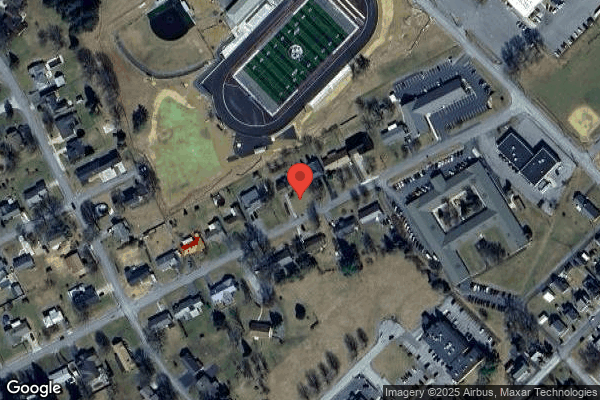
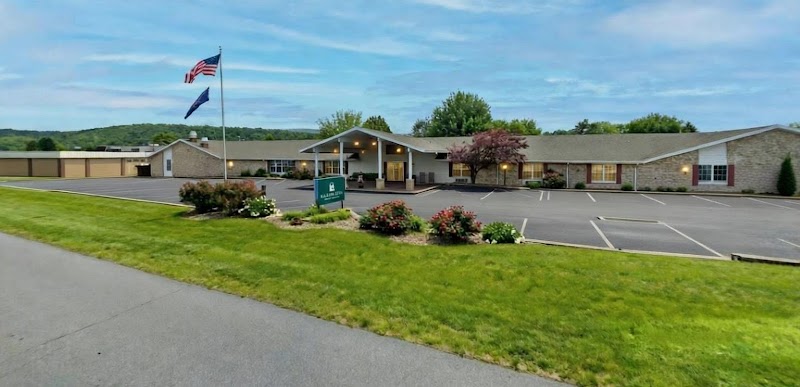
163 SUMMIT DRIVE, LEWISTOWN, PA 17044 (717) 248-3941
For profit - Limited Liability company 121 Beds VALLEY WEST HEALTH Data: November 2025
Trust Grade
70/100
#250 of 653 in PA
Last Inspection: May 2025

Inspected within the last 6 months. Data reflects current conditions.

Overview

William Penn Nursing and Rehab has a Trust Grade of B, indicating it is a good facility overall, making it a solid choice for families. It ranks #250 out of 653 nursing homes in Pennsylvania, placing it in the top half of facilities in the state, and #2 out of 3 in Mifflin County, suggesting limited local options. The facility is improving, with issues decreasing from 11 in 2024 to 7 in 2025. Staffing is average, with a turnover rate of 44%, slightly lower than the state average, which means staff are relatively stable and familiar with residents. While there have been no fines, indicating compliance with regulations, recent inspector findings raised concerns, such as a staff member failing to wear proper beard coverage while preparing food and not ensuring six residents received routine dental care, highlighting areas for improvement alongside the facility's strengths.

Trust Score
B
70/100
In Pennsylvania
#250/653
Top 38%
Safety Record
Low Risk
No red flags
Inspections
Getting Better
11 → 7 violations
Staff Stability
○ Average
44% turnover. Near Pennsylvania's 48% average. Typical for the industry.
Penalties
✓ Good
No fines on record. Clean compliance history, better than most Pennsylvania facilities.
Skilled Nurses
○ Average
Each resident gets 31 minutes of Registered Nurse (RN) attention daily — about average for Pennsylvania. RNs are the most trained staff who monitor for health changes.
Violations
⚠ Watch
25 deficiencies on record. Higher than average. Multiple issues found across inspections.
★★★★☆
4.0
Overall Rating
★★★☆☆
3.0
Staff Levels
★★★★★
5.0
Care Quality
★★★☆☆
3.0
Inspection Score
Stable
2024: 11 issues
2025: 7 issues

The Good

  • 5-Star Quality Measures · Strong clinical quality outcomes
  • Full Sprinkler Coverage · Fire safety systems throughout facility
  • No fines on record
  • Staff turnover below average (44%)

    4 points below Pennsylvania average of 48%

Facility shows strength in quality measures, fire safety.

The Bad

Staff Turnover: 44%

Near Pennsylvania avg (46%)

Typical for the industry

Chain: VALLEY WEST HEALTH

Part of a multi-facility chain

Ask about local staffing decisions and management

The Ugly 25 deficiencies on record

May 2025 7 deficiencies
CONCERN (D) 📢 Someone Reported This

A family member, employee, or ombudsman was alarmed enough to file a formal complaint

Potential for Harm - no one hurt, but risky conditions existed

Resident Rights (Tag F0550)

Could have caused harm · This affected 1 resident

Based on review of select facility policy, clinical record review, and staff interview, it was determined that the facility failed to provide dignity regarding covering urinary catheter bags for one o...

Read full inspector narrative →
Based on review of select facility policy, clinical record review, and staff interview, it was determined that the facility failed to provide dignity regarding covering urinary catheter bags for one of one resident reviewed for catheters (Resident 87). Findings include: Clinical record review for Resident 87 revealed a current physician's order for them to have a Foley urinary catheter to straight bag drainage for urinary retention. Observation of Resident 87 on May 6, 2025, at 12:58 PM, May 7, 2025, at 11:02 AM, May 8, 2025, at 12:42 PM and May 9, 2025, at 10:15 AM revealed that they were in bed with the urinary catheter bag hanging on the side of the bed uncovered. During the May 6, 2025, at 12:58 PM observation, the catheter bag was on the door side, in full view from the hallway, and visible to all passing. During the May 7, 2025, at 11:02 AM observation, the bag was on the window side of the bed, lying on the floor, in full view from the hallway, and visible to all passing. During the May 8, 2025, and May 9, 2025, observation, the catheter bag was on the window side and attached to the bed and remained uncovered. Concurrent interview on May 9, 2025, at 10:15 AM with the Director of Nursing confirmed the findings. 28 Pa. Code 201.18(b)(1)(3) Management 28 Pa. Code 201.29(a) Resident rights
CONCERN (D) 📢 Someone Reported This

A family member, employee, or ombudsman was alarmed enough to file a formal complaint

Potential for Harm - no one hurt, but risky conditions existed

Deficiency F0725 (Tag F0725)

Could have caused harm · This affected 1 resident

**NOTE- TERMS IN BRACKETS HAVE BEEN EDITED TO PROTECT CONFIDENTIALITY** Clinical record review and resident and staff interview, it was determined that the facility failed to have sufficient nursing s...

Read full inspector narrative →
**NOTE- TERMS IN BRACKETS HAVE BEEN EDITED TO PROTECT CONFIDENTIALITY** Clinical record review and resident and staff interview, it was determined that the facility failed to have sufficient nursing staff to meet resident needs related to call bell response time for two of 26 residents reviewed (Residents 50 and 66). Findings include: In an interview with Resident 50 on May 6, 2025, at 12:56 PM she stated that she has waited an hour to go the bathroom. She stated that she is usually only incontinent when she rings her call bell and must wait a long time for staff to assist her. Resident 50 stated that the licensed practical nurse will come into her room and turn off her call bell stating they will let the nurse aide know but nobody comes back. Clinical record review for Resident 50 revealed her most recent annual MDS (Minimum Data Set, an assessment completed at specific intervals to determine care needs) assessment dated [DATE], indicated Resident 50 was cognitively intact and occasionally incontinent of her bladder function. Resident 50 filed a grievance on January 1, 2025, stating her call bell was on for over an hour, noting she was incontinent and embarrassed. Review of Resident 50's grievance revealed no resolution to her concern. Interview with Employee 7 (social services) on May 9, 2025, at 10:43 AM confirmed these finding for Resident 50. There was no evidence of any call bell audits completed until January 14, 2025. The above call bell response times were reviewed with the Nursing Home Administrator and Director of Nursing during a meeting on May 8, 2025, at 2:00 PM. Interview with Resident 66 on May 6, 2025, at 12:15 PM revealed that he has concerns with the facility not having enough staff. He indicated that when he rings his bell to go to the bathroom or use the urinal there are not enough staff to answer it timely. He could not provide specific dates, but he indicated that it happens on all the shifts. He said that he is incontinent often because they don't answer the call bell timely. He said the that often he has to wait over 30 minutes. Review of Resident 66's MDS dated [DATE], revealed that he is always continent of bowel and frequently incontinent of bladder. The above noted concern related to Resident 66 was reviewed with the Nursing Home Administrator and Director of Nursing during a meeting on May 8, 2025, at 2:30 PM. 28 Pa. Code 201.18(b)(1)(3) Management 28 Pa. Code 211.12(d)(1)(3)(4)(5) Nursing services
CONCERN (D) 📢 Someone Reported This

A family member, employee, or ombudsman was alarmed enough to file a formal complaint

Potential for Harm - no one hurt, but risky conditions existed

Deficiency F0761 (Tag F0761)

Could have caused harm · This affected 1 resident

Based on observation and staff interview, it was determined that the facility failed to properly store resident medications on one of two nursing units reviewed (Station Two Nursing Unit; Honey Creek ...

Read full inspector narrative →
Based on observation and staff interview, it was determined that the facility failed to properly store resident medications on one of two nursing units reviewed (Station Two Nursing Unit; Honey Creek Hall). Findings include: Observation during the medication pass on the Station Two Nursing Unit (Honey Creek Hall) on May 9, 2025, at 9:35 AM revealed a medication cart being utilized by Employee 5, licensed practical nurse. Observation of the medication cart revealed the following: There was a significant accumulation of debris and dirt including hair in the bottom of the drawers. There were several unsecured and unidentified medication tablets found in the drawer that contained the medication punch cards that included several unidentified pills: two white colored round pills, two orange colored round pills, a multi-colored capsule, and a large brown colored pill. The above findings were reviewed in a meeting with the Director of Nursing on May 9, 2025, at 9:57 AM. 28 Pa. Code 201.18(b)(1) Management 28 Pa. Code 211.12(d)(1) Nursing services
CONCERN (E) 📢 Someone Reported This

A family member, employee, or ombudsman was alarmed enough to file a formal complaint

Potential for Harm - no one hurt, but risky conditions existed

Assessment Accuracy (Tag F0641)

Could have caused harm · This affected multiple residents

**NOTE- TERMS IN BRACKETS HAVE BEEN EDITED TO PROTECT CONFIDENTIALITY** Based on clinical record review and staff interview, it was determined that the facility failed to ensure assessments accurately...

Read full inspector narrative →
**NOTE- TERMS IN BRACKETS HAVE BEEN EDITED TO PROTECT CONFIDENTIALITY** Based on clinical record review and staff interview, it was determined that the facility failed to ensure assessments accurately reflected residents' status for six of 26 residents reviewed (Residents 4, 14, 20, 71, 75, and 81). Findings include: Clinical record review for Resident 75 revealed a Quarterly MDS (Minimum Data Set, an assessment tool completed at specific intervals to determine resident care needs) dated February 2, 2025. The facility staff assessed the resident as taking an anticoagulant (a medication that prevents or reduces clotting time of the blood). Further clinical record review revealed no evidence that Resident 75 was on an anticoagulant. An interview with Employee 2, registered nurse assessment coordinator (RNAC), on May 7, 2025, at 10:50 AM confirmed that Resident 75 was not on an anticoagulant during the assessment period, and this was marked in error on the MDS. The Nursing Home Administrator and Director of Nursing were informed of the above findings during a meeting on May 7, 2025, at 2:00 PM. Clinical record review for Resident 4 revealed a quarterly MDS dated [DATE]. The facility staff assessed the resident as having used a limb restraint when in a chair less than daily. Interview with Employee 2, RNAC, on May 7, 2025, at 9:20 AM revealed that Resident 4 never utilized a limb restraint, and this was an MDS coding error. Clinical record review for Resident 20 revealed a quarterly MDS dated [DATE]. The facility staff assessed the resident as having an impairment of both of her lower extremities. Clinical record review for Resident 71 revealed an annual MDS dated [DATE]. The facility staff assessed her as having an impairment of her bilateral lower extremities. Interview with Employee 6, RNAC, on May 9, 2025, at 12:10 PM revealed that Residents 20 and 71 do not have an impairment of their bilateral lower extremities, and this was marked in error on the MDS. The Director of Nursing was made aware of the concerns with Resident 20 and 71's MDS coding concerns on May 9, 2025, at 12:15 PM. Clinical record review for Resident 14 revealed a quarterly MDS dated [DATE]. The facility staff assessed the resident as having used a trunk restraint in a chair or out of bed, less than daily. Clinical record review for Resident 81 revealed a quarterly MDS dated [DATE]. The facility staff assessed the resident as having used a trunk restraint in a chair or out of bed, less than daily. Interview with Employee 2 on May 7, 2025, at 9:06 AM revealed that Residents 14 and 81 never utilized a trunk restraint and that this was an MDS coding error. The Director of Nursing was made aware of the concerns with Residents 14 and 81 MDS coding concerns on May 9, 2025, at 12:16 PM. 483.20(g) Accuracy of Assessments Previously cited 6/25/2024 28 Pa. Code 211.12(d)(1)(3)(5) Nursing services
CONCERN (E) 📢 Someone Reported This

A family member, employee, or ombudsman was alarmed enough to file a formal complaint

Potential for Harm - no one hurt, but risky conditions existed

Dental Services (Tag F0791)

Could have caused harm · This affected multiple residents

**NOTE- TERMS IN BRACKETS HAVE BEEN EDITED TO PROTECT CONFIDENTIALITY** Based on clinical record review, observation, and staff and resident interview, it was determined that the facility failed to as...

Read full inspector narrative →
**NOTE- TERMS IN BRACKETS HAVE BEEN EDITED TO PROTECT CONFIDENTIALITY** Based on clinical record review, observation, and staff and resident interview, it was determined that the facility failed to assist residents to obtain routine dental care for six of eight residents reviewed (Residents 34, 50, 95, 4, 20, and 37). Findings include: Observation of Resident 34 on May 7, 2025, at 10:23 AM revealed that she had some natural teeth. Resident 34 was unable to be interviewed due to her current cognitive status. Clinical record review revealed the facility admitted Resident 34 on January 8, 2018, with payment sources that included the state Medicaid benefit. Further review of Resident 34's clinical record revealed that she last saw a dentist on February 13, 2020. An interview with Employee 1 (licensed practical nurse) on May 8, 2025, at 11:34 AM confirmed these findings for Resident 34. There was no other documentation that indicated Resident 34 was offered routine dental services every six months as the State plan allows. Observation and interview with Resident 50 on May 6, 2025, at 1:06 PM revealed she had her own teeth, and she stated that she couldn't remember the last time she saw a dentist. Clinical record review revealed the facility admitted Resident 50 on April 30, 2021, with payment sources that included the state Medicaid benefit. Further review of Resident 50's clinical record revealed that she last saw a dentist on March 13, 2023. Interview with Employee 1 on May 8, 2025, at 11:34 AM confirmed these findings for Resident 50. There was no other documentation that indicated Resident 50 was offered routine dental services every six months as the State plan allows. Observation of Resident 95 on May 7, 2025, at 11:27 AM revealed that she had some natural and broken teeth. Resident 95 was unable to be interviewed due to her current cognitive status. Clinical record review revealed the facility admitted Resident 95 on May 19, 2024, with payment sources that included the state Medicaid benefit. Further review of Resident 95's clinical record revealed no evidence that Resident 95 saw a dentist. Review of Resident 95's admission MDS assessment dated [DATE], revealed staff assessed Resident 95 as having obvious or likely cavity, or broken natural teeth. Interview with Employee 1 on May 8, 2025, at 11:34 AM confirmed these findings for Resident 95. There was no other documentation that indicated Resident 95 was offered routine dental services every six months as the State plan allows. The findings for Residents 34, 50, and 95 were reviewed with the Director of Nursing on May 9, 2025, at 9:55 AM and she confirmed the facility had no further evidence the above-mentioned residents received routine prophylactic dental cleanings as covered under the State plan. Clinical record review for Resident 4 revealed that the facility admitted her on September 6, 2024. Her admission MDS indicated that she is edentulous. Further clinical record review revealed that she has upper and lower dentures. There was no evidence in Resident 4's clinical record to indicate that she was offered or provided routine dental services. Clinical record review for Resident 20 revealed that the facility admitted her on May 16, 2016, with payment sources that included the state Medicaid benefit. Review of Resident 20's significant change MDS dated [DATE], revealed staff assessed her as having some or all her natural teeth. Further review of Resident 20's clinical record revealed no evidence that she was seen by a dentist or offered dental services. Clinical record review for Resident 37 revealed that the facility admitted her on May 16, 2019. Review of Resident 37's annual MDS dated [DATE], revealed that she has some or all her natural teeth. There was no evidence in Resident 37's clinical record to indicate that she was offered or provided with routine dental services. Interview with Employee 1 on May 8, 2025, at 11:34 AM confirmed these findings for Residents 4, 20, and 37. There was no other documentation that indicated Residents 4, 20, and 37 were offered routine dental services every six months as the State plan allows. 28 Pa. Code 211.12(d)(1)(3)(5) Nursing services 28 Pa. Code 211.15. Dental services
CONCERN (E) 📢 Someone Reported This

A family member, employee, or ombudsman was alarmed enough to file a formal complaint

Potential for Harm - no one hurt, but risky conditions existed

Deficiency F0887 (Tag F0887)

Could have caused harm · This affected multiple residents

Based on staff interview, it was determined that the facility failed to maintain COVID-19 vaccine status of staff and related information as indicated by the Centers for Disease Control and Prevention...

Read full inspector narrative →
Based on staff interview, it was determined that the facility failed to maintain COVID-19 vaccine status of staff and related information as indicated by the Centers for Disease Control and Prevention's National Healthcare Safety Network for one of one staff reviewed (Employee 3). Findings include: The surveyor requested information regarding the COVID-19 vaccination status for the facility's current employees during an interview with Employee 4 (Registered Nurse, Infection Preventionist), on May 9, 2025, at 11:00 AM. Employee 4 indicated that she has not been tracking vaccination status for staff. She also indicated that she had no evidence of offering COVID-19 vaccinations to staff because they do not ask each staff member individually as they post a sign by the time clock and in the employee breakroom indicating that if staff were interested in receiving a vaccine that they need to visit their primary care physician or local pharmacy. The Nursing Home Administrator and Director of Nursing were made aware of concerns related to staff COVID-19 vaccinations on May 9, 2025, at 11:35 AM. 28 Pa. Code 211.5(f)(i)-(xi) Medical records 28 Pa. Code 211.12(d)(1)(3)(5) Nursing services
MINOR (C) 📢 Someone Reported This

A family member, employee, or ombudsman was alarmed enough to file a formal complaint

Minor Issue - procedural, no safety impact

Staffing Information (Tag F0732)

Minor procedural issue · This affected most or all residents

Based on observation and staff interview, it was determined that the facility failed to post the daily nurse staffing information at the beginning of each shift for two of two nursing units reviewed (...

Read full inspector narrative →
Based on observation and staff interview, it was determined that the facility failed to post the daily nurse staffing information at the beginning of each shift for two of two nursing units reviewed (Nursing Unit One and Nursing Unit Two). Findings include: Observation of the nurse staffing information posted on the wall adjacent to the main lobby of the facility on May 8, 2025, at 11:19 AM and 12:38 PM revealed a nurse staffing sheet dated May 7, 2025. Observation at the Nursing Unit Two nurse station and concurrent interview with Employee 5, licensed practical nurse, on May 8, 2025, at 11:30 AM revealed that there was no nurse staffing information posted in a prominent place at or near the nurse's station. Observation of Nursing Unit One nurse station and concurrent interview with Employee 6, social worker, on May 8, 2025, at 12:43 PM revealed that there was no nurse staffing information posted in a prominent place at or near the nurse station. An interview with Employee 8, scheduler, on May 8, 2025, at 12:53 PM revealed that the posted nurse staffing information located near the main lobby was changed to reflect the correct date of May 8, 2025. The above information was reviewed in a meeting with the Nursing Home Administrator and Director of Nursing on May 8, 2025, at 2:15 PM. 28 Pa. Code 201.18(b)(3) Management
Jun 2024 11 deficiencies
CONCERN (D)

Potential for Harm - no one hurt, but risky conditions existed

Safe Environment (Tag F0584)

Could have caused harm · This affected 1 resident

Based on observation and interview, it was determined that the facility failed to provide a clean, comfortable environment in two shower rooms located on one of two nursing units (Nursing Unit 1, Wind...

Read full inspector narrative →
Based on observation and interview, it was determined that the facility failed to provide a clean, comfortable environment in two shower rooms located on one of two nursing units (Nursing Unit 1, Windmill Hill). Findings include: Interview with Employee 3, nurse aide, on June 23, 2024, at 11:55 AM revealed that the staff utilize both shower rooms on Nursing Unit 1. The larger of the shower rooms is mainly utilized; however, the smaller shower room across the hall is used if the other shower is occupied. Observation of the larger shower room on June 23, 2024, at 11:56 AM revealed the following: A dislodged piece of tile on the floor that appeared to be from around the drain area in the floor. Two ceiling lights had debris that included dead insects in the protective coverings. The tiled floor in the shower had a build-up of grime and stains. The paint on the ceiling above the shower area was peeling in multiple areas. A ceiling light above the commode had debris and a dead insect in the protective covering. A metal hand hygiene product dispenser base was attached to the wall near the sink. There were six metal tabs sticking out from the base that were sharp and posed a potential hazard. A heater vent in the wall had an extensive build-up of dust on the vents. Observation of the second shower room across the hall on June 23, 2024, at 12:08 PM revealed the following: A ceiling light above the commode had debris in the protective covering. There was a baseball sized damaged and marred section of the wall behind the commode. A shower curtain was stained with dried, darker colored stains especially near the bottom of the curtain. There were multiple spiders observed: one spider near the floor outside of a shower stall, three spiders inside of the shower stall in webs, and one spider near the base of a wall on the far side of a large tub. There was a build-up of debris on the base of the wheelchair scale located in the shower room. Observation on June 23, 2024, at 12:13 PM revealed a maroon chair located at Nurse Station 1 that had extensive wear to the cushions of the chair. The cushions were extensively peeling and cracked on both the back rest cushion and seat of the chair. The above information for Nursing Unit 1 was reviewed in a meeting with the Nursing Home Administrator and Director of Nursing on June 24, 2024, at 2:15 PM. 28 Pa. Code 201.18(b)(3)(e)(2.1) Management
CONCERN (D)

Potential for Harm - no one hurt, but risky conditions existed

Deficiency F0637 (Tag F0637)

Could have caused harm · This affected 1 resident

Based on clinical record review and staff interview, it was determined that the facility failed to ensure that a significant change MDS assessment was completed timely after election of hospice care f...

Read full inspector narrative →
Based on clinical record review and staff interview, it was determined that the facility failed to ensure that a significant change MDS assessment was completed timely after election of hospice care for one of two residents reviewed (Resident 103). Findings include: Review of the Resident Assessment Instrument 3.0 User's Manual (RAI, reference used to complete an MDS) revealed that the facility must complete a significant change MDS (Minimum Data Set, an assessment tool completed at specific intervals to determine care needs) no later than 14 days after the effective dated of the election of hospice. Clinical record review for Resident 103 revealed that on June 6, 2024, their physician ordered hospice care. There was no documentation indicating that the facility completed a significant change MDS as indicated by the RAI Manual until after identified by the surveyor. The surveyor reviewed the above findings during an interview with the Nursing Home Administrator and Director of Nursing on June 24, 2024, at 2:00 PM. 28 Pa. Code 211.5 (f) Clinical records
CONCERN (D)

Potential for Harm - no one hurt, but risky conditions existed

Comprehensive Care Plan (Tag F0656)

Could have caused harm · This affected 1 resident

Based on clinical record review and resident and staff interview, it was determined that the facility failed to develop and implement a comprehensive person-centered care plan to maintain the highest ...

Read full inspector narrative →
Based on clinical record review and resident and staff interview, it was determined that the facility failed to develop and implement a comprehensive person-centered care plan to maintain the highest practicable care for two of 26 residents reviewed (Residents 41 and 81). Findings Include: Interview with Resident 41 on June 22, 2024, at 2:00 PM revealed that she is legally blind from macular degeneration (an eye disease that causes a gradual breakdown of the cells in the part of the eye that is responsible for central vision). Clinical record review for Resident 41's plan of care revealed that there was no care plan related to her vision loss. This information was reviewed with the Nursing Home Administrator (NHA) and the Director of Nursing (DON) during an interview on June 23, 2024, at 2:07 PM. A care plan for Resident 41 related to her impaired vision was provided to the surveyor on June 24, 2024, at 8:55 AM. The care plan indicated that it was initiated on September 14, 2020. Review of the care plan history in the facility's computerized documentation system, revealed that the care plan provided to the surveyor was resolved on September 16, 2020, and was originally created as impaired vision related to impaired peripheral vison (difficulty seeing things up or down or side to side without moving the head), and then revised on June 24, 2024, after the surveyor inquired about a care plan for impaired vision. Interview with Resident 81 on June 23, 2024, at 11:27 AM revealed that she had been going to a dentist outside of the facility because she needs a lot of dental work done and it could not be done by the dentist in the facility. She said she has receding gums and has several teeth that need pulled. Review of Resident 81's care plan revealed that there was no care plan related to her dental issues. These issues were discussed with the NHA and DON during an interview on June 23, 2024, at 2:13 PM. A care plan for Resident 81 related to her dental concerns was provided to the surveyor on June 24, 2024, at 8:55 AM. The care plan indicated that it was initiated on June 24, 2024, after the surveyor brought it to their attention on June 23, 2024. The facility failed to develop a comprehensive person-centered care plan to maintain the highest practicable care for Residents 41 and 81. 28 Pa. Code 211.12(d)(5) Nursing services
CONCERN (D)

Potential for Harm - no one hurt, but risky conditions existed

Quality of Care (Tag F0684)

Could have caused harm · This affected 1 resident

Based on review of select facility policies and procedures, observation, clinical record review, and resident and staff interview, it was determined that the facility failed to provide the highest pra...

Read full inspector narrative →
Based on review of select facility policies and procedures, observation, clinical record review, and resident and staff interview, it was determined that the facility failed to provide the highest practicable care related to intravenous access for one of one resident reviewed for intravenous access concerns (Resident 80). Findings include: The facility policy entitled, Midline Dressing Changes, last reviewed without changes on March 21, 2024, revealed that general guidelines include to change the midline catheter dressing every five to seven days or if wet, dirty, not intact, or compromised in any way. Label the dressing with initials, date, and time. The policy did not include interventions implemented into a resident's plan of care to prevent infection or other complications from the use of a midline. The policy did not include routine assessments needed to monitor the resident during the presence of a midline catheter. Clinical record review for Resident 80 revealed nursing documentation dated June 3, 2024, at 2:33 PM that Resident 80 presented on admission with a, PICC (Peripherally inserted central catheter, long, thin, tube that is inserted through a vein in the arm and passed through to a larger vein near the heart. The line requires careful care and monitoring for complications including bleeding, infection, and blood clots) lune (sic, line) present in RUA (right upper arm). Resident 80 had a foot ulcer and physician orders for wound care. admission physician orders dated June 3, 2024, for Resident 80 included Meropenem (an antibiotic that is used to treat severe infections of the skin or stomach) one gram intravenously every eight hours until July 2, 2024, related to acute osteomyelitis (infection identified in the bone) of the right ankle and foot. Resident 80's physician orders dated June 3, 2024, that remained active until Resident 80's readmission from the hospital on June 11, 2024, pertaining to a midline (thin, soft tubing placed into a vein in the arm for intravenous access) venous access site, included the following: Midline, maintain emergency kit at bedside Change midline dressing and caps every seven days, day shift, every Monday, and as needed Monitor midline site every shift Resident 80's physician orders dated June 4, 2024, that remained active until Resident 80's readmission from the hospital on June 11, 2024, pertaining to a midline venous access site, included the following: Midline/PICC IV (intravenous) dressing, extension set, and cap change every week and as needed one time a day every seven day(s) for IV therapy dressing change and as needed for leakage, blockage, soilage Midline, measure circumference in CM (centimeters) of upper arm insertion site every shift for midline every shift and as needed. Midline, measure length in CM of the external midline line access every day shift from insertion site to port, daily and as needed. A plan of care initiated by the facility on June 4, 2024, to address Resident 80's potential for complications at her intravenous insertion site (midline to RUA) included only one intervention, which was to change the intravenous tubing per the physician order or per protocol. There were no interventions regarding maintenance (e.g., changing the dressing and caps every seven days), assessment (e.g., measuring the circumference of the arm or length of the external tubing), prevention of complications (e.g., keeping site dry and restricting the use of the limb for blood pressures), or response for potential complications like bleeding (e.g., emergency kit at bedside). Resident 80's physician orders dated June 11, 2024, (upon her readmission from the hospital) included the following: Midline, measure length in CM of the external midline line access every day shift from insertion site to port, daily and as needed Midline, measure circumference in CM of upper arm insertion site every shift and as needed Midline/PICC IV dressing, extension set, and cap change every week and as needed one time a day every Wednesday for IV therapy dressing change and as needed for leakage, blockage, soilage Review of Resident 80's medication administration record (MAR, electronic system of documentation of medication administration) and treatment administration record (TAR, electronic system of documentation of treatment completions) dated June 2024 revealed that staff did not obtain a measurement of Resident 80's upper arm until June 11, 2024, night shift. Staff failed to obtain a measurement of the circumference of Resident 80's arm on night shift on June 17, 2024, and on day shift on June 19, 2024. Staff also failed to document any assessments of the external midline tubing length until June 22, 2024. Observation and interview with Resident 80 on June 22, 2024, at 12:46 PM confirmed that she had an open sore on her right foot and was receiving intravenous antibiotics through an intravenous site located in her right bicep area. Resident 80 stated that, .it is a midline. Observation of the clear dressing over the tubing in Resident 80's right arm revealed dated initials that indicated the dressing was applied on June 6, 2024. There was no emergency kit, or signs pertaining to restrictions for Resident 80's right arm visible in Resident 80's room. Observation of Resident 80 with Employee 1 (registered nurse) on June 23, 2024, at 9:23 AM confirmed that the midline dressing to Resident 80's right arm was dated June 6, 2024, indicating that the same dressing had remained in place for 17 days although physician orders instructed that staff change it every seven days. Review of Resident 80's TAR dated June 2024, revealed that staff initialed completion of a midline dressing change on June 12, 2024, at 8:00 AM; however, observation and staff interview confirmed that the dressing applied on June 6, 2024, was unchanged. Following the surveyor's questioning, staff discontinued the physician order related to changing the midline catheter dressing and restarted it on June 23, 2024, at 10:15 AM. The surveyor reviewed the above concerns regarding Resident 80's midline catheter care with the Director of Nursing and the Nursing Home Administrator on June 23, 2024, at 2:00 PM and June 24, 2024, at 2:00 PM. The facility did not provide a policy, procedure, or staff competency outline, that evidenced what the administration's expectations were of staff planning care for a resident with a midline catheter. 28 Pa. Code 211.5(f)(viii) Medical records 28 Pa. Code 211.10(a)(c)(d) Resident care policies 28 Pa. Code 211.12(d)(1)(5) Nursing services
CONCERN (D)

Potential for Harm - no one hurt, but risky conditions existed

Deficiency F0685 (Tag F0685)

Could have caused harm · This affected 1 resident

Based on clinical record review and resident and staff interview, it was determined that the facility failed to implement interventions to treat hearing loss for one of two residents reviewed for hear...

Read full inspector narrative →
Based on clinical record review and resident and staff interview, it was determined that the facility failed to implement interventions to treat hearing loss for one of two residents reviewed for hearing concerns (Resident 31). Findings include: Interview with Resident 31 on June 22, 2024, at 11:56 AM revealed that she had difficulty hearing and required the use of a dry erase board to communicate. Clinical record review of documentation from the facility's contracted audiology professional dated August 18, 2023, indicated that the assessment/plan for Resident 80 confirmed that she had sensorineural hearing loss (hearing loss resulting from damaged hair cells in the inner ear) bilaterally. The documentation indicated that staff reported that they write notes when needed. The provider's recommendation was a trial of a pocket talker (personal sound amplifier) to aid in hearing for communication of needs. A plan of care developed by the facility to address Resident 31's hearing loss included no reference to the use of a pocket talker. Interview with the Director of Nursing and the Nursing Home Administrator on June 24, 2024, at 2:00 PM revealed no evidence that the facility implemented the audiology provider's recommendation for a pocket talker. The facility provided evidence on June 25, 2024, that staff revised Resident 31's plan of care related to her hearing loss on June 24, 2024, (following the surveyor's questioning), to include that Resident 31 will be provided with the use of a pocket talker to assist with communicating with staff and others. 28 Pa. Code 211.12(d)(1)(3)(5) Nursing services
CONCERN (D)

Potential for Harm - no one hurt, but risky conditions existed

Deficiency F0688 (Tag F0688)

Could have caused harm · This affected 1 resident

Based on clinical record review and staff interview, it was determined that the facility failed to provide physician ordered services to maintain a resident's range of motion for one of two residents ...

Read full inspector narrative →
Based on clinical record review and staff interview, it was determined that the facility failed to provide physician ordered services to maintain a resident's range of motion for one of two residents reviewed (Resident 55). Findings include: Clinical record review for Resident 55 revealed a current physician's order for staff to provide a restorative program (range of motion, ROM, movement of the body in an attempt to maintain a resident's ability) to prevent contracture(s), which included left lower extremity (LLE) ROM passive stretching to left leg into knee extension times five repetitions and holding for 30 seconds, to be completed with AM (morning) and PM (evening) care. Review of task documentation for Resident 55 for April, May, and June 2024, revealed that staff did not document completion of the restorative task on the following dates: Day Shift: April 13 and 14, 2024 May 21, 28, and 29, 2024 (documented not applicable) May 24, 25, and 26, 2024 (no documentation) June 8 and 9, 2024 Evening Shift: April 1, 3, 4, 5, 7, 9, 10, 13, 24, 16, 18, 19, 23, 24, 27, and 28, 2024 May 1, 2, 3, 4, 5, 7, 8, 11, 13, 14, 17, 21, 22, 24, 25, 26, 27, and 29, 2024 June 1, 2, 3 8 9, 10, 12, 13, 14, 15, 16, 17, 18, 19, and 20, 2024 The surveyor reviewed the above information on June 24, 2024, at 2:00 PM with the Nursing Home Administrator and Director of Nursing. 28 Pa. Code 211.10(a)(c)(d) Resident care policies 28 Pa. Code 211.12(c)(d)(1)(3)(5) Nursing services
CONCERN (D)

Potential for Harm - no one hurt, but risky conditions existed

Respiratory Care (Tag F0695)

Could have caused harm · This affected 1 resident

Based on review of select facility policies and procedures, clinical record review, observation, and staff and resident interview, it was determined that the facility failed to implement supplemental ...

Read full inspector narrative →
Based on review of select facility policies and procedures, clinical record review, observation, and staff and resident interview, it was determined that the facility failed to implement supplemental oxygen per physician orders for one of one resident reviewed for oxygen concerns (Resident 80). Findings include: The facility policy entitled, Departmental (Respiratory Therapy) - Prevention of Infection, last reviewed March 21, 2024, revealed that the purpose of the procedure was to guide prevention of infection associated with respiratory therapy tasks and equipment among residents and staff. Preparation included a review of the resident's care plan to assess for any special circumstances or precautions related to the resident. Infection control considerations related to medication nebulizers/continuous aerosol equipment included to store the circuit in a plastic bag, marked with the date and resident's name, between uses. Interview with Resident 80 on June 22, 2024, at 12:45 PM, revealed that she was diagnosed with rhinovirus (virus that is the most frequent cause of the common cold), and that she was tested two weeks ago. Resident 80 stated that she wears supplemental oxygen all the time. Resident 80 coughed repeatedly during the interview. Observation of the room concentrator (medical machine that concentrates room air to administer an oxygen-rich supply to the resident) at Resident 80's bedside revealed the liter flow was at one and one-half liters per minute. Clinical record review for Resident 80 revealed an active physician's order dated June 11, 2024, for staff to administer supplemental oxygen at 0.5 liters per minute at hour of sleep via a nasal canula (flexible tubing with small prongs on one end, which are inserted into the nostrils for supplemental oxygen administration) or face mask every shift for a diagnosis of hypoxia (difficulty breathing and low blood oxygen levels) and to maintain a pulse ox (pulse oximeter, or pulse ox, is a non-invasive electronic device placed on a finger to estimate the blood's oxygen level) greater than 90 percent. Staff were to enter a pulse ox assessment and the liters of oxygen administered every shift for comfort requested by the resident related to dyspnea (shortness of breath). Observation of a medication administration pass on June 23, 2024, at 9:11 AM revealed Employee 1 (registered nurse) assessed Resident 80's oxygen saturation via pulse ox as 99 percent. The liter flow on Resident 80's room concentrator remained at one and one-half liters per minute. Resident 80 did not appear to be, or complain of, dyspnea. Employee 1 utilized nebulizer equipment (device that turns liquid medicine into a mist that is breathed into the lungs for administration of the medication) stored, unbagged, on Resident 80's bedside recliner to administer Resident 80's ipratropium/albuterol (medicine used to relax the airway muscles to dilate the passageways and increase air exchange) medication treatment. Interview with Employee 1 on June 23, 2024, at 9:17 AM confirmed that the bedside respiratory equipment that she utilized for Resident 80 was not bagged (to protect it from potential environmental contaminates between uses). Interview with Employee 1 on June 23, 2024, at 12:57 PM confirmed that her assessment of Resident 80's oxygen saturation more than three hours earlier was 99 percent, and that Resident 80's physician order was for 0.5 liters per minute. Employee 1 confirmed that Resident 80's supplemental oxygen dose remained at one and one-half liters per minute although there was no evidence that Resident 80 was dyspneic or needed the increased liter flow to maintain a pulse ox saturation greater than 90 percent. Employee 1 reduced the oxygen concentrator liter flow slowly to 0.5 liters per minute (to prevent the concentrator equipment alarm) and verified Resident 80's oxygen saturation was 97 percent. Review of Resident 80's TAR (treatment administration record, electronic documentation of the completion of treatments) dated June 11 to 23, 2024, revealed that staff errantly documented the oxygen liter flow administered to Resident 80 as between 93 and 99 liters per minute (which was not possible with the respiratory equipment available for use) on numerous occasions. Staff documented oxygen administration liter flows from 0.5 liters per minute to 1.5 liters per minute for oxygen saturation assessments that ranged from 93 to 99 percent. Review of a plan of care developed by the facility on June 4, 2024, to address Resident 80's risk for respiratory impairment revealed a list of interventions that included: Administer medications/treatments per physician orders Obtain labs/diagnostic tests as ordered and notify physician of results Oxygen at two liters per minute Resident 80's plan of care did not reflect the physician ordered liter flow of 0.5 liters per minute. The surveyor reviewed Resident 80's supplemental oxygen administration concerns during an interview with the Nursing Home Administrator and the Director of Nursing on June 23, 2024, at 2:00 PM. The surveyor requested any policies, procedures, or staff competency expectations regarding the use of supplemental oxygen and the storage of equipment. The facility did not provide a policy or procedure regarding the use of supplemental oxygen. The surveyor reviewed the concern regarding the nebulizer equipment used for Resident 80's medication administration during an interview with the Nursing Home Administrator and the Director of Nursing on June 24, 2024, at 2:00 PM. 28 Pa. Code 211.10(a)(c)(d) Resident care policies 28 Pa. Code 211.12(d)(1)(5) Nursing services
CONCERN (D)

Potential for Harm - no one hurt, but risky conditions existed

Medication Errors (Tag F0758)

Could have caused harm · This affected 1 resident

Based on clinical record review and staff interview, it was determined that the facility failed to ensure a resident's medication regime was free from potentially unnecessary medications for one of fi...

Read full inspector narrative →
Based on clinical record review and staff interview, it was determined that the facility failed to ensure a resident's medication regime was free from potentially unnecessary medications for one of five residents reviewed (Resident 57). Findings include: Review of Resident 57's clinical record revealed a note from the pharmacist to the attending physician dated September 7, 2023, that requested a gradual dose reduction of her Escitalopram (Lexapro, a medication used to treat depression) 10 milligrams (mg) daily. The physician responded on September 13, 2023, by checking the box that read other and wrote, current dose beneficial, with no further explanation. Clinical record review of Resident 57's behavior documentation on the Medication Administration Record (MAR) for September 2023, related to the medication Escitalopram, revealed no behaviors documented related to her diagnosis of depression. Further review of Resident 57's clinical record revealed a pharmacist note to the attending physician dated February 12, 2024, that requested a trail dose reduction of her Ativan (a medication used to treat symptoms of anxiety) 0.25 mg twice a day. The physician responded on February 16, 2024, by checking the box that read disagree with no explanation provided. Clinical record review of Resident 57's behavior documentation on the MAR for February 2024, related to the medication, Ativan, revealed no behaviors documented related to her diagnosis of anxiety. The Nursing Home Administrator and Director of Nursing were made aware of concerns with Resident 57's physician's response to her pharmacy recommendation regarding the medications Escitalopram and Ativan, and the lack of episodic documentation related to her depression and anxiety to indicate the need for the medication during a meeting on June 24, 2024, at 2:15 PM. The facility failed to ensure that Resident 57's medication regime was free from potentially unnecessary medications. 483.45(d)(e)(1)-(2) Drug Regimen is Free From Unnecessary Drugs Previously cited deficiency 6/30/23 28 Pa. Code 211.9(a)(1)(k) Pharmacy services 28 Pa. Code 211.10(a) Resident care policies 28 Pa. Code 211.12(c)(d)(1)(3)(5) Nursing services
CONCERN (D)

Potential for Harm - no one hurt, but risky conditions existed

Unnecessary Medications (Tag F0759)

Could have caused harm · This affected 1 resident

Based on clinical record review, observation, and staff interview, it was determined that the facility failed to have a medication error rate less than five percent (Residents 77 and 80). Findings inc...

Read full inspector narrative →
Based on clinical record review, observation, and staff interview, it was determined that the facility failed to have a medication error rate less than five percent (Residents 77 and 80). Findings include: The facility's medication error rate was 6.67 percent based on 30 medication opportunities with two medication errors. Observation of a medication administration pass on June 23, 2024, at 8:46 AM revealed Employee 1 (registered nurse) administered Omeprazole (medication used to reduce stomach acid) 20 milligrams (mg) to Resident 77. Resident 77 had finished her breakfast meal. Interview with Employee 1 on June 23, 2024, at 12:57 PM confirmed that Resident 77 received her Omeprazole medication after she had consumed her breakfast. Review of https://www.drugs.com revealed that it is usually best to take Omeprazole one hour before meals. When omeprazole is taken with food it reduces the amount of omeprazole that reaches the bloodstream. Clinical record review for Resident 80 revealed a physician's order for staff to administer Fluticasone Propionate (Flonase, a steroid nasal spray that prevents allergic inflammation) nasal suspension, 50 MCG (micrograms) per inhalation, one spray in both nostrils one time a day. Observation of a medication administration pass on June 23, 2024, at 8:55 AM revealed Employee 1 prepared medications for administration to Resident 80 that included Fluticasone Propionate. Observation on June 23, 2024, at 9:12 AM revealed Employee 1 handed Resident 80 her Fluticasone Propionate nasal spray. Resident 80 performed two nasal sprays into her right nostril followed by two nasal sprays into her left nostril. Employee 1 did not attempt to redirect Resident 80 from administering two sprays of the medication before she completed the administrations. Following the administration of the medication, Employee 1 informed Resident 80 that she was to have only one spray of the medication in each nostril. Employee 1 stated, We (nursing staff) should be doing it for you. Resident 80's clinical record contained no evidence that the facility assessed her for the capability of self-administering her medications. Interview with Employee 1 on June 23, 2024, at 9:17 AM confirmed that the physician's order for the nasal spray was for one spray in each nostril, but she permitted Resident 80 to do two sprays in both nares. Employee 1 could have redirected Resident 80 after she performed the procedure incorrectly in the right nostril and before she completed the administrations in the left nostril. Employee 1 confirmed that she did not have information to indicate that Resident 80 was assessed to self-administer her medications. The surveyor reviewed the above concerns regarding the Omeprazole and Flonase medication errors during an interview with the Director of Nursing and the Nursing Home Administrator on June 24, 2024, at 2:00 PM. 483.25(f)(1) Free of Medication Error Rates Five Percent or More Previously cited 6/30/23 28 Pa. Code 211.12(d)(1)(5) Nursing services
CONCERN (D)

Potential for Harm - no one hurt, but risky conditions existed

Infection Control (Tag F0880)

Could have caused harm · This affected 1 resident

Based on a review of select facility policies and procedures, observation, clinical record review, and staff and resident interview, it was determined that the facility failed to implement enhanced ba...

Read full inspector narrative →
Based on a review of select facility policies and procedures, observation, clinical record review, and staff and resident interview, it was determined that the facility failed to implement enhanced barrier precautions for one of three residents reviewed for infection control concerns (Resident 80). Findings include: The facility policy entitled, Enhanced Barrier Precautions, last reviewed without changes on March 21, 2024, revealed that enhanced barrier precautions (EBPs) are utilized to prevent the spread of multi-drug resistant organisms to residents. EBPs employ targeted gown and glove use during high contact resident care activities when contact precautions do not otherwise apply. Examples of high-contact resident care activities requiring the use of gown and gloves for EBPs include wound care (any skin opening requiring a dressing) and/or device care or use (central line, urinary catheter, feeding tube, etc.). Staff are trained prior to caring for residents on EBPs. Interview with Resident 80 on June 22, 2024, at 12:46 PM revealed that she had an open sore on her right foot and was receiving intravenous antibiotics through a midline (thin, soft tubing placed into a vein in the arm for intravenous access) in her right upper arm. Observation of Resident 80's right arm during the interview confirmed that she had a clear dressing covering tubing in the area of her right bicep. Observation of Resident 80's doorway revealed a sign to indicate EBPs were necessary. Clinical record review for Resident 80 revealed infectious disease consultant documentation dated June 21, 2024, that indicated Resident 80 had diagnoses that included osteomyelitis (bone infection) of her right foot. A bone biopsy completed March 27, 2024, identified MSSA (Methicillin Susceptible Staphylococcus Aureus, bacteria that is susceptible to the methicillin antibiotic). Consultation/Clinical Referral form documentation dated June 21, 2024, indicated that a culture of Resident 80's right heel wound identified the bacteria, pseudomonas, for which she would receive six weeks of Meropenem (an antibiotic that is used to treat severe infections of the skin or stomach). Observation of Employee 1 (registered nurse) on June 23, 2024, at 1:37 PM revealed she entered Resident 80's room to perform wound care to her open right foot wound without an isolation gown. Continued observation of Resident 80's wound care from 1:37 PM to 2:04 PM revealed Employee 1 performed all the procedures of the wound care (including removal of soiled dressings, wound cleansing, application of new dressings, and removal of items from the room) without donning an isolation gown. Observation of Resident 80 during the procedure confirmed that she had an open wound to the bottom of her right foot that drained a small amount of beige-colored drainage. Interview with Employee 1 on June 23, 2024, at 2:04 PM confirmed that although Resident 80 had a sign for enhanced barrier precautions (that noted a gown and gloves were required for wound care) on her door, she did not wear a gown. 28 Pa. Code 211.10(d) Resident care policies 28 Pa. Code 211.12(d)(1)(5) Nursing services
CONCERN (E)

Potential for Harm - no one hurt, but risky conditions existed

Assessment Accuracy (Tag F0641)

Could have caused harm · This affected multiple residents

**NOTE- TERMS IN BRACKETS HAVE BEEN EDITED TO PROTECT CONFIDENTIALITY** Based on clinical record review and resident and staff interview, it was determined that the facility failed to ensure assessmen...

Read full inspector narrative →
**NOTE- TERMS IN BRACKETS HAVE BEEN EDITED TO PROTECT CONFIDENTIALITY** Based on clinical record review and resident and staff interview, it was determined that the facility failed to ensure assessments accurately reflected residents' status for 10 of 24 residents reviewed (Residents 9, 19, 32, 41, 55, 60, 63, 85, 97, and 109). Findings include: Interview with Resident 60 on June 23, 2024, at 10:38 AM revealed that she denied ever having a physical restraint. Resident 60 indicated that she is unable to transfer herself out of bed, and that a staff member utilizes a stand-up mechanical lift to transfer her out of bed to a chair. Clinical record review of an annual MDS (Minimum Data Set, an assessment tool completed at specific intervals to determine resident care needs) assessment for Resident 60 dated May 4, 2024, revealed that staff assessed the daily use of a bed rail as a restraint. The CMS (Centers for Medicare and Medicaid Services) RAI (Resident Assessment Instrument, MDS) Manual for Item P (Physical Restraint) instructs that if the resident is immobile and cannot voluntarily get out of bed because of a physical limitation or because proper assistive devices were not present, the bed rails do not meet the definition of a physical restraint. Clinical record review for Resident 60 revealed no evidence of the use of a physical restraint. Interview with the Director of Nursing and the Nursing Home Administrator on June 23, 2024, at 2:30 PM confirmed that the MDS coding for Resident 60's restraint was an error. They indicated that Resident 60 never had a restraint. Clinical record review for Resident 19 revealed the resident was admitted to the facility on [DATE]. A quarterly MDS for Resident 19 dated April 17, 2024, noted that the facility staff assessed the resident as being on an anticoagulant (blood thinner). Further clinical record review revealed no evidence that Resident 19 received an anticoagulant during the assessment period for the MDS. An interview with Employee 2, the Registered Nurse Assessment Coordinator, on June 25, 2024, at 11:50 AM confirmed that Resident 19 did not receive an anticoagulant and the data entered in the MDS was an error. Observation of Resident 109 on June 23, 2024, at 9:26 AM revealed the resident was in bed. There was an enabler bar attached to the resident's left side of the bed. There was no observed evidence of any restraints being utilized. Clinical record review of a quarterly MDS for Resident 109 dated May 14, 2024, revealed that staff assessed the daily use of a bed rail as a restraint. Further clinical record review for Resident 109 revealed no evidence of the use of a restraint. Interview with the Nursing Home Administrator and Director of Nursing on June 24, 2024, at 2:00 PM confirmed that restraints were not used on Resident 109. An interview with Employee 2 on June 25, 2024, at 11:50 AM confirmed that the MDS coding that indicated a restraint for Resident 109 was an error, and the resident never had a restraint. Clinical record review for Resident 9 revealed an MDS dated [DATE], that indicated she was taking an anticoagulant (a medication that thins the blood to reduce or prevent blood clotting). Further clinical record review of Resident 9's medication administration for March and April 2024, revealed no indication that she was taking an anticoagulant medication at that time. Interview with the Nursing Home Administrator and Director of Nursing on June 24, 2024, at 2:20 PM confirmed the above noted findings that Resident 9 was not on an anticoagulant medication and the MDS was coded in error. Interview with Resident 41 on June 23, 2024, at 12:00 PM revealed that she denied ever having a physical restraint. Resident 41 indicated that she is unable to transfer herself out of bed. Resident 41 indicated that a staff member utilizes a stand-up mechanical lift to transfer her out of bed to a chair. Clinical record review for Resident 41 revealed an MDS dated [DATE], that indicated staff assessed the daily use of a bed rail as a restraint. Clinical record review for Resident 41 revealed no evidence of the use of a physical restraint. Interview of Resident 97's wife on June 23, 2024, at 12:10 PM revealed that he never had a restraint. She also indicated that he is unable to transfer himself and that it takes two people to get him out of bed. Clinical record review for Resident 97 revealed an MDS dated [DATE], that indicated staff assessed the daily use of a bedrail as a restraint. Interview with the Director of Nursing and the Nursing Home Administrator on June 23, 2024, at 2:30 PM, confirmed that the MDS coding for Residents 41 and 97's restraints was an error, and that Residents 41 and 97 never had a restraint. Clinical record review for Resident 32 revealed that the facility completed a quarterly MDS on December 19, 2023, and March 15, 2024, and an annual MDS on June 4, 2024, which indicated that the resident was restrained by bed rails daily. Review of Resident 32's clinical record revealed a current physician's order and a care plan for two quarter side rales to assist with turning and repositioning due to weakness and deficits from a diagnosis of non-traumatic intracerebral hemorrhage (brain bleed). A facility assessment completed on April 29, 2024, revealed that Resident 32's bilateral siderails were for bed mobility and not a restraint. Clinical record review for Resident 55 revealed that the facility completed a quarterly MDS on May 31, 2024, that indicated the resident was restrained by bed rails daily. Review of Resident 55's clinical record revealed a current physician order and a care plan for two quarter side rails to assist with turning and repositioning due to weakness and hemiplegia (paralysis). A facility assessment completed on April 29, 2024, revealed that Resident 55's bilateral siderails were for bed mobility and not a restraint. Clinical record review for Resident 63 revealed that the facility completed a quarterly Minimum Data Set assessment on November 21, 2023, an annual MDS on February 21, 2024, and another quarterly MDS on May 21, 2024, that indicated the resident was restrained by bed rails daily. Review of Resident 63's clinical record revealed a current physician's order and a care plan for two quarter siderails to assist with turning and repositioning due to a diagnosis of morbid obesity. A facility assessment completed on April 29, 2024, revealed that Resident 63's bilateral siderails were for bed mobility and not a restraint. Clinical record review for Resident 85 revealed that the facility completed a quarterly MDS on March 19, 2024, that indicated the resident was restrained by bed rails daily. Review of Resident 85's clinical record revealed a current physician's order and a care plan for two quarter side rails to assist with turning and repositioning due to vertebral fracture, spinal stenosis (narrowing), and quadriplegia (paralyzed). A facility assessment completed on April 29, 2024, revealed that Resident 85's bilateral siderails were for bed mobility and not a restraint. The surveyor reviewed the above findings during an interview with the Nursing Home Administrator and Director of Nursing on June 23, 2024, at 2:15 PM. 28 Pa. Code 211.5(f)(ix) Medical records 28 Pa. Code 211.12(d)(1)(5) Nursing services
Jun 2023 7 deficiencies
CONCERN (D)

Potential for Harm - no one hurt, but risky conditions existed

Deficiency F0625 (Tag F0625)

Could have caused harm · This affected 1 resident

Based on clinical record review and staff interview, it was determined that the facility failed to provide an accurate written notice of the facility's bed-hold policy to the resident and the resident...

Read full inspector narrative →
Based on clinical record review and staff interview, it was determined that the facility failed to provide an accurate written notice of the facility's bed-hold policy to the resident and the resident's responsible party for one of three residents reviewed for hospitalization concerns (Resident 8). Findings include: Clinical record review for Resident 8 revealed nursing documentation dated May 15, 2023, at 6:15 AM that staff transferred Resident 8 to the emergency room for testing due to a change in condition. Nursing documentation dated May 15, 2023, at 7:41 PM revealed that Resident 8 was admitted to the hospital due to a right frontal lobe infarct (CVA, stroke, brain injury due to a bleed or blood clot). Review of Resident 8's payment sources while at the facility revealed that the facility admitted her on May 10, 2023, following a motor vehicle accident; and that the payment source for her stay was an automobile insurance plan. The Census Payment Sources documentation indicated that the facility stopped billing on May 15, 2023, and resumed billing to the automobile insurance plan on May 18, 2023 (Resident 8's readmission date to the facility). Review of a Bed-Hold Notification form for Resident 8 revealed that the purpose of the notification was to inform residents and/or their representatives of rights regarding the resident's stay in the facility when the resident must be hospitalized . The form noted that each payer/insurance such as Medicare, Medical Assistance (Medicaid), Security Blue, VA (Veterans Administration), or private pay had established policies regarding bed-holds specifying the number of bed-hold days allowed and the cost to hold the bed during that time. The form stipulated that, Information on each of these payers and their bed-hold policy information is listed .The option below that is specific to you and your payment source at this time has been checked. The form included a checkmark for Pennsylvania Medical Assistance (Medicaid) that indicated that Resident 8's bed would be held for 15 consecutive days at no cost to her while hospitalized because of Pennsylvania Medical Assistance allowances. The form indicated that Resident 8 signed and dated this form on May 15, 2023. Interview with Employee 4 (business office manager) on June 29, 2023, at 4:05 PM confirmed that Pennsylvania Medicaid was not Resident 8's payer source on May 15, 2023, and that the facility did not consider Resident 8 on a bed-hold status when she was transferred to the emergency room on May 15, 2023. The interview confirmed that the facility's billing discharged Resident 8 on May 15, 2023, and re-admitted her following her hospitalization. An interview with the Nursing Home Administrator on June 30, 2023, at 10:45 AM confirmed the above findings for Resident 8. 28 Pa. Code 201.14(a) Responsibility of licensee 28 Pa. Code 201.29(f) Resident rights
CONCERN (D)

Potential for Harm - no one hurt, but risky conditions existed

ADL Care (Tag F0677)

Could have caused harm · This affected 1 resident

**NOTE- TERMS IN BRACKETS HAVE BEEN EDITED TO PROTECT CONFIDENTIALITY** Based on clinical record review and resident and staff interview, it was determined that the facility failed to assist a depende...

Read full inspector narrative →
**NOTE- TERMS IN BRACKETS HAVE BEEN EDITED TO PROTECT CONFIDENTIALITY** Based on clinical record review and resident and staff interview, it was determined that the facility failed to assist a dependent resident with bathing assistance consistent with her preferences for one of three residents reviewed for concerns with activities of daily living (Resident 89). Findings include: Interview with Resident 89 on June 27, 2023, at 2:12 PM revealed that staff told her that she could not receive showers because she had an indwelling Foley catheter (flexible tubing inserted through the urethra to the bladder to drain urine). Resident 89 confirmed that she would like a shower as her bathing preference. Clinical record review of a quarterly MDS (Minimum Data Set, an assessment tool completed at specific intervals to determine resident care needs) assessment dated [DATE], revealed that staff assessed Resident 89 as dependent on the physical assistance of one staff for bathing. A significant change MDS assessment dated [DATE], assessed Resident 89 as totally dependent on the physical assistance of two staff for bathing. Bathing records dated February and March 2023 indicated that Resident 89 received showers on February 5, 12, 19, 26, 2023 and March 5, 12, 19, 26, 2023. Bathing records dated April, May, and June 2023, indicated that Resident 89 was provided only assistance with a bed bath. Nursing documentation dated March 20, 2023, at 1:44 PM revealed that staff inserted a Foley catheter because of Resident 89's inability to void her urine effectively. A physician's order discontinued the indwelling Foley catheter on March 24, 2023. Nursing documentation dated March 28, 2023, at 12:11 PM revealed that Resident 89 had decreased urinary output, that staff notified a physician of Resident 89's change in condition, and that new physician orders included the insertion of a Foley catheter. Resident 89's clinical record confirmed the provision of showers before she utilized a Foley catheter and the provision of bed baths when she had a Foley catheter. The surveyor reviewed the above findings for Resident 89 during interviews with the Nursing Home Administrator and the Director of Nursing on June 28, 2023, at 2:00 PM, and June 29, 2023, at 2:00 PM. 28 Pa. Code 211.12(d)(1)(5) Nursing services
CONCERN (D)

Potential for Harm - no one hurt, but risky conditions existed

Deficiency F0692 (Tag F0692)

Could have caused harm · This affected 1 resident

**NOTE- TERMS IN BRACKETS HAVE BEEN EDITED TO PROTECT CONFIDENTIALITY** Based on review of select facility policies and procedures, clinical record review, and resident and staff interview, it was det...

Read full inspector narrative →
**NOTE- TERMS IN BRACKETS HAVE BEEN EDITED TO PROTECT CONFIDENTIALITY** Based on review of select facility policies and procedures, clinical record review, and resident and staff interview, it was determined that the facility failed to assess and implement interventions regarding weight loss for two of five residents reviewed (Residents 99 and 8). Findings include: The policy entitled Weight Assessment and Intervention last reviewed March 16, 2023, noted that the interdisciplinary team will strive to prevent, monitor, and intervene for undesirable weight loss for residents. The assessment information will be analyzed by the multidisciplinary team and conclusions made regarding: the resident's target weight, approximate nutrient needs such as calorie and protein, and whether and to what extent weight stabilization or improvement can be anticipated. The policy indicated that any weight change of five percent or more since the last weight assessment will be addressed by the Dietitian. There was no guidance in the policy as to what time frame the Dietitian would address a weight loss. The policy also did not provide guidance regarding the expected time frame that facility staff would notify a resident's physician and responsible party of a significant or severe weight change. The policy further indicated that the threshold for significant unplanned and undesired weight loss will be based on the following criteria: One month, five percent weight loss is significant, greater than five percent is severe Three months, 7.5 percent weight loss is significant, greater than 7.5 is severe Six months, 10 percent weight loss is significant, greater than 10 percent is severe Review of Resident 99's clinical record revealed that nursing staff weighed him on December 1, 2022, at 202.6 pounds. Nursing staff weighed him on June 3, 2023, at 181 pounds, which would be a 10.66 percent severe weight loss in six months. There was no documented evidence in Resident 99's clinical record to indicate that the facility identified his severe weight loss, completed a nutritional assessment, made changes to his plan of care for nutrition, or notified the dietitian or his physician. Interview with the Administrator and Employee 6, registered dietitian, on June 30, 2023, at 9:43 AM confirmed the above findings for Resident 99. Observation of Resident 8 on June 27, 2023, at 1:14 PM during the lunch meal, revealed she was in bed with her meal tray on her overbed table in front of her; however, she was not eating. Interview with Resident 8 on the date and time of the observation indicated that her stomach would not allow her to eat. Resident 8 stated, .it's not easy when you don't feel like it, it's not that easy. Clinical record review for Resident 8 revealed the facility admitted her on May 10, 2023, she was hospitalized from [DATE] to 18, 2023, and readmitted to the facility on [DATE]. Nursing documentation dated May 11, 2023, at 2:18 PM revealed that a weight assessment for the first two days after Resident 8's admission was not completed because Resident 8 did not want to get out of bed. There was no indication that staff made another attempt to weigh Resident 8 until May 14, 2023. Review of weight assessments available in Resident 8's medical record revealed the following findings: May 14, 2023, at 9:20 AM, 162.0 pounds May 18, 2023, at 4:18 PM, 166.1 pounds May 29, 2023, at 10:22 AM, 143.8 pounds (a 22.3-pound, 13.42 percent severe loss in 11 days) June 2, 2023, at 12:26 PM, 137.4 pounds (a 6.4-pound, 4.45 percent continued loss in the four days since the previous weight assessment) June 5, 2023, at 1:20 PM, 136.8 pounds June 12, 2023, at 2:11 PM, 137.0 pounds Nursing documentation dated May 29, 2023, at 2:18 PM indicated that the registered nurse was informed of Resident 8's weight loss. The writer noted that she completed an assessment for dehydration ( .Lips do not appear dry. Normal skin turgor, no tenting. BP (blood pressure) elevated, but pt (patient) trends high periodically, other VSS (vital signs stable). Foley patent, draining clear yellow urine. No complaints voiced by pt.). The above documentation did not include an assessment of any other nutritional parameters (e.g., meal intake percentages, resident's need for assistance, resident preferences, or protein or caloric needs). The documentation did not indicate notifications to the physician, dietitian, or Resident 8's responsible party. The documentation did not indicate the initiation of any new interventions in response to the identified 22.3-pound, 13.42 percent, severe weight loss. A physician's order originally written on May 18, 2023 (Resident 8's readmission to the facility), was automatically implemented as scheduled on June 1, 2023, that decreased Resident 8's weight assessments from weekly to monthly. A physician's progress note dated June 2, 2023, at 8:38 PM included no reference to Resident 8's severe weight loss. The practitioner noted that the resident reported a fair appetite, and that there were no concerns voiced by nursing staff, Resident 8 was stable, and that there were no new orders on that date. Nursing documentation by the Nursing Home Administrator on June 5, 2023, at 10:24 AM indicated that the interdisciplinary team reviewed Resident 8's weight loss. The documentation included that Resident 8's, intakes vary greatly .some meals she eats 50-75 percent of meals, other meals refused or eats very little .MD (physician) notified of wt (weight) loss, per MD, new order for Ha1C (Hemoglobin A1c, HbA1c, blood test that tells you your average level of blood sugar over the past 2 to 3 months) .Will liberalize diet . Progress note documentation dated June 7, 2023, at 4:57 PM was the first indication that a qualified dietary professional (registered dietitian) assessed Resident 8's severe weight loss (to include protein and caloric needs) since May 29, 2023, and the facility implemented nutritional dietary supplements. Interview with the Nursing Home Administrator and the Director of Nursing on June 28, 2023, at 2:00 PM indicated that the facility did not employ a dietitian at the time of Resident 8's finding of severe weight loss on May 29, 2023. The interview indicated that a new dietitian started the first week of June 2023. Interview with the Director of Nursing and the Nursing Home Administrator on June 29, 2023, at 2:00 PM confirmed that the facility had no expectation that staff perform a re-weight assessment when a severe change in weight assessments is identified to ensure the accuracy of the findings. The interview also confirmed that the facility had not weighed Resident 8 since June 12, 2023, to monitor the ongoing effectiveness of interventions implemented on June 5, 2023. Interview with the Nursing Home Administrator and Employee 6 (registered dietitian) on June 30, 2023, at 9:54 AM confirmed that there was no assessment by a qualified dietary professional completed on Resident 8 (to include caloric, protein, and fluid needs) and Resident 8 had no nutritional supplements ordered for the nine days from May 29, 2023, to June 7, 2023, during which Resident 8 was identified to have lost a total of 29.3 pounds (17.6 percent) from her weight assessment on May 18, 2023. The Nursing Home Administrator stated that it would be her expectation that nursing staff assess a resident who is identified to have a severe weight change; however, neither the Nursing Home Administrator nor Employee 6 would state what that assessment should include. The Nursing Home Administrator was also unable to state the expectation for nursing staff to timely notify a resident's physician, responsible party, or the dietitian in the event of an identified severe weight loss (e.g., within 24 hours or within one week). The interview indicated that the facility's system is that the electronic weight documentation program will alert the registered dietitian the next day of a significant weight loss. The interview confirmed that there was no registered dietitian employed by the facility on May 29, 2023, to receive the alert for Resident 8. In the event of the absence of a dietitian, the Nursing Home Administrator and the facility's administration would address daily significant weight loss alerts during morning meeting; however, the Nursing Home Administrator was unable to provide evidence that this occurred for Resident 8 after Monday, May 29, 2023's, weight until the following Monday on June 5, 2023. 28 Pa. Code 211.6(d) Dietary services 28 Pa. Code 211.10(c) Resident care policies 28 Pa. Code 211.12(d)(1)(3)(5) Nursing services
CONCERN (D)

Potential for Harm - no one hurt, but risky conditions existed

Medication Errors (Tag F0758)

Could have caused harm · This affected 1 resident

Based on review of select facility policies and procedures, clinical record review, and staff interview, it was determined that the facility failed to ensure a resident's medication regime was free fr...

Read full inspector narrative →
Based on review of select facility policies and procedures, clinical record review, and staff interview, it was determined that the facility failed to ensure a resident's medication regime was free from potentially unnecessary medications for one of five residents reviewed for medication concerns (Resident 14). Findings include: The facility policy entitled, Psychotropic Medication Use, last reviewed without changes on March 16, 2023, stipulated that residents who have not used psychotropic medications are not prescribed or given these medications unless the medication is determined to be necessary to treat a specific condition that is diagnosed and documented in the medical record. Consideration of the use of any psychotropic medication is based on comprehensive review of the resident. This includes evaluation of the resident's signs and symptoms to identify underlying causes. Residents on psychotropic medications receive gradual dose reductions (coupled with non-pharmacological interventions) unless clinically contraindicated, to discontinue these medications. When determining whether to initiate, modify, or discontinue medication therapy, the interdisciplinary team conducts an evaluation of the resident. The evaluation will attempt to clarify whether: other causes for symptoms (including symptoms that mimic a psychiatric disorder) have been ruled out; signs and symptoms are clinically significant enough to warrant medication therapy; a particular medication is clinically indicated to manage the symptoms or condition; and the actual or intended benefit of the medication is understood by the resident/representative. The National Institute of Mental Health defines psychosis as a collection of symptoms that affect the mind, where there has been some loss of contact with reality. During an episode of psychosis, a person's thoughts and perceptions are disrupted and they may have difficulty recognizing what is real and what is not. People with psychosis typically experience delusions (false beliefs, for example, that people on television are sending them special messages or that others are trying to hurt them) and hallucinations (seeing or hearing things that others do not, such as hearing voices telling them to do something or criticizing them). Other symptoms can include incoherent or nonsense speech and behavior that is inappropriate for the situation. Clinical record review for Resident 14 revealed a current medication regime that included the administration of the antipsychotic Seroquel, 25 mg (milligrams) two times a day related to unspecified psychosis since December 21, 2021. Resident 14's medication regime also included: Zoloft (antidepressant), 50 mg once daily for depressive disorders (active since February 11, 2023) Cymbalta (antidepressant) 120 mg once daily for depressive disorders (active since October 9, 2021) Trazodone (antidepressant) twice daily as 25 mg during the day and 50 mg in the evening for depressive disorders (active since November 30, 2022) Depakote (anticonvulsant sometimes used to treat mood disorders) which was increased from 125 mg twice daily to 250 mg twice daily for complaints of increased depression on June 27, 2023. Psychiatric documentation by a certified registered nurse practitioner (CRNP) dated November 12, 2021, instructed staff to start Resident 14's Seroquel at 25 mg at hour of sleep. The documentation did not include a diagnosis of psychosis. The documentation indicated that Resident 14 was agitated, restless, anxious, angry, and constricted, but he was alert and oriented to person and place and that he was not a danger to himself or others. Psychiatric documentation dated December 17, 2021, indicated that Resident 14 stated that he missed his dog and wife and that he presented with poor insight regarding memory issues and that he admitted to feeling angry. Resident 14 remained alert and oriented to person and place. The CRNP instructed staff to increase Resident 14's Seroquel to 25 mg twice daily. Psychiatric documentation dated November 30, 2022, indicated Resident 14 was seen for psychiatric follow up for a history of anxiety disorder, mood disorder, and depression. The history of his present illness listed dementia. Resident 14 continued to have some anxiety but he felt mentally stable. Although Resident 14 reported feeling, .down at times due to his situation, he had a good appetite and was sleeping better. Resident 14's mental exam was that he was well groomed, alert, cooperative, with clear speech, appropriate mood, and without delusions or hallucinations. The practitioner's impression was that Resident 14 continued to have mild depression and anxiety symptoms but was overall stable. His mood irritability was addressed by his Trazodone and Depakote. The plan noted to, continue Seroquel 25 mg PO (by mouth) bid (twice daily) for dementia related behaviors. A consultant pharmacist review on June 2, 2022, requested the physician consider reviewing Resident 14's Seroquel and Trazodone medications for a possible gradual dose reduction (GDR) as within the first year a psychotropic medication is initiated a gradual dose reduction must be attempted in two separate quarters (with at least one month between attempts) unless contraindicated. After the first year a GDR must be attempted annually unless clinically contraindicated. The physician declined to decrease or discontinue either the Seroquel or the Trazodone medications on June 23, 2022, with the rationale, .as doing so would most likely result in increased depression and behaviors. The surveyor requested that the facility provide any evidence that Resident 14 exhibited target behavioral symptoms of psychosis during an interview with the Nursing Home Administrator and the Director of Nursing on June 29, 2023, at 2:00 PM. Review of the tracking of Resident 14's socially inappropriate/abusive behaviors provided by the facility dated December 2022 - June 28, 2023, revealed that he had zero episodes documented by staff. Interview with Employee 7 (social services) and the Nursing Home Administrator on June 30, 2023, at 9:32 AM confirmed that there was no evidence of symptoms of psychosis (such as hallucinations or delusions) when the Seroquel was started. Resident 14 was identified as exhibiting yelling, cursing, and that he was angry. There was no evidence that the consultant pharmacist requested another GDR of the Seroquel medication since June 2, 2022. There was no evidence that Resident 14 ever failed an attempt at a GDR of the Seroquel medication since its initiation in November 2021. There was no evidence provided by the facility that Resident 14 ever exhibited delusions or hallucinations that were symptoms of a psychosis disorder. 28 Pa. Code 211.12(d)(1)(3)(5) Nursing services
CONCERN (E)

Potential for Harm - no one hurt, but risky conditions existed

Unnecessary Medications (Tag F0759)

Could have caused harm · This affected multiple residents

Based on observation, clinical record review, review of select manufacturer's guidelines, and staff and resident interview, it was determined that the facility failed to ensure a medication error rate...

Read full inspector narrative →
Based on observation, clinical record review, review of select manufacturer's guidelines, and staff and resident interview, it was determined that the facility failed to ensure a medication error rate below five percent (Residents 6, 70, 80, and 41). Findings include: The facility's medication error rate was 14.81 percent based on 27 medication opportunities with four medication errors. Observation of a medication administration pass on June 27, 2023, at 12:14 PM revealed Employee 5, licensed practical nurse, preparing to administer Humalog (a medication that treats diabetes) KwikPen (a multidose administration pen) 100 units per milliliter to Resident 6. Employee 5 attached a disposable needle to the Humalog KwikPen and dialed up two units of the insulin and administered the medication to Resident 6. Review of the manufacturer's guidelines indicated that the Humalog KwikPen should be primed prior to each injection by turning the dose knob to two units and dispersing the medication to ensure the pen is working correctly and to get rid of any air that may be in the needle and cartridge. Employee 5 did not prime the disposable needle prior to administering the medication to Resident 6. Observation of a medication administration pass on June 27, 2023, at 12:04 PM revealed Employee 5 preparing to administer Novolog (a medication that treats diabetes) FlexPen (a multidose administration pen) 100 units per milliliter to Resident 70. Employee 5 attached a disposable needle to the Novolog FlexPen and dialed up eight units of the insulin and administered the medication to Resident 70. Review of the manufacturer's guidelines indicated that the Novolog FlexPen should be primed prior to each injection by turning the dose knob to two units and dispersing the medication to ensure the pen is working correctly and to get rid of any air that may be in the needle and cartridge. Employee 5 did not prime the disposable needle prior to administering the medication to Resident 70. Observation of a medication administration pass on June 27, 2023, at 12:09 PM revealed Employee 5 preparing to administer Humulin R U-500 (a medication that treats diabetes) KwikPen (a multidose administration pen) 500 units per milliliter to Resident 80. Employee 5 attached a disposable needle to the Humulin R U-500 KwikPen and dialed up 40 units of the insulin and administered the medication to Resident 80. Review of the manufacturer's guidelines indicated that the Humulin R U-500 KwikPen should be primed prior to each injection by turning the dose knob to five units and dispersing the medication to ensure the pen is working correctly and to get rid of any air that may be in the needle. Employee 5 did not prime the disposable needle prior to administering the medication to Resident 80. Interview with Employee 5 on June 27, 2023, at 12:15 PM confirmed the above findings for Residents 6, 70, and 80. Observation of a medication administration pass on June 28, 2023, at 8:45 AM with Employee 8 (licensed practical nurse) revealed that the medications prepared for administration to Resident 41 included delayed release Omeprazole (medication used to block stomach acid production) 20 milligrams (mg) from the facility's stock medication supply. Observation of Resident 41 on June 28, 2023, at 8:55 AM at the time she consumed the Omeprazole medication, revealed she had a meal tray in front of her. Interview with Resident 41 on the date and time of the observation confirmed that she finished eating her breakfast ,and she ate all of it. Interview with Employee 8 on June 28, 2023, at 8:59 AM confirmed that Resident 41 received her Omeprazole medication after she had finished her breakfast meal, and the medications are scheduled that way daily. Interview with Employee 8 while reviewing the Omeprazole manufacturer's packaging on June 28, 2023, at 12:07 PM confirmed that the instructions for administration noted to swallow one capsule with a glass of water before eating in the morning. The online resource, www.drugs.com, noted that it is usually best to take Omeprazole one hour before meals. When omeprazole is taken with food, it reduces the amount of Omeprazole that reaches the bloodstream. The above findings were reviewed with the Administrator during an interview on June 28, 2023, at 1:45 PM. 28 Pa. Code 211.10(a) Resident care policies 28 Pa. Code 211.12(d)(1)(5) Nursing services
CONCERN (F)

Potential for Harm - no one hurt, but risky conditions existed

Food Safety (Tag F0812)

Could have caused harm · This affected most or all residents

Based on observation and staff interview, it was determined that the facility failed prepare, store, and serve food, and maintain equipment in accordance with professional standards for food service s...

Read full inspector narrative →
Based on observation and staff interview, it was determined that the facility failed prepare, store, and serve food, and maintain equipment in accordance with professional standards for food service safety in the facility's main kitchen and on one of two nursing units (nursing unit one). Findings include: An observation of the facility's main kitchen on June 27, 2023, at 9:50 AM revealed the following: Employee 1, cook, was observed from the entrance to the kitchen working in a preparation area with facial hair covering sides of his face, lip, and chin, uncovered. Upon walking to the preparation area, the employee had donned a beard covering. Upon concurrent interview, Employee 1 stated he had forgot about the beard guard this morning, and that he had been working since 5:30 AM. Multiple sheet tray pans were observed stored on a rack beside the ovens. The pans contained thick burnt on black buildup. A speed rack (a tall metal cart with open sides and slats to hold sheet tray pans) that contained trays of unbaked rolls, was located directly beside the three-compartment sink where pans were soaking in the compartments. An overflowing trash receptacle without a lid was also pushed up to one side of the speed rack. A Robot Coupe food processor located on the cook's preparation table was observed with a large piece of plastic broken off on the top of the base of the processor leaving a large hole to the interior of the base where metal internal components could be seen. Dried food and debris were observed on the interior components. An anti-fatigue mat on the floor in front of the cooks table was significantly covered in dried food and debris. A shelving unit outside the walk-in cooler area where pans were stored, contained a skillet with a lid on the bottom shelf. The lids were soiled, and the interior of the skillet contained debris. Multiple racks of bread products including 19 packs of hot dog rolls, 10 loaves of bread, one pack of hamburger buns, and one wide open package containing three hot dog rolls were observed outside the cooler and freezer area. Employee 1, dietary manager, indicated the products come in frozen and the staff pull them from the freezer. All items observed were thawed and contained no date to indicate when the items were pulled from the freezer or when they needed to be used by. A red dolly in the dry storage area with a box of hoagie rolls stored on it, and metal dolly beside it with ravioli cans stored on it were soiled with dirt and debris. An observation on June 28, 2023, at 12:31 PM revealed Employee 3, dietary aide, plating and serving lunch from a steam table in the hallway on nursing unit 1. Employee 3 was observed with facial hair visible from the end of the hallway. Employee 3 was wearing a beard guard covering that was observed pulled down under the facial hair area under his chin. The above findings were reviewed with the Nursing Home Administrator and Director of Nursing on June 28, 2023, at 2:10 PM. 483.60 (i) Food Procure, Store/Prepare/Serve -Sanitary Previously cited 7/14/22 28 Pa. Code 211.6 (c) Dietary services
MINOR (B)

Minor Issue - procedural, no safety impact

Transfer Notice (Tag F0623)

Minor procedural issue · This affected multiple residents

Based on clinical record review and staff interview, it was determined that the facility failed to notify the representative of the Office of the State Long-Term Care Ombudsman about a resident transf...

Read full inspector narrative →
Based on clinical record review and staff interview, it was determined that the facility failed to notify the representative of the Office of the State Long-Term Care Ombudsman about a resident transfer, for one of three residents reviewed for hospitalizations (Resident 37) and failed to provide an accurate written notice of transfer to a resident's responsible party for one of three residents reviewed for hospitalizations (Resident 8). Findings include: Clinical record review for Resident 37 revealed a nursing note dated April 20, 2023, at 3:51 PM revealed the resident was sent to the hospital due to the inability to maintain blood sugar stability. Nursing documentation dated April 25, 2023, at 2:29 PM revealed that Resident 37 had been admitted to the hospital with a diagnosis of metabolic encephalopathy (a condition where brain function is altered due to a disease or abnormality of the body) due to hypoglycemia (low blood sugar). Further clinical record review for Resident 37 revealed no evidence that the Office of the State Long-Term Care Ombudsman was notified as required about the transfer to the hospital. An interview with the Director of Nursing on June 30, 2023, at 10:40 AM confirmed that the Office of the State Long-Term Care Ombudsman was not listed as being notified of Resident 37's transfer. Clinical record review for Resident 8 revealed nursing documentation dated May 15, 2023, at 6:15 AM that staff transferred Resident 8 to the emergency room for testing due to a change in condition. Nursing documentation dated May 15, 2023, at 7:41 PM revealed that Resident 8 was admitted to the hospital due to a right frontal lobe infarct (CVA, stroke, brain injury due to a bleed or blood clot). Review of a Notice of Transfer or discharge date d May 15, 2023, addressed to Resident 8's son, indicated that the notice did not include the location to which Resident 8 was transferred. Staff documented the facility's name, not the hospital destination, on the form. An interview with the Nursing Home Administrator on June 30, 2023, at 10:45 AM confirmed the above findings for Resident 8. 28 Pa. Code 201.14(a) Responsibility of license 28 Pa. Code 201.29(a) Resident rights
Understanding Severity Codes (click to expand)
Life-Threatening (Immediate Jeopardy)
J - Isolated K - Pattern L - Widespread
Actual Harm
G - Isolated H - Pattern I - Widespread
Potential for Harm
D - Isolated E - Pattern F - Widespread
No Harm (Minor)
A - Isolated B - Pattern C - Widespread

Questions to Ask on Your Visit

  • "Can I speak with families of current residents?"
  • "What's your RN coverage like on weekends and overnight?"

Our Honest Assessment

Strengths
  • • No major safety red flags. No abuse findings, life-threatening violations, or SFF status.
  • • No fines on record. Clean compliance history, better than most Pennsylvania facilities.
  • • 44% turnover. Below Pennsylvania's 48% average. Good staff retention means consistent care.
Concerns
  • • 25 deficiencies on record. Higher than average. Multiple issues found across inspections.
Bottom line: Mixed indicators with Trust Score of 70/100. Visit in person and ask pointed questions.

About This Facility

What is William Penn Nursing And Rehab's CMS Rating?

CMS assigns WILLIAM PENN NURSING AND REHAB an overall rating of 4 out of 5 stars, which is considered above average nationally. Within Pennsylvania, this rating places the facility higher than 99% of the state's 100 nursing homes. This rating reflects solid performance across the metrics CMS uses to evaluate nursing home quality.
How is William Penn Nursing And Rehab Staffed?

CMS rates WILLIAM PENN NURSING AND REHAB's staffing level at 3 out of 5 stars, which is average compared to other nursing homes. Staff turnover is 44%, compared to the Pennsylvania average of 46%. This relatively stable workforce can support continuity of care.

What Have Inspectors Found at William Penn Nursing And Rehab?

State health inspectors documented 25 deficiencies at WILLIAM PENN NURSING AND REHAB during 2023 to 2025. These included: 23 with potential for harm and 2 minor or isolated issues.
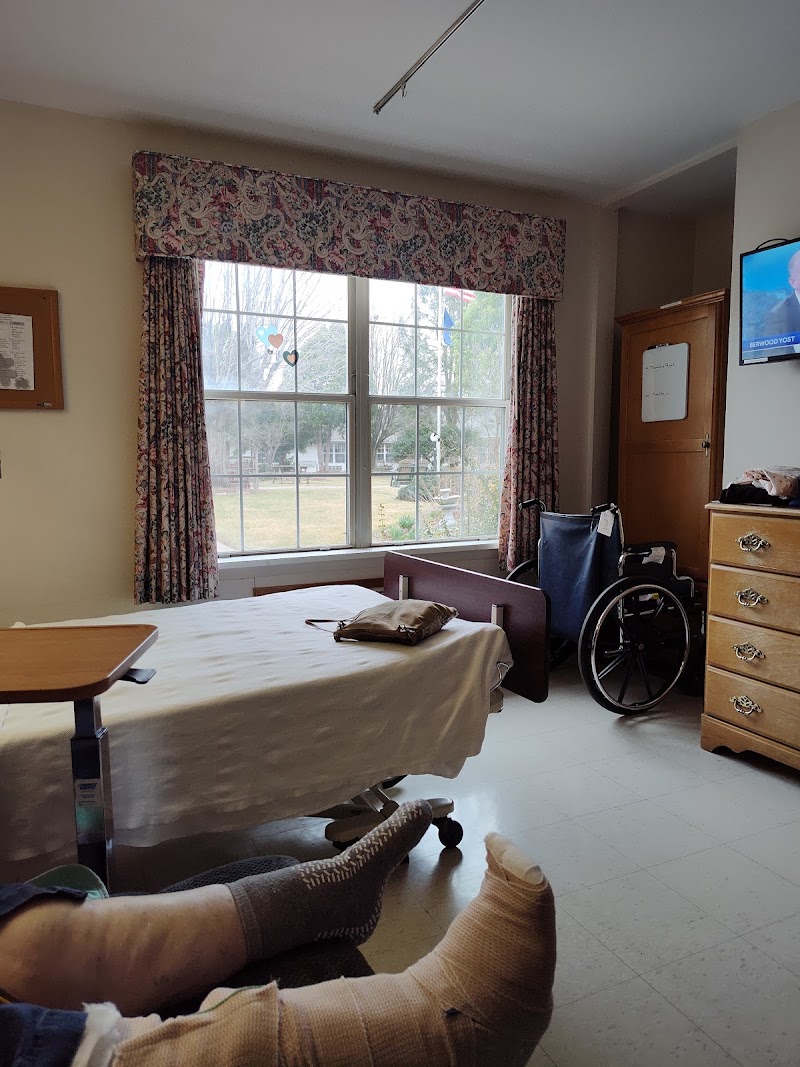
Who Owns and Operates William Penn Nursing And Rehab?

WILLIAM PENN NURSING AND REHAB is owned by a for-profit company. For-profit facilities operate as businesses with obligations to shareholders or private owners. The facility is operated by VALLEY WEST HEALTH, a chain that manages multiple nursing homes. With 121 certified beds and approximately 115 residents (about 95% occupancy), it is a mid-sized facility located in LEWISTOWN, Pennsylvania.
How Does William Penn Nursing And Rehab Compare to Other Pennsylvania Nursing Homes?

Compared to the 100 nursing homes in Pennsylvania, WILLIAM PENN NURSING AND REHAB's overall rating (4 stars) is above the state average of 3.0, staff turnover (44%) is near the state average of 46%, and health inspection rating (3 stars) is at the national benchmark.

What Should Families Ask When Visiting William Penn Nursing And Rehab?

Based on this facility's data, families visiting should ask: "Can I visit during a mealtime to observe dining assistance and food quality?" "How do you handle medical emergencies, and what is your hospital transfer rate?" "Can I speak with family members of current residents about their experience?"

Is William Penn Nursing And Rehab Safe?

Based on CMS inspection data, WILLIAM PENN NURSING AND REHAB has a clean safety record: no substantiated abuse findings (meaning no confirmed cases of resident harm), no Immediate Jeopardy citations (the most serious violation level indicating risk of serious injury or death), and is not on the Special Focus Facility watch list (a federal program monitoring the lowest-performing 1% of nursing homes). The facility has a 4-star overall rating and ranks #1 of 100 nursing homes in Pennsylvania. While no facility is perfect, families should still ask about staff-to-resident ratios and recent inspection results during their visit.

Do Nurses at William Penn Nursing And Rehab Stick Around?

WILLIAM PENN NURSING AND REHAB has a staff turnover rate of 44%, which is about average for Pennsylvania nursing homes (state average: 46%). Moderate turnover is common in nursing homes, but families should still ask about staff tenure and how the facility maintains care continuity when employees leave.

Was William Penn Nursing And Rehab Ever Fined?

WILLIAM PENN NURSING AND REHAB has no federal fines on record. CMS issues fines when nursing homes fail to meet care standards or don't correct problems found during inspections. The absence of fines suggests the facility has either maintained compliance or corrected any issues before penalties were assessed. This is a positive indicator, though families should still review recent inspection reports for the full picture.

Is William Penn Nursing And Rehab on Any Federal Watch List?

WILLIAM PENN NURSING AND REHAB is not on any federal watch list. The most significant is the Special Focus Facility (SFF) program, which identifies the bottom 1% of nursing homes nationally based on persistent, serious quality problems. Not being on this list means the facility has avoided the pattern of deficiencies that triggers enhanced federal oversight. This is a positive indicator, though families should still review the facility's inspection history directly.