HAVEN PLACE REHABILITATION AND NURSING CENTER
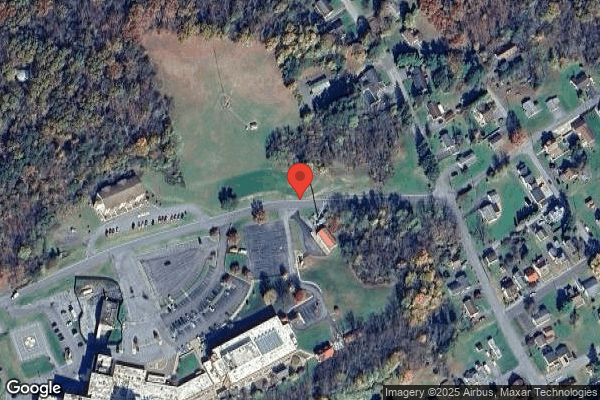
24 CREE DRIVE, LOCK HAVEN, PA 17745 (570) 893-5132
For profit - Limited Liability company 90 Beds UPMC SENIOR COMMUNITIES Data: November 2025
Trust Grade
35/100
#293 of 653 in PA
Last Inspection: September 2025

Inspected within the last 6 months. Data reflects current conditions.

Overview

Haven Place Rehabilitation and Nursing Center has received a Trust Grade of F, indicating significant concerns about the facility's care quality. It ranks #293 out of 653 nursing homes in Pennsylvania, placing it in the top half of facilities statewide, and #1 out of 2 in Clinton County, meaning it is the best local option available. Unfortunately, the facility's trend is worsening, with issues increasing from 6 in 2024 to 17 in 2025. Staffing is a concern, with a high turnover rate of 66%, which is above the state average of 46%, suggesting instability in care. While there have been no fines reported, some serious incidents have raised alarms, including failures to protect residents from mental abuse and inadequate implementation of staff screening policies, raising questions about the safety and quality of care provided.

Trust Score
F
35/100
In Pennsylvania
#293/653
Top 44%
Safety Record
High Risk
Review needed
Inspections
Getting Worse
6 → 17 violations
Staff Stability
⚠ Watch
66% turnover. Above average. Higher turnover means staff may not know residents' routines.
Penalties
✓ Good
No fines on record. Clean compliance history, better than most Pennsylvania facilities.
Skilled Nurses
✓ Good
Each resident gets 44 minutes of Registered Nurse (RN) attention daily — more than average for Pennsylvania. RNs are trained to catch health problems early.
Violations
⚠ Watch
30 deficiencies on record. Higher than average. Multiple issues found across inspections.
★★★☆☆
3.0
Overall Rating
★★★☆☆
3.0
Staff Levels
★★★★★
5.0
Care Quality
★★☆☆☆
2.0
Inspection Score
Stable
2024: 6 issues
2025: 17 issues

The Good

  • 5-Star Quality Measures · Strong clinical quality outcomes
  • Full Sprinkler Coverage · Fire safety systems throughout facility
  • No fines on record

Facility shows strength in quality measures, fire safety.

The Bad

3-Star Overall Rating

Near Pennsylvania average (3.0)

Meets federal standards, typical of most facilities

Staff Turnover: 66%

20pts above Pennsylvania avg (46%)

Frequent staff changes - ask about care continuity

Chain: UPMC SENIOR COMMUNITIES

Part of a multi-facility chain

Ask about local staffing decisions and management

Staff turnover is elevated (66%)

18 points above Pennsylvania average of 48%

The Ugly 30 deficiencies on record

1 actual harm
Sept 2025 16 deficiencies
CONCERN (D)

Potential for Harm - no one hurt, but risky conditions existed

Deficiency F0583 (Tag F0583)

Could have caused harm · This affected 1 resident

Based on review of select facility policies and procedures, observation, and staff interview, it was determined that the facility failed to ensure a resident's privacy during a medication pass on one ...

Read full inspector narrative →
Based on review of select facility policies and procedures, observation, and staff interview, it was determined that the facility failed to ensure a resident's privacy during a medication pass on one of two nursing units (First Floor) and for one of 18 sampled residents (Resident 11). Findings include: The facility policy entitled Administering Medications, last reviewed without changes August 7, 2025, revealed medications that are given by routes other than mouth, nursing staff will administer in such a way as to maintain privacy. Oral medications can be given in a common area with the resident's consent. Observation of the First Floor nursing unit on September 2, 2025, at 11:55 AM revealed Employee 19 (licensed practical nurse) was in Resident 11's room administering his enteral feed. Resident 11's shirt was pulled up, and he was exposed to anyone walking in the hallway. Resident 11's roommate was sitting in his personal chair watching Employee 19 administer Resident 11's enteral feed. There was no privacy curtain pulled. Interview with Employee 19 on September 2, 2025, at 11:57 AM confirmed she is to pull Resident 11's curtain to ensure his privacy. These findings were reviewed with the Nursing Home Administrator and Director of Nursing during a meeting on September 3, 2025, at 2:00 PM. 28 Pa. Code 201.14(a) Responsibility of licensee
CONCERN (D)

Potential for Harm - no one hurt, but risky conditions existed

ADL Care (Tag F0677)

Could have caused harm · This affected 1 resident

Based on observation, clinical record review, and resident family and staff interview, it was determined that the facility failed to provide a dependent resident with activities of daily living assist...

Read full inspector narrative →
Based on observation, clinical record review, and resident family and staff interview, it was determined that the facility failed to provide a dependent resident with activities of daily living assistance for one of four residents reviewed (Resident 12). Findings include: Observation of Resident 12 on September 2, 2025, at 11:42 AM revealed several days of beard growth on his face. During an interview with Resident 12 at this time, he stated he likes to be clean shaven, but he doesn't know where staff put his razor. Observation of the room revealed that a razor was on his nightstand out of his reach. Further observation of Resident 12 revealed his fingernails were long with brown substances under several nails. Clinical record review revealed the facility admitted Resident 12 on November 11, 2024, with diagnosis including cerebral palsy (brain disorder affecting body movement and muscle coordination). Review of Resident 12's plan of care initiated November 8, 2024, revealed Resident 12 has cerebral palsy, and has declined in his activities of daily living (ADL). Resident 12's care plan was revised on August 3, 2025, noting Resident 12 had the potential for decreased function in level of functional abilities due to limited mobility, weakness, deconditioning, and cerebral palsy. A review of Resident 12's most recent annual MDS (Minimum Data Set, an assessment completed at specific intervals to determine resident care needs) dated August 11, 2025, indicated nursing staff assessed Resident 12 as requiring substantial to maximum assistance for personal hygiene (the ability to maintain personal hygiene, including combing hair, shaving, applying makeup, washing/drying face and hands). There was no documentation indicating staff were providing shaving assistance, or nail care to Resident 12. Interview with the Nursing Home Administrator and Director of Nursing on September 4, 2025, at 2:20 PM confirmed these findings. The Director of Nursing confirmed Resident 12 is unable to shave himself or complete nail care. 483.24(a)(2) ADL Care Provided for Dependent ResidentsPreviously cited deficiency 10/4/24 28 Pa. Code 211.12(d)(1)(5) Nursing services
CONCERN (D)

Potential for Harm - no one hurt, but risky conditions existed

Accident Prevention (Tag F0689)

Could have caused harm · This affected 1 resident

Based on clinical record review, review of facility documentation, and staff interview, it was determined that the facility failed to appropriately implement a fall intervention to prevent potential r...

Read full inspector narrative →
Based on clinical record review, review of facility documentation, and staff interview, it was determined that the facility failed to appropriately implement a fall intervention to prevent potential resident injury for one of three residents reviewed for falls (Resident 10).Findings include: Clinical record review for Resident 10 revealed a diagnosis list that included Alzheimer's Disease (a brain disorder that leads to a gradual decline in memory, thinking, and the ability to complete simple tasks), a need for assistance with personal care, and abnormalities of gait and mobility. A current physician's order for Resident 10 revealed an order dated March 27, 2025, for a bed alarm and check functioning every shift. Further clinical record review for Resident 10 revealed a significant change Minimum Data Set Assessment (MDS, an assessment completed at specific intervals to determine care needs) dated May 2, 2025, that noted facility staff assessed the resident as having a BIMS (Brief Interview for Mental Status) of 99, which indicated cognitive impairment. Resident 10's care plan revealed that the resident is at risk for falls related to incontinence, unaware of safety needs, and vision and hearing problems. A nursing progress note for Resident 10 dated June 30, 2025, at 1:52 AM revealed the nurse aide reported the resident was sitting on the floor in her room. The documentation noted the resident appeared to be attempting to grab something from her nightstand drawer. The assessment revealed no injuries. The resident was assisted back to bed by staff. Facility documentation for Resident 10 titled, Fall Huddle Investigation Worksheet, and dated June 30, 2025, noted the time of fall as 1:10 AM. The documentation noted the resident had an alarm; however, was documented as no for the question of was the alarm sounding. The documentation further noted a question of if the alarm was not ringing what immediate corrective action was taken and the written response documented, Alarm was on with volume turned down. Volume was turned up. Facility documentation titled, Staff Statements for the Investigative Process, noted a written statement, in part, dated June 30, 2025, from Employee 17, nurse aide, that indicated Employee 17 did not hear the alarm going off. The statement further noted, Alarm not sounding when entering room. Education was provided by the facility to check that the alarm is turned on, volume is on high and functioning properly. A nursing progress note for Resident 10 dated July 16, 2025, at 5:27 PM revealed that staff saw the resident on the floor in the room. The documentation noted, Alarm was on the bed but not turned on. The resident was assisted from the floor by staff to a chair. The resident was then brought to the dining room for the evening meal. Facility documentation for Resident 10 titled, Fall Huddle Investigation Worksheet, dated July 16, 2025, and noted a time of fall as 4:37 PM. The documentation further noted a question of if the alarm was not ringing what immediate corrective action was taken and the written response documented, Alarm wasn't turned on, turned it on. Facility documentation titled, Staff Statements for the Investigative Process, noted a written statement, in part, dated July 16, 2025, from Employee 18, nurse aide; however, the staff signature was not very legible. The print name section on the statement was blank. An interview with the Nursing Home Administrator and Director of Nursing on September 5, 2025, at 1:15 PM indicated the signature was that of Employee 18. The statement noted .But no alarm sound. Further review of the clinical documentation for Resident 10 revealed task documentation (located in the electronic health record where staff document specific care related events for a resident) for June through August 2025. The documentation revealed that staff were to check a bed alarm was in place and check the function every shift. The following dates revealed nothing was documented by staff to ensure the bed alarm was in place and functioning: June 2, 2025, evening shiftJune 5, 2025, night shiftJune 8, 2025, night shiftJune 15, 2025, evening shiftJune 28, 2025, night shiftJune 29, 2025, day and evening shiftJune 30, 2025, night shift July 5, 2025, evening shiftJuly 11, 2025, day shiftJuly 12, 2025, day shiftJuly 18, 2025, evening shiftJuly 19, 2025, evening and night shiftJuly 30, 2025, evening shiftJuly 31, 2025, night shift August 27, 2025, night shiftAugust 31, 2025, night shift The above findings were reviewed in a meeting with the Nursing Home Administrator and Director of Nursing on September 5, 2025, at 1:15 PM. A follow-up interview with the Nursing Home Administrator on September 5, 2025, at 2:00 PM revealed that the alarm is kept at the end of the bed and it would be difficult for the resident to access and change the alarm settings. 28 Pa. Code 211.12(d)(1)(3)(5) Nursing services
CONCERN (D)

Potential for Harm - no one hurt, but risky conditions existed

Deficiency F0700 (Tag F0700)

Could have caused harm · This affected 1 resident

Based on observation, clinical record review, review of select facility documentation, and staff interview, it was determined that the facility failed to conduct ongoing assessments to assure that bed...

Read full inspector narrative →
Based on observation, clinical record review, review of select facility documentation, and staff interview, it was determined that the facility failed to conduct ongoing assessments to assure that bedrails were used to meet a resident's needs and an ongoing evaluation of risks associated with bedrail usage for one of six residents reviewed for accident hazards (Resident 15). Findings include: Observation of Resident 15's bed on September 4, 2025, at 2:19 PM revealed the bed had bilateral enabler bars. Observation of Resident 15 on September 5, 2025, at 9:15 AM revealed the resident was in bed resting. The bed had bilateral enabler bars. Clinical record review for Resident 15 revealed a diagnosis list that included dementia (a loss of cognitive function that is caused by the permanent damage or death of the brain's nerve cells, or neurons). Further clinical record review for Resident 15 revealed an annual Minimum Data Set Assessment (MDS, an assessment completed at specific intervals to determine care needs) dated July 28, 2025, that noted facility staff assessed the resident's cognitive status as the resident being rarely or never understood. A current physician's order for Resident 15 dated January 16, 2024, revealed an order for bilateral enabler bars to aid with bed mobility and transfers. Facility documentation for Resident 15 revealed a document titled Informed Consent for Use of Bed Rails / Enabler Bars, and was signed and dated by the resident's responsible party on January 6, 2024. Further review of this document revealed the document noted, It is the policy of this facility to provide a safe bed environment for all residents. Only after evaluation and care planning is it deemed appropriate to provide the use of bed rails for an individual resident. In all instances, the least restrictive device, which is effective, will be used. The facility will monitor the resident's status, frequency of use, and adjust care as necessary. The facility has a systemic and gradual process to reduce the use of bed rails / enabler bars and to always ensure the resident's safety. Facility documentation for Resident 15 titled, Enabler Bar Request Form, noted a date of request as January 16, 2024. Review of the clinical documentation for Resident 15's enabler bars revealed no further evidence that the facility conducted any type of ongoing monitoring or re-assessment to assure that the bedrails were used to meet the resident's needs or an ongoing evaluation of risks associated with bedrail use since January 16, 2024. An interview with the Nursing Home Administrator on September 5, 2025, at 1:15 PM confirmed the facility had no further documentation to support any ongoing assessments of Resident 15's enabler bars. 28 Pa. Code 211.12(d)(1)(3)(5) Nursing services
CONCERN (D)

Potential for Harm - no one hurt, but risky conditions existed

Deficiency F0730 (Tag F0730)

Could have caused harm · This affected 1 resident

Based on employee personnel record review and staff interview, it was determined that the facility failed to complete a performance evaluation of each nurse aide at least once every 12 months for two ...

Read full inspector narrative →
Based on employee personnel record review and staff interview, it was determined that the facility failed to complete a performance evaluation of each nurse aide at least once every 12 months for two of two nurse aides reviewed (Employees 11 and 12).Findings include: The facility noted the following hire dates for two employees reviewed for performance evaluations (EPR, employee performance review): Employee 11's hire date of July 22, 2019. Employee 12's hire date of March 28, 2022. A request to review the annual performance evaluations revealed no documented evidence that the facility completed performance evaluations for Employees 11 and 12 (nurse aides) at least once every 12 months. Interview with the Nursing Home Administrator on September 4, 2025, at 2:19 PM confirmed that performance evaluations were not completed annually on the two employees requested. 28 Pa. Code 201.19 (2) Personnel policies and procedures
CONCERN (D)

Potential for Harm - no one hurt, but risky conditions existed

Deficiency F0744 (Tag F0744)

Could have caused harm · This affected 1 resident

Based on clinical record review and staff interview, it was determined that the facility failed to develop and implement individualized person-centered care plans to address dementia and cognitive los...

Read full inspector narrative →
Based on clinical record review and staff interview, it was determined that the facility failed to develop and implement individualized person-centered care plans to address dementia and cognitive loss displayed by one of five residents reviewed (Resident 2). Findings include: Clinical record review for Resident 2 revealed the facility admitted her on April 8, 2025, with diagnoses including dementia (loss of memory, language, problem-solving, and other thinking abilities that interfere with daily life) added August 5, 2025. A review of Resident 2's admission Minimum Data Set Assessment (MDS, a form completed at specific intervals to determine care needs) dated April 9, 2025, indicated that the facility assessed Resident 2 as having a diagnosis of dementia, or cognitive loss. The facility determined that a care plan for dementia and cognitive loss would be developed. A review of Resident 2's care plan revealed that there was no indication that the facility had developed and implemented a person-centered care plan to address the resident's dementia and cognitive loss. The findings were reviewed with the Nursing Home Administrator and Director of Nursing during a meeting on September 5, 2025, at 10:28 AM. They confirmed the facility had no further documentation that the facility developed and implemented an individualized person-centered care plan to address Resident 2's dementia prior to surveyor's questioning. 28 Pa Code 211.12 (d)(1)(3)(5) Nursing services
CONCERN (D)

Potential for Harm - no one hurt, but risky conditions existed

Infection Control (Tag F0880)

Could have caused harm · This affected 1 resident

Based on review of select policies and staff interview, it was determined that the facility failed to implement an effective Water Management Program for the prevention and control of water-borne cont...

Read full inspector narrative →
Based on review of select policies and staff interview, it was determined that the facility failed to implement an effective Water Management Program for the prevention and control of water-borne contaminants, such as Legionella (a bacteria that may cause Legionnaires' Disease, a serious type of pneumonia), and failed to implement enhanced barrier precautions or one of six residents reviewed for infection control concerns (Resident 11). Findings include: The CDCs (Centers for Disease Control and Prevention) current Water Management Program Toolkit, Practical Guide to Implementing Industry Standards, indicated that many buildings need a water management program to reduce the risk for Legionella (bacteria that can grow and spread in water systems and can cause a serious type of pneumonia (lung infection) known as Legionnaires' disease) growing and spreading within their water system and devices. Developing and maintaining a water management program is a multi-step process that requires continuous review. Steps to building an effective Legionella water management program include: A description of the building's water system using flow diagrams and a written description to include details like connections to the municipal water supply, how water is distributed, and location of water heaters/boilers. Identification of potentially hazardous conditions such as areas where water temperature could promote Legionella growth or where water flow might be low. Control measures (such as heating, adding disinfectant, or cleaning) that include where and how to monitor them. Control limits are the maximum value, minimum value, or range of values that are acceptable for the control measure.Determine what corrective actions or contingency responses to take when control measures are outside the control limits established. Review of documents provided by Employee 14 (Director of Maintenance) on August 5, 2025, at 10:00 AM related to the facility's water management program revealed that the information provided was a water management plan for another facility. Concurrent interview with Employee 14 revealed that they were unable to locate the current water management plan since the change of ownership and that they plan to adapt the one provided to the surveyor, to fit their facility. An interview with the Nursing Home Administrator on August 5, 2025, at 11:30 AM confirmed the above noted findings related to the facility's water management plan. The facility failed to develop and maintain a water management program to reduce the risk for Legionella growing and spreading within their water system and devices. The facility policy entitled Infection Control Guidelines for all Nursing Procedures, last reviewed without changes on August 7, 2025, revealed it is the policy of the facility to adhere to infection control guidelines to limit or prevent the spread of infection between residents and staff. Enhanced Barrier Precautions will be used to minimize the risk of transmitting infection when providing care to residents that require significant physical contact and are at high risk of acquiring or spreading Multidrug Resistance Organisms (MDRO). Wear personal protective equipment as necessary to prevent exposure to spills or splashes of blood or body fluids, or other potentially infectious materials. Observation of First Floor nursing unit on September 2, 2025, at 11:55 AM revealed Employee 19 (licensed practical nurse) was in Resident 11's room administering his enteral feed. Employee 19 had gloves on, but no gown. There was a sign posted on Resident 11's wall outside his room indicating enhanced barrier precautions, and there was personal protective equipment including gowns and gloves hanging on the door. Interview with Employee 19 at this time confirmed Resident 11 was on Enhanced Barrier Precautions and that she should have been wearing a gown when administering Resident 11's enteral feed. Review of Resident 11's clinical record revealed a physician's order dated March 6, 2023, for enhanced barrier precautions due to his Peg tube (feeding tube inserted into the stomach). These findings were reviewed with the Nursing Home Administrator and Director of Nursing during a meeting on September 3, 2025, at 2:00 PM. 483.80(a)(1)(2)(4)(e)(f) Infection Prevention & ControlPreviously cited deficiency 12/5/2428 Pa. Code 201.14(a) Responsibility of licensee 28 Pa. Code 201.18(b)(1) Management28 Pa. Code 211.10(d) Resident care policies28 Pa. Code 211.12(d)(1) Nursing services
CONCERN (E)

Potential for Harm - no one hurt, but risky conditions existed

Abuse Prevention Policies (Tag F0607)

Could have caused harm · This affected multiple residents

Based on review of select facility policies and procedures, employee personnel records, and staff interview, it was determined that the facility failed to implement an abuse prohibition policy that re...

Read full inspector narrative →
Based on review of select facility policies and procedures, employee personnel records, and staff interview, it was determined that the facility failed to implement an abuse prohibition policy that required a thorough investigation of prospective employee's employment history for five of five newly hired employees reviewed (Employees 1, 2, 3, 4, and 5).Findings include: The facility policy entitled Staff Screening, last reviewed without changes August 7, 2025, revealed the facility will utilize reasonable and prudent criminal background screening and reference checks for prospective staff. Prior to employment or commencement of a contract, the facility will verify and document or obtain a copy of the following information that may include but not limited to previous and/or current employer regarding work history, criminal background checks, national sex offender public website, Office of Inspector General Exclusion Screening, State Exclusion screening, current licenses and certifications, and references. Review of Employee 1's (housekeeper) personnel record revealed a hire date of July 2, 2025. Employee 1's personnel record contained no evidence that the facility attempted to obtain personal and/or professional reference information (whether favorable or unfavorable). In accordance with Act 13 Elder Abuse Mandatory Reporting and Act 169 Criminal Background Checks, nursing facilities are required to obtain a criminal background check on all newly hired employees. Facilities are required to obtain the Pennsylvania State Police (PSP) background check within 30 days of hire on all prospective employees. If the applicant has not been a Pennsylvania resident for the two years before application, they will need to have a PSP criminal history background check completed and a Federal Bureau of Investigation (FBI) Background Check. Review of Employee 4's (registered nurse) personnel record revealed the facility hired her on May 18, 2025, and her criminal background check was not completed until September 2, 2025. Review of Employee 1 (housekeeper), Employee 2 (registered nurse), Employee 3 (nurse aide), Employee 4 (registered nurse), and Employee 5's (recreation aide) personnel records revealed no evidence that the facility determined whether these five employees resided in Pennsylvania for the last two years or completed an FBI background check on them. Interview with Employee 13 (human resources) on September 4, 2025, at 9:45 AM, she confirmed the above findings for Employees 1, 2, 3, 4, and 5. 28 Pa. Code 201.14(a) Responsibility of licensee 28 Pa Code 201.18(b)(1)(3)(e)(1) Management 28 Pa Code 201.19(8) Personnel policies and procedures
CONCERN (E)

Potential for Harm - no one hurt, but risky conditions existed

Deficiency F0676 (Tag F0676)

Could have caused harm · This affected multiple residents

Based on clinical record review and staff interview, it was determined that the facility failed to complete a restorative nursing ambulation program for one of four residents reviewed for activities o...

Read full inspector narrative →
Based on clinical record review and staff interview, it was determined that the facility failed to complete a restorative nursing ambulation program for one of four residents reviewed for activities of daily living concerns (Resident 8).Findings include: Clinical record review for Resident 8 revealed a restorative nursing ambulation program that indicated she was to be ambulated with extensive assistance of two staff 20-40 feet using a front wheeled walker and a third person was to follow with a wheelchair. The program was to be completed on day shift. Further clinical record review reviewed of Resident 8's restorative ambulation program for August 2025, revealed that the staff documented not applicable (NA) on August 5, 8, 9, 10, 12, 13, 14, 15, 22, 27, 28, 2025, with no explanation documented. Interview with the Nursing Home Administrator and Director of Nursing on September 4, 2025, at 2:30 PM revealed that there was no further staff documentation for Resident 8's restorative ambulation program. The facility failed to complete the restorative nursing ambulation program for Resident 8 ordered. The above information for Resident 8 was reviewed in a meeting with the Nursing Home Administrator and Director of Nursing on September 4, 2025, at 2:30 PM. 28 Pa. Code 211.12(d)(1)(3)(5) Nursing services
CONCERN (E)

Potential for Harm - no one hurt, but risky conditions existed

Quality of Care (Tag F0684)

Could have caused harm · This affected multiple residents

Based on clinical record review, and staff interview, it was determined that the facility failed to provide the highest practical care related to medication administration for one of 18 residents revi...

Read full inspector narrative →
Based on clinical record review, and staff interview, it was determined that the facility failed to provide the highest practical care related to medication administration for one of 18 residents reviewed (Resident12). Findings include: Clinical record review revealed the facility admitted Resident 12 on November 11, 2024. A physician's order dated June 30, 2025, instructed nursing staff to inject 80 milligrams (mg) of Humira (medication used to treat various autoimmune conditions) subcutaneously (under the skin) one time for psoriasis (chronic skin disorder that causes scaling and inflammation) when it arrives from the pharmacy. Further review of Resident 12's physician orders revealed an order dated July 7, 2025, instructing nursing staff to administer 40 mg of Humira subcutaneously one time for psoriasis, and an order dated July 21, 2025, for nursing staff to inject 40 mg of Humira every 14 days for psoriasis. Further review of Resident 12's clinical record revealed nursing documentation dated June 30, 2025, at 11:52 PM revealed Resident 12's Humira was unavailable, and the facility was awaiting prior authorization from the pharmacy. Nursing documentation dated July 8, 2025, at 1:49 PM revealed the facility was still awaiting prior authorization from the pharmacy for Resident 12's Humira. Nursing documentation dated July 21, 2025, at 8:29 PM revealed Resident 12's Humira was unavailable. Nursing documentation dated August 4, 2025, at 8:13 PM revealed Resident 12's Humira was still unavailable. Nursing documentation dated August 18, 2025, at 1:20 PM noted a new insurance authorization was submitted for Resident 12's Humira. At 8:53 PM nursing staff noted Resident 12's Humira was still not available from the pharmacy, and staff were unable to give Resident 12's Humira. Nursing documentation dated September 1, 2025, at 10:13 PM revealed Resident 12's Humira was not available, due to prior authorization needed. At 11:48 PM nursing staff noted Resident 12 has been ordered Humira since June 30, 2025, and he has never received a dose. Documentation noted multiple notes stating awaiting authorization since that date. Provider notification form submitted. Interview with the Nursing Home Administrator and Director of Nursing on September 5, 2025, at 10:35 AM confirmed these findings. They were unable to provide any documentation that Resident 12's physician was made aware of the unavailability of Resident 12's Humira until September 1, 2025. The facility failed to provide the highest practical care related to Resident 12's medication regime. 28 Pa. Code 211.12(d)(1)(3)(5) Nursing services
CONCERN (E)

Potential for Harm - no one hurt, but risky conditions existed

Deficiency F0688 (Tag F0688)

Could have caused harm · This affected multiple residents

Based on clinical record review and staff interview, it was determined that the facility failed to complete a restorative range of motion program as ordered for one of four residents reviewed (Residen...

Read full inspector narrative →
Based on clinical record review and staff interview, it was determined that the facility failed to complete a restorative range of motion program as ordered for one of four residents reviewed (Resident 8). Findings include: Clinical record review for Resident 8 revealed that she was on a restorative active range of motion program (ROM, exercises using muscles to move a body part without assistance) to her bilateral upper extremities for 10 repetitions twice a day and her bilateral lower extremities 20 repetitions twice a day. Review of Resident 8's restorative range of motion program documentation for June 2025, revealed the following: Not applicable (NA) was documented on June 18, 24, 26, and 28 on evening shift, and there was no documentation for the program on dayshift for the dates of June 8, 22, and 24, 2025, and on evening shift for the dates of June 1, 2, 3, 7, 8, 9, 10, 12, 13, 14, 15, 16, 21, 22, 29 and 30, 2025. Review of Resident 8's restorative range of motion program for July 2025, revealed the following: NA was documented on July 2, 3, 4, 7, 10, 12, 13, 18, and 26, 2025 on evening shift, and there was no documentation for the program on evening shift for the dates of July 8, 9, 14, 15, 16, 22, 23, 24, and 27, 2025. Review of Resident 8's restorative range of motion program documentation for August 2025, revealed the following: NA was documented on August 5, 8, 9, 10, 12, 13, 14, 15, 27, and 28, 2025, on day shift, and on August 4, 5, 9, 10, 15, 21, and 23, 2025, on the evening shift. There was no documentation on dayshift for August 2, 2025, and no documentation on evening shift for August 2, 3, 7 and 13, 2025. The Nursing Home Administrator and Director of Nursing were made aware of the concerns with Resident 8's restorative range of motion program during a meeting on September 4, 2025, at 2:30 PM 28 Pa. Code 211.12 (d)(1)(2)(3)(5) Nursing services
CONCERN (E)

Potential for Harm - no one hurt, but risky conditions existed

Deficiency F0726 (Tag F0726)

Could have caused harm · This affected multiple residents

Based on review of facility documentation and staff interview, it was determined that the facility failed to ensure that nursing staff possessed the appropriate competencies and skill sets related to ...

Read full inspector narrative →
Based on review of facility documentation and staff interview, it was determined that the facility failed to ensure that nursing staff possessed the appropriate competencies and skill sets related to the care and assessment of residents with enteral tube feeding, who utilize a lift, catheter care, medication administration, and dressing changes for five of five employees reviewed for competencies (Employees 6, 7, 8, 9, and 10).Findings include: A review of the facility documentation revealed that the facility had a total of 72 residents receiving medications, 17 residents that utilize lifts, two residents with indwelling urinary catheters (insertion of a tube into the bladder to remove urine), 7 residents with dressing changes, and one resident with enteral tube feedings (device that allows liquid food to enter your stomach or intestine through a tube). A request for nursing staff competencies for enteral tube feeding, lifts, catheter care, medication administration, and dressing changes revealed the facility was unable to provide any competencies for Employees 6 and 7 (registered nurses), and Employees 8, 9, and 10 (licensed practical nurses). The findings were reviewed with the Nursing Home Administrator and Director of Nursing on September 4, 2025, at 2:19 PM. They confirmed the facility could provide no documentation that ensured Employees 6, 7, 8, 9, and 10 had specific competencies and skill sets to care for the residents' needs listed above. 28 Pa. Code 201.20 (a) Staff Development
CONCERN (E)

Potential for Harm - no one hurt, but risky conditions existed

Deficiency F0761 (Tag F0761)

Could have caused harm · This affected multiple residents

Based on clinical record review, review of select facility policies and procedures, observation, and resident and staff interview, it was determined that the facility failed to properly store resident...

Read full inspector narrative →
Based on clinical record review, review of select facility policies and procedures, observation, and resident and staff interview, it was determined that the facility failed to properly store resident medications and treatments on one of two nursing units (First Floor Nursing Unit; Resident 12). Findings include: The policy entitled Storage of Medications, last reviewed without changes on August 7, 2025, revealed all medications in the facility will be stored in the pharmacy, or medication rooms according to manufacturer's recommendations and sufficient to ensure proper sanitation, temperature, light, ventilation, moisture control, segregation, and security. All drugs and biologicals will be stored in locked compartments, under proper temperature controls. Observation of Resident 12's room on September 2, 2025, at 11:40 AM revealed a tube of Triamcinolone Acetonide External Cream 0.1 percent (cream used to treat eczema, psoriasis, and dermatitis), Vitamin A&D ointment, and Dermacerin (cream used for minor skin irritations) laying on top of his nightstand. Interview with Resident 12 at this time revealed that the staff apply these creams to his skin, and he did not place the treatments there. The above findings for Residents 12 were reviewed with the Nursing Home Administrator and Director of Nursing during a meeting on September 3, 2025, at 2: 15 PM. The Director of Nursing confirmed the above-mentioned items should not be stored on Resident 12's nightstand. Observation of two of four medication carts on the First Floor Nursing Unit on September 4, 2025, at 10:29 AM revealed two medication carts being utilized by Employee 16, licensed practical nurse. Observation of the medication carts revealed the following: One cart had several unsecured and unidentified medication tablets in the bottom drawer that that included a yellow oval pill, half a blue tablet, half a yellow tablet, and two white colored and round pills. The second cart contained a blue colored, round pill, that was unsecured and unidentified in the bottom of a drawer. There was also a partially used tube of Diclofenac one percent (a medication used to relieve pain and inflammation) observed in a drawer that was not labeled with a resident identifier. The above findings were reviewed in a meeting with the Nursing Home Administrator and Director of Nursing on September 4, 2025, at 2:05 PM. 28 Pa. Code 211.9 (a)(1)(k) Pharmacy services 28 Pa. Code 211.12 (d)(1)(3)(5) Nursing services
CONCERN (E)

Potential for Harm - no one hurt, but risky conditions existed

Food Safety (Tag F0812)

Could have caused harm · This affected multiple residents

Based on observation and staff interview, it was determined the facility failed to store food and maintain food service equipment in a safe and sanitary manner in the facility's main kitchen. Findings...

Read full inspector narrative →
Based on observation and staff interview, it was determined the facility failed to store food and maintain food service equipment in a safe and sanitary manner in the facility's main kitchen. Findings include:Findings include: Observation of the facility's main kitchen with Employee 15, Dietary Manager, on September 2, 2025, at 9:45 AM revealed the following: A walk-in cooler contained multiple individually prepared food items (that included bowls of fruit, coleslaw, pudding, pureed and regular peaches, and pasta salad) that were placed on trays and stored on baking racks. The items were open to the ambient air and were not protected from any type of environmental contamination. A plastic chemical dispenser on top of the dishwasher was leaking a blue colored liquid that was pooling on top of the dishwasher and on the floor beneath. A walk-in freezer contained a box labeled gluten bread that was past the noted due date of July 31, 2025, and a bag of frozen corn with no date or labels. A plastic container that held saltine crackers was noted to be broken and had jagged plastic edges. A large vent cover at the corner of the main kitchen had an extensive build-up of a greasy dust on the entire surface. An area between a stainless-steel countertop that contained a tray belt that was no longer in service, per Employee 15, and another stainless-steel countertop contained an extensive build-up of dust and debris that included condiment packets, a single-use butter container, and other debris accumulating on the floor. The findings were reviewed in a meeting with the Nursing Home Administrator and Director of Nursing on September 3, 2025, at 2:31 PM. 28 Pa. Code 201.14 (a) Responsibility of Licensee
CONCERN (E)

Potential for Harm - no one hurt, but risky conditions existed

Deficiency F0847 (Tag F0847)

Could have caused harm · This affected multiple residents

Based on review of the facility's arbitration agreement and resident and staff interview, it was determined that the facility failed to ensure that the resident or their representative understood the ...

Read full inspector narrative →
Based on review of the facility's arbitration agreement and resident and staff interview, it was determined that the facility failed to ensure that the resident or their representative understood the agreement for one of one resident reviewed (Resident 9) and failed to ensure the facility's arbitration agreement contained information indicating residents or their representatives are able to communicate with federal, state, or local officials.Findings include: Review of the facility's Arbitration Agreement (an agreement that the resident and the facility will resolve legal disputes through binding arbitration, waiving their right to a trial) provided to all residents on admission revealed no evidence that the facility made the residents or their representatives aware that signing the Arbitration Agreement does not exclude them from being able to communicate with federal, state, or local officials, such as federal and state surveyors, other federal or state health department employees, and representative of the Office of the State Long Term Care Ombudsman. Interview with the Nursing Home Administrator on September 5, 2025, at 9:36 AM confirmed these findings. The state operations manual appendix PP, Revision 232x, issued July 23, 2025, S483.70(m)(2)(ii) specifies that the resident or his or her representative acknowledges that he or she understands the agreement. After the arbitration agreement is explained in a manner and form the resident or their representative understands, the facility must ensure there is evidence that the resident or their representative has acknowledged understanding of the agreement. In some cases, the binding arbitration agreement may specify that the resident or his or her representative acknowledges understanding by signing the document. When a signature is used to acknowledge understanding, additional evidence may be needed to establish that in fact the resident or their representative understood what he or she was signing. It may not be sufficient that the resident or their representative signed the document. It is also important that facilities clarify when a signature is used to acknowledge understanding, when it indicates consent to enter into an agreement, or is used for both purposes. Clinical record review for Resident 9 revealed that she signed and entered into an arbitration agreement with the facility on April 17, 2024. Further clinical record review revealed that Resident 9 has a court appointed guardian of her person and property as of April 17, 2014. The guardianship indicated that Resident 9 lacks sufficient understanding or capacity to make or communicate responsible decisions concerning her person and property. Interview with the Nursing Home Administrator and Director of Nursing on September 4, 2025, at 2:16 PM confirmed the above noted findings that Resident 9 has a guardianship and that they do not know of any court proceedings that have occurred to relinquish the guardianship. Interview with Resident 9 on September 5, 2025, at 11:30 AM revealed that she did not know what an arbitration agreement was and did not know that she signed one. The facility failed to ensure that Resident 9 knew and understood what she was signing when she signed and entered into an arbitration agreement with the facility on April 17, 2024. 28 Pa. Code 201.14(a) Responsibility of licensee 28 Pa. Code 201.18(b)(2) Management 28 Pa. Code 201.29(a)(j) Resident rights
CONCERN (E)

Potential for Harm - no one hurt, but risky conditions existed

Deficiency F0868 (Tag F0868)

Could have caused harm · This affected multiple residents

Based on a review of Quality Assessment and Performance Improvement (QAPI) meeting attendance and staff interview, it was determined that the facility failed to ensure the committee consisted of the m...

Read full inspector narrative →
Based on a review of Quality Assessment and Performance Improvement (QAPI) meeting attendance and staff interview, it was determined that the facility failed to ensure the committee consisted of the minimum required members (medical director) at least quarterly.Findings include: Review of QAPI meeting attendance records from October 30, 2024, to the most recent QAPI committee meeting on July 24, 2025, revealed the facility medical director only attended one meeting on July 30, 2025. Interview with the Nursing Home Administrator on September 4, 2025, at 2:05 PM confirmed that the facility failed to ensure at least quarterly QAPI meeting attendance by the facility's medical director (or designee). 28 Pa. Code 201.14(a) Responsibility of licensee28 Pa. Code 201.18(b)(3)(e)(3) Management
Apr 2025 1 deficiency
CONCERN (D) 📢 Someone Reported This

A family member, employee, or ombudsman was alarmed enough to file a formal complaint

Potential for Harm - no one hurt, but risky conditions existed

Deficiency F0692 (Tag F0692)

Could have caused harm · This affected 1 resident

Based on clinical record review and staff interview, it was determined that the facility failed to monitor and assess a resident to maintain acceptable weights regarding nutrition management for one o...

Read full inspector narrative →
Based on clinical record review and staff interview, it was determined that the facility failed to monitor and assess a resident to maintain acceptable weights regarding nutrition management for one of three residents reviewed (Resident 1). Findings include: Clinical record review for Resident 1 revealed diagnoses which included Dysphagia (difficulty swallowing), Gastro-esophageal reflux disease (GERD), Vitamin D Deficiency, Hypokalemia (low Potassium levels), and Dementia with Psychotic Disturbance. Further review revealed that Resident 1's weights were as follows: December 5, 2024, 110.4 pounds January 6, 2025, 109.6 pounds (0.8 pounds, 0.7 percent weight loss in one month) February 13, 2025, 106.4 pounds (4 pounds, 3.6 percent weight loss in two months) March 5, 2025, 101.6 pounds (8.8 pounds, 7.9 percent weight loss in three months) April 5, 2025, 99.2 pounds (11.2 pounds, 10.14 percent weight loss in four months) April 17, 2025, 99.0 pounds (11.4 pounds, 10.32 percent weight loss in 4.5 months) On February 14, 2025, Employee 1, speech therapist, ordered a full liquid diet with thin liquids with pureed food for pleasure for Resident 1. Employee 1 continued to see Resident 1 until March 7, 2025, when they were discharged from therapy. Employee 1 indicated that Resident 1 did best with drinking thin liquids .requires simple cues, reduced environmental stimuli, and rate reduction by care giver when providing thin liquids via straw. Review of dietary notes on February 14, 2025, at 12:48PM revealed that Resident 1 was refusing most food at this time and doing best with liquids. She has been refusing soup and broth, only wants sweeter drinks. (She was) Not doing well with Magic cup but still doing well with Ensure. Will remove magic cup and add Shake em up supplement three times a day. Will continue with Ensure supplement. Will continue to monitor. Employee 2, interim registered dietician, documented on March 11, 2025, at 12:07 PM and noted Resident 1's current body weight was 101.6 pounds with a BMI (body mass index, a calculation used to estimate a person's body fat percentage based on their weight and height) of 16.9, noting Resident 1 was underweight. Employee 2 indicated Resident 1's IBW (ideal body weight, weight associated with the lowest risk of mortality for a given height and body frame) should be 125 pounds. Resident 1 showed a 4.5 percent weight loss in the last month, a 7.9 percent weight loss in the last three months, and no significant change in the past six months. Resident 1's current diet was full liquids and pureed foods for pleasure. Employee 2 noted Resident 1's meal intake per nursing documentation was less than 25 percent. Resident 1 received Boost VHC (very high calorie, a nutritional supplement) 60 ml (milliliters) BID (twice daily), Ensure clear (a nutritional supplement) QD (daily), Ensure plus (a nutritional supplement) BID, and house shakes (a nutritional supplement). Employee 2 reviewed Resident 1's MAR (medication administration record, a form to document medication administration) and noted they accepted Ensure clear with varying acceptance of the other supplement. Resident 1 needs fed by staff and had no skin issues noted. Employee 2 estimated Resident 1's dietary intake needs as: 1385-1615 kcal (kilocalories, a unit of energy commonly used to measure the energy content of food), 50-60 grams protein, and 1 ml/kcal (energy density of a liquid) of fluids. Resident 1 had multiple interventions in place. Employee 2 would discuss advanced directives (i.e., the potential for artificial hydration, alternate way to provide nutritional needs) with the IDT (interdisciplinary team, a group of professionals from different disciplines who work together for a common goal). There was no evidence Employee 2 discussed anything with the IDT regarding advanced directives. There was no evidence that Employee 2 changed the supplements (i.e., if the resident is accepting of one supplement you would offer the one she was drinking more). Employee 2 could have adjusted them for a potential help for the weight loss. Review of a facility grievance form dated April 13, 2025, revealed Resident 1's responsible party voiced concerns with Resident 1 not receiving Ensure on their tray. Nursing documentation dated April 14, 2025, at 2:24 PM revealed the Director of Nursing (DON) spoke with Resident 1's responsible party regarding the concern noted above. The DON spoke with Employee 3, registered dietician, regarding Resident 1's responsible party's Ensure concerns with a house mighty shake (a nutritional supplement) being substituted. Employee 3 indicated the nutritional supplement substitution was satisfactory. The DON noted that Ensure clear was being provided on Resident 1's tray. Dietary was contacted and confirmed that they did have Ensure and mighty shakes available and provided Ensure on Resident 1's tray. The DON spoke with the facility's certified registered nurse practitioner (CRNP) regarding Resident 1's weight loss. The CRNP indicated that Resident 1's responsible party was offered hospice in the past but refused, stating they were not ready. There was no documentation that Employee 2 increased, changed, or implemented new dietary nutritional supplements to potentially mitigate Resident 1's weight loss or increase their meal intakes when identified on March 11, 2025. There was no documentation that Employee 2 or 3 reviewed, assessed, monitored, or implemented further dietary interventions for Resident 1's continued weight loss after March 11, 2025. Interview with the Nursing Home Administrator (NHA) on April 17, 2025, at 1:30 PM revealed that Employee 2, was the dietician who covered the facility remotely until Employee 3 was hired on March 24, 2025. The NHA confirmed that Employee 3 worked remotely and was not scheduled to visit until April 30, 2025, per Employee 3's schedule. The NHA acknowledged Resident 1's weight concerns and confirmed that Employee 3 had not reviewed Resident 1's clinical record for their weight loss concerns. 28 Pa. Code 211.10(a) Resident care policies 28 Pa. Code 211.12(d)(3)(5) Nursing services
Dec 2024 2 deficiencies 1 Harm
SERIOUS (G) 📢 Someone Reported This

A family member, employee, or ombudsman was alarmed enough to file a formal complaint

Actual Harm - a resident was hurt due to facility failures

Free from Abuse/Neglect (Tag F0600)

A resident was harmed · This affected 1 resident

**NOTE- TERMS IN BRACKETS HAVE BEEN EDITED TO PROTECT CONFIDENTIALITY** Based on review of select facility policies, facility documentation, clinical record review, and resident and staff interviews, ...

Read full inspector narrative →
**NOTE- TERMS IN BRACKETS HAVE BEEN EDITED TO PROTECT CONFIDENTIALITY** Based on review of select facility policies, facility documentation, clinical record review, and resident and staff interviews, it was determined that the facility failed to protect a resident's right to be free from mental abuse by a staff member for two of three residents reviewed causing actual harm (Residents 1 and 2). Findings include: Review of a Centers for Medicare and Medicaid Services (CMS) Memo S&C: 16-33-NH entitled, Protecting Resident Privacy and Prohibiting Mental Abuse Related to Photographs and Audio/Video Recording by Nursing Home Staff, dated August 5, 2016, revealed that each resident has the right to be free from all types of abuse, including mental abuse. Mental abuse includes, but is not limited to, abuse that is facilitated or caused by nursing home staff taking or using photographs or in a manner that would demean or humiliate a resident. There may be situations in which the resident is unable to express him/herself due to a medical condition and/or cognitive impairment, cannot relate what has occurred, or may not express outward signs of physical harm, pain, or mental anguish. A lack of response by resident does not mean that mental abuse did not occur. Mental abuse may occur through either verbal or nonverbal conduct which causes or has the potential to cause the resident to experience humiliation, intimidation, fear, shame, agitation, or degradation. Examples of verbal or nonverbal conduct that may cause mental abuse, include but are not limited to nursing home staff taking photographs or recordings of residents that are demeaning or humiliating using any type of equipment and keeping or distributing them through multimedia messages or on social media networks. Review of the Social Security Act, Sections 1819(c)(1)(A)(ii) and 1919(c)(1)(A)(ii) revealed that every resident has the right to be free from mental and physical abuse. A reasonable person would not expect that they would be harmed in his/her own home or a health care facility and would experience a negative psychosocial outcome. Review of the Personal Electronic Device Usage (PED) policy last reviewed without changes on October 29, 2024, revealed that the facility will eliminate unnecessary risk created using PED's when conducting facility business by eliminating personal distractions and maintaining patient rights to privacy. The facility defined PEDs to include cell phones, smart phones, and smart devices. The policy indicated that while in the clinical environment, conducting facility business, and for staff members that are within listening distance or view of a patient, resident, and/or guest, all PEDs should be turned off .and only permitted during designated breaks and during assigned meal periods. Staff are only permitted to use their PED in designated area (such as a break room), and in a manner intended to prevent disruption and prevent patient privacy. A staff's failure to abide by this policy and/or applicable state, local, and federal law, may result in corrective action in accordance with facility policy. Review of the Social Networking policy last reviewed without changes on October 29, 2024, revealed that knowledge sharing through social networking (including all social media sites) is recognized as critical for the facility. Facility staff must protect patient information and follow the facility's code of conduct. Without prior consent, staff should not independently establish (or otherwise participate in) websites, social networks, electronic bulletin boards or other web-based application or tools that reference facility, patients and/or patient information, share information regarding medical records, make misleading statements, display photos of patients on work premises engaged in patient care, and/or display facility photos that violate facility policy. Facility staff will not transmit any material (by upload, send, email, or otherwise) that violates any local, state, federal laws, and regulations and/or is threatening, slanderous, libelous, or a violation of facility policy. Staff may not use facility systems to engage in solicitation during work time and/or off-duty. Staff who chose to participate in online community or other forms of social media understand that they are accountable for anything they send/post. Staff must be aware that their actions can be recorded, written about, or videotaped and quickly posted or sent. Should a staff member's comments/photographs/videos/posts violate facility policy, mission statement, or values, staff will be subject to corrective action, up to and including discharge. Clinical record review for Resident 1 revealed that the facility completed a quarterly MDS (Minimum Data Set, an assessment tool completed at specific intervals to determine resident care needs) on November 13, 2024, which indicated that she was severely cognitively impaired. Clinical record review for Resident 2 revealed that the facility completed an initial MDS on August 28, 2024, which indicated that she was moderately cognitively impaired. Review of facility documentation and recording of a live TikTok video posted the night of November 17, 2024, into the early morning of November 18, 2024, by Employee 1, nurse aide, going by the username of Pxxxxx or Pxxx94 (not the real usernames) revealed the following: The recording of the live TikTok post started as Employee 1 entered Resident 1's room after placing her PED on the heater ledge in Resident 1's room prior to leaving the resident room. Employee 1 walked past the PED, then looked back and directly into the phone screen, and stated Did I miss anything chico? Employee 1 read a comment posted to the live video and responded to the comment. Employee 1 then moved out of view of the live TikTok and returned past the PED with a resident brief, unfolding it as she passed. She then proceeded to Resident 1's bathroom area, out of view of the PED, but within listening distance, and stated, Alright hun .you ready to get up, you ready to go back to bed? to which Resident 1 responded yeah along with another indiscernible mumbling statement, and audibly sighed. Employee 1 completed what was perceived to be incontinence care to Resident 1 based on the actions heard off camera. Off camera, Employee 1 asked Resident 1 Can you hold it? Resident 1 mumbled indiscernibly then stated yeah giggled, and said Oh, I see. Employee 1 requested that Resident 1 Put your hand right here. Resident made unintelligible statements, sighs, and mumbling as Employee 1 stated, Alright honey, flushed the toilet, and assisted Resident 1, clothed in a hospital gown that was tied once in the back, to ambulate with a walker from the bathroom area that was offscreen, and into full view of the live TikTok recording via Employee 1's PED. Employee 1 prepped Resident 1's bed while Resident 1 stood beside the bed holding onto her walker, then stated Alright sweety, and assisted Resident 1 to back up to the side of her bed, pull her hospital gown up enough to side down on the side of the bed, stating Go ahead honey, and helped Resident 1 sit down. When Resident 1 sat down on the side of the bed, she was just off to the right side of the live TikTok viewing area. Employee 1 then assisted Resident 1 with getting into bed by swinging Resident 1's bare legs up and onto her bed and into view of the live TikTok video. Employee 1 covered Resident 1 up with a sheet and comforter. Employee 1 stated, There you go, to which Resident 1 indicated thank you. Employee 1 responded your welcome turned off Resident 1's overbed light, placed her overbed table beside Resident 1's bed, picked up dirty linens off Resident 1's floor, pulled a mesh bag off a hook on Resident 1's closet door, removed her right glove, moved out of view of the live TikTok, and then immediately returned into view. Employee 1 picked up her PED, stated Alright, that room is done while leaving Resident 1's room. Employee 1 looked directly into her PED screen and read the live TikTok comments and badges, stating Chico again with the team bracelet. Let's go [NAME]. Alright, alright, I'm about to go into the next room y'all hold on. Thank you for the follow [NAME]. Employee 1 then exited Resident 1's room into the facility hallway and stated, So I take this stuff out (holding up Resident 1's dirty linens), bring it to this bin, like that in here, put that in there, and continued walking down the hallway. While walking, Employee 1 stated, I have two more people to do showed two gloved fingers to the live TikTok screen, looked away from the PED screen and up the hallway, then back to the screen, and continued walking up the hallway and into Resident 2's darkened room. Employee 1 placed her PED on the sink counter, turned on Resident 2's light above the sink, picked up her PED, moved to the heater ledge, and placed the PED on the ledge, using a stuffed animal to prop the PED to show Resident 2's elevated legs and feet while she sat in a chair beside her bed. Resident 2's TV could be heard playing in the background and out of sight. Employee 1 moved out of the view of the live TikTok, returned with resident care supplies, including Resident 2's blue night gown, and placed them on Resident 2's bed. Employee 1 moved around Resident 2 and closer to the live TikTok on her PED, briefly glanced at the screen, and stated, Hi [NAME]. We're gonna change you, ok? Employee 1 paused beside Resident 2, turned, and looked at her PED to read the live TikTok screen comments. Employee 1 stated, Billy, thank you for liking the live, I appreciate you, turned back towards Resident 2, brushed her hair back from her face, immediately turned back to her PED screen and stated, Evelyn, I'm gonna go ahead and add you on snap in a sec. Employee 1 returned to Resident 2 and put her legs down and moved her walker in front of her, locking the walker brakes. Employee 1 moved out of view of the live TikTok screen, then returned and donned a pair of gloves, moved to the far side of Resident 2, between her bed and chair and stated, Remember, hold onto this (pointing to Resident 2's walker), turned to Resident 2's bed, opened a disposable pad and brief and placed them on Resident 2's chair. Employee 1 asked Resident 2 Ready? Resident 2 stood on her own, holding onto her walker with her left hand and pushing up off the chair with her right hand. Employee 1 indicated Now, put your hand here, and pointed to Resident 2's right handle on her walker. Resident 2 moved her right hand from the chair to the walker handle and continued to stand on very shaky legs. Employee 1 then stated, Yep, good job. As Resident 2 stood and continued standing, her face and front half of her body was in full view of the live TikTok screen. Resident 2's nightgown that she had on was pulled up to her mid- thigh/upper hip area, which exposed the front part of an incontinence brief that she was wearing. Employee 1 released Resident 2's brief tabs, moved from behind Resident 2 to the front side, looked towards her PED screen, and reached down, pulled Resident 2's night gown up to her belly area, fully exposed the front part of Resident 2's incontinence brief, glanced again at her PED screen, pulled the incontinence brief down, pushed it in between Resident 2 legs, briefly exposing Resident 2's groin area, and let Resident 2's nightgown fall back down to Resident 2's mid-thigh/upper hip area. Employee 1 stated, You're doing really great. A person with the user name xxx0327 (not the real username) was watching the live TikTok and immediately commented Hippa. Employee 1 continued the incontinence brief change and told Resident 2 to Keep up the good work, you're almost done. You're almost done. Honey, you're doing good. I told you you'll get strong every time. As Resident 2 grunted and her leg wobbles increased, Resident 2 requested Hurry, hurry, can you hurry? Employee 1 stated, You can't sit down yet ok. You're about to be done just bear with me. Almost done. Resident 2 continued to grunt with the exertion of standing and stated, I want to sit down, I want to sit down, I want to sit down. Can I sit down? Employee 1 stated, Alright, hold on, but Resident 2, unable to stand any longer, sat down with a grunt. Resident 2 stated, I gotta sit, as she sat back down in her chair with a [NAME]. When Resident 2 sat back down in her chair, only her upper legs and knees were visible in the live TikTok screen. Employee 1 immediately removed Resident 2's current gown, placed it on the bed, then returned in front of Resident 2 (out of view of the live Tik Tok screen), picked up Resident 2's gown that Employee 1 had placed on the bed prior to the incontinence change, placed it over Resident 2's head, assisted to put Resident 2's arms into the nightgown, and moved the gown covering Resident 2's chest area. Employee 1 moved the gown out of sight of the live TikTok screen, returned to Resident 2, moved her walker out of the way, and stated, Alright honey-girl, now let's recline you. Employee 1 picked up the chair's controls and elevated Resident 2's legs while looking into the PED screen and not paying attention to Resident 2. Employee 1 read the comments and stated, Hippa. Hippa is when you show them, when you're showing the client. I'm not showing the client and walked/turned away from the PED screen. Employee 1 immediately returned to the PED screen, pointed at the screen, and stated, We'll you can show the client, you just can't show the private stuff and turned back to Resident 2. Employee 1 repositioned Resident 2's legs, walked to the sink out of view of the live TikTok video, washed her hands, and returned to the PED screen. In between the time Employee 1 made the Hippa statement, and when she returned to the live TikTok video, a person with the username Cxxxxstick (not the real username) typed, Want me to mute him? Employee 1 read and verbalized Cxxxxstick's comment of Want me to mute him? and stated, Yeah, who ever said that yeah, you can mute them and turned back towards Resident 2. A person by the username Bxxxx (not the real username) immediately commented I don't think she's showing more than just herself idk (I don't know) why u (you) be bitching. Cxxxxstick (not the real username) commented @Bxxxx (not the real username) fr (for real) tho. During these comments, Employee 1 was providing care to Resident 2, which was out of view of the live TikTok. She then put Resident 2's legs down via the electronic controls, continued care out of the view of the live TikTok and stated, Now lean over there, honey, lean on over. There you go [NAME], now all good. Now let's stand up so I can pull your gown down. Employee 1 moved Resident 2's walker back in front of her and stated, Alright honey, and assisted Resident 2 in attempting to stand; however, Resident 2 was unable to stand fully and fell back into the chair. Employee 1 moved in front of Resident 2 and stated, There you go, you're all done, and put Resident 2's feet back up. As Employee 1 was leaving she stated, Alright honey, get some sleep. Resident 2 stated, thank you and Employee 1 responded, you're welcome, picked up her phone with a gloved hand and began reading the live TikTok screen comments verbally. Employee 1 stated, Always, I think I missed what was going on. Some people to .seriously .for real. Hold on guys, I gotta go (undiscernible comment), hold on. Employee 1 carried her PED into the facility's hallway and the live TikTok video ended. Both Resident 1 and Resident 2 were easily identifiable based on their facility identification photo as their faces were visible during these interactions with Employee 1. Employee 1 provided incontinence care to Resident 2 during the live TikTok screen. At no time during the video recording of the live TikTok did Employee 1 inform either Resident 1 or 2 that they were being recorded nor did Employee 1 gain Resident 1 or 2's consent to record them. The video recording of Employee 1's live TikTok was a total of 17 minutes. The Nursing Home Administrator (NHA) received an anonymous phone call on November 18 2024, at 1:30 PM. The caller referenced this live TikTok, described Employee 1, and provided a video recording of the live TikTok to the NHA for review. Facility administration reviewed the video, initiated a facility investigation, and immediately suspended Employee 1. Review of the facility's investigation revealed that the NHA spoke with Employee 1 on November 18, 2024, at 5:15 PM. Employee 1 revealed to the NHA that she didn't know she did anything wrong and that you couldn't see residents faces. Employee 1 also validated she received a violation by TikTok, and her account was temporarily suspended. Employee 1 also admitted to doing a daily day in the life of a CNA TikTok. The facility's human resources office spoke with Employee 1 on November 19, 2024. Employee 1 confirmed that she did not inform the Residents that she was live on TikTok, that the Residents could not say yes or not if she were to ask them if she could record them, and that she thought she was doing her best to protect their privacy. Employee 1 acknowledged now that it was wrong what she did but noted that she sees videos like that all the time on TikTok. Employee 1 confirmed that someone on her live (TikTok) reported her, she doesn't know why she was reported, and doesn't receive compensation for her TikTok. Interview on December 19, 2024, at 10:15 AM and 3:30 PM with the Nursing Home Administrator and the Director of Nursing confirmed the above findings. 28 Pa. Code 201.29 (c.3)(4) Resident rights
CONCERN (D) 📢 Someone Reported This

A family member, employee, or ombudsman was alarmed enough to file a formal complaint

Potential for Harm - no one hurt, but risky conditions existed

Deficiency F0583 (Tag F0583)

Could have caused harm · This affected 1 resident

Based on review of select facility policies, clinical record review, review of facility documentation, and staff interview, it was determined that the facility failed to ensure resident's privacy duri...

Read full inspector narrative →
Based on review of select facility policies, clinical record review, review of facility documentation, and staff interview, it was determined that the facility failed to ensure resident's privacy during care and services including incontinence care for two of three sampled residents (Residents 1 and 2). Findings include: Review of a Centers for Medicare and Medicaid Services (CMS) Memo S&C: 16-33-NH entitled, Protecting Resident Privacy and Prohibiting Mental Abuse Related to Photographs and Audio/Video Recording by Nursing Home Staff, dated August 5, 2016, revealed that each resident has the right to be free from all types of abuse, including mental abuse. Mental abuse includes, but is not limited to, abuse that is facilitated or caused by nursing home staff taking or using photographs or in a manner that would demean or humiliate a resident. There may be situations in which the resident is unable to express him/herself due to a medical condition and/or cognitive impairment, cannot relate what has occurred, or may not express outward signs of physical harm, pain, or mental anguish. A lack of response by resident does not mean that mental abuse did not occur. Mental abuse may occur through either verbal or nonverbal conduct which causes or has the potential to cause the resident to experience humiliation, intimidation, fear, shame, agitation, or degradation. Examples of verbal or nonverbal conduct that may cause mental abuse, include but are not limited to nursing home staff taking photographs or recordings of residents that are demeaning or humiliating using any type of equipment and keeping or distributing them through multimedia messages or on social media networks. Review of the Personal Electronic Device Usage (PED) policy last reviewed without changes on October 29, 2024, revealed that the facility will eliminate unnecessary risk created by using PED's when conducting facility business by eliminating personal distractions and maintaining patient rights to privacy. The facility defined PEDs to include cell phones, smart phones, and smart devices. The policy indicated that while in the clinical environment, conducting facility business, and for staff members that are within listening distance or view of a patient, resident, and/or guest, all PEDs should be turned off .and only permitted during designated breaks and during assigned meal periods. Staff are only permitted to use their PED in designated area (such as a break room), and in a manner intended to prevent disruption and prevent patient privacy. A staff's failure to abide by this policy and/or applicable state, local, and federal law, may result in corrective action in accordance with facility policy. Review of the Social Networking policy last reviewed without changes on October 29, 2024, revealed that knowledge sharing through social networking (including all social media sites) is recognized as critical for the facility. Facility staff must protect patient information and follow the facility's code of conduct. Without prior consent, staff should not independently establish (or otherwise participate in) websites, social networks, electronic bulletin boards, or other web-based applications or tools that reference facility, patients and/or patient information, share information regarding medical records, make misleading statements, display photos of patients on work premises engaged in patient care, and/or display facility photos that violate facility policy. Facility staff will not transmit any material (by upload, send, email, or otherwise) that violates any local, state, and federal laws, and regulations and/or is threatening, slanderous, libelous, or a violation of facility policy. Staff may not use facility systems to engage in solicitation during work time and/or off-duty. Staff who chose to participate in online community or other forms of social media understand that they are accountable for anything they send/post. Staff must be aware that their actions can be recorded, written about, or videotaped and quickly posted or sent. Should a staff member's comments/photographs/videos/posts violate facility policy, mission statement, or values, staff will be subject to corrective action, up to and including discharge. Review of facility documentation and video recording of a live TikTok video posted the night of November 17, 2024, into the early morning of November 18, 2024, by Employee 1, nurse aide, revealed that Employee 1 utilized her PED and showed both Resident 1 and 2's face and body during this live TikTok. Employee 1 was seen assisting Resident 1 from the bathroom with a walker and placing her in bed for the night. Employee 1 assisted Resident 2 in standing from her recliner and providing incontinence care with brief exposure to the live TikTok of the incontinence brief Resident 2 was wearing and Resident 2's groin. During the live TikTok, a reviewer immediately commented Hippa, while Employee 1 provided incontinence care to Resident 2 and exposed Resident 2's brief and groin. Employee 1 finished the incontinence care. Employee 1 read the comments and stated Hippa. Hippa is when you show them. When you're showing the client. I'm not showing the client and walked/turned away from the PED screen. Employee 1 immediately returned to the PED screen, pointed at the screen, and stated, We'll you can show the client, you just can't show the private stuff and turned back to Resident 2. Both Resident 1 and Resident 2 were easily identifiable based on their facility identification photo as their faces were visible during these interactions with Employee 1. At no time during the video recording of the live TikTok did Employee 1 inform either Resident 1 or 2 that they were being recorded nor did Employee 1 gain Resident 1 or 2's consent to record them. The video recording of Employee 1's live TikTok was a total of 17 minutes. Interview and concurrent observation on December 19, 2024, at 10:15 AM and 3:30 PM, with the Nursing Home Administrator and the Director of Nursing confirmed the above findings. 28 Pa. Code 201.29 (c.3)(4) Resident rights
Oct 2024 4 deficiencies
CONCERN (D)

Potential for Harm - no one hurt, but risky conditions existed

Deficiency F0578 (Tag F0578)

Could have caused harm · This affected 1 resident

**NOTE- TERMS IN BRACKETS HAVE BEEN EDITED TO PROTECT CONFIDENTIALITY** Based on clinical record review and staff interview, it was determined that the facility failed to establish clear and consisten...

Read full inspector narrative →
**NOTE- TERMS IN BRACKETS HAVE BEEN EDITED TO PROTECT CONFIDENTIALITY** Based on clinical record review and staff interview, it was determined that the facility failed to establish clear and consistent resident wishes regarding advance directives for one of three residents reviewed (Resident 34). Findings include: Review of Resident 34's electronic clinical record revealed a physician's order dated [DATE], indicating the resident was a DNR, (do not resuscitate) in the event the resident's heart stops beating. A review of Resident 34's paper clinical record revealed a large sticker on the outside of the chart indicating DNR. At the front of Resident 24's paper clinical record a sheet entitled Physician Provider Orders - Indication of resuscitation level noted it was discussed with the POA (power of attorney) DNR/DNI (do not resuscitate/do not intubate), over the phone and this is also what the patient wants. The form was signed by the resident on [DATE]. Directly behind the form noted above in the paper record was a POLST (Physician Orders for Life-Sustaining Treatment, a document for specific medical orders to be honored by health care workers during a medical crisis) form dated [DATE], which indicated Resident 34 chose CPR (cardiopulmonary resuscitation, a lifesaving procedure performed when the heart stops beating). There was no evidence Resident 34's physician order for life sustaining treatment was ever changed to full resuscitation (CPR) as indicated in the resident's wishes on the POLST dated [DATE], as the active order had remained since [DATE], and the resident had conflicting information between a POLST and physician provider order's sheet at the front of the resident's paper clinical record located on the nursing unit. This was reviewed with the Director of Nursing and Employee 5, assistant nursing home administrator, on [DATE], at 2:20 PM. In an interview with the Director of Nursing on [DATE], at 11:00 AM they indicated staff would follow the form dated the most recent, which would be the physician order form dated [DATE], of DNR. The nurse practitioner met with Resident 34 on [DATE], and the resident indicated his wish was to have CPR and full treatment, another POLST was completed with the resident and nurse practitioner. The above findings were reviewed with the Director of Nursing and Employee 5 on [DATE], at 11:45 AM. 483.10(c)(6)(8)(g)(12)(i)-(v) Request/Refuse/Discontinue Trmnt; Formulate Adv Dir Previously cited deficiency [DATE] 28 Pa. Code 211.5(f) Clinical records 28 Pa. Code 211.12(d)(1)(3)(5) Nursing services
CONCERN (D)

Potential for Harm - no one hurt, but risky conditions existed

ADL Care (Tag F0677)

Could have caused harm · This affected 1 resident

Based on observation, clinical record review, and resident family and staff interview, it was determined that the facility failed to provide a dependent resident with activities of daily living assist...

Read full inspector narrative →
Based on observation, clinical record review, and resident family and staff interview, it was determined that the facility failed to provide a dependent resident with activities of daily living assistance for one of one resident reviewed (Resident 35). Findings include: Observation of Resident 35 on October 1, 2024, at 10:52 AM revealed several days of beard growth on his face. Resident 35 stated that he had a shower that morning and prefers to be clean shaven. Further interview with Resident 35's family on October 1, 2024, at 12:38 PM revealed that the staff do not shave Resident 35 because the razors were too dull, and they cut his face. Resident 35's family stated that he only gets shaved when he goes to the beautician. Clinical record review for Resident 35 revealed a plan of care developed by the facility to address his activity of daily living deficit initiated on March 6, 2024, noting Resident 35 required extensive to total dependence on staff for personal hygiene. Clinical record review for Resident 35 revealed his most recent MDS (Minimum Data Set, an assessment completed at specific interval to determine care needs) dated August 18, 2024, noted staff assessed him as requiring substantial/maximum assistance for personal hygiene (including shaving). Interview with the Director of Nursing and Employee 5 (assistant nursing home administrator) on October 2, 2024, at 2:04 PM stated that electric razors are supposed to be in each resident room. Further observation of Resident 35's room on October 2, 2024, at 2:42 PM revealed there were no electric razors in Resident 35's room. The facility failed to provide assistance for personal hygiene for a resident dependent on staff assistance. 28 Pa. Code 211.12 (d)(1)(2)(3)(5) Nursing services
CONCERN (D)

Potential for Harm - no one hurt, but risky conditions existed

Deficiency F0697 (Tag F0697)

Could have caused harm · This affected 1 resident

Based on clinical record review and staff interview, it was determined that the facility failed to provide the highest practicable care regarding physician ordered pain medications for two of two resi...

Read full inspector narrative →
Based on clinical record review and staff interview, it was determined that the facility failed to provide the highest practicable care regarding physician ordered pain medications for two of two residents reviewed (Residents 59 and 63) Findings include: Clinical record review for Resident 59 revealed physician orders for the following pain medications: Ordered on March 28, 2024, and discontinued on June 14, 2024, Acetaminophen (Tylenol, for mild pain) 325 milligrams (mg) 2 tablets by mouth (PO) every 6 hours as needed (PRN) for pain, not to exceed 3 grams per 24 hours. Ordered on May 25, 2024, and discontinued on May 28, 2024, Oxycodone (for moderate to severe pain) 5 mg one-half tablet PO every 4 hours PRN for moderate pain 4-6 on a scale of 1-10. Ordered on May 28, 2024, Oxycodone 10 mg PO every 4 hours PRN for pain 5-10. There was no documentation that the facility identified which pain medication staff were to administer for mild, moderate, and/or severe pain parameters or that the facility identified that multiple medications were available for the same pain parameter. Review of Resident 59's May 2024 MAR (medication administration record, a form to document medication administration) revealed the following: Staff administered the following PRN pain medicine: Oxycodone 5 mg one-half tablet PO every 4 hours PRN for moderate pain 4-6 on a scale of 1-10. May 25, 2024, at 9:46 AM staff did not document a level of pain May 26, 2024, at 10:43 AM staff did not document a level of pain May 26, 2024, at 8:11 PM for a pain level of 8 May 27, 2024, at 6:26 AM for a pain level of 8 May 28, 2024, at 5:25 AM for a pain level of 7 Clinical record review for Resident 63 revealed physician's orders for the following pain medications: Ordered on September 23, 2024, Acetaminophen 325 mg 2 tablets PO every 6 hours PRN for pain 1-7, not to exceed 3 grams per 24 hours. Ordered on September 23, 2024, Oxycodone 5 mg PO every 6 hours PRN for moderate to severe pain 7-10 related to restlessness and agitation. Review of Resident 63's September 2024 MAR revealed staff administered the following PRN pain medications: Oxycodone 5 mg PO every 6 hours PRN for moderate to severe pain 7-10 related to restlessness and agitation. September 30, 2024, at 10:28 PM for a pain level of 4. October 1, 2024, at 10:49 PM for a pain level of 4. Acetaminophen 325 mg 2 tablets PO every 6 hours PRN for pain 1-7, not to exceed 3 grams per 24 hours September 29, 2024, at 2:53 PM, for a pain level of N/A (not applicable). The surveyor reviewed Resident 53 and 63's pain medication information during an interview with the Director of Nursing on October 3, 2024, at 10:38 AM, and October 4, 2024, at 10:45 AM. 28 Pa. Code 211.12(c)(d)(1)(3)(5) Nursing services
CONCERN (D)

Potential for Harm - no one hurt, but risky conditions existed

Infection Control (Tag F0880)

Could have caused harm · This affected 1 resident

**NOTE- TERMS IN BRACKETS HAVE BEEN EDITED TO PROTECT CONFIDENTIALITY** Based on observation, clinical record review, and staff interview, it was determined that the facility failed to ensure an envir...

Read full inspector narrative →
**NOTE- TERMS IN BRACKETS HAVE BEEN EDITED TO PROTECT CONFIDENTIALITY** Based on observation, clinical record review, and staff interview, it was determined that the facility failed to ensure an environment free from the potential spread of infection for one of one resident reviewed for COVID-19 transmission-based precaution concerns (Residents 218). Findings include: The Infection Control Guidance: SARS-CoV2 https://www.cdc.gov/covid/hcp/infection-control/index.html, last updated June 24, 2024, notes that health care personnel who enter the room of a patient with suspected or confirmed SARS=CoV-2 should adhere to standard precautions and use a NIOSH approved particulate respirator with N95 filters or higher, gown, gloves, and eye protection (i.e., goggles or a face shield that covers the front and sides of the face. Clinical record review for Resident 218 revealed the resident was admitted to the facility on [DATE]. A nursing note dated September 27, 2024, noted the resident's COVID swab results positive. An observation of Resident 218's room on October 1, 2024, at 12:47 PM revealed a plastic bin outside the doorway of the resident's room with gloves and gowns in the drawers of the bin and two boxes of N95 masks sitting on top of the bin. Additional storage of gloves and gowns was also observed hanging over the resident's door to the room. A sign on the resident's door frame noted Airborne and contact precautions, visitors please go to the nurse's station for instructions for hand hygiene and mask use. The sign also indicated, All staff must follow these precautions with words and pictures: hand hygiene, gown, gloves, N95 or PAPR (powered air purifying respirator). An observation of Resident 218 on October 1, 2024, at 12:47 PM revealed Employee 3, nurse aide, approached the resident's room, donned an N95 mask only and proceeded to enter the resident's room. Employee 3 was observed from the resident's doorway to obtain the resident's meal tray, set it by a sink near the resident's door, go back to the resident to obtain an empty beverage container, and other tray items to add to the used meal tray. Employee 3 then picked up the tray, exited the resident's room, and walked down the hallway past several resident rooms to a meal delivery cart parked in the hallway. Employee 3 opened the door to the cart, placed the tray in the cart, sanitized her hands at a nearby sanitizing station, and then closed the door to the meal delivery cart. In a concurrent interview with Employee 3 after the above events, when Employee 3 was asked what was needed to enter Resident 218's room, Employee 3 looked at the sign referenced above and stated a mask, a gown, and gloves, and stated, I should have worn a gown and gloves. When asked about procedures to place used meal trays in delivery carts from the resident rooms for resident's on transmission based precautions, Employee 3 indicated she had only worked at the facility a short time, and had not been educated as to any specific procedure to do so, as the tray was carried down the hall, the door handle was touched by the employee to place the tray in the cart, the employee then sanitized and touched the contaminated door to the cart to close it. Employee 3 had not donned a gown or gloves to enter Resident 218's room and had contact with other items outside the resident's room immediately after leading to the potential spread of infection. During an interview with Resident 218 and a family member on October 1, 2024, at 1:05 PM, Employee 4, licensed practical nurse, entered the resident's room, spoke with the resident and her family member, and administered medications to the resident. Employee 4 was not wearing a mask, gown, or gloves. In a concurrent interview with Employee 4, the employee stated she didn't see any regular masks in the storage holder on the door, and that she would have to refill it. Employee 4 was shown the above sign by the surveyor listing the precautions and required personal protective equipment, and the plastic bin of gowns, gloves, and boxes of N95 masks sitting on top of it, and Employee 5 stated she wasn't sure if she was coming off of precautions as she hadn't met her. Employee 4 was asked how she would know what personal protective equipment was required for a transmission-based precautions room, and she indicated the sign. During medication administration with Employee 1 (licensed practical nurse) on October 2, 2024, at 9:07 AM, Employee 1 (licensed practical nurse) donned a gown, gloves, and N95 mask prior to entering Resident 218's room. Upon exiting the room Employee 1 was unsure where to place her N95 mask for further use during her shift. Employee 1 questioned Employee 2 (nurse aide) where she placed her used N95 mask and Employee 2 stated that she placed her used N95 mask on top of the PPE (personal protective equipment) cart, uncovered next to the clean N95 masks. Facility staff did not follow airborne and contact precautions for a COVID-19 positive resident. The above information was reviewed with the Director of Nursing and Employee 5, assistant nursing home administrator, on October 2, 2024, at 2:30 PM. 28 Pa. Code 201.18(b)(3)(d)(e)(1) Management 28 Pa. Code 211.12(d)(1)(5) Nursing services
Nov 2023 6 deficiencies
CONCERN (D)

Potential for Harm - no one hurt, but risky conditions existed

Deficiency F0578 (Tag F0578)

Could have caused harm · This affected 1 resident

**NOTE- TERMS IN BRACKETS HAVE BEEN EDITED TO PROTECT CONFIDENTIALITY** Based on clinical record review and staff interview, it was determined that the facility failed to establish clear and consisten...

Read full inspector narrative →
**NOTE- TERMS IN BRACKETS HAVE BEEN EDITED TO PROTECT CONFIDENTIALITY** Based on clinical record review and staff interview, it was determined that the facility failed to establish clear and consistent resident wishes regarding advance directives for one of one resident reviewed (Resident 26). Findings include: A review of Resident 26's clinical record revealed that the facility admitted him on [DATE]. A review of Resident 26's POLST (Physician Orders for Life-Sustaining Treatment, a document for specific medical orders to be honored by health care workers during a medical crisis) form indicated Resident 26's responsible party chose CPR (cardiopulmonary resuscitation). A physician's order dated [DATE], indicated that Resident 26 was a DNR (do not attempt resuscitation). An interview with the Director of Nursing on [DATE], at 2:24 PM confirmed these findings for Resident 26. 28 Pa. Code 201.18(b)(1) Management 28 Pa. Code 201.29(a) Resident rights 28 Pa. Code 211.5(f) Clinical Records
CONCERN (D)

Potential for Harm - no one hurt, but risky conditions existed

Deficiency F0625 (Tag F0625)

Could have caused harm · This affected 1 resident

**NOTE- TERMS IN BRACKETS HAVE BEEN EDITED TO PROTECT CONFIDENTIALITY** Based on clinical record review and staff interview, it was determined that the facility failed to provide a written notice of t...

Read full inspector narrative →
**NOTE- TERMS IN BRACKETS HAVE BEEN EDITED TO PROTECT CONFIDENTIALITY** Based on clinical record review and staff interview, it was determined that the facility failed to provide a written notice of the facility's bed hold policy to the resident or responsible party for three of eight residents reviewed for hospitalizations (Residents 6, 26, and 65). Findings include: Review of Resident 6's clinical record revealed that she was admitted to the hospital on [DATE], after going to a cardiology appointment. Resident 6 was in the hospital until August 15, 2023. There was no documented evidence in Resident 6's clinical record to indicate that the facility provided her, or her responsible party written information on the facility's bed hold policy. Interview with the Administrator and Director of Nursing on November 9, at 9:00 AM confirmed the above findings for Resident 6. A review of Resident 26's clinical record revealed that the facility sent him to the hospital from [DATE] to 19, 2023. There was no documented evidence in Resident 26's clinical record to indicate that the facility provided him, or his responsible party written information on the facility's bed hold policy. Clinical record review for Resident 65 revealed that the facility sent him to the hospital from [DATE] to November 1, 2023. There was no documented evidence in Resident 65's clinical record to indicate that the facility provided him, or his responsible party written information on the facility's bed hold policy. An interview with Employee 4 (admission coordinator) on November 9, 2023, at 9:05 AM confirmed the above findings for Residents 26 and 65. 28 Pa. Code 201.14(a) Responsibility of licensee 28 Pa. Code 201.29(f) Resident rights
CONCERN (D)

Potential for Harm - no one hurt, but risky conditions existed

Assessment Accuracy (Tag F0641)

Could have caused harm · This affected 1 resident

**NOTE- TERMS IN BRACKETS HAVE BEEN EDITED TO PROTECT CONFIDENTIALITY** Based on clinical record review and staff interview, it was determined that the facility failed to ensure accurate completion of...

Read full inspector narrative →
**NOTE- TERMS IN BRACKETS HAVE BEEN EDITED TO PROTECT CONFIDENTIALITY** Based on clinical record review and staff interview, it was determined that the facility failed to ensure accurate completion of a resident assessment for two of 24 residents reviewed (Resident 22 and 49). Findings include: Clinical record review for Resident 22 revealed an admission Minimum Data Set Assessment (MDS, an assessment completed at specific intervals by the facility to determine care needs of the resident) dated October 4, 2023, that indicated he was on a ventilator (a machine that is used to push air in and out of the lungs to assist with breathing), while a resident in the facility. Interview with Employee 5, Registered Nurse Assessment Coordinator (RNAC), on November 7, 2023, at 12:52 PM revealed that Resident 22 was not on a ventilator while a resident at the facility and that this was a coding error. The Nursing Home Administrator and Director of Nursing were made aware the MDS coding error related to Resident 22 during a meeting on November 8, 2023, at 11:02 AM. Review of Resident 49's clinical record revealed an MDS dated [DATE], indicating that the facility assessed him as having a psychotic disorder. There was no documented evidence in Resident 49's clinical record to support a diagnosis of psychotic disorder. Interview with Employee 3, RNAC, on November 8, 2023, at 1:45 PM confirmed that Resident 49's MDS dated [DATE], was coded in error for having a psychotic disorder. The facility failed to complete an accurate MDS assessment for Resident 22 and 49. 28 Pa. Code 211.5(f)(ix) Medical Records 28 Pa. Code 211.12 (c)(d)(1)(5) Nursing services
CONCERN (D)

Potential for Harm - no one hurt, but risky conditions existed

Respiratory Care (Tag F0695)

Could have caused harm · This affected 1 resident

Based on observation, clinical record review, and staff interview, it was determined that the facility failed to provide care, consistent with physician orders, for the administration of supplemental ...

Read full inspector narrative →
Based on observation, clinical record review, and staff interview, it was determined that the facility failed to provide care, consistent with physician orders, for the administration of supplemental oxygen for one of one resident reviewed for oxygen use (Resident 6). Findings include: Review of Resident 6's clinical record revealed a physician's order dated October 20, 2023, for nursing staff to administer 4 Liters of oxygen per minute via nasal cannula (a tubing that connects the flow of oxygen to the resident's nose) every day and night shift related to her chronic obstructive pulmonary disease. The physician's order indicated that the oxygen may be removed as needed for toileting and bathing. There was no addendum in Resident 6's physician's order to indicate that nursing staff were to change the liter flow of the oxygen based on titration levels. Observation on November 7, 2023, at 9:36 AM revealed Resident 6's oxygen was running at 1.5 liters per minute. Observation on November 7, 2023, at 12:15 PM revealed Resident 6's oxygen was running at 1.5 liters per minute. Observation on November 8, 2023, at 9:37 AM revealed Resident 6's oxygen was running at 2 liters per minute. Interview with Employee 2, licensed practical nurse, on November 8, 2023, at 9:39 AM confirmed the above observation. Employee 2, then reviewed Resident 6's physician orders to confirm Resident 6's oxygen should be running at 4 liters per minute. The facility failed to provide supplemental oxygen as ordered by Resident 6's physician. 28 Pa. Code 211.12(d)(1)(5) Nursing services
CONCERN (D)

Potential for Harm - no one hurt, but risky conditions existed

Deficiency F0761 (Tag F0761)

Could have caused harm · This affected 1 resident

Based on observation, review of select policies and procedures, and staff interview, it was determined that the facility failed to secure medications and biologicals on one of two nursing units (First...

Read full inspector narrative →
Based on observation, review of select policies and procedures, and staff interview, it was determined that the facility failed to secure medications and biologicals on one of two nursing units (First Floor Nursing Unit). Findings include: Review of the policy entitled Storage of Medications, last reviewed July 17, 2023, indicates that medications and biologicals are stored safely, securely, and properly, following manufacture's recommendations or those of the supplier. The medication supply is only accessible to licensed personnel. Observation on November 9, 2023, at 9:11 AM revealed the following tubes of biologicals on top of a medication cart: Multiple tubes Triamcinolone cream (a prescription steroid cream used to treat skin diseases) Multiple tubes of Voltaren cream (used to treat arthritic pain) Nystatin powder (a prescription powder used to treat fungal infections) Metronidazole vaginal gel (a prescription medication used to treat vaginal fungal infections) Employee 1, licensed practical nurse, approached the medication cart during the surveyors observations at 9:12 AM, and indicated that the creams were on top of the cart because she was getting ready to do treatments. Employee 1 then walked away from the medication cart, down a hallway and out of line of sight of the medication cart. The biologicals were left on top of the medication cart accessible to non-licensed staff, visitors, and residents. Employee 1 returned to the medication cart at 9:14 AM and started to put the biologicals away into the cart. Employee 1 indicated at this time she was told to lock them up, and that she was still catching on. Interview with the Director of Nursing on November 9, 2023, at 9:30 AM, acknowledged the above observations. 28 Pa. Code 211.9 (k) Pharmacy services 28 Pa. Code 211.12 (c)(d)(1)(5) Nursing services
MINOR (B)

Minor Issue - procedural, no safety impact

Transfer Notice (Tag F0623)

Minor procedural issue · This affected multiple residents

**NOTE- TERMS IN BRACKETS HAVE BEEN EDITED TO PROTECT CONFIDENTIALITY** Based on clinical record review and staff interview, it was determined that the facility failed to notify a resident and/or the ...

Read full inspector narrative →
**NOTE- TERMS IN BRACKETS HAVE BEEN EDITED TO PROTECT CONFIDENTIALITY** Based on clinical record review and staff interview, it was determined that the facility failed to notify a resident and/or the resident's responsible party in writing of a transfer to the hospital for four of eight residents reviewed (Residents 6, 26, 32, and 65). Findings include: A review of Resident 26's clinical record revealed that the facility transferred him to the hospital from [DATE] to 19, 2023, for a change in condition, and he was admitted . There was no documented evidence to indicate that the facility provided a written notice to Resident 26's responsible party regarding his transfer to the hospital that included the required contents: reason for the transfer, effective date of the transfer, location to which the resident was transferred to, contact and address (mailing and email) information for the Office of the State Long-Term Care Ombudsman, and information (mailing and email address and telephone number) for the agency responsible for the protection and advocacy of individuals with developmental disabilities, and a statement of resident's appeal rights, including name, address (mailing and email) and telephone number of entity which receives requests. A clinical record review for Resident 65 revealed he was transferred to the hospital from [DATE] to November 1, 2023, for a change in condition and was admitted . There was no evidence to indicate that Resident 65's responsible party was provided written notification to include the above-required contents. An interview with Employee 4 (admissions coordinator) revealed that the facility staff contacted the residents' representatives verbally, but confirmed they did not provide the transfer notices in writing for Residents 26 and 65. Review of Resident 6's clinical record revealed that she was transferred to the hospital on August 9, 2023, after going to a cardiology appointment. There was no documented evidence to indicate that the facility provided a written notice to Resident 6 or her responsible party regarding her transfer to the hospital that included the required contents as stated above. Interview with the Administrator and Director of Nursing on November 9, 2023, at 9:00 AM confirmed the above findings for Resident 6. Clinical record review for Resident 32 revealed that they were transferred to the hospital on October 6, 2023, after there was a change in their condition. There was no documentation that the facility provided written notification to the resident or the resident's responsible party regarding the transfer that included the required contents as noted above. The surveyor reviewed the above information for Resident 32 during an interview with the Director of Nursing on November 9, 2023, at 9:33 AM. 28 Pa. Code 201.14(a) Responsibility of license 28 Pa. Code 201.29(a) Resident rights
Oct 2023 1 deficiency
CONCERN (D) 📢 Someone Reported This

A family member, employee, or ombudsman was alarmed enough to file a formal complaint

Potential for Harm - no one hurt, but risky conditions existed

Deficiency F0688 (Tag F0688)

Could have caused harm · This affected 1 resident

**NOTE- TERMS IN BRACKETS HAVE BEEN EDITED TO PROTECT CONFIDENTIALITY** Based on clinical record review, review of select policies and procedures, and staff interview, it was determined that the facil...

Read full inspector narrative →
**NOTE- TERMS IN BRACKETS HAVE BEEN EDITED TO PROTECT CONFIDENTIALITY** Based on clinical record review, review of select policies and procedures, and staff interview, it was determined that the facility failed to implement a restorative range of motion physical therapy program to maintain range of motion for one of four residents reviewed (Resident 1). Findings include: The policy entitled Restorative Nursing Policies, last reviewed October 2022, indicates that referrals will be made by the appropriate discipline via a restorative therapy referral. It is the responsibility of the restorative nurse to plan, develop, and implement a restorative therapy program to oversee daily operations. Review of Resident 1's clinical record revealed a physician's order for a physical therapy evaluation on July 24, 2023. Resident 1 was on physical therapy caseload from July 24, 2023, until August 25, 2023, at which time Resident 1 was noted to not be progressing in therapy and therapy was then discontinued. Review of the physical therapy Discharge summary dated [DATE], indicated that the physical therapy discharge recommendations was to establish a restorative and functional range of motion program. There was no documented evidence in Resident 1's clinical record to indicated that the recommended physical therapy restorative program was established. Interview with Employee 1, physical therapist, on October 4, 2023, at 11:24 AM confirmed that she never provided the restorative therapy referral order to the restorative nurse for implementation. Resident 1's recommended restorative program was not initiated until October 4, 2023, when the surveyor identified the concern. Interview with the Administrator and Director of Nursing on October 4, 023, at 11:50 AM confirmed the above findings. 483.25(c) Mobility Previously cited 11/18/22 28 Pa. Code 211.12 (d)(1)(2)(3)(5) Nursing services
Understanding Severity Codes (click to expand)
Life-Threatening (Immediate Jeopardy)
J - Isolated K - Pattern L - Widespread
Actual Harm
G - Isolated H - Pattern I - Widespread
Potential for Harm
D - Isolated E - Pattern F - Widespread
No Harm (Minor)
A - Isolated B - Pattern C - Widespread

Questions to Ask on Your Visit

  • "What safeguards are in place to prevent abuse and neglect?"
  • "Why is there high staff turnover? How do you retain staff?"
  • "Can I speak with families of current residents?"
  • "What's your RN coverage like on weekends and overnight?"

Our Honest Assessment

Strengths
  • • No fines on record. Clean compliance history, better than most Pennsylvania facilities.
Concerns
  • • Multiple safety concerns identified: Federal abuse finding, 1 harm violation(s). Review inspection reports carefully.
  • • 30 deficiencies on record, including 1 serious (caused harm) violation. Ask about corrective actions taken.
  • • Grade F (35/100). Below average facility with significant concerns.
  • • 66% turnover. Above average. Higher turnover means staff may not know residents' routines.
Bottom line: This facility has a substantiated abuse finding. Extreme caution advised. Explore alternatives.

About This Facility

What is Haven Place Rehabilitation And Nursing Center's CMS Rating?

CMS assigns HAVEN PLACE REHABILITATION AND NURSING CENTER an overall rating of 3 out of 5 stars, which is considered average nationally. Within Pennsylvania, this rating places the facility higher than 0% of the state's 100 nursing homes. This mid-range rating indicates the facility meets federal standards but may have areas for improvement.

How is Haven Place Rehabilitation And Nursing Center Staffed?

CMS rates HAVEN PLACE REHABILITATION AND NURSING CENTER's staffing level at 3 out of 5 stars, which is average compared to other nursing homes. Staff turnover is 66%, which is 20 percentage points above the Pennsylvania average of 46%. High turnover can affect care consistency as new staff learn residents' individual needs. RN turnover specifically is 65%, which is notably high. RNs provide skilled clinical oversight, so turnover in this role can affect medical care quality.

What Have Inspectors Found at Haven Place Rehabilitation And Nursing Center?

State health inspectors documented 30 deficiencies at HAVEN PLACE REHABILITATION AND NURSING CENTER during 2023 to 2025. These included: 1 that caused actual resident harm, 28 with potential for harm, and 1 minor or isolated issues. Deficiencies causing actual harm indicate documented cases where residents experienced negative health consequences.

Who Owns and Operates Haven Place Rehabilitation And Nursing Center?

HAVEN PLACE REHABILITATION AND NURSING CENTER is owned by a for-profit company. For-profit facilities operate as businesses with obligations to shareholders or private owners. The facility is operated by UPMC SENIOR COMMUNITIES, a chain that manages multiple nursing homes. With 90 certified beds and approximately 71 residents (about 79% occupancy), it is a smaller facility located in LOCK HAVEN, Pennsylvania.

How Does Haven Place Rehabilitation And Nursing Center Compare to Other Pennsylvania Nursing Homes?

Compared to the 100 nursing homes in Pennsylvania, HAVEN PLACE REHABILITATION AND NURSING CENTER's overall rating (3 stars) matches the state average, staff turnover (66%) is significantly higher than the state average of 46%, and health inspection rating (2 stars) is below the national benchmark.

What Should Families Ask When Visiting Haven Place Rehabilitation And Nursing Center?

Based on this facility's data, families visiting should ask: "What safeguards and monitoring systems are in place to protect residents from abuse or neglect?" "How do you ensure continuity of care given staff turnover, and what is your staff retention strategy?" "Can I visit during a mealtime to observe dining assistance and food quality?" "How do you handle medical emergencies, and what is your hospital transfer rate?" These questions are particularly relevant given the substantiated abuse finding on record and the facility's high staff turnover rate.

Is Haven Place Rehabilitation And Nursing Center Safe?

Based on CMS inspection data, HAVEN PLACE REHABILITATION AND NURSING CENTER has documented safety concerns. The facility has 1 substantiated abuse finding (meaning confirmed case of resident harm by staff or other residents). The facility has a 3-star overall rating and ranks #1 of 100 nursing homes in Pennsylvania. Families considering this facility should ask detailed questions about what corrective actions have been taken since these incidents.

Do Nurses at Haven Place Rehabilitation And Nursing Center Stick Around?

Staff turnover at HAVEN PLACE REHABILITATION AND NURSING CENTER is high. At 66%, the facility is 20 percentage points above the Pennsylvania average of 46%. Registered Nurse turnover is particularly concerning at 65%. RNs handle complex medical decisions and coordinate care — frequent RN changes can directly impact care quality. High turnover means new staff may not know residents' individual needs, medications, or preferences. It can also be disorienting for residents, especially those with dementia who rely on familiar faces. Families should ask: What is causing the turnover? What retention programs are in place? How do you ensure care continuity during staff transitions?

Was Haven Place Rehabilitation And Nursing Center Ever Fined?

HAVEN PLACE REHABILITATION AND NURSING CENTER has no federal fines on record. CMS issues fines when nursing homes fail to meet care standards or don't correct problems found during inspections. The absence of fines suggests the facility has either maintained compliance or corrected any issues before penalties were assessed. This is a positive indicator, though families should still review recent inspection reports for the full picture.

Is Haven Place Rehabilitation And Nursing Center on Any Federal Watch List?

HAVEN PLACE REHABILITATION AND NURSING CENTER is not on any federal watch list. The most significant is the Special Focus Facility (SFF) program, which identifies the bottom 1% of nursing homes nationally based on persistent, serious quality problems. Not being on this list means the facility has avoided the pattern of deficiencies that triggers enhanced federal oversight. This is a positive indicator, though families should still review the facility's inspection history directly.