BETHANY VILLAGE RETIREMENT CENTER
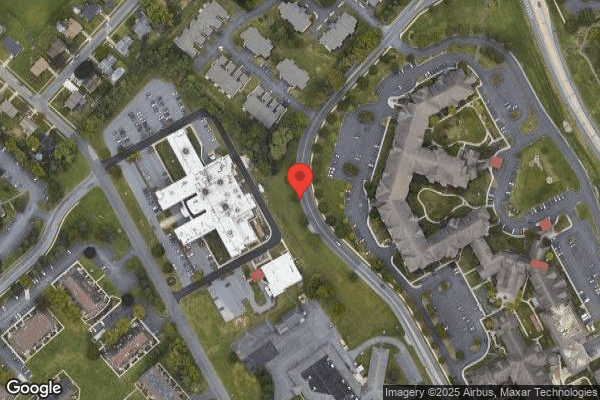
5225 WILSON LANE, MECHANICSBURG, PA 17055 (717) 766-0279
Non profit - Corporation 69 Beds ASBURY COMMUNITIES Data: November 2025
Trust Grade
95/100
#8 of 653 in PA
Last Inspection: November 2024

Within standard 12-15 month inspection cycle. Federal law requires annual inspections.

Overview

Bethany Village Retirement Center has earned a Trust Grade of A+, indicating it is an elite facility in the top tier of care options. It ranks #8 out of 653 nursing homes in Pennsylvania, placing it well within the top 1% of facilities statewide, and is the best option out of 17 in Cumberland County. However, the facility's trend is concerning as the number of issues identified by inspectors has worsened from 2 in 2023 to 8 in 2024. Staffing is generally a strength with a 24% turnover rate, significantly lower than the state average, but the center has less RN coverage than 78% of facilities, which could limit the quality of care. Notably, recent inspector findings included issues such as residents not receiving proper monitoring for weight changes and being prescribed unnecessary psychotropic medications, which highlight some areas needing improvement despite the overall positive rating.

Trust Score
A+
95/100
In Pennsylvania
#8/653
Top 1%
Safety Record
Low Risk
No red flags
Inspections
Getting Worse
2 → 8 violations
Staff Stability
✓ Good
24% annual turnover. Excellent stability, 24 points below Pennsylvania's 48% average. Staff who stay learn residents' needs.
Penalties
✓ Good
No fines on record. Clean compliance history, better than most Pennsylvania facilities.
Skilled Nurses
○ Average
Each resident gets 35 minutes of Registered Nurse (RN) attention daily — about average for Pennsylvania. RNs are the most trained staff who monitor for health changes.
Violations
○ Average
10 deficiencies on record. Average for a facility this size. Mostly minor or procedural issues.
★★★★★
5.0
Overall Rating
★★★★☆
4.0
Staff Levels
★★★★★
5.0
Care Quality
★★★★☆
4.0
Inspection Score
Stable
2023: 2 issues
2024: 8 issues

The Good

  • 4-Star Staffing Rating · Above-average nurse staffing levels
  • 5-Star Quality Measures · Strong clinical quality outcomes
  • Low Staff Turnover (24%) · Staff stability means consistent care
  • Full Sprinkler Coverage · Fire safety systems throughout facility
  • No fines on record
  • Staff turnover is low (24%)

    24 points below Pennsylvania average of 48%

Facility shows strength in staffing levels, quality measures, staff retention, fire safety.

The Bad

Chain: ASBURY COMMUNITIES

Part of a multi-facility chain

Ask about local staffing decisions and management

The Ugly 10 deficiencies on record

Nov 2024 4 deficiencies
CONCERN (D)

Potential for Harm - no one hurt, but risky conditions existed

Free from Abuse/Neglect (Tag F0600)

Could have caused harm · This affected 1 resident

**NOTE- TERMS IN BRACKETS HAVE BEEN EDITED TO PROTECT CONFIDENTIALITY** Based on review of policy review facility provided documents, facility policies and procedures, and interviews with staff and re...

Read full inspector narrative →
**NOTE- TERMS IN BRACKETS HAVE BEEN EDITED TO PROTECT CONFIDENTIALITY** Based on review of policy review facility provided documents, facility policies and procedures, and interviews with staff and residents, it was determined that the facility failed to protect the resident's right to be free from mental abuse and neglect by Employee 3 for one of 21 residents (Resident 34) Findings include: Review of facility policy, Resident Rights-Abuse and Crimes against, revised June 16, 2023, revealed, Residents of [NAME] have a right to be free from abuse, neglect, misappropriation of funds and property, and exploitation as defined below. The abuse, neglect, misappropriation of funds or property, or exploitation of residents by [NAME] associates is strictly prohibited and will result in disciplinary action, up to and including termination of employment. Review of Resident 34's clinical record revealed diagnoses that included difficulty walking (Problems with the joints [such as arthritis], bones [such as deformities], circulation [such as peripheral vascular disease], or even pain can make it difficult to walk properly) and muscle weakness (commonly due to lack of exercise, aging, muscle injury, or pregnancy). Review of Resident 34's care plan revealed a care plan with a focus area of Resident 34 has an ADL (activities of daily living) self-care performance deficit. This care plan has an intervention of: Resident 34 requires maximum assistance by staff for toileting, and Resident 34 requires extensive assistance by 1-2 staff to move between surfaces. Stand lift and 2-staff assist, as needed. Interview with Resident 34 on November 12, 2024, at 9:47 AM, revealed that on November 5, 2024, at 6:00 AM, she rang her call bell to request help going to the bathroom. Employee 3 answered her call bell and, when asked for assistance, responded by refusing to help Resident 34 to the bathroom and telling her to go in her brief. Resident 34 stated that this was humiliating but she did not question Employee 3 because she was afraid. Resident 34 stated that she did not void in her brief and a short time later rang her call bell again, and when Employee 3 entered the room, Resident 34 suggested to Employee 3 that they compromise and Employee 3 assist Resident 34 onto the bedpan. Resident 34 said that Employee 3 agreed to this, helped Resident 34 onto the bedpan, and then Employee 3 sat in the Resident's room next to Resident 34 chewing gum while Resident 34 was on the bedpan. Resident 34 stated that she was unable to void on the bedpan with Employee 3 sitting there and was taken off the bedpan. Resident 34 stated that she later rang the call bell a third time, a different staff member answered, and she was finally taken to the bathroom where she was able to void. Resident 34 stated that later that day she completed a grievance form and turned it in to facility staff. Review of facility provided documents dated November 6, 2024, at 11:30 AM, revealed that when Employee 3 was questioned about the allegations made by Resident 34, she refused to make any statement or tell them what had occurred. Employee 3 was tearful and departed premises. Review of facility investigation, concluded that Employee 3 did not honor Resident 34's choice to use the bathroom, causing the Resident mental anguish. Resident 34 also disclosed that Employee 3 told her she would not take her to the bathroom and angrily responded to Resident 34's request. Therefore, the facility found that the allegations of mental abuse were substantiated. Interview with Nursing Home Administrator on November 14, 2024, at 11:30 AM, revealed that the facility is aware of the alleged abuse by Employee 3 and it should not have occurred. He feels that the facility responded correctly to the incident when made aware and it is unfortunate that Employee 3 took it upon herself to act like this. 28 Pa. Code 201.14(a) Responsibility of licensee 28 Pa. Code 201.18(b)(1) Management 28 Pa. Code 201.18(b)(2) Management 28 Pa. Code 201.18(e)(1) Management
CONCERN (D)

Potential for Harm - no one hurt, but risky conditions existed

Deficiency F0804 (Tag F0804)

Could have caused harm · This affected 1 resident

Based on completion of one meal test tray and resident and staff interviews, it was determined that the facility failed to provide food at appetizing temperatures at one of one meal tested. Findings i...

Read full inspector narrative →
Based on completion of one meal test tray and resident and staff interviews, it was determined that the facility failed to provide food at appetizing temperatures at one of one meal tested. Findings include: Review of facility document, titled Tray/Meal Assessment, dated 2022, read, in part, Resident acceptance is used as a guide as well as consideration to the time the food sits between 135 degrees Fahrenheit (F - a unit of measure), and 41 degrees F. Interview with Resident 34 on November 12, 2024, at 11:30 PM, revealed that she often recieves cold food on her meal tray and has to request that it be reheated. A test tray was completed on November 13, 2024, at 1:26 PM, utilizing a lunch tray served from the steam table in the colonial heights pantry. The test tray was served and placed in a closed food cart approximately two minutes prior to being delivered to the oak lane dining area with other trays to be delivered at that time. The test tray included: cheese quesadilla, sweet potato fries, tomato florentine soup, coffee, and water. Test tray temperatures were taken by Employee 4 (Dining Supervisor) and revealed: Cheese quesadilla was 121.6 degrees F, and tasted cold. Sweet potato fries were 105.8 degrees F, and tasted cold. During an interview with the Nursing Home Administrator on November 13, 2024, at 1:54 PM, the surveyor revealed the concern with the aforementioned test tray items not within appetizing temperatures. No further information was provided. 28 Pa. Code 201.14(a) Responsibility of licensee
CONCERN (E)

Potential for Harm - no one hurt, but risky conditions existed

Quality of Care (Tag F0684)

Could have caused harm · This affected multiple residents

**NOTE- TERMS IN BRACKETS HAVE BEEN EDITED TO PROTECT CONFIDENTIALITY** Based on facility policy review, observations, clinical record review, and staff interviews, it was determined that the facility...

Read full inspector narrative →
**NOTE- TERMS IN BRACKETS HAVE BEEN EDITED TO PROTECT CONFIDENTIALITY** Based on facility policy review, observations, clinical record review, and staff interviews, it was determined that the facility failed to ensure care and services are provided in accordance with professional standards of practice that will meet each resident's physical, mental, and psychosocial needs for three of 21 residents reviewed (Residents 6, 22, and 63). Findings include: Review of facility policy, titled Weight and Height Measurement, last revised December 4, 2023, read, in part, Policy: To define a systematic approach to weighing and determining height for residents in order to facilitate a plan to identify significant weight loss or weight gain. Procedure: In Skilled Nursing, residents' weight will be monitored weekly upon admission/readmission for four weeks and monthly thereafter or as indicated by the resident's condition or physician's order. All weights will be entered into the electronic medical record. Weights should be obtained in consistent circumstances, such as the same time of day and with similar clothing. All data will be reviewed by the Director of Nursing (DON)/designee. Review of Resident 6's clinical record revealed diagnoses that included Alzheimer's Disease (a chronic disorder of the mental processes caused by brain disease, and marked by memory disorders, personality changes, and impaired reasoning) and age-related physical debility. Observation of Resident 6 on November 12, 2024, at 9:56 AM, revealed that the Resident was seated in a broda chair with their legs extended, slightly dangling, and unable to reach the floor. The chair leg rests were noted to be laying on the floor beside Resident 6's chest of drawers. Observation of Resident 6 on November 13, 2024, at 9:38 AM, revealed that the Resident was seated in a broda chair with their legs extended, slightly dangling, and unable to reach the floor. The chair leg rests were noted to be laying on the floor underneath a chair in Resident 6's room. During a staff interview with Employee 1 on November 13, 2024, at 9:41 AM, Employee 1 revealed that this was a temporary chair for Resident 6 and was only to be used for a couple days because Resident 6's normal chair needed some repairs. Employee 1 further indicated that it had been over a week since Resident 6 had been using this temporary chair. Employee 1 said they were told not to use leg rests on the chair because they would be a safety risk if Resident 6 were to slide down in the chair onto the leg rests, the chair could flip over. Employee 1 also said that one day last week they had used a chair to prop Resident 6's legs up on to keep them from hanging down. During a staff interview with the Nursing Home Administrator (NHA) and Director of Nursing (DON) on November 13, 2024, at 1:40 PM, the DON confirmed that Resident 6's normal chair was needing repaired as the chair back would not adjust. She indicated that she had asked maintenance for an update on the chair a few days ago and that she would follow-up with maintenance again. Email communication received from the NHA on November 13, 2024, at 3:11 PM, indicated that the repair part had arrived at the facility that day, the chair had been repaired, Resident 6 has received their normal chair, and the temporary chair was removed from Resident 6's room. Additional email communication received from the NHA on November 14, 2024, at 9:03 AM, indicated that therapy had determined that the temporary chair being utilized for Resident 6 was appropriate and that leg rests were an appropriate nursing measure. The email further indicated that Resident 6's had utilized the temporary chair from November 4-13, 2024. The NHA indicated that he did not know why the leg rests for the temporary chair were not being applied by staff. During a final interview with the NHA and DON on November 14, 2024, at 11:18 AM, the DON indicated that she would expect staff to report any concerns they had with the use of the leg rests while utilizing the temporary chair for Resident 6. Review of Resident 22's clinical record revealed diagnoses that included dysphagia (difficulty swallowing), Alzheimer's disease, and muscle weakness. Review of Resident 22's clinical record revealed she had a weight loss of 13.9 pounds (12%) from September 2, 2024, to October 8, 2024, confirmed by a reweigh. Review of Resident 22's clinical record revealed a dietitian assessment in response to the weight loss on October 10, 2024, with plans to add a nutritional supplement drink and monitor weights. The dietitian assessed Resident 22 again on October 23, 2024, with plans to monitor weights. Review of Resident 22's care plan revealed a focus area for significant weight loss with an intervention for review weights and notify MD and responsible party of significant weight changes, with a start date of May 3, 2024. Further review of Resident 22's clinical record on November 12, 2024, failed to reveal a November 2024 weight measure. During an email correspondence with the NHA and DON on November 12, 2024, at 1:54 PM, the surveyor inquired how often Resident 22 should be getting weighed and if she should have a physician order for weight monitoring. Review of Resident 22's physician orders on November 13, 2024, revealed she had a new order for Monthly Weight and Vital Signs every day shift every 4 weeks on Wednesday on Shower day, with a start date of November 13, 2024, at 7:00 AM, and her weight had been obtained that morning. Review of Resident 22's clinical record revealed her preferred shower schedule is Wednesdays on 7-3 shift. Interview with Employee 6 (Registered Dietitian) on November 13, 2024, at approximately 11:00 AM, she explained her process for notifying the MD of significant weight changes, and that Resident 22 should be on monthly weight monitoring. During an interview with the DON on November 13, 2024, at 1:59 PM, she revealed each resident gets a weight measure obtained monthly per their standing physician orders, unless otherwise specified by the dietitian or physician. The surveyor inquired if Resident 22's weight should have been obtained on the 6th of November, the week prior for consistency purposes, and to capture significant weight changes. The DON replied it should just be done once per month. The surveyor also referenced consistency of time of day and similar clothing per facility policy, and that obtaining weights on random days of the month may not capture significant weight changes from month to month. Further review of Resident 22's clinical record revealed her weight was noted to be obtained while she was in a wheelchair in April 2024, June 2024, July 2024, and August 2024; it was obtained on evening shift instead of day shift in April 2024, July 2024, and October 2024; and it was noted to be obtained sitting (not in wheelchair) in May 2024, September 2024, and October 2024. Interview with Employee 5 (Licensed Practical Nurse) on November 14, 2024, at 11:47 AM, revealed their process on the unit for obtaining monthly weights is on Resident's shower day, they are weighed undressed in the shower chair and by the 7th of each month, for consistency. Review of Resident 22's nurse aide documentation on November 14, 2024, at 10:36 AM, failed to reveal documentation to indicate Resident 22 received a shower on November 6, 2024. During an interview with the DON on November 14, 2024, at 11:06 AM, the surveyor inquired if she could locate documentation to indicate Resident 22 received a shower or refused a shower on November 6, 2024. Follow-up interview with the DON and Employee 5 on November 14, 2024, at 11:47 AM, revealed Resident 22 did get a shower on November 6, 2024, and did get a weight obtained that morning. Employee 5 stated that she forgot to put the weight measure into the electronic health record. During a final interview with the NHA and DON on November 14, 2024, at 12:32 PM, the surveyor revealed the overall concern with inconsistent weight monitoring for Resident 22, including documented use of different scales, different shifts, and missed entry of the November 2024 weight measure into the electronic health record. The DON expressed that weight monitoring has been an issue at the facility. No further information was provided. Review of Resident 63's clinical record revealed diagnoses that included atrial fibrillation (an irregular, often rapid heart rate that commonly causes poor blood flow) and Alzheimer's Disease (a chronic disorder of the mental processes caused by brain disease, and marked by memory disorders, personality changes, and impaired reasoning). Observation of Resident 63 and their room on November 12, 2024, at 10:17 AM, revealed the presence of a pacemaker monitoring device on the top of their chest of drawers. Review of Resident 63's clinical record physician orders, physician services assessments and notes, nurse assessments and notes, and care plan on November 13, 2024, at 9:00 AM, failed to reveal any documentation indicating Resident 63 had a pacemaker. During a staff interview with Employee 2 (Licensed Practical Nurse) on November 13, 2024, at 10:30 AM, Employee 2 indicated that they were not sure if Resident 63 had a pacemaker but confirmed that the device on Resident 6's chest of drawers was a pacemaker monitoring device. Employee 2 pressed the display screen on the monitor, which indicated a green checkmark and a date of 10/1/2024. Employee 2 said the checkmark would indicate that a check was successfully completed, and the date indicated when the pacemaker check was last completed. A follow-up review of Resident 63's clinical record on November 13, 2024, at 1:15 PM, revealed a nurse note dated November 13, 2024, at 12:04 PM, that indicated that facility staff had spoken with Resident 63's daughter, and she confirmed that Resident 63 had a pacemaker. Resident 63's daughter indicated that she had brought the monitor in but not when she first moved in. The note indicated that the daughter was not sure if she had spoken to a nurse about the pacemaker monitor, but that she checks it when she visits to make sure that it is plugged in and working. The note also indicated that the daughter said that she receives the reports from the automatic checks that are completed and confirmed that she had not brought any of these reports in and given them to the nurse. The note indicated that the nurse had asked the daughter to bring in these reports and the daughter agreed to do so when she was able. During a staff interview with the NHA and DON on November 13, 2024, at 1:52 PM, the DON confirmed that the facility was not aware that the Resident had a pacemaker until today. Email communication received from the DON on November 13, 2024, at 5:13 PM, indicated that she could not find any documentation of Resident 63 having a pacemaker, confirmed that they were not aware that Resident 63 had a pacemaker, and the daughter had brought in a monitoring device without notifying anyone. The DON provided two electrocardiogram (EKG- a quick test to check the heartbeat which records the electrical signals in the heart) reports for Resident 63 dated July 26, 2024, and August 7, 2024, which were both ordered and reviewed by their primary care physician. During a final staff interview with the NHA and DON on November 14, 2024, at 11:20 AM, the DON indicated that she could not confirm when Resident 63's daughter brought the pacemaker monitor into the facility. The DON also shared that Resident 63's pacemaker was not visible but was located after palpation. The DON indicated that the facility was not aware of what cardiology office would be completing the automatic pacemaker checks as Resident 63 has not had any cardiology appointments since she was admitted on [DATE]. The DON indicated that the facility would continue to follow-up. The DON indicated she could not answer as to whether staff should have seen the monitor. 28 Pa. Code 201.18(b)(1) Management 28 Pa. Code 211.10(c)(d) Resident Care Policies 28 Pa. Code 211.12(c)(d)(1)(2)(3)(5) Nursing Services
CONCERN (E)

Potential for Harm - no one hurt, but risky conditions existed

Medication Errors (Tag F0758)

Could have caused harm · This affected multiple residents

Based on facility policy review, clinical record review, and staff interview, it was determined that the facility failed to ensure that residents were free of unnecessary psychotropic medications for ...

Read full inspector narrative →
Based on facility policy review, clinical record review, and staff interview, it was determined that the facility failed to ensure that residents were free of unnecessary psychotropic medications for one of five residents reviewed (Resident 63). Findings include: Review of facility policy, titled IIIB2: Medication Management, dated July 1, 2023, revealed, in part, c. PRN [as needed] orders for antipsychotic drugs are limited to 14 days without exception. If the attending physician or prescribing practitioner wishes to continue a PRN antipsychotic drug beyond 14 days, the attending physician or prescribing practitioner must first perform an in-person evaluation of the resident and then write a new order. Review of Resident 63's clinical record revealed diagnoses that included Alzheimer's Disease (a chronic disorder of the mental processes caused by brain disease, and marked by memory disorders, personality changes, and impaired reasoning), anxiety disorder (a mental health disorder characterized by feelings of worry, anxiety, or fear that are strong enough to interfere with one's daily activities), and delusional disorder (a mental health condition in which a person cannot tell what is real from what is imagined). Review of Resident 63's current physician orders revealed an order for haloperidol (an antipsychotic medication used to treat psychosis, a collection of symptoms that affect your ability to tell what is real and what is not) powder gel 0.5 mg (milligrams)/1 ml (milliliters) apply to skin topically every 12 hours as needed for dementia with aggression, dated October 11, 2024, with no duration indicated; and lorazepam (a medication used to treat anxiety) gel 0.5 mg/ml apply 1 ml topically three times a day for agitation, dated September 27, 2024. Review of Resident 63's Psychotropic Consent Form dated March 22, 2024, failed to include haloperidol or lorazepam. Review of Resident 63's physician order history revealed that they were originally ordered haloperidol on May 8, 2024, and originally ordered lorazepam on April 1, 2024. Review of 63's clinical record failed to reveal any documentation that Resident 63's Representative had received education on the risks versus benefits of haloperidol or lorazepam and gave consent for the use of these medications. Review of Resident 63's physician order history revealed that the original haloperidol order dated May 8, 2024, did not include a 14 day stop date, and was continued until June 3, 2024. Review of Resident 63's physician order history revealed that there was a haloperidol order dated September 11, 2024, which did not include a 14 day stop date, and was continued until October 11, 2024. Review of Resident 63's clinical record progress notes failed to reveal any documentation that their physician performed an in-person evaluation on September 11, 2024. During a staff interview with the Nursing Home Administrator (NHA) and Director of Nursing on November 14, 2024, at 11:33 AM, the NHA confirmed that the facility had no additional documentation to provide that Resident 63's Representative received education of risks versus benefits of haloperidol or lorazepam and gave consent for the use of these medications prior to their use. He indicated that he would expect the education be provided and consent obtained before medications were administered. The NHA also confirmed that a 14 day stop date should have been given with every renewed order for the haloperidol, and that Resident 63 should have had an in-person evaluation by their physician prior to renewing the haloperidol order on September 11, 2024. 28 Pa. Code 201.18(b)(1) Management 28 Pa. Code 211.10(d) Resident Care Policies 28 Pa. Code 211.12(d)(1)(2)(3)(5) Nursing services
Jan 2024 4 deficiencies
CONCERN (D)

Potential for Harm - no one hurt, but risky conditions existed

Assessment Accuracy (Tag F0641)

Could have caused harm · This affected 1 resident

Based on clinical record review and staff interviews, it was determined that the facility failed to ensure the assessment accurately reflects the resident's status for one of 20 residents reviewed (Re...

Read full inspector narrative →
Based on clinical record review and staff interviews, it was determined that the facility failed to ensure the assessment accurately reflects the resident's status for one of 20 residents reviewed (Resident 28). Findings include: Review of Resident 28's clinical record revealed diagnoses that included pain and unsteadiness on feet. Review of Resident 28's Quarterly Minimum Data Set (MDS-a tool used to assess all care areas specific to the resident), with an Assessment Reference Date of December 8, 2023, revealed under Section J 1900 the Resident had a fall with a major injury since admission/entry or reentry or prior MDS. Review of Resident 28's clinical record revealed a fall dated September 13, 2023. According to the investigation, Resident 28 was found on the floor in her room and stated she fell out of her chair but didn't remember how. Review of Resident 28's progress notes revealed the following documentation, At several points during the shift resident displayed no s/s [signs and symptoms] of any discomfort but as soon as she was asked about her fall she would change her demeanor and state that she was having pain. Approximately 1200 resident stated she was having chest pain again and also stated 'I probably broke a couple of my ribs'. Although no swelling/bruising noted MD ordered CXR [chest x-ray] to rule out injury. Review of the Radiology Report dated September 13, 2023, revealed, in part, There may be residuals of subacute minimally displaced fracture of the sternum. The sternum is a partially T-shaped, vertical bone that forms the anterior portion of the chest wall centrally. An interview with Employee 3 (Resident Nurse Assessment Coordinator) on January 11, 2024, at 10:35 AM, revealed she had not completed the MDS assessment in question and explained Resident 28 had no major injury as documented on the MDS, but instead had a history of possible fracture as noted on the radiology report. An additional interview with Employee 3 revealed the MDS was coded incorrectly and she would be completing a modification of the assessment. An interview with the Director of Nursing on January 11, 2024, at 11:02 AM, revealed Resident 28 had no major injury or fracture from the fall on September 13, 2023, and confirmed the MDS had been coded incorrectly. 28 Pa. Code 211.12 (d) (5) Nursing services
CONCERN (D)

Potential for Harm - no one hurt, but risky conditions existed

Respiratory Care (Tag F0695)

Could have caused harm · This affected 1 resident

Based on facility policy review, observations, and staff interviews, it was determined that the facility failed to maintain oxygen equipment in a sanitary manner for one of 20 residents reviewed (Resi...

Read full inspector narrative →
Based on facility policy review, observations, and staff interviews, it was determined that the facility failed to maintain oxygen equipment in a sanitary manner for one of 20 residents reviewed (Resident 43). Findings include: Review of facility policy, titled Oxygen Therapy, last revised December 4, 2023, revealed When masks and cannulas are not in use, place in clean plastic bag attached to the concentrator and off the floor. Review of Resident 43's clinical record revealed diagnoses that included Chronic obstructive pulmonary disease (COPD - a group of lung diseases that block airflow and make it difficult to breathe), dementia (a chronic disorder of the mental processes caused by brain disease, marked by memory disorders, personality changes, and impaired reasoning), and hypertension (high blood pressure). Review of Resident 43's physician orders revealed an order for O2 (oxygen) at 2 L/m (liters/minute- unit of measure) by shift, with a start date of February 24, 2023. Review of Resident 43's MAR (Medication Administration Record- documentation for medication/treatment administered or monitored) revealed he last received a nebulizer treatment on December 28, 2023, at 10:35 PM. Observation in Resident 43's room on January 8, 2023, at 11:00 AM, revealed his oxygen tubing that was attached to his concentrator was wrapped around his enabler bar on his bed, it was dated January 7, 2024, and there was an oxygen mask laying out on his bedside table. Observation in Resident 43's room on January 9, 2023, at 10:28 AM, revealed his oxygen tubing that was attached to his concentrator was wrapped around his enabler bar on his bed, it was dated January 7, 2024, and there was an oxygen mask laying out on his bedside table. Interview with Employee 4 (Licensed Practical Nurse) on January 10, 2024, at 10:30 AM, revealed Resident 43 typically sits up in his chair during the day with an oxygen tank, and at night he goes back to bed and uses the oxygen in his room. During an interview with the Director of Nursing on January 10, 2024, at 10:58 AM, she revealed that Resident 43 last received a nebulizer treatment through an oxygen mask on December 28, 2023, and she would expect Resident 43's oxygen tubing and mask in his room to be stored per facility policy, and changed before being placed back on the Resident. 28 Pa. Code 211.12(d)(5) Nursing services
CONCERN (D)

Potential for Harm - no one hurt, but risky conditions existed

Garbage Disposal (Tag F0814)

Could have caused harm · This affected 1 resident

Based on facility policy review, observation, and staff interviews, it was determined that the facility failed to ensure that garbage and refuse was disposed of properly, and sanitary conditions were ...

Read full inspector narrative →
Based on facility policy review, observation, and staff interviews, it was determined that the facility failed to ensure that garbage and refuse was disposed of properly, and sanitary conditions were maintained in the garbage storage area for one of one dumpster observed. Findings include: Review of facility policy, titled Sanitation & Infection Control Garbage and Refuse Disposal, dated January 2016, revealed All garbage, refuse, glass, tin cans, cardboard, paper, etc. generated within the Food & Nutrition Services Department shall be disposed of in a sanitary manner .Dumpster lids shall be closed at all times. Area around dumpsters shall be free of waste products including food, medical, paper trash and other waste to prevent harborage and feeding of pests. All parties utilizing the dumpsters for waste and/or recycling purposes are responsible for maintaining the area by ensuring that the dumpster lids are closed and the area around the dumpster is free of waste. Observation of the receiving dock area dumpster on January 8, 2024, at 9:46 AM, revealed the dumpster lids were open and there was food, paper, and other refuse waste surrounding the front of the dumpster. Interview with Employee 2 (Maintenance Director) on January 10, 2024, at 9:21 AM, revealed the receiving dock should be cleaned daily and it has been difficult between housekeeping, dietary, and maintenance to keep the area clean on a daily basis. Interview with the Nursing Home Administrator on January 11, 2024, at 10:45 AM, revealed it is his expectation that the dumpster lids should be kept closed and areas around the dumpster should be clean and free of waste. 28 Pa. Code: 201.18 (b)(3) Management
CONCERN (E)

Potential for Harm - no one hurt, but risky conditions existed

Food Safety (Tag F0812)

Could have caused harm · This affected multiple residents

Based on facility policy reviews, observations, and staff interviews, it was determined that the facility failed to store food, beverages, and nutritional supplements in accordance with professional s...

Read full inspector narrative →
Based on facility policy reviews, observations, and staff interviews, it was determined that the facility failed to store food, beverages, and nutritional supplements in accordance with professional standards for food service safety in the main kitchen, four of four nourishment areas, and two of three medication storage areas. Findings include: Review of facility policy, titled Food Product Shelf-Life Guidelines, last revised January 28, 2022, revealed, Manufacturer/supplier code dates, use by dates, use thru dates, or expires on dates should always be considered the first level of control .products with a 'Sell By', Best By or (Before) or 'Use-By': Adhere to that date for quality reasons. Further review of the aforementioned policy revealed that butter should be kept refrigerated or frozen. Review of facility policy, titled Labeling and Dating Guide, last revised June 17, 2017, revealed, all juices have a use by date of three days or by expiration date. Observation of the walk-in refrigerator on January 8, 2024, at 9:53 AM, revealed: one bag of shredded red cabbage not dated; and four packs of margarine not dated. Observation in walk-in freezer on January 8, 2024, at 9:56 AM, revealed: three bags of onion rings not dated; one bag of sausage links not dated; and one piping bag of whipped topping not dated. Observation during initial tour of the Colonial Park pantry area refrigerator on January 8, 2024, at 10:12 AM, revealed: one container of apple juice, red colored beverage, orange juice, and cranberry juice all not labeled or dated; and one container of thickened cranberry juice labeled with a use by date of January 5, 2024. Further observation of the Colonial Park pantry area on January 8, 2024, at 10:15 AM, revealed: one open pack of hot dog buns not dated; four packs of English muffins not dated; one shelf of individual boxed cereals all not labeled with use by dates; one bin of individual jelly packets labeled use by January 6, 2024; one bin of oatmeal packets labeled use by January 4, 2024; and one bin of individual butter packets not dated and left out at room temperature. Observation during initial tour of the Oak Lane pantry area refrigerator on January 8, 2024, at 10:21 AM, revealed one bin of individual creamer packets not dated. Further observation of the Oak Lane pantry area on January 8, 2024, at 10:23 AM, revealed: four packs of individual cookies labeled use by January 4, 2024. Observation during initial tour of the Oak Terrace pantry area refrigerator on January 8, 2024, at 10:26 AM, revealed one container of apple juice, red colored beverage, orange juice, and cranberry juice all not labeled or dated. Observation during initial tour of the Oak View pantry area on January 8, 2024, at 10:28 AM, revealed: one bin of individual butter packets not dated and left out at room temperature; one bin of individual jellies not dated; and one bin of individual crackers not dated. Interview with the Employee 1 (Food Service Director) on January 8, 2024, at 10:32 AM, revealed it is his expectation that expired items are discarded, food and beverages are labeled and dated per facility policy, and food items are stored in accordance with professional standards. Interview with the Nursing Home Administrator (NHA) on January 9, 2024, at 10:41 AM, revealed it is the facility's expectation that expired items are discarded, foods items are labeled and dated per facility policy, and food items are stored in accordance with professional standards. Observation of the Oak View/Oak Place medication room refrigerator on January 10, 2024, at 11:09 AM, revealed: 23 cartons of Ensure Plus protein supplement dated January 1, 2024. Observation of the Oak Lane medication room refrigerator on January 10, 2024, at 11:16 AM, revealed: two cartons of Ensure Clear therapeutic nutrition supplement dated January 1, 2023; and one opened container of thickened lemon water with a best by date of July 12, 2023. Email correspondence with the NHA on January 11, 2024, at 9:06 AM, revealed that he spoke with the manufacturer and the dates on the packaging are use by dates. He further revealed, we have posted the attached [document] and updated the stockroom manager and nurses for awareness. Ensure has been difficult to get nationally and in short supply but we should not be holding on to it. During a follow-up interview with the NHA on January 11, 2024, at 10:35 AM, he revealed the guidelines for stocking supplements have been posted and staff has been educated. 28 Pa. Code 211.6(f) Dietary services
Jan 2023 2 deficiencies
CONCERN (E)

Potential for Harm - no one hurt, but risky conditions existed

Comprehensive Care Plan (Tag F0656)

Could have caused harm · This affected multiple residents

Based on observation, clinical record review, interview, and policy review, it was determined that the facility failed to develop and implement a comprehensive person-centered care plan for each resid...

Read full inspector narrative →
Based on observation, clinical record review, interview, and policy review, it was determined that the facility failed to develop and implement a comprehensive person-centered care plan for each resident, consistent with the resident rights and included measurable objectives to meet a resident's medical needs for four of 20 residents reviewed (Residents 14, 21, 23, and 55) Findings include: Review of the facility's policy, titled Comprehensive Care Plan recently revised July 2022, reads in part All residents will have a current comprehensive resident centered care plan developed by the interdisciplinary team to reflect resident strengths, needs, goals . The policy continues, The care plan incorporates the resident's strengths and abilities as well as areas requiring support. Enabler bars are described as devices attached to Resident beds with the intent or purpose to promote and/or maintain independence, comfort, and safety. Enabler bars and/or side rails are also used facilitate movement and may reduce the risk of pressure ulcer development. Review of Resident 14's clinical record revealed diagnoses that include adult failure to thrive (a decline seen in older adults - typically those with multiple chronic medical conditions - resulting in a downward spiral of poor nutrition, weight loss, inactivity, depression, and decreasing functional ability) and cerebral infarction (a result of disrupted blood flow to the brain due to problems with the blood vessels that supply it). Observation of Resident 14 on January 3, 2023, at 10:45 AM, revealed that Resident 14's bed had bilateral enabler bars. Review of Resident 14's care plan on January 3, 2023, failed to reveal any care planning for the Resident's use of enabler bars. During a staff interview with the Nursing Home Administrator (NHA) on January 5, 2022, at 11:36 AM, revealed that Resident 14 did not have a care plan for enabler bars. Review of Resident 21's clinical record revealed diagnoses that included chronic pain and abnormalities in gait (a person's manner in walking) and mobility (the ability to move or be moved freely and easily). An observation in Resident 21's room, on January 3, 2023, at 9:50 AM, revealed bilateral enabler bars attached to the Resident's bed. Review of Resident 21's interdisciplinary plan of care revealed none developed to address the Resident's assessed need for the use of the enabler bars attached to the bed. Review of Resident 23's clinical record revealed diagnoses that included muscle weakness and pain. An observation in Resident 23's room, on January 3, 2023, at 9:52 AM, revealed bilateral enabler bars attached to the Resident's bed. Review of Resident 23's interdisciplinary plan of care revealed none developed to address the Resident's assessed need for the use of the enabler bars attached to the bed. Review of Resident 55's clinical record revealed diagnoses that included muscle weakness (happens when your full effort doesn't produce a normal muscle contraction or movement) and paranoid personality disorder (a mental health condition marked by a pattern of distrust and suspicion of others without adequate reason to be suspicious). Observation of Resident 55's on January 3, 2023, at 11:40 AM, revealed that the Resident 55's bed had bilateral enabler bars. Review of Resident 55's care plan on January 3, 2023, failed to reveal any care planning for the Resident's use of enabler bars. An interview with the Director of Nursing, on January 5, 2023, at 10:58 AM, revealed staff inconsistencies with documentation of enabler bars on Resident care plans. During a staff interview with the NHA on January 5, 2022, at 11:36 AM, revealed that Resident 55 did not have a care plan for enabler bars. 28 Pa. Code 211.5 (f) Clinical records 28 Pa. Code 211.11 (d) Resident care plan
CONCERN (E)

Potential for Harm - no one hurt, but risky conditions existed

Food Safety (Tag F0812)

Could have caused harm · This affected multiple residents

Based on observation, review of facility policy, and interview, it was determined that the facility failed to store/serve food, eating utensils, cups, and plastic ware in accordance with professional ...

Read full inspector narrative →
Based on observation, review of facility policy, and interview, it was determined that the facility failed to store/serve food, eating utensils, cups, and plastic ware in accordance with professional standards for food safety in two of two kitchenettes, two of two pantries, one activity room, and the main kitchen. Findings include: Review of facility policy, titled Cleaning Schedules dated January 2016, indicated the following: Daily Pantry Checklist: Microwave, juice machine, coffee machine, and refrigerators are cleaned and sanitized (including door gaskets). Review of facility provided document, titled Weekly Cleaning Assignments, indicated the following: Monday: Area of Focus: Refrigerators: clean all shelving units and inside drawers Tuesday: Area of Focus: Pantry cabinets and drawers. remove all items and clean inside and outside Thursday: Area of Focus: Freezers. Remove all items from the freezer and defrost freezer unit. Clean and sanitize freezer unit. Review of facility policy, titled Section 11: Sanitation and Infection Control-Labeling and Dating dated January 2016, indicated that all foods are labeled, dated, and securely covered, and use by dates are monitored and followed. Review of facility policy, titled D-10 Storage of Soiled Linens, Clean Equipment, and Utensils dated April 1, 2022, indicated clean utensils must be stored in a clean, dry location, where they are not exposed to splash, dust, or contamination. Review of facility policy, titled D-11 Kitchen Tableware Dated April 1, 2022, indicated the following: single service and cleaned/sanitized utensils must be handled, displayed, and dispensed so that the contamination of food and lip contact surfaces is prevented; knives, forks, and spoons, that are not pre-wrapped, must be presented so that only the handles are touched by employees and by consumers if consumer self-service is provided. Observation of the main kitchen on January 3, 2023, at approximately 9:25 AM, revealed the following: three metal containers of mixed berries that were not covered and not labeled with name and date in the salad area reach-in cooler; a 16-ounce container of plain yogurt with manufacturer use by date of January 2, 2023, in the walk-in cooler; and a bag of frozen meatballs in an opened plastic bag inside of a metal bin, partially covered with aluminum foil with a corner pulled back, exposing the meatballs to the air. During an interview with Employee 2 (Dining Services Director), on January 3, 2023, at approximately 9:30 AM, Employee 2 confirmed that the yogurt should have been discarded and that the meatballs should have been completely covered. Observation of Americana Kitchenette on January 4, 2023, at 10:05 AM, revealed the following: eight stacks of three clear plastic tumblers stacked together with condensation noted inside tumblers; a bin of specialty cups with two cups noted to be stored upright and uncovered, exposing inside surface of the cup to the air; plastic spoons, forks, and knives lying flat in an uncovered bin with eating surfaces exposed to air; plastic lids stored uncovered in a plastic bin with debris noted in the plastic bin; a stack of approximately 10 plastic cup lids that were uncovered and laying directly on a storage cart with visible debris; microwave was noted with visible food debris on the inside; resident refrigerator was noted to have food debris; and the freezer of the resident refrigerator was noted to have a brown substance spilled throughout. Observation of Oak Lane Pantry on January 4, 2023, at approximately 10:15 AM, revealed the following: a brown substance in drawer where approximately 15 lids were stored uncovered directly near the brown substance; and microwave with heavy food debris noted on the inside. Observation of Colonial Pantry on January 4, 2023, at approximately 10:20 AM, revealed the following: microwave with food debris noted on inside; plastic forks, spoons, and knives stored inside a drawer in plastic bins that had visual debris noted; and the refrigerator and freezer were noted to have loose food debris. During an interview with Employee 1 (Registered Dietician), on January 4, 2023, at 10:40 AM, Employee 1 confirmed that the cups should not be stacked together when wet, the specialty cups should be stored upside down, and that the plastic eating utensils and lids should not be stored out in the open. Nursing Home Administrator (NHA) and Director of Nursing (DON) were notified of the above concerns on January 4, 2023, at 11:01 AM. An additional observation tour was conducted on January 4, 2023, at 11:19 AM, with Employee 1 and Employee 2 to show all concerns identified. Employee 2 also confirmed that the cups should not have been stacked when wet and that the plastic eating utensils and cup lids should have been covered. Employee 1 confirmed that the berries that were in the main kitchen reach-in refrigerator that were unlabeled and undated should have been labeled and covered and that these were on the menu for the skilled nursing facility menu. Observation on January 5, 2023, at 9:45 AM, of Oak Terrace Activity Room revealed the following: microwave had noted food debris on the inside; refrigerator with food debris noted; and freezer had red colored liquid debris noted in bottom and two individual cups of Lactaid (lactose intolerant) ice cream that were not dated. Observation of Oak Terrace Kitchenette January 5, 2023, at 10:22 AM, revealed the microwave had food debris noted on the inside. During an interview on January 5, 2023, at approximately 10:40 AM, NHA and DON were made aware of all the concerns identified above. NHA confirmed that he would expect food items to be labeled and dated according to policy, utensils and cups to be stored appropriately and according to policy, and refrigerators and microwaves to be cleaned according to facility policy. 28 Pa code 211.6(b)(d) - Dietary Services
Understanding Severity Codes (click to expand)
Life-Threatening (Immediate Jeopardy)
J - Isolated K - Pattern L - Widespread
Actual Harm
G - Isolated H - Pattern I - Widespread
Potential for Harm
D - Isolated E - Pattern F - Widespread
No Harm (Minor)
A - Isolated B - Pattern C - Widespread

Questions to Ask on Your Visit

  • "Can I speak with families of current residents?"
  • "What's your RN coverage like on weekends and overnight?"

Our Honest Assessment

Strengths
  • • Grade A+ (95/100). Above average facility, better than most options in Pennsylvania.
  • • No major safety red flags. No abuse findings, life-threatening violations, or SFF status.
  • • No fines on record. Clean compliance history, better than most Pennsylvania facilities.
  • • 24% annual turnover. Excellent stability, 24 points below Pennsylvania's 48% average. Staff who stay learn residents' needs.
Concerns
  • • No significant concerns identified. This facility shows no red flags across CMS ratings, staff turnover, or federal penalties.
Bottom line: Generally positive indicators. Standard due diligence and a personal visit recommended.

About This Facility

What is Bethany Village Retirement Center's CMS Rating?

CMS assigns BETHANY VILLAGE RETIREMENT CENTER an overall rating of 5 out of 5 stars, which is considered much above average nationally. Within Pennsylvania, this rating places the facility higher than 99% of the state's 100 nursing homes. This rating reflects solid performance across the metrics CMS uses to evaluate nursing home quality.

How is Bethany Village Retirement Center Staffed?

CMS rates BETHANY VILLAGE RETIREMENT CENTER's staffing level at 4 out of 5 stars, which is above average compared to other nursing homes. Staff turnover is 24%, compared to the Pennsylvania average of 46%. This relatively stable workforce can support continuity of care.

What Have Inspectors Found at Bethany Village Retirement Center?

State health inspectors documented 10 deficiencies at BETHANY VILLAGE RETIREMENT CENTER during 2023 to 2024. These included: 10 with potential for harm.

Who Owns and Operates Bethany Village Retirement Center?

BETHANY VILLAGE RETIREMENT CENTER is owned by a non-profit organization. Non-profit facilities reinvest revenue into operations rather than distributing to shareholders. The facility is operated by ASBURY COMMUNITIES, a chain that manages multiple nursing homes. With 69 certified beds and approximately 66 residents (about 96% occupancy), it is a smaller facility located in MECHANICSBURG, Pennsylvania.

How Does Bethany Village Retirement Center Compare to Other Pennsylvania Nursing Homes?

Compared to the 100 nursing homes in Pennsylvania, BETHANY VILLAGE RETIREMENT CENTER's overall rating (5 stars) is above the state average of 3.0, staff turnover (24%) is significantly lower than the state average of 46%, and health inspection rating (4 stars) is above the national benchmark.

What Should Families Ask When Visiting Bethany Village Retirement Center?

Based on this facility's data, families visiting should ask: "Can I visit during a mealtime to observe dining assistance and food quality?" "How do you handle medical emergencies, and what is your hospital transfer rate?" "Can I speak with family members of current residents about their experience?"

Is Bethany Village Retirement Center Safe?

Based on CMS inspection data, BETHANY VILLAGE RETIREMENT CENTER has a clean safety record: no substantiated abuse findings (meaning no confirmed cases of resident harm), no Immediate Jeopardy citations (the most serious violation level indicating risk of serious injury or death), and is not on the Special Focus Facility watch list (a federal program monitoring the lowest-performing 1% of nursing homes). The facility has a 5-star overall rating and ranks #1 of 100 nursing homes in Pennsylvania. While no facility is perfect, families should still ask about staff-to-resident ratios and recent inspection results during their visit.

Do Nurses at Bethany Village Retirement Center Stick Around?

Staff at BETHANY VILLAGE RETIREMENT CENTER tend to stick around. With a turnover rate of 24%, the facility is 21 percentage points below the Pennsylvania average of 46%. Low turnover is a positive sign. It means caregivers have time to learn each resident's needs, medications, and personal preferences. Consistent staff also notice subtle changes in a resident's condition more quickly. Registered Nurse turnover is also low at 9%, meaning experienced RNs are available to handle complex medical needs.

Was Bethany Village Retirement Center Ever Fined?

BETHANY VILLAGE RETIREMENT CENTER has no federal fines on record. CMS issues fines when nursing homes fail to meet care standards or don't correct problems found during inspections. The absence of fines suggests the facility has either maintained compliance or corrected any issues before penalties were assessed. This is a positive indicator, though families should still review recent inspection reports for the full picture.

Is Bethany Village Retirement Center on Any Federal Watch List?

BETHANY VILLAGE RETIREMENT CENTER is not on any federal watch list. The most significant is the Special Focus Facility (SFF) program, which identifies the bottom 1% of nursing homes nationally based on persistent, serious quality problems. Not being on this list means the facility has avoided the pattern of deficiencies that triggers enhanced federal oversight. This is a positive indicator, though families should still review the facility's inspection history directly.