MESSIAH LIFEWAYS AT MESSIAH VILLAGE
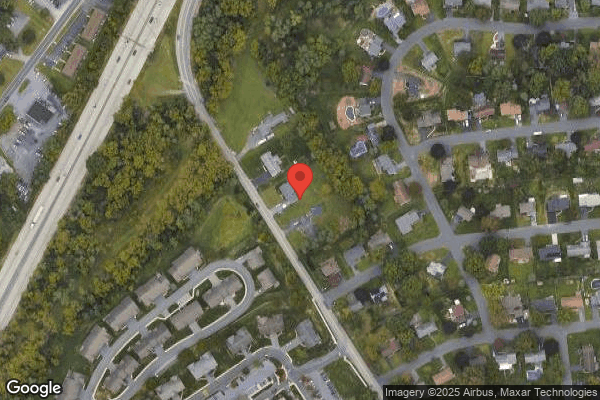
100 MOUNT ALLEN DRIVE, MECHANICSBURG, PA 17055 (717) 697-4666
Non profit - Church related 118 Beds Independent Data: November 2025
Trust Grade
88/100
#85 of 653 in PA
Last Inspection: August 2025

Inspected within the last 6 months. Data reflects current conditions.

Overview

Messiah Lifeways at Messiah Village in Mechanicsburg, Pennsylvania, has a Trust Grade of B+, indicating it is above average and recommended for families considering care options. It ranks #85 out of 653 facilities statewide, placing it in the top half of Pennsylvania nursing homes, and #3 out of 17 in Cumberland County, meaning there are only two local options better. The facility's trend is stable, with the same number of issues reported in both 2023 and 2025, suggesting consistent performance. Staffing is a strong point here, boasting a 5/5 star rating, though the turnover rate is average at 47%. However, the facility has faced a few concerns, including inadequate disinfection of glucometers, improper food storage practices, and inaccurate resident assessments, which highlight areas needing improvement despite their overall strengths.

Trust Score
B+
88/100
In Pennsylvania
#85/653
Top 13%
Safety Record
Low Risk
No red flags
Inspections
Holding Steady
2 → 2 violations
Staff Stability
⚠ Watch
47% turnover. Above average. Higher turnover means staff may not know residents' routines.
Penalties
✓ Good
$8,018 in fines. Lower than most Pennsylvania facilities. Relatively clean record.
Skilled Nurses
✓ Good
Each resident gets 70 minutes of Registered Nurse (RN) attention daily — more than 97% of Pennsylvania nursing homes. RNs are the most trained staff who catch health problems before they become serious.
Violations
✓ Good
Only 5 deficiencies on record. Cleaner than most facilities. Minor issues only.
★★★★★
5.0
Overall Rating
★★★★★
5.0
Staff Levels
★★★★☆
4.0
Care Quality
★★★★☆
4.0
Inspection Score
Stable
2023: 2 issues
2025: 2 issues

The Good

  • 5-Star Staffing Rating · Excellent nurse staffing levels
  • 4-Star Quality Measures · Strong clinical quality outcomes
  • Full Sprinkler Coverage · Fire safety systems throughout facility
  • No fines on record

Facility shows strength in staffing levels, quality measures, fire safety.

The Bad

Staff Turnover: 47%

Near Pennsylvania avg (46%)

Higher turnover may affect care consistency

Federal Fines: $8,018

Below median ($33,413)

Minor penalties assessed

The Ugly 5 deficiencies on record

Aug 2025 2 deficiencies
CONCERN (D)

Potential for Harm - no one hurt, but risky conditions existed

Assessment Accuracy (Tag F0641)

Could have caused harm · This affected 1 resident

**NOTE- TERMS IN BRACKETS HAVE BEEN EDITED TO PROTECT CONFIDENTIALITY** Based on clinical record review and staff interview, it was determined that the facility failed to ensure that the resident asse...

Read full inspector narrative →
**NOTE- TERMS IN BRACKETS HAVE BEEN EDITED TO PROTECT CONFIDENTIALITY** Based on clinical record review and staff interview, it was determined that the facility failed to ensure that the resident assessment accurately reflected the resident's status for two of 25 residents reviewed (Residents 2 and 3).Findings Include: Review of Resident 2's clinical record revealed diagnoses that included chronic kidney disease (CKD - a condition where the kidneys gradually lose their ability to filter waste products from the blood) and anxiety disorder (excessive fear and worry that are difficult to control and interfere with daily life).Review of Resident 2's Quarterly MDS (Minimum Data Set is part of federally mandated process for clinical assessment of all Medicare and Medicaid certified nursing homes) dated June 5, 2025, revealed that Section J1900. Number of Falls Since Admission/Entry or Reentry or Prior Assessment (C. Number of falls since admission or Prior assessment - Major injury) was marked one, indicating Resident 2 had a fall with major injury during the look back period.Review of Resident 2's clinical record revealed they had a fall on May 31, 2025, that resulted with no injuries, and a fall on May 12, 2025, that resulted with a minor injury. Review of Resident 3's clinical record revealed diagnoses that included CKD and anxiety disorder.Review of Resident 3's Quarterly MDS dated [DATE], revealed section N0415. High-risk drug classes: use and indication (C. Antidepressant) is marked Yes, indicating Resident 3 was administered an antidepressant medication during the look back period. Review of Resident 3's current physician orders revealed Resident 3 was not currently receiving any antidepressant medications. Further review of Resident 3's discontinued medications revealed that Resident 3 was prescribed Sertraline 50 milligrams by mouth daily for major depressive disorder, however, that was discontinued on May 3, 2023.During an interview with the Nursing Home Administrator on August 28, 2025, at approximately 1:00 PM, it was revealed that Resident 2's fall MDS was marked in error, and was corrected, as well as Resident 3's antidepressant MDS was marked in error and was corrected; and that she would have expected them to have been completed accurately. 28 Pa. Code 211.5(f) Clinical records.28 Pa Code 211.12 (d)(3)(5) Nursing Services.
CONCERN (E)

Potential for Harm - no one hurt, but risky conditions existed

Infection Control (Tag F0880)

Could have caused harm · This affected multiple residents

Based on observation, policy review, staff interviews, and review of glucometer manufacturer's guidelines, it was determined that the facility failed to provide a safe and sanitary environment that su...

Read full inspector narrative →
Based on observation, policy review, staff interviews, and review of glucometer manufacturer's guidelines, it was determined that the facility failed to provide a safe and sanitary environment that supports infection prevention and control regarding use of glucose meter (a medical device for determining the approximate concentration of glucose in the blood) disinfection for one of five nursing units. Findings include: A review of the facility policy, titled Obtaining Blood Glucose Level and Disinfecting Glucometer, last reviewed January 28, 2025, stated, use of one of the following manufacturer-approved EPA (Environmental Protection Agency)-registered disinfectant wipes or a 70% isopropyl alcohol swab to wipe down the entire surface of the glucometer. A review of the manufacturer's guidelines for the facility's brand of glucometer stated, Cleaning can be accomplished by wiping the meter down with soap and water or isopropyl alcohol but will not disinfect a meter. The manufacturer's guidelines referenced Centers for Disease Control as their resource for blood glucose monitoring safety. During an interview with Employee 1 (Registered Nurse) the Employee was asked to review her process after using the glucometer on a resident. Employee 1 stated the following, after leaving the residents room and while walking down the hall, I wipe the glucometer down with alcohol wipes. Employee 1 showed the glucometer storage bag filled with alcohol wipes. Employee 1 was asked what she does after cleaning the glucometer with alcohol wipes. Employee 1 responded, I place the glucometer back in the storage bag and in the medication cart. Employee 1 was questioned about the requirement to use a disinfectant, and she stated out loud looking at other staff, we aren't allowed to use just alcohol wipes to clean the glucometer. During an interview with the Nursing Home Administrator on August 27, 2025, at 1:45 PM, she was asked if she expected staff to disinfect the glucometer and she replied, I expect staff to follow the policy. The NHA was asked if she expects staff to follow CDC (Centers for Disease Control) guidelines for disinfection and she replied yes. 28 Pa. Code 201.18(b)(1) Management28 Pa. Code 211.12(d)(1)(2)(5) Nursing services
Sept 2023 2 deficiencies
CONCERN (D)

Potential for Harm - no one hurt, but risky conditions existed

Incontinence Care (Tag F0690)

Could have caused harm · This affected 1 resident

Based on observation, facility policy review, clinical record review, and staff interviews, it was determined that the facility failed to ensure residents received appropriate treatment and services t...

Read full inspector narrative →
Based on observation, facility policy review, clinical record review, and staff interviews, it was determined that the facility failed to ensure residents received appropriate treatment and services to prevent urinary tract infections and to promote dignity related to use of a foley catheter (small, flexible tube that can be inserted through the urethra and into the bladder, allowing urine to drain) for one of one residents reviewed for catheter use (Resident 6). Findings Include: Review of facility policy, titled Foley Catheter Care effective March 1996, revealed, The collection bag should be placed below the resident, but not touching the floor, to allow for proper gravity drainage and prevent backflow of urine up the tubing and into the collection bag. Collection bag covers, also called dignity bags, are available and will be used to promote care for the resident to maintain or enhance their dignity and respect and to prevent the collection bag from dragging on the ground. Review of Resident 6's clinical record revealed diagnoses that included Alzheimer's disease (gradually progressive brain disorder that causes problems with memory, thinking, and behavior) and retention of urine. Observation on September 6, 2023, at 1:18 PM, revealed Resident 6 laying in bed with their foley catheter collection bag hanging on the side of the bed; the edge of the bag was touching the floor. Additionally, it was observed that the collection bag and the urine inside was visible from the hallway. During the observation, a visitor was present in the hallway. A later observation on that date, at 1:39 PM, revealed that the collection bag had been emptied, but was still touching the floor, and was still exposed and visible from the hallway. During an interview with Employee 2 (Nurse Aide) on September 6, 2023, at 1:43 PM, she revealed that Resident 6 used to have a dignity cover for their collection bag, but she was not sure where it went. During an interview with the Director of Nursing on September 7, 2023, at 11:08 AM, she revealed that Resident 6's catheter collection bag was replaced with one that had a built-in dignity cover. 28 Pa Code 211.12(d)(1)(5) Nursing Services
CONCERN (E)

Potential for Harm - no one hurt, but risky conditions existed

Food Safety (Tag F0812)

Could have caused harm · This affected multiple residents

**NOTE- TERMS IN BRACKETS HAVE BEEN EDITED TO PROTECT CONFIDENTIALITY** Based on facility policy review, observations, and staff interviews, it was determined that the facility failed to store food an...

Read full inspector narrative →
**NOTE- TERMS IN BRACKETS HAVE BEEN EDITED TO PROTECT CONFIDENTIALITY** Based on facility policy review, observations, and staff interviews, it was determined that the facility failed to store food and utilize equipment in accordance with professional standards for food service safety in the main kitchen and two of five nourishment areas. Findings include: Review of facility policy, titled 5.2 Food Storage- Sanitation and Infection Control last revised March 2020, revealed, All products are labeled and dated with a receiving date .discard outdated stock. Review of facility policy, titled Storage of Refrigerated and Frozen Foods last revised March 2020, revealed butter has a maximum refrigeration period of up to three months, and open fruit juice cartons have a maximum refrigeration period of up to seven days. Observation of the dry storage area on September 5, 2023, at 9:50 AM, revealed two bags of red skin potatoes not dated. Observation in walk-in freezer unit on September 5, 2023, at 9:57 AM, revealed a pan of frozen prepared food labeled Denver ham, with a use by date of August 26, 2023; a bag of pureed strawberries with a use by date of August 13, 2023; and a bag of hot dog buns not labeled or dated. Interview with Employee 1 (Food Service Director) on September 5, 2023, at 9:58 AM, revealed he would expect items to be labeled and dated per facility policy, and discarded after use by dates. Observation of the walk-in refrigerator on September 5, 2023, at 9:59 AM, revealed one box of tomatoes that were rotten. Observation of the three-compartment sink in the main kitchen area on September 5, 2023, at 10:03 AM, revealed the sanitizing sink was full of water and pans. The surveyor requested Employee 1 to test the concentration (unit of measure) of the sanitizer water with the strips provided; after Employee 1 tested the sanitizer water, observation of the testing strips revealed they had an expiration date of August 1, 2021. Observation during initial tour of the [NAME]/Hampden pantry area refrigerator on September 5, 2023, at 10:10 AM, revealed: eight grape juices without a date; one bag of individual margarine packets without a date; one container of salad labeled use by 9/4; and one container of prune labeled use by 9/3. Further observation of the [NAME]/Hampden pantry area freezer on September 5, 2023, at 10:13 AM, revealed a container of frozen hot dogs labeled use by 8/8. Observation during initial tour of the of the [NAME] pantry area on September 5, 2023, at 10:19 AM, revealed a container of individual whipped butter packets on the counter with a label 9-1-23 to 3-1-24, and a container of brown sugar in the cabinet without a label or date with a spoon stored inside. Further observation during initial tour of the of the [NAME] pantry area refrigerator on September 5, 2023, at 10:23 AM, revealed an open container of thickened apple juice with an open date of August 9, 2023; one container of thickened lemon water without an open date; one pan of cinnamon Danish without a label or date; half of an open pan of jelly Danish without a label or date; and one container of lemon pudding without a date. Interview with the Nursing Home Administrator on September 6, 2023, at 2:06 PM, revealed it was the facility's expectation that expired items are discarded, foods items are labeled and dated per facility policy, and food and kitchen equipment are stored and utilized and in accordance with professional standards. 28 Pa. Code 211.6(f) Dietary services
Sept 2022 1 deficiency
CONCERN (D)

Potential for Harm - no one hurt, but risky conditions existed

Comprehensive Care Plan (Tag F0656)

Could have caused harm · This affected 1 resident

Based on observations, policy review, interviews, and record review, the facility failed to develop and/or implement a comprehensive person-centered care plan for two of 24 records reviewed (Residents...

Read full inspector narrative →
Based on observations, policy review, interviews, and record review, the facility failed to develop and/or implement a comprehensive person-centered care plan for two of 24 records reviewed (Residents 11 and 35). Findings include: Review of Resident 11's clinical record revealed diagnoses that included hemiplegia and hemiparesis following cerebral infarction (inability to move, severe weakness, or rigid movement on either the right or left side of the body, resulting from area of dead tissue in the brain caused by blockage or narrowing in the arteries supplying blood and oxygen to the brain) and scoliosis (condition characterized by sideways curvature of the spine or back bone). During an interview with Resident 11 on September 27, 2022, at 9:07 AM, she revealed that she was concerned that a couple weeks ago a nurse aide transferred her to the bathroom using a sit-to-stand lift (mechanical device that is used to assist an individual with standing and transferring) without the use of a second person. Review of facility policy titled Lift-Sara, effective October 1994, revealed that, when using the lift, Use two people for resident and staff safety. Review of Resident 11's current care plan revealed that she was to utilize a Sara lift (sit-to-stand lift) with assist of two persons for transfers. This intervention was effective September 16, 2019. During an interview with Employee 1 (Nurse Aide) on September 28, 2022, at 12:48 PM, she confirmed that, on the date in question, she utilized a lift to transfer Resident 11 without a second person being present. She also revealed that she was aware of the need for two persons when using a lift to transfer a Resident. During an interview with the Nursing Home Administrator (NHA) on September 28, 2022, at 11:15 AM, NHA confirmed that the facility was aware of the Resident's concern, and that Employee 1 was counseled immediately following the incident. Review of Resident 35's clinical record revealed diagnoses that included vascular dementia (brain damage caused by multiple strokes which causes memory loss in older adults) with behavioral disturbances and weakness. Observation of Resident 35 on September 26, 2022, at approximately 11:05 AM, revealed mild edema (swelling) noted to left foot. Resident was seated in a wheelchair with feet on the floor and tubigrips (a tubular elastic bandage designed to provide tissue support and compression in the treatment of conditions such as edema, soft tissue injuries, and weak joints) noted on bilateral lower extremities. Observations on September 27, 2022, at approximately 9:40 AM, and September 28, 2022, at approximately 12:55 PM, revealed the same aforementioned findings. Review of Resident 35's physician orders revealed an order dated July 15, 2022, for confirm placement of tubigrips to bilateral lower extremities on in the morning and remove at bedtime for edema. Resident 35's progress note revealed a note dated June 7, 2022, at 10:50 PM, that indicated that the Resident had bilateral lower extremity dependent edema; bilateral ankles and feet with purple coloring; Resident placed in bed with feet propped. Another progress note dated June 8, 2022, at 3:17 PM, indicated that the Certified Registered Nurse Practitioner (CRNP) was notified that Resident 35's wife was concerned about the Resident's dependent edema. The note further indicated that the CRNP gave no new orders at that time. A nutrition/dietary note dated July 11, 2022, at 1:14 PM, indicated the Resident had experienced a weight gain, likely due to the existence of bilateral lower extremity edema combined with excellent intakes. A nurse's note dated July 15, 2022, at 11:11 AM, indicated a new order had been obtained to apply tubigrips to bilateral lower extremities daily-apply in AM and remove in PM. A quarterly nutrition/dietary note dated August 2, 2022, at 12:41 PM, indicated the Resident had experienced a significant weight gain over the last month and over the last six months. This note indicated the weight gain was partially fluid related as the Resident has a history of dependent edema in bilateral lower extremities. Review of Resident 35's care plan revealed that the edema concern was not added to the Resident's care plan until August 3, 2022, and at that time it was added under the Resident's nutritional focus, which stated the Resident's weight gain was partially fluid related; Resident with history of dependent edema to bilateral lower extremities. A subsequent entry on the Resident's nutritional care plan, dated September 13, 2022, indicated that the Resident's bilateral lower extremity edema had improved with the compression socks. As of review date of care plan on September 29, 2022, the tubigrips were not included as an intervention on the care plan. During an interview with the NHA on September 29, 2022, at approximately 9:40 AM, the NHA was made aware of the care plan development concern, and NHA indicated she would look into it. Email communication received from the NHA on September 29, 2022, at 12:08 PM, the NHA indicated that she understood the concern that, although the edema was care planned under the Resident's nutritional focus, the intervention for the placement of the tubigrips was not added to the care plan. 28 Pa. Code 211.11(d) Resident care plan 28 Pa. Code 211.12(d)(1)(5) Nursing services
Understanding Severity Codes (click to expand)
Life-Threatening (Immediate Jeopardy)
J - Isolated K - Pattern L - Widespread
Actual Harm
G - Isolated H - Pattern I - Widespread
Potential for Harm
D - Isolated E - Pattern F - Widespread
No Harm (Minor)
A - Isolated B - Pattern C - Widespread

Questions to Ask on Your Visit

  • "Can I speak with families of current residents?"
  • "What's your RN coverage like on weekends and overnight?"

Our Honest Assessment

Strengths
  • • Grade B+ (88/100). Above average facility, better than most options in Pennsylvania.
  • • No major safety red flags. No abuse findings, life-threatening violations, or SFF status.
  • • Only 5 deficiencies on record. Cleaner than most facilities. Minor issues only.
Concerns
  • • No significant concerns identified. This facility shows no red flags across CMS ratings, staff turnover, or federal penalties.
Bottom line: Generally positive indicators. Standard due diligence and a personal visit recommended.

About This Facility

What is Messiah Lifeways At Messiah Village's CMS Rating?

CMS assigns MESSIAH LIFEWAYS AT MESSIAH VILLAGE an overall rating of 5 out of 5 stars, which is considered much above average nationally. Within Pennsylvania, this rating places the facility higher than 99% of the state's 100 nursing homes. This rating reflects solid performance across the metrics CMS uses to evaluate nursing home quality.

How is Messiah Lifeways At Messiah Village Staffed?

CMS rates MESSIAH LIFEWAYS AT MESSIAH VILLAGE's staffing level at 5 out of 5 stars, which is much above average compared to other nursing homes. Staff turnover is 47%, compared to the Pennsylvania average of 46%.

What Have Inspectors Found at Messiah Lifeways At Messiah Village?

State health inspectors documented 5 deficiencies at MESSIAH LIFEWAYS AT MESSIAH VILLAGE during 2022 to 2025. These included: 5 with potential for harm.

Who Owns and Operates Messiah Lifeways At Messiah Village?

MESSIAH LIFEWAYS AT MESSIAH VILLAGE is owned by a non-profit organization. Non-profit facilities reinvest revenue into operations rather than distributing to shareholders. The facility operates independently rather than as part of a larger chain. With 118 certified beds and approximately 105 residents (about 89% occupancy), it is a mid-sized facility located in MECHANICSBURG, Pennsylvania.

How Does Messiah Lifeways At Messiah Village Compare to Other Pennsylvania Nursing Homes?

Compared to the 100 nursing homes in Pennsylvania, MESSIAH LIFEWAYS AT MESSIAH VILLAGE's overall rating (5 stars) is above the state average of 3.0, staff turnover (47%) is near the state average of 46%, and health inspection rating (4 stars) is above the national benchmark.

What Should Families Ask When Visiting Messiah Lifeways At Messiah Village?

Based on this facility's data, families visiting should ask: "Can I visit during a mealtime to observe dining assistance and food quality?" "How do you handle medical emergencies, and what is your hospital transfer rate?" "Can I speak with family members of current residents about their experience?"

Is Messiah Lifeways At Messiah Village Safe?

Based on CMS inspection data, MESSIAH LIFEWAYS AT MESSIAH VILLAGE has a clean safety record: no substantiated abuse findings (meaning no confirmed cases of resident harm), no Immediate Jeopardy citations (the most serious violation level indicating risk of serious injury or death), and is not on the Special Focus Facility watch list (a federal program monitoring the lowest-performing 1% of nursing homes). The facility has a 5-star overall rating and ranks #1 of 100 nursing homes in Pennsylvania. While no facility is perfect, families should still ask about staff-to-resident ratios and recent inspection results during their visit.

Do Nurses at Messiah Lifeways At Messiah Village Stick Around?

MESSIAH LIFEWAYS AT MESSIAH VILLAGE has a staff turnover rate of 47%, which is about average for Pennsylvania nursing homes (state average: 46%). Moderate turnover is common in nursing homes, but families should still ask about staff tenure and how the facility maintains care continuity when employees leave.

Was Messiah Lifeways At Messiah Village Ever Fined?

MESSIAH LIFEWAYS AT MESSIAH VILLAGE has been fined $8,018 across 1 penalty action. This is below the Pennsylvania average of $33,159. While any fine indicates a compliance issue, fines under $50,000 are relatively common and typically reflect isolated problems that were subsequently corrected. Families should ask what specific issues led to these fines and confirm they've been resolved.

Is Messiah Lifeways At Messiah Village on Any Federal Watch List?

MESSIAH LIFEWAYS AT MESSIAH VILLAGE is not on any federal watch list. The most significant is the Special Focus Facility (SFF) program, which identifies the bottom 1% of nursing homes nationally based on persistent, serious quality problems. Not being on this list means the facility has avoided the pattern of deficiencies that triggers enhanced federal oversight. This is a positive indicator, though families should still review the facility's inspection history directly.