KADIMA REHABILITATION & NURSING AT NEW CASTLE
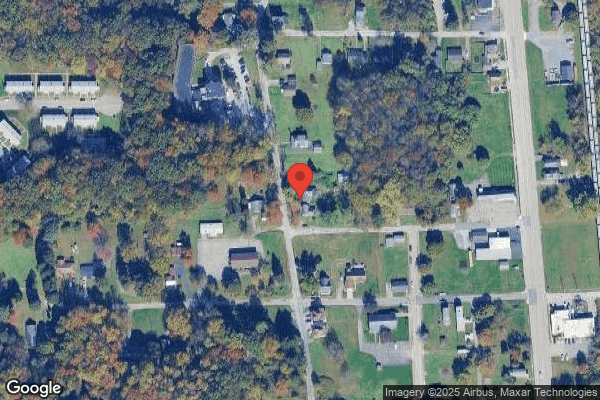
715 HARBOR STREET, NEW CASTLE, PA 16101 (724) 652-3863
For profit - Limited Liability company 62 Beds KADIMA HEALTHCARE GROUP Data: November 2025
Trust Grade
63/100
#300 of 653 in PA
Last Inspection: May 2025

Inspected within the last 6 months. Data reflects current conditions.

Overview

Kadima Rehabilitation & Nursing at New Castle has a Trust Grade of C+, indicating it is slightly above average but may not meet everyone's expectations. It ranks #300 out of 653 facilities in Pennsylvania, placing it in the top half, and #5 out of 8 in Lawrence County, meaning there are only a few local options that perform better. Unfortunately, the facility is worsening, with issues increasing from 2 in 2024 to 3 in 2025. Staffing is a strength here, with a 4 out of 5-star rating and a turnover rate of 40%, which is below the state average. However, the facility has faced some serious concerns, including a resident suffering a shoulder fracture due to inadequate assistance during bathing and food safety violations in the kitchen. Additionally, there have been complaints about staff being distracted by personal cell phone use, leading to longer wait times for assistance.

Trust Score
C+
63/100
In Pennsylvania
#300/653
Top 45%
Safety Record
Moderate
Needs review
Inspections
Getting Worse
2 → 3 violations
Staff Stability
○ Average
40% turnover. Near Pennsylvania's 48% average. Typical for the industry.
Penalties
✓ Good
$8,018 in fines. Lower than most Pennsylvania facilities. Relatively clean record.
Skilled Nurses
✓ Good
Each resident gets 47 minutes of Registered Nurse (RN) attention daily — more than average for Pennsylvania. RNs are trained to catch health problems early.
Violations
○ Average
7 deficiencies on record. Average for a facility this size. Mostly minor or procedural issues.
★★★☆☆
3.0
Overall Rating
★★★★☆
4.0
Staff Levels
★★★★☆
4.0
Care Quality
★★★☆☆
3.0
Inspection Score
Stable
2024: 2 issues
2025: 3 issues

The Good

  • 4-Star Staffing Rating · Above-average nurse staffing levels
  • 4-Star Quality Measures · Strong clinical quality outcomes
  • Full Sprinkler Coverage · Fire safety systems throughout facility
  • No fines on record
  • Staff turnover below average (40%)

    8 points below Pennsylvania average of 48%

Facility shows strength in staffing levels, quality measures, fire safety.

The Bad

3-Star Overall Rating

Near Pennsylvania average (3.0)

Meets federal standards, typical of most facilities

Staff Turnover: 40%

Near Pennsylvania avg (46%)

Typical for the industry

Federal Fines: $8,018

Below median ($33,413)

Minor penalties assessed

Chain: KADIMA HEALTHCARE GROUP

Part of a multi-facility chain

Ask about local staffing decisions and management

The Ugly 7 deficiencies on record

1 actual harm
Aug 2025 1 deficiency
CONCERN (F) 📢 Someone Reported This

A family member, employee, or ombudsman was alarmed enough to file a formal complaint

Potential for Harm - no one hurt, but risky conditions existed

Food Safety (Tag F0812)

Could have caused harm · This affected most or all residents

Based on review of facility policy, observations and staff interview, it was determined that the facility failed to ensure that food was stored in accordance with standards for food safety for three o...

Read full inspector narrative →
Based on review of facility policy, observations and staff interview, it was determined that the facility failed to ensure that food was stored in accordance with standards for food safety for three of three kitchen refrigerators and four of four kitchen freezers and corresponding temperature logs reviewed. Findings include: A facility policy entitled, Equipment Temperature Logs dated 6/18/25, revealed, The Dining Services Manager will use the Refrigeration and Freezer Temperature Log to record the temperatures of all refrigerators and freezers on a daily basis. Review of the refrigeration and freezer temperature logs for the kitchen revealed two temperature log sheets, one for the main kitchen and one for the basement refrigeration. Review of the main kitchen log for the dates from August 1, 2025, through August 27, 2025, revealed that the main kitchen log had 216 opportunities (twice daily) to record temperatures for two refrigerators and two freezers and only had 104 refrigerator and freezer temperatures recorded, leaving 112 opportunites where temperatures were not recorded for monitoring. Review of the basement refrigeration temperature log for the dates of August 1, 2025, through August 27, 2025, revealed that there were two freezers and one refrigerator, and the temperature log from August 8, 2025, through August 27, 2025, had zero recorded temperatures for monitoring. During an interview on 8/28/25, at 10:00 a.m. the Dietary Manager confirmed that the refrigerator and freezer temperatures were not being recorded as required to monitor for morning and evening temperatures daily. 28 Pa. Code 201.14(a) Responsibility of licensee 28 Pa. Code 201.18(b)(1) Management
May 2025 2 deficiencies
CONCERN (E) 📢 Someone Reported This

A family member, employee, or ombudsman was alarmed enough to file a formal complaint

Potential for Harm - no one hurt, but risky conditions existed

Deficiency F0725 (Tag F0725)

Could have caused harm · This affected multiple residents

Based on review of facility policy and resident council minutes, observations, and staff and resident interviews, it was determined that the facility failed to provide sufficient nursing staff and ser...

Read full inspector narrative →
Based on review of facility policy and resident council minutes, observations, and staff and resident interviews, it was determined that the facility failed to provide sufficient nursing staff and services to promote the physical and mental well-being and meet the needs for four of 19 residents interviewed (Residents R3, R24, R25, and R43). Findings include: Review of facility policy entitled Cell Phone/Camera Usage, with a policy review date of 5/01/25, revealed that Personal cell phones should not be used during work time. Review of grievances in January of 2025 revealed that there were concerns with staff members on their cell phones and education was provided by the Director of Nursing (DON). Review of resident council minutes over three months from February, March, and April of 2025, revealed the following: April 2025 resident council minutes revealed there were complaints of staff observed constantly on their phones; Most of the occurrences were on day and afternoon shift; Call bell wait times were 30 minutes or longer. Interviews during the resident council meeting on 5/28/25, between 11:00 a.m. and 11:45 a.m. revealed four of four alert and oriented residents in attendance had concerns related to staff not responding to their call bells timely. All residents in attendance revealed that staff are constantly on their telephones texting or having private conversations with other people. All residents in the resident coucil meeting stated that it delays their care response times and it makes residents upset. Resident R24 indicated that it could take 30-45 minutes for his/her call bell to be answered and staff are typically seen in the hallways, at the nurse's station, or in resident's rooms talking or on their phones having private conversations. Resident R3 indicated that he/she will wait for 30 minutes to 60 minutes to receive assistance to use the restroom after placing his/her call bell on and requires full assistance by staff. Residents R3, R24, R25, and R43 indicated they wait 30 minutes or longer when their call bell is placed on to be responded to by staff. All residents agreed that they observe staff on their phones and standing talking to one another during their shifts. During observations of two of two resident care areas during the week of the survey, from 5/27/25, to 5/30/25, there were observations of staff sitting at the nurses stations and in the hallway on their personal cell phones. During an interview with the DON and Assistant Director of Nursing on 5/30/25, at approximately 1:15 p.m. it was confirmed that residents do complain to administration about employees on their cell phones. 28 Pa. Code 201.18(b)(1) Management 28 Pa. Code 211.12(d)(4)(5) Nursing services
CONCERN (E) 📢 Someone Reported This

A family member, employee, or ombudsman was alarmed enough to file a formal complaint

Potential for Harm - no one hurt, but risky conditions existed

Menu Adequacy (Tag F0803)

Could have caused harm · This affected multiple residents

Based on review of facility policies, dietary and clinical records, observations, and resident and staff interviews, it was determined that the facility failed to provide daily menus, update menu chan...

Read full inspector narrative →
Based on review of facility policies, dietary and clinical records, observations, and resident and staff interviews, it was determined that the facility failed to provide daily menus, update menu changes, and notify residents of a change to the menu; and failed to provide a nutritionally adequate menu for one of one residents noted with a gluten free allergy (Resident R1). Findings include: A facility policy entitled Dietary Services Administration dated 5/01/25, revealed sufficient food will meet the nutritional needs of residents and shall be prepared as planned for each meal. Menus are followed. Menus are posted in all dining rooms and on all resident units. Special diets shall be prepared and served as ordered. A facility policy entitled Menu Item Substitution dated 5/01/25, revealed a resident shall receive a substitute food item of equal nutritive value when a scheduled menu item is not available. The substitute will be approved by the facility Dietitian. After the scheduled menu item has been determined to be unavailable, the Dining Services Manager in consultation with the Dietitian will select an appropriate substitute. A list of substitutable items for each menu category that has been approved and signed by the Dietitian will be available for changes needed in absence of the Dietitian. The day's menu sheet and diet extension will be revised to reflect the substitution. A facility provided foodservice invoice dated 5/02/25, revealed purchases of one case of gluten free pasta penne and one case of gluten free hamburger buns. The facility menu dated for week three, revealed Chicken Patty on Bun, French Fries, Mexicali Corn, Pudding, and a Choice of Beverage. Resident R10's clinical record revealed an admission date of 7/26/23, with diagnoses that included chronic respiratory failure with hypoxia (a condition where the lungs cannot deliver enough oxygen to the blood resulting in low oxygen in the blood), chronic obstructive pulmonary disease (COPD, a group of lung diseases that block airflow and affects the way a person breathes), diabetes mellitus (a disease that result in too much sugar in the blood), and cardiac heart failure (CHF, a chronic condition in which the heart doesn't pump blood as well as it should). During an interview on 5/27/25, at 1:00 p.m. Resident R10 indicated that alternatives are not always available for each meal and what is on the menu is not always available due to the kitchen runs out of food. Resident R10 further indicated that they are never told of food substitutions and no menu is provided. There was no menu observed in Resident R10's room. On 5/28/25, at 12:45 p.m. Resident R10 further indicated that the kitchen did not have hamburgers for the lunch meal. Resident R10 explained that a hamburger was what they chose instead of the chicken patty sandwich. When the Activity Assistant inquired about his lunch and dinner food choice that morning. Resident R10 stated, Sometimes you just get what you get, it's a surprise. During an interview and observation on 5/27/25, at 2:20 p.m. the Dietary Manager confirmed the facility failed to post the daily menus, including an alternate menu, on the dining room menu board for all residents and family members to view. The Dietary Manager further revealed the Activity Assistant reviews daily with each resident what is on the menu for lunch and dinner, including an alternative and if there is a food substitution, the Activity Assistant notifies the resident population. During an interview on 5/28/25, at 9:30 a.m. the Activity Assistant Employee E1 indicated he/she will meet with each resident every morning regarding their lunch and dinner food selection, then provides an accumulated list of the residents' food choices to the kitchen each morning prior to lunch. If a resident's food choice in unavailable due to insufficient food or other reasons, Activity Assistant Employee E1 indicated that they do not then notify each resident that their food choice is unavailable; the resident will learn his/her desired food choice is something different when the lunch meal and/or dinner meal arrive to them. Resident R1's clinical record revealed an admission date of 4/29/25, and discharge date of 5/24/25, with diagnoses that included COPD, muscle weakness, abnormalities of gait and mobility, and CHF. Review of Resident R1's physician progress note dated 5/01/25, revealed food allergies to gluten and wheat. An interview with the Dietary Manager on 5/29/25, at 11:30 a.m. revealed a facility provided invoice that included two gluten free food items for Resident R1. The Dietary Manager indicated that pasta, hamburgers, and hamburger buns were purchased for Resident R1's consumption related to their gluten free allergy. No bread, cereal, crackers, or other food items were purchased. The Dietary Manager confirmed that at times Resident R1 had limited food items and/or choices for each meal due to their gluten free allergy, and the menu could not be followed to its entirety due to insufficient gluten free food the facility had to offer. During an interview on 5/30/25, at 12:35 p.m. the Nursing Home Administrator (NHA) confirmed that the menu should be posted and followed daily for all residents and family members to readily view, and if the menu cannot be followed, the residents should be notified in a timely manner what the food substitution will be. The NHA further confirmed that Resident R1 had a gluten free allergy and there was an insufficient variety of food items to provide nutritionally adequate meals while Resident R1 resided at the facility from 4/29/25, through 5/24/25. 28 Pa. Code 201.14(a) Responsibility of licensee 28 Pa. Code 201.18(b)(3) Management 28 Pa. Code 211.6(a) Dietary Services 28 Pa. Code 211.10(c) Resident Care Policies
Jun 2024 2 deficiencies 1 Harm
SERIOUS (G)

Actual Harm - a resident was hurt due to facility failures

Accident Prevention (Tag F0689)

A resident was harmed · This affected 1 resident

Based on review of resident rights, clinical records, and facility documentation, and staff interview, it was determined that the facility failed to provide proper resident assistance during bathing t...

Read full inspector narrative →
Based on review of resident rights, clinical records, and facility documentation, and staff interview, it was determined that the facility failed to provide proper resident assistance during bathing that resulted in a fall with actual harm of a fracture of the right shoulder for one of 17 residents reviewed (Resident R41). Findings include: Review of Statement of Resident Rights revealed the resident has the right to a safe, clean, comfortable, homelike environment, including but not limited to: (a) receiving treatments and support for daily living safely; (d) ensuring that the physical layout of the facility maximizes resident independence and does not pose a safety risk. Review of Resident R41's clinical record revealed an admission date 10/2/2020, with diagnoses that included schizophrenia (a disorder that affects a person's ability to think, feel, and behave clearly), major depressive disorder (a mental disorder characterized by persistently depressed mood or loss of interest in activities, causing significant impairment in daily life), history of seizures, vascular dementia (brain damage cause by multiple strokes), history of transient ischemic attacks and cerebral infarction (temporary blockage of blood flow to the brain), altered mental status, other abnormalities of gait and mobility, and type one diabetes mellitus (a condition where the pancreas makes little to no insulin, leading to high blood sugar levels). Review of Resident R41's Activities of Daily Living (ADL) related care plan originally dated 10/12/2020 and last reviewed 3/19/2024, revealed resident has an ADL self-care performance deficit. Bathing required an assist of one staff member with bathing/showering. Review of R41's Minimal Data Set (MDS-a periodic assessment of resident care needs) Assessment Section GG Functional Abilities and Goals last updated February 21, 2024, revealed that Section GG0130 Self-care revealed Shower/bathe self: the ability to bathe self, including washing, rinsing, and drying self, identified that Resident R41 required partial/moderate assistance; Section GG0170 FF: tub/shower transfer: the ability to get in and out of a tub/shower revealed that Resident R41 required partial/moderate assistance. Review of Resident R41's progress notes from 4/10/2024, at 2:24 p.m. revealed, resident was found on floor by aide. Resident slipped and fell getting out of tub. He fell on his right arm and now has limited range of motion. Resident assessed, no skin tears, bruises, or red marks noted to right arm. VSS [vital signs stable] recorded. Hoyer lift [type of mechanical lift] used to assist resident up into chair. Resident is his own POA [power of attorney]. Review of Resident R41's x-ray report of right shoulder dated 4/11/2024, revealed a comminuted (partial or complete break) fracture of the right shoulder. During an interview with the Director of Nursing (DON) on 6/6/2024, at approximately 1:30 p.m., it was confirmed that a physical therapist employee put the resident in the tub room, set him up by himself and left the resident unattended to take a bath. Review of a witness statement by Physical Therapist Assistant (PTA) Employee E1, stated On 4/10/2024, as I was exiting the tub room on west with another resident, [Resident R41], was waiting outside of the door clothes and body wash in hand. He asked to be let in to take his shower. Therapy documentation at this time reflects a set up status for ADL's, transfers, and ambulation so I let [Resident R41] into the shower room, as he has demonstrated good safety with set up. Review of a witness statement dated 4/10/2024, at 12:20 p.m. from Nurse Aide (NA) Employee E2, who found Resident R41 in the shower room on 4/10/2024, revealed, while waiting for trays, [Resident R41] asked to be let into the tub room but I told him to wait because therapy just went in with someone and lunch was coming. During the middle of lunch, the tub room call light went off and I was confused because I did not know anyone was in there. I went to go check and found [Resident R41] on his butt on the floor. I went to get his Nurse Aide and we went to assess him. After a few attempts to stand him up we used a Hoyer lift to get him into a sitting position and into a shower chair. During an interview on 6/7/2024, at 10:23 a.m. NA Employee E3 revealed that the nursing staff receives a list of residents that are to get showers each shift every day. They check and follow the resident care plan and tasks on set up and assistance with baths and transfers. NA Employee E3 revealed that residents are not left unmonitored in the shower regardless of their assist levels for safety purposes. An interview conducted with Registered Nurse (RN) Employee E4 on 6/7/2024, at 10:25 a.m. revealed that it is not the practice of the nursing staff to leave residents in the shower or tub room unattended. Staff should always be aware someone is in the tub room and close to watch or monitor resident for safety. Resident plans of care are reviewed for levels of assistance and care with baths. An interview with Licensed Practical Nurse (LPN) Employee E5 on 6/7/2024, at 10:30 a.m. revealed that care plans are reviewed for the levels of care and assistance with residents when taking a bath. LPN Employee E4 stated it is not safe practice to put a resident in the shower unattended. Staff are to be close to residents or monitoring residents for safety when in the tub room. An interview with RN Employee E6 on 6/7/2024, at 10:35 a.m. revealed that care plans are reviewed for assistance with showers or baths for residents who are on the shower schedule each day. It is not the practice of the nursing staff to leave residents unattended in the tub room. Staff is always close by or in the room assisting for resident safety in the tub room. An interview conducted with NA Employee E7 on 6/7/2024, at 10:40 a.m. revealed that residents' care plans are reviewed prior to the showers given so they have the correct number of staff to assist the resident safely. NA Employee E7 stated it is not the practice of the nursing staff to leave any resident unattended in the tub room for safety purposes. Staff is always close by or in the room assisting residents for safety purposes during baths or showers. During an interview with the DON and Nursing Home administrator on 6/7/2024, at approximately 11:30 a.m. it was confirmed that per investigation, Resident R41 was placed in the tub room unattended by PTA Employee E1 and was left unattended in the bathtub. The resident slipped and fell in the tub resulting in a right shoulder fracture. Resident R41's care plan at the time of the fall on 4/10/2024, revealed a ADL self-care deficit and bathing required assist of one staff member with bathing and showering. 28 Pa. Code 201.14(a) Responsibility of licensee 28 Pa. Code 201.18(b)(1)(3) Management 28 Pa. Code 201.18(e)(1) Management 28 Pa. Code 211.10(d) Resident care policies 28 Pa. Code 211.12(d)(1)(2)(5) Nursing services
CONCERN (D)

Potential for Harm - no one hurt, but risky conditions existed

Comprehensive Care Plan (Tag F0656)

Could have caused harm · This affected 1 resident

Based on review of clinical records and staff interviews, it was determined that the facility failed to implement care and services identified on a comprehensive care plan regarding provision of care ...

Read full inspector narrative →
Based on review of clinical records and staff interviews, it was determined that the facility failed to implement care and services identified on a comprehensive care plan regarding provision of care for activities of daily living (ADL) for one of 17 residents reviewed (Resident R41). Findings include: Review of Resident R41's clinical record revealed an admission date 10/2/2020, with diagnoses that included schizophrenia (a disorder that affects a person's ability to think, feel, and behave clearly), major depressive disorder (a mental disorder characterized by persistently depressed mood or loss of interest in activities, causing significant impairment in daily life), history of seizures, vascular dementia (brain damage cause by multiple strokes), history of transient ischemic attacks and cerebral infarction (temporary blockage of blood flow to the brain), altered mental status, other abnormalities of gait and mobility, and type one diabetes mellitus (a condition where the pancreas makes little to no insulin, leading to high blood sugar levels). Review of R41's Minimum Data Set (MDS-a periodic assessment of resident care needs) Assessment Section GG Functional Abilities and Goals last updated 2/21/2024, revealed that Section GG0130 Self-care revealed Shower/bathe self: the ability to bathe self, including washing, rinsing, and drying self, identified that Resident R41 required partial/moderate assistance; Section GG0170 FF: tub/shower transfer: the ability to get in and out of a tub/shower revealed that Resident R41 required partial/moderate assistance. Review of Resident R41's ADL related care plan originally dated 10/12/2020 and last reviewed 3/19/2024, revealed resident has an ADL self-care performance deficit. Bathing required an assist of one staff member with bathing/showering. Review of an incident regarding Resident R41 revealed he/she was left unattended in the tub/shower area on 4/10/24, with subsequent fall with injury based on a physician's order dated 2/12/2021 for transfers independently. During an interview on 6/6/2024, at approximately 3:30 p.m. with the Director of Nursing (DON) and Nursing Home Administrator (NHA) confirmed the inconsistencies in Resident R41's clinical record and that the ADL care plan was not implemented accurately. Interviews conducted with facility staff members on 6/7/2024, between 10:25 am. and 10:40 a.m. revealed that prior to showering residents, the resident care plan for ADL's is to be reviewed to determine proper transfer/assistance level information to ensure resident safety. 28 Pa. Code 201.14(a) Responsibility of licensee 28 Pa. Code 211.12(d)(3)(5) Nursing services
Dec 2023 1 deficiency
CONCERN (D) 📢 Someone Reported This

A family member, employee, or ombudsman was alarmed enough to file a formal complaint

Potential for Harm - no one hurt, but risky conditions existed

Deficiency F0760 (Tag F0760)

Could have caused harm · This affected 1 resident

Based on review of facility policy and clinical records, and staff interviews, it was determined that the facility failed to ensure that it was free from significant medication errors for one of one r...

Read full inspector narrative →
Based on review of facility policy and clinical records, and staff interviews, it was determined that the facility failed to ensure that it was free from significant medication errors for one of one residents reviewed (Resident R1). Findings include: Review of the facility's policy entitled Medication Administration, last revised 8/2016, revealed that medications are to be administered in accordance with written orders of attending physicians; residents are identified before medication is administered; medications ordered for one resident are never administered to another resident; prior to administration, the medication level is checked. Review of Resident R1's clinical record revealed physician's orders dated 11/3/2022, that included an order for the resident to receive Humalog (type of insulin) KwikPen solution pen-injector 100 Units/mL inject as per sliding scale to address blood glucose (sugar) levels if 141-180 milligrams (mg)/deciliter (dL) inject 1 unit; 181-220 mg/dL inject 2 units; 221-260 mg/dL inject 3 units; 261-300 mg/dL inject 4 units; 301-340 mg/dL inject 5 units; 341 mg/dL and over inject 6 units subcutaneously before meals as related to Type 2 diabetes with hyperglycemia (high blood sugar). Review of Resident R1's clinical record revealed a progress note, dated 11/15/2023, at 5:19 p.m. that Licensed Practical Nurse (LPN) Employee E1 reported to the Director of Nursing (DON) that Resident R1 was administered NovoLog 30 units instead of being administered Humalog 1 unit subcutaneously (SQ) per sliding scale for a blood glucose level of 149 mg/dL. During an interview on 12/13/2023, at 11:00 a.m. the Nursing Home Administrator and the DON confirmed that Resident R1's insulin was not administered in accordance with physician's orders and that Resident R1 was administered the wrong dose and the wrong medication. 28 Pa. Code 211.12(d)(1)(5) Nursing services 28 Pa. Code 211.10(c) Resident care policies
Jul 2023 1 deficiency
CONCERN (D)

Potential for Harm - no one hurt, but risky conditions existed

Safe Environment (Tag F0584)

Could have caused harm · This affected 1 resident

Based on observations, and resident and staff interviews, it was determined that the facility failed to maintain a clean homelike environment for one of two resident neighborhoods (West Wing). Findin...

Read full inspector narrative →
Based on observations, and resident and staff interviews, it was determined that the facility failed to maintain a clean homelike environment for one of two resident neighborhoods (West Wing). Findings include: Observations between 7/18/23 and 7/19/23 revealed concerns of two resident wheelchairs. Resident R22's wheelchair was observed to be significantly soiled with dried liquid substances that also had dust, a buildup of food crumbs and debris substances on the wheelchair sides and frame. Resident R28's wheelchair was observed to have a damaged left armrest with the protective covering being cracked, peeling, and torn; all the outer edges of the protective covering were missing. During an interview with Resident R256, he/she mentioned that upon his/her arrival to the facility, he/she was provided with a very dirty wheelchair. Resident R256, stated he/she was so bothered by the condition of their wheelchair that he/she had their family bring in disinfectant wipes and they wiped and scrubbed the whole wheelchair down. During the interview, Resident R256 also disclosed pictures he/she had taken of the wheelchair with his/her phone to demonstrate the uncleanliness and unacceptable condition of the visibly soiled wheelchair provided. During an interview on 7/19/23, at 10:39 a.m. Registered Nurse (RN) Employee E1 confirmed that Resident R22's wheelchair was soiled with food crumbs and dried spillage down the side and on the frame of wheelchair. During an interview on 7/19/23, at 10:45 a.m. RN Employee E1 confirmed Resident R28's wheelchair had a damaged left armrest with cracked, peeling and torn protective covering and all edges of the protective covering were missing. 28 Pa. Code 201.18(b)(1) Management
Understanding Severity Codes (click to expand)
Life-Threatening (Immediate Jeopardy)
J - Isolated K - Pattern L - Widespread
Actual Harm
G - Isolated H - Pattern I - Widespread
Potential for Harm
D - Isolated E - Pattern F - Widespread
No Harm (Minor)
A - Isolated B - Pattern C - Widespread

Questions to Ask on Your Visit

  • "Can I speak with families of current residents?"
  • "What's your RN coverage like on weekends and overnight?"

Our Honest Assessment

Strengths
  • • 40% turnover. Below Pennsylvania's 48% average. Good staff retention means consistent care.
Concerns
  • • 7 deficiencies on record, including 1 serious (caused harm) violation. Ask about corrective actions taken.
Bottom line: Mixed indicators with Trust Score of 63/100. Visit in person and ask pointed questions.

About This Facility

What is Kadima Rehabilitation & Nursing At New Castle's CMS Rating?

CMS assigns KADIMA REHABILITATION & NURSING AT NEW CASTLE an overall rating of 3 out of 5 stars, which is considered average nationally. Within Pennsylvania, this rating places the facility higher than 0% of the state's 100 nursing homes. This mid-range rating indicates the facility meets federal standards but may have areas for improvement.

How is Kadima Rehabilitation & Nursing At New Castle Staffed?

CMS rates KADIMA REHABILITATION & NURSING AT NEW CASTLE's staffing level at 4 out of 5 stars, which is above average compared to other nursing homes. Staff turnover is 40%, compared to the Pennsylvania average of 46%. This relatively stable workforce can support continuity of care.

What Have Inspectors Found at Kadima Rehabilitation & Nursing At New Castle?

State health inspectors documented 7 deficiencies at KADIMA REHABILITATION & NURSING AT NEW CASTLE during 2023 to 2025. These included: 1 that caused actual resident harm and 6 with potential for harm. Deficiencies causing actual harm indicate documented cases where residents experienced negative health consequences.

Who Owns and Operates Kadima Rehabilitation & Nursing At New Castle?

KADIMA REHABILITATION & NURSING AT NEW CASTLE is owned by a for-profit company. For-profit facilities operate as businesses with obligations to shareholders or private owners. The facility is operated by KADIMA HEALTHCARE GROUP, a chain that manages multiple nursing homes. With 62 certified beds and approximately 58 residents (about 94% occupancy), it is a smaller facility located in NEW CASTLE, Pennsylvania.

How Does Kadima Rehabilitation & Nursing At New Castle Compare to Other Pennsylvania Nursing Homes?

Compared to the 100 nursing homes in Pennsylvania, KADIMA REHABILITATION & NURSING AT NEW CASTLE's overall rating (3 stars) matches the state average, staff turnover (40%) is near the state average of 46%, and health inspection rating (3 stars) is at the national benchmark.

What Should Families Ask When Visiting Kadima Rehabilitation & Nursing At New Castle?

Based on this facility's data, families visiting should ask: "Can I visit during a mealtime to observe dining assistance and food quality?" "How do you handle medical emergencies, and what is your hospital transfer rate?" "Can I speak with family members of current residents about their experience?"

Is Kadima Rehabilitation & Nursing At New Castle Safe?

Based on CMS inspection data, KADIMA REHABILITATION & NURSING AT NEW CASTLE has a clean safety record: no substantiated abuse findings (meaning no confirmed cases of resident harm), no Immediate Jeopardy citations (the most serious violation level indicating risk of serious injury or death), and is not on the Special Focus Facility watch list (a federal program monitoring the lowest-performing 1% of nursing homes). The facility has a 3-star overall rating and ranks #1 of 100 nursing homes in Pennsylvania. While no facility is perfect, families should still ask about staff-to-resident ratios and recent inspection results during their visit.

Do Nurses at Kadima Rehabilitation & Nursing At New Castle Stick Around?

KADIMA REHABILITATION & NURSING AT NEW CASTLE has a staff turnover rate of 40%, which is about average for Pennsylvania nursing homes (state average: 46%). Moderate turnover is common in nursing homes, but families should still ask about staff tenure and how the facility maintains care continuity when employees leave.

Was Kadima Rehabilitation & Nursing At New Castle Ever Fined?

KADIMA REHABILITATION & NURSING AT NEW CASTLE has been fined $8,018 across 1 penalty action. This is below the Pennsylvania average of $33,159. While any fine indicates a compliance issue, fines under $50,000 are relatively common and typically reflect isolated problems that were subsequently corrected. Families should ask what specific issues led to these fines and confirm they've been resolved.

Is Kadima Rehabilitation & Nursing At New Castle on Any Federal Watch List?

KADIMA REHABILITATION & NURSING AT NEW CASTLE is not on any federal watch list. The most significant is the Special Focus Facility (SFF) program, which identifies the bottom 1% of nursing homes nationally based on persistent, serious quality problems. Not being on this list means the facility has avoided the pattern of deficiencies that triggers enhanced federal oversight. This is a positive indicator, though families should still review the facility's inspection history directly.