KADIMA REHABILITATION & NURSING AT NEW WILMINGTON
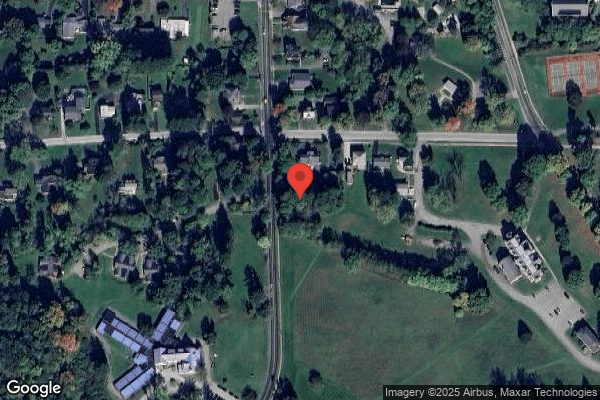
520 NEW CASTLE STREET, NEW WILMINGTON, PA 16142 (724) 946-3511
For profit - Corporation 115 Beds KADIMA HEALTHCARE GROUP Data: November 2025
Trust Grade
80/100
#191 of 653 in PA
Last Inspection: March 2025

Within standard 12-15 month inspection cycle. Federal law requires annual inspections.

Overview

Kadima Rehabilitation & Nursing at New Wilmington has a Trust Grade of B+, indicating it is above average and recommended for families considering care options. It ranks #191 out of 653 facilities in Pennsylvania, placing it in the top half, and #4 out of 8 in Lawrence County, meaning only three local options are better. The facility shows an improving trend, with reported issues decreasing from four in 2023 to two in 2025. Staffing is rated at 4 out of 5 stars, though the 52% turnover rate is average compared to the state. Importantly, the facility has not incurred any fines, which is a positive sign regarding compliance. However, there are some concerns. For instance, one nursing unit had a malfunctioning call bell system, which could delay staff response to residents' needs. Additionally, a resident's significant weight loss was not properly monitored, which is a critical oversight. Lastly, a multi-dose medication vial was not labeled with the required dates, potentially compromising safety. Overall, while there are strengths in care quality and staffing, these specific incidents indicate areas needing attention.

Trust Score
B+
80/100
In Pennsylvania
#191/653
Top 29%
Safety Record
Low Risk
No red flags
Inspections
Getting Better
4 → 2 violations
Staff Stability
⚠ Watch
52% turnover. Above average. Higher turnover means staff may not know residents' routines.
Penalties
✓ Good
No fines on record. Clean compliance history, better than most Pennsylvania facilities.
Skilled Nurses
✓ Good
Each resident gets 45 minutes of Registered Nurse (RN) attention daily — more than average for Pennsylvania. RNs are trained to catch health problems early.
Violations
○ Average
6 deficiencies on record. Average for a facility this size. Mostly minor or procedural issues.
★★★★☆
4.0
Overall Rating
★★★★☆
4.0
Staff Levels
★★★★☆
4.0
Care Quality
★★★★☆
4.0
Inspection Score
Stable
2023: 4 issues
2025: 2 issues

The Good

  • 4-Star Staffing Rating · Above-average nurse staffing levels
  • 4-Star Quality Measures · Strong clinical quality outcomes
  • Full Sprinkler Coverage · Fire safety systems throughout facility
  • No fines on record

Facility shows strength in staffing levels, quality measures, fire safety.

The Bad

Staff Turnover: 52%

Near Pennsylvania avg (46%)

Higher turnover may affect care consistency

Chain: KADIMA HEALTHCARE GROUP

Part of a multi-facility chain

Ask about local staffing decisions and management

The Ugly 6 deficiencies on record

Jun 2025 1 deficiency
CONCERN (E) 📢 Someone Reported This

A family member, employee, or ombudsman was alarmed enough to file a formal complaint

Potential for Harm - no one hurt, but risky conditions existed

Deficiency F0919 (Tag F0919)

Could have caused harm · This affected multiple residents

Based on review of facility policy, observations, and resident and staff interviews, it was determined that the facility failed to ensure that the call bell system was adequately working for one of fo...

Read full inspector narrative →
Based on review of facility policy, observations, and resident and staff interviews, it was determined that the facility failed to ensure that the call bell system was adequately working for one of four nursing units (West Hall Nursing Unit). Findings include: Review of the facility policy entitled, Call Light Response with a revision date of 11/1/24 , revealed that a call bell or alternative device will be placed within the reach of each resident while in their room, toilet or bathing area. The resident will be instructed in the use of the call bell or alternative device. Staff will respond to the call bell in a timely manner. Staff will be alert to signals that the call bell is on by the following: Flashing light on intercom Beeping of intercom Lighted call signal over the resident's door Sounding of tap bell Observation of the [NAME] Hall Nursing Unit, revealed the call bell system in the corridors did not illuminate when resident call bells in their rooms had been activated. Upon review of maintenance records, it was confirmed that the call bell system on the [NAME] Hall Nursing Unit had not been functioning since 4/22/25, and a temporary call bell system was installed on 4/29/25. A price quote for a new call bell system was obtained but was not completed. Upon observation of the temporary call bell system on the [NAME] Hall Nursing Unit, it was confirmed that residents can call, but no visible overhead light system illuminates. Requests by residents go to a screen located in center hall at the time of call. It was observed that if another resident uses their call bell before staff becomes aware, the previous resident's call is not visible and there is no way to review previous calls and those calls get missed. During interviews with residents at the time and date of the investigation revealed the following: Resident R1 stated that there are long wait times always, on all shifts; you will wait hours to get assistance sometimes; the system does not have a light system over the door and employees don't know you call; wait times have been worse since the original system stopped working. Resident R2 stated that there are consistent wait times of one to two hours for assistance after you call for help on all shifts; it is concerning. Resident R3 stated that assistance is always slow after you call for help on all shifts; you will wait over one hour sometimes. Resident R4 stated that there are always long wait times after you call on the call bell for help or needs; thirty to sixty minute wait times are not uncommon and it upsets him/her. Resident R5 stated that there are always 30 minute wait times or longer and sometimes employees don't know there was a call; Resident R5 also stated I wait too long to go to the bathroom when I call, so I just get up by myself if I cannot wait. Resident R6 stated that there are constantly long wait times when he/she calls for help of over 30 minutes and staff doen't know the call system was used. During an interview on 6/10/25, at approximately 1:00 p.m. the Nursing Home Administrator confirmed that the central call bell system on the [NAME] Hall Nursing Unit was not fully functioning to provide visual communication of which room the call bell activation was coming from. 28 Pa. Code 201.14 (a) Responsibility of licensee 28 Pa. Code 201.18 (b)(1) Management
Mar 2025 1 deficiency
CONCERN (D)

Potential for Harm - no one hurt, but risky conditions existed

Deficiency F0761 (Tag F0761)

Could have caused harm · This affected 1 resident

Based on review of facility policy and manufacturer's instructions, observations and staff interview, it was determined that the facility failed to label one multi-dose vial of Aplisol-tuberculin puri...

Read full inspector narrative →
Based on review of facility policy and manufacturer's instructions, observations and staff interview, it was determined that the facility failed to label one multi-dose vial of Aplisol-tuberculin purified protein derivative (PPD-testing solution for tuberculosis) injection with the date it was opened and date it should be used by in one of three medication storage rooms observed (North Two Nurse Station medication room). Findings include: Review of manufacturer's instructions for Aplisol- tuberculin PPD Vials revealed Vials in use more than 30 days should be discarded due to possible oxidation and degradation which may affect potency. Review of facility policy entitled Storage of Medications, with a policy review date of 3/26/24, revealed that Medications are stored in a safe, secure, and orderly manner in accordance with federal and state regulations and facility policies. No discontinued, outdated, or deteriorated medications are available for use in the facility. All such medications are destroyed. Observations of the North Two Nurse Station medication room on 3/12/25, at approximately 1:15 p.m. revealed that one multi-dose vial of Aplisol-Tuberculin PPD was opened and was currently in use, but not labeled with the opened date or the use by date. At the time of the observation, the Assistant Director of Nursing confirmed that the one undated multi-dose vial of Aplisol was opened, in use daily, and should have been labeled with the date opened and use by date. 28 Pa. Code 211.10(c)(d) Resident care policies 28 Pa. Code 211.12(d)(1)(3) Nursing services
May 2023 4 deficiencies
CONCERN (D)

Potential for Harm - no one hurt, but risky conditions existed

Safe Environment (Tag F0584)

Could have caused harm · This affected 1 resident

Based on review of facility policy, observations, and staff interviews, it was determined that the facility failed to monitor a resident's personal refrigerator for temperatures for one of one residen...

Read full inspector narrative →
Based on review of facility policy, observations, and staff interviews, it was determined that the facility failed to monitor a resident's personal refrigerator for temperatures for one of one residents reviewed with personal refrigerators (Resident R8). Findings include: Review of facility policy entitled, Personal Refrigerators with a policy review date of 3/27/23, revealed Personal refrigerators will be subject to the same monitoring as other facility refrigerators. The food stored in the personal refrigerator must meet the same standards as food stored elsewhere in the facility. The policy also revealed Inform resident that refrigerator must include a thermometer and will be monitored regularly for temperature compliance. Establish a temperature and contents monitoring process. Initiate temperature monitoring and content inspection for food labeling and dating. Observation on 5/16/23, at 1:30 p.m. revealed that Resident R8 had a personal refrigerator in the room that contained food and beverage items. The observation also revealed that there was no thermometer in the refrigerator and no temperature log sheets in order to monitor the resident's personal refrigerator and food/beverage items for proper storage. During an additional observation of Resident R8's personal refrigerator on 5/16/23, at 4:25 p.m. with the Director of Nursing it was confirmed that there was no thermometer in the refrigerator and no temperatures recorded to ensure the safe storage of resident food/beverage items. 28 Pa Code 201.14 (a) Responsibility of Licensee
CONCERN (D)

Potential for Harm - no one hurt, but risky conditions existed

Deficiency F0657 (Tag F0657)

Could have caused harm · This affected 1 resident

**NOTE- TERMS IN BRACKETS HAVE BEEN EDITED TO PROTECT CONFIDENTIALITY** Based on review of facility policy and clinical records and staff interview, it was determined that the facility failed to updat...

Read full inspector narrative →
**NOTE- TERMS IN BRACKETS HAVE BEEN EDITED TO PROTECT CONFIDENTIALITY** Based on review of facility policy and clinical records and staff interview, it was determined that the facility failed to update and/or individualize a care plan for one of 20 residents reviewed (Resident R42). Findings include: Review of facility policy entitled, Participation in Planning Care and Treatment dated 3/27/23, indicated that the resident care plan shall be reviewed, evaluated and updated, as necessary, by professionals involved in the care of the resident. Resident R42's clinical record revealed an admission date of 2/03/23, with diagnoses including heart disease, kidney disease, and gastrointestinal bleed. Documentation related to Resident R42's weekly weights revealed the following: admission weight documented - 2/03/23 - 227.9 pounds; next weight documented on 2/20/23 - 227.2 pounds 3/01/23 - 236.2 pounds 3/02/23 - 230.1 pounds 3/06/23 - 247.0 pounds - 20 pound weight gain in 14 days 3/20/23 - 247.0 pounds 3/27/23 - 161.4 pounds - 74.8 pound weight loss in 26 days, from 3/01/23 3/29/23- 161.6 pounds 4/02/23 -173.5 pounds 4/10/23- 178.2 pounds 5/15/23-183.2 pounds Review of Resident R42's Discharge Minimum Data Set (MDS-a mandated assessment of a resident's abilities and care needs) assessment, dated March 21, 2023, revealed that the resident had a weight gain of 5% or more in the last month. Review of Resident R42's Quarterly MDS assessment dated [DATE], revealed Resident R42 had a weight loss of 5% or more in the last month. The clinical record revealed a nutritional problem care plan related to dysphagia (difficulty swallowing) dated 2/13/23. As of 5/18/23, there was no evidence that Resident R42's care plan had been updated to reflect Resident R42's weight loss. During an interview on 5/18/23, at 2:18 p.m. the Director of Nursing confirmed that Resident R42's nutrition care plan was not updated to reflect weight loss and their current status. 28 Pa. Code 211.5(f) Clinical records 28 Pa. Code 211.12(d)(1)(5) Nursing services
CONCERN (D)

Potential for Harm - no one hurt, but risky conditions existed

Deficiency F0761 (Tag F0761)

Could have caused harm · This affected 1 resident

Based on review of facility policy and manufacturer's instructions, observation, and staff interviews it was determined that the facility failed to label pre-filled insulin pens with the date they wer...

Read full inspector narrative →
Based on review of facility policy and manufacturer's instructions, observation, and staff interviews it was determined that the facility failed to label pre-filled insulin pens with the date they were opened and discard multi-dose insulin bottle within the use by timeframe for one of two medication carts observed (South Hall) Findings include: Review of facility policy dated 3/27/23, entitled Labeling of Medications indicated that multi-dose medications must be dated when opened for determination of discard date based on manufacturer's instructions. Review of manufacturer's instructions for the Novolog (type of insulin) multi-dose vial directed that once open, they were to be used within 28-days, then discarded. Observation of South Hall medication cart on 5/16/23, at 4:33 p.m. revealed that Resident R15's Basaglar Kwik Pen (type of insulin), R41's Insulin Aspart Flex Pen, and Resident R28's Insulin Glargine and Insulin Lispro Pens were currently in use, but not labeled with an open date. Further observation revealed Resident R23's Novolog multi-dose bottle was open, dated for 4/15/2023, and was currently in use, or 31-days past the open date. During an interview at the time of observation, Licensed Practical Nurse Employee E1 confirmed that Resident R15, R41, and R28's insulin pens were in use and not labeled with an open date and that Resident R23's multi-dose insulin vial was being used past the 28-days. 28 Pa. Code 201.14(a) Responsibility of licensee 28 Pa. Code 211.9(a)(1) Pharmacy services 28 Pa. Code 211.10(c) Resident care policies 28 Pa. Code 211.12(d)(1)(3)(5) Nursing services
CONCERN (E)

Potential for Harm - no one hurt, but risky conditions existed

Deficiency F0692 (Tag F0692)

Could have caused harm · This affected multiple residents

**NOTE- TERMS IN BRACKETS HAVE BEEN EDITED TO PROTECT CONFIDENTIALITY** Based on review of facility policy and clinical records and staff interviews, it was determined that the facility failed to appr...

Read full inspector narrative →
**NOTE- TERMS IN BRACKETS HAVE BEEN EDITED TO PROTECT CONFIDENTIALITY** Based on review of facility policy and clinical records and staff interviews, it was determined that the facility failed to appropriately monitor a resident identified with a significant weight loss for one of 20 residents reviewed (Resident R42). Findings include: Review of the facility policy related to weight monitoring and weight loss intervention dated 3/27/23, indicated that weight loss intervention will be implemented to prevent further weight loss and to maintain/improve the resident's nutritional status. It also indicated when there is a 5% weight loss in 30 days to follow up with Dietitian recommendations and to keep records of interventions implemented and the progress made. The Registered Dietitian (RD) job description indicated the purpose of the job position is to implement, coordinate and evaluate the medical nutrition therapy for the residents, provide resident and family education, provide nutritional assessment and consultation to assist in planning, organizing and directing the food and nutritional services of the facility. Resident R42's clinical record revealed an admission date of 2/03/23, with diagnoses including heart disease, kidney disease, and gastrointestinal bleed. Documentation related to Resident R42's weekly weights revealed the following: admission weight documented - 2/03/23 - 227.9 pounds; next weight documented on 2/20/23 - 227.2 pounds 3/01/23 - 236.2 pounds 3/02/23 - 230.1 pounds 3/06/23 - 247.0 pounds - 20 pound weight gain in 14 days 3/20/23 - 247.0 pounds 3/27/23 - 161.4 pounds - 74.8 pound weight loss in 26 days, from 3/01/23 3/29/23- 161.6 pounds 4/02/23 -173.5 pounds 4/10/23- 178.2 pounds 5/15/23-183.2 pounds Review of Resident R42's Discharge Minimum Data Set (MDS-a mandated assessment of a resident's abilities and care needs) assessment, dated March 21, 2023, revealed that the resident had a weight gain of 5% or more in the last month. Review of Resident R42's Quarterly MDS assessment dated [DATE], revealed Resident R42 had a weight loss of 5% or more in the last month. The clinical record revealed no evidence that Resident R42 was reassessed by the RD, since the initial admission Nutrition Data Collection dated 2/16/23, until 5/18/23, a period of three months. During an interview on 5/18/23, at 2:00 p.m. the Director of Nursing confirmed that Resident R42's clinical record lacked evidence of any dietitian notes or recommendations since the initial admission Nutrition Data Collection dated, 2/16/23, until 5/18/23, a period of three months. 28 Pa. Code 211.10(c) Resident care policies 28 Pa. Code 211.12(d)(1)(5) Nursing services
Understanding Severity Codes (click to expand)
Life-Threatening (Immediate Jeopardy)
J - Isolated K - Pattern L - Widespread
Actual Harm
G - Isolated H - Pattern I - Widespread
Potential for Harm
D - Isolated E - Pattern F - Widespread
No Harm (Minor)
A - Isolated B - Pattern C - Widespread

Questions to Ask on Your Visit

  • "Can I speak with families of current residents?"
  • "What's your RN coverage like on weekends and overnight?"

Our Honest Assessment

Strengths
  • • Grade B+ (80/100). Above average facility, better than most options in Pennsylvania.
  • • No major safety red flags. No abuse findings, life-threatening violations, or SFF status.
  • • No fines on record. Clean compliance history, better than most Pennsylvania facilities.
Concerns
  • • No significant concerns identified. This facility shows no red flags across CMS ratings, staff turnover, or federal penalties.
Bottom line: Generally positive indicators. Standard due diligence and a personal visit recommended.

About This Facility

What is Kadima Rehabilitation & Nursing At New Wilmington's CMS Rating?

CMS assigns KADIMA REHABILITATION & NURSING AT NEW WILMINGTON an overall rating of 4 out of 5 stars, which is considered above average nationally. Within Pennsylvania, this rating places the facility higher than 99% of the state's 100 nursing homes. This rating reflects solid performance across the metrics CMS uses to evaluate nursing home quality.

How is Kadima Rehabilitation & Nursing At New Wilmington Staffed?

CMS rates KADIMA REHABILITATION & NURSING AT NEW WILMINGTON's staffing level at 4 out of 5 stars, which is above average compared to other nursing homes. Staff turnover is 52%, compared to the Pennsylvania average of 46%. RN turnover specifically is 67%, which is notably high. RNs provide skilled clinical oversight, so turnover in this role can affect medical care quality.

What Have Inspectors Found at Kadima Rehabilitation & Nursing At New Wilmington?

State health inspectors documented 6 deficiencies at KADIMA REHABILITATION & NURSING AT NEW WILMINGTON during 2023 to 2025. These included: 6 with potential for harm.

Who Owns and Operates Kadima Rehabilitation & Nursing At New Wilmington?

KADIMA REHABILITATION & NURSING AT NEW WILMINGTON is owned by a for-profit company. For-profit facilities operate as businesses with obligations to shareholders or private owners. The facility is operated by KADIMA HEALTHCARE GROUP, a chain that manages multiple nursing homes. With 115 certified beds and approximately 96 residents (about 83% occupancy), it is a mid-sized facility located in NEW WILMINGTON, Pennsylvania.

How Does Kadima Rehabilitation & Nursing At New Wilmington Compare to Other Pennsylvania Nursing Homes?

Compared to the 100 nursing homes in Pennsylvania, KADIMA REHABILITATION & NURSING AT NEW WILMINGTON's overall rating (4 stars) is above the state average of 3.0, staff turnover (52%) is near the state average of 46%, and health inspection rating (4 stars) is above the national benchmark.

What Should Families Ask When Visiting Kadima Rehabilitation & Nursing At New Wilmington?

Based on this facility's data, families visiting should ask: "Can I visit during a mealtime to observe dining assistance and food quality?" "How do you handle medical emergencies, and what is your hospital transfer rate?" "Can I speak with family members of current residents about their experience?"

Is Kadima Rehabilitation & Nursing At New Wilmington Safe?

Based on CMS inspection data, KADIMA REHABILITATION & NURSING AT NEW WILMINGTON has a clean safety record: no substantiated abuse findings (meaning no confirmed cases of resident harm), no Immediate Jeopardy citations (the most serious violation level indicating risk of serious injury or death), and is not on the Special Focus Facility watch list (a federal program monitoring the lowest-performing 1% of nursing homes). The facility has a 4-star overall rating and ranks #1 of 100 nursing homes in Pennsylvania. While no facility is perfect, families should still ask about staff-to-resident ratios and recent inspection results during their visit.

Do Nurses at Kadima Rehabilitation & Nursing At New Wilmington Stick Around?

KADIMA REHABILITATION & NURSING AT NEW WILMINGTON has a staff turnover rate of 52%, which is 6 percentage points above the Pennsylvania average of 46%. Moderate turnover is common in nursing homes, but families should still ask about staff tenure and how the facility maintains care continuity when employees leave.

Was Kadima Rehabilitation & Nursing At New Wilmington Ever Fined?

KADIMA REHABILITATION & NURSING AT NEW WILMINGTON has no federal fines on record. CMS issues fines when nursing homes fail to meet care standards or don't correct problems found during inspections. The absence of fines suggests the facility has either maintained compliance or corrected any issues before penalties were assessed. This is a positive indicator, though families should still review recent inspection reports for the full picture.

Is Kadima Rehabilitation & Nursing At New Wilmington on Any Federal Watch List?

KADIMA REHABILITATION & NURSING AT NEW WILMINGTON is not on any federal watch list. The most significant is the Special Focus Facility (SFF) program, which identifies the bottom 1% of nursing homes nationally based on persistent, serious quality problems. Not being on this list means the facility has avoided the pattern of deficiencies that triggers enhanced federal oversight. This is a positive indicator, though families should still review the facility's inspection history directly.