OAKWOOD HEIGHTS VILLAGE
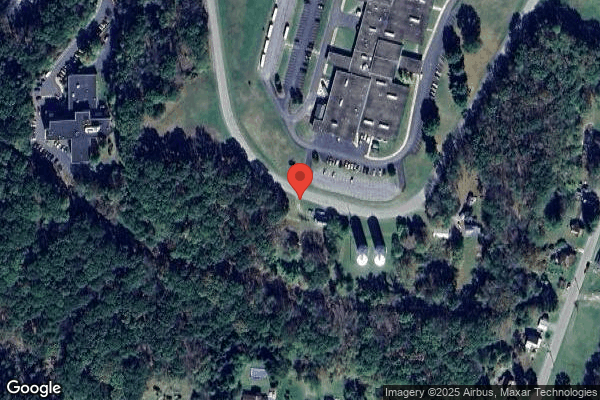

10 VO TECH DRIVE, OIL CITY, PA 16301 (814) 676-8686
For profit - Corporation 106 Beds ABRAHAM SMILOW Data: November 2025
Trust Grade
48/100
#470 of 653 in PA
Last Inspection: February 2025

Within standard 12-15 month inspection cycle. Federal law requires annual inspections.

Overview

Oakwood Heights Village in Oil City, Pennsylvania, has a Trust Grade of D, indicating below-average performance with some concerns. Ranking #470 out of 653 facilities in the state places it in the bottom half, and #4 out of 5 in Venango County suggests only one local option is better. The facility is trending toward improvement, having reduced issues from five in 2024 to four in 2025, but still has a concerning staffing turnover rate of 64%, significantly higher than the state average of 46%. Specific incidents noted include a resident suffering a head laceration due to improper sling sizing during a lift transfer and issues with food safety and medication availability, which could pose risks to residents' health. While the facility does offer average RN coverage, families should weigh these strengths against the evident weaknesses before making a decision.

Trust Score
D
48/100
In Pennsylvania
#470/653
Bottom 29%
Safety Record
Moderate
Needs review
Inspections
Getting Better
5 → 4 violations
Staff Stability
⚠ Watch
64% turnover. Above average. Higher turnover means staff may not know residents' routines.
Penalties
✓ Good
$9,311 in fines. Lower than most Pennsylvania facilities. Relatively clean record.
Skilled Nurses
○ Average
Each resident gets 31 minutes of Registered Nurse (RN) attention daily — about average for Pennsylvania. RNs are the most trained staff who monitor for health changes.
Violations
⚠ Watch
12 deficiencies on record. Higher than average. Multiple issues found across inspections.
★★☆☆☆
2.0
Overall Rating
★★☆☆☆
2.0
Staff Levels
★☆☆☆☆
1.0
Care Quality
★★★☆☆
3.0
Inspection Score
Stable
2024: 5 issues
2025: 4 issues

The Good

  • Full Sprinkler Coverage · Fire safety systems throughout facility
  • No fines on record

Facility shows strength in fire safety.

The Bad

2-Star Overall Rating

Below Pennsylvania average (3.0)

Below average - review inspection findings carefully

Staff Turnover: 64%

18pts above Pennsylvania avg (46%)

Frequent staff changes - ask about care continuity

Federal Fines: $9,311

Below median ($33,413)

Minor penalties assessed

Chain: ABRAHAM SMILOW

Part of a multi-facility chain

Ask about local staffing decisions and management

Staff turnover is elevated (64%)

16 points above Pennsylvania average of 48%

The Ugly 12 deficiencies on record

1 actual harm
Feb 2025 4 deficiencies 1 Harm
SERIOUS (G)

Actual Harm - a resident was hurt due to facility failures

Accident Prevention (Tag F0689)

A resident was harmed · This affected 1 resident

**NOTE- TERMS IN BRACKETS HAVE BEEN EDITED TO PROTECT CONFIDENTIALITY** Based on review of facility policy, investigation documents, and clinical records, and staff interviews, it was determined that ...

Read full inspector narrative →
**NOTE- TERMS IN BRACKETS HAVE BEEN EDITED TO PROTECT CONFIDENTIALITY** Based on review of facility policy, investigation documents, and clinical records, and staff interviews, it was determined that the facility failed to maintain a safe environment regarding mechanical lift sling sizing for one of three residents that utilize a mechanical lift reviewed (Resident R46), that resulted in actual harm and required staple repair for a head laceration. Findings include: The facility's policy Safe Resident Handling/Transfers, dated 1/14/25, indicated that residents are to be transferred safely to prevent or minimize risks for injury. The policy further indicated that the facility will ensure that there are appropriate amounts of varying sizes of slings to accommodate residents and that residents will be measured correctly as per manufacturer's instructions on proper sling sizing. Review of Resident R46's clinical record revealed an admission date of 10/08/20, with diagnoses that included respiratory failure, heart failure, anxiety (a condition that causes a person to be nervous, uneasy, or worried about something or someone), and diabetes mellitus (high blood sugars). Review of Resident R46's Quarterly Minimum Data Set (MDS - an assessment tool used to facilitate the management of care for residents) assessment dated [DATE], revealed under section GG 0170 E, that Resident R46 was dependent on staff for transfer from chair to bed. The Quarterly MDS also revealed that Resident R46 was cognitively intact. Review of Resident R46's active physician's orders revealed an order for transfers by use of maxi lift (type of mechanical lift). Review of Resident R46's Care Plans under Activities of Daily Living (ADLs) revealed resident transfers with the maxi lift. Review of information submitted by facility dated 2/22/25, and interview with the Director of Nursing revealed Resident R46 was incorrectly transferred with a Hoyer lift (type of maxi lift) and sling that was too large. Resident R46 was transferred to the hospital related to a head laceration. Review of the facility's investigation revealed that Nurse Aide (NA) Employees E10 and E11 utilized a blue extra-large sling on 2/21/25, when they transferred Resident R46 and the resident fell through the sling. Hospital documentation dated 2/21/25, revealed that Resident R46 slipped out of the Hoyer lift and fell and sustained a hematoma (bruise) and laceration to the back of the head with two staples to repair the laceration. During an interview on 2/25/25, at 9:00 a.m. Resident R46 revealed that staff had used a blue sling (extra-large) and not the normal medium size. During interviews on 2/24/25, at approximately 1:55 p.m. NA Employees E6, E7, and E9 all indicated that there was no process or documentation in the resident's clinical record to indicate what sling size to use when utilizing the Hoyer lift. During an interview on 2/25/25, at 10:45 a.m. the Director of Nursing confirmed that NA Employees E10 and E11 transferred Resident R46 by Hoyer lift using a blue sling that was too big and Resident R46 fell through the sling that resulted in harm of a head laceration. The DON also confirmed that there was not a process in place to ensure appropriate sling size determination. 28 Pa. Code 201.14(a) Responsibility of licensee 28 Pa. Code 201.18(b)(1) Management 28 Pa. Code 201.18(e)(1) Management 28 Pa. Code 211.12(c) Nursing services 28 Pa. Code 211.12(d)(1)(3)(5) Nursing services
CONCERN (D)

Potential for Harm - no one hurt, but risky conditions existed

Medication Errors (Tag F0758)

Could have caused harm · This affected 1 resident

Based on review of facility policy and clinical records, and staff interview, it was determined that the facility failed to provide a clinical rationale and duration for the continued use of a PRN (as...

Read full inspector narrative →
Based on review of facility policy and clinical records, and staff interview, it was determined that the facility failed to provide a clinical rationale and duration for the continued use of a PRN (as needed) psychotropic (affecting the mind) medication beyond 14-days for one of five residents reviewed for psychotropic medications (Resident R17). Findings include: Review of facility policy entitled Use of Psychotropic Medications dated 1/14/25, indicated PRN orders for psychotropic medications . shall be limited to no more than 14 days . The medical record should include documentation from the physician or prescriber for the rational for the extended time period and indicate a specific duration. Review of Resident R17's clinical record revealed an admission date of 9/29/23, with diagnoses that included diabetes (a health condition that caused by the body's inability to produce enough insulin), heart failure (a condition where the heart cannot supply the body with enough blood), and chronic obstructive pulmonary disease (when your lungs do not have adequate air flow). Review of Resident R17's medication orders revealed a physician's order dated 1/15/25, to administer Lunesta (a sleeping pill) 1 milligrams (mg) by mouth as needed at bedtime. Further review of medication orders revealed a physician's order dated 2/10/25, to increase Lunesta to 2 mg by mouth as needed at bedtime. The medication orders lacked the required stop date within 14 days or a clinical rational for continuing beyond 14 days. During an interview on 2/26/25, at 9:30 a.m. Licensed Practical Nurse (LPN) Employee E8 confirmed that Resident R17's Lunesta orders lacked the required stop date within 14 days and a clinical rationale for continued use beyond 14 days. He/she also confirmed that the medication should have a clinical rational and duration to continue beyond 14 days. 28 Pa. Code 211.12(d)(1)(3)(5) Nursing services
CONCERN (D)

Potential for Harm - no one hurt, but risky conditions existed

Deficiency F0761 (Tag F0761)

Could have caused harm · This affected 1 resident

**NOTE- TERMS IN BRACKETS HAVE BEEN EDITED TO PROTECT CONFIDENTIALITY** Based on review of facility policy, observations, and staff interview, it was determined that the facility failed to label a mul...

Read full inspector narrative →
**NOTE- TERMS IN BRACKETS HAVE BEEN EDITED TO PROTECT CONFIDENTIALITY** Based on review of facility policy, observations, and staff interview, it was determined that the facility failed to label a multi-dose insulin (medication to treat elevated blood sugar levels) vial with the date it was opened and discard an expired multi-dose insulin vial in one of seven medication carts (Third floor cart A). Findings include: Review of the facility policy entitled Multi-Dose Vials dated [DATE], indicated multi-dose vials will be labeled with date open. It also indicated that insulin expires 28 days from the opened date. Observation on [DATE], at 9:10 a.m. revealed the Third-floor medication cart A contained a vial of opened undated Novolog insulin in a bag with an expiration date on the outside of the bag of [DATE]. Observation on [DATE], at 8:10 a.m. revealed the Third-floor medication cart A contained a bag with an expiration date of [DATE], on the outside of the bag contained two vials of opened Novolog insulin both were undated. During an interview at that time, LPN Employee E5 confirmed that multi-dose vials/containers of medication are to be dated upon opening to ensure that staff discard them in a timely manner and the medication is not to be utilized past the medication expiration. 28 Pa. Code 211.9(a)(1) Pharmacy services 28 Pa. Code 211.10(c) Resident care policies 28 Pa. Code 211.12(d)(1)(3)(5) Nursing services
CONCERN (E)

Potential for Harm - no one hurt, but risky conditions existed

Food Safety (Tag F0812)

Could have caused harm · This affected multiple residents

Based on review of facility policies, observations, and staff interview, it was determined that the facility failed to serve food in a safe and sanitary manner during tray line and ensure that food wa...

Read full inspector narrative →
Based on review of facility policies, observations, and staff interview, it was determined that the facility failed to serve food in a safe and sanitary manner during tray line and ensure that food was stored in accordance with standards for food safety in the main kitchen, and resident pantries (First and Third floor). Findings include: Review of facility policy entitled Dietary-Food Preparation and Service dated 1/14/25, indicated Gloves must be worn when handling food directly. However, gloves can also become contaminated and/or soiled and must be changed between tasks. Review of facility policy entitled Labeling and dating procedure for food and beverage dated 2/14/25, indicated We now have a total of 5 days to keep foods that are taken out of their original package. A product that is left in its original container can be used up to 7 days or the use by date whichever comes first. and The day that you open something is day 1 . Review of facility policy entitled Dietary-Food Receiving and Storage dated 2/14/25, indicated All foods belonging to residents must be labeled with resident's name, room number, the item and the use by date. And Pesticides and other toxic substances . will not be stored in storerooms for food . Review of facility policy entitled Foods Brought By Family-Visitors dated 2/14/25, indicated containers will be labeled with the resident name, the item, and the use by date. and Staff is responsible for discarding perishable foods on or before the use by date. Observations during kitchen tour on 2/23/25, at 9:00 a.m. revealed in the refrigerators a metal pan containing barbecue pork with a prepared date of 2/18/25, a metal pan containing chili with a prepared date of 2/18/25, a clear plastic tub containing three hard boiled eggs with a prepared date of 2/14/25, two cartons of potato salad with open dates of 2/11/25, and 2/13/25, a plastic tub of coleslaw with an open date of 2/13/25, and two open plastic tubs of strawberry yogurt with open dates of 2/12/25, and 2/15/25. During an interview with Dietary [NAME] Employee E1 at the time of observations, he/she expressed that food not kept in their original containers is discarded within five days and food that is open and kept in their original container are discarded within seven days or by the expiration date whichever comes first. He/she confirmed that the pan of barbecue pork, pan of chili, container of hard boiled eggs, cartons of potato salad, tub of coleslaw, and tubs of yogurt were beyond their use by date and/or expiration date. He/she also confirmed that the items should have been discarded by or before their use by date or expiration date. Observations on 2/23/25, at 1:00 p.m. of a refrigerator in the First Floor pantry used for residents revealed a jar of homemade jelly with no resident name and an open date of 10/22/23, observations of the freezer in the pantry revealed food items sitting next to ice packs that are used for treatments on residents and one of the ice packs remained in the cloth cover sitting on top of food items. During an interview at the time of observations with the Director of Nursing (DON), he/she confirmed that the homemade jelly in the refrigerator lacked a resident name and was beyond the use by date and that there were ice packs used for treatments on residents being stored in the same freezer with food. He/she also confirmed that food items should be labeled and discarded by the use by date, and ice packs used on residents should not be stored with food. Observation on 2/23/25, at 1:10 p.m. of a refrigerator in the Third Floor pantry used for residents revealed a loaf of homemade bread wrapped in tin foil with no resident name or date, and a pizza box with two pieces of pizza in the box with no date on the pizza box. During an interview at the time of observations, the Dietary Manager Employee E3 confirmed that the homemade bread lacked a resident name or date, and the pizza box lacked a date. He/she also confirmed that food items should have a resident's name and should be discarded by the use by date. Observations on 2/23/25, at 12:10 p.m. during tray line, revealed Homemaker Employee E2 washed his/her hands and placed gloves on then proceeded to take temperatures of the food, then picked up a three ring binder and pen and wrote the temperatures down, then proceeded to move residents tray tickets around on the steam table, then started to place food on the resident's plate, then took the plate and sat it on the counter, then held onto the food with his/her gloved hand and cut the meat. Homemaker Employee E2 failed to remove his/her gloves and wash his/her hands after touching several items before touching the resident's food. During an interview at the time of the observations, Homemaker Employee E2 confirmed that he/she touched several items then touched the resident's food with the same gloves. He/she also confirmed that they should have removed his/her gloves washed their hands and applied new gloves before touching the resident's food. 28 Pa. Code 201.14(a) Responsibility of licensee 28 Pa. Code 201.18(b)(1) Management
Dec 2024 1 deficiency
CONCERN (E) 📢 Someone Reported This

A family member, employee, or ombudsman was alarmed enough to file a formal complaint

Potential for Harm - no one hurt, but risky conditions existed

Pharmacy Services (Tag F0755)

Could have caused harm · This affected multiple residents

Based on review of facility policy and clinical records, it was determined that the facility failed to ensure the timely availability of medication for three of three residents reviewed (Residents R1,...

Read full inspector narrative →
Based on review of facility policy and clinical records, it was determined that the facility failed to ensure the timely availability of medication for three of three residents reviewed (Residents R1, R2, and R3). Findings include: Review of the facility policy entitled Specialty RX Policies and Procedures Pennsylvania dated 5/15/24, revealed . Each facility has routine deliveries to meet the facility's needs and ensure timelines of medication availability . Specialty Rx, Inc. pharmacies provide emergency deliveries of medication during and after normally scheduled hours of pharmacy operation and to ensure the customer is provided medications and care as ordered by the physician. A stat medication refers to a new medication ordered by the physician or a true stat that is not available in the facilities Back-up box or E-kit to provide medications in a timely manner by utilizing satellite (back-up) pharmacies to dispense medications that are needed by a facility sooner than the facility's regularly scheduled delivery Resident R1's clinical record revealed an admission date of 12/06/24, with diagnoses that included epilepsy (a seizure disorder), cerebral palsy (a disorder affecting movement, muscle tone, or posture), and major depressive disorder. Resident R1's clinical record revealed a physician's order dated 12/06/24, for Lacosamide (an anticonvulsant medication used to treat seizures) 150 milligrams (mg) give one tablet two times a day. Review of Resident R1's December 2024 Medication Administration Record (MAR) revealed the Lacosamide 150 mg was not administered as ordered by the physician on 12/06/24 (one dose), 12/07/24 (two doses), and 12/08/24 (one dose). Progress notes corresponding with the missed doses indicated the facility was waiting for the pharmacy to deliver the medications. Resident R2's clinical record revealed an admission date of 11/29/24, with diagnoses that included pneumonia (lung infection), chronic obstructive pulmonary disease (a group of lung diseases that make it difficult to breath), and muscle weakness. Resident R2's clinical record revealed a physician's order dated 11/29/24, for Cefazolin Sodium Injection Solution Reconstituted (an antibiotic used to treat various infections) 2 grams every 8 hours intravenously (medication delivered directly into the bloodstream). Review of Resident R2's November 2024 MAR and December 2024 MAR revealed the Cefazolin Sodium Injection Solution Reconstituted 2 grams was not administered as ordered by the physician on 11/30/24 (three doses) and on 12/01/24 (one dose). Progress notes corresponding with the missed doses indicated the facility was waiting for the pharmacy to deliver the medications. Resident R3's clinical record revealed an admission date of 12/26/24, with diagnoses that included infection of amputation stump, malignant neoplasm of the left lacrimal and gland (tumor near eye), and iron deficiency. Resident R3's clinical record revealed a physician's order dated 12/26/24, for Piperacillin Sodium Tazobactam Sodium Solution Reconstituted (an antibiotic used to treat various infections) 4.5 grams every 6 hours intravenously. Review of Resident R3's December 2024 MAR revealed the Piperacillin Sodium Tazobactam Sodium Solution Reconstituted 4.5 grams was not administered as ordered by the physician on 12/26/24 (two doses) and 12/27/24 (four doses). Progress notes corresponding with the missed doses indicated the facility was waiting for the pharmacy to deliver the medications. During an interview conducted on 12/30/24, at approximately 2:00 p.m. the Director of Nursing confirmed that the medications for Residents R1, R2, and R3 as listed above were not provided by the pharmacy in a timely manner, resulting in missed doses. 28 Pa. Code 211.10(c) Resident care policies 28 Pa. Code 211.9(d) Pharmacy services
Aug 2024 1 deficiency
CONCERN (D) 📢 Someone Reported This

A family member, employee, or ombudsman was alarmed enough to file a formal complaint

Potential for Harm - no one hurt, but risky conditions existed

Quality of Care (Tag F0684)

Could have caused harm · This affected 1 resident

**NOTE- TERMS IN BRACKETS HAVE BEEN EDITED TO PROTECT CONFIDENTIALITY** Based on review of clinical records and facility documents, and staff interview, it was determined that the facility failed to f...

Read full inspector narrative →
**NOTE- TERMS IN BRACKETS HAVE BEEN EDITED TO PROTECT CONFIDENTIALITY** Based on review of clinical records and facility documents, and staff interview, it was determined that the facility failed to failed to provide the highest practicable care regarding correct medication administration for one of six residents reviewed (Resident R1). Findings include: Resident R1's clinical record revealed an admission date of 6/05/24, with diagnoses that included diabetes, kidney disease and high blood pressure. Clinical record review for Resident R1 documented that on 6/25/24, at 11:55 p.m. Resident R1 was observed to be clammy and sweaty with a low blood glucose (sugar) level. Review of a facility investigation medication error document, dated 6/26/24, revealed that Resident R1 used Novolog 70/30 mix insulin (a mix of two types of insulin-a medication used to maintain blood glucose at normal levels) at home, but that he/she was administered Novolog (a single type of insulin) following admission to the facility. Physician orders dated 6/26/24, directed that the Novolog insulin be replaced with Novolog 70/30 mix insulin. During an interview on 8/09/24, at approximately 3:50 p.m., Registered Nurse (RN) Employee E1 confirmed that on admission Resident R1 should have been ordered Novolog 70/30 mix insulin on admission but was ordered the Novolog insulin instead. RN Employee E1 further indicated that Resident R1 was administered the incorrect insulin type from admission on [DATE] until 6/26/24, when the error was discovered. 28 Pa. Code 201.14(a) Responsibility of licensee 28 Pa. Code 211.12(d)(1)(5) Nursing services
Mar 2024 3 deficiencies
CONCERN (D)

Potential for Harm - no one hurt, but risky conditions existed

Resident Rights (Tag F0550)

Could have caused harm · This affected 1 resident

Based on observations, clinical record review, and staff interviews, it was determined that the facility failed provide an environment that enhances resident's quality of life for one of 22 residents ...

Read full inspector narrative →
Based on observations, clinical record review, and staff interviews, it was determined that the facility failed provide an environment that enhances resident's quality of life for one of 22 residents reviewed (Resident R37). Findings include: Review of Resident R37's clinical record revealed an original admission date of 2/23/18, with diagnoses that included dementia, Type 2 Diabetes (condition of improper insulin levels that affects how the body uses blood sugar), heart failure, post traumatic seizures, bipolar disorder (a mental illness that causes unusual shifts in a person's mood, energy, activity levels, and concentration), and traumatic brain injury. A departmental progress note dated 11/03/23, indicated that Resident R37 enjoys watching TV and spending time in the common areas on his/her neighborhood. Observation on 3/26/24, at 2:15 p.m. Resident R37 was sitting alone in his/her room yelling out for help. During an interview at the time of the observation, Resident R37 confirmed he/she wanted someone to visit with him/her and expressed interest in going out to the lounge to visit with other residents. During an interview on 3/26/24, at 2:22 p.m. Nurse Aide (NA) Employee E2 confirmed that he/she would love to bring Resident R37 out to visit in the lounge, but that he/she often yells out and sets off the other residents in the lounge. Observation on 3/27/24, between 8:45 a.m. and 2:30 p.m. revealed Resident R37 was sitting in a wheelchair in front of the TV in his/her room without personal interactions. Observations on 3/28/24, at 8:58 and 9:51 a.m. revealed Resident R37 was sitting in a wheelchair in front of the TV in his/her room without personal interactions; at 11:00 a.m. Resident R37 was in the beauty shop; at 11:35 a.m. Resident R37 was sitting near the nurse's station on the unit; at 12:30 p.m. was eating lunch in the lounge; from 1:30 p.m. to 2:42 p.m. Resident R37 was sitting in his/her wheelchair in his/her room sleeping with his/her head tipped forward, and the door was closed. Observation on 3/29/24, at 8:55 a.m. revealed Resident R37 was sitting in his/her room with the door ajar and eating breakfast alone. During an interview on 3/29/24, at 9:58 a.m. the Director of Nursing and Director of Activities confirmed that Resident R37 should not be left in his/her room for extended periods of time alone but brought out to common areas to interact with other residents and staff. 28 Pa. Code 201.29 (a) Resident Rights 28 Pa. Code 211.12 (d)(1)(3)(5) Nursing Services
CONCERN (D)

Potential for Harm - no one hurt, but risky conditions existed

Accident Prevention (Tag F0689)

Could have caused harm · This affected 1 resident

**NOTE- TERMS IN BRACKETS HAVE BEEN EDITED TO PROTECT CONFIDENTIALITY** Based on review of facility policy, clinical and facility records, and resident and staff interviews, it was determined that the...

Read full inspector narrative →
**NOTE- TERMS IN BRACKETS HAVE BEEN EDITED TO PROTECT CONFIDENTIALITY** Based on review of facility policy, clinical and facility records, and resident and staff interviews, it was determined that the facility failed to ensure essential resident safety measures were followed to prevent a fall for two of 18 residents reviewed (Residents R26, R37). Findings include: Review of facility policy Wheelchair, Geriatric Chair, Broda Chair, Misc. Resident Transport Chair Safety, dated 7/24/23, indicated Foot rests must be used when staff are assisting residents who are transported by wheelchair and, Broda chair or any chair with attachable footrests to prevent accident/injury unless resident is able to self propel. Review of Resident R26's clinical record revealed an admission date of 10/04/23, with diagnoses that included calculus of ureter (a formation kidney stones in a tube that urine passes from kidneys to bladder), neutropenia (a type of white blood cell and is at a low level in the blood), cystitis (infection of bladder), and muscle weakness. Review of the Minimum Data Set (MDS-a federally mandated standardized assessment process conducted to plan resident care) assessment dated [DATE], revealed a BIMS (Brief Interview for Mental Status-a tool used to assess cognitive function) with score of 12/15, that indicated moderate cognitive impairment. Review of an initial facility incident report dated 2/21/24, revealed a staff description and statement that Registered Nurse Supervisor watched CNA (Certified Nursing Assistant) push resident down the hallway in wheelchair with no legrests on chair. Nurse saw resident's feet drop down and start to go under chair - nurse yelled Stop pushing resident, he/she's going to fall out his/her chair. At this time, resident was already being thrown from wheelchair and landed on the floor - face and forehead hit the floor. The nursing progress notes dated 2/21/24, at 19:50 p.m. revealed Resident R26 was being pushed down the hallway in his/her wheelchair. Resident R26's legs dropped down. Nurse yelled to stop pushing resident that he/she was going to fall out of his/her wheelchair. Resident was thrown from his/her wheelchair and landed face down on the floor. An interview with Resident R26 on 3/26/24, at 10:15 a.m. revealed that he/she was being pushed by a staff member in his/her wheelchair without the leg rests down the hallway on 2/21/24. He/she indicated that he/she always wants the leg rests on the wheelchair, because it makes him/her feel safer. Resident R26 further indicated that his/her legs got stuck under the wheelchair, and he/she was thrown to the floor. He/she indicated the fall could of been prevented if staff placed the wheelchair leg rests on prior to pushing him/her. During an interview on 3/28/24, at 1:50 p.m. the Director of Nursing (DON) confirmed the wheelchair leg rests are always to be on a resident's wheelchair during transport. The DON confirmed that during Resident R26's transport on 2/21/24, the wheelchair leg rests were not in place which allowed the resident's legs to get lodged under the wheelchair resulting in him/her being thrown to the floor. The DON confirmed that Resident R26 should have had leg rests on his/her wheelchair to prevent injury when being pushed by staff. Review of Resident R37's clinical record revealed an original admission date of 2/23/18, with diagnoses including dementia, Type 2 Diabetes (condition of improper insulin levels that affects how the body uses blood sugar), heart failure, post traumatic seizures, bipolar disorder (a mental illness that causes unusual shifts in a person's mood, energy, activity levels, and concentration), and traumatic brain injury. Review of a physician's order dated 1/09/24, revealed that Resident R37 was to be transferred with the assistance of two staff while utilizing a wheeled walker. A facility investigation dated 1/17/24, indicated that Resident R37 was being transferred to a chair with the assistance of one staff member, and during the transfer his/her knees gave out and he/she fell to his/her knees. During an interview on 3/28/24, at 2:12 p.m. the DON confirmed Resident R37 should have had the assistance of two staff members and utilize a wheeled walker to transfer and that on 1/17/24, staff failed to transfer Resident R37 in a safe manner. 28 Pa. Code 201.14(a) Responsibility of licensee 28 Pa. Code 201.18(b)(1) Management 28 Pa. Code 211.12 (d)(1)(5) Nursing services
CONCERN (D)

Potential for Harm - no one hurt, but risky conditions existed

Incontinence Care (Tag F0690)

Could have caused harm · This affected 1 resident

Based on review of facility policy and clinical records, observations and staff interview, it was determined that the facility failed to provide appropriate care regarding a urinary catheter (a tube p...

Read full inspector narrative →
Based on review of facility policy and clinical records, observations and staff interview, it was determined that the facility failed to provide appropriate care regarding a urinary catheter (a tube placed and held in the bladder to drain urine) for one of 18 residents reviewed (Resident R62). Findings include: Review of facility policy entitled Emptying a Urinary Drainage Bag (a bag that holds urine that comes from a tube placed and held in the bladder to drain urine), dated 7/24/23, indicated to keep the drainage bag and tubing off the floor at all times . Review of Resident R62's clinical record revealed an admission date of 12/17/23, with diagnoses that included urinary tract infection (an infection in any part of the urinary system), hypertension (high blood pressure), and hyperlipidemia (high cholesterol). Review of Resident R62's Quarterly Minimum Data Set (MDS-a mandated assessment of a residents abilities and care needs) assessment, dated 2/1/24, revealed that Resident R62 had an indwelling urinary catheter. Observation on 3/27/24, at 8:50 a.m. revealed Resident R62's urinary drainage bag lying flat on the floor with no covering in place and the drainage spout (the part of the urinary bag that opens to empty urine from the bag) facing down and touching the floor. Observation on 3/27/24, at 9:55 a.m. revealed Resident R62's urinary drainage bag remained lying flat on the floor with no covering in place and the drainage spout facing down and touching the floor. During an interview on 3/27/24, at 9:55 a.m. Licensed Practical Nurse (LPN) Employee E1 confirmed that the urinary drainage bag should not be on the floor. He/she also confirmed that there should be a privacy cover on the urinary drainage bag. 28 Pa. Code 211.12(d)(1)(5) Nursing services
Apr 2023 3 deficiencies
CONCERN (D)

Potential for Harm - no one hurt, but risky conditions existed

Tube Feeding (Tag F0693)

Could have caused harm · This affected 1 resident

Based on review of facility policy and clinical records, observations and staff interview, it was determined that the facility failed to ensure that medication administration water flushes were ordere...

Read full inspector narrative →
Based on review of facility policy and clinical records, observations and staff interview, it was determined that the facility failed to ensure that medication administration water flushes were ordered and medications given through gastrostomy tube (tube placed in the stomach for feeding and nutrition) were administered in a safe manner for two of two residents reviewed with a feeding tube (Residents R54 and R77). Findings include: Review of the facility policy regarding medications administered via enteral (nutrition provided through a tube directly into the stomach) feeding tube, dated 4/26/22, indicated that before and after administering medications via the feeding tube, enteral tubes are flushed with at least 30 milliliters (ml) of purified or sterile water and at least 5 ml between each medication. The policy also indicated to check the medication administration record (MAR) to confirm the order and the volume of water for flushing. The policy further indicated to place 30 ml or prescribed amount of water using gravity flow and to administer medications also by gravity flow. Review of Resident R77's clinical record revealed an admission date of 2/24/23, with diagnoses that included peritoneal (lining of abdominal cavity) abscess, sepsis, gastrostomy status and pneumonia. Resident R77's clinical record lacked physician's orders for enteral tube flushes before, after, and in between medication administrations. Review of Resident R54's clinical record revealed an admission date of 6/14/22, with diagnoses that included myasthenia gravis (muscle weakness), Parkinson's disease (tremors/stiffness), and dysphagia (difficulty swallowing). Resident R54's clinical record lacked physician's orders for enteral tube flushes before, after, and in between medication administrations. Observations of medication administration for Resident R77 on 4/11/23, at 8:35 a.m. revealed that Licensed Practical Nurse (LPN) Employee E1 administered eight different medications without using the gravity flow method and air was noted to be in the syringe after each medication administration. Interview with the Director of Nursing on 4/11/23, at 10:45 a.m. confirmed that air should not be in the syringe while administering medications and also confirmed that the clinical records for Residents R54 and R77 lacked physician's orders for the water amounts for flushing before, after and in between medication administration. 28 Pa. Code 211.12(d)(1)(5) Nursing services
CONCERN (D)

Potential for Harm - no one hurt, but risky conditions existed

Respiratory Care (Tag F0695)

Could have caused harm · This affected 1 resident

Based on review of facility policy and clinical records, observations, and staff interview, it was determined that the facility failed to promote cleanliness and prevent the spread of infection regard...

Read full inspector narrative →
Based on review of facility policy and clinical records, observations, and staff interview, it was determined that the facility failed to promote cleanliness and prevent the spread of infection regarding respiratory care equipment according to physician orders for one of 18 residents reviewed (Resident R59). Findings include: Review of the facility policy entitled, Skilled Nursing - Oxygen Administration dated 4/26/22, indicated that infection control measures included cleaning the oxygen filter per manufacturer's recommendations. Resident R59's clinical record revealed an admission date of 1/10/23, with diagnoses that included heart disease, chronic obstructive pulmonary disease, anxiety and diabetes (disease of inadequate blood sugar control). Resident R59's physician orders dated 2/06/23, included an order to clean the concentrator (a machine that takes surrounding air to supply an oxygen rich stream) oxygen filter weekly when in use. Observations on 4/10/23, at 11:00 a.m. and 4/11/23, at 11:46 a.m. revealed Resident R59's oxygen concentrator unit filter had a build up of white dust and debris. During an interview on 4/11/23, at 11:50 a.m. Registered Nurse Employee E2 confirmed that the oxygen filter needed cleaned. 28 Pa. Code 211.12(d)(1)(5) Nursing services
CONCERN (D)

Potential for Harm - no one hurt, but risky conditions existed

Infection Control (Tag F0880)

Could have caused harm · This affected 1 resident

Based on review of facility policies and clinical records, observations, and staff interview, it was determined that the facility failed to prevent the potential for cross-contamination during medicat...

Read full inspector narrative →
Based on review of facility policies and clinical records, observations, and staff interview, it was determined that the facility failed to prevent the potential for cross-contamination during medication administration and completion of gastrostomy tube (tube placed in the stomach for feeding and nutrition) care for two of 18 residents reviewed (Residents R77 and R83). Findings include: Review of the facility policy entitled, Nursing Handwashing/Hand Hygiene dated 4/26/22, revealed handwashing is to be done when hands are visible soiled, after handling used dressings and after removal of gloves. The hand washing procedure indicated to vigorously lather hands with soap and water for a minimum of 20 seconds or longer. Review of the facility policy entitled, Skilled Nursing- Dressing Change dated 4/26/22, indicated to remove existing dressing, remove gloves and discard then wash hands and put on clean gloves. Review of the facility policy entitled, Medication Administration General Guidelines dated 4/26/22, indicated that examination gloves are to be worn to prevent touching of tablets or capsules if medications needed to be crushed or opened. Observation of medication administration on 4/11/23, between 8:20 a.m. and 8:45 a.m. revealed that Licensed Practical Nurse (LPN) Employee E1 washed his/her hands for less than five seconds multiple times during the medication administration. Observation of medication administration for Resident R83 on 4/11/23, at 8:20 a.m. revealed that LPN Employee E1 opened two capsules without wearing gloves. Observation of a gastrostomy tube dressing change for Resident R77 on 4/11/23, at 9:15 a.m. revealed LPN Employee E1 removed the soiled dressing, removed his/her gloves and placed new gloves without washing his/her hands prior to the application of a clean dressing. During an interview at the time of the observations, LPN Employee E1 confirmed that he/she did not wash their hands for the proper amount of time, also confirmed that gloves should have been worn when opening the medication capsules and confirmed that after changing gloves hands should be washed, and that he/she did not wash their hands during the dressing change. 28 Pa. Code 211.12(d)(1)(5) Nursing services
Understanding Severity Codes (click to expand)
Life-Threatening (Immediate Jeopardy)
J - Isolated K - Pattern L - Widespread
Actual Harm
G - Isolated H - Pattern I - Widespread
Potential for Harm
D - Isolated E - Pattern F - Widespread
No Harm (Minor)
A - Isolated B - Pattern C - Widespread

Questions to Ask on Your Visit

  • "Why is there high staff turnover? How do you retain staff?"
  • "Can I speak with families of current residents?"
  • "What's your RN coverage like on weekends and overnight?"

Our Honest Assessment

Strengths
  • • Licensed and certified facility. Meets minimum state requirements.
Concerns
  • • 12 deficiencies on record, including 1 serious (caused harm) violation. Ask about corrective actions taken.
  • • Grade D (48/100). Below average facility with significant concerns.
  • • 64% turnover. Above average. Higher turnover means staff may not know residents' routines.
Bottom line: Trust Score of 48/100 indicates significant concerns. Thoroughly evaluate alternatives.

About This Facility

What is Oakwood Heights Village's CMS Rating?

CMS assigns OAKWOOD HEIGHTS VILLAGE an overall rating of 2 out of 5 stars, which is considered below average nationally. Within Pennsylvania, this rating places the facility higher than 0% of the state's 100 nursing homes. A rating at this level reflects concerns identified through health inspections, staffing assessments, or quality measures that families should carefully consider.

How is Oakwood Heights Village Staffed?

CMS rates OAKWOOD HEIGHTS VILLAGE's staffing level at 2 out of 5 stars, which is below average compared to other nursing homes. Staff turnover is 64%, which is 18 percentage points above the Pennsylvania average of 46%. High turnover can affect care consistency as new staff learn residents' individual needs. RN turnover specifically is 71%, which is notably high. RNs provide skilled clinical oversight, so turnover in this role can affect medical care quality.

What Have Inspectors Found at Oakwood Heights Village?

State health inspectors documented 12 deficiencies at OAKWOOD HEIGHTS VILLAGE during 2023 to 2025. These included: 1 that caused actual resident harm and 11 with potential for harm. Deficiencies causing actual harm indicate documented cases where residents experienced negative health consequences.

Who Owns and Operates Oakwood Heights Village?

OAKWOOD HEIGHTS VILLAGE is owned by a for-profit company. For-profit facilities operate as businesses with obligations to shareholders or private owners. The facility is operated by ABRAHAM SMILOW, a chain that manages multiple nursing homes. With 106 certified beds and approximately 87 residents (about 82% occupancy), it is a mid-sized facility located in OIL CITY, Pennsylvania.

How Does Oakwood Heights Village Compare to Other Pennsylvania Nursing Homes?

Compared to the 100 nursing homes in Pennsylvania, OAKWOOD HEIGHTS VILLAGE's overall rating (2 stars) is below the state average of 3.0, staff turnover (64%) is significantly higher than the state average of 46%, and health inspection rating (3 stars) is at the national benchmark.

What Should Families Ask When Visiting Oakwood Heights Village?

Based on this facility's data, families visiting should ask: "How do you ensure continuity of care given staff turnover, and what is your staff retention strategy?" "Can you walk me through typical staffing levels on day, evening, and night shifts?" "Can I visit during a mealtime to observe dining assistance and food quality?" "How do you handle medical emergencies, and what is your hospital transfer rate?" These questions are particularly relevant given the facility's high staff turnover rate and the below-average staffing rating.

Is Oakwood Heights Village Safe?

Based on CMS inspection data, OAKWOOD HEIGHTS VILLAGE has a clean safety record: no substantiated abuse findings (meaning no confirmed cases of resident harm), no Immediate Jeopardy citations (the most serious violation level indicating risk of serious injury or death), and is not on the Special Focus Facility watch list (a federal program monitoring the lowest-performing 1% of nursing homes). The facility has a 2-star overall rating and ranks #100 of 100 nursing homes in Pennsylvania. While no facility is perfect, families should still ask about staff-to-resident ratios and recent inspection results during their visit.

Do Nurses at Oakwood Heights Village Stick Around?

Staff turnover at OAKWOOD HEIGHTS VILLAGE is high. At 64%, the facility is 18 percentage points above the Pennsylvania average of 46%. Registered Nurse turnover is particularly concerning at 71%. RNs handle complex medical decisions and coordinate care — frequent RN changes can directly impact care quality. High turnover means new staff may not know residents' individual needs, medications, or preferences. It can also be disorienting for residents, especially those with dementia who rely on familiar faces. Families should ask: What is causing the turnover? What retention programs are in place? How do you ensure care continuity during staff transitions?

Was Oakwood Heights Village Ever Fined?

OAKWOOD HEIGHTS VILLAGE has been fined $9,311 across 1 penalty action. This is below the Pennsylvania average of $33,172. While any fine indicates a compliance issue, fines under $50,000 are relatively common and typically reflect isolated problems that were subsequently corrected. Families should ask what specific issues led to these fines and confirm they've been resolved.

Is Oakwood Heights Village on Any Federal Watch List?

OAKWOOD HEIGHTS VILLAGE is not on any federal watch list. The most significant is the Special Focus Facility (SFF) program, which identifies the bottom 1% of nursing homes nationally based on persistent, serious quality problems. Not being on this list means the facility has avoided the pattern of deficiencies that triggers enhanced federal oversight. This is a positive indicator, though families should still review the facility's inspection history directly.