GARDENS AT ORANGEVILLE, THE


200 BERWICK ROAD, ORANGEVILLE, PA 17859 (570) 683-5036
For profit - Limited Liability company 119 Beds PRIORITY HEALTHCARE GROUP Data: November 2025
Trust Grade
50/100
#424 of 653 in PA
Last Inspection: September 2025

Inspected within the last 6 months. Data reflects current conditions.

Overview

The Gardens at Orangeville has a Trust Grade of C, which means it is average compared to other nursing homes, falling in the middle of the pack. It ranks #424 out of 653 facilities in Pennsylvania, placing it in the bottom half, but it is #2 out of 4 in Columbia County, indicating that only one nearby option is better. The facility is improving, with a reduction in issues from 29 in 2024 to 10 in 2025. Staffing is rated 2 out of 5, which is below average, with a turnover rate of 48%, similar to the state average, suggesting some instability among staff. There have been no fines, which is a positive sign, and RN coverage is average, indicating typical support for residents. However, there are concerns about food safety practices, as the facility did not have a qualified director of food and nutrition services and failed to maintain proper food storage, increasing the risk of foodborne illness.

Trust Score
C
50/100
In Pennsylvania
#424/653
Bottom 36%
Safety Record
Low Risk
No red flags
Inspections
Getting Better
29 → 10 violations
Staff Stability
⚠ Watch
48% turnover. Above average. Higher turnover means staff may not know residents' routines.
Penalties
✓ Good
No fines on record. Clean compliance history, better than most Pennsylvania facilities.
Skilled Nurses
○ Average
Each resident gets 34 minutes of Registered Nurse (RN) attention daily — about average for Pennsylvania. RNs are the most trained staff who monitor for health changes.
Violations
⚠ Watch
42 deficiencies on record. Higher than average. Multiple issues found across inspections.
★★☆☆☆
2.0
Overall Rating
★★☆☆☆
2.0
Staff Levels
★★★★☆
4.0
Care Quality
★★☆☆☆
2.0
Inspection Score
Stable
2024: 29 issues
2025: 10 issues

The Good

  • 4-Star Quality Measures · Strong clinical quality outcomes
  • Full Sprinkler Coverage · Fire safety systems throughout facility
  • No fines on record

Facility shows strength in quality measures, fire safety.

The Bad

2-Star Overall Rating

Below Pennsylvania average (3.0)

Below average - review inspection findings carefully

Staff Turnover: 48%

Near Pennsylvania avg (46%)

Higher turnover may affect care consistency

Chain: PRIORITY HEALTHCARE GROUP

Part of a multi-facility chain

Ask about local staffing decisions and management

The Ugly 42 deficiencies on record

Sept 2025 8 deficiencies
CONCERN (D)

Potential for Harm - no one hurt, but risky conditions existed

Deficiency F0571 (Tag F0571)

Could have caused harm · This affected 1 resident

**NOTE- TERMS IN BRACKETS HAVE BEEN EDITED TO PROTECT CONFIDENTIALITY** Based on review of clinical records, resident fund account information, facility admission documents, and staff and resident int...

Read full inspector narrative →
**NOTE- TERMS IN BRACKETS HAVE BEEN EDITED TO PROTECT CONFIDENTIALITY** Based on review of clinical records, resident fund account information, facility admission documents, and staff and resident interviews, it was determined that the facility failed to protect the resident's personal funds by imposing charges against a resident's personal needs allowance (PNA) for a service for which payment is made under Medicaid for one of 22 sampled residents (Resident 7). Findings include: A review of the facility admission document titled Admissions Notice Packet revealed residents will pay the established Medicaid rate. The residents will be required to make payments towards the cost of care. The payment towards the cost of care is determined after allowing certain deductions. One such deduction is the monthly personal needs allowance (PNA the amount of a Medicaid recipient's monthly income they can keep for personal expenses in a nursing home or other long-term care facility. This money is not used to pay for their care and can be spent on items and services not covered by Medicaid, such as personal hygiene items, social activities, snacks, or gifts. The PNA amount varies significantly by state and is intended to allow residents to purchase extras to enhance their quality of life). The PNA is intended to allow residents to purchase non-covered items or services, such as toiletries, snacks, or gifts. As of January 1, 2025, the PNA for Pennsylvania residents is $60.00 per month. A clinical record review revealed Resident 7 was admitted to the facility on [DATE], with diagnoses that included chronic obstructive pulmonary disease (COPD is a condition caused by damage to the airways or other parts of the lung that blocks airflow and makes it difficult to breathe). A review of a quarterly Minimum Data Set assessment (MDS-a federally mandated standardized assessment process conducted periodically to plan resident care) dated August 16, 2025, revealed that Resident 7 is cognitively intact with a BIMS score of 15 (Brief Interview for Mental Status- a tool within the Cognitive Section of the MDS that is used to assess the resident's attention, orientation, and ability to register and recall new information; a score of 13-15 indicates cognition is intact). A review of Resident 7's Medicaid benefit determination from the Pennsylvania Department of Human Services Office of Income Maintenance dated April 30, 2025, revealed Resident 7's total monthly income is $1,006.01. Her monthly payment towards the cost of care is this amount minus her personal needs allowance (as of January 1, 2025, the PNA is $60.00 for residents of Pennsylvania). Resident 7's liability for the cost of care each month was determined to be $946.01 as of April 30, 2025. During an interview on September 16, 2025, at 12:50 PM, Resident 7 reported she was upset that the facility charged her an additional $20.00 each month from her PNA. She stated she was told by the facility business office that the charge was to pay off her debt to the facility. She explained that at the beginning of her stay she maintained financial obligations to both the facility and her home in the community, which led to unpaid balances owed to the facility. An interview with Employee 5, the Business Office Manager (BOM), on September 18, 2025, at 11:00 AM confirmed Resident 7 accrued debt due to unpaid care charges. Employee 5 stated that in 2023, the facility became Resident 7's representative payee (a person or entity designated to manage a resident's Social Security or Supplemental Security Income benefits). Employee 5 stated Resident 7 agreed to pay an additional $20.00 monthly from her funds to reduce the debt. A facility-provided form titled Payment Agreement, dated October 5, 2023, revealed Resident 7 would pay $20.00 monthly until her balance was paid in full. The document included a clause stating, my failure to make payments without notification to the business office may result in further collection action. The document was signed by Resident 7. A review of Resident 7's financial account from October 5, 2023, through September 17, 2025, revealed the facility deducted $20.00 monthly from her PNA on 23 occasions, totaling $460.00. The account also reflected two additional debits of $35.00 each in January 2025, labeled as care cost payment, with unclear origin dated January 7, 2025, and January 14, 2025. During an interview on September 19, 2025, at 9:30 AM, the Nursing Home Administrator (NHA) confirmed the facility deducted an additional $20.00 each month from Resident 7's PNA since 2023. The NHA stated that while Resident 7 signed the payment agreement, the facility had no documented evidence to show that Resident 7 was informed she was not obligated to pay her outstanding balance from her PNA funds. 28 Pa. Code 201.14(a) Responsibility of licensee. 28 Pa. Code 201.18 (e)(1) Management. 28 Pa. Code 201.29(a) Resident rights.
CONCERN (D)

Potential for Harm - no one hurt, but risky conditions existed

Comprehensive Care Plan (Tag F0656)

Could have caused harm · This affected 1 resident

**NOTE- TERMS IN BRACKETS HAVE BEEN EDITED TO PROTECT CONFIDENTIALITY** Based on observation, a review of clinical records and staff interviews, it was determined that the facility failed to develop a...

Read full inspector narrative →
**NOTE- TERMS IN BRACKETS HAVE BEEN EDITED TO PROTECT CONFIDENTIALITY** Based on observation, a review of clinical records and staff interviews, it was determined that the facility failed to develop a person-centered care plan to address a resident's limited range of motion to the left upper extremity and non-compliance with a therapeutic device to maintain skin integrity and prevent worsening range of motion for one resident out of 22 sampled (Resident 44). Findings include:A clinical record review revealed that Resident 44 was admitted to the facility on [DATE], with diagnoses that included cerebrovascular accident (stroke) and depression. A review of a quarterly Minimum Data Set assessment (MDS -a federally mandated standardized assessment process conducted periodically to plan resident care) dated July 15, 2025, indicated the resident had a BIMS (brief interview mental screening tool used to screen and identify cognitive impairment) score of 12 (8 to 12 indicates moderate cognitive impairment) and impairment of the upper extremity (shoulder, elbow, wrist, hand) on one side. A physician order dated June 18, 2024, noted an order for soft palm roll (therapeutic device, cylinder or cushion used to prevent and treat a hand contracture which is a condition where the muscles, tendons, or other tissues in the hand tighten and shorten, causing one or more fingers to be permanently bent or pulled towards the palm, making it difficult to straighten the fingers) to the left hand at all times and may remove for range of motion, hygiene, and skin checks. An Occupational Therapy Discharge Summary (for therapy dates June 7, 2024, through June 28, 2024) dated July 1, 2025, noted the occupational therapist (OT) placed a soft roll to the resident's left hand to maintain skin integrity and prevent further issues. The OT noted the resident had an impaired grasp of the left hand, maintained the left hand in a fisted/flexed position, and was not compliant with therapy. Discharge recommendations included to continue the left hand soft palm roll and bilateral upper extremity passive range of motion three sets with 10 repetitions each all joints/planes once daily as tolerated. An observation of Resident 44 on September 18, 2025, at 9:20 AM revealed the resident was in bed without the soft palm roll in the left hand. The soft palm roll was lying on the left side of the bed next to the resident. The resident did not answer when asked why she was not wearing the soft palm roll. An interview with Employee 1 (LPN) on September 19, 2025, at 10:00 AM confirmed that Resident 44 is frequently non-compliant with care. Employee 1 (LPN) confirmed that Resident 44 can use her right hand to remove the soft palm roll after it is placed by staff to the resident's left hand. An observation with the director of nursing (DON) of Resident 44 on September 19, 2025, at 12:00 PM revealed the soft palm roll was on the left side of the bed next to the resident. During an interview with Resident 44 at this time the resident refused to allow the DON to reposition the soft palm roll on her hand. Resident 44 held her hand in a fisted position and would not answer if she had the ability to open and close her hand.Review of the resident's care plan initially dated April 20, 2021, did not address Resident 44's concern with limited range of motion of the left hand and non-compliance with wearing soft palm roll to the left hand. During an interview on September 19, 2025, at 11:00 AM the Nursing Home Administrator (NHA) failed to provide documented evidence the facility developed a plan of care to address Resident 44's limited range of motion to the left hand and non-compliance with wearing the physician prescribed soft palm roll to maintain skin integrity and prevent a further range of motion decline to the resident's left hand. 28 Pa. Code 211.12 (c)(d)(1)(3)(5) Nursing services.
CONCERN (D)

Potential for Harm - no one hurt, but risky conditions existed

Quality of Care (Tag F0684)

Could have caused harm · This affected 1 resident

**NOTE- TERMS IN BRACKETS HAVE BEEN EDITED TO PROTECT CONFIDENTIALITY** Based on a review of clinical records and staff interviews, it was determined the facility failed to provide nursing services co...

Read full inspector narrative →
**NOTE- TERMS IN BRACKETS HAVE BEEN EDITED TO PROTECT CONFIDENTIALITY** Based on a review of clinical records and staff interviews, it was determined the facility failed to provide nursing services consistent with professional standards of practice by failing to obtain physician orders and develop and implement a person-centered comprehensive care plan in accordance with standards of practice for one resident out of 22 sampled residents (Resident 15). Findings include: According to the American Nurses Association Principles for Nursing Documentation, nurses document their work and outcomes and provide an integrated, real-time method of informing the health care team about the patient status. Timely documentation of the following types of information should be made and maintained in a patient's EHR (electronic health record) to support the ability of the health care team to ensure informed decisions and high-quality care in the continuity of patient care: AssessmentsClinical problemsCommunications with other health care professionals regarding the patientCommunication with and education of the patient, family, and the patient's designated support person. A review of the clinical record revealed that Resident 15 was admitted to the facility on [DATE], with diagnoses that included atrial fibrillation (a condition that causes the heart to beat irregularly and sometimes much faster than normal) and hypertension (blood pressure that is higher than normal). A review of an admission Minimum Data Set assessment (MDS-a federally mandated standardized assessment process conducted periodically to plan resident care) dated August 31, 2025, revealed that Resident 15 had moderately impaired cognition with a BIMS score of 12 (Brief Interview for Mental Status-a tool within the Cognitive Section of the MDS that is used to assess the resident's attention, orientation, and ability to register and recall new information; a score of 8-12 indicates cognition is moderately impaired). A review of Resident 15's clinical record revealed a physician's order, dated August 25, 2025, for Eliquis (a blood thinner), 5 milligrams (mg), one tablet every morning and at bedtime related to atrial fibrillation. A review of a nurse's progress note dated September 1, 2025, at 10:05 AM, revealed that Resident 15 was experiencing uncontrollable bleeding from the bilateral nares (nostrils). Further review of the note revealed the resident's morning dose of Eliquis was held due to the bleeding, and the resident was transferred to a local emergency room for evaluation and treatment. A review of a nurse's progress note dated September 1, 2025, at 4:30 PM, revealed a report from the emergency room that stated that dissolvable fibrinogen (a protein that is made by the liver that is essential for blood clotting) was placed in the resident's nares, and if bleeding were to occur, then apply ice and hold the pressure for ten minutes. Further review revealed that if Resident 15 was still bleeding, repeat the process and check for bleeding, and if bleeding was to still occur after two rounds of ice and pressure, then return the resident to the emergency department. A review of a nurse progress note dated September 1, 2025, at 6:15 PM, revealed that Resident 15's nose was dripping blood, and it was noted that a small amount of the fibrinogen was in the left nostril and none in the right nostril and Resident 15 was refusing ice and pressure and was sent back to the emergency room for evaluation and treatment. A review of a nurse's progress note dated September 1, 2025, at 7:50 PM, revealed they received a report from the emergency room nurse, and it was advised for Resident 15 to see an ENT (a medical specialist who is focused on the ears, nose, and throat). A review of a nurse's progress note dated September 3, 2025, at 7:49 PM, revealed that Resident 15 was experiencing a lot of bleeding from the nose, despite efforts that included holding pressure and applying ice, and the resident was sent to the emergency room for evaluation and treatment. A review of emergency room department discharge instructions for Resident 15 dated September 3, 2025, revealed instructions for Resident 15 to sneeze with their mouth open for two weeks, to not blow their nose for two weeks, to not pick their nose, and to not bend over. Further instructions for Resident 15 to use saline nasal spray every two hours while awake and to apply Ayr Saline gel (prevents drying and crusting) to the inside of the nostrils twice per day, especially before bed. It was advised to consider using a humidifier, especially at night. It was instructed that if Resident 15's nose began to bleed, to give two generous sprays of Afrin into the affected nostril and pinch the soft parts of the nose together for a minimum of fifteen minutes without releasing, and to not put anything inside the nose to stop the bleeding. It was noted that Resident 15 was provided with Afrin spray (nasal spray used to constrict blood vessels in the nasal passages) to take back to the facility. There was a discharge order noted for an ENT referral as an outpatient for persistent left-sided epistaxis (nosebleed), as resident 15 was seen three times in the emergency department for the same complaint. A review of Resident 15's physician orders failed to identify the emergency room doctor's medication recommendations and interventions to help prevent Resident 15's nose from further complications and bleeding. A review of a nurse's progress note dated September 7, 2025, at 3:15 PM, revealed that Resident 15's nose was actively bleeding, and the resident was evaluated by an outside medical group after hours, and there were new orders noted for Afrin nasal spray every six hours as needed for epistaxis. A review of Resident 15's clinical record revealed a physician's order, dated September 7, 2025, at 9:31 P.M., to consult ENT for recent episodes of epistaxis. A clinical record review on September 17, 2025, revealed that Resident 15 did not yet have a follow-up ENT appointment made. An interview with the Director of Nursing (DON) on September 18, 2025, at 11:45 AM, revealed the referral was faxed over on September 8, 2025, for the ENT consultation, but the resident had not received an appointment date. A review of Resident 15's plan of care, in effect at the time of the survey, identified that Resident 15 had potential for bleeding due to being on an anticoagulant and was to avoid strain on blowing the nose and observe for signs and symptoms of bleeding, including nosebleeds. The care plan failed to identify all the interventions provided by the emergency room to help prevent further complications and bleeding for Resident 15 and did not reflect that they were having episodes of nosebleeds. An interview with the Nursing Home Administrator and DON on September 18, 2025, at 11:45 AM, confirmed the facility's failure to identify interventions and recommendations provided by the emergency room to help prevent further complications and bleeding for Resident 15, obtain appropriate physician orders, and implement a person-centered comprehensive care plan for Resident 15's nosebleeds. 28 Pa Code 211.10 (a)(c) Resident care policies. 28 Pa. Code 211.12 (c)(d)(1)(3)(5) Nursing services. 28 Pa. Code 211.5(f) Medical records.
CONCERN (D)

Potential for Harm - no one hurt, but risky conditions existed

Tube Feeding (Tag F0693)

Could have caused harm · This affected 1 resident

**NOTE- TERMS IN BRACKETS HAVE BEEN EDITED TO PROTECT CONFIDENTIALITY** Based on observation, clinical record review, select policy review, and staff interviews, it was determined the facility failed ...

Read full inspector narrative →
**NOTE- TERMS IN BRACKETS HAVE BEEN EDITED TO PROTECT CONFIDENTIALITY** Based on observation, clinical record review, select policy review, and staff interviews, it was determined the facility failed to ensure enteral feeding syringes in use were labeled and dated, and failed to provide direction on the maximum time such syringes may remain in service, to prevent contamination and other complications, for one resident receiving enteral nutrition out of 22 residents sampled (Resident 40).Findings include: Review of the facility policy titled Checking Gastric Residual Volume (GVR) Policy last reviewed by the facility January 24, 2025, indicated that nurses should assess tolerance of enteral feeding (any method of feeding that uses the gastrointestinal (GI) tract to deliver nutrition and calories) and minimize the potential for aspiration (when material such as gastric contents, saliva, food, or nasopharyngeal secretions are inhaled into the airway or respiratory tract). The policy did not address the labeling, dating, rinsing, or disposal timeframes of syringes used for enteral administration. According to the CMS Tube Feeding Status Critical Element Pathway (Form CMS-20093), when feeding syringes are reused, they must be:Stored in a clean area.Labeled with the resident's name and the date opened.Rinsed with hot water after each use; andDisposed of within 24 hours.Failure to ensure syringes used for enteral nutrition were labeled, dated, and discarded within an appropriate timeframe created the potential for syringes to be reused beyond their safe period, increasing the risk of bacterial contamination, gastrointestinal infection, or other complications related to compromised enteral administration. Clinical record review revealed Resident 40 was admitted on [DATE], with diagnoses including dysphagia (difficulty swallowing) and non-traumatic intracerebral hemorrhage (bleeding into brain tissue). Resident 40 required a PEG tube (percutaneous endoscopic gastrostomy, a tube placed through the abdominal wall into the stomach to deliver nutrition). A review of the clinical record revealed Resident 40 had a physician order, dated September 15, 2025, for continuous enteral feeding with Glucerna 1.5 at 70 ml/hour (a liquid high calorie enteral feeding formula) from 8:00 PM to 8:00 AM. Further review revealed a physician order dated September 18, 2025, to directed staff to check PEG placement prior to each use via auscultation (method of listening for air blown into the gastrointestinal tract via enteral syringe) and aspiration, administer 30 mls of water before and after medications and 5 mls of water between medications. Observation of Resident 40 on September 16, 2025, at 1:08 PM revealed a 60 mL enteral syringe (a syringe used to deliver medications, flushes or feedings directly into the gastrointestinal tract via the PEG tube) lying on the room windowsill with a clear plastic bag beneath it containing tan residue. Neither the syringe nor the bag was labeled or dated. Interview with Employee 4 on September 16, 2025, at 1:12 PM, confirmed that the enteral syringe was opened but was not labeled or dated. An interview with the Director of Nursing on September 19, 2025, at 12:00 PM revealed it was the expectation that supplies used for enteral feeding, flushes, and medications be labeled and dated upon opening. However, review of the facility's written policy revealed no such requirement. An interview with the Nursing Home Administrator on September 19, 2025, at 12:15 PM confirmed the expectation that syringes should be labeled and dated, although the requirement was not reflected in facility policy. 28 Pa. Code 211.12 (c)(d)(1)(5) Nursing services. 28 Pa. Code 211.10 (c)(d) Resident care policies.
CONCERN (D)

Potential for Harm - no one hurt, but risky conditions existed

Respiratory Care (Tag F0695)

Could have caused harm · This affected 1 resident

**NOTE- TERMS IN BRACKETS HAVE BEEN EDITED TO PROTECT CONFIDENTIALITY** Based on a review of select facility policy, observation, and staff interview, it was determined the facility failed to maintain...

Read full inspector narrative →
**NOTE- TERMS IN BRACKETS HAVE BEEN EDITED TO PROTECT CONFIDENTIALITY** Based on a review of select facility policy, observation, and staff interview, it was determined the facility failed to maintain respiratory equipment in a manner to promote optimal functioning for one resident out of 22 sampled residents. (Resident 9). Findings include:A review of facility policy entitled Equipment Management Policy last reviewed on January 24, 2025, revealed the nebulizer machine tubing and masks are to be changed weekly and as needed to ensure sanitary conditions and safe function. A nebulizer machine is a device that converts liquid medication into a fine mist for inhalation to treat respiratory conditions. A review of Resident 9's clinical record revealed that the resident was admitted to the facility on [DATE], with diagnoses including hemiplegia (paralysis affecting one side of the body), hemiparesis (weakness affecting one side of the body), and aphasia (a communication disorder resulting from damage to the language areas of the brain). An observation conducted on September 17, 2025, at approximately 12:15 PM revealed a clear plastic bag attached to Resident 9's nebulizer machine containing a tubing and mask without any dating to identify when it was last changed. Further observation revealed the nebulizer bowl (the medication chamber) was labeled with the date June 16, 2025, and the nebulizer tubing was wrapped with a piece of nursing tape also marked with June 16, 2025. An interview with Employee 3 confirmed that the nebulizer mask and tubing had last been dated as June 16, 2025, and had not been replaced according to policy. A review of Resident 9's clinical record revealed no current physician's order for nebulizer treatments. An interview conducted with the Director of Nursing (DON) on September 18, 2025, at 1:00 PM revealed that Resident 9 had received nebulizer treatments earlier in the year, but when the treatments were discontinued, the nebulizer machine was not removed from the resident's room. A subsequent interview with the DON on September 19, 2025, at approximately 9:00 AM confirmed that the respiratory equipment remained in the resident's room and had not been maintained in accordance with the facility's policy. 28 Pa. Code 211.10 (c) Resident care policies. 28 Pa. Code 211.12 (c)(d)(1)(3)(5) Nursing Services.
CONCERN (E)

Potential for Harm - no one hurt, but risky conditions existed

Safe Environment (Tag F0584)

Could have caused harm · This affected multiple residents

**NOTE- TERMS IN BRACKETS HAVE BEEN EDITED TO PROTECT CONFIDENTIALITY** Based on a review of clinical records, observations, and resident and staff interviews, it was determined the facility failed to...

Read full inspector narrative →
**NOTE- TERMS IN BRACKETS HAVE BEEN EDITED TO PROTECT CONFIDENTIALITY** Based on a review of clinical records, observations, and resident and staff interviews, it was determined the facility failed to provide services to maintain a clean and homelike environment for two out of two nursing units (West and East Units), including experiences reported by one out of twenty-two residents sampled (Resident 43).Findings include: A clinical record review revealed Resident 43 was admitted to the facility on [DATE], with diagnoses that included chronic kidney disease (gradual loss of kidney function) and paraplegia (a condition characterized by the loss or impairment of motor and sensory functions in the lower half of the body). A review of an admission Minimum Data Set assessment (MDS-a federally mandated standardized assessment process conducted periodically to plan resident care) dated July 14, 2025, revealed that Resident 43 was cognitively intact with a BIMS score of 13 (Brief Interview for Mental Status-a tool within the Cognitive Section of the MDS that is used to assess the resident's attention, orientation, and ability to register and recall new information; a score of 13-15 indicates cognition is intact). Observations on September 16, 2025, at 9:15 AM and September 19, 2025, at 9:30 AM in the Short Hall of the East Nursing Unit revealed the outer surface of the ice machine and the floor area surrounding the ice machine were visibly soiled. The wall fabric on the opposite wall of where the ice machine was located was stained and discolored. The vinyl baseboard molding was wavy and in need of repair. Observations on September 16, 2025, at 9:20 AM, 9:45 AM, and 12:20 PM, and on September 18, 2025, at 11:45 PM revealed a strong urine like odor in the Short Hall of the East Nursing Unit between Resident room [ROOM NUMBER] and the kitchen. An observation on September 16, 2025, at 10:50 AM of resident room [ROOM NUMBER] revealed the floors had a sticky and tacky feel. The room and hallway outside the room had a foul odor. An observation on September 16, 2025, at 10:52 AM of the bathroom between resident room [ROOM NUMBER] and #216 revealed a large soiled brief in the bathroom sink. During an interview on September 16, 2025, at 11:15 AM, Resident 43 indicated that last week she had a bowel movement when in her wheelchair. She explained that staff cleaned it up but missed areas of her wheelchair, and it upsets her that her chair is not clean. An observation following the interview on September 16, 2025, at 11:20 AM revealed Resident 43's wheelchair was in her room. The wheelchair back support was observed with a rip in the fabric forming a pocket. Inside the ripped fabric was a thick brown and black residue lining the pocket walls and base. An observation on September 18, 2025, at 12:15 PM in the resident dining/activity area located in the [NAME] Nursing Unit revealed a buildup of cobwebs behind the counter located next to the refrigerator. During an interview on September 19, 2025, at 10:00 AM, the Nursing Home Administrator (NHA) confirmed it is the facility's responsibility to provide services to maintain a clean and homelike environment for all residents living at the facility. 28 Pa. Code 201.18 (e)(1)(2.1) Management. 28 Pa. Code 201.29 (a) Resident rights. 28 Pa. Code 211.12 (d)(3) Nursing services.
CONCERN (E)

Potential for Harm - no one hurt, but risky conditions existed

Deficiency F0679 (Tag F0679)

Could have caused harm · This affected multiple residents

Based on a review of scheduled activities and resident and staff interviews, it was determined the facility failed to provide an ongoing program of activities to meet the interests of and support the ...

Read full inspector narrative →
Based on a review of scheduled activities and resident and staff interviews, it was determined the facility failed to provide an ongoing program of activities to meet the interests of and support the physical, mental, and psychosocial well-being of residents including experiences expressed by four out of five residents during a resident group interview (Residents 7, 8, 26, and 37).Findings include: During a resident group interview on September 17, 2025, at 10:00 AM, four out of five residents raised concerns that there were not enough evening activities available to meet their interests. Resident 8 explained that in the past, there were activities after dinner like a recreation card club that he participated in and enjoyed. He indicated there are no activities in the evening now and he would like to see them return. During the resident group interview Residents 7 and 26 explained they would like to have arts and craft activities offered in the evening after dinner. They indicated that currently there is not much to do in the evening and would like to have evening activities a few days a week. Resident 7 also indicated that she would like to have a movie night and bingo in the evening. Resident 37 indicated that he would like evening activities; however, he did not specify the type of activities that met his interests. A review of the Resident Activity Calendar, dated September 2025, revealed the latest activity is scheduled at 2:00 PM each day from September 1, 2025, through September 30, 2025. During an interview on September 17, 2025, at 11:30 AM, Employee 6, Director of Activities confirmed the facility did not currently have any scheduled workers facilitating programs in the evenings. Employee 6, Director of Activities, explained that residents have mentioned that they would like to have evening activities, but the facility has not been able to hire additional staff for evening activities. During an interview on September 19, 2025, at 9:15 AM the Nursing Home Administrator confirmed the facility did not currently offer structured evening activities for residents. The facility failed to provide an ongoing schedule of activities that support the physical, mental, and psychosocial well-being of residents by not providing activity that meets the needs and interests of residents, specifically evening activities. 28 Pa. Code 202.18 (b)(3)(e)(6) Management.
CONCERN (E)

Potential for Harm - no one hurt, but risky conditions existed

Food Safety (Tag F0812)

Could have caused harm · This affected multiple residents

Based on observation and staff interview, it was determined the facility failed to maintain acceptable practices for the storage and service of food to prevent the potential for contamination and micr...

Read full inspector narrative →
Based on observation and staff interview, it was determined the facility failed to maintain acceptable practices for the storage and service of food to prevent the potential for contamination and microbial growth in food, which increased the risk of food-borne illness in the food and nutrition services department and one of two resident pantry areas (West Nursing Unit). Findings include:Food safety and inspection standards for safe food handling indicate that everything that comes in contact with food must be kept clean and food that is mishandled can lead to foodborne illness. Safe steps in food handling, cooking, and storage are essential in preventing foodborne illness. You cannot always see, smell, or taste harmful bacteria that may cause illness according to the USDA (The United States Department of Agriculture, also known as the Agriculture Department, is the U.S. federal executive department responsible for developing and executing federal laws related to food).Observation on September 16, 2025, at 9:20 AM during the initial tour of the food and nutrition services department conducted with the foodservice director revealed the following unsanitary practices with the potential to introduce contaminants into food and increase the potential for food-borne illness:There was a three-quarter inch hole in the wall grout located to the right of the handwashing sink. The floors area along the perimeter of the kitchen and under the tray line counter area in the kitchen had a build-up of dirt and debris. Observation on September 18, 2025, at 12:15 PM of the resident pantry area located on the [NAME] Nursing Unit revealed two four-ounce containers of applesauce, two four-ounce containers of canned pears, and two covered eight-ounce glasses of milk which were not dated when available for use. Interview with the food service director (FSD) on September 19, 2025, at 9:40 AM confirmed the food and nutrition services department was to be maintained in a sanitary manner and confirmed food items were to be dated to ensure quality and food safety to prevent opportunities for foodborne illness.28 Pa Code 211.6(f) Dietary services. 28 Pa Code 210.18 (e) (2.1) Management.
Jun 2025 1 deficiency
CONCERN (E) 📢 Someone Reported This

A family member, employee, or ombudsman was alarmed enough to file a formal complaint

Potential for Harm - no one hurt, but risky conditions existed

Safe Environment (Tag F0584)

Could have caused harm · This affected multiple residents

Based on observations and resident and staff interviews, it was determined the facility failed to provide services to maintain a clean and homelike environment for one out of two nursing units (West U...

Read full inspector narrative →
Based on observations and resident and staff interviews, it was determined the facility failed to provide services to maintain a clean and homelike environment for one out of two nursing units (West Unit), including issues reported by two of seven sampled residents (Residents 5 and 6) and one resident representative (Resident 2's representative). Findings include: An observation conducted on June 4, 2025, at 10:45 AM in Resident 2's bathroom revealed a strong, musty urine odor. During an interview at that time, Resident 2's representative expressed concerns regarding the persistent smell of urine in the resident's bathroom. She reported that although the odor subsides temporarily following cleaning, it returns shortly thereafter. The representative stated that the recurring odor is unacceptable and affects the living experience of her family member. A follow-up observation at 1:20 PM that same day confirmed that the strong, musty urine odor remained present in Resident 2's bathroom. During a facility tour on June 4, 2025, live and dead insects were observed throughout the [NAME] Nursing Unit, including common areas, hallways, and resident rooms. At 11:05 AM, observation in Resident 5's room revealed several large black ants actively crawling on the bedside table, including on personal items such as tissues, papers, and an open orange beverage. Resident 5, who was seated at his bedside, stated the ants had been present for several weeks and continued to appear on his bed and table. He expressed frustration and distress about their ongoing presence. At 11:10 AM, Employee 1, a Licensed Practical Nurse (LPN), confirmed the presence of ants in Resident 5's room. Employee 1 removed the resident's drink from the bedside table and placed it, along with visible ants, into a trash receptacle. Employee 1 acknowledged that ants had been a recurring issue over the past week due to recent changes in weather. At 11:15 AM, observation of the long hall west exit area revealed several large, slender spiders with webs extending several feet from floor to ceiling in the corner near the exit. Numerous dead black ants were trapped in the webs. A thumbnail-sized flying insect was observed on the upper left corner of the exit door, and a half-inch spider was visible on the exit window glass. Additionally, a 2-inch dead worm was seen lying on the hallway floor several feet from the exit. During an interview at 11:20 AM, Resident 6 indicated that she often see ants crawling on the floor in her room. She explained she has killed several ants and throws them in the toilet after she kills them. Resident 6 indicated that ants are the bigger black ants. At 11:25 AM, observation in the [NAME] Unit dining room revealed a dead centipede approximately two inches in length on the heating unit. During a subsequent tour at approximately 11:30 AM, the Nursing Home Administrator (NHA) confirmed the presence of live spiders, flying insects, and multiple dead pests in the [NAME] Nursing Unit. The NHA acknowledged that it is the facility's responsibility to ensure the environment remains clean and homelike for all residents. 28 Pa. Code 201.18 (e)(1)(2.1) Management. 28 Pa. Code 201.29 (a) Resident rights. 28 Pa. Code 211.12 (d)(3) Nursing services.
Jan 2025 1 deficiency
CONCERN (E) 📢 Someone Reported This

A family member, employee, or ombudsman was alarmed enough to file a formal complaint

Potential for Harm - no one hurt, but risky conditions existed

Quality of Care (Tag F0684)

Could have caused harm · This affected multiple residents

**NOTE- TERMS IN BRACKETS HAVE BEEN EDITED TO PROTECT CONFIDENTIALITY** Based on review of clinical records and staff interviews it was determined that the facility failed to provide nursing services ...

Read full inspector narrative →
**NOTE- TERMS IN BRACKETS HAVE BEEN EDITED TO PROTECT CONFIDENTIALITY** Based on review of clinical records and staff interviews it was determined that the facility failed to provide nursing services consistent with professional standards of quality to ensure that licensed nurses properly evaluated and provided nursing care according to physician orders for one resident (Resident A1) out of 8 residents reviewed. According to the Pennsylvania Code, Title 49, Professional and Vocational Standards, State Board of Nursing, 21.11 (a)(1)(2)(4) indicates that the registered nurse was to collect complete ongoing data to determine nursing care needs, analyze the health status of individuals and compare the data with the norm when determining nursing care needs, and carry out nursing care actions that promote, maintain, and restore the well-being of individuals. The Pennsylvania Code, Title 49, Professional and Vocational Standards, State Board of Nursing, 21.145 Functions of the Licensed Practical Nurse (LPN) (a) The LPN is prepared to function as a member of the health-care team by exercising sound judgement based on preparation, knowledge, skills, understandings and past experiences in nursing situations. The LPN participates in the planning, implementation and evaluation of nursing care in settings where nursing takes place. 21.148 Standards of nursing conduct (a) A licensed practical nurse shall: (5) Document and maintain accurate records. According to the American Nurses Association Principles for Nursing Documentation, nurses document their work and outcomes and provide an integrated, real-time method of informing the health care team about the patient status. Timely documentation of the following types of information should be made and maintained in a patient ' s EHR (electronic health record) to support the ability of the health care team to ensure informed decisions and high-quality care in the continuity of patient care: · Assessments · Clinical problems · Communications with other health care professionals regarding the patient · Communication with and education of the patient, family, and the patient ' s designated support person and other third parties. A review of clinical record revealed Resident A1 was admitted to the facility on [DATE], with diagnosis to include respiratory failure with hypoxia (a condition where you don't have enough oxygen in the tissues in your body), COPD (chronic obstructive pulmonary disease- lung disease that cause breathing difficulties), congestive heart failure (chronic condition in which the heart does not pump blood as well as it should), and diabetes. The resident was discharged to home on January 11, 2025. Review of a physician order dated December 17, 2024, noted an order for Torsemide diuretic- used to treat fluid retention/edema) 60 mg by mouth every 24 hours as needed for edema for 3 days. A review of Resident A1's clinical records revealed a physician order dated December 17, 2024, for Torsemide 60 mg (diuretic- used to treat fluid retention/edema) by mouth every 24 hours as needed for edema for three days. Further review of Resident A1's December 2024 Medication Administration Record from December 17, through December 20, 2024, revealed the following: December 17, 2024, no edema was noted on the evening or night nursing shift December 18, 2024, there was no edema noted on the day shift December 18, 2024, edema was noted on the evening and night shift December 19, 2024, edema was noted on the day, evening, and night shift December 20, 2024, edema was noted on the day, evening, and night shift. Between December 17, 2024, and December 20, 2024, nursing documentation indicated that edema was present on multiple shifts, yet the medication was never administered. Despite the presence of edema, there was no documentation of a nursing assessment describing the extent or location of the edema, nor was there any evidence that the physician was notified to clarify whether the medication should have been given. The order required administration of Torsemide every 24 hours if edema was present, but the facility failed to follow this directive. Interview with the administrator on January 23, 2025, at approximately 11:00 AM confirmed that the facility failed to ensure that Resident A1 received treatment and care in accordance with professional standards of practice and that physician orders were followed as ordered. Additionally, Resident A1 had a scheduled Pulmonary Medicine appointment on December 23, 2024, at 11:00 AM. A review of the clinical record found no evidence that transportation was arranged, and the resident did not attend the appointment. An interview with the administrator on January 23, 2025, at approximately 11:00 AM confirmed the facility failed to coordinate the necessary transportation, resulting in a missed medical appointment. The facility failed to ensure that Resident A1 received treatment and care in accordance with professional standards of practice and physician orders, potentially impacting the resident's health and well-being. 28 Pa Code 211.12 (d)(1)(3)(5) Nursing Services 28 Pa Code 211.12 (f)(i)(ii)(iii) Medical Records
Dec 2024 7 deficiencies
CONCERN (D)

Potential for Harm - no one hurt, but risky conditions existed

Assessment Accuracy (Tag F0641)

Could have caused harm · This affected 1 resident

**NOTE- TERMS IN BRACKETS HAVE BEEN EDITED TO PROTECT CONFIDENTIALITY** Based on a review of clinical records and the Resident Assessment Instrument (RAI) and staff interview, it was determined the fa...

Read full inspector narrative →
**NOTE- TERMS IN BRACKETS HAVE BEEN EDITED TO PROTECT CONFIDENTIALITY** Based on a review of clinical records and the Resident Assessment Instrument (RAI) and staff interview, it was determined the facility failed to ensure the Minimum Data Set Assessments (MDS - a federally mandated standardized assessment conducted at specific intervals to plan resident care) accurately reflected the status of two residents out of 19 sampled (Residents 53 and 70). Findings included: A review of Resident 53's clinical record revealed the resident was admitted to the facility on [DATE], with diagnoses which included Alzheimer's disease. A current physician order initially dated December 3, 2021, noted an order for Apixaban (an anticoagulant medication also known as a blood thinner) 5 mg by mouth twice daily for history of thrombosis (formation of a blood clot inside a blood vessel) and embolism (traveling blood clot). Review of Resident 53's October 2024 and November 2024 Medication Administration Records revealed Apixaban 5 mg was administered twice daily as ordered by the physician. A review of Resident 53's quarterly MDS assessment dated [DATE], Section N 0415 indicated the resident did not receive an anticoagulant (blood thinner) medication during the 7-day look-back period. An interview with the RNAC (registered nurse assessment coordinator) on December 6, 2024, at approximately 11:30 AM confirmed Resident 53's MDS was not accurate. A review of Resident 70's clinical record revealed the resident was admitted to the facility on [DATE] and discharged from the facility on September 16, 2024. A review of Resident 70's Discharge MDS assessment dated June September 16, 2024, revealed in Section A 2105 Discharge Status that Resident 70 was discharged to a short term general hospital. A review of a discharge note dated September 17, 2024, at 8:53 AM revealed the resident was discharged home on September 16, 2024, accompanied by her spouse. An interview with the Nursing Home Administrator on December 6, 2024, at approximately 1:30 PM, confirmed the aforementioned MDS Assessment was inaccurate. 28 Pa. Code 201.18(e)(1) Management 28 Pa. Code 211.12(c)(d)(1)(5) Nursing services
CONCERN (D)

Potential for Harm - no one hurt, but risky conditions existed

Accident Prevention (Tag F0689)

Could have caused harm · This affected 1 resident

**NOTE- TERMS IN BRACKETS HAVE BEEN EDITED TO PROTECT CONFIDENTIALITY** Based on a review of clinical records, select facility investigative reports, and staff interviews, it was determined the facili...

Read full inspector narrative →
**NOTE- TERMS IN BRACKETS HAVE BEEN EDITED TO PROTECT CONFIDENTIALITY** Based on a review of clinical records, select facility investigative reports, and staff interviews, it was determined the facility failed to implement effective safety measures to prevent an injury during transfer for one out of the 19 sampled residents (Resident 43). Findings include: A clinical record review revealed Resident 43 was admitted to the facility on [DATE], with diagnoses that include dementia (a condition characterized by the loss of cognitive functioning such as thinking, remembering, and reasoning, to such an extent that it interferes with a person's daily life and activities) and osteoporosis (a bone disease that develops when bone mineral density and bone mass decrease, or when the structure and strength of bone change). A review of a quarterly Minimum Data Set assessment (MDS-a federally mandated standardized assessment process conducted periodically to plan resident care) dated August 20, 2024, revealed that Resident 43 is severely cognitively impaired with a BIMS score of 03 (Brief Interview for Mental Status-a tool within the Cognitive Section of the MDS that is used to assess the resident's attention, orientation, and ability to register and recall new information; a score of 01-07 indicates cognition is severely impaired). A care plan indicating Resident 43 has a self-care deficiency requiring extensive-to-total assistance with mobility and transfers related to dementia and osteoporosis was initiated on March 29, 2024. Interventions implemented include assisting the resident with tasks as needed and transfers with the assistance of two staff members. A facility skin tear investigation report dated September 9, 2024, at 9:50 AM revealed Resident 43 sustained a right shin (right lower extremity) laceration measuring 5.5 cm x 4.5 cm and had right shin ecchymosis measuring 1.0 cm x 0.8 cm during a transfer from her bed to a wheelchair using a sit-to-stand lift. The investigation report indicated that the injury was new and bleeding. The resident's skin is described as fragile (poor skin integrity, as manifested by splitting of the dermis following relatively minor trauma, especially over pressure points). A witness statement dated September 9, 2024, provided by Employee 1, Nurse Aide (NA), revealed she was using the sit-to-stand lift to transfer Resident 43 from her bed to a chair. Employee 1, NA, indicated that an earlier attempt to transfer the resident with two staff was ineffective. She explained that once the lift was removed, following the transfer, a small amount of blood was noticed on Resident 43's pants. An injury was identified, and Employee 1, NA, notified the charge nurse. A witness statement dated September 9, 2024, provided by Employee 2, NA, revealed Resident 43 was transferred from her bed to her chair using the sit-to-stand lift. Employee 2, NA, indicated that following the transfer, she identified a blood spot on Resident 43's pant leg. She explained that once the clothing was removed, she noticed Resident 43 had an injury on her leg. Employee 2, NA, indicated the charge nurse was notified. A progress note dated September 9, 2024, at 10:33 AM revealed Resident 43 was noted with a 5.5 cm x 4.5 cm V-shaped skin tear/laceration to the right upper shin. The wound depth was unable to be measured. The area was cleansed, and dressing applied. Resident 43 denied pain and discomfort. A new physician's order was obtained indicating to transfer the resident to the community emergency department for further evaluation. A community emergency department report dated September 9, 2024, revealed Resident 43 reported to the emergency department with a 10.0 cm V-shaped laceration over the middle one-third of her right lower leg. Resident 43 was unable to provide a description of the incident to the emergency department staff. The wound was cleansed and repaired with sutures without complication. A progress note dated September 10, 2024, at 8:00 AM, revealed the resident returned from the emergency department. Resident 43 has a V-shaped wound to the right lower extremity with 10 intact sutures. Sutures to be removed in 10 days. A review of the facility's investigation notes dated September 13, 2024, revealed the cause of the injury was undetermined. The report indicates the injury may have occurred during the first attempt to transfer Resident 43 prior to utilizing the sit-to-stand lift. The report indicates Resident 43's leg may have hit the wheelchair. Competency evaluations revealed that both Employee 1, NA, and Employee 2, NA, had satisfactory transfer skills and knowledge. During an interview on December 3, 2024, at 11:00 AM, Resident 43 was unable to answer questions regarding the incident. During an interview on December 6, 2024, at 10:00 AM, the Nursing Home Administrator (NHA) confirmed that it is the facility's responsibility to ensure effective safety measures are implemented to prevent accidents and injuries to residents. The NHA confirmed that Resident 43 sustained a laceration requiring sutures, likely during the transfer by two nurse aides from the resident's bed to her chair on September 9, 2024. 28 Pa. Code 211.12 (d)(1)(3)(5) Nursing services. 28 Pa. Code 201.18 (e)(2.1) Management
CONCERN (D)

Potential for Harm - no one hurt, but risky conditions existed

Deficiency F0694 (Tag F0694)

Could have caused harm · This affected 1 resident

**NOTE- TERMS IN BRACKETS HAVE BEEN EDITED TO PROTECT CONFIDENTIALITY** Based on review of clinical records, select facility policy, and staff interview it was determined the facility failed to ensure...

Read full inspector narrative →
**NOTE- TERMS IN BRACKETS HAVE BEEN EDITED TO PROTECT CONFIDENTIALITY** Based on review of clinical records, select facility policy, and staff interview it was determined the facility failed to ensure that physician ordered intravenous (giving medication or fluid through a needle or tube inserted into a vein) antibiotics were administered as prescribed for two residents out of two sampled (Residents CR1 and 122). Findings include: Review of a facility policy titled Administering Medications last reviewed by the facility on February 1, 2024, indicated that medications are administered in a safe and timely manner, and as prescribed. Only persons licensed or permitted by the state to prepare, administer, and document the administration of medications may do so. Medications must be administered in accordance with the orders, including any required time frame. Medications must be administered within one hour of their prescribed time unless otherwise specified. The individual administering the medication must document such in the eMAR (electronic medication administration) system after giving each medication and before administering the next ones. A review of the clinical record revealed Resident CR1 was admitted to the facility on [DATE], with diagnoses to include chronic osteomyelitis (inflammation of the bone caused by an infection) of the left ankle and foot. Review of physician admission orders dated October 31, 2024, included a PICC line (peripherally inserted central catheter- long flexible tube that is inserted into a vein in the upper arm and threaded into a large vein near the heart, used for the administration of medications or fluids into the bloodstream) to the right upper extremity. A physician order dated October 31, 2024, noted an order for Ampicillin (an antibiotic) Sulbactam Sodium Intravenous Solution Reconstituted give 3 grams intravenously every six hours until December 3, 2024, related to osteomyelitis left ankle and foot. A physician order dated October 31, 2024, noted an order for Vancomycin HCL (an antibiotic) Intravenous Solution 1000 mg/10 ml give 1000 mg intravenously two times per day until December 3, 2024, related to osteomyelitis left ankle and foot. Review of Resident CR1's November 2024 Medication Administration Record (MAR), indicated that he was scheduled to receive Ampicillin at 12:00 AM, 6:00 AM, 12:00 PM and 6:00 PM. The MAR indicated that on November 10, 2024, the 12:00 AM and 6:00 AM Ampicillin doses were not administered as scheduled. Review of nursing progress notes for November 10, 2024, revealed no documentation of the reason for the two missed doses of Ampicillin nor was there any documentation to indicate the physician was notified of the missed doses. Review of the November 2024 MAR indicated that on November 13, 2024, the 12:00 PM Ampicillin dose was not administered as scheduled. Further review of Resident CR1's November 2024 MAR indicated that he was scheduled to receive Vancomycin at 9:00 AM and 9:00 PM. The MAR indicated that on November 13, 2024, the 12:00 PM dose was not administered as scheduled. A nurses note dated November 13, 2024, at 5:00 PM noted the CRNP (certified registered nurse practitioner) was made aware of the missed doses of Vancomycin and Ampicillin on November 13, 2024. A nurses note dated November 14, 2024, at 1:36 PM noted that infectious disease was made aware of the missed doses of Vancomycin and Ampicillin on November 13, 2024. Interview with the Nursing Home Administrator (NHA) on December 6, 2024, at approximately 10:30 AM failed to provide documented evidence that Resident CR1's intravenous antibiotic therapy was administered as ordered by the physician. The NHA failed to provide documented evidence that the physician was notified of the two missed dose of Ampicillin on November 10, 2024. The NHA confirmed that documentation in the resident's eMAR record is required after each medication is administered as per facility policy. A review of the clinical record revealed that Resident 122 was admitted to the facility on [DATE], with diagnoses to included septic left knee prosthetic joint infection [bacterial infection that occurs around an artificial joint (prosthesis) causing inflammation and potential damage to the joint tissues]. Review of Resident 122's physician admission orders included a PICC line to the right upper extremity. A physician order dated November 26, 2024, noted an order for Cefazolin Sodium (an antibiotic) Intravenous Solution Reconstituted 2 gram intravenously every 8 hours related to infection and inflammatory reaction due to internal left knee prosthesis. Review of Resident 122's November 2024 MAR indicated that he was scheduled to receive Cefazolin Sodium at 6:00 AM, 2:00 PM, and 10:00 PM. The MAR indicated that on November 30, 2024, the 10:00 PM dose was not administered as scheduled. There was no documented evidence that the physician was notified of the missed dose of Cefazolin Sodium on November 30, 2024, at 10:00 PM. Interview with the NHA on December 6, 2024, at approximately 10:30 AM failed to provide documented evidence that Resident 122's intravenous antibiotic therapy was administered as ordered by the physician. The NHA failed to provide documented evidence that the physician was notified of the missed dose of Cefazolin Sodium on November 30, 2024, at 10:00 PM. The NHA confirmed that documentation in the resident's eMAR record is required after each medication is administered as per facility policy to confirm that the medication is administered as ordered. 28 Pa. Code 211.9(a)(1)(k) Pharmacy services 28 Pa. Code 211.12(c)(d)(1)(3)(5) Nursing Services 28 Pa. Code 211.10 (a)(c)(d) Resident care policies
CONCERN (D)

Potential for Harm - no one hurt, but risky conditions existed

Drug Regimen Review (Tag F0756)

Could have caused harm · This affected 1 resident

**NOTE- TERMS IN BRACKETS HAVE BEEN EDITED TO PROTECT CONFIDENTIALITY** Based on a review of clinical records and staff interview, it was determined the attending physician failed to act upon pharmaci...

Read full inspector narrative →
**NOTE- TERMS IN BRACKETS HAVE BEEN EDITED TO PROTECT CONFIDENTIALITY** Based on a review of clinical records and staff interview, it was determined the attending physician failed to act upon pharmacist identified irregularities in the medication regimen of one of 19 residents sampled (Resident 22). Findings include: A review of Resident 22's clinical record revealed the resident was admitted to the facility on [DATE], with diagnoses which included bipolar disorder (a serious mental illness that causes unusual shifts in mood, ranging from extreme highs to extreme lows and schizoaffective disorder (a mental health condition that is marked by symptoms such as hallucinations and delusions and mood disorder symptoms such as depression). A review of an October 2024 Note to Attending Physician/Prescriber revealed the consultant pharmacist indicated the resident's order for Depakote ER 250mg (medication used to stabilize mood) was to be reviewed for a gradual dose reduction. Further review revealed the resident's attending physician failed to write an appropriate response to the pharmacy recommendation. Instead, the facility's consultant psychiatric CRNP (certified registered nurse practitioner) had responded to the pharmacy recommendation and signed off as she reviewed it. The resident's attending physician failed to document in the resident's clinical record the rational and justification for the continued use of Depakote and rejection of the gradual dose reduction. An interview with the Director of Nursing (DON) on December 6, 2024, at approximately 11:00 AM confirmed that consultant psychiatric CRNP was responding to the pharmacy recommendations and the physician was cosigning off on them. Furthermore the DON confirmed the attending physician failed to provide justification in the clinical record for the continued use of Resident 22's Depakote. 28 Pa. Code 211.9 (k) Pharmacy services. 28 Pa. Code 211.12 (c) Nursing services.
CONCERN (E)

Potential for Harm - no one hurt, but risky conditions existed

Resident Rights (Tag F0550)

Could have caused harm · This affected multiple residents

**NOTE- TERMS IN BRACKETS HAVE BEEN EDITED TO PROTECT CONFIDENTIALITY** Based on a review of clinical records and resident and staff interviews, it was determined the facility failed to provide care i...

Read full inspector narrative →
**NOTE- TERMS IN BRACKETS HAVE BEEN EDITED TO PROTECT CONFIDENTIALITY** Based on a review of clinical records and resident and staff interviews, it was determined the facility failed to provide care in a manner that promotes each resident's quality of life by failing to respond timely to residents' requests for assistance, including experiences reported by one resident out of the 19 residents sampled (Resident 42) and experiences reported by four out of the five residents during a resident group interview (Residents 4, 15, 36, and 52). Findings include: A clinical record review revealed Resident 42 was admitted to the facility on [DATE], with diagnoses that include chronic kidney disease (gradual loss of kidney function) and fibromyalgia (a chronic disorder that causes pain and tenderness throughout the body, as well as fatigue and trouble sleeping). A review of a quarterly Minimum Data Set assessment (MDS-a federally mandated standardized assessment process conducted periodically to plan resident care) dated November 20, 2024, revealed that Resident 42 is cognitively intact with a BIMS score of 14 (Brief Interview for Mental Status-a tool within the Cognitive Section of the MDS that is used to assess the resident's attention, orientation, and ability to register and recall new information; a score of 13-15 indicates cognition is intact). During an interview on December 3, 2024, at 1:01 PM, Resident 42 indicated she regularly waits 45 minutes to an hour for care after ringing her call bell for assistance. She explained that she needs staff assistance and is upset that it takes so long to get help. Resident 42 indicated the longest wait times for care are on the second shift. She explained that often when the staff respond, they are stressed and not pleasant. Resident 42 indicated the facility is low on nurse staffing a few times a week, and it leads to negative care experiences. During a group interview with alert and oriented residents on December 4, 2024, at 10:00 AM, four out of the five residents (Residents 4, 15, 36, and 52) interviewed indicated they have concerns about the long wait times to receive care from staff after ringing their call bells for assistance. Residents 4, 15, 36, and 52 explained that they are frustrated and upset because they rely on staff for care. During the group interview, Resident 4 explained that when staffing is low, she waits over 20 minutes for staff to respond to her call bell for assistance. She indicated the facility is low on staffing at least twice a week. During the group interview, Resident 15 indicated that he waits the longest for care in the mornings but reported that long wait times for care occur on all shifts. He explained that he is upset and frustrated because last night he had to wait over an hour for staff to respond to his call bell after he rang for assistance Resident 15 indicated he soiled himself waiting for assistance to get to the restroom. He explained it wasn't the first time, and the experiences are very embarrassing. During the group interview, Resident 36 indicated he waits over an hour for care. He explained that the longest wait times occur in the afternoon around lunch time. Resident 36 indicated he is frustrated and had a similar experience of soiling himself waiting for care. He explained that he feels upset and frustrated with the long wait times for staff assistance to provide him care. During the group interview, Resident 52 indicated he waits over an hour for care. He explained the wait times vary depending on the amount of staff working. Resident 52 indicated when there is only one nurse aide assigned to his hall, he knows the residents are going to experience long wait times for care. He explained he felt the facility does not have enough nurse aide staff multiple times a week. During an interview on November 6, 2024, at approximately 10:00 AM, the Nursing Home Administrator (NHA) and Director of Nursing (DON) verified that all residents at the facility should be treated with dignity and respect and provided care in a manner that promotes each resident's quality of life. The NHA and DON were unable to explain why residents are reporting untimely staff responses to residents' requests for assistance and care. 28 Pa. Code 201.18 (e)(1) Management. 28 Pa. Code 201.29 (a) Resident rights.
CONCERN (E) 📢 Someone Reported This

A family member, employee, or ombudsman was alarmed enough to file a formal complaint

Potential for Harm - no one hurt, but risky conditions existed

Safe Environment (Tag F0584)

Could have caused harm · This affected multiple residents

**NOTE- TERMS IN BRACKETS HAVE BEEN EDITED TO PROTECT CONFIDENTIALITY** Based on observations and resident and staff interviews, it was determined the facility failed to provide services to maintain a...

Read full inspector narrative →
**NOTE- TERMS IN BRACKETS HAVE BEEN EDITED TO PROTECT CONFIDENTIALITY** Based on observations and resident and staff interviews, it was determined the facility failed to provide services to maintain a clean and homelike environment for two out of three nursing units (100 and 200 Halls). Findings include: An observation on December 3, 2024, at 10:42 AM revealed room [ROOM NUMBER]'s bathroom with brown stains on the floor to the left of the toilet. The inner bathroom doorframe was also observed with similar brown stains. An observation on December 3, 2024, at 1:09 PM revealed room [ROOM NUMBER] contained a window air conditioning unit with a large build-up of dust and fuzz on the intake vent. Several black, round-shaped substances build-ups were observed on the airflow fins. An observation on December 3, 2024, at 1:38 PM revealed room [ROOM NUMBER] the bed located by the window had a white sheet with tan stains. Garbage and paper debris were observed on the floor on both sides of the bed. An observation on December 4, 2024, at 9:30 AM revealed the floor trim board had multiple stained and discolored areas in the 200 hallway. The gray wall fabric was observed with stains and discolorations. During an interview on December 6, 2024, at 10:00 AM, the Nursing Home Administrator (NHA) confirmed the facility is responsible for providing services to maintain a clean and homelike environment for all residents. 28 Pa. Code 201.18 (e)(1)(2.1) Management. 28 Pa. Code 201.29 (a) Resident rights. 28 Pa. Code 211.12 (d)(3) Nursing services.
CONCERN (F)

Potential for Harm - no one hurt, but risky conditions existed

Deficiency F0801 (Tag F0801)

Could have caused harm · This affected most or all residents

Based on staff interview, a review of personnel files and employee credentials, it was determined the facility failed to ensure the full-time director of food and nutrition services, who was not a qua...

Read full inspector narrative →
Based on staff interview, a review of personnel files and employee credentials, it was determined the facility failed to ensure the full-time director of food and nutrition services, who was not a qualified dietitian or other clinically qualified nutrition professional, received frequently scheduled consultations from a qualified dietitian or other clinically qualified nutritional professional. Findings include: According to current federal regulatory guidance the facility must employ sufficient staff with the appropriate competencies and skills sets to carry out the functions of the food and nutrition service, taking into consideration resident assessments, individual plans of care and the number, acuity, and diagnoses of the facility's resident population in accordance with the facility assessment. In the absence of a full-time qualified dietitian the director of food and nutrition services the facility must designate a person to serve as the director of food and nutrition services. (i) The director of food and nutrition services must at a minimum meet one of the following qualifications- (A) A certified dietary manager; or (B) A certified food service manager; or (C) Has similar national certification for food service management and safety from a national certifying body; or D) Has an associate's or higher degree in food service management or in hospitality, if the course study includes food service or restaurant management, from an accredited institution of higher learning; or (E) Has 2 or more years of experience in the position of director of food and nutrition services in a nursing facility setting and has completed a course of study in food safety and management, by no later than October 1, 2023, that includes topics integral to managing dietary operations including, but not limited to, foodborne illness, sanitation procedures, and food purchasing/receiving; and must receive frequently scheduled consultations from a qualified dietitian or other clinically qualified nutrition professional. The Pennsylvania Code, Title 49, Chapter 21, Professional and Vocational Standards: Responsibilities of the Licensed Dietitian/ Nutritionist Section 21.711 Professional Conduct indicated that the Licensed Dietitian/ Nutritionist shall provide information which will enable patients to make their own informed decisions regarding nutrition and dietetic therapy, including the reasonable expectations of the professional relationship. During initial tour of the food and nutrition services department on December 3, 2024, at 9:15 AM the food and nutrition services director (FSD) stated that she has been employed as the food and nutrition services director for four years. The FSD stated that she had recently completed the course to become a certified dietary manager but did not yet pass the exam. The FSD confirmed that she did have a Serv-Safe Certification (a national certification accredited by the American National Standards Institute) as of June 24, 2024. The FSD stated that the facility has a part-time Consultant Registered Dietitian (RD) who works remotely (works from outside of the facility) approximately 20 hours per week and is available as needed via telephone or email. The FSD confirmed that the RD does not come into the building. The FSD stated that although the Consultant RD is available as needed, there have been no frequently scheduled consultations between her and the Consultant RD. The FSD confirmed that it is the FSD's responsibility to visit the residents to review food preferences, do meal rounds, and attend resident care plan meetings. The FSD confirmed that she completes limited documentation in the clinical record which includes documenting that residents are visited, and food preferences obtained. Review of documentation provided by the facility revealed the current remote consultant RD has been employed by the facility since October 3, 2022. Interview with the part-time Consultant RD on December 6, 2024, at approximately 11:00 AM confirmed that she completes all job tasks including nutritional assessments remotely with input from the interdisciplinary team including nursing and the FSD. The Consultant RD confirmed that she accesses residents' clinical records remotely and does have the ability to do video calls with residents and videoconferencing with staff on an as needed basis. The Consultant RD stated that she does not contact residents on the phone before completing nutritional assessments and had not been in the facility to observe the residents' ability to eat, interview residents and provide nutritional consultation or observe the residents for signs and symptoms of nutritional and hydration inadequacies/deficiencies and provide oversight of the operations of the food and nutritional services department. Interview with the nursing home administrator (NHA) on December 6, 2024, at approximately 11:30 AM failed to provide documented evidence that the services of the Consultant RD included face to face interactions with residents to ensure appropriate nutritional oversight for residents in the facility. The NHA failed to provide documented evidence that the FSD received frequently scheduled consultations from the Consultant RD. 28 Pa Code 201.18(e)(1)(6) Management.
Oct 2024 1 deficiency
CONCERN (D) 📢 Someone Reported This

A family member, employee, or ombudsman was alarmed enough to file a formal complaint

Potential for Harm - no one hurt, but risky conditions existed

Quality of Care (Tag F0684)

Could have caused harm · This affected 1 resident

**NOTE- TERMS IN BRACKETS HAVE BEEN EDITED TO PROTECT CONFIDENTIALITY** Based on review of clinical records and staff interviews it was determined that the facility failed to provide nursing services ...

Read full inspector narrative →
**NOTE- TERMS IN BRACKETS HAVE BEEN EDITED TO PROTECT CONFIDENTIALITY** Based on review of clinical records and staff interviews it was determined that the facility failed to provide nursing services consistent with professional standards of quality to ensure that licensed nurses properly evaluated and provided nursing care for one resident (Resident 1) out of 5 residents reviewed. According to the Pennsylvania Code, Title 49, Professional and Vocational Standards, State Board of Nursing, 21.11 (a)(1)(2)(4) indicates that the registered nurse was to collect complete ongoing data to determine nursing care needs, analyze the health status of individuals and compare the data with the norm when determining nursing care needs, and carry out nursing care actions that promote, maintain, and restore the well-being of individuals. The Pennsylvania Code, Title 49, Professional and Vocational Standards, State Board of Nursing, 21.145 Functions of the Licensed Practical Nurse (LPN) (a) The LPN is prepared to function as a member of the health-care team by exercising sound judgement based on preparation, knowledge, skills, understandings and past experiences in nursing situations. The LPN participates in the planning, implementation and evaluation of nursing care in settings where nursing takes place. 21.148 Standards of nursing conduct (a) A licensed practical nurse shall: (5) Document and maintain accurate records. A review of clinical record revealed Resident 1 was admitted to the facility on [DATE] with diagnosis to include acute respiratory failure (a condition where you don't have enough oxygen in the tissues in your body), atrial fibrillation (a heart condition that causes the upper chambers of the heart to beat irregularly and often rapidly), bradycardia (a condition where the heart beats slower than 60 beats per minute while at rest), and adult failure to thrive (a syndrome that describes a gradual decline in a person's physical and mental health). A Quarterly MDS (Minimum Data Set - a federally mandated standardized assessment conducted at specific intervals to plan resident care) dated September 6, 2024, revealed Resident 1 to be cognitively intact and required staff assistance for activities of daily living. The resident's clinical record revealed on August 26, 2024, at 7:30 PM nursing staff tried to arouse Resident 1 by using a sternal rub (a firm rub on someone's sternum used when testing an unconscious person's responsiveness). Further it was indicated at 9:30 PM, Resident 1 was in respiratory distress. The resident's blood oxygen level (SPO2) was noted to be 60% (normal levels are 90% to 100%) on room air. Four liters of oxygen was administered via nasal canula (a device that delivers extra oxygen through a tube and into your nose). The residents SPO2 came up to 78%. The physician was notified, and the resident sent to the hospital for evaluation and treatment. The resident was admitted to the hospital for acute respiratory distress and pneumonia. A review of the resident's clinical record revealed the resident was readmitted to the facility on [DATE] at 4:05 P.M. Nursing documentation dated September 13, 2024, at 10:33 PM, revealed, Resident 1 was in bed during the shift. The resident told a nurse aide that he thought he was dying. The resident was noted to be having trouble breathing. The nursing note indicated that the licensed nurse took the residents vital signs at that time however there were no documented vital signs noted at that time. The nurse supervisor was notified at that time of the resident's condition. A nursing note dated September 16, 2024, at 5:22 PM, revealed that the residents was exhibiting bradycardia. The nurse practitioner was notified and a stat (as soon as possible) EKG (a test that measures the electrical activity of the heart) was ordered. A review of a nurse practitioner assessment note dated September 16, 2024 at 5:32 PM revealed, the resident was experiencing low heart rate and complained of generalized weakness and fatigue (tiredness, exhaustion). The resident was confused, and his response was minimally. A review of documented vital signs dated October 13, 2024, at 1:30 PM, revealed the resident's BP (blood pressure) was 124/70, pulse rate was 62, respirations were 18 and SPO2 was 96%. There was no further nursing documentation associated with the noted vital signs. A review of nursing documentation dated October 14, 2024, at 5:39 AM, revealed, the resident had increased lung secretions. In response, nursing staff elevated the head of bed and gave the resident a drink of water. There were no documented vital signs, or a physical assessment of Resident 1 completed at the time the increased lung secretions were identified. A nurse practitioner note dated October 14, 2024, at 1:28 PM, revealed, Resident 1 was noted to be difficult to arouse with sternal rub and unresponsive. He was noted with increased secretions, low BP, 84/58 and SPO2 in the low 80's with six liters of oxygen. The nurse practitioner's assessment identified the resident was experiencing acute respiratory failure with hypoxia. A new order was written to send the resident to the hospital for evaluation and treatment. During an interview October 17, 2024 at approximately 2:00 PM, the Nursing Home Administrator and Director of Nursing confirmed the facility staff failed to timely assess and provide care to Resident 1 after a change in condition was noted. 28 Pa Code 211.12 (d)(1)(3)(5) Nursing Services
May 2024 1 deficiency
CONCERN (D) 📢 Someone Reported This

A family member, employee, or ombudsman was alarmed enough to file a formal complaint

Potential for Harm - no one hurt, but risky conditions existed

Accident Prevention (Tag F0689)

Could have caused harm · This affected 1 resident

**NOTE- TERMS IN BRACKETS HAVE BEEN EDITED TO PROTECT CONFIDENTIALITY** Based on clinical record review and staff interview, it was determined that the facility failed to provide adequate supervision ...

Read full inspector narrative →
**NOTE- TERMS IN BRACKETS HAVE BEEN EDITED TO PROTECT CONFIDENTIALITY** Based on clinical record review and staff interview, it was determined that the facility failed to provide adequate supervision to monitor one resident's whereabouts and activities to prevent access to potential accident hazards for one of eight sampled residents. (Resident A1) Findings include: A review of clinical record revealed that Resident A1 was admitted [DATE], with diagnoses that included fracture of the femur. Review of the resident's current care plan revealed that Resident A1 was at risk to elope and an intervention was for staff to apply a wander guard (a bracelet like device that is placed on an extremity that assisted with the location of a resident who may wander). Review of resident A1's nursing progress notes since admission April 3, 2024, revealed the resident had displayed consistent behaviors of exit seeking, was repeatedly attempting to self-transfer and was to have increased visual supervision. During an interview with Employee 1 (nurse aide) during the survey of May 30, 2024, she stated that on May 28, 2024, during the 3 PM to 11 shift, staff found Resident A1 unsupervised in the shower room. She and other staff members assisted him back to his room. She was not aware of how he got in the shower room unassisted. During an interview with Employee 2 (RN), during the survey of May 30, 2024, Employee 2 stated that during the 3-11 shift on May 28, 2024, he was aware that staff found Resident A1 unsupervised in the shower room on the 300 Hallway. He was not aware of how the resident got in the room but did not believe the resident had the code for the key pad (on the door to gain entry to the room). During an onsite survey May 30, 2024, at approximately 12:30 p.m., this surveyor was able to enter the closed shower room on the 300 hallway without entering a code on the keypad on the door. During an interview on May 30, 2024, at 2:00 p.m., the Director of Nursing and Nursing Home Administrator confirmed the facility's expectation is that the shower rooms are to be locked to prevent unsupervised access. 28 Pa. Code 211.12 (d)(5) Nursing services. 28 Pa. Code 201.18 (e)(1)(2.1) Management
Apr 2024 5 deficiencies
CONCERN (D) 📢 Someone Reported This

A family member, employee, or ombudsman was alarmed enough to file a formal complaint

Potential for Harm - no one hurt, but risky conditions existed

Deficiency F0552 (Tag F0552)

Could have caused harm · This affected 1 resident

**NOTE- TERMS IN BRACKETS HAVE BEEN EDITED TO PROTECT CONFIDENTIALITY** Based on clinical record review and staff interviews, it was determined that the facility failed to afford a resident the right ...

Read full inspector narrative →
**NOTE- TERMS IN BRACKETS HAVE BEEN EDITED TO PROTECT CONFIDENTIALITY** Based on clinical record review and staff interviews, it was determined that the facility failed to afford a resident the right to participate in the resident's treatment and health care decision making, including the right to refuse specific treatment, for one resident out of 15 reviewed. (Resident B1) Findings included: According to long term care regulatory requirements a resident has the right to select or refuse specific treatments options before the care plan is instituted, based on the information provided as required under §483.10(c)(1), (4)-(5), F552. A review of Resident B1's clinical record revealed that the resident was admitted to the facility on [DATE], with diagnoses that included type two diabetes [is a condition that results from insufficient production of insulin, causing high blood sugar], cirrhosis of the liver [is a degenerative disease of the liver resulting in scarring and liver failure], and major depressive disorder. A review of Resident B1' s Annual MDS (Minimum Data Set - a federally mandated standardized assessment process conducted periodically to plan resident care) dated February 3, 2024, section C Cognitive Patterns revealed that the resident had a BIMS score (Brief Interview for Mental Status is a tool used to evaluate cognitive impairment and assist with dementia diagnosis) of 15, which indicated that the resident was cognitively intact. A Dietary Note completed by Employee B1, the facility's Registered Dietitian (RD), dated March 29, 2024, at 12:06 p.m., revealed that she and dietary manager met with the resident regarding therapeutic diet compliance. The resident's current diet order was, CHO (consistent carbohydrate diet) 2-gram Na (sodium) [therapeutic diets that limit foods higher in sugar and simple carbohydrates and limits sodium to 2,000 milligrams per day by removing the salt packet from each meal trays] regular texture/thin liquids with 1800 cc (is a unit of measurement that is used to determine the volume of a substance; 1 cc = 1 mL) fluid restriction in place. According to the entry, the facility's 4-week menu cycle was provided and explained to resident with diet education included in a handout that explained carbohydrate choices. The progress note by Employee B1 also noted that Resident B1 remained non-compliant with the therapeutic diet restrictions, despite education and encouragement. The risks of uncontrolled diabetes explained to the resident, including kidney disease, heart disease/stroke, neuropathy (loss of sensation/feeling), and retinopathy (is a complication of diabetes where blood vessels in the eye are damaged). Resident B1 stated, I'm already dying, I am going to eat whatever I want. The Assistant Director of Nursing (ADON) was also present for the resident's dietary education and further discussed risks and wishes and Resident B1 verbalized understanding risks of non-compliance and was agreeable for the ADON to discuss liberalizing diet and fluid restrictions with the attending physician. Most recent labs reviewed from 2/21/24. HGB A1c, glucose, and triglycerides were elevated. Weights reviewed and no significant changes noted in 30, 90, or 180 days. No update to food preferences at this time and the resident would continue to utilize alternate menu as needed. Continue with current plan of care (POC) and continue to monitor and follow with interdisciplinary team (IDT). When reviewed at the time of the survey ending April 16, 2024, there was no evidence that the resident's attending physician addressed the resident's wishes for a liberalized diet. The resident was assessed as cognitively intact, and voiced the decision to refuse the therapeutic diet as part of treatment, after explanation of the risks by the facility's RD and ADON. During an interview with the Nursing Home Administrator (NHA) April 16, at 11:30 a.m., it was revealed that despite Resident B1's continued non-compliance with prescribed therapeutic diet and expressed wishes to be prescribed a liberalized diet, that the resident's attending physician would not agree to liberalizing her diet. The NHA confirmed that the resident was capable of making her own decisions and the confirmed that the facility failed to honor the resident's right to make informed decisions about her dietary treatment plan, and the resident's right to refuse this form of treatment. 28 Pa. Code 201.29 (a) Resident rights 28 Pa. Code 201.18 (e)(1) Management 28 Pa. Code 211.2 (d)(7) Medical Director
CONCERN (D) 📢 Someone Reported This

A family member, employee, or ombudsman was alarmed enough to file a formal complaint

Potential for Harm - no one hurt, but risky conditions existed

Safe Environment (Tag F0584)

Could have caused harm · This affected 1 resident

**NOTE- TERMS IN BRACKETS HAVE BEEN EDITED TO PROTECT CONFIDENTIALITY** Based on a review of grievances lodged with the facility, observations and staff and resident interview, it was determined that ...

Read full inspector narrative →
**NOTE- TERMS IN BRACKETS HAVE BEEN EDITED TO PROTECT CONFIDENTIALITY** Based on a review of grievances lodged with the facility, observations and staff and resident interview, it was determined that the facility failed to provide housekeeping services to maintain a clean and orderly environment for residents, including Residents B2 and B3. Findings include: A review of a grievance that roommates, Residents B2 and B3, lodged with the facility dated March 26, 2024, revealed that the residents expressed their concerns that their room is not thoroughly cleaned, especially on the weekends. During interviews with the two cognitively intact residents, Resident B2 and Resident B3, on April 16, 2024, at 10:40 a.m., the residents stated that their bathroom is not always cleaned and that the windows and window treatments in their room are very dirty. Observations conducted on April 16, 2024, at 10:55 a.m., revealed that the bathroom, inside of resident room [ROOM NUMBER], there was a strong smell of urine, a soiled rag laying on the floor in front of the toilet, and the floor felt sticky. The base of the toilet was stained with a yellow urine like substance. Several soiled briefs were observed in the bathroom garbage receptacle. Observations of the west recreation lounge revealed that the windows were heavily coated with a white colored film and the window treatments were dusty. Dust and cobwebs were observed on the windowsills. Observation of the bathroom in resident room [ROOM NUMBER] revealed a pink substance inside of the sink, which had also dripped onto the floor. The floor felt sticky, and the base of the toilet had yellow-colored urine like stains. The windows were heavily coated with a white colored film and an accumulation of dust on the window blinds. Interview with the Nursing Home Administrator (NHA) on April 16, 2024, at 12:15 p.m., confirmed that resident rooms, bathrooms and common areas were to be maintained in a clean and sanitary manner. 28 Pa. Code 201.18 (e)(2.1) Management
CONCERN (D) 📢 Someone Reported This

A family member, employee, or ombudsman was alarmed enough to file a formal complaint

Potential for Harm - no one hurt, but risky conditions existed

Assessment Accuracy (Tag F0641)

Could have caused harm · This affected 1 resident

**NOTE- TERMS IN BRACKETS HAVE BEEN EDITED TO PROTECT CONFIDENTIALITY** Based on a review of clinical records and the Resident Assessment Instrument and staff interview, it was determined that the fac...

Read full inspector narrative →
**NOTE- TERMS IN BRACKETS HAVE BEEN EDITED TO PROTECT CONFIDENTIALITY** Based on a review of clinical records and the Resident Assessment Instrument and staff interview, it was determined that the facility failed to ensure that the Minimum Data Set Assessments (MDS - a federally mandated standardized assessment conducted at specific intervals to plan resident care) accurately reflected the status of one resident out of 13 sampled (Resident 62). Findings included: A review of Resident 62's clinical record revealed she was admitted [DATE], with diagnosis to include vertigo, osteoarthritis, gastro-esophageal reflux disease (GERD), and diabetes. A review of the residents' plan of care, date initiated February 12, 2024, indicated that's her wishes were to return home after completion of her therapeutic stay. A Social Service note dated February 12, 2024, at 10:11 PM revealed that Resident 62's goal was to be rehabilitated and return to the community, back to her daughter's home. A review of an Activities progress note dated February 15, 2024, at 11:28 AM, indicated that the resident's wishes were to return home. A review of Resident 62's admission MDS assessment dated [DATE], Section Q - Participation in Assessment and Goal Setting, question Q0310 Residents overall goal, revealed that her overall goal for discharge was coded as a 2 indicating that the resident's goal was to remain in the facility. Interview with Employee 1 (Social Services) on April 16, 2024, at approximately 12:52 PM confirmed that Resident 62's admission MDS assessment dated [DATE], was inaccurate accurate with respect to the resident's discharge goals. Interview with the Nursing Home Administrator (NHA) on April 16, 2024, at approximately 1:26 PM confirmed that the residents discharge goal was to return home, and that the admission MDS assessment dated [DATE], was inaccurate, with respect to completion of Section Q - Q0310 related to goal setting.
CONCERN (D) 📢 Someone Reported This

A family member, employee, or ombudsman was alarmed enough to file a formal complaint

Potential for Harm - no one hurt, but risky conditions existed

Accident Prevention (Tag F0689)

Could have caused harm · This affected 1 resident

**NOTE- TERMS IN BRACKETS HAVE BEEN EDITED TO PROTECT CONFIDENTIALITY** Based on observation and staff interview it was determined that the facility failed to maintain an environment free of potential...

Read full inspector narrative →
**NOTE- TERMS IN BRACKETS HAVE BEEN EDITED TO PROTECT CONFIDENTIALITY** Based on observation and staff interview it was determined that the facility failed to maintain an environment free of potential accident hazards and obstacles to safe mobility, assistance devices, on one of three nursing units (200 hall). Findings include: An observation of the 200-nursing unit, on April 16, 2024, at approximately 10:35 AM revealed that one side of the hallway from resident room [ROOM NUMBER] to 207, was lined with mechanical lifts, linen carts, soiled linen and trash hampers, and wheelchairs. These items obstructed access to the corridor handrails on that side of the hallway, which are to be used for resident ambulation or mobility assistance. A second observation of the 200-nursing unit, on April 16, 2024, at approximately 10:50 AM revealed that one side of the hallway from resident room [ROOM NUMBER] to 207, was lined with mechanical lifts, linen carts, soiled linen and trash hampers, and wheelchairs. These items obstructed access to the corridor handrails on that side of the hallway, which are to be used for resident ambulation or mobility assistance. Interview with the Nursing Home Administrator (NHA) on April 16, 2024, at approximately 10:55 AM confirmed the hall of the resident unit was lined with equipment, which prevented access to the handrails, which created an impediment to resident mobility and potential accident hazard. During an interview with the facility's maintenance director, on April 16, 2024, at approximately 11:30 AM, the distance between resident room [ROOM NUMBER] to 207, is approximately 91 feet as measured by the maintenance director. 28 Pa. Code 205.9(c) Corridors 28 Pa. Code 201.18 (e)(2.1) Management
CONCERN (E) 📢 Someone Reported This

A family member, employee, or ombudsman was alarmed enough to file a formal complaint

Potential for Harm - no one hurt, but risky conditions existed

Deficiency F0806 (Tag F0806)

Could have caused harm · This affected multiple residents

Based on observations, a review of facility's planned menus and concerns/grievances lodged with the facility and resident and staff interviews it was determined that the facility failed to plan menus ...

Read full inspector narrative →
Based on observations, a review of facility's planned menus and concerns/grievances lodged with the facility and resident and staff interviews it was determined that the facility failed to plan menus that accommodate residents' food preferences, to the extent possible, to increase resident satisfaction with meals for residents which included four residents of 15 residents reviewed (Resident B2, B3, B4, and B5). Findings included: A review of the facility's grievance log dated March 26, 2024, revealed that Resident B2 lodged a concern regarding the lack of variety on the facility's planned menu. Resident B5 lodged a concern with that there are too many eggs served at breakfast. An interview with the dietary manager on April 16, 2024, at 10:15 a.m., revealed that the facility's cycle menus were developed and adjusted by the facility's corporate dietitian. The dietary manager revealed that residents in the facility expressed their feelings that that their preferences aren't always being considered in the development of the menus for their facility. During an interview with Residents B2, B3, and B4 April 16, 2024, at 10:40 a.m., the residents complained that the facility's cycle menus lacked variety, were repetitious, and did not consider the residents' preferences for meals and foods served. These residents reported that they regularly attend Food Committee meetings and voice their meal preferences and menu ideas, but their ideas, preferences and suggestions are not implemented by the facility. Resident B4 stated the meals are awful, no variety. Resident B2 and B3 stated, we have beef for meals in row, just made (prepared) different. A review of the facility's regular 4-week menu cycle Spring/Summer Menu: Week 1 Regular Diet, revealed the following meal patterns: Sunday lunch the planned meal was meatloaf and at dinner a hot turkey (poultry) sandwich and then on Monday at lunch chicken tenders (poultry) and Monday dinner hamburger on a bun. Wednesday dinner was spaghetti and meatballs and lunch on Thursday was Salisbury steak (beef two meals in a row). A review of Spring/Summer Menu: Week 2 Regular Diet, revealed the following meal patterns: Monday dinner was chicken Monterey and Tuesday dinner was herbed turkey and on Wednesday lunch was chicken parmesan and a turkey sandwich was served Thursday dinner. Week 2 Saturday lunch was meatloaf and then on for Sunday week 3 dinner a meatball hoagie (beef). A review of Spring/Summer Menu: Week 3 Regular Diet, revealed the following meal patterns: Sunday week 3 lunch orange glazed turkey, and Monday week 3 lunch was BBQ chicken, and for Tuesday dinner a chicken salad sandwich. Tuesday lunch was hamburger on a bun and then on Wednesday dinner was lasagna and meat sauce. Thursday week 3 dinner was baked macaroni and cheese with stewed tomatoes and then for lunch on Friday was cheese pizza. A review of Spring/Summer Menu: Week 4 Regular Diet, revealed the following meal patterns: Monday week 4 lunch was chicken and biscuits, and Tuesday dinner was a turkey sandwich. Monday Week 4 dinner was beef chili and Tuesday lunch was spaghetti and meatballs. Thursday week 4 lunch was ranch chicken and Saturday lunch was chicken parmesan with penne. Friday week 4 lunch was baked macaroni and cheese with stewed tomatoes and for Friday dinner a cheese pizza. Interview with the Nursing Home Administrator (NHA) on April 16, 2024, at 12:30 p.m., confirmed that the facility's menu lacked variety, meal patterns were repetitious, and failed to consider the preferences of the resident specific population served at the facility. 28 Pa. Code 201.18 (a) Resident rights
Feb 2024 15 deficiencies
CONCERN (D)

Potential for Harm - no one hurt, but risky conditions existed

Notification of Changes (Tag F0580)

Could have caused harm · This affected 1 resident

**NOTE- TERMS IN BRACKETS HAVE BEEN EDITED TO PROTECT CONFIDENTIALITY** Based on review of select facility policy and clinical records, and staff interview, it was determined that the facility failed ...

Read full inspector narrative →
**NOTE- TERMS IN BRACKETS HAVE BEEN EDITED TO PROTECT CONFIDENTIALITY** Based on review of select facility policy and clinical records, and staff interview, it was determined that the facility failed to timely consult with the physician and notify the resident's interested representative of a change in condition for one resident out of 20 sampled (Resident 64). Findings include: A review of the facility's policy Change in a Resident's Condition or Status last reviewed by the facility July 1, 2023, indicated that the facility shall promptly notify the resident, his or her attending physician, and representative (sponsor) of changes in the resident's medical/mental condition and /or status. A review of the clinical record revealed Resident 64 was admitted to the facility on [DATE], with diagnoses that included Alzheimer's disease, muscle weakness, history of falling, and dementia. The resident's clinical record identified a resident representative. A review of an admission BIMS (brief interview for mental status - a tool to assess cognitive status) report dated October 31, 2023, indicated that the resident was severely cognitively impaired with a BIMS score of 0. An activities note dated January 23, 2024, at 12:47 PM revealed that the resident refused to go to the [NAME] Side Dining Room for lunch, stating that she did not feel well. The aide delivered the resident's meal tray to her room. A nurse's note dated January 25, 2024, at 11:07 AM revealed that the resident was tested for COVID and it was negative. NURISNG noted on January 25, 2024, at 11:35 AM that the resident stated that she just didn't feel up to things today. An assessment performed revealed no respiratory symptoms were noted. The resident pointed to bed and said I spend all my time in there. On January 26, 2024, at 4:23 PM, the resident displayed cold symptoms, a slight cough, and confusion were noted. Temperature 97.5. A nurses note dated January 27, 2024, at 6:40 AM revealed that the resident continued with cold symptoms, runny nose, non - productive cough. Lungs diminish in bases. On January 27, 2024, at 3:49 PM nursing noted that the resident continued with cold signs and symptoms. Temperature 97.6. On January 28, 2024, at 11:54 AM nursing noted that the resident continues with runny nose and nonproductive cough. Lungs diminished upon auscultation of same. A nurses note dated January 28, 2024, at 3:20 PM revealed that the resident continued with cold signs and symptoms, temperature was now elevated at 98.2 Farenheit. Nursing documentation dated January 29, 2024, at 11:44 AM revealed that the resident continue with a runny nose and nasal congestion. Occasional non - productive dry cough persists. This entry dated January 29, 2024, at 11:44 AM, indicated that the Certified Registered Nurse Practitioner (CRNP) was made aware and a respiratory panel obtained. Physician orders dated January 29, 2024, were noted for droplet precautions until respiratory panel received. A review of a nurses note dated January 30, 2024, at 12:47 PM revealed CRNP made aware of respiratory panel results, influenza A positive. New Order for Tamiflu 75 mg twice daily (BID) for 5 days. RP made aware of same. Interview on January 31, 2024, at approximately 12:15 PM, with Employee 1, Registered Nurse (RN), the facility's Infection Preventionist (IP), confirmed that Resident 64 had displayed signs and symptoms of illness on January 26, 2024, and that there was no documented evidence that the physician, or RP was notified for four days (January 26 - 29, 2024), despite the resident's continued signs and symptoms of a change in condition. There was no indication the physician nor RP was timely notified of the above change in condition, potentially requiring treatment and precautions, which was confirmed during interview with the Nursing Home Administrator (NHA) on February 1, 2024, at approximately 9:45 AM 28 Pa Code 211.12 (c)(d)(3)(5) Nursing services
CONCERN (D)

Potential for Harm - no one hurt, but risky conditions existed

Free from Abuse/Neglect (Tag F0600)

Could have caused harm · This affected 1 resident

**NOTE- TERMS IN BRACKETS HAVE BEEN EDITED TO PROTECT CONFIDENTIALITY** Based on review of the facility's abuse policy, select investigative reports and clinical records, and resident and staff interv...

Read full inspector narrative →
**NOTE- TERMS IN BRACKETS HAVE BEEN EDITED TO PROTECT CONFIDENTIALITY** Based on review of the facility's abuse policy, select investigative reports and clinical records, and resident and staff interview, it was determined that the facility failed to ensure that three residents were free from verbal abuse out of 20 residents sampled (Resident 67, Resident CR1, and Resident CR2) Findings include: Review of facility policy titled Abuse Policy that was last reviewed by the facility July 1, 2023, revealed that the resident has the right to be free from abuse, neglect, misappropriation of resident property, and exploitation. The facility must not use verbal, mental, sexual, or physical abuse, corporal punishment or involuntary seclusion. Residents must not be subjected to abuse by anyone, including, but not limited to, facility staff, other residents, consultants or volunteers, staff or other agencies serving the resident, family members or legal guardians, friends or other individuals. The facility defined abuse as the willful infliction of injury, unreasonable confinement, intimidation, or punishment with resulting physical harm, pain, or mental anguish. Instances of abuse of all residents, irrespective of any mental or physical condition, cause physical harm, pain or mental anguish. A review of Resident 67's clinical record revealed that the resident was admitted to the facility on [DATE], with diagnoses to include pyogenic arthritis (inflammation of the joints caused by an infection), muscle weakness and difficulty walking. A review of Resident 67's Quarterly Minimum Data Set Assessment (MDS - a federally mandated standardized assessment conducted at specific intervals to plan resident care) dated May 2, 2023, revealed the Brief Interview for Mental Status (BIMS section of the MDS which assesses cognition, a tool to assess the resident's attention, orientation, and ability to register and recall new information, a score of 13-15 equates to being Cognitively Intact) that the resident scored a 15, which indicated that he was cognitively intact. A review of Resident CR1's clinical record revealed that the resident was admitted to the facility on [DATE], with diagnoses to include heart failure (a chronic, progressive condition in which the heart muscle is unable to pump enough blood to meet the body's needs for blood and oxygen), Post Traumatic Stress Disorder and muscle weakness. A review of Resident CR1's Quarterly Minimum Data Set assessment dated [DATE], revealed the BIMS score to be a 15, which indicated that she was cognitively intact. A review of Resident CR2's clinical record revealed that the resident was admitted to the facility on [DATE], with diagnoses to include atrial fibrillation (the heart's upper chambers (atria) beat out of coordination with the lower chambers (ventricles), causing an irregular heart rate), and muscle weakness. A review of Resident CR2's Quarterly Minimum Data Set assessment dated [DATE], revealed the BIMS score to be a 14, which indicated that she was cognitively intact. A review of Resident 27's clinical record revealed that the resident was admitted to the facility on [DATE], with diagnoses to include Schizophreniform Disorder (type of mental illness that is characterized by psychosis such as delusions, hallucinations, disorganized thinking and speech, and odd or strange behavior), mild intellectual disabilities and muscle weakness. A review of Resident 27's Quarterly Minimum Data Set assessment dated [DATE], indicated that the resident was severely cognitively impaired with a BIMS score of 3 (0-7 represents severe cognitive impairment). A review of progress notes dated from April 2, 2023, until May 19, 2023, revealed that Resident 27 displayed behaviors of pacing the hallways, episodes of mood swings, verbal aggression with staff and other residents, threatening remarks to staff, quick to anger, easily agitated and restless. A review of a facility investigation report dated May 20, 2023, at 10:45 AM revealed Resident 27 was heard coming up the hallway yelling loudly they can all f**k off, they want to kiss a** well I am not, and that dumb crippled one in the wheelchair can just die, it's nothing but bulls**t. The Activity Aide came to the nurse stating that Resident 27 had a meltdown, yelling in other residents' faces and pulling his hand up as to appear to hit a resident. The Activity Aide immediately intervened and asked Resident 27 to exit the activity room. When a nurse attempted to talk to Resident 27, he began shouting f**k off and I am not going to calm down until I f**king want to, you can all go to hell while slamming his bedroom door shut. The investigation revealed that Resident 27 was interviewed and admitted that he did get into an argument with other residents and did get in their faces and threaten them. Physician, responsible parties, local police and Area of Aging were notified. Resident 27 sent to the ER for evaluation and treatment. Review of facility investigation report, dated May 20, 2023, at 10:45 AM revealed Resident 67 stated Resident 27 came up to me yelling and swearing at me you are a f**king cripple in your wheelchair. When I asked him to get out of my face, he began calling me an a**hole. I backed up so he was not close to me. I believe he should not be able to go to the activity room for a while, he scared a lot of people. During an interview on February 2, 2024, at 10:10 AM, Resident 67 stated that he recalled that he was in the activities room when Resident 27 went berserk and started yelling and screaming at the residents in the room. Resident 67 explained that he did not remember what Resident 27 said but recalled his eyes bulging and his face looking scary. Resident 67 stated that he was afraid of what Resident 27 was going to do. Resident 67 stated that he wanted to help calm Resident 27 down but was too afraid. Review of facility investigation report dated May 20, 2023, at 10:45 AM revealed Resident CR1 was visibly upset and shaken by the incident in the activity room. Resident CR1's description of the incident was noted as follows: There was a couple of us sitting in the activity room having coffee and talking when I went over and asked Resident 27 if he knew how to turn the radio off and he said 'no.' So, I asked him if I could, and he nodded his head. So, I turned the radio off so we could hear each other talk. That is when he {Resident 27}began yelling and cursing, calling us bitches and a**holes. He got right up in my face yelling and had his hand up like he was going to hit me. I really though I was in trouble. I was so scared. I asked him to back up and he cornered me in my wheelchair so I could not get away. Employee 5 came over and was able to get between us and had him leave. We could hear cursing as he left. Review of facility investigation report dated May 20, 2023, at 4:50 PM revealed Resident CR2 reported well he called me a bitch and I said, no, you're a bastard and he yelled back again and, you know me, I don't back down from anyone. A review of Resident 27's comprehensive care plan in effect prior to Resident 27's verbal abuse and threats of intimidation directed towards other residents on May 20, 2023, failed to identify the known and witnessed aggressive, threatening and hostile behaviors displayed by Resident 27 documented during April 2023 and May 2023. There were no interventions developed for direct care and the interdisciplinary team to employ to address and attempt to reduce those behaviors to prevent abuse of other residents. The facility failed to ensure that Residents 62, CR1, and CR2 were free from verbal abuse, threats and intimidation perpetrated by Resident 27. Interview with the Director of Nursing on February 1, 2023, at approximately 2:40 PM confirmed that the facility substantiated the verbal abuse of Residents 62, CR1, and CR2 by Resident 27. 28 Pa. Code 201.18(e)(1) Management 28 Pa. Code 201.29(a)(c) Resident Rights 28 Pa. Code 211.12(c)(d)(5) Nursing Services
CONCERN (D)

Potential for Harm - no one hurt, but risky conditions existed

Deficiency F0688 (Tag F0688)

Could have caused harm · This affected 1 resident

**NOTE- TERMS IN BRACKETS HAVE BEEN EDITED TO PROTECT CONFIDENTIALITY** Based on clinical record review and staff interview, it was determined that the facility failed to provide restorative nursing s...

Read full inspector narrative →
**NOTE- TERMS IN BRACKETS HAVE BEEN EDITED TO PROTECT CONFIDENTIALITY** Based on clinical record review and staff interview, it was determined that the facility failed to provide restorative nursing services planned to maintain mobility and functional abilities of one of 11 residents sampled (Resident 10). Findings included: A review of the clinical record of Resident 10 revealed admission to the facility on January 12, 2023, with diagnoses to include congestive heart failure (weakness of the heart that leads to build-up of fluid in the lungs and surrounding body tissues), unsteadiness on feet and difficulty walking. A review of Resident 10's Physical Therapy Discharge summary dated [DATE], indicated that the resident was to receive Restorative Nursing Program (RNP) for ambulation. The discharge summary indicated that the ambulation program was established, and staff trained for the resident to ambulate 100 feet with rolling walker with assist of one person. A review of the physician's order dated December 27, 2023, revealed an order for RNP ambulation 100 feet with rolling walker with assist of one person and wheelchair to follow. A review of the Documentation Survey Report v2 for December 2023 and January 2024, revealed that Resident 10's RNP for ambulation was not implemented until January 22, 2024, twenty-five (25) days after the RNP was prescribed by the physician. Interview with the Director of Nursing on January 31, 2024, at 1:15 PM failed to provide documented evidence that Resident 10 was provided with the physician prescribed RNP program during the timeframe from December 27, 2023, until January 21, 2024. 28 Pa. Code: 211.5(f) Clinical records 28 Pa. Code: 211.12(c)(d)(3)(5) Nursing services
CONCERN (D)

Potential for Harm - no one hurt, but risky conditions existed

Accident Prevention (Tag F0689)

Could have caused harm · This affected 1 resident

Based on observation, a review of clinical records, investigative reports, and information provided by the facility, and staff interview it was determined that the facility failed to use safe techniqu...

Read full inspector narrative →
Based on observation, a review of clinical records, investigative reports, and information provided by the facility, and staff interview it was determined that the facility failed to use safe technique while positioning a resident and assure the presence of planned and prescribed preventative measures to prevent minor injury to one resident out of 13 sampled (Resident 1) and maintain an environment free of potential accident hazards. Findings include: A review of Resident 1's clinical record revealed that the resident had diagnoses to include cerebral infarction (stroke), right sided hemiplegia and hemiparesis (weakness or paralysis), gastro-esophageal reflux disease (GERD), and osteoporosis (bone softening, weakening). A quarterly Minimum Data Set assessment (MDS - a federally mandated standardized assessment process conducted at specific intervals to plan resident care) dated December 6, 2023, indicated that the resident was severely cognitively impaired with a BIMS (brief interview to assess cognitive status) score of 3 (0 - 7 represents severe cognitive impairment) and has impairment on one side of her upper extremity (shoulder, elbow, wrist, hand), and required substantial/maximal assistance for upper body dressing. Resident 1's care plan revised Janaury 21, 20214, revealed that the resident had a self care deficit related to hemiplegia, impaired mobility, and lack of coordination with planned interventions planned to provide 2 assist with dressing as needed, initiated January 17, 2018. The resident's care plan also identified a problem of skin integrity, monitor for actual/potential impairment related to immobility, CVA (stroke), with a history of skin tears, date revised October 13, 2023, with planned interventions for Geri skin sleeves to bilateral arms at all times, remove for hygiene care, initiated February 20, 2023. A current physician order was noted February 20, 2023, for Geri/Glen sleeves to bilateral arms at all times. Remove for hygiene. An incident report and nursing note dated January 9, 2024, at 5:55 PM, revealed that staff found a 2.0 centimeter (cm) x 3.0 cm bruise/hematoma to resident's right forearm. Per Employee 2, a nurse aide, the resident's arm was hanging over the side of Broda chair, in between the arm and tilt back of chair. When Employee 2, tilted the chair forward, the resident's arm was pinched. Employee 2, stated that the resident was not wearing the geri-sleeves as planned and ordered at the time of the injury. The Geri-sleeves were applied. The physician was notified with no new orders at this time. Education was given to staff about being mindful of resident's extremities for safe moving/repositioning of residents. A review of facility provided document entitled staff education record, dated January 9, 2024, at 7:00 PM, indicated a verbal/written education was provided to Employee 2 regarding when moving or repositioning a resident, be mindful of surroundings and residents extremities in order to avoid unwanted injuries. Observation on February 2, 2024, at approximately 9:30 AM, in the presence of Employee 3, Licensed Practical Nurse (LPN), revealed Resident 1 was resting in bed. The resident's right forearm displayed a fading bruise, unraised - flat, with a small, dark, scabbing circular area. During an interview on February 2, 2024, at approximately 10:15 AM, the Director of Nursing (DON) confirmed that the facility failed to address the necessary application of the resident's geri-sleeves in the education provided to the staff, along with the safe positioning, to ensure consistent application of the planned and prescribed preventative measure to protect the resident's skin. Observation on January 30, 2024, at 11:00 AM and January 30, 2024, at 1:15 PM revealed a jar of Triamcinolone Acetonide Cream (a steroid based cream) on the bedside dresser of Resident 14. Interview with employee 3 (LPN) on January 30, 2024, at 1:15 PM confirmed that the cream should not have been left accessible to residents in the resident's room, as the product could be potentially hazardous if mishandled or consumed by residents. 28 Pa Code 211.10 (a)(c) Resident care policies 28 Pa Code 211.12 (d)(3)(5) Nursing services
CONCERN (D)

Potential for Harm - no one hurt, but risky conditions existed

Deficiency F0694 (Tag F0694)

Could have caused harm · This affected 1 resident

**NOTE- TERMS IN BRACKETS HAVE BEEN EDITED TO PROTECT CONFIDENTIALITY** Based on observations, review of clinical records and staff interviews it was determined that the facility failed to provide per...

Read full inspector narrative →
**NOTE- TERMS IN BRACKETS HAVE BEEN EDITED TO PROTECT CONFIDENTIALITY** Based on observations, review of clinical records and staff interviews it was determined that the facility failed to provide person-centered care as prescribed to meet the current clinical needs, failed to ensure the ready availability of prescribed emergency supplies, and failed to follow physician orders for management of a PICC line [(Percutaneously Inserted Central Catheter) for one resident out of 20 sampled residents (Resident 8). Findings include: A review of clinical records revealed Resident 8 was admitted to the facility on [DATE], with diagnoses to include sepsis (a condition in which the immune system has a dangerous reaction to an infection), and urinary tract infection, and ESBL (Extended Spectrum Beta Lactamase, a bacteria resistant to most antibiotics) in the urine. Review of Resident 8's hospital record, Procedure Note for Interventional Radiology, dated December 18, 2023, revealed that the resident underwent a procedure for a single lumen PICC placement in her right arm . Catheter total length was 35 cm with external catheter length 0 cm. A review of physician's order, dated December 28, 2023, revealed an order to measure the PICC line catheter length on admission and with each dressing change thereafter, every Tuesday during day shift. Review of Resident 8's Nursing admission Evaluation dated December 28, 2023, the Medication Administration Record for December 2023, and January 2024, and nursing notes from December 28, 2023, to February 1, 2024, revealed no documented evidence that nursing had measured and recorded the PICC line catheter length on admission and every Tuesday as prescribed by the physician. Interview with the Director of Nursing on February 1, 2024, at approximately 2:35 PM confirmed there was no documented evidence that the physician's order was followed for measuring and recording the PICC line catheter length. A review of physician orders dated December 28, 2023, revealed an order to keep a bag of emergency supplies in the resident's room for the PICC line - check every shift for the presence of the emergency supplies, and replace if needed; if PICC becomes dislodged, apply pressure with gauze, raise arm. If unable to stop bleed call 911. Observation conducted on January 30, 2024, 11:18 AM revealed no emergency supplies available in the resident's room. Interview with Employee 4 (licensed practical nurse) on January 30, 2024, at 11:22 AM confirmed that Resident 8 had a physician's order for PICC line emergency supplies and confirmed that there were no emergency supplies available in Resident 8's room. 28 Pa. Code 211.12 (c)(d)(1)(3)(5) Nursing services.
CONCERN (D)

Potential for Harm - no one hurt, but risky conditions existed

Deficiency F0744 (Tag F0744)

Could have caused harm · This affected 1 resident

**NOTE- TERMS IN BRACKETS HAVE BEEN EDITED TO PROTECT CONFIDENTIALITY** Based on a review of clinical records and staff interviews it was determined that the facility failed to develop and implement a...

Read full inspector narrative →
**NOTE- TERMS IN BRACKETS HAVE BEEN EDITED TO PROTECT CONFIDENTIALITY** Based on a review of clinical records and staff interviews it was determined that the facility failed to develop and implement an interdisciplinary plan and approaches for direct care staff to use in managing dementia related behaviors for one resident out of five sampled residents (Resident 64). Findings include: A review of the clinical record revealed Resident 64 was admitted to the facility on [DATE], with diagnoses that included Alzheimer's disease, muscle weakness, history of falling, and dementia. A review of an admission BIMS (brief interview for mental status - a tool to assess cognitive status) report dated October 31, 2023, indicated that the resident was severely cognitively impaired with a BIMS score of 0. Resident 64's care plan initiated October 31, 2023, revealed that the resident had a progressive decline in intellectual functioning characterized by deficit in memory, judgment, decision making and thought process related to Alzheimer's and Dementia. The resident's goal was that the resident will make simple needs known thru next review, target date of February 15, 2024. Planned interventions were to administer medications as ordered, allow adequate time for response, ask questions which can be answered yes, no, offer break activities into manageable subtasks. Give one instruction at a time to resident, cue and prompt resident with simple direct verbal cues and reminders to ensure resident makes attempts at own care before offering assistance, demonstrate tasks, encourage family visits, encourage small group activities, ensure access to clock/ calendar, ensure staff introduce themselves and are wearing name tags at initiation of each, establish daily routine with resident, explain each activity/ care procedure prior to beginning it, face to face communication, repeat if necessary, give resident two choices when presenting decisions, have resident echo back to ensure understanding, notify physician with change in mental status observe and report changes in cognitive status, place call bell within reach and encourage to call for assistance, provide emotional support to resident and family, provide reality orientation, peak of topics of interest to keep resident's attention, initiated October 31, 2023. The resident's care plan dated December 19, 2023, indicated that the resident had problematic manner in which resident acts characterized by inappropriate behavior, resistive to treatment/care related to cognitive impairment, Alzheimer's Disease, major depression, constantly apologizing, stating, I'm Sorry, with a noted goal that the she will comply with care routine/medical regime thru next review period with a target date of February 15, 2024. Planned interventions were to administer medication (Tylenol) 30 mins before attempt at activities of daily living (ADL) as per MD orders, allow for flexibility in ADL routine to accommodate resident's mood, discuss with resident implications of not complying with therapeutic regime, document care being resisted. If resident refuses care, leave resident and return in 5-10 minutes. Inform resident of ADL that is required ahead of time and give two options of times to be done, give resident choice and allow for flexibility in routines. Praise, reward resident for demonstrating consistent desired/acceptable behavior and try to redirect undesirable behavior - refusal of medications, care, treatments, initiated December 19, 2023. A review of nurses note dated December 5, 2023, at 6:18 PM, indicated that the resident displayed continual self-transfers/ambulating without device throughout day. Nursing noted that the resident ambulated out of room carrying the roommate's tray to meal cart, was fixing roommates pillows, ambulated to nurses' station for water for roommate. Despite the resident's severe cognitive impairment, nursing noted that education was provided to the resident regarding the same. Resident promises she won't get up again. When this nurse left room to go for an alarm resident up again helping her roommate. Nursing noted on December 5, 2023, at 10:43 PM, that the resident's alarm was sounding. Staff entered room to find the resident standing up at roommate;s bed with bed controller in her hand and had put roommates bed up as high as it would go. Nursing explained to the cognitively impaired resident that she cannot put her roommates bed in the air due to safety. Staff assisted the resident back to bed, then several minutes later se attempting to crawl out of bed to get to her roommates bed to adjust her pillow. Nursing noted on December 7, 2023, at 8:27 AM, that the resident was up unassisted walking around room to fix roommates pillow. Staff Encouraged the severely cognitively impaired resident to ring for assistance. A personal body alarm was on and activated. A nurse's note dated December 7, 2023, at 9:35 AM, revealed that Resident 64 was standing at roommates bed, removing her pillow from top of bed and putting it at foot of her bed. She was also observed going through a bag that was on her nightstand and had her roommates bed controller in her hand. Resident states, sorry, sorry. On January 22, 2024, at 9:31 PM, nursing noted that Resident 64 was helping her roommate get to the bathroom and assisting her to get dressed. She also was going through roommates closet and drawers. On January 27, 2024, at 7:30 PM, nursing observed Resident 64 assisting her roommate onto the toilet. During interview with the The Director of Nursing (DON) on January 31, 2024, at approximately 10:45 AM, the DON was unable to provide evidence that the facility had identified the resident's specific dementia-related behaviors regarding involvement with her roommate's care, on the resident's care plan and developed specific behavior-management or modification plans for staff to employ when the resident displays these behaviors to maintain the residents safety and the safety of her roommate. Interview with the Nursing Home Administrator (NHA) on February 1, 2024, at approximately 9:45 AM, confirmed that the facility failed to develop individualized interventions related to the resident's dementia-related behaviors and review and revise care plans that have not been effective. 28 Pa Code 211.12 (d)(3)(5) Nursing services
CONCERN (D)

Potential for Harm - no one hurt, but risky conditions existed

Deficiency F0757 (Tag F0757)

Could have caused harm · This affected 1 resident

**NOTE- TERMS IN BRACKETS HAVE BEEN EDITED TO PROTECT CONFIDENTIALITY** Based on a review of clinical records and a staff interview, it was determined that the facility failed to ensure that the resid...

Read full inspector narrative →
**NOTE- TERMS IN BRACKETS HAVE BEEN EDITED TO PROTECT CONFIDENTIALITY** Based on a review of clinical records and a staff interview, it was determined that the facility failed to ensure that the resident's drug regimen was free of unnecessary antibiotic drugs for one out of 20 residents sampled (Resident 11). Findings included: A clinical record review revealed that Resident 11 was admitted to the facility on [DATE], with diagnoses to include dementia and obstructive and reflux uropathy (urine is not able to drain through the urinary tract). A nursing progress note dated September 28, 2023, at 12:50 PM revealed that the certified nurse practitioner was made aware of the resident's increased confusion, suprapubic pain, and exit-seeking behaviors. The note indicated that the nurse practitioner ordered lab work, blood cultures, and urinalysis. A physician order dated September 28, 2023, at 3:00 PM for Resident 11 to have a urinalysis and culture and sensitivity (a test to determine the type of organisms in the urinary tract and antibiotic treatments that are effective to treat specific infections). A progress note dated September 30, 2023, at 7:12 AM indicating that Resident 11 is stable, waiting for cultures to come back to determine treatment. A physician progress note dated October 2, 2023, at 10:15 AM indicating that Resident 11 has increased confusion. The urinalysis results were contaminated. The CBC (complete blood count) results were unremarkable. Awaiting blood cultures. A nursing progress note dated October 2, 2023, at 12:50 PM indicating a new order for urinalysis and culture and sensitivity tests. A physician's order dated October 4, 2023, at 2:42 PM indicated that the urinalysis was reviewed by the nurse practitioner. A new order is noted for Resident 11 to receive Sulfamethoxazole-Trimethoprim (a combination antibiotic medication). A physician's order was initiated on October 4, 2023, at 9:00 PM for Sulfamethoxazole-Trimethoprim Tablet 800-160 MG, 1 tablet every 12 hours, for urinary tract infection for seven days. A review of the Medication Administration Record for October 2023 revealed that Resident 11 received 10 doses of Sulfamethoxazole-Trimethoprim Tablet 800-160 MG between October 4, 2023, and October 9, 2023. A clinical record review revealed a urine culture lab results report for Resident 11 with a reported date of October 7, 2023, at 1:41 PM. The report indicated that the organisms identified in Resident 11's culture report were resistant to Sulfamethoxazole-Trimethoprim antiboitic medication. A physician note dated October 9, 2023, at 11:39 AM regarding Resident 11's urinary tract infection with new orders to discontinue Sulfamethoxazole-Trimethoprim Tablet 800-160 MG and initiate Augmentin 875 mg/125 mg. A clinical record review failed to reveal physician or certified registered nurse practitioner documentation to indicate the clinical necessity of initiating antibiotic treatment with Sulfamethoxazole-Trimethoprim to treat the resident's suspected urinary tract infection prior to receiving the results of the culture and sensitivity tests. An interview with Employee 1, Infection Preventionist, on February 1, 2024, at approximately 12:15 PM confirmed that the administration of Sulfamethoxazole-Trimethoprim was not clinically justified for the treatment of Resident 11's urinary tract infection. 28 Pa. Code 211.2 (d)(3) Medical Director 28 Pa. Code 211.5 (f) Clinical records 28 Pa. Code 211.9 (k) Pharmacy Services
CONCERN (D)

Potential for Harm - no one hurt, but risky conditions existed

Deficiency F0883 (Tag F0883)

Could have caused harm · This affected 1 resident

**NOTE- TERMS IN BRACKETS HAVE BEEN EDITED TO PROTECT CONFIDENTIALITY** Based on a review of select facility policy, clinical records, and a staff interview, it was determined that the facility failed...

Read full inspector narrative →
**NOTE- TERMS IN BRACKETS HAVE BEEN EDITED TO PROTECT CONFIDENTIALITY** Based on a review of select facility policy, clinical records, and a staff interview, it was determined that the facility failed to offer and/or provide pneumococcal immunization for residents including one of the five residents sampled for immunizations (Resident 61). Findings include: A review of facility policy titled Pneumococcal Vaccine, reviewed by the facility on July 1, 2023, revealed that it is the facility's policy to offer pneumococcal vaccines to aid in preventing pneumonia or pneumococcal infections. The policy indicates that the administration of pneumococcal vaccines or re-vaccinations will be made in accordance with current Centers for Disease Control and Prevention (CDC) recommendations at the time of vaccination. A review of the CDC's Pneumococcal Vaccination: Summary of Who and When to Vaccinate, September 22, 2023, indicates for adults [AGE] years of age or older who only received PCV13 and don't have an immunocompromising condition, cochlear implant, or cerebrospinal fluid leak: Give 1 dose of PCV20 or PPSV23 at least 1 year after PCV13. Regardless of the vaccine used, their vaccines are then complete. For older adults who have an immunocompromising condition, cochlear implant, or cerebrospinal fluid leak, give 1 dose of PCV20 or PPSV23. Regardless of the vaccine used, their vaccines are then complete. The PCV20 dose should be given at least 1 year after PCV13. The PPSV23 dose should be given at least 8 weeks after PCV13. A clinical record review revealed Resident 61 was first admitted to the facility on [DATE], with diagnoses to include unspecified psychosis (a condition of the mind that results in difficulty determining what is real and not real) and dementia. A clinical record review revealed a document dated March 3, 2023, indicating that Resident 61 is incapacitated and has been legally assigned a guardian to act as a health care agent to give consent for and withhold medical treatment. A clinical record review revealed that Resident 61 is [AGE] years old, and according to facility records, he received Prevenar 13 (PVC13) on November 3, 2015. A clinical record review failed to reveal that Resident 61 or Resident 61's guardian was offered any additional pneumococcal vaccines in accordance with current CDC guidelines. During an interview on February 2, 2024, at approximately 12:30 PM, the Director of Nursing (DON) could not provide evidence that Resident 61 or Resident 61's guardian was offered pneumococcal vaccination or educated about pneumococcal immunization in accordance with current CDC guidelines for pneumococcal immunization. 28 Pa. Code 211.10(a)(d) Resident care policies 28 Pa code 211.12 (d)(3)(5) Nursing Services
CONCERN (E)

Potential for Harm - no one hurt, but risky conditions existed

Resident Rights (Tag F0550)

Could have caused harm · This affected multiple residents

**NOTE- TERMS IN BRACKETS HAVE BEEN EDITED TO PROTECT CONFIDENTIALITY** Based on a review of clinical records, the minutes from resident group meeting and grievances filed with the facility, and resid...

Read full inspector narrative →
**NOTE- TERMS IN BRACKETS HAVE BEEN EDITED TO PROTECT CONFIDENTIALITY** Based on a review of clinical records, the minutes from resident group meeting and grievances filed with the facility, and resident and staff interviews, it was determined that the facility failed to provide care in a manner and environment that promotes each resident's quality of life by failing to respond timely to residents' requests for assistance, including experiences reported by four alert and oriented residents out of four interviewed during a group meeting (Residents 7, 26, 47, and 48), grievances filed by residents (Residents 32, 44, and 72) and two out of 20 residents sampled (Residents 30 and 44). Findings include: A review of grievances filed with the facility dated September 26, 2023, revealed that Resident 44 reported that it takesa while for the nurse aides to respond to her call bell when she rings it for assistance. A review of the minutes from the Residents' Council meeting dated November 21, 2023, revealed that residents in attendance raised concerns that staff are not answering their call bells in a timely manner and meeting their needs for assistance. A grievance was filed on behalf of the resident group regarding these concerns. A grievance dated December 26, 2023, indicated that Residents 32 and 44 stated that it takes nursing staff too long to respond to call bells on the 1st shift of nursing duty. A grievance dated January 25, 2024, indicated that Resident 72 rang his call bell, and it was activated for a long time and no one answered, so he took himself to the bathroom. A clinical record review revealed that Resident 30 was admitted to the facility on [DATE]. A review of the quarterly Minimum Data Set assessment (MDS - a federally mandated standardized assessment process conducted periodically to plan resident care) dated December 15, 2023, revealed that Resident 30 is cognitively intact with a BIMS score of 15 (Brief Interview for Mental Status- a tool within the Cognitive Section of the MDS that is used to assess the resident's attention, orientation, and ability to register and recall new information; a score of 13-15 indicates cognition is intact). During an interview on January 30, 2024, at 12:10 PM, Resident 30 stated that he has waited two hours for staff to respond after ringing his call bell for assistance. Clinical record review revealed that Resident 44 had diagnoses which included diabetes and anxiety. A review of the quarterly MDS assesment dated December 21, 2023, indicated that Resident 44 is cognitively intact with a BIMS score of 15. During interview on January 30, 2024, at 1:00 PM Resident 44 stated that she is mostly independent in her room and tries to avoid ringing the call bell because of the amount of time it takes staff to respond to a call bell and provide assistance. Resident 44 stated that she has recently waited 40 minutes for staff to respond. The resident explained that call bell response time is worse on first and second shift. Resident 44 further relayed that she has filed grievances with the facility about call bells not being answered timely, but that facility solutions have only been temporary and not sustained fixes. During a resident group meeting with residents on January 31, 2024, at 10:00 AM, four out of the four alert and oriented residents in attendance (Residents 7, 26, 47, and 48) stated that they experienced long wait times for staff to answer their call bell rings and provide assistance. The residents in attendance stated that they have brought this issue up to the facility in the past, but it has not been resolved. During the resident group meeting on January 31, 2024, at 10:00 AM, Resident 7 stated she waits from 15 minutes to 30 minutes for staff to respond to her call bell rings when she for assistance. During the resident group interview on January 31, 2024, at 10:00 AM, Resident 26 stated that when the facility is low on staff, it takes about 30 minutes for staff to respond to her call bell rings for assistance. She stated that the facility is often low on staff. Resident 26 explained that she once needed assistance with changing her soiled brief. She recalled that when staff did not respond timely to her requests for assistance, she left her room to look for help and felt embarrassed that people could see her wet pants. During the resident group interview on January 31, 2024, at 10:00 AM, Resident 47 stated that when only one nurse aide is assigned to her hallway, it takes about 20 minutes for staff to respond to her call bells for assistance. Resident 47 explained that sometimes she cannot wait 20 minutes to use the bathroom and has soiled herself waiting for assistance. During the resident group interview on January 31, 2024, at 10:00 AM, Resident 48 stated that the facility is often short on staff. He explained that when the facility is short staffed, he waits about 20 minutes for staff to respond to his call bell rings, and his needs not being met timely. During an interview on February 1, 2024, at approximately 1:00 PM, the Director of Nursing (DON) and Nursing Home Administrator (NHA) verified that all residents at the facility should be treated with dignity and respect. The DON and NHA were unable to explain why residents are reporting untimely staff responses to residents' requests for assistance, which is negatively affecting their quality of life in the facility. 28 Pa. Code 201.18 (e)(1) Management 28 Pa. Code 211.12 (c)(d)(4)(5) Nursing services
CONCERN (E)

Potential for Harm - no one hurt, but risky conditions existed

Safe Environment (Tag F0584)

Could have caused harm · This affected multiple residents

**NOTE- TERMS IN BRACKETS HAVE BEEN EDITED TO PROTECT CONFIDENTIALITY** Based on a review of grievances filed with the facility (Residents 26, 44, 45, and 228) and the minutes from resident group meet...

Read full inspector narrative →
**NOTE- TERMS IN BRACKETS HAVE BEEN EDITED TO PROTECT CONFIDENTIALITY** Based on a review of grievances filed with the facility (Residents 26, 44, 45, and 228) and the minutes from resident group meeting, observations, and resident and staff interview, it was determined that the facility failed to provide housekeeping services and maintenance services to maintain a clean and comfortable environment on three of the three nursing units (Units 100, 200, and 300). Findings include: A review of grievances filed with the facility revealed a grievance dated September 19, 2023, indicating that Resident 45's room was not cleaned. The resident's family raised concerns on behalf of the resident regarding the presence of cobwebs with spiders in the resident's closet, dirty window screens, and dirt in the corners of the resident's room. A grievance dated September 26, 2023, revealed that Residents 26 and 44 expressed concerns with garbage cans in their bedrooms and bathrooms not being emptied. A review of the minutes from the Residents Council meeting dated October 26, 2023, revealed residents in attendance raised concerns that facility staff are not cleaning rooms thoroughly, not picking trash up off of floors, and not mopping floors without sweeping. The facility indicated that grievances were filed to address the residents ' concerns. A review of the minutes from Residents Council meeting dated November 21, 2023, revealed that the residents in attendance raised concerns that only one side of resident rooms are being cleaned and the floors in their are constantly sticky. The facility indicated that grievances were filed to address the residents' concerns raised at this meeting. A grievance dated December 20, 2023, revealed that Resident 228 expressed concerns regarding her room not being cleaned during her stay at the facility. The resident stated that the housekeeper dry-mopped the floor only once, and the dry mop was very dirty. She stated that the floor in her room needs to be cleaned thoroughly. During an environmental tour of the facility on January 30, 2024, at approximately 10:40 AM in East 100 Hall, the following was observed: An accumulation of splattered food debris, paper debris, brown and black smears, red stains, a plastic medication cup, and a rubber band was observed on the floors of the nursing unit. A long black streak was observed on the floor extending from the 100 hall unit shower room into resident room [ROOM NUMBER], and a pervasive urine-like odor permeated the entire unit. In resident rooms 101, 102, 105, 111, and 112, paper debris and dark scuff marks were observed on the floor. In resident room [ROOM NUMBER], a bed blanket was placed on the length of the windowsill, the screen on the right side of the window was not securely positioned in the window, and the window had a fogged appearance which prevented a clear view through the window. In resident room [ROOM NUMBER], dark scuff marks, paper debris, washcloths, red stains, and food debris were observed on the floor. In resident room [ROOM NUMBER], tan and sticky opaque stains were observed on the floor. In resident rooms [ROOM NUMBERS], there was a dark-colored stain, with paper debris observed on the floor. In resident room [ROOM NUMBER], a bed blanket was placed on the length of the windowsill. The wall under the window was visibly soiled and scuffed. In resident room [ROOM NUMBER], a bed blanket was placed on the length of the windowsill. An observation on January 30, 2024, at 10:20 AM in resident room [ROOM NUMBER] revealed several pieces of red, yellow, and white plastic wrappers on the floor and under the residents' beds. A dusty, dirty buildup and discoloration was observed on the floor in the corner and wall opposite the resident beds. A gray stain trail extending several feet, leading from the resident bathroom to the furthest resident bed was observed on the floor. A strong urine smell was detected in the resident bathroom and stained and discolored flooring. Gray and tan stains were observed on the walls in the bathroom and the bathroom door. An observation on January 30, 2024, at 10:23 AM in resident room [ROOM NUMBER] revealed stained and discolored floors in the resident bathroom. Black speckled stains, tan and gray scuff marks were observed on the toilet seat and in the toilet basin. A red and tan stain was observed on the floor surrounding the toilet base. An unlabeled urine graduate was observed on the top of the toilet. An unlabeled urinary leg catheter bag containing urine was observed draped over the wall-mounted assist grab. Both sides of the bathroom doors were observed with black and gray scuff marks, scratches, and areas of chipped paint. A white powder residue was visible on the bathroom floor. An observation on January 30, 2024, at 10:45 AM in resident room [ROOM NUMBER] revealed three unlabeled urinary catheter bags containing urine draped over the wall-mounted assist grab bar near the toilet in the resident bathroom. A small brown stain was observed on the bottom of the raised toilet seat. Both sides of the bathroom doors were observed with black and gray scuff marks, scratches, and areas of chipped paint. A blue liquid stain was observed on the wall behind the toilet. An unlabeled urine graduate was observed on the top of the toilet. During interview on January 31, 2024, at 1:25 PM Resident 36 stated that today was the first day that her room was cleaned in the past week. Resident 36 stated that housekeeping empties the trash daily but does not sweep or mop the floor daily. Observation on February 2, 2024, at 9:00 in resident room [ROOM NUMBER] revealed that the surface of the baseboard behind the bed was deeply gouged. There was an accumulation of dirt under the bed. During an interview on February 2, 2024, at approximately 11:10 AM, the Nursing Home Administrator (NHA) confirmed the resident environment was to be maintained in a clean, safe, and orderly manner. The NHA confirmed that a strong urine smell persists in resident bathrooms. The NHA confirmed that bed blankets were being placed on the windowsills to reduce drafts of cold air coming into the residents' rooms. 28 Pa. Code 201.18 (e)(2.1) Management
CONCERN (E)

Potential for Harm - no one hurt, but risky conditions existed

Quality of Care (Tag F0684)

Could have caused harm · This affected multiple residents

**NOTE- TERMS IN BRACKETS HAVE BEEN EDITED TO PROTECT CONFIDENTIALITY** Based on a review of select facility policy/protocol and clinical records and staff interview it was determined that the facilit...

Read full inspector narrative →
**NOTE- TERMS IN BRACKETS HAVE BEEN EDITED TO PROTECT CONFIDENTIALITY** Based on a review of select facility policy/protocol and clinical records and staff interview it was determined that the facility failed to provide nursing services consistent with professional standards of practice by failing to follow physician orders for bowel protocol to promote normal bowel activity for one resident (Resident 18) and for the consistent application of prescribed therapeutic devices and preventative measures, skin sleeves and legs rests with foot buddy, for one resident out of 20 sampled (Resident 62). Findings include: According to the American Academy of Family Physicians {The American Academy of Family Physicians is one of the largest medical organizations in the US founded to promote the science and art of family medicine}the primary goal of constipation management should be symptom improvement, and the secondary goal should be the passage of soft, formed stool without straining at least three times per week). The facility policy titled Bowel Protocol, last reviewed by the facility, July 1, 2023, indicated the objective is that the residents should move bowels at least once every 3 days. If the resident does not move bowels in 3 days, the nurse will provide the following: 1. Abdominal assessment. 2. The nurse will initiate bowel protocol as follows: a. administer Milk of Magnesia (MOM) as ordered at bedtime on day 3, and continue to evaluate effectiveness X 24 hours. b. if no bowel movement (BM), the nurse will administer on day 4, Dulcolax Suppository as ordered at bedtime and continue to evaluate effectiveness X 24 hours. c. if no BM, the nurse will administer on day 5, Fleets Enema on the 7-3 shift, and continue to evaluate. d. If no BM after 8 hours of Fleets Enema, nurse perform abdominal assessment including bowels sounds, palpation of abdomen, and signs/symptoms of pain, and notify the medical doctor MD. A review of the clinical record revealed that Resident 18 was most recently admitted to the facility on [DATE], with diagnoses to include, chronic obstructive pulmonary disease (COPD), protein-calorie malnutrition, and gastro-esophageal reflux disease (GERD). The resident had physician orders dated August 3, 2023, for the following bowel regimen: Dulcolax Suppository 10 mg, insert 1 suppository rectally as needed for constipation, give 1 suppository rectally on day 4 for no BM. After MOM is administered. Fleet Enema 7-19 gm/118 ml, insert 1 application rectally as needed for constipation. Give 1 applicatorful rectally in AM day 5 for no BM, after MOM and suppository have been administered without results. Review of Resident 18's report of bowel activity from the Documentation Survey Report v2 for October - November 2023, revealed that the resident did not have a bowel movement October 31, November 1, 2, 3, 4, 2023, (5 consecutive days). Review of Resident 18's Medication Administration Record (MAR) for November 2023, revealed no documented evidence that nursing administered the prescribed bowel protocol during the time period without a bowel movement to promote bowel activity. Review of Resident 18's report of bowel activity from the Documentation Survey Report v2 for December 2023, revealed that the resident did not have a bowel movement December 11, 12, 13, 14, 15, 16, 2023, (6 consecutive days). Review of Resident 18's Medication Administration Record (MAR) for December 2023, revealed no documented evidence that nursing administered the prescribed bowel protocol during the time period without a bowel movement to promote bowel activity. Review of Resident 18's report of bowel activity from the Documentation Survey Report v2 for January 2024, revealed that the resident did not have a bowel movement January 21, 22, 23, 24, 2024, (4 consecutive days). Review of Resident 18's Medication Administration Record (MAR) for January 2024, revealed no documented evidence that nursing administered the prescribed bowel protocol during the time period without a bowel movement to promote bowel activity. During an interview with the Director of Nursing (DON) on January 31, 2024, at approximately 1:20 PM, confirmed that Resident 18's had no current physician orders for the administration of Milk of Magnesia (MOM) on day 3. During an interview with the Nursing Home Administrator (NHA) on February 1, 2024, at 9:45 AM, the NHA confirmed the facility failed to provide nursing services consistent with professional standards, and was unable to provide evidence that physician ordered bowel protocol was followed for Resident 18. A review of Resident 62's clinical record revealed that the resident was admitted to the facility on [DATE], with diagnosis to include cerebral infarction (brain damage that results from a lack of blood), congestive heart failure (weakness of the heart that leads to build-up of fluid in the lungs and surrounding body tissues) and chronic kidney disease stage 3B (moderate to severe loss of kidney function). A review of a physician's order dated October 29, 2023, revealed an order for skin sleeves (fabric material, often lightly padded, to protect thin/fragile skin from skin tears, abrasions and light bruising) at all times. May remove for hygiene. A review of Resident 62's care plan, in effect at the time of the survey ending February 2, 2024, indicated that the resident was to wear skin sleeves on his bilateral upper extremities (arms) at all times and remove for hygiene. A review of a physician's order dated January 23, 2023, revealed an order for the resident to be out of bed in a Broda chair (specialty seating system with tilt-in-space positioning) with built in positioning devices including bilateral lower extremity (legs) elevating leg rests with a foot buddy (padded calf and foot panel that prevents the feet from slipping off the wheelchair footrests). A review of Resident 62's care plan indicated that Resident 62 was to have his feet elevated when sitting up in his chair to prevent dependent edema (swelling). It further indicated that he was to have bilateral lower extremity elevating leg rests with a foot buddy while out of bed in his Broda chair. Observation of Resident 62 sitting in his Broda chair in his room on January 30, 2024 , at 11:30 AM and 1:30 PM and January 31, 2024, at 9:30 AM revealed that Resident 62 did not have skin sleeves applied to his bilateral arms as ordered by the physician to protect his skin. Further observation revealed that the resident did not have legs rests, or the foot buddy, applied to his Broda chair as ordered by the physician to prevent edema. Interview with Employee 4 (licensed practical nurse) on January 31, 2024, at 9:30 AM confirmed that staff had not followed the physician's orders for the application the skin sleeves and placement of the Broda chair elevating leg rests with foot buddy. 28 Pa. Code 211.12 (d)(1)(3)(5) Nursing services 28 Pa. Code 211.5(f) Medical records
CONCERN (E)

Potential for Harm - no one hurt, but risky conditions existed

Incontinence Care (Tag F0690)

Could have caused harm · This affected multiple residents

**NOTE- TERMS IN BRACKETS HAVE BEEN EDITED TO PROTECT CONFIDENTIALITY** Based on observations, clinical record reviews, and staff interviews, it was determined that the facility failed to ensure that ...

Read full inspector narrative →
**NOTE- TERMS IN BRACKETS HAVE BEEN EDITED TO PROTECT CONFIDENTIALITY** Based on observations, clinical record reviews, and staff interviews, it was determined that the facility failed to ensure that residents received appropriate treatment and services to prevent potential complications for residents with indwelling catheters for two out of the 20 residents sampled (Residents 11 and 30). Findings include: Department of Health & Human Services, USA. Centers for Disease Control and Prevention, Guideline for Prevention of Catheter-Associated Urinary Tract Infections 2009, last updated June 6, 2019, III Proper Techniques for Urinary Catheter Maintenance, B. Maintain unobstructed urine flow. 2. Keep the collecting bag below the level of the bladder at all times. Do not rest the bag on the floor. A review of facility policy titled Urinary Catheter Care, reviewed by the facility on July 1, 2023, revealed that it is the facility's policy to prevent catheter-associated urinary tract infections. The policy indicates that if breaks in aseptic technique, disconnection, or leakage occur, replace the catheter and collection system using aseptic technique and sterile equipment as ordered. The policy also indicates that catheter drainage bags are to be kept off the floor. A clinical record review revealed that Resident 30 was admitted to the facility on [DATE], with diagnoses to include dementia and benign prostatic hyperplasia (an enlarged prostate). A review of the quarterly Minimum Data Set assessment (MDS - a federally mandated standardized assessment process conducted periodically to plan resident care) dated December 15, 2023, Section H0100. Appliances revealed that Resident 30 has an indwelling catheter. Physician orders dated February 3, 2023, indicate that Resident 30 requires a 16-FR Foley catheter with a 10-cc balloon related to obstructive and reflux uropathy (urine is not able to drain through the urinary tract). An observation on January 30, 2024, at 10:23 AM in Resident 30's bathroom revealed an unlabeled urine graduate on the top of the toilet. An unlabeled urinary leg catheter drainage bag, containing urine, was observed draped over the wall-mounted assist grab bar. An observation on January 30, 2024, at 10:30 AM revealed Resident 30 in his room. His urinary catheter drainage bag was observed on the floor. During an interview at the time of the observation, Employee 7, a Licensed Practical Nurse (LPN), indicated that the urinary drainage bag should not be on the floor but hanging from the bed. Employee 7, LPN, was not able to explain why a used urinary catheter drainage leg bag was draped over the wall-mounted assist grab bar in the resident's bathroom. During an interview on January 30, 2024, at 10:32 AM, Employee 8, Nursing Aide (NA), indicated that the urinary drainage catheter leg bags should not be draped over the wall-mounted assist grab bar in resident bathrooms. Employee 8, NA, explained that the leg catheter drainage bags are cleaned with soap and water, then stored in plastic bags with the resident's name labeled on the bag. A clinical record review revealed that Resident 11 was admitted to the facility on [DATE], with diagnoses to include dementia and obstructive and reflux uropathy (urine is not able to drain through the urinary tract). A review of the annual comprehensive Minimum Data Set assessment (MDS - a federally mandated standardized assessment process conducted periodically to plan resident care) dated January 3, 2024, Section H0100. Appliances revealed that Resident 11 has an indwelling catheter. Physician orders dated February 8, 2023, indicate that Resident 11 requires an 18-Cloude Foley catheter with a 10 cc balloon related to obstructive and reflux uropathy. An observation on January 30, 2024, at 10:45 AM in Resident 11's bathroom revealed three unlabeled urinary drainage catheter leg bags, two of which contained urine, were draped over the wall-mounted assist grab bar near the resident toilet. During an interview at the time of the observation, Employee 1, Registered Nurse (RN) confirmed that the leg catheter drainage bags should not be draped over the wall-mounted assist grab bar in resident bathrooms. Employee 1, RN, explained that those drainage bags are for single use, and facility staff should dispose of the bags when they are removed from the residents. An observation on January 31, 2024, at 1:15 PM of the urinary drainage catheter leg bag's manufacturer's label revealed instructions to do not re-use and do not re-sterilize. The manufacturer's label reads, CAUTIONS: Reuse may result in infections and allergic reactions. During an interview on January 31, 2024, at 1:30 PM, Employee 3, the LPN indicated that urinary drainage catheter leg bags are re-used. Employee 3 explained that the drainage bags are to be rinsed out, put into plastic bags, and stored in the resident's bedside cabinet. At the time of the interview, Employee 3 revealed the storage location for Resident 30's used urinary catheter bags in the cabinet next to his bed. During an interview on January 31, 2024, at 1:35 PM, Employee 10, nurse aide, indicated that urinary drainage catheter leg bags are re-used. Employee 10 stated that the drainage bags are emptied of urine, cleaned, put into a clean plastic bag, and then stored in the resident's bedside cabinet. During an interview on February 2, 2024, at approximately 12:30 PM, the Director of Nursing (DON) and Nursing Home Administrator (NHA) confirmed that the facility failed to ensure that appropriate treatment and services were consistently provided to residents to prevent potential complications for residents with indwelling catheters. 28 Pa. Code 211.12(c)(d)(1)(3)(5) Nursing services. 28 Pa. Code 211.10(a)(d) Resident care policies.
CONCERN (E)

Potential for Harm - no one hurt, but risky conditions existed

Infection Control (Tag F0880)

Could have caused harm · This affected multiple residents

**NOTE- TERMS IN BRACKETS HAVE BEEN EDITED TO PROTECT CONFIDENTIALITY** Based on a review of clinical records, PAHAN (Pennsylvania Health Alert Network) infection control guidance, select facility pol...

Read full inspector narrative →
**NOTE- TERMS IN BRACKETS HAVE BEEN EDITED TO PROTECT CONFIDENTIALITY** Based on a review of clinical records, PAHAN (Pennsylvania Health Alert Network) infection control guidance, select facility policies, and staff interview, it was determined that the facility failed to initiate necessary infection control precautions for cohorting a resident positive for COVID-19 to prevent the spread of the SARS-CoV-2 virus to uninfected resident. This failure placed the uninfected resident at risk to their health due to the likelihood of contracting the virus by continuing to reside in the same room as the infected resident and resulted in 1 resident out of three sampled being infected with COVID-19 (Resident 58) while residing with COVID positive roommate (Resident 20), and failed to maintain infection control practices related to reduce the potential for infections for one (Resident 8) out of four sampled residents with an indwelling urinary Foley catheter (flexible tube which is placed in the bladder to drain urine) and failed to ensure that infection control practices were implemented to reduce the potential spread of infection for one of two sampled residents with an infection (Resident 8). Findings include: According to information provided by the Pennsylvania Department of Health 2023-PAHAN-694 dated May 11, 2023, placement of residents with suspected or confirmed SARS-CoV-2 infection: ideally, residents should be placed in a single-person room. If limited single rooms are available, or if numerous residents are simultaneously identified to have known SARS-CoV-2 exposures or symptoms concerning for COVID-19, residents should remain in their current location. However, quarantined patients and those with suspected infection should NOT be cohorted with patients with confirmed SARS-CoV-2 infection unless they are confirmed to have SARS-CoV-2 infection through testing. The facility has a licensed and certified bed capacity of 119 beds. At the time of September 23, 2023, the facility's census was 75 residents, and on September 24, 2023, the facility census was 74. A review of Resident 20's clinical record revealed he was most recently admitted to the facility on [DATE], with diagnoses to include atrial fibrillation (a irregular and often very rapid heart rhythm), diabetes, and chronic pulmonary embolism (a blood clot in the lungs). A further review of a nurses note dated September 23, 2023, at 2:22 PM revealed a temperature of 101.5, pulse, 86, respirations 18, pulse ox 94% on room air. Tylenol given at 9:54 AM. Rechecked temperature 99.1, nasal congestion noted. Tested positive for COVID. Registered Nurse (RN), supervisors notified. Review of resident 20's clinical record revealed on September 23, 2023, he resided in room East 105 bed 2. A review of Resident 58's clinical record revealed he was admitted to the facility on [DATE], with diagnoses to include Alzheimer's Disease (the most common cause of Dementia, a gradual decline in memory, thinking, behavior and social skills, affecting a person's ability to function), Crohn's disease (swelling of the tissue in your digestive tract which can lead to abdominal pain, severe diarrhea, fatigue, weight loss and malnutrition), and chronic kidney disease. A review of a nurses note dated September 20, 2023, at 4:17 AM revealed the resident was observed sleeping. Respirations easy and unlabored. Appears in no distress. A review of a respiratory note dated September 23, 2023, at 1:26 PM revealed a COVID test, point of care (POC) result negative. MD made aware, no new orders received (N.N.O.R). A further review of a nurses note dated September 24, 2023, at 1:41 PM revealed resident 58 had slight cough, temperature - 99.1, pulse -103, respirations -18, pulse ox -98% on room air (RA). No complaints of pain. Good appetite. Lungs clear to auscultation (LCA). A continued review of a nurses note dated September 25, 2023, at 8:35 AM, stated the resident resting in bed with congested cough, lungs diminished, skin warm flushed. temperature 99.8, pulse ox 91% room air, pulse 98, Blood Pressure 140/88, respirations 18. COVID test, SARS CO-V2 with positive results. RN and Director of Nursing (DON) aware of same. Review of resident 58's clinical record revealed on September 23, 2023, he resided in room East 105 bed 1. The facility failed to promptly isolate Resident 20, a resident with a symptomatic COVID-19 infection, to prevent potential transmission to Resident 58 according to current infection control guidance and facility policy. Interview on January 31, 2024, at approximately 12:15 PM, with Employee 1, Registered Nurse (RN), the facility's Infection Preventionist (IP), confirmed that resident 20 had been symptomatic and tested positive for COVID 19, on September 23, 2023, and his roommate, resident 58 had tested negative for COVID 19, on September 23, 2023, and was without symptoms. Employee 1 further confirmed that both resident 20, and 58 had resided in room East 105, and that the facility did have rooms available to isolate residents that tested positive for COVID-19. Interview with the Nursing Home Administrator on February 1, 2024, at approximately 9:45 AM, confirmed that the facility failed to implement infection control practices for cohorting and isolating COVID positive residents, to prevent the potential spread of COVID-19. Review of facility policy titled Isolation-Initiating Transmission-Based Precautions, reviewed by the facility on July 1, 2023, indicated that Transmission- Based Precautions (TBP) will be initiated when there is reason to believe that a resident has a communicable infectious disease. Transmission-Based Precautions may include Contact Precautions, Droplet Precautions, or Airborne Precautions. When TBP are implemented, the Infection Preventionist shall: A. Ensure that protective equipment (i.e., gloves, gowns, mask, etc.) is maintained near the resident's room so that everyone entering the room can access what they need; B. Post the appropriate notice on the room entrance door and on the front of the resident's chart so that all personnel will be aware of precautions, or be aware that they must first see a nurse to obtain additional information about the situation before entering the room; C. Ensure that an appropriate linen barrel/hamper and waste container, with appropriate liner, are placed in or near the resident's room; D. Place necessary equipment and supplies in the room that will be needed during the period of TBP; E. Be sure that an adequate supply of antiseptic soap and paper towels is maintained in the room during the isolation period; and F. Explain to the resident (or representative) the reason(s) for the precautions. A review of clinical records revealed Resident 8 was admitted to the facility on [DATE], with diagnoses to include sepsis (a condition in which the immune system has a dangerous reaction to an infection), urinary tract infection, and ESBL (Extended Spectrum Beta Lactamase, a bacteria resistant to most antibiotics) in the urine. On December 28, 2023, the physician ordered that the resident be placed on contact precautions related to ESBL in the urine. Observation on January 30, 2024, at 11:18 AM revealed that Resident 8's room, room [ROOM NUMBER], did not have any posting on the entrance door to notify staff or visitors of any contact precautions, or instruct visitors to first see a nurse to obtain additional information about the situation before entering the room. There was no PPE (personal protective equipment) maintained near the resident's room so that everyone entering the room had access to what they needed. There was no appropriate linen barrel/hamper and waste container, with appropriate liner, placed in or near the resident's room. Review of facility policy titled Catheter Care, Urinary, last reviewed by the facility on July 1, 2023, indicated that the purpose is to prevent catheter-associated urinary tract infections. An aseptic technique and sterile equipment are used for catheter insertion, and the staff are to maintain a closed drainage system for indwelling catheter. Staff are to maintain a clean technique when handling or manipulating the catheter, and staff are to be sure the catheter tubing and drainage bag are kept off the floor. Observation on January 30, 2024, at 11:18 AM revealed the Resident 8 was resting in bed. The urine collection bag from the resident's indwelling Foley catheter was laying on its side, directly on the floor. Observation on January 31, 2024, at 9:25 AM revealed Resident 8 resting in bed. The urine collection bag was directly in contact with the floor. Interview with Employee 1 (Infection Preventionist) on January 31, 2024, at 12:35 PM, confirmed that the facility failed to implement the facility's Infection Control Policies for Transmission-Based Precautions for Resident 8 by not posting signage on the entrance to her room, not ensuring that the appropriate PPE was readily available and not providing the appropriate linen/trash containers. Employee 1 also confirmed that the facility failed to maintain Resident 8's Foley catheter in a manner to prevent the potential for urinary tract infection and maintain infection control techniques for a resident with a Foley catheter. 28 Pa Code 211.10(a)(d) Resident care policies 28 Pa. Code 211.12 (c)(d)(1)(3)(5) Nursing services.
CONCERN (F)

Potential for Harm - no one hurt, but risky conditions existed

Deficiency F0801 (Tag F0801)

Could have caused harm · This affected most or all residents

Based on staff interview and a review of employee qualifications it was determined that the facility failed to employ a full-time qualified director of food and nutrition services manager in the absen...

Read full inspector narrative →
Based on staff interview and a review of employee qualifications it was determined that the facility failed to employ a full-time qualified director of food and nutrition services manager in the absence of a full-time qualified dietitian. Findings include: Current regulatory guidance requires that if a qualified dietitian or other clinically qualified nutrition professional is not employed full-time, the facility must designate a person to serve as the director of food and nutrition services. The director of food and nutrition services must at a minimum meet one of the following qualifications- (A) A certified dietary manager; or (B) A certified food service manager; or (C) Has similar national certification for food service management and safety from a national certifying body; or D) Has an associate's or higher degree in food service management or in hospitality, if the course study includes food service or restaurant management, from an accredited institution of higher learning; or (E) Has 2 or more years of experience in the position of director of food and nutrition services in a nursing facility setting and has completed a course of study in food safety and management, by no later than October 1, 2023, that includes topics integral to managing dietary operations including, but not limited to, foodborne illness, sanitation procedures, and food purchasing/receiving; and receives frequently scheduled consultations from a qualified dietitian or other clinically qualified nutrition professional. An interview with the food service director (FSD) on January 31, 2024, at 9:30 AM revealed that she has been employed as the facility food service director since September 2021, and completed an online course to become a certified dietary manager (CDM). The FSD stated that she would be taking the exam to become a CDM within the next few months. Review of the FSD's certificate for the completion of the course noted that the course was completed on December 5, 2023, which was after the required regulatory completion date of October 1, 2023. Further interview with the FSD revealed that the facility has two part-time dietitians. One part-time dietitian worked onsite approximately eight hours per week and the other part-time dietitian worked remotely with varied hours. The U.S. Department of Labor, Bureau of Statistics defines 34 or fewer hours a week as part-time work. Interview with the nursing home administrator (NHA) on February 1, 2024, at 9:00 AM failed to provide documented evidence that the facility employed a full-time qualified director of food service in the absence of a full-time qualified dietitian. Refer F812 28 Pa Code 201.18 (e)(1)(6) Management.
CONCERN (F)

Potential for Harm - no one hurt, but risky conditions existed

Food Safety (Tag F0812)

Could have caused harm · This affected most or all residents

Based on observation and staff interview, it was determined that the facility failed to maintain acceptable practices for the storage and service of food to prevent the potential for contamination and...

Read full inspector narrative →
Based on observation and staff interview, it was determined that the facility failed to maintain acceptable practices for the storage and service of food to prevent the potential for contamination and microbial growth in food, which increased the risk of food-borne illness. Findings include: Food safety and inspection standards for safe food handling indicate that everything that comes in contact with food must be kept clean and food that is mishandled can lead to foodborne illness. Safe steps in food handling, cooking, and storage are essential in preventing foodborne illness. You cannot always see, smell, or taste harmful bacteria that may cause illness according to the USDA (The United States Department of Agriculture, also known as the Agriculture Department, is the U.S. federal executive department responsible for developing and executing federal laws related to food). Review of a facility General Food Preparation and Handling Policy last reviewed July 1, 2023, indicated that meats, fish, and poultry are defrosted under safe thawing practices: in the refrigerator in a drip proof container, and in a manner that prevents cross-contamination; in the microwave if foods are cooked and served immediately after defrosting; in the sink, submerging the item under cold water (less than 70 degrees Fahrenheit) that is running fast enough to agitate and float off loose ice particles; or thawing as part of a continuous cooking process. Observation during the initial tour of the food and nutrition services department conducted on January 30, 2024, at 9:00 AM, revealed the following unsanitary practices with the potential to introduce contaminants into food and increase the potential for food-borne illness: An apron was hanging on the faucet of the handwashing sink. The interior surface of the garbage can near the handwashing sink was visibly soiled and needed cleaning. There was a pan with nine hot dogs soaking in water on the stove top. All burners on the stove were off at this time. The oven door handle and knobs were sticky to touch. There was an open case of thawed 6-ounce orange flavored nutritional beverages and two cases of thawed 4-ounce nutritional shakes on the shelf in the reach-in refrigerator which were not dated with a thaw or discard date. The manufacturer label noted the beverages/shakes were to be used within 14 days of thawing. Observation of the food and nutrition services department on February 1, 2024, at 11:30 AM revealed a thick layer of dust on the fins of the air conditioner located in the window near the trayline. Observation at this time also revealed a build-up of dirt and debris on two chemical holding racks located under the dishwasher. Interview with the foods service director (FSD) at this time confirmed that food and beverages were to be stored and thawed according to acceptable practices. The FSD confirmed the dietary department was to be maintained in a sanitary manner. 28 Pa Code 211.6(f) Dietary services
Aug 2023 1 deficiency
CONCERN (D) 📢 Someone Reported This

A family member, employee, or ombudsman was alarmed enough to file a formal complaint

Potential for Harm - no one hurt, but risky conditions existed

Tube Feeding (Tag F0693)

Could have caused harm · This affected 1 resident

**NOTE- TERMS IN BRACKETS HAVE BEEN EDITED TO PROTECT CONFIDENTIALITY** Based on review of clinical records and select investigative reports and staff interviews, it was determined that the facility f...

Read full inspector narrative →
**NOTE- TERMS IN BRACKETS HAVE BEEN EDITED TO PROTECT CONFIDENTIALITY** Based on review of clinical records and select investigative reports and staff interviews, it was determined that the facility failed to provide care necessary to prevent complications with a gastric feeding tube for one resident out of three sampled (Resident CR1). Findings include: Review of Resident CR1's clinical record revealed that the resident was admitted to the facility on [DATE], with diagnoses, which included dysphagia (difficulty swallowing) and gastrostomy status (a gastrostomy tube inserted into his stomach). The resident had an admission physician order for Nutren 1.5 Enteral Liquid (liquid feeding formula) Give 60 milliliters per hour (ml/hr) via PEG-Tube (tube that is placed directly into the stomach through an abdominal wall incision for administration of food, fluids, and medications. The most common type is a percutaneous endoscopic gastrostomy {PEG} tube) every shift, and a bolus water flush 200 ml every 4 hours for hydration. The order also noted that the staff were to check the resident's gastric/peg tube placement prior to each use by way of auscultation and aspiration. Give 30 cubic centimeters (cc) water before and after medications. Give 5 cc of water between medications. Review of a facility investigation report dated June 16, 2023, at 8:55 p.m. indicated that Employee 1 (LPN) while attempting to irrigate the resident's peg tube, the nurse was met with resistance and an audible POP was heard. Upon examination it was observed that the balloon port had been mistakenly used to irrigate the resident's peg tube instead of the feeding delivery port (where the enteral dispenser and feed tube attach). A facility RN attempted to insert a new peg tube catheter, but was unsuccessful. A physician order was received to send the resident to the hospital for reinsertion of the peg tube. According to the report, immediate education of Employee 1 was completed. Interview with the Administrator on August 23, 2023 at 1:30 p.m. confirmed the above event requiring Resident CR1's transfer to the hospital. 28 Pa. Code 211.12 (d)(1)(5) Nursing services.
Mar 2023 1 deficiency
CONCERN (F) 📢 Someone Reported This

A family member, employee, or ombudsman was alarmed enough to file a formal complaint

Potential for Harm - no one hurt, but risky conditions existed

Food Safety (Tag F0812)

Could have caused harm · This affected most or all residents

Based on observation and staff interview, it was determined that the facility failed to maintain acceptable practices for the storage and service of food to prevent the potential for contamination and...

Read full inspector narrative →
Based on observation and staff interview, it was determined that the facility failed to maintain acceptable practices for the storage and service of food to prevent the potential for contamination and microbial growth in food, which increased the risk of food-borne illness. Findings include: Food safety and inspection standards for safe food handling indicate that everything that comes in contact with food must be kept clean and food that is mishandled can lead to foodborne illness. Safe steps in food handling, cooking, and storage are essential in preventing foodborne illness. You cannot always see, smell, or taste harmful bacteria that may cause illness according to the USDA (The United States Department of Agriculture, also known as the Agriculture Department, is the U.S. federal executive department responsible for developing and executing federal laws related to food). Review of a facility policy entitled Sanitation dated as reviewed by the facility January 30, 2023, indicated that the food service area shall be maintained in a clean and sanitary manner. All utensils, counters, shelves, and equipment shall be kept clean, maintained in good repair. The initial tour of the kitchen was performed with the facility's food service supervisor on March 21, 2023, at 9:17 AM, revealed the following observations/food safety concerns: On the bottom shelf of the cook's preparation table, three cleaning buckets filled with dirty water and rags inside were located next to tray line clean dishware and adaptive plates that were not covered. Above the tray line area, food splatter and hanging strands of dust strands were observed on the ceiling tiles. In the preparation area, several of the utility pipes were dusty with cobwebs and located near a food preparation area. Several ceiling tiles were dirty dust stands were observed hanging from the tiles. Further observation of the cold preparation area revealed a visibly dirty crock pot left on a shelf and another piece of kitchen equipment that had dust and cobwebs inside. A garbage can near a food preparation surface containing trash inside was not covered with a lid. Inside of the dry storage area, particles of cereal spilled and a dried substance adhered to the surface of the metal shelving. An accumulation of flour and debris was observed on the lid of a plastic bin of flour. Also, there was another plastic bin that was not labeled/dated, which the dietary manager stated contained sugar. Interview with the Nursing Home Administrator on March 22, 2023, at 1:15 PM, confirmed that the dietary department was to be maintained in a sanitary manner and that food/beverages should be stored in a sanitary manner. 28 Pa. Code 207.2(a) Administrator's responsibility 28 Pa Code 211.6(c) Dietary services
Jan 2023 1 deficiency
CONCERN (E) 📢 Someone Reported This

A family member, employee, or ombudsman was alarmed enough to file a formal complaint

Potential for Harm - no one hurt, but risky conditions existed

Safe Environment (Tag F0584)

Could have caused harm · This affected multiple residents

**NOTE- TERMS IN BRACKETS HAVE BEEN EDITED TO PROTECT CONFIDENTIALITY** Based on observation, and staff interview it was determined that the facility failed to provide housekeeping and maintenance ser...

Read full inspector narrative →
**NOTE- TERMS IN BRACKETS HAVE BEEN EDITED TO PROTECT CONFIDENTIALITY** Based on observation, and staff interview it was determined that the facility failed to provide housekeeping and maintenance services to maintain a clean, safe, and orderly environment on three of three nursing units/floors (100, 200, and 300 halls) including resident rooms (302-2, 309, 317-1,). Findings include: During an environmental tour of the facility on January 24, 2023, at 9:40 AM, the following was observed: An accummulation of splattered food debris was observed in the inside of the microwave in the west resident dining room. Brown and red stains were observed on the countertop in the west resident dining room. Resident food items that were left opened and partially consumed were observed in the refrigerator in the west dining room. There was debris and a plastic grocery bag containing resident food items stuck to the bottom of the resident refrigerator. An accumulation of debris was adhered to the ventilation slats on the lower outside of the refrigerator. Debris and stains were observed on the floor surrounding the resident's refrigerator There was a hole in the wall behind the resident's headboard that the phone jack was hanging off the wall in resident room [ROOM NUMBER]-2 Upon entering resident room [ROOM NUMBER], red stains and a surgical glove were observed on the floor. Observation of the inside of the microwave located in the activity lounge revealed an accumulation of food splatter. Red and brown stains were observed on the floor. An observation at approximately 12:05 PM in resident room [ROOM NUMBER], bed 1, revealed that the floor under the resident's bed and beside the resident's bed, was littered with paper, a hair brush, napkin, straw, and sugar packets. An observation at approximately 1:10 PM of the 200, and 300 hall, revealed numerous red/pink stains on the floor the hallway. An observation at approximately 1:19 PM of the 100, hall, revealed numerous tan/light brown stains on the floor of the hallway. Interview with the Nursing Home Administrator (NHA) on January 24, 2023, at approximately 2:00 P.M., confirmed the resident environment was to be maintained in a clean, safe, and orderly manner. 28 Pa Code 207.2(a) Administrator's responsibility
Understanding Severity Codes (click to expand)
Life-Threatening (Immediate Jeopardy)
J - Isolated K - Pattern L - Widespread
Actual Harm
G - Isolated H - Pattern I - Widespread
Potential for Harm
D - Isolated E - Pattern F - Widespread
No Harm (Minor)
A - Isolated B - Pattern C - Widespread

Questions to Ask on Your Visit

  • "Can I speak with families of current residents?"
  • "What's your RN coverage like on weekends and overnight?"

Our Honest Assessment

Strengths
  • • No fines on record. Clean compliance history, better than most Pennsylvania facilities.
Concerns
  • • 42 deficiencies on record. Higher than average. Multiple issues found across inspections.
  • • Grade C (50/100). Below average facility with significant concerns.
Bottom line: Mixed indicators with Trust Score of 50/100. Visit in person and ask pointed questions.

About This Facility

What is Gardens At Orangeville, The's CMS Rating?

CMS assigns GARDENS AT ORANGEVILLE, THE an overall rating of 2 out of 5 stars, which is considered below average nationally. Within Pennsylvania, this rating places the facility higher than 0% of the state's 100 nursing homes. A rating at this level reflects concerns identified through health inspections, staffing assessments, or quality measures that families should carefully consider.

How is Gardens At Orangeville, The Staffed?

CMS rates GARDENS AT ORANGEVILLE, THE's staffing level at 2 out of 5 stars, which is below average compared to other nursing homes. Staff turnover is 48%, compared to the Pennsylvania average of 46%.

What Have Inspectors Found at Gardens At Orangeville, The?

State health inspectors documented 42 deficiencies at GARDENS AT ORANGEVILLE, THE during 2023 to 2025. These included: 42 with potential for harm.

Who Owns and Operates Gardens At Orangeville, The?

GARDENS AT ORANGEVILLE, THE is owned by a for-profit company. For-profit facilities operate as businesses with obligations to shareholders or private owners. The facility is operated by PRIORITY HEALTHCARE GROUP, a chain that manages multiple nursing homes. With 119 certified beds and approximately 76 residents (about 64% occupancy), it is a mid-sized facility located in ORANGEVILLE, Pennsylvania.
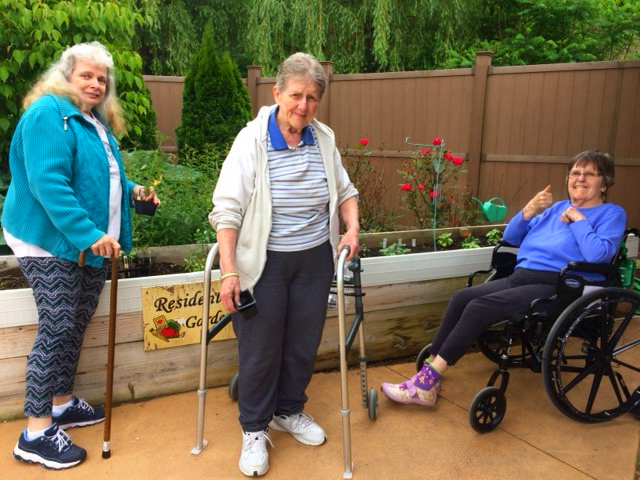
How Does Gardens At Orangeville, The Compare to Other Pennsylvania Nursing Homes?

Compared to the 100 nursing homes in Pennsylvania, GARDENS AT ORANGEVILLE, THE's overall rating (2 stars) is below the state average of 3.0, staff turnover (48%) is near the state average of 46%, and health inspection rating (2 stars) is below the national benchmark.

What Should Families Ask When Visiting Gardens At Orangeville, The?

Based on this facility's data, families visiting should ask: "Can you walk me through typical staffing levels on day, evening, and night shifts?" "Can I visit during a mealtime to observe dining assistance and food quality?" "How do you handle medical emergencies, and what is your hospital transfer rate?" "Can I speak with family members of current residents about their experience?" These questions are particularly relevant given the below-average staffing rating.

Is Gardens At Orangeville, The Safe?

Based on CMS inspection data, GARDENS AT ORANGEVILLE, THE has a clean safety record: no substantiated abuse findings (meaning no confirmed cases of resident harm), no Immediate Jeopardy citations (the most serious violation level indicating risk of serious injury or death), and is not on the Special Focus Facility watch list (a federal program monitoring the lowest-performing 1% of nursing homes). The facility has a 2-star overall rating and ranks #100 of 100 nursing homes in Pennsylvania. While no facility is perfect, families should still ask about staff-to-resident ratios and recent inspection results during their visit.

Do Nurses at Gardens At Orangeville, The Stick Around?

GARDENS AT ORANGEVILLE, THE has a staff turnover rate of 48%, which is about average for Pennsylvania nursing homes (state average: 46%). Moderate turnover is common in nursing homes, but families should still ask about staff tenure and how the facility maintains care continuity when employees leave.

Was Gardens At Orangeville, The Ever Fined?

GARDENS AT ORANGEVILLE, THE has no federal fines on record. CMS issues fines when nursing homes fail to meet care standards or don't correct problems found during inspections. The absence of fines suggests the facility has either maintained compliance or corrected any issues before penalties were assessed. This is a positive indicator, though families should still review recent inspection reports for the full picture.

Is Gardens At Orangeville, The on Any Federal Watch List?

GARDENS AT ORANGEVILLE, THE is not on any federal watch list. The most significant is the Special Focus Facility (SFF) program, which identifies the bottom 1% of nursing homes nationally based on persistent, serious quality problems. Not being on this list means the facility has avoided the pattern of deficiencies that triggers enhanced federal oversight. This is a positive indicator, though families should still review the facility's inspection history directly.