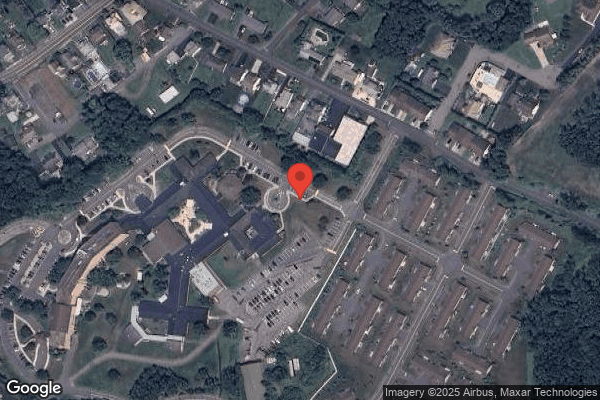

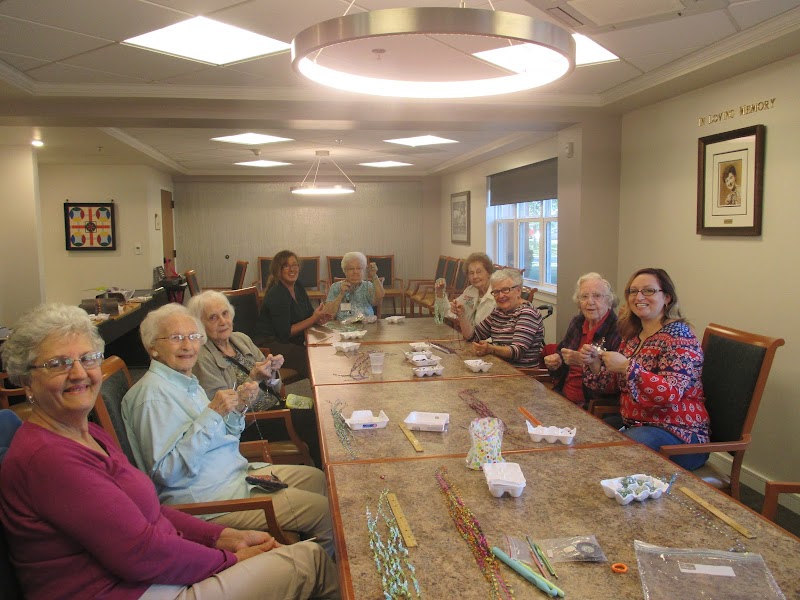

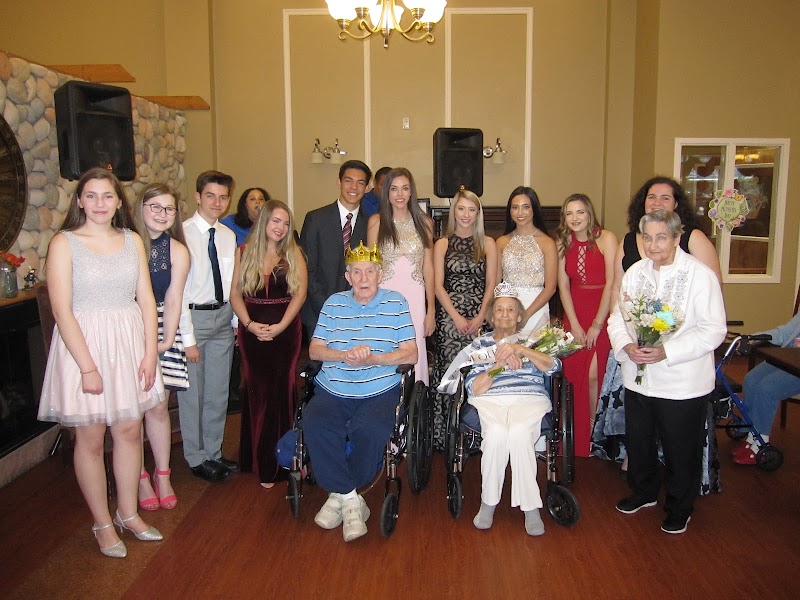
WESLEY VILLAGE

209 ROBERTS ROAD, PITTSTON, PA 18640 (570) 655-2891
Non profit - Corporation 160 Beds UNITED METHODIST HOMES Data: November 2025 1 Immediate Jeopardy citation
Trust Grade
46/100
#377 of 653 in PA
Last Inspection: May 2025

Inspected within the last 6 months. Data reflects current conditions.

Overview

Wesley Village in Pittston, Pennsylvania, has a Trust Grade of D, indicating below-average performance with some concerning issues. They rank #377 out of 653 facilities in the state, placing them in the bottom half, and #10 of 22 in Luzerne County, meaning only nine local options are better. The facility is showing improvement, as the number of issues dropped from 14 in 2024 to 8 in 2025. Staffing is a relative strength, with a rating of 4 out of 5 stars and turnover at 49%, which is close to the state average. However, the facility has faced fines totaling $8,021, which is average but still raises concerns about compliance. Specific incidents noted by inspectors include a critical finding where two residents were inadequately supervised, risking potential elopement and serious harm. Additionally, the facility failed to follow physician orders for medication administration for one resident, and did not implement non-drug pain relief strategies before administering opioids to another resident. While there are strengths such as good staffing levels and improving trends, families should be aware of these serious safety and care issues when considering Wesley Village for their loved ones.

Trust Score
D
46/100
In Pennsylvania
#377/653
Bottom 43%
Safety Record
High Risk
Review needed
Inspections
Getting Better
14 → 8 violations
Staff Stability
⚠ Watch
49% turnover. Above average. Higher turnover means staff may not know residents' routines.
Penalties
○ Average
$8,021 in fines. Higher than 50% of Pennsylvania facilities. Some compliance issues.
Skilled Nurses
○ Average
Each resident gets 39 minutes of Registered Nurse (RN) attention daily — about average for Pennsylvania. RNs are the most trained staff who monitor for health changes.
Violations
⚠ Watch
29 deficiencies on record. Higher than average. Multiple issues found across inspections.
★★★☆☆
3.0
Overall Rating
★★★★☆
4.0
Staff Levels
★★★★☆
4.0
Care Quality
★★★☆☆
3.0
Inspection Score
Stable
2024: 14 issues
2025: 8 issues

The Good

  • 4-Star Staffing Rating · Above-average nurse staffing levels
  • 4-Star Quality Measures · Strong clinical quality outcomes
  • Full Sprinkler Coverage · Fire safety systems throughout facility
  • No fines on record

Facility shows strength in staffing levels, quality measures, fire safety.

The Bad

3-Star Overall Rating

Near Pennsylvania average (3.0)

Meets federal standards, typical of most facilities

Staff Turnover: 49%

Near Pennsylvania avg (46%)

Higher turnover may affect care consistency

Federal Fines: $8,021

Below median ($33,413)

Minor penalties assessed

Chain: UNITED METHODIST HOMES

Part of a multi-facility chain

Ask about local staffing decisions and management

The Ugly 29 deficiencies on record

1 life-threatening
May 2025 8 deficiencies
CONCERN (D)

Potential for Harm - no one hurt, but risky conditions existed

Deficiency F0552 (Tag F0552)

Could have caused harm · This affected 1 resident

**NOTE- TERMS IN BRACKETS HAVE BEEN EDITED TO PROTECT CONFIDENTIALITY** Based on clinical record review, select facility policy, and staff interviews, it was determined the facility failed to ensure t...

Read full inspector narrative →
**NOTE- TERMS IN BRACKETS HAVE BEEN EDITED TO PROTECT CONFIDENTIALITY** Based on clinical record review, select facility policy, and staff interviews, it was determined the facility failed to ensure that residents or their representatives were informed of treatment options, as well as the risks and benefits for psychotropic medications for one of 28 residents (Resident 24). Findings include: A review of a facility policy titled Psychotropic Medication, last reviewed by the facility on March 19, 2025, revealed it is the facility policy that residents shall not receive psychotropic medications which are not clinically indicated to treat a specific condition. Further policy review revealed that documented consent, given voluntarily and free from coercion, by the resident or resident representative (if applicable), to use a psychotropic medication after being provided with sufficient information regarding general psychotropic use and specific considerations related to the psychotropic medication being considered for use will be obtained. A clinical record review revealed that Resident 24 was admitted to the facility on [DATE], with diagnoses that included dementia (irreversible, progressive degenerative disease of the brain, resulting in loss of reality contact and functioning ability) and encephalopathy (dysfunction in brain processes including attention, cognition, and consciousness). A quarterly Minimum Data Set Assessment (MDS - a federally mandated standardized assessment conducted at specific intervals to plan resident care) of Resident 24, dated December 28, 2024, revealed the resident was severely cognitively impaired with a BIMS score of 05 (Brief Interview for Mental Status, a tool to assess the residents' attention, orientation, and ability to register and recall new information; a score of 0-7 indicates severe cognitive impairment). Further review of the clinical record revealed that Resident 24 had a designated power of attorney who was their resident representative at the facility. A review of a physician's order dated December 22, 2024, revealed an order for Seroquel 25 milligrams (mg) (an antipsychotic medication used to treat mood disorders) two times a day. A review of a form titled Psychoactive Medication Informed Consent, dated December 30, 2024, revealed consent for an antipsychotic medication, Seroquel, with a verbal consent checked at the bottom of the form, indicating Resident 24 gave verbal consent. There was no indication that Resident 24's resident representative was made aware of this consent for the antipsychotic medication Seroquel. A review of Resident 24's progress notes revealed no indication that the resident's responsible party were notified of the medication, that the risks and benefits were explained or that the resident was offered alternative treatment options. A review of Medication Administration Records (MARs) from December 2024 to February 2025 for Resident 24 revealed the resident received Seroquel 25 mg twice a day from December 22, 2024, to February 10, 2025. A review of a progress note dated February 10, 2025, revealed the resident representative inquired about discussing Resident 24's medications and was adamant that she did not want her mother to have Seroquel at all and provided a pre-hospital medication list. The physician then re-evaluated and started a gradual dose reduction of Seroquel, and the resident representative was made aware of same. A review of a physician's order dated February 10, 2025, revealed an order for Seroquel 12.5 mg two times a day for 7 days, then 12.5 mg daily for 7 days, then discontinue the medicaion. The facility was unable to provide the pre-hospital list given by the resident representative on February 10, 2025, and it was not part of the clinical record. Interview with the Nursing Home Administrator (NHA) on May 9, 2025, at 9:00 A.M., confirmed there was no documentation available for review at the time of the survey to indicate that Resident 24's responsible party was informed of the psychotropic medication, that the risks and benefits were explained, or that they were offered alternative treatment options. 28 Pa Code 201.29(a) Resident rights
CONCERN (D)

Potential for Harm - no one hurt, but risky conditions existed

Deficiency F0578 (Tag F0578)

Could have caused harm · This affected 1 resident

**NOTE- TERMS IN BRACKETS HAVE BEEN EDITED TO PROTECT CONFIDENTIALITY** Based on a review of select facility policy, clinical records, and staff interviews, it was determined the facility failed to en...

Read full inspector narrative →
**NOTE- TERMS IN BRACKETS HAVE BEEN EDITED TO PROTECT CONFIDENTIALITY** Based on a review of select facility policy, clinical records, and staff interviews, it was determined the facility failed to ensure physician orders were consistent with a resident's documented code status (hospital designation that means to intercede if a patient's heart stops beating or if the patient stops breathing) preference for one of 28 residents reviewed (Resident 75). Findings include: A review of the facility's policy titled Cardiopulmonary Resuscitation, last reviewed on [DATE], indicated that when a resident's resuscitation preference is determined or changed, the facility is responsible for ensuring that the electronic medical record reflects the resident's choice in the Advanced Directives section and that physician orders match the resident's expressed wishes. A review of the clinical record of Resident 75, revealed the resident was admitted to the facility on [DATE], with diagnoses that included hypertension (blood pressure that is higher than normal) and epilepsy (a chronic brain disorder in which groups of nerve cells, or neurons, in the brain sometimes send the wrong signals and cause seizures). A review of Resident 75's clinical record revealed a completed and signed CPR Status form (cardiopulmonary resuscitation- life-saving procedure performed when the heart or breathing stops), dated [DATE], which indicated the resident elected not to receive cardiopulmonary resuscitation (CPR) in the event their heart or breathing stopped. However, further review of the resident's electronic medical record revealed that physician orders entered on [DATE], listed the resident's code status as CPR, meaning resuscitation should be performed. There was no documentation showing that the resident changed their decision or participated in any discussion suggesting an update to their previously signed CPR Status form Following surveyor inquiry, a physician's order was entered on [DATE], to change the code status to DNR (Do Not Resuscitate-a medical order indicating that CPR should not be administered if the resident's heart or breathing stops). An interview with the Nursing Home Administrator (NHA) on [DATE], at 10:00 AM confirmed that physician orders are expected to match the resident's signed CPR Status form. The Administrator acknowledged that the original physician order indicating CPR did not reflect the resident's expressed wishes documented on [DATE], and stated that the inconsistency should have been corrected prior to surveyor identification. 28 Pa. Code 201.29(a) Resident rights. 28 Pa. Code 211.5 (f)(i) Medical records. 28 Pa. Code 211.12 (d)(1)(3)(5) Nursing services.
CONCERN (D)

Potential for Harm - no one hurt, but risky conditions existed

Respiratory Care (Tag F0695)

Could have caused harm · This affected 1 resident

**NOTE- TERMS IN BRACKETS HAVE BEEN EDITED TO PROTECT CONFIDENTIALITY** Based on a review of clinical records, select facility policy, observation, and resident and staff interviews, it was determined...

Read full inspector narrative →
**NOTE- TERMS IN BRACKETS HAVE BEEN EDITED TO PROTECT CONFIDENTIALITY** Based on a review of clinical records, select facility policy, observation, and resident and staff interviews, it was determined the facility failed to ensure oxygen therapy was administered per physician's orders for one resident out of 28 sampled (Resident 43). Findings include: A review of the facility policy titled Administration of Oxygen, last reviewed by the facility on March 19, 2025, revealed it is the facility's policy to provide oxygen therapy to residents upon order of the physician. The policy indicates it is the responsibility of the licensed nurse to initiate and monitor the administration of oxygen per physician's orders. A clinical record review revealed Resident 43 was admitted to the facility on [DATE], with diagnoses that include chronic respiratory failure with hypoxia (COPD is a condition caused by damage to the airways or other parts of the lung that blocks airflow and makes it hard to breathe). Further clinical record review revealed Resident 43 had an altered respiratory status initiated on February 19, 2025. Interventions implemented to assist Resident 43 with her goal of maintaining a normal breathing pattern included monitoring for signs and symptoms of respiratory distress, reporting to the physician as needed, and providing the resident oxygen via a nasal cannula (a medical device used to deliver supplemental oxygen to a patient through their nostrils) at 1.0 liters per minute (LPM). However, a discrepancy was identified. Resident 43 has a physician's order to receive oxygen at 2.0 liters per minute via a nasal cannula initiated on March 26, 2025. An observation on May 7, 2025, at 12:10 PM revealed Resident 43 was awake and sitting upright in her chair with supplemental oxygen in place via an oxygen concentrator with the liter flow set at 0.0 liters per minute. Tubing connected the oxygen concentrator to her via a nasal cannula. During an interview at the time of the observation, Resident 43 indicated that she couldn't feel any airflow from the nasal cannula. During an interview on May 7, 2025, at 12:15 PM, Employee 2, Licensed Practical Nurse (LPN), confirmed Resident 43 should be receiving continuous oxygen via a nasal cannula at 2.0 liters per minute. Employee 2, LPN, indicated she would set the oxygenator to correctly administer oxygen and check the resident's vital signs. A progress note dated May 7, 2025, at 12:32 PM revealed Resident 43's oxygen concentrator was checked and the liter flow was set to 0.0 LPM. The flow rate was immediately adjusted, and the resident's blood-oxygen saturation (SpO2) was measured with a pulse oximeter (a device that measures the percentage of oxygen carried by red blood cells in the blood, which is referred to as oxygen saturation). The resident's blood-oxygen saturation (SpO2) was 93% (a normal range is 95-100%; however, individuals with chronic diseases may have levels below 95%). Resident denied shortness of breath or distress. During an interview on May 9, 2025, at approximately 10:00 AM, the Nursing Home Administrator (NHA) confirmed it is the facility's responsibility to ensure oxygen therapy is administered per physician's orders. The NHA also confirmed it is the facility's responsibility to ensure each resident's plan of care is congruent with physician's orders, including orders for oxygen therapy. 28 Pa. Code 211.10 (c) Resident care policies. 28 Pa. Code 211.12 (c)(d)(1)(3)(5) Nursing services.
CONCERN (D)

Potential for Harm - no one hurt, but risky conditions existed

Deficiency F0697 (Tag F0697)

Could have caused harm · This affected 1 resident

**NOTE- TERMS IN BRACKETS HAVE BEEN EDITED TO PROTECT CONFIDENTIALITY** Based on clinical record review, select facility policy review, and staff interview, it was determined the facility failed to re...

Read full inspector narrative →
**NOTE- TERMS IN BRACKETS HAVE BEEN EDITED TO PROTECT CONFIDENTIALITY** Based on clinical record review, select facility policy review, and staff interview, it was determined the facility failed to reassess a resident's pain status and medication prescribed on as-needed (PRN) basis to ensure the development and implementation of an effective, individualized pain management plan for one of 28 residents sampled. (Resident 14). Findings include: A review of the facility's policy for pain assessment and management last reviewed, March 2025, revealed the facility will provide the resident with care and services to address and manage the resident's pain to support his or her highest practicable level of physical, mental, and psychosocial well-being. Using the comprehensive assessment and care plan, current professional standards of practice, and the resident's goals and preferences, the resident will have pain identified and assessed, have the type of pain identified along with appropriate management approaches, and have pain adequately managed (eliminated if possible or relieved to a tolerable level). The policy requires a comprehensive pain assessment upon admission, quarterly, annually, with any significant change in status, and with the onset of new pain. Clinical record review revealed that Resident 14 was admitted to the facility on [DATE], with diagnoses including dementia (group of symptoms affecting intellectual and social abilities severely enough to interfere with daily functioning) and pulmonary hypertension (type of high blood pressure that affects the arteries in the lungs and the right side of the heart). An admission Minimum Data Set assessment (MDS a federally mandated standardized assessment conducted at specific intervals to plan resident care) dated April 13, 2025, revealed a BIMS score (Brief Interview for Mental Status- the BIMS test is used to get a quick snapshot of cognitive function) of 10 (a score of 8-12 indicates moderate impairment), required staff assistance for activities of daily living, no pain the last five days, did not receive scheduled pain medication, and did not exhibit shortness of breath. A physician order initially dated April 11, 2025, noted an order for acetaminophen (pain reliever) 325 mg give two tablets po (by mouth) PRN (as needed) for pain scale of 1-5. Do not exceed 3000 mg/24 hours. A physician order initially dated April 22, 2025, noted an order for oxygen 2L/minute continuous via nasal cannula for shortness of breath. A physician order initially dated April 22, 2025, and discontinued April 28, 2025, noted an order for Morphine Sulfate (narcotic analgesic pain medication) 20 mg/ml give 0.25 mg po every 6 hours PRN for shortness of breath/pain 6-10 for 14 days. A physician order initially dated April 28, 2025, noted an order for Morphine Sulfate 20 mg/ml give 0.25 mg by mouth every 6 hours PRN for shortness of breath for 14 days. A physician order initially dated May 7, 2025, noted an order for Morphine Sulfate Solution 20 mg/ml give 0.25 ml by mouth every 6 hours PRN for shortness of breath for 14 days with instructions to document respiratory assessment. A care plan-initiated April 9, 2025, identified Resident 14 as at risk for pain and included interventions such as administering acetaminophen as ordered, evaluating effectiveness of pain interventions every shift and as needed. Monitor and report to nurse any signs/symptoms of non-verbal pain: Changes in breathing (noisy, deep/shallow, labored, fast/slow); Vocalizations (grunting, moans, yelling out, silence); Mood/behavior (changes, more irritable, restless, aggressive, squirmy, constant motion); Eyes (wide open/narrow slits/shut, glazed, tearing, no focus); Face (sad, crying, worried, scared, clenched teeth, grimacing) Body (tense, rigid, rocking, curled up, thrashing. Notify physician if interventions are unsuccessful or if current complaint is a significant change from residents past experience of pain. Despite the established plan, the resident's Medication Administration Record (MAR) revealed the following: April 23, 2025, at 10:07 AM the resident received the PRN Morphine Sulfate based /ml 0.25 mg by mouth for a pain level of 4 (despite prescribed for pain level of 6-10). A review of the resident's May 2025 MAR revealed the PRN Morphine Sulfate 20 mg/ml 0.25 mg for shortness of breath was administered on the following dates: May 1, 2025, at 5:45 PM for a pain level of 4 (no shortness of breath noted) May 3, 2025, at 5:28 AM for a pain level of 7 (no shortness of breath noted) May 3, 2025, at 8:53 PM for a pain level of 5 (no shortness of breath noted) May 4, 2025, at 9:22 PM for a pain level of 4 (no shortness of breath noted) May 6, 2025, at 1:15 AM for a pain level of 5 (no shortness of breath noted) Further review of the clinical record revealed no documented evidence of a comprehensive reassessment of the resident's pain status following the onset of pain on April 22, 2025, nor evidence that the pain management plan was reviewed or modified accordingly. During an interview on May 9, 2025, at approximately 10:00 AM the Director of Nursing (DON) confirmed the following. a comprehensive pain assessment was not completed as per facility policy to help identify Resident 14's cause of pain and develop an individualized pain management program for the resident. Staff administered a narcotic prescribed for pain levels 6-10 when pain levels were consistently documented as 4-5. After the April 28, 2025, physician order changed the indication to shortness of breath only, staff continued administering Morphine Sulfate without evidence the resident was experiencing shortness of breath. Staff administered narcotic pain medication on five occasions between May 1, 2025, and May 6, 2025, without a physician order and with no documented evidence the resident was experiencing shortness of breath and there was no evidence of a comprehensive pain reassessment to determine whether the resident's pain management regimen was effective, appropriate, or in need of adjustment. At the time of the survey, there was no documentation that the facility evaluated the cause of Resident 14's pain, reassessed the appropriateness of PRN medications, or modified the care plan to address the resident's emerging symptoms. The facility practice failed to ensure pain management was based on comprehensive reassessment and individual needs. 28 Pa. Code 211.5(f)(ix) Medical records 28 Pa Code 211.12 (c)(d)(1)(3)(5) Nursing services
CONCERN (D)

Potential for Harm - no one hurt, but risky conditions existed

Deficiency F0808 (Tag F0808)

Could have caused harm · This affected 1 resident

Based on a review of clinical records, observation, and staff interview it was determined the facility failed to provide a physician ordered therapeutic diet (diet ordered by a physician or other dele...

Read full inspector narrative →
Based on a review of clinical records, observation, and staff interview it was determined the facility failed to provide a physician ordered therapeutic diet (diet ordered by a physician or other delegated provider that is part of tthe treatment for a disease or clinical condition, to eliminate, decrease, or increase certain substances in the diet, or to provide mechanically altered food when indicated) for one resident out of 28 sampled (Resident 54). Findings include: A review of the clinical record of Resident 54 revealed the resident had diagnoses which included Alzheimer's disease (a progressive brain disorder that causes memory loss, confusion, and other cognitive decline) and oral phase dysphagia (difficulty swallowing which includes problems with using the mouth, lips, and tongue to control food or liquid). Review of a Speech Therapy Treatment Encounter Note dated May 14, 2024, revealed a recommendation for the use of lemon ice to facilitate oral movement for AP transfer [anterior-posterior transfer- the movement of the bolus (food or liquid mass) from the front of the mouth to the back, and then down the throat]. A physician order initially dated May 14, 2024, noted an order for a Pureed NAS (no added salt) diet with lemon ice at meals. Observation of the resident's lunch meals on May 6, 2025, at 12:00 PM and May 7, 2025, at 12:10 PM revealed the resident did not receive lemon ice on her meal tray. Review of the resident's meal tray ticket revealed no written order for lemon ice with meals. Interview with employee 1 (LPN) on May 7, 2025, at approximately 12:10 PM confirmed that lemon ice was not designated on the resident's meal tray ticket. During an interview on May 9, 2025, at approximately 9:30 AM the Certified Dietary Manager (CDM) confirmed that Resident 54's current physician orders included lemon ice with each meal. The CDM confirmed the facility failed to provide lemon ice on the resident's meal trays to facilitate swallowing. 28 Pa. Code 211.12 (d)(3)(5) Nursing services
CONCERN (E)

Potential for Harm - no one hurt, but risky conditions existed

Quality of Care (Tag F0684)

Could have caused harm · This affected multiple residents

**NOTE- TERMS IN BRACKETS HAVE BEEN EDITED TO PROTECT CONFIDENTIALITY** Based on clinical record review, review of select facility policy, and staff interview, it was determined the facility failed to...

Read full inspector narrative →
**NOTE- TERMS IN BRACKETS HAVE BEEN EDITED TO PROTECT CONFIDENTIALITY** Based on clinical record review, review of select facility policy, and staff interview, it was determined the facility failed to provide quality care as evidenced by the facility failure to ensure physician orders were followed for the administration of medication for one resident (Resident 61) and further failed to develop procedures and criteria for a palliative care program (Specialized medical care for people with serious illness. This type of care is focused on providing relief from the symptoms and stress of a serious illness. The goal is to improve quality of life for both the patient and the family.) to provide person-centered care in accordance with the comprehensive person-centered care plan, and the residents' choices for palliative care for two of 28 sampled residents (Residents 14 and 39). Findings include: A review of facility policy titled: Preparing, Administering and Documenting Medications last reviewed by the facility on March 19, 2025, indicated that medications are administered within one hour of their prescribed times, unless otherwise specified. Review of Resident 61's clinical record revealed the resident was admitted to the facility on [DATE], with diagnoses to include Parkinson's disease (a progressive disorder that affects movement). A review of the clinical record also revealed a physician's order for Carbidopa-Levodopa (a combination medicine used to treat the symptoms of Parkinson's disease) 50-200 MG, with instructions to administer one tablet by mouth two times a day, was initiated on April 6, 2025. A review of Resident 61's Medication Administration Record for May 2025 revealed that the resident was prescribed and scheduled to receive the following medication: Carbidopa-Levodopa 50-200 milligrams, one tablet by mouth two times a day (8:00 AM and 4:00 PM). A review of the facility's Medication Administration Audit Report for April 6, 2025, through May 6, 2025, revealed the following: April 8, 2025, the medication scheduled for 8:00 AM was not administered until 9:25 AM, 1 hour and 25 minutes after the scheduled time. April 11, 2025, the medication scheduled for 4:00 PM was not administered until 5:30 PM, 1 hour and 30 minutes after the scheduled time. April 13, 2025, the medication scheduled for 8:00 AM was not administered until 9:46 AM, 1 hour and 46 minutes after the scheduled time. April 15, 2025, the medication scheduled for 8:00 AM was not administered until 10:26 AM, 2 hours and 26 minutes after the scheduled time. April 16, 2025, the medication scheduled for 8:00 AM was not administered until 9:12 AM, 1 hour and 12 minutes after the scheduled time. April 16, 2025, the medication scheduled for 4:00 PM was not administered until 5:55 PM, 1 hour and 55 minutes after the scheduled time. April 17, 2025, the medication scheduled for 8:00 AM was not administered until 9:35 AM, 1 hour and 35 minutes after the scheduled time. April 18, 2025, the medication scheduled for 8:00 AM was not administered until 11:32 AM, 3 hours and 32 minutes after the scheduled time. April 20, 2025, the medication scheduled for 8:00 AM was not administered until 10:18 AM, 2 hours and 18 minutes after the scheduled time. April 21, 2025, the medication scheduled for 8:00 AM was not administered until 9:33 AM, 1 hour and 33 minutes after the scheduled time. April 23, 2025, the medication scheduled for 8:00 AM was not administered until 9:22 AM, 1 hour and 22 minutes after the scheduled time. May 1, 2025, the medication scheduled for 8:00 AM was not administered until 9:55 AM, 1 hour and 55 minutes after the scheduled time. May 2, 2025, the medication scheduled for 4:00 PM was not administered until 5:57 PM, 1 hour and 57 minutes after the scheduled time. May 3, 2025, the medication scheduled for 8:00 AM was not administered until 9:28 AM, 1 hour and 28 minutes after the scheduled time. May 4, 2025, the medication scheduled for 8:00 AM was not administered until 9:25 AM, 1 hour and 25 minutes after the scheduled time. May 5, 2025, the medication scheduled for 8:00 AM was not administered until 9:22 AM, 1 hour and 22 minutes after the scheduled time. Interview with the Nursing Home Administrator on May 7, 2025, at approximately 10:00 AM confirmed medications should be administered timely in accordance with physician orders and professional standards of practice. Review of the clinical record revealed that Resident 14 was admitted to the facility on [DATE], with diagnoses, which include dementia (group of symptoms affecting intellectual and social abilities severely enough to interfere with daily functioning). A nurses note dated April 22, 2025, indicated the resident representative decided to transition the resident into Palliative Care and orders were placed to reflect the family's request. A physician order dated April 22, 2025, revealed an order for Palliative Care, no weights, oxygen at 2L/min for shortness of breath. A physician order dated April 24, 2025, revealed an order to discontinue by mouth medications. Further review of the clinical chart for Resident 14 revealed there was no palliative care plan, no signed consent for palliative care, and no doctor or social worker note associated with the palliative care for review. A review of the clinical record revealed that Resident 39 was admitted to the facility on [DATE], with diagnoses that included dementia and atrial fibrillation (a condition that causes the heart to beat irregularly and sometimes much faster than normal). A quarterly Minimum Data Set Assessment (MDS-- a federally mandated standardized assessment conducted at specific intervals to plan resident care) of Resident 39, dated March 20, 2025, revealed the resident was severely cognitively impaired. A review of Resident 39's clinical record revealed that they had a designated power of attorney for care who was their resident representative at the facility. A nursing progress note dated April 17, 2025, documented that facility staff held a discussion with the resident representative regarding the resident's ongoing weight loss. During the conversation, the resident's advance directives were reviewed, and the representative expressed a preference for palliative care, including no feeding tube placement and no hospital transfer. A physician's order dated April 17, 2025, included directives for palliative care, no weights, no parenteral or enteral nutrition or hydration (methods of delivering nutrition via feeding tube or intravenous line), and no laboratory testing. However, the order lacked documentation of a clinical diagnosis or rationale supporting the initiation of palliative care. Further review of the clinical record revealed the absence of a comprehensive palliative care plan, no signed consent from the resident representative authorizing palliative care, and no supporting progress notes from a physician or social worker to document interdisciplinary involvement or justification for the change in the resident's plan of care. An interview conducted with the Director of Nursing and the Administrator on May 9, 2025, at approximately 9:00 AM, failed to produce documentation outlining the clinical rationale or medical necessity for the palliative care orders issued. Additionally, the facility was unable to provide evidence of a facility policy or established criteria used to determine a resident's eligibility for palliative care services. 28 Pa. Code 211.10(a)(d) Resident Care Policies 28 Pa. Code 211.12(c)(d)(1)(2) Nursing Services
MINOR (B)

Minor Issue - procedural, no safety impact

Deficiency F0628 (Tag F0628)

Minor procedural issue · This affected multiple residents

**NOTE- TERMS IN BRACKETS HAVE BEEN EDITED TO PROTECT CONFIDENTIALITY** Based on review of clinical records, facility-initiated transfer notices, and staff interview, it was determined the facility fa...

Read full inspector narrative →
**NOTE- TERMS IN BRACKETS HAVE BEEN EDITED TO PROTECT CONFIDENTIALITY** Based on review of clinical records, facility-initiated transfer notices, and staff interview, it was determined the facility failed to provide copies of written notice of facility-initiated hospital transfers of residents to a representative of the Office of the State Ombudsman for five out of 28 residents reviewed (Residents 1, 20, 87, 90, and 18). Findings include: A review of the clinical record revealed that Resident 1 was transferred to the hospital on March 8, 2025, and was readmitted to the facility on [DATE]. A review of the clinical record revealed that Resident 20 was transferred to the hospital on April 27, 2025, and was readmitted to the facility on [DATE]. A review of the clinical record revealed that Resident 87 was transferred to the hospital on March 17, 2025, and was readmitted to the facility on [DATE]. A review of the clinical record revealed that Resident 90 was transferred to the hospital on January 10, 2025, and was readmitted to the facility on [DATE]. A review of the clinical record revealed that Resident 18 was transferred to the hospital on September 14, 2024, and was readmitted to the facility on [DATE]. Resident 18 was also transferred to the hospital on January 3, 2025, and was readmitted to the facility on [DATE]. Although written notices were provided to the resident and resident representative of the facility-initiated transfer, there was no documented evidence the facility sent copies of written notices of these facility-initiated transfers to the representative of the Office of the State Long-Term Care Ombudsman. An interview with the nursing home administrator on May 9, 2025, at approximately 10:00 AM confirmed there was no documented evidence that copies of facility-initiated transfer notices for Residents 1, 18, 20, 87, and 90 were sent to a representative of the Office of the State Long-Term Care Ombudsman. The administrator further confirmed there was no evidence that copies were sent consistently for resident transfers to a representative of the Office of the State Long-Term Care Ombudsman from July 2024 through May 2025. 28 Pa. Code 201.14(a) Responsibility of licensee.
MINOR (B)

Minor Issue - procedural, no safety impact

Deficiency F0848 (Tag F0848)

Minor procedural issue · This affected multiple residents

Based on review of the facility's admission agreement and staff interview, it was determined that the facility failed to ensure a neutral and fair arbitration process by ensuring both the resident and...

Read full inspector narrative →
Based on review of the facility's admission agreement and staff interview, it was determined that the facility failed to ensure a neutral and fair arbitration process by ensuring both the resident and resident representative, and the facility agree on the selection of a venue that is convenient to both parties. Findings include: A review of the facility's admission Agreement packet, specifically Section 19.4 Binding Arbitration Subsection (f) Location of Arbitration, contained Subject to mutual agreement of the parties, the arbitration will be conducted at the facility or at a site within a reasonable distance of the facility. During an interview on May 9, 2025, at approximately 10:30 AM, the Nursing Home Administrator (NHA) confirmed the language of the arbitration agreement does not state that the location of the arbitration will be at a venue that is convenient to both the resident/resident representative and the facility. The NHA confirmed the language of the policy states two options for the location of arbitration (1) at the facility or (2) a site within a reasonable distance of the facility. 28 Pa. Code 201.14(a) Responsibility of licensee. 28 Pa. Code 201.18(e)(1) Management. 28 Pa. Code 201.29(a) Resident rights.
Aug 2024 3 deficiencies 1 IJ
CRITICAL (J) 📢 Someone Reported This

A family member, employee, or ombudsman was alarmed enough to file a formal complaint

Immediate Jeopardy (IJ) - the most serious Medicare violation

Accident Prevention (Tag F0689)

Someone could have died · This affected 1 resident

**NOTE- TERMS IN BRACKETS HAVE BEEN EDITED TO PROTECT CONFIDENTIALITY** Based on observations, a review of clinical records, select facility policy, resident incident/accident report and staff intervi...

Read full inspector narrative →
**NOTE- TERMS IN BRACKETS HAVE BEEN EDITED TO PROTECT CONFIDENTIALITY** Based on observations, a review of clinical records, select facility policy, resident incident/accident report and staff interviews, it was determined that the facility failed to provide adequate staff supervision and effective safety measures to prevent elopement for two residents (Resident CR1 and Resident 2) out of 4 residents reviewed, The facility further failed to identify staff's reliance on the facility's alarm system to prevent elopements and the deficiencies of this system to prevent future unsupervised exits from the facility, which placed residents in immediate jeopardy of future unsupervised exits from the facility and the potential for serious bodily injury or death. Findings include: A review of a policy entitled Wandering and Elopement Risk Identification and Management, dated September 2021, states it is the policy of the facility to maintain facility wide systems and resident specific plans of care to minimize resident risk and potential for harm related to wandering and elopement. Definition: Elopement - the act of a resident leaving the premises or a safe area without authorization (i.e., an order for discharge or leave of absence) and/or any necessary supervision to do so. Procedure: general staff and Resident/Resident Representative Education and Training. Provide staff with general and job -specific education regarding wandering identification, management (including information related to the facility's wandering management system), and elopement prevention and response upon hire, annually, and as needed thereafter. A review of the clinical record of Resident CR1 revealed admission to the facility on May 14, 2024, with diagnoses, which included dementia (a group of symptoms that affects memory, thinking and interferes with daily life), syncope and collapse (fainting or passing out), unsteadiness on feet, weakness, and abnormalities of gait. A review of the resident's admission MDS Assessment (Minimum Data Set - a federally mandated standardized assessment process conducted periodically to plan resident care) dated May 20, 2024, revealed that the resident's cognition was severely impaired with a BIMS score (brief interview for mental status - section of MDS that assesses cognition) of 3 (a score of 0 -7 indicates severely impaired cognition). A review of the Resident's plan of care indicated the resident is an elopement risk related to disorientation to place date-initiated May 15, 2024. An intervention is to identify pattern of wandering, such as is wandering purposeful, aimless, or escapist. Is resident looking for something. Does it indicate the need for more exercise, provide structured activities, toileting, walking inside and outside, reorientation strategies including signs, pictures and memory boxes, wander alert (a device to alarm the facility if the resident tries to leave) to the right ankle date-initiated May 15, 2024. A further review of the Resident's plan of care indicated the resident has a behavior of becoming combative with staff, resistant to medication, and frequently asking where husband is, pulling fire alarm, and exit seeking date-initiated May 21, 2024. An intervention is to administer medications as ordered and monitor/document side effects, anticipate and meet the resident's needs, and educate the resident/family/caregivers on successful coping and interaction strategies date-initiated May 21, 2024. A review of a health status note dated May 14, 2024, at 2113 hours (9:13 PM) revealed Resident CR 1 stated she wants to go home and sleep in her own bed, redirection with only mild effect, concerned resident will attempt to leave, wanderguard placed for resident safety. A review of a health status note dated May 16, 2024, at 07:48 hours (7:48 AM) revealing family member called to inquire about her mother's night. Explained that she was up for several hours until approximately 0130 (1:30 AM). Explained that she (resident CR 1) was looking for her mother and her family to tell them where she was. A review of a health status note dated May 19, 2024, at 11:46 AM, resident requires redirection and cues for activity/taking medications. Resident repetitively questioning where she is, where her parents are. A review of a health status note dated May 22, 2024, at 04:16 hours (4:16 AM) the resident was awake until 0130 (1:30 AM). Attempting to ambulate without assist in room. Asking repetitive questions and becoming agitated. Snacks and fluids offered but declined. Attempted to reorient to time with short periods of success. Sat in front of nurse's station with nursing assistant (NA). Continued with questions and statements such as My daughter would not put me here. Who said I have to be here? A review of a health status note dated May 23, 2024, at 2209 hours (10:09 PM) indicated resident asked another resident's family member if they could give her a ride to the bus. This resident presented with wander-guard anklet, so the family member called the facility and made them aware of the request. The nurse responded immediately and redirected the resident to her room and told her that the bus will be back tomorrow for her. This intervention effective thus far, resident has been added to every (q) 15 minute checks for 72 hours for safety. Will continue to monitor and document effectiveness. A review of a health status note dated May 23, 2024, at 2216 hours (10:16 PM) stating MD called, new order received and noted for every (q) 15 minute checks X 72 hours. A review of an incident note dated May 23, 2024, at 2300 hours (11:00 PM) stating that at approximately 2020 hours (8:20 PM) call placed to facility by a visitor. Reported a lady with red hair and a bracelet (wander guard) on her leg is asking for a ride and when is the bus coming. Resident exit seeking, looking for her daughter and attempting to leave the property. Charge nurse was able to redirect resident to her room and informed her the bus will be coming tomorrow. Resident also requested to speak with her daughter. Call placed to daughter and message left. The covering physician notified and an order obtained for q15 minute checks X 72 hours. Above interventions effective at this time with monitoring and documentation on going. Continue to await return call from daughter. A review of facility provided incident report (IR - investigation) entitled Elopement, dated May 23, 2024, at 2020 hours (8:20 PM), indicated the incident location is outside. The IR further indicated the resident presented with exit seeking behavior and had asked another family member to give her a ride or show her where to get the bus. Other family member noticed a bracelet on her ankle (wanderguard) and called the facility. Charge nurse immediately responded and redirected resident back to her room and that the resident is ambulatory without assistance. The IR indicated the resident is confused with impaired memory, and is an active exit seeker. Review of facility provided incident statement (witness statement) dated May 23, 2024, by Employee 1, Nurse Assistant (NA), revealed the resident was last seen at approximately 8:10 PM sitting in the dining room at the table waiting and looking for her daughter. Review of facility provided incident statement (witness statement) undated, by Employee 2, Supervisor Registered Nurse (RN), stating a phone call was received from a visitor stating she was at the doors of the Rehabilitation Unit with a lady with red hair and a bracelet who was asking her for a ride and when was the next bus. Employee 2, RN immediately went to the Rehab unit, and saw Employee 3, RN (the nurse assigned to resident CR 1) and called for her help. Employee 2, and Employee 3 went out the Rehabilitation doors and the visitor was still there, and pointed to the direction the lady with red hair went. Employee 3, RN (the nurse assigned to resident CR 1) went to bring Resident CR 1 back. I (Employee 2, RN) went back to unit for help, overhead paged code green, rehab unit. Security and maintenance notified. Review of a second incident statement (witness statement) dated May 23, 2024, by Employee 2, Supervisor Registered Nurse (RN), stating visitor called 5229(supervisor facility telephone extension) stating the lady with red hair and a bracelet is with her at the rehabilitation door asking her for a ride and when was the next bus. Immediately went to Rehabilitation door, door alarm was sounding. Resident CR 1 redirected back to room by nurse. Immediate interventions where every 15 minute safety checks for 72 hours, family aware. Review of a third incident statement (witness statement) dated May 23, 2024, by Employee 2, Supervisor Registered Nurse (RN), revealing door malfunction, indicating at 9:00 PM maintenance and security came to assess the glitch in inner door of the Rehabilitation entrance. Door not completely closing, latching, and locking post (after) 8:00 PM unless forcibly shut. A review of the clinical record of Resident M 1 (husband of Resident CR 1) revealed admission to the facility on August 20, 2020, with diagnoses to include hypertension, and chronic kidney disease. A review of the resident's quarterly MDS Assessment (Minimum Data Set - a federally mandated standardized assessment process conducted periodically to plan resident care) dated May 23, 2024, revealed that the resident was cognitively intact with a BIMS score of 14 (Brief Interview for Mental Status a score of 13-15 indicates intact cognition). During an interview with Resident M 1 on August 16, 2024, at approximately 11:25 AM found him sitting in his room, alert, pleasant, and cooperative. In questioning, Resident M 1 stated he has been a resident in the facility for quite sometime and that his wife (Resident CR 1) was also for a short period of time. In further questioning, the alert and oriented resident was not aware of his wife (Resident CR 1) had been outside the facility without staff awareness during her stay at the facility. An observation of the front entrance on August 16, 2024, at approximately 11:40 AM revealed that the entrance to the facility had two sets of sliding, glass doors with a breeze way in between. These doors are alarmed with a keypad, with cameras pointing at the front door. There was a receptionist desk to the right of the front door upon entry into the facility. At approximately 11:50 AM, on August 16, 2024, Employee 4, RN (Assistant Director of Nursing - ADON) obtained a wanderguard upon the request of the state survey team. Employee 4 stated this wanderguard is new, and he personally activated it and confirmed its batteries are charged and that it is fully functioning. At approximately 12:00 PM, on August 16, 2024, in the presence of Employee 4 (RN - ADON), and the Nursing Home Administrator (NHA) after confirmation that the facilities front entrance doors were fully functioning, the state surveyor, while holding the wanderguard in hand, stood at the reception desk, which is approximately 14 - 18 feet away from the first set of the interior, double glass, sliding doors, and slowly proceeded to walk towards the doors. The inner door automatically opened, and the state surveyor continued to slowly walk thru the inner door, and approached the second set of glass sliding doors, which did not automatically open. At this time, the state surveyor applied light pressure to the door, and immediately, without any delay and or sustained pressure, the outer door opened, and the state surveyor proceeded to walk outside the front entrance. An observation of the Rehabilitation unit entrance on August 16, 2024, at approximately 12:08 PM revealed that the entrance also had two sets of glass doors with a breeze way in between. These doors are alarmed with a keypad. There is a glass enclosed nursing station straight ahead of the unit door when entering into the facility. At approximately 12:10 PM, on August 16, 2024, in the presence of Employee 4 (RN - ADON), and the NHA after confirmation that the Rehabilitation entrance doors were fully functioning, the state surveyor, while holding the wanderguard in hand, stood at the glass enclosed nursing station, which is approximately 10 - 14 feet away from the first set of the interior, glass door, and slowly proceeded to walk towards the doors. The inner door automatically opened, and the state surveyor continued to slowly walk thru the inner door, and approached the second set of glass door, which did not automatically open. At this time, the state surveyor applied light pressure to the door, and immediately, without any delay and or sustained pressure, the outer door opened, and the state surveyor proceeded to walk outside the Rehabilitation entrance. During a telephone interview on August 16, 2024, at approximately 12:28 PM, with Employee 3 Registered Nurse (RN), confirmed she had worked on the Rehabilitation unit on May 23, 2024, as the charge nurse of Resident CR 1. Employee 3, RN, stated her memory is a little foggy, however, indicated Resident CR 1 was looking for her family (daughter) and a bus. Employee 3, RN indicated a family member who was visiting another resident in the facility, had been asked by Resident CR 1 to give a ride or show her where to get the bus. After exiting the facility, according to Employee 3, RN, the visitor thought about the request and called the facility to notify them of the request. In questioning if Resident CR 1 had exited the facility, got out the outer glass door, Employee 3, RN, replied no, I don't think so. During a telephone interview on August 16, 2024, at approximately 12:40 PM, in the presence of the NHA, the Maintenance Director, as identified by the facility and caller, indicated the security cameras are programmed to reset every 30 days, and would not be capable at this date (August 16, 2024) to be viewed. In questioning the wanderguard system, the Maintenance Director indicated the inner doors are to lock, not open, when approached by the wanderguard. In further questioning, he confirmed that a resident who is wearing a wanderguard, should not get into the breezeway between the inner and outer doors. Interview with the NHA, and Employee 4 (RN - ADON), on August 16, 2024, at approximately 1:18 PM, confirmed the incident statement (witness statement) which is undated, written by Employee 2, Supervisor Registered Nurse (RN), indicated a code green Rehabilitation unit, which indicates a missing resident according to the NHA. A request for documented evidence of a physician order for the wanderguard, evidence that the facility was checking Resident CR 1's wanderguard for both its presence on the resident (arm - wrist, leg - ankle etc.), and that it is functioning properly. The state survey team also requested the incident statement (witness statement) from Employee 3, RN, who was the charge nurse assigned to Resident CR 1 at the time of the incident. Interview with Employee 2, Supervisor Registered Nurse (RN), on August 16, 2024, at approximately 2:15 PM, confirmed she had worked as supervisor on May 23, 2024. First in questioning, why a family member who was visiting another resident in the facility, needed to call 5229 (supervisors phone extension as stated by Employee 2, RN) and state a lady with red hair and a bracelet is with her at the rehabilitation door asking her for a ride and when was the next bus if she was standing inside the building? In reply, Employee 2, RN stated she was outside the building at the Rehabilitation Unit doors along with Resident CR 1 trying to get back into the locked doors - building. Employee 2 further stated that the facility doors lock at 8:00 PM, and a sign on the outer doors instruct guests to call the facility at this number which is the supervisor's phone for assistance. In further questioning, Employee 2, (RN), stated that upon arrival outside the outer (exterior) door with Employee 3, RN (the nurse assigned to resident CR 1) present at the same time, found only the visiting family member of another resident, and that Resident CR 1 was not in sight. At this point the visitor pointed towards a tree line as too the direction Resident CR 1 headed towards. According to Employee 2, RN, directly outside the Rehabilitation unit door is a horseshoe (U) shaped driveway for resident/guest drop off / pick up. Then a roadway into the campus, a grassy area with benches, then beyond that is a tree line which is where the resident headed. (Approximately 80 - 100 yards as visualized by the state survey team). At this time, Employee 3, RN (the nurse assigned to resident CR 1), took off towards the tree line after resident CR 1, because she is faster than me, stated Employee 2. According to Employee 2, RN - Supervisor, she returned into the building for assistance and at this point either overhead paged code green, rehab unit, or had heard the page overhead (unclear at this point she indicated). In questioning how long the search took for Resident CR 1, Employee 2, RN, indicated not long, as when she returned to the unit doors, she (Employee 2, RN) saw Employee 3, RN returning with Resident CR 1. During the interview with Employee 2, (RN), on August 16, 2024, at approximately 2:15 PM, the state surveyor asked how she thought Resident CR 1 was able to exit the facility while wearing a wanderguard? In reply, it is her belief that there are three (3) possibilities. First, a staff member who would have the code, would allow the resident out. Second, a guest/visitor who may have the code themselves, was in the process of leaving the facility with the door open and a wandering resident was to walk out the building at the same time. And third, the system could malfunction. During a second interview with Employee 2, Supervisor Registered Nurse (RN), on August 16, 2024, at approximately 2:55 PM, the employee stated she was not sure the exact time but, on the evening, shift a visiting family member had exited the building and the resident had exited the building with this visitor. She stated the visitor had then called the nursing supervisor office to let them know they believe a resident is outside who should not be outside since she had a bracelet on her ankle. The employee stated as she was going through the Rehab unit she was yelling for help and saw Employee 3 in the hall. She indicated they ran outside and Resident CR1 was out of sight. The employee stated Employee 3 went running towards the tree line and as she went back inside for more staff to help. The employee indicated at that time she heard a code green called for elopement. As the employee went back outside with more staff, Employee 3 was walking the resident back to the facility. During an interview with the NHA, and Employee 4 (RN - ADON) on August 16, 2024, at approximately 3:55 PM, confirmed that the facility was unable to provide the physician order for the wanderguard, documented evidence that the facility was checking Resident CR 1's wanderguard for both its presence on the resident, and that it is functioning properly, nor an incident statement (witness statement) from Employee 3, RN, who was the charge nurse assigned to Resident CR 1 at the time of the incident. They also confirmed a lack of a functioning operational procedures for monitoring residents who are identified as an elopement risk. During a second telephone interview on August 16, 2024, at approximately 4:00 PM, with Employee 3 Registered Nurse (RN), the employee stated she responded to Employee 2 calling for help due to a visitor calling saying a resident was outside the facility. The employee stated she and Employee 2 went outside and could not see the resident. The employee stated that is when Employee 2 went inside for more help, and she began to look for the resident. The employee stated she found the resident off grounds in a grassy area across from the building. The employee stated she was not aware the resident had eloped because she could not hear the alarms sounding because she was in a resident's room, and they are not audible from in there. A review of the clinical record of Resident 2 revealed admission to the facility on February 10, 2023, with diagnoses, which included dementia and abnormal posture. A review of the resident's Quarterly MDS assessment dated [DATE], revealed that the resident's cognition was severely impaired. A review of an Elopement Evaluation dated May 12, 2024, revealed the resident was at risk for elopement. A review of the resident's current plan of care failed to identify the resident as an elopement risk and had no planned interventions to provide supervision or prevent an elopement. A review of the resident's clinical record revealed there was no documentation that the facility had been checking the residents wanderguard for placement or functioning to ensure the wanderguard bracelet in which the facility was relying on to prevent elopement was on and working correctly. An interview with Employee 5 LPN on August 16, 2024, at approximately 2:00 PM revealed the employee stated there is a book on the unit that has the residents that are at risk for elopement on that unit. She stated other residents on the other units are not in their book. When asked if someone from another unit was over on her unit how would she know if that resident was an elopement risk the employee stated she didn't know. When asked how the facility checks that the wanderguard is functioning the employee stated they don't check that. An interview with Employee 6 LPN on August 16, 2024, at approximately 2:05 PM revealed that the employees do not have a tool to check the wanderguard bracelets to ensure they are functioning. She stated they don't check for functioning of the bracelets. She further stated we can take them by a door to see if they are working but we don't do that every day. An interview with Employee 7 LPN and Employee 8 LPN on August 16, 2024, at approximately 2:15 PM revealed the nursing unit does not have a book to identify elopement residents in the facility. Both employees stated that a picture of a resident on their unit was printed out today and given to them. They both indicated that there was no information on their unit to identify all the elopement risks in the building. The employees stated that they do not know who checks the functioning of the wanderguard bracelets, but it was not them. The facility failed to provide any documentation that the residents wanderguard bracelets were checked to ensure functioning. Further there was no documentation that the facility was checking the wanderguard system or the doors to ensure they were working properly. Immediate Jeopardy was called on August 16, 2024, due to the facility's failure to timely identify resident absences from the facility and prevent elopement beginning on May 23, 2024 at 8:20 PM when Resident CR1 was identified outside of the facility. Lack of functioning operational procedures for monitoring residents who are identified as an elopement risk. The facility was notified of the Immediate Jeopardy on August 16, 2024, at 4:03 PM and the IJ template provided to the facility. An immediate plan of correction was requested and received on August 16, 2024. The plan included: 1. Nursing staff will be educated on how to identify residents who are at risk for elopement and who have wonder guards. 2. Every resident with a wonder guard in place will be checked immediately to ensure proper function. 3. The main lobby entrance, Rehab entrance, elevator and Employee entrance doors wonder guard locking mechanisms were inspected and repaired as necessary by a contracted communication company on August 16, 2024. At 1502 (3:02 PM) the Rehab door entrance had a new magnetic plate installed. 4. Each resident with a wonder guard unit will have their picture posted at those entrances in a discrete way as a part of our Happy Feet Club. This will help ensure that families and staff know to be aware when entering and exiting in these areas. 5. Nursing Supervisor will check each resident to ensure they are safe and that their wonder guard units is functioning appropriately every (Q) shift. 6. Facility will audit and review this plan weekly X 4 weeks and the results will be discussed in QAPI. QAPI team will determine the need for further auditing in the future. Following verification of the implementation of the corrective action plan, a tour of the facility and inspection of the supervision, the Immediate Jeopardy was lifted at on August 16, 2024, at 6:07 PM. Refer F 684 Refer F 835 28 Pa. Code 201.18 (e)(1) Management 28 Pa. Code 211.12 (c)(d)(5) Nursing services 28 Pa. Code 211.10 (a)(c)(d) Resident care policies
CONCERN (D) 📢 Someone Reported This

A family member, employee, or ombudsman was alarmed enough to file a formal complaint

Potential for Harm - no one hurt, but risky conditions existed

Deficiency F0658 (Tag F0658)

Could have caused harm · This affected 1 resident

Based on review of clinical records, select resident incident report, and staff interviews it was determined that the facility failed to provide nursing services consistent with professional standards...

Read full inspector narrative →
Based on review of clinical records, select resident incident report, and staff interviews it was determined that the facility failed to provide nursing services consistent with professional standards of quality by failing to thoroughly conduct and document the results of a professional nursing assessment regarding the clinical status of a resident following an elopement from the facility for one resident (Resident CR1) out of 4 residents reviewed. Findings included: According to the Pennsylvania Code, Title 49, Professional and Vocational Standards, State Board of Nursing, 21.11 (a)(1)(2)(4) indicates that the registered nurse was to collect complete ongoing data to determine nursing care needs, analyze the health status of individuals and compare the data with the norm when determining nursing care needs, and carry out nursing care actions that promote, maintain, and restore the well-being of individuals. The Pennsylvania Code, Title 49, Professional and Vocational Standards, State Board of Nursing, 21.145 Functions of the Licensed Practical Nurse (LPN) (a) The LPN is prepared to function as a member of the health-care team by exercising sound nursing judgment based on preparation, knowledge, experience in nursing and competency. The LPN participates in the planning, implementation and evaluation of nursing care using focused assessment in settings where nursing takes place. 21.148 Standards of nursing conduct (a) A licensed practical nurse shall: (5) Document and maintain accurate records. According to the American Nurses Association Principles for Nursing Documentation, nurses document their work and outcomes and provide an integrated, real-time method of informing the health care team about the patient status. Timely documentation of the following types of information should be made and maintained in a patient record to support the ability of the health care team to ensure informed decisions and high quality care in the continuity of patient care: Assessments, Clinical problems, Communications with other health care professionals regarding the patient, Communication with and education of the patient, family, and the patient's designated support person and other third parties. A review of the clinical record of Resident CR1 revealed admission to the facility on May 14, 2024, with diagnoses, which included dementia (a group of symptoms that affects memory, thinking and interferes with daily life), syncope and collapse (fainting or passing out), unsteadiness on feet, weakness, and abnormalities of gait. A review of a health status note dated May 23, 2024, at 2209 hours (10:09 PM) indicated the resident asked family member of a resident if they could give her a ride to the bus. This resident presented with wander-guard anklet so the family mamber called facility and made them aware of the request. This nurse responded immediately and redirected the resident to her room and told her that the bus will be back tomorrow for her. This intervention effective thus far, resident has been added to every (q) 15 minute checks for 72 hours for safety. Will continue to monitor and document effectiveness. A review of a health status note dated May 23, 2024, at 2216 hours (10:16 PM) stating MD called, new order received and noted for every (q) 15 minute checks X 72 hours. A review of an incident note dated May 23, 2024, at 2300 hours (11:00 PM) stating that at approximately 2020 hours (8:20 PM) call placed to facility by a visitor. Reported a lady with red hair and a bracelet (wander guard) on her leg is asking for a ride and when is the bus coming. Resident exit seeking, looking for her daughter and attempting to leave the property. Charge nurse was able to redirect resident to her room and informed her the bus will be coming tomorrow. Resident also requested to speak with her daughter. Call placed to daughter and message left. Covering physician notified and order obtained for q15 minute checks X 72 hours. Above interventions effective at this time with monitoring and documentation on going. Continue to await return call from daughter. A review of facility provided incident report (IR - investigation) entitled Elopement, dated May 23, 2024, at 2020 hours (8:20 PM), indicated the incident location is outside. The IR further indicated the resident presented with exit seeking behavior and had asked another family member to give her a ride or show her where to get the bus. Other family member noticed a bracelet on her ankle (wanderguard) and called the facility. Charge nurse immediately responded and redirected resident back to her room and that the resident is ambulatory without assistance. The IR indicated the resident is confused with impaired memory, and active exit seeker. Review of facility provided incident statement (witness statement) undated, by Employee 2, Supervisor Registered Nurse (RN), stating a phone call was received from a visitor stating she was at the doors of the Rehabilitation Unit with a lady with red hair and a bracelet who was asking her for a ride and when was the next bus. I (Employee 2, RN), immediately went to the Rehab unit, and saw Employee 3, RN (the nurse assigned to resident CR 1), and called for her help. We (Employee 2, and 3) went out the Rehabilitation doors and the visitor was still there, and pointed to the direction the lady with red hair went. Employee 3, RN (the nurse assigned to resident CR 1) went to bring Resident CR 1 back. I (Employee 2, RN) went back to unit for help, overhead paged code green, rehab unit. Security and maintenance notified. Review of a second incident investigation statement (witness statement) dated May 23, 2024, by Employee 2, Supervisor Registered Nurse (RN), stating visitor called 5229 stating lady with red hair and a bracelet is with her at the rehabilitation door asking her for a ride and when was the next bus. Immediately went to Rehabilitation door, door alarm was sounding. Resident CR 1 redirected back to room by nurse. Immediate interventions where every 15 minute safety checks for 72 hours, family aware. Review of a third incident investigation statement (witness statement) dated May 23, 2024, by Employee 2, Supervisor Registered Nurse (RN), revealing door malfunction, indicating at 9:00 PM maintenance and security came to assess the glitch in inner door of the Rehabilitation entrance. Door not completely closing, latching and locking post (after) 8:00 PM unless forcibly shut. During a telephone interview on August 16, 2024, at approximately 12:28 PM, with Employee 3 Registered Nurse (RN), confirmed she had worked on the Rehabilitation unit on May 23, 2024, as the charge nurse of Resident CR 1. Employee 3, RN, stated her memory is a little foggy, however, indicated Resident CR 1 was looking for her family (daughter) and a bus. Employee 3, RN indicated a family member who was visiting another resident in the facility, had been asked by Resident CR 1 to give a ride or show her where to get the bus. After exiting the facility, according to Employee 3, RN, the visitor thought about the request and called the facility to notify them of the request. In questioning if Resident CR 1 had exited the facility, got out the outer glass door, Employee 3, RN, replied no, I don't think so. Interview with Employee 2, Supervisor Registered Nurse (RN), on August 16, 2024, at approximately 2:15 PM, confirmed she had worked as supervisor on May 23, 2024. First in questioning, why a family member who was visiting another resident in the facility, needed to call 5229 (supervisors phone extension as stated by Employee 2, RN) and state a lady with red hair and a bracelet is with her at the rehabilitation door asking her for a ride and when was the next bus if she was standing inside the building? In reply, Employee 2, RN stated she was outside the building at the Rehabilitation Unit doors along with Resident CR 1 trying to get back into the locked doors - building. Employee 2 further stated that the facility doors lock at 8:00 PM, and a sign on the outer doors instruct guests to call the facility at this number which is the supervisor's phone for assistance. In further questioning, Employee 2, (RN), stated that upon arrival outside the outer (exterior) door with Employee 3, RN (the nurse assigned to resident CR 1) present at the same time, found only the visiting family member of another resident, and that Resident CR 1 was not in sight. At this point the visitor pointed towards a tree line as too the direction Resident CR 1 headed towards. According to Employee 2, RN, directly outside the Rehabilitation unit door is a horseshoe (U) shaped driveway for resident/guest drop off / pick up. Then a roadway into the campus, a grassy area with benches, then beyond that is a tree line which is where the resident headed. (Approximately 80 - 100 yards as visualized by the state survey team). At this time, Employee 3, RN (the nurse assigned to resident CR 1), took off towards the tree line after resident CR 1, because she is faster than me, stated Employee 2. According to Employee 2, RN - Supervisor, she returned into the building for assistance and at this point either overhead paged code green, rehab unit, or had heard the page overhead (unclear at this point she indicated). In questioning how long the search took for Resident CR 1, Employee 2, RN, indicated not long, as when she returned to the unit doors, she (Employee 2, RN) saw Employee 3, RN returning with Resident CR 1. During a second interview with Employee 2, Supervisor Registered Nurse (RN), on August 16, 2024, at approximately 2:55 PM, the employee stated she was not sure the exact time but, on the evening, shift a visiting family member had exited the building and the resident had exited the building with this visitor. She stated the visitor had then called the nursing supervisor office to let them know they believe a resident is outside who should not be outside since she had a bracelet on her ankle. The employee stated as she was going through the Rehab unit she was yelling for help and saw Employee 3 in the hall. She indicated they ran outside and Resident CR1 was out of sight. The employee stated Employee 3 went running towards the tree line and as she went back inside for more staff to help. The employee indicated at that time she heard a code green called for elopement. As the employee went back outside with more staff, Employee 3 was walking the resident back to the facility. During a second telephone interview on August 16, 2024, at approximately 4:00 PM, with Employee 3 Registered Nurse (RN), the employee stated she responded to Employee 2 calling for help due to a visitor calling saying a resident was outside the facility. The employee stated she and Employee 2 went outside and could not see the resident. The employee stated that is when Employee 2 went inside for more help, and she began to look for the resident. The employee stated she found the resident off grounds in a grassy area across from the building. The employee stated she was not aware the resident had eloped because she could not hear the alarms sounding because she was in a resident's room, and they are not audible from in there. Interview with the Nursing Home Administrator (NHA), and Employee 4 (RN) Assistant Director of Nursing (ADON), on August 16, 2024, at approximately 1:18 PM, confirmed the incident statement (witness statement) which is undated, written by Employee 2, Supervisor Registered Nurse (RN), indicated a code green Rehabilitation unit, which indicates a missing resident according to the NHA. A review of nursing progress notes, and assessments in the resident's clinical record, conducted at the time of the survey ending August 16, 2024, revealed no documented evidence in the resident's clinical record that the facility's licensed and professional nursing staff had fully assessed the resident for injury when the resident returned to the facility following the elopement on May 23, 2024. During an interview with Employee 4 (RN - ADON) on August 16, 2024, at approximately 4:10 PM, the state survey team requested the documented evidence from the facility's licensed and professional nursing staff had fully assessed the resident for injury when the resident returned to the facility following the elopement on May 23, 2024. During an interview with Employee 4 (RN - ADON) on August 16, 2024, at approximately 5:50 PM, confirmed the facility is unable to provide the documented evidence that the resident was fully assessed for injury when the resident returned to the facility following the elopement on May 23, 2024. Interview with the Assistant Director of Nursing on August 16, 2024, at approximately 5:51 PM confirmed the facility failed to thoroughly conduct and document the results of a professional nursing assessment of the clinical status of a resident following an elopement from the facility. Cross Refer F689 F835 28 Pa. Code 211.12 (c)(d)(5) Nursing services 28 Pa. Code 211.5 (f) Clinical Records
CONCERN (D) 📢 Someone Reported This

A family member, employee, or ombudsman was alarmed enough to file a formal complaint

Potential for Harm - no one hurt, but risky conditions existed

Administration (Tag F0835)

Could have caused harm · This affected 1 resident

Based on a review of observations, clinical records, investigate reports, staff interviews, and employee job descriptions it was determined the facility's administration failed to effectively use its ...

Read full inspector narrative →
Based on a review of observations, clinical records, investigate reports, staff interviews, and employee job descriptions it was determined the facility's administration failed to effectively use its resources to promote resident safety by failing to implement established procedures to monitor resident whereabouts and prevent an elopement for one out of 4 sampled residents (Resident CR 1). Findings include: Based on review of clinical records, observations, and staff interviews it was determined that the facility failed to provide necessary supervision and effective safety measures to monitor a resident's whereabouts and prevent an elopement by one resident (Resident CR 1) out of 4 sampled residents, placing the 6 residents out of 113 residents residing in the facility, identified at risk for elopement, in immediate jeopardy to their health and safety. A review of the clinical record of Resident CR1 revealed admission to the facility on May 14, 2024, with diagnoses, which included dementia (a group of symptoms that affects memory, thinking and interferes with daily life), syncope and collapse (fainting or passing out), unsteadiness on feet, weakness, and abnormalities of gait. A review of a health status note dated May 23, 2024, at 2209 hours (10:09 PM) indicated resident asked another family member of a different resident if they could give her a ride to the bus. This resident presented with wander-guard anklet so the other family called facility and made them aware of the request. This nurse responded immediately and redirected resident to her room and told her that the bus will be back tomorrow for her. This intervention effective thus far, resident has been added to every (q) 15 minute checks for 72 hours for safety. Will continue to monitor and document effectiveness. A review of a health status note dated May 23, 2024, at 2216 hours (10:16 PM) stating MD called, new order received and noted for every (q) 15 minute checks X 72 hours. A review of an incident note dated May 23, 2024, at 2300 hours (11:00 PM) stating that at approximately 2020 hours (8:20 PM) call placed to facility by a visitor. Reported a lady with red hair and a bracelet (wander guard) on her leg is asking for a ride and when is the bus coming. Resident exit seeking, looking for her daughter and attempting to leave the property. Charge nurse was able to redirect resident to her room and informed her the bus will be coming tomorrow. Resident also requested to speak with her daughter. Call placed to daughter and message left. Covering physician notified and order obtained for q15 minute checks X 72 hours. Above interventions effective at this time with monitoring and documentation on going. Continue to await return call from daughter. A review of facility provided incident report (IR - investigation) entitled Elopement, dated May 23, 2024, at 2020 hours (8:20 PM), indicated the incident location is outside. The IR further indicated the resident presented with exit seeking behavior and had asked another family member to give her a ride or show her where to get the bus. Other family member noticed a bracelet on her ankle (wanderguard) and called the facility. Charge nurse immediately responded and redirected resident back to her room and that the resident is ambulatory without assistance. The IR indicated the resident is confused with impaired memory, and active exit seeker. Review of facility provided incident statement (witness statement) undated, by Employee 2, Supervisor Registered Nurse (RN), stating a phone call was received from a visitor stating she was at the doors of the Rehabilitation Unit with a lady with red hair and a bracelet who was asking her for a ride and when was the next bus. I (Employee 2, RN), immediately went to the Rehab unit, and saw Employee 3, RN (the nurse assigned to resident CR 1), and called for her help. We (Employee 2, and 3) went out the Rehabilitation doors and the visitor was still there, and pointed to the direction the lady with red hair went. Employee 3, RN (the nurse assigned to resident CR 1) went to bring Resident CR 1 back. I (Employee 2, RN) went back to unit for help, overhead paged code green, rehab unit. Security and maintenance notified. Review of 2nd incident statement (witness statement) dated May 23, 2024, by Employee 2, Supervisor Registered Nurse (RN), stating visitor called 5229 stating lady with red hair and a bracelet is with her at the rehabilitation door asking her for a ride and when was the next bus. Immediately went to Rehabilitation door, door alarm was sounding. Resident CR 1 redirected back to room by nurse. Immediate interventions where every 15 minute safety checks for 72 hours, family aware. Review of 3rd incident statement (witness statement) dated May 23, 2024, by Employee 2, Supervisor Registered Nurse (RN), revealing door malfunction, indicating at 9:00 PM maintenance and security came to assess the glitch in inner door of the Rehabilitation entrance. Door not completely closing, latching and locking post (after) 8:00 PM unless forcibly shut. An observation of the front entrance on August 16, 2024, at approximately 11:40 AM revealed that the entrance to the facility had two sets of sliding, glass doors with a breeze way type between. These doors are alarmed with a keypad, with cameras pointing at the front door. There was a receptionist desk to the right of the front door when you walk into the facility. At approximately 11:50 AM, on August 16, 2024, Employee 4, RN (Assistant Director of Nursing - ADON) obtained a wanderguard upon the request of the state survey team. Employee 4 stated this wanderguard is new, and he personally activated it and confirmed its batteries are charged and that it is fully functioning. At approximately 12:00 PM, on August 16, 2024, in the presence of Employee 4 (RN - ADON), and the Nursing Home Administrator (NHA) after confirmation that the facilities front entrance doors were fully functioning, the state surveyor, while holding the wanderguard in hand, stood at the reception desk, which is approximately 14 - 18 feet away from the first set of the interior, double glass, sliding doors, and slowly proceeded to walk towards the doors. The inner door automatically opened, and the state surveyor continued to slowly walk thru the inner door, and approached the 2 nd set of glass sliding doors, which did not automatically open. At this time, the state surveyor applied light pressure to the door, and immediately, without any delay and or sustained pressure, the outer door opened, and the state surveyor proceeded to walk outside the front entrance. An observation of the Rehabilitation unit entrance on August 16, 2024, at approximately 12:08 PM revealed that the entrance had two sets of glass doors with a breeze way type between. These doors are alarmed with a keypad. There is a glass enclosed nursing station straight ahead of the unit door when you walk into the facility. At approximately 12:10 PM, on August 16, 2024, in the presence of Employee 4 (RN - ADON), and the NHA after confirmation that the Rehabilitation entrance doors were fully functioning, the state surveyor, while holding the wanderguard in hand, stood at the glass enclosed nursing station, which is approximately 10 - 14 feet away from the first set of the interior, glass door, and slowly proceeded to walk towards the doors. The inner door automatically opened, and the state surveyor continued to slowly walk thru the inner door, and approached the 2 nd set of glass door, which did not automatically open. At this time, the state surveyor applied light pressure to the door, and immediately, without any delay and or sustained pressure, the outer door opened, and the state surveyor proceeded to walk outside the Rehabilitation entrance. Interview with the Nursing Home Administrator (NHA) on August 16, 2024, at approximately 1:18 PM, confirmed the incident statement (witness statement) which is undated, written by Employee 2, Supervisor Registered Nurse (RN), indicated a code green Rehabilitation unit, which indicates a missing resident according to the NHA. Interview with Employee 2, Supervisor Registered Nurse (RN), on August 16, 2024, at approximately 2:15 PM, confirmed she had worked as supervisor on May 23, 2024. First in questioning, why a family member who was visiting another resident in the facility, needed to call 5229 (supervisors phone extension as stated by Employee 2, RN) and state a lady with red hair and a bracelet is with her at the rehabilitation door asking her for a ride and when was the next bus if she was standing inside the building? In reply, Employee 2, RN stated she was outside the building at the Rehabilitation Unit doors along with Resident CR 1 trying to get back into the locked doors - building. Employee 2 further stated that the facility doors lock at 8:00 PM, and a sign on the outer doors instruct guests to call the facility at this number which is the supervisor's phone for assistance. In further questioning, Employee 2, (RN), stated that upon arrival outside the outer (exterior) door with Employee 3, RN (the nurse assigned to resident CR 1) present at the same time, found only the visiting family member of another resident, and that Resident CR 1 was not in sight. At this point the visitor pointed towards a tree line as too the direction Resident CR 1 headed towards. According to Employee 2, RN, directly outside the Rehabilitation unit door is a horseshoe (U) shaped driveway for resident/guest drop off / pick up. Then a roadway into the campus, a grassy area with benches, then beyond that is a tree line which is where the resident headed. (Approximately 80 - 100 yards as visualized by the state survey team). At this time, Employee 3, RN (the nurse assigned to resident CR 1), took off towards the tree line after resident CR 1, because she is faster than me, stated Employee 2. According to Employee 2, RN - Supervisor, she returned into the building for assistance and at this point either overhead paged code green, rehab unit, or had heard the page overhead (unclear at this point she indicated). In questioning how long the search took for Resident CR 1, Employee 2, RN, indicated not long, as when she returned to the unit doors, she (Employee 2, RN) saw Employee 3, RN returning with Resident CR 1. During a telephone interview on August 16, 2024, at approximately 12:28 PM, with Employee 3 Registered Nurse (RN), confirmed she had worked on the Rehabilitation unit on May 23, 2024, as the charge nurse of Resident CR 1. Employee 3, RN, stated her memory is a little foggy, however, indicated Resident CR 1 was looking for her family (daughter) and a bus. Employee 3, RN indicated a family member who was visiting another resident in the facility, had been asked by Resident CR 1 to give a ride or show her where to get the bus. After exiting the facility, according to Employee 3, RN, the visitor thought about the request and called the facility to notify them of the request. In questioning if Resident CR 1 had exited the facility, got out the outer glass door, Employee 3, RN, replied no, I don't think so. During a second interview with Employee 2, Supervisor Registered Nurse (RN), on August 16, 2024, at approximately 2:55 PM, the employee stated she was not sure the exact time but, on the evening, shift a visiting family member had exited the building and the resident had exited the building with this visitor. She stated the visitor had then called the nursing supervisor office to let them know they believe a resident is outside who should not be outside since she had a bracelet on her ankle. The employee stated as she was going through the Rehab unit she was yelling for help and saw Employee 3 in the hall. She indicated they ran outside and Resident CR1 was out of sight. The employee stated Employee 3 went running towards the tree line and as she went back inside for more staff to help. The employee indicated at that time she heard a code green called for elopement. As the employee went back outside with more staff, Employee 3 was walking the resident back to the facility. During a second telephone interview on August 16, 2024, at approximately 4:00 PM, with Employee 3 Registered Nurse (RN), the employee stated she responded to Employee 2 calling for help due to a visitor calling saying a resident was outside the facility. The employee stated she and Employee 2 went outside and could not see the resident. The employee stated that is when Employee 2 went inside for more help, and she began to look for the resident. The employee stated she found the resident off grounds in a grassy area across from the building. The employee stated she was not aware the resident had eloped because she could not hear the alarms sounding because she was in a resident's room, and they are not audible from in there. An interview with Employee 5 LPN on August 16, 2024, at approximately 2:00 PM revealed the employee stated there is a book on the unit that has the residents that are at risk for elopement on that unit. She stated other residents on the other units are not in their book. When asked if someone from another unit was over on her unit how would she know if that resident was an elopement risk the employee stated she didn't know. When asked how the facility checks that the wanderguard is functioning the employee stated they don't check that. An interview with Employee 6 LPN on August 16, 2024, at approximately 2:05 PM revealed that the employees do not have a tool to check the wanderguard bracelets to ensure they are functioning. She stated they don't check for functioning of the bracelets. She further stated we can take them by a door to see if they are working but we don't do that every day. An interview with Employee 7 LPN and Employee 8 LPN on August 16, 2024, at approximately 2:15 PM revealed the nursing unit does not have a book to identify elopement residents in the facility. Both employees stated that a picture of a resident on their unit was printed out today and given to them. They both indicated that there was no information on their unit to identify all the elopement risks in the building. The employees stated that they do not know who checks the functioning of the wandergaurd bracelets, but it was not them. A review of the job description for the Nursing Home Administrator (NHA) dated May 1, 2023, states the Administrator of the facility directs the daily operations of Skilled Nursing Facility (SNF). Responsible for implementing operational policies, administrative procedures, and rules/regulations for a skilled nursing facility in accordance with State and Federal standards and the mission of the (name of organization). Manages and coordinates all services and departments to establish/maintain an environment and program conducive to a high quality of care for all residents. Coordinate the development and execution of the facility budget. Develops, in partnership with department heads, corporate resources, and other campus administrators, policies and procedures for the effective operation of the facility. Completes periodic and unscheduled rounds of the entire facility to inspect operations and programs, visit residents and families, confer with staff to determine needs/requirements and resolve operating problems in a timely manner to facilitate a quality enhance environment for the facility's residents and staff. Meets with State and Federal surveyors and provides tools/information as required to facilitate surveys. Oversees and coordinate the development of any plan of correction necessitated by a survey outcome. Remains current on changes in State and Federal regulations. Ensures the facility remains in compliance with all State and Federal regulations. Monitors all Quality Measures and the QAPI program, in partnership with the Director of Quality Management, to maintain or exceed a CMS Star rating of 4 for both QMs and Overall. Serves as the resident's advocate on issues that refer to quality of life and residents' rights. A review of the job description for the Director of Nursing (DON) dated July 1, 2023, states the DON is to direct the daily operations of nursing department by planning, directing, organizing, and evaluating the nursing staff in accordance with current federal, state and local standards. Develops, reviews, and implements policies and procedures of the nursing department. Coordinates the staffing plan. Makes final review of incident/accident reports to assure appropriate investigation/follow-up has occurred. Participates in resident selection for facility admission. Reviews concerns, complaints, grievances made by residents, families and staff. Organizes and directs all aspects of reimbursements systems (Medicare determinations and cuts, Medicaid PRI's, MDS). Acts as liaison with the interdisciplinary team. Coordinates and participates in research activities and strives to move the facility in a progressive manner. Participates in Quality Assurance committee. Participates in budget process for the nursing departments. Manages the Assistant Director of Nursing and Unit Managers. Interviews, trains, plans assigns and directs work assignments for nursing staff. Serves as the resident's advocate on issues that refer to quality of life and residents' rights. Performs other assignments as directed. The deficiency cited under the Code of Federal Regulatory Groups for Long Term Care, Quality of Care (F689) 483.12(a)(1) , revealed that the NHA and DON failed to fulfill the essential job duties for ensuring the safety of the residents and adherence to regulatory guidelines. Refer F689 Refer F 684 28 Pa. Code: 201.18 (e)(1) Management 28 Pa. Code 211.12 (c) Nursing services
Jul 2024 10 deficiencies
CONCERN (D)

Potential for Harm - no one hurt, but risky conditions existed

Notification of Changes (Tag F0580)

Could have caused harm · This affected 1 resident

Based on review of clinical records and staff interview, it was determined that the facility failed to timely consult with the physician regarding a significant weight gain displayed by one resident o...

Read full inspector narrative →
Based on review of clinical records and staff interview, it was determined that the facility failed to timely consult with the physician regarding a significant weight gain displayed by one resident out of 24 sampled (Resident 12). Findings include: A review of the clinical record revealed that Resident 12 was admitted into the facility on June 29, 2024, with diagnoses to include heart failure (a chronic, progressive condition in which the heart muscle is unable to pump enough blood to meet the body's needs for blood and oxygen), and the presence of a cardiac pacemaker (device implanted in our body to deliver electrical impulses to your heart to help your heartbeat at a normal rate and rhythm). The resident had a physician order dated June 29, 2024, for staff to obtain a daily weight, one time a day, related to heart failure. If the resident was noted to experience a 3-pound weight gain in 24 hours or a 5-pound weight gain in 1 week, the physician was to be notified. A review of the resident's weight record revealed that the resident weighed 181.2 pounds on June 29, 2024. On June 30, 2024, it was noted that the resident weighed 190.4 pounds. The resident had a 9.2-pound weight gain in one day, which was a 5.08% weight gain. Review of a nutrition note dated June 30, 2024, at 11:02 AM, revealed that the dietitian indicated that the resident's weight was 190.4 pounds. She further stated that the resident had no decrease in food intake in the last 3 months, no weight loss in the last 3 months, and that the resident had suffered psychological stress or acute disease in the past 3 months. However, there was no documented evidence that the physician was notified of the resident's significant weight gain recorded on June 30, 2024. Continued review of Resident 12's weight record revealed that on July 1, 2024, the resident weighed 195.2 pounds. The resident had an additional 4.8-pound weight gain in 24 hours, which was another 2.52% weight gain, for a total of a 14-pound weight gain in 48 hours. There was no documented evidence that the physician was timely notified of the resident's continued weight gain recorded on July 1, 2024. Interview with the Nursing Home Administrator on July 18, 2024, at approximately 1:00 PM confirmed that the facility failed to timely notify the physician of the resident's significant weight gain recorded on June 30, 2024, and July 1, 2024. 28 Pa Code 211.12 (d)(3)(5) Nursing services
CONCERN (D)

Potential for Harm - no one hurt, but risky conditions existed

Safe Environment (Tag F0584)

Could have caused harm · This affected 1 resident

**NOTE- TERMS IN BRACKETS HAVE BEEN EDITED TO PROTECT CONFIDENTIALITY** Based on observation, clinical record review and staff interview, it was determined that the facility failed to maintain a clean...

Read full inspector narrative →
**NOTE- TERMS IN BRACKETS HAVE BEEN EDITED TO PROTECT CONFIDENTIALITY** Based on observation, clinical record review and staff interview, it was determined that the facility failed to maintain a clean and sanitary environment for one resident out of 24 sampled (Resident 111). Findings include: A review of Resident 111's clinical record revealed that the resident was admitted to the facility on [DATE], with diagnoses that included chronic pressure ulcers, dysphagia (difficulty swallowing) with use of a feeding tube [(enteral nutrition) uses a feeding tube to supply nutrients and fluids to the body when an individual cannot safely chew or swallow. Feeding tubes are soft, flexible plastic tubes through which liquid nutrition travels through the gastrointestinal (GI) tract] for primary means of nutrition and hydration. During observation of Resident 111's room on July 17, 2024, at 10:49 AM a pungent odor was detected. A plastic spoon and debris were observed underneath the resident's tube feeding pole. Dried tube feeding formula was observed splattered on the tube feeding pole and the carpeting below, which was sticky when walking on the surface. An interview with the Nursing Home Administrator (NHA) on June 17, 2024, at 2:15 p.m., confirmed that Resident 111's room was not maintained in a clean and sanitary environment. 28 Pa. Code 201.18 (e)(2.1) Management
CONCERN (D)

Potential for Harm - no one hurt, but risky conditions existed

Comprehensive Care Plan (Tag F0656)

Could have caused harm · This affected 1 resident

**NOTE- TERMS IN BRACKETS HAVE BEEN EDITED TO PROTECT CONFIDENTIALITY** Based on observation, clinical record review and staff interview, it was determined that the facility failed to timely develop a...

Read full inspector narrative →
**NOTE- TERMS IN BRACKETS HAVE BEEN EDITED TO PROTECT CONFIDENTIALITY** Based on observation, clinical record review and staff interview, it was determined that the facility failed to timely develop and implement a person-centered care plan to meet one resident's current needs for the use of an implantable cardiac recording devices out of 24 sampled residents (Resident 69). Findings including: Clinical record review revealed that Resident 69 was admitted to the facility on [DATE], with diagnoses anxiety, seizures, and stroke. Documentation in the clinical record revealed that on October 1, 2023, Resident 69 had an implantable loop recorder (a small device placed just under the skin of the chest during a minor surgery which records the heartbeat continuously for up to three years. Device requires a transmitter at bedside to automatically send information from recorder to the health care provider). A review of the resident's current plan of care, initially dated October 1, 2023, revealed that the resident's care plan did not identify the presence of, or the care, for the resident's implantable loop recorder device. During an interview on July 19, 2024, at approximately 1:30 PM, the Director of Nursing confirmed that the implantable loop recorder was not addressed in the resident's plan of care. 28 Pa Code 211.12 (d)(3)(5) Nursing Services
CONCERN (D)

Potential for Harm - no one hurt, but risky conditions existed

Deficiency F0740 (Tag F0740)

Could have caused harm · This affected 1 resident

**NOTE- TERMS IN BRACKETS HAVE BEEN EDITED TO PROTECT CONFIDENTIALITY** Based on observations, clinical record review and staff interviews, it was determined that the facility failed to ensure each re...

Read full inspector narrative →
**NOTE- TERMS IN BRACKETS HAVE BEEN EDITED TO PROTECT CONFIDENTIALITY** Based on observations, clinical record review and staff interviews, it was determined that the facility failed to ensure each resident timely received the necessary behavioral health care to attain or maintain the highest practicable mental and psychosocial well-being for one of 24 residents sampled (Resident 53). Findings include: Review of clinical record of Resident 53 revealed that the resident was admitted to the facility on [DATE], with diagnoses including anxiety. Resident 53's clinical record review also revealed that the resident exhibited multiple behaviors, including constant yelling out help me, help me and arguing with the resident's roommate. Documentation in Resident 53's clinical record revealed that the resident displayed an increase in these behaviors beginning June 2024, according to a review of progress notes. Progress notes indicated that the resident was almost daily asking for help even while staff were present providing help. During July 2024, progress note documentation revealed that the resident was upset that her roommate's privacy curtain was closed all the time. Resident 53's progress notes indicated she did not like when her roommates curtain was closed because it increased her anxiety. (Resident 53 resided in the window bed in their room). Review of Resident 53's most recent psychiatric consult, with an outside Licenced Clinical Social Worker, dated June 18, 2024, revealed that the resident that the consult did not address the resident's increased anxiety and behaviors of near constant yelling out. There was no indication that a potential room change was addressed with Resident 53 due to her dislike of roommate's preference for keeping the curtain closed. When reviewed during the survey ending July 19, 2024, there were no new or revised behavioral interventions developed for staff to employ added to the resident's care plan following the increase in behaviors beginning June 2024, to manage or modify the resident's behaviors of constant yelling out and the residents difficulty with her roommate, which were continuing through end of survey July 19, 2024. Interview with the Director of Nursing and Nursing Home Administrator on August 17, 2023, at approximately 1:30 PM were unable to provide evidence that Resident 53's behavioral health needs were met and services provided to manage or modify the resident's behaviors, to promote the resident's highest practicable physical, mental, and psychosocial well-being. 28 Pa. Code: 201.29 (a)(b)(c) Resident Rights 28 Pa. Code 211.12 (d)(3)(5) Nursing services
CONCERN (D)

Potential for Harm - no one hurt, but risky conditions existed

Pharmacy Services (Tag F0755)

Could have caused harm · This affected 1 resident

Based on review of clinical records and controlled drug records, and staff interview, it was determined that the facility failed to implement procedures to promote accurate accounting of controlled me...

Read full inspector narrative →
Based on review of clinical records and controlled drug records, and staff interview, it was determined that the facility failed to implement procedures to promote accurate accounting of controlled medications for one of 24 residents sampled (Resident 10). Finding include: A review of the clinical record revealed that Resident 10 had a physician order dated June 24, 2024, for Hydrocodone-Acetaminophen 5-325 mg (an opioid pain medication combined with a non-opioid pain reliever used to treat moderate to severe pain), give one tablet by mouth every 4 hours as needed for numeric pain scale 6-10 (pain scale, 1-10, 1 least pain, 10 most pain). A review of the controlled substance record accounting for the above narcotic medication revealed that on June 28, 2024, at 4:15 PM, nursing staff signed out a dose of the resident's supply of Hydrocodone-Acetaminophen 5-325 mg. However, the administration of the controlled drug to the resident was not recorded on the resident's Medication Administration Record (MAR) on that date and time. A physician order dated July 1, 2024, was noted for Hydrocodone-Acetaminophen 5-325 mg, give one tablet by mouth every 6 hours as needed for pain for 14 days for pain scale 6-10. A review of the controlled substance record accounting for the above narcotic medication revealed that on July 3, 2024, at 8:00 PM, nursing staff signed out a dose of the resident's supply of Hydrocodone-Acetaminophen 5-325 mg. However, the administration of the controlled drug to the resident was not recorded on the resident's Medication Administration Record (MAR) on that date and time. A physician order dated July 3, 2024, was noted for Oxycodone HCL 5 mg (a narcotic opioid pain medication), give 5 mg by mouth every 6 hours as needed for severe pain for pain level 6-10. A review of the controlled substance record accounting for the above narcotic medication revealed that on July 5, 2024, at 8:15 PM, and July 6, 2024, at 2:13 PM, nursing staff signed out a dose of the resident's supply of Oxycodone 5 mg. However, the administration of the controlled drug to the resident was not recorded on the resident's Medication Administration Record (MAR) on those dates and times. A physician order dated July 8, 2024, was noted for Oxycodone HCL 5 mg, give one tablet by mouth every 6 hours as needed for pain 6-10. A review of the controlled substance record accounting for the above narcotic medication revealed that on July 11, 2024, at 2:34 PM, nursing staff signed out a dose of the resident's supply of Oxycodone 5 mg. However, the administration of the controlled drug to the resident was not recorded on the resident's Medication Administration Record (MAR) on that date and time. During an interview on July 18, 2024, at approximately 1:45 PM, the Nursing Home Administrator confirmed the inconsistencies in the accounting and administration of the opioid pain medication for Resident 10. 28 Pa Code 211.5 (f) Medical records 28 Pa Code 211.12 (d)(1)(3)(5) Nursing services 28 Pa Code 211.9(a)(1)(k) Pharmacy services
CONCERN (D)

Potential for Harm - no one hurt, but risky conditions existed

Deficiency F0757 (Tag F0757)

Could have caused harm · This affected 1 resident

**NOTE- TERMS IN BRACKETS HAVE BEEN EDITED TO PROTECT CONFIDENTIALITY** Based on a review of clinical records and staff interviews it was determined that the facility failed to ensure that the residen...

Read full inspector narrative →
**NOTE- TERMS IN BRACKETS HAVE BEEN EDITED TO PROTECT CONFIDENTIALITY** Based on a review of clinical records and staff interviews it was determined that the facility failed to ensure that the resident's drug regimen was free of unnecessary antibiotic drugs for one out of 24 residents sampled (Residents 19). Findings included: Clinical record review revealed that Resident 19 was admitted to the facility on [DATE], with diagnoses to include chronic kidney disease, kidney stones, and heart disease, and was followed by Nephrology for management of nephrostomy tube (a thin, flexible tube that drains urine from the kidney through an opening in the skin on the back) placed prior to admission to the facility. Review of clinical record revealed emergency room evaluation report dated May 22, 2024, which indicated that the resident required replacement of the nephrostomy tube due to dislodgement. Following review by infectious disease, antibiotic therapy was stopped as resident's urine culture had ESBL and VRE colonized bacteria (harmless presence of microorganisms). Review of clinical record revealed documentation dated June 28, 2024, at 3:35 PM, revealed that Resident 19 informed the nurse that she was having irritation an[d] slight burning when voiding, stating she felt she had a urinary tract infection. The physician was contacted and ordered a urinalysis with culture and sensitivity. There was no documented evidence that the resident had experienced any further symptoms of a urinary tract infection such as fever, chills, mental changes/confusion, fatigue, nausea/vomiting, pressure in the lower part of pelvis, or increase in urination. Nursing documentation dated June 29, 2024, at 3:52 PM, indicated that the resident's urinalysis results were received and nursing called the covering physician with the results. The covering physician ordered Cefdinir (antibiotic) 300 mg twice a day for five days. Review of documentation dated July 1, 2024, revealed that the resident's attending physician discontinued the antibiotic previously ordered on June 29, 2024, and noted to wait for final urine culture and sensitivity result. Review of Resident 19's Medication Administration Records (MAR) dated June 2024 and July 2024 revealed that the resident received 4 doses of Cefdinir before it was discontinued and the resident's attending physician noted to wait for culture and sensitivity results. Review of urine culture and sensitivity report dated July 3, 2024, revealed that the organisms, previously identified as colonized, were resistant to treatment with the antibiotic Cefdinir. Interview with the Infection Preventionist on July 18, 2024, at approximately 11:00 AM, confirmed that the administration of Cefdinir was not clinically justified for treatment of Resident 19's UTI 28 Pa. Code 211.2 (3) Medical Director 28 Pa. Code 211.9 (k) Pharmacy Services 28 Pa. Code 211.12 (d)(1)(3) Nursing Services 28 Pa. Code 211.5 (f) Medical records
CONCERN (E)

Potential for Harm - no one hurt, but risky conditions existed

Deficiency F0697 (Tag F0697)

Could have caused harm · This affected multiple residents

Based on clinical record review and staff interview, it was determined that the facility failed to attempt non-pharmacological interventions to alleviate pain prior to the administration of opioid pai...

Read full inspector narrative →
Based on clinical record review and staff interview, it was determined that the facility failed to attempt non-pharmacological interventions to alleviate pain prior to the administration of opioid pain medications prescribed on an as needed basis for one resident out of 24 residents reviewed (Resident 10). Findings include: A review of Resident 10's clinical record revealed a physician's order, initially dated June 24, 2024, and discontinued on July 1, 2024, for Hydrocodone-Acetaminophen 5-325 mg (an opioid pain medication combined with a non-opioid pain reliever used to treat moderate to severe pain), give one tablet by mouth every 4 hours as needed for numeric pain scale 6-10. There was also a physician's order initially dated July 1, 2024, and discontinued July 3, 2024, for Hydrocodone-Acetaminophen 5-325 mg, give one tablet by mouth every 6 ours as needed for pain 6-10. A review of the resident's June 2024, Medication Administration Record (MAR) revealed that staff administered doses of the prn hydrocodone-acetaminophen pain medication 14 times during the month of June 2024. Of the 14 doses given, all were administered with no non-pharmacological interventions attempted prior to administration to reduce the resident's pain. A review of the resident's July 2024, MAR revealed that staff administered doses of the prn hydrocodone-acetaminophen pain medication 5 times during the month of July 2024. Of the 5 doses given, 4 were administered with no non-pharmacological interventions attempted prior to administration. A physician's order, initially dated July 3, 2024, and discontinued July 6, 2024, for Oxycodone HCL 5 mg (a narcotic opioid pain medication), give 5 mg by mouth every 6 hours as needed for severe pain for pain level 6-10. Further, it was noted a physician's order dated July 8 2024, for Oxycodone HCL 5 mg, give one tablet by mouth every 6 hours as needed for pain 6-10. A review of the resident's July 2024, MAR revealed that staff administered doses of the prn oxycodone pain medication 26 times during the month of July 2024. Of the 26 doses given, 23 were administered with no non-pharmacological interventions attempted prior to administration to reduce the resident's pain. Interview with the Nursing Home Administrator and the Assistant Director of Nursing on July 19, 2024, at approximately 11:45 PM confirmed that there was no evidence that non-pharmacological interventions were consistently attempted and proved ineffective prior to administration of an as-needed pain medication. 28 Pa. Code 211.5(f) Medical records 28 Pa. Code 211.12 (c)(d)(1)(5) Nursing Services
CONCERN (E)

Potential for Harm - no one hurt, but risky conditions existed

Medication Errors (Tag F0758)

Could have caused harm · This affected multiple residents

**NOTE- TERMS IN BRACKETS HAVE BEEN EDITED TO PROTECT CONFIDENTIALITY** Based on clinical record review and staff interviews, it was determined that the facility failed to attempt a gradual dose reduc...

Read full inspector narrative →
**NOTE- TERMS IN BRACKETS HAVE BEEN EDITED TO PROTECT CONFIDENTIALITY** Based on clinical record review and staff interviews, it was determined that the facility failed to attempt a gradual dose reduction of psychoactive medications for one resident (Resident 44) and failed to clinically justify the increase of psychoactive medication for one resident (Resident 69) out of five sampled. Findings include: A review of Resident 44's clinical record revealed that the resident was admitted to the facility on [DATE], with diagnoses to include schizoaffective disorder and Parkinson's disease. The resident had a physician order initially dated September 2023, for Invega Trinza Intramuscular Suspension Prefilled Syringe 819 MG/2.63 ML (Paliperidone Palmitate - an atypical antipsychotic drug) Inject 2.63 mg/ml intramuscularly one time a day every 90 days for schizoaffective disorder. The resident also had a physician order dated September 2023, for Sertraline HCL (an antidepressant drug, brand name Zoloft) Oral Tablet 50 MG 1 tab daily for depression and Abilify 10 mg (an antipsychotic drug) 1 tab daily for schizoaffective disorder. A pharmacist consult to the physician dated March 19, 2024, revealed that the pharmacist requested that the physician attempt a gradual dose reduction of the Invega Trinza, Zoloft and Abilify. The physician's response was solely to defer to psychiatry with no explanation of the individualized clinical rationale of the necessity of continuing the current dosage each psychoactive drug in the resident' treatment. Further review of the resident's clinical record, conducted during the survey ending July 19, 2024, revealed no current psychiatry visits to provide the clinical rationale for the continued use of the above noted psychoactive medications. The facility was unable to provide documented evidence to support the resident's continued need for the current dosages of Invega, Sertraline, and Abilify or evidence that a gradual dose reduction was attempted for any of these psychoactive medications in the past year. During an interview with the Nursing Home Administrator (NHA) and Director of Nursing (DON) on July 17, 2024, at approximately 12:45 PM, these administrative staff members confirmed the lack of GDR attempts for the psychoactive drugs prescribed for Resident 44. Clinical record review revealed that Resident 69 was admitted to the facility on [DATE], with diagnoses to include major depressive disorder, stroke, and aphasia (difficulty with verbal communication). A pharmacy review dated May 15, 2024, at 4:38 PM, revealed a recommendation to decrease the resident's Zyprexa (antipsychotic) to 2.5 mg. A physician order was received to decrease the dose of the antipsychotic medication in response. The resident's clinical record revealed documentation dated May 18, 2024, through May 22, 2024, noted that the resident had no change in mood or behavior noted from the medication reduction, no ill effects or behaviors related to decrease in medication, and the resident was pleasant and cooperative with care. Clinical record revealed documentation dated May 22, 2024, at 6:30 PM, revealed that Resident 69's son called to inform the facility that the resident called him, reporting not feeling well. According to the documentation, the resident told nursing staff that he had discomfort below right breast area, coming from his spine, which he had discomfort in the past and it resolved, and it's the same as he had in the past. Nursing assessment revealed that the resident's blood pressure was 167/93, heart rate 65, and respiratory rate was 18. A call was placed to the covering physician who ordered blood work in the morning and to increase Zyprexa to 5 mg daily (which had just been decreased to 2.5 mg on May 15, 2024). Review of Consultant Pharmacy Medication Review dated May 23, 2024, revealed that upon review from pharmacist, the resident's Zyprexa was decreased on May 15, 2024, to 2.5 mg daily and then increased back to 5 mg daily on May 23, 2024 however there is no documentation supporting the need for the increased dose. According to the pharmacist review, current documentation mentions that the resident is calm and pleasant, appears comfortable, cooperative to care, and no s/s [signs/symptoms] of anxious tendencies. The pharmacist requested supportive documentation to clinically justify the increase in the antipsychotic medication. There was no documented evidence from the prescriber practitioner of the clinical necessity for the increase in the antipsychotic medication, which was confirmed during interview with the Director of Nursing on July 18, 2024, at approximately 1:30 PM. 28 Pa. Code 211.9 (a)(1)(k) Pharmacy Services 28 Pa. Code 211.2 (d)(3)(9) Medical Director 28 Pa. Code 211.5 (f) Clinical records
CONCERN (E)

Potential for Harm - no one hurt, but risky conditions existed

Food Safety (Tag F0812)

Could have caused harm · This affected multiple residents

Based on observation, a review of select facility policy, and staff interview, it was determined that the facility failed to maintain acceptable practices for the storage and service of food to preven...

Read full inspector narrative →
Based on observation, a review of select facility policy, and staff interview, it was determined that the facility failed to maintain acceptable practices for the storage and service of food to prevent the potential for contamination and microbial growth in food, which increased the risk of food-borne illness in the food and nutrition services department and two of three resident pantries. Findings include: Food safety and inspection standards for safe food handling indicate that everything that comes in contact with food must be kept clean and food that is mishandled can lead to foodborne illness. Safe steps in food handling, cooking, and storage are essential in preventing foodborne illness. You cannot always see, smell, or taste harmful bacteria that may cause illness according to the USDA (The United States Department of Agriculture, also known as the Agriculture Department, is the U.S. federal executive department responsible for developing and executing federal laws related to food). The initial tour of the kitchen that was conducted with the facility's Director of Food and Nutrition Services on July 16, 2024, at 9:01 a.m., revealed the following unsanitary practices with the potential to introduce contaminants into food and increase the potential for food-borne illness: Observations of the inside of the walk-in refrigerator revealed that there was milk spilled underneath the shelves on which the milk was stored. A tour of the dish room area revealed that a significant amount of water was pooling on the floor throughout the around the area. A ceiling tile was bowed and gaps present near the vent. There was a red/brown colored substance splattered on ceiling tiles above the dish machine. Observation during the lunch tray line meal service revealed that the Speech Pathologist entered the kitchen area without a wearing a hairnet. Inside of the tray line reach-in refrigerator, there was a tray of approximately forty (40) 4-ounce cartons of Mighty Shakes that were not dated with a thaw date. The FSD confirmed that shakes were not properly labeled and should have included a use by date as per manufactures instructions (manufacture notes a 14-day shelf life after thawing). In the resident's main dining room, two white plastic cans, used for dirty linens, were coated with splattered substances on the outside of the cans. Observations of the East Unit Medication Room on June 17, 2024, at 10:30 a.m., revealed (13) Mighty Shakes and three (3) nutritional juice drinks that were not labeled or dated. Employee 1, a Licensed Practical Nurse (LPN), confirmed that the nutritional supplements were not properly labeled or dated with thaw, use by or discard dates. A review of a facility policy titled Use By - Dating Guidelines that was provided by the facility on July 17, 2024, indicated that frozen shakes should be labeled with a use by date of fourteen days once thawed, and the day of preparation or opening is considered Day 1 in the use by date. Guidelines apply, regardless of storage location (e.g., kitchen, pantries, etc.). An interview with the Nursing Home Administrator (NHA) on July 17, 2024, at 2:00 p.m., confirmed that sanitary practices should be maintained for labeling supplements and the kitchen areas to prevent foodborne illness. 28 Pa. Code 201.18 (e) (2.1) Management 28 Pa. Code 211.6 (f) Dietary Services
MINOR (B)

Minor Issue - procedural, no safety impact

Transfer Notice (Tag F0623)

Minor procedural issue · This affected multiple residents

**NOTE- TERMS IN BRACKETS HAVE BEEN EDITED TO PROTECT CONFIDENTIALITY** Based on review of clinical records and transfer notices, and staff interviews, it was determined that the facility failed to pr...

Read full inspector narrative →
**NOTE- TERMS IN BRACKETS HAVE BEEN EDITED TO PROTECT CONFIDENTIALITY** Based on review of clinical records and transfer notices, and staff interviews, it was determined that the facility failed to provide written notices of facility-initiated transfers to the resident and the resident's representative for one out of the 24 residents reviewed (Residents 69). Findings include: A review of the clinical record of Resident 69 revealed the resident was transferred to the hospital on May 29, 2024, and readmitted to the facility on [DATE]. There was no documented evidence that the facility provided the resident and the resident's representative written notice of the transfer Interview with the Nursing Home Administrator and Assistant Director of Nursing on July 18, 2024, at approximately 11:30 AM, confirmed that the facility had no documented evidence that Resident 69 and the resident's representative were provided written notice of this facility-initiated transfer to the hospital. 28 Pa. Code 201.29 (a)(c.3)(2) Resident rights
May 2024 1 deficiency
CONCERN (D) 📢 Someone Reported This

A family member, employee, or ombudsman was alarmed enough to file a formal complaint

Potential for Harm - no one hurt, but risky conditions existed

Quality of Care (Tag F0684)

Could have caused harm · This affected 1 resident

**NOTE- TERMS IN BRACKETS HAVE BEEN EDITED TO PROTECT CONFIDENTIALITY** Based on clinical record review and staff interview, it was determined that the facility failed to provide prescribed treatment ...

Read full inspector narrative →
**NOTE- TERMS IN BRACKETS HAVE BEEN EDITED TO PROTECT CONFIDENTIALITY** Based on clinical record review and staff interview, it was determined that the facility failed to provide prescribed treatment necessary to manage constipation and promote normal bowel activity to prevent related complications and demonstrate timely and thorough assessment of a resident for one resident out of seven sampled (Resident 1). Findings include: According to the American Academy of Family Physicians {The American Academy of Family Physicians is one of the largest medical organizations in the US founded to promote the science and art of family medicine}the primary goal of constipation management should be symptom improvement, and the secondary goal should be the passage of soft, formed stool without straining at least three times per week). A review of the clinical record revealed that Resident 1 was admitted to the facility on [DATE], with diagnoses to include stage 3 kidney disease, urinary retention, a history of constipation and fecal impaction and anxiety. An admission history and physical dated January 17, 2024, completed prior to the resident's the facility revealed that she was hospitalized for multiple health issues to include having severe constipation, not having a bowel movement at home for 2 weeks. She had a fecal impaction, was disimpacted and Miralax (laxative) daily was initiated. An admission MDS Assesment (Minimum Data Set - a federally mandated standardized assessment process conducted periodically to plan resident care) January 21, 2024, revealed that the resident was mildly cognitively impaired, required staff assistance with activities of daily living, including toileting, and was always incontinent of bowel. A review of a care plan dated January 15, 2024 revealed that the resident was at risk for constipation with a goal for the resident to have a normal bowel movement at least every 3 days. Planned interventions were to follow facility bowel protocol for bowel movements and record bowel movement pattern each day. A physician order dated January 15, 2024, was noted for a bowel regimen that included Milk of Magnesia (MOM - a laxative to relieve occasional constipation) 30 ml by mouth every 72 hours as needed for no bowel movement (BM), Dulcolax suppository (Bisacodyl a stimulant laxative) 10 mg, one rectally as needed after MOM is administered and Fleets enema (rectal enema combination medicine used to treat constipation) 7-19 gms, one application rectally as needed after MOM and Dulcolax if no BM, which was the facility's standing bowel protocol. The resident also had an additional current physician order initially dated January 16, 2024, for Polyethylene Glycol 3350 powder 10 gm/15 mg, give 17 gms (mixed in water) by mouth every day (used to treat constipation, a laxative solution that increases the amount of water in the intestinal tract to stimulate bowel movements)for constipation. According to the resident's January 2024 Medication Administration Record (MAR) Resident 1 received the Polyethylene Glycol daily throughout the month of January 2024. A review of Resident 1's bowel movement record revealed that she did not have a bowel movement from January 15, 2024, through January 17, 2024. A review of a January 2024 MAR (medication administration record) revealed that Resident 1 received MOM on January 17, 2024 at 9:30 P.M, which did not produce a bowel movement in response to the medication. Further review of the January 2024 MAR revealed that Resident 1 received a Polyethylene Glycol enema on January 18, 2024 at 12:43 PM. There was no documentation in the clinical record why the resident did not receive the physician ordered bisacodyl suppository as per the facility protocol. In response to the enema, the resident had a large BM at 2 PM on January 18, 2024. A review of a nurses note dated January 18, 2024 at 5:33 PM revealed, at approximately 3:50 PM, Resident 1's daughter called the nursing supervisor to state I want my mother sent to the hospital immediately! She is in excruciating pain! Nursing assessed the resident and noted no pain. The physician assistant was contacted and the PA-C suggested testing the resident in the facility but the resident's daughter insisted on sending her mother to the hospital for evaluation. The resident was sent to the ER at 6 PM. There was no corresponding documented pain assessment or abdominal assessment of the resident, in the resident's clinical as noted in the nurse's note dated January 18, 2024, indicating that the resident was assessed and had no pain, available for the review at the time of the survey ending May 14, 2024. A review of hospital emergency room documentation dated January 18, 2024 at 6:04 P.M. revealed that the resident had complaints of right hip pain, possible multiple falls. The resident was complaining of some abdominal pain and perhaps also some hip pain earlier today according to the ER documentation. A CT (computed tomography scan is a medical imaging technique used to obtain detailed internal images of the body) of the resident's abdomen and pelvis was completed with the following results: bowel: There is marked fecal impaction (Stool can become impacted, or stuck, in your colon, blocking waste from leaving the body. This often causes pain and bloating. Treatment can include laxatives or procedures to remove the stool) with significant distention of the sigmoid colon the sigmoid colon measures approximately 8.3 cm in transverse diameter. The remainder of the colon is decompressed, although limited in evaluation without oral contrast. The resident's stomach is distended. The physician discharge documentation stated was awaiting on discharge patient back to nursing home with a prescription for milk magnesia. However, the resident's daughter called complaining that patient was being sent to nursing home with a fecal impaction seen on CAT scan. Gave patient dose of milk magnesia here in the ER and wait till the morning to wait for the patient to have a bowel movement. Did prescribe patient Milk of Magnesia to take at the nursing home. The resident returned to the facility January 19, 2024 at 6 A.M. A nurses note dated January 19, 2024 at 1:39 P.M. revealed Nursing spoke with the daughter regarding her recent visit to the ER. The daughter is concerned about her mother because the hospital told her the resident had a sever fecal impaction. Reviewed scans from ER visit and it was noted on the CT impression. Daughter stated when her mother was at the hospital in December 2023, she also had a fecal impaction. The nurse practitioner made aware of same. New order received to give a dose of lactulose ( a liquid medication sometimes used for constipation) 30 ml now and obtain KUB (abdominal x-ray). Continue the lactulose over the weekend and obtain another KUB on January 22, 2024. A physician order dated January 19, 2024, was noted for the resident to receive Lactulose Oral Solution 10 GM/15 ML, Give 30 ml by mouth once daily for Constipation for 3 Days A review of the January 2024 MAR indicated that Resident 1 received the Lactulose daily from January 19, 2024, through January 11, 2024. There was no evidence at the time of the survey that the hospital recommendation for daily MOM was initiated upon the resident's return to the facility on January 19, 2024. A repeat mobile X-Ray completed at the facility, KUB X-Ray, dated January 19, 2024 revealed, mild constipation, no bowel obstruction or fecal impaction. There was no documented professional nursing assessment of the resident abdomen prior to the administration of the enema to Resident 1. The facility did not follow the physician ordered bowel protocol (step 2, MOM 30 mls). Further, there was no pain assessment or abdominal assessment completed prior to this residents transfer to the hospital at her daughter's request. There was no nursing documentation as to why the physician prescribed bowel regimen was not implemented after the initial dose of MOM was not effective or the reason the enema was given in lieu of the following the prescribed steps in the protocol. The resident did have a BM after the administration of the enema, but there was no documentation of the status and condition of the resident's abdomen despite her daughter noting the resident's abdominal pain. During an interview May 14, 2024 at 2 P.M., the Director of Nursing confirmed that the facility failed to administer the physician ordered bowel protocol to the resident during period of time without normal bowel activity and that nursing staff failed to demonstrate a thorough assessment of the resident's abdomen and pain prior to the resident's hospital transfer at family request. 28 Pa Code 211.12 (d)(3)(5) Nursing Services 28 Pa. Code 211.5 (f) Medical records
Aug 2023 1 deficiency
CONCERN (D) 📢 Someone Reported This

A family member, employee, or ombudsman was alarmed enough to file a formal complaint

Potential for Harm - no one hurt, but risky conditions existed

Respiratory Care (Tag F0695)

Could have caused harm · This affected 1 resident

Based on review of select facility guidelines and clinical records, and staff interview, it was determined that the facility failed to provide supplemental oxygen administration care consistent with p...

Read full inspector narrative →
Based on review of select facility guidelines and clinical records, and staff interview, it was determined that the facility failed to provide supplemental oxygen administration care consistent with professional standards of practice for one of three residents reviewed (Resident A1). Findings include: Review of the facility Non-Invasive Pulse Oximetry Testing guidelines last reviewed by the facility February 2023 revealed that the practice of the facility is to perform non-invasive pulse oximetry test (quick and non-invasive monitoring technique that measure the oxygen level in the blood by shining light at specific wavelengths through tissue, most commonly the fingernail bed) to evaluate conditions which are commonly associated with oxygen desaturation (drops in oxygen level). Indications for pulse oximetry testing include: the resident exhibits signs or symptoms of acute respiratory dysfunction such as : tachypnea (abnormally rapid breathing); cyanosis (bluish discoloration of the skin from inadequate oxygen in the blood); confusion; severe chest pain; dyspnea (difficult breathing); respiratory distress; hypoxia (low levels of oxygen in the blood); or the resident has chronic lung disease, chest trauma, severe cardiopulmonary disease, or neuro-muscular disease involving the muscles of respiration, and oximetry is needed for at least one of the following reasons: initial evaluation to determine the severity of respiratory impairment; evaluation of an acute change in condition; evaluation of exercise tolerance in a resident with respiratory disease; evaluation to establish medical necessity of an oxygen therapeutic regimen. Documentation of the pulse oximetry is maintained as part of the permanent medical record. As a matter of practice, pulse oximetry should be tested: prior to the initiation of oxygen, weekly with long term therapy, daily and possibly every shift with the exacerbation of symptoms. Clinical record review revealed that Resident A1 had diagnoses, which include dementia (a chronic or persistent disorder of the mental processes caused by brain disease or injury and marked by memory disorders, personality changes, and impaired reasoning) and hypertension. A physician order dated May 2, 2023, was noted to discontinue oxygen 2 liters/minute continuous at this time and to check oxygen saturation level every shift for three days, may apply oxygen 2 liters/minute via nasal cannula for saturations < 90%. An out of sequence late nurses note written by Employee 1 (LPN) dated July 3, 2023, for July 1, 2023 at 12:48 PM noted that after the resident's representative (second emergency contact) finished feeding resident at lunch time, he stopped this nurse in the hall to report her intake of food and ice cream. He mentioned that the resident looked as if she might need oxygen and that in the past she had experienced apnea (stop breathing while asleep or have almost no airflow). The resident was assessed by the LPN and no shortness of breath or difficulty breathing was seen. There was no documented evidence that the resident was assessed by a registered nurse at that time. There was also no documented evidence that a pulse oximetry test was completed as per facility guidelines, based on the resident's history of continuous oxygen use and the signs reported by the resident's representative that the resident may possibly need oxygen applied at that time. A nurses note dated July 2, 2023 at 10:04 PM regarding July 2, 2023 at 7:30 PM noted while accompanied by resident's first responsible party, the resident began yelling and displayed agitation. Pulse ox obtained and read 84% RA (room air). Oxygen 2 liters/minute via nasal cannula applied at that time and effective with pulse ox reading 100% minutes later. Resident with no further signs or symptoms of agitation. Vital signs stable. No overt s/s distress. Will monitor further. A registered nurse nurses note dated July 2, 2023 at 9:15 PM noted that pulse ox decreased to 84% oxygen applied. Pulse ox increased to 100% on oxygen 2 liters/minute. Respirations 20, unlabored, dry. Resting comfortably in broda chair. First responsible party at bedside. CRNP (certified registered nurse practitioner) made aware. New order received for oxygen continuous at 2 liters /minute for shortness of breath. First responsible party made aware of new order. Interview with Nursing Home Administrator on August 22, 2023 at 2:15 PM failed to provide documented evidence that a registered nurse assessed Resident A1 and timely obtained a pulse oximetry test on July 1, 2023, to evaluate the resident's need for supplemental oxygen administration and care consistent with professional standards of practice and facility guidelines. 28 Pa. Code 211.12 (a)(d)(1)(5) Nursing services 28 Pa. Code 211.10(c) Resident Care Policies
Jun 2023 4 deficiencies
CONCERN (D)

Potential for Harm - no one hurt, but risky conditions existed

Deficiency F0660 (Tag F0660)

Could have caused harm · This affected 1 resident

**NOTE- TERMS IN BRACKETS HAVE BEEN EDITED TO PROTECT CONFIDENTIALITY** Based on a review of clinical records and staff interviews it was determined that the facility failed to develop and implement a...

Read full inspector narrative →
**NOTE- TERMS IN BRACKETS HAVE BEEN EDITED TO PROTECT CONFIDENTIALITY** Based on a review of clinical records and staff interviews it was determined that the facility failed to develop and implement an individualized discharge plan for one of 24 residents reviewed (Resident 27) to reflect the resident's discharge goals. Findings Include: Clinical record review revealed that Resident 27 was admitted to the facility on [DATE], with diagnoses to include Huntington's disease. Review of a quarterly Minimum Data Set Assessment (MDS- a federally mandated standardized assessment process completed at specific intervals to plan resident care) dated June 1, 2023, indicated the resident was cognitively intact with a BIMS (brief interview mental screener that aids in detecting cognitive impairment) score of 14 (a score of 13 to 15 indicated that the resident was cognitively intact). A review of the resident's care plan, initially dated January 28, 2022, and reviewed during the survey ending June 30, 2023, revealed no documented evidence that an individualized discharge plan was developed, and revised, as needed to reflect the resident's current desire for discharge or long term placement at the facility. Social Service documentation beginning March of 2023, noted the facility's interest in transferring resident to a Huntington's specific nursing facility. At that time a discussion was held with resident's representative about possibly discharging the resident to an out of state facility. However, there was no documentation that cognitively intact Resident 27 was included in this discharge planning, that had been in discussions since March 2023, as of the time of the survey ending June 30, 2023. At the time of the survey ending June 30, 2023, there was no documentation of the resident's current discharge plan goal or wishes. During an interview with the Nursing Home Administrator on June 29, 2023, at 12:00 PM confirmed that there was no documented evidence of a current discharge goal and plan for this resident. 28 Pa. Code 201.25 Discharge policy 28 Pa. Code 211.11 (d)(e) Resident care plan 28 Pa. Code 211.16 (a) Social Services
CONCERN (D)

Potential for Harm - no one hurt, but risky conditions existed

Deficiency F0744 (Tag F0744)

Could have caused harm · This affected 1 resident

Based on a review of clinical records and staff interviews, it was determined that the facility failed to develop and implement an individualized person-centered plan to address a resident's dementia-...

Read full inspector narrative →
Based on a review of clinical records and staff interviews, it was determined that the facility failed to develop and implement an individualized person-centered plan to address a resident's dementia-related behavioral symptoms for one out of 24 residents (Resident 103). Findings include: A review of Resident 103's clinical record revealed that the resident was admitted to the facility February 10, 2023, with diagnoses, which included Alzheimer's Disease (progressive disease that destroys memory and other important mental functions). A review of Resident 103's Quarterly Minimum Data Set Assessment (MDS - a federally mandated standardized assessment conducted at specific intervals to plan resident care) dated May 18, 2023, revealed that the resident was severely cognitively impaired. A review of progress notes in the resident's clinical record dated from February 2023 through June 2023, revealed that the resident exhibited behaviors of yelling out, attempting self-transfer, attempting to strike out at staff and family, refusing care, seeking out her family, and removing foley catheter. Further review of Resident 103's clinical record revealed the facility was not consistently quantitatively and qualitatively tracking the resident's dementia related behaviors and documenting specific interventions staff attempted in an effort to manage or modify the resident's dementia related behavioral symptoms. The resident's current care plan, in effect at the time of the survey ending June 30, 2023, did not identify the specific behaviors the resident exhibits due to her dementia diagnosis and the individualized interventions planned and attempted in response to the displays of these behaviors. The facility failed to develop and implement an individualized person-centered plan to address, modify and manage this resident's dementia-related behaviors. The resident's care plan for dementia related behavioral symptoms failed to include individualized interventions based on an assessment of the resident's preferences, social/past life history, customary routines, and interests in an effort to manage the resident's dementia-related behavioral symptoms. Interview with Nursing Home Administrator on June 29, 2023, at approximately 1:30 PM, confirmed that the facility was unable to provide evidence of the development and implementation of an individualized person-centered plan to address dementia-related behaviors. 28 Pa Code 211.12 (a)(c)(d)(1)(3)(5) Nursing services 28 Pa Code 211.11(d) Resident care plan
MINOR (B)

Minor Issue - procedural, no safety impact

Transfer Notice (Tag F0623)

Minor procedural issue · This affected multiple residents

Based on review of clinical records and facility-initiated transfer notices and a staff interview, it was determined that the facility failed to provide copies of written notices of facility-initiated...

Read full inspector narrative →
Based on review of clinical records and facility-initiated transfer notices and a staff interview, it was determined that the facility failed to provide copies of written notices of facility-initiated hospital transfers of residents to a representative of the Office of the State Ombudsman for seven out of seven residents reviewed for hospitalizations (Residents 11, 56, 76, 84, 96, 103, 421). Findings include: Regulatory requirements indicate that before a facility transfers or discharges a resident, the facility must notify the resident and the resident's representative(s) of the transfer or discharge and the reasons for the move in writing and in a language and manner they understand. The facility must send a copy of the notice to a representative of the Office of the State Long-Term Care Ombudsman. A review of the clinical record revealed that Resident 84 was transferred to the hospital on April 24, 2023, and returned to the facility on April 28, 2023. A review of the clinical record revealed that Resident 76 was transferred to the hospital on April 28, 2023, and returned to the facility on May 3, 2023. Further review of Resident 76's clinical record revealed that he was transferred to the hospital on May 27, 2023, and returned to the facility on May 30, 2023. A review of the clinical record revealed that Resident 96 was transferred to the hospital on May 18, 2023, and returned to the facility on May 22, 2023 A review of the clinical record revealed that Resident 11 was transferred to the hospital on June 2, 2023, and returned to the facility on June 5, 2023. A review of the clinical record revealed that Resident 56 was transferred to the hospital on May 1, 2023, and returned to the facility on May 3, 2023. A review of the clinical record revealed that Resident 421 was transferred to the hospital on June 12, 2023, and returned to the facility on June 16, 2023. At the time of the survey ending June 30, 2023, the facility was unable to provide evidence that copies of the written notice of the facility-initiated hospital transfers of the above residents were sent to a representative of the Office of the State Long-Term Care Ombudsman. An interview with the Nursing Home Administrator (NHA) on June 30, 2023, at approximately 9:20 a.m. confirmed that there was no evidence that copies of the residents' transfer notices were sent to a representative of the Office of the State Long-Term Care Ombudsman. 28 Pa. Code 201.29 (i) Resident rights 28 Pa. Code 201.14(a) Responsibility of Licensee
MINOR (B)

Minor Issue - procedural, no safety impact

MDS Data Transmission (Tag F0640)

Minor procedural issue · This affected multiple residents

**NOTE- TERMS IN BRACKETS HAVE BEEN EDITED TO PROTECT CONFIDENTIALITY** Based on review of the Resident Assessment Instrument Manual and clinical records and staff interviews, it was determined that t...

Read full inspector narrative →
**NOTE- TERMS IN BRACKETS HAVE BEEN EDITED TO PROTECT CONFIDENTIALITY** Based on review of the Resident Assessment Instrument Manual and clinical records and staff interviews, it was determined that the facility failed to transmit Minimum Data Set (MDS, a federally mandated standardized assessment conducted at specific intervals to plan resident care) assessments to the required electronic system, the CMS Quality Improvement and Evaluation System (QIES) Assessment Submission and Processing (ASAP) System, within the required time frame for one of three closed records reviewed (Resident 118). Findings include: The Long-Term Care Facility Resident Assessment Instrument (RAI) User's Manual, which provides instructions and guidelines for completing the Minimum Data Set (MDS) dated [DATE], requires that for death in facility tracking records, information must be transmitted within 14 days of the event date (A1600 + 14 days for Entry records and A2000 + 14 days for Death in Facility records). A clinical records review revealed that Resident 118 was admitted to the facility on [DATE], and expired at the facility on February 21, 2023. A review of the MDS Death in the Facility Tracking Assessment of Resident 118 dated [DATE], revealed that the assessment was transmitted/submitted 108 days following the resident's death (94 days overdue). An interview with the Nursing Home Administrator on [DATE], at 9:00 a.m. confirmed that the MDS Death in the Facility Tracking assessment for Resident 118 was not submitted within the required time frame.
Jan 2023 2 deficiencies
CONCERN (D) 📢 Someone Reported This

A family member, employee, or ombudsman was alarmed enough to file a formal complaint

Potential for Harm - no one hurt, but risky conditions existed

Dental Services (Tag F0791)

Could have caused harm · This affected 1 resident

**NOTE- TERMS IN BRACKETS HAVE BEEN EDITED TO PROTECT CONFIDENTIALITY** Based on a review of clinical records, select facility policy and grievances lodged with the facility and staff interview, it wa...

Read full inspector narrative →
**NOTE- TERMS IN BRACKETS HAVE BEEN EDITED TO PROTECT CONFIDENTIALITY** Based on a review of clinical records, select facility policy and grievances lodged with the facility and staff interview, it was determined that the facility failed to timely provide dental services to one of three sampled residents (Resident A1). Findings include: A review of the facility policy for Dental care and services reviewed March 2022 revealed that a dental referral will be made within 3 days of denture loss or damage. In the event that a resident's dentures are lost or damaged the facility will: --promptly reevaluate the resident to ensure he/she can still eat and drink adequately while awaiting dental services. --If concerns are identified, request the resident to be screened by speech therapy. --promptly refer residents with lost or damaged dentures for dental services. --If a referral does not occur within 3 days, ensure documentation is present to indicate steps have been taken to ensure the resident could still eat and drink adequately while awaiting dental services. For circumstances in which the facility is responsible for damage or for loss of a resident's dentures, arrange for replacement or repair of the dentures at no cost to the resident. These circumstances include: --Loss of dentures after they had been accepted from the resident for safekeeping. Clinical record review revealed that Resident A1 was admitted to the facility on [DATE]. A quarterly MDS (Minimum Data Set - a federally mandated standardized assessment conducted at specific intervals to plan resident care) dated October 20, 2022 revealed that Resident A1 was cognitively intact with a BIMS score of 14 and required maximum assistance for activities of daily living, including personal hygeine. A physician order was noted October 13, 2022, for a a carbohydrate controlled, no added salt, regular consistency diet with thin liquids. At the time of the resident's admission to the facility there was no documented evidence that the resident had any difficulty chewing. A review of an admission inventory record of the resident's personal belongings dated October 13, 2022, revealed that Resident A1 had a full set of upper and lower dentures. A review of the resident's care plan dated October 13, 2022, revealed that the resident had dentures with the goal that the resident will allow staff to assist her with oral care, interventions to include, to provide oral care after breakfast and at bedtime. A review of nursing documentation dated November 20, 2022 at 2:53 P.M. revealed, Resident A1's niece was in to visit her aunt this afternoon and was concerned that her Aunt's dentures were not in the resident's mouth and that she could not find them, nursing and facility staff looked in the residents room and bathroom with no avail. Laundry and dietary called and will be on the look out for them. Resident A1's niece stated that my aunt will take them out and place them in tissues and that if the tissues fall on the floor we should feel them to make sure the dentures are not in them and I hope that the tissues were not thrown out with in, she just got them a few months ago. I did out a grievance in and contacted social services. A review of a grievance lodged with the facility dated November 20, 2022, revealed that Resident A1's niece (responsible party) reported to nursing that her aunt was missing her full upper and lower dentures. The resident's RP stated that her Aunt had a habit of wrapping them (dentures) in tissues and stated I hope no one threw them out. Tissues should be felt (by staff) to make sure there is nothing in the tissues. She (Resident A1) just got them (the new dentures) a few months ago. The actions taken by the facility at that time included that the the nurse on duty, along with the resident's niece, checked in the night stand drawers, under the bed, under the pillow and blankets, in the pillow case and bathroom. Laundry and dietary were called and advised to both keep a look out for the dentures. The garbage in the room was checked. The grievance noted that The responsible party to make dental appointment. A review of a social services note dated January 3, 2023 at 5 P.M. revealed that spoke to the resident's nephew (emergency contact #3) this date. He was inquiring about his aunt's dentures and why they were not replaced yet. Explained that the grievance was discussed with #1 responsible party (niece) and the situation regarding their replacement. RP#3 stated to this writer she is not responsible for them (replacment of the dentures), the facility is. Someone threw them away, its the facility's fault. RP#3 not satisfied and asked to speak to someone else regarding the grievance. A social services noted dated January 4, 2023, at 8:06 A.M. revealed that Social services met with Resident A1. Resident does not wish to have dentures replaced. Social services will continue to follow and assist as needed. A review of nursing documentation dated January 4, 2023, at 3:43 P.M. revealed message received today from RP#1 (niece) in regards to dentures. Social services will continue to follow. Nursing documentation dated January 9, 2023 at 5:22 P.M. revealed that a phone call was received earlier in the shift, making nursing staff aware that a family member (Resident A1's family) will be picking up the resident at 9:45 A.M. tomorrow (January 10, 2023) morning for a dental appointment. There was no documented evidence at the time of the survey ending January 17, 2023, that the facility made a dental referral within 3 days of being notified that the resident was missing her full set of dentures or that the facility had promptly evaluated the resident for any issues with eating or drinking following the loss of her dentures. During an interview January 17, 2023 the Nursing Home Administrator confirmed the delay in obtaining a dental referral, conducting an oral examination after the missing dentures in November 2022 and assessing the resident's chewing ability. He confirmed that the resident's family made the dental referral for this resident, not the facility. 28 Pa. Code 211.12 (a)(c)(1)(d)(3)(5) Nursing services 28. Pa. Code 211.15(a) Dental Services 28 Pa. Code 211.10(a)(d) Resident care policies
CONCERN (E) 📢 Someone Reported This

A family member, employee, or ombudsman was alarmed enough to file a formal complaint

Potential for Harm - no one hurt, but risky conditions existed

Incontinence Care (Tag F0690)

Could have caused harm · This affected multiple residents

**NOTE- TERMS IN BRACKETS HAVE BEEN EDITED TO PROTECT CONFIDENTIALITY** Based on review of select facility policy, clinical records, and grievances lodged with the facility and staff interview, it was...

Read full inspector narrative →
**NOTE- TERMS IN BRACKETS HAVE BEEN EDITED TO PROTECT CONFIDENTIALITY** Based on review of select facility policy, clinical records, and grievances lodged with the facility and staff interview, it was determined that the facility failed to thoroughly assess and evaluate bladder function and implement individualized approaches to restore normal bladder function to the extent practicable and provide timely incontinence management for two out of 13 sampled residents (Resident B1 and A 2 ). Findings include: A review of facility policy entitled Urinary Incontinence revealed residents who are incontinent of urine two or more times a week will have potentially reversible causes of urinary incontinence identified and treated, will have urinary incontinence improved if possible, or will have urinary incontinence appropriately managed. Residents will be assessed for possible reversible causes contributing factors and issues that impact continence using the resident assessment protocol. If reversible conditions are identified the facility will ensure that they are appropriately treated. It is indicated that the facility will identify the probable type of incontinence to include urge incontinence, overflow incontinence, obstruction, stress incontinence, functional incontinence, or a mixed type of incontinence. Further it is indicated the facility will plan appropriate interventions which include a toileting routine, a scheduled toileting program, prompted voiding program, or a check and change program. A check and change program includes the resident to be checked and changed at regular intervals including upon rising in the morning, before and after meals, before bed, late in the evening, and every two to three hours at night. A resident that is placed on a check and change program are those who are not appropriate for toileting or unable or unwilling to cooperate with toileting. A review of Resident B1's clinical record revealed that the resident was admitted to the facility on [DATE], with diagnoses that included kidney disorder and dementia (a condition characterized by progressive or persistent loss of intellectual functioning, especially with impairment of memory and abstract thinking, and often with personality change). A review of Resident B1's admission continence assessment dated [DATE], revealed that the resident was occasionally incontinent of urine. The resident was not a candidate for a toileting schedule at that time secondary to the need to be evaluated for issues and times of incontinence, which were not known at that time. There was no documented evidence that the facility had conducted an evaluation and review of the resident's voiding habits for patterns of incontinence or fully evaluated the resident's toileting abilities following the admission continence assessment. A review of bowel and bladder incontinence record dated for the month of November 2022, revealed that on November 23, 2022, the resident was checked for bladder incontinence 4:07 AM, 9:34 AM, 10:17 AM, but not again until 9:09 PM on that day. On November 24, 2022, the resident was only checked for bladder incontinence at 2:45 AM, and 9:47 PM. On November 25, 2022, the resident was only checked for bladder incontinence at 6:37 AM, 4:44 PM, and 8:12 PM. On November 26, 2022, the resident was not checked again for bladder incontinence until 6:16 AM, having not been checked from 8:12 PM the night before on November 25, 2022. The resident was only checked again at 2:46 PM and 8:06 PM on November 26, 2022. On November 27, 2022, resident was only checked for bladder incontinence at 6:34 AM, 1;57 PM, and 8:23 PM. A review of Resident B1's five day continence assessment dated [DATE], indicated the president was frequently incontinent of urine and as was not a candidate for a toileting schedule secondary to lack of control. A review of the resident's plan of care in effect at the time revealed that the resident was identified as frequently incontinent, but no evidence that the facility had developed and implemented a plan to address the resident's bladder incontinence needs and identify how the facility would manage the resident's urinary incontinence. On November 22, 2022, the facility added a problem of moisture associated skin damage (MASD) to the resident's care plan with an intervention for frequent check and changes of the resident's brief was to be implemented. A review of a grievance dated December 27, 2022, revealed that the resident's daughter verbalized concerns that on December 26, 2022, Resident B1 was found with a wet incontinence brief with a pool of urine observed beneath the brief. An interview with the Nursing Home Administrator (NHA) on January 17, 2023, at approximately 1:00 PM indicated that he received information from the resident's family that the resident was saturated in urine when they came to visit the resident on December 26, 2022. Further the NHA stated that the resident's family did present him with pictures to confirm Resident B1 was saturated in urine. An interview with Employee 3, Registered Nurse, on January 17, 2023, at approximately 1:30 PM revealed when the resident was identified as frequently incontinent on the November 28, 2022, continence assessment, the resident should have been placed on a check and change program to ensure her incontinence was managed appropriately. A review of the resident's bowel and bladder incontinence record for the month of November 2022 and December 2022, revealed that staff were not checking and changing the resident according to the facility's policy for the check and change program. The resident was not being frequently checked and changed as indicated in the resident's plan of care for MASD. The resident was only being checked two to three times a day for urinary incontinence. Interview with the NHA on January 17, 2023, at approximately 4:15 PM confirmed that the facility failed to thoroughly evaluate Resident B1's bladder function and failed to provide incontinence maintenance to prevent the resident being wet with urine for an extended period of time. A review of Resident A2' clinical record revealed that the resident was admitted to the facility on [DATE], with diagnoses that included hypertension and dementia. A quarterly MDS dated [DATE] revealed that Resident A2 was cognitively impaired with a BIMS score of 7, and required maximum assistance for activities of daily living, including toileting and was frequently incontinent of urine. The resident was not on a toileting plan. A review of genitourinary/continence assessment dated [DATE], revealed that the resident had urinary incontinence all the time. The assessment noted that Resident A2 denies having incontinence, but states she does wear pads because I do leak. It's not a lot, but it happens once in a while. The assessment indicated that Resident A 2 was aware of her incontinence sometimes and wear pull up briefs. There were no recommendations for a toileting plan at this time at this time. There was no documented evidence that the facility conducted an evaluation of the resident's patterns of voiding or patterns of incontinence and toileting abilities after the assessment was completed. A review of the resident's care plan for urinary incontinence dated March 23, 2022 revealed a goal to decrease in frequency of incontinent episodes with planned interventions to check for incontinence, change if wet /soiled, and follow urinary incontinence standard of care, without any criteria or details noted on the plan of care. The intervention was updated on May 19, 2022, to toilet this resident three times a day. A review of bladder incontinence record for October 2022, indicated that Resident A 2 was toileted 2 to 3 times a day. The documentation was inconsistent, noting no documentation of toileting for Resident A 2 on multiple days and shifts. There were no additional toileting assessments completed for this resident between March 23, 2022, and January 4, 2023. Interview with the NHA on January 17, 2023, at approximately 4:30 PM confirmed that the facility failed to thoroughly evaluate Resident A 2' s' bladder function and formulate a toileting program to maintain or improve bladder function to the extent possible. 28 Pa. Code 211.12 (a)(c)(d)(1)(5) Nursing services 28 Pa. Code 211.10(a)(c)(d) Resident care policies
Understanding Severity Codes (click to expand)
Life-Threatening (Immediate Jeopardy)
J - Isolated K - Pattern L - Widespread
Actual Harm
G - Isolated H - Pattern I - Widespread
Potential for Harm
D - Isolated E - Pattern F - Widespread
No Harm (Minor)
A - Isolated B - Pattern C - Widespread

Questions to Ask on Your Visit

  • "What changes have you made since the serious inspection findings?"
  • "Can I speak with families of current residents?"
  • "What's your RN coverage like on weekends and overnight?"

Our Honest Assessment

Strengths
  • • Licensed and certified facility. Meets minimum state requirements.
Concerns
  • • Multiple safety concerns identified: 1 life-threatening violation(s). Review inspection reports carefully.
  • • 29 deficiencies on record, including 1 critical (life-threatening) violation. These warrant careful review before choosing this facility.
  • • Grade D (46/100). Below average facility with significant concerns.
Bottom line: Trust Score of 46/100 indicates significant concerns. Thoroughly evaluate alternatives.

About This Facility

What is Wesley Village's CMS Rating?

CMS assigns WESLEY VILLAGE an overall rating of 3 out of 5 stars, which is considered average nationally. Within Pennsylvania, this rating places the facility higher than 0% of the state's 100 nursing homes. This mid-range rating indicates the facility meets federal standards but may have areas for improvement.

How is Wesley Village Staffed?

CMS rates WESLEY VILLAGE's staffing level at 4 out of 5 stars, which is above average compared to other nursing homes. Staff turnover is 49%, compared to the Pennsylvania average of 46%.

What Have Inspectors Found at Wesley Village?

State health inspectors documented 29 deficiencies at WESLEY VILLAGE during 2023 to 2025. These included: 1 Immediate Jeopardy (the most serious level, indicating potential for serious harm or death), 23 with potential for harm, and 5 minor or isolated issues. Immediate Jeopardy findings are rare and represent the most serious regulatory concerns. They require immediate corrective action.

Who Owns and Operates Wesley Village?

WESLEY VILLAGE is owned by a non-profit organization. Non-profit facilities reinvest revenue into operations rather than distributing to shareholders. The facility is operated by UNITED METHODIST HOMES, a chain that manages multiple nursing homes. With 160 certified beds and approximately 112 residents (about 70% occupancy), it is a mid-sized facility located in PITTSTON, Pennsylvania.

How Does Wesley Village Compare to Other Pennsylvania Nursing Homes?

Compared to the 100 nursing homes in Pennsylvania, WESLEY VILLAGE's overall rating (3 stars) matches the state average, staff turnover (49%) is near the state average of 46%, and health inspection rating (3 stars) is at the national benchmark.

What Should Families Ask When Visiting Wesley Village?

Based on this facility's data, families visiting should ask: "What changes have been made since the serious inspection findings, and how are you preventing similar issues?" "Can I visit during a mealtime to observe dining assistance and food quality?" "How do you handle medical emergencies, and what is your hospital transfer rate?" "Can I speak with family members of current residents about their experience?" These questions are particularly relevant given the facility's Immediate Jeopardy citations.

Is Wesley Village Safe?

Based on CMS inspection data, WESLEY VILLAGE has documented safety concerns. Inspectors have issued 1 Immediate Jeopardy citation (the most serious violation level indicating risk of serious injury or death). The facility has a 3-star overall rating and ranks #1 of 100 nursing homes in Pennsylvania. Families considering this facility should ask detailed questions about what corrective actions have been taken since these incidents.

Do Nurses at Wesley Village Stick Around?

WESLEY VILLAGE has a staff turnover rate of 49%, which is about average for Pennsylvania nursing homes (state average: 46%). Moderate turnover is common in nursing homes, but families should still ask about staff tenure and how the facility maintains care continuity when employees leave.

Was Wesley Village Ever Fined?

WESLEY VILLAGE has been fined $8,021 across 1 penalty action. This is below the Pennsylvania average of $33,159. While any fine indicates a compliance issue, fines under $50,000 are relatively common and typically reflect isolated problems that were subsequently corrected. Families should ask what specific issues led to these fines and confirm they've been resolved.

Is Wesley Village on Any Federal Watch List?

WESLEY VILLAGE is not on any federal watch list. The most significant is the Special Focus Facility (SFF) program, which identifies the bottom 1% of nursing homes nationally based on persistent, serious quality problems. Not being on this list means the facility has avoided the pattern of deficiencies that triggers enhanced federal oversight. This is a positive indicator, though families should still review the facility's inspection history directly.