

PHOEBE RICHLAND HCC

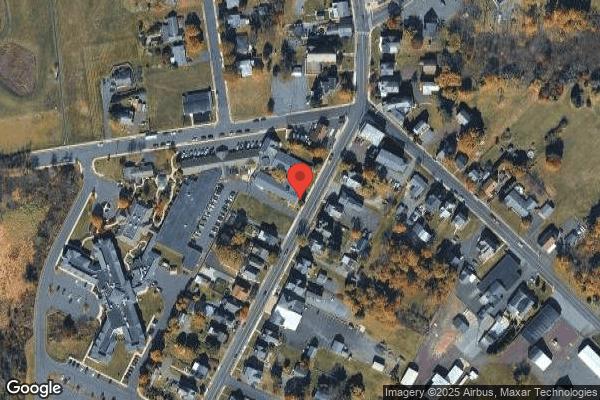
108 SOUTH MAIN STREET, RICHLANDTOWN, PA 18955 (267) 371-4512
Non profit - Corporation 143 Beds Independent Data: November 2025
Trust Grade
90/100
#98 of 653 in PA
Last Inspection: January 2025

Within standard 12-15 month inspection cycle. Federal law requires annual inspections.

Overview

Phoebe Richland HCC in Richlandtown, Pennsylvania has received a Trust Grade of A, indicating it is an excellent facility that is highly recommended. It ranks #98 out of 653 nursing homes statewide, placing it in the top half of Pennsylvania facilities, and #9 out of 29 in Bucks County, meaning only eight local options are better. However, the facility's trend is worsening, increasing from 1 issue in 2023 to 3 in 2025, indicating a need for improvement. Staffing is a strength here, with a 5-star rating and a turnover rate of 35%, which is lower than the state average. Notably, there have been no fines, and RN coverage is better than 76% of state facilities, enhancing resident care. On the downside, the facility has faced some concerns. For example, one resident reported that their call bell was not functioning, leaving them unable to request help when soiled. Additionally, two residents did not receive the adaptive equipment they required during meals, which could impact their nutritional intake. Lastly, an issue was noted regarding the unsafe storage and serving of food, which raises hygiene concerns. Overall, while there are strengths in staffing and RN coverage, families should consider these operational weaknesses when researching this nursing home.

Trust Score
A
90/100
In Pennsylvania
#98/653
Top 15%
Safety Record
Low Risk
No red flags
Inspections
Getting Worse
1 → 3 violations
Staff Stability
○ Average
35% turnover. Near Pennsylvania's 48% average. Typical for the industry.
Penalties
✓ Good
No fines on record. Clean compliance history, better than most Pennsylvania facilities.
Skilled Nurses
✓ Good
Each resident gets 60 minutes of Registered Nurse (RN) attention daily — more than 97% of Pennsylvania nursing homes. RNs are the most trained staff who catch health problems before they become serious.
Violations
✓ Good
Only 4 deficiencies on record. Cleaner than most facilities. Minor issues only.
★★★★★
5.0
Overall Rating
★★★★★
5.0
Staff Levels
★★★☆☆
3.0
Care Quality
★★★★☆
4.0
Inspection Score
Stable
2023: 1 issues
2025: 3 issues

The Good

  • 5-Star Staffing Rating · Excellent nurse staffing levels
  • Full Sprinkler Coverage · Fire safety systems throughout facility
  • No fines on record
  • Staff turnover below average (35%)

    13 points below Pennsylvania average of 48%

Facility shows strength in staffing levels, fire safety.

The Bad

Staff Turnover: 35%

10pts below Pennsylvania avg (46%)

Typical for the industry

The Ugly 4 deficiencies on record

Jan 2025 3 deficiencies
CONCERN (D)

Potential for Harm - no one hurt, but risky conditions existed

Deficiency F0558 (Tag F0558)

Could have caused harm · This affected 1 resident

Based on observation, clinical record review, and resident interview, it was determined that the facility failed to ensure that a functioning call bell was accessible for one of 25 sampled residents. ...

Read full inspector narrative →
Based on observation, clinical record review, and resident interview, it was determined that the facility failed to ensure that a functioning call bell was accessible for one of 25 sampled residents. (Resident 14) Findings include: Clinical record review revealed that Resident 14 had diagnoses that included heart failure, muscle weakness, and chronic respiratory failure. Review of the resident's care plan revealed that he required assistance from staff for activities of daily living and was at risk for falls. The interventions were for staff to ensure that a functioning call bell system was in reach and the resident should be encouraged to use it. On January 28, 2025, from 12:16 p.m. through 12:22 p.m., the resident was observed in his room sitting out of bed. The resident stated that he was soiled and needed to be changed. He also stated that his call bell did not work. The resident pressed the call bell button; the light outside of his room that alerted staff to a need for assistance, did not activate. On January 29, 2025, at 1:48 p.m., the resident was observed in his room out of bed. He stated that he would like ice cream. The resident attempted to reach his call bell. The call bell button was hanging below the resident's bed and out of reach. The resident was again observed at 2:23 p.m., the call bell was in the same position and not accessible to the resident. In an interview on January 31, 2025, at 9:53 a.m., the Administrator stated that the resident's call bell light was not functioning properly and needed to be repaired. 28 Pa. Code 211.12(d)(1)(5) Nursing services.
CONCERN (D)

Potential for Harm - no one hurt, but risky conditions existed

Deficiency F0810 (Tag F0810)

Could have caused harm · This affected 1 resident

Based on clinical record review and observation, it was determined that the facility failed to ensure that adaptive equipment was provided to two of three sampled residents who required adaptive equip...

Read full inspector narrative →
Based on clinical record review and observation, it was determined that the facility failed to ensure that adaptive equipment was provided to two of three sampled residents who required adaptive equipment with meals. (Residents 6, 24) Findings include: Clinical record review revealed that Resident 6 had diagnoses that included dysphagia and hemiparesis (muscle weakness to one side of the body) to the right dominant side. Review of the care plan revealed that the resident was at risk for nutritional problems. The intervention was for staff to provide adaptive equipment, which included drinks in a handled mug with a lid. A physician's order dated December 7, 2024, revealed that the resident was to receive adaptive equipment which included handled mugs with lids. On January 29, 2025, during the lunch meal observation from 12:25 p.m. through 1:45 p.m., Resident 6 was observed in the dining room eating her lunch meal. The resident was served beverages in handled mugs; the lids were not in place. Clinical record review revealed that Resident 24 had diagnoses that included dementia, Parkinson's disease, and muscle weakness. Review of the care plan revealed that the resident was at risk for nutritional problems. The intervention was for staff to provide adaptive equipment with meals, which included handled mugs with lids. A physician's order dated October 23, 2024, directed staff to provide a handled mug with a lid. On January 29, 2025, during the lunch meal observation from 12:25 p.m. through 1:45 p.m., Resident 24 was observed in the dining room eating her lunch meal. The resident was served beverages in a handled mug; the lids were not in place. 28 Pa. Code 211.12(d)(1)(3)(5) Nursing services.
CONCERN (D)

Potential for Harm - no one hurt, but risky conditions existed

Food Safety (Tag F0812)

Could have caused harm · This affected 1 resident

Based on facility policy review, review of facility documentation, observation and interview, it was determined the facility failed to serve and store food in a safe and sanitary manner during meal se...

Read full inspector narrative →
Based on facility policy review, review of facility documentation, observation and interview, it was determined the facility failed to serve and store food in a safe and sanitary manner during meal service in one of six dining rooms. (Country Inn Dining Room). Findings include: Review of the facility policy entitled, Heating Foods and Beverages in the Microwave, revealed that once a food or beverage had been reheated, staff were to remove it from the microwave and take the temperature in multiple sites; food and beverages should have reached a temperature of 165 degrees Fahrenheit (F). The item should be left to cool for two minutes and the temperature should be retaken in multiple sites. The food or beverage would be acceptable to serve if it was within the acceptable serving temperature of 135 degrees F through 165 degrees F. Review of a facility meal temperature log revealed that if a food item's temperature was below 135 degrees F but previous temperature taken within two hours was above 135 degrees F, the food should be reheated to 165 degrees F. Observation of the lunch meal service on January 28, 2025, from 12:25 p.m. through 1:30 p.m., revealed the following: Dietary employees 1 (E1) and 2 (E2) were serving food from the steam table. E1 was observed leaving the service line, turned on the faucet in the sink, and rinsed a knife under. E1 then returned to the tray line and proceeded to serve food without changing her gloves. E1 was observed picking paper meal tickets off the ground, she then returned to serving food without changing her gloves. E2 was observed leaving the service line and touched the refrigerator handle and microwave handle. E2 then proceeded to serve food, that included touching ready to eat bread, without changing her gloves. E2 removed chicken broth from the refrigerator and reheated it in the microwave. E2 then served the chicken broth on a resident meal tray without taking a temperature. During observations of the lunch meal service on January 29, 2025, from 12:21 p.m. through 1:50 p.m., revealed the following: E2 and dietary employee 3 (E3) were observed serving food from the steam table. Both E2 and E3 were observed leaving the tray line area, and opening cabinets to obtain items, and adjusting their glasses and masks. E2 and E3 returned to tray line to continue serving food after touching the handles, glasses and masks without changing their gloves. E3 was observed dishing pureed soup into bowls that were placed on a surface beside the heated steam table wells, they were not on a hot holding element. Later in the meal service, E3 poured the contents of those soup bowls back into the large pan of pureed soup that was on the steam table. The temperature of the soup in the bowls was not obtained to determine if they had fallen below 135 degrees F to ascertain if they required to be reheated to 165 degree F. E3 proceeded to mix the pureed soups together and proceeded to dish the soup back into individualized bowls which were served on resident trays. There was no temperature obtained. E2 was preparing sandwiches for resident trays. E2 proceeded to touch her eyeglasses three times without changing her gloves or performing hand hygiene and continued to assemble sandwiches for resident meal trays. Observations of the Country Inn kitchen on January 30, 2025, at 11:55 a.m., revealed the following: There was dirt and debris under the steam table. There was dirt and debris under the dish machine, where clean dish racks were stored. There was a brown substance on the inner walls and top of the microwave. 28 Pa. Code 201.18(b)(3) Management.
Feb 2023 1 deficiency
CONCERN (D)

Potential for Harm - no one hurt, but risky conditions existed

Quality of Care (Tag F0684)

Could have caused harm · This affected 1 resident

Based on clinical record review and staff interview it was determined that the facility failed to ensure that staff implemented physician's orders for one of 22 sampled residents. (Resident 30) Findin...

Read full inspector narrative →
Based on clinical record review and staff interview it was determined that the facility failed to ensure that staff implemented physician's orders for one of 22 sampled residents. (Resident 30) Findings include: Clinical record review revealed that Resident 30 had diagnoses that included orthostatic blood pressure (low blood pressure when changing positions) and hypertensive chronic kidney disease. On November 21, 2022, a physician order directed staff to administer a medication (midodrine) three times a day to treat the resident's low blood pressure. Staff was not to give the medication if the resident had a systolic blood pressure (the first measurement of blood pressure when the heart beats and the pressure is at its highest) of 130 or more. A review of the November 2022, December 2022, and January 2023, Medication Administration Records, revealed that staff administered the medication when the resident's systolic blood pressure was over the established parameter three times in November, three times in December, and seven times in January. During an interview on February 9, 2023, at 9:20 a.m., the Director of Nursing confirmed that the staff failed to follow the physician's order due to the fact that Resident 30 received the midodrine when their systolic blood pressure was above 130. 28 Pa. Code 211.12(d)(1)(5) Nursing services.
Understanding Severity Codes (click to expand)
Life-Threatening (Immediate Jeopardy)
J - Isolated K - Pattern L - Widespread
Actual Harm
G - Isolated H - Pattern I - Widespread
Potential for Harm
D - Isolated E - Pattern F - Widespread
No Harm (Minor)
A - Isolated B - Pattern C - Widespread

Questions to Ask on Your Visit

  • "Can I speak with families of current residents?"
  • "What's your RN coverage like on weekends and overnight?"

Our Honest Assessment

Strengths
  • • Grade A (90/100). Above average facility, better than most options in Pennsylvania.
  • • No major safety red flags. No abuse findings, life-threatening violations, or SFF status.
  • • No fines on record. Clean compliance history, better than most Pennsylvania facilities.
  • • Only 4 deficiencies on record. Cleaner than most facilities. Minor issues only.
Concerns
  • • No significant concerns identified. This facility shows no red flags across CMS ratings, staff turnover, or federal penalties.
Bottom line: Generally positive indicators. Standard due diligence and a personal visit recommended.

About This Facility

What is Phoebe Richland Hcc's CMS Rating?

CMS assigns PHOEBE RICHLAND HCC an overall rating of 5 out of 5 stars, which is considered much above average nationally. Within Pennsylvania, this rating places the facility higher than 99% of the state's 100 nursing homes. This rating reflects solid performance across the metrics CMS uses to evaluate nursing home quality.

How is Phoebe Richland Hcc Staffed?

CMS rates PHOEBE RICHLAND HCC's staffing level at 5 out of 5 stars, which is much above average compared to other nursing homes. Staff turnover is 35%, compared to the Pennsylvania average of 46%. This relatively stable workforce can support continuity of care.

What Have Inspectors Found at Phoebe Richland Hcc?

State health inspectors documented 4 deficiencies at PHOEBE RICHLAND HCC during 2023 to 2025. These included: 4 with potential for harm.

Who Owns and Operates Phoebe Richland Hcc?

PHOEBE RICHLAND HCC is owned by a non-profit organization. Non-profit facilities reinvest revenue into operations rather than distributing to shareholders. The facility operates independently rather than as part of a larger chain. With 143 certified beds and approximately 114 residents (about 80% occupancy), it is a mid-sized facility located in RICHLANDTOWN, Pennsylvania.

How Does Phoebe Richland Hcc Compare to Other Pennsylvania Nursing Homes?

Compared to the 100 nursing homes in Pennsylvania, PHOEBE RICHLAND HCC's overall rating (5 stars) is above the state average of 3.0, staff turnover (35%) is significantly lower than the state average of 46%, and health inspection rating (4 stars) is above the national benchmark.

What Should Families Ask When Visiting Phoebe Richland Hcc?

Based on this facility's data, families visiting should ask: "Can I visit during a mealtime to observe dining assistance and food quality?" "How do you handle medical emergencies, and what is your hospital transfer rate?" "Can I speak with family members of current residents about their experience?"

Is Phoebe Richland Hcc Safe?

Based on CMS inspection data, PHOEBE RICHLAND HCC has a clean safety record: no substantiated abuse findings (meaning no confirmed cases of resident harm), no Immediate Jeopardy citations (the most serious violation level indicating risk of serious injury or death), and is not on the Special Focus Facility watch list (a federal program monitoring the lowest-performing 1% of nursing homes). The facility has a 5-star overall rating and ranks #1 of 100 nursing homes in Pennsylvania. While no facility is perfect, families should still ask about staff-to-resident ratios and recent inspection results during their visit.

Do Nurses at Phoebe Richland Hcc Stick Around?

PHOEBE RICHLAND HCC has a staff turnover rate of 35%, which is about average for Pennsylvania nursing homes (state average: 46%). Moderate turnover is common in nursing homes, but families should still ask about staff tenure and how the facility maintains care continuity when employees leave.

Was Phoebe Richland Hcc Ever Fined?

PHOEBE RICHLAND HCC has no federal fines on record. CMS issues fines when nursing homes fail to meet care standards or don't correct problems found during inspections. The absence of fines suggests the facility has either maintained compliance or corrected any issues before penalties were assessed. This is a positive indicator, though families should still review recent inspection reports for the full picture.

Is Phoebe Richland Hcc on Any Federal Watch List?

PHOEBE RICHLAND HCC is not on any federal watch list. The most significant is the Special Focus Facility (SFF) program, which identifies the bottom 1% of nursing homes nationally based on persistent, serious quality problems. Not being on this list means the facility has avoided the pattern of deficiencies that triggers enhanced federal oversight. This is a positive indicator, though families should still review the facility's inspection history directly.