ELK HAVEN NURSING HOME
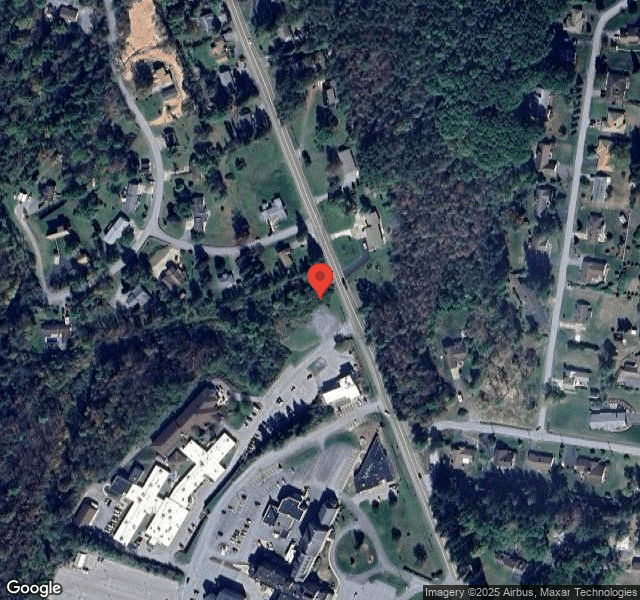
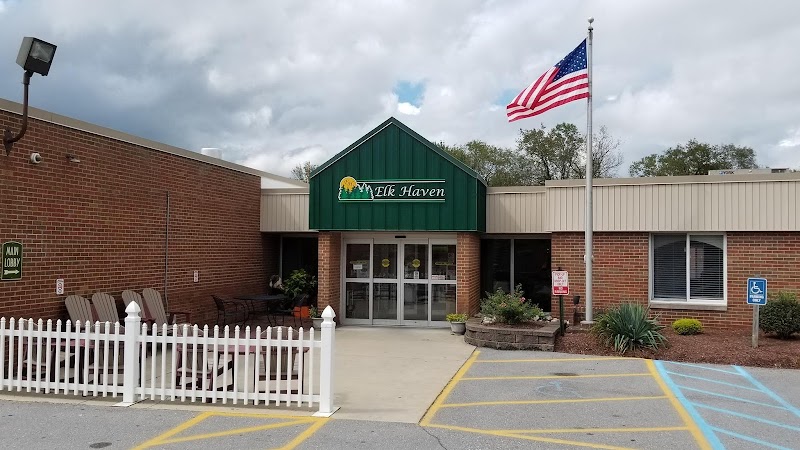
785 JOHNSONBURG ROAD, SAINT MARYS, PA 15857 (814) 234-2618
Non profit - Corporation 120 Beds Independent Data: November 2025
Trust Grade
88/100
#31 of 653 in PA
Last Inspection: May 2025

Inspected within the last 6 months. Data reflects current conditions.

Overview

Elk Haven Nursing Home has a Trust Grade of B+, indicating it is recommended and above average among similar facilities. It ranks #31 out of 653 nursing homes in Pennsylvania, placing it in the top half, and is the best option among the two facilities in Elk County. The facility is improving, with the number of issues decreasing from 3 in 2024 to 2 in 2025. Staffing is a notable strength, boasting a 5/5 rating and a turnover rate of 38%, which is below the Pennsylvania average, suggesting a stable team. However, the home has faced some concerns, including failing to provide necessary non-drug interventions before administering psychotropic medication and not ensuring resident privacy during medical procedures. Additionally, the facility has incurred $8,018 in fines, which is average for the state, and offers more RN coverage than 83% of Pennsylvania facilities, ensuring better oversight of resident care.

Trust Score
B+
88/100
In Pennsylvania
#31/653
Top 4%
Safety Record
Low Risk
No red flags
Inspections
Getting Better
3 → 2 violations
Staff Stability
○ Average
38% turnover. Near Pennsylvania's 48% average. Typical for the industry.
Penalties
✓ Good
$8,018 in fines. Lower than most Pennsylvania facilities. Relatively clean record.
Skilled Nurses
✓ Good
Each resident gets 61 minutes of Registered Nurse (RN) attention daily — more than 97% of Pennsylvania nursing homes. RNs are the most trained staff who catch health problems before they become serious.
Violations
○ Average
8 deficiencies on record. Average for a facility this size. Mostly minor or procedural issues.
★★★★★
5.0
Overall Rating
★★★★★
5.0
Staff Levels
★★☆☆☆
2.0
Care Quality
★★★★☆
4.0
Inspection Score
Stable
2024: 3 issues
2025: 2 issues

The Good

  • 5-Star Staffing Rating · Excellent nurse staffing levels
  • Full Sprinkler Coverage · Fire safety systems throughout facility
  • No fines on record
  • Staff turnover below average (38%)

    10 points below Pennsylvania average of 48%

Facility shows strength in staffing levels, fire safety.

The Bad

Staff Turnover: 38%

Near Pennsylvania avg (46%)

Typical for the industry

Federal Fines: $8,018

Below median ($33,413)

Minor penalties assessed

The Ugly 8 deficiencies on record

May 2025 2 deficiencies
CONCERN (D)

Potential for Harm - no one hurt, but risky conditions existed

Deficiency F0605 (Tag F0605)

Could have caused harm · This affected 1 resident

Based on review of facility policy and clinical records, and staff interview, it was determined that the facility failed to provide evidence that non-pharmacological interventions (interventions attem...

Read full inspector narrative →
Based on review of facility policy and clinical records, and staff interview, it was determined that the facility failed to provide evidence that non-pharmacological interventions (interventions attempted to calm a resident other than medication) were attempted prior to the administration of an as needed (PRN) psychotropic (mind altering) medication for one of five residents reviewed for unnecessary medications (Resident R20). Findings include: Review of facility policy entitled Psychotropic Medication Policy dated 1/21/25, revealed the facility implements gradual dose reductions and non-pharmacological interventions, unless contraindicated, prior to initiating or instead of continuing psychotropic medication. Review of Resident R20's clinical record revealed an admission date of 3/20/25, with diagnoses that included osteomyelitis (bone infection) of the right ankle and foot, anxiety, and anemia (condition of not enough healthy red blood cells to carry oxygen). The clinical record revealed that on 4/30/25, Resident R20's physician ordered Lorazepam (a medication ordered to treat anxiety) 0.5 milligrams (mg) every 12 hours PRN for anxiety. Review of Resident R20's May 2025 Medication Administration Record revealed that the PRN Lorazepam was used on 5/4/25, 5/5/25, 5/8/25, and 5/9/25. Resident R20's clinical record lacked evidence of non-pharmacological interventions being attempted prior to the administration of the PRN Lorazepam for the four administrations in May 2025. During an interview on 5/14/25, at 12:09 p.m. the Director of Nursing confirmed that Resident R20's clinical record lacked evidence that non-pharmacological interventions were attempted prior to the administration of a PRN psychotropic medication for the dates listed above and that non-pharmacological interventions should be attempted and documented in the clinical record. 28 Pa. Code 211.12(d)(1)(3)(5) Nursing services
CONCERN (D)

Potential for Harm - no one hurt, but risky conditions existed

Deficiency F0657 (Tag F0657)

Could have caused harm · This affected 1 resident

Based on review of facility policy and clinical records, and staff interview, it was determined that the facility failed to review and revise comprehensive care plans to reflect the current care and s...

Read full inspector narrative →
Based on review of facility policy and clinical records, and staff interview, it was determined that the facility failed to review and revise comprehensive care plans to reflect the current care and services for two of 20 residents reviewed (Residents R10 and R16). Findings include: Review of facility policy entitled Comprehensive Person-Centered Care Planning dated 1/21/25, indicated The care plans will be reviewed and revised as necessary by the Interdisciplinary Team at least quarterly after each MDS [Minimum Data Set-a periodic assessment of resident care needs] assessment ., or more often as changes occur. Review of Resident R10's clinical record revealed an admission date of 1/3/23, with diagnoses that included diabetes (a health condition that caused by the body's inability to produce enough insulin), gastroesophageal reflux disease (a condition when stomach acid repeatedly flows back up into your throat), and hypothyroidism (a condition when the thyroid produces low amounts of thyroid hormones). Review of Resident R10's physician's orders revealed an order for O2 (oxygen) at 2 LPM (liters per minute) NC (nasal cannula oxygen tubing that has prongs that go into the nostrils and loops around the ears to secure in place to ensure adequate oxygen delivery) routine and PRN (as needed) dated 3/1/25. Review of Resident R10's care plan for alteration in cardio and respiratory lacked an intervention for his/her current use of oxygen. Resident R16's clinical record revealed an admission date of 3/26/19, with diagnoses including Parkinson's disease (a disorder that affects movement related to the central nervous system), major depressive disorder, and moderate intellectual disabilities (limitations to cognitive functioning and skills). Resident R16's clinical record revealed his/her anticoagulant medication Eliquis (a blood thinning medication that reduces the ability to clot) was discontinued on 2/24/25. Resident R16's care plan dated 3/7/25, with a target date of 6/1/25, revealed a care plan was in place related to his/her anticoagulant medication Eliquis. During an interview on 5/14/25, at 1:05 p.m. the Director of Nursing (DON) confirmed that Resident R10's cardio/respiratory care plan was not reviewed/revised to reflect current resident care and services. During an interview on 5/14/25, at 1:45 p.m. the DON confirmed that Resident R16's anticoagulant care plan was not reviewed/revised to reflect current resident care and services. He/she also confirmed that care plans should be reviewed and revised as necessary. 28 Pa. Code 211.5(f)(ix) Medical records 28 Pa. Code 211.10(c)(d) Resident care policies 28 Pa. Code 211.12(d)(1)(5) Nursing services
Jun 2024 3 deficiencies
CONCERN (D)

Potential for Harm - no one hurt, but risky conditions existed

Deficiency F0583 (Tag F0583)

Could have caused harm · This affected 1 resident

Based on review of facility policy, observations and staff interview, it was determined that the facility failed to provide resident privacy during a wound dressing change for one of 22 residents revi...

Read full inspector narrative →
Based on review of facility policy, observations and staff interview, it was determined that the facility failed to provide resident privacy during a wound dressing change for one of 22 residents reviewed (Resident R62). Findings include: The facility policy Privacy / Dignity dated 1/10/24, indicated that Staff shall promote, maintain and protect resident privacy, including bodily privacy during assistance with personal care and during treatment procedures. Observation of a wound dressing change for Resident R62 on 6/5/24, at 10:45 a.m. revealed that Licensed Practical Nurse (LPN) Employee E2 and LPN Employee E3 changed wound dressings to the resident's right heel and foot while the roommate was awake and watching the procedure. During an interview on 6/5/24, at 11:15 a.m. LPN Employee E3 confirmed that the privacy curtain should have been pulled. During an interview on 6/5/24, at 11:35 a.m. the Director of Nursing confirmed that during a dressing change the privacy curtain should have been pulled. 28 Pa. Code 211.12(d)(1)(2) Nursing services
CONCERN (D)

Potential for Harm - no one hurt, but risky conditions existed

Comprehensive Care Plan (Tag F0656)

Could have caused harm · This affected 1 resident

Based on review of facility policy and clinical records, and staff interview, it was determined that the facility failed to develop and implement a resident centered comprehensive care plan for one of...

Read full inspector narrative →
Based on review of facility policy and clinical records, and staff interview, it was determined that the facility failed to develop and implement a resident centered comprehensive care plan for one of 22 residents reviewed (Resident R58). Findings include: A facility policy entitled, Comprehensive Person-Centered Car Planning dated 1/10/24, indicated that a comprehensive person-centered care plan including necessary and appropriate care, attending physicians ordered, services and accommodation of resident needs and preferences for the resident to attain or maintain the highest practicable physical, mental, and psychological well-being will be established within 21 days of admission. Resident R58's clinical record revealed an admission date of 3/06/24, with diagnoses that included pleural effusion (buildup of fluid between the layers of tissue that line the lungs and chest cavity), arthritis, lower back pain, and restless leg syndrome. Resident R58's clinical record included physician's orders dated: 3/06/24, to give 650 milligrams (mg) of acetaminophen every six hours as needed for pain; 3/14/24, to give 650 mg of acetaminophen at bedtime for pain management; 4/01/24, to give 650 mg three times a day for back pain and 650 mg as needed for back pain once daily; and current physician's orders dated 5/09/24, to give 650 mg of Tylenol three times a day for other low back pain, and give 650 mg of Tylenol every four hours as needed for pain, may have one additional dose four plus hours after nine p.m. Resident R58's clinical record lacked evidence of a comprehensive person-centered care plan for pain. During an interview on 6/05/24, at 10:47 a.m. the Director of Nursing confirmed that Resident R58's clinical record lacked evidence of a comprehensive person-centered care plan for pain management. 28 Pa. Code 211.10(c) Resident care policies 28 Pa. Code 211.12(d)(1)(5) Nursing services
CONCERN (D)

Potential for Harm - no one hurt, but risky conditions existed

Respiratory Care (Tag F0695)

Could have caused harm · This affected 1 resident

Based on review of facility policy and clinical records, observation, and staff interview, it was determined that the facility failed to maintain proper care of respiratory equipment for one of four r...

Read full inspector narrative →
Based on review of facility policy and clinical records, observation, and staff interview, it was determined that the facility failed to maintain proper care of respiratory equipment for one of four residents reviewed for respiratory care (Resident R29). Findings include: Facility policy entitled Use of Oxygen dated 1/10/24, indicated that the facility changes oxygen cannulas (flexible tubing inserted into the nostrils for oxygen delivery) or masks every 30 days. Resident R29's clinical record revealed an admission date of 9/21/20, with diagnoses that included chronic obstructive pulmonary disease (lung disease resulting in difficulty breathing and persistent cough), high blood pressure, and diabetes. Resident R29's physician orders dated 4/5/21, indicated to change oxygen tubing on the 15th of each month. Observations on 6/2/24, at 2:08 p.m. and 6/4/24, at 9:00 a.m. revealed that Resident R29's oxygen tubing contained a piece of white tape wrapped around it with a date of 3/15/24. During an interview on 6/4/24, at 9:22 a.m. Licensed Practical Nurse Employee E1 confirmed that the oxygen tubing was dated for 3/15/24, and was not changed monthly as ordered. 28 Pa. Code 211.12(d)(1)(5) Nursing services
Jul 2023 3 deficiencies
CONCERN (D)

Potential for Harm - no one hurt, but risky conditions existed

Safe Environment (Tag F0584)

Could have caused harm · This affected 1 resident

Based on observations, and resident and staff interviews, it was determined that the facility failed to maintain a clean homelike environment for one of twenty-four residents (Resident R33). Findings ...

Read full inspector narrative →
Based on observations, and resident and staff interviews, it was determined that the facility failed to maintain a clean homelike environment for one of twenty-four residents (Resident R33). Findings include: Observations between 7/26/23, and 7/27/23, revealed Resident R33's arm cradle (a device on a wheelchair that a person's arm lays on when they cannot move that part of their body) was torn the whole way across the front with foam filling coming out. During an interview on 7/27/23, with resident R33 he/she stated that the torn area has been there for a long time and he/she has asked to have the torn arm cradle fixed several times and that it hasn't changed. During an interview on 7/27/23, at 1030 a.m. the Director of Nursing confirmed that the arm cradle was ripped with the foam filling coming out of the front, and that the arm cradle was not appropriate and needed repaired. 28 Pa. Code 201.18(b)(1) Management
CONCERN (D)

Potential for Harm - no one hurt, but risky conditions existed

Incontinence Care (Tag F0690)

Could have caused harm · This affected 1 resident

Based on review of facility policy and clinical records, observations, and staff interview, it was determined that the facility failed to provide appropriate urinary catheter (tubing inserted into the...

Read full inspector narrative →
Based on review of facility policy and clinical records, observations, and staff interview, it was determined that the facility failed to provide appropriate urinary catheter (tubing inserted into the bladder to drain urine into a bag) care for one of 20 residents reviewed (Resident R36). Findings include: Review of a facility policy entitled, Urinary Catheters, dated 1/13/23, indicated that the collection bag should be kept off the floor, and covered with a dignity bag. Review of Resident R36's clinical record revealed an admission date of 8/14/21, with diagnoses including kidney failure/disease, disorders of the bladder, and artificial opening of the urinary tract. The clinical record revealed a physician's order for the use of a catheter and to check the catheter every shift for placement and patency. Observation on 7/25/23, at 2:15 p.m. revealed that Resident R36 was in bed with his/her urine collection bag hanging on the side of the bed, uncovered and visible from hallway. Observations on 7/26/23, at 10:00 a.m. and 1:00 p.m. and on 7/27/23, at 8:30 a.m. revealed that Resident R36 was seated in his/her Geri-chair and the urine collection bag was hanging on the back lower frame of the chair, uncovered and resting on the floor. Interview on 7/27/23, at 8:30 a.m. with Registered Nurse Employee E1 confirmed that Resident R36's urine collection bag should have a dignity bag on and not be on the floor. 28 Pa. Code 211.12(d)(1)(5) Nursing services
CONCERN (D)

Potential for Harm - no one hurt, but risky conditions existed

Deficiency F0761 (Tag F0761)

Could have caused harm · This affected 1 resident

Based on review of facility policy, observations and staff interview, it was determined that the facility failed to prevent the opportunity for potential unauthorized access of medications on one of s...

Read full inspector narrative →
Based on review of facility policy, observations and staff interview, it was determined that the facility failed to prevent the opportunity for potential unauthorized access of medications on one of six medication carts ( A Wing North). Findings include: Review of a facility policy entitled, Medication Administration Control and Security dated 1/31/23, indicated that all medications are to be secured in a locked medication cart until such time as the medication(s) are administered to the resident. Observation on 7/26/23, at 9:44 a.m. revealed that the A Wing North medication cart unsecured and unattended, and had a medication cup of unidentified pills sitting on top, and the top drawer of the cart was ajar. Interview at that time with Registered Nurse Employee E2 confirmed that the cart should have been secured, drawers closed, and no prepared medications on top when the cart is not in view. 28. Pa. Code 201.18(b)(1) Management 28. Pa. Code 211.9(a)(1) Pharmacy services 28 Pa. Code 211.12(d)(1) Nursing services
Understanding Severity Codes (click to expand)
Life-Threatening (Immediate Jeopardy)
J - Isolated K - Pattern L - Widespread
Actual Harm
G - Isolated H - Pattern I - Widespread
Potential for Harm
D - Isolated E - Pattern F - Widespread
No Harm (Minor)
A - Isolated B - Pattern C - Widespread

Questions to Ask on Your Visit

  • "Can I speak with families of current residents?"
  • "What's your RN coverage like on weekends and overnight?"

Our Honest Assessment

Strengths
  • • Grade B+ (88/100). Above average facility, better than most options in Pennsylvania.
  • • No major safety red flags. No abuse findings, life-threatening violations, or SFF status.
  • • 38% turnover. Below Pennsylvania's 48% average. Good staff retention means consistent care.
Concerns
  • • No significant concerns identified. This facility shows no red flags across CMS ratings, staff turnover, or federal penalties.
Bottom line: Generally positive indicators. Standard due diligence and a personal visit recommended.

About This Facility

What is Elk Haven's CMS Rating?

CMS assigns ELK HAVEN NURSING HOME an overall rating of 5 out of 5 stars, which is considered much above average nationally. Within Pennsylvania, this rating places the facility higher than 99% of the state's 100 nursing homes. This rating reflects solid performance across the metrics CMS uses to evaluate nursing home quality.
How is Elk Haven Staffed?

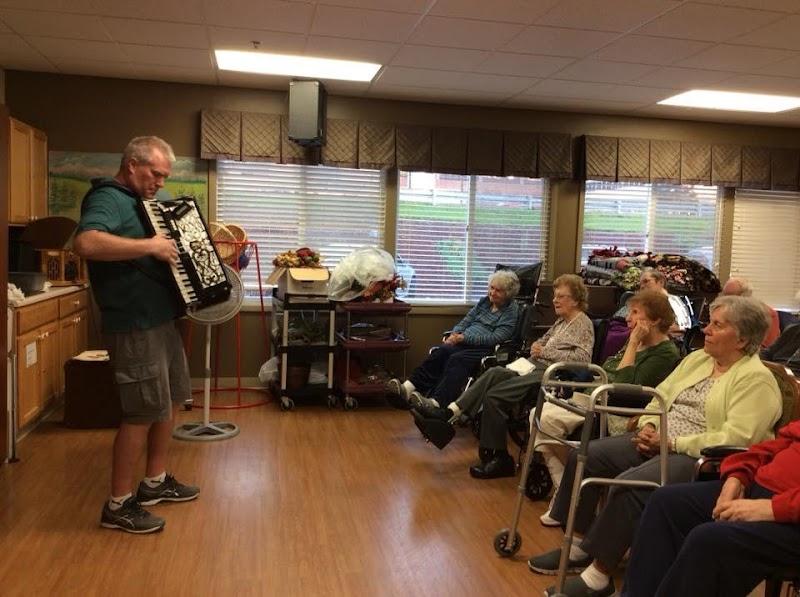
CMS rates ELK HAVEN NURSING HOME's staffing level at 5 out of 5 stars, which is much above average compared to other nursing homes. Staff turnover is 38%, compared to the Pennsylvania average of 46%. This relatively stable workforce can support continuity of care.

What Have Inspectors Found at Elk Haven?

State health inspectors documented 8 deficiencies at ELK HAVEN NURSING HOME during 2023 to 2025. These included: 8 with potential for harm.
Who Owns and Operates Elk Haven?

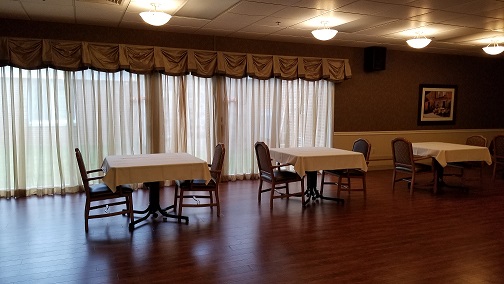
ELK HAVEN NURSING HOME is owned by a non-profit organization. Non-profit facilities reinvest revenue into operations rather than distributing to shareholders. The facility operates independently rather than as part of a larger chain. With 120 certified beds and approximately 92 residents (about 77% occupancy), it is a mid-sized facility located in SAINT MARYS, Pennsylvania.

How Does Elk Haven Compare to Other Pennsylvania Nursing Homes?

Compared to the 100 nursing homes in Pennsylvania, ELK HAVEN NURSING HOME's overall rating (5 stars) is above the state average of 3.0, staff turnover (38%) is near the state average of 46%, and health inspection rating (4 stars) is above the national benchmark.

What Should Families Ask When Visiting Elk Haven?

Based on this facility's data, families visiting should ask: "Can I visit during a mealtime to observe dining assistance and food quality?" "How do you handle medical emergencies, and what is your hospital transfer rate?" "Can I speak with family members of current residents about their experience?"

Is Elk Haven Safe?

Based on CMS inspection data, ELK HAVEN NURSING HOME has a clean safety record: no substantiated abuse findings (meaning no confirmed cases of resident harm), no Immediate Jeopardy citations (the most serious violation level indicating risk of serious injury or death), and is not on the Special Focus Facility watch list (a federal program monitoring the lowest-performing 1% of nursing homes). The facility has a 5-star overall rating and ranks #1 of 100 nursing homes in Pennsylvania. While no facility is perfect, families should still ask about staff-to-resident ratios and recent inspection results during their visit.

Do Nurses at Elk Haven Stick Around?

ELK HAVEN NURSING HOME has a staff turnover rate of 38%, which is about average for Pennsylvania nursing homes (state average: 46%). Moderate turnover is common in nursing homes, but families should still ask about staff tenure and how the facility maintains care continuity when employees leave.

Was Elk Haven Ever Fined?

ELK HAVEN NURSING HOME has been fined $8,018 across 1 penalty action. This is below the Pennsylvania average of $33,159. While any fine indicates a compliance issue, fines under $50,000 are relatively common and typically reflect isolated problems that were subsequently corrected. Families should ask what specific issues led to these fines and confirm they've been resolved.

Is Elk Haven on Any Federal Watch List?

ELK HAVEN NURSING HOME is not on any federal watch list. The most significant is the Special Focus Facility (SFF) program, which identifies the bottom 1% of nursing homes nationally based on persistent, serious quality problems. Not being on this list means the facility has avoided the pattern of deficiencies that triggers enhanced federal oversight. This is a positive indicator, though families should still review the facility's inspection history directly.