ALLIED SERVICES CENTER CITY SKILLED NURSING
80 E. NORTHAMPTON STREET, WILKES BARRE, PA 18701 (570) 826-1031
Non profit - Corporation 92 Beds Independent Data: November 2025
Trust Grade
75/100
#151 of 653 in PA
Last Inspection: January 2025

Within standard 12-15 month inspection cycle. Federal law requires annual inspections.

Overview

Allied Services Center City Skilled Nursing has a Trust Grade of B, which indicates it is a good choice among nursing homes, providing solid care. It ranks #151 out of 653 facilities in Pennsylvania, placing it in the top half, and #2 out of 22 in Luzerne County, meaning only one local option is better. The facility is improving, with issues declining from 8 in 2024 to 4 in 2025, but it still has several areas needing attention. Staffing is rated 4 out of 5 stars, which is a strength, although the turnover rate is average at 47%. Notably, there have been no fines, suggesting compliance with regulations. However, there are some weaknesses. Recent inspections found that the facility failed to implement proper infection control procedures for three residents and did not respond timely to requests for assistance from several residents. Additionally, cleanliness issues were noted in one of the nursing units, which raises concerns about the overall environment. While there are strengths in staffing and no fines, families should consider these deficiencies when making their decision.

Trust Score
B
75/100
In Pennsylvania
#151/653
Top 23%
Safety Record
Low Risk
No red flags
Inspections
Getting Better
8 → 4 violations
Staff Stability
⚠ Watch
47% turnover. Above average. Higher turnover means staff may not know residents' routines.
Penalties
✓ Good
No fines on record. Clean compliance history, better than most Pennsylvania facilities.
Skilled Nurses
✓ Good
Each resident gets 47 minutes of Registered Nurse (RN) attention daily — more than average for Pennsylvania. RNs are trained to catch health problems early.
Violations
⚠ Watch
18 deficiencies on record. Higher than average. Multiple issues found across inspections.
★★★★☆
4.0
Overall Rating
★★★★☆
4.0
Staff Levels
★★★★☆
4.0
Care Quality
★★★★☆
4.0
Inspection Score
Stable
2024: 8 issues
2025: 4 issues

The Good

  • 4-Star Staffing Rating · Above-average nurse staffing levels
  • 4-Star Quality Measures · Strong clinical quality outcomes
  • Full Sprinkler Coverage · Fire safety systems throughout facility
  • No fines on record

Facility shows strength in staffing levels, quality measures, fire safety.

The Bad

Staff Turnover: 47%

Near Pennsylvania avg (46%)

Higher turnover may affect care consistency

The Ugly 18 deficiencies on record

Jan 2025 4 deficiencies
CONCERN (D)

Potential for Harm - no one hurt, but risky conditions existed

Assessment Accuracy (Tag F0641)

Could have caused harm · This affected 1 resident

**NOTE- TERMS IN BRACKETS HAVE BEEN EDITED TO PROTECT CONFIDENTIALITY** Based on a review of clinical records, the Resident Assessment Instrument, and staff interview, it was determined the facility f...

Read full inspector narrative →
**NOTE- TERMS IN BRACKETS HAVE BEEN EDITED TO PROTECT CONFIDENTIALITY** Based on a review of clinical records, the Resident Assessment Instrument, and staff interview, it was determined the facility failed to ensure that Minimum Data Set Assessments accurately reflected the status of three residents out of 21 sampled (Residents 34, 8, and 31). Findings include: According to the Resident Assessment Instrument (RAI) User's Manual (an assessment tool utilized to gather definitive information on a resident's strengths and needs, which must be addressed in an individualized care plan, and the RAI also assists staff to evaluate goal achievement and revise care plans accordingly by enabling the facility to track changes in the resident's status) dated October 2024, Section K0300 Weight Loss the facility is to record loss of 5% or more in the last month or loss of 10% or more in the last 6 months. A clinical record review revealed Resident 34 was admitted to the facility on [DATE]. A review of a quarterly Minimum Data Set Assessment (MDS- a federally mandated standardized assessment conducted at specific intervals to plan resident care) dated October 31, 2024, indicated in Section K0200 that the resident's height was 64 inches and weight was 163 pounds. Review of Section K0300 indicated that Resident 34 did not experience a weight loss of 5% or more in the last month or loss of 10% or more in the last 6 months. Review of Resident 34's Weight Record revealed that on April 3, 2024, the resident weighed 181.2 pounds. On October 5, 2024, the resident weighed 163 pounds which is indicative of a 10.04 % significant weight loss in 6 months. During an interview on January 9, 2025, at 11:30 AM the Registered Dietitian (RD) confirmed that Resident 34 did experience a 10.04% weight loss between April 3, 2024, and the quarterly MDS assessment dated [DATE], Section K0300 was inaccurate. A clinical record review revealed that Resident 8 was admitted to the facility on [DATE]. A review of an annual MDS assessment dated [DATE], indicated in Section A1600 Most Recent Admission/Entry or Reentry into the facility noted the most recent entry date into the facility was July 4, 2024, and Section A 1700 Type of Entry indicated admission. Further review of the clinical record revealed that Resident 8 was transferred to the hospital on June 29, 2024, and readmitted to the facility on [DATE]. During an interview with the Registered Nurse Assessment Coordinator (RNAC) on January 10, 2024, at 10:30 AM confirmed that the annual MDS assessment dated [DATE], Section A 1700 Type of Entry was not accurate and was incorrectly coded as admission instead of reentry. A clinical record review revealed that Resident 31 was admitted to the facility on [DATE]. A review of an admission MDS dated [DATE], Section N Medications N 0350, Insulin indicated Resident 31 received one insulin injection in the last seven days. Further clinical record review revealed no other documented evidence that Resident 31 was administered any insulin injections in the last seven days. The MDS was coded as the resident receiving insulin despite no physician order. During an interview on January 8, 2024, at 12:40 PM the Registered Nurse Assessment Coordinator (RNAC) confirmed that Resident 31 did not receive insulin as indicated in Resident 31's MDS assessment dated [DATE], Section N 0350 Medications, Insulin. The RNAC confirmed the admission MDS assessment dated [DATE], was coded in error as it relates to insulin. 28 Pa. Code 211.5(f)(i) Medical records. 28 Pa. Code 211.12(d)(3) Nursing services.
CONCERN (D)

Potential for Harm - no one hurt, but risky conditions existed

Quality of Care (Tag F0684)

Could have caused harm · This affected 1 resident

**NOTE- TERMS IN BRACKETS HAVE BEEN EDITED TO PROTECT CONFIDENTIALITY** Based on observations, a review of clinical records, and resident and staff interviews, it was determined the facility failed to...

Read full inspector narrative →
**NOTE- TERMS IN BRACKETS HAVE BEEN EDITED TO PROTECT CONFIDENTIALITY** Based on observations, a review of clinical records, and resident and staff interviews, it was determined the facility failed to provide person-centered care by failing to follow physician's orders for the consistent application of a prescribed therapeutic measure, compression stockings, for one resident of 21 sampled (Resident 22). Findings include: A review of Resident 22's clinical record revealed the resident was admitted to the facility on [DATE], with diagnoses of cerebral infarction (a pathological process, also known as ischemic stroke, the result of disrupted blood flow to the brain) and essential hypertension (high blood pressure). A review of a quarterly Minimum Data Set assessment (MDS - a federally mandated standardized assessment process conducted periodically to plan resident care) dated December 23, 2024, revealed that Resident 22 is cognitively intact with a BIMS score of 14 (Brief Interview for Mental Status- a tool within the Cognitive Section of the MDS that is used to assess the resident's attention, orientation, and ability to register and recall new information; a score of 13-15 indicates intact cognition ). A review of Resident 22's clinical record revealed a physician's order dated October 22, 2024, for Ted Stockings (Thrombo-Embolus deterrent compression stockings, or anti-embolism stockings, which are specially designed to help reduce the risk of developing deep vein thrombosis (DVT) or blood clots in your lower leg after surgery) to be on in the morning and removed in the evening. During a resident interview on January 7, 2025, at 10:29 AM, Resident 22 reported that staff did not assist her with applying her TED stockings that day, despite a physician's order requiring their use. Observations made on January 7, 2025, at 10:29 AM and 1:39 PM revealed that Resident 22 was not wearing her TED stockings as ordered. A review of Resident 22's January 2025 Treatment Administration Record revealed that staff documented the TED stockings were applied at 6:00 AM on January 7, 2025. This documentation was inconsistent with the resident's statements and observed findings. On January 8, 2025, at 10:30 AM, Resident 22 stated she had to remind the nurse on duty to apply her TED stockings, indicating a lack of adherence to the prescribed care plan. She explained that if she does not tell the nurse, then they do not apply her TED stockings. On January 9, 2025, at 1:30 PM, the Director of Nursing confirmed that staff did not consistently follow the physician's orders regarding the application and removal of Resident 22's TED stockings. 28 Pa. Code 211.5(f)(ix) Medical Records 28 Pa. Code 211.12(c)(d)(3)(5) Nursing Services
CONCERN (D)

Potential for Harm - no one hurt, but risky conditions existed

Drug Regimen Review (Tag F0756)

Could have caused harm · This affected 1 resident

**NOTE- TERMS IN BRACKETS HAVE BEEN EDITED TO PROTECT CONFIDENTIALITY** Based on a review of clinical records, facility-provided manufacturers' medication information, and staff interviews, it was det...

Read full inspector narrative →
**NOTE- TERMS IN BRACKETS HAVE BEEN EDITED TO PROTECT CONFIDENTIALITY** Based on a review of clinical records, facility-provided manufacturers' medication information, and staff interviews, it was determined the facility failed to demonstrate the physician timely acted upon irregularities identified by pharmacy services during drug regimen reviews for one resident out of the five sampled (Resident 56). Findings include: A clinical record review revealed Resident 56 was admitted to the facility on [DATE], with diagnoses that included osteomyelitis (a bone infection) and gastro-esophageal reflux disease (GERD- a digestive disorder that occurs when stomach acid flows into the esophagus). A clinical record review revealed a pharmacy note to the attending physician or prescriber dated November 4, 2024, indicating that Resident 56 was prescribed sucralfate (an antiulcer medication) one gram every six hours for GERD. The note indicated the medication is usually administered on an empty stomach prior to meals and/or bedtimes to assure disintegration in the stomach acid and binding to stomach mucosa, forming a protective layer. If clinically appropriate for this patient, consider altering times of administration. A physician's response to the pharmacist indicating disagreement that Resident 56 has a gastrointestinal bleed. However, the response failed to address the pharmacist's recommendation for medication administration times to match the medication's manufacturer's direction. A review of facility provided medication information for sucralfate revealed recommended instructions for medication administration was 1 hour prior to meals and given on an empty stomach 1 hour before meals. A medical record review revealed no changes to physician's orders following recommendations by the pharmacist. A physician's order for Resident 56 to receive Carafate tablet 1 GM (sucralfate-an anti-ulcer medication) with direction to give 1 gram by mouth every six hours for gastric protection was initiated on December 17, 2024. During an interview on January 9, 2025, at approximately 10:00 AM, Employee 3, CRNP, indicated she reviewed the recommendation made by the pharmacist note from November 4, 2024. Employee 3, CRNP, was not able to provide a clinical rationale for disagreeing to consider altering times of Resident 56's sucralfate administration. Following questions asked during the survey, Resident 56's physician's order for sucralfate was revised to include recommendations indicated by the pharmacist from November 4, 2024. A clinical record review revealed a physician's order for Resident 56 to receive Carafate tablet 1 GM (sucralfate-an anti-ulcer medication) with direction to give one gram by mouth before meals and at bedtime for gastric protection initiated on January 9, 2025. During an interview on January 10, 2025, at approximately 10:00 AM, the Nursing Home Administrator confirmed it is the facility's responsibility to ensure the physician timely acts upon irregularities identified by pharmacy services during drug regimen reviews. 28 Pa. Code 211.2 (d)(3)(9) Medical Director
CONCERN (E)

Potential for Harm - no one hurt, but risky conditions existed

Infection Control (Tag F0880)

Could have caused harm · This affected multiple residents

**NOTE- TERMS IN BRACKETS HAVE BEEN EDITED TO PROTECT CONFIDENTIALITY** Based on a review of clinical records, select facility policy, observations, and resident and staff interviews, it was determine...

Read full inspector narrative →
**NOTE- TERMS IN BRACKETS HAVE BEEN EDITED TO PROTECT CONFIDENTIALITY** Based on a review of clinical records, select facility policy, observations, and resident and staff interviews, it was determined the facility failed to implement enhanced barrier infection control procedures for three residents out of the 21 residents sampled (Residents 28, 33, and 56) and failed to properly store resident hygiene and personal products in two out of three resident shower rooms (3rd and 4th floor shower rooms). Findings include: A review of facility policy titled Enhanced Barrier Precautions, last reviewed by the facility on December 30, 2024, revealed it is the facility policy to expand the use of personal protective equipment and refer to the use of gowns and gloves during high-contact resident care activities that provided opportunities for transfer of multi-drug resistant organisms (MDROs) to staff hands and clothing. The policy indicates nursing home residents with wounds and indwelling medical devices are especially high risk for both the acquisition of and colonization with MDROs. The policy indicates any resident who requires enhanced barrier precautions will have a blue circle sticker on their door (indicating gowns and gloves are required when providing any high-contact resident care activities). A clinical record review revealed Resident 28 was admitted to the facility on [DATE], with diagnoses that included dementia (a condition characterized by the loss of cognitive functioning such as thinking, remembering, and reasoning, to such an extent that it interferes with a person's daily life and activities) and chronic kidney disease (gradual loss of kidney function). A physician's order for Resident 28 to have isolation precautions-contact (interventions implemented to reduce the risk of spreading healthcare-associated infections) related to staphylococcus aureus MRSA (methicillin-resistant staphylococcus aureus- a bacteria resistant to antibiotic therapies) in urine initiated on December 29, 2024. An observation of Resident 28's room on January 7, 2025, at 11:15 AM, revealed no signs or postings identifying that Resident 28 was on enhanced barrier precautions or contact precautions. A clinical record review revealed Resident 33 was admitted to the facility on [DATE], with diagnoses that included hemiplegia (paralysis on one side of the body). A physician's order for Resident 33 to have enhanced barrier precautions related to percutaneous endoscopic gastrostomy (PEG- an indwelling device that allows for the delivery of fluids, drugs, and nutrition to patients who are unable to eat orally) tube. An observation of Resident 33's room on January 7, 2025, at 11:59 AM, revealed no signs or postings identifying that Resident 33 was on enhanced barrier precautions. A clinical record review revealed Resident 56 was admitted to the facility on [DATE], with diagnoses that included osteomyelitis (a bone infection). A physician's order for Resident 56 to have enhanced barrier precautions {related to indwelling urinary catheter} initiated on December 18, 2024. An observation of Resident 56's room on January 7, 2025, at 12:20 PM, revealed no signs or postings identifying that Resident 56 was on enhanced barrier precautions. During an interview on January 8, 2025, at 8:25 AM, Employee 1, Registered Nurse (RN), confirmed there was no signage or postings in Resident 28, 33, and 56's rooms or doorways indicating to staff that gown and gloves are required when providing any high-contact resident care activities. Employee 1, RN, indicated the rooms should be marked with a blue dot to indicate precautions are ordered and in place to prevent the spread of infections. During an interview on January 10, 2025, at approximately 9:00 AM, Employee 2, Infection Preventionist (IP), confirmed that Residents 28, 33, and 56's rooms should be identified to notify facility staff that additional personal protective equipment is required when providing any high-contact resident care activities in order to reduce the risk of spreading infections. During an interview on January 10, 2025, at approximately 10:00 AM, the Nursing Home Administrator confirmed it is the facility's responsibility to fully implement infection control procedures, including transmission-based precautions, and enhanced barrier precautions. An observation on January 7, 2025, at 11:09 AM in the 3rd-floor shower room, revealed two packages of resident incontinence briefs, a hair dryer, and sanitizing wipes stored on the shower room floor. An observation on January 7, 2025, at 12:08 PM in the 4th-floor shower room revealed three packages of resident incontinence briefs and one package of opened resident sanitizing wipes stored in the shower room bathtub. Also, four packages of resident incontinence briefs, multiple loose incontinence briefs, and a hairdryer were observed on the shower room floor. During an interview on January 7, 2025, at 12:10 PM, Employee 1, Registered Nurse (RN), confirmed the resident briefs and wipes should not be stored directly on the shower room floors or in the shower room bathtub. During an interview on January 10, 2025, at approximately 10:00 AM, the Nursing Home Administrator confirmed it is the facility's responsibility to fully implement infection control procedures, including the proper storage of resident hygiene and personal products to reduce the risk of spreading infections. The facility failed to ensure proper storge of these products by storing them on the floor. This practice poses a significant risk of contamination from dirt, dust and microbial pathogens compromising the cleanliness of these items. 28 Pa. Code 211.10(d) Resident care policies. 28 Pa code 211.12 (d)(1)(5) Nursing services.
Mar 2024 8 deficiencies
CONCERN (D)

Potential for Harm - no one hurt, but risky conditions existed

Pressure Ulcer Prevention (Tag F0686)

Could have caused harm · This affected 1 resident

**NOTE- TERMS IN BRACKETS HAVE BEEN EDITED TO PROTECT CONFIDENTIALITY** Based on observation, review of clinical records and select incident reports and resident and staff interviews it was determined...

Read full inspector narrative →
**NOTE- TERMS IN BRACKETS HAVE BEEN EDITED TO PROTECT CONFIDENTIALITY** Based on observation, review of clinical records and select incident reports and resident and staff interviews it was determined that the facility failed to timely and effectively monitor a resident's use of a therapeutic device to preserve skin integrity and prevent pressure sore development, which resulted in the development of an avoidable pressure sore by one resident out of three reviewed (Resident 53). Findings: According to the US Department of Health and Human Services, Agency for Healthcare Research & Quality, the pressure ulcer best practice bundle incorporates three critical components in preventing pressure ulcers: Comprehensive skin assessment, Standardized pressure ulcer risk assessment and care planning and implementation to address the areas of risk. The American College of Physicians (ACP) is a national organization of internists, who specialize in the diagnosis, treatment, and care of adults. The largest medical-specialty organization and second-largest physician group in the United States) Clinical Practice Guidelines indicate that the treatment of pressure ulcers should involve multiple tactics aimed at alleviating the conditions contributing to ulcer development (i.e. support surfaces, repositioning and nutritional support); protecting the wound from contamination and creating and maintaining a clean wound environment; promoting tissue healing via local wound applications, debridement and wound cleansing; using adjunctive therapies; and considering possible surgical repair. A review of Resident 53's clinical record revealed she was admitted to the facility on [DATE], with diagnoses of included motor vehicle collision, fractures of the nasal bone, multiple right sided rib fractures, left thumb, patella (knee), right bimalleolar (ankle) fractures. An admission Minimum Data Set Assessment (MDS - a federally mandated standardized assessment conducted at specific intervals to plan resident care) dated January 12, 2024, revealed that the resident was cognitively intact, had impairment on both lower extremities with functional range of motion, and was dependent on staff for toileting, lower body dressing, and putting on/taking off footwear. The resident's care plan indicated she was at risk for potential for or actual skin breakdown related to alteration in mobility, initiated January 5, 2024, with a goal that the resident will comply with therapeutic regimen, including preventative measures and nutritional interventions through next review, with a target date of April 18, 2024. Planned interventions included pressure redistribution cushion to chair as ordered, pressure redistribution mattress to bed, turn and re-position per schedule, employ good transfer technique to avoid friction, and skin checks at least weekly on scheduled bathing days, date initiated, January 5, 2024. The resident's care plan also indicated that a skin breakdown or interference with structural integrity of layers of skin on left inner heel, caused by pressure from device worn by resident initiated January 11, 2024, and resolved on February 21, 2024. The goal was that the area will improve with no signs of infection by April 18, 2024, resolved on February 21, 2024. Planned interventions, included suspected deep tissue injury (DTI) left inner heel with treatment as ordered, remove immobilizer left lower extremity for skin check, initiated January 11, 2024, and treatment to area, which will provide padding and protect area until healed initiated January 12, 2024. A review of a Braden Scale (a tool used to determine/predict pressure sore development) dated January 5, 2024, revealed that the resident scored a 19, indicating the resident was very low or no risk for pressure sore development. A review of a nursing note, a late entry by a CRNP, dated January 9, 2024, 5:48 PM, reflecting an admission visit with the resident indicated that the resident has a brace LLE (left lower extremity) and a soft cast to the right ankle. The entry noted that the resident required assistance with activities of daily living. A nursing note dated January 10, 2024, 2:31 PM, revealed that during routine wound rounds by nurse, the resident complained of a burning feeling to the left heel. The immobilizer was removed for a skin check and the nurse found a discolored area to the left inner heel. A physician order dated January 10, 2024, was noted for staff to remove the immobilizer left lower extremity for skin check every shift. Cleanse left inner heel with soap water, pat dry, apply skin prep and dry dressing daily and as needed for soiling or dressing displacement. An incident report dated January 10, 2024, at 2:25 PM, revealed that the resident was complaining of burning feeling to left heel. Immobilizer removed for skin check, discolored area noted left inner heel. Immobilizer removed and deep tissue injury (DTI) was noted to the inner aspect of her heel. New treatment order received. The facility noted, however, that the pressure area was unavoidable as the immobilizer necessary for bone healing. New treatment will provide padding and protect area while immobilizer is in place. Review of witness statement, pressure injury/MASD by Employee 4 (Licensed Practical Nurse - LPN), dated January 11, 2024, revealing that vascular checks had been performed, and no area noted at time. The witness statement pre-typed question asked: did you see anything in the environment that could have contributed to the area? If yes, explain: immobilizer. A review of the resident's Treatment Administration Record (TAR), for January 2024, revealed the task of removing the left lower extremity (LLE) immobilizer for skin checks, was not initiated until January 10, 2024, five days after the resident's admission and the day the resident's pressure sore was discovered. A review of facility wound-skin healing record, dated February 14, 2024, indicated that the resident's pressure injury, DTI, left inner heel, measured 4.0 (cm) x 2.0 cm x 0 cm. No exudate (drainage), no odor, no s/s infection. Two small areas of intact purple/maroon discolored skin separated by flesh tone skin edges, normal in appearance, surrounding skin normal in temp. A review of a wound consultant note dated February 20, 2024, indicated the resident's left heel pressure sore was s now resolved. Interview with Employee 5 (Registered Nurse, Assistant Director of Nursing) on March 7, 2024, at approximately 9:50 AM, confirmed the resident's January 2024 TAR failed to identify the removal of the left lower extremity immobilizer, to check the integrity of the resident's skin to prevent pressure sore development, until after the pressure ulcer/injury was identified. Interview with Resident 53 on March 7, 2024, at approximately 11:05 AM, indicated she had been experiencing discomfort in her left heel, for a brief period of time, so she alerted staff. Observation of the left inner heel on March 7, 2024, at approximately 11:10 AM, with the resident's approval, and in the presence of Employee 6 (LPN), revealed an intact, slightly reddened, small, circular area. The area measured 1 cm x 1.5 cm (as measured by Employee 6 LPN). During the observation the resident displayed and vocalized no pain and or discomfort. The facility was unable to provide documented evidence that staff had timely and consistently conducted skin integrity checks under the brace prior to the development of this unstageable DTI to promptly identify declines in skin integrity and prevent the development of the deep tissue injury. During an interview with the Director of Nursing (DON) on March 7, 2024, at approximately 10:15 AM, confirmed that the facility was unable to demonstrate that staff had timely implemented consistent removal of the immobilizer to conduct checks the integrity of the resident's skin and there was no evidence that this task was completed until after the pressure ulcer/injury was identified. 28 Pa. Code 211.12 (d)(3)(5) Nursing services.
CONCERN (D)

Potential for Harm - no one hurt, but risky conditions existed

Deficiency F0688 (Tag F0688)

Could have caused harm · This affected 1 resident

**NOTE- TERMS IN BRACKETS HAVE BEEN EDITED TO PROTECT CONFIDENTIALITY** Based on clinical record review and resident and staff interviews, it was determined that the facility failed to provide restora...

Read full inspector narrative →
**NOTE- TERMS IN BRACKETS HAVE BEEN EDITED TO PROTECT CONFIDENTIALITY** Based on clinical record review and resident and staff interviews, it was determined that the facility failed to provide restorative nursing services to maintain the mobility and functional abilities of one of the 17 residents sampled (Resident 15). Findings included: A clinical record review revealed that Resident 15 was admitted to the facility on [DATE], with diagnoses to include encephalopathy (dysfunction in brain processes including attention, cognition, and consciousness) and pneumonia. A review of an admission Minimum Data Set assessment (MDS - a federally mandated standardized assessment process conducted periodically to plan resident care, dated January 25, 2024, revealed that Resident 15 is severely cognitively impaired with a BIMS score of 7 (Brief Interview for Mental Status- a tool within the Cognitive Section of the MDS that is used to assess the resident's attention, orientation, and ability to register and recall new information; a score of 0-7 severe cognitive impairment. During an interview on March 5, 2024, at 11:00 AM, Resident 15 stated that she was not currently receiving restorative nursing services. A clinical record review revealed a Physical Therapy (PT) Discharge summary dated [DATE], which indicates that Resident 15 was discharged from skilled physical therapy at this time because her highest practical level of functioning was achieved. The PT discharge summary indicated that Resident 15 was provided skilled services to improve the resident's ability to transfer, balance, ambulate, and improve her overall functional status. The PT discharge summary further noted that to maintain Resident 15's current level of performance and to prevent decline, development of, and instruction in an ambulation restorative nursing program, was completed with the resident's interdisciplinary team. Further review of the resident's clinical record, conducted during the survey ending March 7, 2024, revealed no documented evidence that restorative nursing program was developed and implemented for Resident 15 following discharge from skilled therapy. During an interview on March 7, 2024, at 12:00 PM, the Director of Nursing (DON) confirmed that the failed to provide restorative nursing services to Resident 15 as recommended upon discharge from skilled therapy. 28 Pa. Code 211.12 (d)(3)(5) Nursing services
CONCERN (D)

Potential for Harm - no one hurt, but risky conditions existed

Deficiency F0914 (Tag F0914)

Could have caused harm · This affected 1 resident

**NOTE- TERMS IN BRACKETS HAVE BEEN EDITED TO PROTECT CONFIDENTIALITY** Based on a review of clinical records, observations, and resident and staff interviews, it was determined that the facility fail...

Read full inspector narrative →
**NOTE- TERMS IN BRACKETS HAVE BEEN EDITED TO PROTECT CONFIDENTIALITY** Based on a review of clinical records, observations, and resident and staff interviews, it was determined that the facility failed to ensure each resident room is designed and equipped to assure full visual privacy for two out of the 17 residents sampled (Resident 15; Resident room [ROOM NUMBER], Resident 13 room [ROOM NUMBER]). Findings include: A clinical record review revealed that Resident 15 was admitted to the facility on [DATE], with diagnoses to include encephalopathy (dysfunction in brain processes including attention, cognition, and consciousness) and pneumonia. A review of an admission Minimum Data Set assessment (MDS - a federally mandated standardized assessment process conducted periodically to plan resident care) dated January 25, 2024, revealed that Resident 15 is severely cognitively impaired with a BIMS score of 7 (Brief Interview for Mental Status- a tool within the Cognitive Section of the MDS that is used to assess the resident's attention, orientation, and ability to register and recall new information; a score of 0-7 severe cognitive impairment. Observation on March 5, 2024, at 11 AM revealed that Resident 15 did not have a roommate and resided in resident room [ROOM NUMBER]. During an interview and observation on March 5, 2024, at 11:00 AM, Resident 15 stated that she was worried that people could see in through her room window at night and when staff were assisting her with clothing changes or providing personal care. She explained that she was concerned that her window blinds would not close completely. An observation at the time of the interview in resident room [ROOM NUMBER] revealed a window that measured approximately 5.0 feet tall x 10.0 feet wide, covered by multiple 3-inch vertically hanging blinds. When in the closed position, some of the blind slats remained open, creating a line of sight into and out of the room. A courtyard and other facility windows were visible through the opening in the blinds. Further observation revealed that the window blinds were missing slats. During an additional observation on March 7, 2024, at 8:35 AM, Employee 2, Licensed Practical Nurse, confirmed that the vertical blinds in resident room [ROOM NUMBER] would not fully close allowing for a line of sight into and out of the room. Observation of Resident room [ROOM NUMBER] on March 6, 2024, at approximately 10:00 AM revealed that the vertical window blinds were partially opened and one of the slats was twisted. Observation at this time also revealed that when the blinds were fully closed the middle slat was missing. Interview with Resident 13 at this time revealed that the middle slat has been missing for a while. Resident 13 stated that the missing slat prevented her from having full privacy (from the outside) when the blinds are closed. During an interview on March 7, 2024, at 9:00 AM, the Director of Nursing (DON) confirmed that each resident room should be designed and equipped to assure privacy. The DON indicated that action would be taken to ensure Resident 15 and Resident 13's room window blinds were functioning properly and providing full privacy. 28 Pa Code 201.18 (e)(2.1) Management
CONCERN (E)

Potential for Harm - no one hurt, but risky conditions existed

Resident Rights (Tag F0550)

Could have caused harm · This affected multiple residents

**NOTE- TERMS IN BRACKETS HAVE BEEN EDITED TO PROTECT CONFIDENTIALITY** Based on observation, a review of clinical records, and resident and staff interviews, it was determined that the facility faile...

Read full inspector narrative →
**NOTE- TERMS IN BRACKETS HAVE BEEN EDITED TO PROTECT CONFIDENTIALITY** Based on observation, a review of clinical records, and resident and staff interviews, it was determined that the facility failed to provide care in a manner and environment that promotes each resident's quality of life by failing to respond timely to residents' requests for assistance, including experiences reported by three of the five residents attending a group meeting (Residents 1, 7, and 23) and two out of the 17 residents sampled (Residents 13 and 23). Findings include: A clinical record review revealed that Resident 13 had diagnoses, which included congestive heart failure (a chronic condition in which the heart does not pump enough blood). A review of the resident's annual Minimum Data Set assessment (MDS - a federally mandated standardized assessment process conducted periodically to plan resident care) dated January 22, 2024, indicated that Resident 13 is moderately cognitively impaired with a BIMS score of 10 (Brief Interview for Mental Status- a tool within the Cognitive Section of the MDS that is used to assess the resident's attention, orientation, and ability to register and recall new information; a score of 8-12 indicates cognition is moderately impaired). An observation of Resident 13's room on March 7, 2024, at 10:45 AM revealed that the nurse call light above Resident 13's door was lit indicating that the resident's call bell was activated. Observation at this time of the call bell alert system located at the nurses station revealed that the call bell began ringing at 10:29 AM (16 minutes). An interview with Resident 13 during the observation revealed that her call bell had not yet been answered and that she needed staff assistance to be toileted. Resident 13 stated that it often takes staff between 20 and 45 minutes for the call bell to be answered and assistance provided because the staff are busy. Following this interview, and the surveyor informed Employee 3, LPN, of the resident's unmet toileting need and at that this time staff assistance was provided. A clinical record review revealed that Resident 23 was admitted to the facility on [DATE], with diagnoses that included lumbar vertebra fracture and heart failure. A review of a quarterly Minimum Data Set assessment dated [DATE], revealed that Resident 23 is cognitively intact with a BIMS score of 15. During an interview on March 5, 2024, at 12:00 PM, Resident 23 indicated that she experiences long wait times for staff after ringing her call bell for assistance. She explained that she sometimes waits for 20 minutes before staff respond. During a resident group interview with residents on March 6, 2024, at 10:00 AM, three of the five residents in attendance (Residents 1, 7, and 23) stated that they have experienced long wait times for staff to respond to their call bells and requests for assistance. During the resident group interview on March 6, 2024, Resident 1 stated that she frequently experienced long waits for staff to respond to her requests for assistance via the nurse call bell system. She explained that it is a problem when she needs to go to the bathroom because she is unable to remain continent when she feels the urge to go. Resident 1 stated that she has waited 35 to 40 minutes for staff to respond to requests for assistance. Resident 1 also stated that after staff assist her to the toilet, it may take another 35-40 minutes for them to come back to assist her from the toilet. She explained that staff response is the worst during the day shift of nursing duty. During the resident group interview on March 6, 2024, Resident 7 stated that she waits 25 to 30 minutes for staff assistance after ringing her call bell. Resident 7 explained that she experiences the longest wait times on the night shift. During the resident group interview on March 6, 2024, Resident 23 stated that she experiences long waits for staff to respond to her call bell and provide needed assistance. She explained that she sometimes waits for 20 minutes before staff respond to her call bell and the longest wait times occur on the night shift. During an interview on March 7, 2024, at 12:00 PM, the Director of Nursing (DON) verified that all residents at the facility should be treated with dignity and respect, including timely response to their requests for assistance The DON was unable to explain why multiple residents are reporting untimely staff responses to residents' requests for assistance, which is negatively affecting their quality of life in the facility. 28 Pa. Code 201.18 (e)(1) Management 28 Pa. Code 211.12 (c)(d)(4)(5) Nursing services
CONCERN (E)

Potential for Harm - no one hurt, but risky conditions existed

Safe Environment (Tag F0584)

Could have caused harm · This affected multiple residents

**NOTE- TERMS IN BRACKETS HAVE BEEN EDITED TO PROTECT CONFIDENTIALITY** Based on observations and staff interviews, it was determined that the facility failed to provide housekeeping and maintenance s...

Read full inspector narrative →
**NOTE- TERMS IN BRACKETS HAVE BEEN EDITED TO PROTECT CONFIDENTIALITY** Based on observations and staff interviews, it was determined that the facility failed to provide housekeeping and maintenance services to maintain a clean environment on one of two nursing units (Nursing Unit 2). Findings include: An observation in resident room [ROOM NUMBER] on March 5, 2024, at 10:26 AM revealed a 2-inch brown/tan stain on the wall in the resident's bathroom, near the call bell and several brown/tan substance droplets on the wall to the left of the call bell. Brown/red stains were observed on the floor to the left of the toilet. A buildup of dirt and debris was observed along the edge of the bathroom floor. An observation in resident room [ROOM NUMBER] on March 5, 2024, at 10:35 AM revealed tan discolored rings on two ceiling blocks with and a black and gray substance on one ceiling block An observation in resident room [ROOM NUMBER] on March 5, 2024, at 10:40 AM revealed tan discolored stains on nine ceiling blocks. An observation in resident room [ROOM NUMBER] on March 5, 2024, at 10:55 AM revealed tan discolored stains on three ceiling blocks and two ceiling blocks stained with a black and gray substance. An observation in resident room [ROOM NUMBER] on March 5, 2024, at 11:00 AM revealed brown stains on the window blinds. An observation in the Unit 2 resident shower and bathing room on March 5, 2024, at 11:48 AM revealed strands of white and black hair were observed in the drain in the large white bathtub. Multiple strands of hair and debris were also observed in the tub basin. A light gray pool of water and debris was observed on the shower floor. Hair strands were observed in the first shower floor drain. A clump of hair and a tan piece of paper were observed in a second shower floor drain. Dark hair strands were also observed on the tile shower floor. An observation of resident room [ROOM NUMBER] on March 5, 2024, at 11:55 AM revealed dark tan discolored stain rings on five ceiling blocks During an interview on March 6, 2024, at approximately 11:15 AM, the Facility Maintenance Manager explained that the ceiling tiles were discolored and stained due to condensation on the piping above the residents' rooms that was dripping onto the ceiling tiles. During an interview on March 7, 2024, at approximately 12:00 PM, the Director of Nursing (DON) and Nursing Home Administrator (NHA) confirmed that the facility should be maintained in a clean and sanitary manner. 28 Pa. Code 201.18 (e)(2.1) Management
CONCERN (E)

Potential for Harm - no one hurt, but risky conditions existed

Transfer Requirements (Tag F0622)

Could have caused harm · This affected multiple residents

**NOTE- TERMS IN BRACKETS HAVE BEEN EDITED TO PROTECT CONFIDENTIALITY** Based on a review of clinical records and a staff interview, it was determined that the facility failed to ensure necessary resi...

Read full inspector narrative →
**NOTE- TERMS IN BRACKETS HAVE BEEN EDITED TO PROTECT CONFIDENTIALITY** Based on a review of clinical records and a staff interview, it was determined that the facility failed to ensure necessary resident information was communicated to the receiving health care provider for four transferred residents out of five sampled residents (Residents 11, 13, 36, and 45). Findings include: A review of Resident 36's clinical record revealed that the resident was transferred to the hospital on September 16, 2023, and returned to the facility on September 17, 2023. A review of Resident 11's clinical record revealed that the resident was transferred and admitted to the hospital on [DATE], and returned to the facility on September 22, 2023. A review of Resident 13's clinical record revealed the resident was transferred from the facility and admitted to the hospital on [DATE], and returned to the facility on January 15, 2024. A review of Resident 45's clinical record revealed the resident was transferred from the facility and admitted to the hospital on [DATE], and returned to the facility on February 8, 2024. Further review of the above clinical records revealed no documented evidence of the information communicated to the receiving health care facility upon the residents' transfer to the hospital. An interview with the director of nursing on March 6, 2024, at 9:00 AM, confirmed that the facility was unable to provide documented evidence that all special instructions or precautions for ongoing care, as appropriate, and comprehensive care plan goals were communicated to the receiving health care facility. 28 Pa. Code 211.5 (f) Medical records
CONCERN (E)

Potential for Harm - no one hurt, but risky conditions existed

Pharmacy Services (Tag F0755)

Could have caused harm · This affected multiple residents

**NOTE- TERMS IN BRACKETS HAVE BEEN EDITED TO PROTECT CONFIDENTIALITY** Based on review of select facility policy and controlled drug records, observation and staff interview, it was determined that t...

Read full inspector narrative →
**NOTE- TERMS IN BRACKETS HAVE BEEN EDITED TO PROTECT CONFIDENTIALITY** Based on review of select facility policy and controlled drug records, observation and staff interview, it was determined that the facility failed to implement procedures to promote accurate medication administration, and records accounting for controlled drugs for one of three residents sampled (Resident 57), and reconciliation of controlled drugs on three of three medication carts (4th, 2 east, and 2 west). Finding include: A review of the facility policy Medication storage, controlled medication last reviewed by the facility [DATE], indicated that at each shift change, a physical inventory of all controlled medications is conducted by two licensed nurses and is documented on the controlled substances accountability record. Observation of the medication administration pass, on [DATE], at approximately 9:50 AM, revealed Employee 1, Licensed Practical Nurse (LPN), on the 4th floor medication cart. A review of the shift-to-shift accountability forms, titled controlled substance signature sheet, for the 4th floor, revealed that the on-coming nurse and/or off-going nurse failed to sign the sheets during shift change on the following date to verify that nursing staff counted the controlled drugs in the respective medication cart: [DATE], and 9, 2024, and February 22, 2024. Interview with Employee 1, LPN, on [DATE], at approximately 9:59 AM, confirmed the above observation that the shift to shift, controlled substance record was not signed, and that the expectation is that it should have been signed by nursing staff according to facility policy During the observation of the medication administration pass, on [DATE], at approximately 10:10 AM, revealed Employee 2, Licensed Practical Nurse (LPN), on the 2nd floor East medication cart. A review of the shift-to-shift accountability forms, titled controlled substance signature sheet, for the 2nd floor East, revealed that the on-coming nurse and/or off-going nurse failed to sign the sheets during shift change on the following date to verify that nursing staff counted the controlled drugs in the respective medication cart: February 23, 2024. Interview with Employee 2, LPN, on [DATE], at approximately 10:21 AM, confirmed the above observation that the shift to shift, controlled substance record was not signed to verify that nursing staff had counted the controlled drugs. During the observation of the medication administration pass, on [DATE], at approximately 10:38 AM, revealed Employee 3, Licensed Practical Nurse (LPN), on the 2nd floor [NAME] medication cart. A review of the shift-to-shift accountability forms, titled controlled substance signature sheet, for the 2nd floor West, revealed that the on-coming nurse and/or off-going nurse failed to sign the sheets during shift change on the following date to verify that nursing staff counted the controlled drugs in the respective medication cart: February 29, 2024, and [DATE]. Interview with Employee 3, LPN, on [DATE], at approximately 10:46 AM, confirmed the above observation that the shift to shift, controlled substance record was not signed by nursing staff A review of Resident 57's clinical record revealed admission to the facility on [DATE], with diagnoses to include anxiety, and hypertensive heart disease. The resident had a physician order dated [DATE], for admission to hospice care for a diagnosis of end stage hypertensive heart disease. The resident had a physician orders dated, [DATE], for Dilaudid (Hydromorphone HCL -an opioid pain medication) oral liquid, 1 milligram (mg)/ milliliter (ml), give 1 ml by mouth every 6 hours for pain management and Lorazepam (an antianxiety medication) oral concentrate 2 mg/ml. Give 0.25 ml by mouth every 6 hours for anxiety/restlessness. A nursing note dated [DATE], 0135 hours (1:35 AM), indicated that the resident had expired. The individual resident's controlled substance record, accounting for Resident 57's supply of Lorazepam, 0.25 ml revealed 30 mls had been received from pharmacy for the resident's use. On [DATE], 0000 hours (12:00 AM), a dose given 0.25 ml was given with the amount remaining 25.75 ml. The disposition of the remaining doses, and quantity was not recorded. The individual resident's controlled substance record, accounting for Resident 57's supply of Dilaudid, Hydromorphone HCL, give 1 ml by mouth every 6 hours for pain management, revealed 120 mls was received from pharmacy for the resident's use. The record revealed no evidence that a dose had been administered. The controlled substance record did not identify the disposition of the amount and doses remaining upon the resident's discharge. During an interview with the Director of Nursing (DON) on [DATE], at approximately 10:15 AM, that the controlled substance record should accurately reflect accounting, use and amount awaiting final disposition/disposal. 28 Pa. Code 211.19(a)(1)(k) Pharmacy services 28 Pa. Code 211.5 (f) Clinical records 28 Pa. Code 211.12 (d)(3)(5) Nursing services
MINOR (B)

Minor Issue - procedural, no safety impact

Staffing Data (Tag F0851)

Minor procedural issue · This affected multiple residents

Based on record review and interview, it was determined that the facility failed to submit accurate staffing information in the Payroll-Based Journal (PBJ) system for two of the four quarters reviewed...

Read full inspector narrative →
Based on record review and interview, it was determined that the facility failed to submit accurate staffing information in the Payroll-Based Journal (PBJ) system for two of the four quarters reviewed (October 1, 2023, through December 31, 2023, and July 1, 2023, through September 30, 2023). Findings include: A review of the Payroll-Based Journal (PBJ) Staffing Data Report Certification and Survey Provider Enhanced Reports (CASPER) Report 1705D for fiscal year quarter 4 2023 (July 1 - September 30) revealed that the facility's data triggered for no registered nurse (RN) hours on August, 5, 2023, August 6, 2023, August 27, 2023, September 2, 2023 and September 4. 2023. A review of the Payroll-Based Journal (PBJ) Staffing Data Report Certification and Survey Provider Enhanced Reports (CASPER) Report 1705D for fiscal year quarter 1 2024 (October 1 - December 31) revealed that the facility's data triggered for no registered nurse (RN) hours on October 1, 2023, October 14, 2023, November 18, 2023, November 19, 2023, November 23, 2023, and November 25, 2023. A review of staffing time sheets and daily nurse assignment sheets revealed that the facility had RN staffing working on each date that triggered for no RN hours on the PBJ Staffing Data Reports. During an interview on March 7, 2024, at approximately 10:00 AM, the facility [NAME] President of Skilled Nursing Operations indicated that the PBJ trigger for no RN hours was due to a coding error that occurred when the facility updated their system to identify charge nurses. He explained that charge nurses were added to the facility's reporting system in July of 2023, but the facility failed to code the charge nurses as registered nurses for submissions through the PBJ system. 28 Pa. Code 201.18 (e)(2) Management
Aug 2023 1 deficiency
MINOR (B) 📢 Someone Reported This

A family member, employee, or ombudsman was alarmed enough to file a formal complaint

Minor Issue - procedural, no safety impact

Deficiency F0625 (Tag F0625)

Minor procedural issue · This affected multiple residents

Based on a review of clinical records and the facility's bed hold policy and staff and family interview it was determined the facility failed to provide written notice of the specifics of the facility...

Read full inspector narrative →
Based on a review of clinical records and the facility's bed hold policy and staff and family interview it was determined the facility failed to provide written notice of the specifics of the facility's bed hold policy, to include the duration and reserve bed payment, to a resident's resident's representative upon the resident's transfer to the hospital for one resident out of six sampled (Resident CR1). Findings include: A review Resident CR1's clinical record revealed admission to the facility on July 20, 2023. The resident was severely cognitively impaired with a BIMS score of 4 (brief interview for mental status, a tool to assess the resident's attention, orientation and ability to register and recall new information) and a diagnosed intellectual disability. Resident CR1 was transferred to the hospital on August 24, 2023. Interview with the resident's representative on September 11, 2023, that upon the resident's admission to the facility he was provided a copy of the facility's bed hold policy, but he was not provided a second notice at the time of Resident CR1's transfer, or within 24 hours. He confirmed that he was not provided written information that explained the duration of bed-hold, if any, the reserve bed payment policy and addressing permitting the return of resident to the next available bed in the facility. There was no documented evidence that the facility provided the representative of the cognitively impaired resident with an intellectual disability, written information about the facility's bed-hold policy (an agreement for the facility to hold a bed for an agreed upon rate during a hospitalization) at the time of transfer, or within 24 hours, detailing the duration of bed-hold, if any, and the reserve bed payment policy and addressing permitting the return of residents to the next available bed. Interview with the business office manager (BOM) on September 11, 2023, indicated that the facility provides the bed hold information to residents and/or their representatives upon admission. However, the BOM stated she was unaware that the facility was required to provide a second notice at the time of transfer . Interview with the Nursing Home Administrator on September 11, 2023, at approximately 3:35 PM confirmed the facility did not provide written notice of the facility's bed hold policy to the resident's representative upon Resident CR1's transfer to the hospital. The NHA stated that a copy of the facility's bed hold policy is sent with the resident upon transfer, but is not provided to the resident's representative if the resident is cognitively impaired. responsible party if the resident is not capable. The NHA also verified that the information regarding the facility's bed hold policy does not include the duration, costs and permitting the resident to return to the facility. 28 Pa Code 201.18 (e)(1) Management 28 Pa Code 201.29 (b)Resident rights
Mar 2023 5 deficiencies
CONCERN (D)

Potential for Harm - no one hurt, but risky conditions existed

Deficiency F0583 (Tag F0583)

Could have caused harm · This affected 1 resident

Based on observations and staff interviews and a review of facility admission information, it was determined the facility failed to provide confidentiality of residents' personal health information du...

Read full inspector narrative →
Based on observations and staff interviews and a review of facility admission information, it was determined the facility failed to provide confidentiality of residents' personal health information during medication administration. Findings include: Information provided to residents regarding their rights, upon admission, indicated that residents had the right to privacy with regard to accommodations, medical treatment, written and telephone communication, visits and meetings with family and other resident groups. Observations conducted on March 1, 2023, at 7:56 AM revealed two medication carts in the hallway of the resident unit. One cart was positioned outside of the elevator in front of the resident dining room. Atop this med cart there was a computer, with the screen in the open position revealing resident information viewable to anyone in the area. A second medication cart was located in the [NAME] hallway of the resident unit. Atop this med cart there was also a computer, with the screen in the open position revealing resident information viewable to anyone in the area. Both these medication carts and computers with resident information viewable on the screens were left unattended and visible to anyone passing by the medication carts. The medication nurses were not present in this area at the time of these observations. Multiple staff members were walking through the area at which time the medication cart in front of the elevator had to be pushed against the wall in order to provide access for a breakfast cart to pass through the area to get to the dining room. Approximately 5 minutes later the medication nurses, Employee 1 a licensed practical nurse (LPN) , and Employee 2 LPN, exited the break room and resumed medication administration using these medication carts. An interview with Employee 2, LPN, stated that when the med cart is unattended the computer screen is to be placed on a lock screen, which would prevent visibility of resident information. 28 Pa. Code 211.5(b) Clinical records. 28 Pa. Code 201.29 (d)(j) Resident rights
CONCERN (D)

Potential for Harm - no one hurt, but risky conditions existed

Comprehensive Care Plan (Tag F0656)

Could have caused harm · This affected 1 resident

**NOTE- TERMS IN BRACKETS HAVE BEEN EDITED TO PROTECT CONFIDENTIALITY** Based on a review of clinical records and staff interview, it was determined that the facility failed to develop and individuali...

Read full inspector narrative →
**NOTE- TERMS IN BRACKETS HAVE BEEN EDITED TO PROTECT CONFIDENTIALITY** Based on a review of clinical records and staff interview, it was determined that the facility failed to develop and individualized comprehensive care plan to address a resident's specific clinical needs related to anxiety and depression for one resident (Resident 14) and a potential eating disorder for one resident out of 13 residents sampled (Resident 46). Findings include: A review of the clinical record revealed that Resident 14 had diagnoses, which include Alzheimer's disease, psychotic disorder (mental disorder characterized by a disconnection from reality) with hallucinations (sight, sound smell, taste, or touch that a person believes to be real but is not real), depression, and anxiety. A quarterly Minimum Data Set assessment (MDS- a federally mandated standardized assessment process completed periodically to plan resident care) dated February 23, 2023, indicated that the resident was severely cognitively impaired with a BIMS score of 6 (brief interview for mental status, a tool to assess the residents' attention, orientation, and ability to register and recall new information, a score of 0-7 indicates the resident is severely cognitively impaired), was non-ambulatory, and required staff assistance for bed mobility, transfers in and out of bed, eating, dressing, toileting, and hygiene. A review of Resident 14's current comprehensive care plan, initially dated February 24, 2020, identified a need related to anxiety, depression, and psychotic disorder. The resident's goals, last revised December 19, 2022, included for the resident to be free from increased signs and symptoms of depression and anxiety. Interventions planned were to monitor and report any changes in the resident's mood state/behavior, monitor resident's interactions with others for appropriateness, and monitor resident's mental status functioning on an ongoing basis. The resident's care plan failed to address the resident's specific problem of psychotic disorder with hallucinations. The resident's care plan failed to identify individualized non-pharmacological interventions based on an assessment of the resident's behaviors related to psychotic disorder with hallucinations, the types of hallucinations the resident experienced, and the effect of the hallucinations on the resident who is severely cognitively impaired. A review of the clinical record revealed that Resident 46 was admitted to the facility on [DATE], and had a diagnosis of severe protein calorie malnutrition (malnutrition is an imbalance between the nutrients your body needs to function and the nutrients it gets). An admission Minimum Data Set assessment (MDS- a federally mandated standardized assessment process completed periodically to plan resident care) dated February 17, 2023, indicated the resident was cognitively intact with a BIMS score of 15 (brief interview for mental status, a tool to assess the residents' attention, orientation, and ability to register and recall new information, a score of 13-15 indicates the resident is cognitively intact) A review of Resident 46's admission weight, revealed the resident weighed 64.8 lbs. with a height of 64. Further review of resident's clinical record revealed hospital discharge paperwork indicating the potential that the resident is suffering from an eating disorder. A review of Resident 46's current comprehensive care plan, initially dated February 10, 2023, indicated a need related to the resident's nutritional risk. However, the care plan did not address the potential that the resident is suffering from an eating disorder. The resident's care plan failed to address the resident's specific problem of a potential eating disorder. The resident's care plan failed to identify individualized interventions based on a comprehensive assessment of the resident's psychological and nutritional needs related to a potential eating disorder. Interview with the director of nursing (DON) on March 2, 2023, 11:30 AM confirmed the absence of a resident centered care plan addressing the resident's psychotic disorder with hallucinations and resident's potential eating disorder. 28 Pa Code 211.11(d) Resident care plan 28 Pa Code 211.12 (c)(d)(3)(5) Nursing Services
CONCERN (D)

Potential for Harm - no one hurt, but risky conditions existed

Deficiency F0657 (Tag F0657)

Could have caused harm · This affected 1 resident

**NOTE- TERMS IN BRACKETS HAVE BEEN EDITED TO PROTECT CONFIDENTIALITY** Based on review of clinical record review and staff interview it was determined that the facility failed to ensure the care plan...

Read full inspector narrative →
**NOTE- TERMS IN BRACKETS HAVE BEEN EDITED TO PROTECT CONFIDENTIALITY** Based on review of clinical record review and staff interview it was determined that the facility failed to ensure the care plan was reviewed and revised to meet the current activities needs, interests and preferences of one of 13 residents reviewed (Resident 16). Findings include: Review of Resident 16's clinical record revealed that the resident was admitted to the facility on [DATE], with diagnoses that include dementia (the impaired ability to remember, think, or make decisions that interferes with doing everyday activities). Review of Resident 16's care plan, initially dated January 9, 2020, revealed a focus area that the resident would benefit from group activities to promote positive interactions with peers and promote socialization. The care plan also noted the resident's potential for decreased participation in supervised/organized recreation related Dementia. The care plan noted that Resident 16 was receiving 1-1 visits 3-5 times weekly and participating in independent activities 3-5 times weekly. As of the time of the survey ending March 2, 2023, the resident's focused area, goals and approaches had not been reviewed and revised if necessary, since the initiation date of January 9, 2020. Review of Resident 16's clinical record revealed quarterly activity assessments conducted between January 2020 and January 2023, revealed that resident's interests, preferences, and participation in activities had changed during that timeframe. However, these changes were not captured on the resident's current activity care plan. Interview with the Assistant Nursing Home Administrator on March 2, 2023, at 1:30 p.m., confirmed that the resident's care plan had not been timely reviewed and revised to meet the resident's current activity interests and needs. 28 Pa. Code 211.11 (d)(e) Resident care plan
CONCERN (D)

Potential for Harm - no one hurt, but risky conditions existed

Accident Prevention (Tag F0689)

Could have caused harm · This affected 1 resident

Based on observations it was determined the facility failed to maintain an environment free of potential accident hazards by failing to secure medications on the nursing unit to prevent resident acces...

Read full inspector narrative →
Based on observations it was determined the facility failed to maintain an environment free of potential accident hazards by failing to secure medications on the nursing unit to prevent resident access. Findings include Observations conducted on March 1, 2023, at 7:56 AM revealed two medication carts in the hallway of the resident unit. One cart was positioned outside of the elevator in front of the resident dining room. A second medication cart was located in the [NAME] hallway of the resident unit. Both these medication carts were left unattended. The medication nurses were not present in this area at the time of these observations. Multiple staff members were walking through the area at which time the medication cart in front of the elevator had to be pushed against the wall in order to provide access for a breakfast cart to pass through the area to get to the dining room. An observation conducted on March 1, 2023, at 7:56 AM revealed the unattended medication cart on the [NAME] hallway of the resident unit. The medication cart drawers were unlocked and the surveyor was able to open the drawers containing the residents' medications. Some medical equipment was also stored in the cart. The cart was not within view of licensed nursing staff and its content accessible to the residents present in the area at the time of the observation. Interview with staff passing through the unit conducted at that time revealed that staff were unaware of where the medication nurse was and some called out to her, but she did not respond. Approximately 5 minutes, later two licensed nurses exited the break room and returned to their medication carts. The medication cart was left unattended by Employee 1 an LPN. An interview with Employee 2, LPN at approximately 8:10 AM on this date was asked about leaving the medication cart unlocked and unattended and Employee 2 responded I wasn't gone that long. Interview with the Administrator on March 2, 2023, at 9 AM confirmed that medication carts should not be left unlocked and unattended to prevent resident access and potential unintended medication consumption and mishandling of medical equipment. 28 Pa. Code 211.12 (a)(c)(d)(1)(5) Nursing services
CONCERN (E)

Potential for Harm - no one hurt, but risky conditions existed

ADL Care (Tag F0677)

Could have caused harm · This affected multiple residents

**NOTE- TERMS IN BRACKETS HAVE BEEN EDITED TO PROTECT CONFIDENTIALITY** Based on a review of clinical records and select facility policy and staff interview it was determined the facility failed to en...

Read full inspector narrative →
**NOTE- TERMS IN BRACKETS HAVE BEEN EDITED TO PROTECT CONFIDENTIALITY** Based on a review of clinical records and select facility policy and staff interview it was determined the facility failed to ensure that residents dependent on staff for assistance with activities of daily living consistently received showers as planned to maintain good personal hygiene for three of 13 residents sampled (Residents 30, 35, and 14). Findings include: During an interview on March 1, 2023 at 11:40 am, the nursing home administrator stated it was the policy of the facility for residents to receive a shower/bath twice weekly. A review of the current facility policy entitled Resident Shower/Bath Policy last reviewed February 9, 2023, indicated that it is the policy of the facility to give each resident at least 2 showers or baths per week. A review of Resident 30's clinical record revealed that the resident was admitted to the facility on [DATE], with diagnoses of muscle weakness and multiple fractures of the ribs. Resident 30's admission Minimum Data Set Assessment (MDS - a federally mandated standardized assessment conducted at specific intervals to plan resident care) dated January 11, 2023, indicated that the resident required extensive assistance of one staff member for hygiene and was totally dependent with one person for bathing/showers. The resident was cognitively intact with a BIMS score of 13 (brief interview for mental status, a tool to assess the residents' attention, orientation, and ability to register and recall new information, a score of 13-15 indicates the resident is cognitively intact). A review of the resident's January 31, 2023 through February 28, 2023 bathing schedule revealed that she received a shower on February 8, 15, and 22, 2023. A sponge bath was documented as given on February 28, 2023. A review of Resident 35's clinical record revealed the resident was admitted to the facility on [DATE] with diagnoses of abnormality of gait, muscle weakness, unsteadiness on feet and dementia without behaviors. Resident 35's admission Minimum Data Set, dated [DATE], indicated that the resident required extensive assistance of one staff member for hygiene and was bathing/showers did not occur. The resident was cognitively intact with a BIMS score of 9, a score of 08-12 indicates moderate cognitive impairment. A review of the resident's February 1, 2023 through February 28, 2023 bathing schedule revealed that the resident was showered on February 10 and 28, 2023. A sponge bath was given on February 13, 2023. There was no documented evidence that the facility showered the resident twice each week as planned and according to facility policy. There was no documented evidence in the resident's clinical record or care plan of any resident refusals or reasons for not showering this resident as scheduled. Interview with the nursing home administrator on March 1, 2023 at 11:40 AM confirmed that staff were to document on the residents' shower record when a shower or bed bath are completed. A review of Resident 14's clinical record revealed the resident had diagnoses which include Alzheimer's disease. Resident 14's quarterly Minimum Data Set assessment dated [DATE], indicated the resident required extensive assistance of one staff member for hygiene and was totally dependent with one person for bathing/showers. The resident was severely cognitively impaired with a BIMS score of 6 (brief interview for mental status, a tool to assess the residents' attention, orientation, and ability to register and recall new information, a score of 0-7 indicates the resident is severely cognitively impaired). A review of the resident's February 1, 2023, through February 28, 2023, bathing schedule revealed that the resident was showered on February 1, 8, 18, and 22, 2023. There was a lapse of seven days between the resident's shower on February 1 and the next shower on February 8, 2022. There was a lapse of 10 days between the resident's shower on February 8, 2023, and the next shower on February 18, 2023. Sponge baths were documented as given on February 2, 6, 7, 9, 12, 14, 16, 19, 21, 23, 24, and 27. On February 11, 2023, it was noted that the resident refused bathing on the day shift. There was no evidence that the resident was offered a shower on an alternate shift. Review of the clinical record revealed no documented evidence that the resident preferred sponge baths over showers. Interview with the nursing home administrator (NHA) on March 2, 2023 at 10:00 AM confirmed that staff were to document on the residents' shower record when a shower, tub bath, or sponge bath are completed. The NHA confirmed that showers/tub baths were to be offered twice weekly and a sponge bath would only be provided instead of a shower/tub bath if specified as a resident preference. 28 Pa. Code 211.12 (a)(c)(d)(5) Nursing services. 28 Pa. Code 211.10(a)(d) Resident care policies
Understanding Severity Codes (click to expand)
Life-Threatening (Immediate Jeopardy)
J - Isolated K - Pattern L - Widespread
Actual Harm
G - Isolated H - Pattern I - Widespread
Potential for Harm
D - Isolated E - Pattern F - Widespread
No Harm (Minor)
A - Isolated B - Pattern C - Widespread

Questions to Ask on Your Visit

  • "Can I speak with families of current residents?"
  • "What's your RN coverage like on weekends and overnight?"

Our Honest Assessment

Strengths
  • • No major safety red flags. No abuse findings, life-threatening violations, or SFF status.
  • • No fines on record. Clean compliance history, better than most Pennsylvania facilities.
Concerns
  • • 18 deficiencies on record. Higher than average. Multiple issues found across inspections.
Bottom line: Generally positive indicators. Standard due diligence and a personal visit recommended.

About This Facility

What is Allied Services Center City Skilled Nursing's CMS Rating?

CMS assigns ALLIED SERVICES CENTER CITY SKILLED NURSING an overall rating of 4 out of 5 stars, which is considered above average nationally. Within Pennsylvania, this rating places the facility higher than 99% of the state's 100 nursing homes. This rating reflects solid performance across the metrics CMS uses to evaluate nursing home quality.

How is Allied Services Center City Skilled Nursing Staffed?

CMS rates ALLIED SERVICES CENTER CITY SKILLED NURSING's staffing level at 4 out of 5 stars, which is above average compared to other nursing homes. Staff turnover is 47%, compared to the Pennsylvania average of 46%.

What Have Inspectors Found at Allied Services Center City Skilled Nursing?

State health inspectors documented 18 deficiencies at ALLIED SERVICES CENTER CITY SKILLED NURSING during 2023 to 2025. These included: 16 with potential for harm and 2 minor or isolated issues.
Who Owns and Operates Allied Services Center City Skilled Nursing?

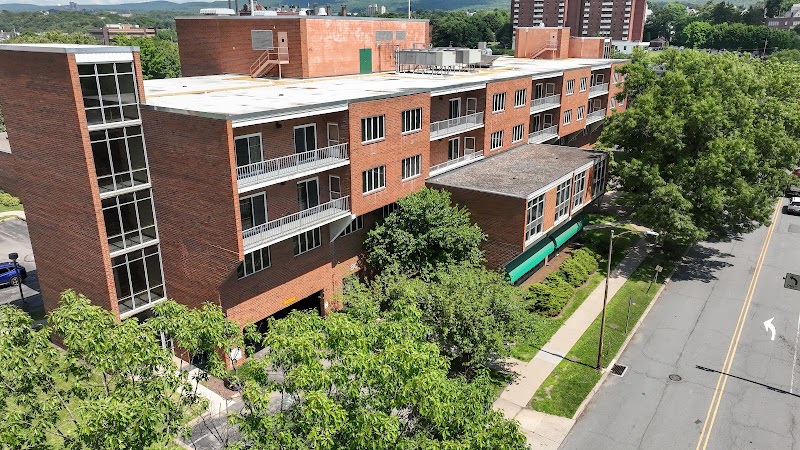
ALLIED SERVICES CENTER CITY SKILLED NURSING is owned by a non-profit organization. Non-profit facilities reinvest revenue into operations rather than distributing to shareholders. The facility operates independently rather than as part of a larger chain. With 92 certified beds and approximately 67 residents (about 73% occupancy), it is a smaller facility located in WILKES BARRE, Pennsylvania.

How Does Allied Services Center City Skilled Nursing Compare to Other Pennsylvania Nursing Homes?

Compared to the 100 nursing homes in Pennsylvania, ALLIED SERVICES CENTER CITY SKILLED NURSING's overall rating (4 stars) is above the state average of 3.0, staff turnover (47%) is near the state average of 46%, and health inspection rating (4 stars) is above the national benchmark.

What Should Families Ask When Visiting Allied Services Center City Skilled Nursing?

Based on this facility's data, families visiting should ask: "Can I visit during a mealtime to observe dining assistance and food quality?" "How do you handle medical emergencies, and what is your hospital transfer rate?" "Can I speak with family members of current residents about their experience?"

Is Allied Services Center City Skilled Nursing Safe?

Based on CMS inspection data, ALLIED SERVICES CENTER CITY SKILLED NURSING has a clean safety record: no substantiated abuse findings (meaning no confirmed cases of resident harm), no Immediate Jeopardy citations (the most serious violation level indicating risk of serious injury or death), and is not on the Special Focus Facility watch list (a federal program monitoring the lowest-performing 1% of nursing homes). The facility has a 4-star overall rating and ranks #1 of 100 nursing homes in Pennsylvania. While no facility is perfect, families should still ask about staff-to-resident ratios and recent inspection results during their visit.

Do Nurses at Allied Services Center City Skilled Nursing Stick Around?

ALLIED SERVICES CENTER CITY SKILLED NURSING has a staff turnover rate of 47%, which is about average for Pennsylvania nursing homes (state average: 46%). Moderate turnover is common in nursing homes, but families should still ask about staff tenure and how the facility maintains care continuity when employees leave.

Was Allied Services Center City Skilled Nursing Ever Fined?

ALLIED SERVICES CENTER CITY SKILLED NURSING has no federal fines on record. CMS issues fines when nursing homes fail to meet care standards or don't correct problems found during inspections. The absence of fines suggests the facility has either maintained compliance or corrected any issues before penalties were assessed. This is a positive indicator, though families should still review recent inspection reports for the full picture.

Is Allied Services Center City Skilled Nursing on Any Federal Watch List?

ALLIED SERVICES CENTER CITY SKILLED NURSING is not on any federal watch list. The most significant is the Special Focus Facility (SFF) program, which identifies the bottom 1% of nursing homes nationally based on persistent, serious quality problems. Not being on this list means the facility has avoided the pattern of deficiencies that triggers enhanced federal oversight. This is a positive indicator, though families should still review the facility's inspection history directly.