EDENBROOK AT HAMPTON
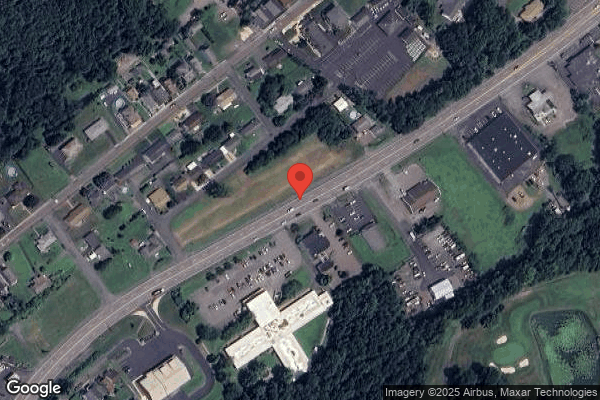
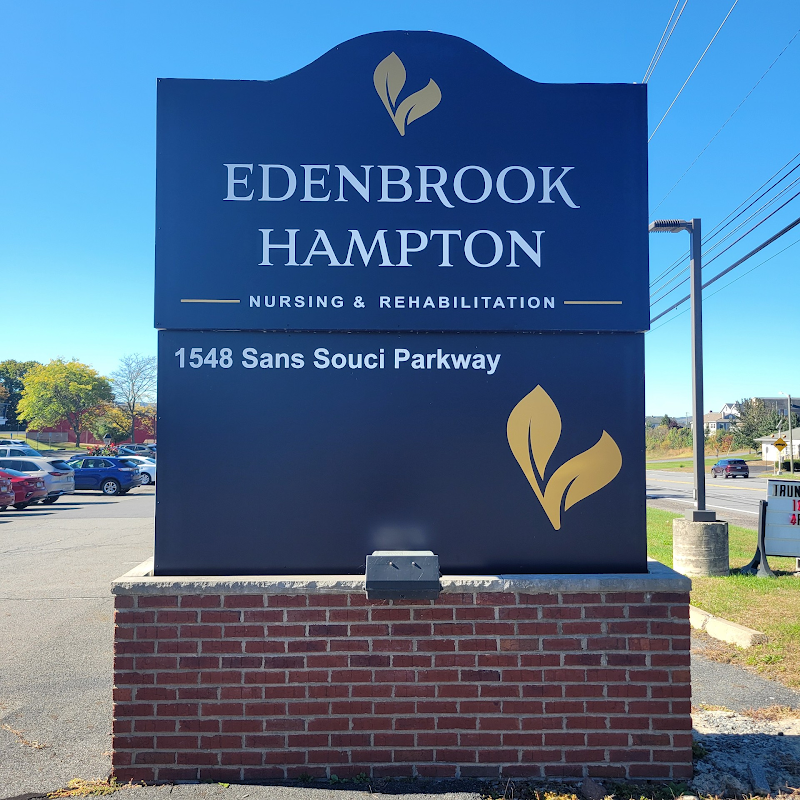
1548 SANS SOUCI PARKWAY, WILKES BARRE, PA 18702 (570) 825-8725
For profit - Corporation 104 Beds EDEN EAST HEALTHCARE MANAGEMENT Data: November 2025
Trust Grade
20/100
#550 of 653 in PA
Last Inspection: June 2025

Inspected within the last 6 months. Data reflects current conditions.

Overview

Edenbrook at Hampton has received a Trust Grade of F, indicating poor performance with significant concerns. It ranks #550 out of 653 facilities in Pennsylvania, placing it in the bottom half, and #18 out of 22 in Luzerne County, suggesting limited local options for better care. The facility is improving, having reduced its issues from 19 in 2024 to 5 in 2025, but it still faces critical deficiencies, including failing to provide operational resident-only telephones for privacy and not maintaining proper food safety practices, which could lead to health risks. Staffing is a concern here, with a low rating of 1 out of 5 stars and a high turnover rate of 60%, meaning many staff members are leaving, which could affect the quality of care. While there have been no fines recorded, the incidents of residents being potentially abused and not having adequate access to necessary services raise serious red flags for family members considering this facility for their loved ones.

Trust Score
F
20/100
In Pennsylvania
#550/653
Bottom 16%
Safety Record
High Risk
Review needed
Inspections
Getting Better
19 → 5 violations
Staff Stability
⚠ Watch
60% turnover. Above average. Higher turnover means staff may not know residents' routines.
Penalties
✓ Good
No fines on record. Clean compliance history, better than most Pennsylvania facilities.
Skilled Nurses
○ Average
RN staffing data not reported for this facility.
Violations
⚠ Watch
45 deficiencies on record. Higher than average. Multiple issues found across inspections.
★☆☆☆☆
1.0
Overall Rating
★☆☆☆☆
1.0
Staff Levels
★★☆☆☆
2.0
Care Quality
★★☆☆☆
2.0
Inspection Score
Stable
2024: 19 issues
2025: 5 issues

The Good

  • Full Sprinkler Coverage · Fire safety systems throughout facility
  • No fines on record

Facility shows strength in fire safety.

The Bad

1-Star Overall Rating

Below Pennsylvania average (3.0)

Significant quality concerns identified by CMS

Staff Turnover: 60%

14pts above Pennsylvania avg (46%)

Frequent staff changes - ask about care continuity

Chain: EDEN EAST HEALTHCARE MANAGEMENT

Part of a multi-facility chain

Ask about local staffing decisions and management

Staff turnover is elevated (60%)

12 points above Pennsylvania average of 48%

The Ugly 45 deficiencies on record

Jun 2025 3 deficiencies
CONCERN (D)

Potential for Harm - no one hurt, but risky conditions existed

Deficiency F0745 (Tag F0745)

Could have caused harm · This affected 1 resident

**NOTE- TERMS IN BRACKETS HAVE BEEN EDITED TO PROTECT CONFIDENTIALITY** Based on review of clinical records and staff interview, it was determined the facility failed to provide therapeutic social ser...

Read full inspector narrative →
**NOTE- TERMS IN BRACKETS HAVE BEEN EDITED TO PROTECT CONFIDENTIALITY** Based on review of clinical records and staff interview, it was determined the facility failed to provide therapeutic social services to promote the mental and psychosocial well-being of one resident out of 21 sampled (Resident 31). Findings include: A review of the clinical record revealed that Resident 31 was admitted to the facility on [DATE], with diagnoses to include major depressive disorder (a mood disorder characterized by persistent low mood and anxiety (feelings of worry and unease). Review of a quarterly Minimum Data Set Assessment (MDS- a federally mandated standardized assessment process completed at specific intervals to plan resident care) dated April 14, 2025, indicated the resident had a BIMS score of 15 (brief interview for mental status, a tool to assess the residents attention, orientation and ability to register and recall new information, a score of 13-15 equates to being cognitively intact). Further review of the clinical record revealed a progress note dated June 7, 2025, at 6:33 PM, indicating Resident 31 revealed his roommate grabbed his throat. A review of facility-provided investigative documentation completed by Employee 5, a registered nurse (RN), dated June 7, 2025, at 6:45 PM, revealed some redness noted on Resident 31's neck. No bruises or abrasions noted to skin. Resident 31 reported that Resident 82 caught him by surprise and pushed him and told him not to bother the girls. The incident occurred while both residents were in their shared room. Immediate interventions included separating the residents and initiating a room change. A progress note dated June 10th, 2025, at 5:25 PM showed the resident was still feeling upset about the incident with his roommate and expressed a need for support in managing his distress, including education from a psychiatric provider. An interview with Employee 1 (Social Services) on June 12, 2025, at approximately 11:30AM confirmed that no social services visit or intervention had been provided to Resident 31 in response to the altercation to address his psychosocial needs. An interview with the Nursing Home Administrator (NHA) on June 12, 2025, at approximately 12:00 PM confirmed there was no documented evidence that social services interventions were provided to support Resident 31's psychosocial well-being following the incident with his roommate. 28 Pa. Code 201.29 (a) Resident rights. 28 Pa. Code 211.16 (a) Social Services.
CONCERN (D)

Potential for Harm - no one hurt, but risky conditions existed

Deficiency F0761 (Tag F0761)

Could have caused harm · This affected 1 resident

Based on observation, review of select facility policy and clinical records, and staff interviews, it was determined the facility failed to adhere to acceptable storage and labeling for multi-dose med...

Read full inspector narrative →
Based on observation, review of select facility policy and clinical records, and staff interviews, it was determined the facility failed to adhere to acceptable storage and labeling for multi-dose medications in one of two medication carts observed (C Hall). Findings include: Review of the facility policy titled Medication Labeling and Storage last reviewed by the facility March 1,2025, indicated that multi-use medication vials/bottles that have been opened or accessed (e.g. seal broken) are to be labeled with the date they were opened to ensure proper tracking for expiration purposes. An observation of the medication cart located on C Hall unit on June 11, 2025, at 8:22 AM, in the presence of Employee 2 (Licensed Practical Nurse ) of the medication stored in the medication cart, revealed one (1) multi-dose insulin pen of Insulin Lispro (a fast acting insulin medication used to lower blood sugar) and two (2) multi-dose pens of Insulin Glargine (a long acting insulin medication used to lower blood sugar) that had been opened and available for use, but not dated when initially opened. Further observation revealed one (1) multi-dose insulin pen of Insulin Glargine with a date on the cap of the pen indicating the pen was opened April 30, 2025. Review of manufacturer safety information revealed the multi-dose pen of Insulin Glargine is to be discarded 28 days after opening indicating the dated pen should have been discarded on May 27, 2025. An interview with Employee 2 (LPN) on June 11, 2025, at 8:24 AM, confirmed all three (3) multi dose insulin pens one (1) Insulin Lispro and two (2) Insulin Glargine were opened, available for use, currently being used for administration, and not dated when initially opened with one pen of insulin glargine being used past the expiration date. Interview with the Nursing Home Administrator (NHA) on June 11, 2025, at approximately 11:00 AM, confirmed the facility failed to adhere to acceptable storage and labeling practice for multi-dose medications. 28 Pa. Code 211.9(a)(1)(k) Pharmacy services. 28 Pa. Code 211.12(c)(d)(1)(5) Nursing services.
CONCERN (E) 📢 Someone Reported This

A family member, employee, or ombudsman was alarmed enough to file a formal complaint

Potential for Harm - no one hurt, but risky conditions existed

Free from Abuse/Neglect (Tag F0600)

Could have caused harm · This affected multiple residents

**NOTE- TERMS IN BRACKETS HAVE BEEN EDITED TO PROTECT CONFIDENTIALITY** Based on a review of clinical records, facility policies, internal investigative documentation, and resident and staff interview...

Read full inspector narrative →
**NOTE- TERMS IN BRACKETS HAVE BEEN EDITED TO PROTECT CONFIDENTIALITY** Based on a review of clinical records, facility policies, internal investigative documentation, and resident and staff interviews, it was determined the facility failed to ensure that two residents (Residents 27 and 31) out of a sample of 21 residents were free from abuse from a resident with a known history of physical aggression (Resident 82). Findings including: A review of the current facility policy entitled Policy and Procedure Vulnerable Adult Abuse and Prevention, last reviewed by the facility March 1, 2025, revealed it was the policy of the facility to provide professional care and services in an environment that is free from any type of abuse, neglect, mistreatment, or exploitation and to enhance the life of all residents through strong programming and appropriate care and treatment. There is a zero tolerance for abuse or harm of any type. Residents and staff will be monitored for protection. The facility's policy defined abuse as the willful infliction of injury, unreasonable confinement, intimidation, or punishment with resulting in physical harm, pain, or mental anguish. Conduct which is not an accident or therapeutic conduct which produces or could reasonably be expected to produce physical pain or injury or emotional distress including, but not limited to, hitting, slapping, kicking, punching, biting, or corporal punishment of a vulnerable adult. Additionally, residents must not be subjected to abuse by anyone, including, but not limited to facility staff, other residents, consultants, or volunteers, staff of other agencies serving the residents, family members or legal guardians, friends, or other individuals. As part of the facility's resident protection program the facility was to assess the facility's population for behaviors that could result in maltreatment of residents. It included that the facility would assess, care plan, and monitor resident's needs and behaviors such as entering other resident's rooms, wandering behaviors, verbal outbursts, residents with communication disorders, those who are nonverbal and those that require heavy care and/or totally dependent on staff. A review of Resident 82's clinical record revealed he was admitted to the facility on [DATE], with diagnoses that included dementia (condition in which a person loses the ability to think, remember, learn, make decisions, and solve problems) with behavioral disturbance (behavioral and psychological symptoms such as agitation, anxiety, and psychosis), and anxiety (is a feeling of worry, nervousness, or unease, typically about an imminent event or something with an uncertain outcome). A review of Resident 82's comprehensive person-centered plan of care, initiated on April 23, 2025, indicated the resident used antipsychotic, antianxiety, and antidepressant medications for Alzheimer's disease (decline in brain function which causes memory loss and causes brain tissue to breakdown) with behaviors such as aggression and history of intrusive wandering. Planned interventions included encourage activities for socialization and diversion, administer antipsychotic medication as ordered by physician and monitor for side effects and effectiveness, consult with pharmacy, MD to consider dosage reduction when clinically appropriate and consult psychiatric services. Review of Resident 82's quarterly MDS (Minimum Data Set a federally mandated standardized assessment process conducted periodically to plan resident care) assessment dated [DATE], section C Cognitive Patterns revealed the resident had a BIMS score (Brief Interview for Mental Status a tool to assess the residents attention, orientation and ability to register and recall new information) of 3, which indicated the resident had severe cognitive impairment, a score of 00-07 indicates severe cognitive impairment. A review of facility-provided investigative documentation completed by Employee 3, agency registered nurse (RN), dated May 23, 2025, at 5:45 PM, revealed that Resident 82 was observed placing his arms around the neck of Resident 27, who was seated in a wheelchair in the television lounge. Staff intervened, and neuro checks for both residents were within normal limits. Resident 82 was placed on one-to-one supervision for safety, and the physician, responsible party, and local authorities were notified. Psychiatric consultation was ordered. A witness statement by Employee 4, an activity aide, dated May 23, 2025, described overhearing Resident 27 ask Resident 82 to stop pushing him. Upon returning to the area, Employee 4 observed Resident 82 with both arms around Resident 27's neck. Staff separated the residents. A witness statement completed by Employee 4, an activity aide, dated May 23, 2025, revealed that around 5:30 PM I was walking a resident to the dining hall, and I overheard Resident 27 asking Resident 82 to stop pushing him with his wheelchair and when I came out of the dining room I witnessed Resident 82 choking (arms around neck) Resident 27 and then I intervened and called for help. Employee 4 observed Resident 82 with both arms around Resident 27's neck. Staff separated the residents. A review of a witness statement provided by Resident 27 dated May 23, 2025, noted, I was in the TV room watching TV when Resident 82 came in from the hallway. He began slamming the back of my wheelchair. I asked him what he was doing and to stop! Resident 82 stood up and came behind me and put his arms around my neck. I got really mad and reached my right arm above my head and hit Resident 82. Then, staff entered and removed Resident 82 from the room. Further review of the investigation revealed that Resident 82, the alleged perpetrator, often became agitated following the departure of his significant other after visits. Documentation indicated that Resident 82's significant other had left the facility only minutes prior to the incident involving Resident 27. Facility staff were educated on assisting the resident with transition-related behaviors and offering diversionary activities upon her exit. The significant other informed the facility that she would notify the unit nurse prior to leaving the premises in the future. Facility staff also indicated that efforts would be made to keep Resident 82 separated from the residents involved in the physical altercations during activities, use of common areas, and in dining settings. A review of physician's orders dated May 23, 2025, for 1:1 supervision every shift for behaviors until May 24, 2025, at 11:59 PM, for safety/behaviors after which every 30-minute safety checks were ordered. A review of the facility's consulted psychiatric services PMHNP (Psychiatric Mental Health Nurse Practitioner) dated June 6, 2025, at 3:25 PM, revealed that Resident 82 was seen for follow up visit and staff reported the resident had episodes of verbal and physical aggression and was not always able to be easily redirect. Recommendations included to monitor and document any changes in mood such as increased signs and symptoms of depression or anxiety, mood lability, or generalized psychiatric decline, encourage social interactions/participation in group activities in facility to prevent feelings of isolation, provide supportive care as needed, non-pharmacological interventions and safety interventions, and routine follow up in 2 weeks or earlier if needed. A clinical record review from May 24, through June 6, 2025, revealed that nursing staff documented that Resident 82 had episodes of yelling and cursing at staff and other residents with unsuccessful redirection with activities and emotional support, and frequently self-propelled in his wheelchair throughout the unit and observed walking unassisted. Additionally, a review of a nurse progress note dated June 6, 2025, at 2:44 PM, documented Resident 82 was combative and aggressive this tour. Offered nap, tv, music, activities food and fluids. Frequently looking for significant other. A review of facility-provided investigative documentation completed by Employee 5, a registered nurse (RN), dated June 7, 2025, at 6:45 PM, revealed a second incident occurred involving Resident 82 and Resident 31 (BIMS of 15, indicating intact cognition). Facility documentation completed by Employee 5, a registered nurse, revealed that Resident 31 exited his room and reported that Resident 82 had grabbed him by the neck and pushed him. Redness was noted on Resident 31's neck. The residents were separated, and Resident 82 was moved to another room. A witness statement completed by Employee 6, a licensed practical nurse (LPN), dated June 7, 2025, indicated that when the incident occurred between Resident 82 and Resident 31, I was in the dining room. The last time I saw both residents was at approximately 6:15 PM, and they were both in their room. Resident 82 was sitting in his chair and Resident 31 was sitting on his bed. After dining room began, I began passing medication when Resident 31 came to me and told me that his roommate (Resident 82) put his hands around his neck and then his arms and seemed very upset. I immediately brought Resident 31 to the supervisor to discuss what the resident just explained. Resident 31's witness statement dated June 7, 2025, no time noted, indicated, My roommate and I were both standing in our room and out of nowhere he pushed me against the wall and told me not to bother the girls. I told him I won't, and he grabbed my neck, and I pushed him and ran out of the room, I started crying. Further review of the facility-provided investigative documentation completed by Employee 5, revealed that Resident 82 was not able to describe what happened. Residents were separated and Resident 82 room was changed. Additional interventions included 1:1 supervision for safety/behaviors and consult psychiatric services. On June 12, 2025, at approximately 11:00 AM, an interview was conducted with Resident 31, a cognitively intact resident, regarding the incident that occurred with his previous roommate, Resident 82, on June 7, 2025, at 6:45 PM. Resident 31 stated, that guy is a brut, everything was fine and then he just snapped. I didn't provoke him, he just pushed me up against the wall and then put his hands around my neck, and then held my arms. I pushed him away and ran out to tell my nurse and they helped me. Additionally, Resident 31 reported that after the incident he was shaken up but felt safe because Resident 82 was moved to another location in the facility. Despite documented history of aggression, physical altercations, and psychiatric recommendations, the facility failed to maintain consistent and adequate supervision of Resident 82 to prevent repeated incidents of physical aggression. The second incident, which involved physical harm and emotional distress to Resident 31, occurred after a prior event involving similar aggression had already been identified. Additionally, the facility failed to substantiate abuse allegations made by Resident 31 despite evidence including witness statements and physical signs of injury. During an interview conducted on June 12, 2025, at approximately 10:35 AM, the facility's Nursing Home Administrator (NHA) stated the facility could not confirm that abuse had occurred because staff had not directly witnessed the incident involving Resident 31. The NHA reported the allegation could not be substantiated, despite facility investigative documentation noting visible red marks on Resident 31's neck and no documented history of the resident making false allegations in the clinical record or comprehensive care plan. The NHA also acknowledged that Resident 82 should have been provided with increased staff supervision due to his history of outbursts, aggressive behavior, and intrusive wandering, in order to prevent potential harm to other residents. 28 Pa. Code 201.14 (a) Responsibility of licensee. 28 Pa. Code 201.18(e)(1) Management. 28 Pa. Code 201.29(a) Resident Rights. 28 Pa. Code 211.12 (d)(5) Nursing Services.
Jan 2025 2 deficiencies
CONCERN (E) 📢 Someone Reported This

A family member, employee, or ombudsman was alarmed enough to file a formal complaint

Potential for Harm - no one hurt, but risky conditions existed

Deficiency F0741 (Tag F0741)

Could have caused harm · This affected multiple residents

**NOTE- TERMS IN BRACKETS HAVE BEEN EDITED TO PROTECT CONFIDENTIALITY** Based on observations, a review of clinical records, review of facility grievances, Resident Council Meeting minutes, and reside...

Read full inspector narrative →
**NOTE- TERMS IN BRACKETS HAVE BEEN EDITED TO PROTECT CONFIDENTIALITY** Based on observations, a review of clinical records, review of facility grievances, Resident Council Meeting minutes, and resident and staff interviews, it was determined the facility failed to provide sufficient staff, providing direct services to residents, who possess the necessary competencies and skills sets to provide nursing and related services to assure resident safety and attain or maintain the highest practicable physical, mental, and psychosocial well-being of each resident as evidenced the facility's inability to appropriately manage and supervise the wandering and aggressive behaviors of two residents (Residents 4 and 20) out of 20 sampled. Findings include: Review of clinical record of Resident 4 revealed that the resident was admitted to the facility on [DATE], with diagnoses to include dementia with other behavioral disturbances (a condition characterized by progressive or persistent loss of intellectual functioning, especially with impairment of memory and abstract thinking, and often with personality change), and violent behavior. Resident 4 resided on the B-Wing. An End of PPS Part A Stay Minimum Data Set assessment (MDS- a federally mandated standardized assessment process completed at specific intervals to plan resident care) dated January 18, 2025, indicated that Resident 4 was severely cognitively impaired with a BIMS (brief interview for mental status, a tool to assess the residents attention, orientation and ability to register and recall new information) score of 3 (0-7 represents severe cognitive impairment), and the resident was able to ambulate independently. Review of Resident 4's plan of care dated November 22, 2024, revealed a focus area related to elopement risk/wanderer due to disoriented to place and impaired safety awareness. Interventions included: distract resident from wandering by offering pleasant diversion, structured activities, food, conversation, TV, and books; notify appropriate departments of resident risk for elopement; every 15-minute checks, redirect as needed if resident found in other rooms. Another focus area identified regarding physical aggressiveness due to dementia and poor impulse control with interventions to: administer medications as ordered; assess and anticipate resident's needs: food, thirst, toileting needs, comfort level, body positioning, pain, etc.; provide physical and verbal cues to alleviate anxiety, give positive feedback, assist verbalization of source of agitation, assist to set goals for more pleasant behavior, encourage seeking out staff member when agitated; encourage activity participation for socializing with staff and peers; when resident becomes agitated, intervene before agitation escalates. Guide resident away from source of distress. Engage calmly in conversation. If response if aggressive, staff to walk resident calmly away and approach later. Despite these interventions, nursing documentation from November 21, 2024, through January 29, 2025, showed frequent incidents of wandering into other residents' rooms, exit-seeking behaviors, and aggression toward staff and other residents as follows: November 21, 2024, at 9:42 PM - resident was wandering into other residents' rooms and pushing on exit doors. Redirected by staff multiple times. November 22, 2024, at 2:59 PM - resident put on 15-minute checks for wandering/safety. November 23, 2024, at 4:35 PM - resident wandering in hall and in and out of other resident's rooms. November 23, 2024, at 7:45 PM - awake, alert and verbal with confusion. Going in and out of other residents' rooms. Constant redirection needed. November 24, 2024, at 3:50 PM - resident wandering in and out of residents' rooms. November 24, 2024, at 10:18 PM - wandering into other residents' rooms. Consistent redirection needed. November 25, 2024, at 4:30 AM - resident with abnormal behavior, wandering and entering other residents' rooms. Redirected may times. November 25, 2024, at 2:45 PM - resident continues to continuously ambulate up and down hallways, and in and out of activities. November 29, 2024, at 9:55 PM - wandering in other residents' rooms. Constant redirection needed. December 2, 2024, at 2:28 PM - resident insists on ambulating with increased agitation noted on redirection. Exit seeking behaviors observed majority of shift. December 3, 2024, at 4:14 - wandering up and down halls, not easily redirected. Some aggression when showing resident his room. December 3, 2024, at 6:04 PM - resident with behaviors this shift seen yelling in dining room, trying to go behind the counter by the food trays. December 9, 2024, 11:36 PM - resident does go into other residents' rooms but is easily redirected. December 11, 2024, at 8:01 PM - wandering in other rooms. Constant redirection needed. December 12, 2024, a 7:46 AM - resident with behaviors at start of shift. Resident taking clothing from roommate's closet. Roommate upset with resident. Wandering in hall until 1:00 AM. December 14, 2024, at 20:42 AM - wandering in and out of room, redirected several times. December 20, 2024, at 3:01 PM - frequent redirection needed often. In/out of other residents' rooms. December 21, 2024, at 4:30 AM - resident sitting in bed in room B2D (resident's room is B1D). Upon standing from bed, resident had pillow under his foot and started to slide and was lowered to floor by nurse. 15 min checks maintained. December 21, 2024, at 2:34 PM - wandering in and out of rooms on B Wing. December 21, 2024, at 9:33 PM - wandering in other rooms. Redirected by staff multiple times. December 22, 2024, at 2:50 PM - wandering in and out of other resident rooms. December 22, 2024, at 6:58 PM - ambulating up and down hall, going into other rooms. Redirected multiple times. December 23, 2024, at 2:18 PM - ambulates in and out of other residents' rooms. December 24, 2024, at 8:58 PM - Res complained of pain left foot. Xray results: subacute fracture of 5th metatarsal (bone in the foot). New order to be non-weight bearing (NWB) to left foot. Ortho consult. December 30, 2024, at 11:03 PM - ambulating up and down hall, constant redirection needed to use wheelchair due to NWB status to left leg. January 16, 2025, at 10:55 AM - reviewed with CRNP (certified registered nurse practitioner) recommendations from ortho appointment. New order received to discharge NWB statue to left lower extremity. January 17, 2025, at 2:56 PM - wandering in and out of other residents' rooms. January 21, 2025, at 7:48 AM - wandering into next room at times. January 24, 2025, at 2:36 PM - ambulating up and down the hall, going into other residents' rooms. January 25, 2025, at 10:18 PM - wandering into other resident rooms. On December 24, 2024, Resident 4 sustained a subacute fracture (break of a bone in the healing stage which causes pain) of the left foot, raising concerns regarding the adequacy of supervision Review of clinical record of Resident 20 revealed that the resident was admitted to the facility on [DATE], with diagnoses to include dementia (a condition characterized by progressive or persistent loss of intellectual functioning, especially with impairment of memory and abstract thinking, and often with personality change, resulting from organic disease of the brain). The resident resides on the B- Wing. An admission Minimum Data Set assessment dated [DATE], indicated Resident 20 was severely cognitively impaired with a BIMS score of 3, and the resident was able to ambulate with supervision or touching assistance. Review of Resident 20's plan of care dated November 29, 2024, revealed a focus area of elopement risk due to disoriented to place, impaired safety awareness, noncompliant with assist to transfer and ambulate with interventions to include: social service visit as needed; wander guard system (system to alert staff of location); and when redirecting resident, approach in calm manner. Another focus area identified regarding physical aggressiveness due to dementia and swinging cane at staff with interventions to include: assess and anticipate resident's needs: food, thirst, toileting needs, comfort level, body positioning, pain, etc.; monitor/document/report as needed, any signs/symptoms of resident posing danger to self and others; offer wheelchair when behaviors escalate; and when resident becomes agitated, intervene before agitation escalates. Guide away from source of distress. Engage calmly in conversation. If response is aggressive, staff to walk calmly away and approach later. Nursing documentation from November 29, 2024, through January 29, 2025, revealed frequent incidents of wandering into other residents' rooms, threats toward staff, verbal aggression, and physical aggression, including attempting to strike multiple staff members. Behaviors as follows: December 6, 2024, at 5:52 PM - resident ambulates in hallways, can be nasty at times, cursing at staff. December 7, 2024, at 4:57 AM - wandering in hall at start of shift, easily redirected. Resident went to sleep at approximately 2:00 AM. Noted steady gait with walking with cane. December 9, 2024, at 2:21 PM - resident with confusion this shift with behaviors present. Ambulating with cane in hall. Confusion present, attempting to go into other residents' rooms. Upon staff redirection, resident had times of increased agitation. At one point, attempting to hit multiple staff with cane. Resident also calling staff inappropriate names. December 10, 2024, at 3:34 AM - wandering earlier in shift. Resident went in room B15. When asked to move back to his own room, the resident began yelling at the other resident. December 11, 2024, at 2:41 PM - resident periodically agitated. Pulling away and swinging fist when staff offers assistance. Continues to urinate in garbage cans and personal green tote. December 11, 2024, at 10:29 PM - wandering in other residents' rooms, redirected with success. December 12, 2024, at 7:06 AM - resident wandering at start of shift in and out of other resident rooms, difficult to redirect. Went to bed at approximately 2:00 AM. December 13, 2024, at 11:27 AM - resident cursed, threw a wet rag, and told the nurse to get the f*** away from him! December 15, 2024, 7:01 AM - awake on and off this shift. Difficult to redirect at times. In and out of other resident rooms. December 15, 2024, at 2:14 PM - going in and out of other resident rooms, redirection often difficulty. December 17, 2024, at 3:36 PM - resident spit at nurse, telling nurse to leave him he f*** alone. Ambulating in and out of room. December 18, 2024, at 12:37 AM - resident with behaviors at the time. Sitting in wrong room. When asked to go back to own room, he refused and tried to hit the nurse with his cane. Resident eating and drinking other resident's snacks. Resident stating that the men in this room are his cousins and unable to redirect. Transferred back to room in chair, cursing at nurse. December 18, 2024, at 3:38 AM - continues to wander into other resident rooms and becomes agitated when asked to leave the room. December 18, 2024, at 10:33 PM - wandering into rooms. December 20, 2024, at 10:47 PM - wandering into other resident rooms. Difficult to redirect. December 21, 2024, at 4:48 AM - resident with behaviors all shift, in and out of other resident rooms, in other resident beds, eating other residents' snacks. Very difficult to redirect, swinging at staff when assisted to own room. December 30, 2024, at 4:41 AM - currently resting in empty bedroom B1W. Wandered there after using the connecting bathroom. Resident refusing to get out of this bed despite several attempts. December 31, 2024, at 8:40 PM - wandering up and down hall into rooms, constantly redirected by staff. January 7, 2025, at 9:11 PM - resident with behaviors this shift, going in and out of other resident rooms, coming behind nurse's station, threatens staff when attempting to redirect, distractions ineffective. January 8, 2025, at 9:46 PM - ambulating up and down hall with cane, wandering into other rooms. Constant redirection needed. January 11, 2025, at 10:15 PM - resident wanders throughout unit. On occasion, has threatened others with his cane. Resident also yells at others January 12, 2025, at 11:20 AM - resident with increased aggressive behaviors with staff. Swung cane and used vulgar language at nurse aide. January 15, 2025, at 2:04 PM - in and out of other resident rooms. January 16, 2025, at 6:51 AM - in and out of resident rooms. Redirection given multiple times. Aide sat one-on-one with resident for part of shift to monitor. January 21, 2025, at 7:44 AM - wandering all shift in other resident rooms. January 27, 2025, at 10:40 PM - he did act up when fellow nurse tried to get him out of nurse's station. January 28, 2024, at 4:18 AM - ambulating through all from start of shift until approximately 1:30 AM. In and out of resident rooms. Despite documented aggressive behaviors, the facility failed to ensure that adequate staff were present to effectively supervise and manage these behaviors. Interviews conducted on January 29, 2025, between 11:39 AM and 1:00 PM with four cognitively intact residents residing on the B-Wing indicated following: Resident 1 reported he is afraid to leave this room because Resident 20 comes into my room to see what he can steal. He stated that the facility provided him with a Velcro stop sign to place at the entrance to his room but noted that staff do not consistently put the stop sign in place when they exit his room, leaving him vulnerable to unwanted wandering residents. Observation on January 29, 2025, at 11:38 AM, prior to entering Resident 1's room, revealed that the stop sign was not in place on the entryway, allowing easy access into Resident 1's room. Continued interview with Resident 1 revealed that is scared to death of Resident 4 and Resident 20. He stated a few days ago he was in the hallway and Resident 4 was coming down the hall and raised his fist and said, do you want to fight. Resident 1 moved to the other side of the hall and went back to his room. Then Resident 4 came into his room asking, Where is Margaret? He made a fist and came after me and then the nurse took him out. Resident 1 reported another incident occurred on January 25, 2025. He stated that Resident 20 came into his room and stole one of his shirts. He stated, he keeps coming back into my room even though the nurse and myself keep telling him it's not his room. The resident stated he filed two grievances for both occurrences, but the facility has not addressed his recent concerns. He also stated he voiced his concern regarding Resident 4 and 20 at previous Resident Council Meetings. Review of facility's grievance for December 2024, and January 2025, revealed no grievance filed on behalf of Resident 1 or any grievances filed regarding Residents 4 and 20. Review of the Resident Council Meeting minutes for December 2024, and January 2025, revealed no concerns documented regarding intrusive wandering residents in the meeting minutes. Interview with Resident 18, Resident Council President, revealed concerns reported by Resident 1 regarding Residents 4 and 20 were brought up in past meetings. He indicated the January 22, 2025, meeting was conducted by the Nursing Home Administrator (NHA) and the Director of Human Resources. He stated that the NHA said she would follow up with Resident 1's concern. Continued interview with Resident 18 revealed that Residents 4 and Resident 20 wander into resident rooms frequently with Resident 20 making threatening remarks. Interview with Resident 19 reported that Residents 4 and Resident 20 have wandered into her room. She stated, everyone knows to stay away from them. She stated that they have entered her room, uninvited, multiple times, even at Two or three in the morning, keeping me up. She indicated a few weeks ago Resident 4 walked into her room, sat down on her chair and made a phone call. She said she is claustrophobic but sleeps with the door closed in order keep unwanted wanderers out and to keep her feeling safe. Interview with Resident 17 stated Resident 20 was here last night. He sat down on my bed, and he wouldn't leave. My daughter was here and rang the buzzer. She continued, that's the second or third time he's been in my room, mostly in the evening. She stated when she calls for help, staff come in to remove him, but it makes her feel very uncomfortable and uneasy. Interview with two staff members on January 29, 2025, at approximately 11:30 AM, who wish to remain anonymous, indicated Resident 4 and Resident 20 are difficult to manage and keep track of due to their dementia, behaviors, and ability to ambulate independently. They feel the facility does not assign enough staff members to the B-Wing to manage behaviors and conduct the 15-minute checks required of multiple residents who reside on the B-Wing. One staff member revealed staff are afraid of Resident 20 due to his violent outburst and physical aggressiveness. Interview with Employee 1 (activity aide) on January 29, 2025, at approximately 12:20 PM confirmed that Residents 4 and Resident 20 do not engage in group activities as they either refuse to attend or will get up and leave the group activity. The Nursing Home Administrator (NHA) and Director of Nursing (DON) admitted they were unaware of the extent of these behavioral incidents and could not provide evidence that sufficient staff with appropriate skills were assigned to the B-Wing. Interview with the Nursing Home Administrator (NHA) and Director of Nursing (DON) on January 29, 2025, at approximately 2:45 PM reported they were unaware of the extent to Residents 4 and 20's intrusive wandering and the negative effects it was having on the residents on the B-Wing. They were unaware of the grievances filed by Resident 1 and denied knowledge of his voiced concern regarding the intrusive wanderers during the January 2025 Resident Council Meeting. They could not provide evidence that sufficient staff with appropriate skills were assigned to the B-Wing.could not provide evidence that sufficient staff with appropriate skills were assigned to the B-Wing. The facility failed to provide adequate staffing levels with the necessary competencies to ensure the supervision and safety of residents with dementia, leading to repeated incidents of resident-on-resident intrusions, aggressive behaviors, and safety concerns, to ensure resident safety and attain or maintain the highest practicable physical, mental, and psychosocial well-being. 28 Pa Code 211.12 (d)(3)(4)(5) Nursing services 28 Pa. Code 201.18 (e)(1)(3) Management 28 Pa. Code 201.20 (a)(6) Staff development
CONCERN (F) 📢 Someone Reported This

A family member, employee, or ombudsman was alarmed enough to file a formal complaint

Potential for Harm - no one hurt, but risky conditions existed

Deficiency F0576 (Tag F0576)

Could have caused harm · This affected most or all residents

Based on review of Resident Council Meeting minutes and maintenance work orders, observation, and resident and staff interviews, it was determined the facility failed to ensure all residents had acces...

Read full inspector narrative →
Based on review of Resident Council Meeting minutes and maintenance work orders, observation, and resident and staff interviews, it was determined the facility failed to ensure all residents had access to a resident-only telephone for one of 20 residents sampled (Resident 1) and failed to provide privacy for residents when having telephone calls on three out of three clinical nursing units. Findings include: Interview with Resident 1 on January 29, 2025, at 11:40 AM revealed that the resident-only telephone, located in the B-Wing Resident Lounge, was non-operational. Resident 1 stated that for three months, the facility had informed him that the guy isn't available to fix it. He reported the issue during the January 22, 2025, Resident Council Meeting, but the facility had not addressed his concern. Observation of the B-Wing Resident Lounge on January 29, 2025, at 12:06 PM revealed a landline telephone on a countertop without a dial tone. Further observation showed the phone jack pulled out from the wall with exposed phone cable wires. Interview with Employee 2 (licensed practical nurse) on January 29, 2025, at 12:09 PM indicated that the telephone in the B-Wing Resident Lounge was available for resident use, but only when operational. Employee 2 further revealed that residents could use the landline telephone located behind each nursing station but would need to request assistance from staff. The phone was positioned on the nursing station counter, requiring the resident to sit in front of the nursing station during the call. Employee 2 verified that this arrangement did not provide residents with privacy for their conversations. Review of the January 22, 2025, Resident Council Meeting minutes revealed documentation of a concern regarding the non-functional phone in the B-Wing Resident Lounge. Review of maintenance work orders from December 1, 2024, through January 29, 2025, showed no evidence that a work order had been placed to repair the phone in the B-Wing Resident Lounge. Interview with the Nursing Home Administrator on January 29, 2025, at 2:45 PM confirmed the facility failed to provide telephone access to all residents and failed to provide privacy for resident telephone calls. This failure resulted in residents not having access to a functional, resident-only telephone and not being provided with privacy for telephone communications, impacting their ability to communicate confidentially and independently. 28 Pa. Code 201.18(b)(2)(e)(1) Management 28 Pa. Code 201.29(a) Resident rights
Aug 2024 10 deficiencies
CONCERN (D)

Potential for Harm - no one hurt, but risky conditions existed

Safe Environment (Tag F0584)

Could have caused harm · This affected 1 resident

Based on observation, and staff interviews it was determined the facility failed to provide housekeeping and maintenance services to maintain a clean and safe resident environment. Findings include: A...

Read full inspector narrative →
Based on observation, and staff interviews it was determined the facility failed to provide housekeeping and maintenance services to maintain a clean and safe resident environment. Findings include: An observation on August 20, 2024, at approximately 1:30 PM revealed in Room B14 Resident 25's tube feeding pump and pole were soiled with dried tube feeding solution dried to the pump and pole. In addition there were dried spots of tube feeding solution on the floor. An observation of the A hall nursing unit medication room on August 22, 2024, at approximately 9:05 AM revealed there was dirt and debris on the floor. A strong mildew and sewage smell was noted throughout the room. A flying bug was observed flying around in this medication room. An observation of the A hall nursing unit shower room on August 22, 2024, at approximately 9:15 AM revealed a large amount of sewer flies in the shower room. These flies were noted to be covering the walls of the shower room. They were observed by the tub and in both shower stalls. There were multiple dead flies noted on the floor, in the tub, or splattered on the walls. There were wet clumps of paper on the shower room floor. The shower curtain was noted to have brown stains on the bottom. There were cracked tiles observed on the wall near the floor. An observation on August 23, 2024, at approximately 8:55 AM revealed Room B14, Resident 25's tube feed pump and pole still had dried tube feeding solution on the pump and pole. The dried spots tube feeding solution remained on the floor. Interview with the Director of Nursing and Nursing Home Administrator on August 23, 2024, at approximately 1:30 PM confirmed the facility is to be maintained on a daily basis to ensure a clean and sanitary environment for the residents. Refer F925 28 Pa. Code 201.18 (e)(2.1) Management
CONCERN (D)

Potential for Harm - no one hurt, but risky conditions existed

Comprehensive Care Plan (Tag F0656)

Could have caused harm · This affected 1 resident

**NOTE- TERMS IN BRACKETS HAVE BEEN EDITED TO PROTECT CONFIDENTIALITY** Based on clinical record review and staff interviews, it was determined the facility failed to develop person-centered care plan...

Read full inspector narrative →
**NOTE- TERMS IN BRACKETS HAVE BEEN EDITED TO PROTECT CONFIDENTIALITY** Based on clinical record review and staff interviews, it was determined the facility failed to develop person-centered care plans that include individual medication therapy for one resident out of 20 sampled (Resident 12). Findings include: A review of the clinical record revealed Resident 12 was admitted to the facility on [DATE], with diagnoses to include hypertension (high blood pressure). A review of a physician order, initially dated April 30, 2024 revealed the resident was receiving Eliquis Oral Tablet 2.5 MG (anticoagulant medication-commonly known as a blood thinner, chemical substance that prevents or reduces the coagulation of blood, prolonging the clotting time) give twice a day for history of pulmonary embolism (blood clot in the lung). A review of the current resident's plan of care revealed the resident's care plan failed to identify the resident's anticoagulant therapy and interventions to monitor for bleeding. Interview with the Nursing Home Administrator and Director of Nursing on August 23, 2024, at approximately 1:30 PM confirmed the facility failed to ensure that comprehensive care plans were developed. 28 Pa. Code 211.12 (d)(5) Nursing services
CONCERN (D) 📢 Someone Reported This

A family member, employee, or ombudsman was alarmed enough to file a formal complaint

Potential for Harm - no one hurt, but risky conditions existed

Quality of Care (Tag F0684)

Could have caused harm · This affected 1 resident

**NOTE- TERMS IN BRACKETS HAVE BEEN EDITED TO PROTECT CONFIDENTIALITY** Based on a review of clinical records, and staff interview, it was determined the facility failed to provide nursing services co...

Read full inspector narrative →
**NOTE- TERMS IN BRACKETS HAVE BEEN EDITED TO PROTECT CONFIDENTIALITY** Based on a review of clinical records, and staff interview, it was determined the facility failed to provide nursing services consistent with professional standards of practice by failing to ensure physician ordered medication, an antibiotic, and additive were timely obtained and administered to treat a urinary tract infection for one resident (Resident 93) out of 20 sampled residents. Findings include: According to the American Nurses Association Principles for Nursing Documentation, nurses document their work and outcomes and provide an integrated, real-time method of informing the health care team about the patient status. Timely documentation of the following types of information should be made and maintained in a patient's EHR (electronic health record) to support the ability of the health care team to ensure informed decisions and high-quality care in the continuity of patient care: • Assessments • Clinical problems • Communications with other health care professionals regarding the patient • Communication with and education of the patient, family, and the patient's designated support person and other third parties. A review of Resident 93's clinical record revealed the resident was admitted to the facility on [DATE], with diagnoses that included Guillain-Barre Syndrome (a disorder of the immune system where the nerves are attacked by immune cells that causes weakness and tingling in arms and legs), neuromuscular dysfunction of the bladder (a type of bladder dysfunction caused by nerve, brain, or spinal cord damage with symptoms that include loss of bladder control and retaining urine), and urine retention (an inability to completely empty the bladder). A review of urine analysis (UA is a common diagnostic test that evaluates the content, concentration, and appearance of urine and helps detect and manage a wide range of disorders such as urinary tract infections, kidney disease, and diabetes), and culture and sensitivity (urine culture is a method to grow and identify bacteria that may be in the urine. The sensitivity test helps select the best medicine to treat the infection) results that were received by the facility on July 24, 2024, at 11:03 a.m., revealed that Resident 93 had positive urine cultures and confirmed a urinary tract infection. A review of a nurse progress noted completed by Employee 1, a Licensed Practical Nurse (LPN), dated July 25, 2024, at 2:28 p.m., revealed that C& S results were reviewed with the CRNP (Certified Registered Nurse Practitioner) with new orders for Ceftriaxone (an antibiotic in the form of an injection that treats bacterial infections), give 1 gram (gm) intramuscularly ( a technique used to deliver a medication deep into the muscles) for 7 days. The Physician, resident, and responsible party (RP) were aware. A review of a physician's order dated July 26, 2024, at 4:12 p.m., revealed an order for an antibiotic, Ceftriaxone SodiumInject 1 gram intramuscularly one time a day for UTI for 7 Days reconstitute (restore to a former condition by adding water) with Lidocaine (numbing medication). A review of Resident 93's medication administration record (MAR) is the report that serves as a legal record of the drugs administered to a resident at a facility by a health care professional) dated July 2024, revealed on July 27, 2024, the resident did not receive the prescribed IM antibiotic Ceftriaxone Sodium. Further review of the clinical record revealed an order administration note completed by Employee 1, dated July 27, 2024, at 7:01 p.m., indicated the Ceftriaxone Sodium Injection was not administered due to the facility waiting for Lidocaine from the pharmacy. During an interview with the Director of Nursing (DON) on August 22, 2024, at 1:45 p.m., it was reported that in the event a physician prescribed treatment was not provided by the facility's primary contracted pharmacy, nursing staff were to contact the contracted emergency pharmacy to prevent a delay in the medication administration. Resident 93's clinical record failed to reveal the resident's physician was timely notified of the missed dose of antibiotic therapy. The facility failed to ensure that Resident 93 received the antibiotic doses as prescribed by the physician to treat the UTI and failed to utilize services of the facility's contracted emergency pharmacy to prevent a delay in treatment. Interview with the DON on August 23, 2024, at 11:00 a.m., confirmed the facility failed to administer physician ordered medication as prescribed, and failed to ensure the MD was notified of a missed dose. Additionally, the DON confirmed that nursing staff failed to implement emergency provisions to contact the contracted emergency pharmacy to prevent a delay in treatment. 28 Pa. Code 211.12 (d)(1)(3)(5) Nursing services
CONCERN (D) 📢 Someone Reported This

A family member, employee, or ombudsman was alarmed enough to file a formal complaint

Potential for Harm - no one hurt, but risky conditions existed

Incontinence Care (Tag F0690)

Could have caused harm · This affected 1 resident

**NOTE- TERMS IN BRACKETS HAVE BEEN EDITED TO PROTECT CONFIDENTIALITY** Based on review of select facility policy, clinical records, and staff interview, it was determined the facility failed to imple...

Read full inspector narrative →
**NOTE- TERMS IN BRACKETS HAVE BEEN EDITED TO PROTECT CONFIDENTIALITY** Based on review of select facility policy, clinical records, and staff interview, it was determined the facility failed to implement individualized approaches for inontinence to provide maintenance care to the extent possible for one out of 20 sampled residents (Resident 25). Findings include: A review of facility policy entitled Urinary and Bowel Incontinence Evaluation and Management last reviewed April 17, 2024, indicated if a resident is not a candidate for a schedule, they will be placed on Incontinence Care and Comfort (checked and changed every two to three hours). A review of Resident 25's clinical record revealed the resident was admitted to the facility on [DATE], with diagnoses which included dementia (a decline in cognitive abilities that can affect a person's ability to perform everyday activities) and muscle wasting. A review of the resident's bladder and bowel evaluation dated July 21, 2024, revealed the resident was always incontinent of bowel and bladder, has poor a potential for a toileting schedule, and was placed on an incontinence care and comfort plan. A review of the resident's current plan of care failed to identify the resident's urinary incontinence and interventions to provide care and services. A review of the resident's clinical record revealed the facility failed to document the resident's incontinence care and comfort care plan was being implemented and completed each shift. Interview with the Director of Nursing on August 23, 2024, at approximately 1:30 PM confirmed the facility failed to provide maintenance care to Resident 25. 28 Pa. Code 211.12(c)(d)(1)(3)(5) Nursing services
CONCERN (D)

Potential for Harm - no one hurt, but risky conditions existed

Deficiency F0692 (Tag F0692)

Could have caused harm · This affected 1 resident

**NOTE- TERMS IN BRACKETS HAVE BEEN EDITED TO PROTECT CONFIDENTIALITY** Based on a review of clinical records and select facility policies and staff interview, it was determined the facility failed to...

Read full inspector narrative →
**NOTE- TERMS IN BRACKETS HAVE BEEN EDITED TO PROTECT CONFIDENTIALITY** Based on a review of clinical records and select facility policies and staff interview, it was determined the facility failed to consistently and accurately monitor resident weights to timely identify changes in nutritional parameters for two of 20 sampled residents (Residents 40 and 91). Findings include: The facility policy Weight Policy dated as revised June 2024, indicated that any resident with weight changes of five or more pounds will be re-weighed within 72 hours post the original weight by the assigned CNA/designee and nurse. The Dietician will review the medical record of residents with significant weight changes (greater than or equal to 5% in 1 month, greater than or equal to 7.5% in 3 months, and greater than or equal to 10% in 6 months). Interventions will be recommended, as needed. Interventions that are initiated in response to a weight change will be reflected in the care plan. Residents with significant weight loss/gain will be further reviewed by the IDCPT (interdisciplinary care plan team) meetings. A review of Resident 's 40's clinical record revealed the resident was admitted to the facility on [DATE], with diagnoses to include diabetes (commonly referred to as diabetes, is a group of metabolic diseases in which there are high blood sugar levels over a prolonged period) and heart disease. A Dietary Progress Note created by the Registered Dietitian (RD) dated July 18, 2024, revealed Resident 40 weighed 167 lbs. on July 4, 2024, and 133 lbs. on July 18, 2024, which was a 19.9% weight loss in 30 days, losing 34 lbs. in 2 weeks. Further review indicated the RD questioned the accuracy of the weight however, a reweigh confirmed the significant weight loss. There were no new interventions implemented at the time of the weight loss. The RD did not implement a new intervention until August 6, 2024, at which time she recommended the addition of a magic cup (nutritional supplement to enhance weight gain) three times a day. Review of Resident 40's current nutritional care plan in place at the time of survey ending August 23, 2024, revealed no revisions were made since April 4, 2024. Interview with the Nursing Home Administrator (NHA) and Director of Nursing (DON) on August 23, 2024, at approximately 9:20 AM, confirmed the facility failed to follow the facility's weight policy. A review of Resident 91's clinical record revealed the resident was admitted to the facility on [DATE], with diagnoses that included anoxic brain damage (is damage to the brain due to a lack of oxygen supply), alcohol abuse, alcohol induced pancreatitis (inflammation of the pancreases that is caused by chronic, excessive alcohol consumption), and dysphagia (difficulty swallowing). Additionally, Resident 91 was NPO (nothing by mouth) and required a feeding tube, a medical device used to provide nutrition to which cannot be obtained by mouth, are unable to swallow safely, or need nutritional supplementation. The state of being fed by a feeding tube is also referred to as an enteral feeding or tube feeding. The tube feeding would assist the resident to meet his estimated calorie, protein, hydration, and other essential nutrients related to the inability to safely consume foods and fluids orally. A review of Resident 91's readmission comprehensive nutritional assessment completed by the Registered Dietitian (RD) dated May 21, 2024, at 8:00 AM, revealed the resident's current weight upon readmission was 110 pounds and the weight prior to hospitalization was 150 pounds and noted the resident had frequent weight changes due to jerky movements in the mechanical lift causing inaccurate weights. Continue with weekly weights as able and continue with current tube feeding regimen and update as needed (PRN). A review of Resident 91's weight record indicated the following weights: June 11, 2024, at 9:38 AM, via mechanical lift - 143.2 pounds June 14, 2024, at 2:35 AM, via mechanical lift - 127 pounds June 18, 2024, at 2:08 AM, via mechanical lift - 127.3 pounds There was no documented evidence the facility obtained a timely re-weight (72-hours) between June 14, 2024, and June 18, 2024, after a significant weight loss of 16.2 pounds in less than a week. A review of Resident 91's clinical record revealed a weight change note completed by the RD on June 18, 2024, at 9:17 PM, which identified the resident had a significant weight change and indicated the weight changes were secondary to jerky movements during the weight being taken. It was noted the resident continued enteral feed order, no intolerances per nursing, running as ordered. Tube feeding providing 2400 calories, 111 grams protein and was adequate to meet the resident's higher end of the estimated nutrient needs and continue to monitor weight status, no new recommendations at this time. Additionally, a weight change note completed by the RD on July 24, 2024, at 8:25 PM, indicated the resident continued with fluctuating weight status between 125 and 140 pounds and that weight appears stable. Tube feeding continues at goal and meeting upper end of estimated nutrient needs. Will continue to monitor. Further review of the resident's weight record revealed the following recorded weekly weights: July 25, 2024, at 3:46 PM via mechanical lift - 132 pounds July 30, 2024, at 2:03 PM via mechanical lift - 127 pounds (loss of 5-pounds in five days) August 8, 2024, at 1:38 PM via mechanical lift - 136.5 pounds (gain of 9.5-pounds in eight days) August 13, 2023, at 2:09 p.m., via mechanical lift- 132-pounds (loss of 4.5 pounds in five days) The facility failed to timely obtain re-weights and attempt to obtain accurate methods of weighing a dependent resident to perform an accurate assessment of nutritional requirements. An interview with the Nursing Home Administrator on August 23, 2024, at 10:25 AM confirmed that re-weights were not obtained in a timely manner and that alternative methods of weighing the dependent resident was not explored to ensure accurate estimations of nutritional requirements. 28 Pa. Code §201.18(b)(1)(3) Management 28 Pa Code 211.5(f)(ix) Medical records 28 Pa. Code §211.10(c)(d) Resident care policies 28 Pa. Code 211.12(c)(d)(1)(3)(5)Nursing Services.
CONCERN (D)

Potential for Harm - no one hurt, but risky conditions existed

Deficiency F0744 (Tag F0744)

Could have caused harm · This affected 1 resident

**NOTE- TERMS IN BRACKETS HAVE BEEN EDITED TO PROTECT CONFIDENTIALITY** Based on a review of clinical records and staff interview, it was determined the facility failed to develop and implement an eff...

Read full inspector narrative →
**NOTE- TERMS IN BRACKETS HAVE BEEN EDITED TO PROTECT CONFIDENTIALITY** Based on a review of clinical records and staff interview, it was determined the facility failed to develop and implement an effective individualized person-centered plan to address a resident's dementia-related behavioral symptoms for one out of 20 residents reviewed (Resident 86). Findings include: A review of Resident 86's clinical record revealed the resident was admitted to the facility on [DATE], with diagnoses to include dementia (a progressive brain disorder that affects memory, thinking, and behavior) A review of Resident 29's Quarterly Minimum Data Set Assessment (MDS - a federally mandated standardized assessment conducted at specific intervals to plan resident care) dated May 13, 2024, revealed the resident was severely cognitively impaired. A review of progress notes in the resident's clinical record dated from February 01, 2024 to August 24, 2024, revealed the resident exhibited behaviors of intrusive wandering, striking out, screaming, and agitation. The resident's current care plan in effect at the time of the survey ending August 23, 2024, did not address her diagnosis of Dementia. The facility failed to develop and implement an individualized person-centered plan to address, modify and manage this resident's dementia-related behaviors. The resident's care plan for dementia failed to include individualized interventions based on an assessment of the resident's preferences, social/past life history, customary routines, and interests in an effort to manage, modify or decrease the resident's dementia-related behavioral symptoms. The facility failed to demonstrate the provision of necessary care and services, including individualized interdisciplinary non-pharmacological approaches to care, purposeful and meaningful activities, that address the resident's customary routines, interests, preferences, and choices to enhance the resident's well-being. There was no evidence the facility provided the resident with specialized services and supports, such specialized activities, nutrition, and environmental modifications, based on the individual's abilities and dementia related behaviors Interview with Nursing Home Administrator on August 23, 2024, at approximately 10:00 a.m., confirmed the facility was unable to provide evidence of the development and implementation of an individualized person-centered plan to address the resident's dementia-related behaviors. 28 Pa Code 211.12 (d)(3)(5) Nursing services
CONCERN (E)

Potential for Harm - no one hurt, but risky conditions existed

Drug Regimen Review (Tag F0756)

Could have caused harm · This affected multiple residents

**NOTE- TERMS IN BRACKETS HAVE BEEN EDITED TO PROTECT CONFIDENTIALITY** Based on a review of clinical records and staff interview, it was determined the attending physician failed to act upon pharmaci...

Read full inspector narrative →
**NOTE- TERMS IN BRACKETS HAVE BEEN EDITED TO PROTECT CONFIDENTIALITY** Based on a review of clinical records and staff interview, it was determined the attending physician failed to act upon pharmacist identified irregularities in the medication regimen of four of 20 residents sampled (Resident 12, 47, 86, and 46). Findings include: A review of the clinical record revealed Resident 12 was admitted to the facility on [DATE], and had diagnoses that included bipolar disorder (serious mental illness characterized by extreme mood swings, a mood disorder that causes radical emotional changes and mood swings, from manic, restless highs to depressive, listless lows. Most bipolar individuals experience alternating episodes of mania and depression). A review of an April 2024 Note to Attending Physician/Prescriber revealed the consultant pharmacist indicted the resident was recently admitted with an order for Quetiapine Fumarate (antipsychotic medication) oral tablet 25mg three times a day related to bipolar disorder and the medication needed to be evaluated for the effectiveness and if a GDR (gradual dose reduction) could be attempted. Further review revealed the resident's attending physician failed to write an appropriate response to the pharmacy recommendation. Instead, the facility's consultant psychiatric CRNP (certified registered nurse practitioner) had responded to the pharmacy recommendation and signed off as she (CRNP) reviewed it. A review of the clinical record revealed Resident 47 was admitted to the facility on [DATE], and had diagnoses that included depressive disorder and mood disorder. A review of a January 2024 Note to Attending Physician/Prescriber revealed the consultant pharmacist indicted the resident has an order for Depakote sprinkles (anti-seizure medication that is effective to treat bipolar disorder) 250mg by mouth one time a day for mood. The medication was due for an assessment in accordance with CMS (Centers for Medicare Medicaid Services) guidelines for psychopharmacological medications and if no dose reduction is indicated, please include a brief resident specific rationale. A second recommendation was made by the pharmacist during the month of January 2024 indicating the resident had an order for Lexapro (antidepressant) 15 mg for depressive disorder. This medication was due for an assessment in accordance with CMS guidelines for psychopharmacological medications and if no dose reduction was indicated please include a brief resident specific rationale. Further review revealed the resident's attending physician failed to write an appropriate response to the pharmacy recommendation. Instead, the facility's consultant psychiatric CRNP (certified registered nurse practitioner) had responded to the pharmacy recommendation and signed off as she reviewed it. A review of a March 2024 Note to Attending Physician/Prescriber revealed the consultant pharmacist indicted the resident had an order for Seroquel 25mg every day for reoccurring depressive disorder. The pharmacist noted the resident's behaviors appear to occur mostly around bedtime, but the medication was being administered at 9:00 AM. The medication was due for an assessment in accordance with CMS guidelines for psychopharmacological medications and if no dose reduction is indicated, please include a brief patient specific rationale. Further review revealed the resident's attending physician failed to write an appropriate response to the pharmacy recommendation. Instead, the facility's consultant psychiatric CRNP (certified registered nurse practitioner) had responded to the pharmacy recommendation and signed off as she reviewed it. A review of the clinical record revealed Resident 86 was admitted to the facility on [DATE], and had diagnoses that included dementia. A review of a May 2024 Note to Attending Physician/Prescriber revealed the consultant pharmacist indicted the resident had an order for Seroquel (antipsychotic) 50 mg twice a day for unspecified dementia. The medication was due for an assessment in accordance with CMS guidelines for psychopharmacological medications and if no dose reduction is indicated, please include a brief patient specific rationale. Further review revealed the resident's attending physician failed to write an appropriate response to the pharmacy recommendation. Instead, the facility's consultant psychiatric CRNP (certified registered nurse practitioner) had responded to the pharmacy recommendation and signed off as she reviewed it. A review of Resident 64's clinical record revealed that the resident was admitted to the facility on [DATE], with diagnoses that included Alzheimer's disease (a type of brain disorder that causes problems with memory, thinking and behavior and is a gradually progressive condition). A review of a January 2024 Note to Attending Physician/Prescriber revealed the consultant pharmacist indicted the resident had an order for Depakote 250 mg three times per day for a mood disorder. The medication was due for an assessment in accordance with CMS guidelines for psychopharmacological medications and if no dose reduction is indicated, please include a brief patient specific rationale. Further review revealed the resident's attending physician failed to write an appropriate response to the pharmacy recommendation. Instead, the facility's consultant psychiatric CRNP (certified registered nurse practitioner) had responded to the pharmacy recommendation and signed off as she reviewed it. A review of a Resident 64's May 2024 Note to Attending Physician/Prescriber revealed the consultant pharmacist indicted the resident had an order for Trazadone 25 mg daily at bedtime for anxiety disorder. The medication was due for an assessment in accordance with CMS guidelines for psychopharmacological medications and if no dose reduction is indicated, please include a brief patient specific rationale. Further review revealed the resident's attending physician failed to write an appropriate response to the pharmacy recommendation. Instead, the facility's consultant psychiatric CRNP (certified registered nurse practitioner) had responded to the pharmacy recommendation and signed off as she reviewed it. Further review revealed the resident's attending physician failed to document an individualized response to the pharmacy recommendations. Instead, the facility's consultant psychiatric CRNP had responded to the pharmacy recommendation and signed off as she reviewed the recommendations. In an interview with the Director of Nursing on August 23, 2024, at approximately 1:30 PM confirmed that consultant psychiatric CRNP was responding to the pharmacy recommendations and not the resident's attending physician as noted in the regulation. 28 Pa. Code 211.9 (k) Pharmacy services. 28 Pa. Code 211.12 (c) Nursing services. 28 Pa. Code 211.2 (d)(3) Medical Director
CONCERN (E)

Potential for Harm - no one hurt, but risky conditions existed

Deficiency F0925 (Tag F0925)

Could have caused harm · This affected multiple residents

Based on observations, a review of facility pest service records and staff interview, it was determined the facility failed to maintain an effective pest control program throughout multiple areas of t...

Read full inspector narrative →
Based on observations, a review of facility pest service records and staff interview, it was determined the facility failed to maintain an effective pest control program throughout multiple areas of the facility. Findings include: An observation of the A hall nursing unit medication room on August 22, 2024, at approximately 9:05 AM revealed a strong mildew and sewage smell throughout the room. A flying bug was seen in the med room. An observation of the A hall nursing unit shower room on August 22, 2024, at approximately 9:15 AM revealed a large amount of sewer flies in the shower room. These flies were noted to be covering the walls of the shower room. They were noted by the tub and in both shower stalls. There was multiple dead flies noted on the floor, in the tub, or flattened on the wall. An interview with Employee 1 LPN (license practical nurse) on August 22, 2024, at approximately 9:25 AM revealed the employee stated the bugs have been an ongoing issue in the facility. She stated that they have been a problem for at least four months and have become worse over the summer. The employee stated she has observed the bugs in the shower room and in the medication room. A review of the contracted pest control company's service reports for general pest control maintenance for the facility revealed the pest control company did not begin to treat for the flies until July 9, 2024, despite staff indicating the fly infestation has been going on for at least four months. A review of a pest control report dated July 9, 2024, revealed the company treated the A wing shower room for drain flies. The pest company failed to provide recommendations to the facility about providing treatments to the drains to ensure the flies would be controlled between visits. A review of a pest control report dated July 23, 2024, revealed the flies remained a problem in the A wing shower room and a treatment was provided again. The pest control once again failed to provide any recommendations to the facility on how to continue to treat the drains to ensure the files would be controlled between visits. A review of a facility work order dated July 30, 2024, revealed the treatment to the drains did not work and it was reported there were bugs that were all over the walls of the A wing shower room. At that time the facility sprayed to kill the flies, but no treatments were provided to the drains to try to eradicate the flies. A review of a pest control report dated August 6, 2024, revealed once again the pest company noted the presence of flies in the shower room and now in the medication room of the A wing nursing unit. The pest company applied the same treatment as the last two visits that failed to work. The pest control company suggested at that time that better sanitation and treatment should be completed but failed to identify the treatment should. An interview with the Nursing Home Administrator (NHA) on August 23, 2024, at 1:30 PM, confirmed that the facility failed to complete the necessary measures to maintain an effective pest control program. 28 Pa. Code 201.18 (e)(2.1) Management
CONCERN (F)

Potential for Harm - no one hurt, but risky conditions existed

Food Safety (Tag F0812)

Could have caused harm · This affected most or all residents

Based on review of facility policy, observation and staff interview, it was determined the facility failed to maintain acceptable practices for the storage and service of food to prevent the potential...

Read full inspector narrative →
Based on review of facility policy, observation and staff interview, it was determined the facility failed to maintain acceptable practices for the storage and service of food to prevent the potential for contamination and microbial growth in food, which increased the risk of food-borne illness in the food and nutrition services department. Findings include: Food safety and inspection standards for safe food handling indicate that everything that comes in contact with food must be kept clean and food that is mishandled can lead to foodborne illness. Safe steps in food handling, cooking, and storage are essential in preventing foodborne illness. You cannot always see, smell, or taste harmful bacteria that may cause illness according to the USDA (The United States Department of Agriculture, also known as the Agriculture Department, is the U.S. federal executive department responsible for developing and executing federal laws related to food). A review of a facility policy entitled Cleaning Dishes: Manual Dishwashing last reviewed by the facility on April 17, 2024, indicated that sink 1 - wash procedure should include cleaning the sink and measure the appropriate amount of water into the sink to the water line and determine the amount of detergent to be used, following the manufactures directions for use. Sink 2 - rinse procedure was to include preparing the sink with hot water (120 degrees - 140 degrees Fahrenheit) and rinse the dishes thoroughly before placing in the sanitizing sink. Sink 3 - sanitize procedure was to include measuring the appropriate amount of sanitizing chemical into the appropriate amount of water (following manufacture's guidelines) and testing the sanitizing solution using the manufacture's suggested test strips to assure appropriate level before placing the dishes into the sanitizing sink. Further review of a posted procedure guide entitled Pot and Pan Cleaning and Sanitizing Procedures revealed the level of sanitation testing solutions should be between 200 - 400 parts per million (PPM is a unit of measurement used to express concentrations of a substance in a solution or mixture). The initial tour of the kitchen conducted with the facility's Food Service Manager on August 20, 2024, at 8:58 a.m., revealed the following unsanitary practices with the potential to introduce contaminants into food and increase the potential for food-borne illness: Observed inside the 3-compartment sink (is a piece of manual equipment used for cleaning and sanitizing dishes, utensils, and equipment used in the kitchen) labeled sanitize observed that cooking/baking equipment, such as whisks, pans, pots, etc., were soaking inside of the compartment in a pale pink solution. A test strip test was conducted, and the test strip turned an orange color and indicated zero (0) parts per million (ppm) of sanitation solution. The Food Service Manager confirmed the observation and the test strip results and indicated the sanitize compartment should have read between 200 - 400 PPM and was not sure why the sanitize solution was so weak. Observations of the ceiling tiles of the dietary department revealed several tiles throughout the department that were splattered with a brownish colored substance. Outside of the dish room area and near the cook's preparation area, mobile garbage reciprocal with no lid was overflowing with bagged trash. Observed that the wall exiting the kitchen and leading into the dining room had an accumulation of dust and debris adhered to the wall surfaces. Observations of the exhaust hood over the stove/cook top revealed two dried, hard, discolored white rags that stuck inside two corners of the hood. Observed a white plastic container with a label bulk hard-boiled eggs with dry white rice stored inside. Also, one of the four lid corners was cracked and exposed the contents making it available to contamination. Further observation of the dietary department revealed the hosing attached to the water filter and coffee maker were heavily corroded with dust and debris. Interview with the Food Service Manager on August 20, 2024, at 9:30 a.m., confirmed the above observations and indicated the kitchen areas should be maintained in a sanitary manner to prevent opportunities for contamination and foodborne illness. 28 Pa. Code 201.18 (e)(1) (2.1) Management 28 Pa. Code 211.6 (f) Dietary Services
MINOR (B)

Minor Issue - procedural, no safety impact

Transfer Notice (Tag F0623)

Minor procedural issue · This affected multiple residents

Based on review of written facility initiated transfer notices and staff interview it was determined the facility failed to provide sufficiently detailed written notices of facility initiated transfer...

Read full inspector narrative →
Based on review of written facility initiated transfer notices and staff interview it was determined the facility failed to provide sufficiently detailed written notices of facility initiated transfers to the hospital to the resident and the residents' representative for seven out of 20 residents reviewed (Resident 32, 87, 91, 46, 66, 31, and 40). Findings include: A review of the clinical record of Resident 32 revealed that the resident was transferred to the hospital on April 8, 2024, and returned to the facility on April 10, 2024. A review of the clinical record of Resident 87 revealed that the resident was transferred to the hospital on May 8, 2024, and returned to the facility on May 14, 2024. A review of the clinical record of Resident 91 revealed that the resident was transferred to the hospital on May 10, 2024, and returned to the facility on May 20, 2024. A review of the clinical record of Resident 46 revealed that the resident was transferred to the hospital on May 30, 2024, and returned to the facility on June 2, 2024. A review of the clinical record of Resident 66 revealed the resident was transferred to the hospital on July 16, 2024, and returned to the facility on July 25, 2024. The resident was transferred to the hospital again on July 29, 2024 and returned on August 5, 2024. A review of the clinical record of Resident 31 revealed the resident was transferred to the hospital on August 13, 2024, and returned to the facility on August 15, 2024. A review of the clinical record of Resident 40 revealed the resident was transferred to the hospital on June 2, 2024 and returned to the facility on June 11, 2024. A review of the facility's Notice of Transfer on Discharge revealed the written notices lacked the correct address and phone number for assistance with the appeal process, and lacked the correct address, phone number, and email address for the advocacy of persons with disabilities and mental health to seek the assistance of the Disability Rights Pennsylvania. During an interview with the Nursing Home Administrator on August 23, 2024 at approximately 1:30 PM confirmed the information provided to the residents was incorrect. 28 Pa. Code 201.29(h) Resident rights 28 Pa. Code 201.14(a) Responsibility of Licensee
Jul 2024 7 deficiencies
CONCERN (D) 📢 Someone Reported This

A family member, employee, or ombudsman was alarmed enough to file a formal complaint

Potential for Harm - no one hurt, but risky conditions existed

Free from Abuse/Neglect (Tag F0600)

Could have caused harm · This affected 1 resident

**NOTE- TERMS IN BRACKETS HAVE BEEN EDITED TO PROTECT CONFIDENTIALITY** Based on a review of clinical records, select facility policy and investigative reports, and staff interviews, it was determined...

Read full inspector narrative →
**NOTE- TERMS IN BRACKETS HAVE BEEN EDITED TO PROTECT CONFIDENTIALITY** Based on a review of clinical records, select facility policy and investigative reports, and staff interviews, it was determined that the facility failed to ensure that one resident out of 15 sampled was free from verbal and mental abuse (Resident A1). Findings include: A facility policy titled Abuse, dated as reviewed by the facility April 17, 2024, revealed that that it is the facility policy that each resident will be free from abuse. Abuse can include verbal and mental abuse. The facility policy defines verbal abuse as the use of oral, written, or gestured language that willfully includes disparaging and derogatory terms to residents or their families or within their hearing distance, regardless of their age, ability to comprehend, or disability. Examples of verbal abuse include, but are not limited to: threats of harm; saying things to frighten a resident, such as telling a resident that he will never be able to see his family again. Mental abuse was defined as the use of verbal or nonverbal conduct that causes or has the potential to cause the resident to experience humiliation, intimidation, fear, shame, agitation, or degradation. Examples of mental and verbal abuse include, but are not limited to: harassing a resident; mocking, insulting, and ridiculing; yelling or hovering over a resident with the intent to intimidate; and threatening residents. A clinical record review revealed Resident A1 was admitted to the facility on [DATE], with diagnoses that included polyosteoarthritis (a condition when at least five joints are affected by inflammation) and bilateral below-knee leg amputations. A review of a quarterly Minimum Data Set assessment (MDS - a federally mandated standardized assessment process conducted periodically to plan resident care) dated May 31, 2024 revealed that Resident A1 is cognitively intact with a BIMS score of 15 (Brief Interview for Mental Status- a tool within the Cognitive Section of the MDS that is used to assess the resident's attention, orientation, and ability to register and recall new information; a score of 13-15 indicates cognition is intact). A witness statement dated June 18, 2024, revealed that Resident A1 was re-interviewed in response to an allegation of verbal abuse by Employee 3 that occurred on June 8, 2024. Resident A1 reported that he had an argument with Employee 3, Nurse Aide (NA). Resident A1 indicated that Employee 3, told the resident I'll drag your no-leg ass out that chair and I'm the one who comes in your room every day while you're sleeping, you could wake up dead. A review of a witness statement dated June 18, 2024, provided by Employee 3, NA, indicated that on June 8, 2024, Resident A1 approached her outside the nursing station and stated that he did not want her to bring water, food, or anything into his room. Employee 3, NA, indicated that Resident A1 threatened her. Employee 3, NA, stated, I was very upset with him threatening me. If I said things inappropriate, I really don't remember. A review of a witness statement dated June 18, 2024, provided by Employee 5, NA, revealed that on June 8, 2024, she heard Employee 3 and Resident A1 arguing around 4:00 AM. Employee 5, NA, explained that the argument was going on for a few minutes when she walked toward the altercation. Employee 5 stated that they were calling each other names, cursing, and hollering. Employee 5, relayed that she saw Employee 4, Registered Nurse (RN), standing in front of Employee 3 with her arms extended, blocking her from getting to Resident A1. Employee 5, stated that she heard Employee 3 call Resident A1 a grimy mother f*cker, get the f*ck out of here, by the time I'm finished with you, I'll make sure your no leg ass will be out of this motherf*cker, and accused the resident of stealing. A review of a witness statement dated June 19, 2024, provided by Employee 4, RN, indicated that on June 8, 2024, while on duty, his attention was drawn to a resident and caregiver (Employee 3, NA) having an altercation. He stated that he did see Resident A1 and Employee 3, NA, in close proximity to each other, exchanging abusive language. Employee 4, RN, explained that he heard Employee 3 say words like legless man and that Resident A1 should do something about it. Employee 4, RN, indicated that he removed Employee 3 from the scene. Additionally, Employee 4, RN, stated that he took statements from both parties. A review of a witness statement dated June 19, 2024, provided by Employee 6, RN, indicated that on {June 8, 2024} she observed Employee 3 and Resident A1 yelling at each other. Employee 6, RN, stated that both the resident and staff member, Employee 3, were using profanities. A facility investigation dated June 20, 2024, concluded that Employee 3, NA, made statements to Resident A1 that met the requirements for mental abuse and the employee was terminated from employment at the facility During an interview on July 2, 2024, at 9:00 AM, Resident A1 stated that a few weeks ago, {on June 8, 2024}, he confronted Employee 3, a nurse aide, outside the nursing station with witnesses present. He explained that he wanted to tell Employee 3 that he did not want her to come into his room or provide him with care. He explained that the conversation turned into an argument. Resident A1 stated that during their argument, the nursing supervisor {Employee 4, RN} held Employee 3, back and moved her towards the nursing station. Resident A1 stated that he cursed at Employee 3, and Employee 3 stated, You are the one in the room sleeping, you will end up dead. During an interview on July 2, 2024, at 11:45 AM, Employee 5, a nurse aide, confirmed that she heard Employee 3, nurse aide, and Resident A1 in an argument outside the C Hall Nursing Station on June 8, 2024, at about 4:00 AM. Employee 5, stated that she saw Employee 3 aggressively slapping her chest and heard her say, I'll drag your no-legged ass out of this motherf*cker. Employee 5, stated that Employee 4, RN, got in between Resident A1 and Employee 3 to prevent Employee 3 from getting closer to Resident A1. Employee 5 also stated that even as Resident A1 was heading back to his room, she recalled that Employee 3 continued to yell at him. During an interview on July 2, 2024, at 12:00 PM, Employee 4, RN, confirmed that he witnessed and intervened during an altercation on June 8, 2024, between Employee 3 and Resident A1. Employee 4, RN, stated that Employee 3 was yelling phrases like double amputee, do something about it. Employee 4, RN, explained that he held Employee 3, NA, by the shoulders to prevent her from getting closer to Resident A1 and removed her from the scene. Employee 4, RN, stated that it took some time to get Employee 3 away from Resident A1. During an interview on July 2, 2024, at approximately 1:30 PM, the Director of Nursing (DON) and Nursing Home Administrator (NHA) stated that the facility failed to protect Resident A1 from verbal and mental abuse, including insults, yelling, and threats. The DON and NHA confirmed that Employee 3, NA, was suspended from the facility on June 15, 2024, and terminated on June 20, 2024, for verbally and mentally abusing Resident A1. 28 Pa. Code 201.14 (a) Responsibility of licensee 28 Pa. Code 201.18(e)(1) Management 28 Pa. Code 201.29 (a)(c) Resident Rights 28 Pa. Code 211.12 (c)Nursing Services
CONCERN (D) 📢 Someone Reported This

A family member, employee, or ombudsman was alarmed enough to file a formal complaint

Potential for Harm - no one hurt, but risky conditions existed

Report Alleged Abuse (Tag F0609)

Could have caused harm · This affected 1 resident

**NOTE- TERMS IN BRACKETS HAVE BEEN EDITED TO PROTECT CONFIDENTIALITY** Based on a review of clinical records, the facility's abuse prohibition policy, facility investigation reports, and resident and...

Read full inspector narrative →
**NOTE- TERMS IN BRACKETS HAVE BEEN EDITED TO PROTECT CONFIDENTIALITY** Based on a review of clinical records, the facility's abuse prohibition policy, facility investigation reports, and resident and staff interviews, it was determined the facility failed to timely report the witnessed abuse of one resident out of 15 sampled (Resident A1) to the State Survey Agency. Findings include: A facility policy titled Abuse, dated as reviewed by the facility on April 17, 2024, indicated that abuse allegations are reported per federal and state law. The facility will ensure that all alleged violations involving abuse, neglect, exploitation, or mistreatment are reported immediately, but no later than 24 hours if the events that cause the allegation do not involve abuse and do not result in serious bodily injury, to the administrator of the facility and to other officials, including the State Survey Agency. Employees must always report any abuse or suspicion of abuse immediately to the administrator. Verbal abuse is defined as the use of oral, written, or gestured language that willfully includes disparaging and derogatory terms to residents or their families or within their hearing distance, regardless of their age, ability to comprehend, or disability. Examples of verbal abuse include, but are not limited to: threats of harm; saying things to frighten a resident, such as telling a resident that he will never be able to see his family again. Mental abuse is defined as the use of verbal or nonverbal conduct that causes or has the potential to cause the resident to experience humiliation, intimidation, fear, shame, agitation, or degradation. Examples of mental and verbal abuse include, but are not limited to: harassing a resident; mocking, insulting, and ridiculing; yelling or hovering over a resident with the intent to intimidate; and threatening residents. A clinical record review revealed Resident A1 was admitted to the facility on [DATE], with diagnoses that included polyosteoarthritis (a condition when at least five joints are affected by inflammation) and bilateral below-knee leg amputations. A review of a quarterly Minimum Data Set assessment (MDS - a federally mandated standardized assessment process conducted periodically to plan resident care) dated May 31, 2024 revealed that Resident A1 is cognitively intact with a BIMS score of 15 (Brief Interview for Mental Status- a tool within the Cognitive Section of the MDS that is used to assess the resident's attention, orientation, and ability to register and recall new information; a score of 13-15 indicates cognition is intact). A facility investigation dated as initiated on June 15, 2024, indicated that on June 8, 2024, Employee 3, Nurse Aide (NA), made threatening and derogatory statements to Resident A1 that met the definition of mental and verbal abuse and was subsequently terminated from employment on June 20, 2024. A witness statement provided by Employee 7, Licensed Practical Nurse (LPN), indicated that on June 15, 2024, Employee 3, Nurse Aide (NA), was upset that people could call residents names and {continue to work at the facility}. Employee 5 explained that she witnessed Employee 3, NA, call Resident A1 no good filthy mother f*cker and that the registered nurse had to intervene and hold Employee 3, NA, back {from Resident A1} on June 8, 2024. During an interview on July 2, 2024, at 9:00 AM, Resident A1 stated that a few weeks ago, {on June 8, 2024}, he confronted Employee 3, NA, outside the nursing station with witnesses present. He stated that he wanted to tell Employee 3 that he did not want her to come into his room or provide him with care. He explained that the conversation turned into an argument. Resident A1 stated that he cursed at Employee 3, and Employee 3 said in response, You are the one in the room sleeping; you will end up dead. Resident A1 indicated that during their argument, the nursing supervisor {Employee 4, RN} held Employee 3, NA, back and moved her towards the nursing station. During an interview on July 2, 2024, at 11:45 AM, Employee 5, NA, confirmed that she heard Employee 3, and Resident A1 in an argument outside the C Hall Nursing Station on June 8, 2024, at about 4:00 AM. Employee 5, stated that she saw Employee 5, NA, aggressively slapping her chest and heard her say, I'll drag your no-legged ass out of this motherf*cker. Employee 5, NA, stated that Employee 4, RN, got in between Resident A1 and Employee 3 to prevent Employee 3 from getting closer to Resident A1. Employee 5 also stated that even as Resident A1 was heading back to his room, she recalled that Employee 3 continued to yell at him. Employee 5, NA, stated that no one from the facility had interviewed her about the incident or asked her to write a statement until June 15, 2024, when she reported that she was upset that the incident was not addressed by the facility's administration. During an interview on July 2, 2024, at 12:00 PM, Employee 4, Registered Nurse (RN), confirmed that he witnessed and intervened during an altercation on June 8, 2024, between Employee 3, NA, and Resident A1. Employee 4, RN, stated that Employee 3 was yelling phrases like double amputee, do something about it. Employee 4, RN, explained that he held Employee 3, NA, by the shoulders to prevent her from getting closer to Resident A1 and removed her from the scene. Employee 4, RN, stated that it took some time to get Employee 3 away from Resident A1. Employee 4, RN, explained that following the incident, he wrote a statement, collected statements from other staff present, and contacted administration. He stated that he submitted the statements he collected to the facility administration on June 8, 2024. Employee 4, RN, stated that Employee 3, NA, was assigned to a different resident hall and continued to work with residents for the remainder of that shift on June 8, 2024, following the witnessed verbal and mental abuse of Resident A1. During an interview on July 2, 2024, at approximately 1:30 PM, the Director of Nursing (DON) and Nursing Home Administrator (NHA) confirmed that the facility did not report the allegations that Employee 3, NA, had verbally and mentally abused Resident A1 on June 8, 2024, to the State Survey Agency within 24 hours of the witnessed abuse. The NHA and DON confirmed that the facility did not report the abuse until seven days after the incident on June 15, 2024. The NHA and DON were unable to provide the surveyor the statements Employee 4, RN, stated that he submitted to facility administration on June 8, 2024. The DON and NHA confirmed that Employee 3, NA, was not suspended from the facility, and continued to work with residents, until June 15, 2024. Employee 3 was terminated on June 20, 2024, for verbally and mentally abusing Resident A1. Refer F600 28 Pa. Code 201.14 (a)(c) Responsibility of licensee 28 Pa. Code 201.18(e)(1) Management 28 Pa. Code 201.29 (a)(c) Resident Rights
CONCERN (D) 📢 Someone Reported This

A family member, employee, or ombudsman was alarmed enough to file a formal complaint

Potential for Harm - no one hurt, but risky conditions existed

Investigate Abuse (Tag F0610)

Could have caused harm · This affected 1 resident

**NOTE- TERMS IN BRACKETS HAVE BEEN EDITED TO PROTECT CONFIDENTIALITY** Based on a review of clinical records, select facility incident reports and the facility's abuse prohibition policy and resident...

Read full inspector narrative →
**NOTE- TERMS IN BRACKETS HAVE BEEN EDITED TO PROTECT CONFIDENTIALITY** Based on a review of clinical records, select facility incident reports and the facility's abuse prohibition policy and resident and staff interviews, it was determined that the facility failed to timely and thoroughly investigate an injury of unknown source to rule out abuse, neglect or mistreatment for one of 15 residents sampled (Resident CR1) and failed to promptly conduct a thorough investigation into the witnessed abuse perpetrated by Employee 3, and failed to protect residents from the potential for further abuse during the course of the investigation into the abuse of one resident (Resident A1) out of the 15 sampled residents. The findings include: A review of the facility's Abuse Prohibition Policy last reviewed April 17, 2024, indicated that the objective of the abuse policy is to comply with the seven-step approach to abuse and neglect detention and prevention. Verbal abuse is defined as the use of oral, written, or gestured language that willfully includes disparaging and derogatory terms to residents or their families or within hearing distance, regardless of their age, ability to comprehend, or disability. Mental abuse is defined as the use of verbal or nonverbal conduct which causes or has the potential to cause the resident to experience humiliation, intimidation, fear, shame, agitation, or degradation. Injuries of Unknown Origin include that the source of the injury was not observed by any person or the source of the injury could not be explained by the resident; the injury is suspicious because of the extent of the injury or the location of the injury (e.g., the injury is located in an area not vulnerable to trauma) or the number of injuries observed at one particular point in time or the incidence of injuries over time. It is the policy of this facility that reports of abuse are promptly and thoroughly investigated. The designated facility personnel will begin the investigation immediately. A root cause investigation and analysis will be completed. The information gathered is given to administration. Employees accused of abuse will be immediately removed from the facility and will remain removed pending the results of a thorough investigation. A review of Resident CR1's clinical record revealed that the resident was admitted to the facility on [DATE], with diagnoses that included Alzheimer's disease and osteopenia (reduced bone density which can make bones weaker and increases risk for fracture). Resident CR1 was placed on Hospice on June 5, 2024. Resident CR1 expired at the facility on June 25, 2024. Review of Resident C1's significant change Minimum Data Set (MDS - federally mandated standardized assessment process completed periodically to plan resident care), dated May 10, 2024, indicated the resident was moderately cognitively impaired with a BIMS (Brief Interview for Mental Status) score of 9 (a score of 8- 12 indicates moderately impaired), displayed physical and verbal behaviors, and required two plus persons physical assistance for bed mobility and transfers. Review of a nurses note dated June 15, 2024, at 9:42 AM revealed Employee 1 (RN Unit Manager) was called to Resident C1's room by Employee 2 (nurse aide). The resident's left lower shin appeared to be freely moving, not warm to touch, no redness noted, and resident was grimacing and yelling in pain. As needed Tylenol given as ordered. Call to CRNP (certified registered nurse practitioner) with order for STAT x-ray to left lower extremity. A nurses note dated June 15, 2024, at 10:54 AM indicated that the x-ray was completed and the resident had a tibia-fibula fracture (broken bones in the lower leg). Call to CRNP. Physician order to transfer resident to emergency room. Resident Representative aware. A nurses note dated June 15, 2024, at 12:29 PM indicated that a call was received from the emergency room physician reporting that the resident has obvious fracture but is not a surgical candidate. A nurses note dated June 15, 2024, at 8:29 PM indicated that the resident returned from the emergency room with splint on the left leg. Review of Resident CR1's Documentation Survey Report for June 2024 revealed that on June 14, 2024, on the 11:00 PM shift to 7:00 AM shift the resident was dependent for bed mobility and required the assistance of two staff and for toileting the resident required assist times two staff with a passive lift (full mechanical lift). At 2:16 AM (on June 15, 2024, prior to finding Resident CR1's fracture) Employee 3 (nurse aide) signed off that only one staff member was used for bed mobility and at 2:14 AM and signed off only one staff member was used for toileting the resident. Review of Employee 3 (nurse aide) witness statement dated June 15, 2024, regarding the injury revealed that she did not notice anything with the resident's legs and that the resident was already in bed, was not transferred and did not scream out or anything. Further review of the witness statement revealed no documented evidence of any care she provided to the resident despite the employee signing off on the resident's Documentation Survey Report as to providing bed mobility and toileting of the resident on that shift. Review of the facility's Incident Report dated June 15, 2024, and concluded June 18, 2024, indicated that per statements and nurses notes the resident had displayed behaviors such as removing clothes, yelling, agitation, hitting, the wall, leaning over Broda chair (wheelchair which can tilt and recline), grabbing at staff. The interdisciplinary team concluded that the resident's behaviors along with diagnosis of osteopenia could have contributed to the leg fracture. The facility failed to identify that Employee 3 documented providing care to the resident during the prior shift, without the assistance of another person. However, further review of the Employee 3's (nurse aide) witness statement failed to indicate what care she provided for the resident during the shift related to her signing the resident's Documentation Survey Report indicating that only one staff member was used for assisting the resident with bed mobility at 2:16 AM on June 15, 2024. The facility failed to implement its established procedures in response to an injury of unknown origin, a fracture, by failing to conduct a thorough investigation to rule out potential abuse, neglect, or mistreatment of the resident as a potential cause of this serious injury. An interview with the Nursing Home Administrator (NHA) on July 2, 2024, at approximately 1:00 PM confirmed that the facility could not provide documented evidence that the facility fully investigated Resident CR1's injury of unknown origin (left tibia/fibula fracture). A clinical record review revealed Resident A1 was admitted to the facility on [DATE], with diagnoses that included polyosteoarthritis (a condition when at least five joints are affected by inflammation) and bilateral below-knee leg amputations. A review of a quarterly Minimum Data Set assessment (MDS - a federally mandated standardized assessment process conducted periodically to plan resident care) dated May 31, 2024 revealed that Resident A1 is cognitively intact with a BIMS score of 15 (Brief Interview for Mental Status- a tool within the Cognitive Section of the MDS that is used to assess the resident's attention, orientation, and ability to register and recall new information; a score of 13-15 indicates cognition is intact). A facility investigation dated as initiated on June 15, 2024, indicated that on June 8, 2024, Employee 3, Nurse Aide (NA), was observed to make threatening and derogatory statements to Resident A1 that met the definition of mental and verbal abuse and was eventually terminated from employment on June 20, 2024. A witness statement provided by Employee 7, Licensed Practical Nurse (LPN), dated June 15, 2024, revealed that this employee was upset that people could call residents names and {continue to work at the facility}. Employee 5 explained that she witnessed Employee 3, NA, call Resident A1 no good filthy mother f*cker and that the registered nurse had to intervene and hold Employee 3, NA, back {from Resident A1} on June 8, 2024. During an interview on July 2, 2024, at 9:00 AM, Resident A1 stated that a few weeks ago, {on June 8, 2024}, he confronted Employee 3, NA, outside the nursing station with witnesses present. He explained that he wanted to tell Employee 3 that he did not want her to come into his room or provide him with care. He explained that the conversation turned into an argument. Resident A1 stated that he cursed at Employee 3, and Employee 3 said in response, You are the one in the room sleeping; you will end up dead. Resident A1 stated that during their argument, the nursing supervisor {Employee 4, RN} held Employee 3, NA back and moved her back towards the nursing station. Resident A1 stated that for about a week following the altercation, Employee 3 continued to work at the facility and even came into his room to deliver food and water to his roommate. Resident A1 explained that he would stay up until 1:00 AM on shifts when Employee 3 was working because he believed that she might attempt to hurt him after her threats on June 8, 2024. During an interview on July 2, 2024, at 11:45 AM, Employee 5, NA, confirmed that she heard Employee 3, NA, and Resident A1 in an argument outside the C Hall Nursing Station on June 8, 2024, at about 4:00 AM. Employee 5, NA, stated that she saw Employee 5, NA, aggressively slapping her chest and heard her say, I'll drag your no-legged ass out of this motherf*cker. Employee 5, stated that Employee 4, RN, got in between Resident A1 and Employee 3 to prevent Employee 3 from getting closer to Resident A1. Employee 5 also stated that even as Resident A1 was heading back to his room, she recalled that Employee 3 continued to yell at him. Employee 5, stated that no one from the facility had interviewed her about her observations of the resident abuse, or asked her to write a statement until June 15, 2024, when she reported that she was upset that the incident was not addressed by the facility administration. During an interview on July 2, 2024, at 12:00 PM, Employee 4, Registered Nurse (RN), confirmed that he witnessed and intervened during an altercation on June 8, 2024, between Employee 3 and Resident A1. Employee 4, RN, stated that Employee 3 was yelling phrases like double amputee, do something about it. Employee 4, RN, explained that he held Employee 3, NA, by the shoulders to prevent her from getting closer to Resident A1 and remove her from the scene. Employee 4, RN, stated that it took some time to get Employee 3 away from Resident A1. Employee 4, RN, explained that following the incident, he wrote a statement, collected statements from other staff present, and contacted administration. He stated that he submitted the collected statements to the facility administration on June 8, 2024. Employee 4, RN, stated that after the incident, Employee 3, NA, was assigned to a different resident hall and continued to work with residents for the remainder of that shift. During an interview on July 2, 2024, at approximately 2:00 PM, the Director of Nursing (DON) and Nursing Home Administrator (NHA) stated that they were unable to locate the {witness} statements Employee 4, RN, had collected and submitted following the witnessed abuse of Resident A1's by Employee 3 on June 8, 2024. The NHA and DON confirmed that the facility failed to protect Resident A1 and other residents, from the potential for further abuse to be perpetrated by Employee 3. The NHA and DON confirmed that Employee 3, NA, continued to work with residents after the witnessed abuse occurred on June 8, 2024, until Employee 5, NA, reported her concerns to the facility on June 15, 2024. The DON and NHA confirmed that Employee 3, NA, was not suspended from the facility on June 15, 2024, and terminated on June 20, 2024, for verbally and mentally abusing Resident A1. Refer F600, F609 28 Pa. Code 201.14 (a)(c) Responsibility of licensee 28 Pa. Code 201.18(e)(1) Management 28 Pa. Code 201.29 (a)(c) Resident Rights 28 Pa. Code 211.12 (c)Nursing Services
CONCERN (D) 📢 Someone Reported This

A family member, employee, or ombudsman was alarmed enough to file a formal complaint

Potential for Harm - no one hurt, but risky conditions existed

Deficiency F0745 (Tag F0745)

Could have caused harm · This affected 1 resident

**NOTE- TERMS IN BRACKETS HAVE BEEN EDITED TO PROTECT CONFIDENTIALITY** Based on a review of clinical records and select reports and resident and staff interviews it was determined that the facility f...

Read full inspector narrative →
**NOTE- TERMS IN BRACKETS HAVE BEEN EDITED TO PROTECT CONFIDENTIALITY** Based on a review of clinical records and select reports and resident and staff interviews it was determined that the facility failed to provide therapeutic social services to a resident following an incident of verbal and mental abuse perpetrated by staff for one resident out of 15 sampled (Resident A1). Findings included: According to regulatory requirements under 42 CFR Part 483 Subpart B, the intent of §483.40(d) is to assure that sufficient and appropriate social services are provided to meet the resident's needs. Situations in which the facility should provide social services or obtain needed services from outside entities include, but are not limited to the following: o Expressions or indications of distress that affect the resident's mental and psychosocial well-being, resulting from depression, chronic diseases (e.g., Alzheimer's disease and other dementia related diseases, schizophrenia, multiple sclerosis), difficulty with personal interaction and socialization skills, and resident to resident altercations; o Abuse of any kind (e.g., alcohol or other drugs, physical, psychological, sexual, neglect, exploitation); o Need for emotional support. A clinical record review revealed Resident A1 was admitted to the facility on [DATE], with diagnoses that included polyosteoarthritis (a condition when at least five joints are affected by inflammation) and bilateral below-knee leg amputations. A review of a quarterly Minimum Data Set assessment (MDS - a federally mandated standardized assessment process conducted periodically to plan resident care) dated May 31, 2024 revealed that Resident A1 is cognitively intact with a BIMS score of 15 (Brief Interview for Mental Status- a tool within the Cognitive Section of the MDS that is used to assess the resident's attention, orientation, and ability to register and recall new information; a score of 13-15 indicates cognition is intact). A facility investigation dated as initiated on June 15, 2024, indicated that on June 8, 2024, Employee 3, Nurse Aide (NA), was observed to make threatening and derogatory statements to Resident A1 that met the definition of mental and verbal abuse and was eventually terminated from employment on June 20, 2024. A witness statement provided by Employee 7, Licensed Practical Nurse (LPN), dated June 15, 2024, revealed that this employee was upset that people could call residents names and {continue to work at the facility}. Employee 5 explained that she witnessed Employee 3, NA, call Resident A1 no good filthy mother f*cker and that the registered nurse had to intervene and hold Employee 3, NA, back {from Resident A1} on June 8, 2024. During an interview on July 2, 2024, at 9:00 AM, Resident A1 stated that a few weeks ago, {on June 8, 2024}, he confronted Employee 3, NA, outside the nursing station with witnesses present. He explained that he wanted to tell Employee 3 that he did not want her to come into his room or provide him with care. He explained that the conversation turned into an argument. Resident A1 stated that he cursed at Employee 3, and Employee 3 said in response, You are the one in the room sleeping; you will end up dead. Resident A1 stated that during their argument, the nursing supervisor {Employee 4, RN} held Employee 3, NA back and moved her back towards the nursing station. Resident A1 stated that for about a week following the altercation, Employee 3 continued to work at the facility and even came into his room to deliver food and water to his roommate. Resident A1 explained that he would stay up until 1:00 AM on shifts when Employee 3 was working because he believed that she might attempt to hurt him after her threats on June 8, 2024. During an interview on July 2, 2024, at 11:45 AM, Employee 5, NA, confirmed that she heard Employee 3, NA, and Resident A1 in an argument outside the C Hall Nursing Station on June 8, 2024, at about 4:00 AM. Employee 5, NA, stated that she saw Employee 5, NA, aggressively slapping her chest and heard her say, I'll drag your no-legged ass out of this motherf*cker. Employee 5, stated that Employee 4, RN, got in between Resident A1 and Employee 3 to prevent Employee 3 from getting closer to Resident A1. Employee 5 also stated that even as Resident A1 was heading back to his room, she recalled that Employee 3 continued to yell at him. Employee 5, stated that no one from the facility had interviewed her about her observations of the resident abuse, or asked her to write a statement until June 15, 2024, when she reported that she was upset that the incident was not addressed by the facility administration. During an interview on July 2, 2024, at 12:00 PM, Employee 4, Registered Nurse (RN), confirmed that he witnessed and intervened during an altercation on June 8, 2024, between Employee 3 and Resident A1. Employee 4, RN, stated that Employee 3 was yelling phrases like double amputee, do something about it. Employee 4, RN, explained that he held Employee 3, NA, by the shoulders to prevent her from getting closer to Resident A1 and remove her from the scene. Employee 4, RN, stated that it took some time to get Employee 3 away from Resident A1. Employee 4, RN, explained that following the incident, he wrote a statement, collected statements from other staff present, and contacted administration. He stated that he submitted the collected statements to the facility administration on June 8, 2024. Employee 4, RN, stated that after the incident, Employee 3, NA, was assigned to a different resident hall and continued to work with residents for the remainder of that shift. A clinical record review revealed no documented evidence that Resident A1 was assessed for any psychosocial harm following the mental and verbal abuse perpetrated by Employee 3 and witnessed by staff on June 8, 2024. During an interview on July 2, 2024, at 1:50 PM, the Director of Social Services confirmed that there was no documented evidence of any supportive visits after Resident A1 was verbally abused and threatened by Employee 3 on June 8, 2024. The Director of Social Services confirmed that there was no evidence that Resident A1 was assessed for psychosocial harm following the incident.
CONCERN (D) 📢 Someone Reported This

A family member, employee, or ombudsman was alarmed enough to file a formal complaint

Potential for Harm - no one hurt, but risky conditions existed

Room Equipment (Tag F0908)

Could have caused harm · This affected 1 resident

Based on observation and staff interview, it was determined that the facility failed to ensure that essential resident care equipment, a sit-to-stand lift, was in safe operating condition. Findings In...

Read full inspector narrative →
Based on observation and staff interview, it was determined that the facility failed to ensure that essential resident care equipment, a sit-to-stand lift, was in safe operating condition. Findings Include: Observation of the second floor B wing residents lounge area on July 2, 2024, at 10:35 AM, in the presence of the Director of Nursing (DON) revealed one out of the three facility sit-to-stand lifts was not operating properly. Observation revealed that the adjustable leg base of the sit-to-stand lift is designed to extend open to accommodate positioning around a toilet, recliner chair, wheelchairs and obstacles, and to provide a wider base of support when transferring a resident from one location to another. Observation revealed that the left leg of the base would not move when activated by the electronic controller. Interview with the DON on July 2, 2024, during the time of the observation, revealed that the facility failed to maintain essential resident equipment in a safe operating condition. 28 Pa. Code 201.18 (e)(2.1) Management
CONCERN (E) 📢 Someone Reported This

A family member, employee, or ombudsman was alarmed enough to file a formal complaint

Potential for Harm - no one hurt, but risky conditions existed

Safe Environment (Tag F0584)

Could have caused harm · This affected multiple residents

Based on observation and staff interviews, it was determined the facility failed to provide housekeeping and maintenance services necessary to maintain a safe, clean, and orderly environment in one of...

Read full inspector narrative →
Based on observation and staff interviews, it was determined the facility failed to provide housekeeping and maintenance services necessary to maintain a safe, clean, and orderly environment in one of the three resident units (C Hall). Findings include: An observation on, July 2, 2024, at 8:22 AM of the wall at the C Hall nursing station revealed an area of missing floor strip molding that created a hole measuring 3 inches x 24 inches. An accummulation of rocks, dirt, metal, and other debris were observed on the floor near this hole. An ethernet outlet cover was detached from the wall, exposing the interior wiring. A small cut was observed the protective plastic exterior of a black phone wire, and an unused white phone wire was hanging from the wall. An observation on July 2, 2024, at 8:27 AM revealed dead bugs and debris inside the ceiling light fixture in the C Hall resident shower room. A thick layer of brown and gray dust was observed covering the ceiling vent and internal fan blades. An observation on July 2, 2024, at 8:32 AM in resident room C-16 revealed the floor molding was peeling from the wall, exposing a dark discoloration on the wall. A banana peel, plastic wrapping, food wrapper, and white paper were observed on the floor next to the window-bed An observation on July 2, 2024, at 8:36 AM in resident room C-3 revealed the strip molding on the floor of resident bathroom was peeling away from the wall and surrounding discolored stains. Dirt and debris was observed on the bathroom floor. An observation on July 2, 2024, at 8:38 AM in resident room C-13 revealed a clear plastic medicine cup, white paper, and a red food wrapper on the floor near the wall by the window. [NAME] wrapper, brown paper, dirt, and debris was observed on the floor of the resident bathroom. An observation on July 2, 2024, at 8:41 AM in resident room C-9 revealed the name identification plate was missing and discoloration was observed where the identification fixture had been located. An observation on July 2, 2024, at 8:43 AM in resident room C-9 revealed black dirt and debris on the bathroom floor. The toilet in the resident bathroom was observed continuously running. An observation on July 2, 2024, at 8:59 AM in resident room C-17 revealed the pipe under the bathroom sink was leaking when the sink faucet was running. An observation on July 2, 2024, at 10:24 AM in the resident lounge revealed a blue resident lift-to-stand device with discolored white medical tape covering the left arm rest. The tape was frayed and peeling from the chair. An interview with the Nursing Home Administrator and Director of Nursing on July 2, 2024, at 1:00 PM confirmed that the environment and care equipment should be maintained in a safe, clean, and orderly manner. 28 Pa Code 201.18 (e)(2.1) Management
CONCERN (E) 📢 Someone Reported This

A family member, employee, or ombudsman was alarmed enough to file a formal complaint

Potential for Harm - no one hurt, but risky conditions existed

ADL Care (Tag F0677)

Could have caused harm · This affected multiple residents

**NOTE- TERMS IN BRACKETS HAVE BEEN EDITED TO PROTECT CONFIDENTIALITY** Based on a review of clinical records, and resident staff interview it was determined that the facility failed to ensure that re...

Read full inspector narrative →
**NOTE- TERMS IN BRACKETS HAVE BEEN EDITED TO PROTECT CONFIDENTIALITY** Based on a review of clinical records, and resident staff interview it was determined that the facility failed to ensure that residents dependent on staff for assistance with activities of daily living consistently were provided showers as planned to maintain good personal hygiene for five of 10 residents sampled (Resident B1, B2, B3, B4, and B5). Findings include: A review of Resident B1's clinical record revealed that the resident was admitted to the facility on [DATE], with diagnoses to include diabetes, and osteoarthritis (a degenerative joint disease that occurs when tissues that cushion the ends of bones within the joints break down), A quarterly Minimum Data Set Assessment (MDS - a federally mandated standardized assessment conducted at specific intervals to plan resident care) of Resident B1 dated May 2, 2024, indicated that the resident required substantial/maximal assistance for showering/bathing. The resident was cognitively intact with a BIMS score of 15 (brief interview for mental status, a tool to assess the residents' attention, orientation, and ability to register and recall new information, a score of 13-15 indicates the resident is cognitively intact). During an interview with Resident B1 on July 2, 2024 at 10:10 AM, she reported that staff sometimes don't give me a shower. They don't tell me nothing, they just don't come. I didn't get a shower on Friday (June 28). A review of the June 2024 Documentation Survey Report v2 (care tasks completed for the resident) revealed that the resident was scheduled to be showered on Tuesdays and Fridays, on the dayshift. The Documentation Survey Report v2 dated from June 1, 2024, through June 30, 2024, revealed that Resident B1 did not receive a shower on Friday, June 14 and Friday, June 28, 2024. There was no documented evidence that the resident refused a shower. There was no documented evidence that the facility showered the resident twice each week as planned. There was no documented evidence that the resident refused a shower. A review of Resident B2's clinical record revealed that the resident was admitted to the facility on [DATE] with diagnosis to include Parkinson's disease (a disorder of the central nervous system), and bipolar disorder. A quarterly MDS of Resident B2 dated May 5, 2024, indicated that the resident required supervision/touching assistance for showering/bathing and had a BIMS score of 15. A review of the June 2024 Documentation Survey Report v2 revealed that the resident was scheduled to be showered on Wednesdays and Saturdays, on the evening shift 3 PM to 11 PM shift. The Documentation Survey Report v2 dated from June 1, 2024, through June 30, 2024, revealed that Resident B2 did not receive a shower on Wednesday, June 19 and Saturday, June 22, 2024. There was no documented evidence that the resident refused a shower. There was no documented evidence that the facility showered the resident twice each week as planned. A review of Resident B3's clinical record revealed that the resident was admitted to the facility on [DATE], with diagnosis to include metabolic encephalopathy (chemical imbalance in the blood that affects the brain which can cause loss of memory and difficulty coordinating motor tasks), and Parkinson's disease. During an interview with Resident B3 on July 2, 2024 at 10:30 AM, he stated that he has not yet been offered a shower since the resident's admission to the facility on June 23, 2024. A review of the June 2024 Documentation Survey Report v2 revealed that the resident was scheduled to be showered on Wednesdays and Saturdays, on the evening shift 3 PM to 11 PM shift. The Documentation Survey Report v2 dated from June 23, 2024, through June 30, 2024, revealed that Resident B2 did not receive a shower on Wednesday, June 26 and Saturday, June 29, 2024, with staff documenting not applicable as the reason code. There was no documented evidence that the resident refused a shower. There was no documented evidence that the facility showered the resident twice each week as planned. A review of Resident B4's clinical record revealed that the resident was admitted to the facility on [DATE], with diagnosis to include atherosclerotic heart disease (build-up of fats, cholesterol, and other substances in and on the artery walls which causes obstruction of blood flow), and atrial fibrillation (an irregular, often rapid heart rate that commonly causes poor blood flow. A quarterly MDS of Resident B4 dated May 6, 2024, indicated that the resident required substantial/maximal assistance for showering/bathing and had a BIMS score of 15. A review of the June 2024 Documentation Survey Report v2 revealed that the resident was scheduled to be showered on Wednesdays and Saturdays, on the dayshift. The Documentation Survey Report v2 dated from June 1, 2024, through June 30, 2024, revealed that Resident B4 received a bed bath on Saturday, June 1 and Wednesday, June 12, 2024. The resident was not showered on Saturday, June 15 and Wednesday, June 19, 2024. There was no documented evidence that the resident refused a shower. There was no documented evidence that the facility showered the resident twice each week as planned. There was no documented evidence that the resident preferred a bed bath instead of a shower. A review of Resident B5's clinical record revealed that the resident was admitted to the facility on [DATE], with diagnosis to include cerebrovascular disease (stroke), and diabetes. A quarterly MDS of Resident B5 dated May 24, 2024, indicated that the resident required total assistance from staff for showering/bathing and had a BIMS score of 14. A review of the June 2024 Documentation Survey Report v2 revealed that the resident was scheduled to be showered on Tuesdays and Fridays, on the evening shift. The Documentation Survey Report v2 dated from June 1, 2024, through June 30, 2024, revealed that Resident B5 received a bed bath on Tuesday, June 4 and Friday, June 7, 2024. She did not receive a shower on Friday, June 21, 2024, with staff documenting not applicable as the reason and was not showered on Tuesday, June 26, 2024. There was no documented evidence that the resident refused a shower. There was no documented evidence that the facility showered the resident twice each week as planned. There was no documented evidence that the resident preferred a bed bath instead of a shower. During interview with the Director of Nursing (DON) on July 2, 2024 at approximately 2:00 PM the DON confirmed that the residents should have been showered as scheduled and was unable to state why the showers were not provided as scheduled and desired by residents. 28 Pa. Code 211.12 (d)(5) Nursing services.
Feb 2024 2 deficiencies
CONCERN (D) 📢 Someone Reported This

A family member, employee, or ombudsman was alarmed enough to file a formal complaint

Potential for Harm - no one hurt, but risky conditions existed

Pressure Ulcer Prevention (Tag F0686)

Could have caused harm · This affected 1 resident

**NOTE- TERMS IN BRACKETS HAVE BEEN EDITED TO PROTECT CONFIDENTIALITY** Based on observation, review of select facility policy and clinical records, and staff interview, it was determined that the fac...

Read full inspector narrative →
**NOTE- TERMS IN BRACKETS HAVE BEEN EDITED TO PROTECT CONFIDENTIALITY** Based on observation, review of select facility policy and clinical records, and staff interview, it was determined that the facility failed to promptly act upon known risk factors, including immobility, for pressure sore development and timely implement individualized measures to prevent pressure sore development and promote healing for one of six residents sampled with pressure sores (Resident 1). Findings include: According to the US Department of Health and Human Services, Agency for Healthcare Research & Quality, the pressure ulcer best practice bundle incorporates three critical components in preventing pressure ulcers: Comprehensive skin assessment, Standardized pressure ulcer risk assessment and care planning and implementation to address areas of risk. ACP (The American College of Physicians is a national organization of internists, who specialize in the diagnosis, treatment, and care of adults. The largest medical-specialty organization and second-largest physician group in the United States) Clinical Practice Guidelines indicate that the treatment of pressure ulcers should involve multiple tactics aimed at alleviating the conditions contributing to ulcer development (i.e., support surfaces, repositioning and nutritional support); protecting the wound from contamination and creating and maintaining a clean wound environment; promoting tissue healing via local wound applications, debridement and wound cleansing; using adjunctive therapies; and considering possible surgical repair. Review of a facility policy entitled Skin Integrity indicated that the purpose was to provide a systemic approach and monitoring process for skin and decrease pressure ulcer formation by identifying those residents who are at risk and developing interventions. Provide guidelines for optimal skin care to promote healing to residents with all identified alterations in skin integrity including surgical incisions. If an identified risk is present the interventions will be documented in the baseline plan of care and or comprehensive care plan. Initiation of positioning schedule to meet individual resident needs and minimize concentrated pressure to skin. Positioning devices such as pillows or foam wedges are recommended to keep bony prominences from direct contact with one another, consider adding therapy screen for any positioning recommendations. Cleansing/Incontinent care - rinse with warm water pat dry do not massage bony prominences, may apply moisture barrier cream, or follow center incontinence protocol. Promote activity level, mobility, and range of motion as appropriate. Review of current facility policy entitled Pressure Ulcer Treatment indicated that the purpose of this procedure is to provide guidelines for the care of existing pressure ulcers and the prevention of additional pressure ulcers. Review the resident's care plan to assess for any special needs of the resident. Notify the supervisor if the resident refuses the procedure and interventions and report the information in accordance with the facility policy and professional standards of practice. Review of Resident 1's clinical record revealed that the resident was admitted to the facility on [DATE], with diagnoses of a fracture of right femur (thigh bone), reduced mobility (changes in walking pattern), difficulty walking, moderate protein calorie malnutrition and dysphagia (difficulty swallowing). A review of the resident's care plan dated January 9, 2024, revealed that the facility identified that the was at risk for skin breakdown and actual impaired skin integrity related to fragile skin, peripheral vascular disease, chronic arterial disease, and multiple cardiac diagnosis. The facility's planned interventions for pressure ulcer prevention and management were to encourage good nutrition and hydration to promote healthier skin, encourage leg elevation as tolerated, moisturize upper and lower extremities daily, prevalon boots (heel protectors that help reduce risk of bedsores by keeping the heel always floated and relieve pressure), bariatric specialty mattress and chair pad and treatments as ordered. A review of the resident's care plan dated January 9, 2024, identified that the resident had a surgical wound to his left first toe, status post femoral bypass with graph from left leg with multiple surgical areas related to femoral/tibial bypass and was non-compliant with being non-weight bearing. The facility's planned interventions were to monitor the surgical site for signs of infection, non-weight bearing status to the left lower extremity, and to document measurements of wounds weekly. Review of an admission Minimum Data Set Assessment (MDS- a federally mandated standardized assessment process conducted periodically to plan resident care) assessment dated [DATE], revealed that the resident had severe cognitive impairment and required extensive assistance with bed mobility (how a person moves and turns in bed) and transfers (moves from one surface to another) and was at risk for developing pressure areas. A review of the facility's record of the planned tasks to care for the resident during the months of January 2024 and February 2024 revealed no evidence of the implementation of a positioning schedule, utilization of pressure reducing wedges or pillows, or application of barrier creams according to policy. An admission Braden Observation assessment (a tool to assess risk for pressure sores) completed by a Registered Nurse (RN) dated February 9, 2024, at 3:08 PM, revealed that the resident scored 17 indicating that the resident was at risk for pressure ulcers. A nursing progress note dated February 16, 2024, at 8:10 AM revealed that staff heard the resident yelling and found the resident lying on the floor in the resident's room, next to his bed on his left side. The resident stated I was trying to go to the bathroom and I fell. The physician was made aware and x-ray imaging was ordered. A review of the results of the x-ray of the right hip dated February 16, 2024, at 10:19 AM revealed that the resident had an acute fracture just below the great trochanter (upper part of thigh when the bone meets the hip). Nursing notes dated February 16, 2024, at 12:19 PM revealed that the resident was admitted to the hospital with for a right hip fracture. A review of record entitled General Evaluation - Physical Therapy from the hospital dated February 17, 2024, at 1:32 PM revealed that the resident would have partial flat foot weight bearing status to his right lower extremity and continue non-weight bearing status to his left lower extremity related to past surgical left toe amputation and femoral/tibial bypass graft. An admission Braden Observation assessment completed by an RN dated February 18, 2024, at 12:15 PM, upon the resident's readmission to the facility, revealed that the resident scored 15 indicating that the resident was at risk for pressure ulcers. A review of record entitled Skin Check dated February 19, 2024, at 3:34 PM revealed that a skin check was performed and there was a new skin issue. The resident's right heel had a purple area measuring 1.5 centimeters (cm) x 1.5 cm. The facility's noted immediate intervention was to apply skin prep every shift to the right heel. A review of record entitled Skin Check dated February 24, 2024, at 11:16 AM revealed that a skin check was performed and there were no new skin issues noted. A review of record entitled Skin Check dated February 27, 2024, at 11:44 AM revealed that a skin check was performed and there was a new skin issue found. Staff noted that the resident had an unstageable pressure ulcer (full thickness tissue loss in which the base of the ulcer is covered by slough (yellow, tan, gray, green or brown) and or eschar (tan, brown or black) in the wound bed) measuring 12.0 cm x 6.5 cm x 0.1 cm on the right and left buttocks. The immediate interventions were to cleanse with NSS (normal saline solution) and apply Santyl and boarder foam dressing daily and as needed. A review of the resident's care plan dated February 28, 2024, identified that the resident had an in house acquired open pressure ulcer to the buttocks related to immobility. The facility's planned interventions were to administer treatments and follow the facility's policies and procedures for the prevention and treatment of skin breakdown, pressure relieving device to chair and specialty mattress to bed. An observation on February 28, 2024, at 1:30 PM, revealed that the resident had an unstageable pressure ulcer located on the resident's right and left buttocks measuring 12.0 cm x 6.5 x 0.1 cm. The pressure sore appeared to have a small amount of slough (dead tissue usually yellow in color) on the wound bed, and the skin surround the wound was within normal limits. The facility failed to demonstrate prompt implementation of interventions planned to prevent skin breakdown, prevent worsening and promote healing of pressure sores. The resident developed a DTI and an unstageable pressure ulcer. Following pressure sore development, there was no documented evidence that the facility implemented a turning and repositioning schedule and other preventative measures as outlined the facility's policy on Skin Integrity. During an interview with the Director of Nursing (DON) on February 28, 2024, at 2:20 PM, confirmed that the facility was unable to demonstrate the consistent implementation of measures planned to prevent pressure ulcers for residents at risk for skin breakdown and to promote healing and prevent worsening of pressure sores. 28 Pa. Code: 211.12 (c)(d)(1)(3)(5) Nursing Services 28 Pa. Code 211.5(f) Medical Records 28 Pa. Code 211.10 (a)(d) Resident care policies
CONCERN (D) 📢 Someone Reported This

A family member, employee, or ombudsman was alarmed enough to file a formal complaint

Potential for Harm - no one hurt, but risky conditions existed

Deficiency F0697 (Tag F0697)

Could have caused harm · This affected 1 resident

**NOTE- TERMS IN BRACKETS HAVE BEEN EDITED TO PROTECT CONFIDENTIALITY** Based on a review of select facility policy and clinical records and staff interview, it was determined that the facility failed...

Read full inspector narrative →
**NOTE- TERMS IN BRACKETS HAVE BEEN EDITED TO PROTECT CONFIDENTIALITY** Based on a review of select facility policy and clinical records and staff interview, it was determined that the facility failed to administer pain medication as prescribed by the physician and attempt non-pharmacological interventions to alleviate pain prior to the administration of pain medication prescribed on an as needed basis for one of six residents reviewed (Resident D2). Findings include: A review of the facility policy entitled Pain Management Program dated October 24, 2022, indicated that the facility shall provide adequate management of pain to ensure that residents attain or maintain the highest practicable physical, mental, and psychosocial well-being. Residents will be evaluated for pain upon admission, during periodic scheduled assessments, and with change in condition or status (e.g., after a fall, with change in behavior or mental status). If the resident's pain is not controlled by the current treatment regimen, the practitioner should be notified. The interdisciplinary team and the resident collaborate to arrive at pertinent, realistic and measurable goals for treatment. Review of Resident D2's clinical record revealed that the resident was readmitted to the facility on [DATE], following a hospitalization, with diagnoses to include fracture of lower end of left femur (hip), rheumatoid arthritis (chronic progressive disease causing inflammation in the joints and resulting in painful deformity, and immobility, especially in the fingers, wrists, feet, and ankles), dislocation of left kneecap, and contracture (a condition of shortening and hardening of muscles, tendons, or other tissue, often leading to deformity and rigidity of joints) of right lower extremity. Review of a significant change MDS assessment dated [DATE], revealed that the resident received a scheduled pain medication regimen and received PRN (as needed) pain medications. The MDS noted that the resident did receive non-medication intervention for pain in the last 5 days. The resident stated that she frequently experienced pain or hurting in the last 5 days which occasionally made it hard for her to sleep at night, and frequently limited her ability to participate in therapy sessions. and verbalized her pain was severe. Review of current physician orders revealed an order dated February 8, 2024, for Morphine Sulfate (a narcotic opioid pain medication used to treat severe ongoing pain) 15 mg orally three times a day for pain related to hip fracture, rheumatoid arthritis, and pain related to dislocated knee cap. The resident had additional orders for Oxycodone (narcotic opioid pain medication) 5 mg every 4 hours as needed for moderate pain (4-5), Tramadol (opioid pain medication used to treat moderate to severe pain) 50 mg every 4 hours as needed for chronic pain, and Tylenol 325 mg two tablets every 6 hours as needed for mild pain (1-3). Review of Resident D2's Medication Administration Record (MAR) dated February 2024 revealed that staff administered Morphine Sulfate 15 mg three times a day as ordered at 6 AM, 2 PM, and 10 PM. Staff also administered Oxycodone 5 mg, as needed, on February 9, 2024, for pain levels of 7 and 8 (severe pain), on February 10, 2024, twice, for a pain level of 7, and on February 12, 13, 14, and 15 2024, the medication was administered for pain levels of 7 and 8 (severe pain). On February 17, 2024, at 4:49 PM Oxycodone 5 mg was administered for a pain level of 6 (moderate pain). According to documentation on the resident's MAR, the medication was ineffective for pain relief. There was no evidence that the facility attempted and/or provided non-pharmacological interventions in an attempt to reduce the resident's pain that was not relieved by prescribed opioid pain medication. There was no evidence that the physician was made aware that Resident D2's current pain regimen was not effective for pain control. The resident's February 2024 MAR revealed that Tramadol 50 mg as needed was administered on February 9, 2024, at 11:40 AM, on February 12, 2024, at 8:01 PM, and on February 21, 2024, at 4:05 PM for complaints of moderate pain, which was ineffective. There was no evidence that the physician was made aware that Resident D2's current pain regimen was not effective for pain control. Interview with the Director of Nursing on February 28, 2024, at approximately 1:30 PM confirmed facility failed to provide effective pain management and administer pain medication as per physician orders, consistently attempt non-pharmacological interventions to alleviate pain and follow facility policy for notification of the practitioner. 28 Pa. Code 211.12 (d)(1)(3)(5) Nursing Services 28 Pa. Code 211.10 (c)(d) Resident care policies
Nov 2023 3 deficiencies
CONCERN (D) 📢 Someone Reported This

A family member, employee, or ombudsman was alarmed enough to file a formal complaint

Potential for Harm - no one hurt, but risky conditions existed

Comprehensive Care Plan (Tag F0656)

Could have caused harm · This affected 1 resident

Based on clinical record review and staff and resident interview, it was determined that the facility failed to include the resident's preferences for showers/bathing on the comprehensive care plan of...

Read full inspector narrative →
Based on clinical record review and staff and resident interview, it was determined that the facility failed to include the resident's preferences for showers/bathing on the comprehensive care plan of one resident out of five reviewed (Resident 1). Findings include: A review of the clinical record revealed Resident 1 was admitted to the facility July 14, 2023, with diagnoses to include heart disease. Review of the admission Minimum Data Set assessment (MDS-a federally mandated standardized assessment process conducted at specific intervals to plan resident care) dated August 3, 2023, revealed that the resident was cognitively intact, with a BIMS score (Brief Interview for Mental Status - a tool to assess cognitive function) of 15 and required extensive assist with ADLs including bathing. During an interview with Resident 1 on November 16, 2023, at approximately 9:20 a.m., the resident stated she had never been asked her preference for shower times and days to be showered. A review of Resident 1's comprehensive care plan, conducted on November 16, 2023, revealed that the resident's current care plan did not address resident preferences for bathing/showering. Interview with the Director of Nursing (DON) on November 16, 2023, at approximately 1:30 PM, confirmed the absence of shower preferences on Resident 1's care plan.
CONCERN (E) 📢 Someone Reported This

A family member, employee, or ombudsman was alarmed enough to file a formal complaint

Potential for Harm - no one hurt, but risky conditions existed

Deficiency F0565 (Tag F0565)

Could have caused harm · This affected multiple residents

Based on review of select facility polity, the minutes from Resident Council Meetings and grievance logs and resident and staff interviews, it was determined that the facility failed to demonstrate pr...

Read full inspector narrative →
Based on review of select facility polity, the minutes from Resident Council Meetings and grievance logs and resident and staff interviews, it was determined that the facility failed to demonstrate prompt action to resolve resident grievances raised at resident group meetings and keep the residents apprised of the status of the facility's decisions and efforts toward grievance resolution. Findings include: A review of the minutes from the Resident Council Meeting held during August 2023, revealed that 23 residents attended the meeting. During that meeting, the residents voiced concerns about nurse aides coming into their rooms and shutting off their call bells without meeting the needs of the residents for assistance. There was no documented evidence that the facility had addressed this concern. A review of the minutes from the Resident Council Meeting held during September 2023, revealed that 21 residents attended the meeting. During that meeting, the residents voiced the same concerns about the timeliness of assistance provided after ringing their call bells. There was no documented evidence that the facility had addressed this concern. Review of the facility's log of grievances received from residents from August 2023 to the time of the survey ending November 16, 2023, revealed that the facility did not include the complaints and concerns voiced at Resident Council meetings as grievances lodged with the facility. Interview on November 16, 2023, at 1:50 PM with the Director of Nursing confirmed there was no documented evidence the resident grievances brought to facility's attention were addressed and resolved timely. 28 Pa. Code: 201.18 (e)(1) Management. 28 Pa. Code: 201.29 (a) Resident Rights.
CONCERN (E) 📢 Someone Reported This

A family member, employee, or ombudsman was alarmed enough to file a formal complaint

Potential for Harm - no one hurt, but risky conditions existed

Safe Environment (Tag F0584)

Could have caused harm · This affected multiple residents

Based on observations and staff interview, it was determined that the facility failed to maintain a clean and orderly environment in resident areas on three of three resident units (A hall, B hall, an...

Read full inspector narrative →
Based on observations and staff interview, it was determined that the facility failed to maintain a clean and orderly environment in resident areas on three of three resident units (A hall, B hall, and C hall Nursing Units) Findings include: Observations on November 16, 2023, at 9:30 AM of the C hall Nursing Unit revealed the following: In resident Room C17 the molding was peeling off from the wall. There was a hole in the wall in the bathroom. Feces was observed on the toilet. The floor next to the toilet was wet and had a black substance around the toilet. A strong odor of urine was present. The bathroom floor was sticky. Observation in the central shower room revealed a hole in the wall outside the door that was attempted to be patched but the patch was also damaged. There were holes in the wall in the shower room along with sticky drips running down the wall with hair stuck to the wall. There were missing heat lamp lights in the shower room. The tile in the bathroom was cracked and broken. There was hair in the shower drain. [NAME] spots and a black substance were observed the shower curtains. Dirt and debris was observed on the floor of the hallway. A dried brown substance was observed on the floor. Gouges and black streaks were observed on the wall. In resident room C1 urinals and bed pans were observed on the bathroom floor. There were gouges and black streaks on the walls in the resident room and a used disposable glove lying on the floor. Observations on November 16, 2023, at 9:48 AM of the A hall Nursing Unit revealed the following: The central shower room curtains were dirty with brown spots and a black substance on the bottom. Holes were observed in the walls. There was hair and debris in the shower drains. The heat lamps were not functioning. The close in resident Room A11 closet was chipped and the backing was coming off the closet. The wallpaper was peeling off the wall. The molding was peeling away from the wall. The wallpaper was torn in resident Room A9. Observations on November 16, 2023, at 9:57 AM of the B hall Nursing Unit revealed the following: In resident Room B15 dirt and debris was observed on the floor. The was cracked and chipped spackle on the walls. Bed 2 in the room had a broken controller. Used disposable gloves and debris were observed on the floor in resident room B6. The heat lamps in the central shower room did not work. Sticky drip spots were observed on the walls. There was cracked tile in the shower. There was a rust over the shower storage hanger containing a handheld shower head that was leaking. The shower curtains appeared dirty with brown and black spots. A brown-fecal like substance was observed on the shower chair. Gouges were observed on the walls of the hallway. In resident Room B2 the molding was peeling away from the walls. Interview with the Director of Nursing on November 16, 2023, at approximately 1:15 PM confirmed the facility is to be maintained daily to provide a clean, orderly and sanitary environment for the residents. 28 Pa. Code 201.18 (e)(2.1) Management
Sept 2023 10 deficiencies
CONCERN (D)

Potential for Harm - no one hurt, but risky conditions existed

Safe Environment (Tag F0584)

Could have caused harm · This affected 1 resident

Based on observations and staff interviews, it was determined that the facility failed to provide housekeeping and maintenance services to maintain a clean, orderly, and homelike environment in reside...

Read full inspector narrative →
Based on observations and staff interviews, it was determined that the facility failed to provide housekeeping and maintenance services to maintain a clean, orderly, and homelike environment in resident areas on one of three resident units (B-Wing). Findings included: An observation on August 29, 2023, at 10:42 a.m. of the bathroom in resident room B8 revealed horizontal black scuff marks on the inside of the bathroom door, chipped areas of paint on the bottom corner of the door frame, a crack in the drywall in the restroom to the left of the door extending approximately 4 feet horizontally, a cracked plastic white sink drain cover, and floor molding peeling off the wall to the left of the toilet, exposing the inside of the wall. An observation on August 29, 2023, at 10:43 a.m., of resident room B8 revealed paint chipping from the bottom section of the metal frame, black and gray scuff marks on the lower portion of the wall adjacent to the exit, and unfinished plaster work covering an area approximately 3 feet x 0.5 feet on the same wall. An observation on August 29, 2023, at 10:45 a.m., of the B-Wing resident lounge revealed a spare closet door measuring approximately 2 feet x 7 feet unsecured and leaning on a supply cabinet. An area of torn wall paper measuring approximately 4 inches x 3 inches, a phone jack separated from the wall exposing the inside of the wall, 3 window sills with black dust, dirt, and debris extending the length of the sills, a transparent light covering in the drop ceiling with visible debris, chipped paint on the lower portion of the door frame, and cracked floor tiles extending the length of the lounge doorway entrance were observed in the resident lounge. An observation on August 29, 2023, at 10:56 a.m. of resident room B9 revealed brown stains on the floor in front of the heating unit, dark brown and tan stains on the wall to the right of the heating and cooling unit, dust buildup on the lower intake vents and top of the heating and cooling unit, a brown substance on the heating and cooling control panel, and gray stains on the window curtains. An observation on August 29, 2023, at 11:10 a.m. of the bathroom in resident B5 revealed horizontal black and gray scuff marks as well as peeling and chipped paint on the inside of both bathroom doors. The observation also revealed chipped and peeling paint on the lower section of each door frame, a 2-foot scratch in unfinished plaster to the right of the sink, and a white toilet support device with chipped paint exposing a dark metal. An observation on August 29, 2023, at 11:45 a.m., of resident room B14 revealed the floor molding strip to the right of the bathroom door peeling from the wall, tan and gray stains on the middle and lower sections of the wall, and white plaster on the middle section of the wall. Also, observation of the bathroom in resident room B14 revealed unfinished rough white plaster work to the right and left of the sink, a floor molding strip with a gap exposing the inside of the wall behind the toilet and under the sink, a discolored ceiling block with a brown stain, and additional brown stains on the wall directly below the ceiling block to the left and above the sink. An observation on August 31, 2023, at 11:30 a.m., of the B-Wing Shower Room revealed a large green area of stripped paint and black scuff marks on the inside of the shower room door, a white shower chair with four rusted wheel coverings and a missing wall tile to the right of the shower room door. During an interview on September 1, 2023, at approximately 8:30 a.m., the Nursing Home Administrator and Director of Nursing confirmed that the residents' environment should be kept in good repair and maintained in a clean and homelike manner. 28 Pa Code 201.18(e)(2.1) Management 28 Pa Code 201.29(a) Resident Rights
CONCERN (D)

Potential for Harm - no one hurt, but risky conditions existed

Assessment Accuracy (Tag F0641)

Could have caused harm · This affected 1 resident

**NOTE- TERMS IN BRACKETS HAVE BEEN EDITED TO PROTECT CONFIDENTIALITY** Based on a review of clinical records and the Resident Assessment Instrument and staff interviews, it was determined the facilit...

Read full inspector narrative →
**NOTE- TERMS IN BRACKETS HAVE BEEN EDITED TO PROTECT CONFIDENTIALITY** Based on a review of clinical records and the Resident Assessment Instrument and staff interviews, it was determined the facility failed to ensure the Minimum Data Set Assessments (MDS - a federally mandated standardized assessment conducted at specific intervals to plan resident care) accurately reflected the status of one resident out of 22 sampled (Resident 5). Findings include: The RAI (Resident Assessment Instrument) manual indicates that they are to base the weight on the most recent measure in the last 30 days. If the last recorded weight was taken more than 30 days prior to the ARD of this assessment or previous weight is not available, weigh the resident again. A review of Resident 5's clinical record revealed the resident was admitted to the facility on [DATE]. A review of Resident 5's quarterly MDS assessment dated [DATE], Section K0200, Height and Weigh Section B Weight revealed a dash indicating that no weight taken. The resident's documented weights were noted as January 1, 2023 178.4 pounds and February 8, 2023, the resident's weight was noted as 177.1 pounds. The date The date of the MDS was February 7, 2023, and the resident's last weight was obtained on January 1, 2023, and more than 30 day prior to the assessment date. There was no indication the facility weighed the resident timely to accurately complete the February 7, 2023, MDS assessment. Interview with the Director of Nursing on August 31, 2023 at 1:20 p.m. she could not explain why the resident was not weighed as part of the February 7, 2023, MDS assessment.
CONCERN (D)

Potential for Harm - no one hurt, but risky conditions existed

Deficiency F0744 (Tag F0744)

Could have caused harm · This affected 1 resident

**NOTE- TERMS IN BRACKETS HAVE BEEN EDITED TO PROTECT CONFIDENTIALITY** Based on a review of clinical records and staff interview, it was determined that the facility failed to develop and implement a...

Read full inspector narrative →
**NOTE- TERMS IN BRACKETS HAVE BEEN EDITED TO PROTECT CONFIDENTIALITY** Based on a review of clinical records and staff interview, it was determined that the facility failed to develop and implement an individualized person-centered plan to address a resident's dementia-related behavioral symptoms for one out of 22 residents (Resident 84). Findings include: A review of the clinical record revealed that Resident 84 was admitted to the facility on [DATE], and had diagnoses, which included dementia (a chronic or persistent disorder of the mental processes caused by brain disease or injury and marked by memory disorders, personality changes, and impaired reasoning). Further review of Resident 84's clinical record revealed that the resident had frequent behaviors of rejecting and resisting the provision of care. The resident's behaviors noted in progress notes, described the resident as yelling, screaming, and attempting to bite and hit staff when providing daily care. A review of the resident's current care plan initially dated May 19, 2022, in effect at the time of the survey ending September 1, 2023, revealed no documented evidence that the facility had developed an individualized person-centered plan for the resident's dementia care, while maximizing the resident's dignity, autonomy, privacy, socialization, independence, choice, and safety and using individualized, non-pharmacological approaches to care, including purposeful and meaningful activities that address the resident's customary routines, interests, preferences, and choices to enhance the resident's well-being. An interview with the director of nursing on August 31, 2023, at approximately 2:00 PM confirmed the facility failed to develop and implement an individualized person-centered plan to address the resident's dementia. 28 Pa Code 211.12 (c)(d)(1)(3)(5) Nursing services
CONCERN (D)

Potential for Harm - no one hurt, but risky conditions existed

Food Safety (Tag F0812)

Could have caused harm · This affected 1 resident

Based on observation and staff interview, it was determined that the facility failed to maintain acceptable practices for the storage and service of food to prevent the potential for contamination and...

Read full inspector narrative →
Based on observation and staff interview, it was determined that the facility failed to maintain acceptable practices for the storage and service of food to prevent the potential for contamination and microbial growth in food, which increased the risk of food-borne illness. Findings include: Food safety and inspection standards for safe food handling indicate that everything that comes in contact with food must be kept clean and food that is mishandled can lead to foodborne illness. Safe steps in food handling, cooking, and storage are essential in preventing foodborne illness. You cannot always see, smell, or taste harmful bacteria that may cause illness according to the USDA (The United States Department of Agriculture, also known as the Agriculture Department, is the U.S. federal executive department responsible for developing and executing federal laws related to food). Initial tour of the food and nutrition services department in the presence of the foodservice director on August 29, 2023, at 9:00 AM revealed two opened 46 containers of nectar-thickened juice and a 32 ounce of nectar-thickened dairy beverage on the shelf in the walk-in cooler, which were not dated when opened. Review of the manufacturer labels on the beverage containers revealed nectar-thickened juice is to be used within 10 days after opening and dairy beverage is to be used within four days of opening. Interview with the foodservice director at this time confirmed that the food and nutrition services department is to maintain acceptable practices for food storage and open dates were to be placed on each beverage container once opened.
CONCERN (D)

Potential for Harm - no one hurt, but risky conditions existed

Deficiency F0883 (Tag F0883)

Could have caused harm · This affected 1 resident

**NOTE- TERMS IN BRACKETS HAVE BEEN EDITED TO PROTECT CONFIDENTIALITY** Based on review of clinical records and staff interview, it was determined that the facility failed to offer and/or provide the ...

Read full inspector narrative →
**NOTE- TERMS IN BRACKETS HAVE BEEN EDITED TO PROTECT CONFIDENTIALITY** Based on review of clinical records and staff interview, it was determined that the facility failed to offer and/or provide the influenza immunization to one of eight residents reviewed (Resident 42). Findings include: A review of the clinical record revealed that Resident 42 was admitted to the facility on [DATE]. Nurses notes on October 31, 2022 at 12:57 p.m. indicated that a call was placed to the resident's responsible party to offer the resident the influenza vaccine, a message was left and awaiting a return call. An influenza consent form dated November 18, 2022, noted that no return call and that no consent was obtained. However, there was no evidence of any follow-up with the resident's responsible party from October 31, 2022, to November 18, 2022 to inquire about the influenza vaccine. Nurse's notes dated November 16, 2022, at 1:42 p.m. indicated that Resident 42 was not eligible for the pneumococcal vaccine and the physician and the resident's responsible party were aware, but failed to address asking the resident's responsible party about the influenza immunization. Interview with the Director of Nursing on August 31, 2023 at 12:45 p.m. confirmed the lack of follow up with the resident's responsible party from October 31, 2022 to November 18, 2022 to inquire about the influenza vaccine. 28 Pa Code 211.12 (c)(d)(1)(5) Nursing services 28 Pa Code 201.29 (a) Resident rights
CONCERN (D)

Potential for Harm - no one hurt, but risky conditions existed

Deficiency F0943 (Tag F0943)

Could have caused harm · This affected 1 resident

Based on staff interviews and a review of facility training and orientation records, the facility failed to provide training to agency staff on the facility's procedures related to activities that con...

Read full inspector narrative →
Based on staff interviews and a review of facility training and orientation records, the facility failed to provide training to agency staff on the facility's procedures related to activities that constitute abuse, neglect, exploitation, or the misappropriation of resident property and resident abuse prevention for two of the nine employees interviewed (Employees 2 and 3). Findings included: During an observation conducted on the second floor on August 29, 2023, at 12:55 p.m., Employee 2 was observed working in the facility's B-Wing nursing station. An interview at this time revealed that Employee 2, LPN, was employed by a nurse staffing agency and working at the facility for the first time on the day of this interview. Employee 2 stated that the facility did not provide this nurse training on the facility's abuse prohibition policy and procedures to identify and report abuse, neglect, exploitation, or misappropriation of resident property or resident abuse prevention. During an observation conducted on the second floor on August 30, 2023, at 10:42 a.m., Employee 3, LPN, was observed working on the facility's B-Wing. An interview at this time revealed that Employee 3 was employed by a nurse staffing agency and was working at the facility for the first time on the day of this interview. Employee 3 stated that the facility did not provide the employee training on the facility's abuse prohibition policy and procedures related to abuse, neglect, exploitation, or misappropriation of resident property or resident abuse prevention. During an interview on August 30, 2023, at approximately 1:15 p.m., the Nursing Home Administrator confirmed that the facility did not provide agency nurses, Employees 2 and 3 training on the prohibition of all forms of abuse, neglect, and exploitation prohibition and the specifics of the facility's abuse prohibition policies and procedures. 28 Pa. Code 201.20(b)(d) Staff development 28 Pa Code 201.18 (e)(1) Management 28 Pa. Code 201.29(a)(c) Resident rights
CONCERN (E)

Potential for Harm - no one hurt, but risky conditions existed

Quality of Care (Tag F0684)

Could have caused harm · This affected multiple residents

**NOTE- TERMS IN BRACKETS HAVE BEEN EDITED TO PROTECT CONFIDENTIALITY** Based on a review of clinical records and staff interview it was determined that the facility failed to follow physician orders ...

Read full inspector narrative →
**NOTE- TERMS IN BRACKETS HAVE BEEN EDITED TO PROTECT CONFIDENTIALITY** Based on a review of clinical records and staff interview it was determined that the facility failed to follow physician orders for bowel protocol for one resident out of 22 sampled (Residents 90) to promote normal bowel activity to the extent practicable and failed to follow physician orders for medication administration for one resident out of 22 sampled (Resident 42). Findings include: According to the American Academy of Family Physicians {The American Academy of Family Physicians is one of the largest medical organizations in the US founded to promote the science and art of family medicine}the primary goal of constipation management should be symptom improvement, and the secondary goal should be the passage of soft, formed stool without straining at least three times per week). A review of the clinical record revealed that Resident 90 was admitted to the facility on [DATE], with diagnoses to include, hereditary ataxia (degenerative changes in the brain and spinal cord that lead to uncoordinated gait, poor eye-hand coordination and abnormal speech) and migraines. The resident had physician orders dated May 6, 2023, for the following bowel regimen: - Milk of Magnesia Suspension 400 MG/5ML (Magnesium Hydroxide), give 30 ml by mouth as needed for constipation if no BM (bowel movement) for 3 days on 7-3 (7AM to 3 PM shift); -Fleet Enema, 7-19 GM/118 ML (Sodium Phosphates), insert 1 dose, rectally as needed for constipation Administer day 4 on 7-3 shift if no BM. Review of Resident 90's report of bowel activity from the Documentation Survey Report v2 for August 2023, revealed that the resident did not have a bowel movement on August 1, 2023, August 2, 2023, August 3, 2023, August 4, 2023, August 5, 2023, and August 6, 2023. Review of Resident 90's August 2023 Medication Administration Record (MAR) revealed no documented evidence that staff implemented and administered the prescribed bowel protocol during the time period without a bowel movement to promote bowel activity. During an interview with the Director of Nursing (DON) on August 31, 2023, at 11:00 AM, the DON was unable to provide evidence that physician ordered bowel protocol was followed for the resident during the period without bowel activity. A review of the clinical record revealed that Resident 42 was admitted to the facility on [DATE], with diagnoses that included dementia and anxiety. Further review of Resident 42's clinical record indicated that the resident had physician orders dated August 10, 2023, for Quetiapine Fumarate (Seroquel) 12.5 milligrams (mg) by mouth one time a day (9:00 a.m.) every other day for 3 days then discontinue. Review of Resident 42's MAR for August 2023 indicated that the medication was administered August 10, 12, 14, 16, 18, 20 22, and 24, 2023, although the physician discontinued the antipsychotic drug on August 14, 2023, nursing staff continued administer the drug until August 24, 2023. Interview with the Director of Nursing on August 31, 2023 at 11:30 a.m. confirmed the psychoactive medication was administered until August 24, 2023 despite the physician order to discontinue the drug on August 14, 2023. 28 Pa. Code 211.12 (d)(1)(3)(5) Nursing services 28 Pa. Code 211.5(f) Clinical records
CONCERN (E)

Potential for Harm - no one hurt, but risky conditions existed

Deficiency F0688 (Tag F0688)

Could have caused harm · This affected multiple residents

**NOTE- TERMS IN BRACKETS HAVE BEEN EDITED TO PROTECT CONFIDENTIALITY** Based on clinical record review and staff interview, it was determined that the facility failed to provide restorative nursing s...

Read full inspector narrative →
**NOTE- TERMS IN BRACKETS HAVE BEEN EDITED TO PROTECT CONFIDENTIALITY** Based on clinical record review and staff interview, it was determined that the facility failed to provide restorative nursing services planned to maintain mobility and functional abilities of two of four residents sampled (Resident 89 and 20). Findings included: A review of the clinical record of Resident 89 revealed admission to the facility on May 5, 2023, with diagnoses to include pain in leg and edema. A review of Resident 89's Physical Therapy Discharge summary dated [DATE], indicated that the resident was to receive Restorative Nursing Program (RNP) for ambulation. The discharge summary indicated that the ambulation program was established and staff trained for the resident to ambulate up to 150 feet with rolling walker with assist of one person. There was no documented evidence at the time of the survey ending September 1, 2023, that the resident was receiving the RNP program for ambulation following discharge from skilled physical therapy on June 2, 2023. A review of the clinical record of Resident 20 revealed admission to the facility on July 28, 2022, with diagnoses to include seizures, delusional disorders and insomnia. A review of Resident 20's Physical Therapy Discharge summary dated [DATE], indicated that the resident was to receive RNP for ambulation. The discharge summary indicated the ambulation program was established and staff trained for the resident to ambulate up to 150 feet with rolling walker with assist of one person. There was no documented evidence at the time of the survey ending September 1, 2023, that the resident was receiving the RNP program for ambulation following discharge from skilled physical therapy on July 19, 2023. Interview with the Director of Nursing on August 31, 2023, at 11:11 AM failed to provide evidence that the residents were provided and/or receiving RNP programs as recommended by Physical Therapy upon discharge from skilled services. 28 Pa. Code: 211.5(f) Clinical records 28 Pa. Code: 211.12(c)(d)(3)(5) Nursing services
CONCERN (E)

Potential for Harm - no one hurt, but risky conditions existed

Accident Prevention (Tag F0689)

Could have caused harm · This affected multiple residents

**NOTE- TERMS IN BRACKETS HAVE BEEN EDITED TO PROTECT CONFIDENTIALITY** Based on a review of clinical records and select facility incident reports and staff interview, it was determined that the facil...

Read full inspector narrative →
**NOTE- TERMS IN BRACKETS HAVE BEEN EDITED TO PROTECT CONFIDENTIALITY** Based on a review of clinical records and select facility incident reports and staff interview, it was determined that the facility failed to implement effective interventions, including staff supervision, to promote resident safety and prevent repeated falls for one resident of 22 sampled residents (Resident 20). Findings include: A review of the clinical record revealed that Resident 20 was admitted to the facility on [DATE], with diagnoses to include seizures, delusional disorders and insomnia. An admission Minimum Data Set assessment (MDS- a federally mandated standardized assessment process conducted periodically to plan resident care) dated August 4, 2022, indicated that the resident exhibited a severe cognitive impairment with a BIMS score of 5 (Brief Interview for Mental Status - a tool to assess cognitive function; a score of 0-7 indicates severe cognitive impairment) and required extensive staff assistance for transfers and ambulation. Review of the facility Fall Risk Evaluation dated August 26, 2022, revealed that the resident was at high risk for falls related to impaired balance, change in gait pattern (walking), and poor cognition. Review of the resident's care plan, initially dated July 29, 2022, indicated that the resident was at a risk of falls related to gait and balance problems, psychoactive drug use, delusional disorder and seizures. Planned interventions to keep the resident free of injury were to encourage resident to use walker when ambulating, long handled reacher to assist picking up objects not in reach, nonskid slipper socks/rubber sole shoes, reminder signs to use walker and nonskid socks, TV power button labeled, and offer chair by room as resident likes to hang out. The resident's care plan also noted that Resident 20 was an elopement risk/wanderer due to exit seeking behaviors, date-initiated September 22, 2022. Planned interventions to maintain resident's safety were to distract resident from wandering by offering pleasant diversions, structured activities, food, conversation, television, book and place resident photograph at reception/exit (Center Watch Book). Review of an incident report dated December 30, 2022, at 1:28 PM revealed that staff witnessed the resident running toward the door in the dining room when he tripped on a rug and fell to his knees. The resident reported he was running to go out the door in the dining room and tripped. The report noted that the resident was wearing proper footwear and the Wanderguard was in place. The resident was assessed, and no injuries were noted. Predisposing factors included the rugs, behavior, gait imbalance, impaired memory and ambulating without assist. The new intervention was the resident was educated to not run in the hallways. Review of an incident report dated January 10, 2023, at 6:33 PM revealed that the resident was observed sitting with his back against the bed with his legs extended out in front of him. His slippers were on, but had worn out grips on bottom of soles. Resident stated that he was trying to get out of bed to go to the bathroom and his feet slid out in front of him. Resident assessed, no injuries reported . Neuro checks initiated. The new intervention was the resident was educated not to wear slippers anymore due to worn out soles. Sneakers should be worn only. Review of an incident report dated January 18, 2023, at 8:55 PM revealed that the resident was found siting on floor near roommate's bed, legs extended. Resident had on appropriate footwear according to the report. The resident was ambulating without walker. Resident reported he tripped when he was coming out of the bathroom and hit the left side of his head on the roommate's footboard. The resident was assessed, and no injuries were reported. Neuro checks initiated. Predisposing factors included gait imbalance and ambulating without assist. The new intervention was to encourage resident to use walker when ambulating. Review of an incident report dated February 25, 2023, at 5:53 PM revealed that staff observed the resident sitting on the floor, on his buttocks, outside of the bathroom. Resident had his sneakers on, but the right heel was out of the shoe. The walker was by the resident's bed against the wall. The resident reported that while coming from the bathroom and heading toward his bed, he tripped over his feet and fell on his buttocks. Resident assessed, no injuries reported. Neuro checks initiated. Predisposing factors included gait imbalance, ambulating without assist. The new intervention included resident educated on calling for assistance, review of his non-compliance with transfers and ambulation, and referral to Physical Therapy. Review of an incident report dated March 29, 2023, at 4:08 AM revealed that the resident was found lying on the floor on his back in front of his bed. The resident reported he was trying to look in his dresser. The resident was assessed, no injuries were reported. Predisposing situational factors include ambulating without assist and improper footwear. The new interventions were Physical Therapy screen and a sign hung in resident's room to remind him to wear nonskid socks. Review of an incident report dated May 24, 2023, at 1:24 PM revealed that the resident was heard yelling help and found sitting on the floor on his buttocks between the beds. The resident reported he tripped and fell. Was not using walker. Resident assessed; no apparent injuries noted. Small, reddened mark under eye, resident unable to state where he hit his face. Neuro checks initiated. Intervention was Physical Therapy screen. Review of an incident report dated June 12, 2023, at 8:30PM revealed resident observed on floor in room by window. The resident reported he was walking over to the window. Resident assessed with reported head laceration and right pinky finger injury. Sent to ER for evaluation. Predisposing factors included gait imbalance and ambulating without assist. Intervention included Physical Therapy screen. Review of an incident report dated July 1, 2023, at 12:07 AM revealed resident observed lying on his right side on the bathroom floor under the sink. Resident unable to provide statement of events. Resident assessed with 2.54 cm x 2.54 cm contusion on right eyebrow. Vomit found on clothing and floor. During assessment resident appeared to experience seizure lasting 10 seconds. Resident sent to ER and was admitted to the hospital with seizures, compression fracture, and aspiration pneumonia. readmission to facility on July 3, 2023, with no new interventions documented. The resident was severely cognitively impaired with poor safety awareness, but the facility failed to demonstrate the provision of necessary staff supervision, at the level and frequency required to prevent repeated falls. The facility planned approaches, which required the resident's cognitive awareness, to include use of the assistance device for ambulation and appropriate footwear, but failed to ensure the resident was adequately supervised based on the resident's severe cognitive impairments, unsafe behaviors, and history of falls. Interview with the Director of Rehab (DOR) on September 1, 2023, at 9:00 AM confirmed that the resident requires staff assistance for all transfers and ambulation. Interview with the Nursing Home Administrator (NHA) on September 1, 2023, at 9:30 AM, failed to provide evidence that the facility provided sufficient supervision and effective safety measures to the resident to prevent repeated falls. 28 Pa. Code 211.12 (c)(d)(1)(3)(5) Nursing services
CONCERN (E)

Potential for Harm - no one hurt, but risky conditions existed

Deficiency F0692 (Tag F0692)

Could have caused harm · This affected multiple residents

**NOTE- TERMS IN BRACKETS HAVE BEEN EDITED TO PROTECT CONFIDENTIALITY** Based on a review of clinical records and select facility policies and staff interview, it was determined that the facility fail...

Read full inspector narrative →
**NOTE- TERMS IN BRACKETS HAVE BEEN EDITED TO PROTECT CONFIDENTIALITY** Based on a review of clinical records and select facility policies and staff interview, it was determined that the facility failed to timely and consistently monitor resident weights and address significant weight changes to assure maintenance of acceptable nutritional parameters for one of 22 sampled residents (Resident 24) and timely to confirm a significant weight loss one of 22 sampled residents (Resident 14). Findings include: The facility policy Weight Policy dated as reviewed July 12, 2023, indicated that each resident will be weighed monthly by the 10th day of the month. New and re-admission residents' weight will be obtained within 24 hours of admission, and weekly x 4 weeks unless indicated otherwise. The resident's height will be obtained within 24 hours of admission as well. Height and Weight data are to be documented in the resident's EMR. The assigned CNA under the supervision of the licensed nurse will obtain the resident weights. Weights will be obtained utilizing the same scale week-to-week and month-to-month, when possible, to ensure consistency. The type of scale utilized will be noted on the resident Weight Record. Any resident with weight changes of five or more pounds will be re-weighed within 72 hours post the original weight by the assigned CNA/designee and nurse. The Dietician will review the medical record of residents with significant weight changes (>/=5% in 1 month, >/=7.5% in 3 months, >/= 10% in 6 months). Interventions will be recommended, as needed. The nurse will confirm with the MD and order recommendations made by the Dietitian. Interventions that are initiated in response to a weight change will be reflected in the care plan. Residents with significant weight loss/gain will be further reviewed by the IDCP Team meetings. Review of Resident 24's clinical record revealed that the resident was admitted to the facility on [DATE], with diagnoses to include chronic obstructive pulmonary disease (lung disease that blocks airflow, making it difficult to breathe), muscle weakness, and mild protein calorie malnutrition. Review of Resident 24's Significant Change in Status Minimum Data Set [(MDS) is a federally mandated standardized assessment process completed periodically to plan resident care), dated July 21, 2023, revealed that the resident was cognitively intact with a Brief Interview for Mental Status [(BIMS) section of the MDS which assesses cognition, a tool to assess the resident's attention, orientation, and ability to register and recall new information, a score of 15 indicates intact cognition] score of 15. The resident's height was 47 inches, weighed 139 pounds (lbs.), had an unplanned significant weight loss of 5% or more in the past month, and was prescribed a therapeutic diet. A Dietary Progress Note created by the Registered Dietitian (RD) dated July 5, 2023, at 10:56 AM, revealed a Weight Warning that the resident had a -5.8% or 8.6 lbs. weight loss. A re-weight was requested. The facility failed to obtain a re-weight to verify the resident's significant weight loss and notify the physician and representative of the resident's significant weight loss according to facility policy. Resident 24 was admitted to the hospital on [DATE], and returned to the facility on July 16, 2023. Review of Resident 24's admission Nutritional Assessment, dated July 17, 2023, revealed the RD recommended weekly weights for 4 weeks. A weekly weight was not obtained until August 1, 2023, at 1:59 PM, 15 days after the recommended intervention for weekly weights for close monitoring. No additional weights were obtained by the end of the survey ending September 1, 2023. Interview with Employee 1 (Registered Dietitian) on August 31, 2023, at 10:20 AM, confirmed that the re-weight from the July 5, 2023, progress note was not obtained to verify the significant weight loss. Employee 1 also confirmed that weekly weights were not obtained for Resident 24 upon his re-admission to the facility as per RD's recommendation and the facility weight policy. Interview with the Nursing Home Administrator (NHA) on September 1, 2023, at approximately 9:20 AM, confirmed that the facility failed to obtain residents weights as per the facility's weight policy, and failed to notify the physician and RP of significant weight changes. Clinical record review revealed that Resident 14 was admitted to the facility on [DATE] and had diagnoses which included dementia and protein-calorie malnutrition. Review of Resident 14's resident's weight record revealed: May 1, 2023 265.0 pounds June 9, 2023 250.8 pounds and a 14.2 pound 5.35% significant weight loss June 14, 2023 209.0 pounds and a 41.8 pound 16.66% significant weight loss June 19, 2023 205.0 pounds Facility policy indicates that any resident with weight changes of five or more pounds will be re-weighed within 72 hours post the original weight by the assigned CNA/designee and nurse. The facility did not re-weight the resident within 72 hours post the original weight of June 9, 2023, and the weight on June 14, 2023, to confirm the significant weight losses. Interview with Employee 1 (Registered Dietitian) on August 31, 2023, at 10:20 AM, confirmed that the re-weights from June 9, 2023 and June 14, 2023 was not obtained to verify the significant weight loss. 28 Pa Code 211.12 (c)(d)(3)(5) Nursing services. 28 Pa Code 211.10 (a)(c)(d) Resident care policies.
Apr 2023 2 deficiencies
CONCERN (D) 📢 Someone Reported This

A family member, employee, or ombudsman was alarmed enough to file a formal complaint

Potential for Harm - no one hurt, but risky conditions existed

Notification of Changes (Tag F0580)

Could have caused harm · This affected 1 resident

**NOTE- TERMS IN BRACKETS HAVE BEEN EDITED TO PROTECT CONFIDENTIALITY** Based on a review of clinical records and select facility policy and staff interview and select facility policy review, it was d...

Read full inspector narrative →
**NOTE- TERMS IN BRACKETS HAVE BEEN EDITED TO PROTECT CONFIDENTIALITY** Based on a review of clinical records and select facility policy and staff interview and select facility policy review, it was determined that the facility failed to timely consult with a resident's physcian regarding a change in condition for one residents out of five sampled (Resident 1 ). Findings include: A review of the current facility policy Change in Condition provided during the survey ending April 20, 2023, revealed that the facility shall promptly notify the resident, his or her attending physician and representative, of changes in the resident's medical/mental condition and/or status. Clinical record revealed that Resident 1 was admitted to the facility on [DATE], with diagnoses to include, acute and chronic respiratory failure with hypoxia and chronic obstructive pulmonary disease and multiple hospitalizations. Nursing documentation dated February 14, 2023, at 6 PM indicated that Resident 1 was struggling to breathe. The resident's oxygen saturation level was noted to be between 74-80% (normal 95 to 100%) on 4 Liters of Oxygen via nasal cannula. The physician was notified and the resident was sent to the hospital. A review of Resident 1's weight record revealed that prior to this hospitalization on February 14, 2023, her weight was 210.2 lbs A review of hospital discharge document dated February 23, 2023, revealed that Resident 1 was noted with bilateral lower extremity edema (swelling). The hospital discharge information included instructions for discharge medications to include the diuretic medication, Lasix 40 mg, via the gastric tube, in the AM. Nursing documentation dated February 23, 2023 at 3:31 P.M. revealed that Resident 1 was readmitted to facility on this date. Bilateral lungs sounds were noted to be clear. The resident was receiving oxygen at 4 liters per minute via nasal cannula. The resident's oxygen level was 98. All meds were verified with the nurse practitioner (CRNP) and orders sent to pharmacy according to this nursing documentation upon the resident's readmission The resident's had a physician order dated February 24, 2023, for Lasix 40 mg, one tablet via the peg tube daily. According to resident's February 2023 Medication Administration Record (MAR) Resident 1 received the Lasix 40 mg daily from February 24, 2023, through February 27, 2023. Resident 1's weight on February 23, 2023, at 1:56 P.M. upon readmission to the facility was 265.8 lbs with a reweight dated February 23, 2023 at 2:15 P.M. confirming the resident's weight of 265.8 lbs Resident 1's weight the following day, on February 24, 2023, was noted as 272.3 lbs, a 6.5 lbs weight gain in 24 hours. There was documented evidence that the facility had timely consulted with the physician regarding the resident's significant weight gain in 24 hours despite the resident's recent history of bilateral lower extremity edema during the resident's hospitalization on February 14, 2023, and physician order for administration of Lasix. Nursing documentation dated February 25, 2023 at 10:52 P.M. revealed clear fluid was leaking from around the gastric tube site on the resident's abdomen. Nursing noted that this happened while the resident was on her side for wound change. The G-tube was noted to be patent and the enteral tube feeding formula was infusing via pump. Nursing noted that edema was present in the resident's abdomen, arms and legs. There was no documented evidence that the nursing staff had notified the physician of the resident's increased edema and weeping. A nurse's note dated February 26, 2023 02:55 AM revealed that the skin on the resident's abdomen and upper legs were weeping clear fluid due to gross body edema, which was reported to the nurse from previous shift. Nursing noted that Resident 1 had been readmitted with, and not improving, shortness of breath which was noted on exertion and head lowered. The resident's lungs were clear to auscultation. Nursing noted Will continue to monitor. The physician was not notified at this time. A nurses note dated February 26, 2023, at 12:18 PM revealed that Resident 1 had edema throughout her abdomen and legs. Weeping from gastric tube site. Shortness of breath on exertion. It was at this time that nursing called the CRNP and the resident was sent to the hospital. Interview with the Director of Nursing on April 20, 2023 at 2 p.m. confirmed that the facility failed to timely notify the physician with the changes observed in the resident's condition following the resident's readmission to the facility. 28 Pa. Code 211.12 (a)(c)(d)(1)(3)(5) Nursing services
CONCERN (E) 📢 Someone Reported This

A family member, employee, or ombudsman was alarmed enough to file a formal complaint

Potential for Harm - no one hurt, but risky conditions existed

Infection Control (Tag F0880)

Could have caused harm · This affected multiple residents

Based on observations, review of the facility's infection control tracking logs and policy and staff interviews it was determined that the facility failed to maintain a comprehensive program to monito...

Read full inspector narrative →
Based on observations, review of the facility's infection control tracking logs and policy and staff interviews it was determined that the facility failed to maintain a comprehensive program to monitor the development and spread of infections within the facility and plan preventative measures accordingly. Findings include: A review of the current facility policy for Infection Control Program Overview, Reviewed October 24, 2022, revealed that The facility must establish and maintain an infection prevention and control program designed to provide a safe, sanitary and comfortable environment and to help prevent the development and transmission of communicable diseases and infections. A review of the facility's infection control data revealed that the facility's infection control tracking did not reflect evidence of a tracking system to monitor and investigate causes of infection and manner of spread. There was no documented evidence of a system, which enabled the facility to analyze clusters, changes in prevalent organisms, or increases in the rate of infection in a timely manner. A review of infection control data revealed the following infections were tracked as noted: November 2022: 1-eye infection, 2- urinary tract infection, 9- skin infections and 3- otherinfections December 2022: 8- urinary tract infections, 8- skin infections, 8- respiratory infections, including 6 noted as Flu A January 2023: skin-5, Urinary tract infections-6, Respiratory-3, 5- other infections and 5- with no infection category February 2023: 1-urinary tract infection, 1- respiratory, 1-ear and 3-other infections March 2023: 8-skin infections, 2-Covid infections, 3-urinary tract infections and 1-other infections. The facility's infection control log revealed no documented evidence of detailed data collection that could be used by the facility to track these infections and to identify any potential trends contained in the tracking data. The data did not include resident room location or the infectious organism. There was no documented evidence at the time of the survey that based on the available tracking data that the facility had identified any possible trends in order to implement specific interventions to prevent the spread of any of the infections. There was no documentation by the facility of the any of the infection start dates, resolution date, symptoms, complete culture information for any of the infections noted in the facility's monthly infection control tracking logs and the treatments required, if any. It could not be determined if any of the noted infections required isolation protocols to be implemented. There was no indication that the limited data that was compiled was then evaluated to determine what could be done to prevent the spread or recurrence of infection. During an interview conducted on April 19, 2023, at approximately 1 PM the infection control Preventionist confirmed that the infection control tracking was incomplete and failed to include the necessary details to conduct routine, ongoing, and systematic collection, analysis, interpretation, and dissemination of surveillance data to identify infections (i.e., HAI and community-acquired), infection risks, communicable disease outbreaks, and to maintain or improve resident health status and to track staff for adherence to infection control policies and procedures and the potential need to for corrective action. 28 Pa Code 211.12 (c)(d)(1)(3)(5) Nursing services 28 Pa. Code 211.10(a)(d) Resident care policies
Apr 2023 2 deficiencies
CONCERN (D) 📢 Someone Reported This

A family member, employee, or ombudsman was alarmed enough to file a formal complaint

Potential for Harm - no one hurt, but risky conditions existed

Deficiency F0745 (Tag F0745)

Could have caused harm · This affected 1 resident

**NOTE- TERMS IN BRACKETS HAVE BEEN EDITED TO PROTECT CONFIDENTIALITY** Based on clinical record review and staff interview, it was determined that the facility to provide medically related social ser...

Read full inspector narrative →
**NOTE- TERMS IN BRACKETS HAVE BEEN EDITED TO PROTECT CONFIDENTIALITY** Based on clinical record review and staff interview, it was determined that the facility to provide medically related social services for one resident out of 12 sampled residents (Resident CR1) Findings include: A review of the clinical record of Resident CR1 revealed that the resident was admitted to the facility on [DATE], and had diagnoses that included diabetes, and depression. A nurses note dated Sunday March 11, 2023, at 1:35 p.m. indicated that nursing staff had spoken with the resident's wife regarding her question if the resident could be discharged from the facility. The entry noted that nursing staff provided the resident's wife with the facility's phone number and advised her to call the facility on Monday to speak with the Social Services staff regarding the resident's potential discharge. However, there was no documented evidence that nursing staff had notified Social Services that Resident CR1's wife had questions regarding the resident's potential discharge to ensure that timely medically related social services were provided to the resident and his family for necessary discharge planning. A Social Services note dated March 27, 2023 at 4:02 p.m. indicated that that Social Services spoke to resident's daughter today regarding the resident's discharge. The entry noted that the resident's daughter and resident's wife would like Resident CR1 to be discharged back home as indicated in a prior March 11, 2023, conversation with nursing staff. The resident's daughter also stated that they have secured home health care services for home infusion, nursing, PT/OT/ST, 24-hour aide services and wound care nurses and have all durable medical equipment at home. Social Services noted that she would inform the facility's interdisciplinary team of the family's plans and would call the resident's family back with a projected discharge date . The resident was discharged home on April 1, 2023. There was no documented evidence that the Social Services had timely followed up with the resident's family following their request made to nursing staff on the March 11, 2023, regarding the resident's possible discharge. There was no documented evidence that the social services had been timely involved and assisted with the resident's discharge planning until March 27, 2023, and a discussion with the resident's daughter. Interview with the Administrator and Director of Nursing on April 4, 2023 at 1:15 p.m. confirmed that there was no documented evidence that social services had acted upon the resident's wife request of March 11, 2023, until March 27, 2023, to assure timely discharge planning. 28 Pa. Code 211.16 (a) Social Services 28 Pa. Code 201.25 Discharge policy
CONCERN (E) 📢 Someone Reported This

A family member, employee, or ombudsman was alarmed enough to file a formal complaint

Potential for Harm - no one hurt, but risky conditions existed

Safe Environment (Tag F0584)

Could have caused harm · This affected multiple residents

Based on review of grievances lodged with the facility and resident and staff interviews, it was determined that the facility failed to provide a comfortable and homelike environment for residents by ...

Read full inspector narrative →
Based on review of grievances lodged with the facility and resident and staff interviews, it was determined that the facility failed to provide a comfortable and homelike environment for residents by failing to consistently provide comfortable water temperatures for bathing, showers and personal hygiene. Findings include: Review of a grievance lodged with the facility dated March 24, 2023, from Resident 88's representative reveald that the resident's representative reported that Resident 88 has not had hot water for 2 weeks. The facility's findings in response to this grievance indicated that water temperatures were reviewed for the last 3 weeks and no issues were identified. Interview with Resident 2 on April 4, 2023 at 10:00 a.m. revealed that the resident stated that he has received at least five cold showers in the last couple weeks and sponge baths are ice cold except when one nurse aide microwaves the water for me to warm it up. Interview with Resident 4 on April 4, 2023 at 10:10 a.m. revealed that the resident stated that the hot water in the facility has been cold for months, on and off, over the last year. Interview with Resident 7 on April 4, 2023 at 10:20 a.m. revealed that the resident stated that the hot water temperature fluctuates between warm, then ice cold, then luke warm, it was just like that yesterday. Interview with Resident 33 on April 4, 2023 at 10:35 a.m. revealed that the resident stated that he has been taking cold baths and refusing showers because the water is too cold. Interview with Resident 73 on April 4, 2023 at 11:00 a.m. revealed that the resident stated that she is not taking showers because the nurse aides told me the water is too cold. I have been washing in the sink. It starts warm then it gets ice cold. Interview with Resident 74 on April 4, 2023 at 11:10 a.m. revealed that resident stated that the water felt like someone put ice in the basin and that this (lack of hot water) has been going on for several weeks. Interview with Resident 86 on April 4, 2023 at 11:35 a.m. revealed that the resident stated that he went a week with no hot water and he hasn't had a shower for weeks because of the ice water. The resident relayed that he has been getting cold sponge baths too. Interview with Resident 99 on April 4, 2023 at 11:47 a.m. revealed that the resident stated that she has been receiving alot of cold baths and finally received a hot shower this morning as plumbers were working in the building this morning. Interview with Resident 46 on April 4, 2023 at 12:03 p.m. revealed that the resident stated that there has been no hot water in the facility for a while. The resident stated I've been refusing showers because of it. I've only had 3 showers, this morning I had a very cold sponge bath. Interview with Resident 63 on April 4, 2023 at 12:15 p.m. revealed that the resident stated that he has been receiving cold showers and cold bed baths for the last two weeks. Interview with the Administrator on April 4, 2023 at 2:00 p.m. revealed that plumbers were called and came into the facility on March 30, 2023, to evaluate any issues for repair if needed and that the plumbers returned today to make repairs. The NHA confirmed that the residents have complained of lack of comfortable water for bathing/showers/personal hygiene and that the residents are reporting continued complaints with a lack of hot water for an extended period of time. 28 Pa. Code 207.2 (a) Administrator's Responsibility. 28 Pa. Code 201.29 (i)(j) Resident rights 28 Pa. Code 205.37 (e) Equipment for bathrooms
Jan 2023 4 deficiencies
CONCERN (D) 📢 Someone Reported This

A family member, employee, or ombudsman was alarmed enough to file a formal complaint

Potential for Harm - no one hurt, but risky conditions existed

Deficiency F0660 (Tag F0660)

Could have caused harm · This affected 1 resident

**NOTE- TERMS IN BRACKETS HAVE BEEN EDITED TO PROTECT CONFIDENTIALITY** Based on a review of clinical records, staff and resident interview it was determined that the facility failed to develop and im...

Read full inspector narrative →
**NOTE- TERMS IN BRACKETS HAVE BEEN EDITED TO PROTECT CONFIDENTIALITY** Based on a review of clinical records, staff and resident interview it was determined that the facility failed to develop and implement an individualized discharge plan for one of three residents reviewed for discharge planning (Resident 22). Findings Include: A review of the clinical record revealed that Resident 22 was admitted to the facility on [DATE], with diagnoses that included gastro-esophageal reflux disease (GERD), peripheral vascular disease (a slow and progressive circulation disorder - PVD), lumbar intervertebral disc degeneration (the wear and tear of lumbar intervertebral disc), cervical spinal stenosis (changes with the vertebrae of the neck and the joints between those vertebrae), and low back pain. An Annual Minimum Data Set assessment (MDS-standardized assessment completed at specific intervals to identify specific resident care needs) dated December 7, 2022, revealed in section Q - participation in Assessment and Goal Setting revealed that discharge planning was not active for the resident to return to the community. Review of Resident 22's care plan dated December 17, 2021, revealed a focus area discharge planning, with a goal that the resident will have smooth transition back to a lower level of care x 90 days. The intervention to assist Resident 22, to meet the focus area of discharge was to have discharge planning meeting and review discharge instructions - medication management, both with the date initiated, December 17, 2021. Interview with alert and oriented Resident 22, on January 27, 2023, at approximately 11:20 AM, revealed she is absolutely trying to get my own place, for a while now. Interview with Employee 3, Social Worker, on January 27, 2023, at approximately 1:10 PM, confirmed the Annual MDS, dated [DATE], indicated there was no active discharge planning occurring for Resident 22. She further confirmed that the resident's discharge planning care plan did not reflect any new interventions since the resident's admission, the date it was created on December 17, 2021. During an interview on January 27, 2023, at approximately 1:30 PM, the Director of Nursing (DON), confirmed that the facility failed to regularly re-evaluate and identify changes that require modification of the discharge plan and update the discharge plan as needed, to reflect these changes 28 Pa. Code 201.25 Discharge policy 28 Pa. Code 211.11 (d)(e) Resident care plan 28 Pa. Code 201.29 (i)(j) Resident rights
CONCERN (E) 📢 Someone Reported This

A family member, employee, or ombudsman was alarmed enough to file a formal complaint

Potential for Harm - no one hurt, but risky conditions existed

Deficiency F0565 (Tag F0565)

Could have caused harm · This affected multiple residents

Based on review of select facility policy and the minutes from Residents' Council meetings and staff meetings it was determined that the facility failed to demonstrate grievances sufficient efforts to...

Read full inspector narrative →
Based on review of select facility policy and the minutes from Residents' Council meetings and staff meetings it was determined that the facility failed to demonstrate grievances sufficient efforts to resolve and respond to resident complaints brought forth at resident group meetings. Findings include: Review of the minutes from the Resident Council Meeting dated December 27, 2023, revealed that 12 residents were in attendance. The residents at this group meeting complained that the B16 bathroom and garbage were not cleaned; A8 room and garbage were not cleaned, the toilet in bathroom B16 was loose and not secured to the floor, nursing did not come to the dining room on time, which made the food arriving at the dining tables cold, and coffee was not on resident meal trays for a week at dinner. Review of minutes from Resident Council Meetings dated January 17, 2023, revealed that 17 residents were in attendance at this meeting. The residents at this group meeting expressed concerns that the toilet in resident bathroom of A03 was clogging and overflowing) again and the television channels were blurry in resident room A09. There was no documented evidence that the facility had responded to the residents complaints brought forth at resident group meeting and had followed up with the residents to determined if the actions taken by the facility had satisfactorily resolved their complaints. Interview with the Nursing Home Administrator on January 27, 2023, at approximately 11:00 AM confirmed that there was no evidence that concerns the residents raised at Resident Council meetings were addressed by the facility. The Administrator further stated that a facility grievance form should have been completed for each concern and investigated/ resolved accordingly. 28 Pa Code 201.29 (i) Resident rights 28 Pa. Code 201.18(e)(1) Management
CONCERN (E) 📢 Someone Reported This

A family member, employee, or ombudsman was alarmed enough to file a formal complaint

Potential for Harm - no one hurt, but risky conditions existed

Safe Environment (Tag F0584)

Could have caused harm · This affected multiple residents

Based on review of the minutes from Residents' Council Meetings, observation, resident and staff interviews, it was determined that the facility failed to provide housekeeping and maintenance services...

Read full inspector narrative →
Based on review of the minutes from Residents' Council Meetings, observation, resident and staff interviews, it was determined that the facility failed to provide housekeeping and maintenance services to maintain a clean, safe, and orderly environment Findings include: A review of the minutes from the Resident Council Meeting dated December 27, 2022, revealed that residents in attendance voiced complaints regarding environmental conditions in the bathrooms of resident rooms A8, B16, and that the toilet in bathroom B 16, and B 13 are loose and not secured to the floor. A review of the minutes from the Resident Council Meeting dated January 17, 2023, indicated that the residents at this meeting complained that the light in bathrooms B 16, B 17 needs attention and that a continued complaint regarding the resident bathroom A 03 toilet again. Interview with alert and oriented Resident 22, on January 27, 2023, at approximately 11:20 AM, who resides in room A 03, revealed that the resident stated that it seems like the toilet is broken a lot. Observation of resident bathroom A 03, on January 27, 2023, at approximately 11:25 AM, revealed a plunger next to the resident's toilet. The surveyor flushed the toilet and observed that the water in the toilet overflowed onto the floor. Interview with employee 1, RN Unit manager (Registered Nurse), on January 27, 2023, at approximately 11:26 AM in resident room A 03 bathroom, confirmed that the toilet in the resident's bathroom was overflowing with water onto the floor and this was not a new problem. Interview with Employee 2, Maintenance, on January 27, 2023, at approximately 11:40 AM, revealed that the problem with the toilet in this resident's room is well known to the facility and is not a new occurrence. Employee 3 stated he manages the problem with the toilet in resident A 03's toilet, stating when they call me, I fix it. Interview with the Nursing Home Administrator (NHA) on January 27, 2023, at approximately 11:50 A.M., confirmed the resident environment was to be maintained in a clean, safe, and orderly manner. 28 Pa Code 207.2(a) Administrator's responsibility
CONCERN (E) 📢 Someone Reported This

A family member, employee, or ombudsman was alarmed enough to file a formal complaint

Potential for Harm - no one hurt, but risky conditions existed

Deficiency F0697 (Tag F0697)

Could have caused harm · This affected multiple residents

**NOTE- TERMS IN BRACKETS HAVE BEEN EDITED TO PROTECT CONFIDENTIALITY** Based on clinical record review and resident and staff interview, it was determined that the facility failed to consistently att...

Read full inspector narrative →
**NOTE- TERMS IN BRACKETS HAVE BEEN EDITED TO PROTECT CONFIDENTIALITY** Based on clinical record review and resident and staff interview, it was determined that the facility failed to consistently attempt non-pharmacological interventions to alleviate pain prior to the administration of a narcotic pain medication prescribed on an as needed basis (PRN), failed to timely evaluate a resident's excessive and repeated use of an opioid pain medication prescribed on an as needed basis, and had failed to administer pain medication as prescribed by the physician, for one resident out of 10 reviewed (Resident 22). Findings include: According to US Department of Health and Human Services, Interagency Task Force, Executive Summary Report dated May 6, 2021, for Pain Management Best Practices the development of an effective pain treatment plan after proper evaluation to establish a diagnosis with measurable outcomes that focus on improvements including quality of life (QOL), improved functionality, and Activities of Daily Living (ADLs). Achieving excellence in acute and chronic pain care depends on the following: o An emphasis on an individualized patient-centered approach for diagnosis and treatment of pain is essential to establishing a therapeutic alliance between patient and clinician. o Acute pain can be caused by a variety of different conditions such as trauma, burn, musculoskeletal injury, neural injury, as well as pain due to surgery/procedures in the perioperative period. A multi-modal approach that includes medications, nerve blocks, physical therapy and other modalities should be considered for acute pain conditions. o A multidisciplinary approach for chronic pain across various disciplines, utilizing one or more treatment modalities, is encouraged when clinically indicated to improve outcomes. These include the following five broad treatment categories -Medications: Various classes of medications, including non-opioids and opioids, should be considered for use. The choice of medication should be based on the pain diagnosis, the mechanisms of pain, and related co-morbidities following a thorough history, physical exam, other relevant diagnostic procedures and a risk-benefit assessment that demonstrates the benefits of a medication outweighs the risks. The goal is to limit adverse outcomes while ensuring that patients have access to medication-based treatment that can enable a better quality of life and function. Ensuring safe medication storage and appropriate disposal of excess medications is important to ensure best clinical outcomes and to protect the public health. o Restorative Therapies including those implemented by physical therapists and occupational therapists (e.g., physiotherapy, therapeutic exercise, and other movement modalities) are valuable components of multidisciplinary, multimodal acute and chronic pain care. o Interventional Approaches including image-guided and minimally invasive procedures are available as diagnostic and therapeutic treatment modalities for acute, acute on chronic, and chronic pain when clinically indicated. A list of various types of procedures including trigger point injections, radiofrequency ablation, cryoneuroablation, neuro-modulation and other procedures are reviewed. o Behavioral Health Approaches for psychological, cognitive, emotional, behavioral, and social aspects of pain can have a significant impact on treatment outcomes. Patients with pain and behavioral health comorbidities face challenges that can exacerbate painful conditions as well as function, QOL, and ADLs. o Complementary and Integrative Health, including treatment modalities such as acupuncture, massage, movement therapies (e.g., yoga, tai chi), spirituality, among others, should be considered when clinically indicated. o Effective multidisciplinary management of the potentially complex aspects of acute and chronic pain should be based. A review of the clinical record revealed that Resident 22 was admitted to the facility on [DATE], with diagnoses that included gastro-esophageal reflux disease (GERD), peripheral vascular disease (a slow and progressive circulation disorder - PVD), lumbar intervertebral disc degeneration (the wear and tear of lumbar intervertebral disc), cervical spinal stenosis (changes with the vertebrae of the neck and the joints between those vertebrae), and low back pain. An Annual Minimum Data Set assessment (MDS-standardized assessment completed at specific intervals to identify specific resident care needs) dated December 7, 2022, revealed that the resident was cognitively intact with a BIMS score of 14 (the Brief Interview for Mental Status a tool to assess the resident's attention, orientation, and ability to register and recall new information) The MDS Section J, Pain Management indicated that the resident has had pain and/or was hurting within the last 5 days. The resident had a current physician's order initially dated December 17, 2021, for Acetaminophen (Tylenol-non-narcotic analgesic) Tablet give 650 mg by mouth every 6 hours as needed for mild pain 1 - 3, not to exceed greater 3 gm in 24 hours. The resident also had a current physician's order, initially dated October 25, 2022, for Hydrocodone - Acetaminophen (Norco - opioid - narcotic pain medication), 5 - 325 mg tablet, give 2 tablets by mouth every 6 hours as needed for severe pain 7 - 10, offer non-pharmacological interventions prior to medication. A review of the resident's December 2022, Medication Administration Record (MAR), revealed that staff administered prn Norco 5 - 325 mg, 77 times during the month of December 2022. Of the 77 prn doses given, NA was documented on seven occassions to indicate that attempts at non-pharmacological interventions prior to administering the pain medication were not applicable. A review of the resident's January 2023 MAR through the time of the survey ending January 27, 2023, revealed that staff administered prn Norco 5 - 325 mg, to the resident 65 times during the month. A further review of the December 2022, MAR revealed that staff administered this narcotic pain medication (Norco) for a pain level of 0 to 5, on December 4, 6, 11, 13, 16, 17, 20, 21, 23, 25, 27, 29, and 31, 2022. During January 2023, the MAR revealed that staff administered this prn narcotic pain medication (Norco) for a pain level of 0 to 5, on January 2, 3, 7, 8, 9, 10, 12, 13, 14, 15, 16, 17, 22, and 24, 2023. Interview with alert and oriented Resident 22, on January 27, 2023, at approximately 11:20 AM, revealed she needs to request the PRN medication (Norco) every day, several times a day, to manage her pain. A review of the resident's December 2022, MAR, revealed that nursing administered the PRN opioid pain medication to the resident daily, and with the exception of 2 days, December 5, and 7, 2022, she had received this opioid pain medication multiple times each day. Review of resident 22's January 2023, MAR, at the time the survey ended on January 27, 2023, revealed that nursing administered the PRN opioid pain medication to the resident daily, and with the exception of 2 days, January 5, and 23, 2023, she had received this opioid pain medication multiple times each day. Interview with the Nursing Home Administrator (NHA) on January 27, 2023, at approximately 12:40 PM., the facility had failed to consistently attempt non-pharmacological interventions prior to administration of prn narcotic pain medication, that nursing staff failed to follow physician orders for administration of pain medications based on assessed level of pain severity, and the resident displayed excessive, daily use of the PRN opioid pain medication, and that the physician should have been consulted timely to revise the resident's treatment plan for pain. 28 Pa. Code 211.2(a) Physician Services 28 Pa. Code 211.5(f)(g) Clinical records 28 Pa. Code 211.12(a)(c)(d)(1)(3)(5) Nursing Services
Understanding Severity Codes (click to expand)
Life-Threatening (Immediate Jeopardy)
J - Isolated K - Pattern L - Widespread
Actual Harm
G - Isolated H - Pattern I - Widespread
Potential for Harm
D - Isolated E - Pattern F - Widespread
No Harm (Minor)
A - Isolated B - Pattern C - Widespread

Questions to Ask on Your Visit

  • "What safeguards are in place to prevent abuse and neglect?"
  • "Why is there high staff turnover? How do you retain staff?"
  • "Can I speak with families of current residents?"
  • "What's your RN coverage like on weekends and overnight?"

Our Honest Assessment

Strengths
  • • No fines on record. Clean compliance history, better than most Pennsylvania facilities.
Concerns
  • • Multiple safety concerns identified: Federal abuse finding. Review inspection reports carefully.
  • • 45 deficiencies on record. Higher than average. Multiple issues found across inspections.
  • • Grade F (20/100). Below average facility with significant concerns.
  • • 60% turnover. Above average. Higher turnover means staff may not know residents' routines.
Bottom line: This facility has a substantiated abuse finding. Extreme caution advised. Explore alternatives.

About This Facility

What is Edenbrook At Hampton's CMS Rating?

CMS assigns EDENBROOK AT HAMPTON an overall rating of 1 out of 5 stars, which is considered much below average nationally. Within Pennsylvania, this rating places the facility higher than 0% of the state's 100 nursing homes. A rating at this level reflects concerns identified through health inspections, staffing assessments, or quality measures that families should carefully consider.

How is Edenbrook At Hampton Staffed?

CMS rates EDENBROOK AT HAMPTON's staffing level at 1 out of 5 stars, which is much below average compared to other nursing homes. Staff turnover is 60%, which is 14 percentage points above the Pennsylvania average of 46%. High turnover can affect care consistency as new staff learn residents' individual needs.

What Have Inspectors Found at Edenbrook At Hampton?

State health inspectors documented 45 deficiencies at EDENBROOK AT HAMPTON during 2023 to 2025. These included: 44 with potential for harm and 1 minor or isolated issues.

Who Owns and Operates Edenbrook At Hampton?

EDENBROOK AT HAMPTON is owned by a for-profit company. For-profit facilities operate as businesses with obligations to shareholders or private owners. The facility is operated by EDEN EAST HEALTHCARE MANAGEMENT, a chain that manages multiple nursing homes. With 104 certified beds and approximately 91 residents (about 88% occupancy), it is a mid-sized facility located in WILKES BARRE, Pennsylvania.

How Does Edenbrook At Hampton Compare to Other Pennsylvania Nursing Homes?

Compared to the 100 nursing homes in Pennsylvania, EDENBROOK AT HAMPTON's overall rating (1 stars) is below the state average of 3.0, staff turnover (60%) is significantly higher than the state average of 46%, and health inspection rating (2 stars) is below the national benchmark.

What Should Families Ask When Visiting Edenbrook At Hampton?

Based on this facility's data, families visiting should ask: "What safeguards and monitoring systems are in place to protect residents from abuse or neglect?" "How do you ensure continuity of care given staff turnover, and what is your staff retention strategy?" "Can you walk me through typical staffing levels on day, evening, and night shifts?" "Can I visit during a mealtime to observe dining assistance and food quality?" These questions are particularly relevant given the substantiated abuse finding on record, the facility's high staff turnover rate, and the below-average staffing rating.

Is Edenbrook At Hampton Safe?

Based on CMS inspection data, EDENBROOK AT HAMPTON has documented safety concerns. The facility has 1 substantiated abuse finding (meaning confirmed case of resident harm by staff or other residents). The facility has a 1-star overall rating and ranks #100 of 100 nursing homes in Pennsylvania. Families considering this facility should ask detailed questions about what corrective actions have been taken since these incidents.

Do Nurses at Edenbrook At Hampton Stick Around?

Staff turnover at EDENBROOK AT HAMPTON is high. At 60%, the facility is 14 percentage points above the Pennsylvania average of 46%. High turnover means new staff may not know residents' individual needs, medications, or preferences. It can also be disorienting for residents, especially those with dementia who rely on familiar faces. Families should ask: What is causing the turnover? What retention programs are in place? How do you ensure care continuity during staff transitions?

Was Edenbrook At Hampton Ever Fined?

EDENBROOK AT HAMPTON has no federal fines on record. CMS issues fines when nursing homes fail to meet care standards or don't correct problems found during inspections. The absence of fines suggests the facility has either maintained compliance or corrected any issues before penalties were assessed. This is a positive indicator, though families should still review recent inspection reports for the full picture.

Is Edenbrook At Hampton on Any Federal Watch List?

EDENBROOK AT HAMPTON is not on any federal watch list. The most significant is the Special Focus Facility (SFF) program, which identifies the bottom 1% of nursing homes nationally based on persistent, serious quality problems. Not being on this list means the facility has avoided the pattern of deficiencies that triggers enhanced federal oversight. This is a positive indicator, though families should still review the facility's inspection history directly.